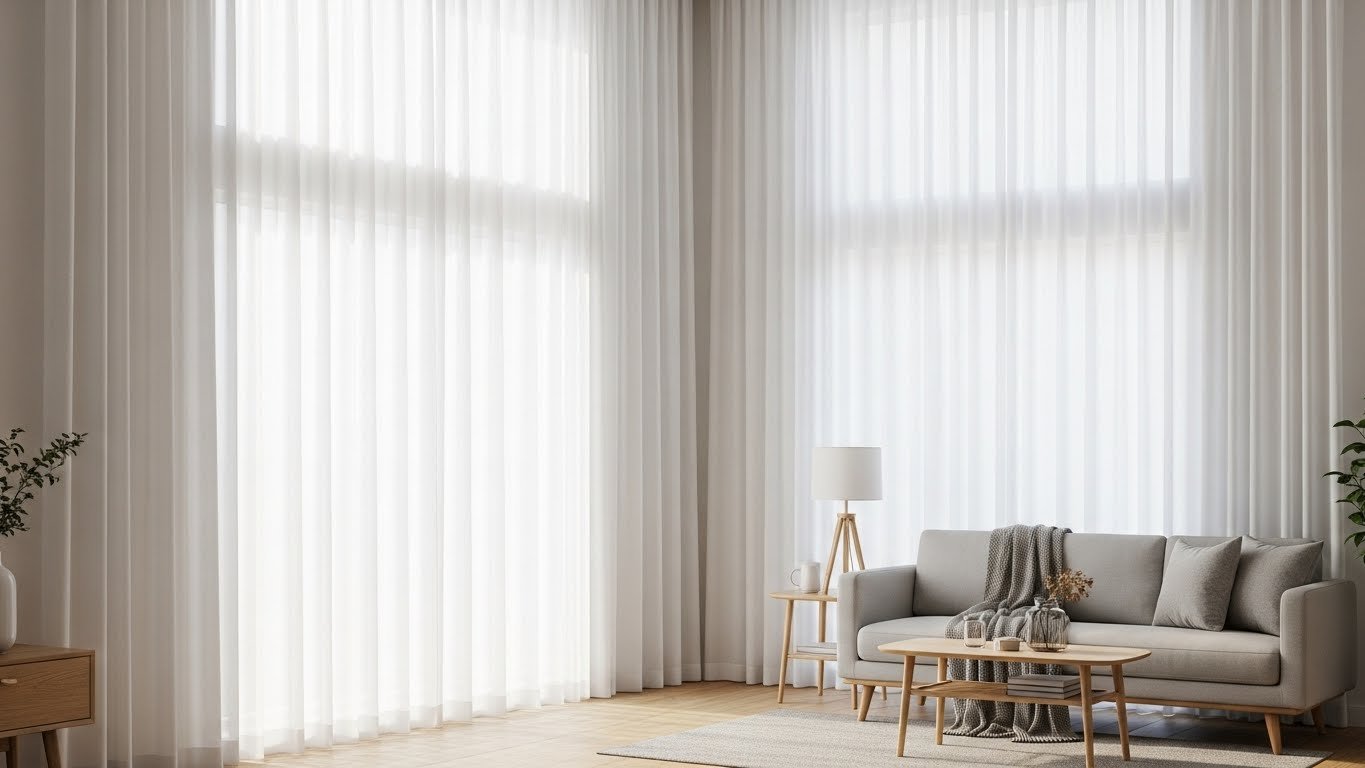
Ceiling height is one of the first things you notice when you walk into a room—and it affects how comfortable a space feels. If your living room has standard 8-foot ceilings, you might think you’re stuck with that constraint. But here’s the truth: the right curtain strategy can make your room feel significantly taller without any renovation or construction. These 27 ideas show you exactly how to use curtains, rods, colors, and styling techniques to visually expand your vertical space. Whether you’re renting, own your home, or working with tricky window sizes, you’ll find solutions that work with your budget and timeline. Let’s dive into the best ways to make your living room feel more spacious than it actually is.
1. Hang Curtains at the Ceiling Line

Mounting your curtain rod as high as possible is the single most effective trick for visual height. Most people hang rods 8-10 inches below the ceiling, which actually makes ceilings look lower. Instead, install the rod directly at or within 2 inches of the ceiling.
Use a stud finder to locate wall studs and mount brackets there for proper support. Expect to spend $20–$60 on a basic rod and brackets from Target or Home Depot. This 30-minute DIY project (or one professional installation call) instantly adds perceived height without any other changes. If you’re renting, use removable adhesive strips rated for heavy weight, though ceiling mounting can be trickier—talk to your landlord about small nail holes first.
The visual difference is stark. Your eye travels from floor directly to ceiling, making the room feel taller immediately.
2. Choose White or Cream Curtains for Seamless Height

When your curtains match or nearly match your wall color, your eye doesn’t stop at the curtain edge—it keeps traveling upward. This color continuity creates an unbroken vertical line that naturally makes rooms feel taller. White and cream are the safest bets, but soft grays and warm taupes work equally well.
Look for linen or linen-blend curtains in white ($40–$100 per panel from IKEA, Wayfair, or Amazon). Pair them with white or off-white walls, and the effect is nearly invisible—in the best way. Your walls appear to extend higher than they actually do. The fabric still filters light beautifully, and you get texture without color interruption.
Avoid bold or dark curtain colors if height is your goal; those visually “cut” the wall and lower the perceived ceiling line.
3. Use Sheer Layering for Airiness Without Bulk

Sheer curtains create visual lightness because you can see through them—they don’t feel like a heavy barrier. When you layer sheers over the window (rather than heavy fabric from top to bottom), the upper portion of your window stays visually open and airy, which extends the sense of ceiling height.
Hang sheers from the ceiling rod using tension wire or a lightweight track ($15–$40, available at IKEA or hardware stores). Add a blackout panel on a separate lower rod for privacy and light control without sacrificing the vertical effect. This setup takes about an hour and works for renters if you use damage-free adhesive strips on the ceiling.
The result? Your windows look taller because the sheer fabric appears to float rather than anchor the room downward.
4. Paint Walls Light to Expand Visual Space Vertically

Light wall colors create visual continuity from floor to ceiling, making rooms feel more spacious. Pale colors reflect light upward, which emphasizes height. Pair light walls with curtains in the same or slightly lighter tone for maximum effect.
Repaint walls in soft white, pale gray, or warm taupe—this is a weekend project or a $200–$500 professional job depending on room size. Use quality paint like Benjamin Moore or Sherwin-Williams ($25–$50 per gallon) for better coverage and durability. The paint-to-ceiling effect is immediate and transformative without touching your curtains at all.
If you’re renting and can’t paint, use large tapestries or removable wallpaper in light tones to achieve a similar effect.
5. Avoid Horizontal Patterns; Choose Vertical Stripes Instead
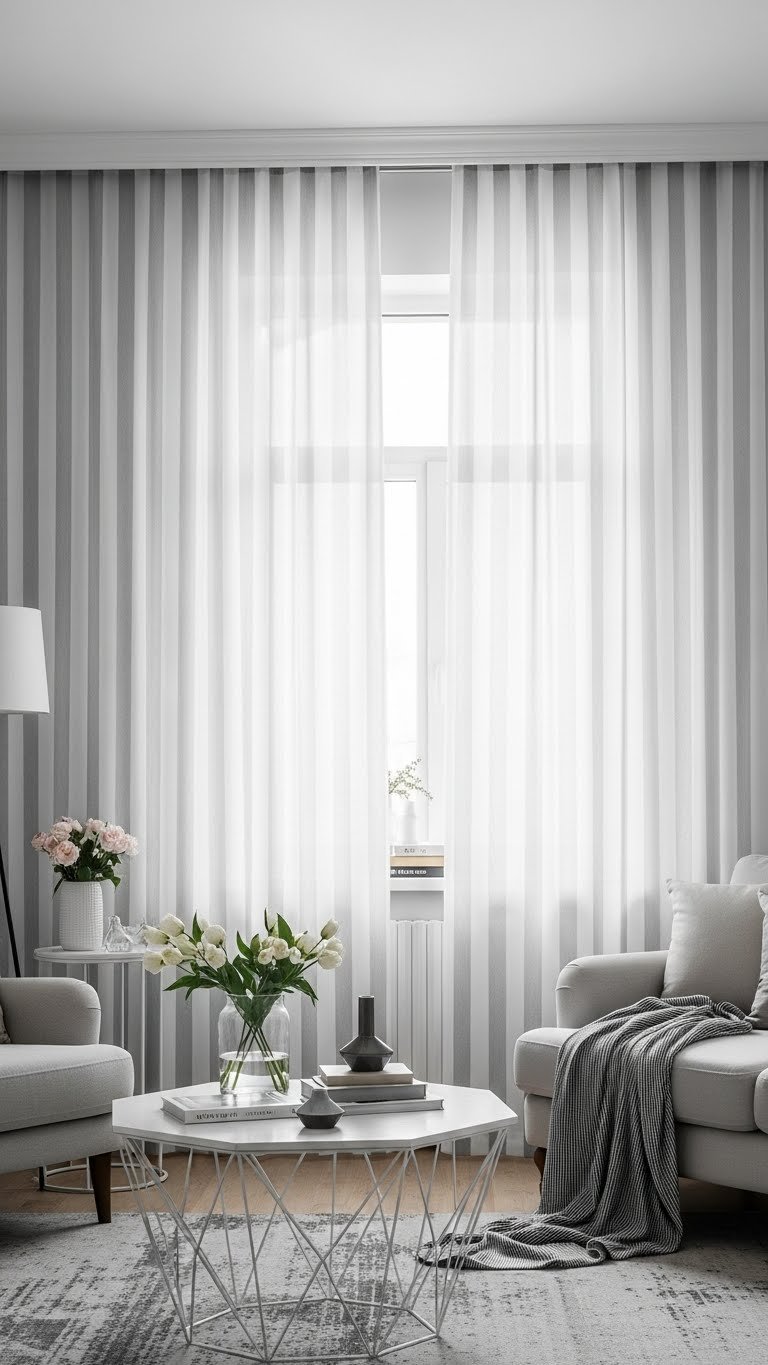
Patterns matter when you’re trying to maximize height. Horizontal stripes or geometric patterns naturally draw your eye across the room, which makes ceilings feel lower. Vertical patterns (thin stripes, linear motifs) guide your eye upward, reinforcing the sense of height.
Hunt for vertical-striped curtains on Wayfair, West Elm, or CB2 ($60–$150 per panel). Alternatively, find solid curtains and add a thin vertical stripe using fabric paint and a ruler ($10 DIY, takes 30 minutes per panel for a smaller project). The vertical line you create becomes a visual elevator for your room.
Avoid busy horizontal checks, large-scale horizontal florals, or bold color blocking that cuts the wall in half.
6. Install Double Rods for Layered Styling Drama
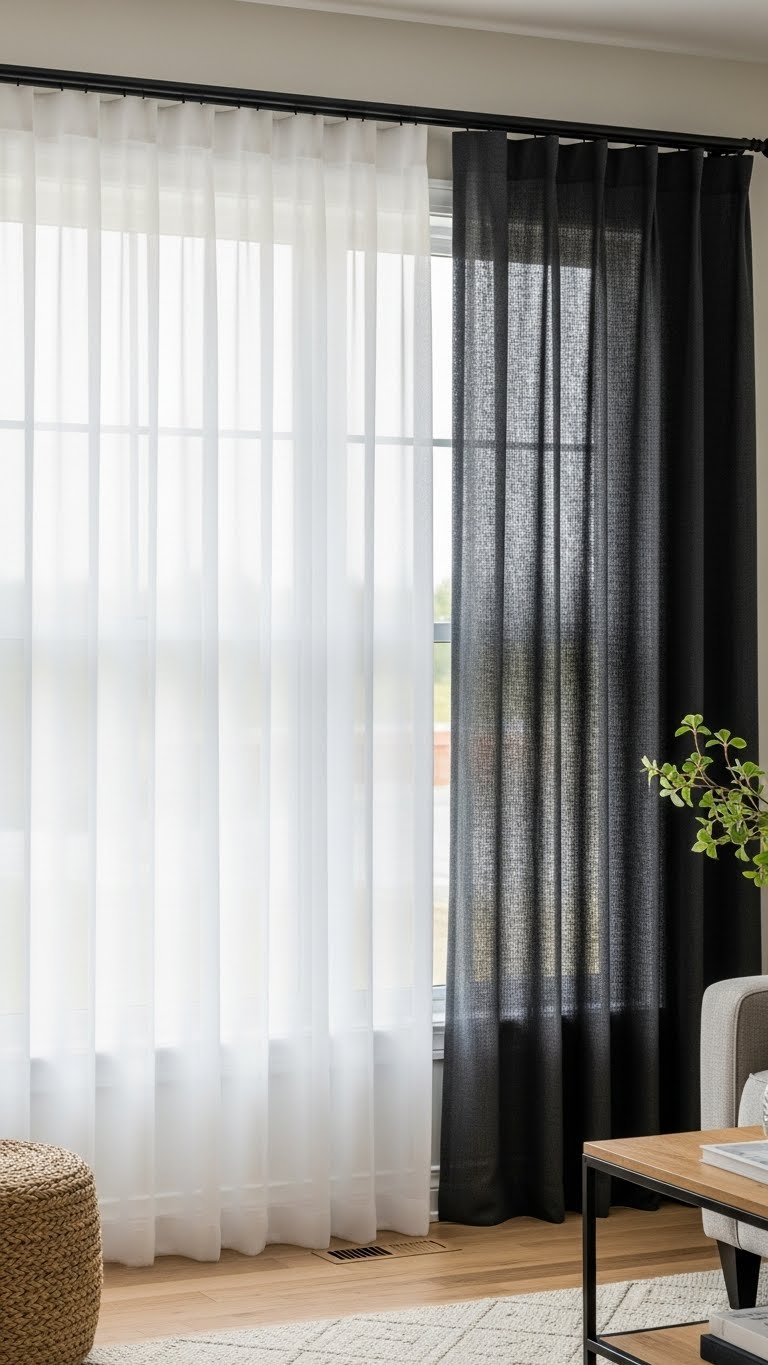
Double rods give you practical light control and visual layering that emphasizes height. You hang lightweight sheers on one rod and heavier panels on another, both extending floor to ceiling. This creates visual depth without bulk.
Purchase a double-rod system ($40–$80 at Home Depot or Lowe’s) and hang it at ceiling height. Use sheer panels on the inner rod and your choice of heavier fabric on the outer rod. Installation takes about an hour with basic tools. The effect is layered and architectural—your window becomes a design feature that draws the eye upward.
This approach is renter-friendly with damage-free adhesive strips on the ceiling for the bracket.
7. Extend Curtains Beyond the Window Frame

Hanging curtains wider than your actual window—not just taller—creates an optical illusion that makes both the window and the room feel larger. Mount the rod beyond the window edges on both sides, so the curtain panels extend fully across the wall space. This pulls the eye outward and upward.
Measure your window width and add 12–24 inches total (6–12 inches on each side) when ordering curtain panels. A standard 96-inch panel costs $40–$100; larger custom panels run $100–$200. Installation is the same as regular curtains; just mount the rod wider. This is a renter option using adhesive-strip brackets as long as you use damage-free products.
The wider-framed effect makes your window and ceiling line feel more prominent in the room’s overall design.
8. Use Lightweight Fabric That Moves and Flows

Heavy, stiff curtains feel anchored to the room. Lightweight, flowing fabrics feel weightless—which visually expands the sense of space. Linen, cotton voile, and lightweight linen blends create movement and airiness.
Shop for linen or cotton curtains ($50–$120 per panel at IKEA, Target, or specialty retailers like Etsy). Heavier velvet or thermal-backed panels are wonderful for warmth but visually compress the room. If you want blackout capability, choose a lightweight linen paired with a separate blackout shade rather than a heavy all-in-one curtain. The flowing motion of the fabric creates visual height as it drapes naturally.
Your eye follows the gentle folds of the fabric upward, reinforcing the sense of vertical space.
9. Add a Subtle Ombré or Gradient Effect
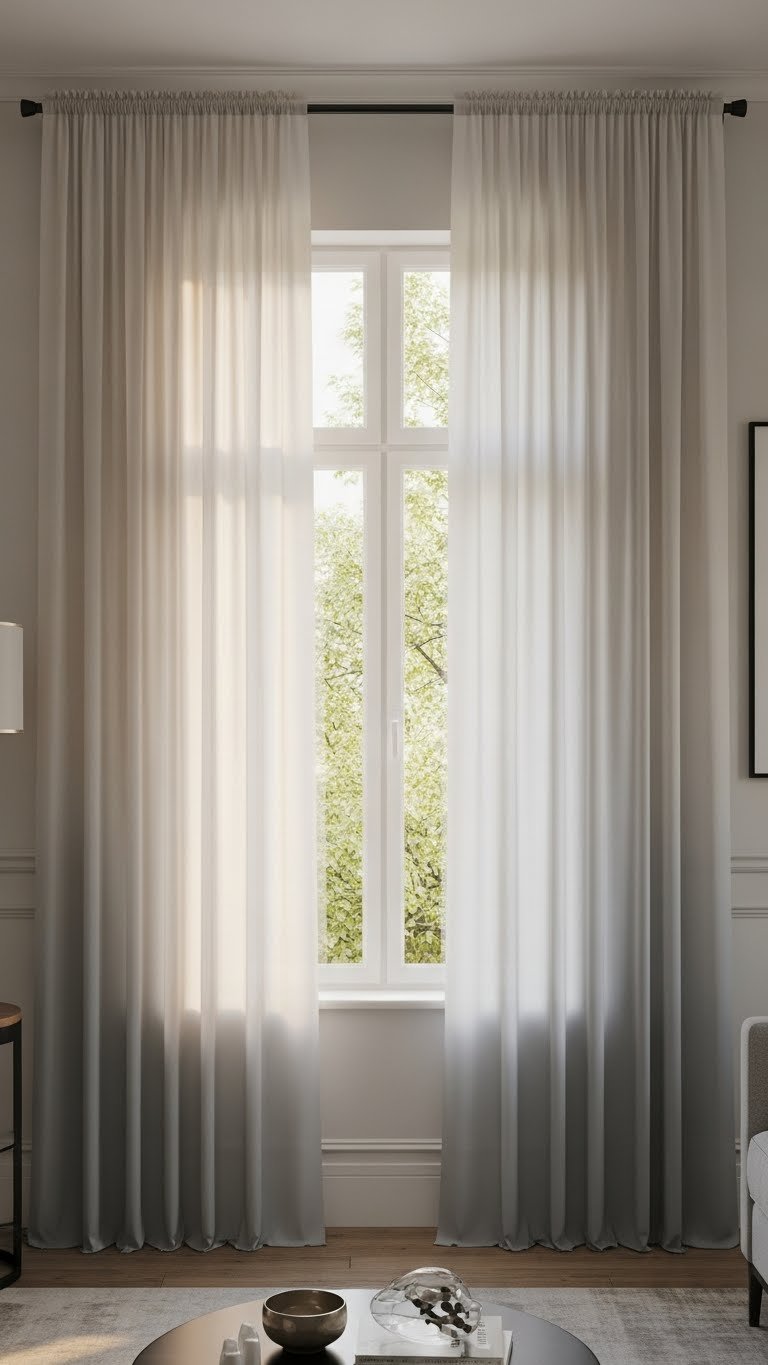
An ombré or gradient effect—where color subtly shifts from light at the top to slightly deeper at the bottom—creates a visual “lift.” Your eye follows the lighter color upward, which subconsciously extends the ceiling line.
Custom ombré curtains are available from boutique retailers like Etsy or Spoonflower ($150–$300 per panel for high-quality fabric). DIY option: buy fabric dye ($10) and bleach two panels with different concentrations to create a gradient effect (6–8 hours of work). The subtle shift in tone feels sophisticated and modern while serving your height-maximizing goal.
This technique is more advanced but creates a refined, intentional look that screams good design.
10. Mount Curtains on Clear or Invisible Rods
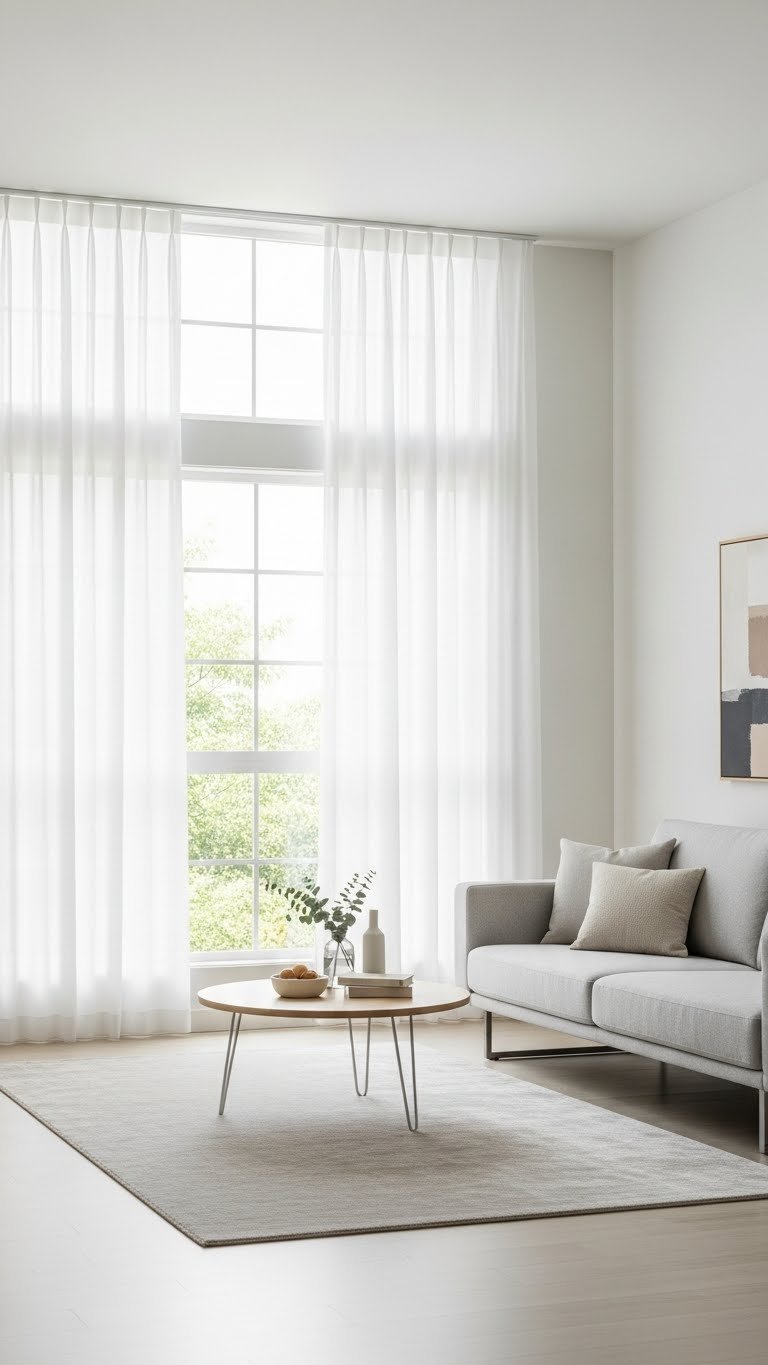
When your rod disappears visually, your curtains appear to float from ceiling to floor without interruption. Clear acrylic rods and near-invisible tension systems create this effect. Your eye sees only the fabric’s vertical line, not the hardware.
Purchase clear acrylic rods or tension-wire systems ($30–$80 at IKEA, West Elm, or Container Store). Tension-wire systems are particularly effective because the wire is almost impossible to see at normal viewing distance. Installation takes 30–45 minutes and works for renters using ceiling-mounted brackets. The minimal visual interruption maximizes the sense of unbroken height.
The result is a clean, modern look where the curtains feel like an integral part of the room’s architecture.
11. Use Minimal or No Pleats for a Streamlined Look

Pleated curtain styles (pinch pleats, pencil pleats) add visual weight and horizontal bulk at the top of the window. Flat panels or simple grommet-top curtains create unbroken vertical lines that emphasize height. The cleaner the top, the taller the room feels.
Look for grommet-top curtains, tab-top panels, or simple linen curtains without decorative pleats ($40–$100 per panel from IKEA, Target, or Wayfair). These styles hang flat and clean, creating a modern look that naturally extends your eye from floor to ceiling. Grommet styles are also easy to install yourself in about 20 minutes.
The minimalist silhouette reinforces the sense of open space and vertical stretch.
12. Pair Curtains with Tall Floor Lamps and Vertical Mirrors

It’s not just about the curtains—surrounding them with other tall, vertical elements reinforces the height effect. Floor lamps that reach toward the ceiling and large vertical mirrors repeat the upward visual line.
Add a tall arc lamp ($80–$200 from Target, West Elm, or Article) and a large vertical mirror ($60–$150 from IKEA or Wayfair) next to your curtained window. These elements don’t have to be expensive; they just need to be vertical. The grouping creates a visual emphasis on height that works in concert with your floor-to-ceiling curtains.
When your eye scans the room, it naturally travels upward because multiple design elements point in that direction.
13. Choose Neutral Colors Over Dark Tones
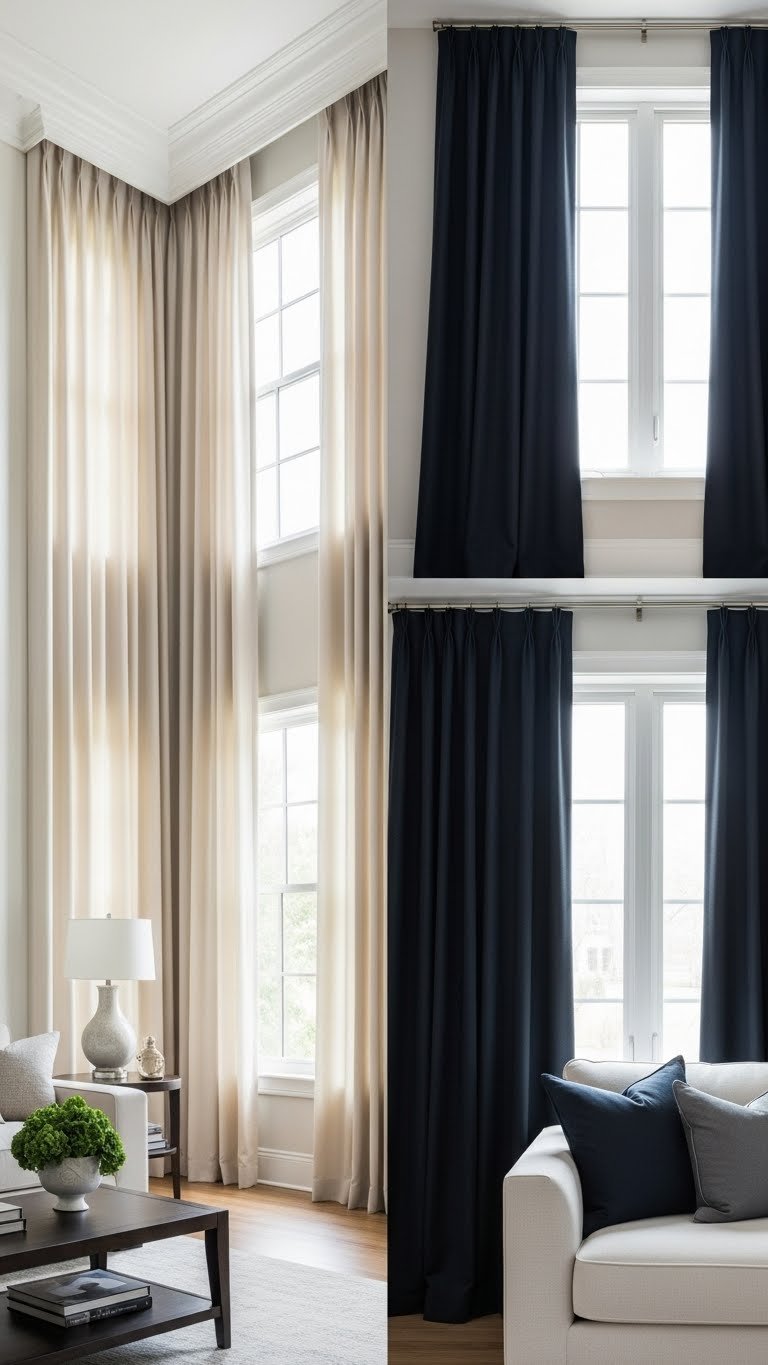
Dark colors (navy, charcoal, black) feel heavy and visually “ground” a room. They make ceilings appear lower because they create contrast and visual weight. Neutral tones (cream, beige, soft gray, warm taupe) feel lighter and allow your eye to travel upward without stopping.
Choose neutral curtains in off-white, cream, or soft gray ($40–$120 per panel from IKEA, Target, Wayfair, or specialty retailers). If you love dark colors, use them sparingly—perhaps as an accent shade in a double-rod setup with neutrals in front. This one color choice has an enormous impact on the perceived ceiling height without any structural changes.
Neutral doesn’t mean boring; texture, pattern, and layering keep the look interesting while maintaining that visual openness.
14. Install Valances or Cornices Just Below the Ceiling
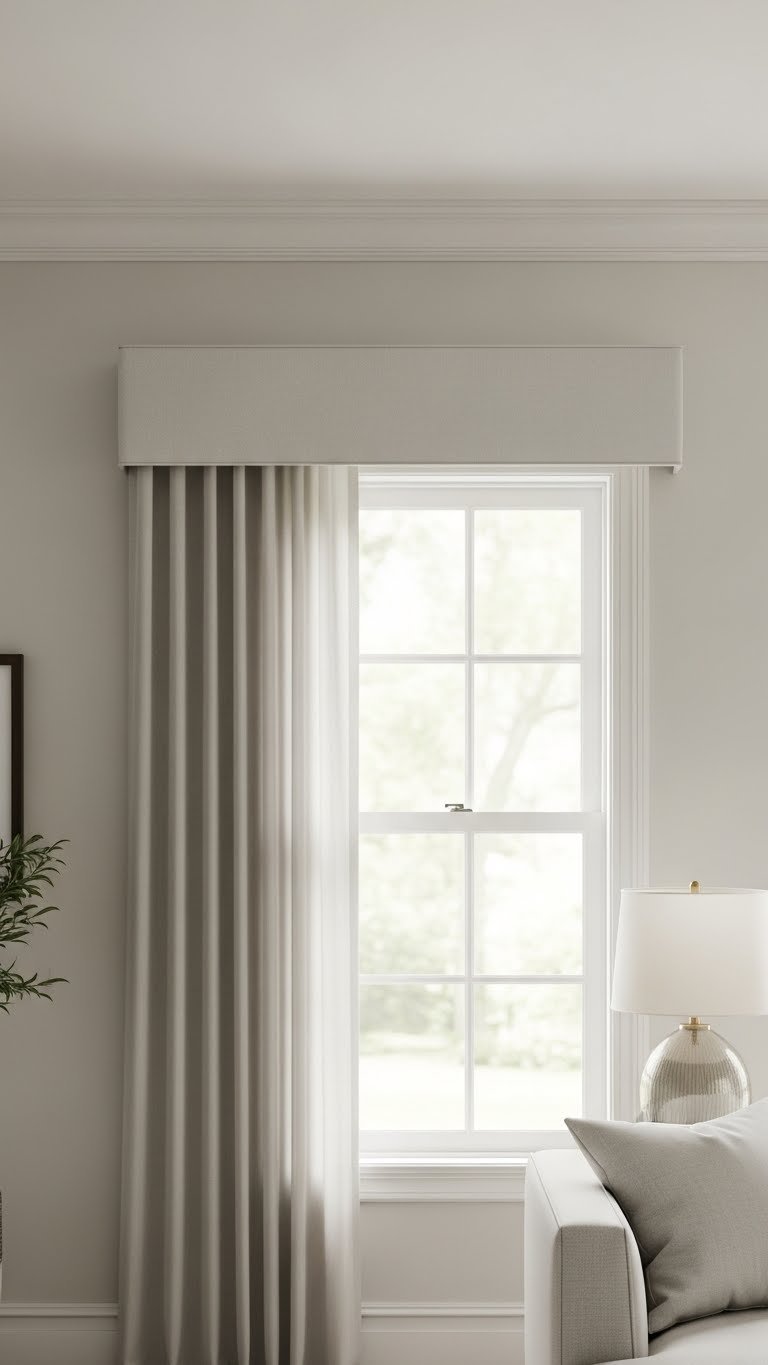
A shallow cornice or valance mounted at the ceiling creates a visual “cap” that frames the height of the room rather than cutting it off. Unlike traditional heavy valances that shorten windows, a thin, minimal version keeps the room feeling tall.
Install a slim wood cornice ($50–$150, DIY or professional installation) just below ceiling level, then hang your curtains below it. Paint the cornice the same color as your walls for continuity. This adds architectural detail and polish while preserving the sense of vertical space. DIY installation takes a weekend if you’re comfortable with basic carpentry; otherwise, hire a pro for 1–2 hours of work.
The cornice becomes a subtle crown molding effect that enhances the room’s sense of structure and height.
15. Avoid Cafe Curtains; Go Full Height Instead
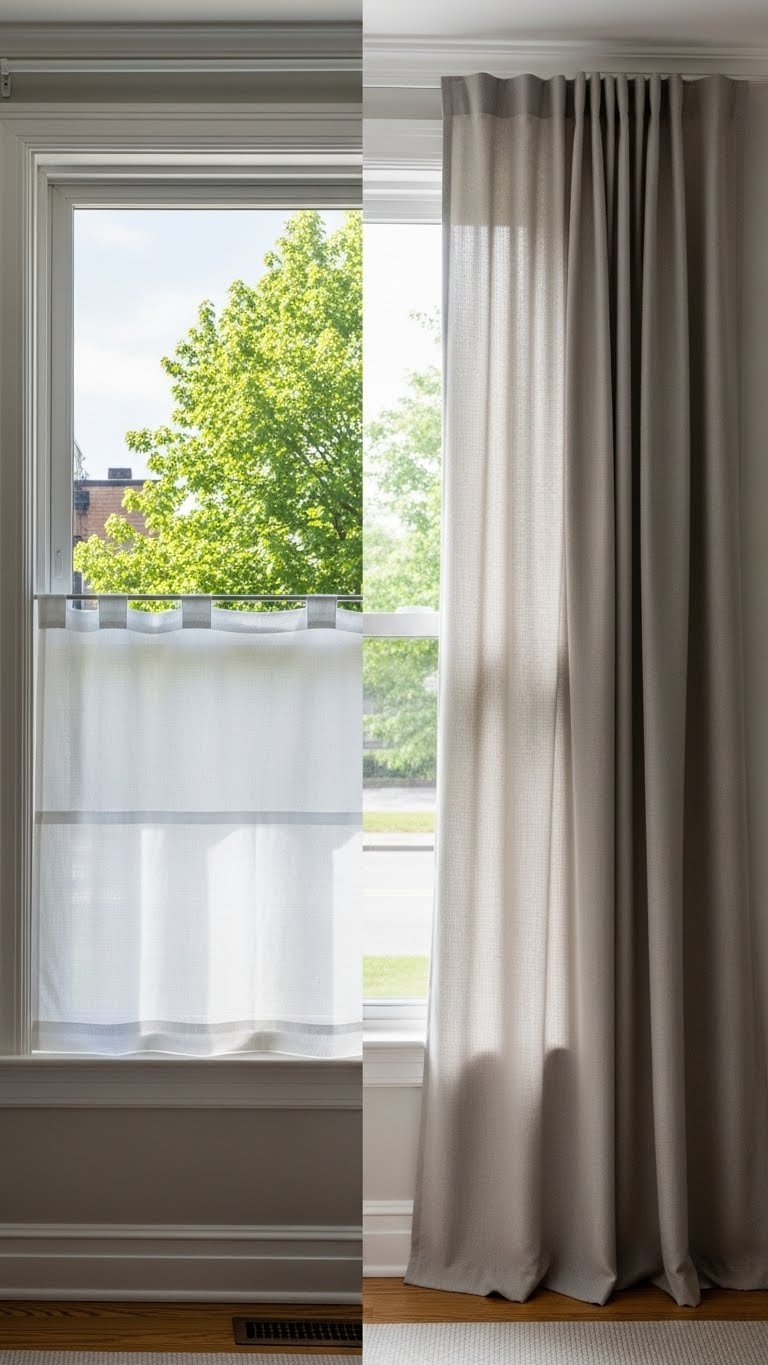
Cafe curtains (which cover only the bottom half of the window) are charming but visually cut your window—and your room—in half. They create a horizontal line that actually makes ceilings feel lower. Full-height curtains eliminate that interruption and allow your eye to travel the entire vertical span.
Measure from ceiling to floor and order curtains in that length ($50–$150 per panel depending on your height). If you currently have cafe curtains and want height, remove them and install full-length panels instead. This simple swap (30 minutes of work) is transformative. Standard windows are 36–48 inches tall; measuring your actual space ensures proper proportions.
The unbroken vertical line immediately makes your room feel more spacious and sophisticated.
16. Use Metallic Rods or Hardware for Visual Lightness
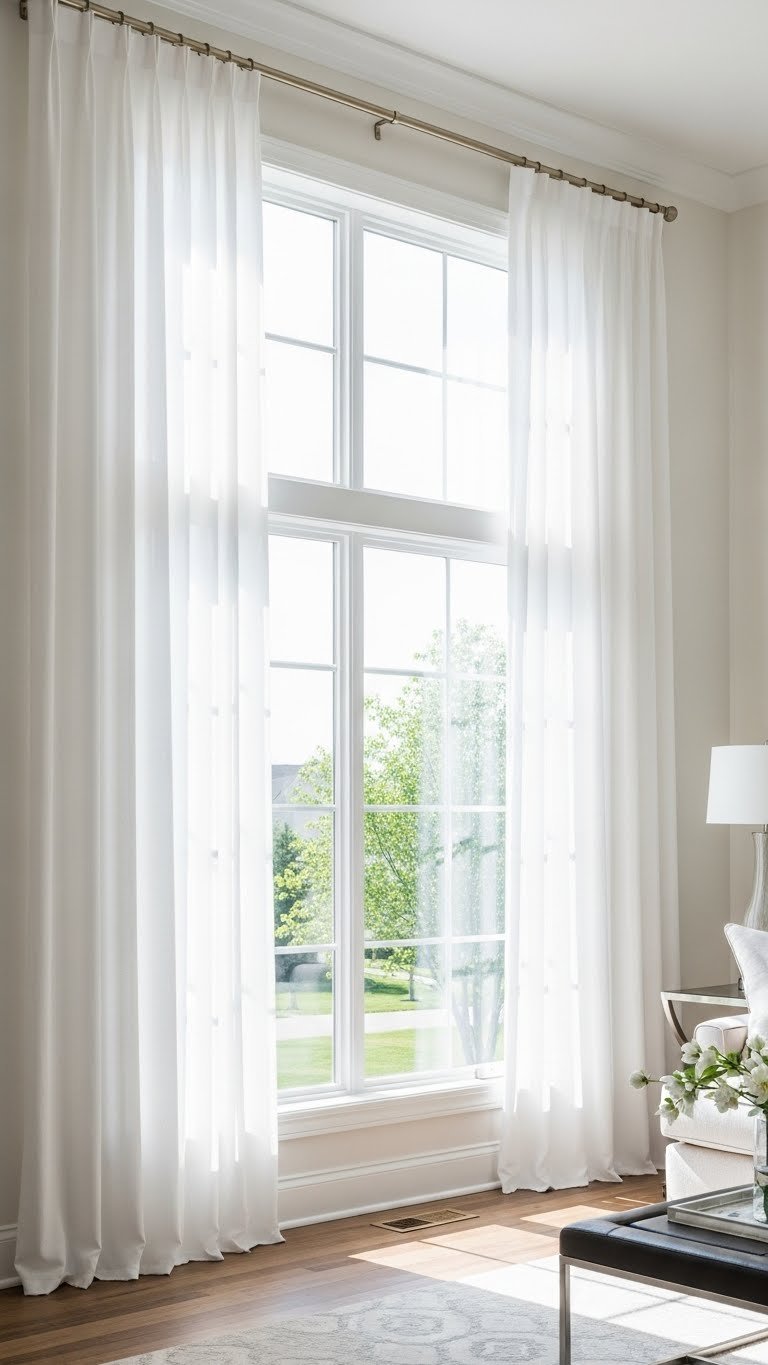
Matte black or heavy wood rods can feel weighty and grounding. Metallic hardware (brushed gold, polished chrome, stainless steel) catches light and reflects it, which creates visual lift. The reflective quality makes hardware feel less substantial even though it’s there.
Shop for metallic rods at Target, West Elm, or Home Depot ($30–$80). Installation is identical to standard rods; you’re simply upgrading the material. Brushed gold and champagne tones feel warm and contemporary; polished chrome feels modern and sleek. The light-reflecting quality adds a subtle shimmer that draws your eye upward.
This detail is small but psychologically significant—your eye perceives reflective surfaces as lighter and more elevated.
17. Pair Curtains with Stacked Wood or Floating Shelves

Vertical design elements throughout the room reinforce the height effect of your curtains. Floor-to-ceiling shelving, vertical artwork, or stacked storage creates a visual “ladder” that emphasizes ceiling height.
Install floating shelves or tall bookcase units next to your curtained window ($100–$400 for a quality unit from IKEA, Article, or West Elm). Arrange books and objects vertically on the shelves to reinforce the upward visual line. The grouping of vertical elements—curtains, shelves, artwork—works together to make the room feel taller.
When multiple vertical elements occupy the same space, the cumulative effect on perceived height is stronger than any single element alone.
18. Choose Sheers That Glow Rather Than Block Light
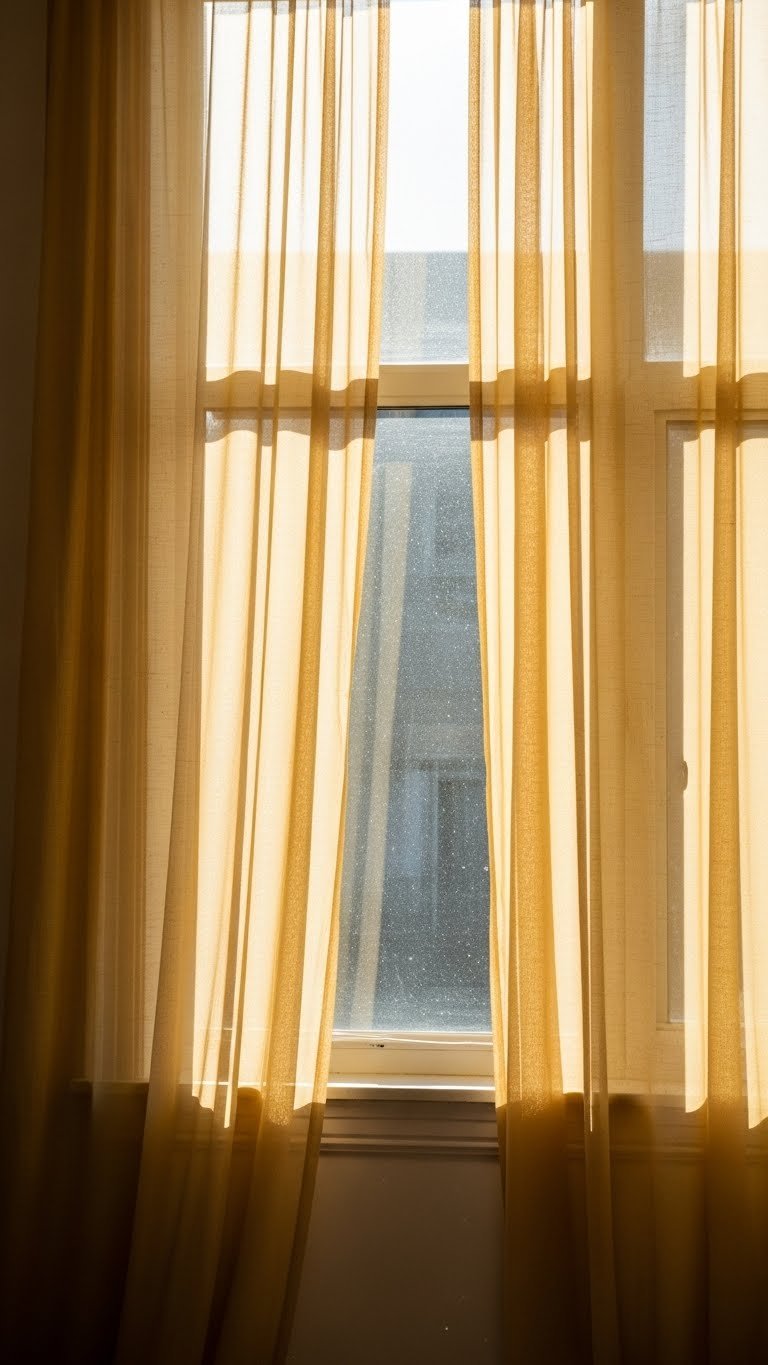
Sheers that allow light to pass through and glow create a sense of openness and weightlessness. Opaque sheers that block light while you can’t see through them feel heavier. Choose thin, translucent options that create a luminous effect.
Look for lightweight ivory or pale gold sheers ($20–$50 per panel from IKEA, Target, or Wayfair). Avoid thick, textured sheers; stick with smooth, flowing options. When backlit by sunlight, glowing sheers create a warm, inviting atmosphere that makes the space feel more open. This works especially well on windows that get morning or afternoon sun.
The luminous quality of light passing through the fabric creates an airy, weightless feeling throughout your entire living room.
19. Add Subtle Border Trim to Frame the Height

A thin vertical trim or border running down the sides of your curtains adds a sophisticated frame that emphasizes height. Unlike heavy horizontal hems that ground the look, vertical trim draws the eye upward.
Purchase or order curtains with a subtle vertical trim ($70–$150 per panel, or add DIY trim for $10–$20 in supplies from a fabric store). DIY: buy grosgrain ribbon or trim ($10 per yard) and hand-stitch or fabric-glue it down both sides of your curtain panels (4–6 hours of work for a pair). The subtle detail feels designed and intentional without being over-the-top.
This small touch transforms basic curtains into a polished, designer-looking feature that visually extends the window’s height.
20. Install Curtains Across a Wider Wall Span
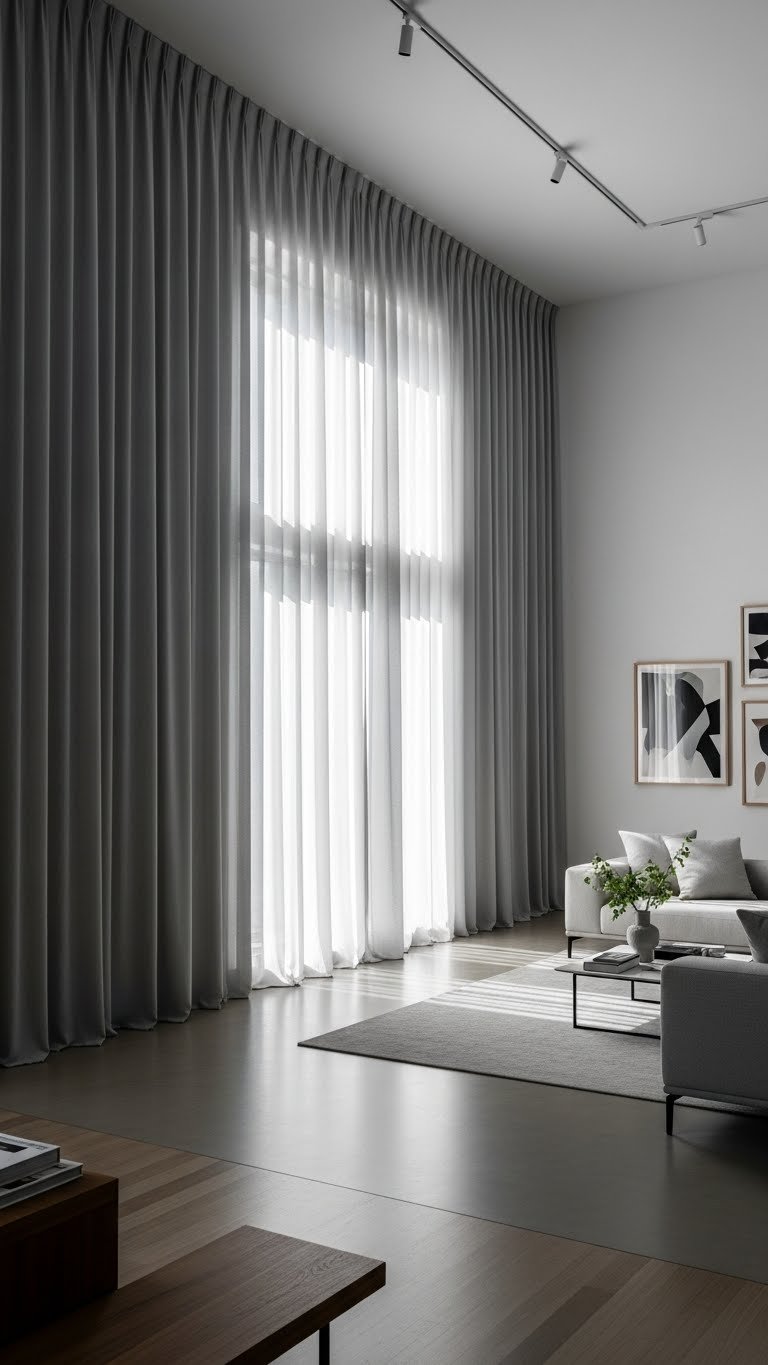
Rather than hanging curtains just around your window frame, extend them to span most or all of your wall width. This creates a dramatic backdrop that makes the room feel wider and—visually—taller by association.
Measure your entire wall width and mount rods accordingly, adding 6–12 inches beyond the window on each side ($40–$100 for an extended rod setup). You’ll need 2–3 panels per side to cover the full width ($100–$300 total). This approach works beautifully for large living rooms or accent walls you want to highlight. Installation takes 1–2 hours.
The expansive curtain backdrop creates a gallery-like atmosphere that elevates the entire room’s sense of scale.
21. Layer Curtains with Roman Shades Below

Pairing full-height curtains with a Roman shade or roller blind below adds functional layering without visual confusion. The shade hides inside the window frame while your curtains extend floor to ceiling, maintaining the height effect while providing flexible light control.
Hang floor-to-ceiling curtains ($60–$150 per panel) and add a coordinating Roman shade ($80–$150 from IKEA, Wayfair, or a custom maker). The shade clips up inside the window frame when you don’t need it, so it doesn’t interrupt your vertical line. Installation: mount the shade track to the window frame (30 minutes), then hang your curtains above (30 minutes). Renters can use temporary adhesive strips for both.
You get the height benefit of full curtains plus the flexibility of adjustable light control without compromise.
22. Choose Unlined or Semi-Sheer Curtains for a Floating Effect
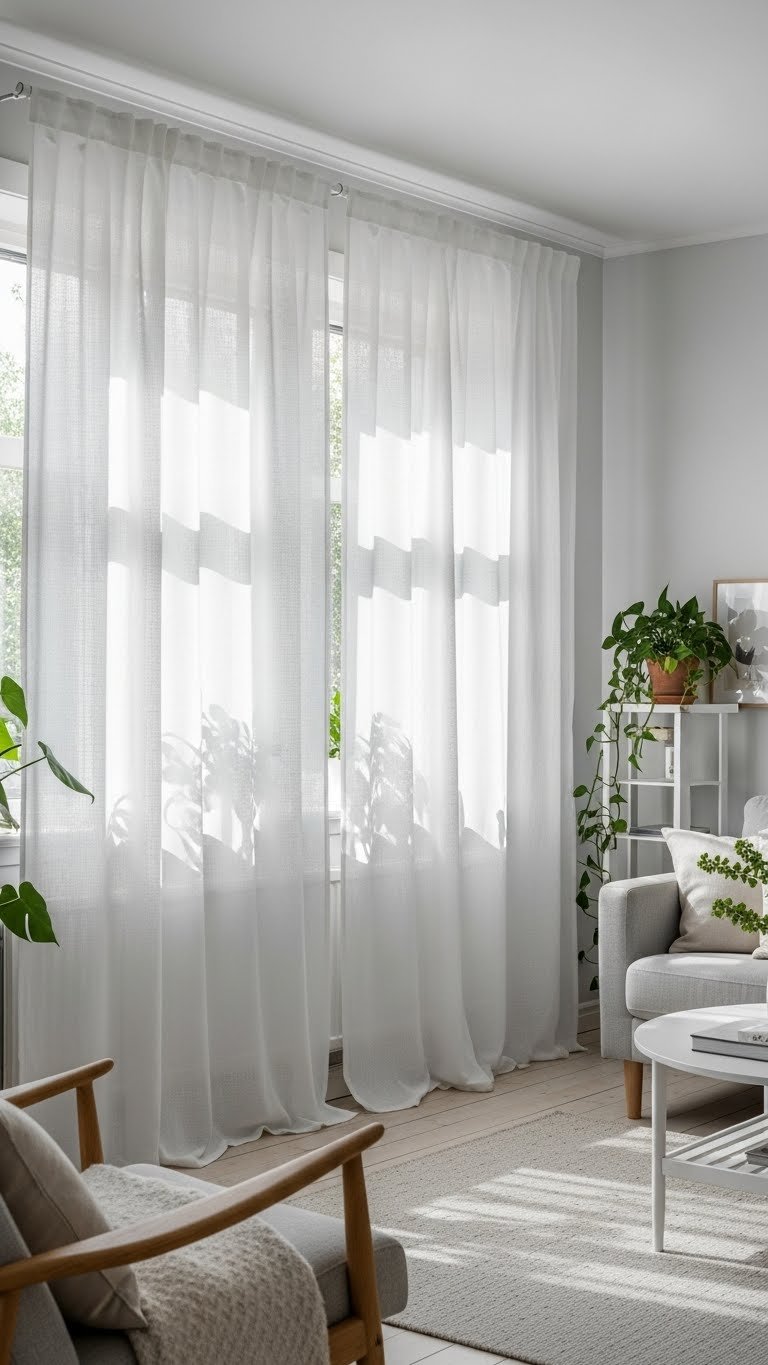
Unlined or semi-sheer curtains feel lighter and more ethereal than fully lined or blackout-backed options. When light passes through the fabric, it feels less solid and more like a design accent than a functional barrier.
Shop for unlined linen curtains ($50–$120 per panel from IKEA, Wayfair, or specialty makers like Schoolhouse Electric). Pair them with a separate roller shade for privacy and light control if needed. Unlined curtains are typically 30–40% cheaper than lined versions and feel fresher and more contemporary. Installation is identical; you’re just choosing a lighter fabric weight.
The semi-translucent quality makes your curtains feel like a floating design element rather than a heavy window treatment.
23. Paint Curtain Rods the Same Color as Your Walls
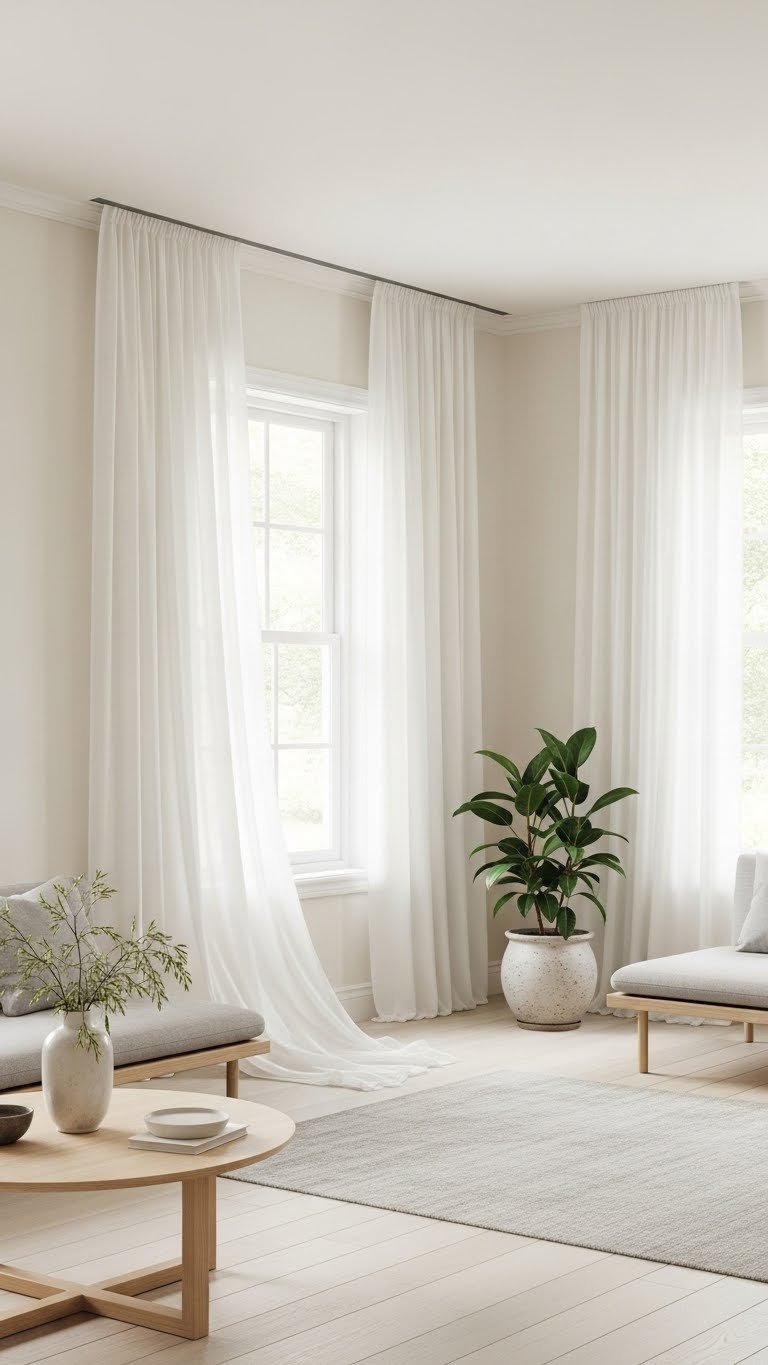
When your rod matches your wall color, it becomes nearly invisible—which means your eye sees only the continuous vertical line of the curtain fabric. This visual merging extends the sense of height.
Paint your curtain rod with wall-matching paint ($15–$30 total, DIY in 20 minutes). Use the same paint sample or match your wall color at the hardware store. Even a basic rod becomes visually refined when it blends with its surroundings. This is one of the cheapest height-maximizing tricks available.
The disappearing rod creates an almost floating effect where your curtains appear to emerge directly from the ceiling line.
24. Use Longer-Than-Necessary Curtains (Slight Puddle Effect)
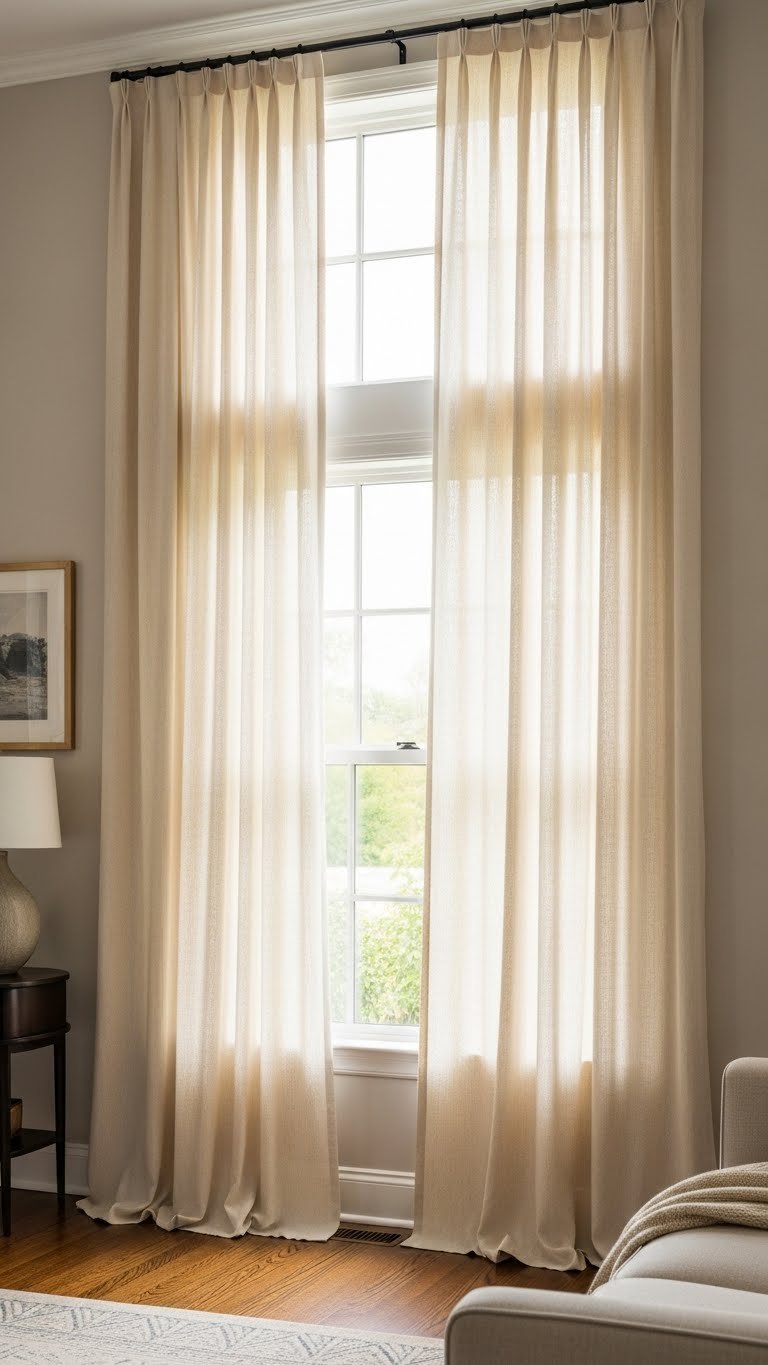
Most curtains touch the floor. Adding an extra 2–4 inches so the fabric gently puddles emphasizes the full height of your window frame. The slight excess draws attention to the length while adding a touch of luxury.
Order curtains 2–4 inches longer than your floor-to-ceiling measurement ($60–$150 per panel, custom length typically costs $5–$15 more). This small detail signals intentionality and polish. The subtle puddle (not dramatic pooling, which reads dated) is chic and modern. Installation is standard; you’re simply specifying a longer length when ordering.
The extra length emphasizes every vertical inch of your window and draws the eye upward.
25. Install a Statement-Making Color Ombré (Darker at Bottom)

An inverted ombré—lighter at the top, deeper at the bottom—creates visual interest while still maximizing perceived height because it starts with a light color that makes the ceiling feel higher, then adds depth below.
Order custom ombré curtains from specialty makers like Spoonflower or Etsy ($150–$300 per panel for quality). The gradient should be subtle enough that the bottom color doesn’t feel too heavy; think pale cream to soft gray or ivory to warm taupe rather than cream to black. This is more of an investment but creates a truly custom, artistic look.
The color gradient becomes a subtle focal point that adds personality while still honoring the height-maximizing goal.
26. Mount Rods on Recessed or Mounted Brackets (Not Flange)
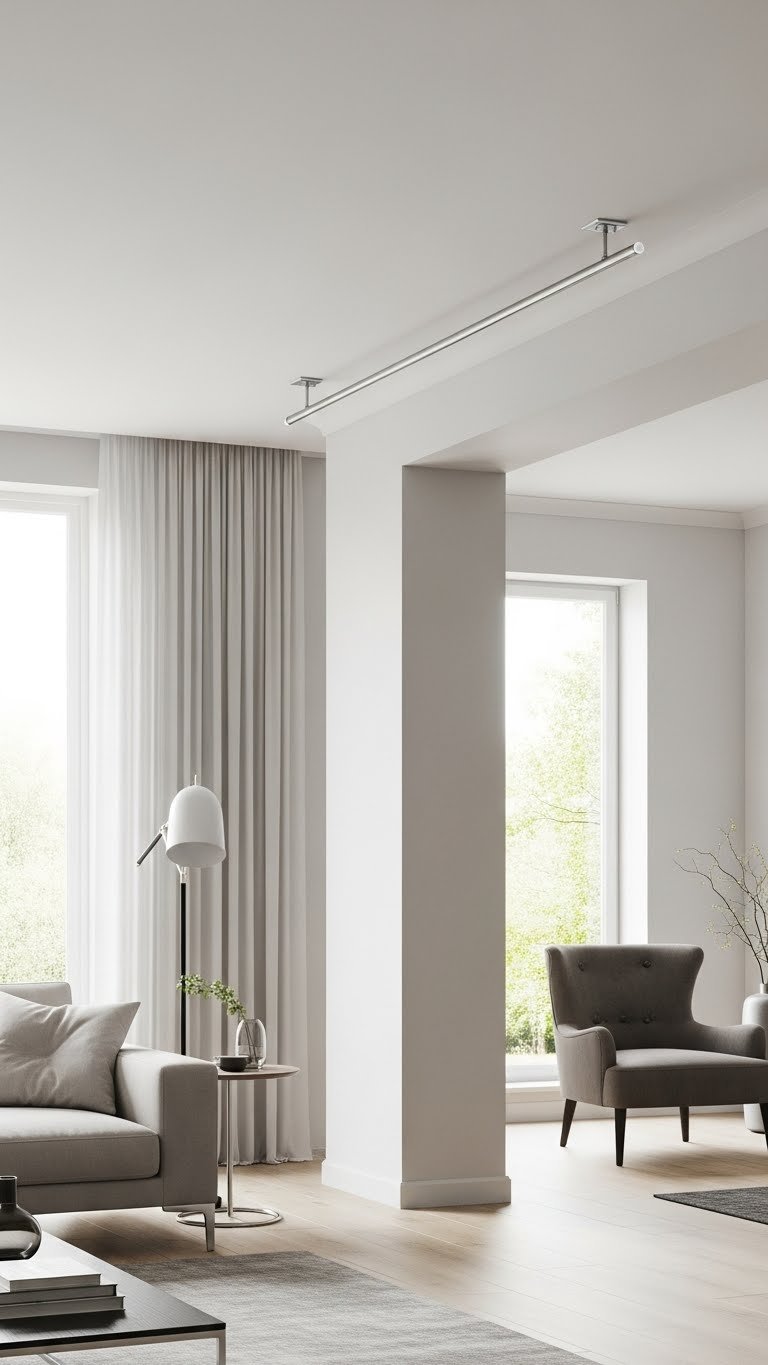
Flush-mount or recessed brackets make rods appear to float rather than protrude from the wall. Standard flange brackets create visual weight and interruption. Minimal brackets keep the focus on the curtains themselves and the vertical line they create.
Purchase recessed or surface-mount brackets ($30–$60 from hardware stores or online retailers like Restoration Hardware). Installation is straightforward with a drill and stud finder (30 minutes). The minimal hardware makes the entire setup feel more architectural and refined. Renters can use ceiling-mounted adhesive strips for temporary installation.
The streamlined bracket system makes your entire curtain setup feel more intentional and less utilitarian.
27. Combine Multiple Height Tricks: The Ultimate Setup
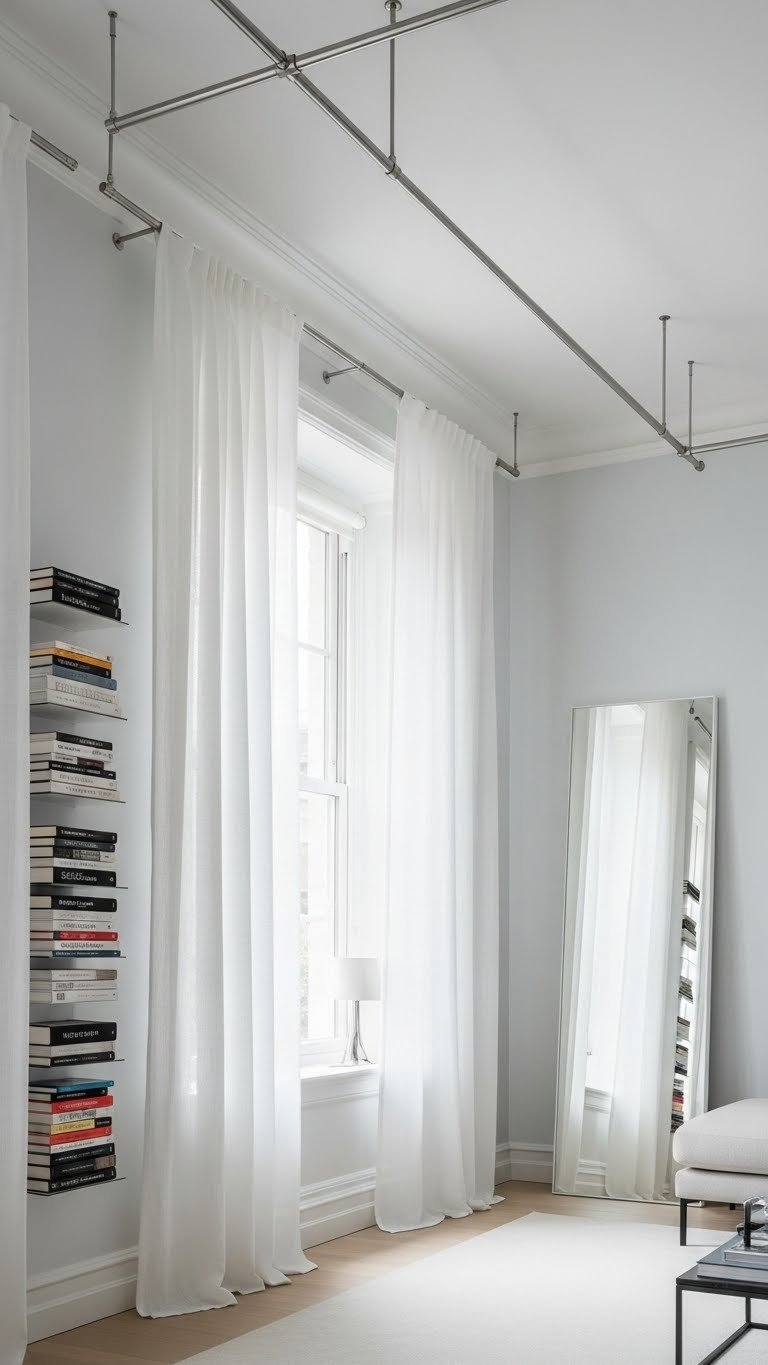
Using one trick helps; combining several creates a compounded effect. Pair ceiling-mounted rods, light-colored walls, neutral curtains, minimal hardware, vertical accessories, and layered sheers for a cohesive, intentional look that maximizes every inch of perceived height.
Investment: $300–$800 total for rods, quality curtains, paint, and accessories depending on window size and room. Timeline: 2–3 weekend projects (painting, installation, styling). Start with the highest-impact changes—ceiling mounting, light walls, floor-to-ceiling panels—then layer in secondary details like mirrors, trim, and accessories. This comprehensive approach transforms your entire space.
The combined effect is undeniable: your living room becomes a tall, open, gallery-like space that feels significantly larger than its actual dimensions.
Save this guide to your Pinterest board and pick one idea to tackle this weekend—the ceiling-mounted rod or light wall color will give you the fastest result. Which technique speaks to your space? Try combining two or three for maximum impact.
Leave a Reply