
Your roofline and gable are doing more work than you think—they’re the crown jewel of your home’s exterior. But if they’re looking flat, dated, or lost in the rest of your facade, you’re missing a major opportunity to add character and curb appeal. The good news? You don’t need a full renovation to make them shine. Whether you’re working with a traditional peak, a modern edge, or something in between, small styling tweaks to your roofline and gable can dramatically elevate your whole home’s architectural presence. In this guide, we’re sharing 23 specific, actionable ideas you can start this weekend—from bold paint choices to material upgrades and lighting tricks. Some are free, some cost under fifty bucks, and others are investment pieces that’ll pay dividends for years. Let’s get started.
1. Paint Your Gable a Contrasting Bold Color

A contrasting gable color is one of the fastest ways to add architectural drama without touching anything else on your home. This technique draws the eye upward and makes your roofline a design feature instead of an afterthought.
Choose a bold, saturated shade like deep olive, charcoal, burgundy, or forest green. These earth tones pair beautifully with white, cream, or warm gray siding. You’ll need exterior-grade paint (about $30–$60 per gallon), primer, and basic supplies. A single gable typically takes one to two days if you’re comfortable on a ladder—or hire a painter for $500–$1,000 if you’d rather skip the heights.
Pro tip: Get paint samples and tape them to your gable for a few days to see how the color looks in different light. What looks perfect on a sunny morning might feel too dark at dusk.
Your roofline now becomes a statement, drawing attention upward and making your entire facade feel intentionally designed.
2. Add Architectural Trim or Corbels Under the Gable
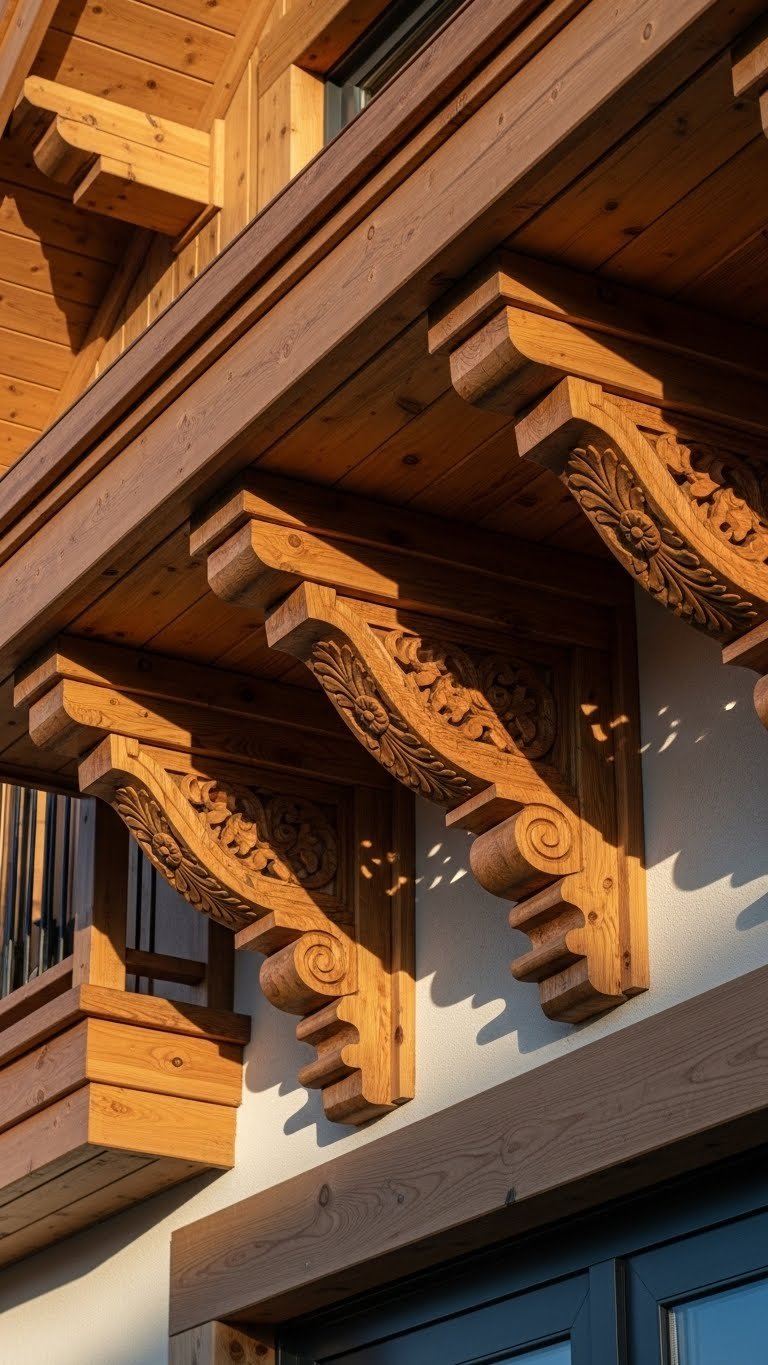
Corbels and trim under your gable add depth, shadow lines, and old-world charm—even on modern homes. These small architectural details catch light and create visual interest that photographs beautifully.
Pre-made corbels run $30–$150 each from Home Depot or Wayfair (brands like Fypon make durable foam options). Install 2–4 corbels symmetrically under the peak. Installation takes 1–2 hours with basic tools; just make sure they’re rated for exterior use. If you want handcrafted wood corbels, budget $200–$400 per set and hire a carpenter for proper installation.
Alternative: Use simple painted brackets or metal supports for a modern farmhouse vibe if ornate feels too traditional for your style.
The shadow lines created by corbels add dimension to your gable, making it look architectural rather than flat—visible from the street in every photo.
3. Install Lighting to Highlight Your Roofline at Night
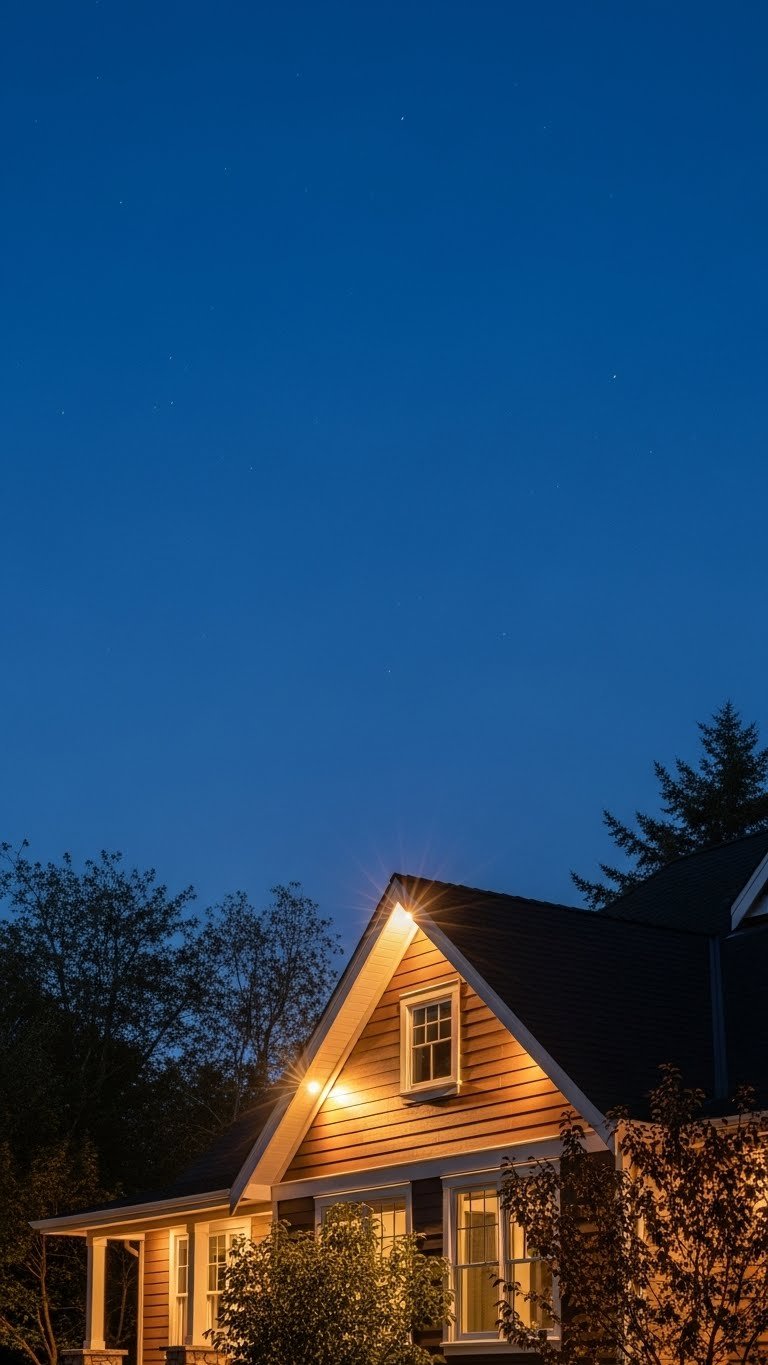
Most people overlook their roofline once the sun sets—but nighttime lighting transforms your exterior into a showcase piece. Uplighting your gable adds drama and extends your curb appeal 24/7.
Install LED uplights (about $50–$150 per fixture) along the base of your gable, pointing upward. Choose warm white or soft amber tones for a welcoming feel. A basic two-fixture setup takes 1–2 hours and requires outdoor-rated wiring (DIY if you’re comfortable with electricity, or hire an electrician for $200–$400). Solar options exist but are dimmer; hardwired is more reliable.
Pro tip: Angle lights to graze the texture of your siding or paint, not straight up (which looks too stark).
At night, your home becomes a focal point in the neighborhood—and every porch photo you take suddenly looks professionally lit.
4. Swap Out Your Roofing Material for Visual Impact
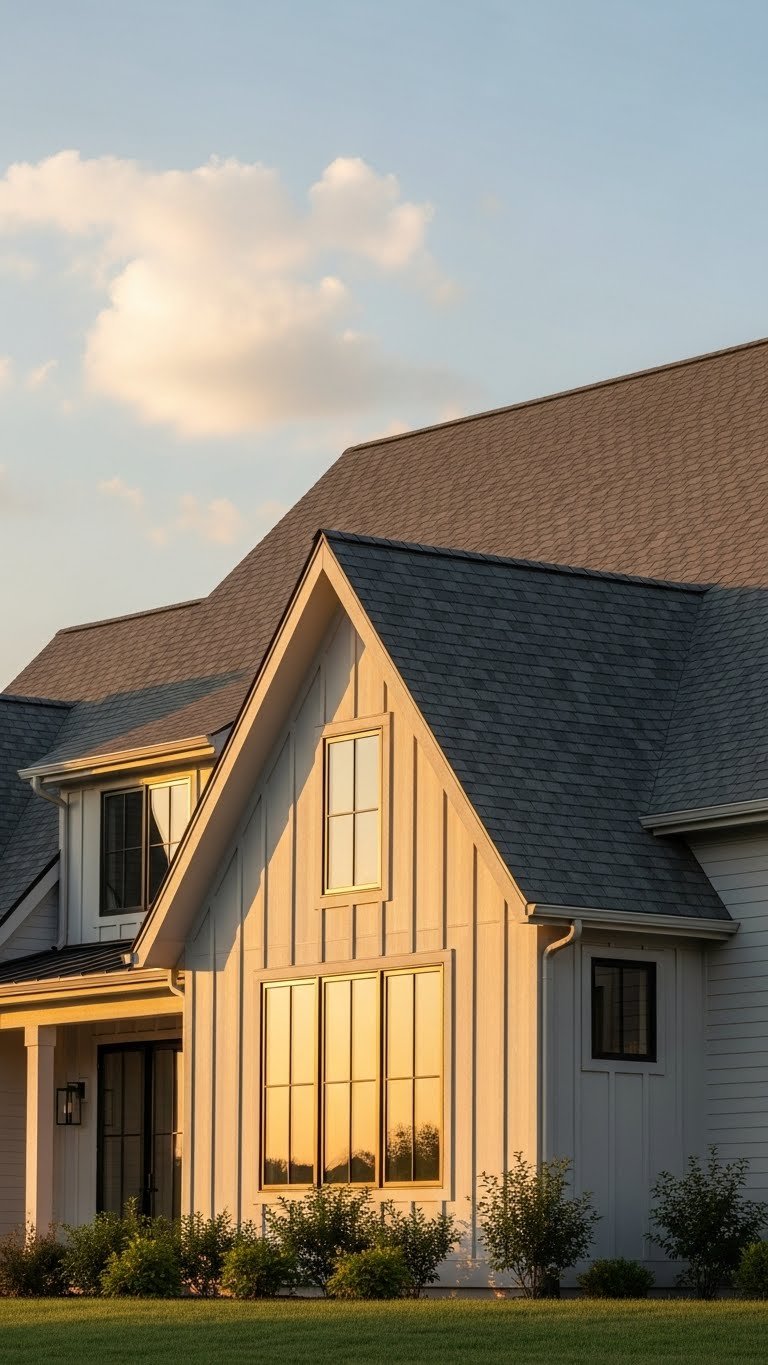
Your roof material does more than protect; it defines your home’s aesthetic. Upgrading to a higher-end or textured shingle can shift your whole roofline from “standard” to “standout.”
Architectural shingles (thicker, dimensional) run $150–$300 per square and last 25+ years. Upgrade to metal roofing ($300–$500 per square) for a modern look that photographs beautifully and lasts 50 years. Installation costs $3,000–$10,000 depending on square footage—this is a hire-a-pro project. Expect 3–7 days.
Alternative: If full replacement isn’t in the budget, spot-repair visible sections with matching premium shingles (DIY or $200–$500 installed).
A textured, high-quality roof silhouette reads as “well-maintained” and “intentional” from the curb—instantly raising perceived home value.
5. Create Geometric Color Blocking on Your Gable
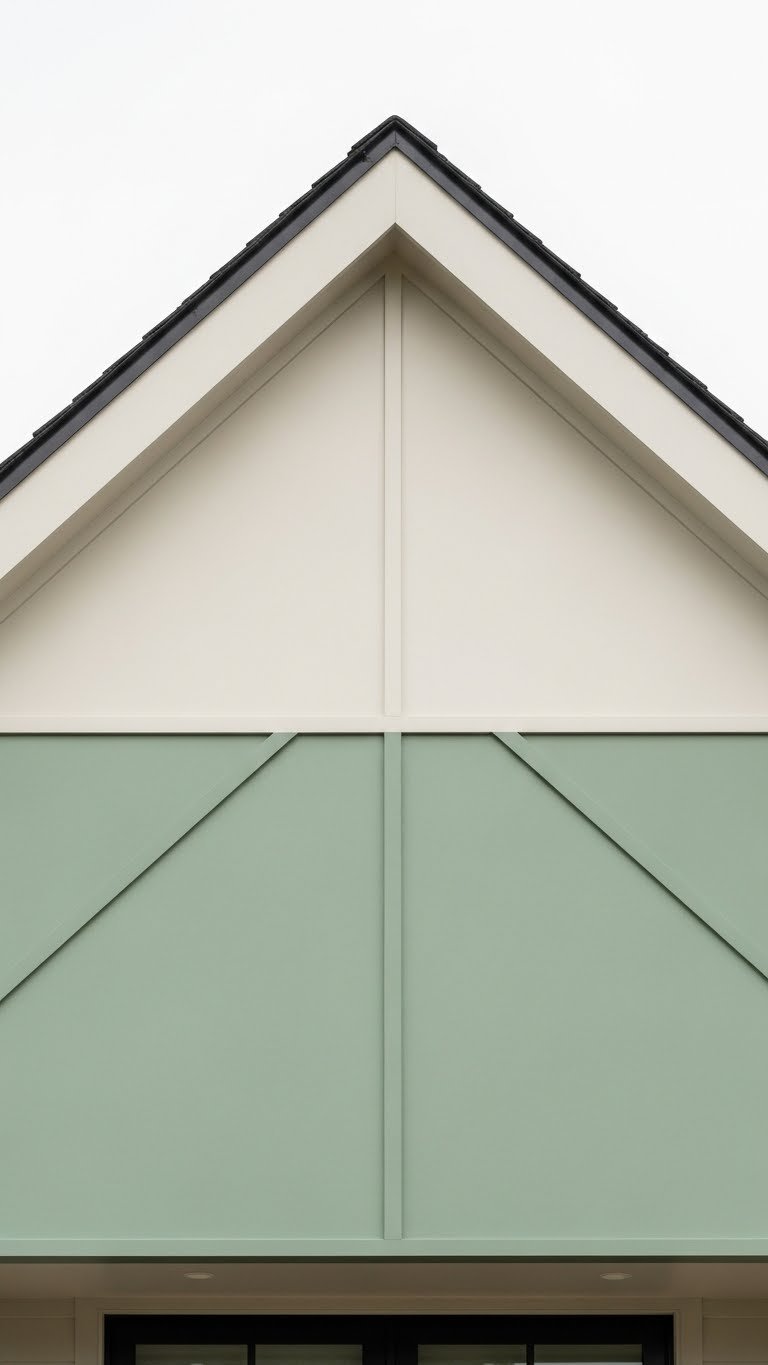
Geometric color blocking brings contemporary design to traditional rooflines. Split your gable into sections with complementary earth tones for a layered, curated look.
Paint your lower gable section a warm earth tone (sage green, warm terracotta, or muted ochre) and your upper section cream or white. Use painter’s tape ($5–$10) to mark crisp lines. This takes one full day for a confident DIYer; the key is removing tape carefully while paint is tacky. Paint costs $30–$60, and supplies are minimal.
Pro tip: Horizontal lines ground the eye; vertical lines elongate. Choose your line direction based on whether you want your gable to feel wider or taller.
This approach makes your gable look architecturally designed rather than default—and it’s a renter-friendly update if you use quality exterior paint (just plan to repaint before moving).
6. Frame Your Gable with Arched Windows or Trim
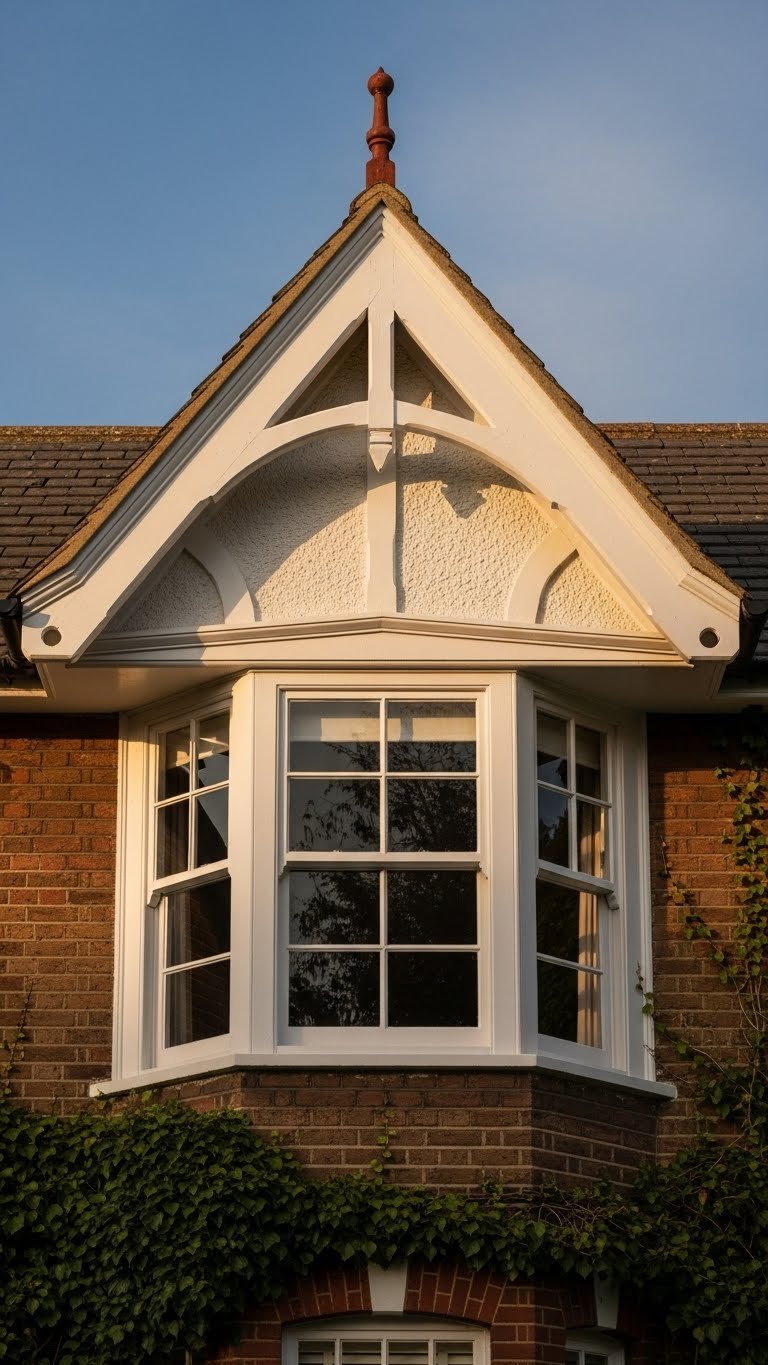
Arches soften harsh gable angles and add elegance—even to modern homes. A single arched detail above a gable window or doorway becomes an architectural signature.
Install a preformed arch trim kit ($100–$300 from Fypon or similar) or hire a carpenter to custom-build one ($400–$800 labor). Installation takes 4–8 hours. Paint to match your siding or contrast gently with your gable color. This is a moderate DIY if you’re comfortable with caulk and paint; otherwise, hire help.
Alternative: Stick with simple rounded trim (cheaper, faster) instead of a full formal arch.
The curved detail breaks up the severity of peaked rooflines and adds a handcrafted quality that feels intentional and elevated.
7. Add Solar Panels Integrated Into Your Roof Design

If sustainability is your priority, integrated solar panels on your roofline become both functional and a design statement. Modern panels are sleeker and less obtrusive than older models.
Solar panel systems cost $5,000–$15,000 installed (after incentives, often much less). They integrate best with south-facing gables and require professional installation (3–5 days). This is a longer-term investment, but it boosts home value, lowers energy bills, and signals forward-thinking design.
Pro tip: Choose panels with black frames rather than silver for a more cohesive look against most roof colors.
Your roofline becomes a functional design element that pays for itself over 5–7 years—plus you’re literally powering your home with style.
8. Paint Your Roofline Soffit and Fascia White for Clean Contrast
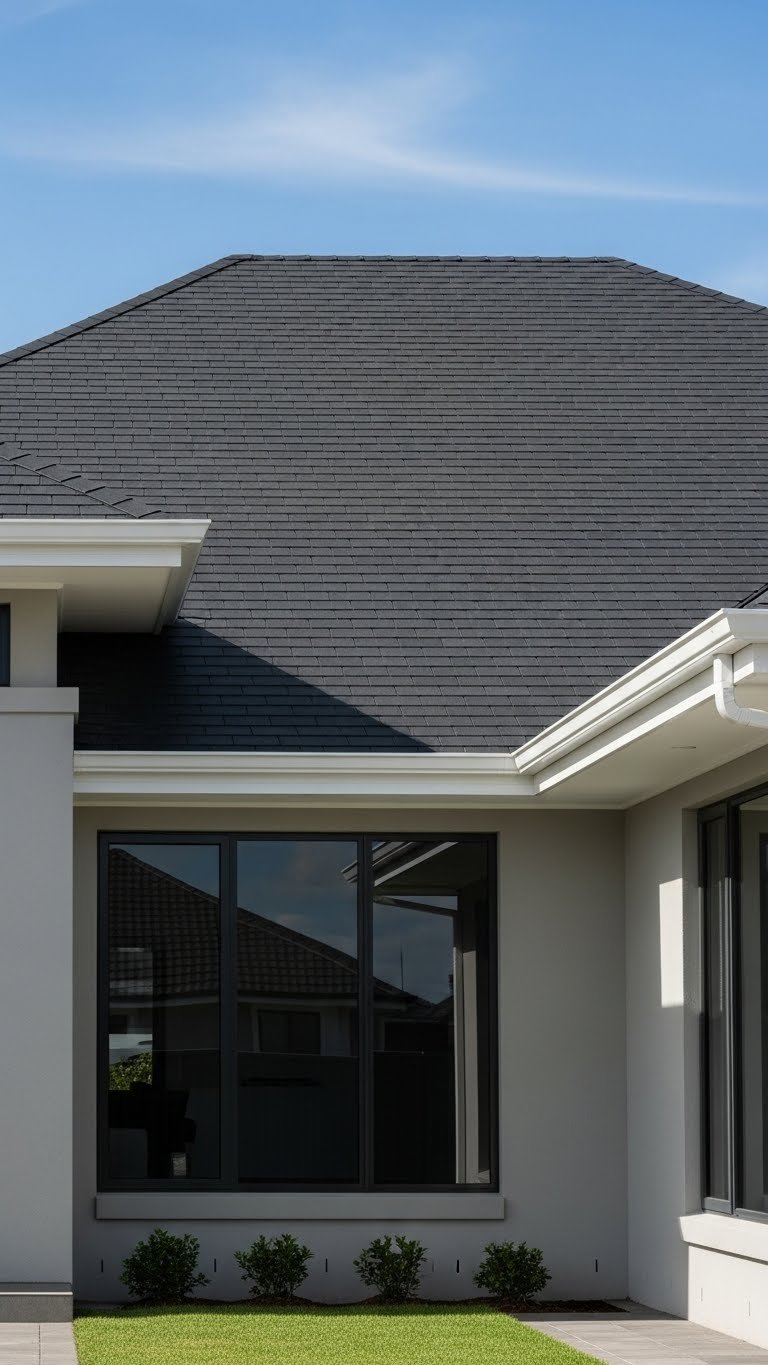
The soffit (underside of overhang) and fascia (visible trim) frame your roofline—but they’re often overlooked. Painting them white or cream creates instant visual clarity and makes your roofline pop.
This is a DIY-friendly project: brush or spray exterior trim paint ($15–$30) onto existing fascia and soffit. Takes 4–8 hours for a typical home, depending on height and square footage. No removal needed; just clean and prime first. Alternatively, hire a painter for $300–$800.
Alternative: If trim needs replacement (rotting wood), install vinyl trim boards ($100–$300 per 10 feet), which never need painting.
A crisp white roofline frame elevates your whole exterior and makes architectural details look sharper and more defined.
9. Install a Cupola or Finial Atop Your Gable Peak
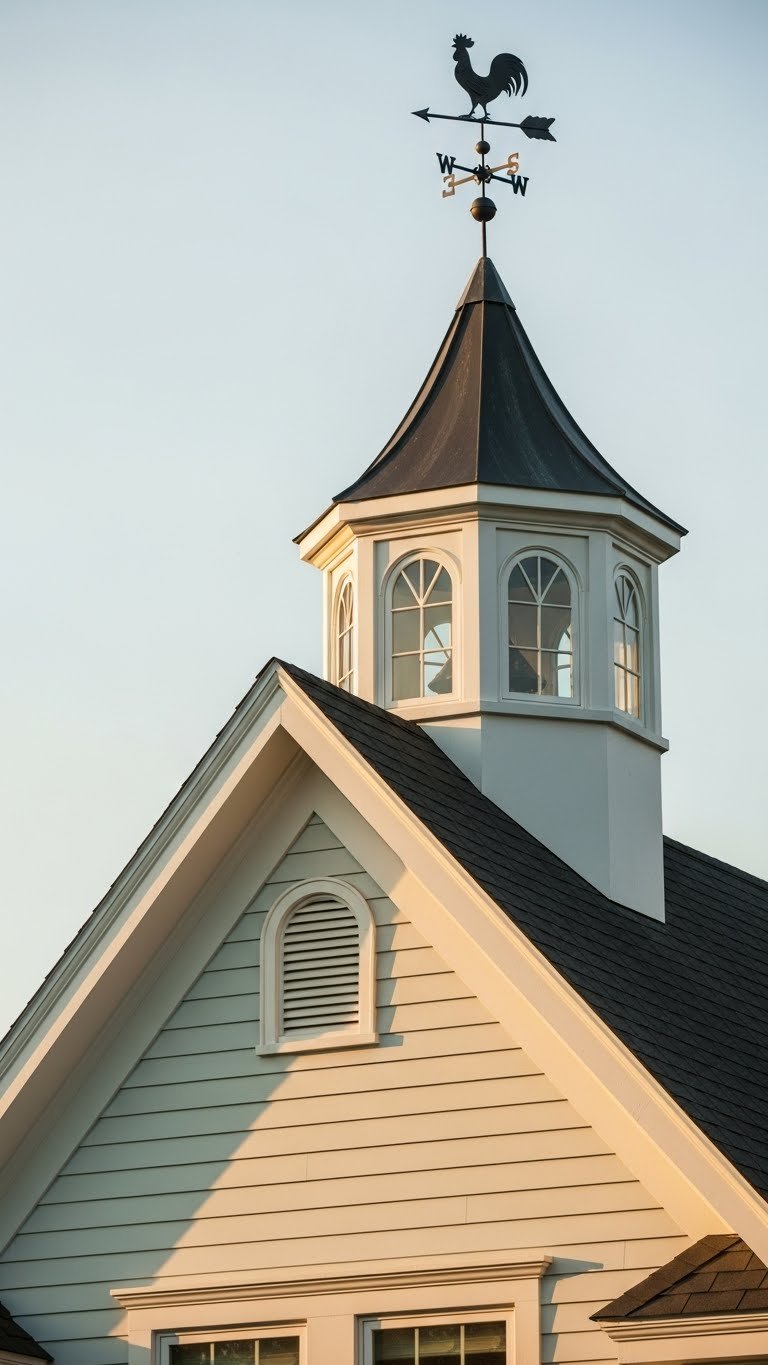
A cupola (small decorative roofed tower) or finial (pointed ornament) at your gable peak adds whimsy, charm, and a focal point for the eye. It’s pure character.
Pre-made cupolas run $200–$600 from Wayfair or specialty builders; finials are $50–$150. Installation is DIY-able if you’re comfortable on a roof (2–3 hours) or hire a handyperson for $200–$500. Both need to be anchored securely and sealed against weather.
Pro tip: Match the finish (black, white, natural wood, or metal) to your home’s style. A rustic cupola works on farmhouse; a sleek finial suits modern.
Your gable now has a true architectural crown—the kind of detail that makes people pause and admire your home’s personality.
10. Extend Your Gable Overhang for Dramatic Eaves
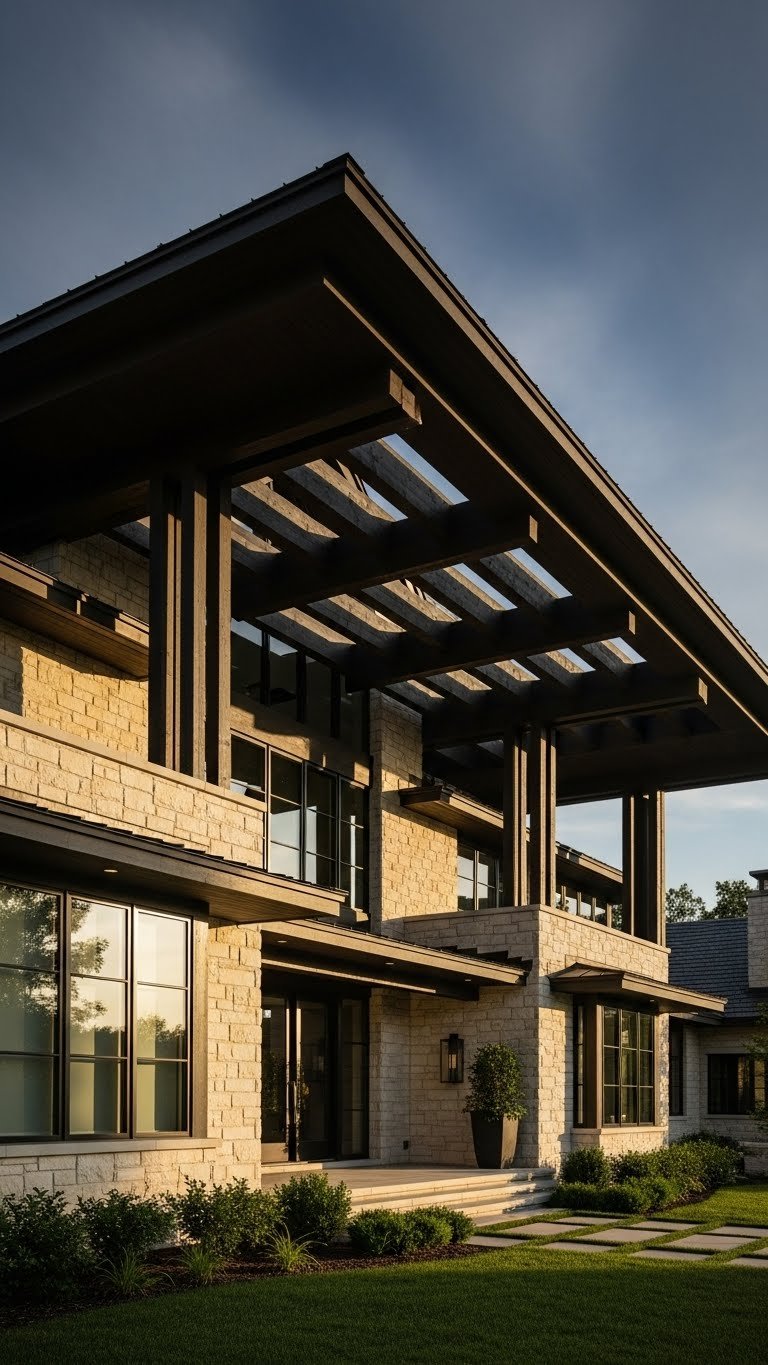
A deeper overhang—even an extra 12–24 inches—creates dramatic shadow lines and protects your siding. It’s a subtle but powerful change that shifts your roofline’s entire character.
This requires reroofing or framing adjustments ($2,000–$5,000+), so it’s an investment-level project best for roof replacement timing. If you’re already re-roofing, ask your contractor about extending the overhang; it often costs less as an add-on than standalone. Expect 1–2 weeks during a full roof project.
Alternative: Add a gable pergola or extended shade structure ($1,500–$3,000) that sits attached to your existing eave for extended shadow lines without structural work.
Extended eaves make your roofline feel intentional and substantial—like a home designed thoughtfully for both weather and beauty.
11. Use Vertical Siding to Draw Eyes Upward on Your Gable
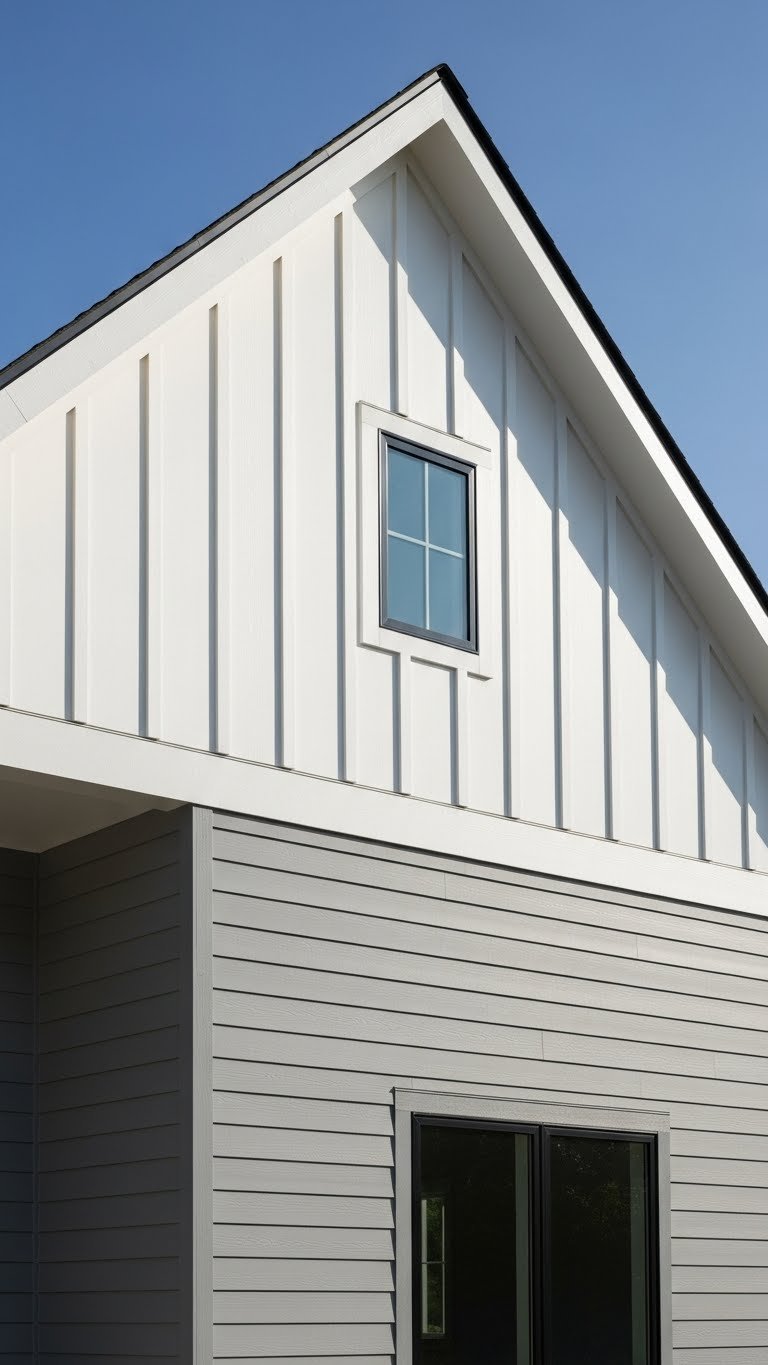
Directional siding on your gable (vertical lines while the rest of your home uses horizontal) creates visual movement and draws attention upward—instantly making rooflines feel taller and more intentional.
Install vertical shiplap ($500–$1,500 for a gable) or board-and-batten ($400–$1,200). This is a moderate DIY for confident builders or hire a carpenter for $800–$1,500 labor. Takes 2–4 days. Alternatively, use exterior paint techniques (stripes or color blocking) for $30–$60.
Pro tip: Vertical lines pair beautifully with horizontal siding below—the contrast reads as intentional, not mismatched.
Your gable suddenly looks taller, more thoughtfully designed, and visually distinct from the rest of your home—boosting overall architectural impact.
12. Paint Your Roof Edges in a Bold Accent Color
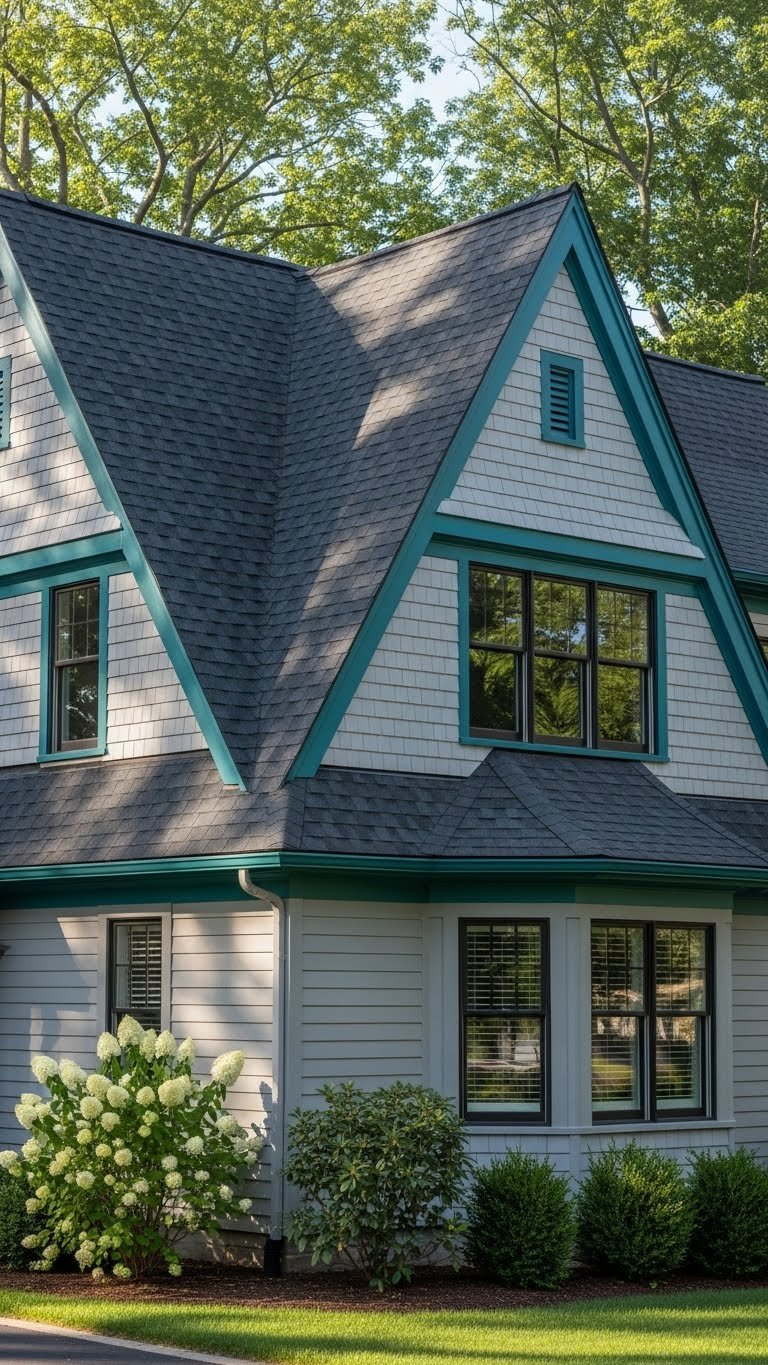
Painting your roof’s visible edges—the rake trim and drip edge—in an accent color is a bold but surprisingly sophisticated detail that few people think of.
Choose a saturated tone that complements your palette: deep teal, burgundy, or forest green. Use exterior metal paint ($20–$40 per gallon). This is a DIY task if you’re comfortable on a ladder or roof edge (3–5 hours); otherwise, hire for $200–$400. Paint carefully and tape carefully to avoid drips.
Pro tip: The edge paint is most visible from the street and in photos, so this makes a disproportionate design impact.
Your roofline now has unexpected sophistication—a detail that catches the eye in photos and sets your home apart from cookie-cutter neighbors.
13. Install Board-and-Batten Siding on Your Gable Only

Mixed textures on your gable create depth and visual interest. Board-and-batten (vertical boards with thin battens covering seams) on your gable paired with smooth siding below is both modern farmhouse and artisanal.
Board-and-batten kits run $800–$2,000 installed for a single gable. DIY installation is achievable (8–16 hours) if you own a nail gun and are comfortable with vertical alignment. Hire a carpenter for $600–$1,200 labor. Paint or stain to match your palette.
Alternative: Use corrugated metal panels ($500–$1,200) for industrial charm, or stick with paint-and-stencil effects ($50–$100) for a texture illusion on existing siding.
Your gable becomes a textural focal point—visibly elevated and thoughtfully layered compared to flat, single-material facades.
14. Crown Your Gable with Native Plants or Green Wall Texture
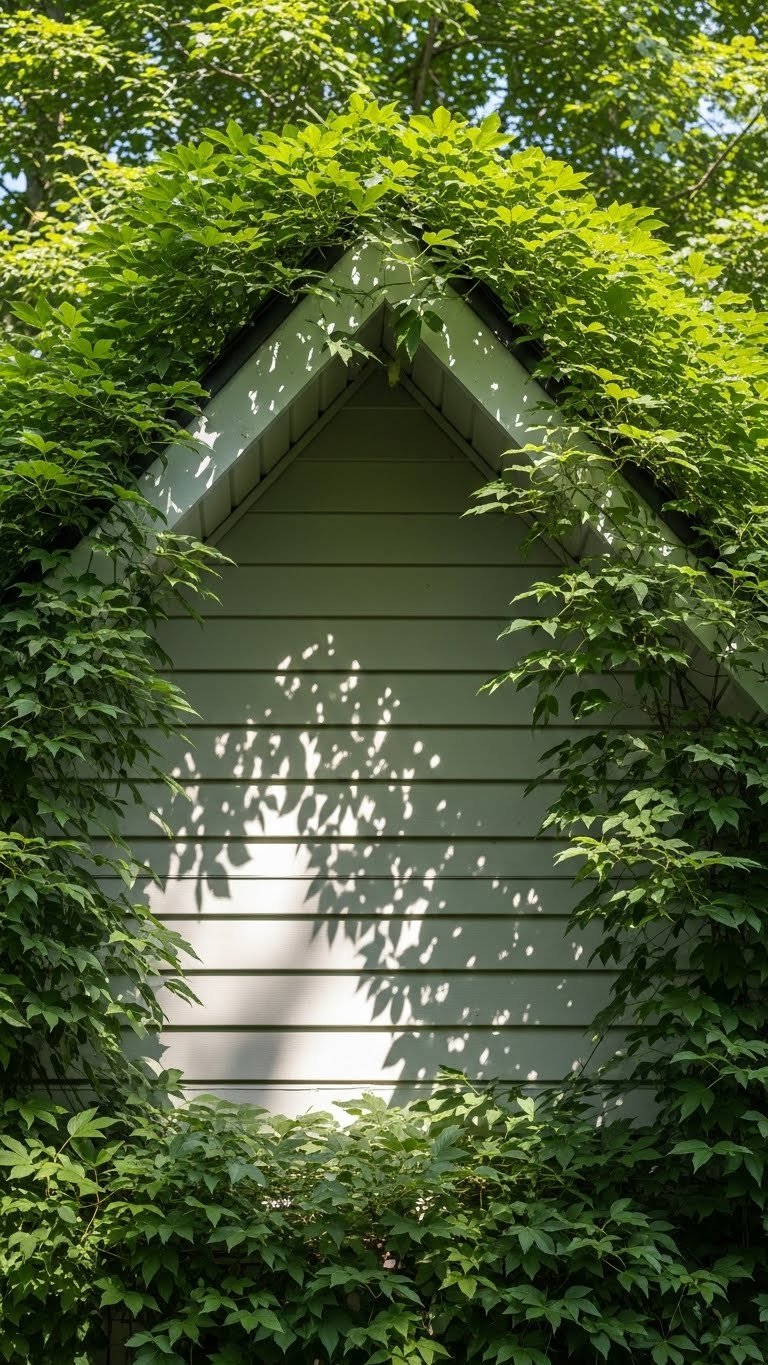
Biophilic design brings nature to your roofline. Strategically placed climbing plants or a living wall effect frames your gable peak and adds organic softness.
Plant fast-growing vines like clematis, climbing hydrangea, or ivy near trellises flanking your gable ($20–$50 per plant, plus $100–$300 for trellis installation). Takes weeks to months to fill in visibly. Low-maintenance once established, perfect for biophilic design. Alternatively, install faux green panels ($200–$600) for instant effect without watering.
Pro tip: Avoid ivy on wood siding directly (it traps moisture); use trellises instead to create a framed effect.
Your gable softens and connects to nature—creating an inviting, biophilic exterior that feels like a retreat rather than a fortress.
15. Install Ornamental Metal Railings or Finials Along Your Gable Peak
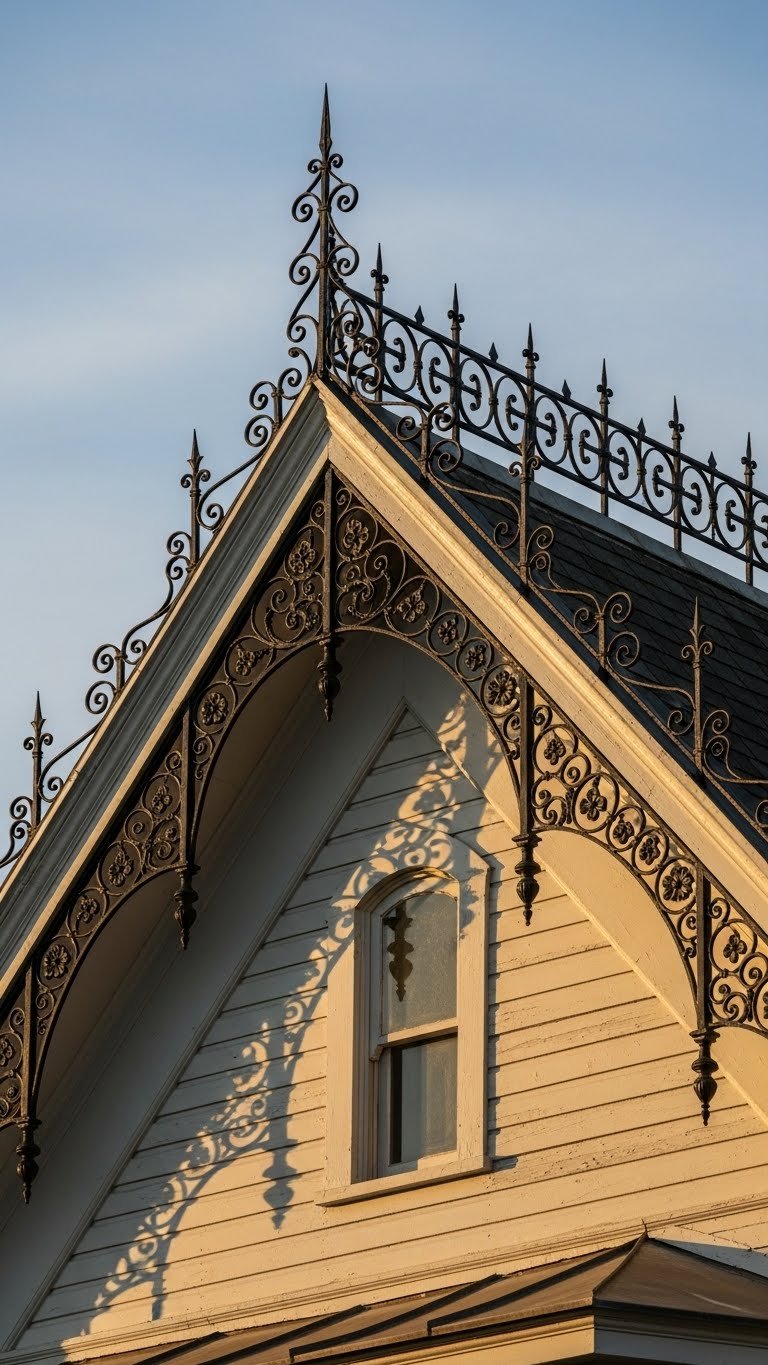
Ornamental metalwork along your gable peak adds old-world elegance and catches light beautifully—especially in photography.
Commission custom wrought iron railings or finials ($300–$1,000+) from a local ironworker for handcrafted charm. Pre-made decorative metal brackets run $100–$300 from architectural suppliers like Wayfair. Installation is DIY with basic tools (2–4 hours) or hire for $200–$400. Metal should be powder-coated for weather resistance.
Pro tip: Black, bronze, or copper finishes age beautifully and complement most color palettes.
Ornamental metalwork elevates your home to look artisan-crafted rather than mass-produced—especially striking at sunrise and sunset when light hits the metal.
16. Paint Your Gutters and Downspouts to Match or Contrast
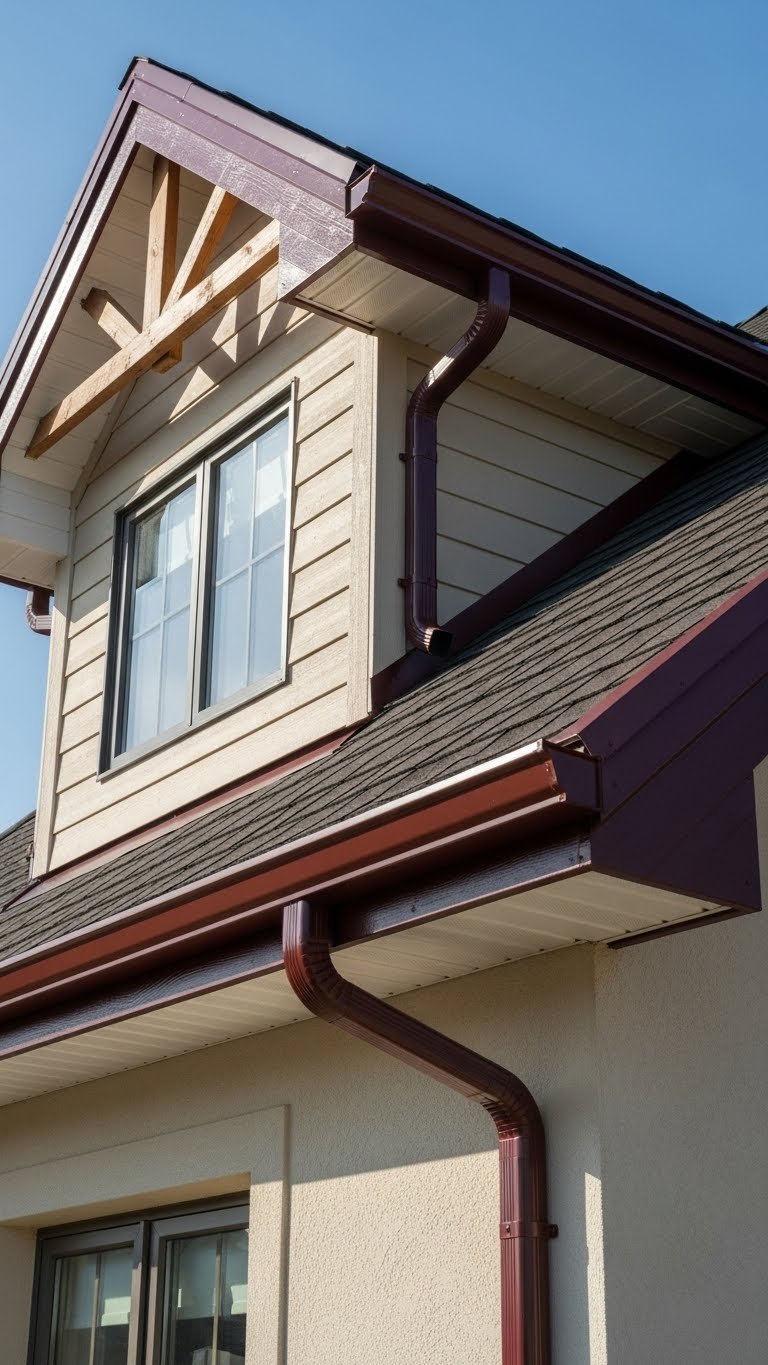
Gutters and downspouts are visible from the street but rarely styled—a missed opportunity. Painting them to match your gable or siding creates intentional visual flow.
Choose to match your gable paint, your siding, or go bold with a contrasting accent. Use exterior metal paint or spray paint for metal ($15–$30). DIY: 4–6 hours of brushing or spraying; hire a painter for $300–$500. Clean gutters thoroughly first for best adhesion.
Pro tip: If your gutters are stained or mismatched, painting is cheaper than replacement and looks instantly refreshed.
Coordinated gutters create visual cohesion along your roofline—a detail that reads as “well-maintained” and thoughtfully designed.
17. Add Layered Wood Beams or Faux Beams Under the Gable
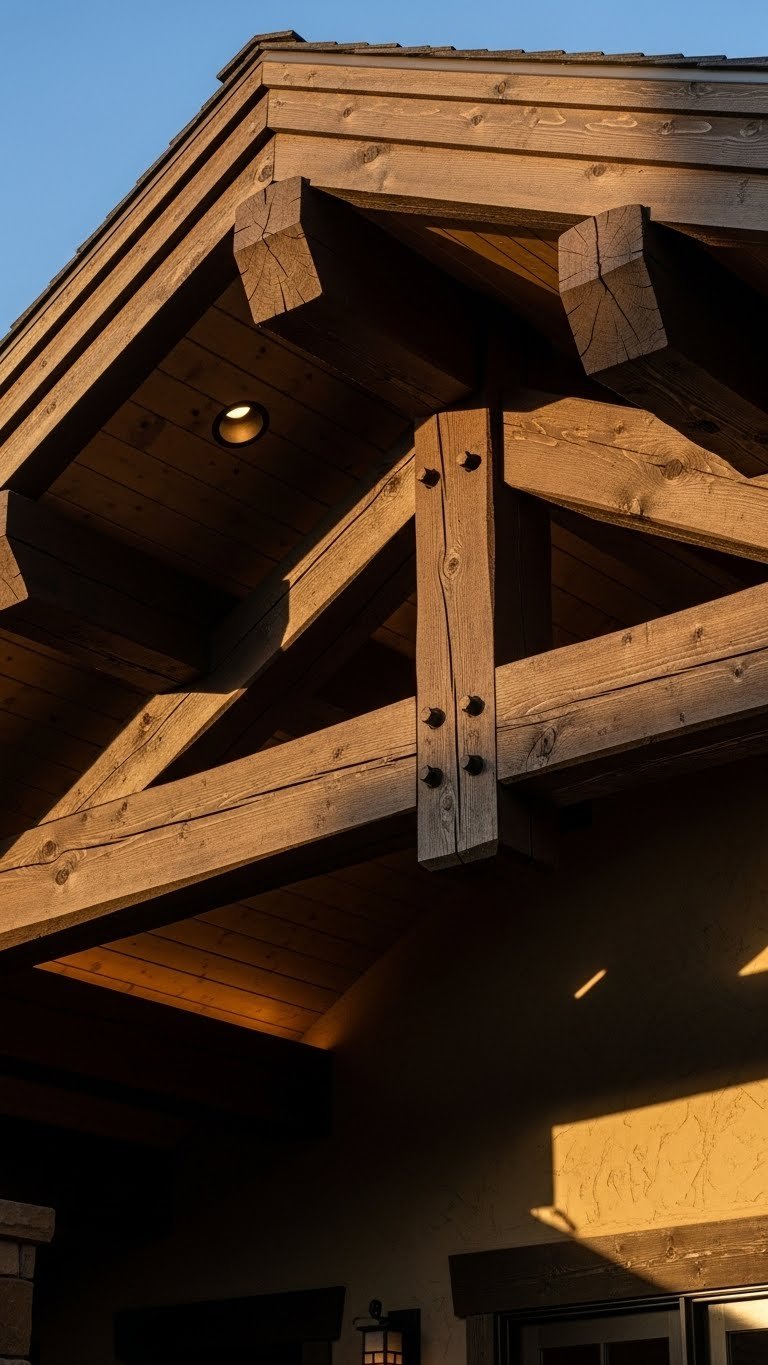
Exposed or faux beams under your gable add warmth, shadow, and handcrafted character—especially effective on farmhouse or rustic modern styles.
Real timber beams ($50–$150 per linear foot) require structural support and are best installed during a roof project ($2,000+). Faux beams ($30–$80 per linear foot) look authentic, install faster (6–12 hours DIY or $400–$800 hired), and weigh nothing. Paint them to match your palette or leave natural for contrast.
Pro tip: Layering 2–3 beams of varying thicknesses looks richer than a single beam.
Wooden beams warm your roofline instantly, creating shadow lines and artisanal depth that photographs beautifully.
18. Frame Your Gable Window with Custom Shutters or Trim
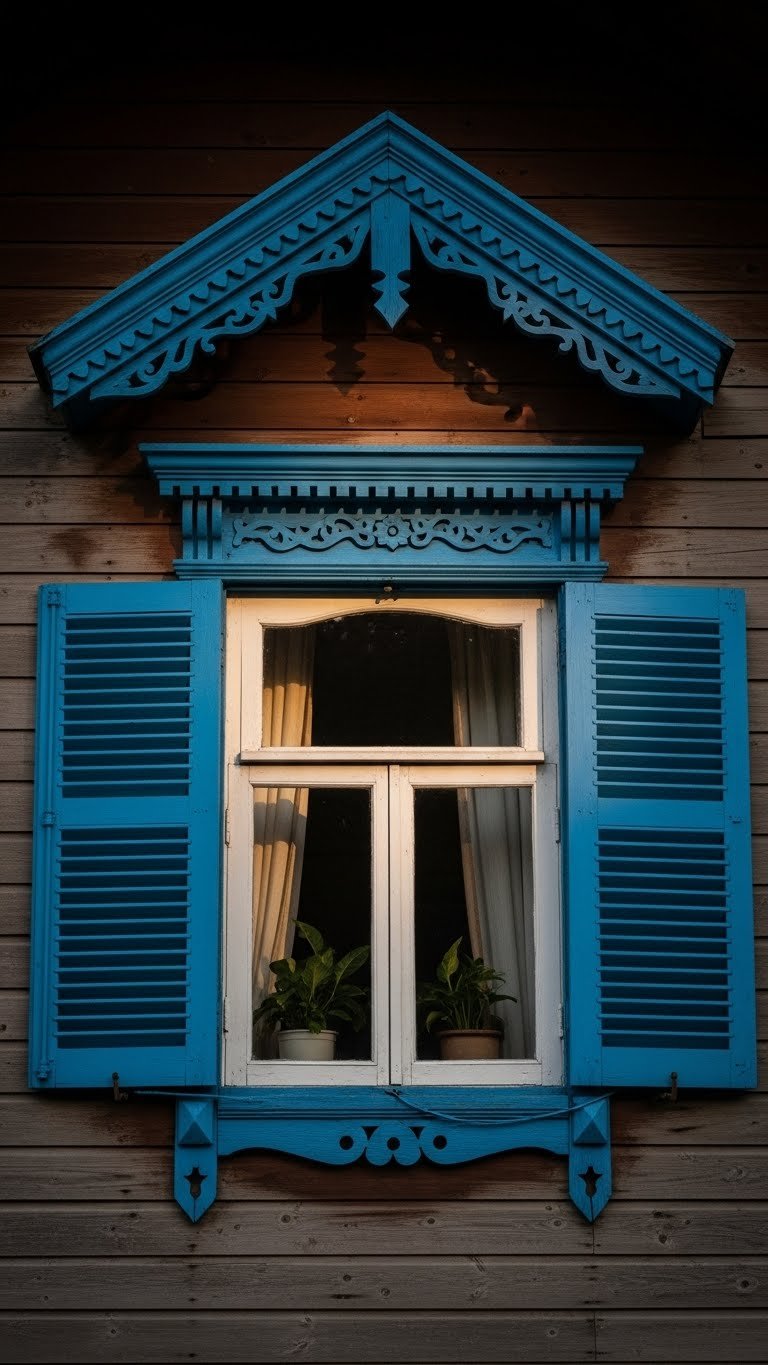
A gable window deserves a frame. Custom shutters or decorative trim around your gable window make it a focal point rather than an afterthought.
Functional shutters (that actually close) run $200–$600 per pair; decorative stationary shutters cost $100–$300. Pair with trim kit ($50–$150). Installation is DIY-able (2–3 hours) or hire for $200–$400. Paint shutters in a contrasting color: deep green, burgundy, or charcoal reads beautifully against light siding.
Alternative: Skip shutters and frame the window with simple painted trim bands ($50–$100 materials) for a cleaner, modern look.
Your gable window becomes an architectural feature people notice—creating balance and intentional detail in your roofline.
19. Install Skylights or Rooftop Windows in Your Gable
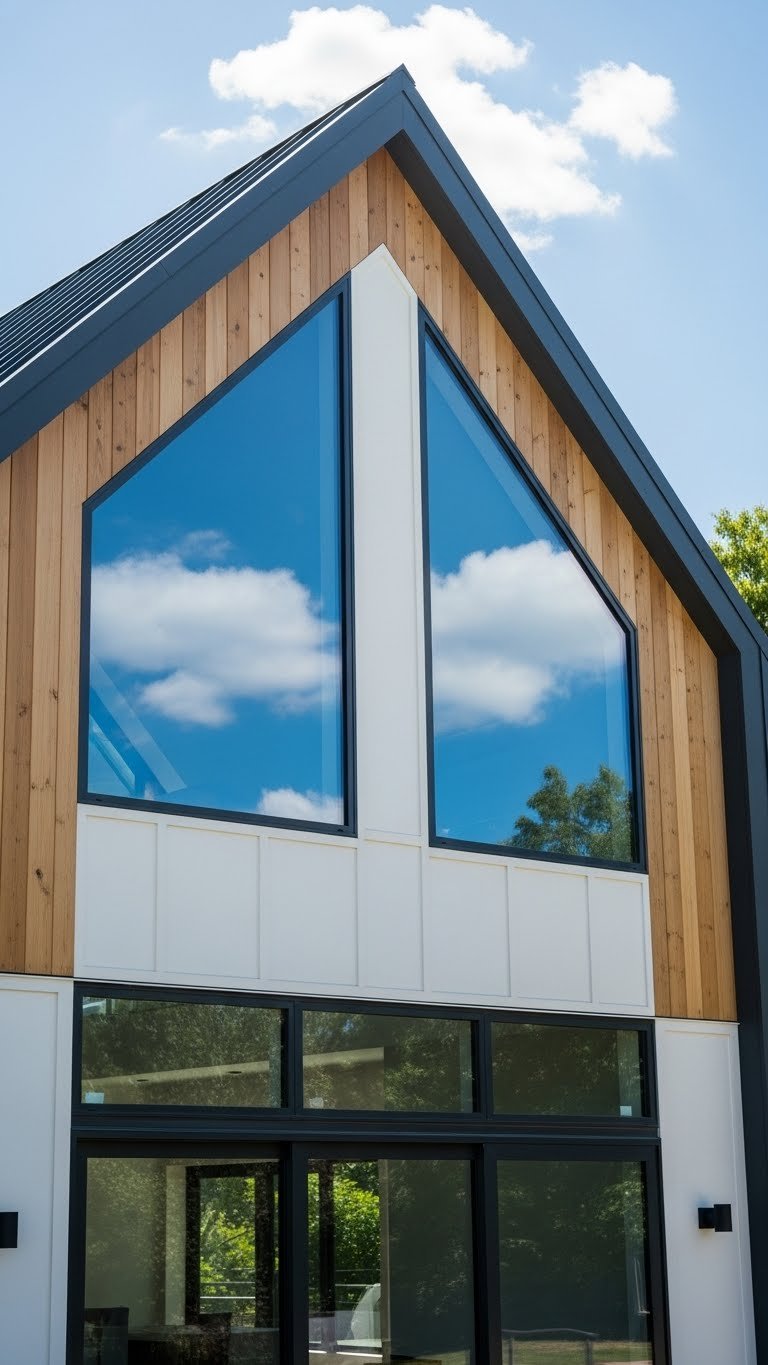
Functional skylights in your gable aren’t just practical—they’re a visible design element that adds light and modern appeal.
Skylight installation costs $500–$1,500 per window (materials + labor). Hire a roofer or handyperson; this isn’t a DIY project. Expect 1–2 days. Modern skylights have improved energy efficiency, so you’re not sacrificing insulation. Position them to catch morning light for maximum visual and functional impact.
Pro tip: One centered skylight in a peaked gable looks more intentional than multiple scattered windows.
Skylights brighten your interior and add visible contemporary detail to your roofline—signaling that your home has been thoughtfully upgraded.
20. Use Stucco Finish for Modern-Traditional Texture
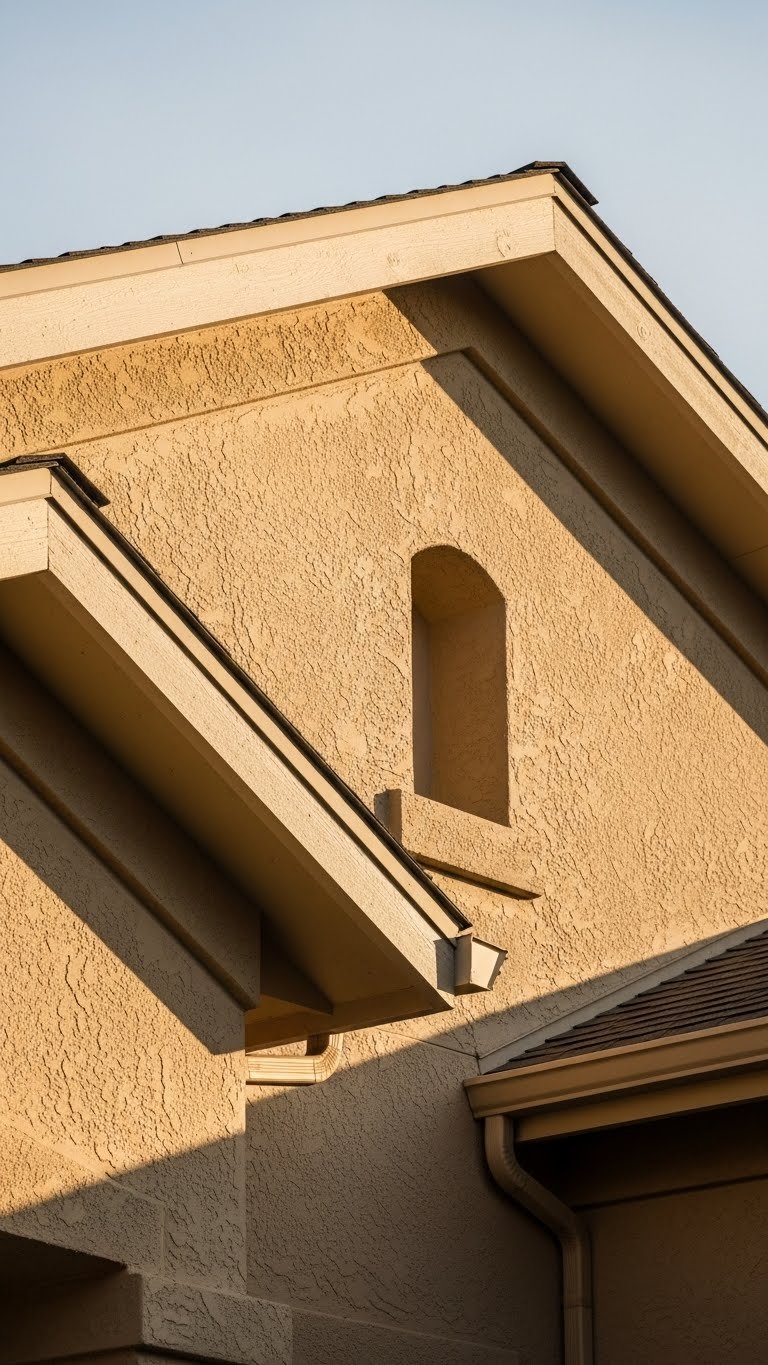
Stucco is a trending, durable material that adds depth and warmth to gables—especially effective with earthy color palettes.
Stucco finish ($3–$8 per square foot, or $500–$2,000 for a gable) can be applied over existing siding if structurally sound. Hire a stucco contractor; this requires skill and equipment. Takes 3–5 days to apply and cure. Stucco lasts 20+ years and pairs beautifully with warm earth-tone paint.
Alternative: Use faux stucco paint finish ($100–$200 materials, DIY-able in 1–2 days) for texture without structural changes—less durable but budget-friendly.
Textured stucco gives your gable sophistication and a Mediterranean or artisan feel—durable and photogenic for years.
21. Paint Your Gable in Color-Drenched Maximalism
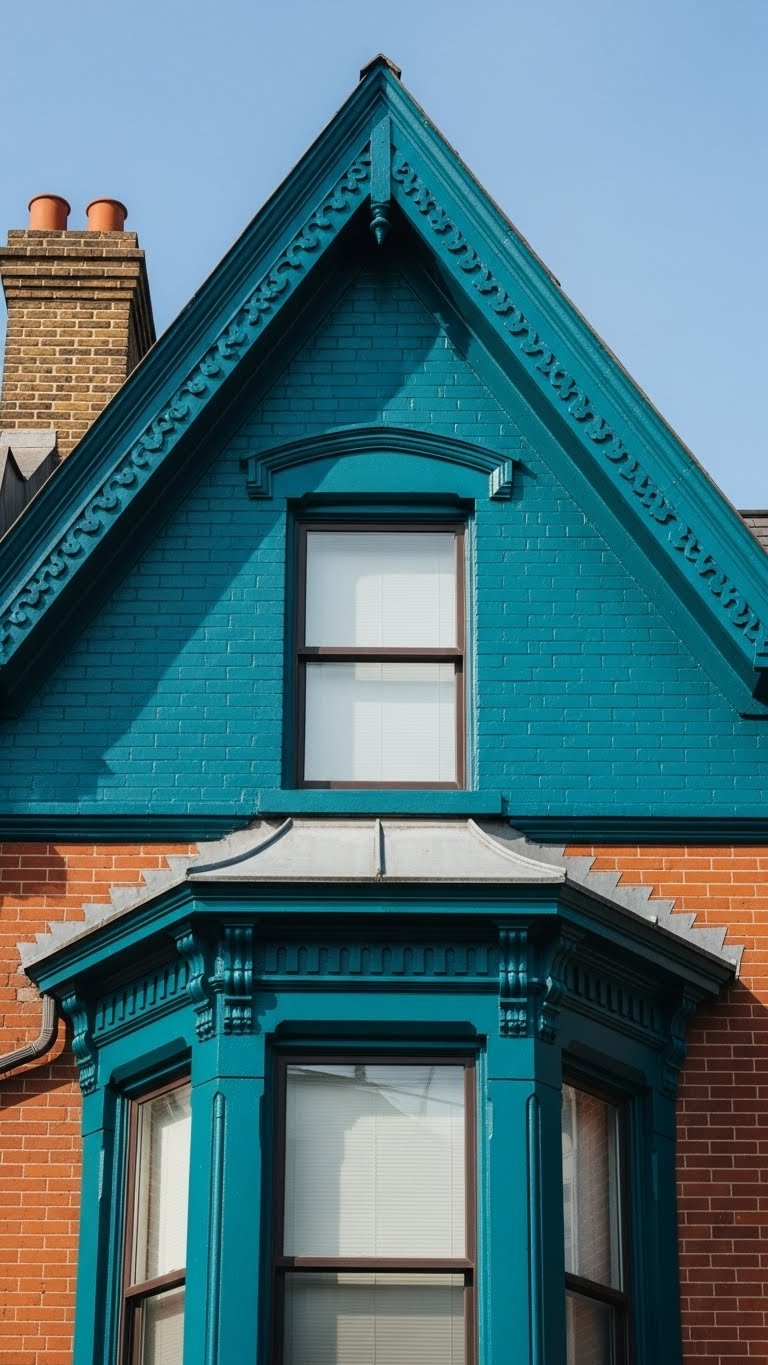
Color drenching your entire gable in a bold, saturated hue is maximalist but powerful—a trend that reads as intentional luxury.
Choose deeply pigmented colors: burgundy, teal, forest green, or charcoal. Use premium exterior paint ($40–$70 per gallon) for richer color. Paint your entire gable (1–2 days DIY or $500–$1,200 hired). Keep siding neutral to balance the boldness. This style photographs exceptionally well in warm light.
Pro tip: Test your color with large sample patches for 3–5 days before committing; bold colors read very differently in different light.
Your gable becomes a confident design statement—the kind of detail that makes your home memorable and distinctive in your neighborhood.
22. Layer Mixed Materials: Wood, Metal, Stone on Your Gable
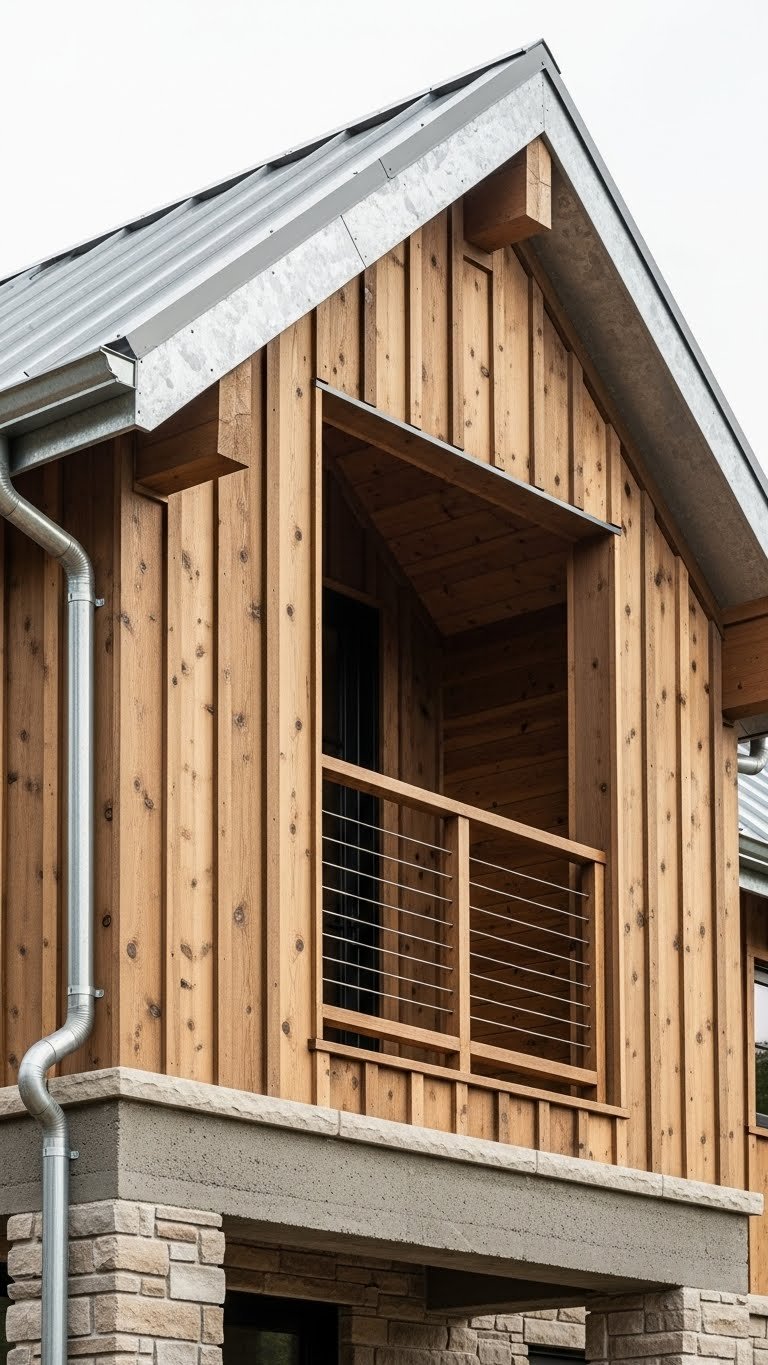
Mixed materials on your gable create rich texture and visual interest—the hallmark of expensive, custom design.
Combine vertical wood siding ($800–$1,500) with galvanized metal brackets or railings ($200–$400) and stone or concrete trim ($300–$600). Install over 2–3 days DIY (if confident) or hire a contractor for $1,500–$2,500 labor. The key is balancing materials so they feel intentional, not chaotic.
Pro tip: Stick to a cohesive color palette (warm wood, bronze metal, neutral stone) so mixed materials read as curated rather than mismatched.
Layered materials give your gable high-end, artisan appeal—the kind of textural detail that catches eyes and reads as thoughtfully designed.
23. Install a Standing-Seam Metal Roof for Modern Sleekness

Standing-seam metal roofing is one of the most visually striking upgrades—sleek, modern, and durable for 50+ years.
Standing-seam metal roofing costs $300–$500 per square installed (pricier than shingles but lasts longer). This is a full-roof project requiring professional installation: 3–7 days, $5,000–$12,000+ total. Choose charcoal, bronze, or natural copper for maximum visual impact. The clean seams and flat finish read as premium contemporary design.
Alternative: If full replacement isn’t feasible, metal roof panels in a gable-only accent ($800–$2,000) creates visual interest without replacing your whole roof.
A metal roofline is instantly recognizable as high-end, modern design—the kind of statement that sets your home apart and photographs beautifully from every angle.
SOFT CTA:
Save this post and pick one idea that excites you most—whether it’s a bold paint color this weekend or a bigger project for next season. Your roofline deserves to be noticed, and the best time to start is now. Share this with a friend who’s thinking about their exterior refresh too.
Leave a Reply