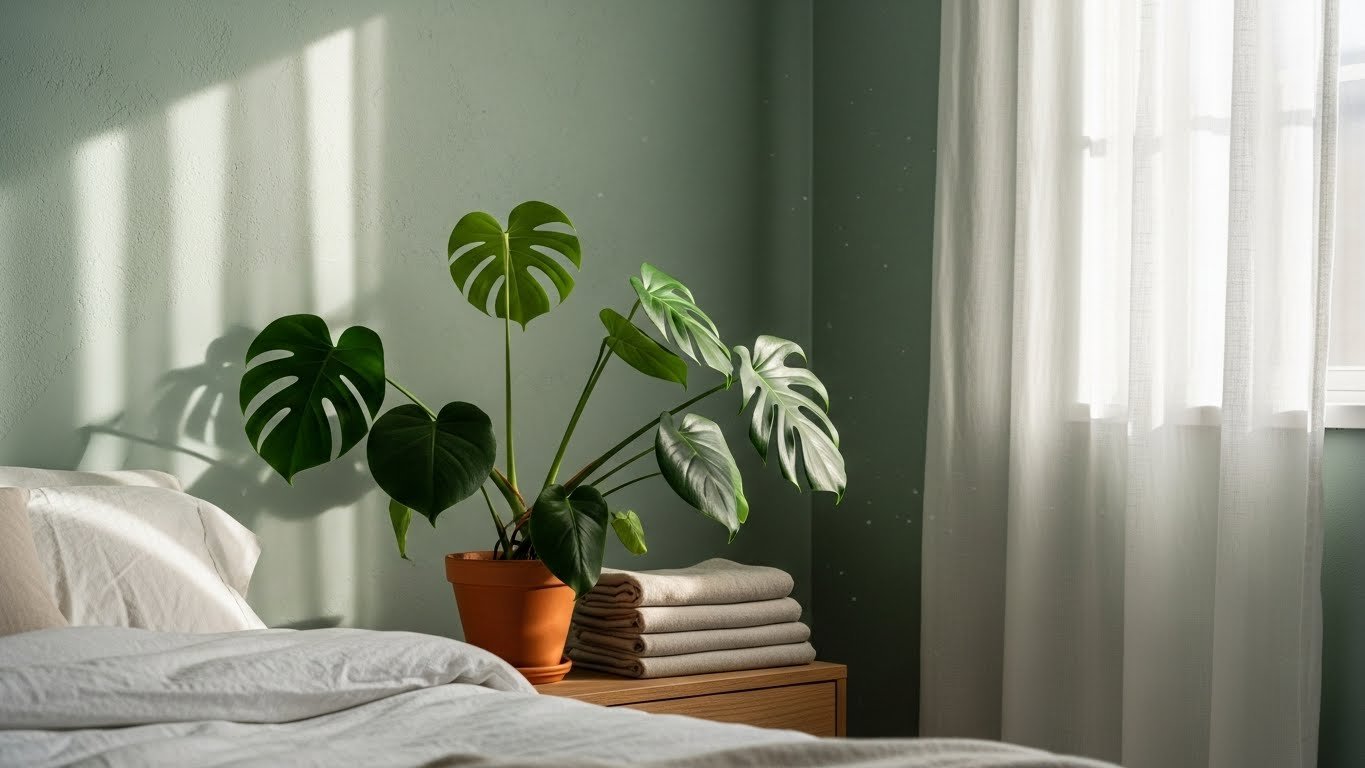
Your walls have so much power over how you feel in a space. When they’re the wrong color or feel flat and uninspired, even a beautiful room can feel off. The good news? Nature-inspired painting ideas are easier to pull off than you think—and they work in any room, from bedrooms to living rooms to home offices.
We’ve rounded up 26 specific ideas you can start this weekend. You’ll find everything from soft earth tones that calm your mind to deeper greens that anchor a space with intention. Some are free styling tricks, others are budget-friendly paint jobs, and a few are investment pieces that’ll last years. Whether you’re renting or own, skilled with a paintbrush or completely new to this, there’s something here for you. Let’s make your space feel like a retreat.
1. Paint Accent Wall in Soft Sage
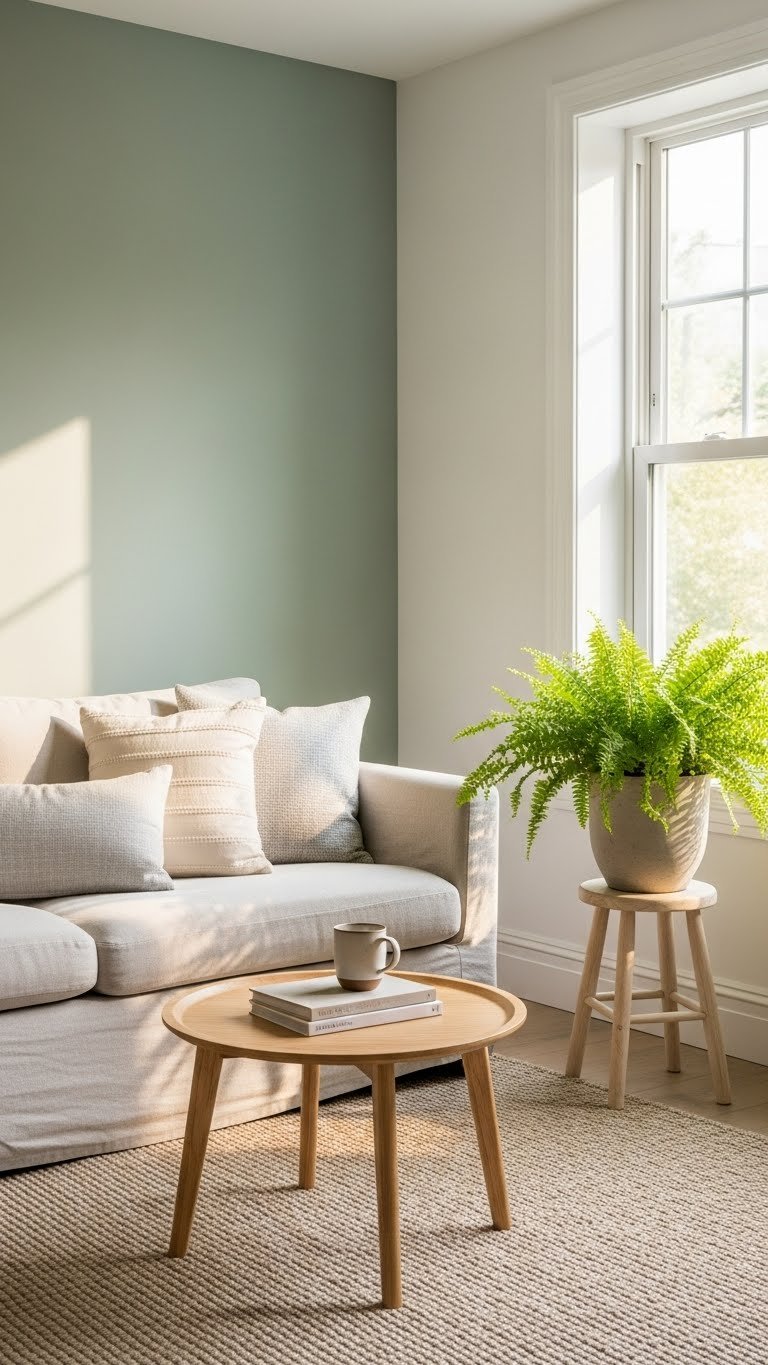
Sage green has staying power because it feels calming without being boring. One accent wall gives you the nature vibe without overwhelming the whole room.
Measure your wall and grab paint in Benjamin Moore HC-123 (Healing Aloe) or Sherwin-Williams 9205 (Evergreen Fog)—both run $35-$50 per gallon. Plan for 2-3 hours if you’re new to painting (tape, primer, two coats). You’ll need a roller, brush, and painter’s tape from any hardware store. Pro tip: Paint a test swatch and live with it for a few days first. Different lighting shows different sides of the same color.
One accent wall makes the whole room feel intentional, and you’ll catch yourself just staring at it—in the best way.
2. Create Ombre Gradient Using Two Paint Shades
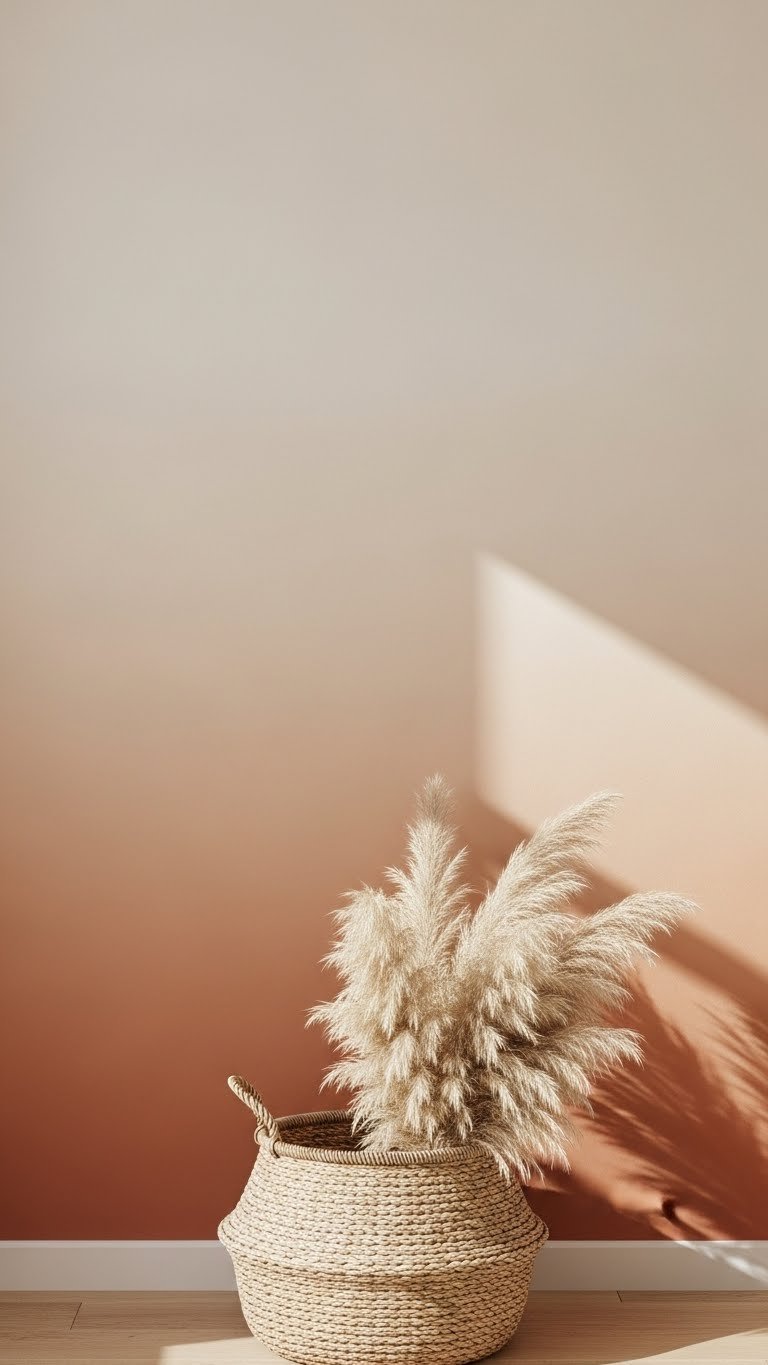
Ombre walls create subtle depth without feeling gimmicky. The gradient draws the eye and makes rooms feel more curated.
Pick two coordinating colors (like cream fading to soft clay or pale blue to deeper teal). Benjamin Moore has matching palettes for this—around $35-$50 each. Divide your wall into horizontal thirds with light pencil marks. Paint the top section in your lighter shade (2 coats), bottom section in darker (2 coats), then blend the middle with a sponge or dry brush. This takes about 4-5 hours and is easier than it sounds—mistakes blend naturally. YouTube has great visual tutorials if you’re nervous.
The result feels sophisticated and way more personal than a flat wall. Plus, your room photographs better for future design inspo.
3. Stencil a Botanical Pattern on One Wall
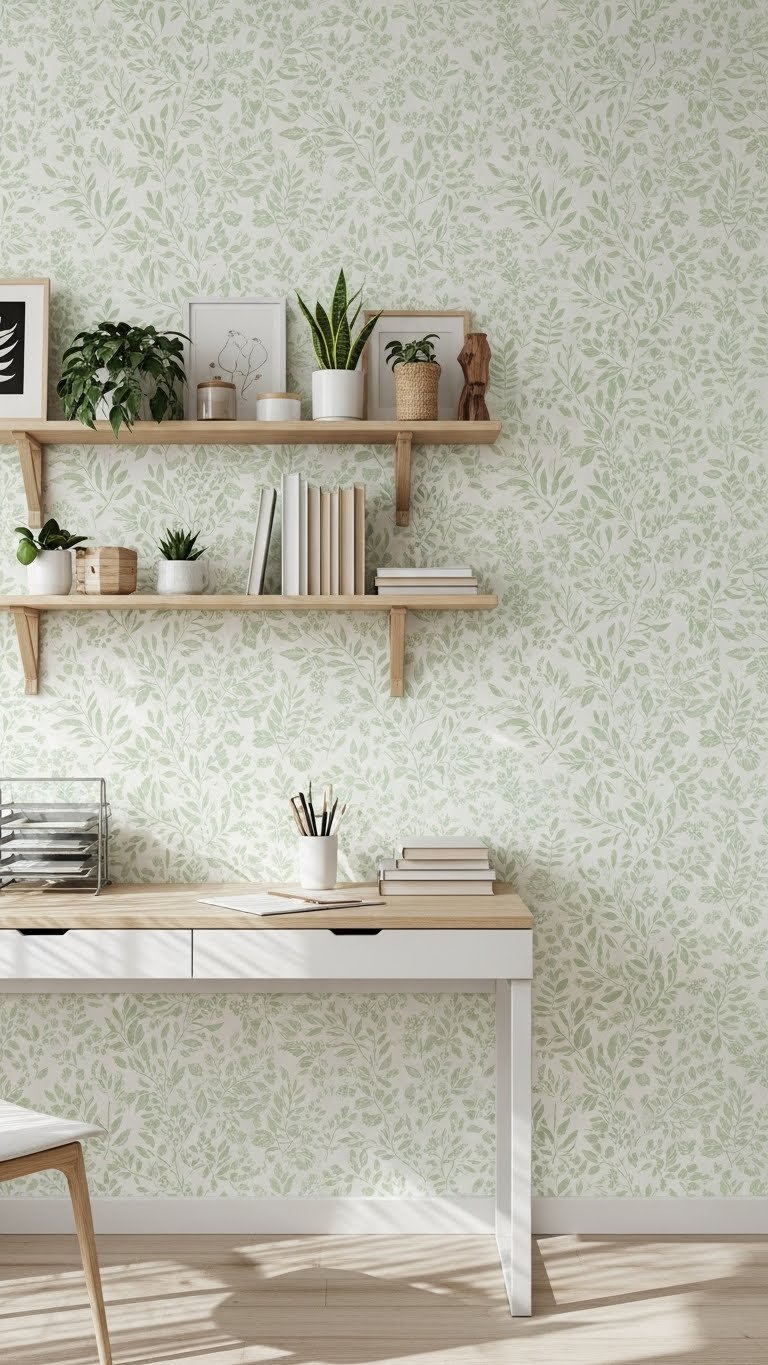
Stenciled botanicals add texture and personality without the mess of a full mural. They’re perfect if you love detail but want something manageable.
Grab a botanical stencil from Etsy ($15-$30) or Amazon—there are hundreds. Tape it to your wall with painter’s tape, then use a stencil brush with a dabbing motion (don’t drag). One or two coats of your paint usually works. Expect 3-6 hours depending on how detailed the pattern is and wall size. You can do a single accent wall or repeat the pattern across multiple walls. Start small—even one wall makes a huge difference.
Your guests will ask where you bought the wallpaper. Bonus: renters can do this and take it down cleanly later.
4. Layer Warm White Base with Natural Wood Accents
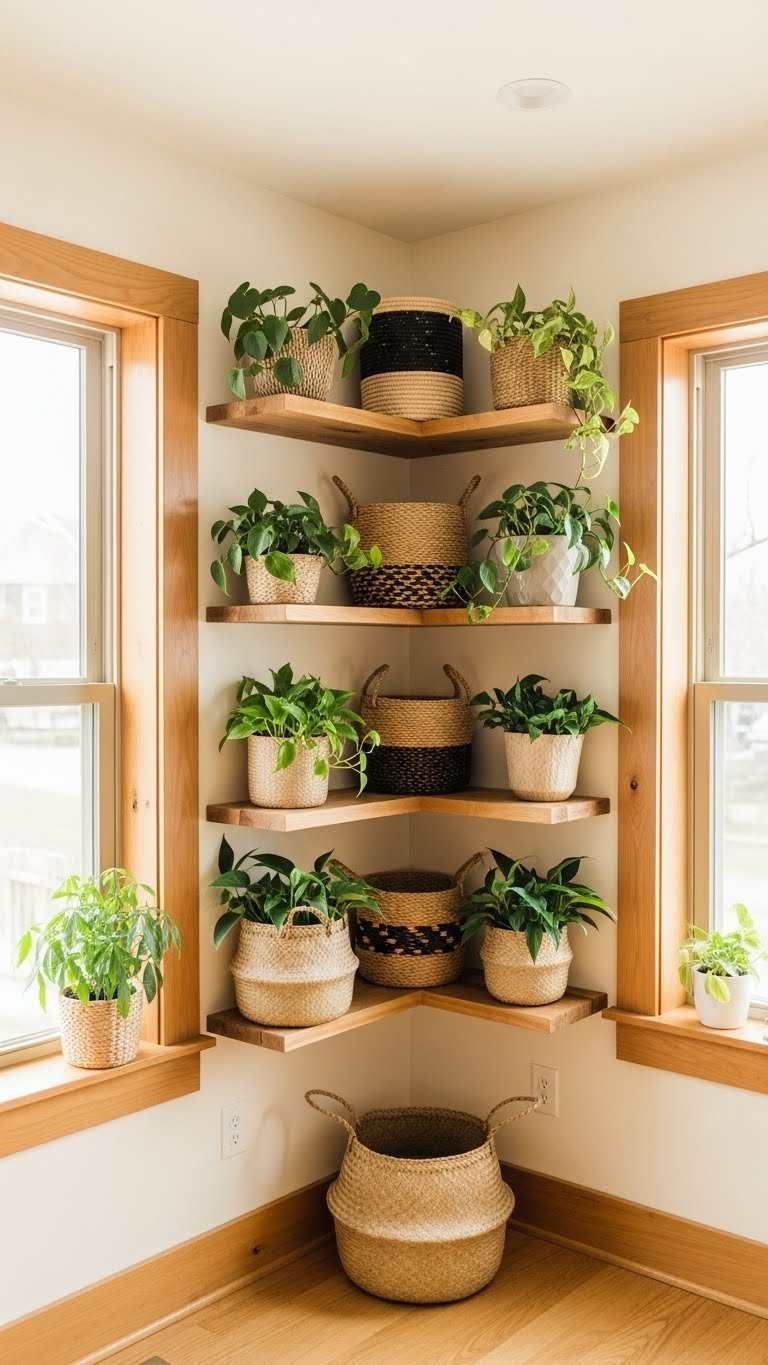
Warm whites have replaced cool grays, and pairing them with natural wood creates an instantly cohesive look. This works in any room and feels timeless, not trendy.
Paint walls in Sherwin-Williams 7015 (Repose Gray) or Benjamin Moore 2108-70 (Pale Oak)—both are warm whites around $35-$40. Keep trim and shelving in natural wood tones (oak, walnut, or pine). One weekend for a full room paint job. The key is layering: light walls + warm wood + natural fiber accessories (jute rugs, linen curtains). This combination reads as thoughtful and expensive without being complicated.
Spaces with warm whites and wood just feel warmer—literally and emotionally. It’s the easiest way to make a room feel like a retreat.
5. Paint Ceiling in Soft Peach or Blush Tone
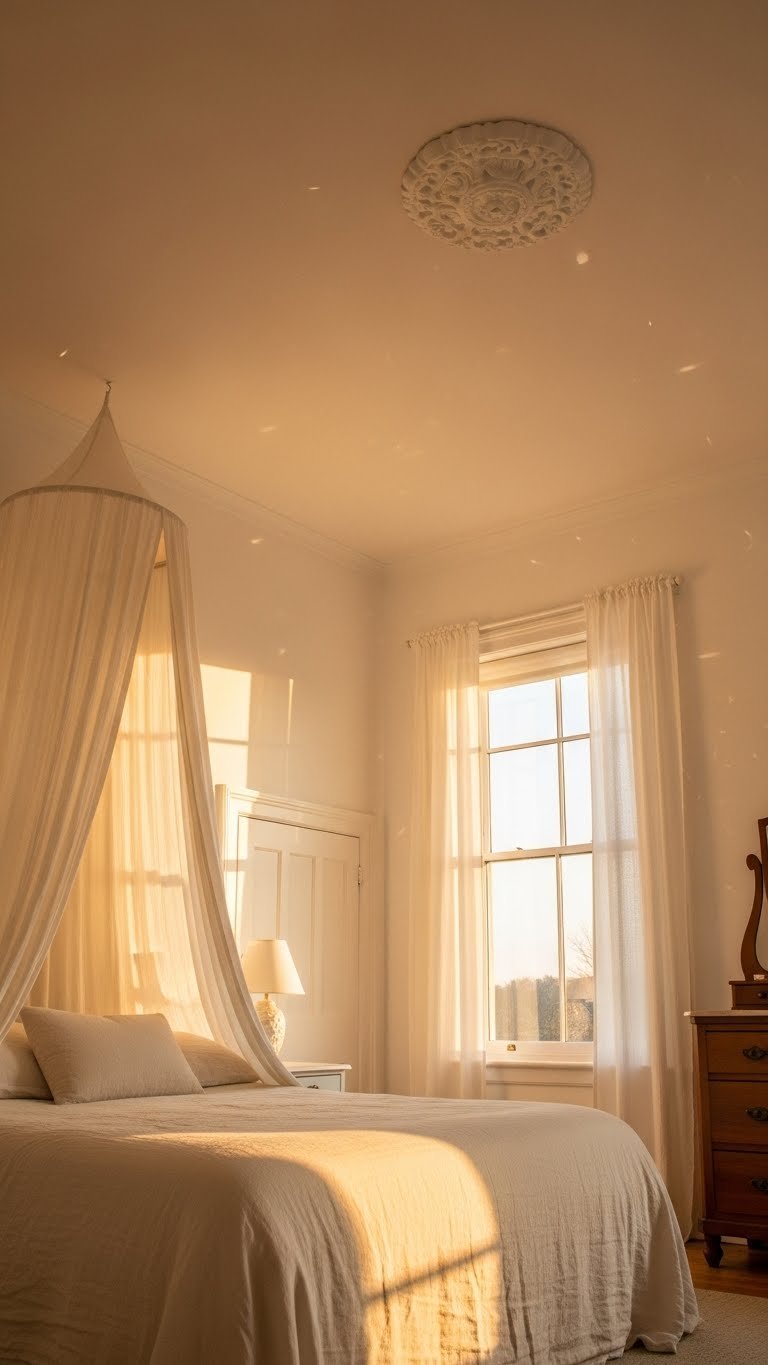
A painted ceiling surprises people—and changes how a whole room feels. Soft peachy tones make spaces cozy and romantic without feeling childish.
Choose Benjamin Moore 1304 (Pink Eraser) or Sherwin-Williams 7606 (Creamy)—both soft peachy neutrals around $30-$40 per gallon. You’ll need a 4-6 foot ladder and an extension pole. Plan 2-3 hours for an average bedroom ceiling. Primer first, then two coats. Yes, it’s a little awkward painting overhead, but the payoff is huge. Bonus: lighter ceilings make rooms feel taller, darker ceilings feel cozier—pick based on your space.
Visitors always notice a painted ceiling first. It’s the kind of detail that makes a space feel designed and intentional.
6. Use Deep Emerald Green for Drama and Depth
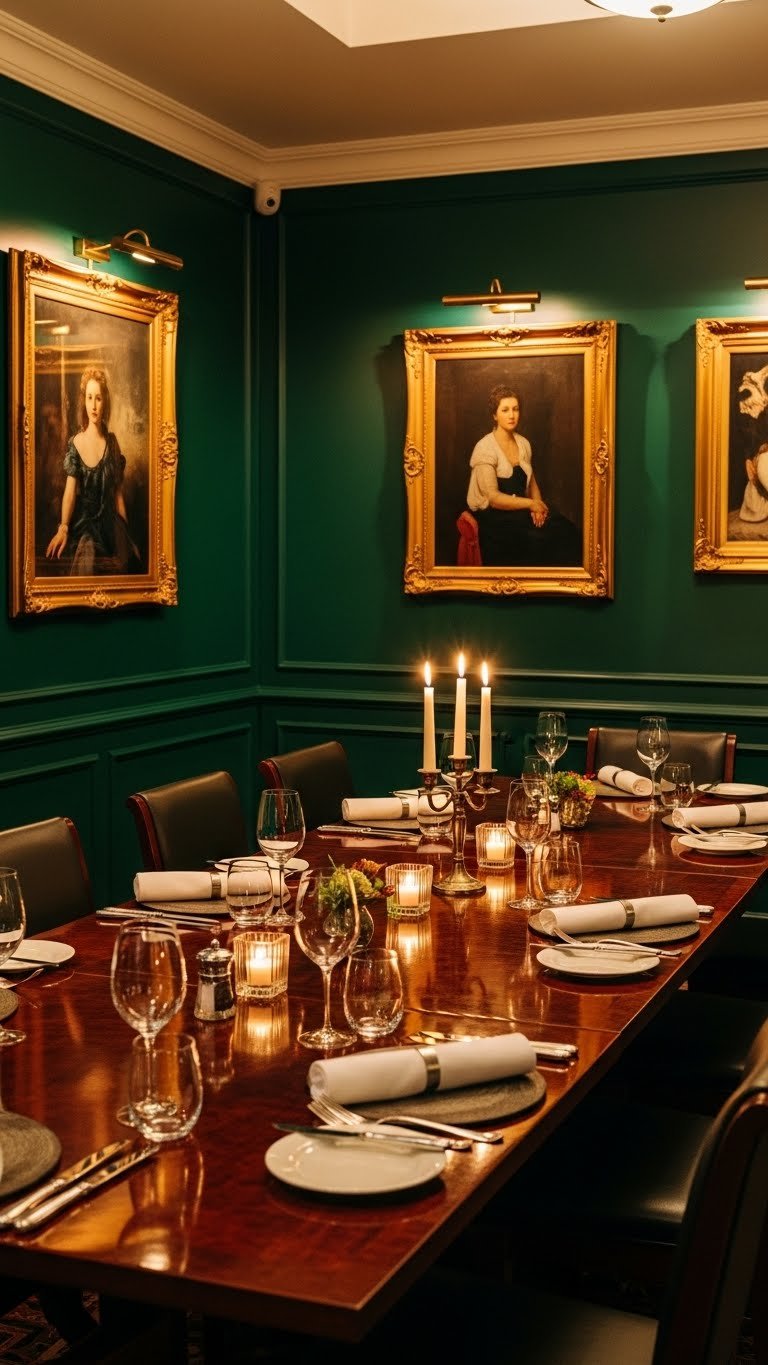
Deep greens are having a major moment because they’re bold but timeless. Unlike trendy accent colors, emerald feels sophisticated and grounded.
Try Benjamin Moore 2049-10 (Hunter Green) or Sherwin-Williams 6258 (Evergreen) around $40-$50 per gallon. These work best in rooms with good natural or artificial light—dining rooms, libraries, entryways. You’ll need 2-3 coats and quality primer ($25-$35) because deep colors require coverage. Budget a weekend for a full room. Pair with warm metallics (gold frames, brass fixtures) and natural wood. The combination feels expensive and collected.
This color stops people in their tracks—in the best way. It makes your space feel like somewhere people want to spend time.
7. Create a Mural with Watercolor Landscape Vibes
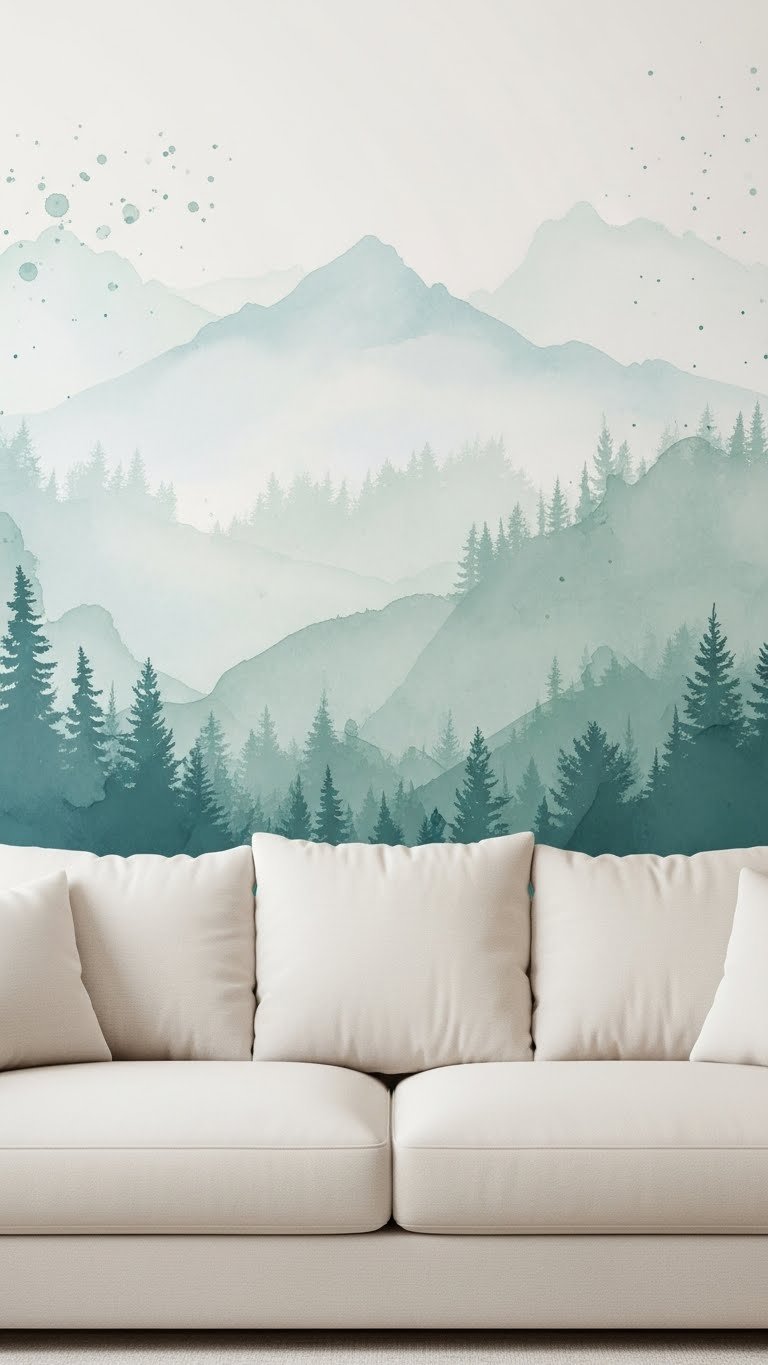
Murals used to feel intimidating, but watercolor-style ones are forgiving and beautiful. You don’t need perfect technique—loose and blended is the point.
Sketch your scene lightly in pencil first. Use acrylic paint in blues, greens, and whites ($15-$30 total). Grab a soft brush set from Amazon ($10-$15) and work in layers: light colors first, then deepen. Plan a full day or split across two sessions—no rush. YouTube has tons of watercolor mural tutorials. If you’re nervous, start with a small wall or practice on poster board first. Many people find it meditative once they start.
Living with a mural you made yourself hits different. It becomes a conversation piece and a quiet source of pride every time you see it.
8. Paint Trim and Woodwork in Contrasting Warm White
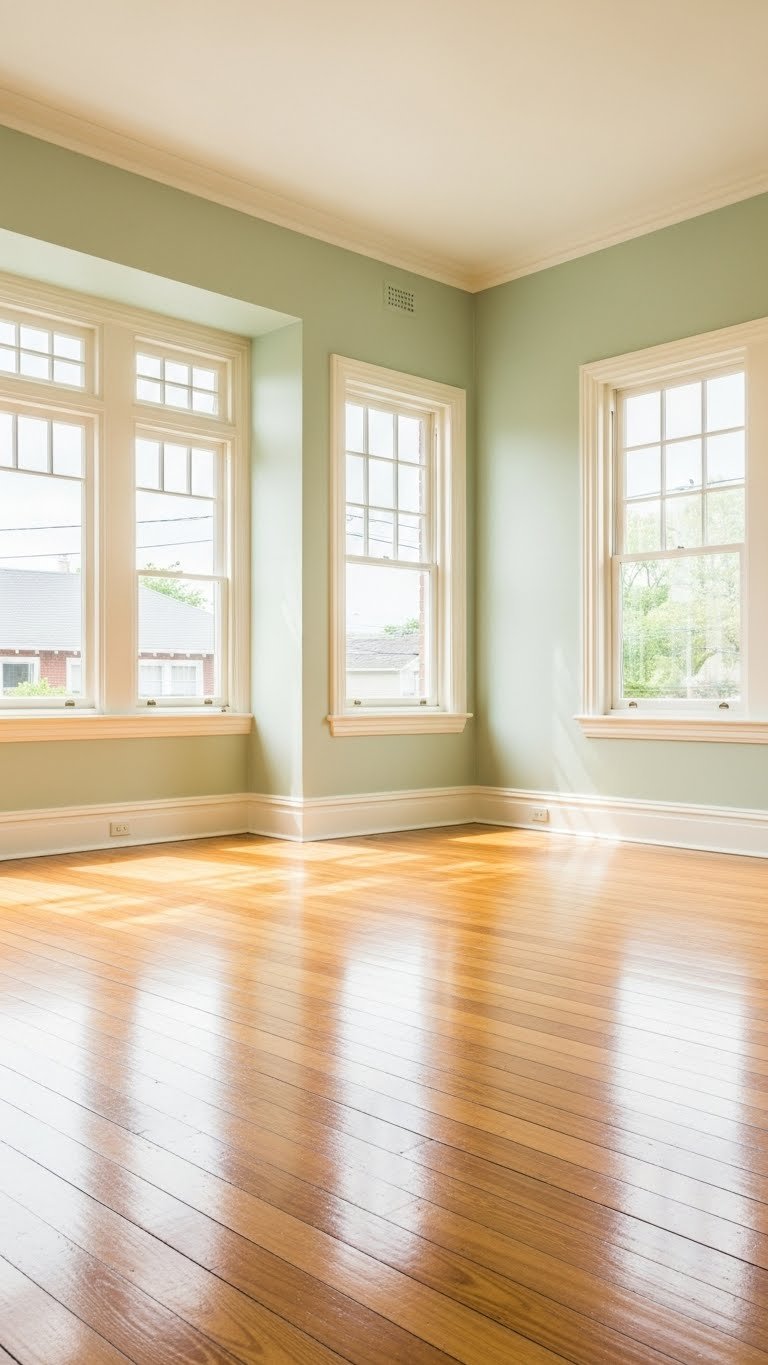
Crisp trim against softer wall colors creates visual interest and makes rooms feel more intentional. This trick works in any color scheme.
Keep walls in your chosen color (sage, soft blue, terracotta). Paint all trim, doors, and baseboards in Sherwin-Williams 7005 (Pure White) or Benjamin Moore 2121-70 (Cloud White) around $25-$35. You’ll need painter’s tape, a smaller brush, and patience—trim takes longer than walls because of the detail. Budget half a day to full day depending on room size. Quality tape prevents bleeding. Pro tip: paint two thin coats rather than one thick coat for a cleaner finish.
Clean white trim makes every wall color pop. Suddenly your whole room looks more polished and intentional.
9. Apply Textured Plaster Finish for Dimensional Walls
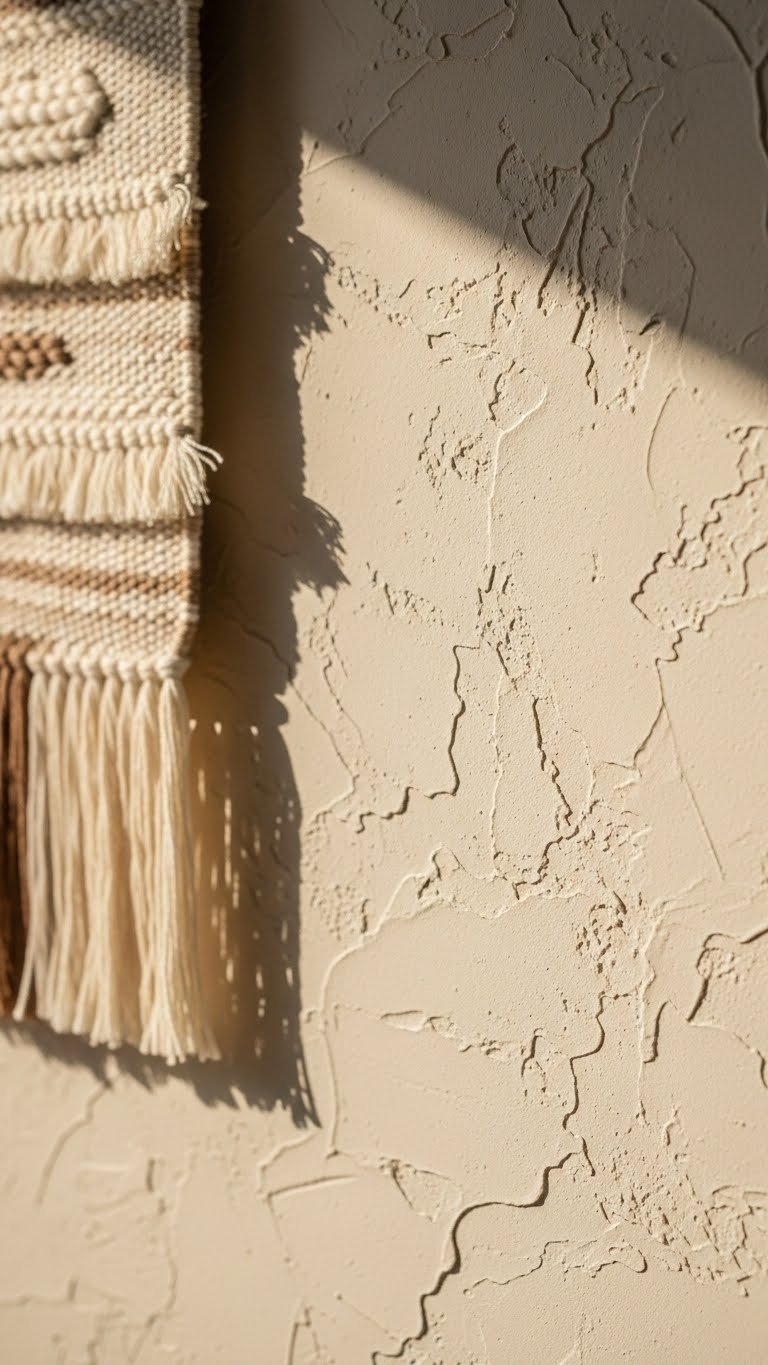
Textured plaster adds luxury without renovation. It catches light beautifully and hides imperfections—perfect if your walls aren’t perfectly smooth.
You have options: hire a pro (typically $400-$800 per room) or DIY with pre-mixed plaster products like Venetian plaster from Home Depot ($50-$80 per can). DIY takes 4-6 hours and a learning curve, but it’s doable. Watch tutorials first. You’ll use a trowel to apply thin, overlapping layers. Prime and seal after. The texture works in any color—try warm creams, soft grays, or pale sage.
Textured walls photograph beautifully and feel more expensive than they are. Plus, the dimension changes throughout the day as light shifts.
10. Paint a Feature Wall in Dusty Cinnamon or Clay
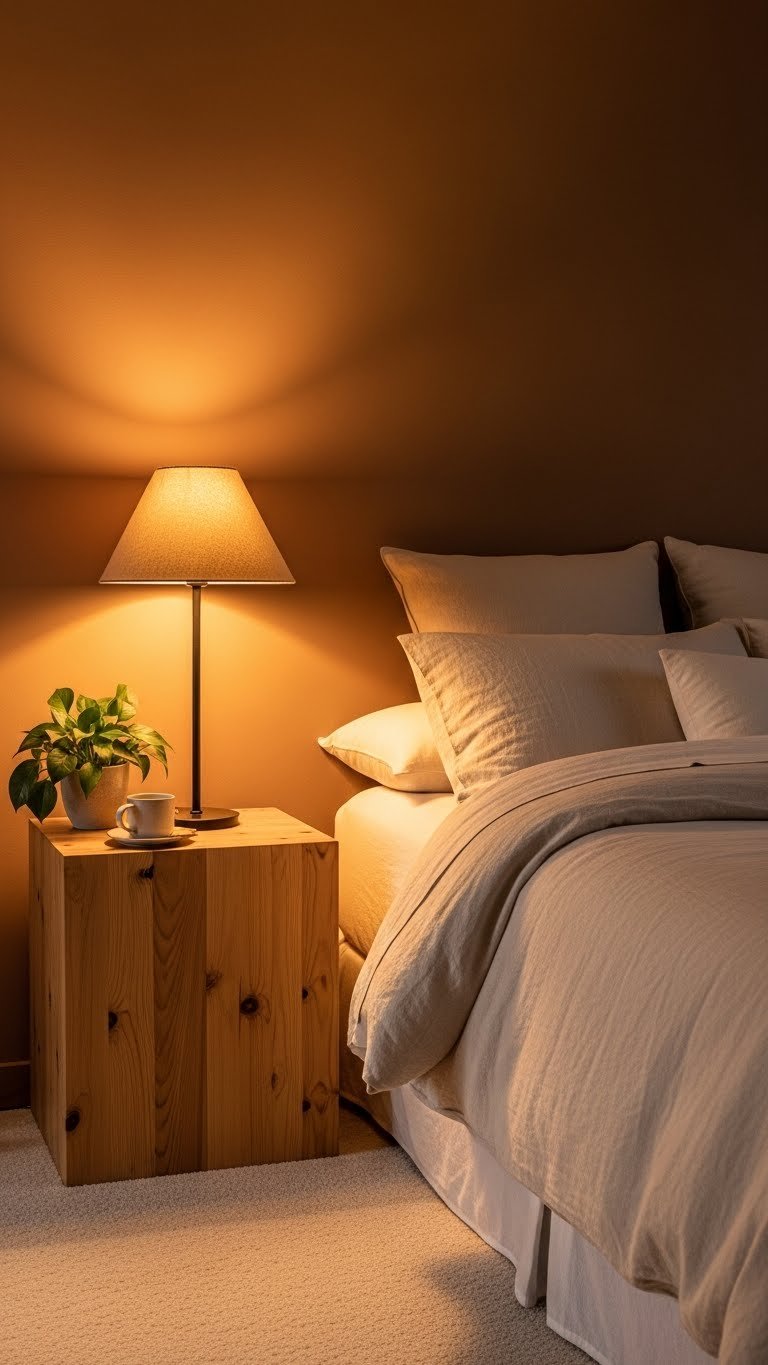
Cinnamon and clay tones are the warm neutrals everyone’s moving toward. Cinnamon Slate (Benjamin Moore’s 2025 Color of the Year) is the perfect example—it’s sophisticated and works everywhere.
Try Benjamin Moore 2113-40 (Cinnamon Slate) around $40-$50 per gallon, or Sherwin-Williams 7598 (Rookwood Dark Green) for a similar vibe. These warm earthy tones pair beautifully with natural wood, cream, and soft linens. Two coats, standard timeline—about 3-4 hours for one wall. The beauty of these colors is they work in bedrooms, living rooms, home offices, even bathrooms. They never feel dated because they’re rooted in nature.
This color makes you slow down. Spaces painted in cinnamon and clay become the rooms you want to retreat to.
11. Mix Paint Techniques: Stripes Using Painters’ Tape
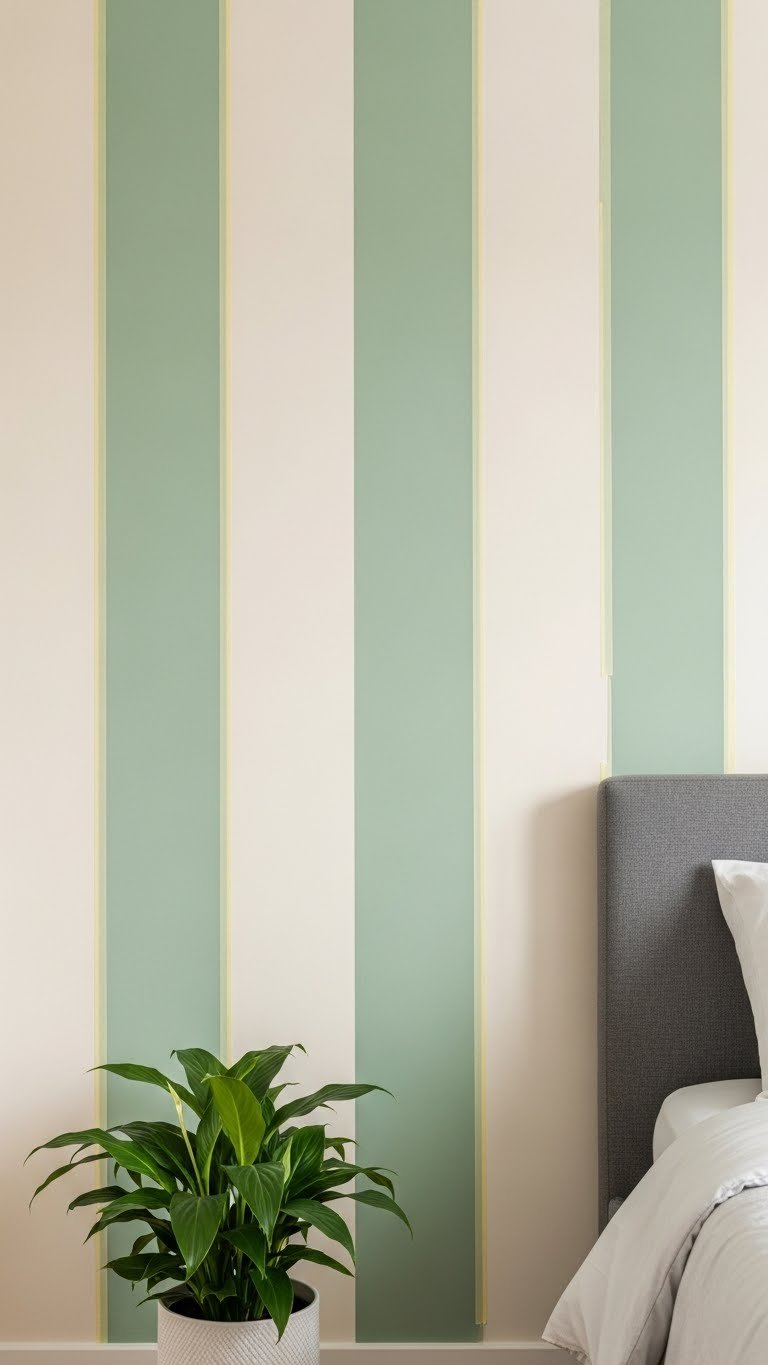
Stripes add structure and visual interest without being overwhelming. You can go subtle (alternating between two similar tones) or bold (contrasting colors).
Pick two coordinating colors—try soft sage and cream, or pale blue and white. Measure your wall and mark stripes every 8-12 inches with a pencil and level. Use painter’s tape to create straight edges ($3-$5 per roll). Paint alternating stripes, removing tape while paint is still slightly wet for crisp lines. Plan 4-5 hours including tape work. Vertical stripes make rooms feel taller. Pro tip: wider stripes (12+ inches) feel more modern; thin stripes feel more traditional.
Striped walls add energy and structure to any room. Kids’ rooms love this idea, but it works beautifully in grown-up spaces too.
12. Install Wallpaper in Nature Prints (Removable Option)

Removable wallpaper gives you pattern without commitment—perfect for renters or anyone hesitant about going bold. Quality options look just like real wallpaper.
Brands like Spoonflower, Peel-and-Stick brands from Target/Amazon ($25-$60 per roll) offer gorgeous nature prints. Prep your wall (clean, smooth, prime if needed). Measure, cut panels with a utility knife, and slowly peel and stick, smoothing as you go. Allow 2-3 hours for a small room, longer for whole walls. Most removable options last 2-5 years before needing replacement. They peel off cleanly when you’re ready for a change.
Patterned walls make small spaces feel expensive and designed. Plus, you can change it up whenever you want without guilt.
13. Paint Lower Half in Darker Tone, Upper Half in Light
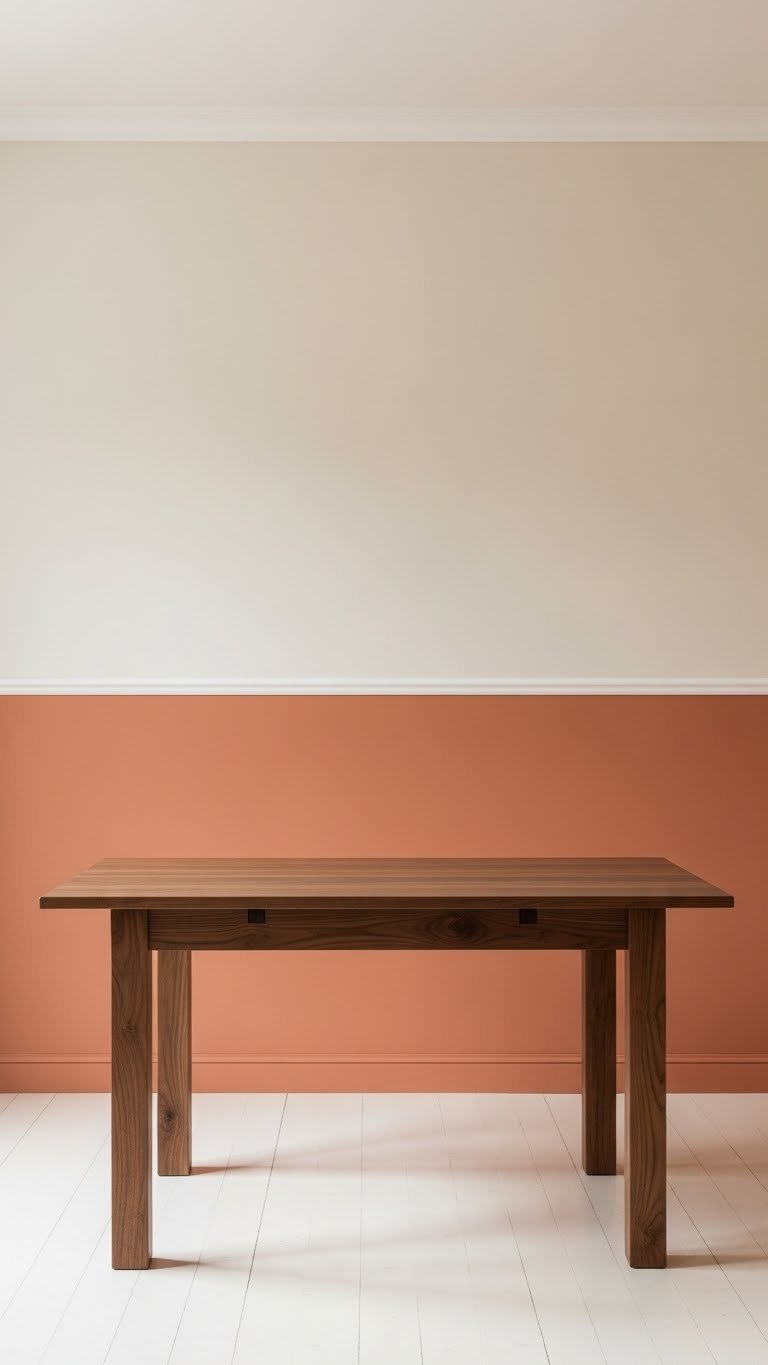
Wainscoting effect with paint is affordable and makes rooms feel more formal and intentional. No carpentry skills required.
Choose your colors—try terracotta and cream, or deep green and pale gray. Mark the division point about one-third up from the floor (or adjust based on your ceiling height). Tape a straight line using a level. Paint the lower section first, let dry, then paint the upper section. Add a painted stripe or trim at the division line for polish ($10-$20 for trim materials). Plan a full day for a room. This trick works especially well in dining rooms, entryways, and bathrooms.
Split-color walls make ordinary rooms feel professionally designed. It’s a classic look that never dates.
14. Use Botanical Stickers as Temporary Wall Decor
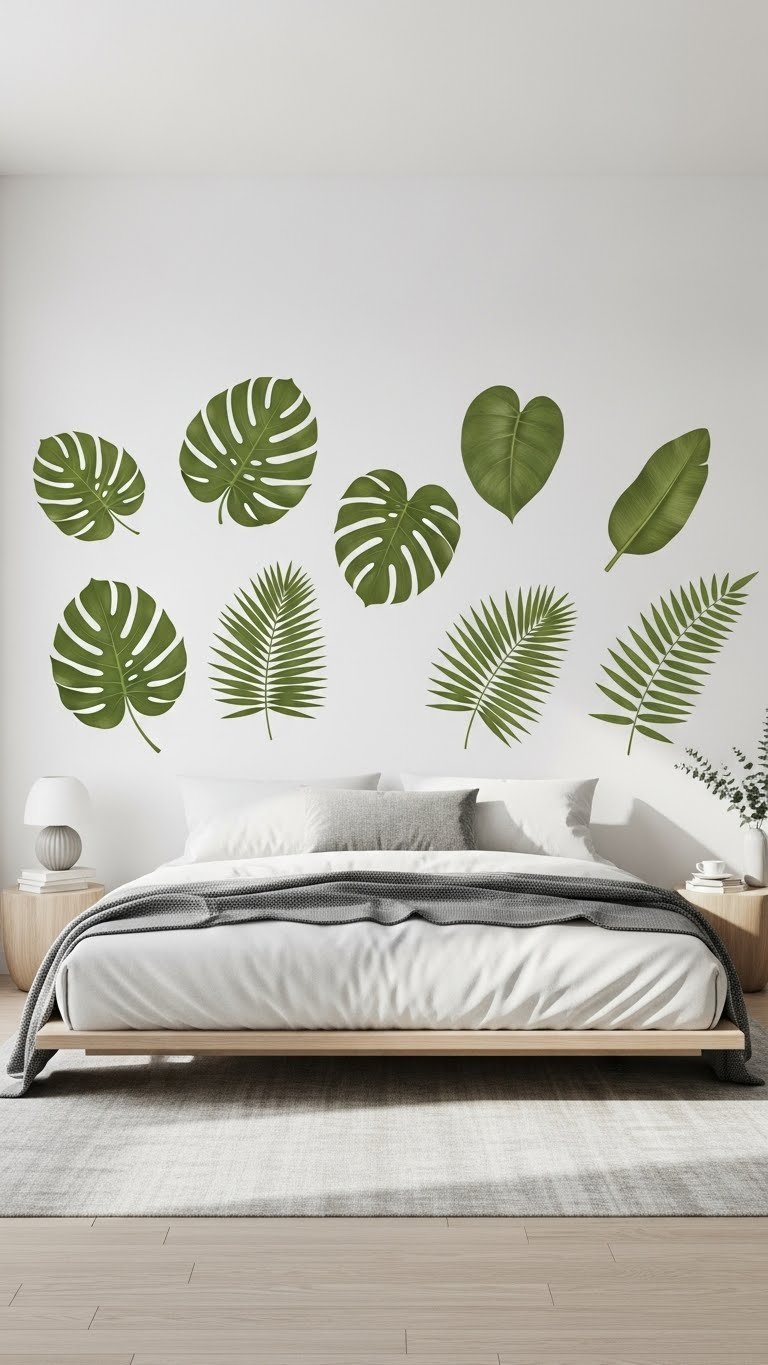
Wall decals are the lazy person’s stencil—zero painting skill required, totally removable, and genuinely beautiful. Great if you want nature vibes without commitment.
Search Amazon, Target, or Etsy for botanical wall decals ($15-$40 depending on size and quality). High-quality vinyl decals stick smoothly and peel off without damage. Choose your arrangement, clean the wall, then peel and stick. Takes about 20-30 minutes and looks instantly intentional. You can layer multiple decals for more impact or keep it minimal. Renters love these because they’re completely non-damaging.
Your wall gets a nature-inspired upgrade instantly. Decals work in bedrooms, offices, living rooms—anywhere you want a subtle boost of personality.
15. Paint Walls in Warm Greige for Balanced Neutral
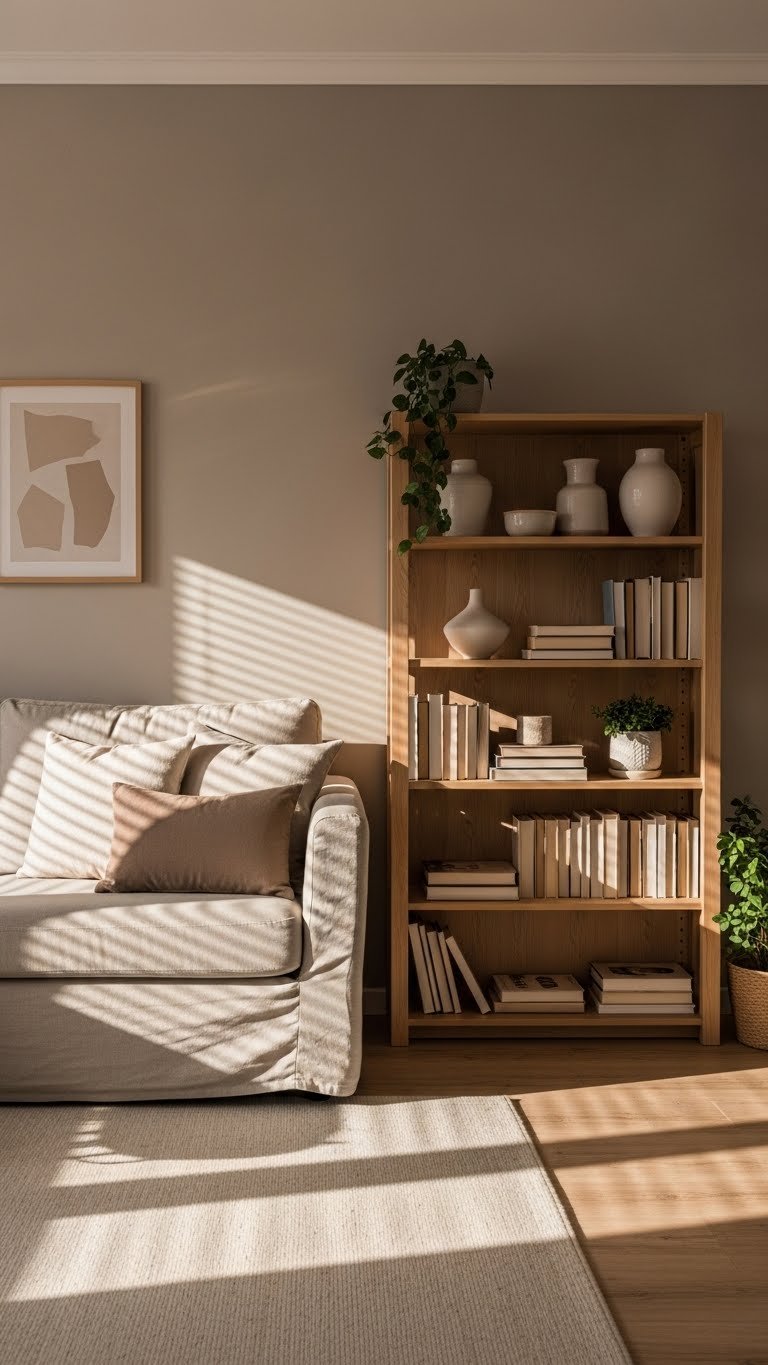
Greige is the sweet spot between gray and beige—warm enough to feel cozy but neutral enough to pair with anything. It’s the new “safe” neutral that doesn’t feel boring.
Try Sherwin-Williams 7015 (Repose Gray) or Benjamin Moore HC-172 (Pale Oak) around $35-$40 per gallon. These bridge the gap perfectly. Two coats, standard timeline—3-4 hours for an average room. The beauty of greige is it works with cool and warm accents, so you’re not locked into a color scheme. Add warmth with wood and textiles, coolness with metallics and blues. It’s the most flexible neutral out there.
Greige walls make every other design decision easier. You can add bold accents without the walls fighting back.
16. Create a Nature Gallery Wall with Framed Botanical Prints
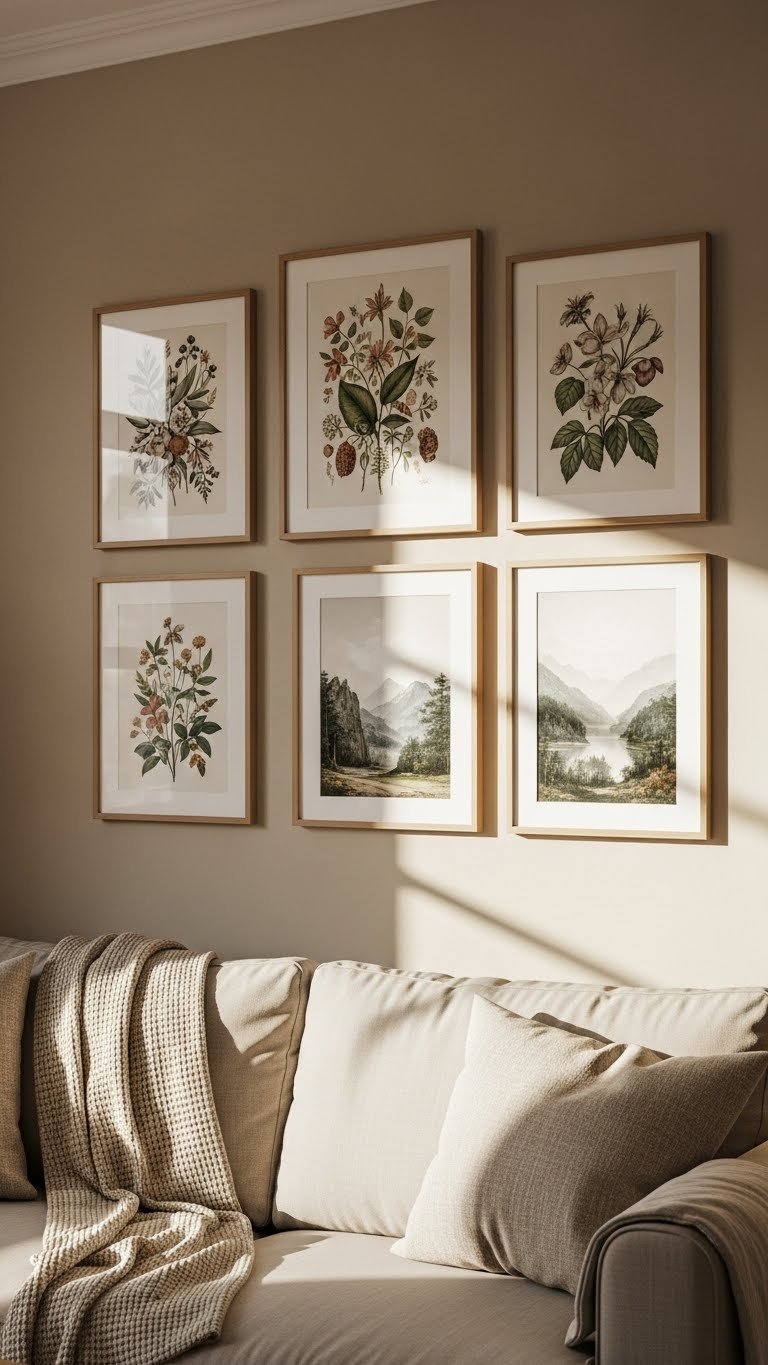
A gallery wall of nature prints costs less than a single large painting but has way more impact. Mix frame styles and mat colors for visual interest.
Collect framed prints from Etsy, Minted, or local artists ($20-$60 each). Mix frame colors (natural wood, black, white) for a curated feel. Arrange on the floor first to test layout, then use a level and painter’s tape to mark placement ($5-$10 total). Hang systematically. Plan 2-3 hours including arrangement and hanging. Pro tip: vary mat sizes and colors for depth. Odd numbers (5, 7, 9) feel more natural than even numbers.
Gallery walls make spaces feel collected and intentional. People always assume you’re way more design-savvy than you are.
17. Paint Shelves in Contrasting Color to Walls
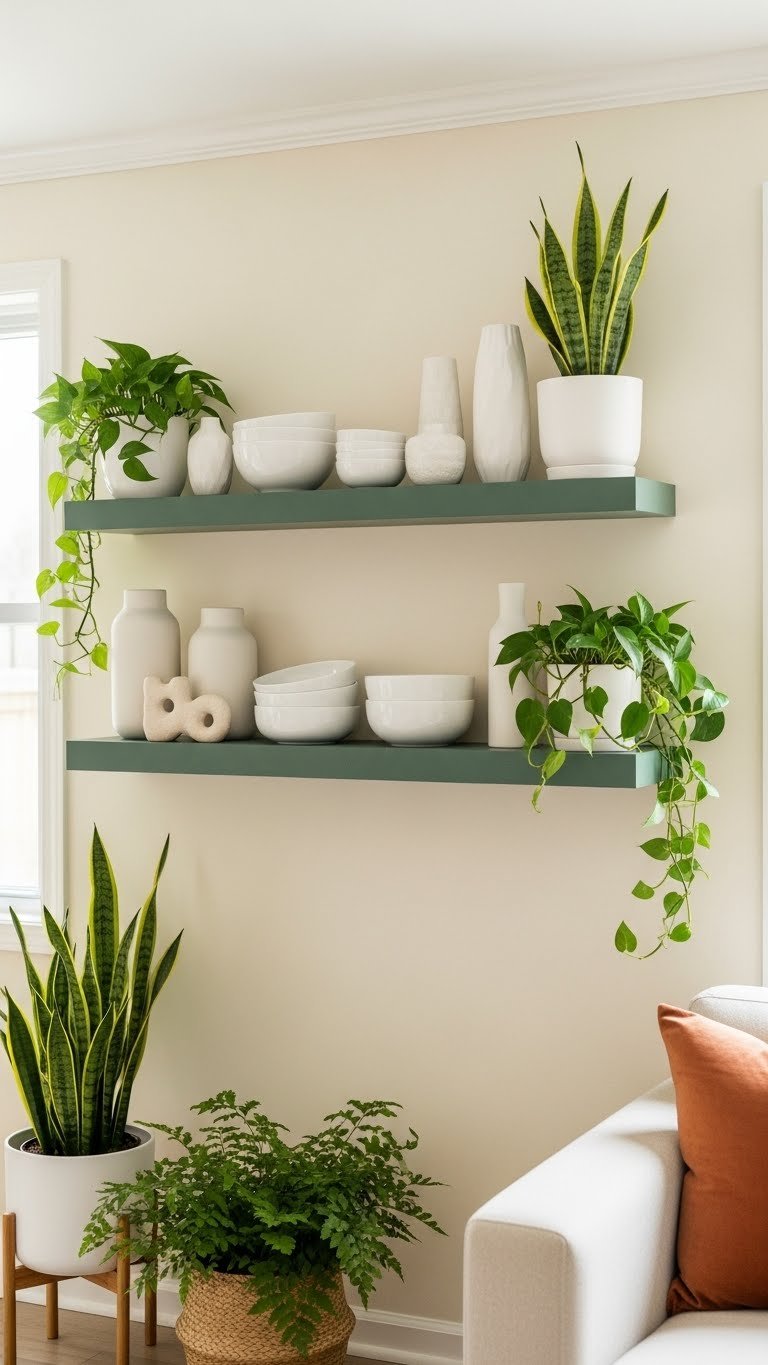
Painted shelves create visual separation and make small items pop. The contrast adds structure and personality.
If you have floating shelves, remove items and paint them separately in your chosen accent color. Benjamin Moore deep greens, blues, or warm terracottas ($30-$40 per gallon) all work beautifully. You’ll need two coats and a small brush. If your shelves are built-in, this is a commitment, but it’s worth it. Allow 4-6 hours including drying time. Reassemble carefully so paint doesn’t chip during reinstallation.
Colored shelves turn functional storage into a design feature. Your books and plants suddenly look like intentional styling.
18. Blend Two Paint Colors on Same Wall for Subtle Ombre
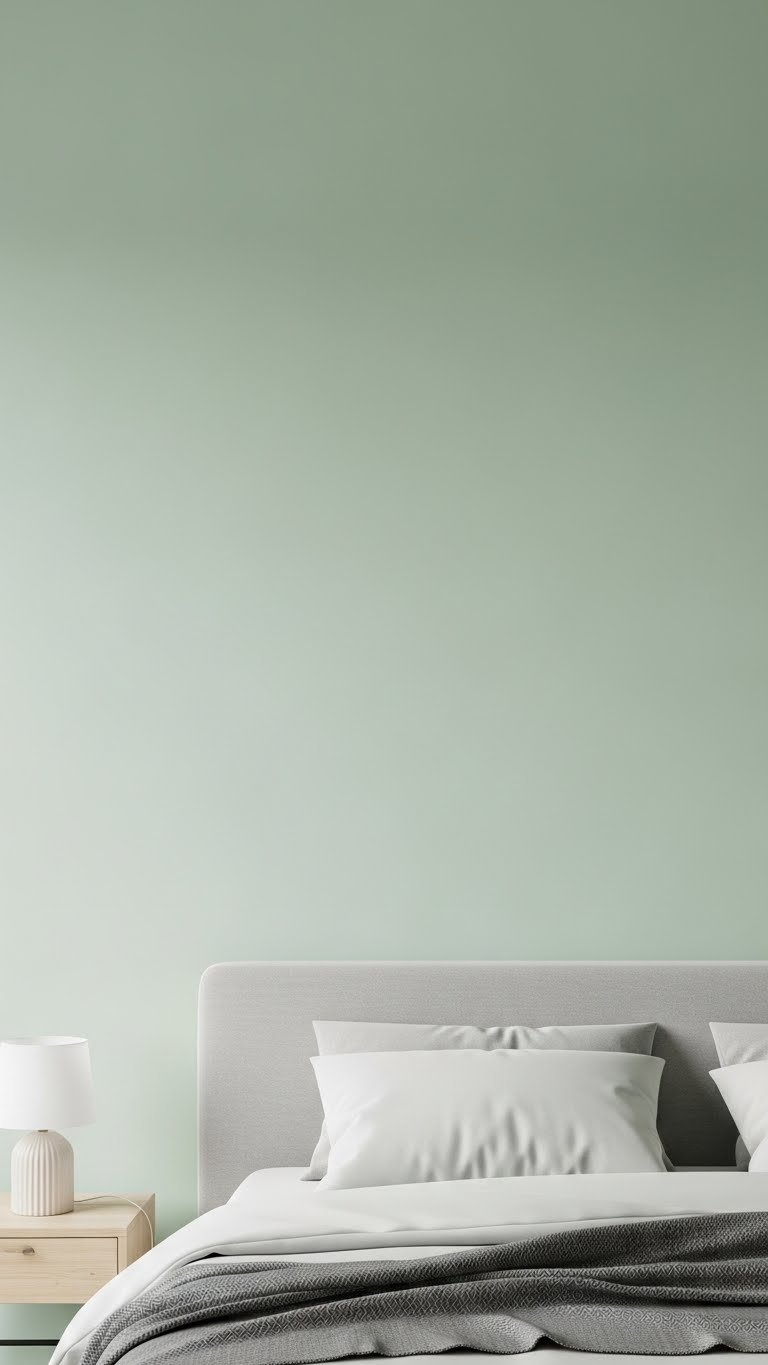
A more subtle ombre uses colors that are closer in tone. The effect is sophisticated and less obvious than traditional ombre.
Pick two colors in the same family but slightly different depths—like two greens, or two warm whites. Benjamin Moore offers color families that work perfectly ($30-$40 each). Paint the left section in color A, right section in color B, then use a damp sponge or dry brush to blend the middle section. Work with a light hand. Plan 4-5 hours. The blend looks intentional, not accidental, when done slowly. Practice on a test wall or poster board first.
This technique adds sophistication without feeling experimental. Rooms with blended walls photograph beautifully.
19. Add Metallic Gold Accents Over Green Paint
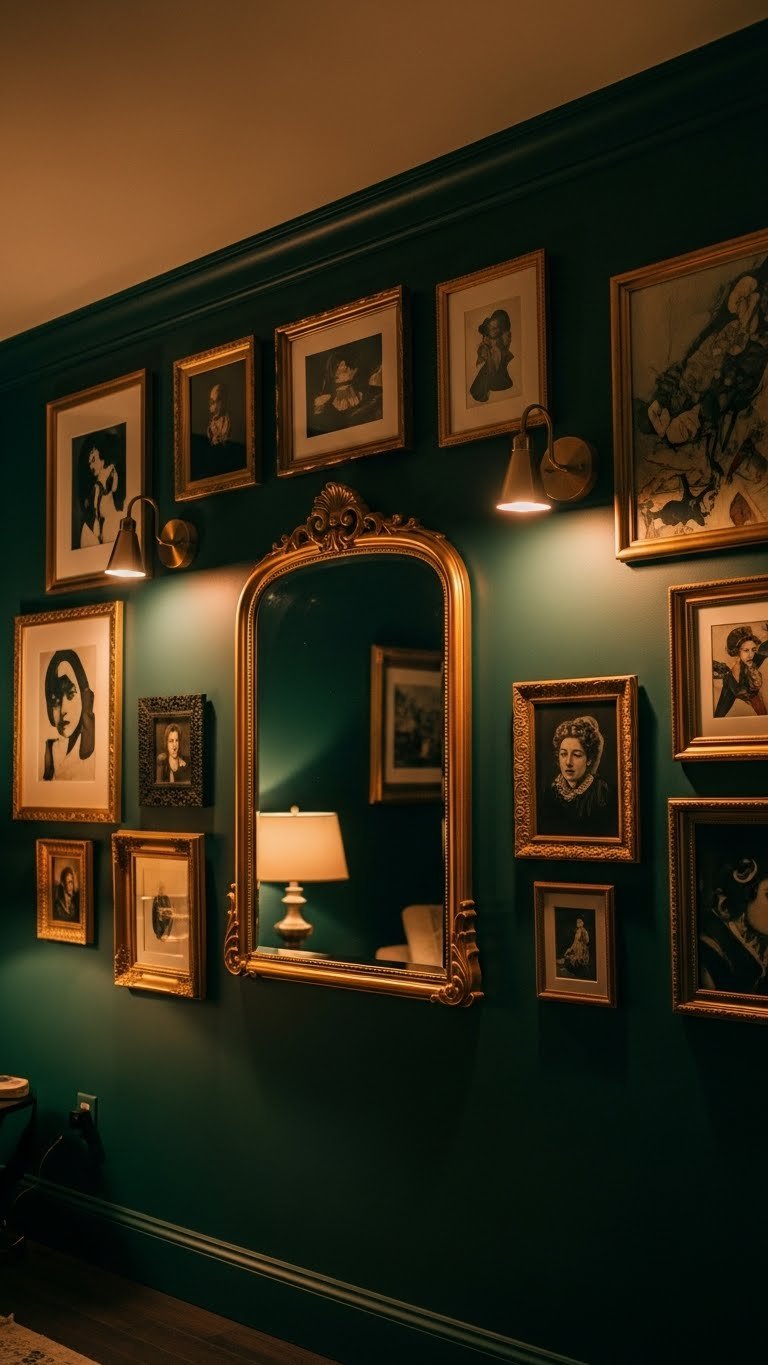
Metallics with deep nature colors create instant luxury. Gold especially feels warm and collected against greens and earth tones.
Paint your walls in deep green ($40-$50). Then layer with gold accessories: frames from Target/Amazon ($20-$60), mirror from IKEA ($30-$80), brass fixtures from hardware stores ($40-$120). You don’t need to paint the metallics yourself—just style them intentionally. Budget $100-$200 total for materials and a few hours to arrange. Gold reflects light beautifully and makes small spaces feel bigger and warmer.
The combination of deep green and gold feels like interior design without the interior designer price tag. Guests will definitely notice.
20. Paint Accent Wall Behind Bed in Soothing Color
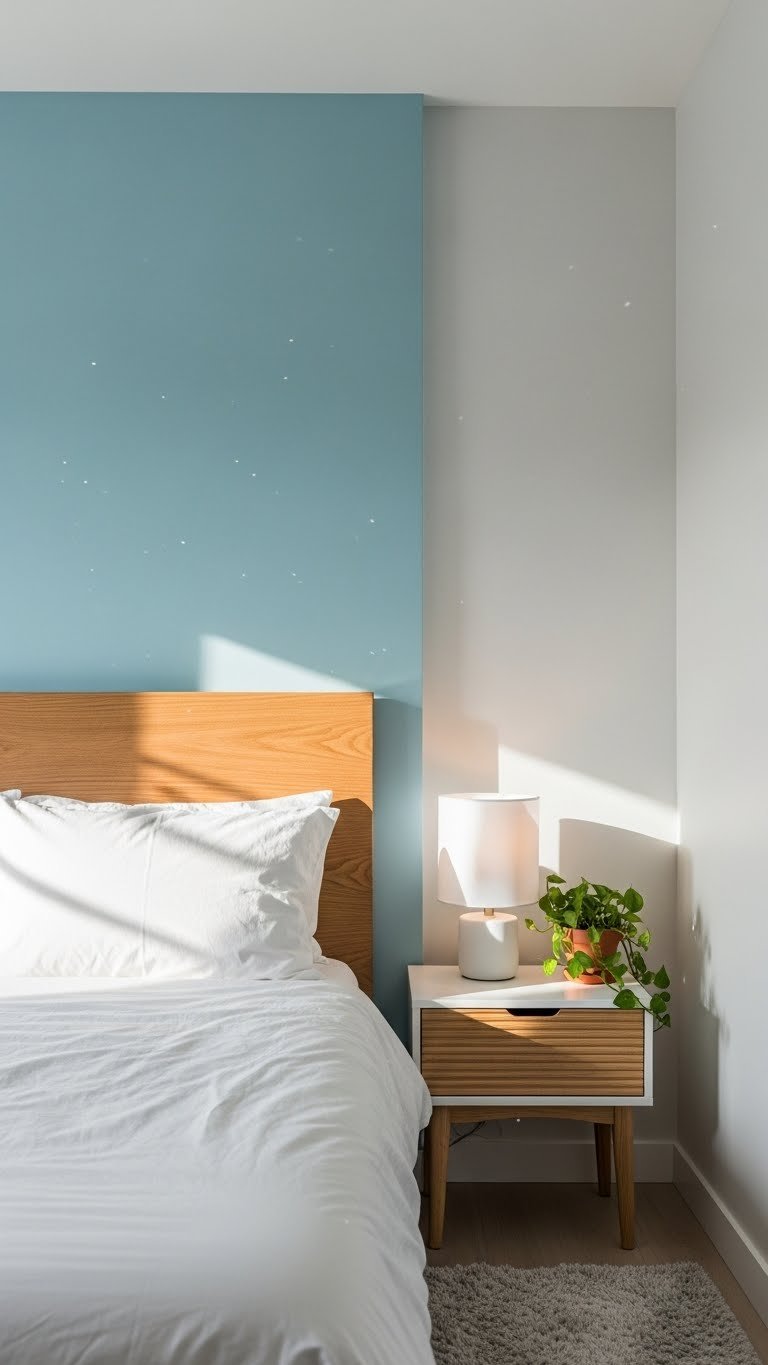
The wall behind your bed becomes your focal point every night—make it count. Soft, soothing colors create a calming effect before sleep.
Choose soft blues, pale greens, or warm neutrals that support rest. Try Benjamin Moore 1633 (Pale Oak) for warmth or 1402 (Palladian Blue) for cool calm around $35-$40. This accent wall works especially well because you’re not seeing the whole room while lying down—just this one, intentional backdrop. One weekend project, 2-3 hours. If your bed isn’t against the wall, this still works—any wall you see from bed becomes your visual anchor.
A calming accent wall behind your bed improves sleep quality more than you’d expect. It’s the first thing you see waking up and the last thing before sleep.
21. Create a Sunset-Inspired Gradient (Orange to Pink to Purple)
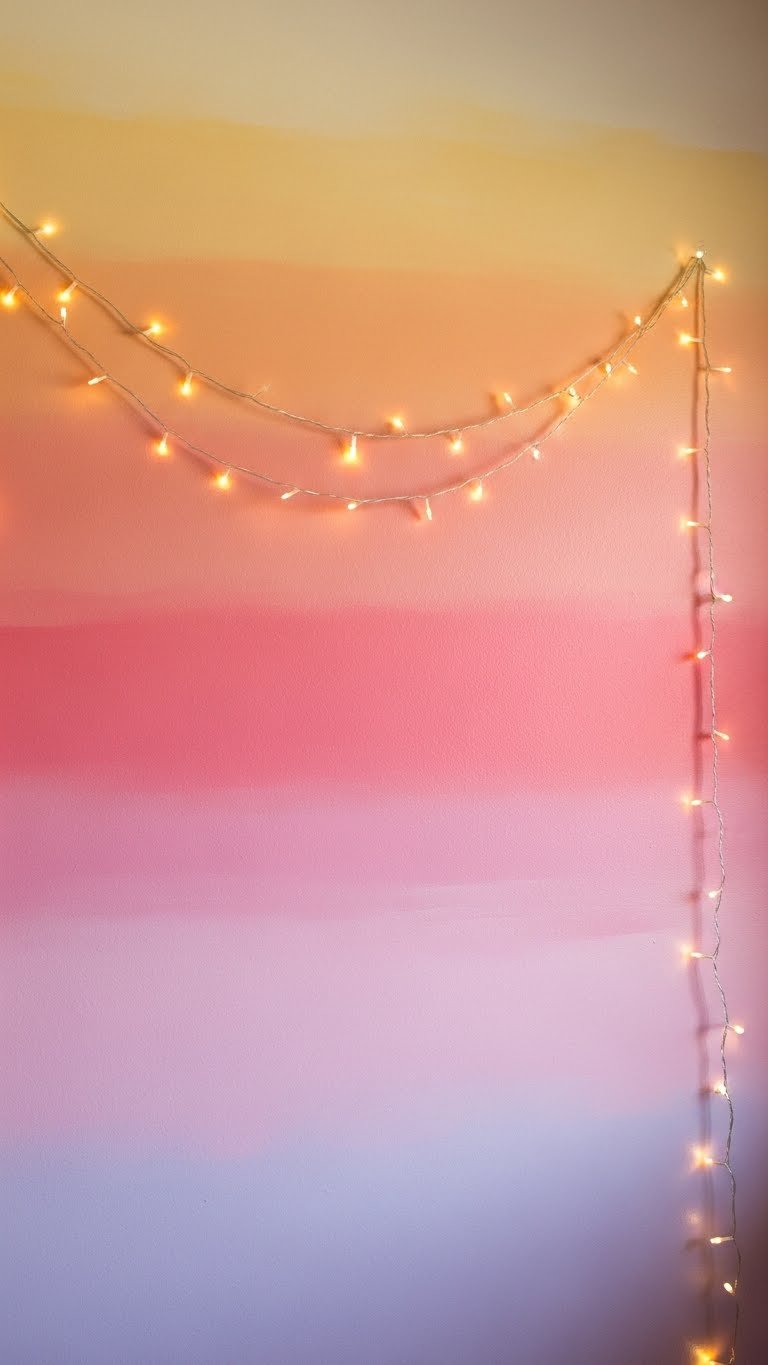
Sunset-gradient walls feel whimsical without being childish. They’re perfect for creative spaces, kids’ rooms, or anyone wanting something unique and uplifting.
Choose three coordinating colors that blend naturally—think apricot, dusty rose, and lavender. Divide your wall into thirds and paint each section, then blend the transitions with a damp sponge or blending brush ($5-$10). Plan a full day—this takes patience and careful blending. Layering colors matters: lightest on top, darkest on bottom. Pro tip: these look stunning with warm string lights or sunset photography.
Sunset walls create instant mood and energy. Every photo in that room looks amazing.
22. Paint Ceiling and Upper Walls in Pale Blue, Lower in Cream
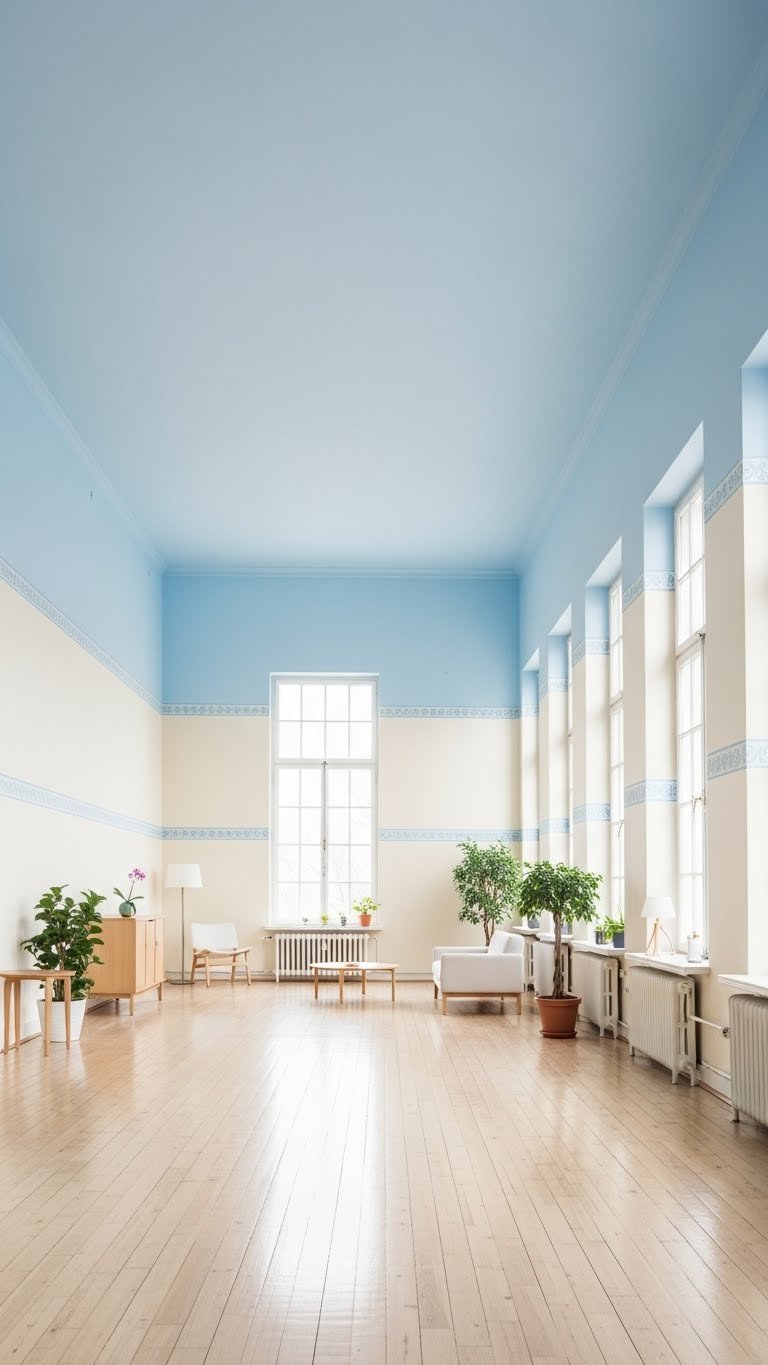
This reverse wainscoting makes rooms feel taller and brings sky into your interior. It works beautifully in bedrooms, bathrooms, and living rooms.
Paint ceiling and upper wall section in pale blue ($35-$40) like Benjamin Moore 1413 (Palladian Blue). Paint lower section in cream ($30-$35). Divide with a light stripe of trim or tape. The upper section should be about 2/3 of wall height to create proportion. Budget a full day—ceiling painting takes time. This technique works especially well with crown molding or simple trim for polish.
Rooms with sky-blue ceilings feel open and calming. It’s like bringing outdoor space inside.
23. Use Washable Paint in Earthy Tones for Flexibility

Washable paint lets you go bolder in spaces with potential mess (offices, kitchens, bathrooms). You can touch up easily or change colors later.
Brands like Sherwin-Williams ProClassic or Benjamin Moore Aura offer washable finishes ($45-$60 per gallon). These handle soap and water beautifully. Choose warm earth tones like terracotta, clay, or warm brown for nature vibes. Same timeline as regular paint—3-4 hours for a room. Washable paint costs a bit more but lasts longer in high-traffic areas. Perfect for renters too—you can repaint when you move out.
Washable paint removes the anxiety of “ruining” your walls. You can go bolder knowing you can refresh anytime.
24. Create Tree Silhouettes Using Dark Paint or Stencils
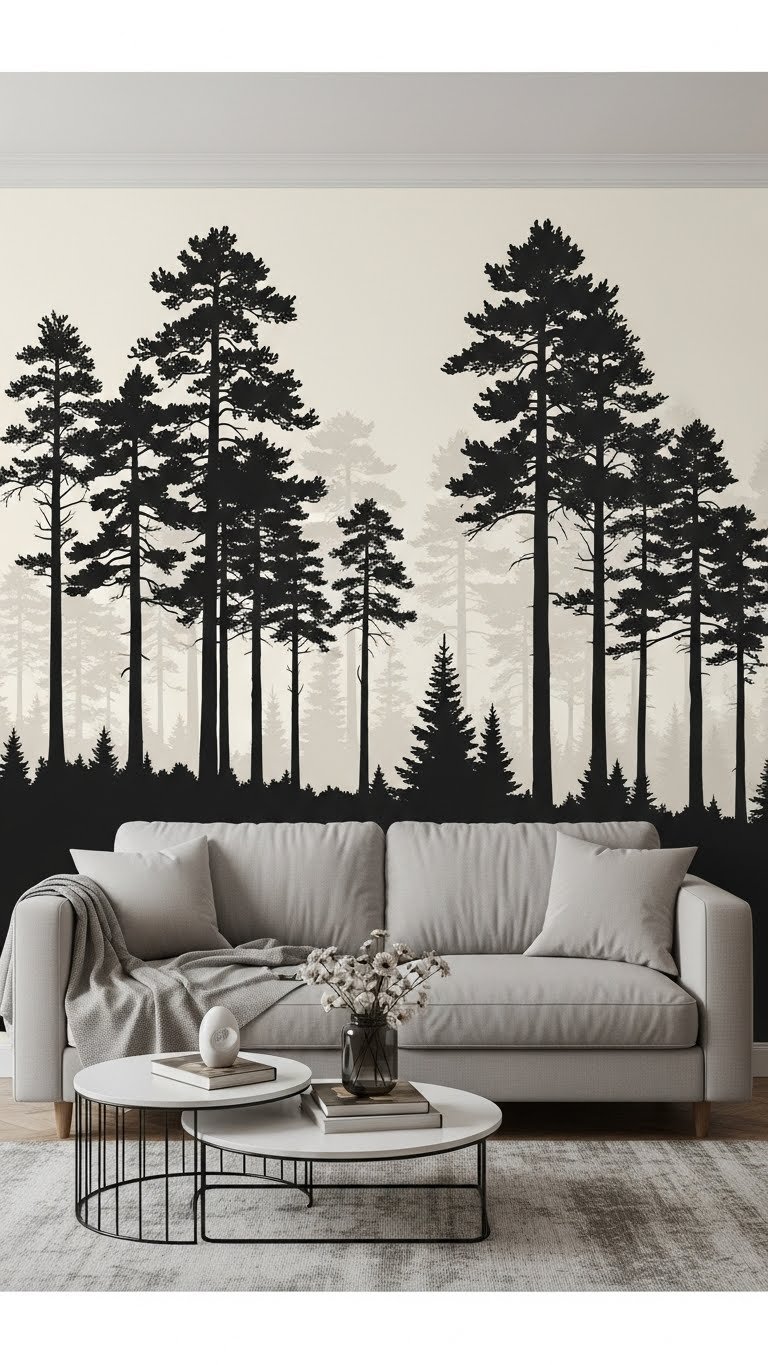
Tree silhouettes add drama while staying nature-focused. They work in minimalist and eclectic spaces alike.
Option one: DIY stencil from Etsy ($20-$35) + dark paint. Option two: freehand sketch, then paint carefully with a small brush. Option three: vinyl decals ($30-$60)—easiest but less customizable. Choose your method based on your confidence level. Plan 2-4 hours depending on complexity. Dark silhouettes pop against light walls but feel moody against dark walls. Group them in a forest arrangement or spread them across the whole wall.
Tree silhouettes make spaces feel grounded and artistic. People always ask if they’re intentional art or if you hired someone.
25. Paint Walls in Warm Taupe for Sophisticated Simplicity

Warm taupe is quietly sophisticated—it bridges warm and cool tones and works with almost any accent color. It’s less trendy than greige but equally timeless.
Try Benjamin Moore 2111-50 (Accessible Beige) or Sherwin-Williams 7037 (Urbane Bronze) around $35-$40 per gallon. Taupe works beautifully in bedrooms, living rooms, and home offices. Standard painting timeline—3-4 hours for one room. Pair with natural wood, cream textiles, and warm metals for a cohesive feel. Taupe stays current because it’s rooted in earth tones rather than trendy colors.
Taupe walls create a calm backdrop for life. They fade into the background so your furniture and art become the stars.
26. Combine Painted Walls with Living Moss or Plant Wall Installation
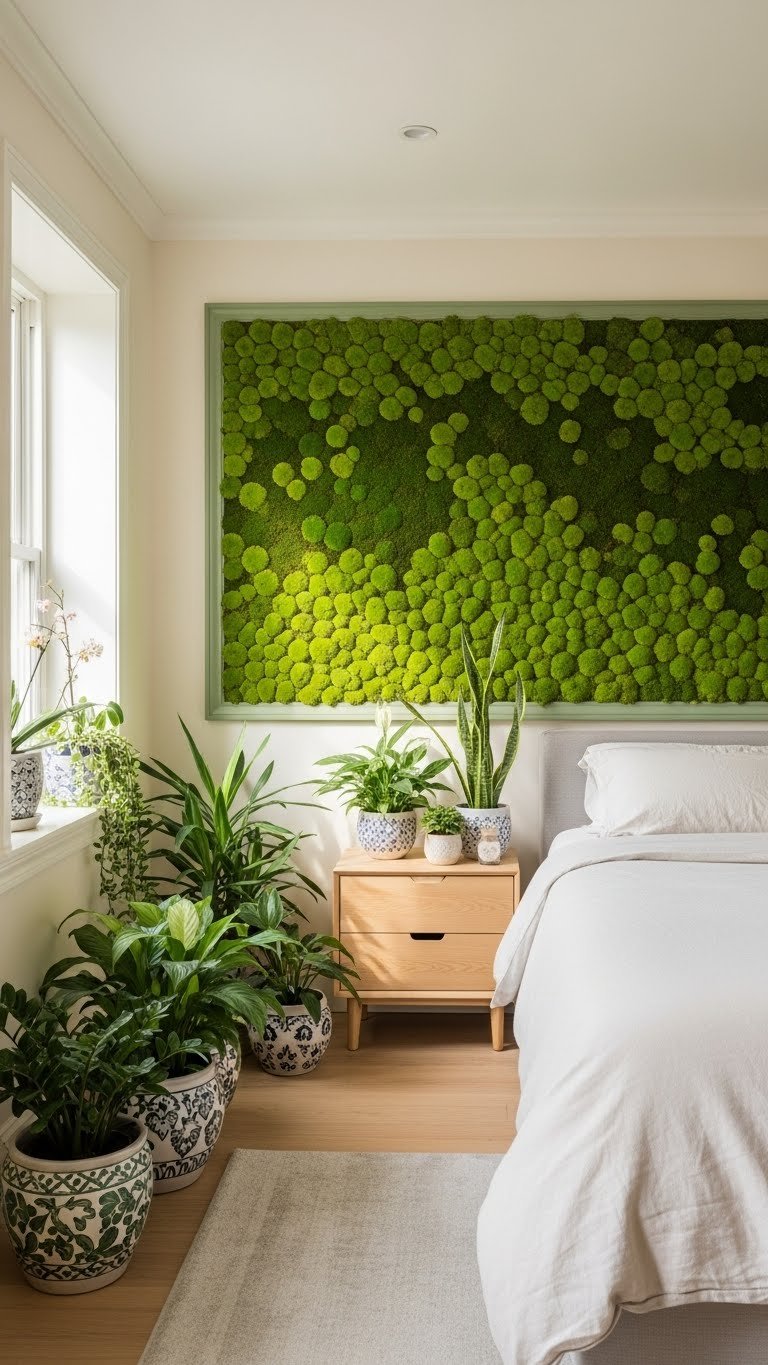
If you want nature ON your walls beyond paint, living moss walls bring biophilic design to life. They’re low-maintenance and genuinely beautiful.
Preserved moss wall panels cost $150-$500 depending on size (Etsy has options). Paint surrounding walls in soft creams, pale greens, or warm neutrals ($35-$40). Moss walls don’t need water or sunlight—they’re preserved, not living. Installation takes 1-2 hours (usually just mounting). Pair with minimal paint so the moss becomes the focal point. This is an investment piece but one that lasts years.
A moss wall transforms a space instantly. It becomes the centerpiece everyone notices first, and it stays beautiful long-term.
Ready to refresh your walls? Save this post for your next paint project and pick just one idea to start with this weekend. Small changes add up fast, and your space deserves to feel peaceful. Which idea speaks to you most?
Leave a Reply