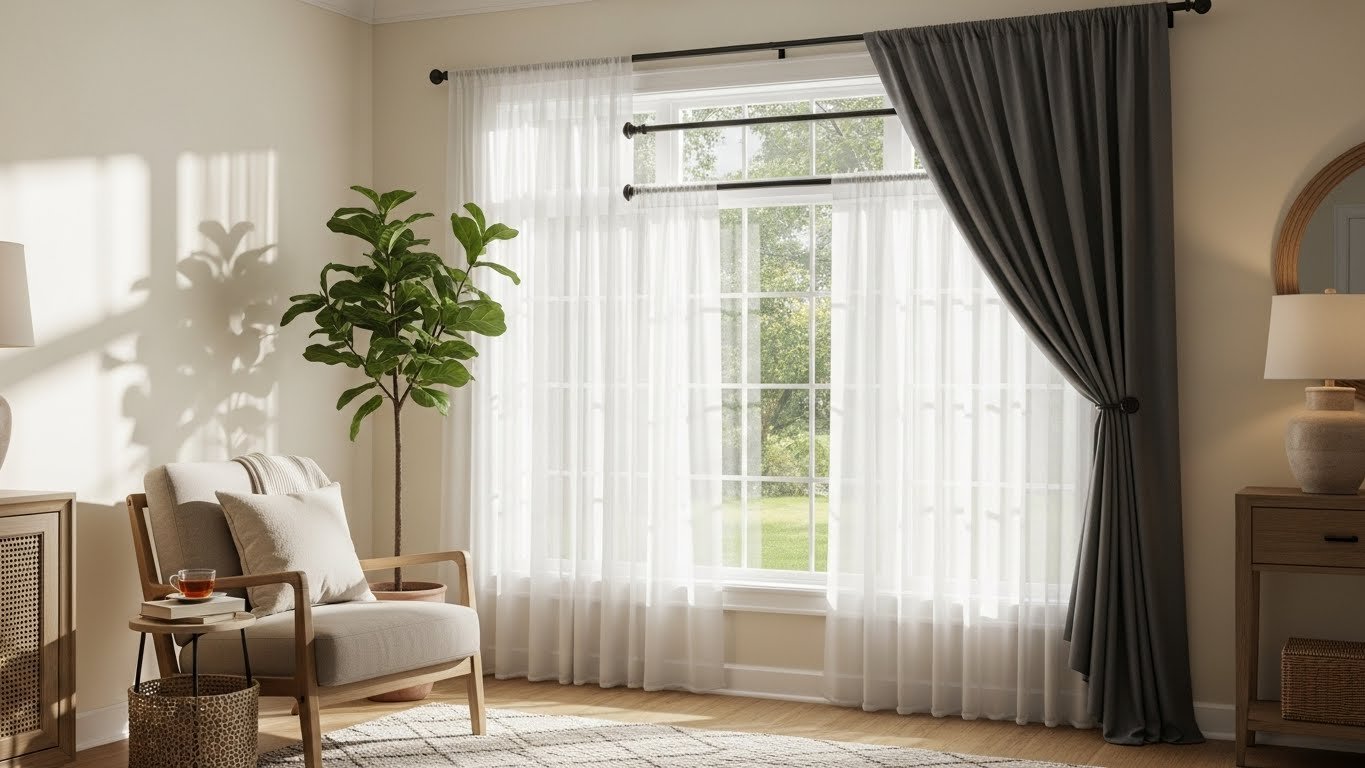
Double-rod curtain setups might seem intimidating, but they’re actually your secret weapon for creating layered, designer-worthy windows without the designer price tag. Whether you want to control light, add depth, or mix textures and patterns, hanging curtains on two rods gives you endless styling possibilities. The beauty? You can change your look seasonally, hide problem areas, or simply add that extra touch of polish that makes a room feel complete. In this guide, you’ll discover 24 creative ways to style double rods—from budget-friendly hacks to investment pieces that’ll make your windows the focal point everyone notices. Let’s get started.
1. Pair Sheer and Blackout for Light Control
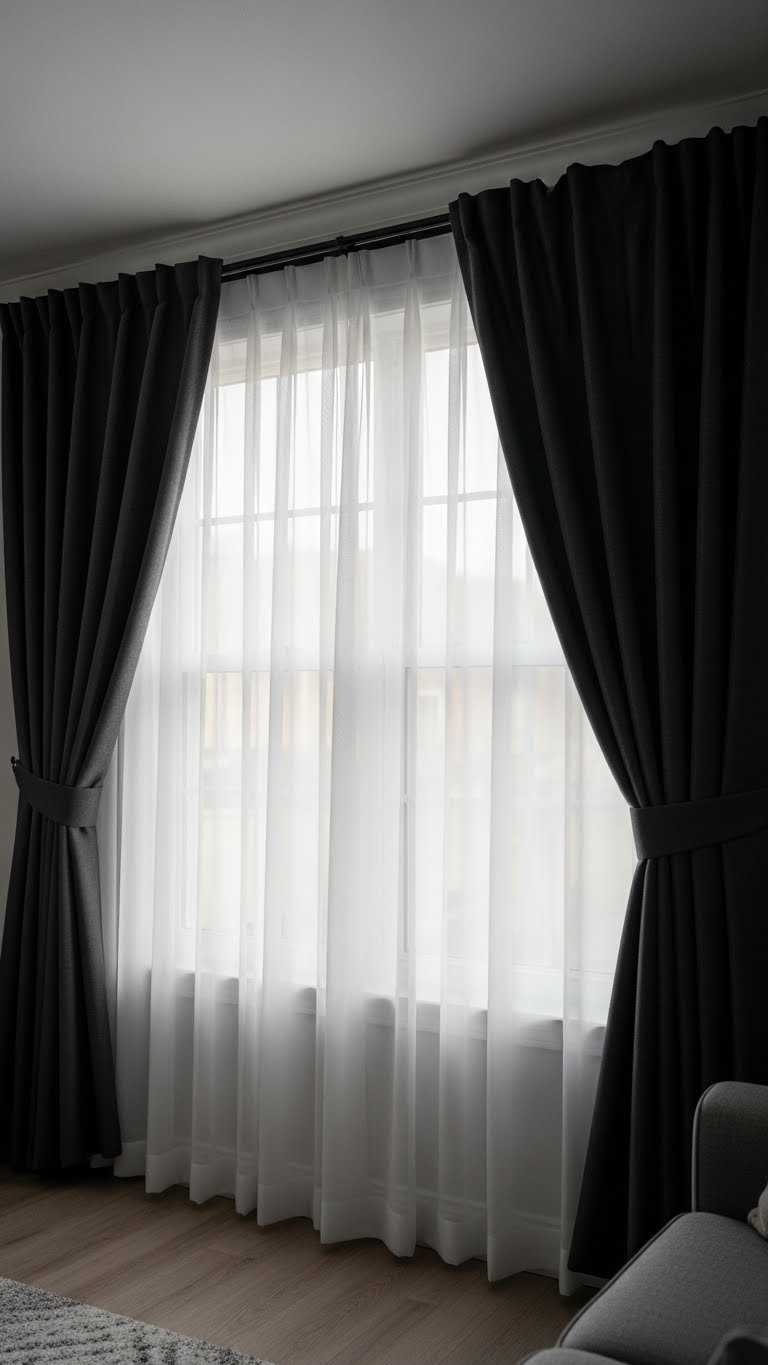
Layering sheers with blackout curtains solves the age-old problem of wanting both privacy and natural light. The sheer panels hang on your front rod to filter light beautifully, while blackout panels on the back rod give you complete darkness when you need it.
This setup works in bedrooms, home offices, or any space where you need flexibility. Sheers typically cost $15–$40 per panel from Target or IKEA, while blackout curtains run $30–$80 depending on fabric quality. Installation takes about 30 minutes and requires no tools beyond a ladder. You’ll want to ensure both rods are installed at similar heights for a cohesive look. The best part? You get movie-theater darkness at night and soft, diffused daylight during the day without sacrificing style.
2. Layer Neutral Linen with Earthy Velvet
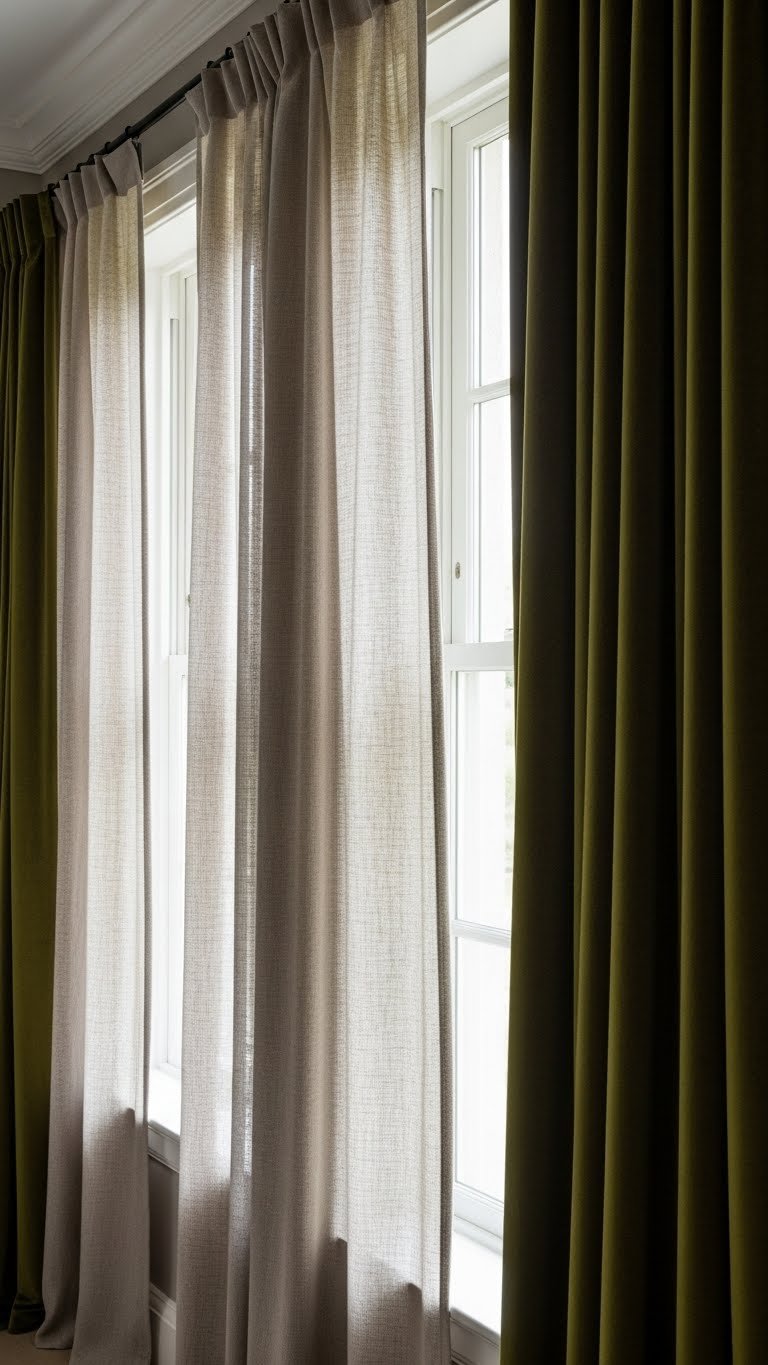
Mixing natural fabrics with luxe textures adds sophistication and sustainability to your space. Linen’s breathable, earthy feel pairs beautifully with velvet’s depth—and both fabrics are having a major moment in 2025.
Hang lightweight linen sheers on your front rod (these run $25–$50 per panel from Wayfair or West Elm) and rich velvet drapes on the back rod ($60–$150 per panel depending on brand). Both fabrics work well with motorized rods if you want to add tech later. Linen wrinkles naturally, so don’t stress about perfection—that’s part of the charm. The velvet adds gravitas and softness, making the room feel both cozy and intentional. You’ll notice the textures catch light differently throughout the day, creating visual interest even when the curtains are closed.
3. Create Height Drama with Floor-to-Ceiling Drapes
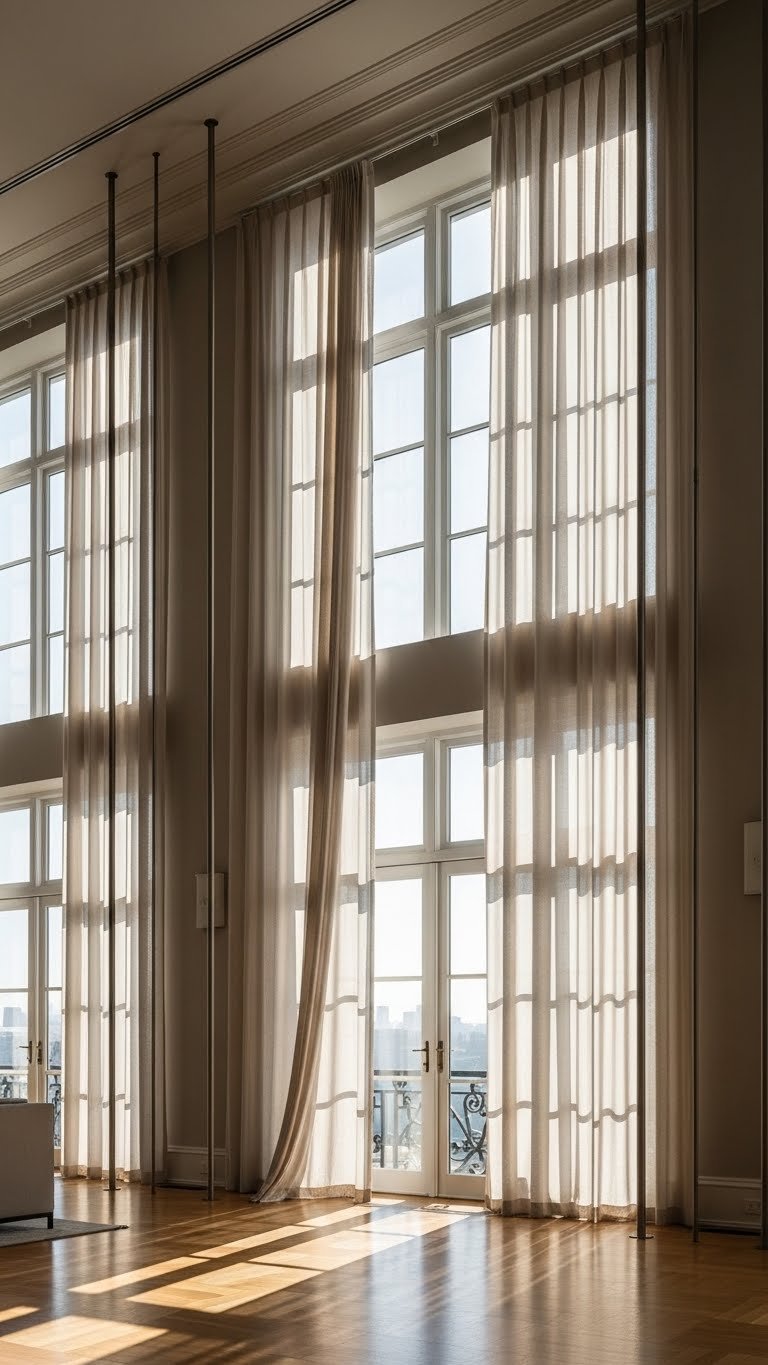
Floor-to-ceiling curtains are one of the quickest ways to make any room feel more luxurious and spacious. Even in modest-height rooms, this styling trick visually pulls your eye upward, adding drama and grandeur.
Mount your rods as high as possible—ideally 4–6 inches below the ceiling—and choose panels that puddle slightly on the floor (about 2–4 inches of extra fabric). This works on both rods for maximum impact. Most standard panels are 96 or 108 inches long; you can hem them yourself with fabric glue ($5–$10) or take them to a tailor ($15–$30 per panel). The extra length costs nothing if you DIY, or about $20–$40 per panel if you buy pre-made extra-long options from places like Pottery Barn or IKEA. Installation takes about 45 minutes for both rods. The transformation is noticeable—suddenly your ceiling feels higher and your space feels grander.
4. Mix Patterns with a Neutral Backdrop

Bold patterns are trending hard for 2025, but mixing them requires a strategy—that’s where your double rod becomes your best friend. Keep one layer simple and neutral so your patterned layer gets all the attention.
Hang solid-colored sheers or lightweight curtains on your front rod (cream, soft gray, or warm white in $20–$40 panels) and let a statement pattern take center stage on your back rod. Plaid, vintage floral, or retro geometric designs create visual interest without clashing when they have breathing room. Patterned curtain panels typically cost $30–$70 per panel from online retailers like Etsy, Wayfair, or specialty fabric stores. This setup takes about 45 minutes to hang and style. Pro tip: If the pattern feels too bold, you can adjust how far back you pull the rear curtains to control how much shows. The result? A room that feels curated and intentional, not chaotic.
5. Go Monochromatic with Texture Play
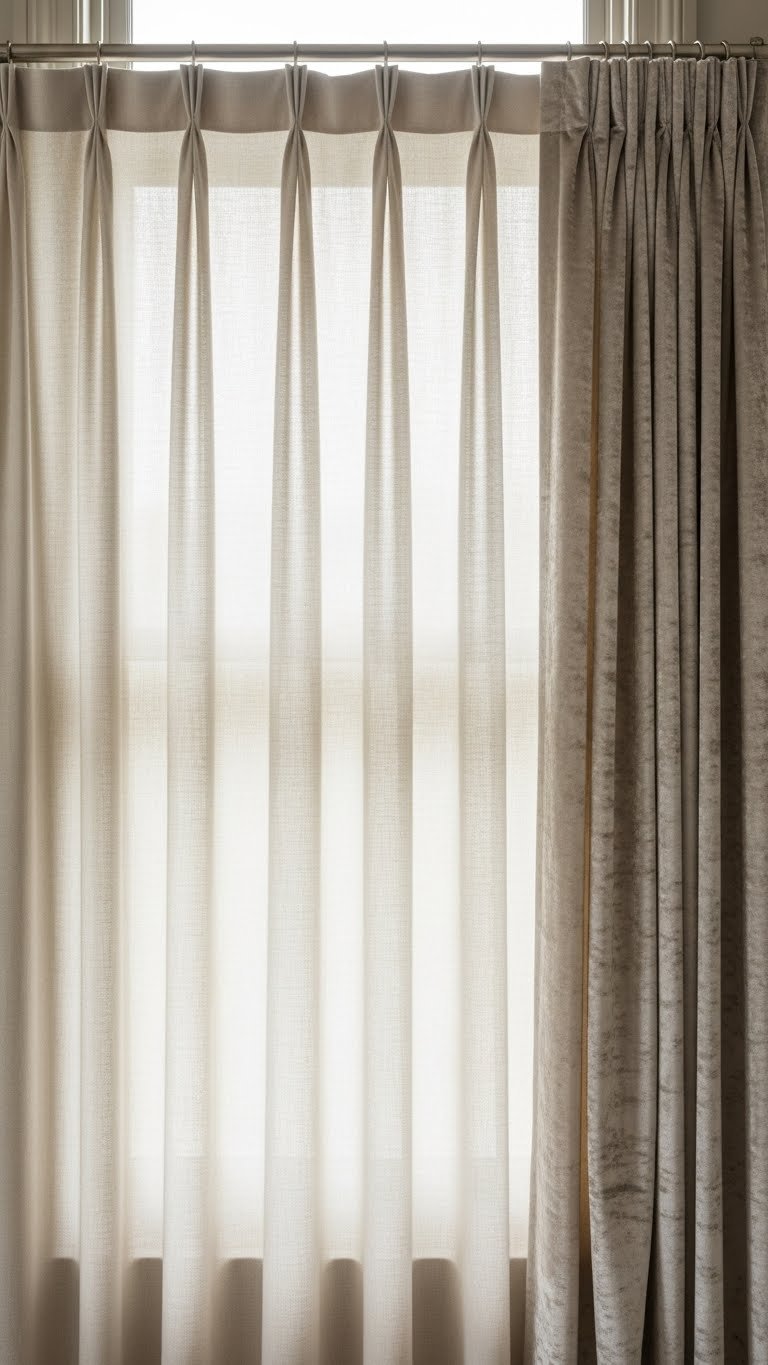
Monochromatic schemes are having a major resurgence, especially when you layer different textures in the same color family. This approach feels calm, cohesive, and far more elevated than it sounds.
Choose one neutral shade you love—cream, soft gray, warm beige, or taupe—then find two different fabric textures in that same hue. Lightweight linen or cotton voile for the front ($25–$45 per panel) and textured velvet, linen blend, or jacquard for the back ($50–$120 per panel). Both pieces should be the same color but different tactile experiences. Installation takes about 30 minutes, and no hemming is needed if you buy ready-made panels. The beauty of this approach? Your room feels intentional and designed without relying on color contrast. Soft light will catch the different textures throughout the day, creating subtle visual movement and depth.
6. Add Jewel Tones for Drama and Warmth
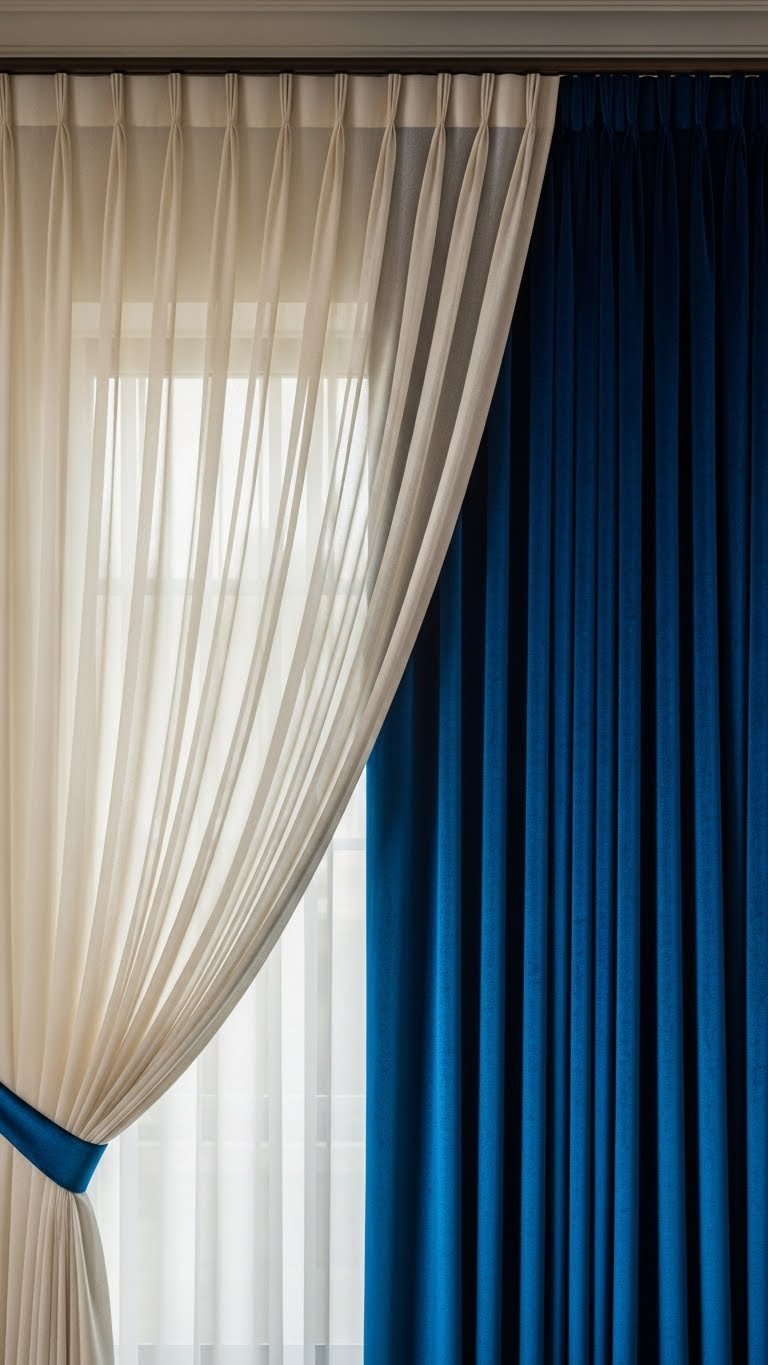
Jewel tones—ruby red, sapphire blue, emerald green, amethyst purple—are the color trend everyone’s embracing in 2025. Double rods let you showcase these bold hues without committing your entire window wall to drama.
Layer pale cream or white sheers on your front rod ($15–$40) with jewel-toned velvet, linen blend, or heavy cotton on your back rod ($60–$150 per panel). The pale layer underneath keeps the space from feeling cave-like, while the jewel tone adds luxury and personality. Brands like Anthropologie, West Elm, and online fabric sellers offer gorgeous options. Hanging both rods takes about 40 minutes. These colors photograph beautifully for social media, so your space instantly becomes more inspiring. The interplay between light sheers and deep jewel tones creates a sophisticated, gallery-like quality.
7. Use Motorized Rods for Modern Convenience
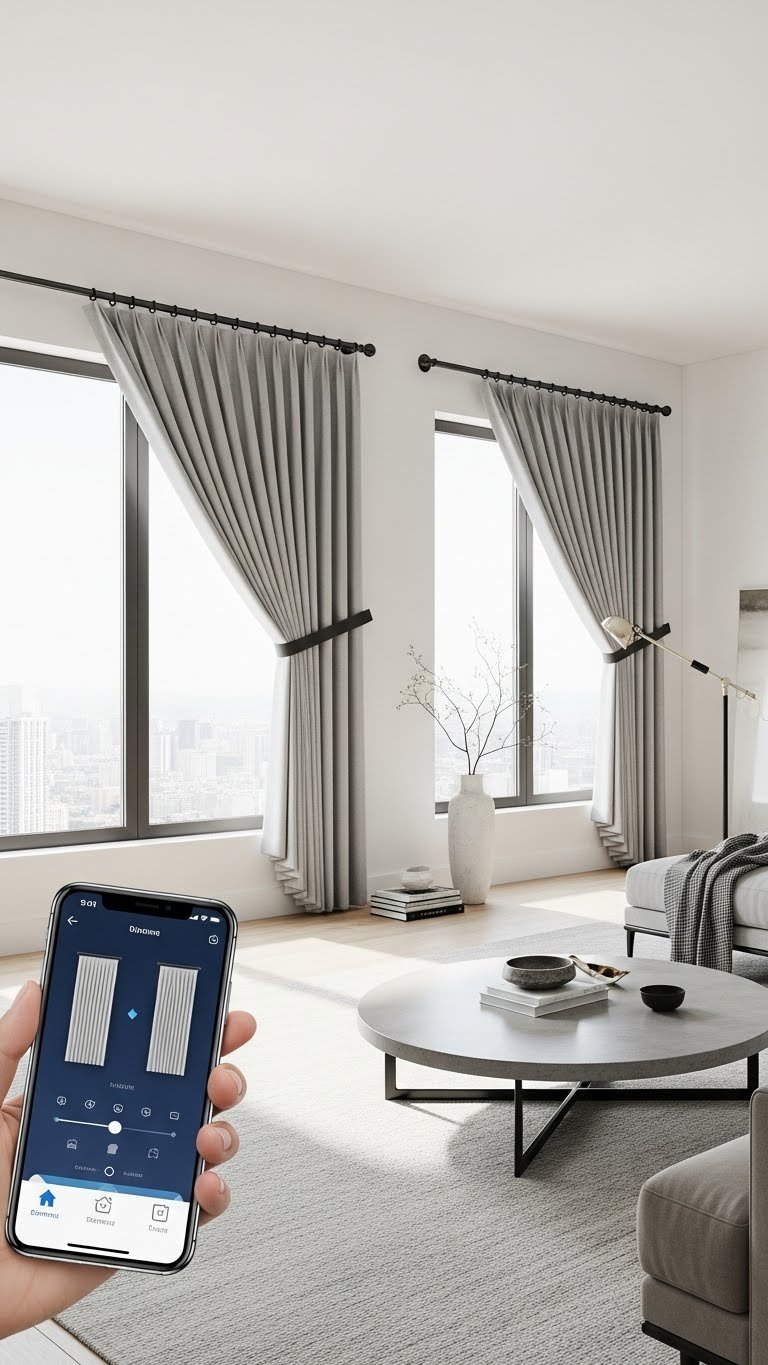
If you want luxury without the manual work, motorized double-rod systems are worth the investment. Control both rods separately from your phone, set schedules, and integrate with your smart home—all while looking incredibly chic.
Motorized rod systems typically start at $200–$400 for basic setups from brands like IKEA Fyrtur, Lutron, or Switchbot, climbing to $600–$1,500+ for premium systems from companies like Silent Gliss or Hunter Douglas. Installation can be DIY (1–2 hours) or professional ($100–$300 labor). You’ll need a power source near your window, so check your outlet placement before purchasing. The convenience is real—open curtains with your morning alarm, close them remotely for movie night, or schedule them to adjust with sunset. This setup pairs especially well with minimalist or modern interiors where clean lines matter. You’ll feel like you’re living in the future.
8. Layer Lightweight Cotton with Statement Silk
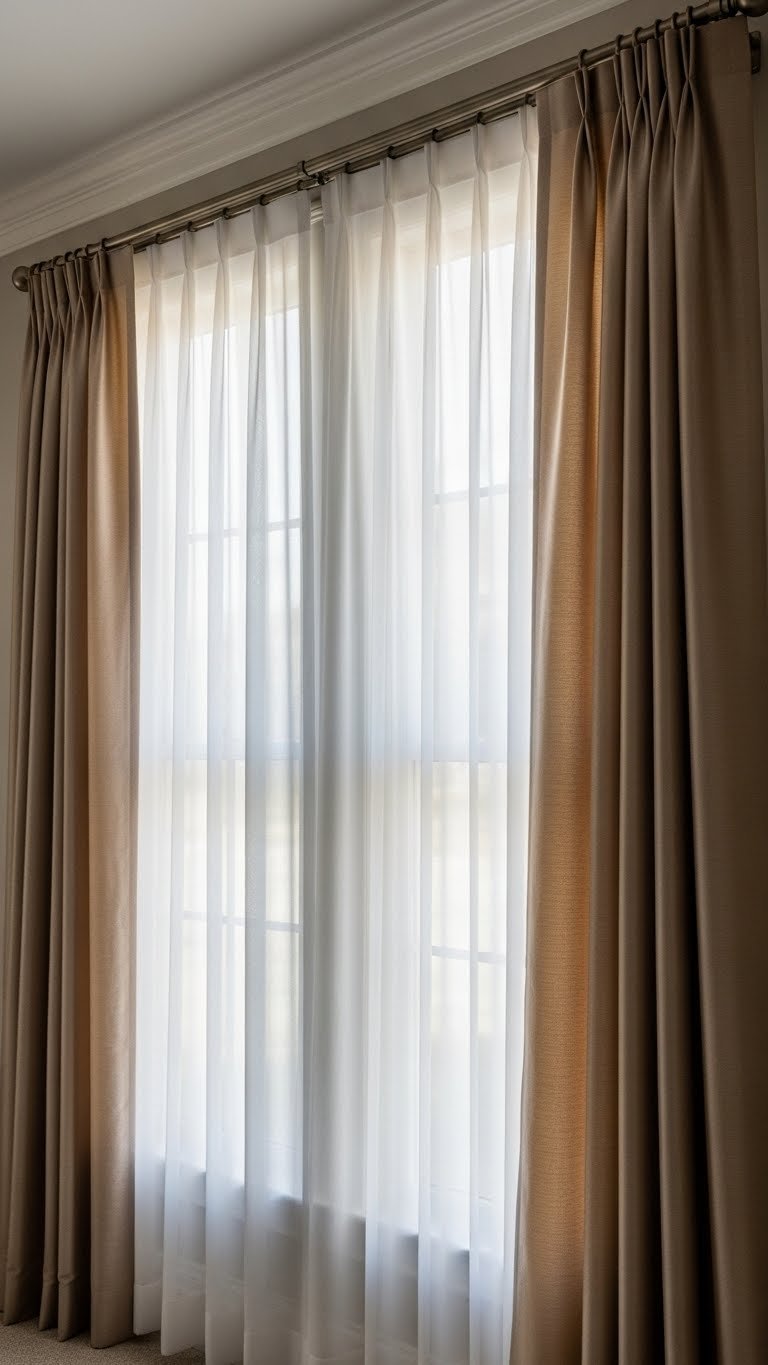
Mixing humble cotton with luxe silk creates an interesting aesthetic contrast—everyday practicality meets special-occasion elegance. This pairing works beautifully in bedrooms, dining rooms, or living spaces.
Hang lightweight cotton voile or cotton linen blend on your front rod ($20–$40 per panel from Target, IKEA, or Amazon). Add silk or silk-blend drapes to your back rod ($80–$200 per panel from Anthropologie, Wayfair, or specialty fabric shops). Cotton is easy-care and casual; silk adds glamour and catches light in sophisticated ways. Setup takes about 30 minutes. Both fabrics are forgiving—cotton wrinkles naturally, and silk actually looks better with subtle imperfections. The combination says “I’m put-together but not fussy,” which resonates with how most people actually want to feel in their homes. You’ll appreciate the texture contrast when light hits the windows throughout the day.
9. Employ Color Drenching for Immersive Depth
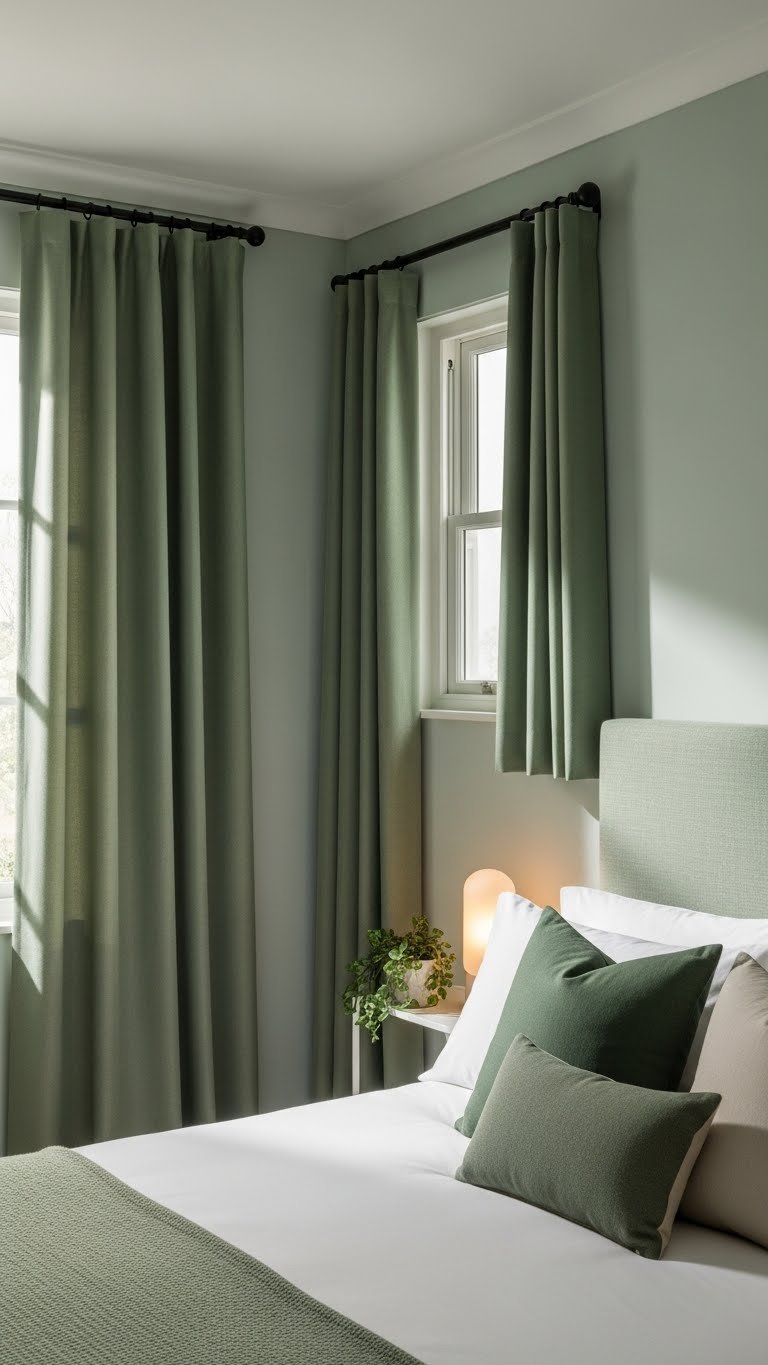
Color drenching—matching your curtains to your wall color—creates a cocooning effect that feels intentional and spa-like. With double rods, you can layer different shades of the same hue for even more depth.
Paint your walls in a soft earthy tone like sage, olive, warm gray, or muted terracotta ($30–$50 per gallon). Hang a slightly lighter shade on your front rod and a slightly deeper shade on your back rod, both in the same color family. Panels range $25–$80 each depending on where you shop. This technique works best in bedrooms and calm spaces; it can feel overwhelming in small rooms or high-traffic areas. Installation takes about 45 minutes for both rods. The payoff? Your room becomes a cohesive, intentional space that photographs beautifully and feels incredibly relaxing. The color drenching approach removes decision fatigue—everything coordinates by design.
10. Mix Vintage Austrian Blinds with Modern Sheers
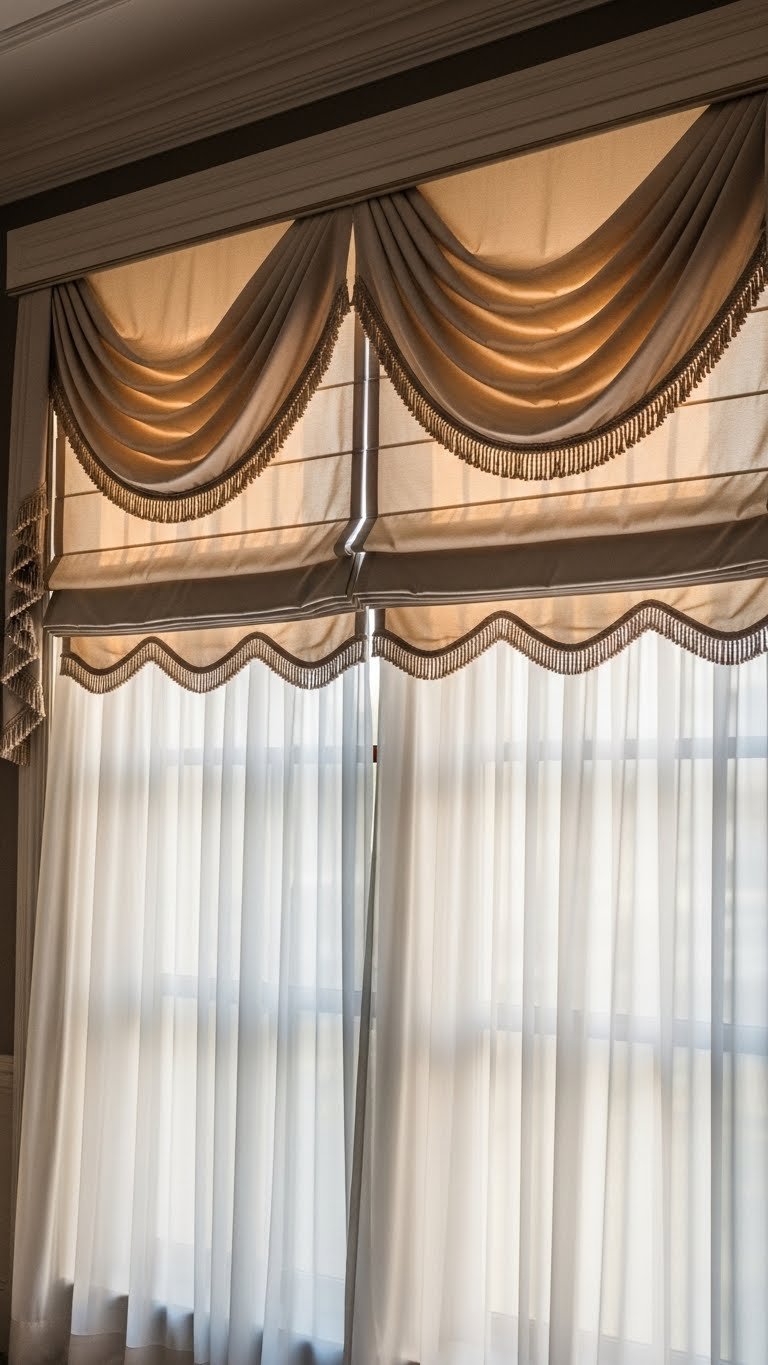
Austrian blinds are experiencing a romantic revival, especially when paired with contemporary elements. This blend of old and new creates visual interest without feeling like a costume.
Hang minimalist sheers on your front rod ($20–$40 per panel) and opt for Austrian blinds on your back rod ($80–$200 depending on customization). Brands like Hillarys and local blinds shops can custom-make these with elegant scalloped edges and gentle fabric folds. The blinds add texture and detail without overwhelming the space. Installation requires professional help for the blinds ($50–$150), but sheers hang easily yourself (15 minutes). This pairing works beautifully in master bedrooms, dining rooms, or feminine-leaning spaces. The result feels curated and personal—like you discovered a sophisticated trick. The soft light filtering through both layers creates a dreamy, intentional mood.
11. Layer Crisp White for Maximum Light Reflection
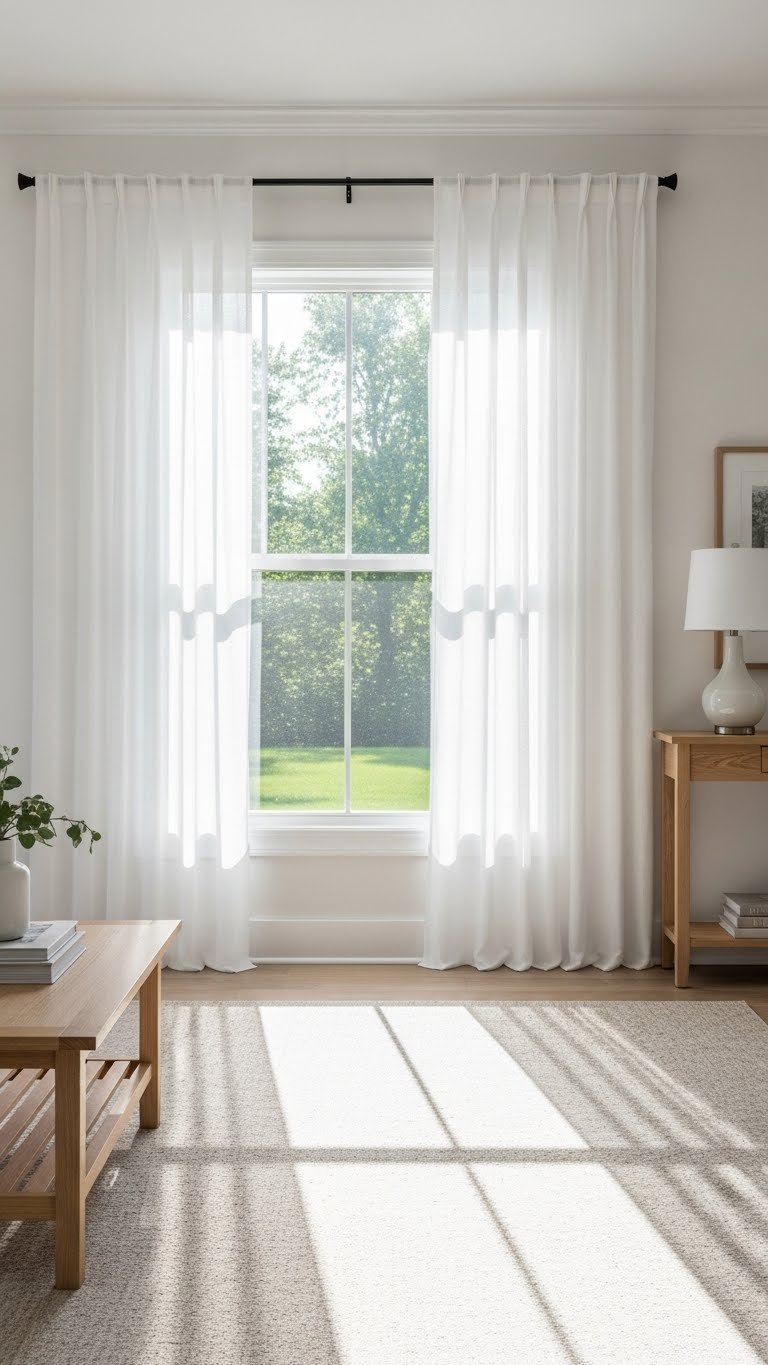
If your goal is maximum brightness and visual spaciousness, white curtains on both rods are your answer. This classic approach never goes out of style because it actually works.
Choose crisp white cotton voile or linen for your front rod ($20–$45 per panel) and ivory or bright white linen or linen blend for your back rod ($35–$80 per panel). The slight shade variation (pure white vs. ivory or natural linen) adds depth while keeping everything light and airy. Panels from IKEA, Target, and Wayfair are $15–$50 and budget-friendly. Hanging takes about 30 minutes. White reflects light beautifully, making even smaller rooms feel larger and brighter. The minimalist aesthetic appeals to modern and traditional tastes alike. You’ll notice that rooms with white double-layered curtains feel more spacious and peaceful—plus they photograph incredibly well.
12. Try Plaid Sheers Over Solid Neutrals
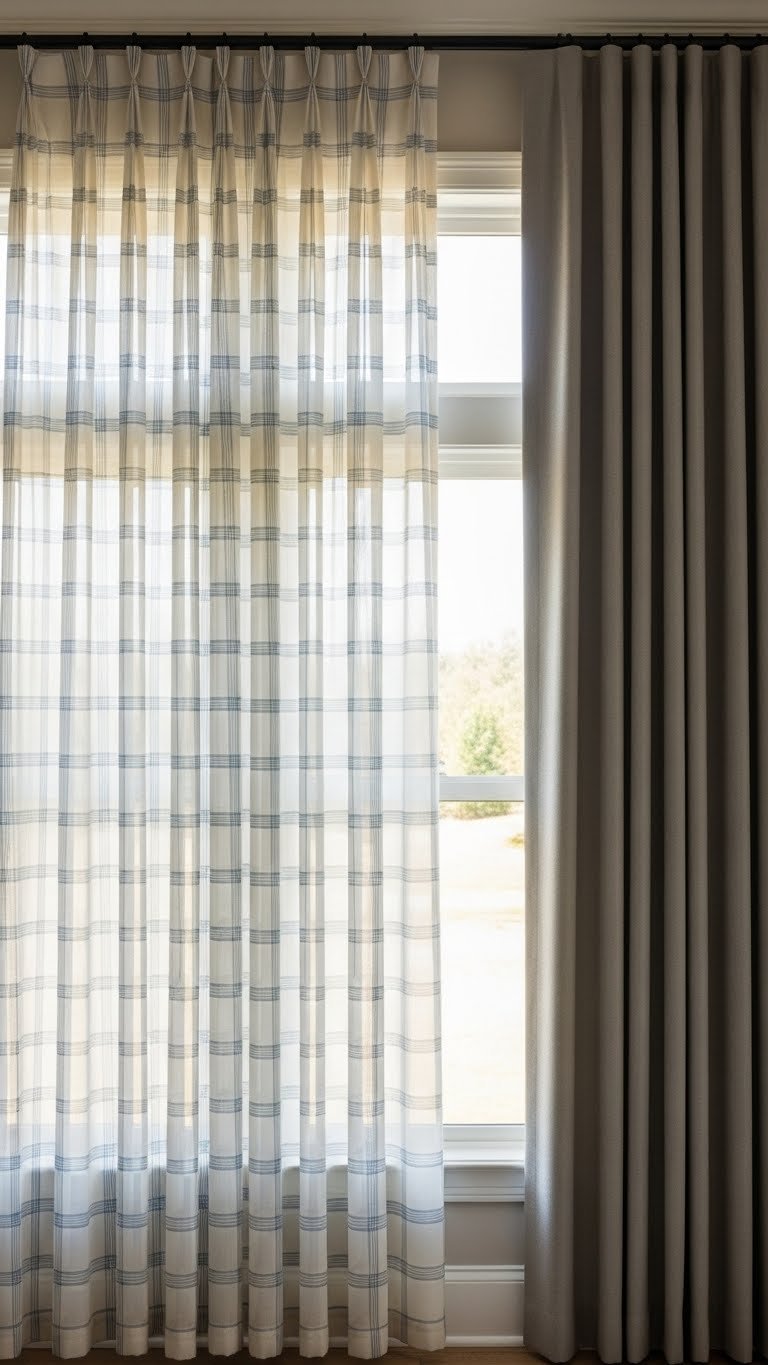
Plaid patterns are trending, but subtle versions feel more sophisticated than bold takes. Plaid sheers offer pattern without heaviness, especially when layered over solid neutrals.
Hunt for lightweight plaid sheers in cream with subtle blue, green, or pink checks ($25–$50 per panel from Etsy, Wayfair, or specialty online retailers). Layer them over solid warm gray, greige, or taupe linen on your back rod ($40–$90 per panel). The pattern reads gently through the sheers while the solid backdrop keeps things grounded. Installation takes about 40 minutes. This combination works beautifully in traditional, cottage, or eclectic spaces. The plaid adds personality without feeling trendy or overly thematic. Soft light highlights the plaid pattern beautifully, especially in afternoon hours, creating subtle visual interest that doesn’t exhaust your eyes.
13. Combine Gauzy Drapes with Deep Moody Backdrops
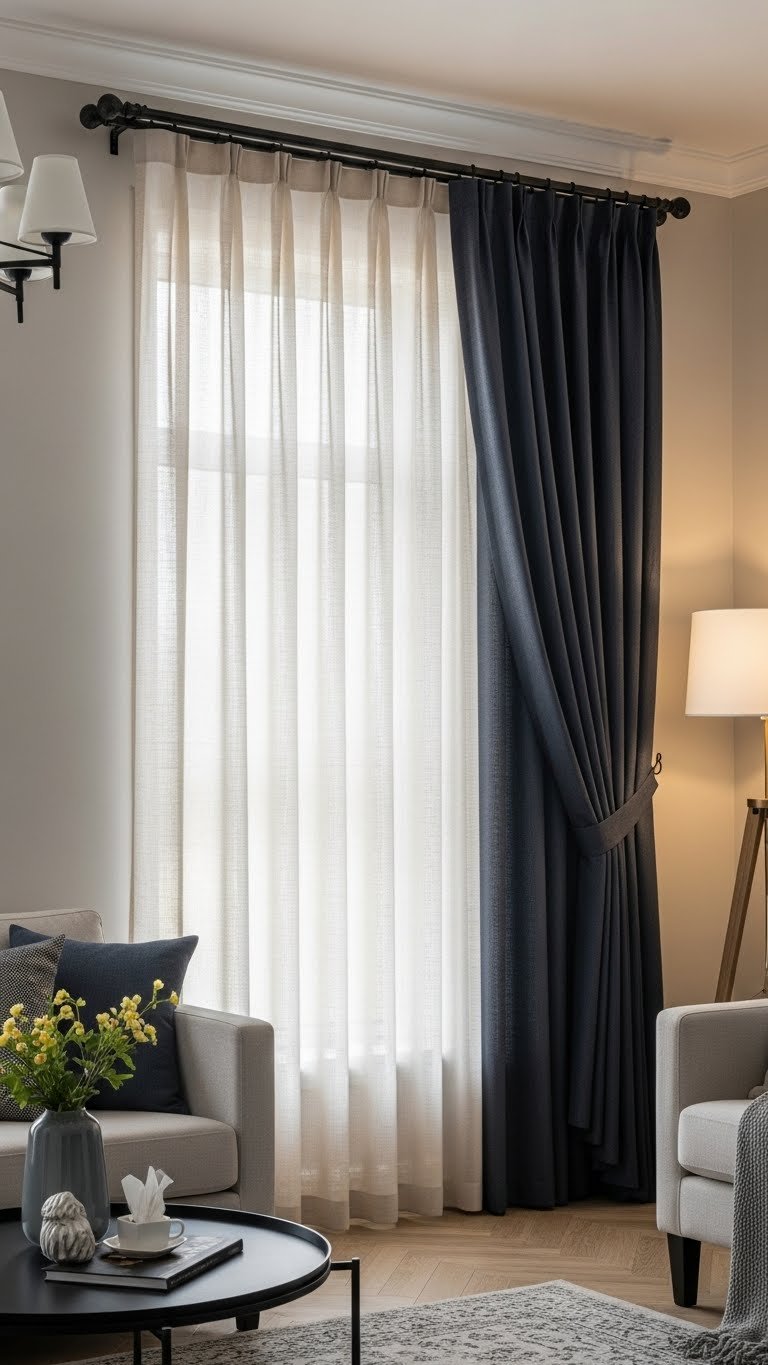
If your walls or furniture lean moody or dark, gauzy, lightweight drapes on your front rod prevent the space from feeling heavy. This pairing balances drama with airiness.
Hang breezy gauze or cotton voile in cream, ivory, or pale gray on your front rod ($20–$40 per panel). Layer deep charcoal, navy, or rich gray linen or linen blend on your back rod ($60–$130 per panel). The gauzy layer softens the moody backdrop while maintaining the sophisticated, deep-toned aesthetic. Brands like West Elm, Pottery Barn, and Wayfair carry options. Setup takes about 40 minutes. This technique prevents deep-toned rooms from feeling claustrophobic or dark. Instead, you get the elegance of jewel-tone or moody styling with the lightness and softness that makes spaces feel open. The interplay between the two layers creates a hotel-like quality.
14. Go Full Luxury with Matching Silk Panels
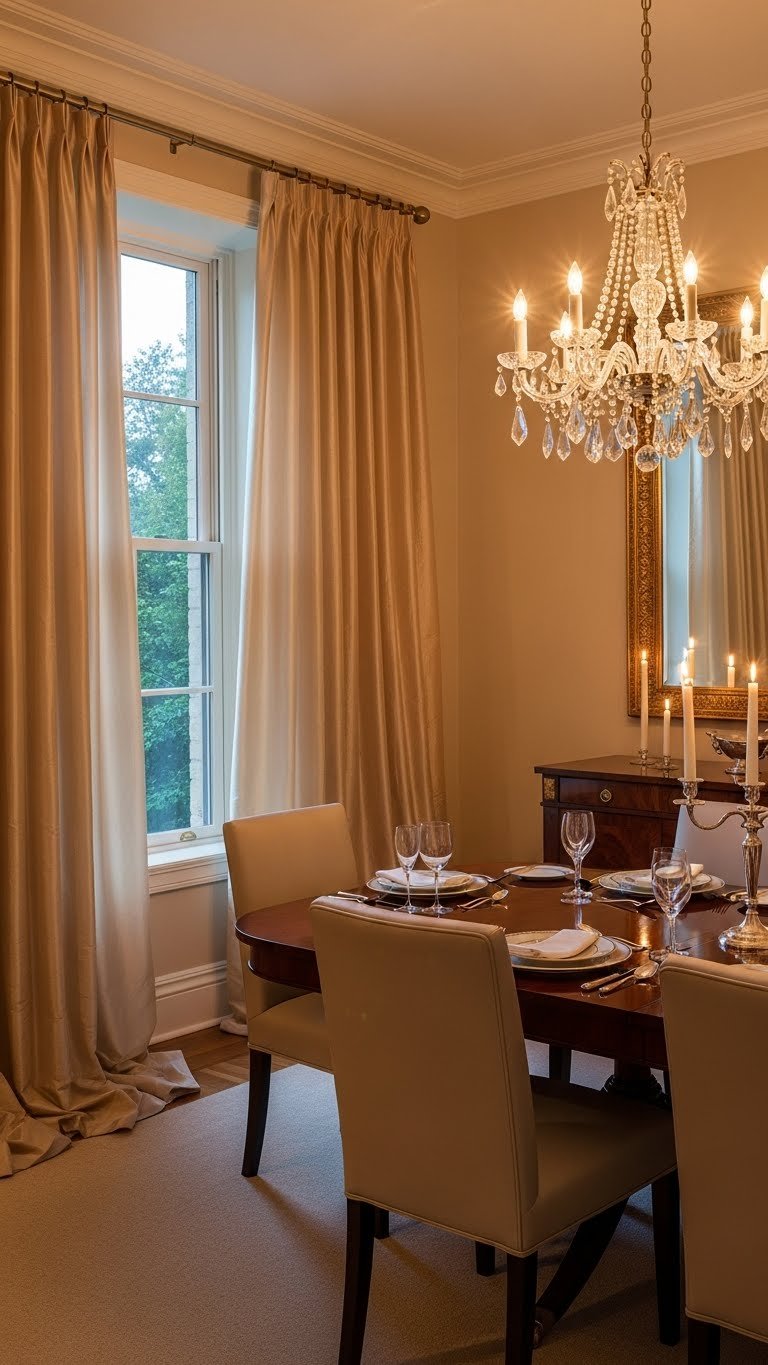
When budget allows, silk on both rods creates undeniable luxury and visual sophistication. This investment pays dividends in how your room feels and photographs.
High-quality silk panels start at $100–$200 per panel and can reach $300–$500+ from premium brands like Restoration Hardware, Anthropologie, or high-end fabric stores. Consider brands like Etsy sellers specializing in luxury fabrics for slightly lower prices ($80–$180 per panel). Silk requires professional cleaning (budget $10–$20 per panel annually) and should be hung away from direct intense sunlight to prevent fading. Installation takes about 45 minutes, but professional hanging ($75–$150) ensures proper care. The payoff is immense—silk creates an undeniable sense of polish and refinement. Your room automatically feels more curated, and the way silk catches and reflects light is genuinely beautiful. This is a genuine investment that lasts decades.
15. Layer Embroidered Sheers with Solid Drapes
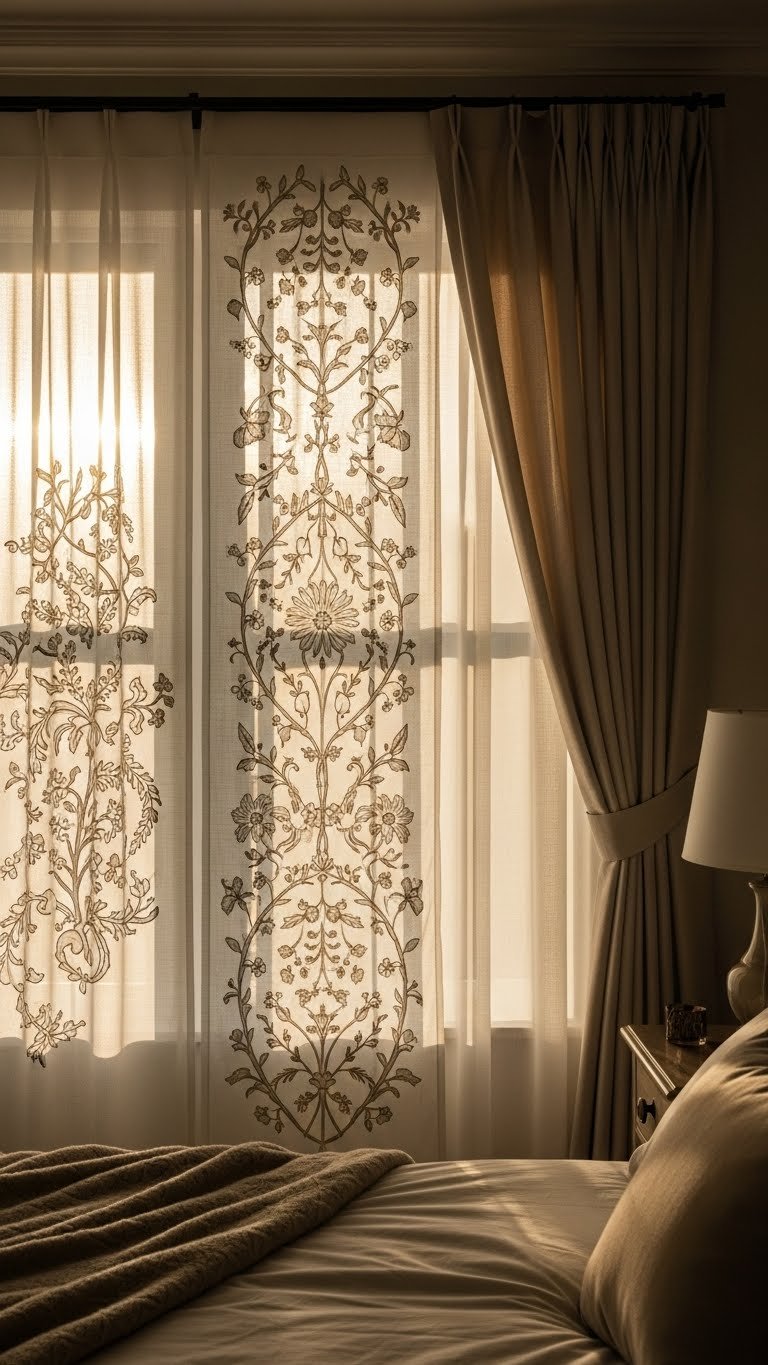
Embroidered sheers transform your windows into artwork, especially when backed by solid panels that let the detailing shine. This approach feels personal and curated.
Search for embroidered linen or cotton sheers with botanical, geometric, or celestial patterns ($40–$90 per panel from Etsy, specialty online retailers, or brands like Anthropologie). Back them with simple solid linen or cotton in cream, white, or pale gray ($30–$70 per panel). The embroidery shows beautifully when backlit by natural light. Installation takes about 35 minutes. This pairing works especially well in bedrooms, home offices, or spaces where you want to inject personality without bold color. The embroidery catches attention during the day when light streams through, becoming a subtle focal point. It’s a designer detail that feels more special than standard curtains.
16. Use Tie-Back Tricks to Shape Your Layers
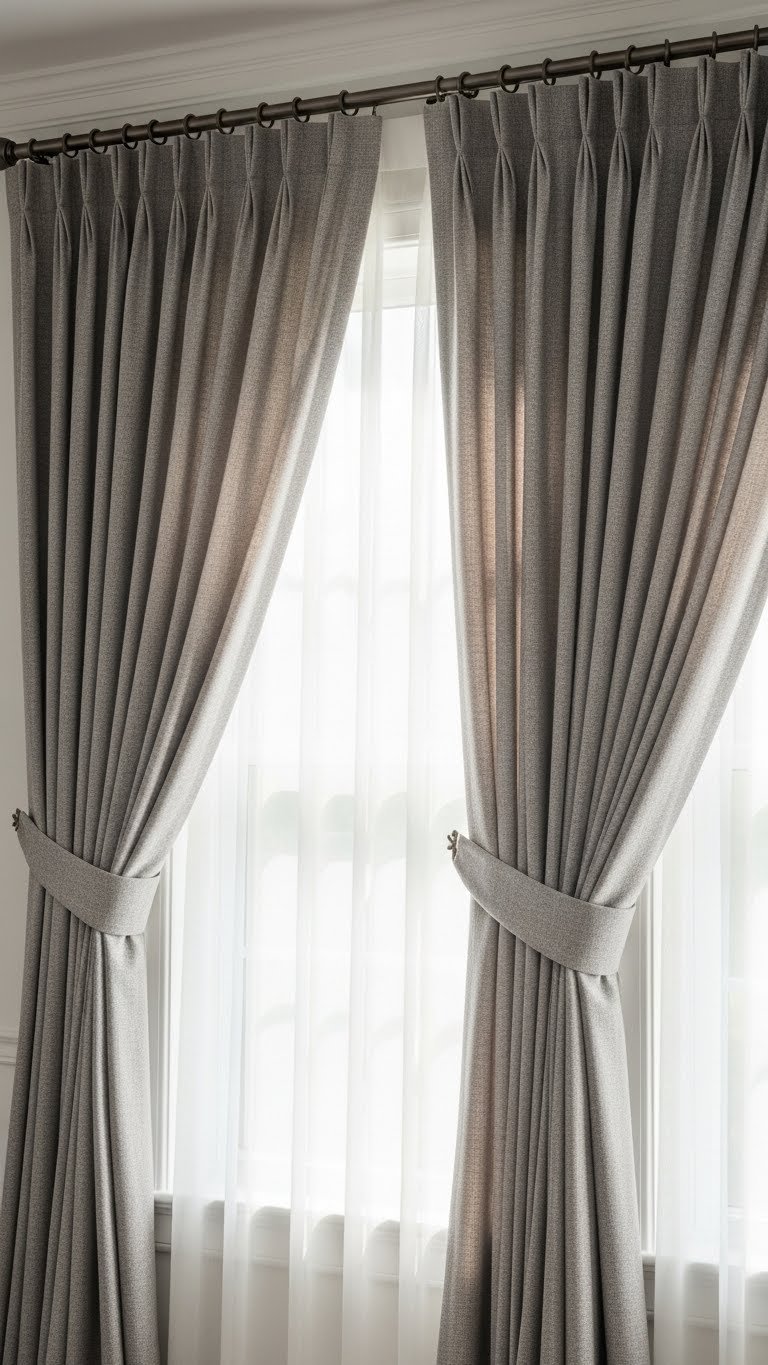
Tie-backs are an underrated styling tool that adds polish and visual interest while controlling how your layers hang. They’re affordable, easy to change, and instantly elevate your look.
Purchase simple fabric tie-backs ($5–$20 per pair from Target, IKEA, or Amazon) or make your own using ribbon, fabric strips, or even decorative cord. Install tie-back hooks ($3–$8 each at hardware stores) about one-third down from the rod. Pull both your front and back curtains to the sides and secure with tie-backs, creating elegant diagonal lines. This approach takes about 20 minutes and requires just a drill or picture hooks. Tie-backs serve a double purpose—they shape your layers and keep curtains from blocking light when you want it. The architectural lines created by tie-backs make your window look more intentional and designed. You can change tie-backs seasonally or for different moods without replacing the curtains themselves.
17. Embrace Two-Toned Layering for Subtle Contrast
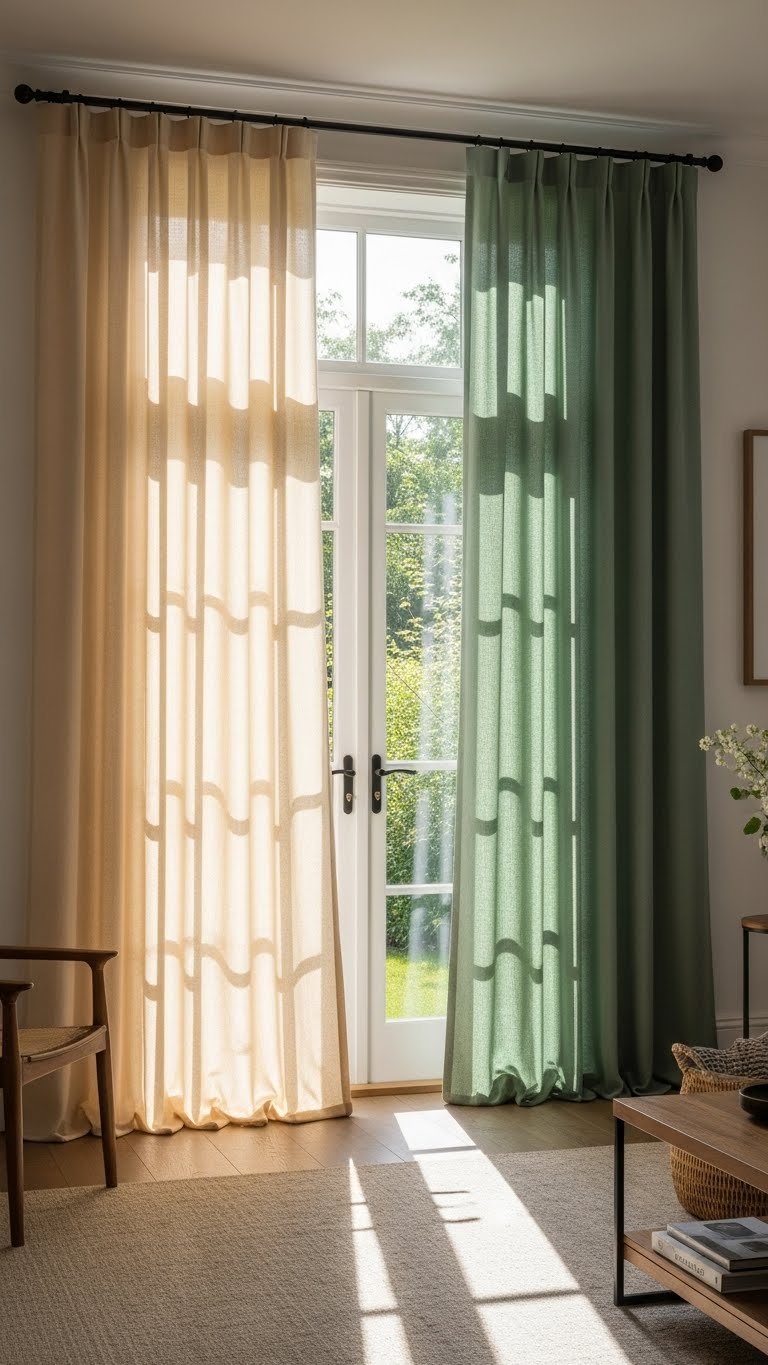
Two-tone layering adds visual interest and depth without committing to bold patterns or extreme contrast. It’s sophisticated and surprisingly forgiving.
Choose two related colors in the same warm or cool family—cream and warm gray, ivory and sage, pale blue and dusty blue. Front panels run $25–$50, back panels $40–$90 per panel depending on fabric and retailer. Both layers should feel equally important, so avoid pairing a dark with a light (instead, go light with medium, or medium with slightly deeper medium). Installation takes about 40 minutes. This approach works beautifully in spaces where you want design intention without personality risk. The two tones catch light differently, creating subtle movement throughout the day. Your space feels thoughtfully styled without looking like you’re trying too hard.
18. Mix Prints Carefully with a Solid Separator Layer
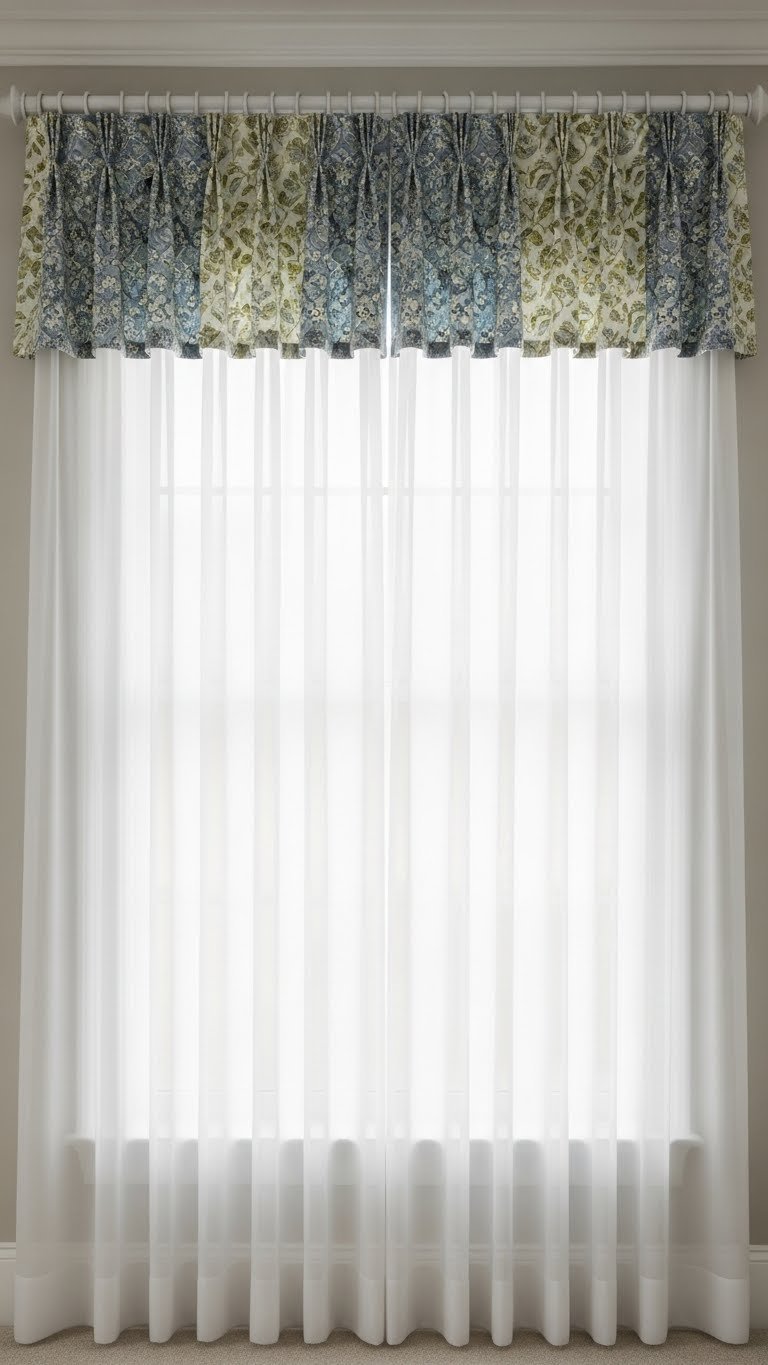
Mixing two different prints requires a trick—add a solid separator layer between them. Your front rod holds a simple solid, while patterns appear on both your window frame and your back rod.
Hang basic white or cream cotton voile on your front rod ($20–$40 per panel). On your back rod, combine two complementary prints in related colors—perhaps a small floral with a geometric, or a plaid with a botanical. Each panel should feature one print. Patterned panels range $35–$80 per panel from places like Etsy, Wayfair, or fabric specialty shops. Installation takes about 50 minutes and requires confidence in styling (test your selections side by side before committing). The solid layer acts as a visual buffer, preventing the patterns from competing or creating visual noise. The result feels eclectic but intentional, not chaotic. This is perfect for maximalists who love pattern but worry about cohesion.
19. Create Hybrid Style with Pleats and Minimalist Hardware
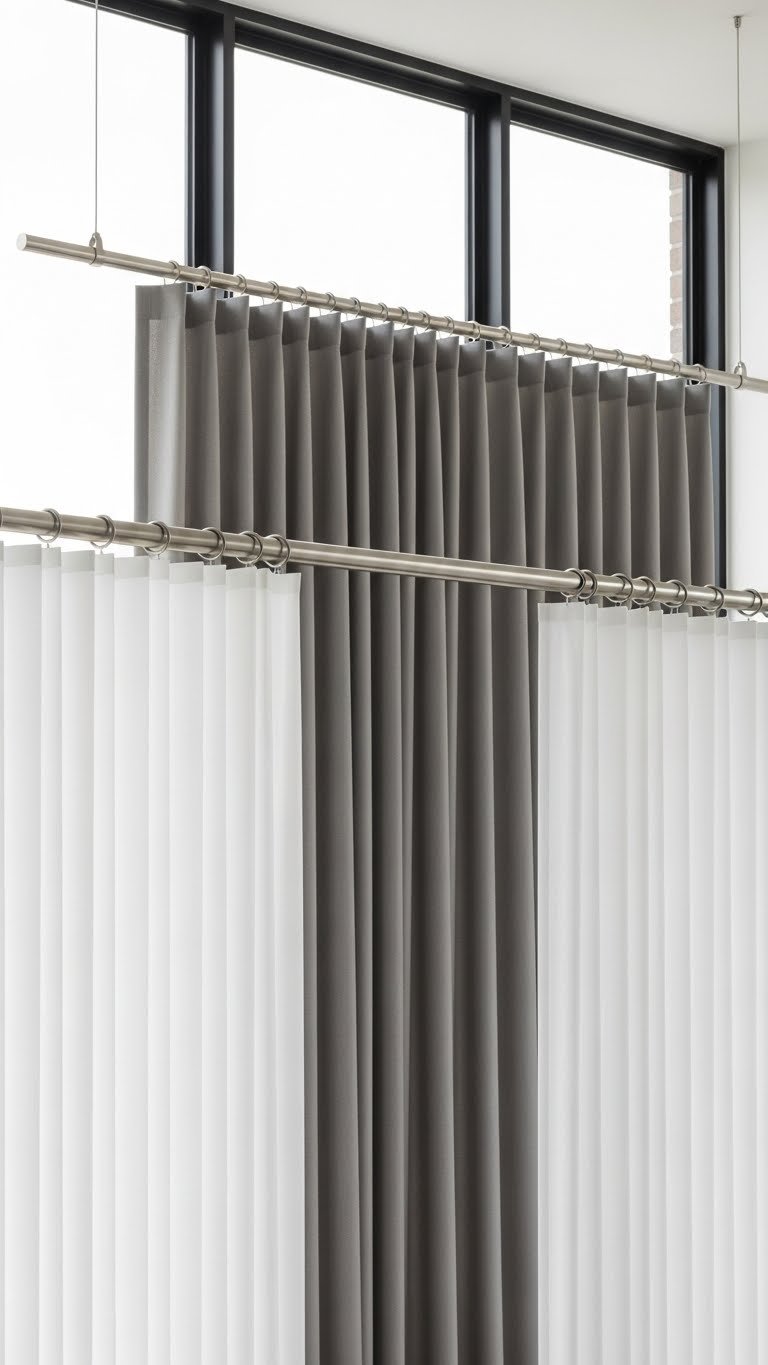
Hybrid styling blends traditional and modern elements—think structured pleats with minimalist hardware and neutral colors. It’s elegant without feeling fussy or ornate.
Select panels with subtle pleating or inverted pleats in white or cream ($50–$100 per panel from brands like Pottery Barn, West Elm, or online specialists). Pair with ultra-minimal hardware—thin matte black or brushed nickel rods and rings. Back panels should be simple, flat linen or cotton in gray, taupe, or warm white ($35–$80 per panel). Installation requires careful rod placement and takes about 60 minutes (professional help is recommended, $75–$150). The pleats add architectural interest while the minimal hardware keeps the look contemporary and uncluttered. This approach appeals to people who love traditional craftsmanship but live modern lives. The result feels designed by someone with excellent taste.
20. Layer Metallic Accents with Understated Fabrics
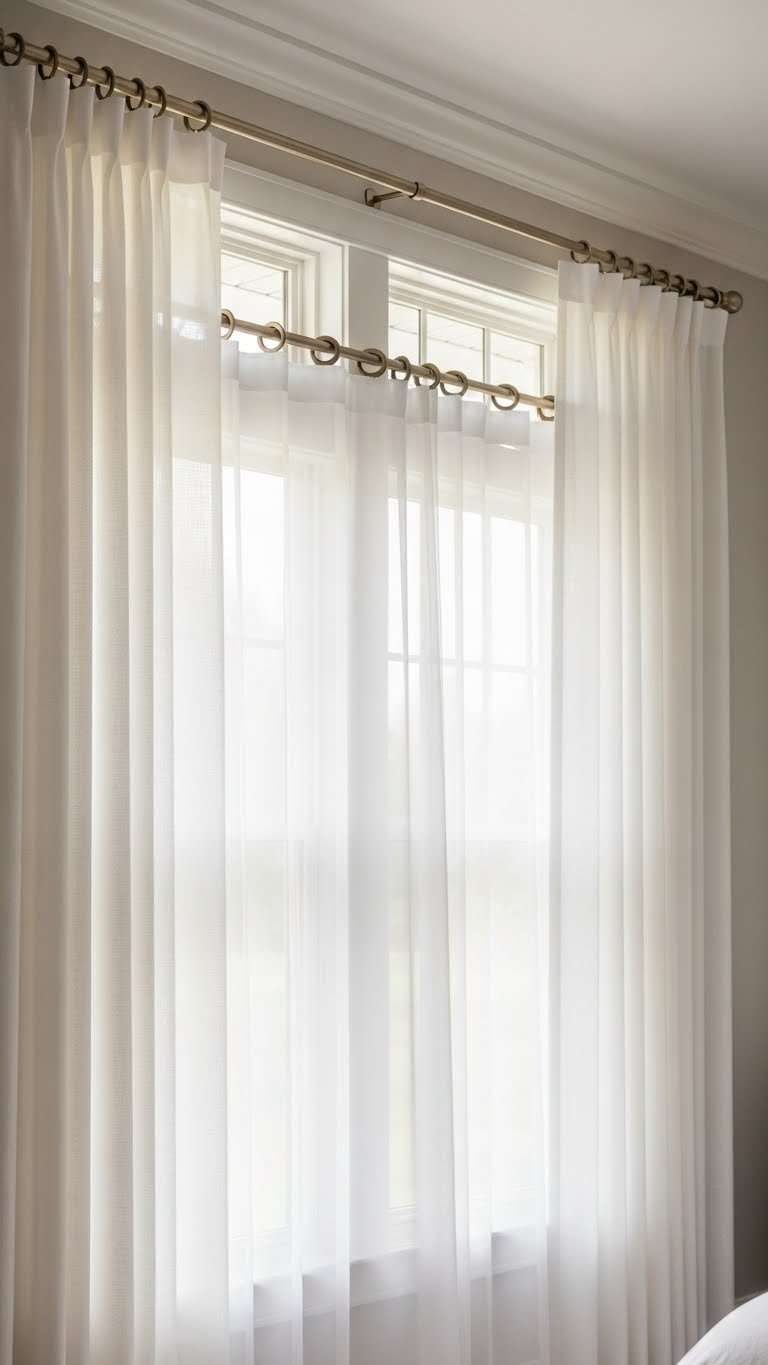
Hardware is often overlooked, but metallic accents can elevate basic panels instantly. Pair neutral fabrics with surprising, luxe hardware for maximum impact.
Stick with simple white, cream, or gray linen on both rods ($25–$60 per panel), then invest in statement hardware in champagne gold, antique brass, or matte bronze ($30–$80 per rod set). Ring details and finials catch light and add glamour without changing fabric choices. Brands like Wayfair, West Elm, and specialty hardware shops offer gorgeous options. Installation takes about 50 minutes and doesn’t require tools beyond a drill. This approach is perfect if you already own curtains you love but want to refresh your look. Swapping hardware is one of the quickest design updates available. The metallic accents create focal points and add sophistication without clashing with any décor style.
21. Go Full Blackout for Media Rooms or Bedrooms
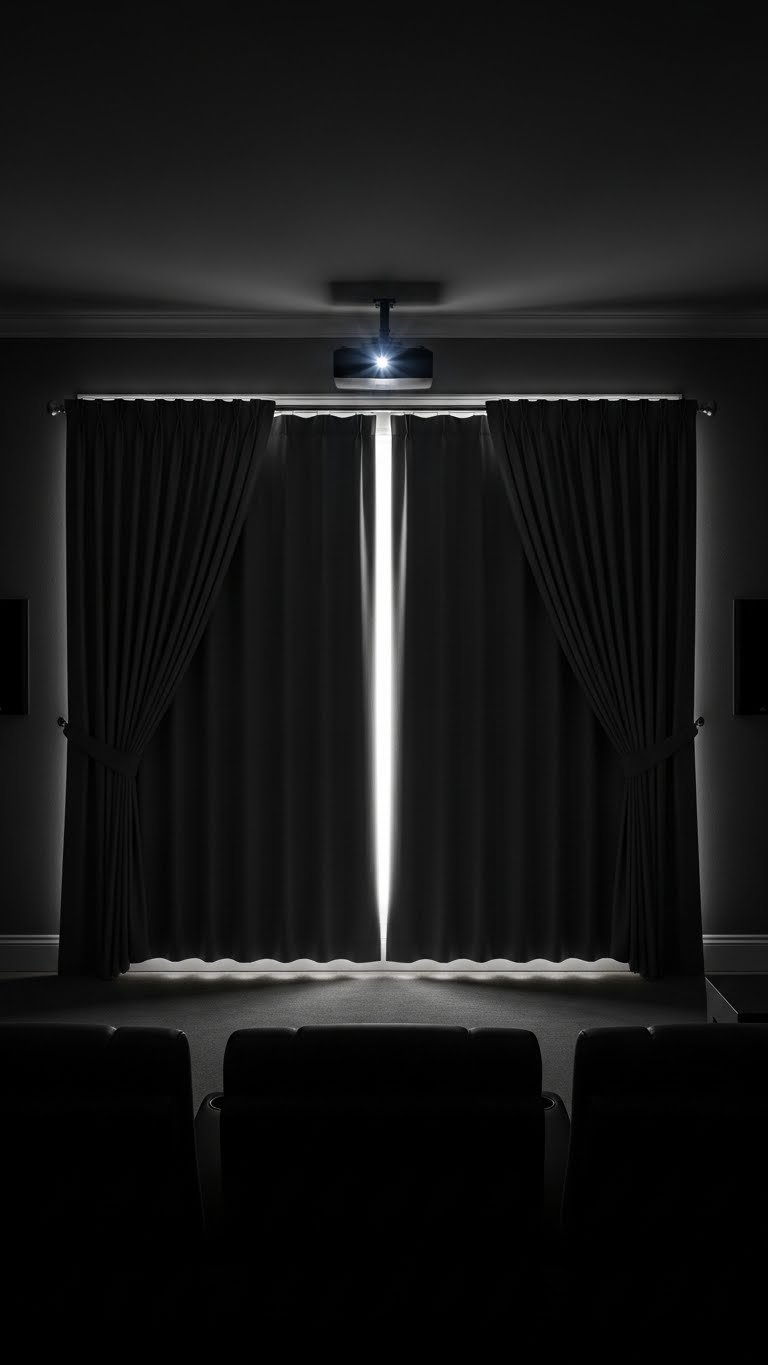
If you need theatrical darkness, full blackout layering ensures zero light sneaks through. Both rods can support blackout fabrics for maximum coverage.
Hang blackout-lined panels or full blackout curtains on both rods in black, deep gray, or charcoal ($40–$100 per panel depending on quality). Look for brands offering 100% blackout certifications from Wayfair, Amazon, or specialty blackout retailers. Ensure your rods are sturdy enough for the weight (blackout fabric is heavier, so check rod ratings). Installation takes about 45 minutes, though you may want to add a third rod or blackout shade system. Professional installation ($100–$250) ensures proper coverage and light blocking. This setup is essential for media rooms, shift-worker bedrooms, or light-sensitive sleepers. Complete darkness allows better sleep and more realistic movie experiences. The trade-off is that rooms feel cave-like in daytime, so consider this setup only if darkness is your priority.
22. Add Tassels and Trim for Ornate Elegance

Ornate details like tassels, fringe, and trim transform basic panels into statement pieces. This approach revives neo-classical style with modern sensibility.
Select solid velvet, linen, or heavy cotton in jewel tones or warm neutrals ($60–$150 per panel). Add bullion fringe, tassel trim, or decorative ribbon along the hem or top ($10–$30 per panel). Tassels for tie-backs run $8–$25 per pair. Install decorative finials ($25–$75 per set) on your rods for added elegance. Assembly and hanging takes about 60 minutes (professional installation recommended for alignment and balance, $100–$200). This look works beautifully in formal dining rooms, living rooms, or bedrooms where you want undeniable elegance. The ornate details photograph beautifully and create a sense of refined luxury. This is for people who love maximalist style and aren’t afraid of bold choices.
23. Employ Sheer-Only Layering for Minimalist Interiors
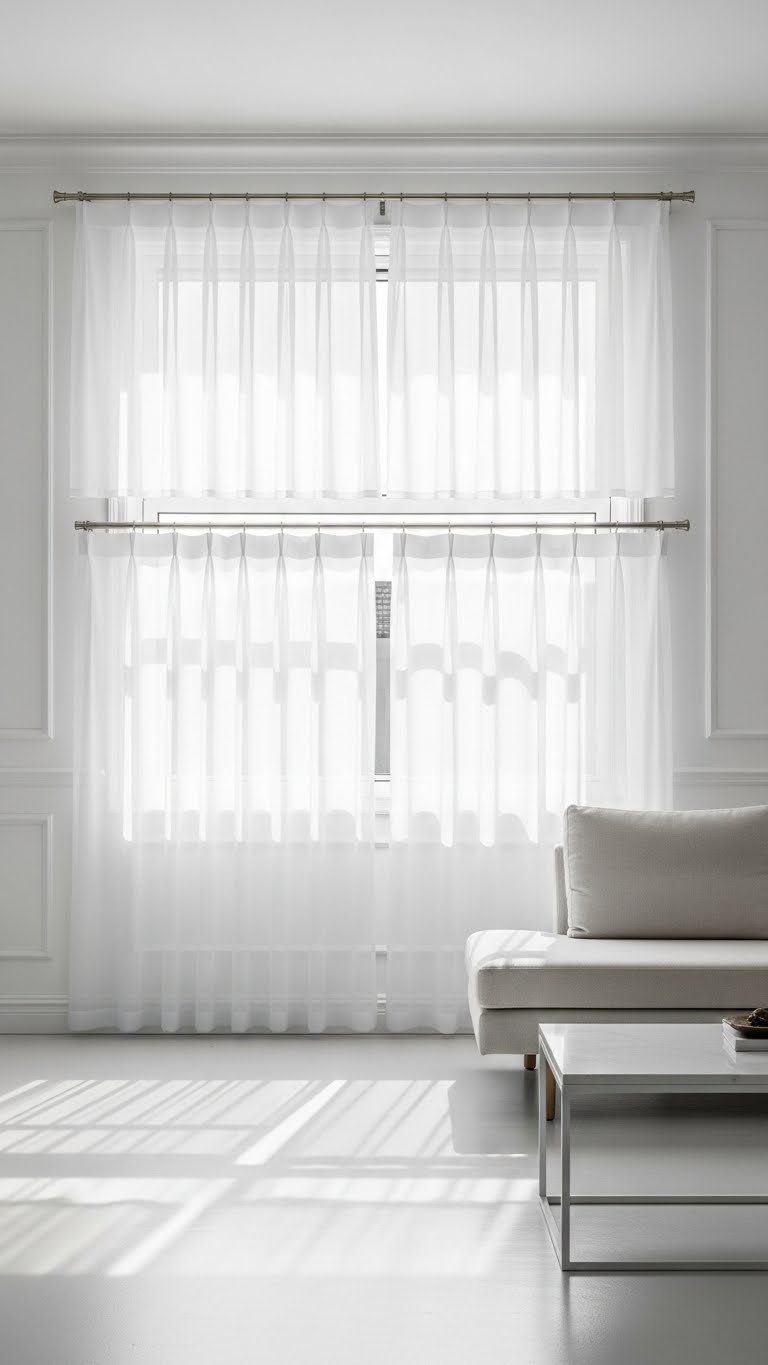
Sometimes less is more—two layers of sheers create depth and interest without any heavy fabric. This approach feels calm, airy, and endlessly sophisticated.
Choose lightweight white or cream cotton voile or linen for your front rod ($20–$40 per panel) and a slightly heavier or more textured sheer for your back rod ($30–$60 per panel). The slight difference in fabric weight or weave creates visual layering without blocking light. Both panels hang open at all times, working as a permanent soft filter. Installation takes about 25 minutes. This approach is perfect for minimalist spaces, open-concept homes, or sunny rooms where light control matters less than aesthetic. The dual-sheer approach creates a sophisticated, gallery-like quality. Soft light throughout the day creates gentle movement and interest while maintaining the peaceful, uncluttered aesthetic.
24. Mix Budget and Splurge with Strategic Layering
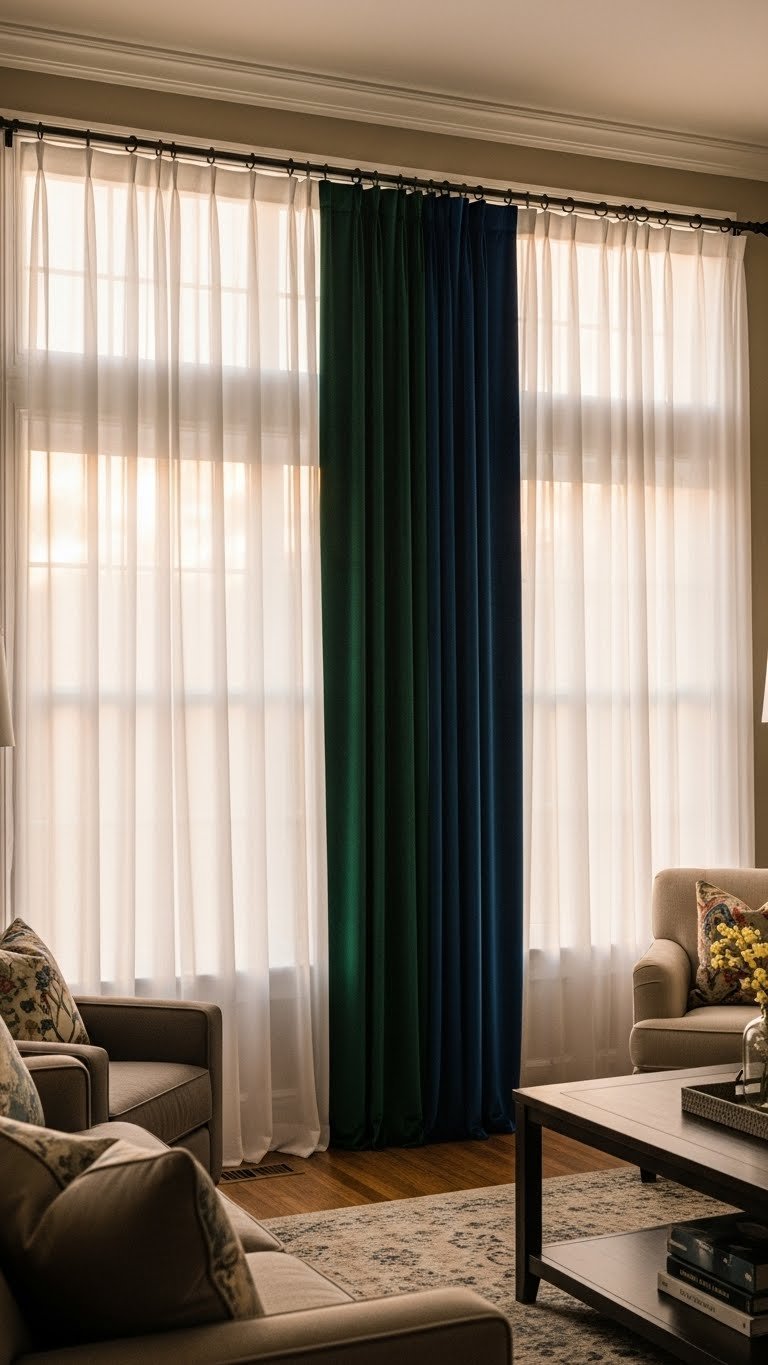
You don’t need to spend heavily on both layers. Smart layering lets you invest in one statement layer while keeping the other affordable and practical.
Grab inexpensive white or cream cotton panels from IKEA or Target for your front rod ($15–$30 per panel). Splurge on gorgeous velvet, silk, or high-end linen for your back rod ($100–$300 per panel from premium brands). This approach lets your investment piece shine while keeping overall costs manageable. Budget for both layers: roughly $150–$400 for a two-panel window (two panels per rod). Installation takes about 40 minutes. This strategy is perfect if you have one statement color or fabric you’re passionate about but don’t want to commit your entire window budget. The affordable front layer does its job quietly while the splurge layer gets to show off. This is smart budgeting that still delivers designer impact.
25. Style Seasonal Swap-Outs for Flexibility
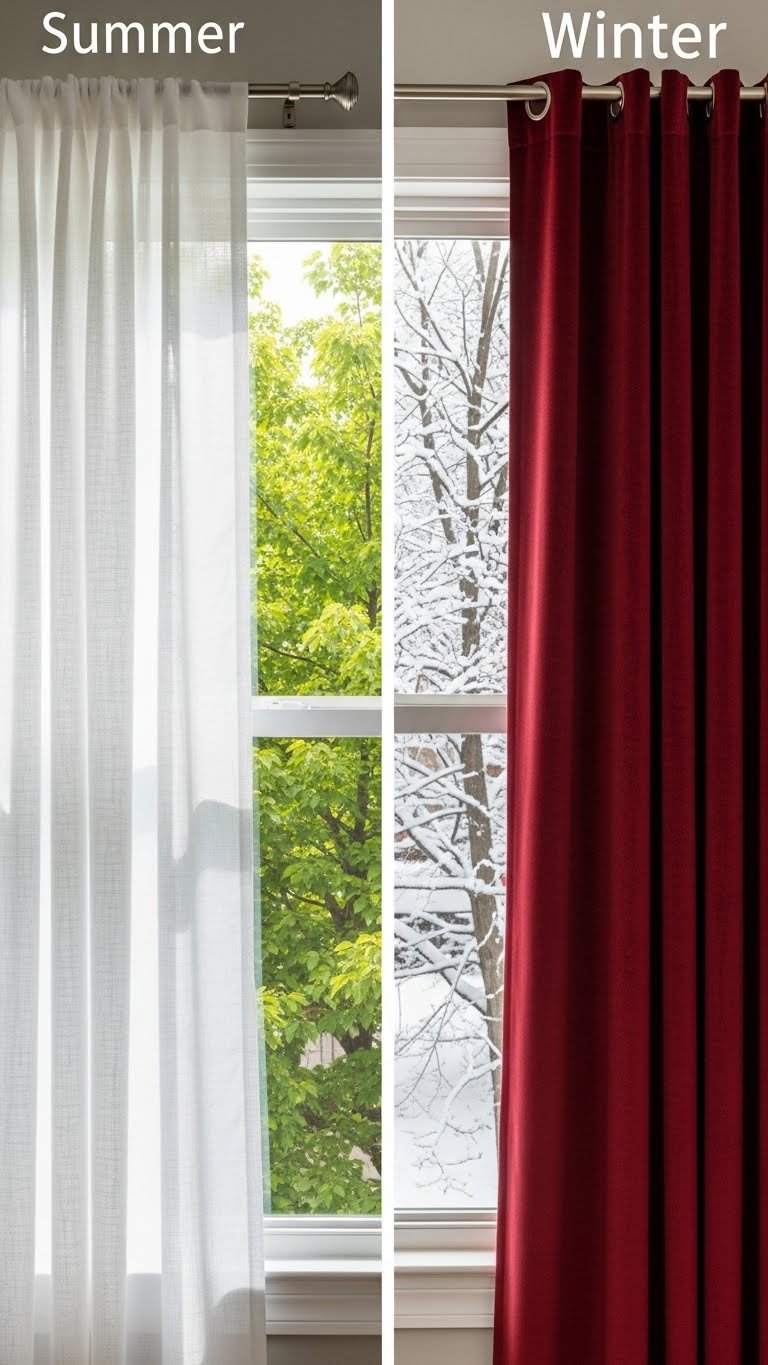
Your double-rod setup is perfect for seasonal changes. Swap your back or front panels seasonally without touching your hardware—instant refreshes, minimal work.
Keep your rods permanently installed, then swap out panels seasonally. Summer: lightweight linen or cotton voile ($25–$50 per panel). Winter or fall: velvet, wool blend, or heavy linen ($60–$150 per panel). Store off-season panels in vacuum bags or garment bags (approximately $10–$30 for storage supplies). Swapping takes about 20 minutes per rod once you develop a rhythm. This approach extends your budget—you’re effectively buying multiple looks from one setup. Your space feels fresh and intentional with each season. It’s also perfect for people who like variety or follow décor trends. The flexibility means you’re never locked into one aesthetic.
26. Layer Linen with Affordable Blackout for Dark Mornings
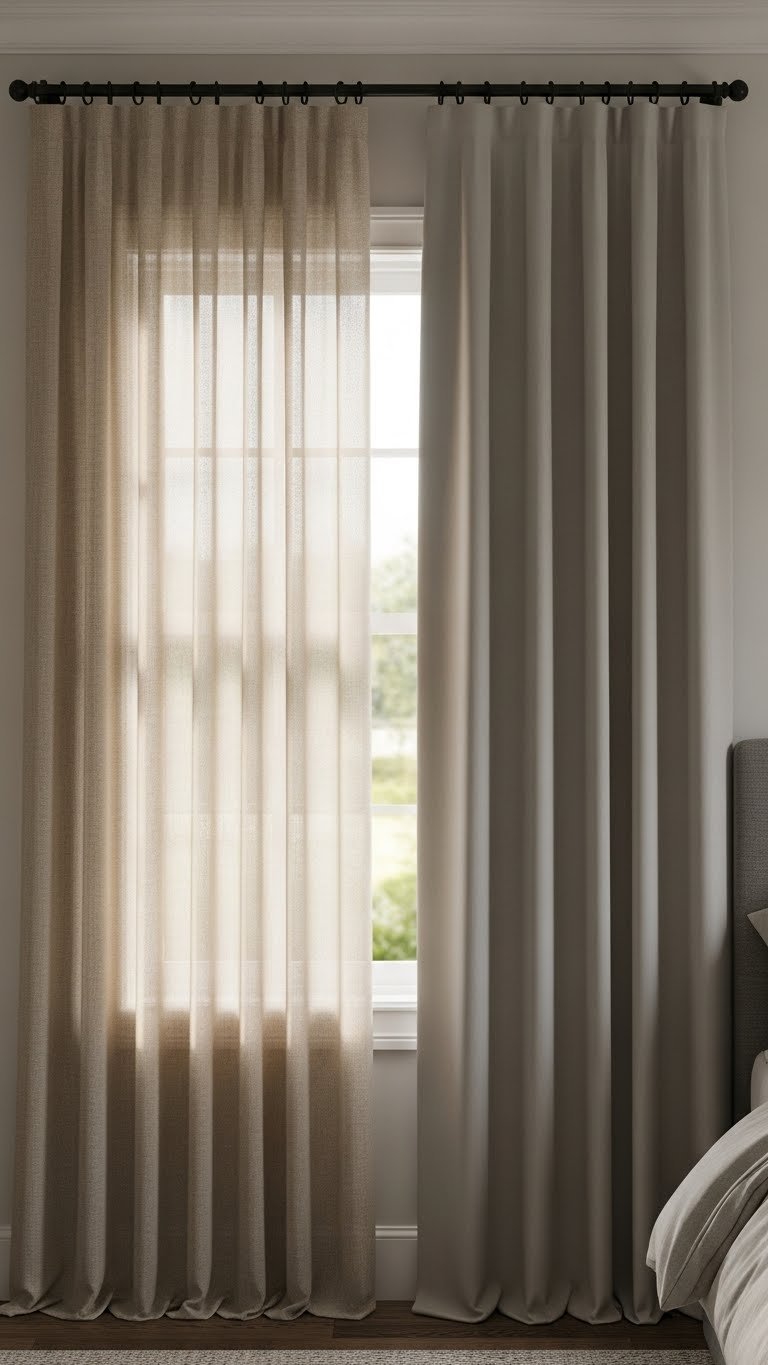
Practical doesn’t have to mean boring. Pair beautiful natural linen on your front rod with affordable blackout panels on your back rod for the best of both worlds—style and function.
Choose natural linen in cream or warm white for your front rod ($30–$60 per panel from West Elm, Wayfair, or online specialists). Back it with budget-friendly blackout panels from IKEA or Amazon ($15–$40 per panel) in matching cream, tan, or neutral gray. The linen adds beauty and texture while the blackout layer stays hidden, doing its job quietly. Total investment per two-panel window: roughly $90–$200, and installation takes about 35 minutes. This combination works beautifully in bedrooms where you want morning softness but need the option for dark, restorative sleep. The approach feels intentional rather than purely functional. You get a designer aesthetic with practical light control—the dream combination.
Save this post for your next window project and pick at least one idea to try this weekend. The best part? Most of these setups take under an hour, and you’ll immediately feel the difference in how your space looks and functions. Share with anyone who’s been hesitating about double rods—this is your permission to make it happen.
Leave a Reply