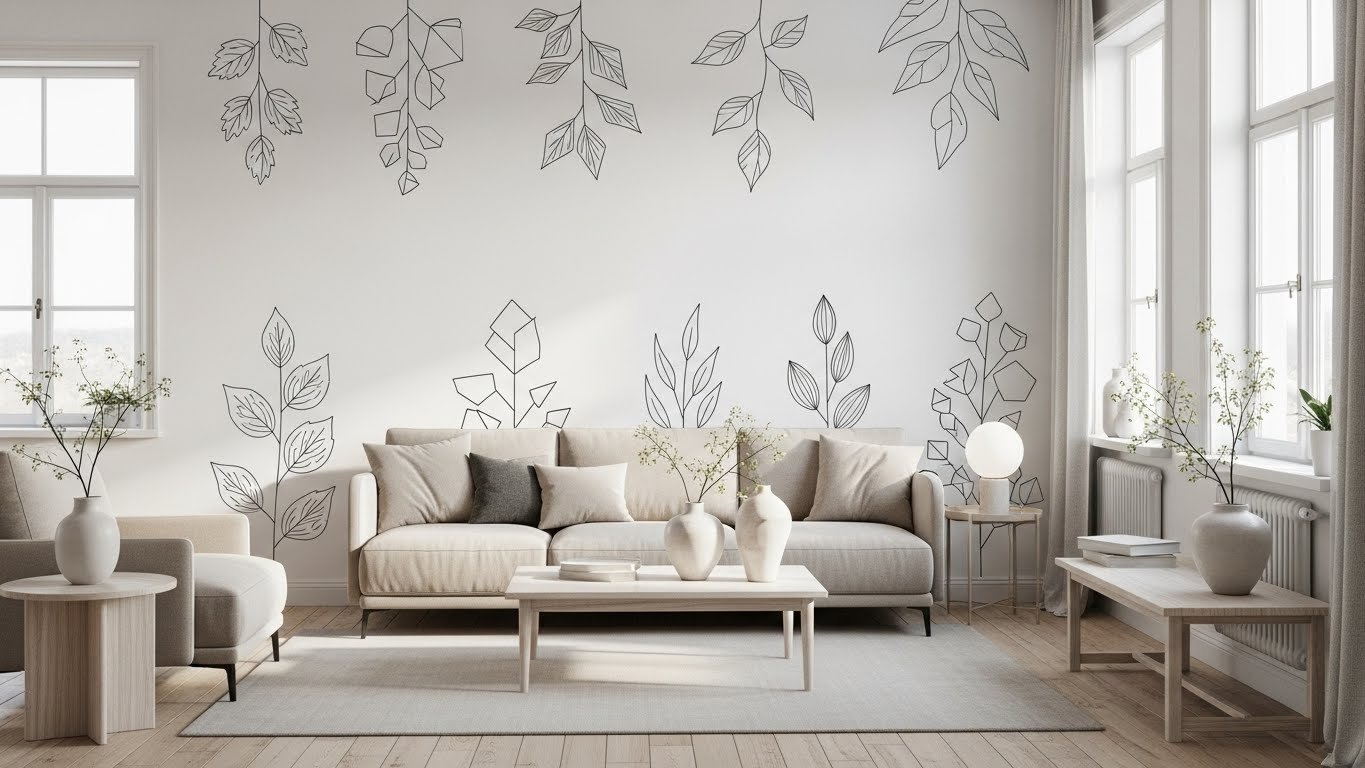
If your walls feel like blank canvases waiting for personality, but you’re hesitant about bold colors or busy patterns, minimal line art might be your answer. These elegant, understated designs bring sophistication and artistic flair without overwhelming your space. Whether you’re renting, own your home, or just prefer subtlety over drama, line art offers endless possibilities—from hand-drawn botanicals to geometric abstracts to architectural sketches. In this guide, you’ll discover 24 distinct ideas that blend affordability with impact, proving that “less is more” creates rooms that feel intentional, curated, and undeniably stylish. Ready to elevate your walls?
1. Paint Single-Line Botanical Sketches on Accent Walls
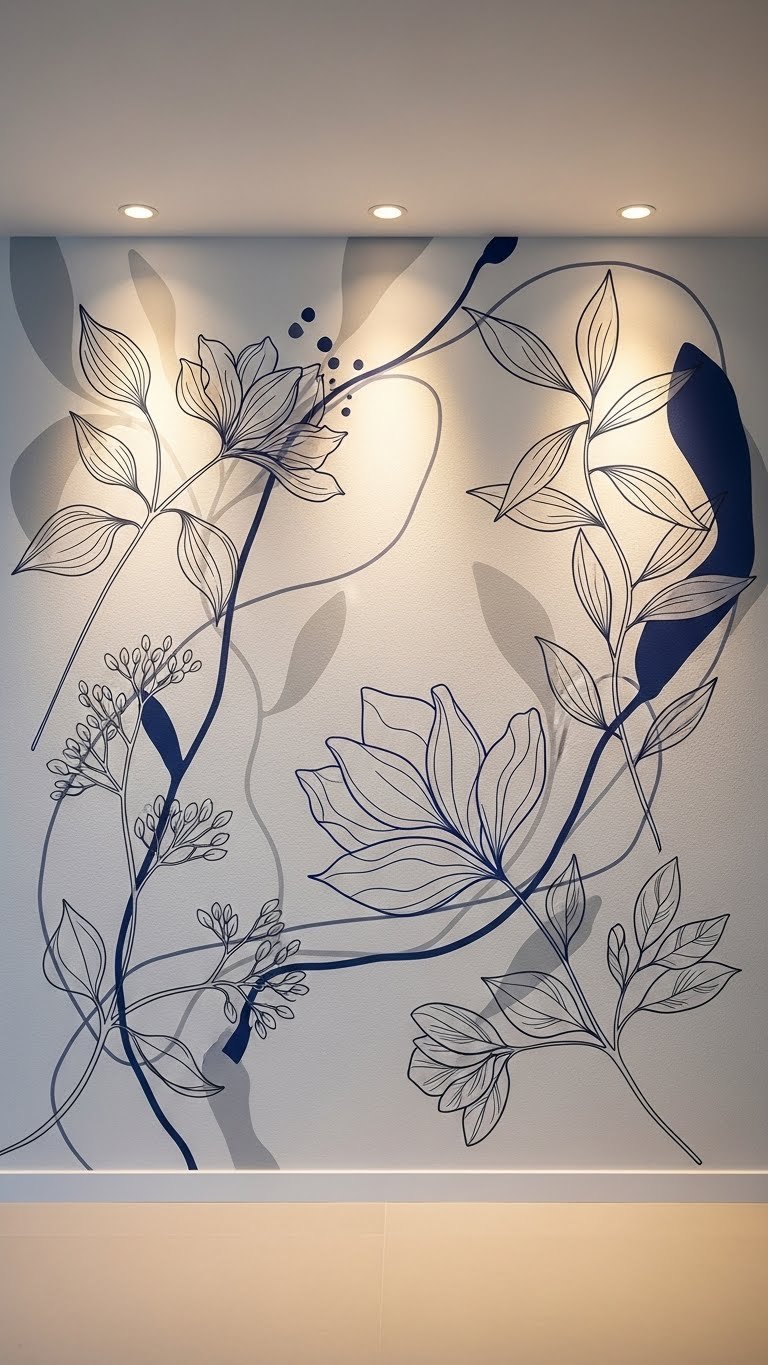
Hand-drawn line art feels personal in a way mass-produced prints never will. A single accent wall of botanical sketches brings organic beauty while staying understated and renter-friendly.
Use a pencil to sketch your design first, then trace over it with a thin paintbrush and matte black or charcoal paint ($8-15 per quart). One-line continuous drawing style (where you don’t lift your brush) creates a flowing, meditative look. This takes 2-4 hours depending on complexity and wall size. If freehand drawing intimidates you, print your design, tape it to the wall, and trace through it with carbon paper ($3-5).
Pro tip: Practice your design on kraft paper first so you can adjust proportions before committing to the wall.
The result feels like your home was curated by an artist, and you’ll actually enjoy looking at something you created yourself.
2. Create Geometric Line Patterns Using Painter’s Tape
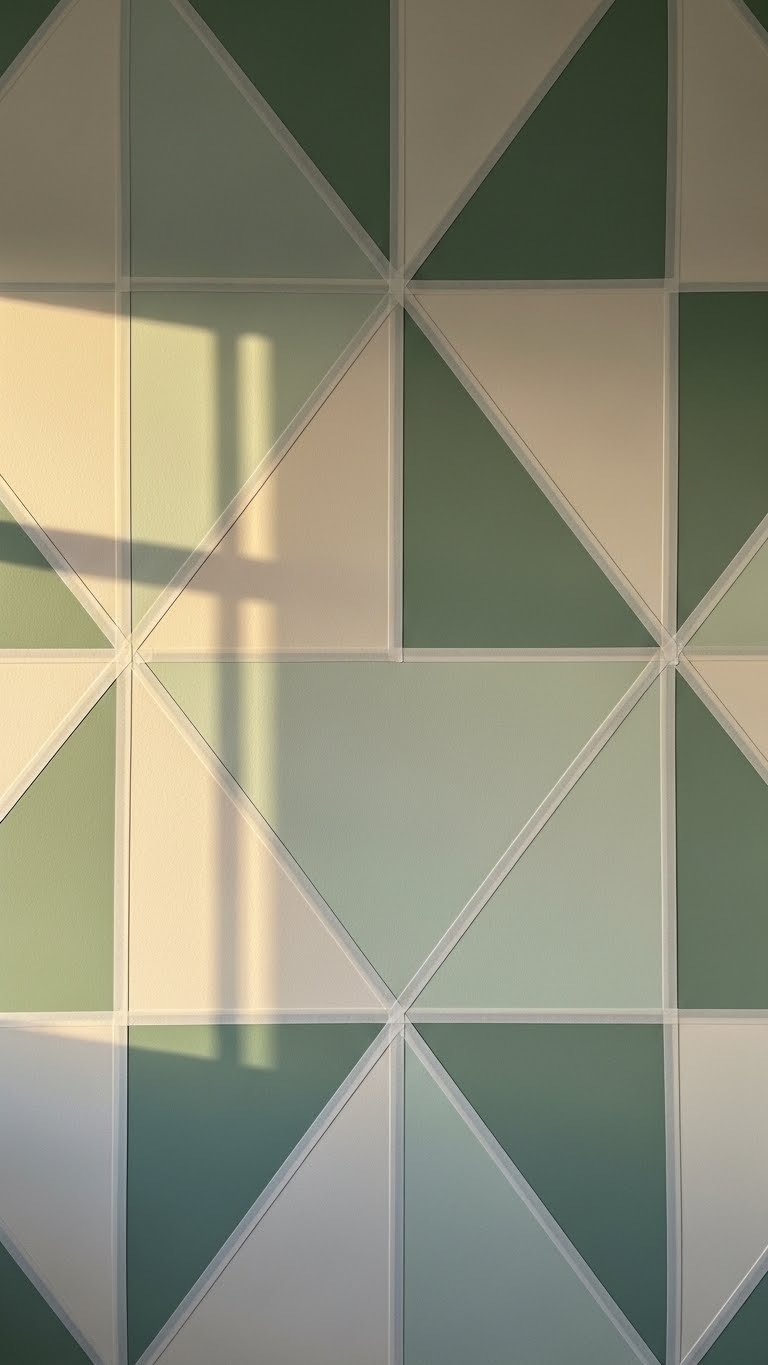
Geometric line art doesn’t require freehand skill when you use painter’s tape as your guide. These patterns feel modern and architectural without being cold.
Decide on your pattern: triangles, hexagons, or interconnected lines. Use painter’s tape ($5-8 per roll) to map out your design directly on the wall, applying it carefully to ensure straight edges. Paint between the tape lines with two thin coats of your chosen color ($12-20). Remove tape while paint is slightly tacky for crisp edges. Budget 4-6 hours for a 10×12 wall, depending on complexity. This works beautifully in nurseries, home offices, or bedrooms.
Pro tip: Test your pattern on cardboard first to see how colors interact with your existing décor.
You’ll love how professional the result looks—this technique rivals expensive wall murals at a fraction of the cost.
3. Use Removable Peel-and-Stick Line Art Decals
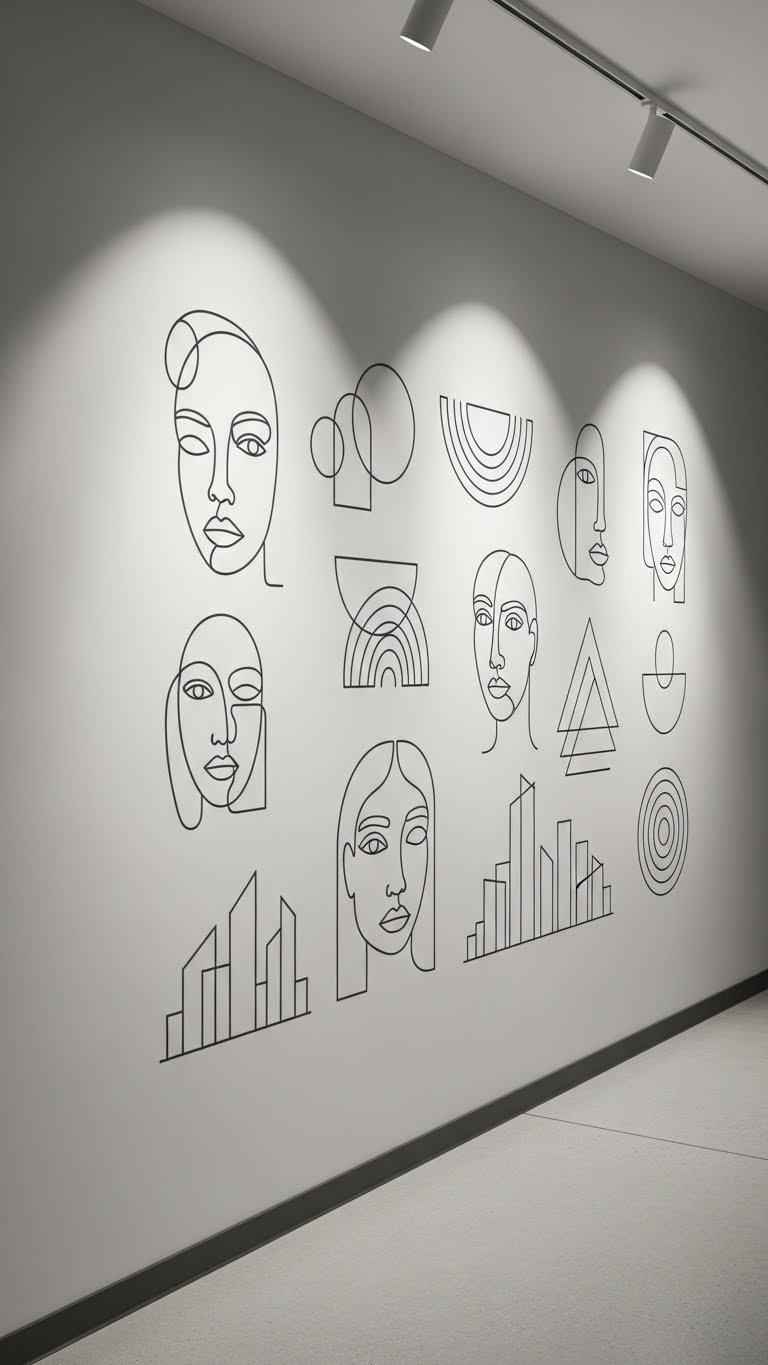
When you’re renting or want zero commitment, removable decals give you gallery-quality line art in minutes. These stick cleanly and peel off without damage.
Shop Etsy ($15-50 per sheet), Amazon ($12-40), or Target ($8-25) for peel-and-stick line art collections. Common designs include abstract botanicals, geometric faces, and architectural sketches. Installation takes 20-30 minutes per wall: clean the surface, peel slowly, and smooth out air bubbles with a plastic card. Quality brands like Removable Wall Art Decals hold up well even with cleaning. Mix and match different sheets to create an eclectic gallery wall effect.
Pro tip: Apply decals to accent walls or create a feature wall by clustering them in one area rather than spreading them thin.
Your walls stay pristine for when you move, and you can refresh the design whenever you want.
4. Draw Architectural Line Drawings Inspired by Cities

If you’re drawn to urban energy, architectural line art brings cosmopolitan style without feeling trendy or dated. These sketches work beautifully in offices, living rooms, or bedrooms.
Use a fine-tip black marker or paint pen to sketch simple building silhouettes directly on the wall, or project a reference image and trace it lightly first. Focus on clean lines and geometric shapes—think simplified skyscrapers, bridges, or street grids. This costs under $10 for markers and paint pens. Budget 2-3 hours for a feature wall. Alternatively, print large-scale architectural line drawings from sites like Unsplash or Pexels, have them printed at Staples or FedEx Office ($20-40 for poster-size prints), and frame them in simple black frames ($15-30 each).
Pro tip: Use a light pencil grid to keep your lines straight if you’re worried about wonky proportions.
Your space immediately reads as sophisticated and design-conscious, perfect for making a home office or entryway feel intentional.
5. Paint Interconnected Abstract Line Compositions
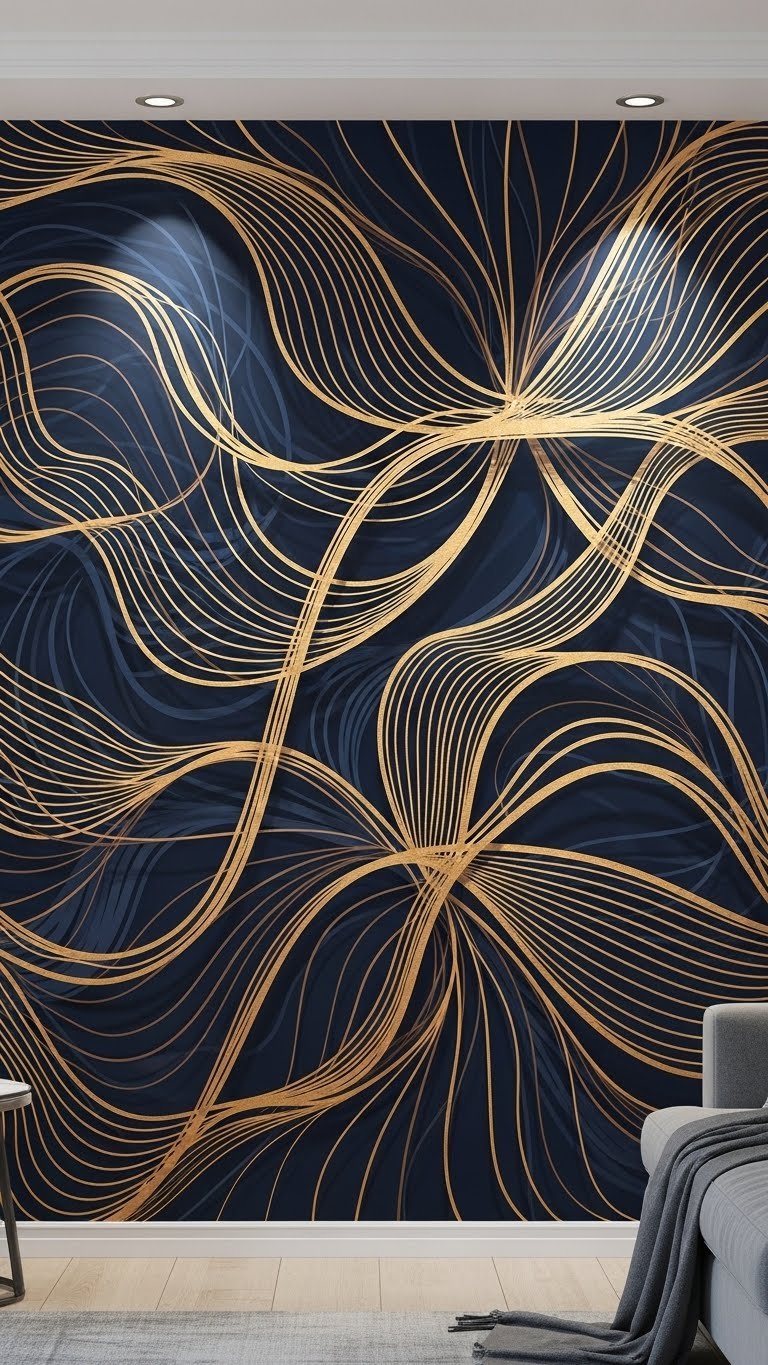
Abstract line compositions feel artistic and improvisational while being surprisingly easy to execute. These work in any room and look more expensive than they cost.
Plan your design using a pencil or light chalk: sketch flowing lines that connect and overlap across your wall without a predetermined pattern. Once you’re happy with the layout, paint one color, let it dry fully, then add a second complementary color ($12-18 per quart). Matte finish works best to avoid glare. Use fine paintbrushes or paint pens ($5-15) for precision. This project takes 4-6 hours plus drying time. No two compositions are identical—yours will be uniquely yours.
Pro tip: Instagram abstract line art for inspiration, screenshot designs you love, and use them as loose references rather than exact replicas.
The finished wall becomes a conversation starter—guests will ask if you hired an artist.
6. Create Minimalist Horizon Lines for Calm Spaces
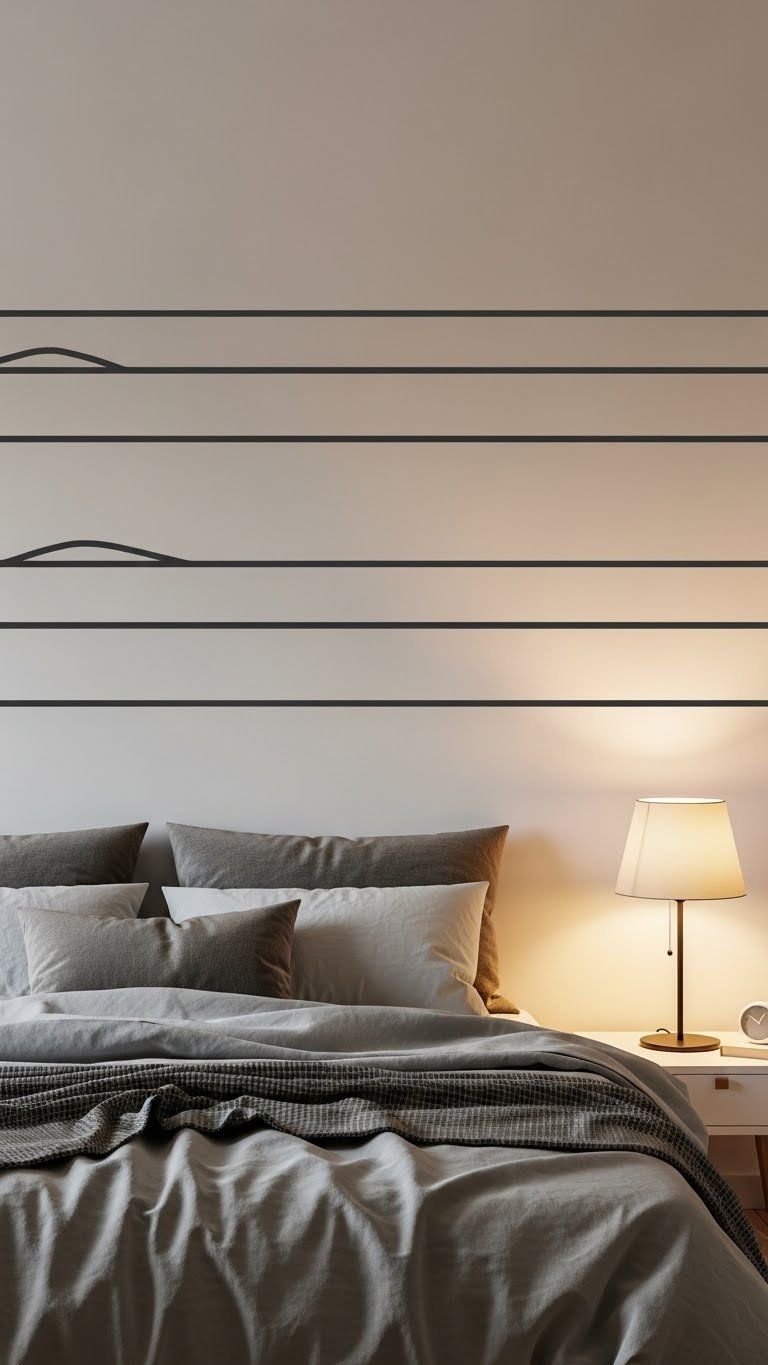
Sometimes the simplest ideas hit hardest. Horizon lines are meditative, calming, and perfect for bedrooms, bathrooms, or meditation spaces. The minimalism feels intentional and expensive.
Using a level and painter’s tape, mark three to five evenly-spaced horizontal lines across your wall ($5-8 for tape, $3-5 for a level if you don’t have one). Paint over the tape with matte charcoal, deep gray, or soft blue ($12-15 per quart) depending on your mood. Remove tape while paint is slightly tacky. The entire project takes 90 minutes to 2 hours. This is incredibly forgiving—imperfect spacing only adds to the hand-drawn appeal.
Pro tip: The lines don’t have to be perfectly centered; slightly irregular placement feels more authentic.
Your bedroom becomes a sanctuary rather than just a place to sleep—the understated design creates calm without fuss.
7. Combine Line Art with Floating Shelves for Display
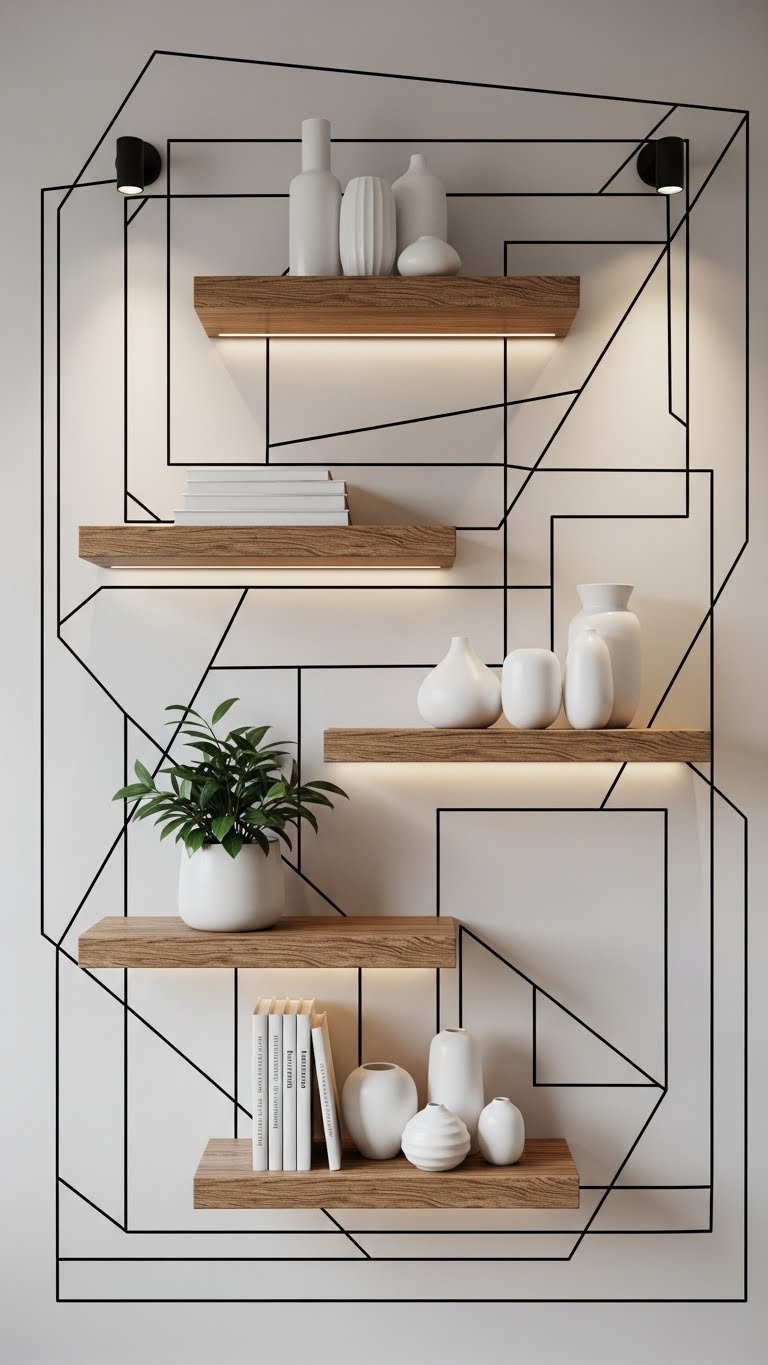
Line art becomes a framework for your existing belongings when you pair it with floating shelves. This approach makes your walls feel curated and gallery-like.
Paint or draw geometric frames, arches, or abstract shapes around where your shelves will be ($8-12 for paint markers, 2-3 hours for design). Install floating shelves ($30-80 per shelf from IKEA, Home Depot, or Target). Arrange items intentionally: books, small plants, ceramics, and sculptural objects. The line art acts as a backdrop that emphasizes what you’re displaying. This takes one full day between drawing, drying, and shelf installation, but the impact is significant.
Pro tip: Keep shelf décor minimal—too many items compete with your line art rather than complementing it.
You get gallery-quality presentation for objects you already own, making your space feel like a styled interior magazine shoot.
8. Draw Celestial Line Patterns for Night-Time Appeal
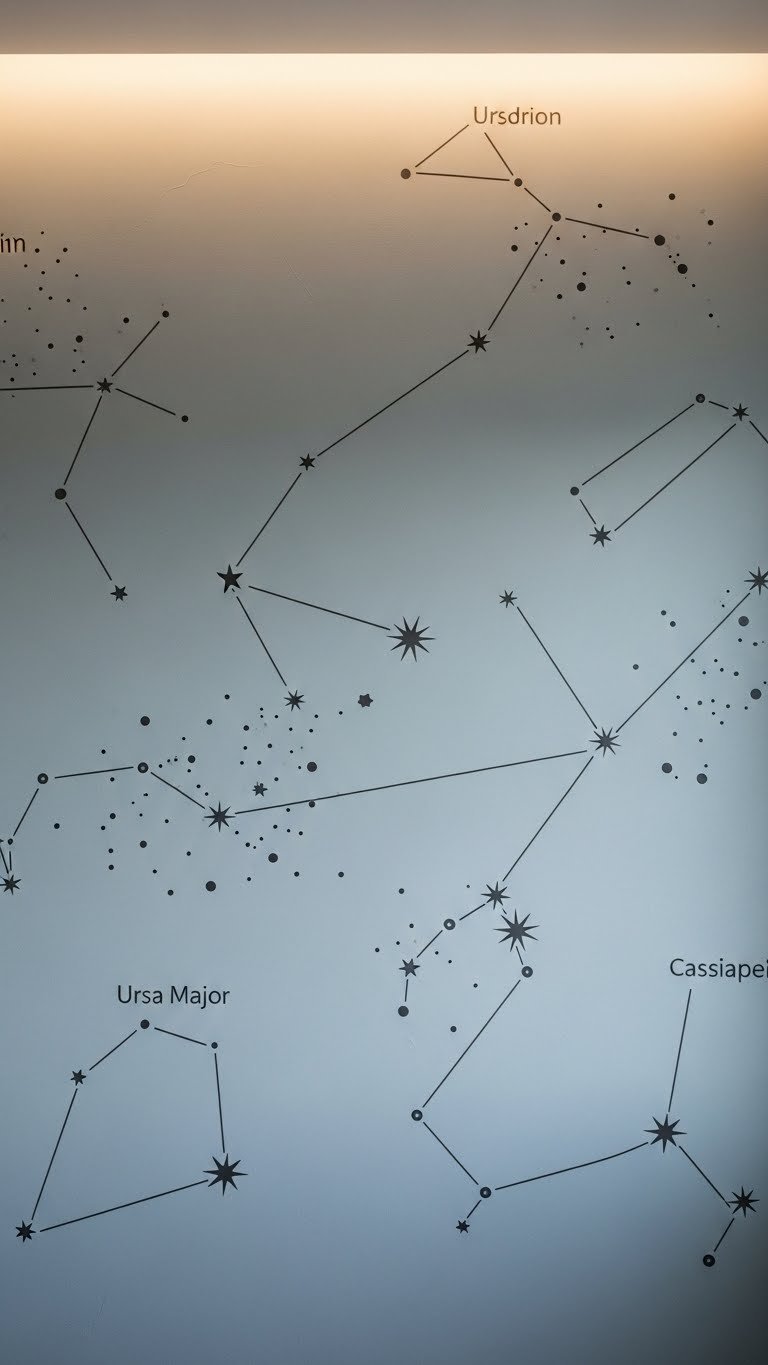
Celestial designs bring wonder and calm to bedrooms and kids’ spaces. Line-art constellations feel whimsical without being babyish or saccharine.
Use a pencil to lightly mark dots where stars should be, then connect them with fine lines using black or deep blue paint markers ($5-10). You can reference actual constellations (Orion, Ursa Major, Pleiades) or create your own designs. Add constellation names in tiny letters if you want. This takes 2-3 hours and costs under $15. For a more polished look, use removable constellation decals ($20-35 from Amazon or Etsy) that achieve the same effect without the permanence.
Pro tip: Add glow-in-the-dark paint to constellation lines ($12-18 per bottle) for a magical nighttime effect that’s perfect for kids’ rooms.
Lying in bed, you’ll drift off looking at your personal map of the cosmos—a reminder that you created something beautiful in your own space.
9. Paint One-Stroke Line Art Portraits or Faces
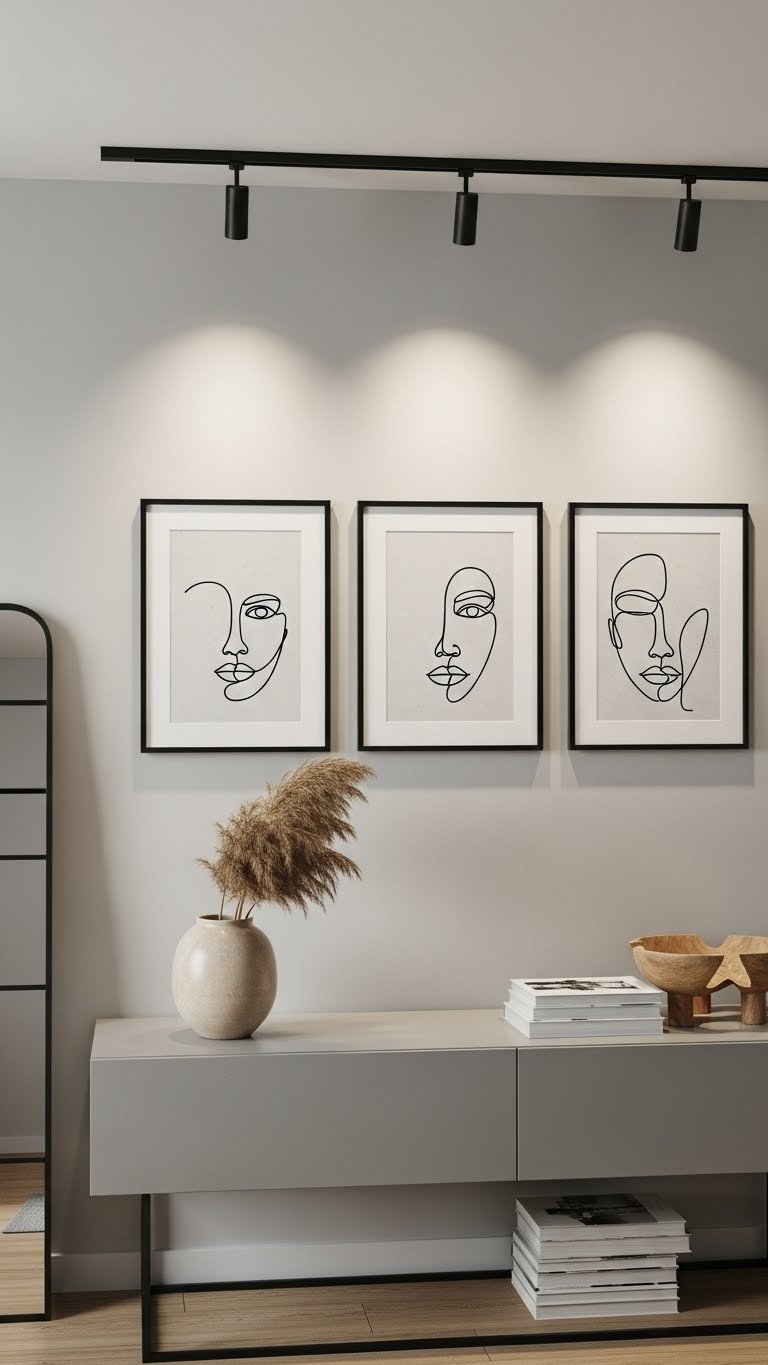
One-line portraits feel artistic and modern. They work in entryways, offices, or living rooms where you want an immediate wow factor.
One-line drawing means you draw a complete face without lifting your brush, creating continuous flowing lines. Sketch your design lightly first using a pencil, then trace with black paint pens or thin paintbrushes ($5-12). Common approaches: profile faces, frontal abstract faces, or mixed angles on the same wall. Each portrait takes 30-45 minutes. This costs under $20 and requires no special artistic training—the imperfection is part of the appeal. Print reference images from Pinterest or artist accounts like @onelinedrawing or @minimalist_art to inspire your work.
Pro tip: Create an odd number of portraits (three, five, seven) for better visual balance than pairs or evens.
Your entryway immediately signals that you’re creative, thoughtful, and have an artistic sensibility.
10. Use Negative Space with Washi Tape Line Art

Washi tape comes in endless patterns and colors, making it perfect for line art that’s fully removable and endlessly adjustable. This is ideal for renters and commitment-phobes.
Buy quality washi tape ($2-5 per roll) in coordinating colors from craft stores, Target, or Amazon. Plan your design on paper first, then apply tape directly to walls in geometric patterns, grids, or abstract lines. Leave significant empty wall space—the negative space is crucial to the minimalist aesthetic. This takes 2-3 hours for a substantial wall and costs $15-40 depending on how many rolls you use. The beauty is you can peel it all off in minutes if you want to refresh your design.
Pro tip: Mix tape widths for visual interest—combine wide and narrow tapes to create varied line weights.
Your walls are playful and personalized without any permanent commitment, and you can adapt the design seasonally.
11. Create Grid Line Art for Modern Geometry

Grid line art feels contemporary and structured, perfect for offices, studies, or anywhere you want a sophisticated, orderly aesthetic. The geometry is calming and intentional.
Using a level, pencil, and painter’s tape, mark out a grid pattern—squares can be 12 inches, 18 inches, or whatever proportion appeals to you ($5-8 for tape and level). Paint alternating squares in two related colors (cream and taupe, soft blue and white, gray and beige) or leave some unpainted. This creates dimensional depth. Use matte paint in your chosen colors ($12-20 per quart). The entire project takes 5-7 hours including drying between coats. This is absolutely doable as a weekend DIY project.
Pro tip: Keep color contrast subtle for a sophisticated, restrained look rather than bold contrast that feels playful.
Your office or workspace reads as intentional and designed, boosting productivity and creative energy.
12. Draw Simple Line Art Landscapes with Mountains or Hills
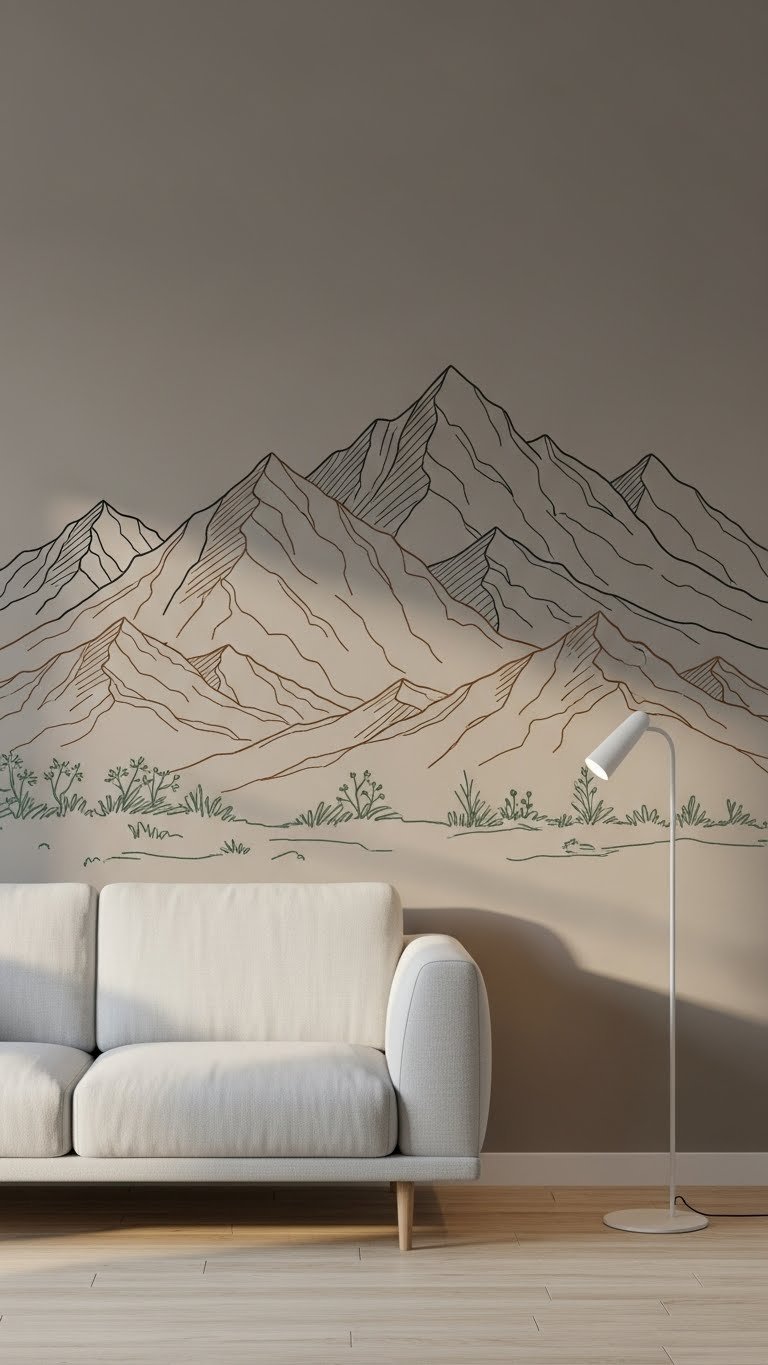
Landscape line art connects you to nature without the commitment of large-scale murals. Mountains, hills, and simple vegetation feel calming and aspirational.
Sketch your landscape lightly with pencil—think layered mountain ranges, a simple horizon, and minimal vegetation details. Paint over your sketch with black, charcoal, or warm brown ($8-12 per quart). Use fine paintbrushes ($5-10) for detailed linework. Some people create depth by painting mountains in multiple shades of gray from darkest to lightest. This project takes 3-5 hours depending on complexity and costs under $25. No prior art experience required—simplicity is the point.
Pro tip: Reference actual mountain ranges from places you love to create a personalized landscape tied to your memories.
You create a personal retreat within your home, and every time you look at your wall, you remember why that landscape matters to you.
13. Paint Oversized Leaf or Fern Line Drawings
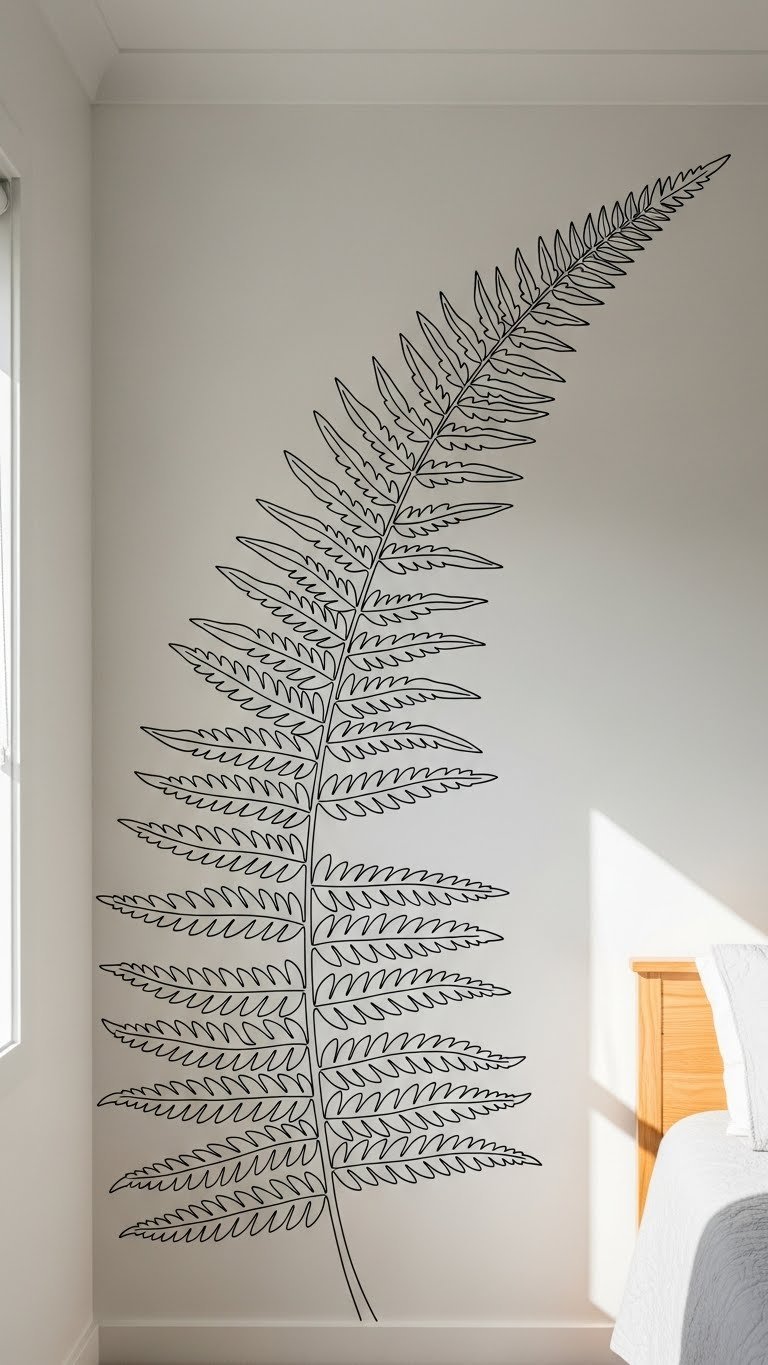
Sometimes one huge line drawing makes a bigger statement than many small ones. A floor-to-ceiling leaf or fern feels dramatic yet minimalist.
Choose your leaf inspiration from nature references or botanical illustration accounts on Instagram. Use a pencil to lightly sketch the outline and vein details, then paint with black or deep green ($12-15 per quart). Use thin paintbrushes or paint pens ($5-15) for fine linework, especially for the delicate veins. This takes 4-6 hours including drying, but the payoff is huge. Keep the design single-color for maximum sophistication—multicolor reads as less refined.
Pro tip: Place the large leaf drawing where it’s the first thing you see entering the room for maximum visual impact.
Walking in, you’re greeted by nature-inspired art that feels gallery-quality and personally curated.
14. Create Abstract Continuous Line Wall Mural
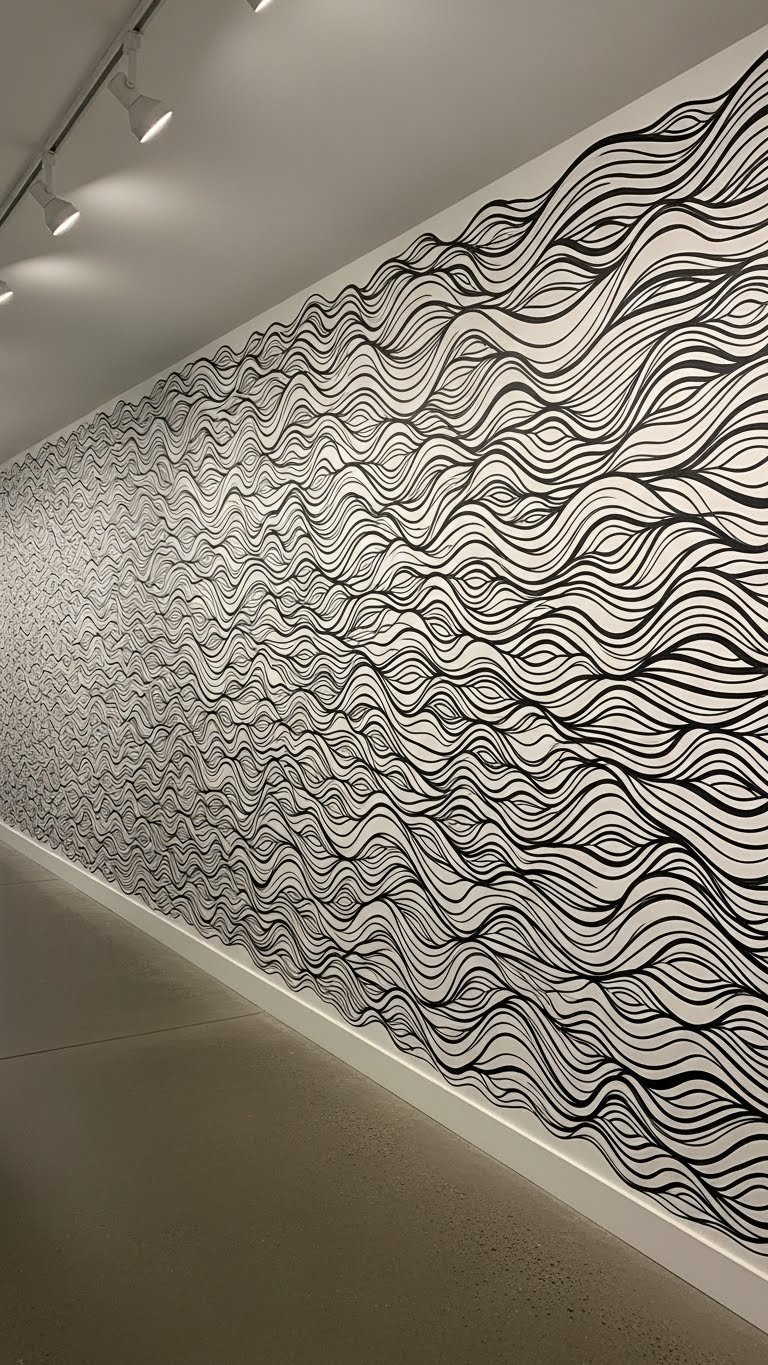
Abstract continuous-line murals feel organic, energetic, and surprisingly meditative to create. They fill wall space without feeling busy.
Plan your design with a pencil, mapping out a flowing pattern that connects various points across your wall without lifting the “brush.” You’ll trace this pattern with black paint or paint marker ($8-12). The pattern can include loops, curves, geometric intersections, or organic shapes. This project takes 5-8 hours depending on wall size and complexity, but it’s deeply satisfying. The imperfect, hand-drawn quality is essential to its charm—perfect lines would feel sterile.
Pro tip: Work in sections of about 4 feet at a time to avoid fatigue and maintain consistent line weight.
The mural becomes a meditation exercise as much as a design element, and your finished wall feels truly one-of-a-kind.
15. Pair Line Art with Warm Neutral Painted Walls

Line art shines when paired with warm neutral walls. This combination feels curated, balanced, and never boring—perfect if you’re transitioning away from gray fatigue.
Paint your walls in warm neutrals like Benjamin Moore’s Wheat Sheath or Sherwin-Williams Stucco ($35-50 per gallon). Let this settle for a few days, then add your line art in black, charcoal, or warm brown ($8-12 per quart). The contrast between warm walls and cool-to-neutral line art creates visual interest without feeling chaotic. This combination works in every room and feels current without being trendy. Budget $60-80 for paint and 2-3 hours for wall preparation and line art execution.
Pro tip: Stick with matte finishes for both wall paint and line art to avoid glare and maintain sophistication.
Your space feels intentionally designed and warm, like a home that’s been thoughtfully considered rather than randomly decorated.
16. Use Metallic Paint Pens for Glamorous Line Details
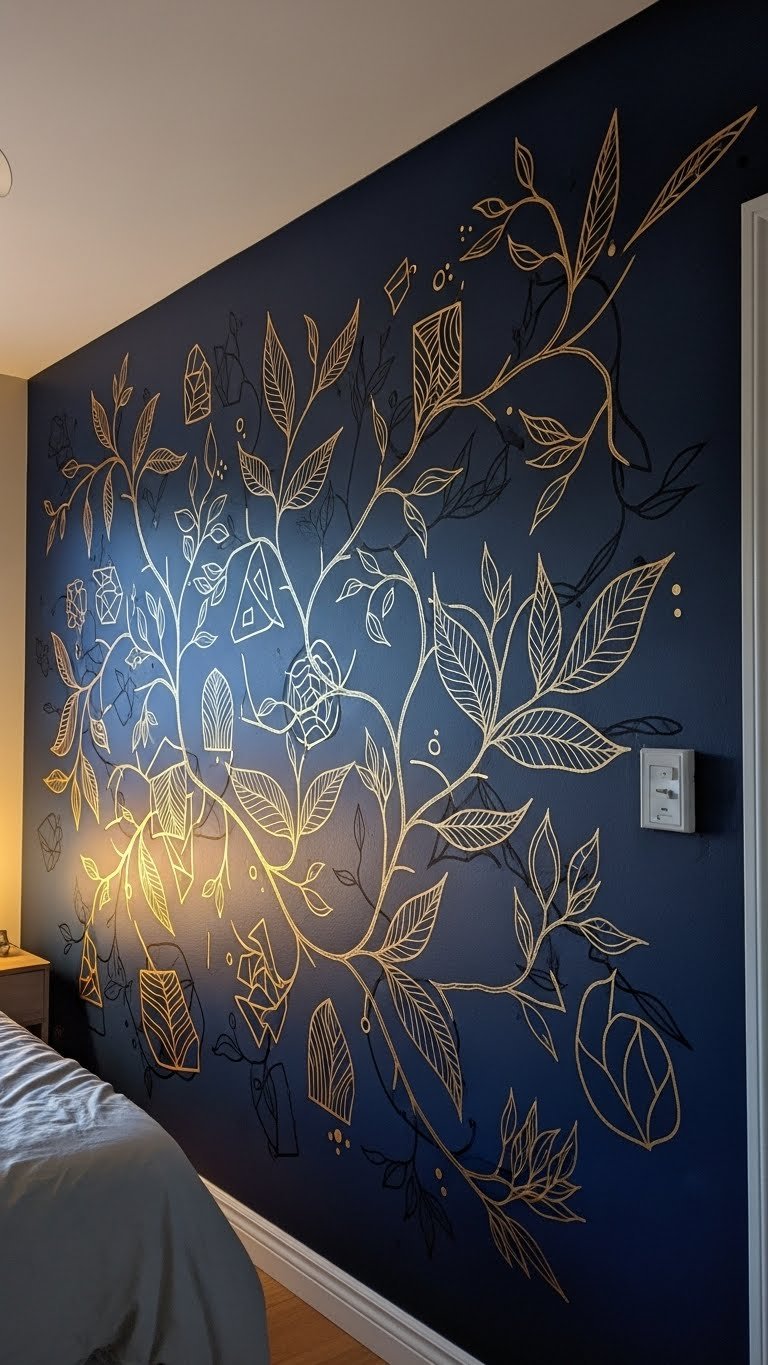
Add a touch of glamour to line art with strategically placed metallic accents. Gold, copper, or silver details elevate minimalist designs without overwhelming them.
Create your line art foundation in black or charcoal ($8-12 per quart). Once fully dry, use metallic paint pens in gold, copper, or silver ($5-12 for a set of three) to add delicate details: leaf veins, geometric highlights, constellation connections, or architectural accents. This takes an additional 1-2 hours and costs $15-25 total. The metallic elements should be subtle—think 10-15% of your overall design—to maintain sophistication rather than veering into “too much.”
Pro tip: Test your metallic pen on scrap paper first; some brands are thicker and more opaque than others.
Your walls catch light in unexpected ways, creating dimension that photographs beautifully and feels genuinely elegant.
17. Paint Interlocking Circle Line Patterns

Interlocking circles create visual rhythm and feel simultaneously playful and sophisticated. They work in offices, living rooms, or creative spaces.
Use a compass ($5-8) to draw circles of varying sizes on your wall with light pencil first. Space them so they overlap slightly, creating an interlocking pattern. Paint the circle outlines with black or dark gray paint marker ($5-8). You could also make a circle template from cardboard ($0, using stuff you have) and trace around it repeatedly. This project costs under $20 and takes 3-4 hours. The repetitive nature of the work is meditative, and the result feels graphic and intentional.
Pro tip: Vary circle sizes throughout the wall rather than making them uniform—this creates visual interest and organic flow.
Your space reads as designed and thoughtful, with subtle depth that makes guests look twice.
18. Create Line Art Inspired by Color of the Year Palettes

Align your line art with current color trends by pairing minimal designs with 2025’s trending warm neutrals. This keeps your walls feeling current without being trendy.
Paint your wall in Cinnamon Slate (Benjamin Moore’s 2025 Color of the Year) or similar warm, heathered neutrals ($40-50 per gallon). Add line art in complementary charcoal or warm brown ($8-12 per quart). The combination feels sophisticated and intentional because you’re working within a cohesive color story. Paint stores can mix custom shades, so ask for help matching colors if needed. This entire project runs $60-90 and takes 2-3 hours for line art once walls are painted.
Pro tip: Check Benjamin Moore or Sherwin-Williams websites for their 2025 color capsule collections for instant inspiration.
Your walls feel elevated and contemporary without screaming “trendy”—they’ll age beautifully because you started with a thoughtful color foundation.
19. Draw Architectural Line Details Around Doorways and Trim

Frame architectural elements like doorways, window trims, or built-ins with delicate line art. This draws attention to existing features and creates visual hierarchy.
Use painter’s tape to mark out geometric patterns, arches, or abstract linework around your doorway or window trim ($5-8 for tape). Paint with black, charcoal, or a coordinating accent color ($8-12 per quart) using thin brushes or paint pens ($5-10). The framing effect makes small spaces feel more designed. This works beautifully in hallways, bedrooms, or home offices. Budget 2-3 hours for a doorway frame and $25-35 total for supplies.
Pro tip: Photograph your doorway before you start, then sketch your design on a printout to visualize the finished result.
Suddenly that standard doorway becomes an architectural moment—every time you walk through, your space feels more intentional and curated.
20. Combine Line Art with Texture Paint for Depth
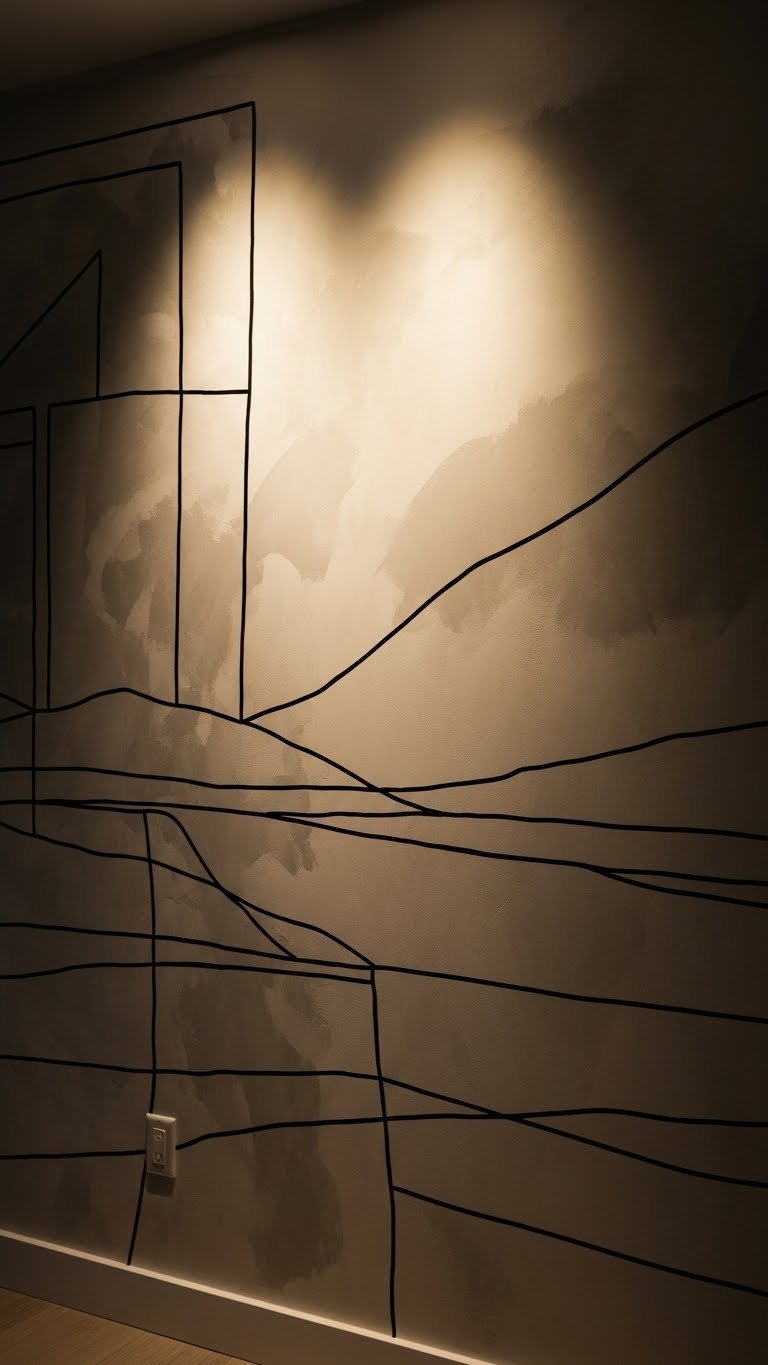
Layer line art over textured walls for sophisticated depth that flat painted surfaces can’t achieve. This hybrid approach feels luxury-adjacent but remains budget-friendly.
First, paint your wall with textured or matte paint in your chosen neutral ($15-25 per quart). Venetian plaster ($20-35 per quart) adds genuine depth, or use regular matte paint—the finish alone creates subtle variation. Once dry, add your line art with black paint marker or thin brush ($8-12). The line art pops against the textured background. This two-step process takes full weekend (accounting for paint drying time) and costs $35-55 total.
Pro tip: Choose line designs with adequate spacing so the texture shows through and contributes to the overall composition.
Your wall becomes visually interesting from every angle and lighting condition—texture and line art work together to create genuine dimension.
21. Paint Minimalist Abstract Faces in Profile
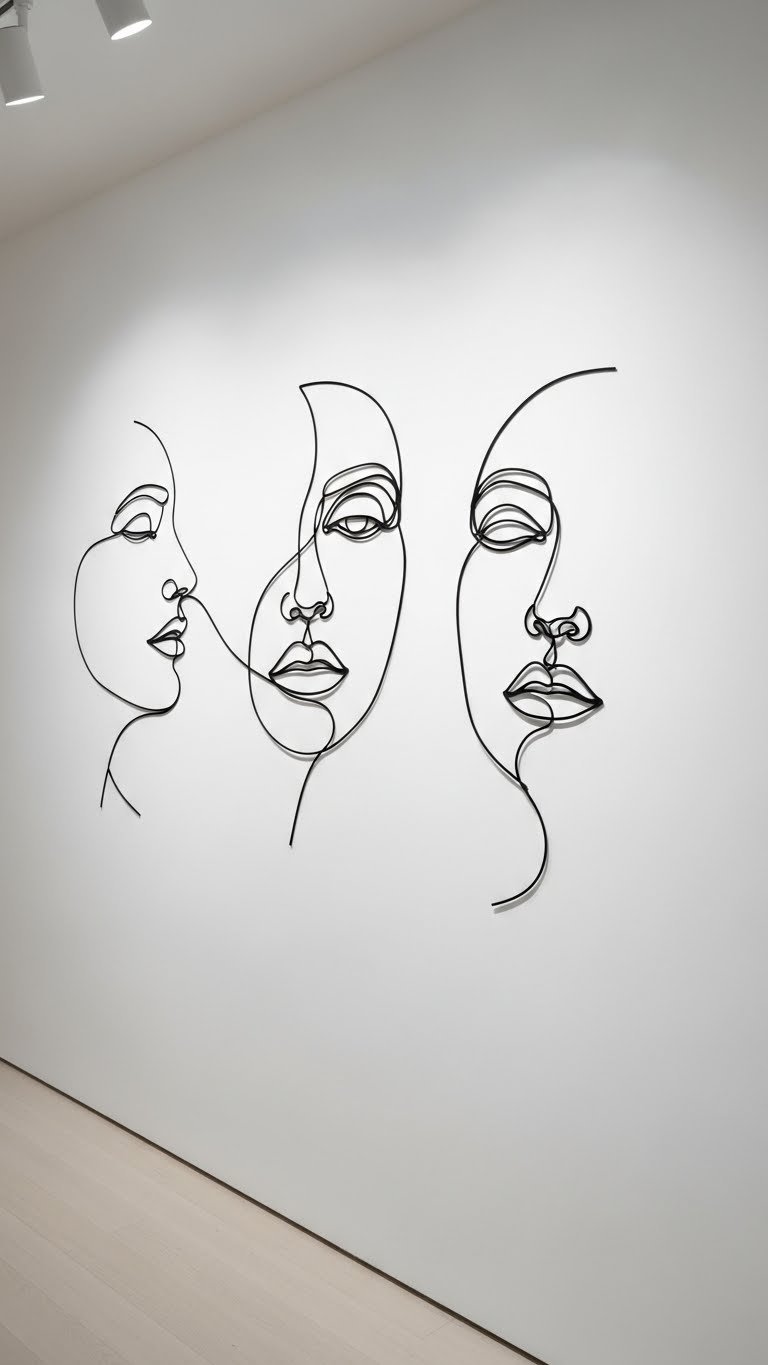
Abstract profile faces feel modern and human-centered without being representational. These work beautifully in entryways, hallways, or living rooms.
Sketch profile faces with exaggerated, geometric features using a pencil. Keep details minimal: simple nose lines, eye curves, jawlines. Paint with black or charcoal ($8-12 per quart) using fine paintbrushes ($5-10). Create three to five faces pointing in different directions for visual interest. This takes 2-3 hours and costs under $25. The abstract quality means you don’t need anatomical accuracy—geometric simplification is the entire point.
Pro tip: Reference fashion illustration or art deco design for inspiration; the intentional distortion is what makes it work.
Your space reads as thoughtfully artistic and contemporary, signaling that you appreciate abstract beauty.
22. Create a Gallery Wall Mix of Line Art and Frames
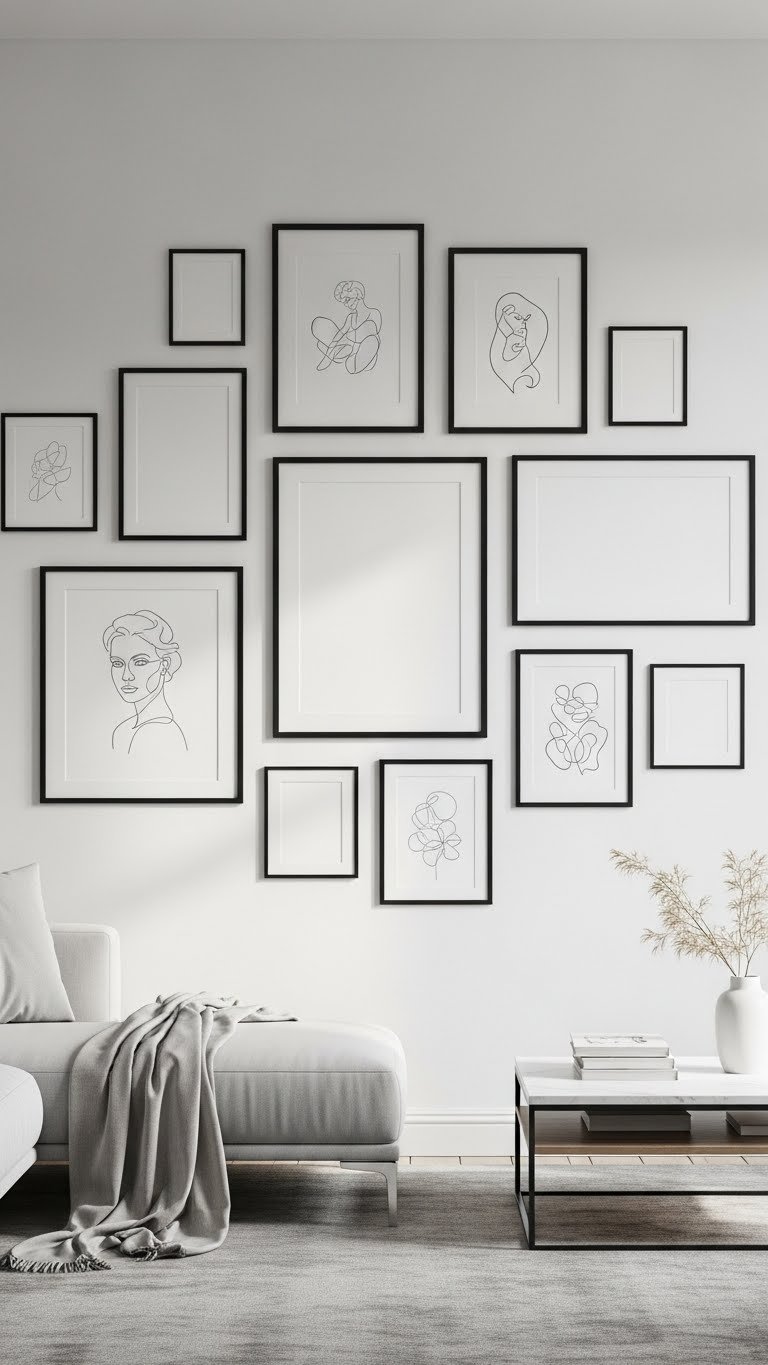
Combine painted line art directly on walls with framed line art prints for a layered gallery effect. This approach maximizes visual interest without visual chaos.
Paint one or two line art pieces directly on your wall ($8-12 for paint, 2-3 hours). Around or beside these, hang framed line art prints from Etsy ($20-50 per print), Minted ($25-60), or Amazon ($10-40). Mix frame types and sizes for contemporary gallery wall aesthetic. Include some empty mats or open frames ($5-15 each from IKEA) to maintain airiness. Arrange on the floor first using painter’s tape ($5) to mark positions, then hang. This creates depth and visual richness that feels intentional.
Pro tip: Keep all artwork in black or grayscale for cohesion; mixing colors and themes reads as chaotic rather than curated.
Walking past your wall feels like visiting a contemporary art gallery—every time you notice something new about how pieces relate to each other.
23. Draw Line Art Representing Personal Meaningful Imagery
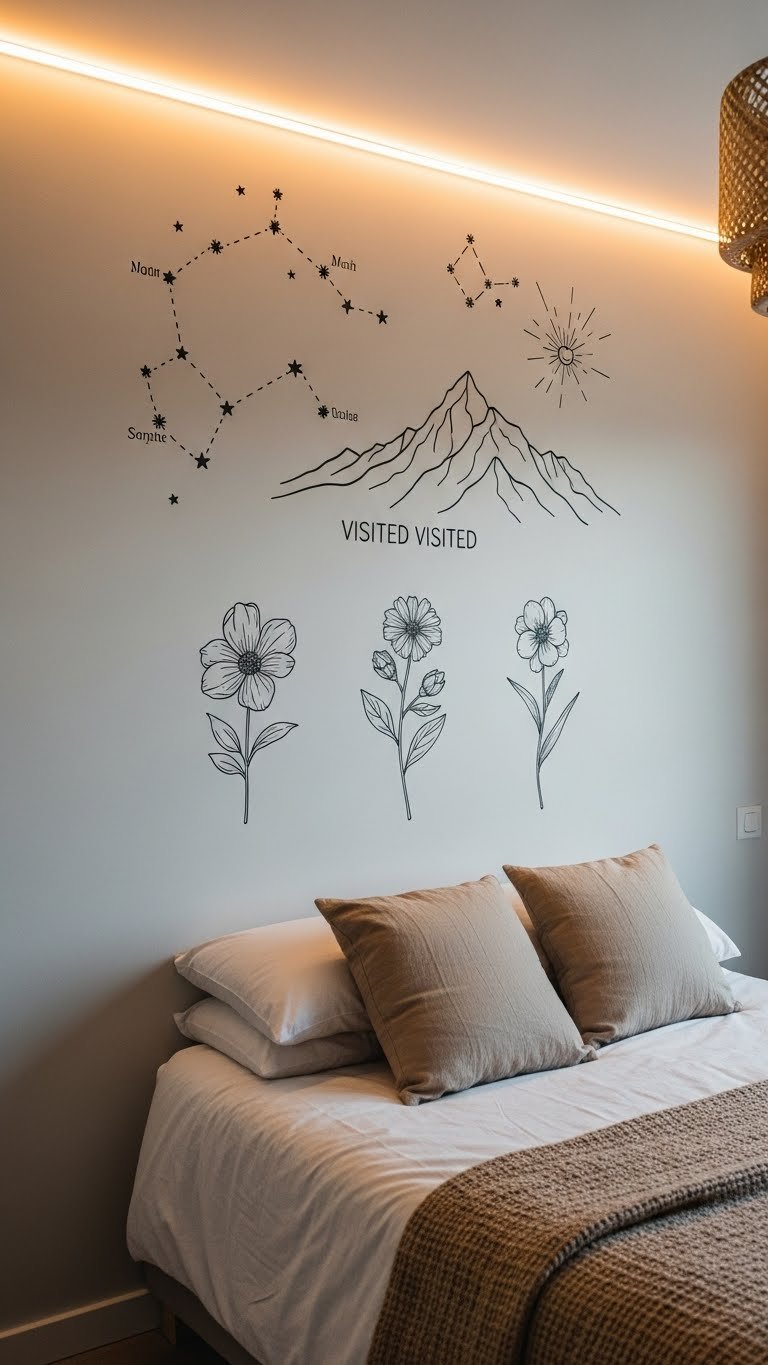
The most meaningful line art is personal. Draw designs that reference your own memories, travels, or significant moments.
Choose imagery that matters to you: a mountain range from a meaningful trip, constellations visible on your birthday, plants from your hometown, or abstract representations of important symbols. Sketch these on your wall lightly, then paint with black or a significant color ($8-12 per quart). Include subtle text if desired—coordinates of a meaningful location, a date, or a single meaningful word. This takes 3-5 hours but the emotional payoff is enormous. The uniqueness means it’s impossible to replicate online.
Pro tip: Write out the story of why this image matters to you and keep it saved—it becomes part of your home’s narrative.
Every glance at your wall reminds you of what matters most, turning your bedroom or living space into a personalized sanctuary.
24. Paint Geometric Line Art Inspired by Sacred Geometry

Sacred geometry patterns feel meditative, intentional, and deeply calming. These designs work beautifully in bedrooms, meditation spaces, yoga rooms, or wellness-focused areas.
Research sacred geometry patterns like the flower of life, metatron’s cube, or mandala designs. Start at the center of your wall and work outward, sketching lightly with pencil. Paint with black as your primary color ($8-12 per quart) and add gold or copper metallic accents ($5-10) for delicate highlights. Maintain perfect symmetry or intentional asymmetry—both read beautifully. This is a meditative project taking 6-8 hours but the process itself is calming. Cost runs $25-35 total.
Pro tip: Use a compass, protractor, or geometric rulers ($8-15 from art supply stores) to ensure accurate angles and proportions.
Your space becomes a sanctuary for reflection and intention-setting, transforming daily moments into mindful practices.
Save this post for your next wall project, and start with whichever idea resonates most—even one small piece of line art changes how your space feels. Pick one this weekend and watch how intentional design transforms your home.
Leave a Reply