Blog

  • 23 Bookshelf Ideas Perfect for Any Style or Space

    23 Bookshelf Ideas Perfect for Any Style or Space


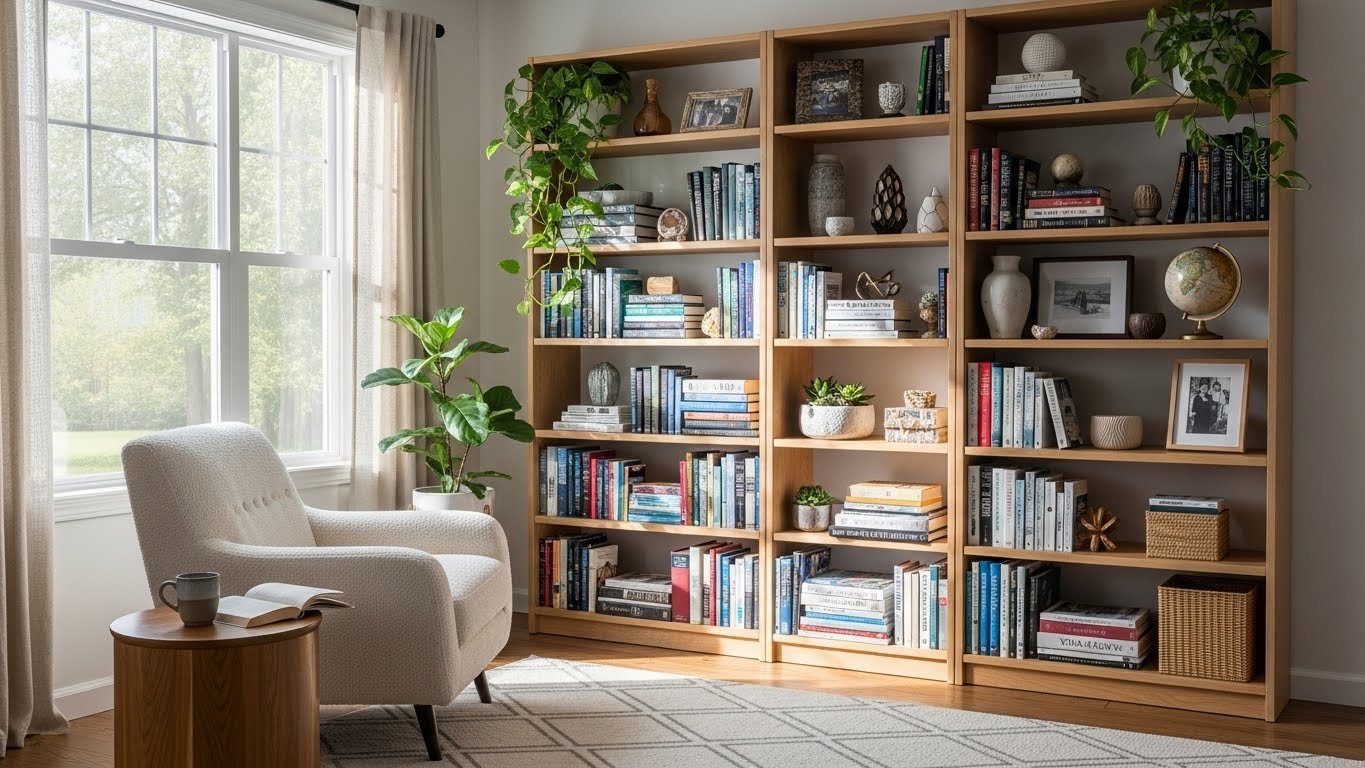
    Bookshelves are so much more than just book storage—they’re a chance to showcase your personality and make your space feel intentional. Whether you’re working with a small apartment, a sprawling home office, or you just want to refresh what you already have, there’s a bookshelf idea here for you. We’ve gathered 23 creative approaches that work for every style, budget, and living situation. From clever DIY projects to smart shopping strategies and styling tricks that make your shelves look professionally designed, you’ll find solutions for both renters and homeowners. Let’s dive into ideas that actually solve real space challenges while looking gorgeous doing it.


    1. Layer Your Books Horizontally and Vertically

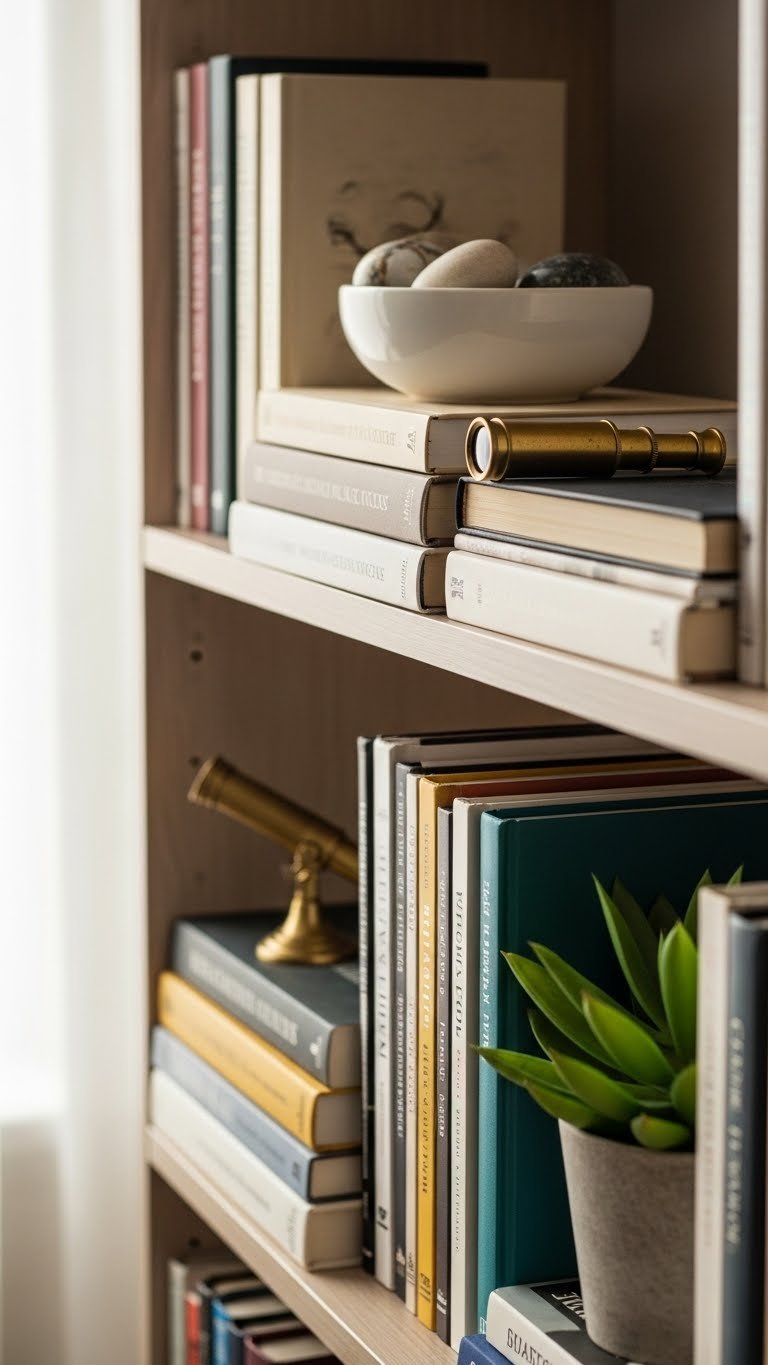
    Stacking books both ways creates visual rhythm and makes your shelf feel curated rather than crowded. This simple styling trick prevents the “wall of spines” look that can feel monotonous and gives you more flexibility with shelf height variations.

    Start by grouping 3-5 books and laying them flat, then stand other volumes upright against them. Add a small plant or candle on top of the stack to anchor the arrangement. You can do this with books you already own—no shopping required. The key is experimenting with different proportions until it feels balanced. Some shelves might be 60% horizontal and 40% vertical, while others flip that ratio depending on your book collection.

    This approach makes your shelves photograph beautifully and gives you that “bookshelf wealth” aesthetic without buying anything new.


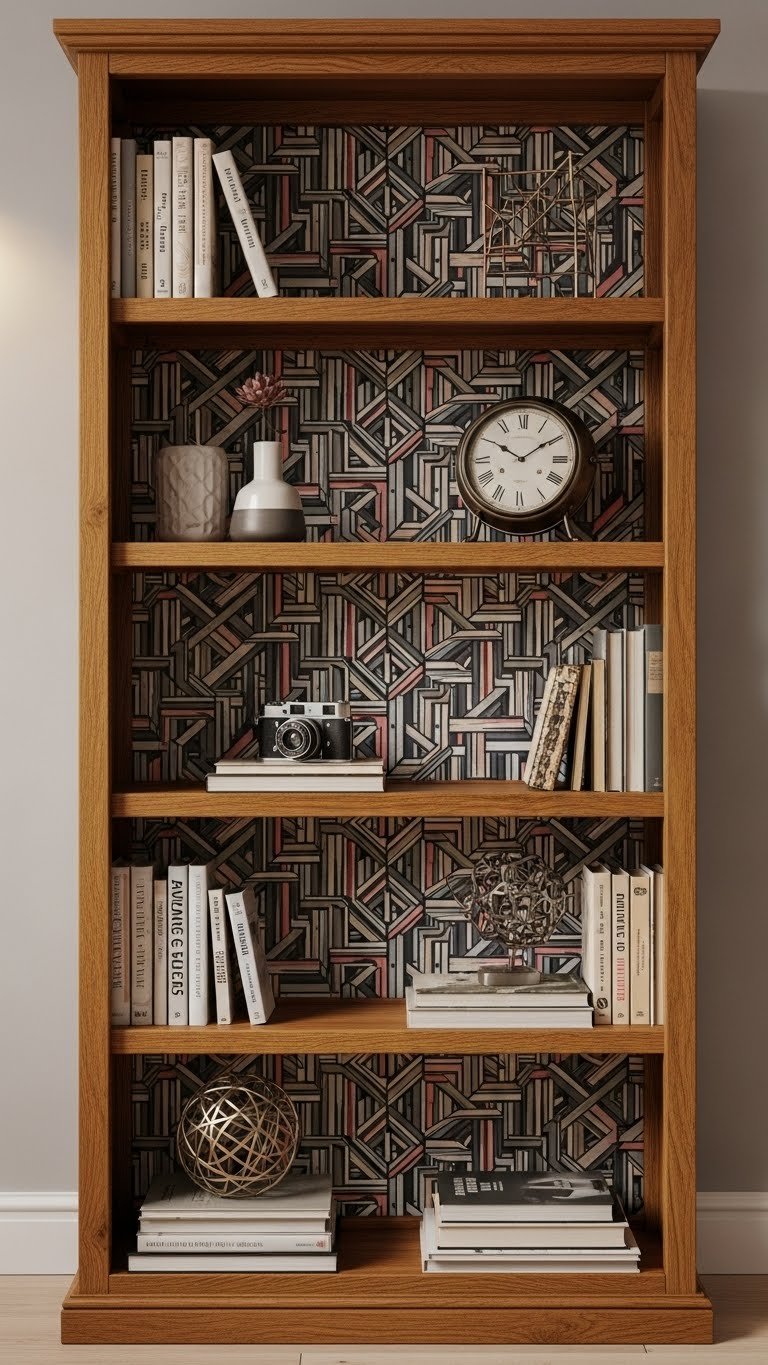
    2. Add Peel-and-Stick Wallpaper to the Back Panel

    A patterned or solid-colored back panel instantly elevates a basic bookshelf and draws attention to your collection. Peel-and-stick wallpaper makes this project completely renter-friendly and reversible.

    Measure your shelf’s back panel carefully, then apply peel-and-stick wallpaper in a pattern that complements your room (geometric, botanical, or solid jewel tones all work beautifully). Brands like Spoonflower and Temporary Wallpaper Co. offer removable options starting around $15-$40 per roll. Installation takes about 30 minutes and requires only a utility knife and ruler. You can layer subtle geometric prints, go bold with florals, or choose a rich jewel tone for sophistication.

    The result? Your books pop forward, the shelf becomes a focal point, and you’ve just upgraded your entire room’s aesthetic with one small change.


    3. Use Floating Shelves to Create a Gallery Wall

    Floating shelves give you flexible storage without the commitment of a full bookcase, making them perfect for renters or anyone still figuring out their layout. They’re especially effective when arranged asymmetrically.

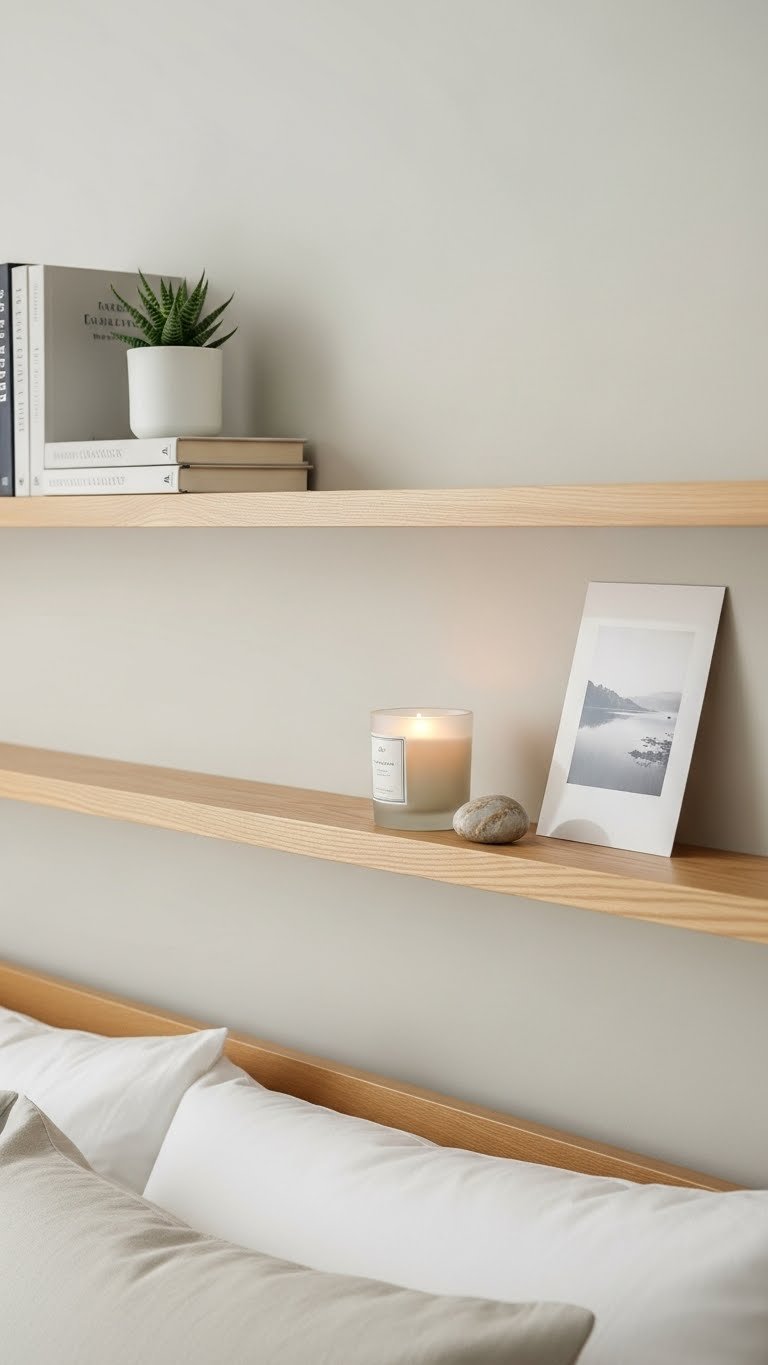
    Install 2-4 floating shelves at varying heights using a level and wall studs (or toggle bolts for drywall). Target brands like IKEA, Wayfair, and Home Depot offer $20-$80 per shelf. Space them close enough to create visual connection but far enough apart that books don’t look cramped. Arrange books with spines out on some shelves, lay flat on others, and mix in framed photos or small artwork to create gallery-like appeal.

    This setup works brilliantly in awkward corners, above desks, or in small apartments where a traditional bookcase won’t fit.


    4. Paint Your Bookcase to Match Your Walls

    Painting a bookcase the same color as your walls creates a sophisticated, gallery-like backdrop that lets your books and objects become the main attraction rather than the furniture itself.

    Choose a paint shade that matches or complements your walls—soft whites, warm grays, or muted colors work best. Pick up paint samples first and test them on your shelf in natural light. Use interior latex paint ($15-$30 per quart) and a quality brush or foam roller. Two coats usually does it, with drying time around 2-3 hours between coats. The whole project takes about one afternoon.

    Your books now become the focal point, and the shelf feels like an intentional design element rather than a piece of furniture sitting against the wall.


    5. Add LED Strip Lighting Inside or Under the Shelf

    Strategic lighting transforms a bookshelf from functional storage into a dramatic focal point that looks sophisticated and creates mood lighting for your entire room. This upgrade works especially well for bookshelves in bedrooms or living rooms.

    Purchase adhesive LED strip lights (warm white works best—around $15-$30 for a 16-foot kit from Amazon, Target, or hardware stores). Install them on the underside of each shelf, pointing down, or on the back panel for a subtle glow behind your books. Most come with remote controls or app connectivity. Installation takes 20-30 minutes and requires zero tools—just clean the shelf surface and stick them on. Use the dimmer function to adjust brightness based on time of day.

    Your bookshelf now looks like a designer showpiece, and you’ve added ambient lighting that makes your entire space feel more polished.


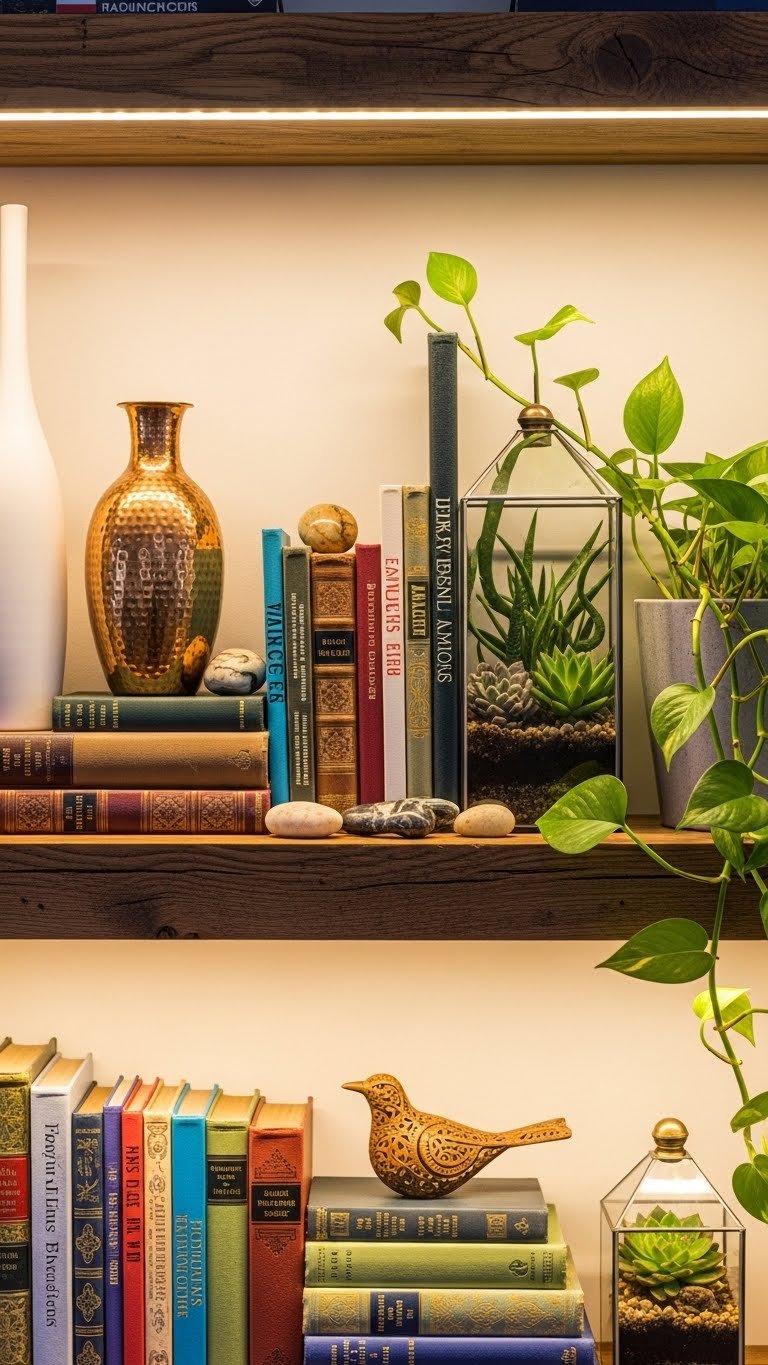
    6. Incorporate Plants for Natural Color and Texture

    Plants break up long lines of books and add life to any bookshelf while also improving air quality in your space. They’re especially effective at softening the look of a packed shelf.

    Choose low-maintenance plants like pothos, snake plants, or philodendrons (around $8-$15 each from any garden center or grocery store). Place smaller pots on shelves between book stacks, and let trailing varieties cascade slightly over the edge. Ensure your shelf gets adequate indirect light, and water plants every 1-2 weeks depending on the type. No green thumb required—these plants are forgiving and actually thrive on minimal attention.

    Your shelf now has organic movement and color that photographs beautifully, plus the added bonus of fresher air in your room.


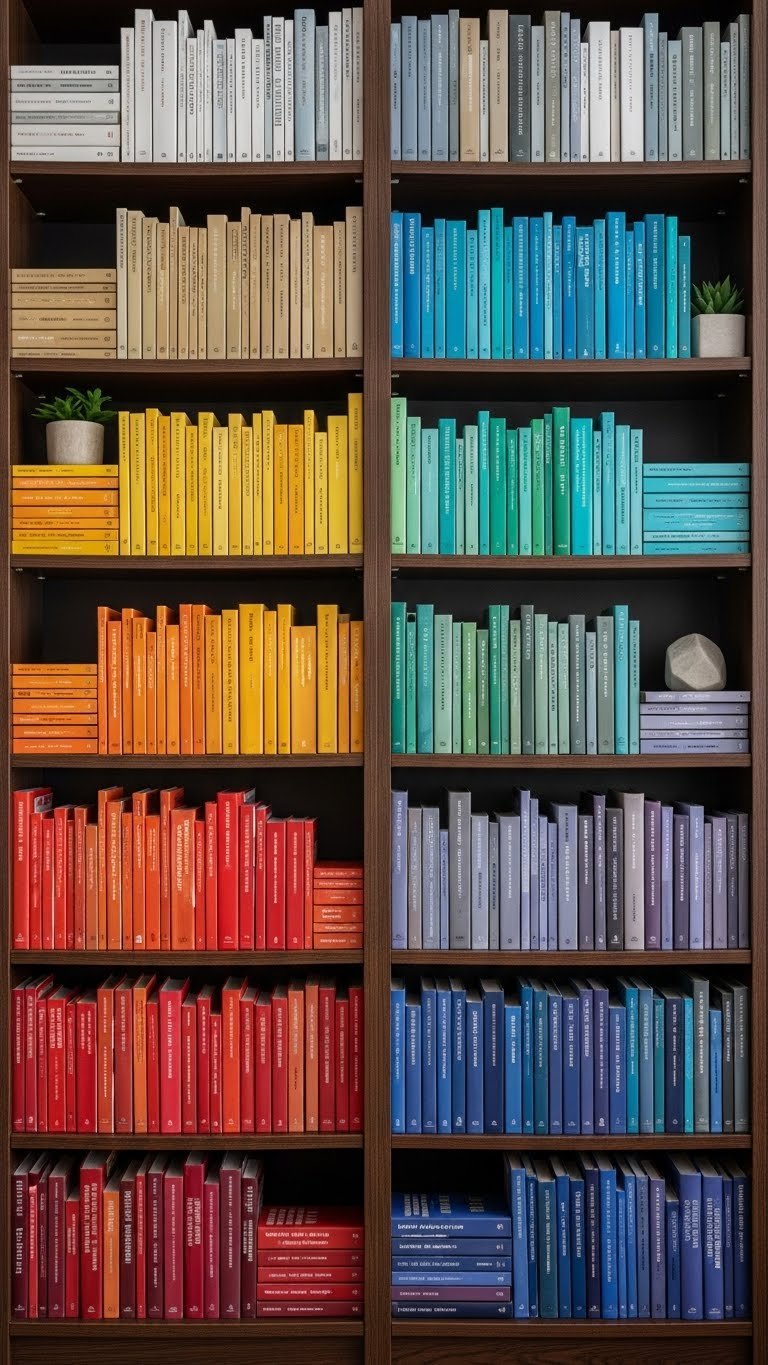
    7. Create a Color-Blocked Bookshelf Arrangement

    Color-blocking your books creates a visually striking, organized look that works especially well if you have a large collection. This approach transforms chaos into calm.

    Spend an afternoon organizing your books by spine color, grouping similar hues together—warm tones (reds, oranges, yellows), cool tones (blues, purples), and neutrals (blacks, whites, grays). You don’t need to buy anything—just rearrange what you have. If you’re short on certain colors, you can add books from thrift stores or dollar sections, but it’s completely optional. Stand books upright to showcase spines clearly, or create small stacks to break up the color sections.

    The result is a bookshelf that looks carefully curated and Instagram-ready, and honestly, much easier to find specific books since they’re organized by color rather than scattered randomly.


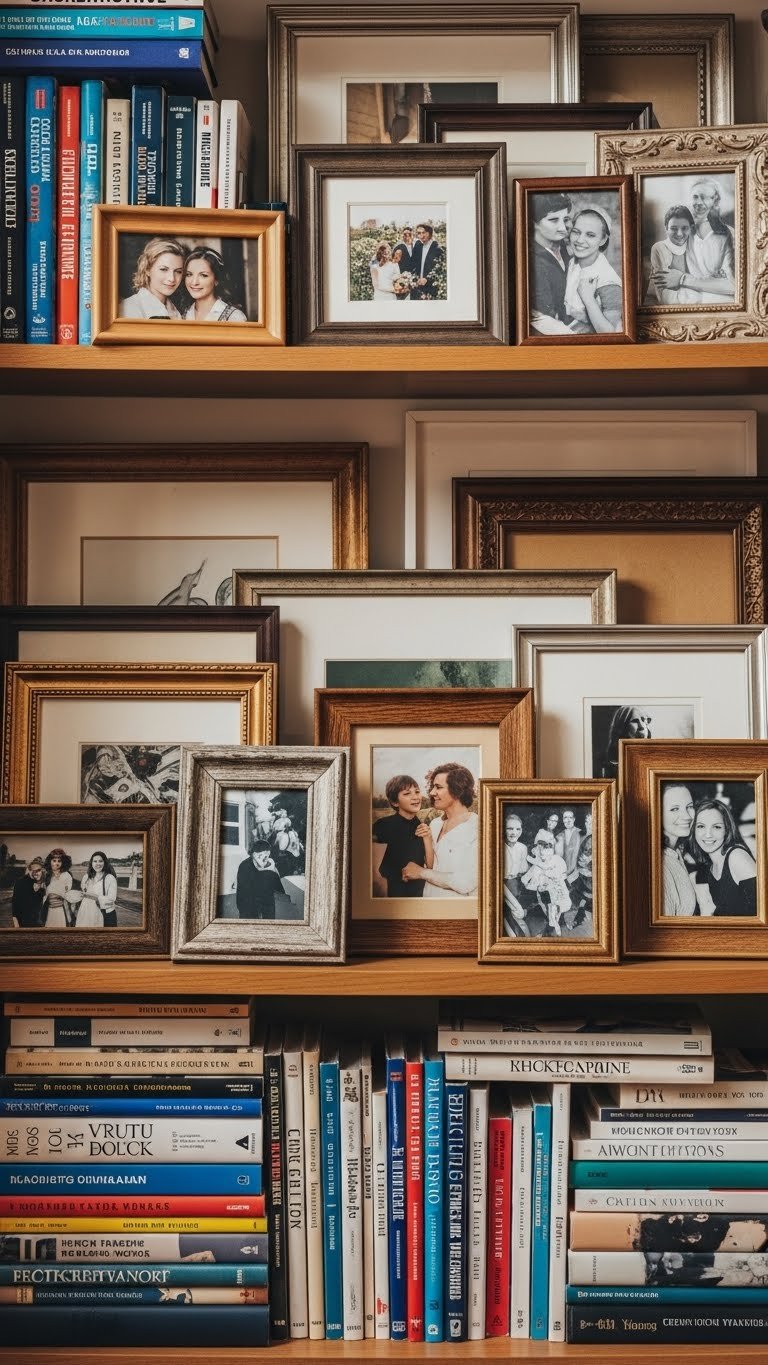
    8. Mix Books with Framed Art and Photographs

    Mixing personal photographs and artwork among your books creates a more intimate, lived-in aesthetic that tells your story and adds personality beyond just displaying books.

    Gather your favorite photographs or inexpensive framed prints from places like Minted, Urban Outfitters, or IKEA ($10-$40 per frame). Lean frames against the back of the shelf for an effortless, non-committal look, or install small picture ledges above shelf sections. Mix frame styles and sizes—mismatched frames feel more intentional than matching sets. Include 3-4 frames per shelf depending on depth. Add small three-dimensional objects like figurines, travel souvenirs, or objects d’art between frames.

    Your bookshelf becomes a personal gallery that reflects your life, travels, and memories while still functioning as storage.


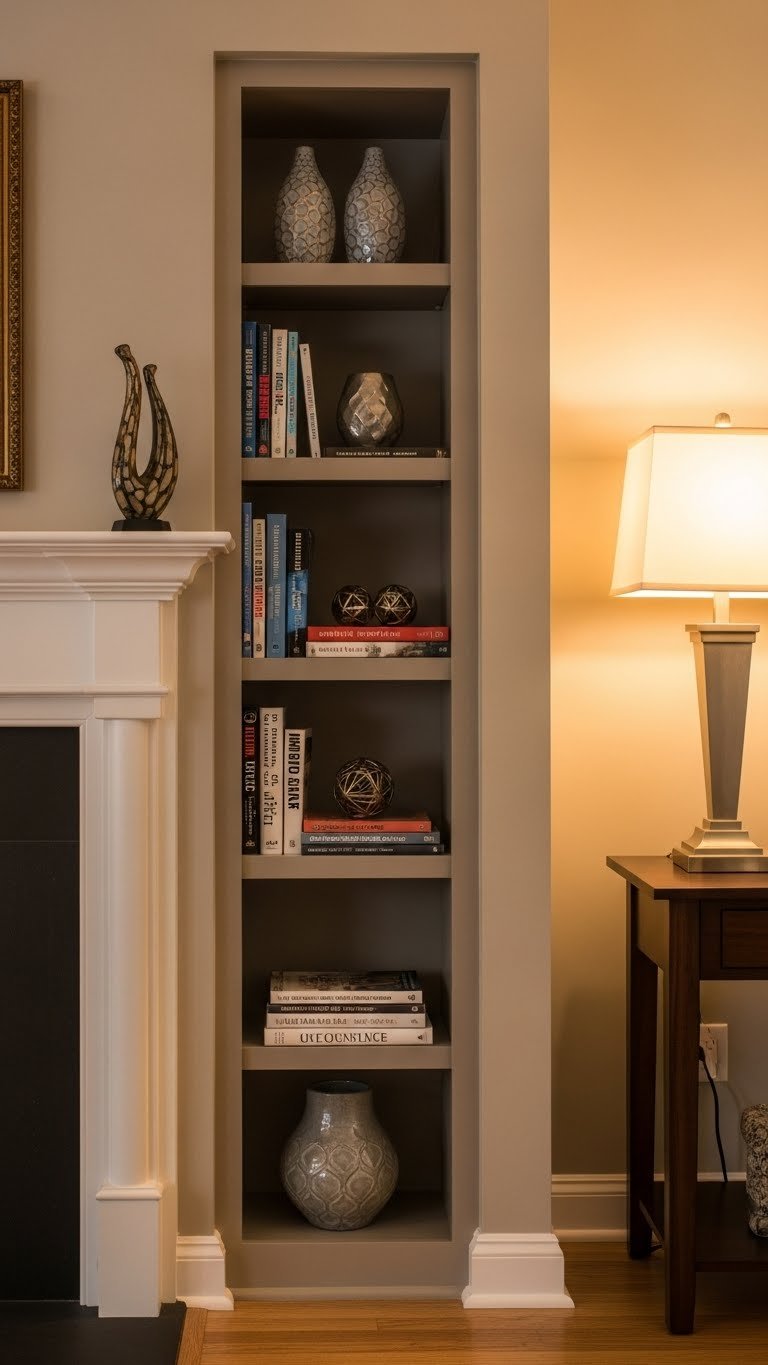
    9. Install Shelves in an Awkward Alcove or Nook

    Tucking a bookshelf into an awkward nook or alcove makes that dead space functional and creates a cozy reading area. This works brilliantly in apartments with unusual layouts.

    Measure your space precisely, accounting for baseboards and any uneven walls. For renters, leaning shelves (like IKEA’s ladder-style units at around $50-$100) work perfectly. For homeowners, floating shelves or custom built-ins start around $200-$500 for materials and tools. Most installations take a weekend project. Fill the space with books grouped by color or theme, add a small lamp above the shelf, and include a comfortable chair nearby for a reading nook.

    What was previously wasted or awkward space becomes the coziest corner of your home—perfect for morning coffee or evening wind-down.


    10. Create a Bookshelf Headboard for Extra Storage

    A bookshelf headboard combines storage with design, turning your bed into a statement piece while maximizing limited floor space. It’s especially smart for small bedrooms.

    Install a tall, narrow bookshelf (or multiple shelves stacked) directly behind your bed. IKEA’s Billy bookcase (around $60-$100 each) stacks beautifully when secured to the wall. For renters, lean two tall shelves against the wall behind your bed—no installation needed. Fill the top sections with books and decorative objects, keep the middle sections lighter, and use lower sections for storage baskets. Include soft lighting with small battery-operated LED strips for a spa-like ambiance.

    Your bedroom gains character, you’ve maximized vertical space, and you now have a gorgeous focal point that makes your bed feel intentional and designed.


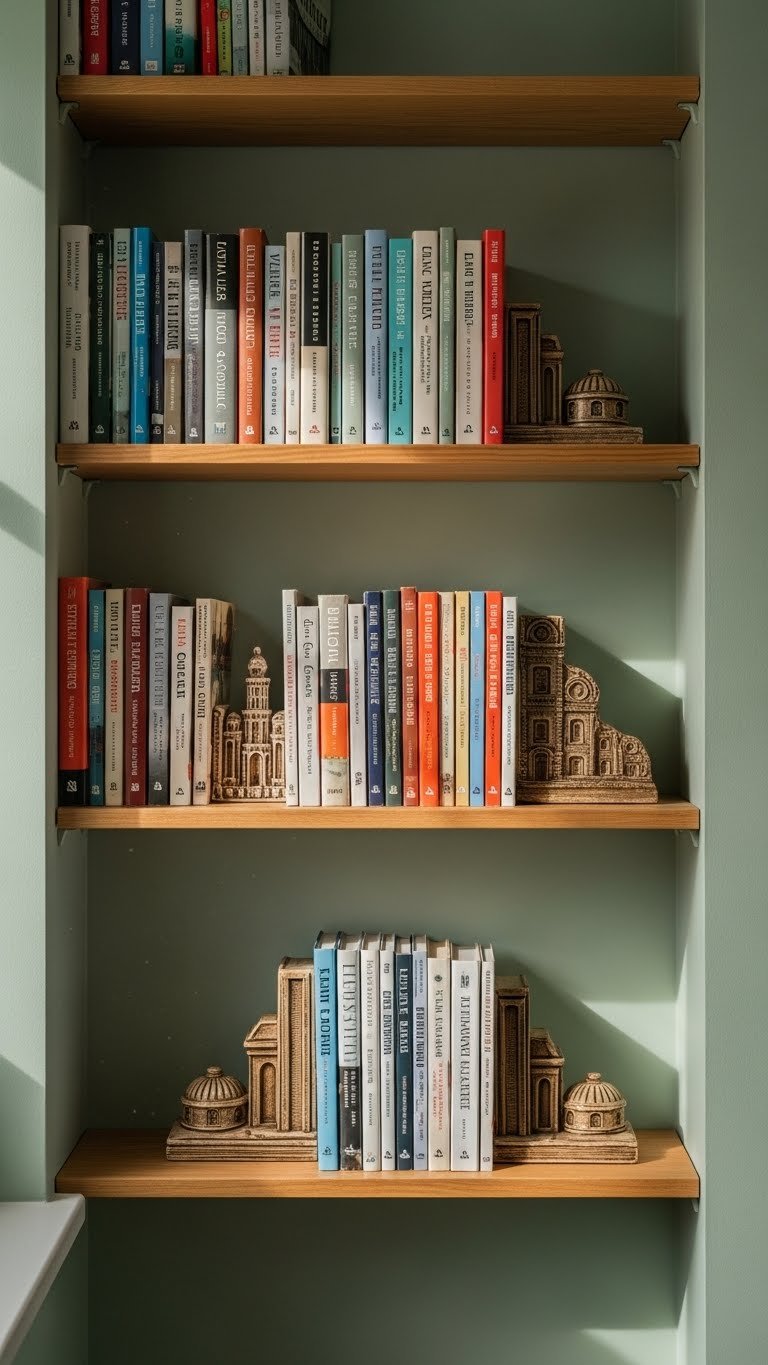
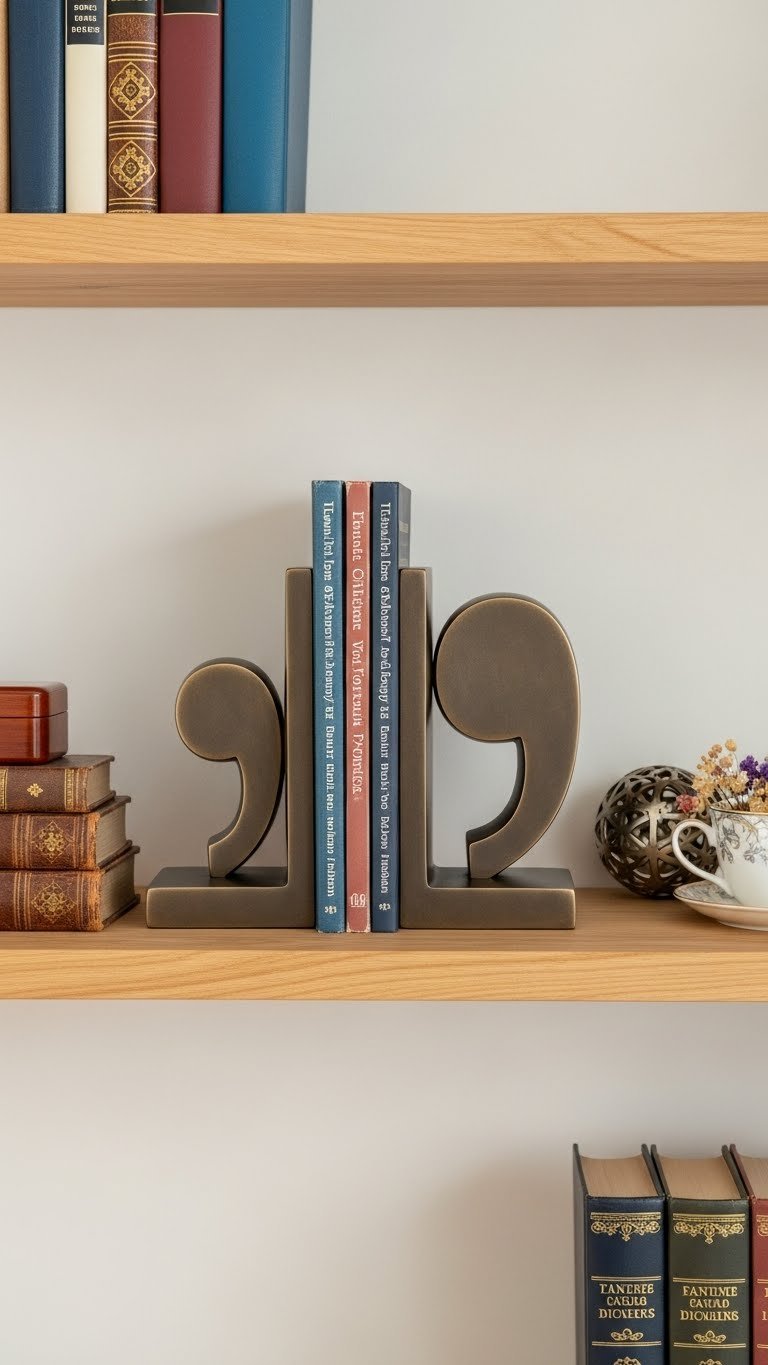
    11. Use Decorative Bookends to Add Visual Interest

    Bookends serve a practical purpose while also acting as mini decorative objects that add personality and help organize your collection into digestible sections.

    Hunt for interesting bookends at thrift stores ($5-$15 each), HomeGoods, or Target ($15-$40 new). Mix styles—marble bookends on one shelf, wooden on another, or even DIY bookends using stacked books wrapped in fabric. Place them at regular intervals along a shelf to create visual breaks and contain groups of books. This approach also actually helps keep books from leaning and slipping.

    Bookends become quiet design elements that elevate the entire shelf and make organization feel intentional rather than accidental.


    12. Style Shelves with Varying Heights of Objects

    Arranging objects at varying heights creates visual movement and prevents the flat, predictable look of a shelf where everything sits at the same level.

    Play with height by grouping books into stacks of different heights (3 books, 5 books, 7 books), then placing taller vases, lamps, or sculptures beside shorter stacks. Include some objects that are tilted or leaning slightly for even more dynamic composition. Aim for an uneven skyline—highest point on one side, medium in the middle, lower on the other, then repeat. This creates rhythm that your eye naturally enjoys following.

    The result is a bookshelf that feels curated and visually engaging rather than flat and one-note.


    13. Add a Decorative Ladder for Extra Display Space

    A decorative ladder leans against your bookshelf, adding accessible storage for frequently read books while creating visual interest and farmhouse or rustic charm.

    Find wooden decorative ladders at HomeGoods, Wayfair, or IKEA ($40-$100). Lean it casually against your bookshelf (it doesn’t need to be installed). Drape throw blankets over the rungs, hang reading glasses on a rung, or lean your most beautiful coffee table books there. This gives you extra storage without installation and adds a casual, approachable feel to your shelf setup.

    Your bookshelf becomes more functional and textured, and you’ve added an element that makes the entire vignette feel warm and intentionally styled.


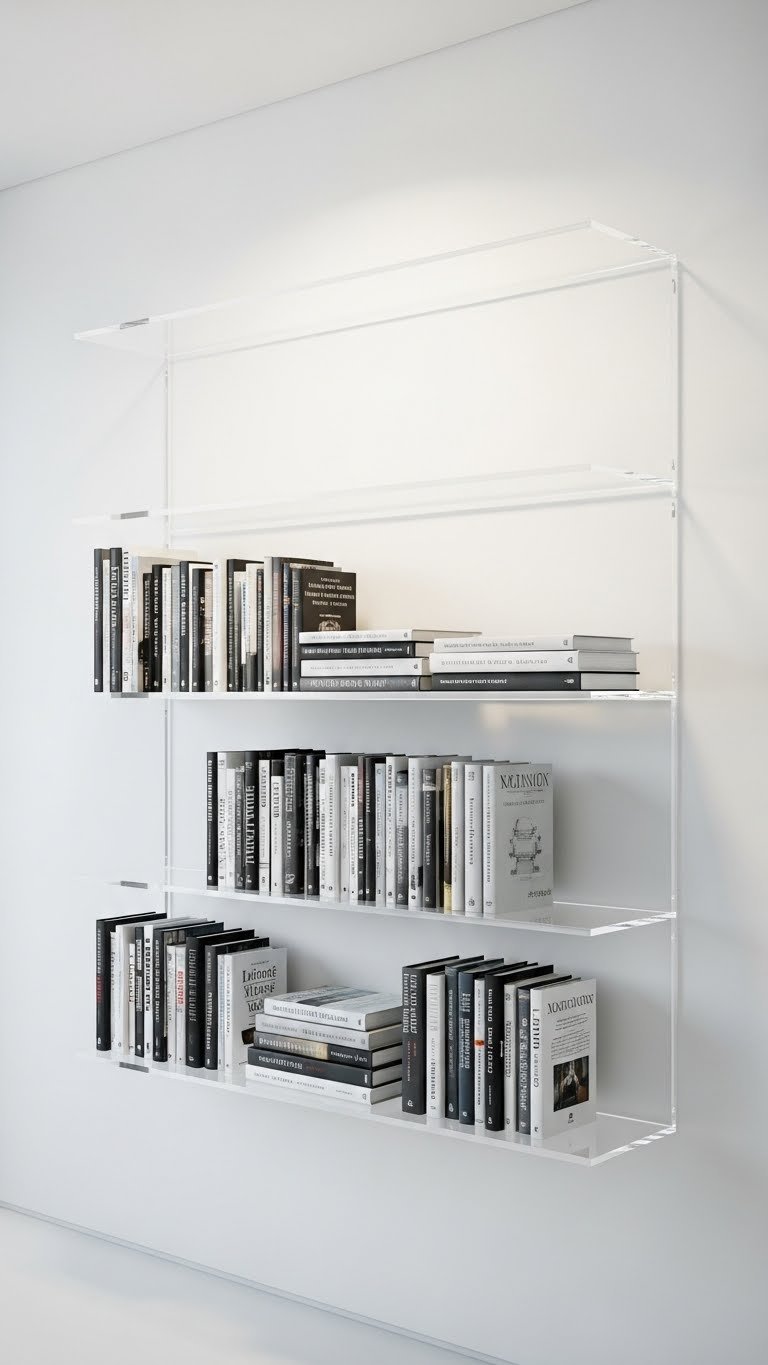
    14. Use Clear Acrylic Shelves for a Floating Effect

    Clear or glass shelves create the illusion that your books are floating, offering a modern, minimalist aesthetic that works especially well in smaller spaces since they don’t visually “take up” space.

    Install clear acrylic or glass shelves ($30-$80 each from hardware stores or online retailers like Amazon). These require proper wall anchors to handle book weight safely—don’t skimp on installation. Arrange books with spines visible, but leave negative space around them so the floating effect remains clear. This look works best with fewer books organized thoughtfully rather than packed shelves.

    Your space feels more open and modern, and the books become sculptural objects rather than just storage.


    15. Create a Reading Nook with Cushions Below the Shelf

    Placing a cushion or small bench directly below your bookshelf creates a dedicated reading nook that’s both functional and inviting—you’ve created an entire vignette that encourages use.

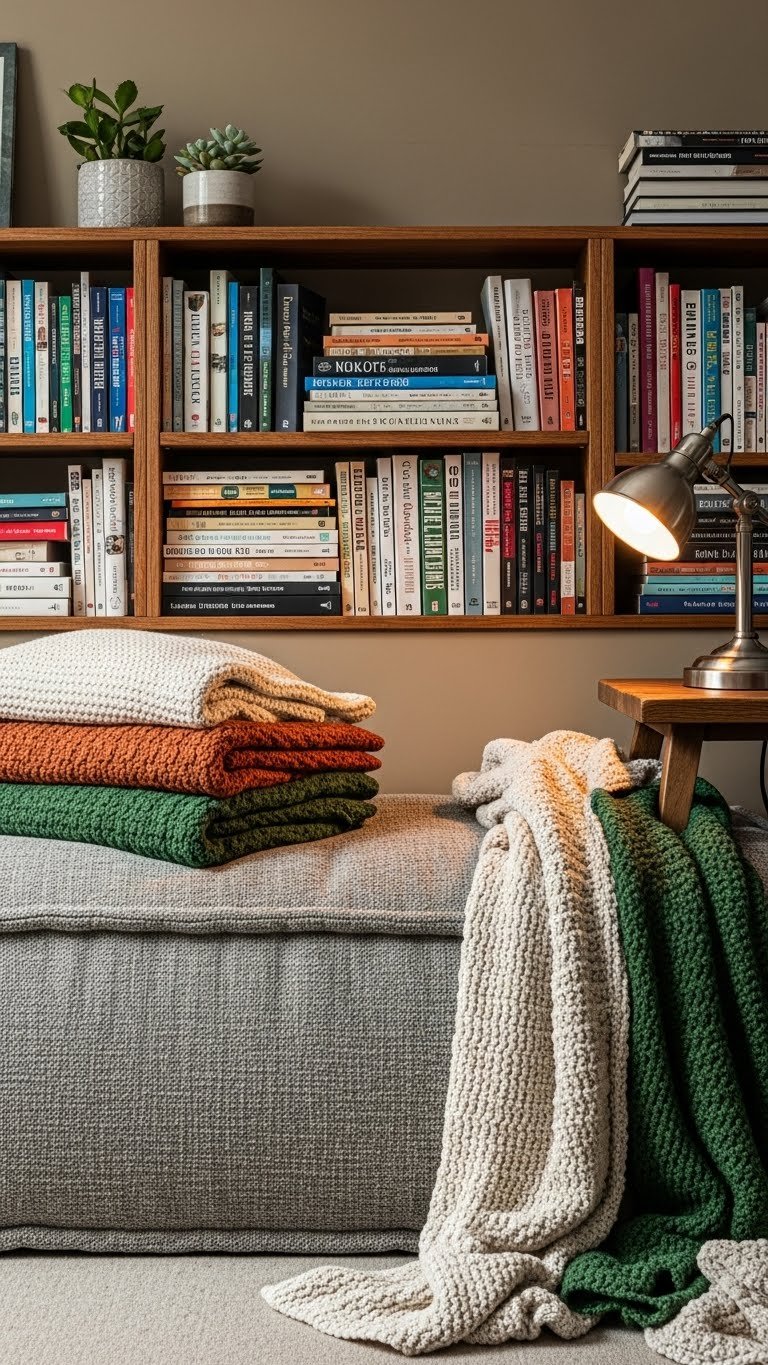
    Position a meditation cushion, bench cushion, or small chair ($20-$80) directly in front of a low bookshelf. Add a side table for tea or coffee, drape a soft blanket nearby, and position a reading lamp at eye level. Choose a corner with natural light if possible. This takes about 15 minutes to arrange and requires zero installation.

    You’ve now created a cozy, intentional reading space that makes your bookshelf functional and social rather than just decorative.


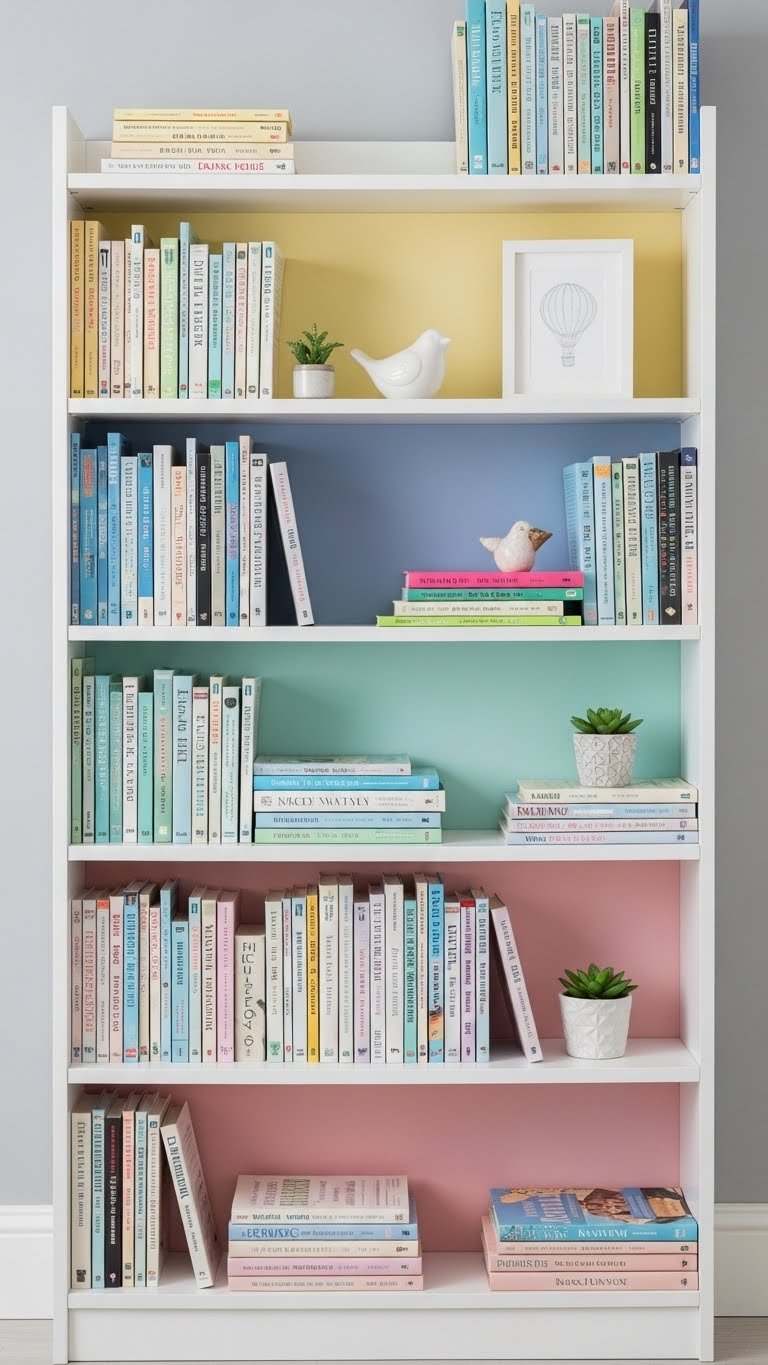
    16. Paint Individual Shelves Different Colors

    Painting each shelf a different complementary color creates a playful, gallery-like effect that’s surprisingly sophisticated when color choices are coordinated well.

    Choose 3-5 coordinating colors—soft pastels, jewel tones, or a mix of neutrals and one bold accent. Paint each shelf with interior latex paint ($15-$25 per quart). Two coats per shelf, with drying time around 2 hours between coats. The entire project takes about one full day. Arrange books so spine colors complement the shelf color they’re on (warm-toned books on warm shelves, etc.).

    Your bookshelf becomes a conversation piece and a reflection of your personality, instantly making your room feel more thoughtfully designed.


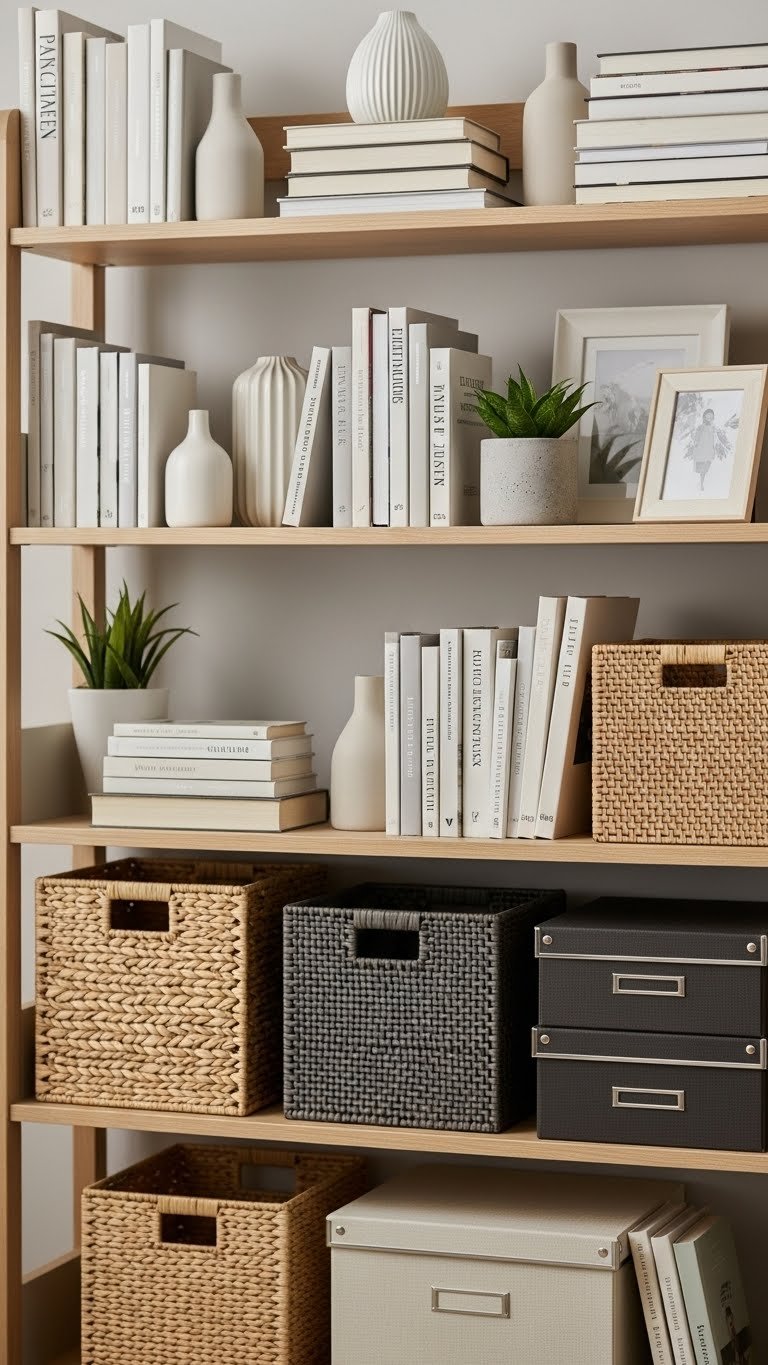
    17. Mix Closed Storage Baskets with Open Shelving

    Combining open book storage with closed baskets creates a balanced look that manages visual clutter while maintaining an airy feel. This approach works brilliantly in any style home.

    Place woven baskets, storage boxes, or containers ($15-$50 each from Target, IKEA, or HomeGoods) on lower shelves or to one side of your bookshelf. Fill them with items you use frequently but don’t necessarily want on display—extra journals, office supplies, blankets, or magazines. Keep upper shelves more open and visible. This balance prevents the space from feeling either too cluttered or too empty.

    You get functional storage that stays hidden while maintaining a curated, designed appearance.


    18. Lean Oversized Coffee Table Books Horizontally

    Large art, photography, or design books stacked flat create visual weight and anchor your shelf while their covers become mini artwork pieces—design magazines call this “architectural shelving.”

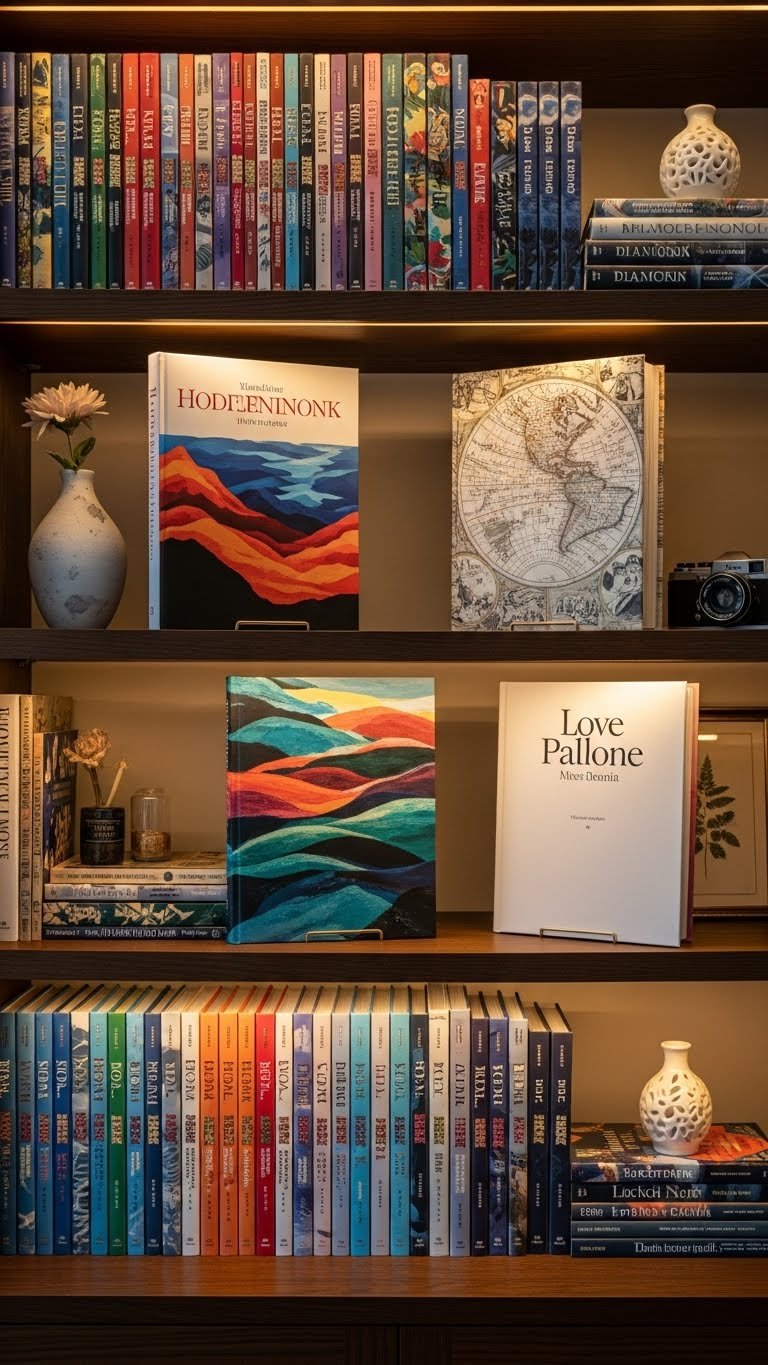
    Identify your oversized books (art books, photography collections, travel guides—usually 10×12 inches or larger). Stack 2-4 of them horizontally on one or two shelves, then stand regular books vertically beside them. This draws the eye and creates visual breaks that make packed shelves feel intentional. No shopping needed if you already own these books, but thrift stores often have beautiful oversized books for $2-$8.

    Your shelf now has visual hierarchy and depth that makes the entire arrangement feel professionally styled.


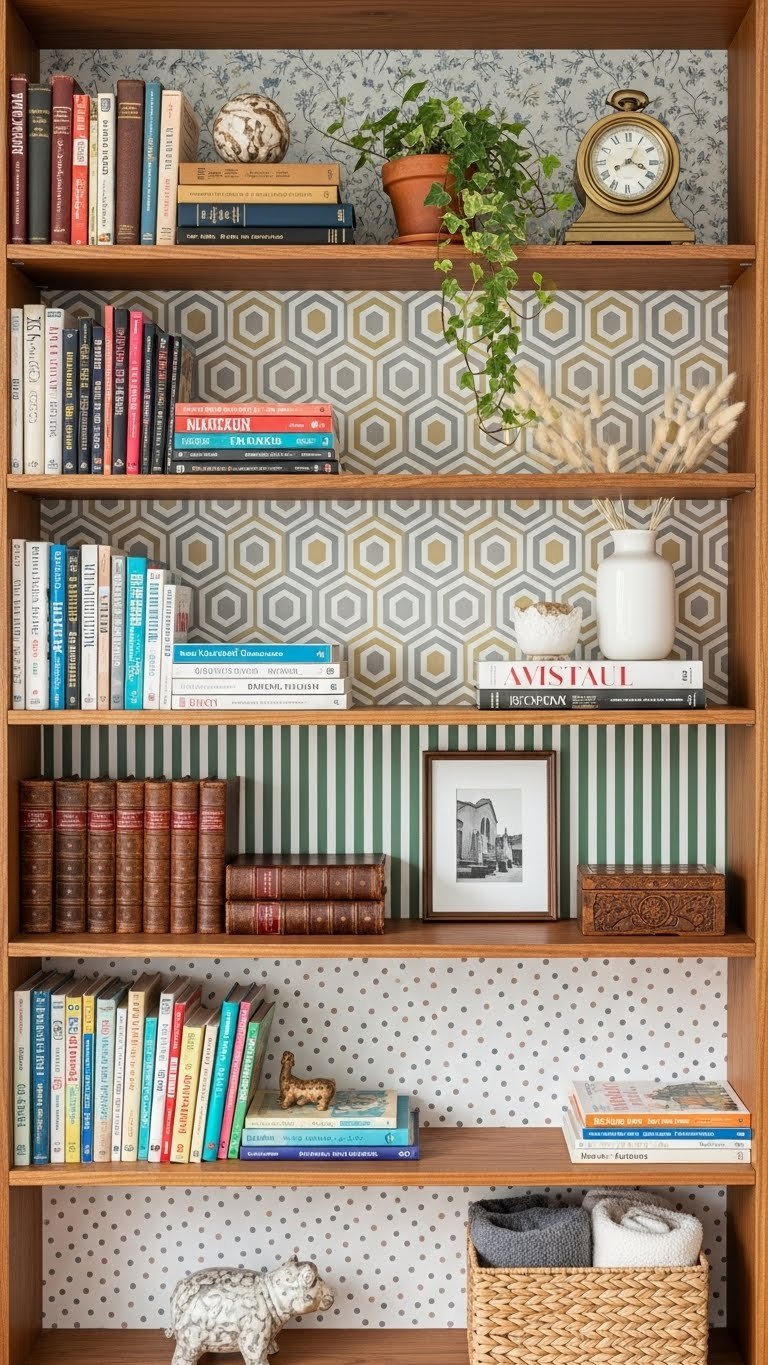
    19. Add Wallpaper Inside Open Shelving Units

    Wallpaper or patterned contact paper inside shelf boxes creates depth and frames your book displays beautifully, especially effective if your bookshelf is itself very visible.

    Measure each shelf’s interior back panel. Apply peel-and-stick wallpaper or decorative contact paper ($10-$30 per roll) to create a subtle backdrop for books. You can coordinate patterns across shelves or mix complementary designs. Installation takes 20-40 minutes depending on shelf count. Step back and arrange books on top—they now pop forward with interesting color or pattern behind them.

    Your bookshelf gains sophistication and intentionality with this small styling move.


    20. Display Books Spine-Out and Cover-Out Strategically

    Mixing spine-forward and cover-forward displays creates rhythm while letting you highlight your most beautiful or currently reading books. This is the professional bookstore approach.

    Arrange most books with spines showing for space efficiency, then select 2-4 books per shelf with particularly striking covers to display face-out using a small shelf ledge or by creating space. These become focal points. Rotate cover-forward displays seasonally or when you want to highlight new reads. No cost beyond what you already own. This approach takes about 30 minutes to arrange and rearrange.

    Your shelf feels more curated and gallery-like, and you’re constantly refreshing the display without buying anything new.


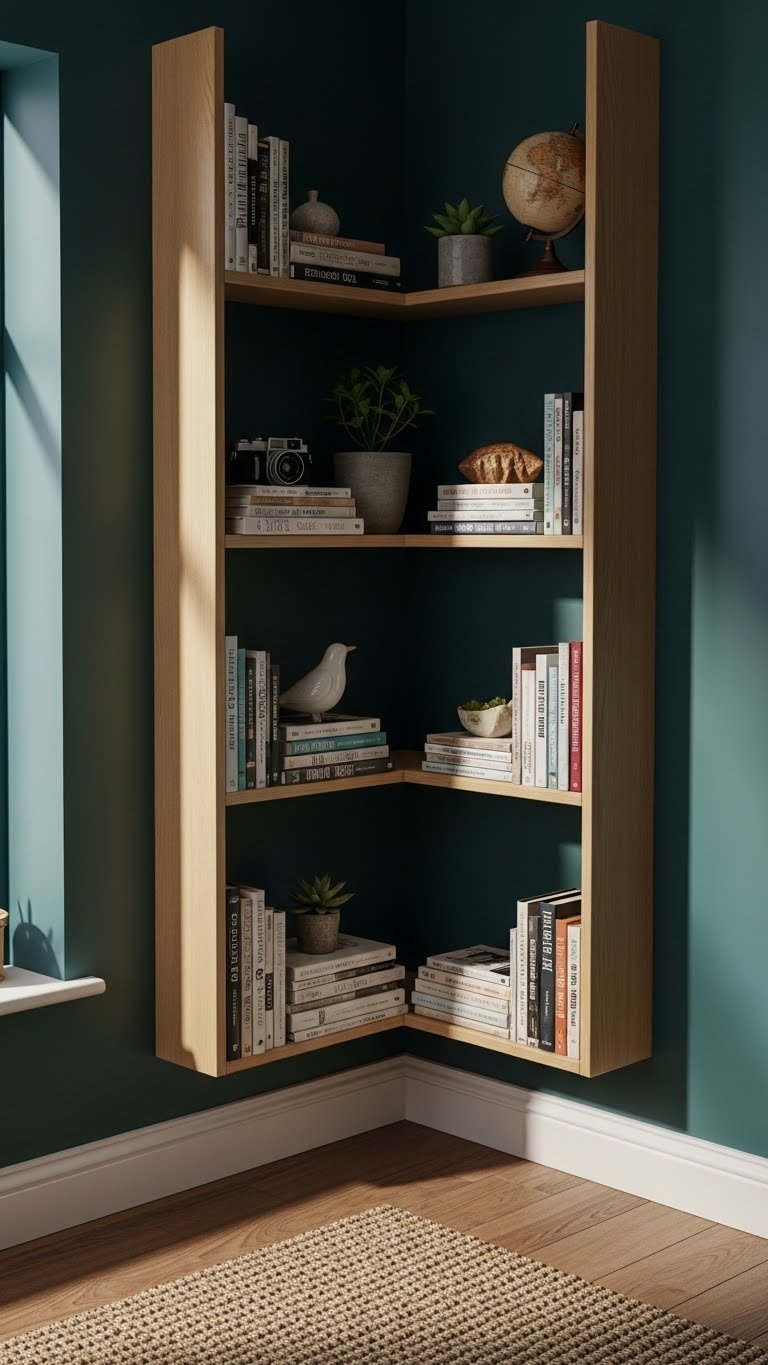
    21. Install Corner Shelves to Maximize Unused Space

    Corner shelves turn wasted corner space into functional, attractive storage. They’re especially smart in small apartments or awkward room layouts where every inch matters.

    Install two tall, narrow shelves along perpendicular walls in a corner using corner shelf brackets ($20-$50 for a pair from hardware stores). These don’t need wall studs since corner shelves work with specialized brackets. Installation takes about 30 minutes with a level and screwdriver. Fill with books arranged by height (tallest on bottom shelf), add small plants, or display treasured objects. For renters, lean two tall, narrow bookcases in the corner at slight angles to each other—they’ll stay stable against both walls.

    You’ve instantly added storage and created an interesting architectural feature in what was previously just a corner.


    22. Create a Rainbow Bookshelf with a DIY Paint Frame Around It

    A rainbow-organized bookshelf becomes even more striking when you paint a matching rainbow border around the shelf’s perimeter. This elevated styling approach works especially well for book lovers with visible book collections.

    Organize books by spine color in rainbow order (or gradient order if that appeals more). Using painter’s tape and interior latex paint ($20-$30 total), paint a 2-3 inch rainbow stripe around the bookshelf’s frame. This takes about 2-3 hours including drying time. Use the same colors as your book arrangement to create a cohesive design. This is perfect for a statement wall or visible bookshelf that’s a focal point of your room.

    You’ve created a one-of-a-kind design feature that immediately signals your personality and love of books.


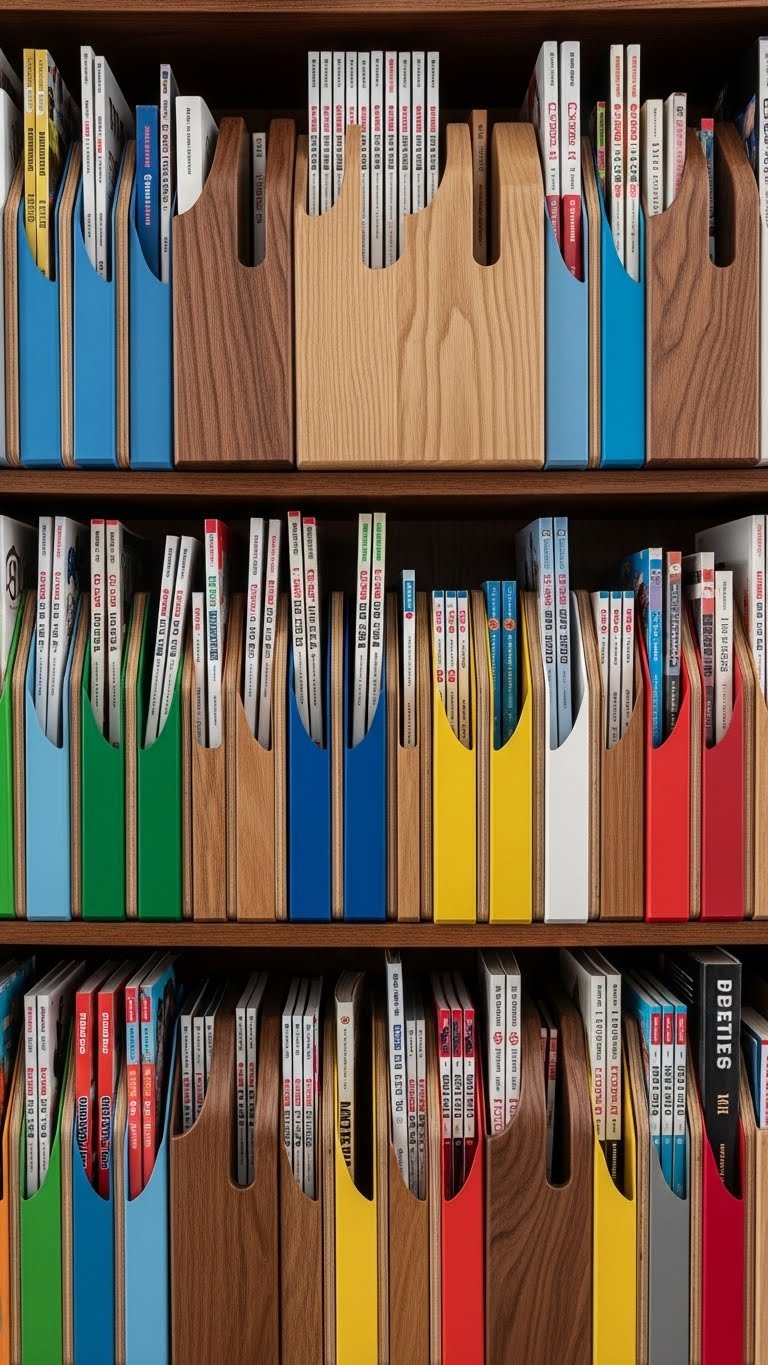
    23. Use Magazine Holders or File Organizers for Thin Book Storage

    Magazine holders and file organizers solve the problem of thin books that look awkward standing alone. They corral paperbacks, graphic novels, or magazines into tidy, space-efficient bundles.

    Purchase magazine holders or file organizers in natural wood, metal, or colored plastic ($5-$20 each from Target, IKEA, or office supply stores). Stand them upright on your shelf and fill them with slim books, graphic novels, or magazines organized by category, color, or author. This keeps thin books from toppling and makes use of vertical space very efficiently. No installation needed—just place and fill.

    Your shelf stays organized, skinny books gain their own dedicated space, and you’ve added another design element that breaks up the visual monotony.


    Save this post for your next bookshelf refresh, and try one styling idea this weekend—you’ll be shocked at how much personality a single change brings to your space. Which idea are you tackling first?

  • 23 Flat Balcony Ideas Designed for Easy Decorating

    23 Flat Balcony Ideas Designed for Easy Decorating


    A flat balcony doesn’t have to stay bare and boring. Even if you’re working with a tiny space or renting, there are so many ways to turn it into somewhere you actually want to spend time. Whether you dream of a cozy reading nook, a mini garden, or just a prettier backdrop for your morning coffee, these 23 ideas give you real solutions that work on any budget—and most require zero permanent changes. You’ll find free styling tricks, budget-friendly finds under $50, and a few investment pieces worth considering. Ready to make your balcony feel like the best room in your home?


    1. Add Railing Planters for Instant Greenery

    Railing planters solve the biggest small-balcony problem: limited floor space. These clip or hang directly onto your existing railings, turning wasted vertical real estate into a lush living wall without taking up a single square foot you’re already using.

    Grab metal or resin railing planters ($15–$40 per planter) from Home Depot, Amazon, or Wayfair. Pair them with low-maintenance trailing plants like ivy, petunias, or sweet potato vine. Installation is literally just sliding or clipping them on—no tools needed. Fill with quality potting soil and water every 2–3 days during growing season.

    The result? A privacy screen and backdrop that photographs beautifully, all while keeping your balcony floor clear for furniture and movement.


    2. Lay Down Outdoor Decking Tiles for One-Afternoon Refresh

    Your existing balcony floor is probably concrete or worn pavement—decking tiles change that without any permanent installation. These interlocking tiles sit flat and grip each other, so they work great for renters.

    Buy outdoor wood or composite decking tiles ($2–$5 per tile, roughly $50–$150 for a small balcony) from IKEA, Home Depot, or Wayfair. Measure your space, lay tiles out, click them together, and you’re done—really takes about an hour. If you rent, you can remove them anytime.

    Your balcony goes from harsh and industrial to warm and inviting. Plus, the softer surface feels nicer underfoot and makes a huge difference visually.


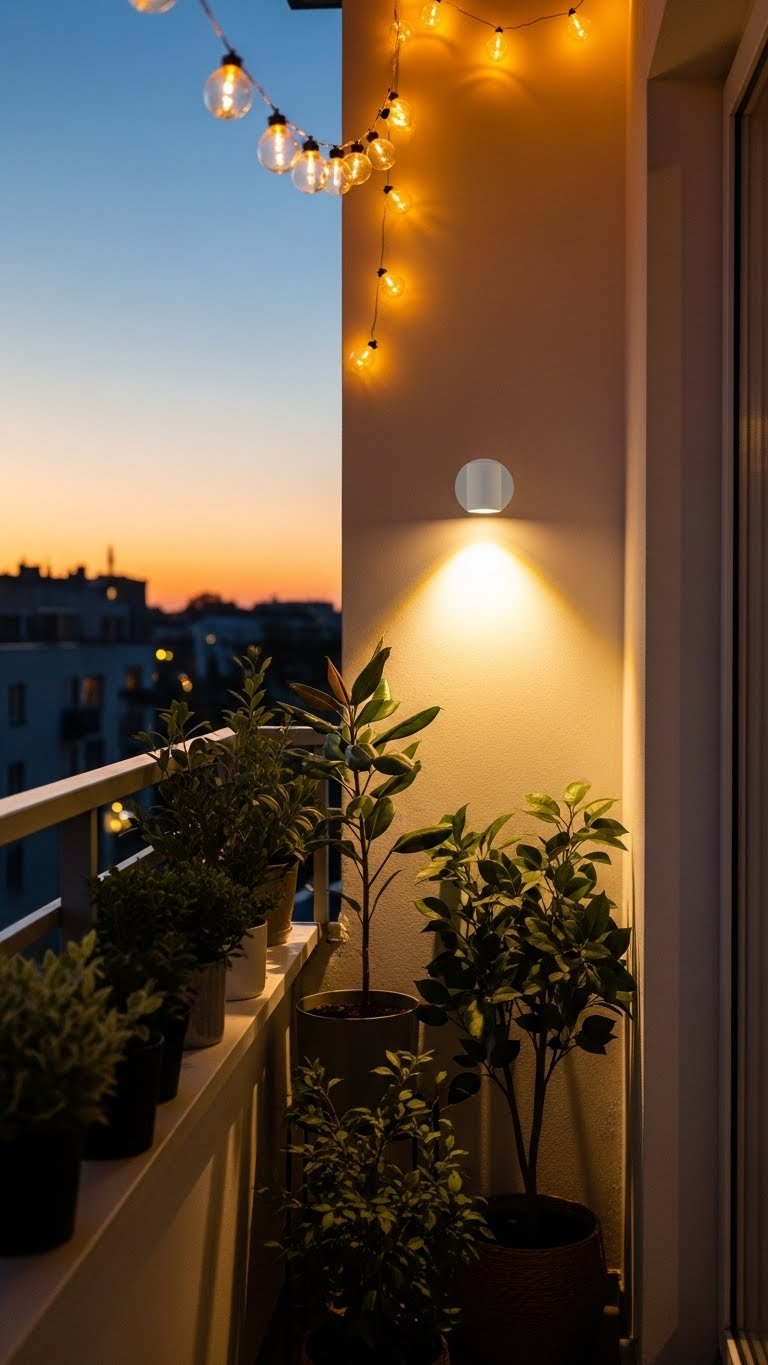
    3. Create Layered Lighting with String Lights and Sconces

    Lighting changes everything—it’s the difference between a space that feels usable only in daylight and one you’ll actually use at night. Layered lighting means combining overhead, ambient, and accent sources.

    Start with warm-white LED string lights ($20–$40, Amazon or Target), then add a battery-operated wall sconce ($25–$50, Wayfair). Both are renter-friendly—string lights drape over railings or hooks, and battery sconces stick with adhesive (no drilling). For ambiance, add a small solar pathway light ($10, Home Depot) tucked between plants.

    Your balcony becomes a destination in the evening, perfect for unwinding or hosting friends.


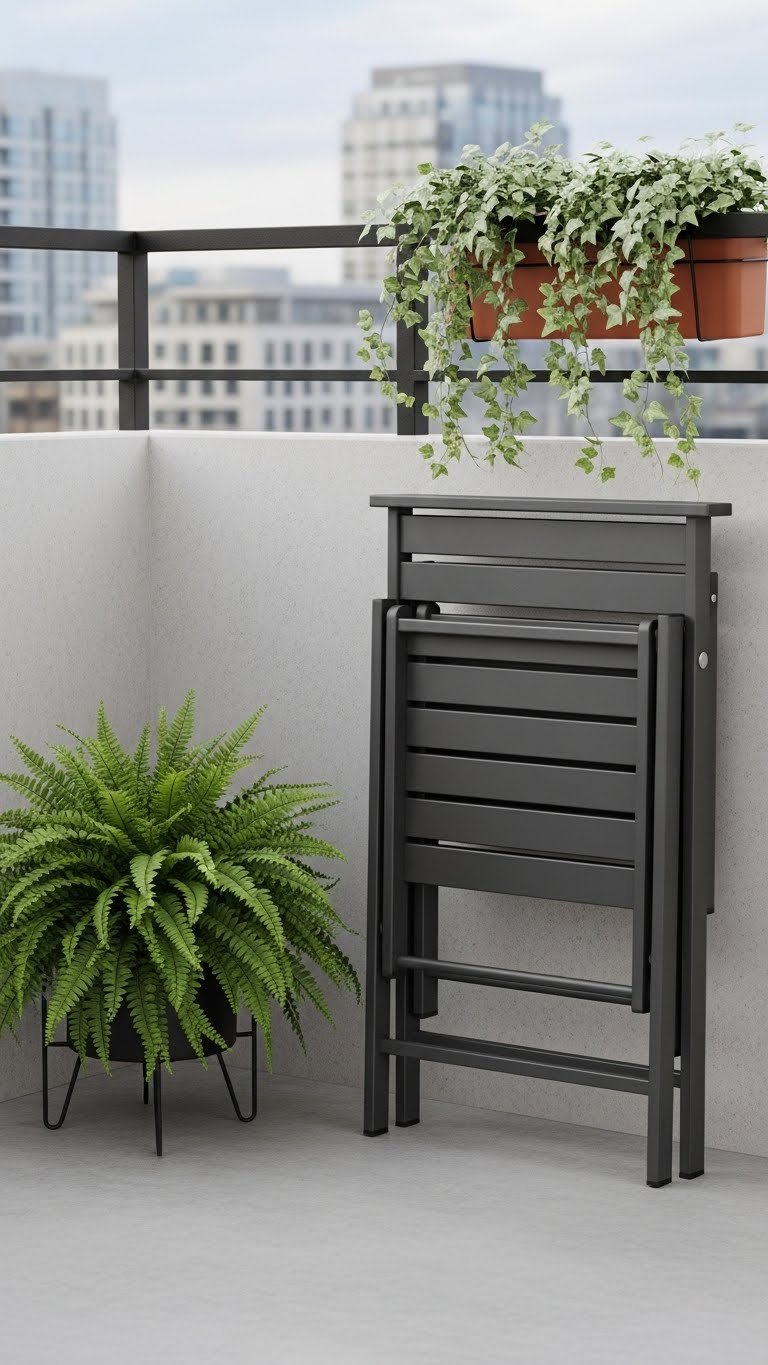
    4. Use Foldable Furniture to Maximize Flexibility

    When space is tight, furniture that doubles as storage is non-negotiable. Foldable café-style furniture collapses to nearly nothing, so you can use your balcony for different things on different days.

    Pick up foldable bistro sets ($60–$120, IKEA or Wayfair) or individual wooden folding chairs ($25–$50 each, Target). When you’re done eating or working outside, fold everything up and tuck it in a corner or inside. This approach is gold for renters because nothing is installed.

    You get a dining or work setup that vanishes when you need open floor space for movement or relaxation.


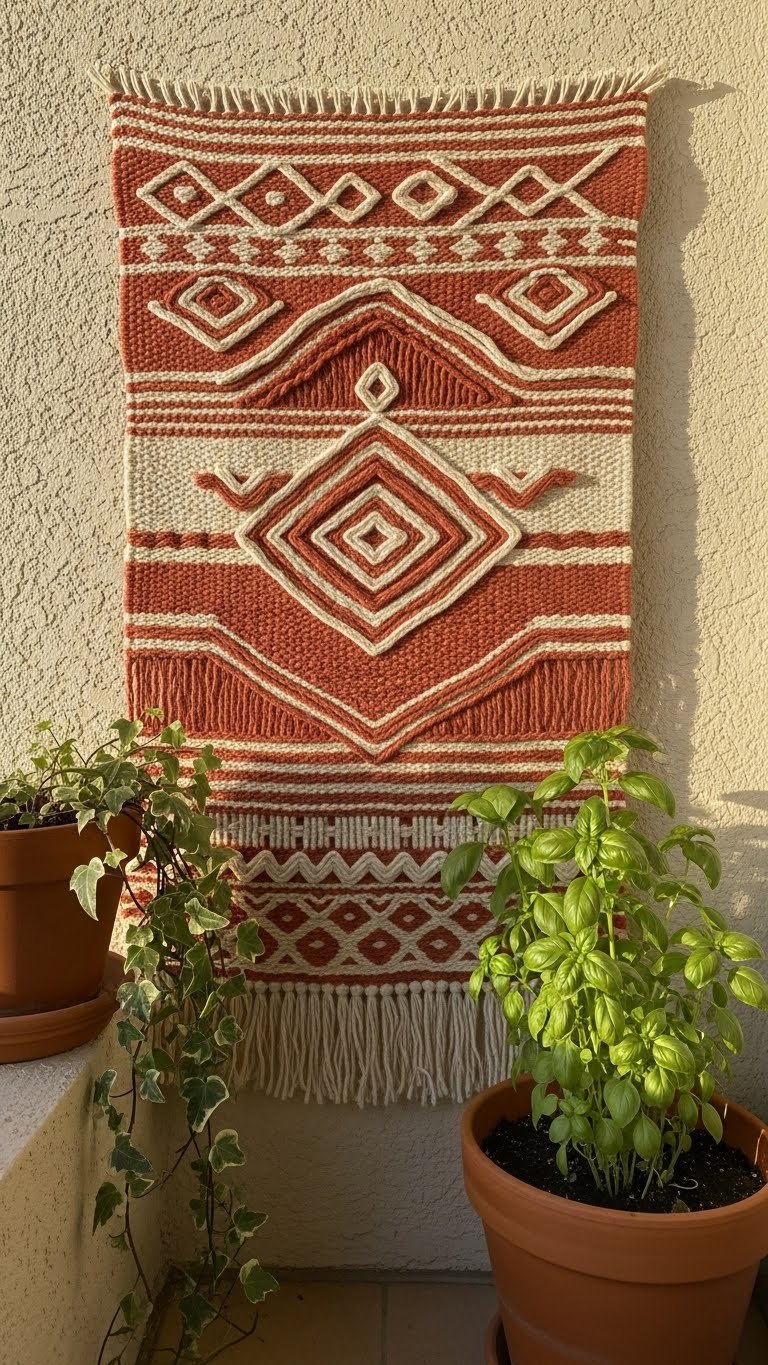
    5. Hang a Tapestry or Outdoor Fabric for a Focal Point

    A large textile adds color, pattern, and personality instantly—and it’s completely removable. Outdoor-grade fabrics resist fading and weather damage better than indoor textiles.

    Buy an outdoor tapestry or wall hanging ($30–$80, Etsy, Amazon, or Wayfair) in a color that matches your vibe (terracotta, sage green, or monochrome are 2025 favorites). Hang it with stainless steel hooks ($5–$10) or adhesive strips rated for outdoor use ($8, available at Home Depot). No drilling required.

    The fabric adds warmth, defines your space, and gives plants a gorgeous backdrop for photos.


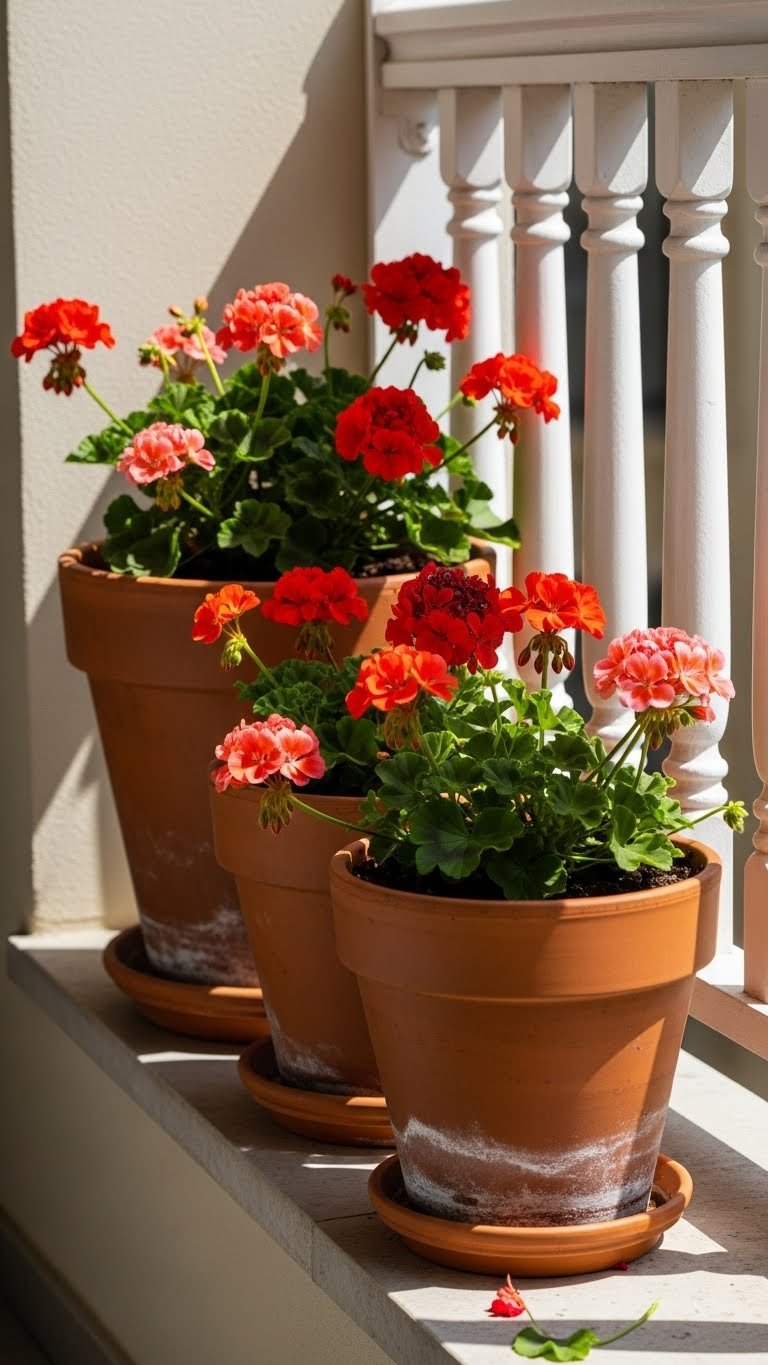
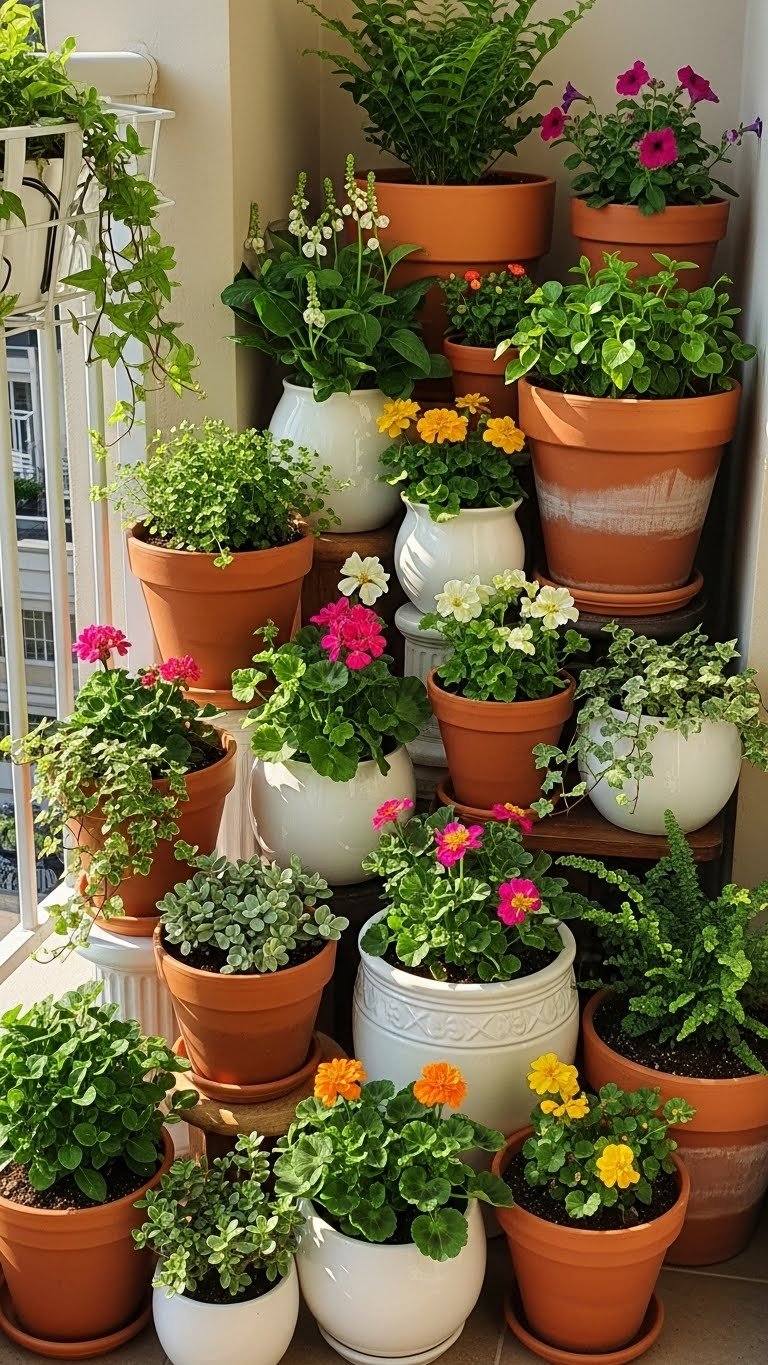
    6. Plant Low-Maintenance Flowers in Colorful Pots

    You don’t need a green thumb to grow flowers on a balcony. Geraniums, petunias, and marigolds are nearly bulletproof plants that flower all season with minimal fussing.

    Grab terra cotta or ceramic pots ($5–$20 each, any garden center), potting soil ($8–$15 for a large bag), and starter plants ($3–$8 each, nursery). Plant them, water when soil feels dry (roughly every 2–3 days), and deadhead spent flowers once a week to encourage more blooms. Rotate pots quarterly so all sides get sun.

    Your balcony blooms without requiring daily attention, and the pots themselves add visual interest even when not full.


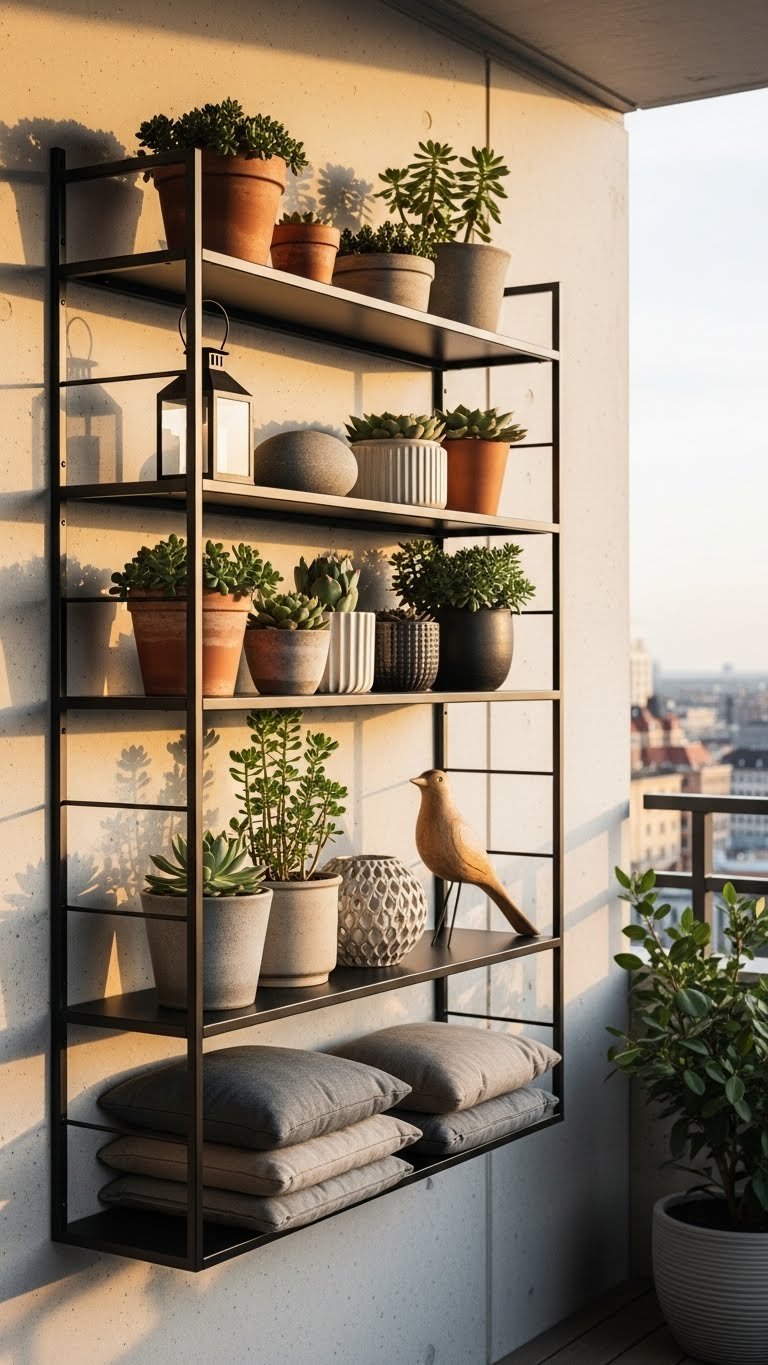
    7. Install Vertical Shelving for Storage and Display

    Vertical shelves maximize wall space for storage and display without eating into your floor area. Perfect for stashing seasonal cushions, garden tools, and extra potting soil while keeping everything accessible.

    Install wall-mounted metal shelves ($40–$100 per unit, IKEA or Wayfair) using a stud finder and proper anchors. Or go renter-friendly with adhesive-backed shelves ($20–$50, Amazon). Arrange potted plants, decorative objects, and practical storage on different levels.

    Your balcony becomes organized and visually layered instead of cluttered, plus you’ve reclaimed valuable floor real estate.


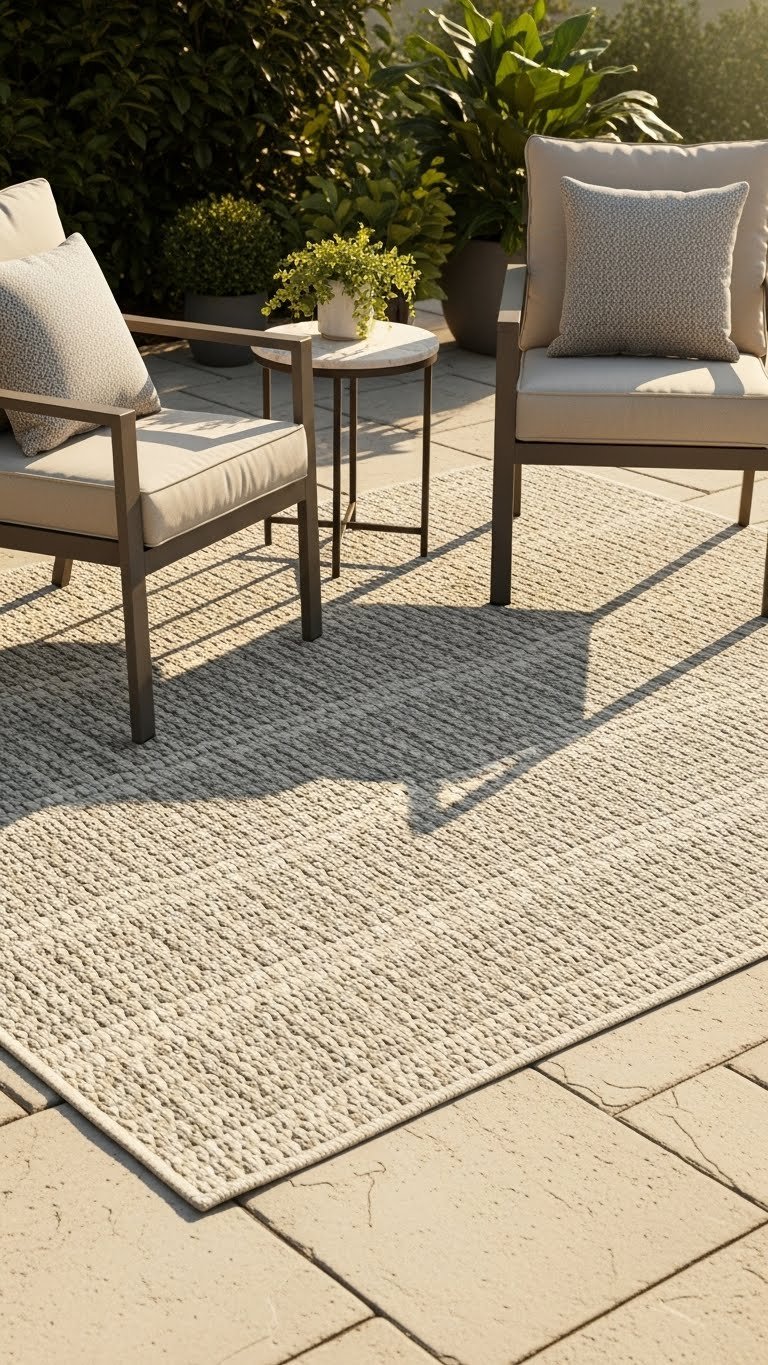
    8. Roll Out an Outdoor Rug to Define Your Space

    An outdoor rug anchors the space, adds warmth, and makes a cramped balcony feel more intentional and curated. The right rug also protects your feet from cold tile or concrete.

    Buy an outdoor polypropylene or natural fiber rug ($30–$100, Wayfair, Target, or Home Depot) in a neutral or tonal pattern—these materials resist mildew and UV fading. Size it so most of your seating area sits on the rug. Secure corners with outdoor rug tape ($10–$15) so it doesn’t shift in wind.

    Your balcony suddenly feels like a real room instead of an afterthought.


    9. Add a Hanging Chair for a Cozy Reading Spot

    A hanging chair turns a balcony into a personal sanctuary. Even on a small space, one suspended seat takes zero floor room and becomes the focal point everyone notices.

    Install a heavy-duty ceiling mount ($30–$60, Home Depot) rated for your building (verify with your landlord first), then hang a rope or macramé chair ($60–$150, Wayfair or Amazon). Add a throw blanket ($20–$40, Target) and you’re set. If you can’t drill, look for free-standing hanging chair stands ($100–$200) that don’t require installation.

    You get a statement piece that transforms your balcony into somewhere genuinely relaxing and Instagram-worthy.


    10. Use Bamboo Screening for Privacy Without Blocking Light

    Privacy and light are often competing needs on a balcony. Bamboo screening lets both through—it blocks sightlines while still allowing sun and breeze to flow naturally.

    Get bamboo privacy screening panels ($30–$80 per 6-foot panel, Amazon or Home Depot) and secure them to your railing with stainless steel clips or zip ties ($5–$15). Alternatively, plant tall bamboo in containers ($25–$60 per plant, nursery) around your balcony edges for a living privacy wall.

    Your space feels more secluded and peaceful without getting dark or closed-in.


    11. Paint Your Balcony Railing for a Fresh Look

    A new railing color transforms your balcony’s entire vibe—especially if it’s currently weathered or industrial-looking. Fresh paint costs almost nothing and requires minimal effort.

    Buy exterior-grade metal or wood paint in your chosen color ($20–$40 per quart, Home Depot). Clean railings well, apply primer if needed, then paint with a roller or brush. Two coats usually does it, and it dries within a few hours. White, soft gray, or even sage green are on-trend choices for 2025.

    Your balcony instantly looks intentional and cohesive, even if nothing else changes.


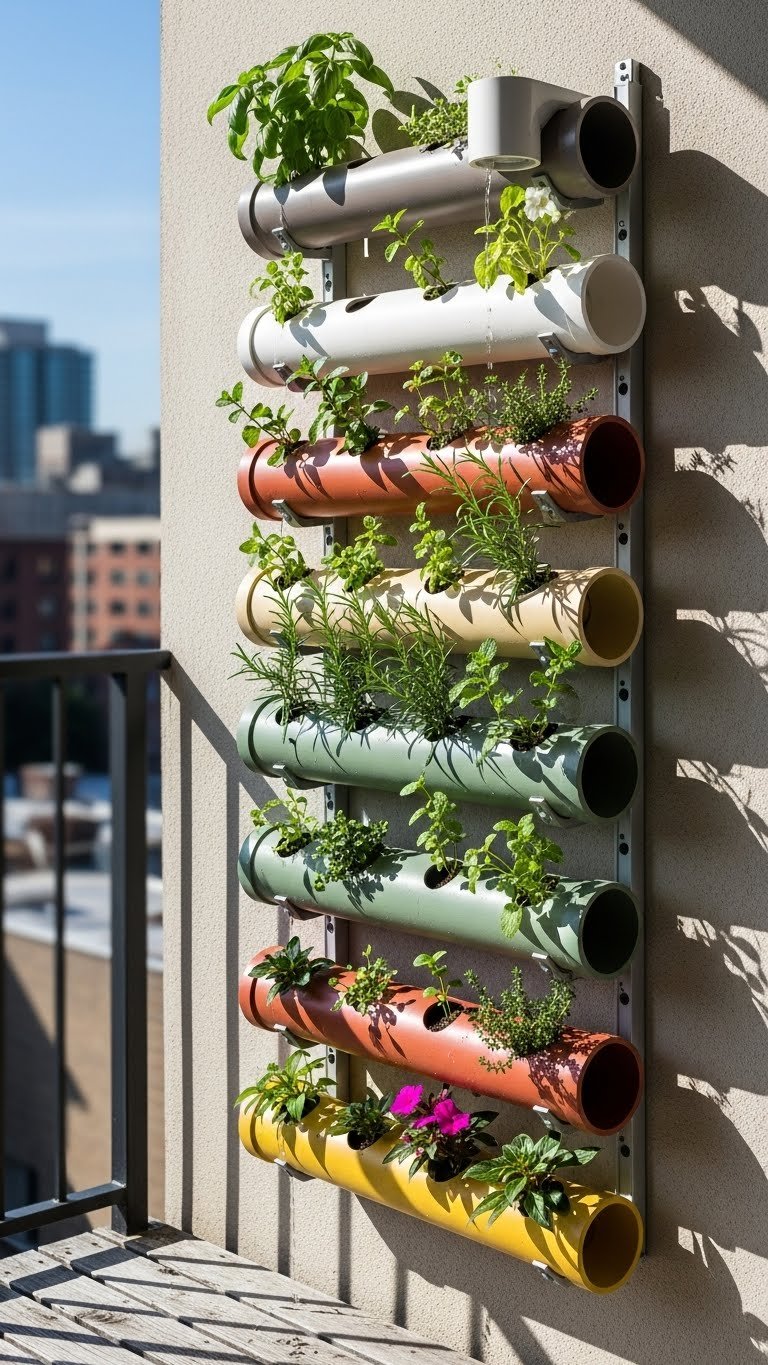
    12. Build a Compact DIY Vertical Garden from PVC Pipes

    A budget-friendly vertical garden uses simple PVC pipes and requires only basic tools. You get tons of planting space in minimal footprint, and it’s a satisfying weekend project.

    Grab 4-inch PVC pipes ($10–$20 from a hardware store), wooden backing boards, drill with bits, potting soil, and herb or succulent plants. Drill holes along the pipe, mount everything to your balcony wall, and fill with soil and plants. Total cost: $40–$80, and setup takes 2–3 hours.

    You’ve made a functioning vertical garden that stores small tools, grows herbs for cooking, and looks custom-built—all for less than a single café visit per month.


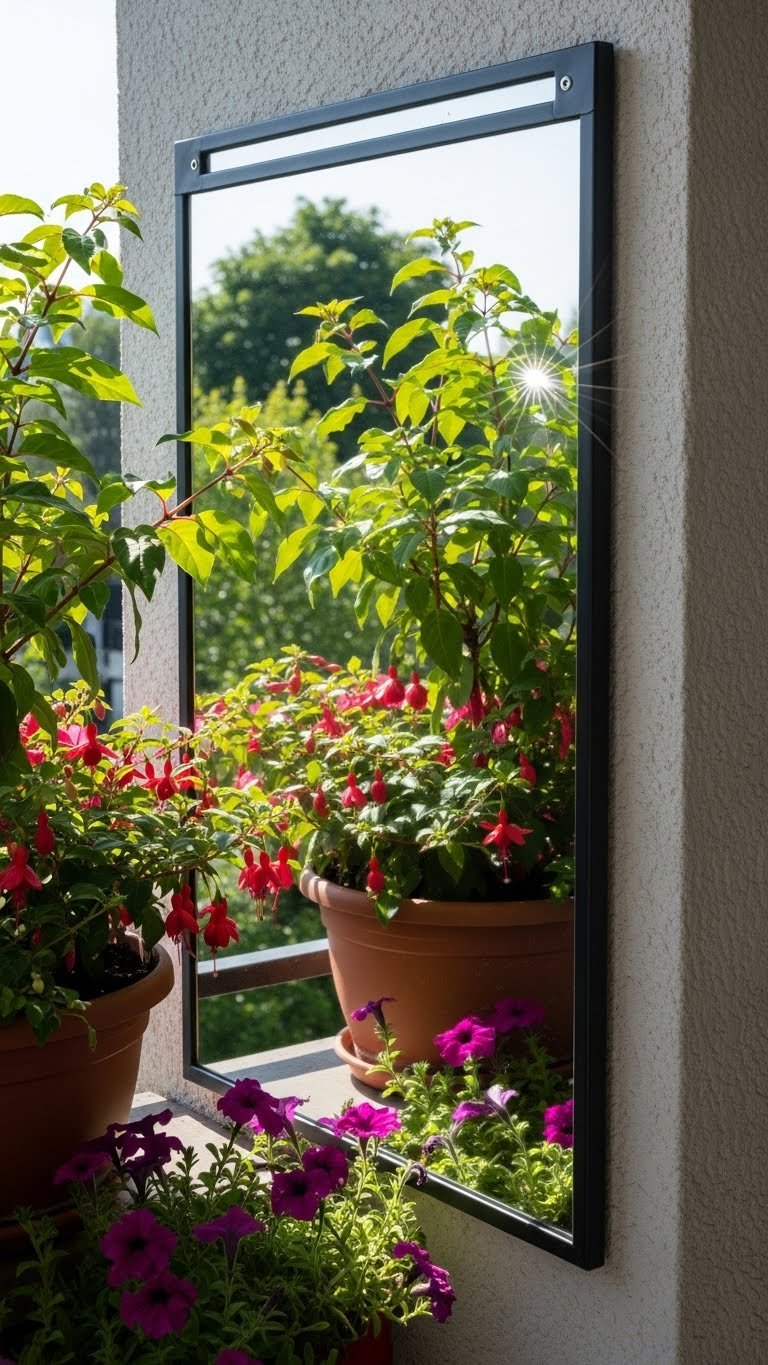
    13. Incorporate Mirrors to Amplify Light and Space

    Mirrors trick the eye into perceiving more space and bounce light around—perfect for gloomy or cramped balconies. Outdoor mirrors are built to withstand weather better than indoor versions.

    Mount an outdoor-rated mirror ($25–$80, Wayfair or Amazon) on your back wall or one side of your railing, using weatherproof adhesive or stainless steel brackets. Choose a size that feels balanced—usually 18–24 inches wide for small balconies.

    Your balcony looks and feels bigger instantly, plus you get more usable light even on overcast days.


    14. Style with a Mix of Pot Sizes and Heights for Visual Interest

    Grouping pots of different sizes, materials, and heights creates an expensive-looking display without buying anything fancy. Variety beats perfection.

    Collect pots from thrift stores ($1–$5 each), buy new ceramic or terra cotta from Home Depot ($5–$20 each), and plant them with matching plants in different sizes—all geraniums or all trailing ivy works beautifully. Arrange in clusters of 3, 5, or 7 (odd numbers feel more natural). Stagger heights by placing smaller pots in front.

    Your balcony looks professionally styled and collected over time—even though you did it in one afternoon.


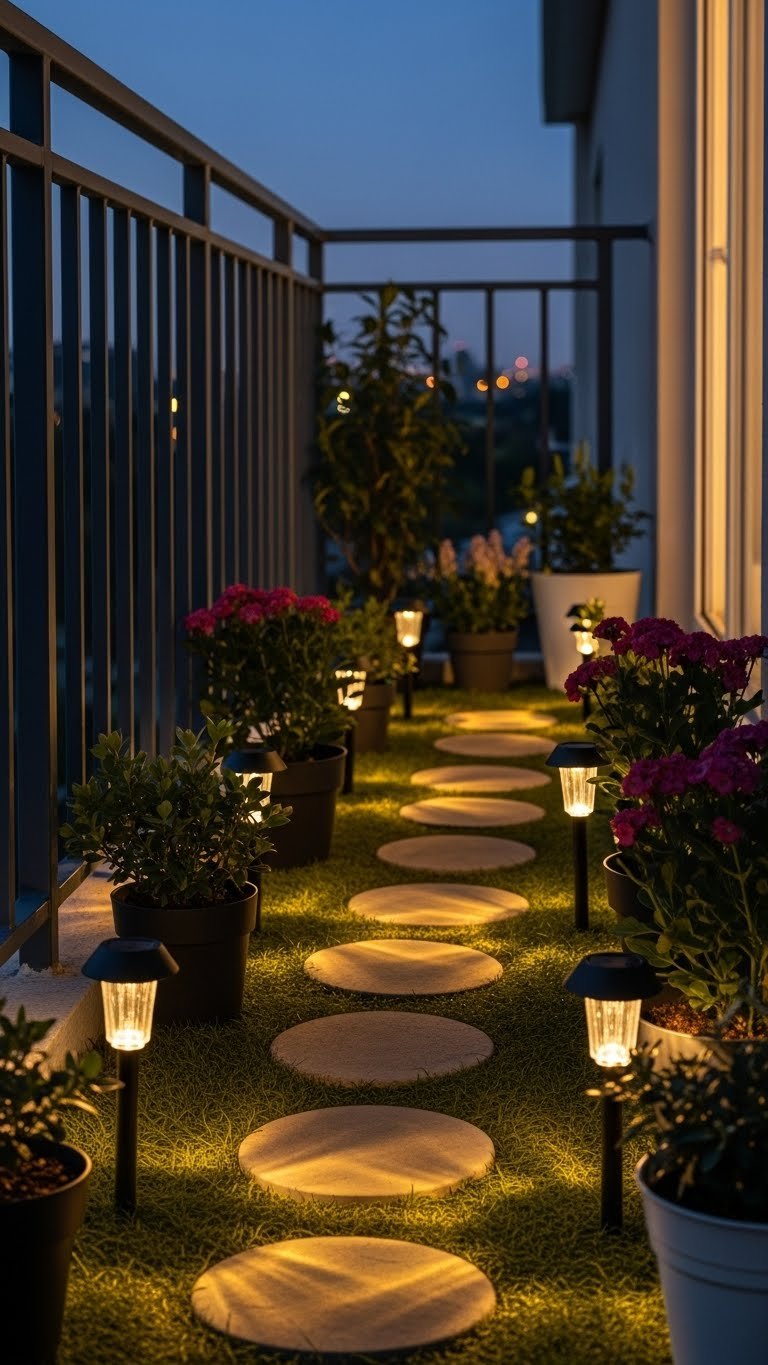
    15. Add Removable Solar Lights for Ambiance and Function

    Solar lights are the renter’s dream: free electricity, no wiring, no installation headaches. They charge during the day and glow at night, adding warmth and making your balcony safer to navigate.

    Buy a pack of solar pathway lights ($15–$35 for 4–6, Amazon or Home Depot) and tuck them between pots, along railings, or corners. They come on automatically at dusk. No maintenance beyond occasional cleaning of the solar panel.

    Your balcony has subtle, atmospheric lighting that costs nothing to run and looks intentional.


    16. Create a Coffee or Beverage Station on a Small Cart

    A rolling cart turns your balcony into a beverage destination without permanent installation. Everything you need for morning coffee or afternoon drinks stays in one spot and can be wheeled away when not needed.

    Find a slim rolling cart ($30–$80, IKEA or Target), stock it with outdoor mugs, a small coffee maker, and supplies, and position it in a corner. It holds everything within arm’s reach and takes zero counter space. Perfect for renters because it’s completely portable.

    Your morning ritual feels more special, and guests always appreciate a coffee station that’s ready to go.


    17. Hang Potted Plants from Ceiling Hooks for a Green Canopy

    Hanging plants create visual drama and shade without using any floor or railing space. String them at different heights to create a canopy effect that makes the space feel bigger and greener.

    Install heavy-duty ceiling hooks ($10–$20, Home Depot) rated for your balcony structure, then hang lightweight plastic or fabric hanging planters ($15–$40 each, Wayfair or Amazon) with trailing plants like pothos or string of pearls. Mix in flowering options like fuchsia or calibrachoa for color.

    You’ve created a botanical ceiling that transforms your balcony into a garden room rather than an empty platform.


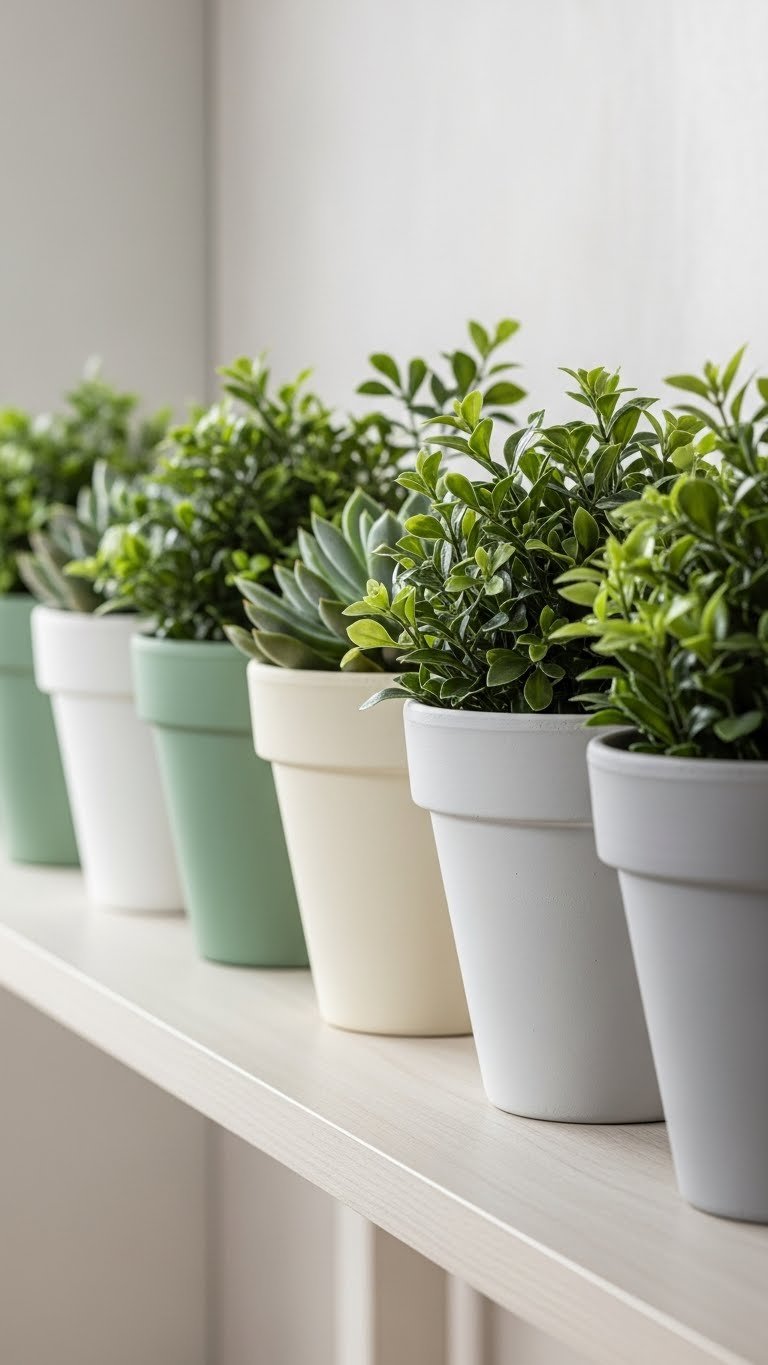
    18. Paint Existing Pots in Coordinated Colors for Cohesion

    Unified pot colors make a balcony feel more designed and less haphazard. Paint existing pots in a coordinated palette—it costs almost nothing and takes an afternoon.

    Grab exterior paint in 2–3 colors ($20–$40 for 2 quarts, Home Depot), primer, and brushes. Clean and prime pots, then apply two coats of paint. Terracotta, cream, sage green, and soft gray are timeless 2025 choices. Let them cure for 24 hours before planting.

    Suddenly your balcony looks like a styled photo shoot instead of random pots collected over time.


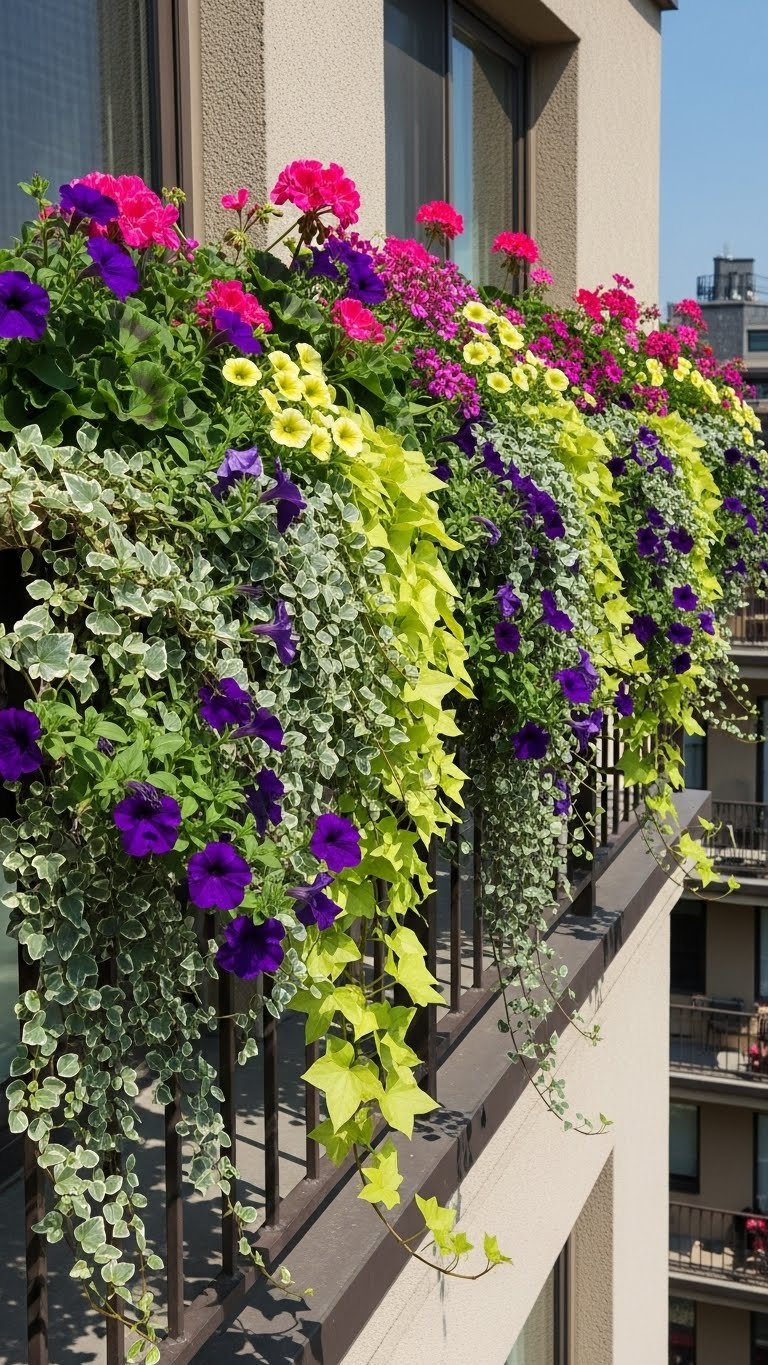
    19. Install Window Boxes Along Your Railing for Extra Planting

    Window boxes (technically railing boxes) give you a garden’s worth of planting space in minimal footprint. They’re perfect for trailing flowers that create a lush, magazine-cover effect.

    Buy long narrow window boxes ($20–$50 each, Home Depot or Lowe’s) and secure them to your railing with stainless steel brackets ($15–$30). Fill with quality potting soil and trailing annuals like petunias, calibrachoa, or ivy. Water daily—they dry out faster than regular pots.

    Your balcony becomes a cascade of color and greenery that transforms it from bare to abundant.


    20. Add a Small Side Table for Drinks, Books, and Décor

    A tiny table (even one that’s just 12–16 inches square) gives you a surface for coffee, drinks, books, or plants without eating up your whole balcony. Look for narrow or triangular styles that tuck into corners.

    Pick a compact outdoor side table ($30–$70, IKEA, Target, or Wayfair) in wood, metal, or weather-resistant materials. Place it next to your seating or in a corner. It holds everything you need within arm’s reach while sitting.

    Your balcony becomes a functional, comfortable space instead of just a place you pass through.


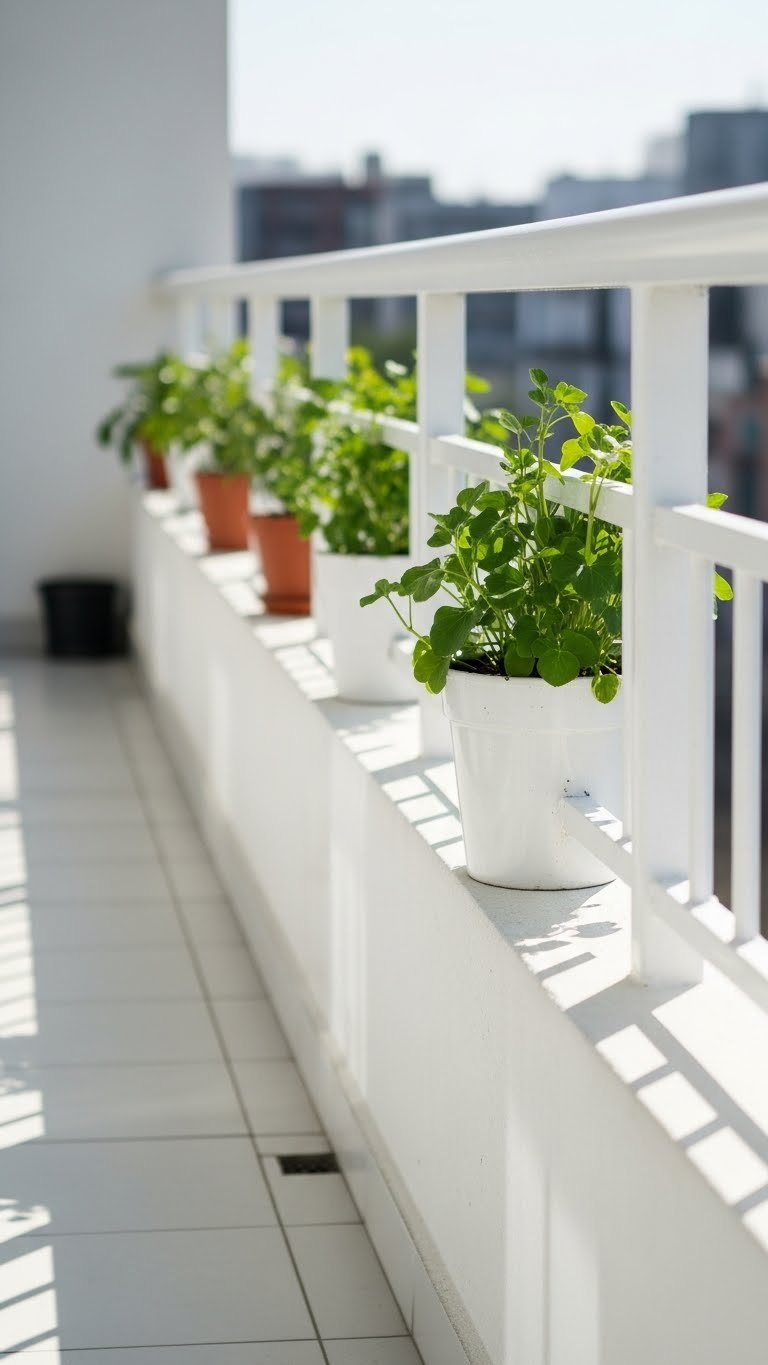
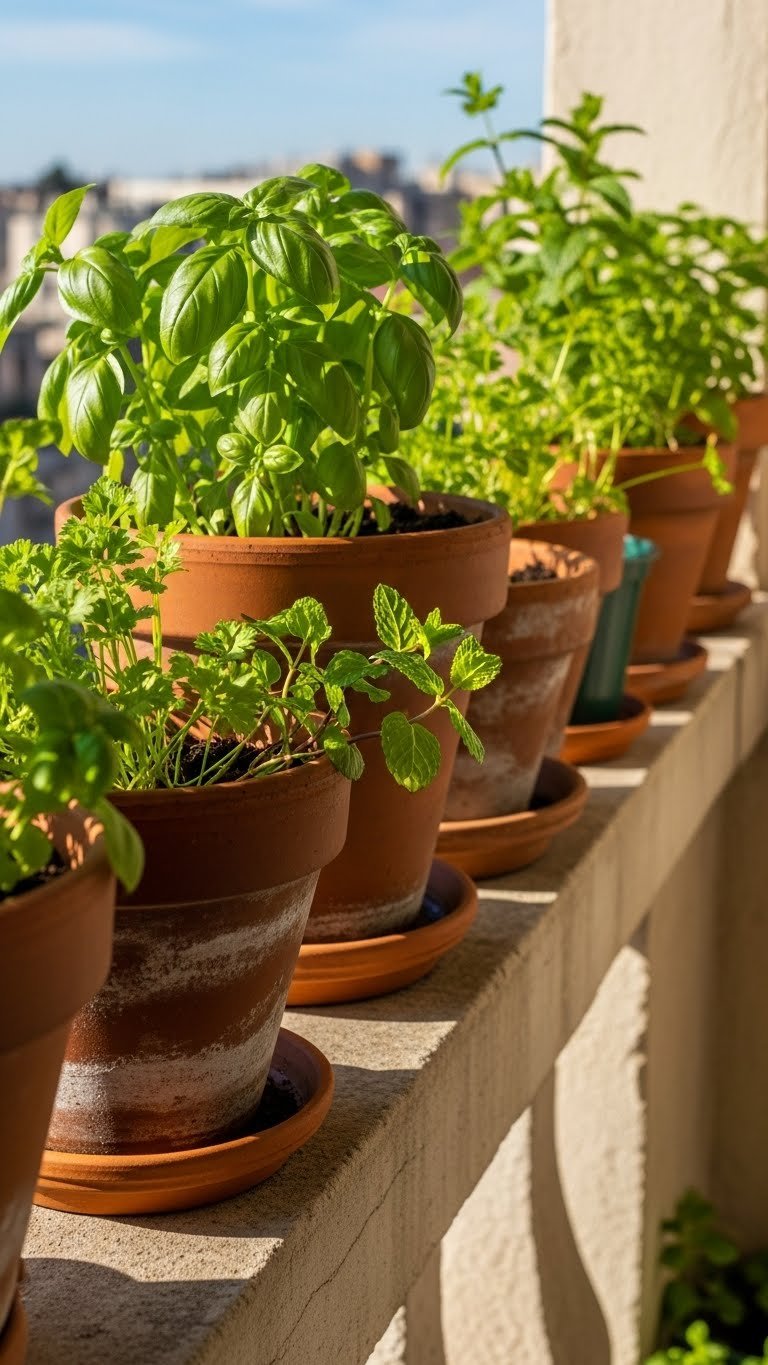
    21. Create a Herb Garden in Small Containers

    Fresh herbs from your own balcony are a game-changer—and growing them requires almost no effort or space. Most herbs thrive in containers and need just regular watering and sunlight.

    Get small terra cotta pots ($3–$8 each), herb seedlings or seeds ($2–$5 per variety, any garden center), and potting soil ($8–$15). Plant basil, parsley, mint, and oregano. Water when soil feels dry. Most herbs need 6+ hours of direct sun daily.

    You’ll have fresh ingredients for cooking, a lovely green display, and the satisfaction of growing something yourself.


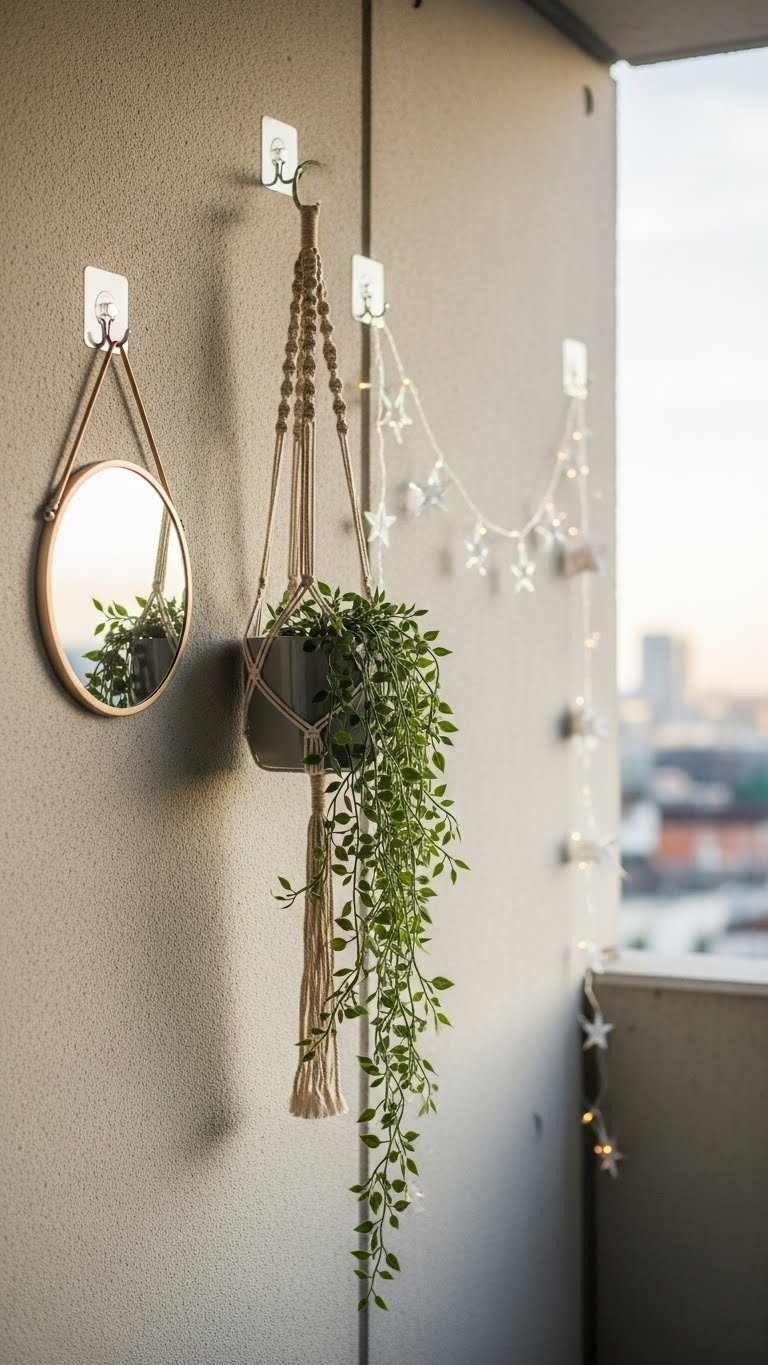
    22. Use Removable Adhesive Hooks for Lightweight Décor

    Adhesive hooks mean you can hang all sorts of things without drilling holes—perfect for renters or anyone nervous about permanent changes. They hold surprising amounts of weight when rated correctly.

    Buy outdoor-rated adhesive hooks ($1–$3 each, Amazon or Home Depot) that hold up to 5–10 pounds each. Hang lightweight mirrors, small planters, storage baskets, or fabric. The hooks remove cleanly if you pull slowly and at a low angle.

    You get all the styling benefit of a decorated balcony without the commitment or security deposit drama.


    23. Design a Functional Work Nook with a Slim Desk

    Working from a balcony beats working from inside—fresh air and natural light make everything feel better. A slim, foldable desk means you can set up shop without permanent changes or wasted space.

    Get a folding wall desk ($50–$100, IKEA or Amazon) that mounts to your balcony wall or corner, or a narrow computer desk ($40–$80, Wayfair) that’s designed for small spaces. Pair it with a weatherproof outdoor chair ($50–$120). Everything folds or moves away when you’re done.

    Your balcony becomes a productive retreat where focus comes naturally—beats a stuffy interior office any day.


    Save this post for your next balcony refresh. Start with one idea this weekend—even one small change makes a huge difference in how often you’ll actually use your outdoor space.

  • 27 Layered Lighting Ideas That Make Your Living Room Glow

    27 Layered Lighting Ideas That Make Your Living Room Glow

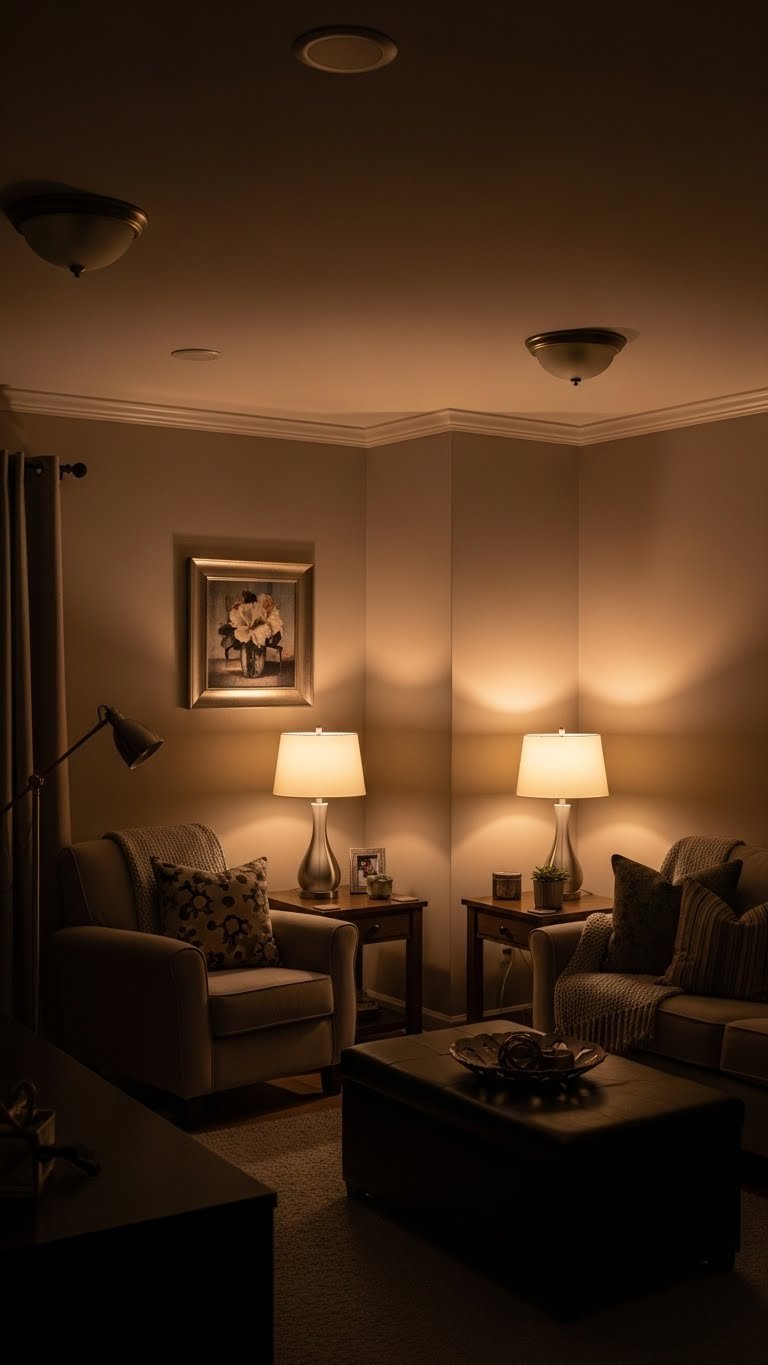
    Your living room probably feels either too bright and sterile, or dark and gloomy—rarely just right. The secret? Layered lighting. It’s not about one overhead fixture or a single lamp; it’s about combining different light sources at various heights and intensities to create warmth, flexibility, and visual interest. Whether you’re working with natural light, task lighting, accent fixtures, or ambient glow, the right combination makes your space feel intentional, cozy, and actually usable for everything from movie nights to morning coffee. This guide gives you 27 specific, actionable ideas—from free rearrangements to investment pieces—so you can customize your living room’s lighting to match your lifestyle and mood.

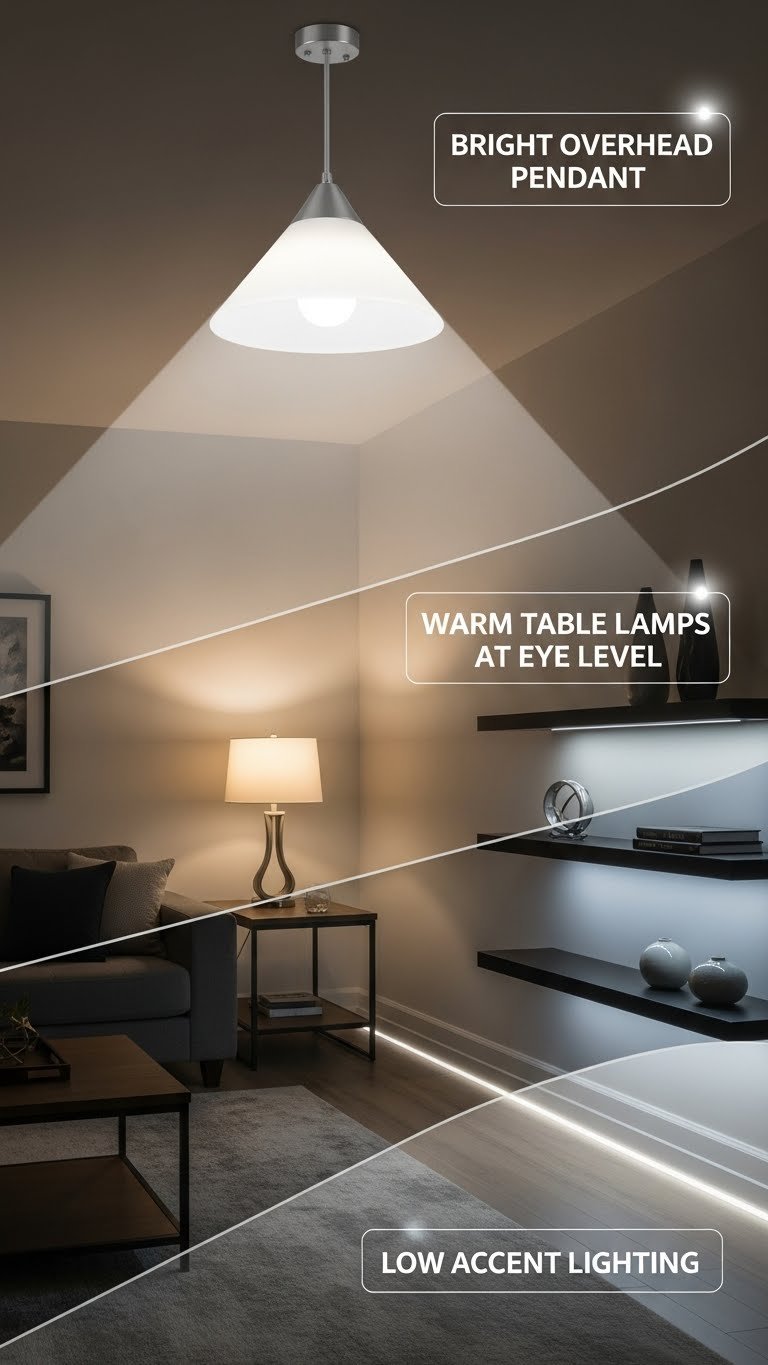
    1. Map Your Three Lighting Layers First

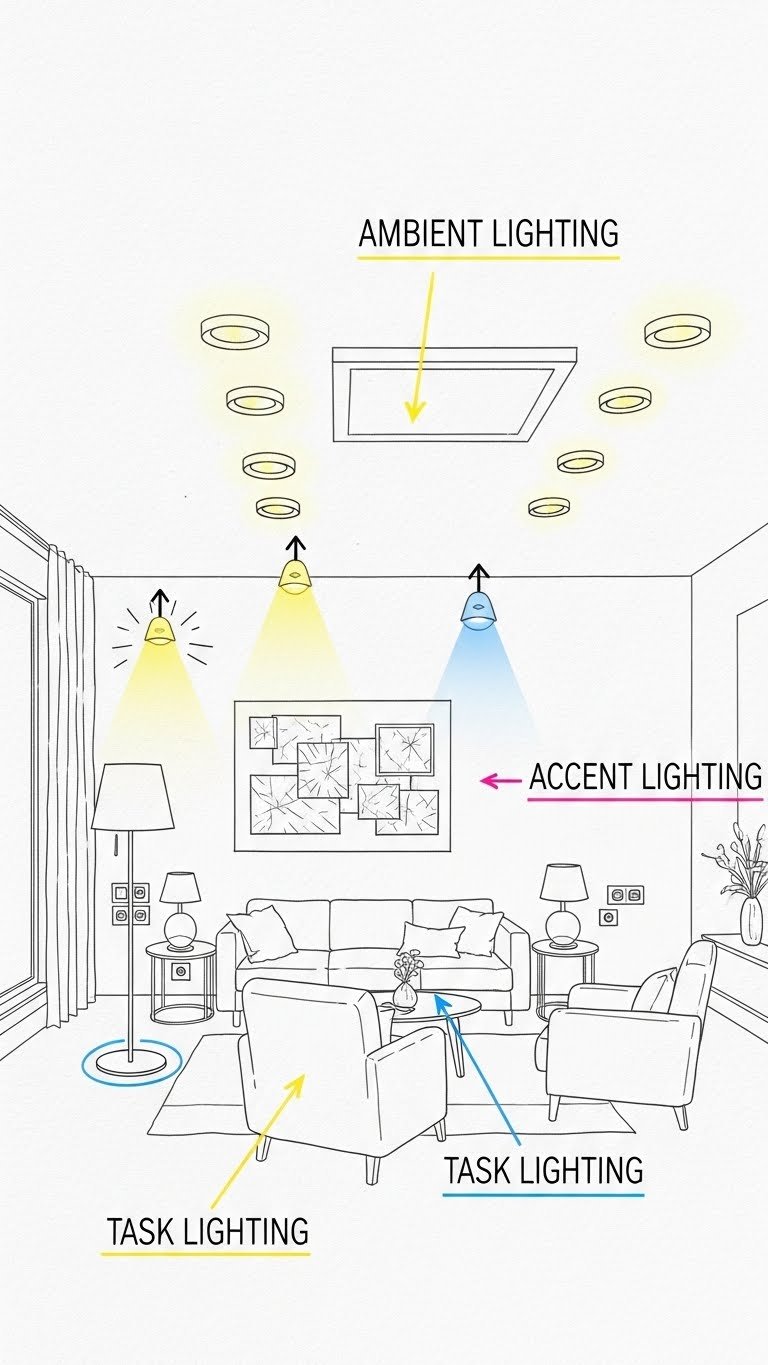
    Understanding the foundation makes everything else click into place. Professional designers use three categories: ambient (overall room brightness), task (focused light for reading or working), and accent (highlights specific objects or areas). Most living rooms default to one ceiling light, which creates flat, unflattering shadows.

    Start by identifying where you need each type. Ambient fills the whole room; task lighting clusters near seating and desks; accent lighting adds drama to artwork or architectural features. Spend an hour walking through your room at different times of day to notice where shadows fall and where you naturally reach for a lamp.

    The beauty of this framework? Once you know your three layers, every other upgrade makes sense and fits together cohesively. You’ll stop buying random lamps and start building a system.

    2. Install Dimmer Switches for Mood Control

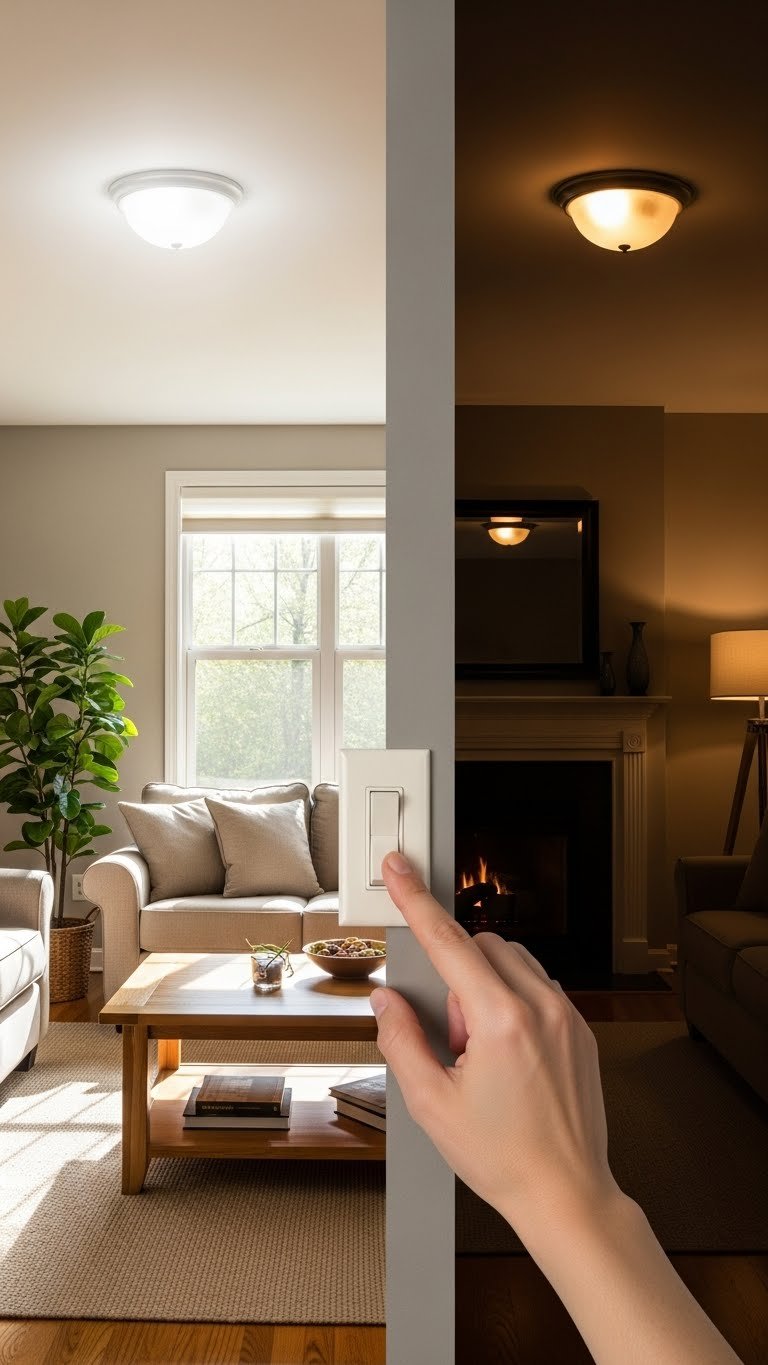
    Dimmers are the cheapest way to multiply your lighting options without buying anything new. A single overhead fixture becomes three different moods: bright for cleaning, medium for entertaining, and low for unwinding.

    Installation takes 15–30 minutes if you’re comfortable with basic electrical work; hire a handyman for $75–$150 if not. A basic dimmer switch costs $15–$40 from Home Depot or Lowe’s. Smart dimmers (like Lutron or GE Cync) run $40–$80 and let you adjust brightness from your phone—game-changing if your light switches are far from your seating area.

    The pro tip: pair dimmers with warm-toned bulbs (2700K color temperature) for a naturally cozy feel even at high brightness. You’ll discover you actually use that overhead light instead of always defaulting to lamps.

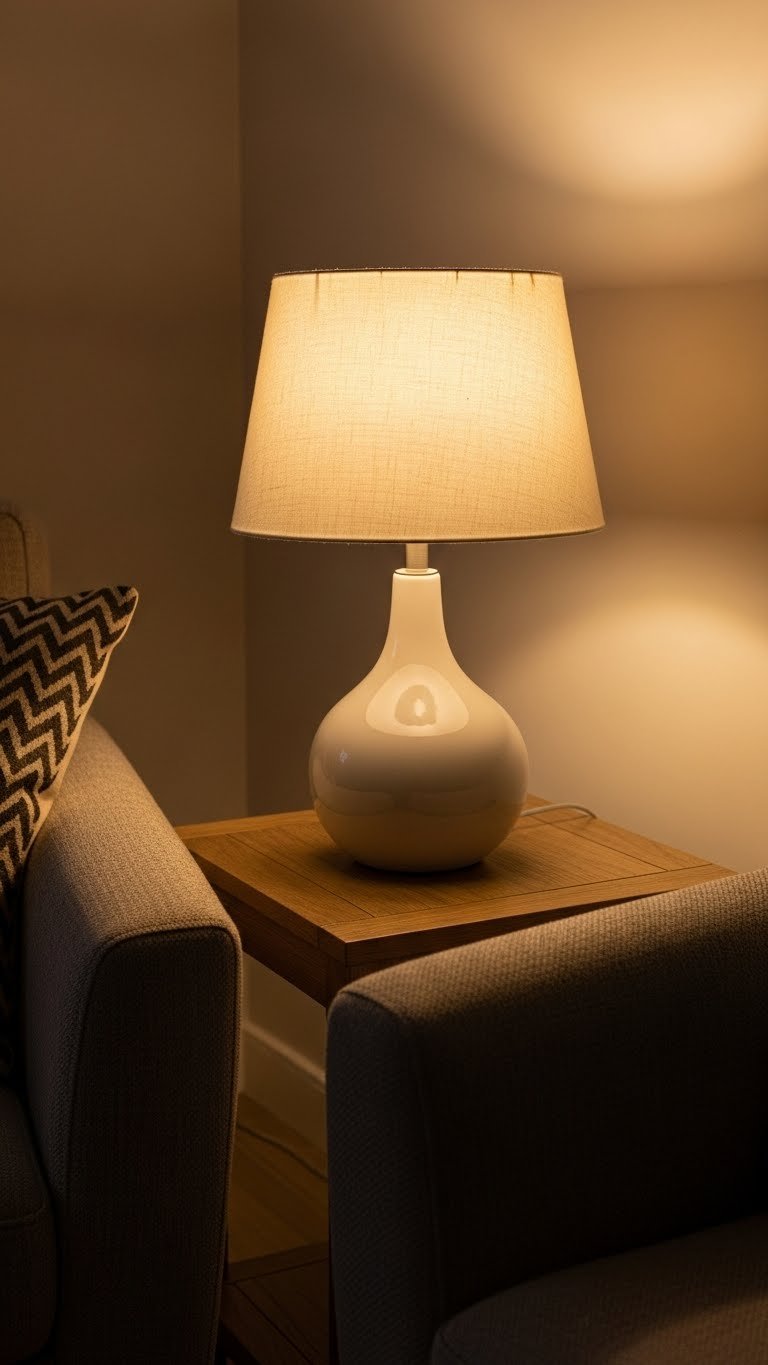
    3. Layer Table Lamps at Varying Heights

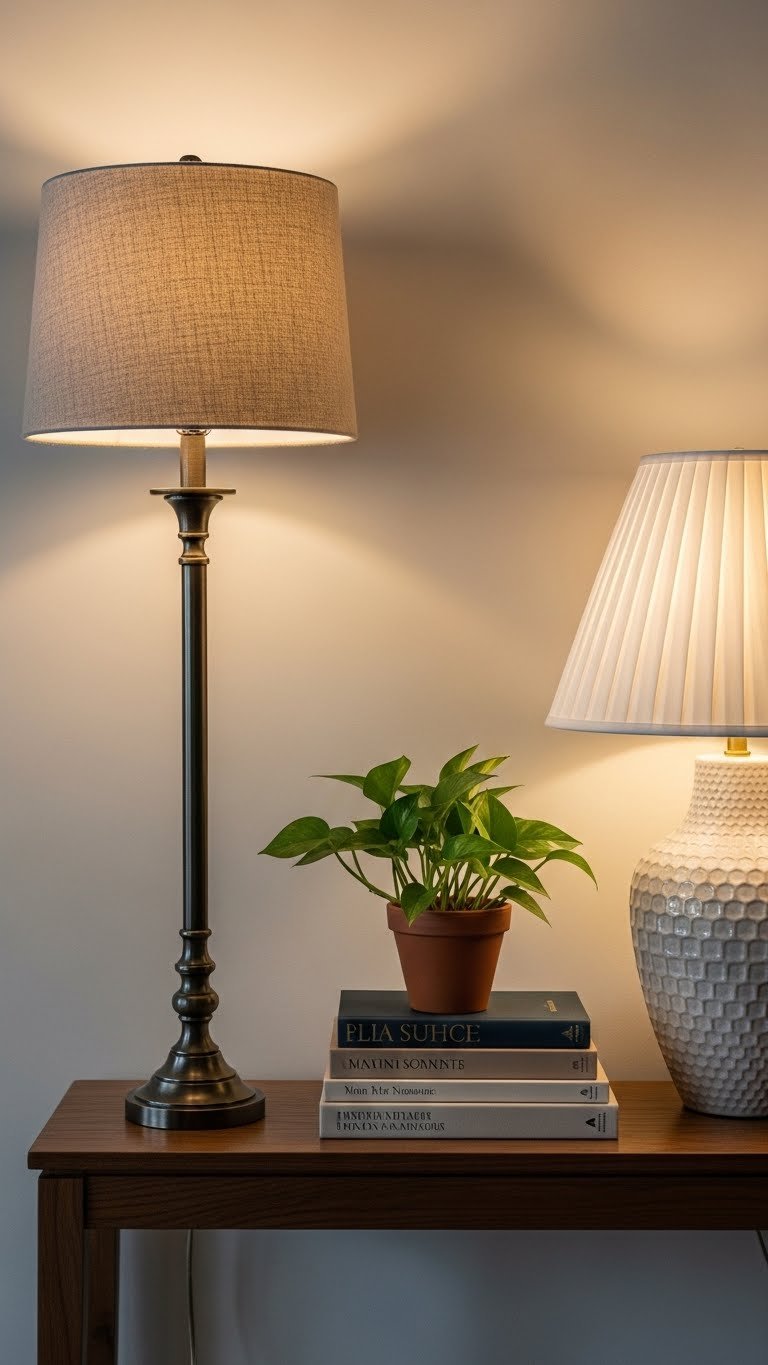
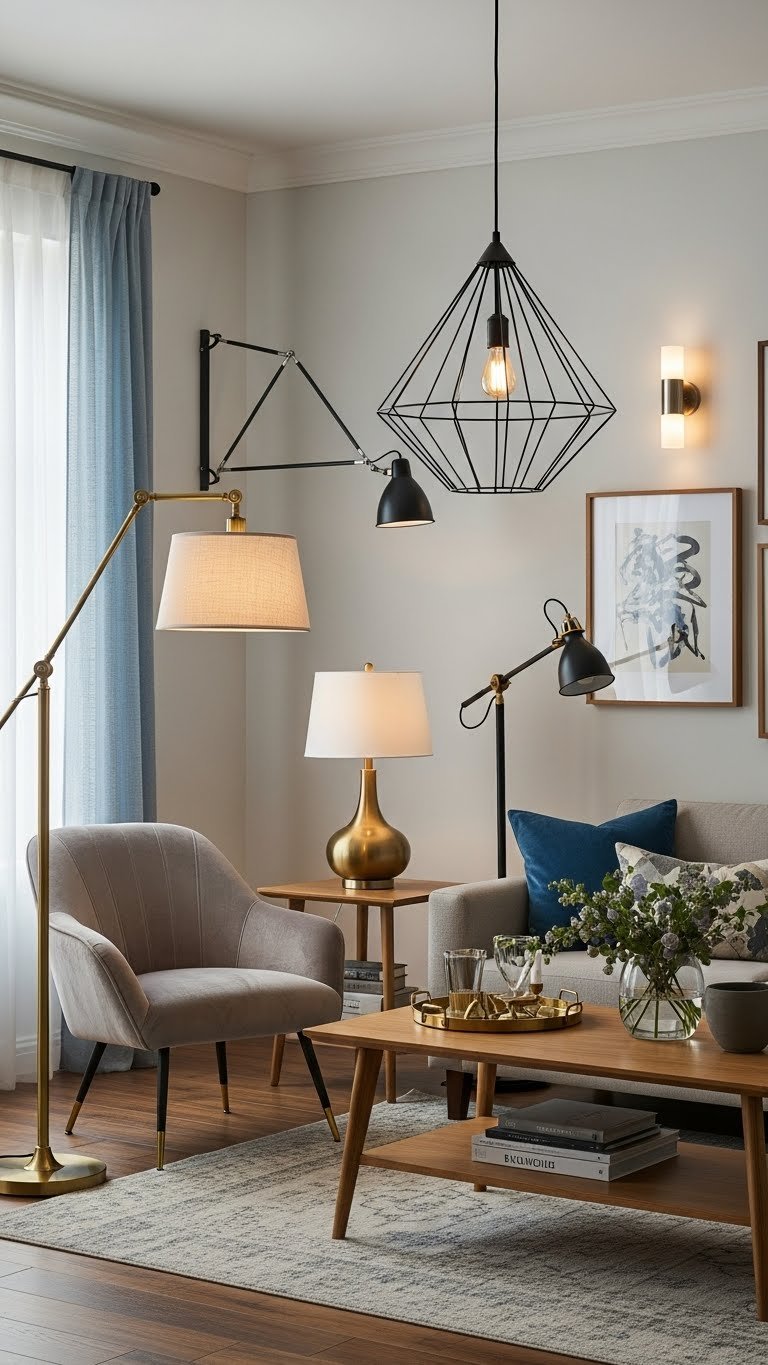
    Table lamps create pools of light that feel intimate and let you control brightness in specific zones. The key is using at least two different heights per room section to avoid a flat, repetitive look.

    Place one taller lamp (30–36 inches) on a console or side table to bounce light upward and outward. Pair it with a shorter accent lamp (18–24 inches) on a low table or shelf nearby. This creates visual rhythm and functional flexibility—you can turn on just the tall one for ambient glow or both for task lighting. Target, IKEA, and Wayfair have great options in the $30–$80 range; splurge on a designer piece ($150–$400) if it’s a visible focal point.

    Mix materials too: ceramic, wood, metal, and textured bases all photograph beautifully and add tactile interest. Now you have flexibility to adjust brightness and warmth based on your activity.

    4. Use Warm Bulbs (2700K) Everywhere Possible

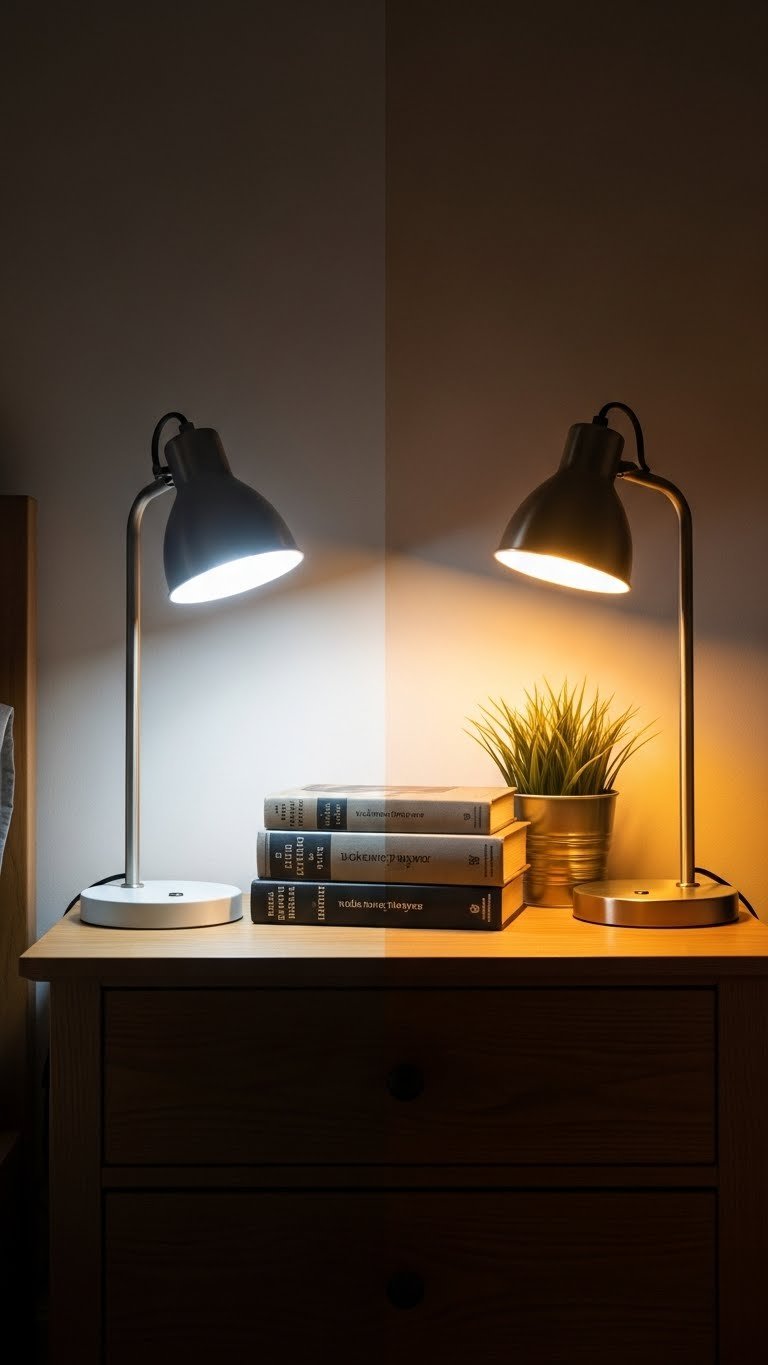
    This single swap makes the biggest immediate difference in how your room feels. Cool white bulbs (4000K–5000K) feel clinical and bright; warm bulbs (2700K) feel like candlelight and make everything look better.

    Switch out all your living room bulbs to warm 2700K LEDs from Amazon or any hardware store—a full room costs $20–$40 for a 10-pack. LEDs last 25,000+ hours, so you’re not replacing them for years. Avoid anything labeled “daylight” or “cool white” in your living room.

    This works because warm light flatters skin tone, wood furniture, and fabric textures. You’ll notice friends and family looking healthier and your space feeling more welcoming. Combined with dimming, you create professional-caliber lighting in minutes.

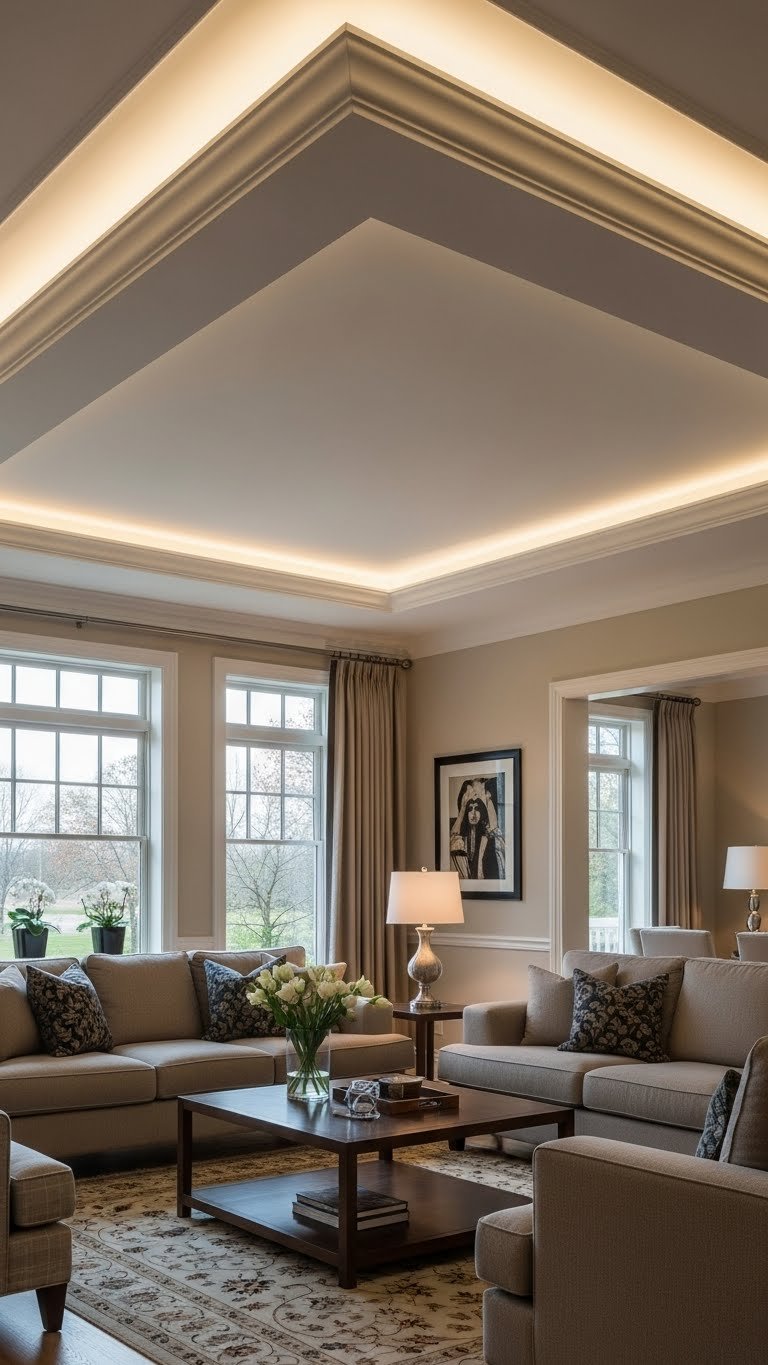
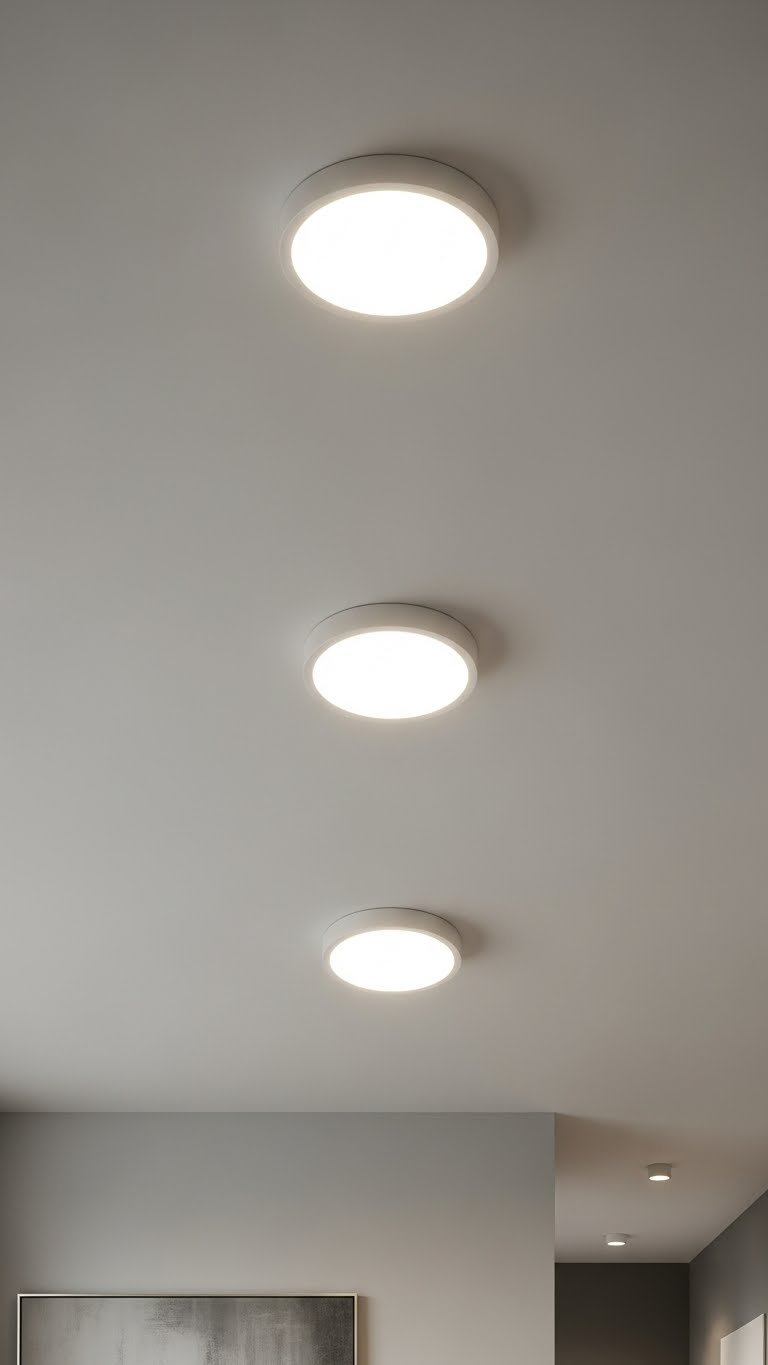
    5. Add Recessed Ceiling Lights for Subtle Ambiance

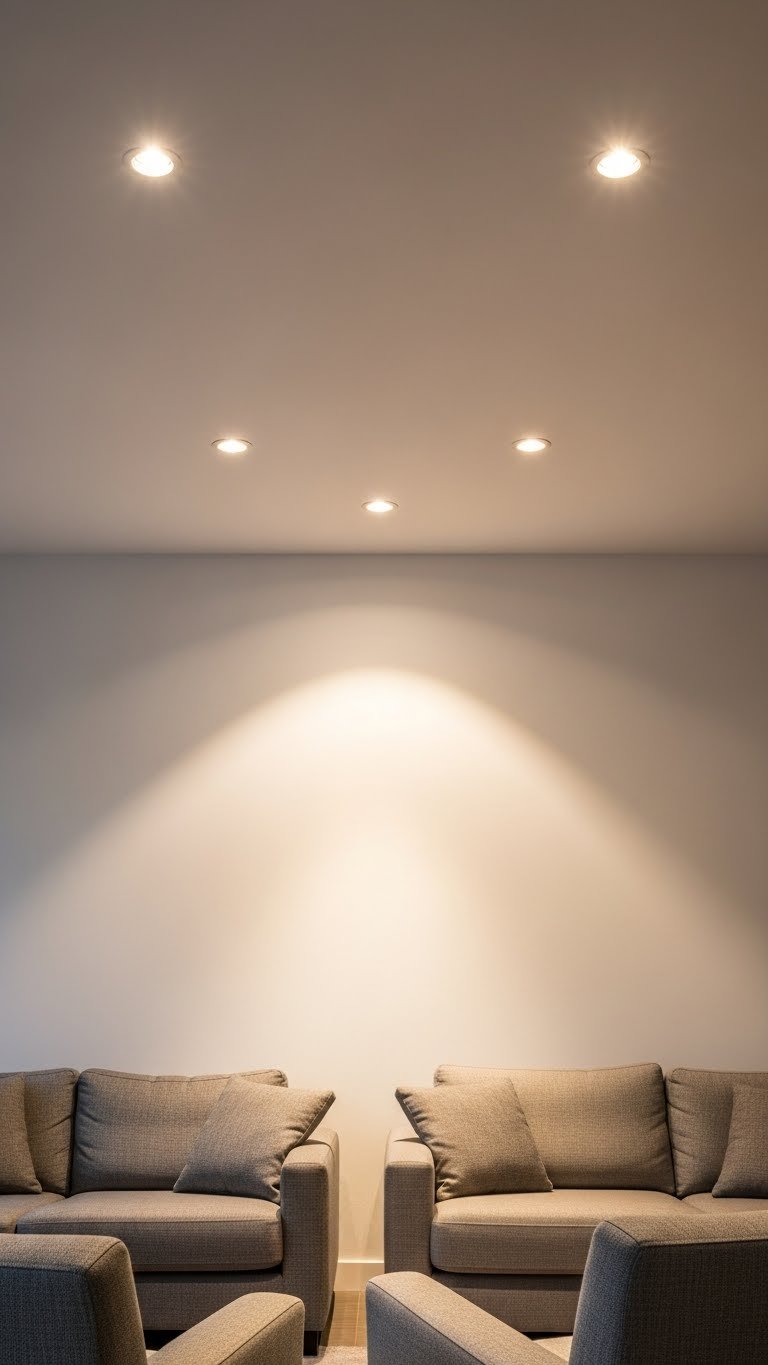
    Recessed lighting gives you ambient brightness without visible bulky fixtures cluttering your aesthetic. Install these along the ceiling perimeter or in a grid pattern, and they essentially disappear while providing steady, even light.

    Installation requires drywall cutting and electrical work—budget $400–$800 for a professional to install 4–6 fixtures, or $100–$200 if your ceiling already has framing space. LED retrofit kits exist for renters ($50–$100 per fixture, magnetic mount to existing ceiling holes). Use warm 2700K, dimmable LED bulbs for maximum control.

    The payoff: your room feels intentionally lit without lamp clutter. Pair these with task lamps for complete flexibility—recessed lights handle ambient brightness while table lamps give you focused task lighting when needed.

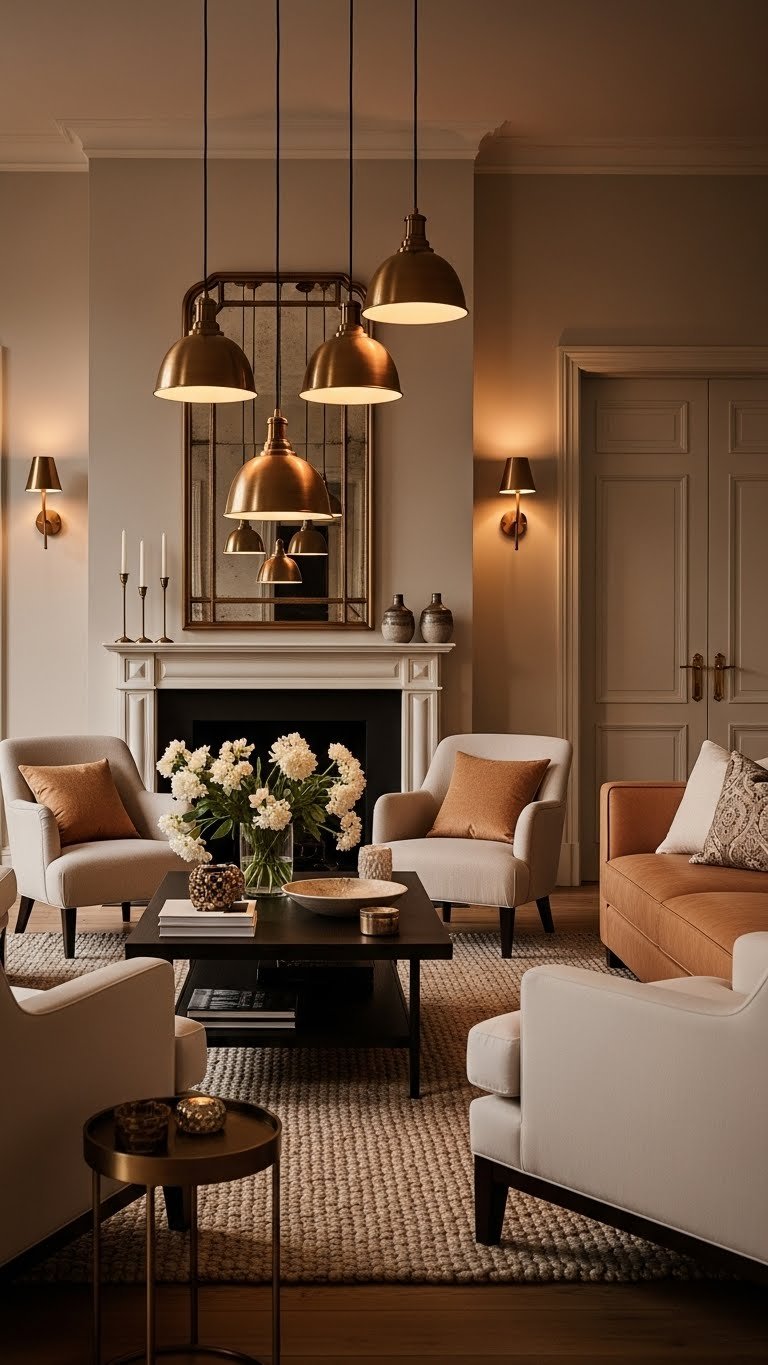
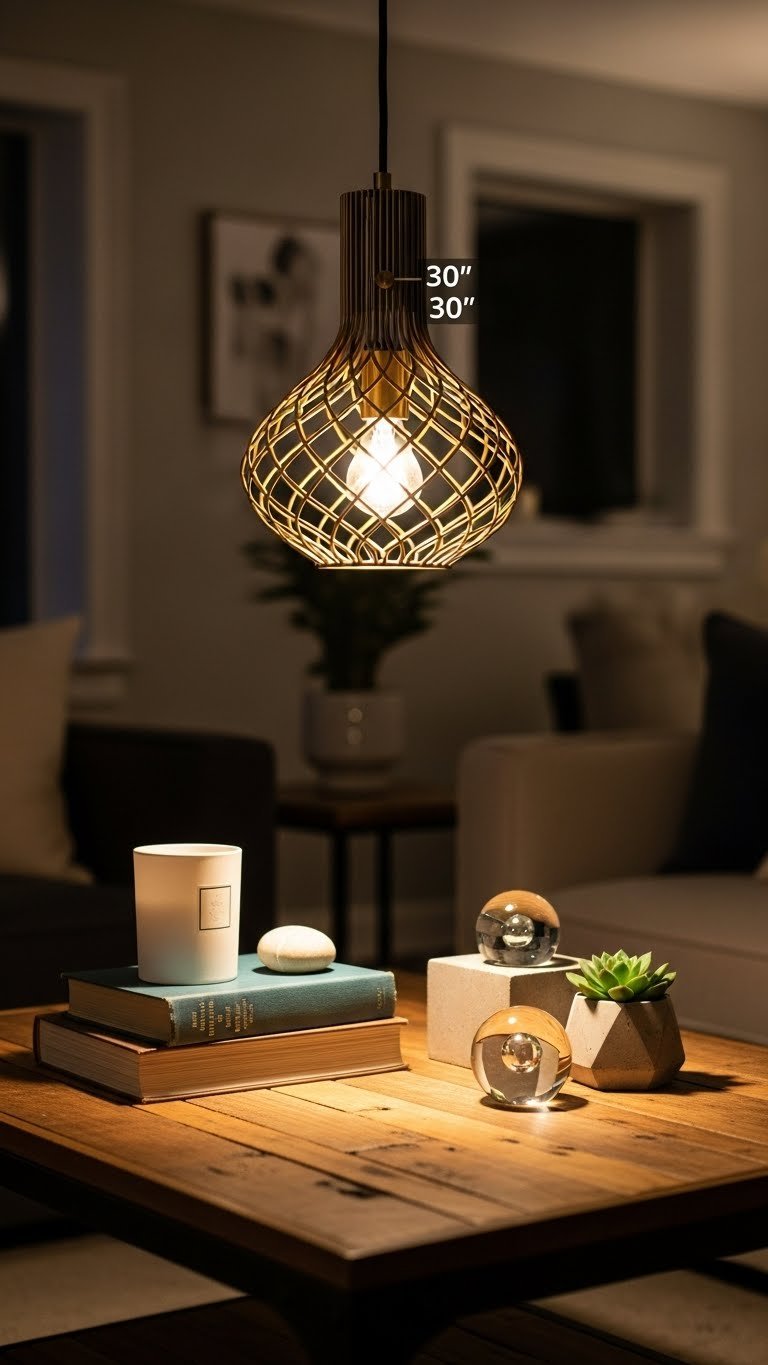
    6. Hang a Statement Pendant Over a Coffee Table

    A stylish pendant makes a decorative statement while solving your lighting puzzle. Unlike traditional chandeliers, modern pendants feel current and work in any décor style—from mid-century to minimalist to cottagecore.

    Hang it 30–36 inches above your coffee table or seating cluster. Installation involves basic electrical work; hire an electrician for $150–$300 or DIY if you’re confident ($30 for hardware, 1–2 hours). Pendant styles range from $40–$60 (IKEA, Target) to $300+ (Rejuvenation, Design Within Reach). Choose one that complements your color palette and doesn’t overwhelm your room proportions.

    The benefit extends beyond light: a pendant becomes a sculptural focal point that grounds your furniture arrangement and adds personality. When paired with dimming, you control whether it feels subtle or dramatic.

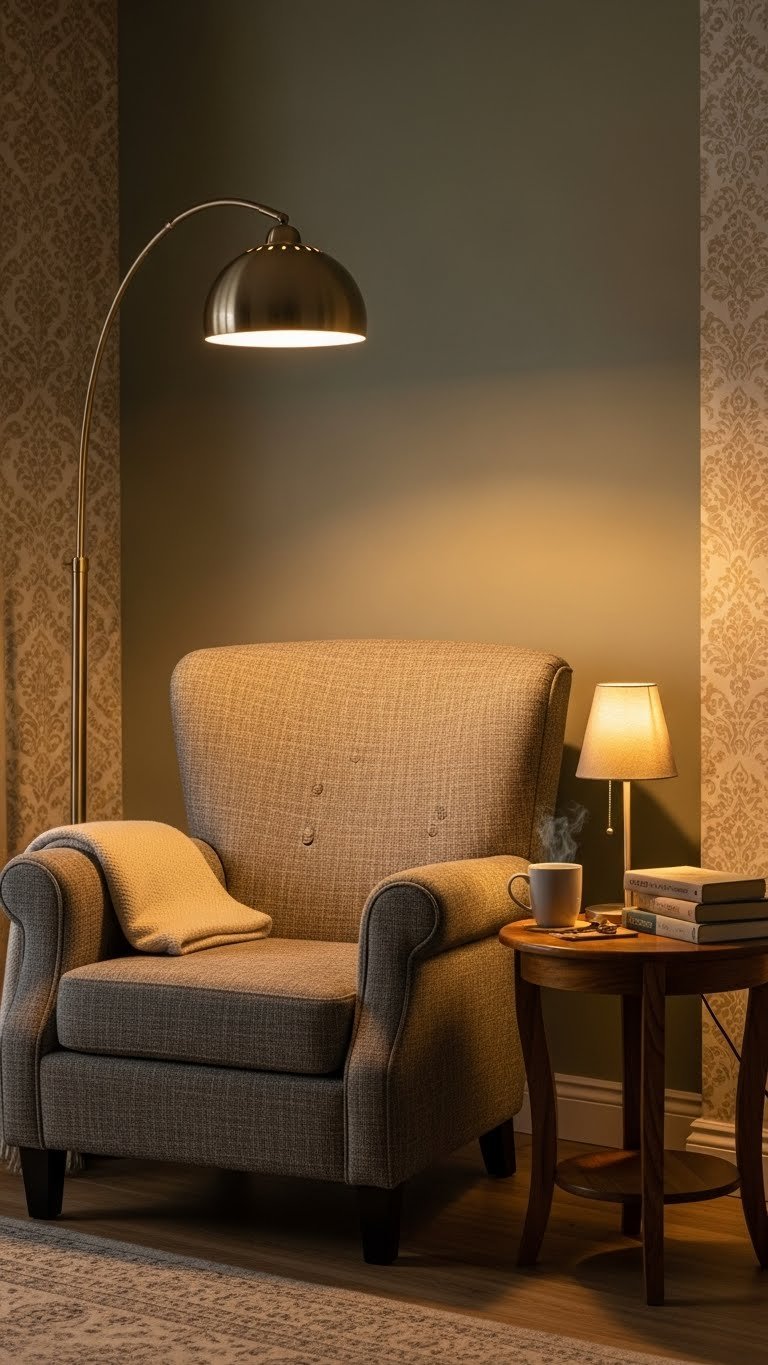
    7. Position Reading Lamps Behind Seating

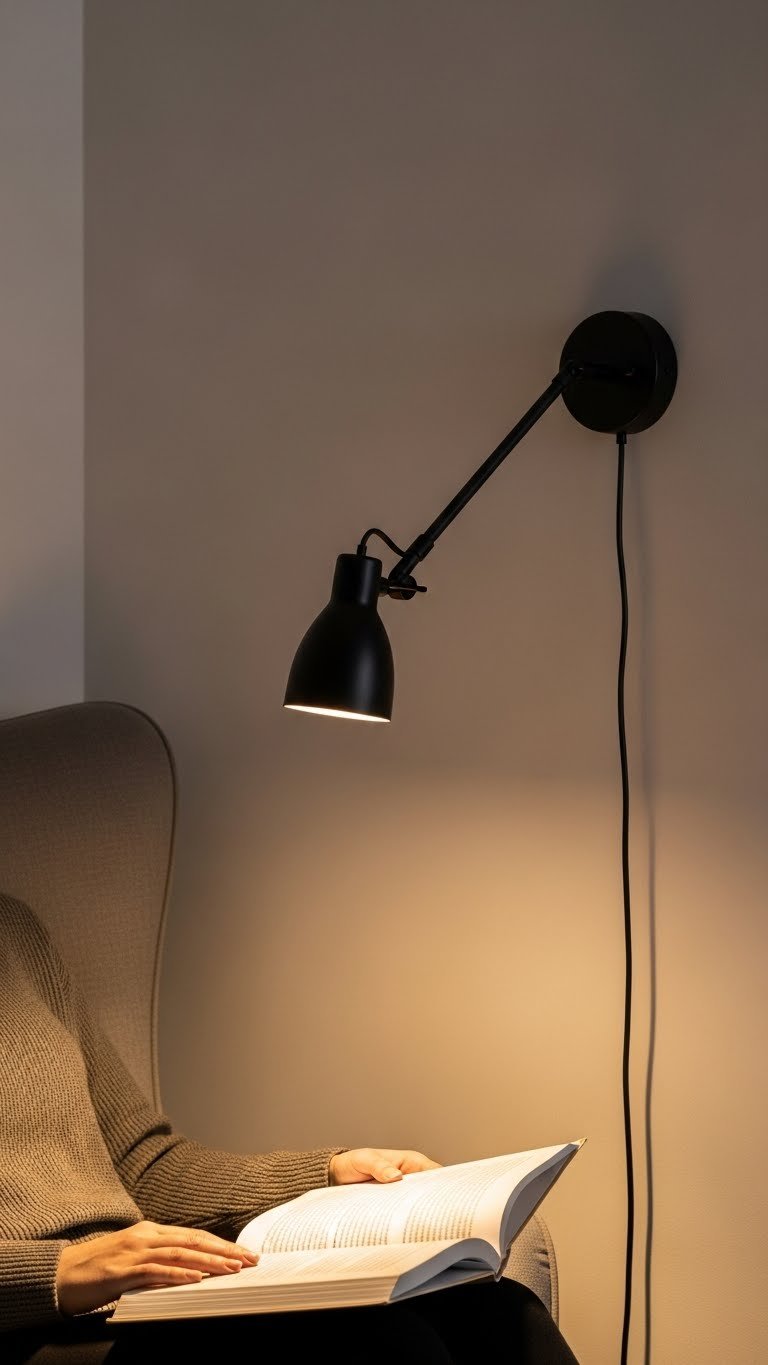
    Task lighting positioned behind or beside your seating prevents shadows across your face and book when reading. This is essential if you spend evenings reading or working in your living room.

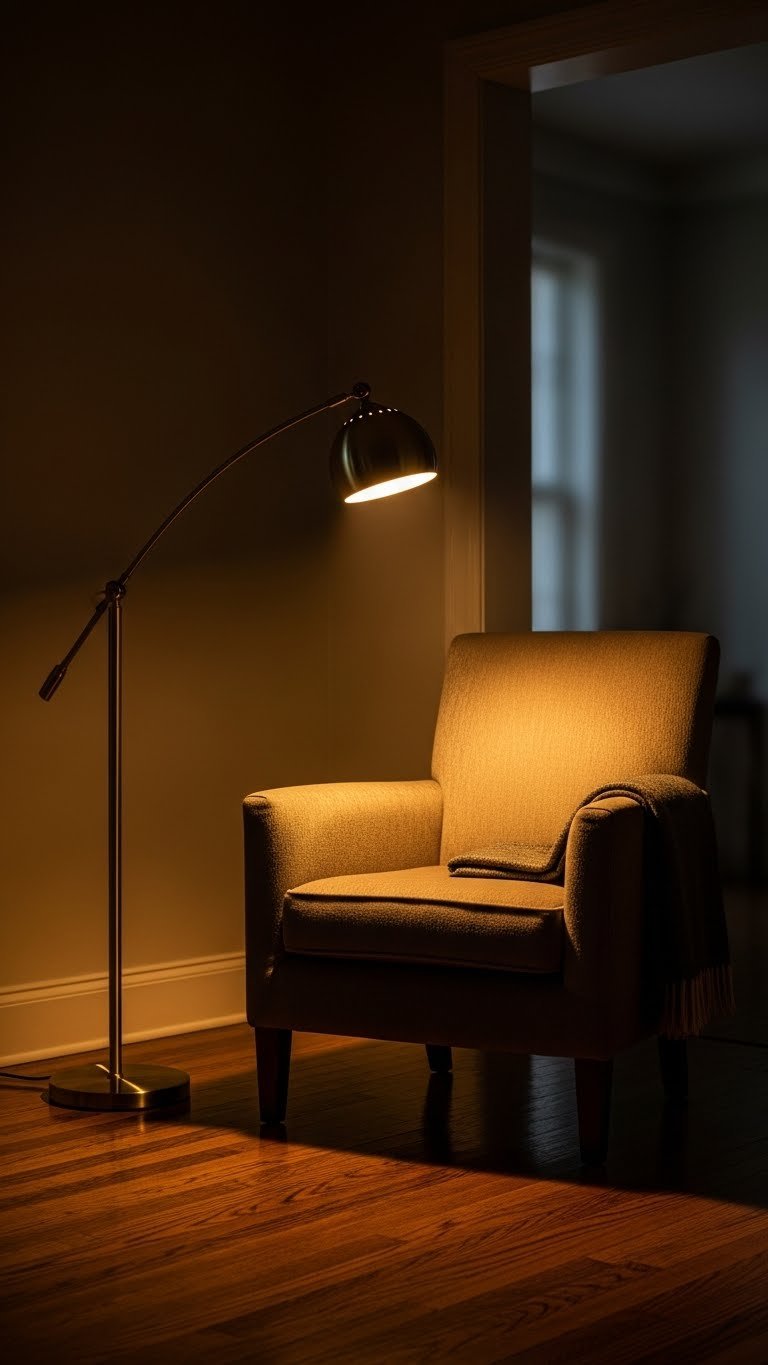
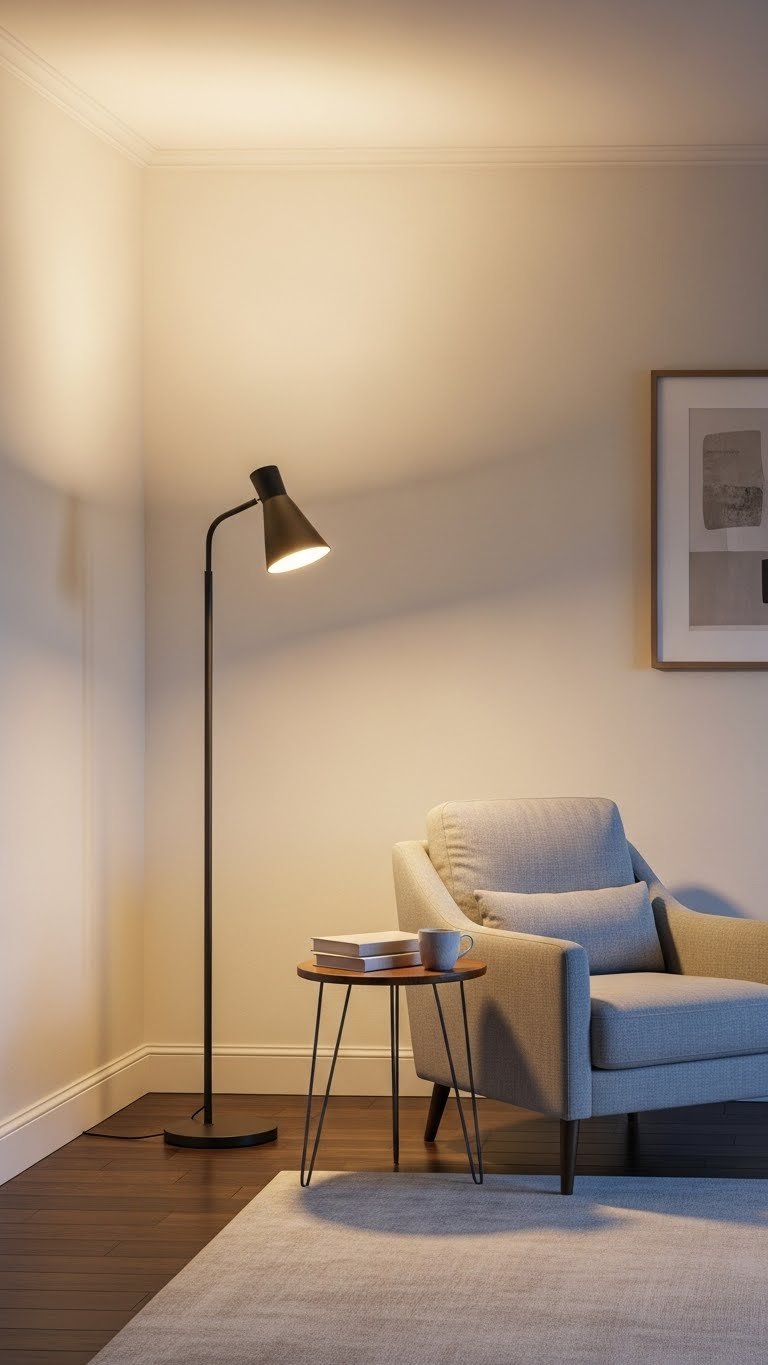
    An arc floor lamp (flexible arm that extends over seating) costs $50–$150 and works in tight spaces; a traditional tall lamp next to an armchair is cheaper ($30–$80). Position the light so it shines over your shoulder, not directly in your eyes. Adjustable, swiveling heads give you control to direct light exactly where you need it.

    You’ll immediately notice the difference when reading or doing detailed work—no more squinting or shifting positions to catch light. This also prevents eye strain from reading in shadows, making evening relaxation actually relaxing.

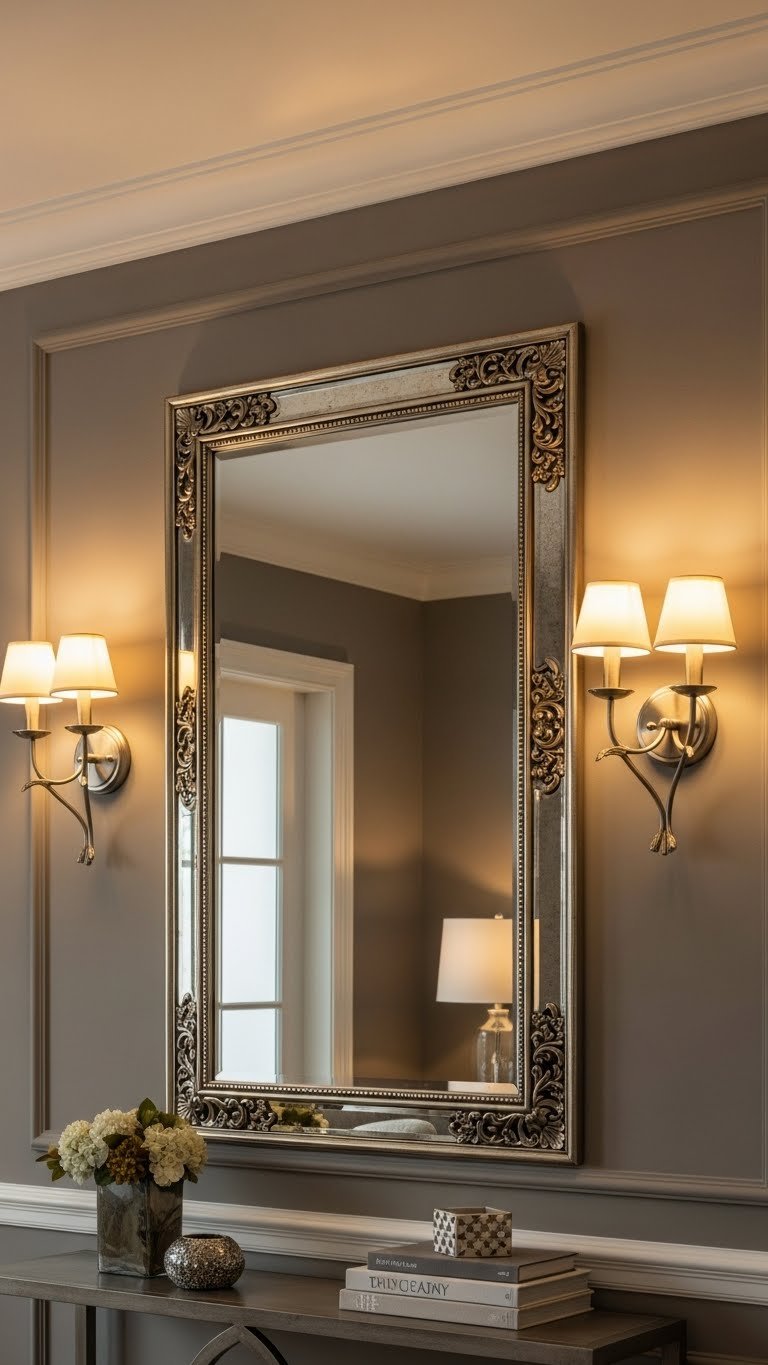
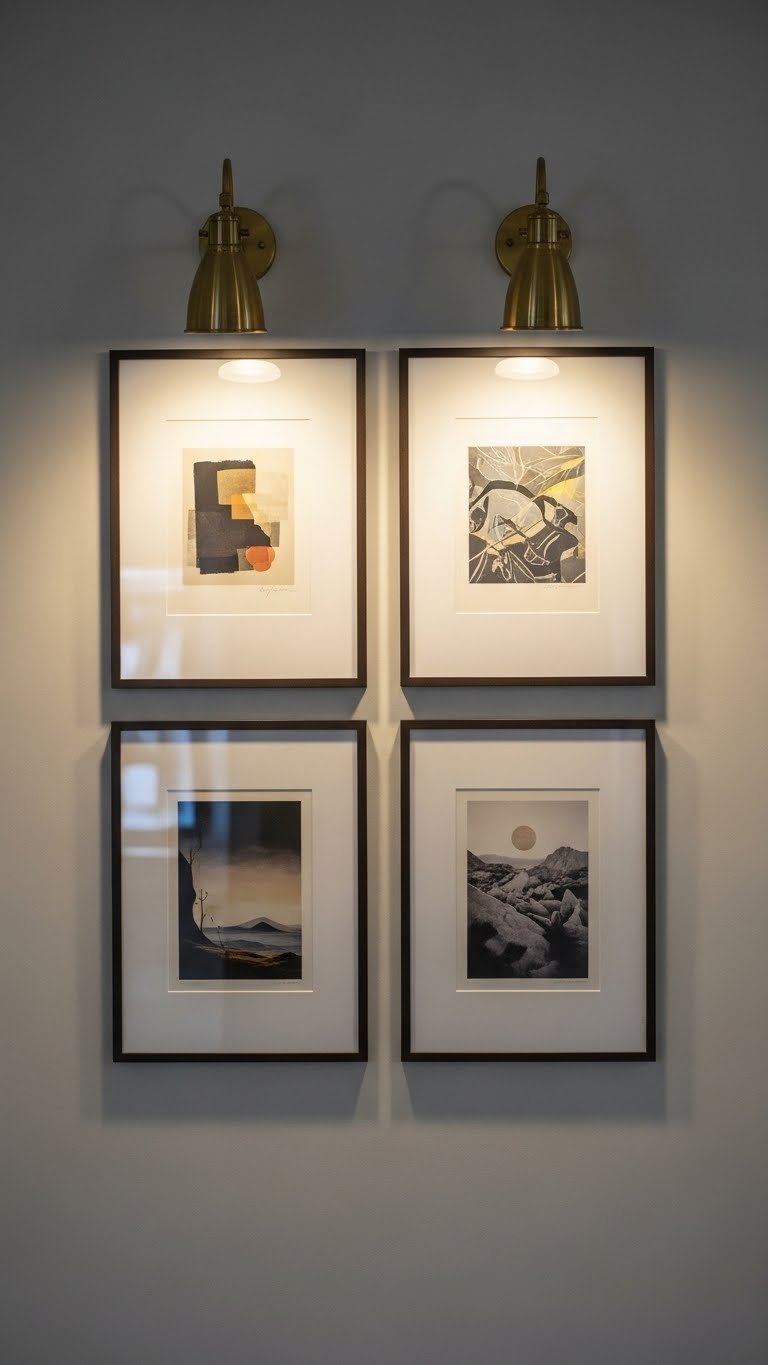
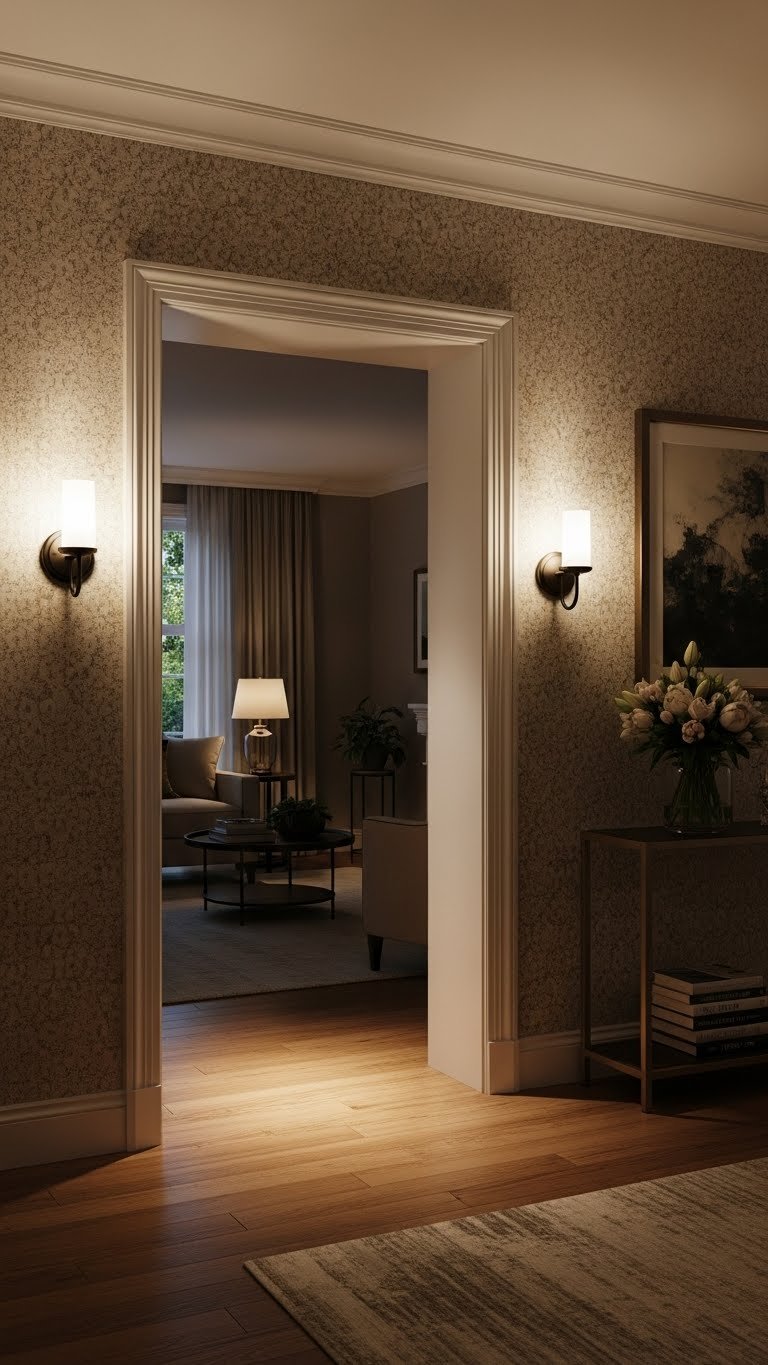
    8. Install Wall Sconces Flanking Artwork

    Sconces are decorative AND functional—they light artwork while adding sculptural interest. Flanking a mirror, gallery wall, or console with matching sconces creates instant sophistication.

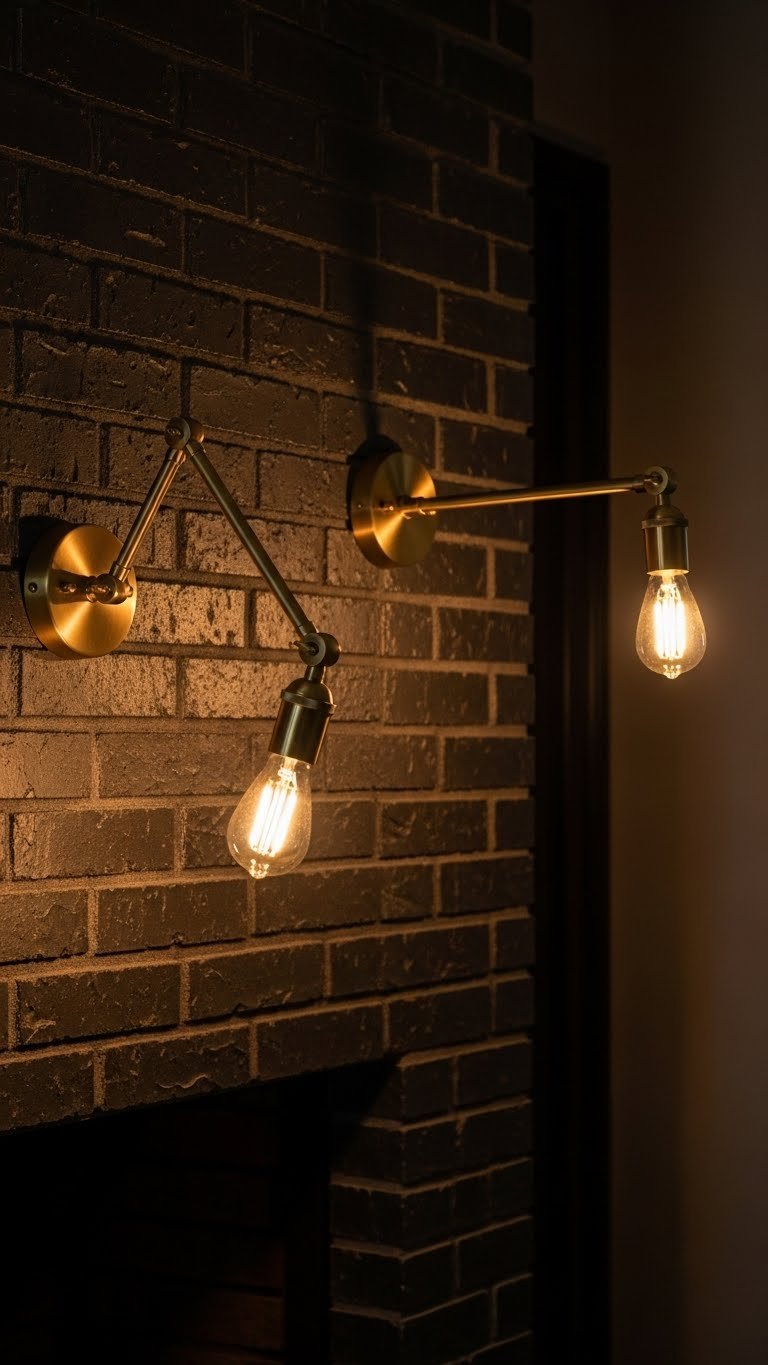
    Installation means drilling into studs and running electrical wire; professional installation costs $200–$400 per pair. Sconces themselves range from $40–$150 each (Target, West Elm) to designer pieces at $300+. Choose styles that echo your décor: industrial metal for modern spaces, ceramic or brass for traditional rooms.

    Position sconces at eye level (around 60 inches high) for flattering light angles. The glow highlights texture on artwork and creates depth on your walls. This also reduces dependence on overhead lighting—two sconces over a console with a table lamp nearby gives you complete flexibility.

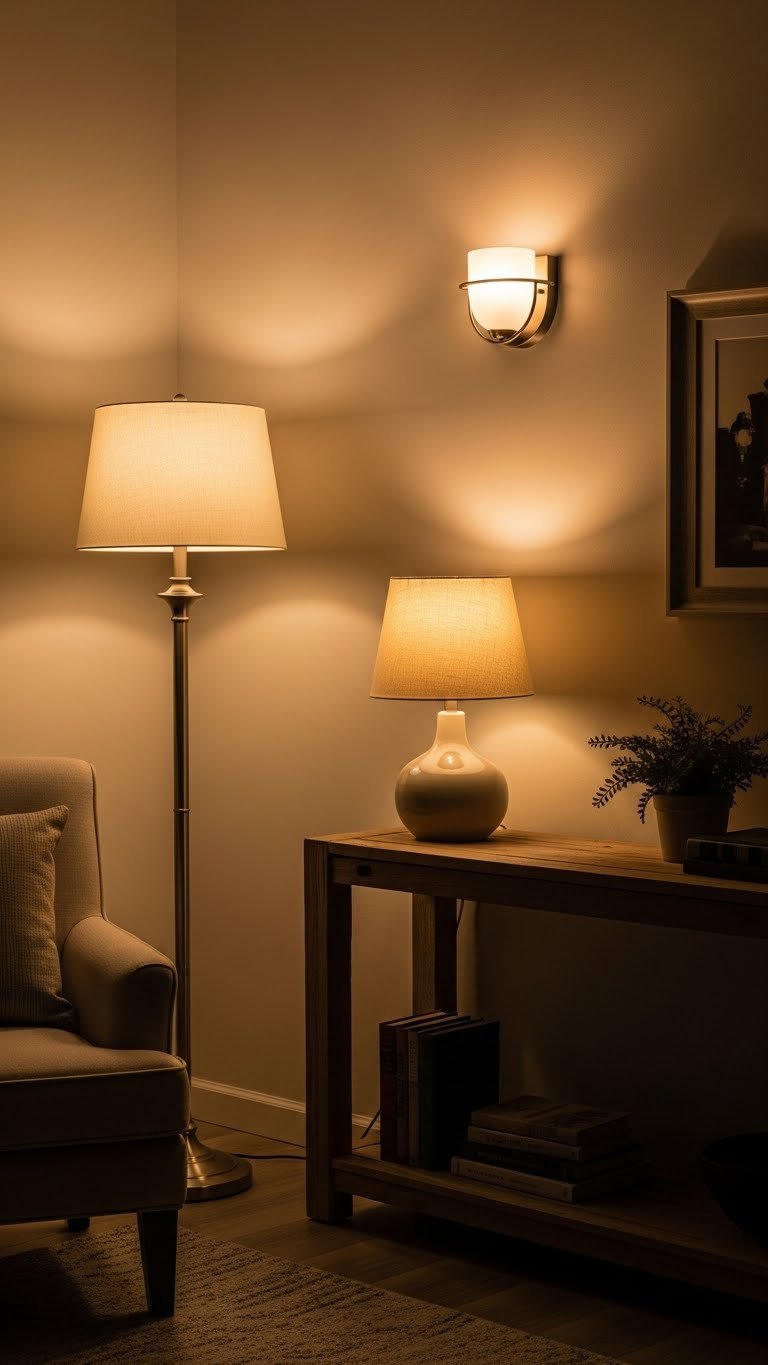
    9. Create Layered Corner Lighting with Multiple Sources

    Corners are often forgotten dark zones. Grouping multiple light sources transforms a dead space into an inviting reading nook or display area.

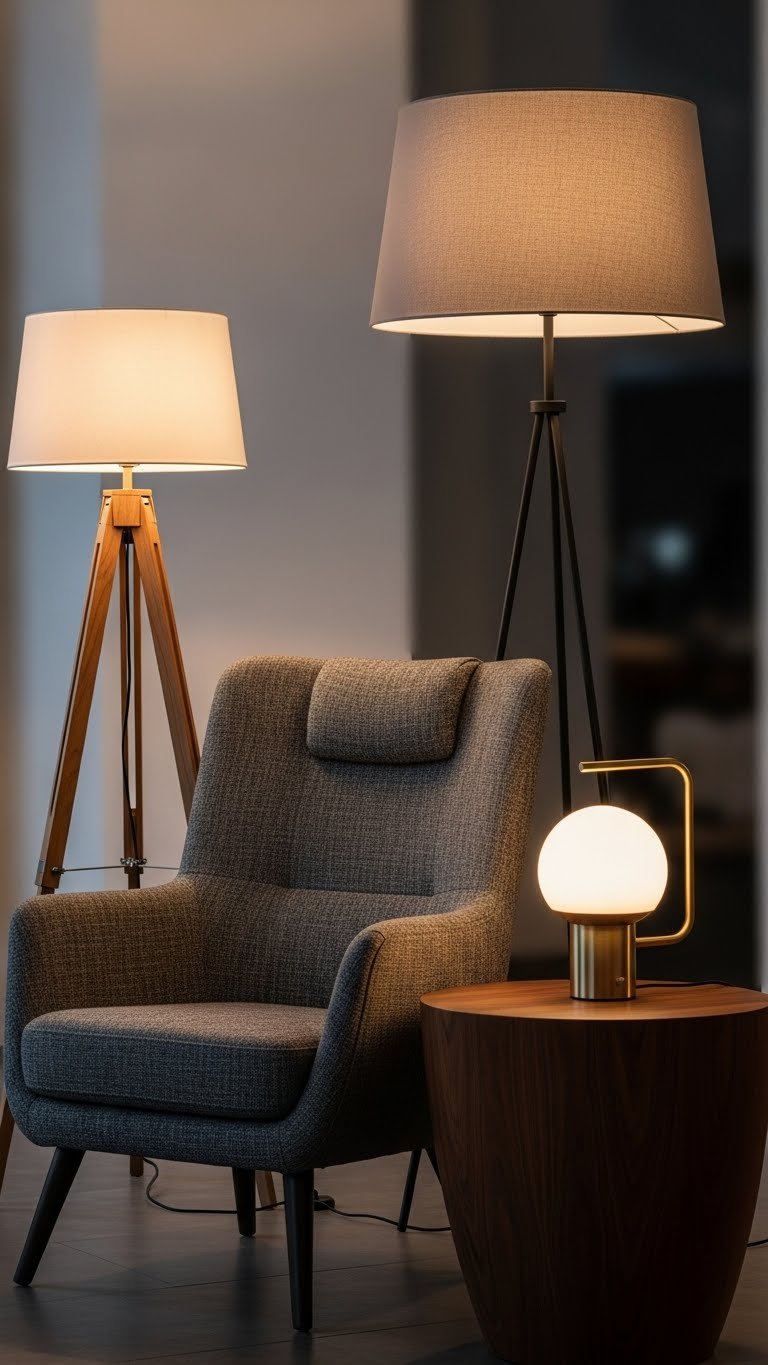
    Use a combination: a tall floor lamp (back corner), a smaller table lamp on a side table or console (mid-height), and optionally a wall sconce above for accent lighting. This creates depth and layering. Total investment: $80–$250 depending on fixture quality. Budget 2–3 hours for installation if adding a sconce; otherwise just plug in lamps.

    The result is a multi-dimensional corner that feels intentional and usable. You can adjust which lights are on based on mood or task—one lamp for subtle glow, all three for functional brightness.

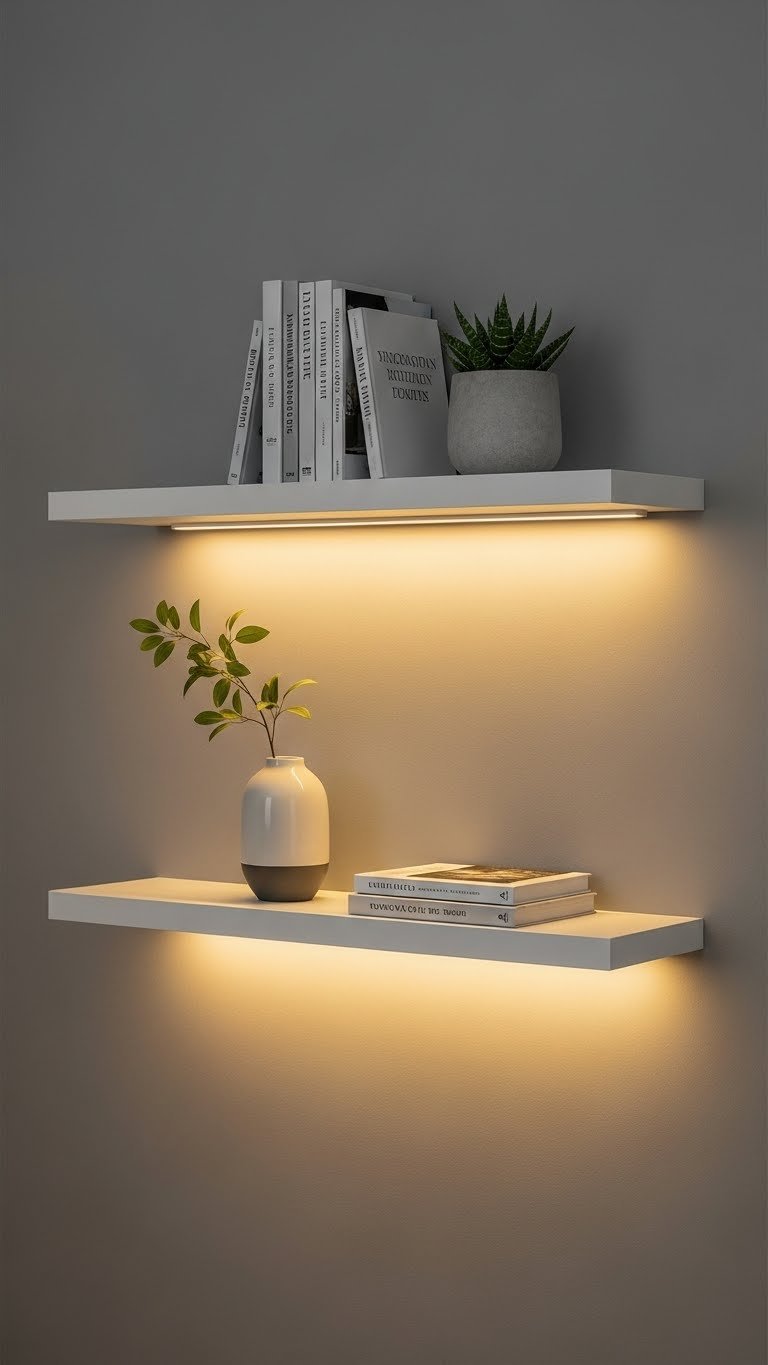
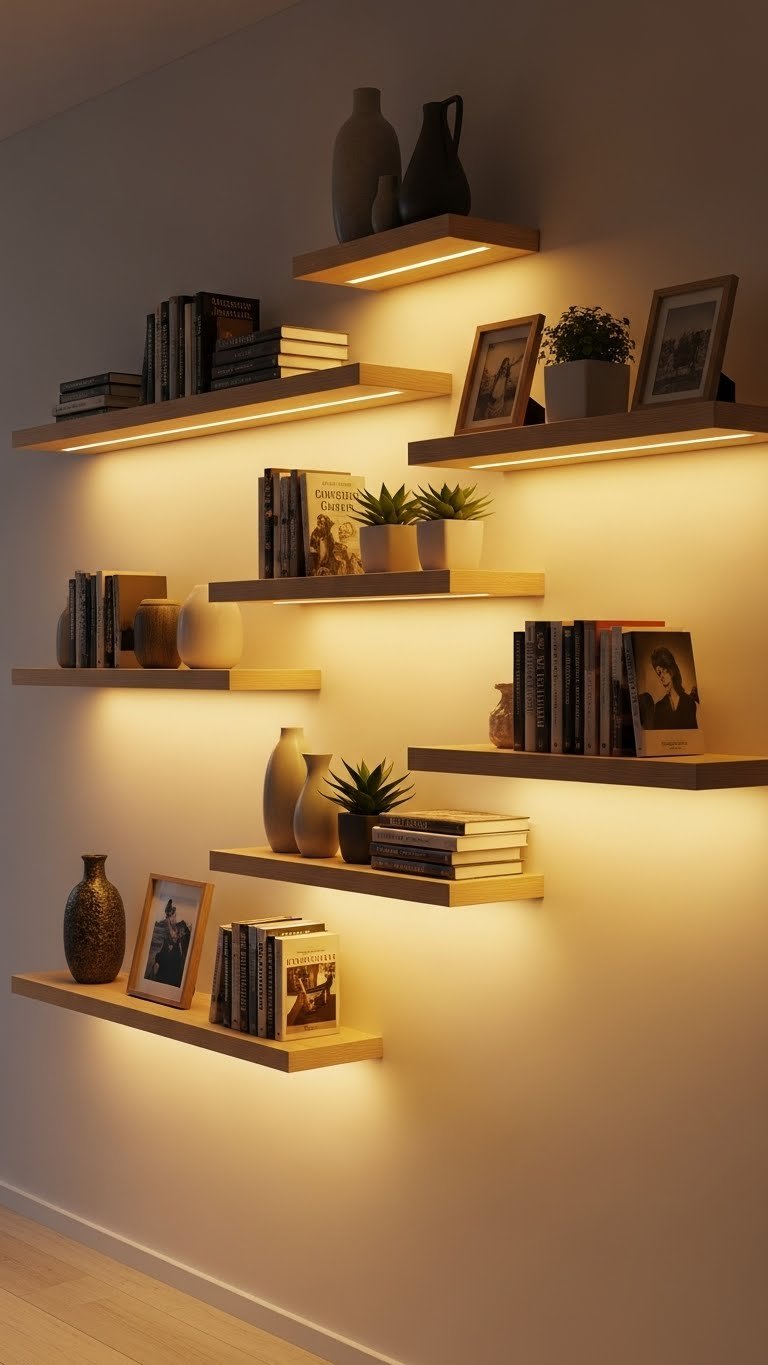
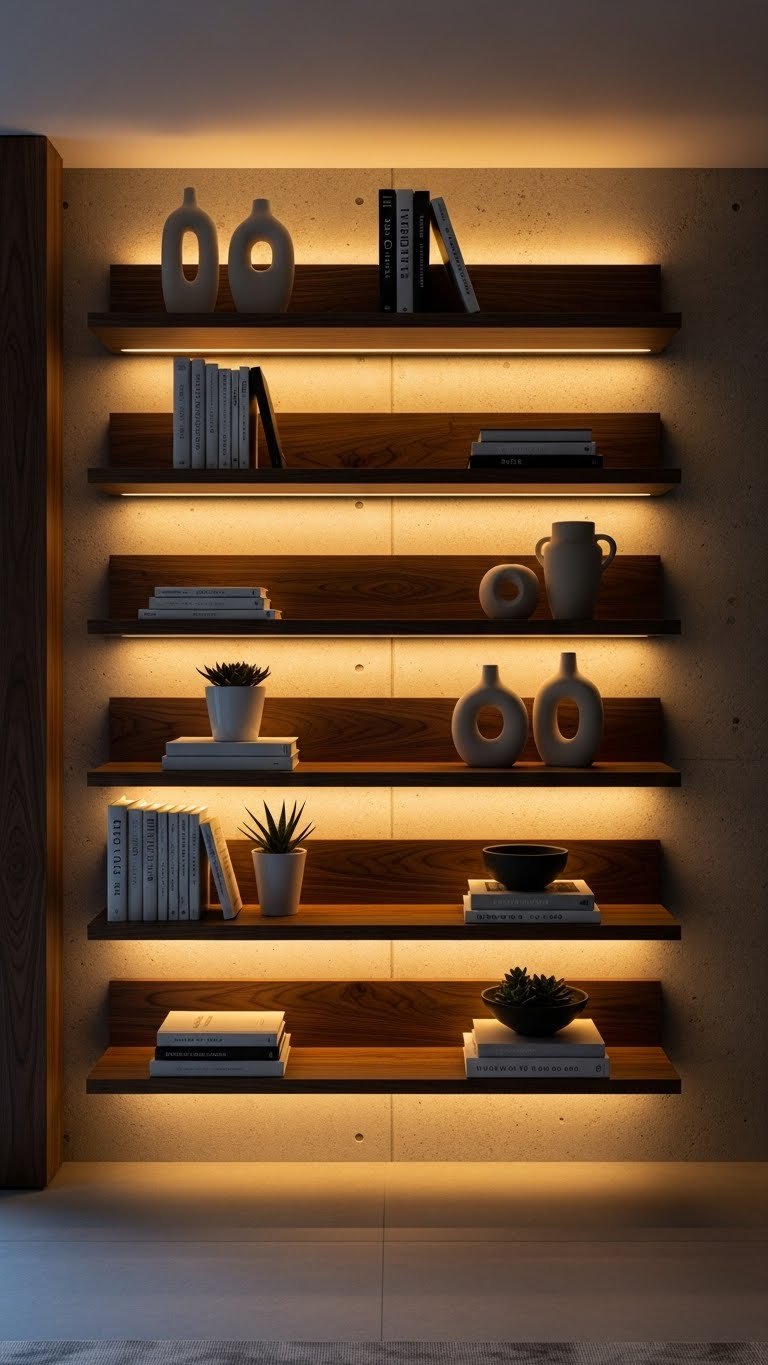
    10. Use LED Strip Lighting Behind Floating Shelves

    LED strip lighting is cheap, easy, and transforms how shelves feel. The downward glow highlights displayed objects while adding ambient brightness without visible fixtures.

    Self-adhesive LED strips cost $15–$40 and stick directly under shelf edges; no wiring required for battery or USB versions. Plug-in versions need a nearby outlet but offer brighter output. Installation takes 10 minutes. Choose warm white (2700K) and look for dimmable options for more control.

    The payoff: your shelves become a glowing display rather than a dark shadow. Books, plants, and décor look curated and gallery-like. This layers beautifully with overhead and table lighting to create sophisticated depth.

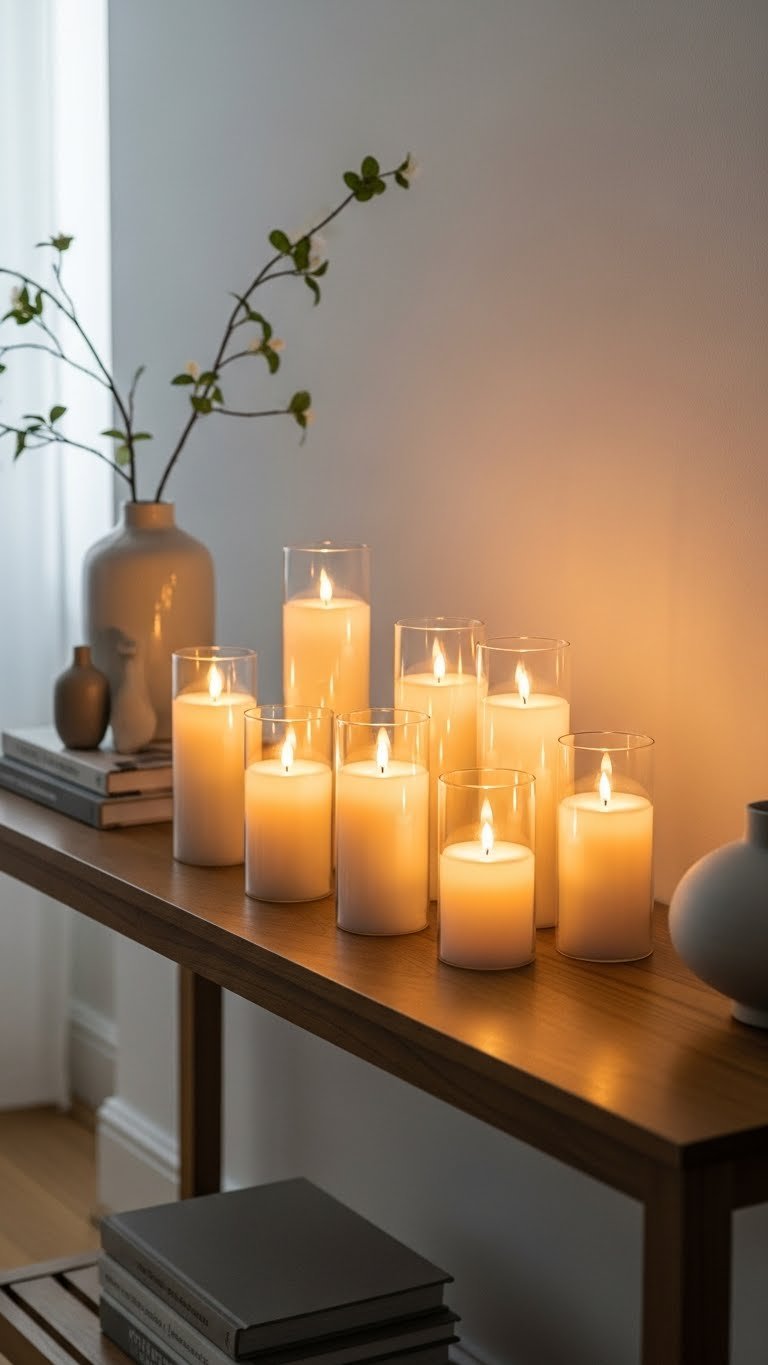
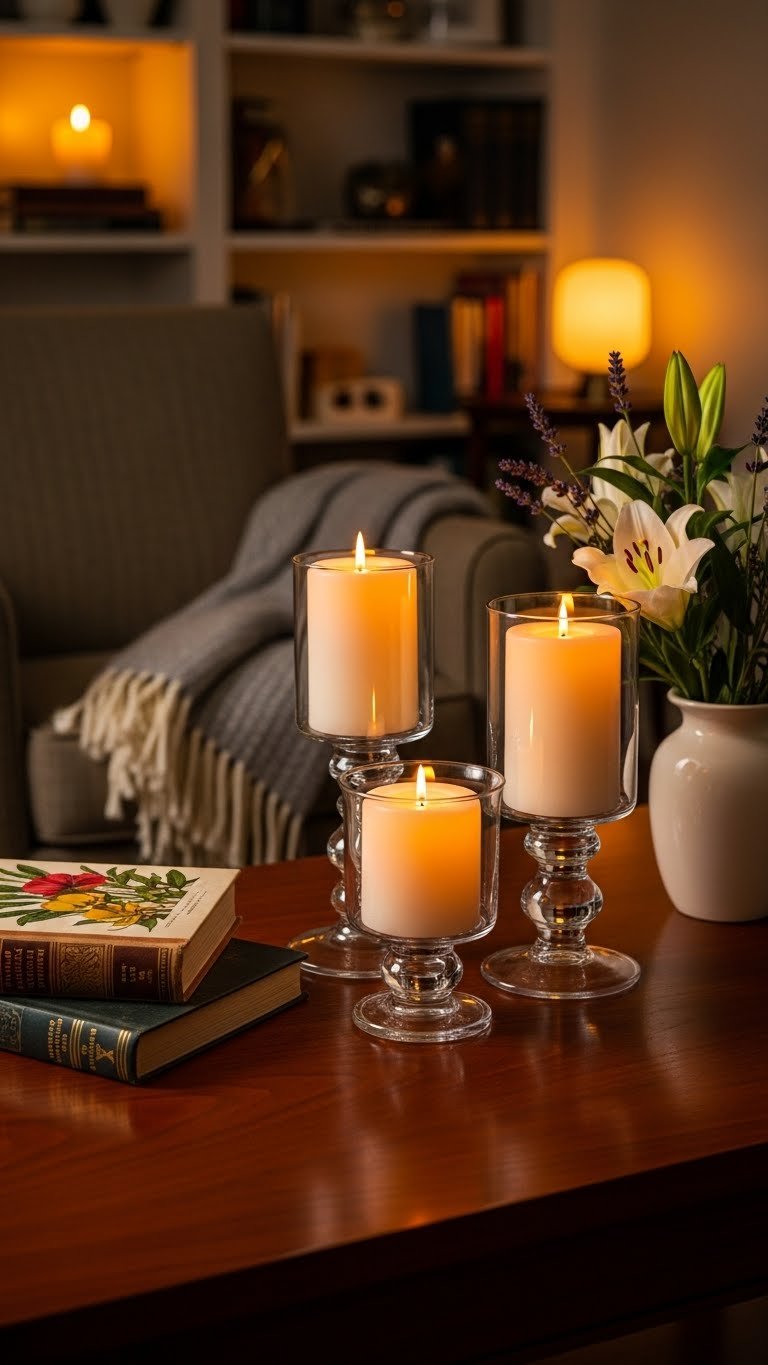
    11. Add Candles for Warmth Without Electricity

    Real or faux candles instantly add coziness and cost nothing. Candles create ambient glow that feels impossible to replicate with electric light alone.

    Real candles are safest in groups on fire-safe surfaces like coffee tables, mantels, or shelves. Flameless LED candles ($3–$15 each, Amazon or Target) solve the safety concern and last years. Buy 5–10 and scatter them across your room at varying heights for maximum impact.

    The magic is the flickering effect and warm tone—your brain registers candlelight as peaceful and comforting. Layer candles with electric lighting, and you create a spa-like atmosphere. This is also a renterfriendly hack that requires zero installation.

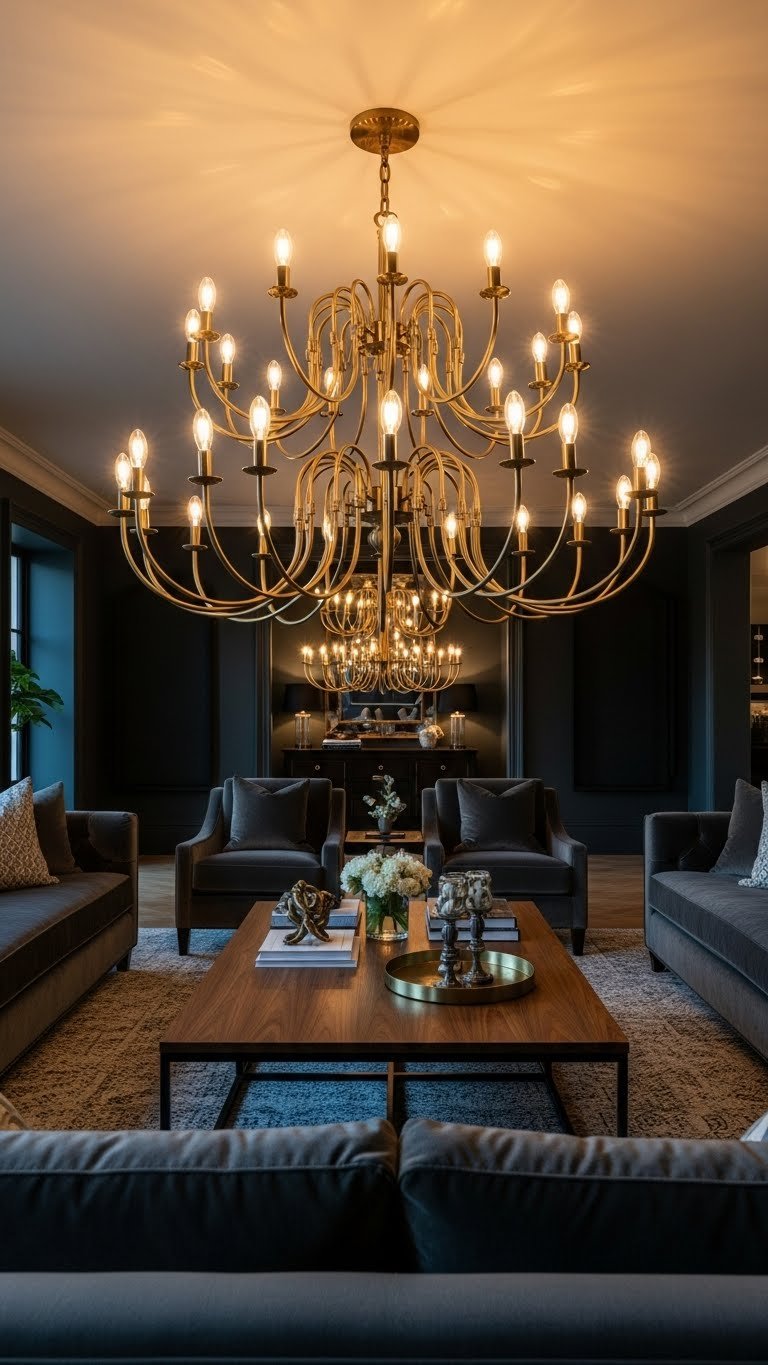
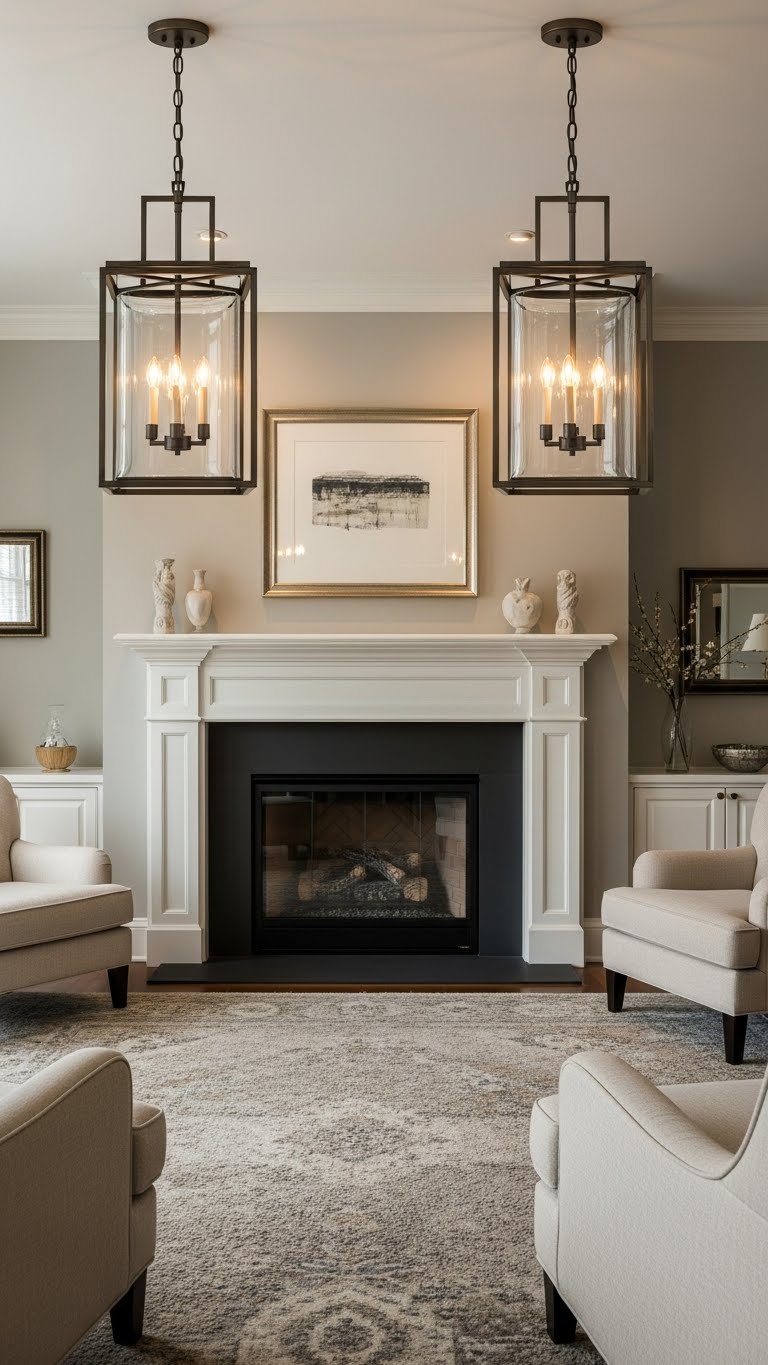
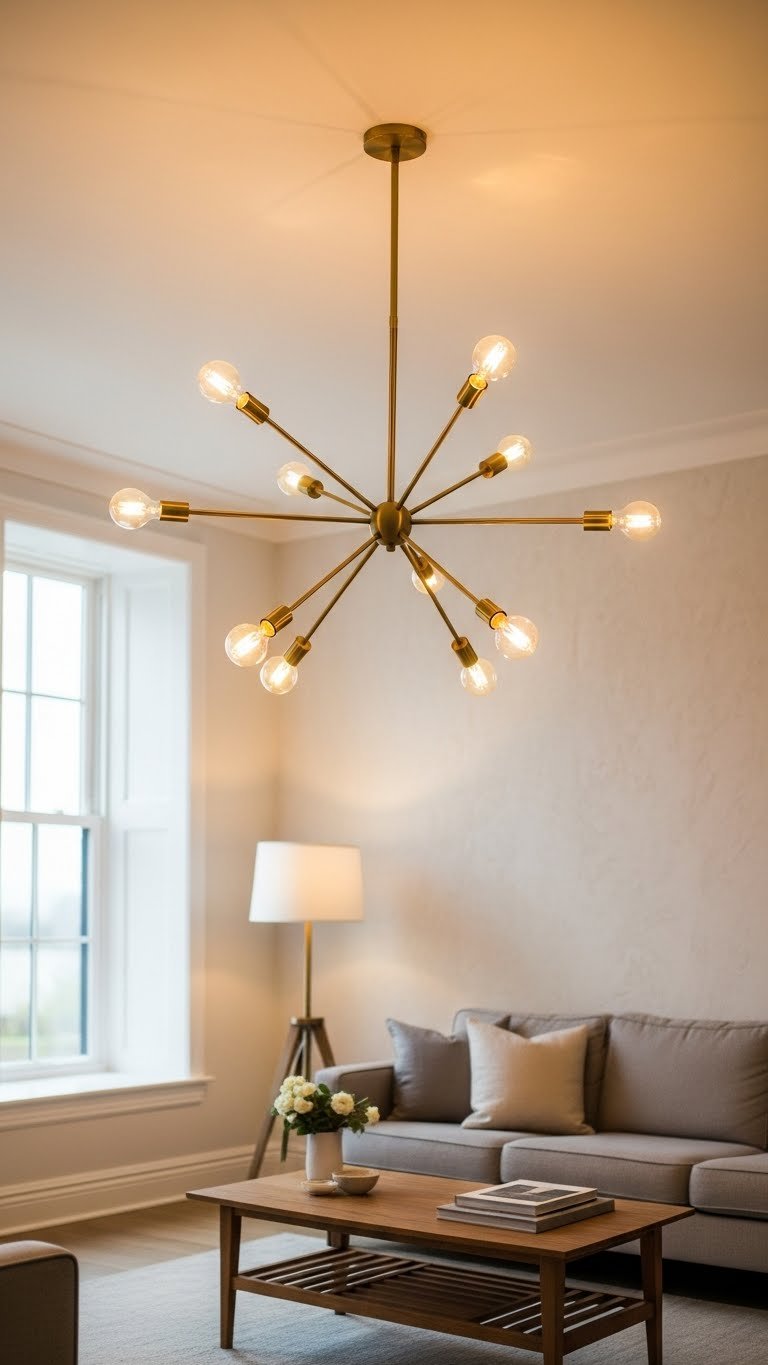
    12. Install a Modern Chandelier for Dramatic Ambient Light

    If you have ceiling height (9+ feet), a statement chandelier anchors your room and provides serious ambient light. Modern chandeliers feel less formal than traditional crystal versions—think sculptural brass, geometric lines, or woven materials.

    Costs range from $100–$300 (Target, Wayfair, CB2) to $800+ (high-end showrooms). Professional installation runs $200–$400. Using dimmable bulbs and warm color temperature ensures it feels warm, not harsh.

    A chandelier becomes your room’s visual centerpiece while solving your ambient lighting needs. It photographs beautifully and elevates the entire space—especially in living rooms with good ceiling proportions.

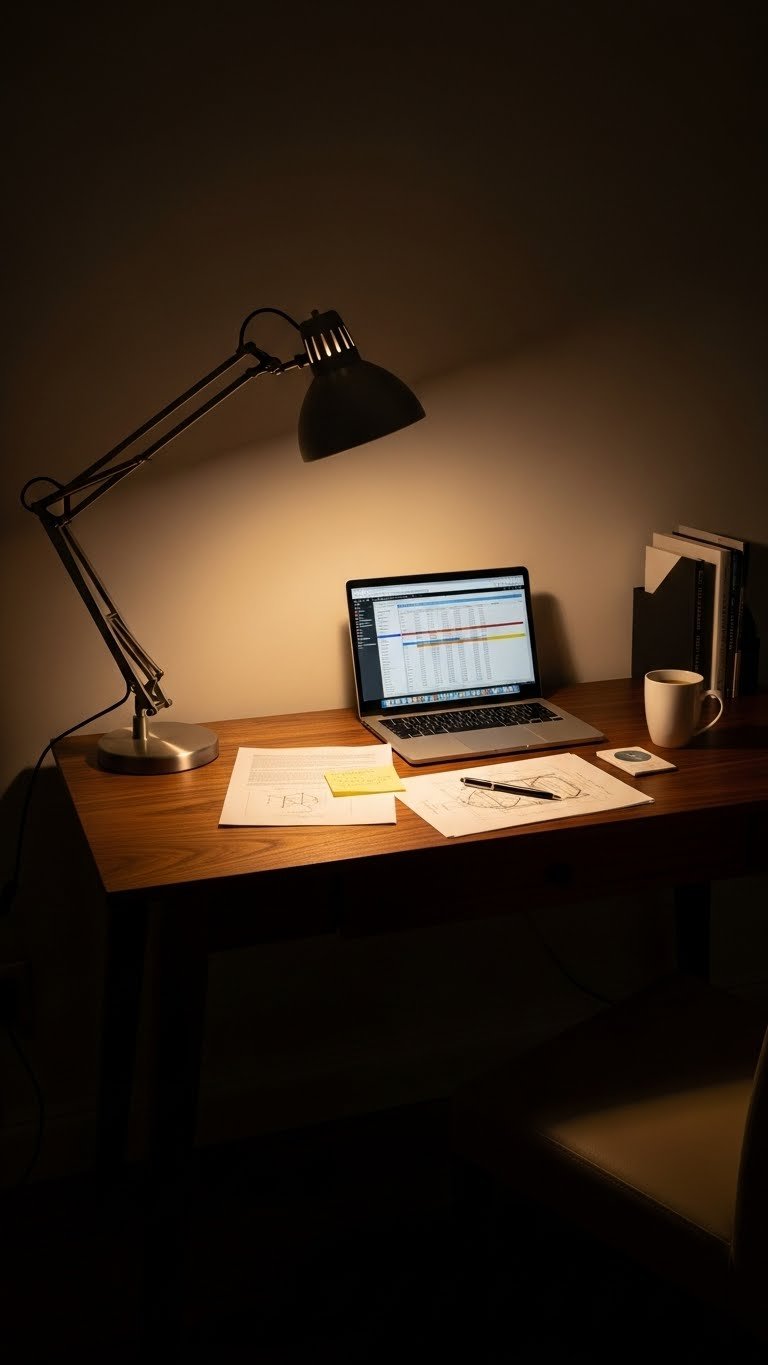
    13. Position Task Lighting at Your Desk or Console

    If you work or do hobbies in your living room, dedicated task lighting prevents eye strain and keeps brightness localized. This prevents glare on screens and shadows on your workspace.

    A quality desk lamp with an adjustable head costs $40–$120 and sits on your desk or console. Look for features like USB ports, adjustable color temperature, and dimming. Brands like TaoTronics and BenQ offer excellent mid-range options. Positioning is key: place the light to your side or slightly behind to avoid screen glare.

    You’ll notice less fatigue during work sessions and enjoy evening hobbies more comfortably. This also means you don’t need to keep overhead lights blazing while working.

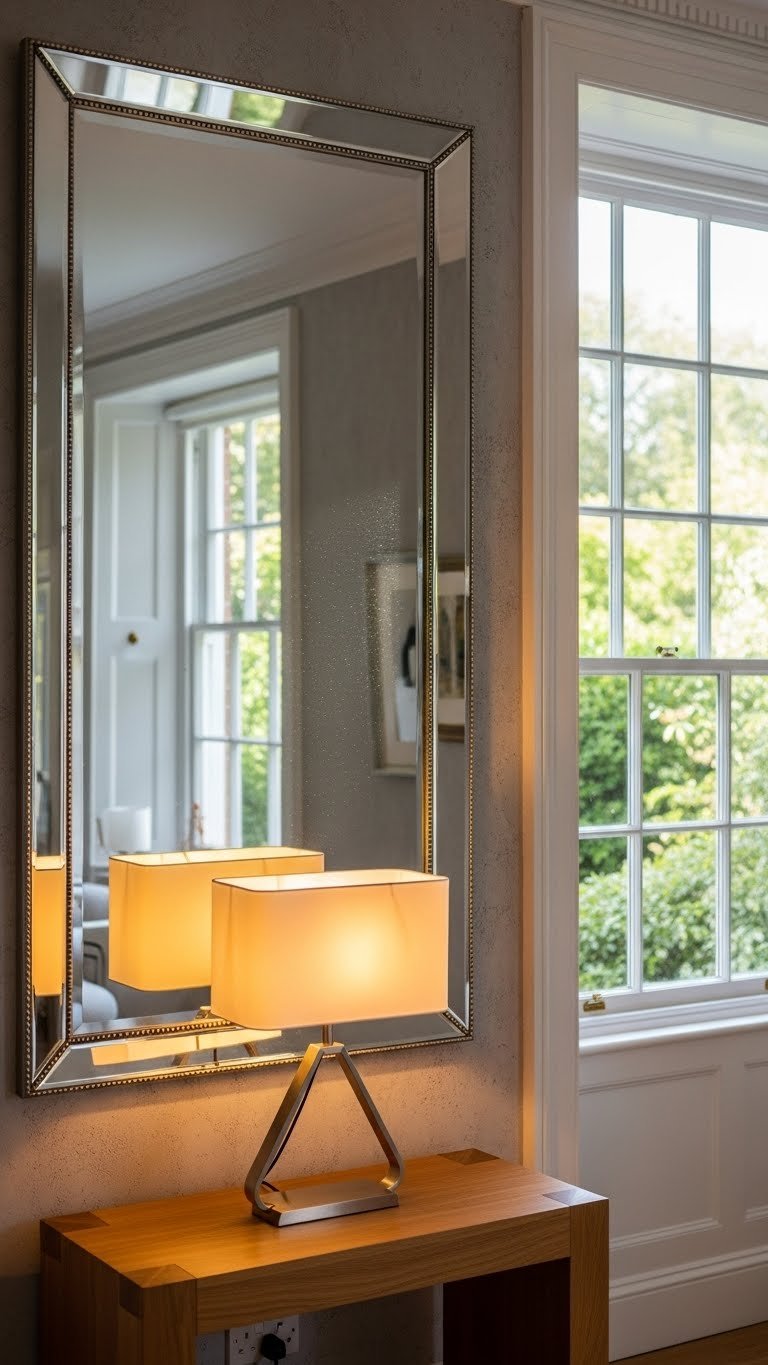
    14. Bounce Light Off Mirrors to Amplify Glow

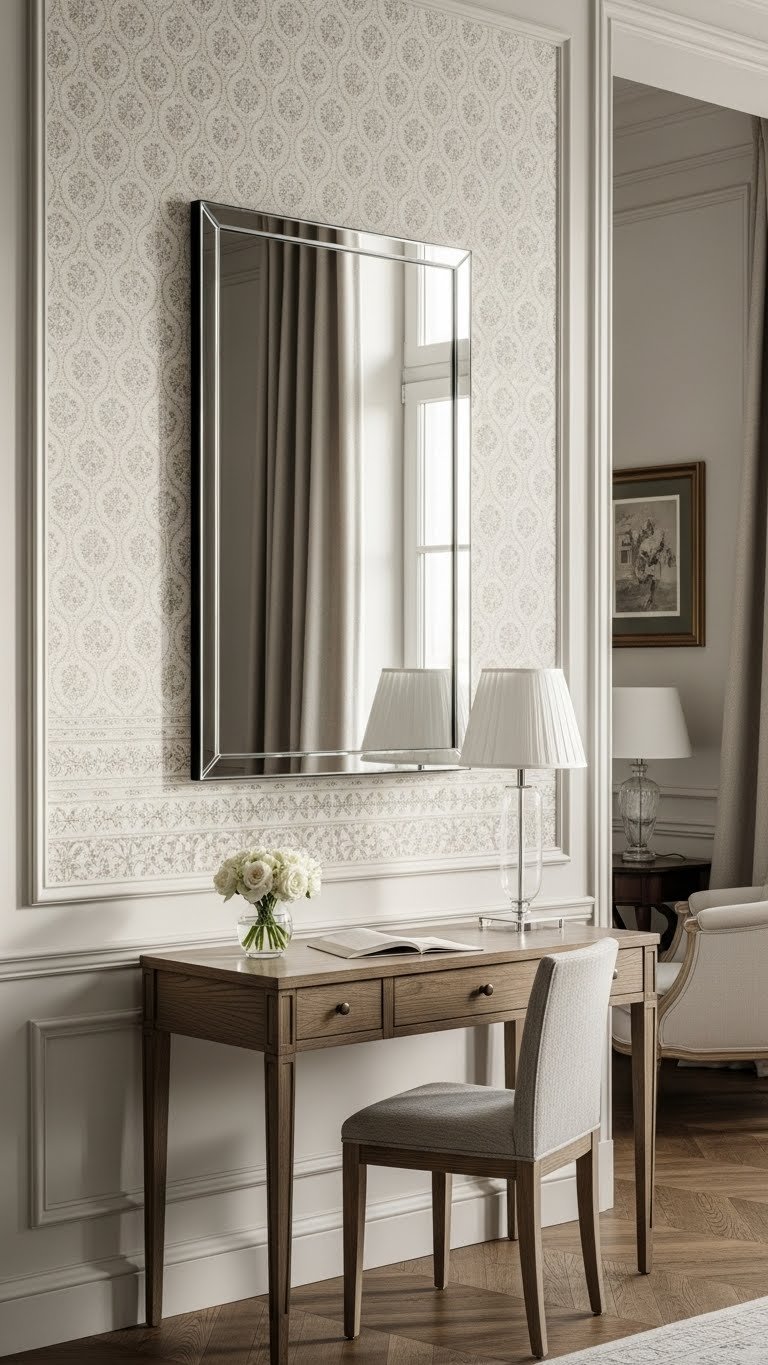
    Mirrors multiply light by reflecting it deeper into your room. Position mirrors opposite windows for daytime light amplification, or behind lamps to intensify their glow at night.

    A large mirror costs $50–$200 depending on frame style. Installation takes 30 minutes. Smaller accent mirrors ($20–$80) also work on shelves or consoles. The key is opposite placement: mirror facing your light source bounces brightness deeper into dark corners.

    This is a free trick if you already own mirrors—just reposition them. The visual impact of doubled light makes your room feel brighter without adding electricity or mess.

    15. Use Uplighting to Highlight Ceiling and Walls

    Uplighting (directing light upward) bounces illumination off ceilings and upper walls, creating indirect ambient glow. This makes rooms feel larger and prevents harsh shadows on faces.

    An uplight floor lamp or an adjustable floor lamp angled toward the ceiling costs $60–$150. Position it in corners or beside furniture so the light source isn’t directly visible. This works beautifully paired with dimmers for mood control.

    The effect is subtle but dramatic—your room feels more expansive and the light feels softer. This technique is beloved by hotel designers and works especially well in smaller living rooms.

    16. Add a Plug-In Pendant Light for Renters

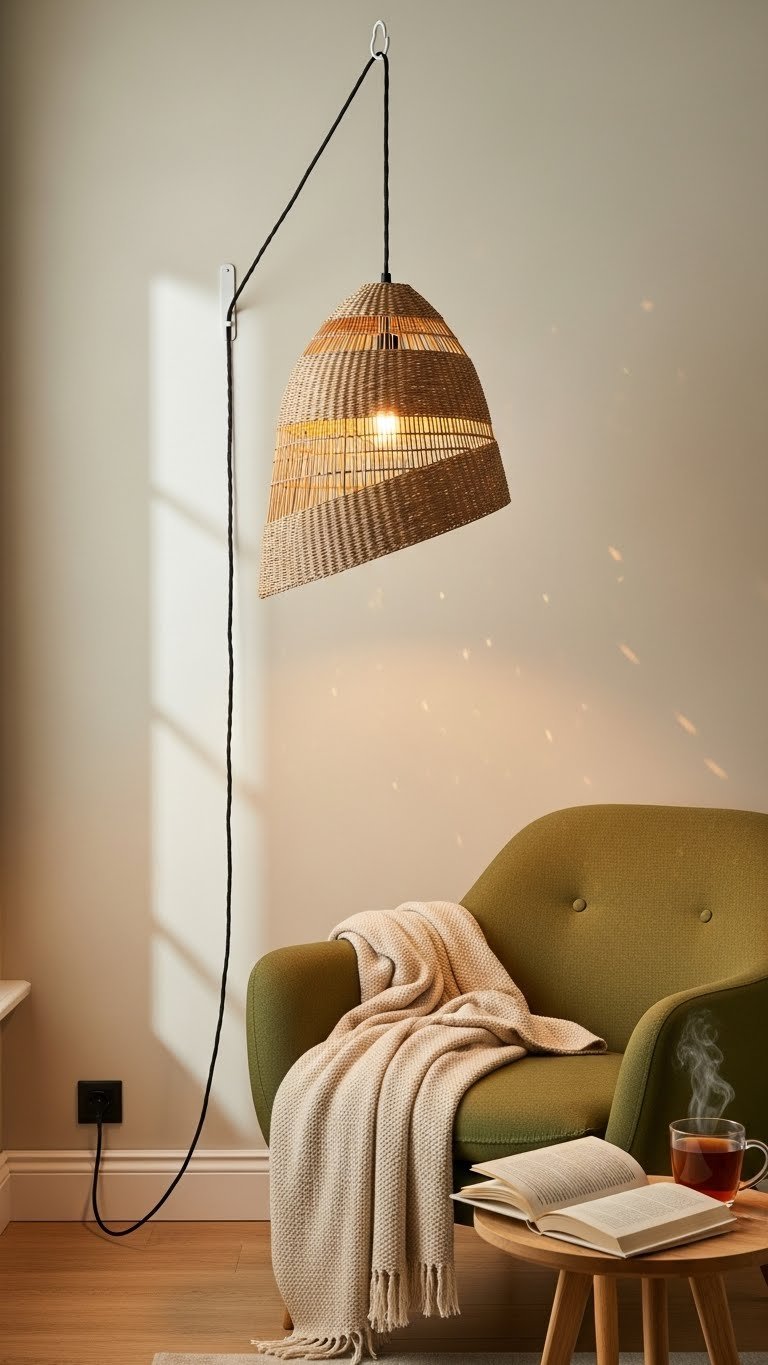
    Renters rejoice: plug-in pendant lights give you pendant style without drilling. They hang from adhesive hooks and plug into nearby outlets—zero permanent damage.

    Options cost $30–$100 and are available everywhere (Amazon, Target, IKEA). Swag-style pendants look especially intentional hanging off a hook. Installation takes 5 minutes and reverses instantly.

    This hack lets renters create layered, professional-looking lighting. Pair it with table lamps and you match the aesthetic of a permanently lit space without violating lease terms.

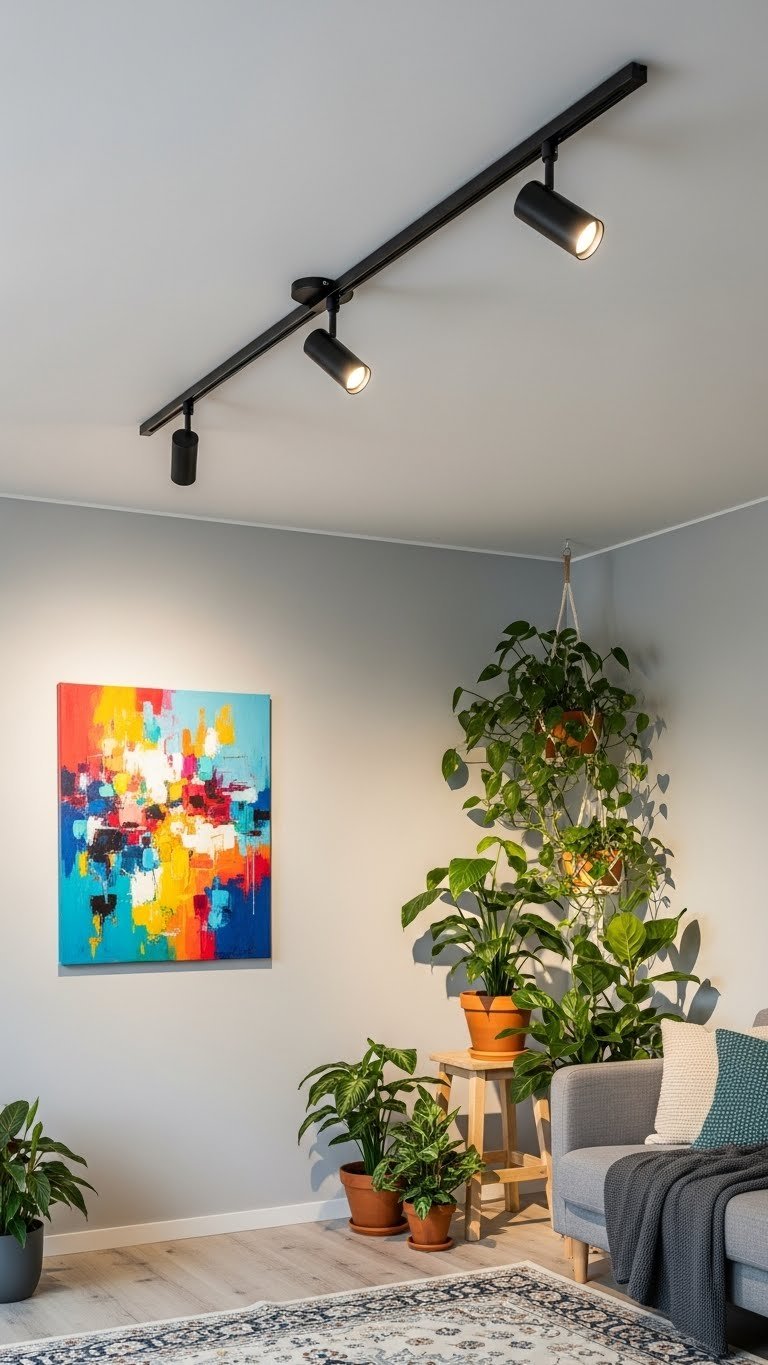
    17. Install Track Lighting for Flexible Accent Brightness

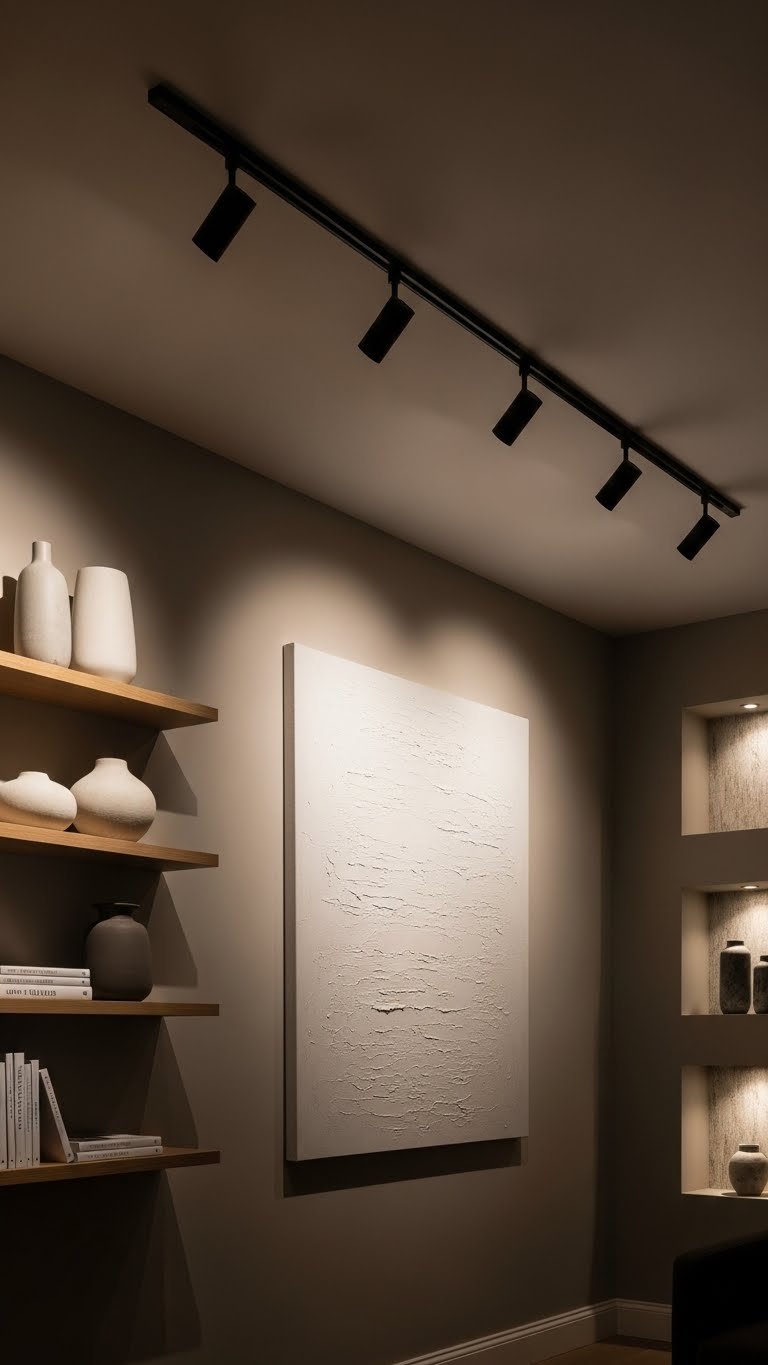
    Track lighting lets you direct light exactly where you need it. Adjustable spots move along a rail to highlight different areas—perfect for art collections, architectural features, or display shelves.

    Installation varies by system; some surface-mount (easier, $100–$300 for a 4-light kit) while others recess into ceilings (more complex, $300–$600 professional install). Products range from basic builder-grade to designer options. Costs: $80–$250 for fixtures, plus installation.

    The flexibility is unmatched—you can adjust spotlights as your décor changes. This also works beautifully in transitional or modern cottage spaces where you want to highlight specific textures and objects.

    18. Place Lamps at Different Heights to Avoid Shadows

    Shadows on faces and furniture flatten your room and make spaces feel uncomfortable. Varying lamp heights eliminates this by distributing light from multiple angles.

    Use one tall lamp (30–36 inches), one medium (24–30 inches), and one shorter accent piece (12–18 inches) in each seating area. This sounds like a lot but creates the layered look designers charge thousands for. Total investment: $80–$200 depending on style preferences.

    You’ll notice your room photographs better, feels more welcoming, and your seating areas become genuinely functional. Guests naturally want to sit in well-lit areas, so you’re basically designing circulation with light.

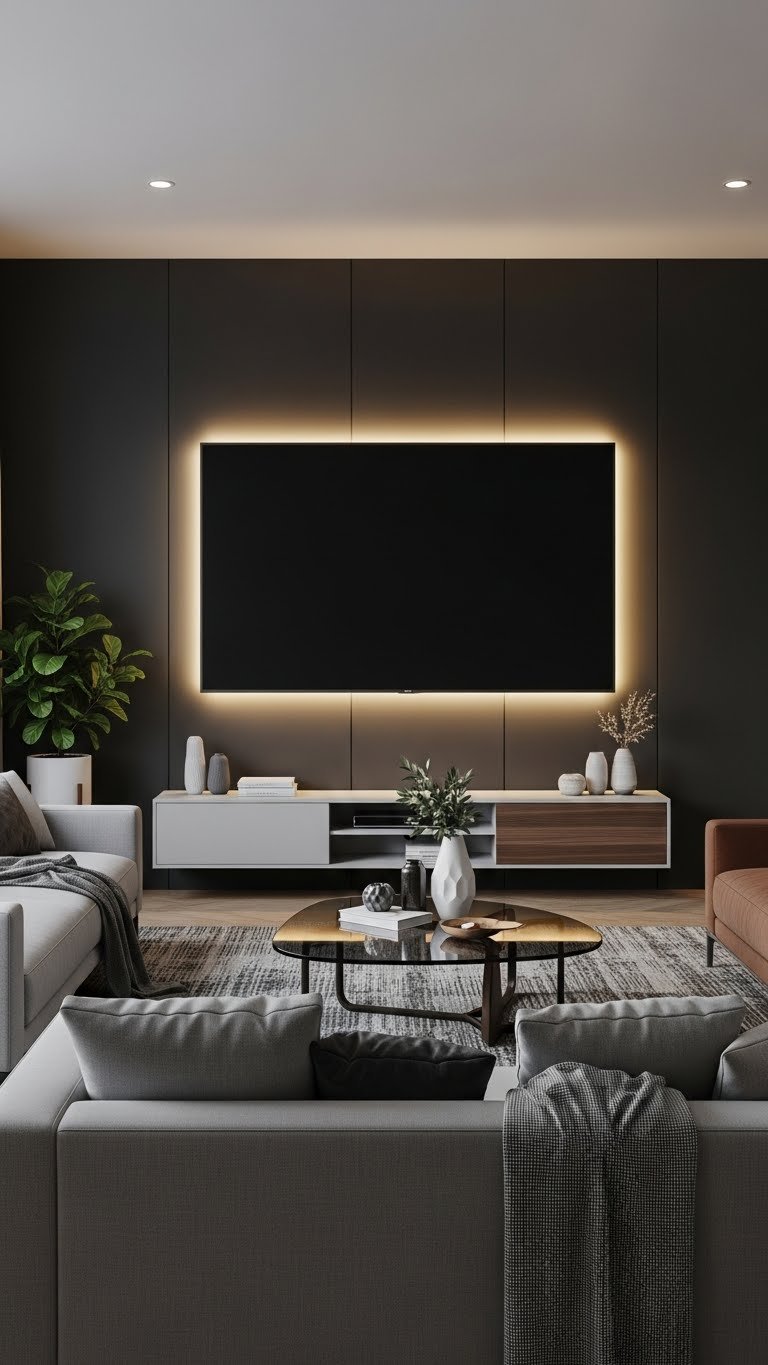
    19. Try Backlit Wall Shelving for Modern Ambiance

    Backlit shelves create a contemporary vibe that photographs like a magazine. Light hidden behind shelving creates an architectural glow that draws the eye.

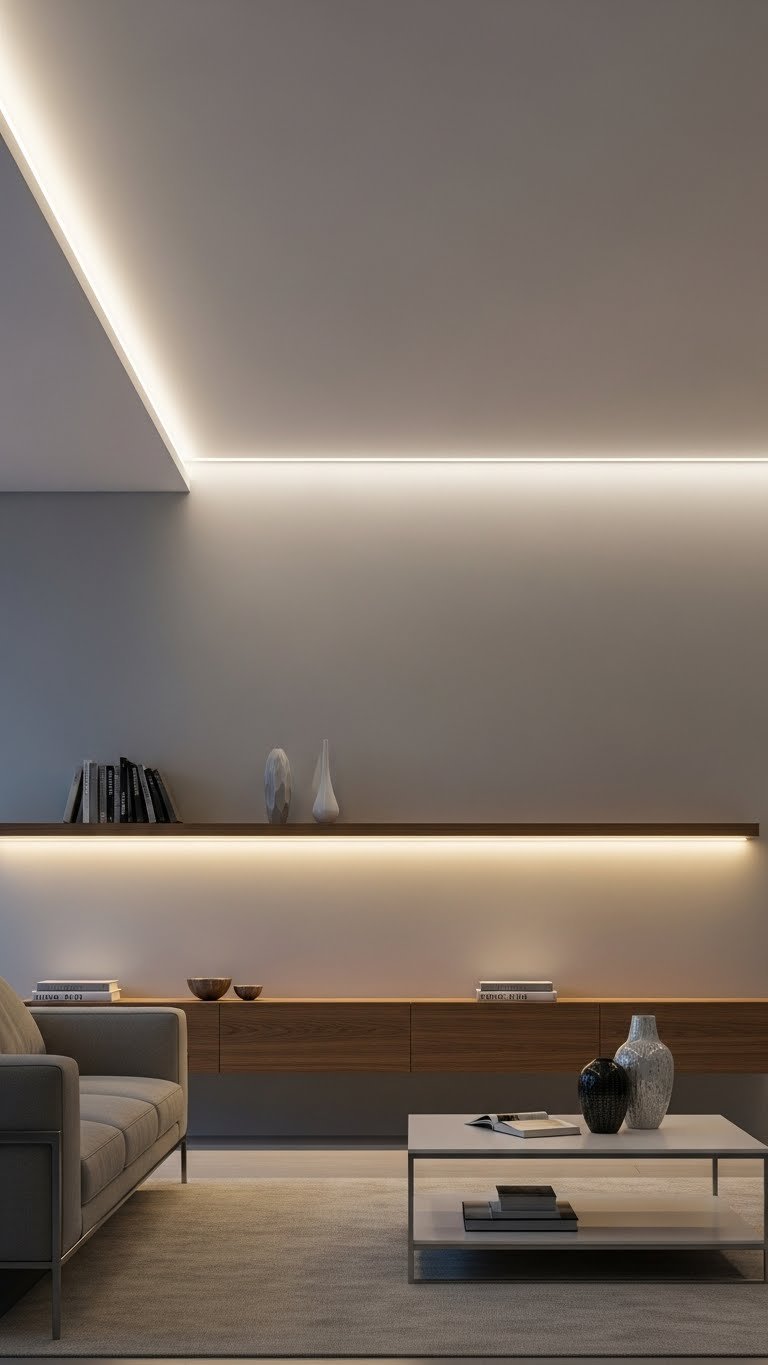
    This requires either LED strip lights (battery or plug-in, $20–$50) attached to shelf undersides, or professional installation of recessed lights behind shelves ($300–$600). DIY strip lights are renter-friendly and reversible; professional work requires commitment.

    The effect is striking and modern—your shelf display becomes a focal point. This pairs beautifully with mid-century modern or minimalist living rooms where you want clean lines and subtle luxury feel.

    20. Combine Floor and Table Lamps in a Reading Nook

    Dedicated reading nooks need dual task lighting to prevent eye strain. Combining a floor lamp and table lamp creates flexibility and eliminates shadows.

    The arc lamp provides general task lighting; the side table lamp offers secondary brightness. Together, they cost $80–$180 depending on style. Positioning is key: one light over each shoulder ensures even illumination across your book without harsh shadows.

    You’ll actually use your reading nook instead of abandoning it for the bedroom. This is essential if reading is part of your evening routine.

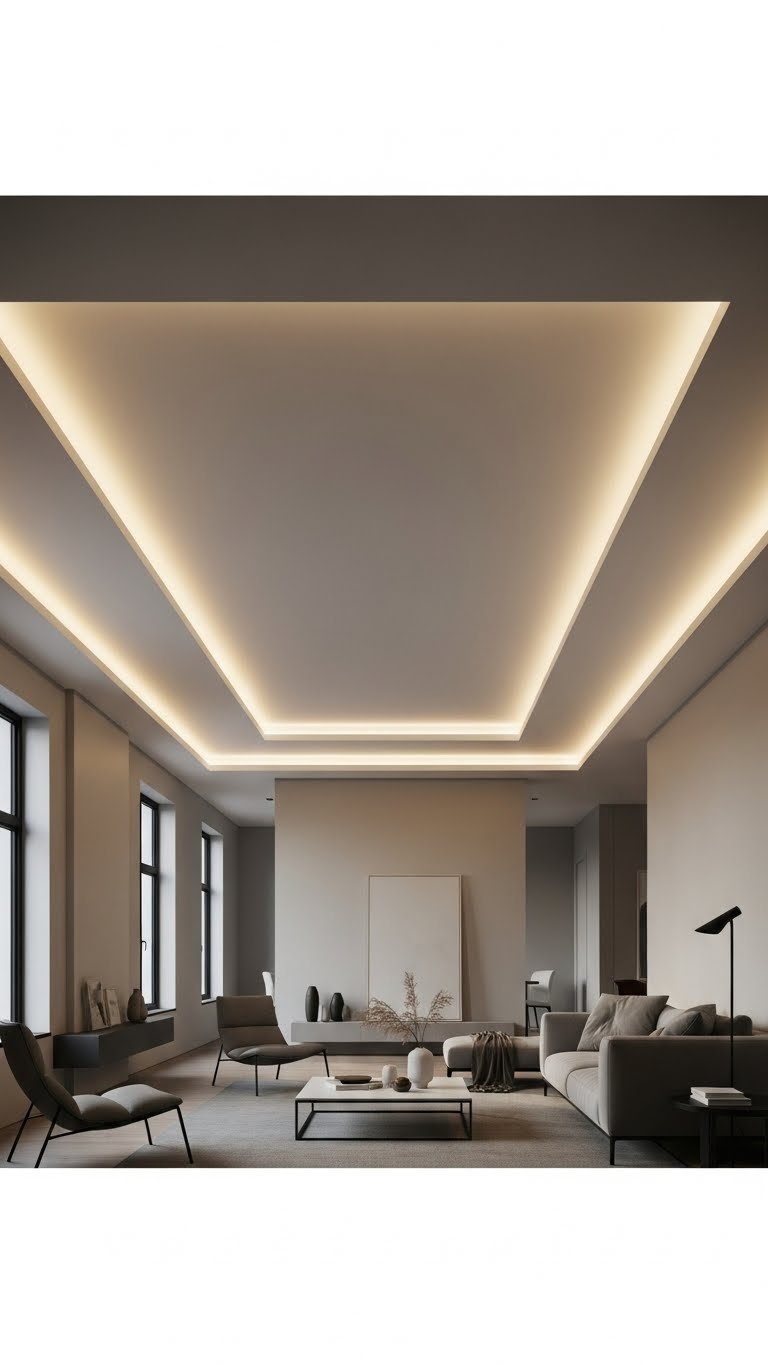
    21. Use Warm-Toned Rope Lighting for Subtle Ambiance

    Rope lighting (continuous flexible tubing with built-in LEDs) offers gentle, unobtrusive ambient glow. It disappears into décor while adding warmth.

    LED rope costs $20–$50 for 32 feet and easily wraps around shelves, baseboards, or architectural features. Installation is adhesive-backed, reversible, and renter-friendly. Choose dimmable, warm white (2700K) options.

    The effect is subtle but transformative—your room gains ambient warmth without visible fixtures. This works beautifully in modern cottage or minimalist spaces where you want cozy vibes without statement lighting.

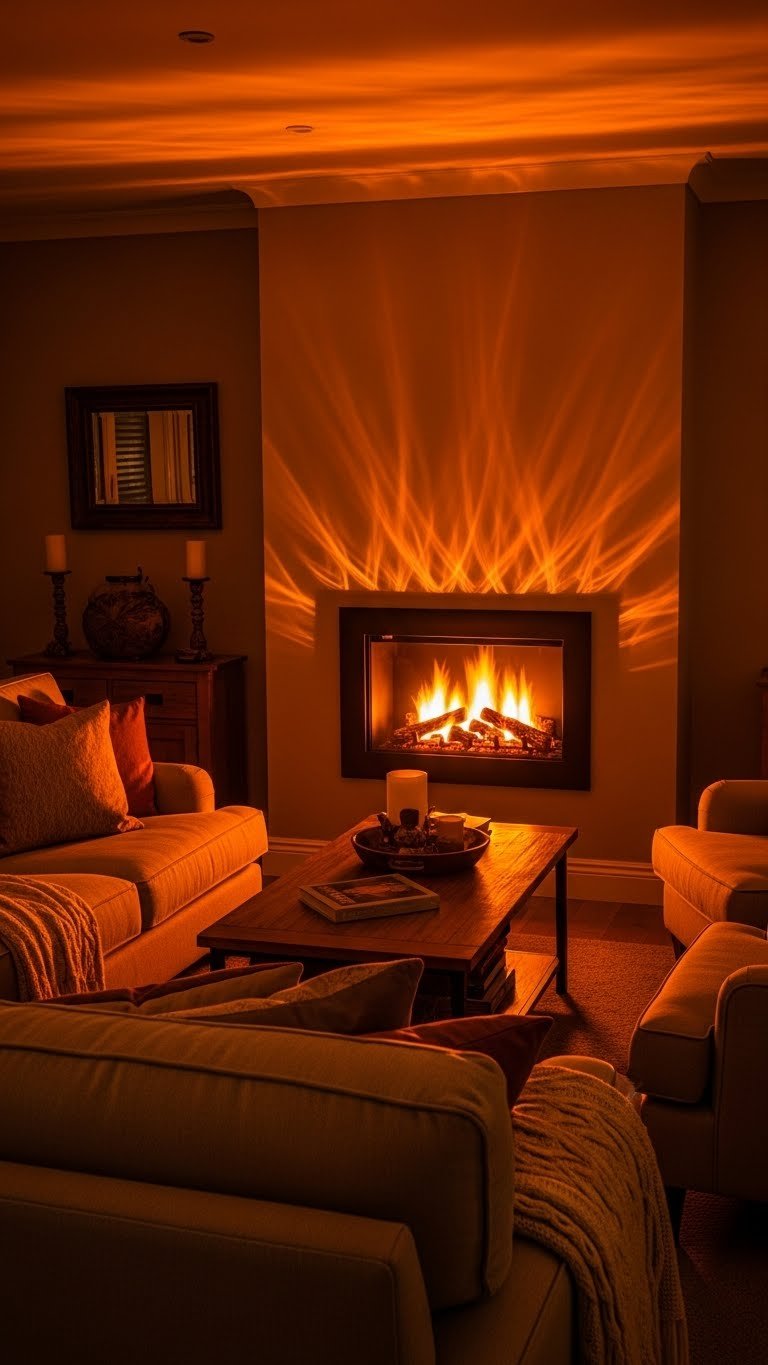
    22. Add a Fireplace—Real or Faux—for Focal Point Warmth

    Fireplaces create psychological warmth and visual interest that’s impossible to replicate. Real fireplaces offer actual heat; faux electric inserts provide ambiance for renters.

    Real fireplace installation costs $2,000–$5,000+ and requires professional work. Electric fireplace inserts run $300–$1,500 depending on realism and heat function. Tabletop bioethanol fireplaces ($200–$400) work in any room without installation. Wall-mounted electric fireplaces ($400–$800) offer modern aesthetics.

    The payoff is massive: a fireplace instantly becomes your room’s focal point, and the glow creates cozy ambiance that electric lighting alone can’t achieve. Layer this with other lighting for complete flexibility.

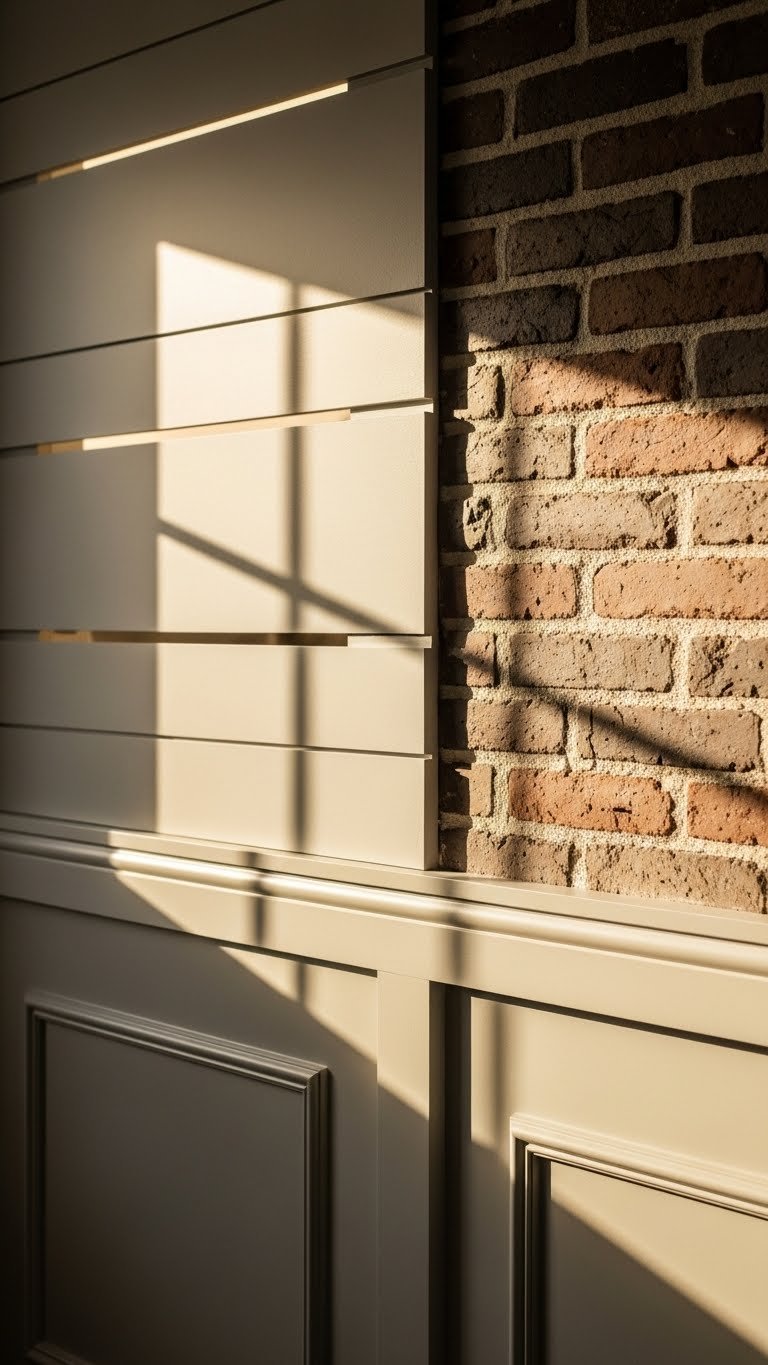
    23. Install Wall Washers to Highlight Texture

    Wall washers are lights positioned to graze wall surfaces, highlighting texture and creating dramatic dimension. They work beautifully on accent walls, shiplap, or architectural features.

    Recessed wall washers cost $150–$400 for professional installation plus fixtures ($50–$100 each). LED strip options ($20–$50) work for renters if adhered carefully. Position lights at a low angle so they skim across texture rather than hitting it straight-on.

    Your accent wall becomes a design hero instead of a flat backdrop. This technique separates professional-looking spaces from amateur ones—especially in modern cottage or transitional rooms.

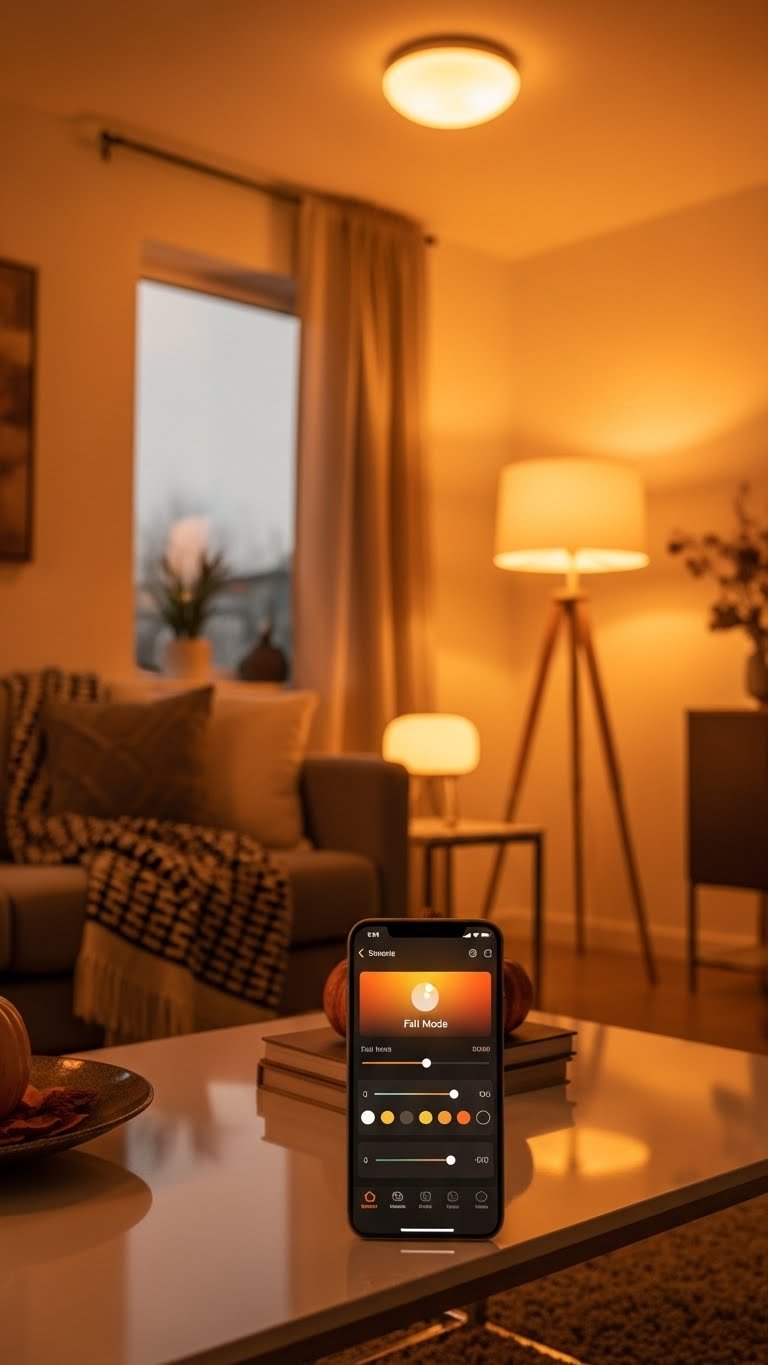
    24. Layer Dimmers with Smart Bulbs for App Control

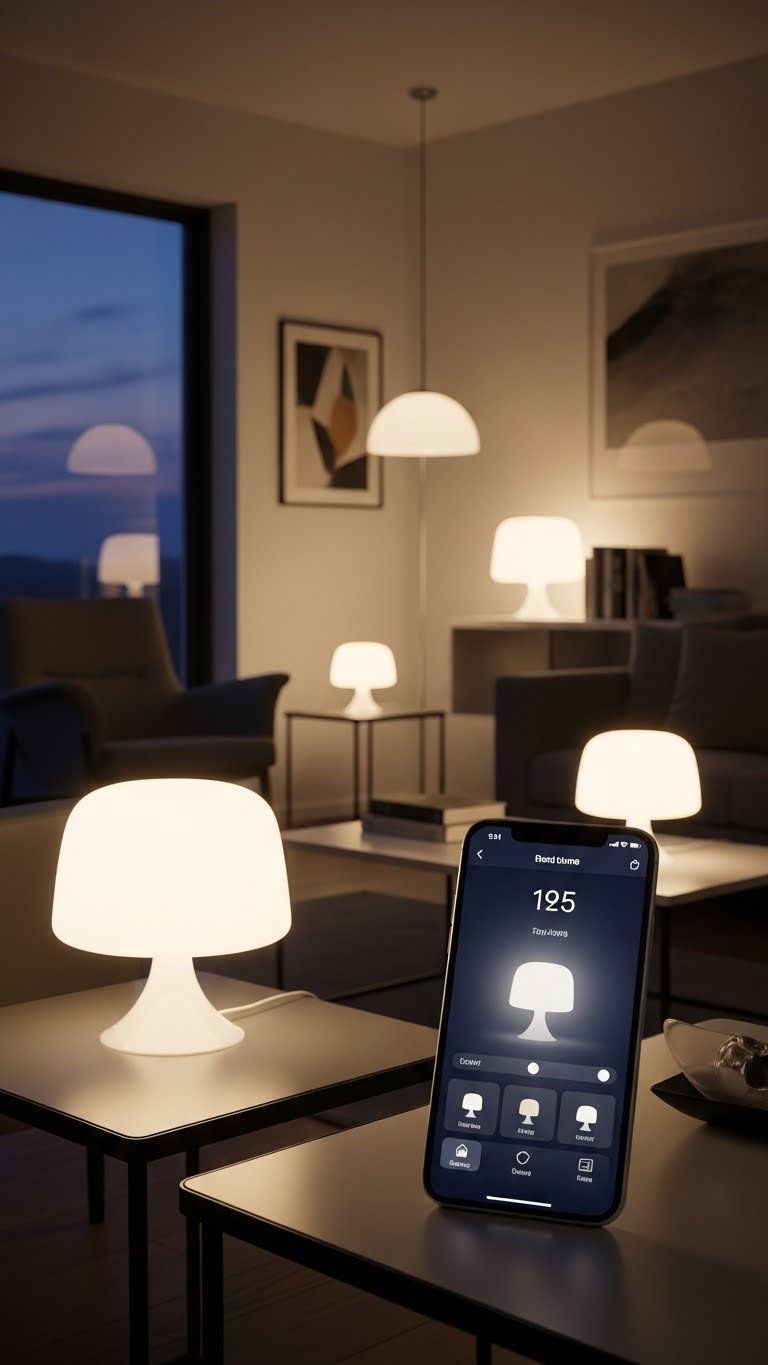
    Smart bulbs let you adjust brightness and color temperature from your phone—perfect if your light switches are far from your seating or you’re too comfortable to get up.

    Smart bulbs (Philips Hue, LIFX, Wyze) cost $15–$25 per bulb. A 4-bulb starter kit runs $40–$80. Apps offer scheduling, color adjustments, and integration with voice assistants. Dimmers work alongside smart bulbs for maximum flexibility.

    You can set scenes (movie mode = 20% brightness, warm; morning mode = 80% brightness, cool) and adjust from your couch. This feels indulgent but genuinely improves your daily life—especially for people with mobility concerns or minimal switches.

    25. Mix Metallic Finishes for Visual Interest

    Mixing metals (brass, black, silver, copper) feels intentional and modern versus matchy-matchy spaces. Varied finishes add sophistication and personality.

    When buying lamps, sconces, and fixtures, choose finishes based on your décor rather than matching everything. A brass floor lamp with a black pendant and silver table lamp feels collected and curated. Mix freely—it looks intentional.

    This approach prevents your space from feeling sterile or overdone. Designers use this trick constantly; now you can too.

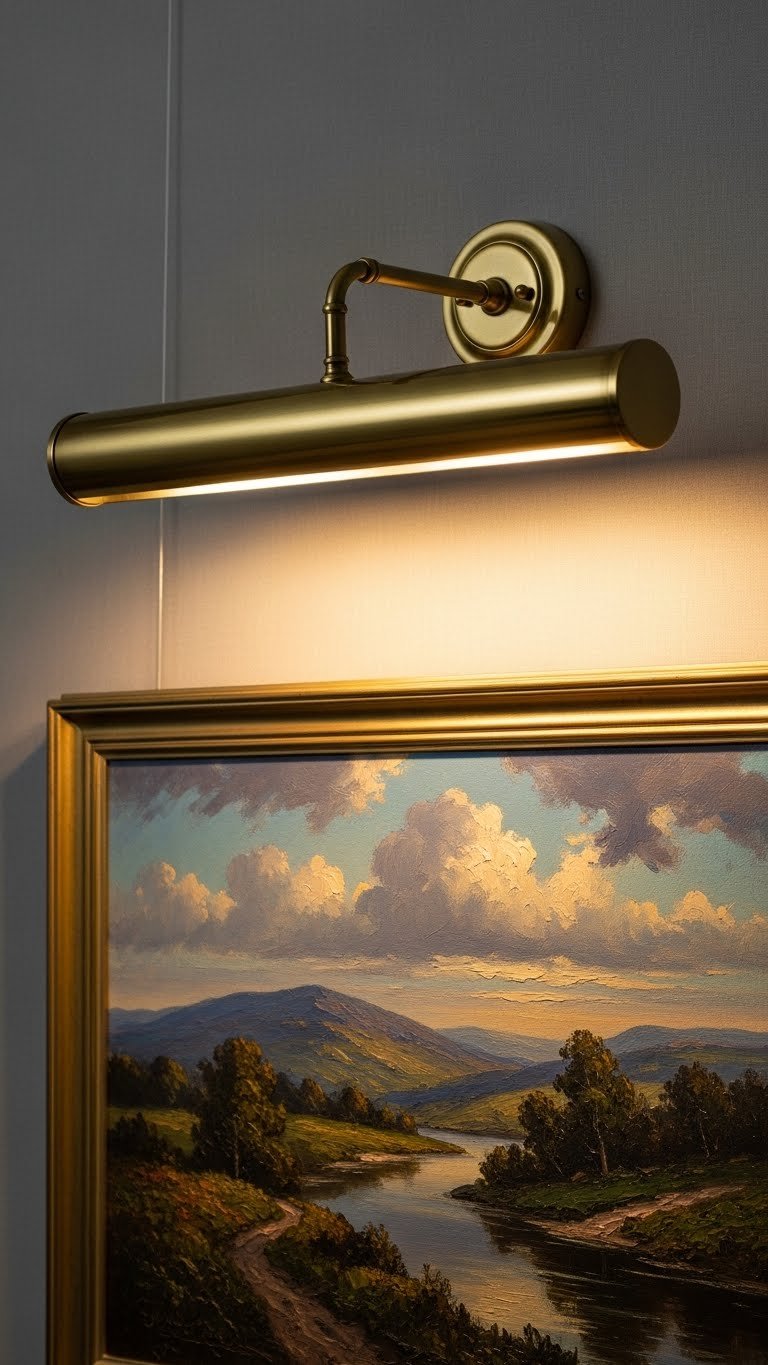
    26. Position Accent Lights to Frame Entryways

    Framing doorways with lighting (via sconces or picture lights) creates visual hierarchy and guides circulation. This works beautifully for both functional entryways and decorative archways.

    Install sconces at eye level (60 inches high) on either side of the opening. Costs run $40–$150 per sconce plus installation ($100–$200). The payoff is significant: your entryway looks intentional and gallery-like, and guests immediately understand the room’s focal points.

    This technique works in every style—from modern minimalist to cottagecore—and instantly elevates your space aesthetically.

    27. Create a Lighting Plan Before Buying Anything

    Before adding another lamp, sketch your room and map where you need ambient, task, and accent lighting. This prevents impulse buys and ensures cohesion.

    Walk through your room at different times of day. Note shadows, dark corners, and areas where you actually read or work. Measure ceiling height, seating positions, and wall features. Sketch placement ideas—no art skills needed, just notes and rough positioning.

    With a plan, every fixture you buy solves a real problem instead of adding clutter. You’ll also spend less overall because you’re intentional rather than reactive.

    Save this guide and tackle one lighting layer this weekend. Start with the easiest wins—warm bulbs, dimmers, or repositioning mirrors—then layer in more ambitious fixes. You’ll be amazed how much a thoughtful lighting plan transforms your living room from flat and uninviting into genuinely functional and beautiful.

  • 25 Deep-Seat Sofa Ideas That Bring Cloud-Level Comfort

    25 Deep-Seat Sofa Ideas That Bring Cloud-Level Comfort


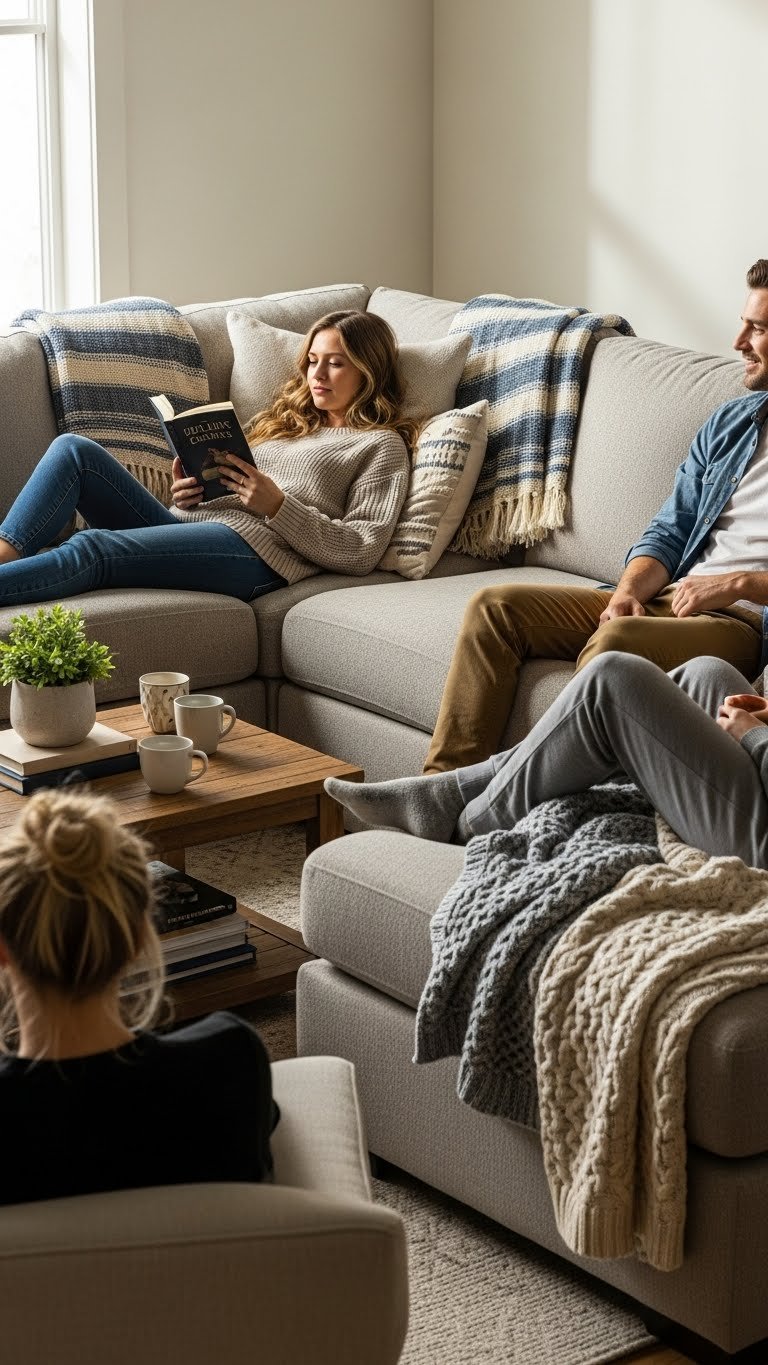
    If you’re tired of perching on the edge of your couch instead of actually relaxing on it, you’re not alone. Most sofas today prioritize looks over comfort—but they don’t have to. A deep-seat sofa changes everything. It invites you to kick off your shoes, sprawl out, and genuinely unwind. Whether you’re shopping for your first quality investment piece or refreshing an old sofa situation, this guide walks you through 25 concrete ways to find, style, and maximize cloud-level comfort. You’ll discover specific sofas that deliver, styling tricks that boost coziness, and budget hacks that work for renters and homeowners alike. Let’s build you a living room that actually feels like a retreat.


    1. Choose a Deep Seat Depth Between 38–42 Inches

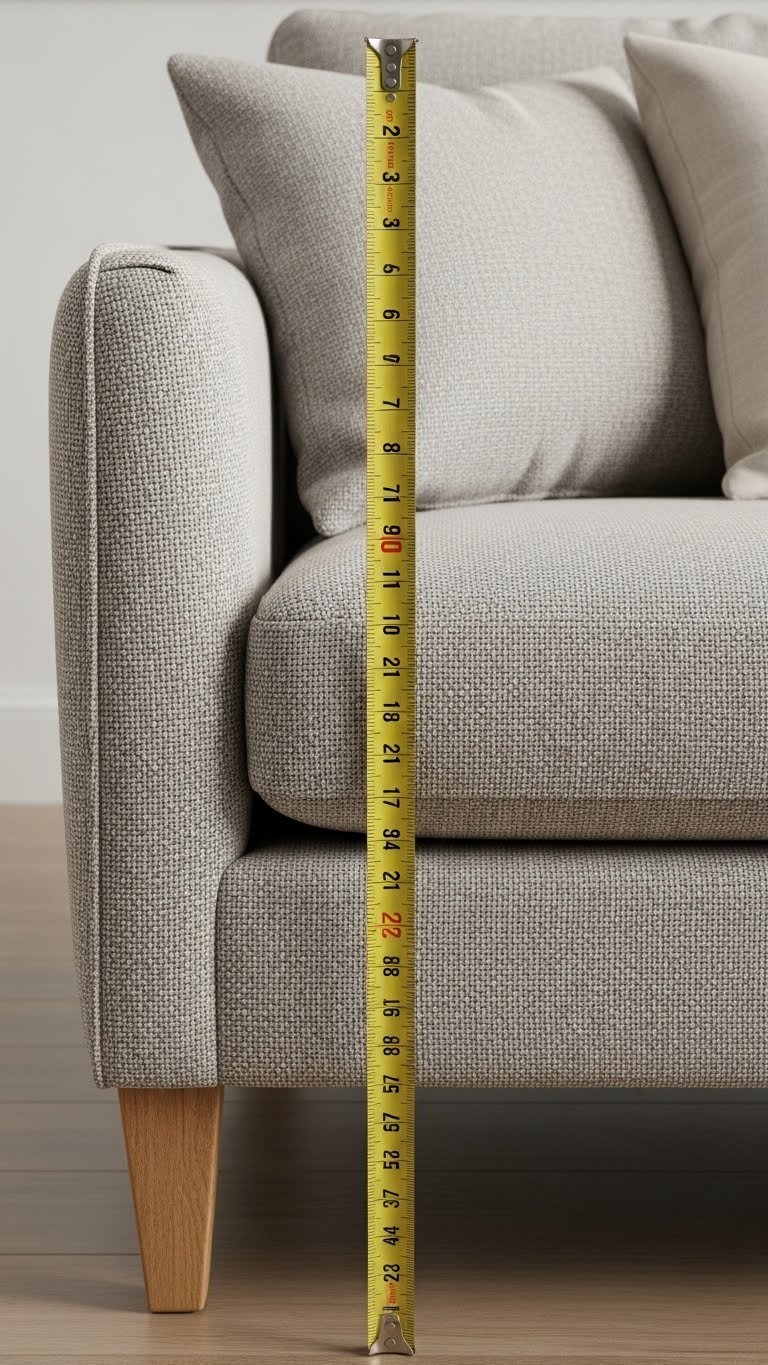
    A standard sofa sits around 30–32 inches deep, which feels more like sitting upright than relaxing. The magic number for true comfort is 38–42 inches—deep enough to recline fully or curl up with your legs tucked underneath.

    When shopping online or in-store, always ask the retailer for exact seat depth measurements before buying. Many brands like Article ($600–$1,200), Room & Board ($1,200–$2,000), and Wayfair ($400–$900) list these specs clearly. If you’re buying secondhand, bring a tape measure. Deep-seat sofas cost slightly more upfront—usually $100–$300 extra—but last longer because you’re not replacing them every few years when you realize they’re uncomfortable.

    Pro tip: If a sofa fits your space but sits a bit shallow, layer a quality floor cushion or bolster pillow ($40–$80) at the back to gain extra depth without losing functionality.

    Once you add a deep seat to your living room, you’ll actually use your sofa instead of migrating to the bed. Comfort changes behavior.


    2. Prioritize High-Density Foam in the Seat Cushions

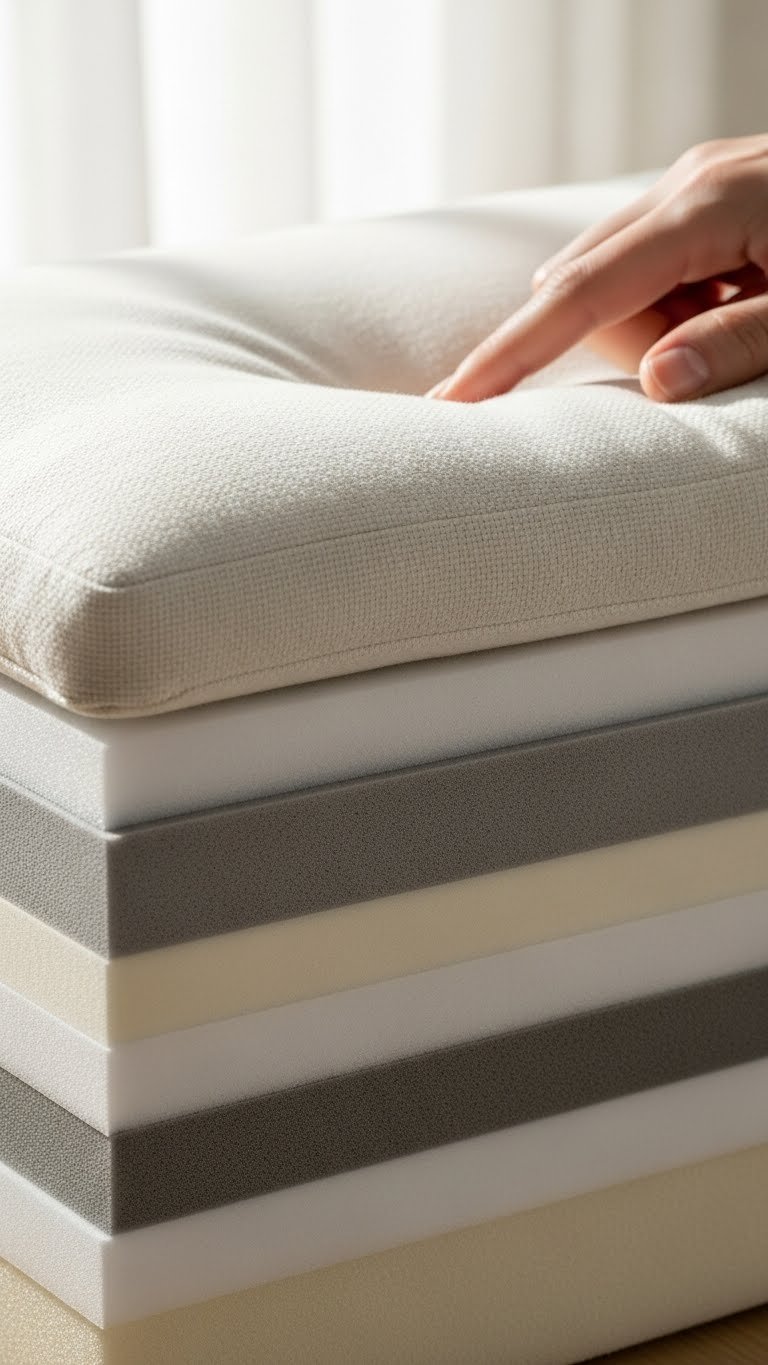
    Budget foam ($30–$50 per cushion) compresses after six months, leaving you sinking to the frame. High-density foam holds its shape for years, which is why it matters more than thread count or fabric type.

    Look for sofas that specify HD foam with a density of 2.5–3.0 lbs per cubic foot. This is the sweet spot between firmness and sink-in comfort. Brands like Restoration Hardware ($3,000–$5,000), West Elm ($800–$2,200), and Article list foam quality in product descriptions. If a brand won’t disclose foam specs, that’s a red flag—move on.

    If you already own a sofa with tired cushions, you can replace just the foam ($200–$400 for a full set) instead of replacing the whole sofa. Many local upholsterers offer this service within one to two weeks.

    You’ll notice the difference immediately when you sit down. A firm, supportive cushion means you’re truly cradled, not bottoming out after a few months.


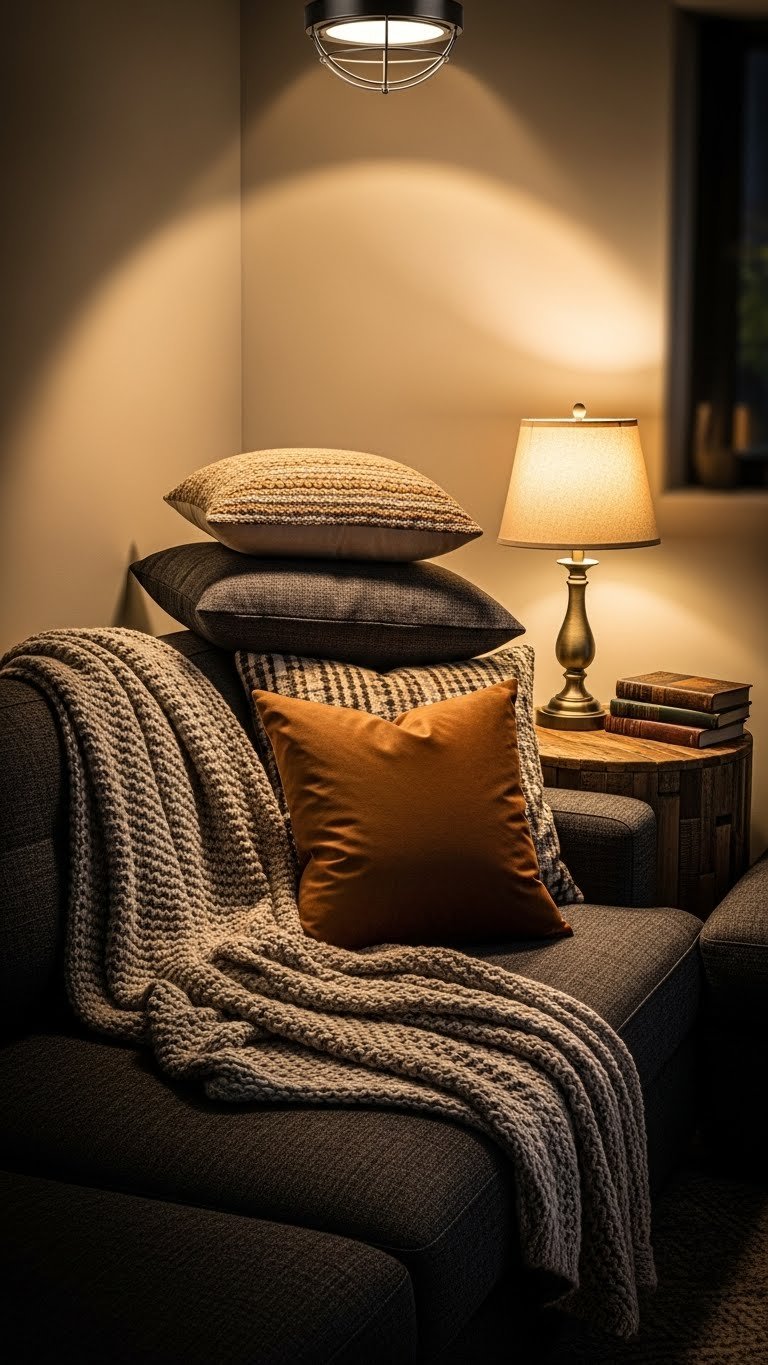
    3. Add a Layered Throw Blanket Bar to Your Sofa Arm

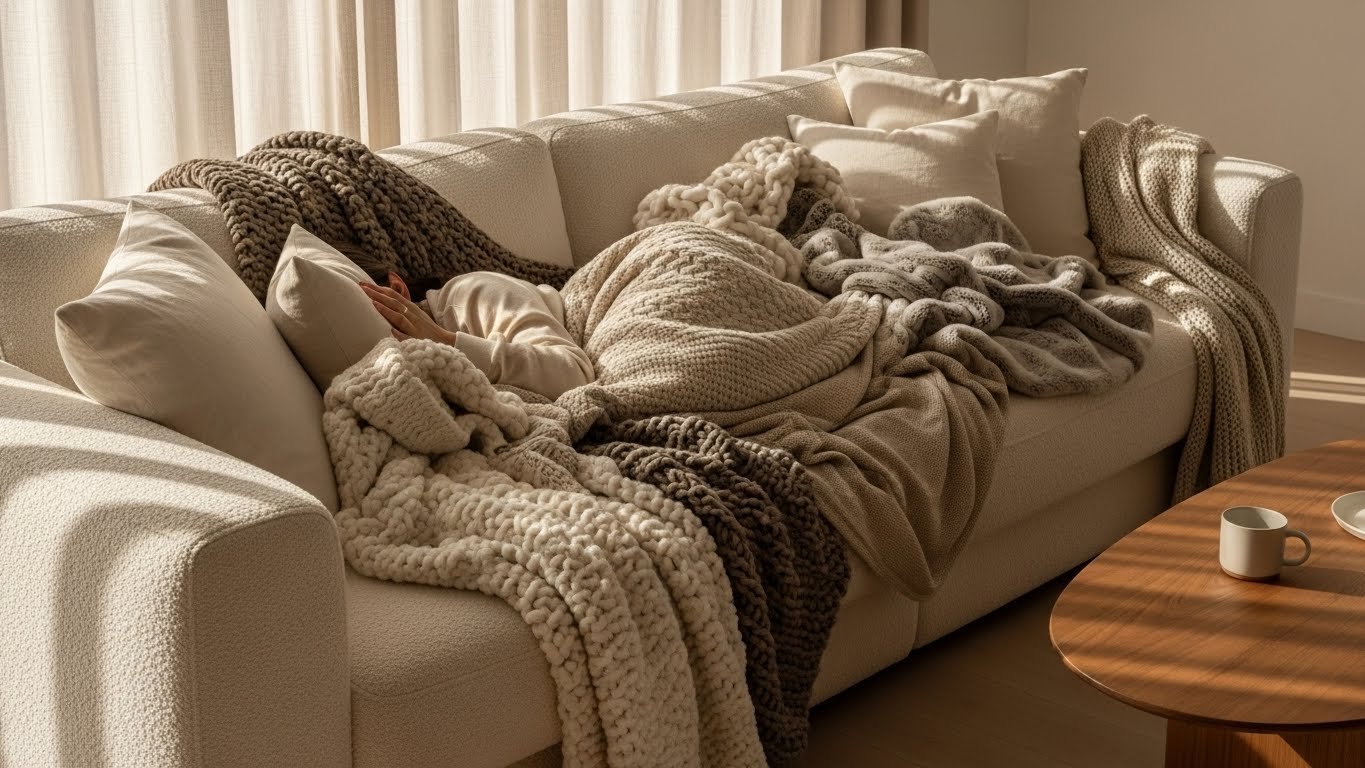
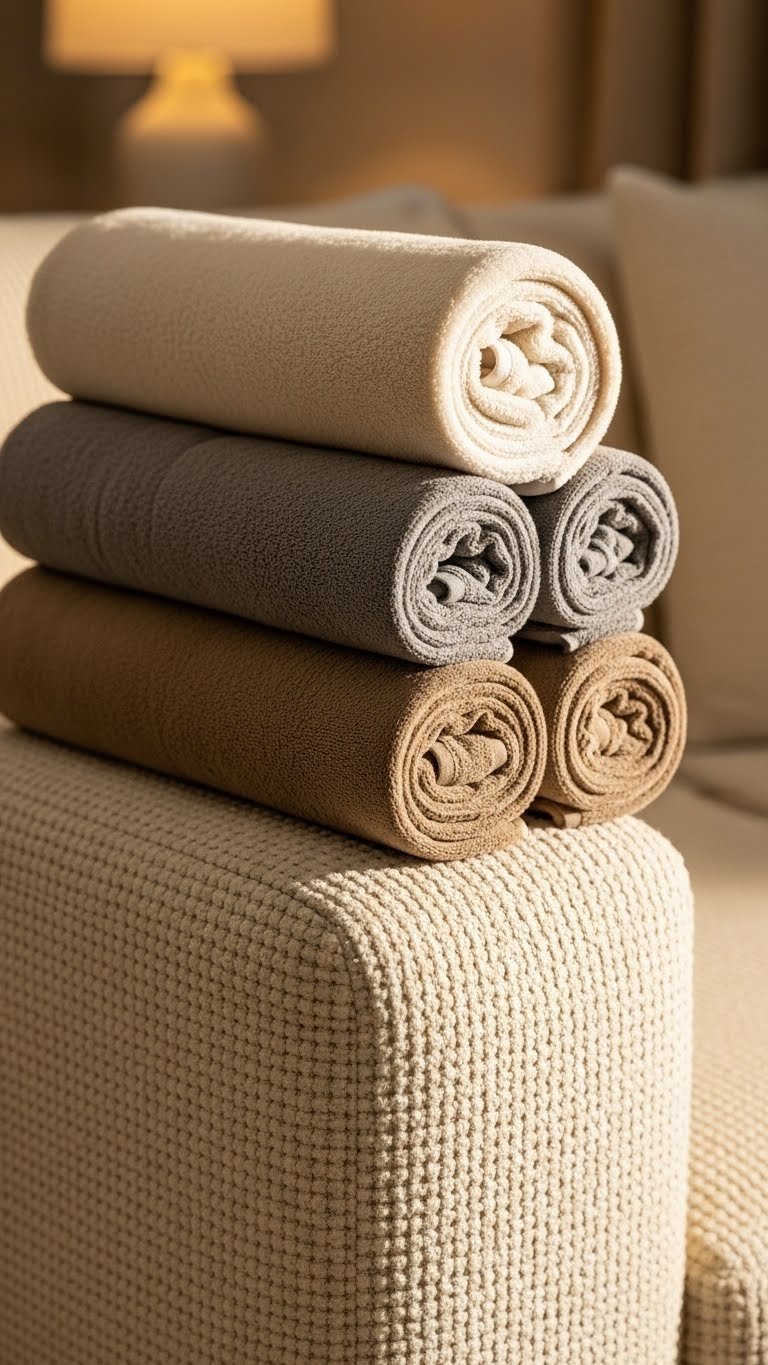
    When blankets are folded in a basket across the room, you never actually use them. Store them directly on your sofa arm where they’re one reach away from cozy.

    Grab a wooden blanket ladder or bar ($30–$80 on Amazon or Target) and place it against the sofa arm or back. Layer three to four throws in coordinating neutrals (cream, gray, camel) or add one bold pop. Quality throws run $20–$60 each. The visual layers also photograph beautifully, which is why this styling trick gets saved constantly on Pinterest.

    If you don’t have wall space for a ladder, simply drape throws over the sofa arm in a casual, accessible way. It looks intentional and keeps comfort within arm’s reach.

    This one change makes your sofa feel infinitely more inviting. People actually sit longer when layers are nearby and ready to grab.


    4. Invest in a Curved Sofa Shape for Organic Flow

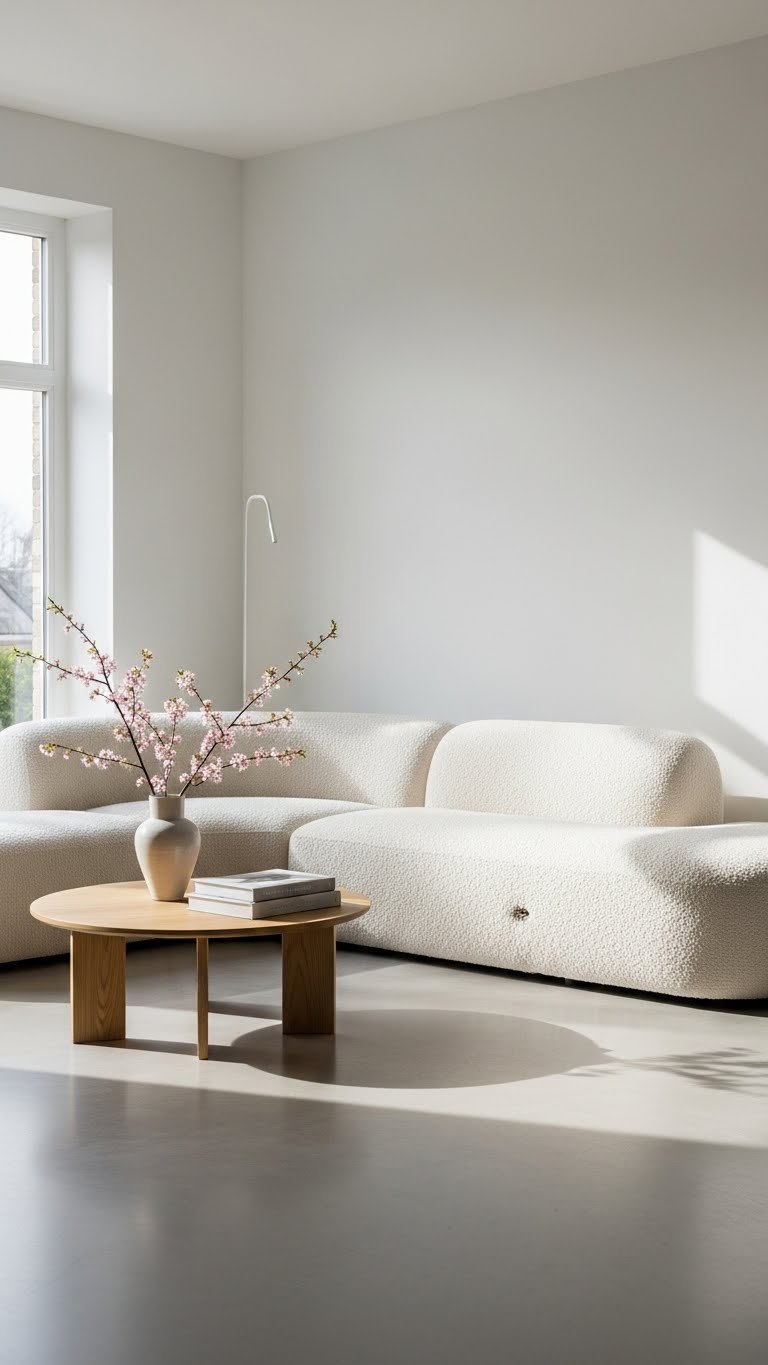
    Straight-line sofas can feel sterile and formal. A curved sofa—whether it’s a subtle arc or dramatic serpentine shape—softens your entire room and invites conversation.

    Curved sofas are trending hard in 2025 for good reason. Options like Blu Dot’s Standard ($1,500–$2,200), Article’s Sven with its rounded arms ($700–$1,400), and Wayfair’s Room by Iko curved sectional ($900–$1,600) range from gentle bends to dramatic curves. These aren’t just beautiful; they arrange people naturally around a center point instead of facing a wall.

    If a full curved sofa doesn’t fit your budget or space, start with a curved corner piece or chaise ($400–$800) to introduce the shape. Pair it with a rounded coffee table ($300–$600) to amplify the organic feel.

    You’ll be amazed how a curved line changes the energy. People gravitate toward the sofa more often, and your space feels less boxy and more designed.


    5. Select Performance Fabric for Durability Without Sacrifice

    Performance fabrics sound technical, but they’re basically fancy durability. They resist stains, pet claws, and spills while still looking and feeling high-end.

    Brands like Crypton, Sunbrella, and Dyenamide are woven to repel liquids and resist fading. Sofas upholstered in these fabrics cost about $200–$400 more than standard fabric versions, but they last twice as long if you have kids or pets. Look for sofas at Article, Wayfair, and Living Spaces that specifically mention performance fabric in the product details.

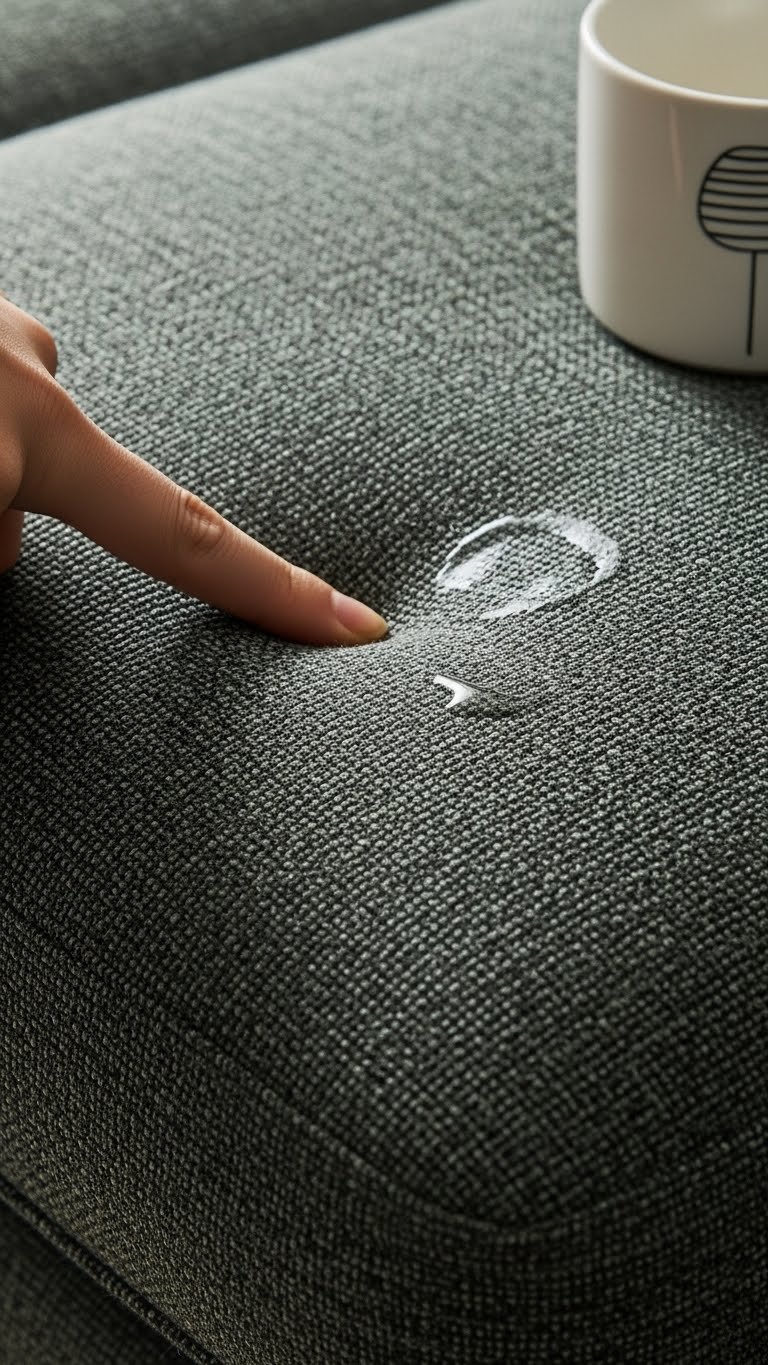
    A performance fabric sofa ($700–$1,500) with kid-proof credibility actually saves money long-term because you’re not replacing it when juice spills happen. Simply blot with a damp cloth and move on—no guilt required.

    When you can stop stressing about spills, you actually relax. The sofa becomes a place to live in, not just look at.


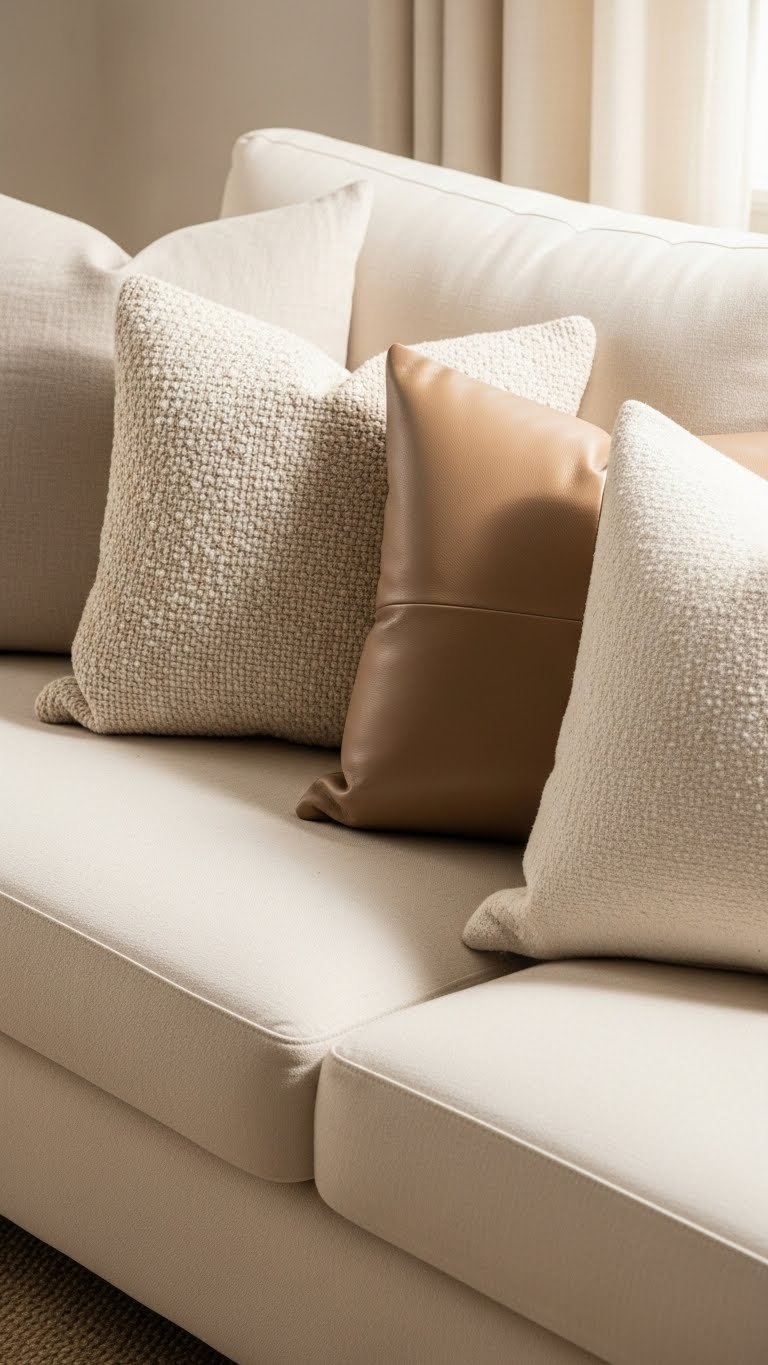
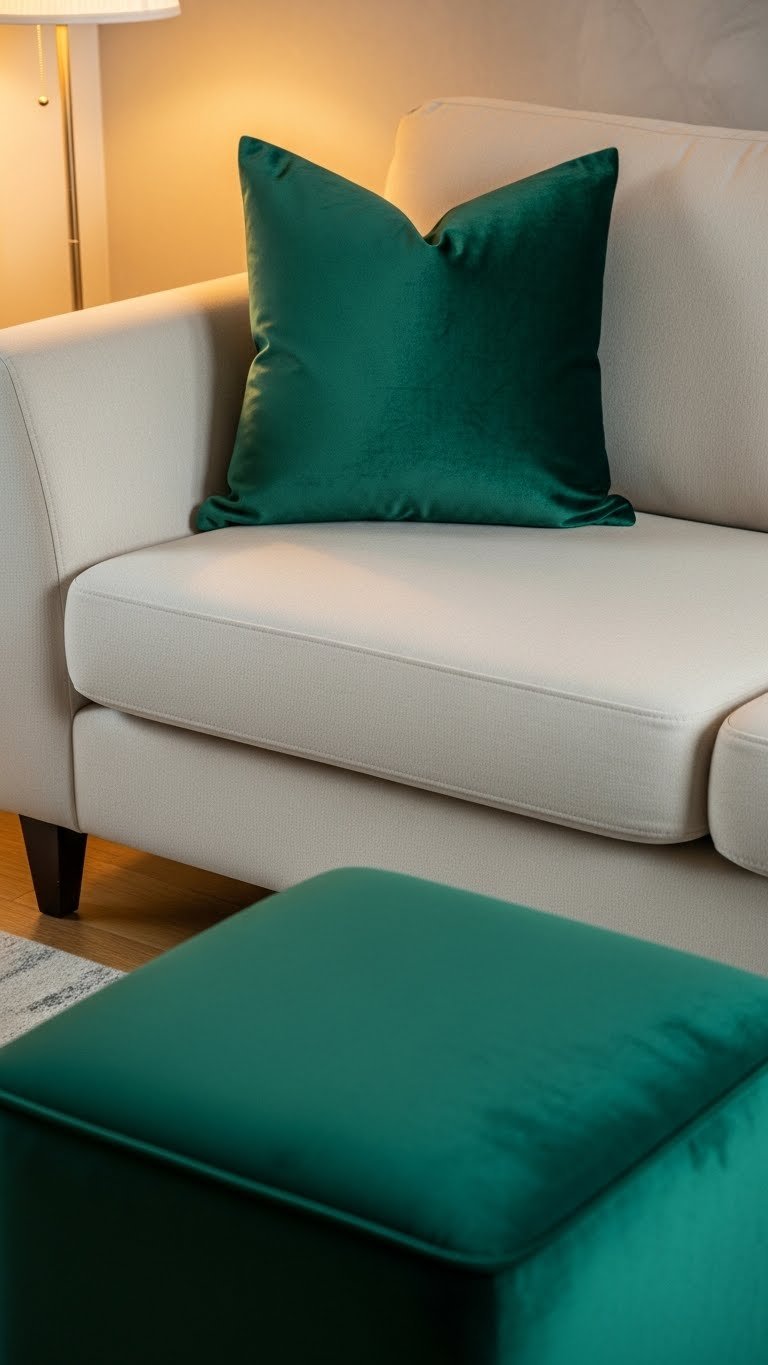
    6. Mix Neutral Base with One Bold Accent Pillow

    A completely neutral sofa can feel safe but boring. A single bold accent pillow adds personality without committing to a color you might tire of.

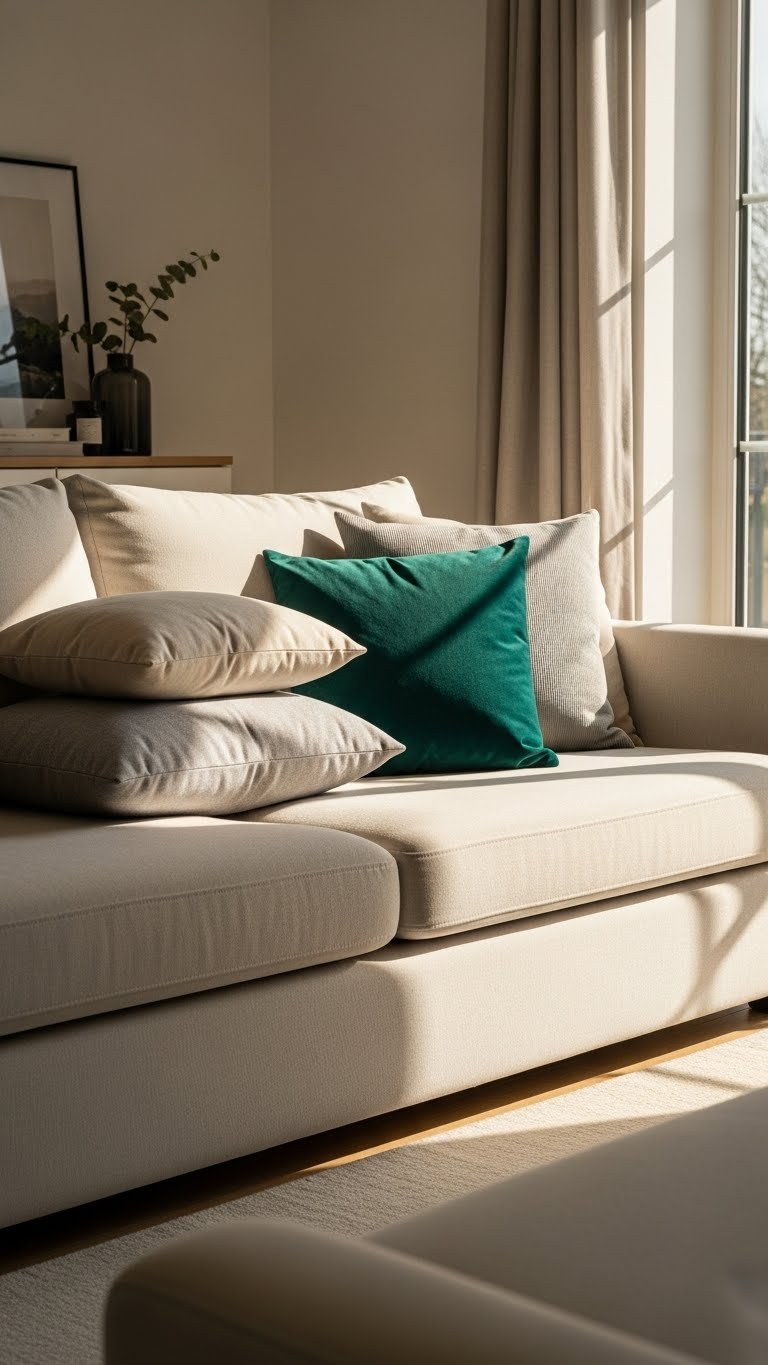
    Start with a neutral sofa in cream, camel, or soft gray ($600–$1,200). Then add one statement pillow in deep teal, burnt orange, or jewel purple ($25–$60). Keep everything else—remaining pillows, throws, walls—in warm neutrals. This combination feels intentional and high-design without being risky.

    Pillows are easy to swap seasonally, so you can change your accent color from winter to spring without guilt. Brands like Etsy, Schoolhouse, and CB2 have incredible statement pillows in the $30–$80 range that justify the splurge.

    This simple styling move makes your sofa feel curated and personal. It’s the difference between a furniture showroom look and an actual home.


    7. Layer a Low-Profile Metal Frame Under Your Sofa

    Deep-seat sofas can feel grounded but also heavy. Elevating it slightly on low-profile metal legs makes the room feel airier and makes cleaning underneath actually possible.

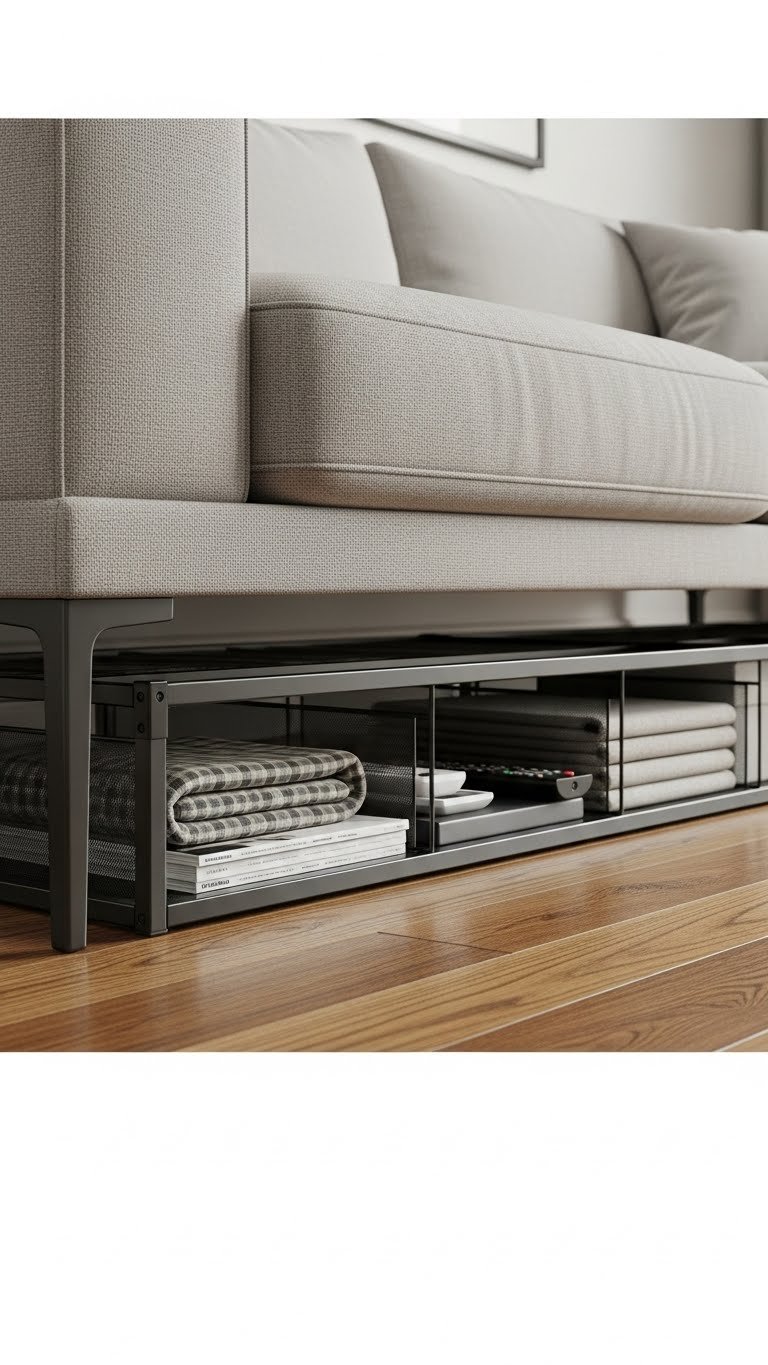
    If you’re shopping new, choose a sofa with legs (vs. a skirted base) starting around $600 for budget options and up to $2,000+ for high-end pieces. The visual lift is worth it. If you already have a skirted sofa, you can retrofit legs ($80–$150 from hardware stores) or place a thin storage frame under the front ($40–$70) to add height and functionality.

    Metal legs also make your sofa feel modern and less “stationary furniture” and more “collected over time.” Pair with a flatweave rug to further define the zone.

    This small adjustment completely changes how your sofa sits in the room. It looks intentional, feels lighter, and actually reveals your floor instead of hiding it.


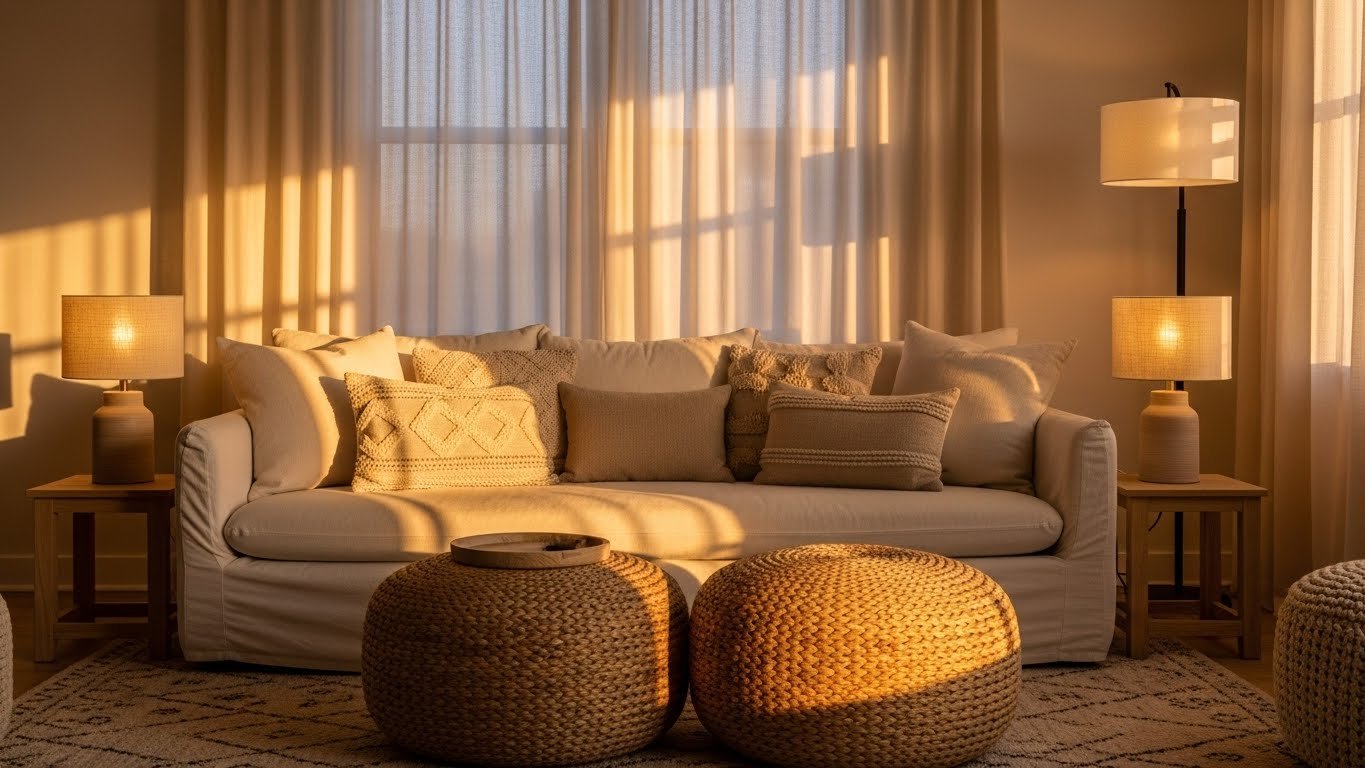
    8. Add an Ottoman or Pouf for Extended Lounging

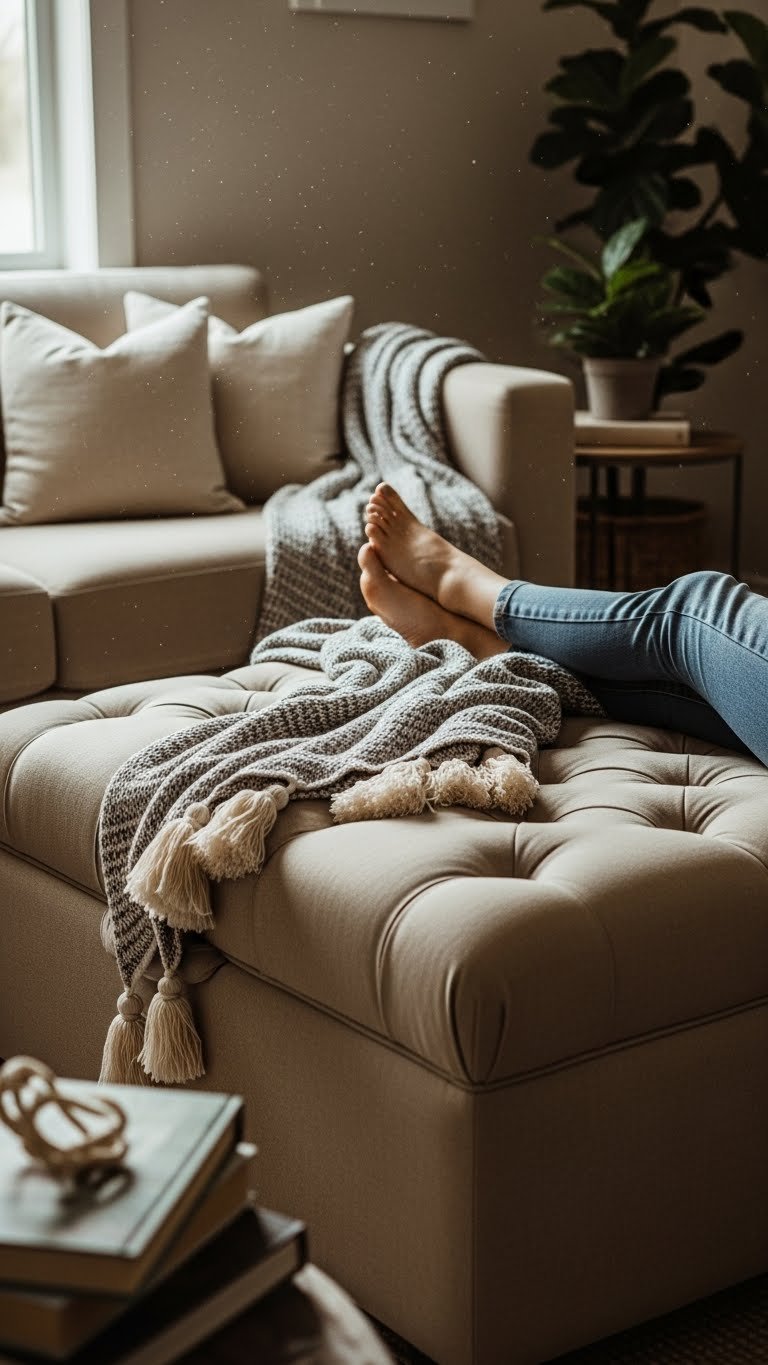
    A deep sofa seat is perfect, but without a place to extend your legs, you’re still sitting upright. An ottoman changes that equation completely.

    Match your ottoman to your sofa for visual flow (same fabric, similar style) or go contrasting for interest. A quality ottoman runs $200–$500 at brands like Article, West Elm, or Wayfair. Budget options like IKEA or Target offer solid ottomans for $80–$200 that work perfectly fine for lounging. Choose one with storage ($150–$350) if space is tight—you get comfort plus hidden organization.

    Pro tip: Look for ottomans on wheels or lightweight designs ($100–$200) so you can move them around based on how you want to lounge. Sometimes it’s feet-forward relaxation; sometimes it’s side-perching.

    Once you have somewhere to stretch out, your sofa time extends naturally. You’ll sit longer, relax deeper, and actually use your living room as intended.


    9. Upgrade Your Sofa Legs to Mid-Century or Brass

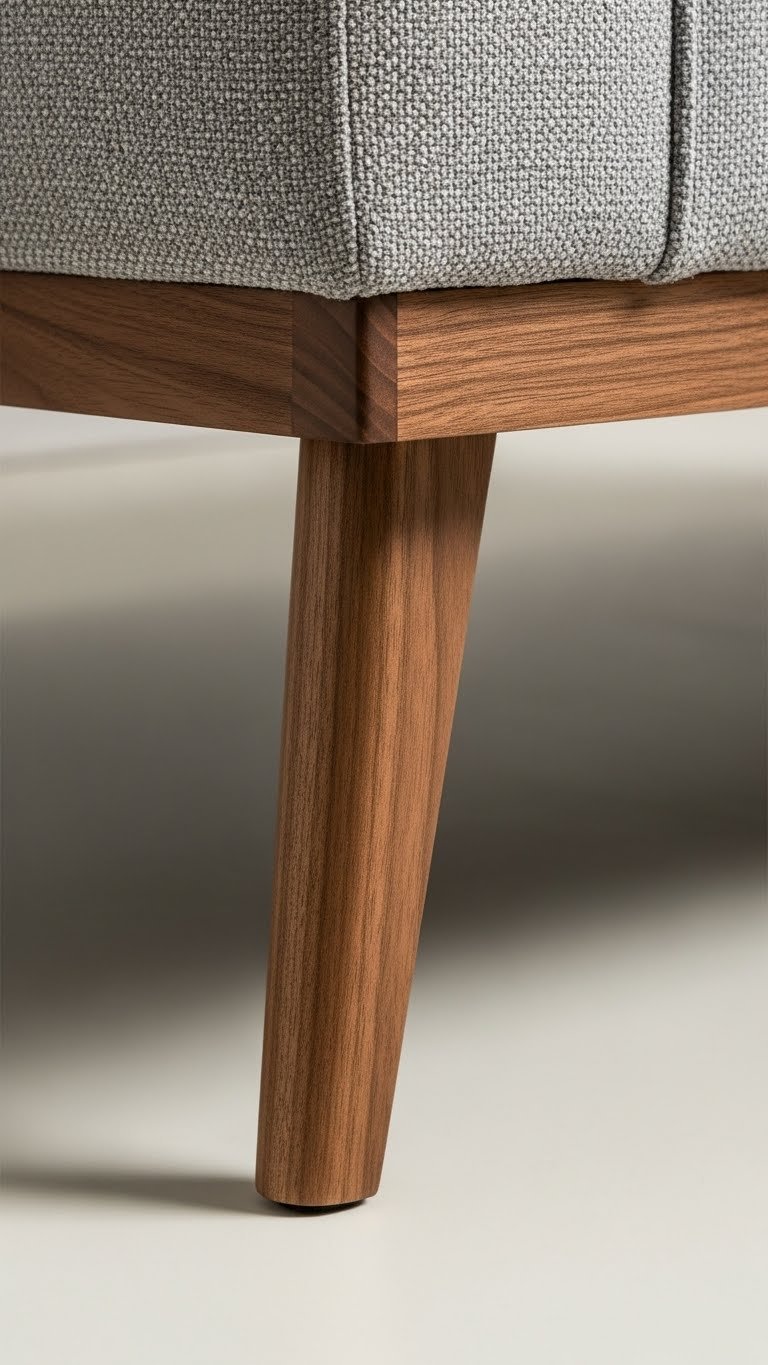
    Standard black plastic legs are invisible—and that’s the problem. Good sofa legs anchor the whole piece and say “I invested in quality.”

    If you’re buying new, specify legs you love when ordering. Many brands like Room & Board, Article, and Blu Dot offer walnut, brass, or tapered wooden legs at no extra cost. If you already own a sofa with sad legs, replaceable leg kits ($40–$100) are available online; installation takes 15 minutes with a hex wrench.

    Brass legs ($60–$150 to retrofit) feel expensive even when they’re not. Mid-century wooden legs ($50–$120 to replace) ground the sofa and tie it to other furniture effortlessly.

    Visible, quality legs make your sofa look designed, not generic. It’s a detail no one consciously notices, but everyone feels.


    10. Use Bouclé or Boucled Texture for Lived-In Luxury

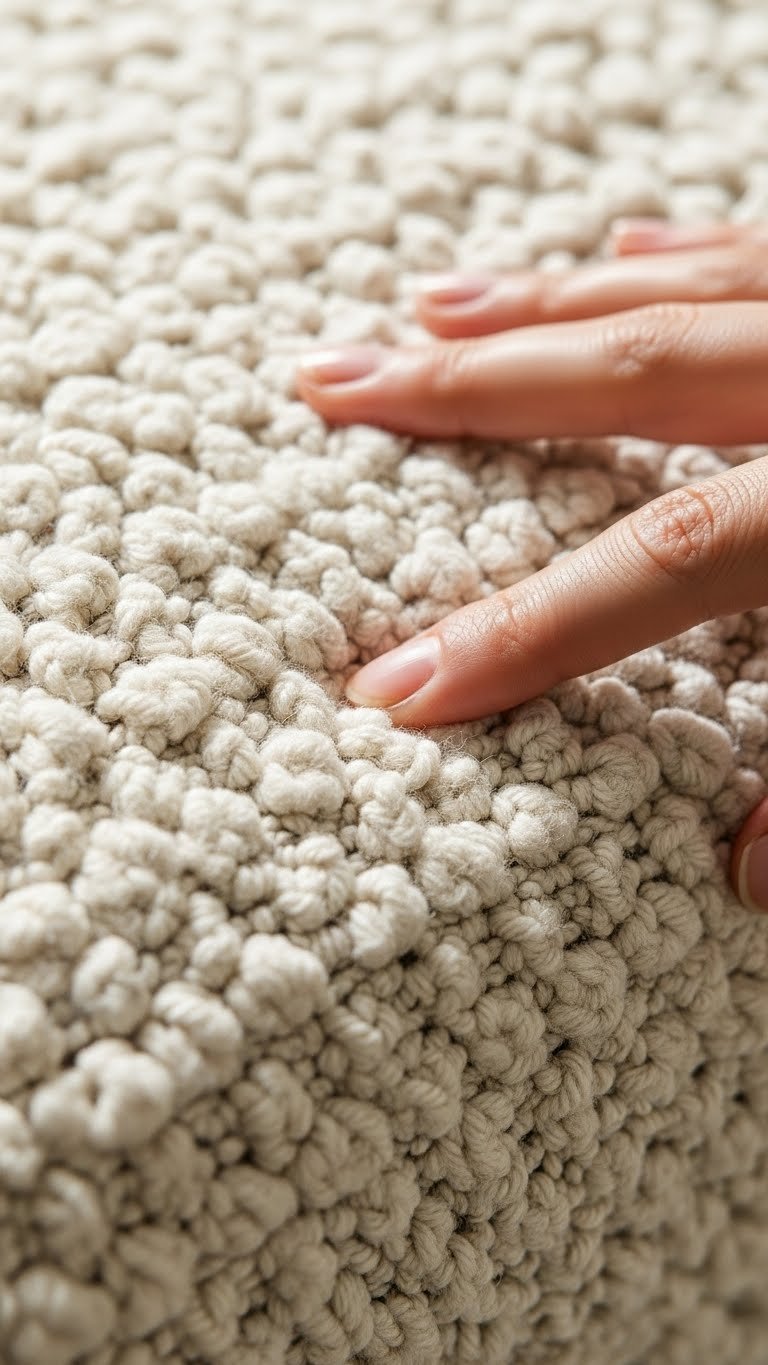
    Bouclé feels expensive because it is expensive, but it also looks like you live in a relaxed, beautiful home—not a decorated show house.

    Bouclé sofas in cream, sand, or warm gray are trending because the texture hides dirt (kids, pets, living) while the neutral tone stays timeless. A bouclé sofa typically costs $800–$2,000 depending on depth and customization. If that’s outside your budget, bouclé throw covers ($80–$150) over a plain sofa fake the look convincingly. Brands like Etsy sellers and Schoolhouse sell stunning bouclé covers that transform anything underneath.

    Pair bouclé with natural wood accents and brass hardware for a coordinated, intentional look. The texture does the heavy lifting stylistically, so everything else can stay simple.

    People will comment on how luxe and comfortable your sofa looks. Bouclé is the shortcut to that “I have excellent taste” vibe.


    11. Customize Your Sofa Fill Weight to Your Preference

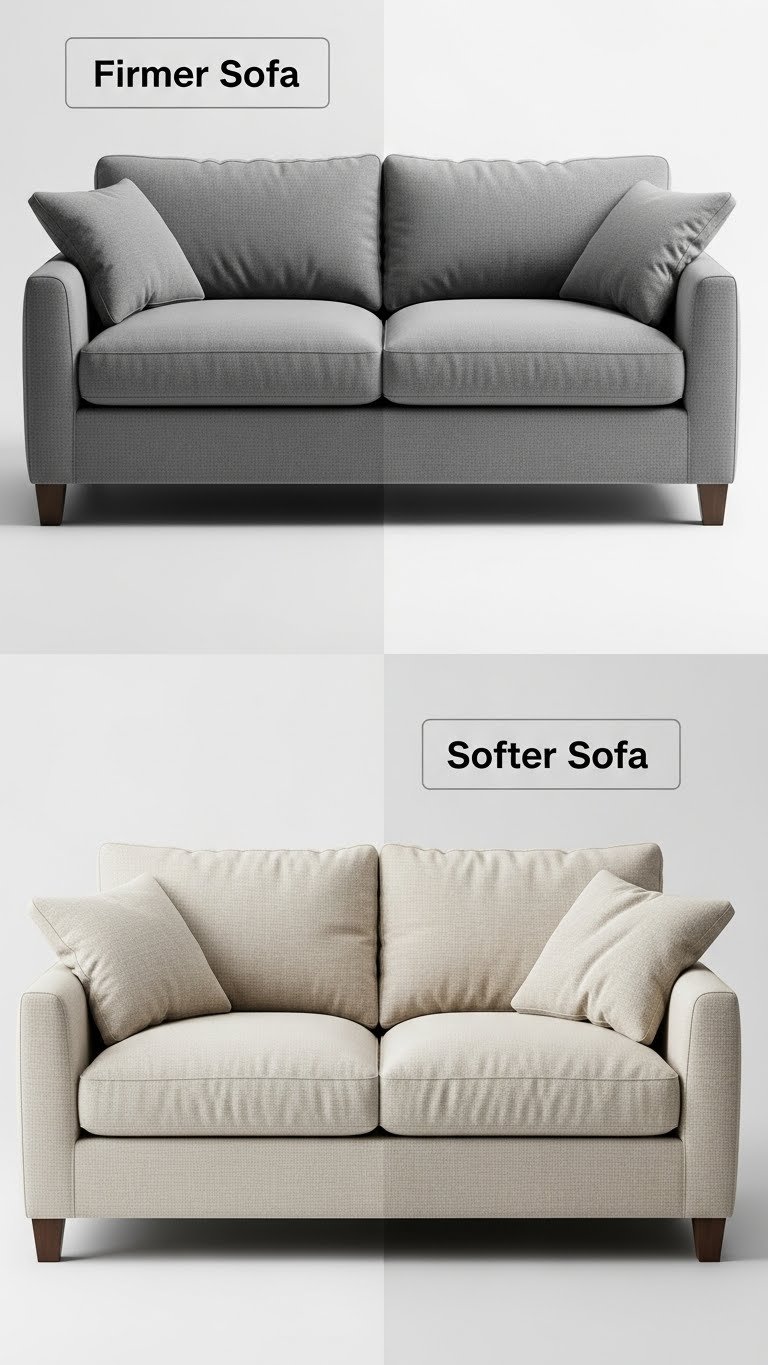
    Some people want firm support; others want to sink in like a cloud. Custom sofas let you choose the fill weight to match how you actually relax.

    Brands specializing in custom sofas—like What A Room, Joybird, and Maiden Home—let you select firmness levels (usually “down,” “down-blend,” or “high-density foam”) during ordering. This typically adds $200–$400 to the price but ensures the sofa feels exactly right for your body. Direct-to-consumer brands like Burrow ($800–$1,200) and Article also offer some customization at mid-range prices.

    If custom ordering feels overwhelming, ask retailers for firmness specs before purchasing. Test in-store if possible, or choose brands with hassle-free returns (most online retailers offer 30–60 day returns).

    Getting to choose your sofa’s exact feel means you’ll actually love it years later instead of wishing you’d gone firmer or softer. It’s worth the decision-making effort.


    12. Add Rolled Pillows to the Sofa Arm for Support

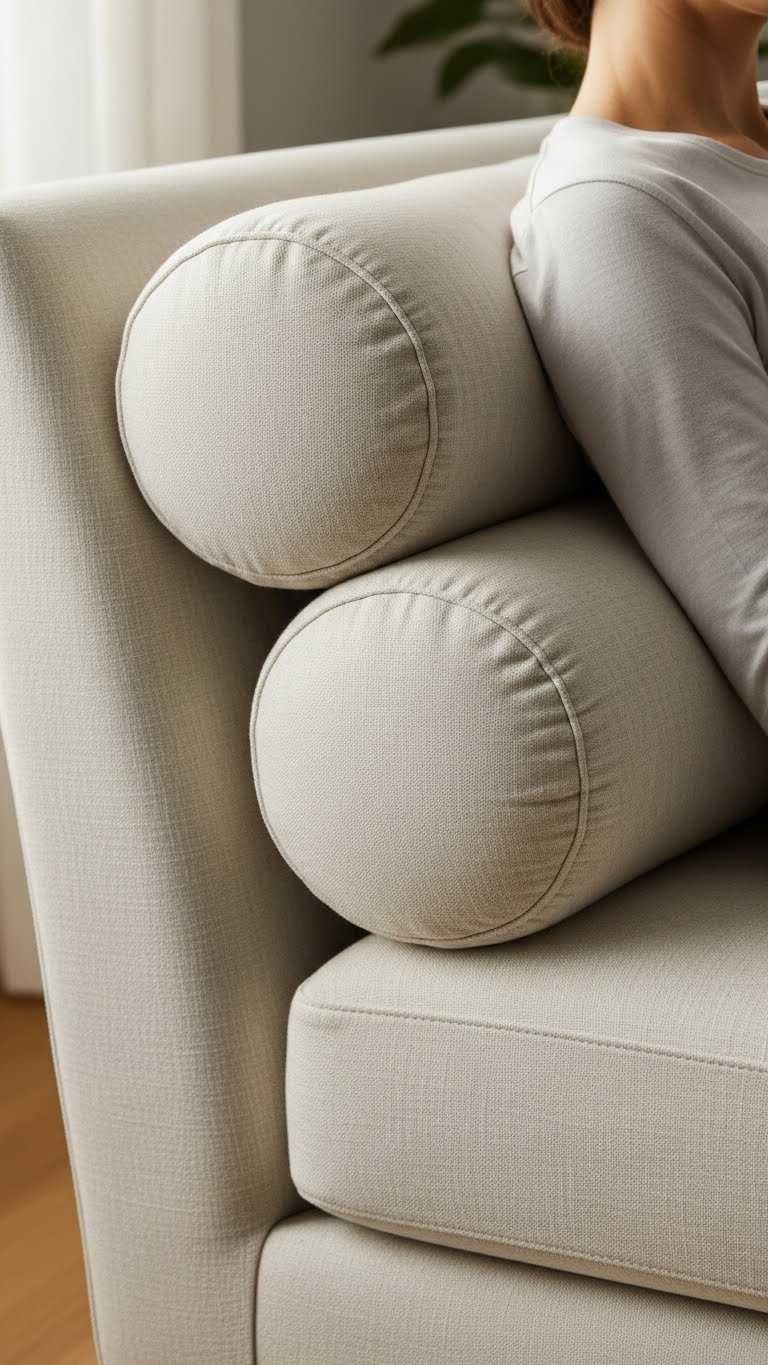
    When you’re lounging sideways on the sofa (which everyone does), a rolled pillow gives your back and neck crucial support without requiring a full body pillow.

    Place one to two bolster pillows ($30–$70 each) or rolled lumber pillows ($20–$50) along the sofa arm. These cylindrical shapes are specifically designed for this purpose. Natural linen or cotton options ($40–$80) feel crisp and luxe, while polyester ($20–$40) is more casual. Customize by choosing colors that coordinate with your sofa or throws.

    Rolled pillows also create visual interest and depth when styled correctly. Lean them at angles for a relaxed, gathered look that photographs beautifully.

    You’ll notice the difference the first time you lounge sideways. Proper support means you can actually rest, not just recline uncomfortably until your neck hurts.


    13. Choose a Sofa in Sage or Muted Green for Wellness

    Color psychology is real, and muted greens are proven to calm the nervous system. If you’re ready to move beyond neutral, soft green is the perfect investment.

    Muted greens like sage, olive, and celadon are trending precisely because they feel both trendy and timeless. A sage sofa ($800–$1,800) pairs beautifully with warm wood, white walls, and brass accents. Brands like Article, West Elm, Crate and Barrel, and Room & Board all offer green options in various depths.

    If committing to green feels too bold, start with a green throw pillow ($30–$50) or green sectional chaise ($400–$800) to test the color in your space first. You can always add more green later.

    A calming sofa color actually makes you want to spend time in your living room. You’ll sit more, relax more, and notice the subtle stress-relief that comes with the right color surrounding you.


    14. Incorporate Modular Pieces for Open-Plan Homes

    Open-plan homes need furniture that zones spaces without walls. Modular sofas do exactly that by creating visual and functional separation.

    A modular sectional like IKEA’s Kivik ($400–$600), Article’s Oskar ($900–$1,400), or Living Spaces’ sectionals ($800–$1,600) lets you arrange pieces to fit your exact layout. You can build an L, a U, or a straight line depending on your needs. Most modular pieces are delivered within two weeks and arrive in manageable-size boxes (usually weighable by one person).

    If you rent, modular sofas are lifesavers because you can rearrange or downsize easily. Move to a smaller apartment? Sell a few modules and keep the essentials.

    With modular, you’re not locked into one configuration. Change your layout seasonally or whenever the mood strikes—flexibility that standard sofas simply don’t offer.


    15. Layer a Textured Throw Blanket in Linen for Relaxed Style

    Linen throws look expensive and intentional while actually being simple and low-maintenance. Unlike velvet throws ($40–$100) that show wrinkles, linen wrinkles beautifully—they’re part of the charm.

    A quality linen throw runs $50–$120 from brands like Etsy, Minted, Schoolhouse, or Restoration Hardware. Natural linen ($60–$100) breathes and ages gorgeously. Linen-blend ($30–$60) offers affordability. Wash on gentle and hang dry to keep the texture crisp.

    Drape your linen throw casually—never too-neat, never too-messy. The goal is “I grabbed this for a nap” not “this was photostyled by a designer.”

    A linen throw transforms a basic sofa into one that says “I care about comfort and aesthetics.” It’s the finishing touch that makes the whole room feel considered.


    16. Pair Your Sofa with a Rounded Coffee Table

    If your sofa is curved or soft-edged, a boxy coffee table breaks the design momentum. Round and curved tables complete the look.

    Shop for rounded coffee tables ($150–$600) at Article, Wayfair, CB2, or Target. Look for shapes that aren’t completely circular—slightly oblong or free-form ($200–$400) feel more interesting than perfect rounds. Materials like marble ($400–$800), wood ($150–$400), or travertine ($500–$1,200) age beautifully and tie to other room elements.

    If you rent or want to swap easily, peel-and-stick rounded table wraps ($30–$60) transform boxy tables temporarily. Budget-conscious? IKEA’s Gladom table ($30–$50) looks surprisingly intentional with the right styling.

    Rounded shapes reflect and absorb light differently than hard corners, making your entire sitting zone feel softer and more inviting. One table change influences how the whole room feels.


    17. Select a Deep-Seat Sectional for Conversation

    A sectional—especially a deep-seat version—naturally encourages people to stay longer and spread out. It’s not formal; it’s functional and cozy.

    A deep-seat sectional like Article’s Sven ($1,100–$1,800), Wayfair’s Sectionals ($600–$1,500), or Living Spaces’ custom sectionals ($900–$2,000) seat more people comfortably than a standard sofa and chaise combo. Choose one with at least 38-inch seat depth and a chaise component for leg-stretching.

    Sectionals do require more space, so measure your room before buying. Some brands offer free returns within 60 days if it doesn’t work, which takes pressure off the decision.

    Pro tip: Many sectionals come with removable cushions ($50–$100 each as add-ons) so you can customize comfort over time.

    A sectional transforms your living room from “place people visit” to “place where gatherings naturally happen.” People stay, linger, and actually relax together.


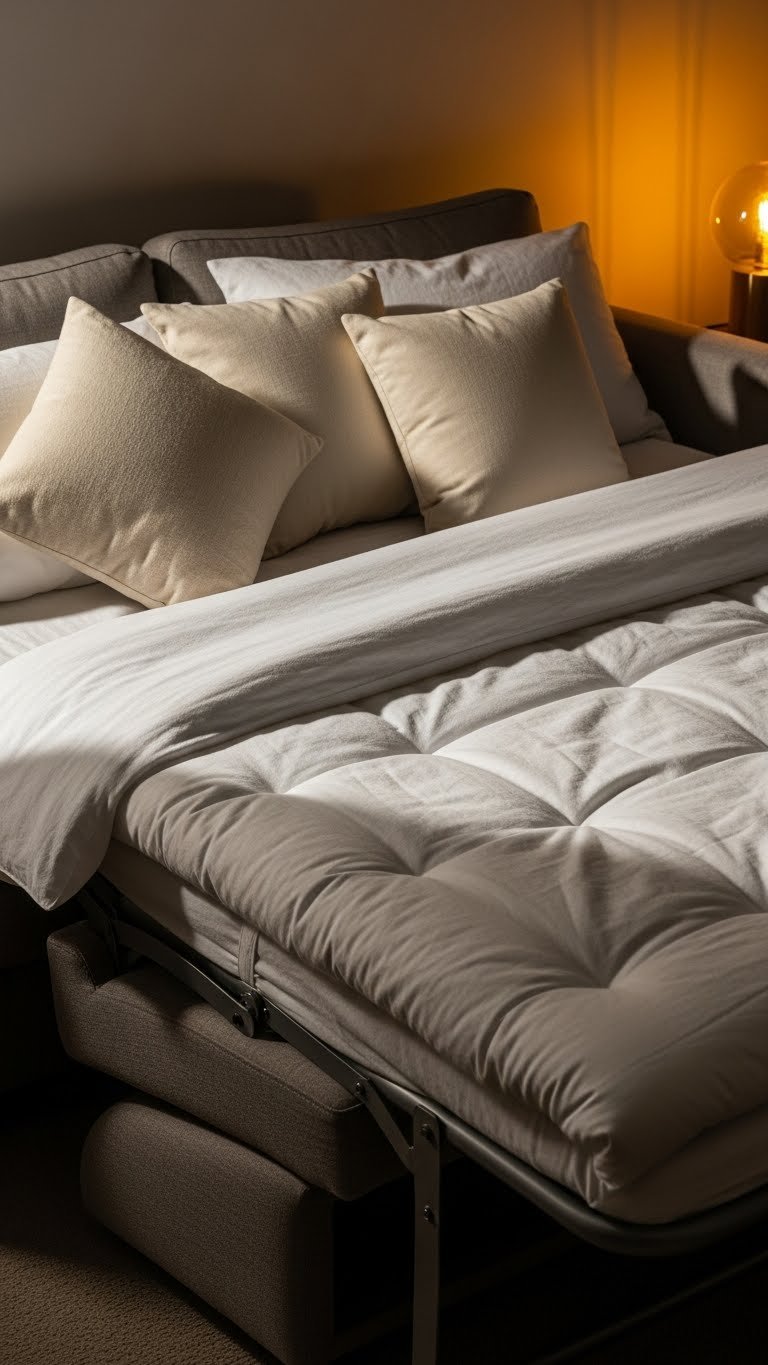
    18. Invest in a Quality Mattress Topper for Guest Comfort

    If your sofa doubles as a guest bed, a mattress topper transforms it from “uncomfortable air mattress vibe” to “actually restful sleep.” This is a game-changer investment.

    A 4–6 inch memory foam or latex mattress topper ($150–$350) turns even a mediocre sofa bed into something guests won’t dread. Top with quality bedding ($80–$200 for sheets and pillows) and suddenly you have a legitimate guest bed. Brands like Helix, Purple, and Amazon Basics ($100–$250) offer solid toppers.

    If your sofa bed is old and lumpy, a topper ($200–$300 with quality bedding) is way cheaper than replacing the whole sofa ($800–$2,000).

    Guests actually sleep well instead of waking stiff and resentful. When your sofa bed is genuinely comfortable, people are more likely to visit—and you’ll feel generous hosting them.


    19. Use Coordinated Throw Pillow Covers for Easy Refreshes

    Throw pillow covers ($15–$40 each) let you refresh your sofa’s look without buying new pillows every season. This is the budget hack that actually works.

    Buy solid-colored pillow covers in bulk from Etsy ($12–$30 each), Target ($15–$25), or Wayfair ($20–$40), then coordinate them with throws and art. Swap covers seasonally or whenever you want a change—wash on gentle cycle and rehang. Keep 4–6 covers on rotation so you always have something clean.

    Pro tip: Buy pillow inserts separately ($5–$15 each) so you’re only replacing covers, not entire pillows. This approach costs $40–$100 for four quality covers instead of $150–$200 for complete new pillows.

    You’ll feel less committed to one sofa look when you know covers are easily swappable. This freedom means you’ll actually experiment with styling instead of settling.


    20. Add a Sofa Console Table Behind for Beverage Storage

    If your sofa doesn’t sit against a wall, a console table behind it ($100–$300) creates a functional bar zone and defines the seating space. This works particularly well with curved or sectional sofas positioned in open rooms.

    Choose a narrow console ($80–$200 at IKEA, Target, or Wayfair) that’s roughly the sofa’s width. Natural wood, metal, or a hybrid finish ($120–$250) keeps it feeling light and intentional. This surface holds drinks, a lamp, decorative objects, and remote controls—everything you’d actually use while lounging.

    Renter-friendly tip: A console positioned behind a sofa (not attached) works with rental agreements and moves when you do.

    This simple addition makes your sofa feel more finished and functional. You’ll use the space more intentionally when there’s actual surface area for living.


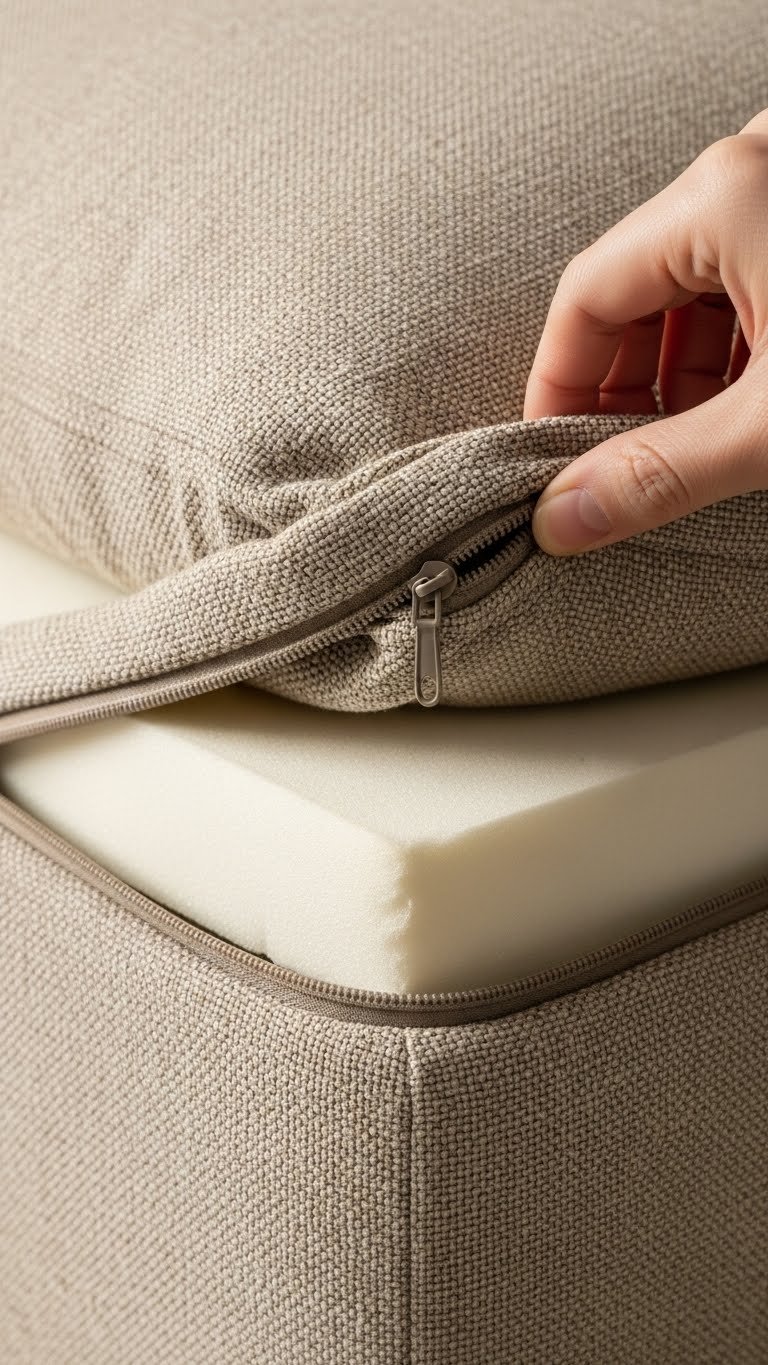
    21. Choose a Sofa with Removable, Washable Cushion Covers

    If you have kids, pets, or just don’t love stressing about spills, removable cushion covers ($20–$50 extra per cover when ordering) are non-negotiable.

    Brands like Article, Joybird, Maiden Home, and Burrow all offer removable, washable covers as standard or a low-cost upgrade. When something spills, simply unzip, remove, and wash on gentle—usually ready to rehang within 24 hours. This feature alone justifies choosing one brand over another.

    If you already have a sofa without removable covers, universal cushion covers ($30–$70) are available on Amazon and Etsy that fit most standard cushion sizes. They won’t be perfect, but they’re better than nothing.

    Living with young kids or pets becomes infinitely less stressful when you know spills aren’t permanent. Your sofa stays looking decent instead of developing mysterious stains over time.


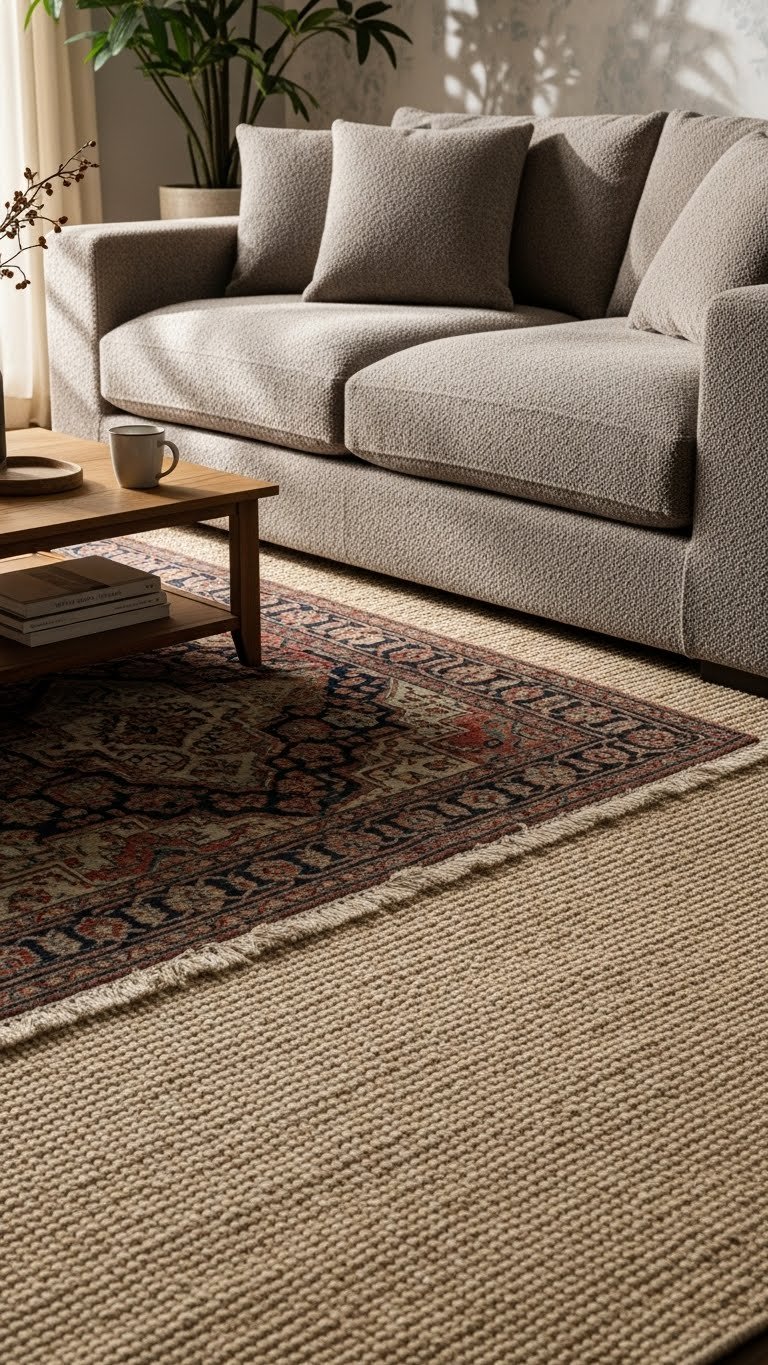
    22. Layer a Vintage or Heirloom Rug Under Your Sofa

    A rug grounds your sofa and defines the seating zone, especially in open-concept spaces. Vintage or heirloom-style rugs add character that feels collected over time.

    Layer a larger neutral base rug ($150–$400 in natural jute or cotton) with a smaller patterned or vintage rug ($200–$800) layered on top. This approach creates visual depth and feels more intentional than a single rug. Budget options at IKEA ($40–$120), Wayfair ($80–$300), and Rugs USA ($100–$400) offer solid starting points. Investment pieces from Etsy vintage sellers ($300–$1,000) age beautifully and feel unique.

    The layered approach also hides stains—pattern and multiple rugs mean accidents disappear into the design.

    Your sofa instantly feels anchored and designed once it has a rug underneath. The furniture looks intentional rather than randomly placed.


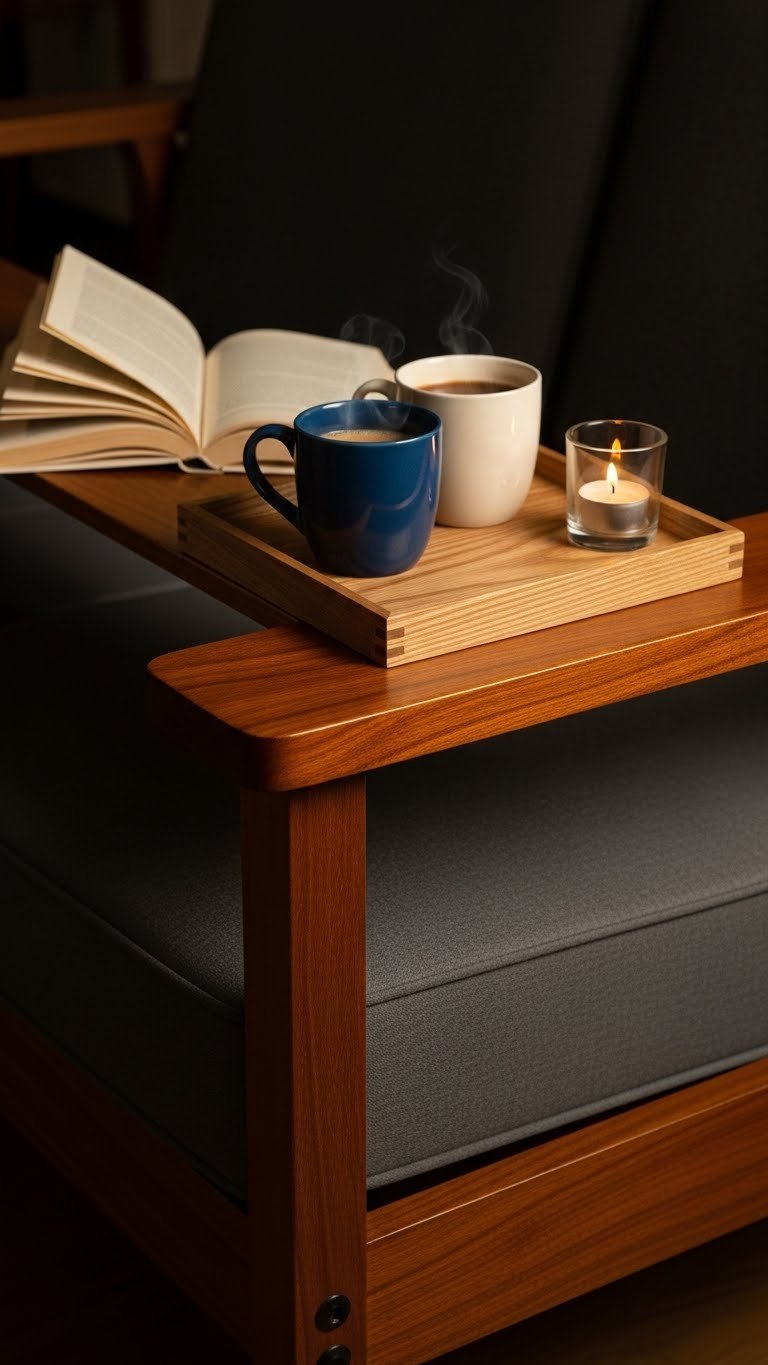
    23. Add a Sofa Arm Tray for Drinks and Small Objects

    A sofa arm tray ($25–$60) solves the “where do I put my drink?” problem elegantly. These slim trays sit flush on the sofa arm and hold a mug, small plate, phone, or remote without looking cluttered.

    Shop for wooden or woven arm trays at Target ($20–$40), IKEA ($15–$30), Wayfair ($30–$50), or Etsy ($30–$70). Choose sizes that match your sofa arm width. Natural wood ($30–$50) or woven rattan ($25–$45) coordinates with most aesthetics.

    If you’re renting or prefer not to commit, woven placemats ($8–$15) can temporarily sit on the arm for the same effect—just less structured.

    You’ll suddenly notice how much easier it is to enjoy your sofa when there’s a designated spot for your beverage. Small conveniences change how much time you actually spend there.


    24. Mix Velvet Accent Pieces with Your Neutral Deep-Seat Sofa

    Velvet feels luxe but can overwhelm a whole sofa. As accents on a neutral base, velvet adds richness without taking over.

    Add one velvet pillow ($30–$70) or velvet ottoman ($150–$350) in a jewel tone (emerald, sapphire, deep burgundy) to your neutral sofa. Velvet catches light differently than other fabrics, so it reads as intentional and high-design even in small quantities. Brands like Article, CB2, Schoolhouse, and West Elm offer stunning velvet accents ($40–$150).

    Pro tip: Choose performance velvet ($50–$100 for accents) over standard velvet if you’re worried about durability. It resists wear and pilling.

    This combination reads as “curated and intentional” while staying practical and comfortable. You get the luxe factor without any of the fussiness.


    25. Arrange a Reading Nook Within Your Sofa Space

    Instead of spreading across the entire sofa, designate one corner or end as your personal reading sanctuary. This gives you permission to claim the space and actually use it intentionally.

    Gather 3–5 throw pillows ($15–$40 each) in complementary textures and colors, stack them in one corner, and drape a throw blanket ($30–$70) nearby. Position a small side table ($50–$150) with a lamp ($40–$100) and a stack of books. Use a corner shelf ($30–$80) if wall space allows, or simply keep books on the table surface.

    The goal is: everything you need for a reading session is within arm’s reach. No getting up, no searching for your bookmark, no distractions.

    This tiny interior design decision completely changes your relationship with the sofa. Suddenly it’s not just a place to collapse—it’s a destination where you intentionally go to rest.


    26. Invest in Professional Sofa Cleaning Annually

    A deep-seat sofa that you actually live on will eventually look lived-in. Professional cleaning ($150–$300 annually) keeps it looking fresh without replacing it.

    Many dry cleaners and upholstery specialists offer annual or bi-annual deep cleaning ($150–$400 depending on sofa size and fabric). They use specialized equipment that doesn’t leave it soaking wet—usually dry within 24 hours. Some premium services ($200–$400) include fabric conditioning, stain treatment, or odor removal.

    If professional cleaning feels expensive, at-home upholstery cleaning rentals ($25–$50 for a day) from grocery stores or hardware shops are solid budget alternatives. You’ll be surprised how much cleaner it looks with proper equipment versus your vacuum.

    Your sofa will look intentionally lived-in rather than neglected. Regular care extends its life by years and keeps it feeling fresh without requiring replacement.


    Save this post for your next sofa shopping trip or refresh project. Pick one idea to try this week—whether it’s measuring for seat depth, adding a throw pillow, or testing a rounded coffee table shape. Small comfort upgrades add up fast, and your living room deserves to feel like the sanctuary you actually want to use.

  • 27 Desk Aesthetic Ideas That Boost Focus & Style

    27 Desk Aesthetic Ideas That Boost Focus & Style

    Your desk is where productivity meets personality—yet so many of us work at spaces that feel uninspiring or cluttered. A thoughtfully styled desk doesn’t just look good; it actually helps you focus, stay motivated, and tackle your work with intention. Whether you’re working from home, managing a side hustle, or studying for exams, your desk environment matters more than you’d think. In this guide, we’re sharing 27 desk aesthetic ideas that combine style with function—from budget-friendly hacks to investment pieces that’ll make you genuinely excited to sit down and work. You’ll discover how to declutter, add personality, improve lighting, and create a space that’s as productive as it is beautiful. Let’s turn your desk into a place you actually want to spend time at.

    1. Add a Desk Lamp With Warm Lighting

    Poor lighting kills focus and strains your eyes—but a good desk lamp fixes this instantly. Look for LED desk lamps ($25–$80 from IKEA, Target, or Amazon) with adjustable brightness and color temperature options. Warm light (around 3000K) boosts creativity, while cooler light (5000K) sharpens focus during detail work.

    Position your lamp to the side of your monitor to avoid glare. Brands like TaoTronics, BenQ, or even IKEA’s TERTIAL offer excellent value. Installation takes zero time—just plug and place. Look for models with USB ports built in for charging phones or earbuds.

    The difference is noticeable within minutes: your eyes feel less tired, you can see your desk clearly, and the whole space looks warmer and more inviting.

    2. Use Vertical Storage to Keep Surfaces Clear

    Horizontal clutter kills focus, but vertical storage keeps your actual desk surface free for actual work. Install floating shelves ($20–$60 each from Home Depot or Wayfair) above your desk to hold books, plants, and supplies. If you’re renting, use adhesive shelves or lean-to options instead.

    Arrange items by category: reference books on one shelf, plants and decor on another, supplies in labeled boxes on a third. Use the wall space within arm’s reach for daily-access items; save higher shelves for decoration or archive storage. This setup takes 1–2 hours to install but requires zero permanent damage.

    You’ll gain back precious desk real estate while creating a backdrop that photographs beautifully and keeps everything within reach.

    3. Bring in a Potted Plant or Two

    A single plant boosts mood, cleans air, and softens an otherwise sterile workspace. Choose low-maintenance plants like pothos, snake plants, or ZZ plants ($10–$25 from local nurseries or garden centers). These thrive on neglect and don’t need constant watering.

    Place the plant where it gets indirect sunlight—on a shelf nearby or on your desk corner if you have one. Water every 1–2 weeks depending on the plant. A ceramic pot ($5–$15) makes it look intentional rather than functional.

    Adding greenery changes the entire vibe: your desk feels more alive, less sterile, and studies show plants actually improve focus and reduce stress.

    4. Swap Out Your Chair for Ergonomic Support

    Sitting in a bad chair ruins your back and kills your focus. Invest in an ergonomic desk chair ($120–$400) with adjustable height, lumbar support, and armrests. IKEA’s Järvfjället or Herman Miller’s work chairs offer different price points.

    Set your chair so your feet rest flat on the floor and your elbows are at 90 degrees when your hands rest on your desk. Spend the first 15 minutes getting the height right—it’s worth the adjustment time. Test in-store if possible, or buy from retailers with easy returns.

    Your back will thank you within days, and you’ll notice your focus improves because you’re not fidgeting or in pain.

    5. Create Zones for Different Tasks

    A “everything everywhere” desk creates decision fatigue. Divide your workspace into zones: computer zone (monitor, laptop, keyboard), writing zone (notebook, pens, paper), and inspiration zone (photos, mood board, inspiring objects). Use desk dividers or zone items by positioning them intentionally.

    Rearrange so frequently-used items are in the center, occasional-use items to the sides, and rarely-used items on shelves above. This costs nothing if you’re just reorganizing; add low-cost dividers ($10–$30) if needed for visual clarity.

    When everything has a place, your brain stops hunting for things and can focus on actual work. You’ll feel the difference immediately.

    6. Use a Desk Pad or Mat for Protection and Style

    A desk pad protects your surface, defines your workspace visually, and adds instant sophistication. Choose a felt or leather pad ($30–$80 from Etsy, Amazon, or West Elm) in a neutral tone or subtle pattern. Opt for larger sizes (at least 24″ x 36″) so everything sits on the pad.

    Pads reduce noise (keyboards and papers are quieter), protect against spills and scratches, and create a visual “work zone.” Install in 30 seconds—just lay it flat. Felt versions are budget-friendly ($20–$40); leather options ($60–$100) last longer and age beautifully.

    Your desk instantly looks more intentional, and you get the practical bonus of protection.

    7. Switch to Matching Desk Accessories

    Mismatched supplies feel chaotic; coordinated accessories feel intentional. Buy a desk accessory set or individual pieces in one material ($30–$100 total from Target, IKEA, or Wayfair)—white ceramic, marble, brass, or wood all work beautifully.

    Gather your pens, clips, and supplies into matching holders. Group by function: one holder for current-use pens, another for desk supplies, a tray for active papers. This usually takes 30 minutes to reorganize.

    When everything matches, your desk automatically looks curated and expensive, even if the pieces are budget-friendly.

    8. Add a Desk Organizer with Compartments

    Small supplies scatter and create mental clutter. A desk organizer ($15–$40 from Container Store, IKEA, or Amazon) with multiple compartments keeps pens, clips, sticky notes, and small items corralled and visible.

    Choose wood for warmth or white plastic for minimalism. Position it within arm’s reach so you can grab supplies without digging. Bamboo options ($20–$35) look premium and are durable; plastic organizers ($10–$20) are budget-friendly and lightweight.

    Setup takes 10 minutes: sort supplies into compartments and place the organizer on your desk. Suddenly everything feels accessible and organized instead of scattered.

    9. Invest in a Monitor Arm to Free Up Space

    A monitor arm elevates your screen, improves posture, and opens up desk real estate underneath. Choose an adjustable monitor arm ($40–$120 from Amazon, Best Buy, or Ergotron) with smooth height and tilt adjustment.

    This project takes 30–45 minutes for DIY installation; hire an IT person if needed ($50–$100 service fee). Position your screen so the top third is at eye level when sitting upright. The space underneath is now available for a shelf, keyboard tray, or just breathing room.

    You’ll reclaim desk surface, improve your posture automatically, and your workspace will feel less cluttered—bonus: cable management gets easier.

    10. Choose a Neutral Wall Color or Add Removable Wallpaper

    Your desk’s backdrop affects your focus and mood. Paint your desk wall in a neutral, calming color (cream, soft gray, sage green; $30–$60 for paint plus brushes) or use peel-and-stick wallpaper ($25–$50 from Spoonflower or Amazon) in a subtle pattern.

    Avoid bold colors directly behind your desk—they’re visually stimulating when you should be focusing. Soft, muted tones promote calm. If you’re renting, removable wallpaper is your best friend and takes 1–2 hours to apply.

    A cohesive wall backdrop instantly makes your desk setup feel like a real workspace, not a random corner. It’s also the best background for video calls.

    11. Set Up Task Lighting in Multiple Spots

    One light source creates shadows and uneven brightness. Add task lighting in layers ($20–$60 for a second fixture from IKEA or Amazon). Use a main desk lamp, then add a smaller clip lamp or strip light for side illumination.

    Position lights at 45-degree angles to avoid glare on your screen. Aim for a total brightness of 500 lux for detail work, 300 lux for general office tasks. Multiple light sources take 15 minutes to position and adjust.

    With better lighting, your eyes won’t strain, you’ll notice details you’ve been missing, and the space feels more professional.

    12. Add a Bulletin Board for Inspiration and Tasks

    A visual inspiration board keeps goals and motivation in sight without cluttering your desk surface. Hang a cork or fabric bulletin board ($15–$40 from Target, IKEA, or Wayfair) at eye level where you can glance up.

    Pin your top priorities, inspiring quotes, photos, deadline reminders, and a simple task list. This takes 30 minutes to set up initially; refresh it weekly. Use colorful pins or sticky tabs to color-code by priority or project.

    You’ll glance up naturally throughout the day and stay mentally anchored to what matters most. It’s an easy motivation boost that costs very little.

    13. Declutter and Donate Items You Don’t Use

    Before adding anything new, remove what doesn’t serve you. Spend 30 minutes doing a full desk purge: toss broken pens, outdated notes, random cables you don’t use, and items that don’t spark joy. Be ruthless.

    Keep only: your computer/laptop, one notebook, one pen set, one lamp, and 1–2 personal items (photo, plant, small decoration). Everything else goes to storage, donation, or trash. This takes 30–45 minutes but feels life-changing.

    A truly clear desk is mentally freeing and makes the remaining items feel precious and intentional rather than part of a pile.

    14. Upgrade Your Keyboard and Mouse

    A cheap keyboard and mouse add friction to your work and feel clunky. Invest in an ergonomic keyboard ($40–$120) and mouse ($25–$70) that feel great to use. Mechanical keyboards offer satisfying feedback; wireless options reduce cable clutter.

    Setup takes 5 minutes: connect via USB or Bluetooth and adjust to your desk height. Try them in-store if possible to ensure comfort. Brands like Logitech, Keychron, and Das Keyboard offer excellent quality.

    Quality peripherals make your work feel smoother, reduce hand strain, and honestly, typing and clicking feel more satisfying—which sounds small but affects your daily motivation.

    15. Use Cable Management Solutions to Hide Mess

    Visible cables look messy and distract from your actual work. Use cable management clips ($10–$20), cable boxes ($15–$30), or cable channels ($20–$40) to corral cords. Run cables behind your monitor, along the desk edge, or through a centralized box.

    Label each cable with tape so you know what’s what. Spend 20–30 minutes organizing; future you will be grateful when you need to unplug something. Velcro cable ties ($5–$10) make it easy to adjust as needed.

    When cables are hidden, your desk looks clean and professional even if it’s busy with work. It’s a small change with outsized visual impact.

    16. Incorporate a Desk Clock or Calendar

    Checking your phone for the time is a distraction rabbit hole. Keep a desk clock ($15–$40 from Urban Outfitters, West Elm, or IKEA) visible so you know the time without reaching for your phone.

    Pair it with a wall or desk calendar ($10–$25) to track deadlines at a glance. Position both within your natural sightline but not directly in focus so they’re reference points, not distractions. This setup takes 5 minutes and costs minimal money.

    You’ll find yourself reaching for your phone less often, which means fewer notification distractions and better focus on actual work.

    17. Frame Meaningful Quotes or Artwork

    Personalization makes your workspace feel like yours, not a generic office. Hang 1–3 framed prints ($20–$80 total from Etsy, Framebridge, or even Target) with quotes that motivate you, minimal art you love, or personal photographs.

    Choose frames that match your desk style (white, wood, or black usually work). Hang them at or just above eye level. This project takes 30 minutes total, including hanging.

    These pieces remind you why you’re working and add visual interest without cluttering your actual work surface. They’re especially nice to look at during mental breaks.

    18. Create a Before-Work Ritual Spot

    A pre-work ritual primes your brain for focus. Designate a small spot on or near your desk for your morning routine: coffee, tea, journaling, or meditation. Keep a special mug ($10–$20), notebook ($5–$15), and maybe a small candle ($8–$15) in this area.

    Spend 5 minutes here before opening your computer each day. This creates a mental transition and signals to your brain that work mode is starting. This costs $20–$50 and takes zero setup time.

    You’ll notice better focus when you start work intentionally rather than just opening your laptop in a daze.

    19. Add Adjustable Shelving Around Your Desk

    If your desk is smaller, stack vertically. Install adjustable shelving ($50–$150 for a unit; hardware takes 1–2 hours to install from IKEA, Home Depot, or Wayfair) around your desk to store books, supplies, and decor without taking floor space.

    Adjust shelves to fit your actual items rather than forcing things into standard spacing. Use the top shelf for occasional-use items, middle shelves for daily-access supplies, and lower shelves for heavier reference books.

    You’ve essentially multiplied your storage without expanding your desk footprint. Everything you need is visible and accessible, which beats digging through drawers.

    20. Choose a Desk With Built-In Storage

    A desk that’s just a flat surface forces everything onto your actual work area. Look for a desk with drawers or shelving ($200–$600 from IKEA, Wayfair, or Facebook Marketplace) where you can hide supplies and active projects.

    Key features: at least 2–3 drawers, adjustable shelves if possible, and a size that fits your space. Compare prices across retailers; sometimes Amazon or Facebook Marketplace has deals. Installation varies; some assembly required ($1–2 hours).

    Built-in storage keeps your desk surface free while ensuring supplies are still easily accessible. It’s a one-time investment that transforms how organized your space feels.

    21. Use Natural Wood Tones for Warmth

    Cold, sterile desks kill motivation. If you’re choosing or upgrading your desk, opt for warm wood finishes ($150–$400 for a basic desk from IKEA, Article, or Wayfair). Walnut, oak, or bamboo all feel inviting.

    Pair wood with warm brass or copper accents (lamp, holder, clips) for extra cohesion. Keep metal accents minimal so wood remains the star. This choice costs no extra money when comparing furniture options.

    A wood desk creates a warmer, more creative environment than metal or plastic alternatives. You’ll actually want to sit there, which beats fighting yourself to focus.

    22. Install Floating Desk for Small Spaces

    If space is tight, a floating desk ($100–$300 from IKEA, Wayfair, or West Elm) mounted directly to the wall saves room and looks sleek. Choose a narrow depth (24–30 inches) to avoid eating floor space.

    Installation takes 1–2 hours and requires basic tools or professional help ($50–$100). Wall studs are essential for weight-bearing; use a stud finder ($15) to locate them. The desk can hold your laptop, monitor, and essential supplies.

    You gain a full workspace in a corner that would otherwise be wasted. It’s especially smart for renters who eventually move, though you’ll need to patch holes.

    23. Layer in Soft Textures With a Desk Rug

    Hard desk spaces feel cold; soft textures add warmth and comfort. Place a small rug ($30–$100 from Ruggable, Wayfair, or Amazon) under your desk to soften the space and define your work zone.

    Choose natural fibers (jute, sisal, wool) for durability and warmth. Size it so your chair rolls on it easily. Ruggable brand ($50–$80) is renter-friendly and washable. This takes zero time to install—just roll it out.

    A rug changes the entire vibe from “cold office corner” to “cozy workspace.” You’ll notice the difference when you sit down.

    24. Use Accent Color Through Desk Accessories

    Neutral desks can feel boring, but painting your whole desk is extreme. Add accent color through small items ($20–$50 total): colored pen holders, a patterned desk pad, or a fun bookend in a color you love.

    Choose one accent color (jewel tones like emerald, sapphire, or coral work well) and limit it to 2–3 items so it feels intentional, not chaotic. Mix textures: ceramic, wood, metal in the same color family.

    Small pops of color energize your space and let your personality shine without overwhelming your focus. You can change accent pieces seasonally too.

    25. Create Height Variation With Risers or Stacked Storage

    A flat desk surface looks boring; varying heights make spaces more interesting and functional. Use monitor risers ($20–$50), stacked storage boxes ($10–$30), or adjustable shelving ($15–$40 per shelf) to create elevation changes.

    Arrange items so tall things are in back, medium items in the middle, and small items in front—like a visual pyramid. This takes 15 minutes to arrange and improves both aesthetics and ergonomics.

    The result is a more dynamic, visually interesting workspace that doesn’t feel flat or one-dimensional.

    26. Add a Small Humidifier for Comfort

    Dry air from heating or AC makes you feel tired and irritable. A small desk humidifier ($25–$60 from Amazon or Target) runs quietly during work hours and keeps your air comfortable.

    Choose ultrasonic models for quiet operation; avoid warm-mist versions (they’re louder). Fill daily and clean weekly ($2 and 5 minutes). Position it where it won’t spray near your computer.

    You’ll notice you feel less dry, your throat won’t get scratchy, and your overall comfort improves—which means better focus and fewer work breaks.

    27. Personalize With One Special Item

    Highly personal items make your space actually yours instead of generic. Choose one special thing you love—a photo of someone important, a gift from a friend, a handmade object, a souvenir from a meaningful trip—and position it where you’ll see it regularly.

    This costs nothing if it’s something you already own; positioning takes one minute. Keep everything else neutral so this item stands out and feels intentional rather than cluttered.

    That one special touch reminds you of what matters and makes your desk feel like a place you belong, not just a place you work.

    SOFT CTA:

    Save this post and pick one idea to implement this week—start with lighting or decluttering if you’re not sure where to begin. Small changes add up fast, and your desk deserves to feel as good as it looks.

  • 27 Hotel-Style Bedroom Decor Ideas That Feel Luxurious

    27 Hotel-Style Bedroom Decor Ideas That Feel Luxurious


    You know that feeling when you walk into a boutique hotel room and instantly want to stay forever? That effortless elegance, the thoughtful details, the way everything feels calm but curated—you can absolutely recreate that at home. The secret isn’t about spending thousands; it’s about understanding what makes hotel rooms feel so luxurious: layered textures, intentional lighting, quality basics, and a “less but better” approach to styling. We’ve rounded up 27 specific, actionable ideas you can implement this weekend or over the next month. Whether you’re renting, on a tight budget, or ready to invest in a few key pieces, you’ll find ideas that work for your situation. Let’s turn your bedroom into the retreat you actually want to spend time in.


    1. Swap Your Duvet for a Layered Linen Approach

    Hotels skip the bulky duvet in favor of layered linens that look intentional and feel premium. This approach lets you control warmth while creating visual interest and texture.

    Start with high-quality linen sheets in cream or white (they get softer with washing). Layer a lightweight throw blanket or quilt on top instead of a puffy duvet. Add a chunky knit throw across the foot of the bed. You’re looking at $80–$150 for quality linen sheets (check Parachute, Brooklinen, or even Target’s Threshold line), $40–$100 for a throw, and a quilt if you want one. This takes zero time to implement—just swap what you have.

    The result? Your bed looks intentionally styled, like someone who knows what they’re doing decorated it. Plus, layering makes it easy to adjust your comfort level without looking messy.


    2. Install Floating Shelves Above Your Nightstand

    Hotels maximize vertical space and display curated objects rather than cluttering surfaces. Floating shelves give you that same high-end, gallery-like look while adding storage.

    Purchase bracket shelves for $20–$60 at IKEA, Target, or Home Depot. Mount them 12–18 inches above your nightstand using a stud finder if mounting to drywall (15-minute job, or hire a handyman for $50–$100). Style with just three items: a small plant, a coffee table book, and a decorative object. The key is restraint—empty space is part of the design.

    Your bedroom instantly feels more intentional. You get hidden storage, a spot to display items you love, and that curated hotel-room aesthetic without overstuffing surfaces.


    3. Add a Textured Accent Wall (Without Paint)

    You don’t have to commit to paint or damage rental walls. Textured wallpaper or peel-and-stick panels create depth and warmth that plain drywall can’t match.

    Try peel-and-stick textured wallpaper (search “linen texture” or “raw grasscloth” on Amazon or Wayfair; $25–$60 per roll) behind your bed or on one accent wall. Installation takes 1–2 hours with a partner—just measure, apply, and smooth out bubbles. Alternatively, buy fabric-backed wall panels from brands like 3D Wall Panels ($40–$80 per panel) and apply with adhesive.

    The room gains instant sophistication and warmth. The texture catches light beautifully and makes the space feel more curated than flat walls, all while staying renter-friendly if you choose removable options.


    4. Invest in Blackout Curtains with Sheer Overlay

    Hotels layer curtains so you can control light and privacy while maintaining elegance. This setup lets you enjoy soft daylight or complete darkness without sacrificing style.

    Get two tension rods ($15–$30 each) and hang sheer curtains in front, blackout curtains behind. Search “linen blackout curtains” on Wayfair or Amazon; expect $60–$120 per panel depending on size. Install in 30 minutes with a drill or just tension-mount them (renter-friendly). Use matte black or brushed brass rods for a high-end look.

    You control exactly how much light enters your room, sleep better, and your bedroom looks intentionally layered rather than haphazard. The sheers soften harsh light during the day, and the blackouts guarantee rest at night.


    5. Introduce Curved Furniture to Soften Hard Angles

    Harsh straight lines read as cold; curves feel calming and high-end. Hotels use rounded furniture to create a sophisticated, approachable luxury.

    Look for curved nightstands (West Elm, Article, IKEA; $150–$400), a rounded headboard bed frame ($400–$1200), or a curved accent chair ($300–$800). If budget is tight, start with one curved piece—a round side table or a curved mirror—and build from there. Check second-hand sites like Facebook Marketplace or Craigslist for vintage curved pieces at a fraction of the cost.

    The shift is subtle but powerful: your room stops feeling geometric and starts feeling like a sanctuary. Curves naturally draw your eye and create flow, making the space feel more intentional and restful.


    6. Layer in a High-Pile Area Rug

    Hotels use plush rugs to add warmth underfoot and visually ground the room. A high-pile rug makes your bedroom feel more luxurious and comfortable instantly.

    Purchase a large high-pile rug in cream, soft gray, or warm taupe; $150–$400 for a quality 8×10 from Rugs USA, Wayfair, or Article. Look for wool-blend or synthetic options that hide footprints (important for visual impact). Place it so the bed legs sit partially on it—this anchors the space. No installation needed; just unroll and let it settle for 24 hours.

    The moment you step out of bed onto a plush rug, the room feels like a retreat. High-pile rugs also absorb sound, making the room feel quieter and more peaceful. Plus, the texture adds visual interest without requiring wall space.


    7. Create a Nighttime Lighting Ritual with Dimmers

    Hotels use layered, dimmable lighting to control mood. Your brain responds to warm, dimmed light before sleep—it’s both functional and luxurious.

    Install a dimmer switch on your ceiling light ($15–$40, takes 20 minutes if you’re comfortable with electrical, or hire someone for $75–$150). Add warm-toned bedside lamps with bulbs rated 2700K color temperature (softer light). Alternatively, use plug-in smart bulbs ($10–$20 each) that let you dim without rewiring.

    Your bedroom transforms based on time of day. Bright for mornings, soft for evenings—just like a hotel. The result is better sleep, a more relaxing wind-down, and a room that feels intentionally designed around your needs.


    8. Display Artwork That’s Gallery-Quality

    Hotels commission or display thoughtfully-chosen art. One large piece beats a cluster of small frames—it reads as more sophisticated and creates a focal point.

    Choose a large print (24×36 or 30×40 inches) in a frame that complements your room. Search Etsy, Minted, or Displate for prints that match your palette. Frame it in black, natural wood, or gold ($60–$200 total for print plus frame). Alternatively, print a high-resolution image at a local frame shop. Hang it above your dresser or bed at eye level, centered on the wall.

    One bold piece anchors the room better than a gallery wall ever could. It signals intentionality and sophistication. Your eye settles on it, and the room instantly feels more curated and less like a dorm room.


    9. Switch to Hotel-Quality Pillows and Pillow Cases

    Hotels use high thread-count pillowcases and firm pillows that maintain their shape. Quality pillows are non-negotiable for that polished look and feel.

    Invest in two–four quality pillows for $50–$150 each (Coop Home Goods, Brooklinen, Purple, or even Costco’s Kirkland brand are solid choices). Pair them with 400+ thread-count pillowcases in white, cream, or soft gray ($25–$60 per pair). Choose a mix of pillow heights for visual interest—one firm, one softer, one decorative.

    Your bed looks magazine-ready, and more importantly, your head actually feels supported. The whole bedroom reads as more expensive because the bedding is elevated. It’s one of those changes that affects your daily comfort and the room’s aesthetic simultaneously.


    10. Add Warm, Ambient Scent (Subtly)

    Hotels use subtle scent to create atmosphere without being overwhelming. A good scent activates the room emotionally and makes it feel more “designed.”

    Choose a quality candle or diffuser in a scent that’s warm but not floral-heavy (search “clean scents” or “woody” on Jo Malone, Diptyque, or Target). Budget $20–$60 for a good candle, $30–$80 for a diffuser. Place it on a shelf or dresser, not on the nightstand where it might disturb sleep. Light it for 1–2 hours during the day or evening—overuse kills the luxury effect.

    The room gains an extra sensory layer. Scent is incredibly powerful for making a space feel deliberate and premium. Your bedroom becomes a retreat not just visually but also olfactorily, which deepens the hotel-room illusion.


    11. Hang a Statement Mirror with a Sculptural Frame

    Mirrors amplify light and space, and a sculptural frame makes them furniture-like rather than purely functional. Hotels use mirrors to enhance perceived luxury.

    Look for arched mirrors, brass-framed mirrors, or wooden mirrors at West Elm, Article, or Wayfair ($80–$300+). Alternatively, find a vintage frame at a thrift store and have a glass cutter make a mirror insert ($50–$120 total, fun weekend project). Mount or lean it opposite a window to bounce light around the room.

    Your room looks bigger and brighter. The mirror becomes decor, not just a utility. Plus, catching morning light in a beautiful mirror is a small daily luxury that sets the tone for your day.


    12. Introduce Raw, Natural Materials (Marble, Cork, Stone)

    Raw materials read as expensive and intentional. Hotels use natural elements to create a sense of calm luxury.

    Add marble or stone coasters ($10–$30), a cork desk pad for your vanity ($15–$40), or a small stone sculpture for your shelf ($20–$80). If you want to commit more, consider a marble nightstand ($200–$500) or cork wall panels for one accent wall. Start with small items and build from there.

    These natural materials age beautifully and feel substantial. They ground your room in something real and tactile, which reads as luxury. Plus, natural materials don’t compete with other decor—they enhance it quietly.


    13. Create a Reading Nook with Intentional Seating

    Hotels often have small seating areas that make the bedroom feel more like a suite. A reading chair signals that your bedroom is a haven, not just a place to sleep.

    Find an upholstered chair at West Elm, Article, IKEA (around $200–$600) or second-hand ($50–$200). Angle it toward a window or toward the bed. Add a small side table ($40–$100) and a floor lamp with warm-toned bulbs ($30–$80). Place a throw blanket over the arm.

    Your bedroom gains function and luxury simultaneously. You now have a dedicated space to read, journal, or decompress—something that separates this room from a simple sleeping space. This detail alone elevates the entire aesthetic to “curated retreat” rather than “bedroom.”


    14. Layer Throw Blankets in Complementary Textures

    Hotels layer blankets in different textures to create visual interest and depth. This costs very little but changes how elevated your bed looks.

    Buy 2–3 throw blankets in different textures: one chunky knit ($30–$70), one linen ($25–$60), one faux fur or velvet ($40–$100). Place them over the foot of the bed or draped over a chair, letting them overlap slightly. This is totally budget-friendly if you hit thrift stores ($5–$15 per blanket).

    Your bed instantly looks styled rather than sloppy. The layered textures catch light differently and create depth. The room feels more curated, and you have cozy options depending on your mood or season.


    15. Paint Your Ceiling a Soft, Warm Shade

    Most people ignore their ceiling, but hotels paint them in soft, warm tones to add coziness and visual interest without overwhelming the space.

    Choose a warm white, cream, or pale taupe slightly warmer than your walls. Buy $15–$30 worth of paint and spend a Saturday afternoon (4–6 hours) painting, or hire a painter ($300–$600 depending on room size). Primer helps the paint adhere and cover better.

    The effect is subtle but powerful. A warm ceiling makes the room feel cozier without being dark. It’s one of those design moves that makes your bedroom feel intentionally designed rather than left-as-is. Plus, it changes how light reflects around the room, often making it feel larger.


    16. Curate Your Nightstand Like a Styled Magazine Shot

    Hotels keep nightstands nearly empty—just a lamp, a water glass, maybe a book. This restraint signals luxury and sophistication.

    Remove everything from your nightstand. Place back only: a bedside lamp ($30–$80), a water glass or mug, a small plant or sculptural object ($10–$30), and one book. That’s it. The key is negative space.

    Your nightstand looks intentional instead of cluttered. You’ll sleep better with fewer distractions, and the room reads as more expensive. This one small change ripples through your entire bedroom aesthetic.


    17. Install Wall Sconces Instead of a Single Overhead Light

    Overhead lights are harsh and unflattering. Hotels use layered sconces and lamps to create flattering, controllable light. This change is transformative.

    Choose wall sconces in black, brass, or wood that match your room’s aesthetic ($40–$150 per sconce). Installation requires minimal electrical work (30–60 minutes) or hire an electrician ($100–$200). Mount them flanking the bed or above a dresser. Use warm-toned bulbs (2700K).

    You eliminate harsh overhead lighting while creating spa-like ambiance. The room automatically feels more intentional and intimate. Guests notice this detail immediately—good lighting is the hallmark of a designed space.


    18. Use a Quilted or Handmade Bedspread Instead of a Duvet

    Handmade quilts feel more personal and high-end than mass-produced duvets. They tell a story and immediately elevate bedroom aesthetics.

    Source a vintage quilt on Etsy, Craigslist, or from a local antique shop ($50–$300 for authentic pieces). Alternatively, commission a maker on Etsy ($200–$600) or buy a high-quality quilted bedspread from Pottery Barn or Restoration Hardware ($300–$800). Drape it over your sheets and add a throw on top for layering.

    Your bed becomes a focal point with character. A quilt implies thoughtfulness and story, which reads as more expensive and intentional than a plain duvet. It’s the kind of detail that makes people ask, “Where did you find that?”


    19. Introduce Warm Wood Tones Throughout

    Hotels use warm wood to create coziness and sophistication. Cool gray modern interiors can feel cold; warm wood grounds a room emotionally.

    Swap your nightstands for natural wood ($100–$300 each), choose a wood bed frame in walnut or honey tones ($400–$1200), or add wooden shelving ($50–$200 per shelf). If replacing furniture isn’t feasible, add wooden accessories like picture frames, a jewelry box, or a wooden tray ($10–$60 each).

    Warm wood immediately makes your bedroom feel more inviting and sophisticated. The material softens modern aesthetics and creates visual warmth even in cool seasons. It’s a foundational design choice that makes everything else feel more intentional.


    20. Introduce One Bold Statement Color (Thoughtfully)

    Hotels use one bold accent color rather than multiple colors, which reads as more controlled and luxurious.

    Choose one statement piece in a rich tone like forest green, deep aubergine, or warm rust ($200–$800 for a statement chair or headboard). Keep walls and other furniture neutral (cream, taupe, soft gray). The boldness is anchored by restraint elsewhere, which makes it feel intentional rather than chaotic.

    Your room gains personality without feeling busy. One well-placed bold color signals design knowledge. The rest of the room complements it, creating sophistication rather than visual chaos.


    21. Swap Your Bed Frame for One with a Headboard (Or Add One)

    Beds without headboards look unfinished; headboards anchor the room and make it feel complete and luxurious.

    Find an upholstered headboard bed ($400–$1500) or buy a standalone headboard ($150–$500) that mounts to the wall behind your current frame. Choose linen, velvet, or leather in neutral tones. Installation is straightforward (1–2 hours with a partner).

    This single addition makes your bedroom look intentionally designed. The headboard becomes an architectural feature, grounding the room visually and psychologically. Hotel beds always have substantial headboards—it’s a signature of the look.


    22. Create a Cohesive Color Palette (And Stick to It)

    Hotels commit to a color palette and don’t deviate. This discipline makes rooms feel coherent and premium rather than random.

    Choose 3–4 colors that work together: perhaps cream, warm taupe, soft gray, and natural wood tones. Before buying anything, test these colors together by collecting paint swatches, fabric samples, and photos. Commit to this palette across bedding, curtains, paint, and decor. Accent colors (like one bold piece) are fine, but the base palette should be consistent.

    Your room stops looking like a collection of random purchases and becomes a cohesive space. Consistency reads as intentionality, which reads as luxury. People can’t quite put their finger on why it looks so put-together, but the unified color story is why.


    23. Maximize Natural Light with Sheer, Layered Curtains

    Natural light is free luxury. Hotels maximize it with sheer curtains that filter harshness without blocking views.

    Hang sheer linen curtains in cream or white ($40–$100 per panel) on a simple rod in matte black or natural wood ($20–$40). Pair them with blackout curtains behind (as mentioned in tip #4) for night. Use tension rods for a renter-friendly install (15 minutes, zero damage).

    Morning light becomes a design feature. Natural light is flattering, improves mood, and makes your space look brighter and more spacious. The room feels fresher and more connected to the outside world, which adds a layer of luxury—hotels near windows cost more for a reason.


    24. Introduce Living Elements (Plants and Natural Forms)

    Hotels incorporate plants because they improve air quality, add visual interest, and create a sense of calm. Green is inherently luxurious-looking.

    Buy 2–3 low-maintenance plants like snake plants, pothos, or pilea ($10–$40 each). Place them in neutral ceramic or concrete pots ($8–$25 each). Position them on shelves, nightstands, or in corners where they catch indirect light. Water weekly (or less for hardy varieties).

    Plants make your room feel alive and restful. They’re visually interesting, improve air quality, and signal that someone cares for this space. The green tones complement neutral palettes, and the organic forms balance hard furniture edges. This is one of the easiest, cheapest ways to elevate a bedroom.


    25. Add Texture Through Layered Wall Decor

    Flat walls feel unfinished. Textured wall decor (tapestries, woven hangings, textile art) adds dimension and warmth without being cluttered.

    Find a large woven tapestry or textile art piece on Etsy or at a local craft market ($40–$200). Alternatively, buy a macramé wall hanging or a fabric tapestry from Urban Outfitters or Wayfair ($30–$150). Mount it above your dresser or bed using simple clips or a hanging rod. One large piece beats multiple small ones.

    The wall gains texture and visual interest. The woven fibers catch light differently throughout the day, creating subtle movement. Your room feels more intentional and craft-focused, which reads as curated rather than sterile.


    26. Establish a Capsule Nightstand (Only What You Need)

    Clutter kills luxury. Hotels keep nightstands nearly bare. A “capsule nightstand” is renter-friendly, reduces stress, and looks sophisticated.

    Keep only: a lamp, a water glass, and a small tray or dish for essentials (sleep mask, lip balm, phone on do-not-disturb). Everything else stays in a drawer or closet. Clear the surface weekly—make it a Friday night ritual.

    A clear nightstand creates mental calm and makes your bedroom feel more spacious. It’s also incredibly practical: you can actually see what you need and move around easily. This small change affects how restful your bedroom feels and how intentional it appears.


    27. Commission or Curate a Small Luxury Detail (Your Personal Touch)

    Hotels have character through small luxury details that hint at the person who designed them. Your bedroom should too.

    Choose one special item that feels meaningful: a vintage perfume bottle ($20–$100), a leather-bound journal ($15–$50), a framed photo with professional matting ($30–$80), or a small sculpture ($30–$200). Display it prominently on a shelf or nightstand where it catches light and draws the eye. This item should be something you love, not just “nice.”

    This personal touch is what separates a designed room from a hotel room. It hints at who you are and makes the space feel lived-in rather than staged. Guests notice this kind of intentionality, and it makes your bedroom feel unique rather than like everyone else’s.


    SOFT CTA:

    Save this post for your next bedroom refresh. Start with just one or two ideas this weekend—even small changes compound quickly. Which detail will you tackle first? Share your results or tag us if you end up trying any of these ideas.

  • 25 Shared Space Organization Tips Perfect for Student Living

    25 Shared Space Organization Tips Perfect for Student Living

    Living with a roommate means sharing limited square footage, and keeping that space organized can feel like a puzzle. Between two sets of belongings, conflicting styles, and the constant juggle of study time and downtime, shared dorm rooms get cluttered fast. The good news? You don’t need a bigger room—you need smarter systems. These 25 organization tips are designed specifically for roommate dynamics, tight budgets, and the reality of student life. You’ll discover renter-friendly solutions, DIY hacks that cost almost nothing, and strategic furniture choices that make sharing easier. Let’s turn your dorm into a space where both of you can actually breathe.


    1. Create Vertical Storage to Reclaim Floor Space

    Vertical storage is your secret weapon in small rooms—it keeps things off the ground where they pile up and become trip hazards. Install over-the-door shoe organizers, wall-mounted shelving, or tension rods across corners to hang bags and belts instead of draping them on chairs.

    Budget options: Over-the-door organizers run $15–$30 and require zero tools. Wall-mounted shelves from IKEA cost $20–$50 per unit and take about 30 minutes to hang with a basic drill. Target and Container Store also stock floating shelves in $35–$80 ranges.

    Pro tip: Measure your walls before buying anything. Many dorms restrict drilling, so stick with command strips and tension rods first—they’re damage-free and removable.

    With everything climbing upward, your floor suddenly looks twice as spacious, and you’ll actually see the carpet beneath all the chaos.


    2. Use Drawer Dividers to Prevent Chaos Creep

    Drawers are where organization goes to die, especially when you’re sharing a room and both grabbing clean clothes in a rush. Drawer dividers force everything into sections so nothing mingles or gets lost.

    Buy fabric drawer organizers for $10–$25 per set (Amazon, Target, Home Depot). They fit standard dorm dressers and take 10 minutes to set up. Alternatively, fold sturdy cardboard boxes to create free dividers—it sounds DIY-basic but genuinely works.

    Pro tip: Use the KonMari method for folding—vertical stacks in each section let you see every item at once instead of hunting through piles.

    You’ll spend less time digging for matching socks and more time doing literally anything else. Plus, your roommate can’t accidentally borrow something they can’t see.


    3. Label Everything (Even the Obvious Stuff)

    Labels sound trivial until you open a mystery bin at 2 a.m. and can’t remember if it’s winter clothes or bedding. Labels eliminate roommate conflicts about whose stuff is where and make tidying faster because everyone knows exactly where things go.

    A label maker costs $20–$35 (Brother P-touch from Amazon) or use a $3 roll of label tape and a marker. Print or hand-write labels and stick them on bins, shelves, and drawers. Takes about 5 minutes per room zone.

    Pro tip: Use a color-coding system too—one roommate’s bins are blue labels, the other’s are green. Visual cues speed up cleanup even more.

    When both of you can instantly identify where something belongs, tidying up becomes a quick task instead of a guessing game.


    4. Invest in Under-Bed Storage Bins for Dead Space

    The space under a dorm bed is prime real estate that most students ignore. Rolling storage bins slide underneath and pull out easily, storing off-season clothes, extra linens, or supplies without taking up closet or shelf space.

    Buy plastic rolling bins for $30–$60 per pair from Target, Amazon, or IKEA (look for 23-gallon sizes). Measure your bed height first—you need at least 8 inches of clearance. Rolling wheels make access easy, and the bins are stackable if you’re stashing them elsewhere.

    Budget hack: Clear bins let you see what’s inside without opening them, so you can actually remember what you stored down there.

    This trick alone frees up 30–40% of your closet space by moving bulky seasonal items out of daily rotation.


    5. Maximize Closet Space with a Double Hanging Rod

    Most dorm closets have a single rod that wastes vertical space. A second hanging rod doubles your hanger capacity, and it’s so simple to install you’ll wonder why you didn’t do it on move-in day.

    Buy an adjustable tension rod (no drilling needed) for $15–$30 from Home Depot or Amazon, and hang it about 36–42 inches below the existing rod. Takes 5 minutes to install and works perfectly in rented spaces. Pair it with slim velvet hangers (pack more per rod than plastic ones) from Target ($12 for 20).

    Pro tip: Hang longer items (dresses, coats) on top and shorter tops/shirts on bottom so nothing gets bent or wrinkled.

    Your roommate won’t be jealous of your closet anymore—they’ll ask you how you fit so much in there.


    6. Use Vacuum Storage Bags for Seasonal Rotation

    Bulky coats and winter gear take up enormous amounts of precious closet real estate during spring and summer. Vacuum bags compress winter clothes down to a fraction of their size and keep them dust-free.

    Buy a vacuum storage bag set for $12–$25 (Amazon has multi-packs), seal up your off-season clothes, and stack them flat on a high closet shelf or under the bed. One coat takes up about 1 inch of space instead of 8 inches when hanging. No special equipment needed—most bags come with a hand pump.

    Renter note: This is a temporary solution, so it’s perfect if you rotate wardrobes seasonally and don’t want permanent closet modifications.

    You’ll recover an entire shelf or closet section, suddenly making your storage feel genuinely spacious.


    7. Install Shelving Above the Desk for Work Zone Organization

    Dorm desks are tiny—they barely fit a laptop and notebook without clutter taking over. Mounting a small shelf or tension shelves directly above your desk puts supplies and textbooks within reach without eating into desktop real estate.

    Wall-mounted shelving from IKEA costs $25–$50 and takes about 45 minutes to install with basic tools. If drilling isn’t allowed, command strips can hold lightweight tension shelves ($15–$30). Keep it narrow—12–18 inches deep—so it doesn’t block light or feel cramped.

    Pro tip: Use small containers and desk organizers on the shelf to corral pens, sticky notes, chargers, and paper clutter. Everything vertical, nothing horizontal.

    Your actual desk surface becomes a calm, usable workspace instead of a pile of books and cables.


    8. Designate Zones with Area Rugs to Define Shared Spaces

    When you share a room, clear boundaries help prevent stuff from migrating into each other’s spaces. An area rug under each person’s bed and desk zone creates psychological separation and makes organization easier because each person owns their corner.

    Budget rugs cost $30–$80 from Target, Amazon, or Wayfair (look for dorm-friendly 5×7 or 6×9 sizes). Choose stain-resistant, spill-proof options since dorm rugs get messy fast. Avoid light colors unless you’re ultra-tidy.

    Renter hack: Rugs are totally temporary and add zero damage to walls or floors, making them perfect for renters who need to reset between semesters.

    Suddenly your room stops looking like shared chaos and starts looking like two organized personal zones.


    9. Use Over-Door Hooks to Hang Bags, Jackets, and Robes

    Hooks are the fastest way to get stuff off chairs, beds, and the floor. A single over-the-door hook rack stops backpacks and jackets from becoming floor piles and keeps outfits-in-progress contained.

    Buy an over-door hook rack for $10–$20 (Amazon, Target, IKEA) and hang it on the inside of your dorm door. No tools needed, and it holds roughly 8–10 pounds. Takes 2 minutes to hang.

    Pro tip: Buy duplicate racks for both the inside and outside of your door—inside for robes and casual stuff, outside for daily bags and coats.

    You and your roommate can each grab your jacket without excavating a pile, and your floor suddenly looks like an actual room instead of a clothing donation pile.


    10. Create a Cable Management Station to Tame Tech Clutter

    Between two laptops, phones, earbuds, and chargers, dorm rooms devolve into a cable mess that looks chaotic and makes finding your charger impossible. A simple cable organizer keeps everything sorted and prevents tangling.

    Buy a desk cable organizer box or divider for $12–$25 (Amazon, Target) or DIY it by repurposing a small drawer organizer. Label each slot by device, coil cables loosely (tight coils damage them), and keep chargers plugged into a power strip anchored behind the organizer.

    Time estimate: 10 minutes to set up, saves you 5+ minutes daily hunting for chargers.

    Pro tip: Use velcro cable wraps ($5–$10 for a pack) to bundle cords and prevent mysterious knots.

    Your desk goes from looking like an IT department exploded to looking intentional and clean.


    11. Install Wall-Mounted Command Hooks for Quick Access

    Command hooks are renter-safe, damage-free, and perfect for hanging daily-use items within arm’s reach so they don’t end up on the floor or bed. Each person gets hooks for their essentials.

    Buy a command hook variety pack for $8–$15 (any hardware store or Target). They hold up to 5 pounds and take 1 minute to stick on. No nails, no drilling, and they peel off cleanly when you move out.

    Renter note: This is literally the most renter-friendly organization hack in existence—totally reversible, leaves zero damage.

    Your keys, sunglasses, and daily bag are always in the same spot, and you stop wasting time searching for them.


    12. Use Hanging Shelf Dividers to Prevent Toppling Stacks

    If your closet has shelves (instead of just hanging rods), stacks of folded clothes slide around and topple over constantly. Shelf dividers create sections that hold stacks upright and prevent everything from morphing into one chaotic pile.

    Buy hanging shelf dividers for $15–$25 per pair (IKEA, Target, Amazon). They work on any existing shelf and take 5 minutes to position. They’re lightweight and removable, so renters can use them worry-free.

    Organizing method: Use the vertical fold method (like KonMari)—fold items so you can see every piece when you open the shelf.

    Your shelves stop looking like an avalanche waiting to happen and become genuinely organized.


    13. Set Up a Shared Snack Station with Clear Containers

    Snack clutter and ownership confusion happens in every shared dorm. A dedicated snack zone with clearly labeled containers prevents arguments about whose granola bars got eaten and keeps food organized instead of scattered across the room.

    Buy clear food storage containers for $15–$30 per set (Target, IKEA, Container Store). Label them with a label maker or tape. Takes 10 minutes to set up initially, then 5 minutes weekly to restock.

    Pro tip: Include a shared “community snack” container where both roommates contribute, so there’s always something available for either of you.

    You’ll know exactly whose snacks are whose, reduce waste, and stop the “did you eat my…?” accusations.


    14. Use Desktop Drawer Organizers for Supplies

    Desk drawers become junk drawers within days if you don’t give supplies a home. Small drawer organizers keep pens, highlighters, sticky notes, and paper clips separated so you can find what you need without dumping the entire drawer.

    Buy a desk organizer insert for $10–$25 (IKEA, Target, Container Store) or use a small utensil tray as a DIY version. Takes 5 minutes to fill and position. Choose one that fits your drawer width exactly.

    Budget option: Repurpose small boxes or cups to create compartments instead of buying an organizer.

    Your desk becomes actually usable for studying instead of wasting time digging through a pen graveyard.


    15. Hang a Door-Mounted Shoe Rack to Save Closet Floor

    Shoes are bulky and end up scattered on closet floors, eating space and making the room look messy. An over-the-door shoe organizer holds 8–12 pairs vertically in pockets, keeping them off the floor and visible so you can see your options.

    Buy an over-the-door shoe organizer for $15–$35 (Amazon, Target, IKEA). Hang it on the inside of your closet door or dorm room door. Takes 3 minutes to hang and doesn’t damage anything.

    Pro tip: Stuff each pocket with a small dryer sheet to keep shoes smelling fresh and preventing odor buildup.

    You get back a huge chunk of closet floor space and can actually see all your shoes instead of digging through a pile.


    16. Create a Cleaning Supply Caddy with a Designated Home

    Cleaning supplies scatter everywhere—under sinks, behind doors, in random corners. A single caddy keeps everything together so when it’s time to clean (which should be weekly with a roommate), you grab one thing instead of hunting down supplies.

    Buy a cleaning caddy for $8–$15 (Target, Dollar Tree, Home Depot) and fill it with roommate-approved supplies. Takes 5 minutes to assemble. Keep it in a corner or under a sink so it’s out of sight but easy to grab.

    Pro tip: Both roommates should contribute to the supply cost and cleaning, so make this a shared responsibility from day one.

    Cleaning day becomes faster because supplies are already gathered, and you’re both more likely to actually tidy up when it takes less effort.


    17. Use Bed Risers to Create Under-Bed Storage Zones

    Raising your bed 8–12 inches with risers creates enough clearance for large storage bins underneath. It’s a double win: more storage space plus the psychological effect of more room in a tiny dorm.

    Bed risers cost $20–$40 per set (Amazon, IKEA, Wayfair) and take 15 minutes to install. Most dorm beds are on frames that risers slip onto without tools. Make sure your mattress doesn’t shift by checking fit first.

    Renter note: Risers are totally reversible—just unscrew them when you move out.

    You’ve effectively gained several cubic feet of storage, and your room suddenly feels less cramped because of the visual space.


    18. Designate a Donation/Giveaway Box for Regular Purging

    The biggest reason dorm rooms get cluttered isn’t too much stuff—it’s that you never get rid of anything. A permanent donation bin makes purging a habit instead of a one-time event, preventing junk from accumulating.

    Grab a clear bin and label it “Donation” or “Sell.” Keep it in a corner or under a desk. Throughout the semester, whenever you realize you don’t use something, drop it in. When it’s full, donate to a thrift store or sell on Facebook Marketplace (easy money for college students). Takes 2 minutes weekly to toss items in.

    Pro tip: Set a monthly purge reminder so you both stay honest about what you actually need.

    Your room stays clutter-free all semester instead of building up until spring break when you finally clean out.


    19. Use a Rolling Cart as a Mobile Organizer for Shared Supplies

    One rolling cart positioned between desks creates a neutral zone for shared supplies (printer paper, highlighters, sticky notes, textbook stacks). It’s mobile, so you can roll it wherever you need it, and everything lives in one place instead of scattered across two desks.

    Buy a 3-tier rolling cart for $25–$50 (IKEA Alex Cart, Amazon, Target). Takes 5 minutes to unbox and position. Both roommates should contribute supplies to keep it stocked.

    Pro tip: Label each tier by category so you both know where things go. When it’s someone’s turn to restock, they know exactly what’s needed.

    You’ve eliminated the “where’s the paper?” argument and created a shared system that works for both of you.


    20. Install Pegboard Walls for Customizable Storage and Display

    Pegboards let you create a totally customizable storage system using hooks, baskets, and shelves that you can rearrange anytime. Plus, they look way better than random wall clutter and photograph well if you’re into room pics.

    Buy a 2×3 ft pegboard and hooks kit for $30–$60 (Home Depot, Lowe’s, IKEA, Amazon). Installation requires drilling or uses damage-free options (check rental rules first). Takes about 1 hour to mount and organize. Use it for headphones, bags, keys, art supplies, or decorative baskets.

    Renter option: Some pegboards come with command strip backing to avoid drilling—costs $50–$80 but zero permanent damage.

    You’ve created a gorgeous storage focal point that actually looks intentional and lets you display your style.


    21. Color-Code Belongings to Prevent Roommate Mix-Ups

    Color-coding isn’t just for elementary school—it prevents constant “is this yours?” confusion in shared rooms. Assign each roommate a color and use stickers, markers, or colored labels on items that could get mixed up: textbooks, chargers, headphones, water bottles, anything portable.

    Buy colored sticky dots or label stickers for $3–$8 per pack (Target, Dollar Tree, Amazon). Takes 10 minutes to label items initially, then seconds to identify ownership going forward.

    Pro tip: Include your color code in a shared note or group chat so you’re both clear on the system from day one.

    Ownership is instantly visible, and you stop accidentally grabbing your roommate’s stuff or vice versa.


    22. Use a Hanging Jewelry Organizer as a Catch-All for Small Items

    Jewelry organizers with multiple pockets aren’t just for jewelry—they’re perfect for corralling small items that otherwise disappear into the chaos: hair clips, earbuds, stickers, sunglasses, lip balm, charging cables. Everything’s visible and instantly accessible.

    Buy a hanging jewelry organizer for $12–$25 (Amazon, Target, Container Store). Hang it on a wall or the back of your door using hooks or command strips. Takes 5 minutes to hang and fill. Both of you can use separate pockets or share sections.

    Budget hack: Check Dollar Tree or Walmart for cheap alternatives—they work just as well for organization.

    You’ll stop losing tiny items and know exactly where your essentials are without opening multiple drawers.


    23. Create a “Shared Responsibility” Cleaning Chart on a Whiteboard

    The number one roommate conflict? Cleanliness disputes. A visible cleaning chart removes ambiguity about whose turn it is to clean what, making the whole process faster and fairer.

    Buy a dry-erase whiteboard for $8–$20 (Target, Amazon, Office Depot) and mount it with command strips. Create a simple weekly rotation: one roommate handles bathroom/floors one week, the other handles it the next. Takes 5 minutes to create, and you update it in 30 seconds weekly.

    Pro tip: Include daily microclean tasks (dishes, wiping counters) and weekly deep tasks so nothing gets ignored until it’s disgusting.

    You go from vague resentment about cleaning to a clear system where both of you know exactly what’s expected.


    24. Hang a Small Shelf Unit Above Your Bed for Personal Storage

    The wall space above your bed is often totally unused but perfect for a small shelf that holds personal items, books, and a reading lamp without eating into any floor or closet space.

    Install a small floating shelf (12–18 inches) for $20–$40 (IKEA, Target, Wayfair). Mount it about 12 inches above the bed headboard. Takes about 30 minutes with basic tools. Make sure you’re not violating your dorm’s drilling rules—use command strips shelf hooks if necessary.

    Pro tip: Keep things lightweight on the shelf and make sure nothing is directly above your pillows for safety reasons.

    Your bed becomes a little reading nook with everything you need within arm’s reach, and you’ve reclaimed valuable ground-level real estate.


    25. Use Tension Rods Inside Your Closet for Thin Item Storage

    Tension rods create extra hanging space for scarves, belts, tank tops, or even small laundry bags without any tools or damage. They’re perfect for renters and take literally seconds to adjust.

    Buy tension rods for $8–$15 each (IKEA, Target, Amazon, Hardware stores). Install them horizontally at different heights in your closet in about 2 minutes per rod. They’re adjustable and removable, so renters can use them without worry.

    Pro tip: Use S-hooks on the rods to hang multiple items per rod if you need extra capacity.

    You’ve essentially created two or three extra shelves’ worth of hanging space for minimal cost and zero permanent installation.


    Save this post for your next dorm setup. Try even just one of these ideas this weekend—you’ll be amazed how much smoother sharing a space becomes when things actually have a home. Share this with any roommates stressed about clutter!

  • 27 Wooden Slat TV Wall Ideas That Add Warm Texture

    27 Wooden Slat TV Wall Ideas That Add Warm Texture

    If your TV wall looks boring and flat, you’re not alone. Most living rooms have blank drywall behind the screen—nothing special, nothing memorable. But here’s the thing: wooden slat walls are one of the easiest ways to add texture, warmth, and visual interest without a full renovation. Whether you rent, own, or love DIY projects, there are solutions at every budget and skill level. In this guide, you’ll discover 27 specific wooden slat TV wall ideas—from affordable peel-and-stick options to custom installations, plus styling tricks that make the whole room feel more intentional. Let’s get started.

    1. Install Horizontal Shiplap for Classic Warmth

    Shiplap is the easiest slat style to install and instantly adds rustic charm. The overlapping boards create depth without requiring advanced carpentry skills.

    You can find shiplap boards at Home Depot, Lowes, or specialty lumber yards for $0.50–$2 per linear foot. Installation takes a full weekend if you DIY, or hire a handyman for $300–$800. Start by prepping your wall (remove outlet covers, locate studs), then cut boards to size and nail or adhesive-mount them horizontally from floor to ceiling. Most shiplap comes prefinished, but you can paint it any color after installation.

    The pro move? Leave small gaps between boards so they look authentic—don’t squeeze them too tight. Renters can use temporary adhesive-backed shiplap panels instead ($60–$150 per panel).

    Once installed, your TV becomes the secondary focal point. The wall itself becomes the star, framing everything beautifully.

    2. Go Vertical with Modern Slat Paneling

    Vertical slats feel more contemporary than horizontal options and make rooms look taller. They’re ideal if you have lower ceilings or want a modern, gallery-like vibe.

    Install vertical slats using the same stud-finding and mounting method as shiplap. Costs range $1–$3 per linear foot depending on wood type (pine, oak, or engineered wood). Spacing matters here—gaps of 1–3 inches between slats create visual rhythm and prevent a heavy, solid look. Use a spacer block to keep gaps consistent as you install.

    Leave accent lighting off initially to see how natural light plays across the slats. Add LED strip lighting later if you want to highlight texture at night.

    The result? A space that feels intentional and modern, like something from a design magazine—without the design magazine price tag.

    3. Create a Budget DIY Slat Wall with Trim Boards

    Don’t have thousands for premium paneling? Regular trim boards and wood strips from your local hardware store cost a fraction of prefab systems.

    Buy 1×3 or 1×4 pine boards for $1–$2 each and arrange them horizontally or vertically on your wall. Use construction adhesive and finish nails to attach them to studs. Sand lightly if you want a smooth finish, then stain or paint. A full wall (12–15 feet) costs about $80–$150 in materials. Install time: 4–6 hours for a DIYer.

    This approach gives you total control over spacing, stain color, and final look. It’s also fully removable if you rent or change your mind later.

    Your wall goes from blank to boutique-quality, and guests will be impressed by how put-together it looks.

    4. Use Peel-and-Stick Wooden Slat Panels (Renter-Friendly)

    Renters, this is your answer. Peel-and-stick wood panels look like real wood but apply like wallpaper—no nails, no damage, no landlord drama.

    Brands like Nextwall, RoomMates, and Stick On Tiles offer self-adhesive slat panels for $30–$80 per panel (each covers about 10–30 square feet). Installation takes 1–2 hours solo. Clean your wall, measure carefully, peel the backing, and press panels in place. Trim edges with a utility knife for a custom fit.

    The honest truth? These look good but feel slightly less premium than real wood. They’re perfect for rentals or if you love changing your space seasonally.

    After six months or two years, peel them off without residue and start fresh with a new design.

    5. Mix Wood Tones for Visual Interest

    One wood tone can feel boring. Combining light and dark slats creates movement and depth that photographs beautifully.

    Use two complementary woods—like natural pine mixed with dark walnut or ebony-stained boards. Arrange them in a striped pattern (alternating light-dark-light), herringbone, or chevron design. Plan your layout on paper first to avoid mistakes. Mixed-wood projects run $150–$400 depending on wall size and wood selection. Installation takes one full weekend.

    The trick is staining lighter wood darker or sanding dark wood lighter to ensure both woods coordinate. Test stain samples on scrap pieces first.

    The depth and visual movement turn a simple slat wall into a statement piece that grounds the entire room.

    6. Add Floating Shelves Within Slat Sections

    Don’t make the slat wall a one-note background. Break it up with floating shelves for storage, plants, or decor display.

    Mount 2–4 floating shelves (12–24 inches wide each) within your slat wall design. Shelves attach directly to studs with heavy-duty brackets (hidden inside the shelf). Shelves cost $40–$120 each, and installation takes an afternoon. This combo solves the “where do I store stuff?” problem while keeping your TV area looking curated.

    Style your shelves intentionally: plants on one, books on another, decorative boxes on the third. Leave some breathing room—don’t cram every inch.

    Now your TV wall isn’t just decorative—it’s functional and personal, reflecting your actual lifestyle.

    7. Stain Your Slats a Bold Color for Drama

    If you want drama, skip light wood and go dark. Deep charcoal, forest green, or navy stains create luxury vibes and make your TV pop visually.

    Install natural wood slats first, then apply stain in your chosen color. Quality interior stain costs $15–$30 per quart and covers about 400 square feet. Two coats give depth; three coats create richness. Staining takes 2–3 days total (including drying time between coats). Budget $200–$400 for a full wall if hiring a pro.

    Dark walls absorb light, so add accent lighting (recessed lights above, LED strips behind shelves) to prevent the room from feeling gloomy. Pair with light-colored furniture to maintain balance.

    The result? A moody, sophisticated space that feels high-end and intentional. Your TV area becomes a focal point that commands attention.

    8. Create a Geometric Slat Pattern (Herringbone or Chevron)

    Herringbone and chevron patterns cost more to install but create eye-catching geometry that’s pure art.

    Layout your pattern on paper before cutting a single board. Use 1×4 or 1×6 boards and cut them at 45-degree angles. Arrange them in a diagonal zig-zag (chevron) or brick-like offset pattern (herringbone). Materials cost $200–$500, and installation takes 2–3 full days. If you’re not confident with angled cuts, hire a handyman ($400–$800 labor).

    Pro tip: Start from the center and work outward to ensure symmetry. You’ll have slivers at the edges—that’s normal and actually looks intentional.

    The geometric flow naturally draws the eye to your TV, making the entire setup feel designed by a professional.

    9. Install Slats Behind Shelving for Open Shelving Walls

    Not ready for a full slat wall? Install slats only in specific sections behind shelves for a hybrid look that’s less commitment.

    Build or buy 2–3 floating shelves, mount them to your wall, then install slats in the visible gaps between and behind them. This approach uses fewer materials ($100–$250), takes one weekend, and looks polished. The shelves become the focal point while slats add texture underneath.

    This works great if you love displaying books, plants, or collections. Your decor tells a story on the shelves while the slats provide visual structure.

    You get the textured look you want with way more flexibility and less wall coverage.

    10. Use Reclaimed or Rustic Wood for Authentic Character

    Reclaimed wood has history, character, and irreplaceable warmth that new wood can’t match. Each board tells a story with its knots, grain variation, and natural weathering.

    Source reclaimed wood from salvage yards, specialty suppliers, or online retailers like Etsy or Reclaimed.com. Expect to pay $3–$8 per linear foot depending on wood species and age. These boards vary in width and finish, which is the whole charm. Installation follows standard mounting but takes longer due to irregular sizes. Budget one full weekend for DIY or $500–$1,200 for professional installation.

    The honest trade-off? Reclaimed wood requires more prep work (cleaning, potentially replacing damaged sections) and may have slight imperfections. That’s the appeal.

    Your wall becomes a conversation starter—authentic, warm, and undeniably special.

    11. Paint Slats Two Different Colors for a Modern Look

    Give your slats a fresh, modern twist by painting them in two complementary colors. Think soft white + warm gray, or cream + sage green.

    Install your slats first in natural wood, then mask off alternating boards with painter’s tape. Paint one color, let it dry fully, then paint the alternating boards the second color. Use quality interior paint ($20–$40 per gallon) in a matte or eggshell finish for a sophisticated look. Painting adds 2–3 days to your project timeline.

    This approach works especially well with wider spacing between slats. You’ll see both the wood grain and the paint, creating layered visual interest.

    The two-tone effect makes your wall feel intentional and gallery-like—modern without trying too hard.

    12. Install Acoustic Slat Panels for Sound Improvement

    Beyond looks, wooden slat walls can improve your room’s acoustics. Acoustic slats absorb sound and reduce echoes, making your TV experience actually better.

    Purchase acoustic wooden slat panels (brands like Auralex or Real Wood Acoustic Panels, $60–$150 per panel). These combine solid wood with sound-dampening materials inside. Install them like regular slats, spacing them slightly apart for maximum acoustic benefit. A full wall costs $300–$800 in materials. Install time: one weekend for DIY.

    Most people notice the difference immediately—your TV sounds richer, less echo-y, and more immersive. Bonus: the room feels quieter overall.

    Now your feature wall is beautiful and functional, improving your viewing experience every single day.

    13. Create a Curved or Arched Slat Design

    Straight lines are predictable. A curved or arched slat arrangement adds organic flow and modern sophistication.

    This requires planning and careful angling. Sketch your curve on the wall first using a chalk line or pencil. Cut slats at varying angles to follow the arc, then install them progressively along the curve. It’s a moderate DIY project or ideal for hiring a carpenter ($600–$1,500 labor). Materials run $150–$400 depending on complexity.

    Start small if this is your first curve—maybe a simple arch above the TV rather than a full wall curve.

    The curved design makes your TV wall feel like a focal point art installation, not just a functional screen mount.

    14. Space Slats Wide Apart for a Minimalist Look

    Less is more. Instead of covering your wall completely, space slats far apart to create breathing room and a gallery-like aesthetic.

    Mount slats horizontally or vertically with 4–6 inches of spacing between each board. This minimalist approach uses fewer materials ($60–$150 for a full wall) and makes your space feel more open. Installation is actually easier since you’re mounting fewer boards. Takes one afternoon to a half day.

    The negative space matters here—it’s part of the design, not a mistake. Your wall becomes a study in balance and restraint.

    The result is refined and modern, less busy than a fully covered slat wall but still visually interesting.

    15. Mix Wood Slats with Concrete or Stone Sections

    Combine wood with contrasting materials like concrete, stone, or shiplap sections for a high-design split-wall look.

    Install wooden slats on the left half of your wall, then add concrete panels, stone veneer, or shiplap sections on the right. Each material costs differently: wood ($100–$300), concrete or stone panels ($200–$500), shiplap ($80–$200). The combination takes one full weekend to complete. This mixed-material approach is trendy in 2025.

    Align materials at a natural visual dividing line—often at the TV’s horizontal center or slightly off-center for asymmetrical design.

    The contrast tells a story: natural meets industrial, warm meets cool. Your wall becomes genuinely design-forward.

    16. Install Slats With Hidden LED Lighting Behind Them

    Hidden LED strips behind slats add ambient lighting that creates atmosphere and makes your TV feel like it’s floating.

    Install slats as usual, then run LED strip lights ($10–$30 per 16-foot strip) along the top edge of each board, tucking the lights behind the wood. Use a dimmable remote-controlled system so you can adjust brightness for movie nights. Installation requires basic wiring knowledge or a handyman (add $150–$300 labor). Total cost: $150–$400 for materials and installation.

    Connect strips to a dimmer switch so you control the mood. Warm white (2700K) looks cozier than cool white.

    When the lights are on, your wall glows. When they’re off, it’s just beautiful wood texture. Both looks are Instagram-worthy.

    17. Use Bamboo Slats for an Eco-Friendly Japandi Vibe

    Bamboo is sustainable, beautiful, and pairs perfectly with minimalist or Japandi design aesthetics. It’s also surprisingly affordable.

    Source bamboo slats or panels from eco-focused retailers like Etsy, Wayfair, or specialty bamboo suppliers for $1–$3 per linear foot. Bamboo installs identically to wood slats but has a lighter, more organic feel. Full wall installation costs $100–$250 and takes one weekend.

    Bamboo is naturally harder than most softwoods, so it’s more durable long-term. It also shows minimal wear and ages beautifully.

    Your wall becomes a meditation on simplicity and nature—perfect if you love calm, collected interiors.

    18. Create a Feature Frame Around Your TV Using Slats

    Don’t cover your entire wall with slats. Instead, create a frame effect—build a slat border around your TV to make the screen look like framed art.

    Measure your TV and build a frame about 12–18 inches wider on all sides. Use 1×3 or 1×4 boards arranged horizontally, vertically, or in a mixed pattern just around the screen. Cost: $80–$180 in materials. Install time: 3–4 hours. The rest of your wall stays blank, keeping the space open and gallery-like.

    Center your TV carefully so the frame looks intentional and balanced. Add shelving or decor above the frame for additional visual interest.

    Your TV becomes a design focal point without the commitment of covering the entire wall. It’s polished and modern.

    19. Stagger Slats at Different Heights for Artistic Flair

    Forget uniform spacing and heights. Stagger your slats at different vertical positions to create dynamic, artistic movement.

    Plan your stagger pattern on graph paper first—maybe slats at 12 inches, then 18 inches, then 15 inches, repeating the pattern. Cut and install each slat at its designated height. This approach uses the same materials ($100–$300) but requires more precision. Install time: full day to one weekend.

    This technique works best with horizontal slat orientation. The irregular heights create rhythm without feeling chaotic.

    The staggered effect makes your wall feel intentional and artistic—like something from a modern art gallery, not a standard home.

    20. Use Thick Slats (2x4s or 2x6s) for Bold Impact

    Go bold with thick, chunky slats instead of thin boards. Thick timber creates dramatic shadow play and serious visual impact.

    Use 2×4 or 2×6 lumber (true thickness, not finished boards) and space them 6–12 inches apart for maximum shadow definition. Materials cost $150–$400 depending on wood type and wall size. Installation is identical to thin slats, just heavier—take a friend to help lift boards. Takes one full day.

    The thick timber casts deeper shadows and looks more substantial, almost sculptural. This approach pairs well with industrial or rustic design aesthetics.

    Your wall becomes a statement piece that defines the entire room’s character.

    21. Install Slats Diagonally for Maximum Visual Movement

    Diagonal slats are bold and dynamic—they create visual movement and make your eye travel across the wall.

    Install slats at a 45-degree angle instead of horizontal or vertical. This requires cutting slats at angles and careful layout planning. Use a full-size template on paper or cardboard first to plan cuts. Materials: $150–$350, install time: one full weekend for DIY. The complexity means hiring professional help isn’t a bad call ($600–$1,200).

    Diagonal slats work best if you plan the pattern to be symmetrical around your TV, so the diagonals frame the screen naturally.

    The diagonal flow transforms your TV wall into a dynamic design statement that feels intentional and gallery-worthy.

    22. Combine Slats With Wallpaper or Paint Behind Sections

    Mix materials: install slats in some sections while leaving other areas for wallpaper, bold paint, or textured finishes.

    Divide your wall into quadrants or sections. Install slats in two opposite sections, then add complementary wallpaper or paint color in the other sections. Choose colors and patterns that coordinate with your wood tone (warm neutrals, earthy tones). Combined costs: $150–$400 depending on your material choices. Full weekend installation for the mixed approach.

    This hybrid strategy gives you visual interest without the commitment of a full slat wall, and you can update the painted sections easily when trends change.

    Your wall becomes a mixed-media canvas—more artful and intentional than any single treatment alone.

    23. Install Slats on Just One Wall (Not the Full Media Wall)

    You don’t need to cover your entire wall with slats to get the effect. Install them on just the upper half or one side for a sophisticated, balanced look.

    Measure and mark where you want your slats to end—perhaps halfway up the wall, or in the upper third only. Install slats in that section only, leaving the lower area plain or painted. This uses fewer materials ($80–$180), takes one afternoon to one day, and feels modern rather than overwhelming.

    The visual balance between slats and negative space creates breathing room, especially important in smaller rooms or open-concept spaces.

    Your wall feels designed and intentional without consuming every inch of the space.

    24. Create a 3D Texture Effect With Slats of Varying Depths

    For serious sculptural impact, mount slats at different depths. Some sit flush to the wall, others protrude outward, creating 3D texture and shadow play.

    Use shims, spacers, or mounting brackets to control how far each slat projects from the wall. Plan your depth pattern before installing—maybe alternating deep and shallow, or random placement. This adds complexity but creates genuinely artistic impact. Materials: $150–$400, install time: full weekend to 1.5 days.

    The varying depths mean lights cast complex shadows, creating a living piece of art that changes throughout the day.

    Your TV wall becomes truly sculptural and deserves to be photographed—it’s that visually striking.

    25. Use Slats as a Frame Within a Frame (Slats + Shelving Surround)

    Create nested visual interest by building a slat frame around your TV, then surrounding that with floating shelves for a layered, gallery-wall effect.

    Build a slat frame 12–18 inches around your TV (see idea #18), then install floating shelves above, below, or beside the slat frame. This creates a layered, collected look that’s more visual dimension than any single treatment. Total cost: $250–$500. Install time: full weekend to 1.5 days. Style shelves with plants, books, and decor for a curated gallery-wall vibe.

    This approach works best if your TV isn’t your only focal point—your wall becomes a style statement.

    The nested frames and layered shelving create depth and personality that reflects your actual life and interests.

    26. Install Slats and Hide a Projector Screen Behind Them

    Take the “disappearing TV” trend to the next level: hide a motorized projector screen behind movable wooden slat panels.

    Install motorized slat panels on tracks that slide horizontally to reveal a projector screen behind them. Brands like Salamander Designs or custom installers offer these systems for $2,000–$5,000+ installed. When the screen is hidden, your wall looks like beautiful art. When you want to watch, press a button and slats slide away.

    This is an investment piece, ideal if you’re passionate about design and have the budget. It’s also rental-unfriendly.

    Your media wall becomes furniture and art combined—a true statement piece that wows every single person who sees it.

    27. Paint Slats White and Add Metallic Accents for Glam

    Go glam by painting your slats in crisp white or cream, then adding metallic trim frames or hardware accents for luxury polish.

    Install slats first, paint them in high-quality white paint ($20–$40 per gallon), then add gold or brass trim frames ($50–$150) around your TV or shelves. Metallic accents catch light beautifully and instantly elevate the look. Total cost: $150–$300. Painting adds 2–3 days to your timeline.

    This combination reads as high-end without being overdone. It works especially well in modern, transitional, or glam interiors.

    Your TV wall feels like a luxury hotel feature—polished, intentional, and impossibly sophisticated.


    PIN THIS FOR YOUR NEXT WEEKEND: Save this post and pick one wooden slat idea to tackle this weekend—whether it’s a quick peel-and-stick update or a full DIY installation. Your TV wall deserves to be gorgeous, and the best part? You’ve got options at every budget and skill level. Let us know which idea you try first—we love seeing transformations.

  • 27 Japandi Bedroom Ideas That Blend Calm Minimalism & Warm Style

    27 Japandi Bedroom Ideas That Blend Calm Minimalism & Warm Style


    If your bedroom feels either too sterile and cold or cluttered with trendy boho excess, you’re not alone. Japandi design—the Japanese and Scandinavian blend—solves this perfectly by combining calm minimalism with genuine warmth. Think clean lines paired with natural textures, muted earth tones layered with soft materials, and thoughtful touches that make your space feel like a personal retreat rather than a showroom. Over the next 27 ideas, you’ll discover how to create a bedroom that’s visually peaceful and emotionally welcoming. Whether you’re renting or own, working with a tight budget or ready to invest, these actionable tips will help you build a Japandi sanctuary that actually feels like home.


    1. Start with Warm Cream as Your Base Color

    Warm cream walls replace the cold grays that dominated 2024 bedrooms. This shade avoids stark minimalism while keeping the visual clutter at bay—it’s the backbone of Japandi calm.

    Paint your walls with a quality cream or warm ivory ($20–$40 for a gallon at Home Depot or Sherwin-Williams). One room takes 3–4 hours with a roller. If you’re renting, consider peel-and-stick wallpaper in the same warm tone ($25–$50 from Amazon or Spoonflower) for zero damage. The difference between cool gray and warm cream is subtle but immediate—your room suddenly feels like it’s wrapped in a hug rather than a blank slate.

    Pro tip: Test paint samples on your wall at different times of day. Warm creams shift dramatically in natural versus artificial light. Your space becomes a cocoon instead of a clinical retreat.


    2. Layer Linen with Heavier Natural Fabrics

    Linen alone feels refined but thin in Japandi design—layering it with wool blankets and cotton throws adds the tactile depth that makes your bed genuinely inviting.

    Invest in one quality linen duvet ($80–$150 from Bed Threads or Parachute), then layer with an affordable chunky knit throw ($30–$60 from Target or H&M Home) and a lightweight wool blanket ($50–$100 from Woolroom). Mix textures deliberately: smooth linen, bumpy knit, soft wool. Takes 10 minutes to style but completely changes how your bed photographs and feels against your skin.

    Budget hack: Start with one premium piece (the duvet) and build around it with more affordable layers from mainstream retailers. Your bed transforms from functional to luxe-looking without overspending.


    3. Swap Harsh Lighting for Warm, Dimmable Bulbs

    Japandi spaces rely on warm amber lighting (2700K color temperature) instead of bright white or cool-toned bulbs. This single swap feels less like a design choice and more like turning down the volume in your room.

    Replace all overhead bulbs with warm-white dimmable LEDs ($2–$5 each from Target or Amazon; buy 5–8 depending on fixtures). Add a simple wooden bedside lamp with a linen shade ($30–$80 from IKEA’s TÄRNBY or Article). Install a dimmer switch if possible ($15–$30 at Home Depot; takes 30 minutes or hire an electrician for $100–$200). The room becomes dramatically more restful. Suddenly, 9 PM feels different than noon.

    Renter-friendly: Plug-in dimmable lamp bases work just as well—no wiring needed. Warm light is non-negotiable for Japandi warmth.


    4. Introduce Cork or Natural Wood Accent Wall

    Raw materials like cork bridge organic modernism and Japandi aesthetics perfectly. Unlike textured wallpaper, cork actually absorbs sound and creates genuine tactile interest without looking gimmicky.

    Buy cork wall tiles ($40–$80 per 10-pack from Amazon or Home Depot) and apply with construction adhesive ($10). One accent wall (roughly 100 sq ft) costs $80–$160 and takes one Saturday afternoon. If cork feels too bold, raw wood shiplap ($50–$150 installed DIY or $300–$600 hired out) achieves similar warmth with less visual drama. The wall becomes an anchor point—everything else can stay subtle.

    Alternative: Peel-and-stick cork ($30–$60) works for renters and requires no commitment. Either way, your room gains organic depth that paint alone can’t deliver.


    5. Position Your Bed Low to the Ground

    Low beds (platform or Japanese-style futons) are Japandi staples. They visually expand the room, create a grounded (literally) sense of calm, and reduce the visual weight of your largest furniture piece.

    Invest in a low platform bed ($200–$600 from Article, IKEA’s MALM, or West Elm) or DIY one with a simple wood frame and slats ($100–$200 in materials from Home Depot). Assembly takes 2–3 hours for DIY or 1–2 days for delivery. If you already own a tall bed, lower it by removing the frame and placing the mattress directly on a platform ($50–$100 for a basic wood base). Your eye line changes instantly—the room feels broader, more intentional.

    Pro tip: Pair a low bed with minimal under-bed storage (or none) for maximum visual calm. A cluttered floor ruins Japandi serenity.


    6. Add Floating Wooden Shelves for Minimal Storage

    Floating shelves replace clunky nightstands and add storage without visual heaviness. Keep them sparsely styled—this is key to avoiding clutter that breaks the calm.

    Install 2–3 natural wood floating shelves ($20–$60 each from IKEA, Amazon, or Home Depot; brackets $10–$20 per pair). Drilling takes 30 minutes per shelf. Style with no more than 4–5 items per shelf: a ceramic piece, a folded linen, one book, a small plant. Less is genuinely more here. Your bedside becomes functional art rather than a catch-all counter.

    Budget hack: IKEA’s LACK shelves ($10–$20) work perfectly and come in natural wood. Expensive designer versions feel the same when styled right.


    7. Bring in Low-Profile Indoor Plants

    Biophilic design—bringing nature indoors—is core to Japandi warmth. Unlike bohemian plant walls, Japandi uses select plants in strategic spots, not overwhelming greenery.

    Choose 2–3 low-maintenance plants: pothos, snake plants, or monstera deliciosa ($15–$40 each from a local nursery). Place them on low wooden plant stands ($20–$50 from Target or Article) near windows. Buy simple terracotta or cream ceramic pots ($10–$30 each). Water weekly and enjoy the living element—your room gains oxygen, visual interest, and a connection to something growing.

    Renter-friendly: Potted plants require zero wall damage and move with you. They’re the easiest way to add life to a minimal space.


    8. Style with Negative Space (Not Every Surface)

    Japandi celebrates empty space as much as filled space. Unlike maximalist design, leaving surfaces mostly bare is the point—it creates visual rest and makes the items you do display feel meaningful.

    Resist the urge to decorate every inch. On your nightstand: keep only a lamp and maybe one small object. On shelves: space items 6–12 inches apart. In your closet: fold clothes neatly (not stuffed) so you can see the fabric. This costs nothing but requires a mindset shift. Your room becomes a gallery instead of a store display.

    Pro tip: Each surface should have at least 40–50% empty wood or wall visible. Anything less starts feeling cluttered to the Japandi eye. Negative space is your design partner.


    9. Swap Duvets for Quilts in Natural Fibers

    Quilts—especially those in natural fibers or with visible handmade stitching—replace generic duvets in Japandi design. They tell a story and feel less mass-produced.

    Invest in a quality quilted throw or bedspread ($150–$300 from Schoolhouse Electric, Etsy handmade sellers, or Snowe) or hunt vintage quilts ($20–$60 on Etsy or at local estate sales). Layer it over linen sheets for a lived-in, intentional look. One quilt completely changes your bed’s personality—it feels collected rather than flat-packed.

    Budget option: Vintage quilts from thrift stores ($15–$40) come with actual history and cost way less than new designer versions. Your bed gains character and warmth.


    10. Install Wooden Ceiling Beams (or Faux Ones)

    Wooden beams—whether real or modern faux beams—add architectural warmth without the expense of full renovation. They’re especially effective in Japandi spaces where structure feels intentional.

    Install faux beams ($80–$200 per beam from Amazon, Wayfair, or Home Depot; DIY installation 2–3 hours) or real reclaimed beams ($300–$800+ per beam; hire professionals). If full installation isn’t possible, paint existing crown molding a warm wood tone ($20–$40 in paint, 4 hours) to create a similar effect. Suddenly your ceiling has depth and your room feels architecturally grounded instead of flat.

    Renter-friendly: Temporary adhesive faux beams ($50–$100) stick to ceilings and remove cleanly. They won’t transform the space but add subtle warmth.


    11. Curate One Statement Artwork

    Instead of gallery walls, Japandi design anchors a room with one significant, carefully chosen artwork. This becomes the visual anchor—everything else stays understated.

    Commission or purchase one large-scale print ($150–$500 from Etsy artists, Minted, or local galleries) in earth tones or soft abstract styles. Frame it in natural wood ($50–$150 from Framebridge or local framers). Hang it at eye level above your bed or on the largest empty wall. This single piece does the heavy lifting—no need for multiple smaller frames competing for attention.

    Budget hack: Large prints from Etsy ($30–$80) plus a simple IKEA frame ($20–$40) achieves the same impact as gallery-framed pieces costing 3x more. One meaningful artwork beats five mediocre decorations.


    12. Choose Rounded Furniture Over Sharp-Edged Pieces

    Sharp-angled furniture reads as harsh in Japandi design. Rounded edges—on nightstands, mirrors, dressers—soften the room and create the subconscious feeling of safety and calm.

    Replace angular nightstands with curved or rounded versions ($200–$500 from Article, West Elm, or CB2). Swap a rectangular mirror for a round one ($50–$150 from Article or Target). If you already own sharp pieces, angle them slightly or pair them with soft textures (throws, rugs) to visually soften their edges. The room becomes less “edge-aware” and more restful.

    Budget option: Add a round mirror ($30–$60 from IKEA’s STOCKHOLM or Target) to an existing room instantly. One curved accent changes the room’s energy without replacing everything.


    13. Layer Your Floor with Natural Fiber Rugs

    Japandi bedrooms use layered rugs in natural fibers (jute, wool, sisal) to add warmth underfoot and visual interest without visual clutter. Unlike patterned rugs, texture-only layering keeps the calm intact.

    Lay a large jute rug ($80–$200 from IKEA, Rugs USA, or Target) as a base, then layer a smaller wool rug ($100–$250 from Woolroom or Article) on top. Position under the bed or in a corner. The contrast between two natural fibers adds depth—your bare feet feel different each season (wool in winter, jute in summer). Total investment $180–$450 but transforms how the room feels.

    Alternative: One quality natural fiber rug ($150–$400) does the job alone if layering feels like too much. Jute especially pairs beautifully with warm cream walls.


    14. Install Window Treatments That Diffuse Light

    Japandi windows use soft, natural fabrics (linen, cotton, raw silk) instead of blackout shades or heavy drapes. Light diffuses gently, maintaining calm while controlling privacy.

    Hang linen curtains in cream or warm taupe ($60–$150 per panel from Parachute, Bed Threads, or Target) on a simple wooden rod ($30–$80 from IKEA or Schoolhouse Electric). Go floor-to-ceiling for drama without weight—the vertical lines expand the room. Pair with a lightweight Roman shade ($50–$100 from Wayfair) for privacy when needed. You get soft light during the day and darkness at night without sacrificing aesthetics.

    Renter option: Tension rods ($15–$30) and lightweight linen panels ($30–$50 each) work beautifully and leave no damage when you move.


    15. Add Wooden Storage Boxes for Hidden Organization

    Open shelving looks great but hidden storage keeps Japandi spaces calm. Wooden boxes—stacked under beds or in closets—let you organize without visual chaos.

    Buy 2–3 natural wooden storage boxes ($30–$100 each from IKEA, The Container Store, or Article). Label them subtly (or not at all). Use them for off-season clothes, extra bedding, or items you need but don’t want visible. Takes 15 minutes to organize but dramatically changes how restful your room feels. Clutter exists but out of sight.

    Budget hack: Wooden crates from craft stores ($10–$20 each) plus simple stain ($5) create custom storage boxes for half the price of branded options. Function and aesthetics together.


    16. Display Ceramics and Pottery Mindfully

    Instead of many small decorative items, Japandi design features a few high-quality ceramic or pottery pieces. Each one is chosen deliberately, almost reverently.

    Collect 3–5 meaningful ceramics ($20–$80 each from local pottery studios, etsy, or galleries like Heath Ceramics). Display them on shelves or as standalone pieces on nightstands, giving each breathing room. These objects become conversation starters because they’re intentional, not generic mall decor. Your room gains personality without clutter.

    Pro tip: Local ceramic studios often have sales. Buying directly from makers connects you to your pieces and usually costs less than retail galleries.


    17. Use Natural Wool Felt as Wall Art

    Wool felt wall hangings replace traditional art in some Japandi spaces. They’re tactile, warm, and create genuine three-dimensional interest without the “art gallery” vibe.

    Purchase large wool felt pieces or commission a fiber artist ($100–$300 each from Etsy or local makers). Hang on clean walls where they become sculptural elements. Alternatively, frame pressed natural materials (leaves, grasses, linen) in simple wood frames ($30–$80 each) for a softer, botanical alternative. Your walls gain texture without pattern overload.

    Budget option: DIY felt hangings with wool roving ($20–$40 per project on Etsy tutorials) if you’re crafty. Your space becomes more personal than store-bought.


    18. Incorporate a Low Wooden Platform or Daybed

    A second sleeping surface—whether a daybed or low platform—adds functionality and intentional coziness without cramming the space. It’s perfect for reading, meditating, or guest overflow.

    Invest in a wooden daybed ($300–$700 from Article, CB2, or IKEA) or build a low platform ($150–$300 in lumber) and top with cushions. Position against a wall (not the main bed). Style with 2–3 throw pillows and a lightweight blanket. This single piece transforms your bedroom from sleeping-only space into a retreat with multiple zones.

    Renter-friendly: A futon frame ($200–$400) achieves the same effect and can go with you. Functionality meets Japandi calm.


    19. Keep Closet Doors Open or Replace with Sliding Panels

    Japandi design often hides clutter but celebrates organized visibility. If you have a closet, replace swing-out doors with sliding panels or keep them open if contents are folded neatly visible.

    Install sliding barn doors ($100–$300 from Amazon or Home Depot; 2–3 hour DIY) in natural wood, or simply remove standard doors and keep the closet organized. Fold all clothes vertically (KonMari-style) so you see everything at a glance. If sliding doors aren’t possible, replace heavy doors with lightweight linen curtains ($30–$60) that create flow instead of blockage. Your closet becomes part of your design aesthetic, not hidden embarrassment.

    Alternative: Keep existing doors but style the closet interior so beautifully (visible wood hangers, color-coded folding) that seeing inside feels intentional, not chaotic.


    20. Introduce One Warm Accent Color (Cherry Red or Terracotta)

    While Japandi leans neutral, a single warm accent color (cherry red, terracotta, rust) adds life without chaos. Limit it to 2–3 small items: one pillow, one ceramic piece, one artwork accent.

    Choose your accent color and commit to it in tiny doses ($20–$60 per item). A terracotta throw pillow, a cherry-red ceramic cup, a small rust-toned artwork—each spaced far apart visually. The room gains personality while staying calm. This is the only place your color restraint breaks, and it makes all the difference.

    Pro tip: Cherry red is trending hard in 2025. If you love it, one small piece (a pillow, a vase) future-proofs your space without overcommitting.


    21. Place a Simple Wooden Area for Meditation or Yoga

    Japandi bedrooms aren’t just for sleeping—they’re multifunctional retreats. Dedicating one corner to meditation, yoga, or quiet sitting adds intentional purpose beyond rest.

    Roll out a yoga mat ($30–$80 from Lululemon, Amazon, or Target) or place a meditation cushion ($25–$50) in one corner. Add a small side table ($30–$100) for tea or a book. Takes 10 minutes to set up but shifts your mindset—you’ve created a zone for presence, not just another furniture placement. Your bedroom becomes a genuine sanctuary.

    Budget hack: A rolled blanket works as a meditation cushion ($0 if repurposed). Intentionality matters more than gear.


    22. Hang Minimalist Wooden Coat Rack or Shelf

    Instead of freestanding coat racks that look cluttered, wall-mounted wooden racks (pegs or shelves) hold blankets, scarves, or robes while staying integrated into your design.

    Install a wooden peg rack ($30–$80 from Article, Schoolhouse Electric, or Etsy) or a simple wooden shelf ($20–$60 from IKEA) at convenient height. Use it to display a rolled blanket, hang a robe, or drape a favorite scarf. Functional décor that serves your daily life—this is peak Japandi efficiency.

    DIY option: Wooden pegs ($2–$5 each) and a wooden board ($15–$30) let you build a custom rack in an afternoon for $30–$50 total. Personalization costs less than buying finished versions.


    23. Layer Lighting with Bedside and Floor Lamps

    Single overhead lighting creates harshness. Japandi spaces use multiple warm light sources at different heights, allowing you to adjust ambiance throughout the day.

    Install a dimmer-controlled overhead fixture ($15–$30 in materials), add a bedside lamp ($40–$100 from IKEA or Article), and place a standing floor lamp ($60–$150) in a corner. Layer these three sources so you can dial down to just the floor lamp by evening. Instant calm compared to one bright ceiling fixture. Costs $120–$280 total but the difference in how your room feels is worth every penny.

    Renter option: Plug-in floor lamps ($30–$80) and clip lamps ($15–$40) create the same layered effect without wiring.


    24. Create a Dedicated Nighttime Wind-Down Ritual Area

    Japandi design celebrates rituals. Creating a small designated spot for evening wind-down (with a book, tea, journal) reinforces that your bedroom is separate from work or daily stress.

    Style one small surface (nightstand, shelf, or corner table) with items you use for evening: a favorite mug, a journal, a book, perhaps a small candle ($3–$10). Use this same spot every night—your brain learns it’s time to rest. Takes no money if you’re repurposing existing items, but the psychological shift is enormous. You’ve created a transition point between day and sleep.

    Pro tip: Keep your phone off this surface. Replace it with tactile, calming items instead. The ritual is as important as the decoration.


    25. Add Subtle Pattern with Linen Pillowcases

    If you’re craving any pattern in a Japandi space, linen pillowcases with subtle texture (raised weaves, minimal stripes) give interest without the visual noise of bold prints.

    Swap plain linen pillowcases ($30–$60 each from Parachute, Bed Threads, or Target) for textured versions with subtle tone-on-tone patterns. They read as almost-plain but offer visual depth when you look close. Pair with plain cream duvet for balance. Your bed gains intrigue without chaos—you can see the difference in person but it photographs as calm.

    Budget option: Plain linen pillowcases ($15–$30 from Target or Amazon) layered with a chunky knit throw achieves similar texture contrast for less.


    26. Install Adjustable Shelving to Grow with Your Needs

    Japandi spaces aren’t static. Adjustable or modular shelving lets you change arrangements seasonally without replacing anything, keeping your design fresh without adding clutter.

    Install adjustable metal shelf brackets ($30–$60 per pair) with wooden shelves ($20–$50 each) so you can raise or lower them as needed. Rearrange seasonally (add a blanket in winter, swap ceramics in spring) without damage. This flexibility prevents stagnation—your room evolves while staying fundamentally calm. Takes 1–2 hours to install but pays dividends in adaptability.

    Renter option: Free-standing shelving units ($100–$300) from Article or Target achieve the same adjustability without wall damage.


    27. Invest in Quality Natural Bedding You’ll Actually Use

    The final piece: quality bedding you genuinely love to touch and use every night. This is where Japandi philosophy hits home—you’re not designing for Instagram; you’re creating comfort you’ll experience daily.

    Invest in one premium natural fiber sheet set ($150–$300 from Bed Threads, Parachute, or Brooklinen), a weighted wool blanket ($200–$400 from Weighted Blankets co or Brooklinen), and quality pillows ($60–$120 each from Coop Home Goods). These items will last years and improve your sleep quality—this is the opposite of disposable design. Your nightly ritual shifts when you genuinely love your bedding.

    Pro tip: This is worth the investment. You spend 8 hours a night here. One premium sheet set replaces three cheap ones over time and costs less annually when you do the math.


    Save this post for your next bedroom refresh and start with just one idea—the one that speaks to you most. Whether it’s swapping your paint color, adding a plant, or investing in better bedding, one small change ripples through your whole space. Which idea are you trying first?
  • 27 Built-In Laundry Storage Ideas That Cut Clutter Instantly

    27 Built-In Laundry Storage Ideas That Cut Clutter Instantly

    Laundry rooms don’t have to be chaotic catch-alls. Whether you’re drowning in laundry piles, struggling with a tiny space, or just tired of clutter spilling everywhere, the right storage strategy changes everything. You don’t need a complete renovation to feel in control—small, smart tweaks turn a messy room into one that actually works for you. Here, we’ve gathered 27 built-in storage ideas that work for renters, homeowners, and everyone in between. Mix and match these solutions to create a laundry space that makes folding less painful and finding clean clothes way easier.

    1. Stack Your Washer and Dryer Vertically

    Stacking your machines frees up precious floor space for storage, folding tables, or even a small shelving unit. This move is especially valuable in apartments or small rooms where horizontal space is at a premium.

    To stack, you’ll need a stacking kit ($30-$60) from your machine’s manufacturer or a universal adapter from Home Depot or Amazon. Installation takes about 30 minutes if you’re comfortable moving heavy appliances—otherwise, hire a pro for $100-$150. Make sure your ceiling height allows at least 6 inches clearance above the dryer for venting and access.

    Pro tip: Position your stacked unit in a corner to leave the rest of the wall open for cabinets, shelves, or a utility sink.

    You’ll instantly reclaim 20+ square feet of floor real estate. That space becomes your buffer zone for everything else you need in this hardworking room.

    2. Install Floating Shelves Above Your Machines

    Floating shelves use vertical real estate that usually goes to waste. They’re perfect for storing detergent bottles, fabric softener, bleach, lint rollers, and those odd items that never have a home.

    Install shelves 12-18 inches apart using heavy-duty wall anchors (if renting) or studs (if you own). A basic floating shelf kit runs $25-$80 per shelf from IKEA, Target, or Wayfair. Mounting takes 45 minutes to an hour with a drill. Add label makers or washi tape labels to keep everything identifiable and tidy.

    Stack like items together—all stain removers on one shelf, all fabric care on another—so you know exactly where to grab what you need.

    This turns dead wall space into functional storage without taking up counter room. Your detergent and tools are visible and reachable, which means you’ll actually use them.

    3. Add Pull-Out Hamper Drawers Under Counters

    Pull-out hamper drawers hide dirty laundry while keeping it sorted by color or fabric type. They’re one of the most underrated space-savers because they hide chaos completely until laundry day.

    Install a pull-out hamper system ($80-$200) under an existing counter or fold-out table. Brands like Rev-A-Shelf or Rubbermaid make quality kits that include mesh or fabric liners. Mounting requires basic tools and takes about 2 hours. For renters, freestanding rolling hamper units ($40-$100) give you the same benefit without installation.

    Label each drawer or liner for whites, colors, and delicates so everyone in your household knows where to sort.

    Dirty clothes disappear from view, and your laundry room looks put-together instead of like a dumping ground. The sorting bonus means wash day runs smoother too.

    4. Use Door-Mounted Organizers for Cleaning Supplies

    The back of your laundry room door is free real estate most people ignore. A simple over-the-door organizer transforms it into a dedicated spot for supplies without taking up wall or counter space.

    Grab an over-the-door shoe organizer ($15-$35) from Target or Amazon—fabric pockets work great for bottles and smaller items. Hang it with the included hooks in 5 minutes. If you rent or want to avoid holes, use damage-free adhesive strips or hanging hooks instead.

    Group similar items: stain removers in one column, detergents in another, lint rollers and dryer sheets in a third.

    Everything you need is visible and within arm’s reach. No more digging through cabinets or forgetting you bought that specialty fabric cleaner.

    5. Build a Custom Folding Counter With Hidden Storage Below

    A dedicated folding surface saves your back and creates a command center for laundry management. When you add storage underneath, you hide baskets, sorting bins, and supplies while keeping everything within reach.

    Build or buy a folding table ($120-$400) with a cabinet base. IKEA sells sturdy options around $150-$250, or opt for custom carpentry if you own your home ($300-$800). Mount it securely to the wall so it doesn’t wobble under the weight of wet clothes. Make sure the surface is at least 24-36 inches wide and positioned at a comfortable height for folding (usually 36-40 inches from the floor).

    Store rolling baskets or pull-out hampers underneath for sorted clean laundry categories.

    Folding stops being a painful chore when your setup is ergonomic. Plus, that counter becomes your visual anchor—the organized, functional heart of the room.

    6. Mount Drying Rods on Side Walls

    Wall-mounted drying rods save valuable floor and counter space while keeping delicates, dress shirts, and lightweight items off the dryer. They prevent wrinkles and extend the life of clothes that need gentle care.

    Install a heavy-duty drying rod ($25-$60) between wall studs using a sturdy mount kit from Home Depot. If walls aren’t an option, use a tension rod inside a corner. This 20-minute job requires a drill and basic hardware. Renter-friendly: some tension rods don’t require drilling and work between any walls.

    Hang items immediately after washing to prevent wrinkles and free up your dryer for heavier loads.

    You’ll dry more clothes simultaneously, which speeds up laundry day. Plus, your clothes last longer when they’re not tumbled constantly.

    7. Install Drawer Dividers for Sorted Socks and Delicates

    A shallow drawer near your folding station keeps small items sorted and easy to locate. No more hunting for matching socks or wondering where that one bra disappeared to.

    Add a drawer divider kit ($15-$40) to an existing cabinet or create one with fabric bins ($20-$50). Adjust dividers to create sections for each item type. Setup takes 15-30 minutes with no tools needed if you use adjustable dividers.

    Label each section with a small tag so family members know where to put things back.

    Getting dressed is faster when socks and intimates are organized in one place. Your folding station feels less cluttered, and you’re not hunting through piles for basics.

    8. Add Pegboard Wall for Hooks and Custom Storage

    Pegboard is endlessly customizable and works for renters if you use damage-free mounting. You can rearrange hooks anytime your storage needs change, making it perfect for evolving households.

    Install pegboard ($20-$40 per sheet) with lightweight hooks ($0.50-$2 each) from Home Depot or Lowe’s. Use adhesive strips if you rent, or screws for permanent mounting. The whole setup takes about 2 hours. Paint the pegboard before installing to match your decor ($15-$30 for paint).

    Start with 4-5 essential hooks and add more as you discover what you need to hang: cleaning cloths, lint rollers, ironing board, spray bottles, and baskets.

    Your supplies are visible and within reach, and the pegboard becomes a design feature instead of just a storage necessity. You can swap items around whenever you feel like refreshing the look.

    9. Use Ceiling-Height Cabinets for Long-Term Storage

    Tall cabinets maximize every inch of vertical space, storing off-season quilts, extra linens, and backup supplies without eating into valuable floor or counter area. This is a game-changer for small rooms.

    Invest in ready-to-assemble cabinetry ($400-$1,000+) from brands like Closet Factory, Elfa, or IKEA Sektion. Hire a pro installer for $200-$500 if you’re not comfortable DIY-ing. For renters, freestanding tall shelving units ($150-$400) give similar storage without permanent changes.

    Use clear bins on upper shelves so you can see contents without opening. Label everything. Rotate seasonal items twice a year.

    You’ll be shocked how much stuff fits when you use the ceiling. Your everyday working space stays clear because bulk storage is up and out of the way.

    10. Create a Sorting Station With Labeled Bins

    A visible sorting system makes it obvious where clean laundry goes and trains household members to put things away correctly. Everyone benefits when the system is simple and clearly labeled.

    Buy stackable storage bins ($10-$25 each) from Target, IKEA, or Container Store. Grab a label maker ($15-$30) to make crisp, readable labels. Total setup: 30 minutes and under $100 for a four-bin system.

    Color-code bins by person or by item type—whatever works for your household. Towels, sheets, and clothes get their own sections.

    Laundry actually makes it back to closets instead of piling on the dresser or bed. Everyone knows their stuff will be in the right place, sorted and ready to grab.

    11. Install a Utility Sink for Pre-Treating Stains

    A utility sink lets you pre-treat stains, rinse delicates, and wash dirty pet paws without moving to the kitchen. It’s a game-changing upgrade if you have space.

    A basic utility sink with faucet costs $150-$300 installed or $80-$150 for a DIY install if you have basic plumbing access. Home Depot and Wayfair have ready-made units. For renters, a freestanding basin ($40-$80) with a pitcher works for spot-treating without plumbing work.

    Keep a small brush, white vinegar, and oxygen bleach nearby for quick stain-fighting sessions before clothes hit the washer.

    Stains come out better when treated immediately, and you’ll save money on dry cleaning or replacing ruined clothes. The convenience alone makes this a worthwhile upgrade.

    12. Hang Lightweight Shelving on Rental-Friendly Strips

    Adhesive mounting strips let you create built-in-style storage without landlord drama. They’re strong enough for lightweight items and leave no holes when removed.

    Use heavy-duty adhesive strips ($15-$30 for a pack) with lightweight metal or plastic shelves ($30-$60 each). Surfaces must be clean and dry. Installation takes 20 minutes and no tools. Weight limit is usually 5-10 pounds per shelf, so stick to lighter items.

    Use these shelves for rolled towels, baskets with socks, or small bottles of detergent—not heavy books or stacked canned goods.

    You get a custom look without risking your security deposit. When you move, the strips peel off cleanly.

    13. Build a Rolling Cart for Under-Counter Storage

    A rolling cart slides into tight spaces and moves whenever you need to clean or rearrange. It’s the perfect flexible storage for renters or anyone who likes the ability to reconfigure their space.

    Pick a slim 3-tier rolling cart ($40-$80) from Target, Bed Bath & Beyond, or Amazon. No installation needed—just unbox and fill. Most carts fit in 12-18 inch gaps between appliances or walls.

    Stock each tier by category: cleaning supplies on top, folded items in the middle, empty baskets on the bottom for collecting dirty laundry.

    You can pull the cart out for easy access or push it fully against the wall when you need floor space. It’s mobility without commitment.

    14. Add Hooks to the Sides of Your Washer and Dryer

    Hooks on the machine frames are prime real estate that usually goes unused. This is one of the easiest, cheapest ways to organize small items.

    Install heavy-duty adhesive hooks ($0.50-$2 each) or screw-mounted hooks ($1-$3 each) on the machine sides using mounting hardware from the manufacturer. Takes 15 minutes total. Adhesive works best on smooth stainless steel; drill holes in painted surfaces for permanent hooks.

    Hang your lint roller, mesh delicates bag, cleaning cloth, and spray bottle directly on the machines.

    These items are right where you need them, and you’re not searching through drawers. It’s a tiny fix that solves a nagging problem.

    15. Create Wall-Mounted Charging Station for Devices

    If your laundry room has an outlet, create a simple charging station so you can listen to podcasts, music, or watch videos while folding. It makes the chore way more enjoyable.

    Mount a slim shelf ($20-$40) at a comfortable height above a nearby outlet, then add a flat power strip ($15-$25) behind or below it. Cable management sleeves ($10-$15) hide the cord clutter. Total setup: 30 minutes and around $60.

    Charge your phone, tablet, or wireless earbuds while you fold. Add a small waterproof speaker ($30-$60) if that motivates you.

    Suddenly, laundry time becomes me-time with entertainment. You’ll get through pile-folding faster when you’re not bored.

    16. Use Vacuum Storage Bags for Off-Season Linens

    Vacuum-sealed bags compress seasonal bedding down to a fraction of its original size, freeing up cabinet space for items you use year-round.

    Buy a set of vacuum storage bags ($15-$30 for 5-6 bags) from Target, Walmart, or Amazon. A basic handheld or small pump ($20-$40) makes sealing easier than sucking air out manually. Setup takes about an hour to seal everything, then label bags with a permanent marker.

    Stack sealed bags on the highest shelves or in storage closets once sealed. They’re weatherproof and space-efficient.

    You’ll get 50-60% more storage capacity from the same cabinet space. Off-season linens stay dust-free and protected until you need them again.

    17. Mount a Slim Ironing Board to the Wall

    An ironing board that folds flat against the wall keeps this bulky item off the floor but accessible when you need it. This is perfect for small laundry spaces where floor real estate is gold.

    Install a wall-mounted ironing board ($40-$80) from Wayfair or Home Depot, mounted to wall studs for maximum stability. Installation takes about 45 minutes with basic tools. For renters, a slim tabletop ironing board ($30-$50) stores vertically in a corner or behind a door.

    Keep your iron on a small shelf nearby so it’s ready to use without hunting.

    The ironing board stops being an eyesore taking up corner space. You fold it down when needed, flip it up when done.

    18. Organize Cleaning Supplies in a Caddy Cart

    A dedicated caddy keeps all your cleaning supplies together so you can grab everything at once when it’s time to wipe down machines or clean the space itself.

    Pick a compact caddy ($15-$30) with handles and divided sections from Target, Dollar Tree, or Amazon. Or DIY with a plastic utility basket and dividers. Just drop supplies in and carry the whole thing. Setup: instant.

    Stock it with microfiber cloths, sprays, small brushes, and lint traps so you’re never searching for what you need mid-clean.

    Cleaning the laundry room takes 10 minutes instead of 30 because everything’s in one place. You’re more likely to wipe down machines regularly when it’s this easy.

    19. Add Interior Lighting Inside Glass Cabinet Doors

    Interior cabinet lighting transforms ordinary storage into a display. It also helps you find what you need without opening doors, saving time.

    Install battery-powered LED strip lights ($15-$25) or corded puck lights ($20-$40) inside glass cabinet doors. No wiring needed with battery versions. Adhesive mounting takes 10 minutes total.

    Use warm white bulbs (2700K) for a spa-like feel, or bright white (4000K) for task-focused lighting.

    Your organized linens become a visual feature instead of hidden clutter. The lighting also improves functionality by reducing shadows inside cabinets.

    20. Create Labeled Zones for Each Household Member

    Designated zones for each person remove the “whose is whose” argument and make everyone responsible for putting their own stuff away. It’s a game-changer for families.

    Assign each person a labeled basket ($15-$30 per basket) or shelf section. Use a label maker or adhesive labels ($10-$15 total). Setup: 20 minutes to decide zones and create labels.

    Each person grabs their own basket and puts clothes away, or they know exactly which section is theirs to collect from.

    Laundry drama disappears when ownership is clear. Kids learn responsibility, and everyone knows where their clean clothes are waiting.

    21. Install Wooden Pallets as Floating Shelves

    Repurposed pallets create industrial charm while providing affordable, sturdy shelving. They add warmth that typical shelving can’t match, especially in laundry rooms that need personality.

    Grab free or cheap wooden pallets ($0-$20 each) from shipping companies, then sand and seal them ($20-$40 in materials). Mount with heavy-duty brackets ($15-$30 per shelf). Total project: 4-6 hours if you sand yourself, or 1 hour if you skip sanding for a rustic look.

    Paint or stain pallets to match your decor, or leave natural for farmhouse vibes.

    You get rustic character and storage function in one. Pallets are way less expensive than built-in shelving, and they photograph beautifully.

    22. Use Stackable Clear Containers for Visibility

    Seeing what you have prevents buying duplicates and helps you reorder before supplies run out. Clear containers also look neater than mismatched bottles.

    Buy a set of stackable clear containers ($20-$50 for a variety pack) from Container Store, Target, or Amazon. Label each with a label maker ($15-$30) or vinyl labels ($10-$15). Setup: 30 minutes.

    Decant powders, pods, and liquids into containers. Group by type: all stain removers together, all scent boosters together, and so on.

    Your cabinet becomes a visual inventory system. You know at a glance when you’re running low, and everything looks intentional and organized.

    23. Build Recessed Shelving Into Wall Cavities

    Recessed shelving is a permanent upgrade that saves space by using unused wall cavities. It’s a step up from floating shelves and looks truly built-in.

    This is a DIY or pro installation project ($200-$600 for 2-3 shelves) depending on how many you add and whether you hire help. Rent a drywall saw ($20-$30), or use an oscillating multi-tool. You’ll need to work between wall studs, so find them first. Plan on 4-6 hours per shelf if DIY, or 1-2 hours per shelf with professional installation.

    Measure carefully and mark stud locations before cutting. Frame out the cavity with wood, install backing, then add shelves.

    Recessed shelving looks custom and high-end while maximizing space efficiency. It’s the closest thing to a designer installation without the designer price tag (if you DIY).

    24. Hang a Pegboard Banner for Accessories

    A pegboard treated like wall art adds visual interest while organizing small hand tools and accessories. It’s basically functional decor.

    Make or buy a small pegboard piece ($30-$80) from Etsy or make one yourself with a craft pegboard and paint. Add decorative hooks ($1-$3 each) and arrange tools artfully. Mounting takes 30 minutes.
    Arrange your collection of lint rollers, stain sticks, small scissors, and delicate hangers on hooks for an organized look that’s actually pretty.

    Your laundry room stops feeling purely utilitarian. The pegboard becomes a conversation piece while keeping everything accessible.

    25. Create a Linen Folding and Storage Station Combo

    A dedicated linen station keeps towels, sheets, and blankets organized in one spot. You’ll know exactly where clean linens are, and guests will be impressed by your organization.
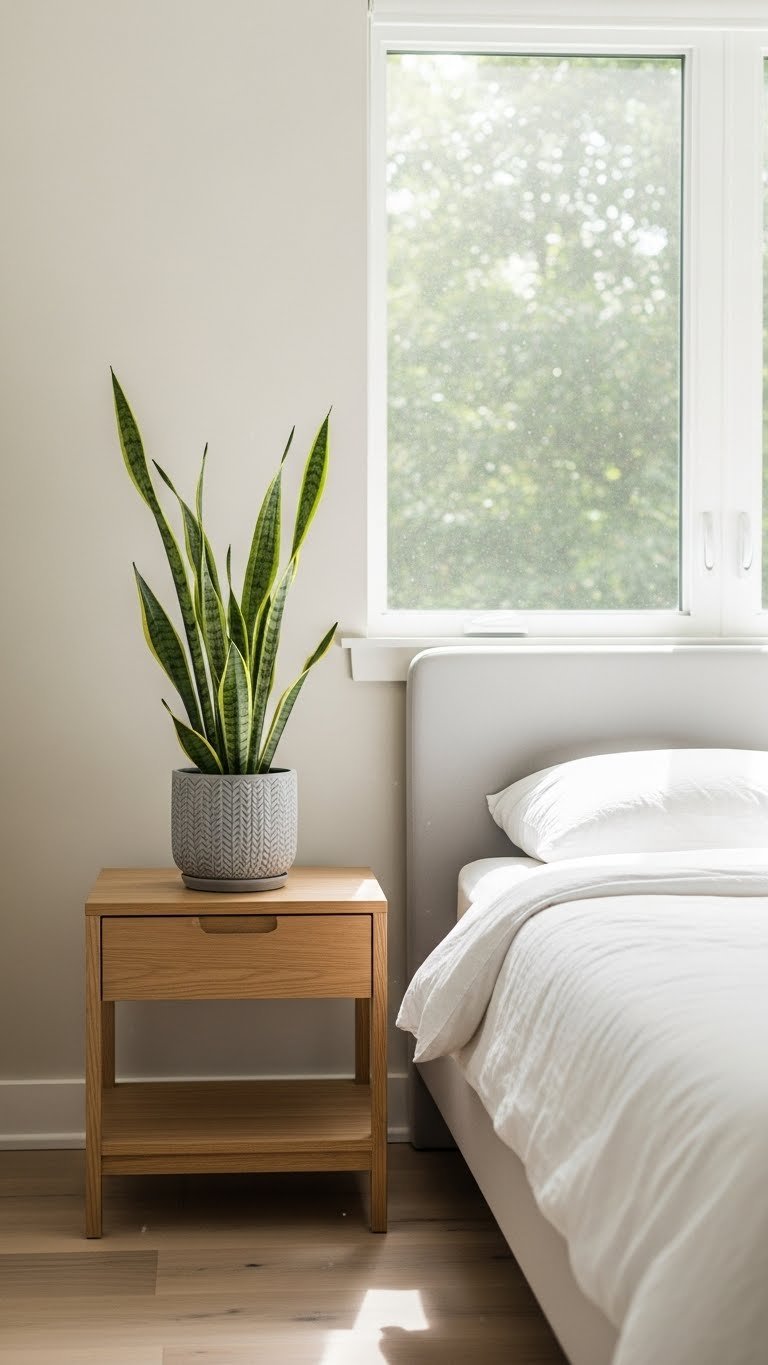
    Invest in a linen-specific cabinet or shelving unit ($200-$500) or build a simple DIY station with shelves and rolling drawers ($150-$300 in materials). Include tiered shelf dividers ($15-$30) to keep stacks from toppling. Setup takes a weekend for DIY or a few hours for installation if professionally done.

    Roll towels and flat-fold sheets so they’re easy to grab. Use shelf dividers to keep stacks organized by type and size.

    You’ll never frantically hunt for a fitted sheet again. Guests see organization instead of chaos, and your linen closet becomes actually functional.

    26. Add Durable Stainless Steel Hardware and Fixtures

    Upgrading hardware from basic to matte black, brushed nickel, or polished stainless instantly modernizes the space. It’s a small detail that reads as high-end.

    Swap cabinet handles for quality hardware ($2-$8 per handle) and install a matching faucet ($60-$150) if your utility sink allows. A power drill and screwdriver handle most swaps in 1-2 hours. Match all metals for a cohesive look—don’t mix finishes unless you’re intentionally doing a mixed-metal aesthetic.

    Keep finishes consistent across handles, towel bars, and any visible fixtures.

    The space immediately looks more curated and designer-adjacent. Quality hardware also tends to last longer than cheap alternatives, so you’re investing in durability too.

    27. Install a Moisture-Control System for Humid Basements

    If your laundry room is in a damp basement, moisture management protects both your clothes and your storage systems. Damp environments ruin textiles and encourage mold.

    Add a small dehumidifier ($80-$200) and use moisture-resistant paint ($30-$50 per gallon) on walls and inside cabinets. Run the dehumidifier during and after laundry days. Also ensure your dryer vent exhausts outside, not into the room. Total setup: $150-$300 and a few hours for painting.

    Keep a small hygrometer ($10-$15) to monitor humidity levels—aim for 30-50%.

    Your clothes won’t develop that musty smell, and your storage systems (and drywall) won’t suffer water damage over time. Prevention now saves thousands in future repairs.


    Save this guide for your next laundry room refresh. Pick one idea this weekend—even a small change makes a real difference in how you feel when you walk into the room. Which idea will you try first?