Blog

  • 25 Room Inspo Ideas That Upgrade Your Aesthetic Overnight

    25 Room Inspo Ideas That Upgrade Your Aesthetic Overnight


    Your bedroom should be the first place you want to retreat to—not just somewhere you sleep. Right now, it might feel bland, chaotic, or maybe too sparse to actually relax in. The good news? You don’t need a total redesign or a huge budget to make it feel like a sanctuary. We’ve pulled together 25 room inspiration ideas that actually work, whether you’re renting, on a tight budget, or ready to invest in pieces that’ll stick around for years. From simple styling tricks to DIY upgrades, you’ll find ideas you can start this weekend—seriously. Let’s dive into the specific changes that’ll make people ask, “Wait, this is the same room?”


    1. Layer Textures on Your Walls (No Paint Required)

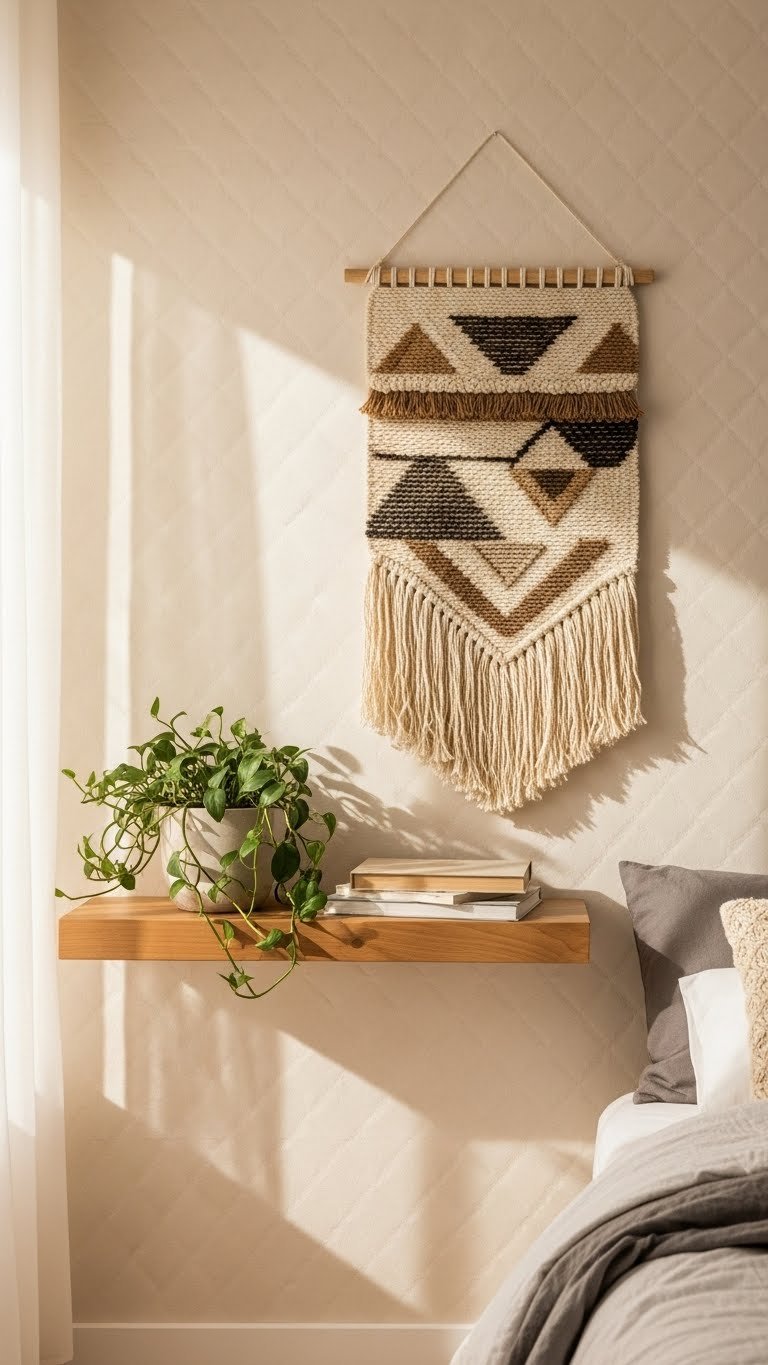
    Textured walls add warmth and visual interest without permanent commitment. If painting feels like too much, peel-and-stick textured wallpaper gives you that dimensional effect in minutes. Look for quilted, cork, or linen-look options that catch light beautifully and make your space feel curated.

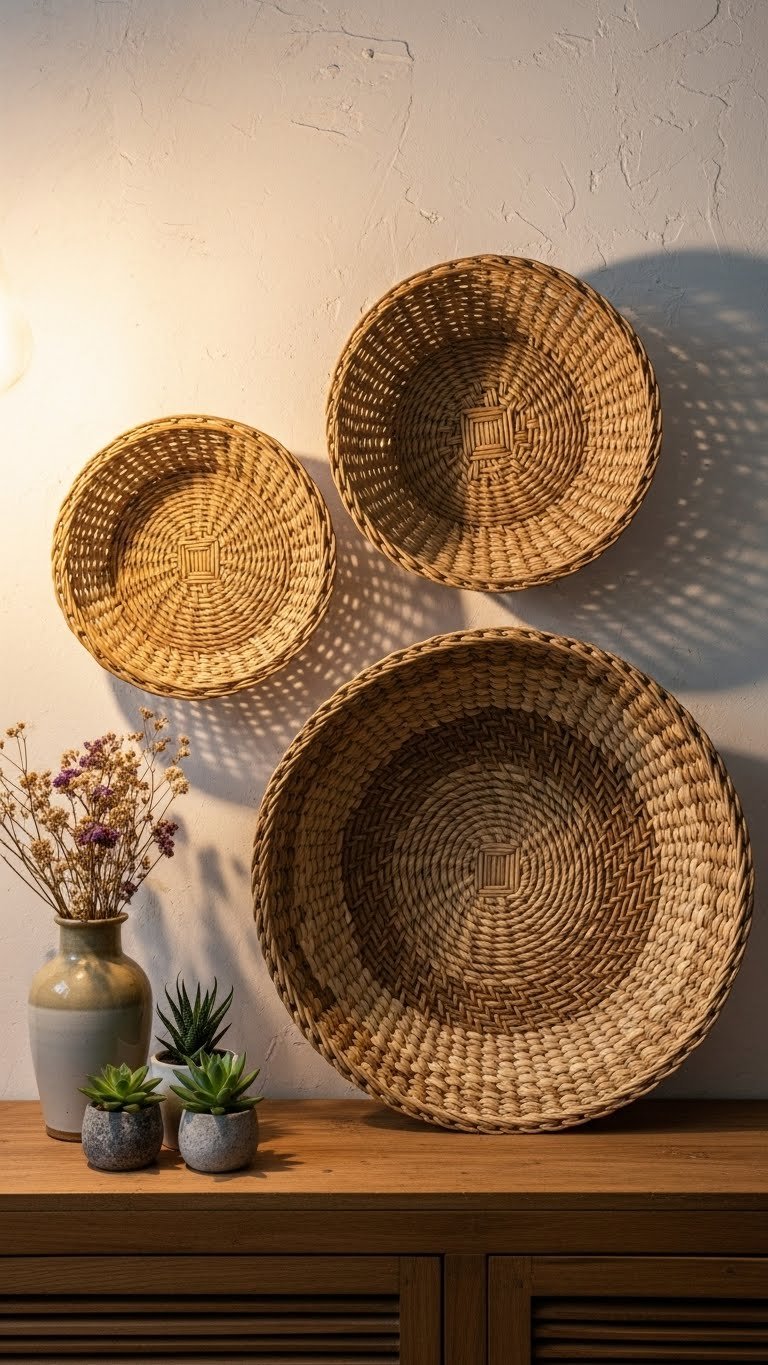
    Try Spoonflower or Etsy for custom textured wallpaper ($20–$60 per roll). Installation takes 2–3 hours per wall and requires just a smoothing tool. No paste mess, and renters love this option. For non-renters, consider adding actual shiplap or 3D wall panels to one accent wall (DIY-friendly projects under $100). You can also layer woven wall hangings over plain walls for a fraction of the cost.

    The result? Your bedroom stops feeling flat and gains architectural character that makes everything else look better.

    2. Swap Cool Grays for Warm Neutrals

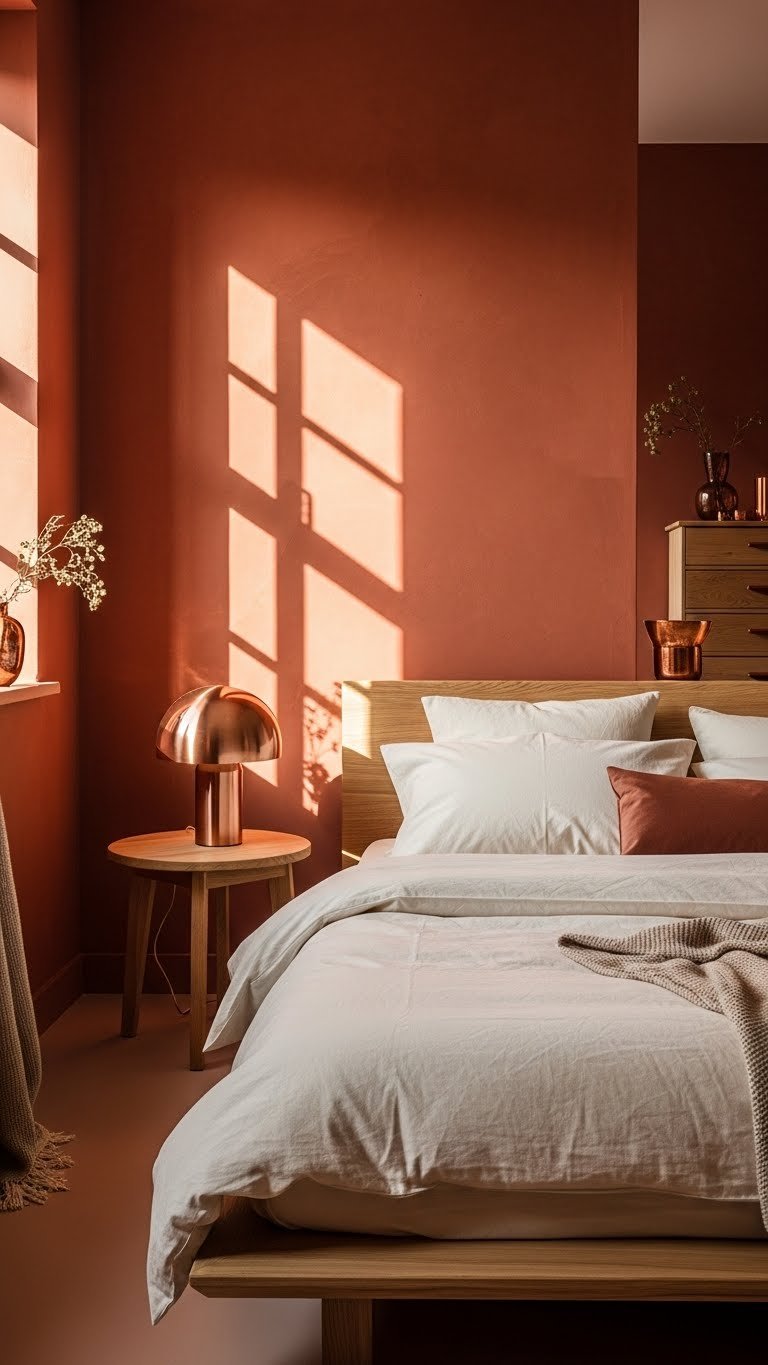
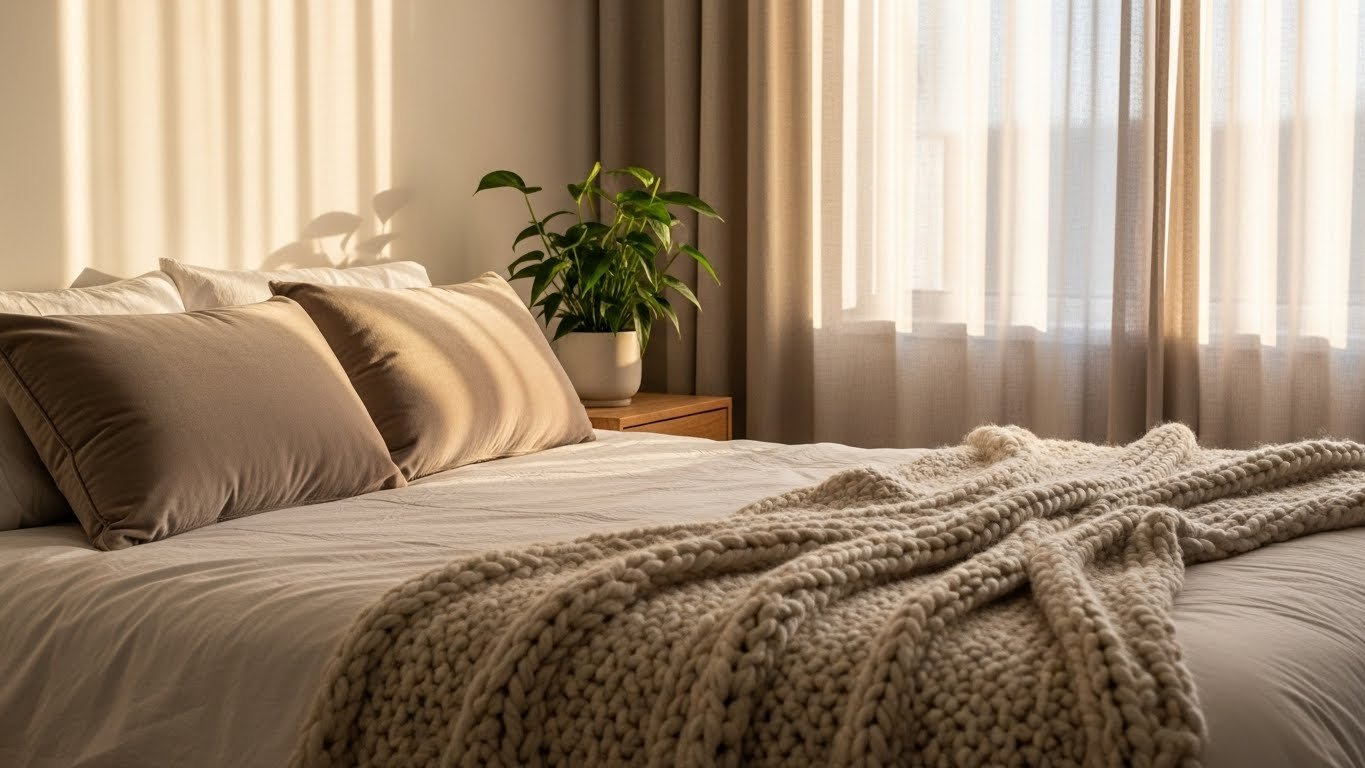
    Cool gray walls are out—they read as sterile when you want calming. Warm neutrals like terracotta, warm beige, creamy off-white, or soft taupe create the opposite effect: they actually make you feel more grounded. This single change shifts your entire room’s vibe from cold to cozy.

    Pick up a Sherwin-Williams, Benjamin Moore, or Behr sample pot (around $5) and test it on your wall for a few days. Colors shift with natural light throughout the day, so you need to see it in your actual space. If you’re renting, peel-and-stick wallpaper in warm tones works just as well. One bedroom wall takes 4–6 hours to paint with a second coat; calling in help makes it a weekend project. The warmth will make your whole room feel like it’s giving you a hug.

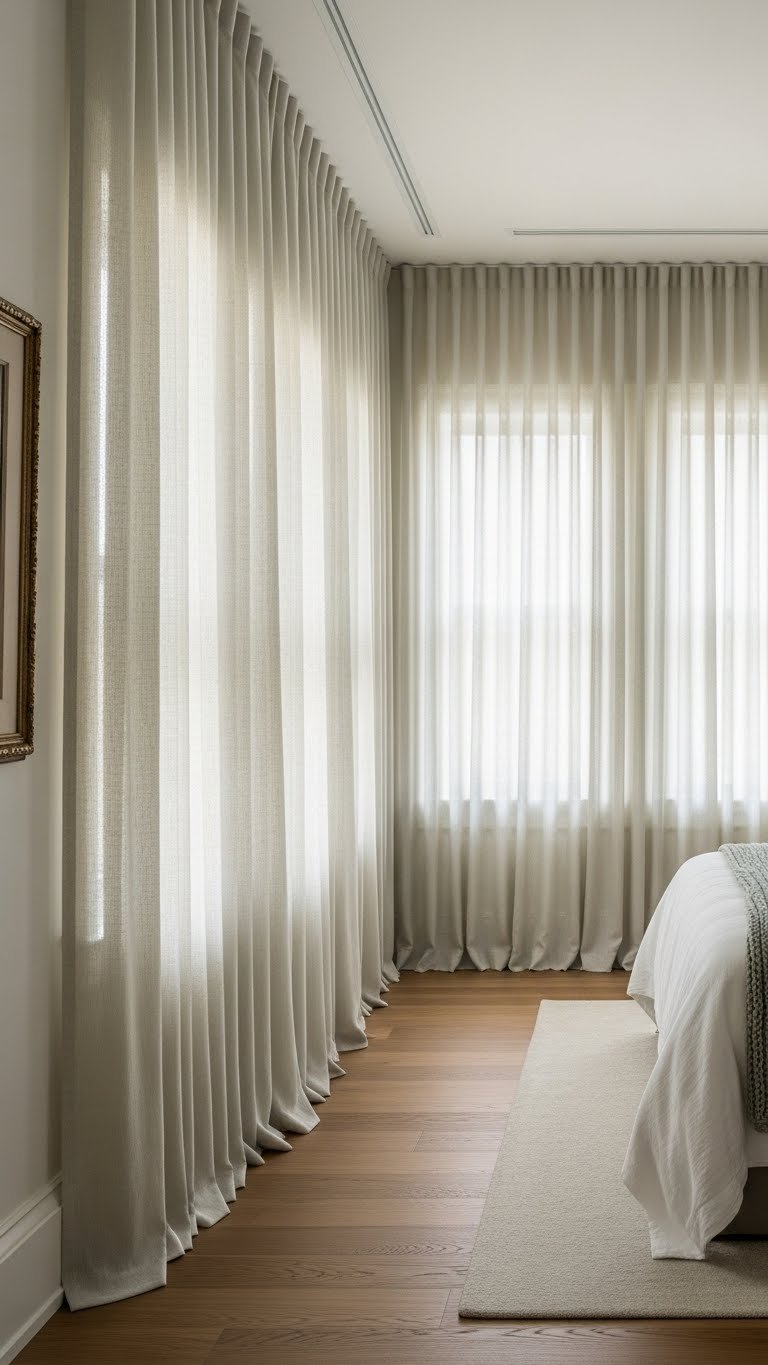
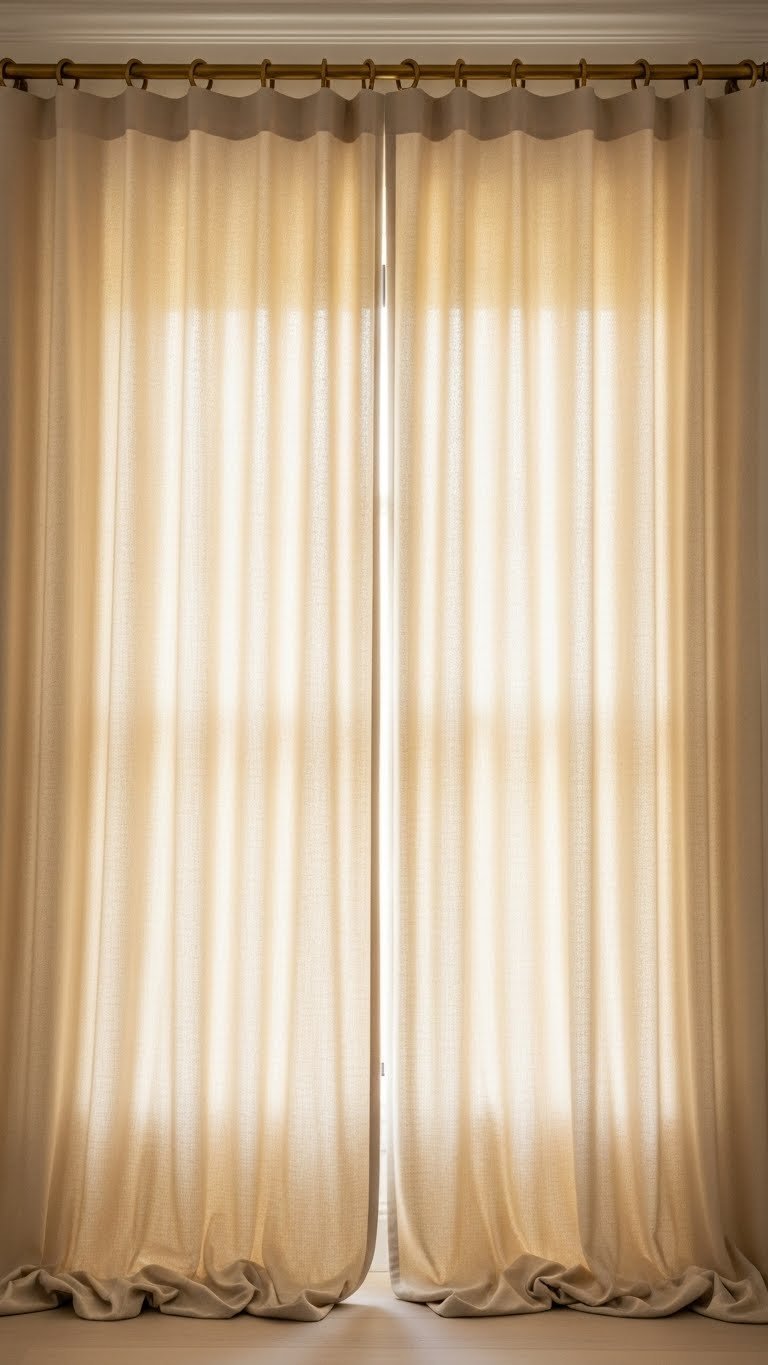
    3. Add Floor-to-Ceiling Curtains for Drama

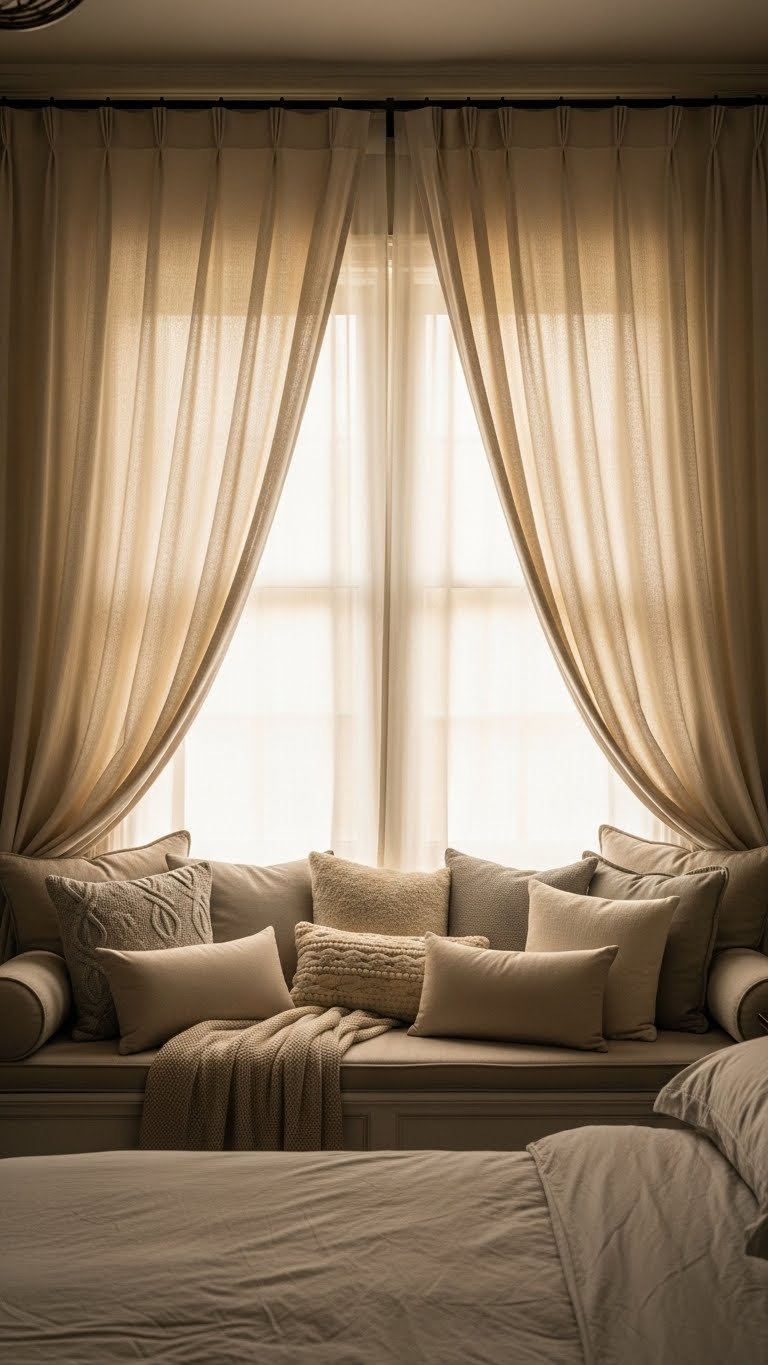
    Floor-to-ceiling curtains create height, luxury, and instant coziness—even in tiny bedrooms. Short curtains make rooms feel cramped; long ones draw your eye up and make the space seem more generous. The visual drama alone worth the investment.

    Hang your curtain rod as close to the ceiling as possible (even 6 inches higher than the window frame changes everything). Use linen or cotton blends from IKEA, Target, or Wayfair ($30–$80 per pair). For a DIY budget hack, buy lightweight fabric from a discount store and hang it from command hooks if you’re renting. Installation takes 30 minutes with a basic drill. Pro tip: sheer curtains under heavier drapes let light filter through during the day while maintaining privacy at night. You’ll notice the room feels more intentional and calming immediately.

    4. Invest in Organic, Curved Furniture

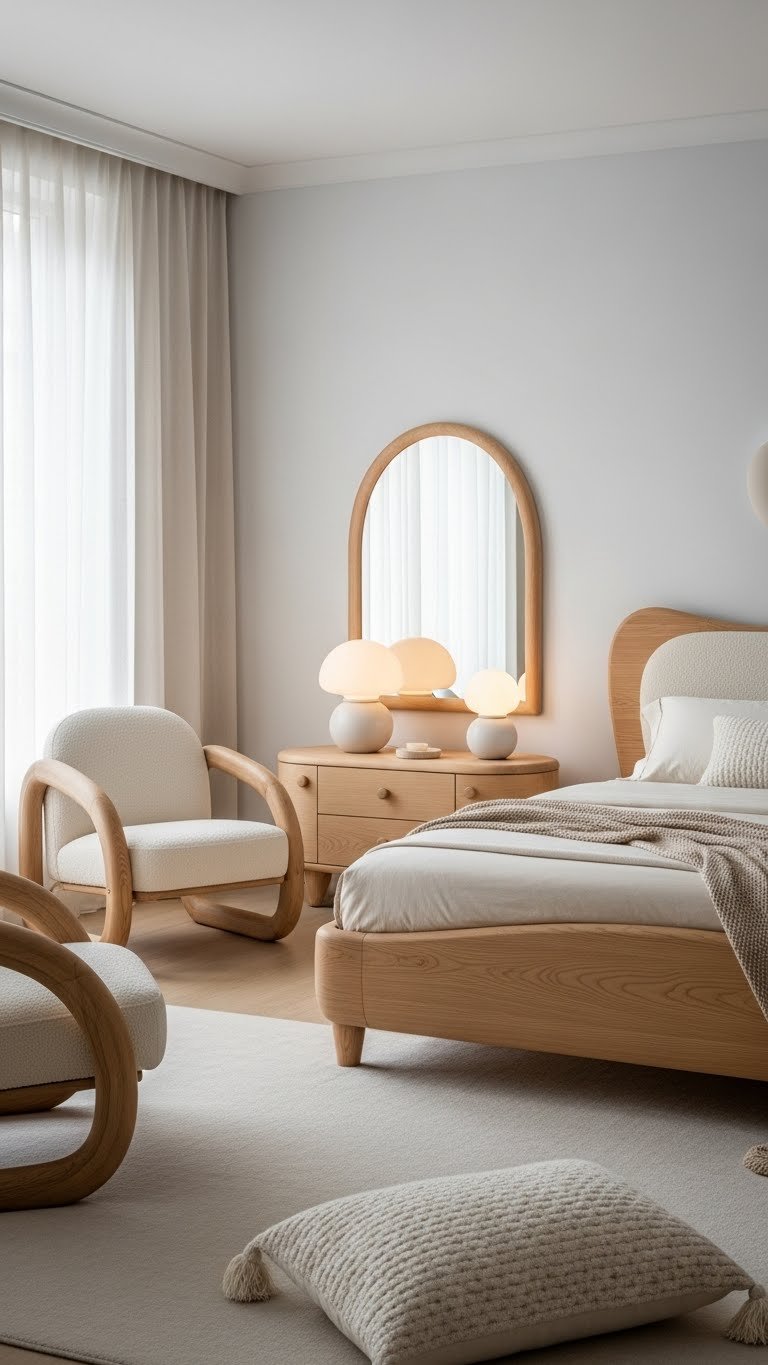
    Sharp angles feel unsettling; curved furniture feels calming. Swapping even one or two angular pieces for rounded alternatives changes how your body responds to the space. Your nervous system actually relaxes more around organic shapes.

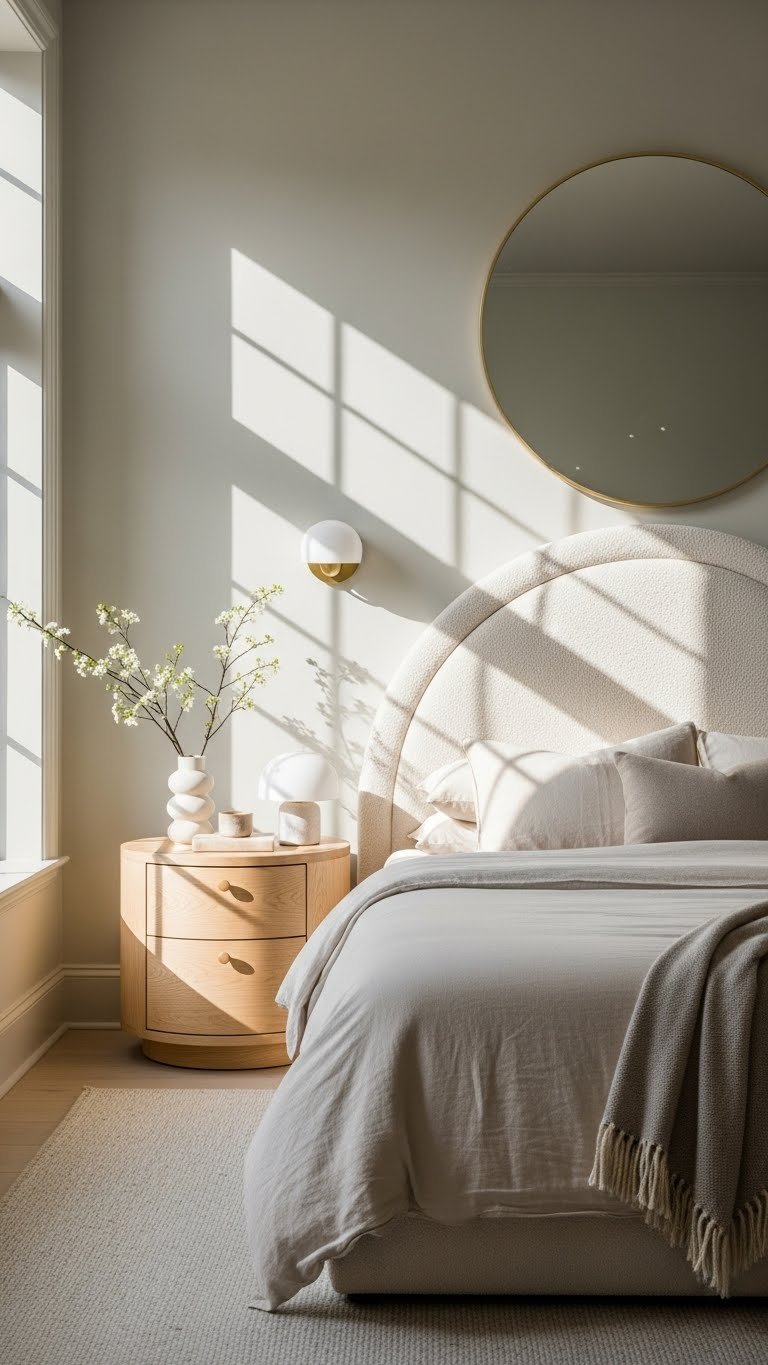
    Look for curved bed frames, rounded nightstands, and arched mirrors at 1stDibs, Article, or Wayfair ($200–$1,200 per piece depending on quality). Budget option: thrift vintage curved furniture and refinish it yourself, or add curved throw pillows and an arched floor mirror to ease sharp edges. Mid-range: try IKEA’s curved cabinet collection or CB2’s sculptural pieces. Installation depends on what you buy, but most items arrive ready to place. Your sleep quality actually improves when your bedroom doesn’t feel like a box of straight lines.

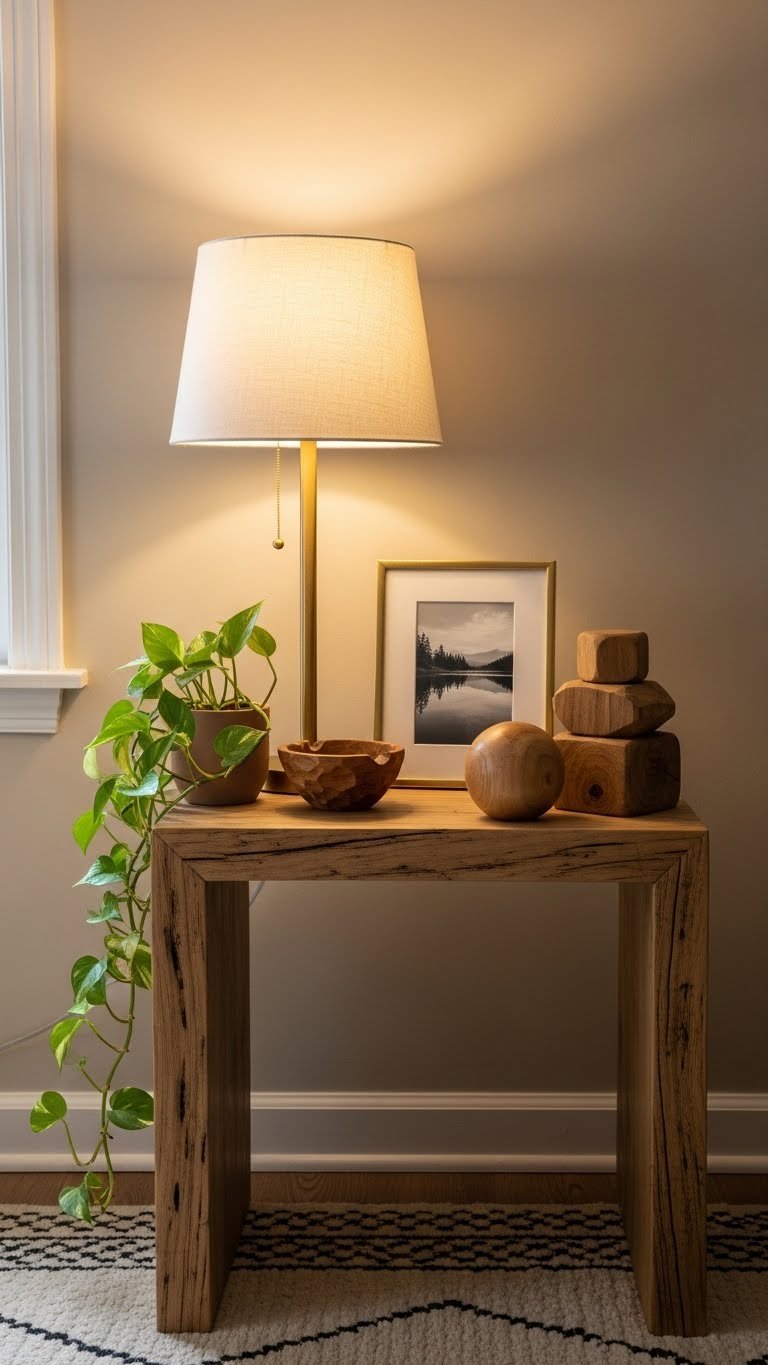
    5. Create a Vintage Nightstand Moment

    Mass-produced matching sets feel generic. One thoughtfully styled vintage nightstand adds personality and tells a story about who you are. It becomes a little display moment people actually notice.

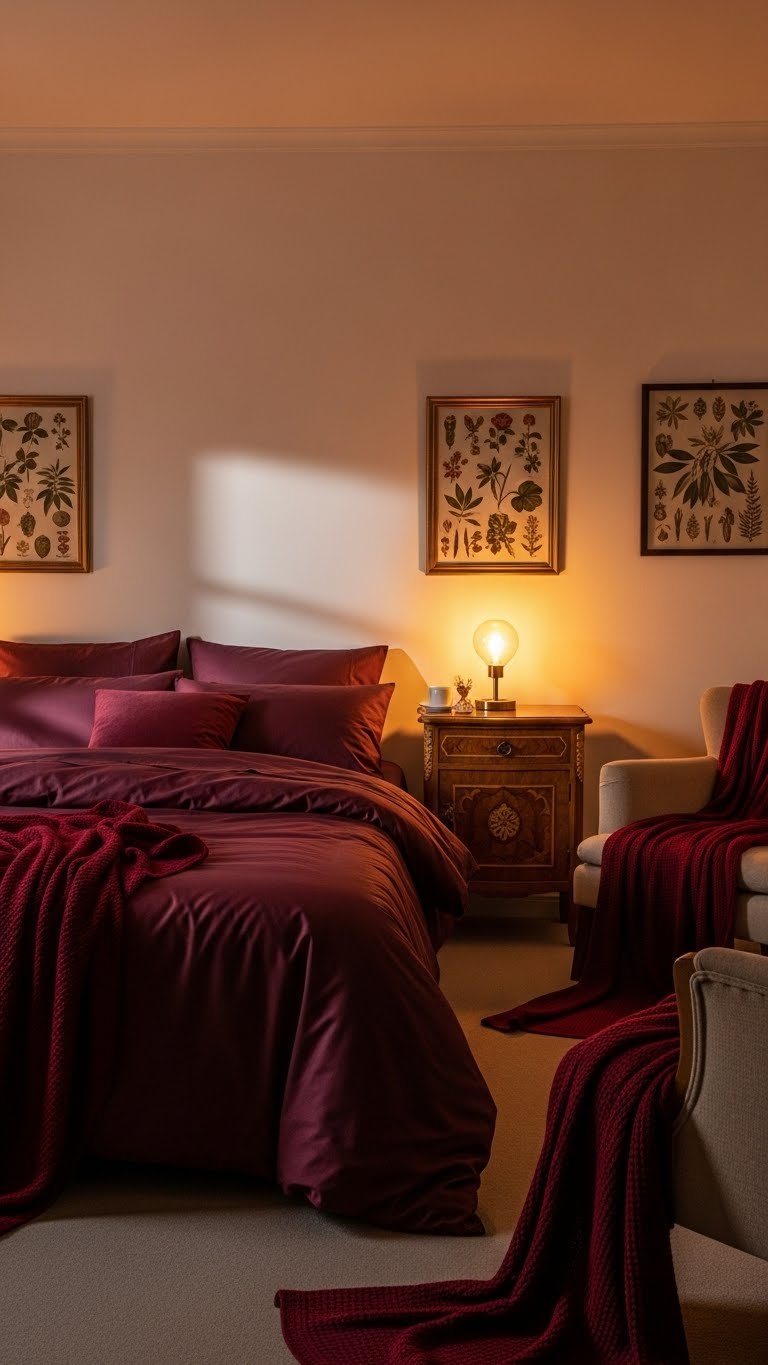
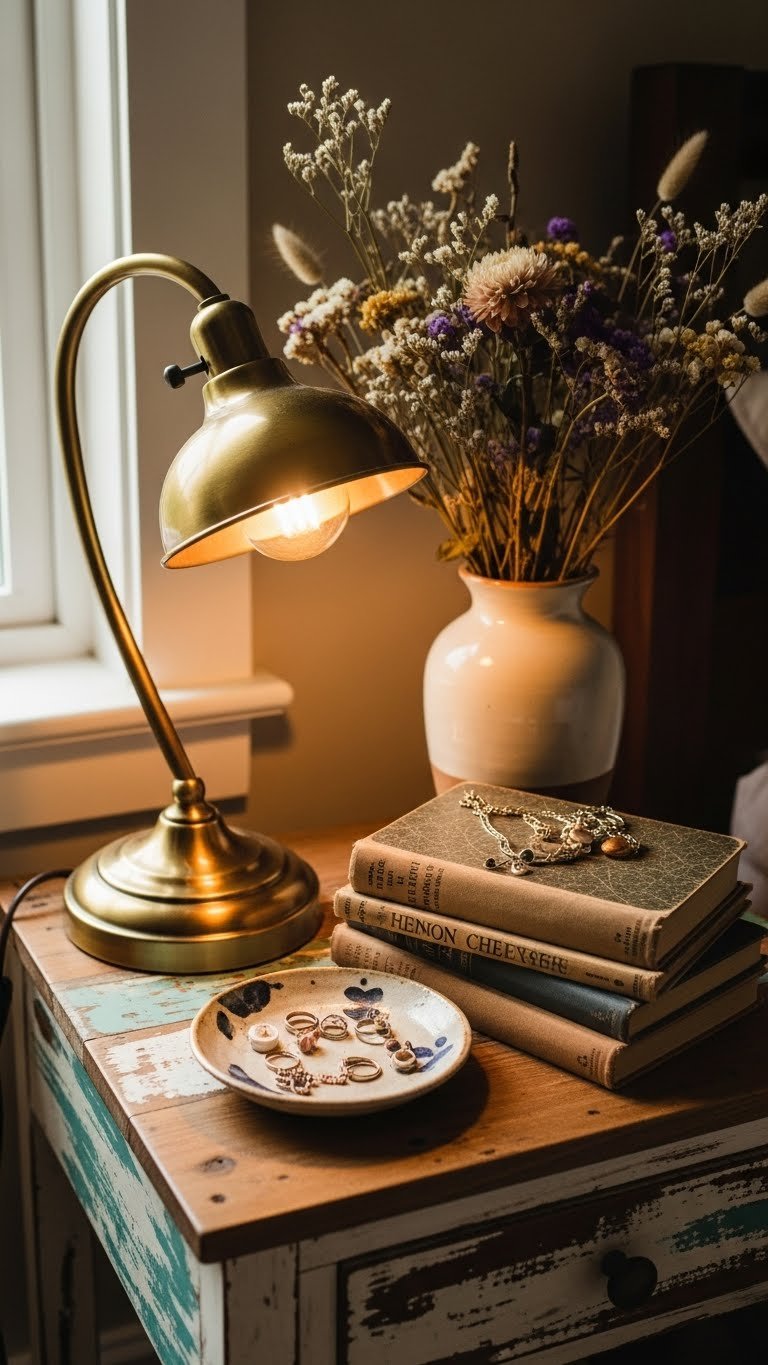
    Hit up local thrift stores, Facebook Marketplace, or Etsy and look for wood nightstands from the ’60s–’80s ($20–$80). Clean it with wood oil, add a warm brass or ceramic lamp ($30–$60), and style the top with 3–4 meaningful items: a small plant, a ceramic bowl, a stack of design books, or a vintage clock. The whole project takes one afternoon and costs under $150. Renters: this works beautifully since it’s not built-in. You’ll open your eyes each morning to something that feels intentional instead of cookie-cutter.

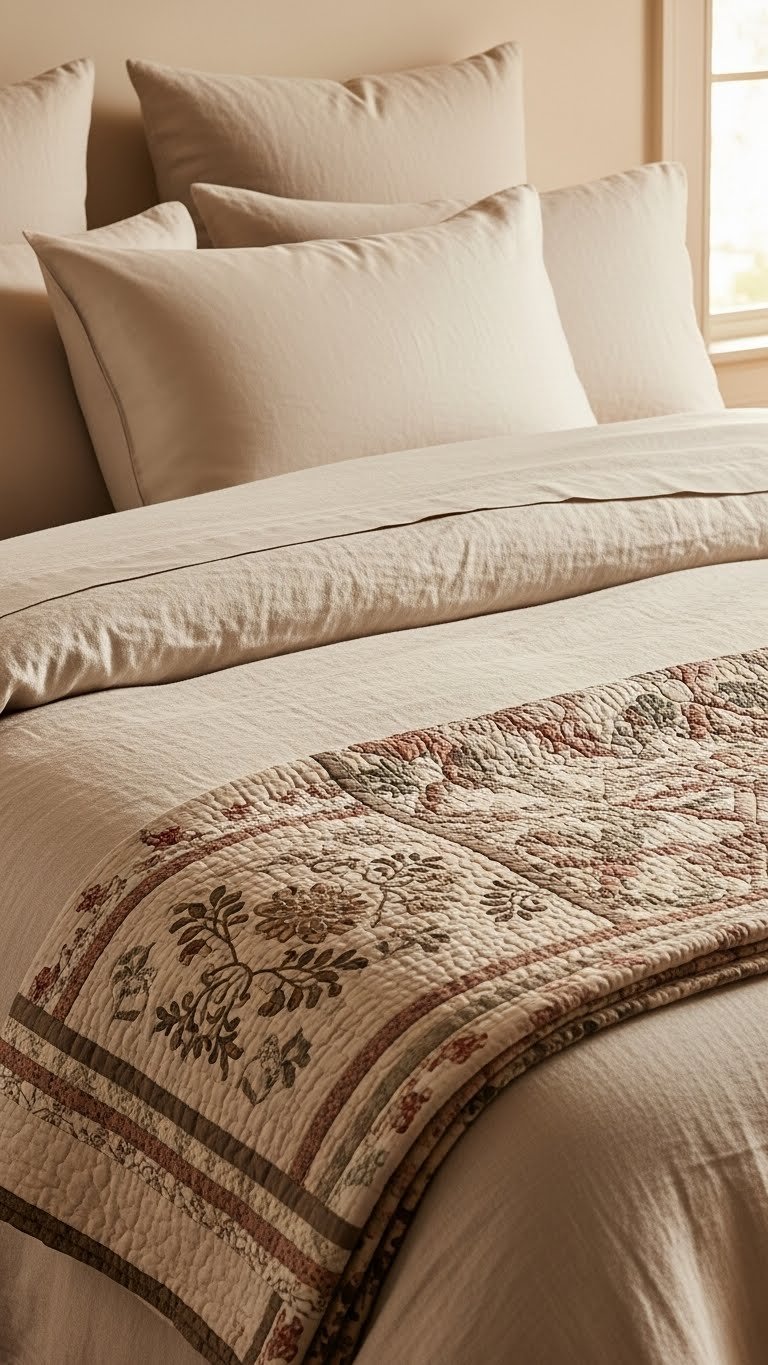
    6. Layer Patterned Textiles (Florals + Stripes)

    Pattern mixing sounds risky but it’s the secret to a room that feels collected and personal. Pairing florals with stripes, adding a geometric throw—these aren’t mistakes, they’re intentional coziness. The key is sticking to a color family.

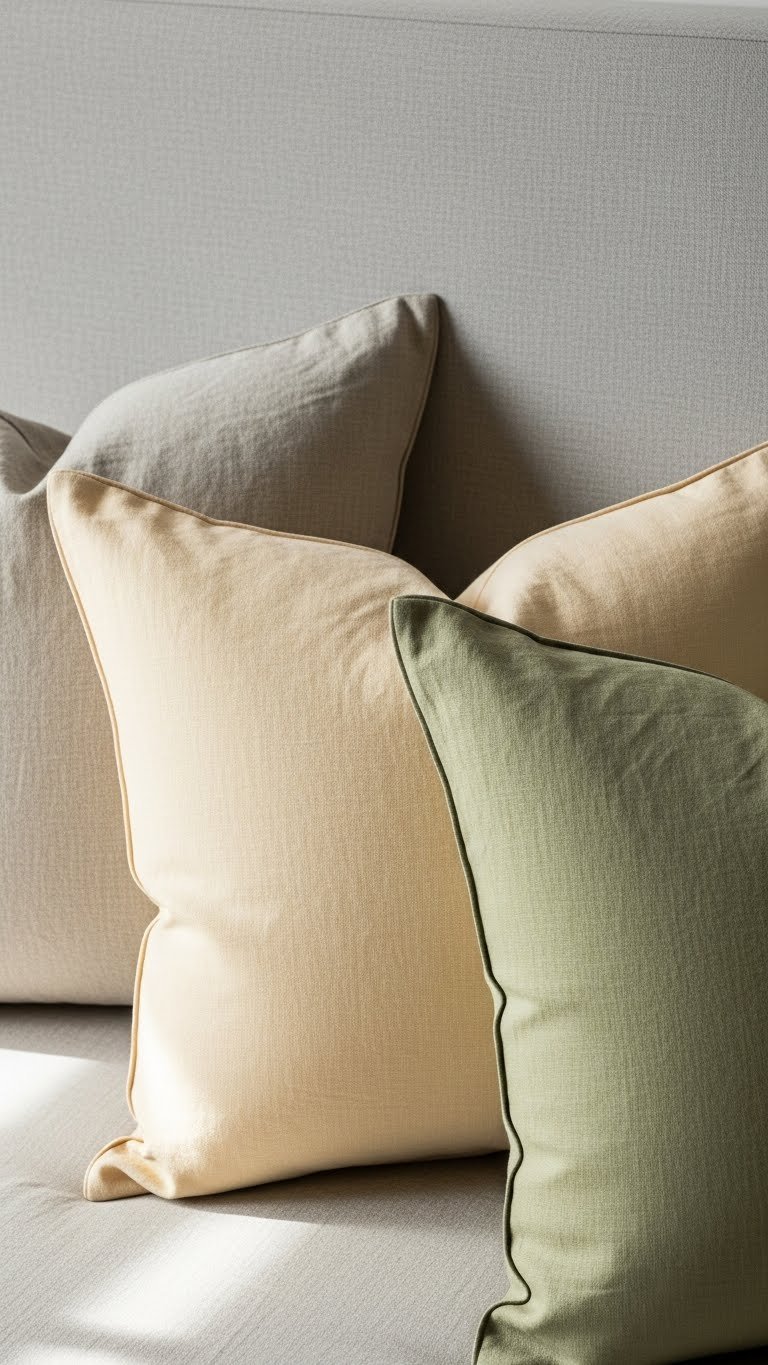
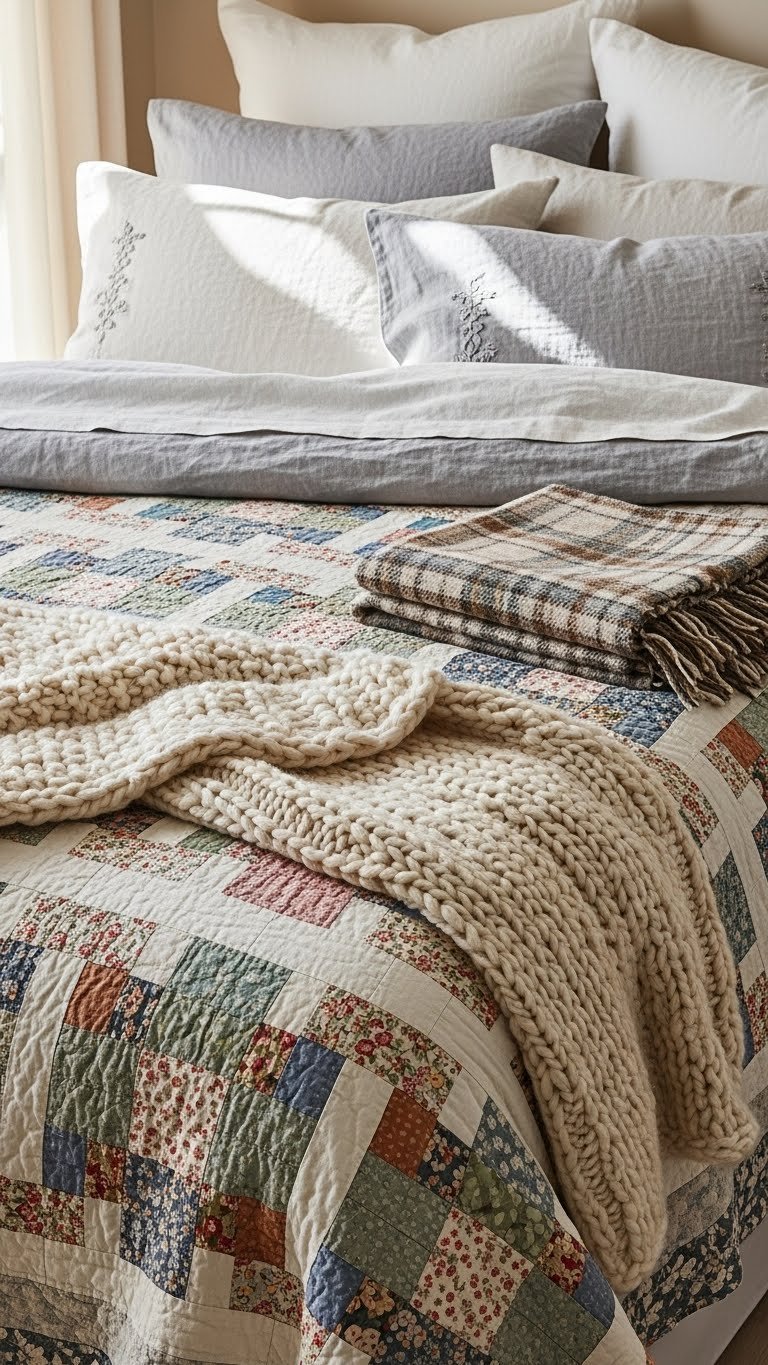
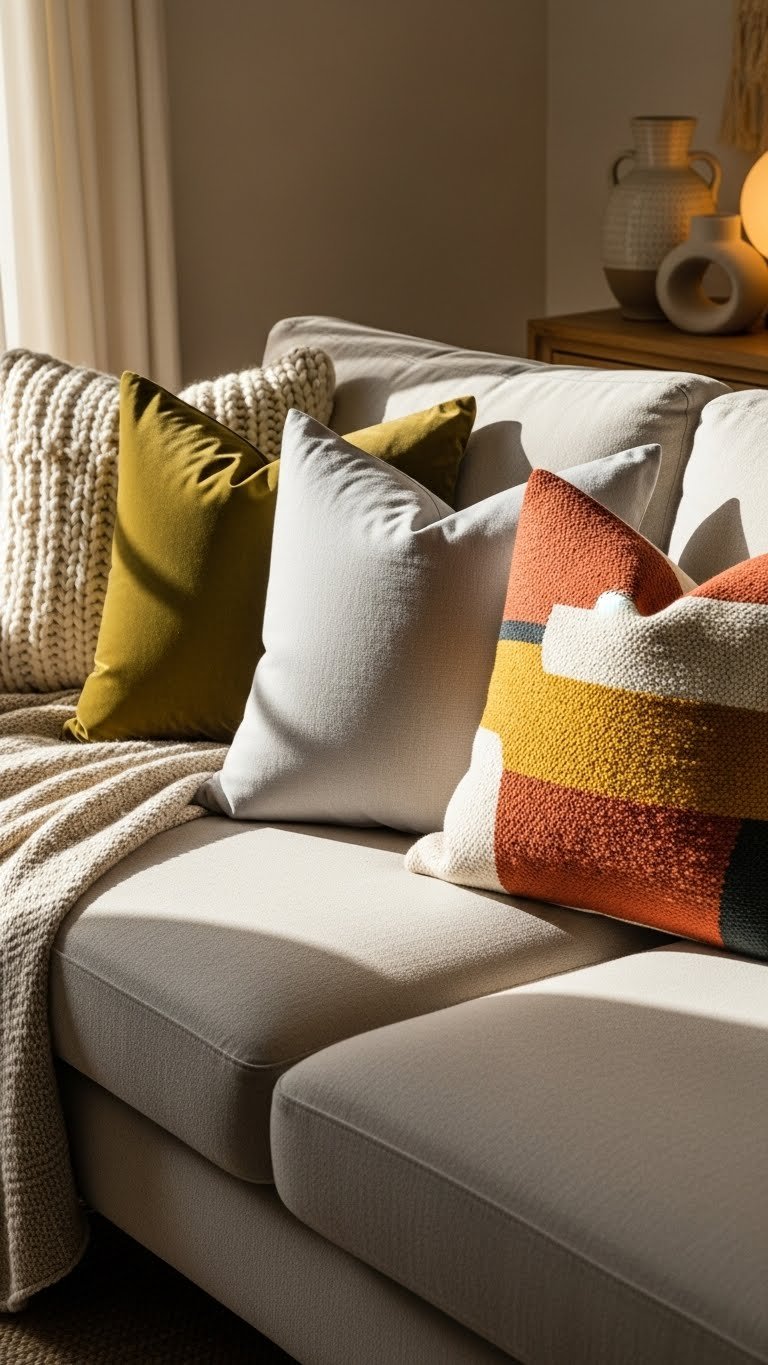
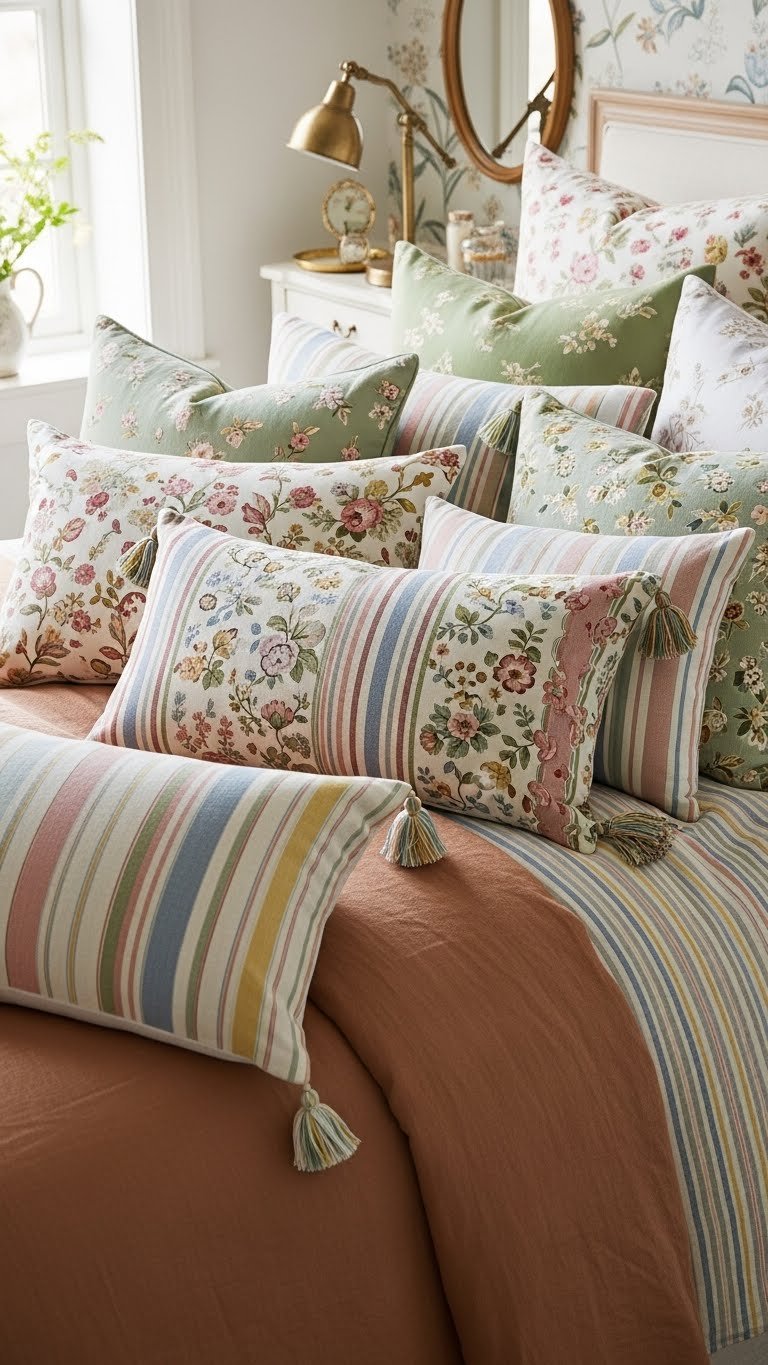
    Start with one patterned duvet or quilt ($60–$150 from Anthropologie, Schoolhouse, or Target). Add 3–5 throw pillows in coordinating patterns and solids ($15–$40 each). The trick: make sure all your patterns share 2–3 colors. A blush floral looks amazing next to cream stripes if you repeat that blush and cream across your pieces. This costs nothing if you rearrange what you already have. The result feels like you’ve traveled and collected things you love—even if you found it all online.

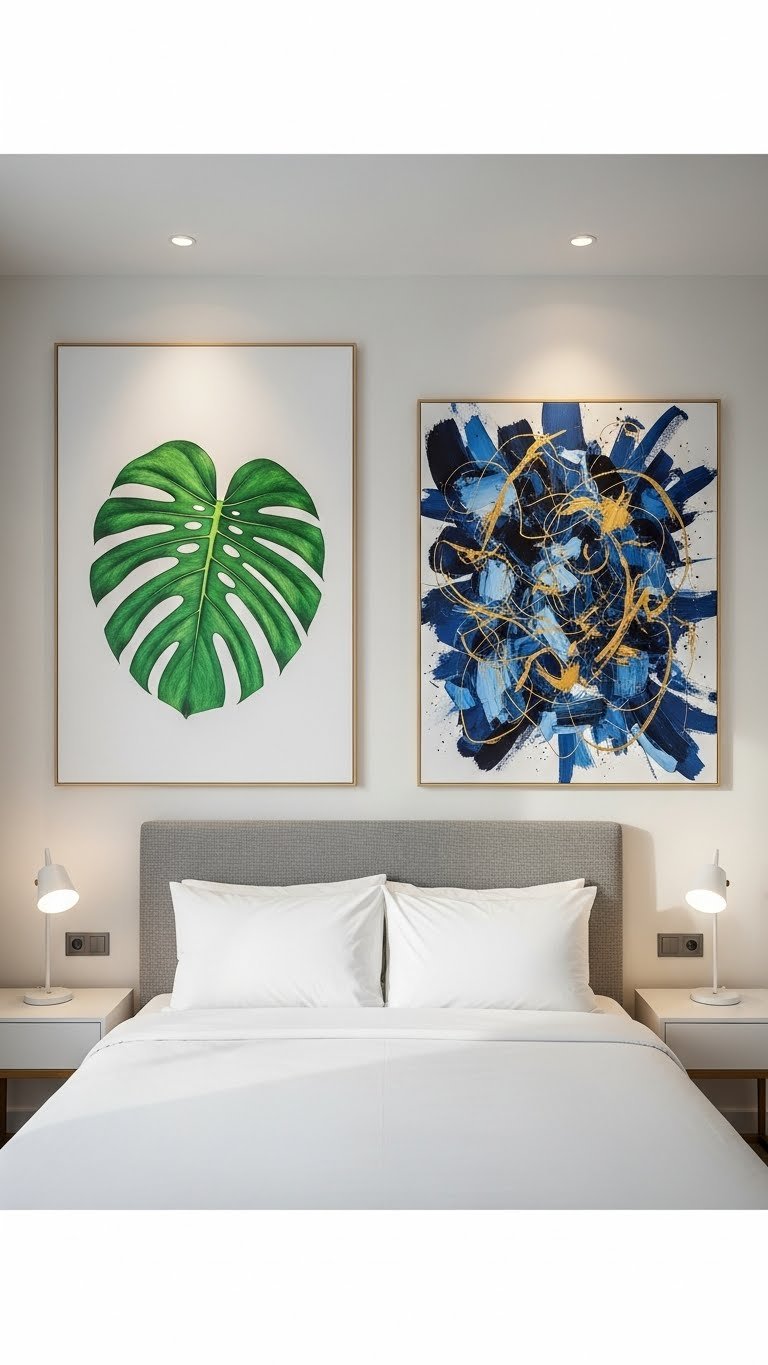
    7. Hang Statement Art That Anchors the Room

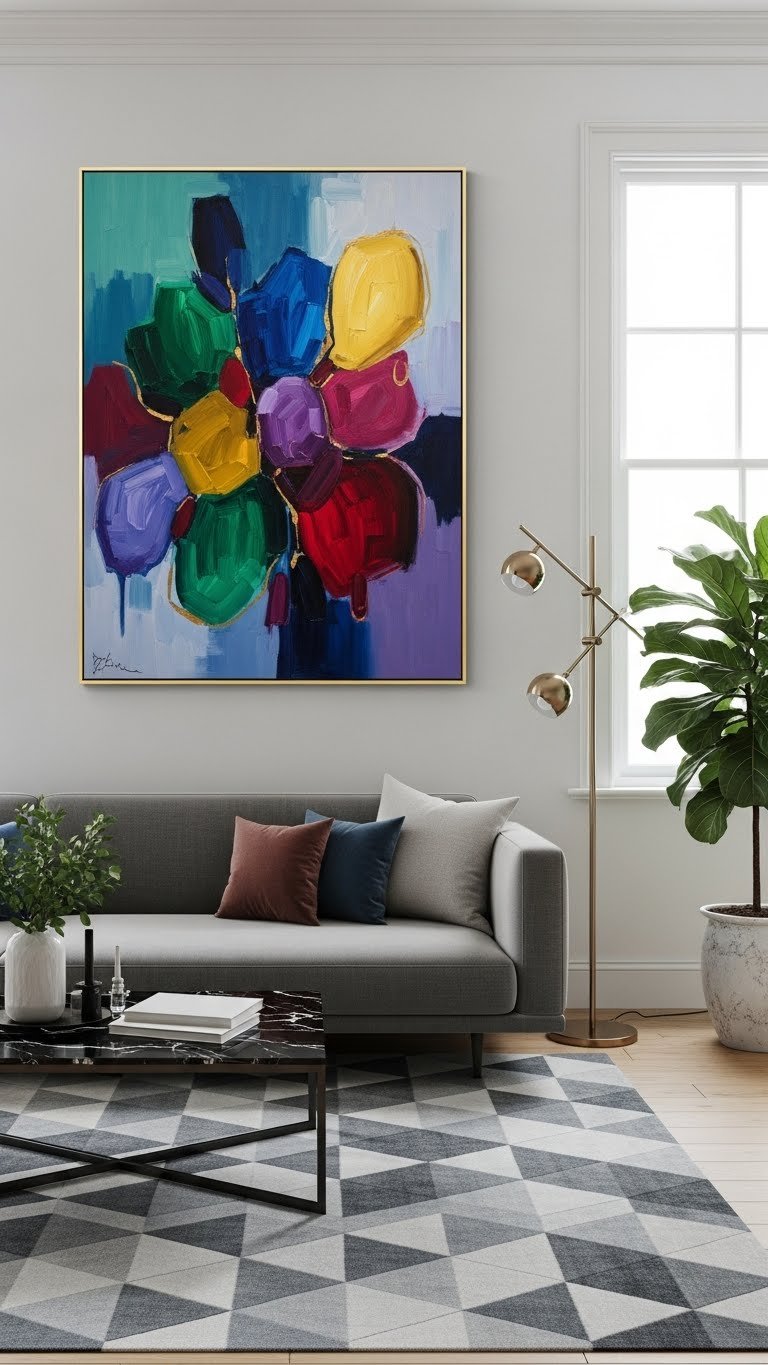
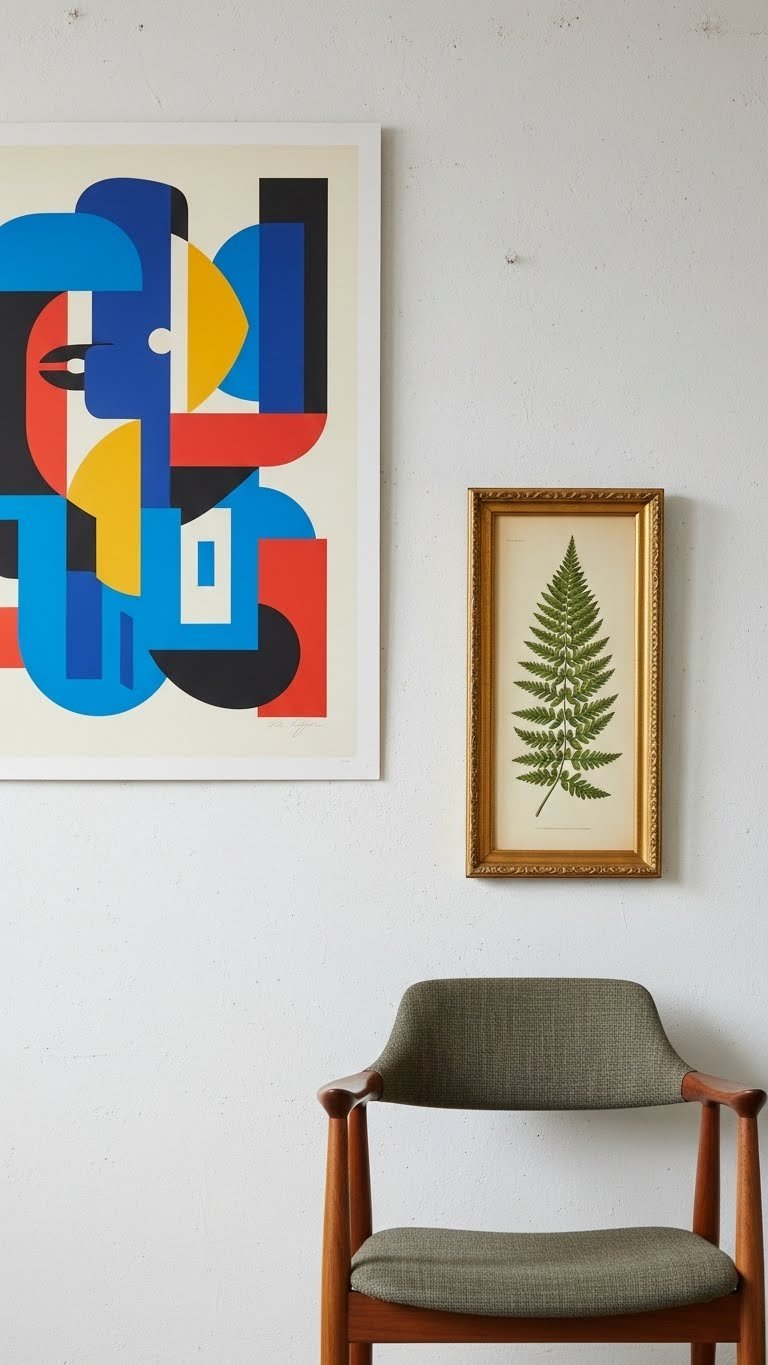
    One well-chosen piece of art changes everything. Forget small prints scattered around—one large statement piece commands the room and gives your eye somewhere to rest. It’s an instant upgrade that signals intentionality.

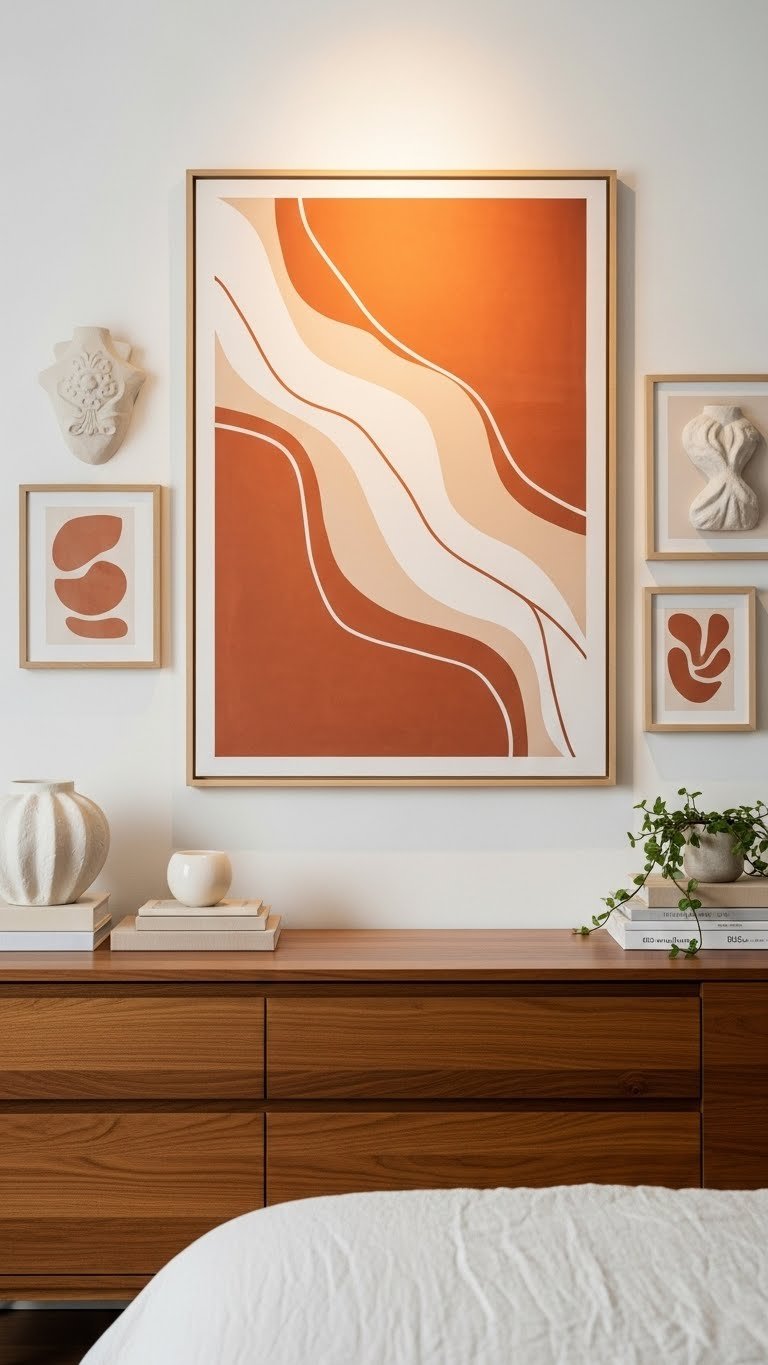
    Choose art that resonates with you emotionally, not just aesthetically. Look at Etsy artists, local galleries, or even museums’ print collections. Sizes matter: go larger than you think ($50–$300 for prints; $200–$1,000+ for originals). Hang it at eye level, 57–60 inches from the floor to the center of the piece. Frame it in warm wood or metal that matches your room’s palette. You can source, frame, and hang a statement piece in one weekend. Your bedroom becomes a gallery instead of just a place to sleep.

    8. Add a Biophilic Water Feature

    Plants are great, but adding the sound of moving water (without a full pond) brings nature even closer. A small tabletop fountain combines visual calm with auditory soothing—your nervous system responds to both.

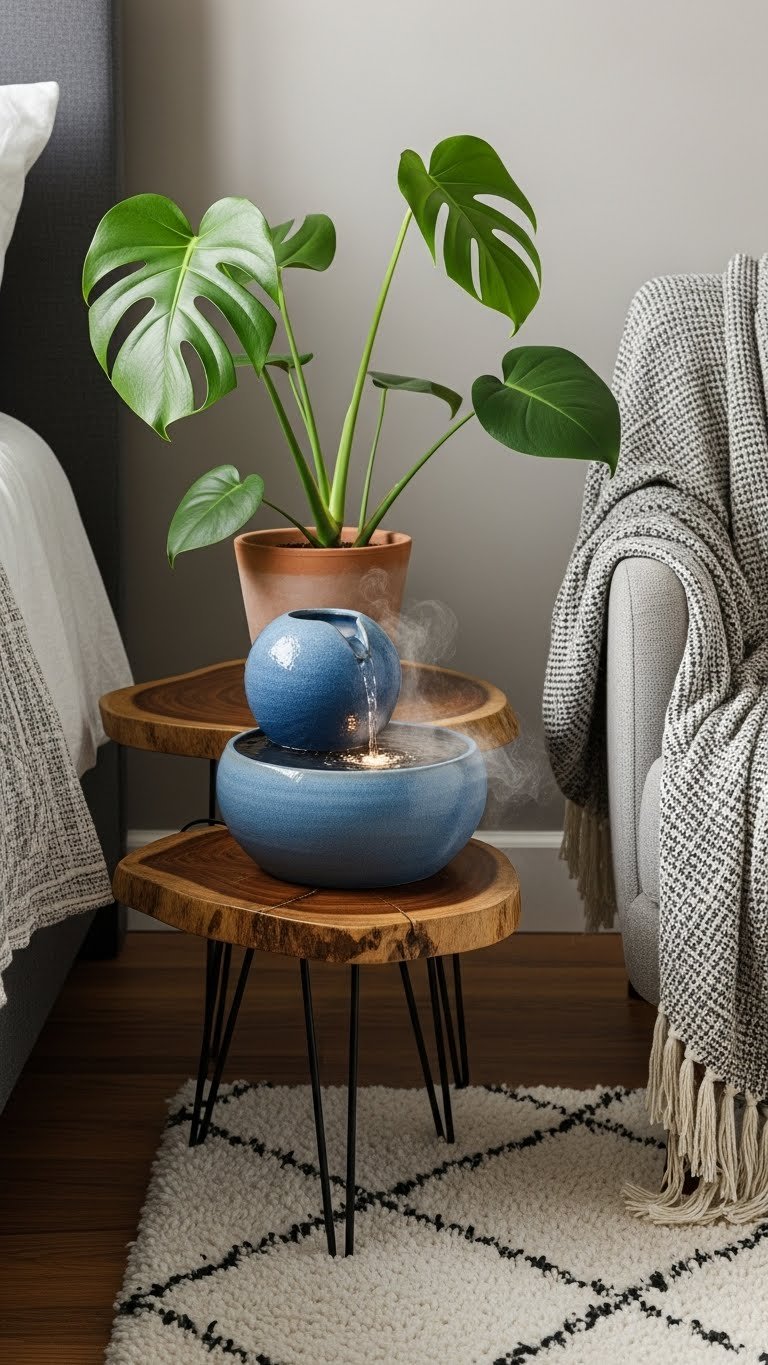
    Get a ceramic or stone tabletop fountain from Target, Amazon, or West Elm ($40–$120). Pair it with a large leafy plant and keep it on a side table or dresser. Plug it in, fill it weekly, and listen to that gentle sound while you work or wind down. Takes 10 minutes to set up and runs 24/7 if you want. Pro tip: place it on a waterproof mat to protect wood surfaces. You’ll fall asleep to soft background water sounds instead of street noise.

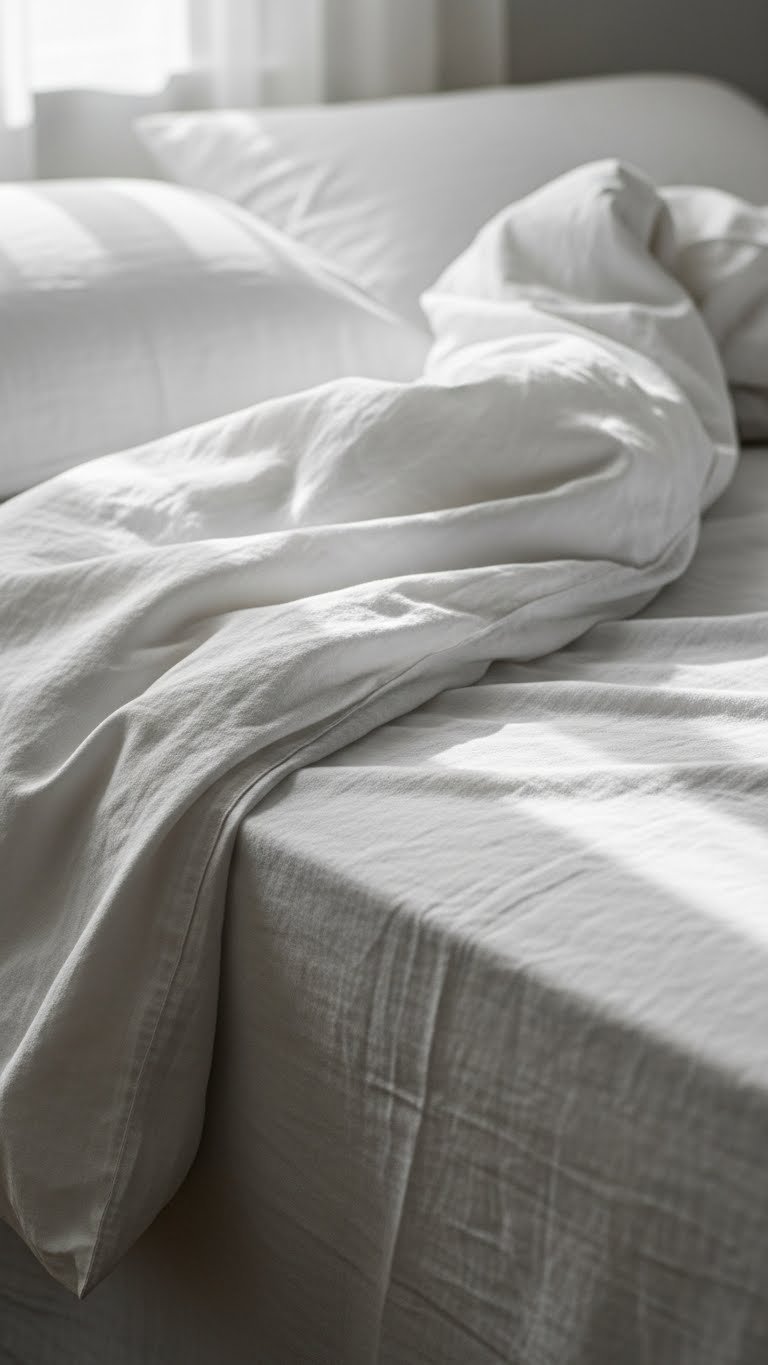
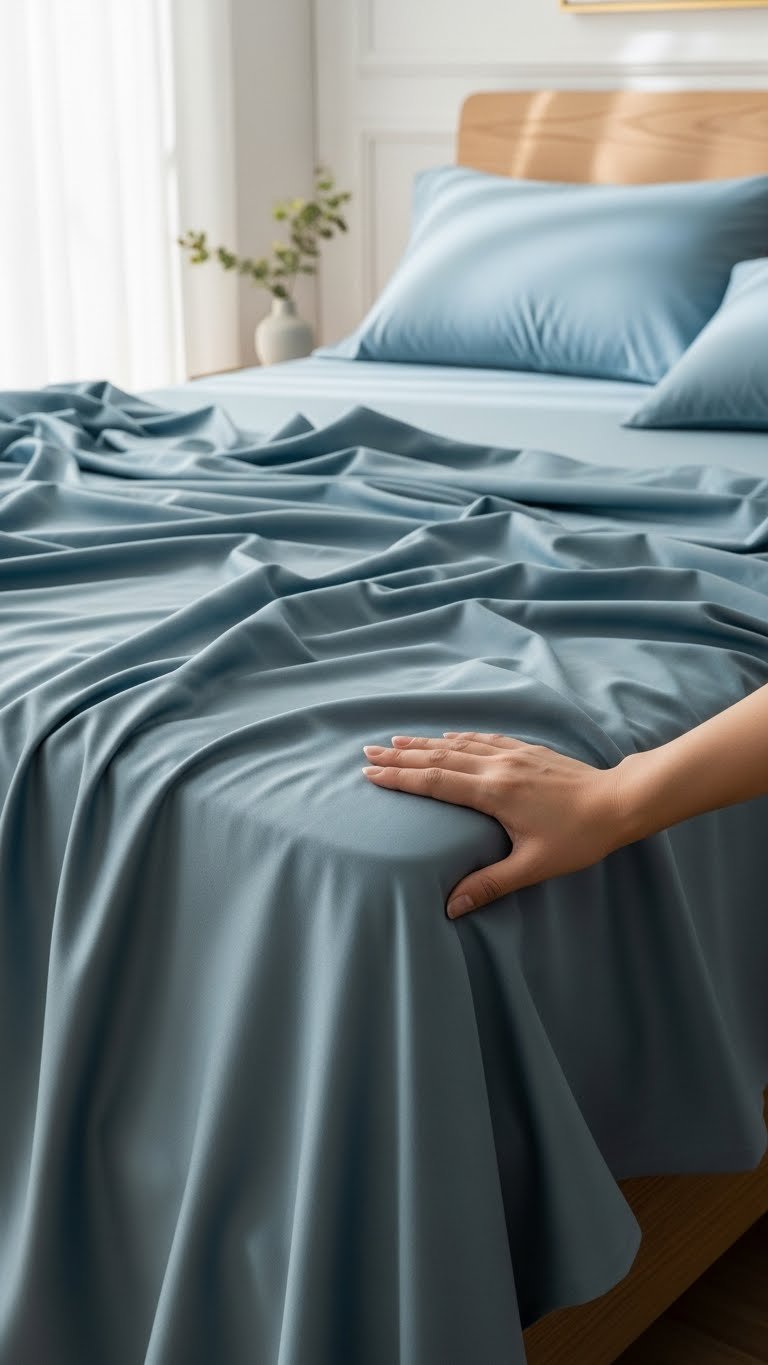
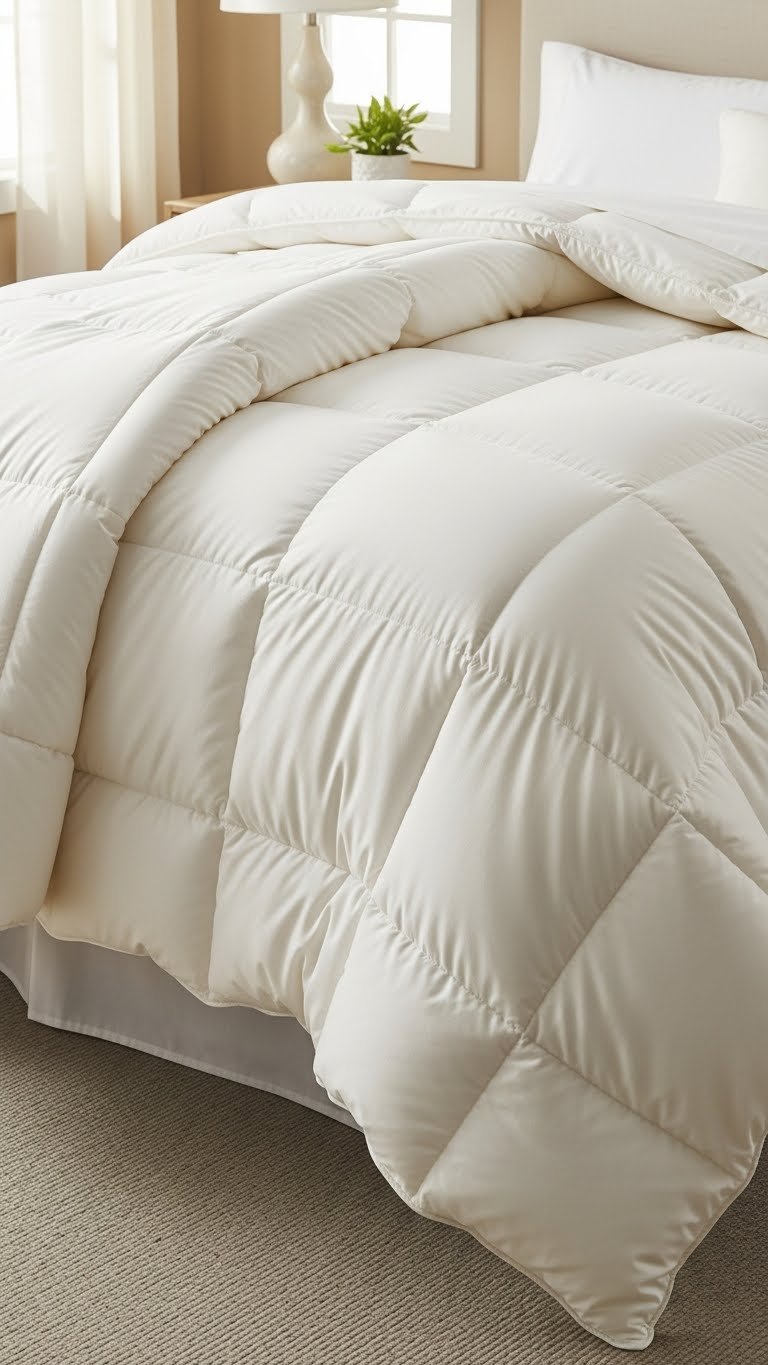
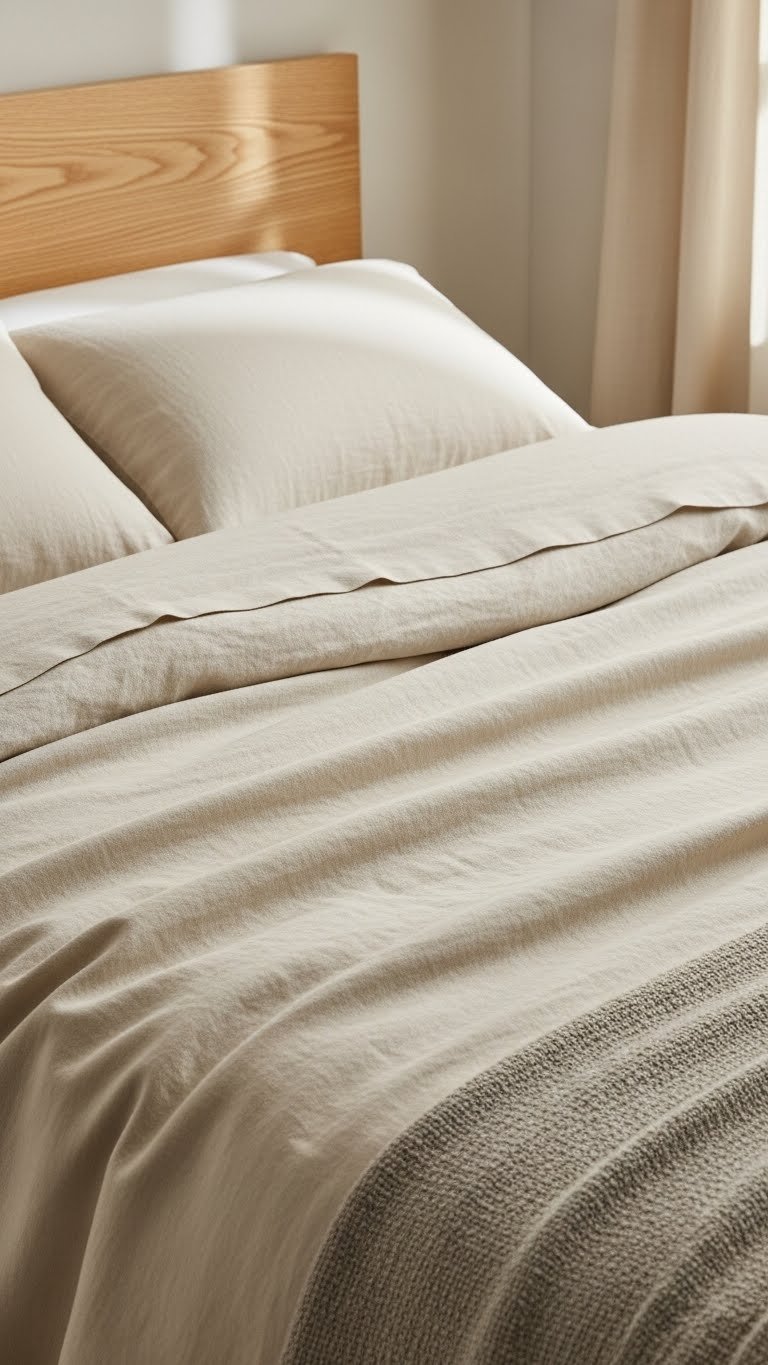
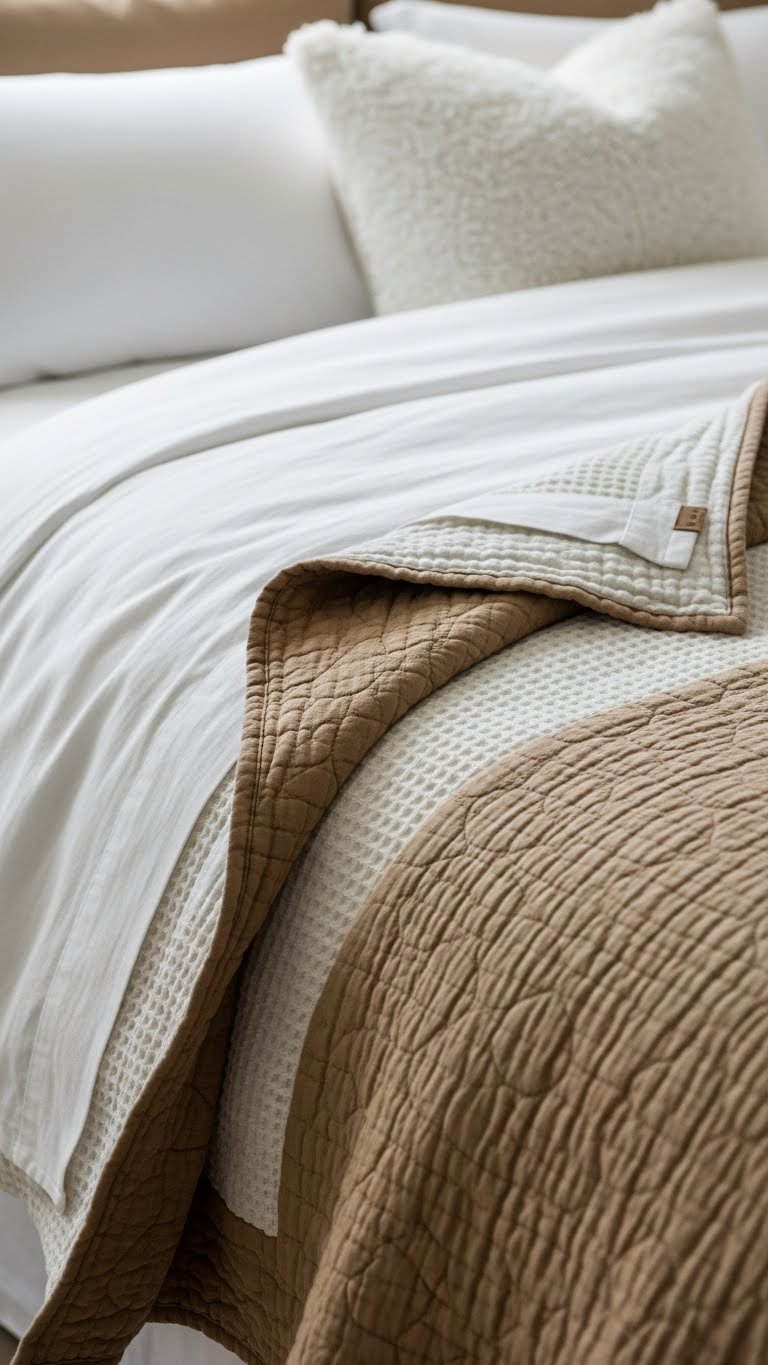
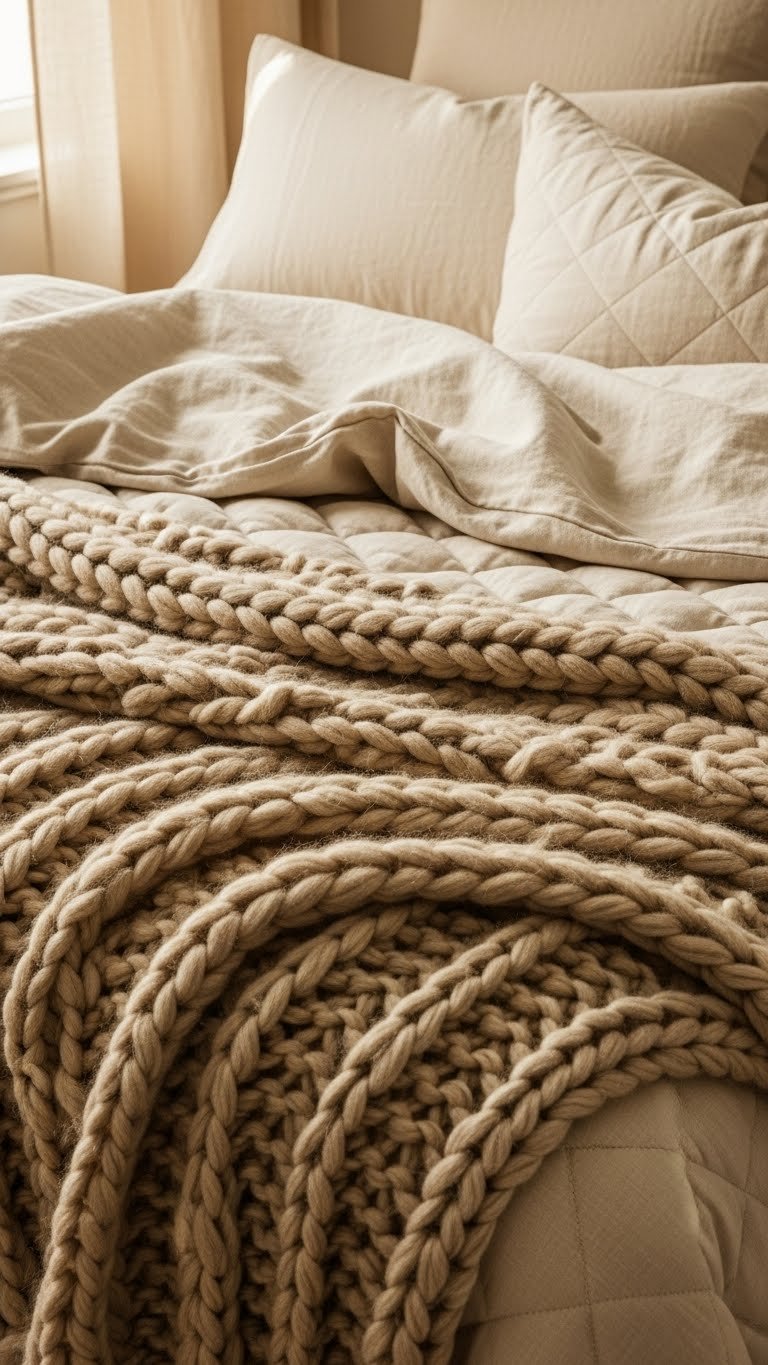
    9. Refresh Your Bedding with Organic Wool or Linen

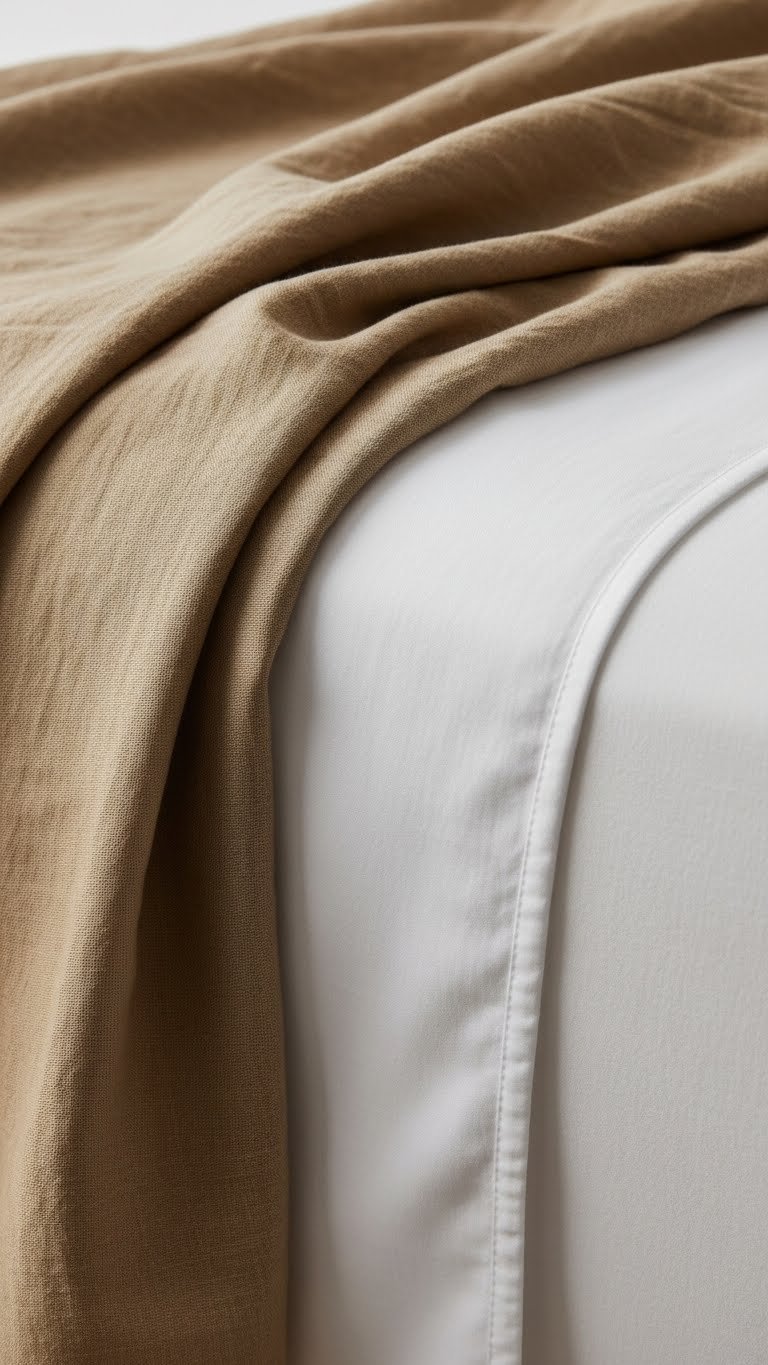
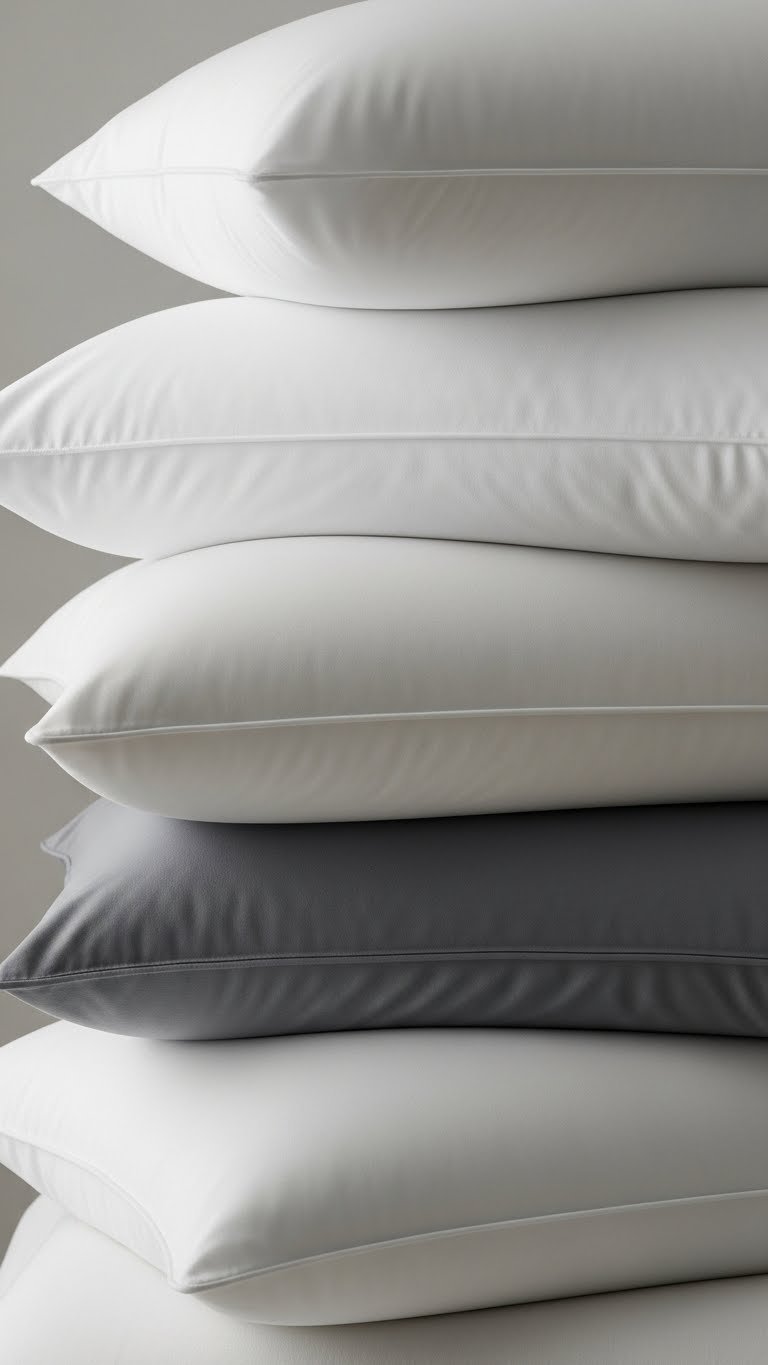
    Cheap polyester sheets trap heat and feel plasticky against your skin. Organic wool, linen, or cotton sheet sets actually regulate temperature and feel luxe—they’re worth the investment because you spend 8 hours a night on them. Your skin will thank you.

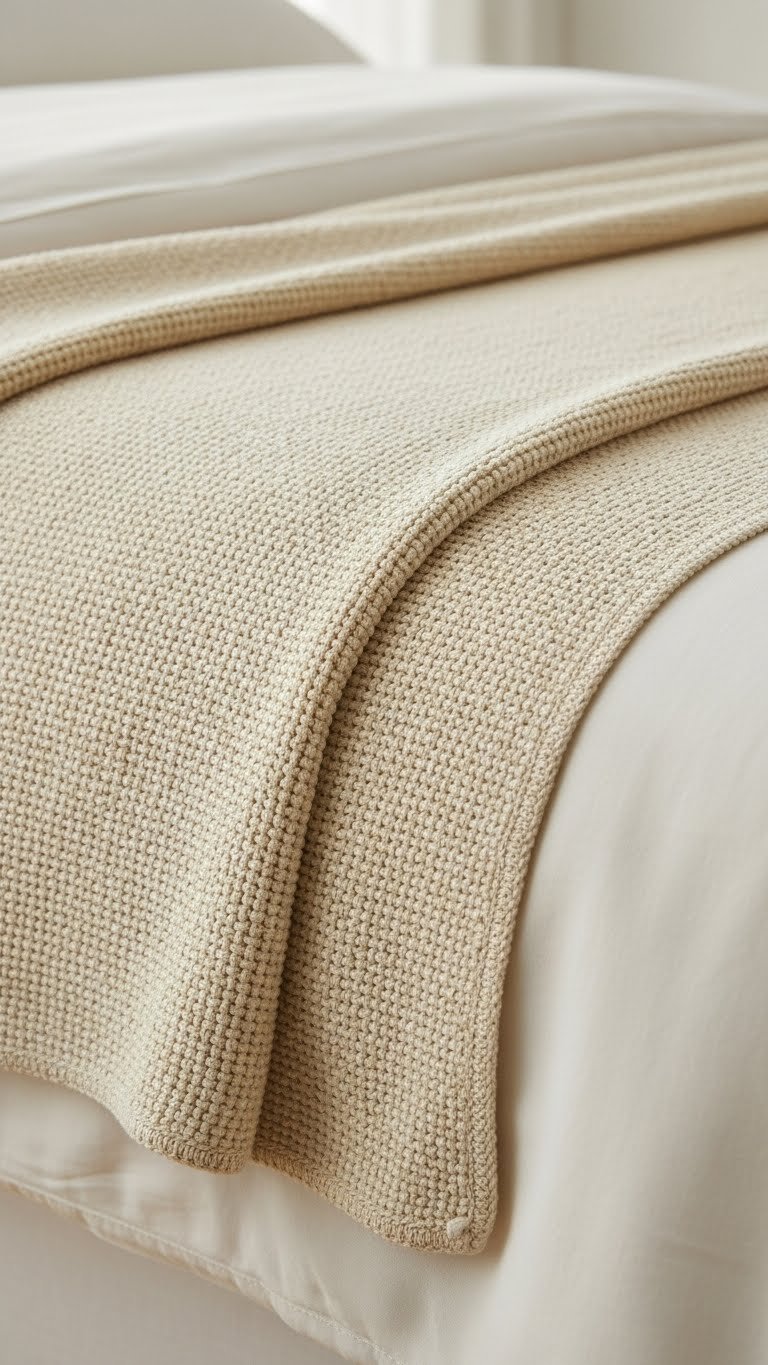
    Invest in one quality sheet set ($80–$200 from Brooklinen, Parachute, or Woolroom). Linen gets softer with every wash and lasts years. Wool regulates temperature better than anything else. Add a natural fiber throw ($60–$150) in wool or cotton for layering. Wash in cold water and hang dry to extend life. You’ll notice you sleep better and wake up less hot or cold. Your bedding becomes something you actually want to get into every night.

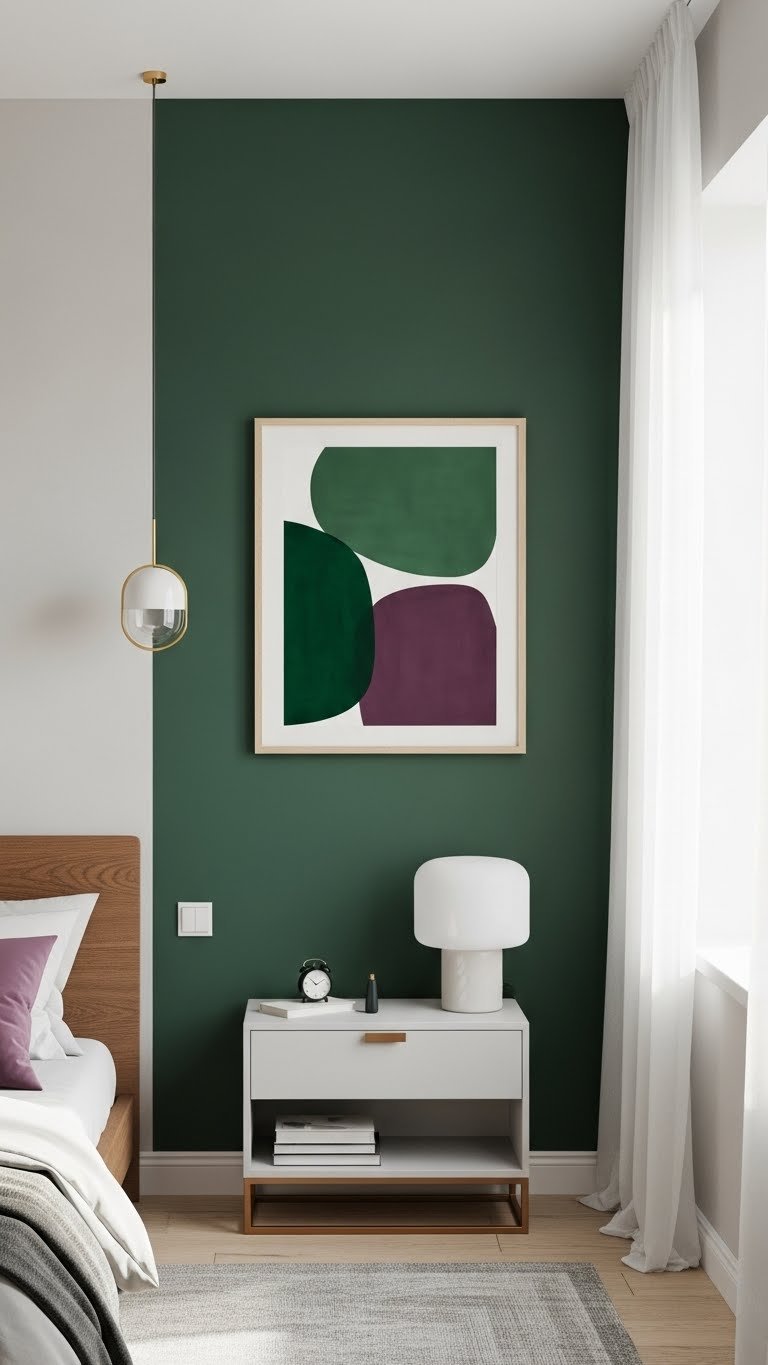
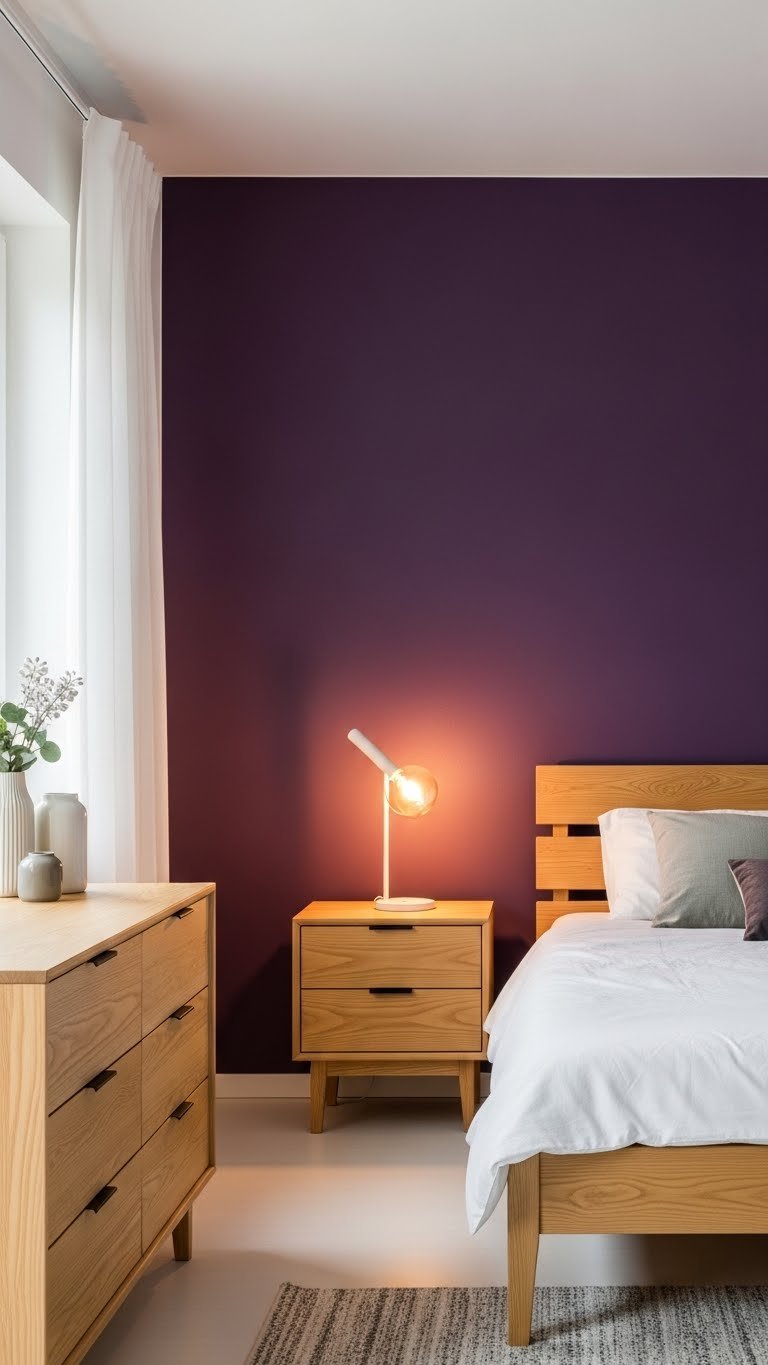
    10. Paint an Accent Wall in Statement Color

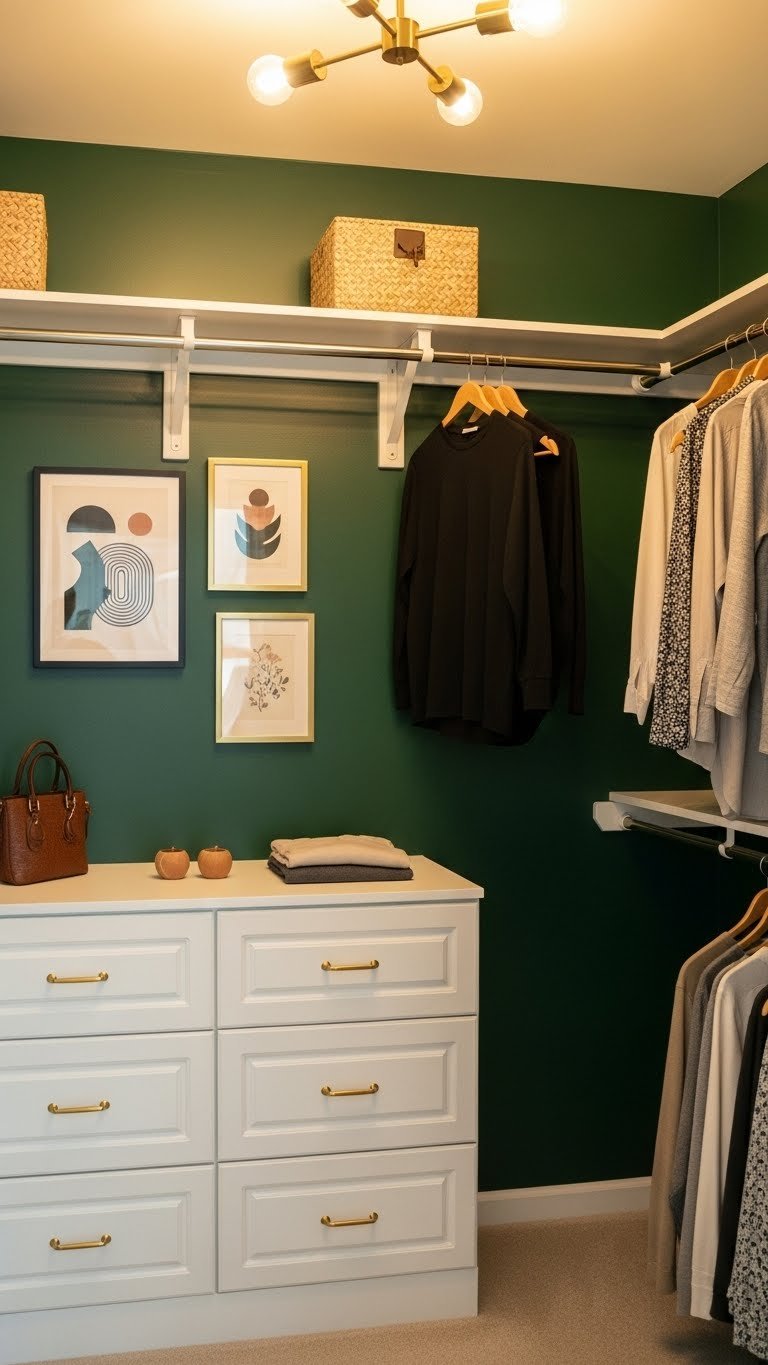
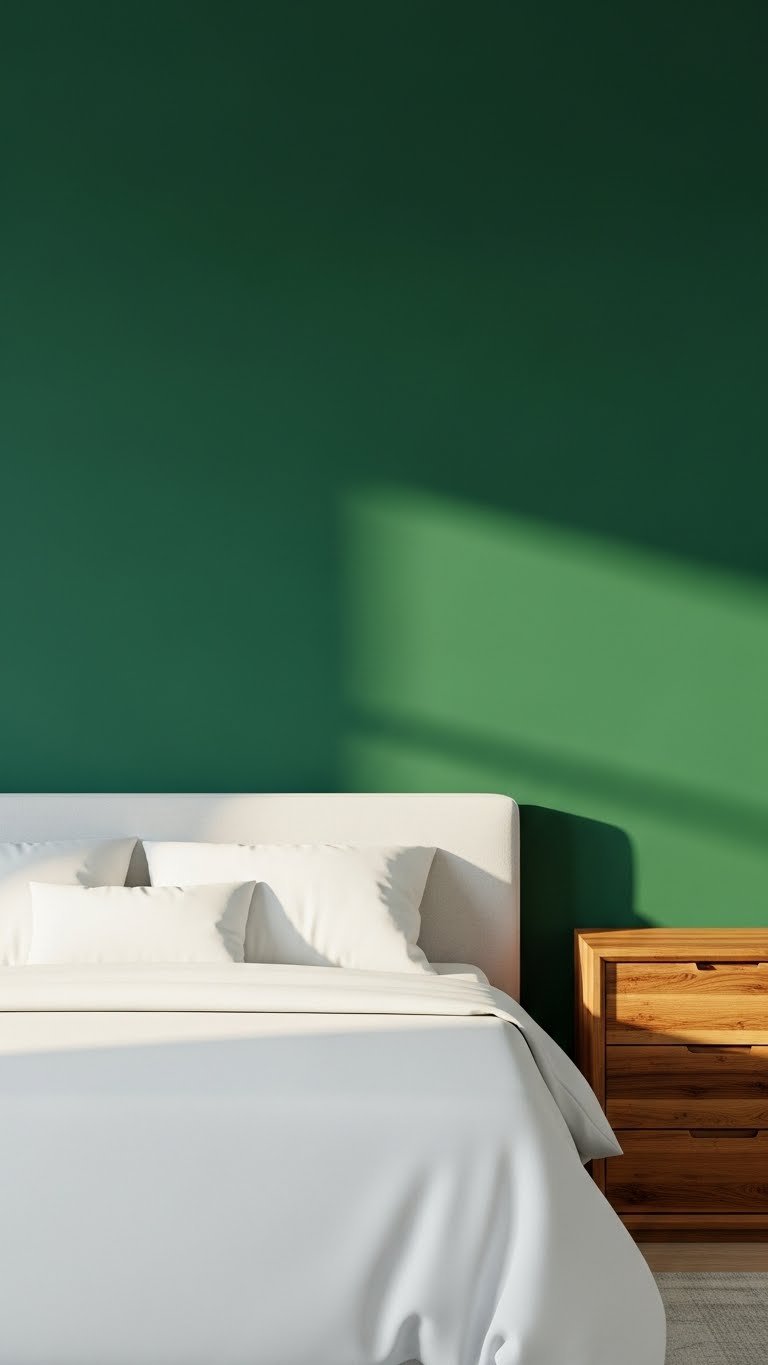
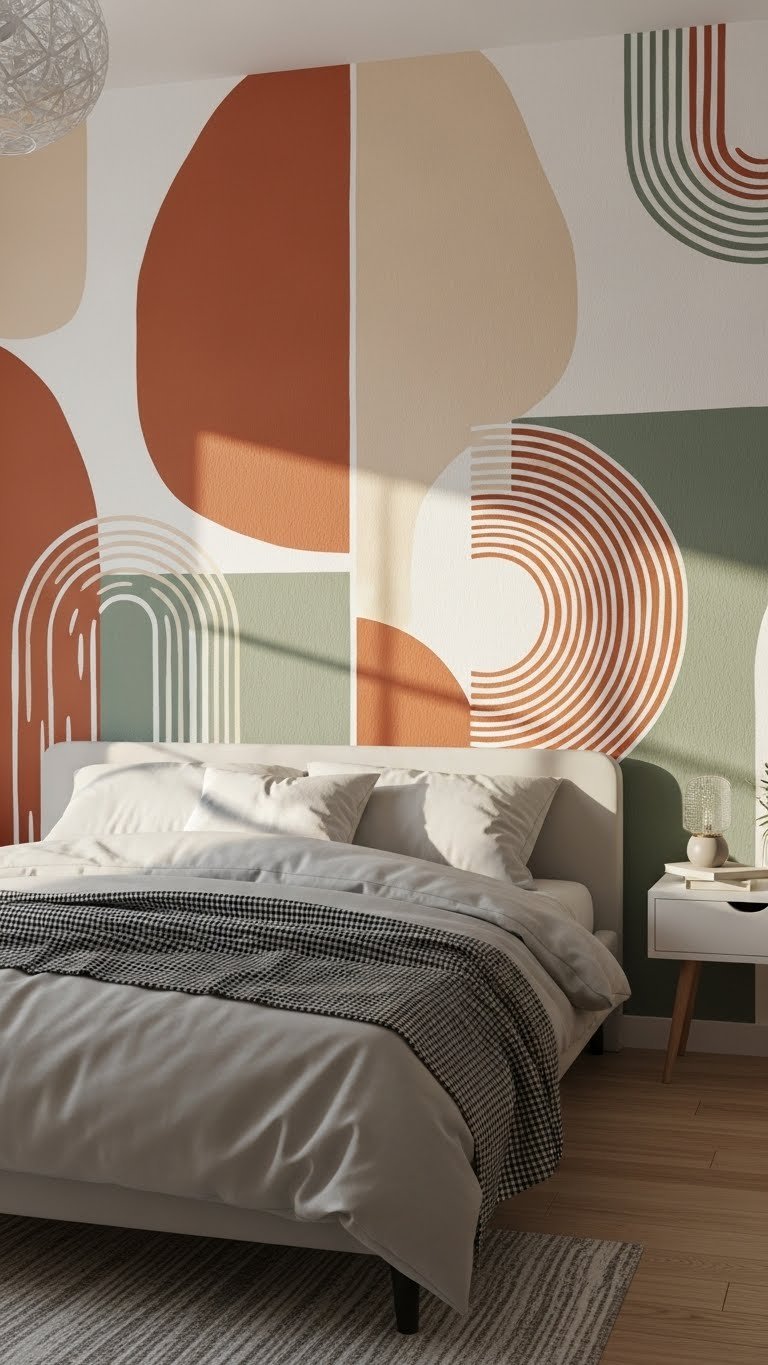
    One bold wall (aubergine, forest green, deep terracotta, or even charcoal) creates a focal point without overwhelming the space. It’s bold but contained—perfect for people who want drama without full commitment.

    Choose your color based on lighting: cool-toned rooms handle jewel tones; warm-lit rooms suit terracotta or rust. Get a sample pot from Sherwin-Williams or Benjamin Moore ($5) and test it for 3 days. Paint the wall behind your bed or facing the door for maximum impact. One wall takes 3–4 hours with primer and two coats. This costs $30–$60 in materials. The result is a bedroom that photographs beautifully and feels intentional, not generic.

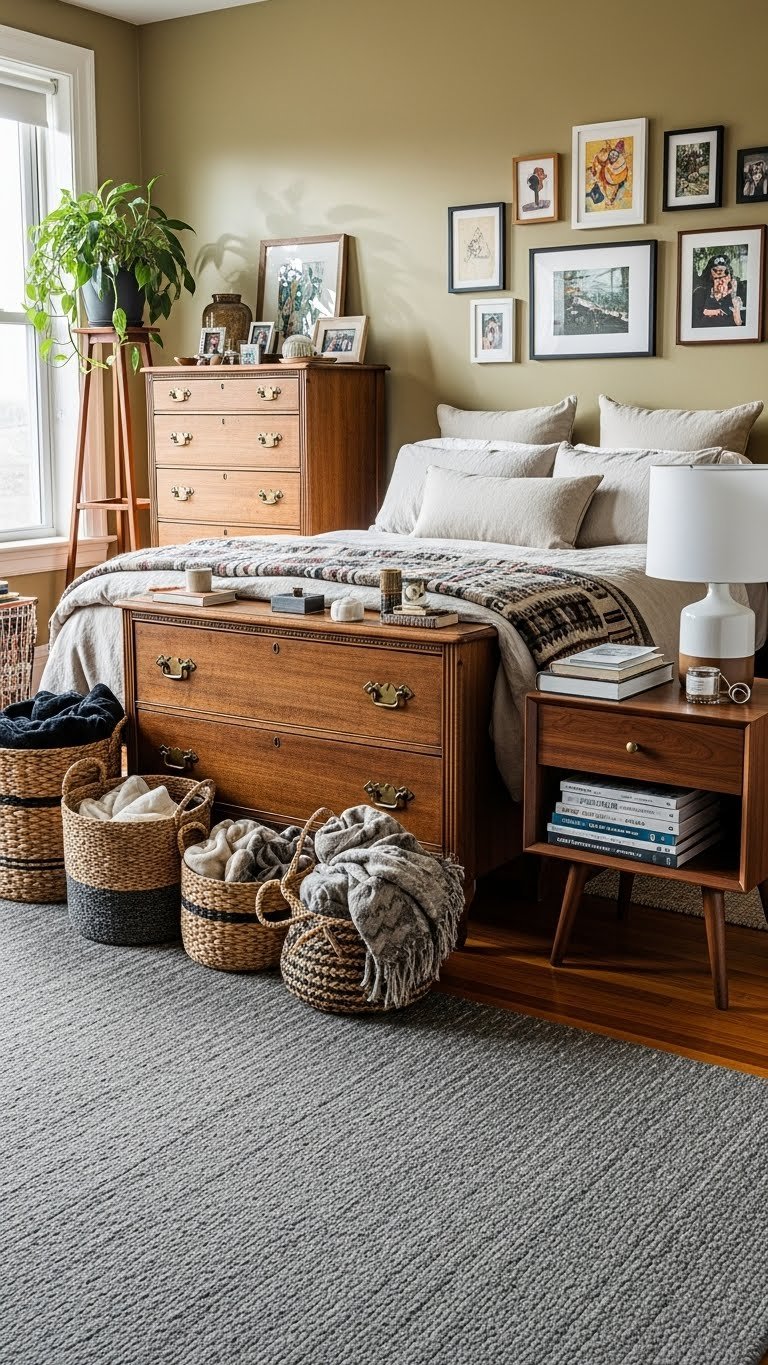
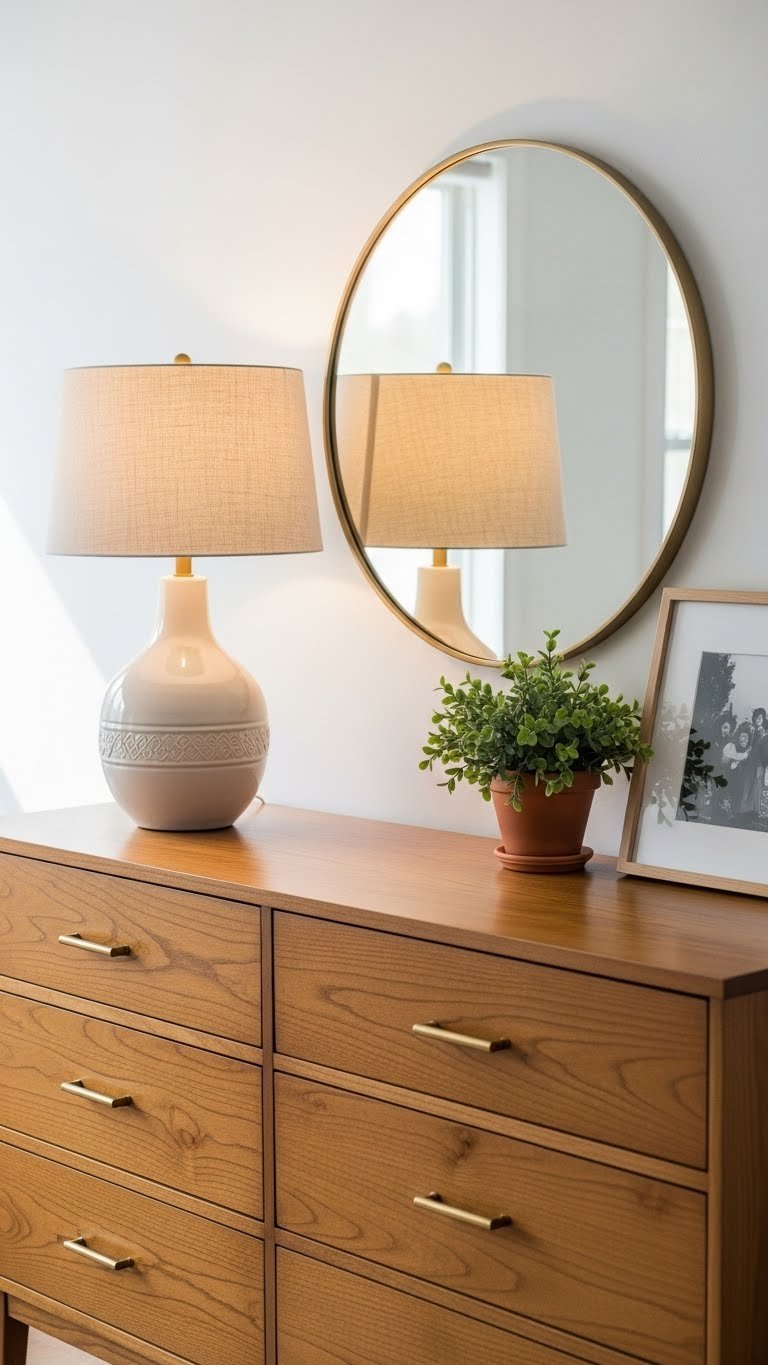
    11. Style a Thrifted Dresser as Your Focal Point

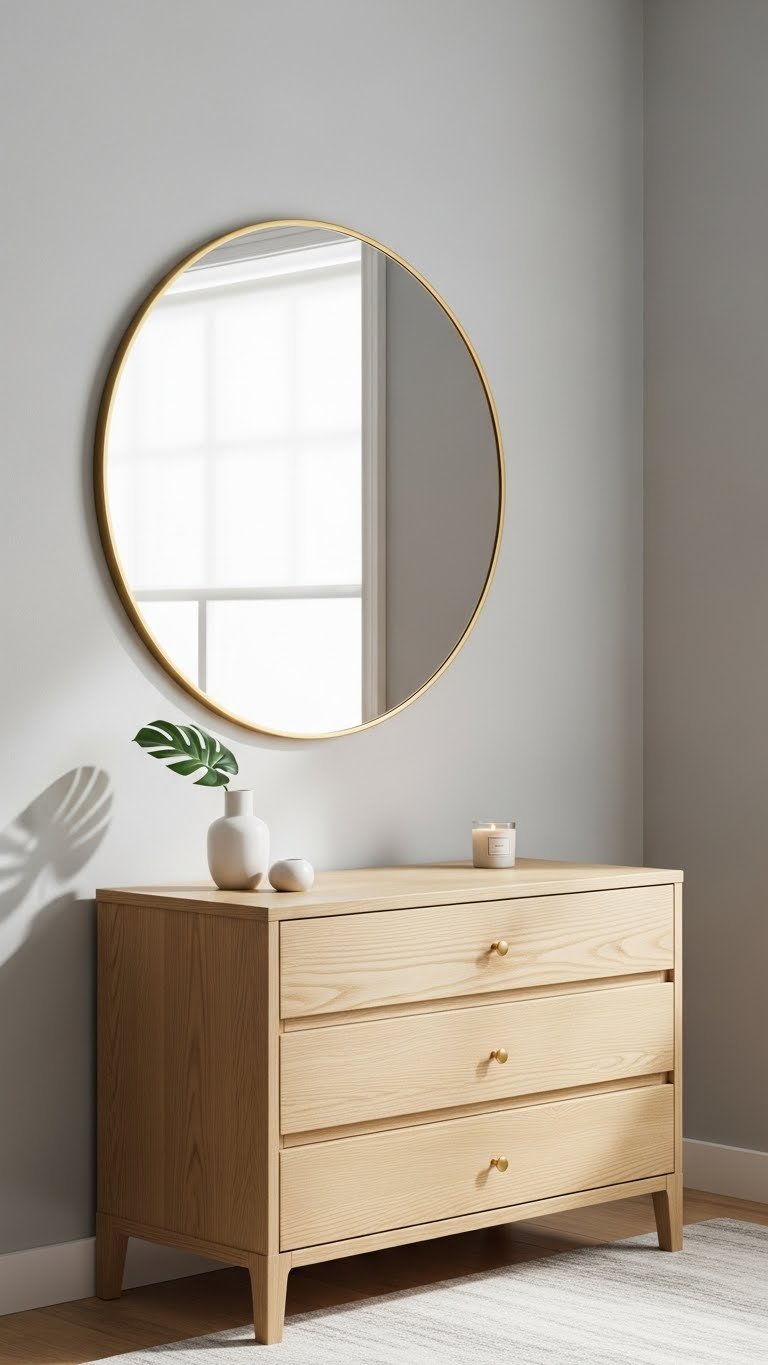
    Your dresser doesn’t have to be invisible—it can be a design moment. A thrifted vintage dresser styled thoughtfully becomes the centerpiece of your room instead of just storage.

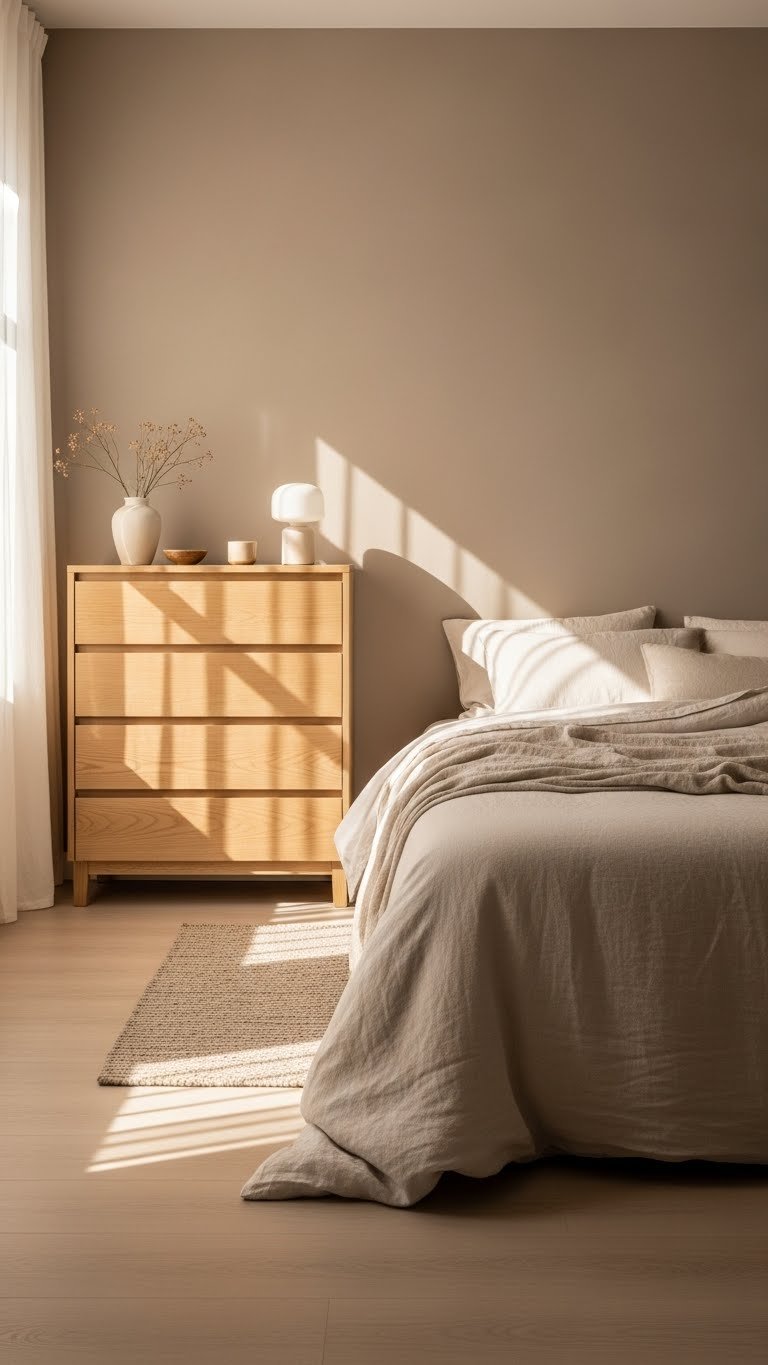
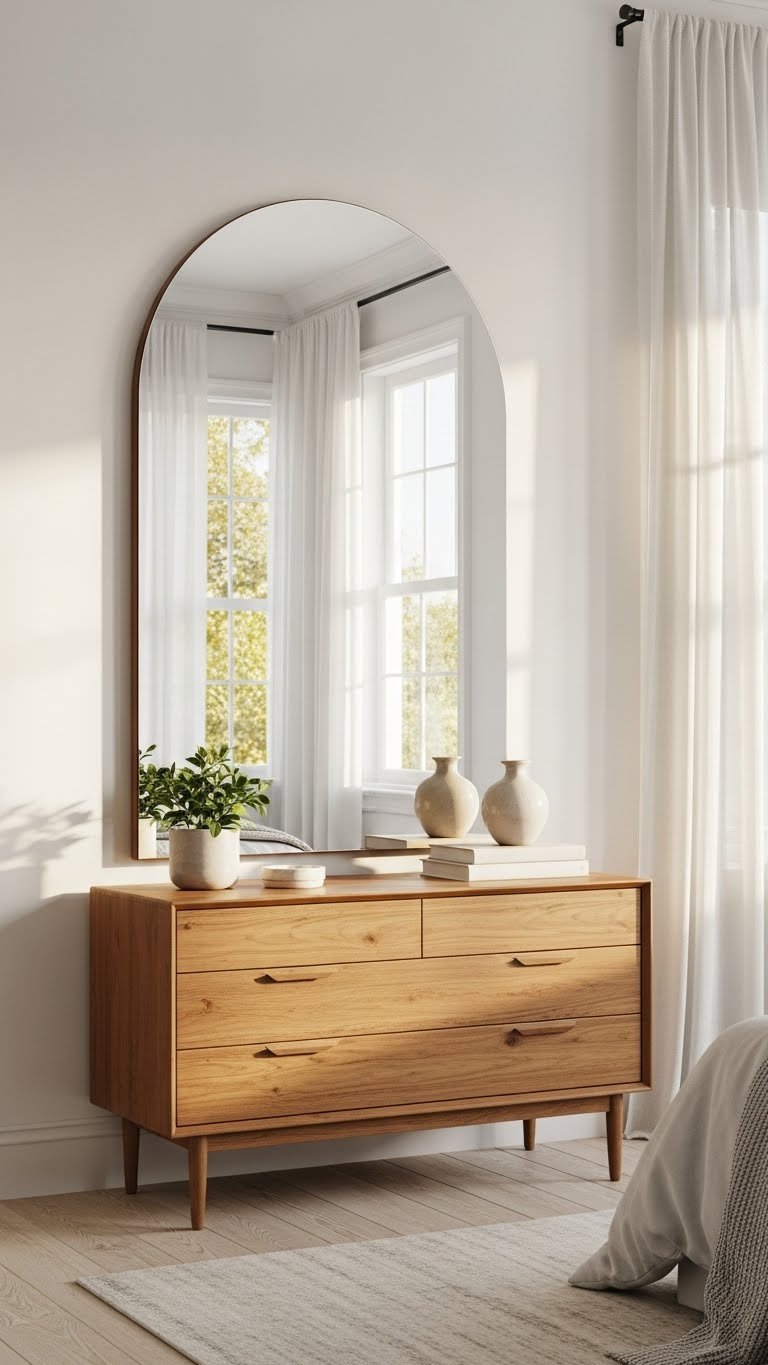
    Hunt Facebook Marketplace, Craigslist, or local antique shops for a solid wood dresser ($50–$200). Refinish with wood oil or a fresh coat of paint if needed. Style the top with 5–7 items max: a mirror, a warm lamp, one plant, a candle, and 1–2 decorative objects. Keep some surface clear to avoid clutter. The key is intentional spacing. Renters love this because nothing is permanent. You’ll love opening your drawers and setting the top becomes part of your daily ritual.

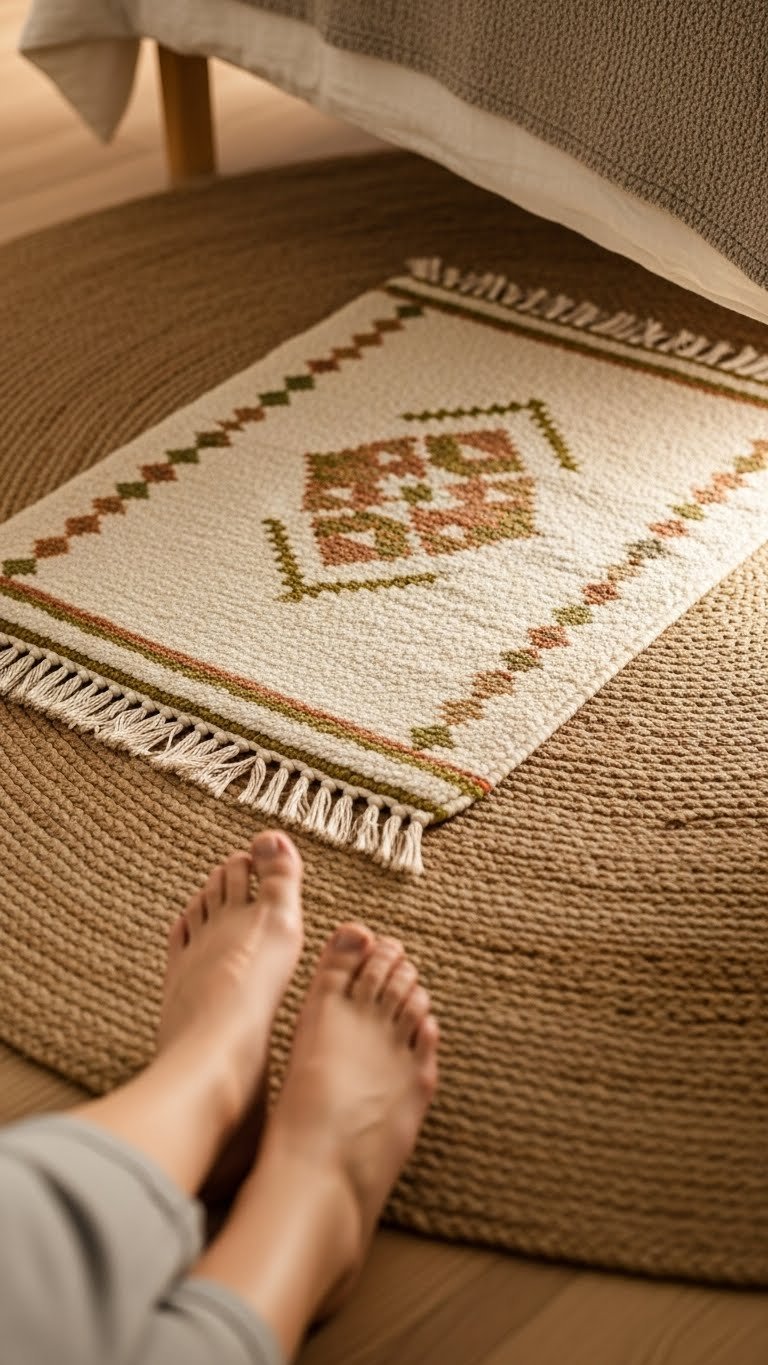
    12. Layer a Natural Fiber Rug Under Your Bed

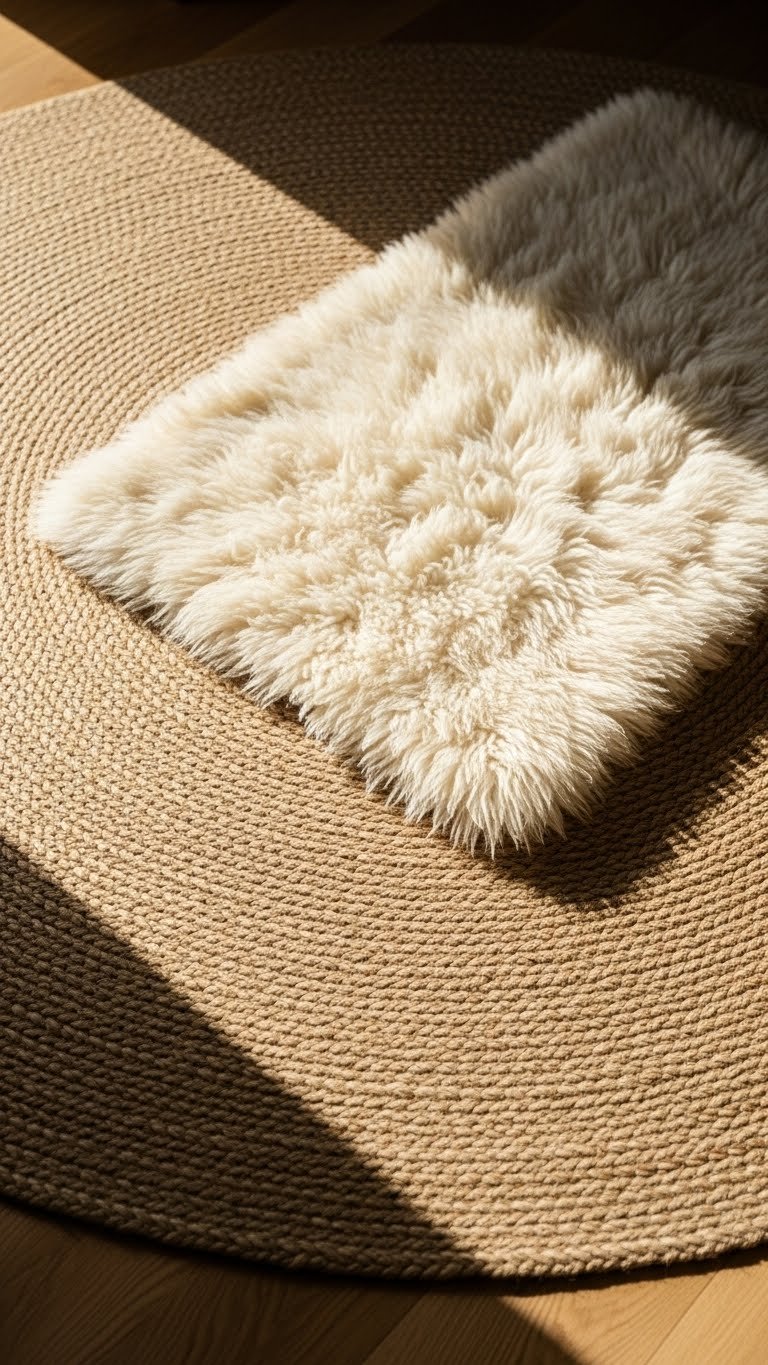
    One large, flat rug feels boring. Layering textures—jute under a patterned wool, or sisal under a kilim—adds depth and warmth while defining your sleep space. Your feet wake up to texture instead of cold floor.

    Start with a large jute or sisal rug ($80–$200 from Ruggable, IKEA, or Wayfair) as your base layer. Top it with a smaller patterned or textured rug ($60–$150) for visual interest. The layering trick makes the space feel designed, not accidental. This costs under $300 for both and takes 30 minutes to arrange. Your bedroom instantly feels more grounded and intentional.

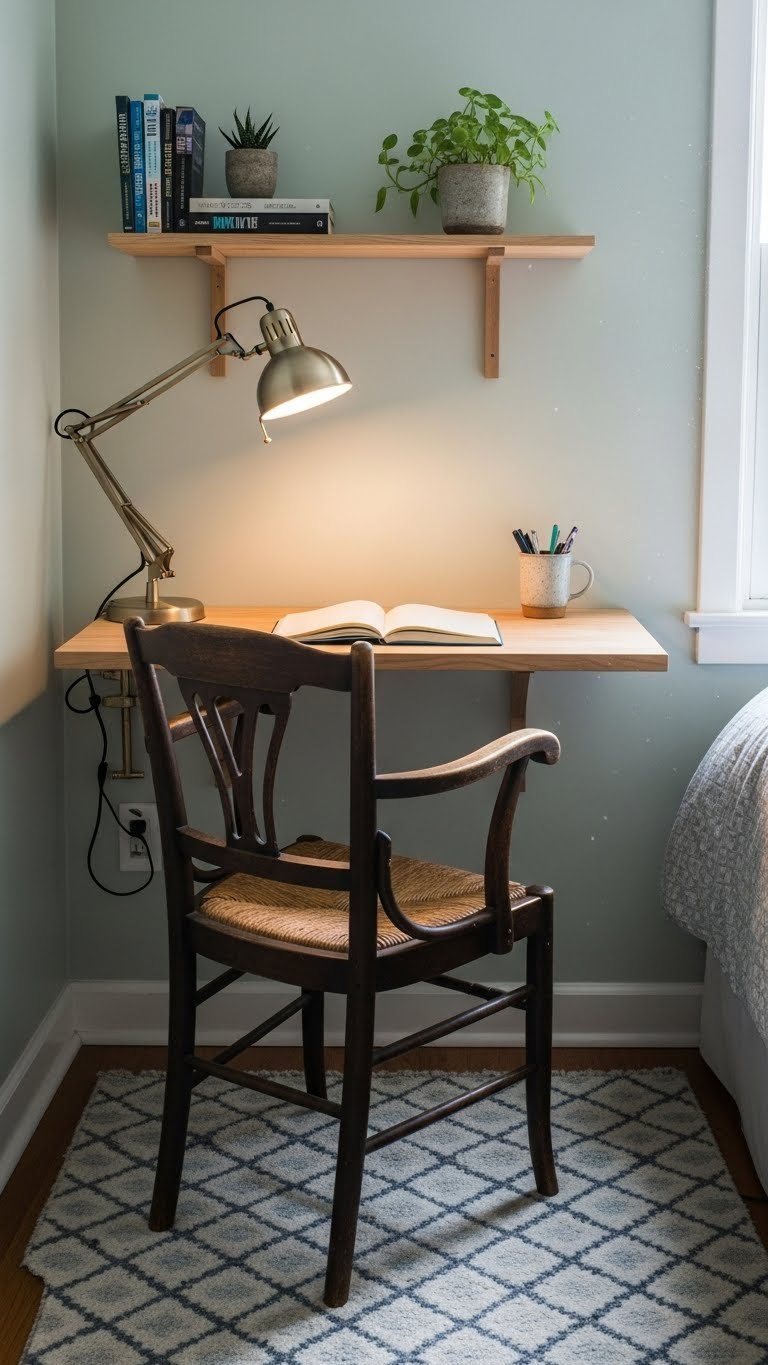
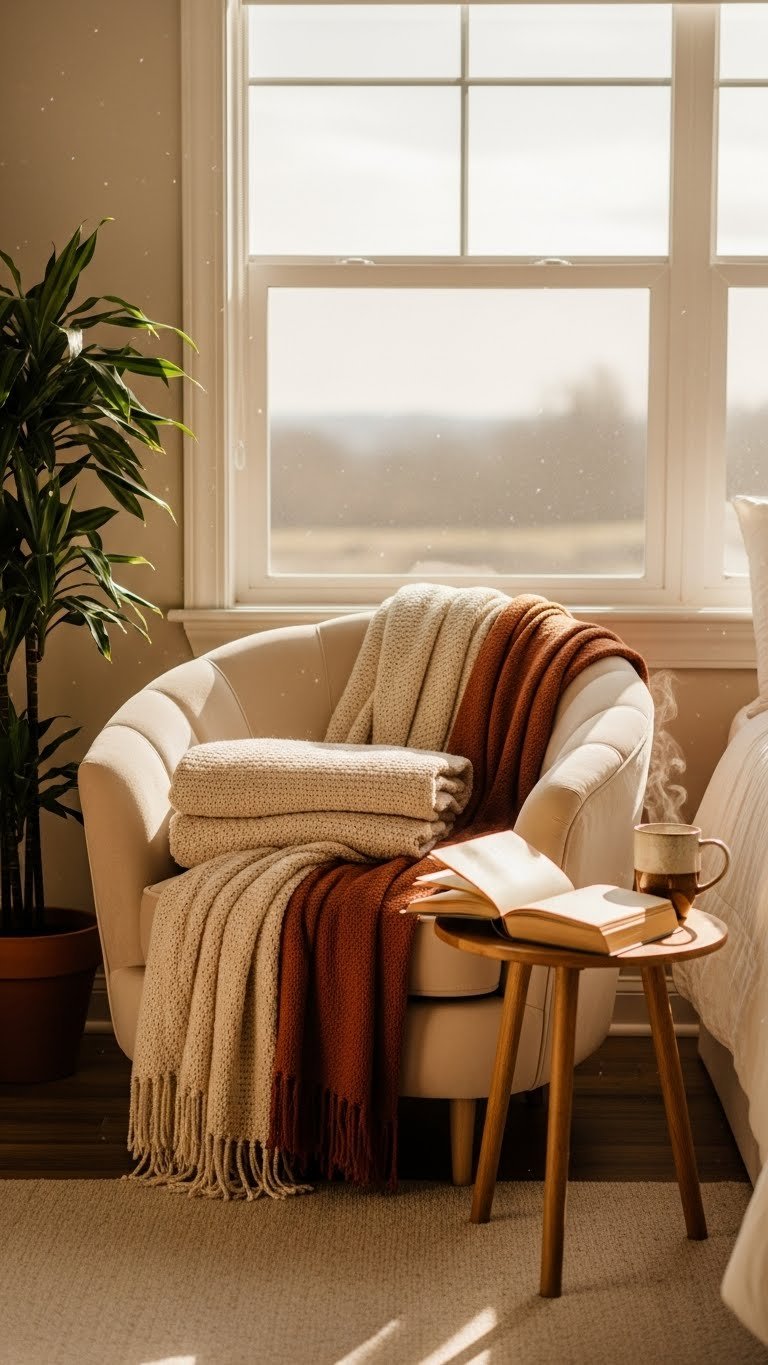
    13. Create a Reading Nook with Curved Chair and Throw

    Not everyone has a separate sitting area, but even a small corner with a chair and good light becomes your escape spot. It signals that your bedroom is for multiple purposes—rest, reading, thinking—not just sleep.

    Get a curved accent chair ($200–$600 from Article, Wayfair, or CB2) and position it by a window if possible. Layer 2–3 throw blankets in complementary textures ($40–$100 total). Add a small side table ($30–$80) for your book or tea. If space is tight, even a floor cushion and a good lamp create a reading moment. The whole setup takes an afternoon to arrange. You’ll find yourself sitting there every evening instead of staying in bed.

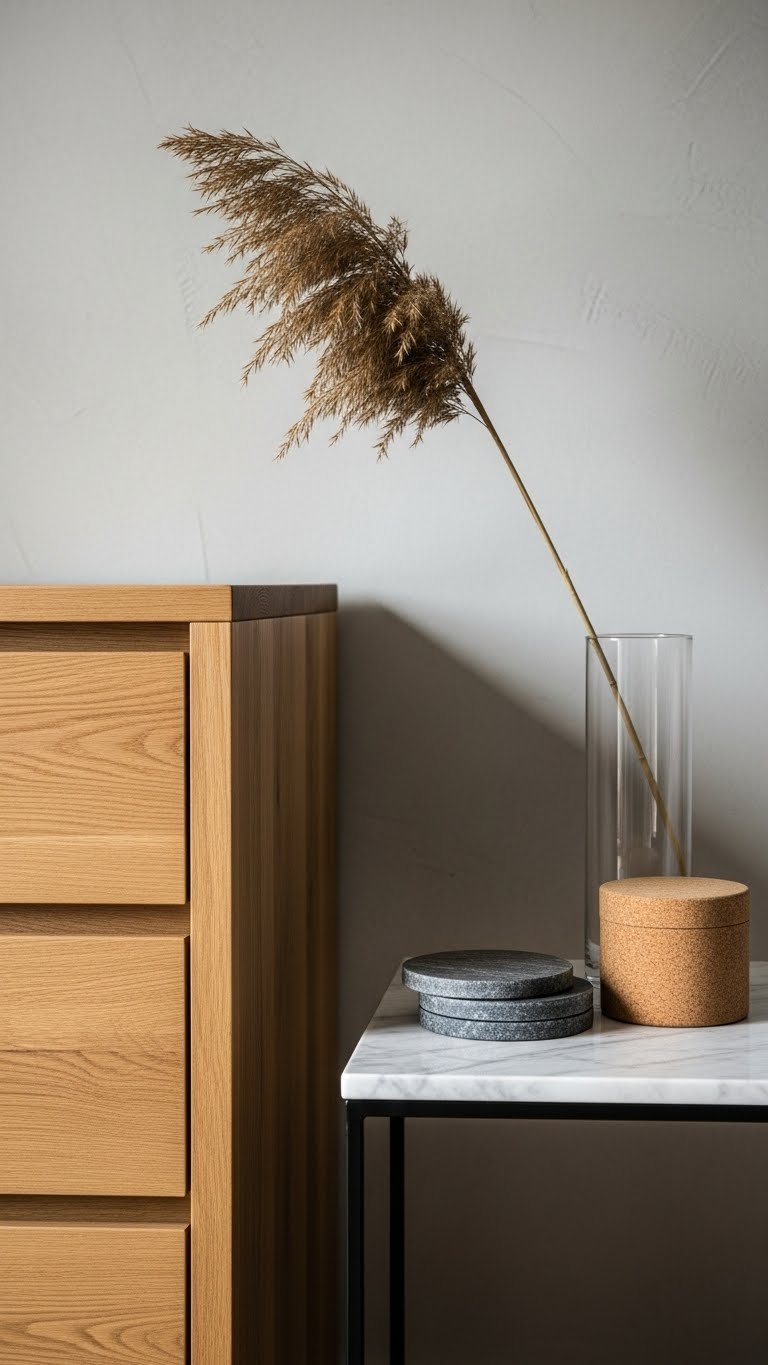
    14. Mix Raw Wood and Marble Surfaces

    Mixing raw materials—warm wood with cool marble or stone—feels modern and organic without looking sterile. It’s sophisticated because nothing matches perfectly, yet everything feels intentional.

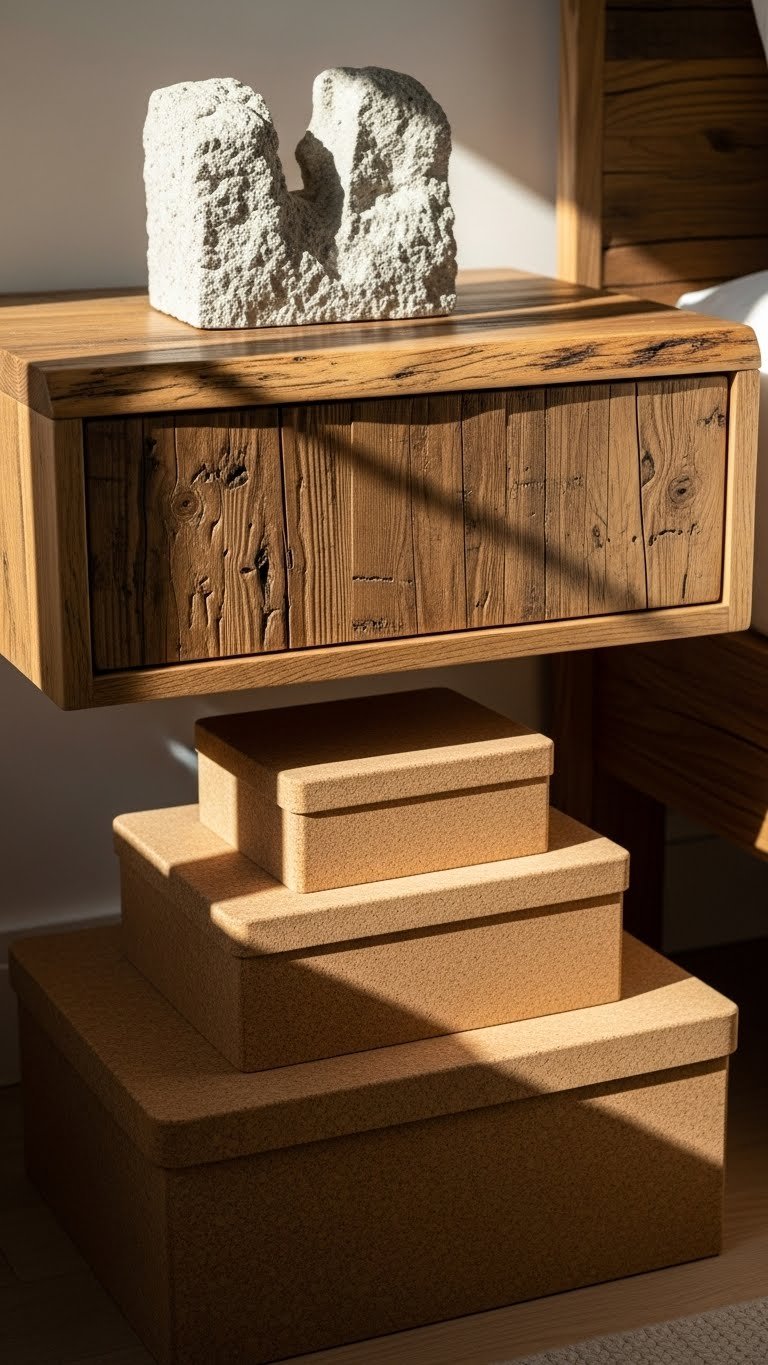
    Look for wood nightstands ($80–$200), marble accent tables ($100–$300), and cork accessories ($10–$50 each) at 1stDibs, Article, or vintage shops. Pair a natural wood dresser with a marble top side table. Add cork coasters and wooden picture frames. The mix of textures feels collected and curated. This works best when you’re not trying to match; the contrast is the point. Your bedroom becomes a showcase of natural materials instead of looking mass-produced.

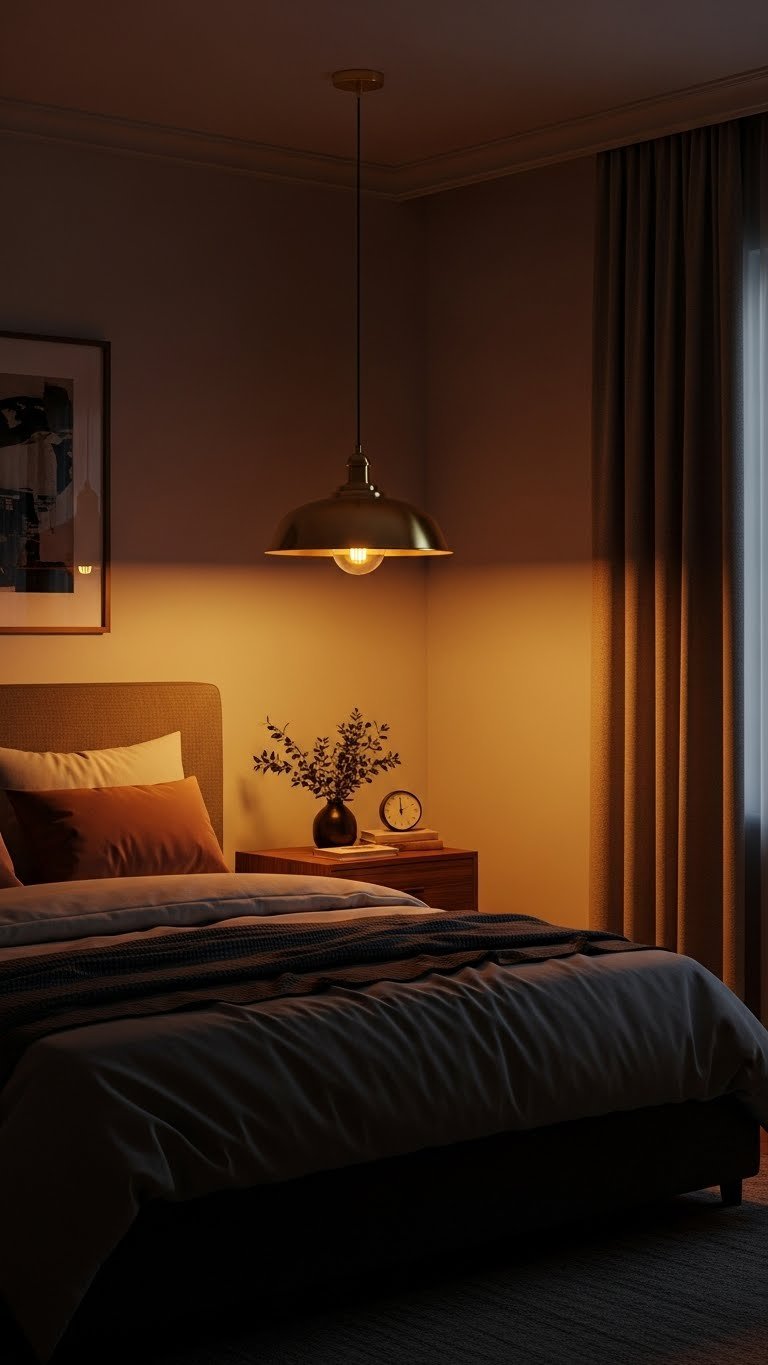
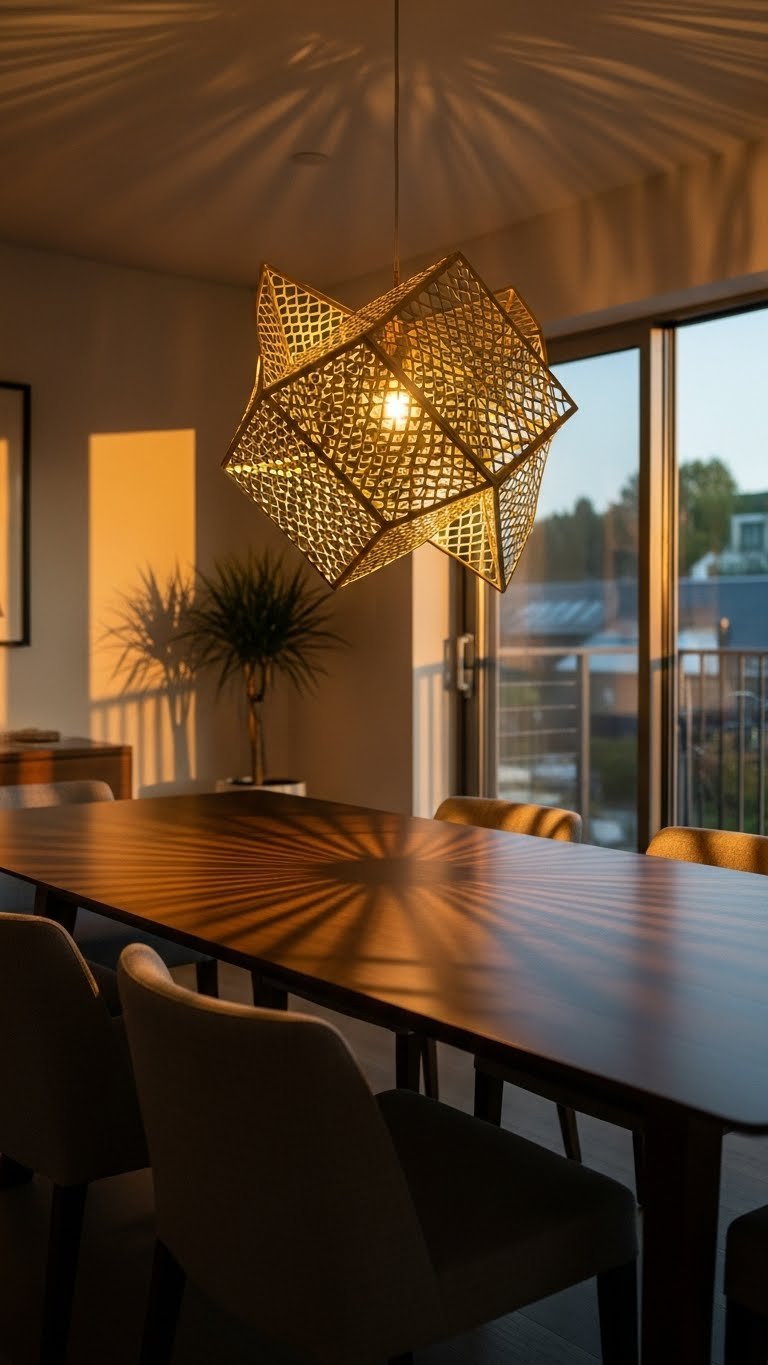
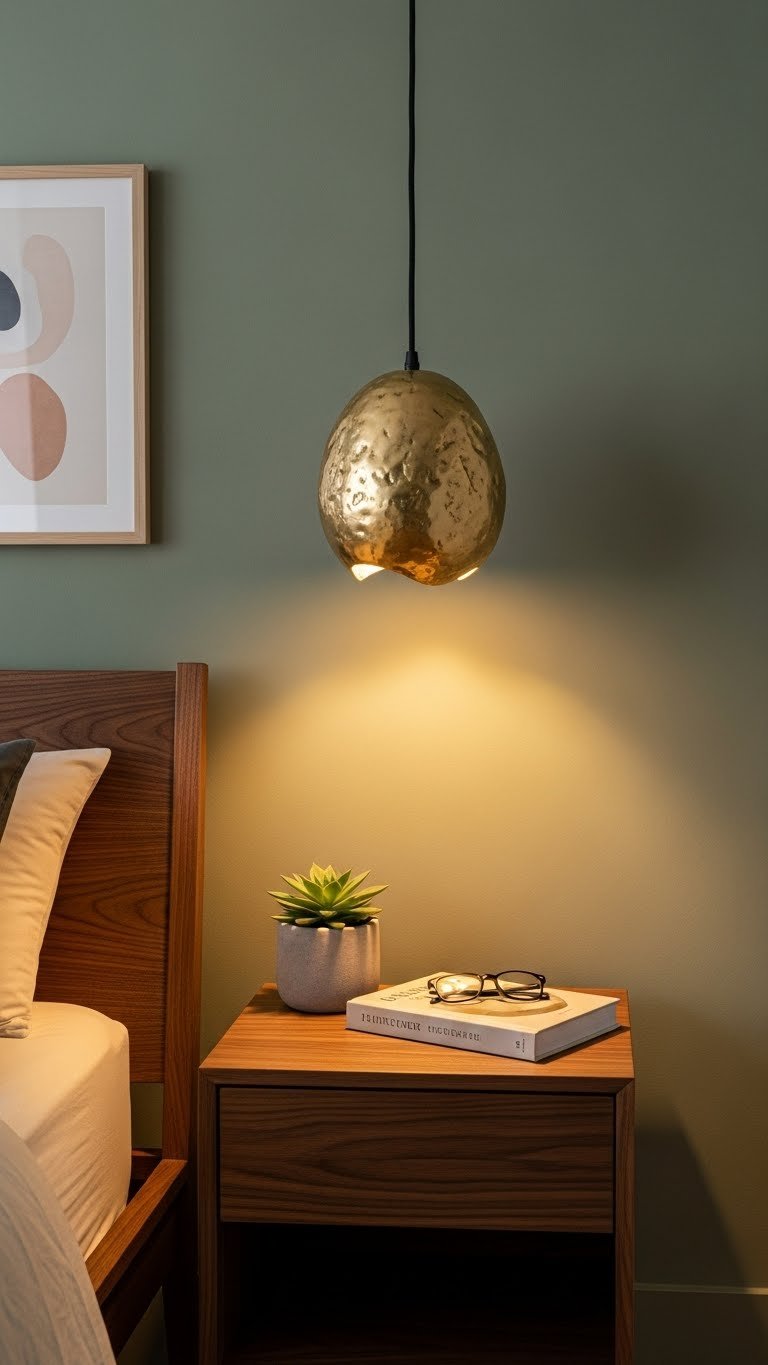
    15. Hang a Sculptural Pendant Light Over Your Nightstand

    Overhead lighting is harsh; bedside lamps work but they’re predictable. A sculptural pendant light over each nightstand becomes a design feature and solves your lighting problem in one move. It’s functional art.

    Find pendant lights with interesting shapes ($50–$200 each from Etsy, CB2, or West Elm). Brass, ceramic, or woven materials fit the 2025 aesthetic. These typically need to be hardwired, so if you’re renting, this is one to skip. For homeowners, hire an electrician for installation ($100–$300 total labor). The payoff is massive: you get mood lighting that looks intentional every single day. Your bedroom becomes less “bedroom” and more “private retreat.”

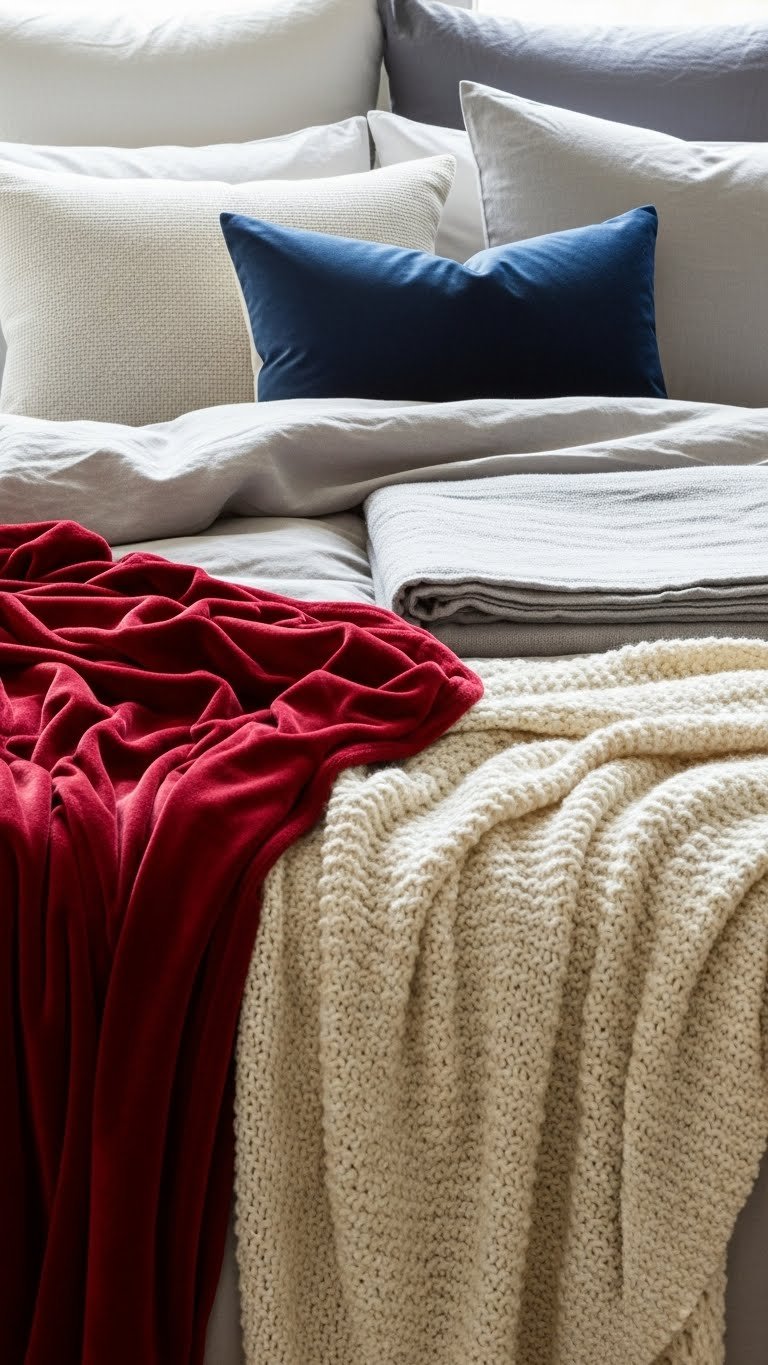
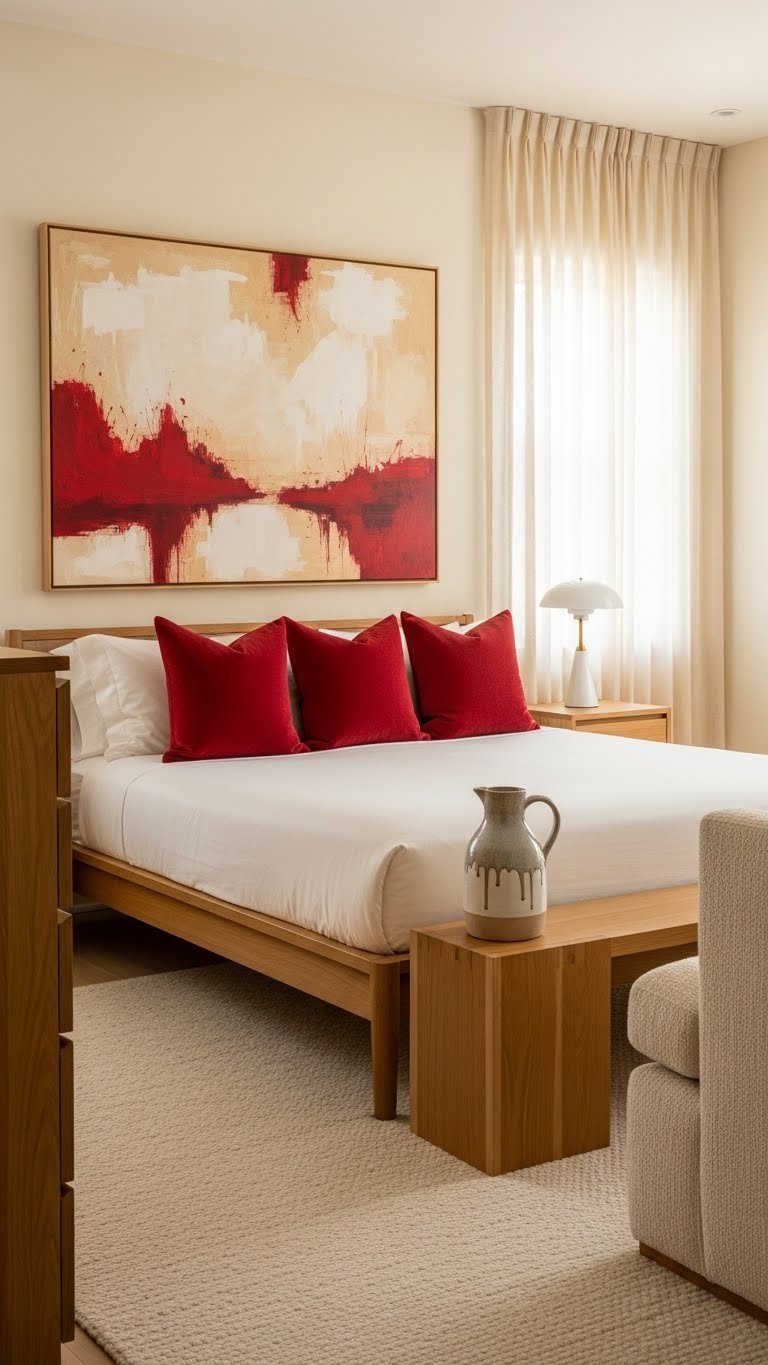
    16. Bring in Cherry Red as a Bold Accent

    Cherry red is having a cultural moment (Pinterest searches are up 100% year-over-year), and for good reason—it adds warmth and sophistication without feeling childish when paired with cream, natural wood, and cool tones. One or two cherry red accents change the whole energy.

    Introduce cherry red through throw pillows ($20–$50 each), artwork ($40–$200), or a small sculptural object ($30–$100). Keep everything else neutral so the red pops. You can swap pillow covers seasonally to test the vibe before committing. This costs under $100 to experiment. The result feels unexpectedly curated—like you have real taste.

    17. Add Quilts and Vintage Textiles as Wall Art

    Vintage quilts and textiles are too beautiful to hide in closets. Hanging them as art honors handmade quality and fills wall space with warmth and pattern. It’s the perfect grandmillennial move.

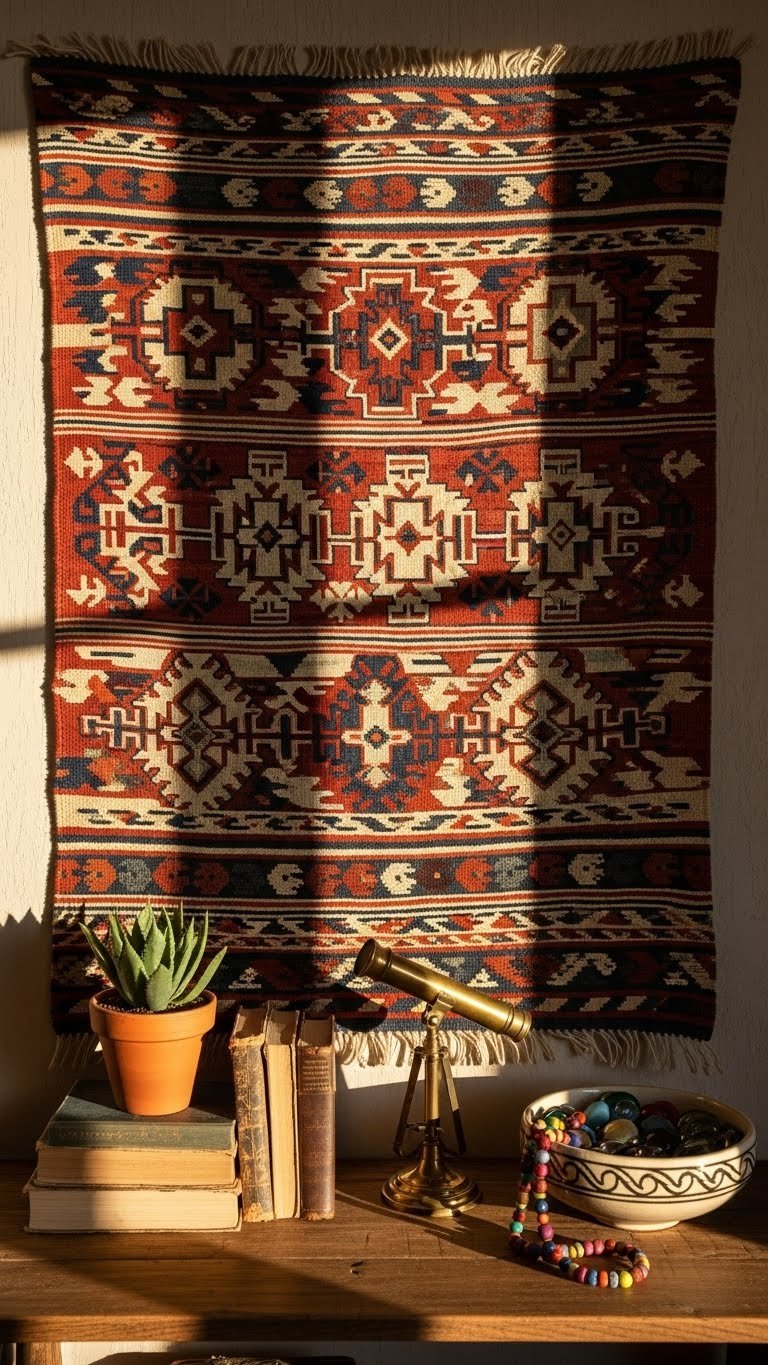
    Hunt estate sales, thrift stores, or Etsy for vintage quilts and textiles ($20–$100 each). Hang them using a wooden dowel and hooks (hardware store finds for $10), or frame them like art. One textile takes 15 minutes to hang and instantly adds personality. You get to appreciate the craftsmanship daily. Your bedroom becomes a museum of things you actually love instead of something generic.

    18. Invest in Statement Bedding (Not Fast Fashion)

    Your duvet and pillows are worth investing in because you touch them daily. Quality bedding lasts years, feels better against your skin, and actually improves your sleep. This is the opposite of fast fashion.

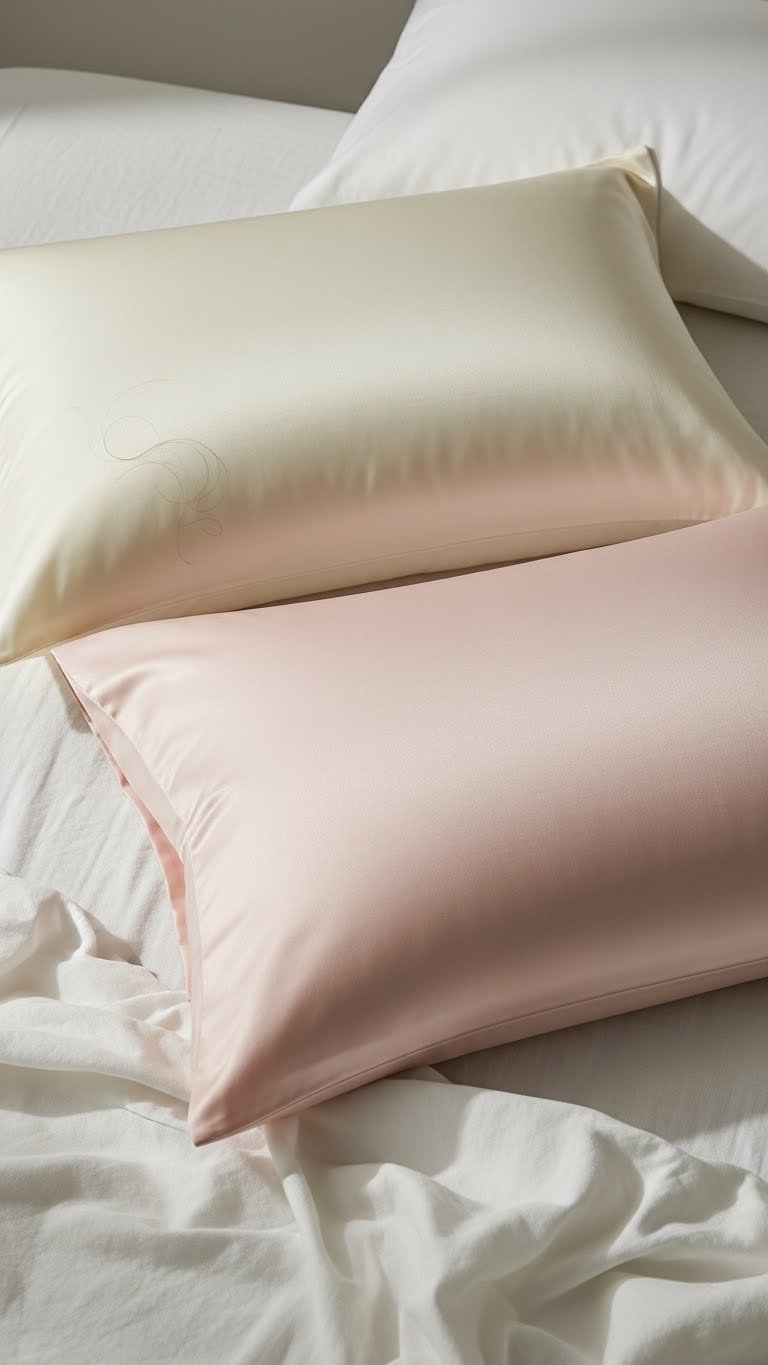
    Splurge on one really good duvet set ($150–$400 from Parachute, Schoolhouse, or Leesa). Linen or organic cotton feels better and gets softer over time. Add silk pillowcases ($30–$80 per pair) for your skin and hair. These aren’t just nice to have—they actually change how you feel waking up. You’ll notice the quality difference within a week. Your bed becomes something you want to make every morning.

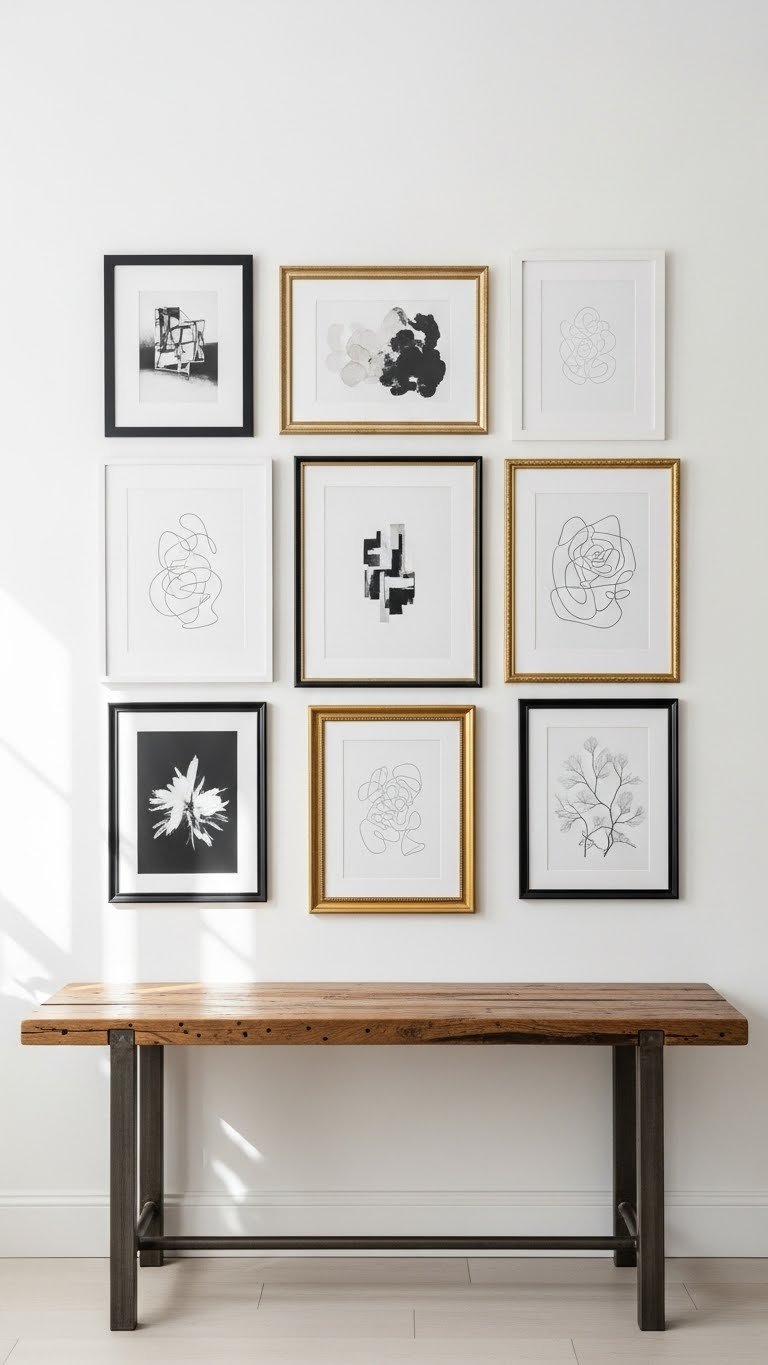
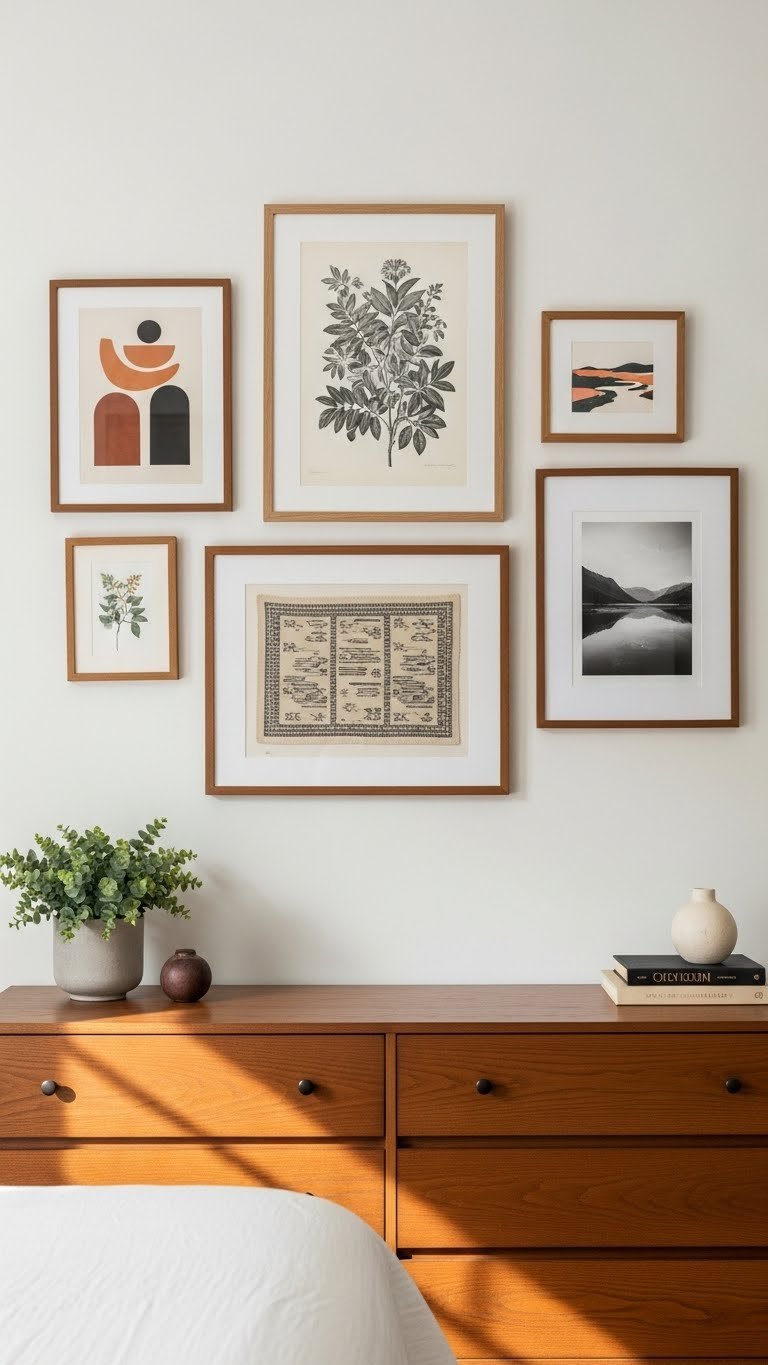
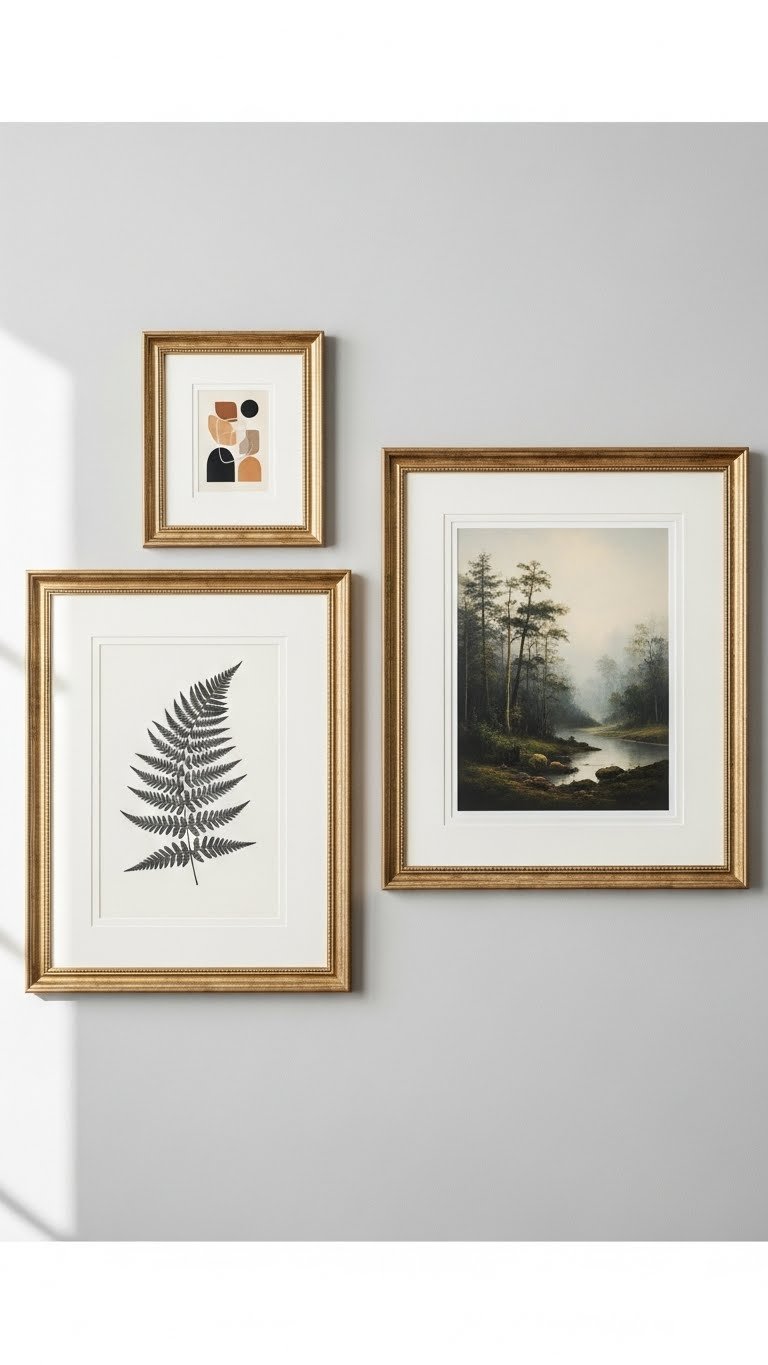
    19. Create a Gallery Wall Above Your Dresser

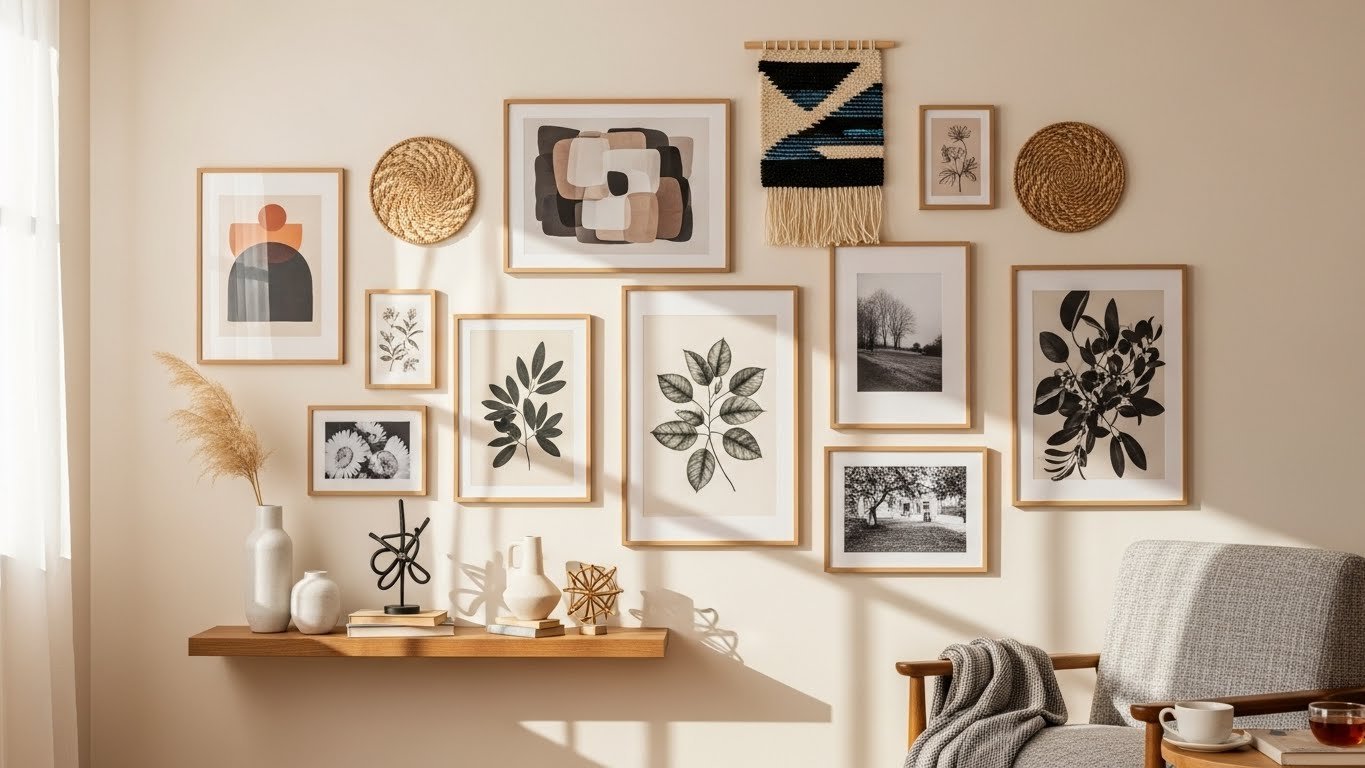
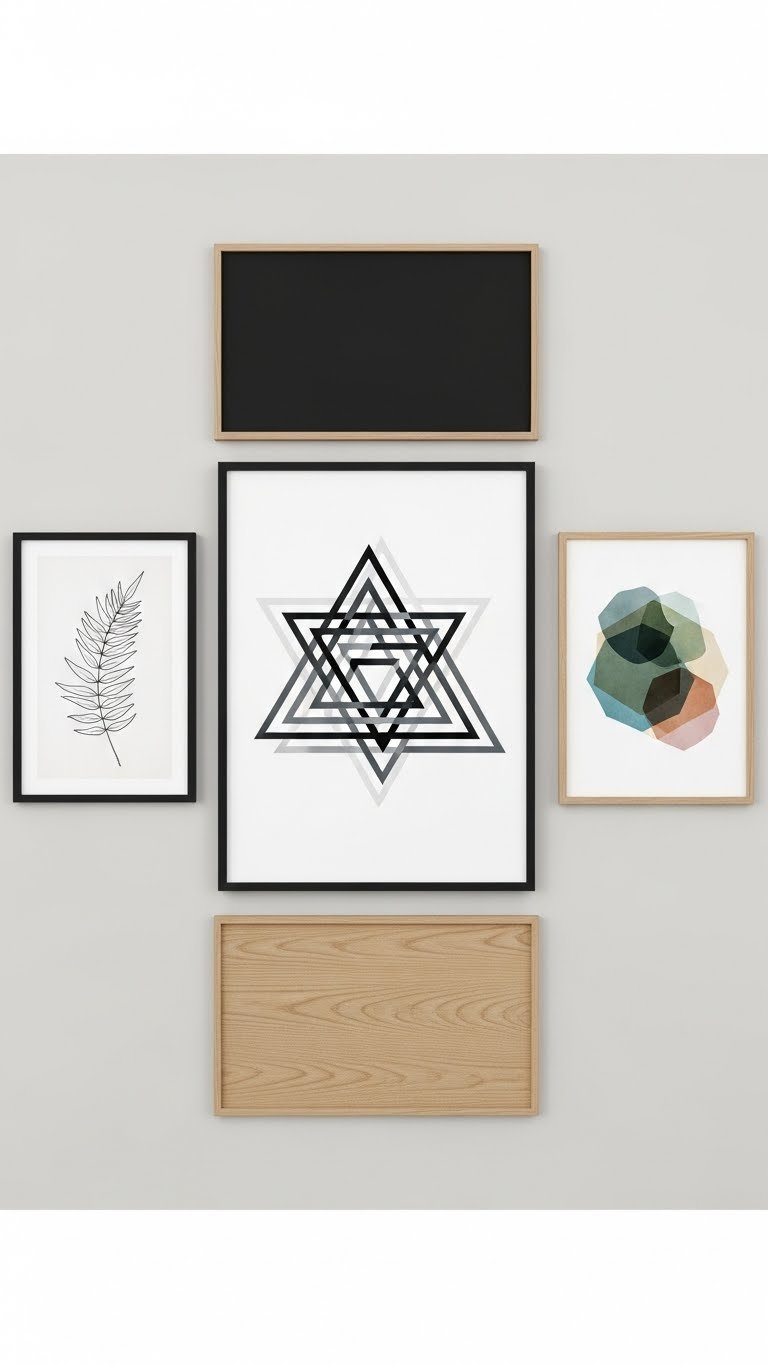
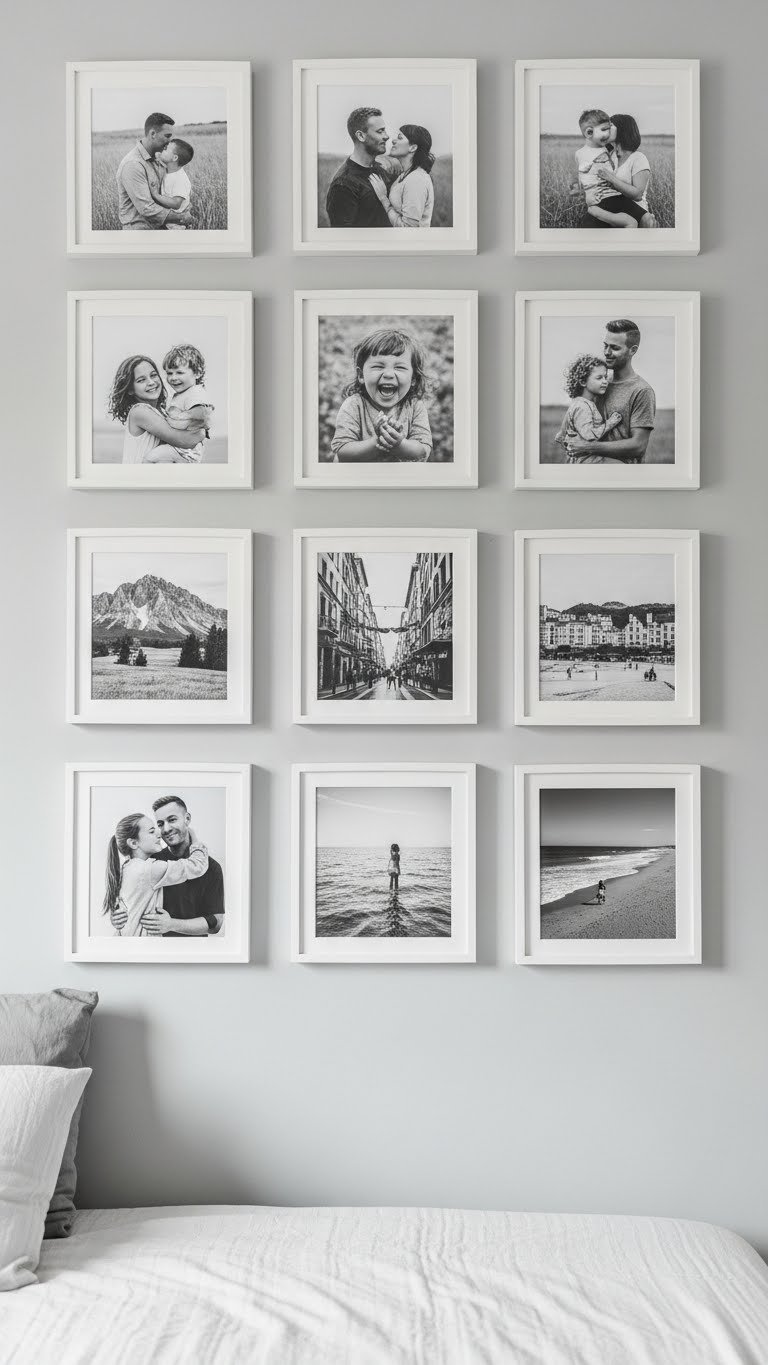
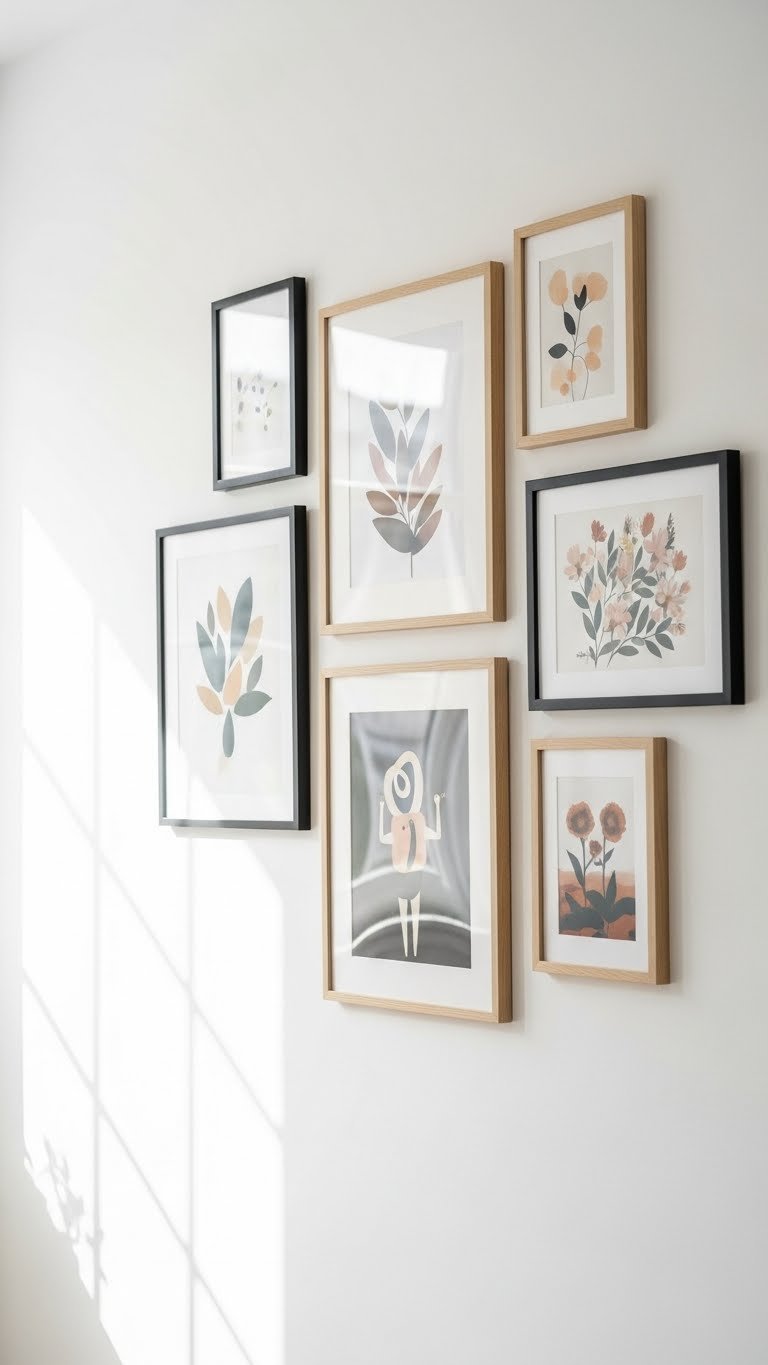
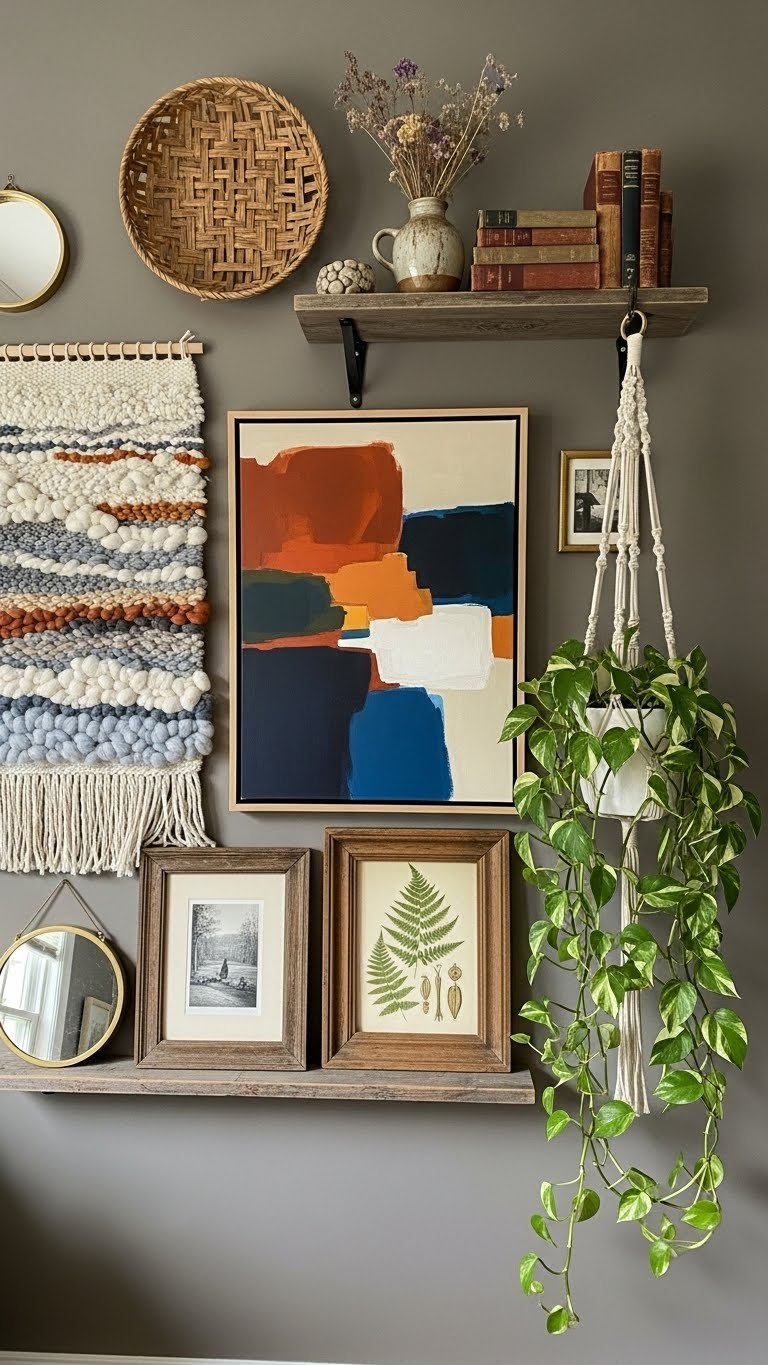
    A gallery wall gives you flexibility to mix sizes, frames, and media while feeling intentional. It’s less intimidating than one large piece and more interesting than scattered small frames. You’re creating a personal collection display.

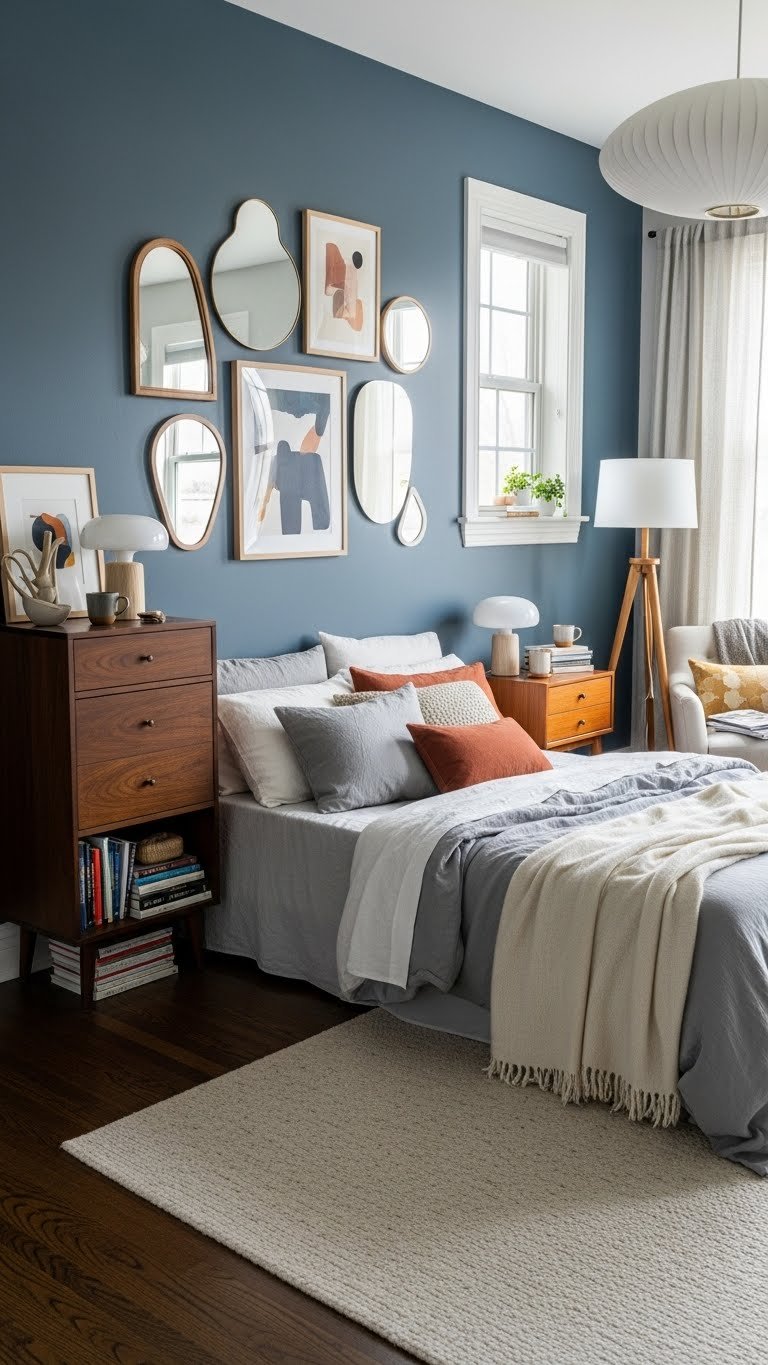
    Start by laying out frames on the floor to map your arrangement. Mix sizes, keep frames in similar finishes (warm wood, brass, or white), and use a template or level to hang accurately. Include a mix: original art, prints, textiles, even a small mirror. Total cost: $80–$300 depending on frame quality and art. Installation takes 2–3 hours your first time. The result is a wall that tells your story instead of looking like a hotel room.

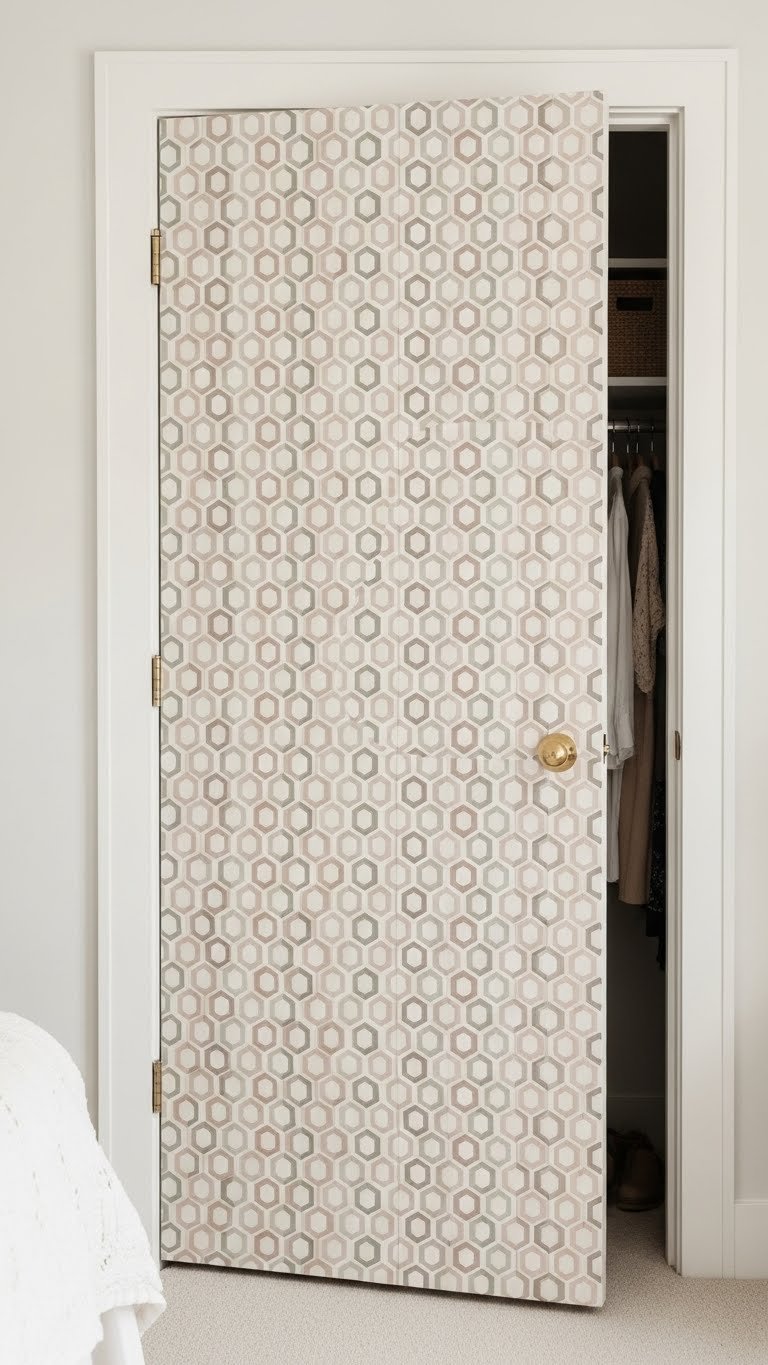
    20. Use Wallpaper on Your Closet Door (Renter Hack)

    Your closet door doesn’t have to be boring beige. Peel-and-stick wallpaper lets renters completely change this overlooked surface in 30 minutes. It becomes part of your design instead of an afterthought.

    Apply textured or patterned peel-and-stick wallpaper ($15–$40 per roll) to your closet door. Pick a pattern that complements your room: subtle geometric, small floral, or faux linen texture all work beautifully. Takes 30 minutes and requires just a smoothing tool. When you move, it peels off cleanly with no damage. Your bedroom suddenly looks more designed. Small details like this signal intentionality to anyone who enters.

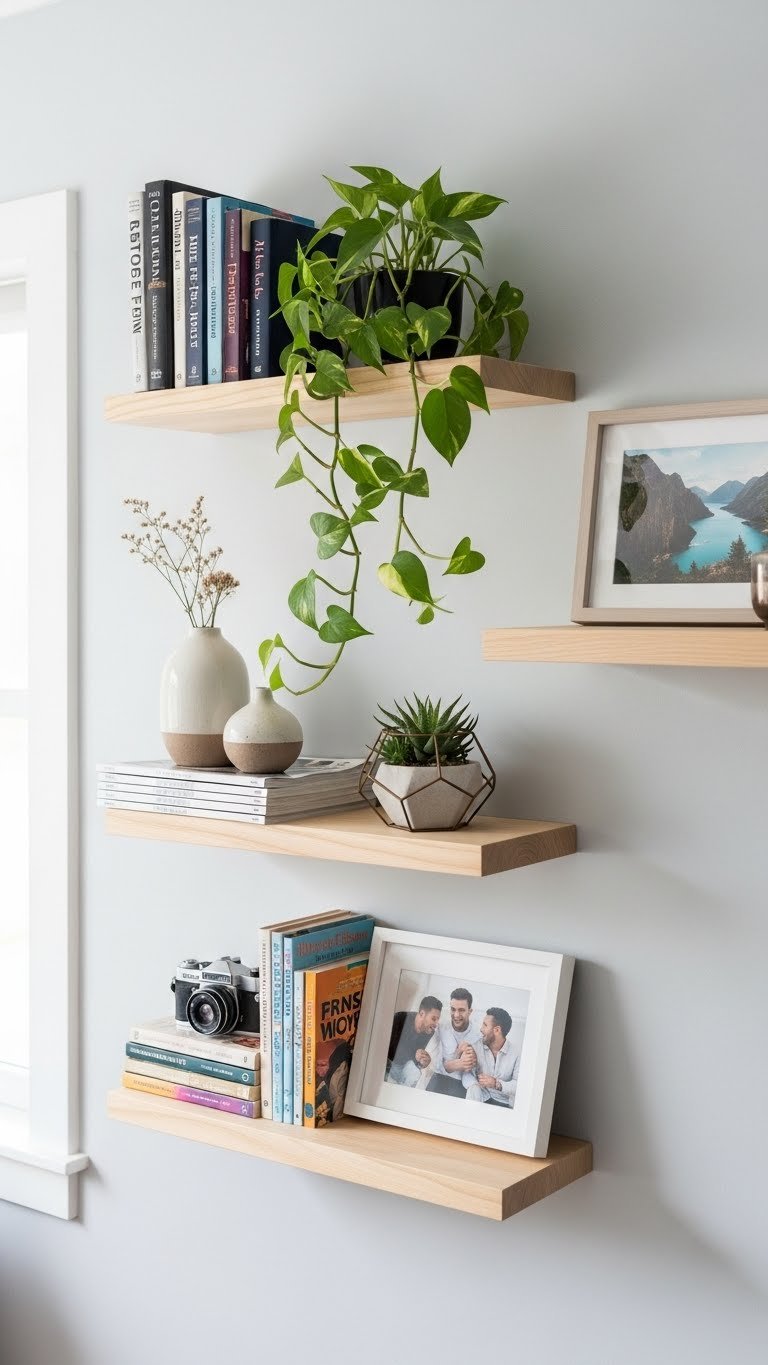
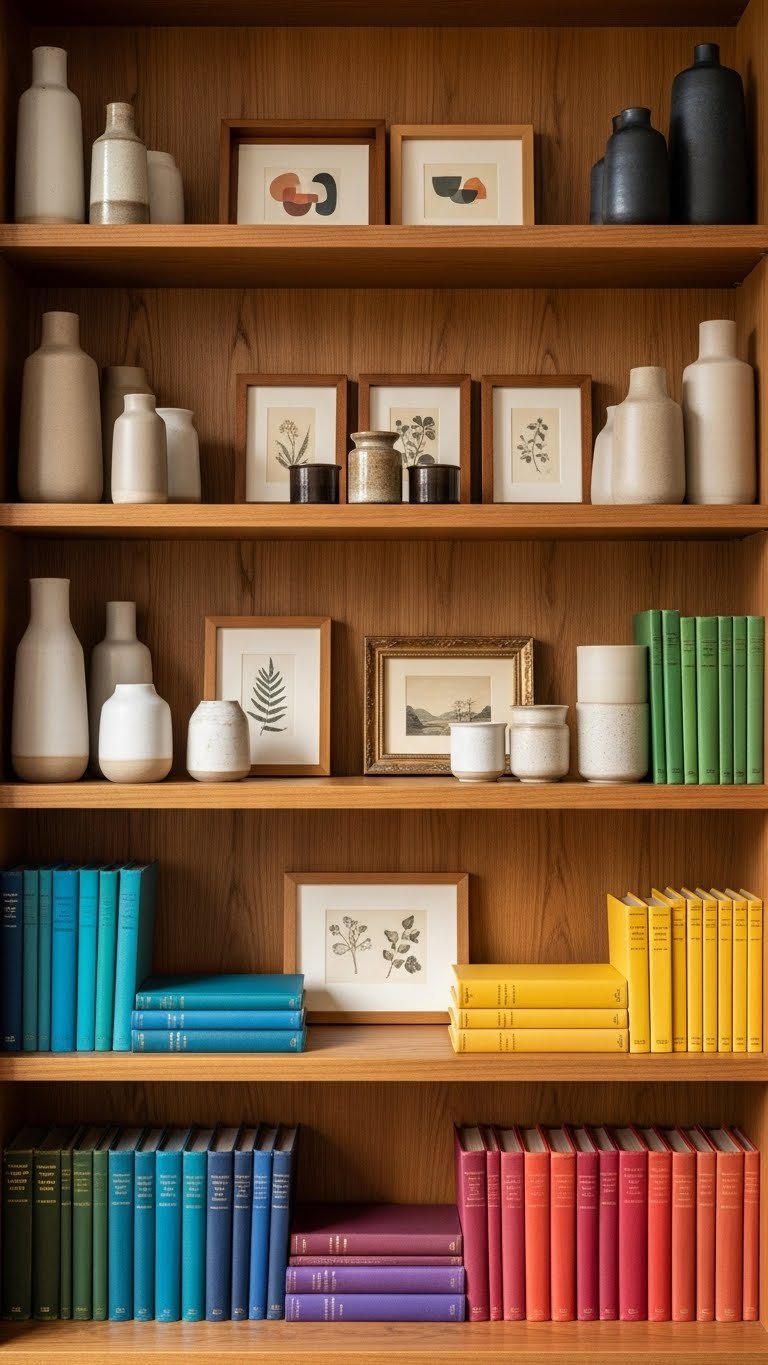
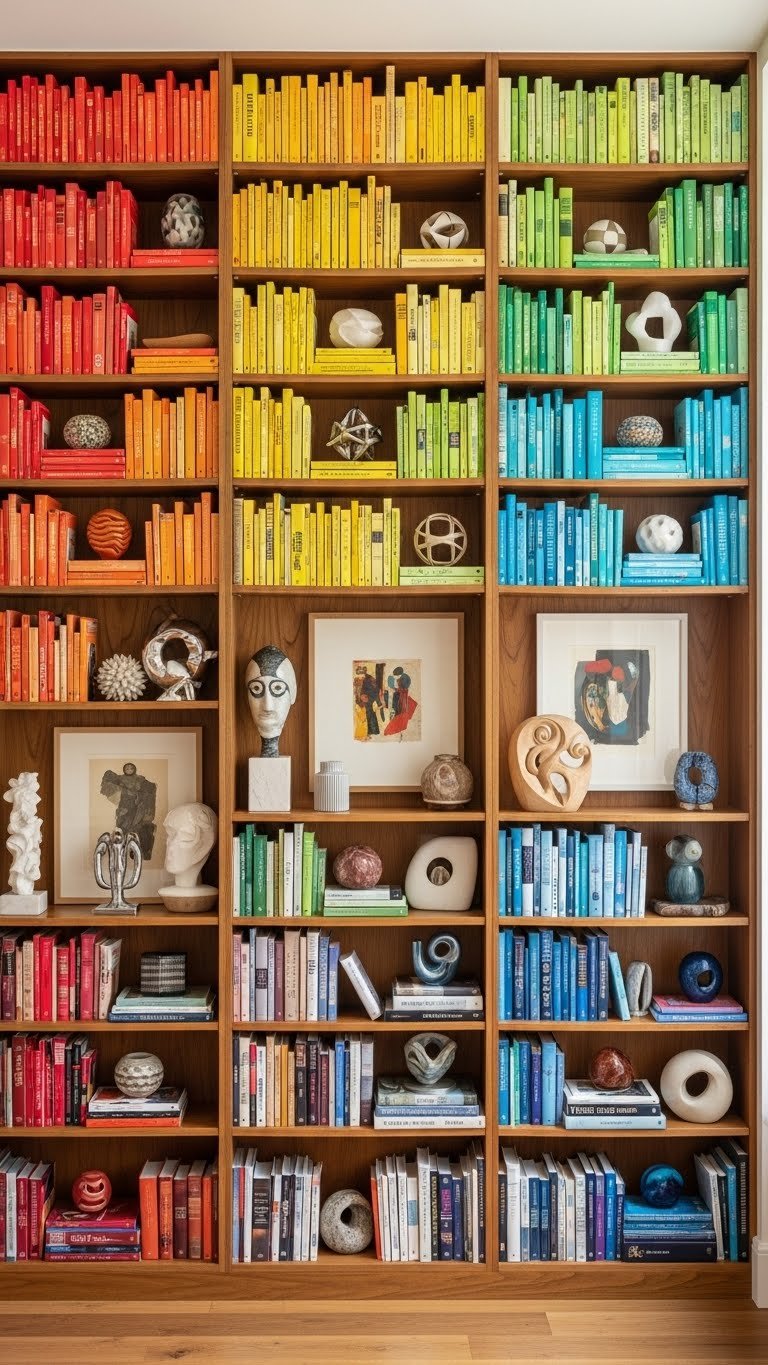
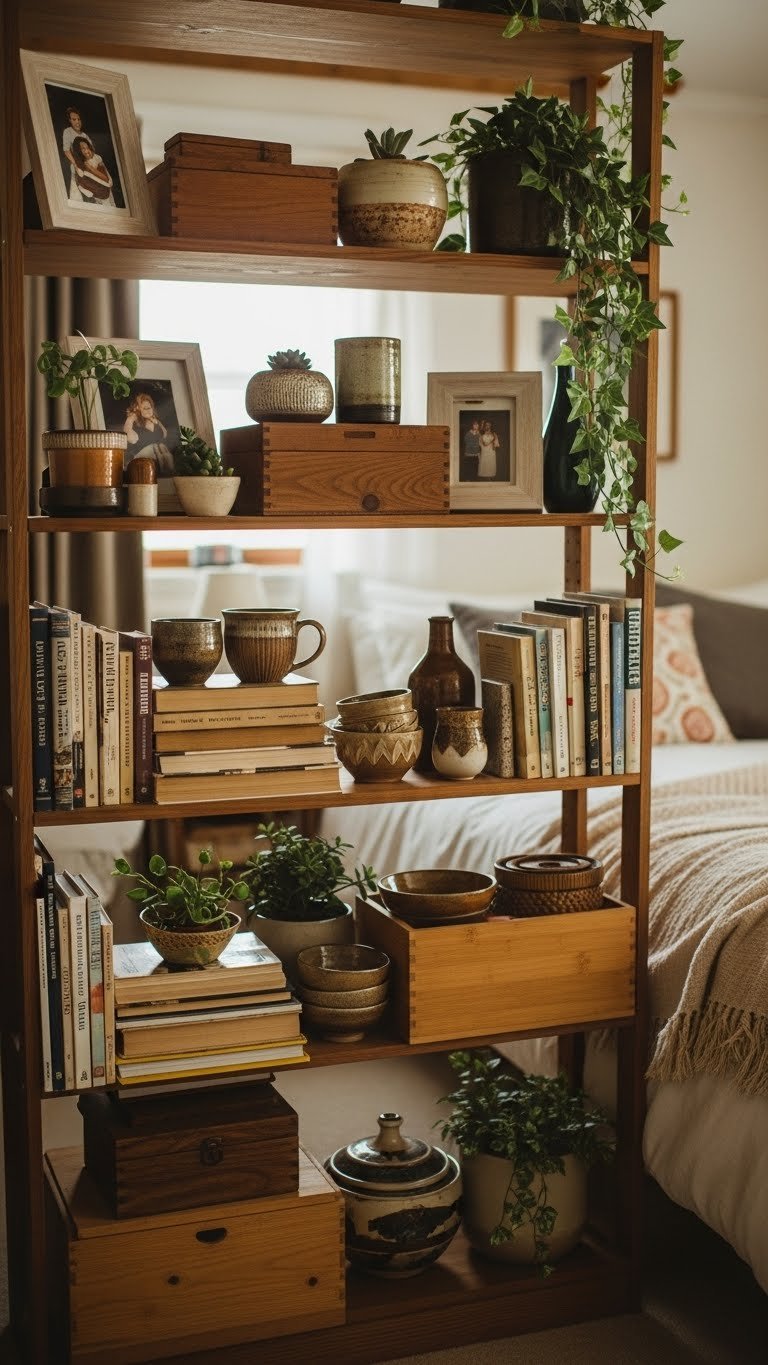
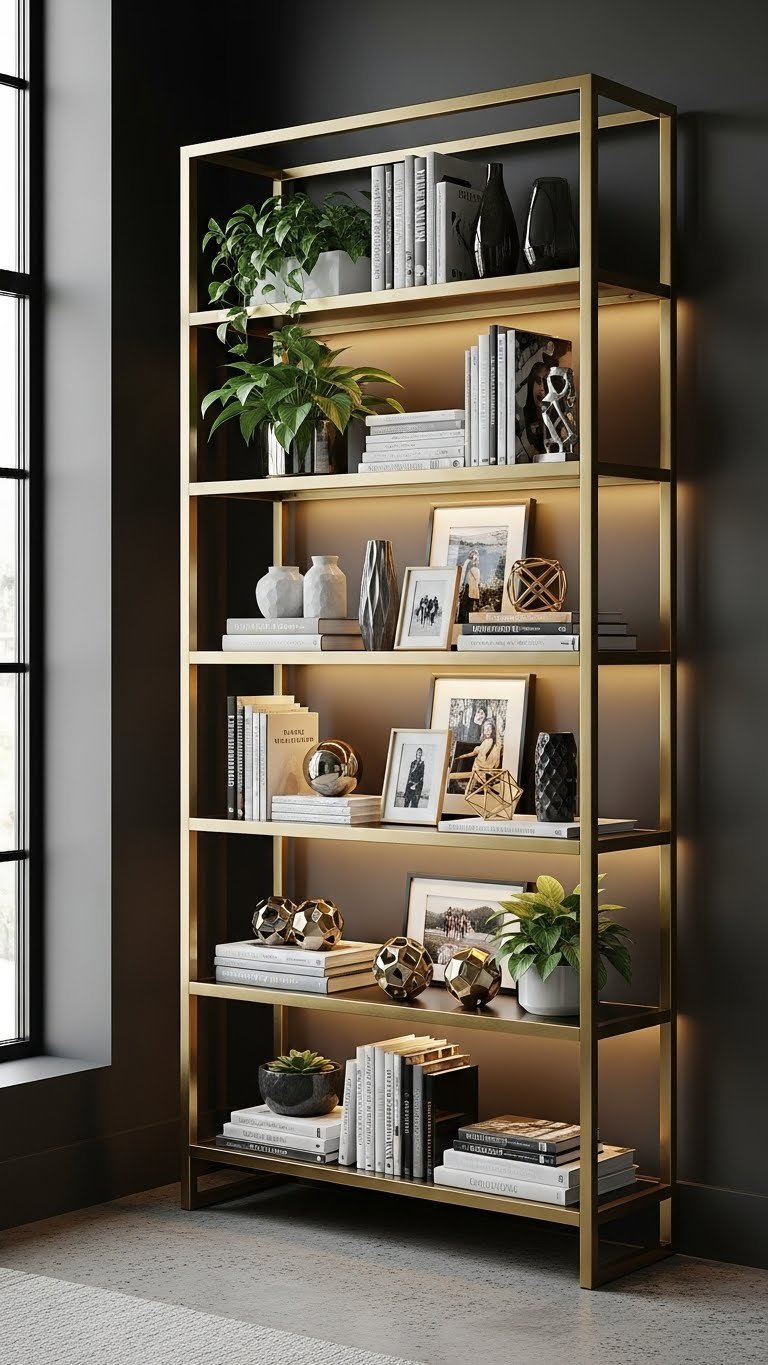
    21. Style an Open Shelving Unit with Books and Objects

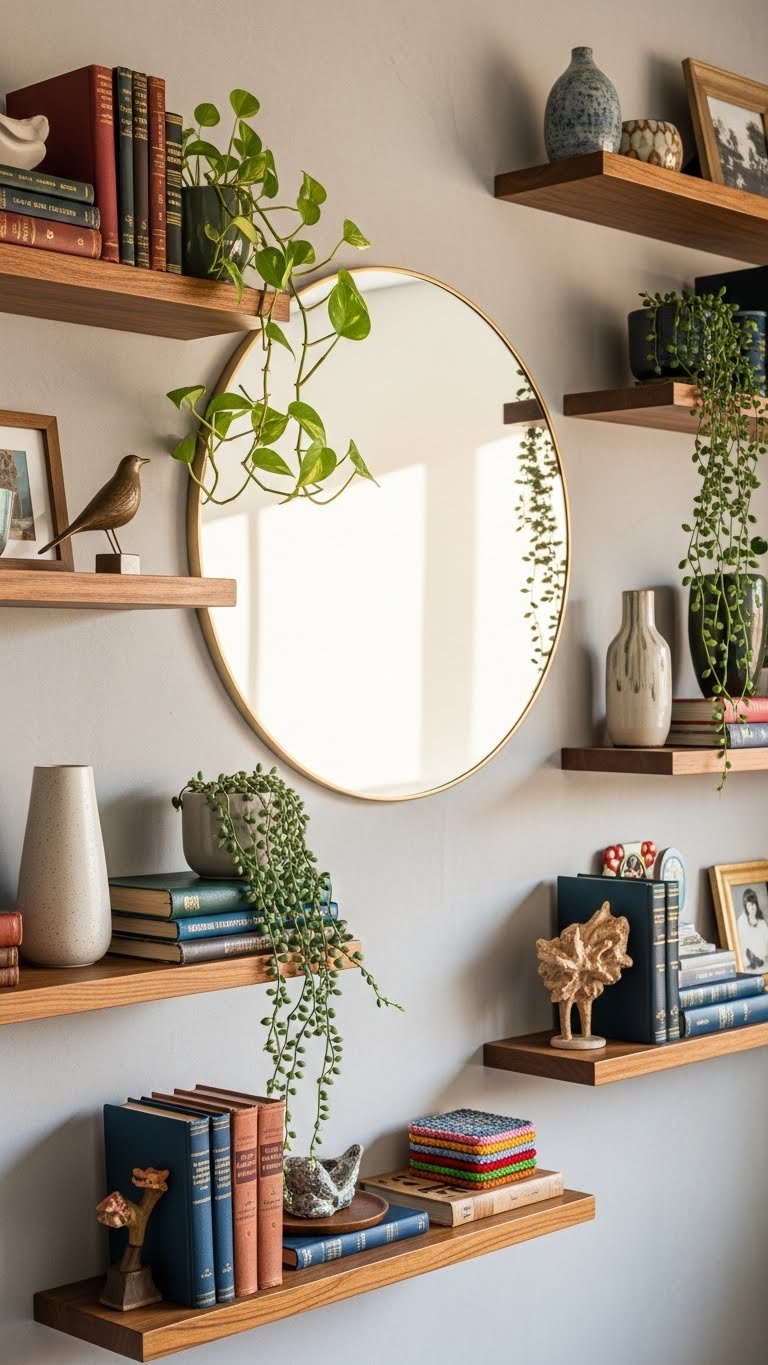
    Open shelves show your personality. When styled thoughtfully—not crammed, not bare—they become part of your room’s character. It’s like displaying the things you actually love.

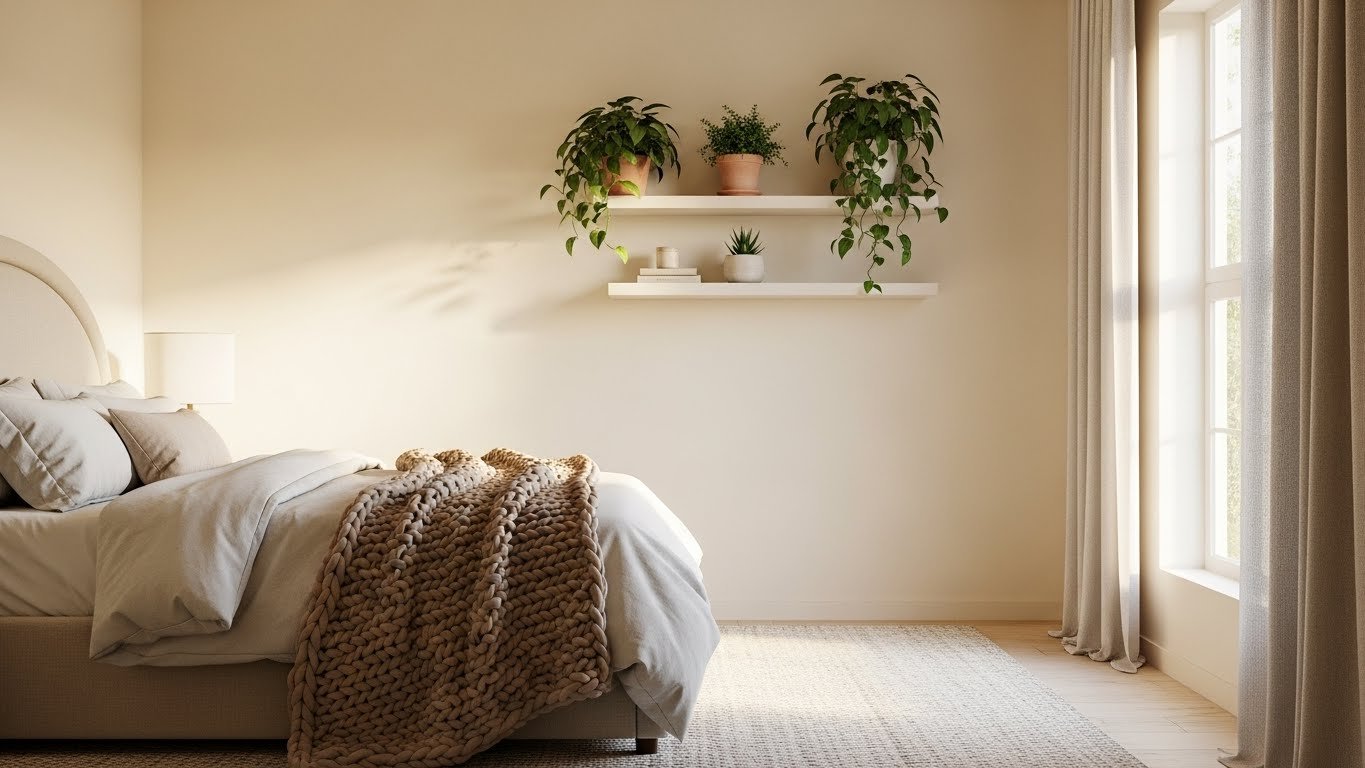
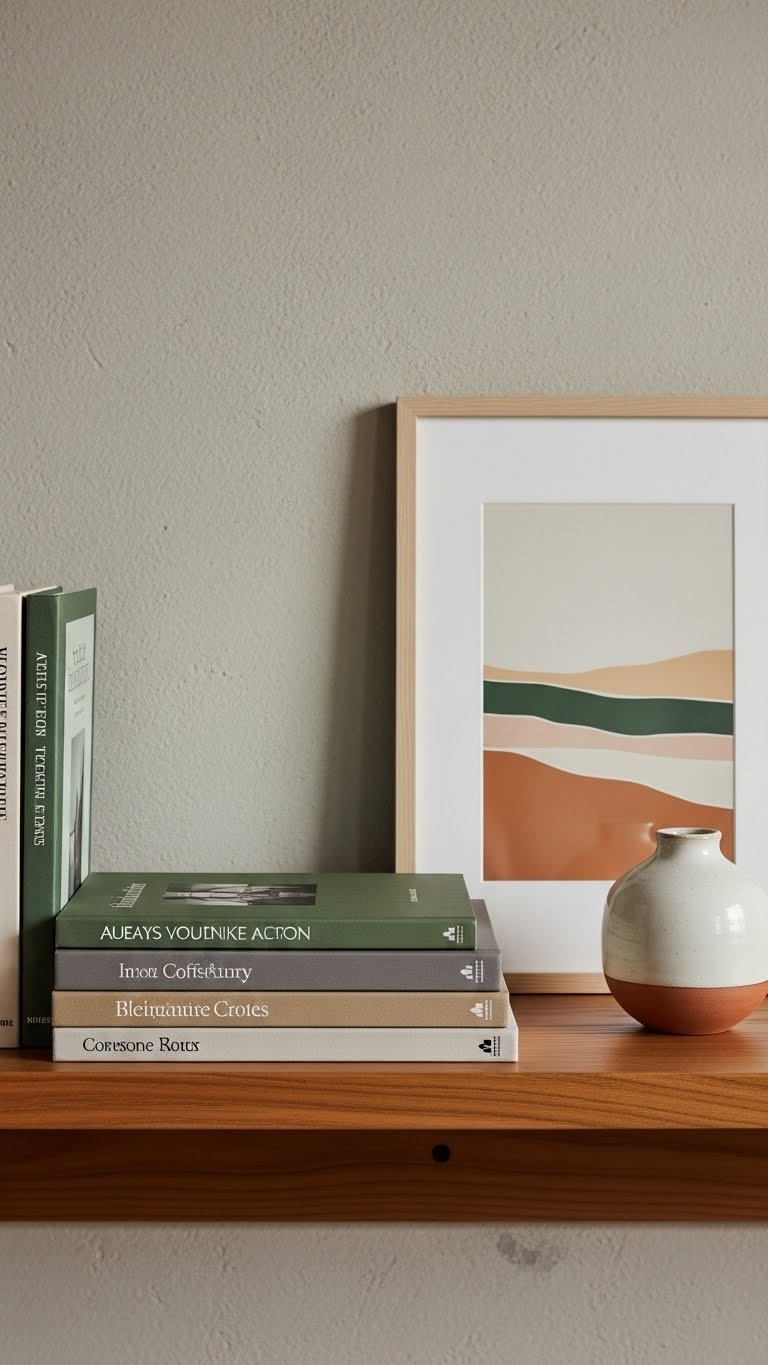
    Arrange shelves using the “one-third books, two-thirds objects” rule: books on the bottom shelf or stacked horizontally, objects and plants on upper shelves. Keep at least 20% of each shelf empty for breathing room. Mix heights with stacked books, ceramic vessels, and small plants ($20–$100 total for styling items). This costs nothing if you rearrange what you own. The result looks curated and tells visitors what matters to you. Your bedroom becomes a reflection of your taste instead of just a sleeping space.

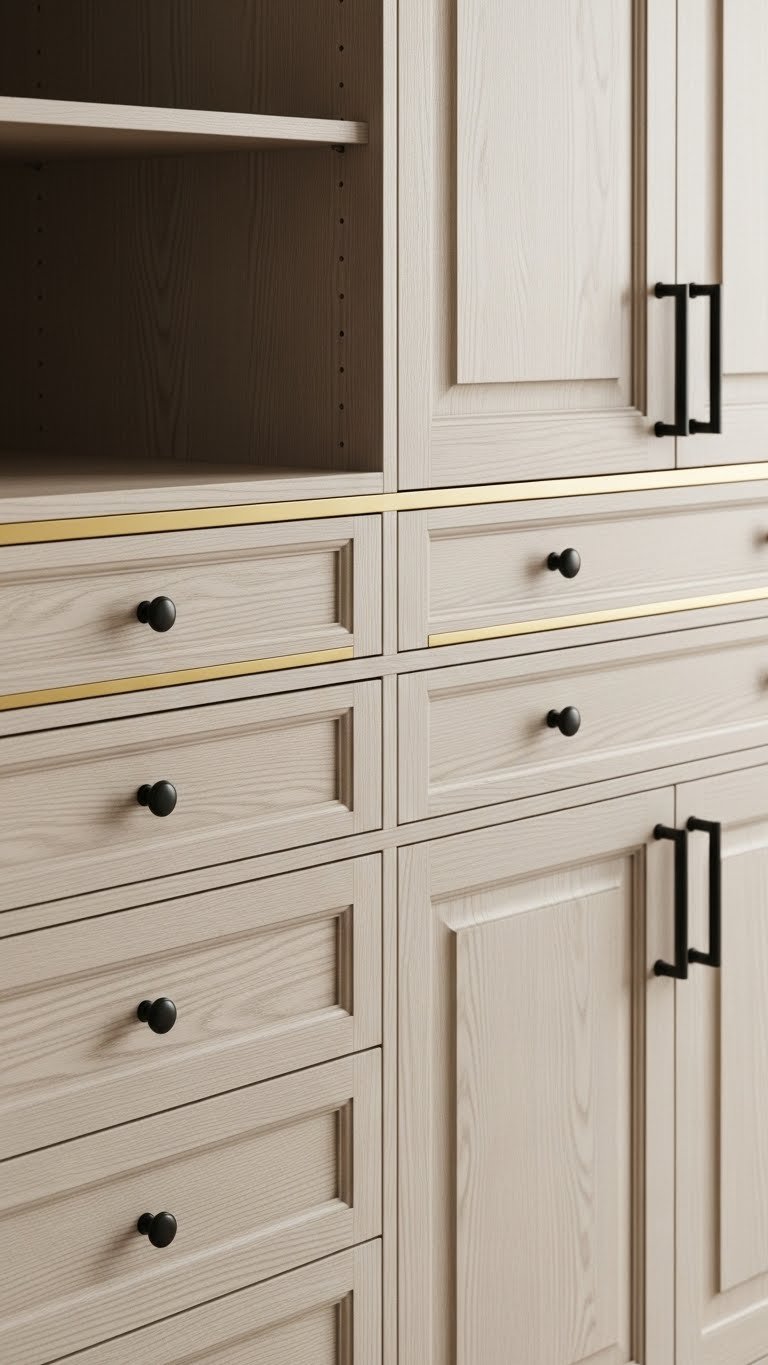
    22. Swap Metal Hardware for Warm Brass or Wood

    Small details compound. If your dresser or nightstand has cold silver or chrome hardware, swapping it for warm brass or wood makes everything feel more curated. These tiny changes signal thoughtfulness.

    Pick up brass or wooden drawer pulls from hardware stores or Etsy ($3–$10 each). You’ll need one per drawer or door. Unscrewing the old hardware and installing new takes 30 minutes total; it’s a beginner DIY. This costs $20–$60 per piece of furniture. The transformation feels way bigger than the effort. Your furniture goes from utilitarian to intentional immediately.

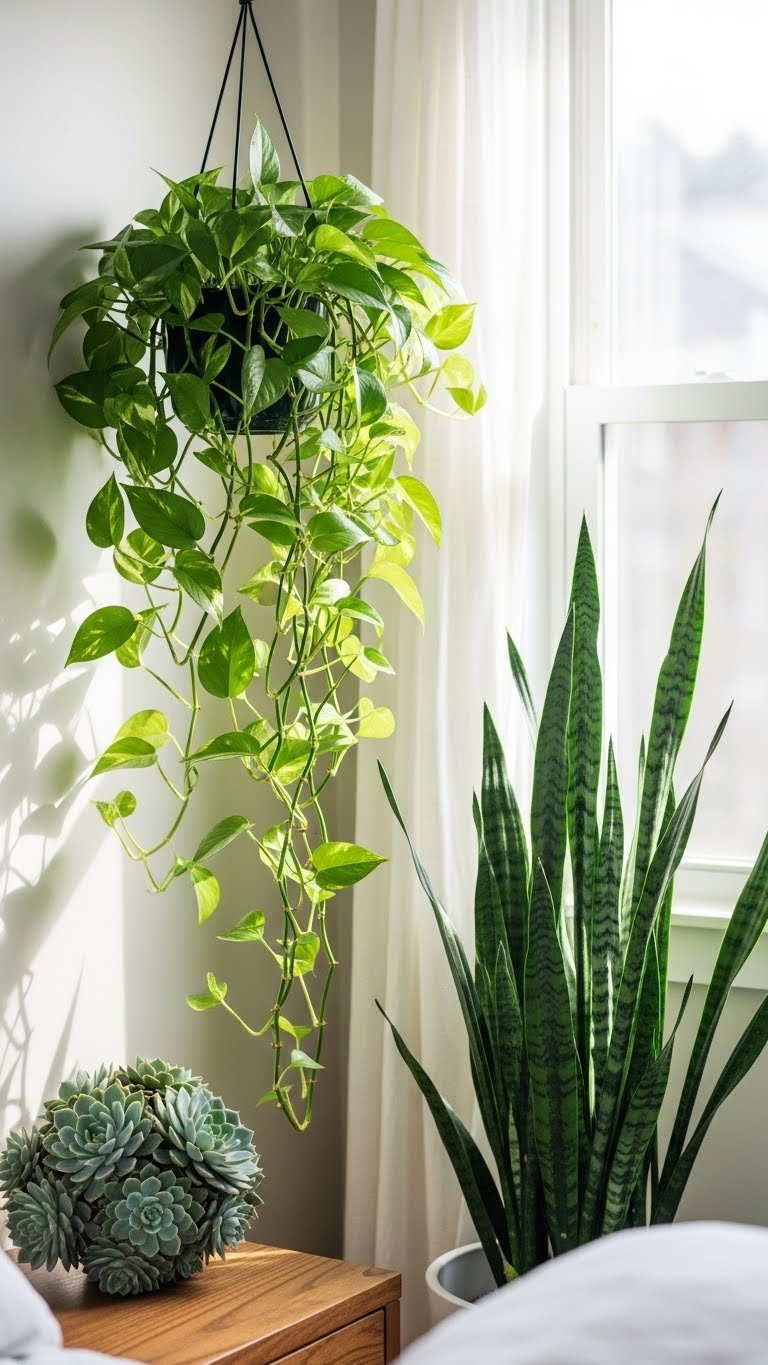
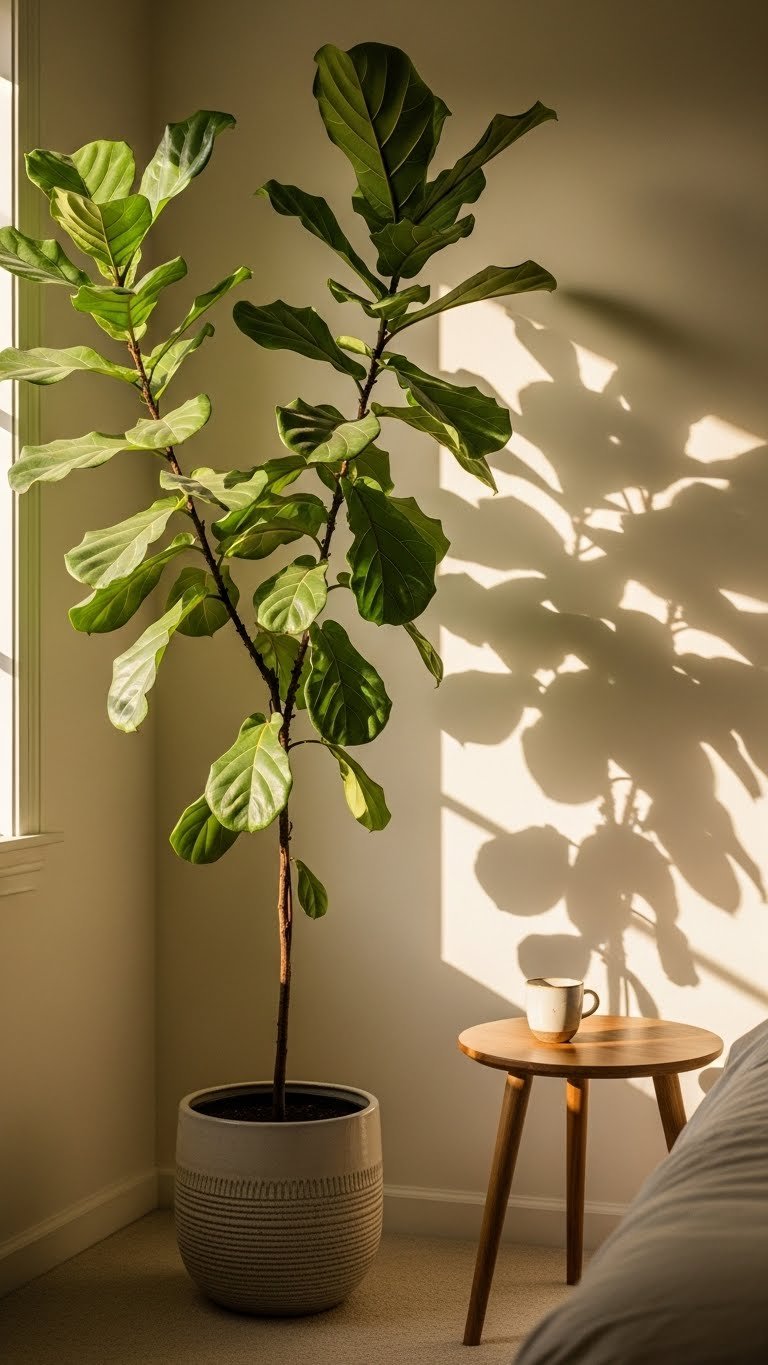
    23. Bring in Large-Leaf Plants for Biophilic Vibes

    Large-leaf plants aren’t just pretty—they improve air quality and your mental health. A fiddle leaf fig or monstera becomes a living design element that makes the space feel alive. You’re not just decorating; you’re creating an environment.

    Get a fiddle leaf fig, monstera, or pothos ($20–$80 depending on size) from a local nursery or online plant shop. Choose a ceramic pot ($20–$50) that matches your aesthetic. Place near a bright window—these plants love indirect light. Water weekly or when soil is dry, and rotate monthly for even growth. The whole setup costs under $150 and takes 15 minutes to arrange. Your room gains a living presence that no pillow or poster can match.

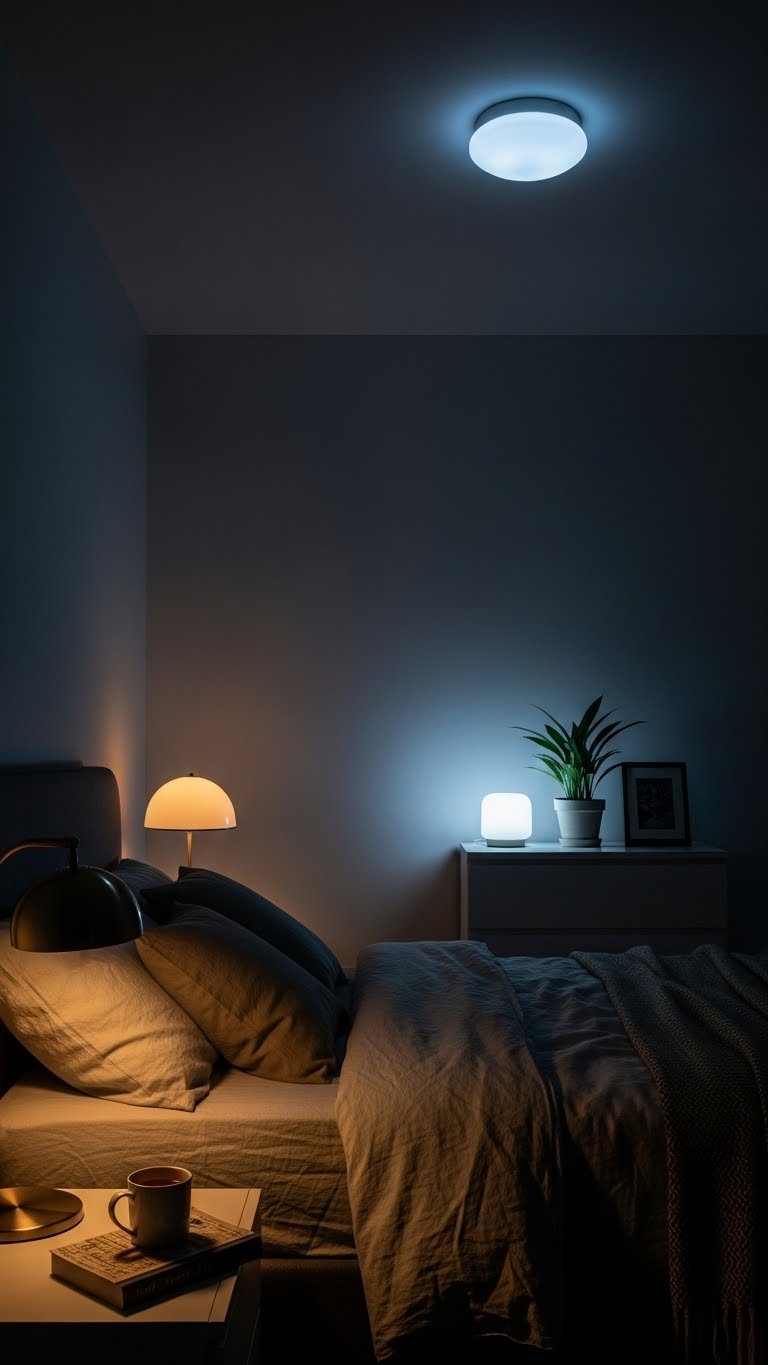
    24. Layer Lighting with Lamps and Dimmers

    Overhead lights are harsh; one lamp creates shadows. Layering multiple light sources with dimmer switches gives you control over the room’s mood. Your bedroom should feel different at 6 p.m. versus 11 p.m.

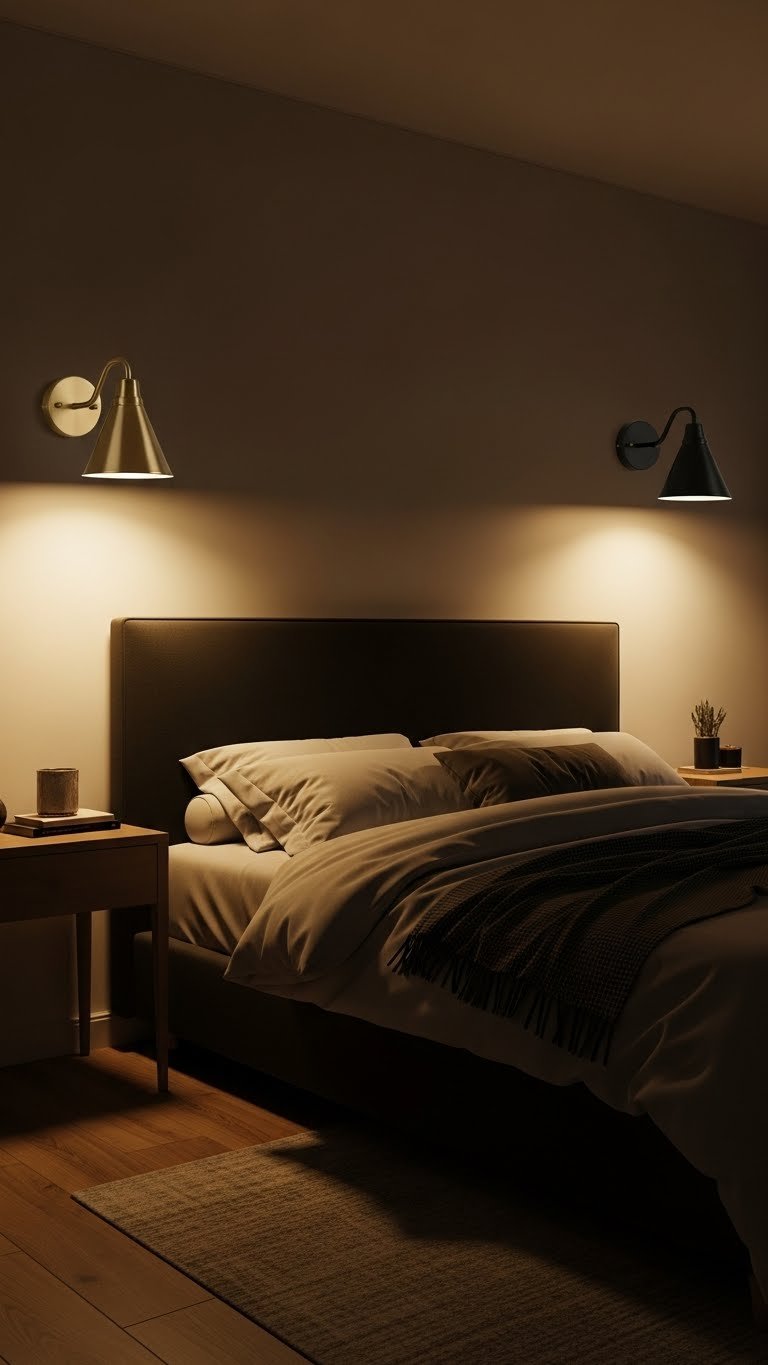
    Install a dimmer switch ($20–$40, hire an electrician for $100–$200) on your main light. Add bedside lamps ($40–$100 each) and a small accent lamp on your dresser ($30–$80). Choose warm bulbs (2700K color temperature) for coziness. All these sources together mean you can dial in exactly the right brightness and warmth. Your bedroom becomes a space you control instead of just a lit room. The cost is worth it because lighting affects your sleep and mood daily.

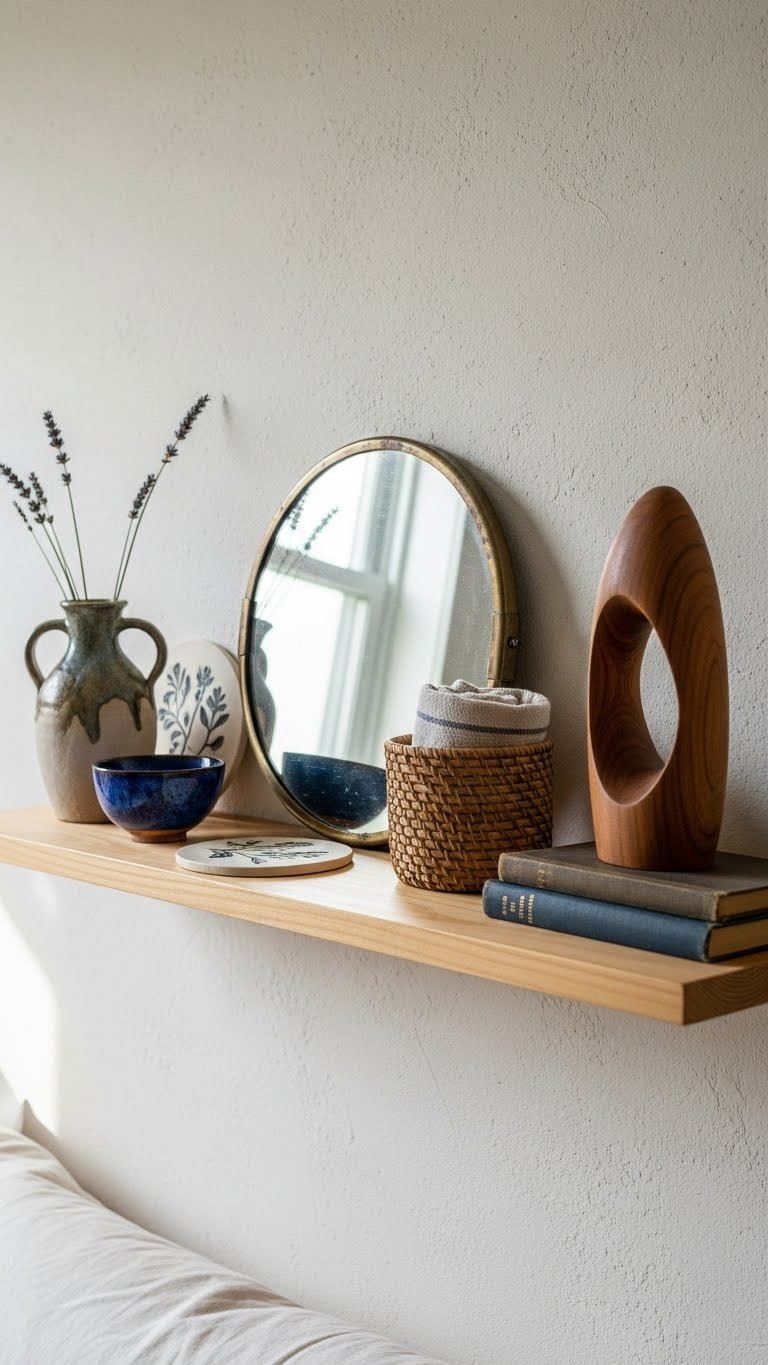
    25. Curate a Small Collection of Vintage or Handmade Objects

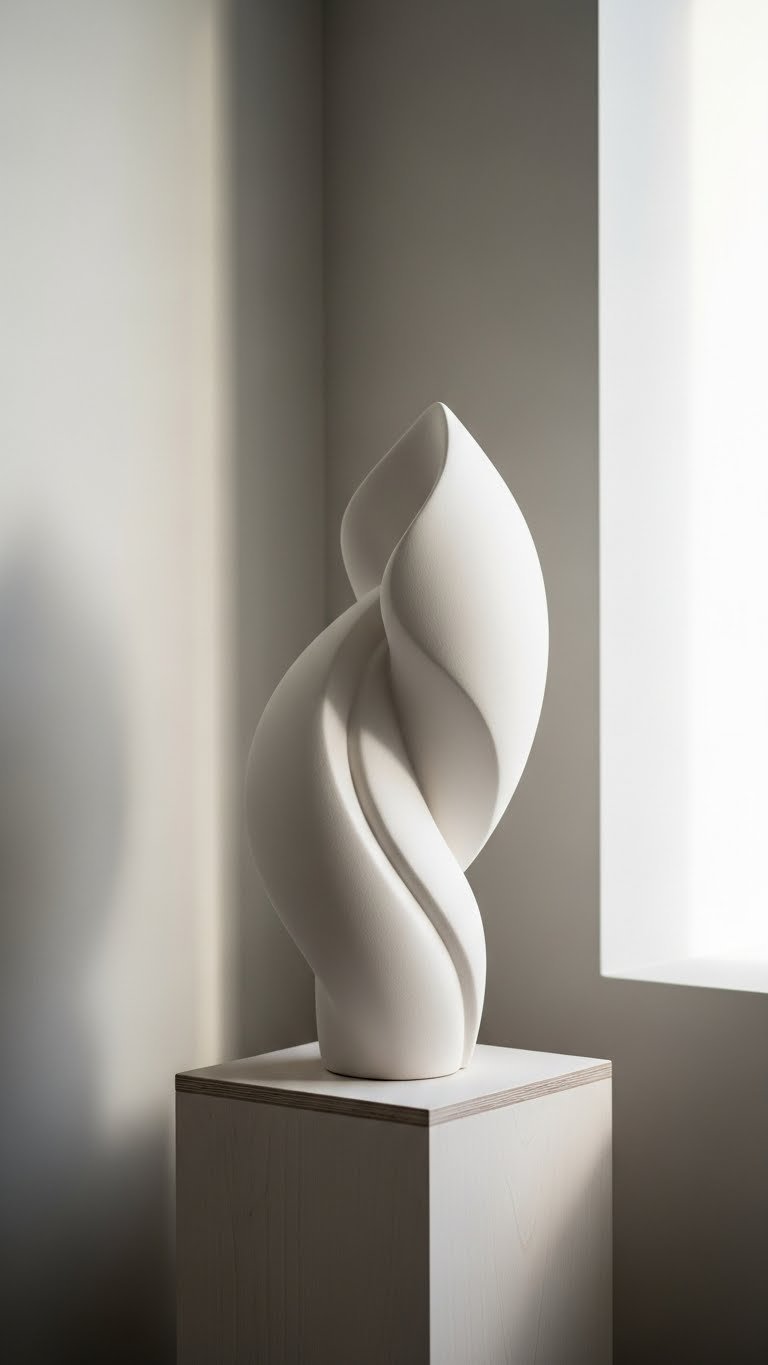
    Mass-produced decor is forgettable. One or two handmade or vintage pieces—a ceramic bowl, a woven basket, a found sculpture—become conversation starters and make your room feel like you actually have taste. Each object should have a story or reason you chose it.

    Hunt local makers at craft fairs, Etsy artists, or vintage shops for pieces that resonate ($15–$100 each). Limit yourself to 3–5 objects max so they don’t overwhelm. Arrange them on a shelf, dresser, or nightstand where they catch light and draw your eye. This costs $50–$200 for a small collection. The payoff is huge: your bedroom becomes a gallery of things you genuinely love instead of stuff you picked randomly. People notice this intentionality immediately.


    Save this list and pick one or two ideas to tackle this weekend. Whether it’s swapping your pillows, adding a plant, or hanging new curtains, small changes compound fast—and your bedroom will thank you for it.

  • 24 Color-Coded Closet Arrangement Ideas That Boost Style & Efficiency

    24 Color-Coded Closet Arrangement Ideas That Boost Style & Efficiency


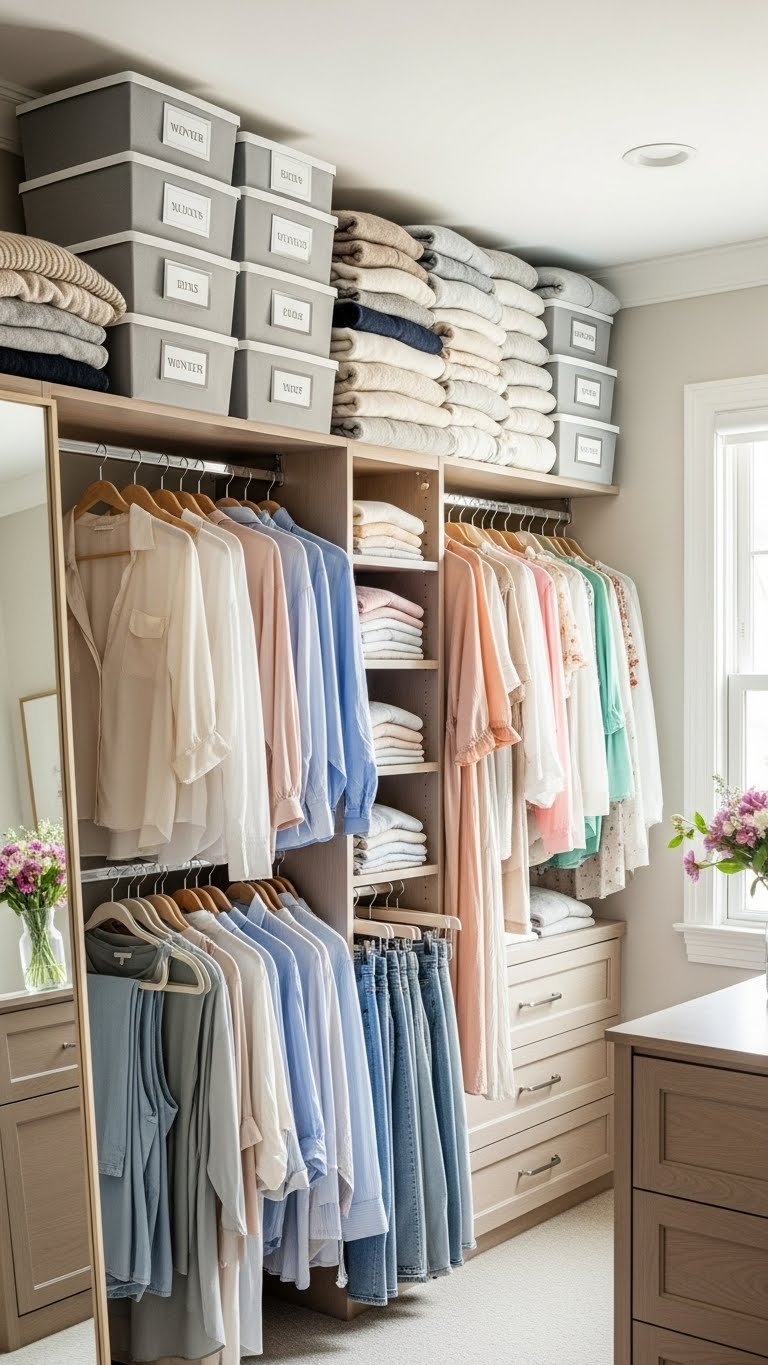
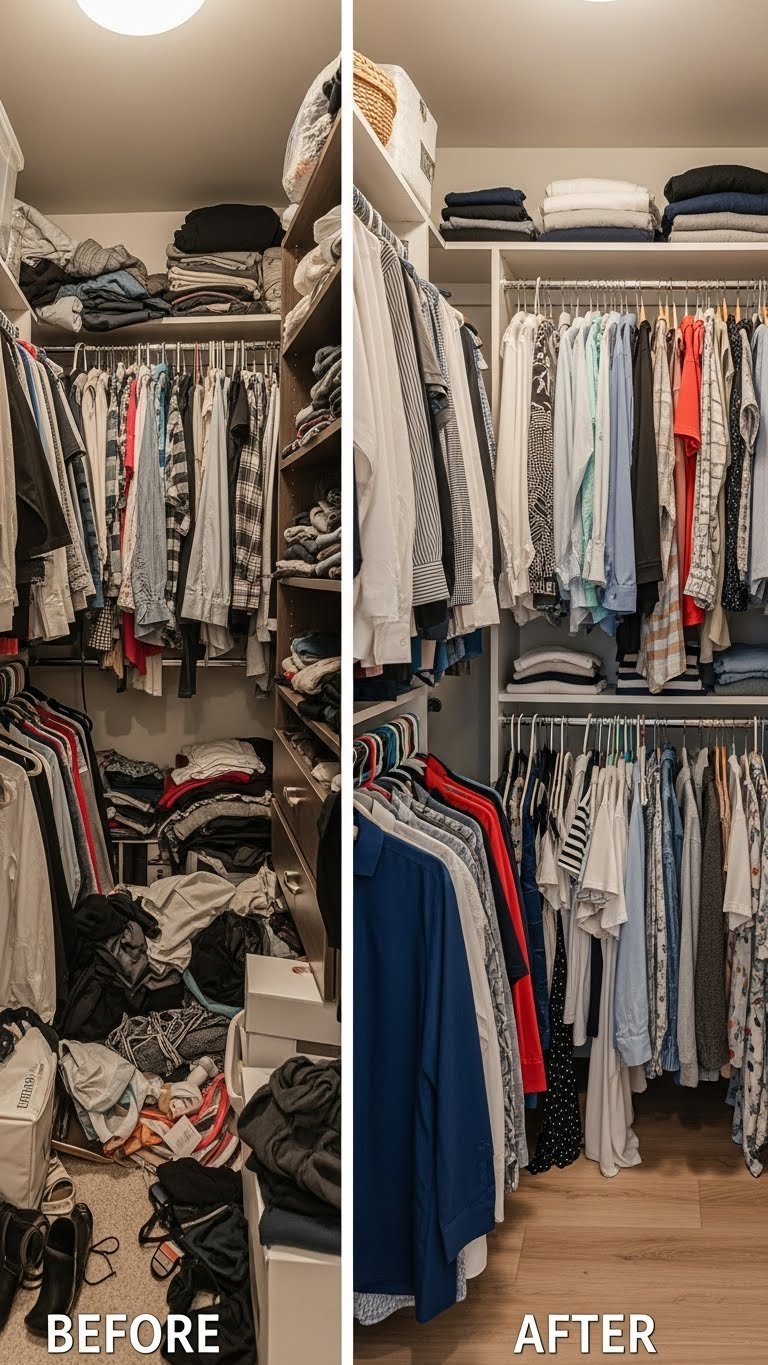
    Color-coding your closet sounds like a luxury move, but it’s actually one of the smartest organizational strategies you can adopt—and it costs almost nothing. When your clothes are arranged by color, getting dressed becomes faster, you’ll wear more of what you own, and your space instantly looks more curated and intentional. Whether you’re working with a tiny bedroom closet or a sprawling walk-in, these 24 color-coded arrangement ideas will help you build a system that works with your lifestyle, your budget, and your personal style. You’re about to discover that the most efficient closets aren’t about having less stuff—they’re about knowing exactly where everything is. Let’s dive in.

    1. Arrange by Rainbow Order

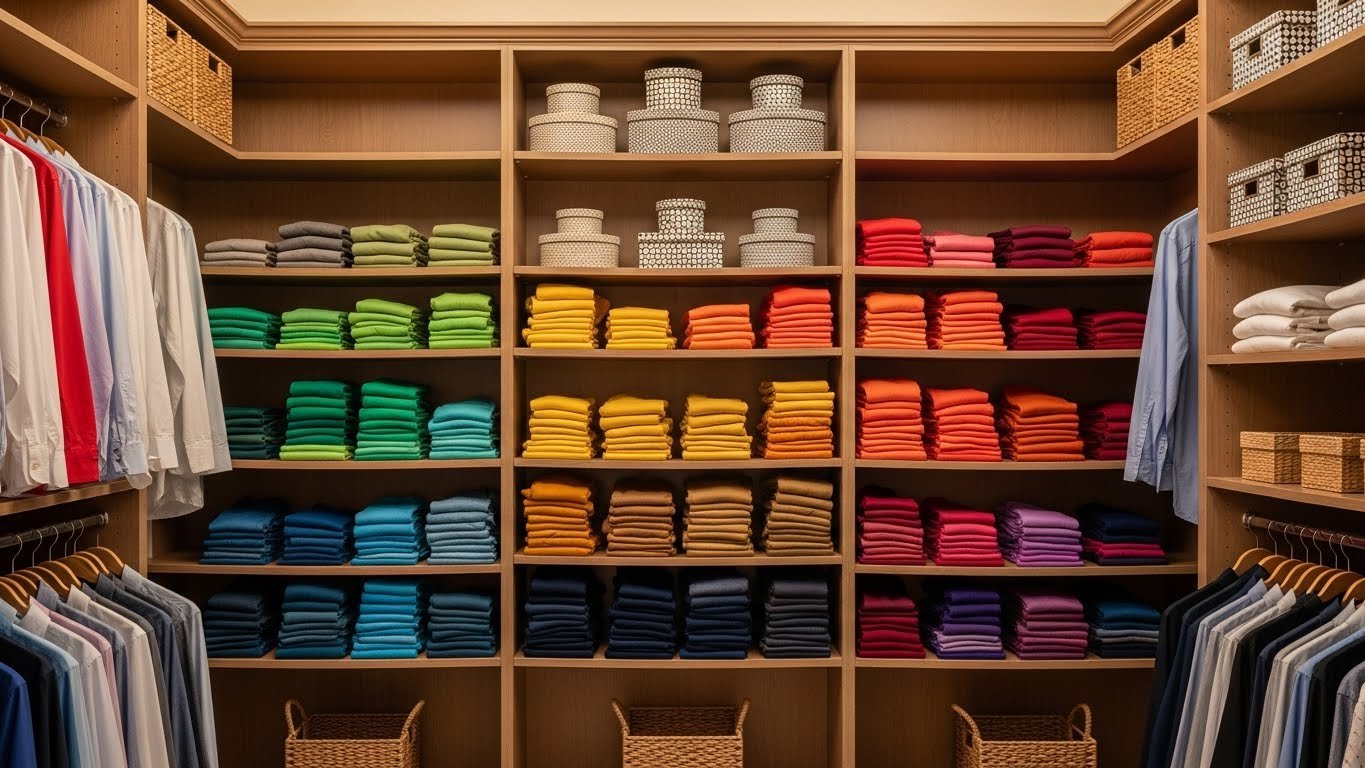
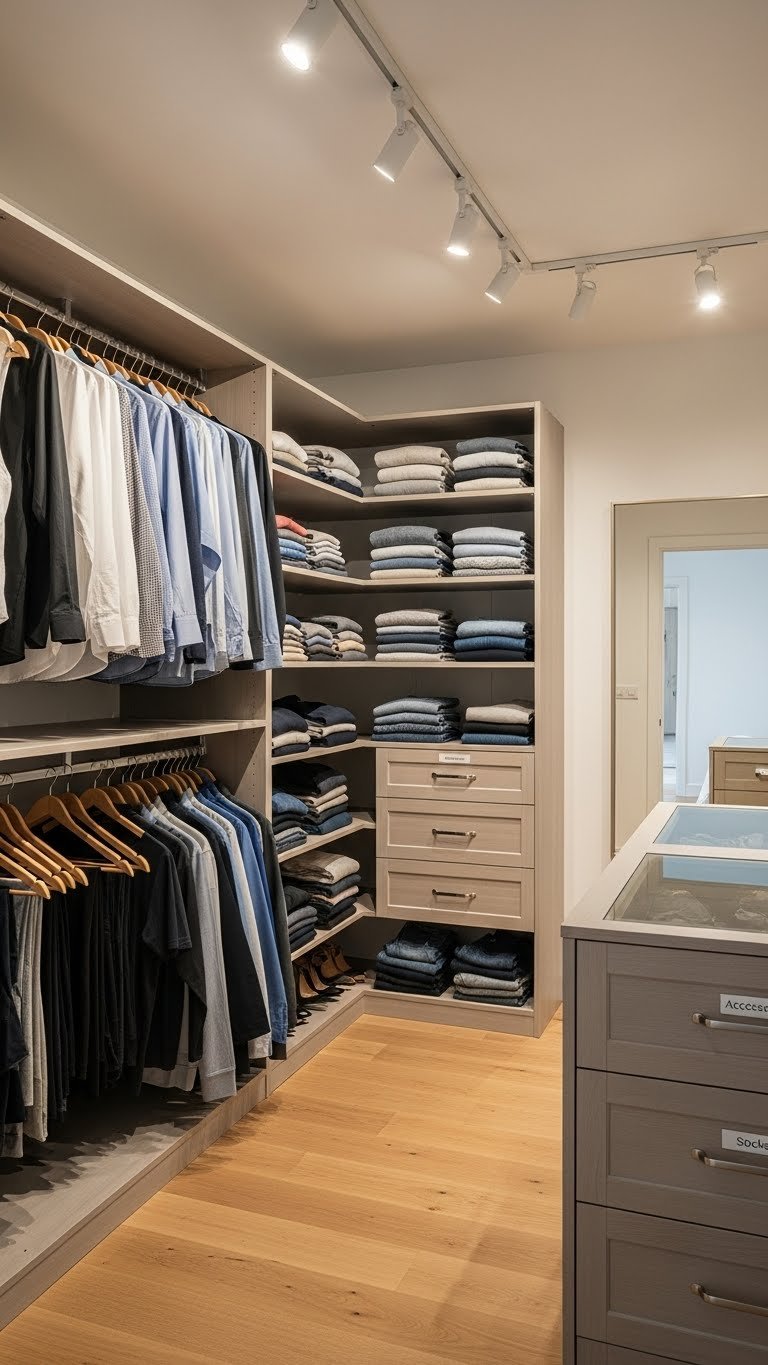
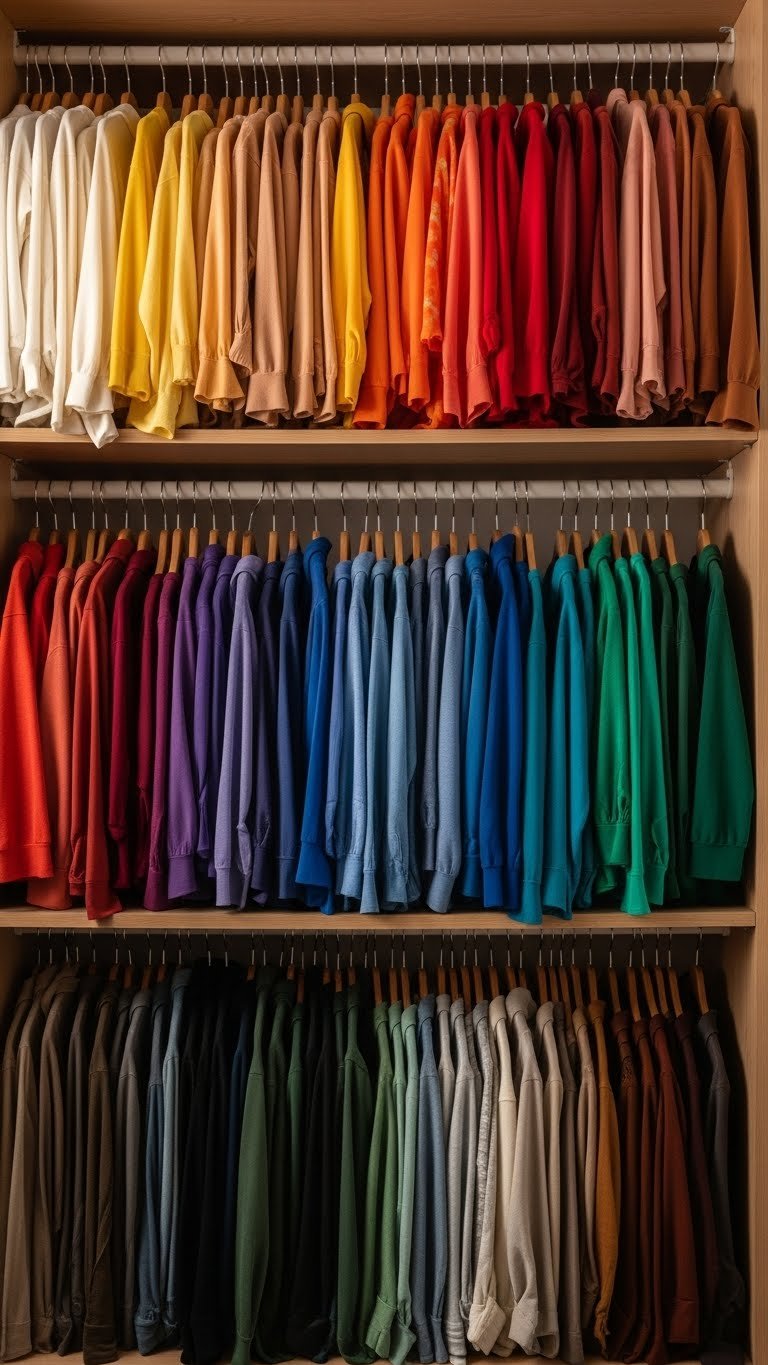
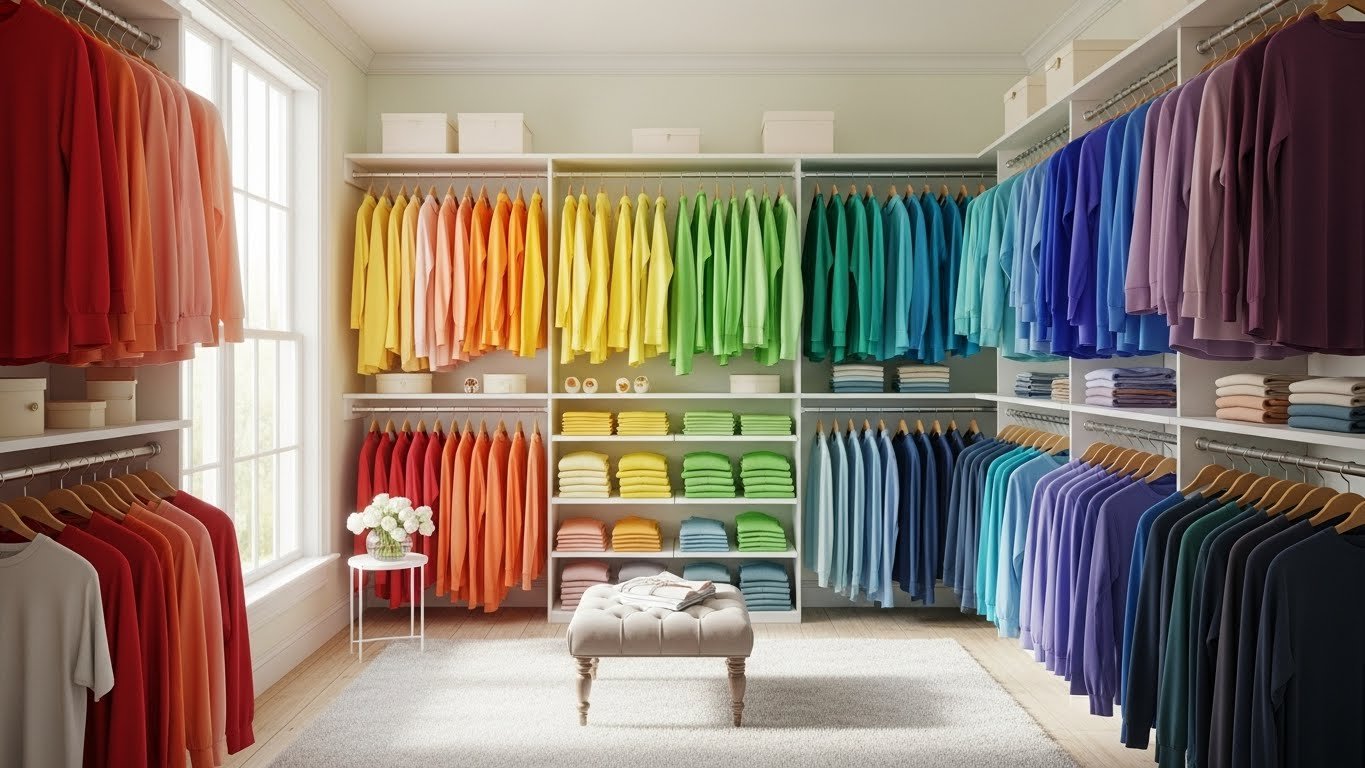
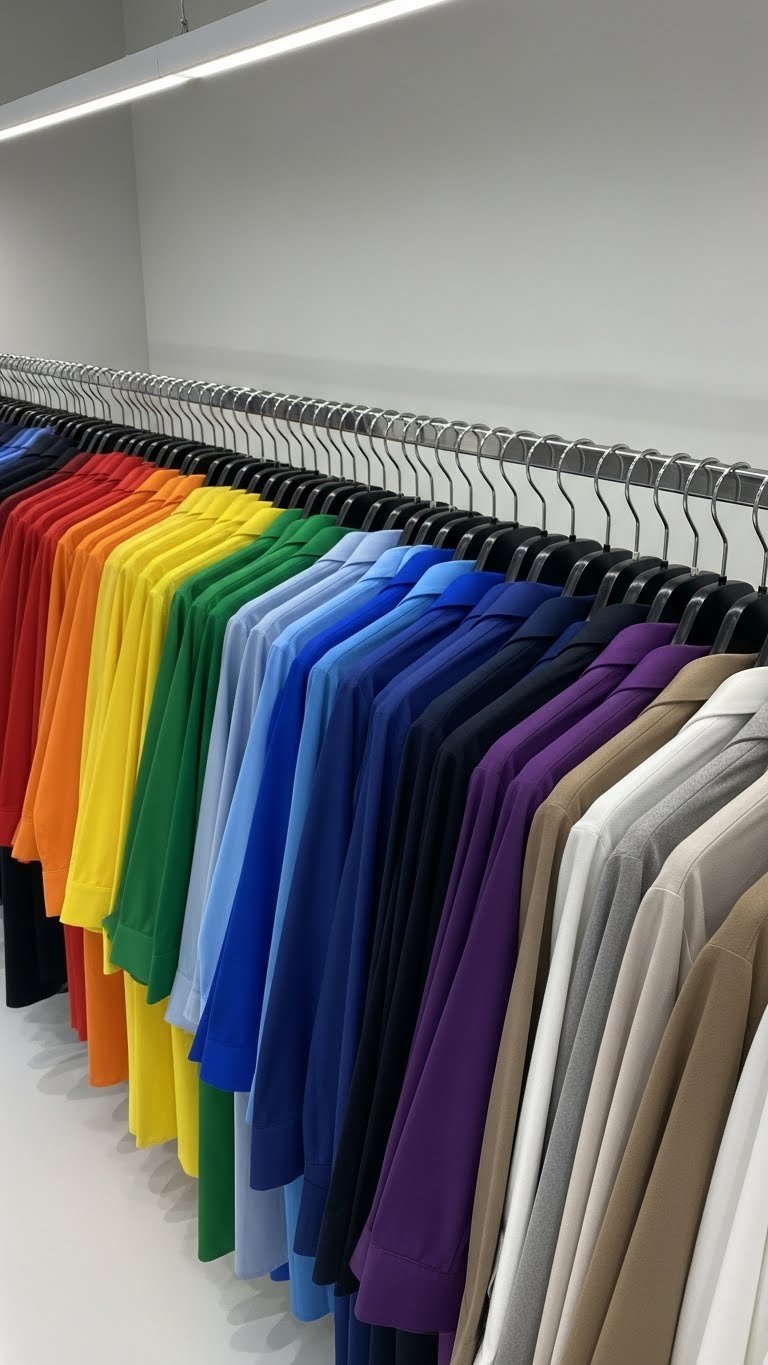
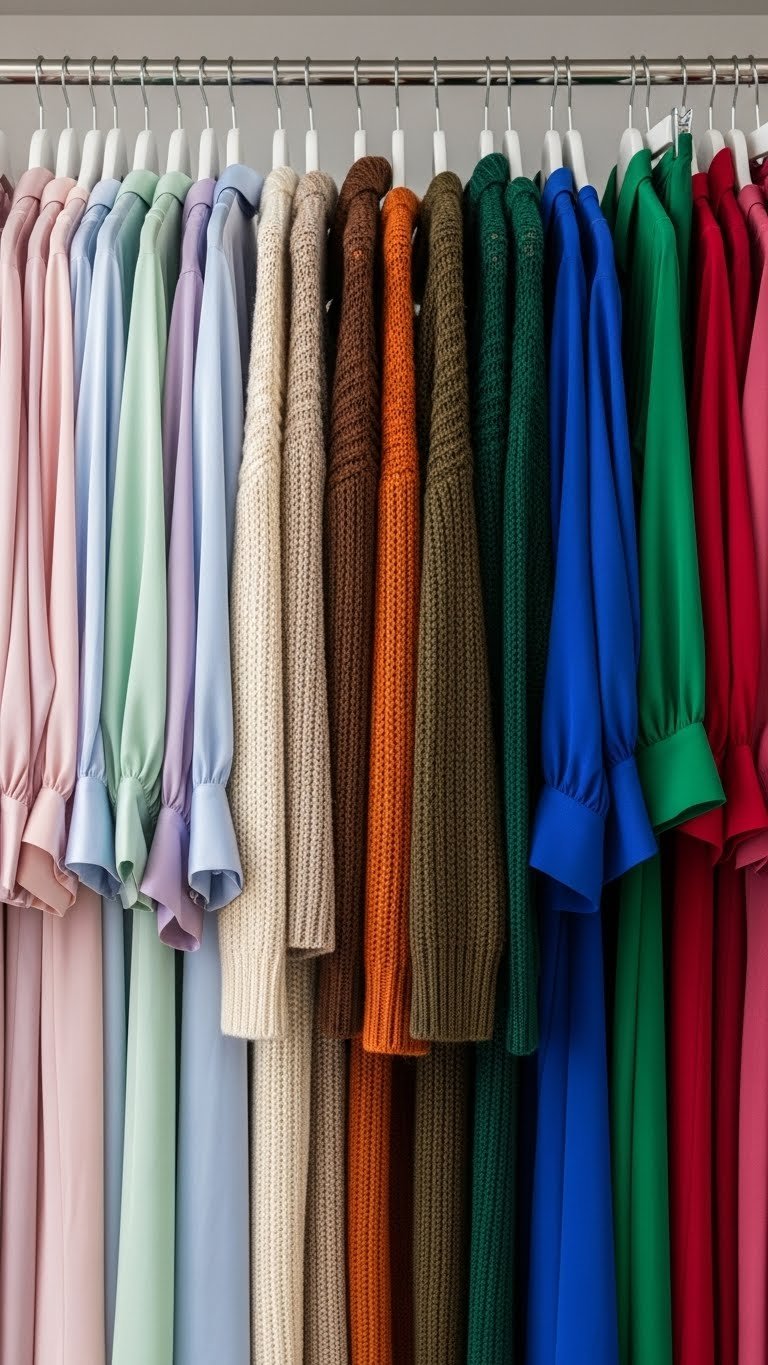
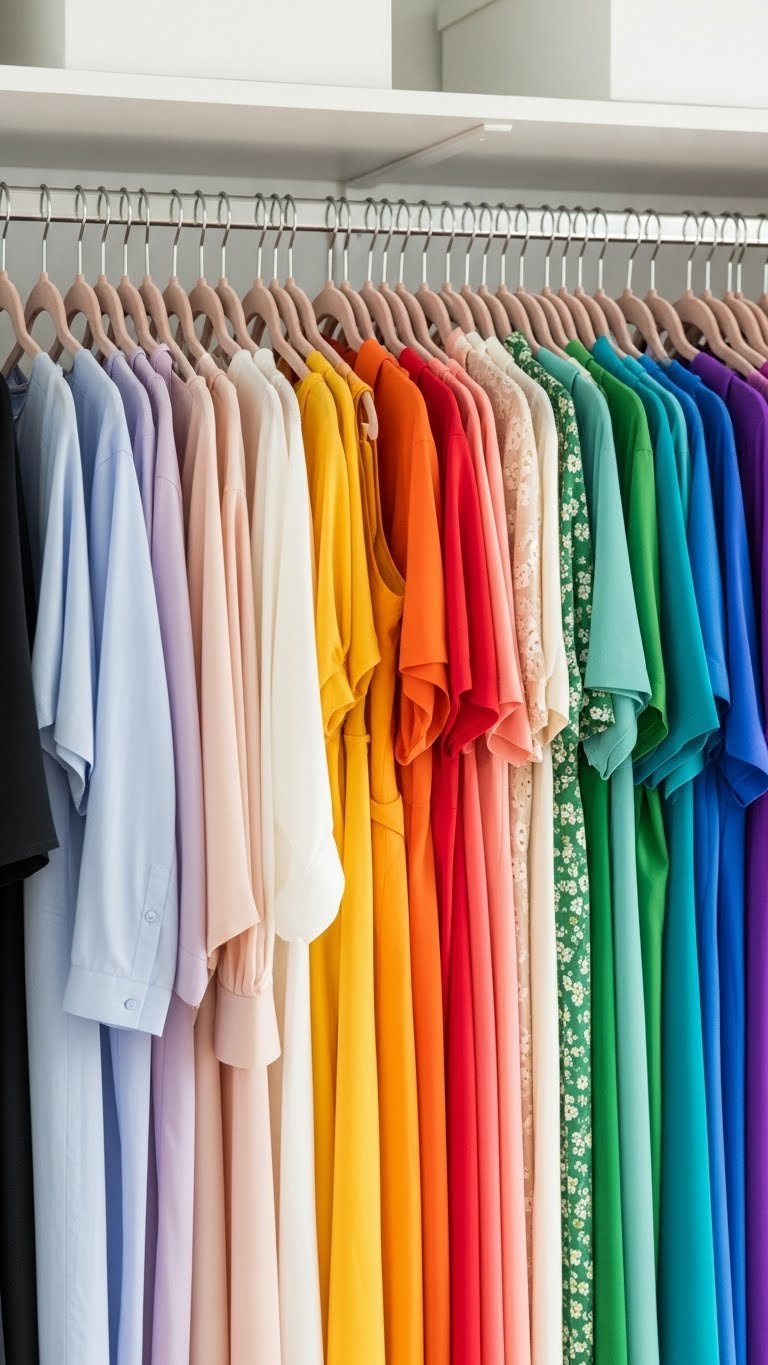
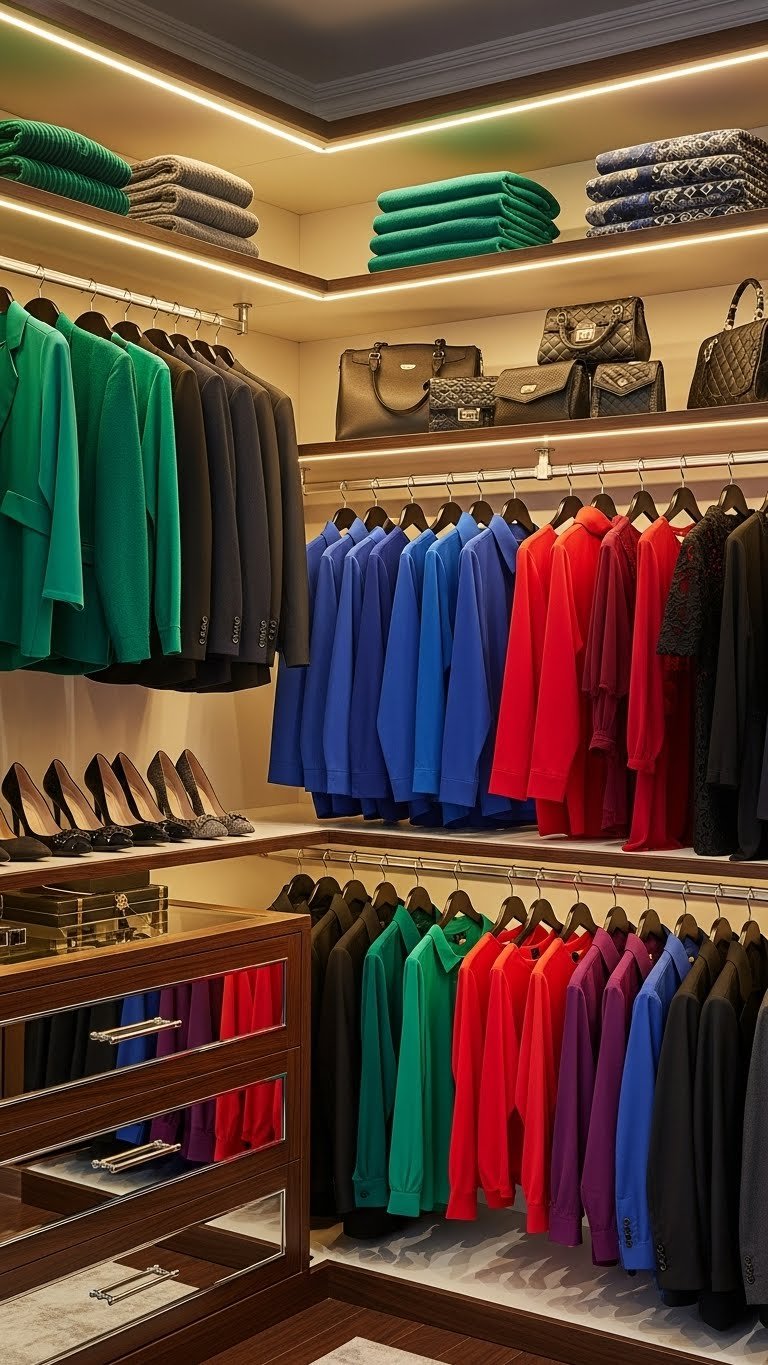
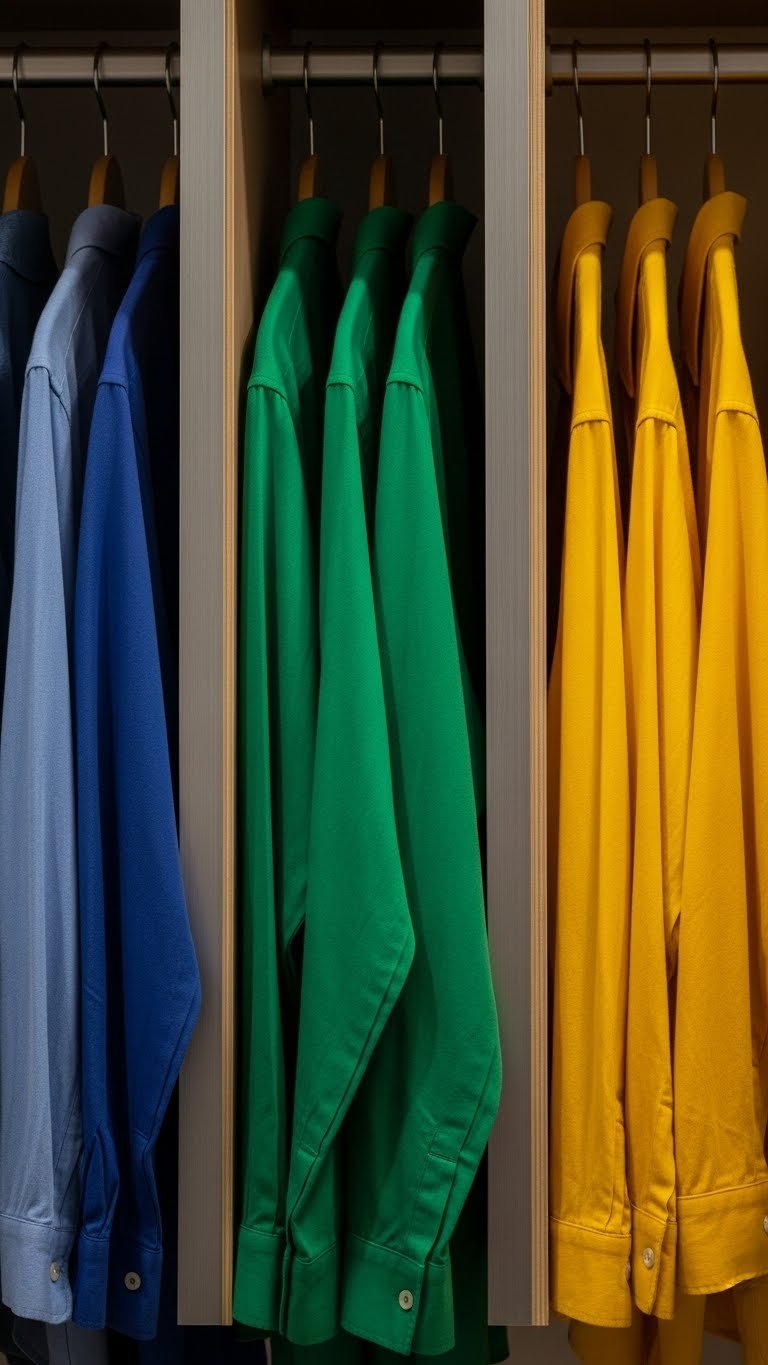
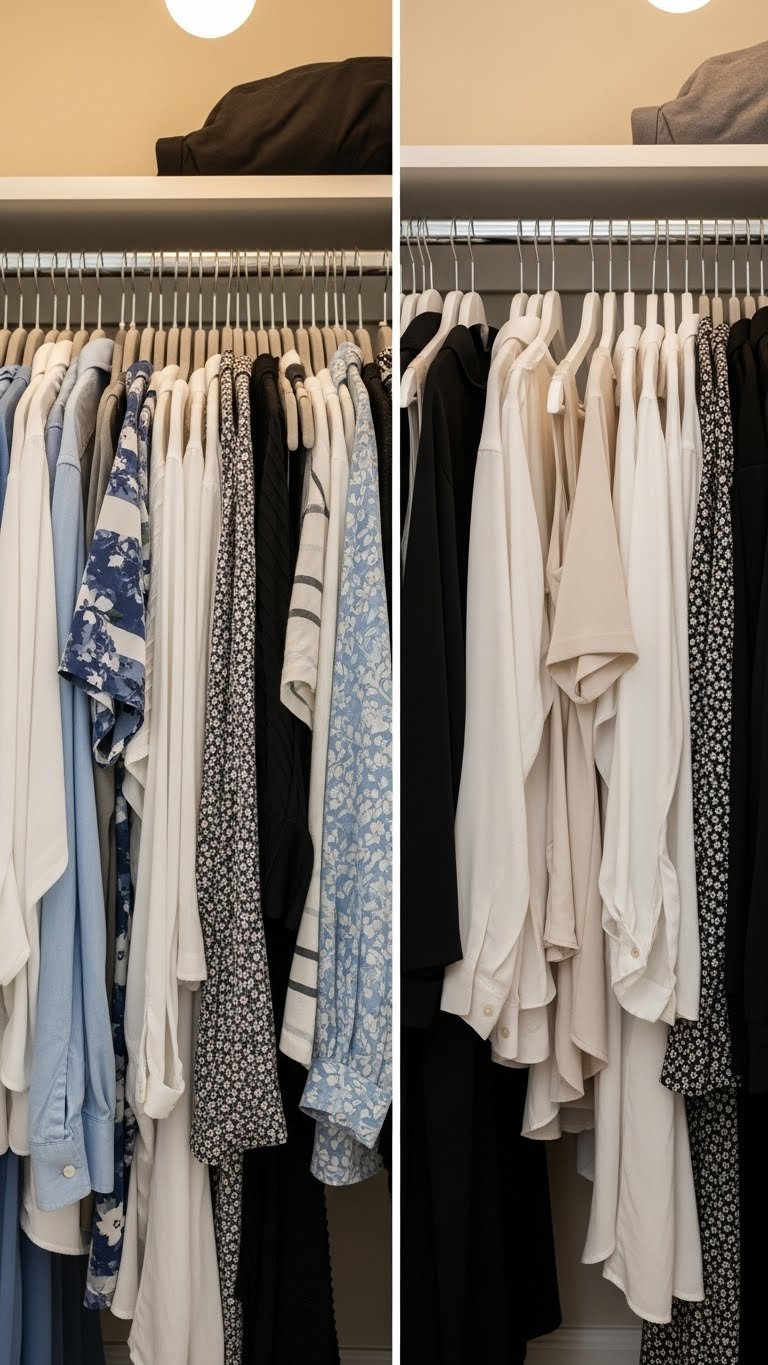
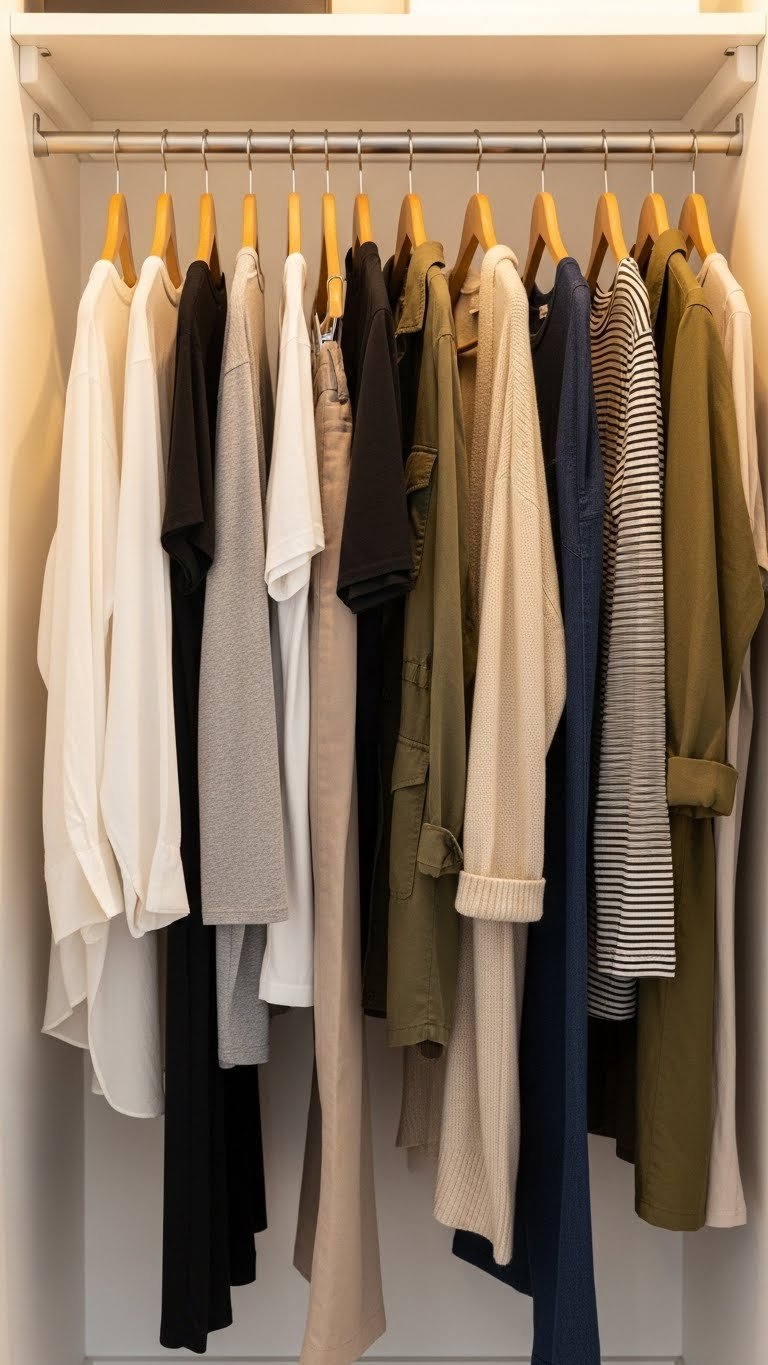
    The rainbow method is the most intuitive color system because your brain already recognizes it from childhood. Start with reds and warm tones on one end, transition through yellows and greens, then move into blues, purples, and finish with neutrals (blacks, whites, grays, beiges).

    This takes about 2-3 hours to reorganize your entire closet and requires zero budget—just your existing hangers. Use wooden or slim velvet hangers (you probably have these already) to keep clothes from slipping. The beauty here is that any guest or family member can instantly find what they’re looking for, making borrowed clothes less of a mystery. Group by color first, then by item type within each color zone if your closet is deep enough.

    Your morning routine becomes a visual scan instead of a guessing game, and you’ll rediscover pieces you forgot you owned.

    2. Create Monochrome Sections with Clear Labels

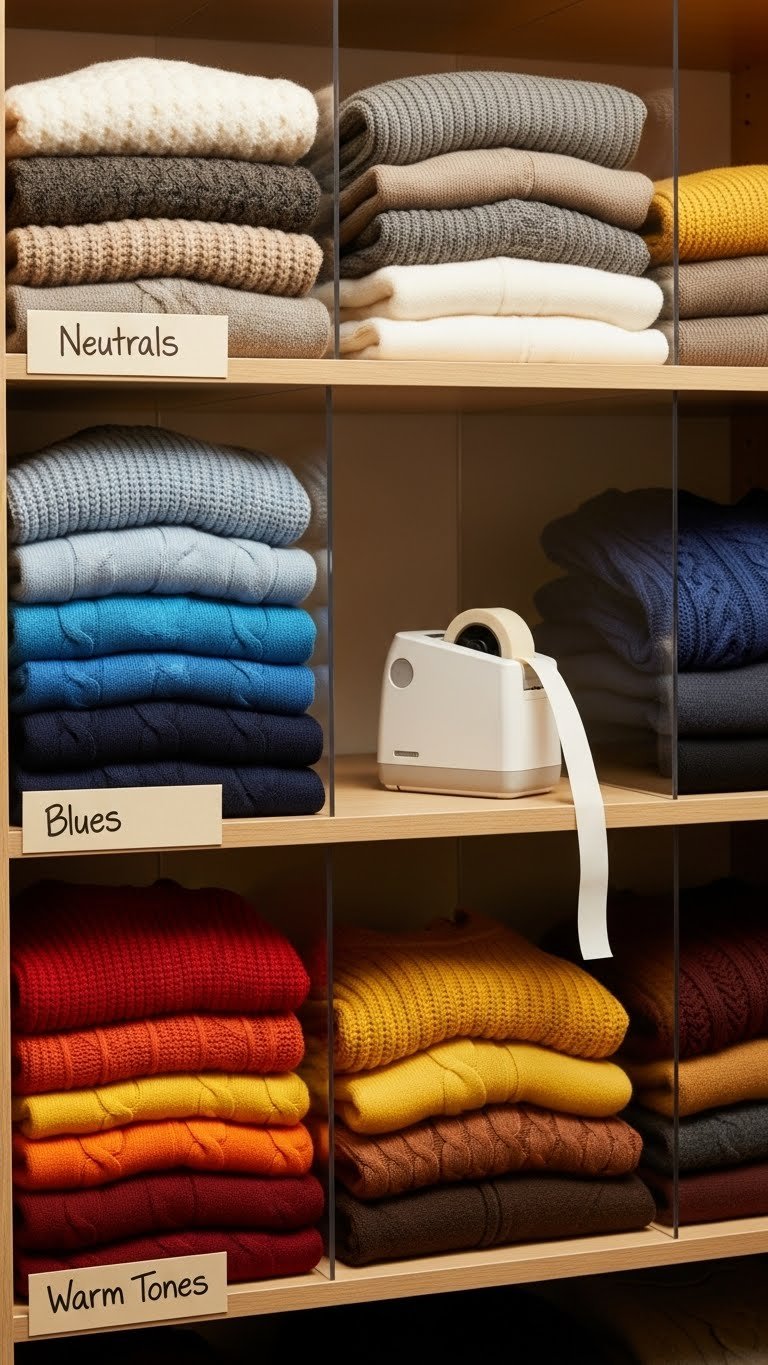
    Labels are your closet’s best friend, and they work even better when paired with monochrome grouping. Designate sections of your closet to specific color families: one zone for blacks and grays, another for whites and creams, a third for jewel tones, and a fourth for warm colors like oranges and rust.

    Grab a label maker ($15-$25 at Target or Amazon) or use painter’s tape and a permanent marker. This method works brilliantly for families or roommates because everyone immediately knows the rule. It takes one evening to set up but saves you countless minutes daily. If you have drawer space, use the same system—label each drawer or section so you’re not hunting through multiple compartments.

    This system makes accountability easier and keeps everyone’s clothes respected and organized.

    3. Sort Neutrals from Jewel Tones

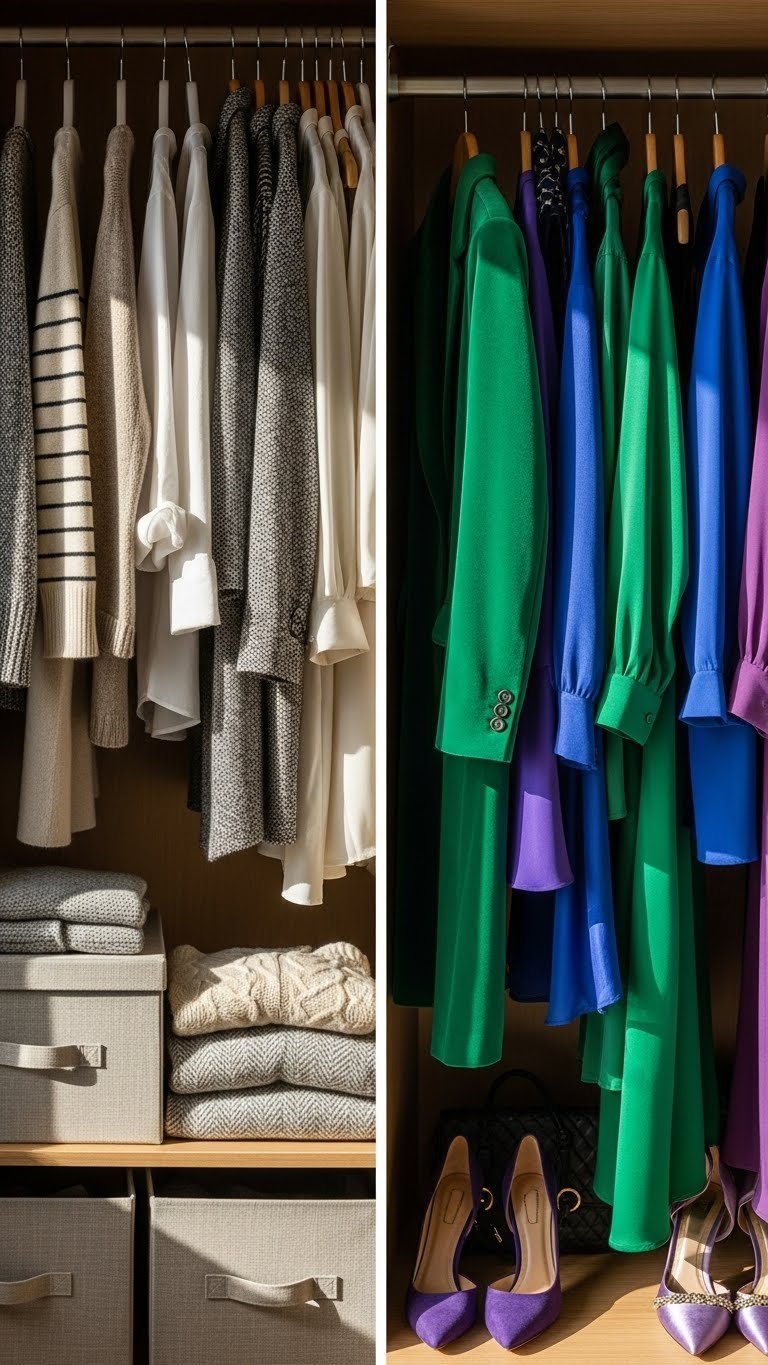
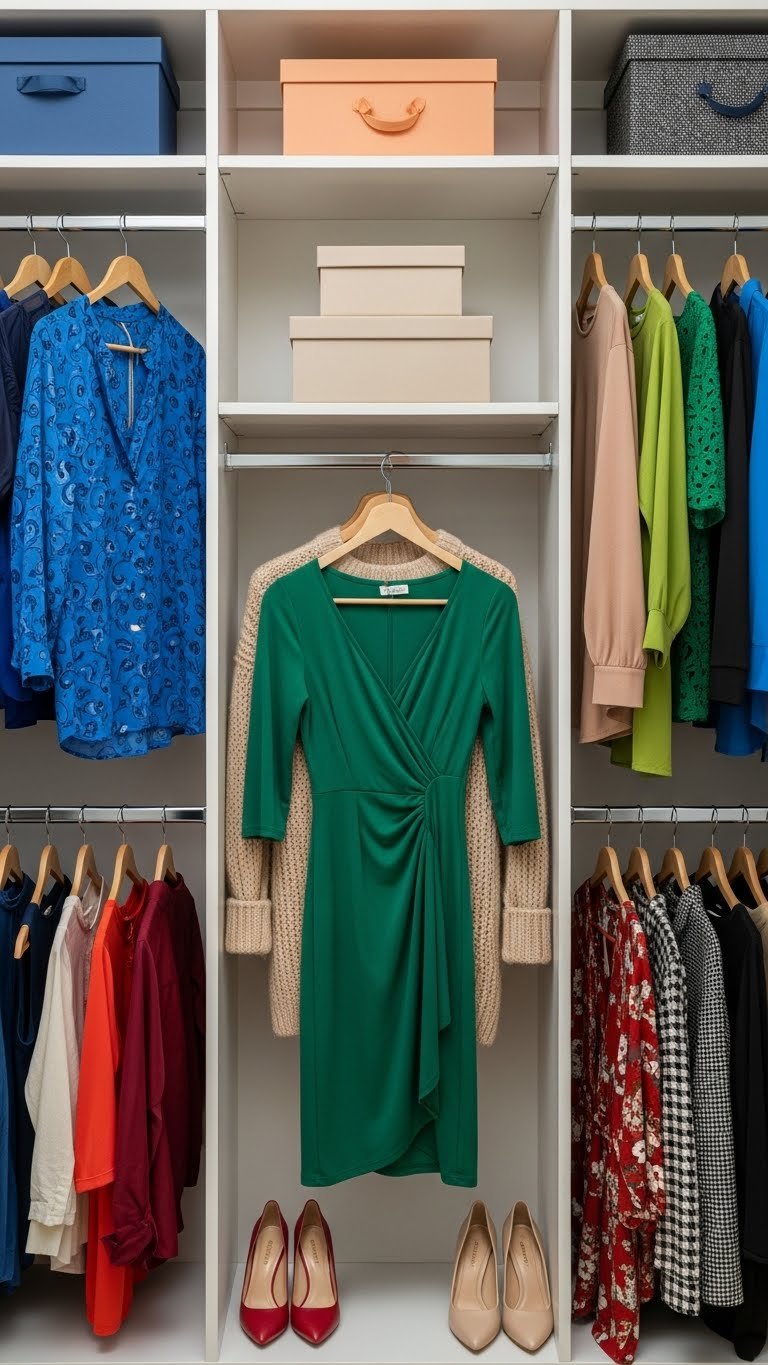
    This is the easiest two-zone system for people who love mixing basics with statement pieces. Group all your neutrals—blacks, whites, grays, beiges, tans, and navies—in one section. Put all your jewel tones (emeralds, sapphires, amethysts, deep teals) and bright colors in another.

    Zero budget required—just rearrange what you have. This method takes 45 minutes to one hour and immediately creates visual calm because you’ve essentially halved your color complexity. Your eye knows where to go when you want a bold piece versus a foundational one. Within each section, you can still organize by item type (tops, bottoms, dresses) if that helps further.

    This approach works especially well if you’re someone who builds outfits around one statement piece and fills in with neutrals.

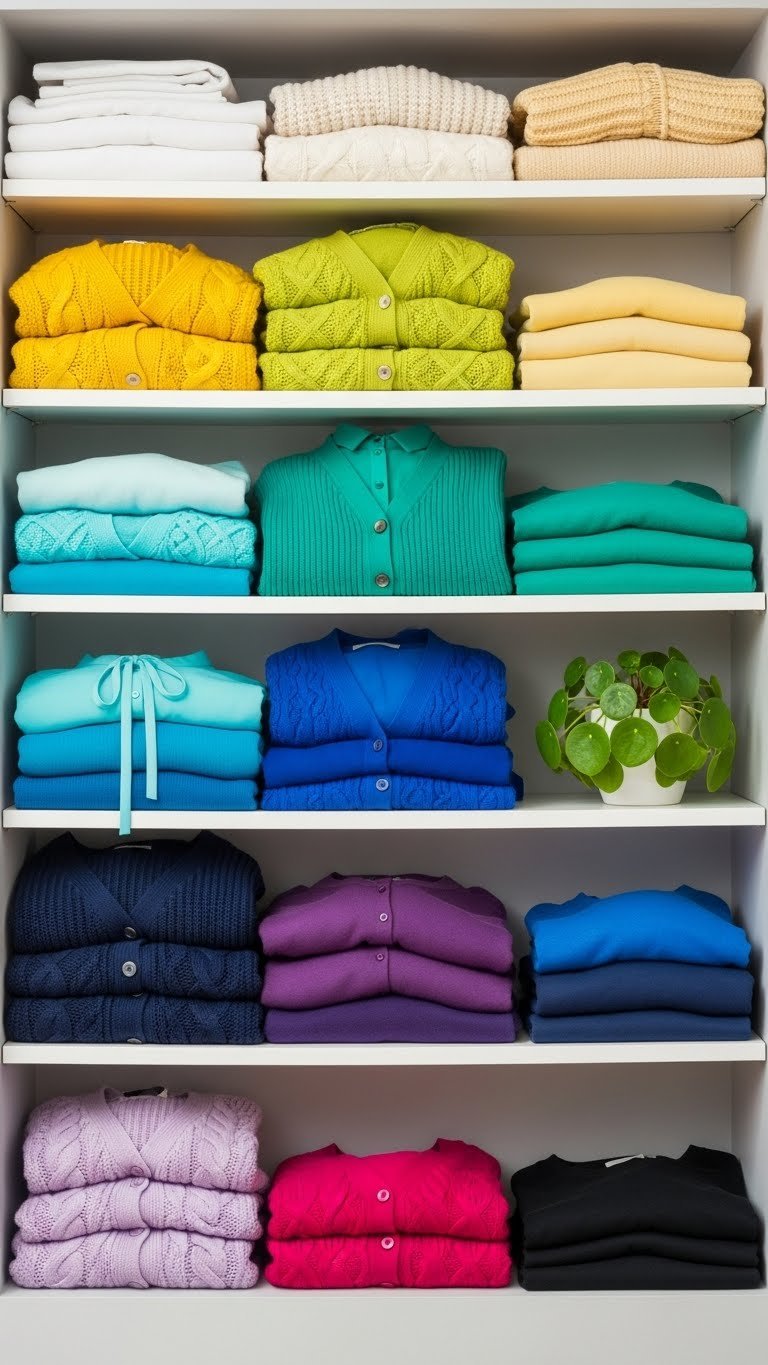
    4. Use Color Blocking by Shelf

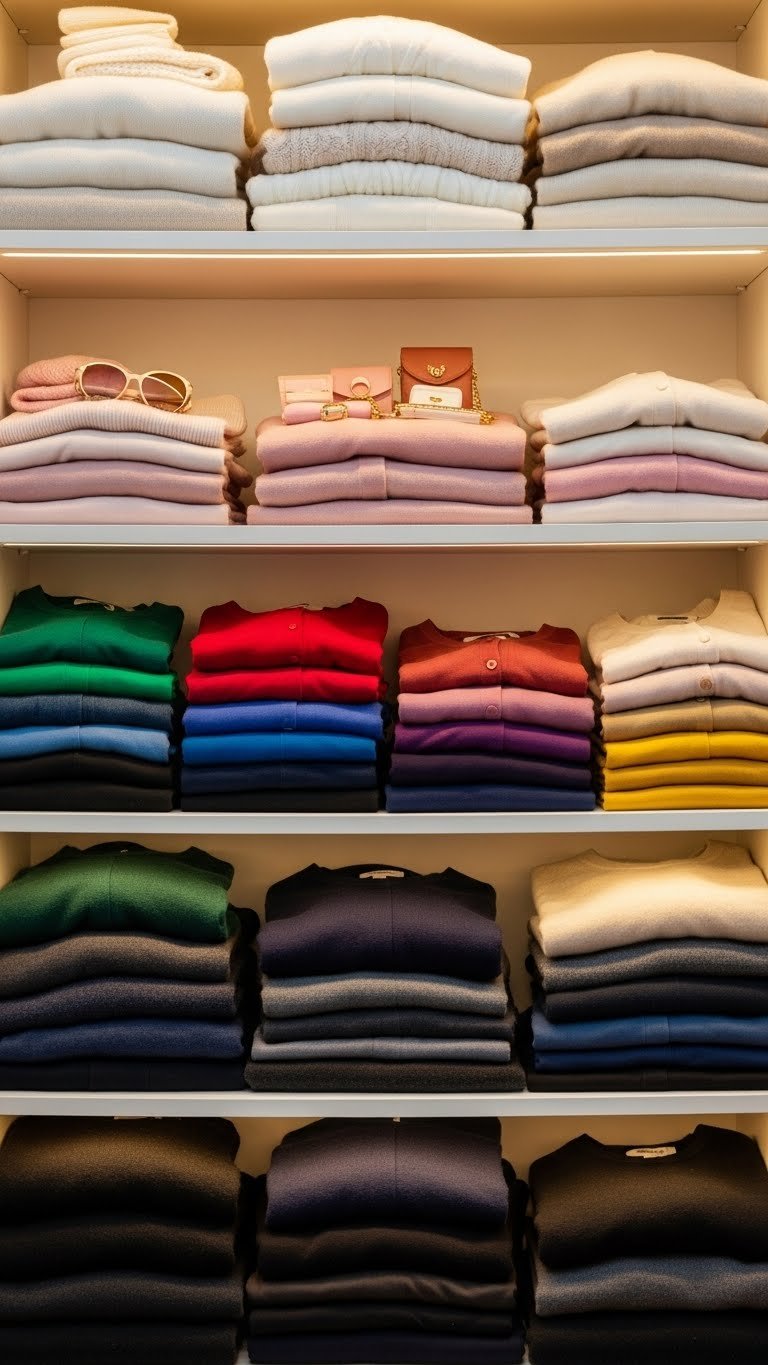
    If you’re more of a folder than a hanger person, color-blocking by shelf is your answer. Each shelf gets its own color family, creating visual sections that feel organized without being rigid.

    Grab three to four open shelves or storage boxes ($20-$60 from IKEA, Wayfair, or a budget retailer). This takes 2-3 hours to sort and implement. Stack similar items together—all your cream sweaters on the top shelf, all your burgundy knits on the second, and so on. Use file-folding or a drawer organizer ($10-$15) to keep stacks from toppling.

    The best part? You can see everything at a glance and the uniform stacks make your closet look almost retail-ready.

    5. Create a Seasonal Color Rotation System

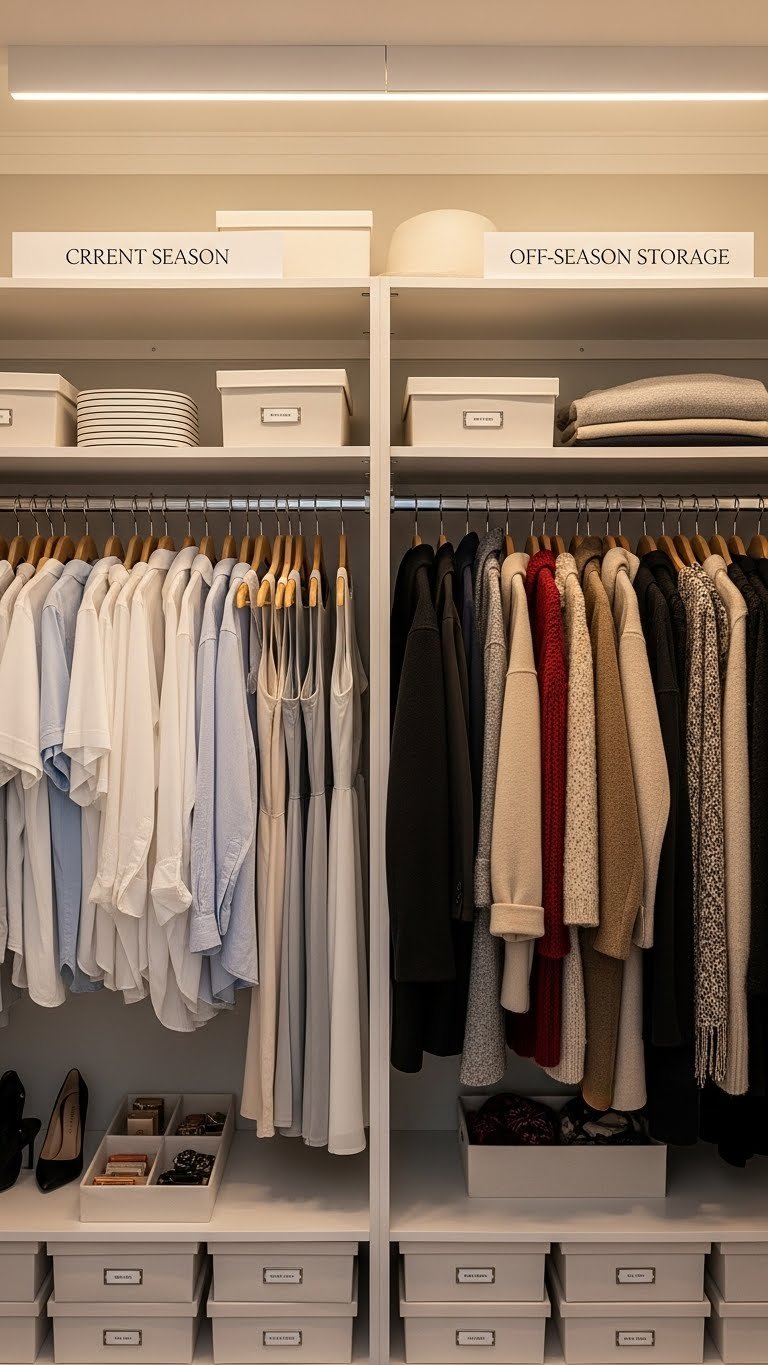
    Seasonal color rotation means keeping your current season’s dominant colors at eye level and storing off-season colors up high or in bins. In spring, showcase your pastels and bright whites. In fall, pull forward your warm rusts, ochres, and deep oranges.

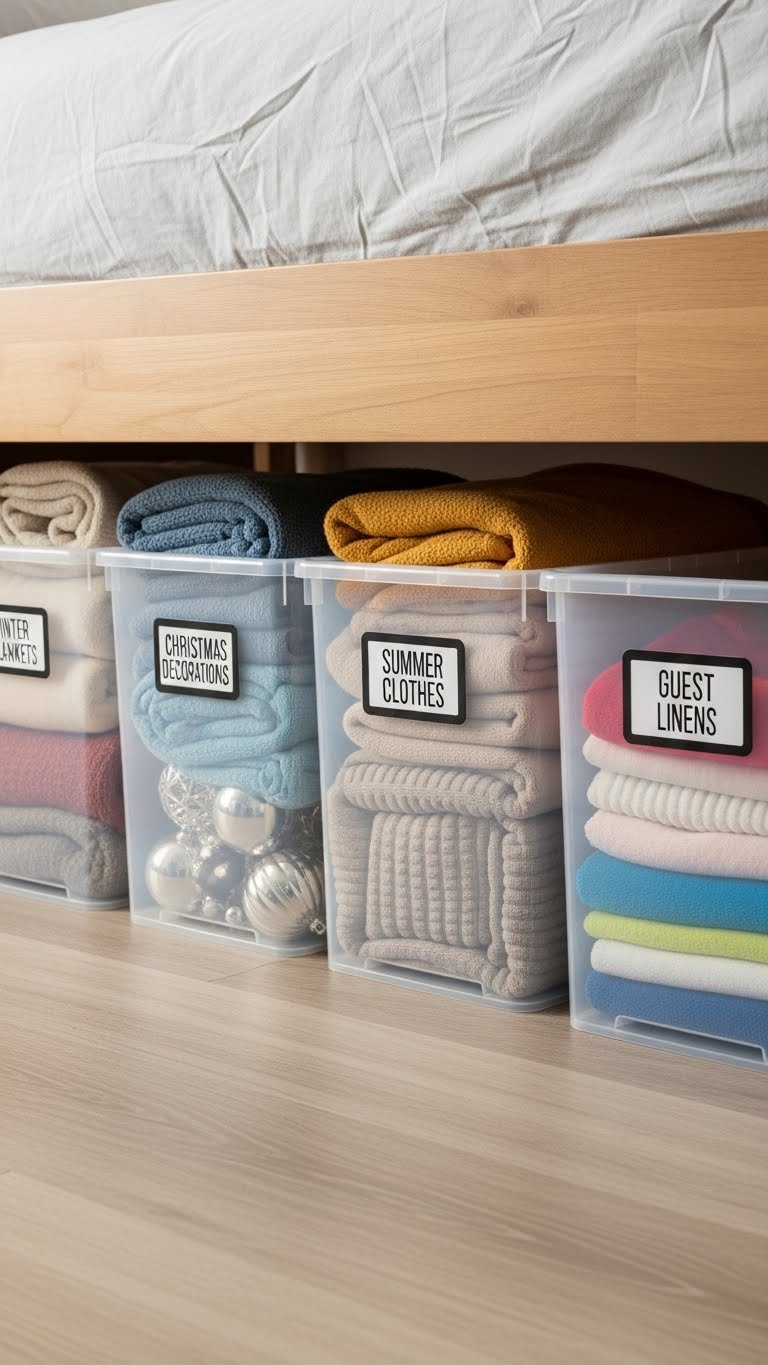
    Use clear storage bins ($8-$15 each) to house off-season items, labeling each bin with the season and main colors it contains. This takes one weekend to establish but saves closet space year-round. You’ll need 4-6 bins depending on your wardrobe size. Store these under the bed, in a guest room, or on high shelves.

    Your active closet stays lean and seasonally relevant, which makes getting dressed faster and your space feel less overwhelming.

    6. Pair Colors with Outfit-Ready Hangers

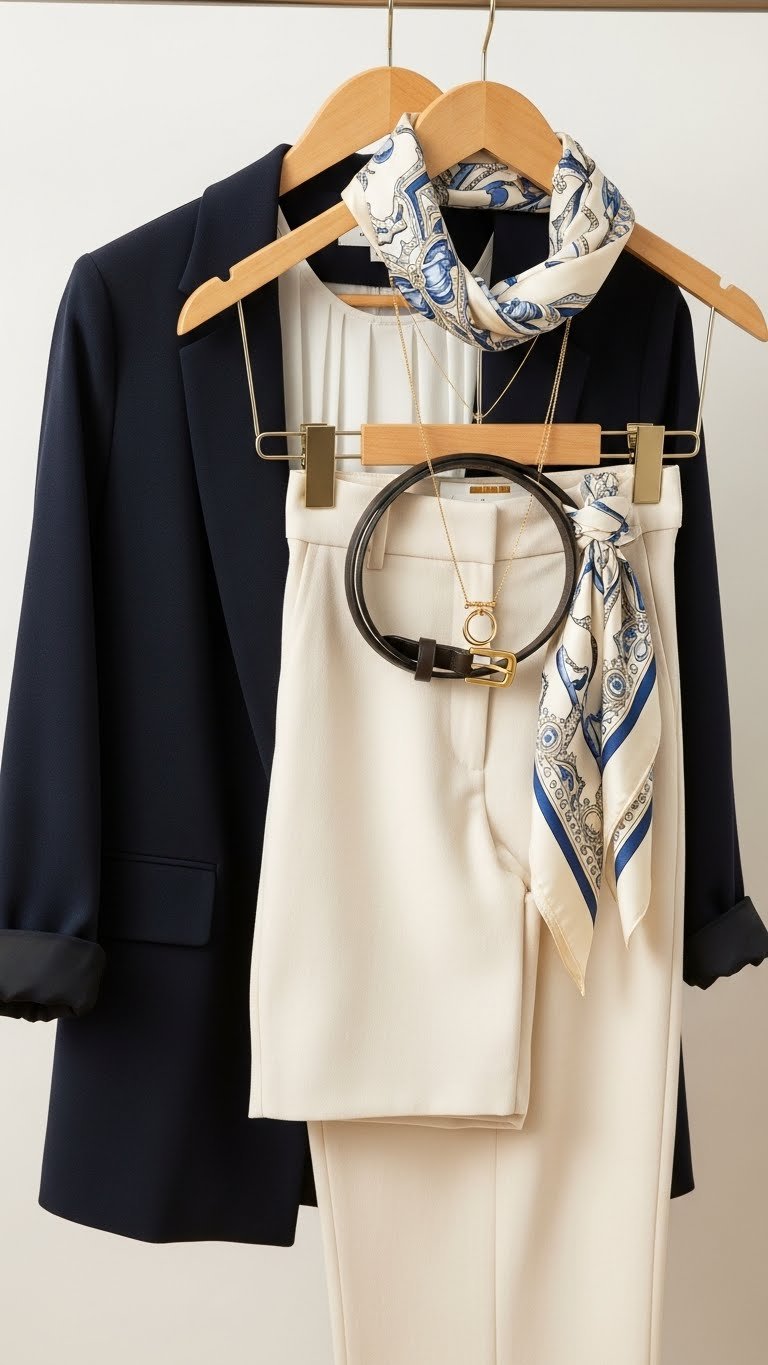
    Instead of hanging items by color alone, group complete outfits together using multi-hanger clips or simply hanging related pieces on the same spot. Keep your white blouse, black pants, and blazer together. Hang your denim jacket next to your favorite white tee.

    Use multi-hanger clips ($8-$12 for a set) available on Amazon or at container stores, or simply hang clothes close together on the same rail. This takes one to two hours to set up and requires you to think through your outfit pairings once. You still maintain color organization at a macro level, but within each color section, you’ve pre-planned outfits.

    On rushed mornings, you literally grab one unit and you’re done—no second-guessing whether that emerald top goes with those pants.

    7. Use Color + Texture to Define Sections

    Combine color organization with texture grouping for a boutique-level closet. Keep all your silky, lightweight pieces in cool tones together. Bunch your chunky knits in warm colors. Hang flowing fabrics in jewel tones separately from structured pieces.

    Zero budget—this is about smart arrangement. This reorganization takes 2-3 hours and requires you to notice the feel of your pieces, not just their color. You’re essentially creating micro-zones within color families. When you grab that emerald silk blouse, you know it’s in the “jewel-tone delicate” section, not mixed randomly among all emerald items.

    Your closet starts feeling curated and high-end because each section has both visual and tactile harmony.

    8. Build a Capsule Within Your Color System

    Create a color-coordinated capsule wardrobe section that you rotate with the seasons. Choose one neutral base color (white, black, or beige) and add three supporting colors that you love and that work with your skin tone.

    Use existing hangers and shelf space—no investment needed. Spend one afternoon identifying your capsule pieces. This system prevents decision fatigue because you know every piece in that section works together. Photograph your capsule pieces and keep the photo on your phone as a shopping reference so you don’t accidentally buy something that breaks your color harmony.

    You’ll notice you reach for these pieces more often and feel more confident in what you’re wearing.

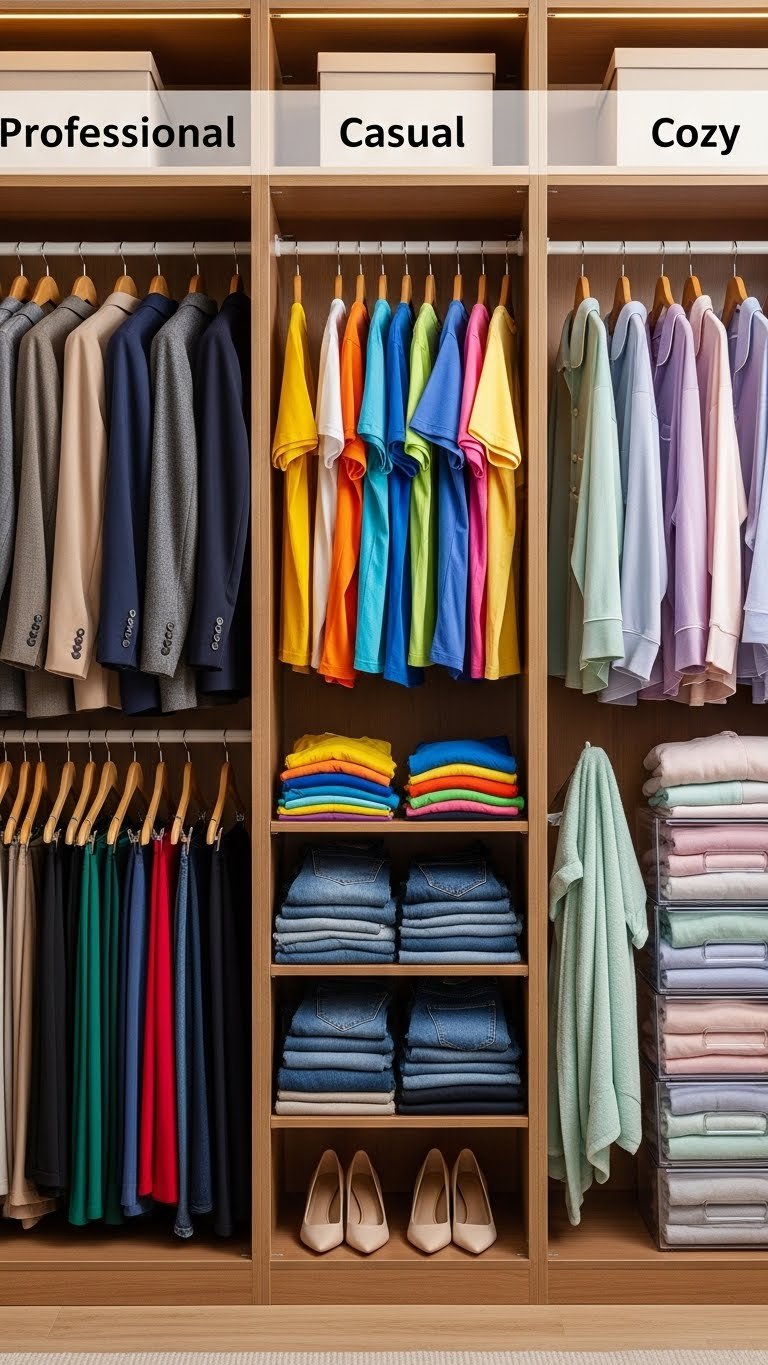
    9. Color-Code by Work, Weekend, and Sleep

    Organize by lifestyle category first, then by color within each. Keep your work clothes (in professional colors) in one zone, casual weekend pieces in another, and sleep/lounge wear in a third. This prevents you from accidentally grabbing your favorite Saturday sweater when you need something for Monday.

    Zero budget required—just rethink your layout. This takes 2-3 hours and works especially well if you have room to create distinct zones or use different shelves for different purposes. Within each lifestyle section, maintain your color order (rainbow, monochrome, or whatever system you prefer).

    Getting dressed for the right occasion becomes automatic—you’re not hunting across your entire closet for “work clothes” because you know exactly where that section is.

    10. Use Open Shelving to Showcase Color

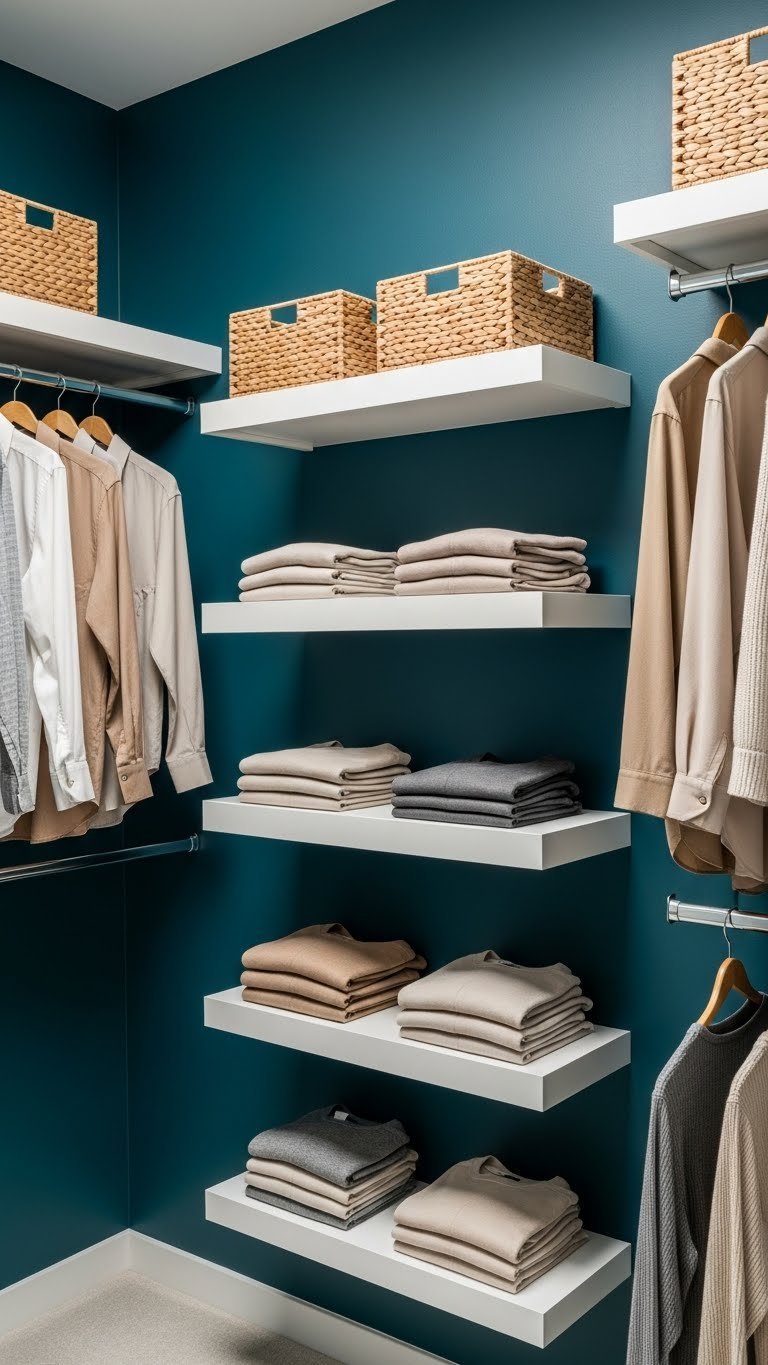
    Open shelving is a color-coder’s dream because every piece is visible. Display your favorite or most-worn pieces by color in an intentional arrangement that doubles as decor.

    Install floating shelves ($30-$80 per shelf from IKEA, Home Depot, or Amazon) or use existing shelving. This project takes half a day to one full day if you’re also installing shelves, or just one hour if you already have shelves. Fold your items using the KonMari method or file-fold to keep them stable and visible. Stick to a maximum of three to four colors per shelf so it doesn’t look chaotic.

    Your closet transforms into something that looks intentional and gallery-like, and you’re more likely to actually wear what you display because you see it every day.

    11. Create Color Gradients Within Each Hue

    Instead of jumping from one color family to the next, create gradients within each primary color. All your blues go together, but arranged from lightest to darkest. All your reds progress from coral through burgundy to wine.

    Zero budget—this is pure rearrangement. This takes 3-4 hours for a full closet because you’re being very intentional about color placement, but the result feels incredibly polished. You’ll need good natural or overhead lighting to see the subtle differences between shades.

    Your closet looks like a professional boutique because the eye can follow a smooth color journey instead of jumping around randomly.

    12. Use Color-Coded Hangers to Reinforce Organization

    Assign different hanger colors or finishes to different clothing categories within your color organization. All your neutrals hang on natural wood hangers, all your jewel tones on rose gold, all your brights on white.

    Buy matching hanger sets in 2-3 finishes ($15-$40 for a mixed set from Amazon, Target, or IKEA). This takes one to two hours to implement and adds a subtle organizational layer that you’ll instantly see. Your eye catches the hanger color before it registers the clothing, so you can quickly navigate your space.

    The secondary layer of organization makes your system more foolproof and your closet feel intentionally designed.

    13. Group Similar Colors to Maximize Outfit Options

    Instead of spreading similar shades across different areas, bunch all your variations of one color family together. Put every shade of blue you own—from sky to navy—in one section, even if that means mixing tops and bottoms and dresses.

    Zero budget—pure rearrangement. This takes 2-3 hours depending on closet size. When you do this, you suddenly realize you have three pairs of blue jeans and five blue tops, which means unlimited outfit combinations from just one color family. You’re more likely to wear these pieces because you see all the options at once.

    Your closet becomes a source of creativity because you realize the outfit possibilities within colors you already loved.

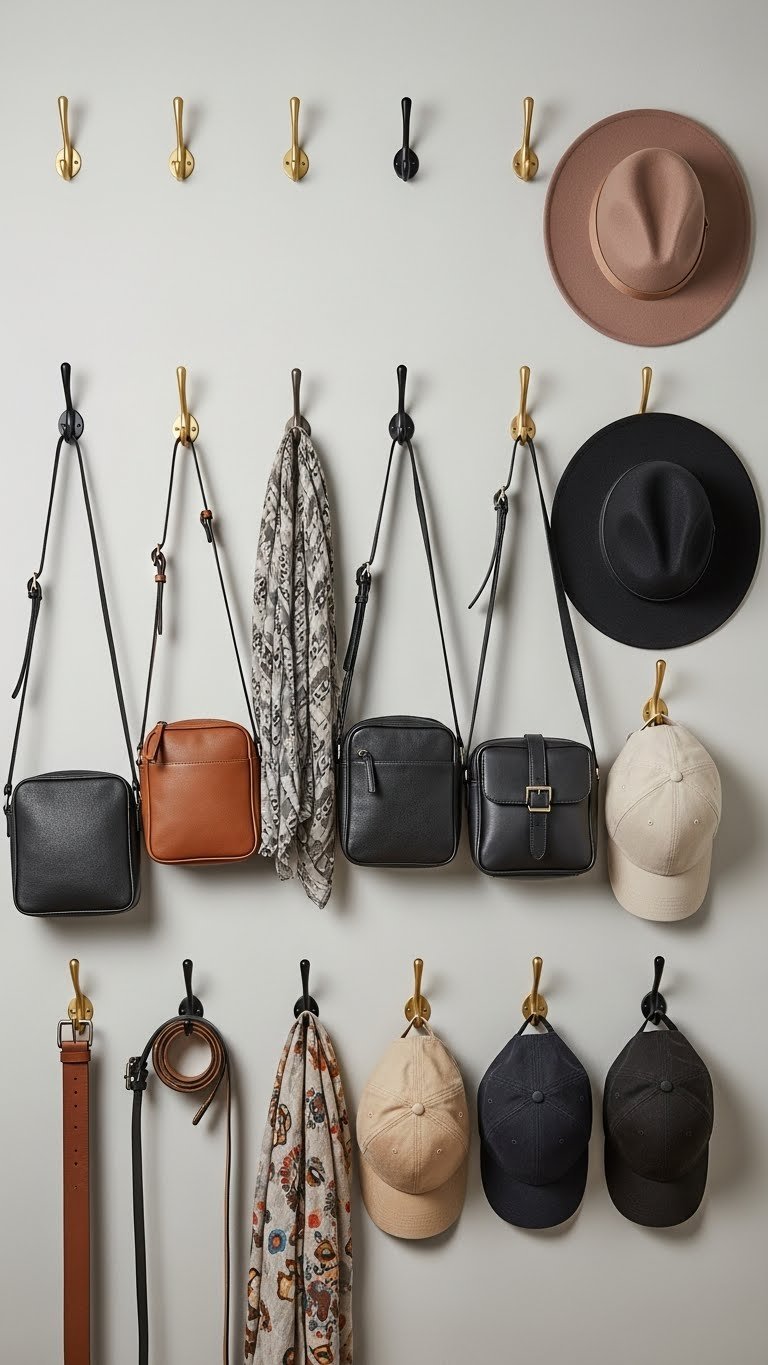
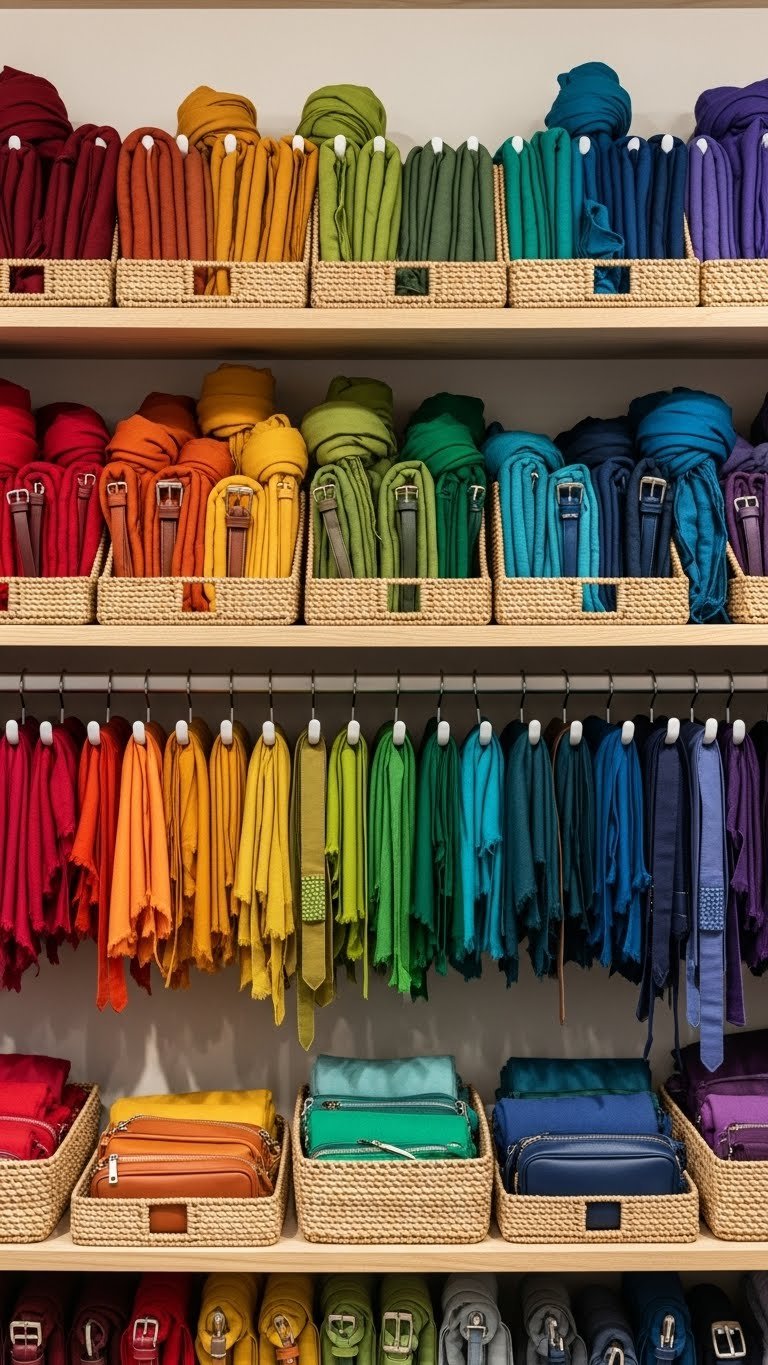
    14. Create a “Color” Shelf for Accessories

    Dedicate one shelf or section to color-coordinated accessories that complement your main closet colors. Organize your belts, scarves, bags, and shoes using the same color system as your clothing.

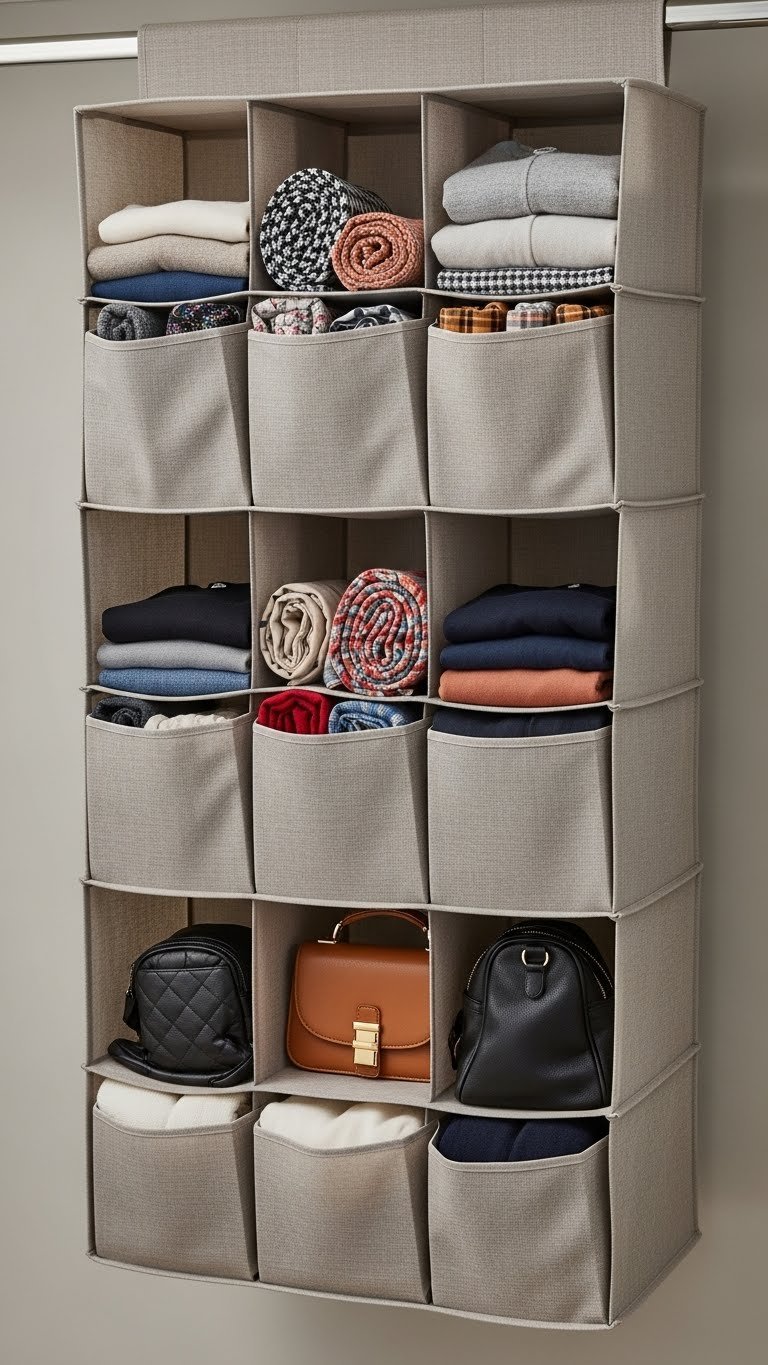
    Use small baskets, a hanging organizer, or adhesive hooks ($5-$20 total). This project takes 30 minutes to one hour. Keep similar items together—all your scarves in one basket by color, all your belts on a small rack by color. This prevents that dreaded moment when you’ve got the perfect outfit but can’t find the right accessory to finish it.

    Your accessories actually get worn more because they’re visible and easy to find, which immediately multiplies your outfit options.

    15. Use Transparent Storage Boxes for Off-Season Items

    Keep off-season items visible by storing them in clear, labeled boxes. Sort by color within each season, so your winter bins contain all your reds together, all your jewel tones together.

    Buy clear plastic storage containers ($8-$15 each, available at Target, Amazon, or Walmart). This takes one to two hours to organize properly. Label each box with the season and main colors it holds. You’ll need 4-6 boxes depending on your wardrobe, stored on high shelves or under the bed.

    You can actually remember what off-season items you own instead of being surprised when you pull them out, and you’re less likely to buy duplicates.

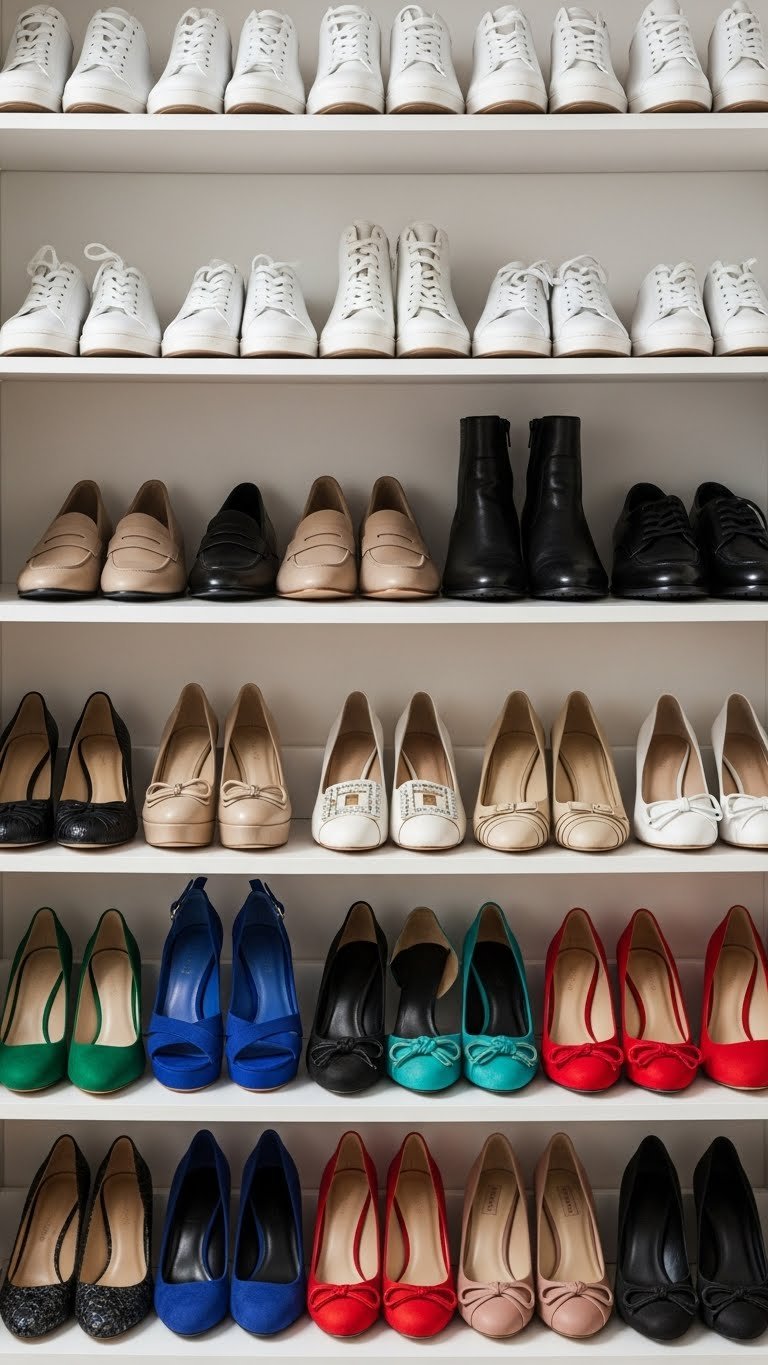
    16. Organize Shoes by Color to Match Your Clothes

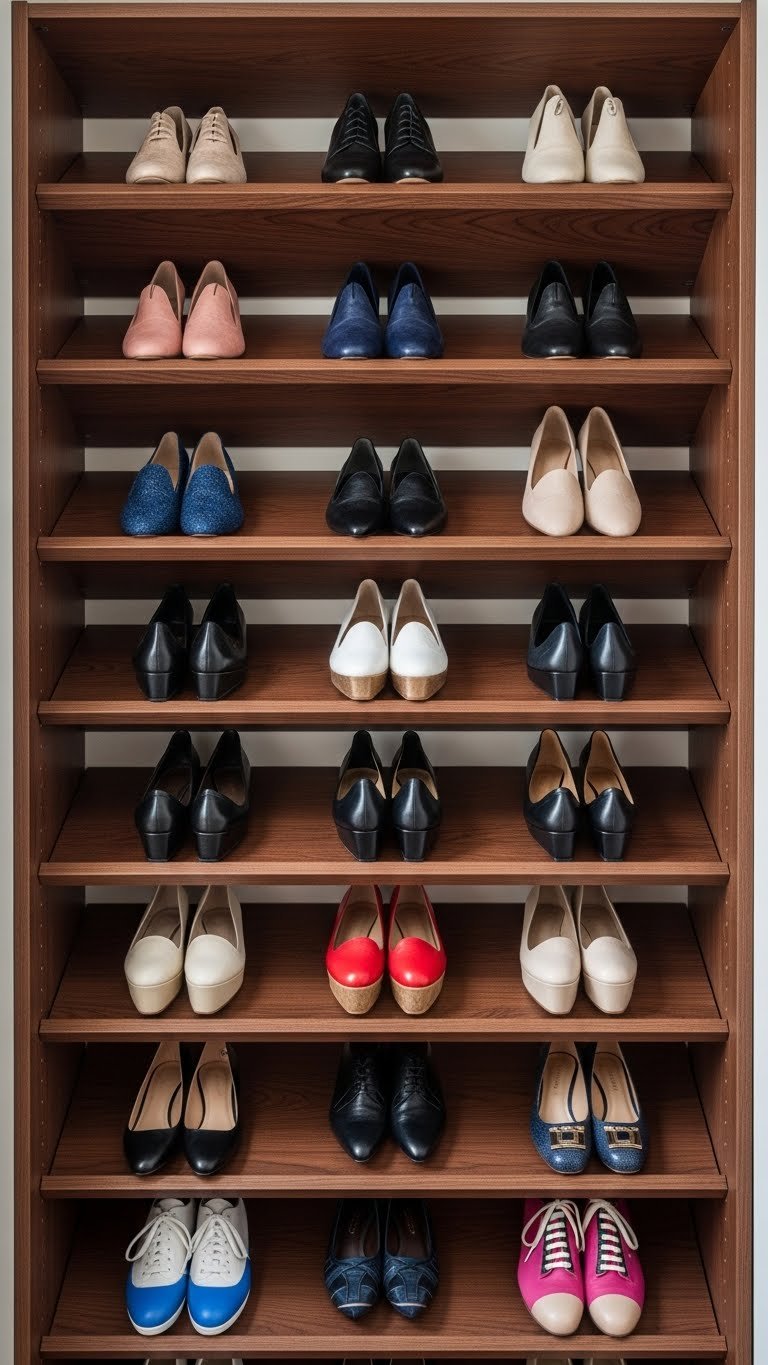
    Your shoe collection should reflect and support your color-coded closet, not work against it. Organize shoes the same way—neutrals together, then jewel tones, then accent colors.

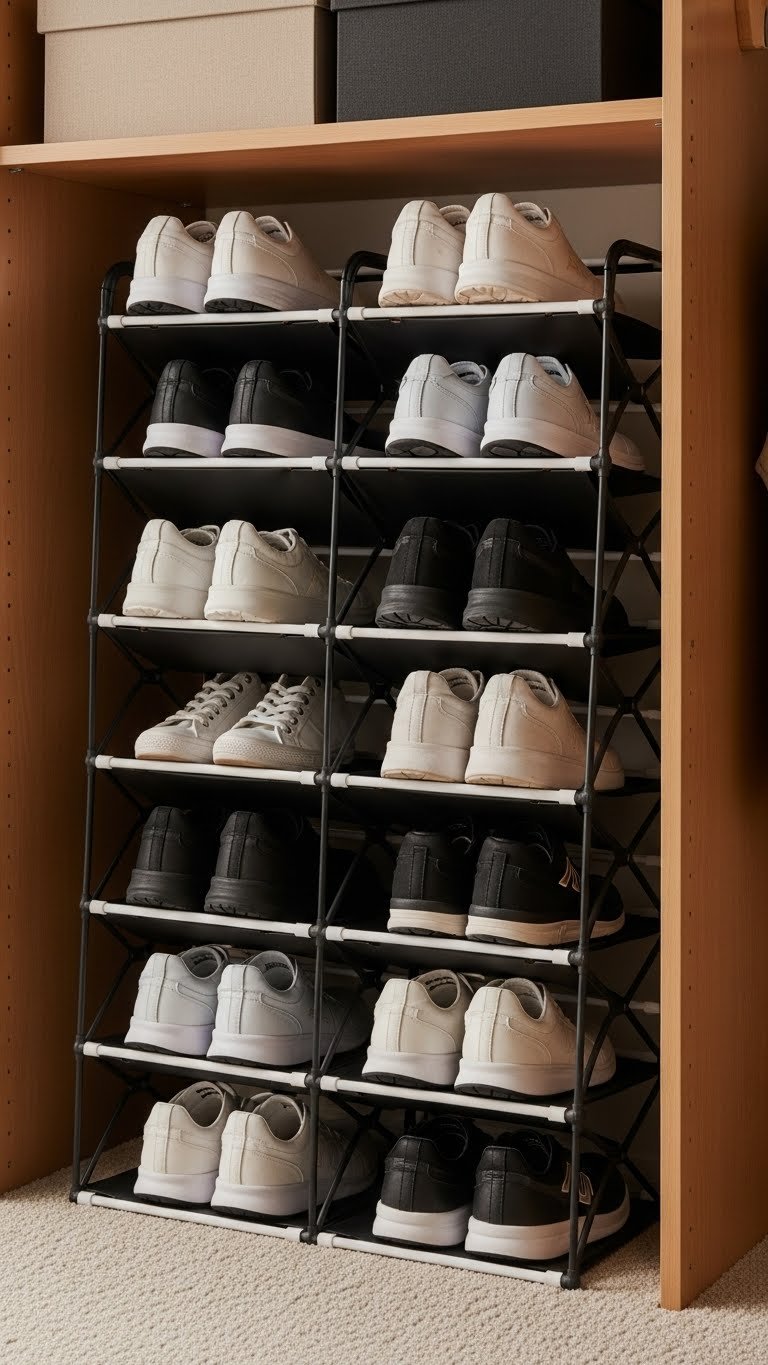
    Use a shoe rack, shelving, or clear shoe boxes ($20-$60 depending on your shoe quantity). This takes one to two hours to implement. If you have limited space, use clear over-the-door shoe organizers ($10-$15) to maximize vertical space. Keep shoes visible so you remember what you have.

    Getting dressed becomes seamless because your shoe color options are instantly obvious without digging through a jumble.

    17. Create a “Visual Anchor” Piece in Each Color Zone

    Within each color zone, identify one favorite or most-worn piece and hang it prominently. This becomes your visual anchor that reminds you of the color family and encourages you to build outfits around it.

    Zero budget—just intentional placement. This takes 30 minutes once you’ve organized by color. Your eye naturally lands on these anchor pieces when you’re getting dressed, and you’re more likely to wear them. This system also prevents that problem of having a favorite piece buried in the back.

    You’ll reach for these pieces more often and build more creative outfits because they’re visible and celebrated in your space.

    18. Use Velvet Hangers in Color-Coordinated Sets

    Switch to all matching hangers in one coordinated tone (blush, soft gray, rose gold, or champagne gold) to make your color-coded system feel more intentional and boutique-like.

    Buy a set of 20-30 velvet hangers ($25-$50 from Amazon, Wayfair, or The Container Store). This takes one to two hours to switch out all your hangers but the visual impact is immediate. Velvet hangers also keep clothes from slipping, which is a bonus. Choose a hanger color that complements your wall color or bedroom aesthetic.

    The uniform hangers make your color-coded clothing the visual focus, and your closet automatically looks more high-end.

    19. Build Color Stories Around Your Lifestyle

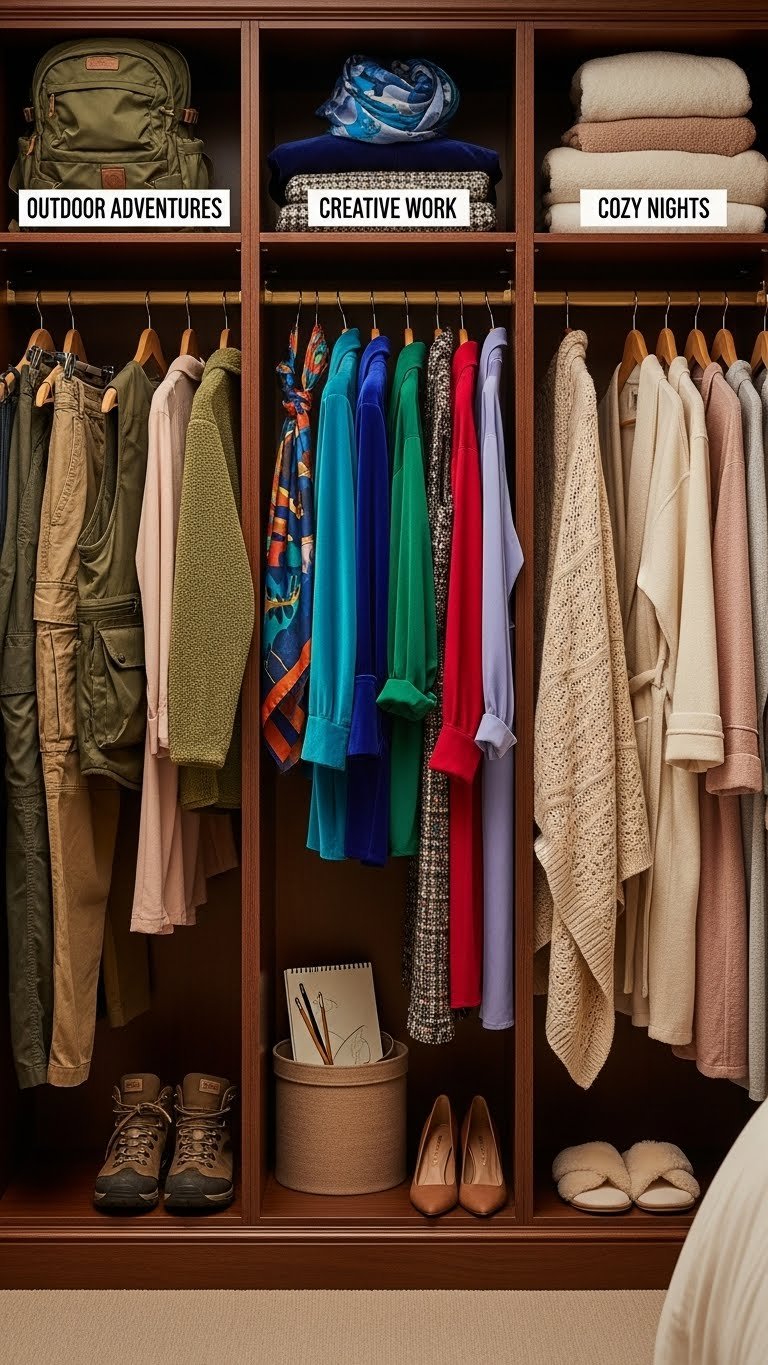
    Instead of pure color organization, assign colors to lifestyle stories or seasons of your life. Create one color palette for your “outdoor adventures” life, another for your “creative work” life, a third for your “cozy home” self.

    This takes two to three hours of honest reflection and rearrangement, and costs zero dollars. Choose three to four colors per lifestyle story and stick mostly to that palette. You might find your “outdoor” pieces are olive, khaki, and brown. Your “creative work” pieces are jewel tones and interesting textures. This system works brilliantly for visual decision-making.

    Getting dressed becomes about channeling the version of yourself you want to be that day, not just grabbing anything clean.

    20. Create a Color Reference Chart for Your Phone

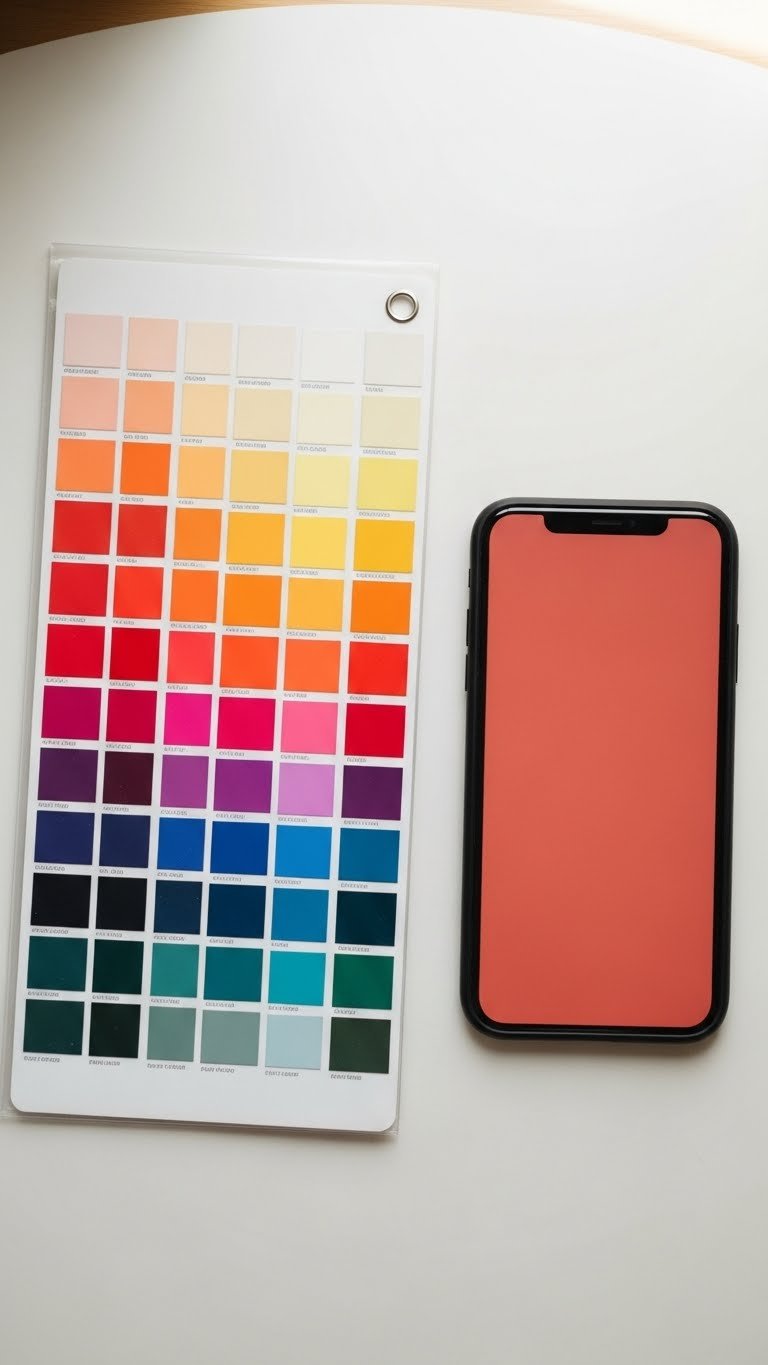
    Photograph color swatches from your organized closet and keep them on your phone as a shopping reference. Snap small samples of your neutral base, your accent colors, and your jewel tones from actual pieces you own.

    Grab a small notebook or print out your photo ($0-$5). This takes 15 minutes. When you’re shopping (online or in stores), pull up your phone and match new purchases to your existing palette. This prevents those “I thought this was the right blue at home” situations.

    You’ll shop more intentionally and stop buying pieces that don’t actually work with your existing closet ecosystem.

    21. Use Lighting to Showcase Your Color Organization

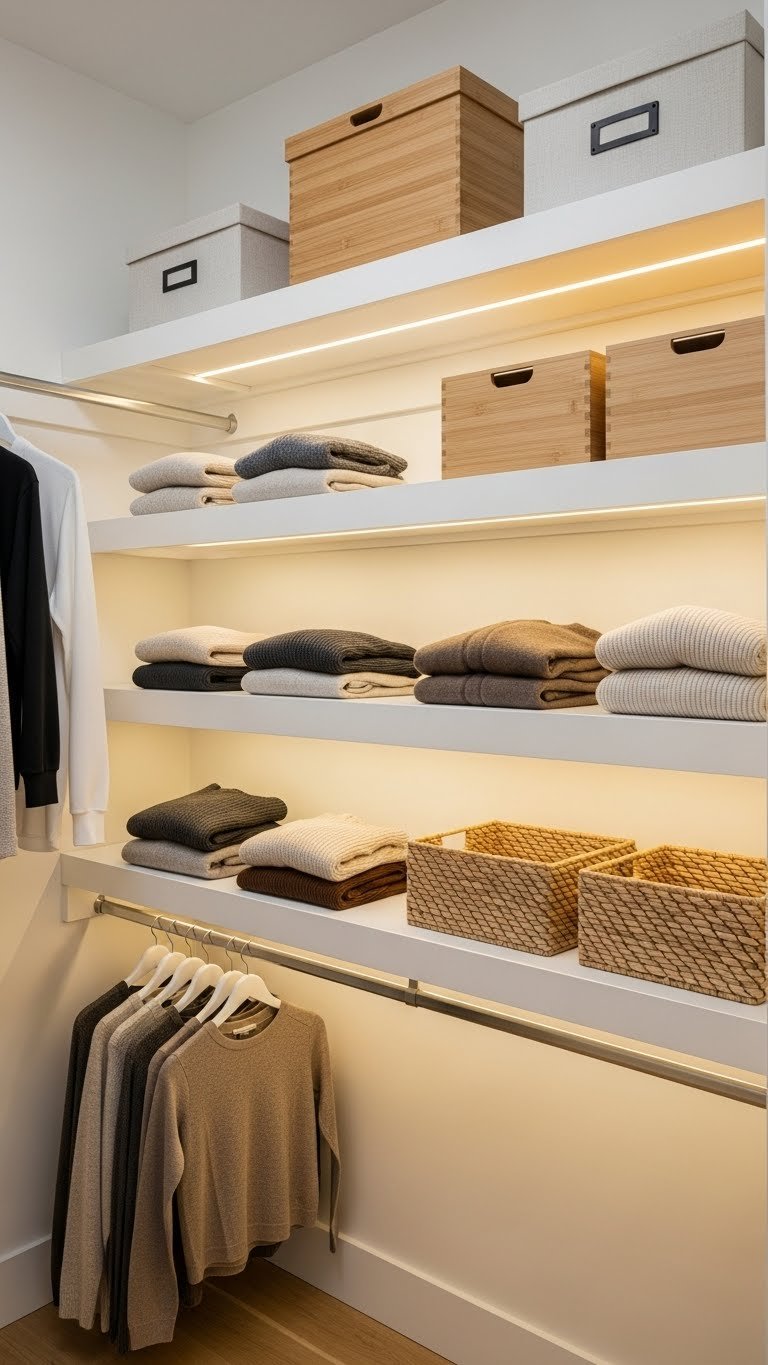
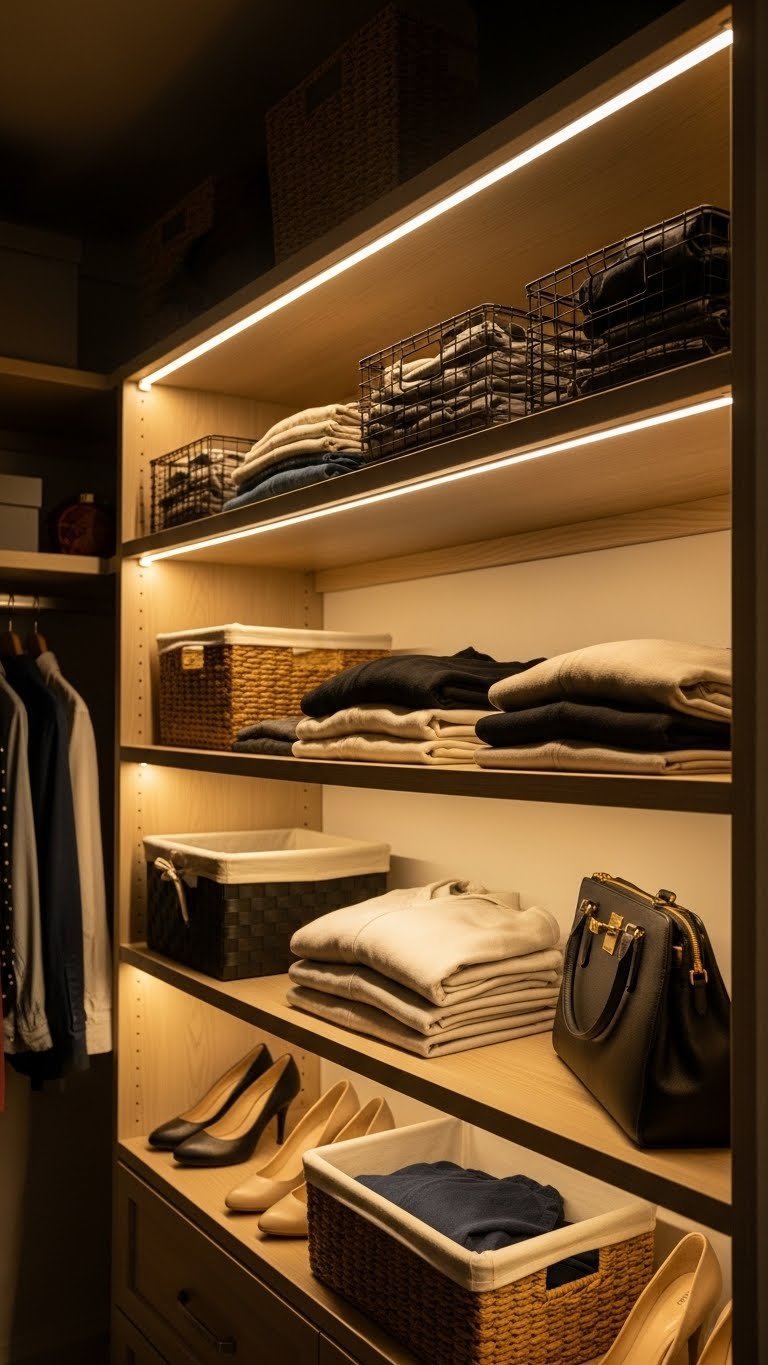
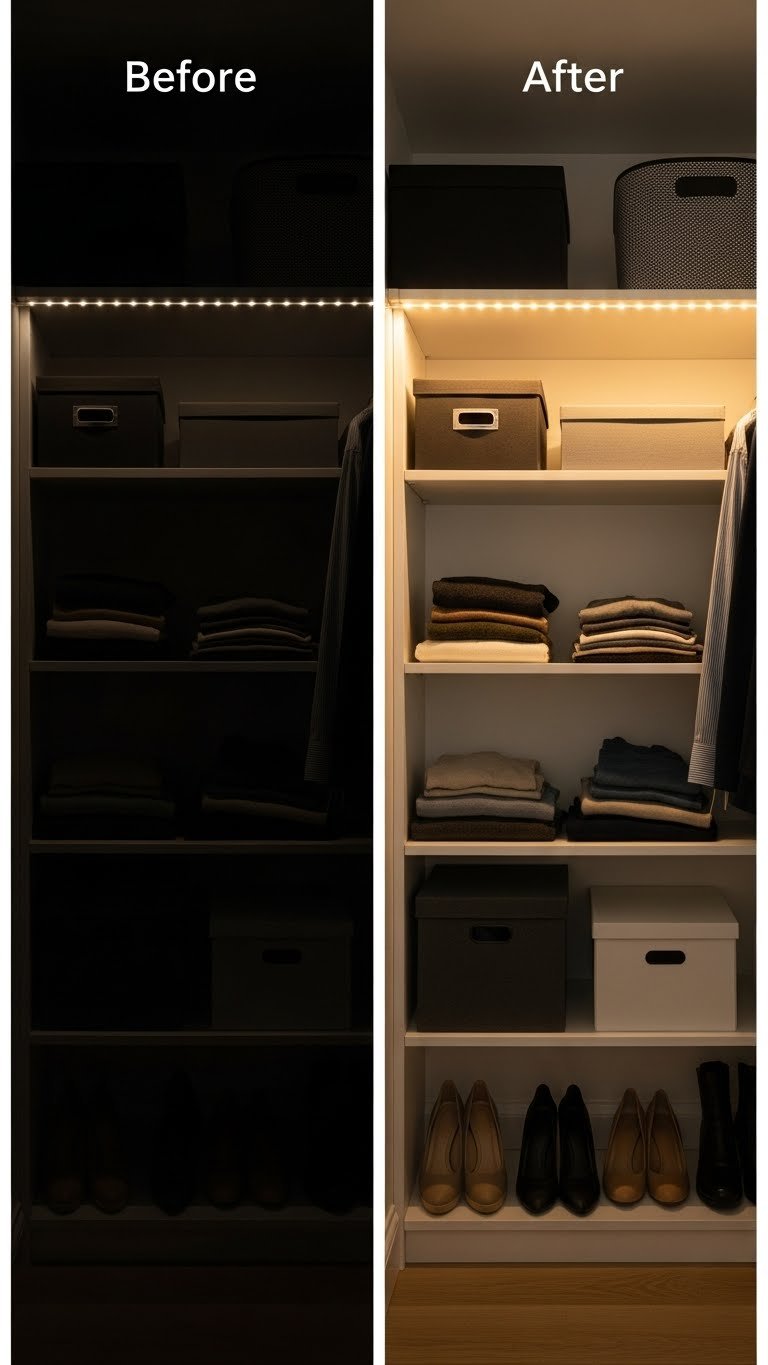
    Good lighting elevates any color-coded closet from “neat” to “boutique.” Install LED strip lights or small puck lights ($15-$50 from IKEA, Amazon, or hardware stores) inside your closet to brighten dark corners and highlight your color work.

    This project takes 30 minutes to one hour if you’re just sticking on adhesive-backed LED strips, or a few hours if you’re wiring permanent fixtures. Warm white light ($2700K-$3000K) is most flattering to clothing colors. Good lighting also makes it easier to actually see colors and prevents grabbing the wrong shade in dim conditions.

    Your closet becomes genuinely functional and feels like a luxury space you actually want to spend time in.

    22. Adopt the “One Color, One Day” Outfit Challenge

    Once your closet is color-coded, challenge yourself to build monochrome outfits one day a week by using different shades within a single color family. All blues one day, all neutrals another, all warm tones another.

    This costs zero dollars but takes 10-15 minutes per outfit attempt. You’ll discover depth and sophistication in shades you might not have considered as “matching.” When you do this regularly, you’re essentially pre-testing endless outfit combinations.

    You’ll have more confidence in your personal style and realize how many pieces you already have that work beautifully together.

    23. Use Dividers to Maintain Color Sections

    Add shelf dividers or hanging dividers to physically separate your color zones, making it harder for the system to slip back into chaos.

    Buy closet rod dividers or shelf dividers ($10-$30 from The Container Store, Amazon, or IKEA). This takes 15-30 minutes to install or position. Dividers are especially useful if you share a closet or have kids who might not respect your color organization system. They make the boundaries clear and make it easier to put things back correctly.

    Your system stays intact longer and requires less maintenance, because the physical dividers remind everyone where things belong.

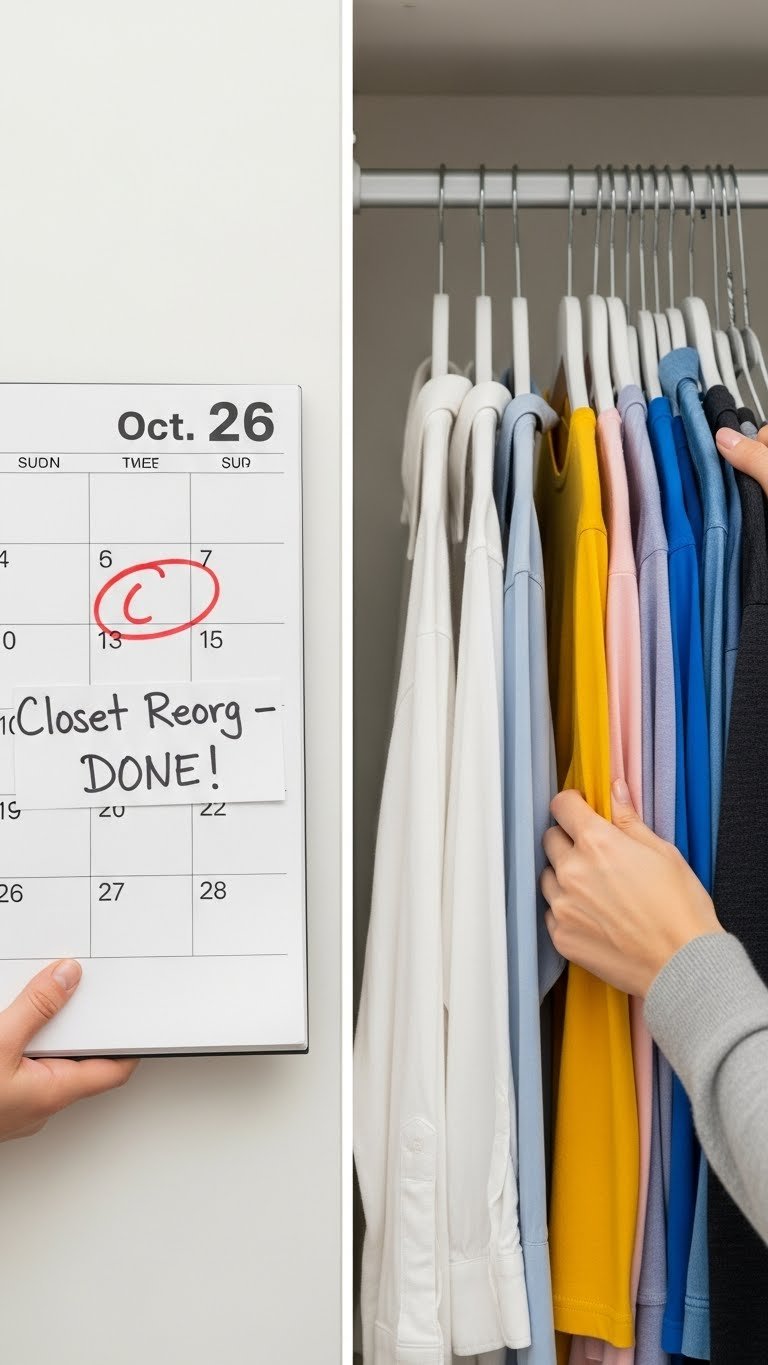
    24. Maintain Your Color System with a Monthly Reset

    Schedule a monthly 15-30 minute reset where you quickly rescan your color zones and put anything back in its proper place. This takes just one Sunday afternoon per month.

    Use a calendar reminder or app to prompt you, and time yourself to keep it quick. You’re not deep-organizing, just straightening and repositioning. This prevents the slow creep back into chaos and keeps your system functional.

    Your color-coded closet stays visually organized and functional without requiring constant babying, and you maintain the momentum of actually wearing your clothes intentionally.


    Save this post and try implementing at least one color-coding idea this week—even small shifts make a massive difference. Your closet will feel more organized, and you’ll get dressed with more confidence and speed. Which approach speaks to you most?

  • 27 Tiny Closet Organization Ideas That Maximize Every Inch

    27 Tiny Closet Organization Ideas That Maximize Every Inch

    Introduction

    Your closet doesn’t need to be a bedroom-sized luxury suite to feel organized and functional. Whether you’re working with a tiny apartment closet, a narrow hallway space, or just a cramped corner, smart organization can make you feel like you have twice the room. The secret isn’t more space—it’s using every vertical inch, choosing the right containers, and arranging your items strategically so you can actually see and reach everything. In this guide, you’ll discover 27 practical, budget-friendly ideas that transform small closets into spaces where you can find what you need in seconds. From hanging hacks to lighting upgrades to labeling tricks, these solutions work whether you’re renting or own your home.


    1. Double Your Hanging Space with a Second Rod

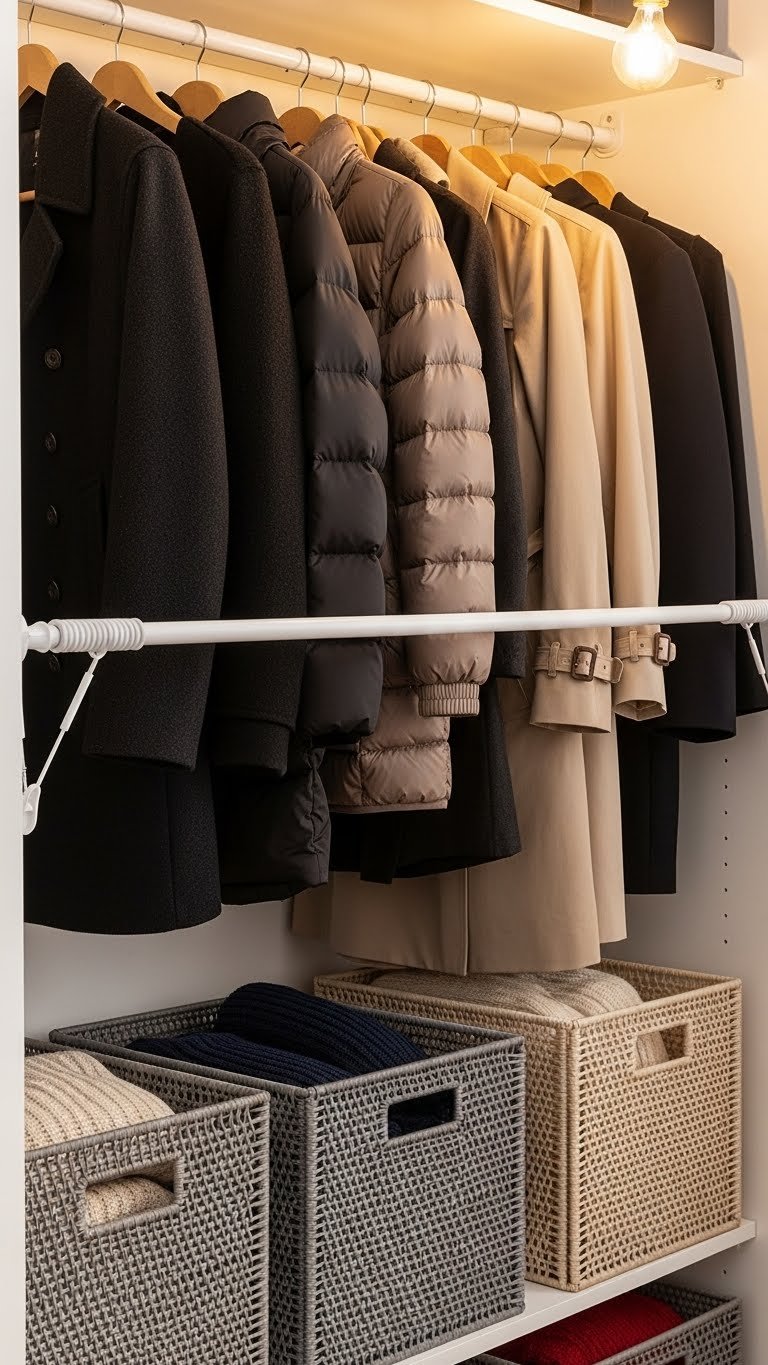
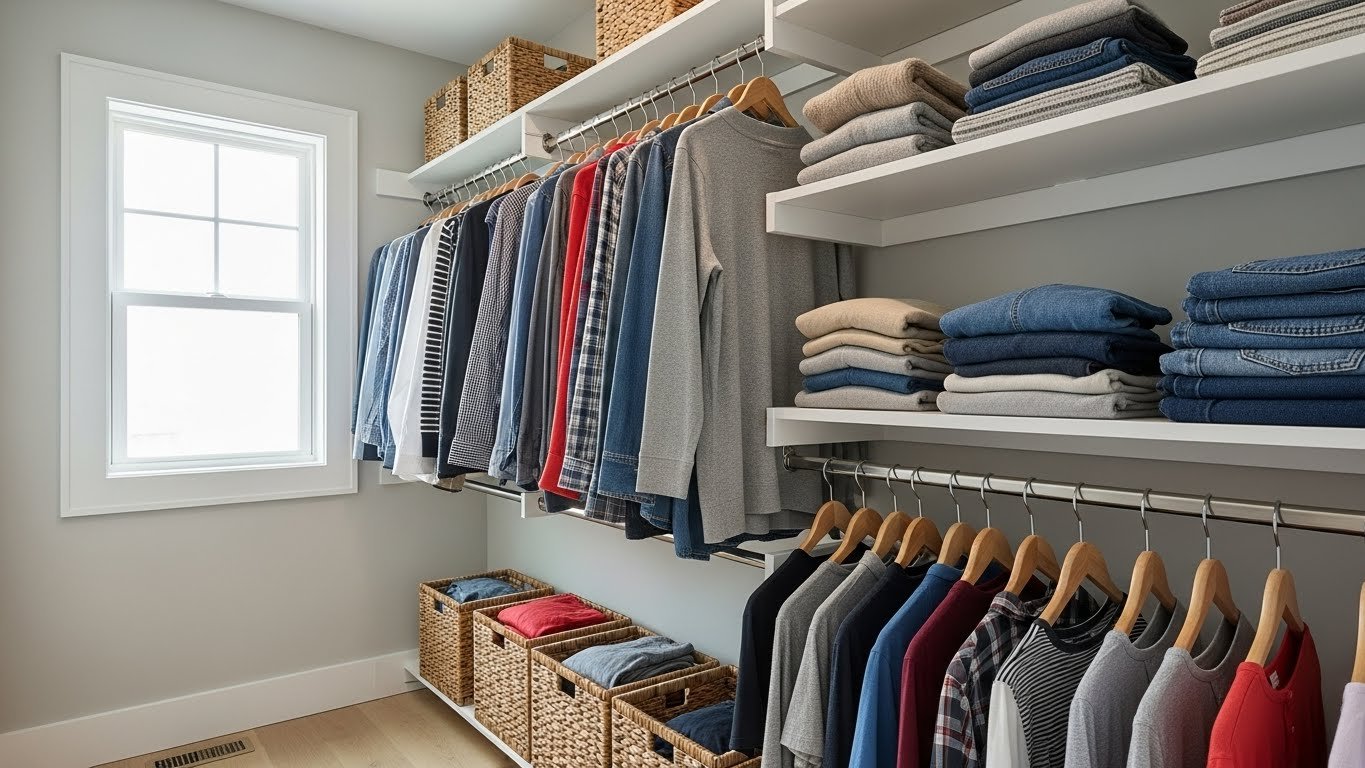
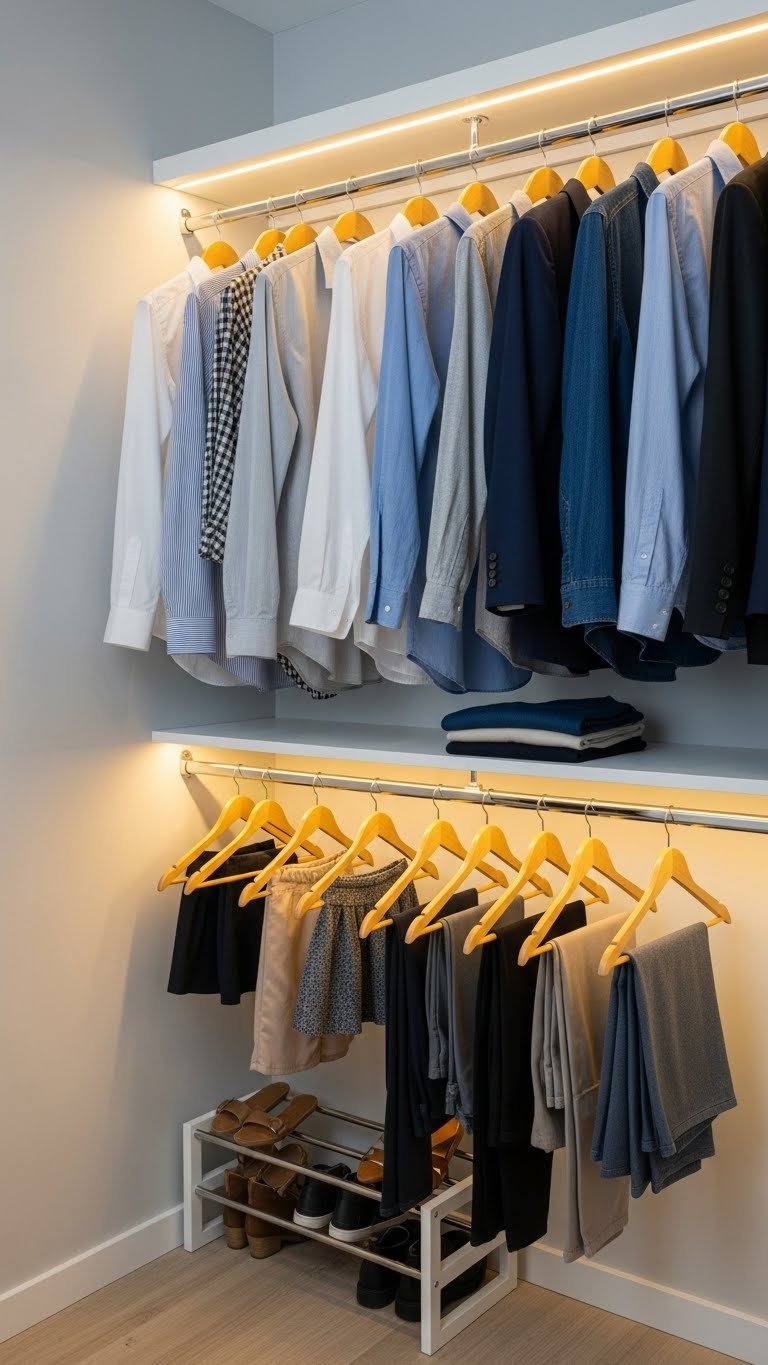
    Doubling your hanging rod turns your vertical space into actual storage real estate. Install a second rod about 40 inches below the first one, creating two levels of hanging storage in the same footprint.

    Most closets waste 3–4 feet of height below standard rods. A removable tension rod (around $20–$35) takes 10 minutes to install and works beautifully for renters. If you own, a permanent installation with simple brackets runs $30–$60 total. Use the top rod for long items (dresses, coats) and the lower rod for folded pants, shorter blouses, or skirts. You’ll be shocked how much more fits.

    The best part? You’ll finally use all that dead space above your head without any permanent damage to walls.


    2. Mount a Slat Wall for Flexible Hanging

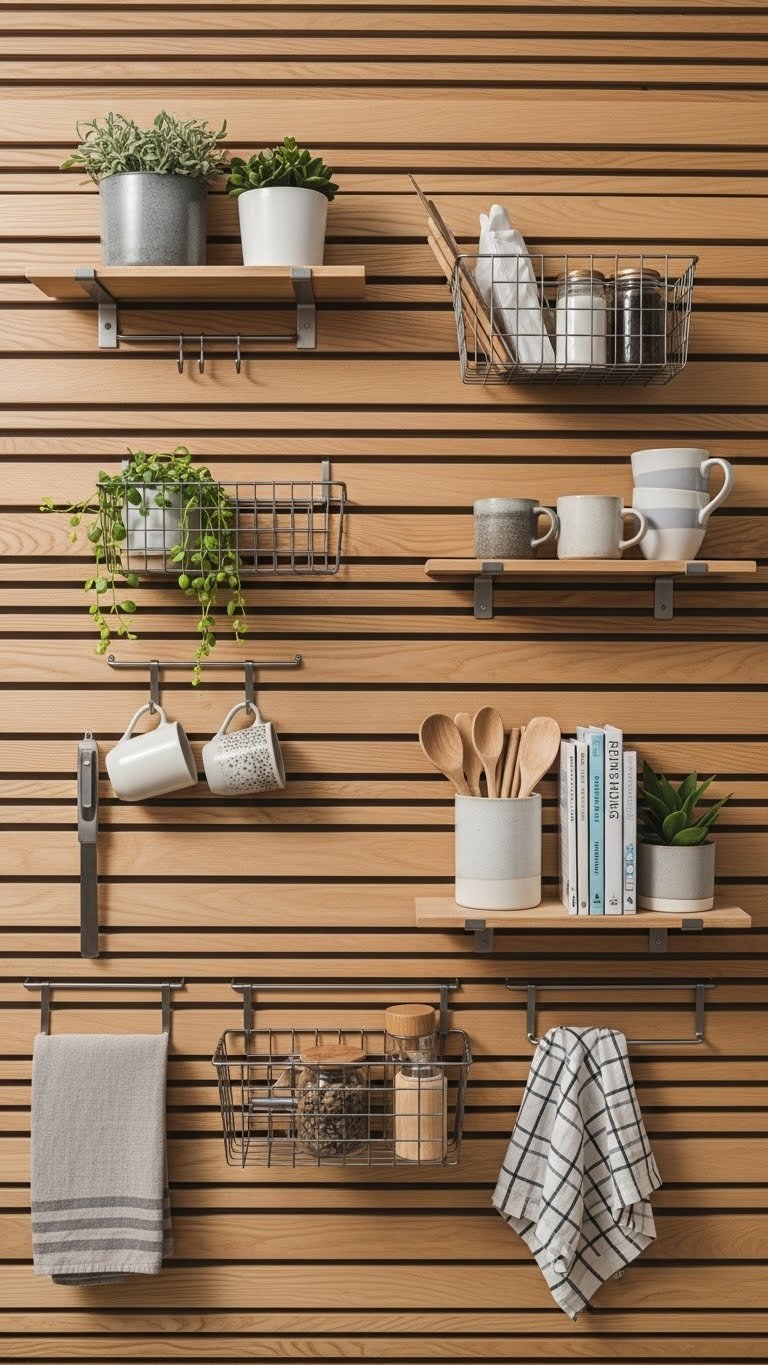
    Slat walls are the renter’s secret weapon—and they look intentional, not temporary. These lightweight panels give you a customizable system where you can hang hooks, shelves, and baskets anywhere, anytime.

    Pre-made slat wall panels from IKEA or Wayfair run $40–$150 depending on size. They mount with adhesive strips (removable) or simple nails. Use them to create a dedicated zone for accessories, bags, or scarves at eye level. You can rearrange hooks and storage without replanning the entire system. Installation takes an afternoon and transforms a blank wall into usable real estate.

    You get a styled, Pinterest-worthy look plus total control over your storage layout—no commitment required.


    3. Use Clear Shoe Organizers for Vertical Stacking

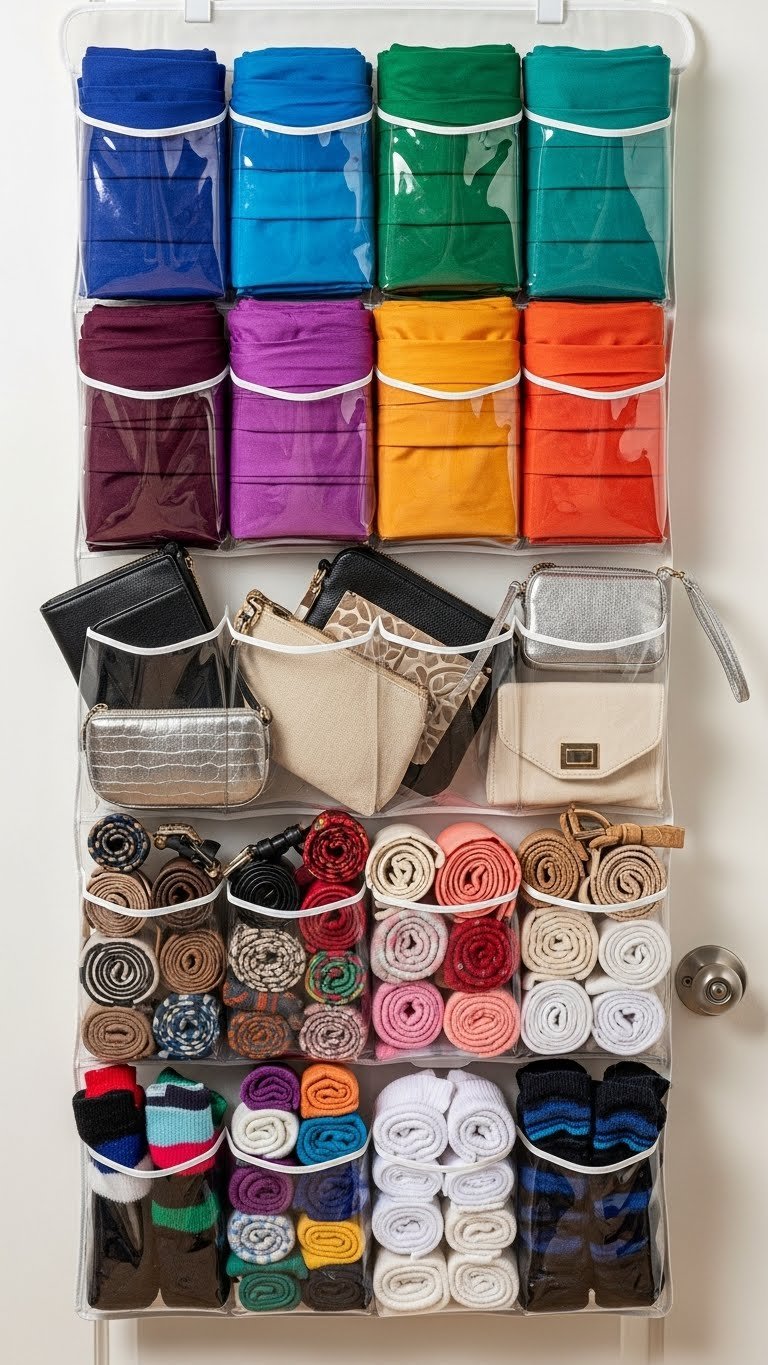
    Over-the-door shoe organizers aren’t just for shoes—they’re secret vertical storage that works in tiny closets. Each pocket holds folded items, rolled scarves, belts, small bags, or undergarments.

    Grab a clear over-the-door organizer for $12–$25 at Target or Amazon. Mount it on the back of your closet door in seconds. You now have 10–20 pockets of additional storage that was completely wasted. Transparent pockets mean you see everything without opening a single drawer. Renters love this because there’s zero permanent installation.

    Your door becomes a working storage wall instead of dead space—and you’ll actually remember what’s in those pockets.


    4. Install Narrow Drawer Dividers for Small Spaces

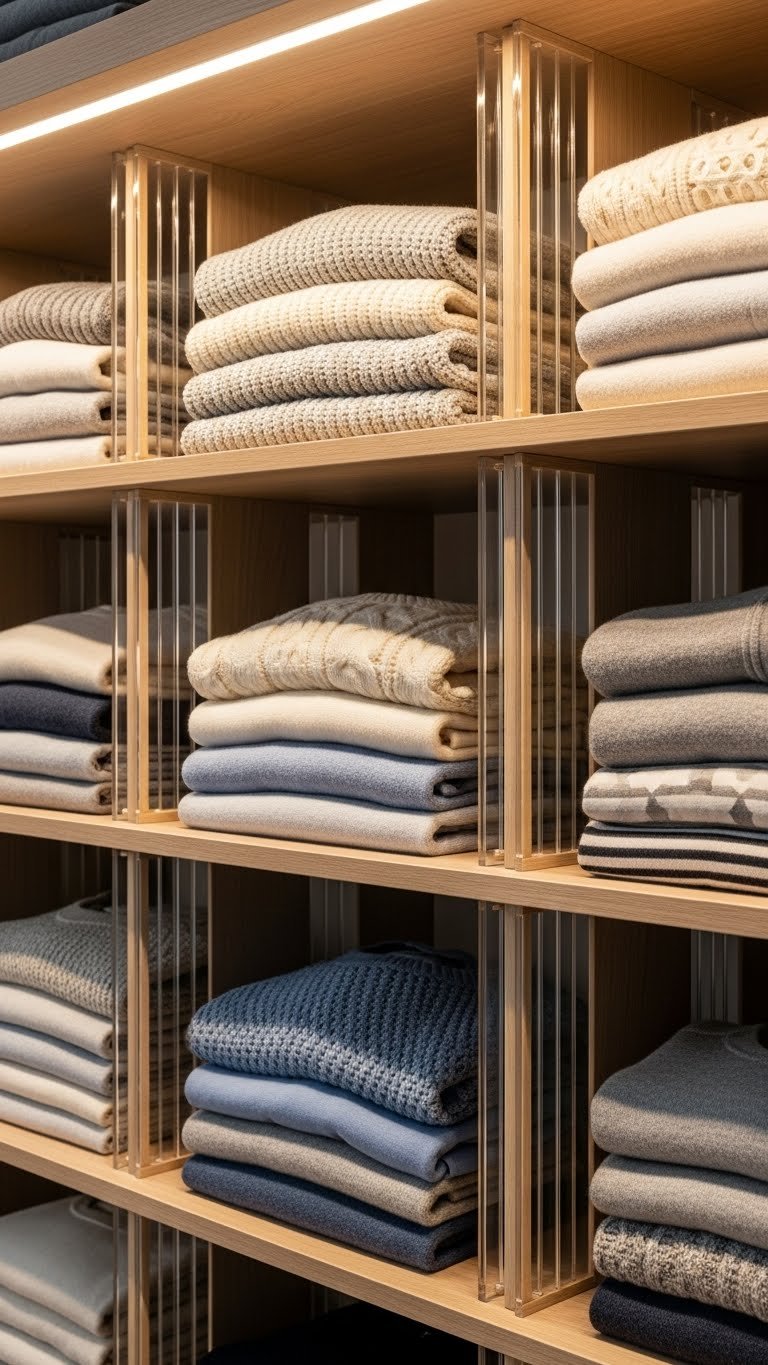
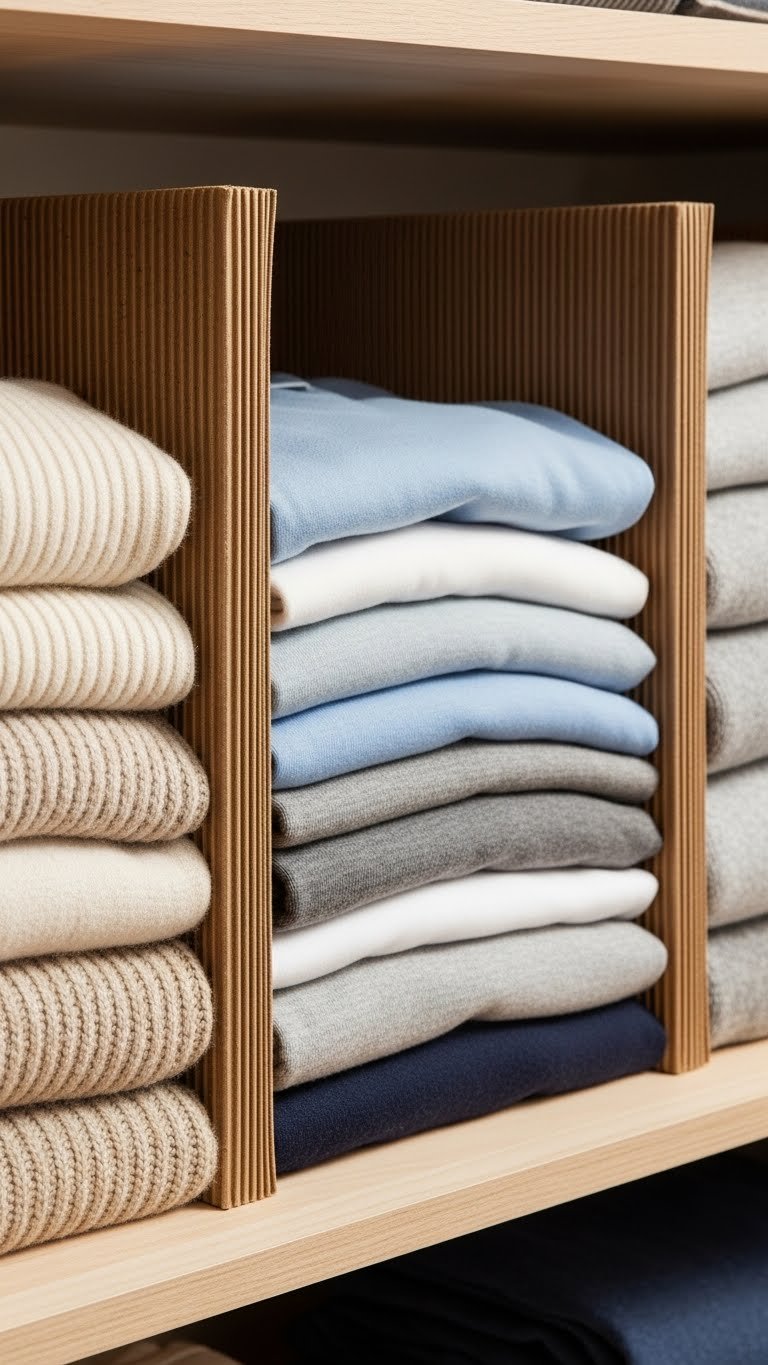
    Drawer dividers aren’t just for drawers—use them in closet shelves to create compartments and prevent small stacks from toppling over. This works especially well in narrow closets where you can’t fit many items side by side.

    Buy adjustable dividers for $15–$30 at Container Store or IKEA. Set them up in under 15 minutes. The compartments keep like items together (all sweaters in one section, all t-shirts in another) so grabbing one item doesn’t trigger an avalanche. This system prevents the “organized pile collapse” that happens in cramped closets.

    Everything stays exactly where you put it, making mornings faster and maintenance easy.


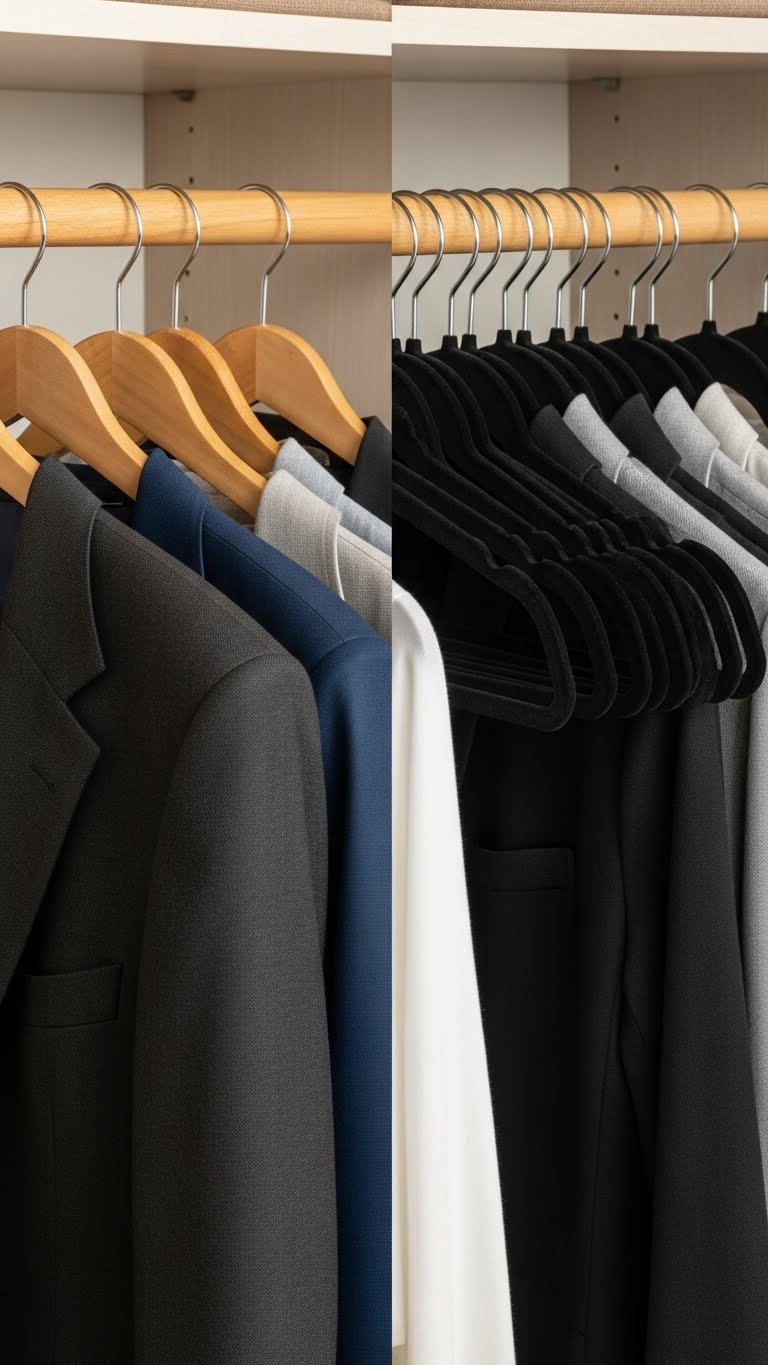
    5. Choose Slim, Space-Saving Hangers

    Switching from bulky plastic hangers to slim velvet or wooden hangers saves 2–3 inches of width per garment. In a small closet, that adds up to 20–30% more capacity.

    A set of 50 slim velvet hangers runs $20–$40 on Amazon. They fit more items per linear inch of rod space while also keeping clothes from slipping off. Slim wooden hangers work too and last longer (around $40–$80 for 20). Spend one evening rehinging everything—it takes about an hour and completely changes your closet’s density.

    Your clothes will look more uniform, fit more snugly on your rod, and stay put instead of sliding around.


    6. Add Peel-and-Stick LED Strips for Visibility

    Lighting transforms a cramped closet from frustrating to functional. Peel-and-stick LED strips install in 2 minutes and make finding items 10 times faster.

    Buy a warm white LED strip kit for $20–$40 at Home Depot or Amazon. Stick one along the top edge of your shelving or around the inside of your door frame. Plug it in (or use battery backup) and suddenly you can see colors and details instead of shadows. Battery-operated strips are perfect for renters. Install them on a Saturday morning and use them that same day.

    Good lighting makes even a tiny closet feel bigger and more functional—plus you’ll stop grabbing the wrong color by accident.


    7. Hang a Slim Mirror for Morning Outfits

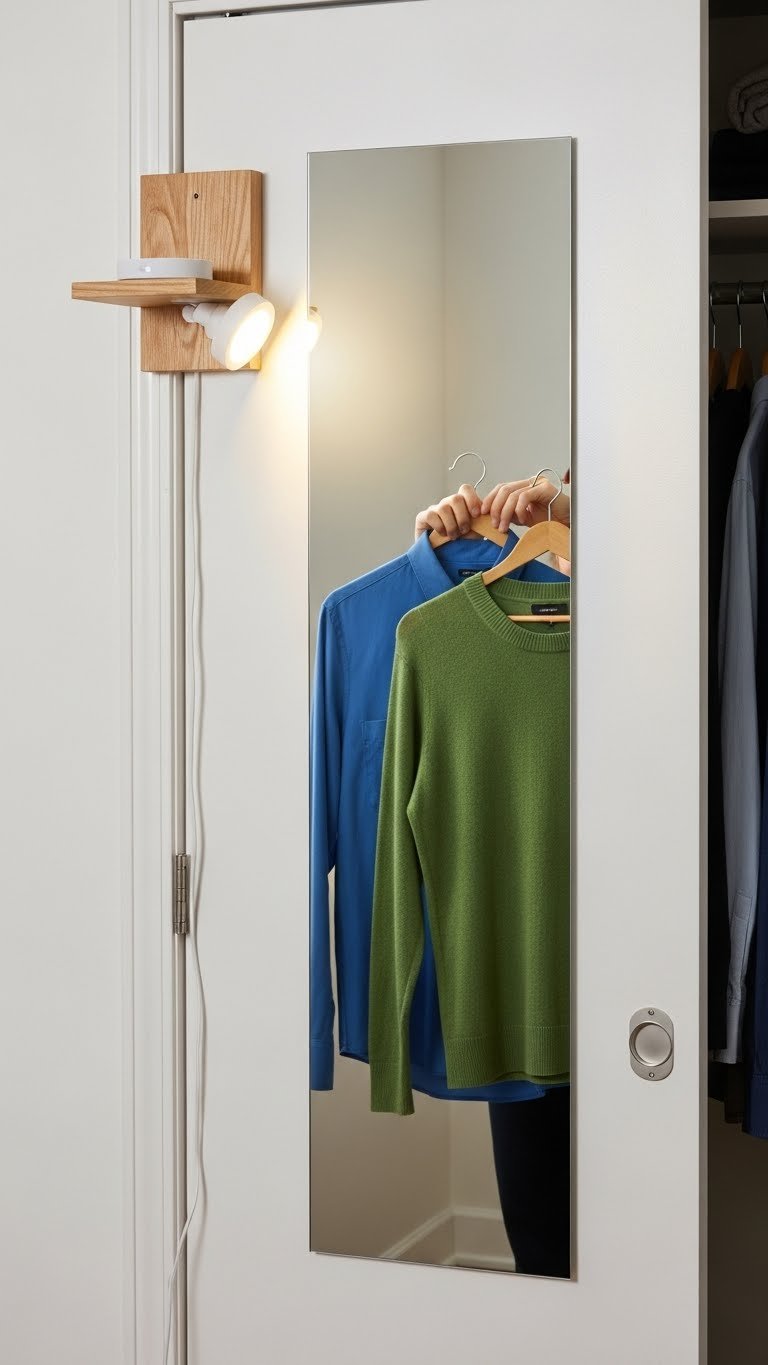
    A slim full-length mirror takes up almost no floor space and lets you approve outfits before committing to wearing them. This prevents the “change three times” morning spiral.

    Find a thin over-the-door mirror for $30–$60 at IKEA or Target. Mount it with adhesive strips (removable for renters) or two small hooks. Position it opposite or beside a light source so you see accurate colors. Pair it with one of the LED strips mentioned above for a complete “get-ready station” in your closet. Assembly takes 10 minutes.

    You’ll make better outfit choices faster and feel more confident walking out the door.


    8. Label Everything with a Label Maker

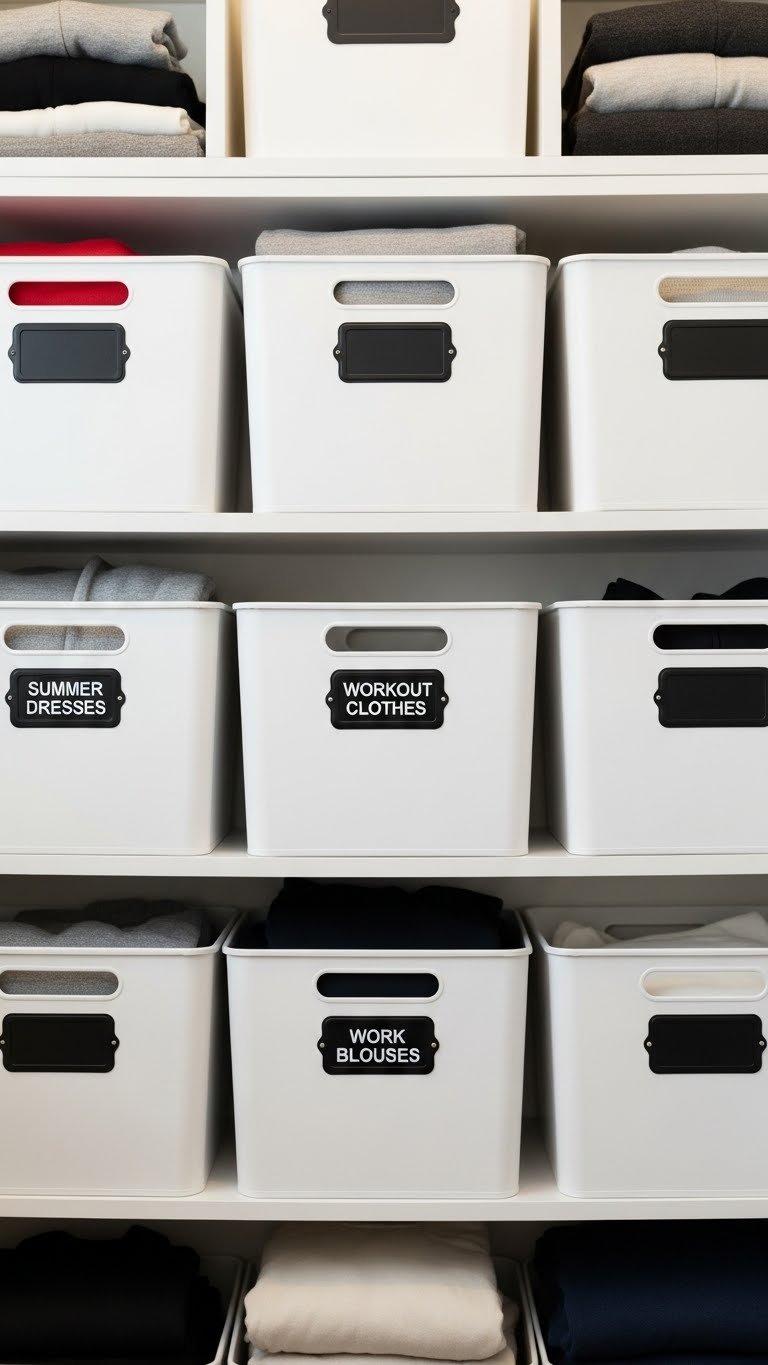
    Labeling is the easiest step you skip—and it changes everything. A label maker costs almost nothing and saves hours of searching.

    Grab an inexpensive label maker for $15–$25 at Target or Amazon. Print labels for your bins, shelves, and baskets. Use categories like “Workout Clothes,” “Summer Dresses,” or “Work Blazers”—whatever makes sense for your closet. Takes about 30 minutes to label everything. The result? You and anyone else who needs to find something can navigate your closet instantly.

    Everyone in your household suddenly understands your system, and you stop wasting time digging for one specific item.


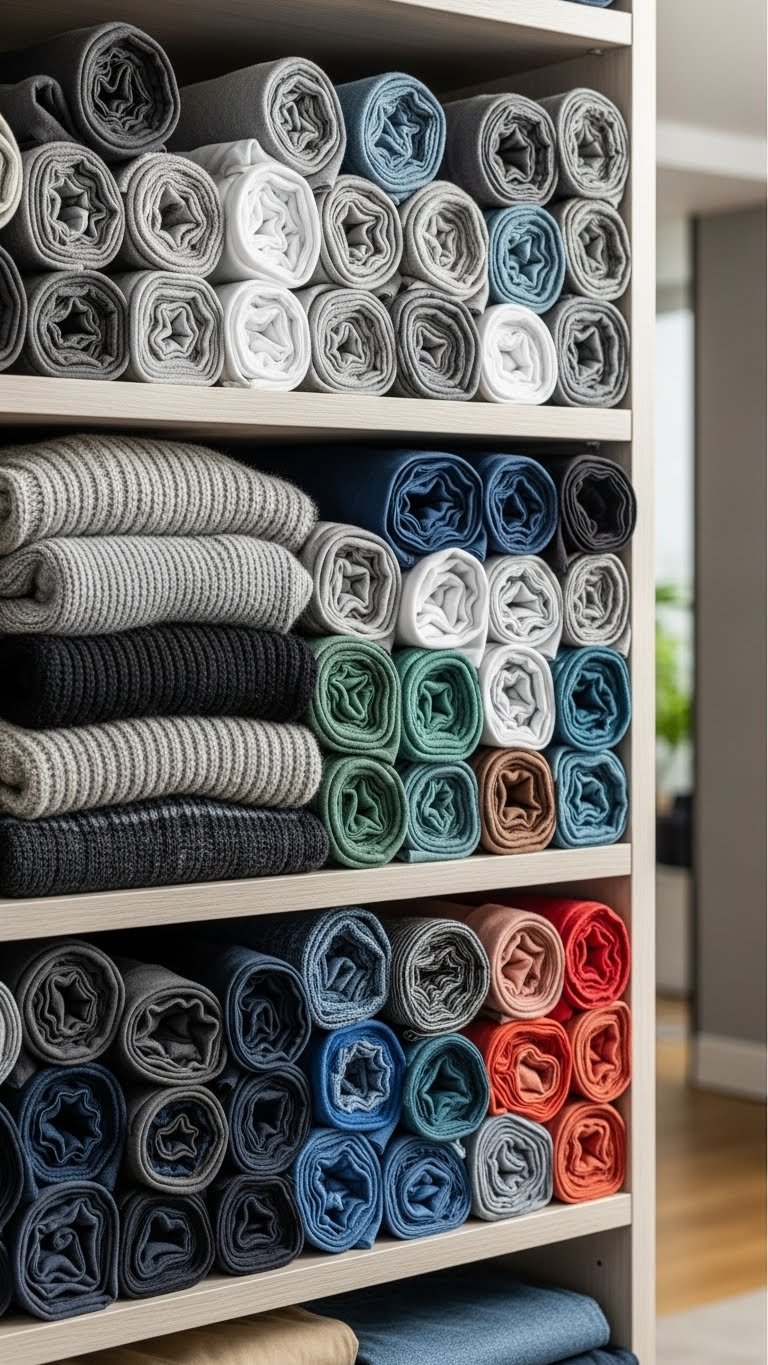
    9. Roll Clothes Instead of Folding Them

    Rolling takes up 30% less space than traditional folding and lets you see every item at once—like a filing system for clothes.

    This costs zero dollars and works with items you already own. Fold each piece in half lengthwise, then roll it tightly from one end. Stand the rolls upright on a shelf like books in a bookcase. You see the top of each roll, so you know what you have without unrolling everything. This method works especially well for t-shirts, sweaters, and casual pants. A shelf that holds 5 folded stacks now holds 12–15 rolls.

    Your closet becomes instantly more spacious, and getting dressed becomes a visual browse instead of a dig.


    10. Swap Bulky Wooden Hangers for Slim Plastic

    Similar to thin velvet hangers, basic slim plastic hangers are dirt cheap and save serious space in crowded closets.

    Buy bulk slim plastic hangers for $10–$20 for 50 on Amazon. They’re not as premium-looking as velvet, but they work perfectly and add minimal thickness. One evening of rehinging gives you 20–30% more capacity. They’re lightweight, don’t slip, and you can get coordinating colors to make your closet look more intentional.

    You’ll gain instant breathing room on your rod without spending much money or effort.


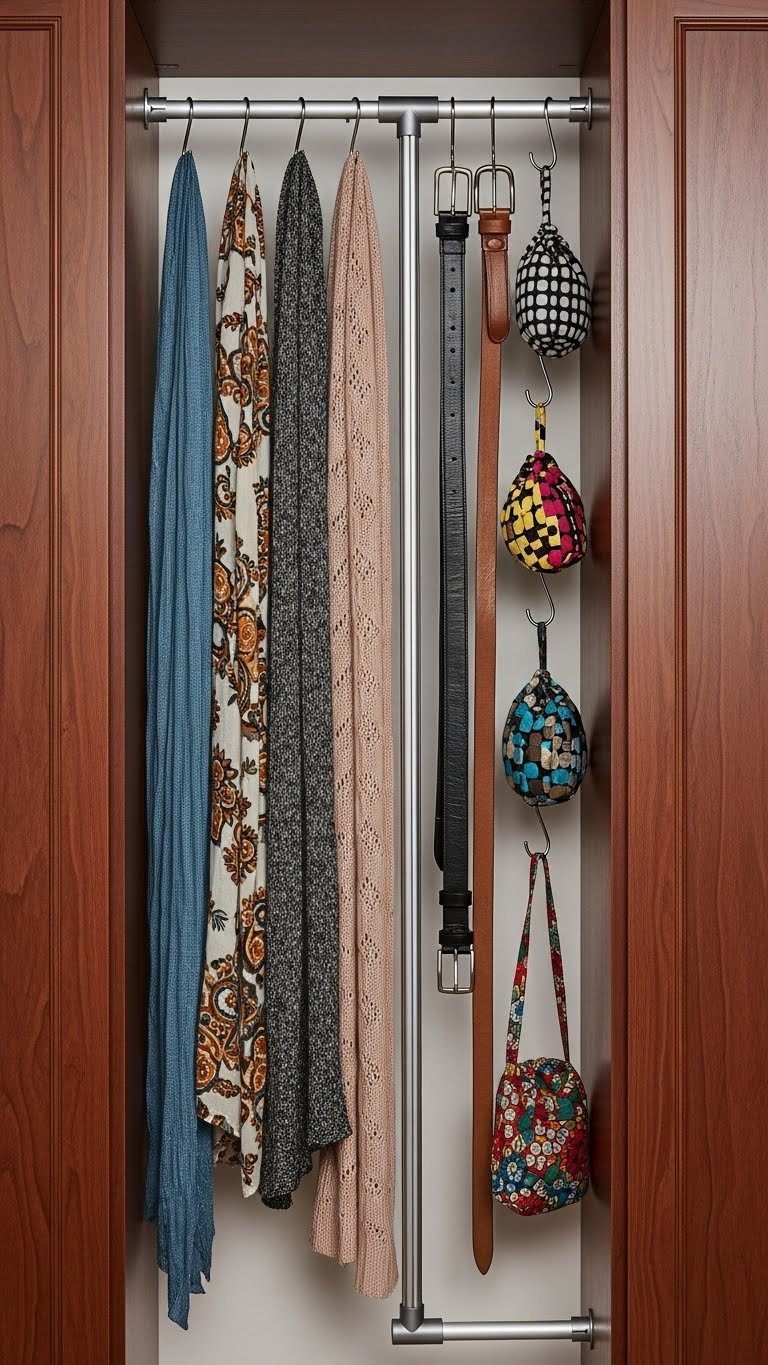
    11. Install a Tension Rod in Narrow Gaps

    Tension rods don’t have to be horizontal. Use them vertically in narrow gaps between shelves or walls to create a narrow hanging area for scarves, belts, or small bags.

    A tall tension rod costs $15–$30. Install it in 5 minutes between two shelving units or in a corner gap. Hang small S-hooks on it (around $8 for 10) and suddenly you have a dedicated display for accessories. This is especially useful in walk-in closets where you have awkward leftover spaces.

    You’ve claimed real storage from what was previously dead space.


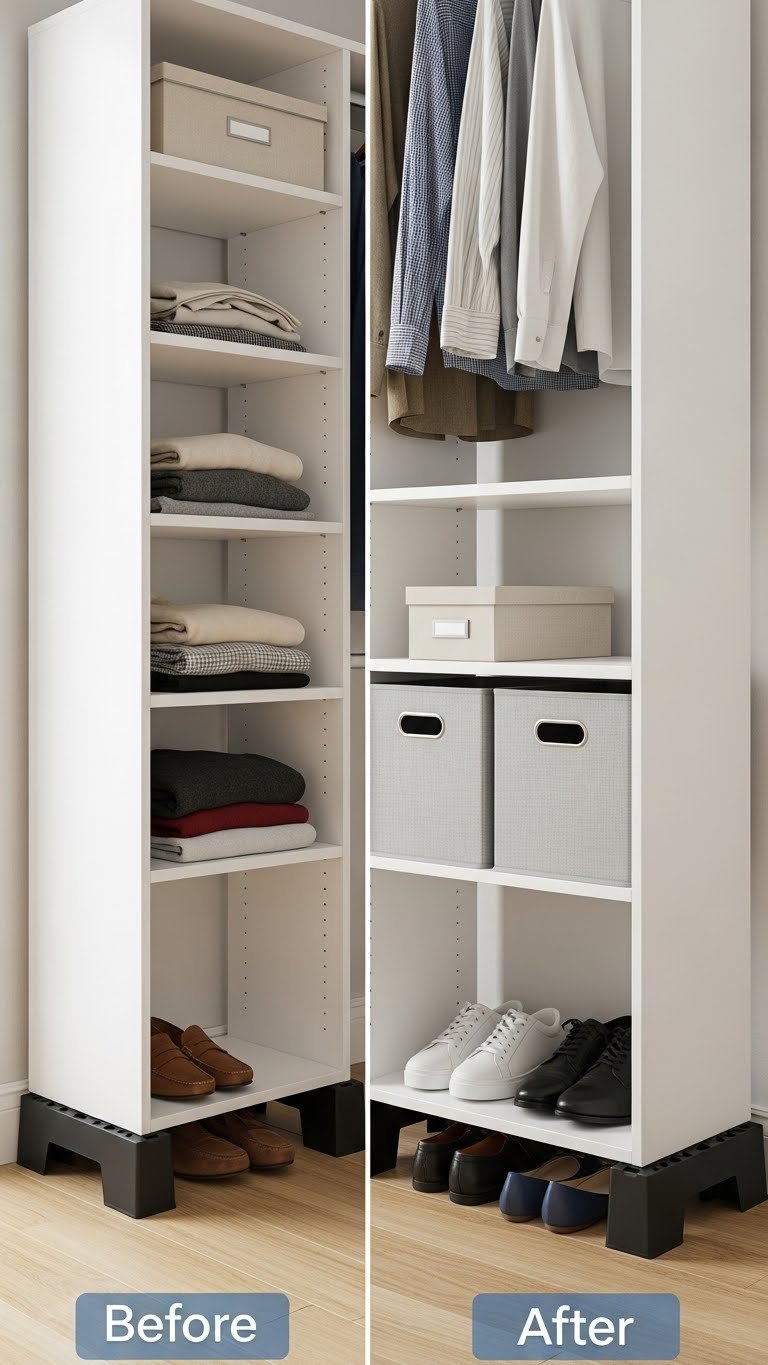
    12. Use Bed Risers Under Low Shelving for Extra Room

    If your closet has low shelving, raise it up with bed risers to create underspace for storage bins or shoe boxes.

    Adjustable bed risers run $15–$35 for a set of four. Lift your shelf up 4–6 inches and suddenly you can store flat bins, shoe boxes, or seasonal gear underneath. This works great for renters because you just slide the shelf off when you move. Takes 10 minutes to adjust.

    You’ve created an entire new storage tier without adding anything to your walls or rods.


    13. Create a Capsule Section for Daily Outfits

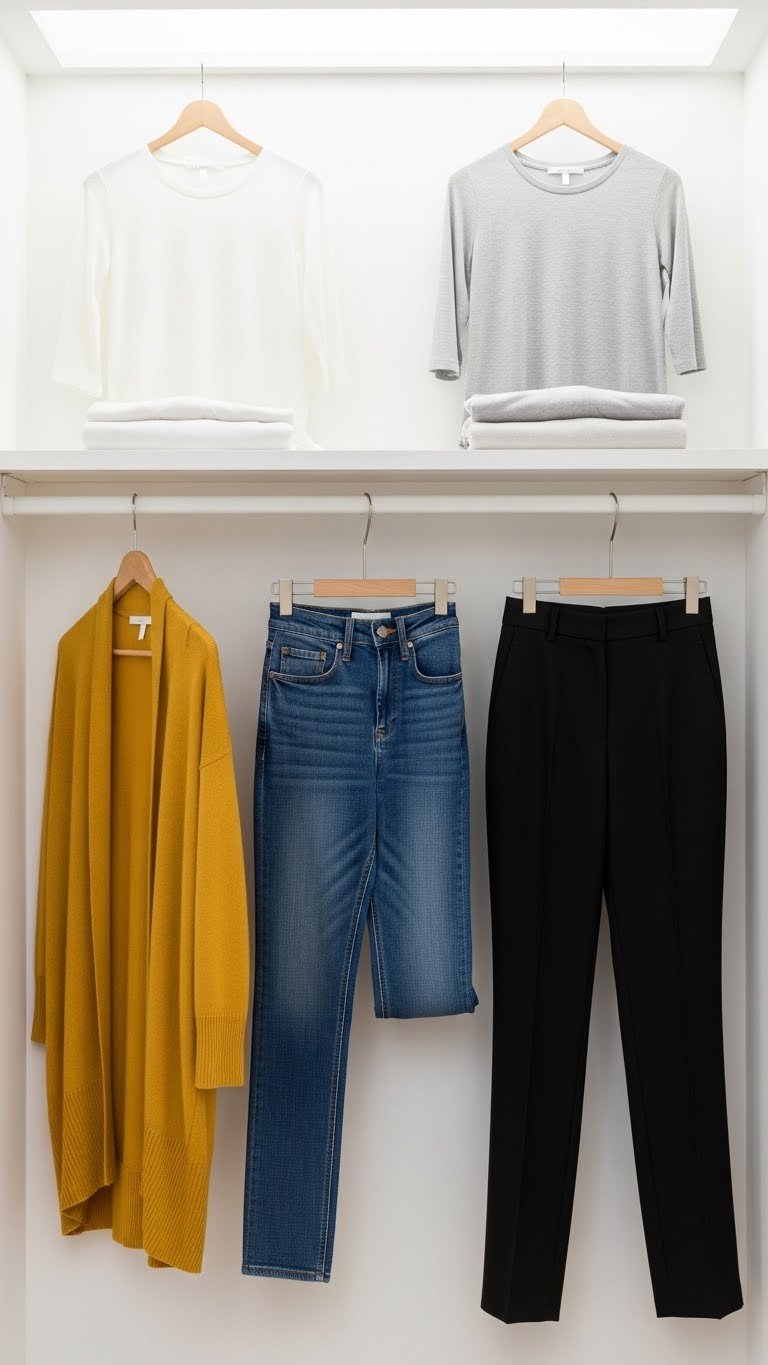
    Crowded closets make getting dressed harder. Create a tiny “capsule zone”—just 15–20 favorite items in coordinating colors—where you can always grab a complete outfit.

    This costs zero dollars. Pick 4–5 neutral pants or skirts, 8–10 tops in compatible colors, and a few layering pieces. Hang them together in one spot (ideally with the best lighting). You now have a go-to section for busy mornings when you don’t want to think. The rest of your closet becomes “special occasion” or “seasonal” storage.

    Mornings get easier, and you stop feeling overwhelmed by too many choices.


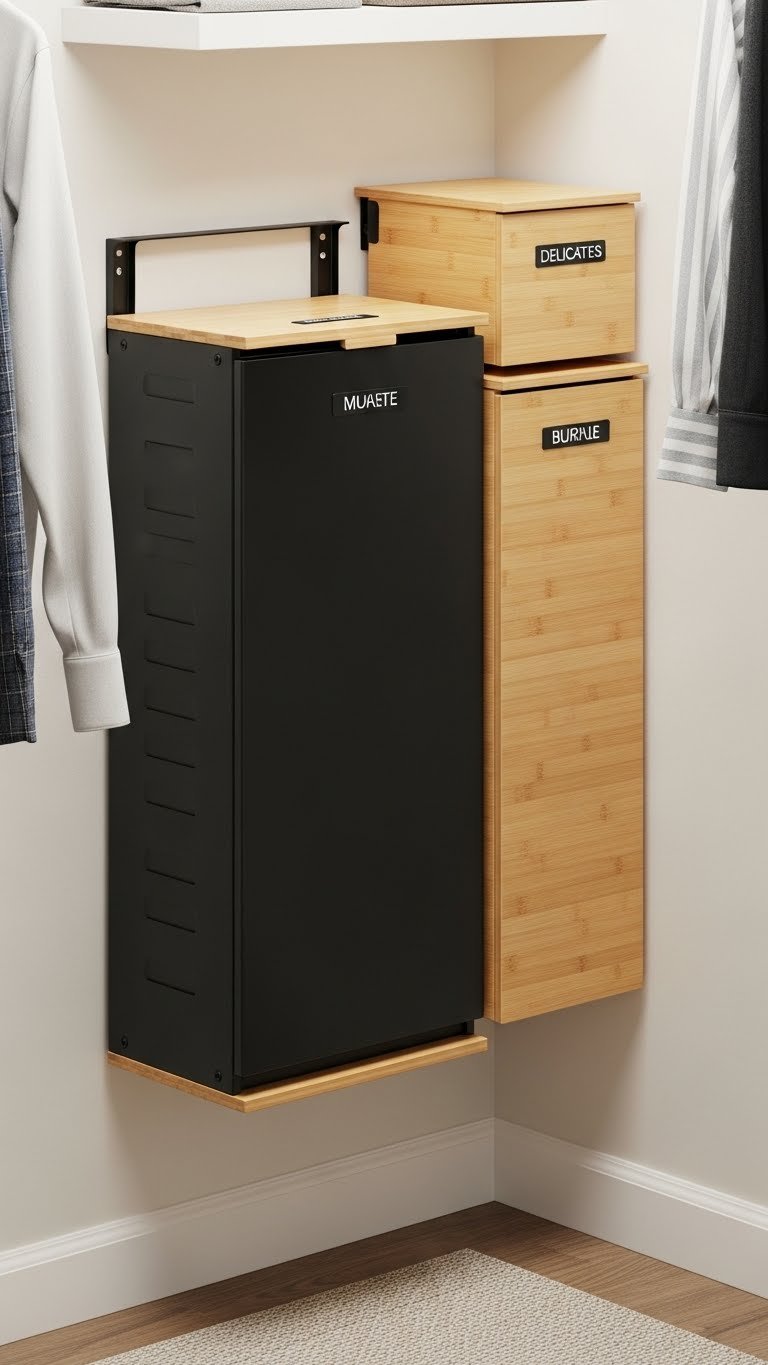
    14. Hang a Pull-Out Hamper or Laundry Bag

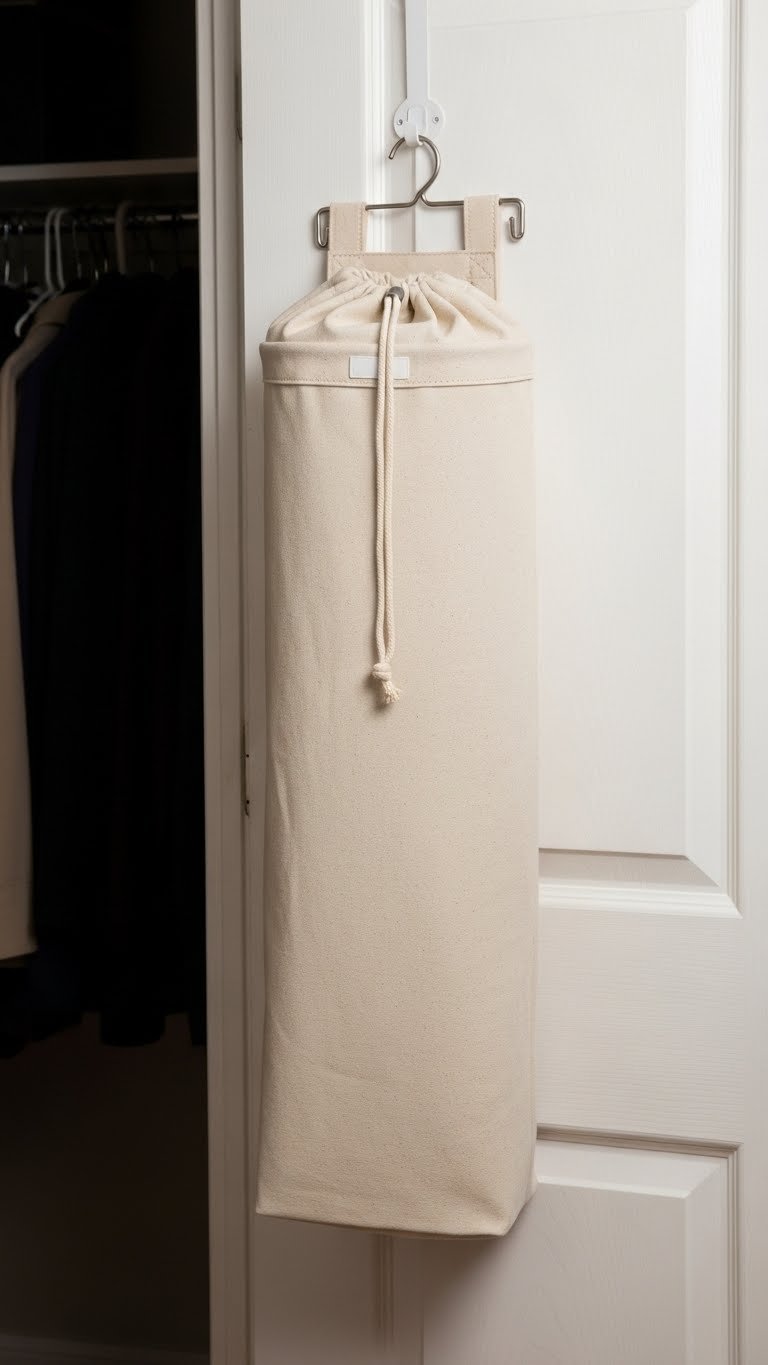
    A wall-mounted pull-out hamper or canvas laundry bag keeps dirty clothes out of your floor space and contained in your closet.

    Find a slim over-door hamper for $20–$40 or a basic canvas laundry bag for $8–$15. Hang it on the inside of your closet door or on a wall hook. Your hamper no longer takes up precious floor real estate. This is especially important in tiny closets where every inch counts. Installation takes 5 minutes.

    Dirty clothes stay corralled and your closet floor stays clear for actual access and movement.


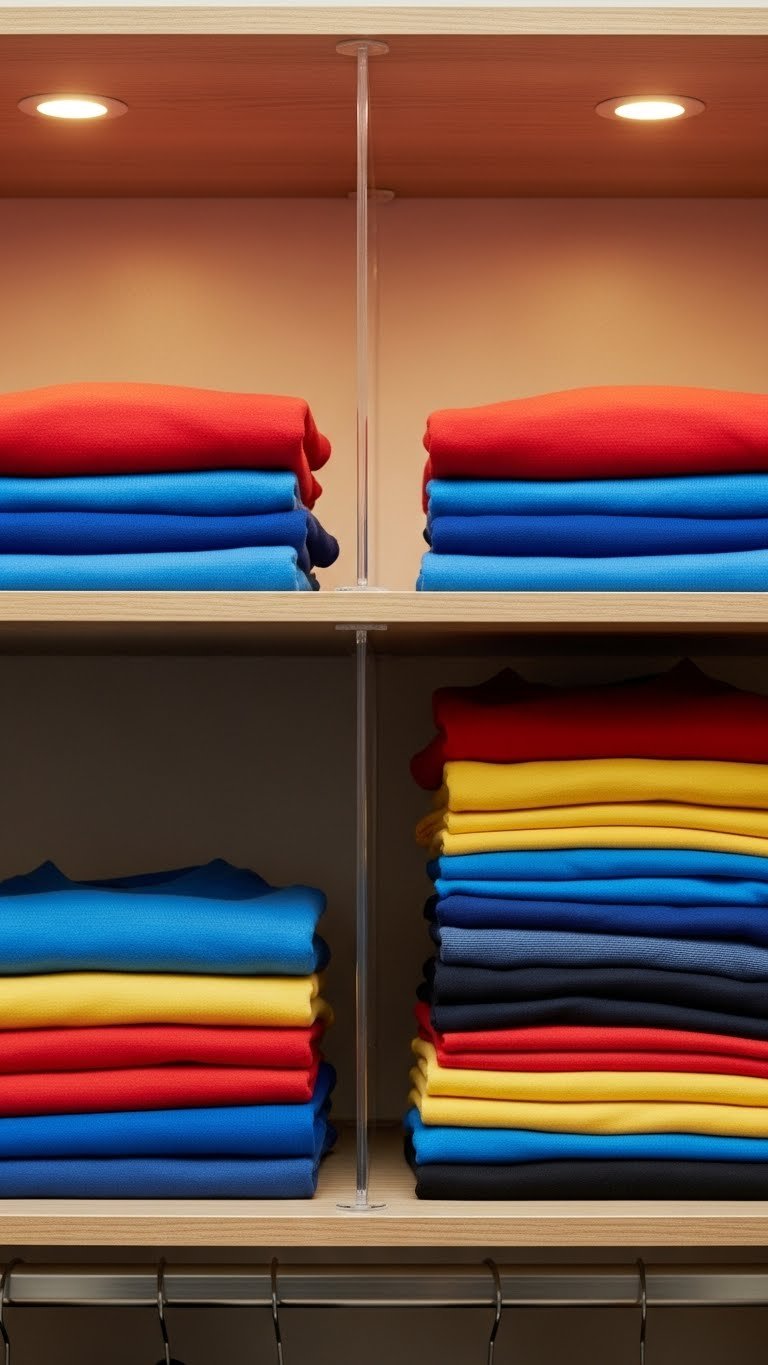
    15. Add a Shelf Divider to Prevent Toppling

    Shelf dividers (simple vertical separators) keep stacks from leaning into each other and eventually toppling over in cramped closets.

    Grab acrylic or metal shelf dividers for $12–$25 per pair at Container Store or Target. Set them up in 5 minutes on any shelf. They section your shelf into neat compartments so one toppled stack doesn’t create a domino effect. Especially useful if your closet is so narrow that stacks lean naturally.

    Your organized stacks stay put, and you can add or remove items without triggering a reorganization emergency.


    16. Use Vacuum Bags for Seasonal Storage

    Vacuum bags compress bulky seasonal items (winter coats, thick sweaters) down to a fraction of their size, freeing up prime closet real estate.

    A set of 6 vacuum bags costs $15–$25 at Target or Amazon. Fill them with off-season clothing, seal, and either vacuum or use the hand-pump option. Stack the flattened bags on high shelves, under the bed, or in a storage closet. You now have room for current-season items. Label each bag with the season and contents so you know what’s inside.

    Your active closet instantly has more breathing room, and seasonal items stay protected and compact.


    17. Mount Shelves Above Your Rod for Dead Space

    Most closets have several feet of wasted wall space above hanging rods. Mount a shallow shelf there and you’ve added an entire storage tier.

    Floating shelves run $30–$80 installed (or DIY for $15–$40 if you’re handy). They take about an hour to install properly. Use them for off-season items, rarely-used bags, or decorative storage boxes. This works for renters if you use adhesive shelves, though they’re less sturdy than wall-mounted. Every closet has this unused space—reclaim it.

    You’ve essentially added a new shelf without losing any floor or rod space.


    18. Declutter Using the One-Year Rule

    A tiny closet feels manageable when it only contains items you actually wear. Use the one-year rule: if you haven’t worn it in a year, it goes.

    This costs zero dollars. Go through your closet and tag anything you haven’t worn since this time last year. Be honest. Do you actually like it, or are you keeping it out of guilt? Donate, sell, or give away. You’ll likely remove 20–40% of your closet volume. One afternoon of ruthless editing makes more space than any shelf hack. Your closet suddenly feels spacious and full of things you love.

    Less stuff means faster mornings, easier maintenance, and a closet that actually feels functional instead of suffocating.


    19. Add a Pegboard Wall for Accessory Display

    A pegboard wall turns closet accessories into a visual display while keeping everything accessible and off your shelves.

    Get a pegboard sheet for $20–$40 and basic hooks and shelves for $15–$30. Install it on one wall (takes about 30 minutes). Use hooks for belts and scarves, small shelves for jewelry or bags. You’ve created a feature wall that’s also highly functional. Renters can use adhesive-backed pegboards that remove cleanly. Rearrange your display anytime to match your mood.

    Your accessories become decorative and organized at once—no more digging through bins to find the right scarf.


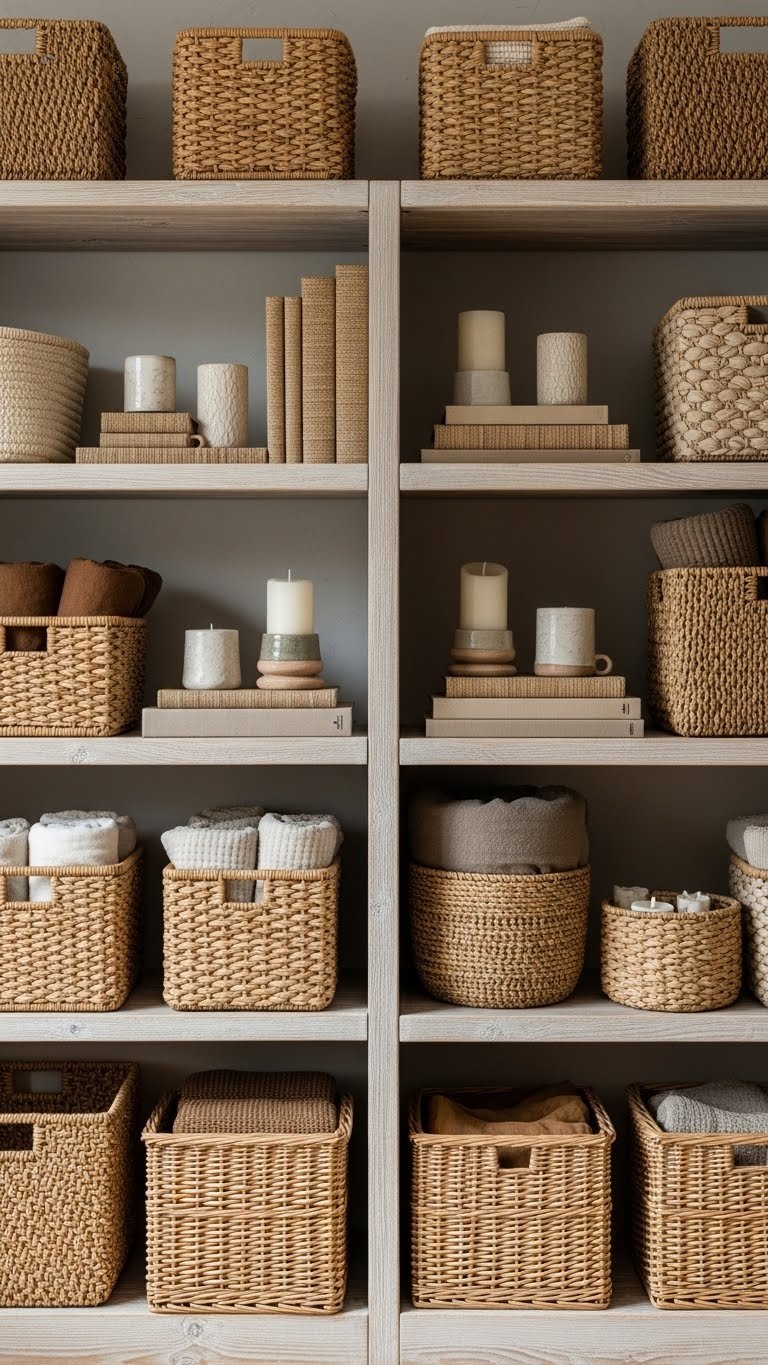
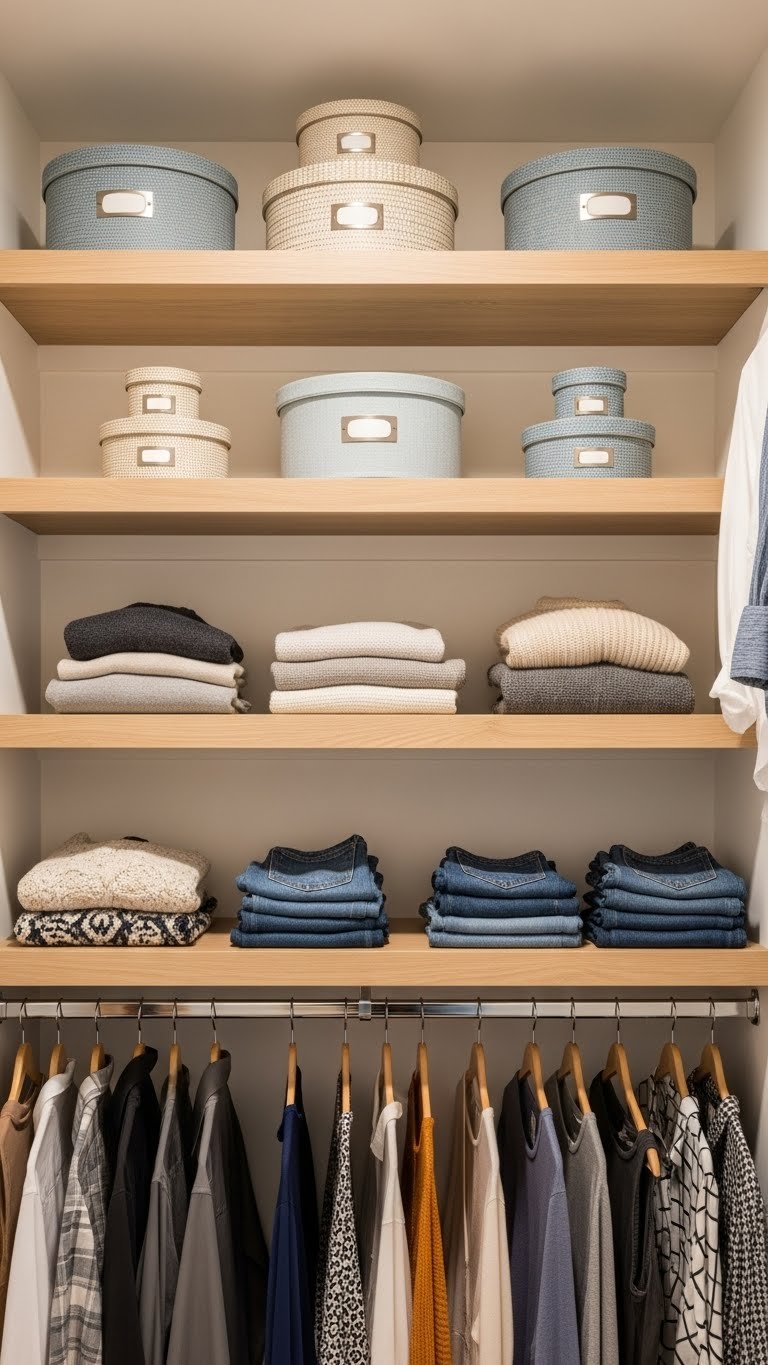
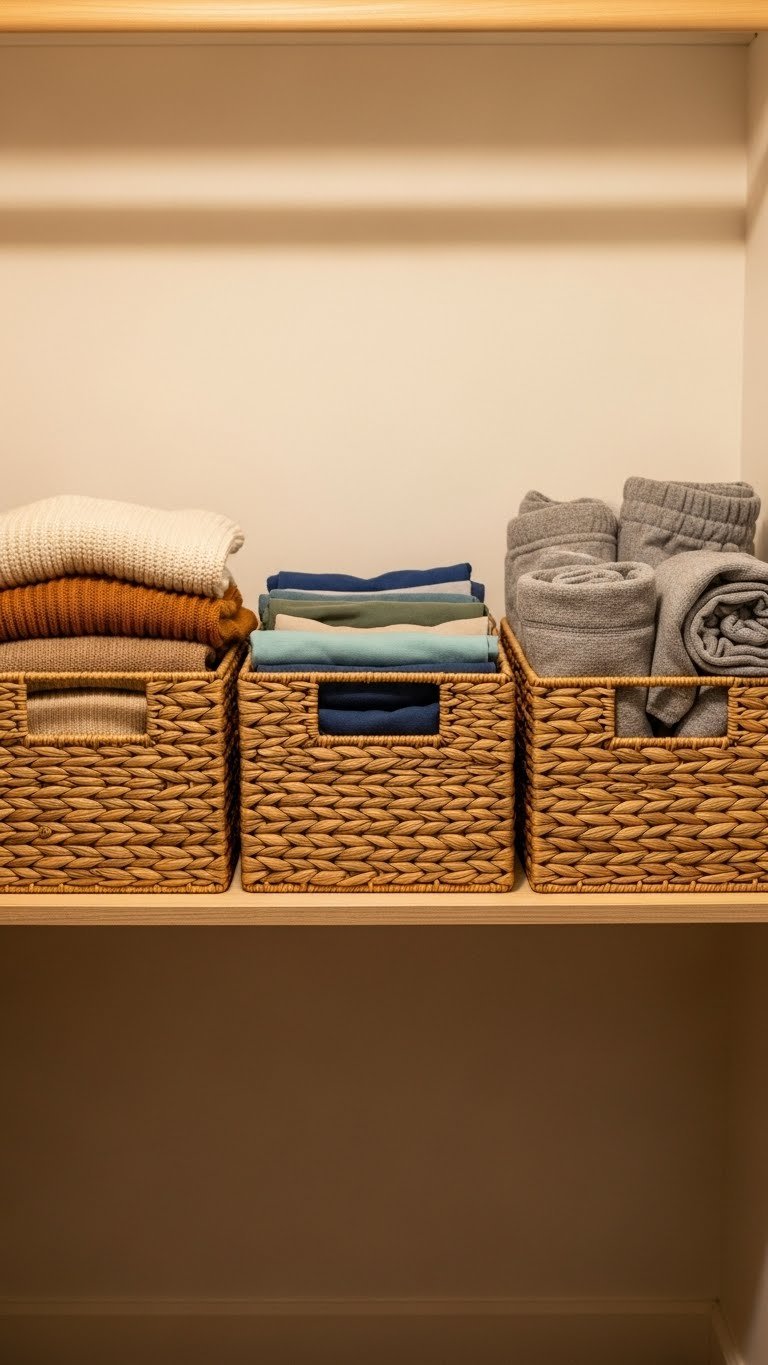
    20. Use Slim Woven Baskets for Soft Storage

    Woven baskets add texture and warmth while keeping soft items contained and protected from dust. They’re especially good for small closets because they organize chaos beautifully.

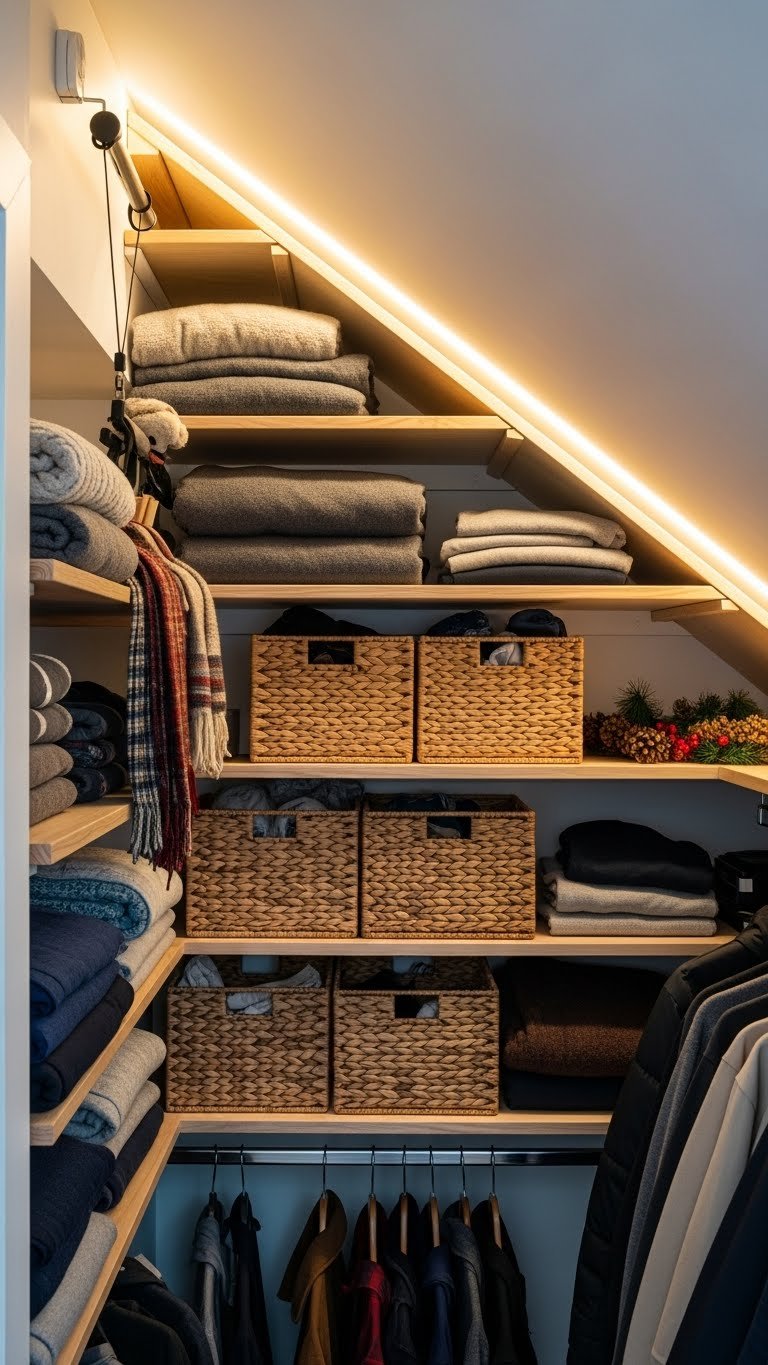
    Find slim woven baskets for $15–$40 each at Target, West Elm, or IKEA. Label the front of each basket so you know what’s inside without opening them. Stack them on shelves or use them in your closet floor (if you have any). Sweaters, loungewear, and delicate items stay organized and dust-free. Baskets last years if you choose quality options.

    Your closet looks intentional and styled, not cluttered—and everything stays protected.


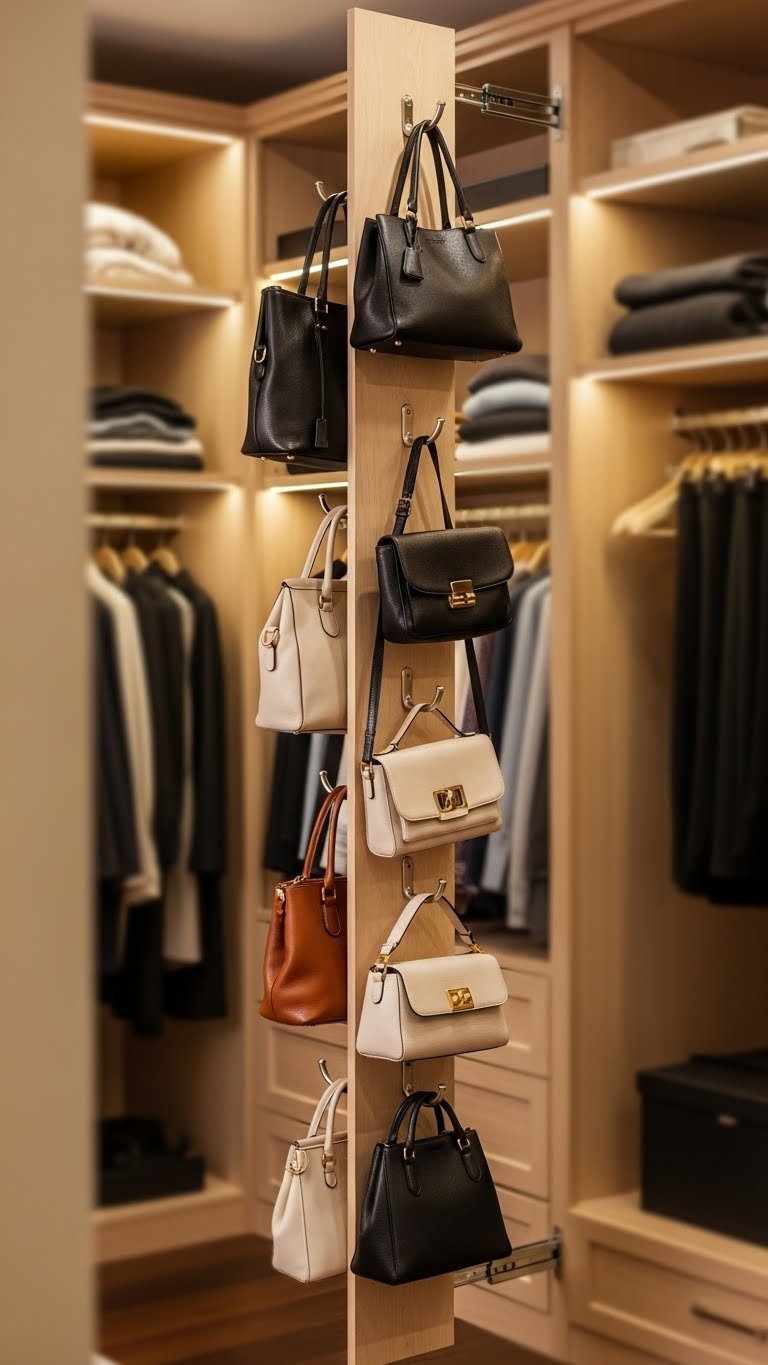
    21. Install a Slim Pull-Out Rack for Bags

    Bags take up enormous amounts of space when they’re just piled on shelves. A vertical pull-out rack holds multiple bags in a fraction of the space.

    Find a slim pull-out closet organizer or bag rack for $40–$80. Install it on a side wall or in a corner. Hang your bags from hooks and they’re instantly visible and accessible. Pull the rack out to browse or grab one. For renters, look for freestanding slim racks (around $30–$60) that don’t require installation.

    Your bag collection is finally organized and you can actually see what you own.


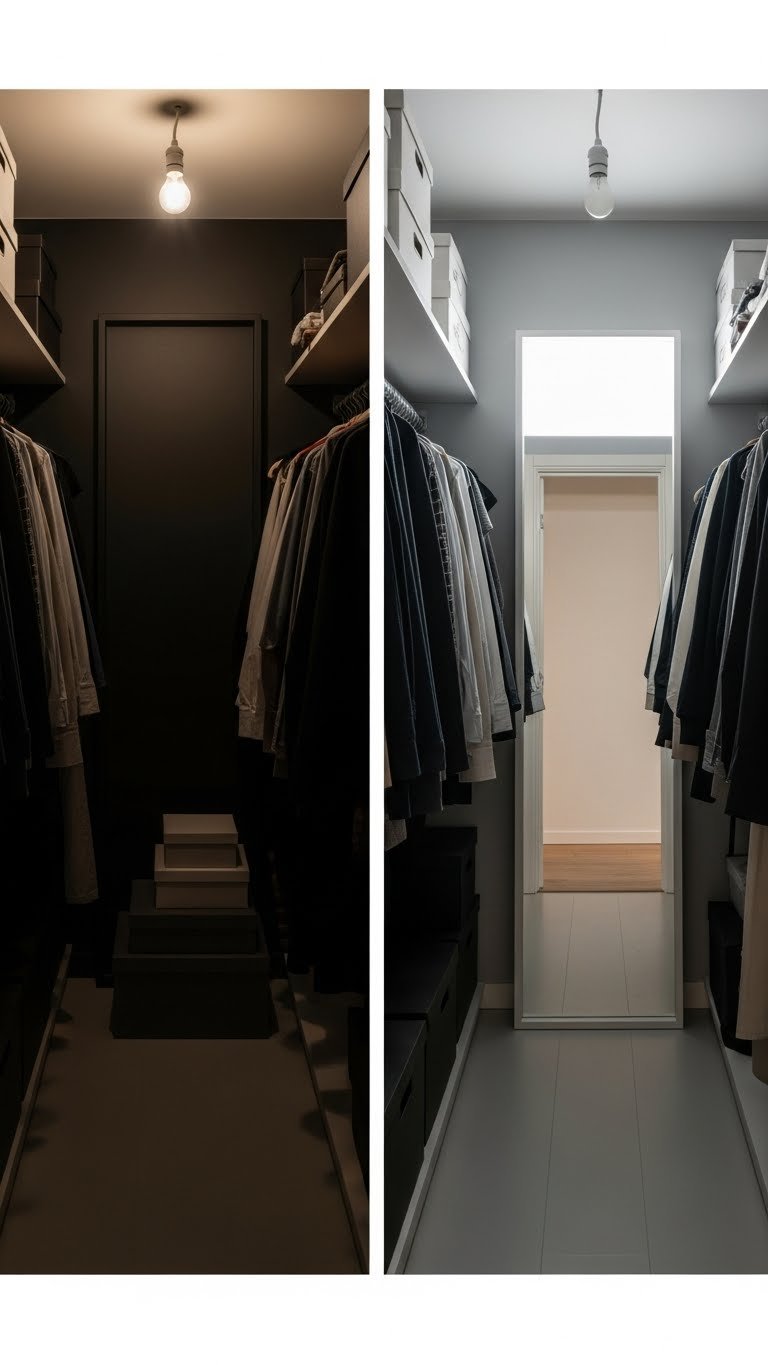
    22. Paint Walls a Light, Reflective Color

    Color psychology works in closets: light colors reflect light and make small spaces feel bigger. Dark colors absorb light and make closets feel smaller and more cramped.

    A gallon of paint runs $20–$40, and you’ll use about half a gallon in a closet. Choose soft white, pale gray, or warm cream. Paint the walls yourself in an afternoon (about 2 hours). Don’t paint built-in cabinets or fixtures unless you’re renting—just the walls. The difference is instant: your closet suddenly looks bigger and brighter. Renters can use peel-and-stick wallpaper for $15–$50 as a reversible option.

    A tiny closet painted light feels spacious and functional instead of cramped and gloomy.


    23. Use Thin Shelf Liners to Protect and Stabilize

    Shelf liners protect your closet from dust and damage while providing subtle grip so items don’t slide around on smooth shelves.

    Adhesive shelf liner runs $8–$15 per roll. Cut it to size and stick it to your shelves in 10 minutes. Choose neutral colors or subtle patterns that complement your closet aesthetic. It prevents dust from settling on the shelf surface and keeps folded items from shifting when you add or remove things. Easy to replace yearly.

    Your closet looks more finished and organized, and your items stay exactly where you put them.


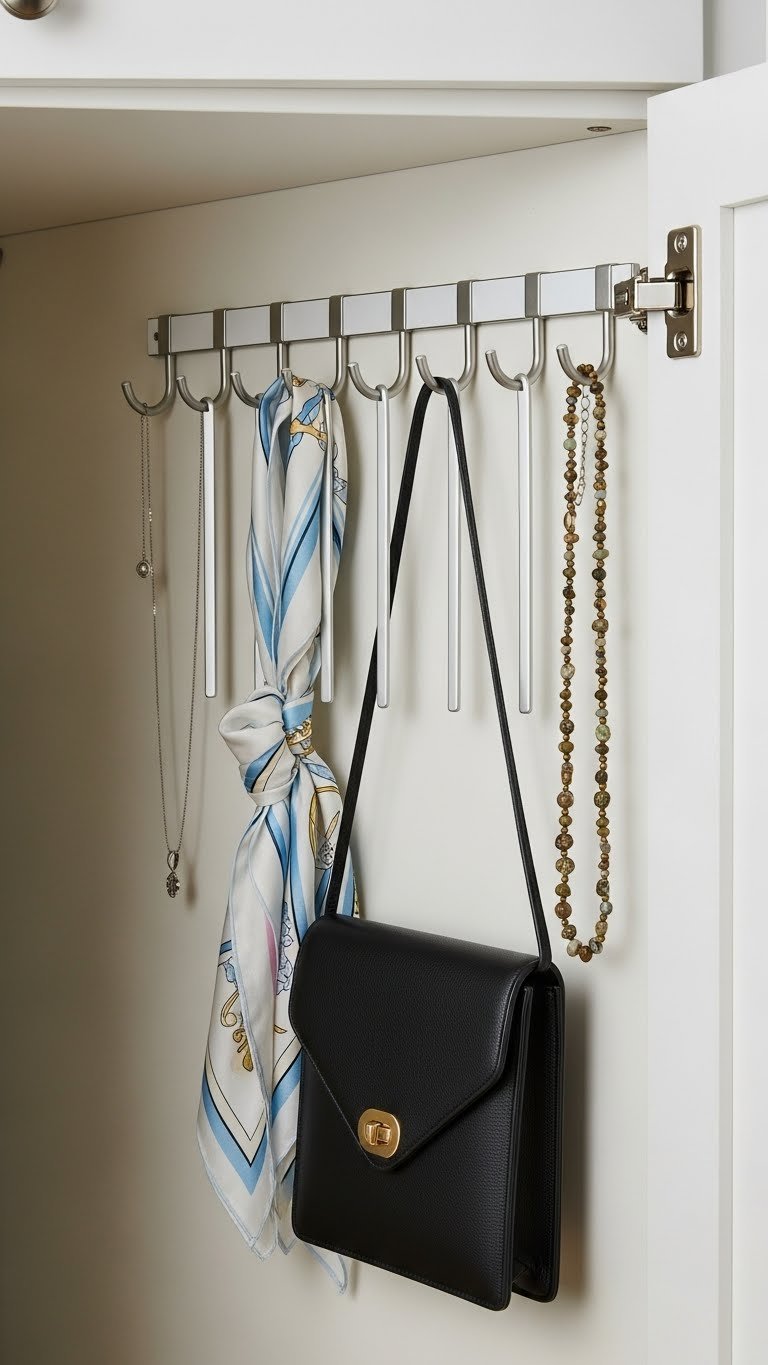
    24. Hang Thin Hooks Inside Cabinet Doors

    The inside of cabinet doors is prime real estate that most people ignore. Thin hooks hold lightweight items (jewelry, small scarves, bags) without adding bulk.

    Buy a strip of 4–6 thin hooks for $8–$15. Mount them inside any cabinet doors in your closet. Hang lightweight items and close the door—instant hidden storage. This works for jewelry, belts, small bags, or scarves. Installation takes 10 minutes. When you open the door, everything is visible; when closed, it’s hidden and out of the way.

    You’ve claimed hidden storage from a space everyone overlooks.


    25. Create a “Try-On” Corner with Good Lighting

    A dedicated try-on zone with a mirror and light saves you from standing in hallways half-dressed or making decisions in poor lighting.

    This setup costs $50–$100 total: a slim mirror ($30–$60), an adjustable lamp ($15–$30), and optional seating like a small bench ($25–$50). Install the mirror and lamp in 20 minutes. If space allows, add a tiny bench or ottoman to sit while deciding. The result is a functional getting-dressed station right inside your closet. No more holding clothes up to the hallway light to check colors.

    You make better outfit decisions, approve fit and color instantly, and keep your closet organized instead of scattered with “maybe” piles.


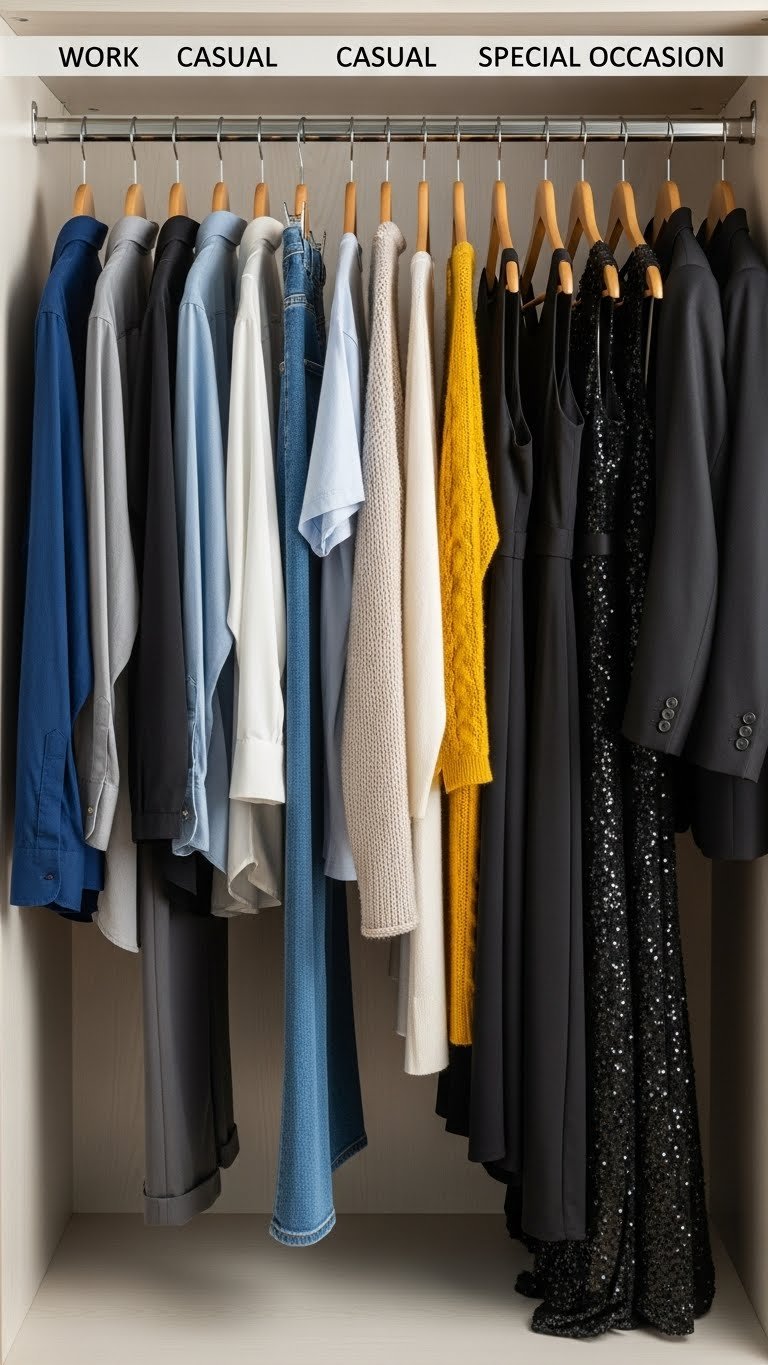
    26. Label Your Hangers by Category or Season

    Color-coded or labeled hangers create instant visual organization. You see at a glance where categories are, making outfit selection faster.

    Buy multi-colored hangers or get adhesive labels to tag existing ones for $10–$20 total. Assign each color or label to a category (work, casual, special occasion, seasonal) and rehang accordingly. Takes about an hour to reorganize. The visual feedback makes mornings faster and helps you build complete outfits because you can see what you have in each category.

    Your closet becomes navigable at a glance, and you make faster, more confident outfit choices.


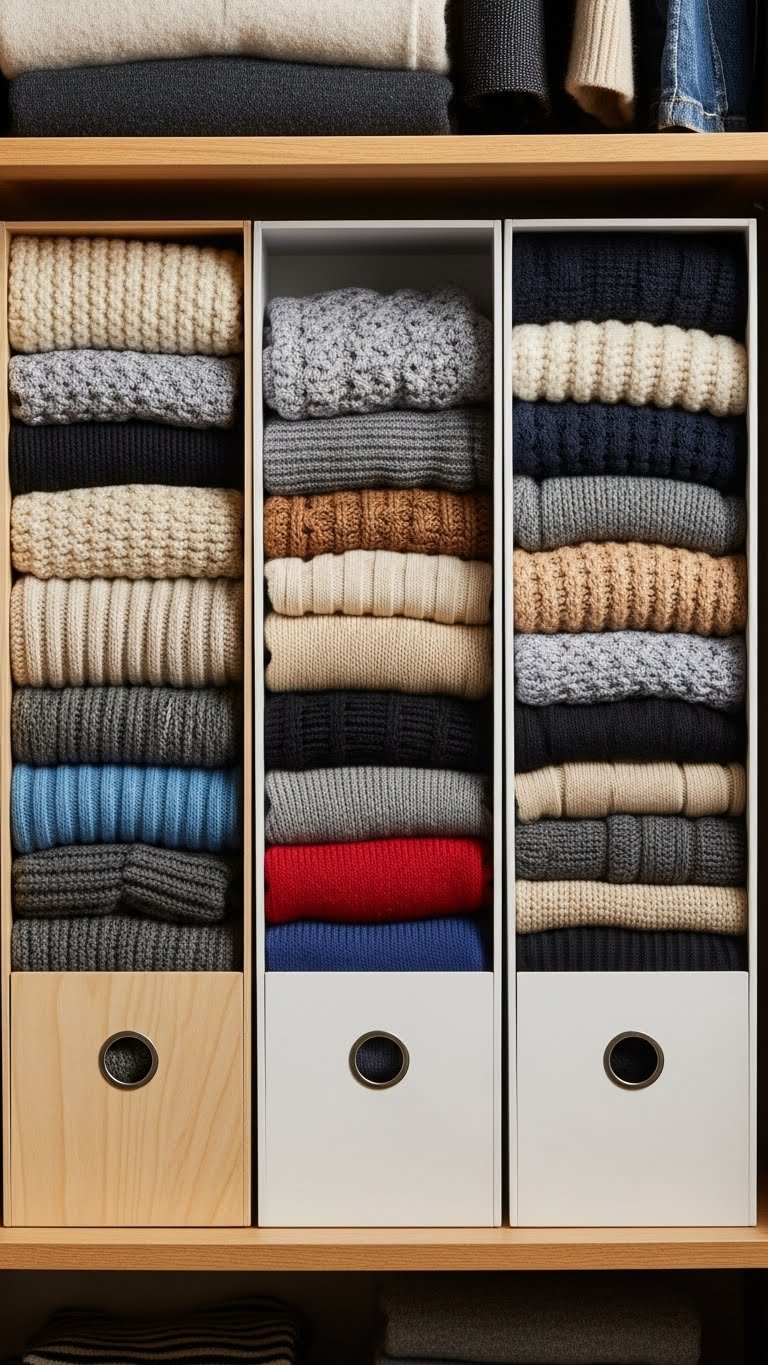
    27. Use Vertical Magazine Holders for Flat Items

    Magazine holders (vertical dividers designed for magazines) work beautifully for storing flat items upright—like a filing system for clothes.

    Buy basic magazine holders for $12–$25 for three at IKEA or Target. Place them on a shelf and stand folded sweaters, thick sweatshirts, or sweater dresses inside them. You see every item by glancing down instead of digging through a stack. Each holder keeps items from toppling. They work especially well for small closets where horizontal stacking wastes visibility.

    Your folded items stay neat, organized, and instantly visible.


    Save this post and try just one idea this weekend—start with whichever speaks to your closet’s biggest pain point. Even one small change (new hangers, a second rod, or labels) makes your mornings easier and your closet feel twice as big. Share this with anyone drowning in a tiny closet situation.

  • 24 Gold Accent Styling Ideas That Instantly Elevate a Room

    24 Gold Accent Styling Ideas That Instantly Elevate a Room

    Gold accents are the secret weapon for making any room feel more polished without a complete overhaul. Whether you’re renting or own your home, adding touches of gold can shift your space from “nice” to “designed”—and the best part? You don’t need a big budget to pull it off. Gold works with almost any color palette: it softens cool grays, warms up whites, and adds elegance to jewel tones. In this guide, you’ll discover 24 specific ways to incorporate gold styling, from $5 fixes to investment pieces that’ll make you smile every time you walk into the room. Some ideas take 15 minutes, others are weekend projects. Let’s make your living room feel intentional and beautiful.

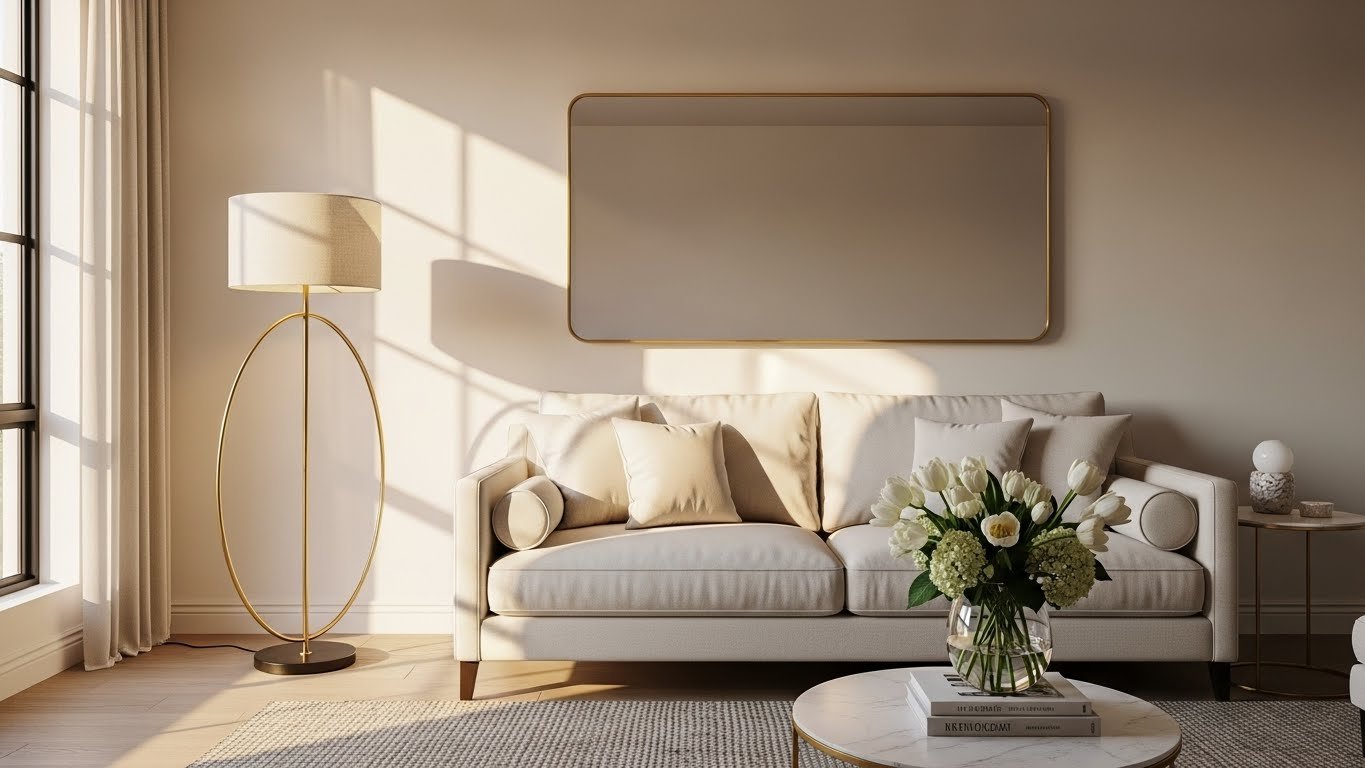
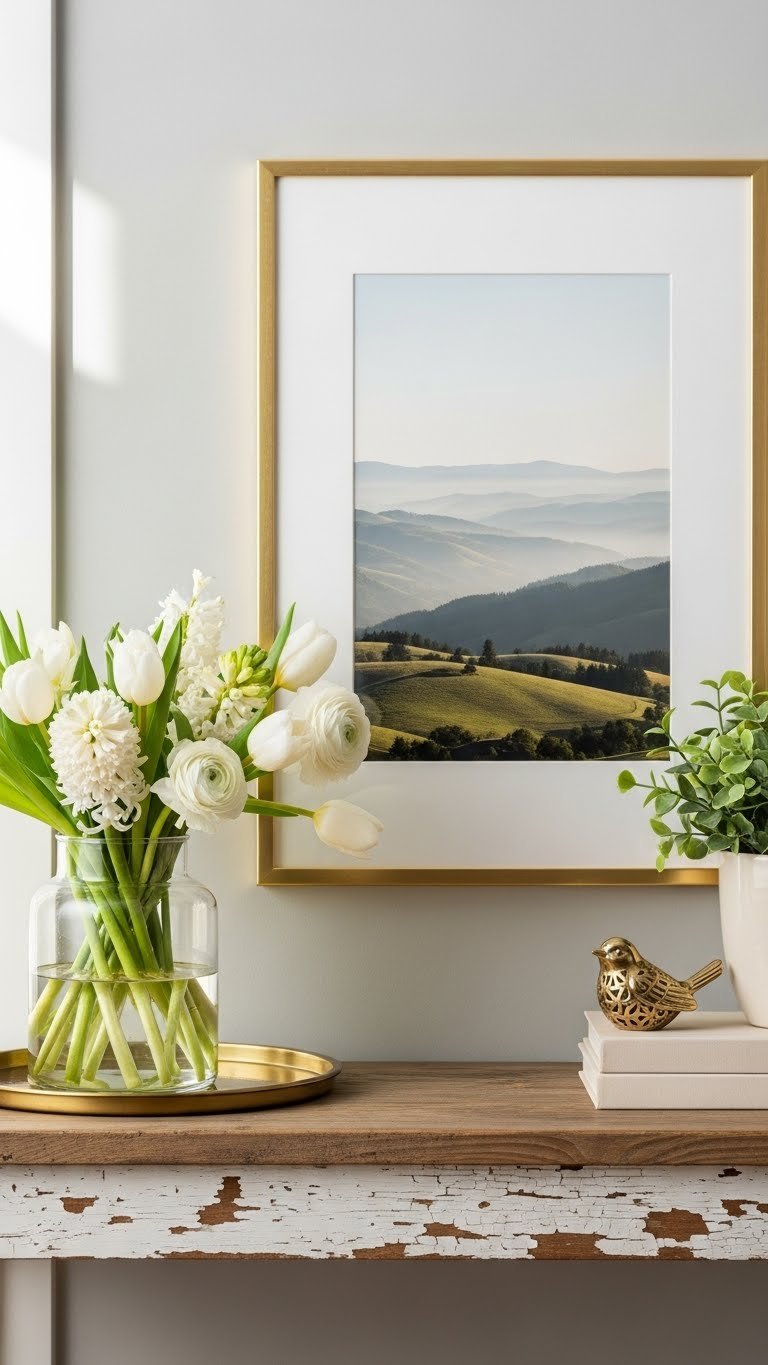
    1. Layer Gold-Framed Mirrors for Light and Depth

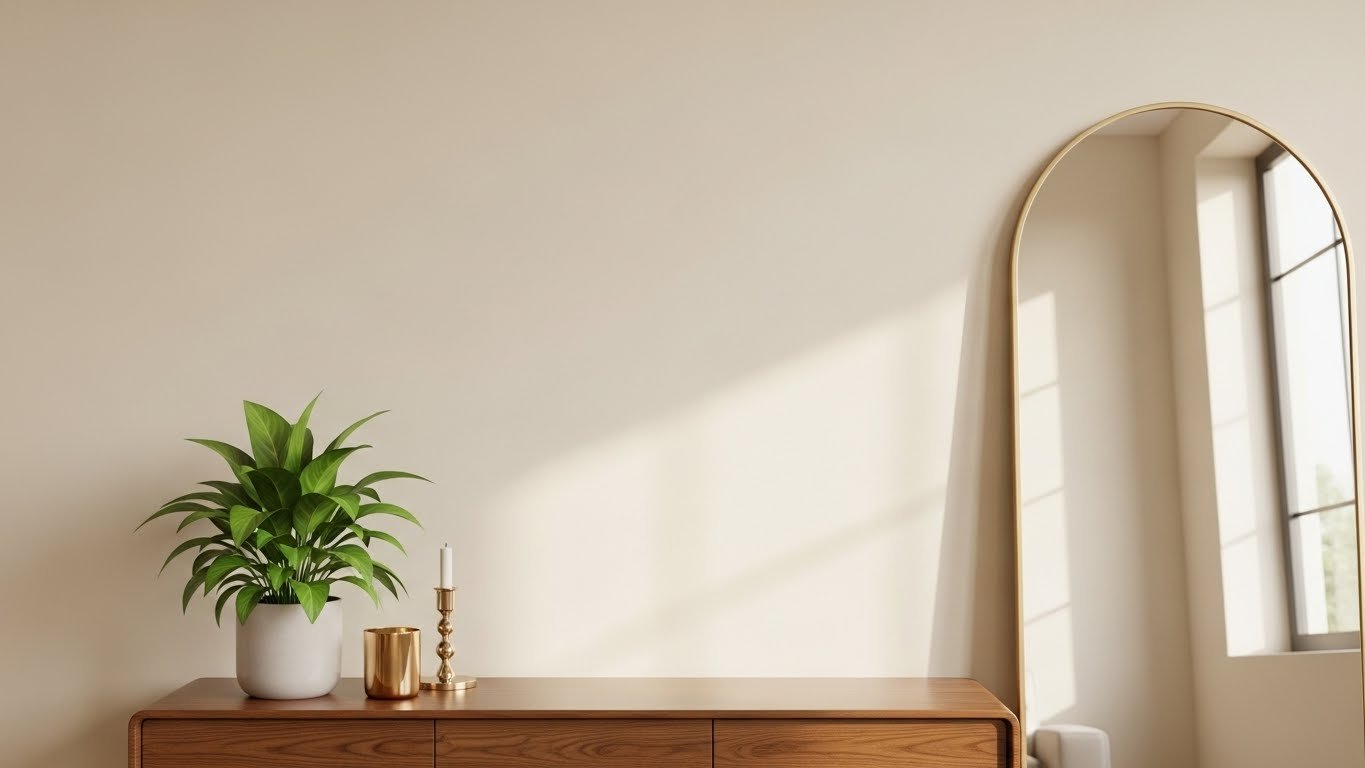
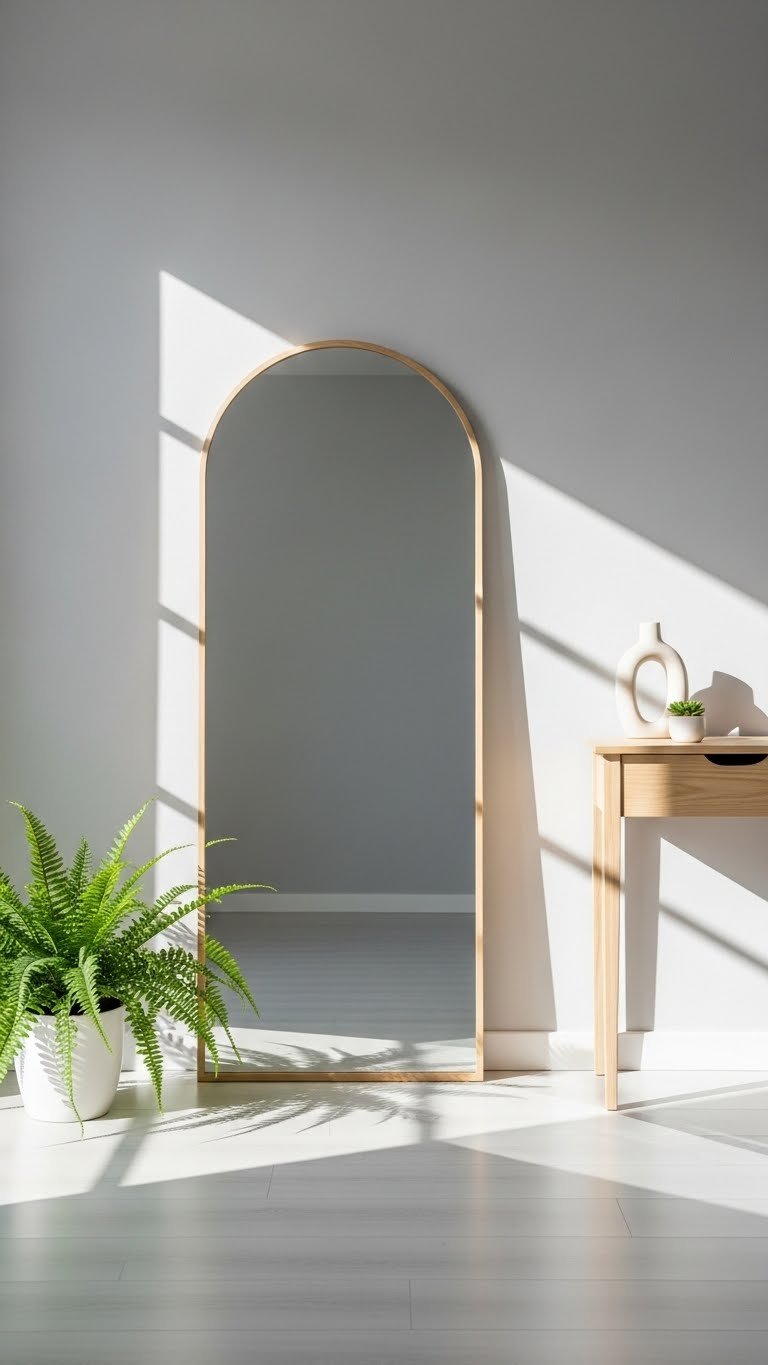
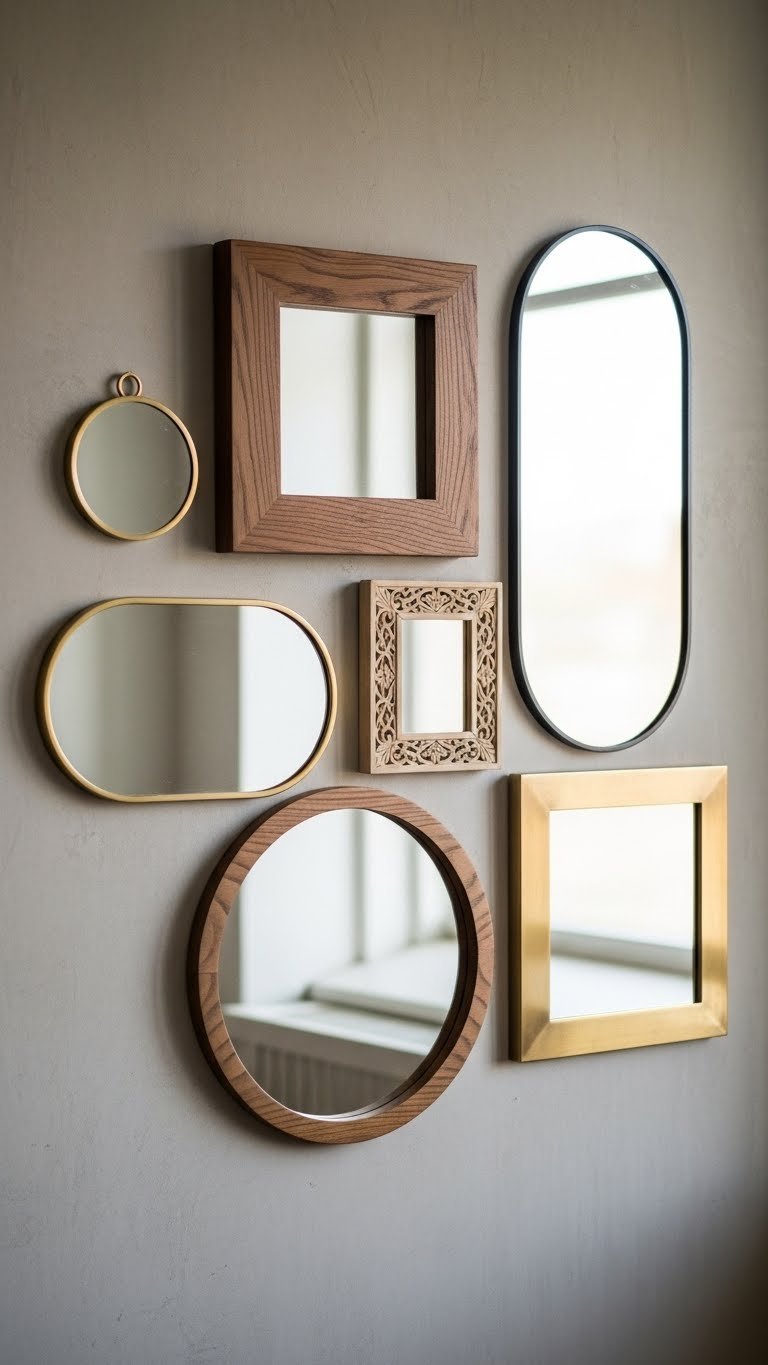
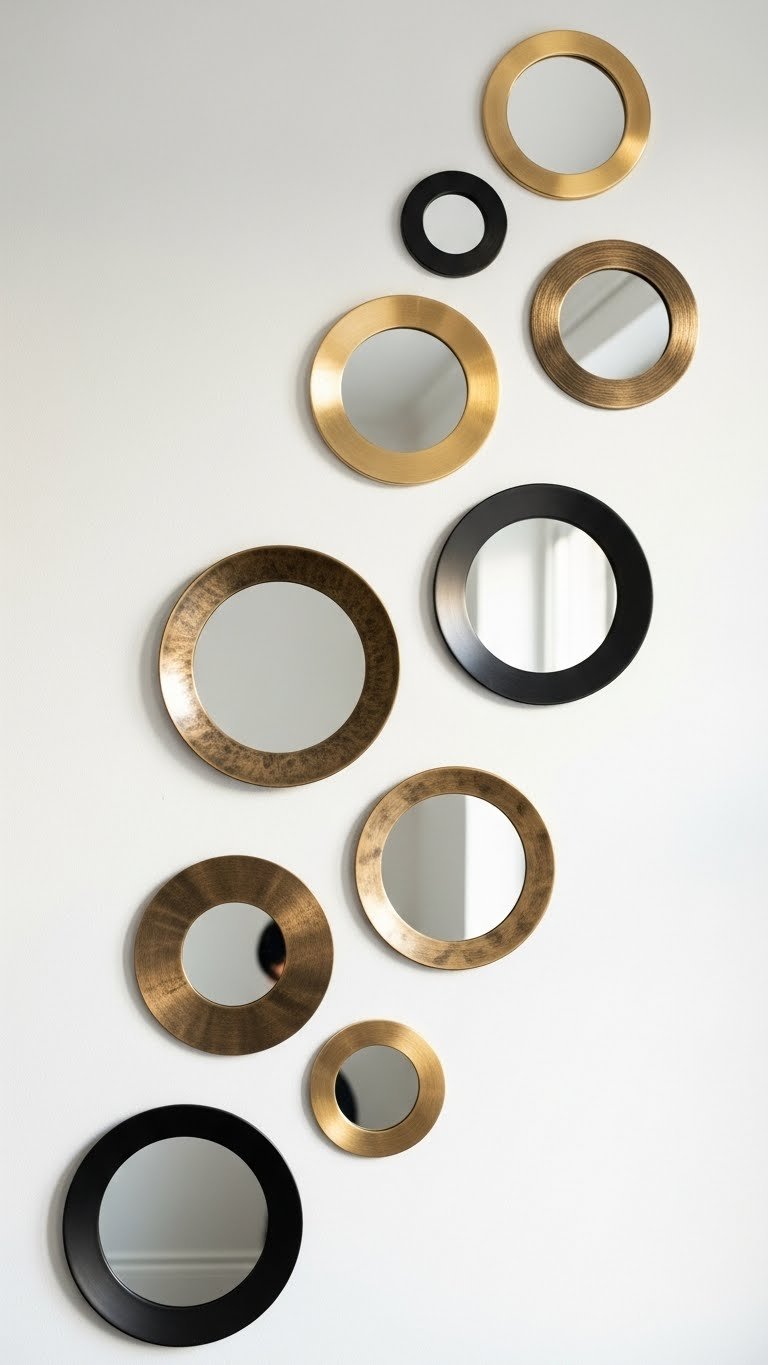
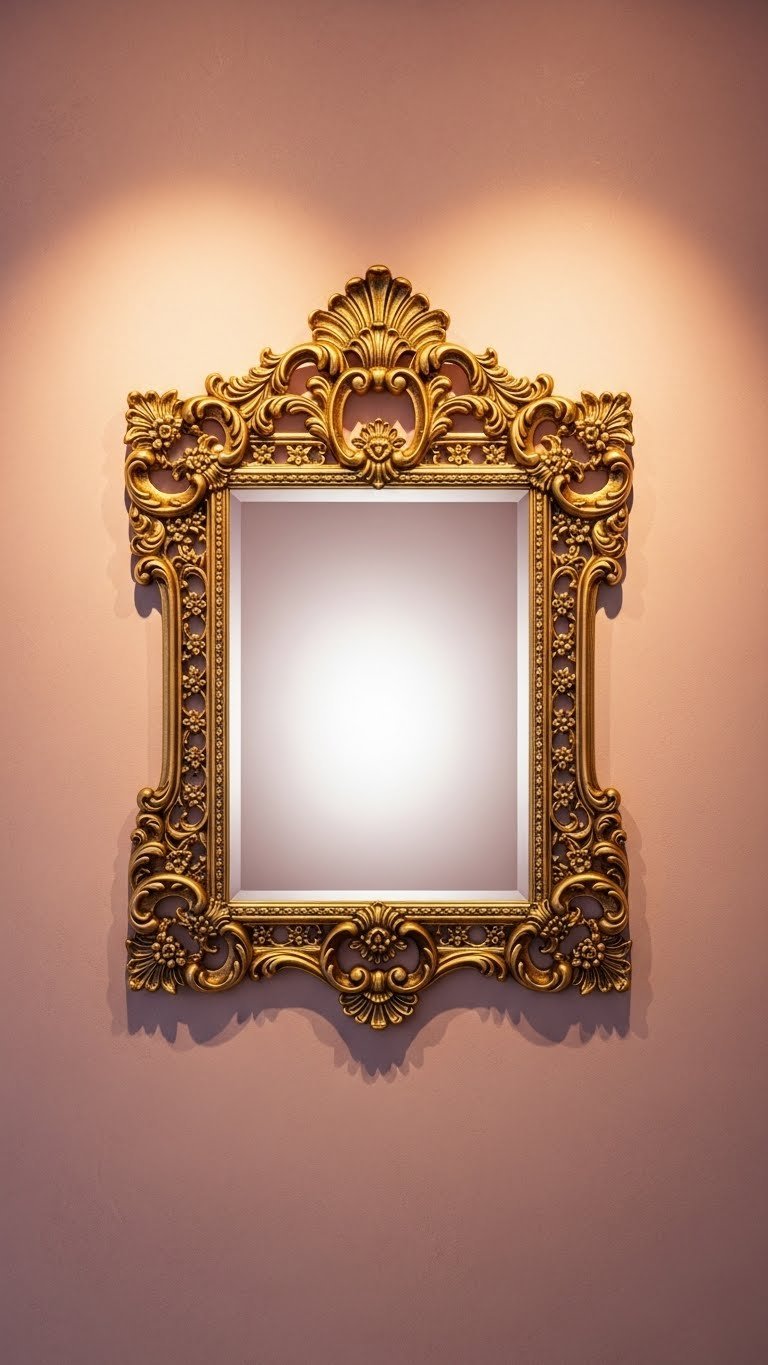
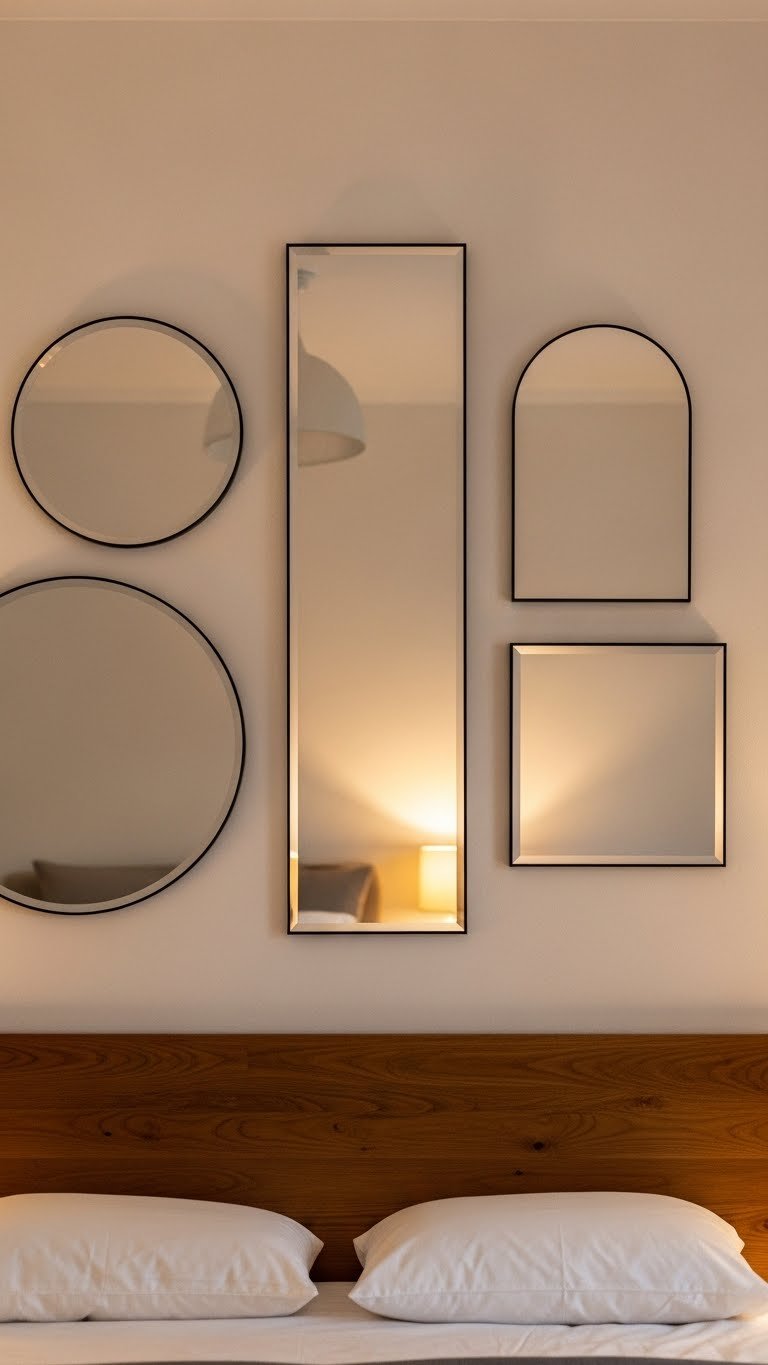
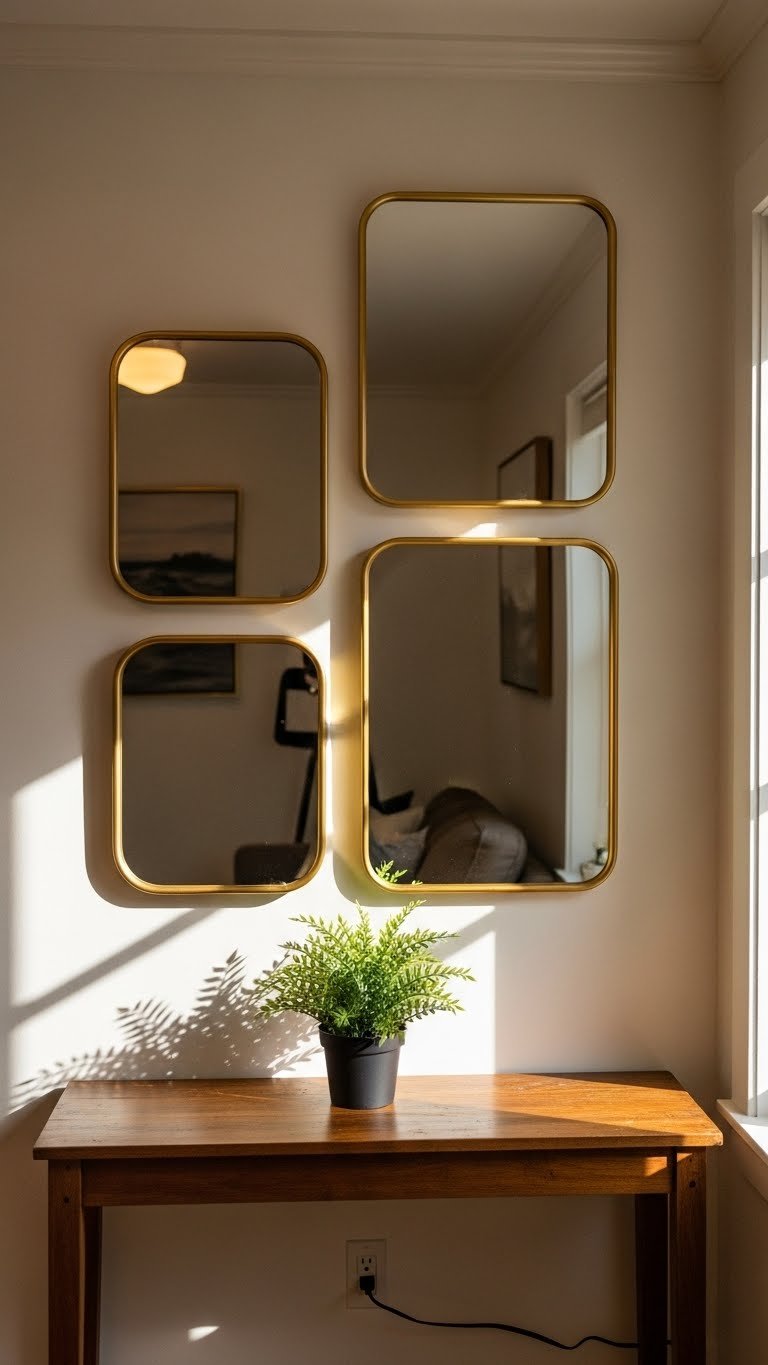
    Mirrors are the hardest-working decor element—they bounce light around and make rooms feel bigger—but a plain mirror? Boring. Gold frames instantly elevate them to art-worthy status. Lean them against walls, hang them in clusters, or create an asymmetrical gallery wall. The gold frame catches light and adds visual weight without taking up floor space, which is especially smart if your room feels cramped.

    Start with one statement mirror ($40–$150 at Target, West Elm, or IKEA). Prop it on a console table or hang it above a credenza for quick impact. Add a second smaller mirror ($20–$50) next to it for a salon-style grouping. Mix frame widths and depths—a thin modern frame paired with a thicker ornate one keeps things interesting. Installation takes 20 minutes if hanging, zero minutes if leaning. The reflection alone changes how your room photographs, and natural light bounces around like you paid a designer to do it.

    Your space instantly feels larger and brighter, and you’ll catch yourself admiring the effect every time you walk past.

    2. Swap Out Lampshades with Gold-Lined or Gold Hardware

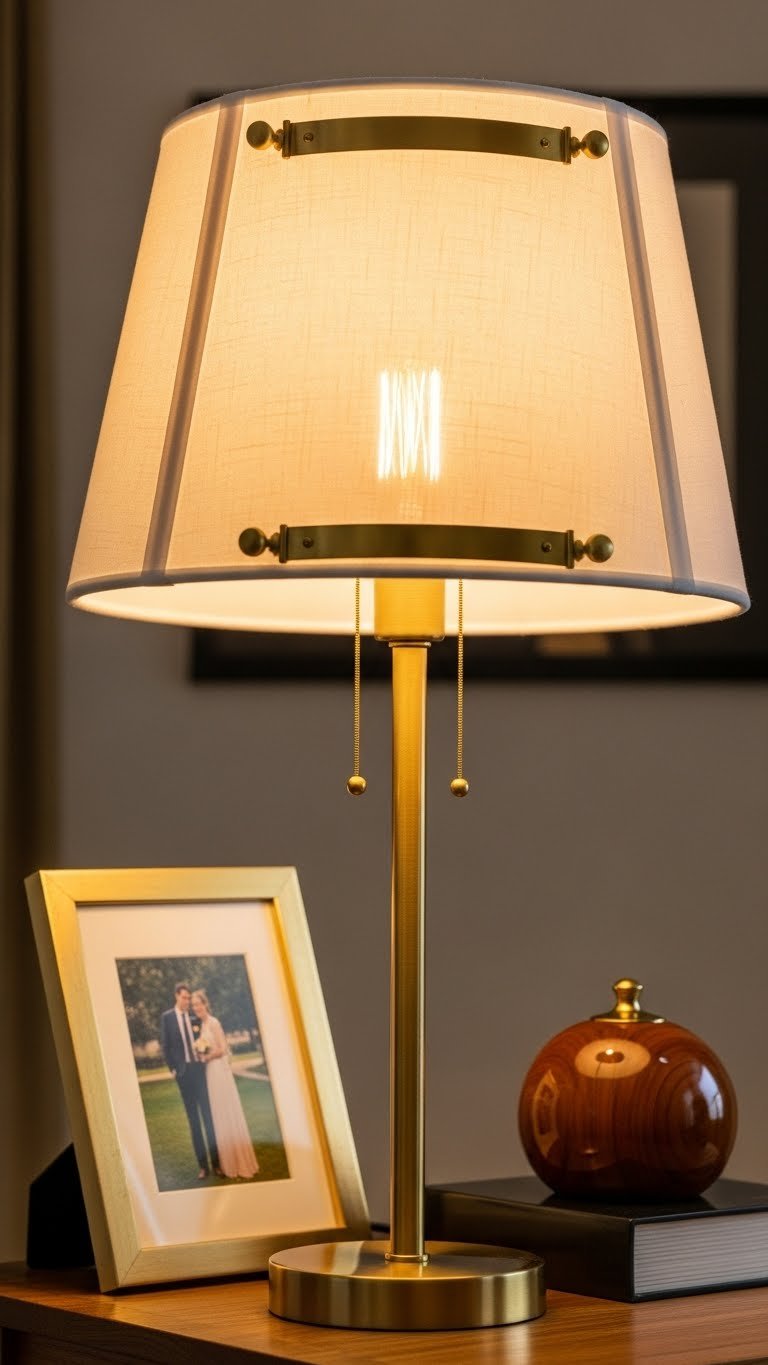
    You probably already own lamps—why not make them feel more expensive? A new lampshade or upgraded hardware costs $15–$40 and takes 10 minutes to swap. Gold-lined shades ($20–$40 from IKEA, Amazon, or Target) create warm downward light. Alternatively, add gold finials (the decorative piece on top, $8–$15) or gold lamp bases ($50–$120) to existing shades you already like.

    The trick is choosing warm gold (not too brassy or cold). Linen or cotton shades soften the gold tone and feel more luxe than plastic or paper. If you rent, this works perfectly—unscrew the old shade, install the new one, done. No landlord permission needed. Pair gold hardware with neutral shades for maximum impact. The warmth of the gold against cream or ivory creates that high-end boutique hotel vibe.

    Your lighting becomes a design feature, not an afterthought, and the warm glow makes everything feel intentional.

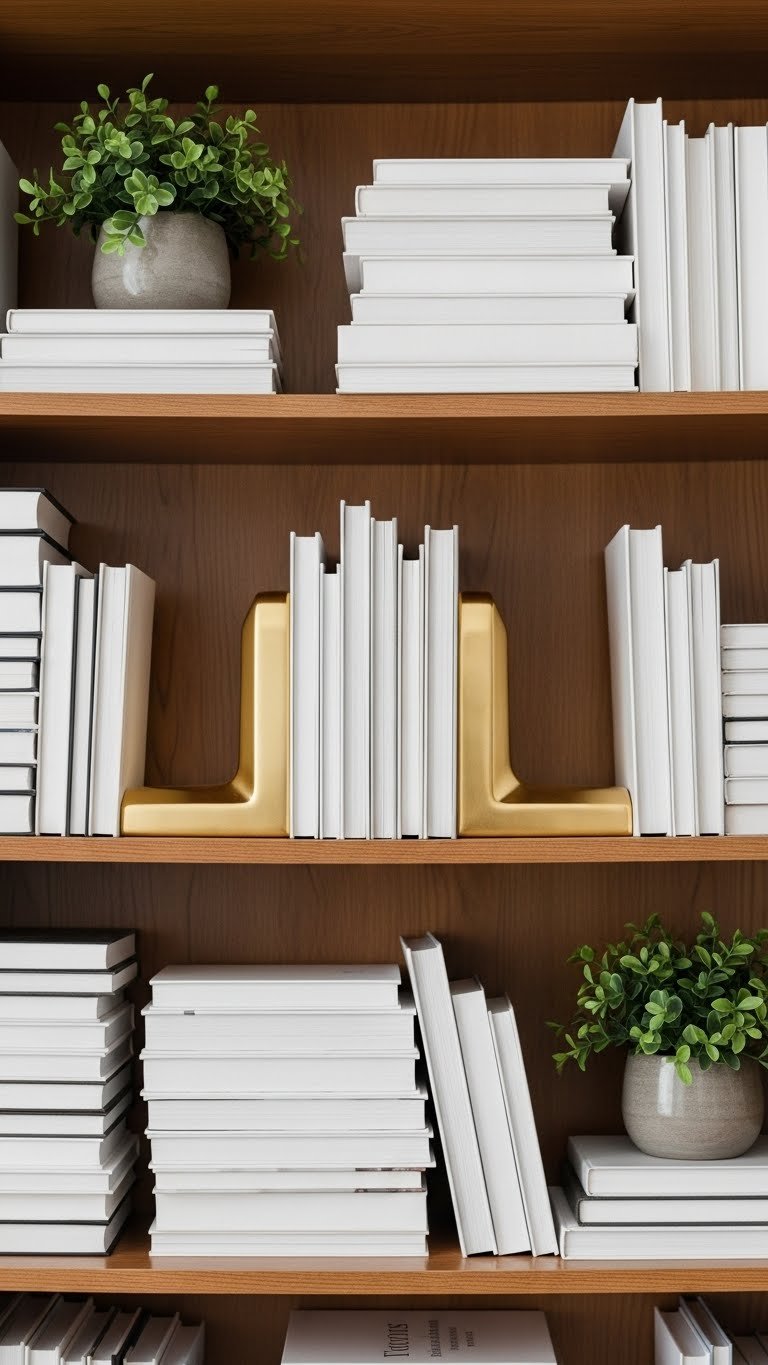
    3. Add Gold Bookshelf Brackets and Supports

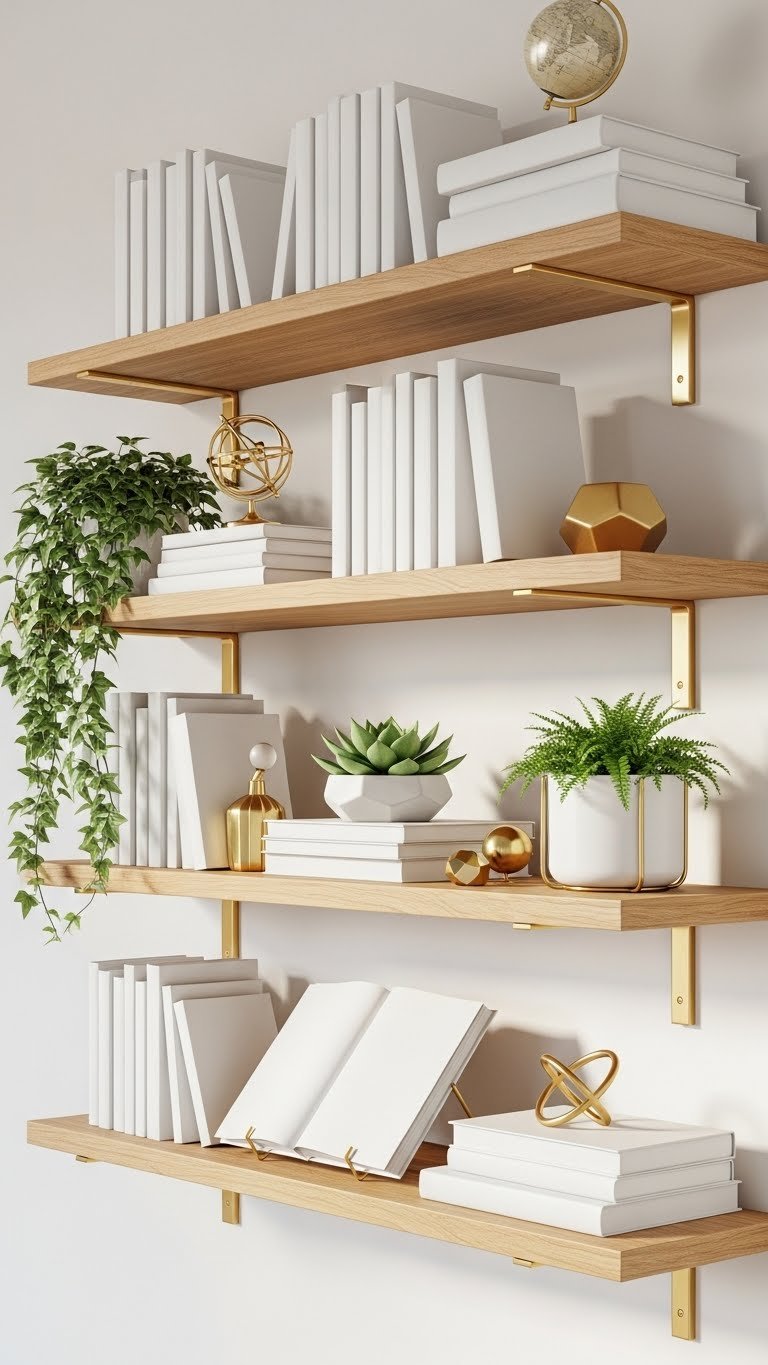
    Floating shelves are a renter’s best friend, and gold brackets take them from basic to boutique-looking. Even if your shelves aren’t floating, adding gold metal dividers, bookends ($12–$30), or bracket supports ($20–$50 per pair at Home Depot or Wayfair) gives them polish.

    Gold brackets work especially well with natural wood shelves—the contrast reads as intentional and modern. Style the shelves with mostly white or neutral books, tuck in green plants, and scatter small gold accessories. Keep spacing loose and don’t overcrowd; white space is luxury. This works on existing shelves without any installation—just place bookends and dividers in front of your books. If you’re hanging new shelves, gold brackets cost the same as standard ones, so swap them in during install. The eye is drawn to the shelves as a design moment rather than just storage.

    Your bookshelf becomes a styled vignette that anchors the room and looks intentionally curated.

    4. Incorporate Gold Bar Cart for Styling and Function

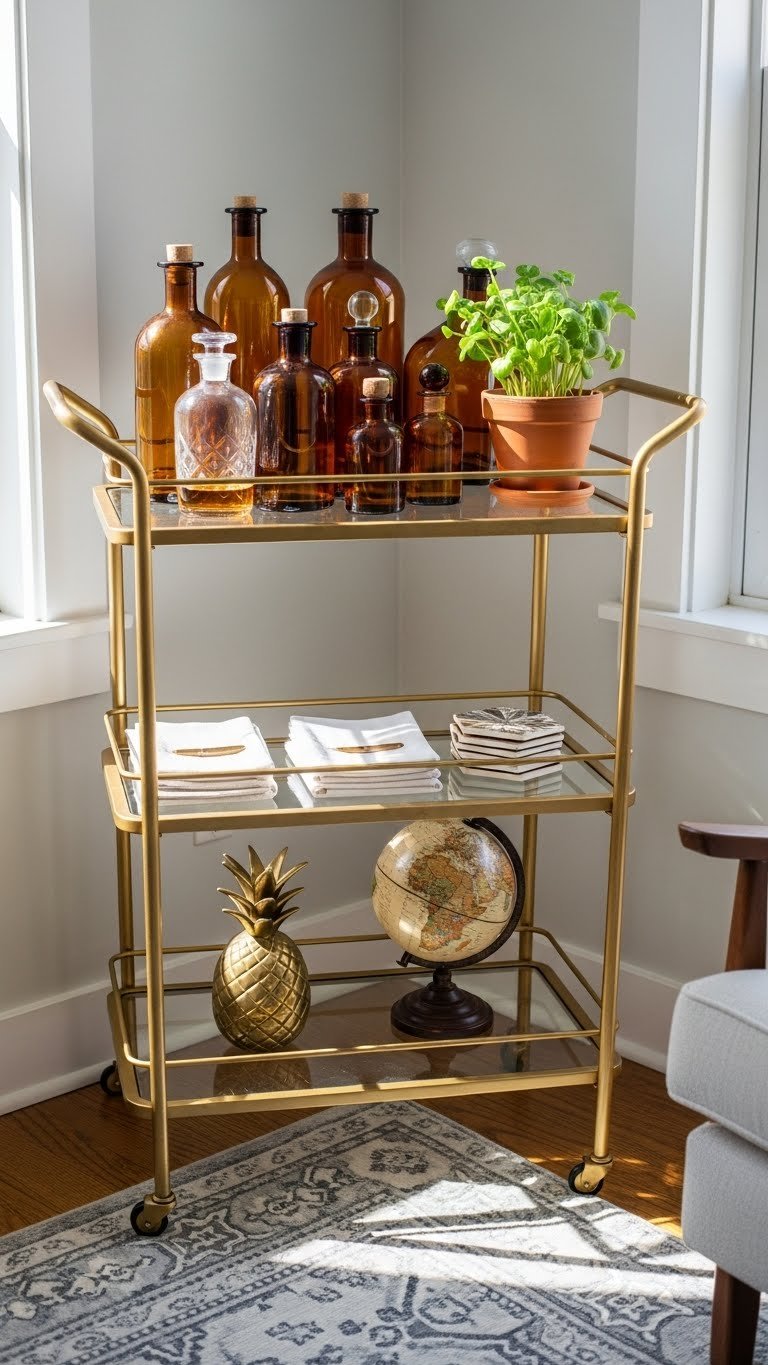
    A gold bar cart serves double duty: it’s functional storage and a design moment. Carts run $40–$200 depending on quality and size. For under $60, IKEA and Target have solid options. Higher-end choices from West Elm or Wayfair ($100–$200) have more refined finishes and sturdier wheels.

    Style it thoughtfully: bottles on the bottom tier, stacked glasses or folded linens on the middle, and small decorative objects or plants on top. Keep items sparse rather than crammed. The gold frame catches light and adds shine without looking cluttered. Position it in a corner, near a sofa end, or beside a seating area. Renter? No problem—it rolls around and requires zero installation. You can update the styling seasonally, making it feel fresh without buying new furniture. The cart becomes a conversation starter and a reason to say yes when friends suggest cocktails.

    This single piece makes your living room feel like you’ve thought about entertaining, even if you haven’t.

    5. Layer Gold and Brass Candlesticks in Varying Heights

    Candlesticks are affordable luxury. Brass and gold versions ($8–$25 each at Target, HomeGoods, or IKEA) create instant ambiance and cost less than a coffee. Mix heights and styles for visual interest—a skinny modern stick next to a classic ornate one next to a geometric cube creates a vignette that photographs beautifully.

    Group three to five candlesticks together on a console, bookshelf, or mantel. Use unscented or lightly scented pillar candles ($3–$8). The grouping creates a focal point and the warm light makes any room feel more intimate. This works in rentals with zero damage. Light them while you’re reading, working, or just existing in your space. No electricity required—just candlelight and the glow of gold. The effect is immediate and deeply calming.

    You’ll reach for these candles constantly because they make your space feel like a calm sanctuary rather than just functional furniture.

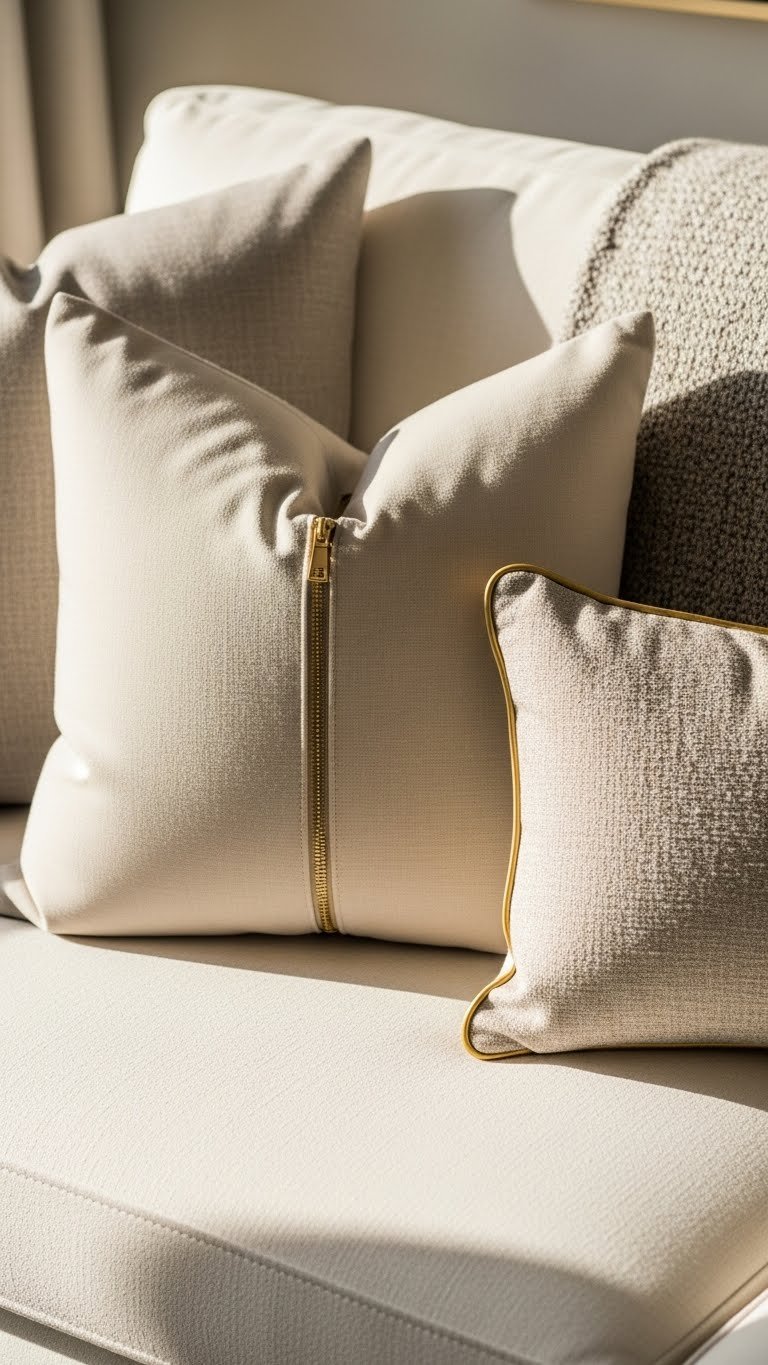
    6. Style Throw Pillow Covers with Gold Zipper Accents

    Pillow covers with gold zippers, piping, or trim ($15–$50 at Target, Amazon, or West Elm) update your seating without replacing cushions. You can keep your existing pillows and simply swap covers. Gold metal zippers catch light and add unexpected detail. Gold piping around edges creates a tailored, high-end look. Mix gold-accented covers with solid neutral ones to avoid overdoing it.

    Layer three to five pillows on sofas or chairs in varying textures: a velvet cover with gold zipper, a linen one with gold trim, a chunky knit in cream. Rearrange them seasonally. This approach is budget-friendly ($45–$150 for a full set) and renter-approved. You can wash or replace covers without touching the actual pillows, extending their life. The gold details catch light and make your seating arrangement feel curated rather than random.

    Your sofa becomes a styled focal point that looks like it belongs in a design magazine, and you can change the vibe by swapping covers.

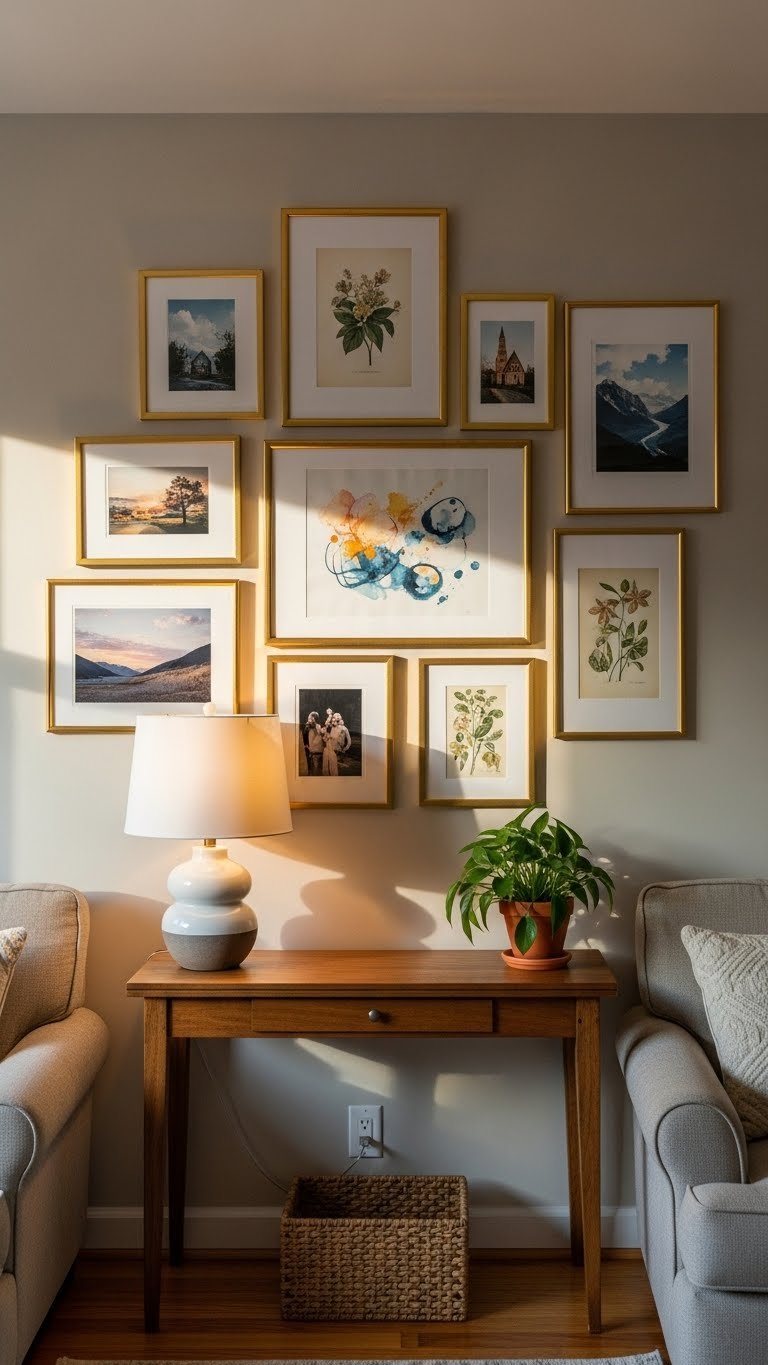
    7. Hang Gold Picture Frames for a Gallery Wall

    Gallery walls feel fancy but are totally achievable. Gold frames ($10–$40 each) in various sizes create cohesion while staying budget-conscious. Mix frame styles slightly—brushed gold, polished gold, thin modern, and classic—for personality without chaos.

    Start with a layout template (trace frames on kraft paper, tape to wall to visualize before hanging). Include a mix of personal photos, printed art ($5–$20 per print from Etsy or Minted), and one or two statement pieces. Mats in cream or white unify the collection. Spacing matters: aim for 2–3 inches between frames. This project takes 1–2 hours but the payoff is huge. Renters can use damage-free hanging strips if you don’t want to drill. The gallery wall becomes the room’s visual anchor and tells a story about your life and taste.

    Every time guests enter, they see a thoughtfully curated space that reflects who you are, and you’ll feel proud of your space daily.

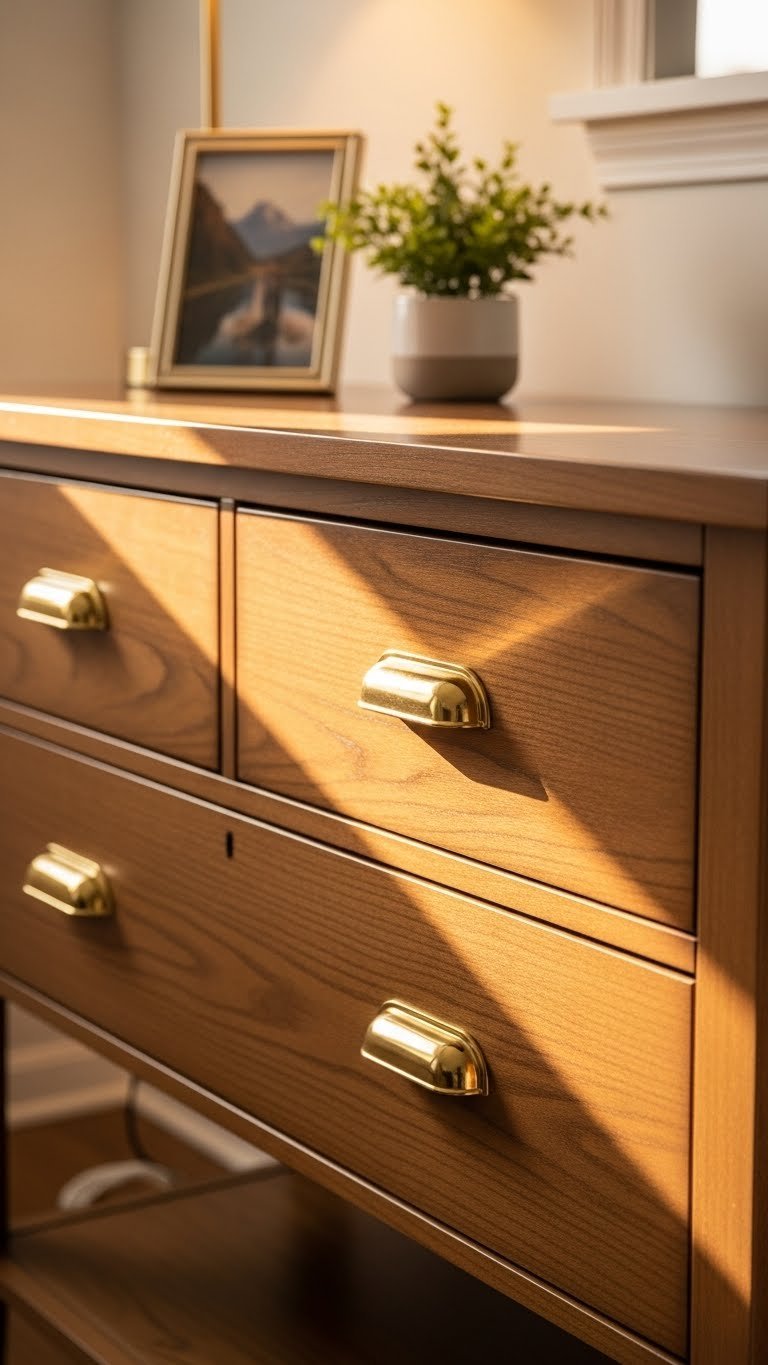
    8. Add Gold Hardware to Existing Furniture

    This is the easiest $30–$100 upgrade: replace old hardware with gold pieces. Swap out drawer pulls, cabinet handles, or shelf knobs. Gold hardware ($3–$8 per piece) from Home Depot, Amazon, or specialty hardware stores instantly changes how furniture reads.

    This works on dressers, consoles, credenzas, or any piece with handles. Unscrew old hardware, install new gold pulls. Ten minutes tops. The visual difference is shocking—suddenly your hand-me-down dresser or thrifted console looks intentional and high-end. Renter-friendly if your lease allows minor changes; keep old hardware to reinstall when you move. Mix hardware finishes slightly if you have multiple pieces (some brushed, some polished) for sophistication. This single change makes people ask if you bought new furniture when you just upgraded the details.

    One small detail change makes the entire piece feel like a designer investment, and your whole room visually improves.

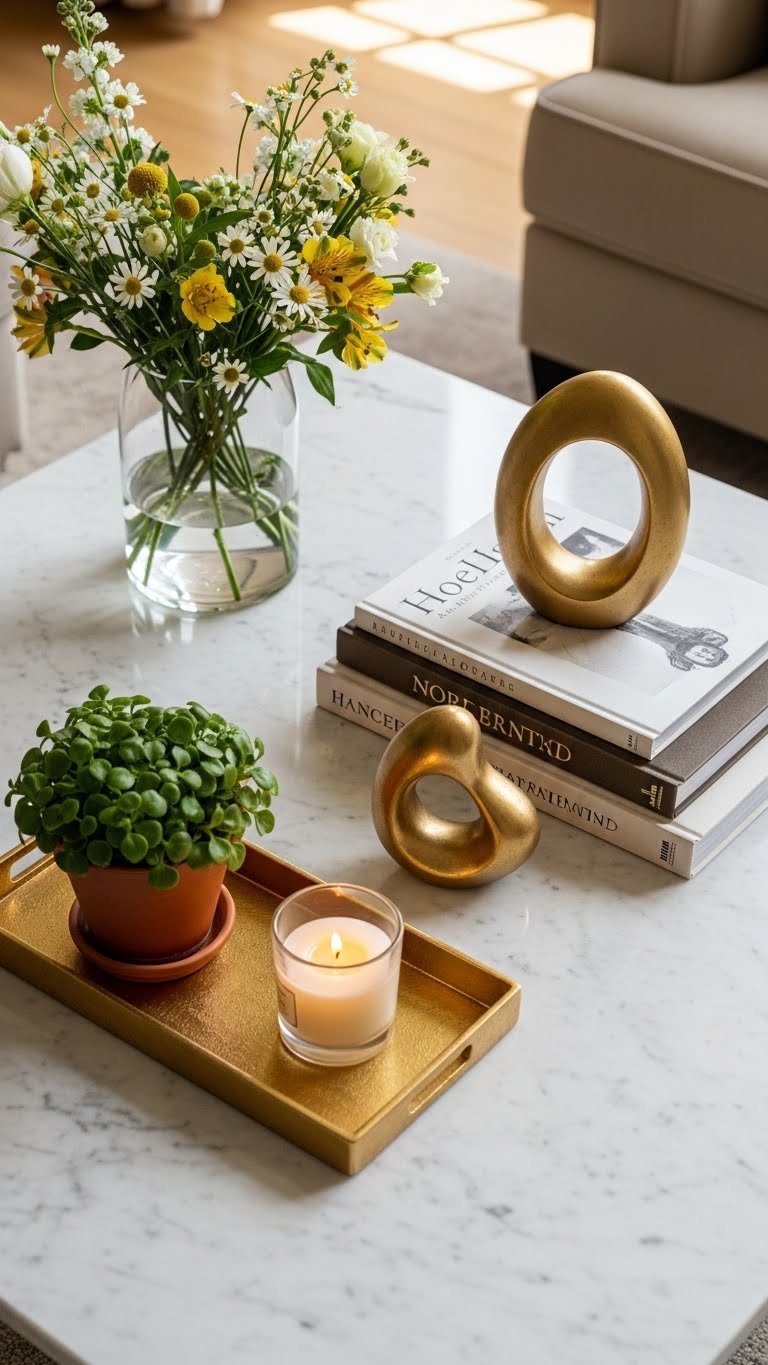
    9. Layer Gold Accents on Coffee Table Styling

    Coffee tables are prime real estate for gold styling. A gold decorative tray ($20–$50) anchors the surface. Add stacked art or coffee table books ($5–$15 each), a small gold sculpture ($15–$40), and a candle or small plant. Keep the tray relatively clear—clutter reads as disorganized, not curated.

    Rotate items seasonally: heavier books in winter, lighter styling in spring. Use the tray to corral remotes, candles, or daily items so they feel intentional rather than scattered. Group odd numbers of items (three or five) rather than even numbers for visual interest. This approach costs $50–$100 to fully style and takes 15 minutes to arrange. The coffee table becomes a mini still life that anchors your seating area and gives you something beautiful to look at while relaxing.

    Your coffee table stops being just a place to set drinks and becomes a designed moment that ties the room together.

    10. Install Gold Curtain Rods and Rings

    Curtain hardware is often overlooked, but gold rods and rings ($30–$100 for a basic set) completely change how your windows feel. A brushed gold rod ($40–$80 from Target, IKEA, or Wayfair) paired with matching rings ($15–$25) creates a high-end frame for your windows.

    This works with any curtain color; neutral fabrics (cream, white, soft gray) paired with gold hardware reads as classic luxury. Install the rod 4–6 inches above the window frame for maximum impact. If renting, some landlords allow hardware installation; use damage-free methods or skip this if uncertain. The gold catches light all day and creates visual interest even when curtains are open. Hang floor-length curtains (rather than stopping at the sill) for an expensive-looking stretched effect. This single upgrade shifts how the entire room looks—your windows become a design feature rather than just functional openings.

    Your windows instantly look like they belong in a thoughtfully designed space, and the gold hardware adds shine and polish throughout the day.

    11. Create a Gold-Accented Entryway Console

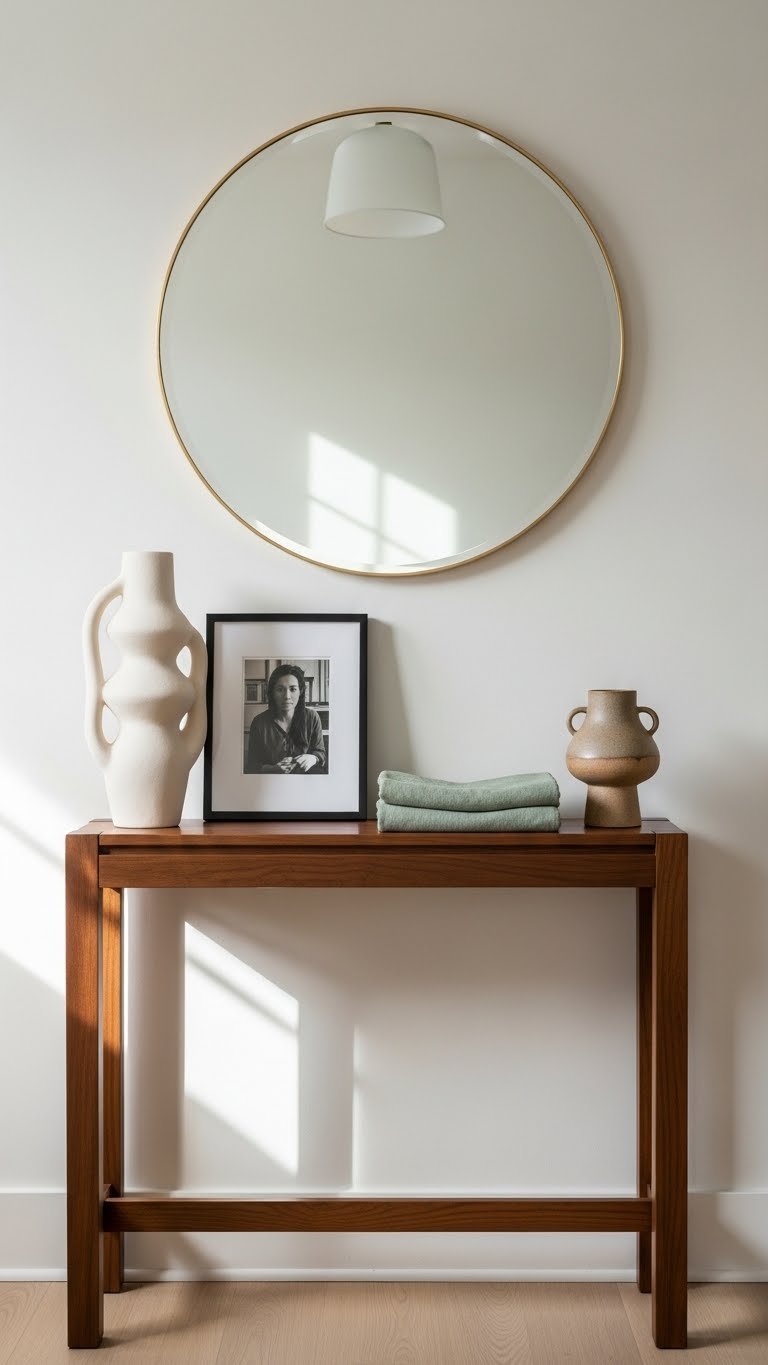
    An entryway console sets the tone for your entire home. Pair a simple console ($80–$250 from IKEA, Target, or West Elm) with gold-accented styling. Top it with a gold-framed mirror, a gold table lamp ($40–$100), a decorative gold bowl ($15–$30), and a plant.

    This becomes the first thing people see and the last thing you see before leaving. Keep it relatively minimal to feel intentional—mirror, lamp, one small plant, one decorative object. This zone costs $150–$400 to fully style but transforms your entryway. Update it seasonally: bright flowers in spring, fallen branches in autumn. Renters can use a console without installation and swap accessories freely. The gold accents pull light into the entryway and create immediate polish. This is where guests form their first impression, so make it count.

    You’ll love the feeling of walking into your home and seeing a space that feels intentionally designed for welcoming.

    12. Add Gold Bookends to Anchor Shelving Visually

    Bookends seem basic until you realize they’re also sculpture. Gold bookends ($12–$40 per pair from Target, IKEA, HomeGoods, or Etsy) anchor shelves and add weight to styling. Choose sculptural shapes (geometric, animal forms, abstract) rather than plain rectangles for more visual interest.

    Place bookends on each end of a shelf or create smaller groupings within a larger shelf. Pair them with stacked books in neutral tones and tuck plants between stacks. The bookends become design objects, not just functional pieces. This works on any shelf type and costs $15–$40 per shelf styled this way. Instantly, your books look intentionally arranged rather than randomly placed. Mix bookend styles across different shelves for cohesion—they don’t all need to match, just stay in the gold family. The eye follows the bookends around the room, making the shelving feel like a designed system rather than storage.

    Your shelves stop looking like a library and start looking like a curated design installation that someone planned.

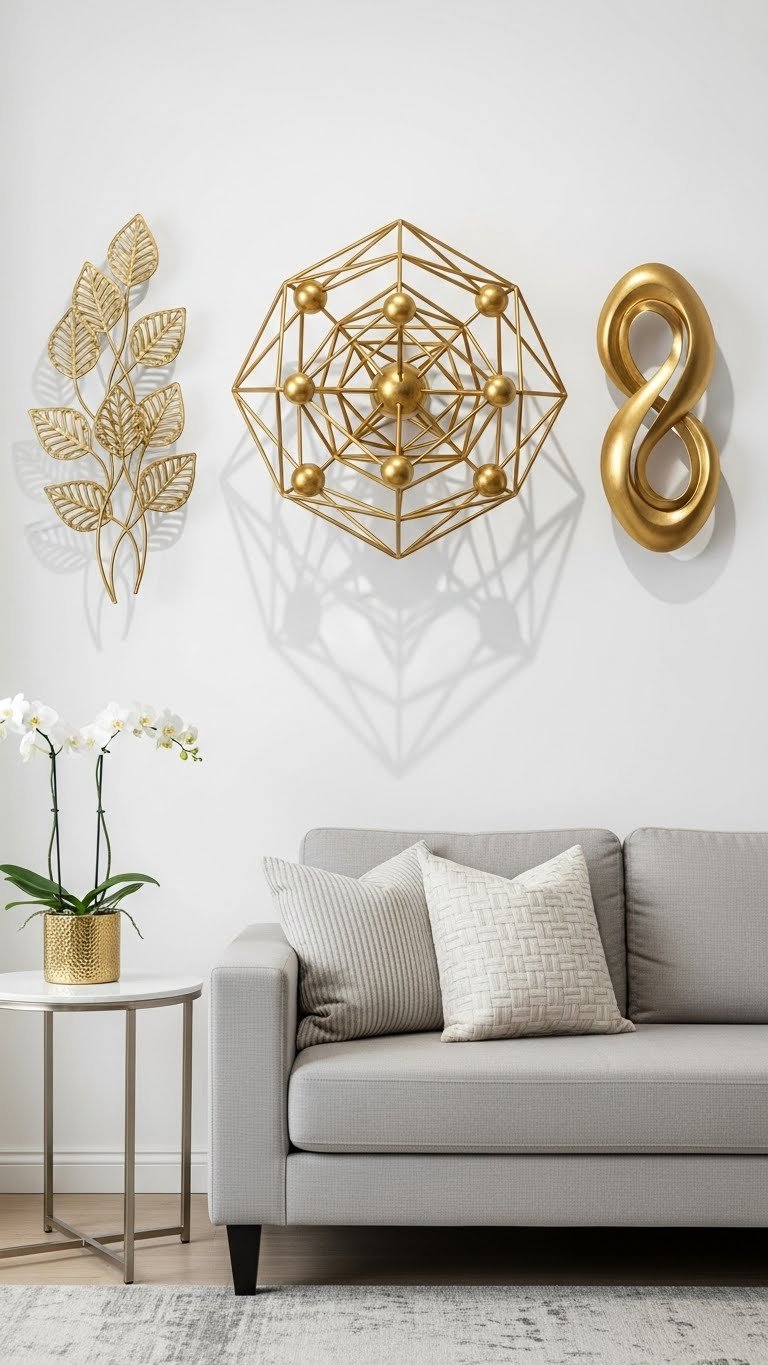
    13. Layer Gold Metal Wall Art Above Furniture

    Metal wall art in gold ($20–$80 per piece from Target, Wayfair, Etsy, or Home Depot) adds dimension without taking up floor space. Hang sculptures above your sofa, console, or as a standalone wall grouping. Choose geometric shapes, botanical forms, or abstract designs depending on your aesthetic.

    Group three to five pieces of varying sizes for impact. Spacing matters: aim for 2–3 inches between pieces. The gold catches light at different times of day, creating shadow play that’s visually interesting. Installation takes 30 minutes and requires basic tools (hammer, nails). Renters can negotiate wall hole filling at lease end. This styling choice costs $60–$300 for a full grouping and creates immediate sophistication. The wall art becomes the focal point people mention when they visit—”I love that wall art”—because it’s thoughtful and intentional. Unlike paintings, metal sculptures work with almost any color palette.

    This one design choice elevates the entire wall and makes your living room feel like it’s been carefully curated.

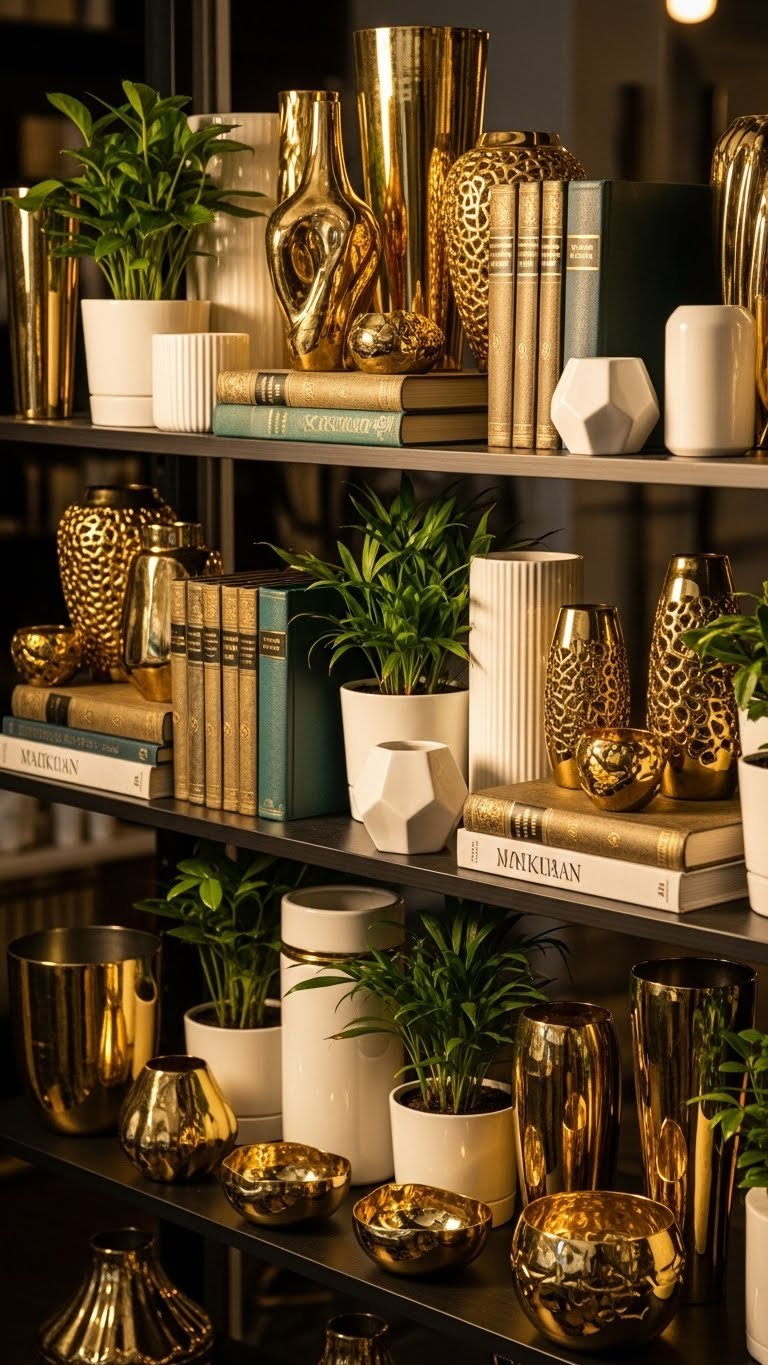
    14. Style Shelves with Gold Decorative Objects and Vessels

    Gold vessels and decorative objects ($8–$50 each) create visual rhythm on shelves. Look for small sculptures, decorative bowls, metallic vases, or abstract forms. Mix them with neutral books, small plants, and white ceramics for balance.

    The key is leaving breathing room—don’t pack shelves to capacity. Arrange items in odd-numbered groupings (three or five) and vary heights. This styling approach costs $40–$150 per shelf but transforms empty shelving into a curated display. Shop HomeGoods, Target, Etsy, or vintage shops for unique pieces that feel personal. The mix of textures (smooth metal, rough ceramics, natural plants) keeps styling from feeling flat. Rearrange seasonally to keep things fresh without buying new pieces. Every shelf becomes a mini gallery that showcases your taste and creates visual interest throughout the room.

    Your shelving stops being empty space and becomes a designed moment that anchors your room and reflects your style.

    15. Introduce Gold Throw Blankets for Layered Coziness

    Throw blankets in gold tones ($25–$80 from Target, IKEA, or West Elm) add texture and warmth—literally and aesthetically. Look for metallic gold, warm champagne, or brushed gold finishes rather than bright brass.

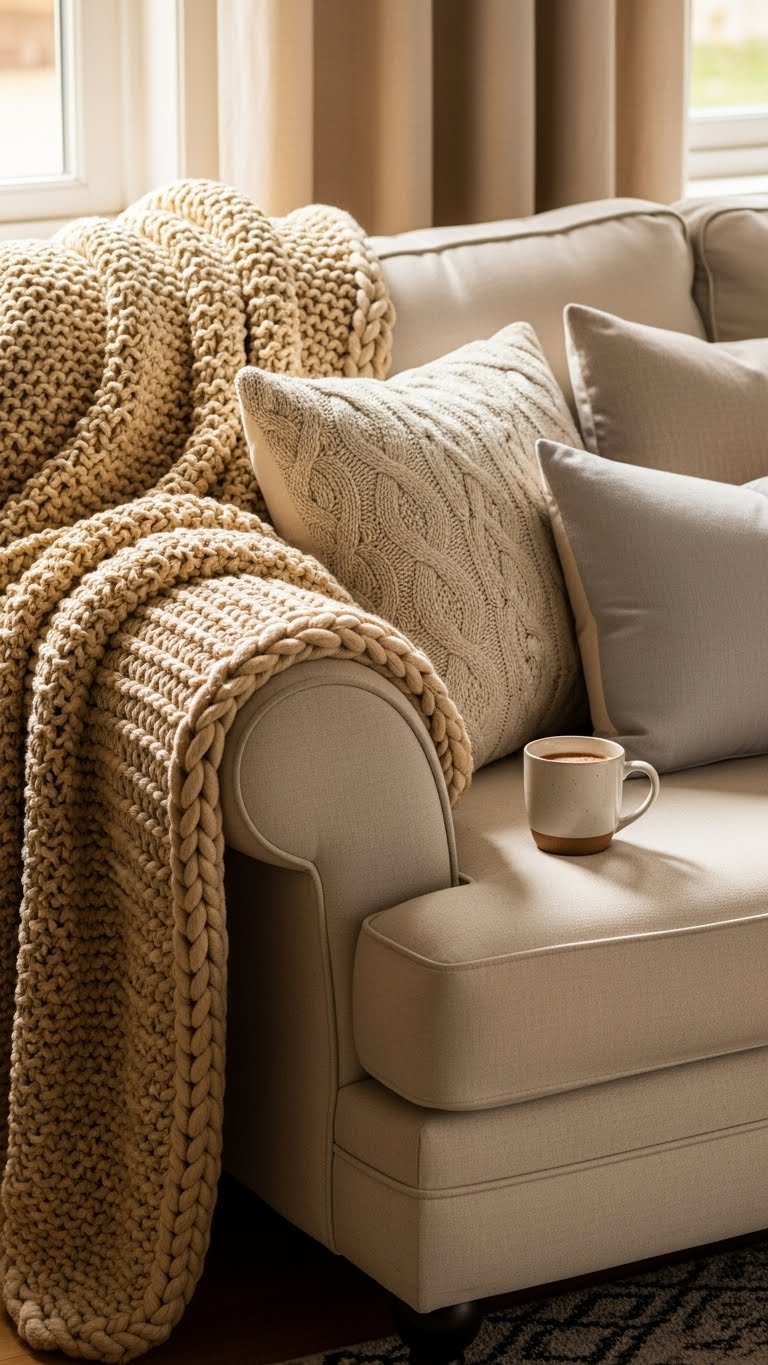
    Drape one blanket casually over a sofa arm or chair back. Layer it with neutral pillows for maximum coziness. This works year-round (lighter knits in summer, heavier ones in winter) and costs $30–$60 for a quality blanket. The texture adds visual interest and makes your seating area feel inviting and touchable. Pair gold blankets with cream, white, or warm gray upholstery for balance. Renters love this because it’s zero-commitment styling—hang it, layer it, change it whenever. The warmth and texture make people want to sit and stay, creating an inviting space rather than one that just looks pretty.

    Your couch becomes a destination you actually want to curl up in, not just a surface you sit on occasionally.

    16. Create a Gold-Framed Inspiration Board or Wall Art Display

    An inspiration board in a gold frame ($30–$80 from Target, IKEA, or specialty framing shops) combines function and design. Choose cork or fabric backing and fill it with printed quotes, small photos, or art prints that inspire you. Update it seasonally with new images or rearrange existing items.

    This works beautifully in home offices, entryways, or above desks. The frame becomes the design moment; the contents become personal. Installation takes 20 minutes. The gold frame makes even simple printed quotes or personal photos look intentional and curated. You can change the contents without replacing the frame, making it endlessly customizable. This piece costs $40–$100 and gives your wall personality without permanent commitment. Friends love asking about the items you’ve chosen, turning it into a conversation starter that reflects your interests and values.

    This single piece tells visitors who you are and what matters to you, while adding warmth and personality to the room.

    17. Hang Gold Pendant Lights Above Seating Areas

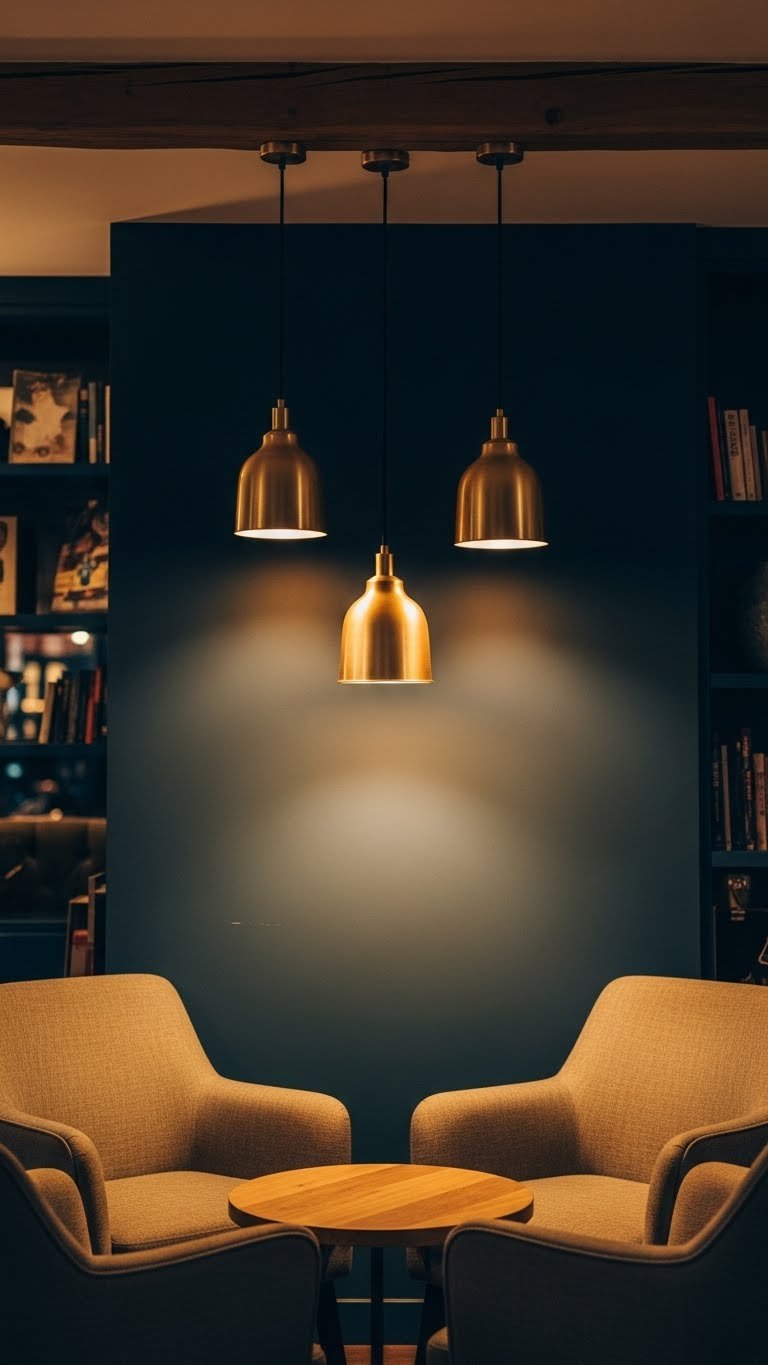
    Pendant lights in gold ($40–$150 each from Target, West Elm, or IKEA) are statement-making and functional. Hang them above seating areas, console tables, or reading nooks. Choose shapes that complement your style—geometric, lantern-style, sculptural, or minimalist.

    Vary heights slightly (4–6 inches difference) for visual interest. Group two to three pendants together for impact. This requires electrical work; hire an electrician ($100–$300) or ask a handy friend to help. It’s an investment ($250–$600 for three lights plus installation) but shifts how your space feels. The warm glow becomes the room’s atmosphere setter. If renting, check your lease; some landlords allow light fixture swaps if you reinstall originals before moving. The gold finish catches light and creates a sophisticated ambiance that makes your living room feel like a designed retreat rather than a basic space.

    Every evening, you get to enjoy the warm glow of beautiful pendant lights that actually make your space feel intentional.

    18. Style a Floating Shelf with Gold-Framed Personal Photos

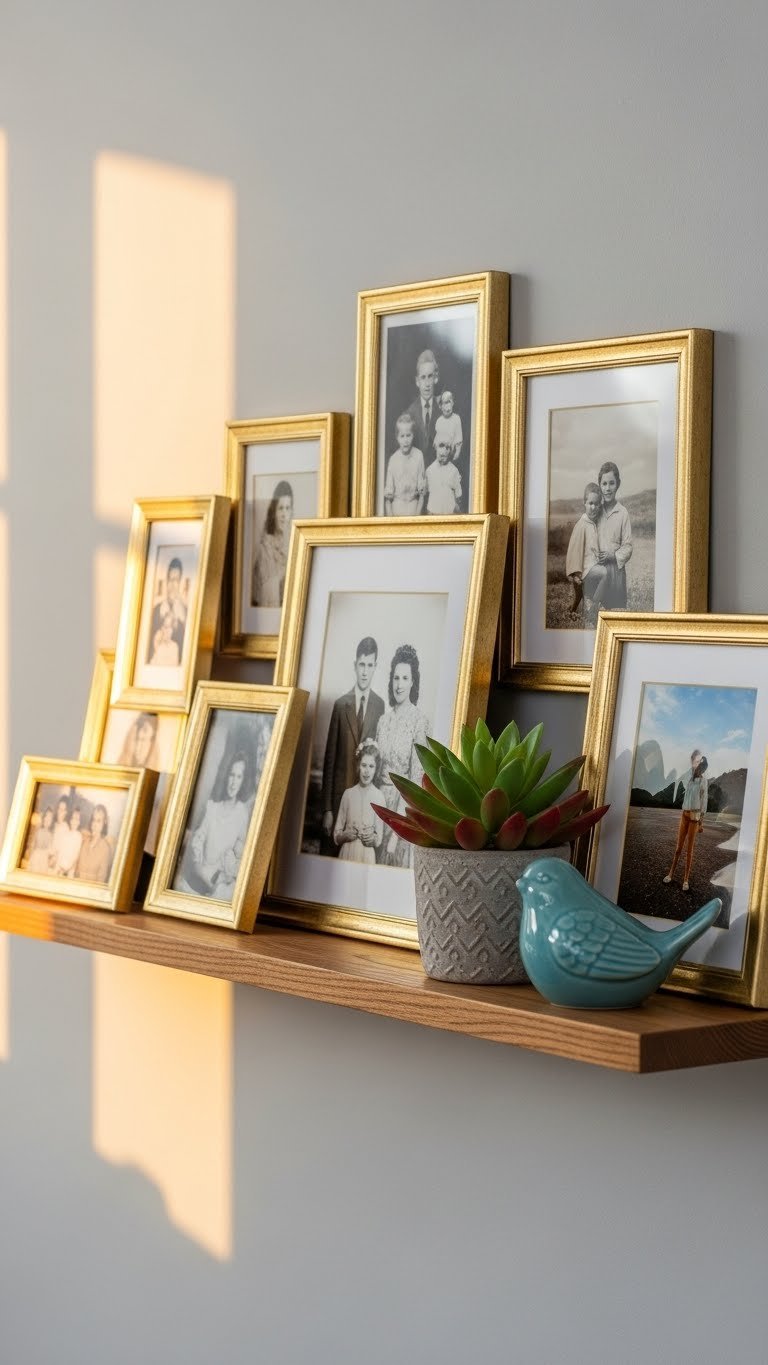
    Personal photos deserve beautiful frames. Gold-framed frames ($8–$25 each) from IKEA, Target, or Etsy elevate personal photos into design moments. Create a shelf display mixing photo sizes and frame depths.

    Arrange frames in a staggered pattern, leaving space between items. Tuck a small plant into the grouping for texture. This shelf costs $40–$100 to style and takes 30 minutes to arrange. The gold frames unify different-sized photos and make the display feel intentional rather than random. Rotate photos seasonally to keep it fresh. This works especially well in bedrooms or entryways where personal moments feel appropriate. Renters love floating shelves because they require simple installation and add vertical interest without floor space usage. The combination of personal photos and gold frames makes your space feel warm, lived-in, and deeply personal.

    Visitors immediately see that this space belongs to a real person with a life and memories, making it feel genuine and inviting.

    19. Add Gold-Trimmed Decorative Trays for Organizing

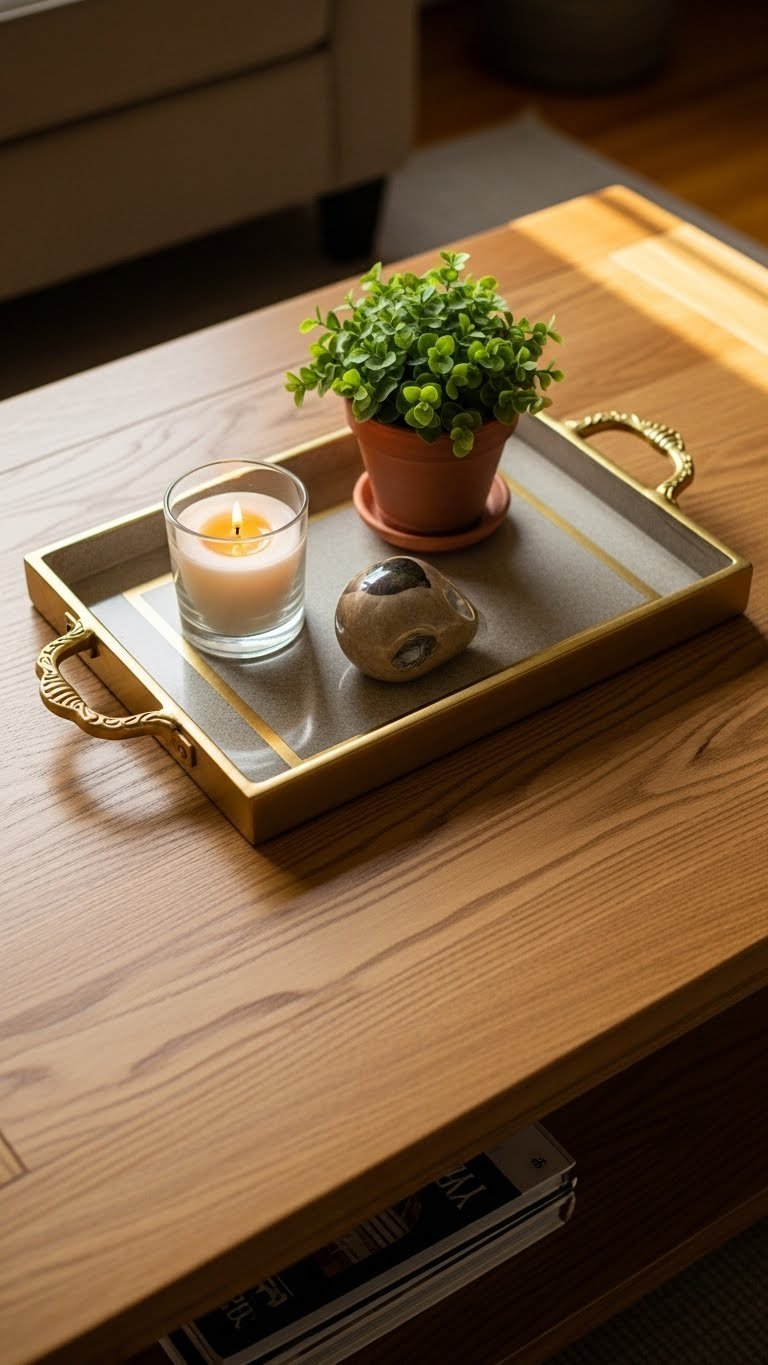
    Decorative trays with gold trim ($15–$40 from Target, HomeGoods, or West Elm) serve dual purposes: they organize items and create visual anchors on surfaces. Place trays on coffee tables, console tops, or ottomans to corral items while looking intentional.

    Fill trays with candles, small plants, coasters, or meaningful objects. Keep them relatively sparse so they feel curated rather than cluttered. Trays also work on dining tables, nightstands, or office desks. Choose materials that complement your aesthetic: marble trays with gold handles, wood trays with gold trim, or metal options. Cost ranges $15–$50 depending on size and materials. The tray draws the eye and creates a focal point, making your styling feel planned. Renters especially appreciate trays because they move easily between homes. The gold trim catches light and adds shine without taking up additional space.

    Everything you place on that tray automatically looks more intentional, and your surfaces feel organized and curated rather than scattered.

    20. Incorporate Gold Accents in Artwork Frames and Matting

    When displaying art prints ($5–$20 each), the frame matters as much as the image. Gold frames ($10–$40) paired with cream or white mats create instant sophistication. Mix frame styles slightly for collected feel while keeping them in the gold family.

    Mats add visual breathing room and make artwork feel more important. Standard mats run $5–$15; custom mats from frame shops cost $20–$40. A simple black and white print in a gold frame with white mat costs $25–$60 total but reads as curated and intentional. Hang groupings of three to five pieces with consistent spacing (2–3 inches apart). The gold frames create visual thread throughout your wall and the mats make artwork look professionally displayed. This approach works on any budget—even affordable art prints look expensive when properly framed and matted. Renter-friendly: these frame arrangements hang easily with standard nails or damage-free strips.

    Simple prints that might otherwise feel basic transform into gallery-worthy moments when framed and matted thoughtfully.

    21. Layer Gold Metallics with Warm Wood Textures

    Warm gold works beautifully with natural wood—this pairing feels organic and modern rather than flashy. Mix gold accessories (lamps, frames, trays) with wooden furniture and accessories for cohesive styling that feels intentional.

    The contrast between metal shine and wood texture creates visual interest. Place a gold lamp on a wood nightstand, hang a gold-framed photo on a wood shelf, or pair a gold candlestick with a wooden box. This combination avoids the “too much gold” feeling because wood keeps things grounded and warm. Shopping approach: look for warm woods (honey, amber, medium brown) rather than very light or very dark woods when pairing with gold. The mix costs whatever you’re already investing in gold accents—the key is intentional pairing rather than spending more. This styling choice feels sophisticated because it demonstrates understanding of how metals and materials work together. Your space feels designed by someone with taste, not just randomly decorated.

    The warmth of gold with the texture of wood creates a sophisticated aesthetic that feels timeless and expensive without trying too hard.

    22. Install Gold Shelving Units for Display and Storage

    A gold metal shelving unit ($80–$300 from IKEA, West Elm, or Wayfair) combines open storage with style. These units work in living rooms, bedrooms, or home offices as both functional storage and design statements.

    Style each shelf intentionally: alternate between books, plants, and decorative objects. Leave some negative space (empty shelf area) to avoid cluttered feeling. Gold metal frames keep the look modern and refined even when displaying eclectic items. Installation typically requires basic tools and takes 45 minutes to an hour. The shelving unit becomes a sculptural element—it’s not just functional, it’s beautiful. Cost varies by size and quality; budget $100–$300 for a solid unit. This works especially well in rentals because it stands freely (no wall mounting required for some models). The open shelving lets you display things you love while staying organized. The gold finish catches light throughout the day, creating visual interest and shine.

    This single piece of furniture organizes your space while becoming a focal point that showcases your personal style and taste.

    23. Style with Gold-Accented Area Rugs or Rug Trim

    Area rugs define spaces, and rugs with gold accents ($80–$300 from Wayfair, IKEA, or Etsy) add subtle luxury. Look for rugs with gold stitching, geometric gold patterns, or gold trim detailing rather than full gold rugs, which can feel overwhelming.

    A neutral rug (cream, gray, or warm taupe) with gold trim brings all your gold accents together visually. Size matters: choose rugs large enough that furniture sits on them (at least 5×8 feet for living rooms). The gold detailing catches light as you move around the room, creating subtle visual interest. Rugs cost more than other accents ($100–$400), but they last years and tie entire rooms together. Renter-friendly: rugs need no installation and roll up easily for moving. Pair gold-trimmed rugs with your existing gold accessories for a cohesive look. The rug becomes the foundation for your room’s styling, making all your other gold accents feel intentional rather than random.

    Once your rug is down, everything else falls into place because you have a warm, beautiful foundation that everything else layers onto.

    24. Create a Gold-Themed Styling Vignette for Seasons

    Plan your seasonal styling around gold accents. Update one console, shelf, or surface every few months with new styling that keeps gold as the unifying element. Spring might feature light flowers with gold frames; autumn might include darker foliage with candlesticks.

    Seasonal styling keeps your space feeling fresh without major redecorating or spending a lot. Rotate accessories you already own, add one or two new pieces ($20–$50 per season), and rearrange. This approach costs minimal money but maximizes impact. Each season your room feels like you’ve refreshed it intentionally. This practice also helps you notice what you love about your space—you’re actively engaging with styling rather than just living with default arrangements. Renters especially benefit from this because it breaks up the feeling of stagnation. By using gold as your constant anchor, seasonal changes feel cohesive rather than chaotic. The gold elements tie each season together while everything else transforms around them.

    You get the fresh-start feeling of redecorating without the effort or cost, and your space always feels like someone is actively caring for and enjoying it.


    Save this post for your next living room refresh. Pick one or two ideas this weekend—maybe a mirror and some new bookends—and notice how quickly gold accents shift how your entire room feels. Share this with anyone who thinks they need a full redesign when really they just need a little shine.

  • 26 Teen Room Decor Ideas They’ll Actually Love

    26 Teen Room Decor Ideas They’ll Actually Love

    Introduction

    Your teen’s room should feel like their space—a place where they actually want to hang out, not just sleep. Whether they’re into studying, streaming, gaming, or just decompressing, the right décor makes all the difference. The good news? Most teens don’t need a complete renovation; they need thoughtful touches that show personality and creativity without breaking the bank.

    We’ve put together 26 ideas that mix budget-friendly hacks, DIY projects, and smart shopping picks. You’ll find everything from wall treatments and lighting upgrades to furniture rearrangements and storage solutions that actually work for real teenage life—clutter, hobbies, and all. Let’s build a room they’ll love.


    1. Paint Walls in Warm Earthy Tones

    Warm earthy colors like chocolate brown, sage green, or muted terracotta instantly make a room feel more grown-up and cozy than stark white or bright primaries. These tones work especially well for focus areas like study zones because they’re calming without feeling babyish.

    Pick one wall color and commit—Benjamin Moore, Sherwin-Williams, or budget option Behr all have solid earth-tone ranges. A gallon costs $25–$50, and you can paint most teen rooms with two gallons. DIY takes a weekend; hire a pro for $300–$600. Prep walls (patch holes, sand imperfections), use painter’s tape, and apply two coats. This works for renters too if you get permission and use peel-and-stick removable wallpaper instead.

    Your walls become a calming backdrop that makes everything else (furniture, posters, artwork) look more intentional and pulled-together.


    2. Add Curved Furniture for Visual Softness

    Straight lines and sharp corners feel rigid; curved furniture brings comfort and movement into a space. A curved chair, ottoman, or headboard adds visual interest and actually feels better to lounge in.

    Hunt for curved armchairs on IKEA, Wayfair, or Amazon in the $150–$400 range, or find secondhand options on Facebook Marketplace or Craigslist for $50–$150. A curved nightstand or side table runs $100–$250 new. The beauty is you only need one statement piece to shift the whole room’s energy. Pair it with straight pieces to keep balance—don’t curve everything or the space feels chaotic.

    This one investment piece becomes your room’s conversation starter and the most comfortable spot for homework or decompressing.


    3. Use Color Drenching to Go Bold

    Forget accent walls. Color drenching means painting all four walls (and sometimes the ceiling) in one saturated hue. Instead of drawing focus to one wall, you create an immersive mood that makes the room feel intentional and magazine-worthy.

    Choose a color you genuinely love—deep jewel tones (emerald, sapphire, burgundy) and moody teals work great for teen spaces. Paint + supplies: $40–$70. This is a weekend DIY project or $400–$700 with a pro. The key is committing; this works best when you’re not second-guessing yourself. Pair with white or light-wood furniture so the room doesn’t feel cave-like.

    The payoff is huge: a room that feels designed, mature, and totally different from anything your teen has experienced before.


    4. Install Floating Shelves for Storage + Style

    Floating shelves do double duty: they store stuff and display personality. Books, plants, trophies, photos, and collectibles become décor when arranged intentionally.

    IKEA or Home Depot floating shelves run $20–$80 per shelf; installation takes 30 minutes with a level and drill. Go for wood shelves ($40–$100) if you want warmth or metal + wood ($60–$150) for an industrial vibe. Arrange items in odd numbers (3, 5, 7) and mix heights for visual interest. Leave 30% of shelf space empty so it doesn’t feel cramped. This works for renters if you use damage-free mounting strips, though actual hardware is more secure.

    Your teen now has a spot to show off what matters to them—and it’s way cooler than posters taped to drywall.


    5. Upgrade Lighting Beyond the Ceiling Fixture

    Most teen rooms have one harsh overhead light. Layering multiple light sources—desk lamp, floor lamp, pendant lights, string lights—creates ambiance and makes the room actually functional for different activities (studying, relaxing, gaming).

    Skip string lights alone (too trendy, kinda juvenile) and mix in real lighting. A quality floor lamp costs $40–$150; a good desk lamp runs $30–$100; pendant lights for above a desk go $50–$200. Thrifting lamps saves money—hunt vintage brass or ceramic bases on Facebook Marketplace. Swap the shade if needed ($15–$40 new shade). Warm white bulbs (2700K) feel cozy; cool white (4000K) works better for study zones.

    Layer these lights on different switches or dimmers so your teen can set the mood or brighten up for homework.


    6. Create a Defined Study Zone with Area Rug

    Open-concept teen rooms feel chaotic. An area rug under the desk carves out a focused work zone without building walls or rearranging furniture.

    A 5×8 rug runs $80–$250 from IKEA, Target, or Wayfair; thrift for $20–$80. Choose a neutral or subtle pattern that won’t compete with walls or bedding. Position the rug so the front legs of the desk sit on it, anchoring the zone. This works for small rooms especially because it tricks the eye into seeing separate spaces. Bonus: a rug softens sound and makes the room feel warmer underfoot.

    Your teen gets a psychological “work zone” that helps them focus—plus the room feels more designed and less cramped.


    7. Layer Textures on the Bed

    A single matching duvet set looks flat. Layering different textures—chunky knits, velvet, linen, faux fur—makes a bed look expensive and feel like a real refuge.

    Start with a solid duvet ($60–$150), then add 2–3 throw pillows ($20–$50 each) in different fabrics—velvet for softness, linen for structure, knit for coziness. Drape a chunky knit throw ($30–$80) across the foot. All these pieces can come from IKEA, Target, West Elm, or thrifted for half price. Mix neutral tones (whites, grays, taupes, warm browns) so it coheres instead of clashing. The bed becomes the room’s anchor, and your teen actually wants to sit on it.

    Your teen’s bed goes from “I have to sleep here” to “I want to hang out here”—perfect for studying, journaling, or just scrolling in comfort.


    8. Paint Cabinetry or Dresser for Personality

    Furniture doesn’t have to stay its original color. Painting a dresser, nightstand, or bookcase totally changes a room’s vibe and costs way less than replacing it.

    Use furniture paint or chalk paint ($15–$25 per can) and primer. Most small pieces need one can. Paintbrushes and supplies: $20–$40. Total project cost: $35–$65 plus a weekend of work. Pick a color that complements your wall shade—if walls are neutral, try a muted jewel tone or warm earth color on the furniture. Seal with polyurethane for durability, especially on dressers that get heavy use. Renters can do this to dressers they own and take them along when they move.

    Your teen’s dresser becomes a statement piece, and the whole room feels more cohesive and styled.


    9. Hang Wallpaper on One Accent Wall

    Wallpaper adds pattern and interest without the commitment of painting all walls. One patterned wall anchors the room and gives it designer energy.

    Peel-and-stick removable wallpaper runs $25–$50 per roll; traditional wallpaper + paste costs $15–$40 per roll plus installation. Most accent walls need 2–4 rolls depending on size. Install peel-and-stick yourself in an hour; traditional wallpaper takes longer or hire someone. Pick a pattern that feels mature—geometric, botanical, or subtle abstracts work better than juvenile themes. Pair with solid walls so it doesn’t feel overwhelming.

    One patterned wall gives your teen’s room that “magazine-worthy” polish without feeling overdone.


    10. Add a Skirted Ottoman or Poufs

    Skirted ottomans add drama and old-school charm while serving as extra seating, a footrest, or hidden storage. That little skirt detail makes furniture feel curated and intentional.

    Hunt for skirted ottomans on Wayfair, West Elm, or Article ($150–$400), or find secondhand options ($40–$120). Brands like Restoration Hardware have pricier versions ($400+). Pair with a solid-colored armchair for a mini lounge zone. This works especially well in larger teen rooms where you can carve out a seating corner separate from the bed. Some have hidden storage—bonus for stashing extra blankets or off-season clothes.

    Your teen goes from “I sit on my bed” to “I have a whole seating nook”—perfect for friends coming over.


    11. Install a Pegboard for Organization + Display

    Pegboards are the Swiss Army knife of organization—they hold whatever you need and look intentional while doing it. They’re renter-friendly and adjustable as needs change.

    A basic pegboard costs $20–$50 from Home Depot or IKEA; hooks, baskets, and shelves add $30–$100. Install with simple anchors (renter-safe) or wall studs. Paint it a color that matches your room ($10–$20 for paint). Arrange items by category—art supplies in one basket, writing tools in another, headphones on a hook. Leave some negative space so it doesn’t look cluttered. This is perfect for teens with hobbies (art, music, gaming) because everything has a spot and stays visible.

    Your teen’s essentials become organized and decorative at the same time—no more digging through drawers.


    12. Swap Out Hardware on Existing Furniture

    New drawer pulls and handles on existing furniture cost almost nothing and feel like a mini renovation. It’s one of the easiest upgrades with outsized impact.

    New drawer pulls run $3–$15 each; a dresser with 6 drawers needs 6 pulls, so $20–$90 total. Find them at Home Depot, Wayfair, Amazon, or vintage hardware shops. Swap them out with a simple drill or screwdriver in 20 minutes. Choose brass for warmth, black metal for modern edge, or ceramic for personality. This works on nightstands, dressers, and cabinets—basically any furniture with hardware. Renters can do this if they keep the original hardware in a box.

    Your teen’s furniture suddenly looks intentional and upgraded, like you actually decorated with a plan.


    13. Create a Gallery Wall of Personal Photos + Art

    A gallery wall displays who your teen actually is—their friends, travels, art they love—instead of generic wall décor. It’s personal, and guests see instantly what matters to them.

    Frame options run $5–$20 each from IKEA, Target, or thrifted. Get 8–12 frames to fill a wall. Print photos at CVS or Walgreens ($0.50–$2 per print). Arrange on the floor first to plan your layout, then hang with a level. Mix frame styles and sizes for visual interest, or go uniform (all black frames, all wood) for a cleaner look. This is a renter-dream because it’s removable and you only need picture hangers, not permanent damage.

    Your teen’s walls become a reflection of their life instead of just background space.


    14. Add a Canopy or Fabric Drape Over the Bed

    A bed canopy (fabric or frame-based) creates an instant retreat within the room—cozy, private, and visually striking. It doesn’t have to be frilly; modern versions are minimal and sophisticated.

    Sheer fabric drape kits cost $30–$80 from IKEA or Etsy; wooden canopy frames run $150–$400. For a renter option, use command hooks and sheer curtain fabric ($20–$50 total). Hang fabric from ceiling corners or a simple frame and drape down the sides. Layer string lights underneath for ambiance. This is especially great for teens who want a cozy study nook or need sensory breaks. Bonus: it defines the bed zone visually in an open room.

    Your teen’s bed becomes a sanctuary—a space within a space where they can decompress without closing a door.


    15. Install Shelves Above the Headboard

    Shelves above the headboard add storage and a curated display without eating floor space. It’s a designer move that makes a small room feel intentional.

    Floating shelves cost $20–$80 each; you’ll likely need 2–3 for above a bed. Install with a level and stud finder (crucial here—don’t mount shelves above a bed on drywall alone). Total install cost: $60–$240. Arrange books with spines facing out, a small plant, and artwork. Keep the styling balanced—if shelves are above the bed, don’t overload them or they’ll feel top-heavy and weird when lying down.

    You create a focal point that’s both functional and beautiful, instantly elevating the room’s design.


    16. Use Fabric Wall Hangings Instead of Paint

    For renters or commitment-phobes, fabric wall hangings give that “I painted my walls” vibe without actually painting. Tapestries, scarves, and fabric panels are cheap, easy to swap, and zero-damage.

    A large tapestry costs $20–$60 from Urban Outfitters, Etsy, or Amazon. Smaller fabric scarves run $5–$20 and layer beautifully. Mount with fabric tacks, command strips, or just thumbtacks. Hang a tapestry behind the bed as a headboard substitute, or layer multiple fabrics on one wall for texture and pattern. Swap them seasonally or whenever your teen wants a new vibe. This is the most renter-friendly wall treatment available.

    Your teen’s wall becomes a canvas for expression that can change as often as they want—no commitment necessary.


    17. Create a Reading or Homework Nook in the Corner

    A dedicated nook for reading, studying, or just decompressing gives your teen space to focus—or escape—without hogging the whole room. This works even in small rooms by using corner space efficiently.

    Angle a comfy chair ($100–$300) or secondhand option ($20–$80) in a corner with a small side table ($30–$100). Add a floor lamp ($40–$150) and a basket for blankets ($15–$50). This whole setup runs $200–$600 new or $80–$250 thrifted. Position near a window for natural light if possible. The psychology is powerful: a designated “focus zone” helps your teen actually settle in and concentrate or relax, depending on what the space is designed for.

    Your teen gains a micro-retreat where they can study, read, or just exist away from the bed—game-changer for mental health.


    18. Paint Inside the Closet Doors

    Closet doors are blank canvas most people ignore. Paint them a fun, contrasting color and suddenly opening the closet becomes a little joy moment—plus the room looks more curated.

    Use the same furniture paint or regular interior paint ($15–$25). One closet door needs maybe $15–$40 worth of paint. This is a quick DIY: 2–3 coats, minimal prep, done in an afternoon. Paint them a darker shade than the walls for drama, a complementary color for visual interest, or a bold accent if you’re nervous about painting all walls. Pair with an organized closet interior so opening the doors is satisfying, not chaos-revealing.

    Your teen’s closet becomes a fun detail instead of something to hide—and every time they open it, they smile at the detail.


    19. Add a Desk Organizer System

    A focused study zone needs organization, or it devolves into chaos. A desk organizer system keeps supplies accessible and the desk surface clear for actual work.

    Desk organizer sets run $30–$100 from Container Store, Wayfair, or IKEA. Go for wood ($40–$80) for warmth or metal/acrylic ($25–$60) for modern vibes. Include compartments for pens, notepads, sticky notes, and small supplies. Add desktop file sorters ($15–$40) for papers and homework. If your teen is a maximalist, use drawer organizers ($20–$50) inside the desk to hide clutter. This setup takes 30 minutes to assemble and organize—totally worth it.

    Your teen’s desk stays functional and uncluttered, making homework and creative projects actually possible instead of frustrating.


    20. Hang Mirrors to Expand the Space Visually

    Mirrors make small rooms feel bigger and bounce light around, instantly improving both space perception and lighting. Plus, your teen has a mirror without eating floor space.

    A large floor mirror costs $50–$200; smaller wall-mounted mirrors run $20–$80. Lean a mirror against the wall (renter-friendly) or hang it with simple hardware. Position across from a window to bounce natural light, or opposite the desk lamp to brighten work zones. A round mirror ($30–$100) adds softness; a rectangular mirror ($40–$150) feels contemporary. Thrift options for $10–$40.

    Your teen’s room feels more open and brighter instantly—plus they have a mirror for getting ready without crowding the bathroom.


    21. Create a Pin Board for Inspiration + Planning

    A visual pin board is a place for inspiration, goals, reminders, and random things your teen loves—way better than random stuff tacked all over walls.

    A 24×36 cork board costs $20–$50 from IKEA or Michaels. Fabric or felt versions run $30–$80. Use colorful push pins ($3–$10 per pack) to attach photos, postcards, lyrics, quotes, sketches, and color swatches. This is a renter-friendly, damage-proof way to personalize walls. Your teen arranges and rearranges as interests shift—it’s a living piece of décor that actually means something.

    Your teen has a dedicated spot for inspiration and self-expression that’s organized and intentional instead of chaotic and tape-filled.


    22. Swap Bedding Seasonally

    Instead of one permanent bedding set, rotate seasonally or by mood. This makes your teen’s room feel refreshed without major renovation and keeps it comfortable year-round.

    Invest in 2–3 quality sheet sets ($30–$80 each), a lightweight duvet for warm months ($50–$120), and a heavier one for winter ($60–$150). Mix fabrics—linen for summer (breathable), flannel or cotton for winter (cozy). Keep off-season sets in a storage bin under the bed. Total investment: $200–$500 for a complete rotation, way less than redecorating. Seasonal swaps happen in 10 minutes and make the space feel like a refresh.

    Your teen’s room feels intentional about comfort—cozy in winter, cool in summer—without looking like the same space all year.


    23. Install Task Lighting at the Desk

    Good desk lighting is essential for focus and eye comfort. Most ceiling fixtures alone don’t cut it for studying, art, or detail work.

    A quality desk lamp costs $30–$100 and should be positioned to the side of your teen’s dominant hand to avoid shadows. Look for adjustable arms ($40–$80) so light angles where needed. LED bulbs ($5–$15) last forever and stay cool. Pair with warm white (2700K) for comfort or cool white (4000K) for focus tasks. This is money well spent because eye strain is real, especially for teens doing hours of homework.

    Your teen’s workspace becomes functional and comfortable—no more squinting, no more headaches from poor lighting.


    24. Add a Statement Rug Under or Beside the Bed

    A bold rug anchors the bedroom and adds pattern or color without committing to painted walls. It’s also functional—soft underfoot in the morning.

    A quality rug runs $100–$300 from Wayfair, Article, or Rugs USA; budget options cost $40–$100 from IKEA or Target. Go for geometric patterns, florals, or abstract for visual interest. Pair with neutral bedding so the rug shines. Position it so the front corners of the bed sit on it, anchoring the space. Thrift for $20–$80. A rug also softens sound and adds warmth textually and visually.

    Your teen’s bedroom feels designed and has a clear focal point—the rug ties the whole space together.


    25. Paint an Ombré or Gradient Wall

    An ombré gradient wall is a step up from a single color—it’s sophisticated, visually interesting, and screams “I actually designed this.”

    You’ll need 2–3 paint colors in the same family ($25–$50 total). Paint the darkest shade bottom third, medium shade middle third, lightest shade top third, then blend where they meet with a damp sponge. It takes patience and 4–6 hours, but it’s a wow factor that photographs beautifully. This is an advanced DIY—if your teen is game for it, great; otherwise, hire a painter ($400–$800). The result is a focal wall that looks expensive and intentional.

    Your teen’s room becomes conversation-worthy—friends ask about that wall, and they feel proud showing it off.


    26. Curate a Styling Corner with a Dress Form or Mirror

    If your teen cares about fashion, giving them a dedicated styling corner—with a dress form, mirror, and small clothing rack—makes getting dressed feel intentional and is genuinely useful.

    A dress form costs $40–$120 from Amazon, Etsy, or craft stores. Pair with a full-length mirror ($50–$150) and a small clothing rack ($60–$150). Hang their current-rotation favorites so they’re visible and inspiring. This is practical (helps with outfit planning) and decorative (looks cool). If space is tight, a dress form alone + mirror combo ($100–$200 total) works great.

    Your teen’s clothing becomes part of their room’s décor, and getting dressed goes from “ugh, what do I wear” to “let me pick from my inspiration rack.”


    Closing

    Save this post and pick one idea to tackle this weekend—whether it’s swapping hardware, adding a rug, or creating a study nook. Small changes add up fast, and your teen will notice the difference immediately. Share this with other parents or teens who need a room refresh!

  • 25 Small Room Makeover Ideas That Maximize Every Inch

    25 Small Room Makeover Ideas That Maximize Every Inch

    Small spaces don’t have to feel cramped or compromise on style. With the right strategies, even the tiniest rooms can become functional, beautiful retreats that work for you, not against you. Whether you’re dealing with a studio apartment, a compact bedroom, or a galley kitchen, these 25 makeover ideas prove that square footage matters far less than smart planning and intentional choices. You’ll discover budget-friendly hacks, quick DIY projects, and investment pieces that maximize every corner. Ready to fall in love with your small space? Let’s dive in.

    1. Paint Walls Light to Expand the Room

    Light colors naturally make tight spaces feel airier and more open than they actually are. Painting your walls in soft cream, pale sage, or buttery white bounces light around and creates the illusion of more square footage—plus it’s renter-friendly if you use removable wallpaper or primer-friendly paint.

    Choose a light neutral base (cream, off-white, or pale gray) for three walls, then consider a soft accent color like sage green or soft blue on the fourth wall for personality without heaviness. Paint costs $15–$40 per gallon, and one gallon typically covers a small room. This is a weekend DIY project that takes 3–4 hours. Use painter’s tape for clean lines, and don’t skip primer—it helps paint stick better and covers imperfections.

    The result? Your space immediately opens up, and the room gets brighter without adding a single lamp. Light walls also make furniture rearrangement easier because the backdrop stays neutral and adaptable.

    2. Use Mirrors Strategically to Double Your Space

    Mirrors are small-space magic because they reflect light and create depth, making rooms feel twice as spacious. Position a large mirror across from your window or light source to bounce natural light around the room and create an optical illusion of expanded square footage.

    Lean a full-length or oversized round mirror against a wall (no installation needed—perfect for renters), or hang one above a console table for function and reflection. Prices range from $30–$150 depending on frame style and size. Find options at IKEA, Target, Wayfair, or thrift stores. This 10-minute setup requires only wall space and a willing hand. Pro tip: Avoid mirroring directly across from dark corners; instead, position mirrors to reflect light or interesting artwork.

    You’ll notice the room immediately feels bigger and brighter. Plus, mirrors serve double duty as functional pieces and décor, so you’re not sacrificing style for space.

    3. Choose Multifunctional Furniture Over Single-Use Pieces

    In a small room, every piece of furniture needs to earn its place. Swap out single-purpose chairs for ottomans with hidden storage, coffee tables with drawers, or beds with under-frame storage to give yourself extra room without cluttering your layout.

    Look for storage benches, nesting tables, or ottoman cubes that tuck multiple functions into one footprint. Prices range from $50–$300 depending on quality. Brands like IKEA, Wayfair, and Amazon offer dozens of affordable options. Rearranging a small room with multifunctional pieces takes 30 minutes and immediately frees up floor space. Measure your room first to ensure pieces fit your layout without blocking pathways.

    The payoff is real: You get extra storage, seating, and surface space without adding visual clutter. Your room stays functional and open while hidden compartments keep daily essentials out of sight.

    4. Embrace Color Drenching for Depth and Personality

    Instead of playing it safe with neutrals, consider painting an entire small room—walls and ceiling—in one rich, warm color like chocolate brown, burgundy, or sage green. This “color drenching” technique makes tight spaces feel intentional and cozy rather than cramped, especially with warm earthy tones.

    Pick a warm, earthy color that speaks to you (chocolate brown, dusty sage, warm terracotta, or muted burgundy). Paint costs $20–$50 per gallon, and a small room typically needs only 2–3 gallons total. This is a weekend project taking 6–8 hours including prep and drying time. Use quality paint so the color stays rich and doesn’t look washed out. Pro tip: Pair dark walls with light furniture and lots of lighting to keep the room from feeling cave-like.

    The result is a room that feels like a curated sanctuary rather than a leftover corner. Small spaces in bold colors become sophisticated retreats where you actually want to spend time.

    5. Install Floating Shelves to Maximize Vertical Space

    Vertical storage is your secret weapon in a small room. Floating shelves draw the eye upward, add storage without floor footprint, and let you display items that bring you joy while keeping essentials within reach.

    Mount 2–4 floating shelves at varying heights on an empty wall using a level and wall studs (or toggle bolts for drywall). Shelves cost $20–$80 each, and installation takes 1–2 hours if you’re comfortable with basic tools—otherwise, ask a handyperson ($50–$100 labor). Find shelves at IKEA, Home Depot, or Amazon. Fill them with books, plants, and a few meaningful objects to create visual interest without clutter.

    Now your walls work harder for you. Display items that inspire you while freeing up valuable floor and furniture space. Vertical storage is especially smart for renters who can remove shelves when they move.

    6. Define Zones with Rugs and Furniture Placement

    Open-concept small spaces need visual boundaries. Use area rugs, furniture arrangement, and lighting to create distinct zones for sleeping, working, and relaxing—this tricks your brain into feeling like you have multiple rooms instead of one studio.

    Choose a rug that fits your largest furniture grouping and position it to anchor that zone. Prices range from $40–$200 depending on size and quality. Then arrange furniture with its back facing other zones (like a sofa facing the bedroom area rather than the kitchen). This 30-minute rearrangement immediately clarifies your layout. Pro tip: Use curtains or a tall bookshelf as a soft divider between zones for extra definition.

    You’ll feel like you have room to breathe because each zone has purpose and separation. Your brain registers distinct areas, making a small apartment feel more spacious and functional.

    7. Add Curved, Sculptural Furniture for Softness

    Hard edges and angular furniture make small rooms feel tighter and more cluttered. Curved, organic furniture shapes soften the space, improve flow, and make movement feel easier because you’re not navigating sharp corners constantly.

    Invest in a curved accent chair, round side table, or organic ottoman instead of boxy alternatives. Quality pieces run $200–$600, but you’ll find affordable curved options at Wayfair, Article, or West Elm. Thrift stores and Facebook Marketplace often have vintage curved pieces for $30–$150. This is an investment, so choose something you love—you’ll keep it for years. Curved furniture immediately improves traffic flow and makes your room feel less rigid and more livable.

    The space looks more thoughtfully designed and feels physically easier to navigate. Plus, the curves add visual interest and personality without taking up extra square footage.

    8. Use Painted Cabinetry to Add Color and Character

    Painted cabinets instantly upgrade a small kitchen or bathroom without renovation costs. A fresh coat of paint in warm earthy tones transforms basic cabinets into a focal point that makes the whole space feel intentional and curated.

    Choose a warm, saturated color like sage green, chocolate brown, or dusty blue that complements your countertops. Cabinet paint costs $30–$60, and the project takes one weekend (including dry time). Remove hardware, prep with primer, apply 2 coats, and rehang. Alternatively, hire a professional for $200–$500. Black hardware upgrades complete the look for $20–$60. Renter tip: Use removable peel-and-stick wallpaper on cabinet fronts as a temporary solution.

    Your kitchen instantly becomes a room you want to photograph and linger in. The transformation is dramatic, affordable, and makes your small space feel intentional and styled.

    9. Layer Patterns and Textiles for Maximalist Energy

    Maximalism replaces minimalism in 2025, and small spaces benefit hugely. Layer bold patterns, rich textures, and layered textiles to create energy and personality instead of the sparse, cold aesthetic that made tiny rooms feel cramped and unwelcoming.

    Start with one dominant pattern (geometric, leopard, or abstract) as wallpaper or a large throw pillow, then layer 2–3 complementary patterns in different scales. Add textured throws, layered rugs, and patterned curtains. Budget $100–$300 for wallpaper, pillows, and throws from Target, Wayfair, or anthropologie. This styling project takes 2–3 hours and requires no tools. Mix prints fearlessly—bold patterns actually draw the eye around the room rather than making it feel smaller.

    Your bedroom becomes a cozy sanctuary full of personality and visual richness. Layering patterns creates intimacy and makes small spaces feel intentionally curated rather than bare.

    10. Install Under-Bed Storage Drawers

    The space under your bed is prime real estate in a small room. Storage drawers that slide under your bed keep seasonal items, extra linens, and belongings organized and invisible, freeing up your closet and making the room feel less cluttered.

    Buy under-bed storage containers or rolling drawers (look for ones with wheels for easy access). Budget $30–$100 for a set of 2–3 from IKEA, Target, or Amazon. Installation takes 15 minutes—just slide them under your bed. Fill with off-season clothes, extra bedding, or items you don’t use daily. Pro tip: Label containers so you know what’s inside without opening them.

    Now you have hidden storage that doesn’t eat into your room’s visual space. Clutter disappears, and your bedroom immediately feels calmer and more organized.

    11. Hang Curtains From Ceiling to Floor

    Hanging curtains high and wide—from the ceiling all the way to the floor—creates the optical illusion of taller ceilings and broader windows, making your small room feel more generous than it actually is.

    Buy lightweight linen or cotton curtains in neutral colors for $25–$80 per panel. Install a ceiling-mounted rod (removable for renters) for $15–$30. The entire project takes 1–2 hours with basic tools. Avoid heavy velvet or dark colors that make the room feel smaller. Choose light, natural fabrics that let diffused light through. Renter-friendly option: Use adhesive curtain rods or tension rods that require no drilling.

    The room immediately feels taller and more open. Your windows appear larger, and the space reads as more luxe and intentional than basic shorter curtains.

    12. Create a Gallery Wall to Draw the Eye Up

    Instead of one large piece, arrange multiple smaller frames in a gallery grid to draw the eye upward and create a focal point that feels sophisticated and personal. Gallery walls work beautifully in small bathrooms, bedrooms, and hallways where square footage is tight.

    Choose 5–10 frames in coordinating finishes (all black, all white, or mixed metallics) with artwork that speaks to you. Budget $50–$150 for a mix of framed prints from Etsy, Target, Minted, or thrift stores. Plan your layout on paper first, then use a level and painter’s tape to mark positions. Installation takes 1–2 hours depending on the number of pieces. Pro tip: Mix frame sizes and artwork styles for visual interest.

    Your wall becomes a designed focal point that makes the room feel intentional and personal. The eye travels up instead of around the room, making the space feel taller.

    13. Swap Bulky Furniture for Leggy Alternatives

    Furniture that sits high on legs (especially wooden or metal legs) creates visual sightlines underneath, making your room feel more open and spacious than furniture with solid bases or skirts that block the view of your floor.

    When shopping, prioritize sofas, chairs, tables, and dressers with exposed legs rather than skirted pieces. Compare prices: leggy furniture often costs the same as skirted versions. Look at IKEA, Article, Wayfair, and thrift stores for affordable options. The key is intentional selection during shopping—no installation needed. Choose furniture with thin wooden legs or delicate metal frames for the airest feel.

    Your room immediately reads as more spacious because you can see through to the floor. The open sightlines beneath furniture make even crowded rooms feel less cramped.

    14. Add a Accent Wall With Hand Stenciling

    Hand stenciling adds personality and texture without the commitment of full wallpaper. Stenciled patterns on a single wall create an artistic, “imperfect” charm that makes small spaces feel curated and intentional rather than cookie-cutter.

    Purchase a reusable stencil (botanical, geometric, or abstract designs) from local craft stores or Etsy for $10–$30. You’ll need stencil paint or craft paint ($5–$15 per can) and a stencil brush or sponge. This DIY project takes 4–6 hours for a single wall, spread over 2 days for drying. The beauty of stenciling is that imperfection looks intentional—slight wobbly lines add character. Renter-friendly: Use removable stencil paint formulas.

    Your accent wall becomes a statement piece that feels handmade and authentic. Guests will think you’re incredibly creative, and the pattern adds visual richness that photographs beautifully.

    15. Install Open Shelving in Your Kitchen

    Open shelving removes the visual weight of upper cabinets, making small kitchens feel more open and airy. It also forces you to keep daily items organized and beautiful because everything is visible—which becomes a bonus motivator for tidiness.

    Mount 2–3 open shelves using sturdy brackets (black, brass, or natural wood) for $30–$80 total. Installation takes 1–2 hours with a drill and level. Fill shelves with beautiful everyday items: white dishes, glass jars for dry goods, cookbooks, and a few green plants. Budget an extra $20–$50 for styling items if needed. Pro tip: Keep shelves at 80% capacity so they don’t look cluttered or overwhelming.

    Your kitchen opens up visually, and you’re more likely to keep it organized because everything’s on display. Plus, open shelving adds character and makes your small kitchen feel chef-like and intentional.

    16. Use Peel-and-Stick Wallpaper for Instant Style

    Peel-and-stick wallpaper is the small-space game-changer: it transforms a room in hours, requires zero tools, and works for renters. Bold patterns in a small room read as intentional design, not chaotic.

    Choose a bold geometric, botanical, or abstract pattern in warm tones. Peel-and-stick wallpaper costs $20–$60 per roll depending on pattern and brand. A small bathroom needs 2–3 rolls. This is a 2–4 hour DIY project—no tools, no mess, no commitment. Measure twice, cut carefully, and smooth as you apply. Brands like Spoonflower, Etsy, Target, and Amazon have hundreds of designs. Renter gold: Remove it completely when you move, no damage to walls.

    Your small bathroom, entryway, or accent wall becomes a sophisticated, designed space. The transformation is dramatic, affordable, and totally temporary if you change your mind.

    17. Optimize Your Closet With Smart Organizers

    A disorganized closet makes your entire small space feel chaotic and cramped. Smart closet organizers—shelf dividers, slim hangers, door organizers, and labeled boxes—let you fit more items in less space while keeping everything visible and accessible.

    Invest in slim velvet hangers ($15–$30 for 30 hangers), shelf dividers ($10–$20), hanging organizers ($10–$25), and a labeler or clear boxes ($5–$20). The total investment is $50–$100, and the 2–3 hour project pays off immediately. Every item now has a home, and you can actually see what you own. Pro tip: Fold bulky items in clear boxes and label them so you know contents at a glance.

    Your closet becomes functional and beautiful. You’ll get dressed faster, know what you own, and find things easily. Plus, an organized closet makes your bedroom feel less cluttered by extension.

    18. Add Warm Lighting With Layered Fixtures

    Single overhead lights make small rooms feel harsh and institutional. Layered lighting with multiple fixtures in warm tones creates coziness, makes the room feel larger (because you can control which areas are lit), and costs less than you’d think.

    Install 1–2 warm white LED bulbs in your overhead fixture ($5–$15 for smart bulbs that dim), add a bedside lamp ($30–$100), and consider a desk lamp or accent light ($20–$60). Warm-toned bulbs (2700K color temperature) cost the same as bright ones but feel infinitely cozier. This upgrade takes 30 minutes and requires just bulb changes and plug-ins. Budget $60–$200 total for complete layered lighting.

    Now your room feels warm and intentional instead of institutional. You can adjust lighting based on mood, and the space immediately feels more like a retreat than a box.

    19. Use Skirted Furniture for Drama and Storage

    Skirted furniture—ottomans, sofas, and chairs with fabric bases that extend to the floor—adds softness and hides storage while creating a more dramatic, intentional look than modern leggy pieces. Skirts hide clutter and add texture.

    Look for skirted ottomans ($100–$300) or skirted accent chairs ($200–$500) that tuck neatly into corners. Budget options from IKEA, Wayfair, and Etsy range from $50–$150. Pieces with fringe details add extra personality and vintage charm. This is a furniture purchase, not a DIY, but the impact is dramatic. Pro tip: Choose neutral skirts (cream, gray, sage) for versatility.

    Your small room gains visual softness and drama without looking chaotic. Plus, skirted pieces often have hidden storage underneath, so you’re multitasking functionally and aesthetically.

    20. Create a Defined Entryway With a Narrow Console

    Small apartments often lack defined entryways, which makes your whole space feel disorganized the moment you walk in. A narrow console table, mirror, and hooks create visual boundary and functionality without eating into your living space.

    Find a narrow console table ($50–$200) that fits your entryway niche or wall. Pair it with a wall-mounted mirror ($30–$100) and coat hooks ($10–$30 for a set). Total investment: $90–$330 depending on quality. Installation takes 1–2 hours with a level and drill. Style with a decorative tray ($15–$40) for keys and small items. Pro tip: Use a console with drawers or shelves for hidden storage.

    Now visitors enter a curated, organized space instead of your living room directly. The defined entryway makes your home feel intentional and polished from the moment people arrive.

    21. Paint Your Ceiling a Warm Accent Color

    Bold ceiling colors seem risky, but painting your ceiling in a warm accent shade actually makes small rooms feel cozier and more intentional. It draws the eye upward and adds personality without the heaviness of dark walls.

    Choose a warm, saturated tone like soft sage, pale blue, or dusty rose that complements your walls. Ceiling paint costs the same as wall paint ($15–$40 per gallon), and one gallon covers a small room. This is a one-day DIY project that takes 4–5 hours (the hardest part is craning your neck—take breaks). Use a ceiling paint specifically formulated to resist drips. Pro tip: Paint the ceiling before the walls for easier masking.

    Your room gains visual height and personality. The painted ceiling becomes a subtle luxury detail that makes guests comment, “This room feels so intentional.”

    22. Install a Window Seat With Storage

    If your small room has a window or nook, a built-in bench with a hinged top adds seating, reading space, and hidden storage—three functions in one compact footprint. It becomes an instant focal point and favorite hang-out spot.

    DIY: Build a simple wooden bench with a hinged top using plywood and hinges (budget $50–$150 for materials). OR purchase a low storage bench ($100–$300) and place it under your window. Add cushions and throw pillows ($40–$100) for comfort and style. This is a 1–2 day weekend project if building, or a 30-minute setup if buying pre-made. Renter option: Use a low furniture piece and styling to create the effect without building.

    You’ve created a multi-functional feature that makes your room feel intentionally designed and gives you an actual reading nook. Plus, the hidden storage is perfect for off-season items or extra linens.

    23. Use Color Blocking With Paint for Visual Interest

    Color blocking—painting geometric color sections on walls—adds visual interest and dimension without the commitment of full patterns. It’s bold enough to feel designed but simple enough to execute as a DIY project.

    Choose two complementary warm colors (like sage and cream, or chocolate brown and warm white). Plan your design on paper first, then use painter’s tape to create clean lines. Paint the lower section first, let it dry, then tape and paint the upper section. Budget $30–$50 for paint and $5–$10 for painter’s tape. This project takes one full day including drying time. Pro tip: Horizontal color blocks make rooms feel wider; vertical blocks make them feel taller.

    Your walls become a designed feature instead of plain backdrop. Color blocking is sophisticated, trending, and way easier than you’d think to execute.

    24. Add a Shoe Organizer Over Your Door

    An over-the-door organizer stores twice as much as a traditional shoe rack and uses vertical space that’s otherwise wasted. It’s renter-friendly, affordable, and surprisingly stylish when filled with pretty rolled scarves, belts, and accessories.

    Buy an over-the-door organizer with clear pockets ($15–$40) that hangs on any standard door without installation. Fill with rolled scarves, belts, small bags, or even pantry items in a kitchen. Setup takes 5 minutes, and you’ve instantly added storage for 12–20 items. Pro tip: Use beautiful small baskets or boxes inside pockets to make the storage look intentional and designed.

    You’ve freed up drawer and closet space without adding any furniture. The organized display actually looks curated and intentional, not like clutter.

    25. Create Zones With Hanging Fabric Dividers

    Hanging fabric dividers are renter-friendly alternatives to walls that create private zones in open studio spaces. Lightweight curtains or panels instantly define sleeping areas, office corners, or change rooms without permanent installation.

    Buy lightweight tension rods ($15–$40 each) and hang neutral or patterned fabric (lightweight linen, cotton, or sheer curtains work perfectly). Total cost: $30–$100 depending on fabric choice. Installation takes 30 minutes and requires only a drill for tension rods. Pro tip: Choose fabric that filters light rather than blocks it completely, so one zone doesn’t feel like a dark cave.

    Now your studio feels like multiple rooms instead of one multipurpose box. Each zone has privacy and purpose, and the transformation costs almost nothing while being completely reversible.

    26. Invest in a Quality Bed Frame With Storage

    Your bed is your largest furniture piece in a small bedroom, so choose wisely. A bed frame with built-in storage drawers maximizes the footprint while giving you hidden storage for off-season items, extra linens, or clothing overflow.

    Look for platform beds with storage drawers on both sides or underneath. Quality options cost $300–$800 from Wayfair, Article, West Elm, or IKEA. Budget options start at $150–$300. This is an investment piece you’ll use every day for years, so prioritize durability and style. The bed installation takes 1–2 hours with basic tools. Pro tip: Choose a bed with a high frame so storage drawers slide easily.

    You’ve solved your storage crisis with one functional, beautiful piece. Your bedroom gains organization and breathing room, and you use your largest furniture piece strategically instead of wasting its potential.


    Save this post and pick just one or two ideas to tackle this weekend. Small changes add up faster than you’d expect, and your space deserves to work for you, not against you. Which idea are you trying first?

  • 27 Trending Bed Designs That Transform Any Bedroom Instantly

    27 Trending Bed Designs That Transform Any Bedroom Instantly


    Your bedroom should feel like a retreat, but most of us sleep in spaces that feel more like an afterthought. Whether you’re working with a tiny studio, a shared room, or just outdated furniture, the right bed design can completely change how you feel when you walk through that door. The good news? You don’t need a total overhaul or a huge budget to make a real difference. These 27 ideas mix affordable hacks, DIY projects, and investment pieces that actually deliver results. You’ll find solutions for hot sleepers, back pain sufferers, couples who need space, small-room warriors, and anyone who just wants their bedroom to look like the spaces they pin on their phone. Let’s dig into ideas that work with your life, your space, and your wallet.


    1. Choose Bouclé Fabrics for Subtle Textured Depth

    Bouclé has exploded in searches this year—up 35% overall and white bouclé up an absolutely wild 7,800%. This textured fabric adds serious visual interest to neutral bedrooms without feeling busy or dark.

    You can find bouclé headboards, bed frames, or even just swap your regular headboard cover with bouclé upholstery. Retailers like Saatva, Wayfair, and Article offer bouclé beds ranging from $400–$1,200. If you’re renting or on a budget, grab a bouclé throw blanket ($30–$80) from Target or Amazon to layer on top. The fabric feels luxurious and photographs beautifully for social media, which means you’ll actually want to spend time in your bedroom.

    This one change makes your bedroom feel intentional and high-end without overdoing it.


    2. Install a Murphy Bed to Reclaim 50% More Floor Space

    If you’re in a small space, a Murphy bed is a game-changer—it literally doubles your usable square footage. When closed, it looks like a regular wall unit or cabinet. When open, you get a full sleeping surface without a bed frame eating up your whole room.

    Installation costs range from $400–$2,000 depending on size and quality. Companies like Wayfair, Amazon, and IKEA sell DIY-friendly kits if you’re handy. Hire a professional installer (check Thumbtack or TaskRabbit) if the wall-mounting part stresses you out—they charge $200–$500 for labor. Setup takes a weekend if you’re doing it yourself, or a few hours professionally. The payoff? You go from a cramped bedroom to a room where you can actually move around.

    Your small space suddenly functions like it’s twice as big.


    3. Layer Cooling Sheets with Moisture-Wicking Properties

    Cooling sheets are having a moment—searches jumped 8,300% because people are finally admitting they get hot at night. If you’re sleeping under regular cotton sheets and waking up damp, this is your fix.

    Look for sheets made from bamboo viscose, linen blends, or performance fabrics that wick moisture away. Brooklinen, Saatva, and BEDGEAR make excellent options ranging from $80–$200 per set. Budget-friendly alternatives from Target or Amazon ($30–$60) also work surprisingly well. The fabric feels cool to the touch and actually regulates temperature instead of trapping heat. If you’re a hot sleeper, pair these with a cooling blanket ($40–$120) for an extra layer of relief.

    You’ll wake up refreshed instead of sticky and exhausted.


    4. Add an Adjustable Base for Reading, Posture, and Muscle Relief

    Adjustable bases aren’t just for aging—31% of people deal with chronic back pain, and a good base actually helps. You can prop yourself up for reading, lower your legs to reduce pressure, or find the exact angle that stops your snoring (hello, sleep divorce prevention).

    Prices start around $300 and go up to $1,500+ depending on features. Look for ones with USB ports, under-lighting, and reading angle presets. Saatva, BEDGEAR, and King Koil offer quality options. Many come with remote controls so you can adjust without getting up. Installation is straightforward—they usually arrive semi-assembled and take 20–30 minutes to finalize. Pro tip: Pair with a mattress designed for adjustable bases (many brands offer this now).

    Your back will thank you every single morning.


    5. Go Canopy for a Focal Point That Feels Luxe

    Canopy beds create that “wow” moment the second you walk in—they work in modern, traditional, and eclectic rooms depending on the style. You don’t need heavy velvet drapes; simple sheer panels feel just as sophisticated.

    Look for metal canopy frames (way easier to install than wooden ones) at Wayfair, Article, or Crate & Barrel starting around $300–$800 for basic styles, $1,200+ for statement pieces. IKEA has a basic option under $100 if you want to test the vibe first. Hang lightweight linen or cotton curtains ($40–$100 per panel) to soften the look. If you rent, look for freestanding canopies that don’t require wall mounting. The whole project takes an afternoon.

    Your bedroom goes from forgettable to somewhere you actually want to spend time.


    6. Mix Vintage Pieces with New Furniture for Authentic Character

    Rooms feel more personal when they tell a story instead of looking like they came from a single catalog. Mixing one or two vintage or secondhand pieces with new furniture gives you authenticity without the “staged” feeling.

    Hunt for vintage nightstands, dressers, or bed frames at local thrift stores, Facebook Marketplace, or Craigslist ($20–$150 each). Pair with modern bedding from Target or IKEA to keep it current. Layer in a handmade quilt or vintage throw blanket ($30–$200) as a focal point. If you find a frame you love but it needs refinishing, factor in $100–$300 for professional restoration, or DIY it with paint and new hardware (weekend project, $20–$50 in supplies).

    You’ll have a bedroom that feels collected and intentional, not mass-produced.


    7. Use Live-Edge Wood Frames to Connect with Nature

    Live-edge wood brings nature into your bedroom in a way that feels warm and grounding. The organic curves and visible grain create focal points that polished furniture just can’t match.

    These frames come from specialty furniture makers on Etsy, Wayfair, and West Elm ranging from $600–$2,000 depending on size and wood type. Walnut, oak, and reclaimed wood are common choices. If you’re on a budget, look for live-edge shelves or a headboard instead ($200–$500) and pair with a standard bed frame. Some sellers ship unfinished versions ($300–$800) so you can customize the stain—DIY finishing takes a weekend and costs $30–$60 in materials. The wood requires minimal maintenance beyond occasional dusting.

    Your bedroom feels like a serene escape rather than a standard bedroom setup.


    8. Install Blackout Curtains for Better Sleep Quality

    Your brain needs darkness to produce melatonin and sleep properly. If you’re waking up at dawn or dealing with street lights, blackout curtains are a science-backed fix that actually works.

    Thermal blackout curtains from Target, IKEA, or Amazon cost $30–$80 per panel. They’re heavier than regular curtains and block 95–99% of light. Measure your window height (include wall space above for maximum coverage) and install a sturdy rod ($15–$40). Most people hang them themselves in 30 minutes using basic tools. For renters, there are adhesive options that won’t damage walls. Bonus: they also insulate, so your room stays cooler in summer and warmer in winter.

    You’ll sleep deeper and wake up more refreshed.


    9. Add Curved Headboards to Soften Your Space

    Sharp corners feel jarring; curved furniture makes a room feel calmer and more intentional. Curved headboards are trending right now because they’re visually softer while still being statement pieces.

    Look for arched or rounded headboards at Article, Wayfair, or West Elm starting around $300–$800 for mid-range options. IKEA and Target have budget versions ($150–$300). You can also DIY this by adding padding and fabric to a curved wooden frame ($100–$200 in materials, afternoon project). Pair your headboard with a matching curved dresser or nightstand to amplify the effect—furniture companies are making these sets together now. The soft geometry makes your whole room feel more sophisticated.

    Your bedroom instantly feels more designed and put-together.


    10. Layer Natural Wool, Linen, and Cotton Bedding for Breathability

    Natural materials regulate temperature better than synthetics, which means you stay comfortable year-round. Plus, they’re sustainable and actually get softer with every wash.

    Wool blankets ($80–$200) from Woolroom or Parachute are worth the investment—they last forever. Linen sheets ($100–$180) from Brooklinen or Parachute wrinkle charmingly and breathe beautifully. Organic cotton pillowcases ($30–$60) bridge budget and quality. Mix and match depending on your budget—you don’t need to buy everything at once. Wash in cool water and air dry to extend the life of natural fibers. If you’re on a tighter budget, start with one quality piece (like wool or linen) and build from there.

    You’ll notice the difference in sleep quality and comfort within a week.


    11. Create a Digital-Free Sleep Zone with Aromatherapy

    Blue light from phones disrupts melatonin production and keeps your brain alert. Creating a charging station outside your bedroom sounds simple, but it genuinely improves sleep quality and presence.

    Move your phone charger to another room or a hallway outlet. Replace your alarm clock with a basic mechanical or wooden one ($15–$40). Add a essential oil diffuser ($20–$60) and use lavender or chamomile oils for sleep support. A bedside carafe of water ($10–$25) means you stay hydrated without reaching for your phone. Keep a journal or book ($5–$20) instead of doom-scrolling before bed. This takes zero money if you already have the basics, or $60–$100 to fully outfit your zone.

    You’ll fall asleep faster and sleep more soundly.


    12. Switch to Performance Fabrics That Resist Stains and Odors

    Performance fabrics were designed for high-traffic furniture, but they’re perfect for beds too—they resist stains, don’t retain odors, and actually feel nice (not plastic-y like older versions).

    Brands like BEDGEAR, Saatva, and Crate & Barrel use performance fabrics on their beds and headboards. Prices range from $500–$1,500 depending on the piece. If you’re buying a headboard separately, expect $200–$600. The fabric typically costs a bit more upfront but saves you money on cleaning—just spot-clean with soap and water. Perfect if you have kids, pets, or just prefer low-maintenance furniture. Most performance fabrics still feel soft and come in neutral colors.

    Your bed stays looking fresh and pristine even with daily use.


    13. Install Smart Lighting for Mood and Sleep Cycle Support

    70% of homeowners want better lighting control, and smart bulbs let you adjust brightness and color temperature to match your sleep schedule. Warm light at night supports melatonin; you can gradually brighten in the morning to wake naturally.

    Smart bulbs ($10–$25 per bulb) from Philips Hue, LIFX, or Wyze work with your phone or voice assistant. You’ll need compatible fixtures or to replace existing bulbs. Total setup cost: $50–$150 for 2–3 key fixtures. Install them in bedside lamps or overhead fixtures where you spend your pre-sleep time. Many apps let you set schedules—so lights automatically warm up at 8 PM and brighten at 7 AM. The learning curve is shallow (most are plug-and-play), and the sleep benefits are real.

    Your bedroom adapts to your natural sleep rhythm instead of fighting it.


    14. Use Modular/Adjustable Mattresses for Couple Compatibility

    Sleep divorce is real—one person wants a firm mattress while the other prefers soft, and one’s a hot sleeper while the other freezes. Modular mattresses let both of you win.

    Companies like BEDGEAR make split-comfort designs where each half has different firmness levels ($1,200–$2,000 for a queen). Some mattresses let you adjust firmness with air chambers ($1,500–$2,500). You’re paying a premium for this flexibility, but it’s worth it if you’ve been compromising on sleep quality. They work in standard frames and come with full trial periods, so you can test if it’s right for you. Perfect if you and your partner have completely different sleep needs.

    Both of you actually sleep well for the first time in years.


    15. Layer Statement Pillows in Bold Colors (Neutrals Don’t Have to Be Boring)

    Neutrals are still ruling 2025, but boring gray doesn’t have to be your reality. One or two statement pillows in unexpected colors add personality and visual interest without overwhelming your space.

    Pick a pillow cover in a color that feels a bit brave—terracotta, sage, deep teal, or warm ochre—from Target, H&M Home, or Etsy ($20–$60 each). Pair with 2–3 neutral pillows so the color feels intentional rather than random. Budget option: Find colorful vintage or handmade pillows ($15–$40) at thrift stores. Swap out your pillows seasonally to refresh the space for zero extra cost. The key is restraint—one bold color usually hits harder than three.

    Your neutral bedroom suddenly feels curated and personal.


    16. Invest in a Quality Mattress Protector That Actually Works

    A mattress protector isn’t glamorous, but it’s the difference between a mattress that lasts 10 years and one that needs replacing in 5. It protects against spills, dust mites, allergens, and general wear.

    Look for encasement-style protectors (full zippers all the way around) rather than basic covers—they’re better at actually sealing out stuff. Saatva, Purple, and Helix offer waterproof versions ($60–$150). Budget-friendly options from Amazon or Target ($30–$60) also work well. Install it under your fitted sheet so it’s invisible. Most are machine washable—toss in the wash every 1–2 months. This one investment extends your mattress lifespan significantly and protects your sleep surface.

    Your mattress stays fresh and protected for years to come.


    17. Create a Platform Bed with Under-Bed Storage for Small Spaces

    Platform beds eliminate the need for a box spring and create built-in storage opportunities underneath. Perfect for studios and small bedrooms where every inch counts.

    Look for platform beds with drawers on Wayfair, IKEA, or West Elm starting around $300–$600 for basic styles, $700–$1,200 for nicer finishes. IKEA’s solid options cost $150–$300. The storage underneath holds 2–3 plastic containers of seasonal clothes, extra bedding, or shoes—reclaim your closet space. Low-profile designs make rooms feel bigger, and you don’t lose any surface area. Installation is straightforward for most models (2–3 hours DIY, or hire help for $100–$150).

    Your bedroom gains storage without sacrificing an inch of floor space.


    18. Add a Low-Pile Area Rug for Warmth and Visual Grounding

    An area rug defines your sleeping space, adds warmth underfoot, and makes your bedroom feel complete instead of floating in an empty room. Low-pile is practical—easier to clean and won’t slip.

    Pick a neutral or soft-colored rug from Target, IKEA, Wayfair, or a local rug store in sizes 5’x7′ or 6’x9′ ($50–$300 depending on quality). Jute and sisal blends are budget-friendly and durable ($50–$150). A rug pad underneath prevents slipping and protects your floor ($15–$30). Vacuum weekly and spot-clean spills immediately. If you rent, rugs add personality and hide floor imperfections—they’re totally movable.

    Your bedroom feels anchored and intentional instead of unfinished.


    19. Install Floating Shelves Above Your Bed for Storage + Style

    Floating shelves give you storage without bulky nightstands, and they photograph beautifully. The key is styling them so they look collected, not cluttered.

    Floating shelves ($30–$80 each) and brackets ($15–$40 per pair) come from Target, IKEA, Home Depot, or Amazon. Installation takes an hour if you locate studs and use proper anchors (or hire a handyman for $50–$100). Style with 3–4 items max per shelf: a small plant, a decorative book, a candle, a framed photo. The negative space is part of the design. This works great for renters too if you fill the holes before moving. Budget option: Use removable adhesive shelves ($15–$25) that don’t damage walls.

    Your bedroom gets functional storage that looks like intentional decor.


    20. Use Bunk Beds with Trundles for Multi-Gen and Guest Spaces

    If you have kids, guests, or a multi-generational home, bunk beds with trundles let you maximize sleeping capacity in minimal space. A trundle slides under the top bunk when not in use—game-changer for small homes.

    Wooden bunk beds with trundles start around $300–$600 from IKEA, Wayfair, or Amazon, and go up to $1,000–$1,500 for solid wood versions. Metal frames are lighter and easier to move ($250–$500). Make sure ceilings are high enough for the top bunk (typically need 6.5 feet). Trundles themselves sleep surprisingly comfortably with a good mattress ($100–$300). Safety rails, ladder style, and mattress quality matter more than you’d think.
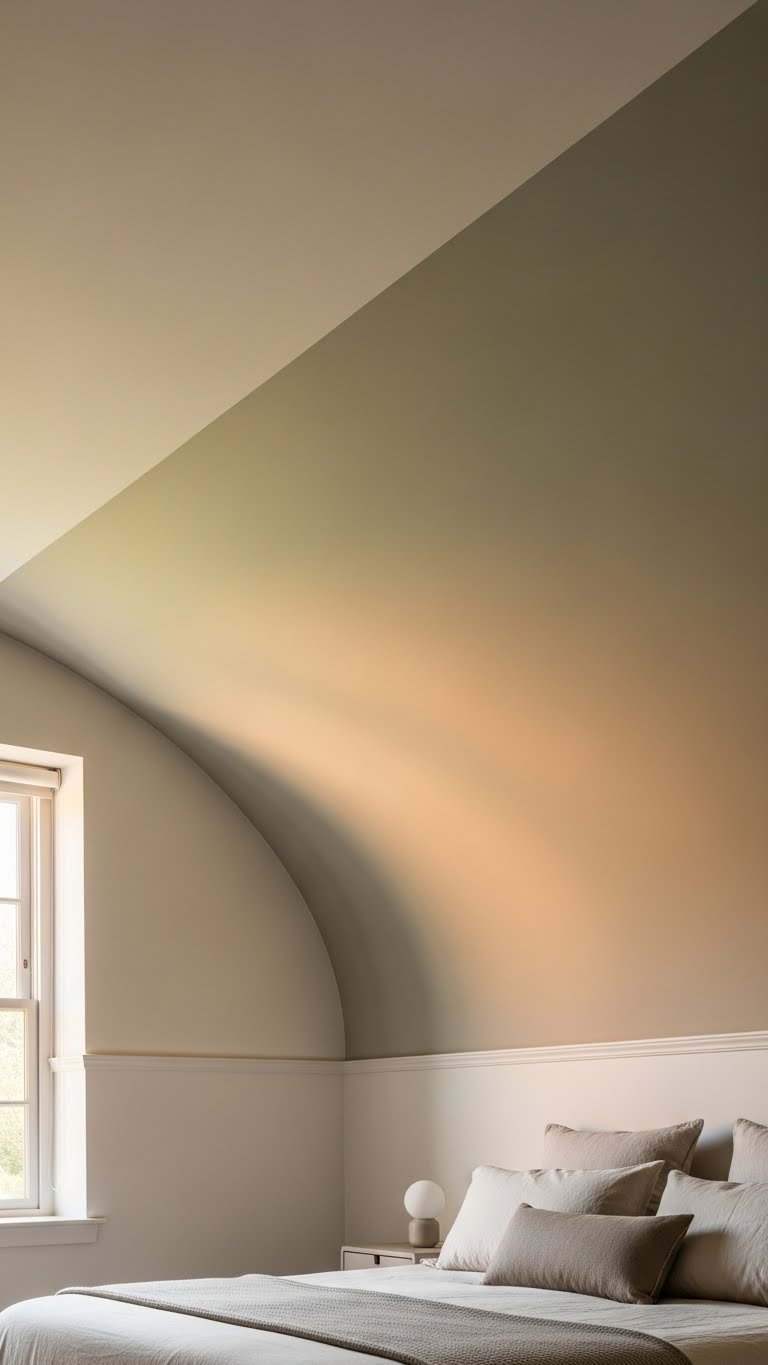
    You solve the “where does everyone sleep?” problem without needing a bigger house.


    21. Layer Textured Throw Blankets for Visual and Physical Comfort

    Throw blankets add texture, warmth, and that “styled” feeling without committing to expensive furniture. Layering different textures creates visual depth and invites you to actually use them.

    Start with 2–3 throws in varying textures: chunky knit ($30–$80), bouclé ($40–$100), linen ($25–$60), and faux fur ($20–$50) from Target, H&M Home, or Etsy. Mix neutral tones—cream, gray, taupe, oatmeal—for cohesion. Drape them casually over the foot of the bed or a bedroom chair. Budget hack: Thrift quality blankets for $5–$15 each at secondhand stores, or buy on-sale throws during seasonal sales (up to 40% off). These are the first things people reach for—make them count.

    Your bed becomes a cozy anchor that makes your whole room feel more intentional.


    22. Paint an Accent Wall Behind Your Bed for Impact

    An accent wall behind your bed is the easiest architectural-style change you can make. It draws the eye, defines your sleeping space, and costs way less than replacing furniture.

    Choose a muted or warm neutral—soft sage, warm gray, muted terracotta, or deep navy—that feels calming rather than energizing. Matte or eggshell finish paint ($20–$40 per gallon) from any hardware store works perfectly. The project takes a weekend and costs $30–$80 in supplies (tape, primer, brush, roller). Prep is key: tape edges carefully and use primer for better coverage. If you rent, discuss with your landlord—many landlords are fine with it if you agree to paint it back when you leave.

    Your bedroom transforms with one wall of color and barely any money spent.


    23. Upgrade Your Pillow Game with Supportive, Quality Pillows

    Your pillow makes or breaks your sleep quality, yet people often sleep on worn-out, unsupportive pillows for years. The right pillow supports your neck and lasts through hundreds of washes.

    Invest in quality pillows ($80–$150 each) from Helix, Saatva, Parachute, or Brooklinen. Get 2–3 different firmness levels so you can adjust based on your sleep position. Memory foam pillows ($50–$100) are popular for support; down-alternative ($40–$80) feels softer; buckwheat hulls ($60–$120) run cooler. Replace pillows every 2 years for hygiene and support. Budget option: Start with one quality pillow and add more gradually. This is the most underrated upgrade people can make—better pillow + better sheets = dramatically better sleep.

    You’ll sleep better and wake without neck pain.


    24. Install a Bed Canopy Curtain Rod for Romance Without Commitment

    If you want the canopy vibe but don’t want to commit to a full bed frame, a ceiling-mounted curtain rod gives you 80% of the aesthetic at 20% of the cost.

    Mount a sturdy curtain rod ($30–$60) and brackets ($15–$30) to your ceiling or wall above the bed. Hang lightweight linen or cotton curtains ($40–$80 per panel). This takes 1–2 hours with basic tools and yields huge visual impact. For renters, adhesive-mount rod systems exist, though they’re less stable for heavy fabric. The rod needs secure mounting (not just drywall anchors) so check ceilings carefully. Your DIY cost is $100–$200 total vs. $500–$2,000 for a full canopy bed.

    You get a romantic focal point that feels boutique and intentional.


    25. Choose a Platform Bed Base to Eliminate Box Spring Clutter

    Platform beds eliminate the need for a box spring, which means less bulk under your bed and a cleaner look. Most people don’t realize this until they switch and suddenly their bedroom feels more open.

    Look for platform beds at IKEA, Article, Wayfair, or West Elm starting around $200–$400 for basic designs, $600–$1,500 for nicer versions. Solid wood looks better than particleboard if you’re keeping it long-term. The low profile makes rooms feel bigger. Make sure your mattress is compatible—platform beds work with any standard mattress. Assembly time is 2–4 hours depending on complexity; hire help if needed ($100–$150). This is one of the easiest ways to modernize your space.

    Your bedroom instantly looks more intentional and less cluttered.


    26. Add a Bedroom Scent Ritual with Luxury Candles or Diffusers

    Scent is the most underrated tool for making your bedroom feel like a retreat. The right fragrance triggers relaxation and becomes part of your wind-down routine.

    Quality candles ($25–$60) from Jo Malone, Diptyque, or Byredo are an investment, but budget candles ($8–$15) from Target or Amazon still do the job. Essential oil diffusers ($20–$60) with lavender, chamomile, or sandalwood support sleep. Light your candle or turn on your diffuser 30 minutes before bed as a ritual signal to your brain. Unscented options work too—the ritual itself matters more than the specific scent. Rotate scents seasonally to keep things fresh. This costs $20–$80 to fully set up depending on how fancy you go.

    Your bedroom becomes a multisensory retreat that signals rest to your whole nervous system.


    27. Organize Your Nightstand with Purpose-Driven Containers

    A cluttered nightstand stresses you out every time you look at it. A few simple containers instantly make this high-stress zone feel calm and intentional.

    Use 2–3 containers on your nightstand: a small woven basket ($10–$25) for books, a ceramic or glass cup ($5–$15) for pens and remedies, and one small decorative tray ($10–$20) for essentials like your phone (if you keep it there), keys, or a water glass. The goal is “every item has a place.” Everything fits, nothing looks scattered. This costs $30–$60 total and takes 20 minutes to set up. Bonus: it’s easier to clean around your nightstand when everything’s contained. Use items you already have if possible.

    Your nightstand becomes a calm, organized extension of your bedroom instead of a stress trigger.


    Save this post and start with one idea this weekend. Whether you pick texture, smart lighting, or better sleep support, even one upgrade shifts how you feel in your bedroom. Your sleep sanctuary is worth the effort—small changes add up fast.

  • 25 Personalized Styling Concepts That Make Any Space Feel Like You

    25 Personalized Styling Concepts That Make Any Space Feel Like You

    Your dorm room doesn’t have to look like everyone else’s. Whether you’re working with a tiny space, a strict no-nails policy, or a tight budget, you can create a room that genuinely reflects who you are. The right personalization touches—from custom wall decals to curated collections—turn a blank box into your sanctuary without requiring permanent changes or expensive overhauls. In this guide, you’ll discover 25 specific styling concepts that blend functionality with personality, so your space feels authentically yours from day one. Let’s dig into ideas that work for renters, broke students, and anyone who wants their dorm to tell their story.

    1. Layer Your Bed Like a Designer

    A basic dorm bed becomes your ultimate retreat when you layer strategically. Start with your base duvet, then add a textured throw blanket ($15–$40 from Target or IKEA), a mix of mismatched pillows (velvet, linen, faux fur), and a chunky knit or faux fur accent piece at the foot. This takes about 20 minutes to arrange and creates instant depth without taking up extra floor space.

    The layering trick also hides stains and makes your bed feel like a cocoon—perfect for study breaks or decompressing after a long day. You can swap out individual pieces seasonally or wash them as needed, so your bed stays both stylish and functional.

    2. Install Initial Lights Above Your Headboard

    Custom initial letter lights are the ultimate personalization hack that photographs beautifully and screams “this is my space.” Order letter lights from Amazon ($20–$35 each) or Etsy ($25–$50), mount them above your bed with removable adhesive strips, and you’ve got a signature piece that works with any decor style.

    Installation takes 10 minutes and requires zero drilling. The soft glow adds ambiance for study sessions or relaxation, and visitors instantly know it’s your room. Plus, these lights are completely renter-friendly and move with you after graduation.

    3. Create a Gallery Wall with Peel-and-Stick Frames

    Gallery walls turn blank walls into visual stories, and peel-and-stick frames make them damage-free. Grab Command Picture Hanging Strips ($5–$10 for a pack) and frame sets from IKEA or Amazon ($2–$8 per frame), then arrange photos, concert tickets, pressed flowers, or inspirational quotes in a cluster layout.

    Spend an afternoon planning your layout on the floor first—this prevents holes and ensures it looks intentional. Use a mix of frame colors and sizes for visual interest. The result is a personalized focal point that brings your room to life and costs under $50 total. When you move out, everything comes off cleanly.

    4. Add Removable Wallpaper to One Accent Wall

    Peel-and-stick wallpaper ($20–$40 per roll from Wayfair, Amazon, or Target) gives you a whole new room vibe without the commitment. Choose one wall behind your bed or near your desk, measure carefully, and spend 1–2 hours smoothing it on. The key is working slowly and using a plastic squeegee to avoid air bubbles.

    This single change anchors your entire aesthetic and makes the space feel intentional. Popular 2025 patterns include geometric Bauhaus prints, botanical boho designs, or subtle textures. When you move out, it peels off cleanly—landlord-approved.

    5. Style Your Desk with Functional Organizers

    A cluttered desk kills both productivity and aesthetics. Invest in desk organizers ($8–$20 from Target or IKEA) with sections for pens, notepads, and cables, then add a small plant or framed photo to personalize. Spend 30 minutes sorting through what you actually use and discarding the rest.

    Vertical storage—like a small shelf or wall-mounted organizer—keeps your surface clear while showing personality. A desk lamp with a unique design ($15–$35) serves double duty as task lighting and decor. When your desk is organized, you’ll actually want to study there.

    6. Hang Floating Shelves for Display and Storage

    Floating shelves ($10–$30 from Home Depot or IKEA) give you vertical storage without eating up floor space—crucial in a tiny dorm. Use removable adhesive strips or Command hooks ($8–$12) for a renter-friendly installation that takes 15 minutes.

    Style your shelves with a mix of books (spines showing for visual interest), small plants, framed photos, and a few decorative objects—but leave breathing room so it doesn’t feel cluttered. This setup is perfect for displaying collections (vinyl records, figurines, K-pop merch) and keeps essentials within arm’s reach while adding personality.

    7. Layer Area Rugs to Define Zones

    Two rugs in different sizes ($15–$50 each from Target, IKEA, or Amazon) create the illusion of separate zones in a small space. Layer a larger neutral rug under your bed and a smaller patterned one under or near your desk. This visual separation makes your room feel more intentional and breaks up monotony.

    Rugs also add texture and warmth underfoot—important when dorm floors are cold tile or concrete. Choose washable or low-pile options so they’re easy to maintain. The layering technique works with any decor style and instantly makes the space feel more designed.

    8. Use Command Hooks for Decor Without Damage

    Command Hooks ($5–$10 for a variety pack) are a renter’s best friend. Use them to hang string lights, tapestries, small shelves, or even a lightweight mirror—no drilling, no landlord drama. Installation takes 5 minutes, and removal leaves zero marks.

    Arrange hooks at staggered heights to create visual interest. You can hang lightweight baskets for storage, small woven hangings for texture, or fabric scraps as art. The beauty of Command Hooks is their flexibility—change your setup whenever you want without consequences.

    9. Curate a Color Palette and Stick to It

    A unified color palette makes even a small space feel intentional and calming. Pick 2–3 main colors that reflect your personality (warm neutrals, jewel tones, pastels, or bold brights), then choose all major pieces around them—bedding, rug, wall color, and large decor items.

    This doesn’t mean everything matches; it means everything plays nicely together. Limiting your palette saves money because you’re not impulse-buying random pieces that clash. Your room will photograph better, feel more sophisticated, and seem larger because visual chaos is minimized. Spend an afternoon scrolling Pinterest or creating a mood board on your phone to nail your palette before shopping.

    10. Mix Metallics Subtly for Understated Luxury

    Chrome or brass accents ($10–$50 each) add a high-end touch without screaming “trendy.” Swap your basic desk lamp for one with a metallic base ($20–$40), grab metal picture frames ($3–$8 each), or hang a mirror with a gold or chrome frame ($25–$50). These small touches catch light and make everything feel more polished.

    The key is restraint—don’t go full disco. Stick to 2–3 metallic accents in the same finish (all gold, all chrome, or all brass). Installation ranges from zero minutes (frames sit on shelves) to 10 minutes (hanging a mirror). The result feels intentional and sophisticated, especially against neutral or muted backgrounds.

    11. Add Plants for Life and Cleaner Air

    Low-maintenance plants like pothos, snake plants, and ZZ plants ($5–$15 each from any garden center or grocery store) instantly make your room feel alive and less institutional. They’re practically impossible to kill, which matters when you’re juggling classes and social life.

    Invest in cute planters ($5–$20 each) that match your color palette, then position plants on your shelf, windowsill, and desk. They improve air quality, add texture, and create conversation starters. Spend 10 minutes weekly watering them. The combination of greenery and careful arrangement elevates your entire aesthetic without much effort or expense.

    12. Hang String Lights or Fairy Lights for Mood

    Warm-toned string lights or fairy lights ($8–$25 from Target or Amazon) create ambiance that overhead fluorescent bulbs never will. Drape them around your headboard, along your shelf, or across one wall using removable Command hooks or removable adhesive clips.

    Fairy lights are perfect for late-night studying or creating a cozy vibe when friends visit. They’re also Instagram gold—that soft glow photographs beautifully. Installation takes 15 minutes, and you can switch between different light colors or intensities depending on your mood. This is a budget upgrade that makes a major difference in how your space feels after dark.

    13. Display Collections Meaningfully

    Whatever you collect—concert tickets, vinyl records, action figures, vintage cameras—display them thoughtfully instead of stashing them in a box. Use shadowboxes ($10–$20) for flat items, wall-mounted racks for records, or a dedicated shelf with good lighting to showcase your collection.

    This approach costs nothing if you already have the items; you’re just arranging them better. A well-styled collection becomes wall art that tells your story instantly. Group similar items together, leave breathing room, and add a small label or card if you want. Collections are conversation starters and make your space unmistakably yours.

    14. Invest in a Quality Under-Bed Storage System

    Under-bed storage ($20–$50 for a set of bins from IKEA, Target, or Amazon) is non-negotiable in a dorm. Choose flat plastic bins with wheels so you can slide them out easily, or fabric storage bags that look better aesthetically. Label them clearly (winter clothes, off-season items, documents) so you know what’s where.

    Spend an afternoon organizing seasonal items, extra bedding, and things you don’t use daily. This frees up your closet and keeps your visible space clean. Measure your bed height first—some dorms have clearance issues—and choose bins that fit comfortably. This single system often doubles your effective storage without taking up a single square foot of usable space.

    15. Create a Mini Wellness Zone

    Designate a small corner as your “wellness zone” separate from your study area. Grab a comfortable chair ($30–$60, like a saucer chair from Amazon), add a soft throw blanket ($15–$30), a small side table ($15–$40), and some low lighting ($10–$20 in candles or a small lamp). This takes 30 minutes to arrange.

    This zone becomes your escape for meditation, journaling, or just sitting with a cup of tea. Even 2–3 square feet in a corner works. The physical separation between “study zone” and “relax zone” helps your brain switch gears—crucial for mental health in a high-stress environment. Personalize it with items that soothe you (photos, inspirational quotes, a journal).

    16. Swap Out Basic Hangers and Shelf Dividers

    Matching wooden hangers ($0.50–$2 each, buy a pack for $8–$15 from Target or IKEA) make your closet instantly look more intentional and give you more space. Swap out wire hangers over 20 minutes, and your closet transforms. Add shelf dividers ($5–$10) to keep folded items from toppling over.

    A tidy closet might seem invisible, but it affects your daily mood every time you get dressed. This upgrade costs under $25 total and feels disproportionately satisfying. Bonus: when things are organized, you actually remember what you own and stop buying duplicates.

    17. Add a Statement Mirror to Expand Your Space

    A large statement mirror ($30–$80 from Target, West Elm, or Amazon) makes your tiny dorm feel significantly bigger by reflecting light and creating visual depth. Position it opposite your window for maximum light reflection, or on a wall that makes the room feel more open.

    Installation takes 10–15 minutes with Command Strips for renters. A mirror with an interesting frame (rattan, gold, black metal, or ornate wood) also serves as wall art and complements any aesthetic. Beyond the visual trick, mirrors are practical for getting ready and styling outfits. This is an investment piece that pays dividends in both function and aesthetics.

    18. Personalize Your Bulletin Board or Pinboard

    A cork or fabric pinboard ($10–$25 from Target or IKEA) becomes the perfect repository for memories and motivation. Pin photos from home, concert tickets, inspirational quotes, reminders, and washi tape borders ($3–$8 for decorative tape). The beauty is you can change it constantly with zero guilt.

    This gives you a dedicated spot for sentimental items without committing to the wall permanently. Spend 30 minutes initially arranging it, then add to it organically throughout the semester. Your bulletin board becomes a personal timeline and a mood board all at once. It’s one of the cheapest ways to inject personality and it’s completely renter-friendly.

    19. Layer Your Lighting for Different Moods

    Instead of relying on harsh overhead lights, build a lighting layering system: a desk lamp ($15–$35), LED strip lights ($15–$40), and string lights ($8–$20). These different light sources let you adjust ambiance based on your activity—bright for studying, soft for relaxing, off for sleeping.

    Smart LED strips (like LIFX or Philips Hue, $30–$60) let you change colors via your phone, but basic LED strips work fine if budget is tight. Installation takes 30 minutes total. The payoff is huge—you go from institutional fluorescent to a space that actually feels like home, and you can study late without annoying your roommate with bright lights.

    20. Use Textured Wall Hangings Instead of Paint

    Since you can’t paint, macramé hangings ($10–$30), rattan circles ($15–$35), and woven baskets ($8–$20) add texture and warmth to bare walls. Hang them at varying heights using Command Strips ($5–$10) for a gallery-style arrangement.

    These pieces work with almost any aesthetic—boho, minimalist, cottagecore, coastal—and they’re lightweight and renter-safe. Spend 20 minutes arranging them. Beyond decoration, they soften the hard edges of dorm walls and create visual interest without color commitment. They also photograph beautifully, which means your room looks good both in person and on Instagram.

    21. Create Custom Wall Art with Printables

    Free or cheap printable art from Etsy ($1–$5 per download) lets you customize your decor without breaking the bank. Choose designs that match your color palette and aesthetic, print them at a local drugstore ($0.25–$0.50 per print), then frame them with inexpensive frames ($2–$8 each).
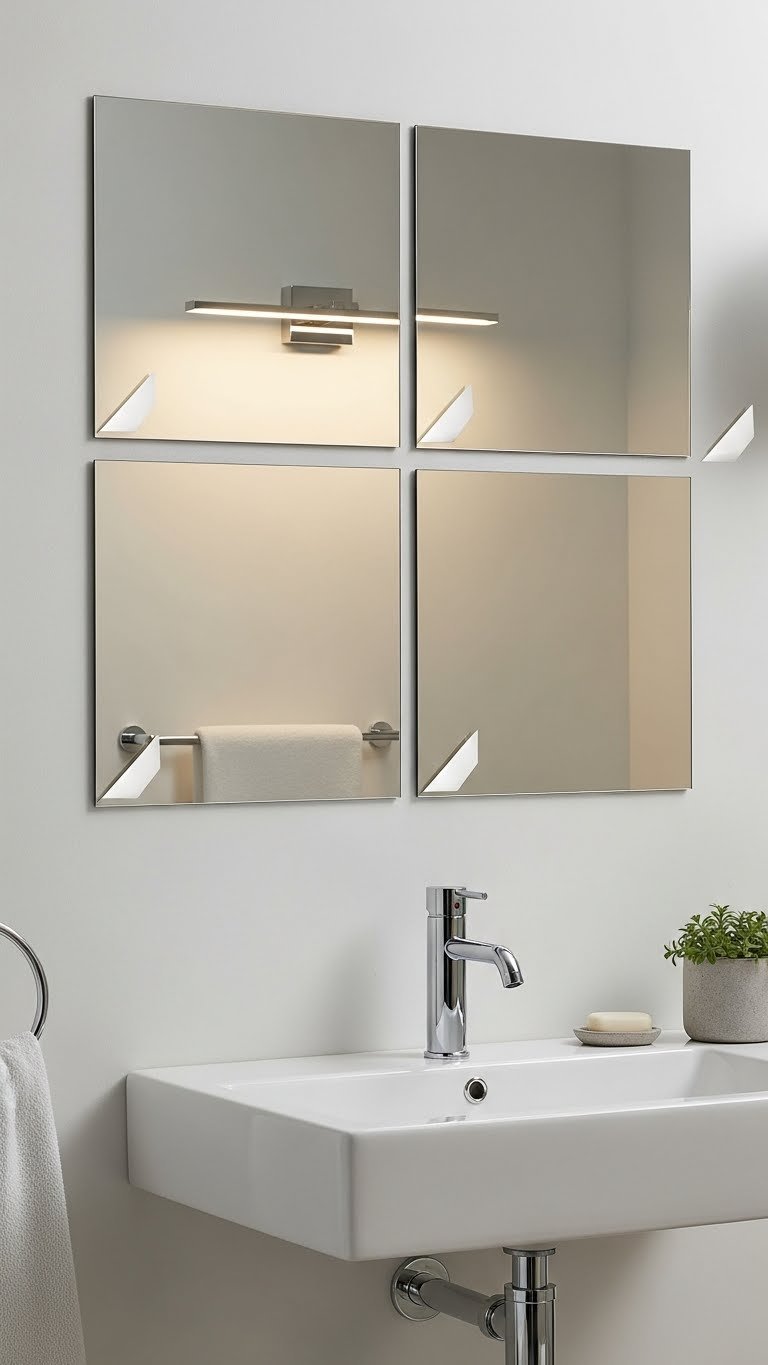
    This approach costs $15–$30 total for a full wall and takes 1 hour to arrange and hang. You can swap prints seasonally or whenever you get bored. It’s the most affordable way to create gallery-wall vibes without investing in original art. Plus, you can print quotes that genuinely motivate you, making your room functional and beautiful simultaneously.

    22. Style Open Shelving with the “Thirds” Rule

    The styling trick that actually works: divide each shelf into thirds. One-third should be books, one-third decorative items or plants, and one-third empty space. This creates visual balance so your shelves feel curated, not cluttered.

    Spend 30 minutes restyling existing shelves using this approach. You’ll instantly notice the difference—it looks intentional without feeling overdone. Group like items together (stack books with spines showing, cluster small objects, cluster plants), and you’ve got affordable styling that photographs beautifully. This method works for closet shelves, floating shelves, or a small bookcase.

    23. Hang a Tapestry as an Instant Headboard

    A fabric tapestry ($8–$25 from Urban Outfitters, Amazon, or TikTok shops) hung behind your bed creates an instant headboard effect and becomes your room’s anchor piece. Use removable hooks or Command Strips ($5–$10) positioned at the top corners to keep it in place.

    Installation takes 10 minutes. The tapestry adds color, texture, and personality instantly. It also serves a practical purpose—sound absorption that helps your room feel cozier and might muffle noise from roommates or hallway activity. Popular 2025 patterns include celestial designs, botanical prints, and geometric tie-dye. This single piece can completely define your room’s aesthetic.

    24. Invest in Multi-Functional Furniture

    An ottoman with storage ($25–$60 from IKEA, Target, or Amazon) or a lofted bed with storage underneath ($150–$400) maximizes your usable space dramatically. These pieces cost more upfront but save money in the long run by eliminating the need for additional storage furniture.

    A storage ottoman works as a seat, footrest, and hidden storage in one compact piece. If your dorm allows bed modifications, a loft frame lets you store a desk or seating underneath. Spend time measuring your space and checking your dorm’s furniture policy before purchasing. These investments pay for themselves by freeing up floor space and reducing clutter.

    25. Rotate Seasonal Decor Within Your Palette

    Rotate throw pillows ($8–$20 each), wall art, and small decor pieces seasonally while keeping your core color palette intact. Buy affordable seasonal items (fall throws, winter cushions, spring botanical prints) that work with your existing scheme, then swap them out every few months.

    This costs $30–$50 per season and takes 20 minutes to refresh. Your room feels new without requiring a complete overhaul, and you’re not stuck with the same aesthetic year-round. Storage under your bed keeps off-season decor organized and accessible. Seasonal refreshes also keep you engaged with your space—you’re actively maintaining it instead of letting it get stale.

    26. Display a Vision Board or Inspiration Wall

    Create a dedicated vision board or inspiration wall using magazine cutouts, printed quotes, photos, and hand-drawn elements. Use washi tape ($3–$8) or removable pins to secure everything without damaging walls. This takes 1–2 hours initially, then evolves organically as you add and remove items.

    Your vision board becomes a daily reminder of your goals, interests, and what matters to you. It’s also incredibly therapeutic to create—spending an afternoon cutting and arranging magazine clippings is meditative. Position it somewhere you’ll see it regularly (above your desk, on your closet door, or beside your bed). Update it whenever you want without any commitment; it’s purely for you.

    Save this post and try just one idea this weekend—even a single change makes your dorm feel more like home. Which concept are you most excited to tackle first?

  • 23 Pastel Room Aesthetic Ideas That Feel Soft & Dreamy

    23 Pastel Room Aesthetic Ideas That Feel Soft & Dreamy

    If you’re craving a bedroom or living space that feels like stepping into a cloud, a pastel room aesthetic might be exactly what you need. Pastels aren’t just for nurseries—soft, muted tones create a calming sanctuary that works beautifully for adults too. The trick is layering different pastel shades, textures, and lighting to build depth without feeling flat or boring. In this guide, we’ve gathered 23 actionable ideas to help you create a soft, dreamy space that feels intentional and cohesive. Whether you’re renting, redecorating on a budget, or ready to invest in your bedroom refresh, you’ll find ideas that fit your timeline and wallet. Let’s dive in and discover how pastel hues can make your space feel like a peaceful retreat.

    1. Start With a Soft Accent Wall in Pale Lavender

    A soft lavender wall instantly anchors a pastel room without overwhelming the space. Lavender works especially well if you want a hint of color without committing to an entire room—pair it with white or cream walls to keep things airy.

    Choose a warm lavender shade like Sherwin-Williams Potentially Purple or Benjamin Moore Provence (both under $40 per gallon). You can paint it yourself in one afternoon using roller and painter’s tape from any hardware store. The key is picking a finish—matte for a softer look or eggshell for durability in bedrooms.

    Pro tip: Test your color on a large swatch first; lavender can look blue or pink depending on your room’s lighting. The best part? You can always paint over it without guilt, making this a renter-friendly risk.
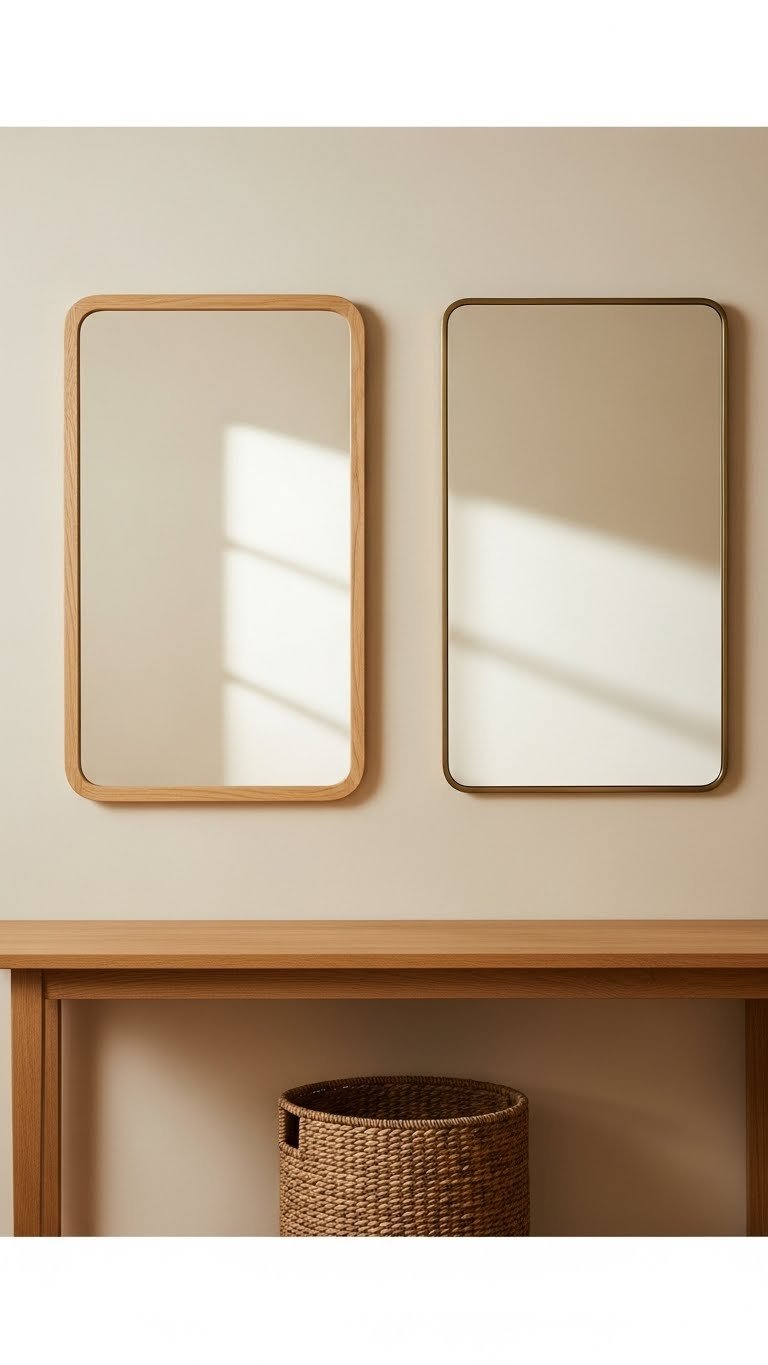
    2. Layer Soft Textures in Your Bedding
    Flat, basic bedding kills a pastel aesthetic faster than anything else. Instead of a bed-in-a-bag set, mix and match textures: start with high-quality linen sheets in cream or pale gray ($80–150 for a set), add a quilted throw blanket in blush pink ($40–80), and scatter 3–4 decorative pillows in complementary pastels.

    Mix fabric types—combine smooth linen, chunky knit, and velvet for visual interest. Brands like Brooklinen or Target’s Threshold line offer affordable bases, while Etsy sellers specialize in handmade quilts in custom pastels. This project takes zero time if you’re buying ready-made; just swap out your current bedding this weekend.

    Layering textures creates that lived-in, intentional look that makes your bed feel like an actual retreat—not a showroom display.

    3. Paint Your Ceiling a Barely-There Blush

    Most people leave ceilings white, but painting yours a barely-there pastel—like the palest blush or soft peach—adds unexpected depth. This trend (called ceiling drenching) makes a room feel more intentional and envelope-like.

    Use a light color like Benjamin Moore Pale Powder or Sherwin-Williams Alabaster with a hint of pink (ask your paint store to mix it). Rent an extension pole for $5–10, use two coats of paint ($30–50 total), and dedicate an afternoon to the project. You’ll need good ventilation and patience with the overhead work.
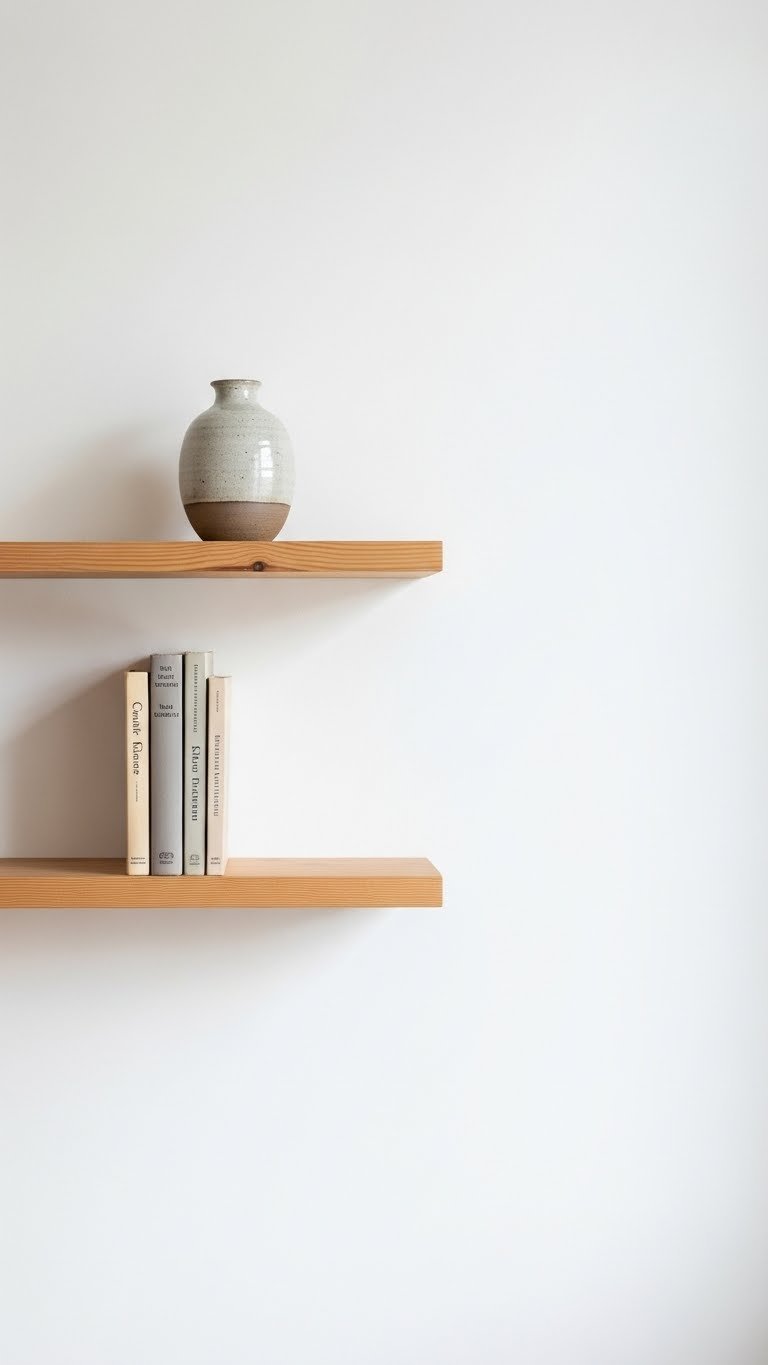
    The payoff? When you lie in bed, you see soft color above you instead of stark white—it genuinely makes the room feel calmer.

    4. Add Soft Lighting With Fabric Lampshades

    Harsh overhead lighting destroys a pastel aesthetic. Instead, invest in soft fabric lampshades in warm pastels (cream, pale yellow, or soft pink) that diffuse light gently across your room.

    Look for linen or cotton shades from IKEA ($15–25), Target ($20–35), or Etsy ($30–60 for custom). Pair them with warm white bulbs (2700K color temperature) for that dreamy, spa-like glow. You can swap a lampshade in literally five minutes—no tools needed.

    Pro tip: Layer multiple light sources (bedside lamps, a standing lamp, string lights) instead of relying on one ceiling fixture. You get more control over ambiance and can adjust brightness throughout the day.

    5. Hang Sheer Curtains in a Soft Sage or Pale Blue

    Sheer curtains in pastel tones soften your windows and filter light beautifully. Sage green, pale blue, or cream sheers layer well over blackout curtains and add color without blocking natural light.

    Purchase from IKEA ($20–35), Wayfair ($40–80), or Amazon ($25–50 for quality curtains). Hang them using a standard rod—takes 20 minutes. If you’re renting, use a tension rod ($15–25) that requires no drilling.

    Bonus: Sheer curtains create that soft, diffused light that photographs beautifully, making your space look like a magazine spread naturally.

    6. Use Pastel Throw Pillows to Add Depth

    Don’t settle for matching pillows. Mix complementary pastels and textures to create visual interest on your sofa or bed. Vary shapes too—mix square, rectangular, and round pillows for dimension.

    Buy from Target ($15–30 each), West Elm ($40–80 for higher quality), or Etsy ($20–50 for unique finds). Start with three pillows and add more as budget allows; this project costs $0 if you’re repurposing existing pillows and just rearranging them.

    Each pillow you add makes the space feel more intentional and comfortable—it’s the easiest way to introduce multiple pastels without repainting.

    7. Create a Gallery Wall With Pastel Artwork

    A gallery wall gives personality to blank walls while staying soft and cohesive. Choose artwork in your pastel palette—watercolor florals, abstract pastels, or minimalist line drawings work beautifully.

    Source prints from Etsy ($15–40 each), Minted ($30–60), or Society6 ($25–80). Mix frame types (white, natural wood, pale metal) for visual interest. Print and frame artwork yourself using Ikea frames ($10–15 each) to keep costs down, or buy pre-framed sets.

    Arrange your gallery before nailing—use paper templates or take a photo first. Takes one to two hours total. The result makes your room feel curated and personal, like you’ve intentionally designed it over time.

    8. Paint Furniture in Soft Pastels for Impact

    Instead of replacing furniture, paint it. An old dresser, nightstand, or bookshelf in a soft pastel becomes an instant focal point and costs far less than buying new pieces.

    Use chalk paint or furniture paint like Annie Sloan ($35–50 per tin) or budget-friendly Rust-Oleum Chalked Paint ($10–15). Prep the piece with sandpaper, apply two coats, seal with a topcoat, and let it cure 24 hours. Plan a weekend afternoon for a single piece.

    Pro tip: Paint only the front and sides if you’re short on time. The transformation instantly makes your space feel intentional—you’ve literally created a custom piece instead of generic store furniture.

    9. Add a Pastel Area Rug to Define Your Space

    An area rug in soft pastels grounds your room and makes it feel more intimate. Choose a color that’s lighter than your walls (cream, pale gray, soft blush) to keep the airy feeling while adding definition.

    Look at Rugs USA ($100–300), Wayfair ($80–250), or IKEA ($50–150 for budget options). Natural fiber rugs (jute, wool) in pale colors age beautifully and feel grounded. Size matters—aim for one large rug rather than multiple small ones.

    A rug instantly makes your space feel more curated and creates a visual anchor for furniture. Plus, it’s cozy underfoot—a sensory bonus to the aesthetic.

    10. Style Open Shelving With Pastel Accessories

    If you have open shelving in a bedroom, bathroom, or living room, style it intentionally. Combine practical items (folded blankets, books) with decorative touches (small vases, plants) all in your pastel palette.

    Group items by color and function—keep sections unified but varied. Use Etsy ceramics ($15–40), Target vases ($8–20), or even thrifted vintage pieces in complementary pastels. This styling is free if you’re using what you own; just rearrange intentionally.

    Pro tip: Leave some breathing room on shelves—don’t overcrowd. The negative space makes your items feel more curated. Styled shelving transforms any room from cluttered to magazine-worthy.

    11. Swap Hardware for Soft Brass or Rose Gold

    Small details matter. Swapping basic black or silver hardware to soft brass, rose gold, or brushed gold instantly elevates furniture. This works on dressers, nightstands, kitchen cabinets, or bathroom vanities.

    Purchase hardware from Wayfair ($3–8 per knob), Amazon ($10–30 for a set), or Anthropologie ($5–15 per piece) for higher-end options. Changing knobs takes five minutes per drawer—just unscrew, replace, and tighten. Totally renter-friendly if you keep the old hardware.

    The payoff is disproportionate to the effort—soft metallic hardware makes everything feel more intentional and cohesive.

    12. Create Dimension With Textured Wallpaper

    Wallpaper adds depth and personality faster than paint. Choose subtle textured or patterned wallpaper in your pastel palette—geometric shapes, woven textures, or delicate floral prints all work.

    Brands like Spoonflower ($20–30 per roll, custom printable), Schoolhouse Electric ($60–100 per roll), or Etsy sellers ($15–50) offer pastel designs. You can hire a pro to install ($300–500) or DIY with a kit ($30–50) if you’re patient.

    If you’re renting, removable wallpaper like Peel & Stick options ($15–40 per roll) work beautifully and leave no damage. Wallpaper transforms a room faster than almost any other single change—one accent wall takes an afternoon and creates drama.

    13. Use Dried Flowers and Pampas Grass as Decor

    Dried botanicals in soft, neutral tones add organic texture and longevity to your pastel aesthetic. Pampas grass, dried eucalyptus, baby’s breath, and bunny tails all complement pastels beautifully.

    Buy dried flowers from Etsy ($8–20 per bunch), Trader Joe’s ($5–8), or grocery store floral sections ($10–15). Arrange them in simple glass or ceramic vases—no special skills needed, just place them in and enjoy. Dried flowers last months or years, making them one of the cheapest decorative investments.

    Pro tip: Spray-paint white or dried stems in soft pastels if you want to customize them (spray paint is $3–5 per can). Dried botanicals make any space feel curated and calm.

    14. Install Soft Dimmer Switches for Mood Control

    Dimmers let you control ambiance throughout the day—bright enough for morning, soft and dreamy for evening. This is one of the most underrated changes for creating a mood.

    Hire an electrician to install a dimmer switch ($100–200 total), or DIY if you’re comfortable with basic electrical work ($15–30 for the switch itself). Takes 30 minutes to an hour professionally. Look for warm-white dimmable bulbs to pair with it.

    Your room transforms throughout the day based on lighting alone—suddenly it feels spa-like in the evening and energized in the morning. It’s the difference between a room and a sanctuary.

    15. Layer Lightweight Linen Bedding Under a Quilt

    The best pastel bedding combines breathable basics with cozy layers. Start with linen sheets in a soft neutral (cream, pale gray, or barely-blush), then add a quilted comforter or weighted throw in a complementary pastel.

    Invest in one quality linen sheet set ($80–150 from Brooklinen, Parachute, or Etsy) and layer a budget quilted throw ($40–80 from Target or Wayfair) on top. The contrast of smooth and quilted feels intentional and looks magazine-worthy.

    Pro tip: Wash linen in cold water and line-dry to maintain softness. Your bed instantly becomes the focal point of your room—so inviting that you’ll actually want to make it every day.

    16. Paint Your Door a Soft Pastel for Personality

    Your bedroom or bathroom door is like a blank canvas. Paint it a soft pastel that complements your walls—it’s a small change that surprises and delights every time you open it.

    Use the same high-quality paint as your walls ($30–50 per gallon). Prep with primer, apply two coats, and let cure 48 hours before closing it. Takes two to three hours total. Choose a shade that either matches your accent wall or complements your palette—soft sage, dusty blue, or pale pink all work.

    The result is a cohesive, intentional look—your space tells a story rather than feeling random.

    17. Add a Small Pastel Bookshelf or Corner Display

    Even a small corner shelf becomes a design moment when styled intentionally. This works in bedrooms, living rooms, or bathrooms where you need storage that’s also beautiful.

    Find a small bookshelf from IKEA ($40–80), Target ($50–100), or thrift stores ($15–40). Paint it if needed, then style with folded textiles, ceramics, and books all in your pastel palette. This is a free project if you already own a shelf—just rearrange and edit what you display.

    Styling even a small shelf transforms it from generic storage into a focal point that makes you smile.

    18. Use Soft Pastel Paint for a Powder Room Refresh

    Powder rooms are perfect for bold pastel choices since they’re small and temporary-feeling. Paint one wall or all four walls in a soft pastel you love—pale peach, dusty rose, or soft lavender work beautifully in tight spaces.

    Choose a paint like Benjamin Moore Calico (pale peach) or Sherwin-Williams Sensitive Tint (soft lavender)—$35–50 per gallon. Paint in one afternoon; with good ventilation, the smell clears within a day. Pair with soft lighting and simple white fixtures for maximum impact.

    The result: guests step into a curated, peaceful space instead of a utilitarian bathroom. Small rooms gain personality with bold color choices.

    19. Layer Soft Rugs in Complementary Pastels

    Instead of one rug, layer two in complementary pastels for depth and interest. Combine a larger base rug in cream or pale gray with a smaller runner in a soft color (pale blue, blush, or sage).

    Use budget rugs from IKEA ($30–80), Wayfair ($50–150), or mix budget and investment pieces. Layering creates visual interest without overwhelming the space. This styling trick costs nothing if you already own rugs—just rearrange them.

    Layered rugs make a room feel collected and intentional—like you’ve gathered pieces over time rather than buying everything at once.

    20. Style Your Nightstand With Intentional Accessories

    Your nightstand should feel calm and curated, not cluttered. Keep only essentials and style them intentionally with pastel-palette accessories.

    Include: one soft lamp ($20–50), a simple plant in a pale pot ($10–20), a small dish for jewelry or keys ($5–15), and a stack of beautiful books ($5–15 each). Everything serves a purpose and stays in your color story. This is a free refresh if you’re editing what you already own.

    Pro tip: Keep surfaces mostly clear—negative space matters. A calm nightstand supports calm sleep.

    21. Paint Your Closet Interior in a Soft Pastel

    Most closets are plain white—boring and uninspiring. Paint the interior of your closet a soft pastel to make getting dressed feel like a ritual.

    Use the same paint as your room ($30–50 per gallon). The closet takes one to two hours to paint. Choose a shade that complements your bedroom palette—soft blush, pale yellow, or dusty blue all work.

    Every time you open your closet, you step into intentional beauty. It’s a small luxury that costs less than $50 but feels disproportionately luxe.

    22. Add Soft Linen Curtains for Texture and Movement

    Beyond sheers, linen curtains in soft neutral pastels add movement and texture to windows. Cream, pale gray, or barely-blush linen curtains filter light beautifully and feel substantial.

    Purchase from Etsy ($40–100 for custom), Parachute ($80–150), or Wayfair ($50–120). Hang using standard or tension rods ($20–50). Install takes 15 minutes. Linen wrinkles beautifully—don’t fight it; embrace the lived-in look.

    Linen curtains make your space feel high-end and intentional. They catch light differently than other fabrics, adding visual interest throughout the day.

    23. Create a Soft Color Palette Board Before Committing

    Before painting or buying anything, create a physical color palette. Gather paint swatches, fabric scraps, and inspiration images in your desired palette so you see how colors interact in your actual lighting.

    Grab free paint swatches from any hardware store ($0), cut fabric samples from stores like Target or thrift stores ($0–5), and arrange them on a board or in a notebook. Live with them for a week—check them morning, afternoon, and evening as light changes. This prevents costly mistakes and takes zero time.

    Pro tip: Take photos of your palette in your actual room lighting when deciding on big purchases. What looks beautiful in a store might look different under your specific light.


    Save this post and pick one pastel idea to start with this weekend—maybe something small like a lamp or throw pillow if you’re testing the waters. Small changes add up fast, and your space will reward you with the calm, dreamy vibe you’ve been craving.

  • 27 Small Campus Living Layout Ideas That Maximize Every Inch

    27 Small Campus Living Layout Ideas That Maximize Every Inch

    Living in a small dorm doesn’t mean sacrificing comfort or style. Whether you’re in a traditional residence hall or a cozy off-campus studio, maximizing every inch transforms your space from cramped to cozy—and makes studying, sleeping, and hanging out actually enjoyable. The challenge isn’t just fitting your stuff in; it’s creating a layout that feels intentional and works for you, not against you. We’ve gathered 27 proven layout ideas that college students have tested and loved, from vertical storage hacks to furniture placement tricks that make rooms feel bigger than they actually are. You’ll find budget-friendly solutions, DIY projects, and strategic shopping picks that won’t drain your account. Let’s get started.

    1. Loft Your Bed to Unlock Hidden Real Estate Below

    A lofted bed instantly opens up prime floor real estate you can claim for a desk, seating area, or additional storage. Instead of your bed anchoring the center of the room, lifting it frees up that footprint for actual living space.

    You can buy bed risers ($25–$50 at Target or Amazon) that stack under each corner leg, or opt for a full loft frame ($150–$400 on Wayfair or IKEA). The risers take 10 minutes to install; a frame takes an hour and may need a friend’s help. Check your dorm policies first—some restrict drilling or permanent fixtures, but risers are usually fine. The space underneath becomes a productivity zone or hangout spot that changes how you use your room.

    Your square footage suddenly doubles in functionality. You go from “bed takes up half my room” to “I have a whole other zone to work with.”

    2. Float Your Desk Away From the Corner

    Pushing your desk into the corner is the easiest—and smallest—layout choice. Floating it into the room (even a few feet out) breaks up the monotony and actually makes the space feel larger because your eye sees multiple zones instead of a line of furniture.

    Use a slim desk ($80–$200) from IKEA, Wayfair, or Target and angle it toward natural light if possible. You’ll need a chair with wheels ($60–$150) so you’re not constantly rearranging. Takes about 20 minutes to set up. The angle also helps with focus—you’re facing into the room rather than into a wall, which feels psychologically roomier and keeps you alert while studying.

    This layout choice costs $150–$350 for furniture but saves you from feeling like you’re in a cubicle. Your brain will thank you during those long study nights.

    3. Use Under-Bed Storage Bins to Reclaim Floor Space

    Dead space under your bed is prime real estate that most students ignore. Flat, rolling storage bins ($8–$25 each at IKEA, Target, or Amazon) slide under easily and hold off-season clothes, textbooks, or holiday decorations without cluttering your visible room.

    Buy 2–3 bins that fit your bed’s undercarriage and label them clearly. They take five minutes to organize and instantly clear shelf and closet space you can use for daily items. Pro tip: get bins with wheels ($15–$30) so you’re not wrestling with heavy containers. The under-bed storage keeps your room feeling open because clutter is hidden, not eliminated.

    With everything tucked underneath, your floor stays clear and open, making the room visually and actually larger. You can move around without stepping over piles, and finding seasonal items becomes simple.

    4. Install Floating Shelves to Add Storage Without Floor Footprint

    Floating shelves ($30–$80 per shelf at Home Depot, IKEA, or Wayfair) mount directly on walls and hold books, plants, photos, and containers without eating into your limited floor space. They work in rentals if you use damage-free adhesive mounting strips or fill holes before you leave.

    Installation takes 30–45 minutes with a level and drill (or ask a handy RA). Mount them 12–18 inches apart vertically to create visual rhythm. Style each shelf with a mix of functional items (books, folders) and decorative pieces (plants, framed photos) so the wall feels curated. One student can handle installation, though a second pair of hands makes it easier.

    Your walls become storage, which means your floor and furniture stay clearer. You go from feeling cramped to feeling organized, and the shelves photograph beautifully for your room pride.

    5. Create a Vertical Closet System With Slim Hangers and Shelf Dividers

    Closet space is usually the bottleneck in small dorms. Swapping standard hangers for slim velvet or plastic hangers ($15–$30 for a pack) and adding shelf dividers ($10–$20) can fit 30–40% more items in the same footprint.

    Hang similar-colored clothing together and use dividers to prevent folded stacks from toppling over. This 45-minute project costs $30–$50 total and doesn’t require any tools or landlord approval. Group by category (jeans, sweaters, casual shirts) so getting dressed becomes faster. Many students combine slim hangers with a hanging shoe organizer ($15–$25) on the inside of the closet door for even more storage.

    Once your closet is maximized, you don’t need additional dressers or storage furniture in the main room. Everything’s contained, and your floor stays open and functional.

    6. Position Your Bed as a Room Divider to Create Zones

    Instead of pushing your bed against a wall, angle it to create a natural boundary between your sleeping zone and your study/hangout space. This layout choice costs nothing and instantly makes your small room feel like it has multiple purposeful areas.

    No additional furniture needed—just rethink your bed’s angle. A headboard ($100–$300 optional, or use pillows) makes the visual division even clearer. Takes 20 minutes to rearrange and no tools required. This works especially well in large single dorms or small studios where everything happens in one room. Your brain compartmentalizes activities (rest vs. work) based on which side of the room you’re on, which actually improves focus and sleep quality.

    Visitors will notice the intentional layout, and you’ll feel like you have more than just a bedroom—you have distinct spaces for different activities.

    7. Use a Pegboard Wall for Customizable Storage and Style

    A pegboard ($20–$50 at Home Depot or Lowes) with removable pegs and hooks is endlessly customizable, renter-friendly, and keeps frequently used items off your desk surface. Mount it above your desk or on any wall with damage-free strips if you’re renting.

    Installation takes 30 minutes with basic tools (drill or just use adhesive strips). You can reorganize it weekly if you want because pegs pop in and out. Start with hooks ($1–$3 each) for headphones, bags, and cables; small baskets ($5–$10) for pens and chargers; and shelves ($5–$8) for books or decorative items. This $40–$80 project keeps your desk clear while making frequently used items instantly accessible. No studying session gets derailed by hunting for earbuds.

    Your desk becomes a focused workspace instead of a catch-all pile. Everything has a home, and rearranging it becomes fun rather than frustrating.

    8. Invest in a Rolling Storage Cart for Mobile Organization

    A rolling cart ($30–$80 from Target, IKEA, or Amazon) holds supplies, snacks, and textbooks while staying mobile enough to tuck into corners or roll under your bed when guests arrive. It’s like portable storage that doesn’t waste permanent floor space.

    Get a slim cart (under 15 inches wide) so it fits in tight spaces. Stock it with supplies you use frequently: chargers, notebooks, snacks, headphones, medications. You can roll it to the library, move it around your room as your layout evolves, or hide it completely. Takes 15 minutes to assemble. At $30–$50 for a basic model, it’s one of the cheapest storage investments with the most flexibility. One student per room can manage this easily.

    You gain mobile storage that doesn’t claim permanent real estate. When parents visit, roll it into a closet. During study marathons, park it next to your desk. It’s like having an extra pair of hands for organization.

    9. Mount a Mirror Across From Your Window to Amplify Natural Light

    A strategically placed mirror ($30–$100 at Target, IKEA, or Wayfair) bounces natural light across your room, making it feel larger and brighter without adding any square footage. This is science-backed, not just decorative.

    Mount it directly across from your window with damage-free strips if renting, or nail it up if you own. 20-minute install, zero cost if you already own a mirror. Bonus: mirrors visually expand small rooms by reflecting the opposite wall, making your dorm seem deeper. A full-length mirror ($50–$100) serves double duty—you see your whole outfit, and it maximizes light bounce. A leaning mirror against a wall works too if mounting feels risky.

    Your room instantly looks brighter and more spacious. You’ll also study better because natural light is proven to boost focus and mood. This one change affects how you actually feel in your space.

    10. Create a Cozy Reading Nook in an Unused Corner

    Every dorm has that awkward corner that seems useless. A small reading chair ($50–$150), a side table ($30–$80), and good lighting ($20–$60 for a floor lamp) transform it into your personal retreat where you can decompress between classes.

    Choose a slim accent chair or even a cushioned floor seat if space is extremely tight. Add a throw blanket ($15–$40) and a small lamp with warm bulbs so the corner feels distinct from your study zone. Takes an hour to set up and costs $100–$300 total depending on quality. This works well for students who share rooms because it gives you a separate space for downtime. The corner becomes your reading, journaling, or phone-scrolling sanctuary.

    Instead of collapsing on your bed when exhausted, you have an intentional rest space. Your bed stays reserved for sleep and intimate hangouts, which actually improves sleep quality.

    11. Use Furniture That Doubles as Storage (Ottomans, Benches)

    An ottoman with built-in storage ($50–$150 at Target, IKEA, or Wayfair) acts as a seat, footrest, and storage box in one. This is the golden ticket for small spaces where every piece must earn its place.

    Choose one that opens from the top and holds off-season clothes, books, or blankets. Dimensions usually run 18–24 inches square, so it fits at the foot of your bed or beside a chair. Assembly takes 20–30 minutes. At $80–$120 for a quality ottoman, you’re getting seating and storage for less than buying them separately. Guests can sit on it when they visit. Bonus: if your dorm allows it, a storage bench ($100–$200) works the same way and can tuck against a wall.

    You eliminate the need for a separate dresser or storage chest. Seating and storage merge, and your room stays uncluttered. This piece literally does double duty and justifies its footprint.

    12. Angle Your Furniture to Create Flow and Avoid a Grid-Like Layout

    Pushing every item against walls makes small rooms feel static and cramped. Angling furniture at 45 degrees or positioning pieces perpendicular to walls breaks the monotony and makes the space feel larger.

    This costs nothing but a 30-minute furniture rearrangement. Your bed doesn’t have to be flush left; your desk doesn’t have to be flush right. Create diagonal sight lines that your eye naturally follows. Pair this with a small area rug ($30–$80) to anchor the angled furniture and define the space. This layout approach requires zero additional purchases but feels intentional and sophisticated. Most student dorms look boxy because everything is gridded; yours will stand out.

    Angled furniture keeps your eyes moving, which makes rooms feel dynamic rather than cramped. Visitors will think you’re a design pro instead of realizing you just rearranged things—it’s that effective.

    13. Hang a Tension Rod Across a Corner for Extra Hanging Space

    A tension rod ($15–$30 at Target or hardware stores) strung corner-to-corner holds extra hanging clothes, bags, or scarves without requiring wall mounts or taking up closet space. It’s an overlooked hack that most students never consider.

    Install it at waist height or higher using damage-free tension technology that doesn’t require drilling. Takes 10 minutes. Cost is minimal, and you gain probably 3–4 feet of hanging space. This works especially well for seasonal items, bags you use weekly, or accessories you want visible. The corner would otherwise stay empty, so you’re using truly dead space.

    Your closet stays organized for everyday items while this secondary rod holds overflow. Getting dressed becomes easier because you see everything at a glance, and your room looks intentionally styled rather than messy.

    14. Swap a Dresser for Wall-Mounted Shelves and Hanging Rods

    If a dresser takes up 30% of your floor space, wall-mounted storage does the same job while freeing up that footprint entirely. Combine open shelves with hanging rods to replace a traditional dresser completely.

    Mount 2–3 open shelves ($30–$80 per shelf) and two small hanging rods ($20–$40 each) on one wall. Takes 2–3 hours if you’re installing everything, or hire building maintenance if your dorm allows it. Total cost is $100–$250 depending on quality and quantities. Style it by color or category so it looks intentional and doubles as decoration. This is a bolder move than typical dorm decor, but it reclaims enormous floor space.

    You go from feeling squeezed to feeling open. Every square foot of floor becomes usable, and your room actually feels spacious. Visitors notice the smart organization immediately.

    15. Use Clear Storage Containers So You Can See Everything at a Glance

    Clear storage containers ($1–$3 each at Dollar Tree, Target, or Walmart) let you see what’s inside without opening them, which saves time and prevents that “I can’t find anything” panic. They’re especially useful for closet shelves and under-bed storage.

    Buy a set of 6–10 containers in graduated sizes ($15–$30 total) and label each one clearly. Spend 30 minutes sorting items by category: seasonal clothes, accessories, documents, art supplies. This costs almost nothing but saves enormous amounts of mental energy. You’ll actually know what you own, which means you won’t buy duplicates or waste time searching. Stackable containers maximize vertical closet space too.

    Organization becomes effortless because you can see everything. You stop feeling disorganized and start feeling in control of your space. That psychological shift actually affects how you use your room.

    16. Install a Tension Rod in Your Closet for Extra Hanging Space

    Most closets have one rod at the top, leaving tons of dead space below. A tension rod installed halfway down ($15–$30) doubles your hanging capacity without any permanent changes. Perfect for renters.

    Takes 10 minutes to install using the tension technology that grips the inside walls. Hang shorter items (shirts, jackets) on the lower rod and longer items (dresses, coats) on the upper rod. This one hack can fit 30–40% more clothes in your closet, which means you need zero additional dressers or hanging racks in your main room. Your closet essentially grows without any floor footprint impact.

    Your room stays clear because everything is closet-contained. The tension rod costs less than $30 and pays for itself immediately by eliminating the need for additional storage furniture.

    17. Invest in a Compact Desk to Replace Your Dining Table

    Many dorms include a tiny table that looks dinky but eats tons of space. Replace it with a compact desk ($80–$200) designed for small rooms. These run 36–48 inches wide versus 48–60 inches for traditional tables.

    Brands like IKEA, Wayfair, and Target offer slim desks with cable management built in. Takes 45 minutes to assemble and costs $100–$150 for a solid option. You keep workspace for studying and eating, but it doesn’t dominate the room. Pair it with a comfortable desk chair ($60–$150) so you’re not tempted to work from bed (which wrecks sleep quality). This is an investment that dramatically improves your daily experience.

    Your room feels more open because the furniture is proportionate to the space. You also create a clear boundary between “study zone” and “relax zone,” which helps with focus and sleep.

    18. Create a Charging Station to Eliminate Cable Chaos

    Cable clutter makes small rooms feel chaotic and dirty even when they’re clean. A dedicated charging station ($25–$60) consolidates all your chargers, cords, and devices in one contained spot.

    Buy a multi-port power strip ($15–$25), cable organizer clips ($8–$12), and a small charging dock or stand ($10–$25) to keep devices upright while charging. Takes 15 minutes to set up on a shelf, corner of your desk, or nightstand. Label each cord with a label maker ($5–$15) so you stop grabbing the wrong charger. This system saves time every morning and makes your room look intentional. Even guests notice the organization immediately.

    Your desk and nightstand stay clutter-free because cables have a home. You also stop losing chargers because everything is visible and accounted for. This one organizational system removes hundreds of mental tasks.

    19. Use a Curtain Room Divider to Create Privacy or Separate Zones

    If your dorm mate’s schedule doesn’t align with yours, or you simply want visual separation between zones, a curtain divider ($40–$100) is renter-friendly and instantly creates privacy without permanent walls.

    Install a tension rod ($15–$30) ceiling-to-floor and hang a blackout or semi-sheer curtain ($30–$70). Takes 20 minutes with zero damage. You can pull it open during the day to keep the room feeling spacious and close it at night for privacy. This is game-changing for shared rooms where one person studies late while the other sleeps. A blackout curtain also helps regulate light and temperature, which improves sleep quality.

    You gain privacy without losing square footage. Your room functionally becomes larger because you’re not constantly visually aware of your roommate’s space. Sleep and study quality both improve.

    20. Maximize Closet Corners With a Slim Shelf Organizer

    Closet corners are dead space that most people ignore. A slim corner shelf organizer ($20–$50) fits snugly and holds shoes, folded items, or boxes that would otherwise take up floor or hanging space.

    These units are usually 18–24 inches tall and designed specifically for corners. Takes 30 minutes to install and costs $25–$40 for a basic model. This reclaims probably 4–5 square feet of previously useless closet space. You keep more items in your closet instead of needing dressers or bins in your main room. It’s a subtle change that has a massive cumulative impact.

    Your closet becomes fully optimized, which means your bedroom floor stays clear and open. Every square inch of closet is now functional rather than wasted.

    21. Hang Floating Shelves in a Staircase Pattern to Add Visual Height

    Instead of hanging shelves in a straight line, mount them in a diagonal staircase pattern ($30–$80 per shelf) to draw the eye upward. This makes rooms feel taller and more sophisticated, especially in dorms with low ceilings.

    Mount 3–5 shelves at increasing heights using a level and damage-free strips if renting. Takes 45–60 minutes depending on how many you install. Style them with a mix of books, plants, and decorative items so they feel curated rather than random. This costs $100–$150 total but creates the illusion of height and makes your room feel intentionally designed.

    Your eyes follow the diagonal pattern, which tricks your brain into perceiving more vertical space. Visitors will think your room is larger and more sophisticated than it actually is. It’s a design hack that costs less than it looks.

    22. Use Bed Risers With Built-In Drawers to Add Hidden Storage

    Regular bed risers are great, but risers with built-in drawers ($60–$150) add storage capacity while lifting your bed. You get height and storage in one purchase.

    These come in sets of four ($100–$150 from Amazon or Wayfair) and install like regular risers. Takes 30 minutes and doesn’t require tools if you’re just stacking them (though some models bolt together). The drawers hold clothes, bedding, shoes, or textbooks—items you want hidden but accessible. This is pricier than basic risers but cheaper than buying risers plus additional storage bins separately.

    You get that lofted-bed feeling with the bonus of integrated storage. The space beneath your bed becomes fully functional rather than just open and available. This small investment pays off in organization and functionality.

    23. Create a Study Pod With a Desk Lamp, Acoustic Treatment, and Headphones Holder

    Designate your desk area as a focused study pod by adding a quality desk lamp ($40–$80), a small acoustic panel ($30–$70) behind your desk to minimize echo and noise, and a headphone stand ($10–$20). These tools create a focused, intentional workspace.

    Mount the acoustic panel on the wall behind your desk to absorb sound and reduce distractions. Position your lamp to eliminate screen glare. The headphone stand keeps your headphones off your desk surface. Total cost: $80–$170 for all three. Takes 45 minutes to set up. This creates a psychological boundary between study zone and relaxation zone, which dramatically improves focus. Even in a small room, you’ve created a space that says “serious work happens here.”

    Your study pod becomes noticeably different from the rest of your room. You’ll feel more productive because the environment supports focus rather than casual browsing.

    24. Use a Hanging Organizer Over Your Door for Shoes and Accessories

    An over-the-door shoe organizer ($15–$30) holds way more than just shoes: belts, scarves, bags, chargers, and small accessories all fit in the clear pockets. It’s hidden behind your door but instantly accessible.

    Mount it on the back of your closet door or bedroom door using over-the-door hooks (no nails needed). Takes 5 minutes. Cost is minimal—around $20 for a decent one. This reclaims drawer and shelf space for larger items and keeps frequently used accessories visible and organized. You’ll stop forgetting about items because you see them every time you open the door.

    Your drawers and closet shelves suddenly have more breathing room. You can store seasonal items and bulky things instead of a scattered collection of smaller pieces. This simple organizer has an outsized impact on how functional your room feels.

    25. Install Smart Lighting to Change Ambiance Without Rearranging Furniture

    Your room’s lighting affects how you feel and function in it. Smart bulbs ($20–$40 each) and smart strips ($30–$80) let you change color and brightness without moving anything or buying new lamps.

    Install smart bulbs in your overhead fixture and desk lamp, then control them from your phone. Use cool, bright light for studying and warm, dim light for relaxing. Takes 10 minutes to install bulbs and download an app. At $40–$80 for two smart bulbs, this is cheaper than buying multiple lamps. You can set schedules so lights automatically shift to warm tones at night, which supports better sleep. Bonus: you can change lighting to match your mood or music when friends visit.

    Your room becomes flexible without any furniture changes. Studying gets easier because you can dial up brightness, and sleep improves because you can dial down warm lighting at night. This is a productivity hack that works on everyone.

    26. Position a Small Bookshelf as a Room Divider to Define Zones

    A slim bookshelf ($50–$120) positioned parallel to but not flush against a wall acts as a visual divider while providing storage. It’s furniture that actually serves multiple purposes.

    Choose a narrow bookshelf (under 12 inches deep) and position it perpendicular to a wall to create a boundary between your sleeping zone and study zone. Fill it with textbooks, decorative books, and small plants so it looks intentional. No installation required—it just sits there. Cost is $80–$120 depending on height and material. This creates psychological separation between activities without eating up much actual square footage.

    Your room instantly feels like it has multiple purposeful areas. Visitors will see intention rather than clutter. The bookshelf does double duty as storage and space-dividing architecture, making it one of the smartest furniture choices for small rooms.

    27. Create a Gallery Wall With Removable Adhesive for Instant Personalization

    A gallery wall costs minimal money but instantly makes your room feel like home. Use removable adhesive strips ($10–$20 for a pack), affordable frames ($5–$15 each), and prints or photos to create a custom wall that’s renter-friendly.

    Start by printing photos on your printer ($0.25 per photo) or downloading free prints from sites like Unsplash. Arrange frames on your floor in the pattern you want, take a photo for reference, then hang them using damage-free strips. Lay out odd numbers (3, 5, 7 frames) for visual balance. Takes 1–2 hours depending on how many pieces you use. Cost runs $50–$100 if you’re buying frames, or under $20 if you repurpose frames you already own. Change it seasonally or whenever you want—no damage, no commitment.

    Your wall becomes uniquely yours in a way mass-produced posters can’t replicate. It’s a simple change that completely transforms how your room feels and photographs. This is the fastest way to feel at home in a new space.


    Save this guide and try even one idea this weekend—you’ll be shocked at how much a small layout tweak improves how you actually live in your space. Which idea are you tackling first? Tag us when you share your dorm glow-up.