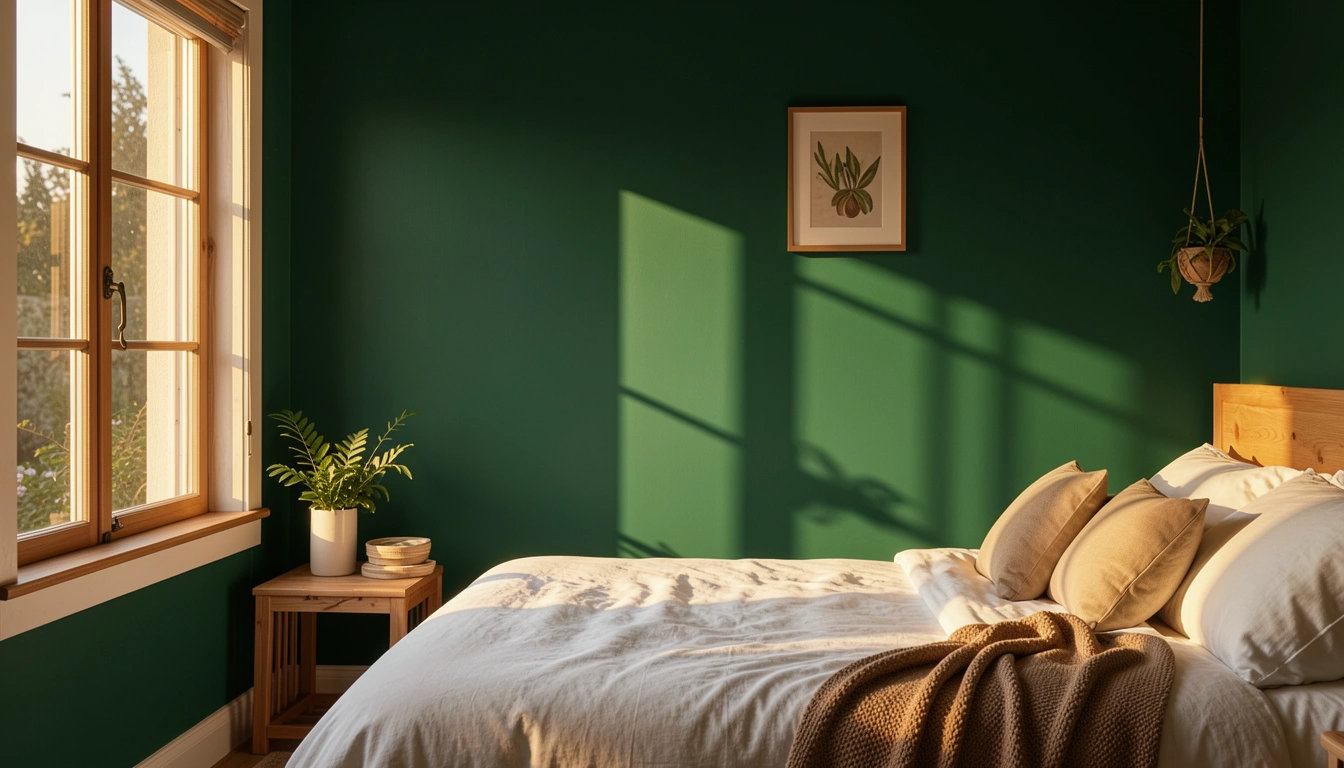
Tired of staring at bland walls but scared bold paint will overwhelm your space? Here’s the truth: stunning walls don’t require a design degree or a massive budget. Whether you’re renting, own your home, or have zero DIY experience, these 23 ideas prove that even simple paint choices can completely shift how a room feels. From clever color combos to budget-friendly texture tricks, you’ll discover exactly how to refresh any wall without overthinking it. Let’s turn those bare surfaces into something you’ll actually love waking up to.
1. Paint One Accent Wall in Deep Emerald
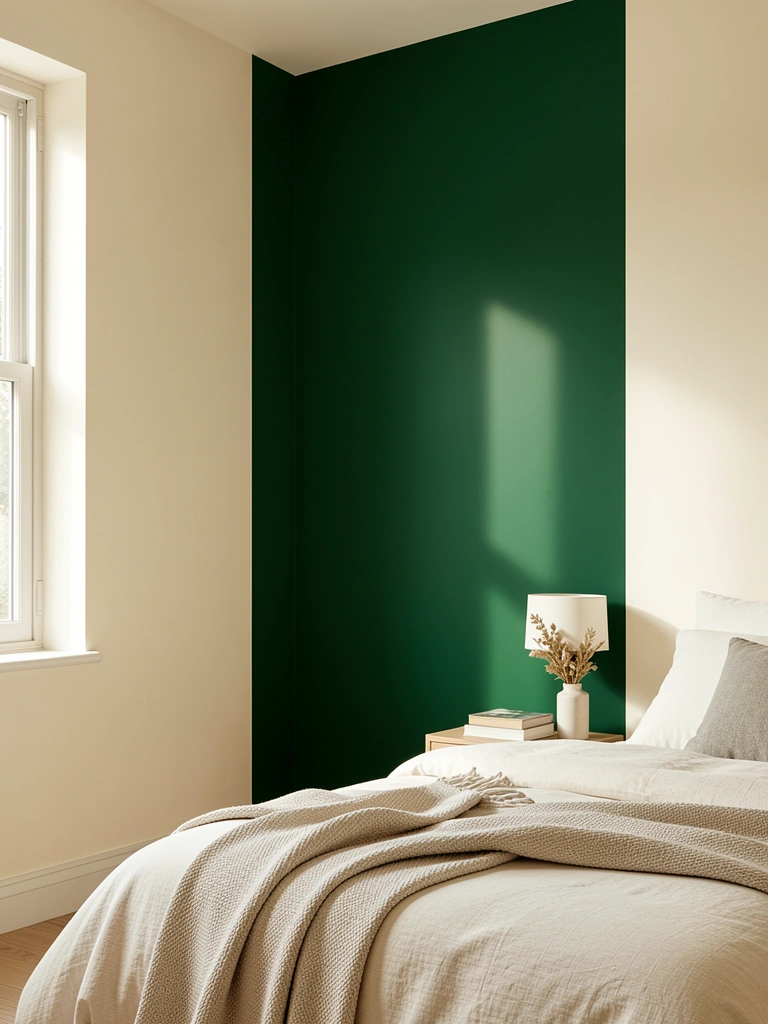
One bold wall packed with personality doesn’t require courage—just the right shade. Deep emerald reads as sophisticated and cozy at the same time, unlike trendy colors that feel dated in two years.
Pick a wall that won’t overwhelm the room (ideally one without a doorway competing for attention). Benjamin Moore’s Silhouette or a similar forest green runs $40–$60 per gallon. Rent a roller from Home Depot ($8/day), grab painter’s tape ($5), and you’re set. The project takes one Saturday afternoon.
The trick? Keep the other walls neutral (soft whites, warm beiges, or pale grays). This balance prevents cave-like vibes while letting your bold wall shine.
Your space gains instant depth and warmth without feeling risky or overdone.
2. Use Warm Beige to Replace Tired Grays
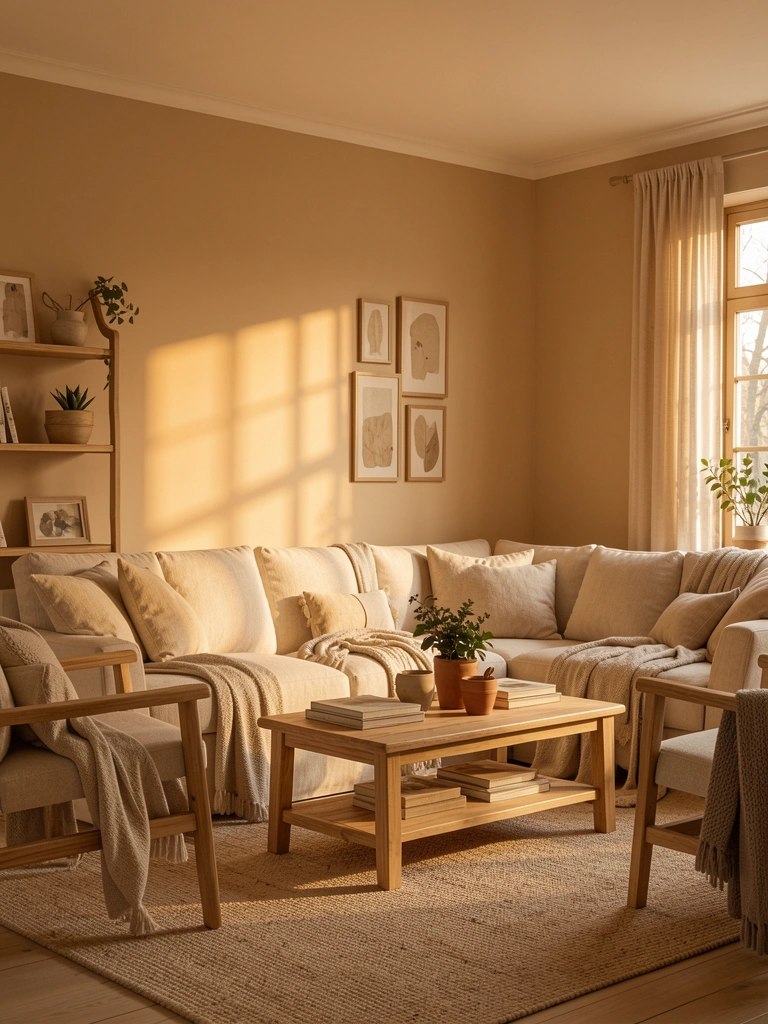
If your room currently sports cool grays, they probably feel dated and cold by now. Sherwin-Williams Stucco or Benjamin Moore’s Wheat Sheaf are the warm neutrals everyone’s switching to this year—they ground a space while still feeling fresh.
These aren’t stark beiges your grandma used; they have subtle warmth that works with almost any decor style. Both are under $50 per gallon and available at major paint retailers. Two coats, one weekend, and the entire room feels updated. They pair beautifully with wood furniture, green plants, and metallic accents.
Pro tip: Paint your trim a crisp white to let the warm walls shine without looking flat.
Suddenly, your whole home feels intentional instead of like it was decorated by default.
3. Create an Ombre Wall for Soft Transitions
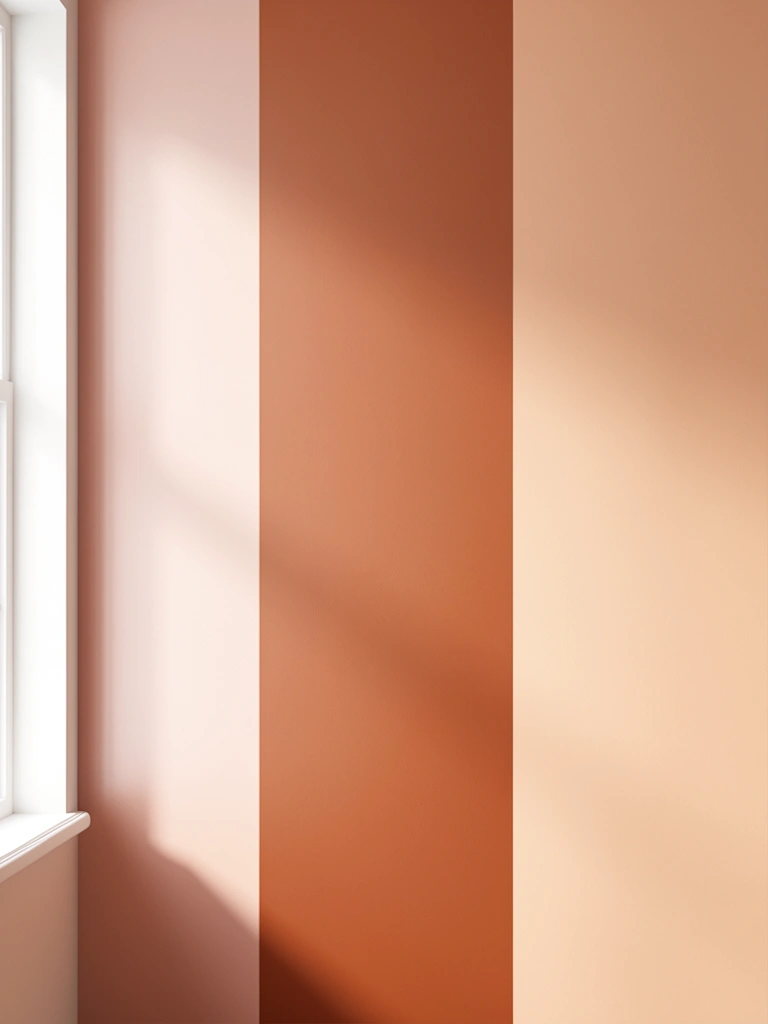
Ombre walls sound complicated but read beautifully in photos—plus they’re easier than you’d think. Pick two colors you love (maybe a pale blush and warm terracotta), then order a third middle shade from the paint store, or mix them yourself.
Apply the lightest shade to the top third, medium in the middle, and deepest at the bottom. Feather the edges with a dry brush to blend. Use low-VOC paint ($35–$55 per quart) to minimize smell. The whole project takes 4–6 hours including drying time between sections.
This works especially well in bedrooms or creative spaces where you want sophistication without screaming “look at me.”
You’ll notice how this gentle gradient catches light differently throughout the day, making the wall feel alive.
4. Add Metallic Gold Accents Over Neutral Walls
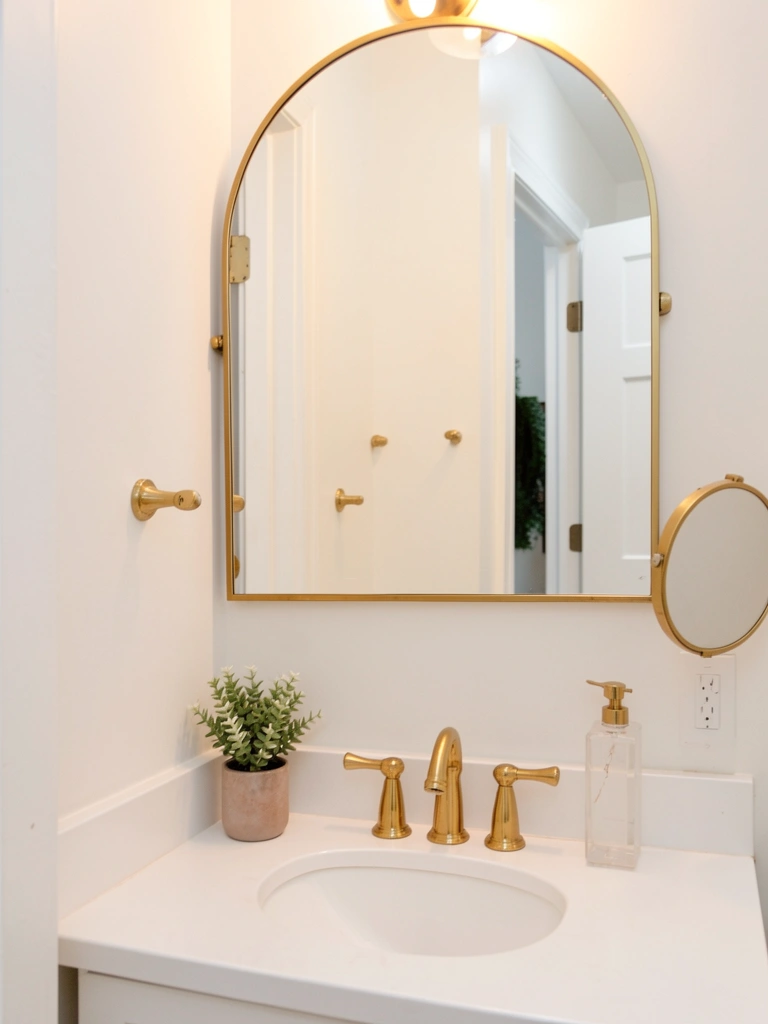
You don’t need to paint your entire wall gold—just add accents—to get that luxe shimmer. Gold reflects light in small spaces and feels way more modern than it did five years ago.
Buy metallic paint pens or spray paint ($8–$15) from craft stores and trace geometric shapes, stripes, or patterns on your neutral walls. Or invest in gold-framed floating shelves ($30–$80) and brass wall sconces ($25–$60) to add shine without paint. Both hardware stores and Amazon stock affordable options.
Renter? Use removable gold contact paper ($12) cut into shapes and stuck directly to walls—no commitment required.
Your bathroom or entryway suddenly feels more spa-like, and the light plays beautifully across the surfaces.
5. Go Moody with Navy Blue in Small Bedrooms
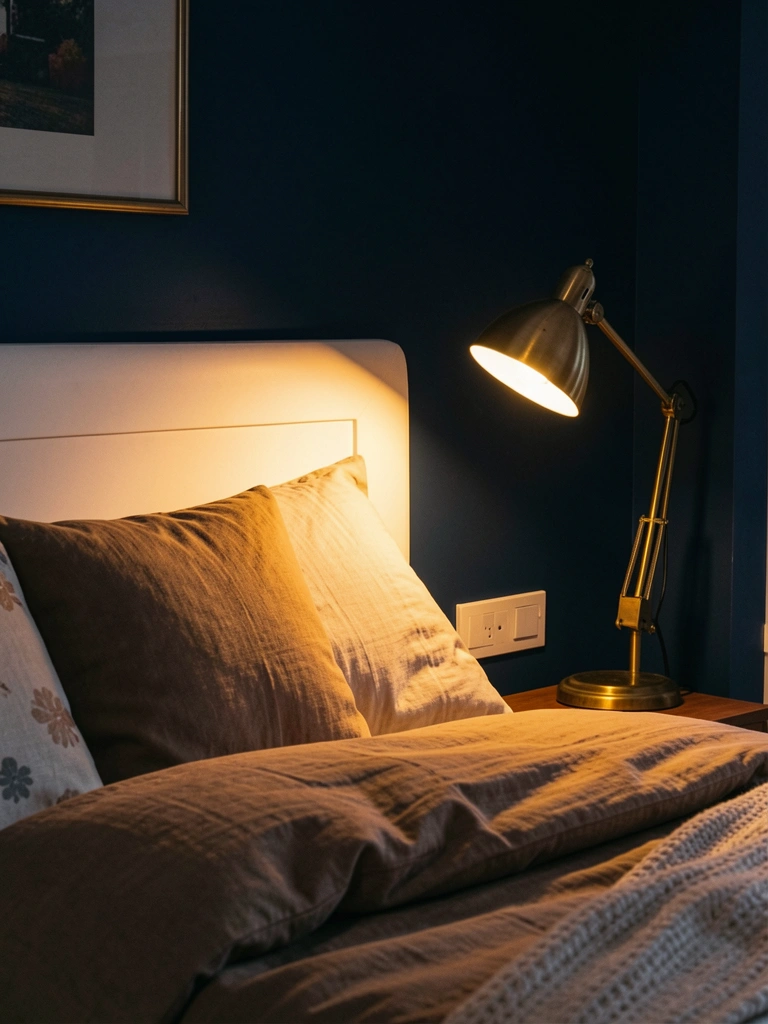
Darker walls in small rooms aren’t scary—they’re actually cozy when paired with good lighting. Navy blue is the moody color that works in almost any style without feeling depressing.
Choose a soft navy with gray undertones like Sherwin-Williams Naval ($40–$55 per gallon) to avoid that artificial pool-tile look. Pair it with crisp white trim and warm bedding. Paint on a Friday evening and wake up to an entirely different room.
Pro tip: Add warm brass lamps and light-colored furniture to keep the room from feeling cave-like. The contrast makes everything look more intentional.
You’ll sleep better knowing you’ve created a real retreat instead of just a place to crash.
6. Stencil Geometric Patterns for Instant Art
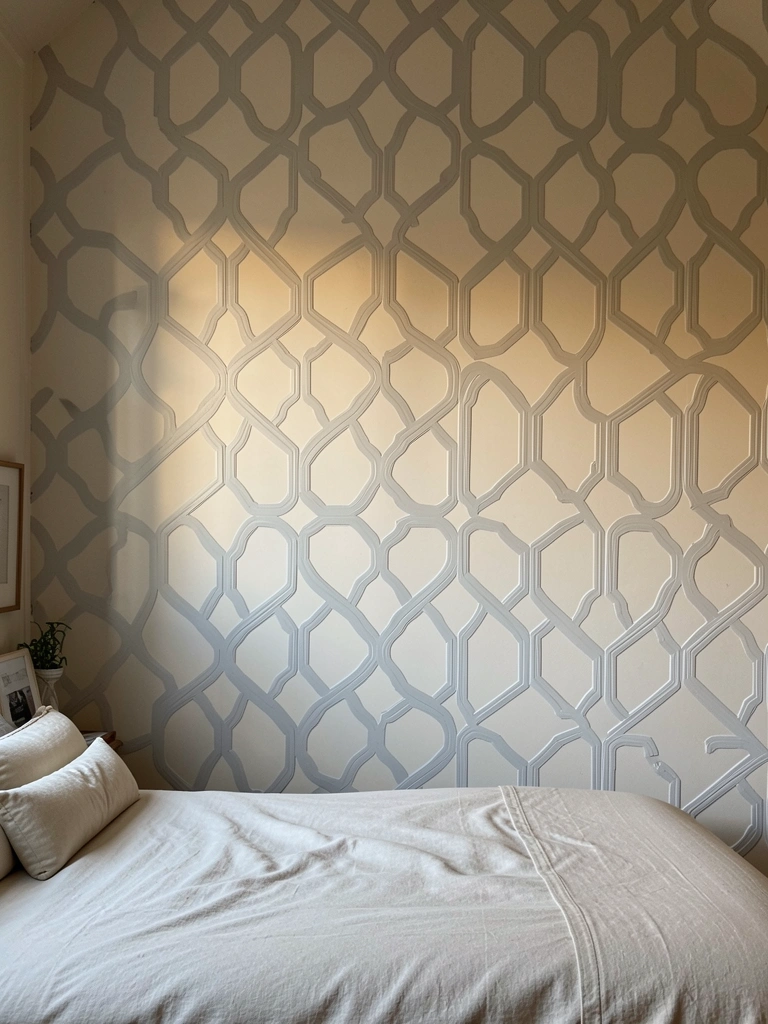
Geometric stencils let you add personality without hiring an artist or committing to a full mural. Patterns are easier to execute than freehand designs and photograph beautifully on social media.
Buy reusable stencils ($15–$40) from Amazon or Etsy, grab some paint in a contrasting shade, and tape the stencil to your wall. Use a sponge to dab paint through—it’s genuinely hard to mess up. One wall takes 3–4 hours including drying. If you hate it, paint over it; stencils are low-stakes experiments.
Start with simple shapes (triangles, hexagons) before attempting complex patterns.
Your wall becomes a conversation starter instead of blank space.
7. Paint Cinnamon Slate for Quiet Confidence
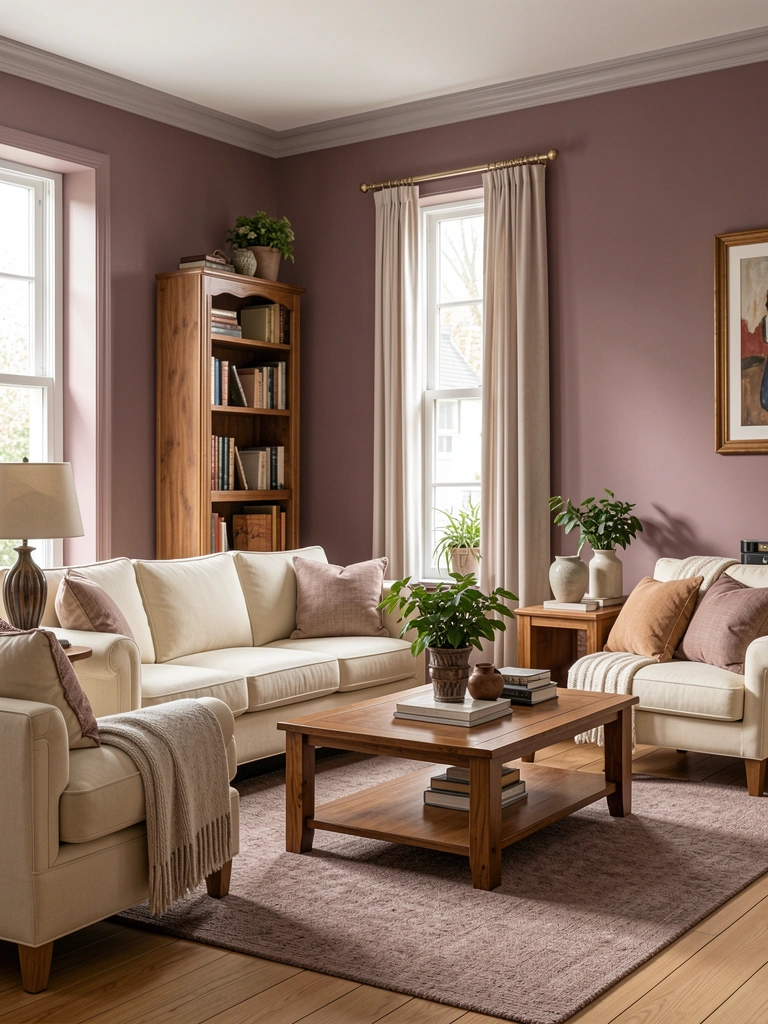
Benjamin Moore’s Cinnamon Slate 2113-40 (their 2025 Color of the Year) is a heathered plum-brown that sounds complicated but feels incredibly wearable. It’s not trendy—it’s timeless.
This shade works in living rooms, bedrooms, and hallways without feeling heavy or dated. Cost runs $45–$65 per gallon, and you’ll need two coats for full coverage. Paint it throughout your whole home for cohesion, or choose one statement room to test it first.
Pair it with warm wood, cream textiles, and brass accessories for maximum impact.
The result is a sophisticated backdrop that makes everything in your room look more curated.
8. Use Pastels to Brighten Tiny Living Rooms
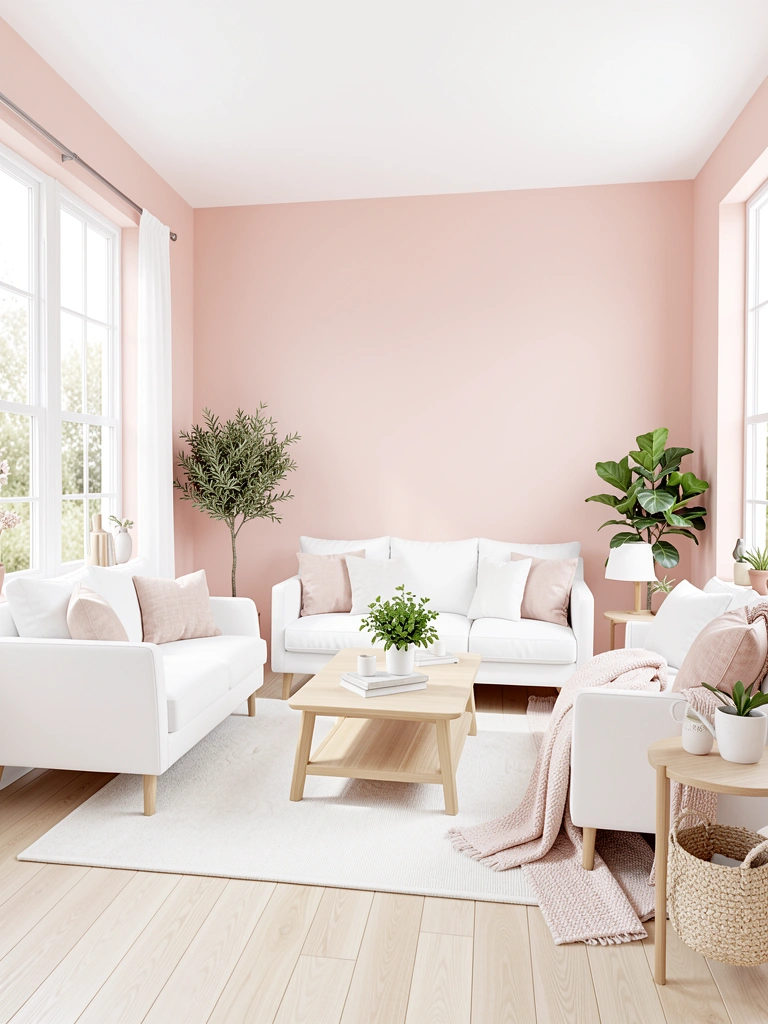
Pastels aren’t just for nurseries—they’re strategic in tiny spaces because light colors make rooms feel bigger. Soft blush, sage green, or pale blue reflect light and open up cramped areas instantly.
Pastel paint costs $35–$50 per gallon at any paint store. Go for matte or eggshell finish so light bounces around rather than concentrating on one spot. Two coats covers most walls.
Pair pastels with white trim and minimal, light-colored furniture to maximize the airy effect. This works especially well for renters since pale colors are easy to cover if you move.
Your small space stops feeling claustrophobic and starts feeling like a choice rather than a constraint.
9. Add Venetian Plaster for Luxury Texture
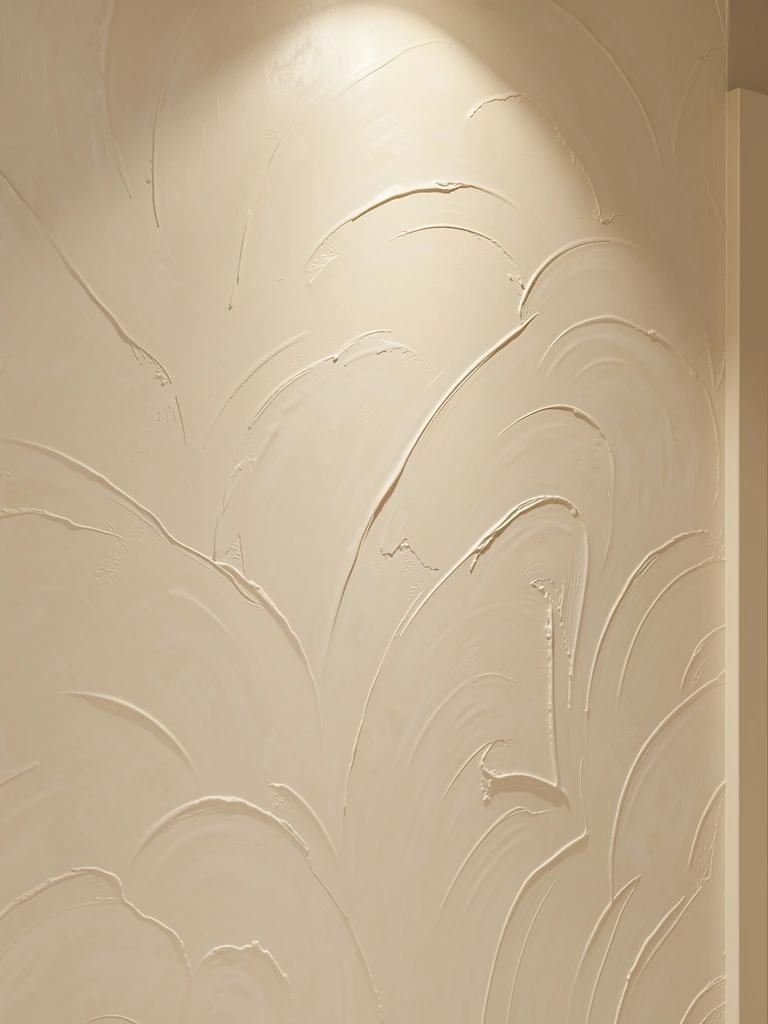
Venetian plaster sounds fancy (and is), but it creates a high-end finish that looks museum-quality without the museum price tag. It’s textured, elegant, and catches light beautifully—way more interesting than flat paint.
Venetian plaster kits cost $60–$150 depending on brand. You’ll need a trowel, patience, and a couple of hours per wall. OR hire a pro for $200–$400 per wall if DIY stresses you. Search “Venetian plaster near me” to find local installers.
This works best in entryways, powder rooms, or accent walls where you want maximum visual interest.
You get a high-end finish that makes your space feel carefully designed.
10. Create a Color-Blocked Wall with Two Tones
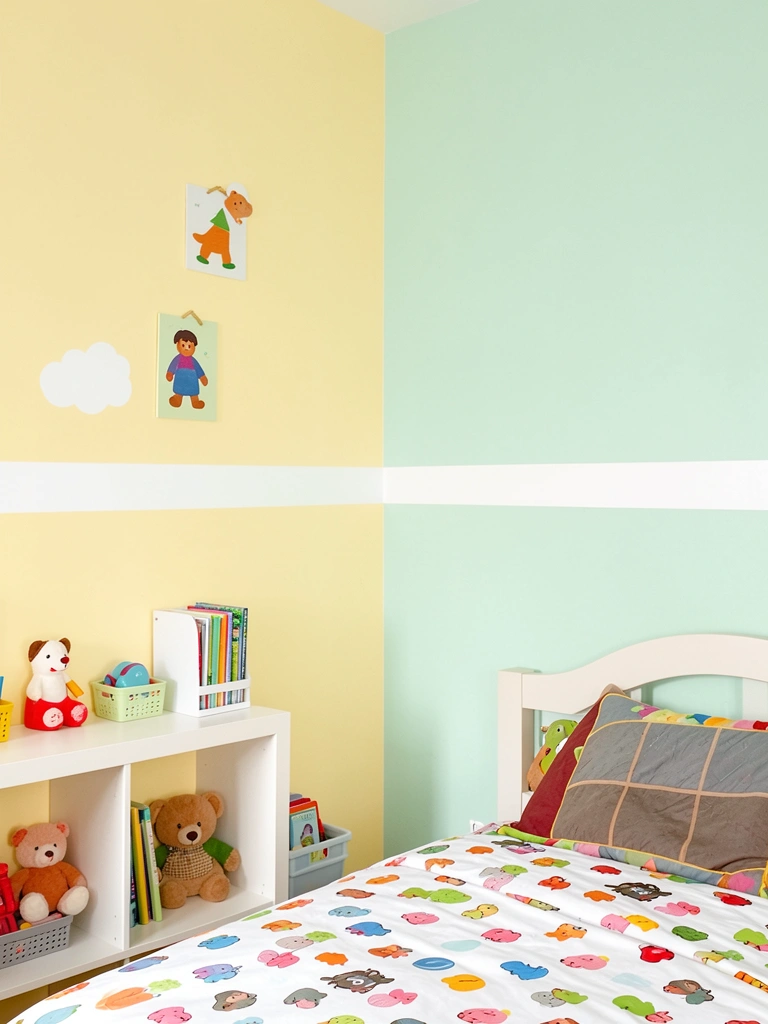
Color-blocking (painting sections in different colors) works in kids’ rooms, creative studios, or any space where you want structured fun. You control exactly how bold or calm it feels.
Pick two complementary shades, measure halfway (or thirds) up your wall, use painter’s tape to mark the line, and paint each section. Two gallons of paint costs $70–$100 total. The tape ensures crisp lines without bleeding. Takes about 3 hours plus drying.
Pro tip: Horizontal lines make rooms feel wider; vertical lines make them taller.
The wall becomes functional art that reflects your personality and makes the room feel playful without chaos.
11. Paint Stripes for Subtle Visual Interest
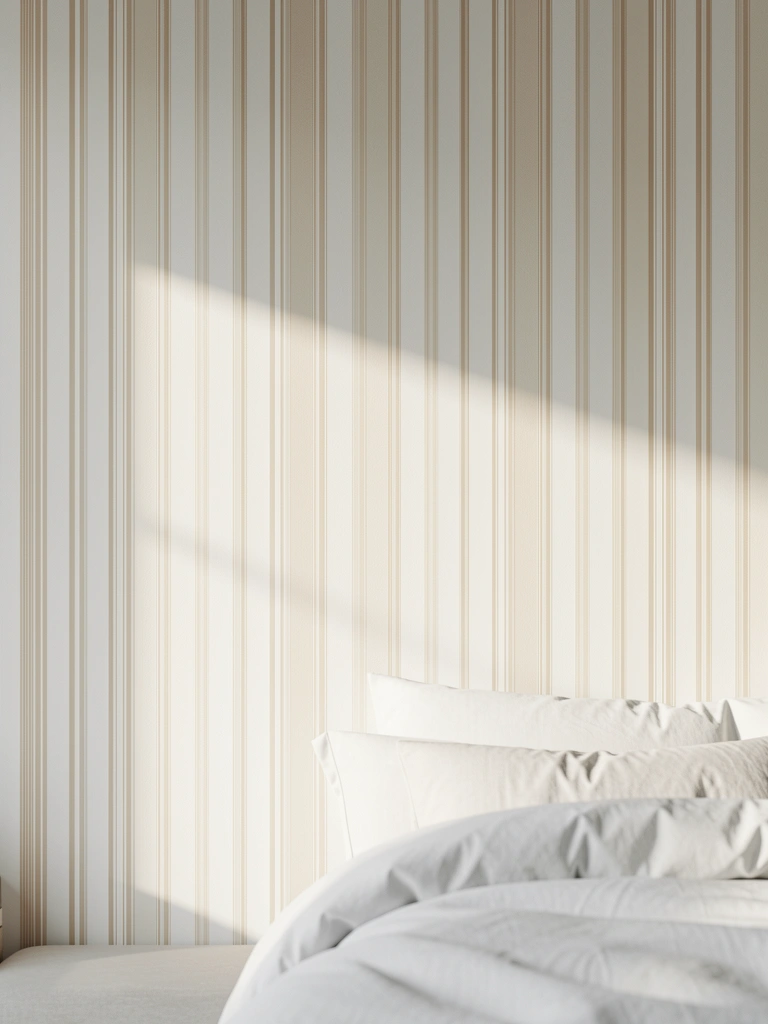
Stripes are the upgrade to solid walls that requires minimal confidence. Thin stripes feel sophisticated; thick stripes feel retro. You pick the vibe.
Use painter’s tape to map out your pattern (measure carefully—even spacing matters). Paint a base coat of your lighter color first, then carefully tape and paint the darker stripes on top. Two paint colors at $40–$50 each, plus tape ($5) means roughly $90–$100 total. This takes 5–6 hours including drying between coats.
Vertical stripes work in bedrooms and hallways; horizontal stripes suit living rooms and create a calming effect.
You get visual depth and structure that reads as intentional design rather than just picking a color.
12. Use a Matte Finish for Sophisticated Drama
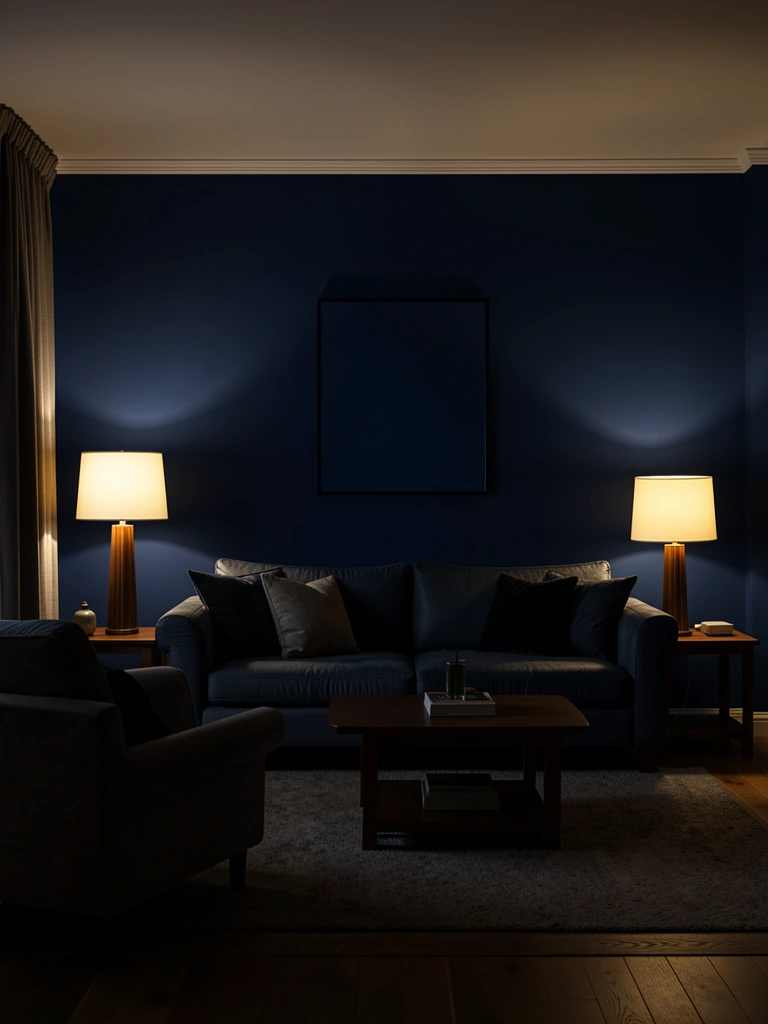
Finish choice matters as much as color choice—matte paint absorbs light and creates drama; satin reflects it and feels livelier. For moody colors, matte wins every time.
Matte paint costs the same as satin ($35–$55 per gallon) but creates a completely different vibe. It hides imperfections better than gloss finishes and photographs beautifully. Note: matte scuffs slightly more easily than satin, so avoid it in high-traffic areas like kitchens.
Pair matte finishes with good lighting (lamps, sconces) so the room doesn’t feel cave-like.
The result is a sophisticated, gallery-like quality that makes your space feel curated.
13. Paint Your Ceiling for Unexpected Impact
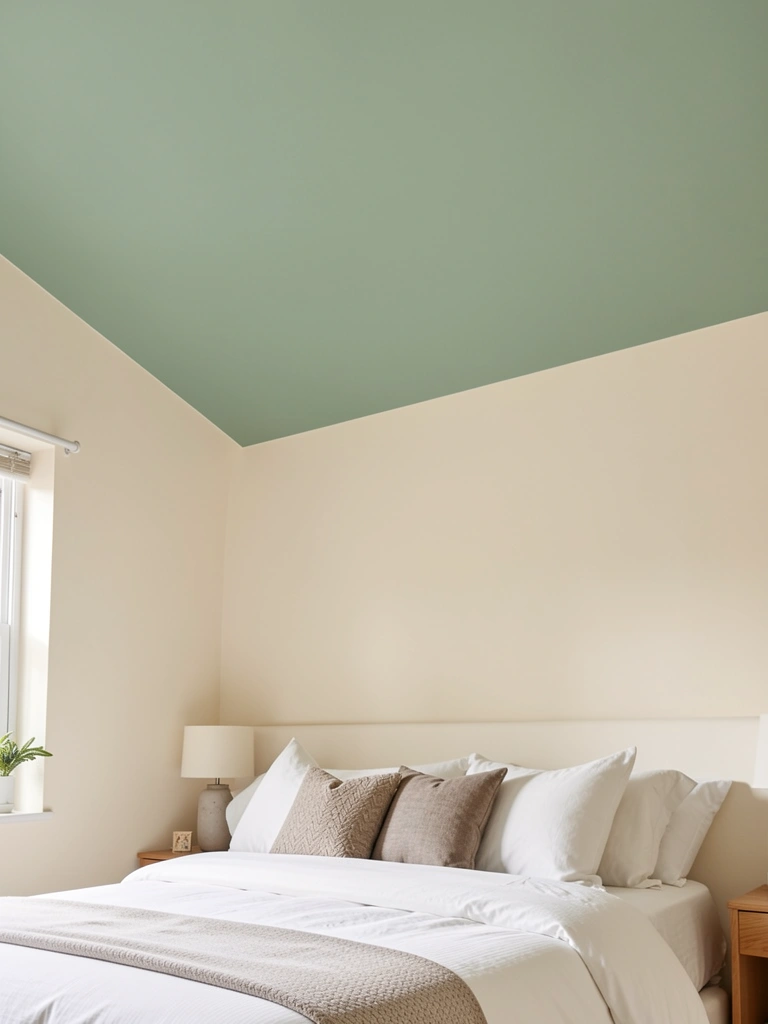
Painting the ceiling a different color than walls is a bold move that works beautifully when done right. Soft colors overhead create coziness; whites make rooms feel taller.
This is harder than walls (hello, arm strain) so consider hiring help for $200–$400, or DIY if you’re patient. You’ll need painter’s tape, a roller on an extension pole, and realistic expectations about ladder time. One weekend minimum.
Choose colors lighter than your walls (pale sage, soft blue, warm cream) to avoid that “inside a box” feeling.
Your eye travels upward, making the room feel taller and more thoughtful than standard white ceilings.
14. Add a Nature-Inspired Mural for Biophilic Vibes
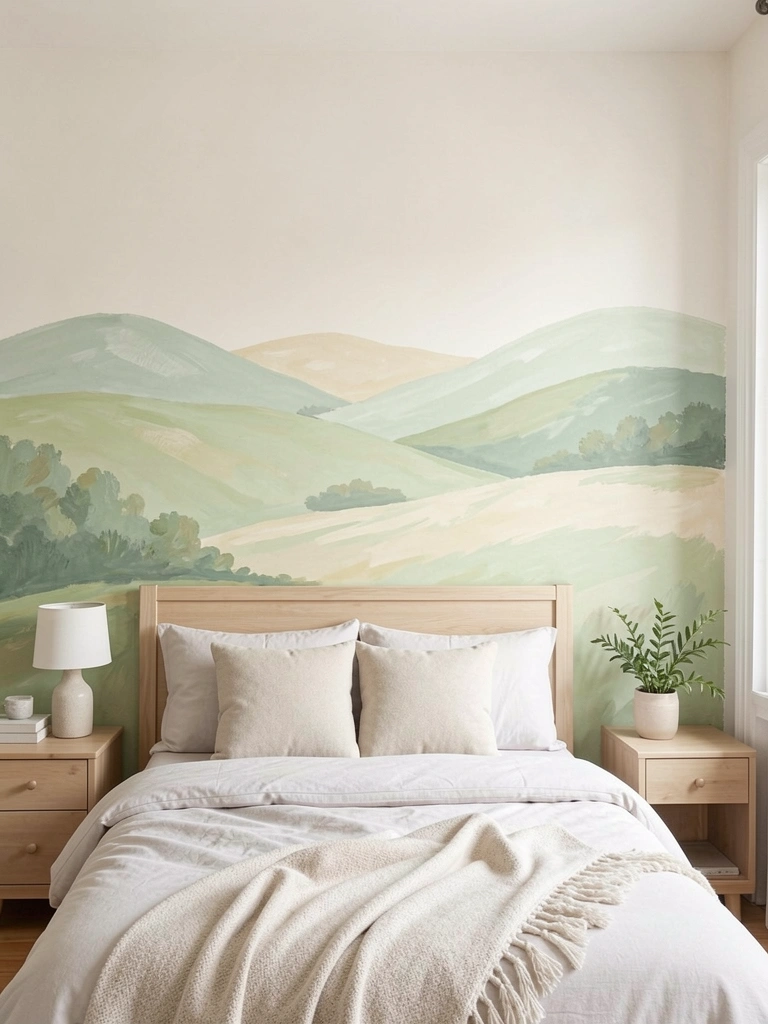
You don’t need to be an artist to add a landscape mural—simple horizons, botanical shapes, or abstract nature scenes read beautifully and cost way less than hiring someone.
Grab acrylic paint ($3–$8 per bottle), a few brushes ($10–$20 total), and a pencil. Sketch lightly first, then paint loose, impressionistic shapes rather than photo-realistic details. Time: 6–8 hours over a weekend. Messing up? Paint over it—acrylics are forgiving on walls.
Alternatively, buy peel-and-stick murals ($50–$150) from Etsy or Amazon and install them like wallpaper (renter-friendly, removable).
Your space connects to nature without the maintenance of actual plants.
15. Use Warm Neutrals as Bridge Colors
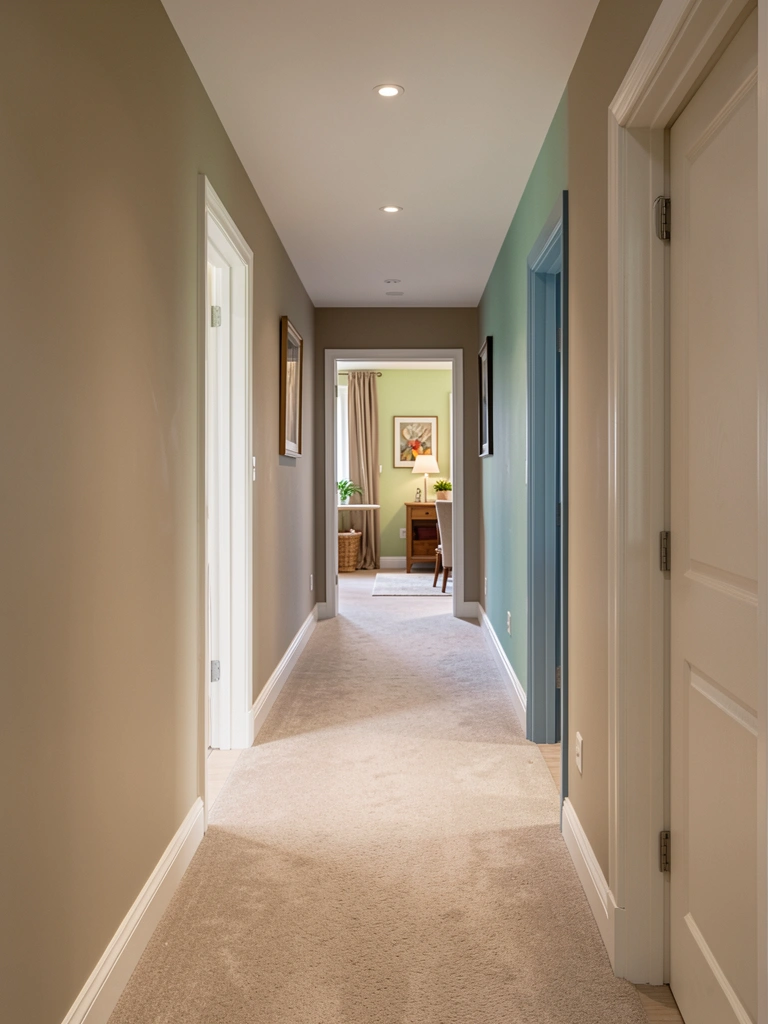
Bridge colors (warm neutrals that work with multiple shades) solve the problem of mismatched rooms. Benjamin Moore’s Wheat Sheaf or Sherwin-Williams Urbane Bronze work everywhere without clashing.
Paint hallways, entryways, and transition spaces in these versatile shades. They make your whole home feel cohesive instead of random. Cost: $40–$55 per gallon. Use them as your “safe color” if you’re scared to go bold in living areas.
These shades pair with deep accent walls, pastels, and neutrals without jarring your eye as you move through rooms.
Your home flows visually, and people notice the carefully planned-out feeling (even if you’re just using psychology).
16. Paint Lower Walls Dark and Upper Walls Light
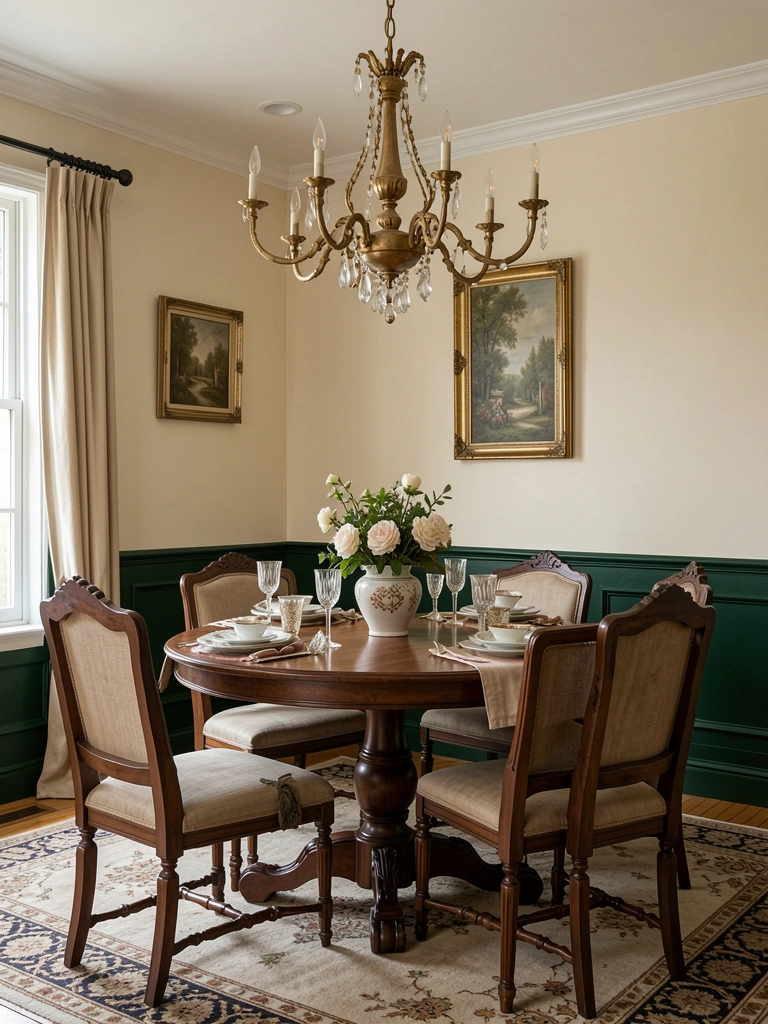
This classic approach (light tops, dark bottoms) works because it mirrors nature and feels inherently balanced. Dark grounds the room; light opens it.
Paint a chair rail line using painter’s tape at about 36–40 inches from the floor. Paint the bottom section in a rich color (deep green, navy, burgundy), the top in a pale shade. Use two gallons of paint ($80–$110 total) and a level to keep your line straight. Takes 4–5 hours.
This technique works especially well in dining rooms and bedrooms where you want sophistication without full commitment to a dark room.
The room gains architectural interest and visual anchoring that reads as intentional design.
17. Combine Paint with Wood Accents for Warmth
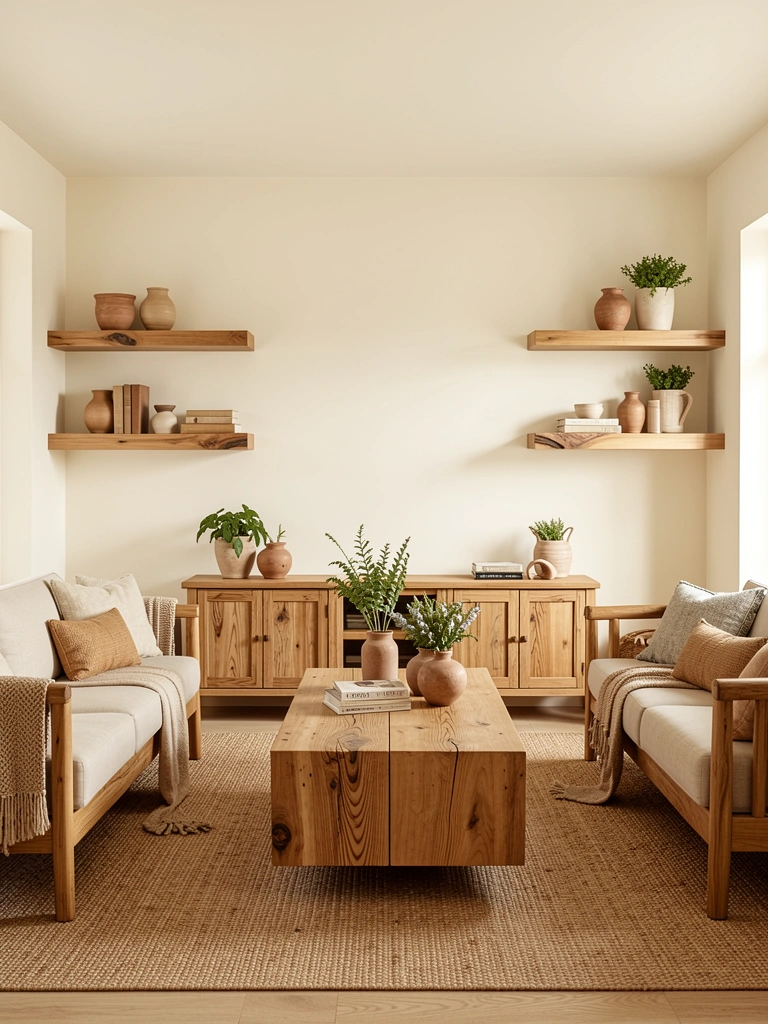
Paint alone feels flat when there’s nothing to contrast it against. Adding natural wood creates depth and warmth—it’s the “secret” behind photos that feel expensive.
Paint your walls in a neutral tone ($40–$55 per gallon), then style shelves, doors, or accent pieces with visible wood. Real wood shiplap costs $150–$400 per wall; laminate shiplap peel-and-stick is $50–$100 and looks genuinely nice. Mix textures by adding wood frames, cutting boards, or salvaged wood pieces.
Thrift stores often have cheap wood items ($5–$20) that instantly warm up a space.
Your room shifts from looking sterile to feeling like a real home where people actually live.
18. Use Satin Finish for Reflective, Light Rooms
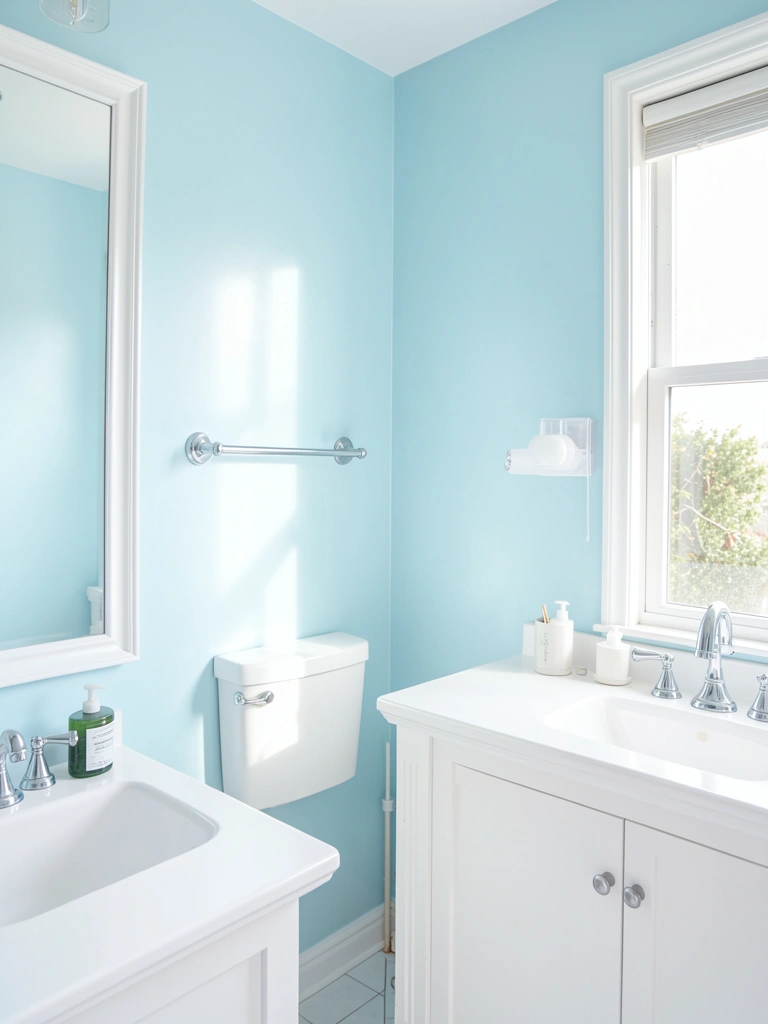
If matte feels too dark for your taste, satin finishes reflect light without being glossy or plastic-looking. Perfect for bathrooms, kitchens, and bright rooms where you want brightness without harshness.
Satin costs the same as matte ($35–$55 per gallon) but reads more lively and is easier to clean (bonus for kitchens). Two coats ensures good coverage. Use it with lighter colors for maximum light-bouncing effect.
The trade-off? Satin shows dust and fingerprints slightly more than matte, but it’s nothing a damp cloth won’t fix monthly.
Your room feels bright and airy while still reading as intentionally designed.
19. Add Botanical Wall Decals Over Solid Paint
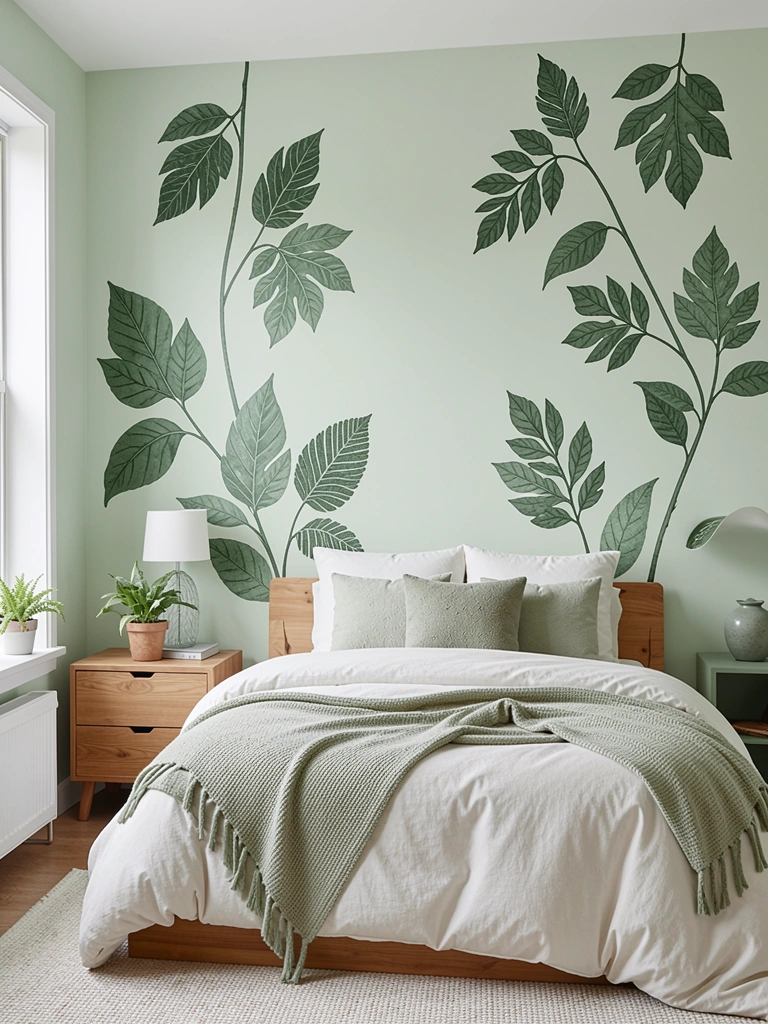
Wall decals (removable stickers with designs) let you add personality without paint skills or landlord drama. Botanicals, abstract shapes, and geometric patterns all work beautifully layered over solid-colored walls.
Grab decal sets ($15–$40) from Amazon or Etsy and peel them onto your freshly painted walls. They adhere to most finishes and remove cleanly without damaging paint. Renter dream: completely non-permanent and portable.
Arrange them symmetrically for modern vibes or scattered for organic, natural feel. Takes 30 minutes to apply.
Your wall gains personality and visual interest with zero permanent commitment.
20. Paint an Ombré Ceiling That Fades to White
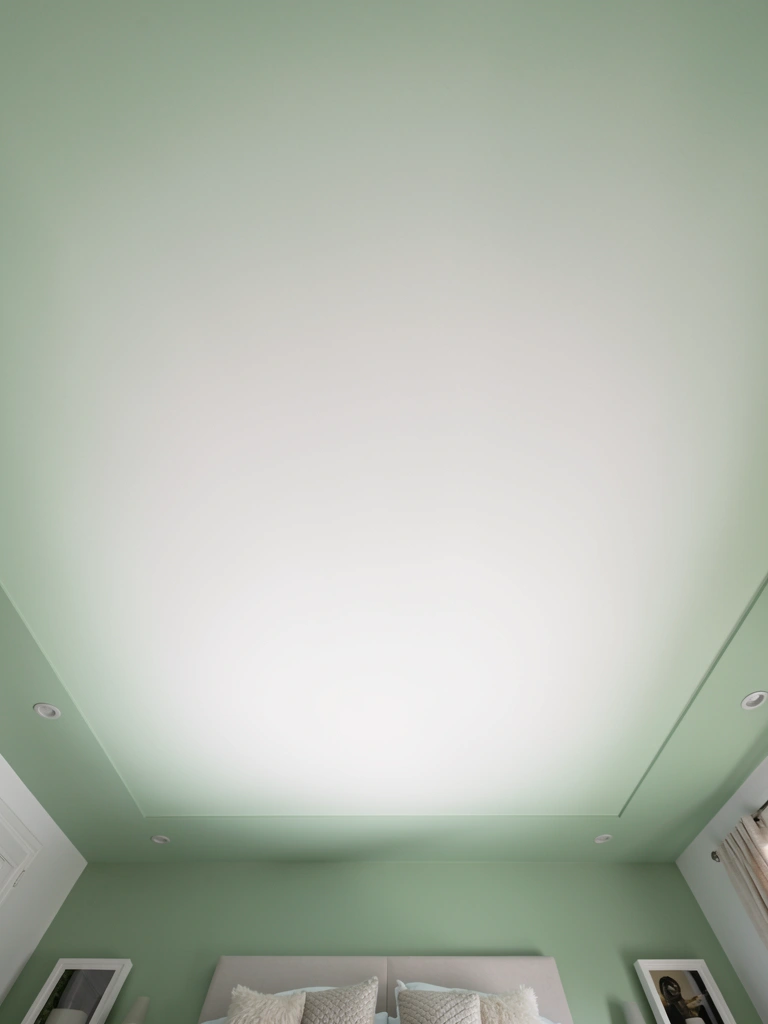
Gradient ceilings are the next-level version of plain painted ceilings. Instead of solid color overhead, you create a subtle fade that makes rooms feel bigger and more thoughtful.
Start with your darkest color at the edges, gradually lightening toward the center. This requires mixing custom shades ($50–$80 total for paint and supplies) and patience. It’s physically demanding, so hire help ($300–$500) if DIY exhausts you. Takes 6–8 hours DIY or a few hours with a pro.
The effect is subtle but absolutely noticeable when someone lies in bed and looks up.
You get a spa-like, high-end ceiling that most people never think to try.
21. Layer Textures with Paint and Fabric
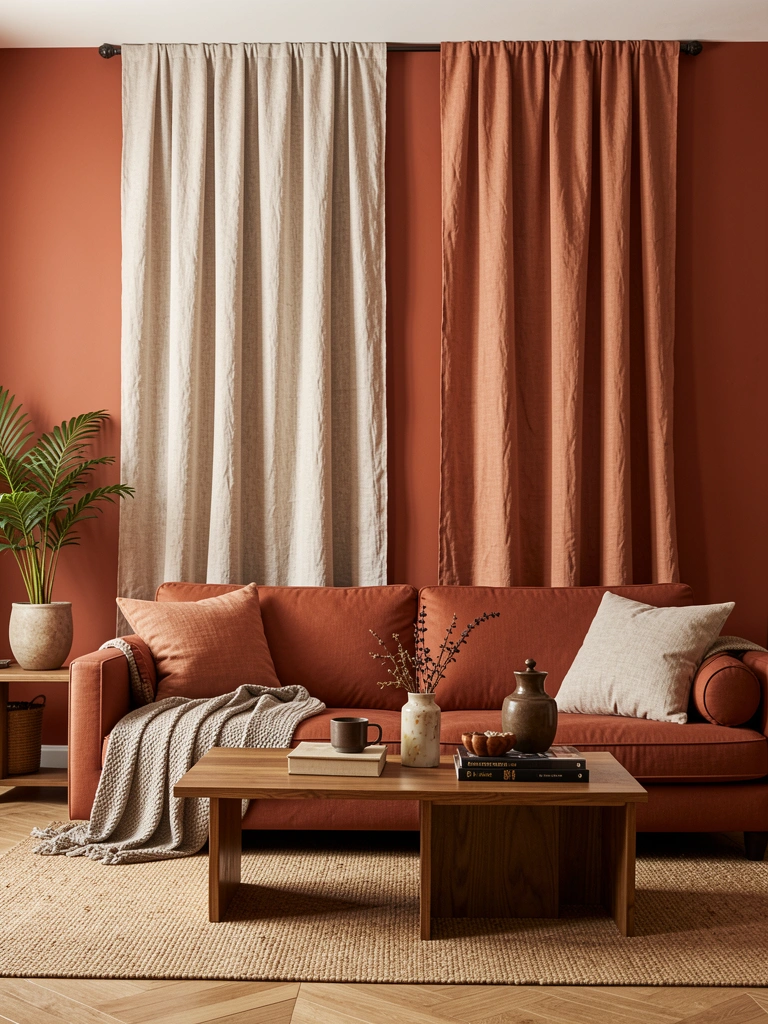
Combining paint with fabric (tapestries, macramé, woven wall hangings) creates depth that pure paint can’t achieve. This is the 3D trend everyone’s talking about.
Paint your base color ($40–$55 per gallon), then layer fabric using removable adhesive strips ($8–$15) or hardware. Fabric costs $30–$150 depending on quality. Renter? Use hooks and hang pieces instead. The combination creates shadow and texture that photographs like magic.
Mix matte paint with textured fabric for maximum visual interest.
Your wall becomes a gallery display rather than just a surface.
22. Create a Feature Wall with Geometric Shapes
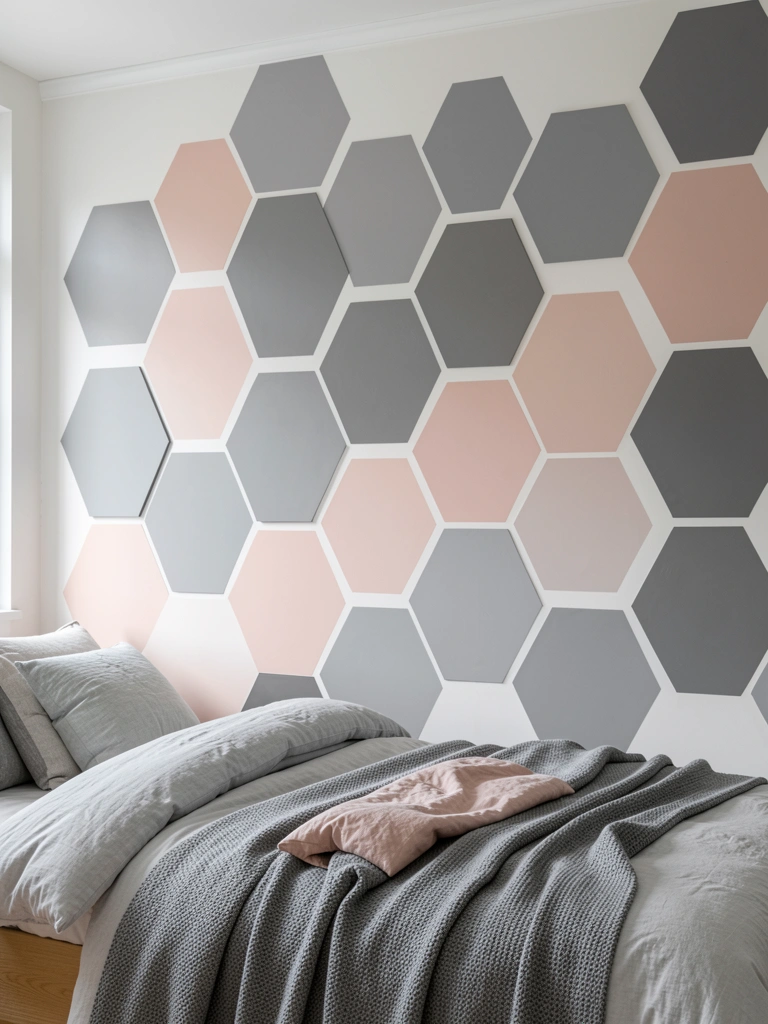
Geometric shapes painted directly on walls (no stencil required if you’re feeling confident) create a unique, gallery-quality feature. Hexagons, circles, and triangles all work beautifully.
Sketch your pattern with a pencil first, then paint each shape in complementary colors. Use acrylic paint ($3–$8 per bottle) and painter’s tape ($5) to keep edges crisp. This takes 6–8 hours but is genuinely easier than it looks.
Start on a small wall or in a lower-traffic room if you’re nervous about committing to the look.
The result is a one-of-a-kind wall that looks professionally designed.
23. Paint Walls in Deep Forest Green with Gold Accents
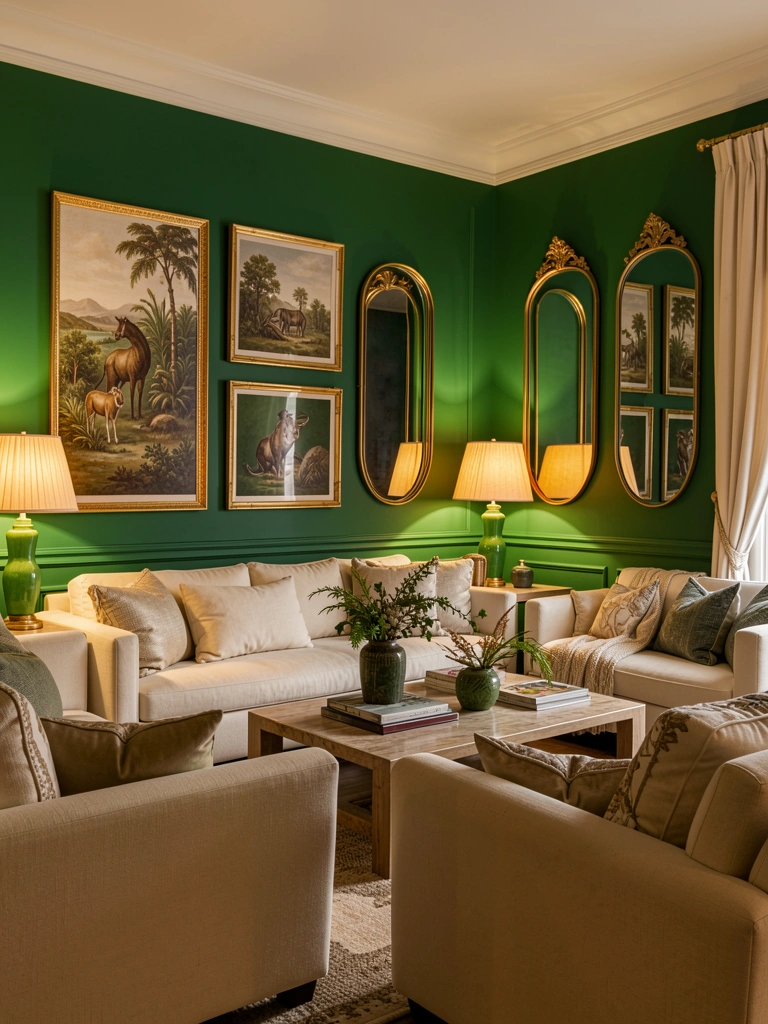
Deep greens are the color everyone wants right now—they’re connected to nature, work with almost any decor style, and feel timeless rather than trendy. Pair them with gold accents for maximum impact.
Forest green paint costs $40–$60 per gallon. Pick a shade like Benjamin Moore’s Silhouette or Sherwin-Williams Evergreen Fog. Add gold-framed mirrors ($50–$150), brass shelf brackets ($20–$50), and gold-trimmed pillows ($30–$80) for that cohesive luxury look.
This works in living rooms, bedrooms, home offices—basically anywhere you want to feel grounded and sophisticated.
You instantly feel like you’re living in an intentionally designed space instead of a standard apartment.
Save this post for your next wall refresh. Pick just one idea this weekend and notice how a single change shifts your entire room’s energy—small moves add up faster than you’d think.
Leave a Reply