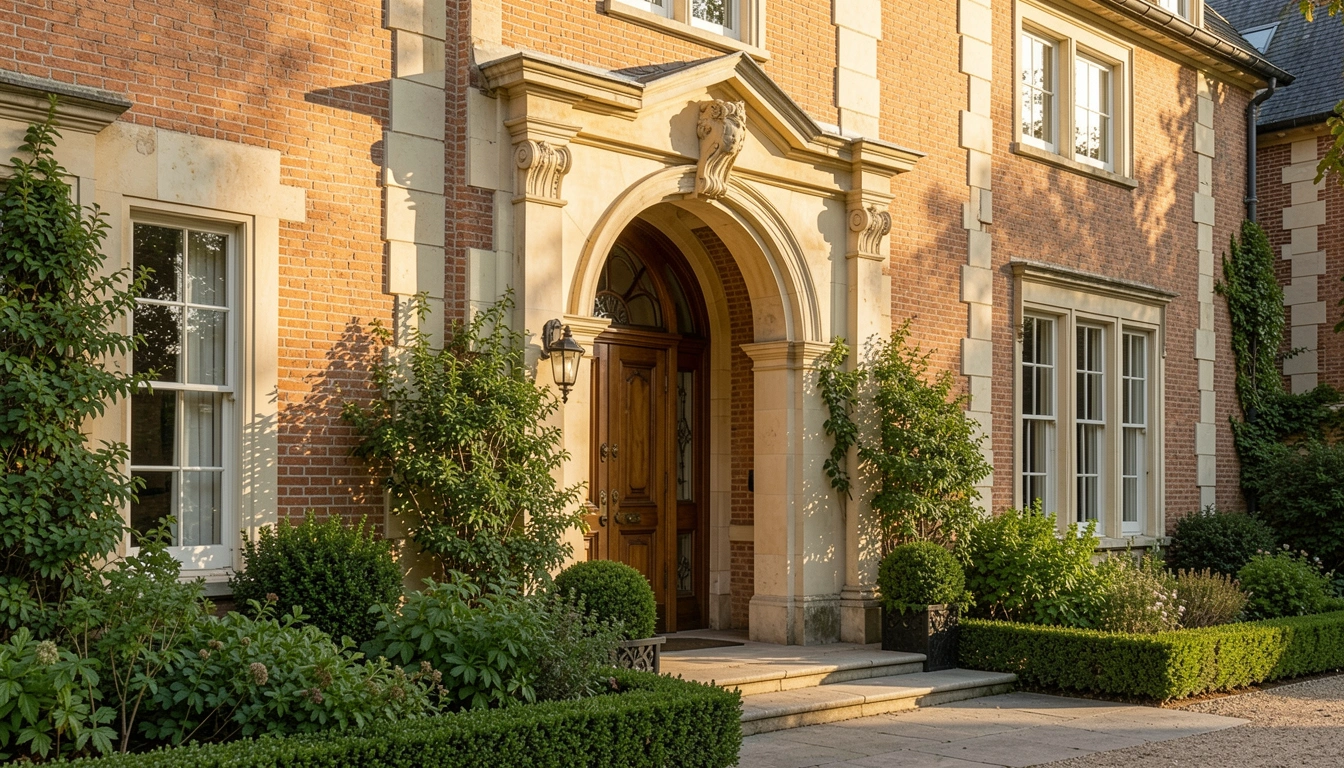
If your home’s exterior feels flat and forgettable, you’re not alone. Many homeowners overlook the power of stone and brick to add character, depth, and timeless appeal to their curb. The good news? You don’t need a complete overhaul to make a dramatic difference. Whether you’re working with an existing brick facade, planning renovations, or simply want to refresh your home’s look, these 24 concepts show how mixing materials, playing with color, and adding strategic accents can transform an ordinary exterior into one that stops people in their tracks. From budget-friendly styling tricks to investment pieces that last decades, you’ll find ideas for every budget and skill level. Let’s explore how stone and brick can become the hero of your home’s story.
1. Layer Thin Brick Over Existing Siding
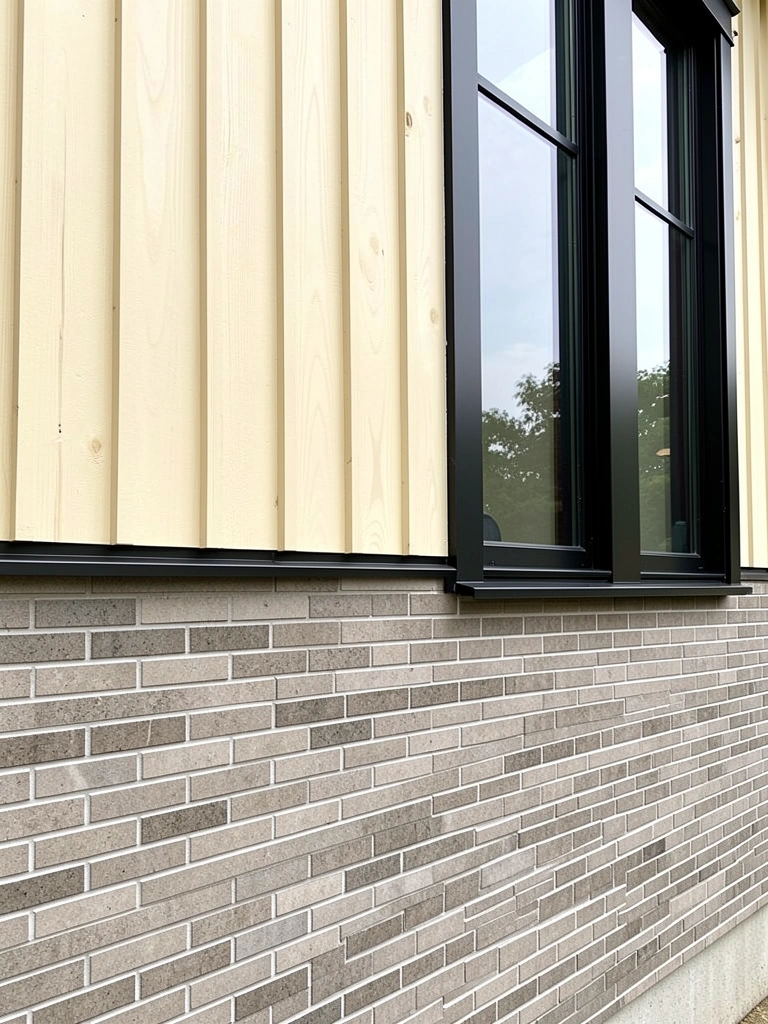
Thin brick veneers offer major visual impact without the weight, cost, or installation hassle of traditional full-brick renovations. This modern approach adds authentic texture and depth in weeks rather than months.
Installation typically runs $8–15 per square foot for materials, making it accessible for mid-range budgets. Most thin brick adheres to existing siding with specialized mortar, so you’re not tearing down walls. Hire a contractor for larger projects (estimated 1–3 weeks depending on home size), or tackle small accent walls yourself if you’re handy with masonry tools.
The payoff is stunning texture that photographs beautifully and requires minimal maintenance compared to full masonry.
2. Paint Brick a Bold Earthy Green
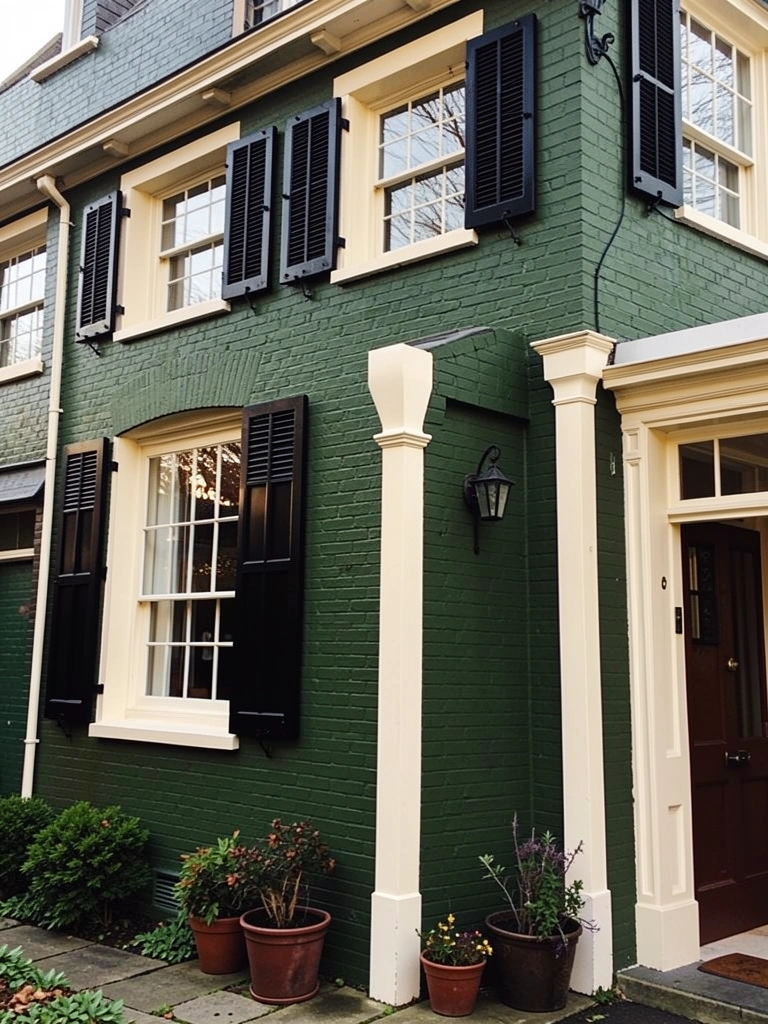
Painting brick in saturated earth tones like deep olive or forest green instantly adds personality while honoring 2025’s bold color trend. It’s one of the quickest ways to shift your home’s entire vibe.
Use masonry-grade exterior paint (around $40–60 per gallon from Home Depot or Sherwin-Williams). Plan on 2–3 coats and budget $200–600 in paint costs depending on square footage. Prep is crucial: clean the brick thoroughly and prime first. A weekend project for DIYers, or hire a painter ($1,500–3,000 for full exterior). The color won’t fade quickly with quality paint, and you can always repaint if trends shift.
This bold move gives your home an intentional, curated look that feels both modern and grounded.
3. Mix Brick with Black Metal Siding Panels
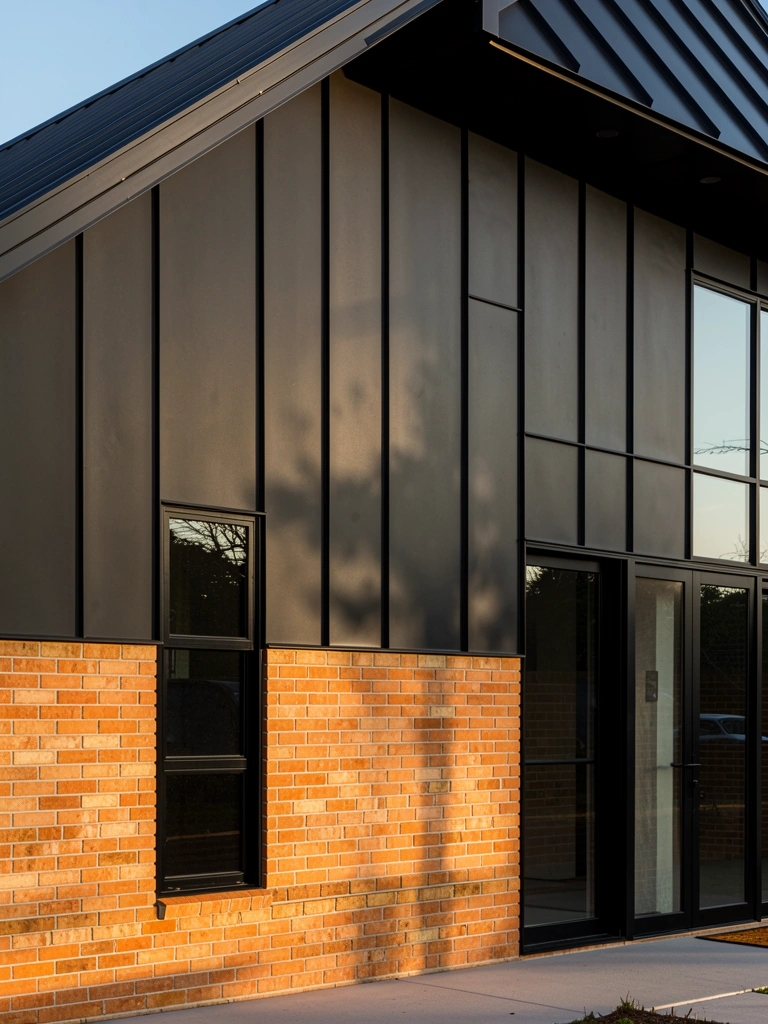
Pairing warm brick with cool matte black metal creates a striking industrial-farmhouse aesthetic that balances warmth and edge. This combination works especially well on transitional homes.
Metal siding panels cost $6–12 per square foot (MAC Metals or similar brands), while brick stays consistent. The contrast is the star—it creates visual zones without harsh lines. Hire professionals for this ($3,000–8,000 depending on coverage), as metal installation requires precision. The result is a home that looks intentionally designed and stands out on your street without screaming “trendy.”
This pairing ages beautifully and works across modern, farmhouse, and industrial styles.
4. Add Stone Accents Around Doorways
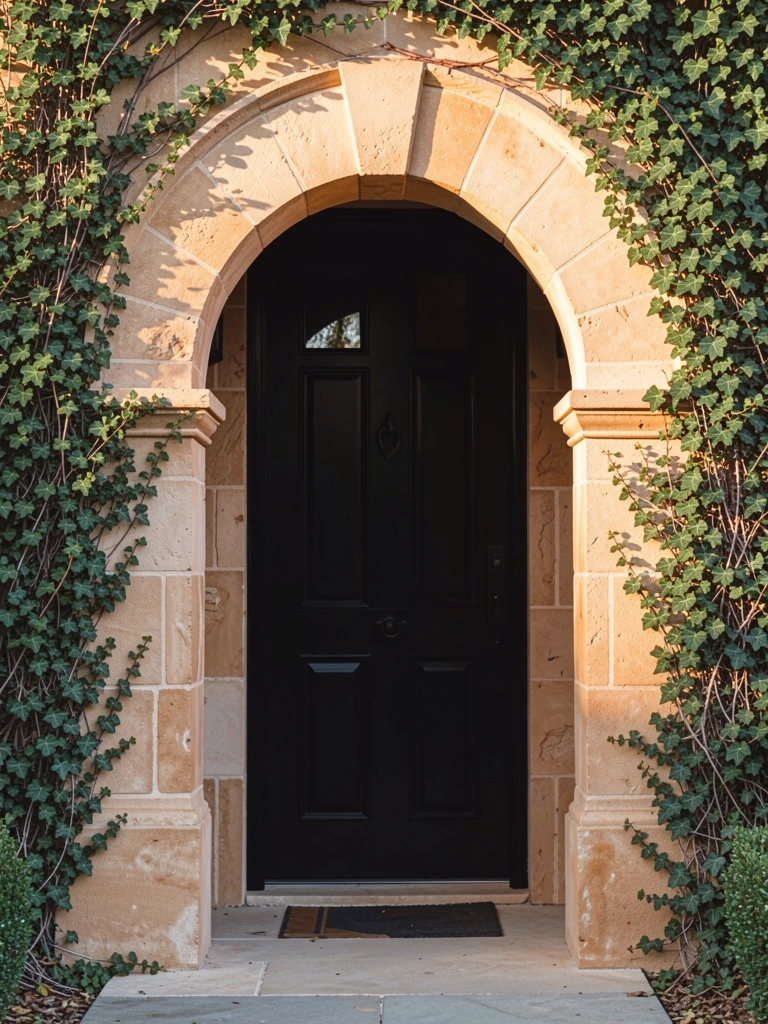
Stone archways and trim details instantly elevate any entrance, adding craftsmanship and grandeur. This accent-focused approach works for renters (if adhered temporarily) and budget-conscious homeowners.
Natural stone accents run $30–100+ per square foot for materials and labor. For smaller projects like a single doorway ($500–2,000), you can create major impact without full facade renovation. Consider lightweight cultured stone ($15–40 per sq ft) as a budget alternative that mimics real stone. Installation is 2–5 days for a doorway accent.
The framed entry becomes a focal point that draws eyes and adds perceived value to your home.
5. Combine Brick with Warm Wood Siding
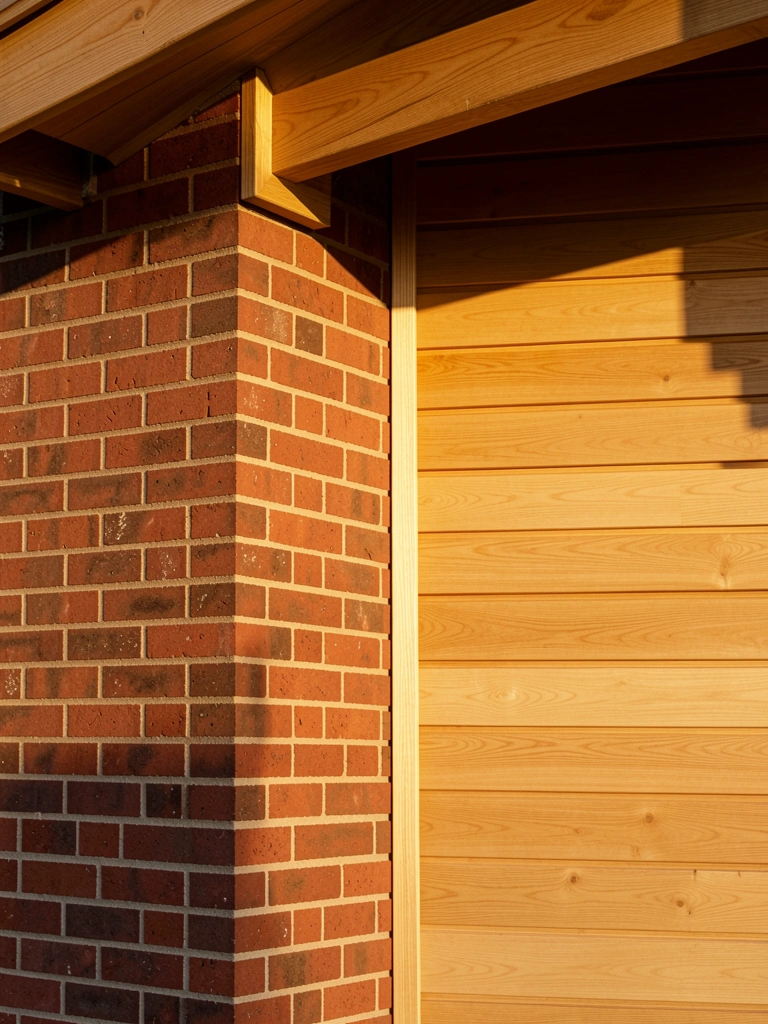
Mixing brick with wood creates warmth and texture that neither material achieves alone. This pairing is having a major moment in modern farmhouse design.
Plan your material split strategically: brick often grounds lower sections or forms corner details, while wood covers larger areas. Wood siding costs $3–10 per sq ft and breathes new life into dated facades. Budget $2,000–6,000 for material and labor depending on coverage. Choose warm honey or cedar tones to complement brick hues—avoid orange-stained wood, which reads as dated in 2025.
The result is a layered, intentional look that photographs beautifully and feels inviting.
6. Install Stone Veneer on Chimney or Pillar
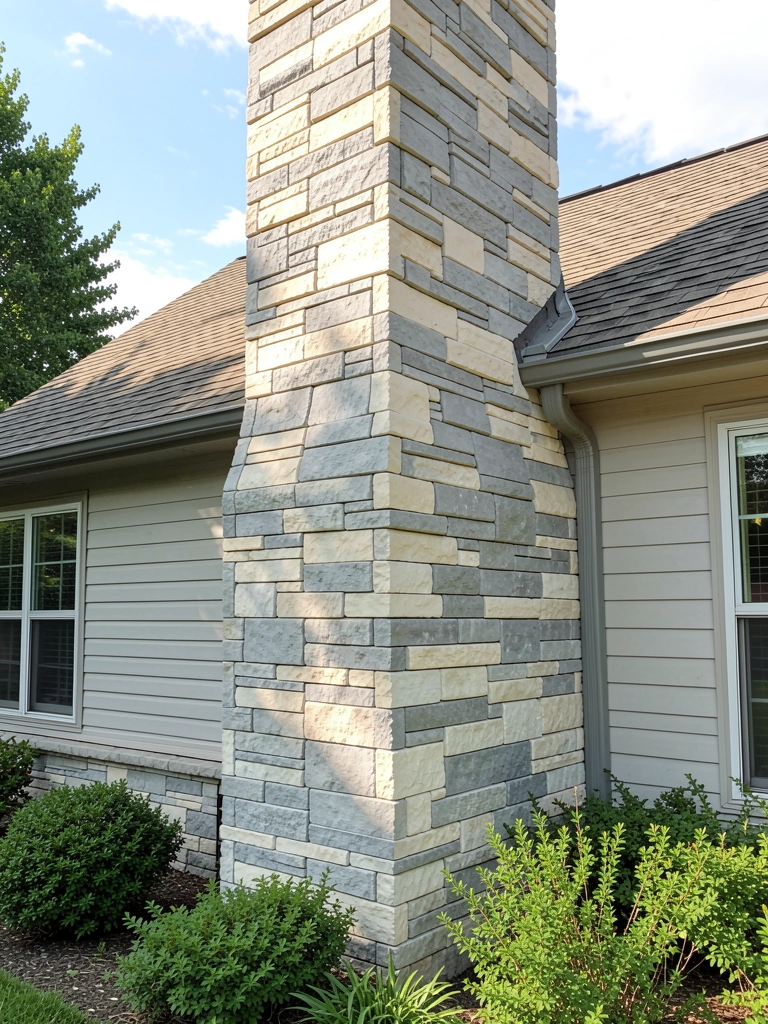
A single focal point like a chimney or porch pillar wrapped in stone creates architectural interest without committing to full-facade changes. This is perfect for homeowners wanting to test the stone trend.
Stacked stone veneer costs $15–25 per sq ft installed, making a chimney project roughly $1,500–3,500. DIY installation is possible but demands precision; most homeowners hire contractors (2–3 days). The payoff is a striking vertical element that anchors your home’s exterior and looks substantially more expensive than it costs.
Visitors notice this detail immediately, and it works as a bridge between your home’s materials.
7. Create Geometric Color Blocking with Brick
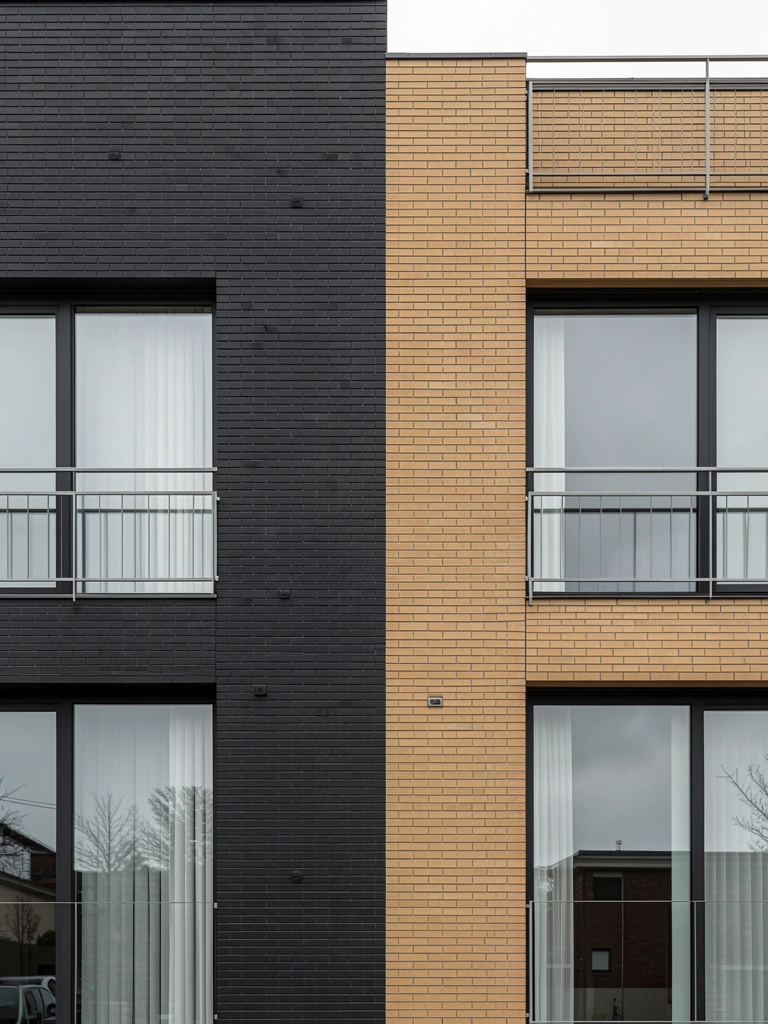
Two-tone brick color blocking creates visual drama and architectural interest without material mixing. This geometric approach is trending for homes seeking contemporary edge.
Work with a brick contractor to source or paint complementary hues. Custom brick selection might add $3–8 per sq ft to standard pricing, depending on availability. Plan the split thoughtfully—vertical divisions work for narrow homes, while horizontal splits suit wider facades. Installation is the same as standard brickwork; the design is the hero.
The bold geometry makes your home look intentionally designed and memorable.
8. Use Reclaimed or Salvaged Brick
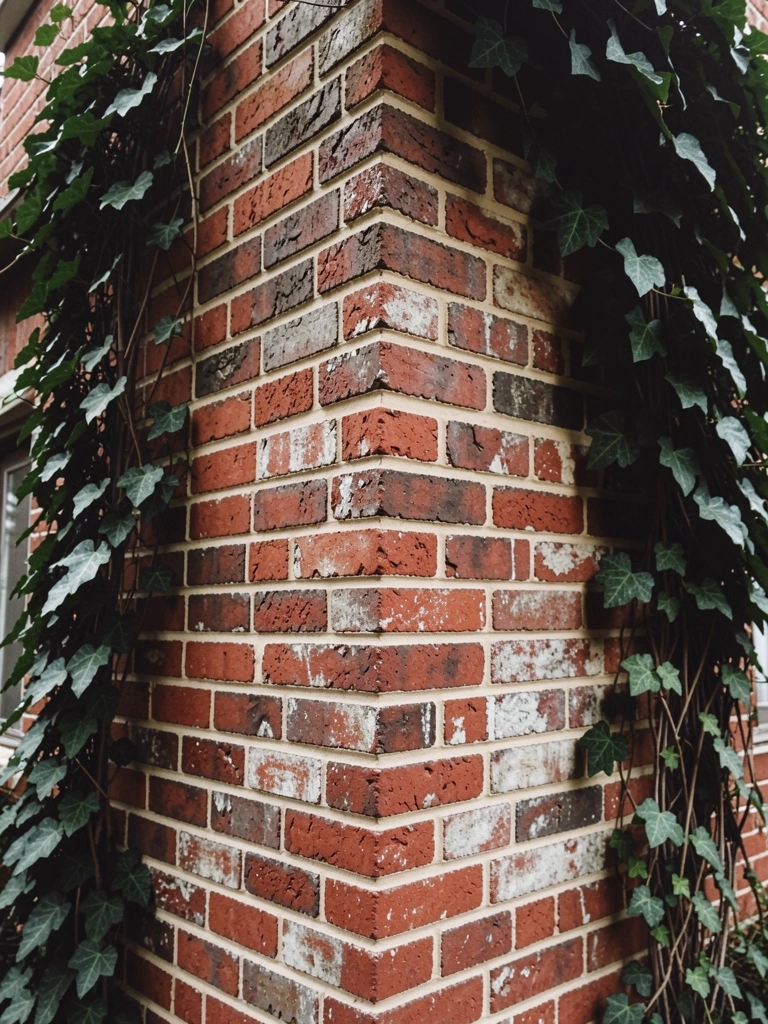
Salvaged brick carries history and authenticity that new materials can’t replicate. This approach appeals to homeowners who value sustainability and one-of-a-kind character.
Reclaimed brick costs $10–25+ per brick (roughly $15–30 per sq ft installed), making it a premium investment. Source from architectural salvage yards, online marketplaces, or local demolition sites. Installation is identical to new brick, but contractors appreciate the material’s variability—expect slightly longer timelines (3–4 weeks). The payoff is unmatched character: every brick tells a story, and your home becomes a conversation starter.
This choice shows thoughtfulness and sustainability, appealing to design-savvy buyers.
9. Paint Brick in Warm Neutral Tones
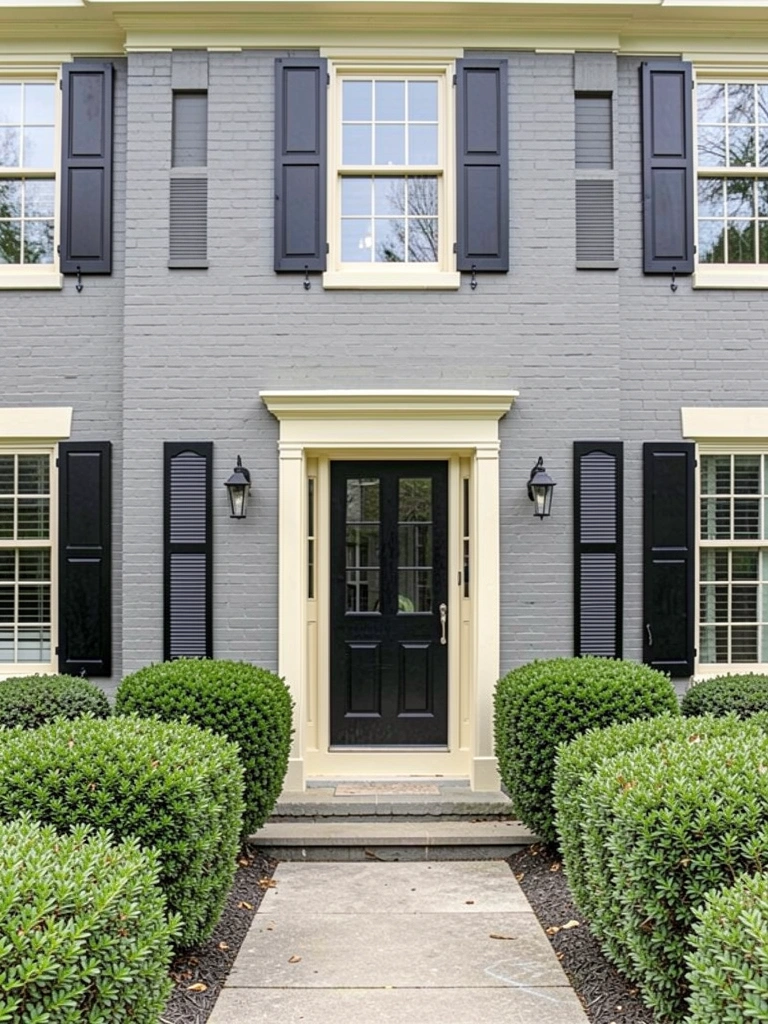
If bold color feels risky, warm neutrals like soft grays, warm beiges, and greige tones deliver sophistication while staying timeless. This approach bridges traditional and contemporary styles.
Masonry paint in warm neutrals costs $40–70 per gallon, requiring 2–3 coats. Budget $200–600 in paint alone for full coverage. Pair with dark trim—black or charcoal shutters and doors create the contrast this palette needs. A weekend DIY project or $1,500–3,000 with a professional painter. This color choice works across all home styles and resells well.
Your home gains polish without the commitment of bold color trends.
10. Add Matte Black Metal Accents to Brick
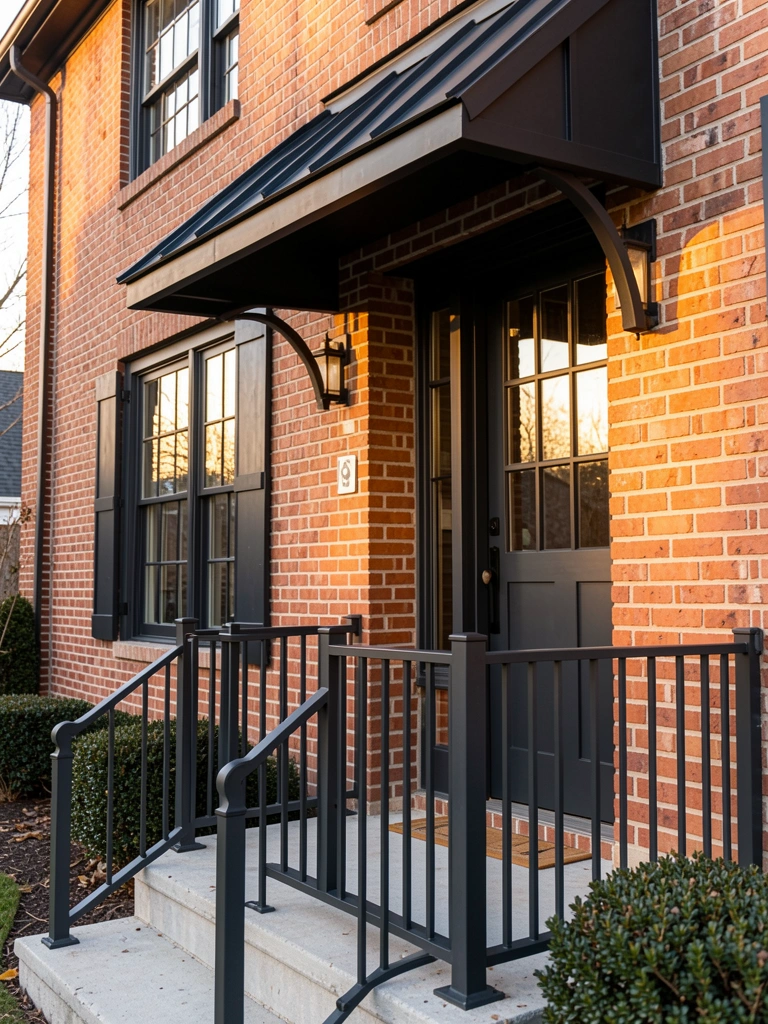
Metal accents—railings, frames, awnings—create striking contrast against warm brick and add industrial sophistication. This trend works beautifully on any brick-based home.
Custom metal work costs $50–200 per linear foot depending on complexity (railings, gates, awnings). A 10-foot porch railing runs $500–2,000; metal-framed windows are $200–400 each. Hire skilled metalworkers for quality craftsmanship. The investment is worth it: metal accents instantly modernize brick facades and photograph exceptionally well.
These details elevate your home’s perceived value and create architectural definition.
11. Build a Stone Retaining Wall for Landscape Drama
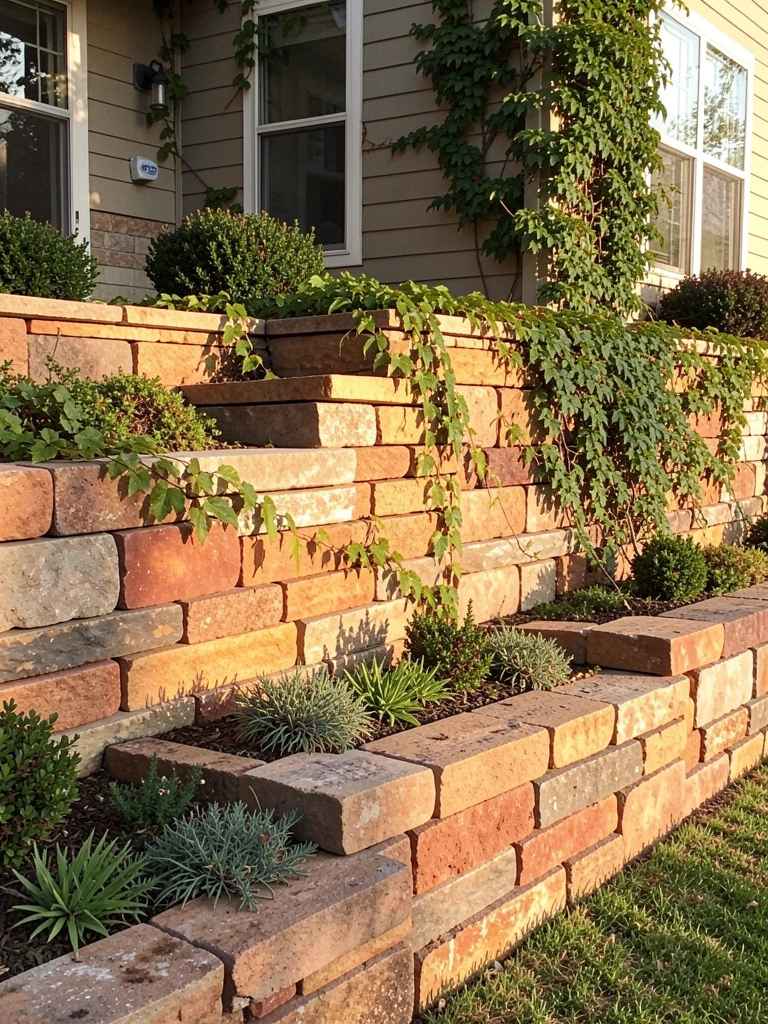
A stone retaining wall adds dimension, defines outdoor spaces, and creates visual interest from the street. This landscape feature anchors your home’s architecture to its surroundings.
Stacked stone or dry-laid walls cost $25–50 per linear foot, making a 20-foot wall roughly $500–1,000 in materials. DIY installation is manageable if you’re patient; hire contractors for 2–3 days of labor. The wall becomes a backdrop for landscaping and creates architectural continuity between house and yard.
This addition transforms your curb appeal and increases perceived property value significantly.
12. Paint Brick in Moody Charcoal Black
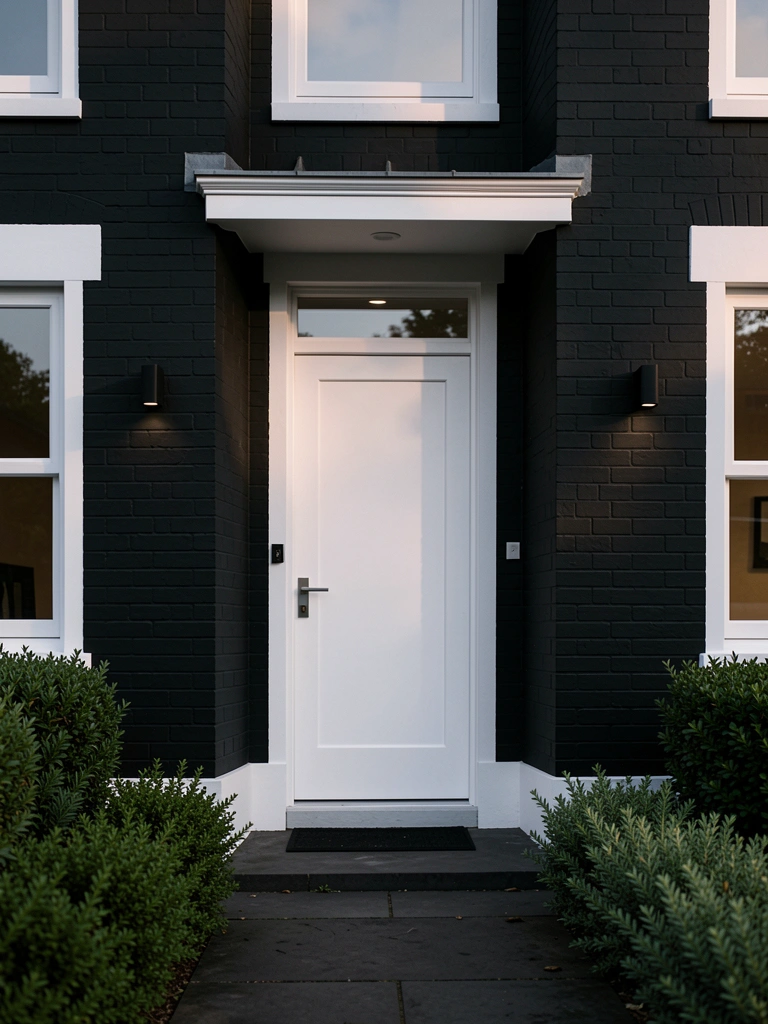
Dark charcoal black brick is bolder than traditional red and reads as decisively modern. If you love drama, this is your color—but it requires confidence.
Use premium exterior masonry paint in charcoal ($50–75 per gallon); expect $300–700 in paint costs for full coverage with 2–3 coats. Plan on $2,000–4,000 with a professional painter. The commitment is real—black shows dust and requires cleaning more often—but the impact is undeniable. This choice works best on larger homes where the color doesn’t overwhelm.
Your home becomes a bold architectural statement that photographs beautifully in any light.
13. Mix Stone and Brick for Texture Variety
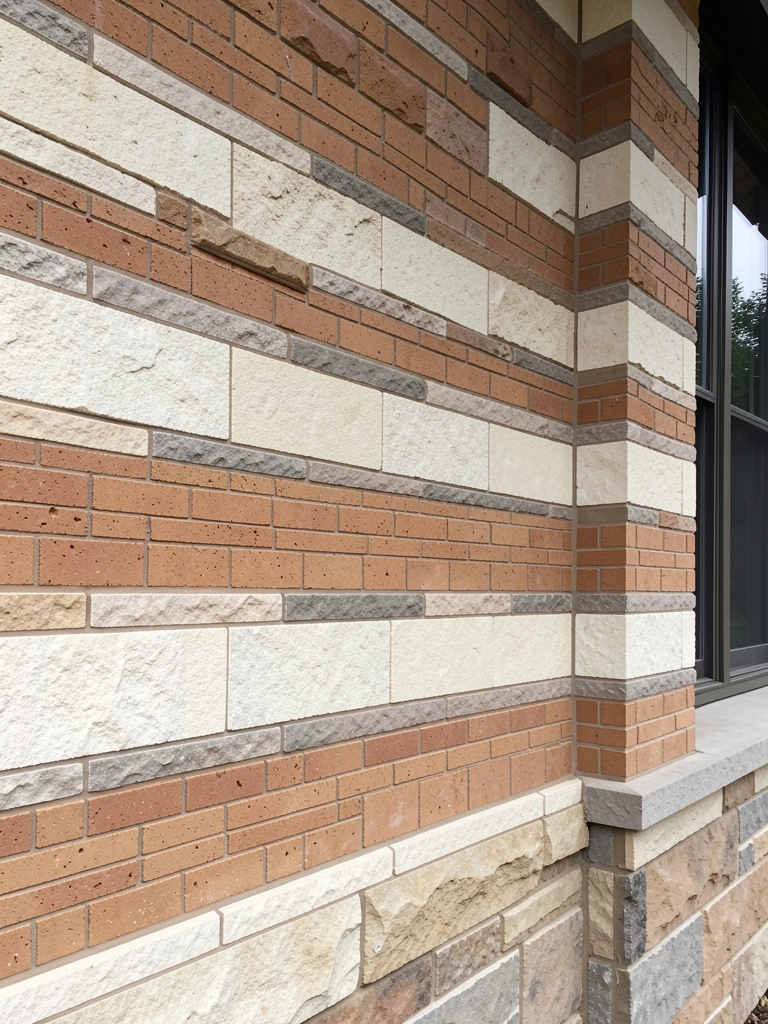
Alternating horizontal bands of brick and stone create visual rhythm and sophisticated texture. This approach is less common than single-material facades, making it distinctive.
Work with contractors experienced in mixed masonry—precision matters here. Budget $12–20 per sq ft for materials and labor, accounting for both brick and stone. Design the pattern first (sketch or mockup on paper); installation takes 3–5 weeks depending on complexity. The result is a layered, intentional facade that looks architectural and curated.
This choice signals thoughtful design and adds depth that reads even from a distance.
14. Apply Mortar Matching and Color Variation
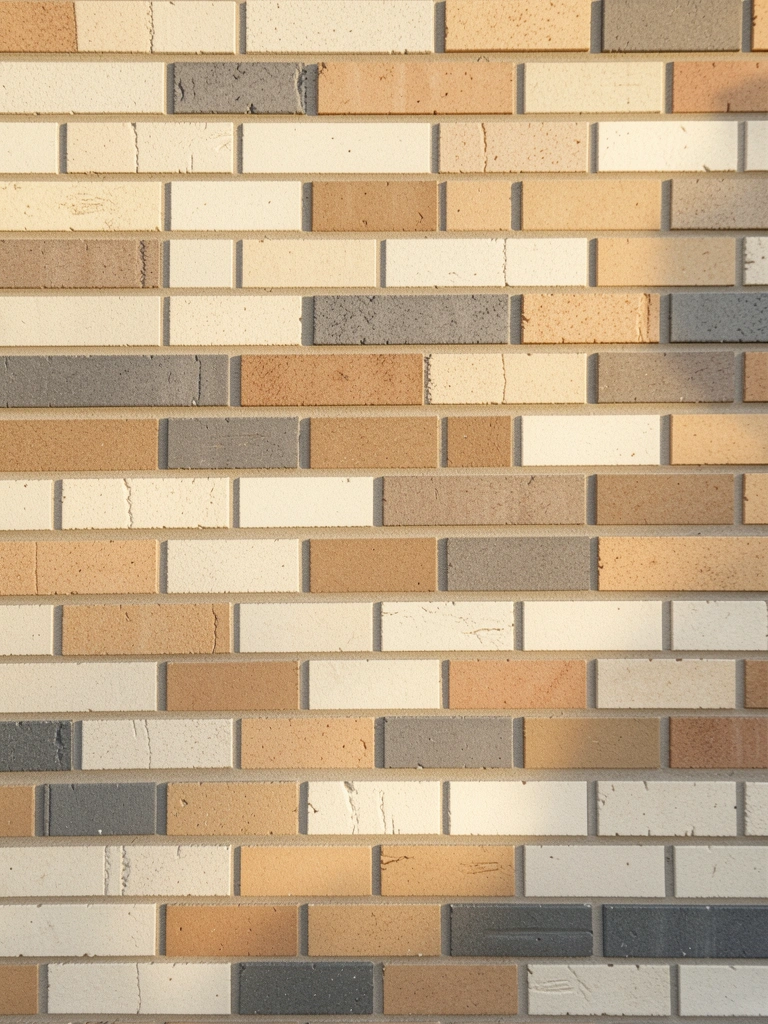
Mortar color choice is often overlooked, but it dramatically affects how brick reads. Varying mortar shades creates movement and sophistication.
Custom mortar mixes cost $15–30 per bag and require skilled masonry work. This is not a DIY project; hire experienced masons ($2,000–5,000 for exterior work). The technique works beautifully during new construction or when repointing aging brick. The payoff is a textured, thoughtfully designed facade that looks professionally curated.
Visitors may not consciously notice the mortar, but they’ll sense the home’s attention to detail.
15. Create a Focal Wall with Contrasting Stone
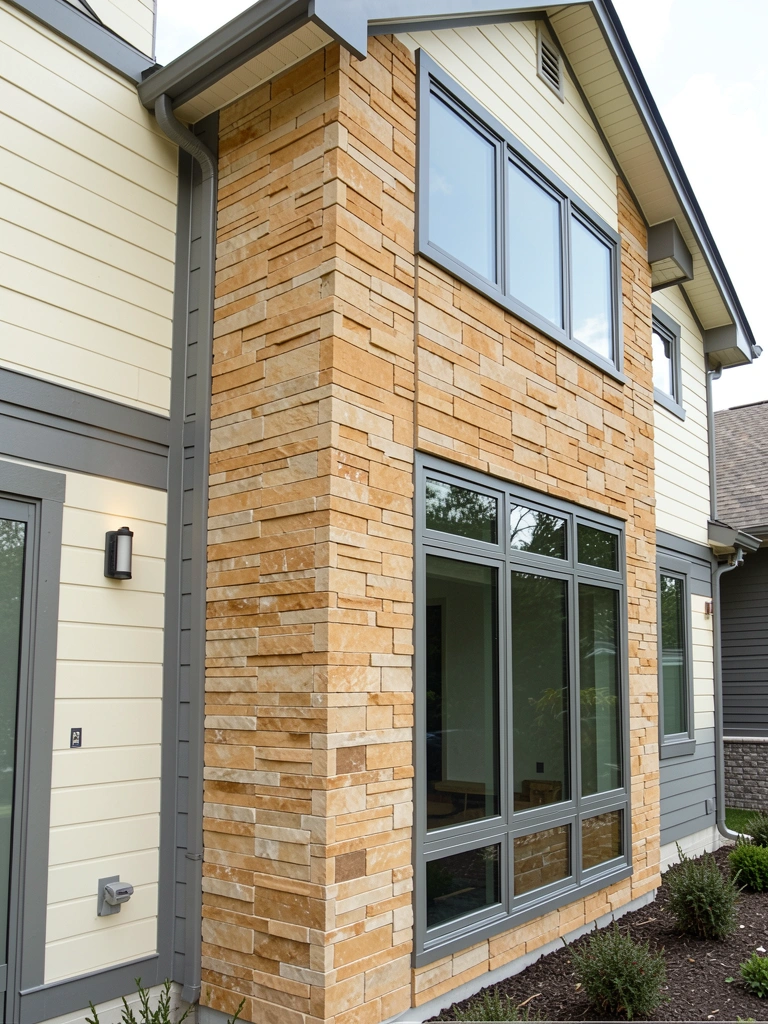
A single accent wall in stone creates impact without overwhelming your facade. This budget-conscious approach lets you test the stone trend before committing fully.
Stone accent walls cost $20–35 per sq ft installed, making a 200 sq ft wall roughly $4,000–7,000. Choose a prominent wall (entrance side or highly visible from street). Installation is 1–2 weeks. The result is an architectural focal point that adds perceived value and gives your home a designer-finished look.
This single detail transforms your home’s visual weight and curb appeal.
16. Paint Brick to Match Earthy Greens (Gray Heron Style)
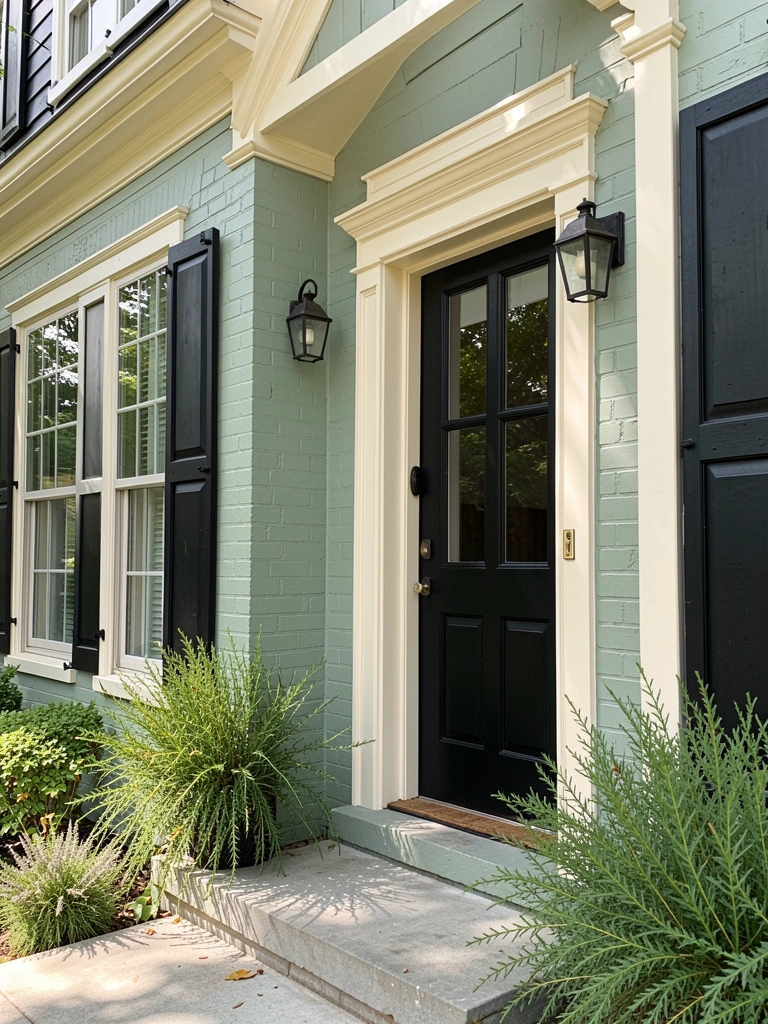
“Gray Heron” green—a soft, sophisticated sage-green shade—is 2025’s standout earth tone. It’s less bold than deep olive but more interesting than beige.
Specialty exterior paint in gray-green runs $50–70 per gallon; Allura USA and similar manufacturers offer trend-forward palettes. Budget $250–650 for paint and 2–3 coats. Pair with cream or white trim and black accents for maximum impact. A weekend DIY or $1,500–3,000 with a pro painter.
Your home gains a curated, nature-inspired aesthetic that feels both modern and timeless.
17. Install Thin Brick Veneer with Integrated Lighting
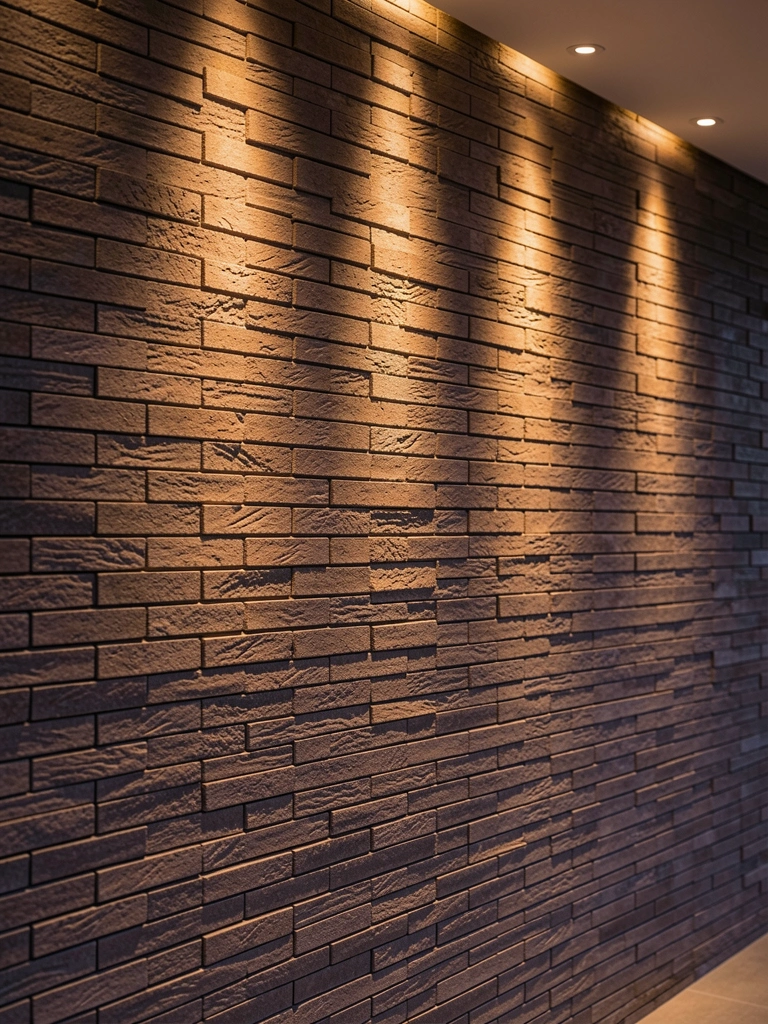
Combining thin brick with strategic lighting creates architectural drama and extends your home’s curb appeal into evening hours. This luxury touch elevates perceived value.
Thin brick runs $8–15 per sq ft; integrated lighting adds $300–800 depending on the system (recessed fixtures, uplighting, or accent spots). Total project cost $2,000–6,000 for a modest accent area. Hire professionals for electrical work; this takes 2–3 weeks including permits. The result is a home that looks gallery-quality after dark.
Evening visitors are immediately impressed by the thoughtful lighting design.
18. Paint Brick in Warm Caramel Tones
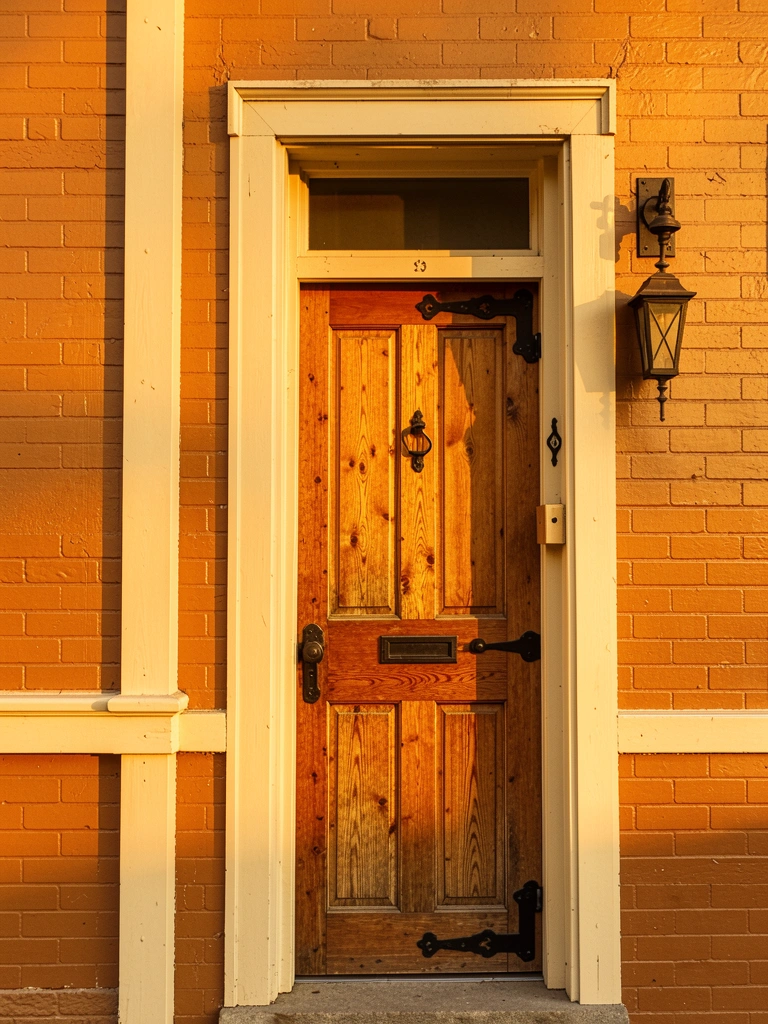
Warm caramel and honey-toned brick paint creates coziness without cold grays. This approach works beautifully on older homes where warmth suits the architecture.
Warm-toned masonry paint costs $40–65 per gallon; expect $200–550 in materials for full coverage with 2–3 coats. This color photographs beautifully in natural light and pairs well with traditional-style homes. Hire a painter ($1,500–3,000) for polished results. The warmth creates an inviting, approachable aesthetic.
Your home feels welcoming and nostalgic while remaining visually current.
19. Create Mixed Material Cladding (Brick + Wood + Metal)

Combining three materials—brick, wood, and metal—creates architectural complexity and visual interest that reads as thoughtfully designed. This approach requires strategic planning but delivers stunning results.
Budget $3,000–10,000+ depending on material quality and coverage area. Work with architects or experienced contractors to plan material transitions; this isn’t a DIY project. Expect 4–6 weeks for installation. The payoff is a home that looks high-end and custom, with balanced visual weight and texture.
Architects and designers often use this approach for luxury projects—now you can too.
20. Paint Brick with Color-Drenched Burgundy
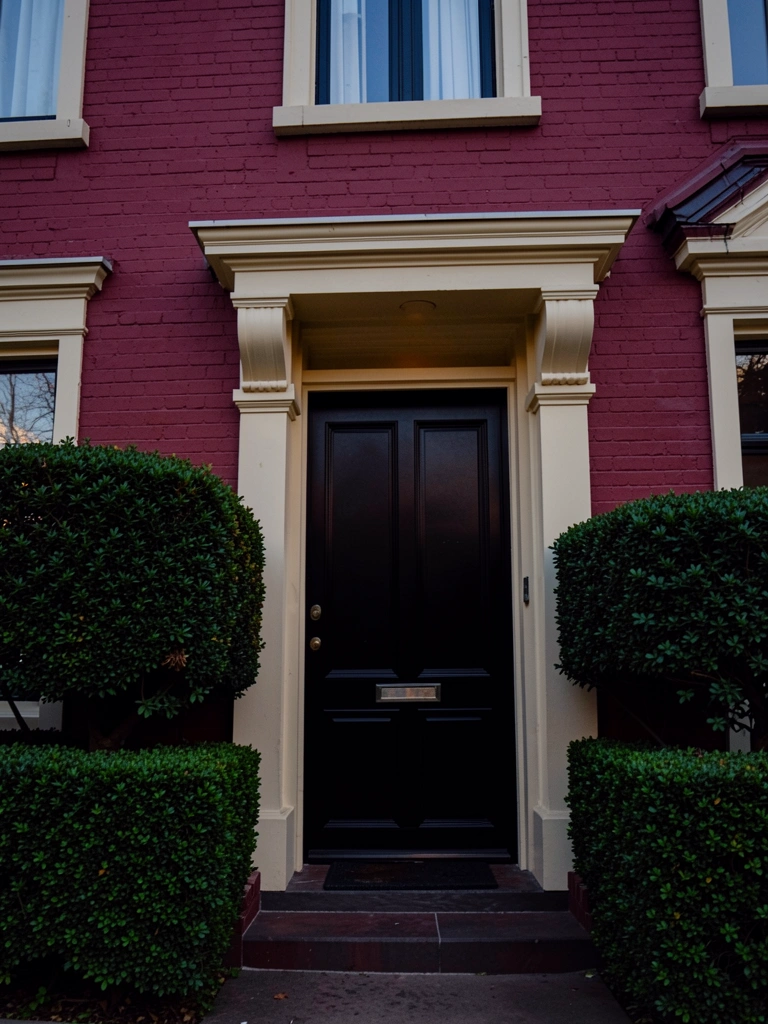
Color drenching in saturated burgundy or deep wine red creates glamorous drama. This bold choice works best on larger homes and for homeowners confident in trendy color.
Premium exterior masonry paint in burgundy costs $55–80 per gallon; budget $300–750 for full coverage with 2–3 coats. Professional installation runs $2,000–5,000. Burgundy is more forgiving than black (hides dirt better) but still requires maintenance. This color trend is having a major moment in 2025 design.
Your home becomes an unmistakable landmark on the street and looks utterly luxe.
21. Use Stacked Stone on Lower Exterior (Wainscot Effect)
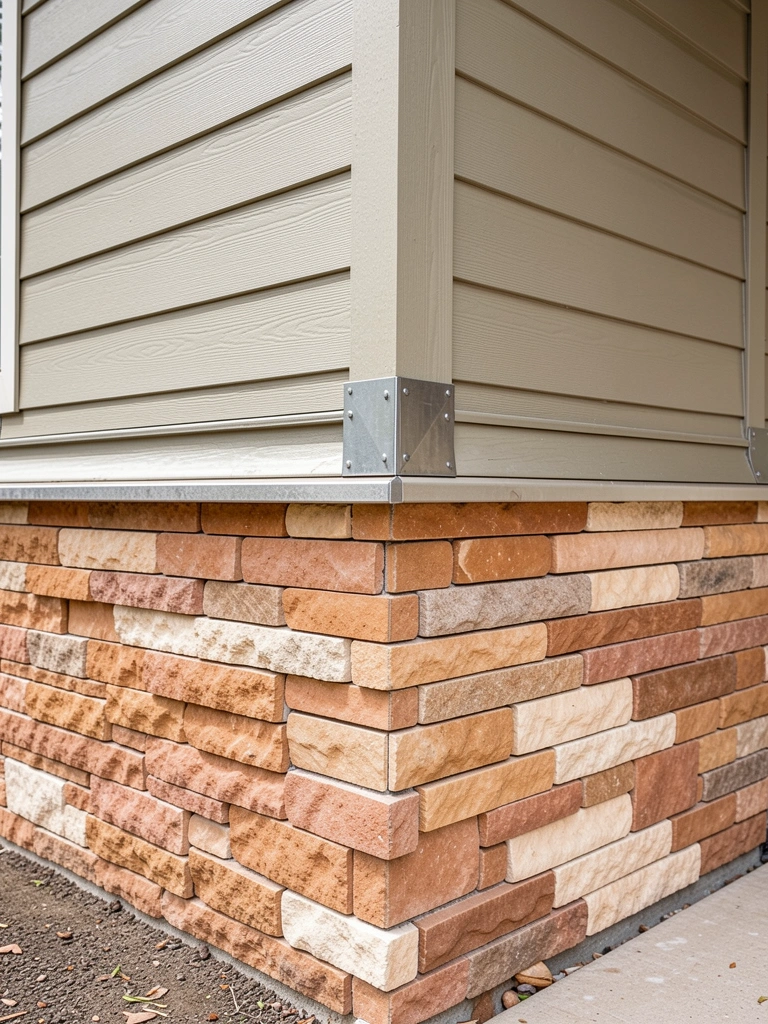
Cladding the lower section of your home in stacked stone (like an oversized wainscot) adds architectural depth and protects against weather damage. This approach balances stone’s visual weight with lighter materials above.
Stacked stone costs $20–35 per sq ft installed; a typical application on a 30-foot-wide home (roughly 300 sq ft) runs $6,000–10,500. Hire experienced masons; this is 3–4 weeks of detailed work. The result is a grounded, sophisticated exterior that reads expensive and thoughtfully designed.
This technique increases perceived property value and creates an elegant visual anchor.
22. Paint Brick in Soft Greige (Gray + Beige Blend)
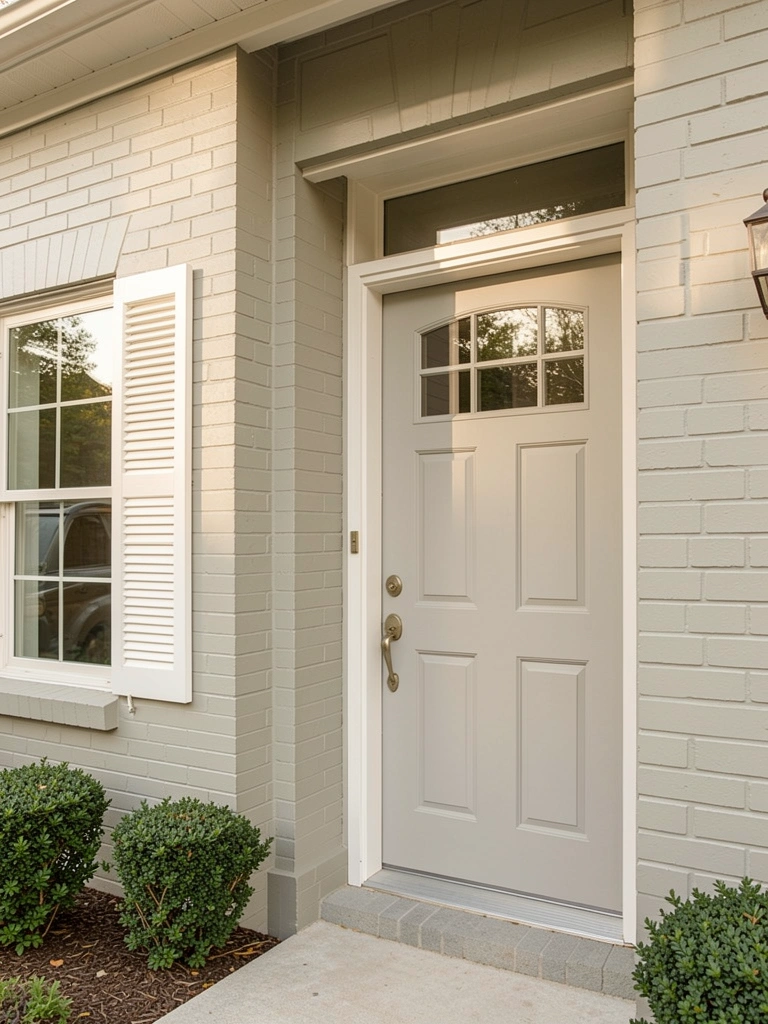
Greige—the hybrid of gray and beige—offers sophistication for homeowners hesitant about bold colors. This warm neutral trend is replacing pure gray in 2025 design.
Greige exterior paint costs $45–70 per gallon from brands like Sherwin-Williams or Benjamin Moore. Budget $250–650 for paint and 2–3 coats. Pair with white or cream trim and warm-toned hardware for maximum warmth. A weekend DIY or $1,500–3,000 with a professional painter.
Your home gains contemporary polish while remaining timeless and universally appealing.
23. Incorporate Arched Stone Details Over Doorways
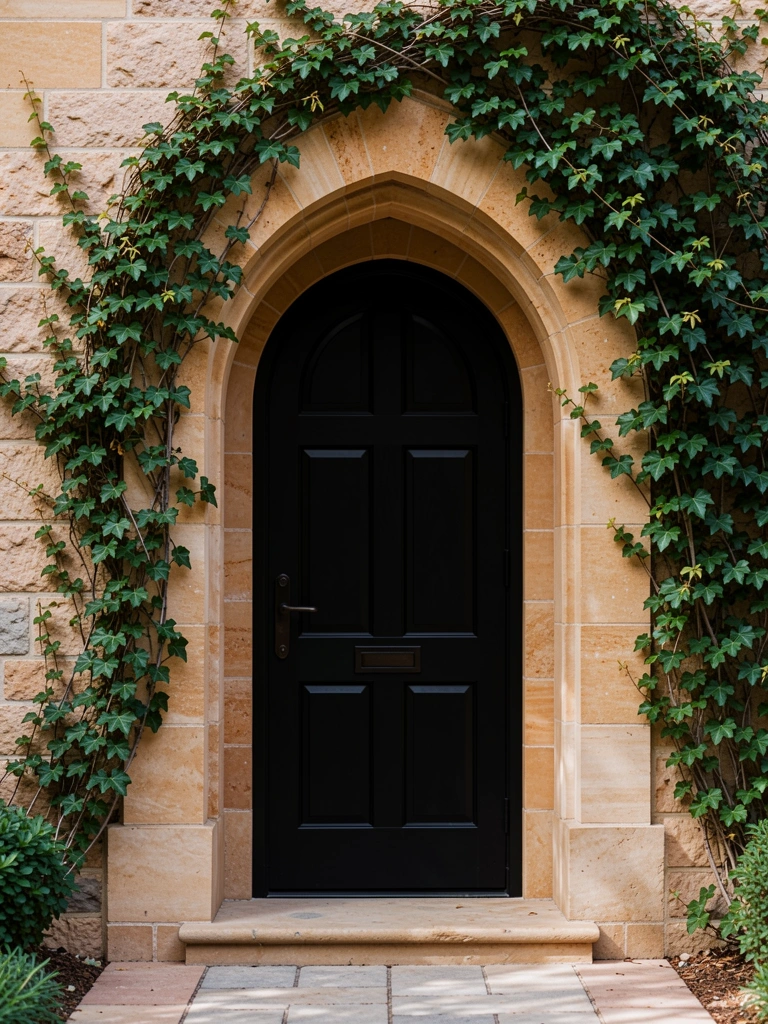
Stone archways soften facades with curves and add romantic, classical appeal. This architectural detail draws immediate attention to your entry and adds character.
Custom stone arches cost $1,500–4,000+ depending on size and material. This is a splurge but has outsized impact on curb appeal. Installation is 1–2 weeks. The arched entry becomes the focal point of your home’s exterior and increases perceived value significantly.
This investment-level detail signals architectural thoughtfulness and timeless elegance.
24. Apply Limewash to Brick for Soft, Matte Finish
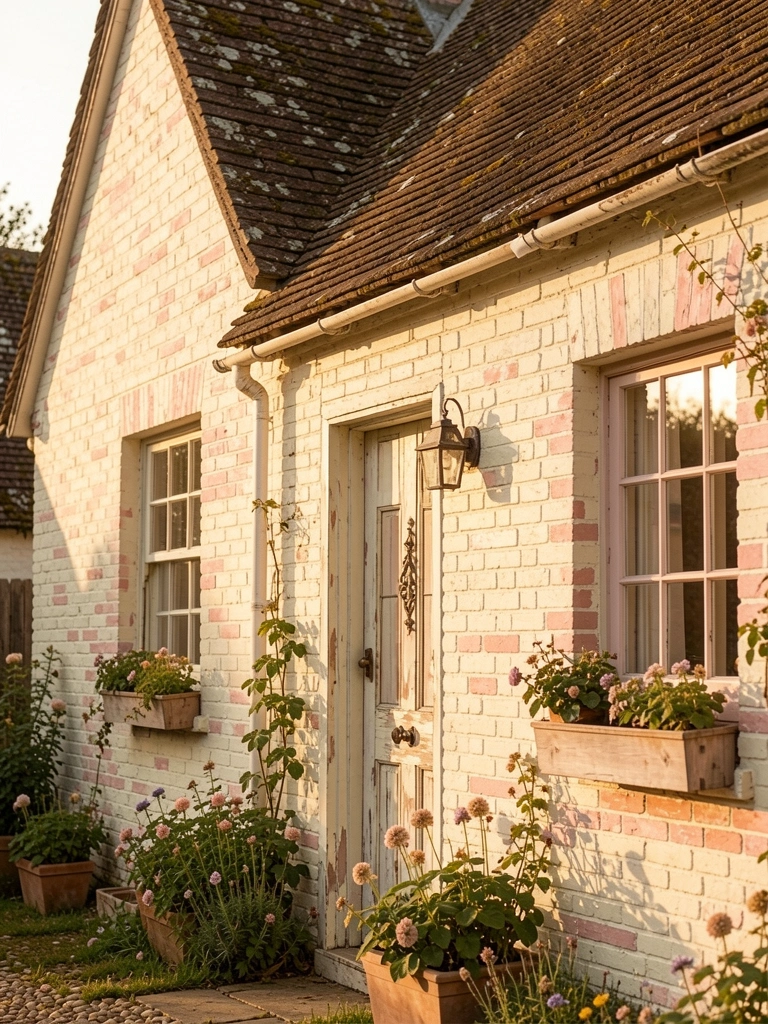
Limewash creates an aged, European aesthetic on brick with a naturally soft, textured finish. This decorative technique is softer than paint and photographs beautifully.
Limewash costs $2–4 per sq ft (roughly $300–900 for modest homes). It requires specialized application; hire experienced limewash contractors. Expect 3–5 days for completion. Limewash is not permanent like paint (it fades and mellows over 2–3 years), but many homeowners love the weathered aesthetic. Annual reapplication maintains the look.
Your home gains a romantic, architecturally sophisticated appearance that feels intentionally vintage.
Save this post for your next exterior refresh. Pick one or two ideas that resonate with your home’s style, and start planning your project this season—the difference one material or color choice makes will surprise you.
Leave a Reply