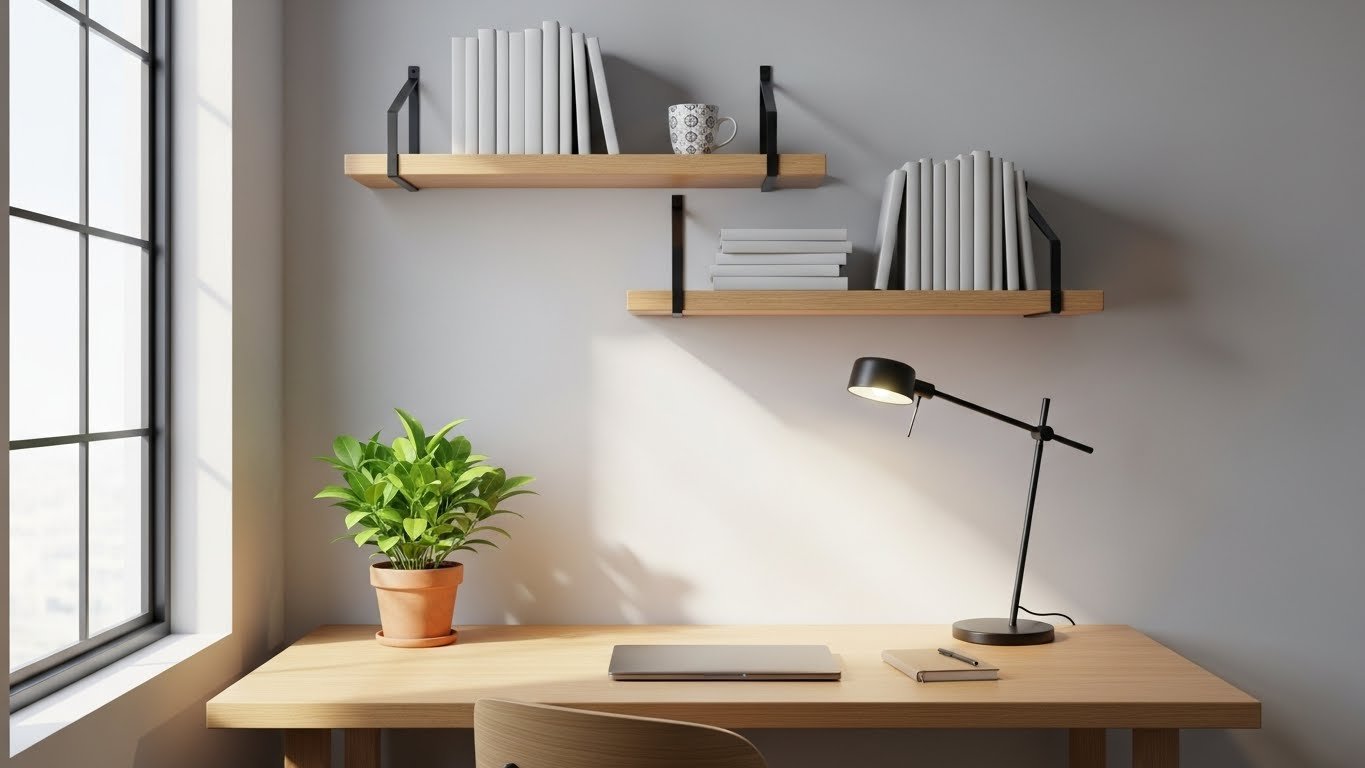
Your dorm room probably feels like a shoebox, right? Finding space for a study zone that actually works can feel impossible when you’re juggling a bed, dresser, and social life in roughly 150 square feet. But here’s the good news: you don’t need a sprawling home office to focus better. These 24 compact study ideas are designed specifically for tight spaces—they maximize every inch without making your room feel cramped or chaotic. You’ll discover budget-friendly hacks, smart furniture choices, and styling tricks that turn even the tiniest corner into a productivity powerhouse. Whether you’re a renter, a minimalist, or someone who needs to balance work and relaxation in one space, there’s something here for you. Let’s build a study zone that actually inspires you to get things done.
1. Claim a Corner with a Floating Desk
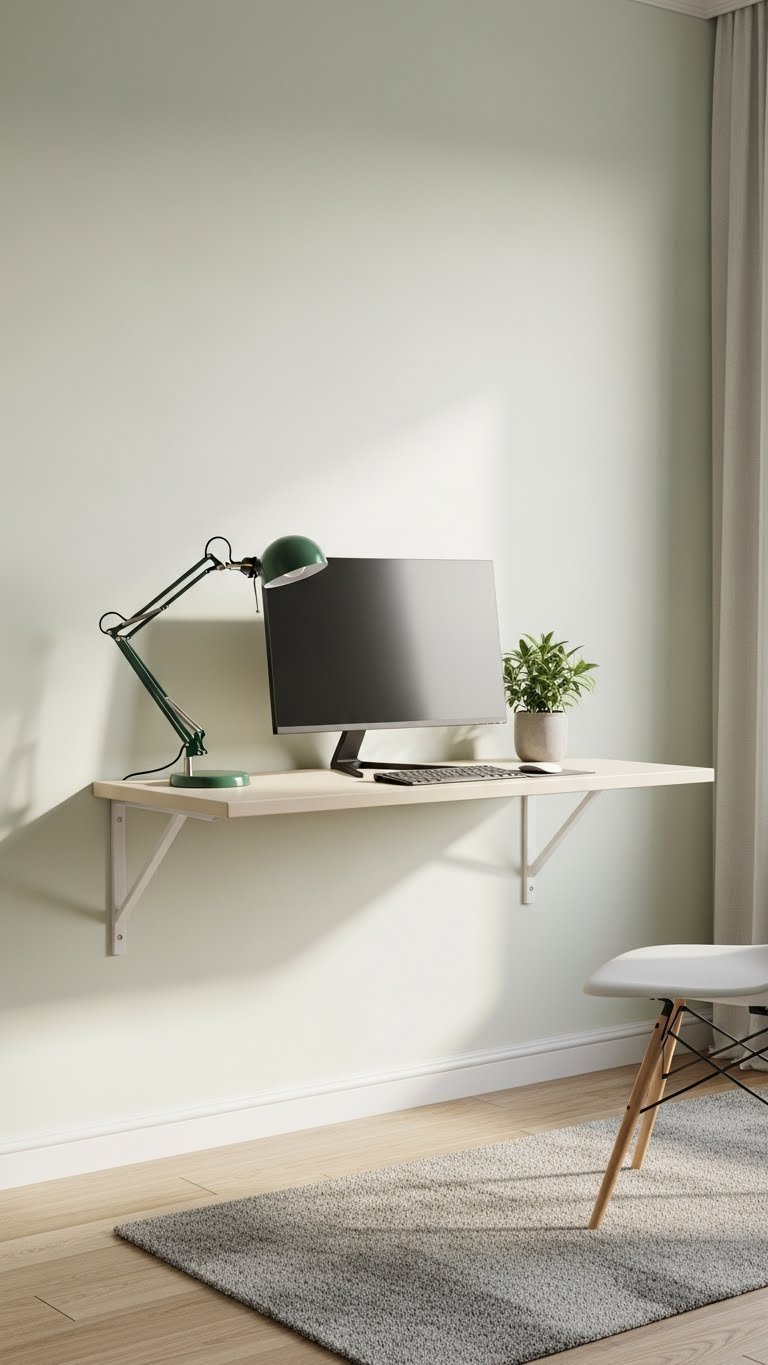
A floating desk takes up zero floor space while giving you a dedicated work surface. This is a renter’s best friend because it saves you from buying a bulky desk that dominates your room. Wall-mounted options range from $40–$150 depending on size and material; IKEA’s Lack shelves work beautifully as budget alternatives.
Mounting takes about 30 minutes with a drill and wall anchors (or ask your RA about pre-drilled dorm-safe options). Pair it with a small desk lamp and a single storage shelf above to keep supplies within arm’s reach. Position it near a window if possible—natural light boosts focus and makes the space feel less confined.
You’ll gain precious floor space for movement while creating a professional-looking study nook that doesn’t scream “tiny dorm room.”
2. Use a Rolling Cart for Mobile Storage
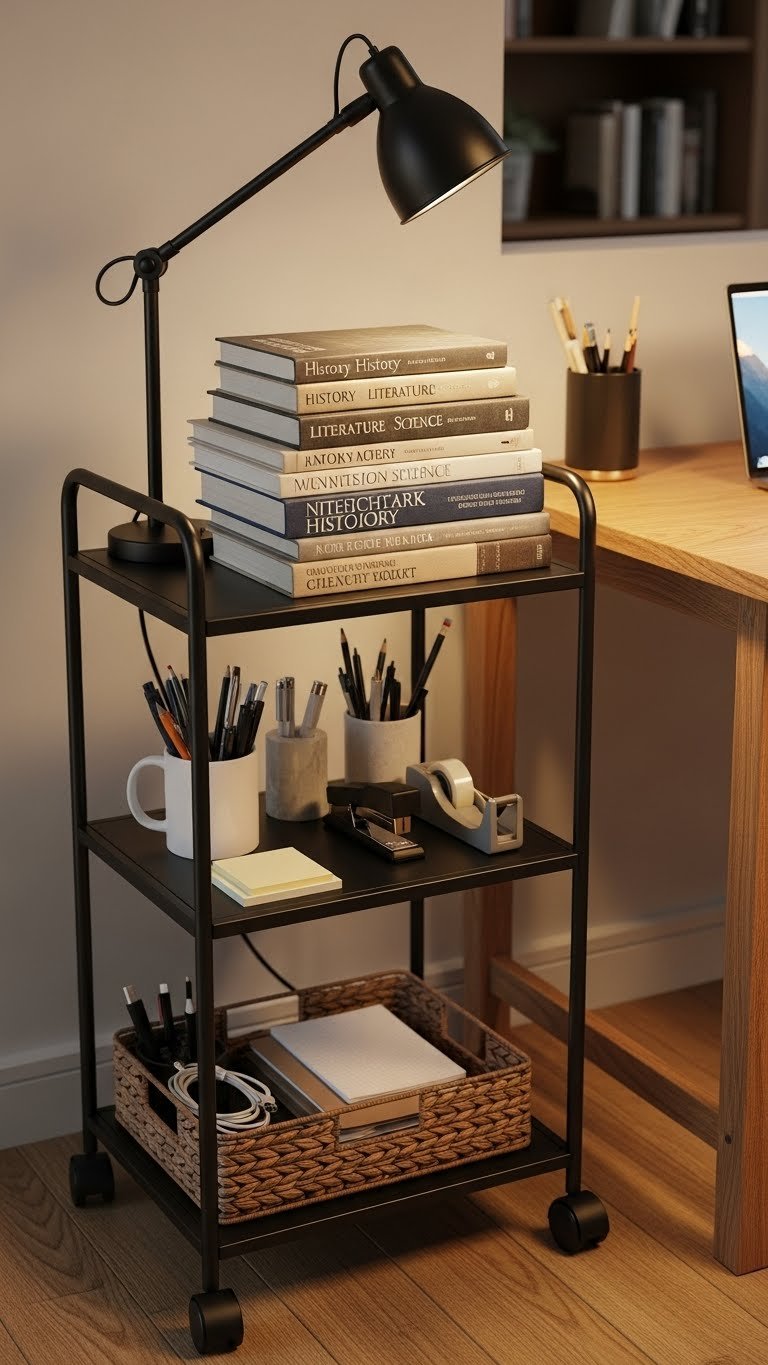
Rolling carts are absolute game-changers for compact spaces because they move with you. Stash textbooks, notebooks, chargers, and supplies on the shelves, then roll it under your desk or into a corner when you need floor space back. $25–$60 at Target, IKEA, or Amazon for solid options in white, black, or metallics.
Set it up in five minutes—no assembly required for most models. Label each tier or use small bins to keep categories separate (textbooks on one level, writing supplies on another). The beauty? You can roll it out during study sessions and tuck it away for parties or when you need breathing room.
Your desk stays clutter-free, and you’ve got a mobile filing system that works harder than a stationary bookshelf.
3. Install a Pegboard Above Your Desk
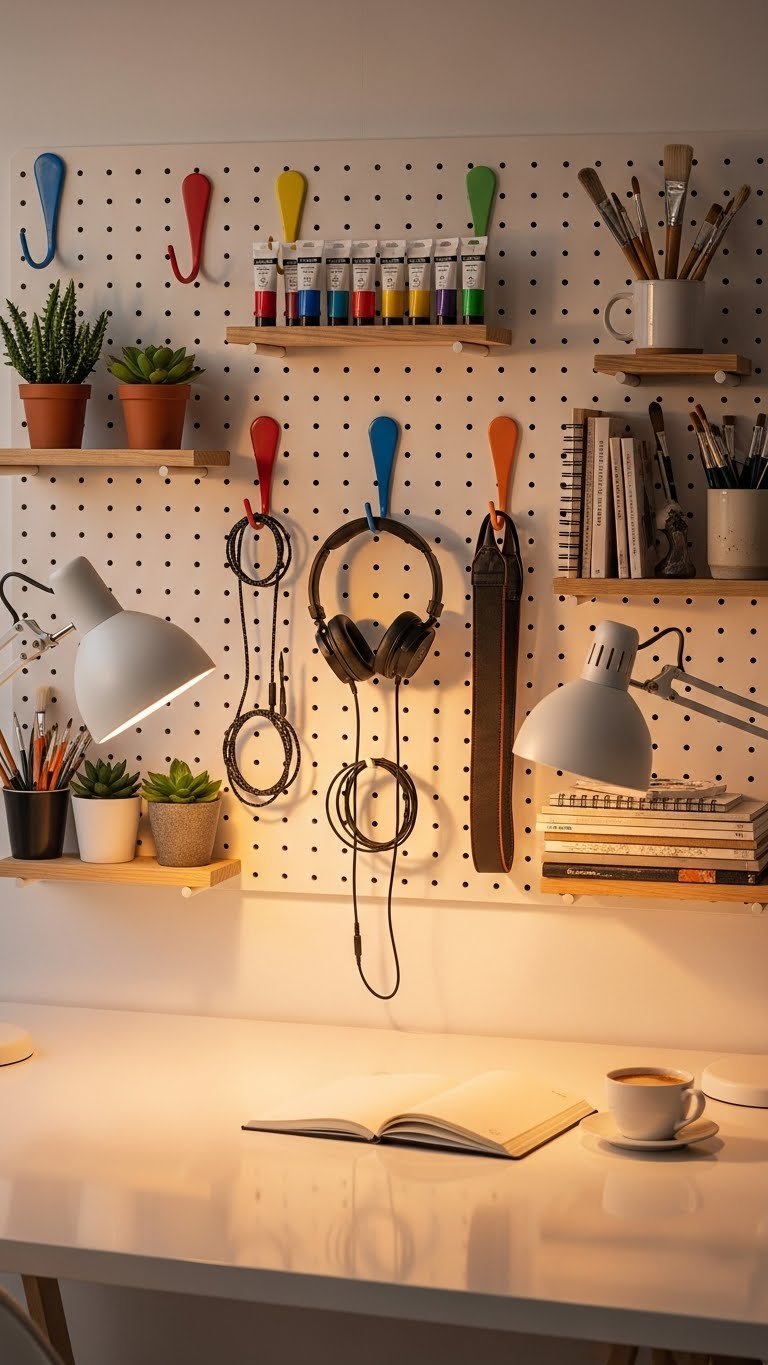
Pegboards let you customize vertical storage while keeping everything visible and accessible. Hang your headphones, pens, sticky notes, and even a small mirror—whatever you grab most during study sessions gets a dedicated hook. Pegboards run $15–$40 at Home Depot or Wayfair, and hook packs are usually $5–$10.
Installation takes 20–30 minutes and works on dorm walls using Command strips if you want to avoid holes. Paint it a soft color (white, cream, or pale blue all look calming) or leave it natural wood for a minimalist vibe. Group items by type so your brain knows exactly where to find that one pen you need at midnight.
This setup keeps your actual desk surface clear while making supplies feel organized, not crammed.
4. Create an Under-Desk Footrest with Storage
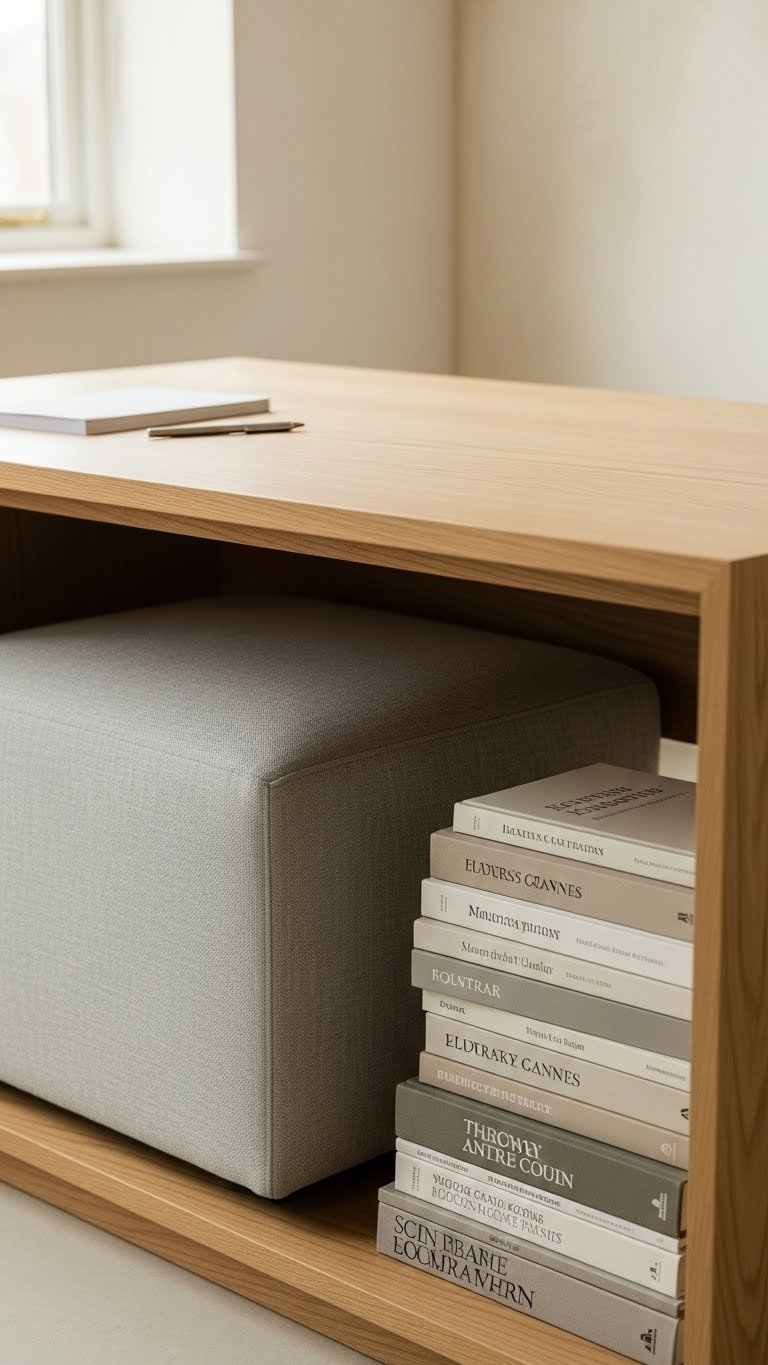
An under-desk ottoman or storage bench gives you foot relief during long study sessions while hiding textbooks and supplies. This dual-purpose approach means you’re not sacrificing valuable real estate. Look for compact ottomans $30–$70 at Amazon, Target, or IKEA (Ornavo Home makes affordable fabric options).
Most arrive ready to use—just slide it under your desk and load it up. Put heavy textbooks on the lower shelf and lighter supplies on top. When you need the space back, simply push it to the side. Cushioned versions feel nicer during study marathons, and fabric in cream or soft gray won’t feel jarring in a small room.
Your feet get support, your floor stays clear, and you’ve essentially doubled your storage without taking up extra room.
5. Mount Open Shelves for Visual Organization
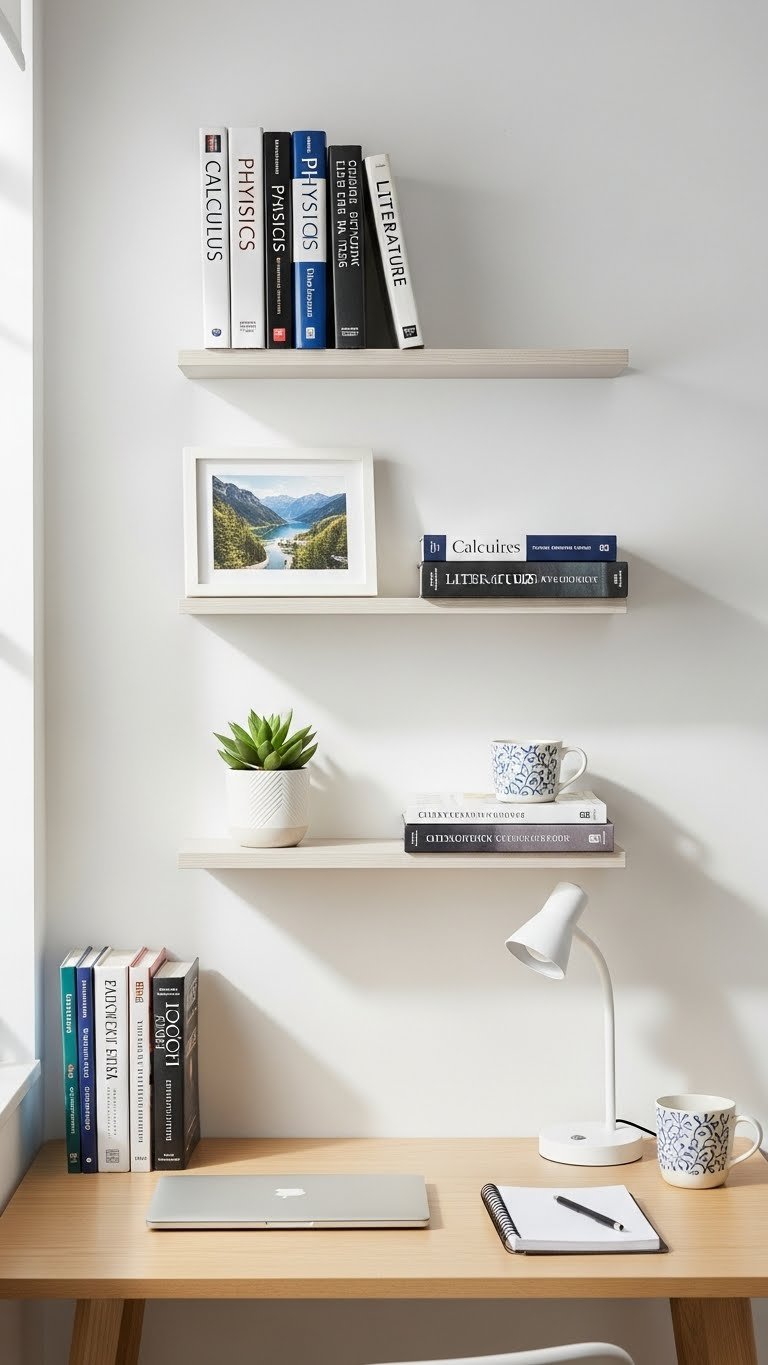
Open shelving makes a room feel bigger because you can see through to the wall behind. Mount 2–3 shelves at eye level when seated at your desk to keep reference books and frequent-use items in view. $40–$120 for a set of shelves at IKEA, Amazon, or Home Depot.
Installation takes 45 minutes–1 hour with a drill and level. Organize by category: textbooks upright, supplies in a small basket, and one personal item (a plant, photo, or candle) for visual interest. Keep the styling clean—too much stuff defeats the purpose.
Open shelves naturally encourage you to keep things tidy since everything’s on display, which creates a focused, distraction-free study environment.
6. Use a Desk Pad to Define Your Study Space
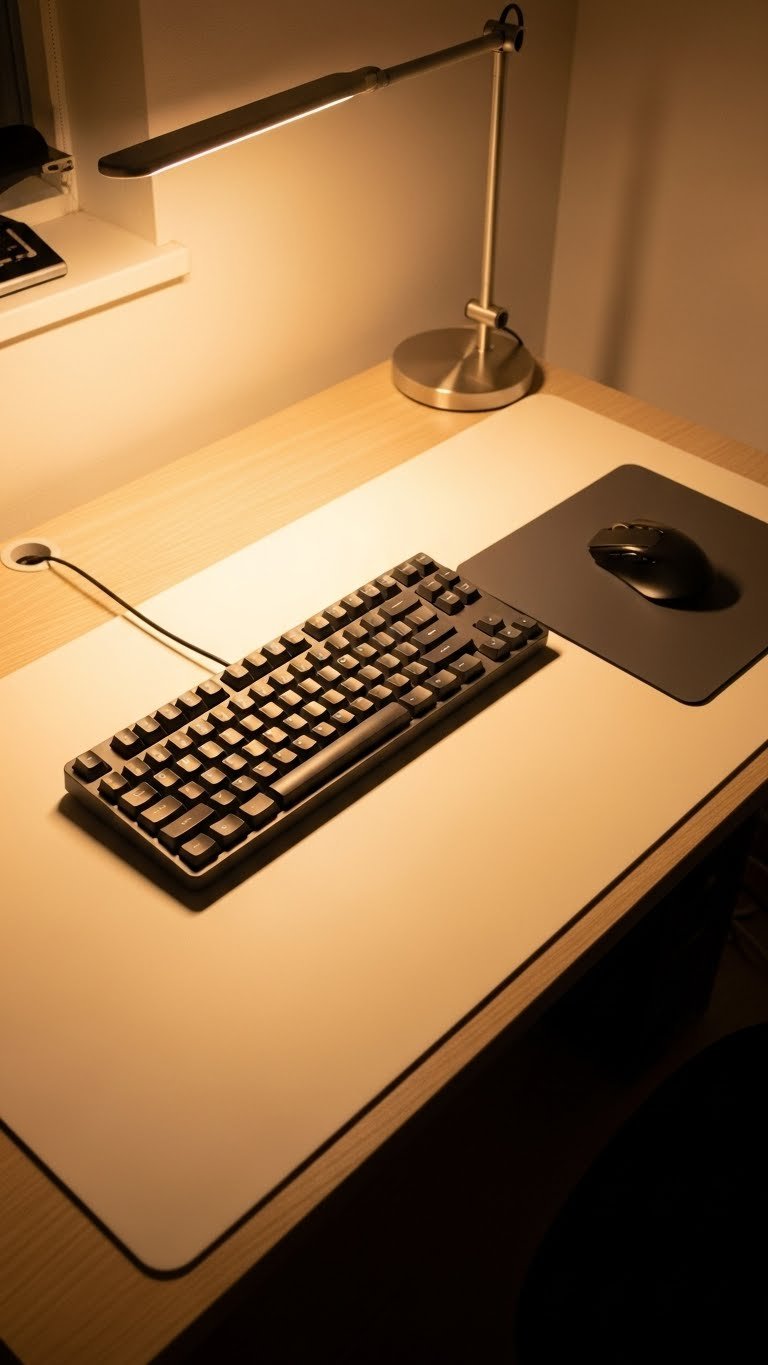
A desk pad does more than protect your surface—it psychologically defines your study zone in a compact room. It visually separates “work area” from “rest area,” which helps your brain switch into focus mode. Felt desk pads run $20–$50 in various sizes and colors; leather options are pricier but last longer.
Lay it down and arrange your essentials on top. The bounded space naturally limits clutter because everything doesn’t fit, forcing you to keep only what you actively use during study sessions. Cream, gray, or soft blue pads work best in small rooms because they don’t feel heavy visually.
This simple change signals to your brain that when you’re sitting here, it’s work time—not scrolling time.
7. Add Task Lighting with a Swing-Arm Lamp
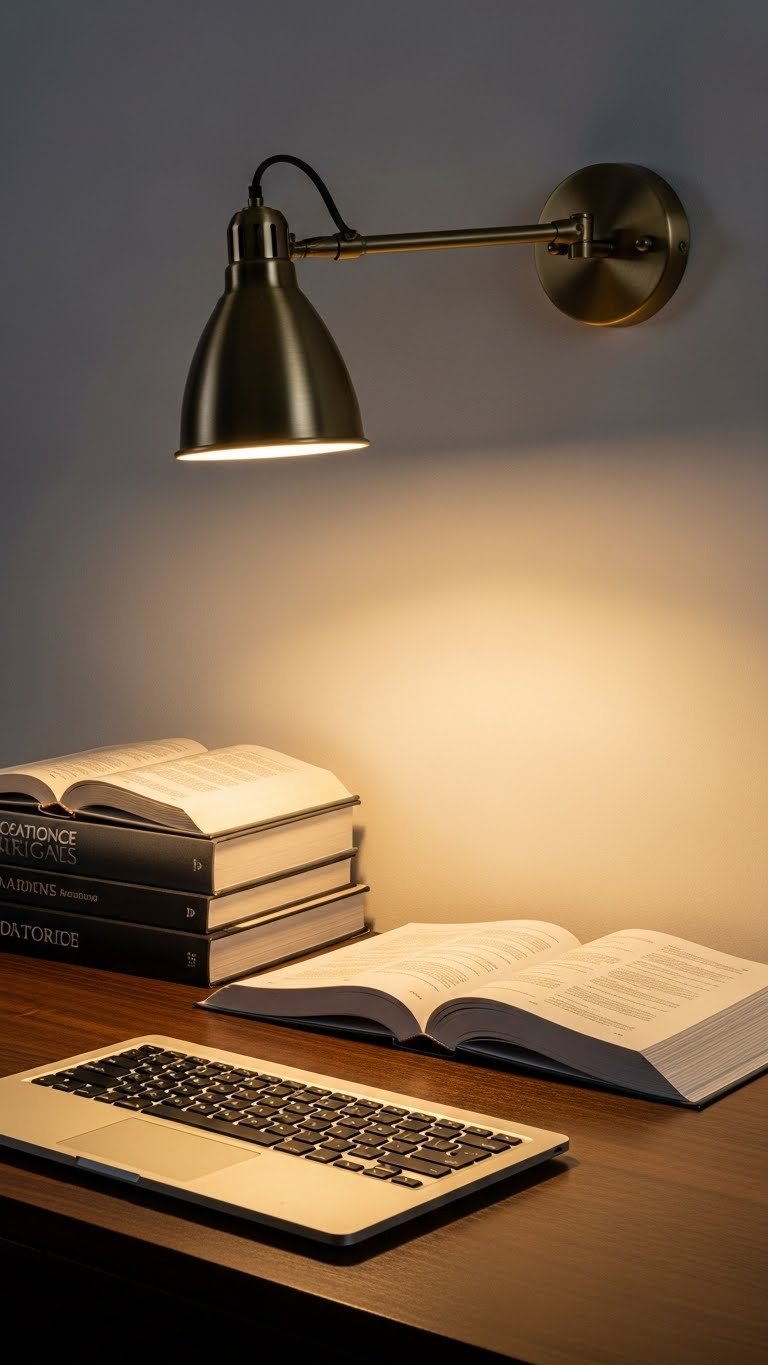
Overhead dorm lighting is terrible for focused work, and lamps that take up desk space waste precious real estate. Swing-arm lamps mount to walls or desks and adjust to direct light exactly where you need it. $25–$80 depending on style; IKEA, Target, and Amazon all carry solid options.
Mount it on a shelf just above eye level or on the wall behind your desk—installation takes 10–15 minutes. Choose warm-toned bulbs (2700K) for a calm focus vibe rather than harsh white light. The adjustable arm means you can angle light onto papers without creating shadows or desk glare.
Better lighting reduces eye strain during late-night study sessions and makes your small space feel more intentional and less cave-like.
8. Try a Lap Desk for Flexible Study Options

When floor space is nonexistent, a lap desk lets you study from your bed, the common room, or even a couch without needing a dedicated desk. Cushioned lap desks with storage compartments run $25–$50 at Amazon and Wayfair. They’re lightweight and portable—throw it in a backpack.
Set up is literally zero minutes; just place it on your lap and work. Some models have a clip to hold your laptop, slots for pens, and a storage pouch for charging cables. Use it when your desk is covered with laundry or when you want a change of scenery during a study marathon.
You get flexibility in where you work without needing more furniture, plus you can study from anywhere in your dorm or library.
9. Install Command Hooks for Cable Management
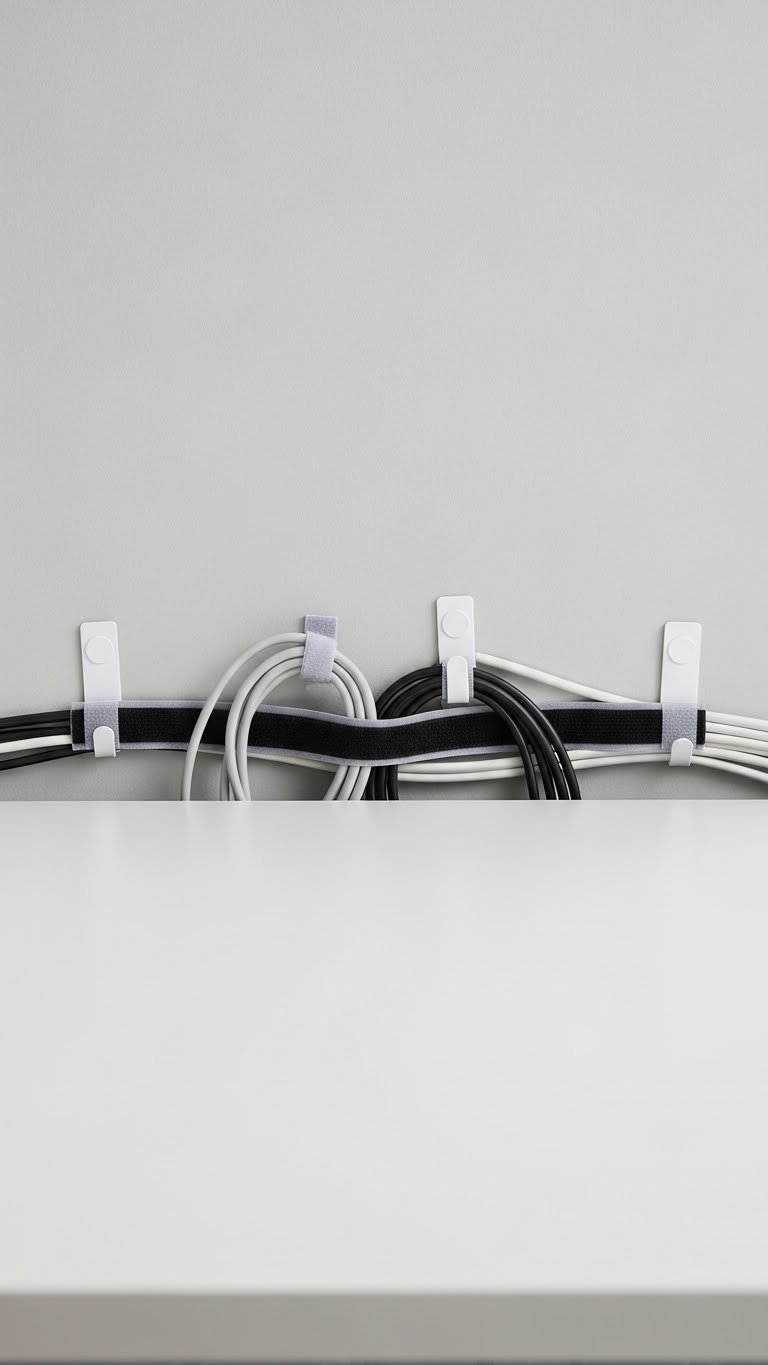
Cables and chargers create visual chaos in tiny spaces and can strangle your productivity vibe. Command hooks (damage-free adhesive) and velcro cable ties transform a messy desk into a clean workspace. A bundle of Command hooks and cable ties costs $10–$20 and works on any surface.
Spend 15 minutes organizing: bundle similar cables together with velcro, then use hooks to route them behind your desk or up the wall. Label each cable with a small tag if you have multiple devices. This prevents the “which charger is this?” panic during finals week.
Your desk looks twice as big and more focused when cables aren’t tangling across your surface.
10. Use a Small Bulletin Board for Visual Planning
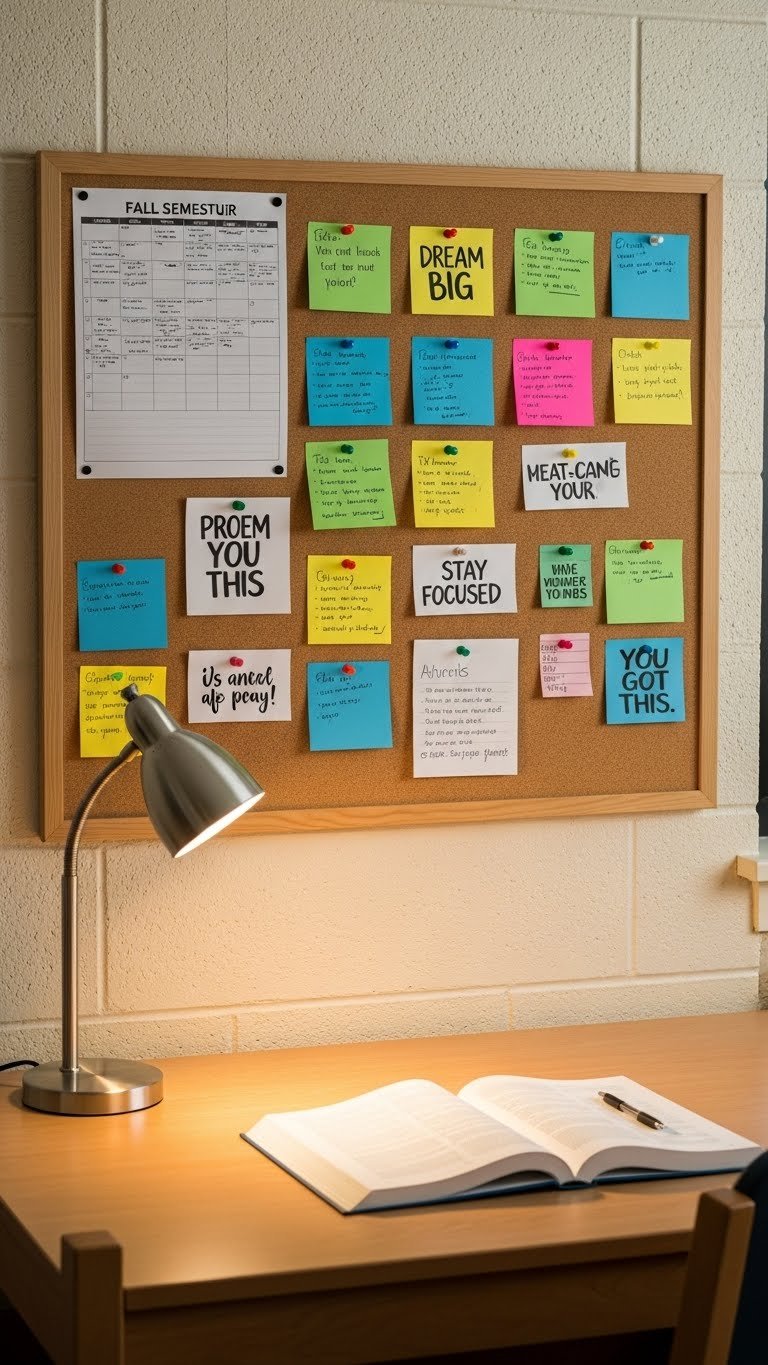
A compact bulletin board keeps your schedule, deadlines, and motivation in one glance without cluttering your desk. Choose a small size (12×18 inches) for $10–$25 at Target, Office Depot, or IKEA. Cork, fabric, or cork-rubber options all work.
Mount it at eye level when seated; use pushpins or decorative pins to display your class schedule, assignment deadlines, and maybe one motivational quote. Color-code by class using different colored index cards. It takes five minutes to set up and becomes your visual command center.
Instead of hunting through your phone for deadlines, you look up and know exactly what’s due and when—that kind of clarity reduces stress and boosts focus.
11. Invest in a Monitor Stand with Desk Organization
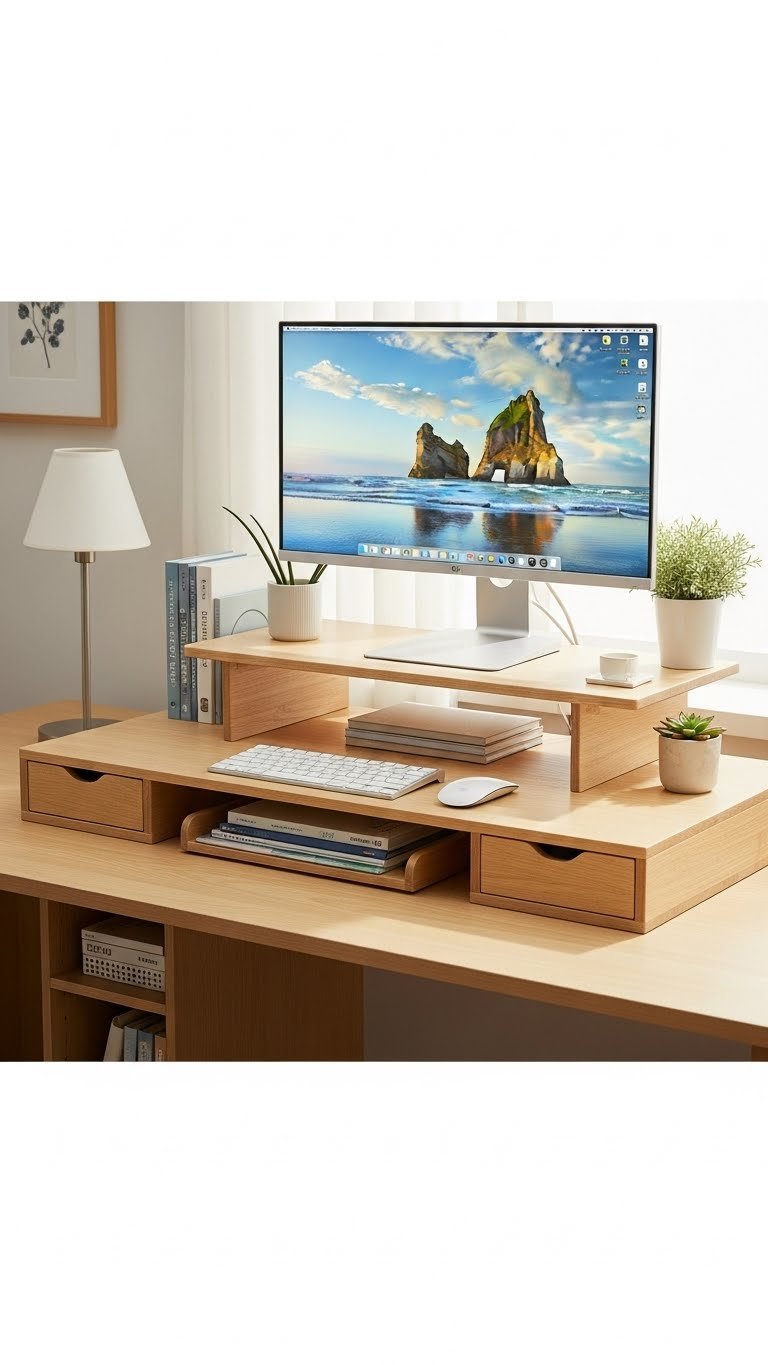
Elevating your monitor to eye level reduces neck strain (critical during all-nighters), and many stands have built-in storage underneath. Integrated storage monitor stands cost $40–$100 and come from Amazon, Best Buy, or IKEA. You’re essentially gaining a shelf while solving an ergonomics problem.
Set it up in 10 minutes; most need zero installation. Slide your keyboard and mouse underneath, then stack small supplies or books on lower shelves. Your desk surface stays clear while your workspace becomes healthier and more organized.
This upgrade pays dividends during intense study periods when you’re at your desk for hours—your neck will thank you, and you’ll have hidden storage.
12. Create a Distraction-Free Zone with Headphones
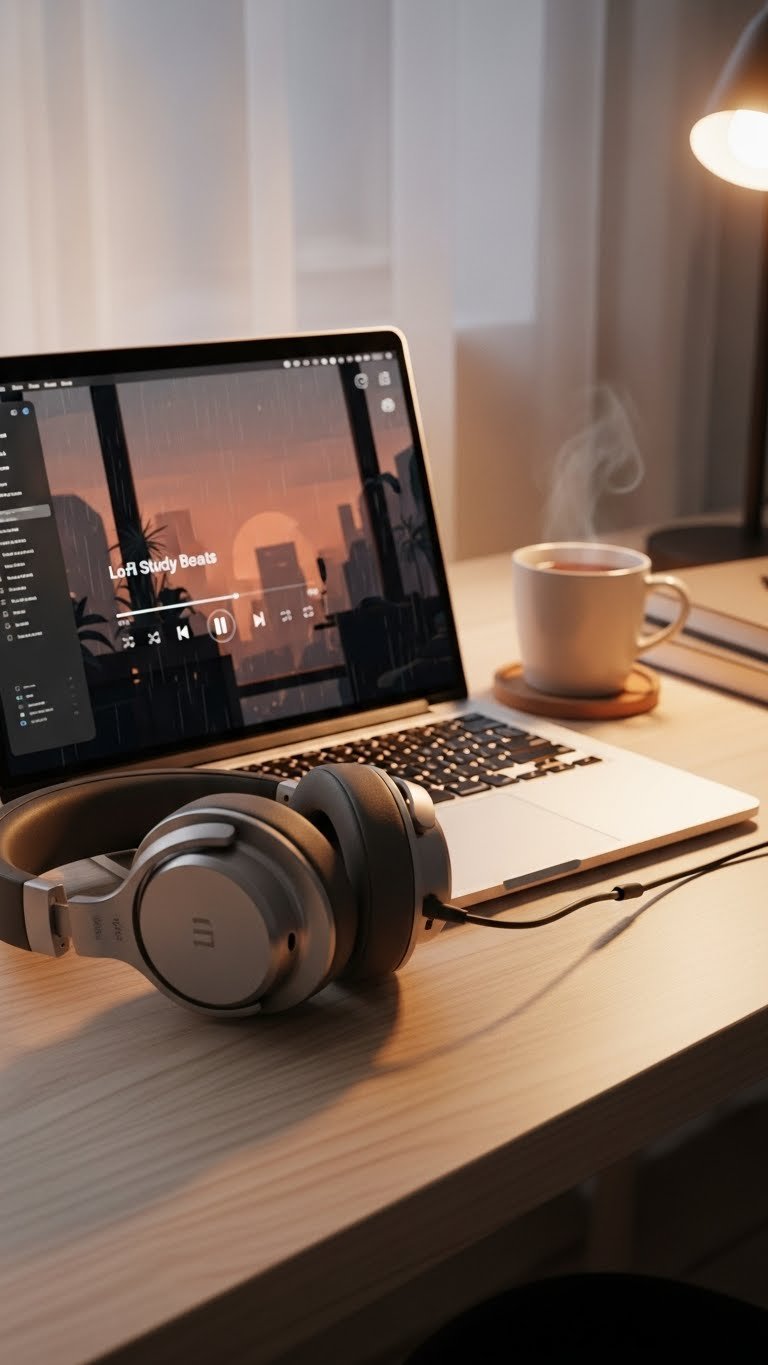
Noise-canceling headphones are essential for tiny dorms where roommates, hallway noise, and ambient chaos constantly interrupt focus. Budget options start at $30–$50 (Anker Soundcore), mid-range at $80–$150 (Sony WH-CH720N), and premium at $200–$400 (Apple AirPods Max). Most offer 20–40 hours of battery life.
Pop them on with a lo-fi study playlist and you’ve created an acoustic bubble around your work. Many students study better with ambient sounds than total silence. Look for comfort features if you’ll wear them for 3+ hours straight—ear cup padding matters.
The noise cancels not just sound but mental distractions, allowing you to sink into deep focus even in chaotic dorm environments.
13. Organize Supplies in a Desktop Caddy
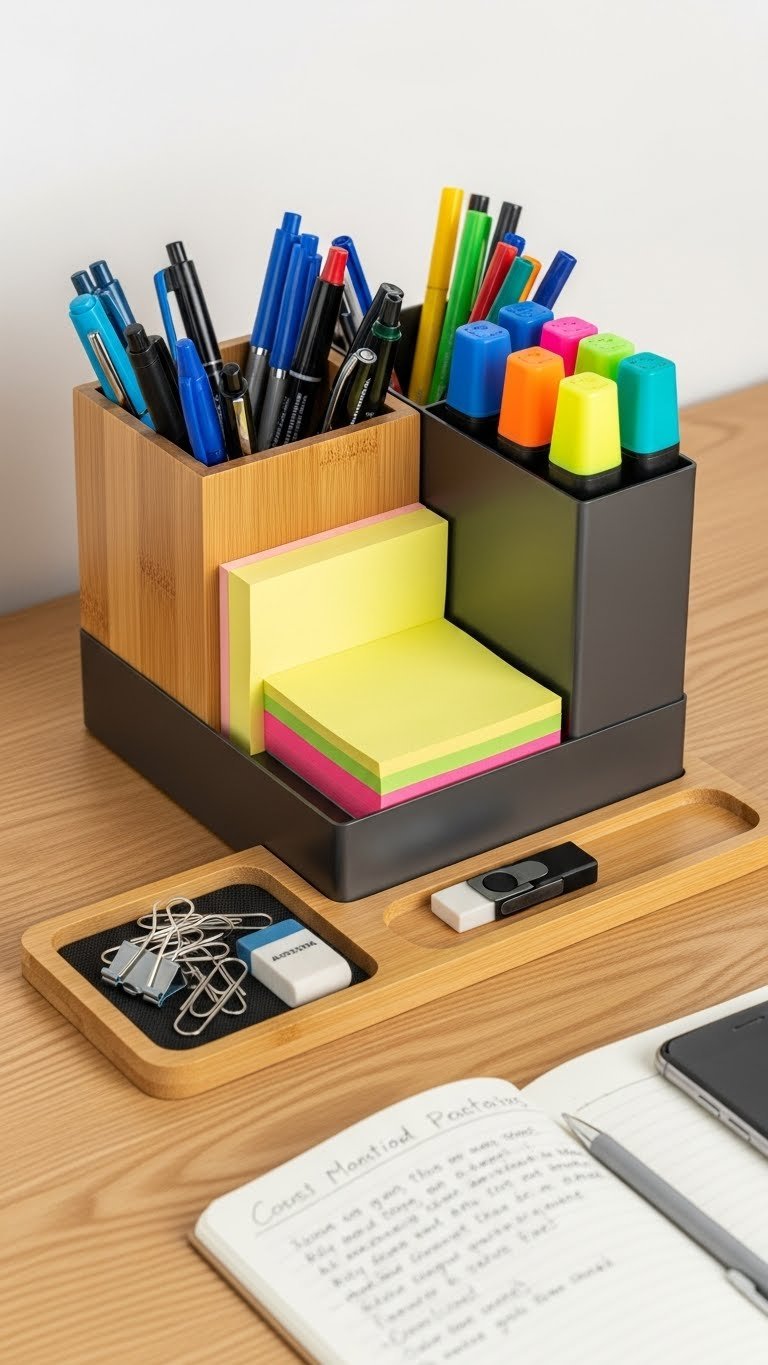
A desk caddy corrals all your small supplies in one organized spot, preventing the scattered-pens-everywhere problem. Small caddies cost $10–$30 and come from Target, Amazon, or IKEA in plastic, wood, or metal. Look for models with multiple compartments so different items stay separated.
Set it up in two minutes and load it with what you actually use: pens, highlighters, sticky notes, maybe a small pair of scissors. Position it in one corner so it’s accessible but not in the center of your working space. Keep only what you use weekly; other supplies live in your under-desk storage.
Everything stays within arm’s reach during study sessions, and your desk stays clutter-free.
14. Paint Your Desk in a Calming Color
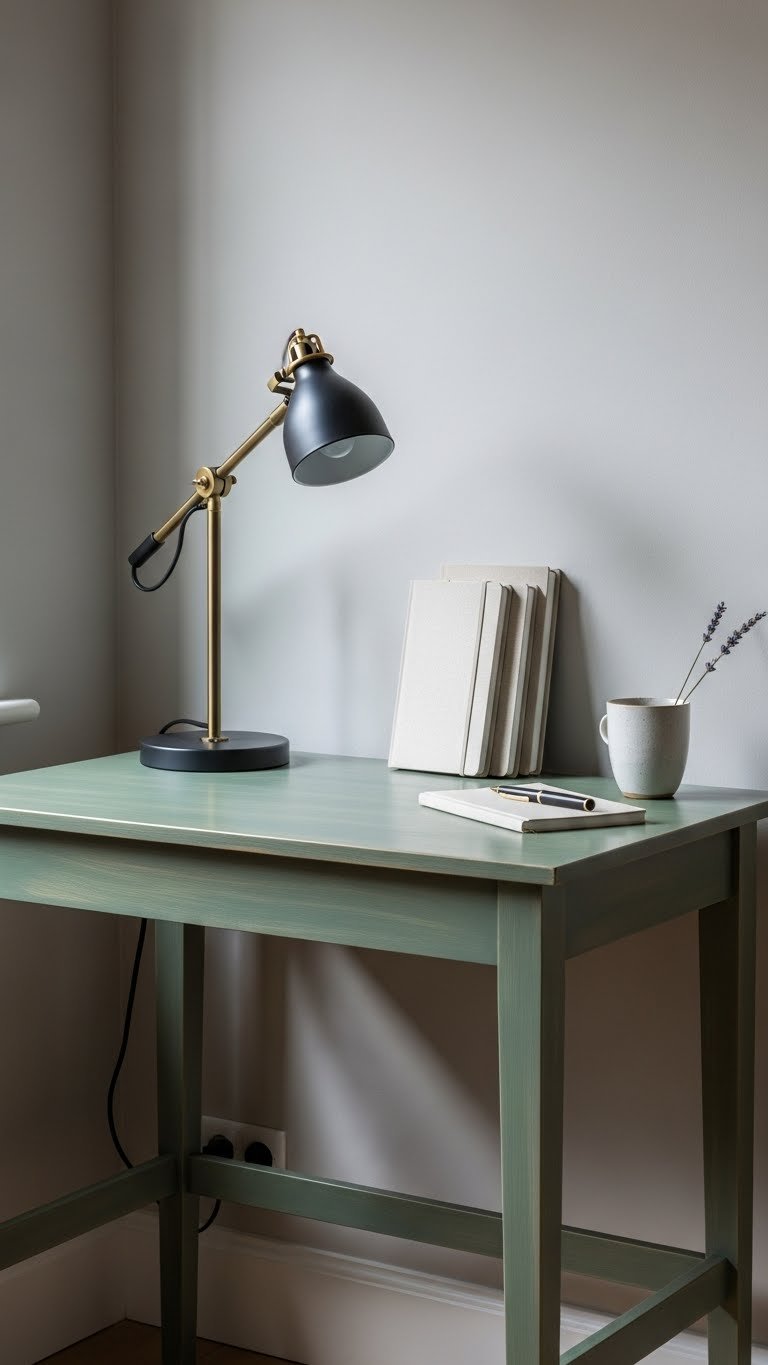
If you have an old desk or can paint a dorm-approved surface, a soft color choice (sage, soft blue, cream) makes your study nook feel like a retreat rather than a work zone. A quart of paint costs $8–$20 at any hardware store; you likely need primer too ($5–$15).
Spend 2–3 hours prepping and painting (including drying time). Use a satin or matte finish for a calming vibe. Avoid bright whites or blacks in tiny spaces—soft neutrals feel roomier and less institutional. Check your dorm contract first; some allow paint on furniture but not walls.
This small change shifts your mental association with your desk from “ugh, work” to “okay, I’m ready to focus.”
15. Use Drawer Dividers to Organize Supplies
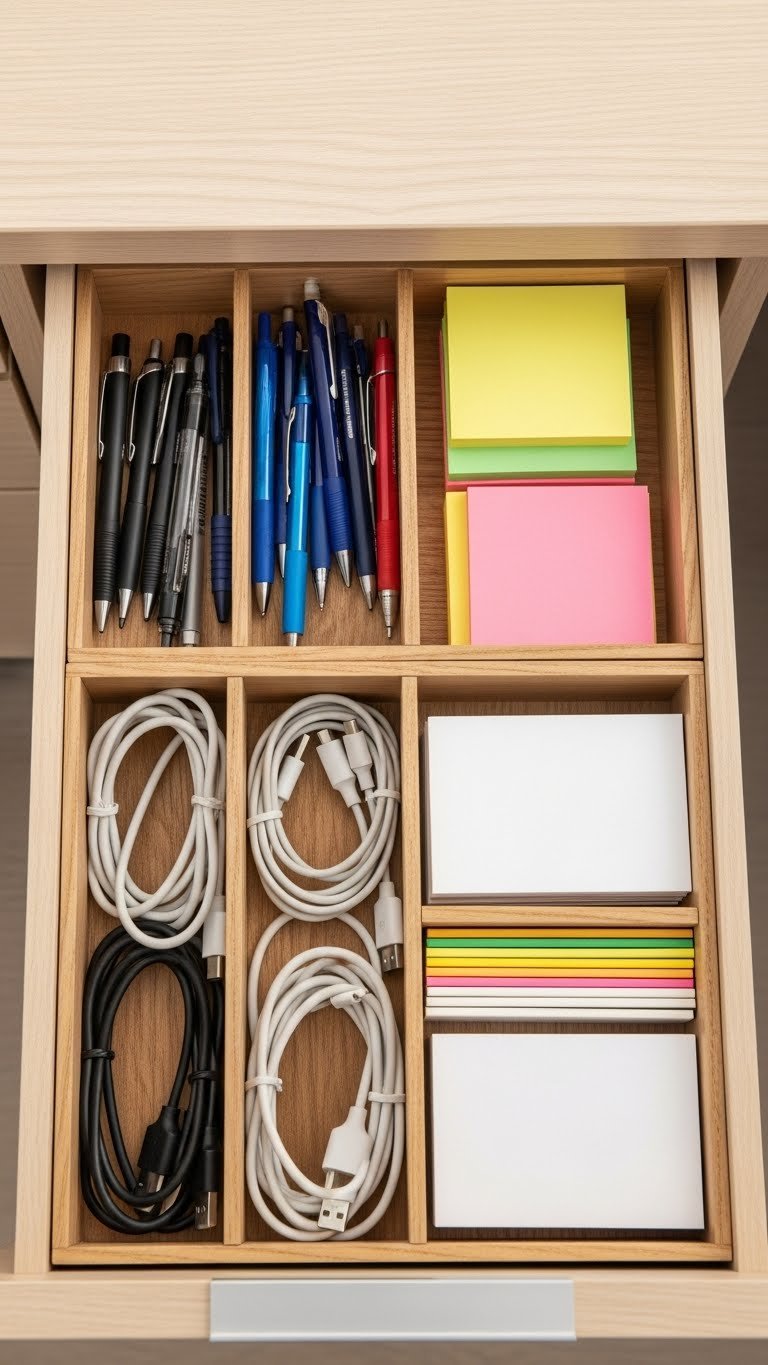
Drawer dividers prevent supplies from sliding into a chaotic mess and make everything searchable. A set of adjustable dividers costs $10–$25 at Container Store, Target, or Amazon. They’re plastic or wood and fit most standard desk drawers.
Installation takes 10 minutes: adjust the dividers to fit your drawer width, then sort supplies by type. Pens in one section, sticky notes in another, charging cables in a third. Now when you need something, you know exactly which compartment to open instead of digging through a jumbled drawer.
This sounds small, but organized drawers reduce decision fatigue and help you stay focused during study sessions.
16. Add a Small Area Rug to Ground Your Study Zone
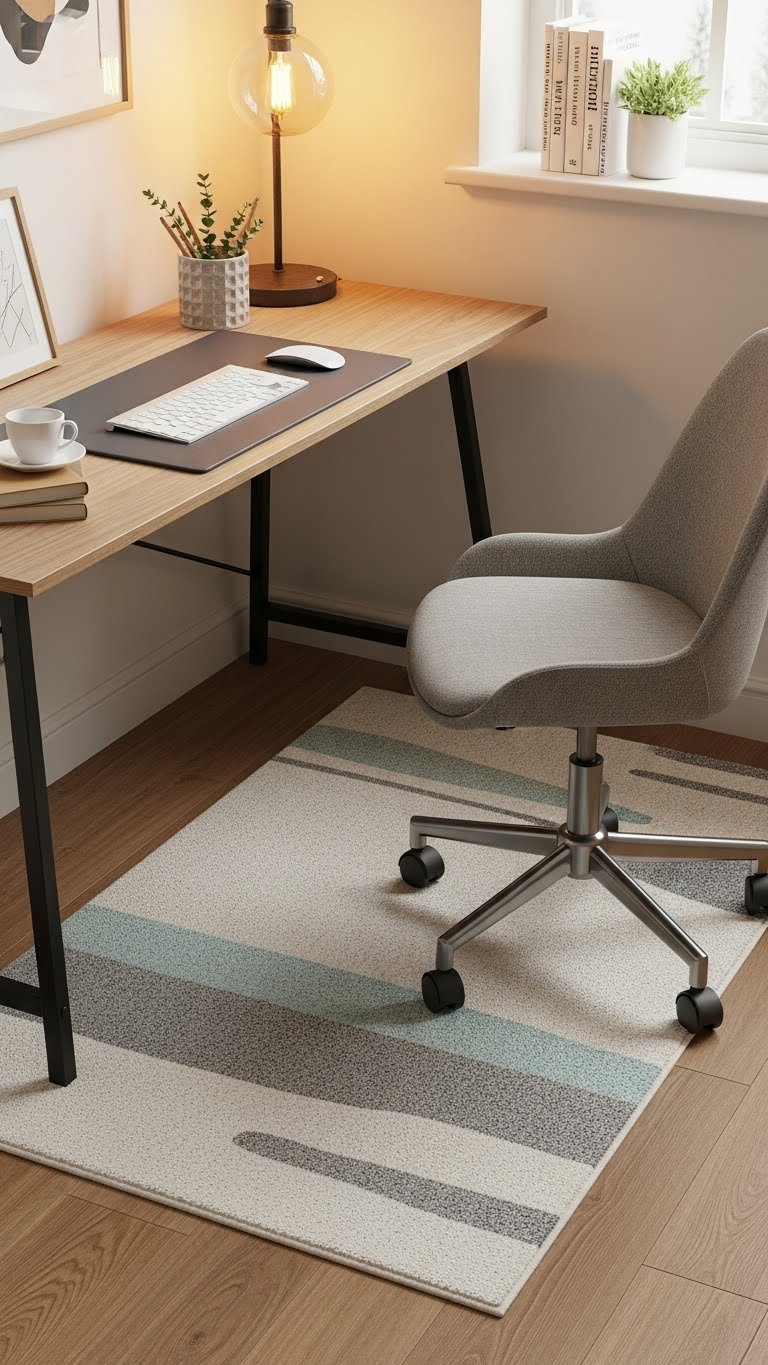
A compact rug visually anchors your study zone and signals “this is a focused space.” Small rugs (3×5 feet) cost $30–$80 at Target, Wayfair, or IKEA. Soft textures (wool blend, plush) feel nicer underfoot than thin synthetic options. Light colors (cream, gray, soft blue) keep small rooms from feeling cramped.
Place it under or in front of your desk so your chair sits partially on it. This creates a subtle boundary between study space and rest space. A rug also deadens sound in concrete dorm floors, making focus easier.
The texture underfoot and visual definition help train your brain that this specific spot means work time.
17. Install a Wall-Mounted File Organizer
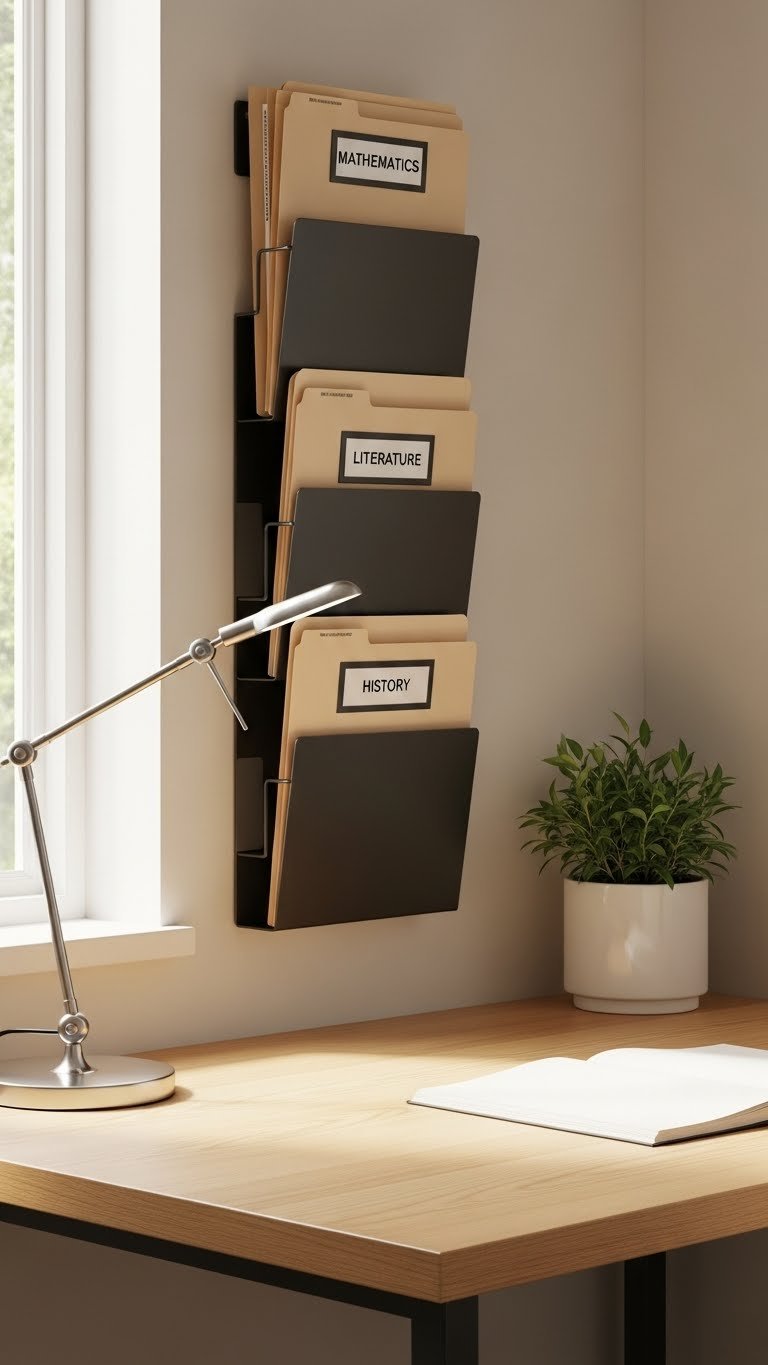
Wall-mounted file organizers keep class materials sorted vertically without eating desk or floor space. $15–$40 at Office Depot, IKEA, or Amazon for models holding 3–5 folders. Look for metal or plastic versions that won’t feel heavy visually.
Mount it at arm’s reach from your desk; installation takes 15 minutes. Label each slot by class (Math, English, Bio, etc.) and store current handouts, syllabi, and assignment sheets. No more shuffling through piles on your desk.
Your papers stay organized and accessible, and your desk surface remains clear for actual studying.
18. Use a Standing Desk Converter for Variety
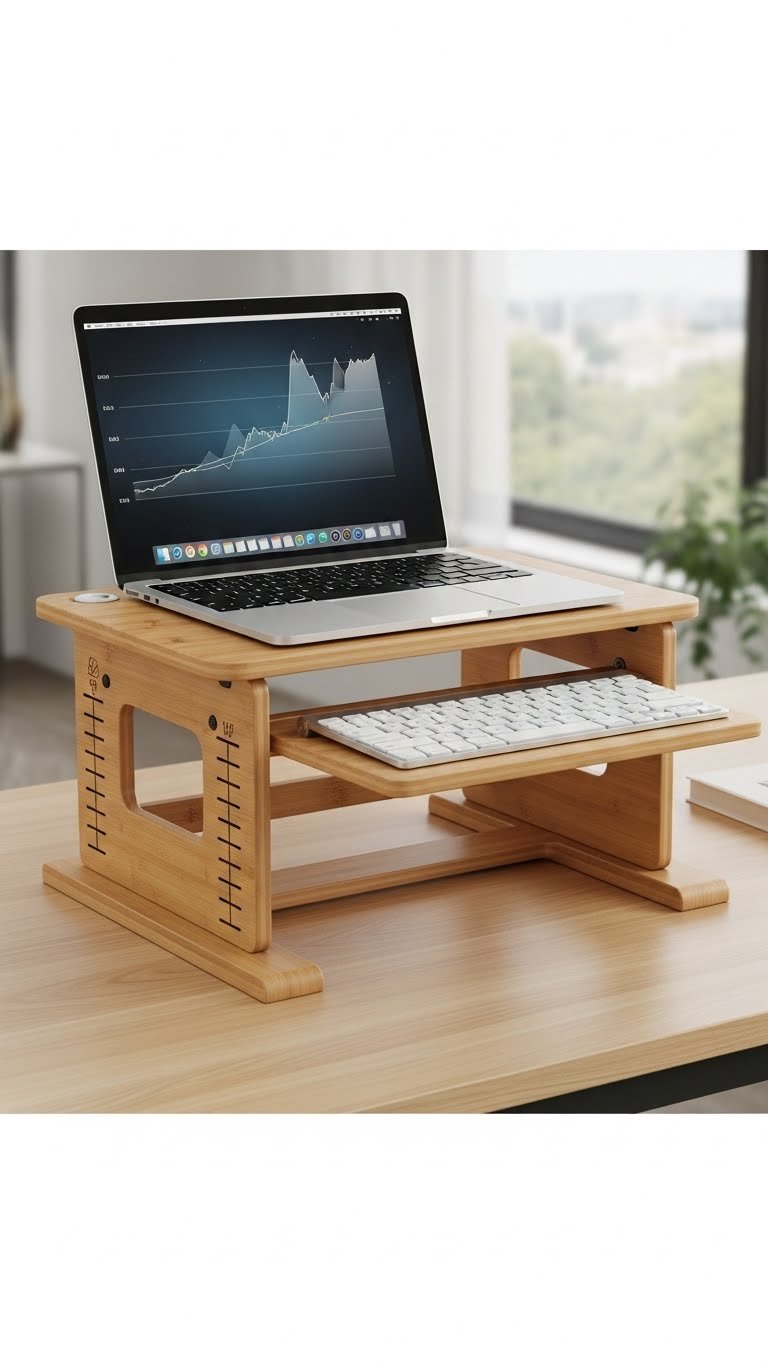
Standing desk converters elevate your laptop and keyboard to eye level while letting you alternate between sitting and standing—perfect for focus and circulation. Compact models cost $50–$150 and take up minimal desktop space. Brands like Flexispot and Fully make affordable small versions.
Set it up in five minutes on top of your existing desk; no permanent installation needed. Stand for 20–30 minute study blocks, then sit. Movement combats the restlessness that comes with long study sessions, and your back will feel better. Renters love this because you take it with you.
Alternating between sitting and standing keeps you alert and reduces the physical discomfort that kills focus during marathon study sessions.
19. Mount a Message Board Above Your Desk
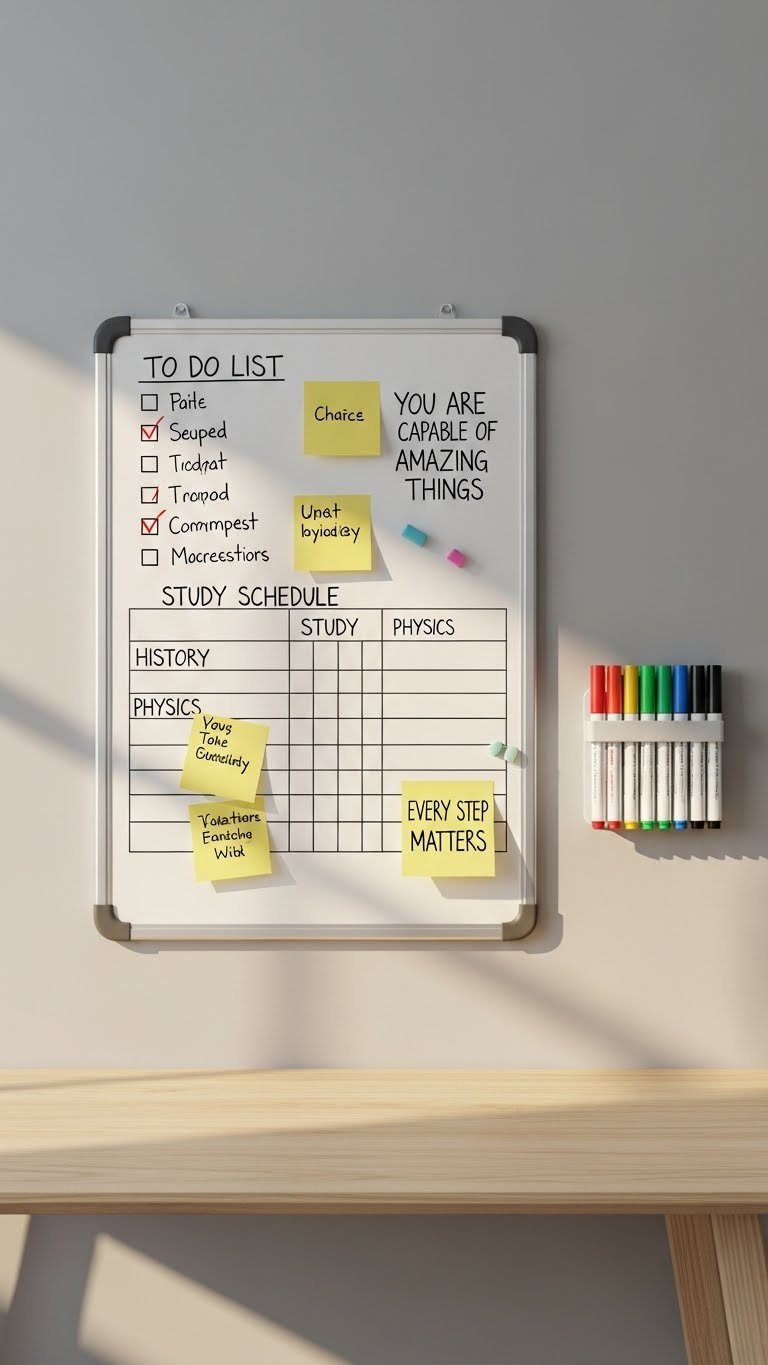
A small whiteboard or chalkboard becomes your daily command center for tasks and motivation. $10–$25 at Office Depot or Target; magnetic whiteboards are also erasable and mess-free. Pair it with dry-erase or chalk markers ($3–$8).
Mount it directly above your desk or on the wall beside it; takes 10 minutes. Write your daily focus goal, three top priorities, or a motivational reminder. Erase and rewrite daily. Handwriting to-do lists (vs. digital) actually improves memory and focus, so this tangible approach works better than your phone notes.
Seeing your tasks written and visible reduces the mental overhead of remembering everything, letting you focus on actual studying.
20. Organize Textbooks with a Book Stand
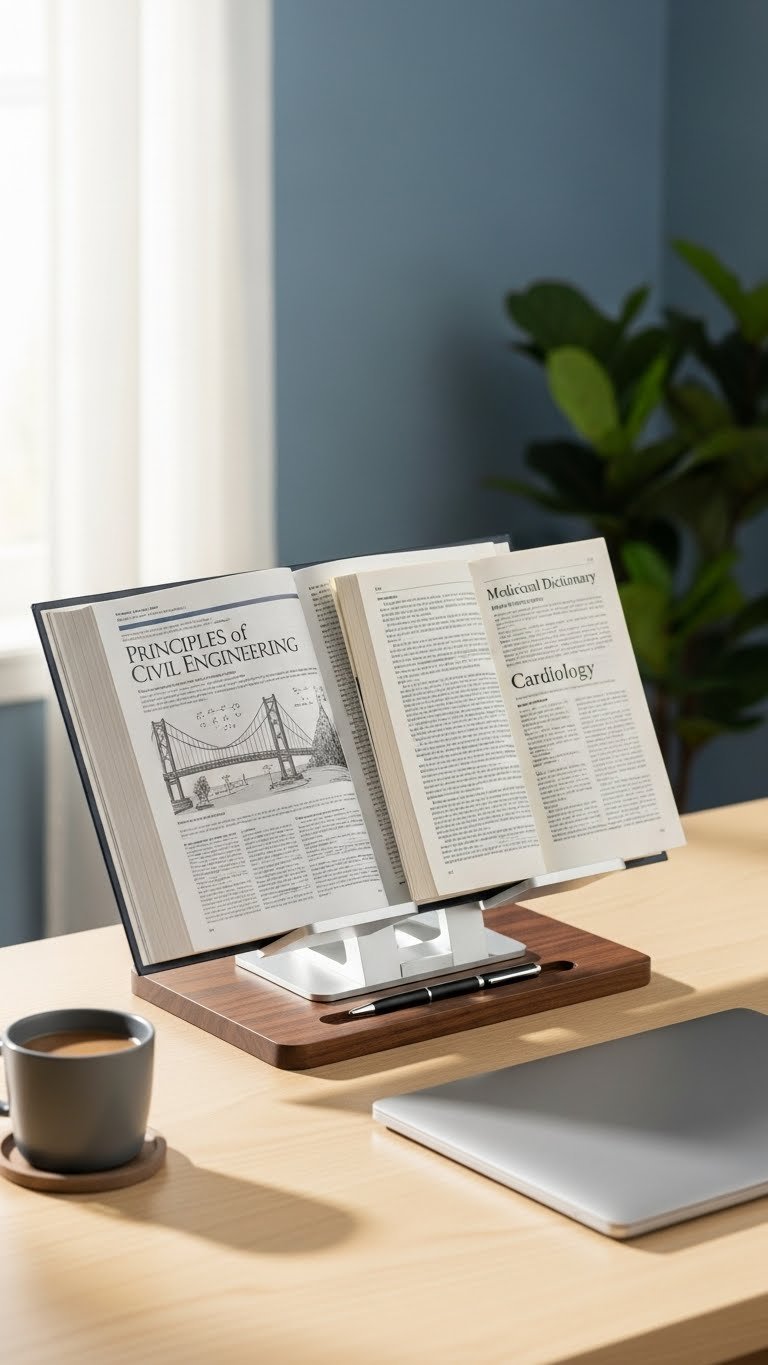
Book stands prop your textbooks open at a readable angle so you’re not hunching over or balancing them awkwardly. Small stands cost $15–$35 at Amazon, IKEA, or Office Depot. Bamboo or metal options fit different aesthetics.
Position your reference material on the stand beside your laptop so both are visible without craning your neck. Set it up in two minutes—no installation needed. You can fit 2–3 textbooks depending on stand size. This reduces strain and keeps your desk more organized than stacked books.
Your ergonomics improve, your reference material stays visible, and your desk looks intentional instead of chaotic.
21. Use Command Strips for Cable Routing
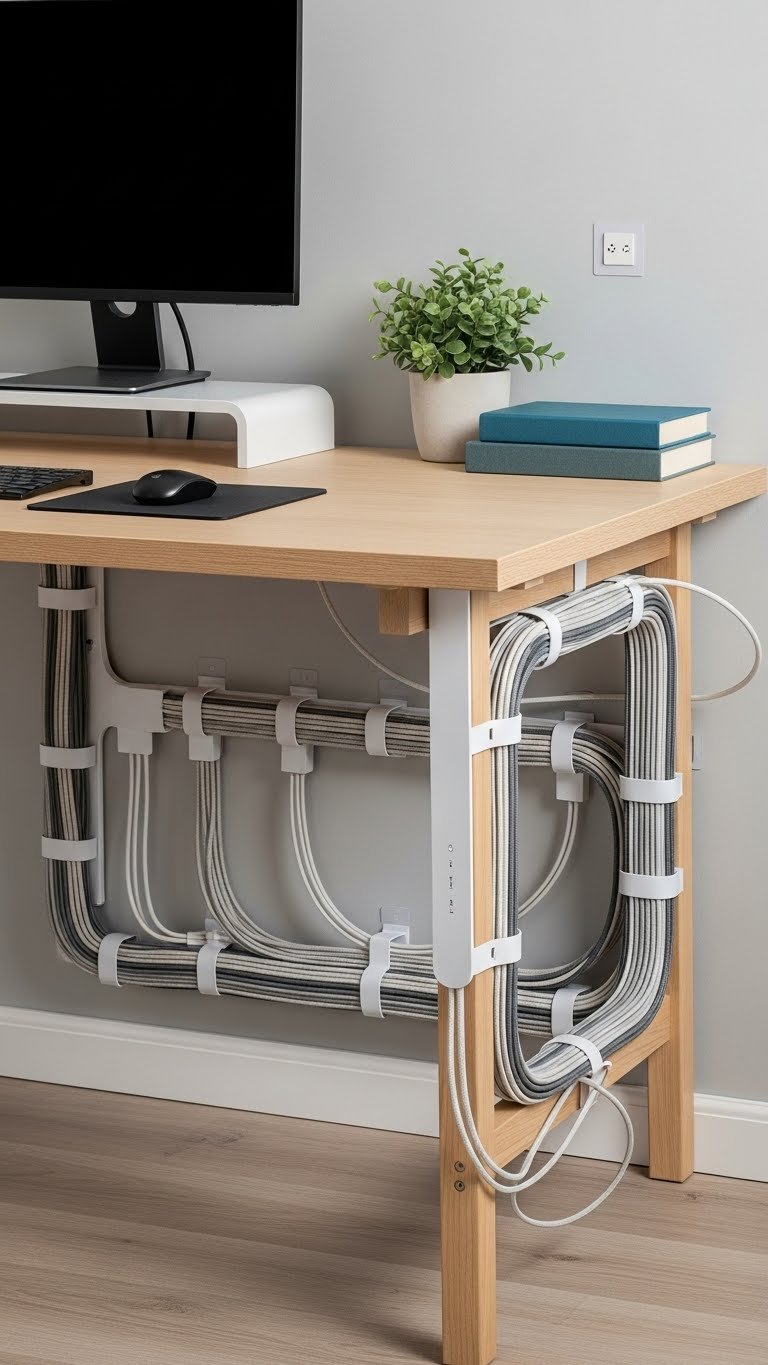
Command Strip cable clips and adhesive cable channels organize wires running behind your desk without permanent damage—essential for renters. A pack of 10 cable clips costs $8–$12; longer cable channels run $10–$20 at Amazon or Home Depot.
Spend 15 minutes routing: clip cables to the back of your desk or wall so they run neatly out of sight. Bundle similar cables with velcro strips. Now your desk looks clean from above and below. This also prevents tripping hazards and tangled cord disasters.
A clutter-free cable situation visually simplifies your entire desk setup and prevents the “which charger goes where?” confusion that wastes focus time.
22. Create a Study Playlist Station

Curate 2–3 study playlists (lo-fi hip-hop, ambient, classical, nature sounds) and save them in one easily accessible spot. Free on Spotify, Apple Music, or YouTube Music—you likely have at least one subscription already.
Spend 20 minutes creating playlists and testing which music helps you focus best. Some people need silence, others need lo-fi beats. The key is consistency: same playlist = brain knows it’s focus time. Add a playlist on your phone too so you can study in the library without resetting.
Music becomes a habit trigger that signals to your brain “now we study,” accelerating how quickly you slip into focus mode.
23. Mount a Small Mirror for Visual Expansion
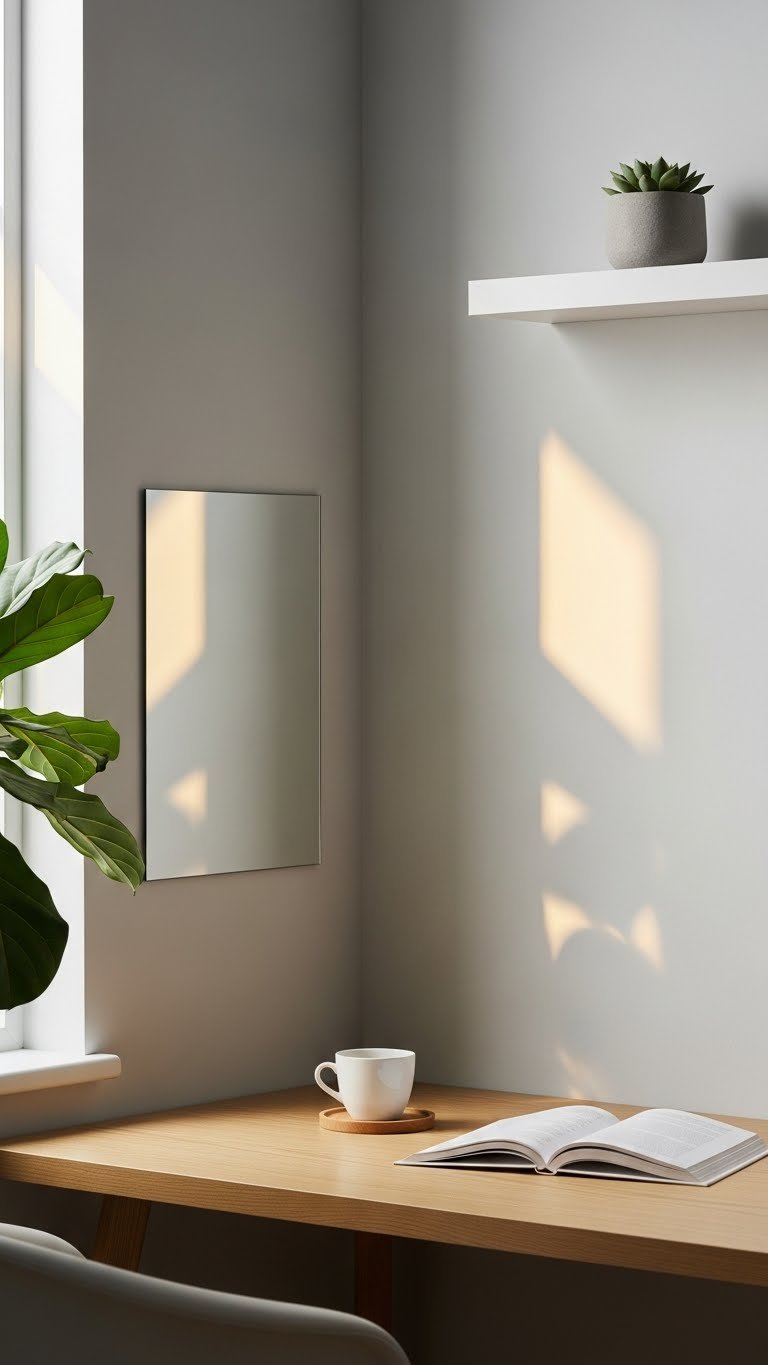
A small mirror reflects light around your study zone, making the space feel bigger and brighter—which reduces the cramped feeling that kills focus. Compact mirrors run $15–$50 and mount on walls with Command strips (renter-friendly) or hardware. Look for styles with simple frames that match your aesthetic.
Mount it opposite a light source (window or lamp) so it bounces light across your workspace. Takes 10 minutes to hang. A mirror also makes your study area feel less cave-like and more intentional. Bonus: you can check that you don’t have spinach in your teeth before video calls.
Better lighting and the illusion of more space combine to make your study zone feel like an actual retreat instead of a cramped corner.
24. Use Vertical Wall Space for Inspiration Boards
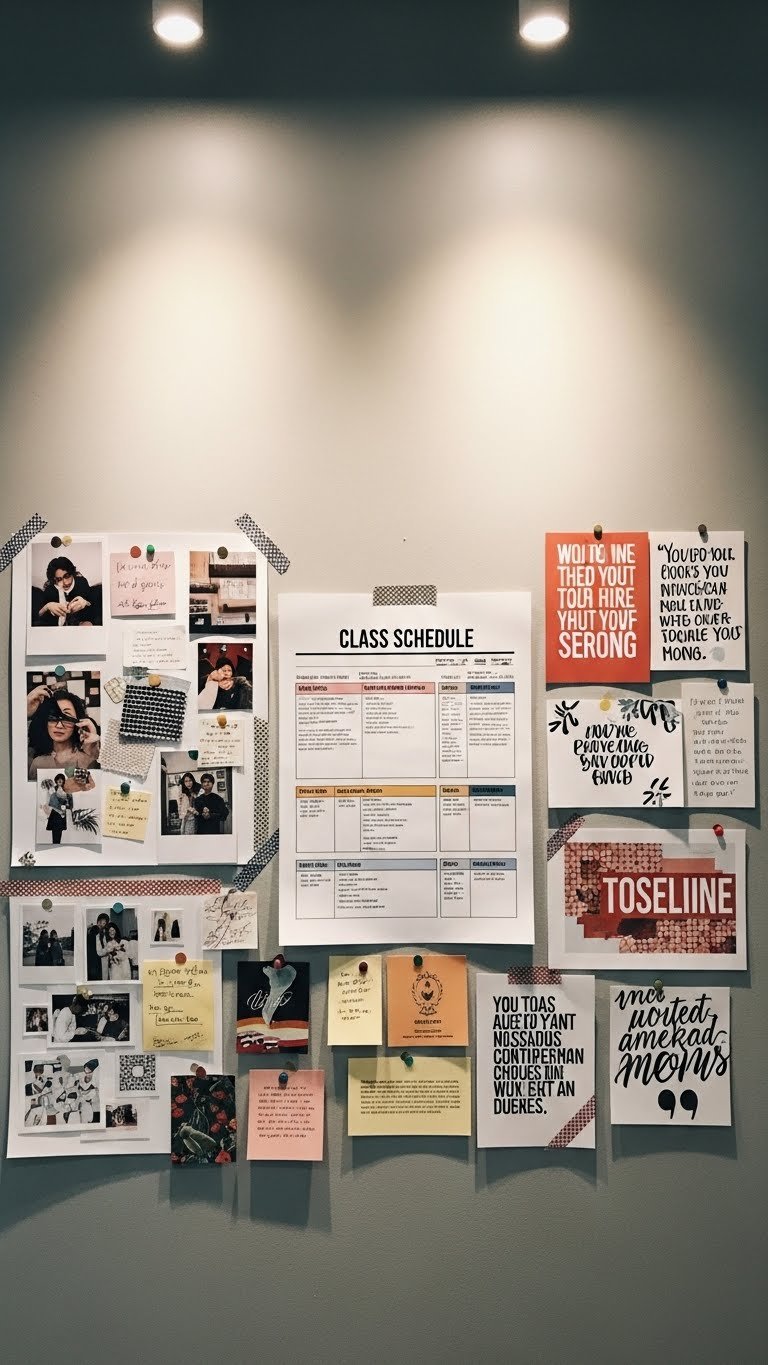
Transform one wall section into an inspiration board that combines your schedule, goals, and visual motivation. Gather your materials (images, printed quotes, washi tape, push pins, and maybe one small corkboard). Cost is basically free to $20 if you buy washi tape and pins.
Spend 30 minutes arranging: pin your class schedule in the center, add motivational quotes, one or two inspiring images, and maybe a small photo of your goal. Use washi tape to create sections or borders. Avoid overcrowding; white space matters. Renters use Command strips instead of pins for damage-free hanging.
Your workspace now displays your priorities visually, keeping you oriented toward your goals while you study.
Save this post for your next study space refresh. Pick one idea this weekend—even something as simple as a desk pad or cable organizer makes a measurable difference in your focus and how your room feels.
Leave a Reply