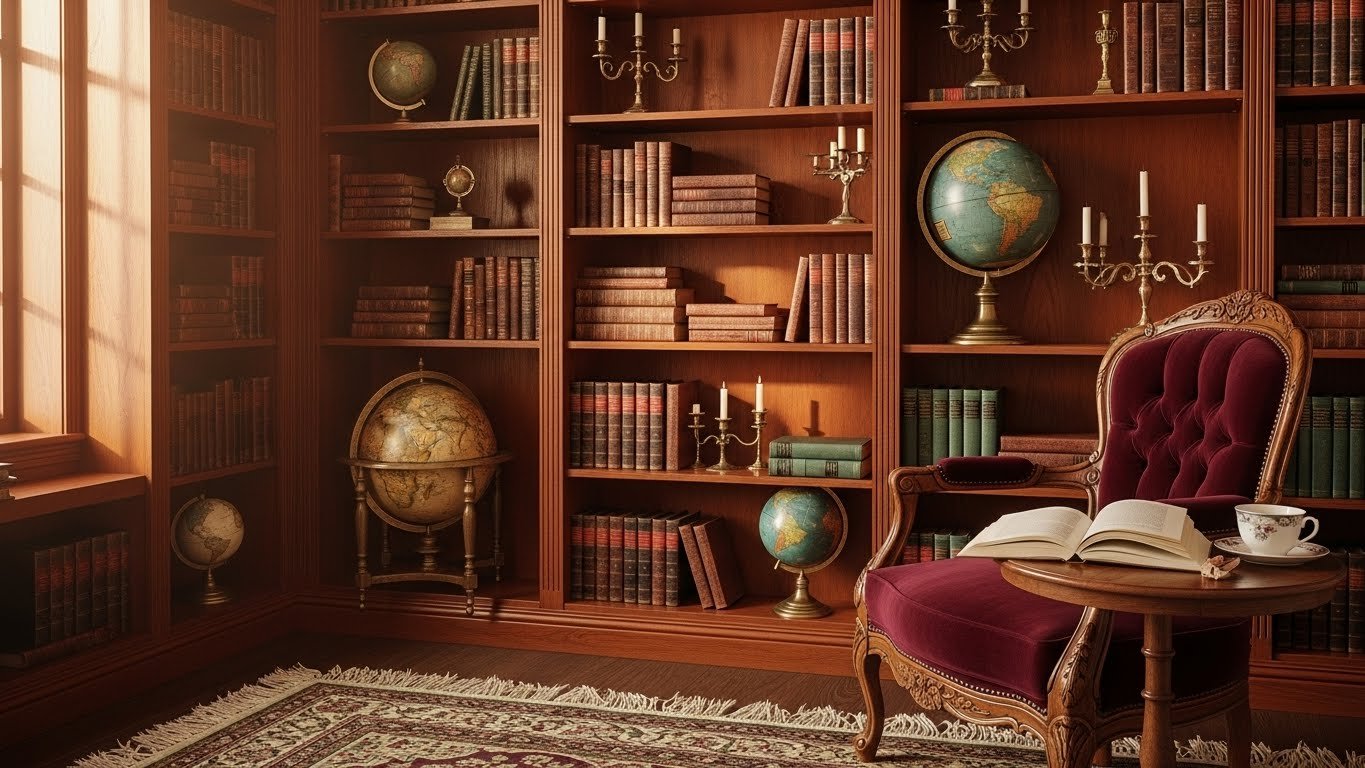
There’s something undeniably appealing about stepping into a library that feels like it’s been collecting stories for centuries. If you love the idea of a bookshelf that whispers of antique bookstores, Victorian parlors, and well-traveled collectors, you’re not alone. The “bookshelf wealth” trend has sparked a deeper desire: not just curated shelves, but shelves with character—ones that look like they’ve been loved for generations.
The good news? You don’t need an actual 200-year-old mansion to create this vibe. Whether you’re working with a small apartment or a dedicated library room, these 27 ideas will help you build that old-world charm on any budget. We’re mixing styling tricks, affordable finds, and a few splurge-worthy pieces that genuinely pay off. You’ll discover how to mix vintage with new, hunt down the right props, and arrange your books so they look like a collector’s dream—not a cluttered mess.
Ready to create your own vintage literary sanctuary? Let’s dive in.
1. Mix Leather-Bound Books with Modern Spines
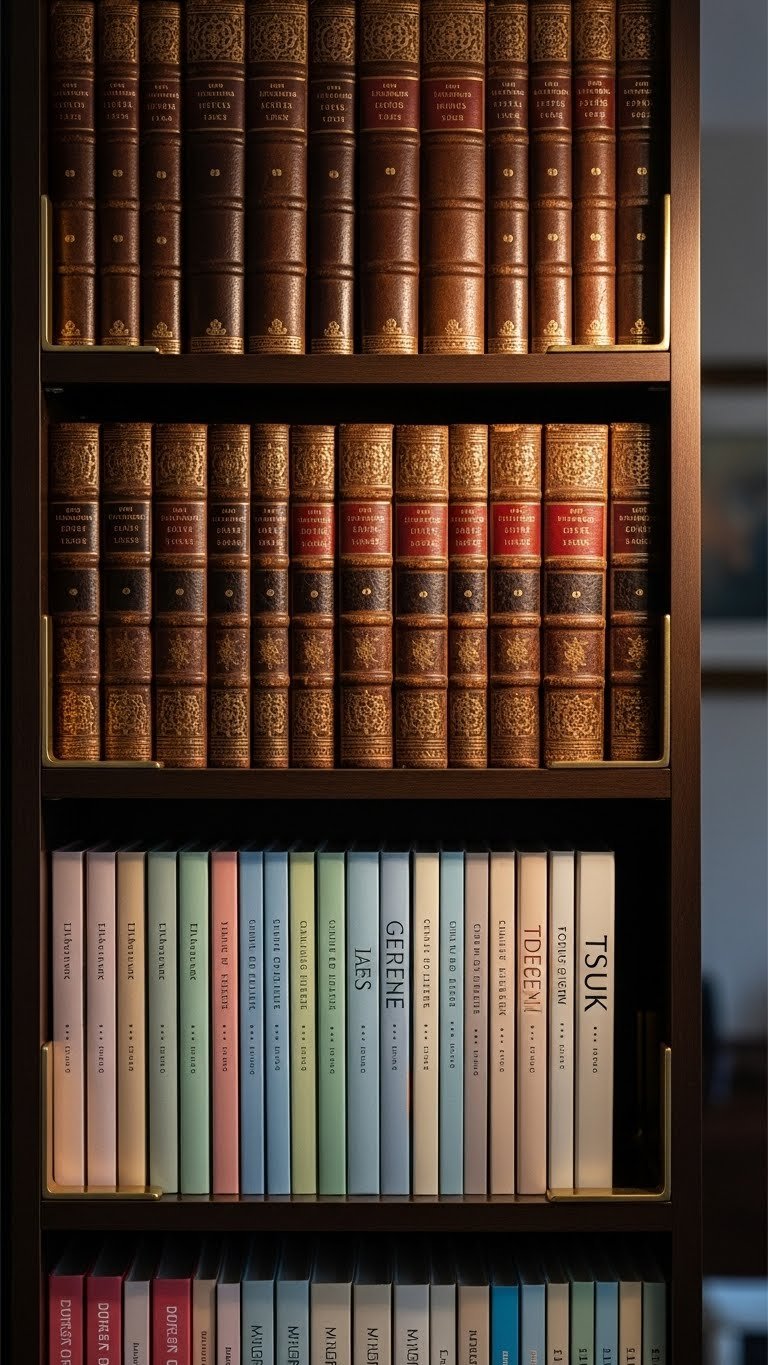
Leather-bound books are the foundation of old-world charm, but an all-leather shelf can look museum-like and untouchable. The secret is mixing them with modern, softer-spined books for visual interest and authenticity.
Start by collecting affordable leather-bound editions from thrift stores, estate sales, or online marketplaces like Etsy or AbeBooks ($5–$30 per book). Intersperse them with 2–3 contemporary novels in neutral colors. The leather catches light differently than matte paper, creating natural dimension. Arrange books both spine-out and stacked flat so the leather details show. This takes about an hour to arrange properly and costs $0–$150 depending on how many vintage editions you source.
Pro tip: Check your local library’s used book sales first—you’ll often find leather-bound classics for under $2 each. Goodwill and estate sales are goldmines too.
The result is a shelf that looks collected over time, not purchased all at once. It reads as “I’ve been reading since childhood,” which is exactly the vibe old-world charm requires.
2. Install Dark Wood Floating Shelves
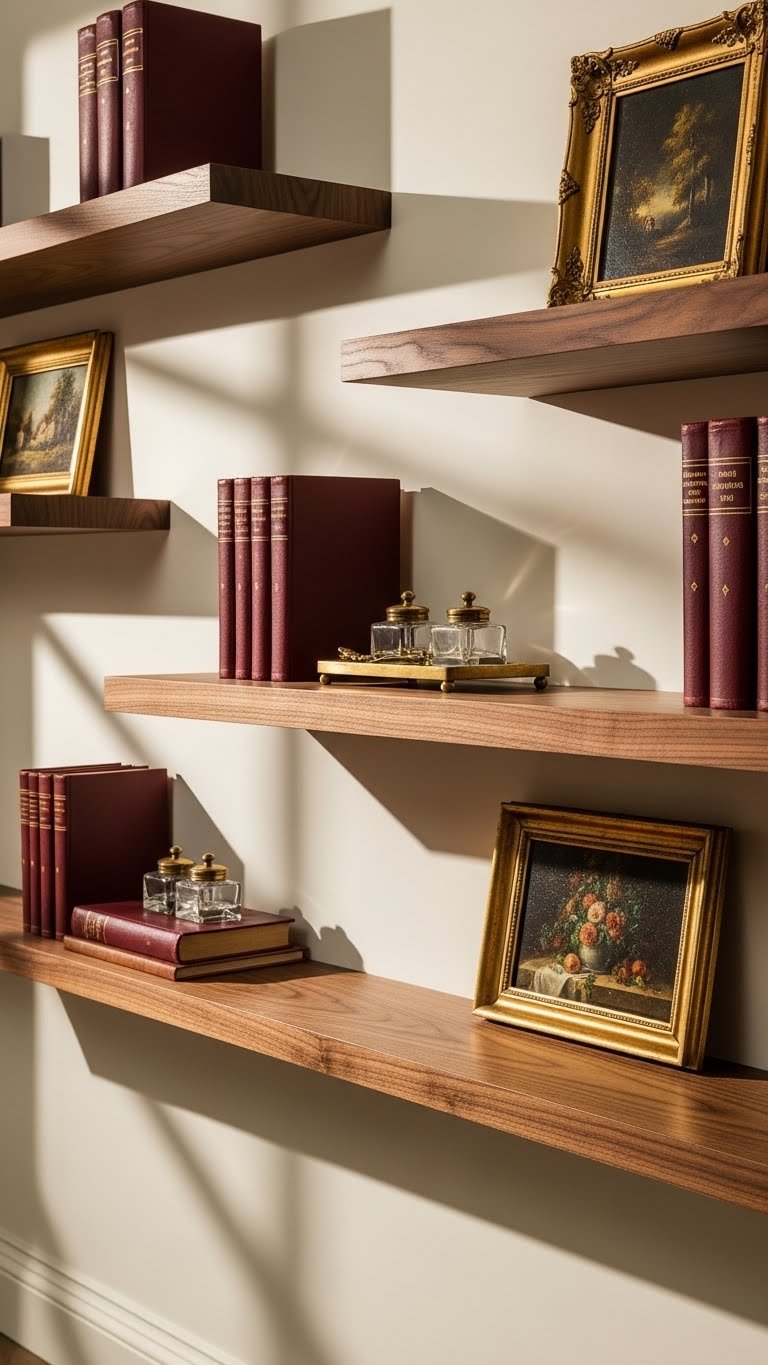
Dark wood shelving is the backbone of vintage library aesthetics. Unlike modern light oak or white shelves, deep walnut or mahogany-stained wood reads as established and timeless.
If you’re renting or want a quick upgrade, floating shelves in dark walnut from IKEA ($35–$60 each) or Wayfair ($50–$150) install in under an hour with a stud finder and basic tools. Own your space? Invest in reclaimed dark wood shelves from local craftspeople or Etsy ($200–$600 per shelf) for authentic aged character—the imperfections and natural patina are the whole point.
Install at varying heights (not perfectly aligned) to mimic how libraries evolved over time. This slight irregularity feels purposeful, not sloppy.
The weight and color immediately ground your collection. Books pop against dark wood, and the shelves themselves become part of the design rather than disappearing into the background.
3. Add Brass or Bronze Library Bookends

Bookends do more than hold books upright—they’re the jewelry of your shelf. Vintage brass or bronze pieces signal “this collection matters.”
Hunt for antique or vintage-style bookends on Etsy ($15–$50), AbeBooks, or local antique shops. Look for shapes like classical urns, lion heads, or art deco designs. Mix metals if you want—a brass bookend next to bronze adds richness. Even affordable brass bookends from Target or HomeGoods ($12–$30) read as intentional when styled correctly. You can also hunt thrift stores for solid brass pieces you can polish.
Pair each bookend with a small stack of your most visually interesting books (leather-bound classics work beautifully). The metal catches light and draws the eye, immediately elevating the entire shelf. Budget 30 minutes to polish and position.
This small detail makes the difference between “books on a shelf” and “a curated collection.” Guests will notice.
4. Create a Dedicated Reading Nook Below Shelves

The most charming libraries have a place to actually read your books. A reading nook below your shelves transforms your space from display-only to lived-in.
If you have floor space, add a comfortable chair—a vintage wingback in velvet ($200–$600 from estate sales or Wayfair), a modern lounge chair ($150–$400 from IKEA or Article), or even an affordable upholstered armchair from Article or Wayfair ($200–$350). Pair it with a side table for your tea or reading glasses, and a floor lamp with a warm bulb ($30–$100). A throw blanket draped over the arm completes the scene.
Even a small corner works. Budget two weekends to source pieces and arrange the space comfortably.
You’ll actually use your library now instead of just looking at it. This is where old-world charm becomes functional luxury—the books are meant to be read, lived with, and enjoyed.
5. Hunt for Vintage Book Collections at Estate Sales
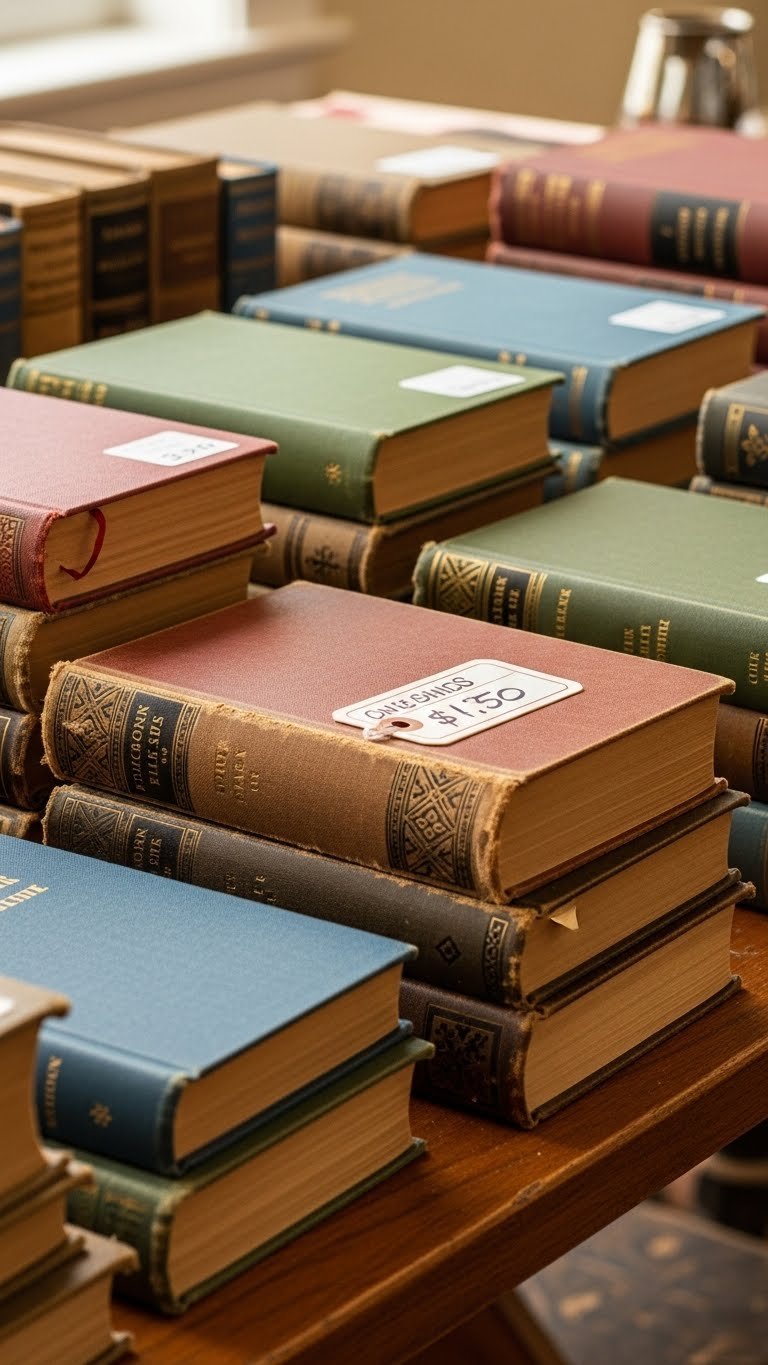
The most authentic vintage library shelves are built from real collections found over time. Estate sales and auctions are treasure troves of genuine old books.
Sign up for alerts on EstateSales.net, Craigslist, or Facebook Marketplace in your area. Arrive early and look for boxes of books priced by the lot ($5–$50). Check the spines for interesting typography, faded gold lettering, and cloth bindings—these signal real age and character. Don’t worry if you haven’t read them; the visual authenticity matters more for a vintage aesthetic.
Spend one Saturday morning hitting 2–3 sales. You’ll spend $20–$100 but walk away with 30–50 genuinely aged books that would cost 3–4x as much buying individually.
Books sourced this way look earned, not curated by an algorithm. Your shelves will have the patina of a real collector’s library, not a staged Instagram set.
6. Paint Shelves Cream or Deep Jewel Tones

The wall color behind your books matters as much as the books themselves. Deep jewel-tone painted shelves feel like old library interiors.
If you have built-in shelves, a coat of deep emerald, navy, or forest green paint instantly ages them (Benjamin Moore, Sherwin-Williams, or budget-friendly Rustoleum, $25–$50 per can). For maximum vintage impact, paint just the back wall of built-ins cream or soft white while the sides stay the jewel tone. This creates sophisticated depth.
Rental? Paint the wall behind your shelves instead ($40–$80 for primer and paint). This creates the same visual effect without touching the shelves themselves.
Allow 3–4 hours for painting plus drying time. The payoff is immense—suddenly your books have a gallery-like backdrop that makes them the stars.
7. Display Vintage Globes and Maps Between Books
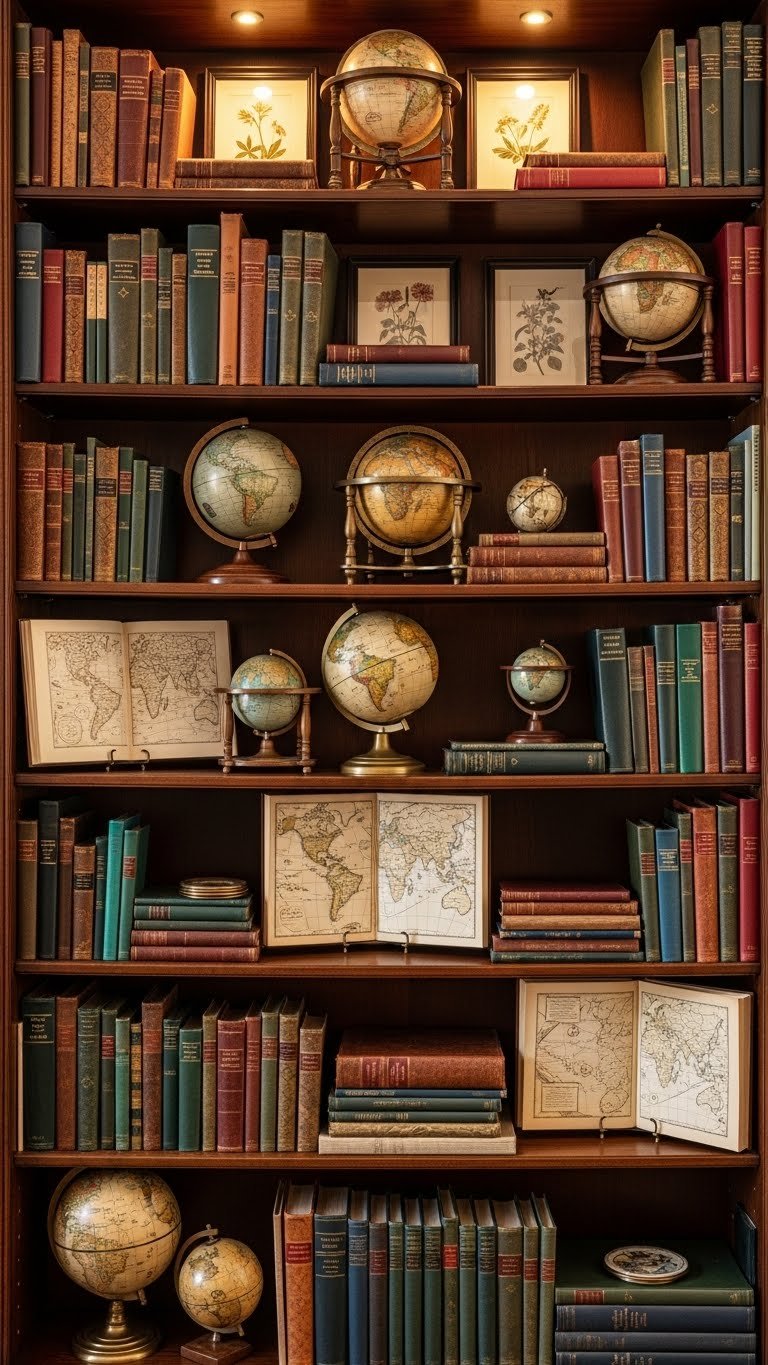
Books alone, even beautiful ones, can feel flat. Vintage globes, maps, and natural objects break up the monotony and deepen that “well-traveled scholar” vibe.
Scout Etsy, AbeBooks, antique shops, and thrift stores for small brass globes ($10–$40), vintage fold-out maps ($5–$25), or old botanical prints ($15–$60). You don’t need many—just 4–6 pieces strategically placed. Tuck a globe between stacks, lean a map against the back wall, rest a small framed print on top of a book stack.
Budget an hour to style and $40–$150 for pieces. This creates visual interest without clutter.
The effect is immediate: your shelf now tells a story of curiosity and exploration. It reads as a collector’s space, not just a repository for books.
8. Mix in Decorative Boxes and Vintage Tins
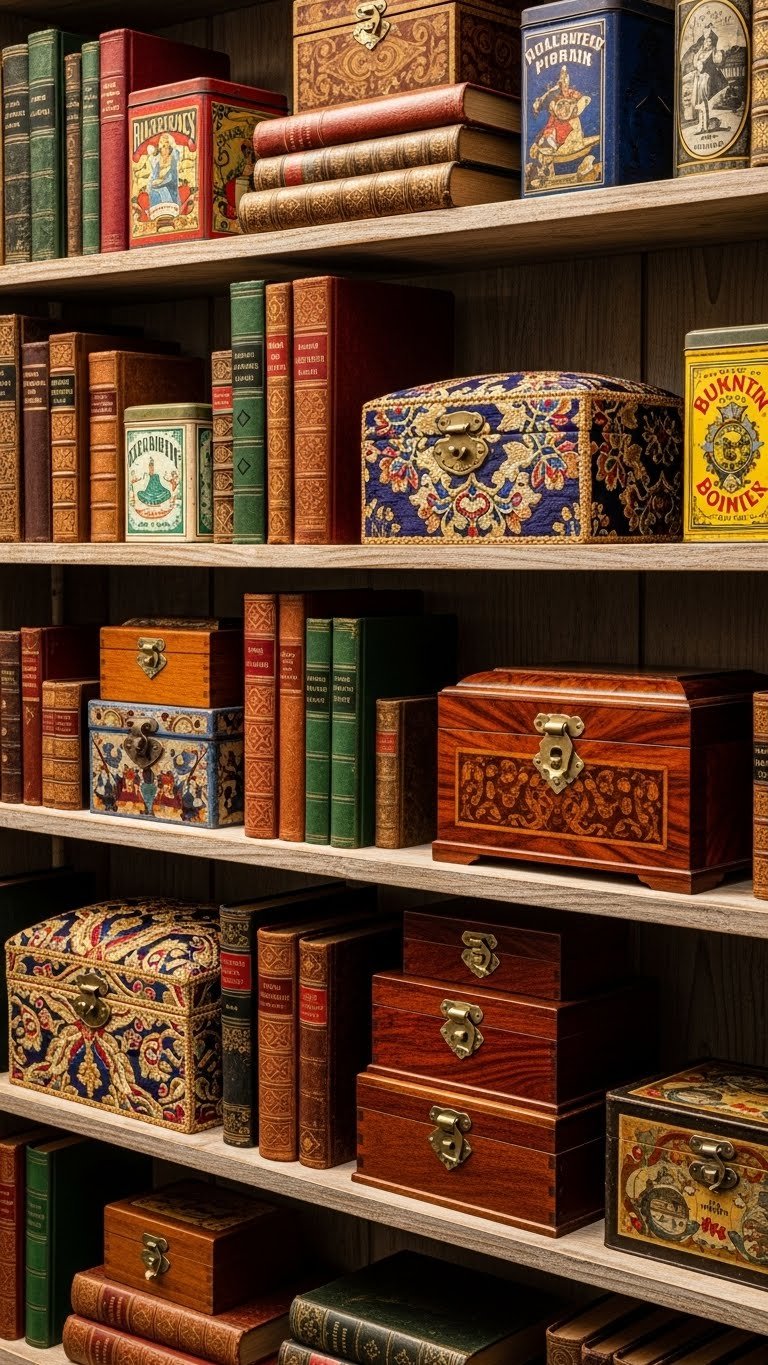
Decorative storage breaks up book spines and adds dimensional texture to your shelves. Vintage boxes and tins look expensive but cost almost nothing at thrift stores.
Hunt Goodwill, Salvation Army, or local antique shops for small decorative boxes, leather boxes with brass corners, or vintage tins ($2–$8 each). Look for items with patina, worn leather, or interesting hardware. You can also find affordable options on Amazon ($10–$25) or Wayfair if hunting local feels like too much.
Mix them into your shelves horizontally—place a box between stacks of books, or lean a small tin against the shelf backing. Budget an hour to integrate 4–6 pieces.
This adds visual richness and practical storage for reading glasses, small journals, or bookmarks. Your shelf suddenly looks like it contains treasures, not just books.
9. Incorporate Vintage Inkwells and Writing Tools
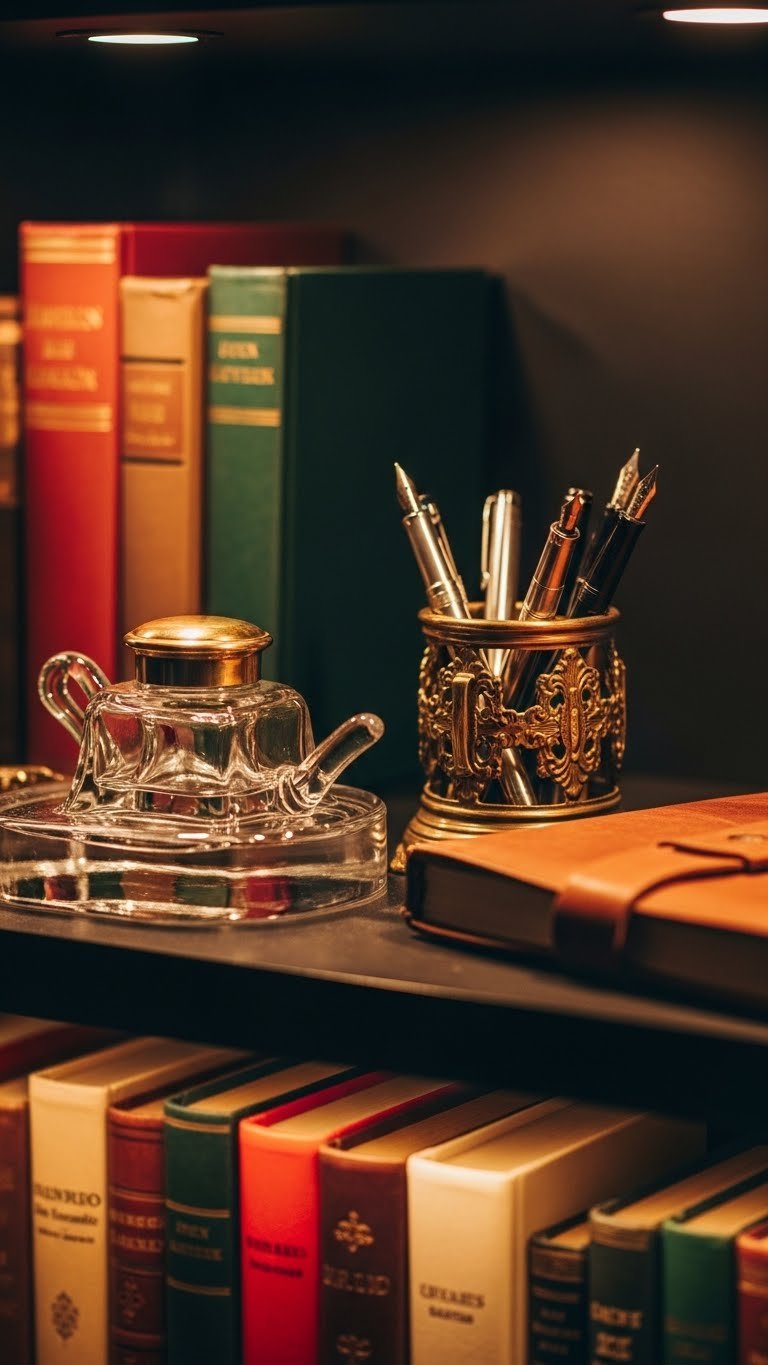
Old-world library vibes are enhanced by touches of the writing life—inkwells, vintage pens, and journals scattered among reading material.
Find antique or reproduction inkwells on Etsy ($15–$50), vintage fountain pens at pen shops or antique stores ($10–$100), and leather journals on Amazon or Barnes & Noble ($20–$60). You don’t need working inkwells—the visual authenticity is what matters.
Arrange a small cluster: inkwell in the center, 2–3 pens nearby, journal leaning against a book stack. This takes 15 minutes to style and costs $40–$150 depending on what you source.
Suddenly your shelf looks like the desk of a 19th-century novelist. It’s theatrical in the best way—it creates atmosphere and invites people to imagine the stories behind your collection.
10. Stack Books Horizontally on Upper Shelves

How you arrange books matters. The most sophisticated vintage libraries mix vertical and horizontal stacking to create rhythm and show off beautiful spines.
Group 4–5 books of similar height and stack them flat on upper shelves. This displays the spine artistically and breaks up the visual line created by all-vertical arrangement. Place a small object on top—a globe, a small framed print, or a decorative object. Lower shelves stay spine-out for easy browsing.
This rearrangement is free and takes 30 minutes.
The visual effect is collected and intentional, like someone who knows good design lives here. It also feels less rigid than perfect rows—more human and real.
11. Use Soft String Lights Behind Shelves
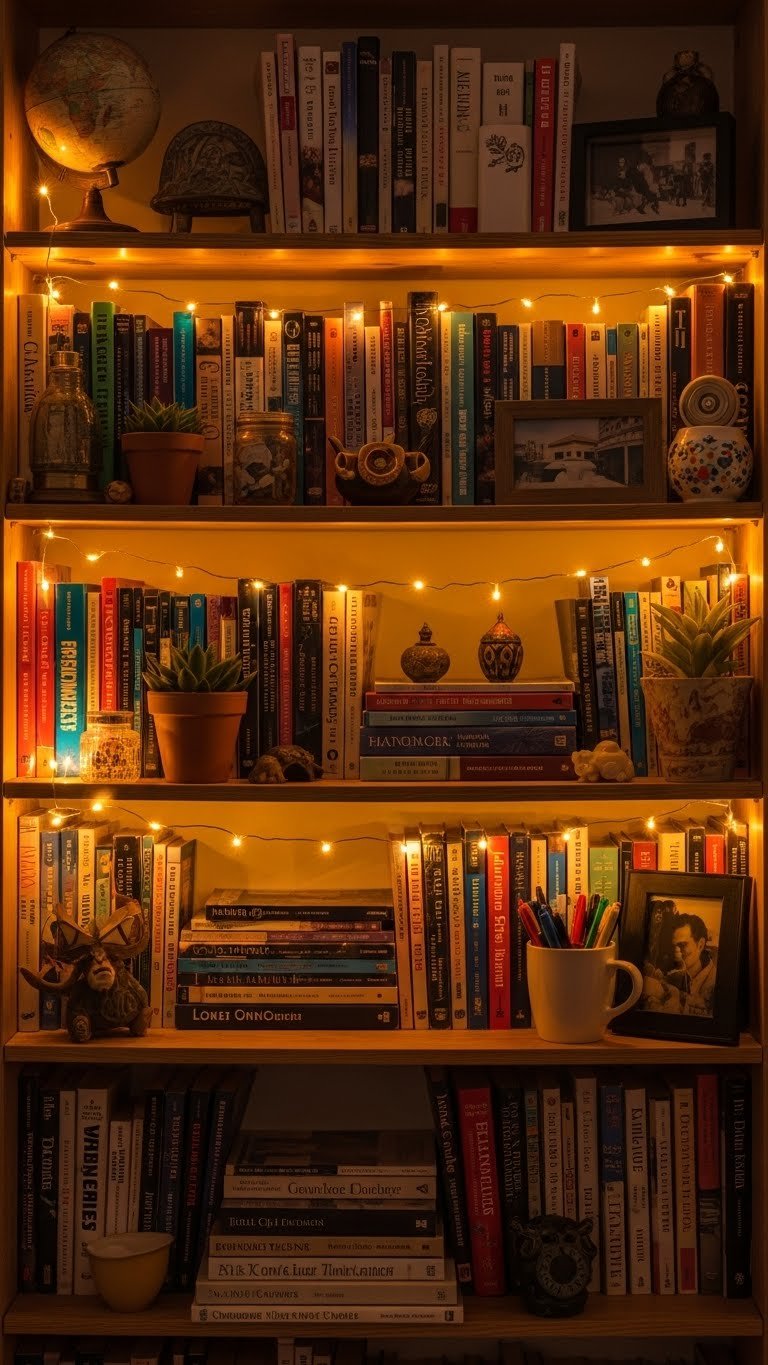
Lighting transforms how vintage shelves look, especially in the evening. Warm string lights create that library ambiance without being dramatic or installation-heavy.
String fairy lights or Edison bulb strands ($15–$40 from Amazon or Target) can be taped or clipped behind shelves if you’re renting. For permanent installations, have an electrician run low-voltage lighting ($150–$400) if you want built-in sophistication. Battery-operated options ($20–$30) work great as rentable alternatives.
Budget 30 minutes to install and $15–$40 for a rental-friendly solution.
Evening light transforms your shelf from daytime reading space into an atmospheric retreat. Books glow, metals catch the light, and the whole corner becomes inviting. This is when your vintage library truly shines.
12. Frame Vintage Book Pages or Literary Quotes

Literary quotes and aged book pages add intellectual depth to your shelves. They’re inexpensive to frame but read as curated and sophisticated.
Find vintage book pages on Etsy ($5–$15), purchase plain wood or metal frames from IKEA or Michael’s ($5–$15 each after sales), or print literary quotes you love on aged paper ($2–$5 worth of specialty paper). Frame 2–4 pieces and hang above or within your shelves.
Budget one afternoon and $25–$80 total.
This transforms your shelf from book storage into a statement about what you value intellectually. Visitors immediately understand that this is a thoughtful, curated space.
13. Invest in a Tall Bookcase with Glass Doors
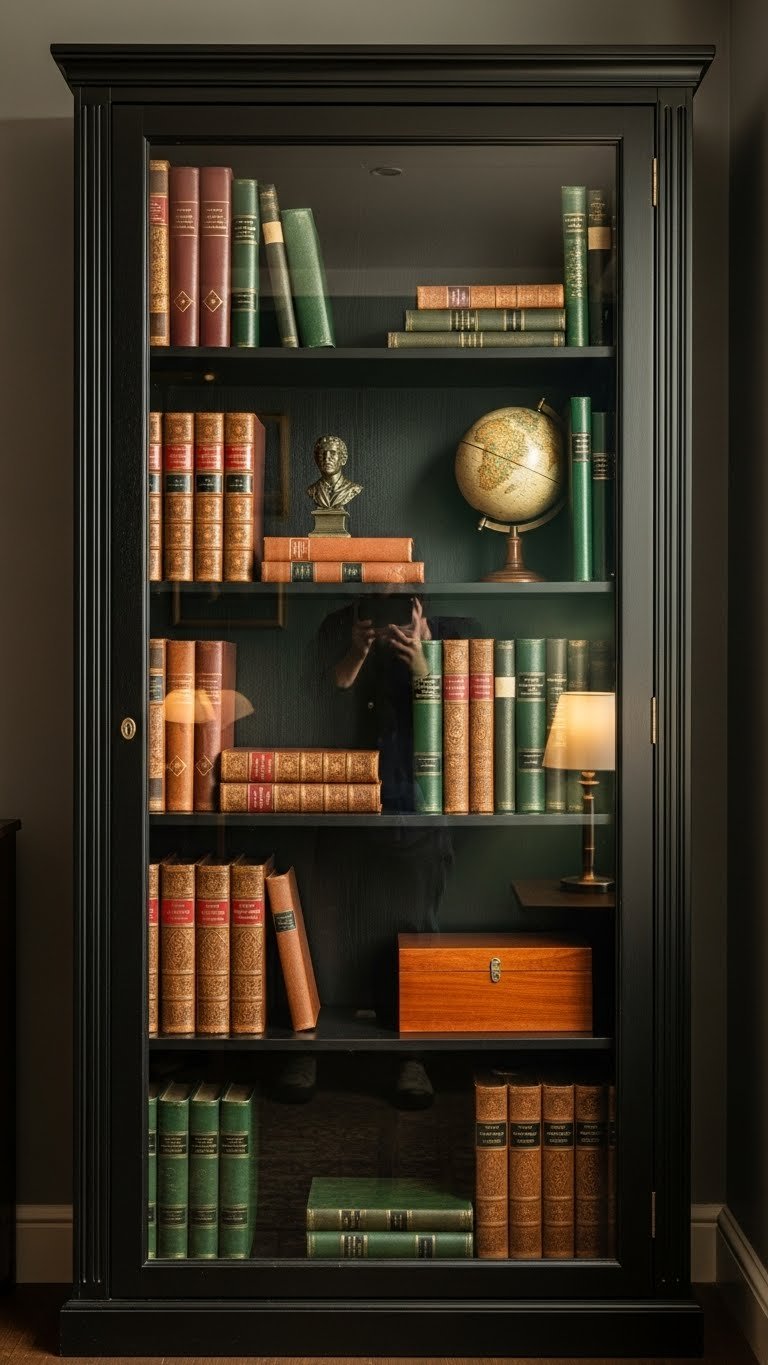
If you’re building a serious vintage library, an enclosed bookcase protects books from dust while displaying them beautifully. It reads as collector-grade immediately.
Look for vintage glass-door bookcases at estate sales ($200–$800) or reproduction versions from Wayfair ($300–$800), West Elm ($400–$1,200), or Roche Bobois for investment pieces ($1,000+). IKEA has affordable glass-door units ($150–$300) that work in smaller spaces.
This is a bigger investment ($150–$1,200+), but it’s a long-term piece. Install over a weekend and spend time styling the interior.
Glass doors instantly elevate your collection and protect valuable or sentimental books. It says you’re serious about preservation, which is very old-world library.
14. Arrange Books by Color in Sections

While traditional libraries organize by subject, a vintage aesthetic often organizes by tone and color. This creates visual harmony and a gallery-like quality.
Group books by color family: burgundy and brown on one shelf, greens and blues on another, creams and whites on a third. Use objects (brass bookends, boxes, globes) to transition between color sections. This takes 1–2 hours to arrange and costs nothing beyond what you already own.
The result feels intentional and sophisticated. Color-coordinated shelves photograph beautifully and look more curated than mixed spines.
15. Add Vintage Oil Paintings or Botanical Prints
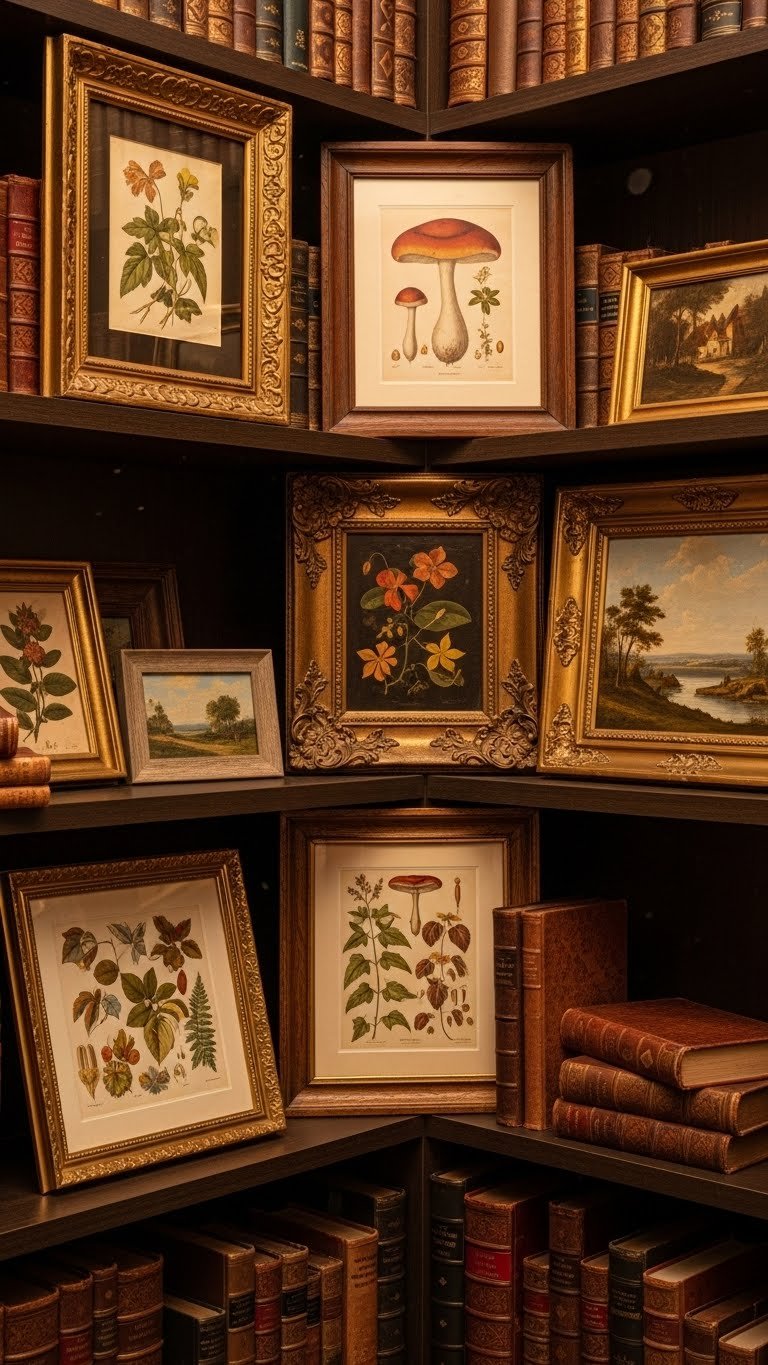
Framed artwork breaks up long rows of books and adds gallery-like sophistication to your vintage library aesthetic.
Scout Etsy, estate sales, or antique shops for small vintage frames ($20–$80 each) and prints ($10–$40). You can also find affordable options at HomeGoods or Marshalls ($15–$40). Look for botanical drawings, landscape paintings, or portraits—anything that fits your aesthetic.
Lean 2–3 frames against the back wall of your shelves or hang them slightly overlapping your book rows. Budget an hour and $50–$200 for 3–4 pieces.
Suddenly your shelf reads as an art collection with books, not just a bookshelf. It becomes more room design, less storage solution.
16. Create a Vintage Card Catalog Display

A vintage library card catalog is pure nostalgic charm. Even a reproduction adds authentic old-world character to your book collection space.
Hunt Etsy, eBay, or antique shops for actual card catalogs ($150–$600) or find reproduction versions online ($100–$300). Smaller drawers cost less ($50–$150) than full catalogs. Position on the floor beside your shelves or on a lower shelf as a functional piece.
You can fill drawers with: hand-written book lists, literary notes, vintage postcards, or just leave them decoratively empty. Budget $100–$400 depending on what you find, plus a few hours arranging.
This piece is a conversation starter and transforms your space into something truly special. It whispers “serious collector” immediately.
17. Group Books by Genre with Small Brass Plaques

Organizing by genre feels scholarly and old-library authentic. Small brass plaques mark each section beautifully.
Order custom brass plaques from Etsy ($15–$40 each) with labels like “Classics,” “Poetry,” “Travel,” or “Mysteries.” Stick them to the front of your shelves with museum putty (renter-friendly) or mount with small nails. Organize your books accordingly below each label.
Budget $30–$150 for plaques and one afternoon for organizing. This costs nothing if you skip the plaques and use handwritten kraft paper labels ($0–$5).
Your shelves now read as intentionally curated and knowledgeable. It’s organized enough to feel scholarly, but stylish enough to look like design.
18. Display Vintage Writing Boxes or Lap Desks

Vintage writing boxes and lap desks add texture and evoke the life of literary pursuits. They’re both decorative and functional.
Search Etsy ($30–$120), antique shops, or estate sales for wooden writing boxes with brass hardware or small lap desks. These pieces often have beautiful wood grain and real age. Even affordable versions from Amazon ($20–$50) work if you’re testing the concept.
Position one on a middle shelf with books stacked around it. Budget $30–$100 and 15 minutes to integrate.
This object immediately signals “this is a space for creativity and writing,” not just consumption. It deepens the narrative of your library.
19. Hang a Vintage Library Ladder or Shelf Ladder

A classic library ladder is pure old-world romance. Even if you don’t use it to reach top shelves, it’s a design statement.
Find vintage wooden library ladders at estate sales or antique shops ($150–$500) or reproduction versions on Wayfair, Etsy, or Article ($200–$600). Smaller, budget-friendly versions exist ($80–$150) if you want to test the look first.
Position against your tallest shelves. A weekend installation if mounting permanently, or it can simply lean for renters. Budget $150–$400.
This single piece transforms your space into something aspirational. It says “this is a real library,” not just a shelf with books.
20. Style Upper Shelves with Decorative Spines Out

Upper shelves deserve careful styling. Showing beautiful spines prominently creates a gallery effect and draws the eye upward.
Choose your most visually striking books—beautiful leather spines, interesting typography, or unique colors—and arrange spine-out on upper shelves, organized either by color gradient or size. Resist adding objects here; let the spines be the star. Lower shelves can have more mixed styling.
This arrangement takes 30 minutes and costs nothing.
The effect is sophisticated and intentional. Your eye travels upward, and the upper shelves feel like a curated collection, not overflow storage.
21. Incorporate Vintage Bookplates and Labels
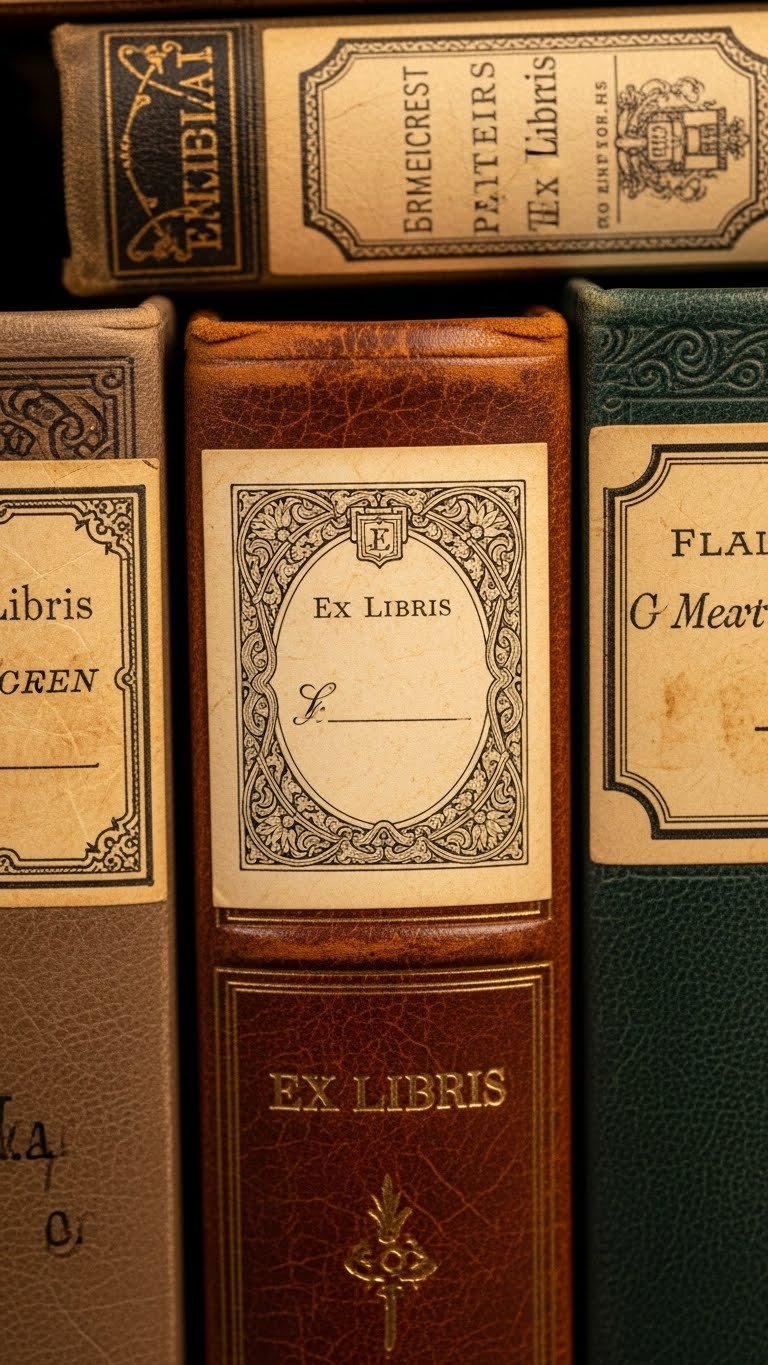
Vintage bookplates and library labels add authentic detail and tell a story of previous ownership—very old-world charm.
Find vintage bookplates on Etsy ($0.50–$3 each), or print reproduction bookplates for your own use ($10–$20 for a pack). Subtly display them by leaving a few books slightly open to show the bookplate, or stack books with visible labels.
Budget $10–$30 and 15 minutes to incorporate naturally.
These small details reward close inspection. They make viewers feel like they’re discovering secrets in your collection, which deepens the sense of authenticity.
22. Create a Tiered Height Arrangement
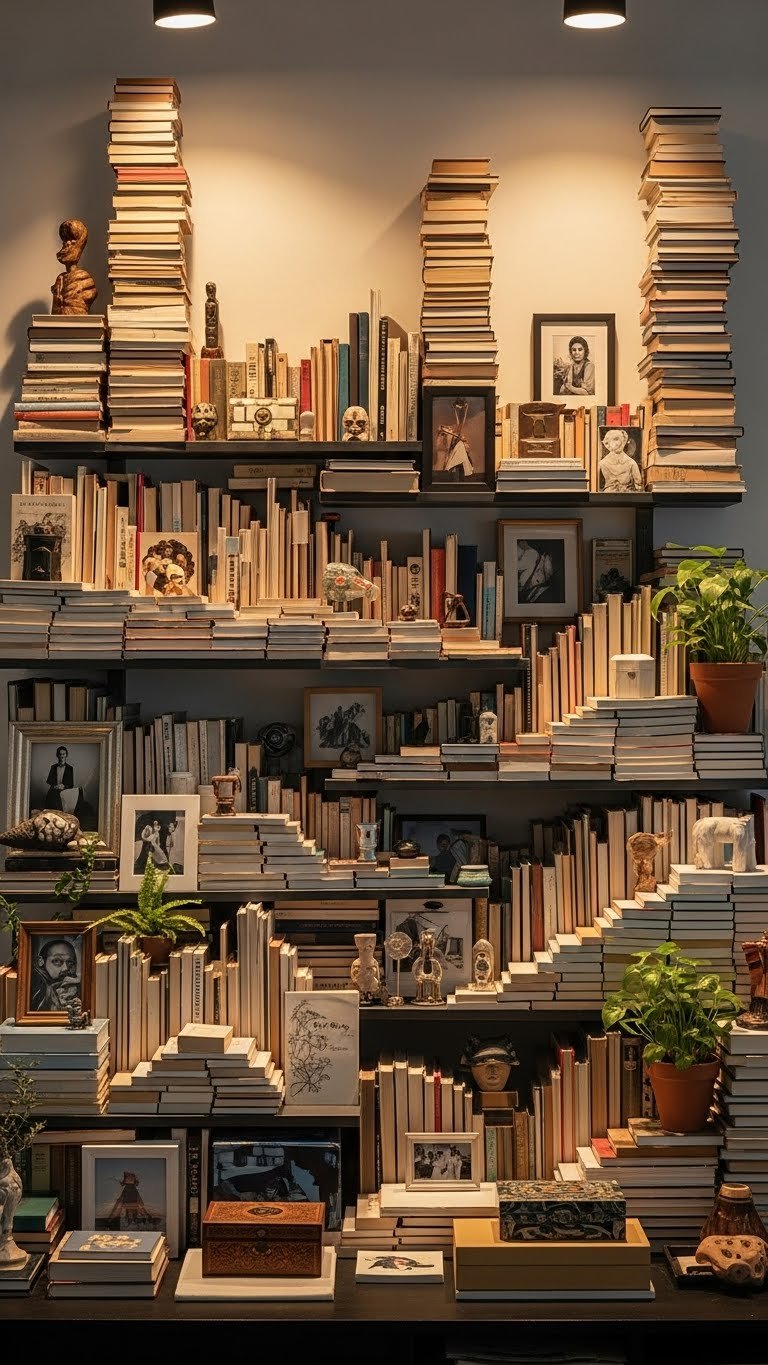
Vintage libraries evolved naturally over time with irregular heights and depths. Mimicking this randomness looks more authentic than perfect alignment.
Vary your book stacks: place some flat, some vertically, some leaning. Position objects at different depths—some flush against the back, some pulled forward. This creates visual movement and texture. Takes 45 minutes to arrange and costs nothing.
The result looks lived-in and collected, not designed. It reads as real, which is ultimately what old-world charm means.
23. Add Candlesticks or Vintage Lamps to Shelves
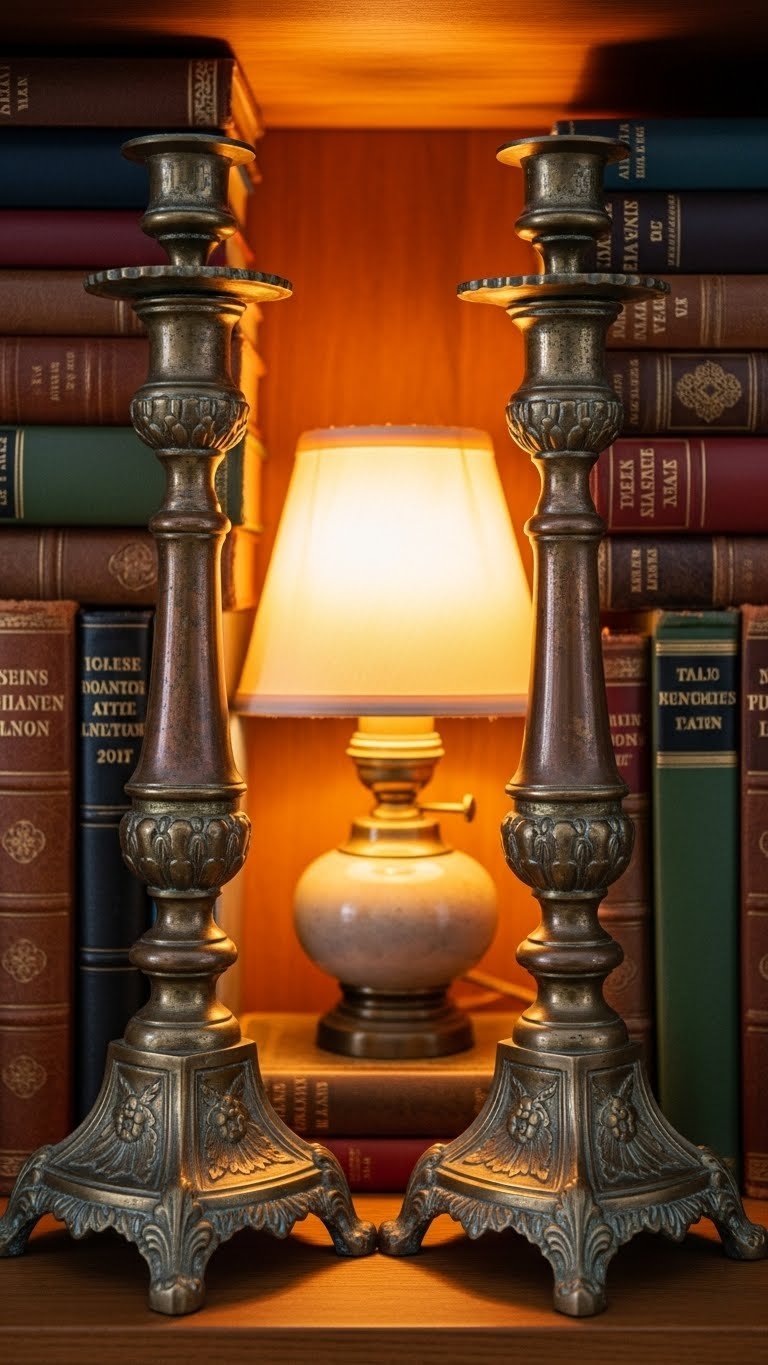
Candlesticks and small vintage lamps add warmth and functionality to styled shelves. They’re deeply old-world without being over-the-top.
Hunt Etsy or antique shops for brass or bronze candlesticks ($15–$50), vintage brass lamps ($30–$80), or even newer brass pieces from HomeGoods ($20–$40) that read as vintage. Group a pair of candlesticks together with books stacked around them, or position a small lamp where it can cast light over a reading chair.
Budget $30–$100 and 15 minutes to arrange. Battery-operated candles ($5–$10) add safety if you go the candlestick route.
These objects make your shelf feel like a room rather than storage. They invite touch and use—whether lighting candles while reading or using a small lamp for task lighting.
24. Display Vintage Bookmarks and Leather Journals
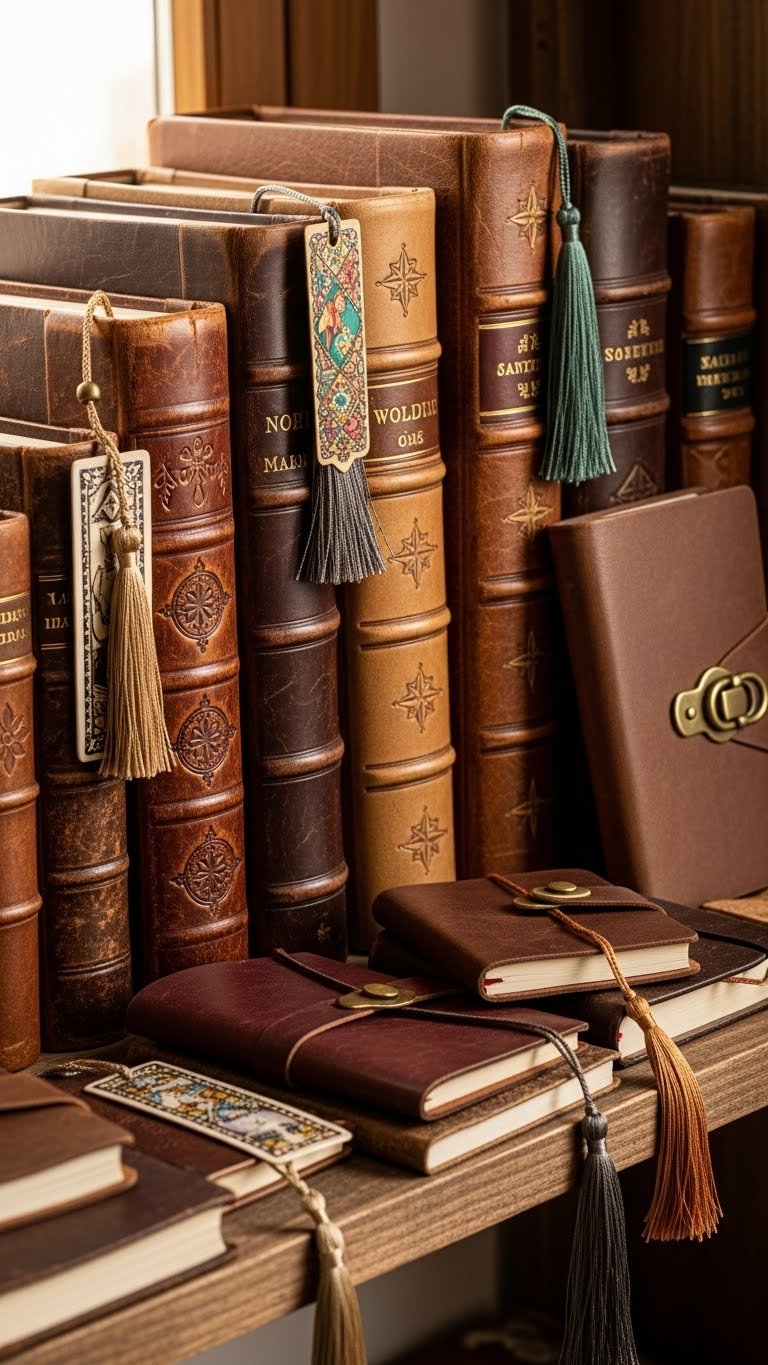
Books about books deepen the literary narrative. Vintage journals, notebooks, and bookmarks add tactile, layered authenticity.
Find vintage leather journals on Etsy ($20–$50), bookmarks at estate sales or antique shops ($2–$10), or modern reproduction journals from Leather Factory or Barnes & Noble ($15–$40). Position journals like actual books, let bookmarks peek from pages, and arrange naturally among your collection.
Budget $30–$100 and 15 minutes to integrate.
These objects create a sense that this is an active, lived-in collection—not a static display. They suggest reading, note-taking, and intellectual engagement.
25. Mix Dark Wood Shelves with Light Backing

Contrast between shelf color and wall color dramatically impacts vintage aesthetic. Dark shelves against light walls look gallery-like and intentional.
Paint or wallpaper your wall in cream, soft white, pale sage, or dusty blue ($30–$80 for paint, $50–$150 for wallpaper). Install or keep your dark wood shelves. The contrast immediately becomes sophisticated.
Budget $50–$200 for wall treatment and a few hours for painting or wallpapering.
This simple decision elevates your entire collection. Books gain presence, metals catch light more effectively, and the whole shelf reads as more intentional than if everything blended together.
26. Curate a Specific Literary Theme or Era
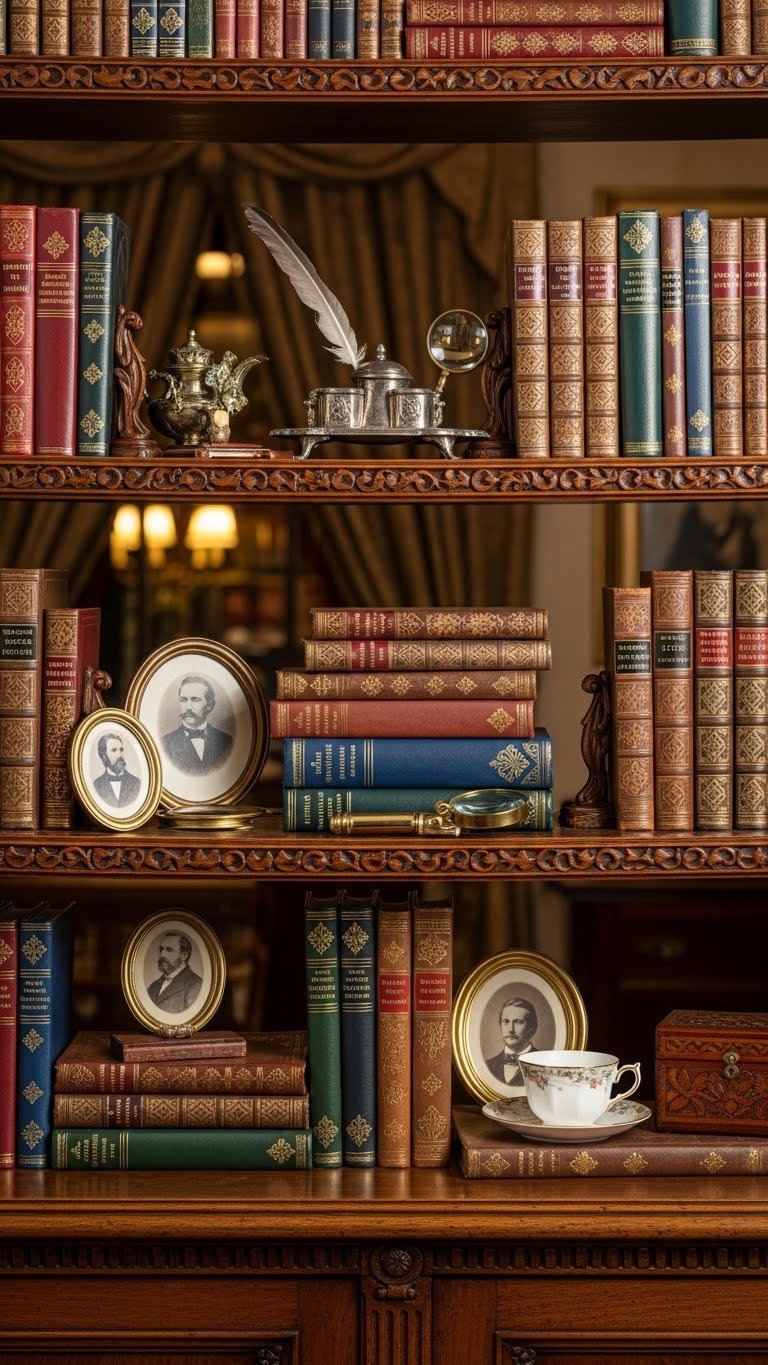
The most compelling vintage libraries feel like they tell a specific story. Curating by theme—Victorian literature, 1920s first editions, nature writing—creates narrative depth.
Start collecting intentionally around your chosen theme. Hunt estate sales, Etsy, and AbeBooks for books fitting your focus ($5–$50 each depending on rarity and condition). Build slowly; this might take several months or longer. Style supporting objects to echo your theme—period artwork, era-appropriate writing tools, or relevant decorative pieces.
Budget $100–$500+ depending on your theme’s depth. This is a longer-term project, not a quick refresh.
The result is a collection that feels serious and personally meaningful. Visitors immediately understand your passion, which is the deepest form of old-world charm.
27. Frame and Display a Vintage Library Receipt or Card
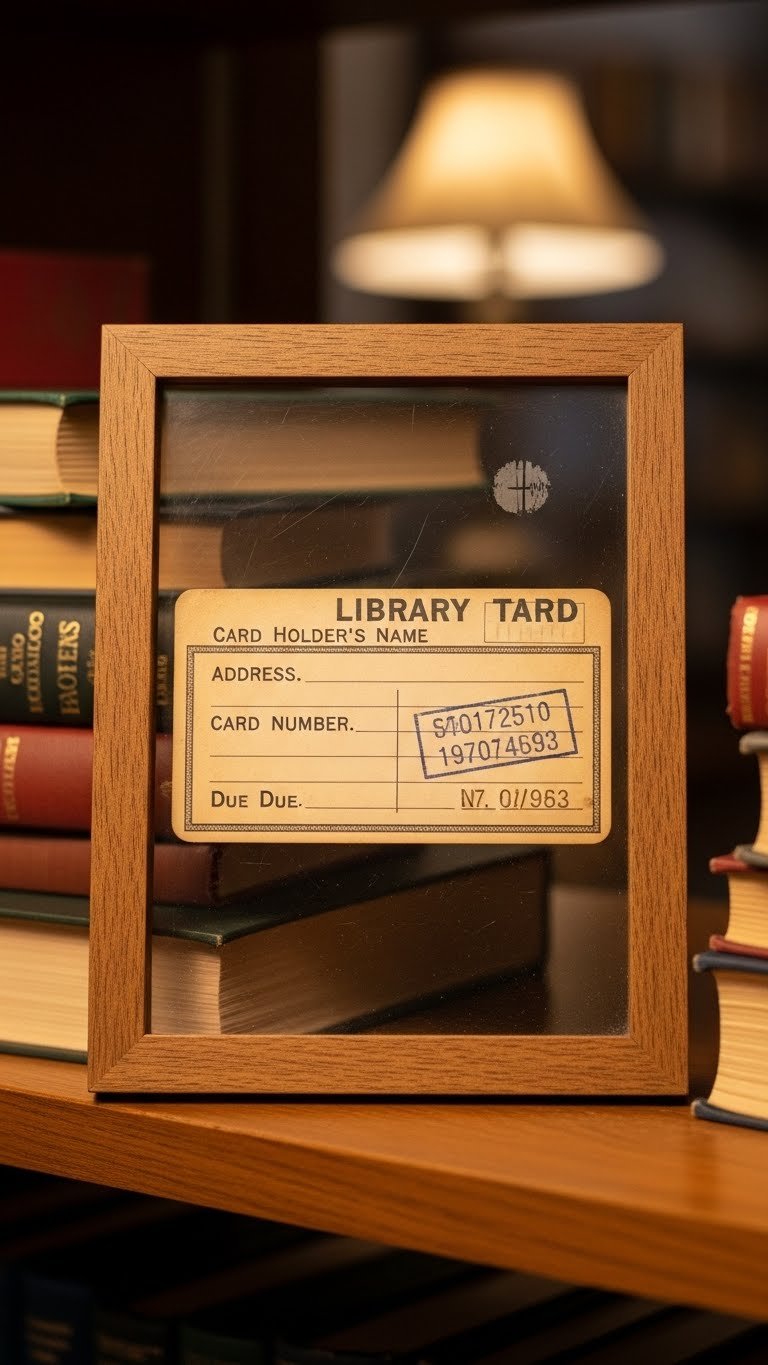
A framed vintage library card or receipt is nostalgia personified. It’s a small detail with enormous charm.
Search eBay, Etsy, or ask at local antique shops for vintage library cards or library receipts ($5–$25). Frame in a simple wood or metal frame ($5–$15) and hang above your shelves or position on a shelf. Alternatively, frame a vintage library checkout card you create yourself ($0–$20).
Budget $15–$40 total.
This single piece ties your entire collection’s narrative together. It says “I love libraries, I love books, and I celebrate this love.” It’s deeply personal and deeply charming.
Ready to build your vintage library? Start with one idea this weekend—maybe source a few leather-bound classics from an estate sale or paint that one shelf a deep jewel tone. Your space will surprise you with how quickly it transforms. Save this post and come back to it as you layer in more touches. Which vintage library element speaks to you most?
Leave a Reply