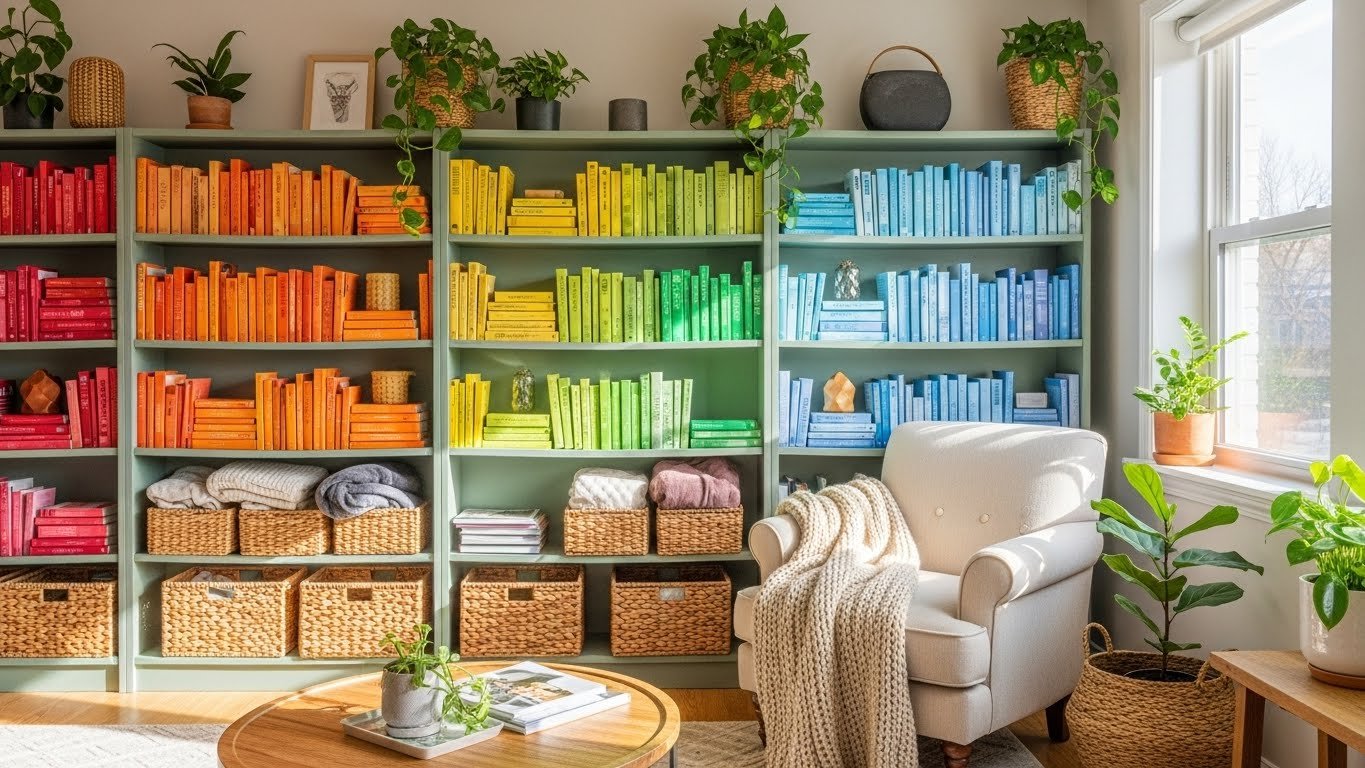
Your bookshelf doesn’t have to be boring storage—it can be a colorful focal point that energizes your entire room. Whether you’re working with a small corner shelf or an entire wall, adding color transforms your space from blah to beautiful. In this guide, you’ll discover 24 creative ways to bring vibrancy to your books and shelves through paint, styling, and smart arrangements. From budget-friendly paint hacks to investment-worthy designer pieces, these ideas work for renters, homeowners, and anyone ready to make their shelves pop. Let’s turn that basic bookshelf into a room-brightening statement piece.
1. Paint Your Shelf Backs in Bold Colors
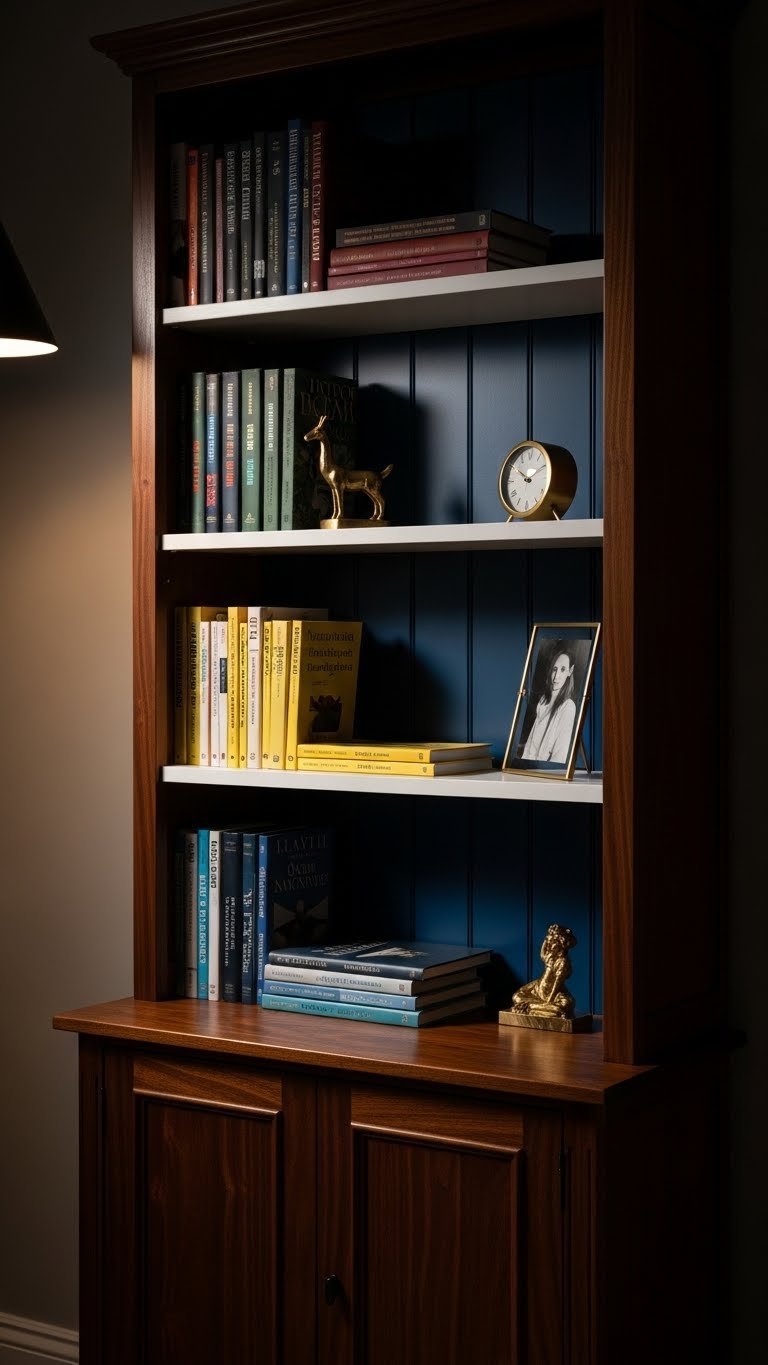
A painted backdrop instantly makes books and decorative items stand out while adding depth to your shelf. Choose a bold jewel tone like emerald, sapphire, or burgundy to create drama, or go soft with sage, blush, or dusty blue for a calming vibe.
Paint the back panel of your bookshelf with quality acrylic or semi-gloss paint—it takes about 15 minutes and requires minimal skill. You’ll need $15-$30 for paint and a small brush from Home Depot or Lowe’s. If you’re renting, use removable wallpaper or peel-and-stick panels instead (search “self-adhesive bookshelf backing” on Amazon for $20-$50). Test your color choice with paint samples first; the lighting in your room affects how the color looks throughout the day.
Your books suddenly look like gallery pieces against a rich backdrop, and the color sets the mood for your entire room.
2. Arrange Books by Rainbow Order
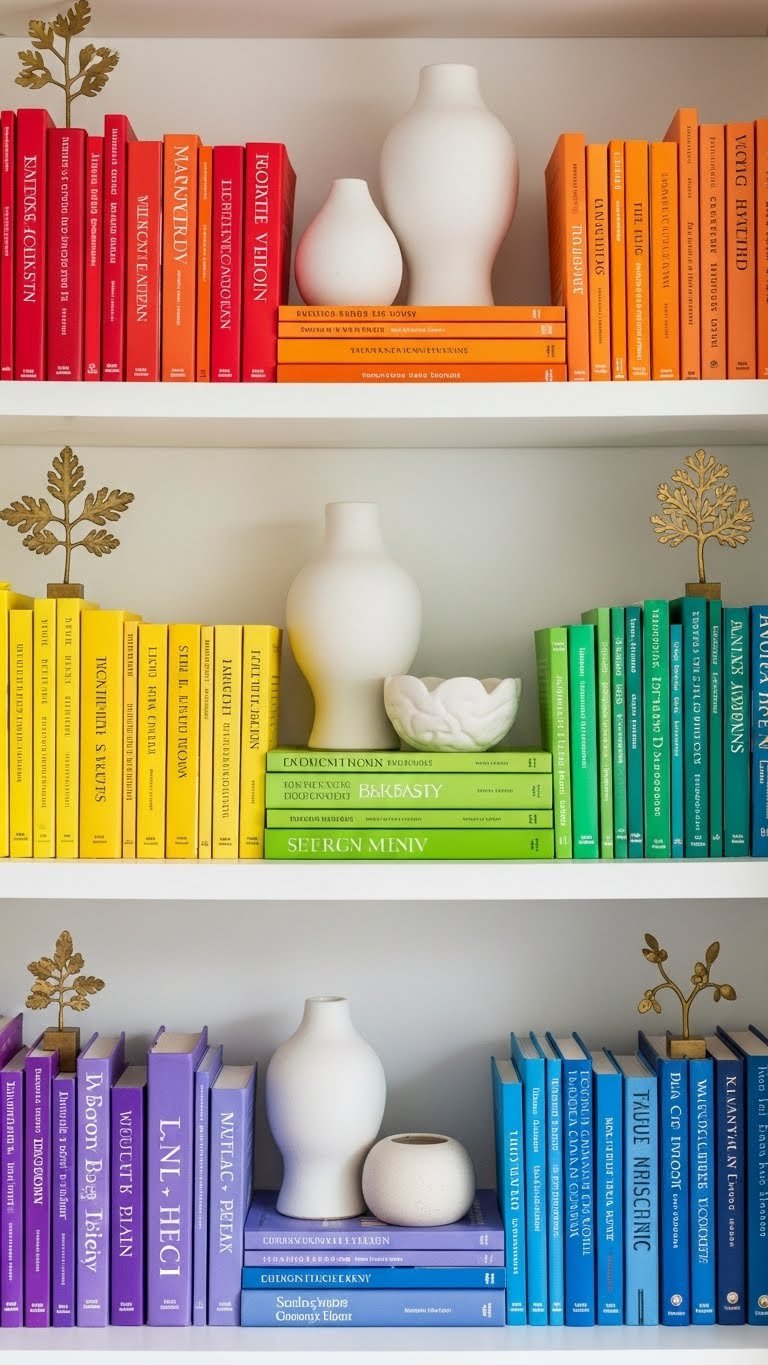
Rainbow organization is visually stunning and surprisingly satisfying to maintain. Unlike traditional shelving, color-sorted books create a gradient effect that draws the eye and makes your collection feel intentional and curated.
Sort your books by spine color and arrange them left to right from warm to cool tones. This works best on shelves with 20+ books to create the full effect. You won’t need to buy anything—just reorganize what you own. The process takes 1-2 hours depending on your collection size. Pro tip: keep a few neutral decorative objects (white boxes, natural wood frames) to break up the color blocks and prevent visual overload.
Guests immediately notice and comment on this colorful arrangement, and it makes finding books easier because you remember colors faster than titles.
3. Mix Book Stacks with Potted Plants
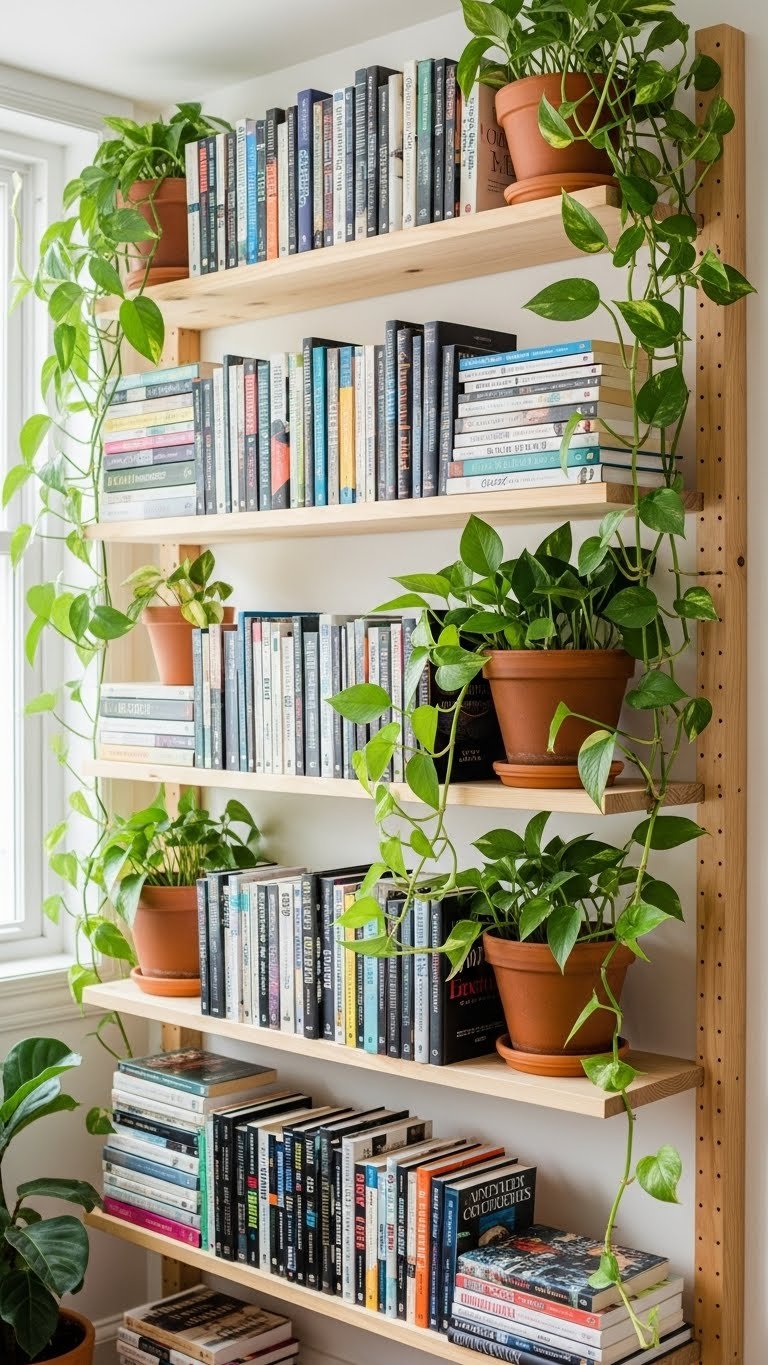
Adding living plants to your bookshelf brings organic color and texture that books alone can’t achieve. Green foliage softens hard lines and makes your shelf feel more dynamic and alive.
Place 2-4 small potted plants (pothos, philodendron, or peperomia work great) among your book stacks. Low-light varieties survive in indoor shelf environments without constant attention. Costs range from $10-$40 depending on plant size (check Trader Joe’s, local nurseries, or Etsy). Water sparingly—about once every 2-3 weeks. Pair plants with brass plant stands or ceramic pots that complement your book colors for added visual interest.
The combination of paper, plants, and ceramics creates a layered, sophisticated look that makes your shelf feel like an extension of your personality.
4. Display Vintage Book Covers Horizontally

Horizontal book stacking creates visual variety while showcasing gorgeous vintage covers you might otherwise hide on a spine. It’s the perfect solution if you’ve inherited beautiful old books or collected special editions.
Stack 3-5 colorful vintage or collectible books horizontally on select shelves to create visual interest. Thrift stores, estate sales, and Better World Books offer affordable vintage editions for $3-$15 each. Lay heavier books on bottom shelves and alternate between horizontal stacks and upright books to maintain balance. Use a small brass bookend or decorative object to anchor the stack.
This styling trick makes your bookshelf look curated and intentional, plus it gives new life to beautiful old books that deserve to be seen.
5. Add Colorful Bookends as Decorative Stops
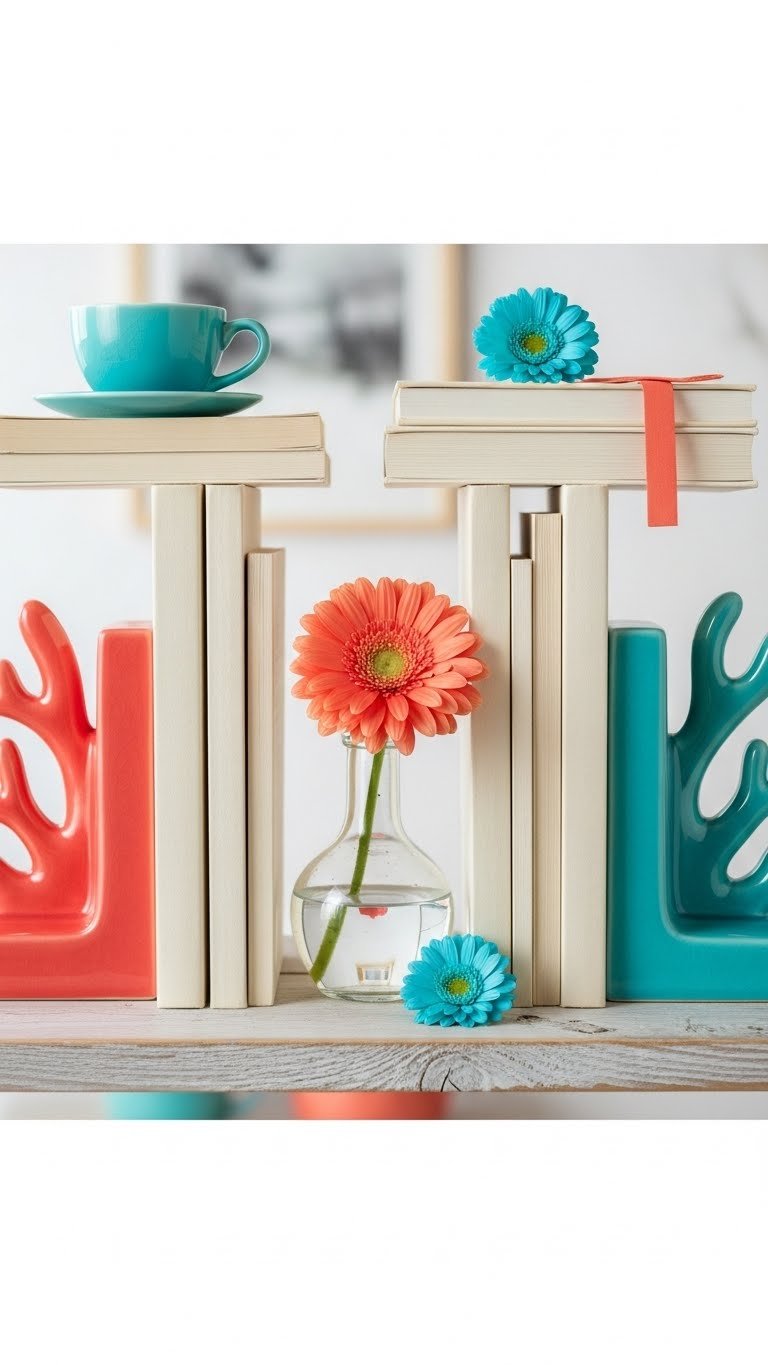
Bookends serve function and style—they organize while adding coordinating color that ties your shelves together. Colorful bookends become micro art pieces that frame your collections.
Choose bookends in colors that complement your books: coral, teal, mustard, or blush. Prices range from $15-$50 per pair depending on material (ceramic, wood, or metal). Wayfair, Target, and West Elm have great options. Position them to divide shelf sections and create visual rhythm. Pair mismatched bookends for an eclectic look—one geometric, one organic shape.
The best part is bookends anchor your stacks while adding personality; your shelf looks polished and intentionally styled rather than randomly arranged.
6. Create a Colorful Styling System with Decorative Boxes
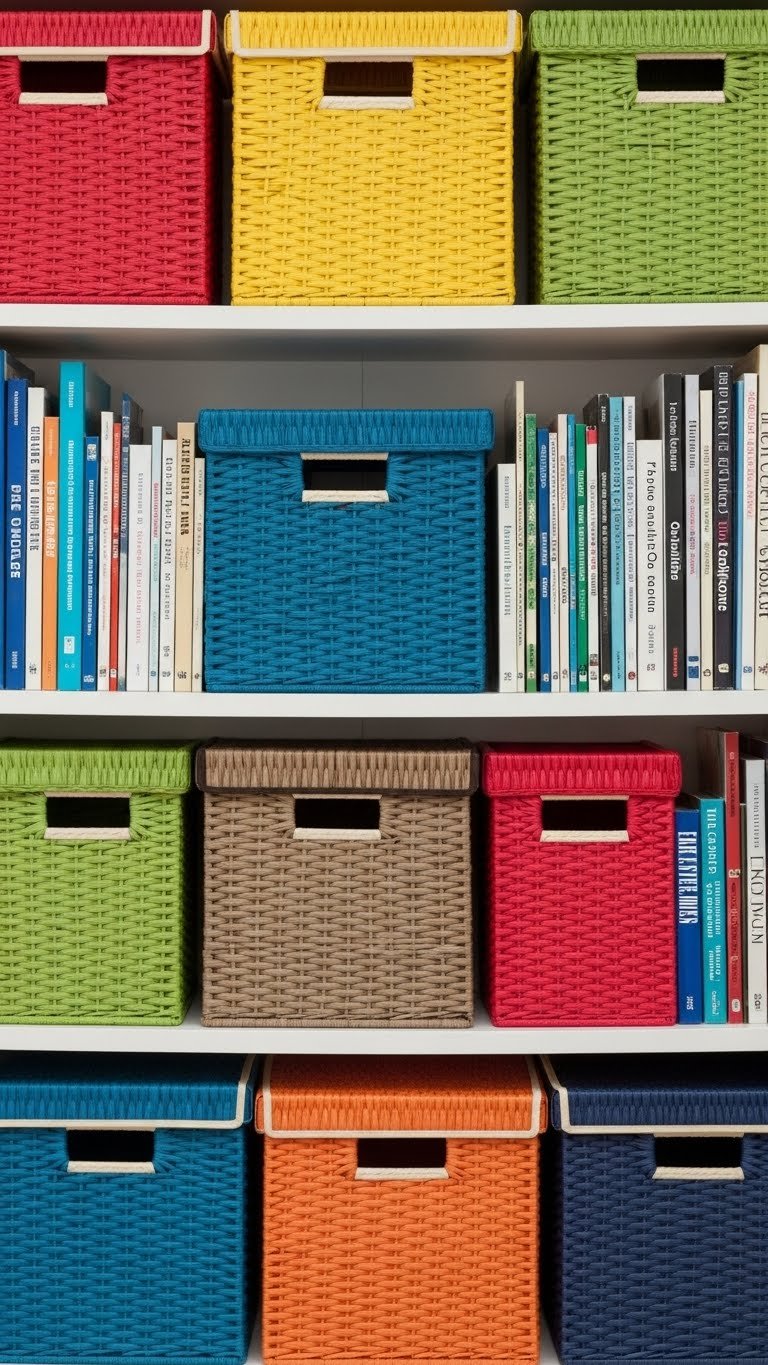
Decorative storage boxes hide clutter while adding color blocks that organize your visual space. This system works especially well in small spaces where you need stylish organization.
Purchase 3-5 matching decorative boxes in colors that coordinate with your book palette: try gold, navy, emerald, or blush. Expect to spend $30-$80 at IKEA, Container Store, or Target. Fill boxes with bookends, extra books, or random items you want hidden. Arrange boxes on alternating shelves to create visual balance. Label the front with small brass label holders for extra organization.
Suddenly your bookshelf looks intentional and organized, with defined color zones that make the space feel curated rather than cluttered.
7. Paint Individual Shelf Edges Bright Colors
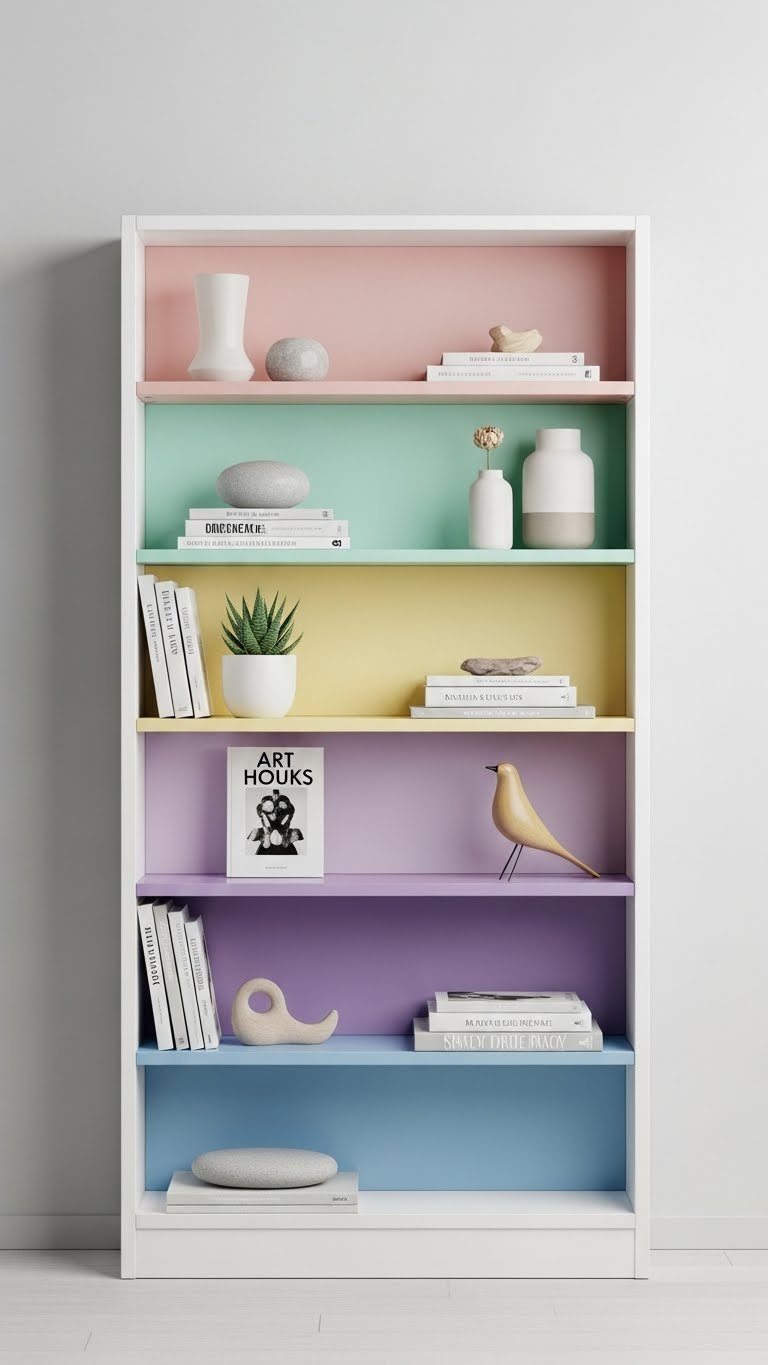
Painting just the visible shelf edges gives you bold color impact without overwhelming the space. This trick works beautifully on white or light wood shelves and is perfect for renters since the color hides when shelves are full.
Use acrylic paint in pastel or neon shades to paint the front 2-3 inches of each shelf edge. Paint costs $15-$25 total for multiple colors. Take about 30 minutes (including drying time). For renters: use painter’s tape and removable paint, or skip this step entirely and just arrange colorful books to create stripe effects naturally. Match colors to your room’s accent palette—pastels feel soft and modern, jewel tones feel elegant.
The colored edges peek through when books are stacked, creating unexpected pops of color that make people do a double-take.
8. Style with Colorful Art Prints and Small Frames
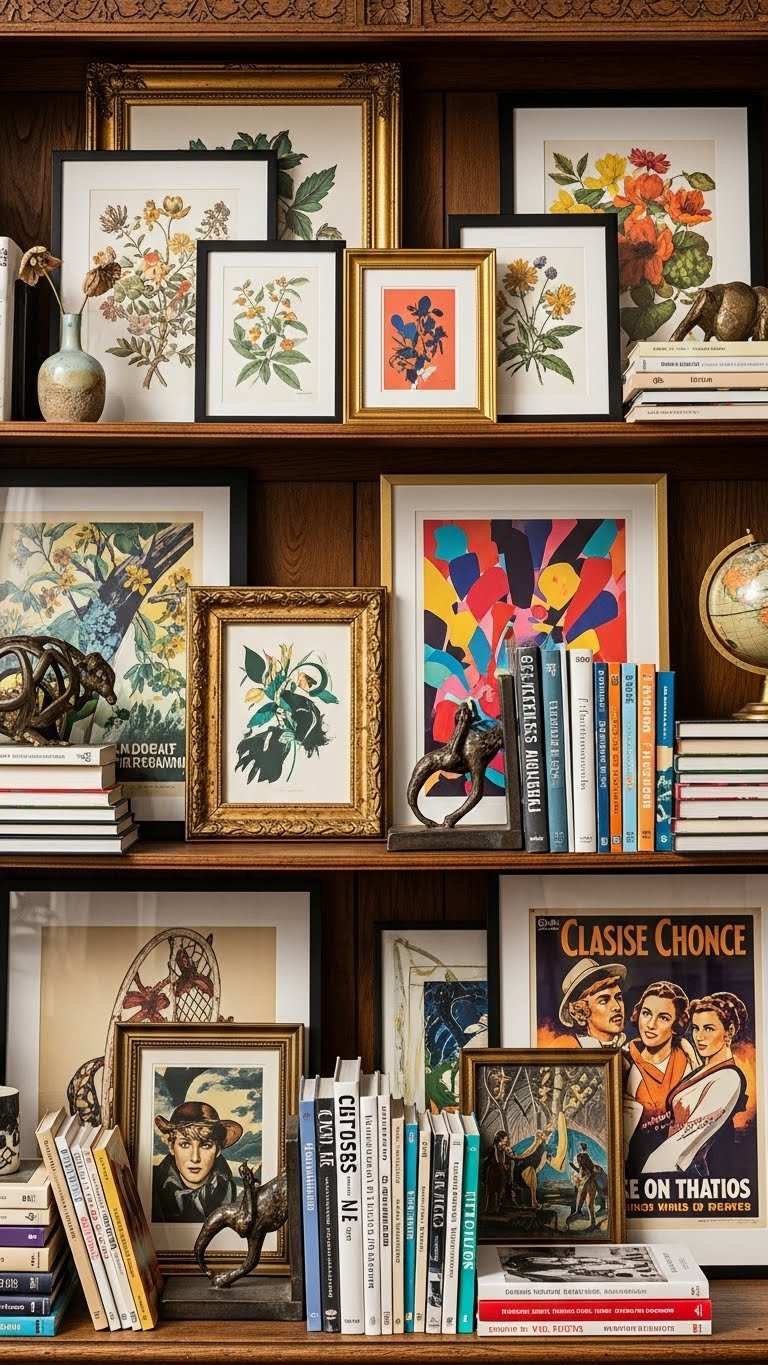
Art prints break up solid book color while adding personality and visual complexity to your shelves. Small frames create a gallery feel without requiring wall space.
Lean 2-4 framed prints among your books at varying heights. Mix sizes and styles—watercolors, abstract, botanicals, or vintage posters. Budget $20-$60 for frames from Etsy, minted.com, or print your own designs (Canva templates cost $5-$15). Dollar stores and Target offer affordable frame options. Lean prints at slight angles for a casual, curated gallery aesthetic. Choose print colors that either match or complement your book spines.
Your shelf transforms into a personal art gallery that reflects your taste and makes browsing more visually interesting than just seeing book spines.
9. Use Colorful Woven Baskets for Storage & Texture
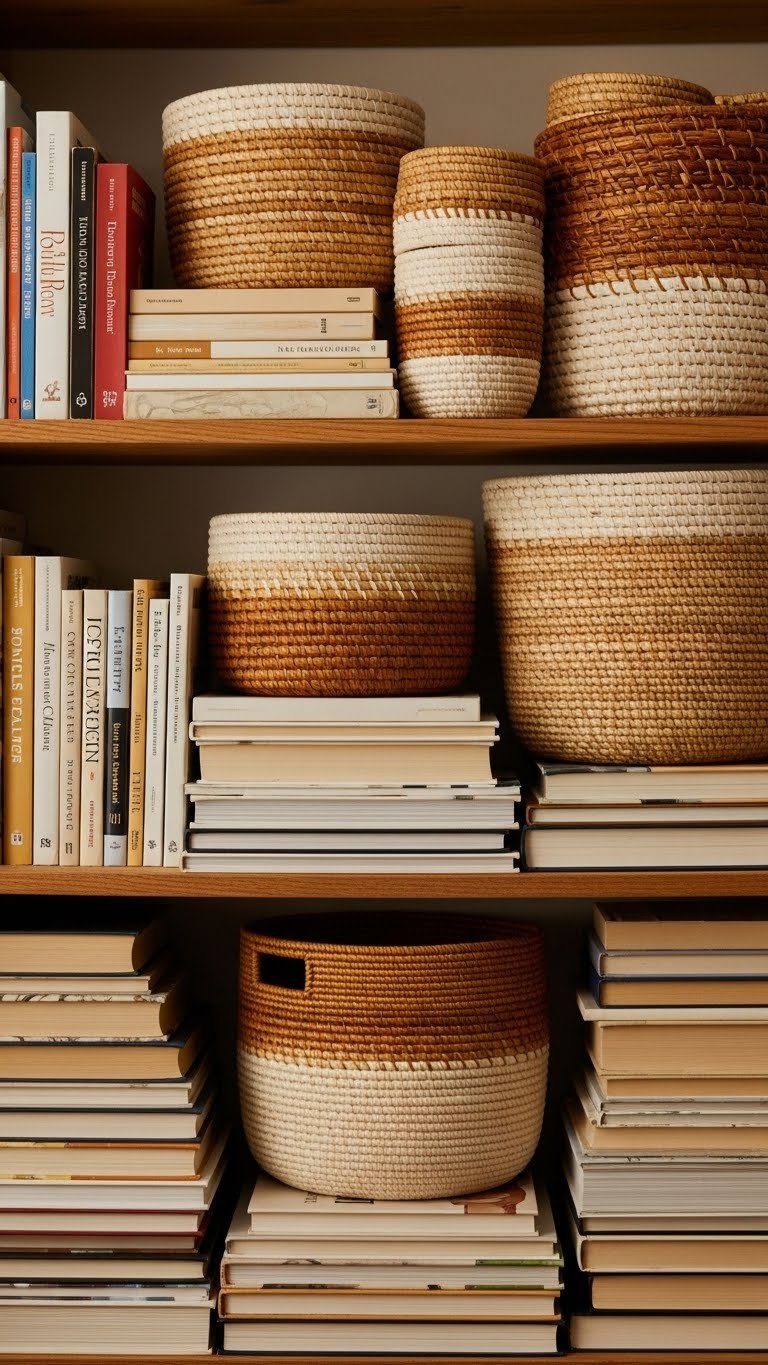
Woven baskets add natural texture and warm color while providing hidden storage for items you don’t want displayed. They soften the rigidity of rectangular books and add movement to your shelf.
Place 2-3 woven baskets (seagrass, rattan, or jute) on lower or middle shelves. Costs range from $15-$50 per basket at IKEA, Target, or HomeGoods. Fill with extra blankets, cables, or anything you want organized but out of sight. Choose basket colors in warm neutrals (tan, cream, cognac) or go bold with colored wicker. Mix basket sizes for visual interest—one large, two small creates better balance than three identical baskets.
The baskets add warmth and visual relief while keeping your shelf organized; it’s the perfect blend of pretty and practical.
10. Layer Colorful Books Spine-Out and Stacked

Layering spines vertically and horizontally creates visual rhythm and showcases more book color than traditional all-upright arrangement. It’s a professional styling technique that looks collected rather than random.
Alternate between spine-out stacks and 2-3 horizontal book stacks per shelf. This naturally happens as you arrange, and it requires no extra spending. Take time arranging and rearranging until the color distribution feels balanced. Stand back and check from across the room—you want colors distributed evenly rather than all warm tones on one shelf. Pro tip: place heavier books on bottom shelves and use decorative objects to anchor stacks.
The varied arrangement creates a dynamic, magazine-worthy display that looks intentionally styled and invites people to look closer.
11. Add Colorful Ceramic Vessels and Vases
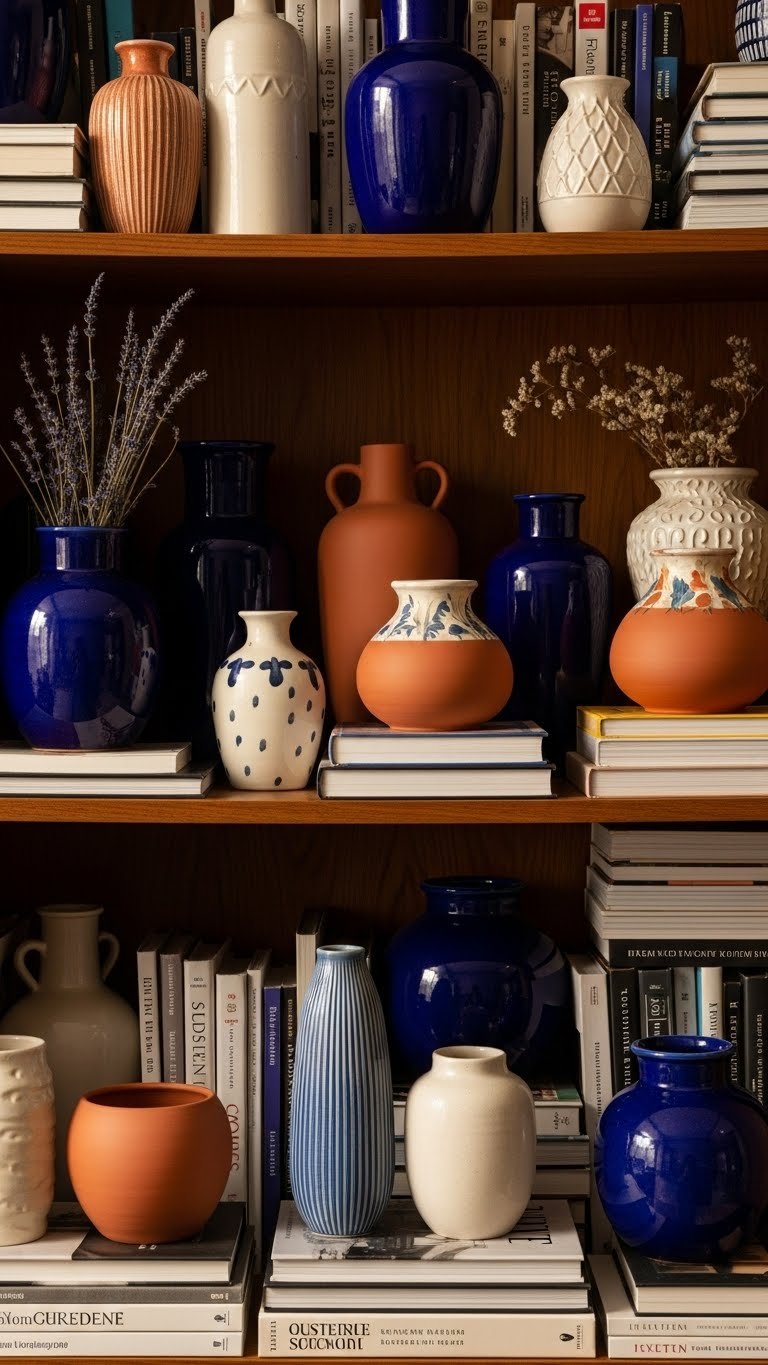
Ceramic vessels add color, height variation, and sculptural interest that flat books can’t provide. They create vertical focal points and introduce colors beyond your book palette.
Collect 2-4 colorful ceramic vessels in coordinating colors. Thrift stores offer affordable options for $3-$10 each; higher-end pieces from West Elm or Etsy run $25-$80. Fill some with dried flowers, pampas grass, or branches for extra color and texture. Place vessels at varying heights and cluster them in one section or distribute throughout. Choose shapes that complement your decor—modern geometric, rustic organic, or sleek minimalist.
These pieces become focal points that draw attention and add dimension, making your shelf feel like a carefully curated collection rather than just books.
12. Paint the Entire Bookshelf in Gradient Color

A gradient paint treatment adds artistic sophistication while creating a subtle color story that enhances your books without competing. It’s more complex than single-color painting but creates a truly unique look.
Paint your entire bookshelf in a gradient (light to dark, or warm to cool tones). This takes 4-6 hours over a weekend, plus drying time. You’ll need $30-$50 in paint, primer, and brushes. Use painter’s tape to create clean gradient zones, blending colors where they meet. Alternatively, hire a painter ($200-$400) if DIY painting intimidates you. Choose gradients that complement your room’s color scheme—pastels for calm spaces, jewel tones for drama.
The gradient effect is unexpected and artistic, making your bookshelf a true statement piece that becomes the room’s visual anchor.
13. Mix Colorful Spines with Neutral Wrapping
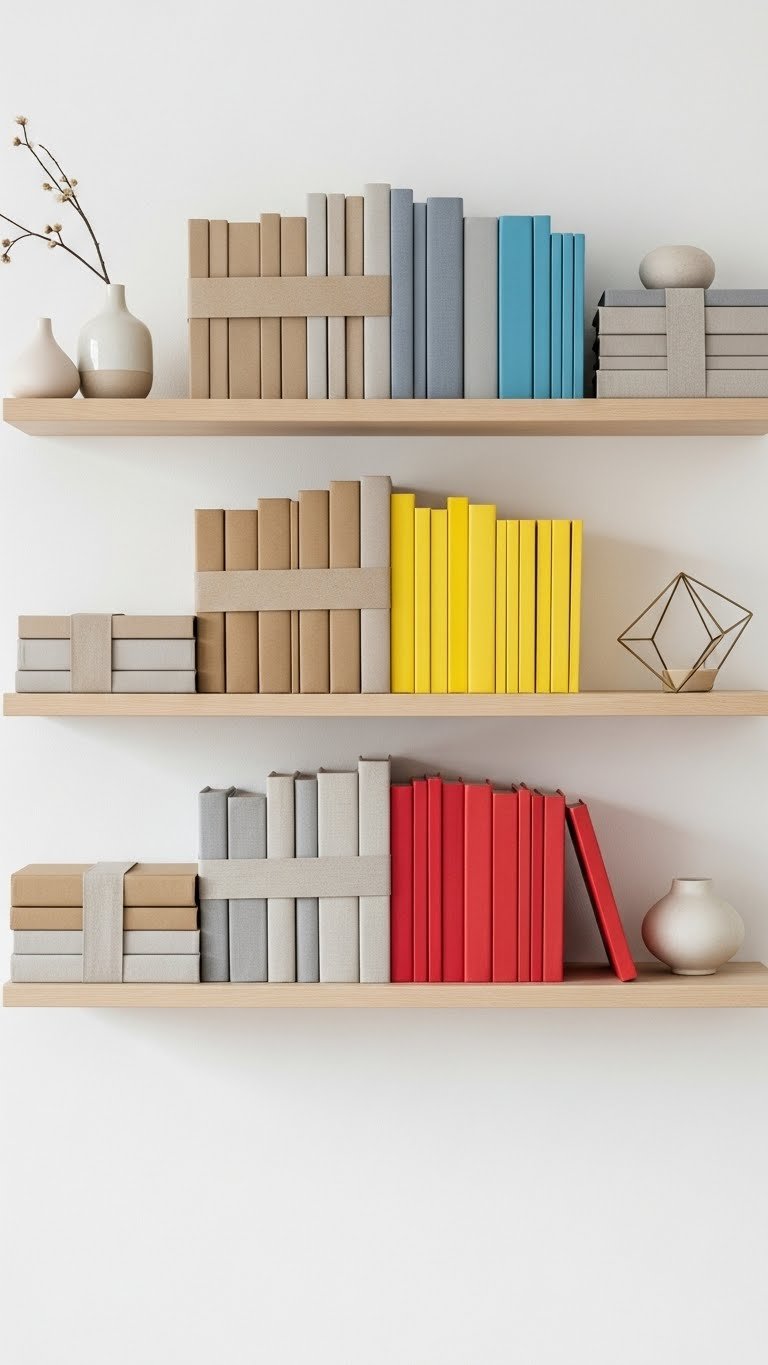
Wrapping books in neutral paper or fabric creates visual breathing room and prevents color overload while maintaining a curated aesthetic. It’s perfect for ugly book covers or older editions you want to display but hide.
Wrap 5-10 books in kraft paper, linen, or fabric tape. Costs are minimal—$10-$20 for supplies (craft paper from any office supply store). Use a ruler, pencil, and tape to create neat wraps that look intentional. Label spines with a metallic pen if desired. This technique works especially well for oversized books or odd-sized volumes that disrupt color flow. Pro tip: wrap books in your shelf’s accent color (like blush, sage, or navy) for a cohesive look.
The neutral zones create visual calm and make your colorful books pop more dramatically; it’s minimalism meeting maximalism.
14. Install LED Strip Lighting Behind Books
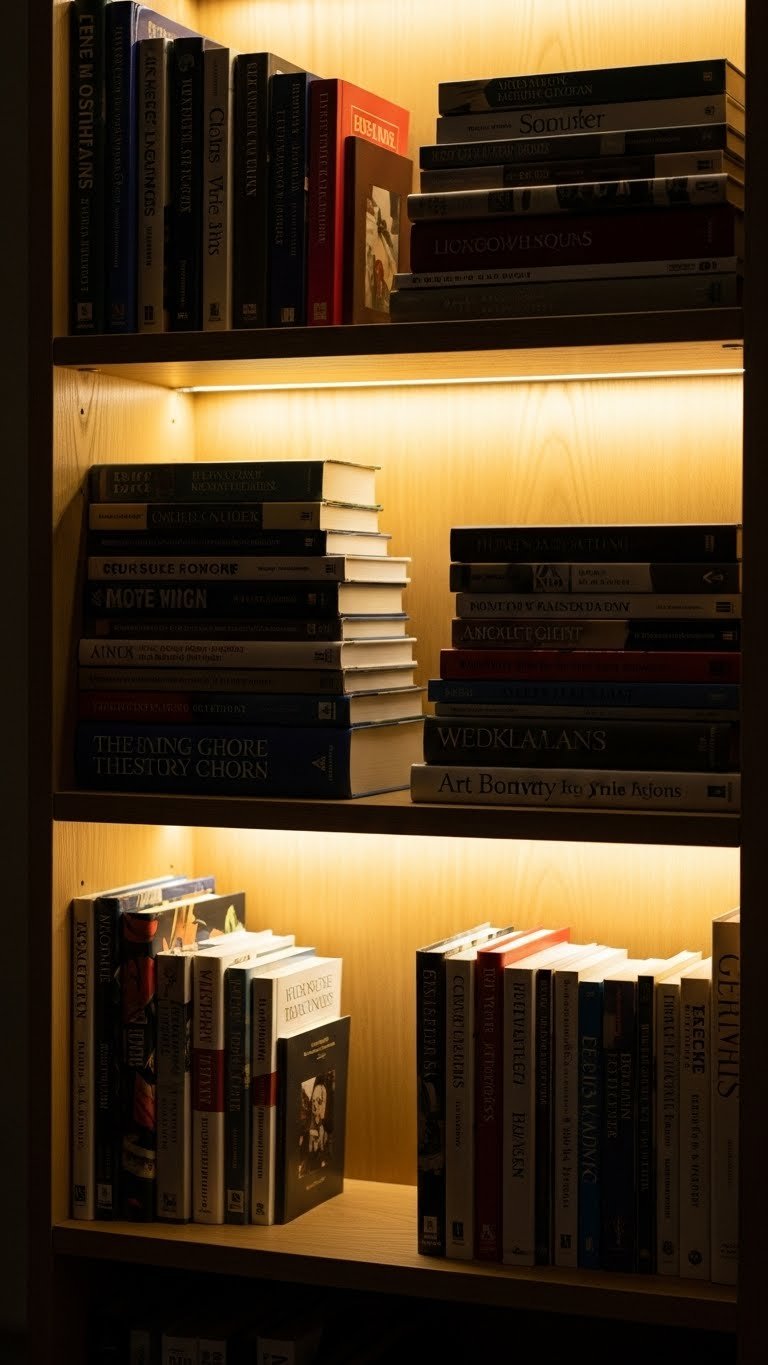
Lighting dramatically changes how colors appear and creates ambiance while making your bookshelf a functional light source. LED strips are renter-friendly and inexpensive compared to rewiring.
Install warm white LED strip lights along shelf edges (back or bottom). Costs range from $20-$50 for color-changing options or $10-$25 for simple warm white (Amazon, Home Depot). Installation takes 20 minutes with adhesive backing—no tools needed. Choose warm white (2700K) for cozy vibes or cool white (5000K) for modern feel. Plug into a nearby outlet or use battery-powered options if that’s easier. Pair lighting with your book colors for maximum effect—blues and purples glow beautifully under cool white light.
The lighting adds atmosphere and highlights your colorful books while creating a functional reading light; your shelf becomes practical and gorgeous.
15. Create Colorful Shelf Styling with Brass Accents
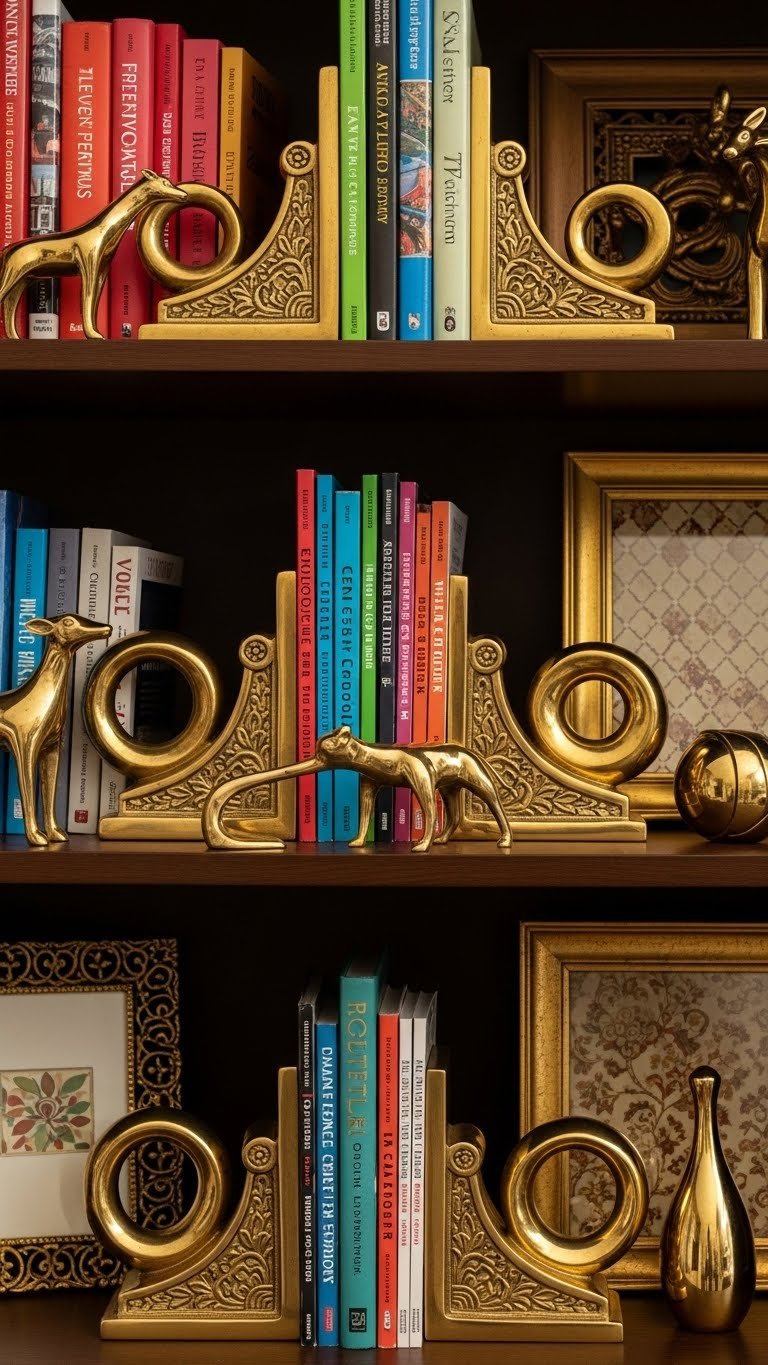
Brass and gold metallics add warmth and sophistication while tying together multiple book colors. Metal accents create focal points and catch light beautifully against colorful spines.
Scatter 3-5 brass or gold pieces among your books: bookends, small sculptures, decorative boxes, or picture frames. Budget $30-$80 depending on pieces (check HomeGoods, Target, or Etsy). Position metallics to break up color blocks and create visual rhythm. Mix different brass finishes (brushed, shiny, rose gold) for texture. Pro tip: cluster metallics in one section for impact, or distribute throughout for subtle elegance.
The metallic accents feel premium and intentional, making your colorful shelf look like a designer styled it.
16. Use Colorful Bookplates and Labels for Organization

Decorative bookplates add personality while creating functional color coding for genre or category organization. They’re perfect for book lovers and cost almost nothing.
Purchase colorful bookplates from Etsy ($5-$15 for 50-100 pieces) or make your own with label makers and colored tape. Create categories by color: fiction in red labels, non-fiction in blue, poetry in green, etc. Apply bookplates to spine corners where visible but not overwhelming. Use coordinating colors that complement your overall shelf palette. This works beautifully with rainbow-organized shelves, adding another layer of intentional styling.
Your shelf becomes uniquely yours with custom labeling, plus you’ll spend less time hunting for specific books when colors and categories are clear.
17. Display Colorful Book Series as Collections

Grouping matching book series creates visual impact and shows you’re a serious collector. Coordinated spines create natural color blocks that look intentionally arranged.
Identify your most colorful or impressive book series (Harry Potter special editions, fantasy series with matching spines, etc.) and dedicate one shelf section to displaying them. Most series cost $50-$200 depending on edition and condition. Arrange them chronologically or by color within the series. Anchor the collection with a decorative object at the end (bookend, small plant, or framed photo). This technique works beautifully for special editions with matching, colorful spines.
Displaying collections makes your bookshelf feel like a gallery and shows off the beauty of carefully chosen editions.
18. Mix Colorful Books with Colorful Décor Objects
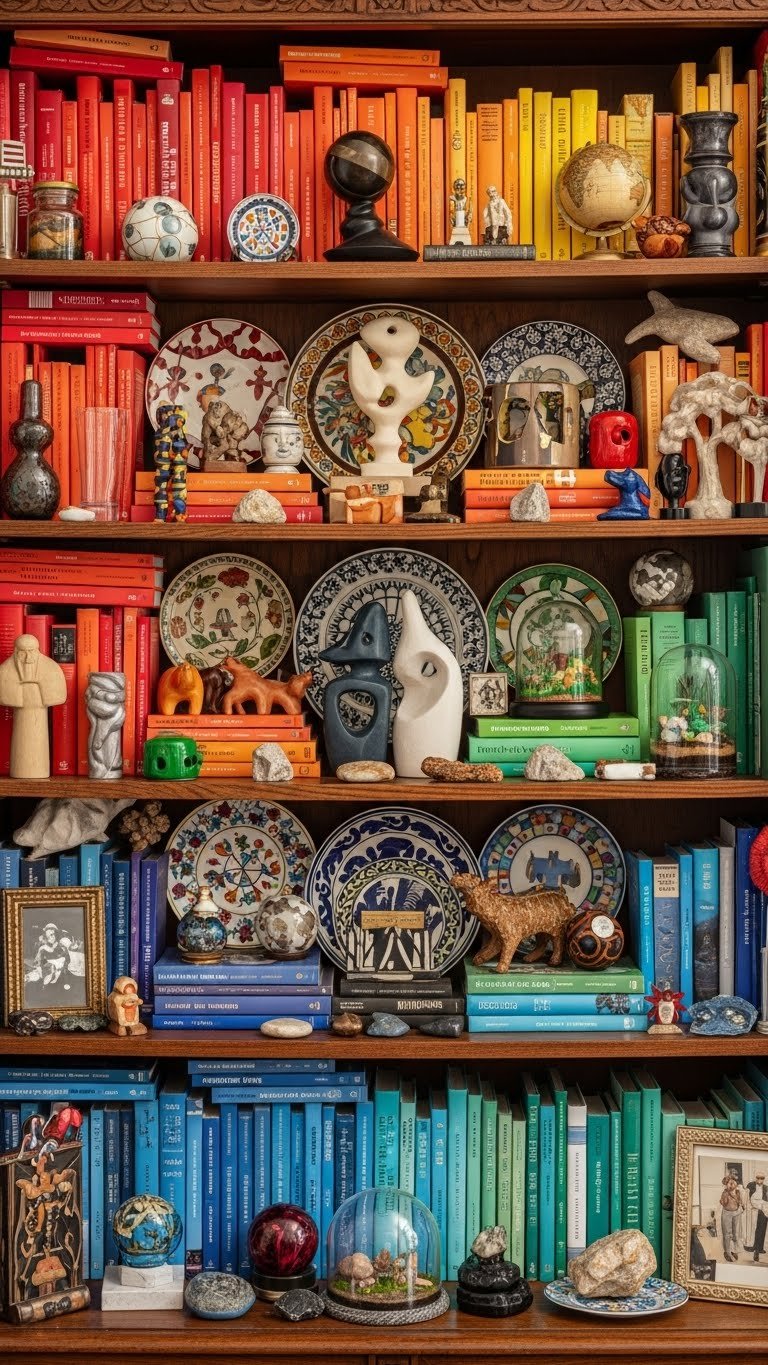
Blending books with carefully chosen décor objects creates a collected, gallery-like aesthetic rather than a utilitarian book storage system. Small objects add variety and personal storytelling to shelves.
Integrate 3-5 small decorative objects (ceramic pieces, small sculptures, decorative plates, collectibles) among your books in coordinating colors. Budget $20-$100 depending on pieces (HomeGoods, local boutiques, or vintage shops have great options). Choose objects that tie to your interests—travel souvenirs, artistic pieces, cultural artifacts. Position objects at varying heights to create visual movement. Pro tip: cluster objects in groups of odd numbers (three shells, five small frames) rather than scattering them randomly.
This approach transforms your bookshelf from storage into a personal museum that tells the story of your life and interests.
19. Try Colorful Removable Wallpaper on Shelf Backs

Patterned removable wallpaper adds color and design without permanent commitment—perfect for renters and those who like changing their space seasonally. Patterns add visual interest beyond solid color.
Apply peel-and-stick wallpaper to your shelf back panel in patterns that complement your books. Costs range from $20-$50 for standard shelf sizes (Amazon, Etsy, Spoonflower). Installation takes 30-45 minutes with just a squeegee and patience. Choose patterns that won’t compete with your books—geometric designs, small florals, or subtle textures work better than busy oversized patterns. Remove and replace wallpaper seasonally if desired; the adhesive leaves no damage on painted surfaces.
Patterned backdrops create instant drama while keeping your rental agreement intact.
20. Create Color-Blocked Shelf Sections
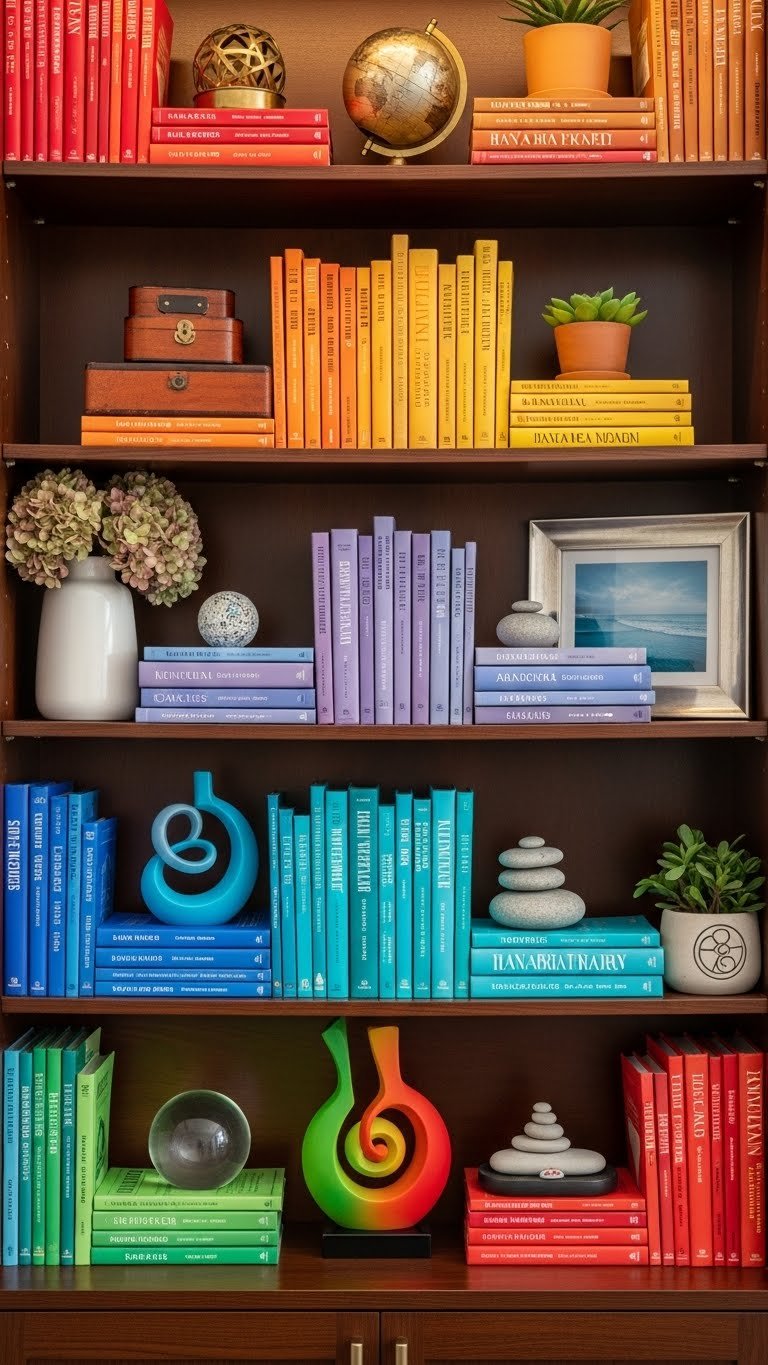
Color blocking (grouping colors into designated zones) creates visual organization and makes your shelf feel thoughtfully designed rather than randomly arranged. It’s gallery-style curation that’s easier to maintain than perfect rainbow arrangement.
Identify 3-4 color families and dedicate shelf sections to each. Group reds, oranges, and pinks together; then move to purples and blues, etc. This takes 1-2 hours of rearrangement with zero extra spending. Place decorative objects or baskets between color sections to mark transitions and create visual breaks. Keep the arrangement flexible—books won’t perfectly match colors, and that’s fine. Pro tip: stand back regularly and adjust until color distribution feels balanced.
The result feels intentionally styled and makes browsing feel organized; your brain processes visual information better when colors are grouped logically.
21. Incorporate Colorful Bookmarks as Shelf Décor
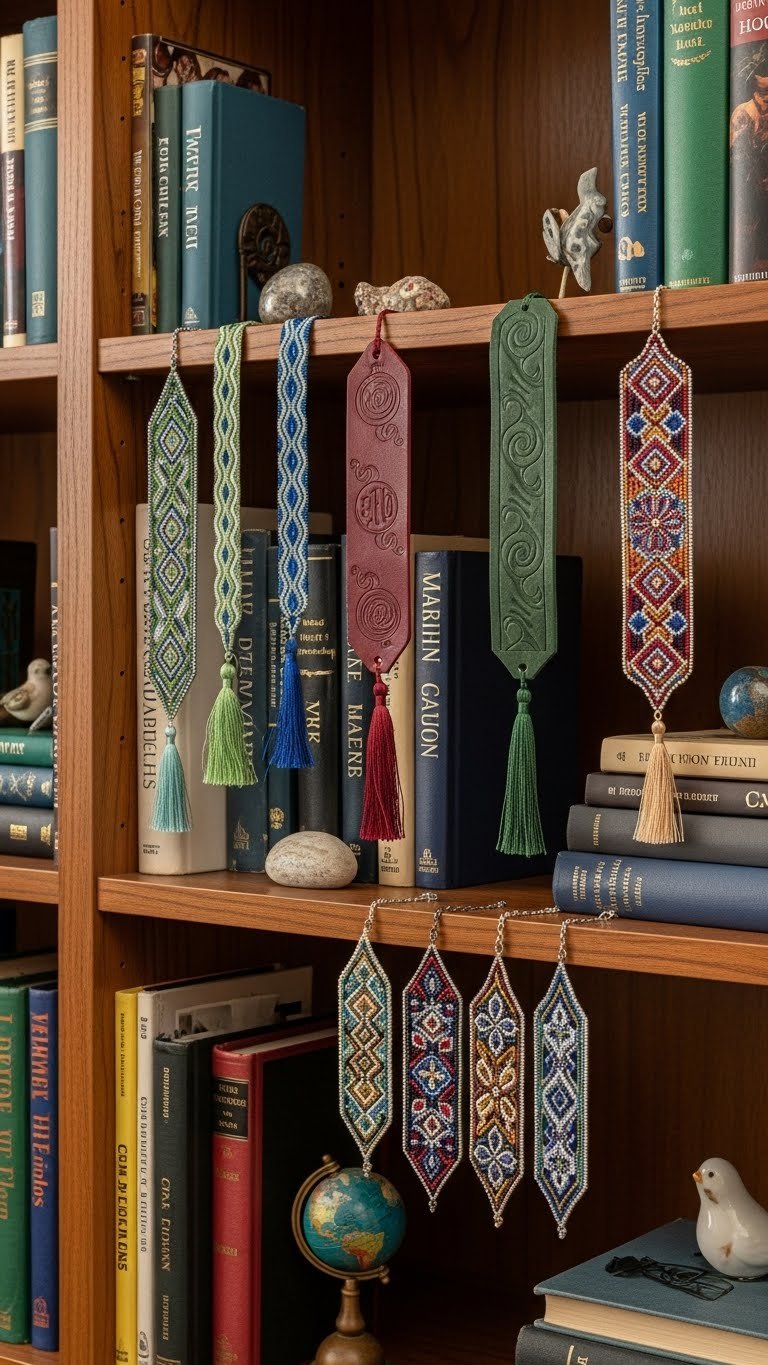
Colorful bookmarks add personality and small color pops without requiring major rearrangement. They’re especially charming if you collect bookmarks or enjoy handmade accessories.
Display 5-8 favorite bookmarks either hanging from book tops (use small hooks or let them drape naturally) or standing upright in small vases. Bookmarks cost $2-$8 each from Etsy makers or boutique shops. Mix styles and colors—fabric, leather, beaded, or hand-painted. Cluster bookmarks in one area or distribute throughout. Pro tip: swap bookmarks seasonally to keep your shelf feeling fresh. This works beautifully as a low-commitment styling element.
The bookmarks add handmade charm and personal touches that make your shelf feel lived-in and warm.
22. Style Shelves with Colorful Magazine Stacks
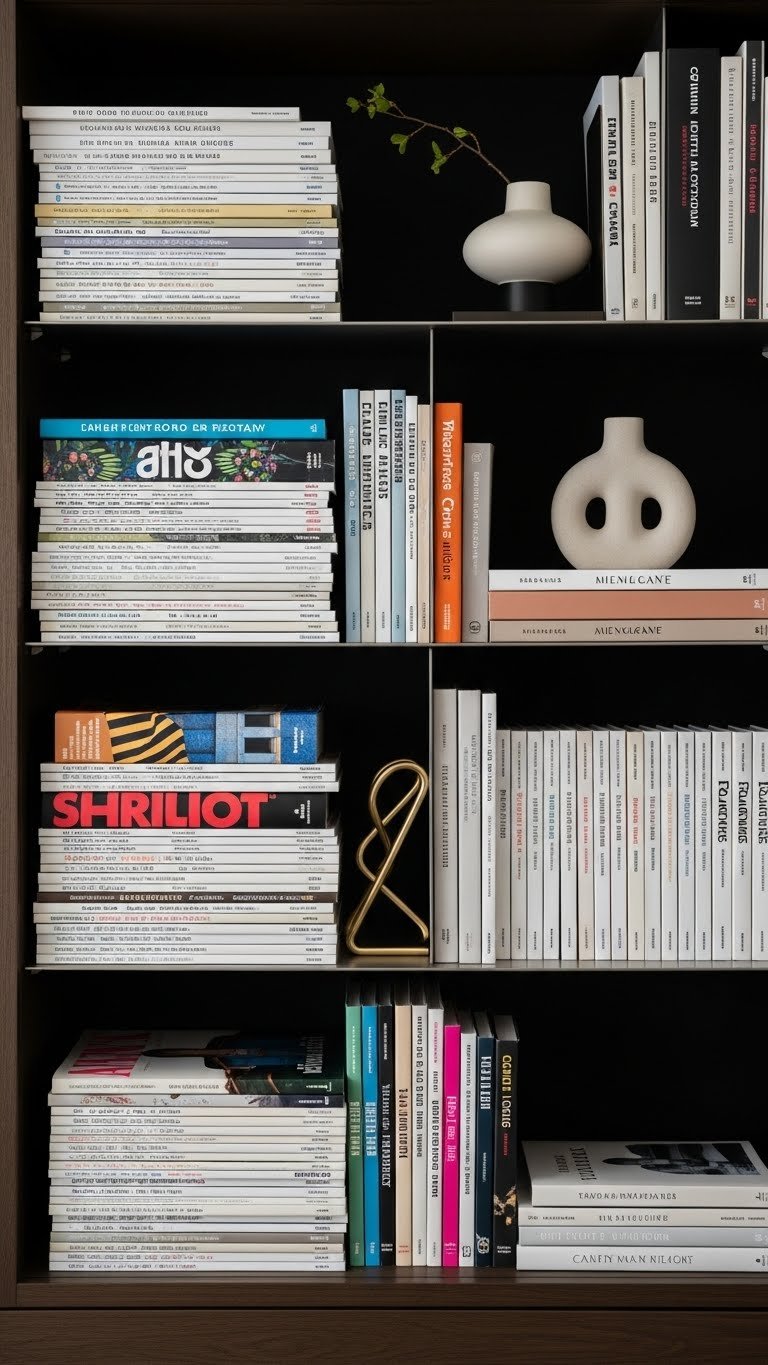
Magazine stacks add visual variety through their glossy covers and large format, plus they’re easier to refresh seasonally than books. Colorful magazine covers create instant eye appeal.
Stack 3-5 colorful magazines horizontally on one or two shelves, mixing with upright books for variety. Magazines cost $5-$12 each new or $0.50-$2 from library sales and thrift stores. Choose magazines with covers that complement your color scheme. Stack them with heavier magazines on bottom and balance with decorative objects on top. Refresh your magazine stack seasonally as new issues arrive or swap for different titles.
Magazine covers add a published, sophisticated feel while introducing new colors and visual interest without commitment to adding more books.
23. Paint Books Themselves with Colorful Covers
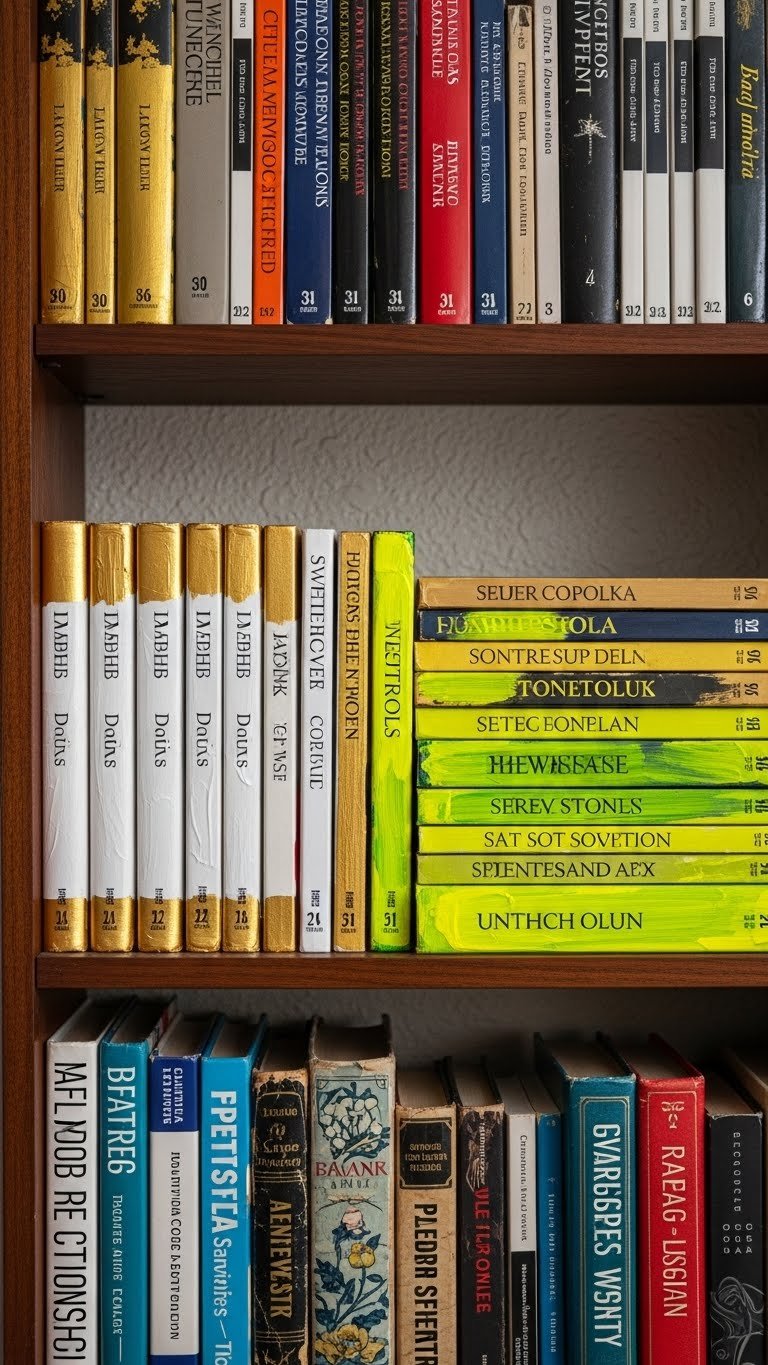
Painting book spines is a creative DIY project that allows you to transform boring covers into colorful statement pieces. It’s perfect for books you love but whose covers don’t match your aesthetic.
Use acrylic paint and a fine brush to paint book spines in solid colors or custom designs. Supplies cost $10-$20 total (craft paint from any art store). Choose books with spines large enough to paint clearly. Test paint on one book first; it dries quickly and adheres well to paper. Paint solid colors for clean modern look, or add patterns, titles, or designs for artistic flair. This takes 15-30 minutes per book and is perfect for older editions or library rejects you want to display.
Painted books become functional art while letting you customize your shelf palette exactly as desired.
24. Mix Colorful Books with Clear or Frosted Display Boxes
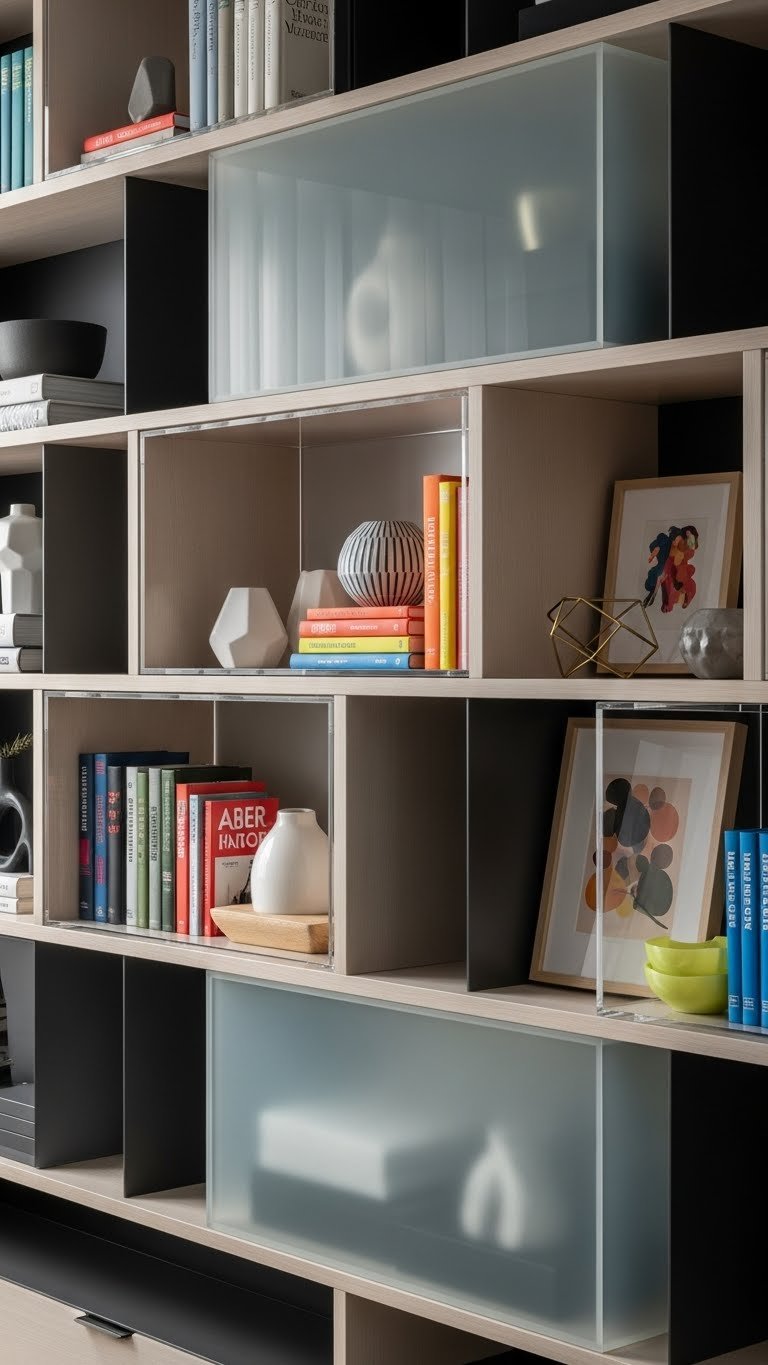
Display boxes create visual structure while allowing you to showcase specific collections or rotate items seasonally. They elevate your shelf styling and add architectural interest.
Purchase 2-3 clear acrylic or frosted display boxes to place on shelves. Costs range from $25-$60 per box depending on size (Container Store, Etsy, or specialty retailers). Fill boxes with your favorite colorful books standing upright, small collectibles, art prints, or rotating seasonal items. Use boxes to create visual bookends for larger shelf sections or feature collections. Clear boxes maintain visual flow while frosted versions add mystery and separation.
Display boxes create defined focal points and let you curate mini-exhibitions that feel thoughtfully planned; your bookshelf becomes a series of intentional vignettes.
Save this post for your next shelf refresh. Try picking just one idea this weekend—whether it’s painting a shelf back, swapping your book arrangement to rainbow order, or adding one plant among your books. You’ll be amazed at how one colorful change brightens your entire room.
Leave a Reply