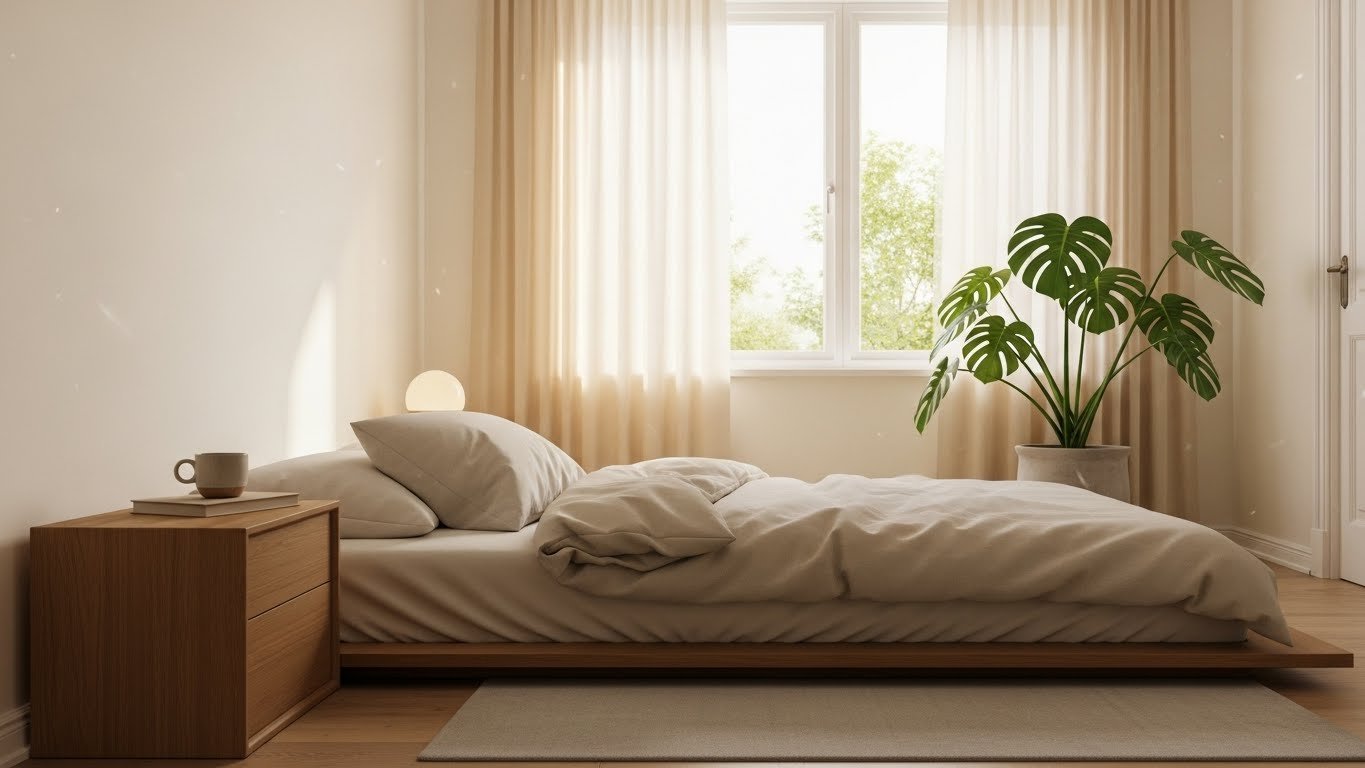
If your bedroom feels either too sterile and cold or cluttered with trendy boho excess, you’re not alone. Japandi design—the Japanese and Scandinavian blend—solves this perfectly by combining calm minimalism with genuine warmth. Think clean lines paired with natural textures, muted earth tones layered with soft materials, and thoughtful touches that make your space feel like a personal retreat rather than a showroom. Over the next 27 ideas, you’ll discover how to create a bedroom that’s visually peaceful and emotionally welcoming. Whether you’re renting or own, working with a tight budget or ready to invest, these actionable tips will help you build a Japandi sanctuary that actually feels like home.
1. Start with Warm Cream as Your Base Color
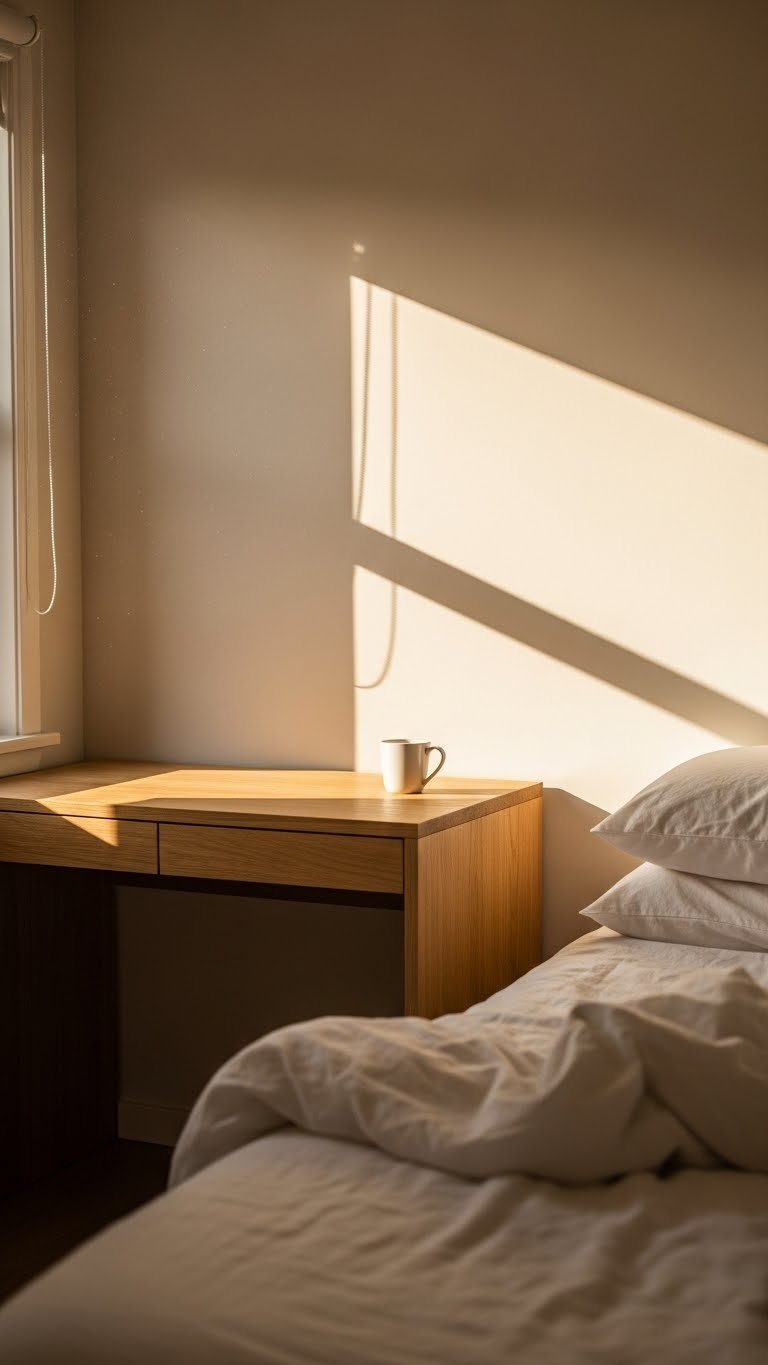
Warm cream walls replace the cold grays that dominated 2024 bedrooms. This shade avoids stark minimalism while keeping the visual clutter at bay—it’s the backbone of Japandi calm.
Paint your walls with a quality cream or warm ivory ($20–$40 for a gallon at Home Depot or Sherwin-Williams). One room takes 3–4 hours with a roller. If you’re renting, consider peel-and-stick wallpaper in the same warm tone ($25–$50 from Amazon or Spoonflower) for zero damage. The difference between cool gray and warm cream is subtle but immediate—your room suddenly feels like it’s wrapped in a hug rather than a blank slate.
Pro tip: Test paint samples on your wall at different times of day. Warm creams shift dramatically in natural versus artificial light. Your space becomes a cocoon instead of a clinical retreat.
2. Layer Linen with Heavier Natural Fabrics
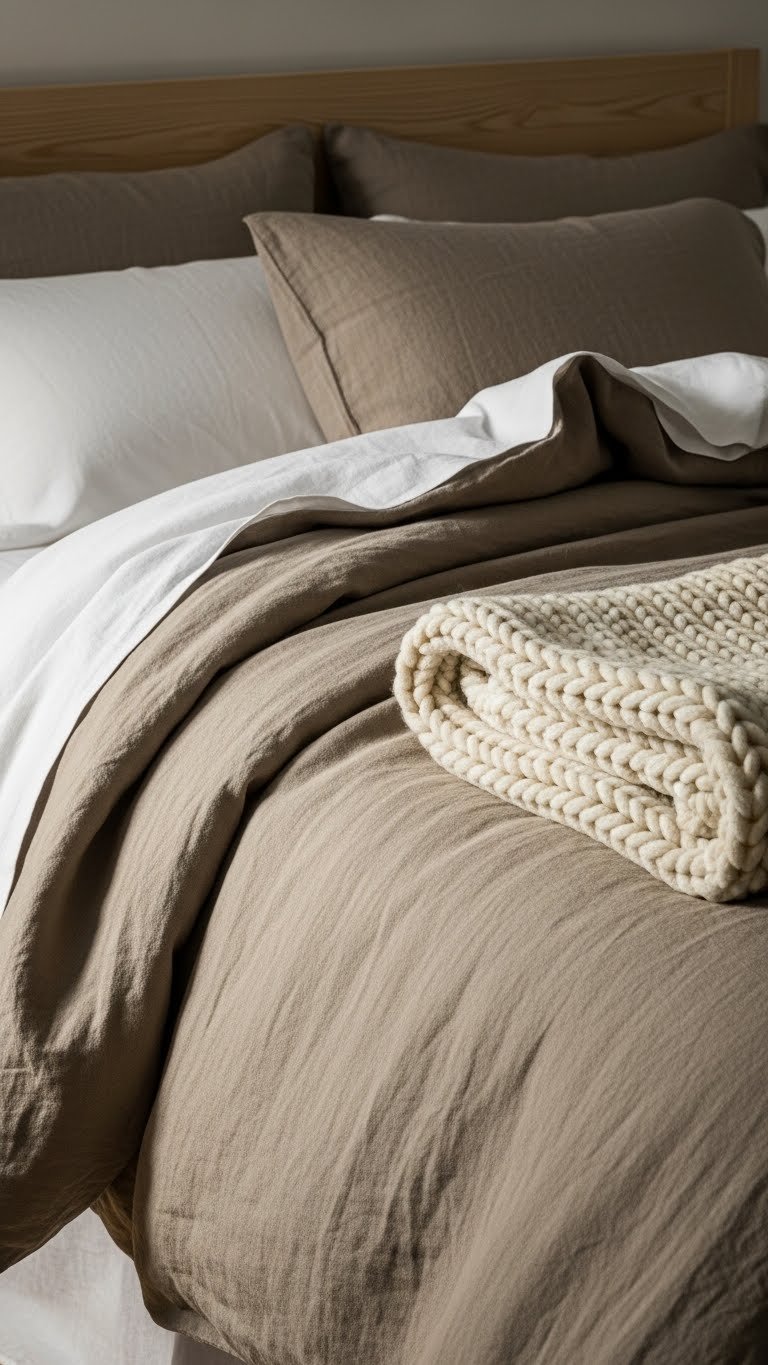
Linen alone feels refined but thin in Japandi design—layering it with wool blankets and cotton throws adds the tactile depth that makes your bed genuinely inviting.
Invest in one quality linen duvet ($80–$150 from Bed Threads or Parachute), then layer with an affordable chunky knit throw ($30–$60 from Target or H&M Home) and a lightweight wool blanket ($50–$100 from Woolroom). Mix textures deliberately: smooth linen, bumpy knit, soft wool. Takes 10 minutes to style but completely changes how your bed photographs and feels against your skin.
Budget hack: Start with one premium piece (the duvet) and build around it with more affordable layers from mainstream retailers. Your bed transforms from functional to luxe-looking without overspending.
3. Swap Harsh Lighting for Warm, Dimmable Bulbs
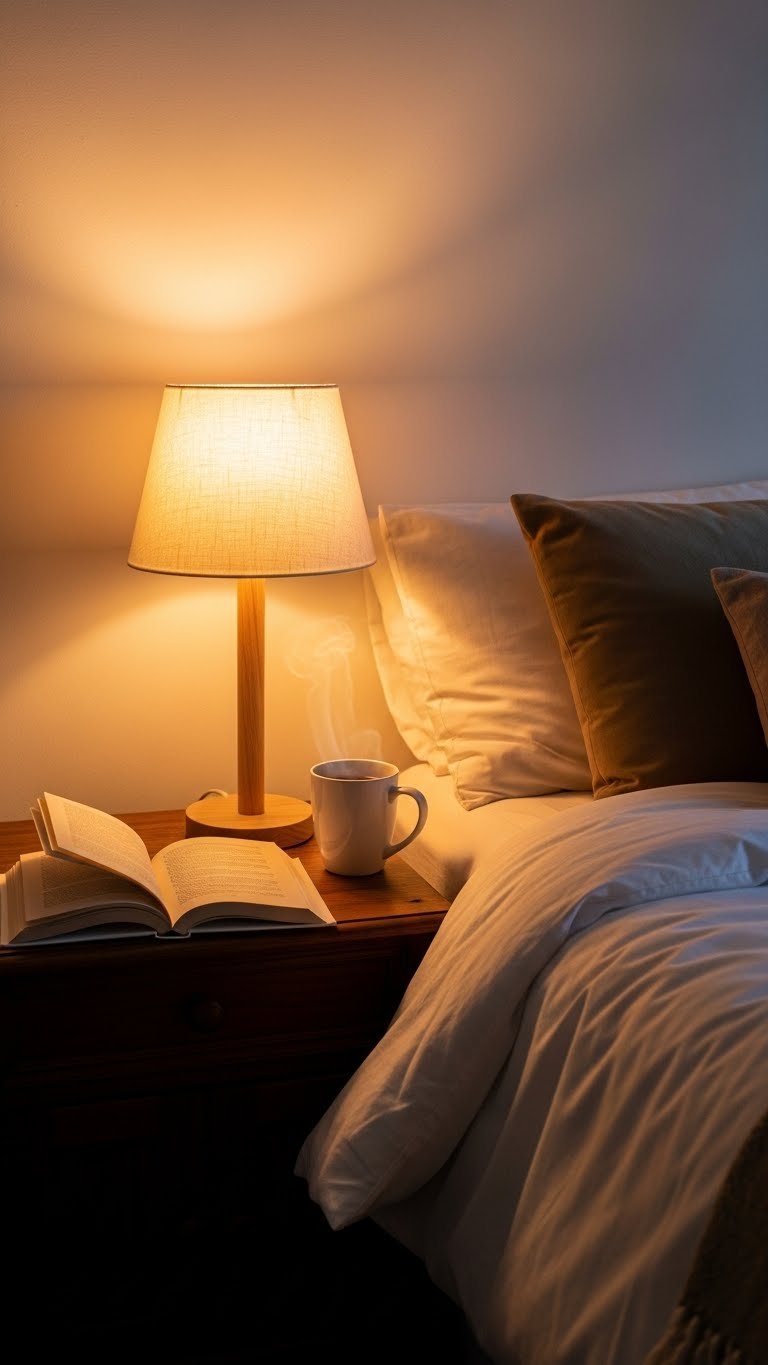
Japandi spaces rely on warm amber lighting (2700K color temperature) instead of bright white or cool-toned bulbs. This single swap feels less like a design choice and more like turning down the volume in your room.
Replace all overhead bulbs with warm-white dimmable LEDs ($2–$5 each from Target or Amazon; buy 5–8 depending on fixtures). Add a simple wooden bedside lamp with a linen shade ($30–$80 from IKEA’s TÄRNBY or Article). Install a dimmer switch if possible ($15–$30 at Home Depot; takes 30 minutes or hire an electrician for $100–$200). The room becomes dramatically more restful. Suddenly, 9 PM feels different than noon.
Renter-friendly: Plug-in dimmable lamp bases work just as well—no wiring needed. Warm light is non-negotiable for Japandi warmth.
4. Introduce Cork or Natural Wood Accent Wall
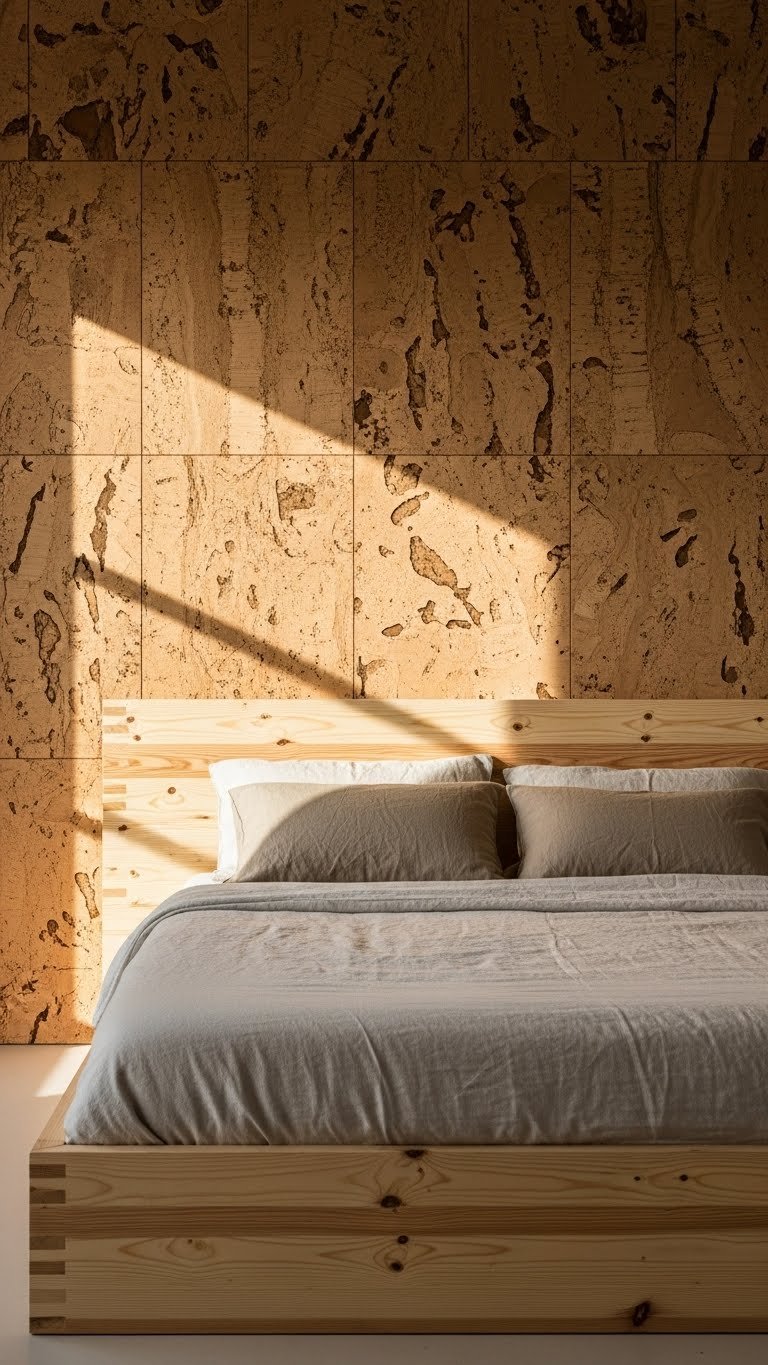
Raw materials like cork bridge organic modernism and Japandi aesthetics perfectly. Unlike textured wallpaper, cork actually absorbs sound and creates genuine tactile interest without looking gimmicky.
Buy cork wall tiles ($40–$80 per 10-pack from Amazon or Home Depot) and apply with construction adhesive ($10). One accent wall (roughly 100 sq ft) costs $80–$160 and takes one Saturday afternoon. If cork feels too bold, raw wood shiplap ($50–$150 installed DIY or $300–$600 hired out) achieves similar warmth with less visual drama. The wall becomes an anchor point—everything else can stay subtle.
Alternative: Peel-and-stick cork ($30–$60) works for renters and requires no commitment. Either way, your room gains organic depth that paint alone can’t deliver.
5. Position Your Bed Low to the Ground

Low beds (platform or Japanese-style futons) are Japandi staples. They visually expand the room, create a grounded (literally) sense of calm, and reduce the visual weight of your largest furniture piece.
Invest in a low platform bed ($200–$600 from Article, IKEA’s MALM, or West Elm) or DIY one with a simple wood frame and slats ($100–$200 in materials from Home Depot). Assembly takes 2–3 hours for DIY or 1–2 days for delivery. If you already own a tall bed, lower it by removing the frame and placing the mattress directly on a platform ($50–$100 for a basic wood base). Your eye line changes instantly—the room feels broader, more intentional.
Pro tip: Pair a low bed with minimal under-bed storage (or none) for maximum visual calm. A cluttered floor ruins Japandi serenity.
6. Add Floating Wooden Shelves for Minimal Storage
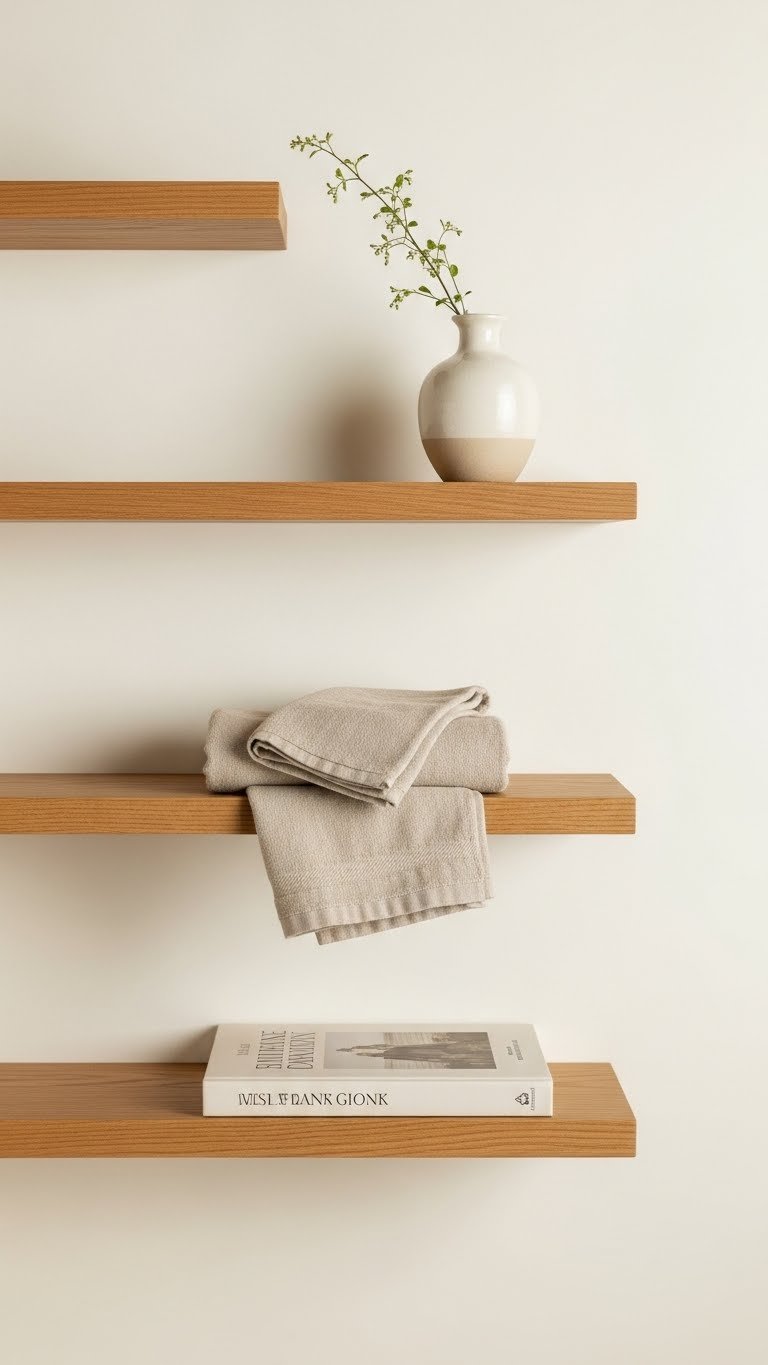
Floating shelves replace clunky nightstands and add storage without visual heaviness. Keep them sparsely styled—this is key to avoiding clutter that breaks the calm.
Install 2–3 natural wood floating shelves ($20–$60 each from IKEA, Amazon, or Home Depot; brackets $10–$20 per pair). Drilling takes 30 minutes per shelf. Style with no more than 4–5 items per shelf: a ceramic piece, a folded linen, one book, a small plant. Less is genuinely more here. Your bedside becomes functional art rather than a catch-all counter.
Budget hack: IKEA’s LACK shelves ($10–$20) work perfectly and come in natural wood. Expensive designer versions feel the same when styled right.
7. Bring in Low-Profile Indoor Plants
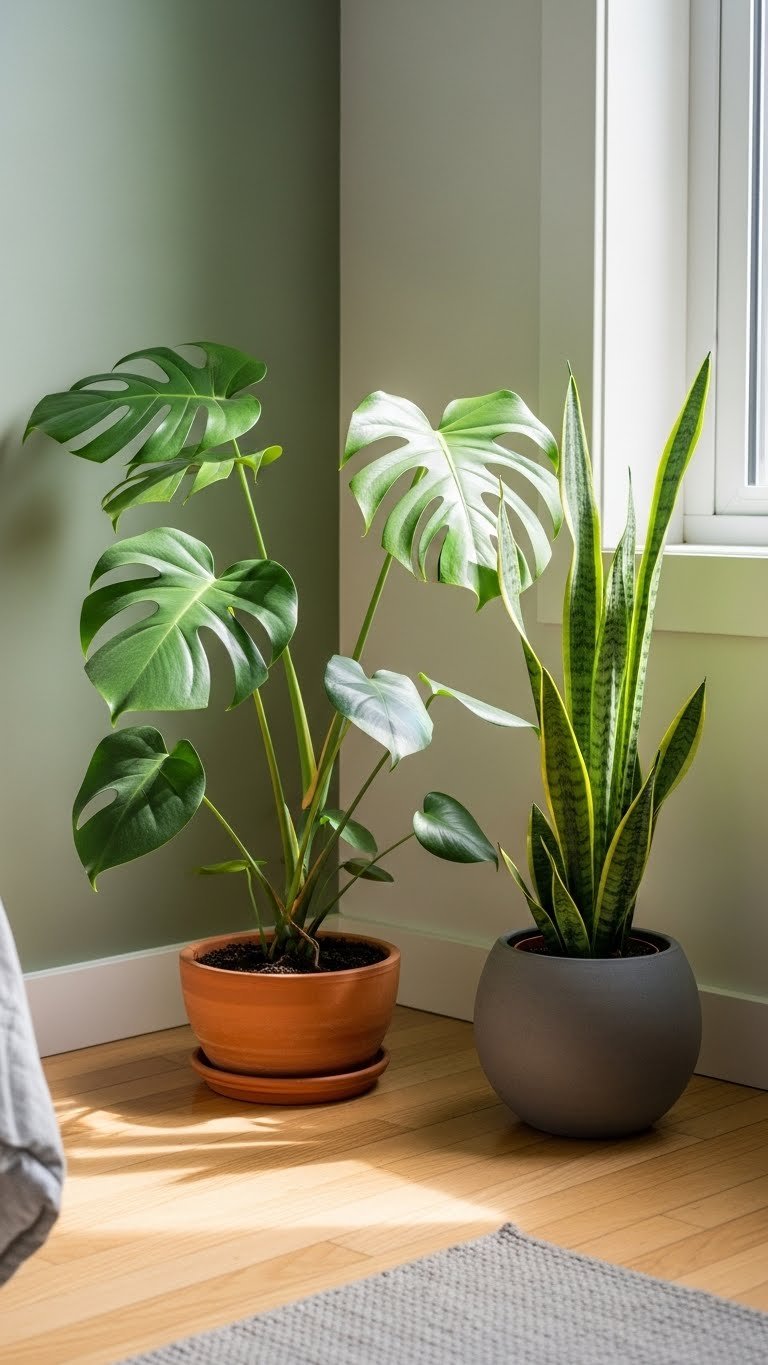
Biophilic design—bringing nature indoors—is core to Japandi warmth. Unlike bohemian plant walls, Japandi uses select plants in strategic spots, not overwhelming greenery.
Choose 2–3 low-maintenance plants: pothos, snake plants, or monstera deliciosa ($15–$40 each from a local nursery). Place them on low wooden plant stands ($20–$50 from Target or Article) near windows. Buy simple terracotta or cream ceramic pots ($10–$30 each). Water weekly and enjoy the living element—your room gains oxygen, visual interest, and a connection to something growing.
Renter-friendly: Potted plants require zero wall damage and move with you. They’re the easiest way to add life to a minimal space.
8. Style with Negative Space (Not Every Surface)
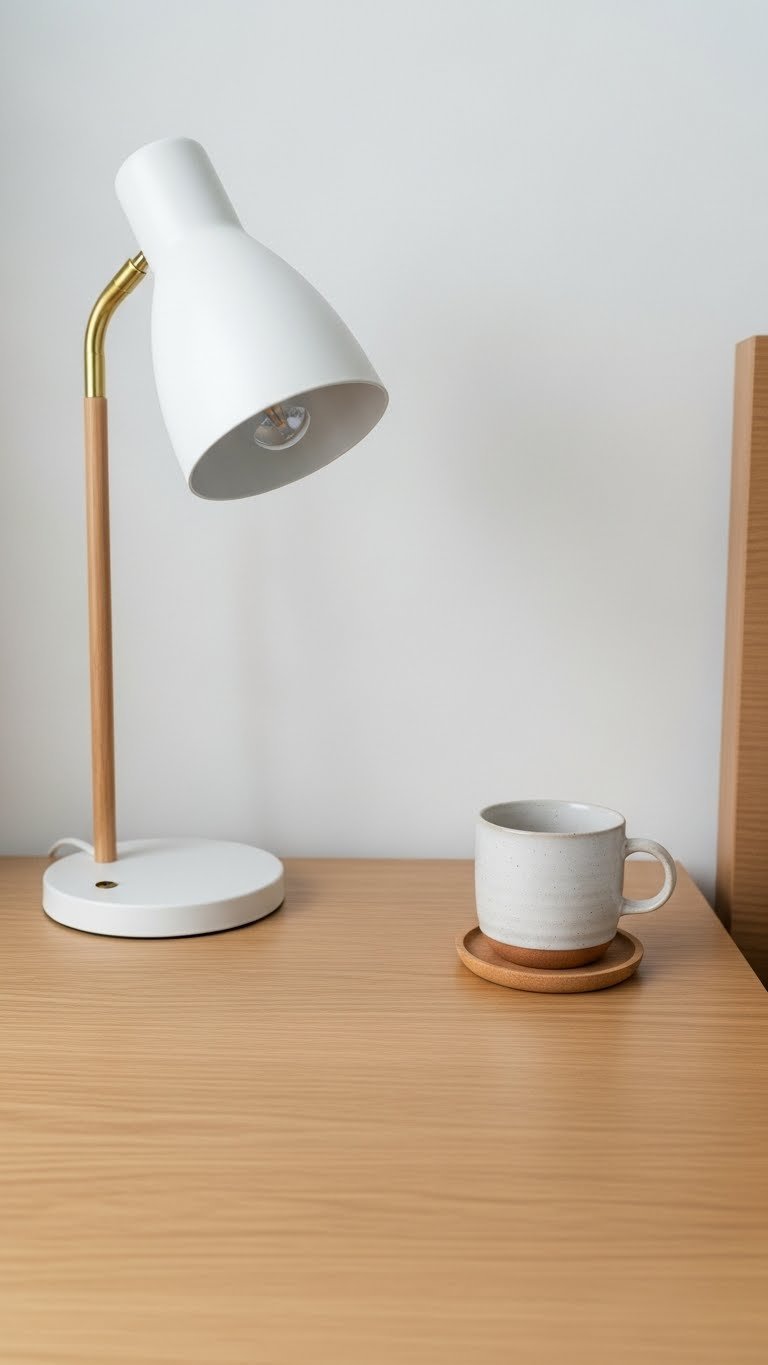
Japandi celebrates empty space as much as filled space. Unlike maximalist design, leaving surfaces mostly bare is the point—it creates visual rest and makes the items you do display feel meaningful.
Resist the urge to decorate every inch. On your nightstand: keep only a lamp and maybe one small object. On shelves: space items 6–12 inches apart. In your closet: fold clothes neatly (not stuffed) so you can see the fabric. This costs nothing but requires a mindset shift. Your room becomes a gallery instead of a store display.
Pro tip: Each surface should have at least 40–50% empty wood or wall visible. Anything less starts feeling cluttered to the Japandi eye. Negative space is your design partner.
9. Swap Duvets for Quilts in Natural Fibers
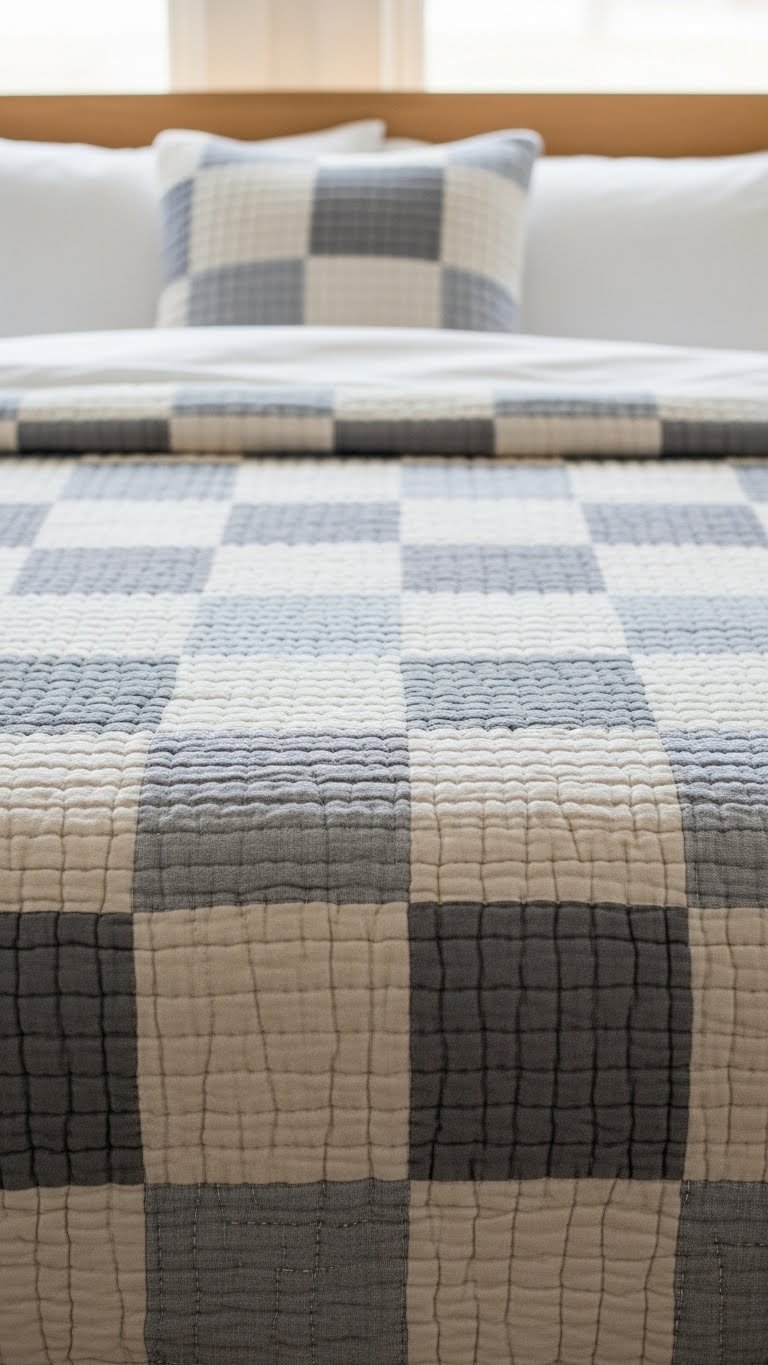
Quilts—especially those in natural fibers or with visible handmade stitching—replace generic duvets in Japandi design. They tell a story and feel less mass-produced.
Invest in a quality quilted throw or bedspread ($150–$300 from Schoolhouse Electric, Etsy handmade sellers, or Snowe) or hunt vintage quilts ($20–$60 on Etsy or at local estate sales). Layer it over linen sheets for a lived-in, intentional look. One quilt completely changes your bed’s personality—it feels collected rather than flat-packed.
Budget option: Vintage quilts from thrift stores ($15–$40) come with actual history and cost way less than new designer versions. Your bed gains character and warmth.
10. Install Wooden Ceiling Beams (or Faux Ones)
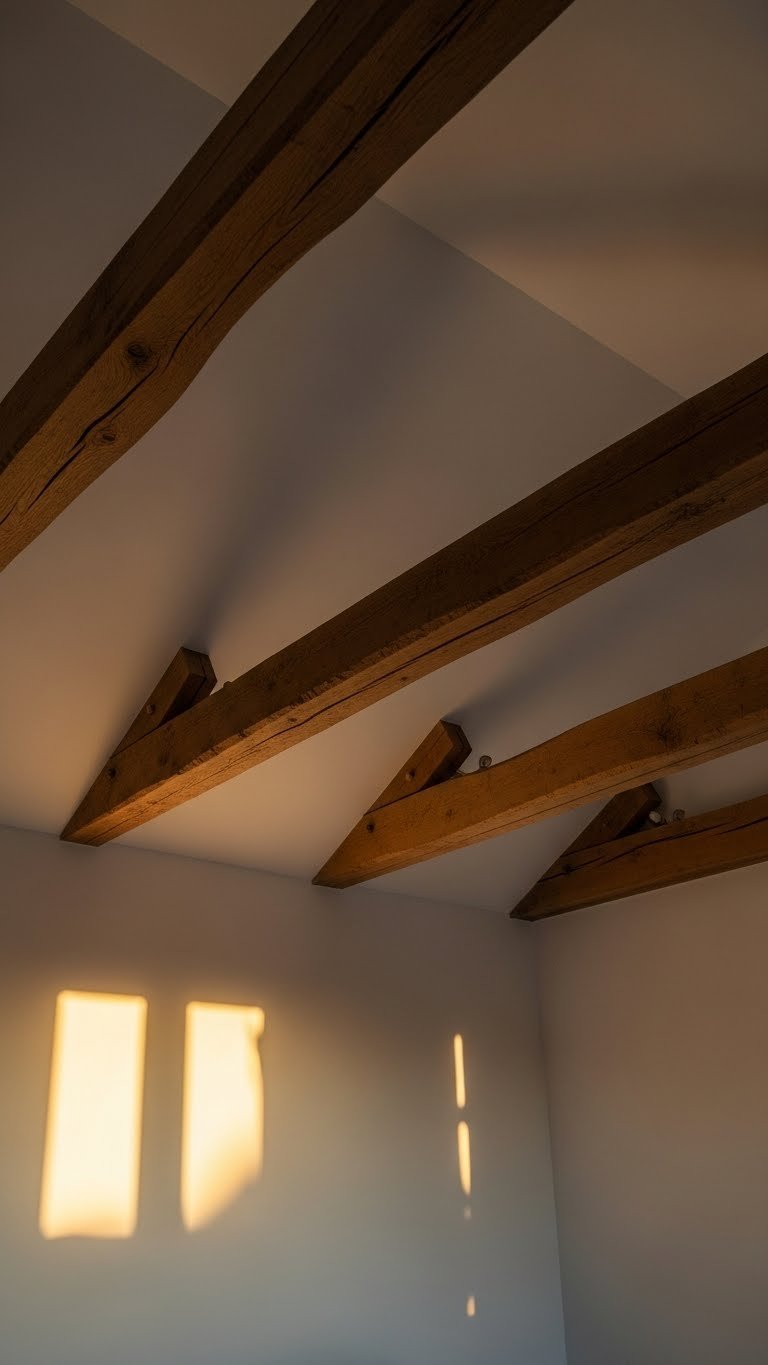
Wooden beams—whether real or modern faux beams—add architectural warmth without the expense of full renovation. They’re especially effective in Japandi spaces where structure feels intentional.
Install faux beams ($80–$200 per beam from Amazon, Wayfair, or Home Depot; DIY installation 2–3 hours) or real reclaimed beams ($300–$800+ per beam; hire professionals). If full installation isn’t possible, paint existing crown molding a warm wood tone ($20–$40 in paint, 4 hours) to create a similar effect. Suddenly your ceiling has depth and your room feels architecturally grounded instead of flat.
Renter-friendly: Temporary adhesive faux beams ($50–$100) stick to ceilings and remove cleanly. They won’t transform the space but add subtle warmth.
11. Curate One Statement Artwork
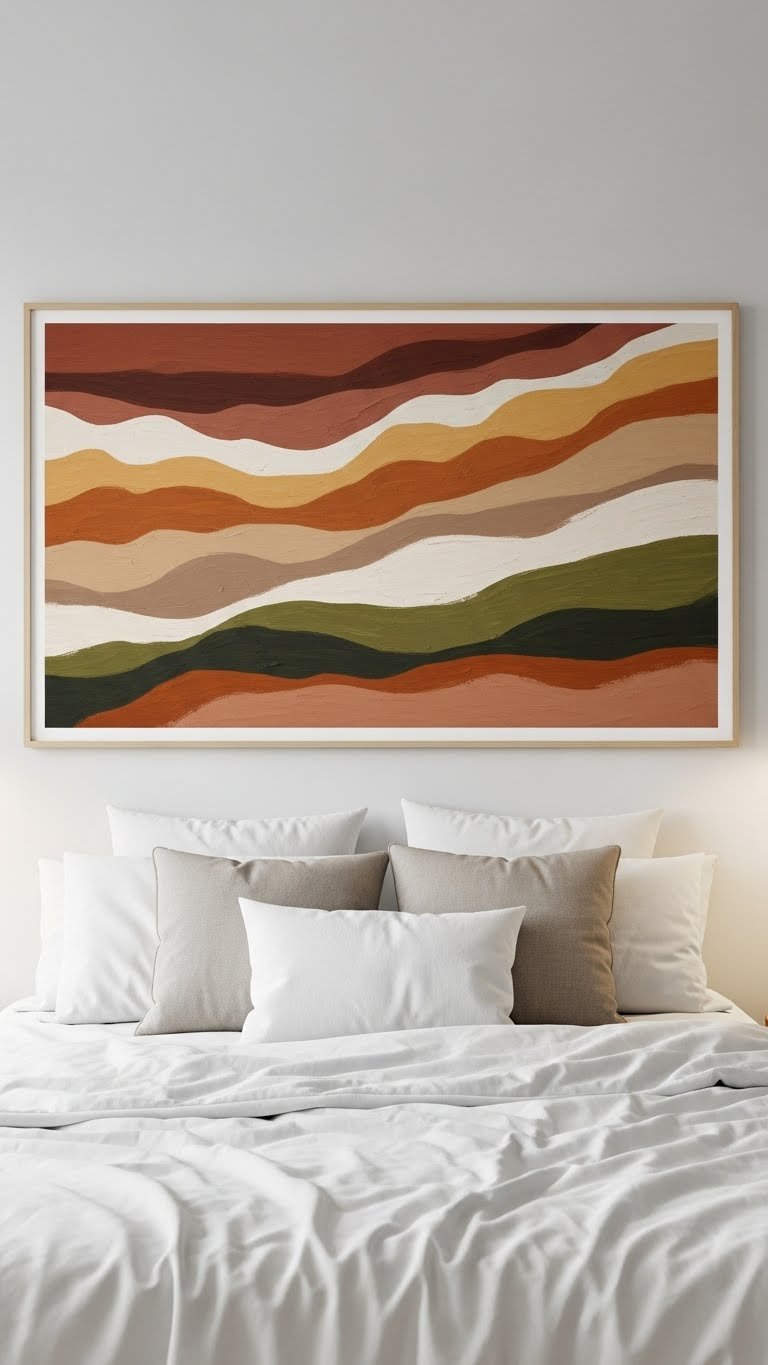
Instead of gallery walls, Japandi design anchors a room with one significant, carefully chosen artwork. This becomes the visual anchor—everything else stays understated.
Commission or purchase one large-scale print ($150–$500 from Etsy artists, Minted, or local galleries) in earth tones or soft abstract styles. Frame it in natural wood ($50–$150 from Framebridge or local framers). Hang it at eye level above your bed or on the largest empty wall. This single piece does the heavy lifting—no need for multiple smaller frames competing for attention.
Budget hack: Large prints from Etsy ($30–$80) plus a simple IKEA frame ($20–$40) achieves the same impact as gallery-framed pieces costing 3x more. One meaningful artwork beats five mediocre decorations.
12. Choose Rounded Furniture Over Sharp-Edged Pieces
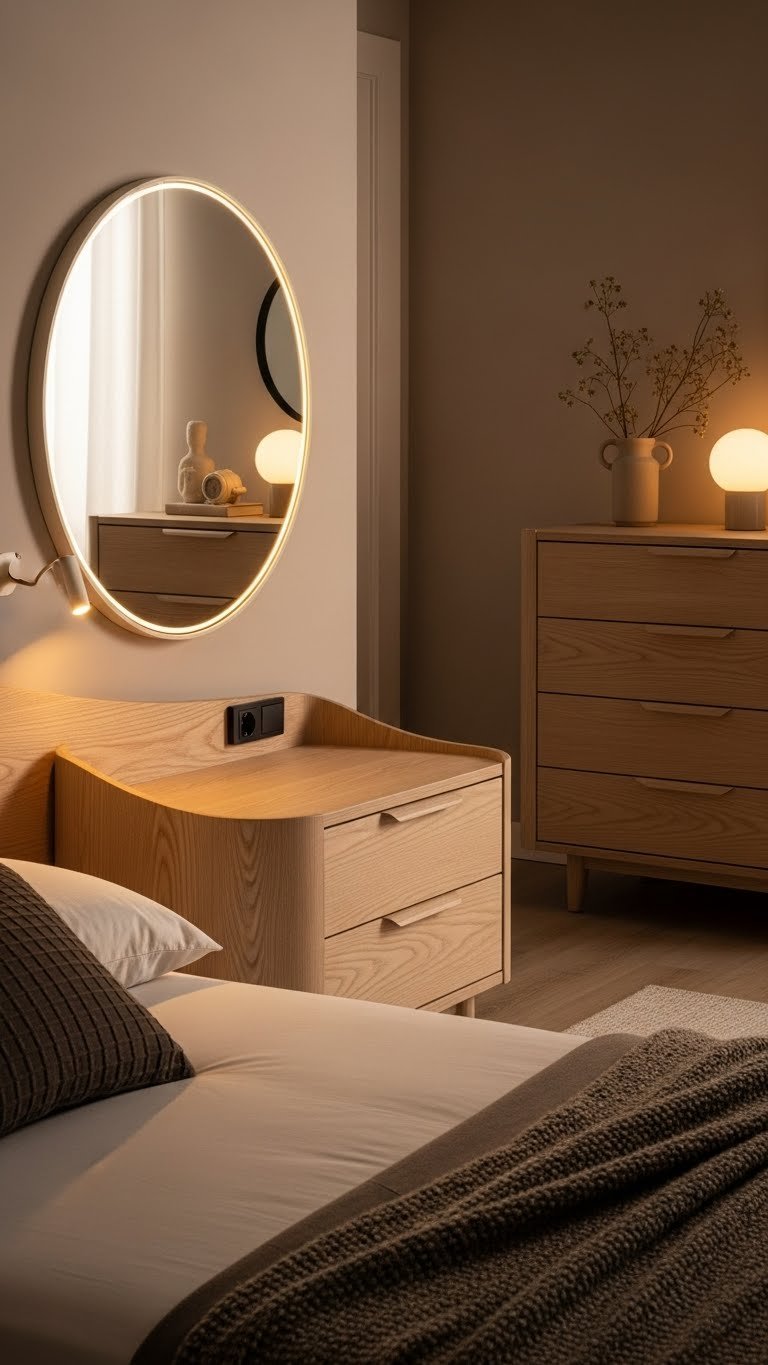
Sharp-angled furniture reads as harsh in Japandi design. Rounded edges—on nightstands, mirrors, dressers—soften the room and create the subconscious feeling of safety and calm.
Replace angular nightstands with curved or rounded versions ($200–$500 from Article, West Elm, or CB2). Swap a rectangular mirror for a round one ($50–$150 from Article or Target). If you already own sharp pieces, angle them slightly or pair them with soft textures (throws, rugs) to visually soften their edges. The room becomes less “edge-aware” and more restful.
Budget option: Add a round mirror ($30–$60 from IKEA’s STOCKHOLM or Target) to an existing room instantly. One curved accent changes the room’s energy without replacing everything.
13. Layer Your Floor with Natural Fiber Rugs

Japandi bedrooms use layered rugs in natural fibers (jute, wool, sisal) to add warmth underfoot and visual interest without visual clutter. Unlike patterned rugs, texture-only layering keeps the calm intact.
Lay a large jute rug ($80–$200 from IKEA, Rugs USA, or Target) as a base, then layer a smaller wool rug ($100–$250 from Woolroom or Article) on top. Position under the bed or in a corner. The contrast between two natural fibers adds depth—your bare feet feel different each season (wool in winter, jute in summer). Total investment $180–$450 but transforms how the room feels.
Alternative: One quality natural fiber rug ($150–$400) does the job alone if layering feels like too much. Jute especially pairs beautifully with warm cream walls.
14. Install Window Treatments That Diffuse Light
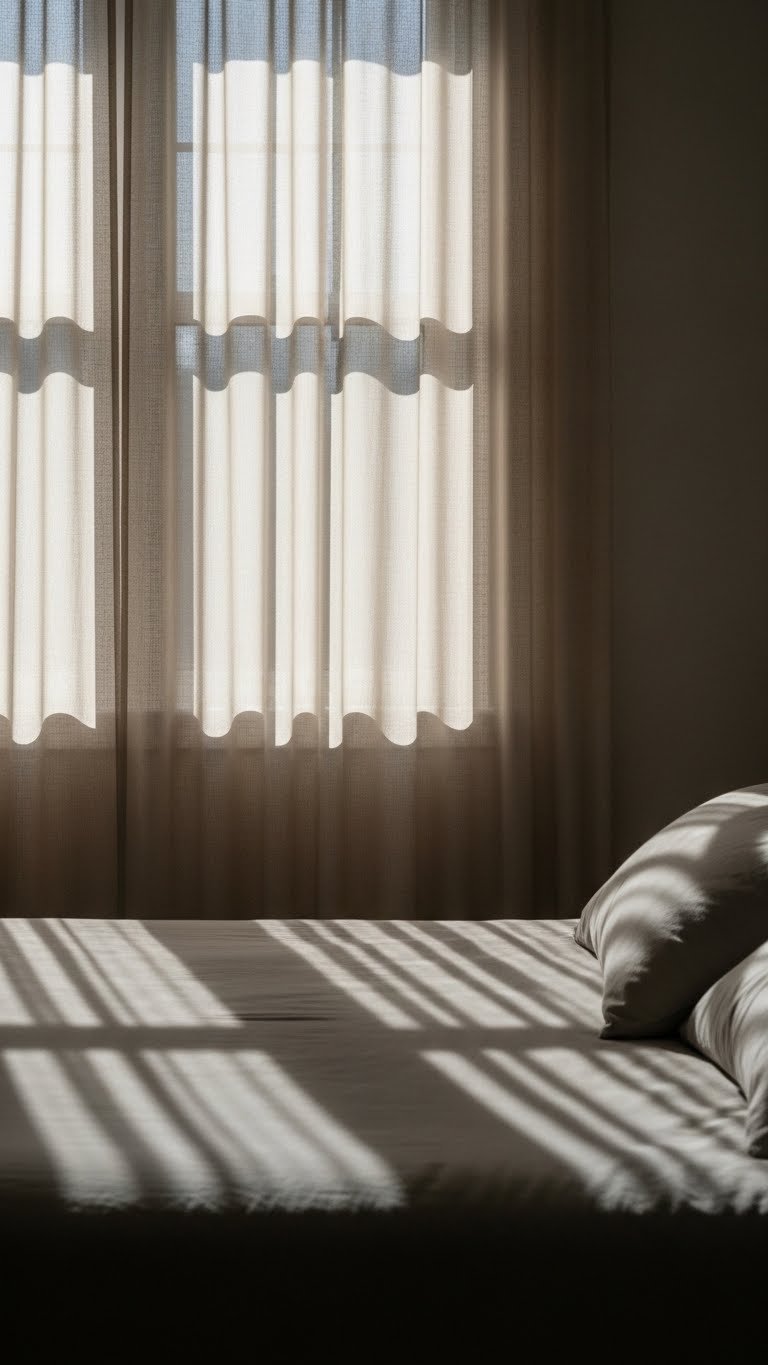
Japandi windows use soft, natural fabrics (linen, cotton, raw silk) instead of blackout shades or heavy drapes. Light diffuses gently, maintaining calm while controlling privacy.
Hang linen curtains in cream or warm taupe ($60–$150 per panel from Parachute, Bed Threads, or Target) on a simple wooden rod ($30–$80 from IKEA or Schoolhouse Electric). Go floor-to-ceiling for drama without weight—the vertical lines expand the room. Pair with a lightweight Roman shade ($50–$100 from Wayfair) for privacy when needed. You get soft light during the day and darkness at night without sacrificing aesthetics.
Renter option: Tension rods ($15–$30) and lightweight linen panels ($30–$50 each) work beautifully and leave no damage when you move.
15. Add Wooden Storage Boxes for Hidden Organization
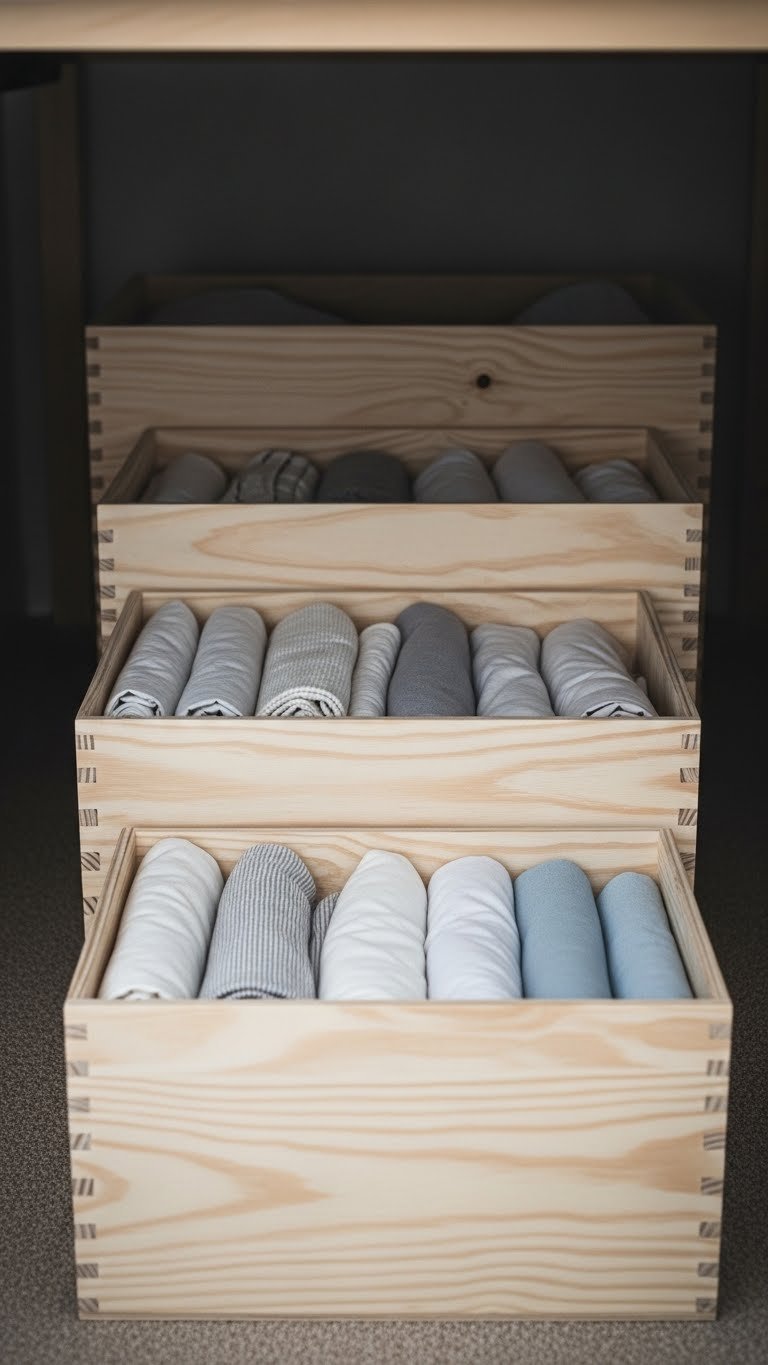
Open shelving looks great but hidden storage keeps Japandi spaces calm. Wooden boxes—stacked under beds or in closets—let you organize without visual chaos.
Buy 2–3 natural wooden storage boxes ($30–$100 each from IKEA, The Container Store, or Article). Label them subtly (or not at all). Use them for off-season clothes, extra bedding, or items you need but don’t want visible. Takes 15 minutes to organize but dramatically changes how restful your room feels. Clutter exists but out of sight.
Budget hack: Wooden crates from craft stores ($10–$20 each) plus simple stain ($5) create custom storage boxes for half the price of branded options. Function and aesthetics together.
16. Display Ceramics and Pottery Mindfully
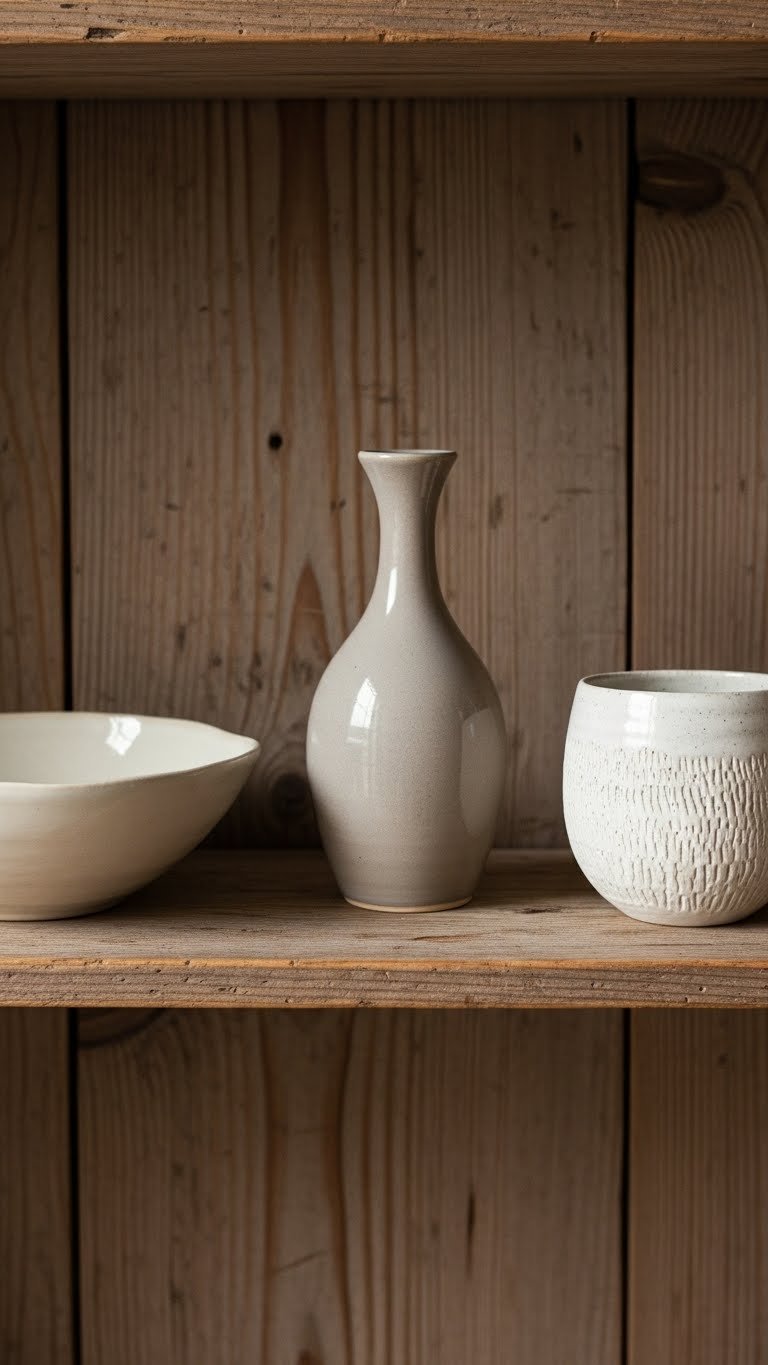
Instead of many small decorative items, Japandi design features a few high-quality ceramic or pottery pieces. Each one is chosen deliberately, almost reverently.
Collect 3–5 meaningful ceramics ($20–$80 each from local pottery studios, etsy, or galleries like Heath Ceramics). Display them on shelves or as standalone pieces on nightstands, giving each breathing room. These objects become conversation starters because they’re intentional, not generic mall decor. Your room gains personality without clutter.
Pro tip: Local ceramic studios often have sales. Buying directly from makers connects you to your pieces and usually costs less than retail galleries.
17. Use Natural Wool Felt as Wall Art

Wool felt wall hangings replace traditional art in some Japandi spaces. They’re tactile, warm, and create genuine three-dimensional interest without the “art gallery” vibe.
Purchase large wool felt pieces or commission a fiber artist ($100–$300 each from Etsy or local makers). Hang on clean walls where they become sculptural elements. Alternatively, frame pressed natural materials (leaves, grasses, linen) in simple wood frames ($30–$80 each) for a softer, botanical alternative. Your walls gain texture without pattern overload.
Budget option: DIY felt hangings with wool roving ($20–$40 per project on Etsy tutorials) if you’re crafty. Your space becomes more personal than store-bought.
18. Incorporate a Low Wooden Platform or Daybed
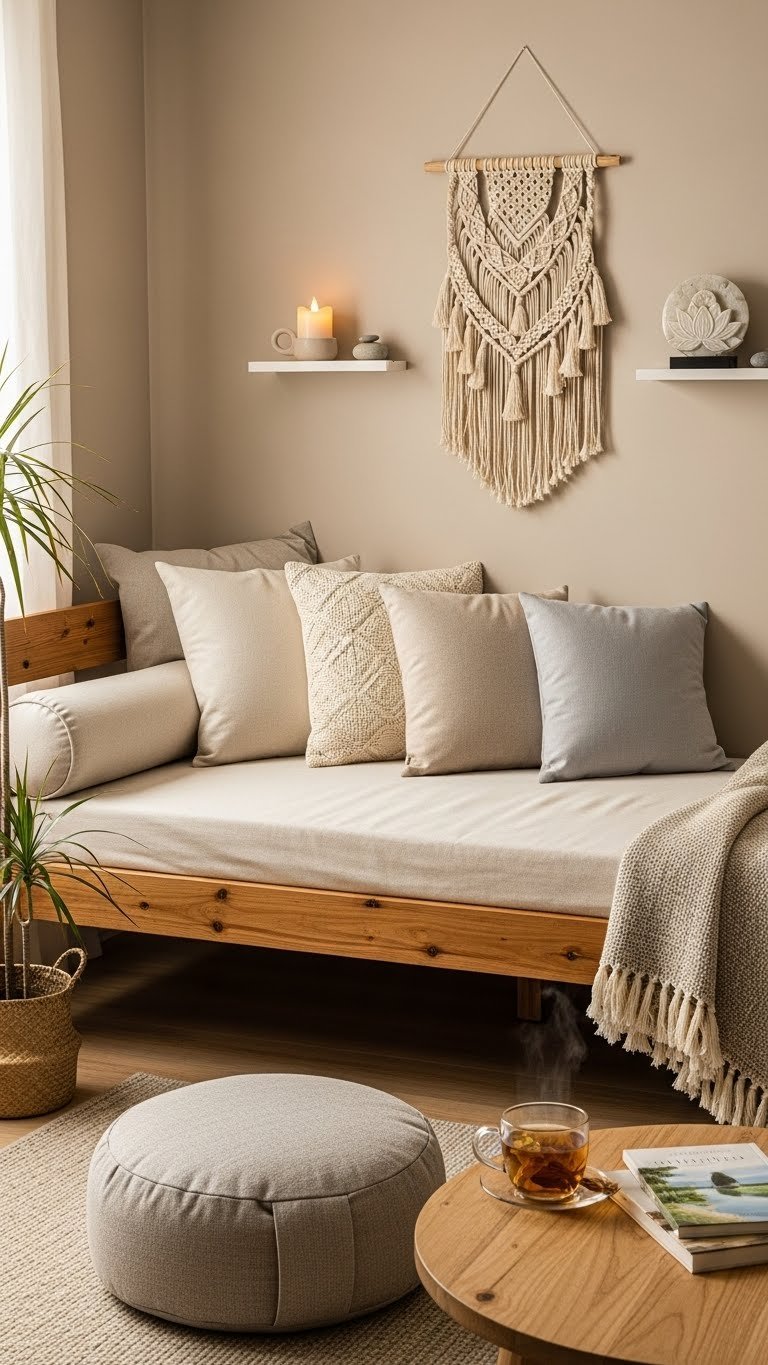
A second sleeping surface—whether a daybed or low platform—adds functionality and intentional coziness without cramming the space. It’s perfect for reading, meditating, or guest overflow.
Invest in a wooden daybed ($300–$700 from Article, CB2, or IKEA) or build a low platform ($150–$300 in lumber) and top with cushions. Position against a wall (not the main bed). Style with 2–3 throw pillows and a lightweight blanket. This single piece transforms your bedroom from sleeping-only space into a retreat with multiple zones.
Renter-friendly: A futon frame ($200–$400) achieves the same effect and can go with you. Functionality meets Japandi calm.
19. Keep Closet Doors Open or Replace with Sliding Panels
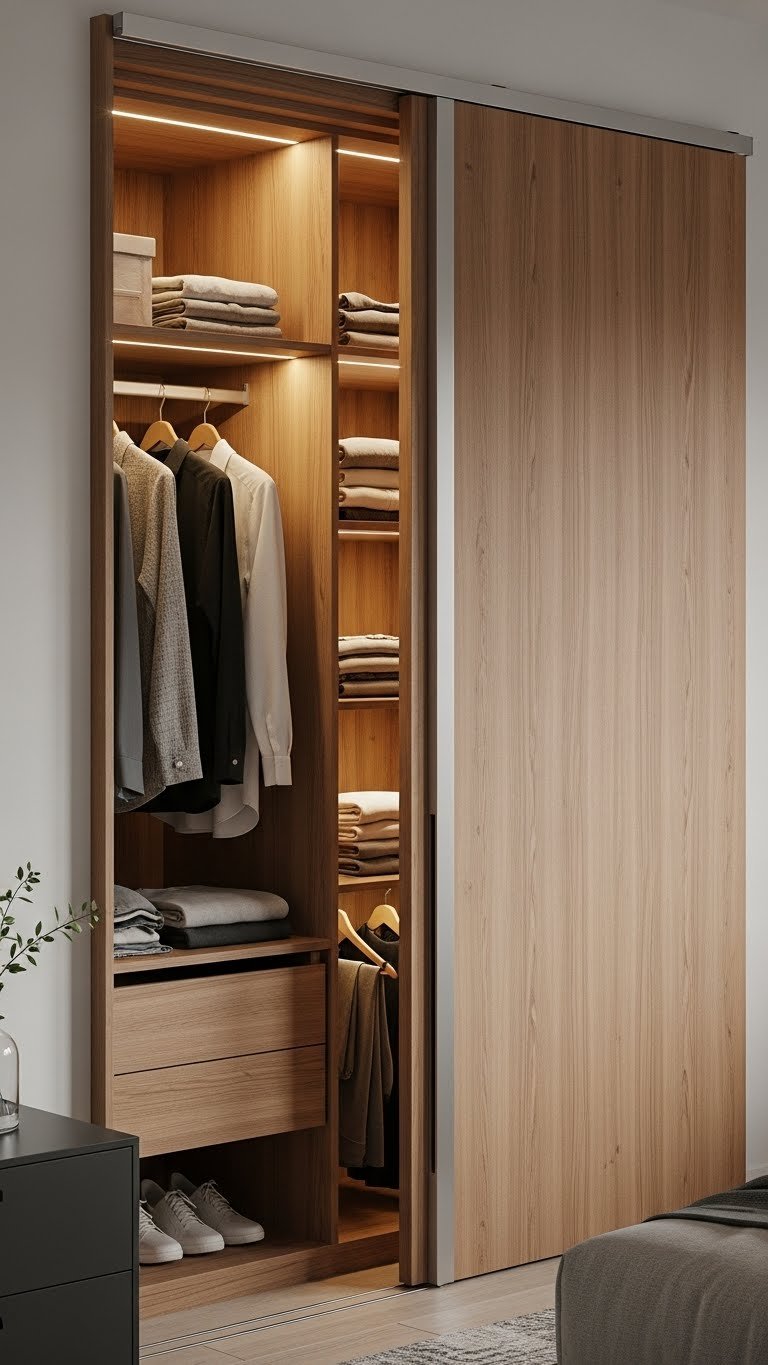
Japandi design often hides clutter but celebrates organized visibility. If you have a closet, replace swing-out doors with sliding panels or keep them open if contents are folded neatly visible.
Install sliding barn doors ($100–$300 from Amazon or Home Depot; 2–3 hour DIY) in natural wood, or simply remove standard doors and keep the closet organized. Fold all clothes vertically (KonMari-style) so you see everything at a glance. If sliding doors aren’t possible, replace heavy doors with lightweight linen curtains ($30–$60) that create flow instead of blockage. Your closet becomes part of your design aesthetic, not hidden embarrassment.
Alternative: Keep existing doors but style the closet interior so beautifully (visible wood hangers, color-coded folding) that seeing inside feels intentional, not chaotic.
20. Introduce One Warm Accent Color (Cherry Red or Terracotta)
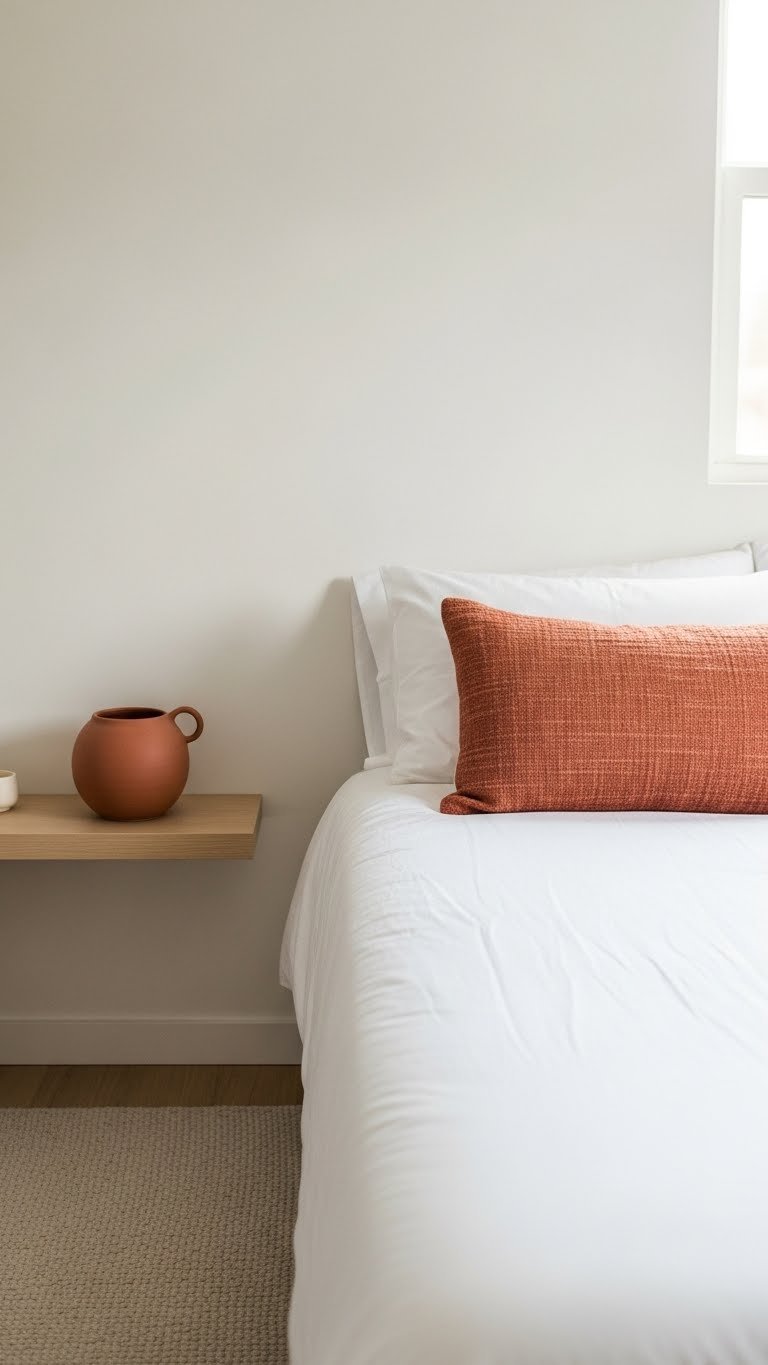
While Japandi leans neutral, a single warm accent color (cherry red, terracotta, rust) adds life without chaos. Limit it to 2–3 small items: one pillow, one ceramic piece, one artwork accent.
Choose your accent color and commit to it in tiny doses ($20–$60 per item). A terracotta throw pillow, a cherry-red ceramic cup, a small rust-toned artwork—each spaced far apart visually. The room gains personality while staying calm. This is the only place your color restraint breaks, and it makes all the difference.
Pro tip: Cherry red is trending hard in 2025. If you love it, one small piece (a pillow, a vase) future-proofs your space without overcommitting.
21. Place a Simple Wooden Area for Meditation or Yoga
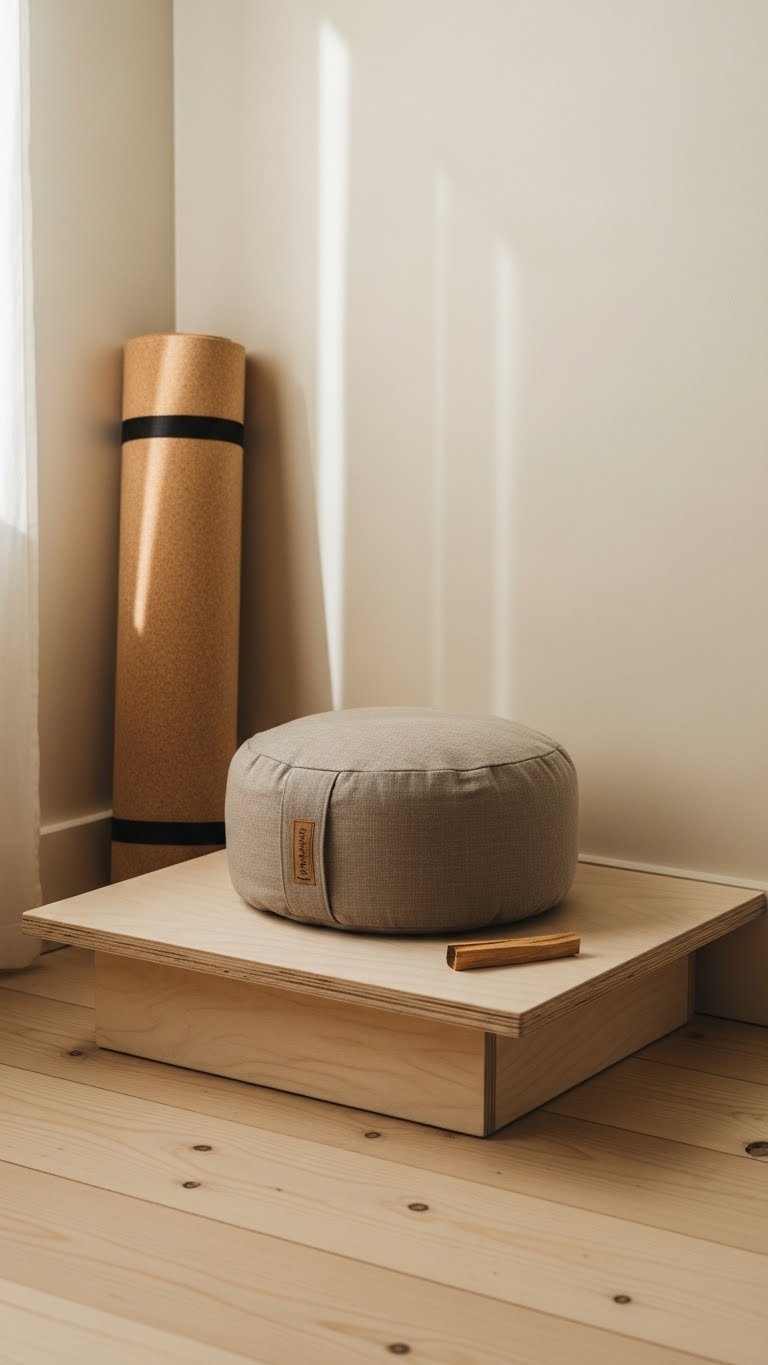
Japandi bedrooms aren’t just for sleeping—they’re multifunctional retreats. Dedicating one corner to meditation, yoga, or quiet sitting adds intentional purpose beyond rest.
Roll out a yoga mat ($30–$80 from Lululemon, Amazon, or Target) or place a meditation cushion ($25–$50) in one corner. Add a small side table ($30–$100) for tea or a book. Takes 10 minutes to set up but shifts your mindset—you’ve created a zone for presence, not just another furniture placement. Your bedroom becomes a genuine sanctuary.
Budget hack: A rolled blanket works as a meditation cushion ($0 if repurposed). Intentionality matters more than gear.
22. Hang Minimalist Wooden Coat Rack or Shelf
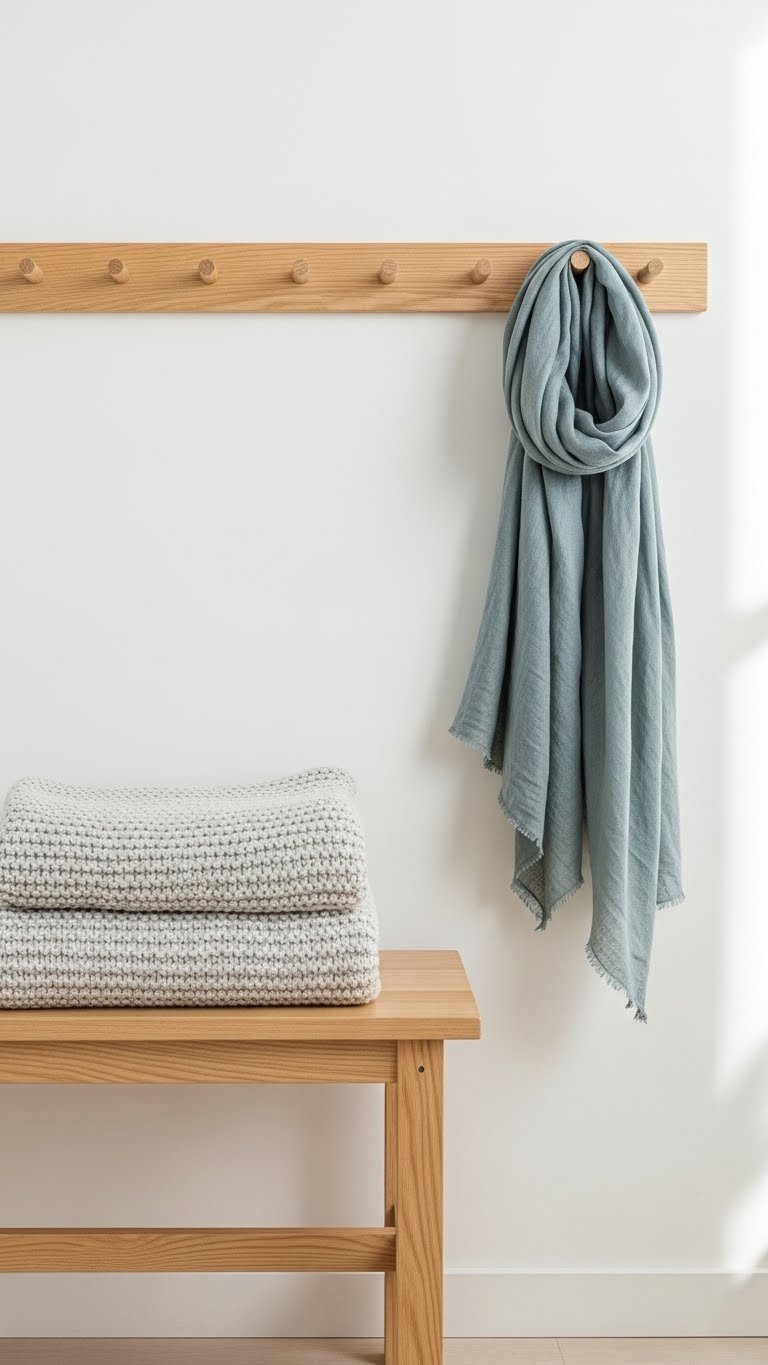
Instead of freestanding coat racks that look cluttered, wall-mounted wooden racks (pegs or shelves) hold blankets, scarves, or robes while staying integrated into your design.
Install a wooden peg rack ($30–$80 from Article, Schoolhouse Electric, or Etsy) or a simple wooden shelf ($20–$60 from IKEA) at convenient height. Use it to display a rolled blanket, hang a robe, or drape a favorite scarf. Functional décor that serves your daily life—this is peak Japandi efficiency.
DIY option: Wooden pegs ($2–$5 each) and a wooden board ($15–$30) let you build a custom rack in an afternoon for $30–$50 total. Personalization costs less than buying finished versions.
23. Layer Lighting with Bedside and Floor Lamps
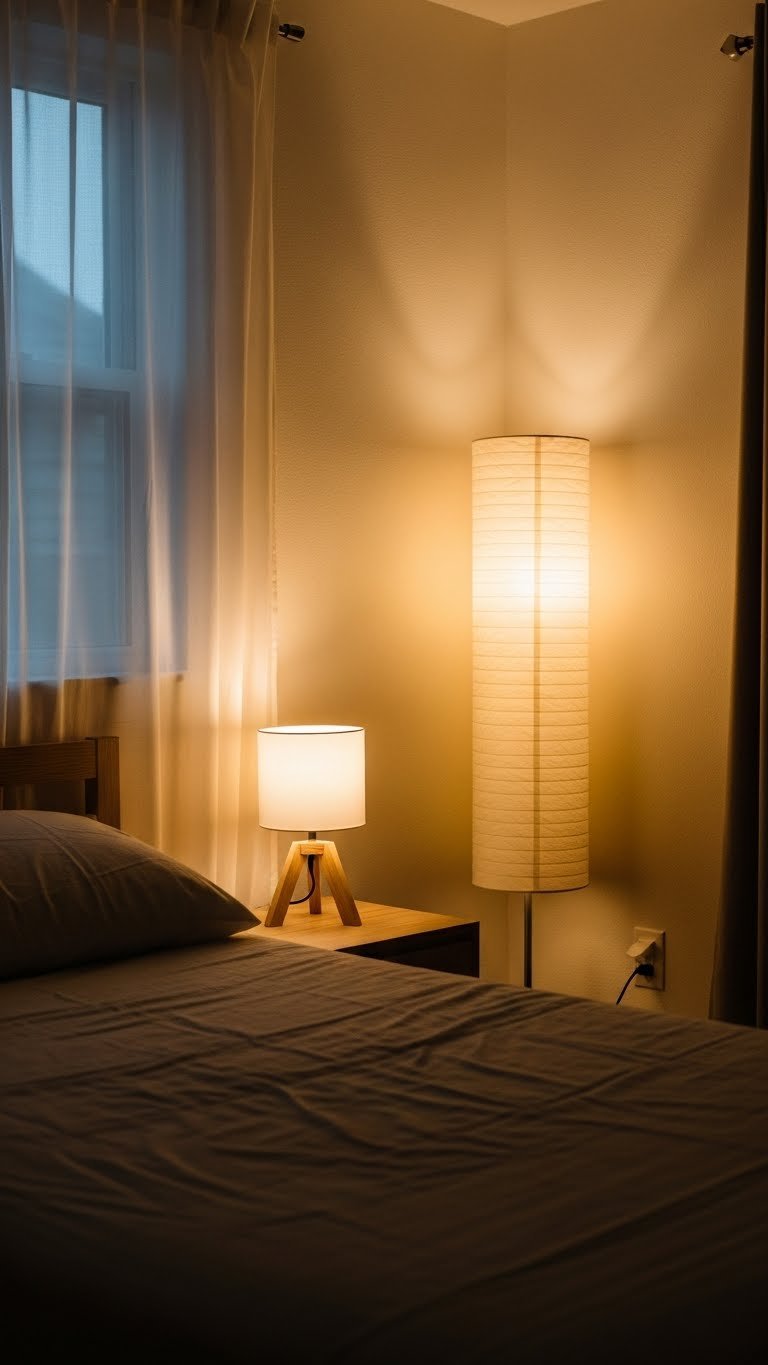
Single overhead lighting creates harshness. Japandi spaces use multiple warm light sources at different heights, allowing you to adjust ambiance throughout the day.
Install a dimmer-controlled overhead fixture ($15–$30 in materials), add a bedside lamp ($40–$100 from IKEA or Article), and place a standing floor lamp ($60–$150) in a corner. Layer these three sources so you can dial down to just the floor lamp by evening. Instant calm compared to one bright ceiling fixture. Costs $120–$280 total but the difference in how your room feels is worth every penny.
Renter option: Plug-in floor lamps ($30–$80) and clip lamps ($15–$40) create the same layered effect without wiring.
24. Create a Dedicated Nighttime Wind-Down Ritual Area
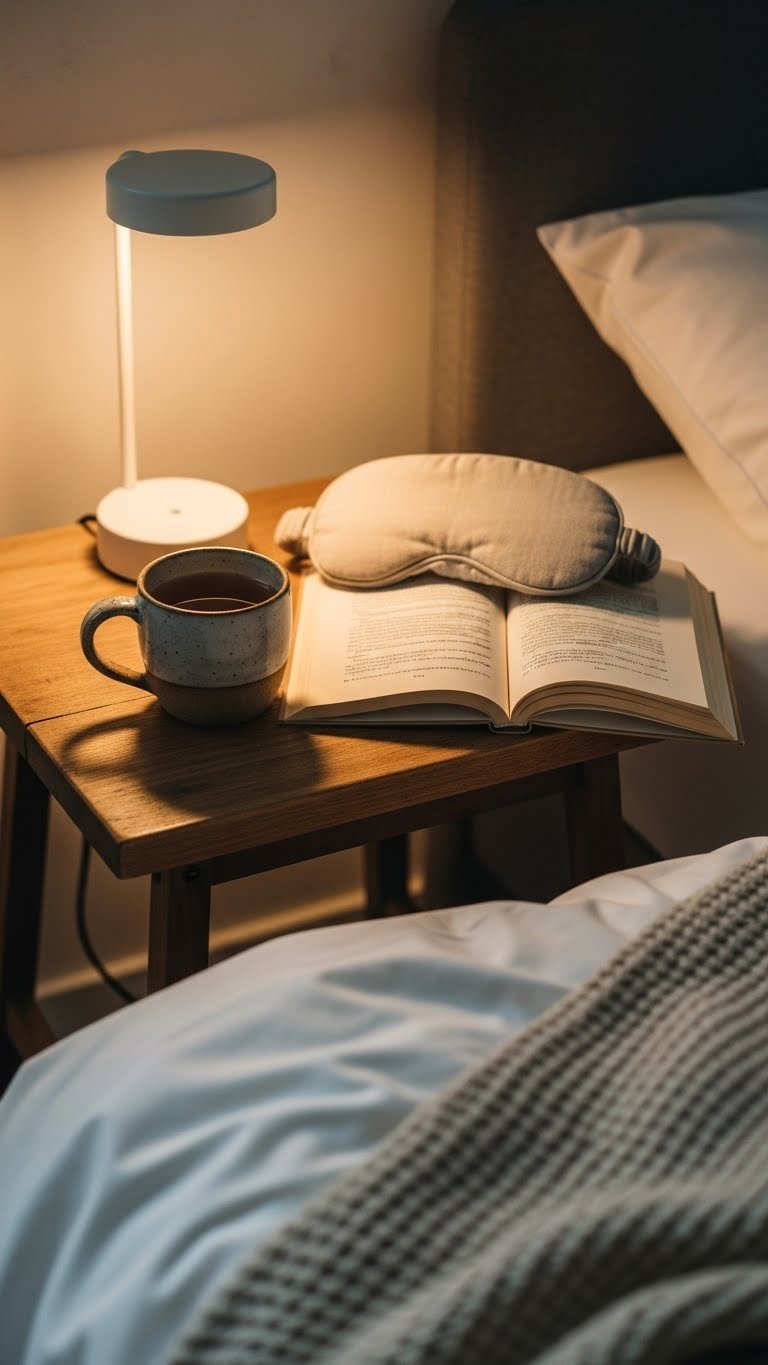
Japandi design celebrates rituals. Creating a small designated spot for evening wind-down (with a book, tea, journal) reinforces that your bedroom is separate from work or daily stress.
Style one small surface (nightstand, shelf, or corner table) with items you use for evening: a favorite mug, a journal, a book, perhaps a small candle ($3–$10). Use this same spot every night—your brain learns it’s time to rest. Takes no money if you’re repurposing existing items, but the psychological shift is enormous. You’ve created a transition point between day and sleep.
Pro tip: Keep your phone off this surface. Replace it with tactile, calming items instead. The ritual is as important as the decoration.
25. Add Subtle Pattern with Linen Pillowcases

If you’re craving any pattern in a Japandi space, linen pillowcases with subtle texture (raised weaves, minimal stripes) give interest without the visual noise of bold prints.
Swap plain linen pillowcases ($30–$60 each from Parachute, Bed Threads, or Target) for textured versions with subtle tone-on-tone patterns. They read as almost-plain but offer visual depth when you look close. Pair with plain cream duvet for balance. Your bed gains intrigue without chaos—you can see the difference in person but it photographs as calm.
Budget option: Plain linen pillowcases ($15–$30 from Target or Amazon) layered with a chunky knit throw achieves similar texture contrast for less.
26. Install Adjustable Shelving to Grow with Your Needs
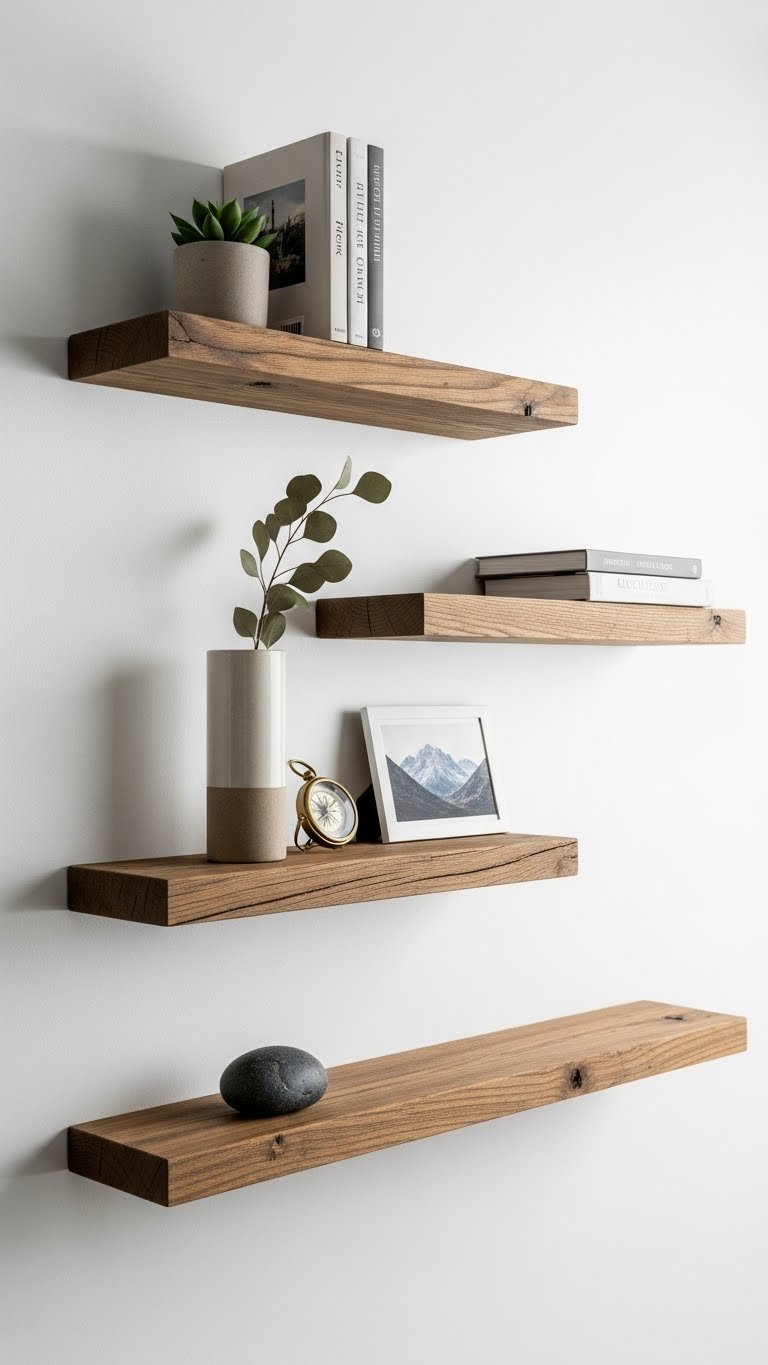
Japandi spaces aren’t static. Adjustable or modular shelving lets you change arrangements seasonally without replacing anything, keeping your design fresh without adding clutter.
Install adjustable metal shelf brackets ($30–$60 per pair) with wooden shelves ($20–$50 each) so you can raise or lower them as needed. Rearrange seasonally (add a blanket in winter, swap ceramics in spring) without damage. This flexibility prevents stagnation—your room evolves while staying fundamentally calm. Takes 1–2 hours to install but pays dividends in adaptability.
Renter option: Free-standing shelving units ($100–$300) from Article or Target achieve the same adjustability without wall damage.
27. Invest in Quality Natural Bedding You’ll Actually Use
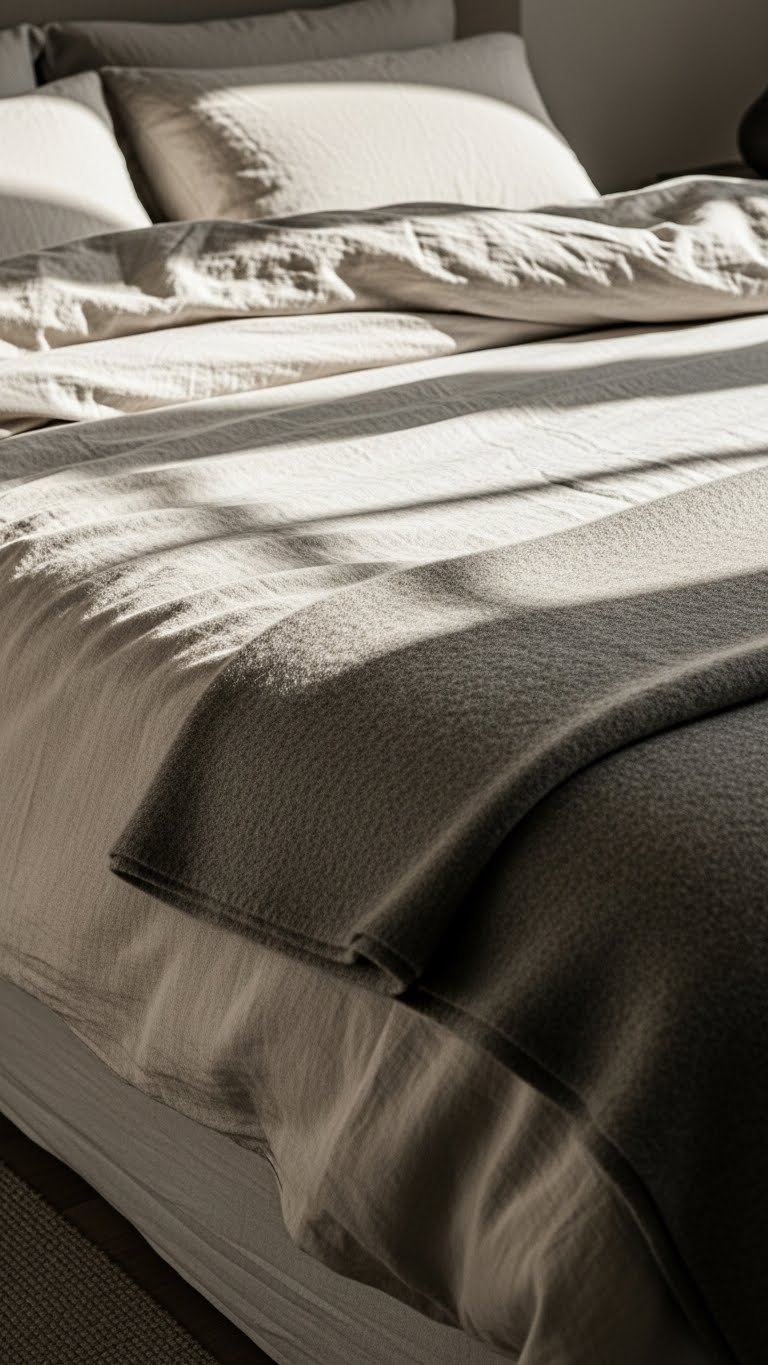
The final piece: quality bedding you genuinely love to touch and use every night. This is where Japandi philosophy hits home—you’re not designing for Instagram; you’re creating comfort you’ll experience daily.
Invest in one premium natural fiber sheet set ($150–$300 from Bed Threads, Parachute, or Brooklinen), a weighted wool blanket ($200–$400 from Weighted Blankets co or Brooklinen), and quality pillows ($60–$120 each from Coop Home Goods). These items will last years and improve your sleep quality—this is the opposite of disposable design. Your nightly ritual shifts when you genuinely love your bedding.
Pro tip: This is worth the investment. You spend 8 hours a night here. One premium sheet set replaces three cheap ones over time and costs less annually when you do the math.
Save this post for your next bedroom refresh and start with just one idea—the one that speaks to you most. Whether it’s swapping your paint color, adding a plant, or investing in better bedding, one small change ripples through your whole space. Which idea are you trying first?
Leave a Reply