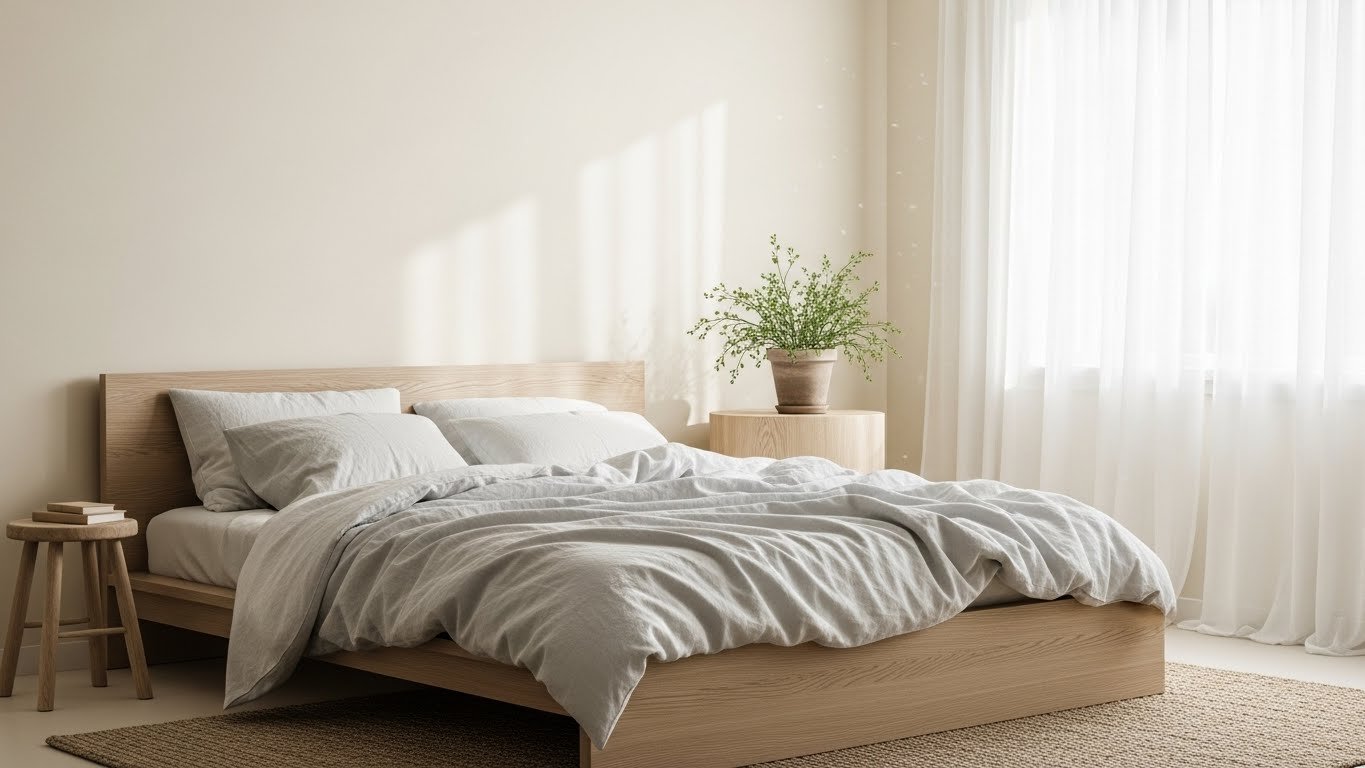
Scandinavian design promises calm, but sterile minimalism can feel cold and unwelcoming. What if you could have that peaceful simplicity and a bedroom that feels like a sanctuary? The Scandinavian approach is evolving—it’s ditching harsh empty spaces for textured warmth, natural materials, and thoughtful layering. You don’t need to overhaul everything; small, strategic additions bring soul back into clean lines. Over the next 25 ideas, you’ll discover how to layer texture without clutter, add personality through vintage finds, and create a sleep space that’s both minimalist and genuinely cozy. Ready to transform stark simplicity into warm serenity?
1. Swap Cool Grays for Warm Cream Walls
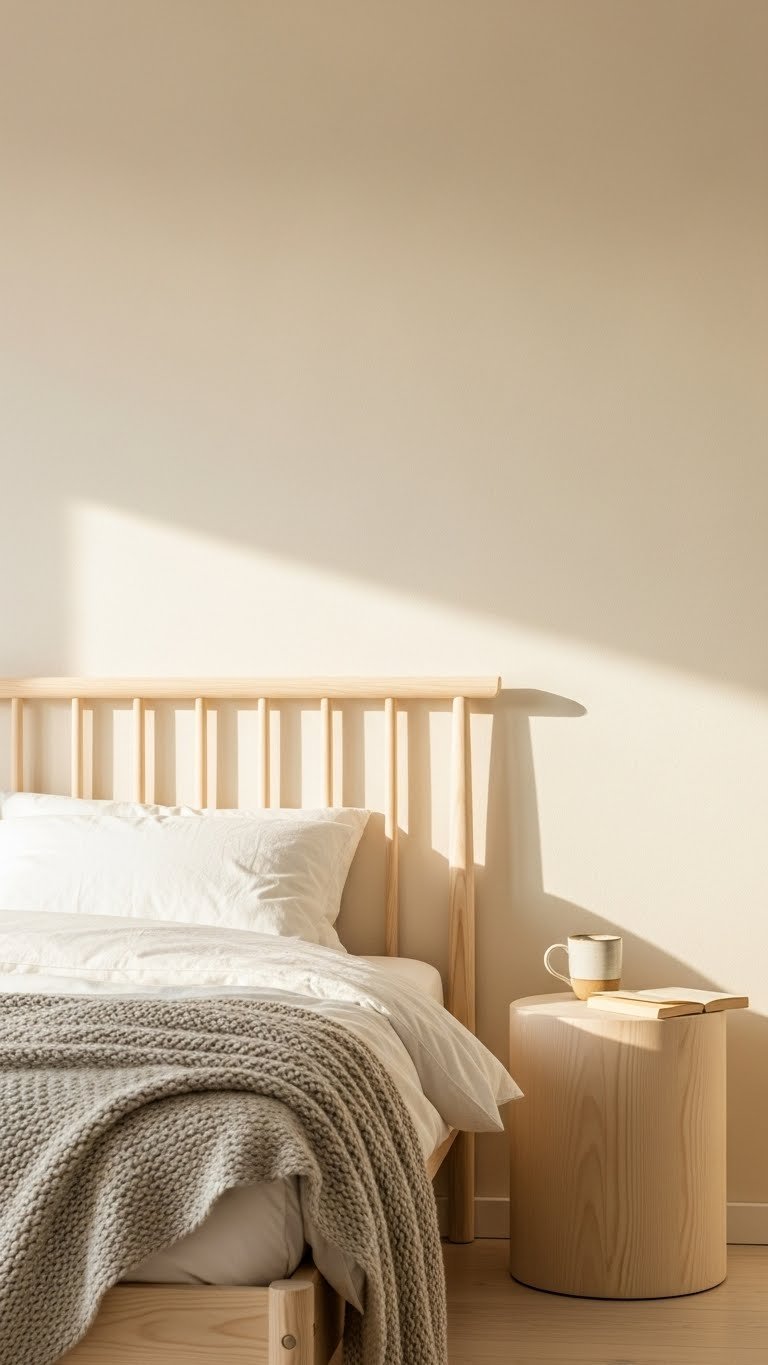
Cool grays dominated minimalism for years, but they can feel emotionally distant. Warm creams and soft beiges create the same clean backdrop while radiating comfort and light.
Paint all four walls or just your accent wall with a warm neutral like Benjamin Moore “Swiss Coffee” or Sherwin-Williams “Accessible Beige” ($40–$60 per gallon). A single quart covers most accent walls. This takes one weekend with a roller and tray ($15 total supplies if you already have them). The shift is subtle but noticeable—your bedroom suddenly feels inviting rather than sterile, and it pairs beautifully with natural wood furniture and soft textiles.
Your space gets instant warmth without sacrificing that clean Scandinavian aesthetic you love.
2. Layer Raw Wood Furniture for Organic Texture
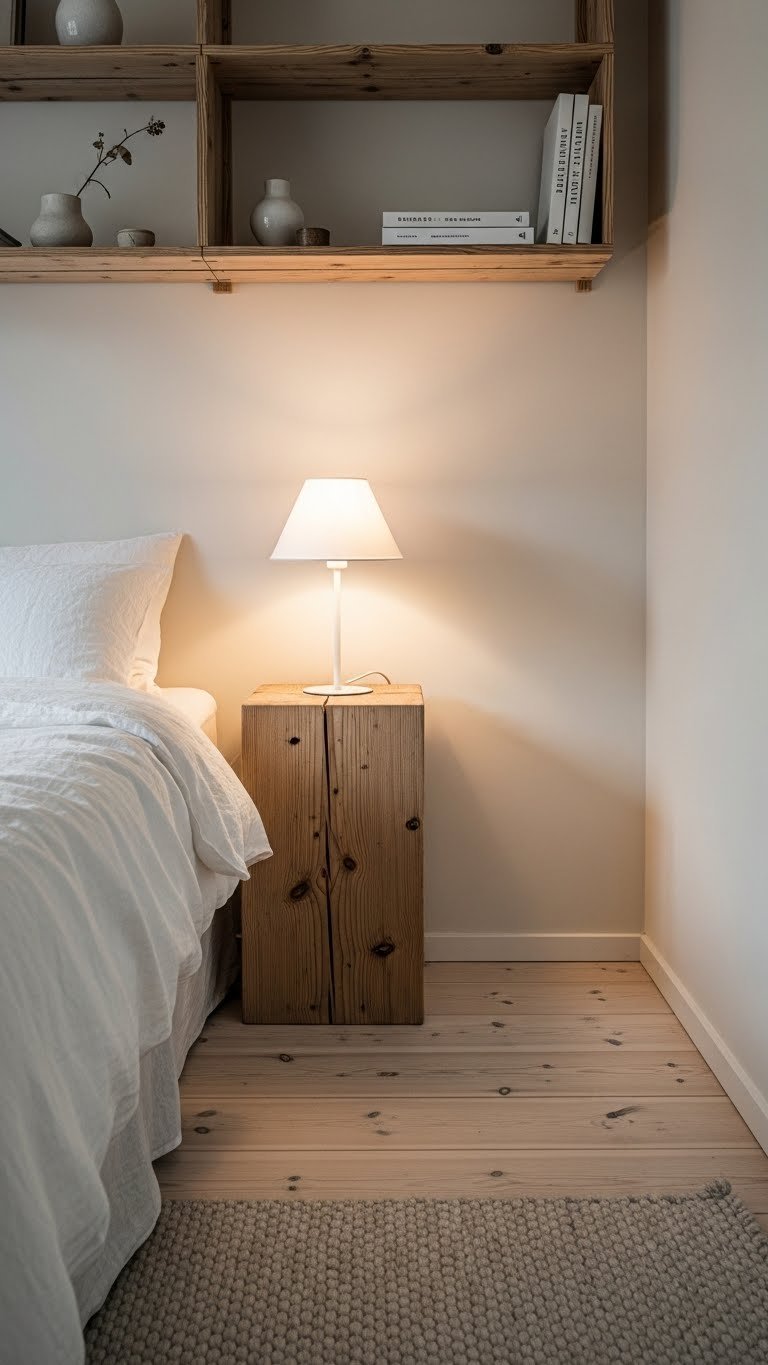
Mass-produced furniture often lacks character, but raw or lightly finished wood brings honest texture and warmth. It’s the material backbone of organic modernism.
Replace glossy MDF nightstands with solid wood pieces—try IKEA’s RAST ($40–$60, unfinished pine), Wayfair’s raw wood options ($80–$300), or thrift secondhand furniture and lightly sand to reveal the wood grain. Raw wood ages beautifully, developing patina over years. These pieces take zero assembly or simple 15-minute setup. Pair them with soft linens and minimal decor so the wood’s natural beauty stands out.
The result? A bedroom that feels grounded and authentic, not showroom-perfect.
3. Add a Quilted Throw Over Your Duvet
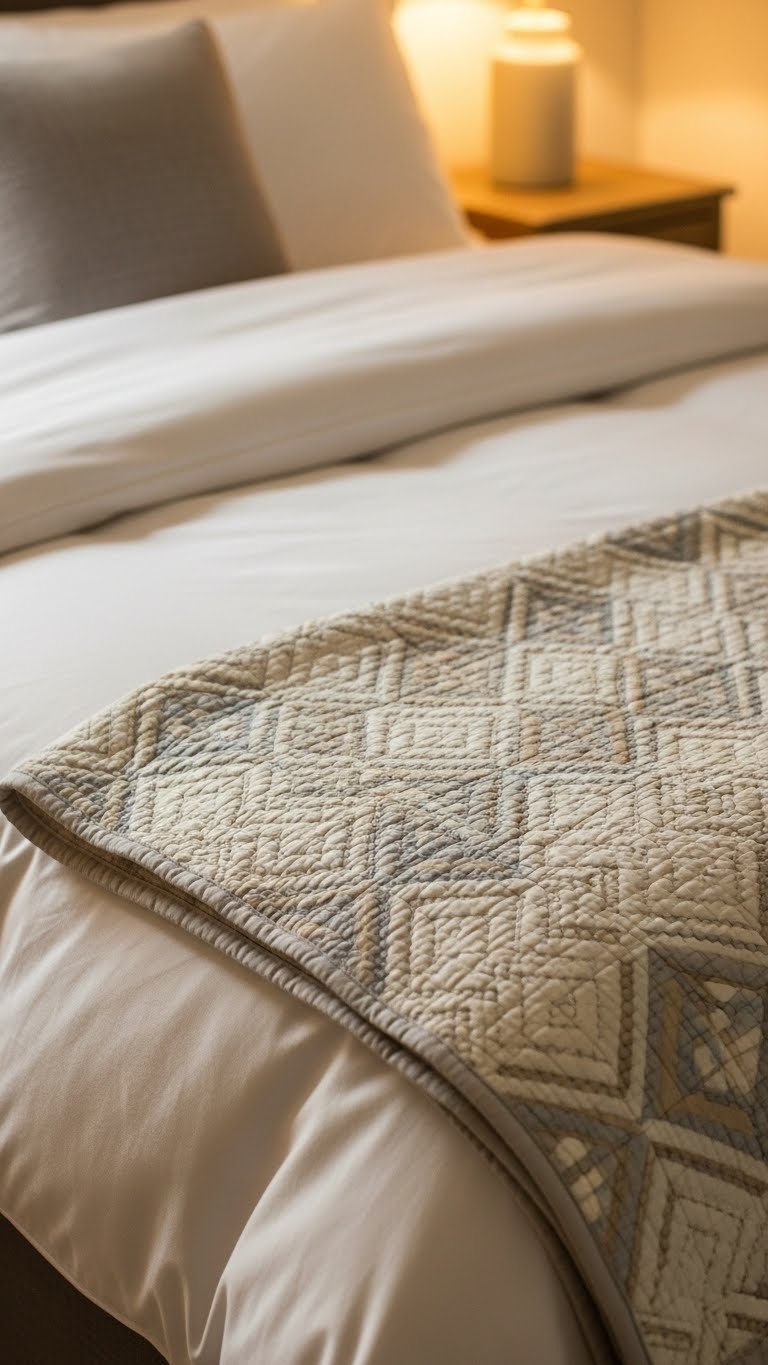
Duvets are practical but impersonal; quilts add nostalgic warmth and visible craftsmanship that photographs beautifully and feels like home.
Drape a lightweight quilted throw ($60–$150) across the foot of your bed or fold it at the headboard. Etsy sellers offer handmade quilts starting at $80; thrift stores often have vintage quilts for $15–$40. This requires zero installation—just arrange and adjust. Machine-washable quilts make maintenance simple. The layering creates visual depth and that grandmillennial-meets-Scandinavian vibe trending in 2025.
You get an heirloom-quality focal point and the cozy texture that makes a bedroom feel lived-in.
4. Install Floor-to-Ceiling Linen Curtains
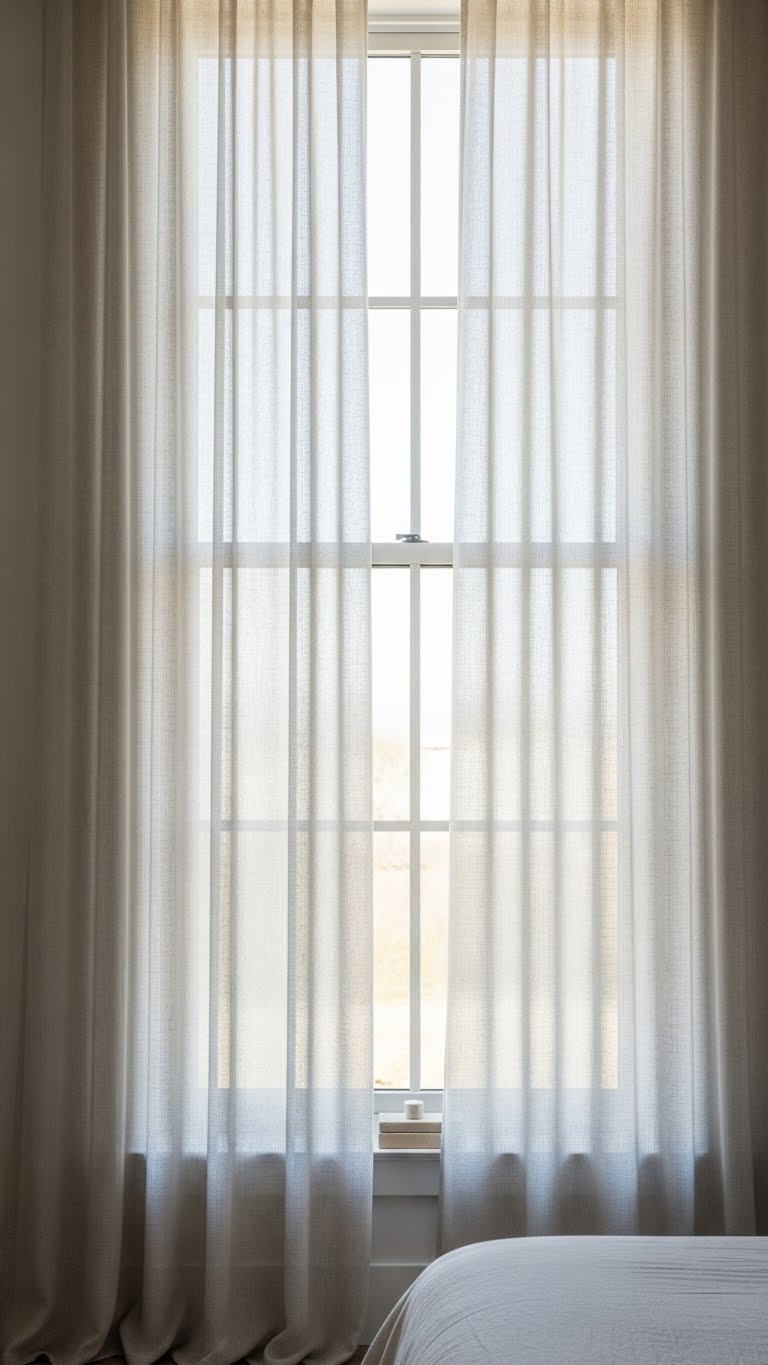
Standard curtain rods that end mid-wall interrupt sight lines; full-height curtains create luxury and seamless calm.
Mount a simple rod ($20–$40 from IKEA or Home Depot) as close to the ceiling as possible and hang linen curtains ($80–$200 per panel, or budget options at Target for $25–$50 per panel). Linen wrinkles naturally—that’s the aesthetic. Measure twice, install with a drill in 30 minutes, or hire a handyman ($50–$100). Sheer linen filters light beautifully and maintains the airy Scandinavian feel while adding vertical drama.
Your bedroom grows taller and feels like a high-end hotel suite.
5. Use Textured Plaster or Limewash for Subtle Dimension
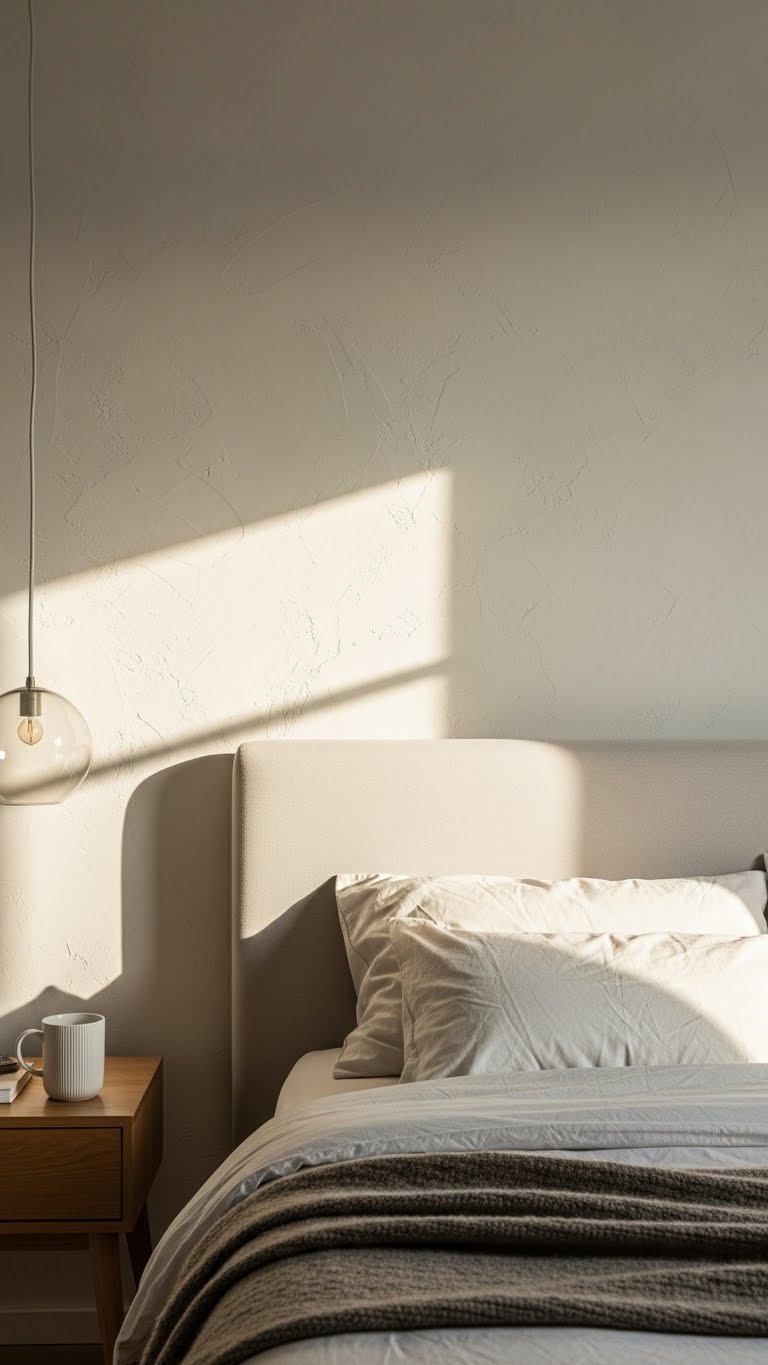
Flat paint is clean but two-dimensional; textured walls add depth and break up the starkness of minimalism.
Apply a limewash or textured plaster finish ($3–$8 per square foot if DIY with kits; $15–$25 per square foot if hiring a pro). Venetian plaster kits ($30–$60) are beginner-friendly for one accent wall. This takes 4–6 hours for a full wall with proper drying time, or call a painter for a more polished result ($500–$1,500 per room). The subtle variation catches light differently throughout the day, creating movement without visual clutter.
Suddenly your calm walls have story and sophistication.
6. Add a Natural Fiber Area Rug for Warmth Underfoot
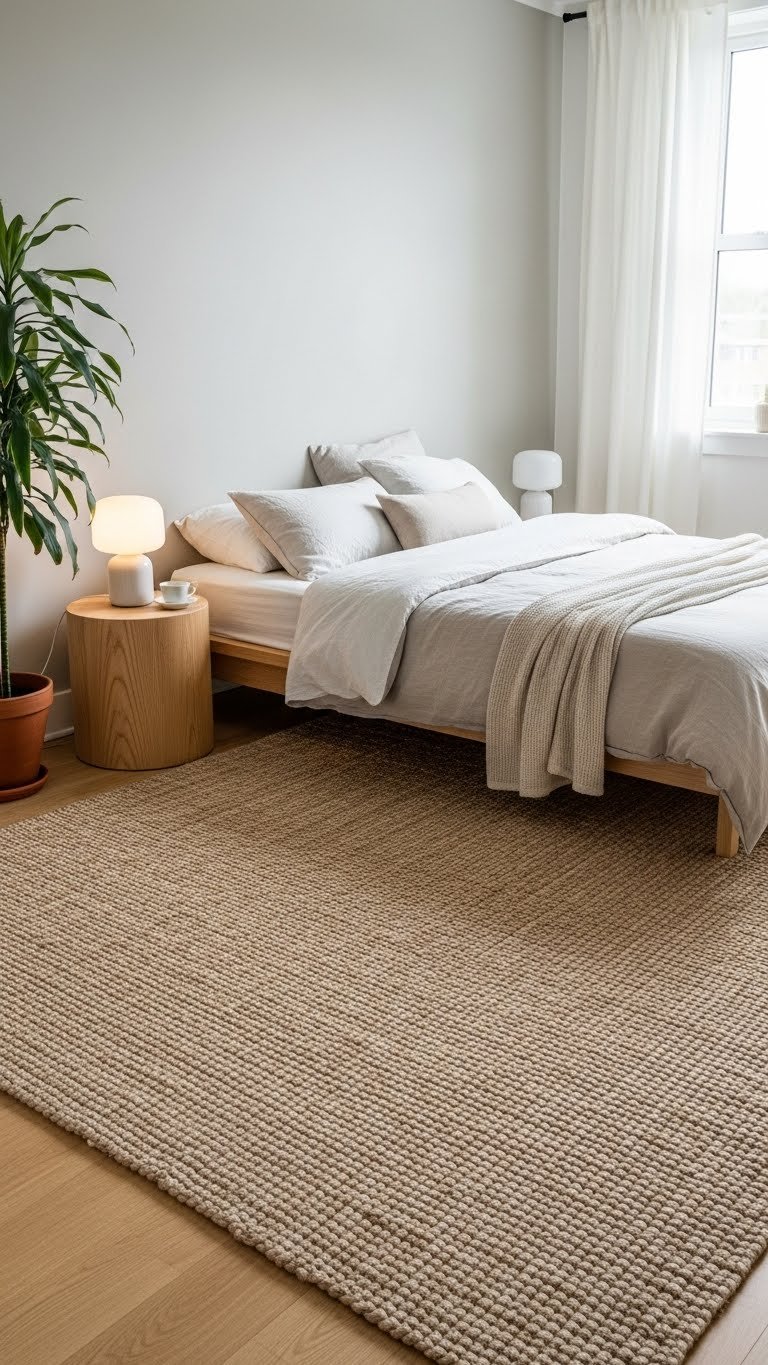
Hard floors feel cold and clinical; natural fiber rugs add acoustic warmth, softness, and grounding texture.
Layer a jute or sisal rug ($100–$300 for 8×10) under your bed or across the room. Rugs USA, Wayfair, and IKEA stock these affordably. Place it before making your bed so it anchors the space. A good rug lasts 5–7 years and ages beautifully. Vacuum weekly and spot-clean with mild soap. Pair it with soft socks or light carpet slippers for texture underfoot—small sensory touches matter in Scandinavian design.
You’ve created a tactile welcome the moment your feet touch the floor.
7. Incorporate Rounded Furniture to Soften Hard Lines
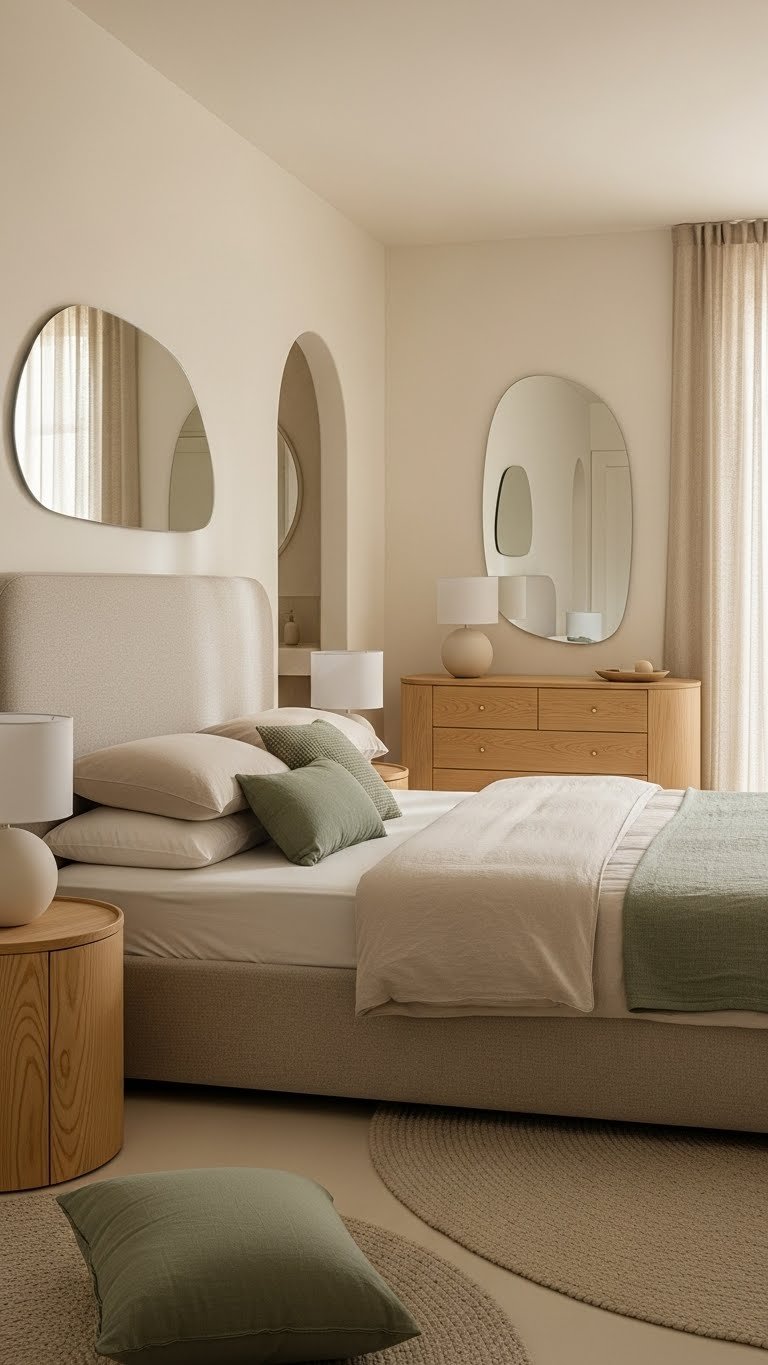
Angular furniture feels sharp and tense; curved pieces calm the nervous system and modern soft lines replace harsh corners trending in 2025.
Swap angular nightstands for curved options—Article, Wayfair, and IKEA now stock rounded tables ($80–$200). A curved headboard ($200–$800) is a bigger investment but anchors the room beautifully. Look for arcs in mirrors, shelving, and even lamps. Start with one curved element and build. This requires standard bed assembly (1–2 hours) or professional help ($50–$150).
Rounded shapes make your bedroom feel safer and more human.
8. Style Open Shelving with Books and Ceramics
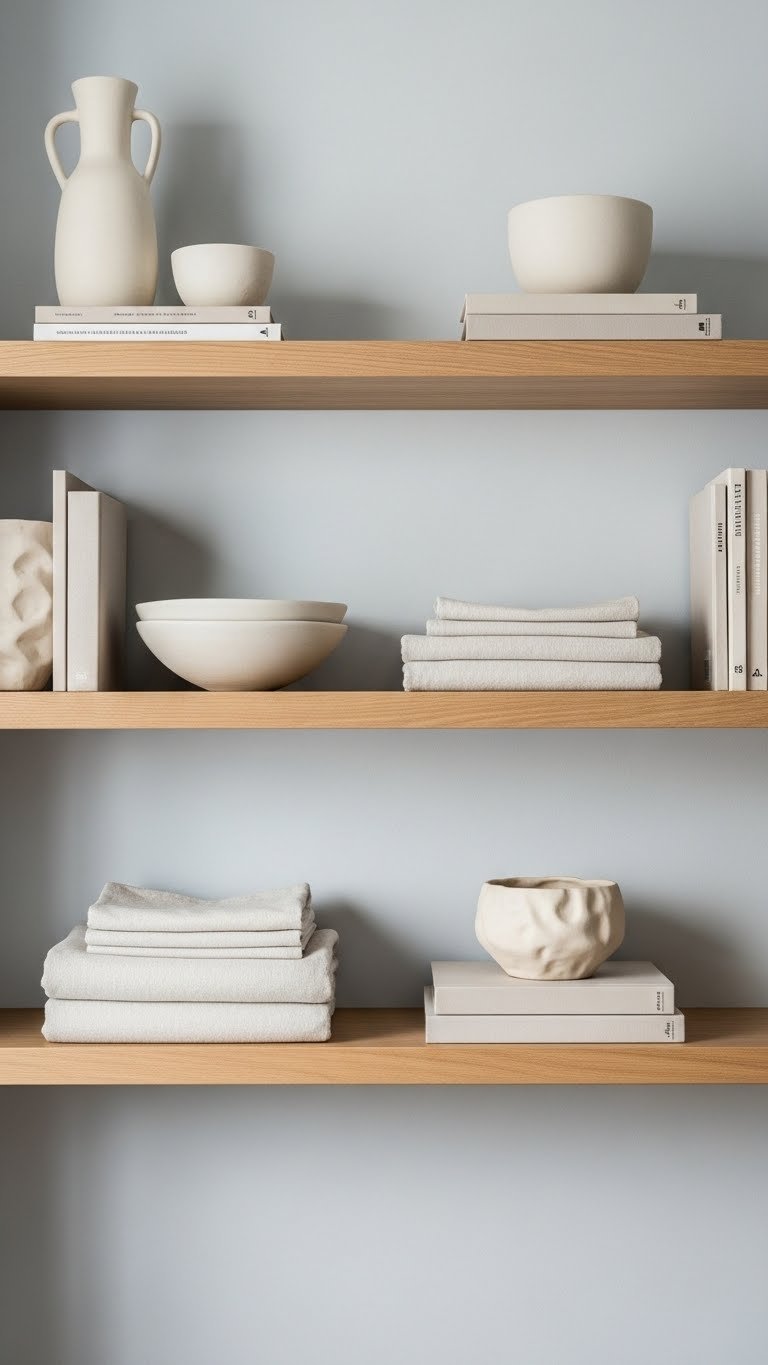
Blank walls read empty; styled shelving tells your story while maintaining clean lines.
Install floating shelves ($30–$80 per shelf, hardware included) using wall studs. Arrange items in groups of three using negative space—a ceramic bowl, folded linens, one small plant, a book. Thrifted ceramics ($5–$15 each) and library books cost nothing. Installation takes 30–45 minutes with a drill. Keep items on the shelf touching only 40–50% of the surface; the empty space is part of the design.
Open shelving becomes a quiet gallery that reflects your taste.
9. Layer Velvet Pillows in Neutral Tones
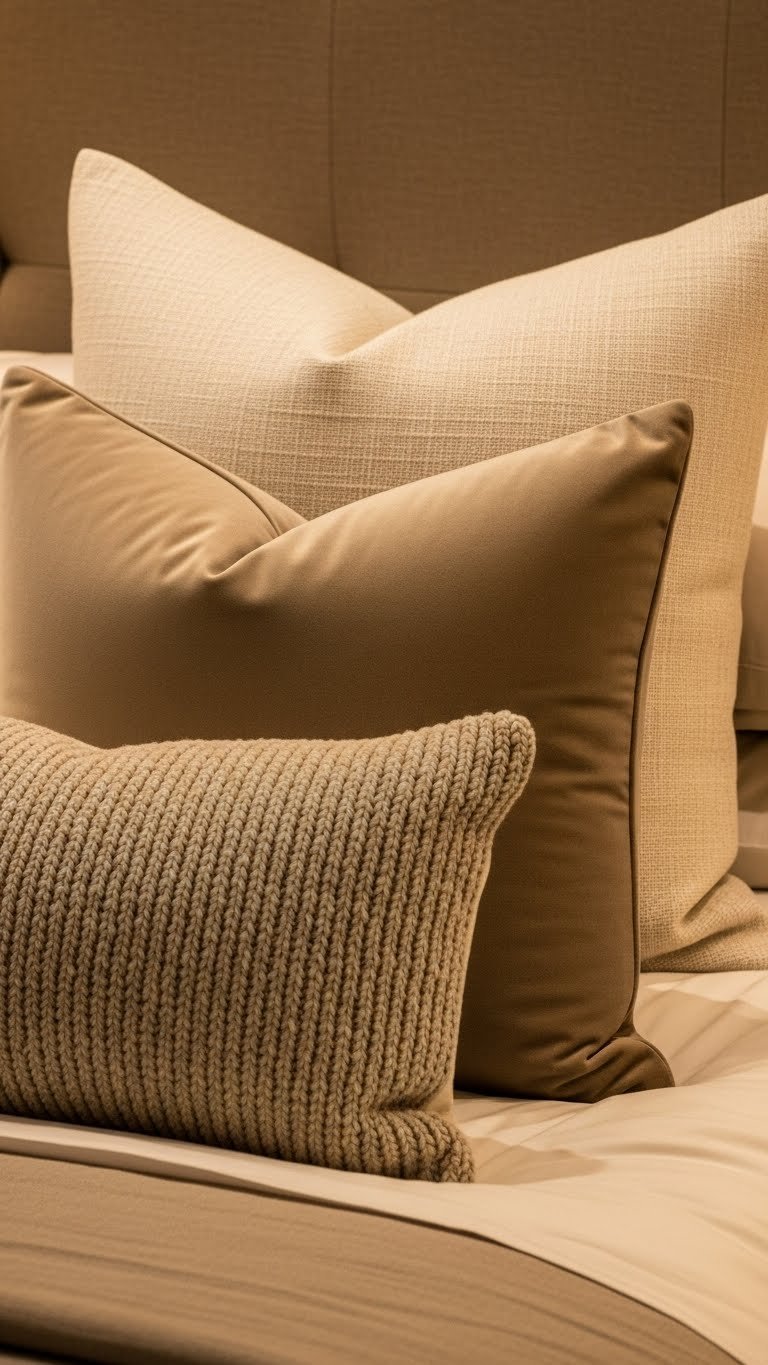
Flat cotton pillows lack sensory appeal; layering different textures creates visual interest and invites touch.
Buy 2–3 velvet or linen throw pillows ($30–$80 each) in warm neutrals like taupe, warm white, or soft gold. Mix textures: pair smooth velvet with nubby linen or chunky knit. Arrange three pillows horizontally for balance. Pillows dry-clean easily or hand-wash depending on fill. This takes five minutes to arrange. Update seasonal colors without major changes by swapping covers.
Your bed becomes a textural landscape that draws the eye and beckons.
10. Hang Botanical Wall Art or Line Drawings
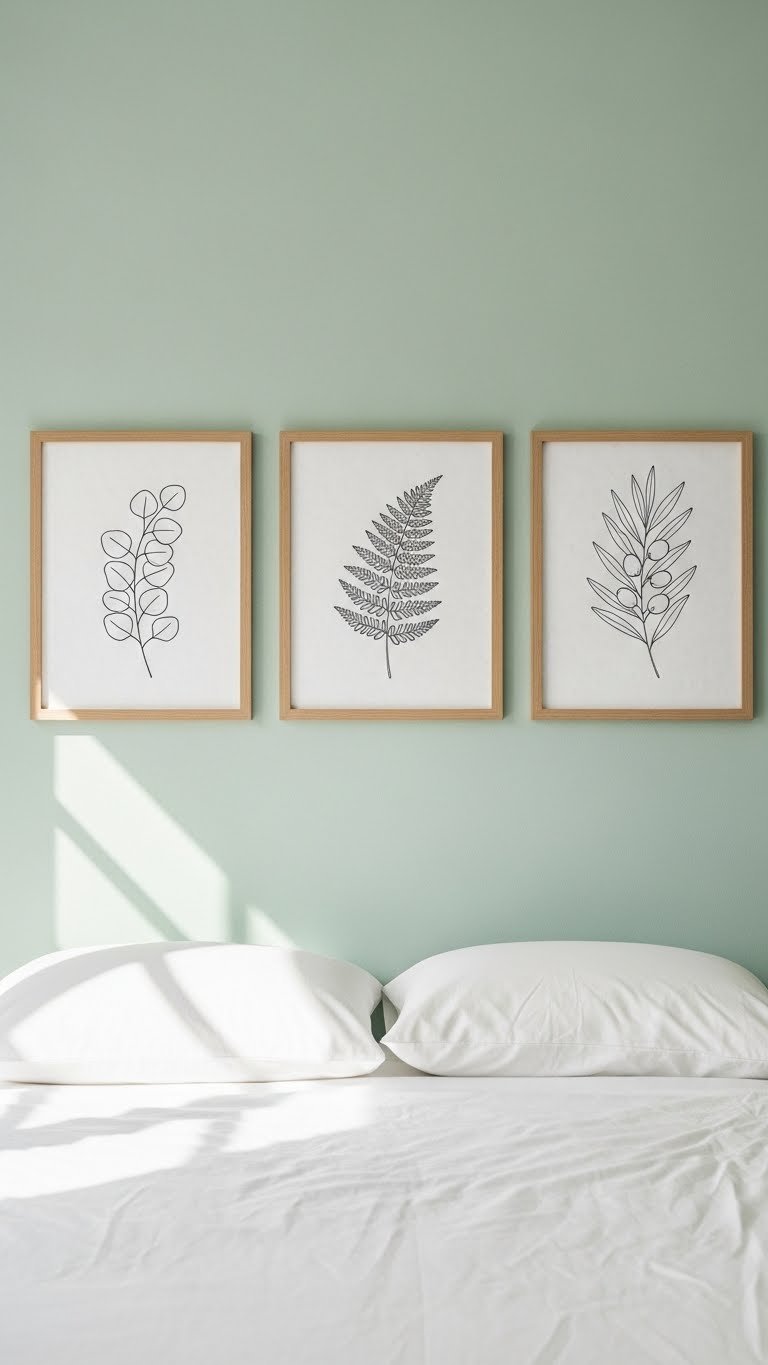
Blank walls feel incomplete; art-led design anchors a room and creates a focal point without clutter.
Commission prints from Etsy ($25–$60 each) or buy gallery-quality options from Minted, Desenio, or local artists ($40–$150 per print). Stick with florals, botanicals, or abstract line work in blacks, grays, and golds for cohesion. Frame in natural wood ($15–$40 per frame) and hang above your bed or accent wall. Arrange three prints in a grid or salon-style layout—measure, use a level, hang in 30 minutes. This is a renter-friendly update if you use damage-free hanging strips.
Art personalizes the space without adding physical clutter.
11. Source Vintage Nightstands from Thrift Stores
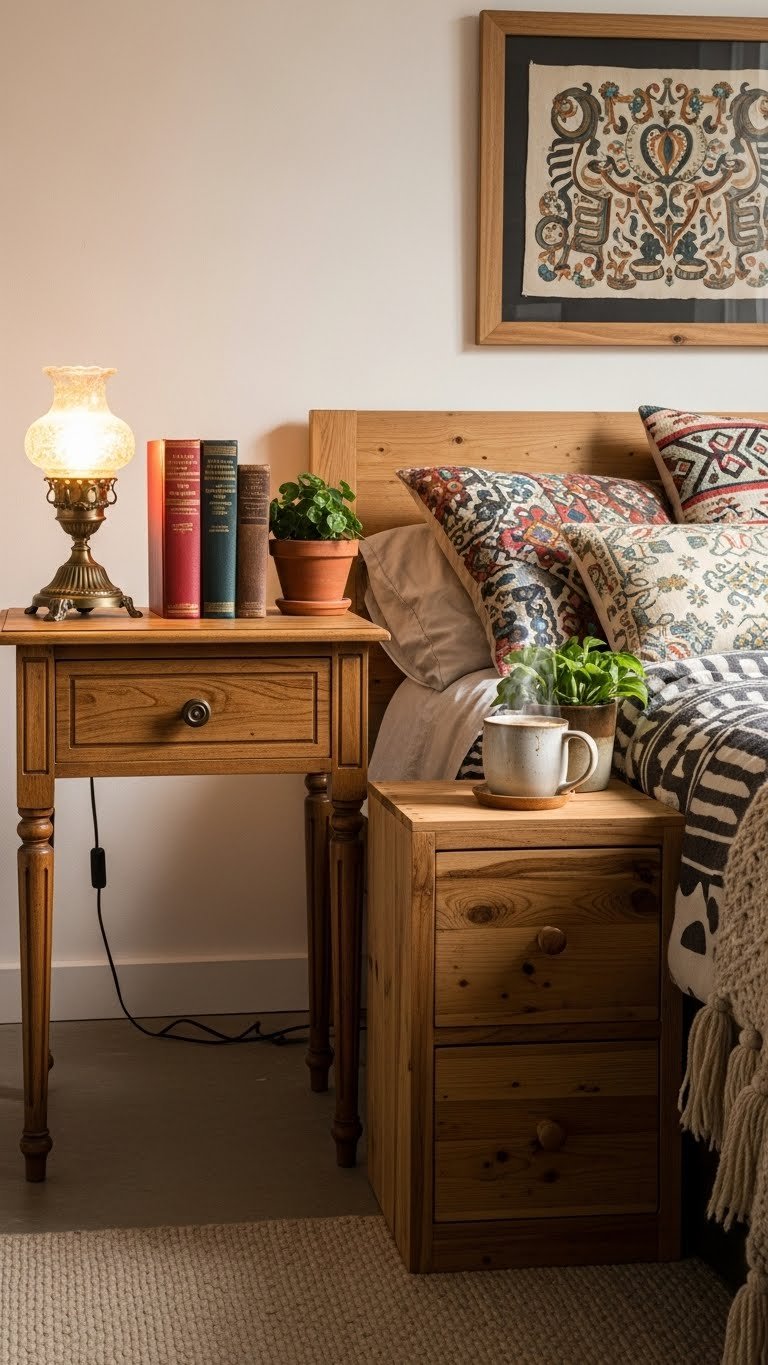
Mass-produced furniture lacks soul; secondhand pieces carry history and cost a fraction of retail.
Visit local thrift stores, Craigslist, or Facebook Marketplace for solid wood nightstands ($15–$50 each). Look for simple designs with good bones—tapered legs, natural wood finish, one or two drawers. Transport and arrange yourself to save money. Light sanding ($5 in supplies) refreshes the finish. This adds character while being budget-conscious and sustainable. Mismatched pairs (different heights, styles) read intentional in Scandinavian design.
Your bedroom gains authenticity and tells a story of curation.
12. Create a Reading Nook with a Low Seat
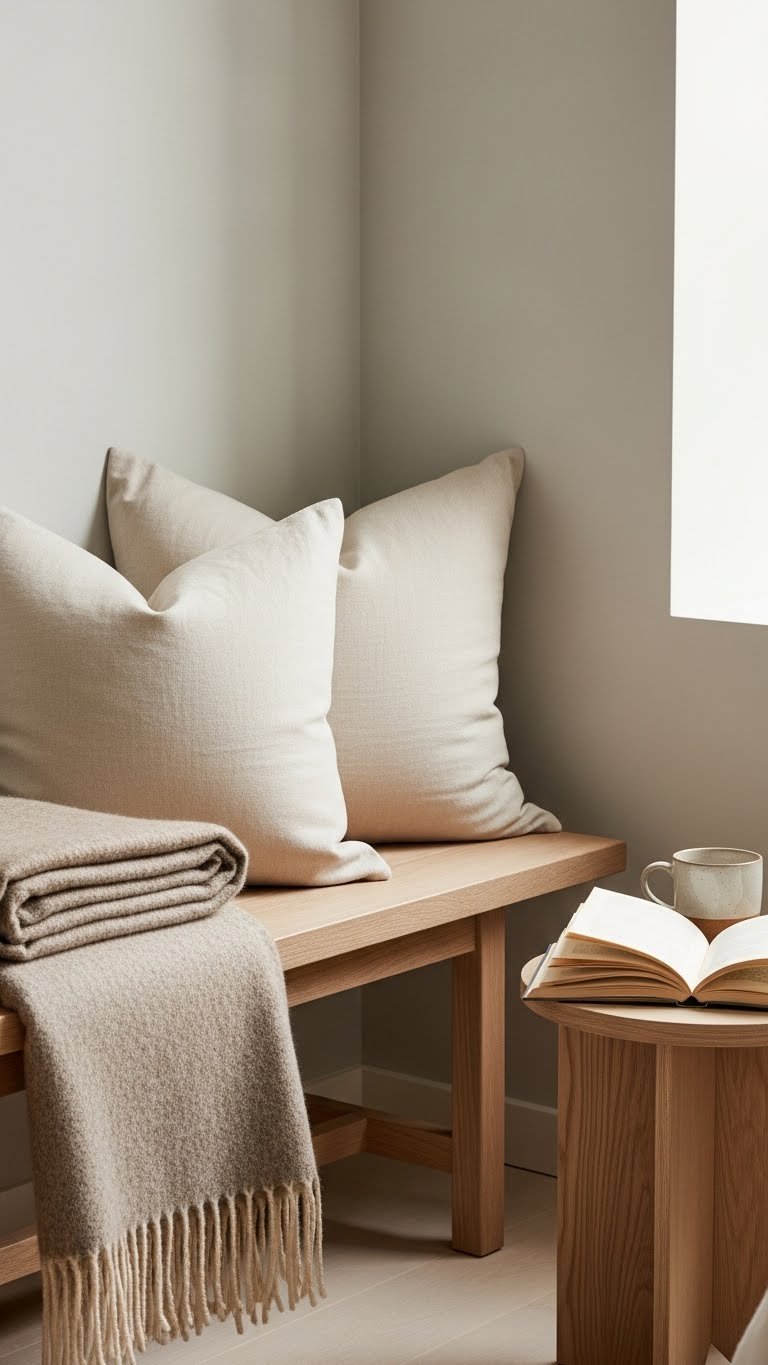
Empty corners waste space; a simple reading spot invites slow mornings and quiet evenings.
Place a low wooden bench ($80–$200, IKEA or thrift) in a corner near the window. Layer it with linen or wool cushions and a throw ($30–$100 total). Add a small side table and a book. This takes 15 minutes to arrange and zero installation. Use this corner as your phone-free morning routine zone. The visual break creates a secondary focal point and makes your room feel purposeful.
Suddenly that dead corner becomes your favorite retreat.
13. Switch to Natural Fiber Bedding
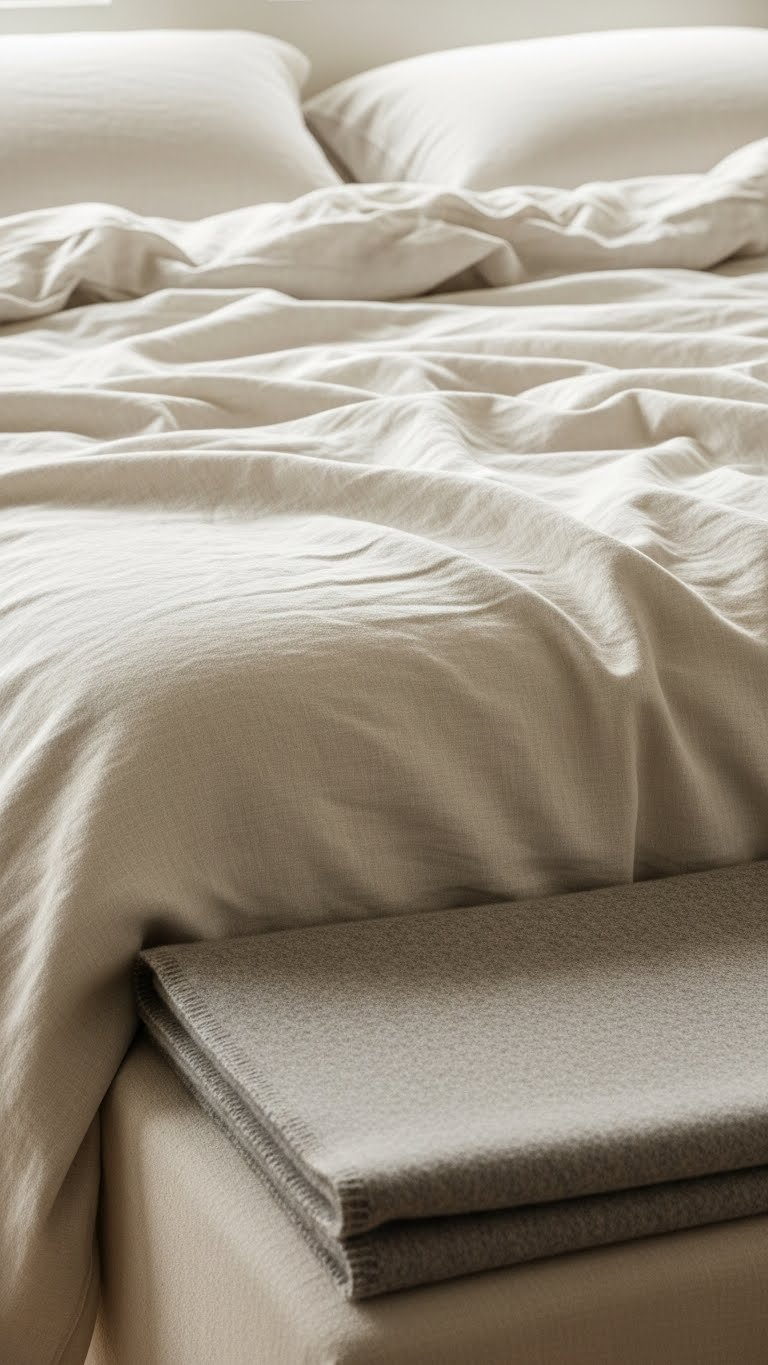
Synthetic fabrics trap heat and chemicals; natural materials regulate temperature and support sustainable, healthier sleep.
Invest in linen sheets ($80–$200 for a set, or budget options at Target for $40–$60), wool blankets ($100–$300), or organic cotton ($60–$150). Brands like Parachute, Brooklinen, and Woolroom specialize in this. Linen wrinkles—embrace it as aesthetic, not a problem. Wash in cool water and air-dry to extend life. Quality natural bedding lasts 5–10 years and softens over time. Yes, upfront cost is higher, but cost-per-wear is ultimately lower.
You sleep better, feel more comfortable, and support eco-conscious production.
14. Paint Your Ceiling a Soft Warm Tone
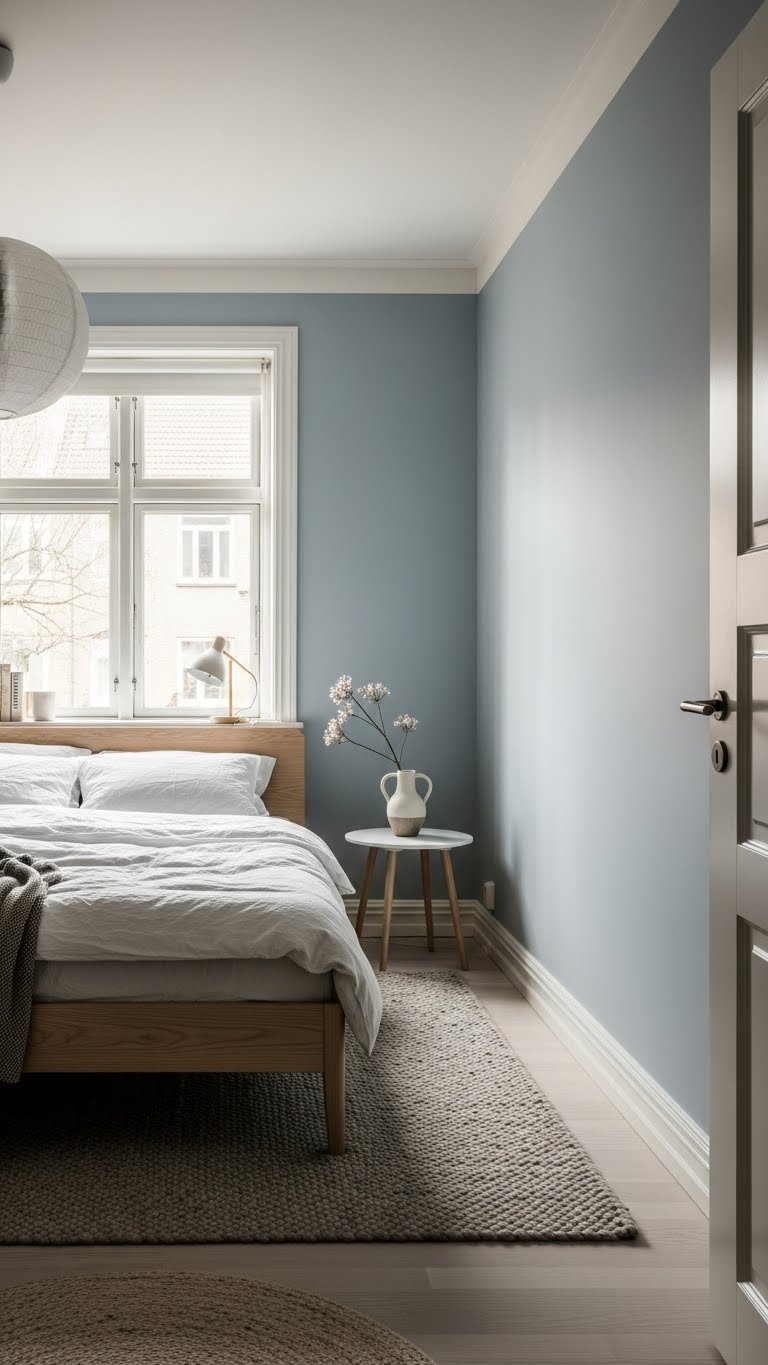
Stark white ceilings feel cold and institutional; warm tones make the room feel cozier and more enclosed.
Paint your ceiling in Benjamin Moore “Cloud White” or a warm cream ($40–$60 per gallon). Ceiling paint takes one gallon for most bedrooms. DIY this in 3–4 hours with a roller on an extension pole ($15–$20), or hire a pro ($300–$600). Primer helps coverage. A warm-toned ceiling makes even tall rooms feel more intimate and cohesive with your wall color.
Your space becomes a warm cocoon instead of a cold box.
15. Add Indoor Plants in Strategic Clusters
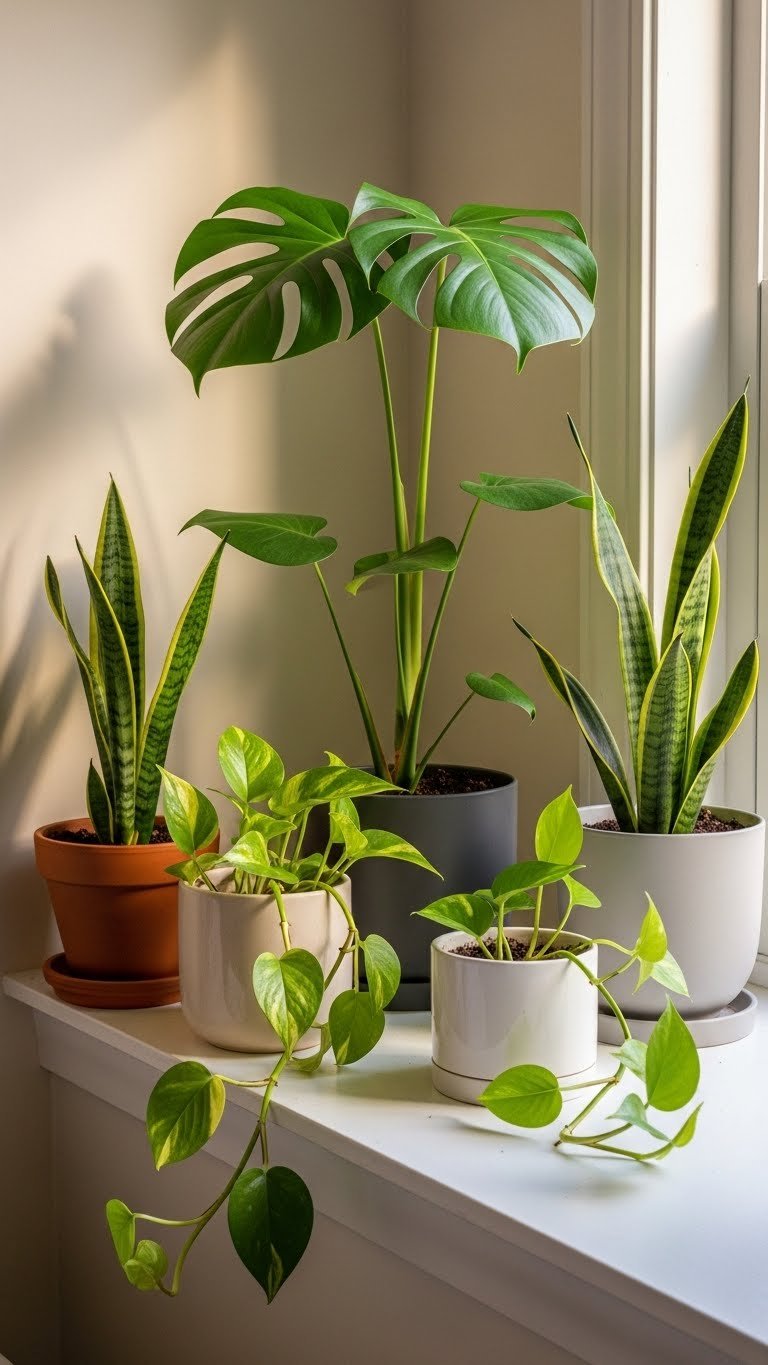
Plants connect us to nature and improve air quality; strategic placement avoids clutter while maximizing biophilic benefit.
Group 3–5 plants on your windowsill or in a corner ($10–$40 per plant for low-maintenance varieties like snake plant, pothos, or ZZ plant). Use simple ceramic or terracotta pots ($8–$20 each) for visual cohesion. Water weekly and rotate quarterly for even growth. Plants require five minutes of care per week. Clustered groupings feel intentional; scattered singles read chaotic.
Your bedroom gains life, freshness, and a subtle connection to the natural world.
16. Hang a Macramé Wall Hanging for Texture
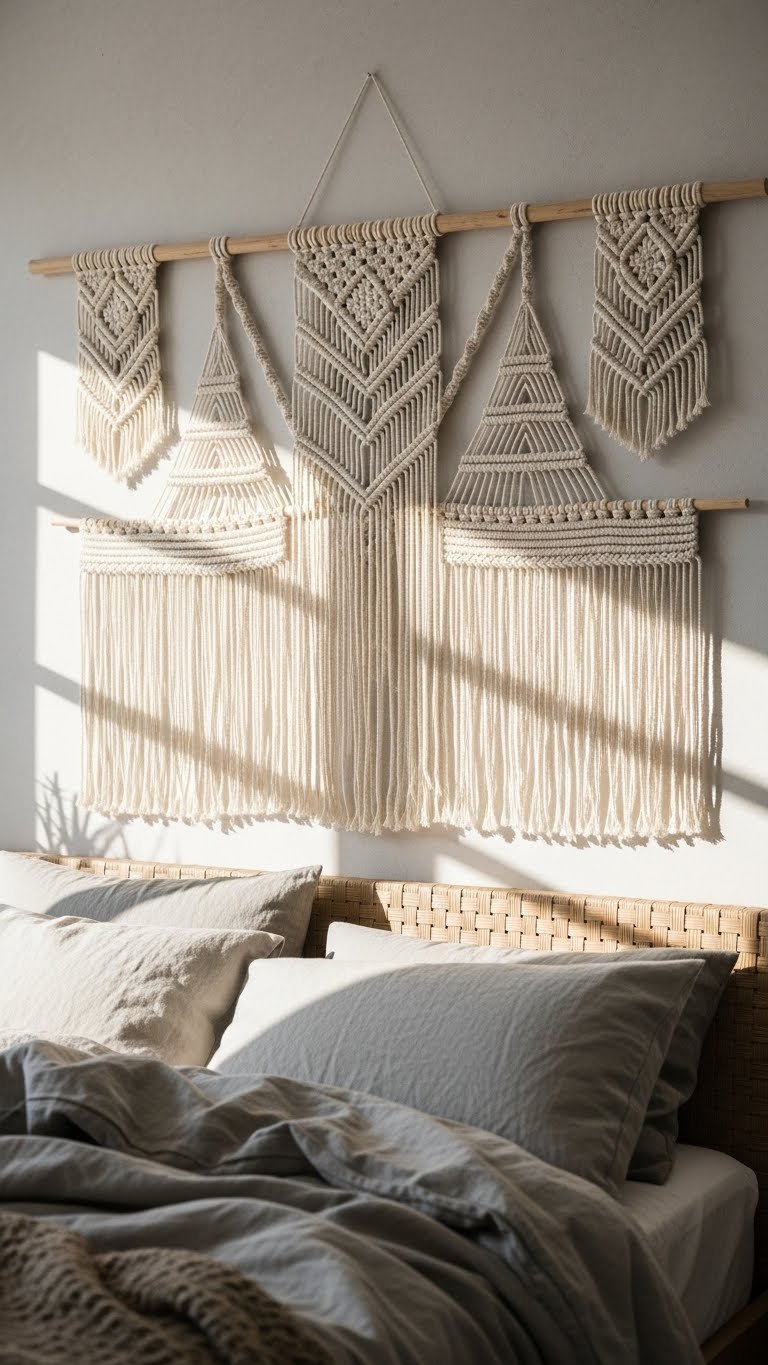
Macramé bridges boho and minimalism without overdoing the trend—simple geometric pieces stay clean while adding dimensional texture.
Source a minimalist macramé hanging ($30–$100) from Etsy, Urban Outfitters, or Anthropologie. Look for neutral colors and simple geometric patterns—avoid heavily fringed or overly complex designs. Hang with a single nail or adhesive hook. This takes five minutes and renter-friendly options exist. One statement piece above the bed or two smaller ones flanking a mirror work well. Dust quarterly with a soft brush.
Handmade texture without sacrificing that calm, clean aesthetic.
17. Install a Curved Mirror to Expand Space Visually
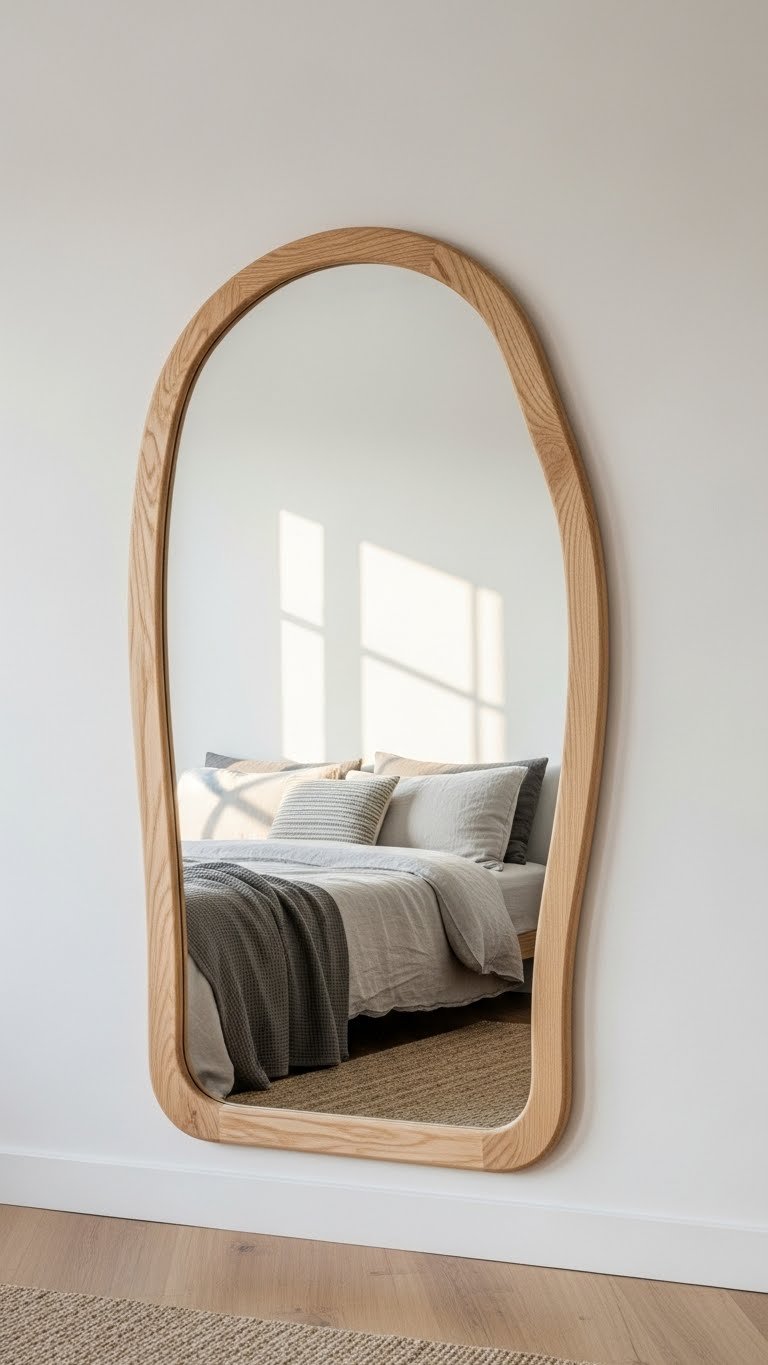
Standard rectangular mirrors feel cold; curved mirrors add organic shape, bounce light, and make rooms feel larger.
Hang a circular or arched mirror ($80–$300) opposite your window to reflect natural light. Wood frames ($50–$150) feel warmer than metal. Installation is one nail or wall anchor; takes five minutes. A 24–32 inch diameter works for most bedrooms without overwhelming the space. Hang at eye level when standing. This is a renter option using damage-free strips.
Reflected light makes your bedroom feel airier while adding sculptural interest.
18. Layer a Lightweight Wool Throw Blanket
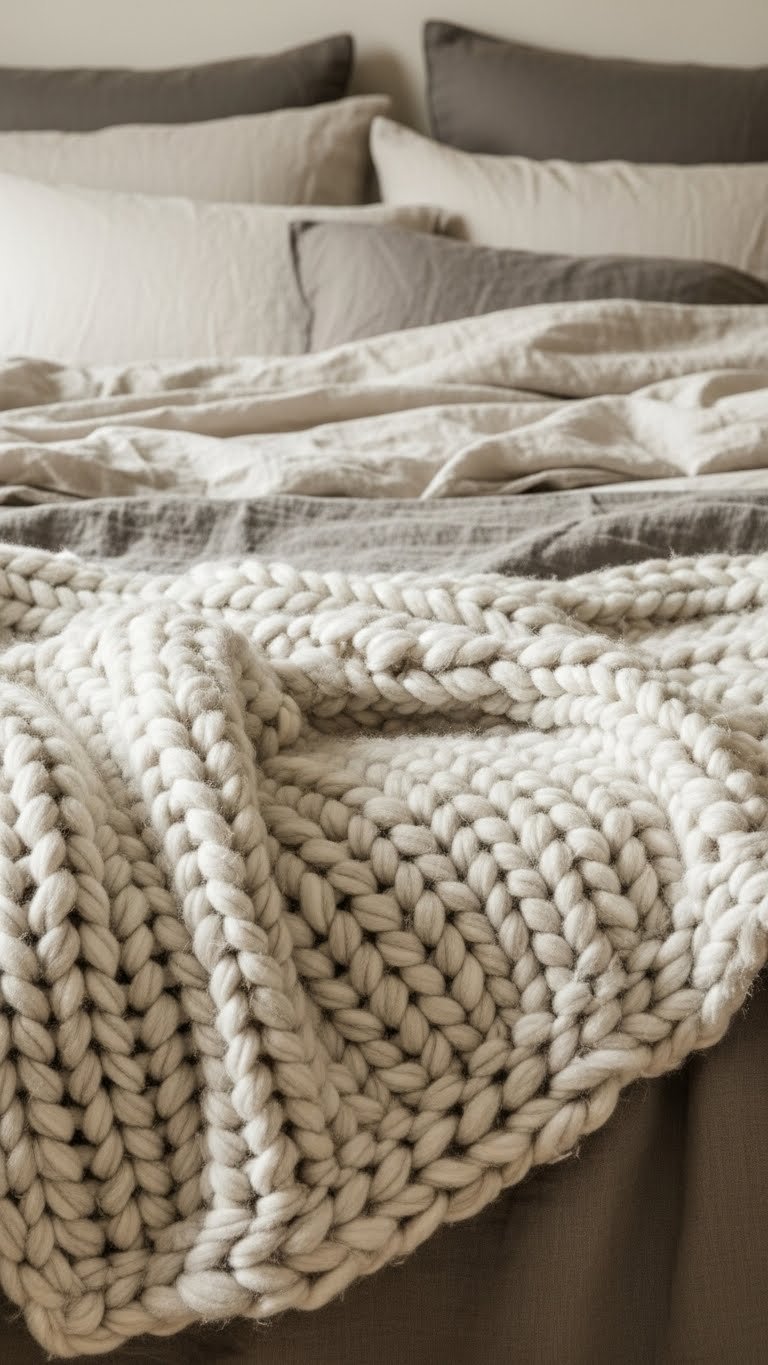
One duvet is functional but flat; a textured throw adds depth, warmth, and invites curling up.
Drape a lightweight wool throw ($60–$180) at the foot of your bed or fold it on a chair. Brands like Pottery Barn, Restoration Hardware, and Etsy makers offer quality options. Wool regulates temperature—warm in winter, breathable in summer. Wool is naturally stain-resistant; spot-clean only. This takes two minutes to arrange and creates the layered, lived-in look trending in 2025.
Your bed becomes a nest you want to sink into every night.
19. Use a Neutral Color Palette with One Statement Accent
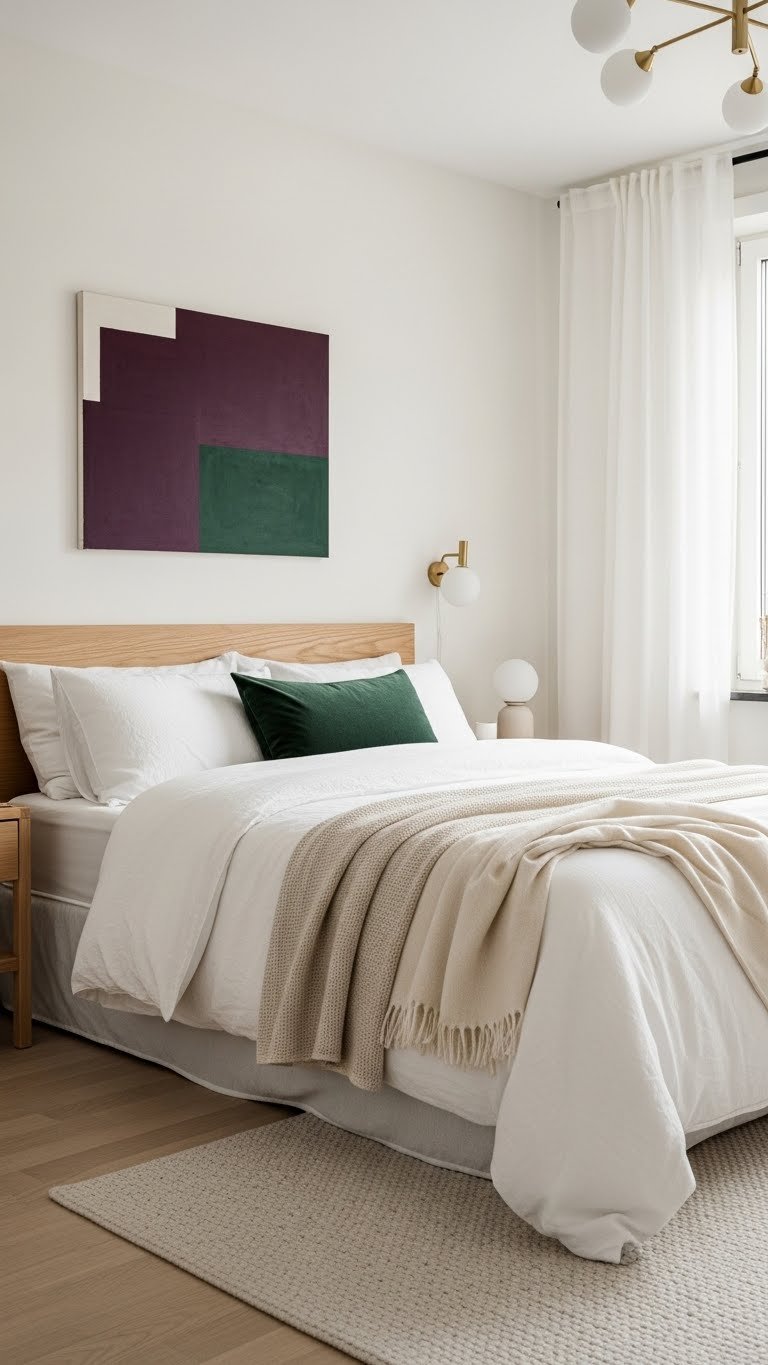
All-white minimalism feels sterile; one bold accent color adds personality without chaos.
Choose one accent color—forest green, aubergine, terracotta, or cherry red (trending up 325% in searches)—and use it in exactly one place: a pillow ($40–$80), an art print ($50–$150), or a throw blanket ($80–$180). Everything else stays neutral. This discipline makes the accent feel intentional, not random. Swap the accent piece seasonally or yearly for freshness without repainting.
One pop of color becomes the conversation starter while respecting minimalist restraint.
20. Swap Out Your Headboard for a Curved or Upholstered One
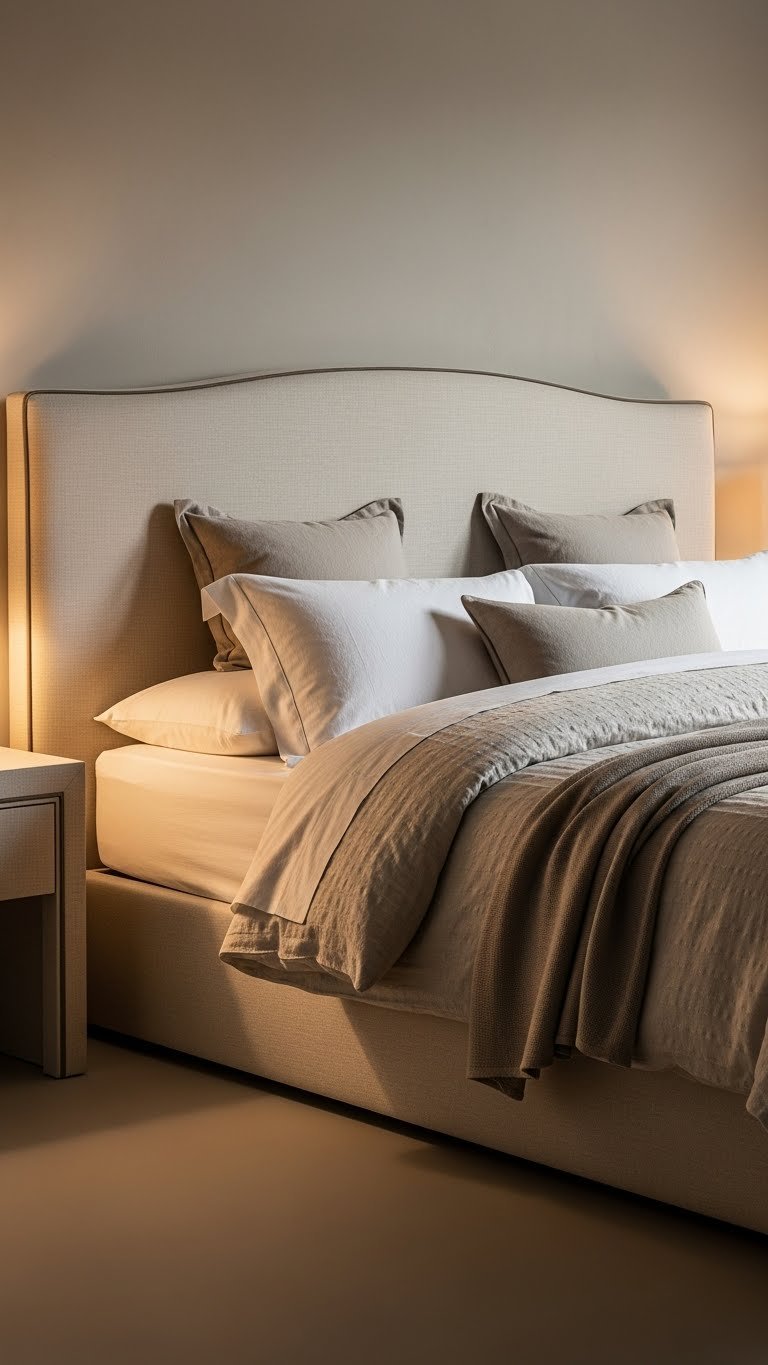
A plain wall behind your bed is missed opportunity; a curved headboard adds texture, comfort, and visual anchor.
Replace a basic headboard with a curved upholstered option ($200–$800 depending on size and material). Look for linen upholstery in warm neutrals. This is an investment piece but transforms the entire room’s focal point. Assembly takes 1–2 hours or hire help ($50–$100). If you rent, some headboards attach without damaging walls. A headboard instantly upgrades any bed frame and makes mornings feel more luxurious.
Your bed becomes a statement piece that justifies spending time in your bedroom.
21. Create Floating Shelving for Minimalist Storage
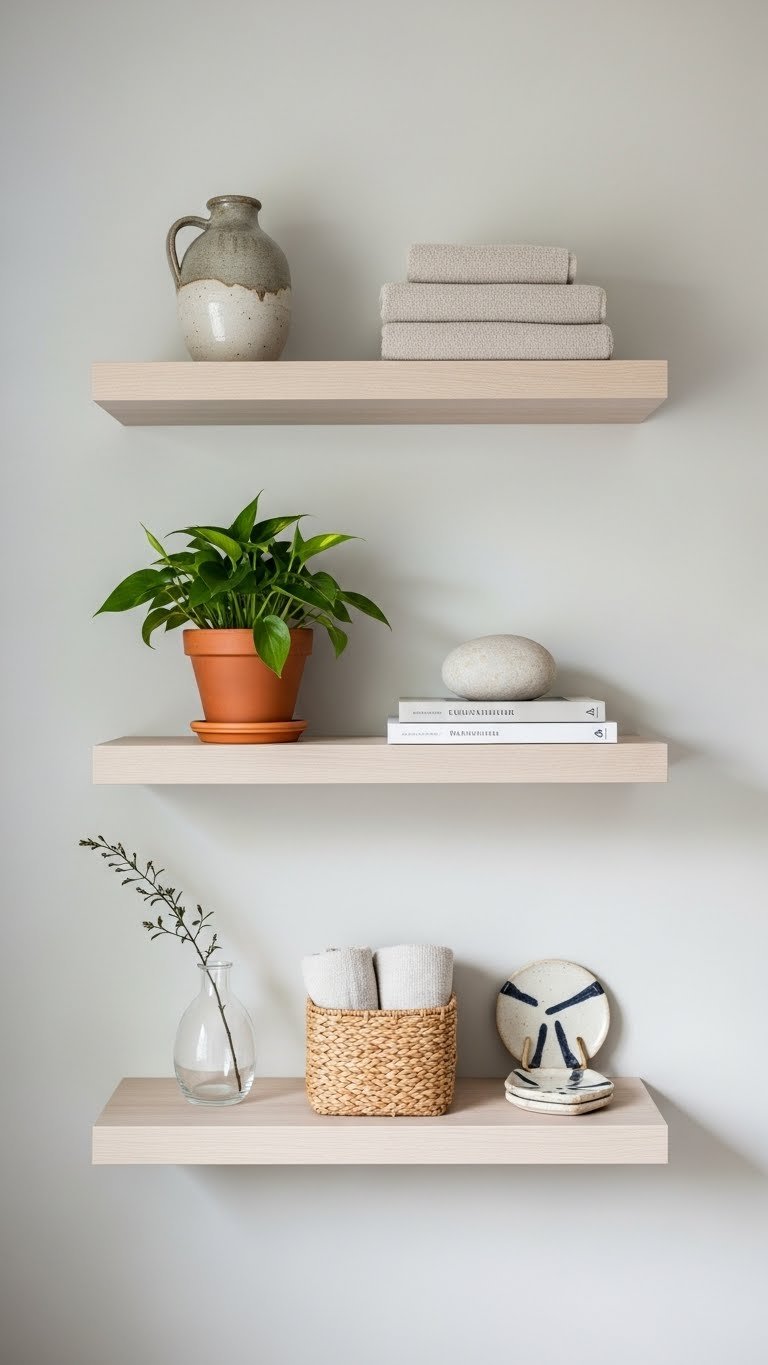
Bulky dressers dominate small bedrooms; floating shelves provide storage while maintaining sight lines and airiness.
Install 2–3 floating shelves ($50–$150 per shelf installed) using brackets and wall studs. Spread items across shelves with significant empty space—aim for 40–60% negative space. One ceramic bowl, a stack of folded linen, a single book. Installation takes 1–2 hours with a drill. This is a permanent fixture but gives renters an alternative to floor storage.
Storage disappears into architecture; your room stays serene and organized.
22. Add Cork or Natural Fiber Wall Texture
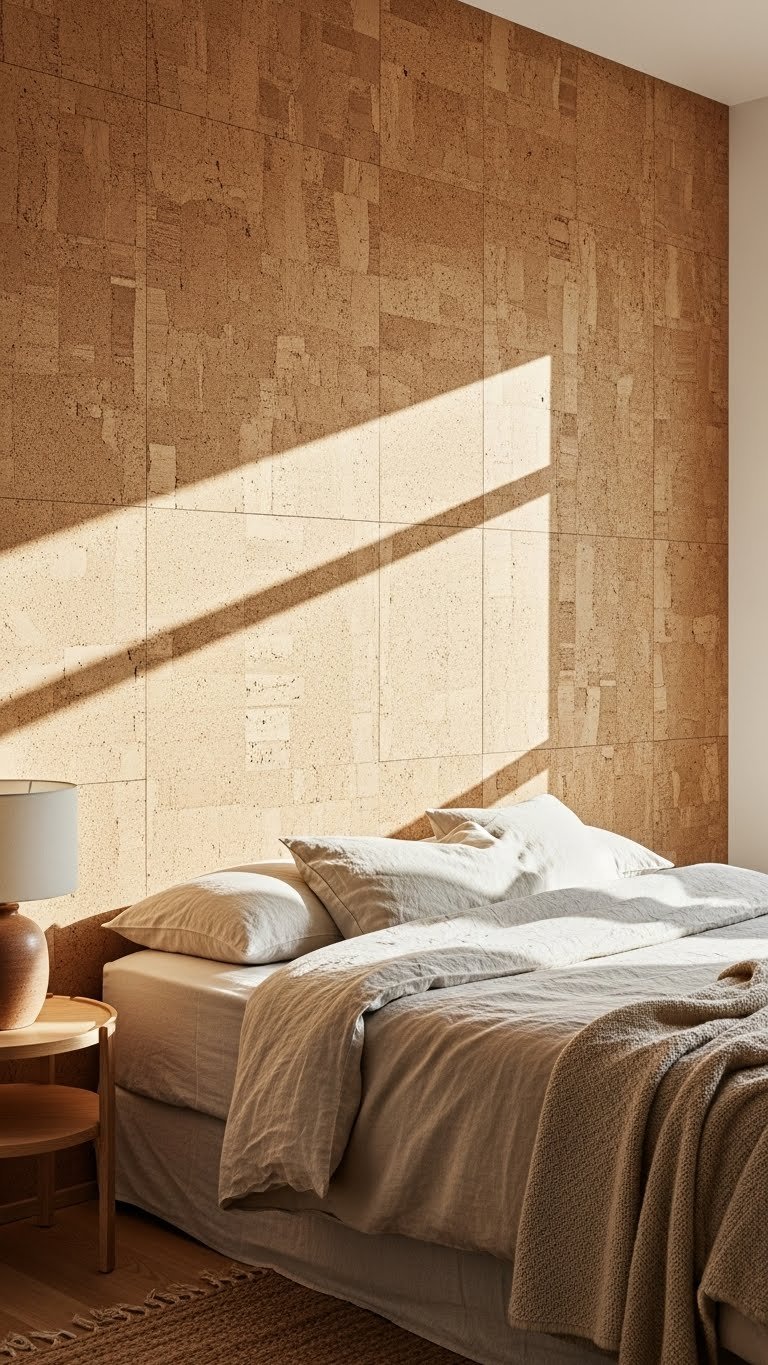
Cork is trending in organic modernism—it’s warm, acoustic, tactile, and eco-friendly.
Apply cork tiles ($20–$40 per square foot) or peel-and-stick cork wallpaper ($15–$25 per roll) to one accent wall. Installation takes 2–4 hours for DIY; hire help for $300–$600. Cork is renter-friendly if using adhesive-backed options, though removal takes care. It naturally dampens sound, keeps your room quieter, and adds subtle texture without visual clutter.
Your wall becomes a warm, touchable surface that feels organic and grounded.
23. Layer Simple Linen Cushions on a Bench or Window Seat
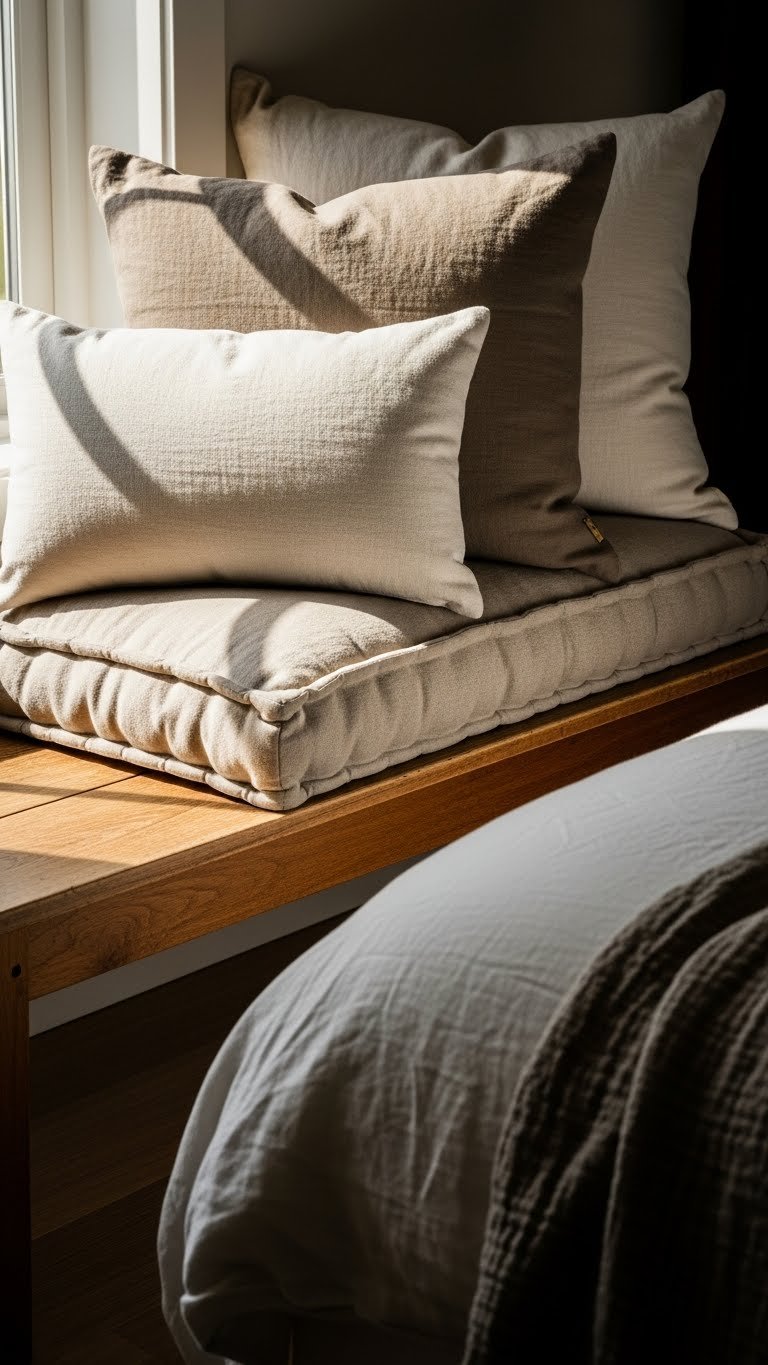
A bare bench is utilitarian; layered cushions invite sitting and add texture without fussiness.
Place 2–3 linen cushions ($25–$60 each) on a bench using removable covers. Mix neutral tones—cream, taupe, warm gray—for cohesion. This takes five minutes to arrange and costs $60–$180 total. Covers wash easily. Cushions also work on window seats or at the foot of your bed. Layer different thicknesses for visual depth.
Simple comfort becomes the hero of your room’s secondary seating.
24. Install Warm Lighting with Dimmable Bulbs
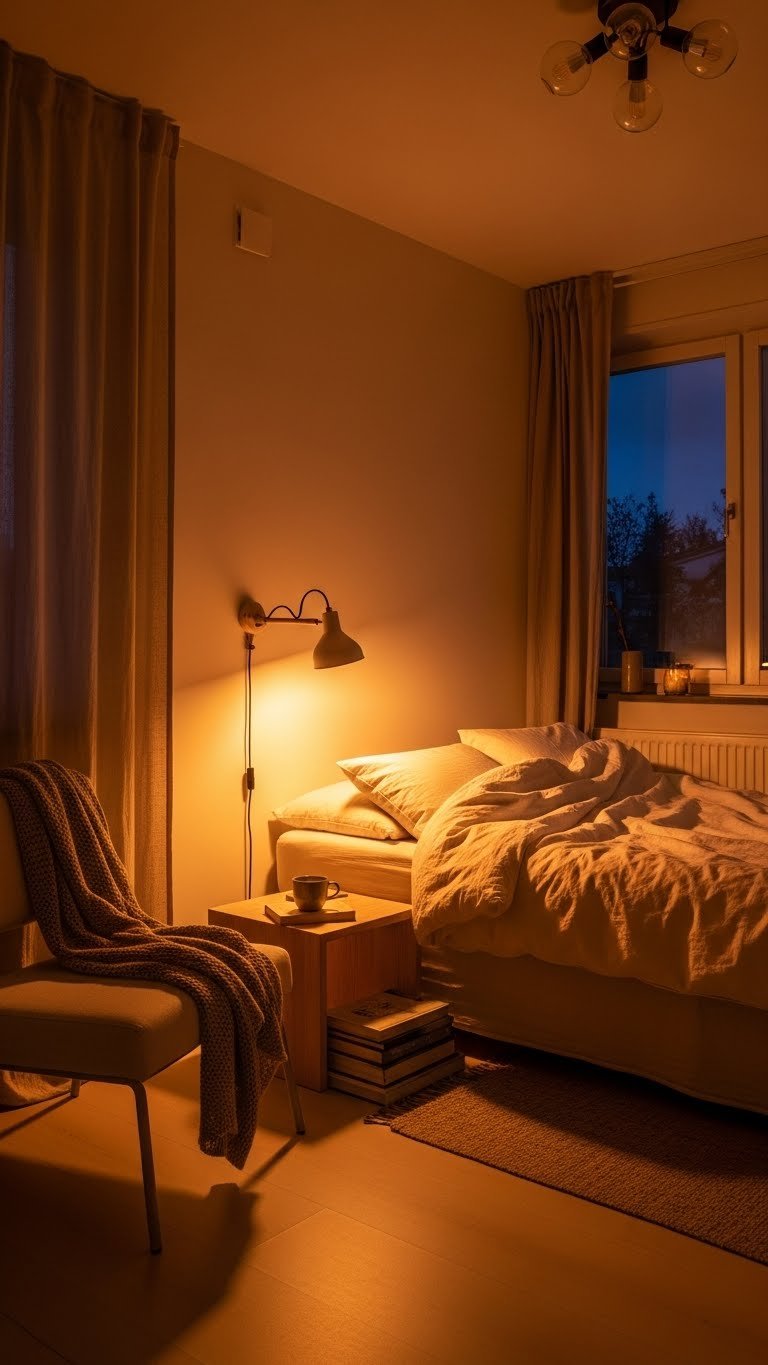
Harsh overhead lighting kills minimalist calm; warm, dimmable lighting creates the right mood for sleep and relaxation.
Replace bulbs with warm white (2700K) dimmable LEDs ($8–$15 each). Install dimmers on overhead fixtures ($20–$50 per dimmer switch, 15-minute installation). Add a simple bedside lamp with a warm bulb ($40–$100). Avoid blue-toned lights near bedtime—they disrupt sleep. Test color temperature by visiting a lighting showroom; warm feels immediately cozier.
Lighting is the easiest way to shift your entire room’s vibe toward calm and rest.
25. Display Handmade Ceramics or Pottery
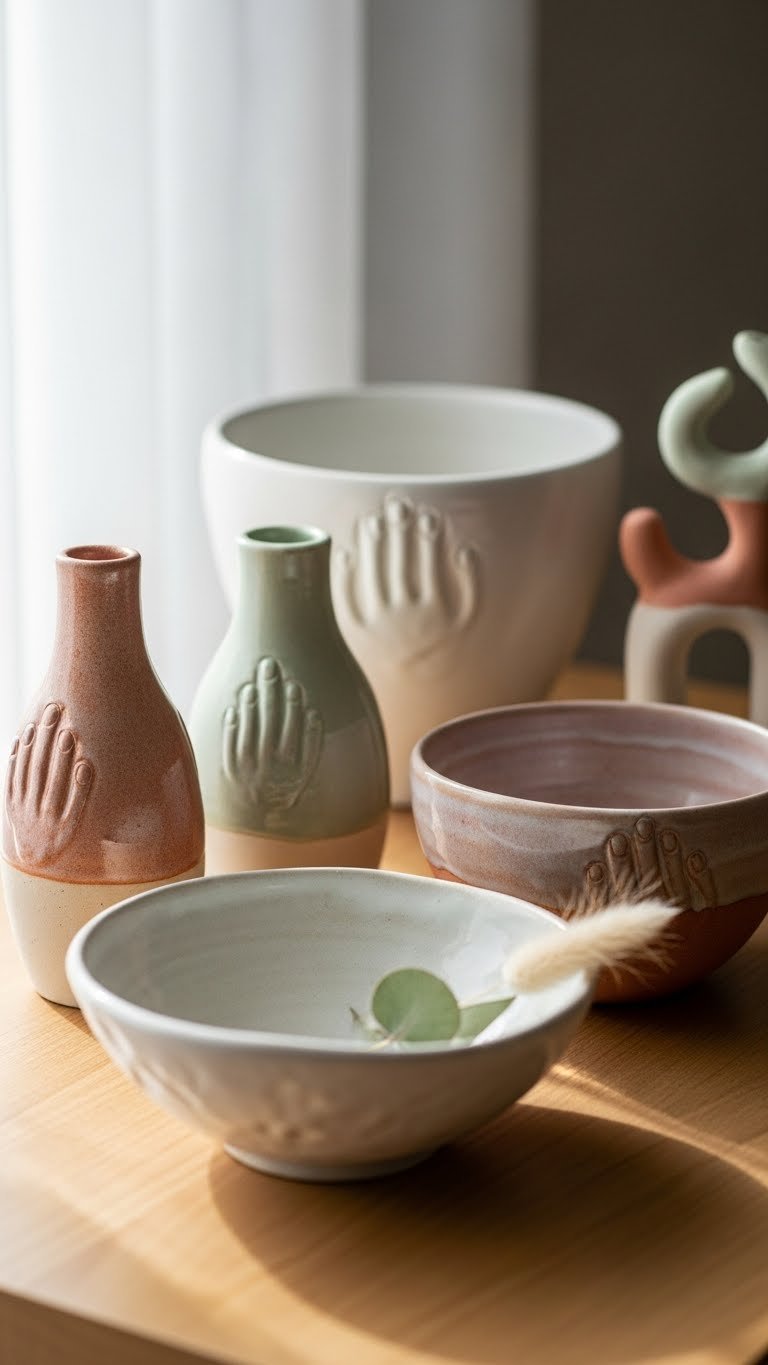
Mass-produced decor lacks soul; handmade ceramics add authenticity and support independent makers.
Buy pieces from local potters, Etsy artists ($30–$150 per piece), or take a pottery class and make your own ($100–$300 for a workshop). Display on floating shelves or a dresser in odd numbers (three or five pieces). Handmade items have visible imperfections—that’s their charm. No installation required; arrange and dust quarterly.
Handmade pieces turn your room into a gallery of intentional beauty.
26. Introduce a Wool Area Rug Runner Along Your Bed
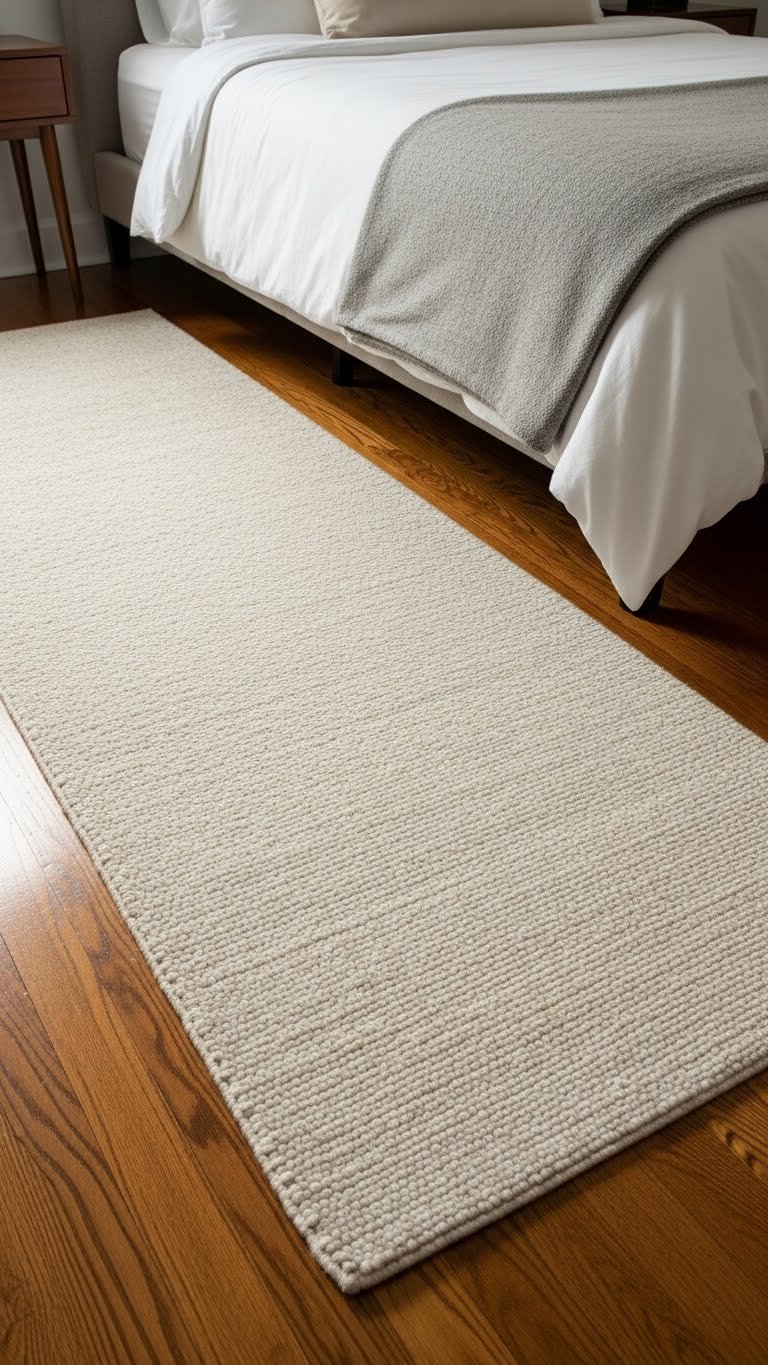
A full area rug can overwhelm small bedrooms; a runner adds warmth to hardwood while keeping sightlines open.
Layer a wool rug runner ($60–$150 for 2.5×8 feet) along one or both sides of your bed. Wool is durable and ages gracefully. This takes five minutes to unroll and position. Machine-washable options exist; spot-clean regularly. Runners cost less than full rugs and define the bed zone without visual heaviness.
Soft underfoot plus subtle visual grounding—that’s Scandinavian efficiency.
Ready to refresh your bedroom? Save this post and pick just one idea to try this weekend. Whether it’s swapping a pillow, hunting for a thrifted nightstand, or painting an accent wall, small changes add up fast. Your calm, warm sanctuary is closer than you think.
Leave a Reply