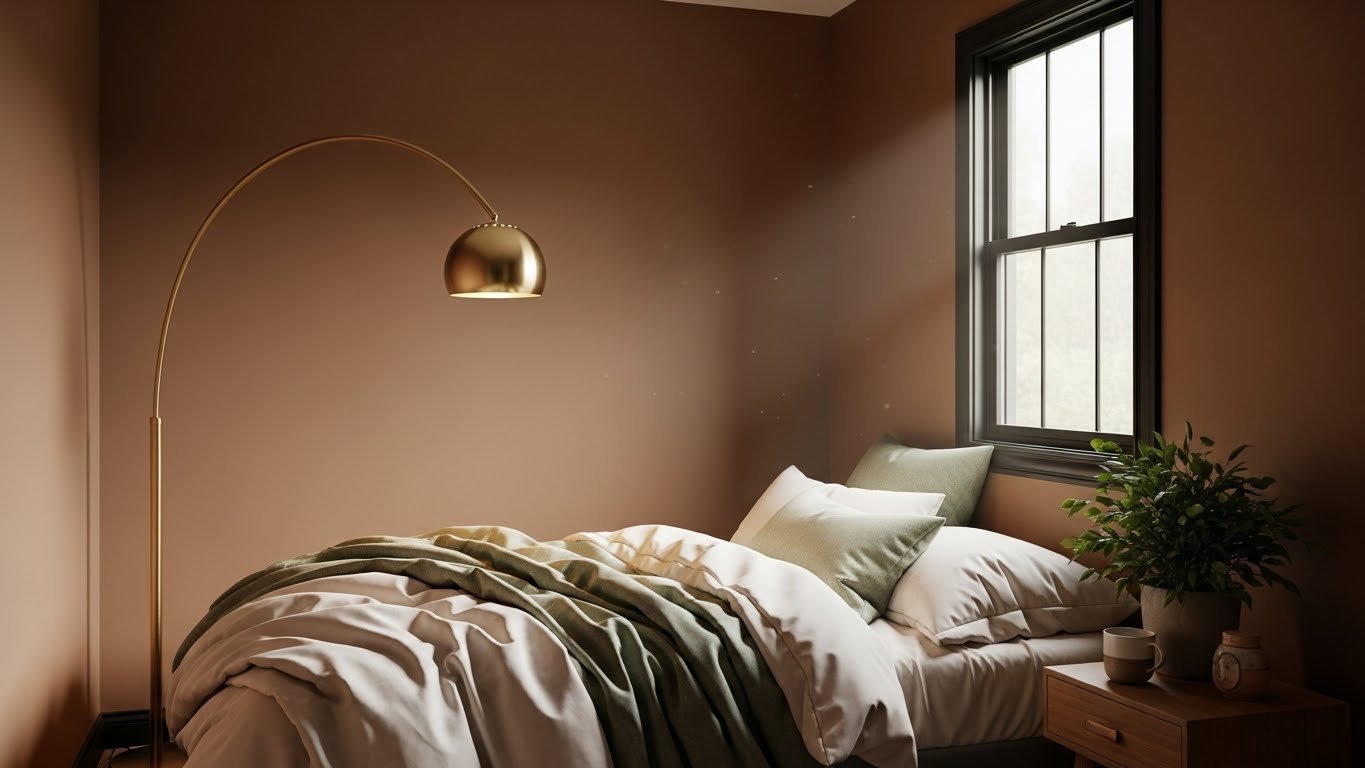
Small spaces don’t have to feel cramped or compromise on style. With the right strategies, even the tiniest rooms can become functional, beautiful retreats that work for you, not against you. Whether you’re dealing with a studio apartment, a compact bedroom, or a galley kitchen, these 25 makeover ideas prove that square footage matters far less than smart planning and intentional choices. You’ll discover budget-friendly hacks, quick DIY projects, and investment pieces that maximize every corner. Ready to fall in love with your small space? Let’s dive in.
1. Paint Walls Light to Expand the Room
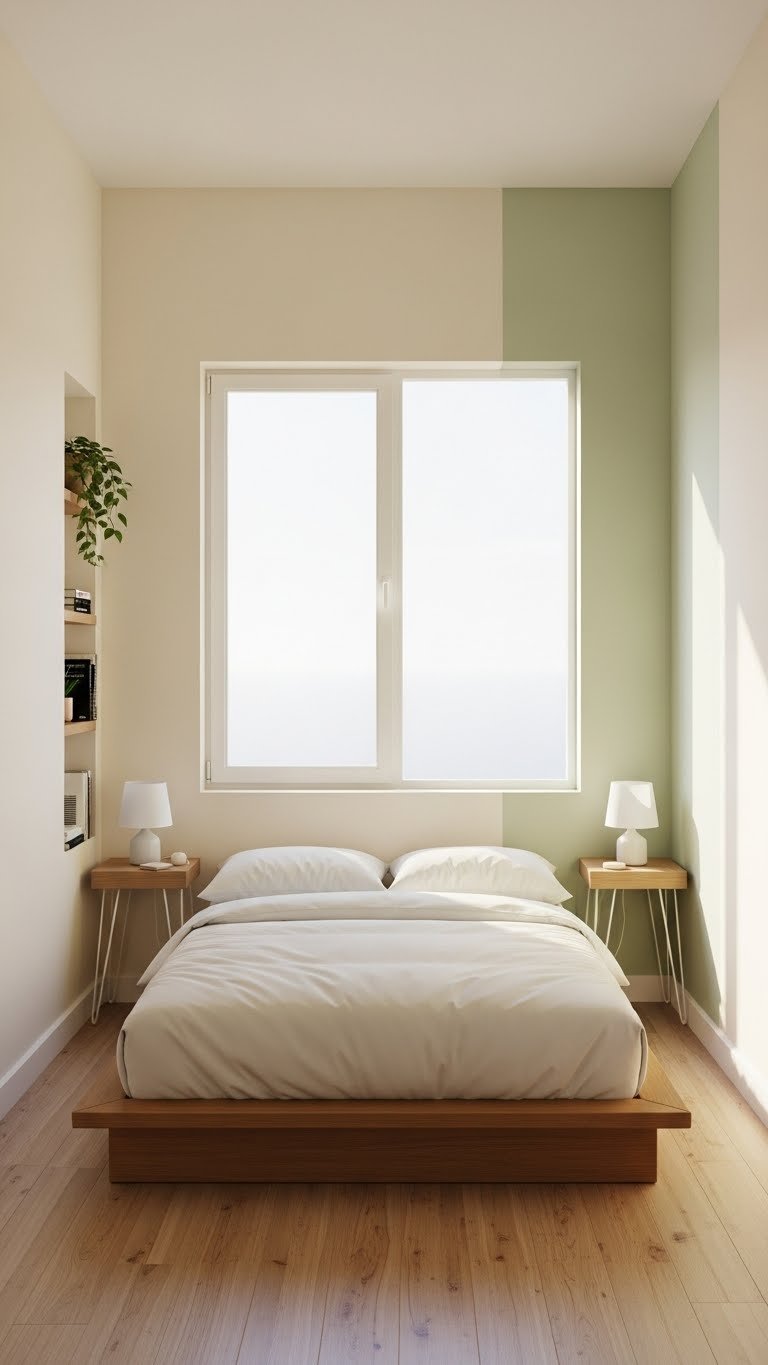
Light colors naturally make tight spaces feel airier and more open than they actually are. Painting your walls in soft cream, pale sage, or buttery white bounces light around and creates the illusion of more square footage—plus it’s renter-friendly if you use removable wallpaper or primer-friendly paint.
Choose a light neutral base (cream, off-white, or pale gray) for three walls, then consider a soft accent color like sage green or soft blue on the fourth wall for personality without heaviness. Paint costs $15–$40 per gallon, and one gallon typically covers a small room. This is a weekend DIY project that takes 3–4 hours. Use painter’s tape for clean lines, and don’t skip primer—it helps paint stick better and covers imperfections.
The result? Your space immediately opens up, and the room gets brighter without adding a single lamp. Light walls also make furniture rearrangement easier because the backdrop stays neutral and adaptable.
2. Use Mirrors Strategically to Double Your Space
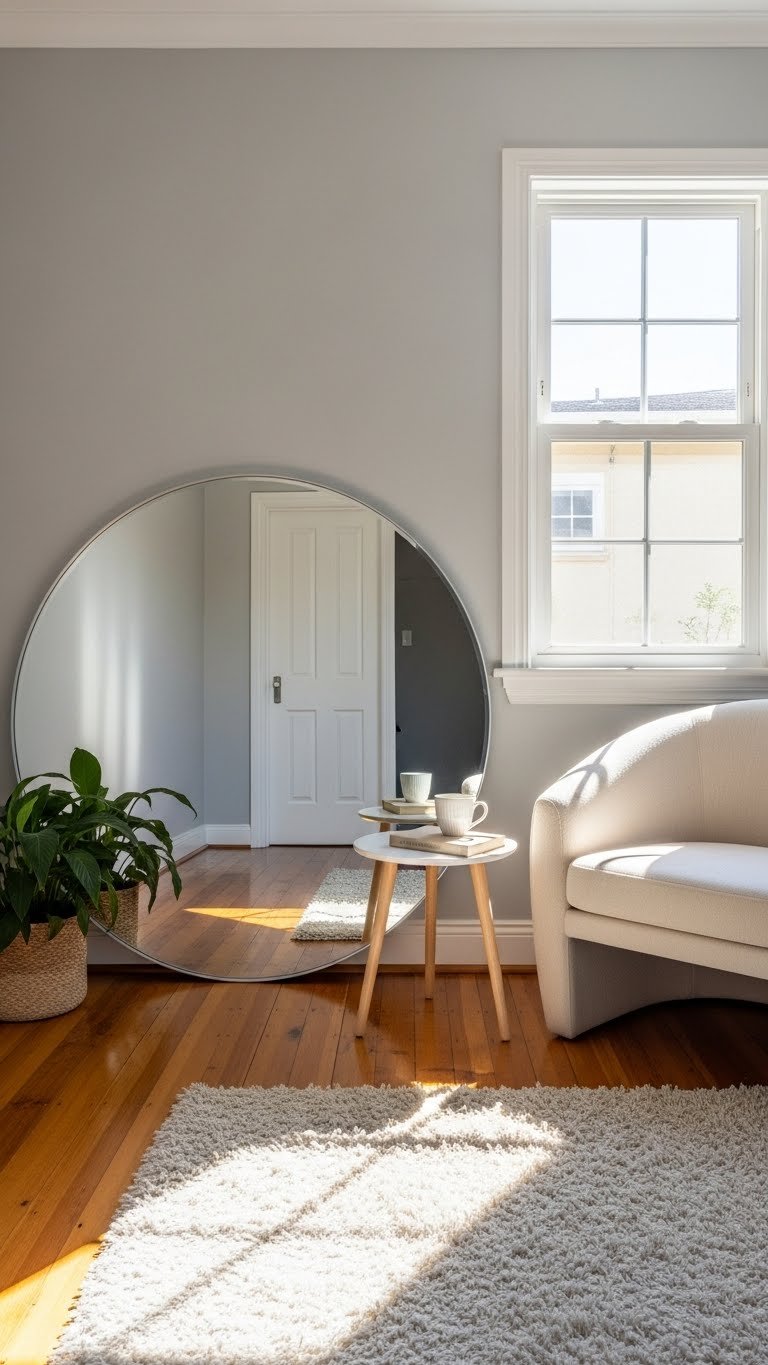
Mirrors are small-space magic because they reflect light and create depth, making rooms feel twice as spacious. Position a large mirror across from your window or light source to bounce natural light around the room and create an optical illusion of expanded square footage.
Lean a full-length or oversized round mirror against a wall (no installation needed—perfect for renters), or hang one above a console table for function and reflection. Prices range from $30–$150 depending on frame style and size. Find options at IKEA, Target, Wayfair, or thrift stores. This 10-minute setup requires only wall space and a willing hand. Pro tip: Avoid mirroring directly across from dark corners; instead, position mirrors to reflect light or interesting artwork.
You’ll notice the room immediately feels bigger and brighter. Plus, mirrors serve double duty as functional pieces and décor, so you’re not sacrificing style for space.
3. Choose Multifunctional Furniture Over Single-Use Pieces
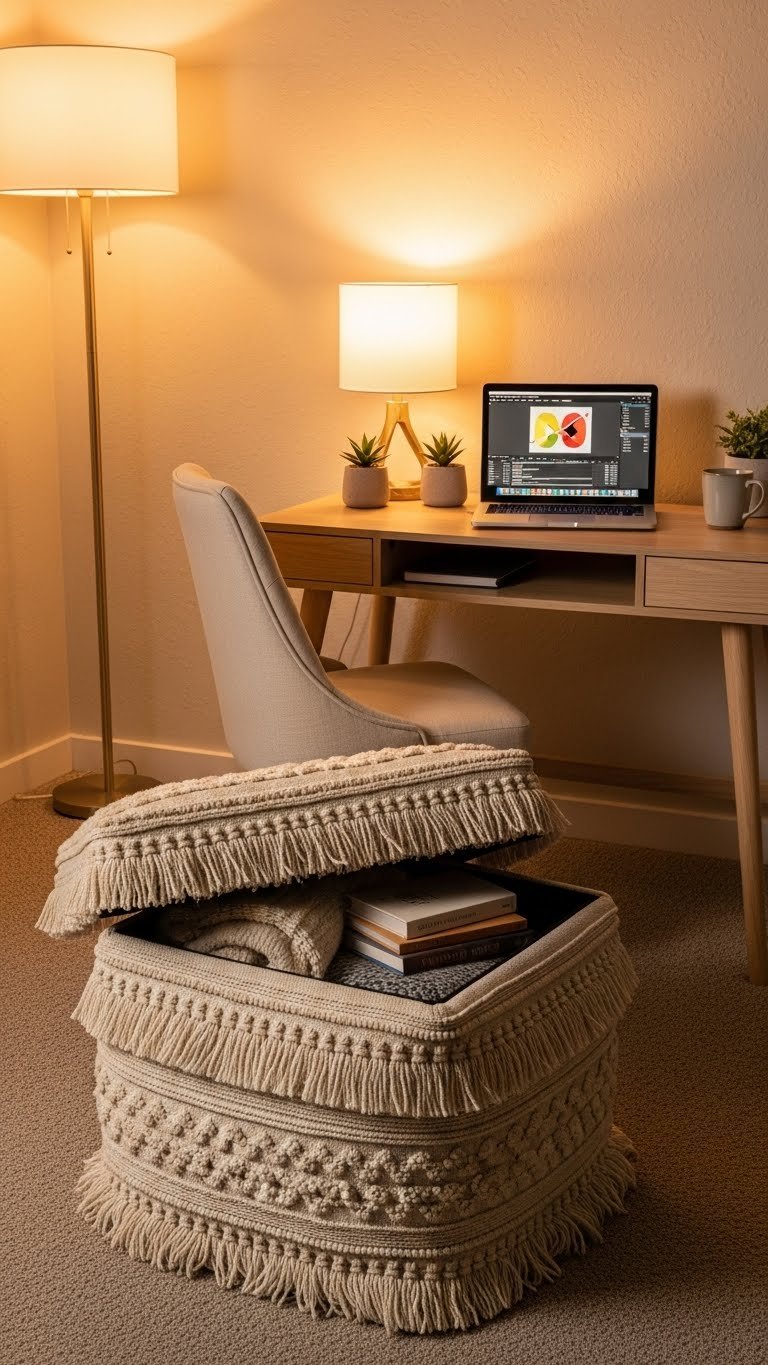
In a small room, every piece of furniture needs to earn its place. Swap out single-purpose chairs for ottomans with hidden storage, coffee tables with drawers, or beds with under-frame storage to give yourself extra room without cluttering your layout.
Look for storage benches, nesting tables, or ottoman cubes that tuck multiple functions into one footprint. Prices range from $50–$300 depending on quality. Brands like IKEA, Wayfair, and Amazon offer dozens of affordable options. Rearranging a small room with multifunctional pieces takes 30 minutes and immediately frees up floor space. Measure your room first to ensure pieces fit your layout without blocking pathways.
The payoff is real: You get extra storage, seating, and surface space without adding visual clutter. Your room stays functional and open while hidden compartments keep daily essentials out of sight.
4. Embrace Color Drenching for Depth and Personality
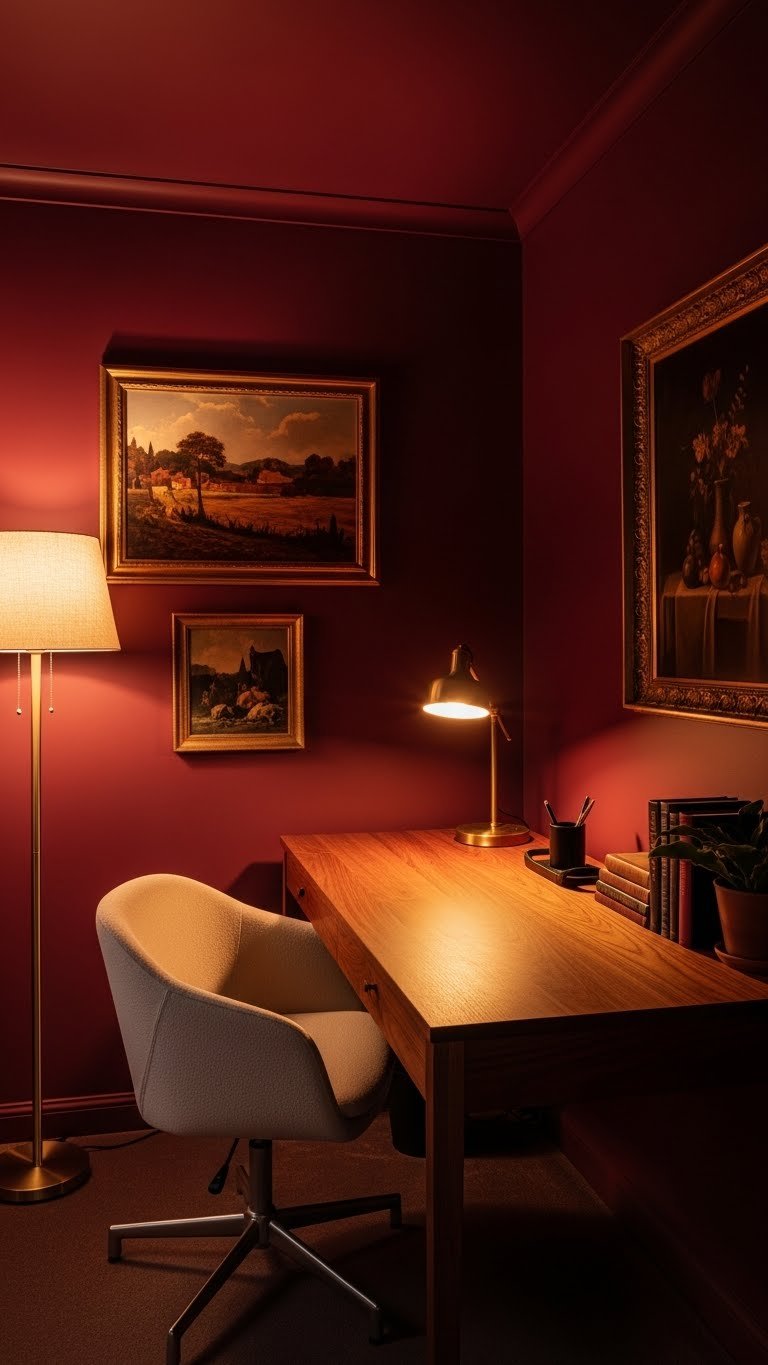
Instead of playing it safe with neutrals, consider painting an entire small room—walls and ceiling—in one rich, warm color like chocolate brown, burgundy, or sage green. This “color drenching” technique makes tight spaces feel intentional and cozy rather than cramped, especially with warm earthy tones.
Pick a warm, earthy color that speaks to you (chocolate brown, dusty sage, warm terracotta, or muted burgundy). Paint costs $20–$50 per gallon, and a small room typically needs only 2–3 gallons total. This is a weekend project taking 6–8 hours including prep and drying time. Use quality paint so the color stays rich and doesn’t look washed out. Pro tip: Pair dark walls with light furniture and lots of lighting to keep the room from feeling cave-like.
The result is a room that feels like a curated sanctuary rather than a leftover corner. Small spaces in bold colors become sophisticated retreats where you actually want to spend time.
5. Install Floating Shelves to Maximize Vertical Space
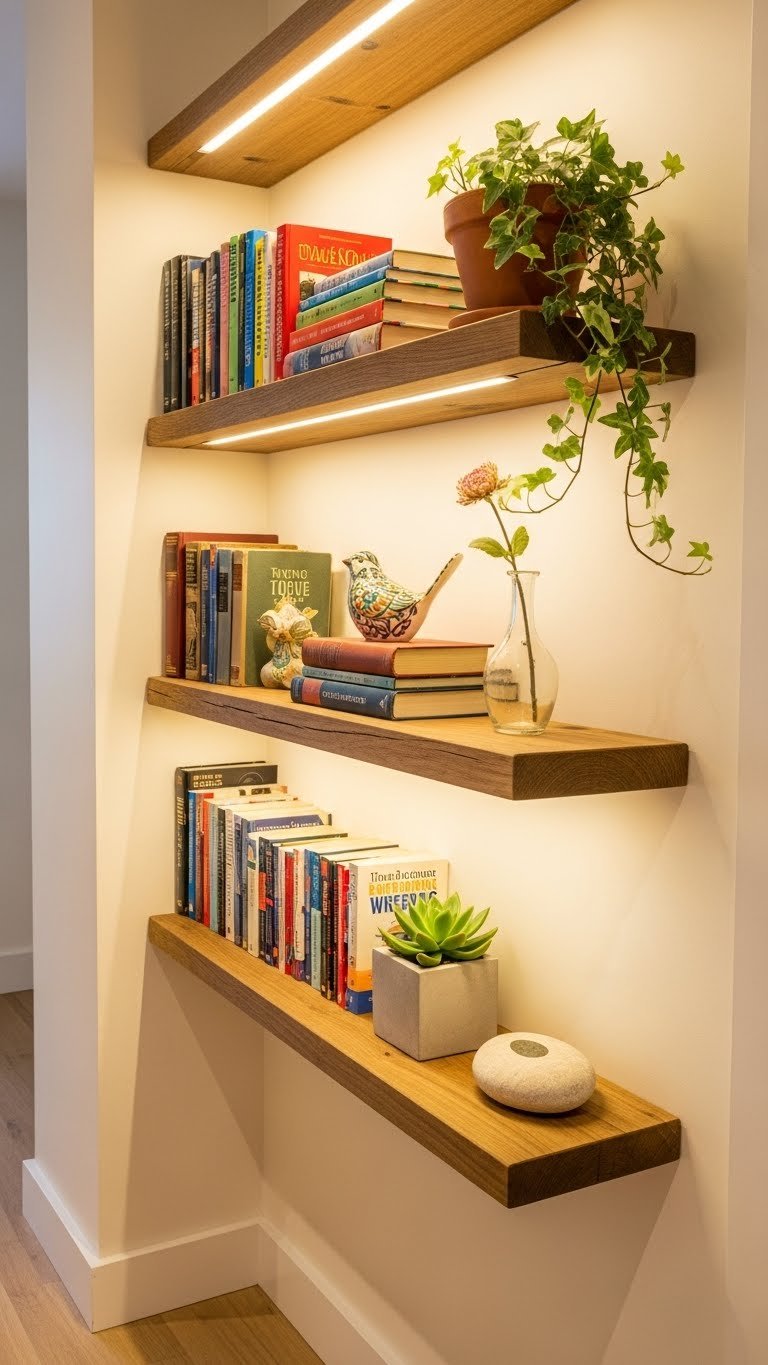
Vertical storage is your secret weapon in a small room. Floating shelves draw the eye upward, add storage without floor footprint, and let you display items that bring you joy while keeping essentials within reach.
Mount 2–4 floating shelves at varying heights on an empty wall using a level and wall studs (or toggle bolts for drywall). Shelves cost $20–$80 each, and installation takes 1–2 hours if you’re comfortable with basic tools—otherwise, ask a handyperson ($50–$100 labor). Find shelves at IKEA, Home Depot, or Amazon. Fill them with books, plants, and a few meaningful objects to create visual interest without clutter.
Now your walls work harder for you. Display items that inspire you while freeing up valuable floor and furniture space. Vertical storage is especially smart for renters who can remove shelves when they move.
6. Define Zones with Rugs and Furniture Placement

Open-concept small spaces need visual boundaries. Use area rugs, furniture arrangement, and lighting to create distinct zones for sleeping, working, and relaxing—this tricks your brain into feeling like you have multiple rooms instead of one studio.
Choose a rug that fits your largest furniture grouping and position it to anchor that zone. Prices range from $40–$200 depending on size and quality. Then arrange furniture with its back facing other zones (like a sofa facing the bedroom area rather than the kitchen). This 30-minute rearrangement immediately clarifies your layout. Pro tip: Use curtains or a tall bookshelf as a soft divider between zones for extra definition.
You’ll feel like you have room to breathe because each zone has purpose and separation. Your brain registers distinct areas, making a small apartment feel more spacious and functional.
7. Add Curved, Sculptural Furniture for Softness
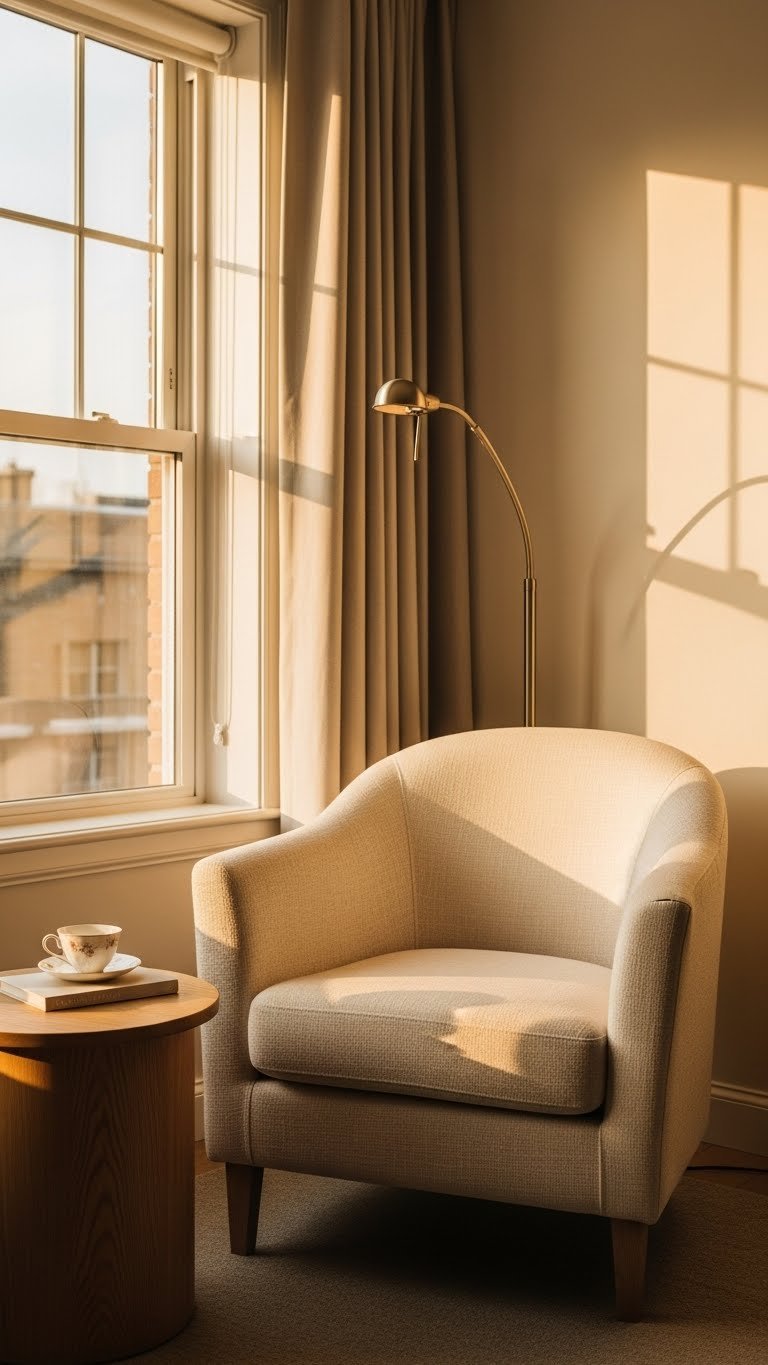
Hard edges and angular furniture make small rooms feel tighter and more cluttered. Curved, organic furniture shapes soften the space, improve flow, and make movement feel easier because you’re not navigating sharp corners constantly.
Invest in a curved accent chair, round side table, or organic ottoman instead of boxy alternatives. Quality pieces run $200–$600, but you’ll find affordable curved options at Wayfair, Article, or West Elm. Thrift stores and Facebook Marketplace often have vintage curved pieces for $30–$150. This is an investment, so choose something you love—you’ll keep it for years. Curved furniture immediately improves traffic flow and makes your room feel less rigid and more livable.
The space looks more thoughtfully designed and feels physically easier to navigate. Plus, the curves add visual interest and personality without taking up extra square footage.
8. Use Painted Cabinetry to Add Color and Character
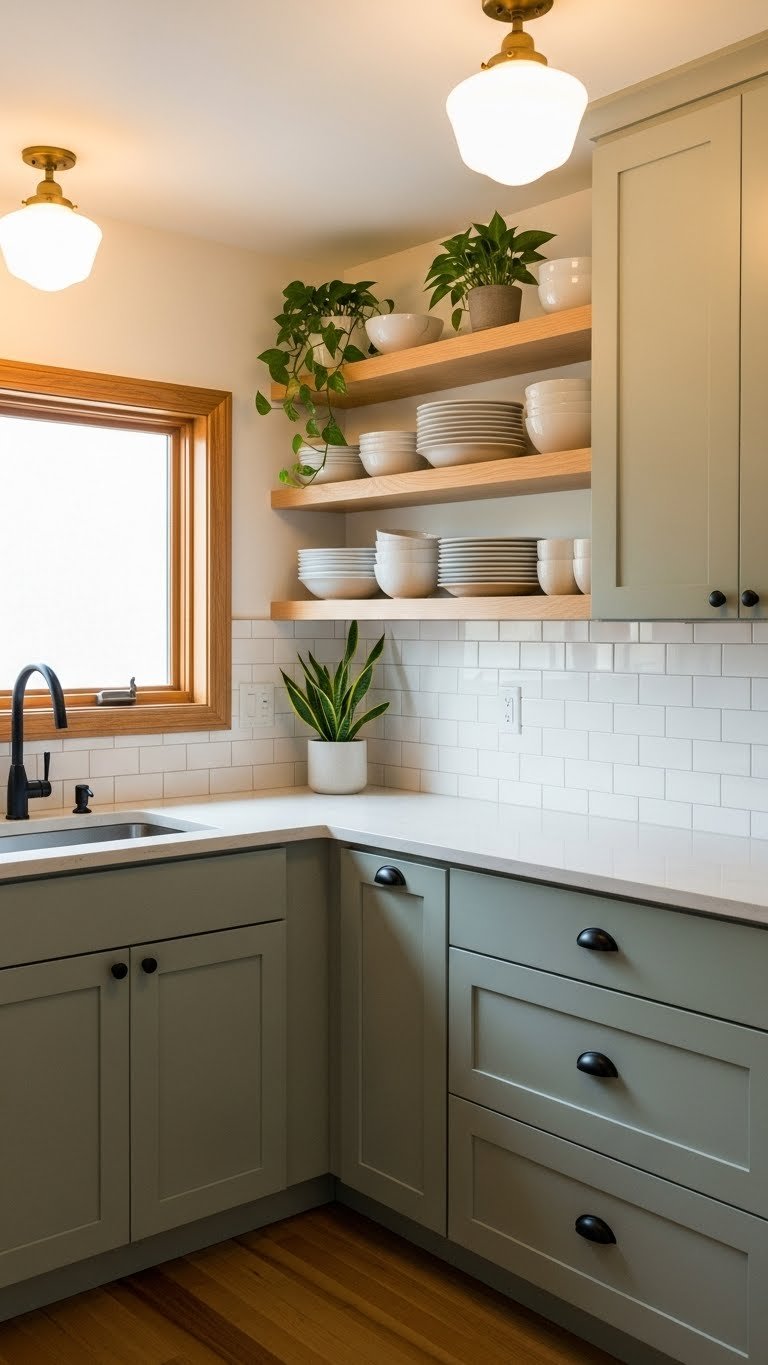
Painted cabinets instantly upgrade a small kitchen or bathroom without renovation costs. A fresh coat of paint in warm earthy tones transforms basic cabinets into a focal point that makes the whole space feel intentional and curated.
Choose a warm, saturated color like sage green, chocolate brown, or dusty blue that complements your countertops. Cabinet paint costs $30–$60, and the project takes one weekend (including dry time). Remove hardware, prep with primer, apply 2 coats, and rehang. Alternatively, hire a professional for $200–$500. Black hardware upgrades complete the look for $20–$60. Renter tip: Use removable peel-and-stick wallpaper on cabinet fronts as a temporary solution.
Your kitchen instantly becomes a room you want to photograph and linger in. The transformation is dramatic, affordable, and makes your small space feel intentional and styled.
9. Layer Patterns and Textiles for Maximalist Energy
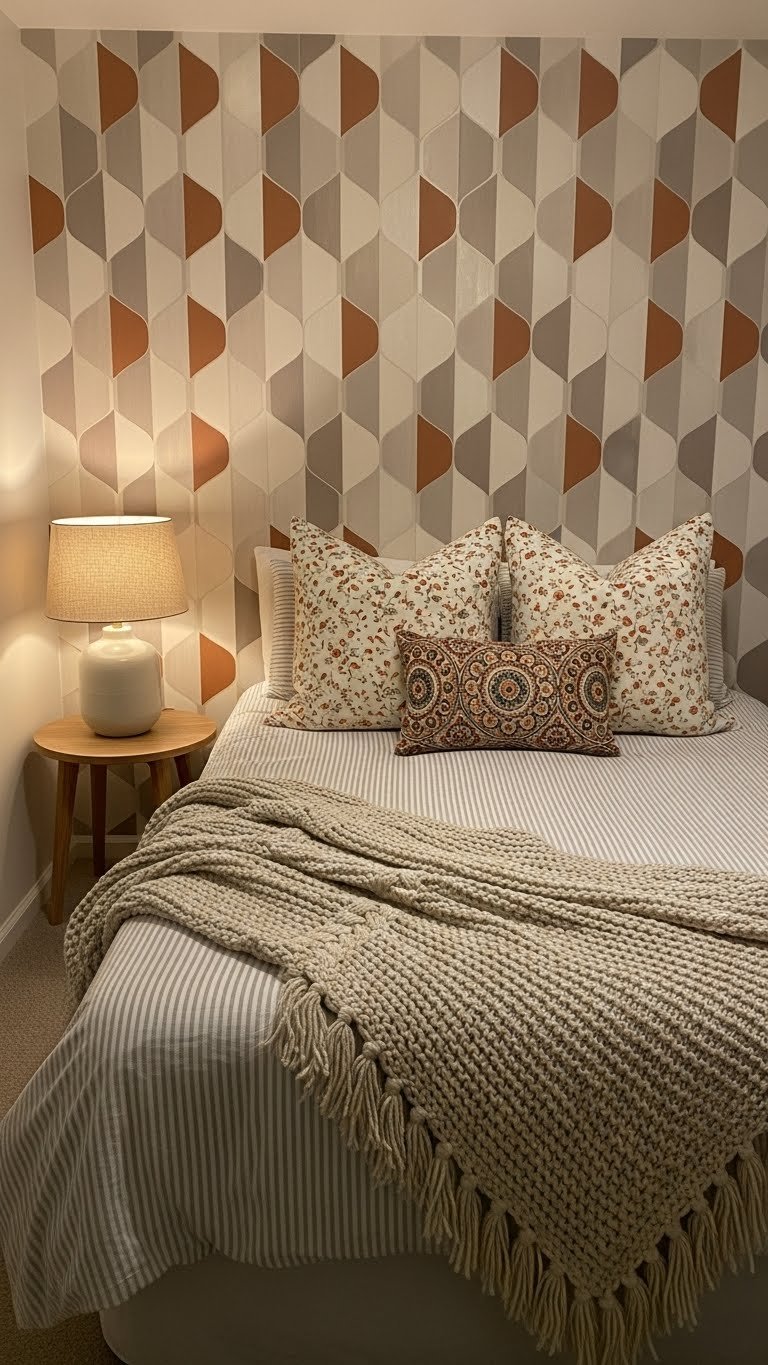
Maximalism replaces minimalism in 2025, and small spaces benefit hugely. Layer bold patterns, rich textures, and layered textiles to create energy and personality instead of the sparse, cold aesthetic that made tiny rooms feel cramped and unwelcoming.
Start with one dominant pattern (geometric, leopard, or abstract) as wallpaper or a large throw pillow, then layer 2–3 complementary patterns in different scales. Add textured throws, layered rugs, and patterned curtains. Budget $100–$300 for wallpaper, pillows, and throws from Target, Wayfair, or anthropologie. This styling project takes 2–3 hours and requires no tools. Mix prints fearlessly—bold patterns actually draw the eye around the room rather than making it feel smaller.
Your bedroom becomes a cozy sanctuary full of personality and visual richness. Layering patterns creates intimacy and makes small spaces feel intentionally curated rather than bare.
10. Install Under-Bed Storage Drawers
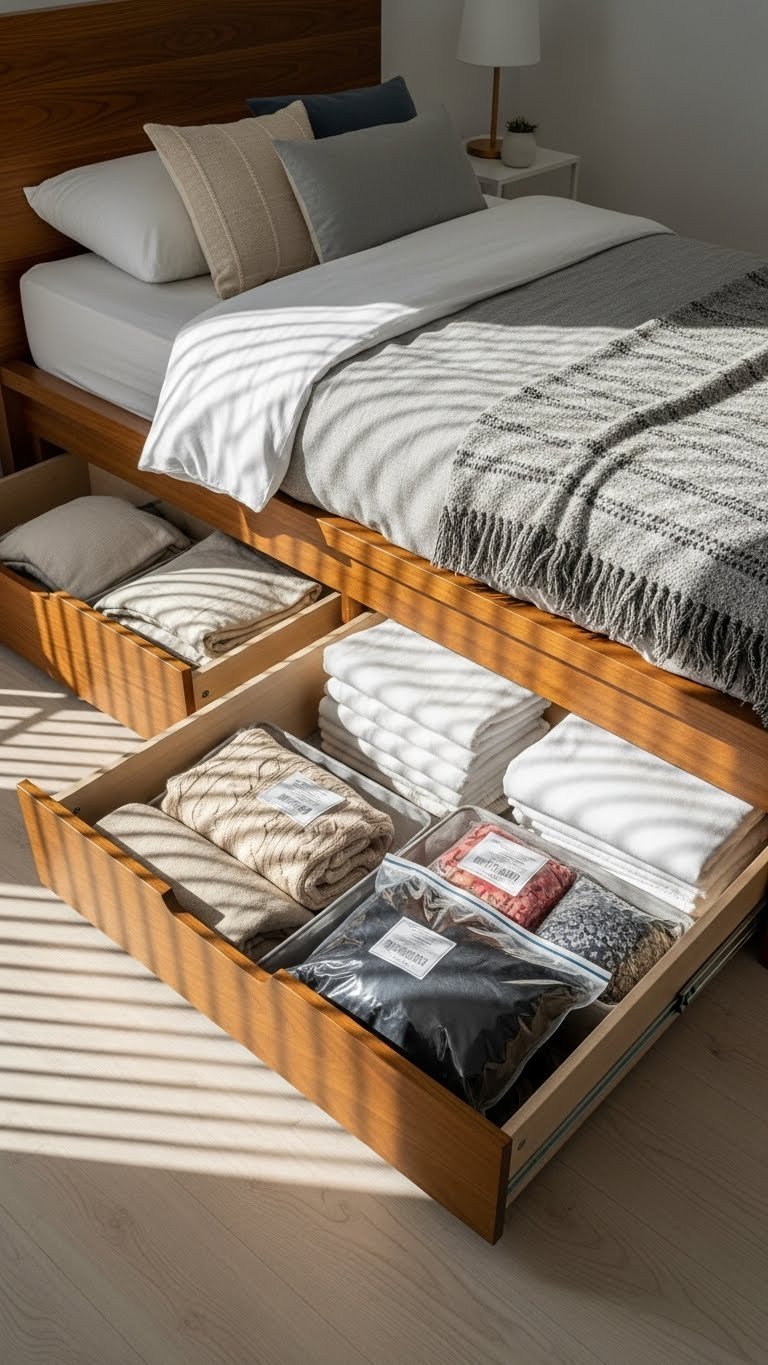
The space under your bed is prime real estate in a small room. Storage drawers that slide under your bed keep seasonal items, extra linens, and belongings organized and invisible, freeing up your closet and making the room feel less cluttered.
Buy under-bed storage containers or rolling drawers (look for ones with wheels for easy access). Budget $30–$100 for a set of 2–3 from IKEA, Target, or Amazon. Installation takes 15 minutes—just slide them under your bed. Fill with off-season clothes, extra bedding, or items you don’t use daily. Pro tip: Label containers so you know what’s inside without opening them.
Now you have hidden storage that doesn’t eat into your room’s visual space. Clutter disappears, and your bedroom immediately feels calmer and more organized.
11. Hang Curtains From Ceiling to Floor
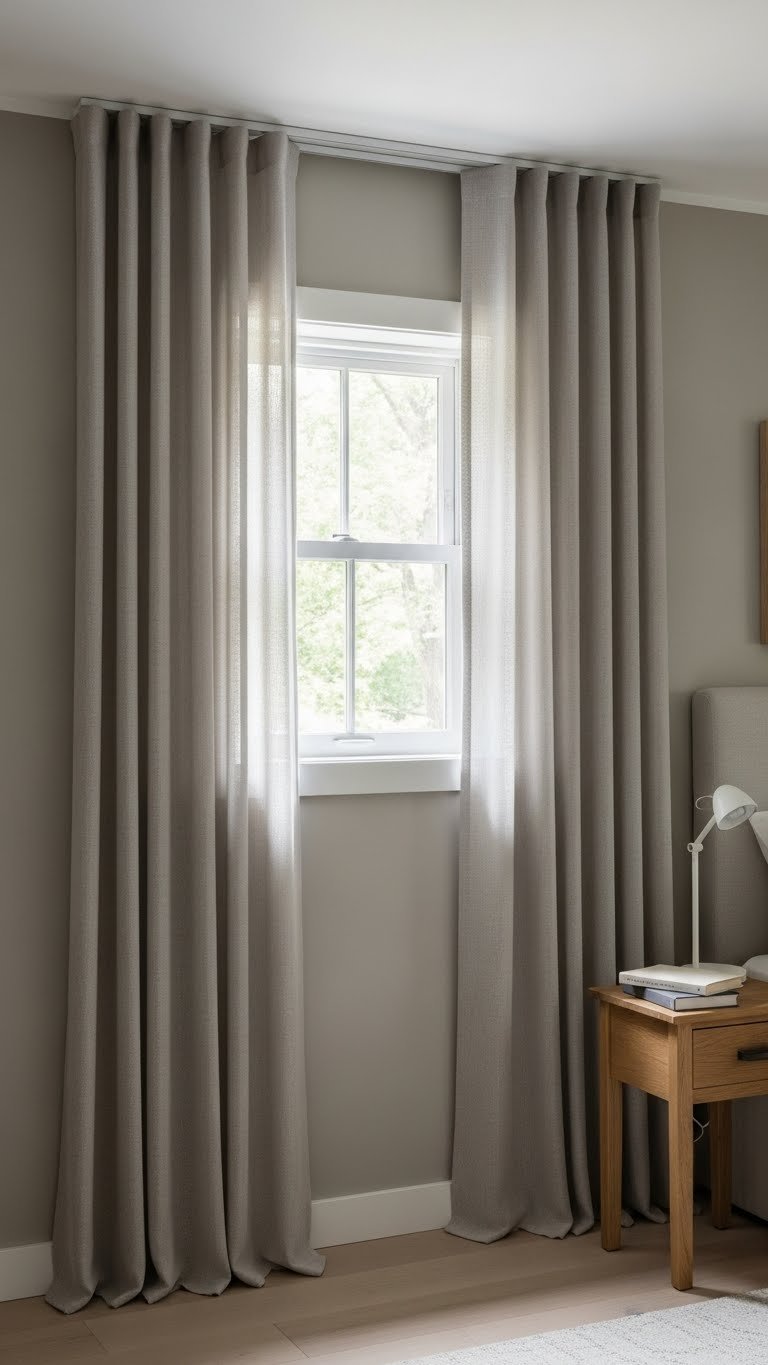
Hanging curtains high and wide—from the ceiling all the way to the floor—creates the optical illusion of taller ceilings and broader windows, making your small room feel more generous than it actually is.
Buy lightweight linen or cotton curtains in neutral colors for $25–$80 per panel. Install a ceiling-mounted rod (removable for renters) for $15–$30. The entire project takes 1–2 hours with basic tools. Avoid heavy velvet or dark colors that make the room feel smaller. Choose light, natural fabrics that let diffused light through. Renter-friendly option: Use adhesive curtain rods or tension rods that require no drilling.
The room immediately feels taller and more open. Your windows appear larger, and the space reads as more luxe and intentional than basic shorter curtains.
12. Create a Gallery Wall to Draw the Eye Up
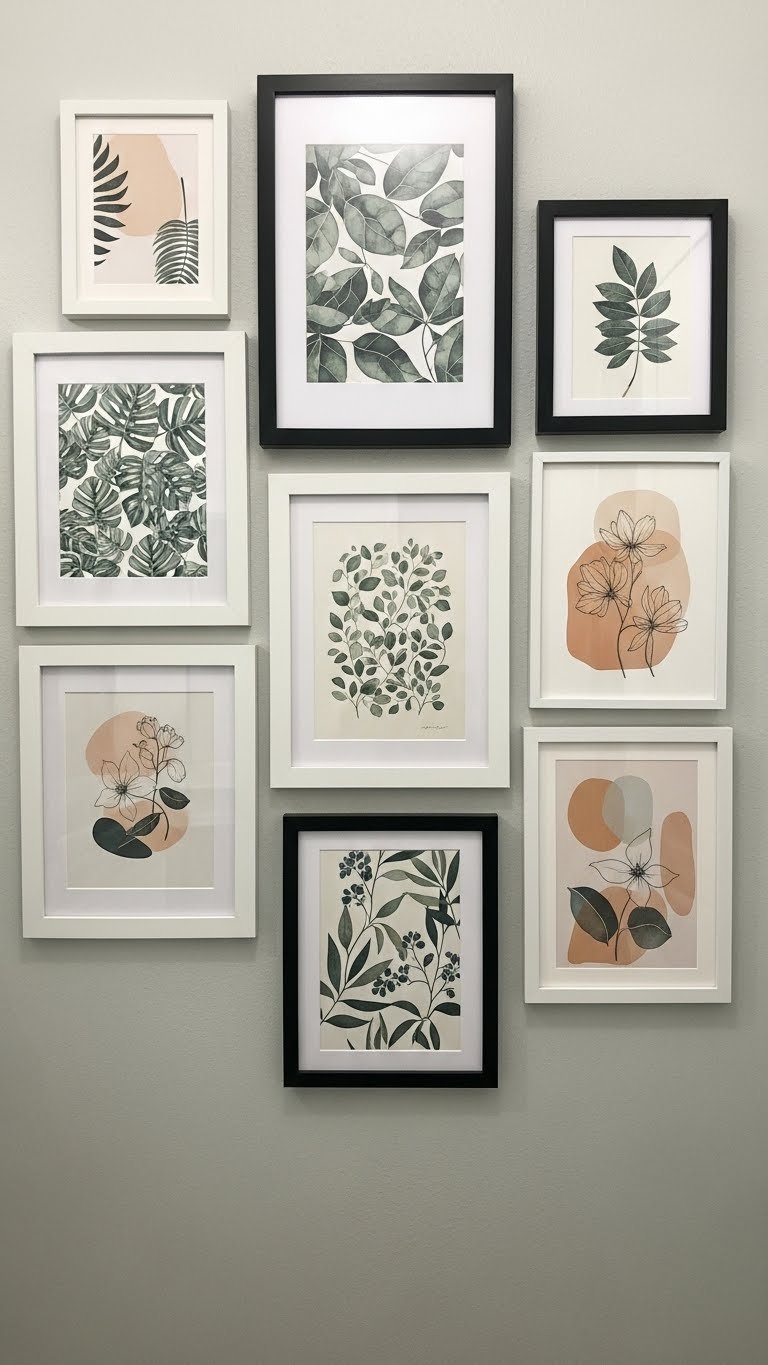
Instead of one large piece, arrange multiple smaller frames in a gallery grid to draw the eye upward and create a focal point that feels sophisticated and personal. Gallery walls work beautifully in small bathrooms, bedrooms, and hallways where square footage is tight.
Choose 5–10 frames in coordinating finishes (all black, all white, or mixed metallics) with artwork that speaks to you. Budget $50–$150 for a mix of framed prints from Etsy, Target, Minted, or thrift stores. Plan your layout on paper first, then use a level and painter’s tape to mark positions. Installation takes 1–2 hours depending on the number of pieces. Pro tip: Mix frame sizes and artwork styles for visual interest.
Your wall becomes a designed focal point that makes the room feel intentional and personal. The eye travels up instead of around the room, making the space feel taller.
13. Swap Bulky Furniture for Leggy Alternatives
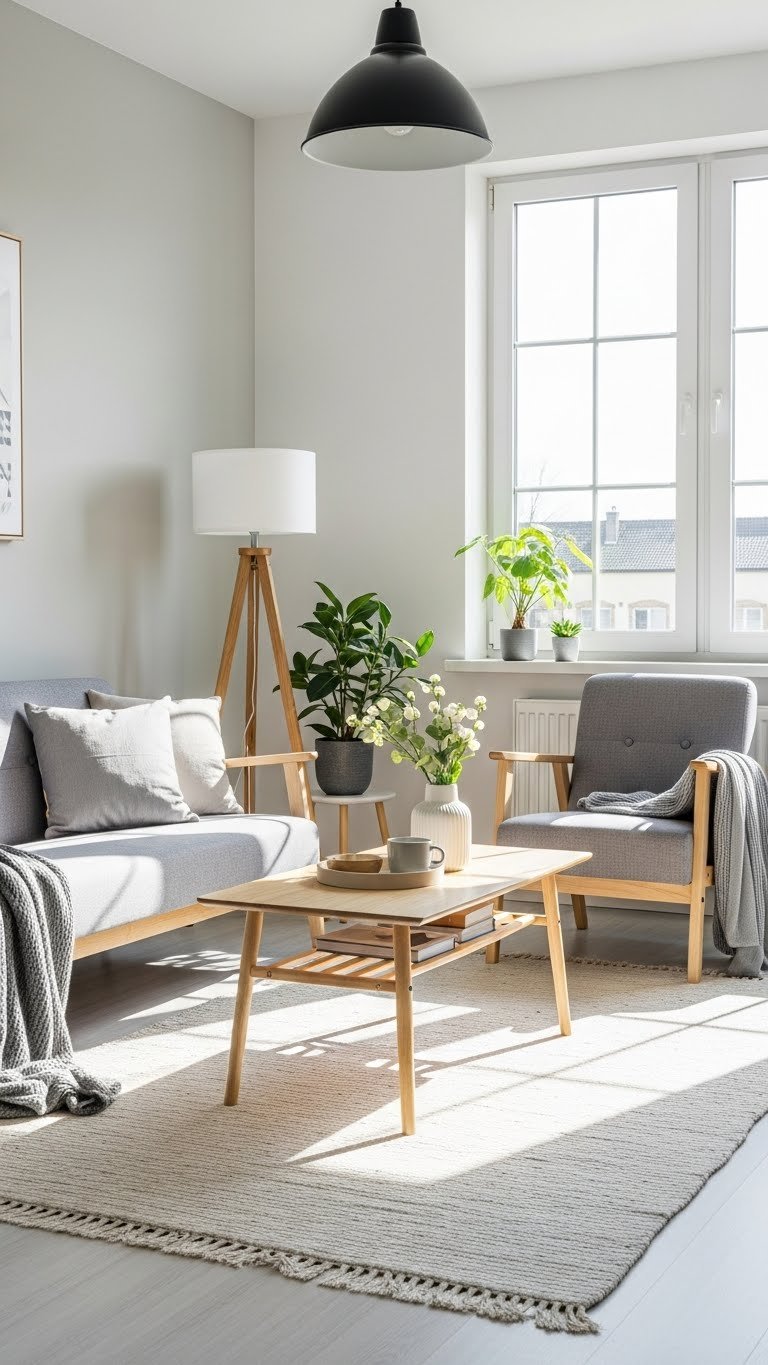
Furniture that sits high on legs (especially wooden or metal legs) creates visual sightlines underneath, making your room feel more open and spacious than furniture with solid bases or skirts that block the view of your floor.
When shopping, prioritize sofas, chairs, tables, and dressers with exposed legs rather than skirted pieces. Compare prices: leggy furniture often costs the same as skirted versions. Look at IKEA, Article, Wayfair, and thrift stores for affordable options. The key is intentional selection during shopping—no installation needed. Choose furniture with thin wooden legs or delicate metal frames for the airest feel.
Your room immediately reads as more spacious because you can see through to the floor. The open sightlines beneath furniture make even crowded rooms feel less cramped.
14. Add a Accent Wall With Hand Stenciling
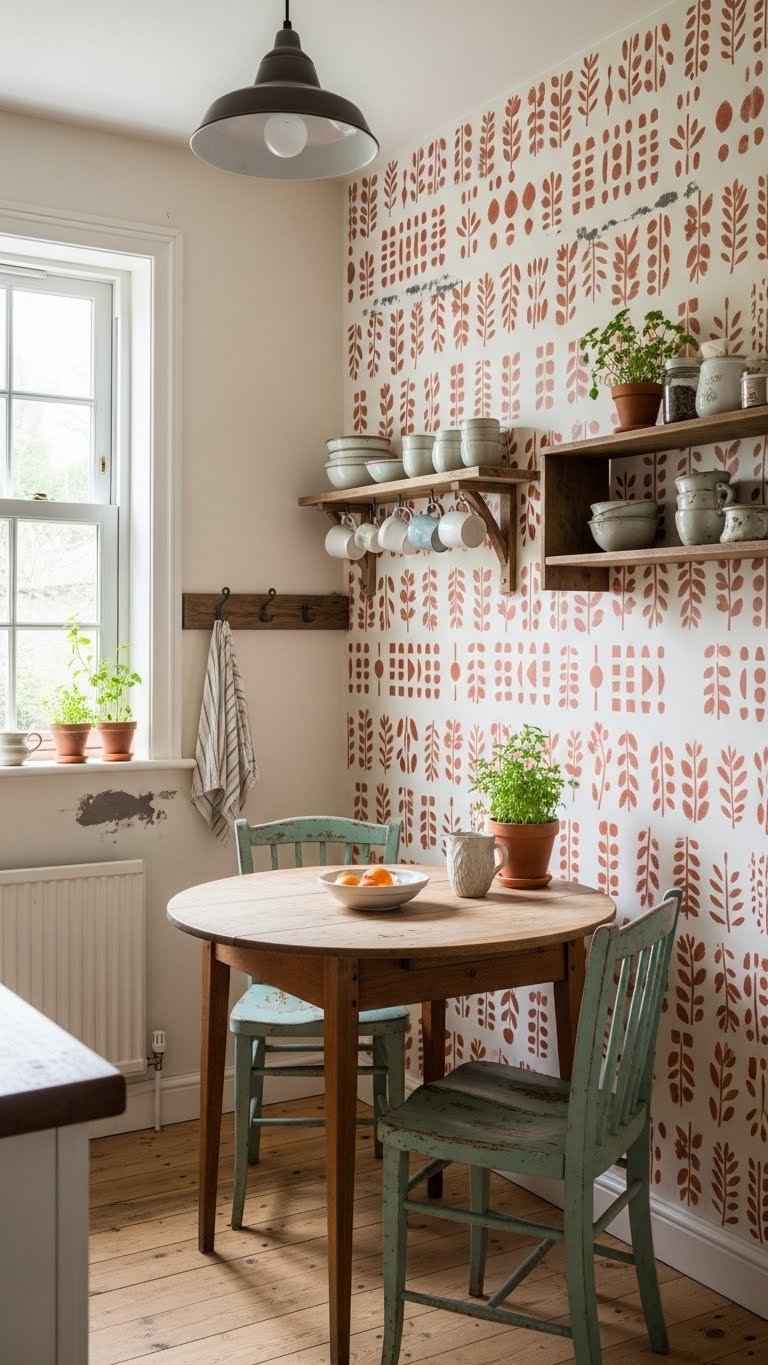
Hand stenciling adds personality and texture without the commitment of full wallpaper. Stenciled patterns on a single wall create an artistic, “imperfect” charm that makes small spaces feel curated and intentional rather than cookie-cutter.
Purchase a reusable stencil (botanical, geometric, or abstract designs) from local craft stores or Etsy for $10–$30. You’ll need stencil paint or craft paint ($5–$15 per can) and a stencil brush or sponge. This DIY project takes 4–6 hours for a single wall, spread over 2 days for drying. The beauty of stenciling is that imperfection looks intentional—slight wobbly lines add character. Renter-friendly: Use removable stencil paint formulas.
Your accent wall becomes a statement piece that feels handmade and authentic. Guests will think you’re incredibly creative, and the pattern adds visual richness that photographs beautifully.
15. Install Open Shelving in Your Kitchen
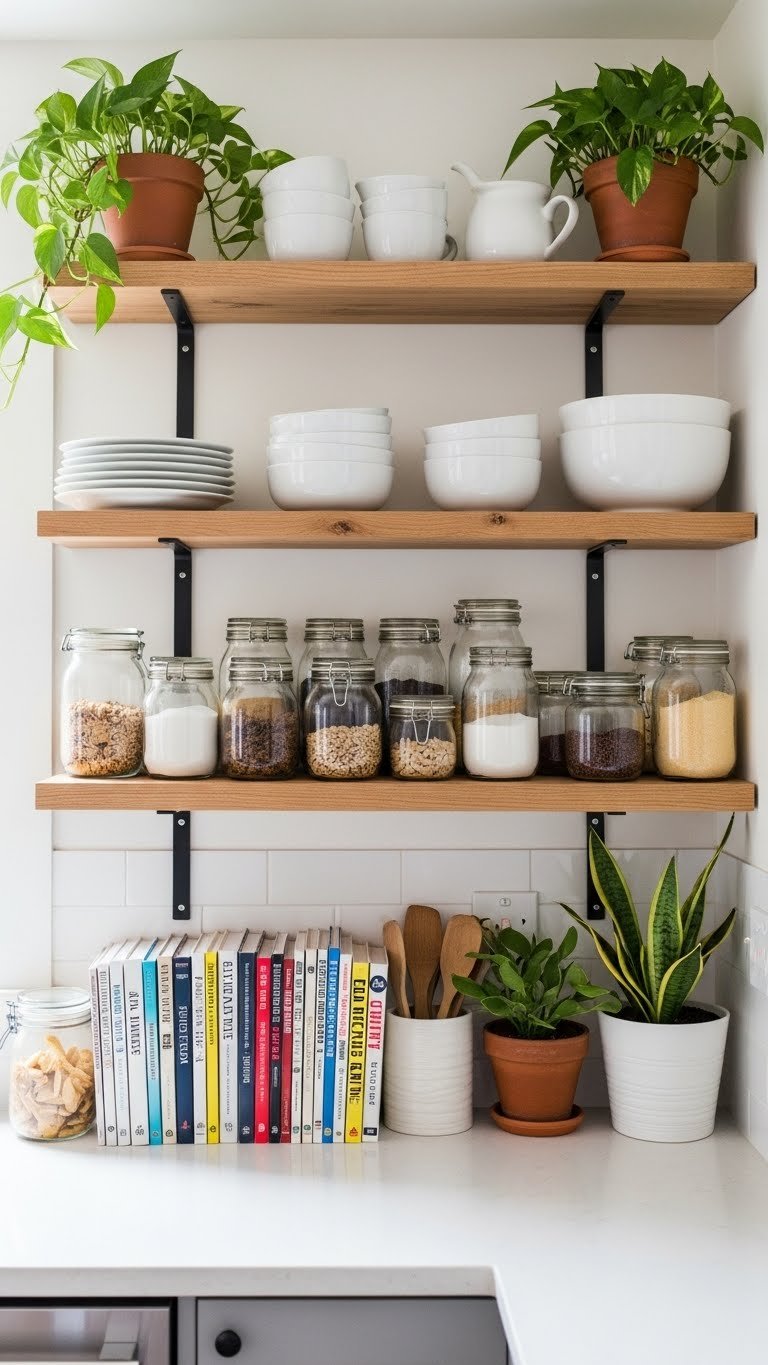
Open shelving removes the visual weight of upper cabinets, making small kitchens feel more open and airy. It also forces you to keep daily items organized and beautiful because everything is visible—which becomes a bonus motivator for tidiness.
Mount 2–3 open shelves using sturdy brackets (black, brass, or natural wood) for $30–$80 total. Installation takes 1–2 hours with a drill and level. Fill shelves with beautiful everyday items: white dishes, glass jars for dry goods, cookbooks, and a few green plants. Budget an extra $20–$50 for styling items if needed. Pro tip: Keep shelves at 80% capacity so they don’t look cluttered or overwhelming.
Your kitchen opens up visually, and you’re more likely to keep it organized because everything’s on display. Plus, open shelving adds character and makes your small kitchen feel chef-like and intentional.
16. Use Peel-and-Stick Wallpaper for Instant Style
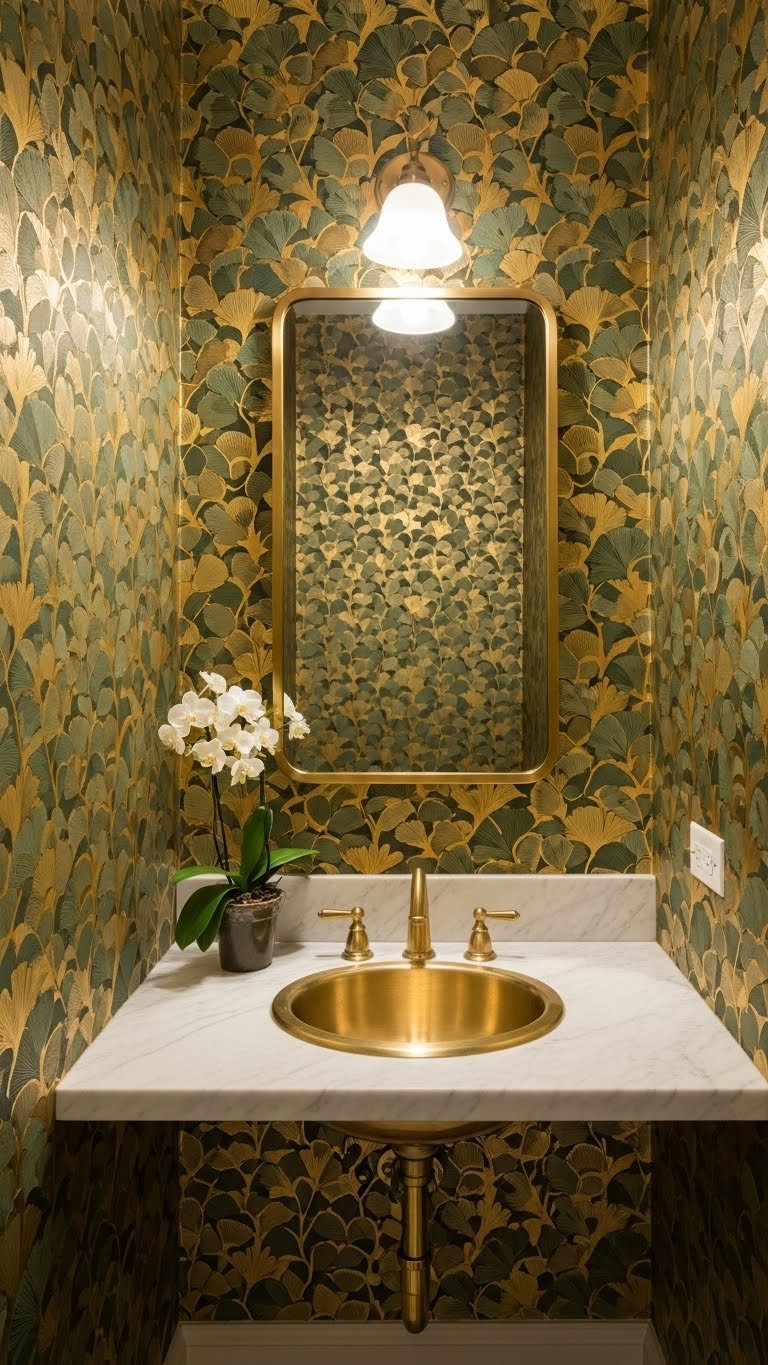
Peel-and-stick wallpaper is the small-space game-changer: it transforms a room in hours, requires zero tools, and works for renters. Bold patterns in a small room read as intentional design, not chaotic.
Choose a bold geometric, botanical, or abstract pattern in warm tones. Peel-and-stick wallpaper costs $20–$60 per roll depending on pattern and brand. A small bathroom needs 2–3 rolls. This is a 2–4 hour DIY project—no tools, no mess, no commitment. Measure twice, cut carefully, and smooth as you apply. Brands like Spoonflower, Etsy, Target, and Amazon have hundreds of designs. Renter gold: Remove it completely when you move, no damage to walls.
Your small bathroom, entryway, or accent wall becomes a sophisticated, designed space. The transformation is dramatic, affordable, and totally temporary if you change your mind.
17. Optimize Your Closet With Smart Organizers
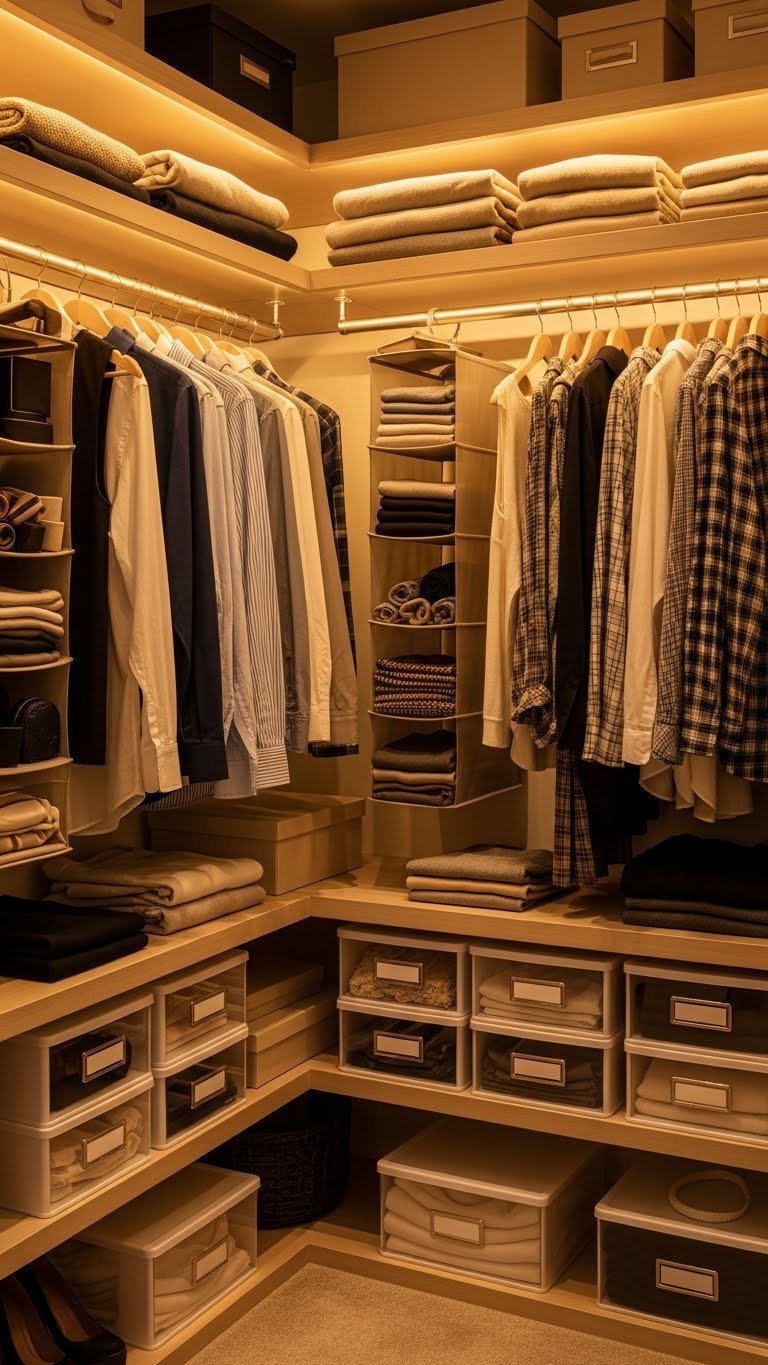
A disorganized closet makes your entire small space feel chaotic and cramped. Smart closet organizers—shelf dividers, slim hangers, door organizers, and labeled boxes—let you fit more items in less space while keeping everything visible and accessible.
Invest in slim velvet hangers ($15–$30 for 30 hangers), shelf dividers ($10–$20), hanging organizers ($10–$25), and a labeler or clear boxes ($5–$20). The total investment is $50–$100, and the 2–3 hour project pays off immediately. Every item now has a home, and you can actually see what you own. Pro tip: Fold bulky items in clear boxes and label them so you know contents at a glance.
Your closet becomes functional and beautiful. You’ll get dressed faster, know what you own, and find things easily. Plus, an organized closet makes your bedroom feel less cluttered by extension.
18. Add Warm Lighting With Layered Fixtures
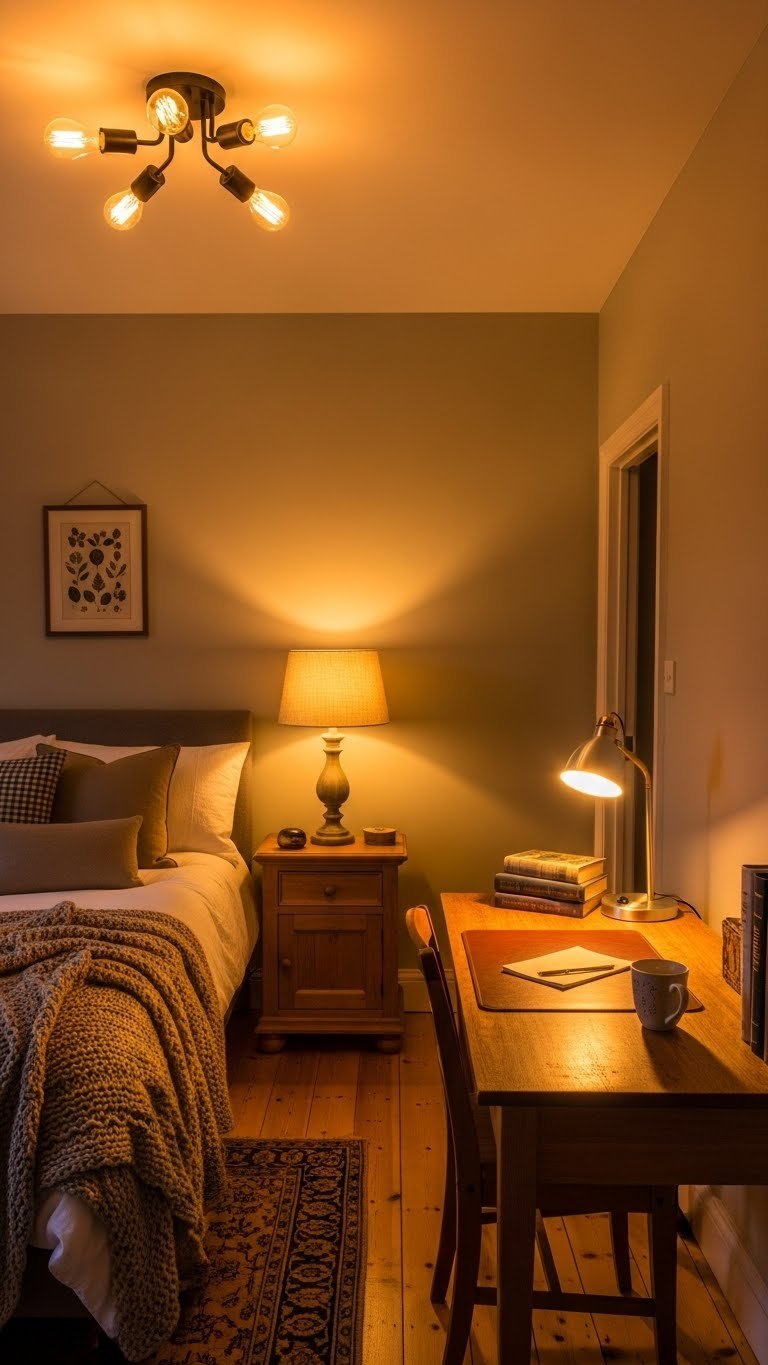
Single overhead lights make small rooms feel harsh and institutional. Layered lighting with multiple fixtures in warm tones creates coziness, makes the room feel larger (because you can control which areas are lit), and costs less than you’d think.
Install 1–2 warm white LED bulbs in your overhead fixture ($5–$15 for smart bulbs that dim), add a bedside lamp ($30–$100), and consider a desk lamp or accent light ($20–$60). Warm-toned bulbs (2700K color temperature) cost the same as bright ones but feel infinitely cozier. This upgrade takes 30 minutes and requires just bulb changes and plug-ins. Budget $60–$200 total for complete layered lighting.
Now your room feels warm and intentional instead of institutional. You can adjust lighting based on mood, and the space immediately feels more like a retreat than a box.
19. Use Skirted Furniture for Drama and Storage

Skirted furniture—ottomans, sofas, and chairs with fabric bases that extend to the floor—adds softness and hides storage while creating a more dramatic, intentional look than modern leggy pieces. Skirts hide clutter and add texture.
Look for skirted ottomans ($100–$300) or skirted accent chairs ($200–$500) that tuck neatly into corners. Budget options from IKEA, Wayfair, and Etsy range from $50–$150. Pieces with fringe details add extra personality and vintage charm. This is a furniture purchase, not a DIY, but the impact is dramatic. Pro tip: Choose neutral skirts (cream, gray, sage) for versatility.
Your small room gains visual softness and drama without looking chaotic. Plus, skirted pieces often have hidden storage underneath, so you’re multitasking functionally and aesthetically.
20. Create a Defined Entryway With a Narrow Console
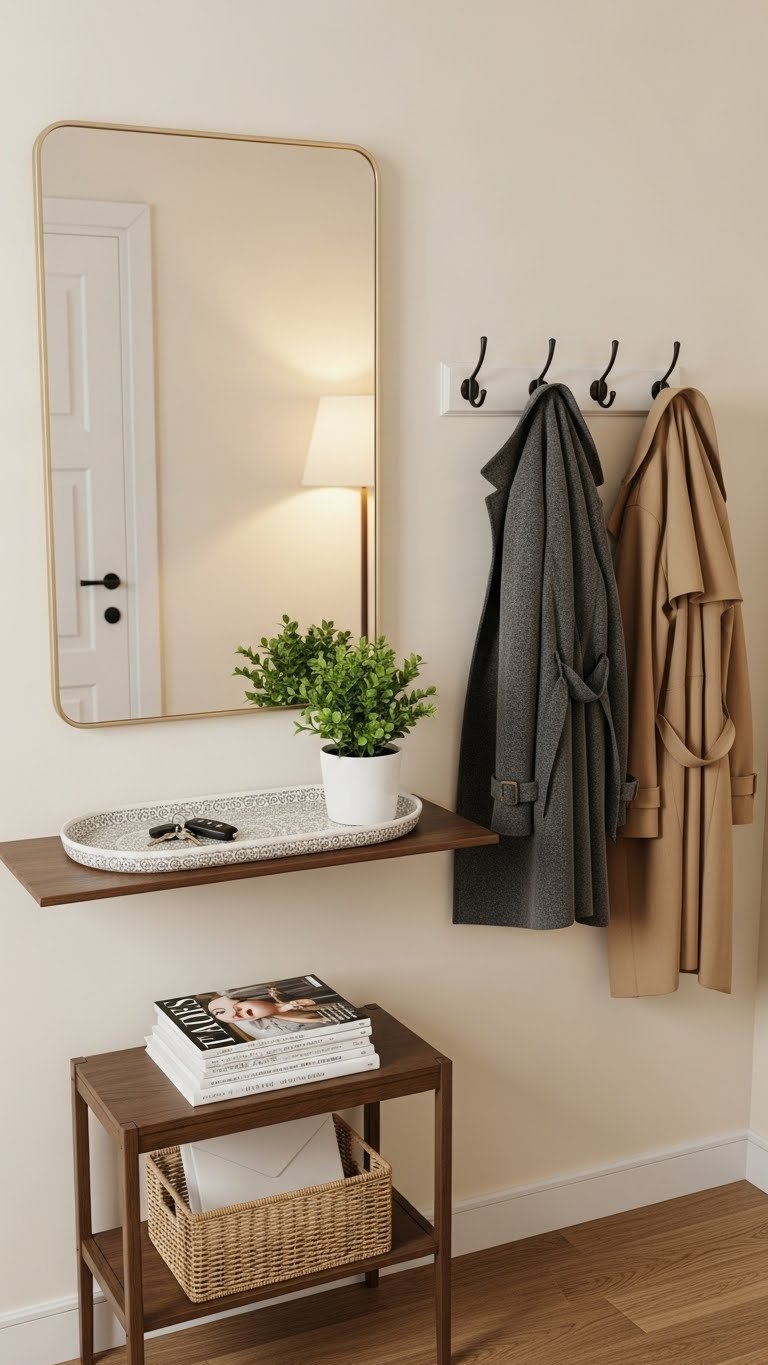
Small apartments often lack defined entryways, which makes your whole space feel disorganized the moment you walk in. A narrow console table, mirror, and hooks create visual boundary and functionality without eating into your living space.
Find a narrow console table ($50–$200) that fits your entryway niche or wall. Pair it with a wall-mounted mirror ($30–$100) and coat hooks ($10–$30 for a set). Total investment: $90–$330 depending on quality. Installation takes 1–2 hours with a level and drill. Style with a decorative tray ($15–$40) for keys and small items. Pro tip: Use a console with drawers or shelves for hidden storage.
Now visitors enter a curated, organized space instead of your living room directly. The defined entryway makes your home feel intentional and polished from the moment people arrive.
21. Paint Your Ceiling a Warm Accent Color
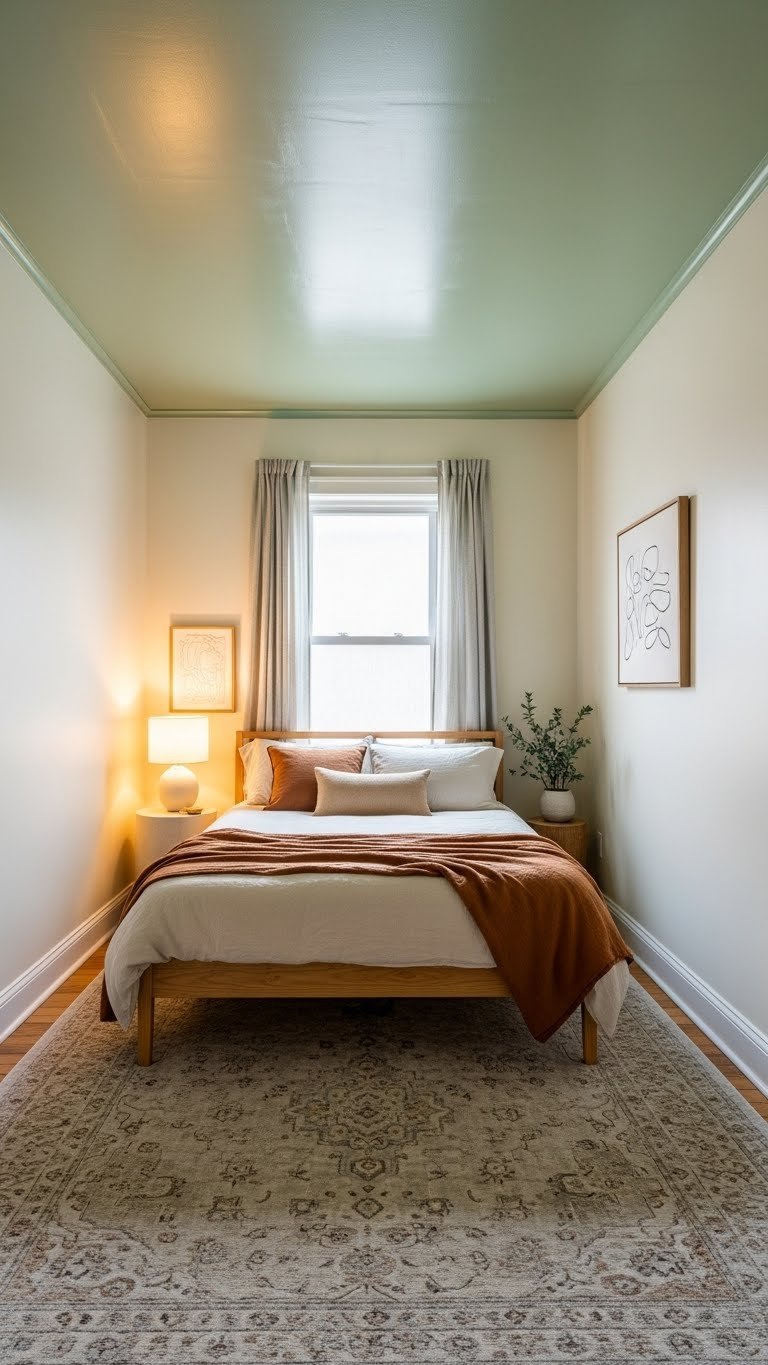
Bold ceiling colors seem risky, but painting your ceiling in a warm accent shade actually makes small rooms feel cozier and more intentional. It draws the eye upward and adds personality without the heaviness of dark walls.
Choose a warm, saturated tone like soft sage, pale blue, or dusty rose that complements your walls. Ceiling paint costs the same as wall paint ($15–$40 per gallon), and one gallon covers a small room. This is a one-day DIY project that takes 4–5 hours (the hardest part is craning your neck—take breaks). Use a ceiling paint specifically formulated to resist drips. Pro tip: Paint the ceiling before the walls for easier masking.
Your room gains visual height and personality. The painted ceiling becomes a subtle luxury detail that makes guests comment, “This room feels so intentional.”
22. Install a Window Seat With Storage

If your small room has a window or nook, a built-in bench with a hinged top adds seating, reading space, and hidden storage—three functions in one compact footprint. It becomes an instant focal point and favorite hang-out spot.
DIY: Build a simple wooden bench with a hinged top using plywood and hinges (budget $50–$150 for materials). OR purchase a low storage bench ($100–$300) and place it under your window. Add cushions and throw pillows ($40–$100) for comfort and style. This is a 1–2 day weekend project if building, or a 30-minute setup if buying pre-made. Renter option: Use a low furniture piece and styling to create the effect without building.
You’ve created a multi-functional feature that makes your room feel intentionally designed and gives you an actual reading nook. Plus, the hidden storage is perfect for off-season items or extra linens.
23. Use Color Blocking With Paint for Visual Interest
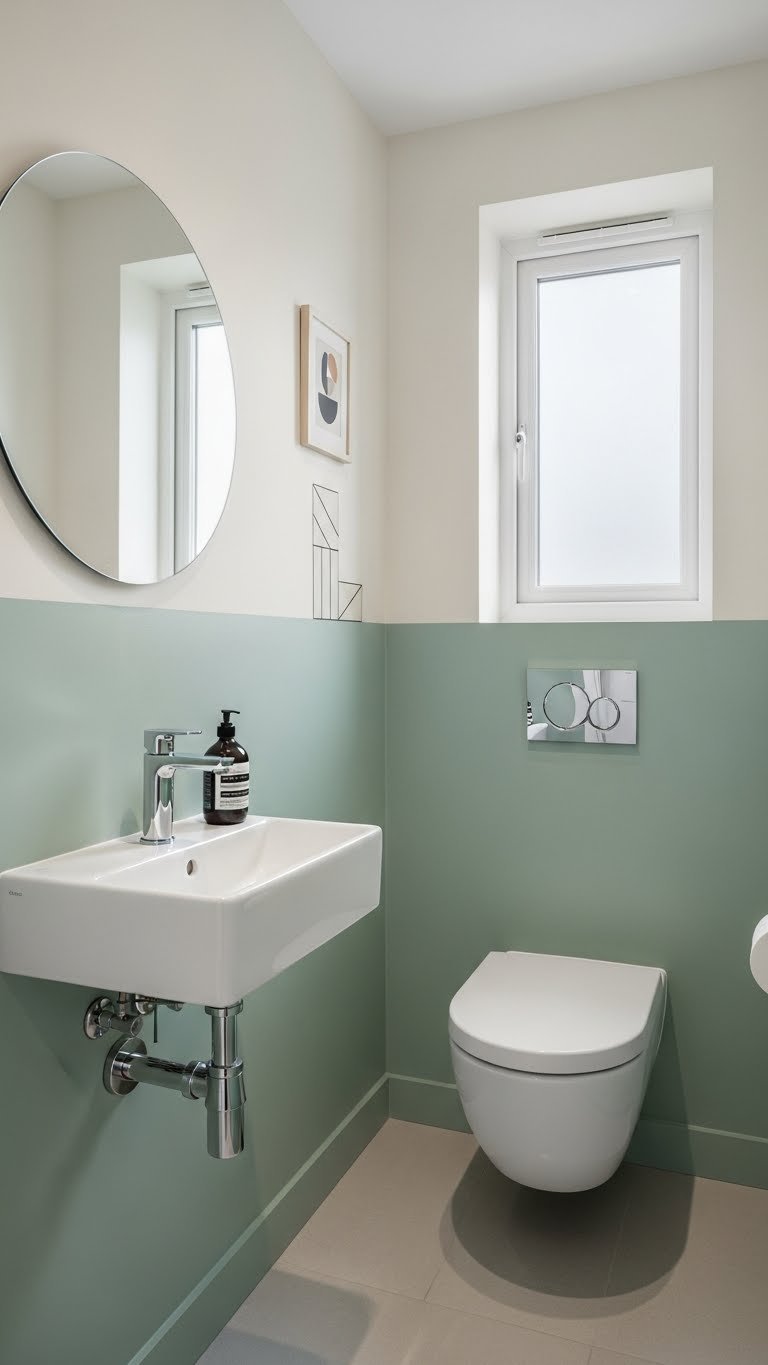
Color blocking—painting geometric color sections on walls—adds visual interest and dimension without the commitment of full patterns. It’s bold enough to feel designed but simple enough to execute as a DIY project.
Choose two complementary warm colors (like sage and cream, or chocolate brown and warm white). Plan your design on paper first, then use painter’s tape to create clean lines. Paint the lower section first, let it dry, then tape and paint the upper section. Budget $30–$50 for paint and $5–$10 for painter’s tape. This project takes one full day including drying time. Pro tip: Horizontal color blocks make rooms feel wider; vertical blocks make them feel taller.
Your walls become a designed feature instead of plain backdrop. Color blocking is sophisticated, trending, and way easier than you’d think to execute.
24. Add a Shoe Organizer Over Your Door

An over-the-door organizer stores twice as much as a traditional shoe rack and uses vertical space that’s otherwise wasted. It’s renter-friendly, affordable, and surprisingly stylish when filled with pretty rolled scarves, belts, and accessories.
Buy an over-the-door organizer with clear pockets ($15–$40) that hangs on any standard door without installation. Fill with rolled scarves, belts, small bags, or even pantry items in a kitchen. Setup takes 5 minutes, and you’ve instantly added storage for 12–20 items. Pro tip: Use beautiful small baskets or boxes inside pockets to make the storage look intentional and designed.
You’ve freed up drawer and closet space without adding any furniture. The organized display actually looks curated and intentional, not like clutter.
25. Create Zones With Hanging Fabric Dividers
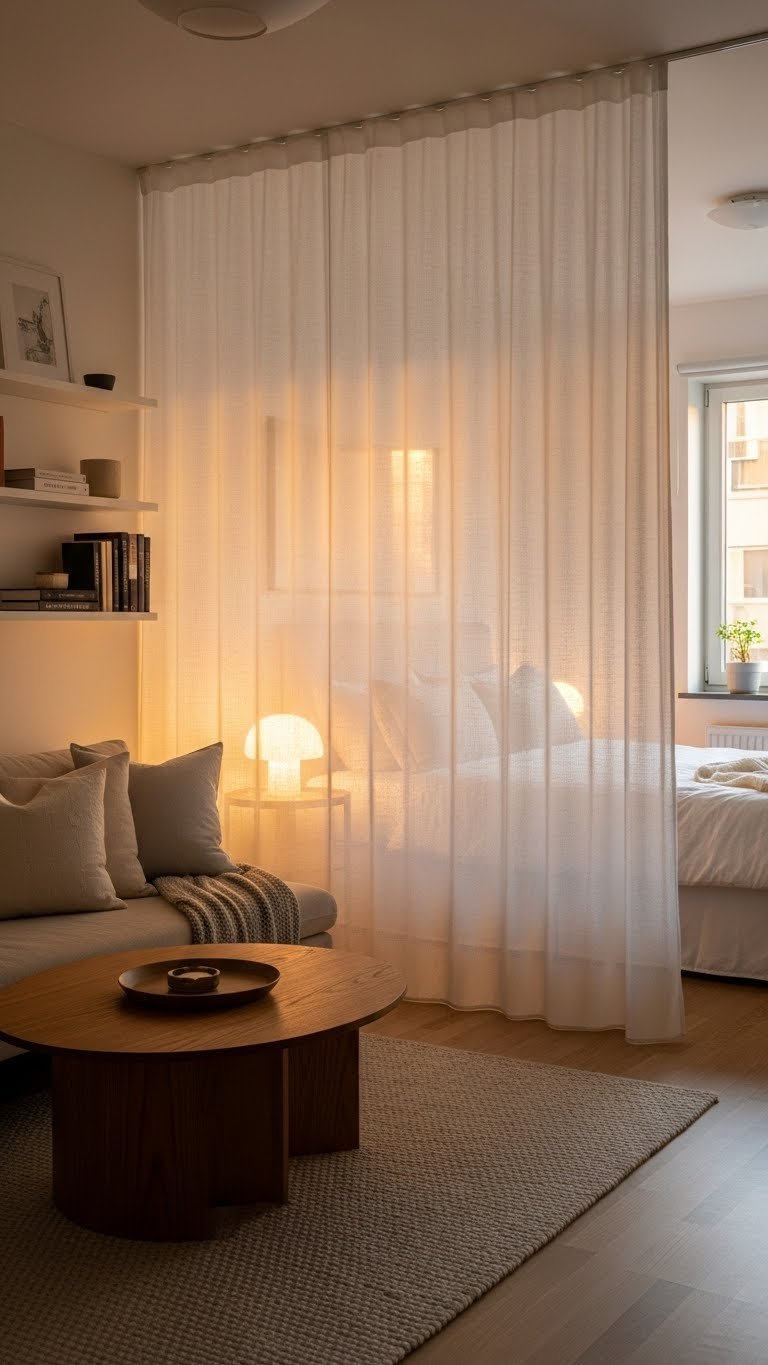
Hanging fabric dividers are renter-friendly alternatives to walls that create private zones in open studio spaces. Lightweight curtains or panels instantly define sleeping areas, office corners, or change rooms without permanent installation.
Buy lightweight tension rods ($15–$40 each) and hang neutral or patterned fabric (lightweight linen, cotton, or sheer curtains work perfectly). Total cost: $30–$100 depending on fabric choice. Installation takes 30 minutes and requires only a drill for tension rods. Pro tip: Choose fabric that filters light rather than blocks it completely, so one zone doesn’t feel like a dark cave.
Now your studio feels like multiple rooms instead of one multipurpose box. Each zone has privacy and purpose, and the transformation costs almost nothing while being completely reversible.
26. Invest in a Quality Bed Frame With Storage
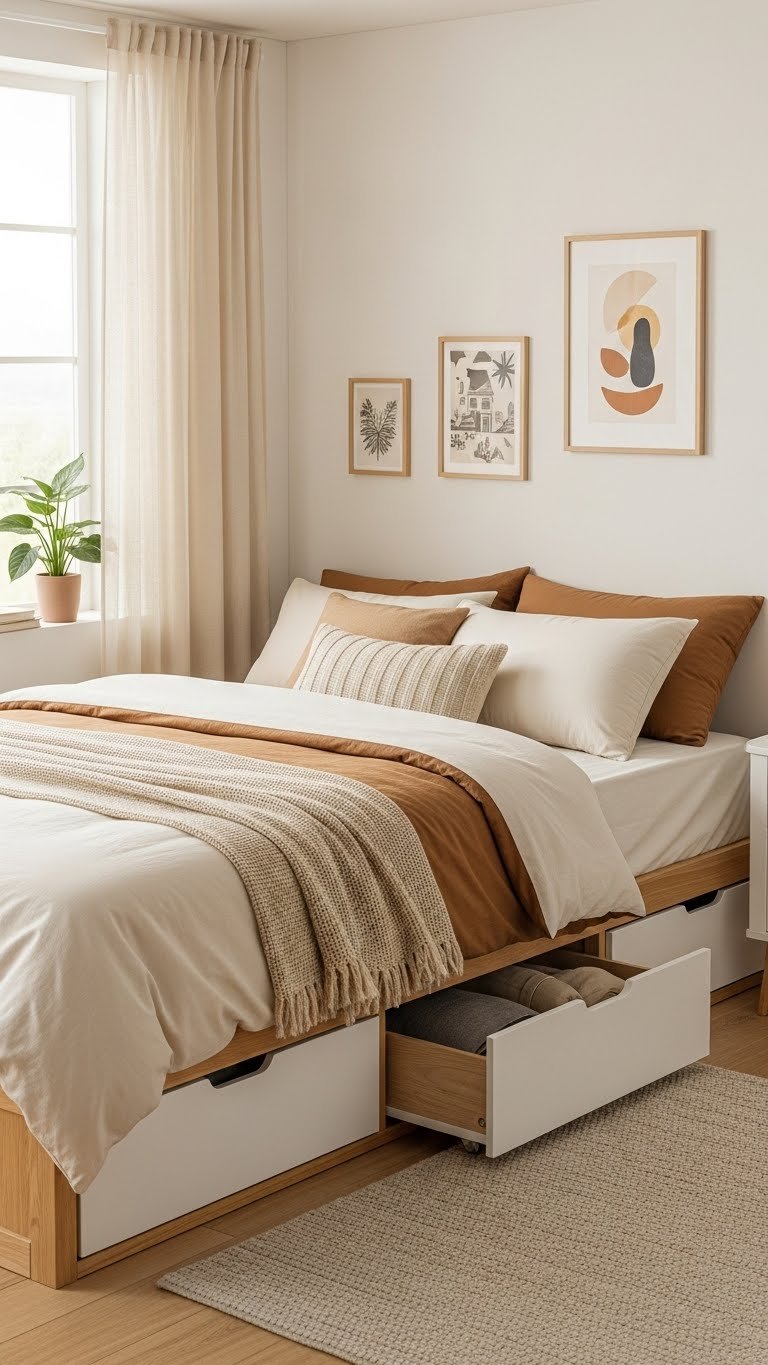
Your bed is your largest furniture piece in a small bedroom, so choose wisely. A bed frame with built-in storage drawers maximizes the footprint while giving you hidden storage for off-season items, extra linens, or clothing overflow.
Look for platform beds with storage drawers on both sides or underneath. Quality options cost $300–$800 from Wayfair, Article, West Elm, or IKEA. Budget options start at $150–$300. This is an investment piece you’ll use every day for years, so prioritize durability and style. The bed installation takes 1–2 hours with basic tools. Pro tip: Choose a bed with a high frame so storage drawers slide easily.
You’ve solved your storage crisis with one functional, beautiful piece. Your bedroom gains organization and breathing room, and you use your largest furniture piece strategically instead of wasting its potential.
Save this post and pick just one or two ideas to tackle this weekend. Small changes add up faster than you’d expect, and your space deserves to work for you, not against you. Which idea are you trying first?
Leave a Reply