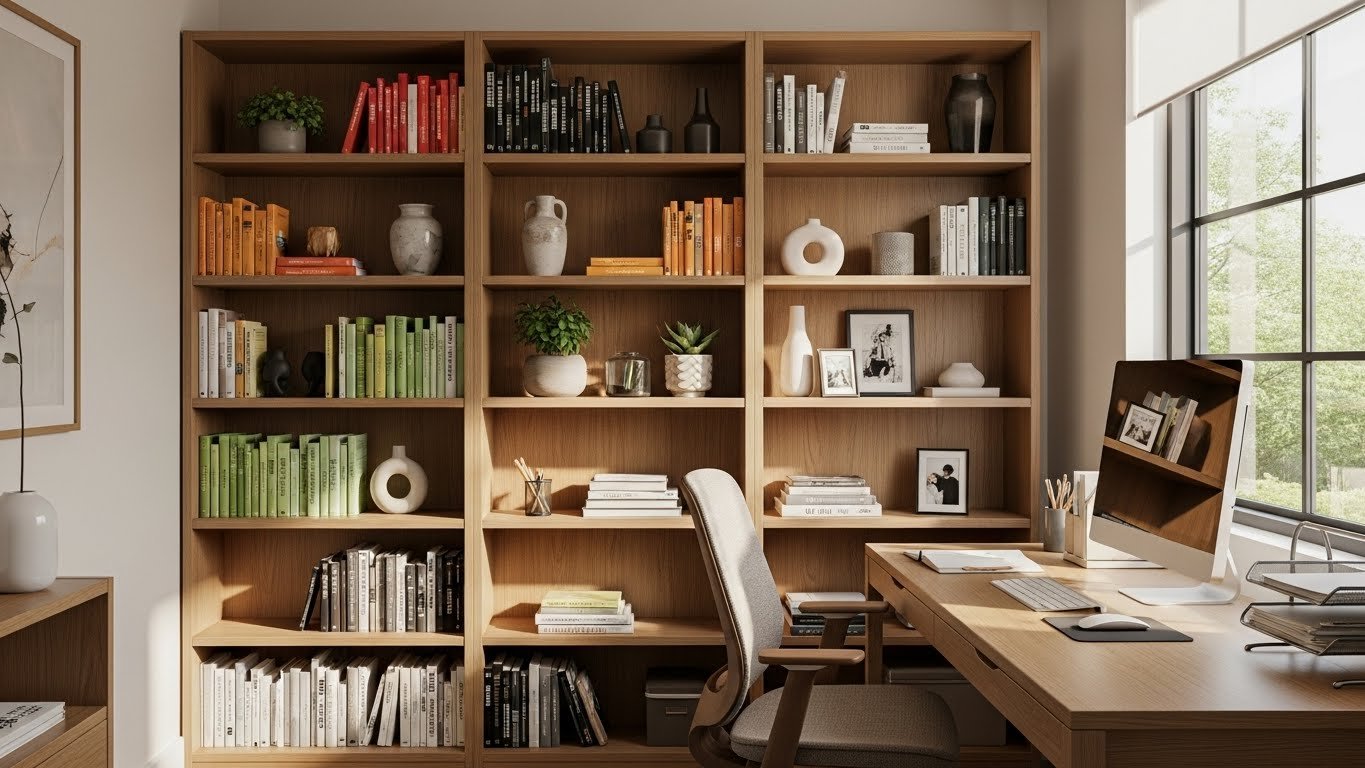
Your home office should make you want to sit down and get work done. Yet so many of us end up with cramped, cluttered spaces that feel chaotic instead of creative. The good news? Your bookcase is the secret weapon. A well-designed bookcase doesn’t just store books—it anchors your whole room, reflects your personality, and actually boosts your productivity. Whether you’re working with a tiny corner or an entire wall, we’ve gathered 27 practical bookcase design ideas that work for any budget, any space, and any style. From DIY hacks to statement pieces, you’ll find something that makes your office feel like a place you actually want to spend eight hours a day.
1. Float Shelves for a Modern, Minimalist Look

Floating shelves give you that high-end designer vibe without eating up precious floor space. They work in tight corners or along dead wall space that traditional bookcases can’t reach.
Install floating shelves using heavy-duty wall brackets and a stud finder (about $30–$100 per shelf including hardware). IKEA, Home Depot, and Amazon all carry affordable options. The install takes about 30 minutes per shelf if you’re comfortable with basic drilling. No drilling skills? Many hardware stores offer installation services for a small fee. Pro tip: Stagger them at different heights to create visual interest and maximize storage without looking rigid.
Your office instantly gains sophistication. The open design keeps the room feeling airy even when packed with books, and you can access everything at eye level without bending or reaching.
2. Paint Your Bookcase a Bold Accent Color
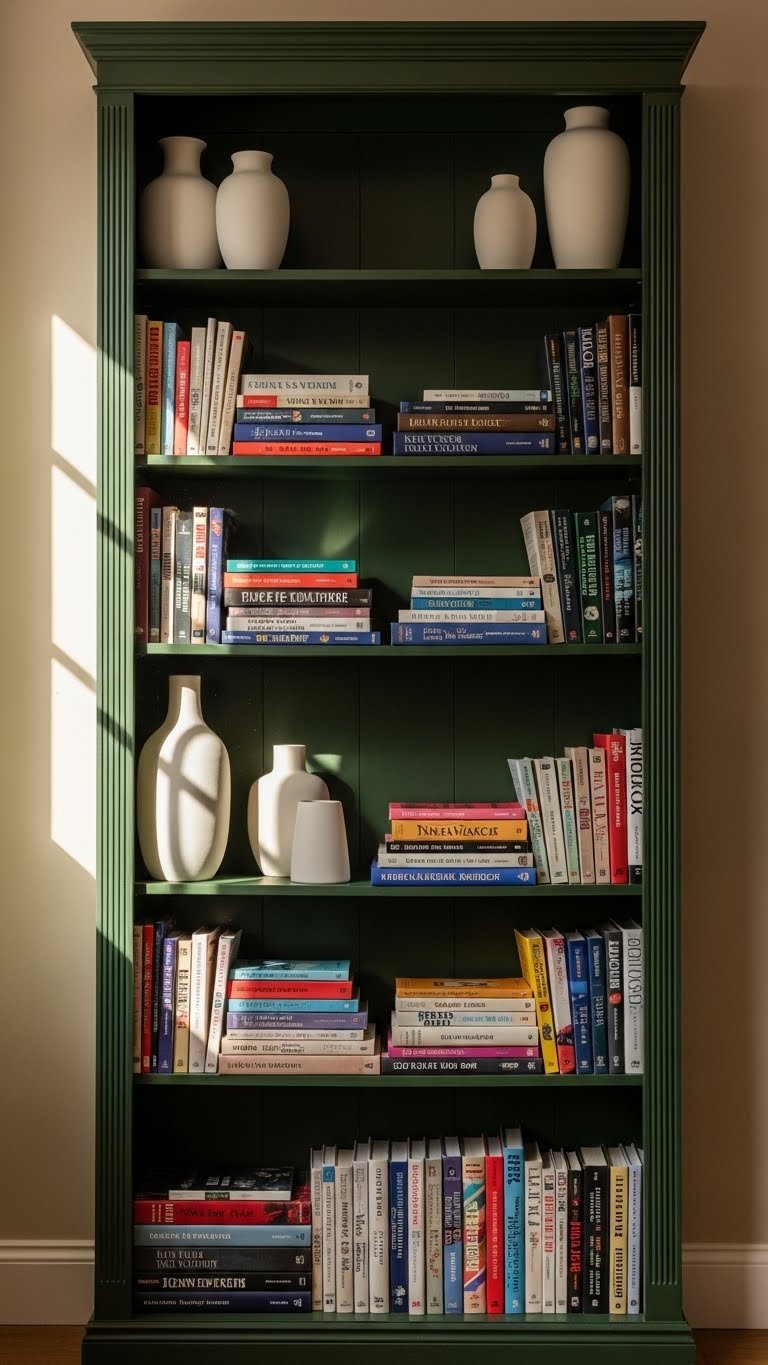
A painted bookcase becomes a focal point that anchors your entire office aesthetic. Instead of a boring wood tone, bold color creates instant personality.
Choose a semi-gloss or satin finish paint in jewel tones (emerald, navy, terracotta) or soft pastels (sage, cream). Budget $15–$40 for paint and supplies. Use painter’s tape, primer, and two coats for a professional finish. The whole project takes a weekend and requires zero woodworking skills. Renting? Use a removable peel-and-stick paint alternative (about $25–$60) that protects your deposit.
This single change makes your office feel intentional and curated. A bold bookcase backdrop photographs beautifully for video calls, too.
3. Mix Open Shelving with Closed Cabinet Storage
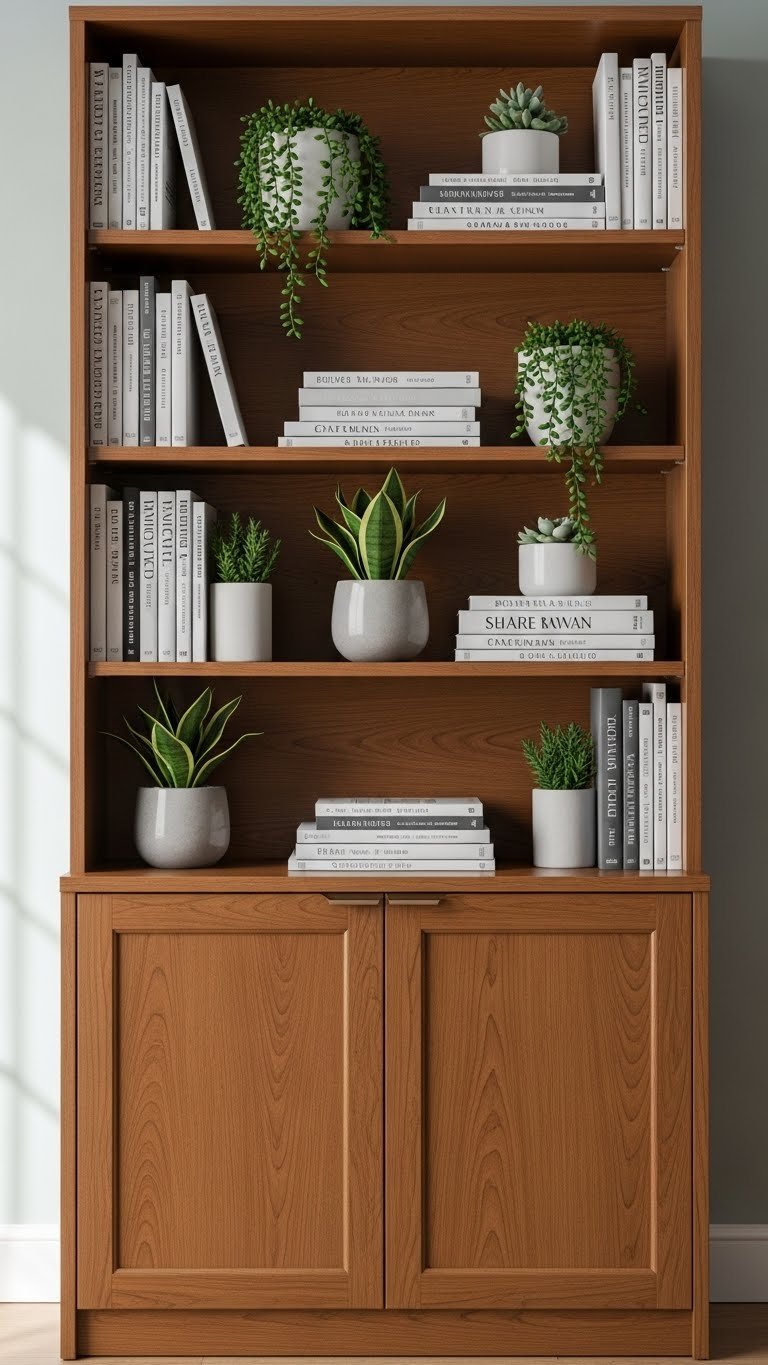
Open shelves look beautiful but require constant styling. Closed storage keeps the chaos hidden. Combining both gives you the best of everything.
Look for open-and-closed bookcase hybrids (IKEA’s Billy with doors, $80–$200, or Wayfair’s designer options). The open top lets you display your best books and decor, while lower cabinets hide supplies, cords, and things you don’t want guests to see. Install in about 1–2 hours with basic tools. No assembly skills? Hire a handyman for $50–$100.
You get a styled, editorial look on top with practical storage below. Your office looks polished, and you have a place for everything.
4. Create a Two-Tone Bookcase with Paint and Stain

Two-tone bookcases add sophistication without requiring major investment or construction skills. The contrast makes your space feel designed, not default.
Paint the back panel of your existing bookcase while leaving the frame stained wood (budget $10–$30 for paint). Use painter’s tape for clean edges. The project takes 3–4 hours including drying time. Alternatively, buy a two-tone bookcase from West Elm ($400–$800) or IKEA ($150–$300) if you prefer new.
This layered approach creates visual depth. Your bookcase becomes a piece of furniture rather than just storage, elevating your whole workspace.
5. Organize Books by Color for a Magazine-Worthy Display
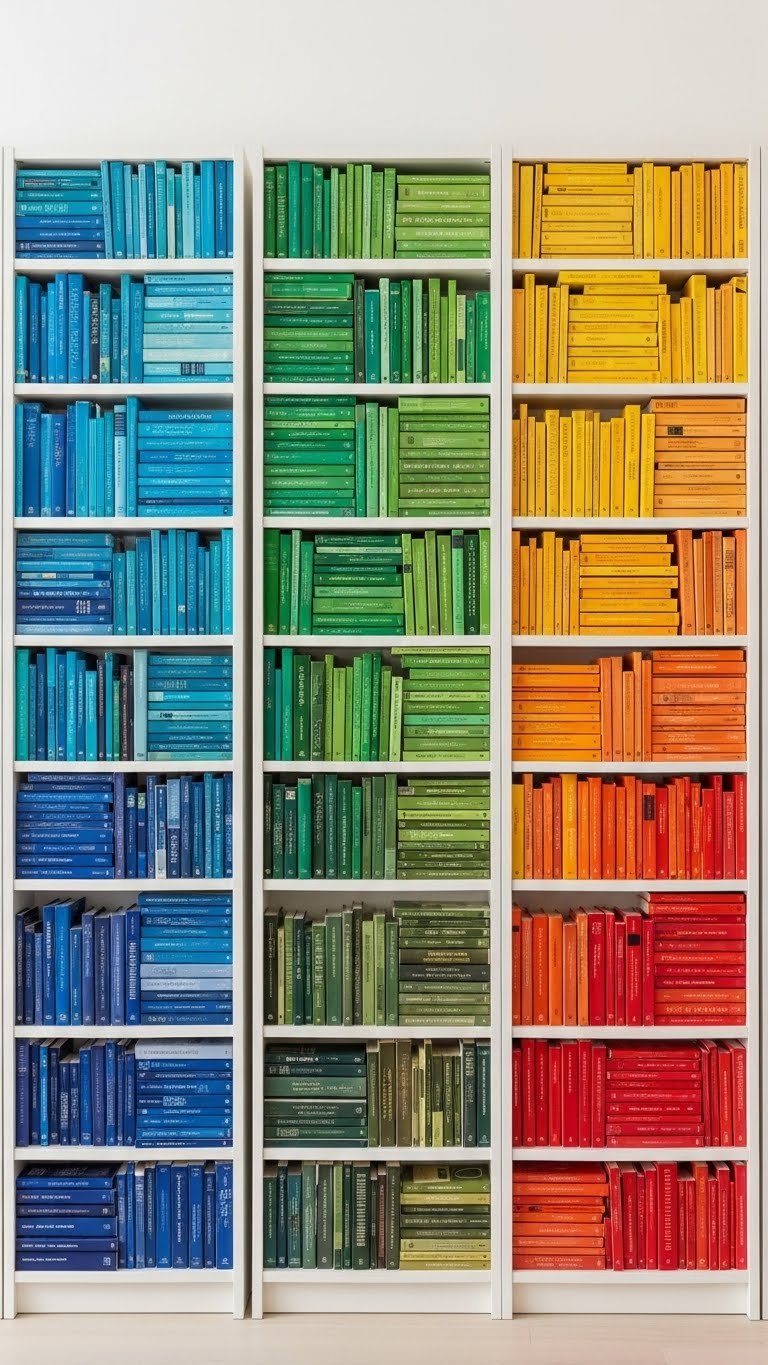
Rainbow-organized books look stunning and actually make it easier to find titles visually. It’s the “bookshelf wealth” aesthetic that’s taking over social media for good reason.
Sort your existing books by color (free) or buy a few coordinating titles from thrift stores or used sections ($10–$30 total). Arrange them spine-out for visual impact. Add 1–2 small decor pieces per shelf (plant, framed photo, small sculpture) to break up the color blocks. This takes about 1–2 hours to arrange and photograph well.
Your bookcase becomes a visual asset that makes your home office feel curated and intentional. Video call backgrounds suddenly look professional and personal.
6. Install Adjustable Shelving for Flexible Storage

Standard bookcases force you into fixed shelf heights that waste space. Adjustable shelving lets you customize spacing for your actual stuff.
Buy adjustable wall-mounted shelving systems like Elfa (Container Store, $100–$300 per unit) or Slingsby modular systems ($80–$250). Installation takes 1–2 hours with basic tools. These systems let you add, remove, or raise shelves anytime without tools. Budget-friendly alternative: Buy a traditional bookcase with adjustable pegs ($60–$150 from IKEA or Wayfair).
You’ll stop wasting vertical space and actually use every inch. When your needs change, just adjust—no furniture replacement needed.
7. Add LED Strip Lighting Behind Shelves
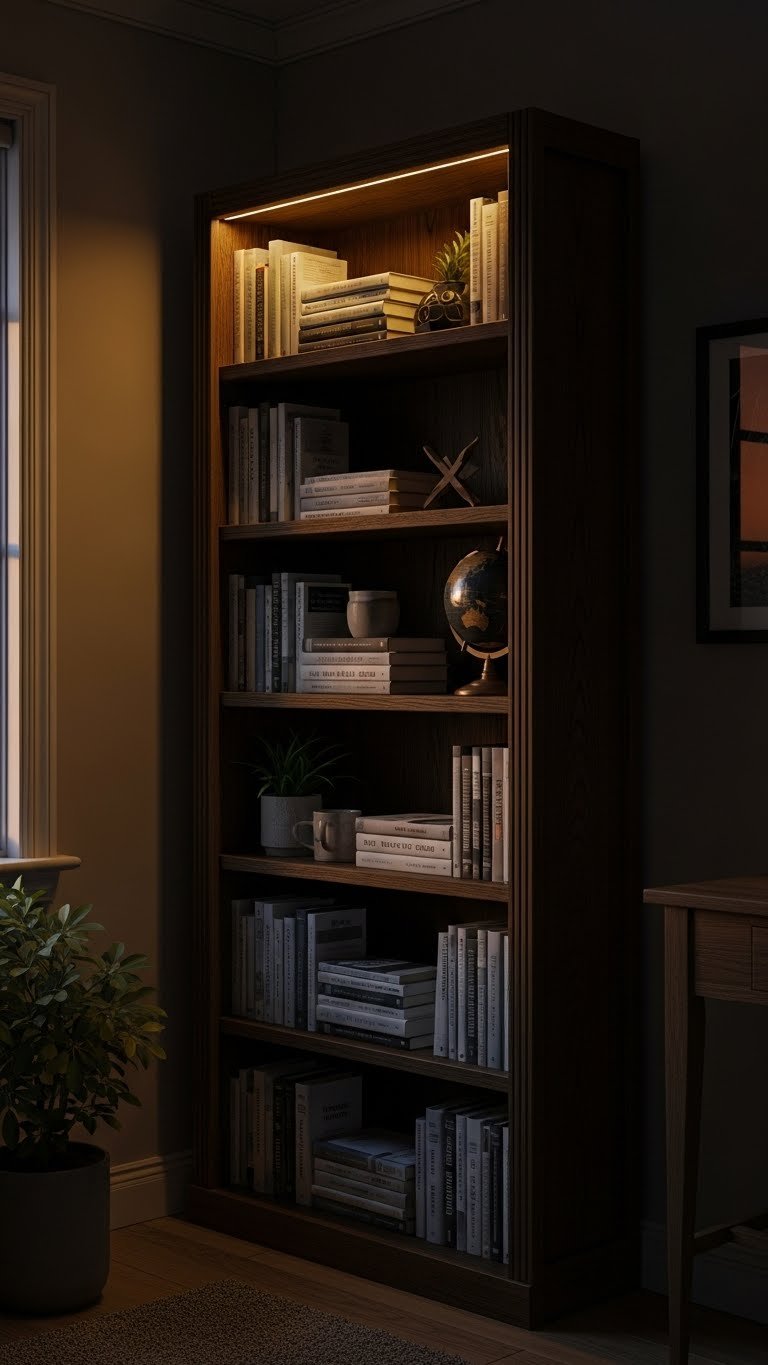
Shelf lighting serves double duty: it makes your bookcase look like a high-end display and provides practical task lighting for your desk below.
Install adhesive LED strip lights ($15–$40 on Amazon) along the top edge or behind shelves. Warm white (2700K) feels professional; cool white (5000K) energizes. Takes 10 minutes to install and plug in. Plug into a smart outlet ($15–$25) to control brightness via your phone.
Your office gains upscale ambiance instantly. The warm glow makes late afternoon work sessions feel less draining, and your bookcase becomes a beautiful focal point, especially on video calls.
8. Use Bookends as Decorative Styling Tools
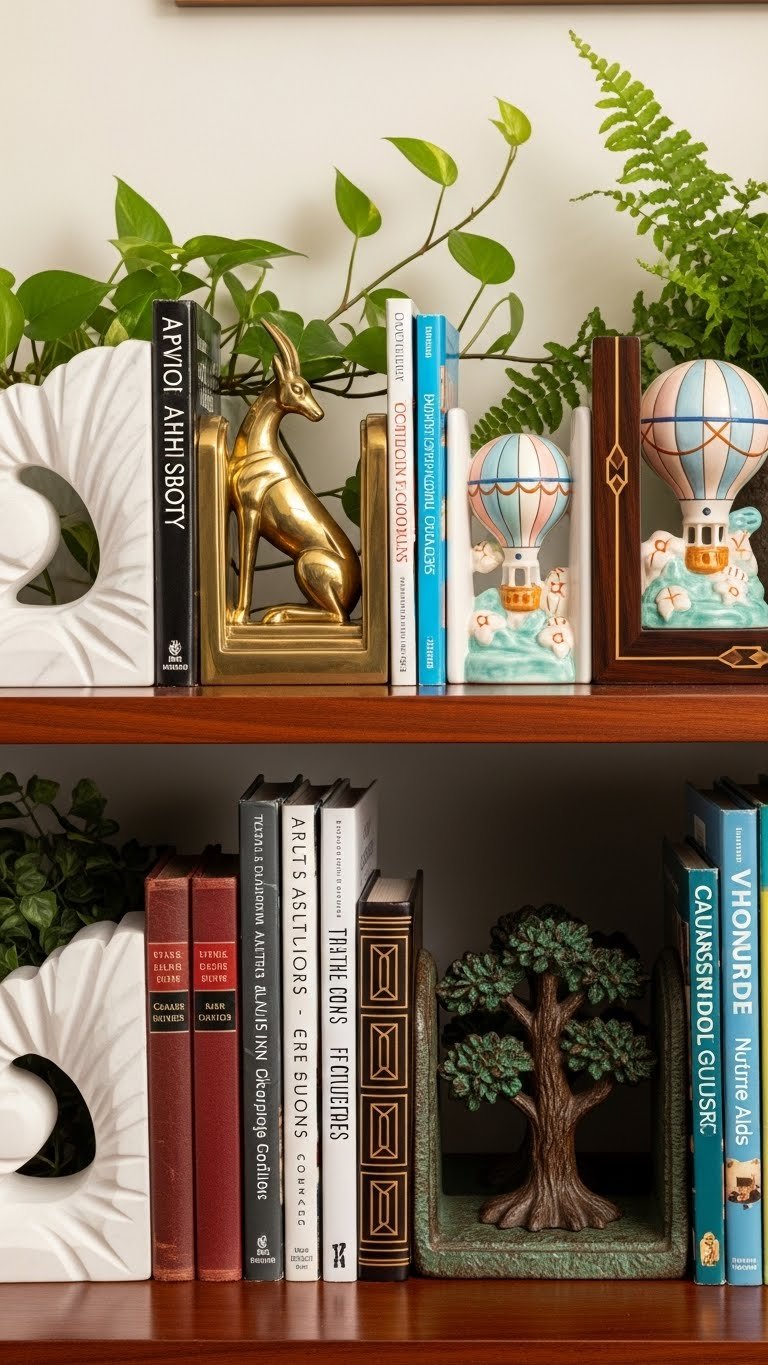
Bookends aren’t just functional—they’re miniature sculptures that break up visual monotony and add personality to your shelves.
Collect mixed bookends in marble, brass, ceramic, or wood ($8–$20 per pair from Target, World Market, or West Elm). Buy 3–5 pairs in complementary finishes for $30–$100 total. Mix metals (no matching sets) for a curated gallery vibe. Arrange books in staggered heights using bookends to create rhythm.
Your shelves instantly look styled and intentional. Bookends become conversation pieces that reflect your taste without taking up much space.
9. Style Shelves in Threes for Visual Balance

The “rule of three” is a design principle that makes any shelf arrangement look polished and intentional, not random or chaotic.
For each shelf, create three distinct groupings: a stack of 3–5 books, one taller object (plant, vase, frame), and one smaller decorative piece. Use this pattern across multiple shelves. Source items from what you already own (free) or add 1–2 pieces per shelf from thrift stores or Target ($10–$30 per shelf). Arranging takes 30 minutes per bookcase.
Suddenly your shelves look like they belong in a design magazine. This simple principle works whether you’re decorating a $50 budget bookcase or a $500 designer piece.
10. Create a Reading Nook Around Your Bookcase
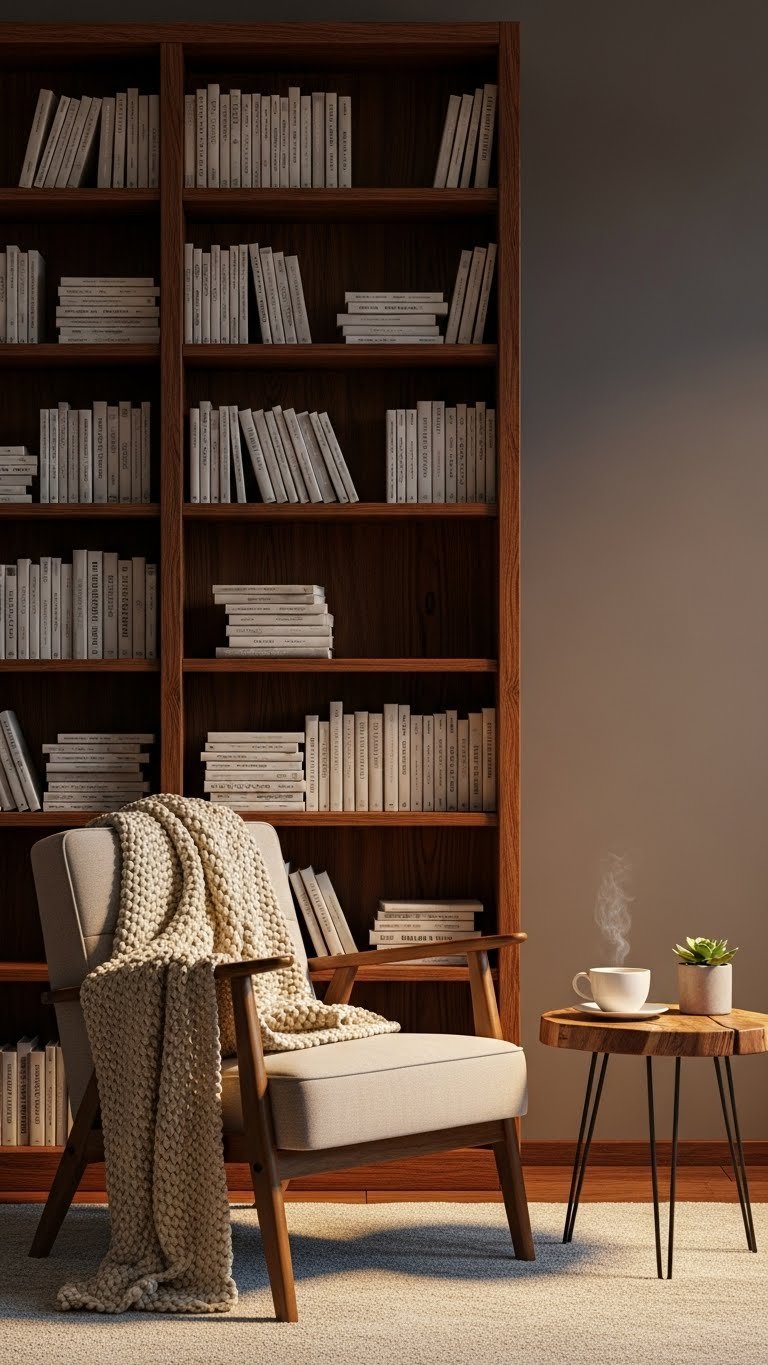
Your bookcase can anchor a mini retreat space within your office. Add a chair, and your bookcase becomes the backdrop to actual relaxation.
Place a small armchair ($150–$400 from Article, West Elm, or IKEA) or reading chair directly in front of your bookcase. Add a throw blanket ($20–$60) and side table ($40–$100) for your coffee or tea. This setup requires about 4 square feet of space but gives you a mental break zone without leaving your office.
You create a psychological separation between work and rest even in a small space. A quick 10-minute reading break actually improves focus for the next work block.
11. Display Collections Alongside Books
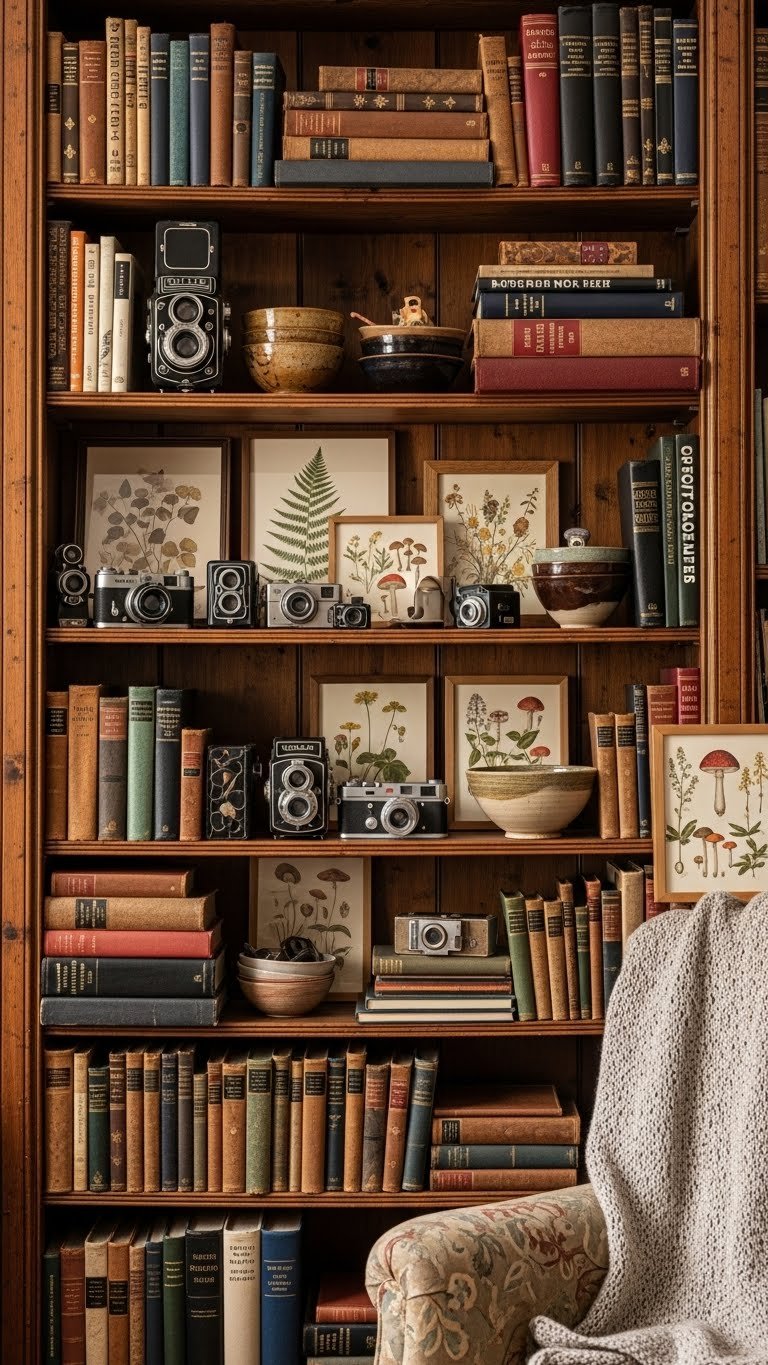
Books aren’t your only option for shelf styling. Collections (vintage cameras, pottery, figurines) add personality and tell your story.
Mix books with collected items from your interests or travels (free—use what you already own). Dedicate one shelf to a cohesive collection or scatter pieces throughout. Thrift stores are goldmines for affordable collectibles ($2–$10 per item). Arrange at varying heights for visual interest. This takes 30–60 minutes to arrange thoughtfully.
Your bookcase becomes a gallery of your life, not just storage. Clients and colleagues see personality, making your office feel human and approachable.
12. Install a Bookcase Ladder for Style and Function

A library ladder isn’t just for show—it makes tall bookcases actually functional while adding undeniable style and character.
Buy a decorative library ladder (brass, wood, or metal) from Wayfair ($150–$400), Etsy ($200–$600), or Target ($80–$150). Install takes 15–20 minutes (most come with hardware). Choose one that complements your bookcase material—brass for modern, wood for traditional. Budget this as a long-term investment but totally doable for maximizing a floor-to-ceiling bookcase.
You gain actual access to upper shelves without a step stool. More importantly, the ladder becomes a design feature people notice—it makes your office feel intentional and literary.
13. Incorporate Woven Baskets for Hidden Storage

Baskets hide paperwork, cables, and office supplies while adding warmth and texture that pure books can’t provide alone.
Buy 2–4 decorative woven baskets in various sizes ($15–$40 each from IKEA, Target, or Wayfair). Nestle them into shelf spaces where they fit snugly. Use them to corral pens, files, charging cables, and overflow supplies. No assembly needed—just place and fill. Budget $50–$150 total depending on how many you buy.
Your bookcase gains visual warmth and texture. Everything stays organized and accessible without cluttering your desk surface.
14. Use the Back Wall as a Backdrop for Styling
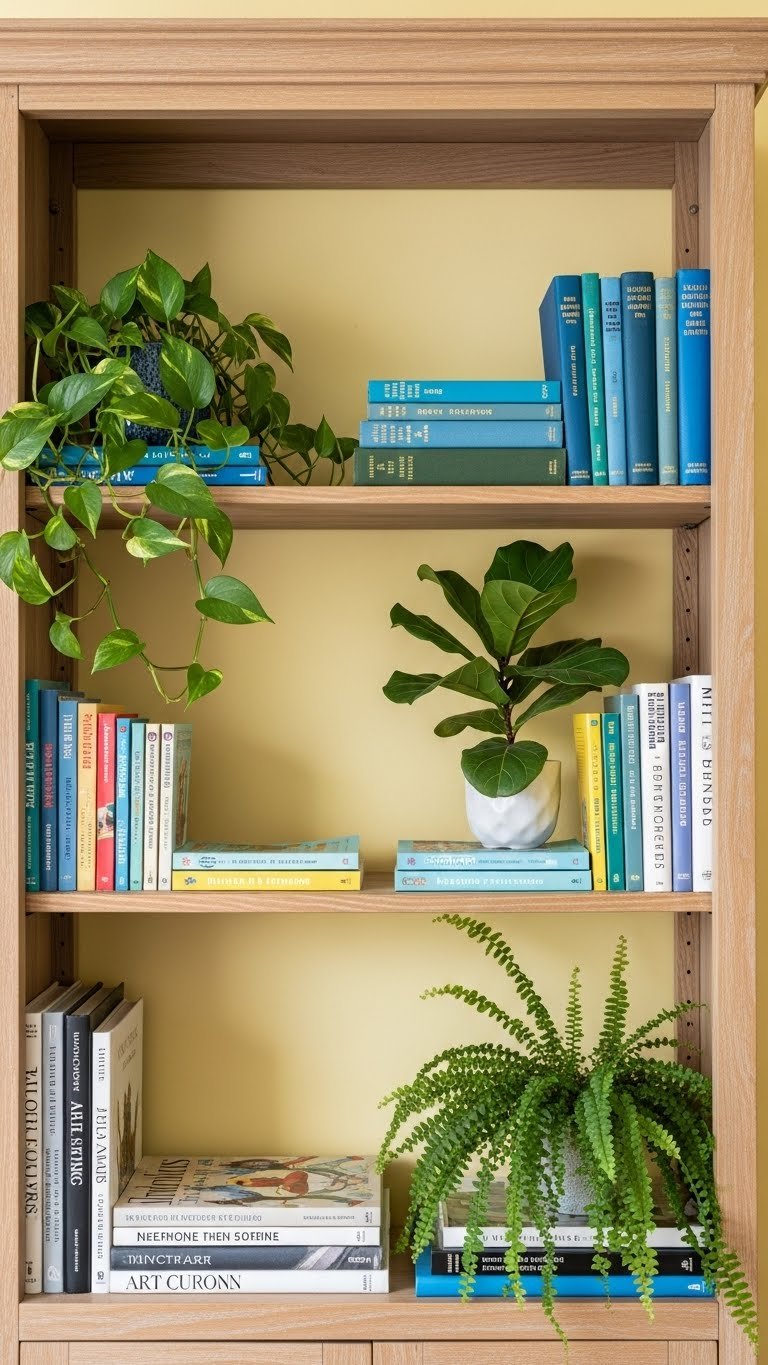
If your bookcase sits away from the wall, the back becomes a hidden design opportunity. Paint or wallpaper it for surprising visual impact.
Paint the area directly behind your bookcase in a complementary color ($10–$25 for paint) or apply removable peel-and-stick wallpaper ($20–$50, renter-friendly). Choose a soft shade that pops slightly—dusty pink, sage, or warm gray work beautifully. Paint or apply in 1–2 hours.
When colleagues see your bookcase from the side, they notice the surprising color backdrop. It signals that you’ve thought about your space, elevating the whole aesthetic.
15. Create Symmetry with Matching Bookcase Pairs
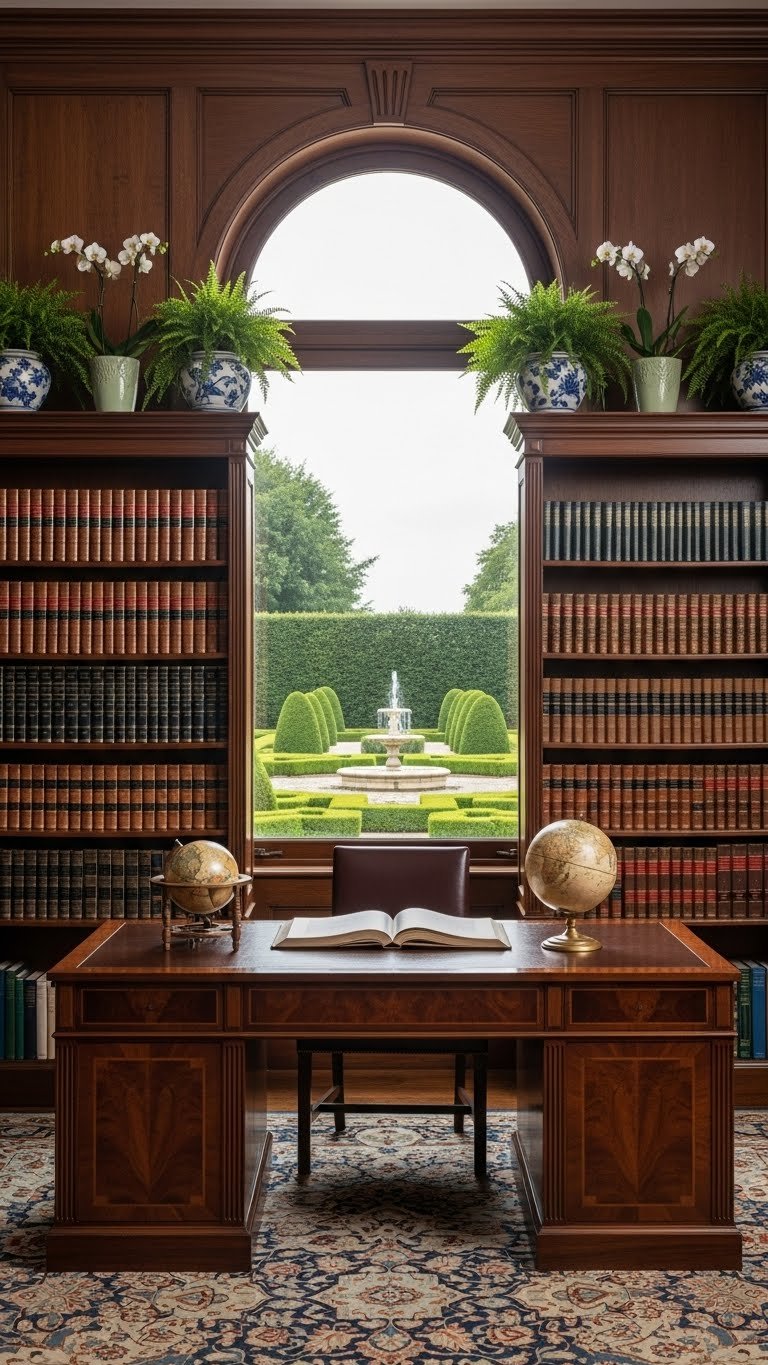
Two matching bookcases create a statement-making, intentional look that feels designed rather than assembled.
Buy two identical bookcases ($100–$300 each depending on size) and position them on either side of your desk, window, or door. Fill them with similar book layouts and matching decor (two matching planters, two identical frames) for visual balance. This works beautifully even in small spaces—two slim bookcases side-by-side create a focal wall. Assembly and styling takes 2–3 hours total.
Your office instantly feels more put-together and professional. The symmetry creates calm and order, which actually boosts focus.
16. Go Minimalist with a Single-Shelf Floating Display

Not every office needs a massive bookcase. Sometimes a single floating shelf creates more impact than overwhelming storage.
Install one long floating shelf ($30–$80 including hardware) and display only your favorite 5–10 books plus one meaningful decor item. This works especially well in small offices or studio apartments where a full bookcase would overwhelm the space. Installation takes 30 minutes.
You get the psychological benefit of organized, curated storage without cramming. Your office feels intentional and calm rather than cluttered.
17. Use Corner Bookcases to Maximize Tight Spaces
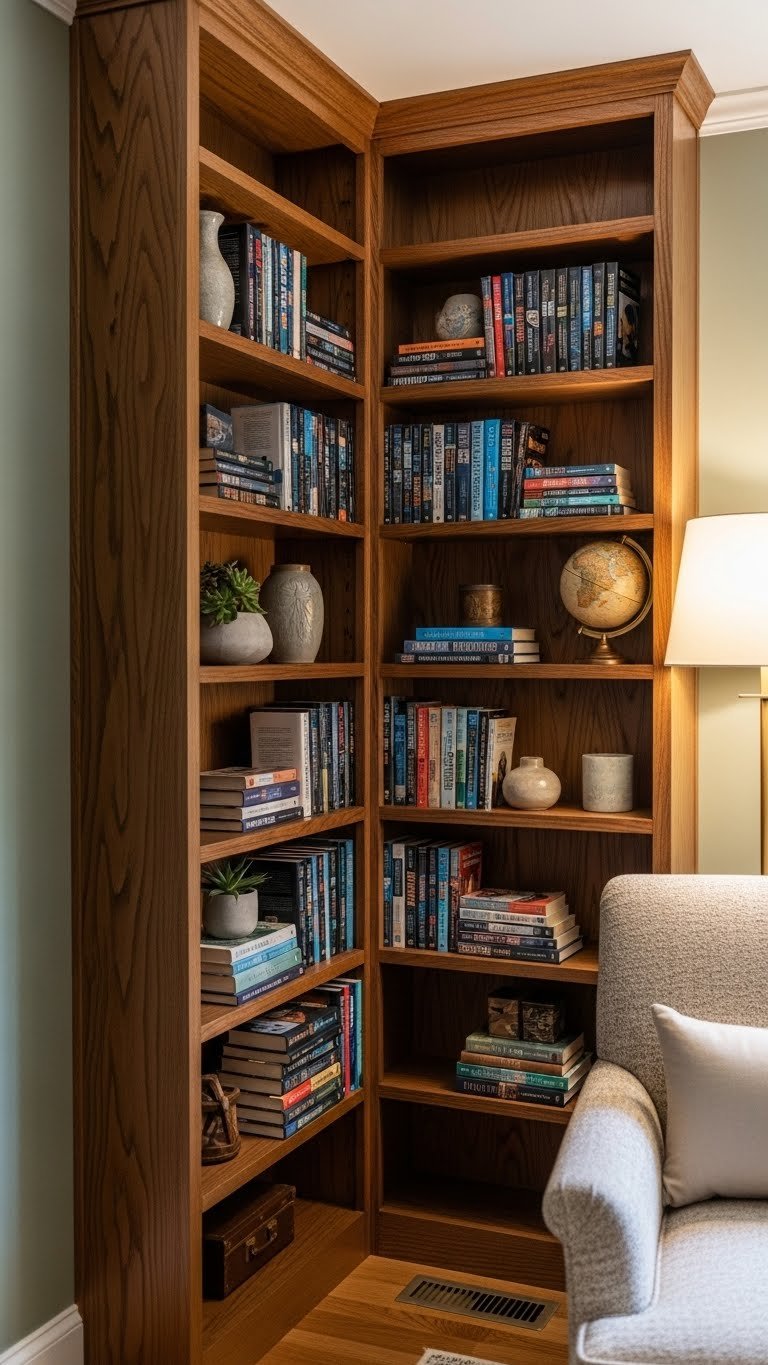
Corners are dead space in most offices. A corner bookcase transforms wasted real estate into functional storage.
Buy a corner-specific bookcase ($80–$250 from IKEA, Wayfair, or specialty retailers) or use corner floating shelves ($40–$100 total for a set of three). These maximize vertical space without claiming precious floor area. Install takes 1–2 hours depending on configuration. Renter-friendly tip: Some corner bookcases stand freely without wall installation ($100–$200).
You’ve created usable storage from nothing. Small offices suddenly feel better organized without furniture taking up extra space.
18. Mix Books Horizontally and Vertically for Visual Texture
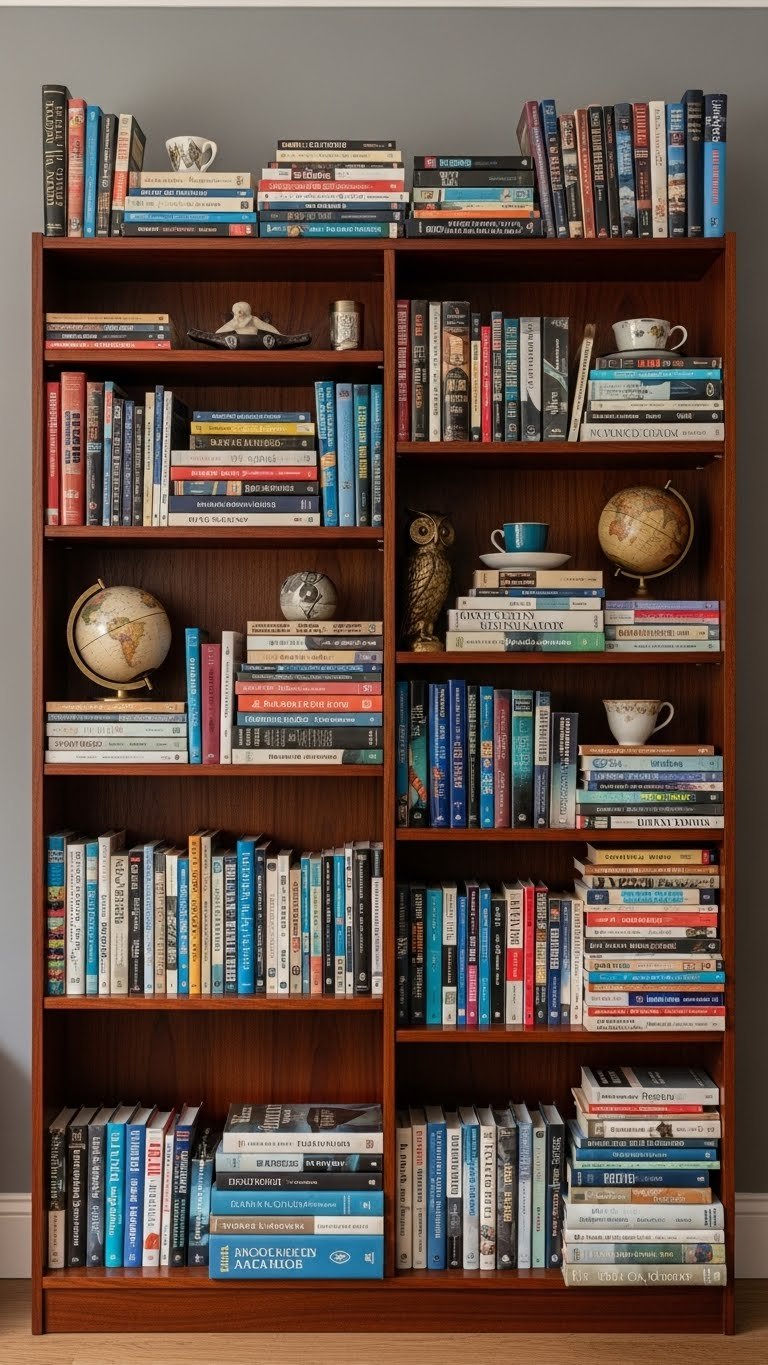
Stacking some books horizontally breaks up the monotony of all vertical spines and creates natural visual interest without extra styling effort.
Stack 3–5 books horizontally on one shelf, stand others vertically. Place a decorative object on top of horizontal stacks (small plant, frame, sculpture). This costs nothing if you use existing books and requires just 15 minutes of rearranging. The “rule” is roughly 70% vertical, 30% horizontal for balance.
Your shelves look styled and intentional, like you’ve thought about every placement. This simple technique works with any color scheme or bookcase style.
19. Install Bias Lighting Behind Your Bookcase
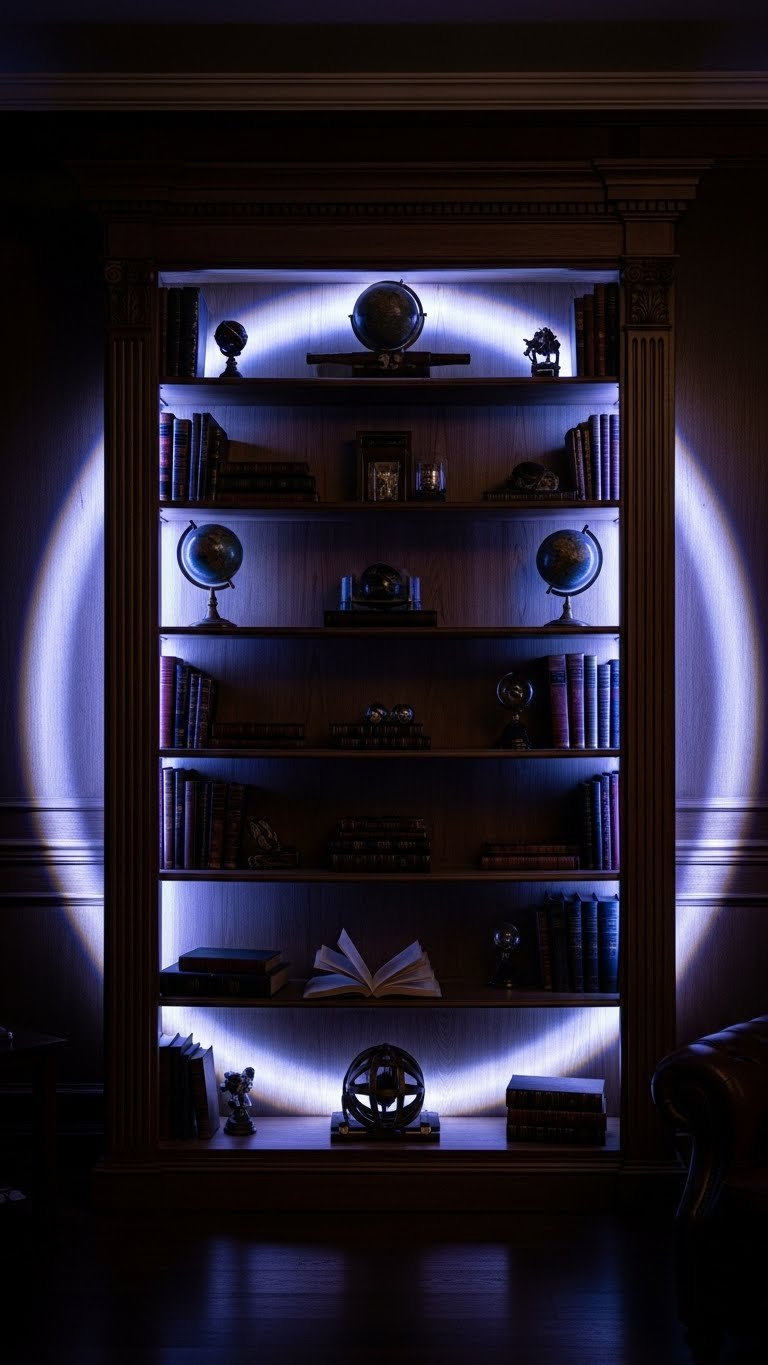
Bias lighting goes beyond function—it creates ambiance that transforms your office into a space you actually want to spend time in, especially for evening work sessions.
Install RGB LED strip lights ($20–$50 on Amazon) along the top back edge of your bookcase, or run them down the sides. Choose warm white for professionalism or play with soft colors (blue, amber) for mood. Plug into a smart controller ($10–$20) to adjust brightness and color. Installation takes 15 minutes.
Your office transforms into a high-end hotel workspace aesthetic. The ambient light makes late-night work sessions feel intentional rather than draining, and your bookcase becomes a beautiful focal point.
20. Create a “Current Reads” Display Shelf
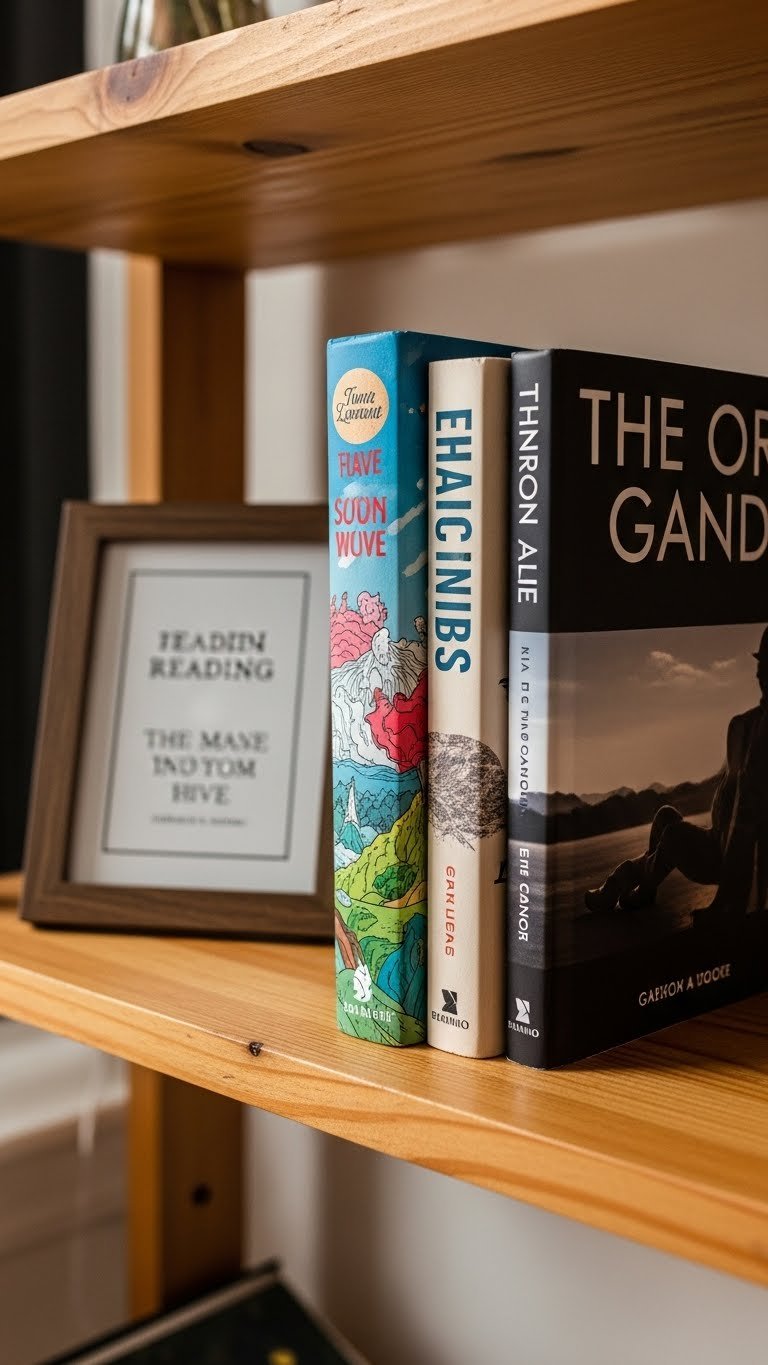
Most books hide their covers on spines. Dedicating one shelf to face-out displays celebrates the actual design while creating a mini bookstore vibe.
Pick one shelf (preferably at eye level) to display 3–5 books face-out. Rotate them monthly or weekly. This works especially well for books you’re currently reading or your absolute favorites. Costs nothing—you’re just rearranging. Takes 10 minutes to set up and maintain.
This simple change makes your bookcase feel alive and curated. It signals that you actually read and have interests, not just decoration.
21. Add Glass Shelving for a Light, Modern Feel
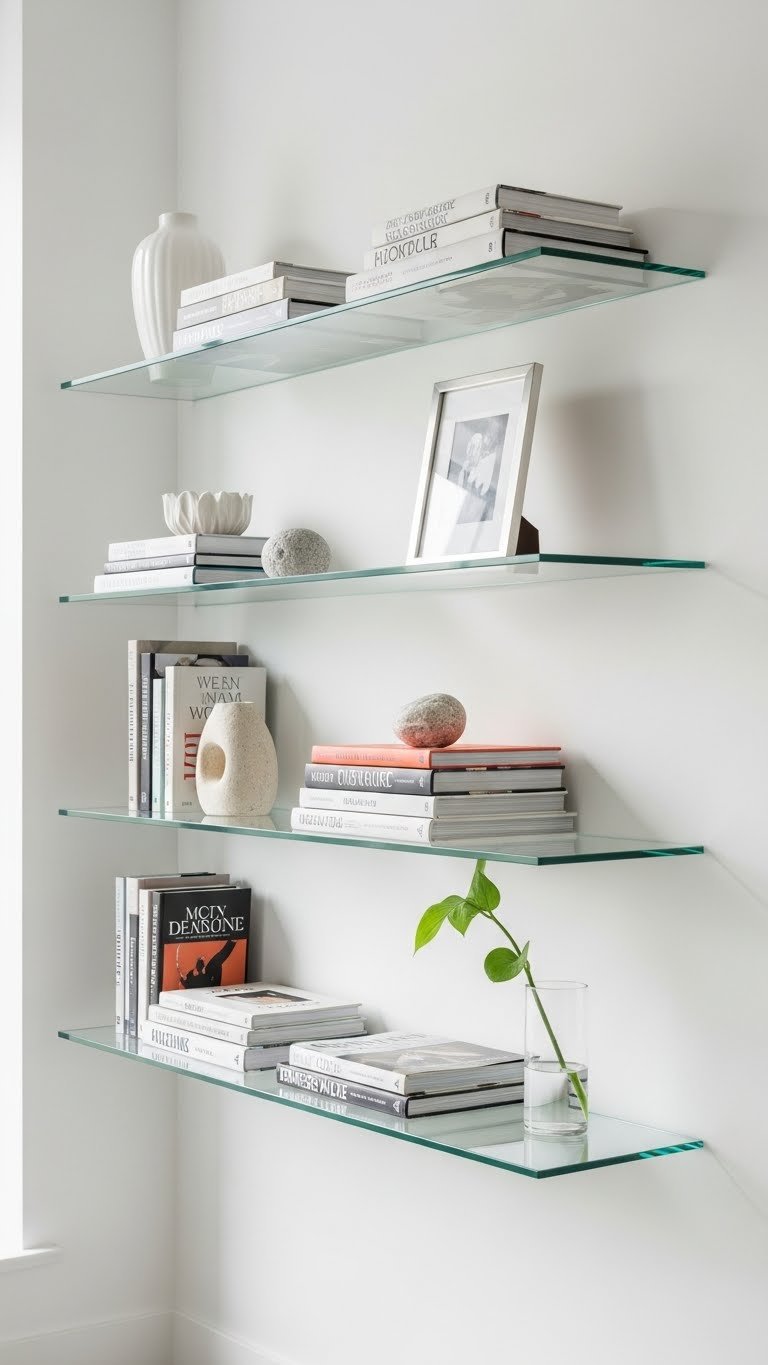
Glass shelves create an illusion of floating storage without visual weight. They work beautifully in small offices or modern aesthetics.
Install glass floating shelves ($40–$100 each from IKEA, CB2, or Wayfair). These require secure wall anchoring, so hire a handyman if uncertain ($50–$100). They’re maintenance-intensive (dust and fingerprints show), so they work best in offices where you don’t share space. Install takes 1–2 hours.
Your office gains a sophisticated, gallery-like quality. Glass creates openness even when shelves are full, making small spaces feel larger.
22. Use Pegboard Backing for Flexible, Modular Display

Pegboard backing lets you change your bookcase configuration anytime without tools. It’s also a major current design trend that photographs beautifully.
Install pegboard ($15–$30 per sheet) on the back wall behind your bookcase or inside the bookcase if it’s open-backed. Add pegboard shelves, hooks, and accessories ($20–$50 total). Rearrange anytime depending on your storage needs. Installation takes 2–3 hours but offers endless flexibility afterward.
You get a designer-approved look that’s totally customizable. Your bookcase setup evolves with your needs instead of staying static.
23. Style with Meaningful Decor, Not Just Books
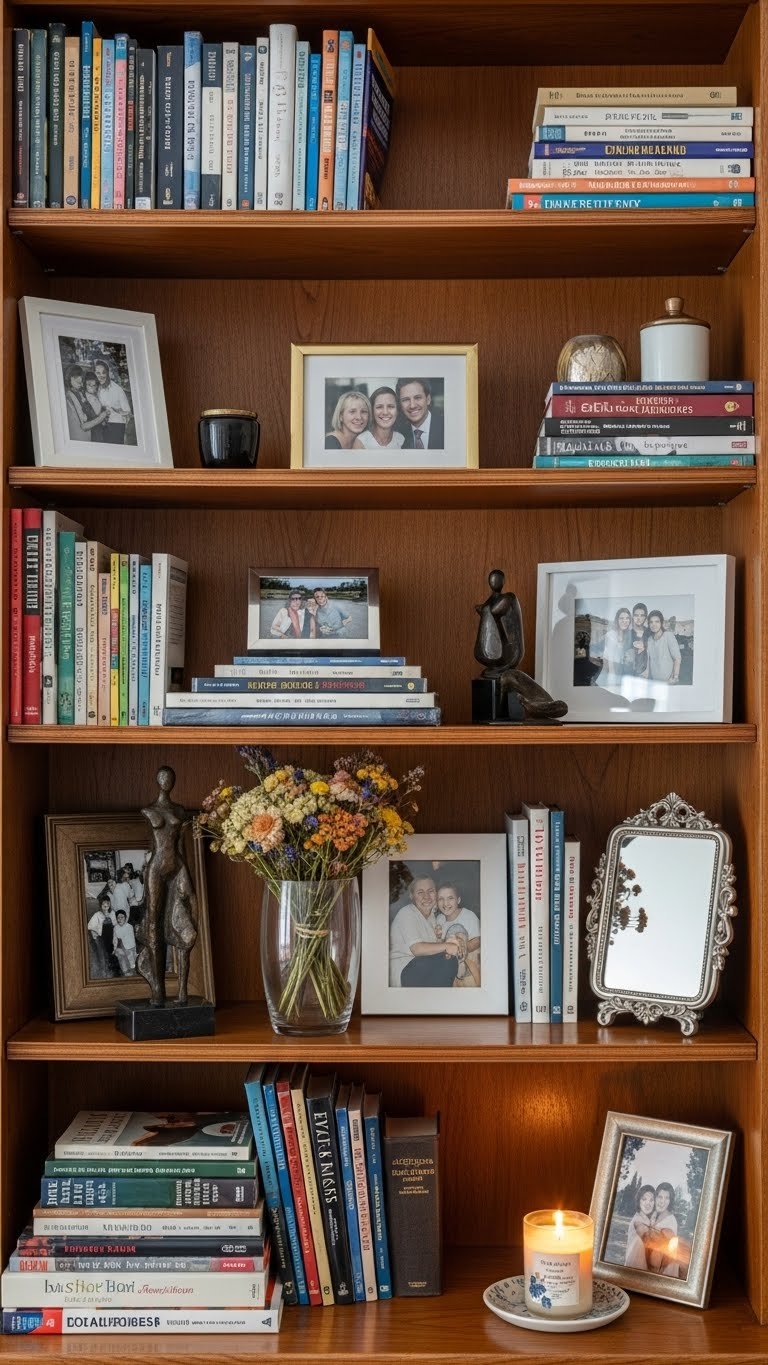
Bookcases that display only books feel sterile. Adding personal items tells your story and makes your office feel human.
Intersperse books with meaningful items: framed photos ($5–$20 each), plants ($5–$30), art prints ($10–$40), candles ($8–$20), or travel souvenirs (free if you already have them). Spend 1–2 hours arranging until it feels balanced. Aim for roughly 60% books, 40% decor.
Your bookcase becomes a conversation starter. When clients or colleagues see photos, plants, and personal touches, they see a human, not just a professional—and that builds connection.
24. Create a Digital Archive Tag System for Organization

If you actually use your books (not just display them), a subtle tagging or color-coding system keeps everything findable without looking chaotic.
Use small colored stickers ($5–$10) to tag books by category (work, fiction, design, etc.) or white labels ($8–$15) to mark by author’s last name. Keep tags small and subtle so they don’t ruin the aesthetic. Takes about 30 minutes to tag an average bookcase. This works best if you have 100+ books.
You actually use your bookcase instead of just staring at it. Finding that one book you need becomes instant, and your office functions better.
25. Combine Bookcase with Desk Space for an All-in-One Workstation
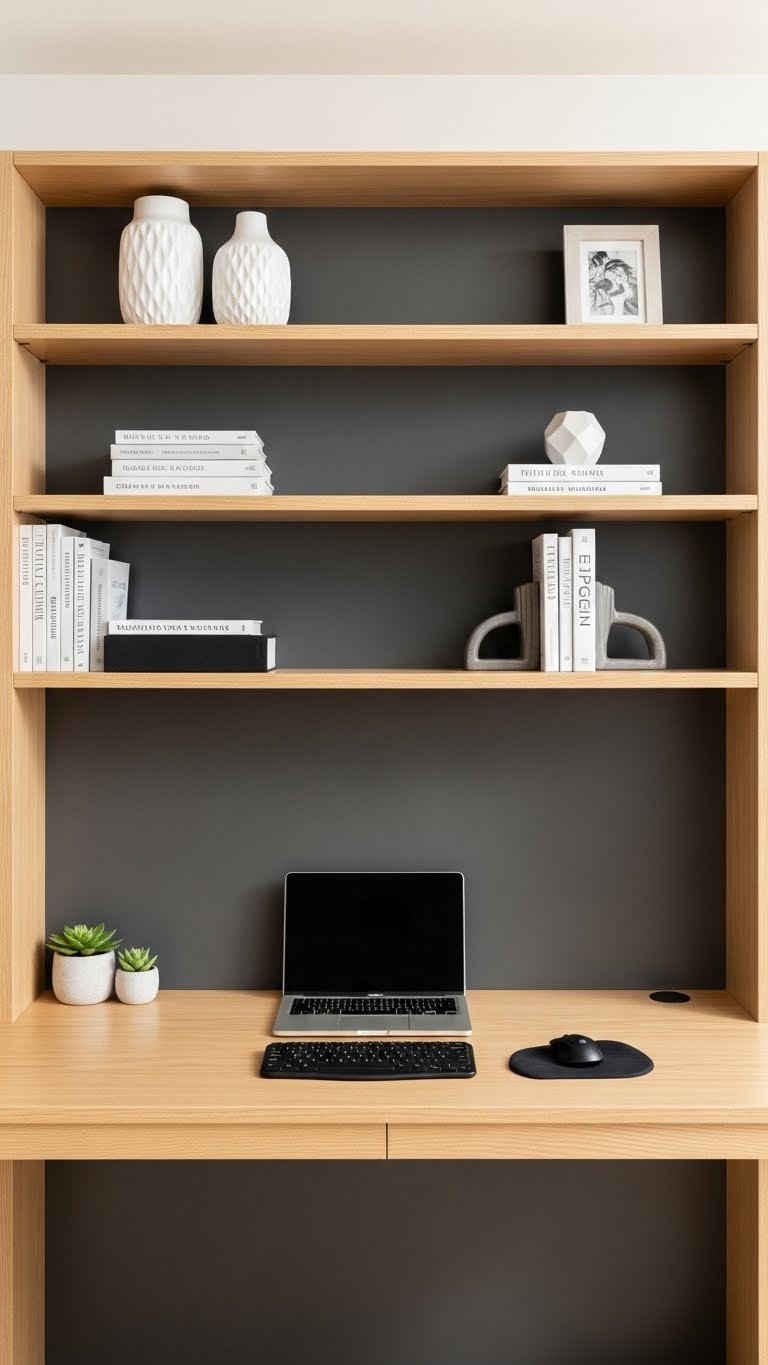
Instead of separate furniture, buy a bookcase with integrated desk space (often called a “bookcase desk” or “shelving unit desk”). These maximize every square inch, especially for small offices.
Look for combination bookcase-desk units ($200–$600 from IKEA, Wayfair, or Amazon) that attach a desk surface to a bookcase base. These work beautifully in studio apartments or small home offices. Assembly takes 2–3 hours or hire help ($75–$150). You’ll also need a task chair ($100–$300).
Your whole workspace becomes one cohesive, intentional unit. You save floor space, create visual continuity, and everything you need sits right in front of you.
26. Paint the Interior of an Open Bookcase Back Panel
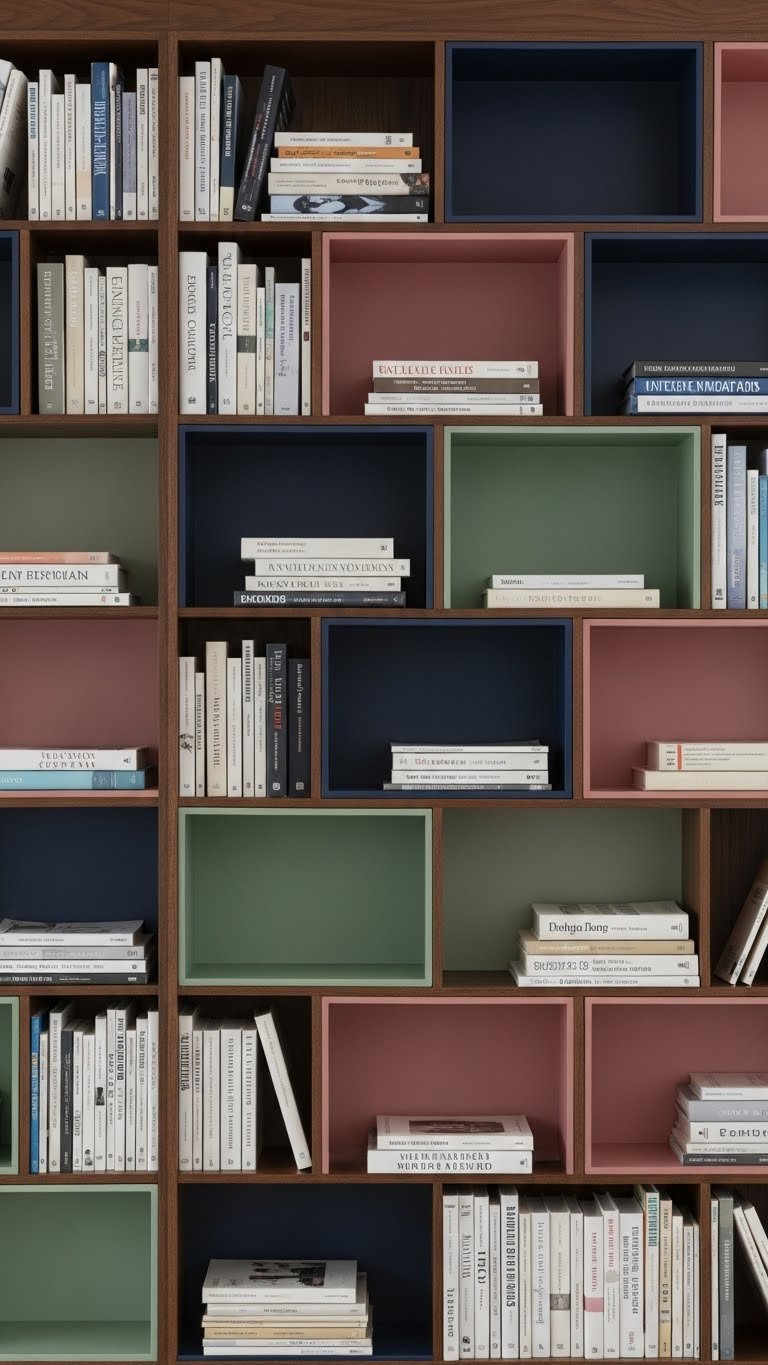
Even if you can’t paint the wall behind your bookcase, painting the bookcase’s interior back panel creates the same premium effect.
If your bookcase has a removable back panel, paint it with semi-gloss paint in a contrasting shade ($8–$20 for paint). If it’s built-in, paint directly on it. Choose colors that make your book covers pop—deeper tones (navy, forest green, charcoal) work beautifully with colorful books. Takes about 2–3 hours including dry time.
The painted interior frames your collection beautifully. Even with the same books, the background color completely changes the shelf’s visual impact, making it look professionally designed.
27. Rotate Seasonal Decor on Your Shelves
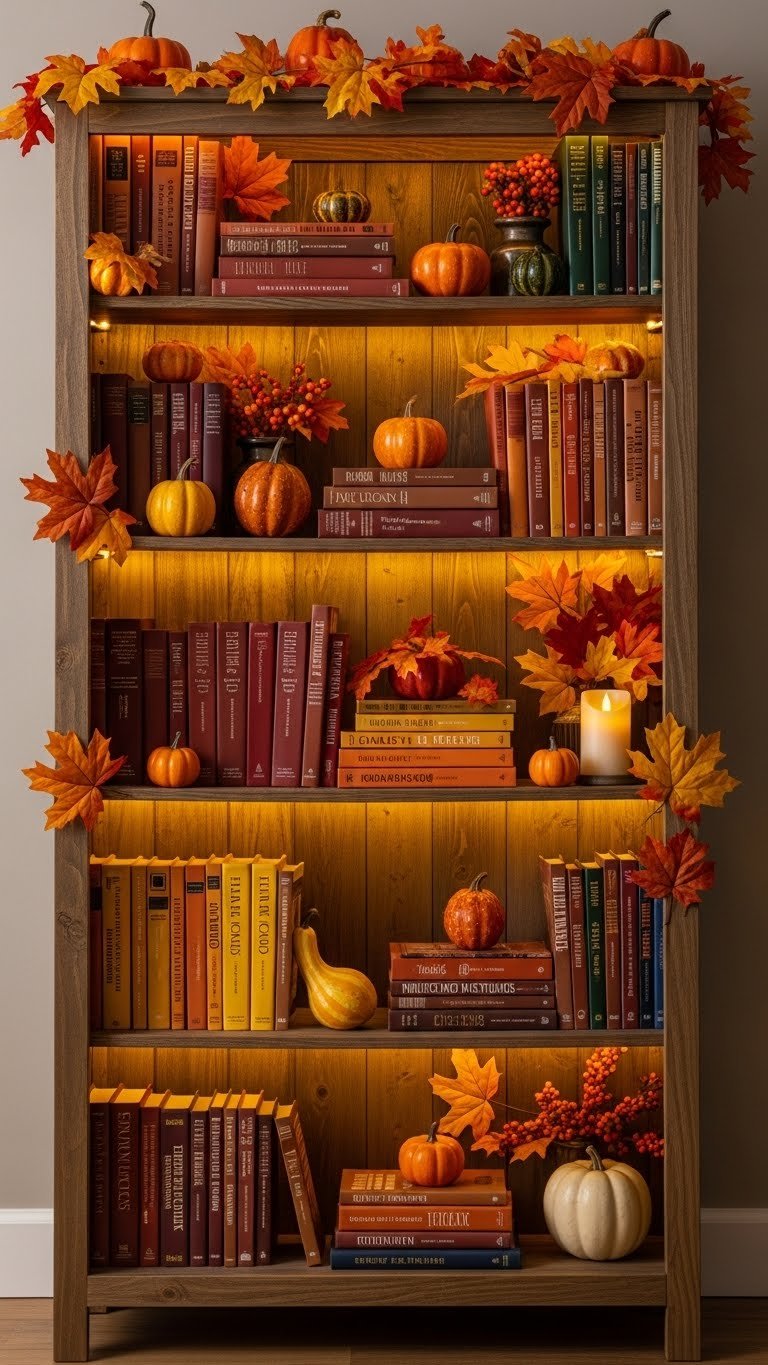
Your bookcase doesn’t have to stay static all year. Seasonal rotation keeps your office feeling fresh and intentional as seasons change.
Every 6–8 weeks, swap out 2–3 decor items (seasonal plants, themed items, color-coordinated books) without moving everything. Spring: pastels and fresh plants. Fall: warm tones and dried botanicals. Winter: deep jewel tones and cozy textures. Summer: bright, light combinations. Costs nothing if you use existing items; refresh takes 30 minutes.
Your office evolves subtly throughout the year. You stay engaged with your space, and it never feels stale or ignored.
Save this post and pick one idea to try this weekend—whether it’s painting a back panel, adding lights, or just rearranging your books by color. Small changes add up fast, and your home office deserves to feel like a place you’re excited to work in.
Leave a Reply