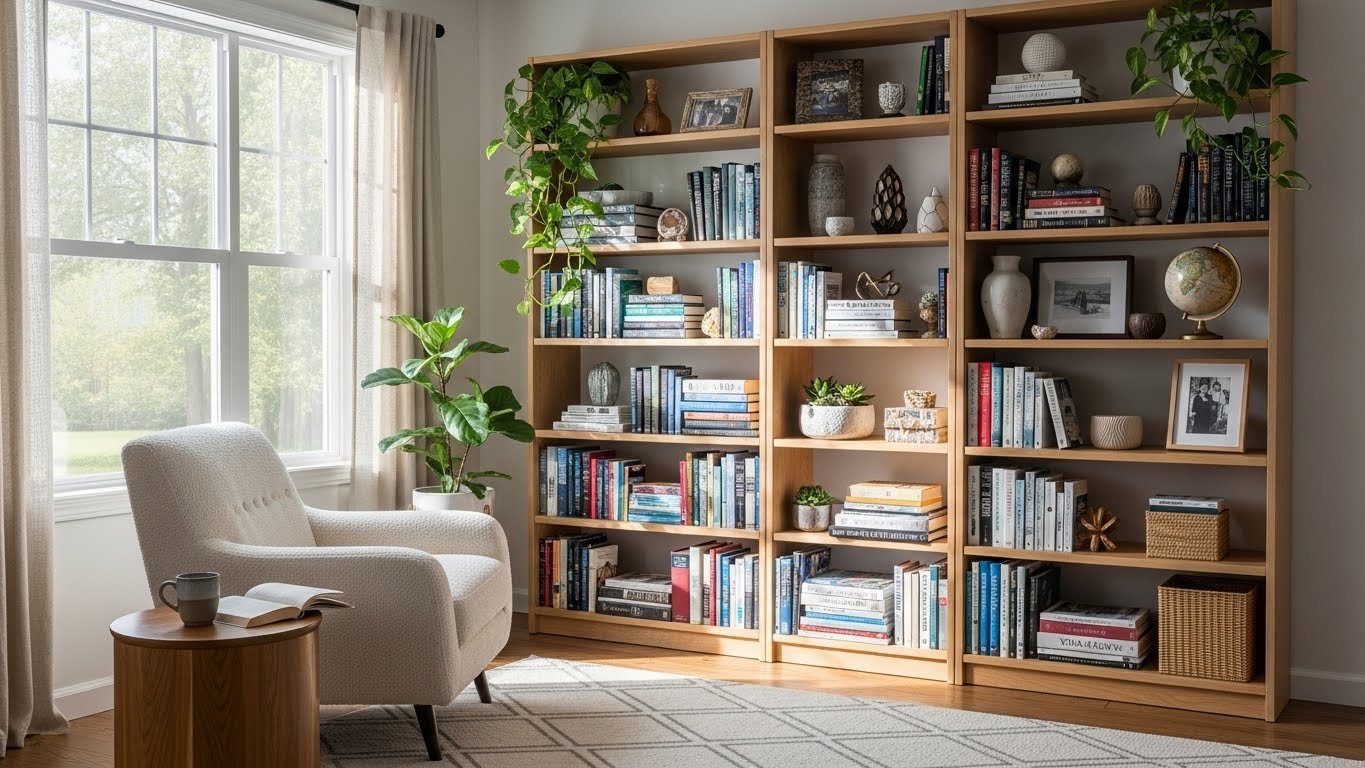
Bookshelves are so much more than just book storage—they’re a chance to showcase your personality and make your space feel intentional. Whether you’re working with a small apartment, a sprawling home office, or you just want to refresh what you already have, there’s a bookshelf idea here for you. We’ve gathered 23 creative approaches that work for every style, budget, and living situation. From clever DIY projects to smart shopping strategies and styling tricks that make your shelves look professionally designed, you’ll find solutions for both renters and homeowners. Let’s dive into ideas that actually solve real space challenges while looking gorgeous doing it.
1. Layer Your Books Horizontally and Vertically
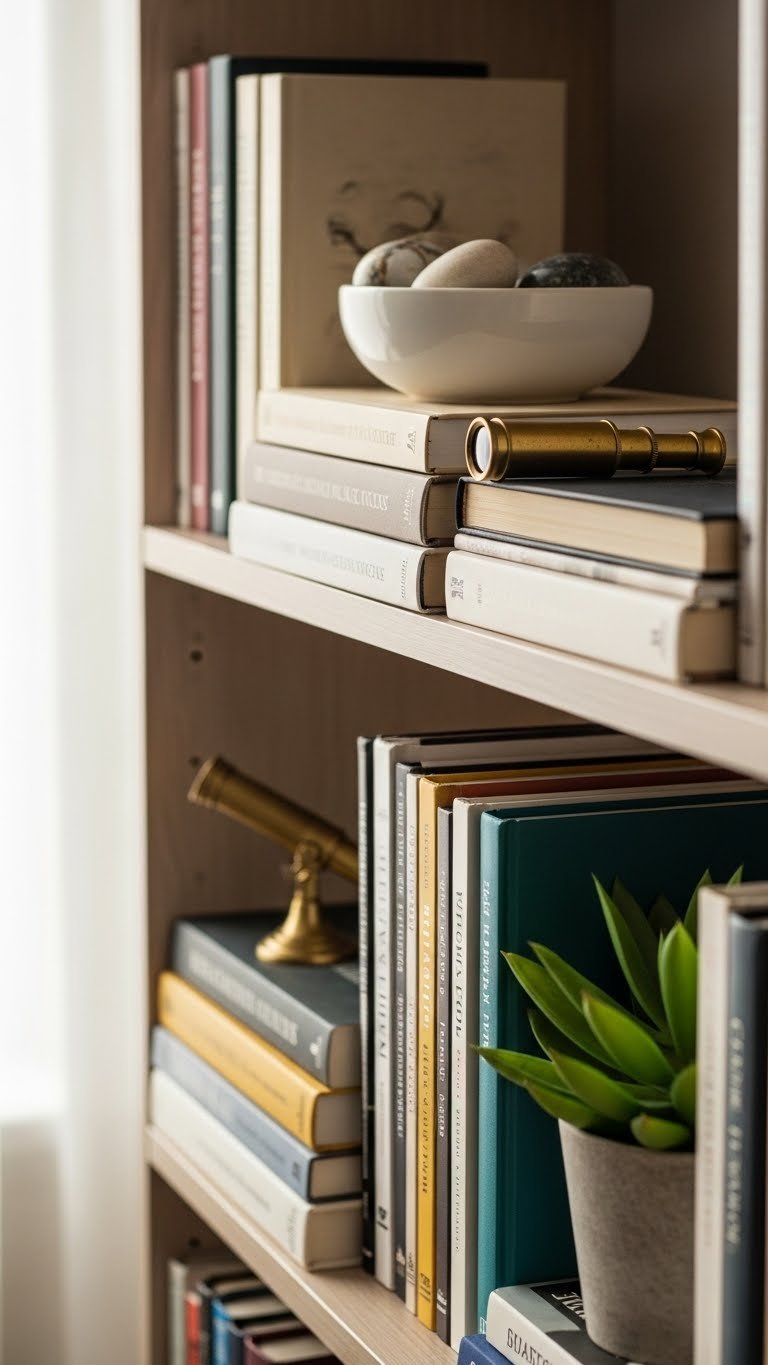
Stacking books both ways creates visual rhythm and makes your shelf feel curated rather than crowded. This simple styling trick prevents the “wall of spines” look that can feel monotonous and gives you more flexibility with shelf height variations.
Start by grouping 3-5 books and laying them flat, then stand other volumes upright against them. Add a small plant or candle on top of the stack to anchor the arrangement. You can do this with books you already own—no shopping required. The key is experimenting with different proportions until it feels balanced. Some shelves might be 60% horizontal and 40% vertical, while others flip that ratio depending on your book collection.
This approach makes your shelves photograph beautifully and gives you that “bookshelf wealth” aesthetic without buying anything new.
2. Add Peel-and-Stick Wallpaper to the Back Panel
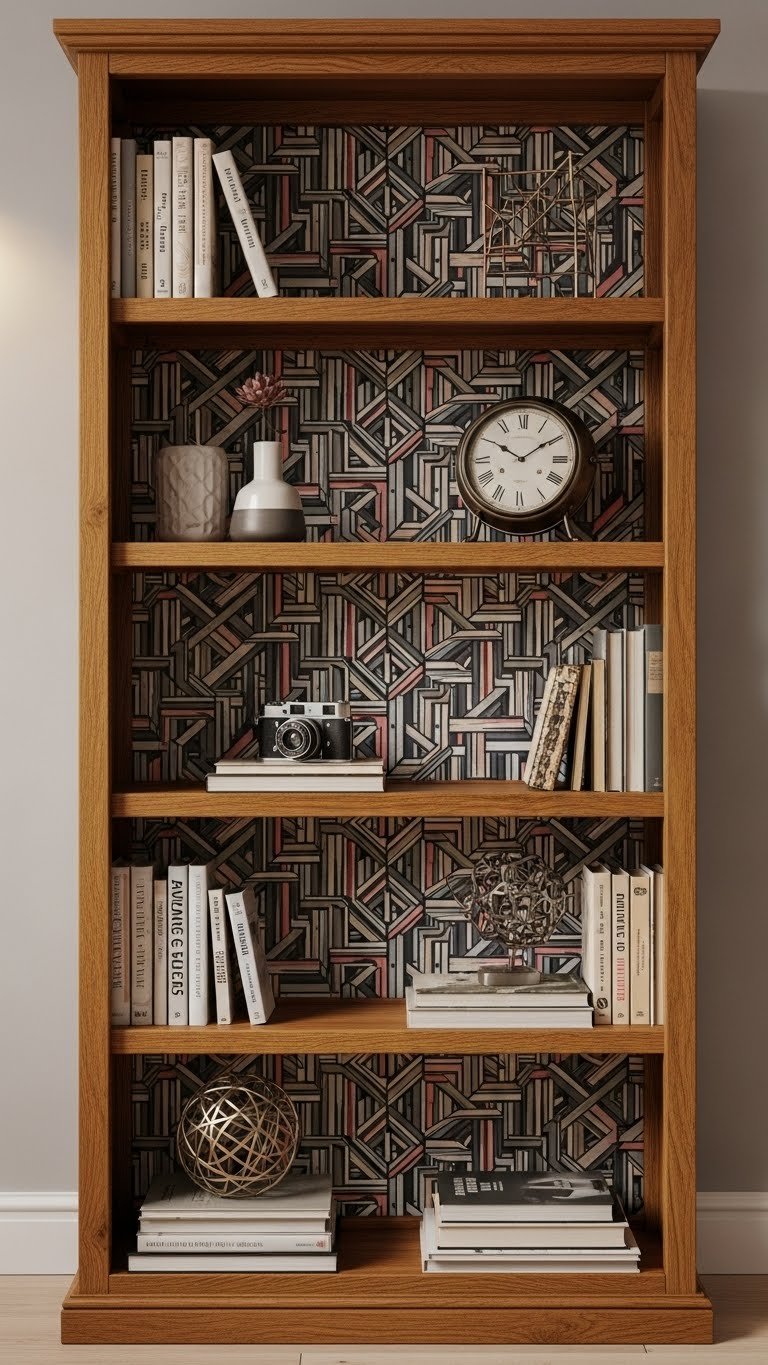
A patterned or solid-colored back panel instantly elevates a basic bookshelf and draws attention to your collection. Peel-and-stick wallpaper makes this project completely renter-friendly and reversible.
Measure your shelf’s back panel carefully, then apply peel-and-stick wallpaper in a pattern that complements your room (geometric, botanical, or solid jewel tones all work beautifully). Brands like Spoonflower and Temporary Wallpaper Co. offer removable options starting around $15-$40 per roll. Installation takes about 30 minutes and requires only a utility knife and ruler. You can layer subtle geometric prints, go bold with florals, or choose a rich jewel tone for sophistication.
The result? Your books pop forward, the shelf becomes a focal point, and you’ve just upgraded your entire room’s aesthetic with one small change.
3. Use Floating Shelves to Create a Gallery Wall

Floating shelves give you flexible storage without the commitment of a full bookcase, making them perfect for renters or anyone still figuring out their layout. They’re especially effective when arranged asymmetrically.
Install 2-4 floating shelves at varying heights using a level and wall studs (or toggle bolts for drywall). Target brands like IKEA, Wayfair, and Home Depot offer $20-$80 per shelf. Space them close enough to create visual connection but far enough apart that books don’t look cramped. Arrange books with spines out on some shelves, lay flat on others, and mix in framed photos or small artwork to create gallery-like appeal.
This setup works brilliantly in awkward corners, above desks, or in small apartments where a traditional bookcase won’t fit.
4. Paint Your Bookcase to Match Your Walls
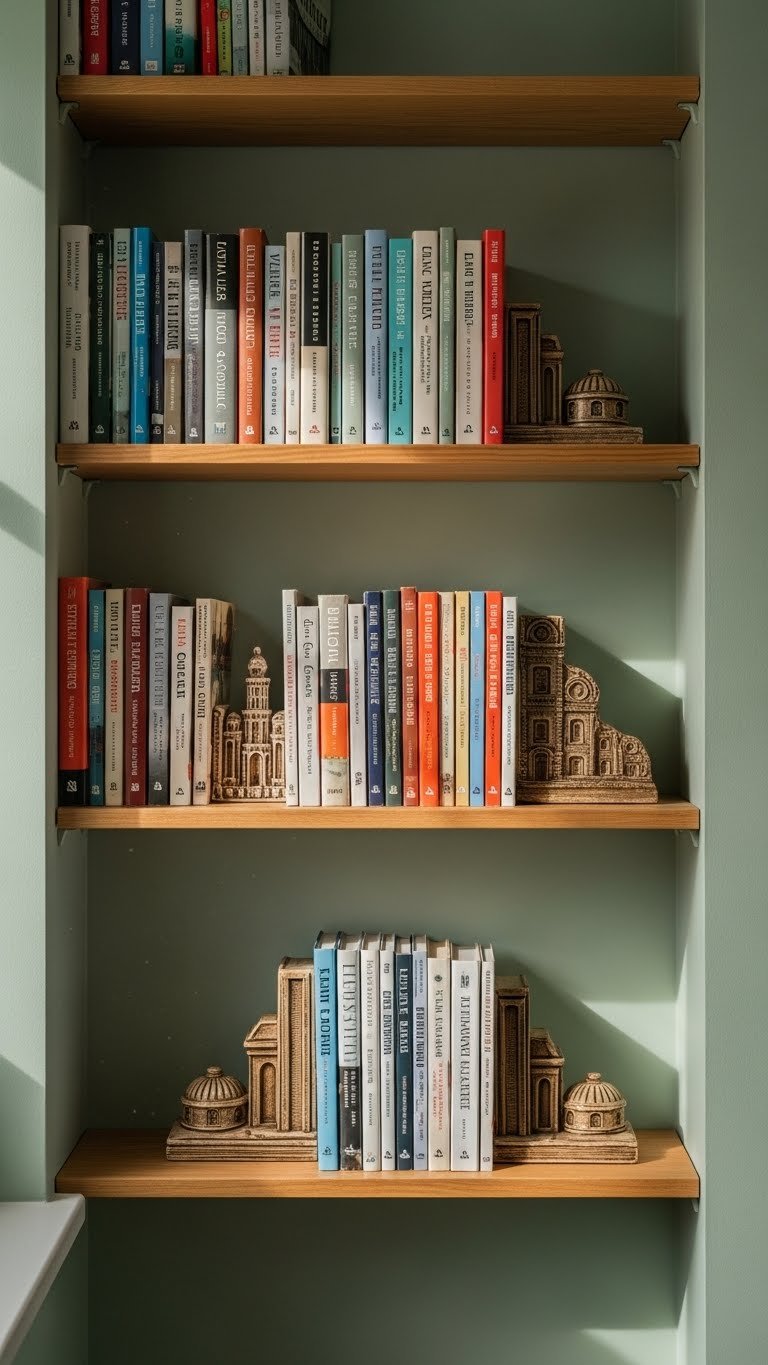
Painting a bookcase the same color as your walls creates a sophisticated, gallery-like backdrop that lets your books and objects become the main attraction rather than the furniture itself.
Choose a paint shade that matches or complements your walls—soft whites, warm grays, or muted colors work best. Pick up paint samples first and test them on your shelf in natural light. Use interior latex paint ($15-$30 per quart) and a quality brush or foam roller. Two coats usually does it, with drying time around 2-3 hours between coats. The whole project takes about one afternoon.
Your books now become the focal point, and the shelf feels like an intentional design element rather than a piece of furniture sitting against the wall.
5. Add LED Strip Lighting Inside or Under the Shelf

Strategic lighting transforms a bookshelf from functional storage into a dramatic focal point that looks sophisticated and creates mood lighting for your entire room. This upgrade works especially well for bookshelves in bedrooms or living rooms.
Purchase adhesive LED strip lights (warm white works best—around $15-$30 for a 16-foot kit from Amazon, Target, or hardware stores). Install them on the underside of each shelf, pointing down, or on the back panel for a subtle glow behind your books. Most come with remote controls or app connectivity. Installation takes 20-30 minutes and requires zero tools—just clean the shelf surface and stick them on. Use the dimmer function to adjust brightness based on time of day.
Your bookshelf now looks like a designer showpiece, and you’ve added ambient lighting that makes your entire space feel more polished.
6. Incorporate Plants for Natural Color and Texture

Plants break up long lines of books and add life to any bookshelf while also improving air quality in your space. They’re especially effective at softening the look of a packed shelf.
Choose low-maintenance plants like pothos, snake plants, or philodendrons (around $8-$15 each from any garden center or grocery store). Place smaller pots on shelves between book stacks, and let trailing varieties cascade slightly over the edge. Ensure your shelf gets adequate indirect light, and water plants every 1-2 weeks depending on the type. No green thumb required—these plants are forgiving and actually thrive on minimal attention.
Your shelf now has organic movement and color that photographs beautifully, plus the added bonus of fresher air in your room.
7. Create a Color-Blocked Bookshelf Arrangement
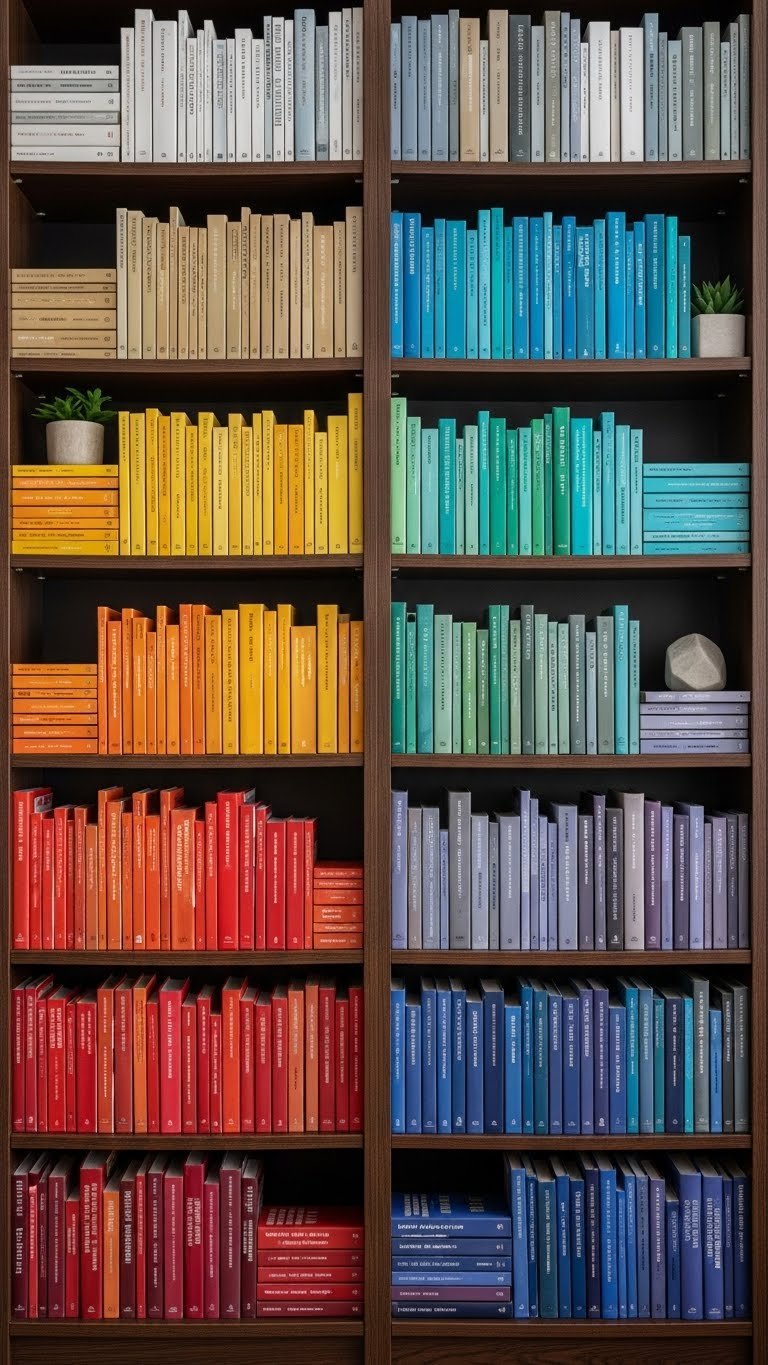
Color-blocking your books creates a visually striking, organized look that works especially well if you have a large collection. This approach transforms chaos into calm.
Spend an afternoon organizing your books by spine color, grouping similar hues together—warm tones (reds, oranges, yellows), cool tones (blues, purples), and neutrals (blacks, whites, grays). You don’t need to buy anything—just rearrange what you have. If you’re short on certain colors, you can add books from thrift stores or dollar sections, but it’s completely optional. Stand books upright to showcase spines clearly, or create small stacks to break up the color sections.
The result is a bookshelf that looks carefully curated and Instagram-ready, and honestly, much easier to find specific books since they’re organized by color rather than scattered randomly.
8. Mix Books with Framed Art and Photographs
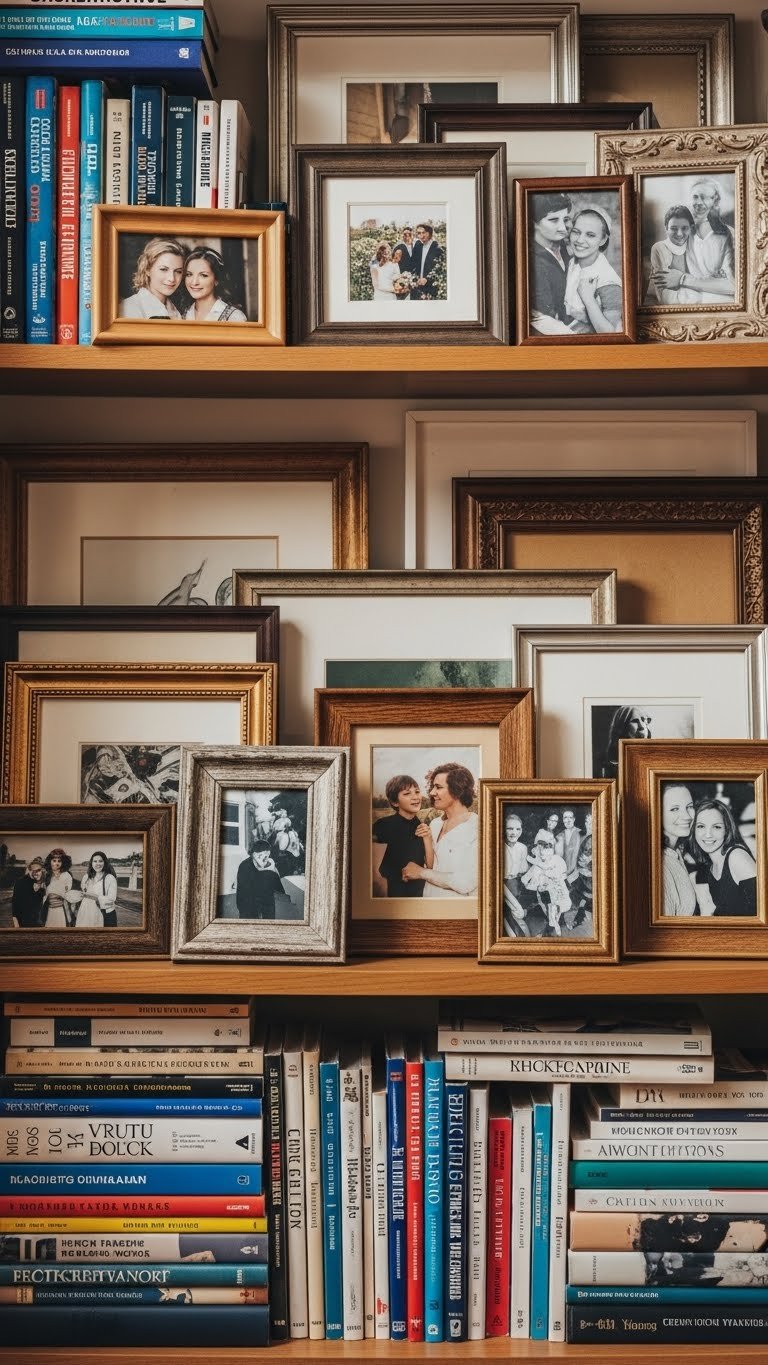
Mixing personal photographs and artwork among your books creates a more intimate, lived-in aesthetic that tells your story and adds personality beyond just displaying books.
Gather your favorite photographs or inexpensive framed prints from places like Minted, Urban Outfitters, or IKEA ($10-$40 per frame). Lean frames against the back of the shelf for an effortless, non-committal look, or install small picture ledges above shelf sections. Mix frame styles and sizes—mismatched frames feel more intentional than matching sets. Include 3-4 frames per shelf depending on depth. Add small three-dimensional objects like figurines, travel souvenirs, or objects d’art between frames.
Your bookshelf becomes a personal gallery that reflects your life, travels, and memories while still functioning as storage.
9. Install Shelves in an Awkward Alcove or Nook
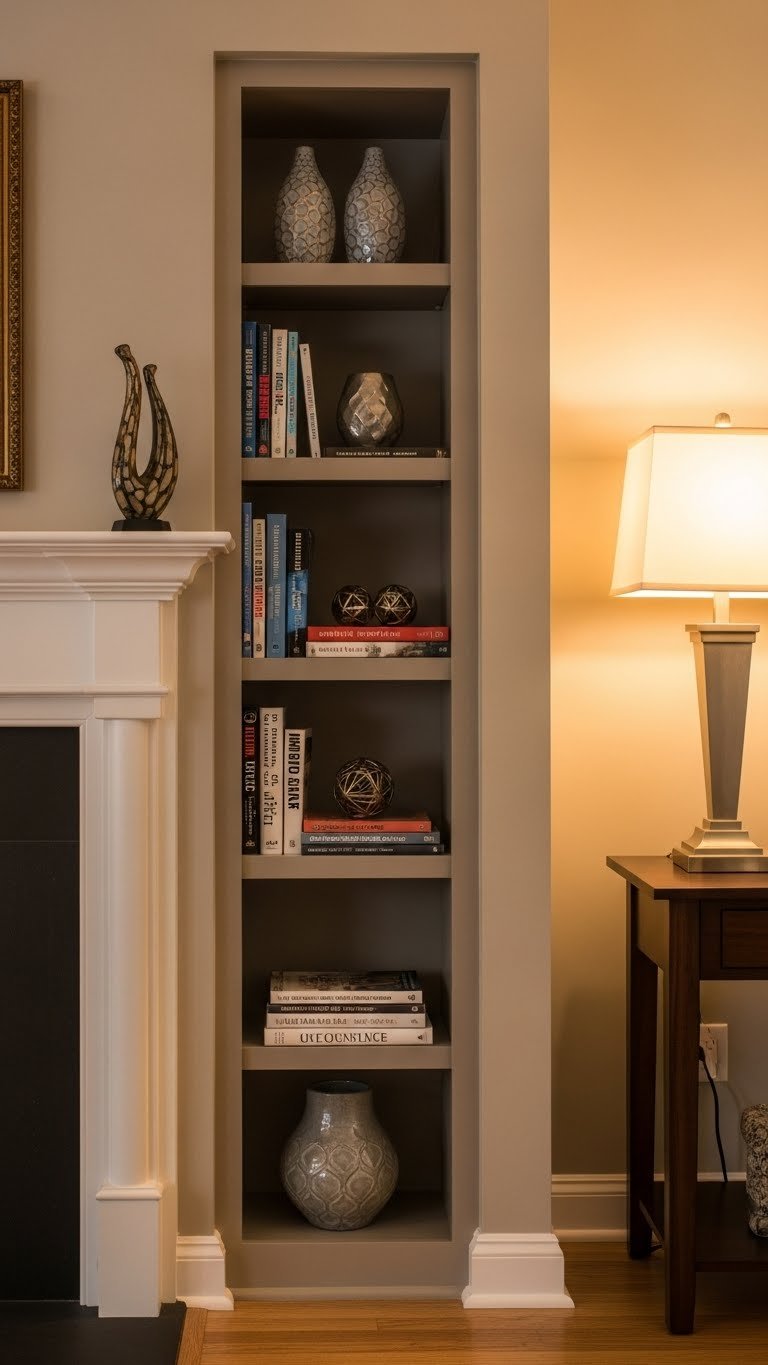
Tucking a bookshelf into an awkward nook or alcove makes that dead space functional and creates a cozy reading area. This works brilliantly in apartments with unusual layouts.
Measure your space precisely, accounting for baseboards and any uneven walls. For renters, leaning shelves (like IKEA’s ladder-style units at around $50-$100) work perfectly. For homeowners, floating shelves or custom built-ins start around $200-$500 for materials and tools. Most installations take a weekend project. Fill the space with books grouped by color or theme, add a small lamp above the shelf, and include a comfortable chair nearby for a reading nook.
What was previously wasted or awkward space becomes the coziest corner of your home—perfect for morning coffee or evening wind-down.
10. Create a Bookshelf Headboard for Extra Storage

A bookshelf headboard combines storage with design, turning your bed into a statement piece while maximizing limited floor space. It’s especially smart for small bedrooms.
Install a tall, narrow bookshelf (or multiple shelves stacked) directly behind your bed. IKEA’s Billy bookcase (around $60-$100 each) stacks beautifully when secured to the wall. For renters, lean two tall shelves against the wall behind your bed—no installation needed. Fill the top sections with books and decorative objects, keep the middle sections lighter, and use lower sections for storage baskets. Include soft lighting with small battery-operated LED strips for a spa-like ambiance.
Your bedroom gains character, you’ve maximized vertical space, and you now have a gorgeous focal point that makes your bed feel intentional and designed.
11. Use Decorative Bookends to Add Visual Interest
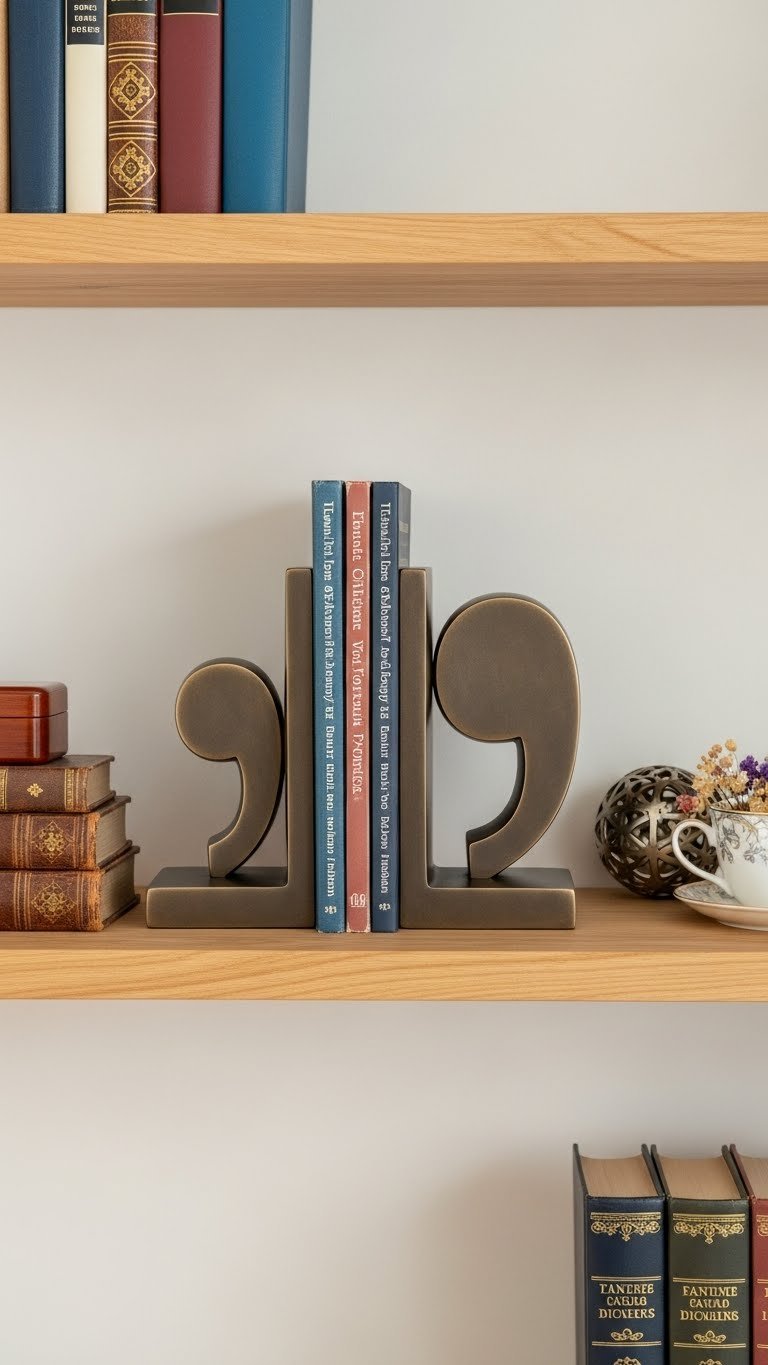
Bookends serve a practical purpose while also acting as mini decorative objects that add personality and help organize your collection into digestible sections.
Hunt for interesting bookends at thrift stores ($5-$15 each), HomeGoods, or Target ($15-$40 new). Mix styles—marble bookends on one shelf, wooden on another, or even DIY bookends using stacked books wrapped in fabric. Place them at regular intervals along a shelf to create visual breaks and contain groups of books. This approach also actually helps keep books from leaning and slipping.
Bookends become quiet design elements that elevate the entire shelf and make organization feel intentional rather than accidental.
12. Style Shelves with Varying Heights of Objects
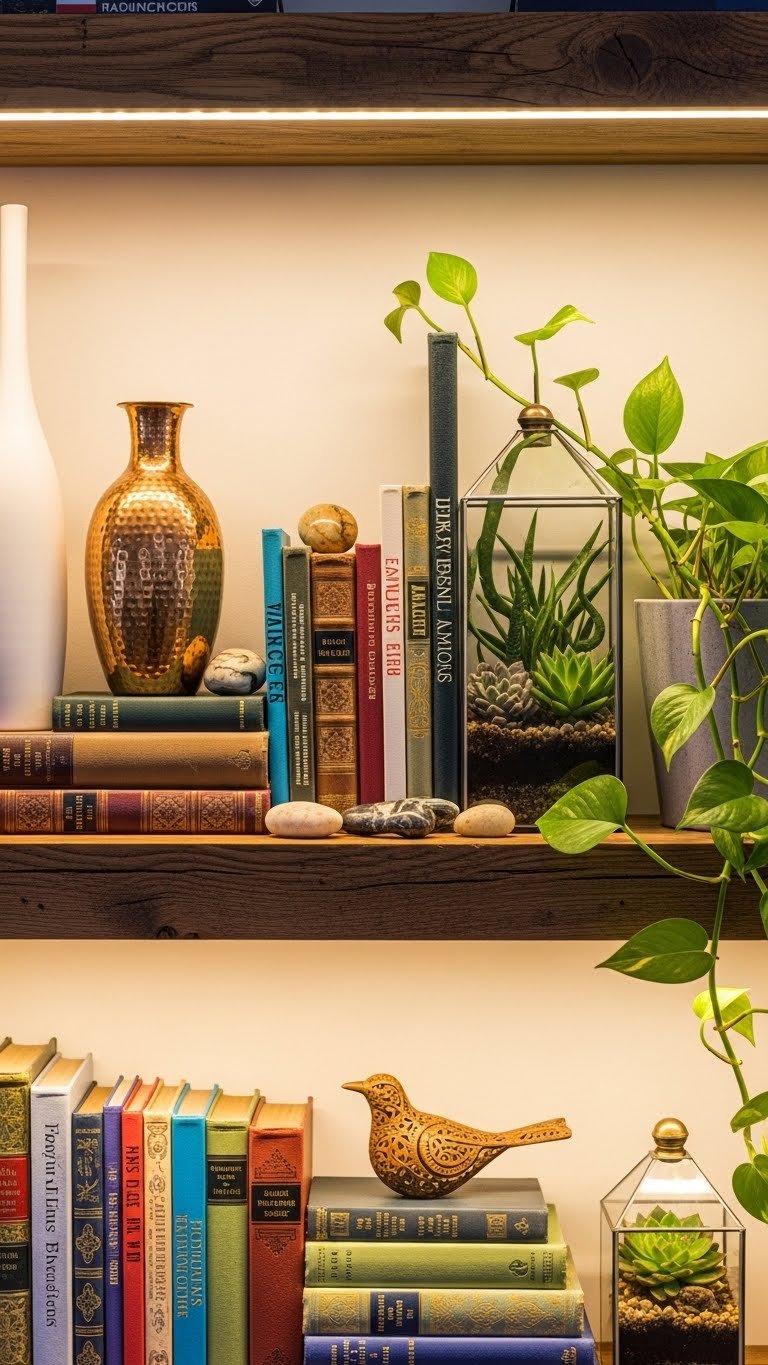
Arranging objects at varying heights creates visual movement and prevents the flat, predictable look of a shelf where everything sits at the same level.
Play with height by grouping books into stacks of different heights (3 books, 5 books, 7 books), then placing taller vases, lamps, or sculptures beside shorter stacks. Include some objects that are tilted or leaning slightly for even more dynamic composition. Aim for an uneven skyline—highest point on one side, medium in the middle, lower on the other, then repeat. This creates rhythm that your eye naturally enjoys following.
The result is a bookshelf that feels curated and visually engaging rather than flat and one-note.
13. Add a Decorative Ladder for Extra Display Space

A decorative ladder leans against your bookshelf, adding accessible storage for frequently read books while creating visual interest and farmhouse or rustic charm.
Find wooden decorative ladders at HomeGoods, Wayfair, or IKEA ($40-$100). Lean it casually against your bookshelf (it doesn’t need to be installed). Drape throw blankets over the rungs, hang reading glasses on a rung, or lean your most beautiful coffee table books there. This gives you extra storage without installation and adds a casual, approachable feel to your shelf setup.
Your bookshelf becomes more functional and textured, and you’ve added an element that makes the entire vignette feel warm and intentionally styled.
14. Use Clear Acrylic Shelves for a Floating Effect
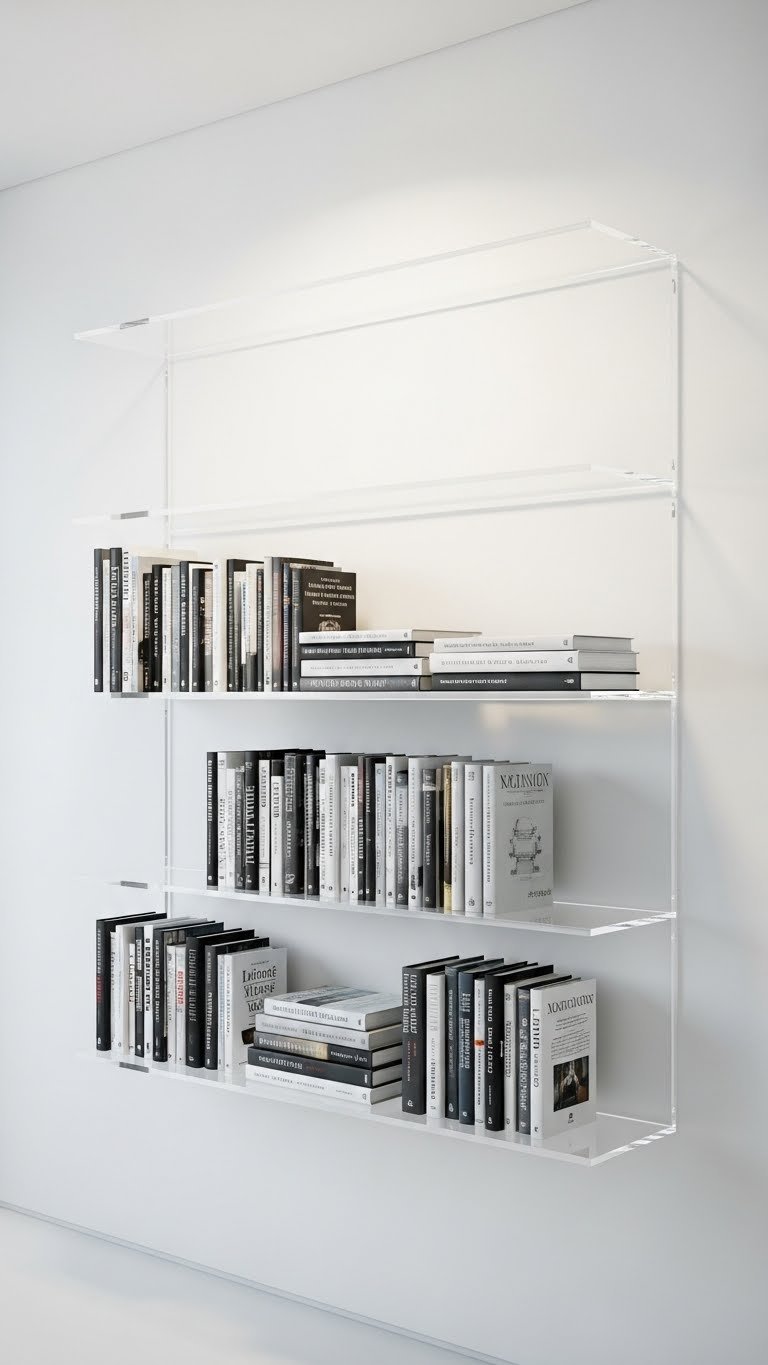
Clear or glass shelves create the illusion that your books are floating, offering a modern, minimalist aesthetic that works especially well in smaller spaces since they don’t visually “take up” space.
Install clear acrylic or glass shelves ($30-$80 each from hardware stores or online retailers like Amazon). These require proper wall anchors to handle book weight safely—don’t skimp on installation. Arrange books with spines visible, but leave negative space around them so the floating effect remains clear. This look works best with fewer books organized thoughtfully rather than packed shelves.
Your space feels more open and modern, and the books become sculptural objects rather than just storage.
15. Create a Reading Nook with Cushions Below the Shelf
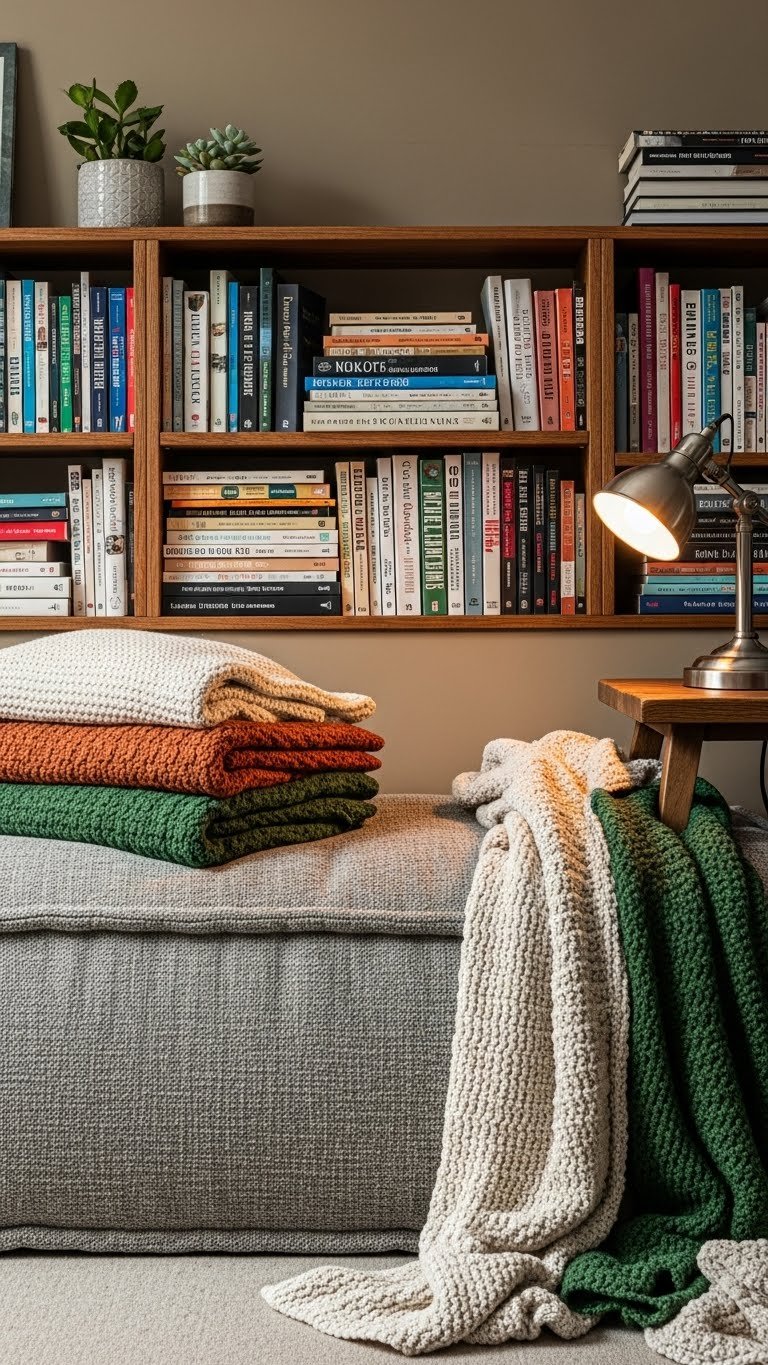
Placing a cushion or small bench directly below your bookshelf creates a dedicated reading nook that’s both functional and inviting—you’ve created an entire vignette that encourages use.
Position a meditation cushion, bench cushion, or small chair ($20-$80) directly in front of a low bookshelf. Add a side table for tea or coffee, drape a soft blanket nearby, and position a reading lamp at eye level. Choose a corner with natural light if possible. This takes about 15 minutes to arrange and requires zero installation.
You’ve now created a cozy, intentional reading space that makes your bookshelf functional and social rather than just decorative.
16. Paint Individual Shelves Different Colors
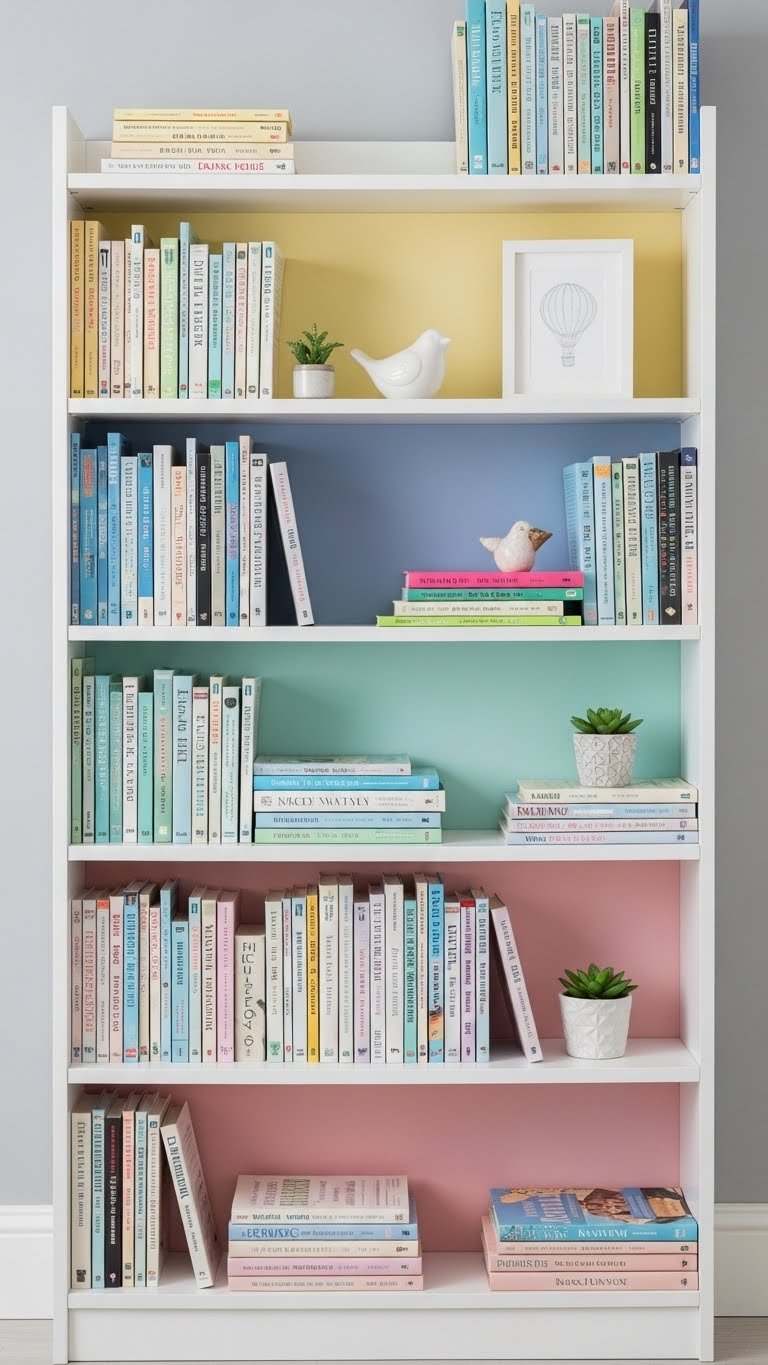
Painting each shelf a different complementary color creates a playful, gallery-like effect that’s surprisingly sophisticated when color choices are coordinated well.
Choose 3-5 coordinating colors—soft pastels, jewel tones, or a mix of neutrals and one bold accent. Paint each shelf with interior latex paint ($15-$25 per quart). Two coats per shelf, with drying time around 2 hours between coats. The entire project takes about one full day. Arrange books so spine colors complement the shelf color they’re on (warm-toned books on warm shelves, etc.).
Your bookshelf becomes a conversation piece and a reflection of your personality, instantly making your room feel more thoughtfully designed.
17. Mix Closed Storage Baskets with Open Shelving
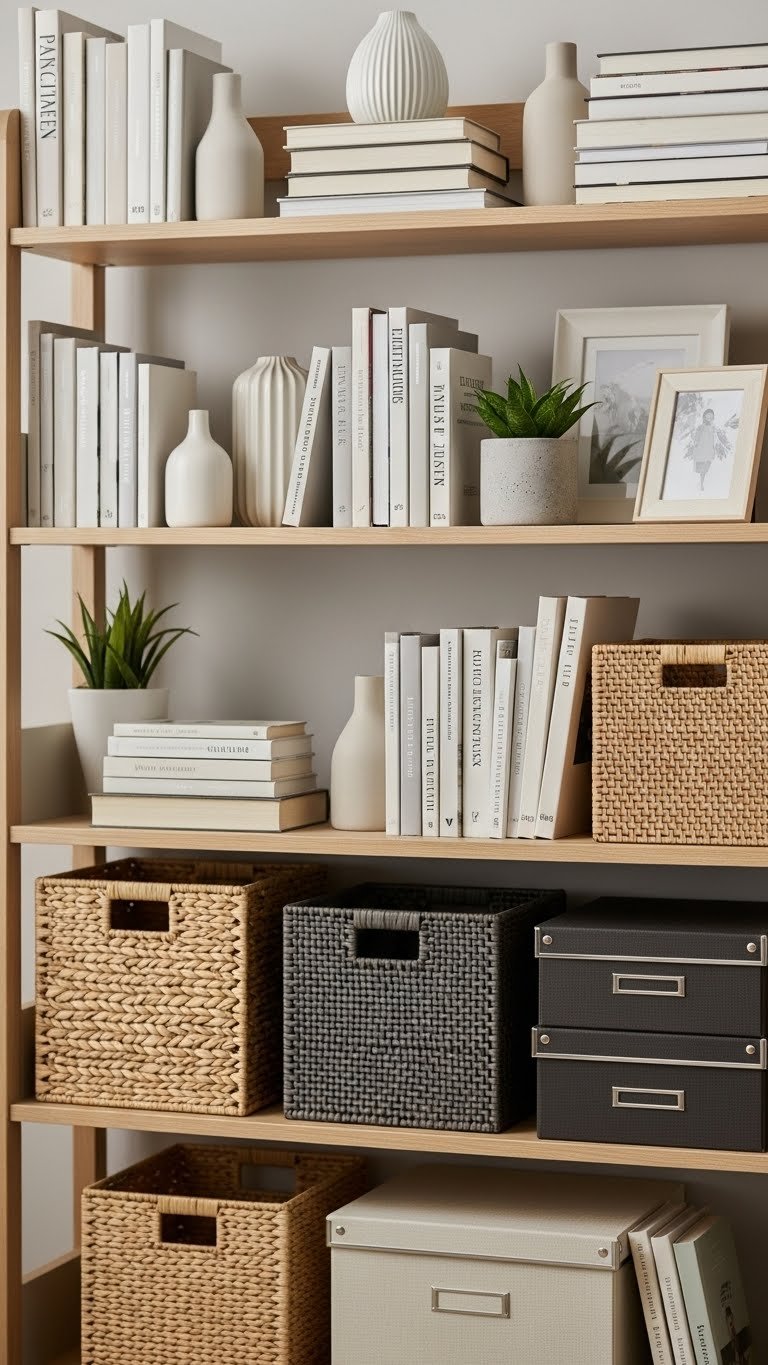
Combining open book storage with closed baskets creates a balanced look that manages visual clutter while maintaining an airy feel. This approach works brilliantly in any style home.
Place woven baskets, storage boxes, or containers ($15-$50 each from Target, IKEA, or HomeGoods) on lower shelves or to one side of your bookshelf. Fill them with items you use frequently but don’t necessarily want on display—extra journals, office supplies, blankets, or magazines. Keep upper shelves more open and visible. This balance prevents the space from feeling either too cluttered or too empty.
You get functional storage that stays hidden while maintaining a curated, designed appearance.
18. Lean Oversized Coffee Table Books Horizontally

Large art, photography, or design books stacked flat create visual weight and anchor your shelf while their covers become mini artwork pieces—design magazines call this “architectural shelving.”
Identify your oversized books (art books, photography collections, travel guides—usually 10×12 inches or larger). Stack 2-4 of them horizontally on one or two shelves, then stand regular books vertically beside them. This draws the eye and creates visual breaks that make packed shelves feel intentional. No shopping needed if you already own these books, but thrift stores often have beautiful oversized books for $2-$8.
Your shelf now has visual hierarchy and depth that makes the entire arrangement feel professionally styled.
19. Add Wallpaper Inside Open Shelving Units
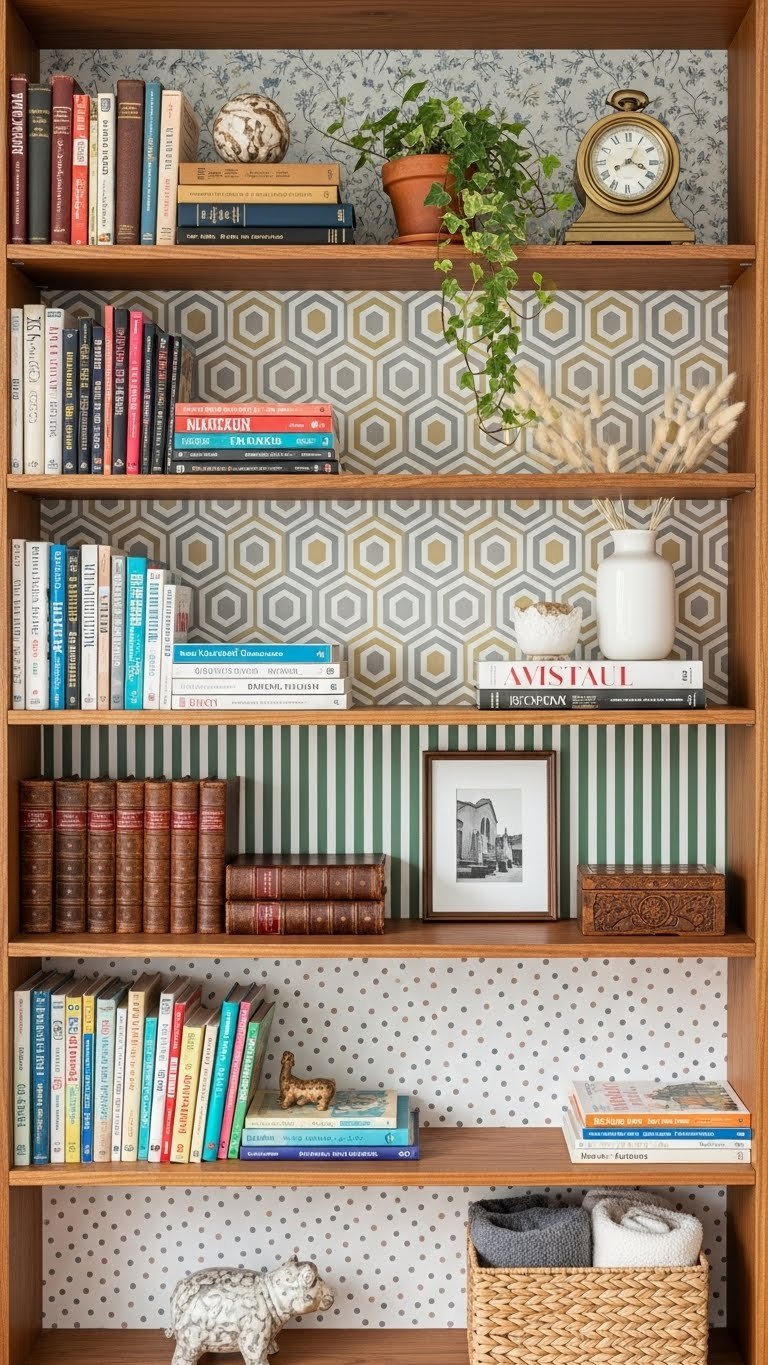
Wallpaper or patterned contact paper inside shelf boxes creates depth and frames your book displays beautifully, especially effective if your bookshelf is itself very visible.
Measure each shelf’s interior back panel. Apply peel-and-stick wallpaper or decorative contact paper ($10-$30 per roll) to create a subtle backdrop for books. You can coordinate patterns across shelves or mix complementary designs. Installation takes 20-40 minutes depending on shelf count. Step back and arrange books on top—they now pop forward with interesting color or pattern behind them.
Your bookshelf gains sophistication and intentionality with this small styling move.
20. Display Books Spine-Out and Cover-Out Strategically
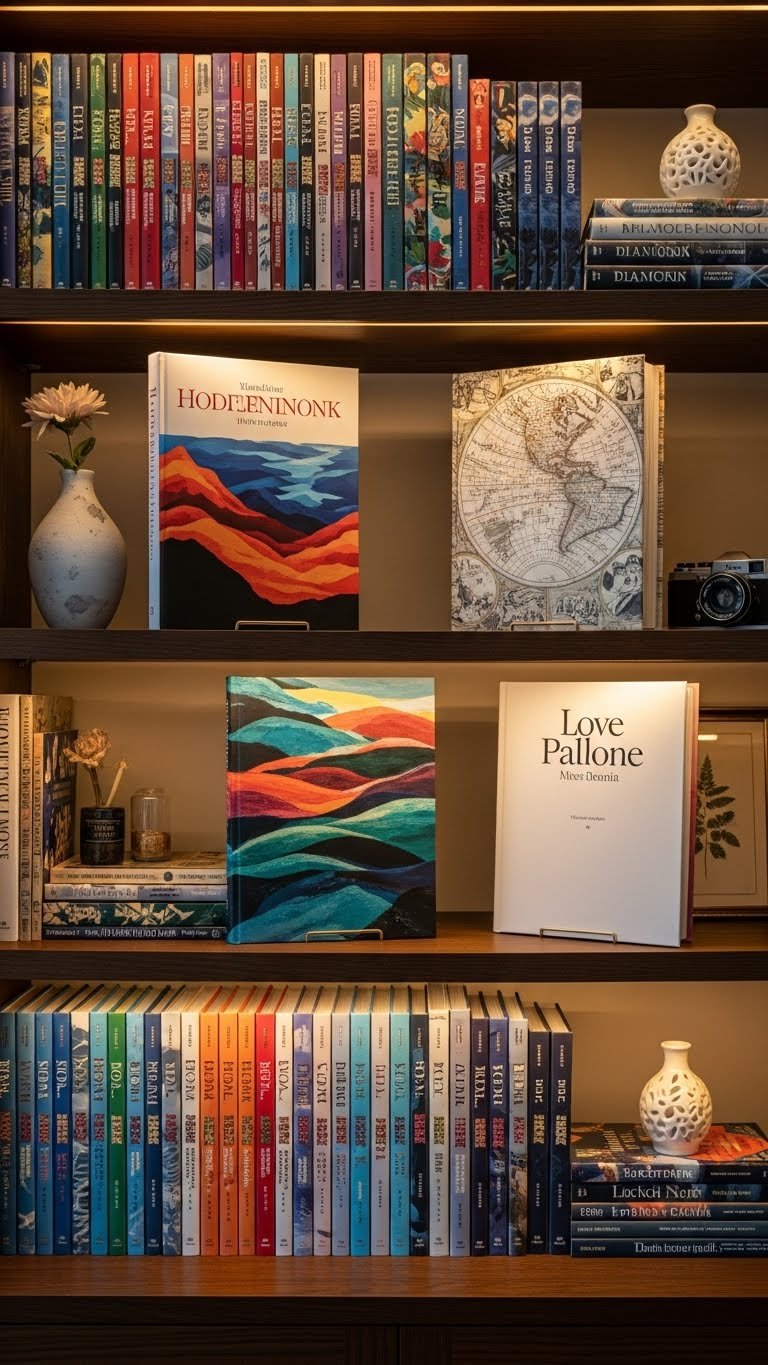
Mixing spine-forward and cover-forward displays creates rhythm while letting you highlight your most beautiful or currently reading books. This is the professional bookstore approach.
Arrange most books with spines showing for space efficiency, then select 2-4 books per shelf with particularly striking covers to display face-out using a small shelf ledge or by creating space. These become focal points. Rotate cover-forward displays seasonally or when you want to highlight new reads. No cost beyond what you already own. This approach takes about 30 minutes to arrange and rearrange.
Your shelf feels more curated and gallery-like, and you’re constantly refreshing the display without buying anything new.
21. Install Corner Shelves to Maximize Unused Space
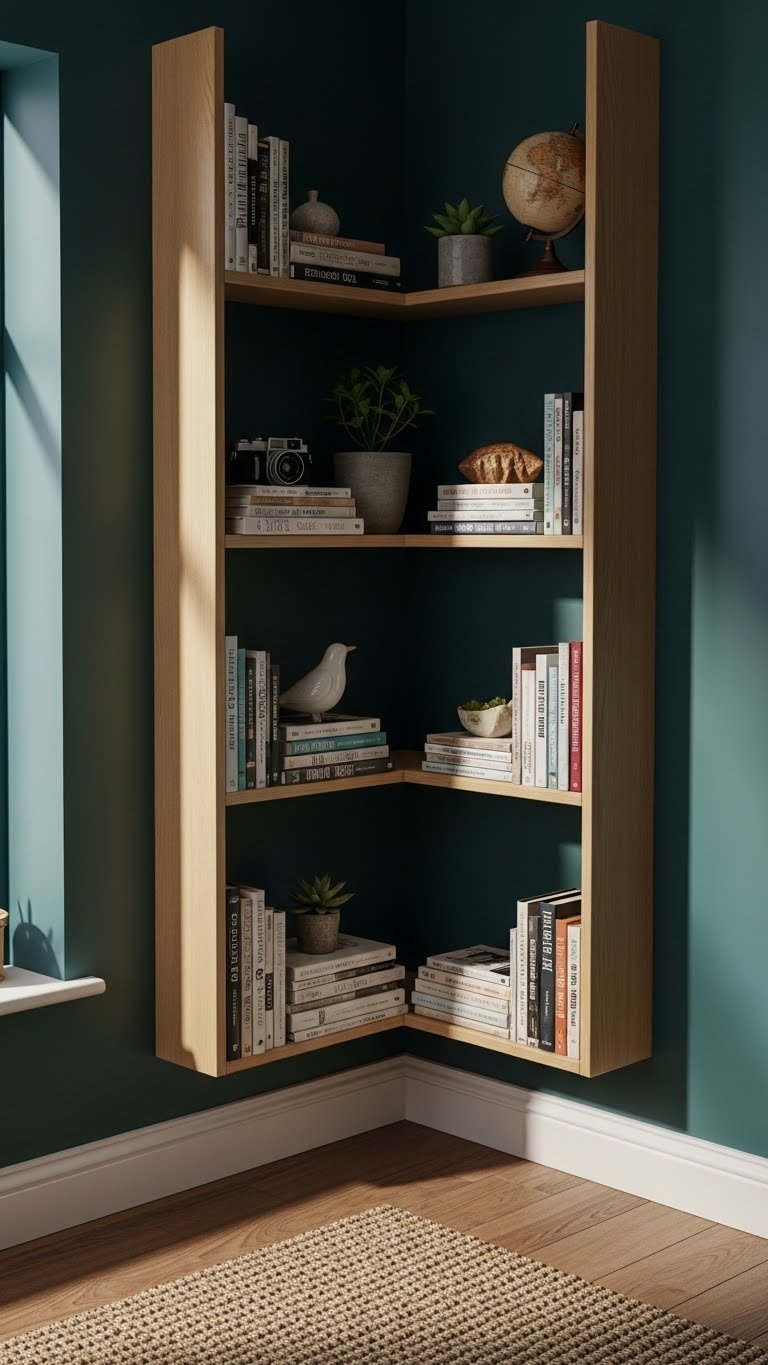
Corner shelves turn wasted corner space into functional, attractive storage. They’re especially smart in small apartments or awkward room layouts where every inch matters.
Install two tall, narrow shelves along perpendicular walls in a corner using corner shelf brackets ($20-$50 for a pair from hardware stores). These don’t need wall studs since corner shelves work with specialized brackets. Installation takes about 30 minutes with a level and screwdriver. Fill with books arranged by height (tallest on bottom shelf), add small plants, or display treasured objects. For renters, lean two tall, narrow bookcases in the corner at slight angles to each other—they’ll stay stable against both walls.
You’ve instantly added storage and created an interesting architectural feature in what was previously just a corner.
22. Create a Rainbow Bookshelf with a DIY Paint Frame Around It

A rainbow-organized bookshelf becomes even more striking when you paint a matching rainbow border around the shelf’s perimeter. This elevated styling approach works especially well for book lovers with visible book collections.
Organize books by spine color in rainbow order (or gradient order if that appeals more). Using painter’s tape and interior latex paint ($20-$30 total), paint a 2-3 inch rainbow stripe around the bookshelf’s frame. This takes about 2-3 hours including drying time. Use the same colors as your book arrangement to create a cohesive design. This is perfect for a statement wall or visible bookshelf that’s a focal point of your room.
You’ve created a one-of-a-kind design feature that immediately signals your personality and love of books.
23. Use Magazine Holders or File Organizers for Thin Book Storage
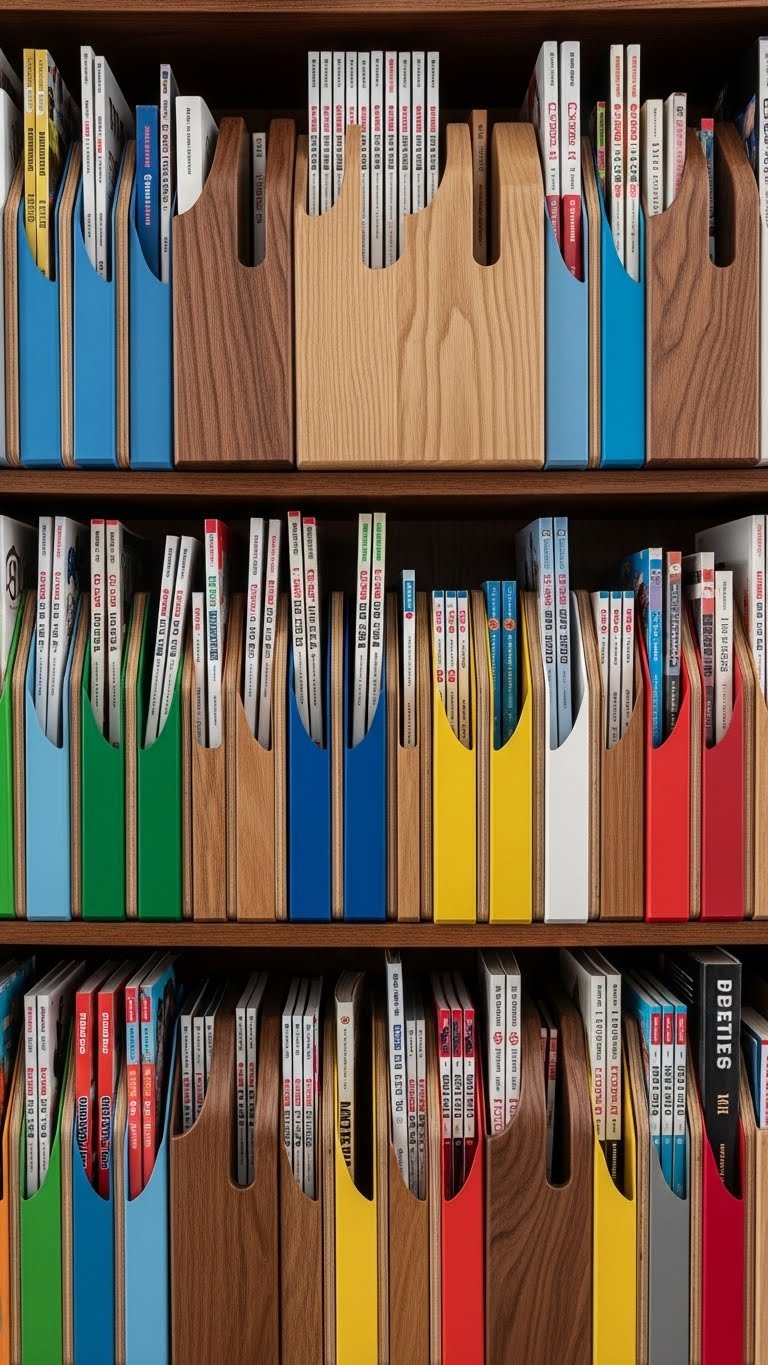
Magazine holders and file organizers solve the problem of thin books that look awkward standing alone. They corral paperbacks, graphic novels, or magazines into tidy, space-efficient bundles.
Purchase magazine holders or file organizers in natural wood, metal, or colored plastic ($5-$20 each from Target, IKEA, or office supply stores). Stand them upright on your shelf and fill them with slim books, graphic novels, or magazines organized by category, color, or author. This keeps thin books from toppling and makes use of vertical space very efficiently. No installation needed—just place and fill.
Your shelf stays organized, skinny books gain their own dedicated space, and you’ve added another design element that breaks up the visual monotony.
Save this post for your next bookshelf refresh, and try one styling idea this weekend—you’ll be shocked at how much personality a single change brings to your space. Which idea are you tackling first?
Leave a Reply