Introduction
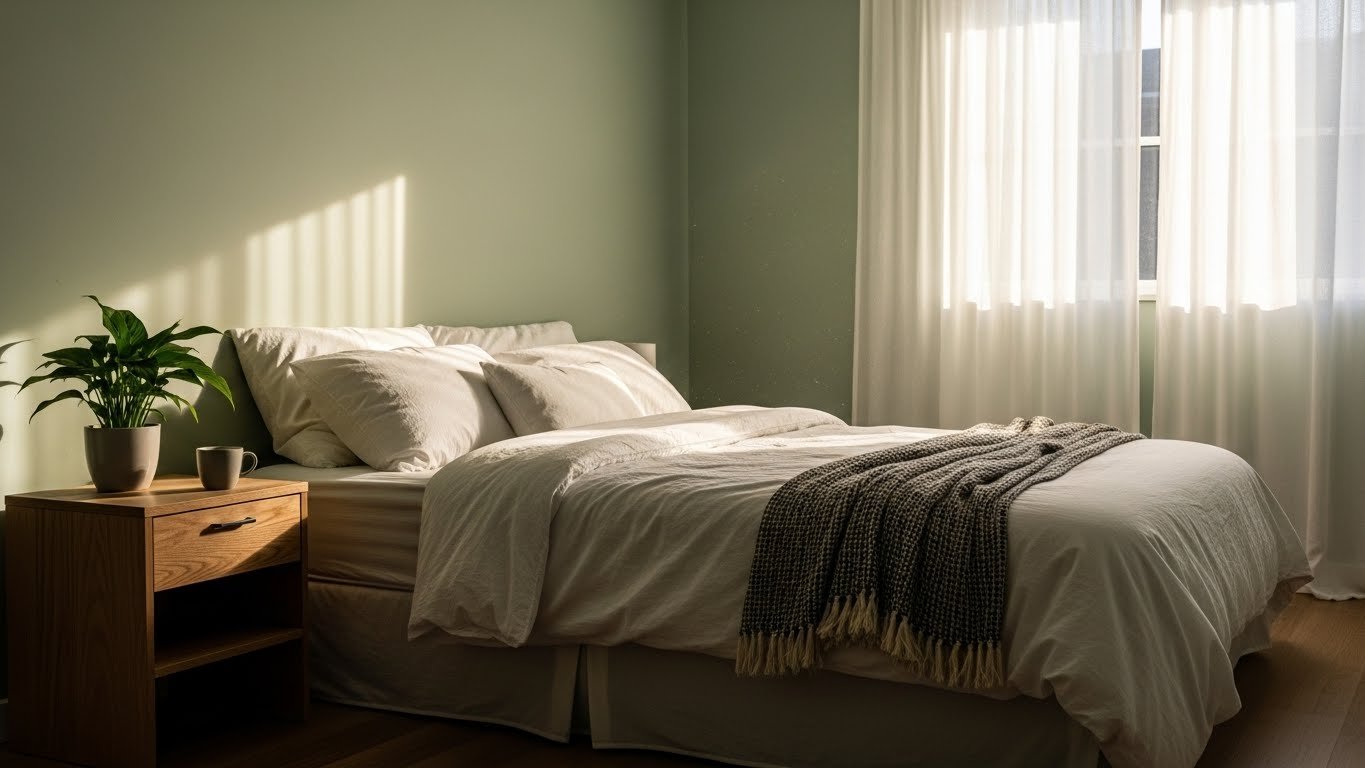
Color sets the emotional tone for your entire bedroom—it’s the first thing you feel when you wake up and the last thing you see before sleep. If you’re waking tired or struggling to wind down, your walls might be working against you instead of for you. The right palette doesn’t have to be boring beige; it’s about choosing hues that actually support rest and make you want to linger.
We’ve gathered 24 color combinations that research backs up and real people have tested in their own homes. These aren’t trendy one-year wonders—they’re timeless, achievable palettes that work in apartments and houses, with budget pieces and investment finds. Whether you’re repainting this weekend or planning a slower refresh, you’ll find options that fit your style, your timeline, and your wallet. Let’s find the colors that make your bedroom feel like the retreat it should be.
1. Pair Warm White Walls with Soft Taupe Bedding
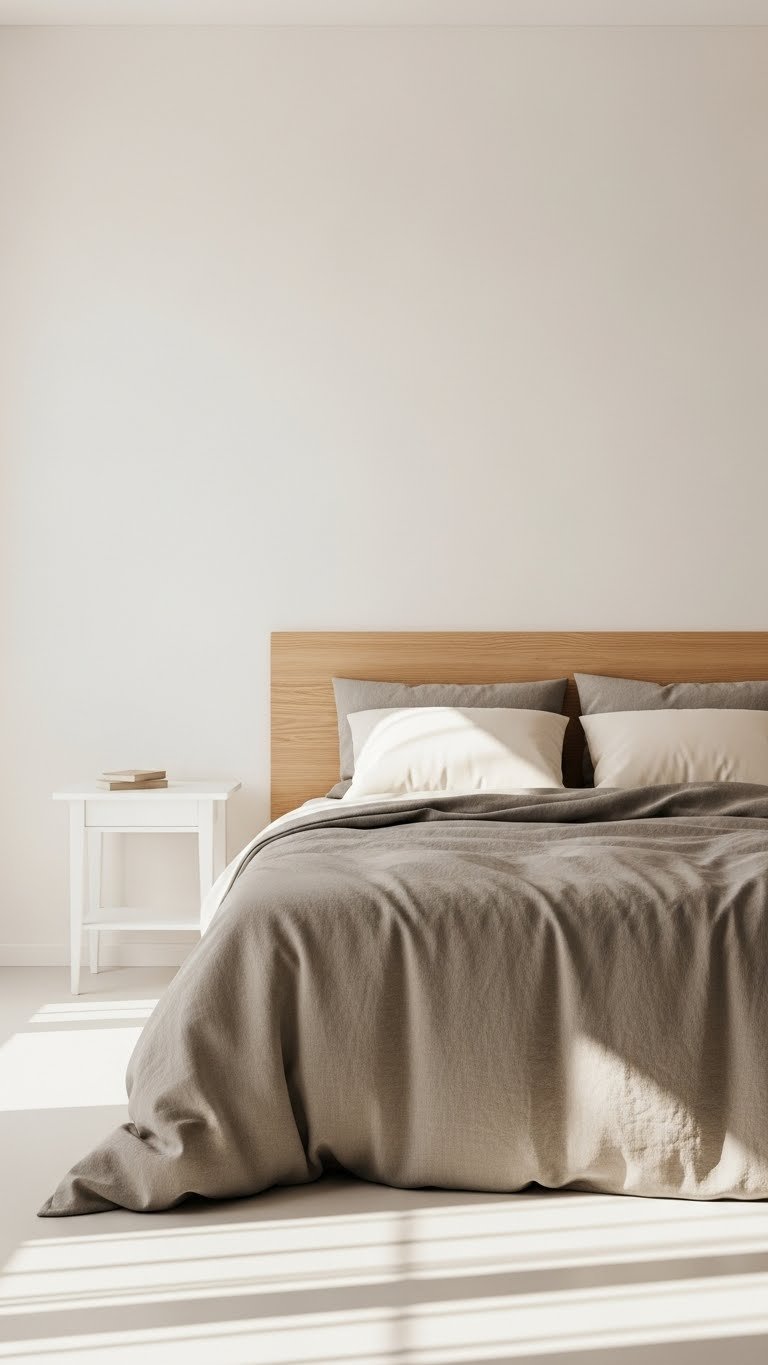
Warm whites feel nothing like clinical hospital rooms—they create a neutral canvas that never feels cold or stark. Taupe bedding adds just enough warmth without introducing a distracting color, making it easier for your brain to settle down.
Paint your walls a warm white like Benjamin Moore’s “Swiss Coffee” or Sherwin-Williams’ “Alabaster” (around $30–$40 per gallon). Layer a taupe linen duvet ($80–$200 depending on quality) over neutral sheets. The combination takes 30 minutes to style and works in any size room. Taupe hides stains better than white and doesn’t require constant washing, which means less stress about keeping it pristine.
This pairing gives you a blank slate for adding personality through pillows, throws, or wall art without overstimulating your senses.
2. Soft Sage Green with Creamy Ivory Accents
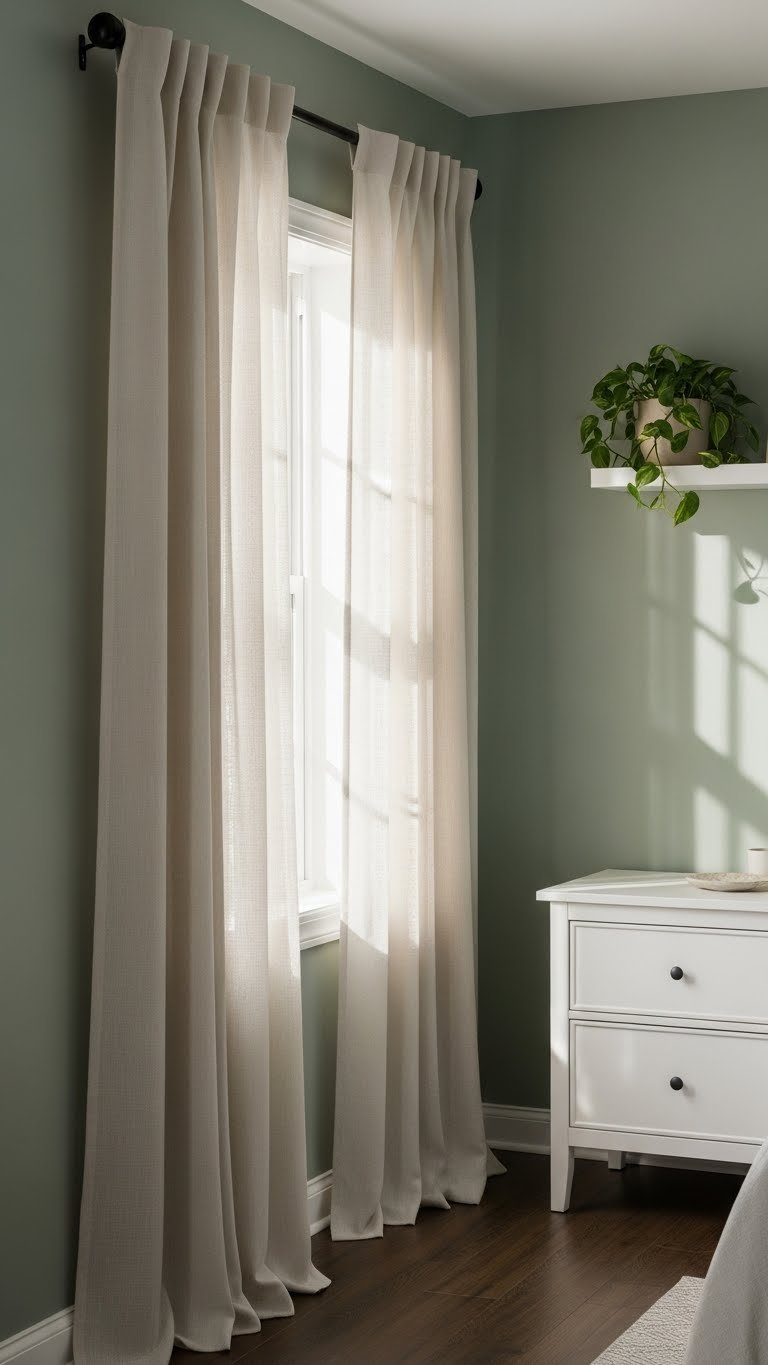
Sage green sits somewhere between gray and green—it pulls in nature’s calming effect without feeling like you’re sleeping in a forest. Studies show green reduces stress and lowers heart rate, making it one of the most sleep-friendly colors available.
Choose a muted sage like Sherwin-Williams “Sea Salt” or Benjamin Moore “Healing Aloe” ($35–$45 per gallon). Pair it with ivory or cream bedding to prevent the room from feeling too monochromatic. Paint one weekend afternoon (3–4 hours for a standard bedroom). Add ivory linen curtains ($60–$150) to diffuse morning light. The soft contrast keeps the room interesting without jarring your nervous system awake.
Sage works brilliantly in renters’ apartments when used with removable wallpaper as an alternative to painting.
3. Pale Blue Base with White Trim and Gray Accents

Pale blue taps into the psychology of water and sky—both associated with calm and safety. The white trim keeps it from feeling too cool or sad, while gray grounds the palette and prevents it from feeling babyish.
Paint walls a soft blue like Farrow & Ball “Parting” or Benjamin Moore “Palladian Blue” ($40–$50 per gallon, premium brands). Add white trim or baseboards if your budget allows, or keep existing trim as-is. Layer in gray bedding ($100–$250) and you’re done. The palette costs under $200 to implement and takes one weekend.
Light blues photograph beautifully and create that sought-after “magazine room” feeling without requiring designer-level expertise.
4. Warm Gray Walls with Linen White Bedding
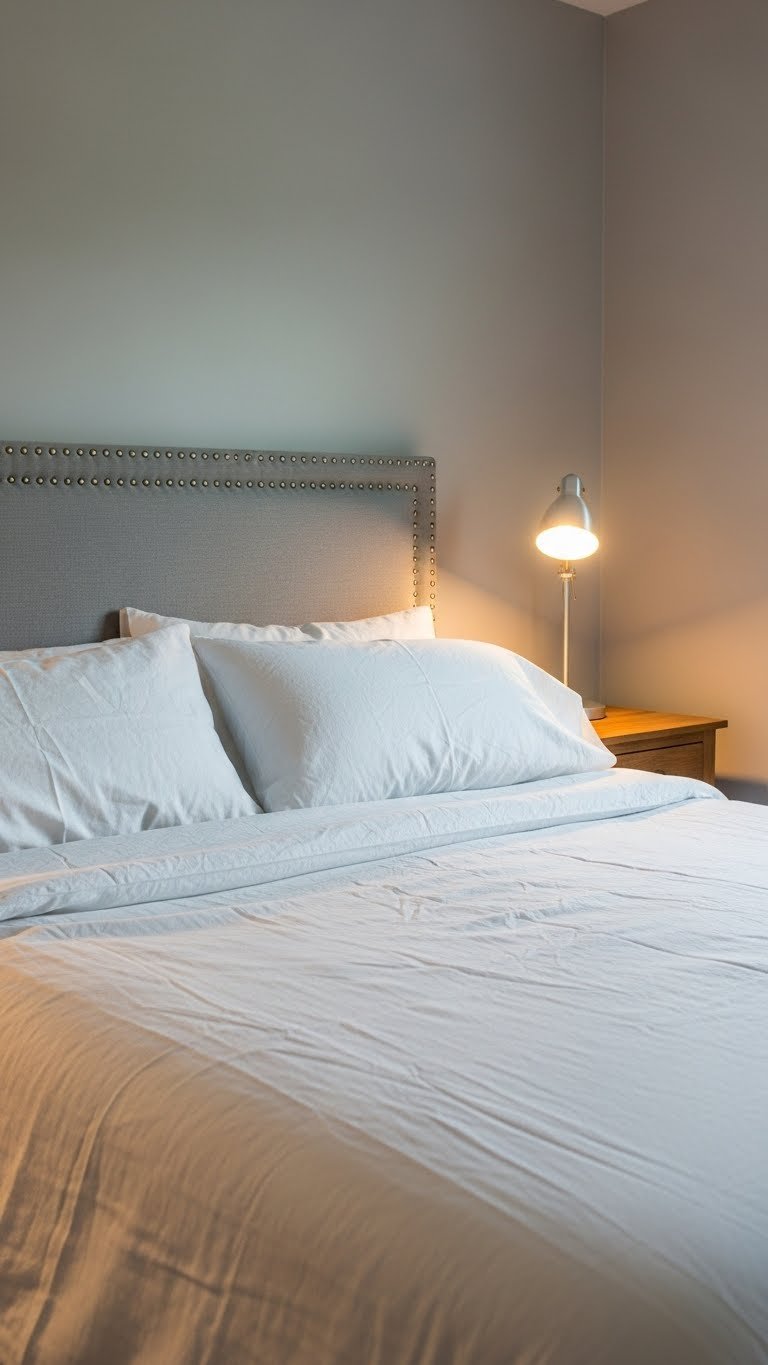
Warm gray (not cool gray) sits between beige and true gray, offering sophistication without the cold sterility that cool grays sometimes bring. Linen white bedding adds texture and movement to what could otherwise feel flat.
Select a warm gray like Sherwin-Williams “Accessible Beige” (yes, it reads as gray here) or Benjamin Moore “Revere Pewter” ($35–$40 per gallon). Pair with natural linen bedding in cream or white ($120–$300 depending on thread count and brand). The combination works in any lighting and doesn’t show dust or slight discoloration the way pure white does.
This palette creates a “lived-in luxury” feeling that makes you feel hotel-calm without the sterile perfection.
5. Soft Blush Pink with Warm Gray Walls
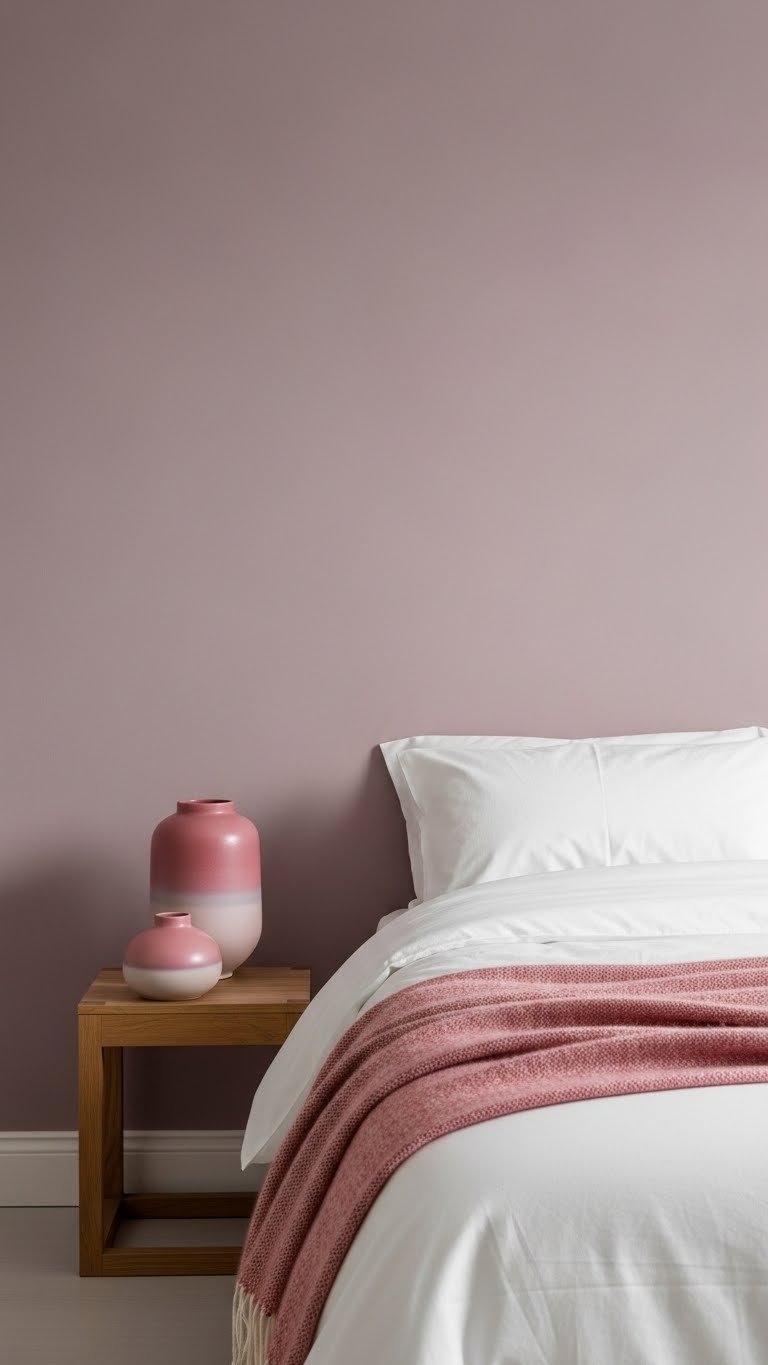
Blush pink has moved beyond girly stereotypes—it’s become a sophisticated choice for adults seeking warmth without aggression. Combined with gray, it feels curated rather than cutesy.
Paint three walls in warm gray ($35–$40 per gallon) and one accent wall in blush pink like Benjamin Moore “Pale Oak” with a drop of rose added, or use a pre-mixed option like Sherwin-Williams “Rosy Outlook” ($35–$40). Add white or cream bedding as your base. The blush picks up on pillows, throws, or artwork. This update costs $80–$120 and transforms the room in one Saturday.
Renter-friendly? Use blush pink removable wallpaper ($25–$60) on just one wall instead of painting.
6. Soft Sage with Warm Beige and Natural Wood
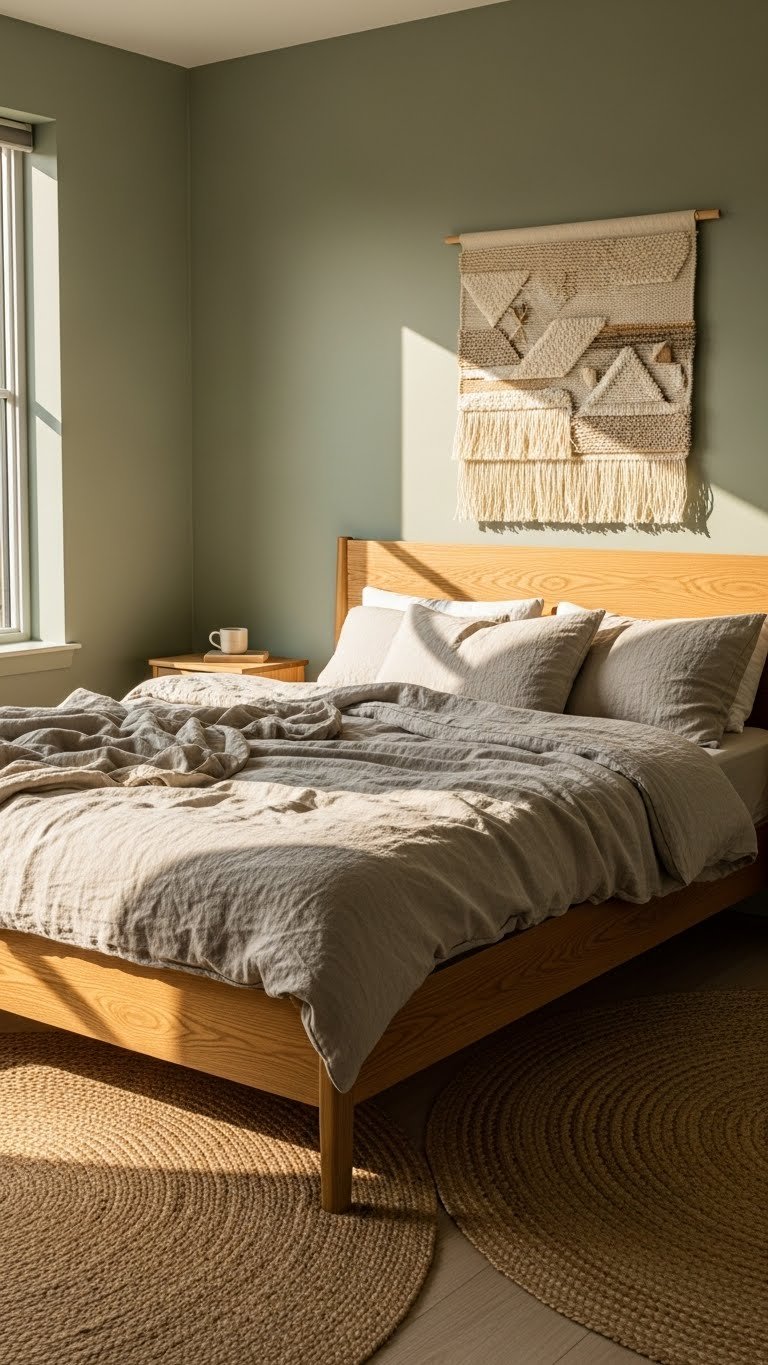
This palette brings together biophilic design elements—wood, green, and earth tones—that genuinely calm your nervous system. The combination feels organic without requiring an interior design degree.
Paint walls sage green ($35–$40 per gallon). If you don’t have natural wood furniture, prioritize a wooden nightstand or bed frame ($150–$500 depending on style and quality). Layer beige bedding ($80–$200) and a jute or sisal rug ($60–$150). The room naturally invites slower living. You can build this palette over time, adding pieces as budget allows.
The natural materials actually improve air quality, a bonus benefit most color palettes can’t claim.
7. Charcoal Gray with Cream and Soft White
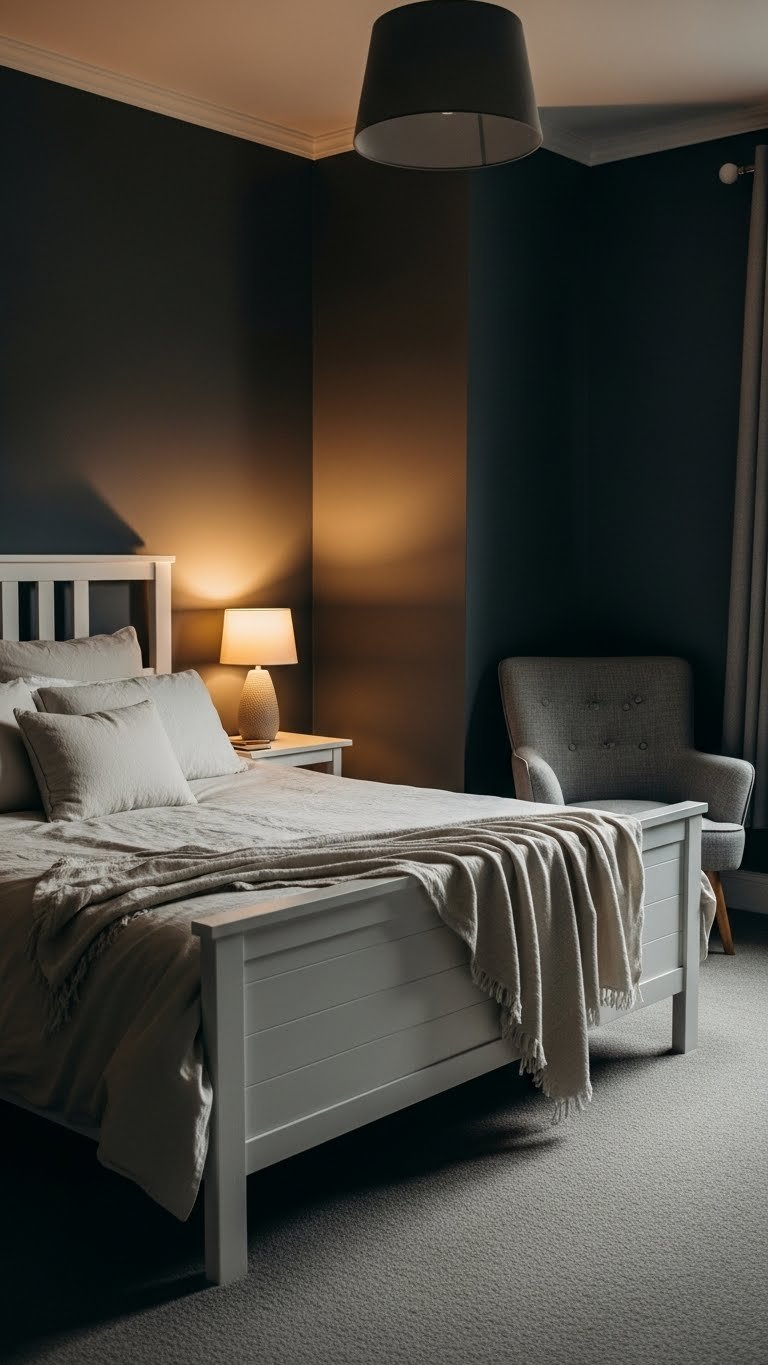
Charcoal gray feels intimate and enveloping—like your room is giving you a hug. The light bedding prevents it from feeling cave-like or depressing. This is cozy without being trendy.
Choose a true charcoal like Sherwin-Williams “Iron Ore” or Benjamin Moore “Cavern Clay” ($35–$45 per gallon). Pair with cream or white bedding ($100–$250) to maintain brightness and balance. The contrast is what makes this work; don’t go too dark on both walls and bedding or you’ll overshadow the restfulness. Paint one weekend and watch the room instantly develop atmosphere.
Charcoal hides dust and marks better than lighter colors, so maintenance is lower.
8. Pale Lavender with Soft Gray Accents
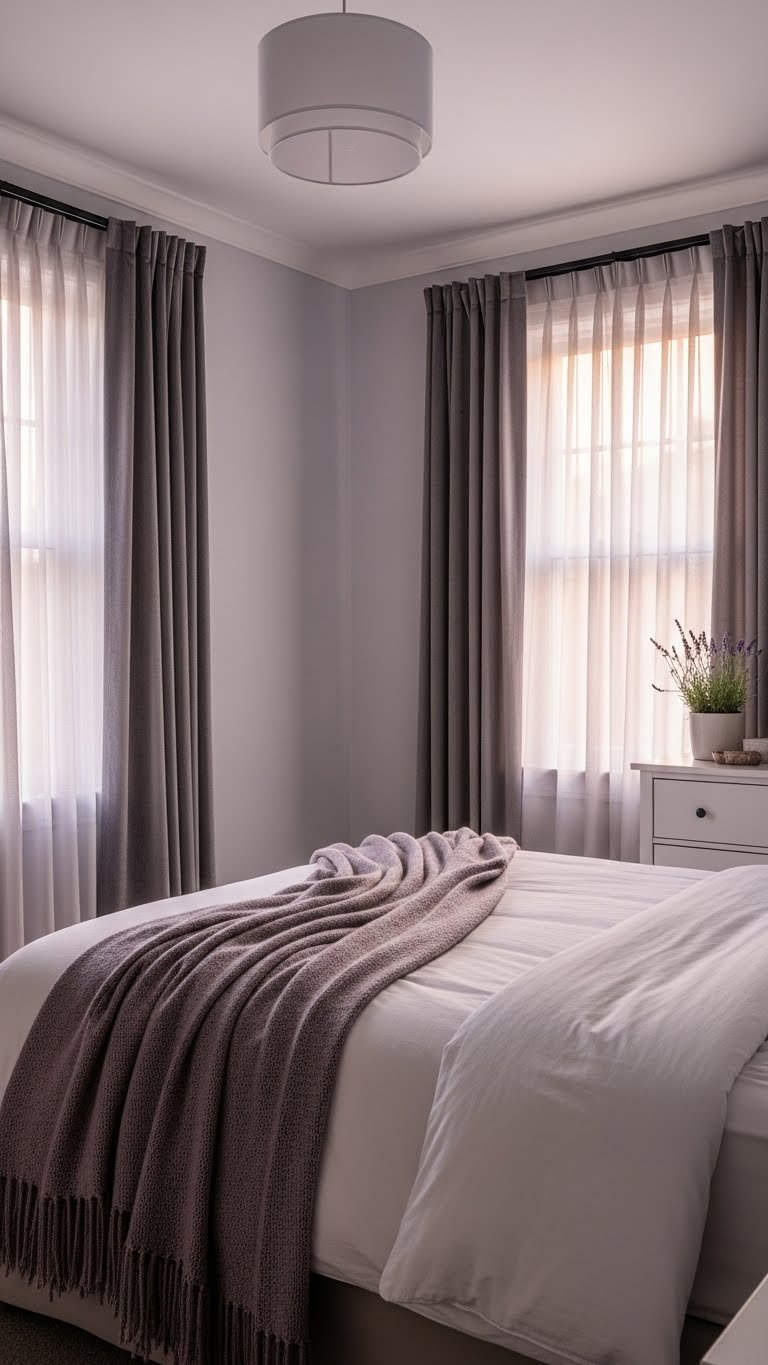
Lavender is science-backed for sleep—lavender oil is widely recommended for relaxation, and the color itself carries those associations. A pale, grayish lavender reads more sophisticated than typical lavender and works in grown-up spaces.
Paint walls a muted lavender like Sherwin-Williams “Potentially Purple” or Benjamin Moore “Provence” ($35–$40 per gallon). These read almost gray in certain light, so they won’t feel overly purple. Add gray or white bedding to keep the room balanced. Curtains in soft gray ($50–$150) tie the palette together. The total investment is $150–$300 for walls, bedding, and curtains.
This palette works especially well if you’re sensitive to stimulation—lavender naturally reduces alertness.
9. Warm White with Terracotta Accents
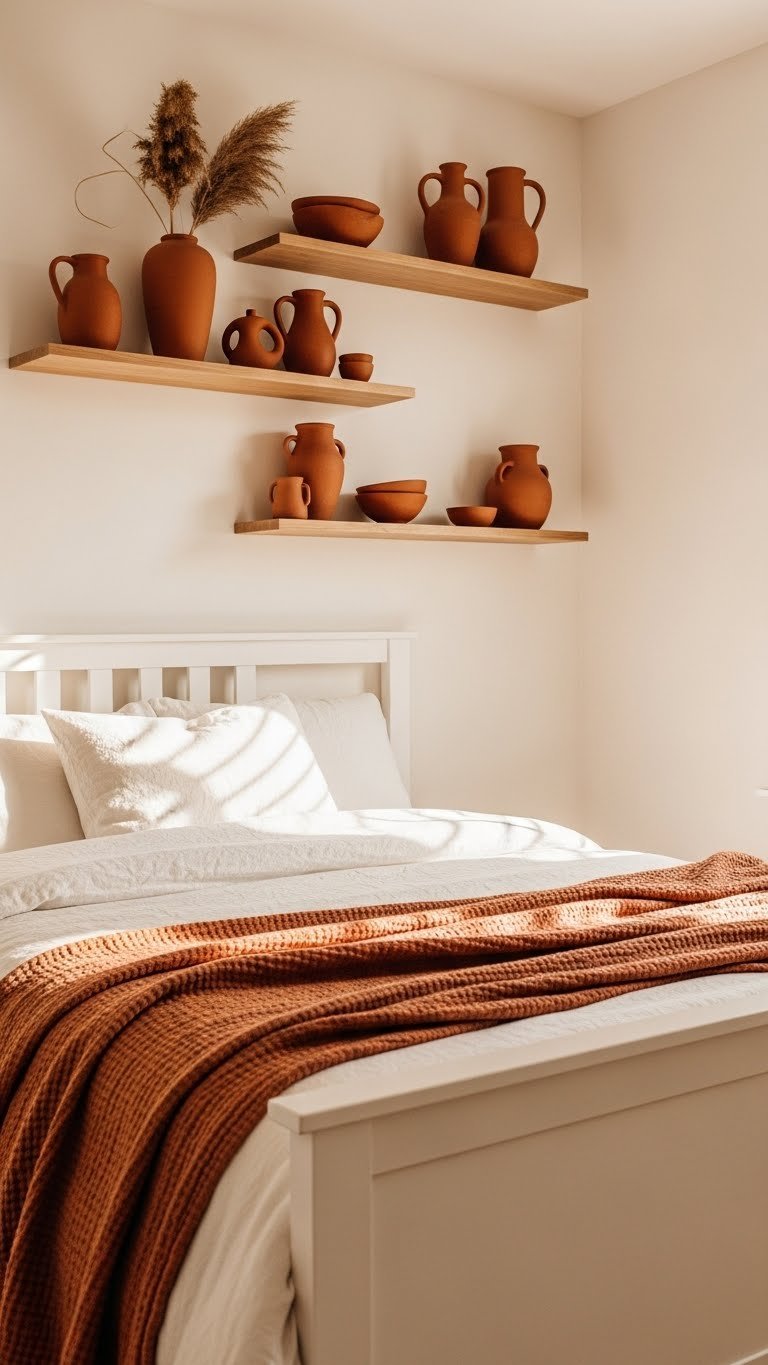
Terracotta brings earth-grounded warmth without the heaviness of deeper oranges or reds. Used as an accent rather than a wall color, it adds personality while keeping the room restful.
Keep walls a warm white ($30–$40 per gallon). Introduce terracotta through a linen throw blanket ($40–$100), decorative pillows ($20–$60 each), or small pottery pieces ($15–$100). A terracotta area rug ($80–$200) anchors the palette. You can layer these in over time, so the initial cost can be as low as $80–$150. This approach is perfect for renters—no painting required.
The earth-tone accent makes the room feel rooted and warm, especially during cooler months.
10. Pale Yellow with Soft Gray Walls

Pale yellow brings subtle happiness without overstimulation—think soft butter, not neon. The gray headboard and accents prevent it from feeling too cheerful or children’s-room-like.
Paint walls a soft yellow like Benjamin Moore “Pale Oak” (yes, it reads as soft yellow here) or Sherwin-Williams “Buttercream” ($35–$40 per gallon). Add a gray upholstered headboard ($200–$600) or use a removable headboard decal ($30–$80). Layer with white bedding and gray accents. The room gains warmth and subtle light without sacrificing calm. Total cost: $100–$400 depending on whether you DIY the headboard or buy pre-made.
Pale yellow naturally reflects light, making small rooms feel slightly larger.
11. Soft Greige (Gray-Beige Mix) Throughout
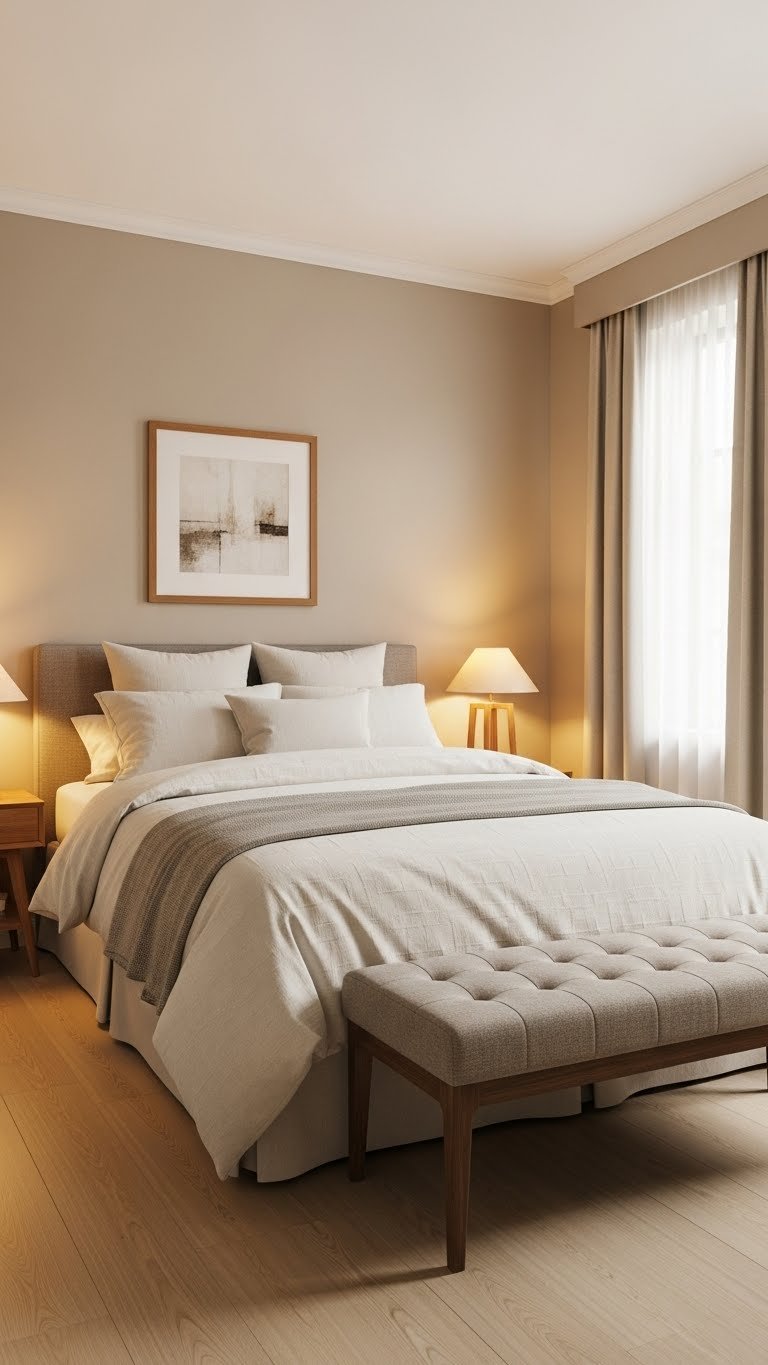
Greige is the chameleon of paint colors—it reads differently depending on your lighting, shifting between gray and beige. This adaptability means it feels right in any season or time of day, which keeps it from becoming monotonous.
Choose a true greige like Sherwin-Williams “Urbane Bronze” (warmer than it sounds) or Benjamin Moore “Accessible Beige” ($35–$45 per gallon). Paint all walls in this single color to create a cocoon effect—your eye rests because there’s no jarring contrast. Add layers through bedding ($100–$250), throws, and pillows in cream, white, or warm taupe. The simplicity is the strength here; you’re decorating around a perfect neutral base.
Greige works beautifully in any natural light, which means the room never feels “off” or dated.
12. Soft Teal with Cream and Wood Tones

Teal sits between blue and green, capturing the calming properties of both. A muted, dusty teal (not bright or saturated) feels sophisticated and grounding rather than trendy.
Paint walls a soft teal like Sherwin-Williams “Sea Salt” or Benjamin Moore “Palladian Blue” with a touch of green added ($35–$45 per gallon). Pair with cream bedding ($100–$200), natural wood furniture, and a cream or jute area rug ($60–$150). The palette costs $200–$400 to implement. If painting feels like too much commitment, use teal removable wallpaper ($25–$60) on one or two walls instead.
The wood tones ground the teal and prevent the room from feeling cold or clinical.
13. Soft Blush with Pale Blue Walls
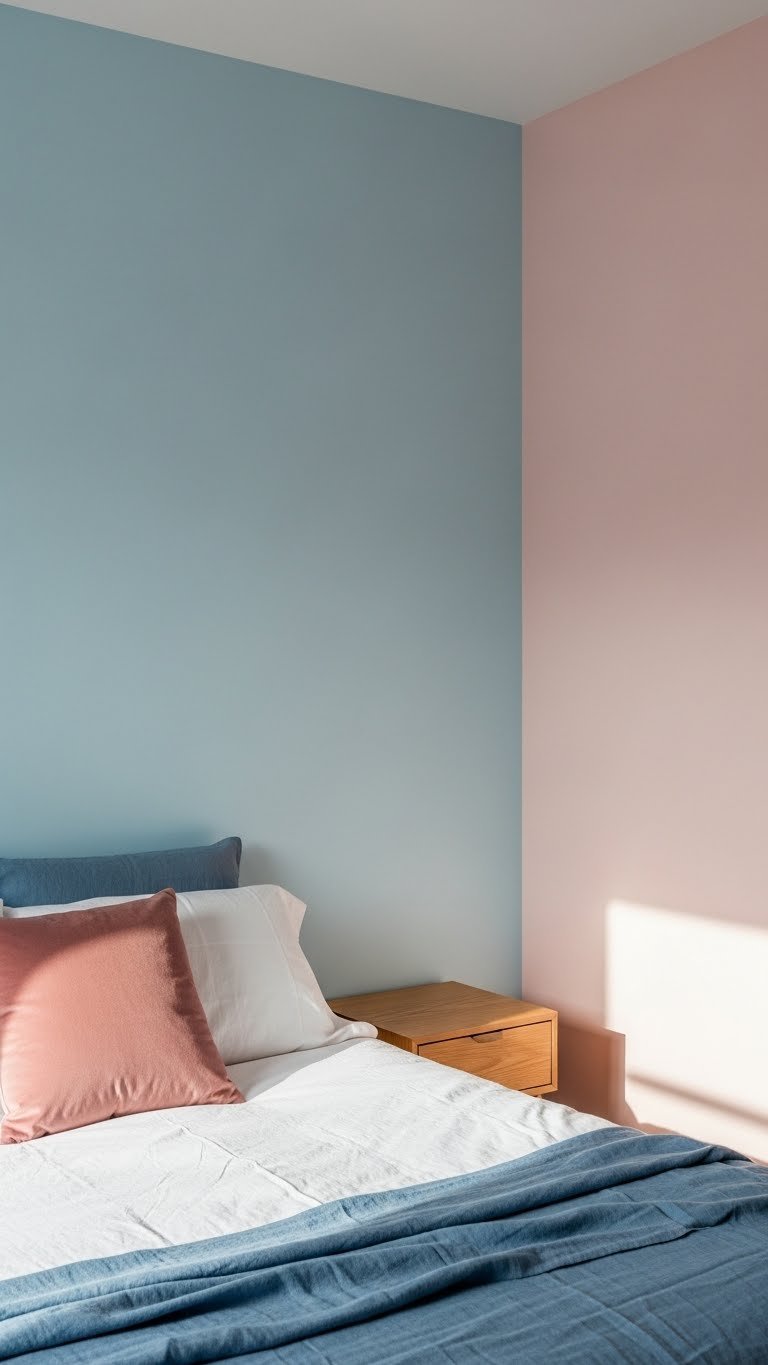
Color-blocking two gentle hues creates visual interest without chaos. Both pale blue and soft blush are calming on their own, so combining them maintains the restful vibe while adding sophistication.
Paint two adjacent walls pale blue ($35–$40 per gallon) and two in soft blush ($35–$40 per gallon). Keep bedding white or cream as your anchor. Add accents in both colors through pillows, throws, or artwork ($30–$100). The painting takes a full Saturday but creates a unique, curated look. This approach costs $100–$200 for paint alone.
Color-blocking photographs beautifully and gives your room a high-design appearance without hiring a professional.
14. Warm White with Muted Sage Accents

This reverses the typical sage-walls approach—keeping walls neutral and bringing green in through larger furniture pieces or textiles. It gives you the biophilic benefits while maintaining flexibility.
Paint or keep walls warm white ($30–$40 per gallon if painting). Source a sage upholstered headboard or bed frame ($300–$800) or use removable fabric panel wallpaper in sage ($30–$80) behind your existing bed. Add a sage linen throw ($40–$100) and white bedding. The total investment is $150–$400, but you’re getting the calming effect of green without committing walls to the color.
This setup works beautifully in rentals—remove the fabric panel when you leave, and you’ve left no permanent changes.
15. Deep Gray with Warm Cream Everything Else
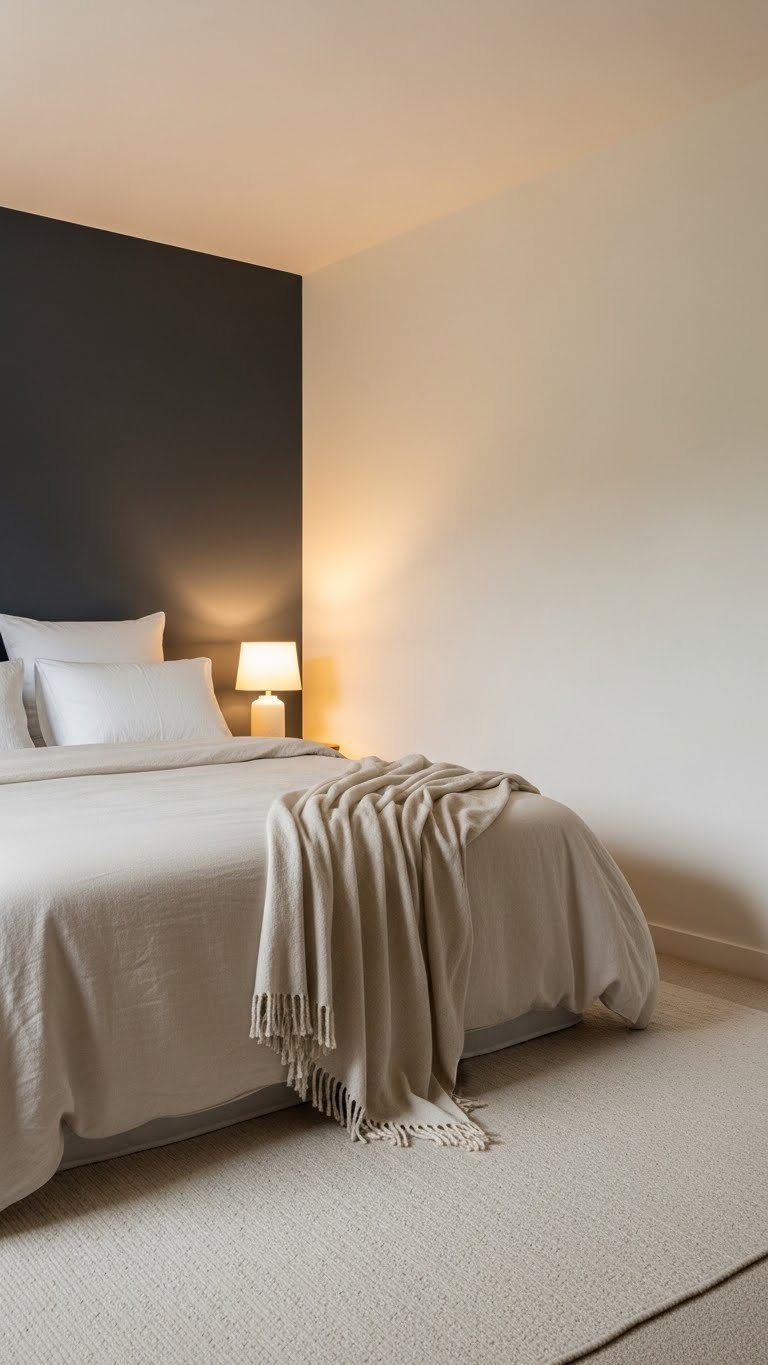
Deep gray as an accent wall (rather than all-over) gives you drama and coziness without making the room feel cave-like. The cream everywhere else balances the darkness and keeps it feeling open.
Paint one accent wall (behind the bed is classic) in deep charcoal ($35–$40 per gallon). Keep other walls creamy white ($30–$35 per gallon). Layer cream and white bedding ($100–$250). Add a cream area rug ($80–$200). The cost is $200–$400, but the visual impact is significant. Painting one wall takes 2–3 hours on a Saturday morning.
One accent wall is a renter-friendly approach—you’re making a statement without overwhelming your space.
16. Pale Peach with Soft Gray and Natural Materials
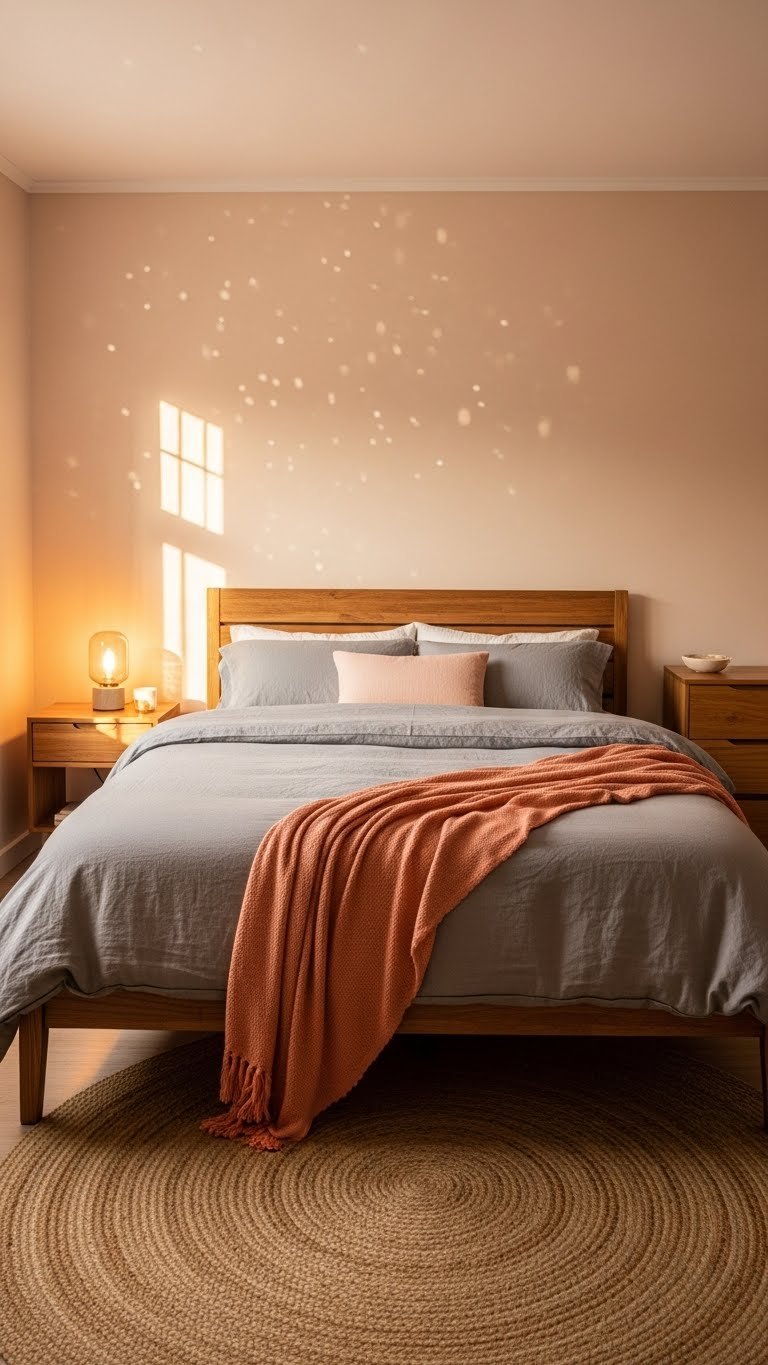
Pale peach is warm and inviting without being loud or childish. When paired with grays and natural wood, it feels timeless and layered rather than dated or trendy.
Paint walls a soft peach like Benjamin Moore “Peach Beige” or a custom pale peach ($35–$40 per gallon). Add gray bedding ($100–$200), a peach linen throw ($40–$100), natural wood furniture, and a jute rug ($60–$150). The entire palette costs $250–$400. The warm peach feels particularly good in rooms that get afternoon light, as it glows without needing artificial warmth.
Peach is underrated—it brings warmth without the aggression of orange or coral.
17. Soft Charcoal with White Bedding and Gold Accents

Charcoal creates a dramatic, adult backdrop. White bedding keeps it from feeling heavy, and gold accents add warmth and a touch of luxury without feeling costumer or overdone.
Paint walls soft charcoal like Sherwin-Williams “Urbane Bronze” ($35–$45 per gallon). Layer white bedding ($100–$250), then add gold-finish lighting ($30–$100 per lamp), a gold-framed mirror ($40–$150), and possibly gold drawer pulls or hardware ($10–$30 each). The palette costs $250–$500 depending on how many gold accents you add. Start with just lighting and mirror, then add more if it feels right.
Gold feels warm and grounded against charcoal—not cold or sterile.
18. Pale Green-Gray with Soft White and Natural Textures

Green-gray is a newer neutral that combines the calming properties of green with the sophistication of gray. Natural textures amplify the grounded, biophilic feeling.
Paint walls a pale green-gray like Sherwin-Williams “Sea Salt” or Benjamin Moore “Palladian Blue” with an extra touch of gray added ($35–$45 per gallon). Prioritize natural materials: a wood or rattan headboard ($150–$500), natural wood nightstands ($80–$300), and a jute area rug ($60–$200). Layer with white or cream bedding ($100–$250). The total investment is $350–$700 for a fully cohesive room, but you can build it over time.
Natural textures are worth the investment—they actually improve how you feel in the space.
19. Warm Beige Walls with Taupe Bedding and Wood Accents
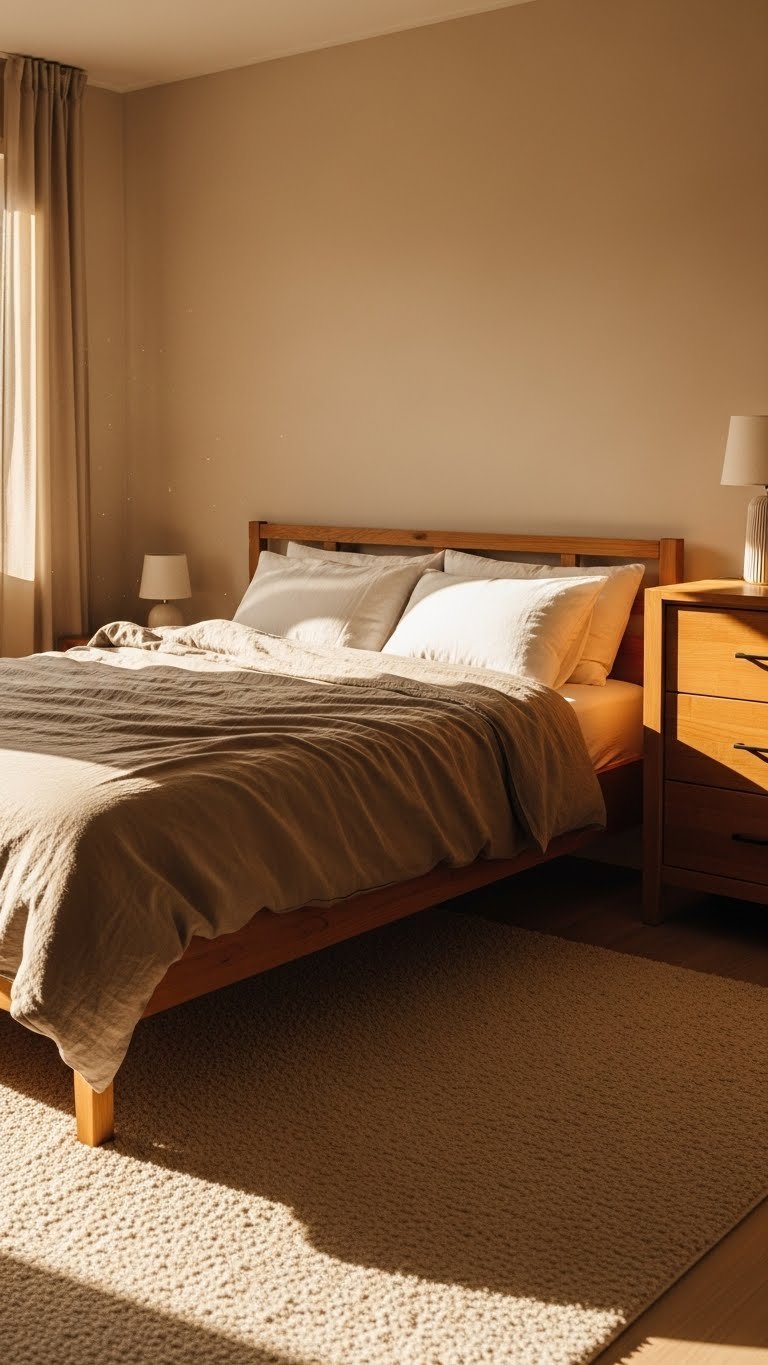
Warm beige is the safe, timeless choice—and there’s nothing wrong with that. It creates a backdrop that lets you add personality through other elements without the walls competing for attention.
Paint walls a warm beige like Benjamin Moore “Accessible Beige” or Sherwin-Williams “Kilim Beige” ($30–$40 per gallon). Add taupe bedding ($100–$250), warm wood furniture in honey or oak tones ($200–$1000+ depending on quality), and a cream area rug ($60–$200). This palette costs $300–$500 to build. Warm beige works in any lighting and never feels dated, making it ideal if you’re not sure about bold color choices.
The beauty of this palette is its flexibility—you can decorate it neutrally or add color through pillows and artwork.
20. Soft Blue-Gray with Cream Linens and Brass Details
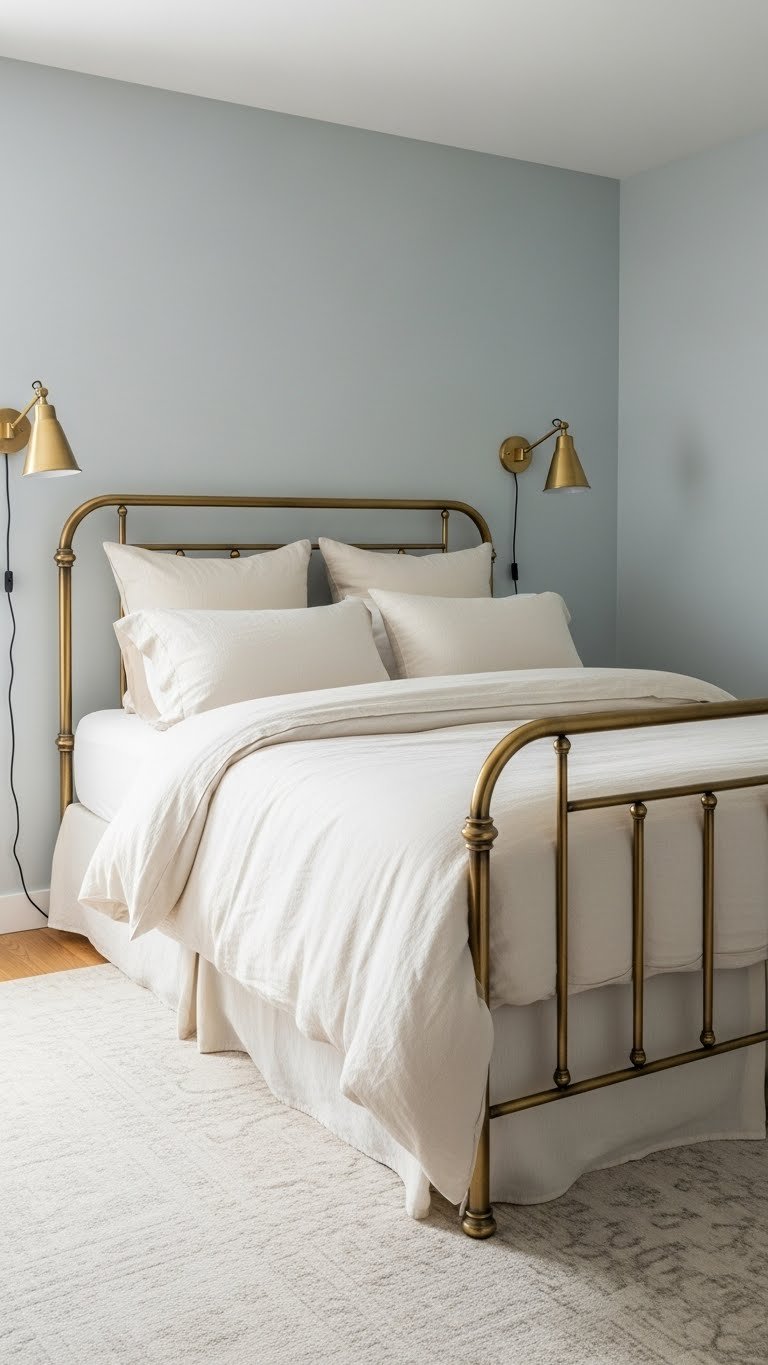
Blue-gray (called “greige” with a blue lean) feels calming and slightly elevated. Cream linens keep it soft, and brass details add warmth and a subtle luxury feel.
Paint walls a soft blue-gray like Farrow & Ball “Calluna” or Benjamin Moore “Pale Oak” with blue undertones added ($35–$50 per gallon, premium brands). Layer with cream linen bedding ($100–$250), and add brass-finish lighting ($40–$150 per fixture) or a brass-frame mirror ($50–$200). A cream area rug ($80–$200) ties it together. Total investment: $300–$600. If brass is outside your budget, use gold or even matte black for a different vibe.
Blue-gray feels sophisticated and works beautifully in both traditional and modern spaces.
21. Soft Sage with Cream and Touches of Dusty Rose
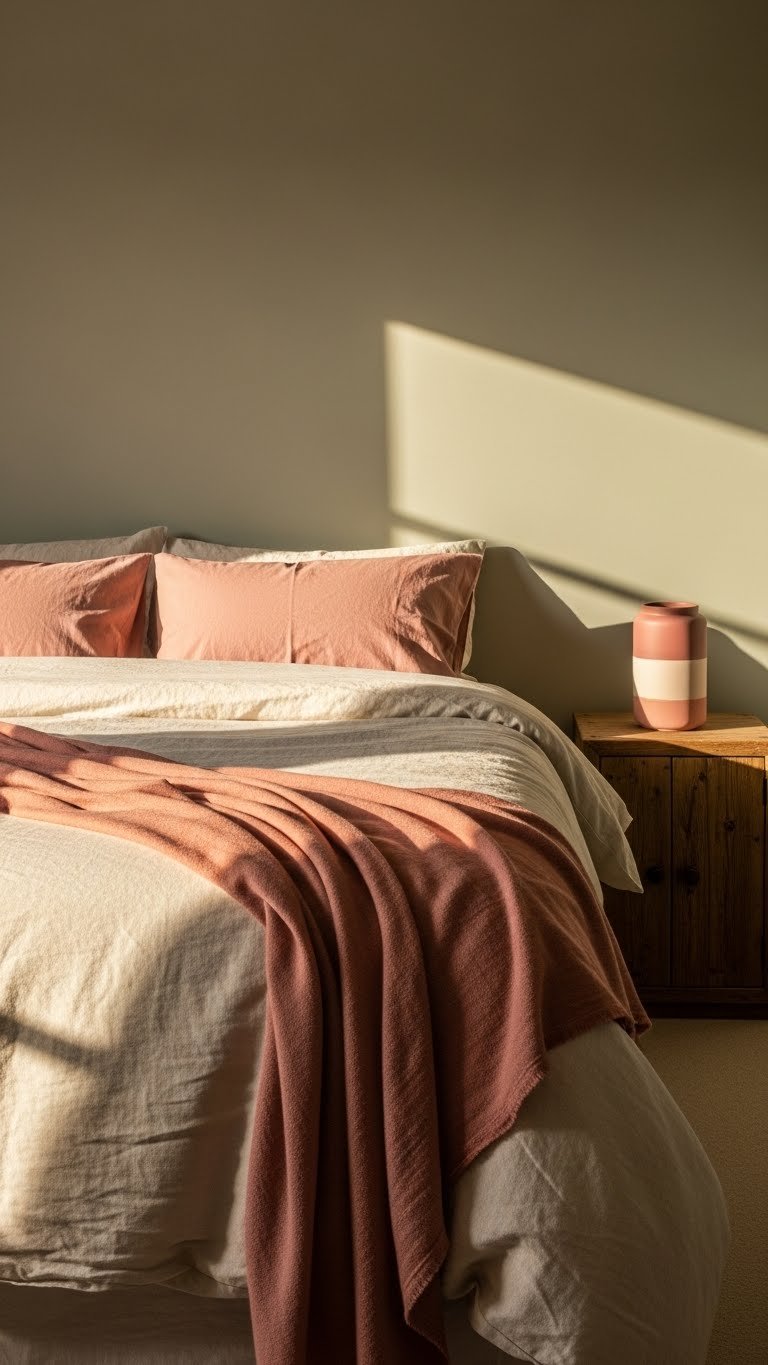
This palette combines green’s calming effect with rose’s subtle warmth. The muted dusty rose (not bright pink) keeps the room feeling grown-up and thoughtful.
Paint walls soft sage ($35–$40 per gallon). Keep bedding cream or white as your anchor ($100–$200). Add dusty rose through throw blankets ($40–$80), pillows ($20–$50 each), or small decorative objects ($15–$100). A rose-tinted ceramic piece on your nightstand ($20–$60) ties the color through. The total cost is $200–$350. You can start with just green walls and cream bedding, then add rose accents over time as budget allows.
The combination feels botanical and curated, like you’ve thought through every choice.
22. Pale Warm White with Soft Mushroom Accents

Mushroom (a soft, warm brown) is having a moment as a sophisticated neutral. Paired with pale white, it creates subtle contrast without visual noise.
Paint walls pale warm white ($30–$40 per gallon) or keep existing white walls. Introduce mushroom through a linen throw ($40–$100), pillows ($20–$60 each), an upholstered bench ($150–$400), or even a removable wallpaper accent ($25–$80). Wooden furniture in honey or natural tones ($100–$500+) echoes the mushroom without repeating it exactly. The palette costs $150–$400 depending on how many pieces you add.
Mushroom feels cozy without the heaviness of true brown, making it perfect for all seasons.
23. Deep Teal Feature Wall with Pale Gray Everywhere Else
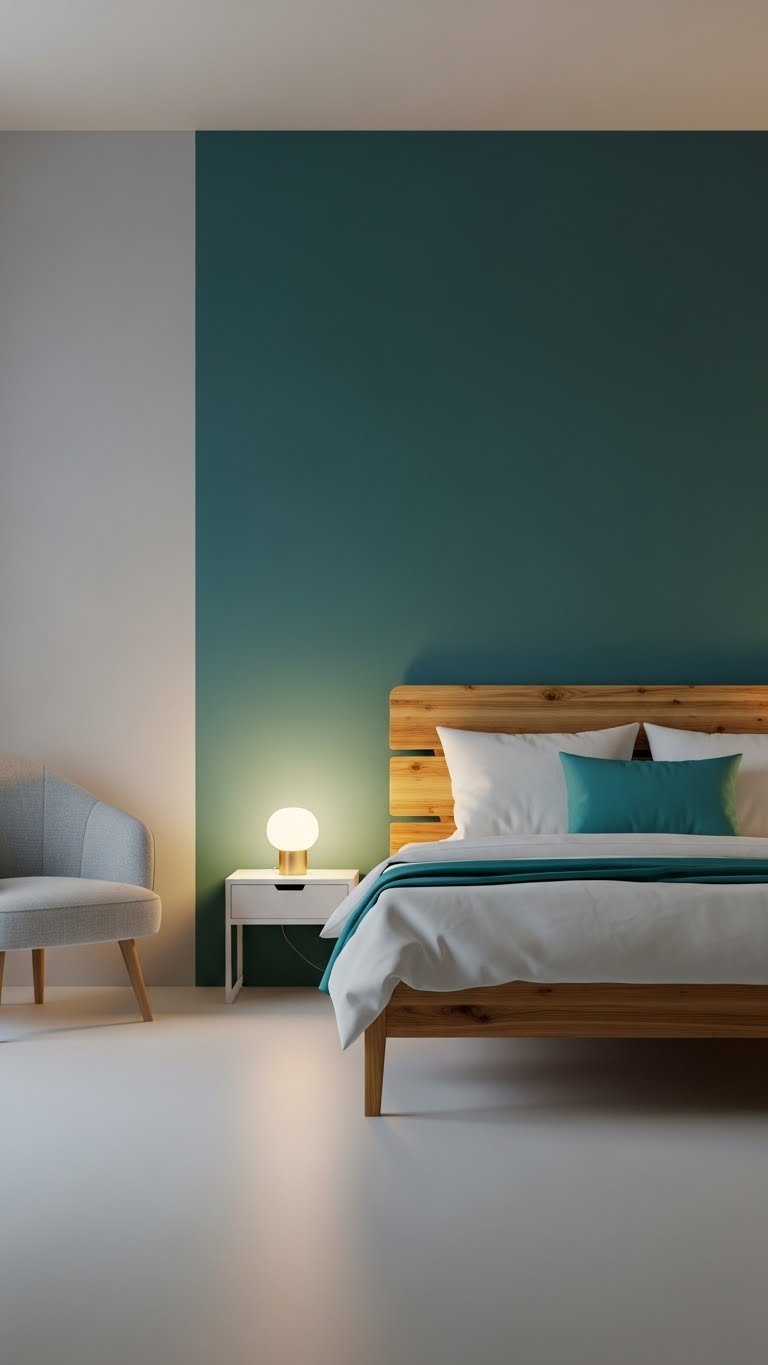
Deep teal as a feature wall gives you color and sophistication without overwhelming the entire room. Pale gray walls keep the space feeling open and calm.
Paint one feature wall (behind the bed is standard) in deep teal like Sherwin-Williams “Sea Salt” or a custom deep teal ($35–$40 per gallon). Paint other walls pale gray ($30–$35 per gallon). Layer white or pale bedding ($100–$250), add a teal accent pillow ($20–$50), and include natural wood furniture. Total cost: $200–$400. The feature wall gives you the benefit of bold color without committing the entire room.
This approach works for people who like color but worry about commitment—one wall is a test run.
24. Soft Cream with Muted Green and Wooden Elements
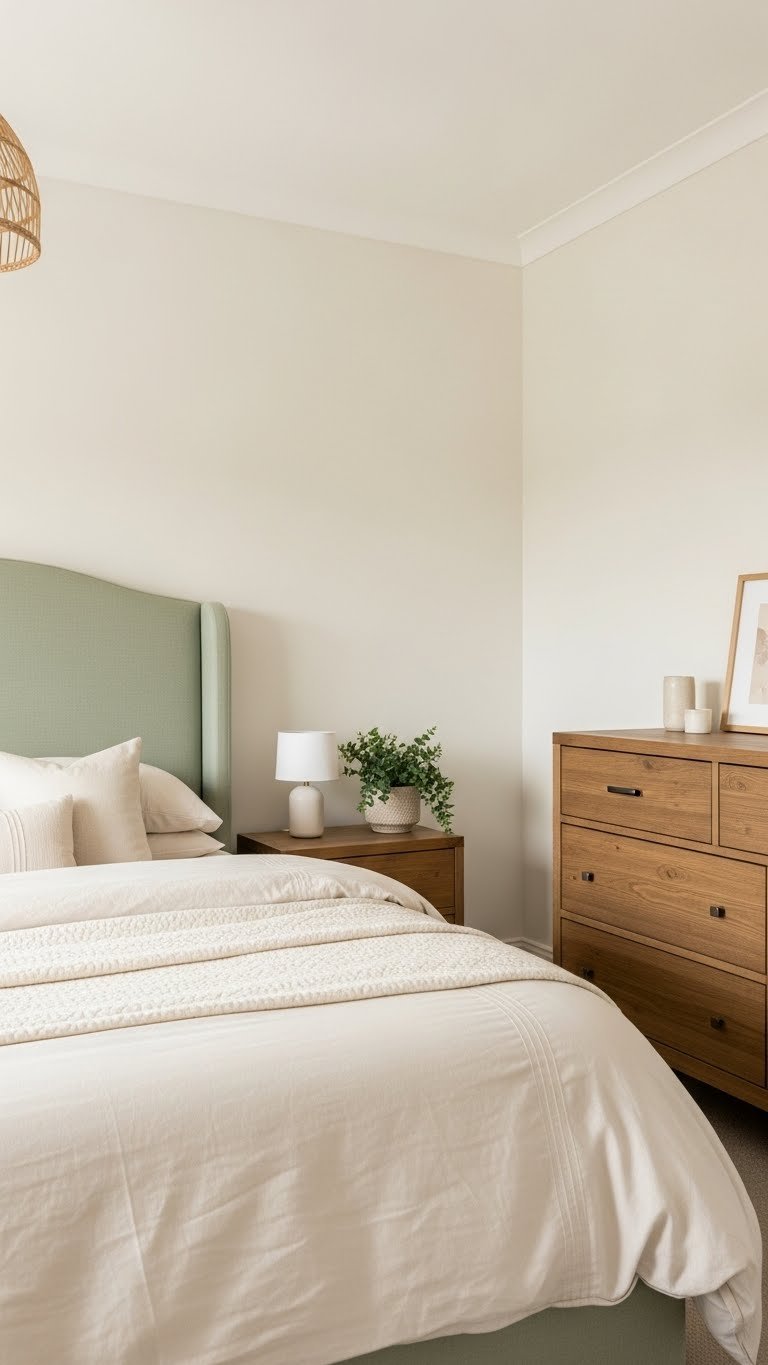
This final palette brings together calm color (cream), biophilic design (green), and natural materials (wood) into one cohesive, research-backed approach to bedroom serenity.
Paint walls soft cream ($30–$40 per gallon). Source a sage or soft green upholstered headboard ($200–$600) or bed frame if that fits your budget, or use a removable fabric panel ($30–$80). Layer cream bedding ($100–$250), prioritize wooden furniture ($150–$500+), and add a live plant ($15–$50). The entire palette costs $350–$600 to build thoughtfully. You can start with cream walls and cream bedding, then add the green and wood elements over time.
This combination taps into everything research shows makes bedrooms restorative—natural materials, soft colors, and biophilic elements working together.
Save this post for your next bedroom refresh. Pick one palette and live with it for a few days before committing—paint samples on your walls or order fabric swatches to see how colors read in your specific light. You’ll be amazed at how the right palette makes falling asleep easier and waking up gentler.
Leave a Reply