Introduction
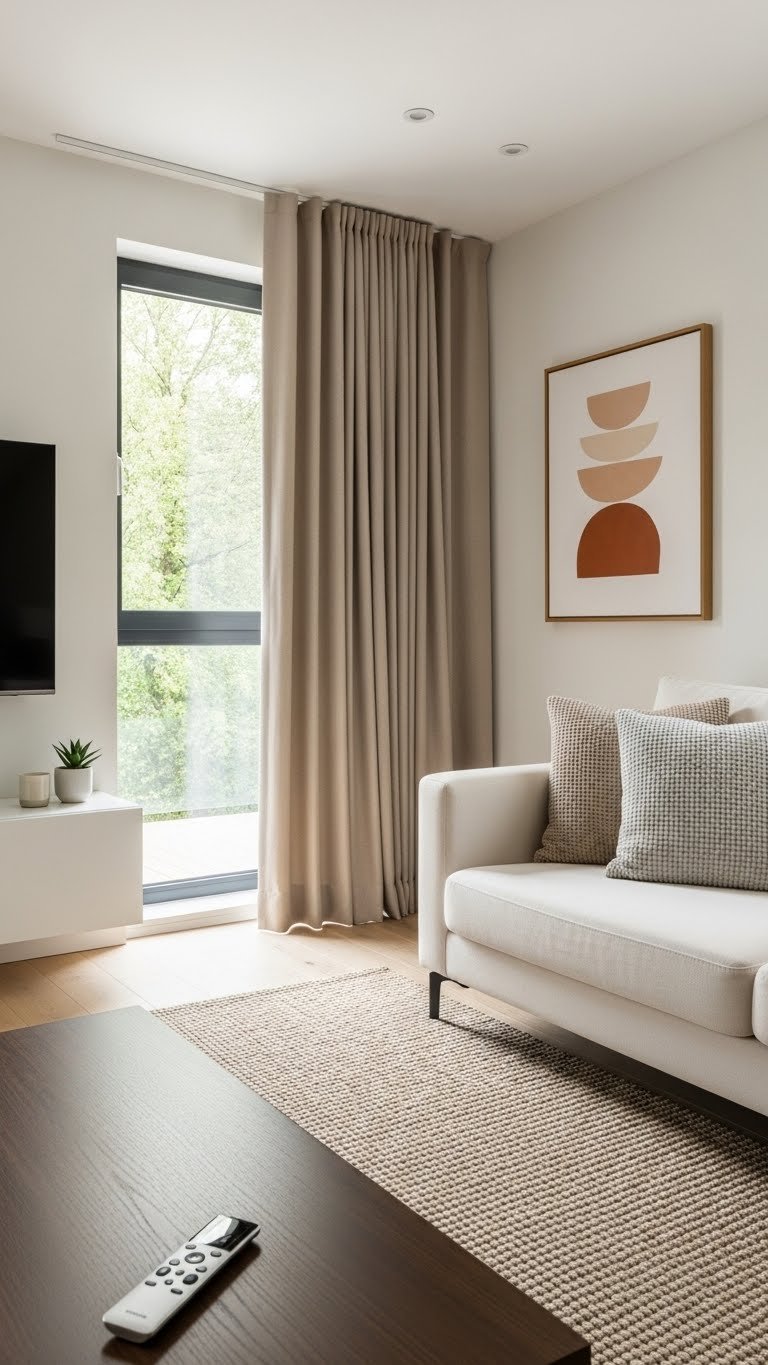
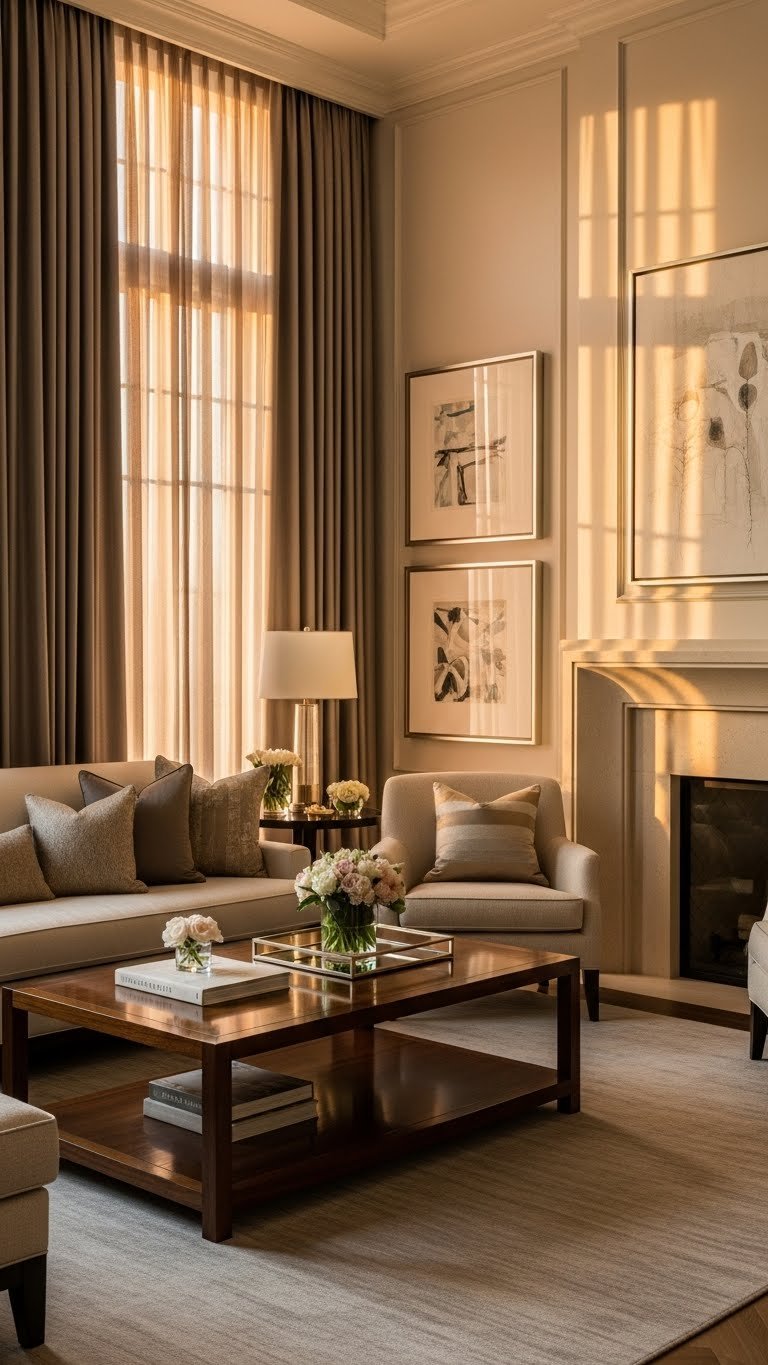
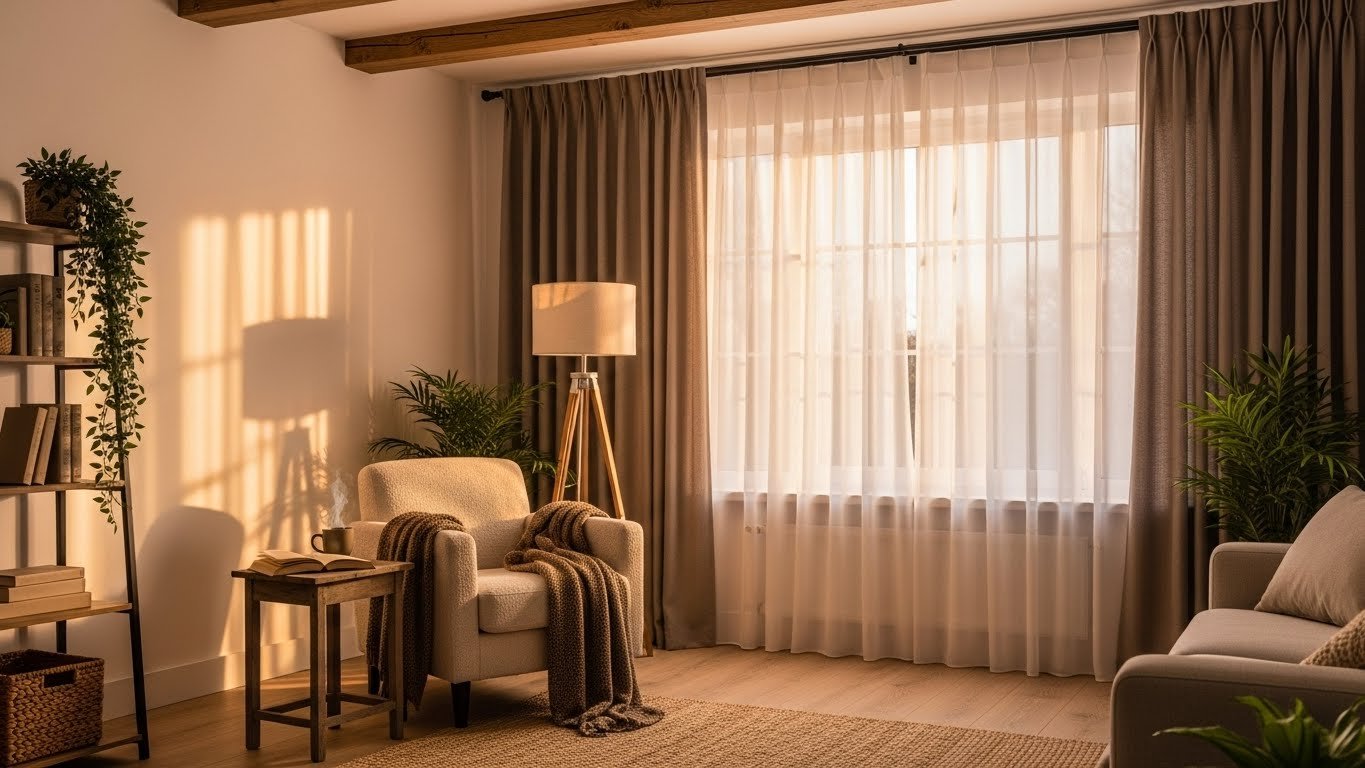
Layered curtains are the secret weapon of every interior designer—and honestly, they’re way easier to pull off than you think. If you’ve ever felt stuck between wanting natural light and needing privacy, or you’re tired of your living room looking flat and one-dimensional, this guide is for you. We’re breaking down 23 specific layering combinations, styling tricks, and budget-friendly ways to create that elegant, high-end look without the designer price tag. Whether you’re renting or own your home, work with tiny windows or soaring walls, you’ll find ideas that fit your space and your style. Let’s get started.
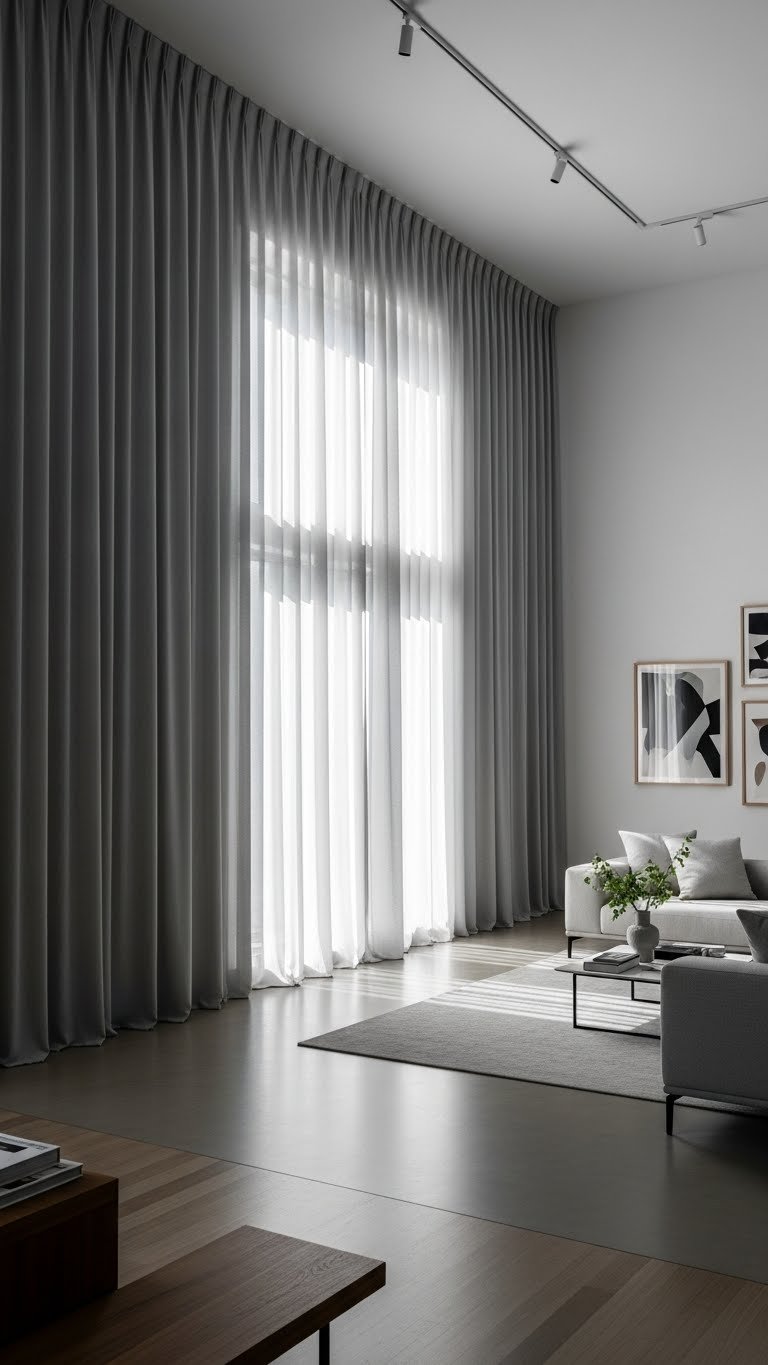
1. Layer Sheer + Blackout for Light Control
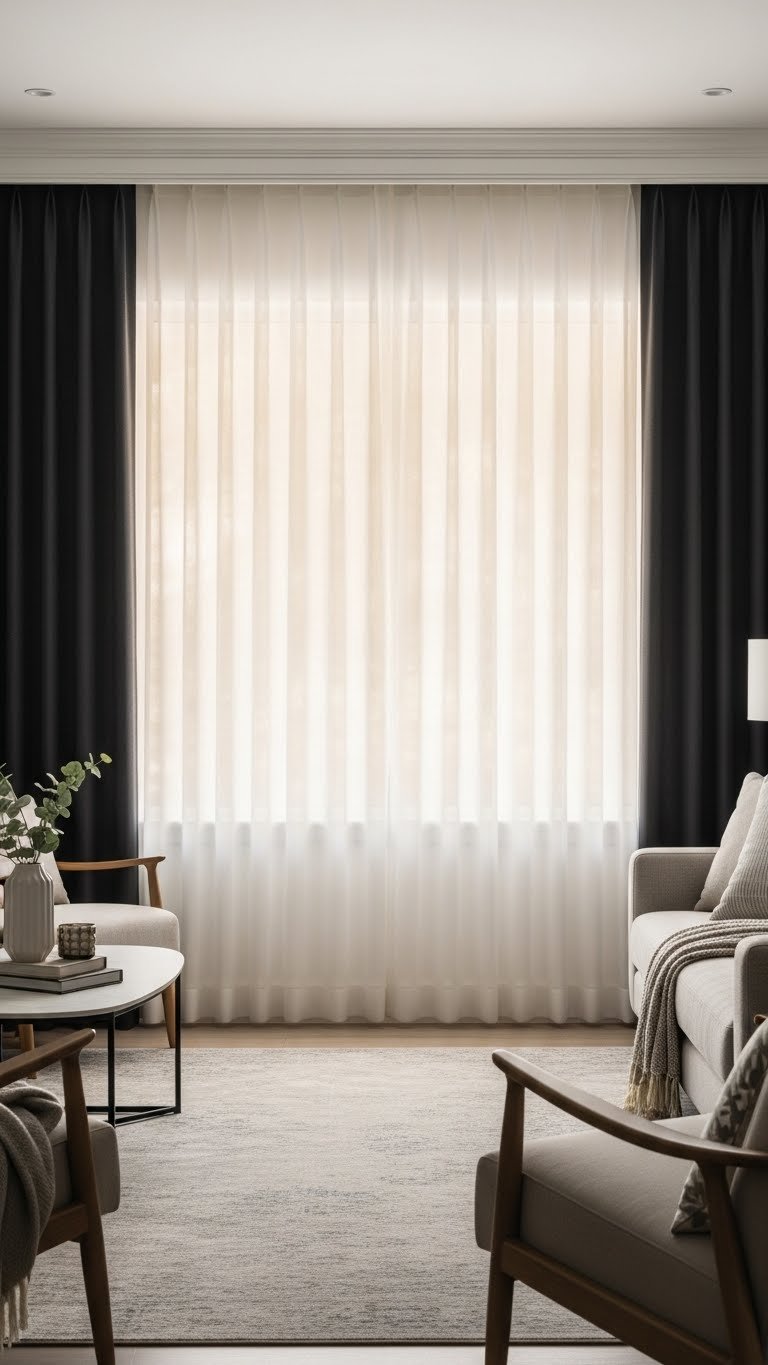
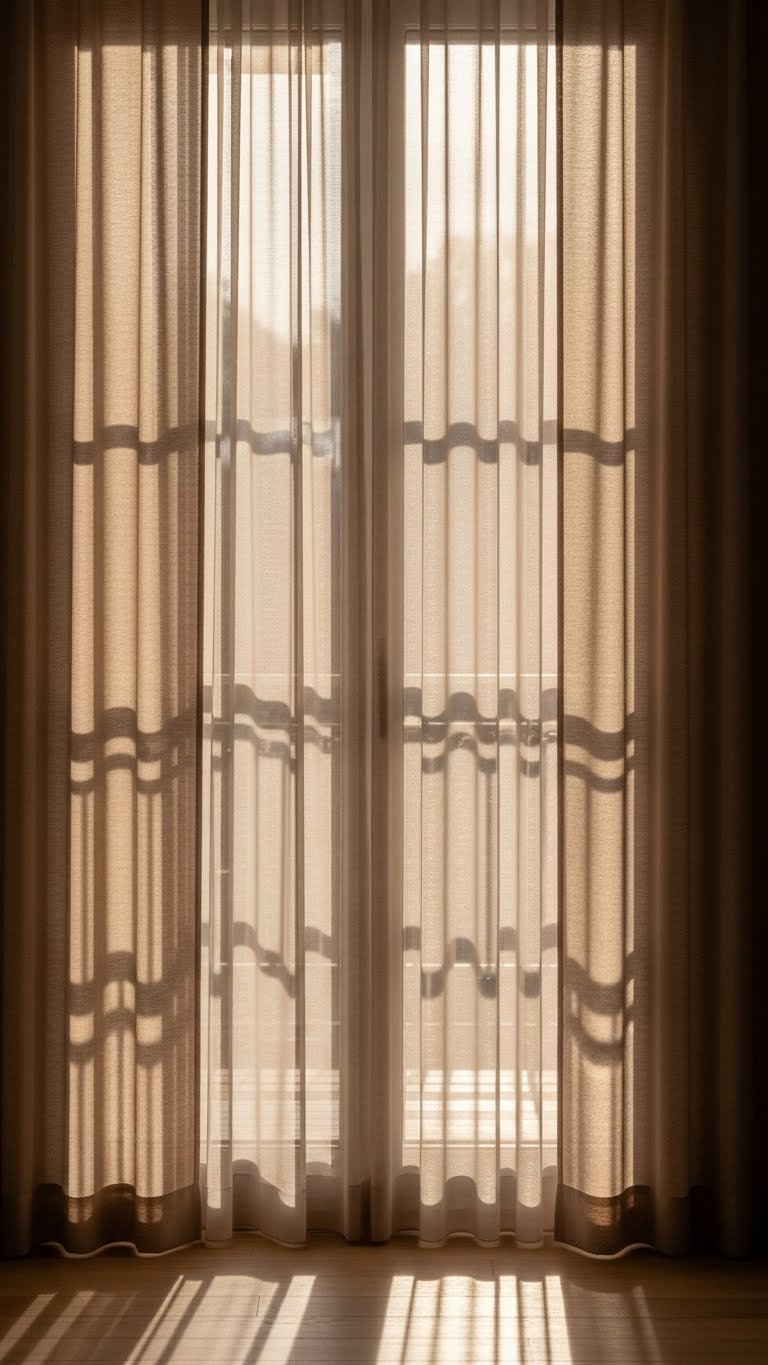
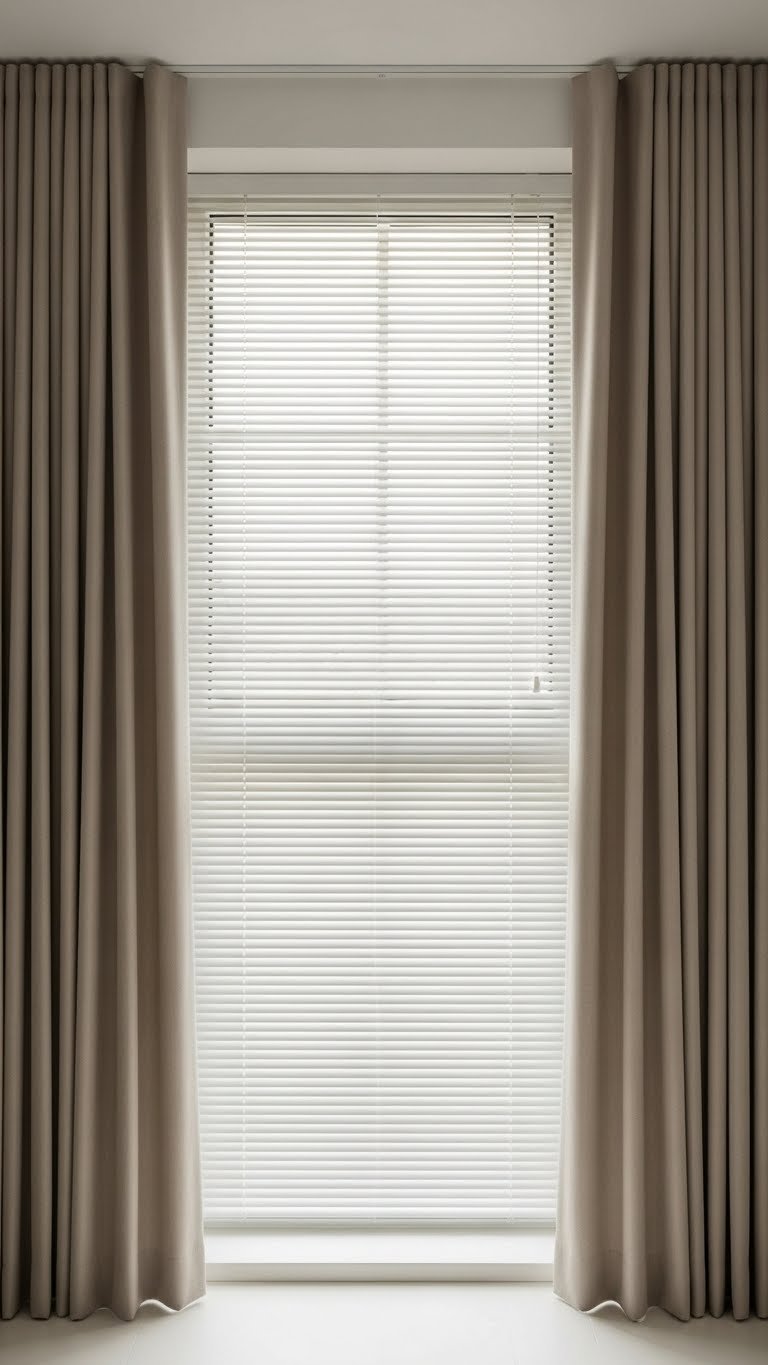
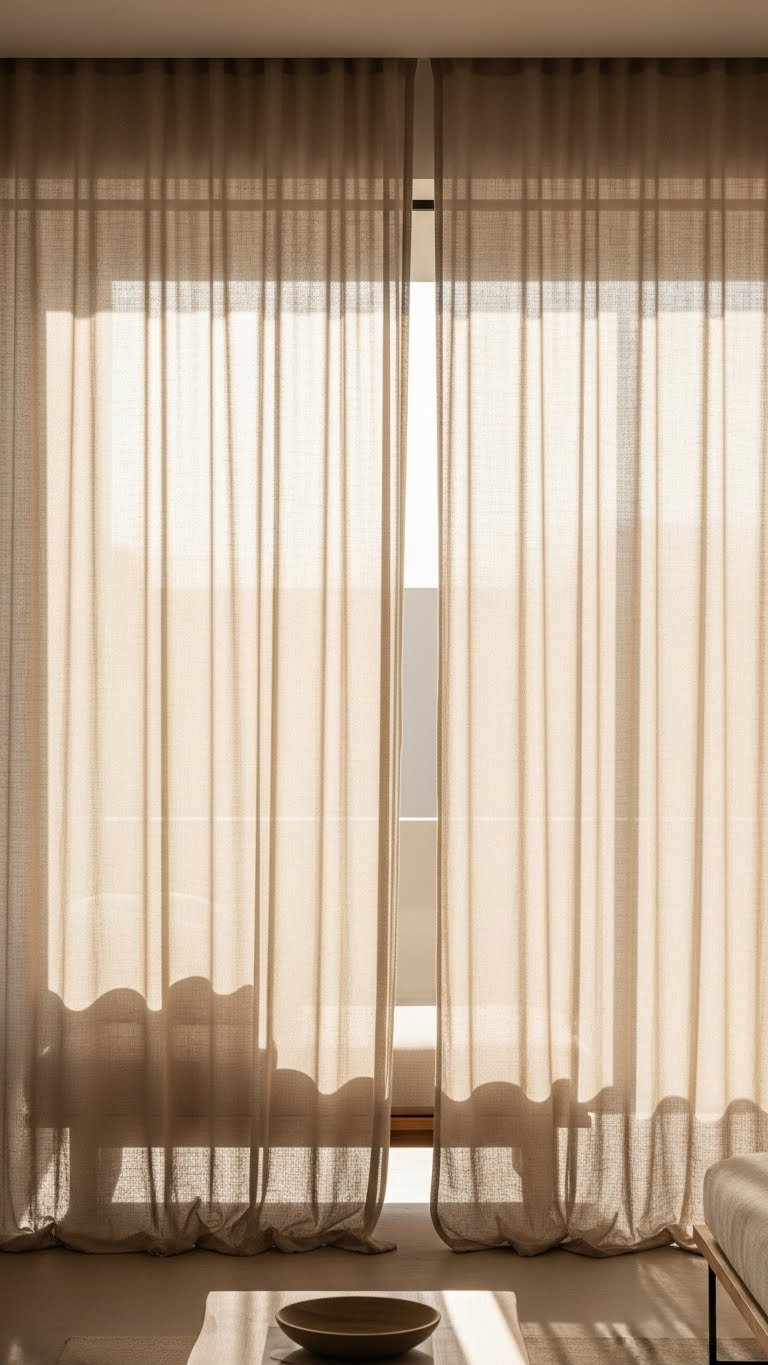
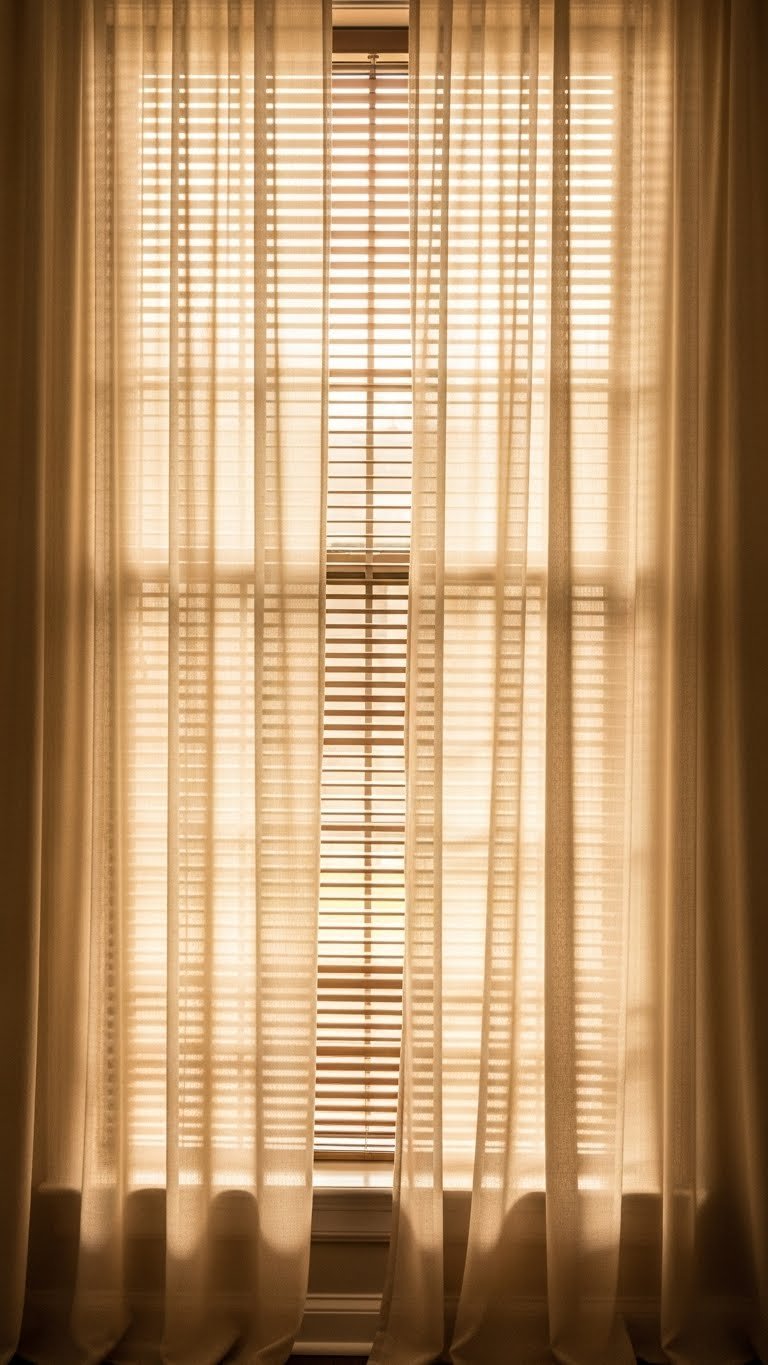
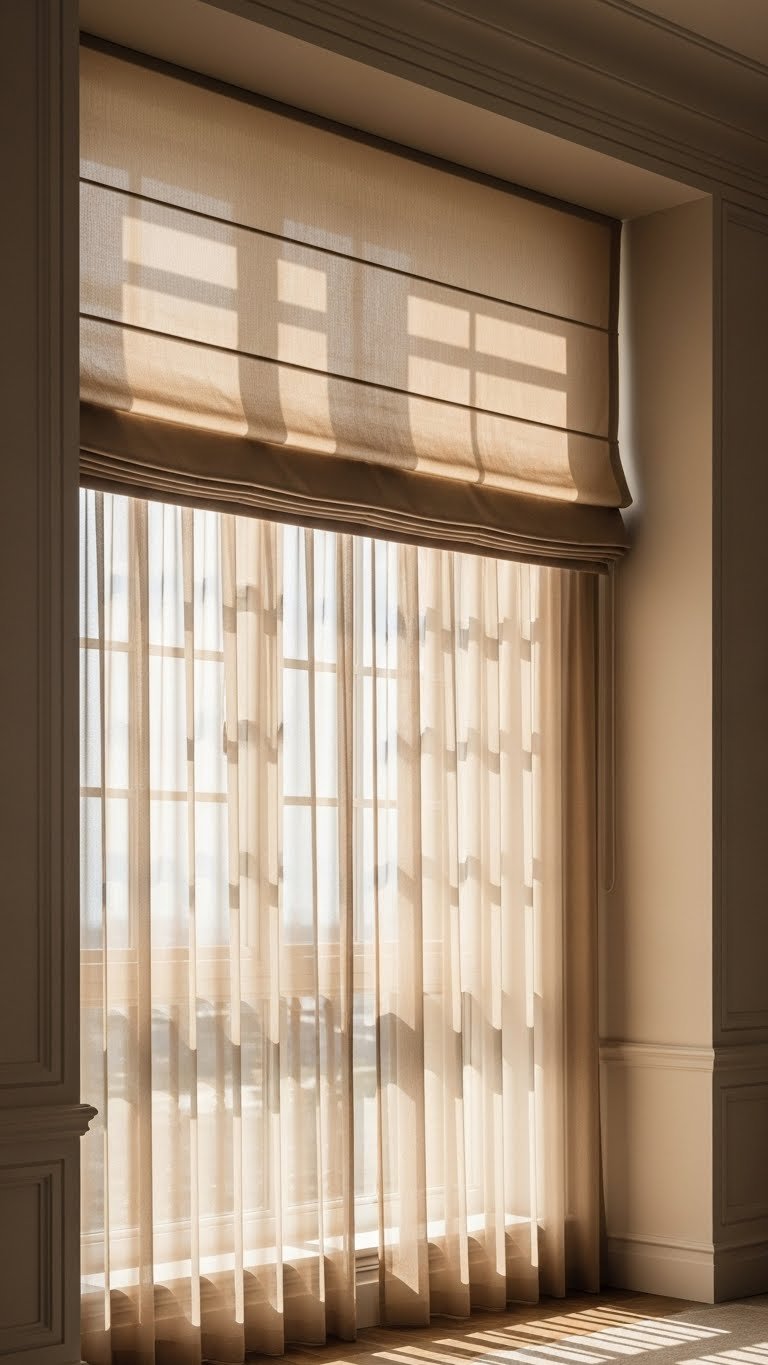
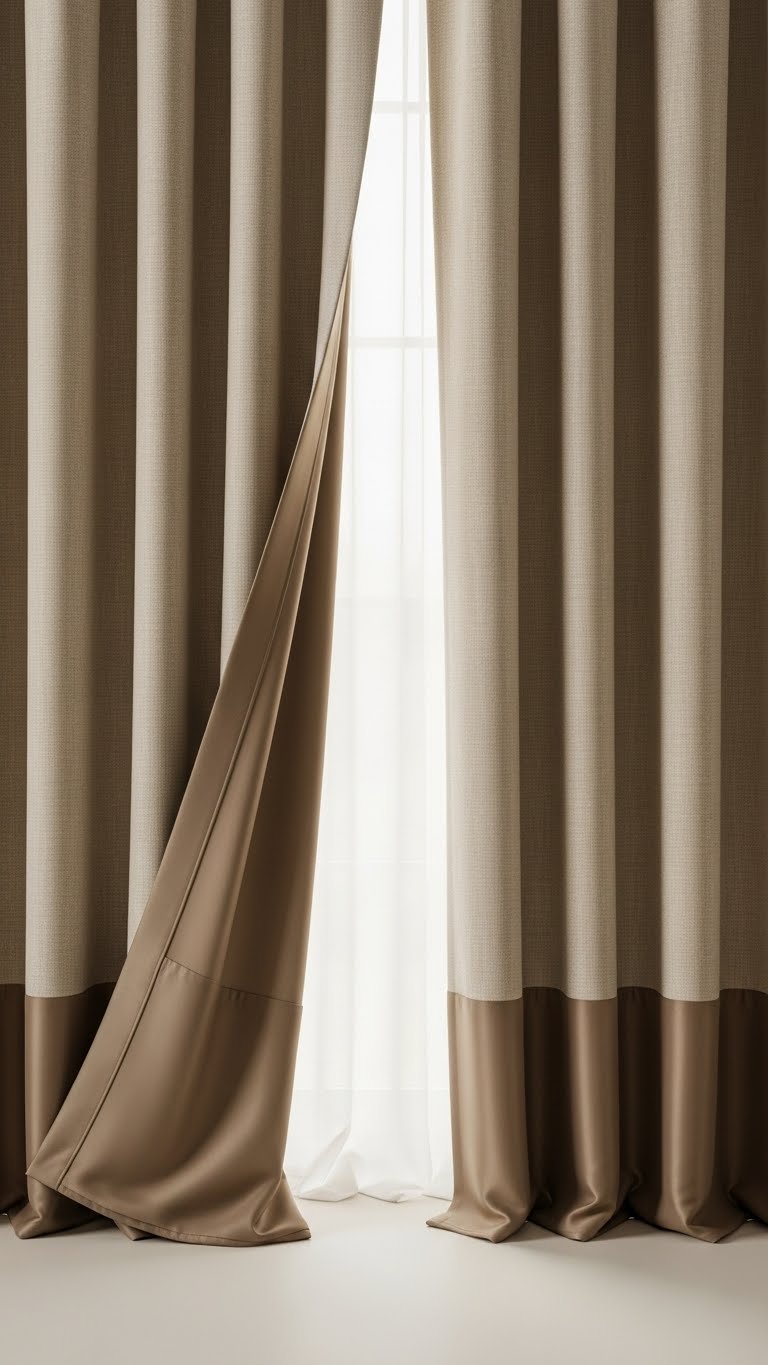
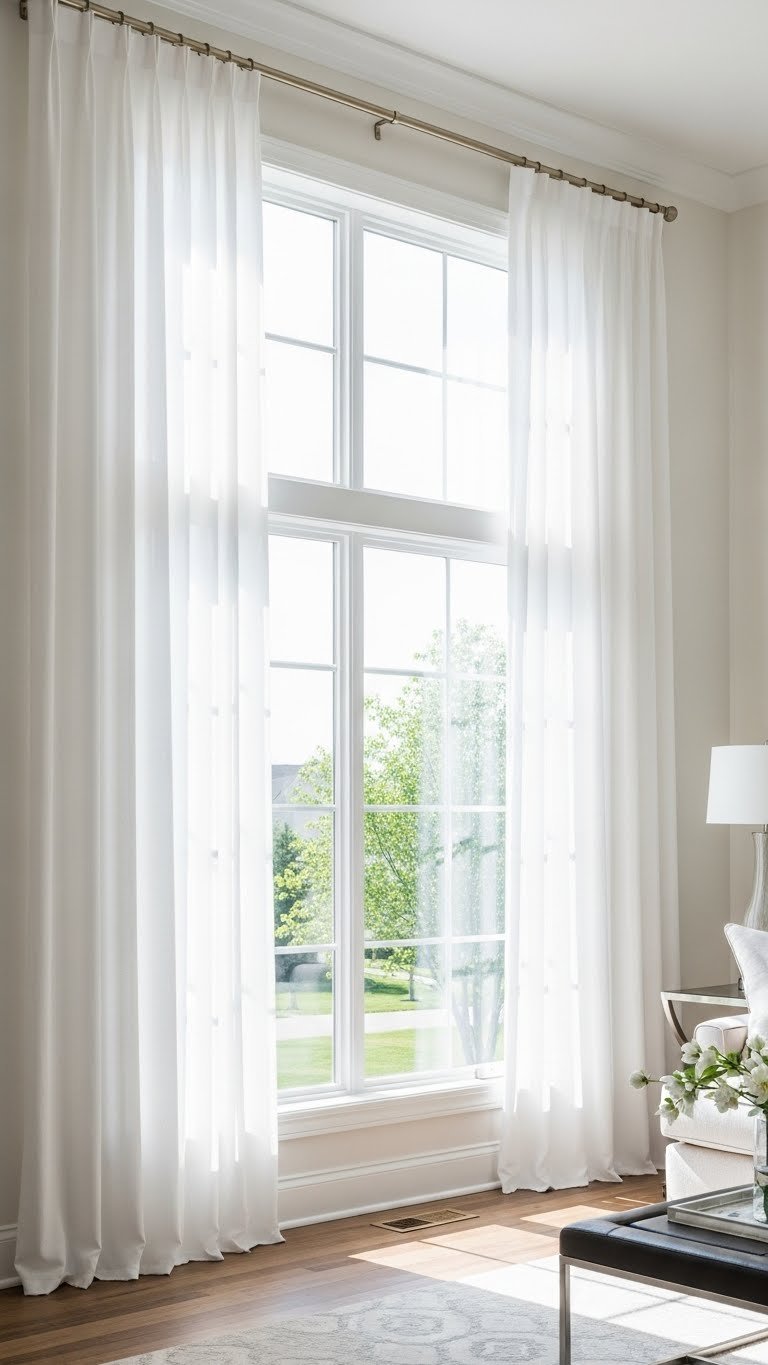
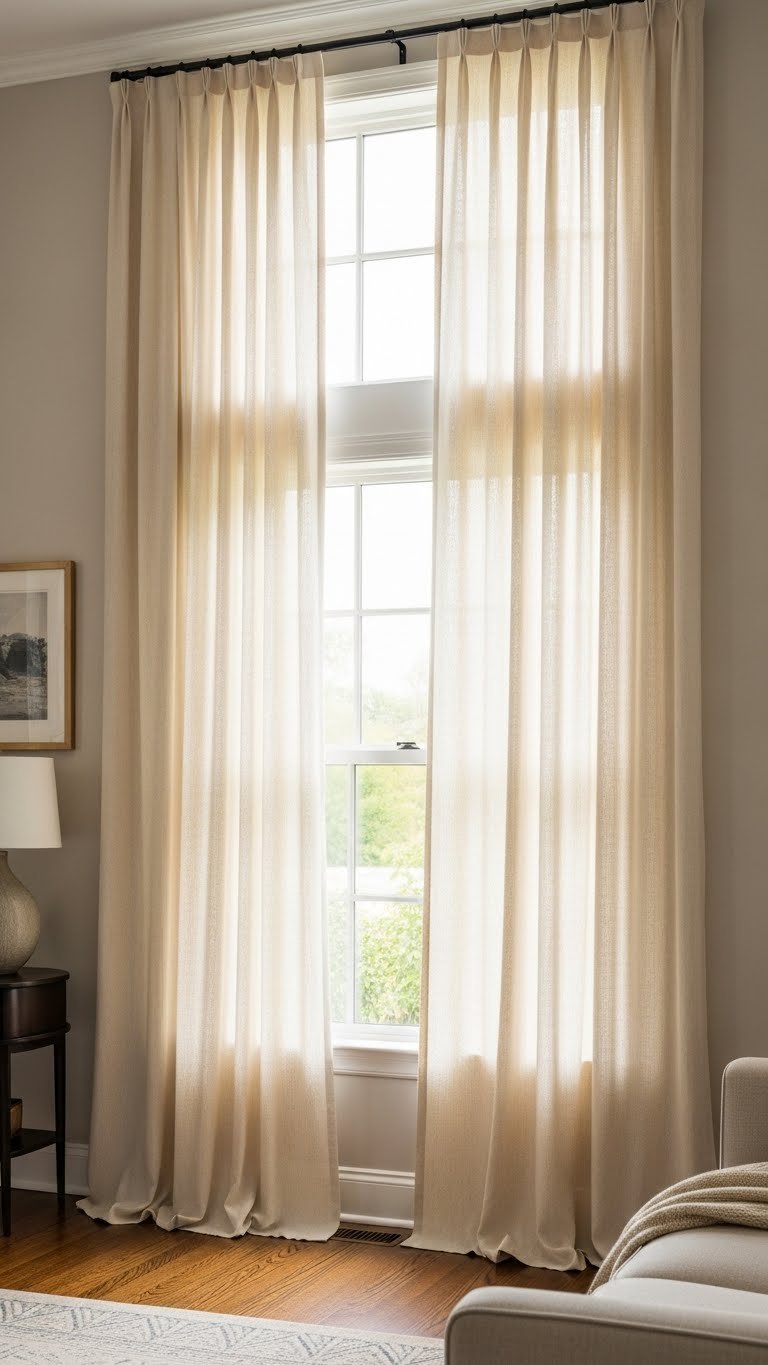
Sheer curtains filter harsh sunlight while blackout panels give you total privacy and darkness when you need it. This combination solves the biggest living room dilemma: you want natural light by day and complete blackout by night, without buying two separate rod systems.
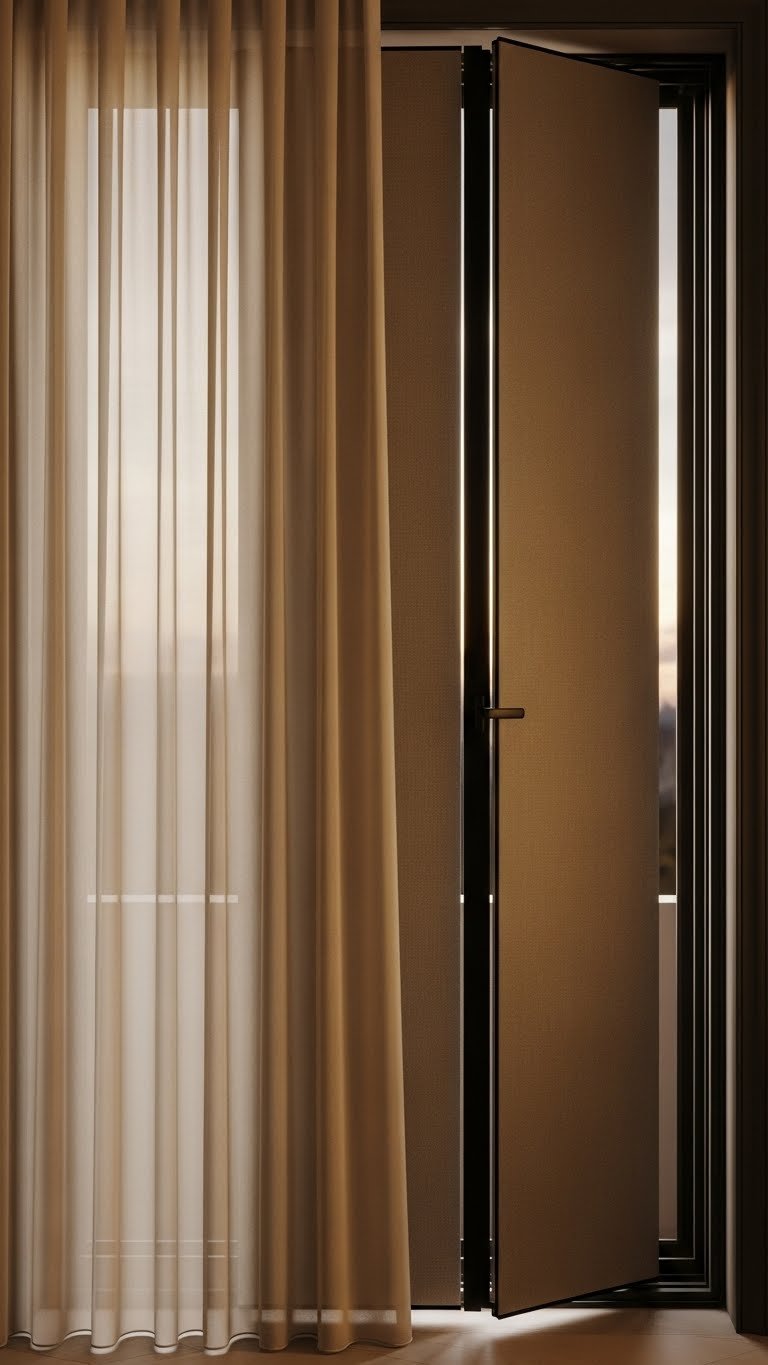
Hang lightweight sheers on a tension rod close to the window glass using clip rings ($8–15 from IKEA or Amazon). Mount your blackout curtains on a standard rod 6 inches above the window frame. The sheers stay open during the day to diffuse light and reduce glare, while blackouts sit behind them ready to close at night. This setup takes about 30 minutes to install and works in rentals if you use adhesive hooks instead of drilling. The result? Blackout curtains reduce energy costs by 10–25%, and you get that curated, layered look that reads expensive.
2. Mix Linen + Velvet for Texture Contrast
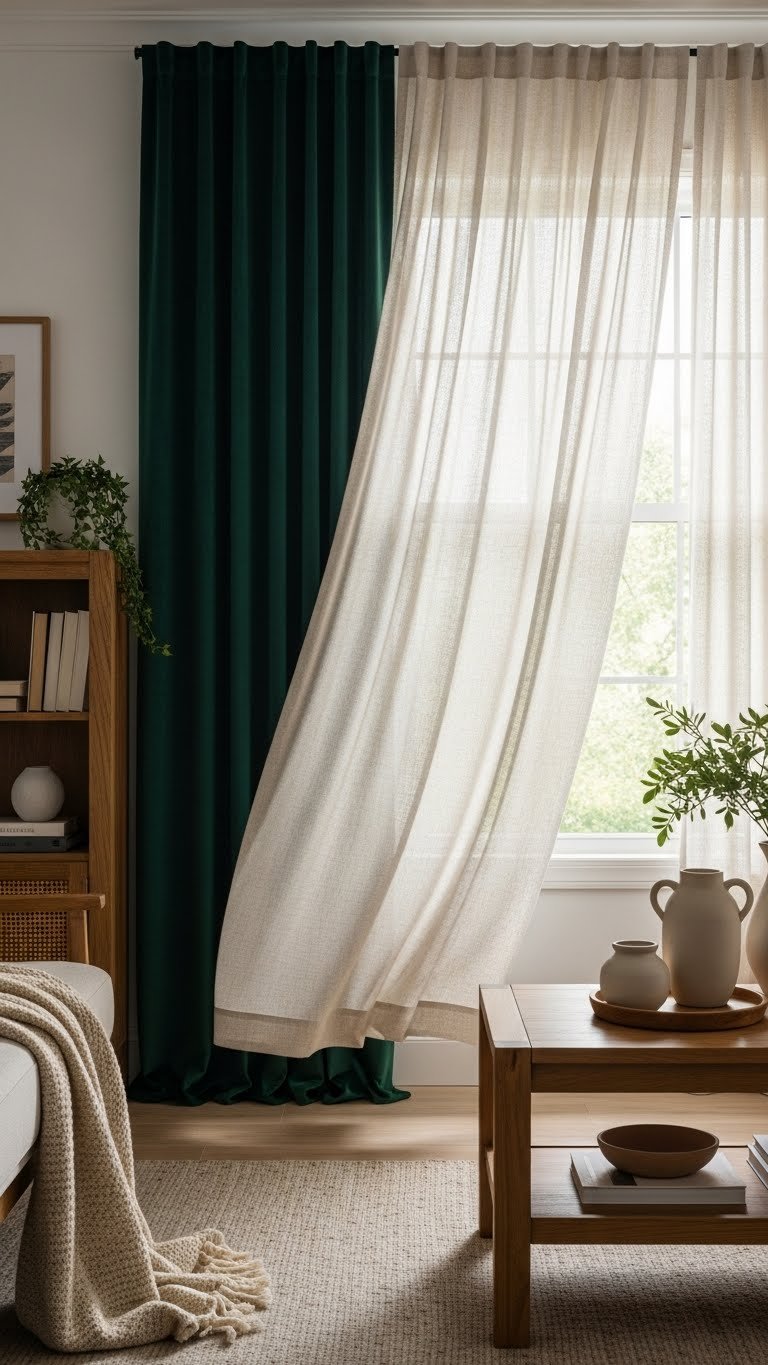
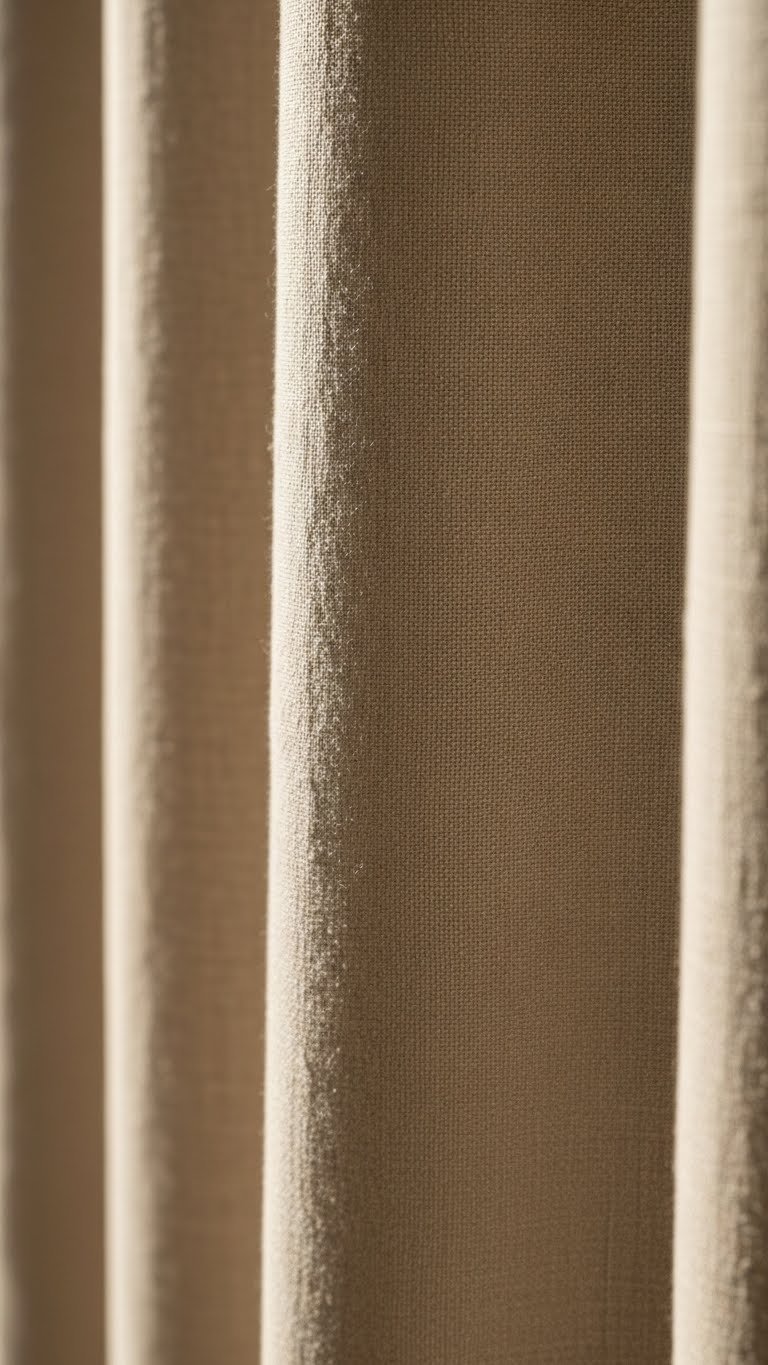
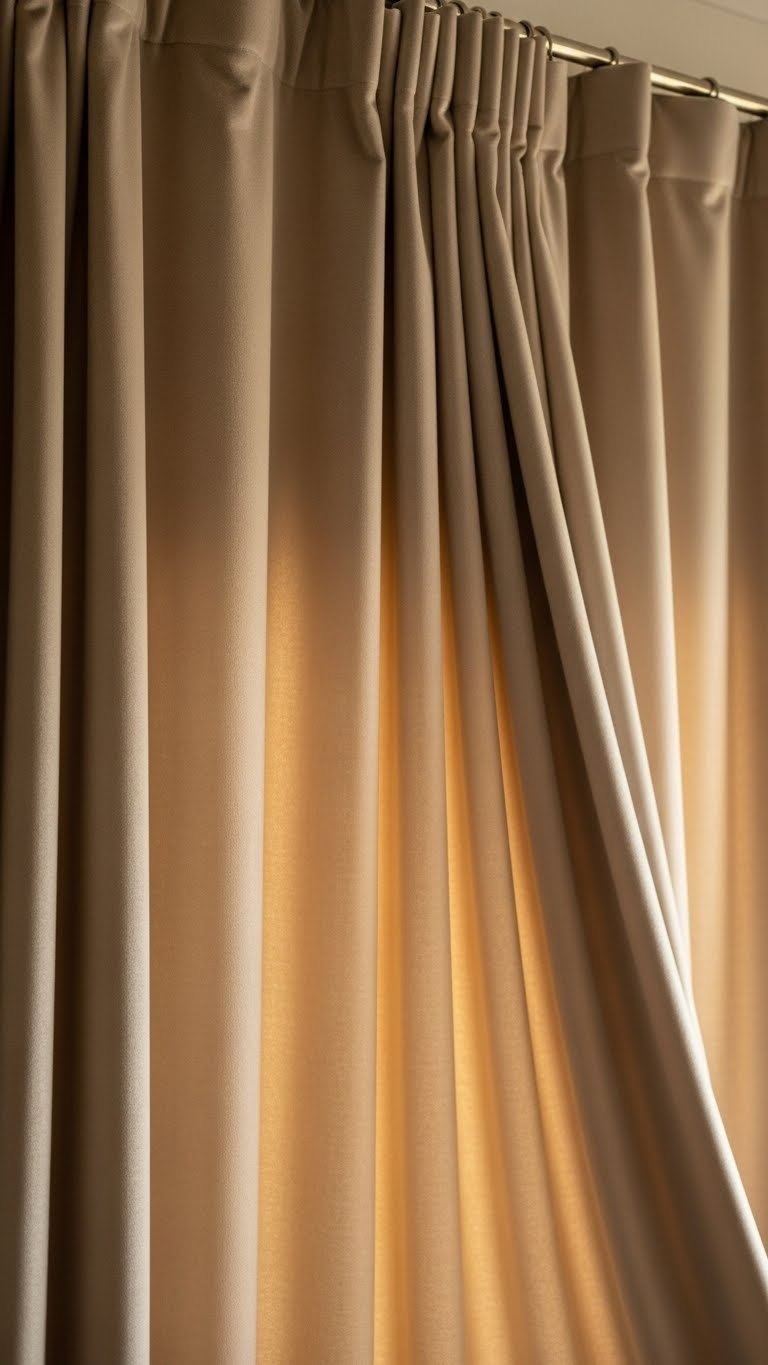
Pairing lightweight linen with luxurious velvet creates visual and tactile depth that makes your space feel intentionally designed. Linen is breathable and photographs beautifully; velvet adds that high-end feel without requiring a huge budget.
Layer natural linen panels (starting at $35–60 per panel from Target, West Elm, or Wayfair) on your main rod, then add velvet-look drapes behind them ($50–150 from IKEA, Amazon, or Overstock). Real velvet can feel delicate, so velvet-look synthetics are renter-friendly and machine-washable. Mount both on the same rod using rings or a double-curtain rod system. Install time: 20–30 minutes. The linen softens light while velvet provides structure and anchors the look. You get texture that catches light differently depending on the time of day, making your room look dimensional and carefully styled.
3. Go Sheer + Patterned for Visual Interest
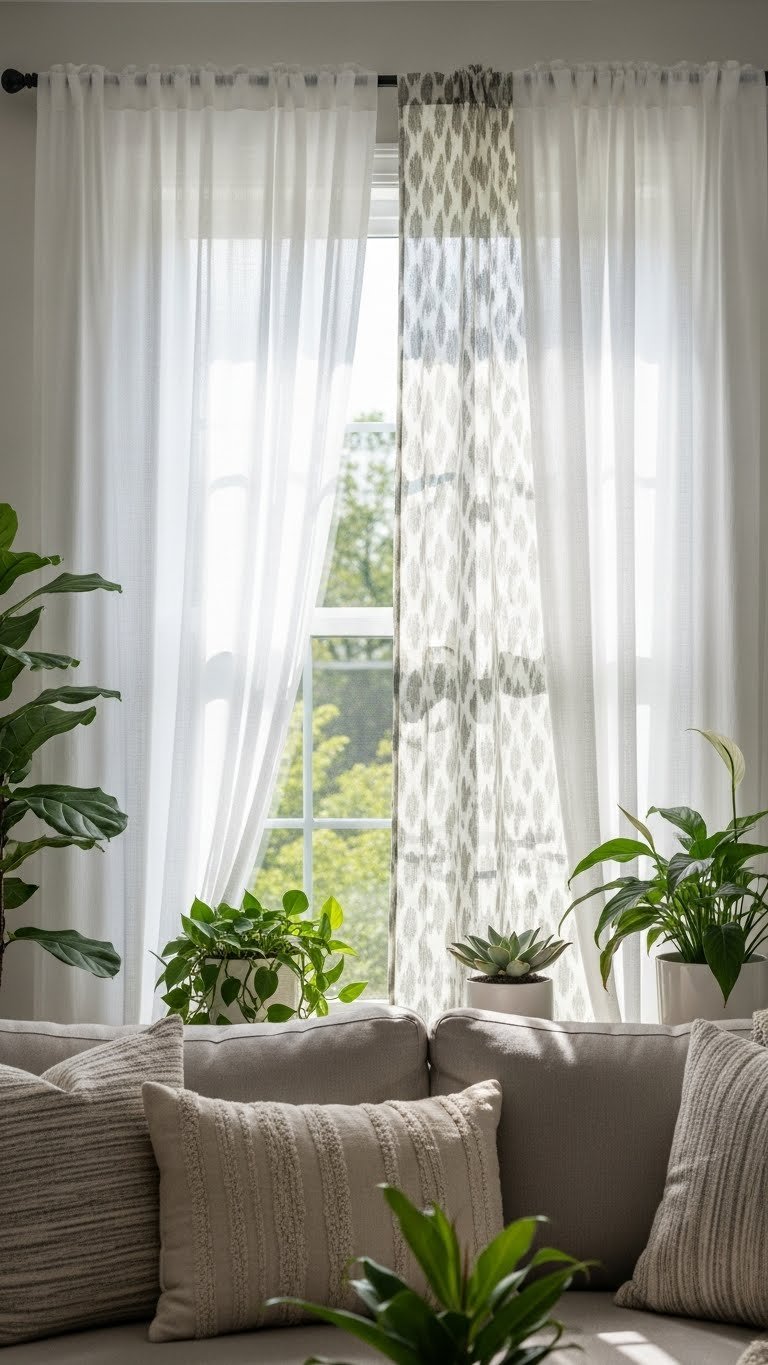
Solid sheers alone can feel one-note, but adding a patterned layer behind them gives you intrigue without overwhelming the space. This approach lets the pattern peek through the sheer, creating a sophisticated mixed-print effect.
Install white or cream sheers ($20–40 per panel) on your front rod using a tension rod or standard system. Behind them, hang a printed linen or cotton-blend panel ($40–80 per panel). Choose patterns that complement each other—think solid + ikat, or sheer + subtle geometric print from Wayfair, West Elm, or Anthropologie. The sheers diffuse the pattern, so it reads as subtle rather than busy. Assembly takes about 25 minutes. This layering trick makes your windows look professionally styled and gives you the flexibility to adjust both panels independently throughout the day.
4. Frame Small Windows with Short Curtains + Height Illusion
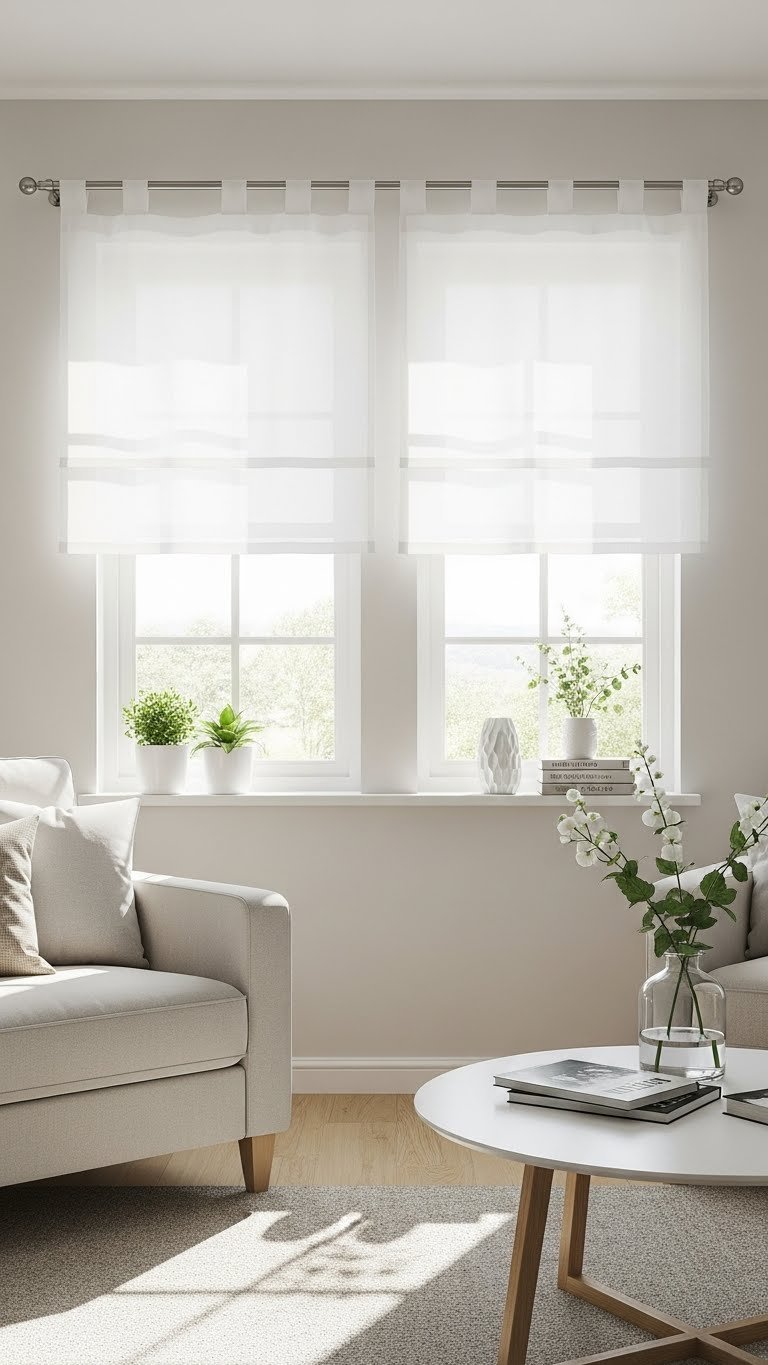
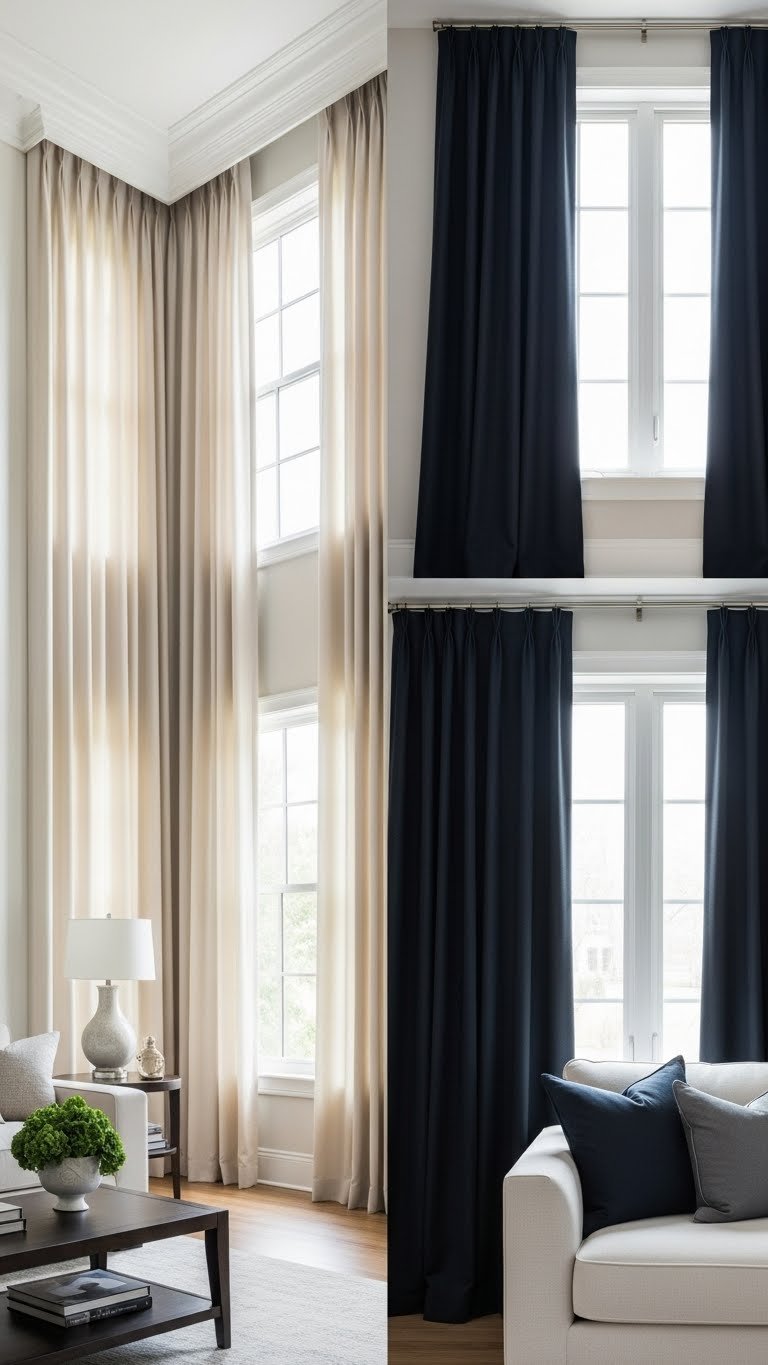
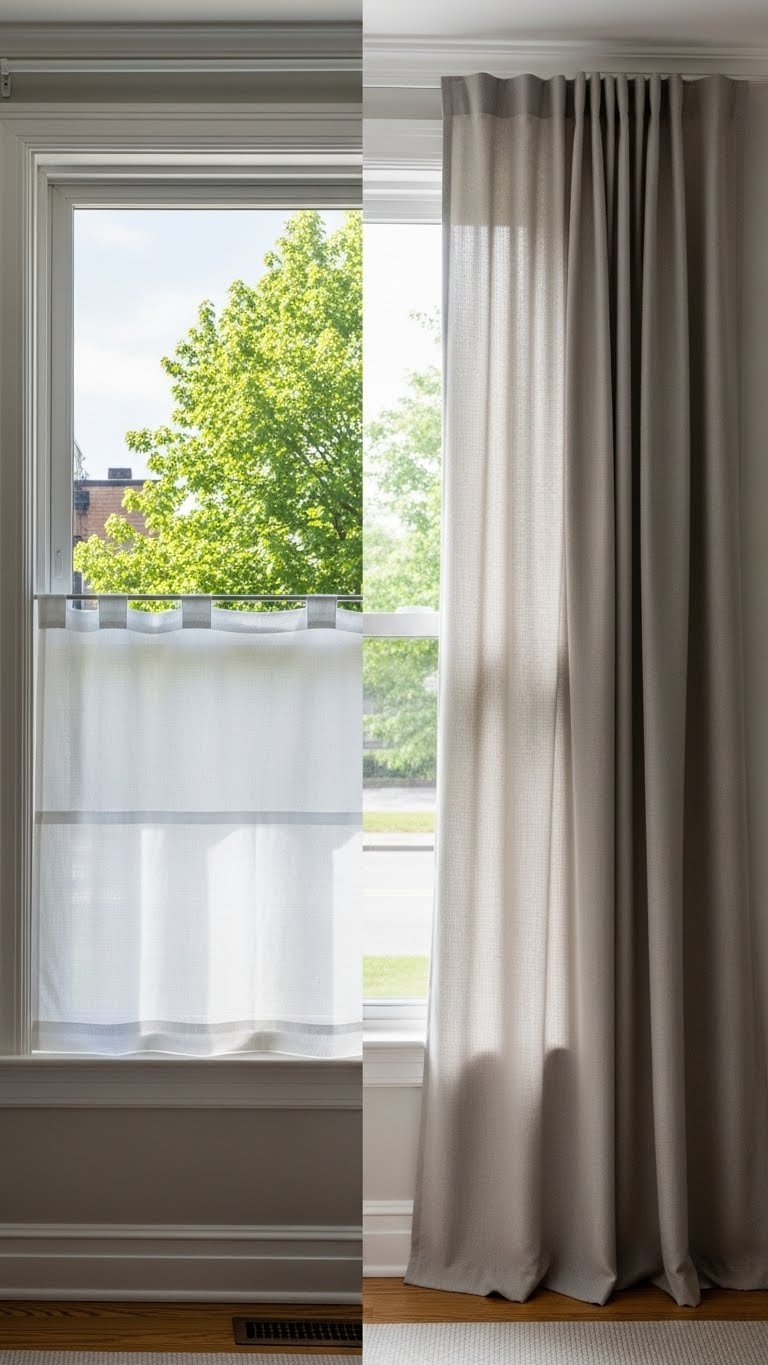
Small windows don’t need floor-length curtains—in fact, keeping them short actually makes rooms feel bigger. Mounting rods high above the window creates the illusion of taller ceilings and draws the eye upward.
Hang your curtain rod 4–6 inches above the window frame (or higher if your wall allows), and choose panels that end at the sill or just below. Use lightweight synthetics or cotton ($15–35 per panel from IKEA or Target) to keep visual weight minimal. Layer a sheer in front and a linen or cotton blend behind to add depth without clutter. Installation: 20 minutes. This approach is perfect for apartments, rooms with low ceilings, or spaces where floor-length drapes would overwhelm the window. Your living room gains height and airiness just from the rod placement and curtain length.
5. Create Asymmetrical Panels for Modern Edge
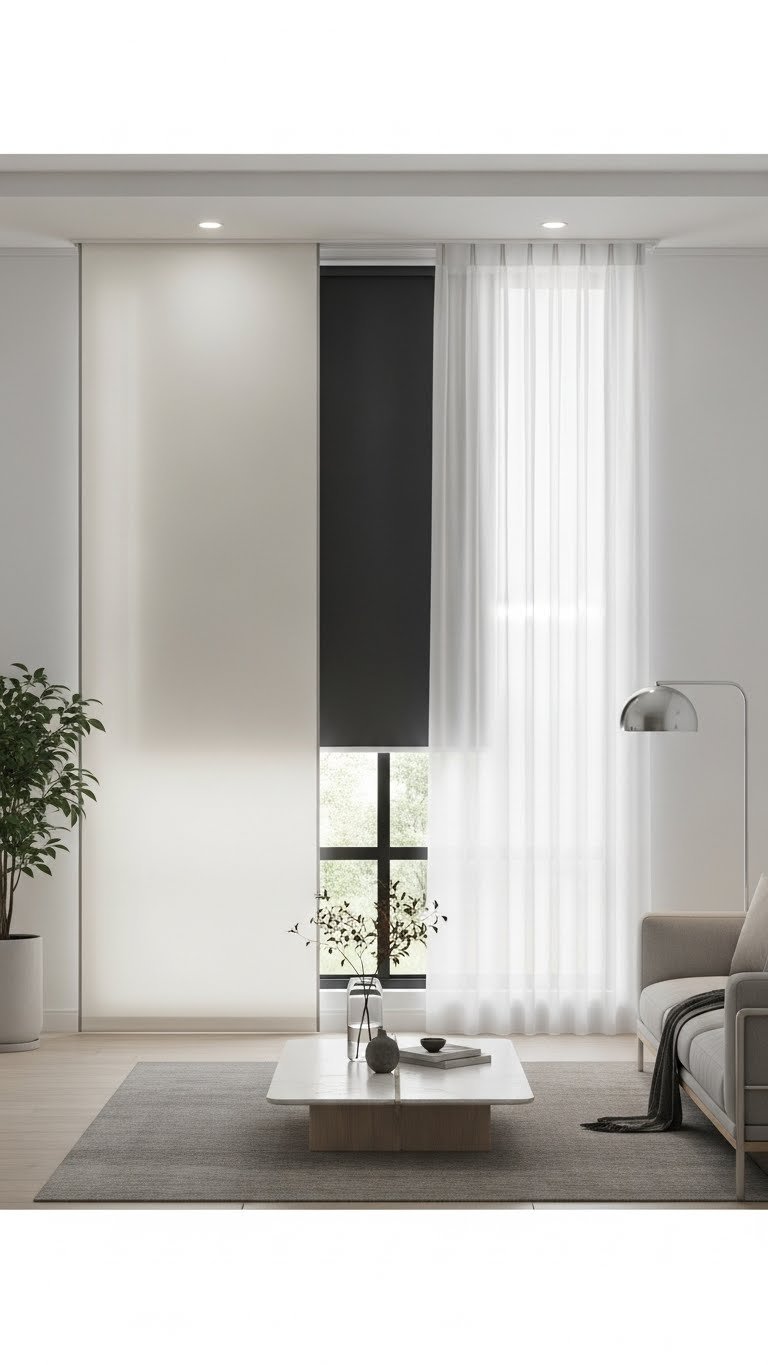
Asymmetrical curtains break the “match and mirror” rule, giving your space an intentional, designer-forward look. This trend works especially well in modern and minimalist living rooms.
Hang one full-length sheer panel ($25–50) on one side of the window, then layer a solid or slightly darker panel ($40–80) partially covering the other side. You can use adhesive hooks or standard rods (from IKEA, Amazon, or Home Depot). The beauty of this look is it’s not about perfection—it’s about controlled asymmetry. Installation time: 15 minutes. The result feels editorial and modern, and honestly, it gives you flexibility: close one panel for privacy while keeping the other open for light, or adjust the drape throughout the day based on your mood. It’s a high-impact styling choice that costs very little.
6. Layer Earth Tones for Cohesive Warmth
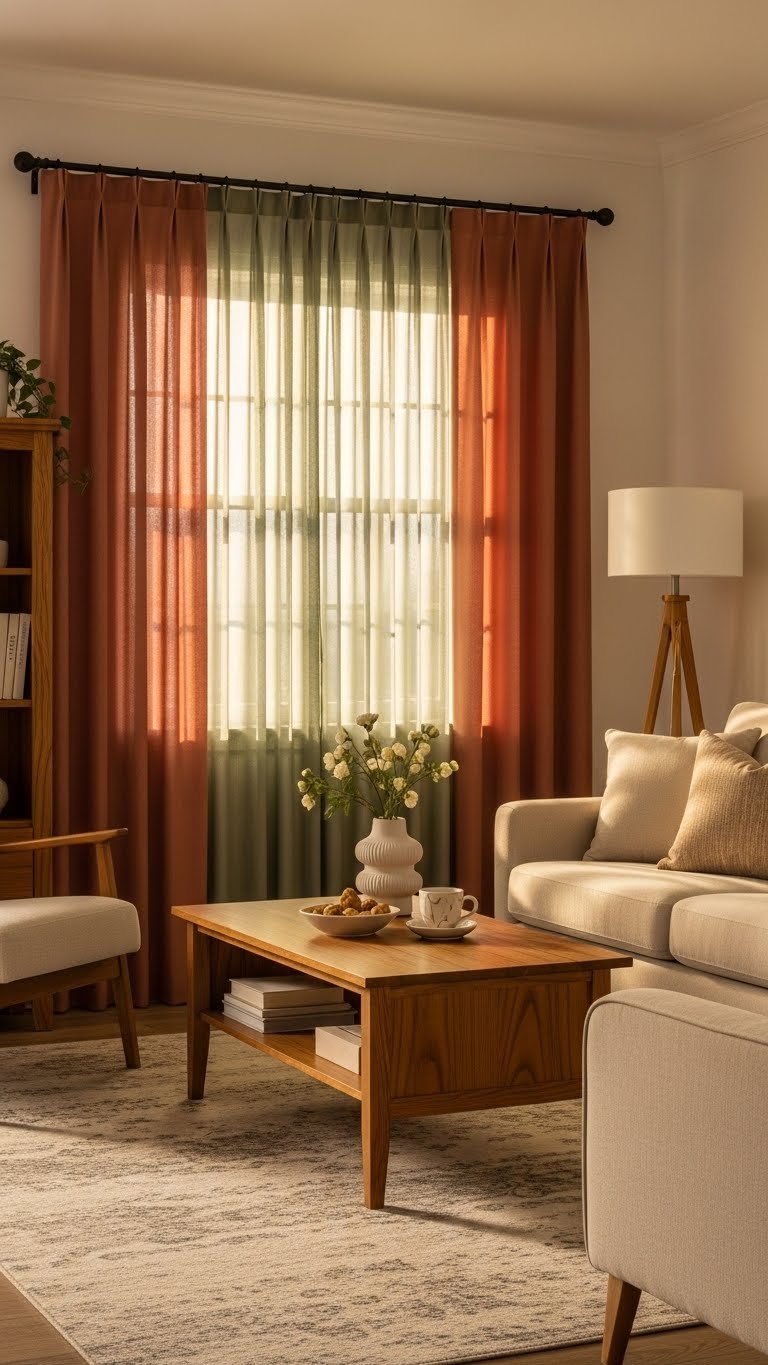
Earth tones are dominating 2025 interiors, and layering them creates a sense of harmony and calm. This palette makes any living room feel intentional and restful.
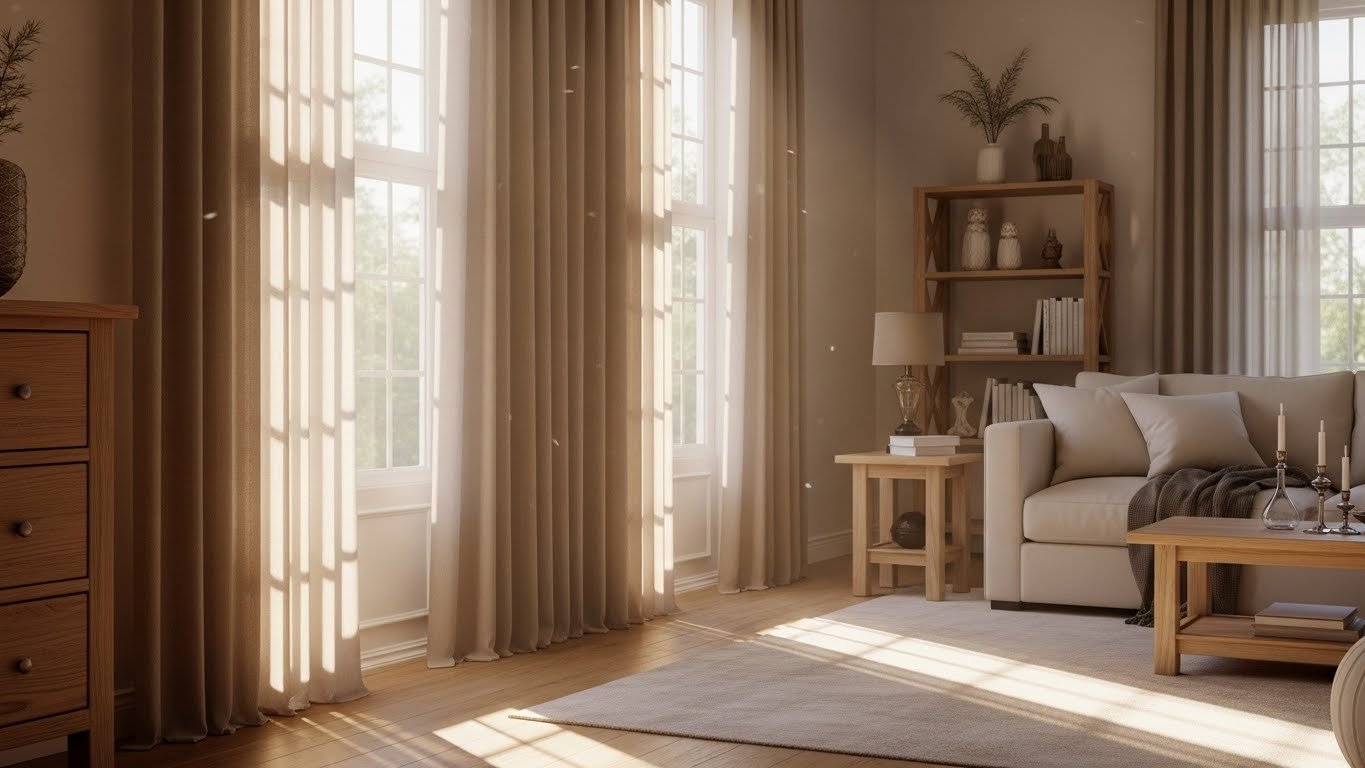
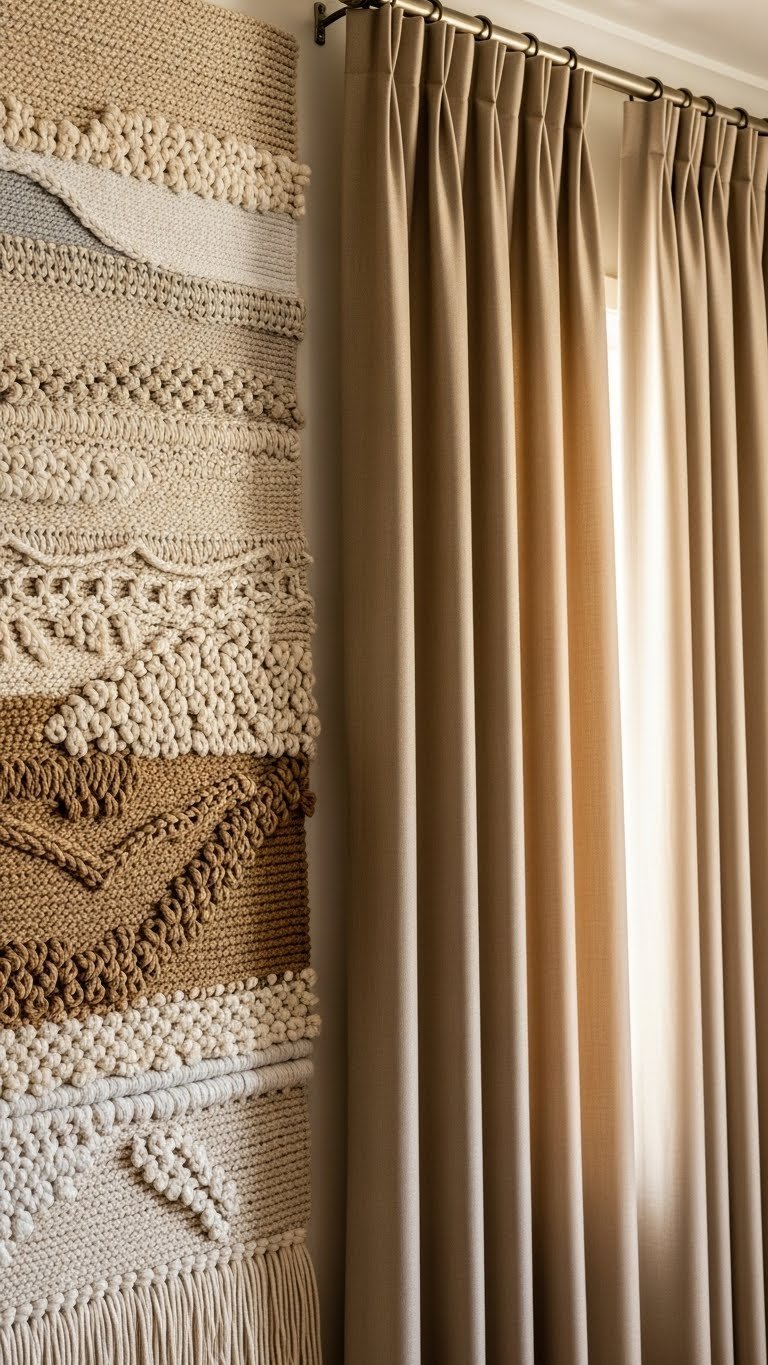
Choose a sheer in soft sage, cream, or warm sand ($30–60 per panel) from Target, Wayfair, or West Elm, then back it with a deeper earth tone like terracotta, clay, or warm taupe ($50–100 per panel). Both fabrics should have some natural texture—linen, linen-blend, or cotton work best. Mount on a standard rod or tension rod system ($15–40). Setup takes about 25 minutes. The layered earth tones make your living room feel grounded and gallery-like, while still maintaining openness. Light passes through the warm layers, creating a soft, glowing effect that changes throughout the day.
7. Introduce Muted Pastels for Soft Elegance
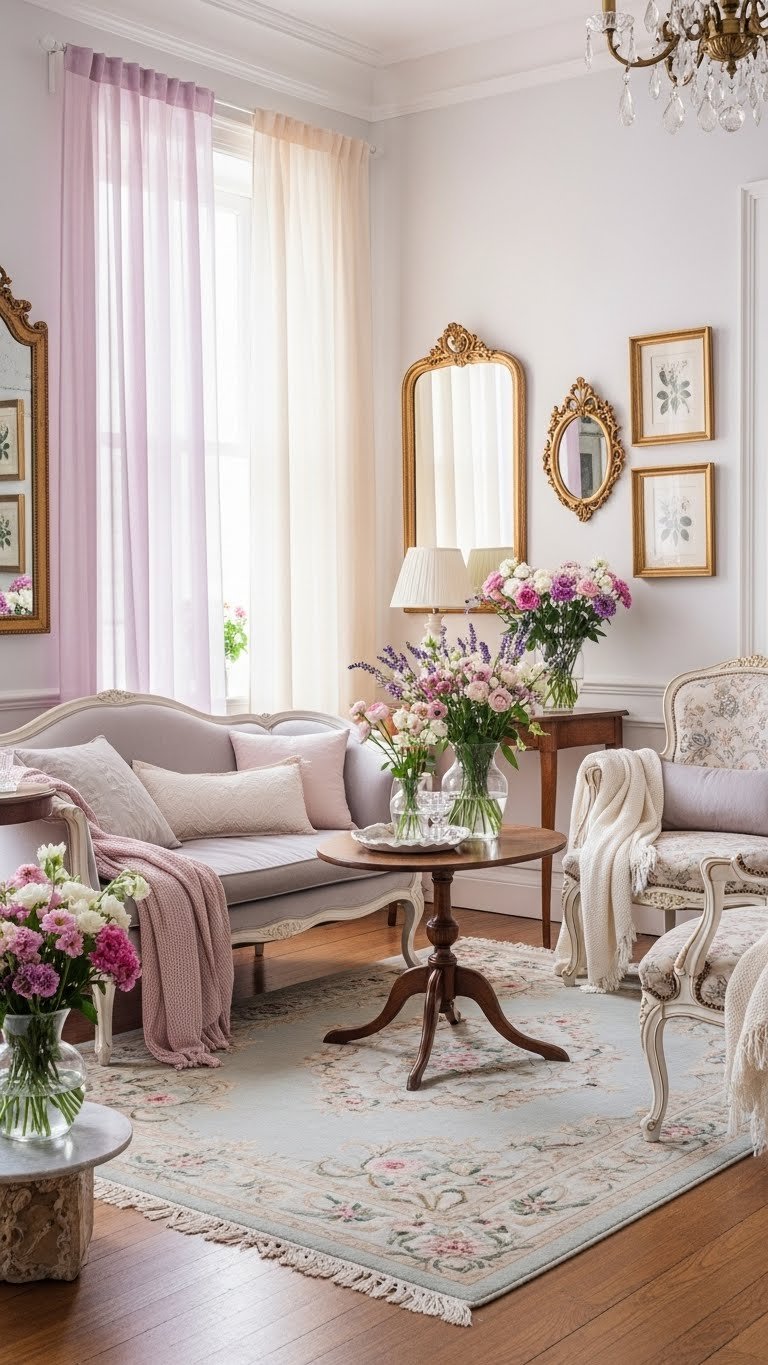
Muted pastels are having a major moment in 2025—think dusty rose, mauve, soft periwinkle, and pale sage. Layering them creates an effortlessly elegant, almost romantic vibe.
Layer a pale pastel sheer ($25–50 per panel) in blush, lavender, or soft sage from Target, IKEA, or Wayfair over a cream or off-white base panel ($30–70). Both should be lightweight fabrics like cotton or cotton-linen blends. Use standard rings or a tension rod system ($15–35). This setup works beautifully in vintage-inspired or cottagecore spaces, and it’s particularly effective if your room gets afternoon light—the pastel filters the warmth into something almost ethereal. Installation: 20 minutes. The result feels intentional and designed, without being matchy-matchy or overdone.
8. Double Rod System for Maximum Layering
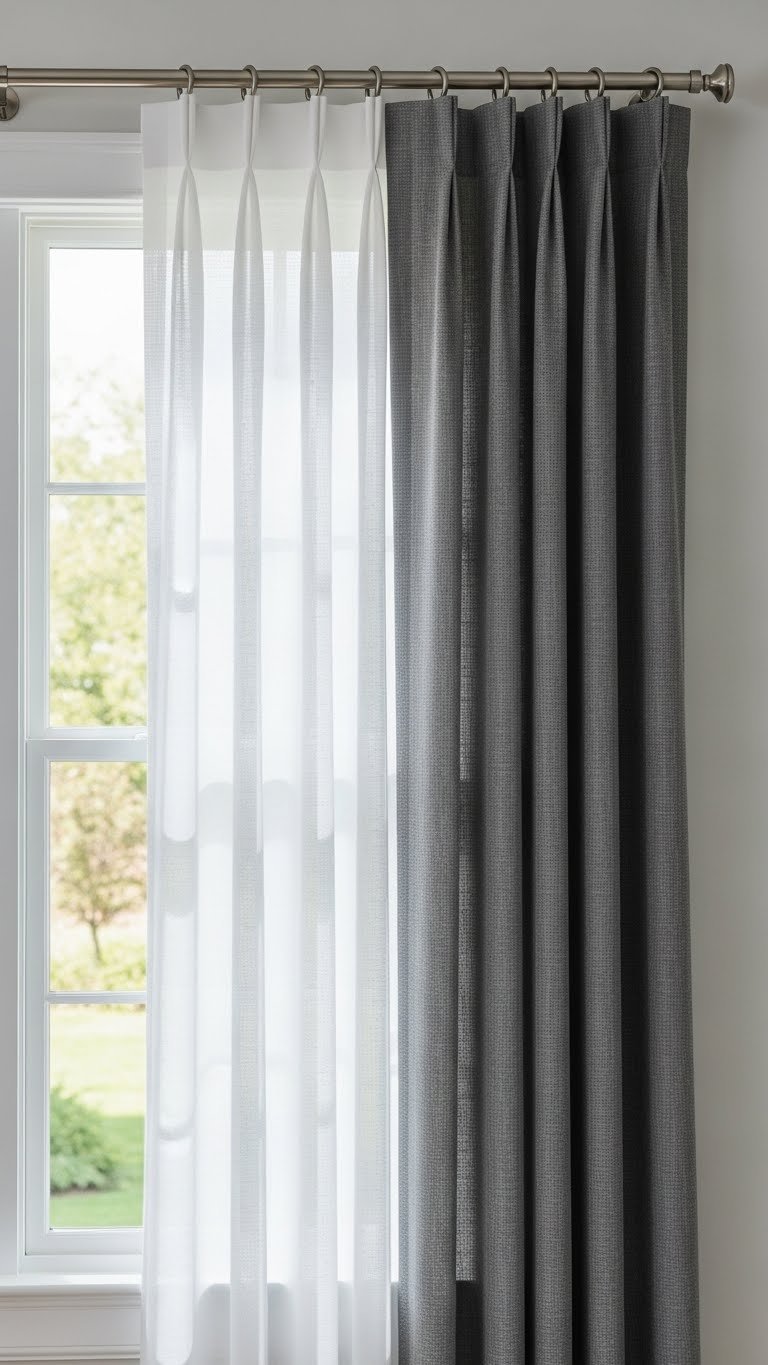
A double-curtain rod system ($40–80 from IKEA, Home Depot, or Amazon) takes layering to the next level by letting you hang two sets of curtains simultaneously without stacking them. This is the professional designer move.
Install the double rod 6 inches above your window frame. Hang your sheers on the front rod and your blackout or textured panels on the back rod. Everything hangs independently, so you can adjust both throughout the day or style them differently. The setup takes about 30–40 minutes but pays off immediately—you get professional-looking dimension that a single rod can’t achieve. Popular systems from IKEA’s RÄCKA or Wayfair’s designer collections are budget-friendly and sturdy. This method works especially well if you have large windows or want maximum light control without sacrificing style.
9. Mix Prints Strategically for Pattern Layering
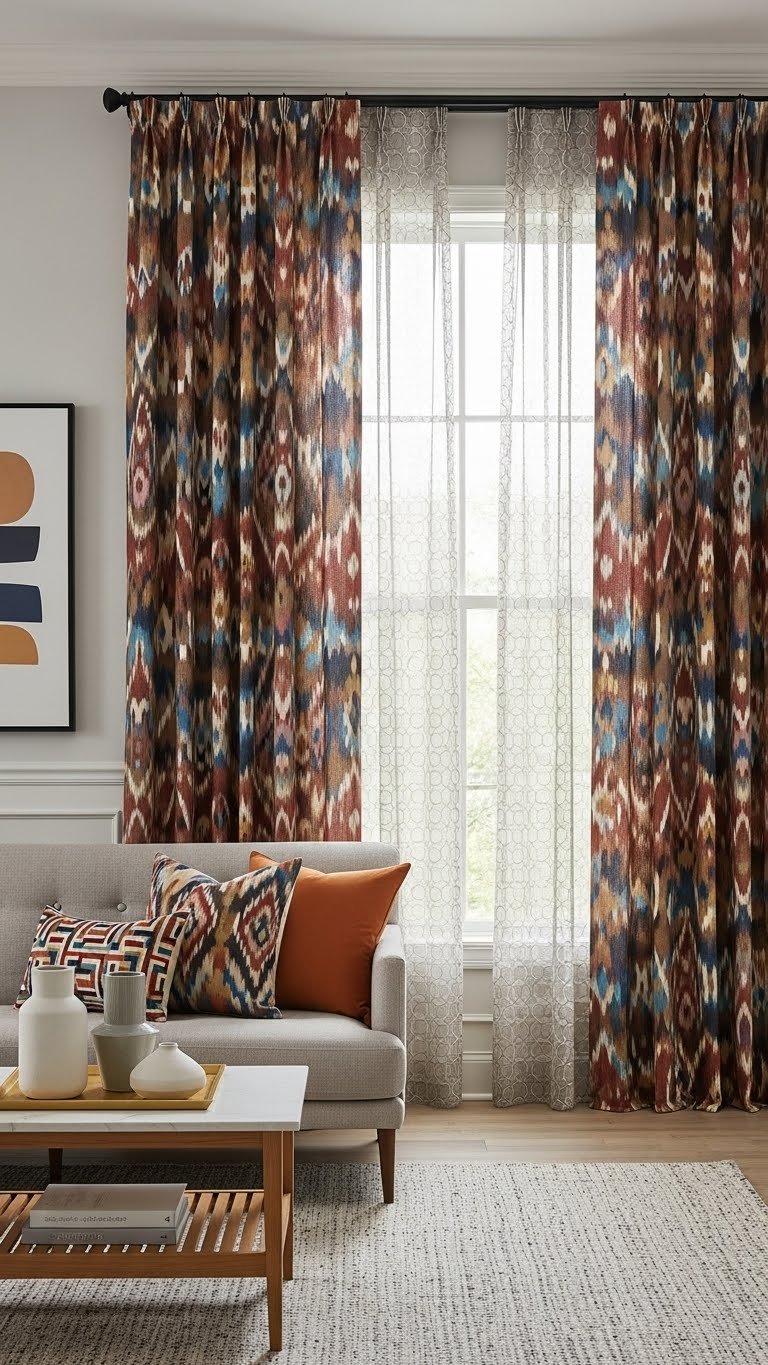
Pattern mixing is trending in 70% of design guides—the key is balancing scale and color. Sheer patterns read softer, so they pair beautifully with bolder prints behind them.
Hang a sheer with a subtle print like stripes or small geometric shapes ($30–60 per panel) on your front rod. Behind it, add a bolder pattern like ikat, suzani, or Moroccan tile ($50–100 per panel) in a coordinating color palette from Wayfair, West Elm, or Anthropologie. The front sheer diffuses the back pattern, preventing visual chaos. Installation: 25 minutes. The styling trick is to keep your furniture and walls neutral so the curtains become the star. This approach feels curated and globally inspired without reading as chaotic.
10. Use Tension Rods for Renter-Friendly Layering
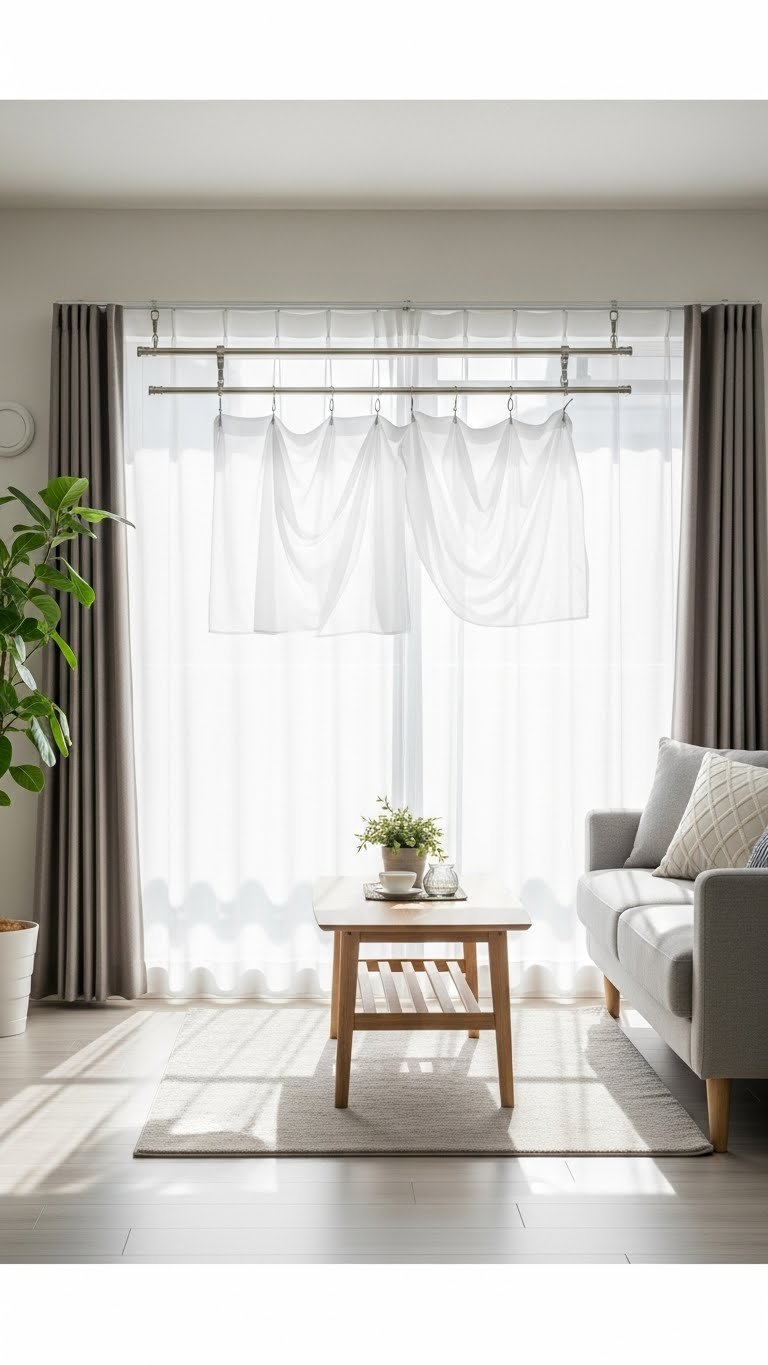
Tension rods are the renter’s secret weapon—no drilling, no damage, and you can layer multiple panels without any permanent installation. This is the most flexible approach.
Buy two tension rods ($12–25 each from IKEA, Target, or Amazon) and layer sheer and solid panels independently. Mount them at the same height for a stacked look, or stagger them for visual interest. Use lightweight fabrics ($20–60 per panel) so the rods can support the weight easily. Installation: 10 minutes with no tools required. You can adjust, remove, or change the curtains anytime without penalty—perfect for apartments or temporary spaces. The downside is tension rods don’t hang quite as cleanly as permanent rods, but the convenience trade-off is worth it for most renters.
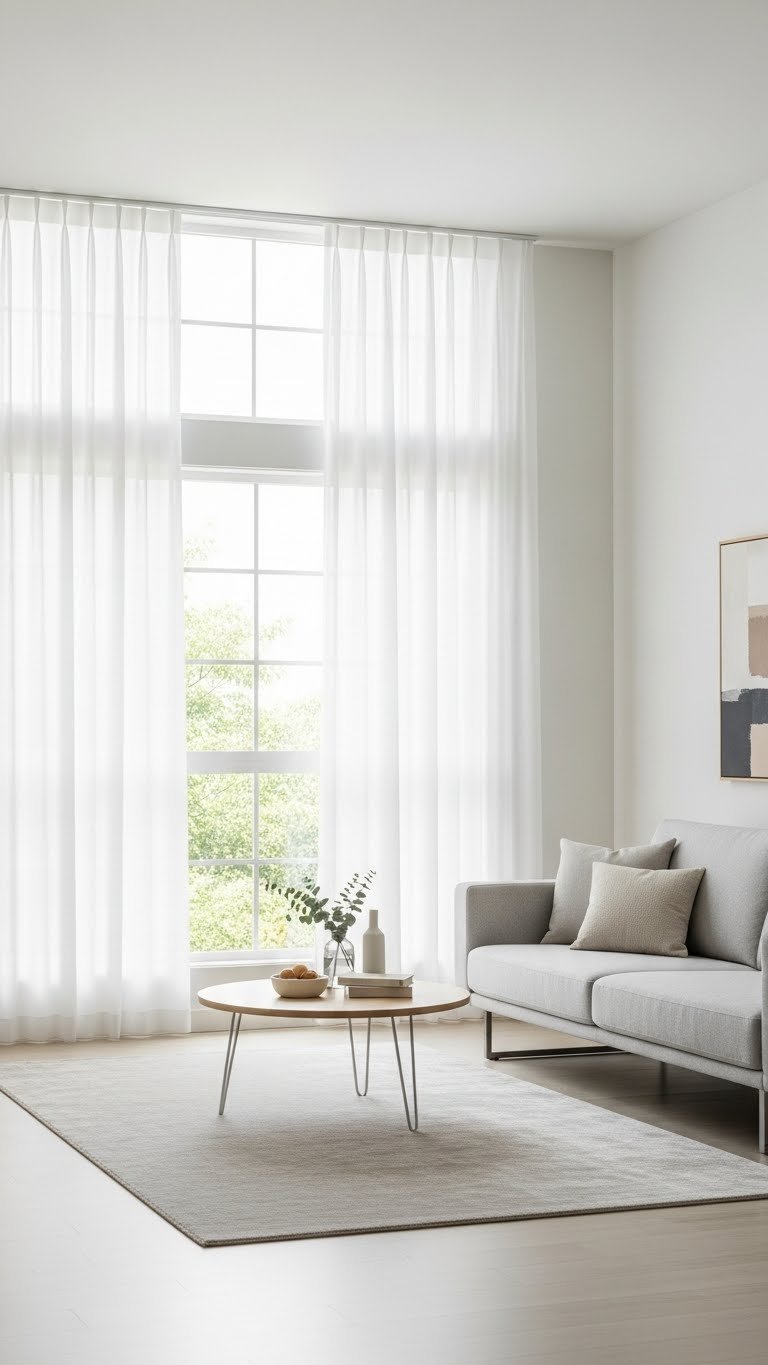
11. Combine Sheer + Linen for Breathable Layers
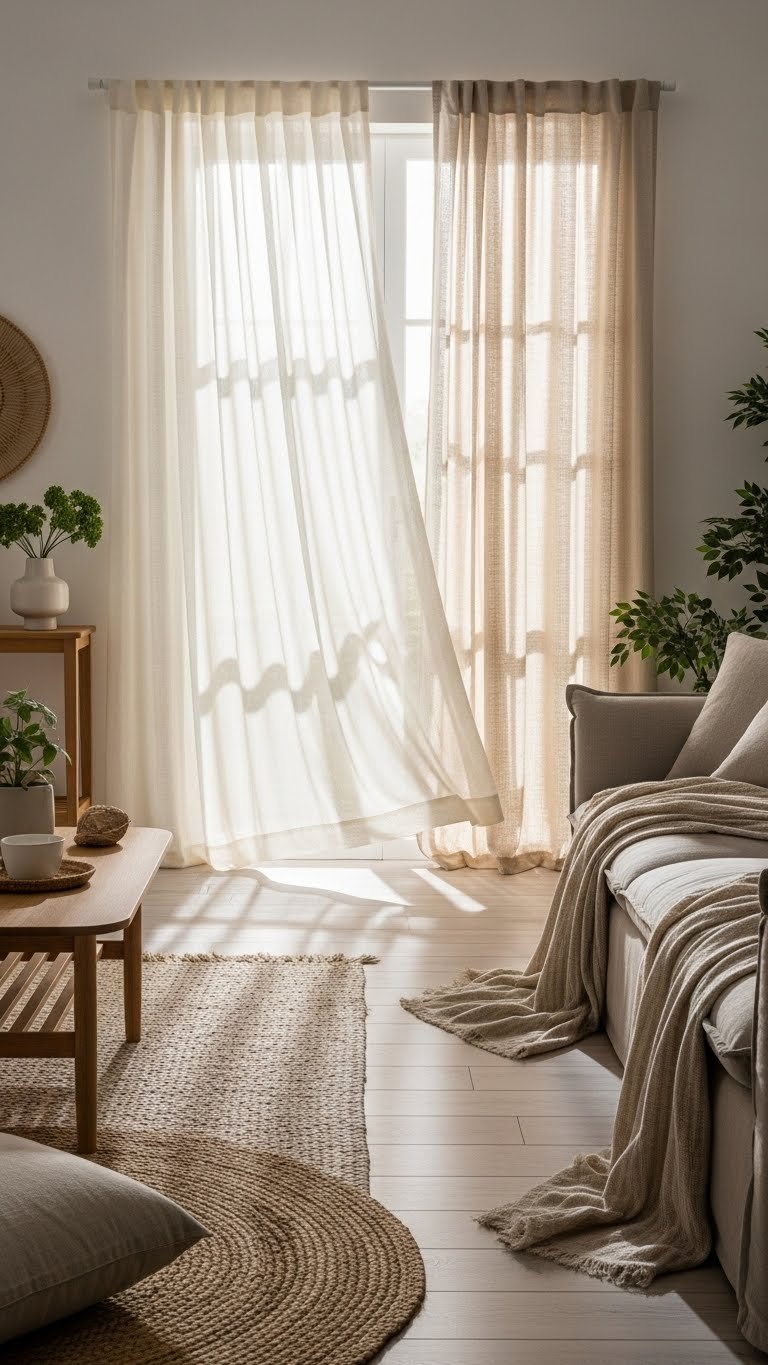
Sheer + linen is the ultimate combo for spaces where you want light, air, and texture without weight. Both fabrics breathe beautifully and age well.
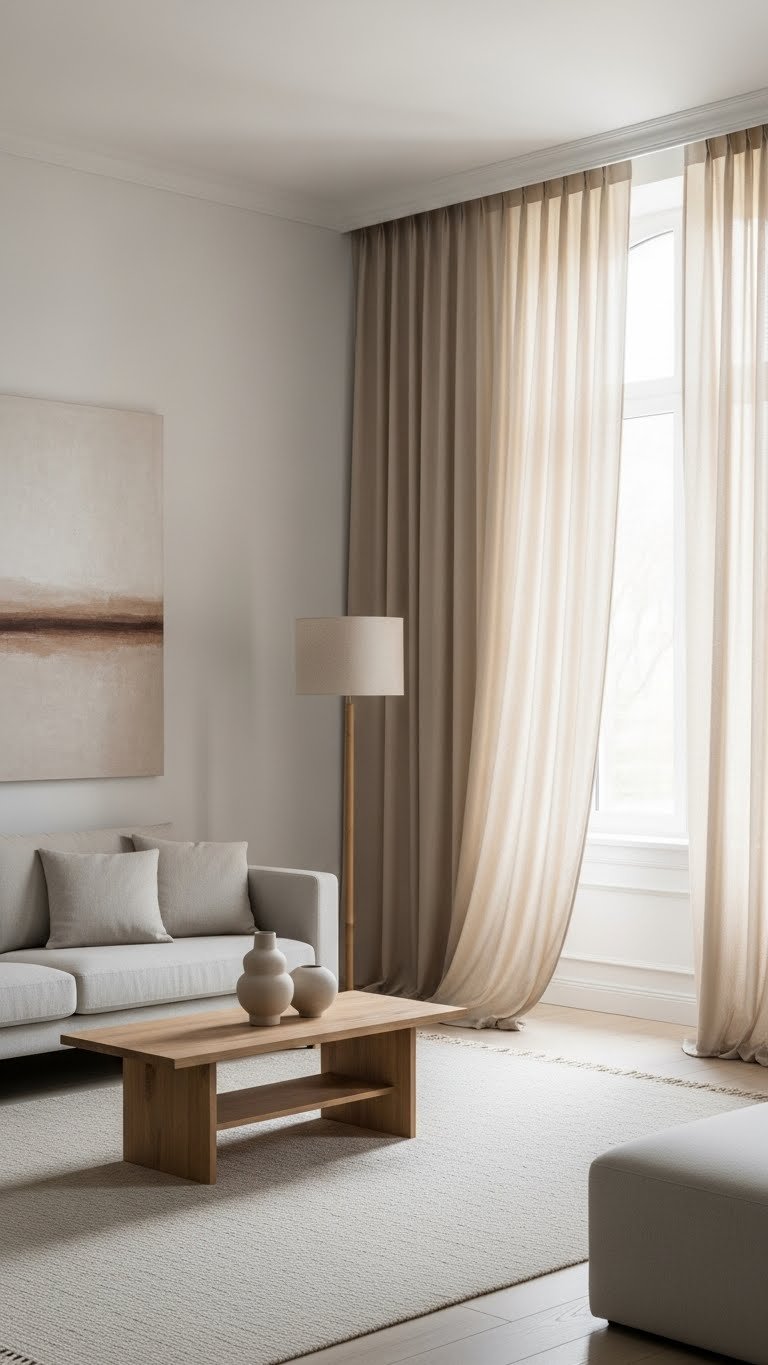
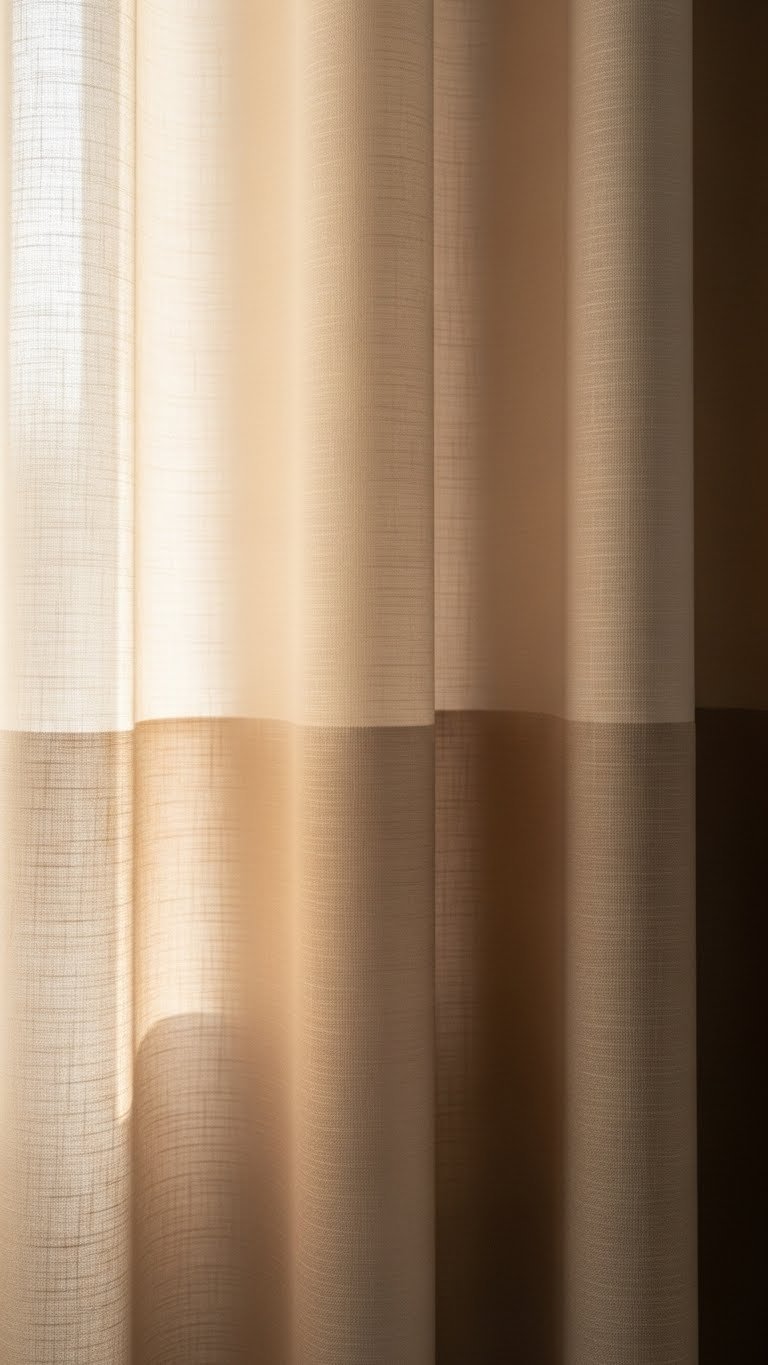
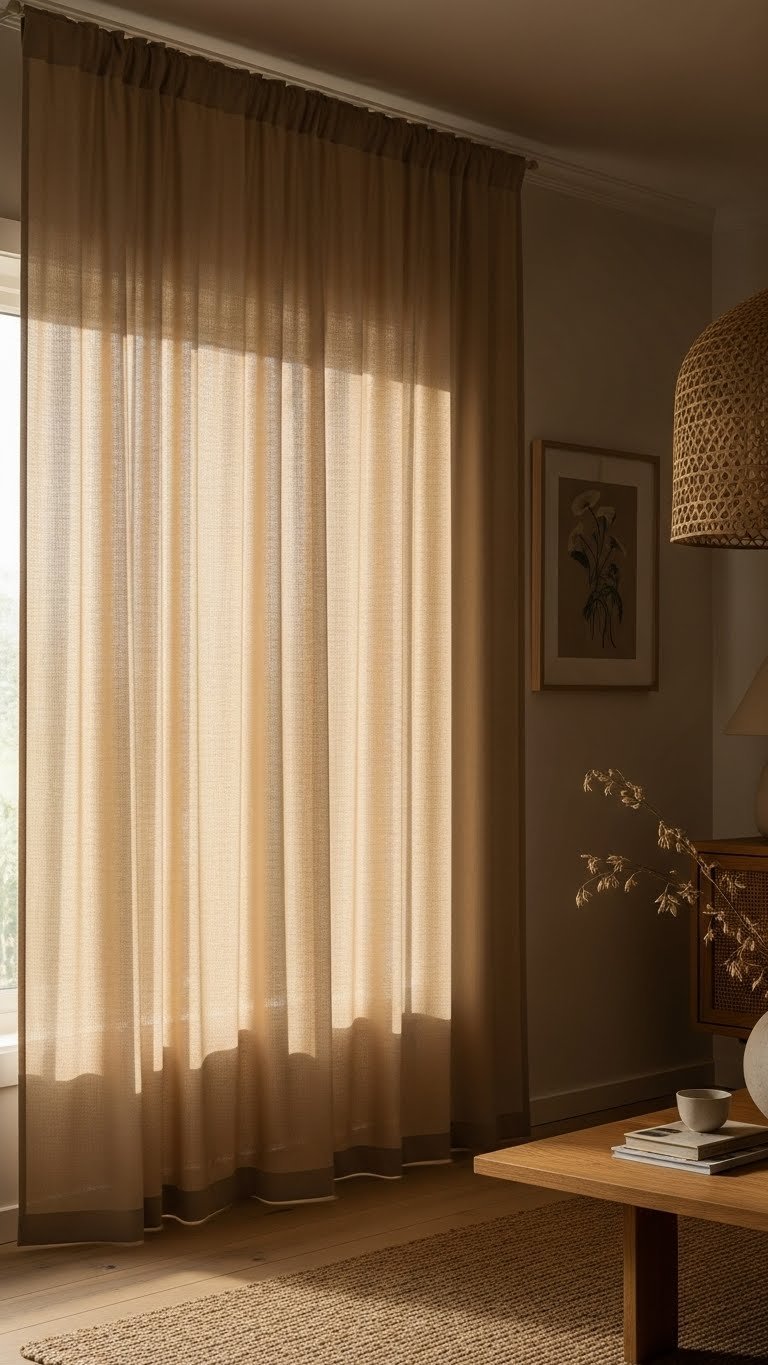
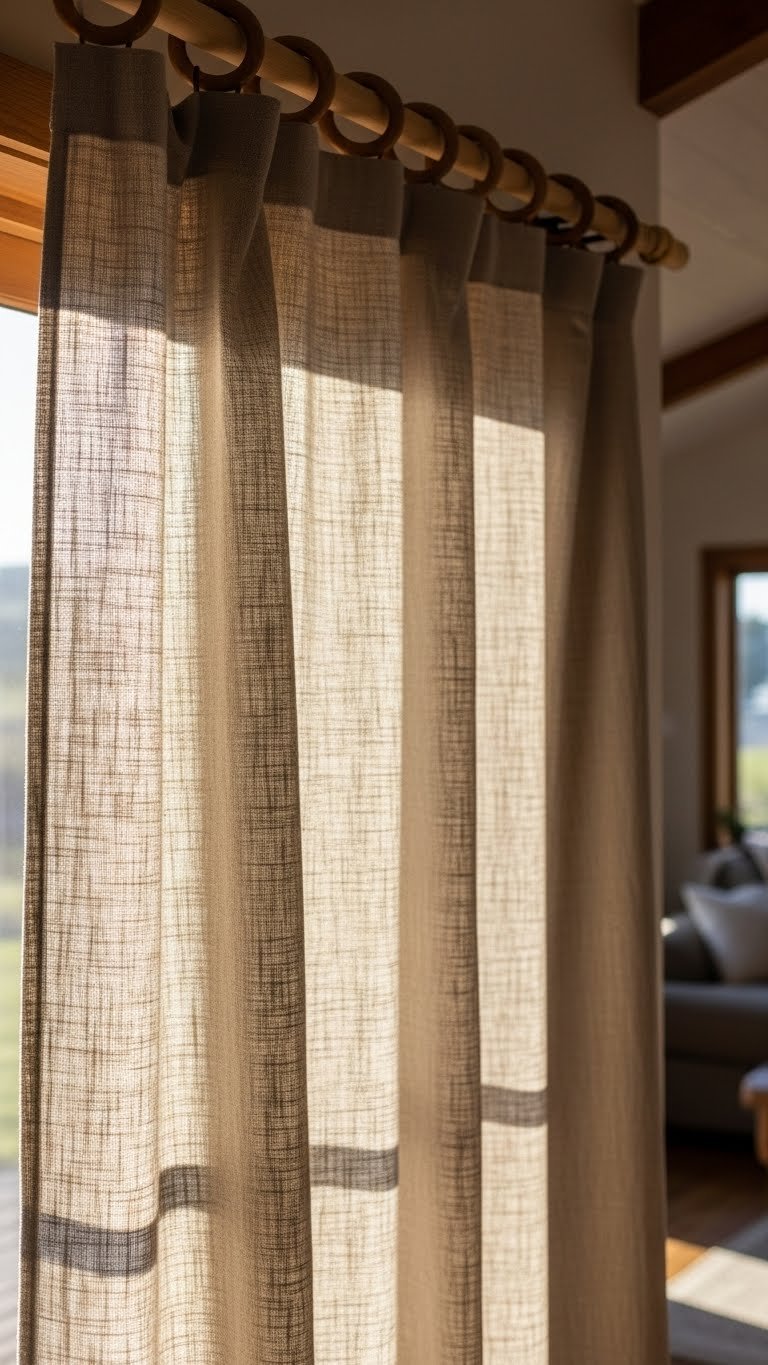
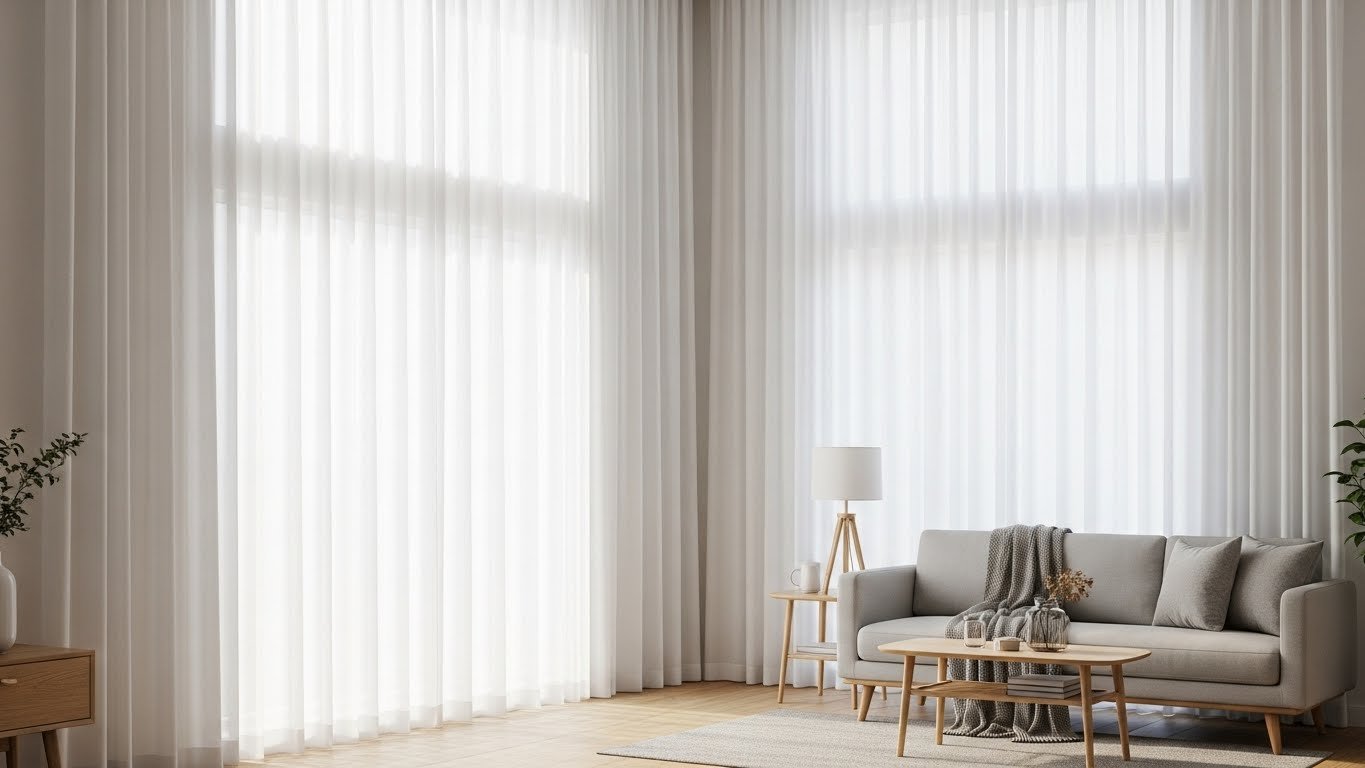
Layer a crisp white or cream sheer ($20–50 per panel from Target or IKEA) over a natural linen panel in ecru or sand ($40–80 per panel from Wayfair or CB2). Both fabrics are machine-washable and get softer with every wash. Mount on a standard or tension rod ($15–30). Setup takes 20 minutes. The beauty here is that both fabrics feel organic and move naturally, creating gentle shadows that shift throughout the day. This approach works beautifully in coastal, Scandinavian, or minimalist interiors. You get the spa-like calm of natural materials without sacrificing function.
12. Add Motorized Tracks for Accessible Adjustments
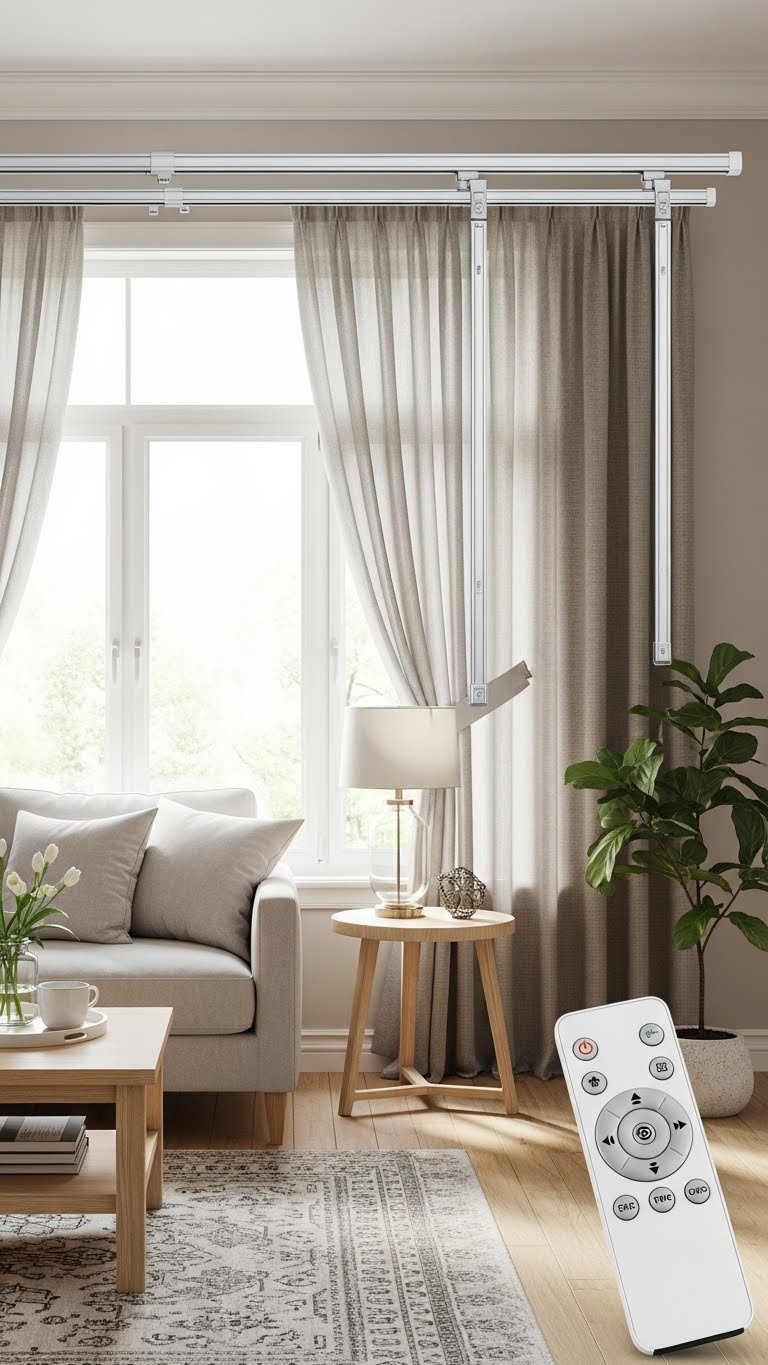
Motorized curtain systems are emerging as a major accessibility upgrade—especially helpful if your windows are high, large, or hard to reach. Modern systems are more affordable than ever.
Install a motorized track system ($150–400 from Amazon, Wayfair, or smart home retailers like Best Buy) and pair it with lightweight sheer and blackout panels ($40–100 per set). Most systems work with a remote or app control, so you adjust curtains from the couch. Installation requires drilling but isn’t complex—or hire a handyman for $100–150. The benefit? Accessibility for anyone with mobility challenges, plus it just feels luxe and modern. If motorized feels too steep, start with a manual pulley system ($50–100) that lets you draw heavy curtains effortlessly.
13. Style with Coordinating Hardware for Cohesion
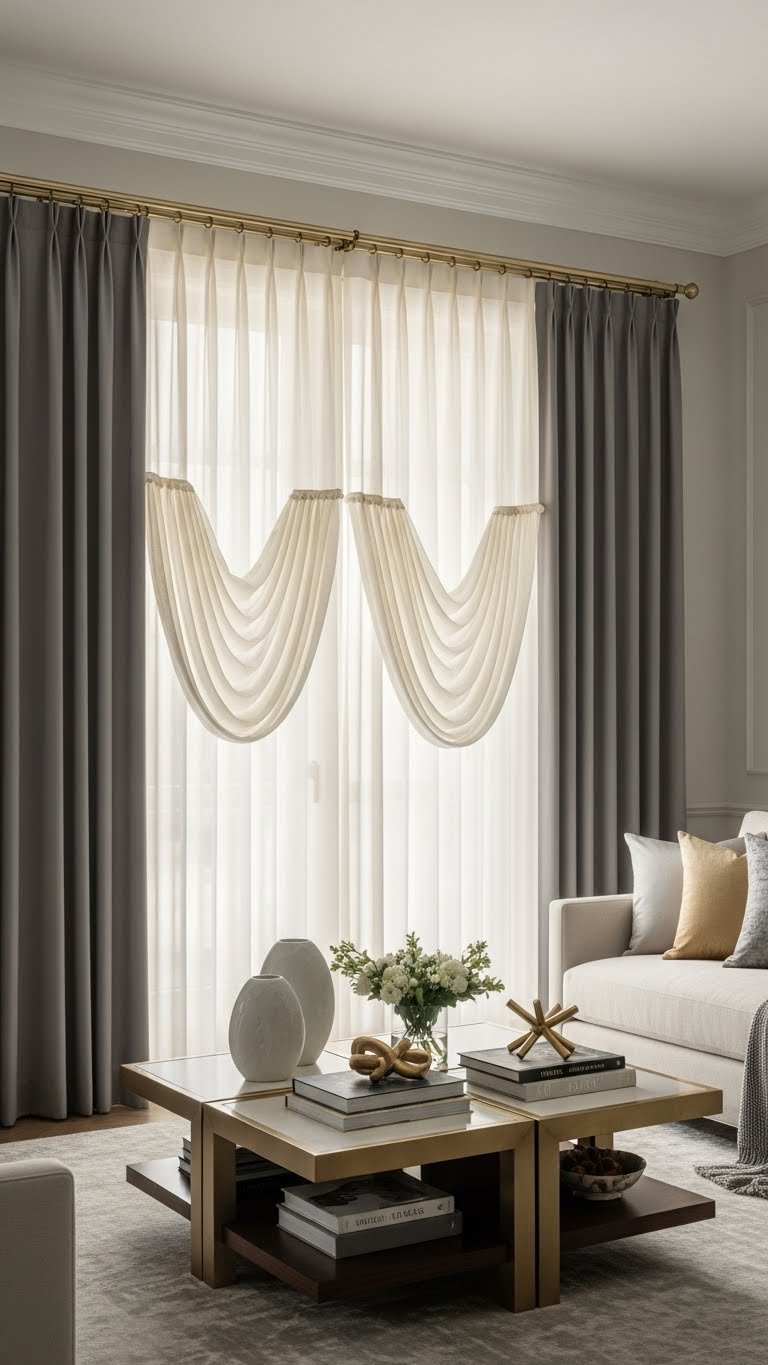
Hardware matters more than people realize—it’s the jewelry of your curtains. Coordinating your rod, rings, and brackets instantly elevates the whole look.
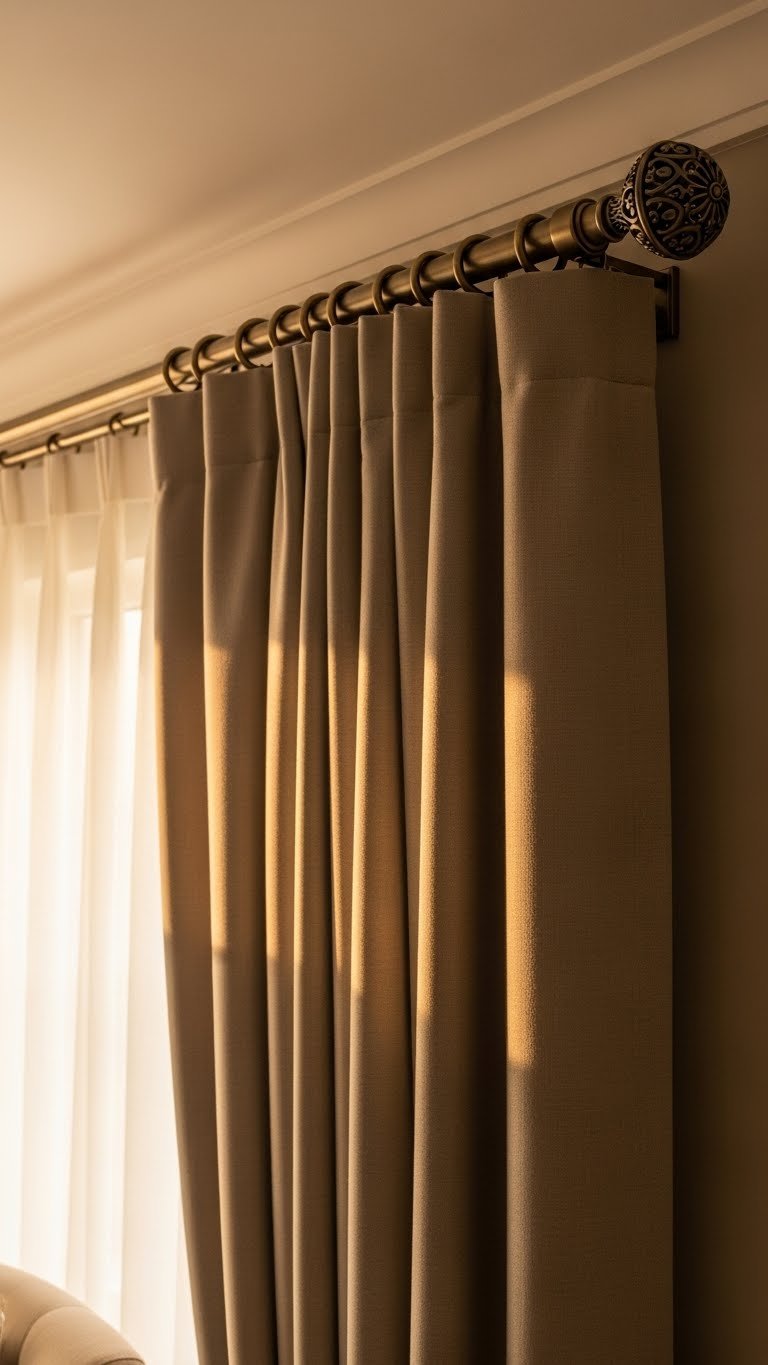
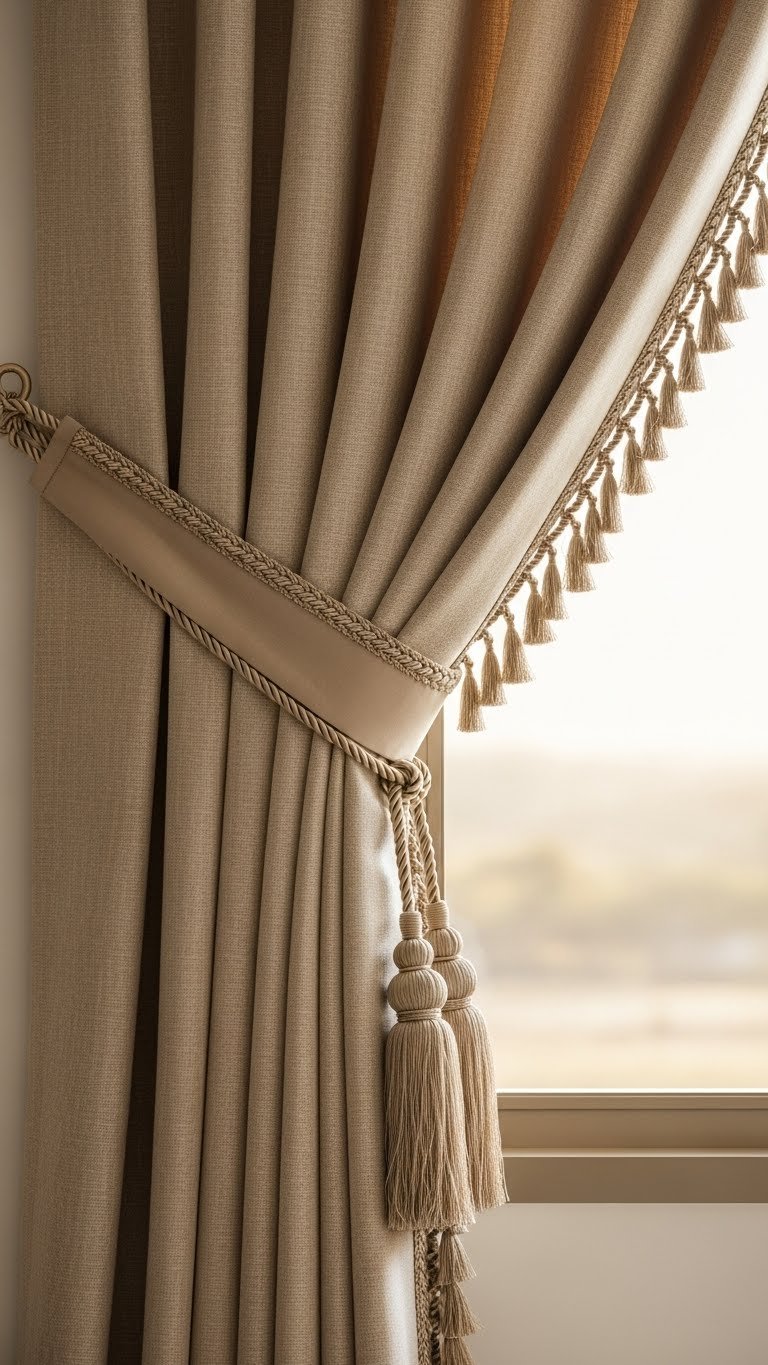
Choose a metal finish (brushed brass, matte black, or brushed nickel) and stick with it across all layers. Pair your main rod ($25–60) with matching rings or clips ($15–30 per set) and finials ($10–20). Sources: IKEA, Target, Home Depot, or Wayfair. All these pieces should come from the same line for visual cohesion. Installation: 30 minutes. The coordinated hardware ties everything together and makes the setup look intentional rather than random. This small detail shifts the whole aesthetic from “just curtains” to “designed space.”
14. Layer Neutral Linens for Minimalist Calm
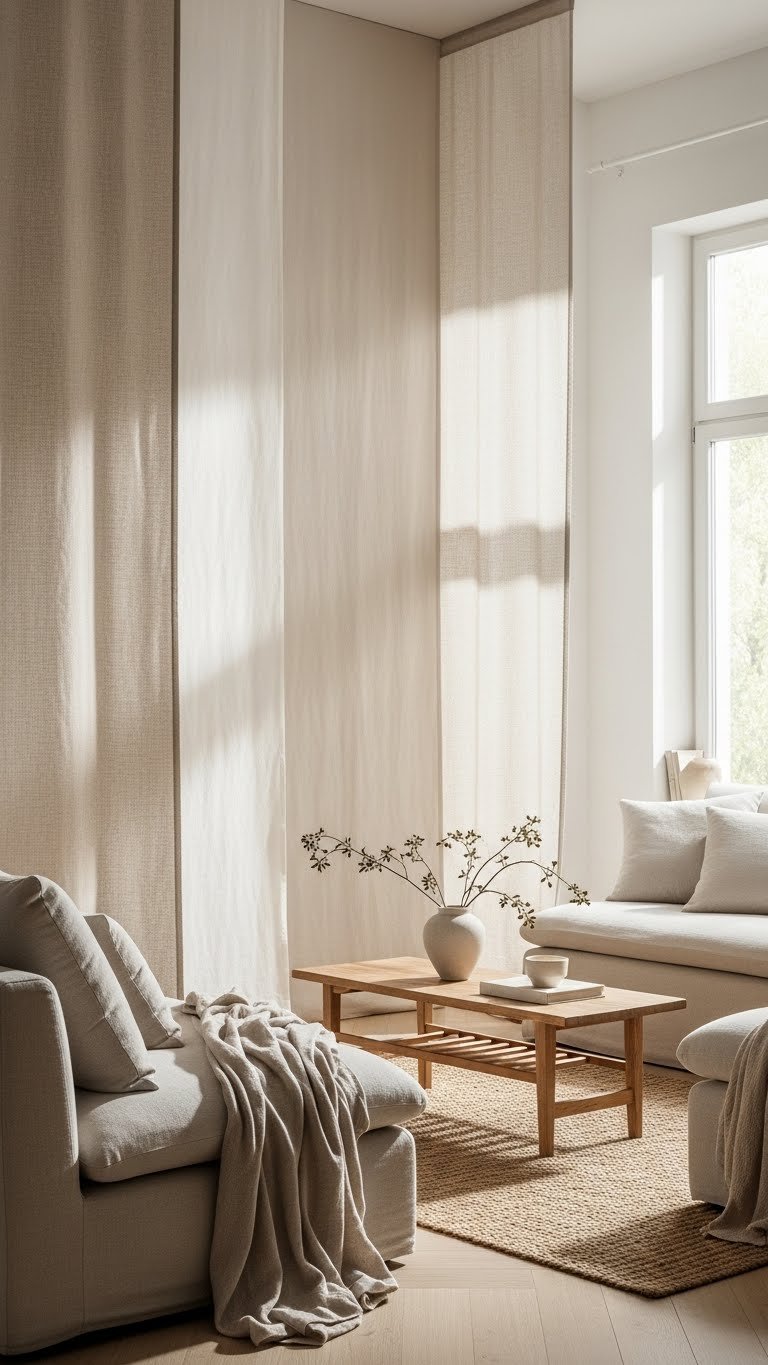
Minimalist doesn’t mean boring—layering neutrals in different textures and weights creates sophisticated depth that reads calm and intentional. This approach is huge in Scandinavian design.
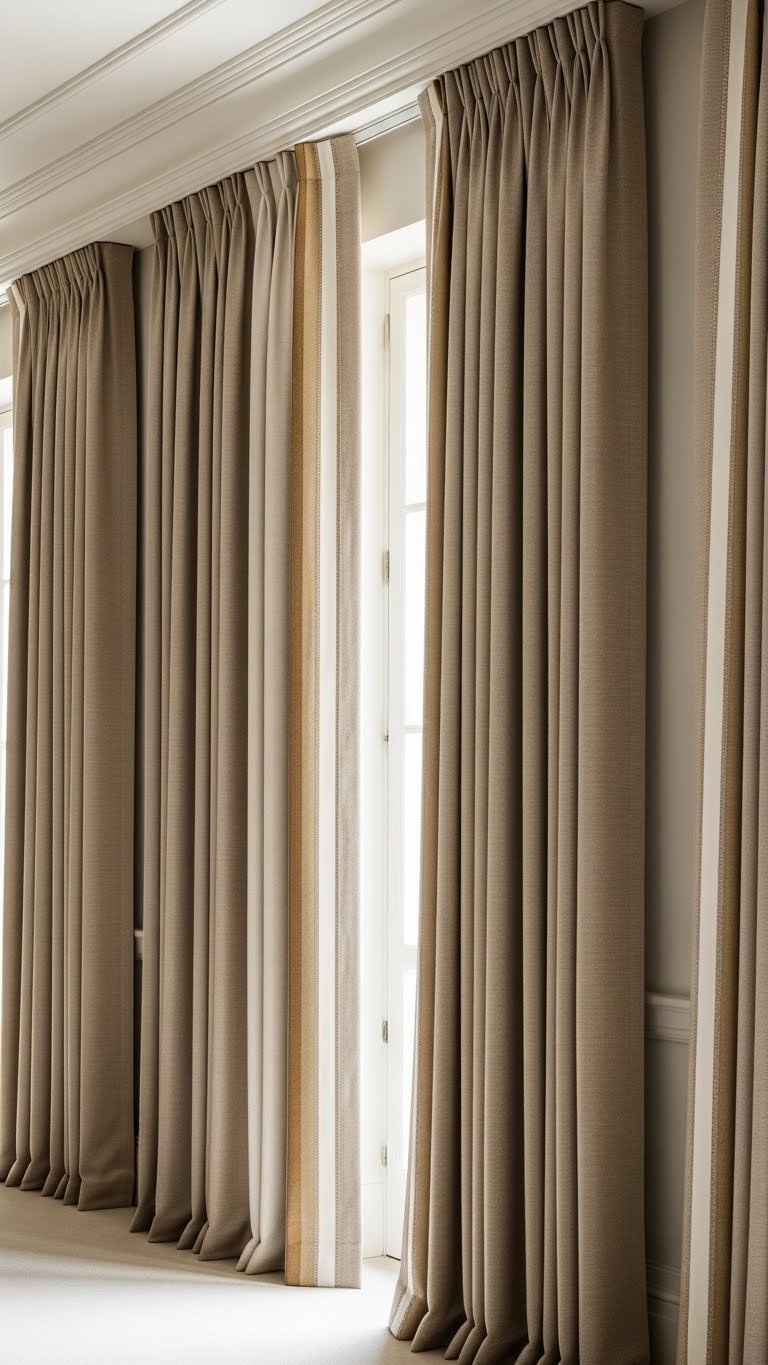
Choose three coordinating neutral linens in varying weights: start with a crisp sheer ($25–45), add a medium-weight linen ($50–90), and back it with a heavier linen blend ($60–100) from Crate & Barrel, Muuto, or Nordic Nest. Mount on a double rod system ($50–80) using simple metal rings ($20–30). Installation: 40 minutes. The result is layered, textural depth that shifts throughout the day as light moves through each fabric. This approach works beautifully in open-plan spaces where you want definition without visual noise.
15. Incorporate Global Prints for Boho Layering
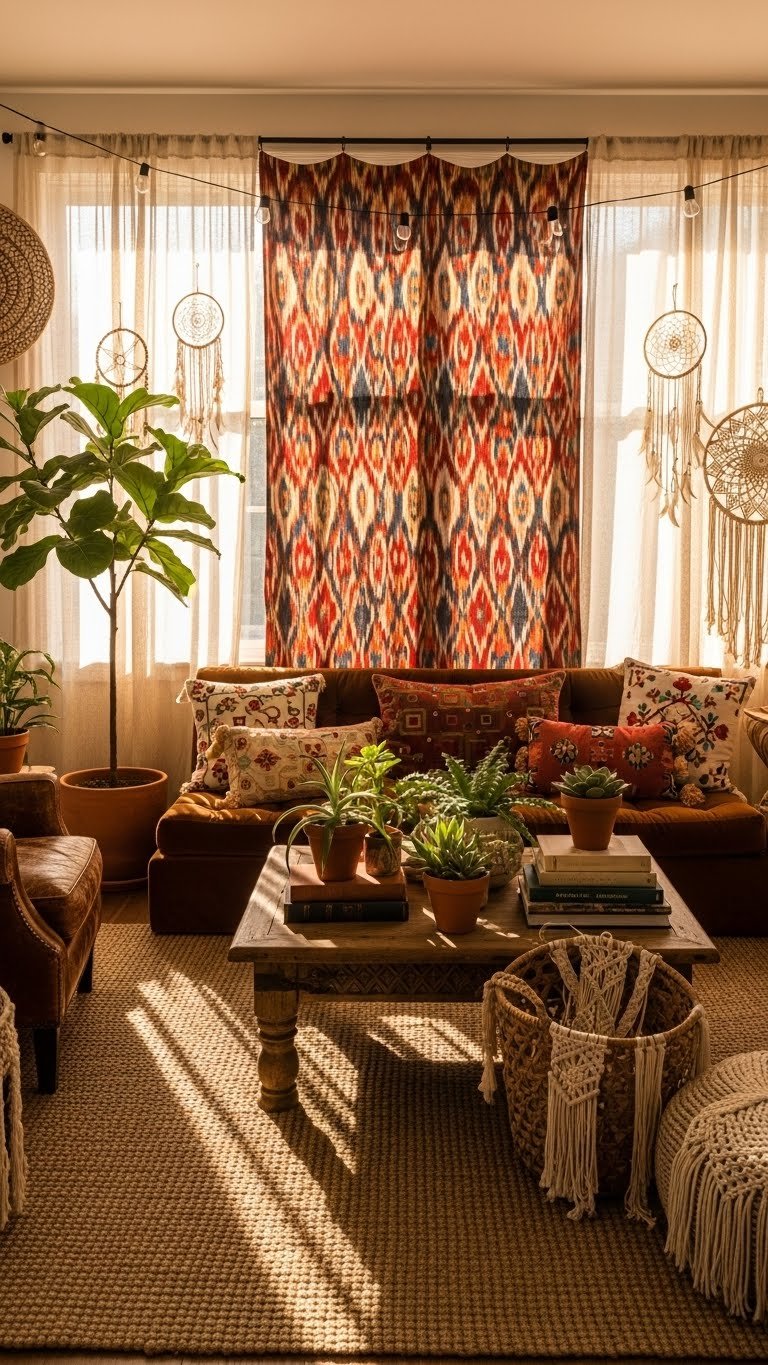
Global patterns like ikat, suzani, and Moroccan prints are trending up 40% according to design reports. Layering them with sheers keeps the look sophisticated rather than overwhelming.
Start with a neutral or cream sheer ($25–50 per panel), then layer a global print panel in warm tones ($50–100 per panel from West Elm, Anthropologie, or Etsy) behind it. The sheer diffuses the pattern so it reads as intentional rather than chaotic. Use a standard rod with macramé or wooden rings ($20–40) for extra boho vibes. Installation: 25 minutes. The result feels well-traveled and collected, which is the heart of boho style. Light plays beautifully through both layers, casting patterned shadows that shift throughout the day.
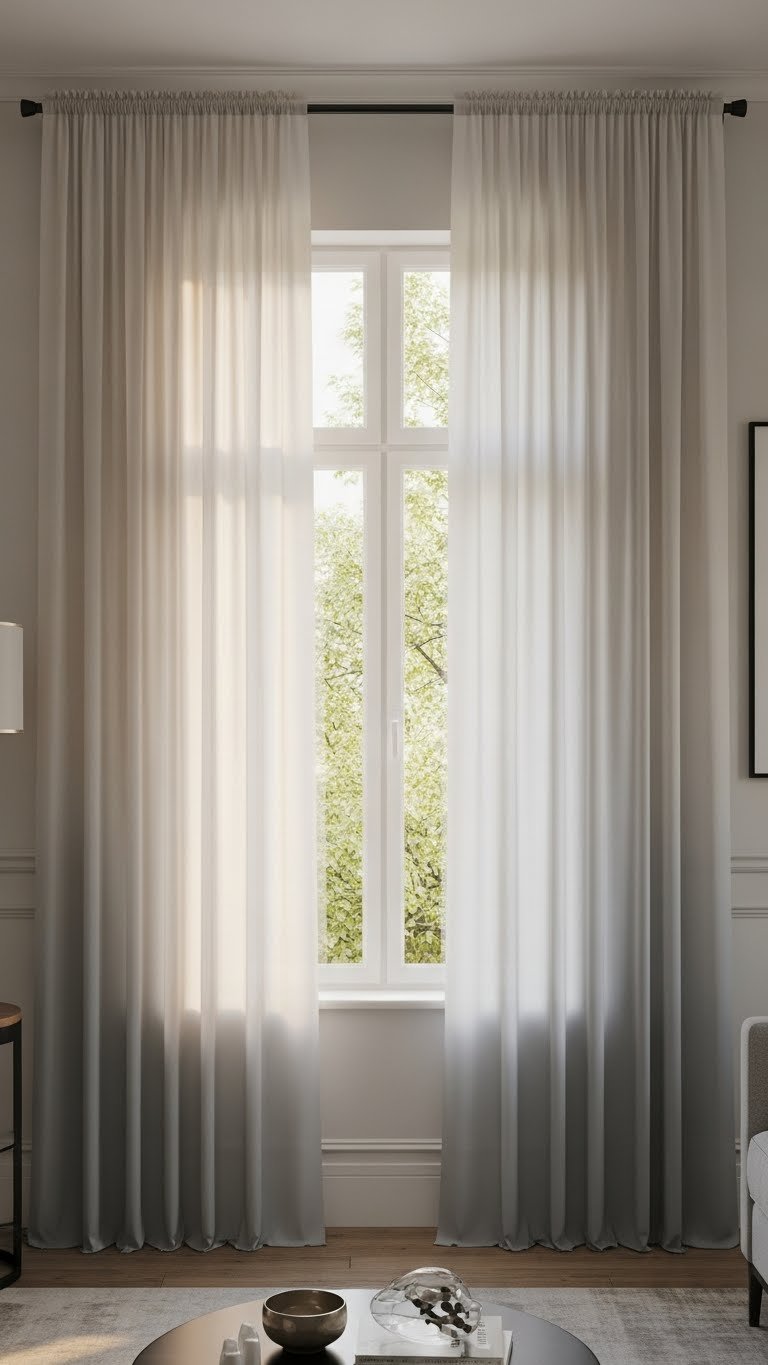
16. Go Monochromatic for Unified Impact

Monochromatic layering creates visual interest through texture and weight rather than color, resulting in a refined, curated look. This works beautifully in any color family.
Select your primary color (blue, green, warm gray, etc.), then buy sheers, linens, and blackout panels in progressively deeper shades of that color ($25–100 per layer from Target, Wayfair, or IKEA). Layer from lightest to darkest. Use coordinating hardware in a complementary finish ($40–80 total). Installation: 30 minutes. The monochromatic approach feels expensive and intentional because the eye reads it as a thoughtful color study. Light moving through tonal layers creates subtle, sophisticated depth that photographs beautifully for Pinterest or Instagram.
17. Add a Valance or Cornice for Architectural Detail
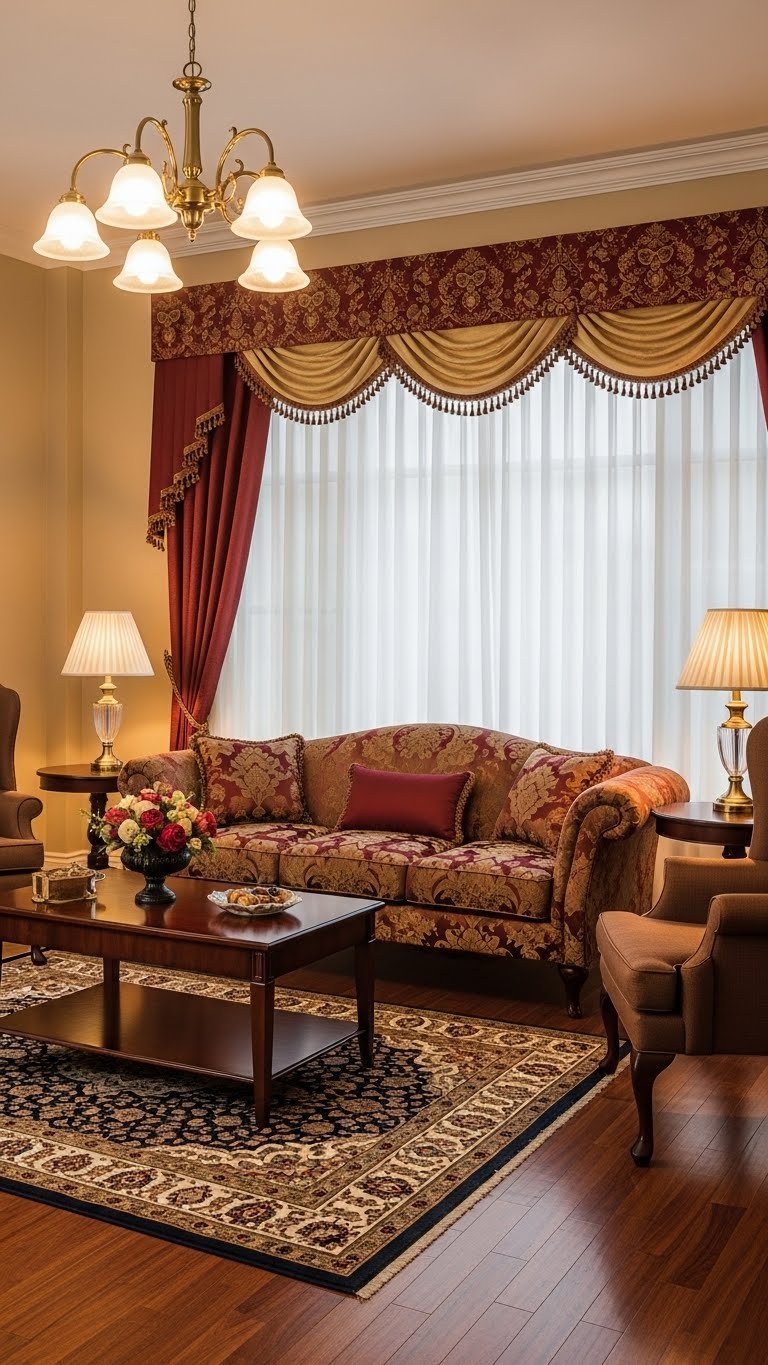
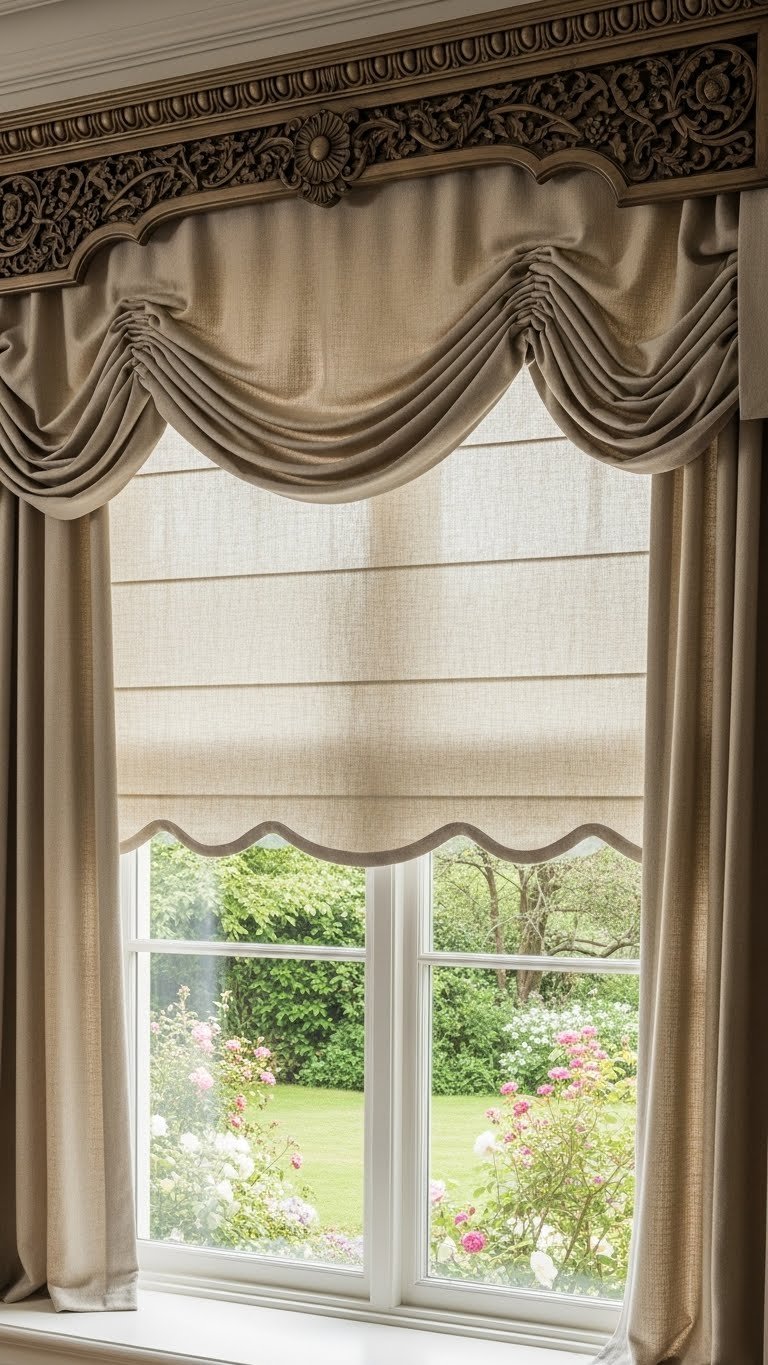
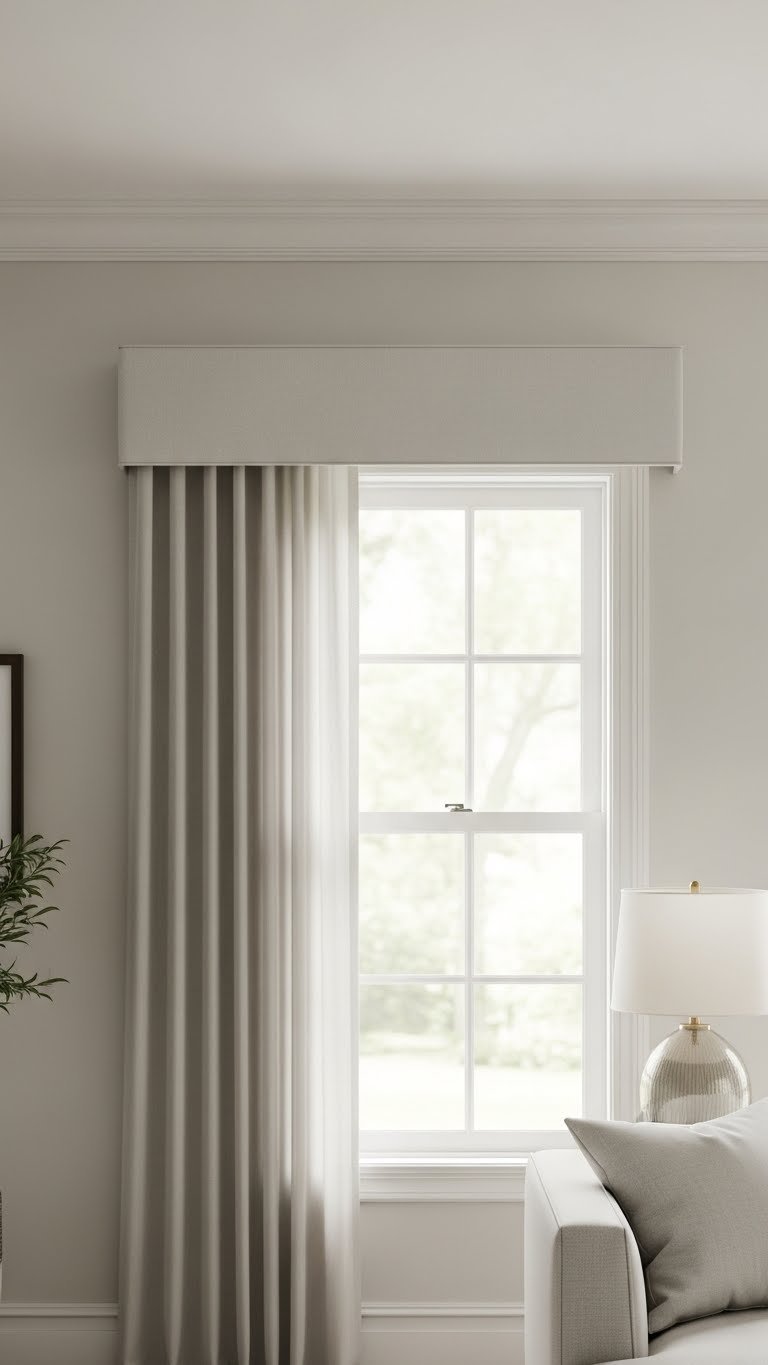
A valance or cornice adds architectural polish to your layered curtains, especially in traditional or transitional spaces. It also hides rods and hardware for a cleaner look.
Install a simple cornice board ($30–80 from IKEA or Home Depot) above your existing layers, then drape it with a complementary fabric ($15–30 in scraps) or wrap it with trim ($10–20). Alternatively, buy a pre-made fabric valance ($25–60 from Wayfair or Target) and mount it above your layers. Installation takes 45 minutes to an hour. The valance instantly elevates the look, adding formality and intentionality. This approach works beautifully if you’re layering patterns or bold colors and want a finished, cohesive frame.
18. Layer Machine-Washable Synthetics for Low Maintenance
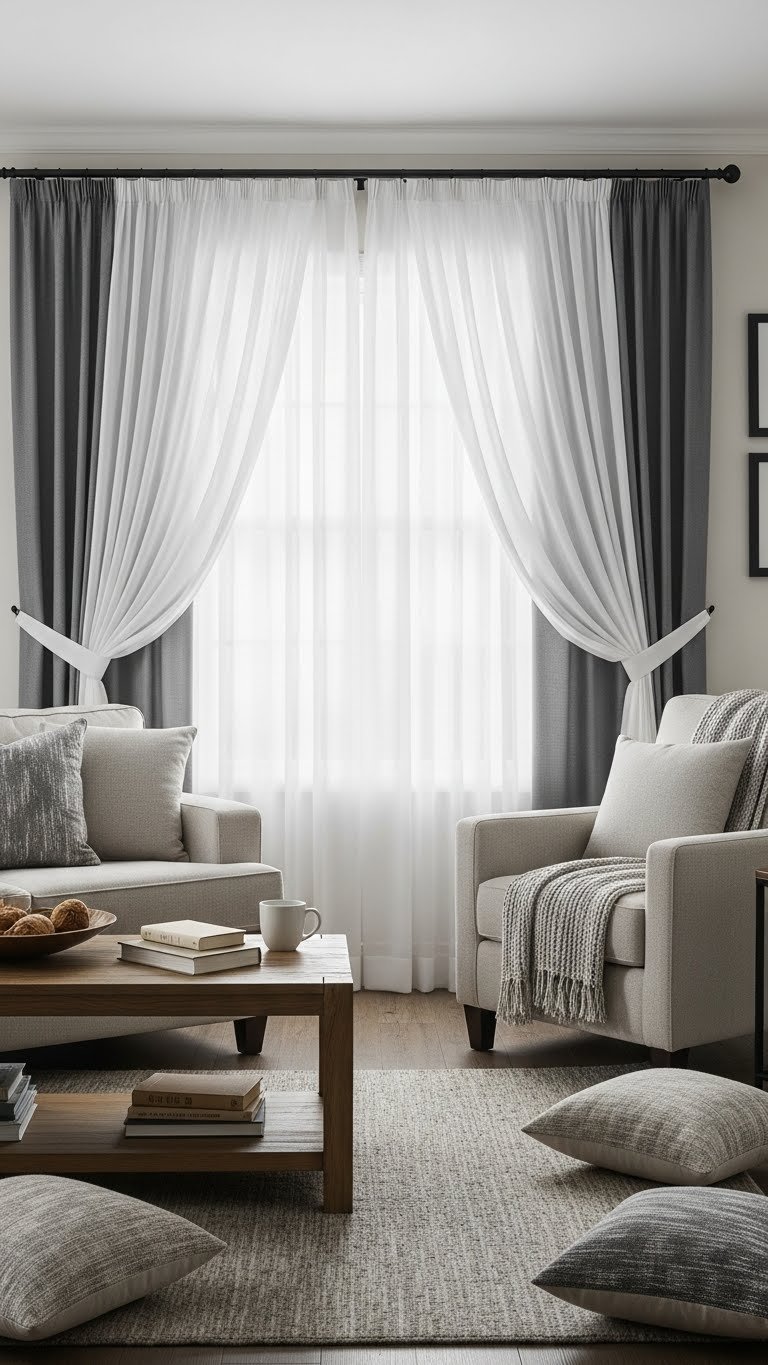
Not everyone wants high-maintenance fabrics. Machine-washable synthetics solve the cleaning dilemma and cost significantly less than natural fibers—65% of homeowners prioritize this feature.
Choose polyester or polyester-blend sheers and panels ($20–60 per panel from Walmart, Target, Amazon, or IKEA) that clearly state “machine washable” on the label. Layer them just like natural fabrics. Most can handle a gentle cycle in cold water. Installation: 20 minutes. The beauty? You can actually wash them without worry or dry-cleaning costs. They resist wrinkles better than linen, and many synthetics now look and feel remarkably close to natural fabrics. This is especially practical if you have pets, kids, or live in a dusty climate.
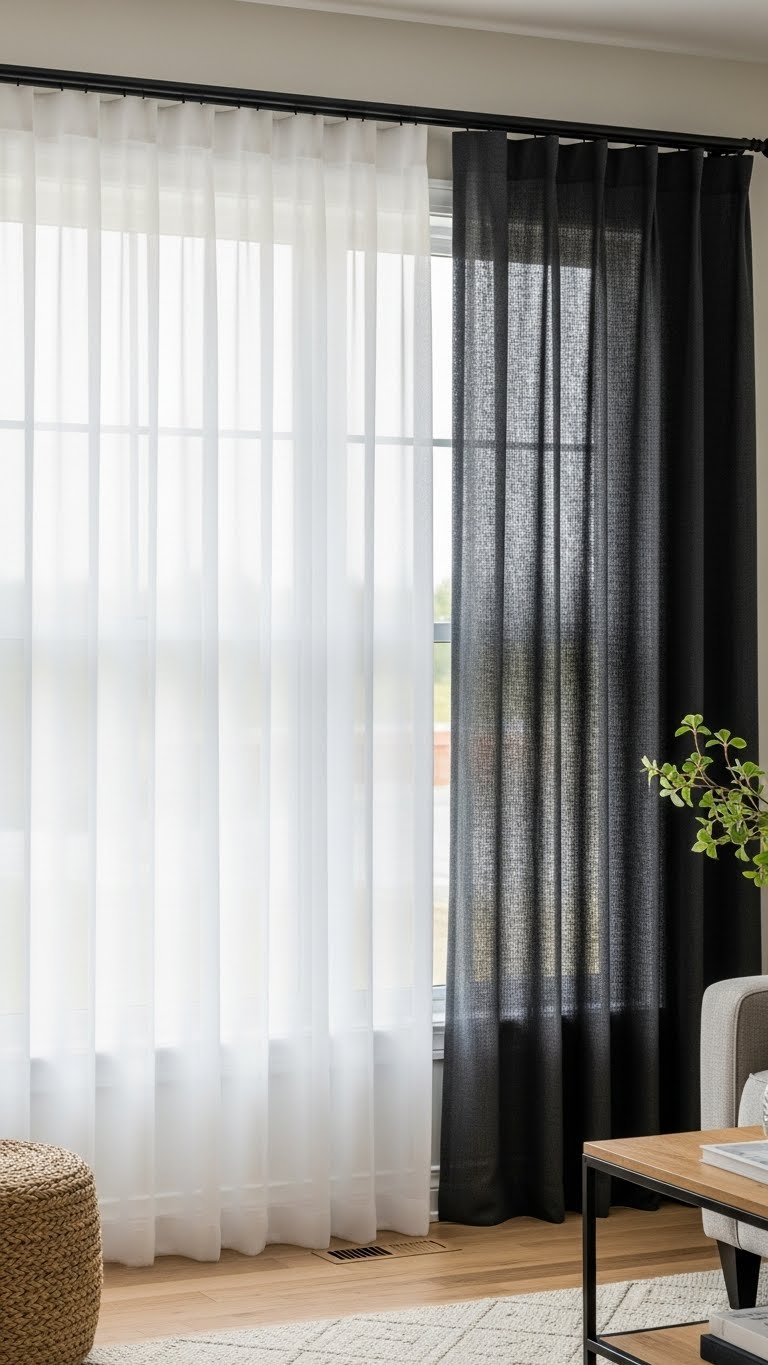
19. Use Contrast for Bold Statement Layering
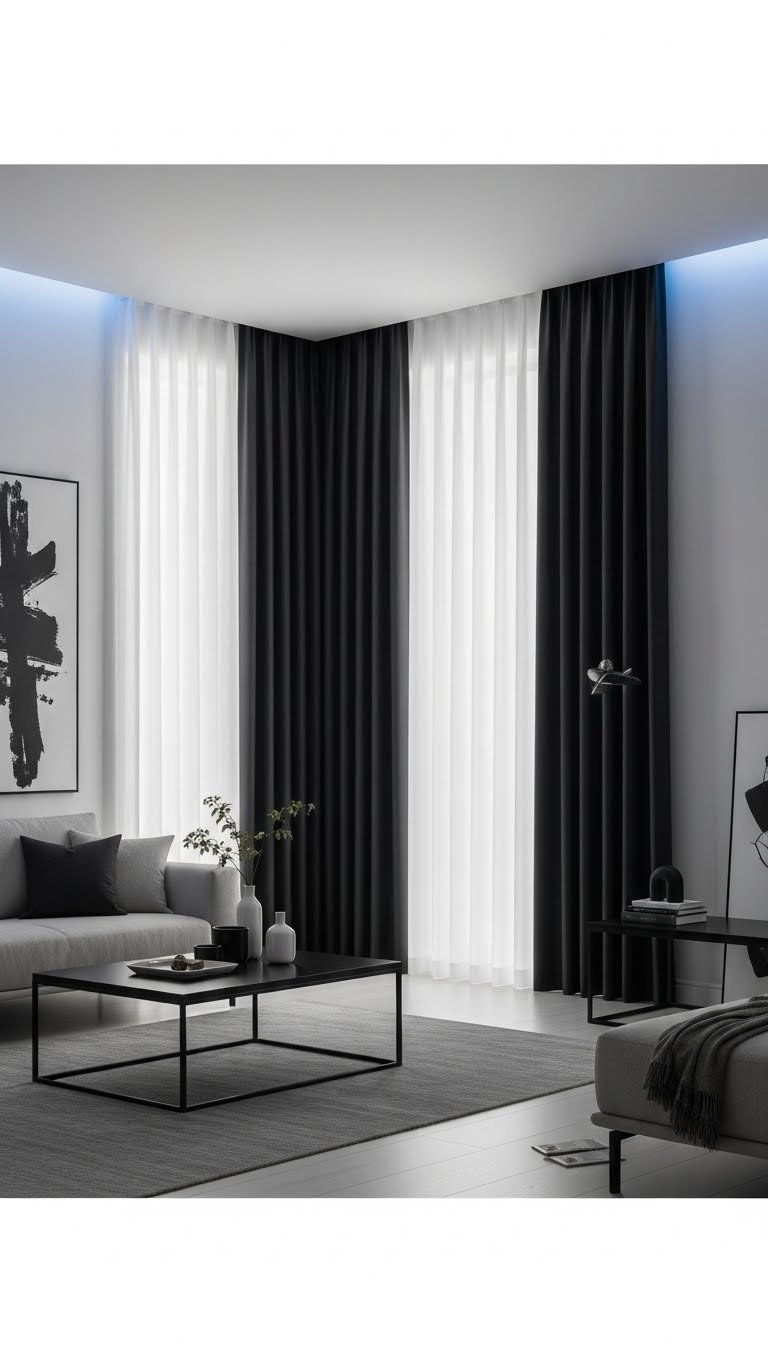
If you want your curtains to make a statement, go high-contrast. Pairing crisp white sheers with deep charcoal or black drapes is striking and modern.
Hang a bright white or cream sheer ($25–50 per panel) on your front rod, then layer a deep charcoal, navy, or black panel ($60–120 per panel) behind it from Wayfair, West Elm, or IKEA. The contrast is dramatic but sophisticated. Use sleek metal hardware in black or brushed nickel ($30–50 total). Installation: 25 minutes. This approach works beautifully in modern, industrial, or contemporary spaces. The strong contrast makes a visual statement without needing pattern or color.
20. Experiment with Puddling vs. Floating Hems
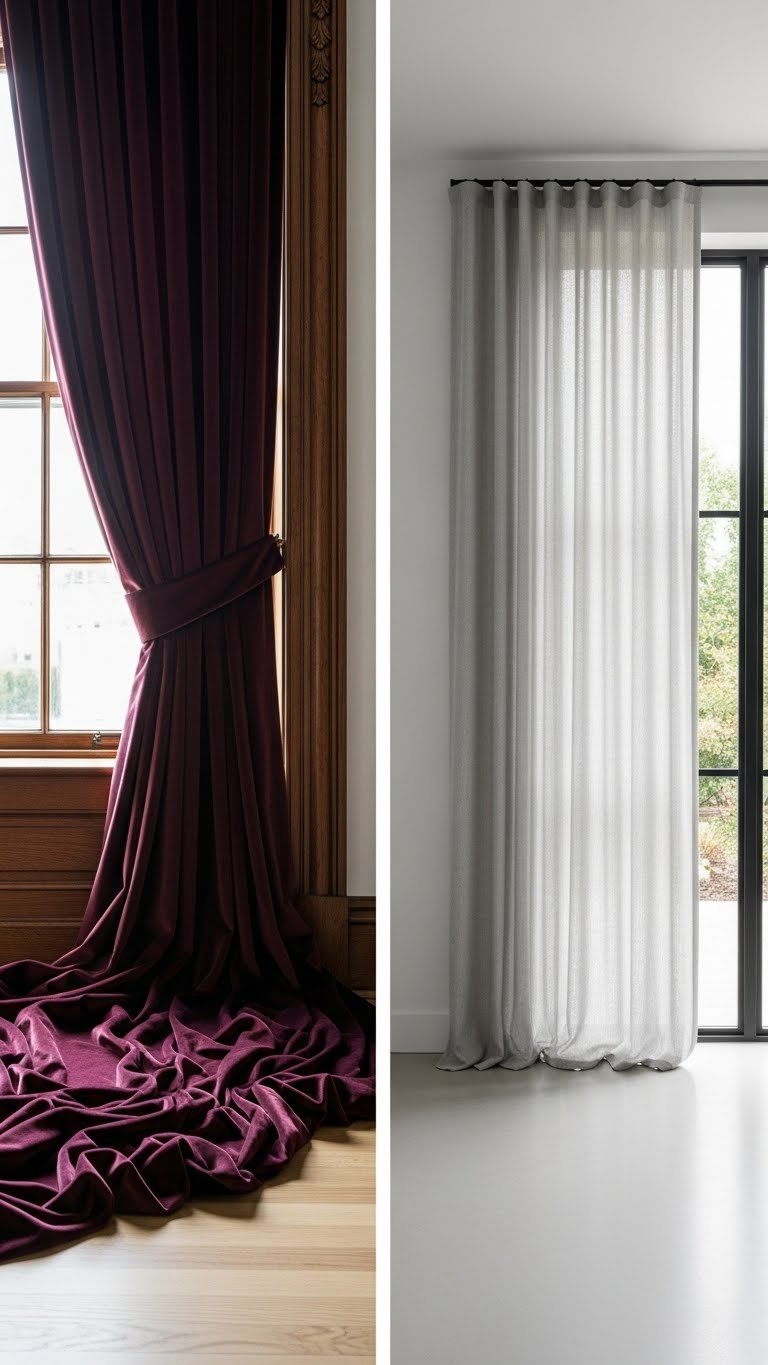
The puddle vs. float debate has valid points on both sides. Puddling looks romantic and traditional; floating looks modern and practical. Layer both approaches for visual interest.
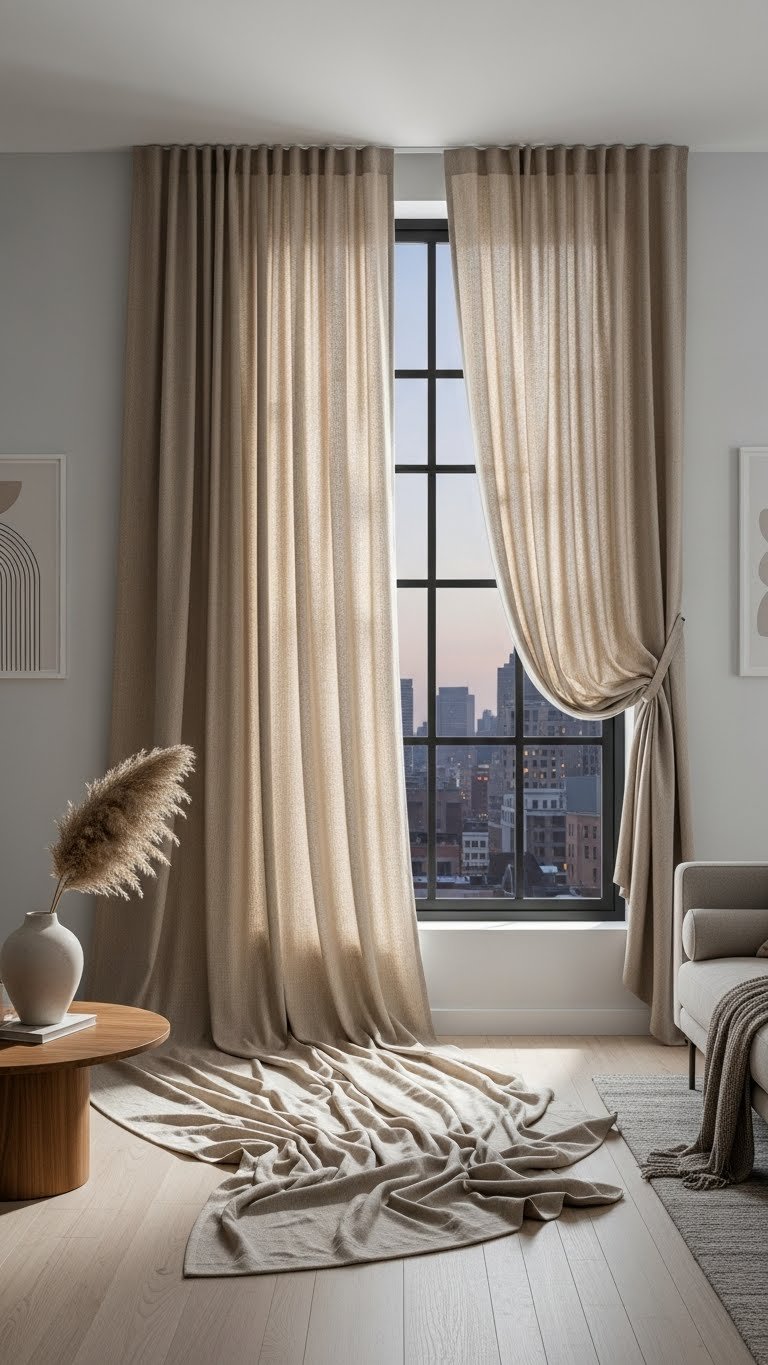
Measure your window height, then decide: puddled curtains extend 6–12 inches past the floor (romantic, traditional), while floating curtains end 1–2 inches above (modern, easy to clean). For layering, try puddled sheers over floating blackout panels, or vice versa. Most fabric is priced the same regardless. Installation: 20–30 minutes. The benefit? You get to choose based on your aesthetic. If you’re unsure, buy fabric with a generous hem allowance so you can adjust later—most curtain shops offer free hemming with purchase.
21. Create Summer-to-Winter Swaps with Two Sets
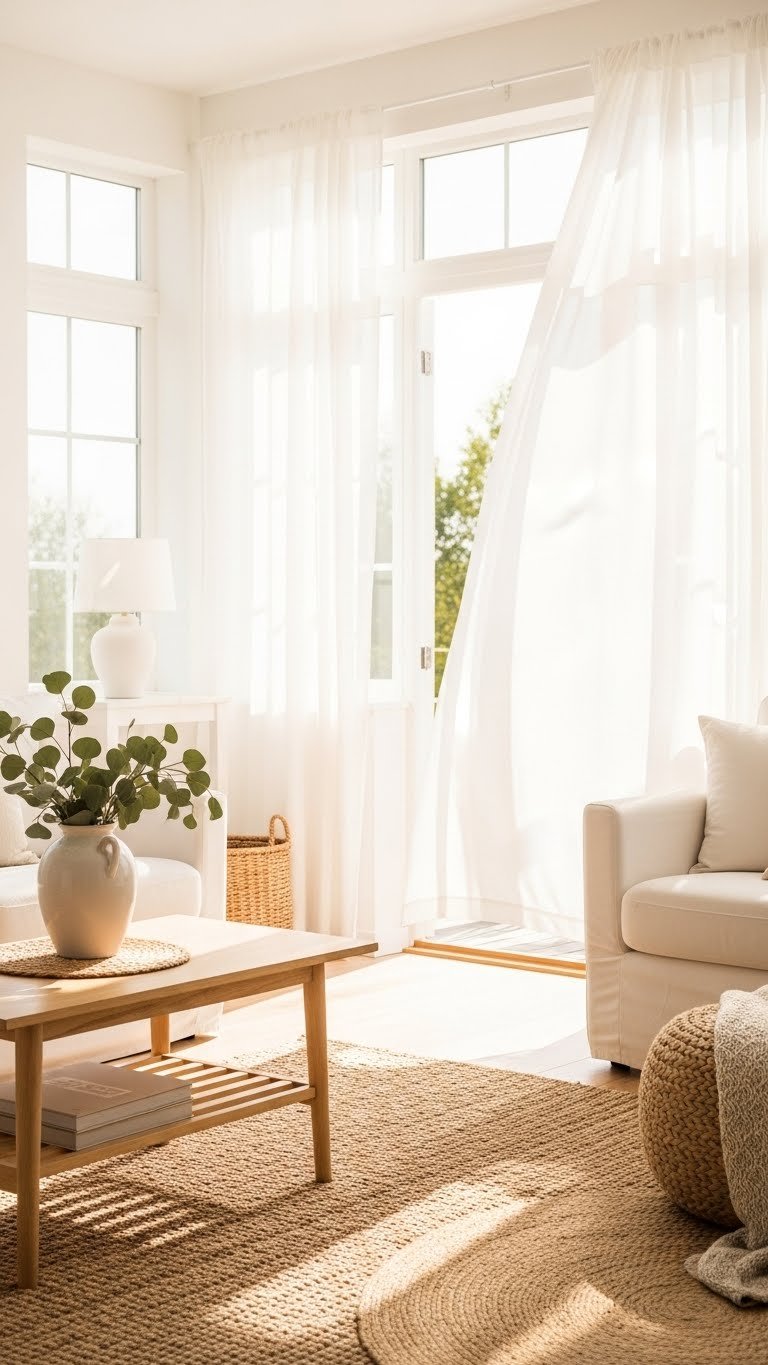
If budget allows, buy two complete sets: lightweight sheers and linens for summer, heavier thermal-lined drapes for winter. You get maximum functionality and can swap seasonally.
Invest in a lightweight summer set (sheer + linen, $80–150 per window) and a thermal winter set (insulated blackout or thermal-lined, $150–250 per window) from Wayfair, Amazon, or Target. Store off-season curtains in vacuum bags. Installation is the same, just swap rods out. Cost per window: $230–400 for both sets. Time to swap: 30 minutes per window. The benefit? In winter, thermal-lined curtains reduce heating costs by 10–15%. In summer, lightweight fabrics breathe and let breezes through. This approach is best if you have a storage space and the budget flexibility, but it’s the most functional long-term solution for climate control.
22. Layer Sheer + Faux Silk for Affordable Luxury
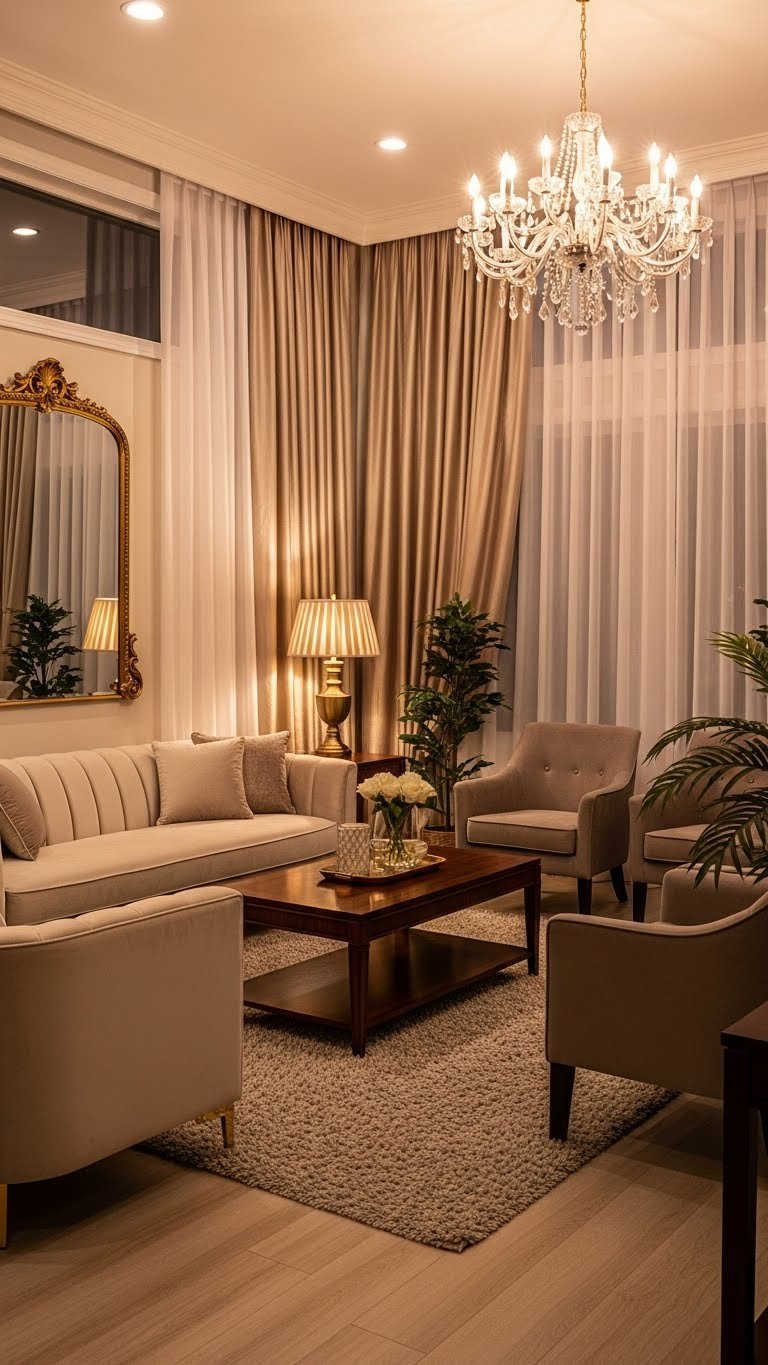
Faux silk gives you the sheen and drape of real silk without the delicate care or expense. Layering it with sheers creates a premium feel at a fraction of the cost.
Choose a sheer in cream or white ($20–50 per panel) and layer it over a faux silk panel in champagne, blush, or warm white ($60–120 per panel from Ballard Designs, Wayfair, or Overstock). Faux silk is usually polyester but looks and feels remarkably similar to real silk. Use standard rings or a tension rod ($20–30). Installation: 20 minutes. The faux silk catches light beautifully and creates an elegant drape. Bonus: it’s machine-washable, so you skip the dry-cleaning costs of real silk. This is the perfect option if you want a luxury look on a mid-range budget.
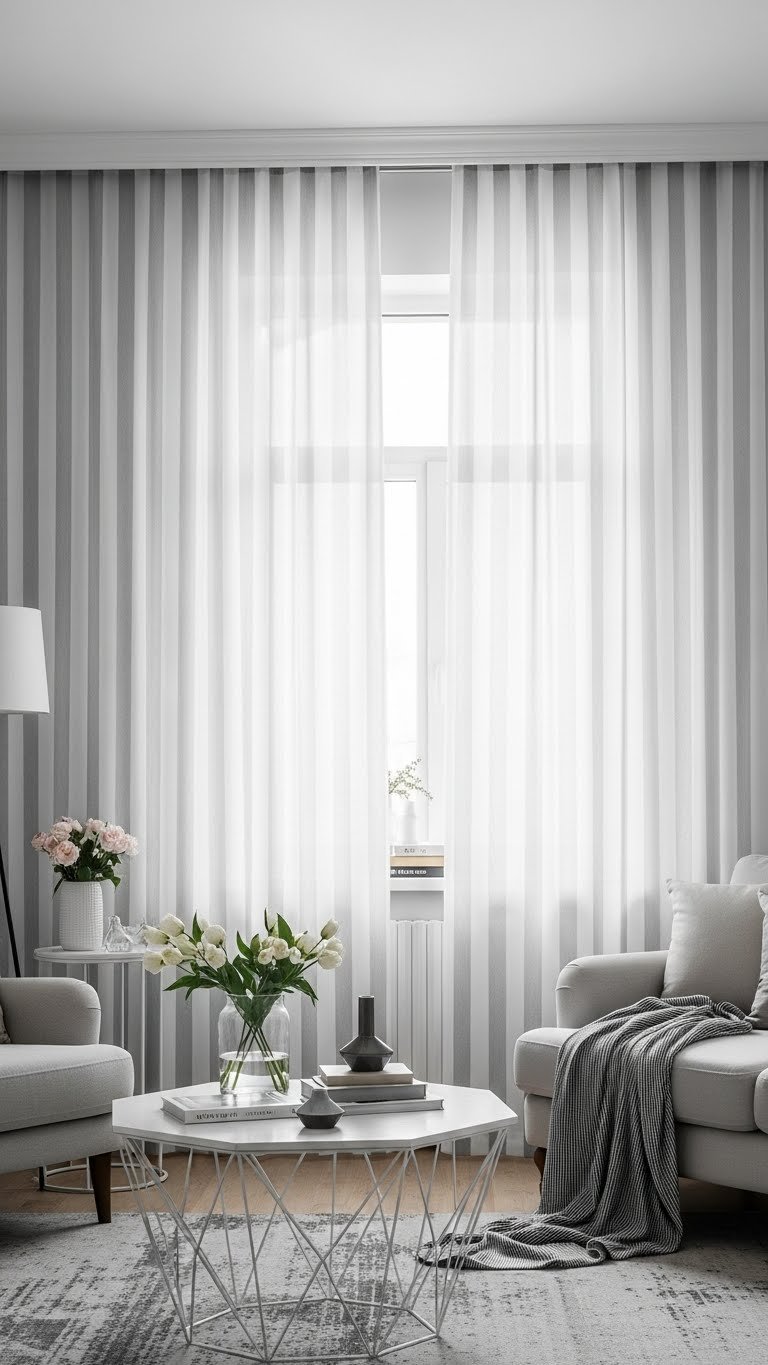
23. Add Optical Illusions with Vertical Stripes
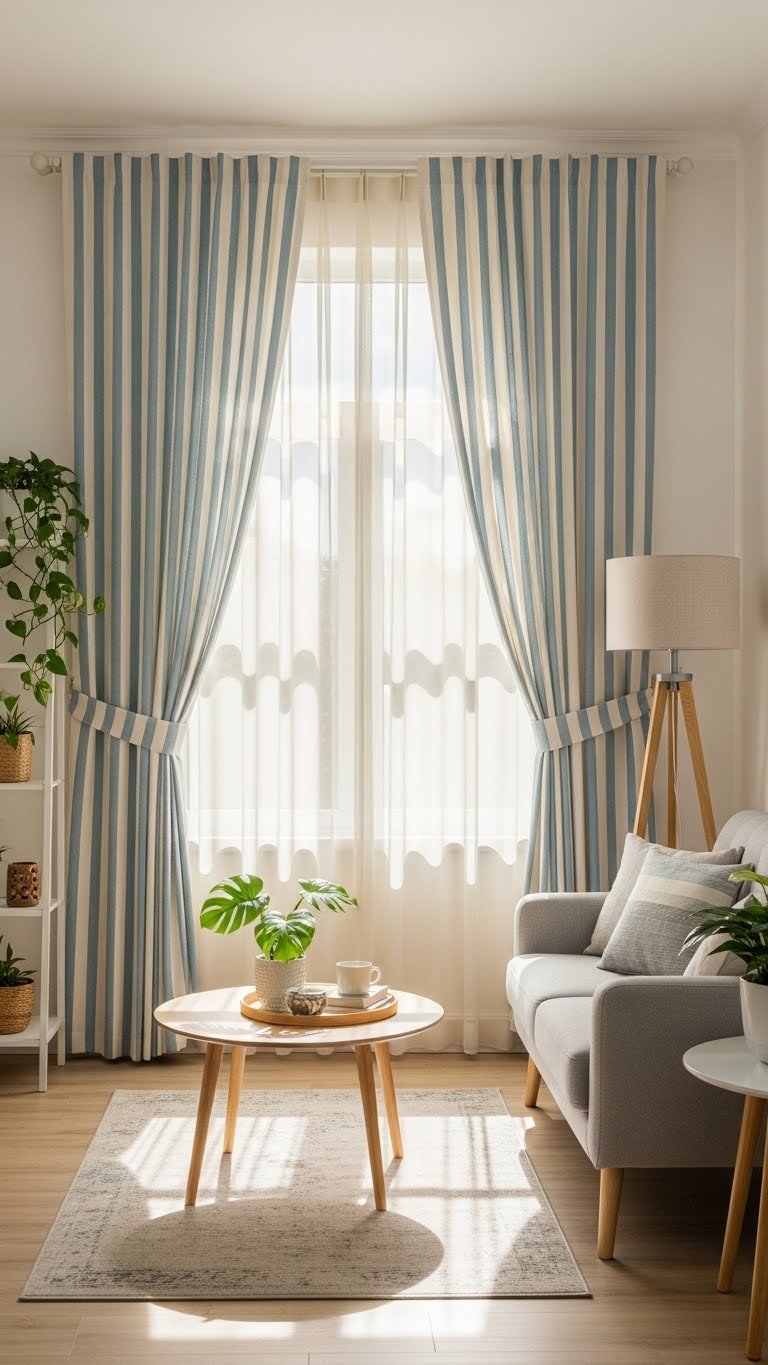
Vertical stripes are a designer trick that elongates windows and makes rooms feel taller. Layer them with solids to balance the visual impact and keep things from feeling too busy.
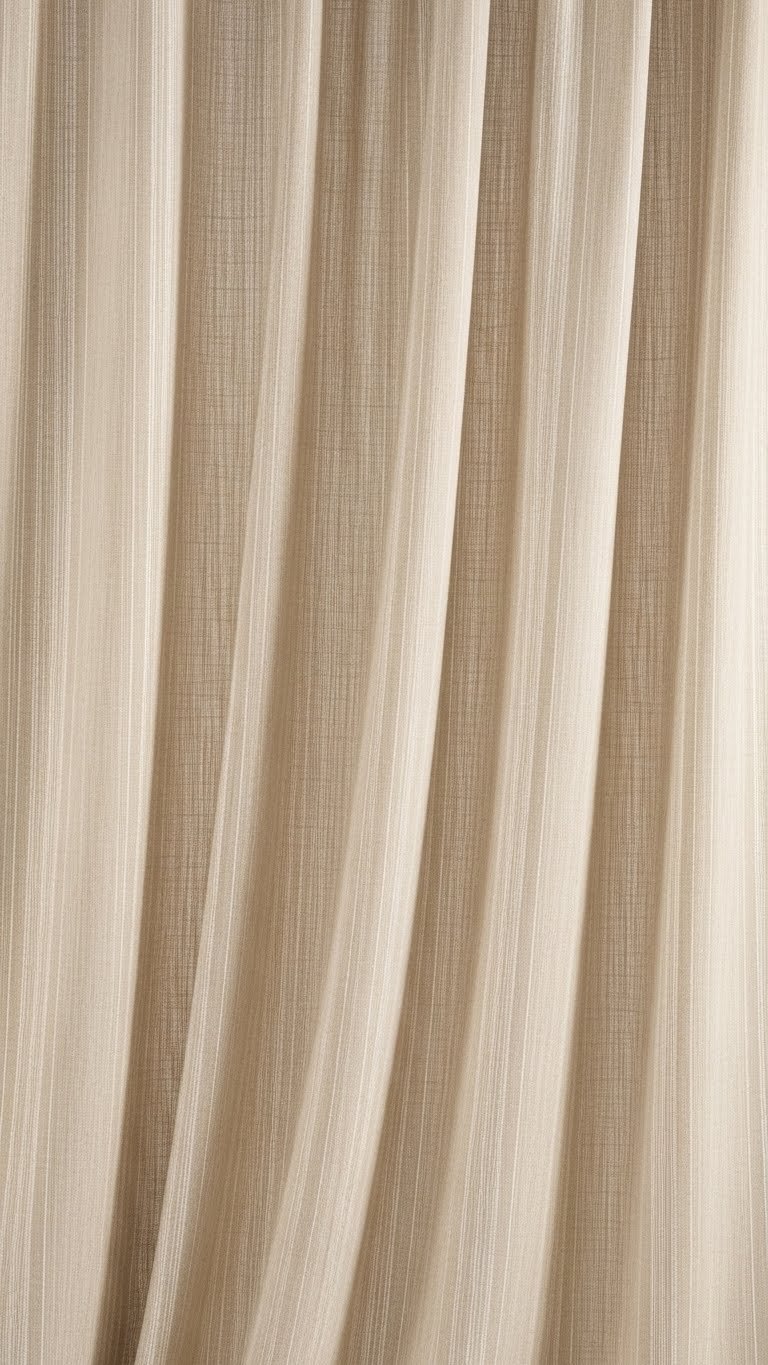
Hang a solid sheer in white or cream ($25–50 per panel) as your base layer, then add a striped panel with vertical lines ($50–100 per panel) in a complementary color from Wayfair, Target, or Etsy. Keep your stripe width moderate—too-thin stripes can look busy, too-thick ones flatten the illusion. Use simple metal hardware ($20–30) that doesn’t compete with the stripes. Installation: 25 minutes. The vertical lines naturally guide the eye upward, making ceilings appear higher. This optical illusion is especially helpful in rooms with low ceilings or small windows.
Save this post and try just one layering idea this weekend—you’ll be amazed at how much depth and dimension two simple panels create. Whether you’re mixing textures, playing with light, or adding pattern, layered curtains are the easiest way to make your living room look intentionally designed. Which combination speaks to you?