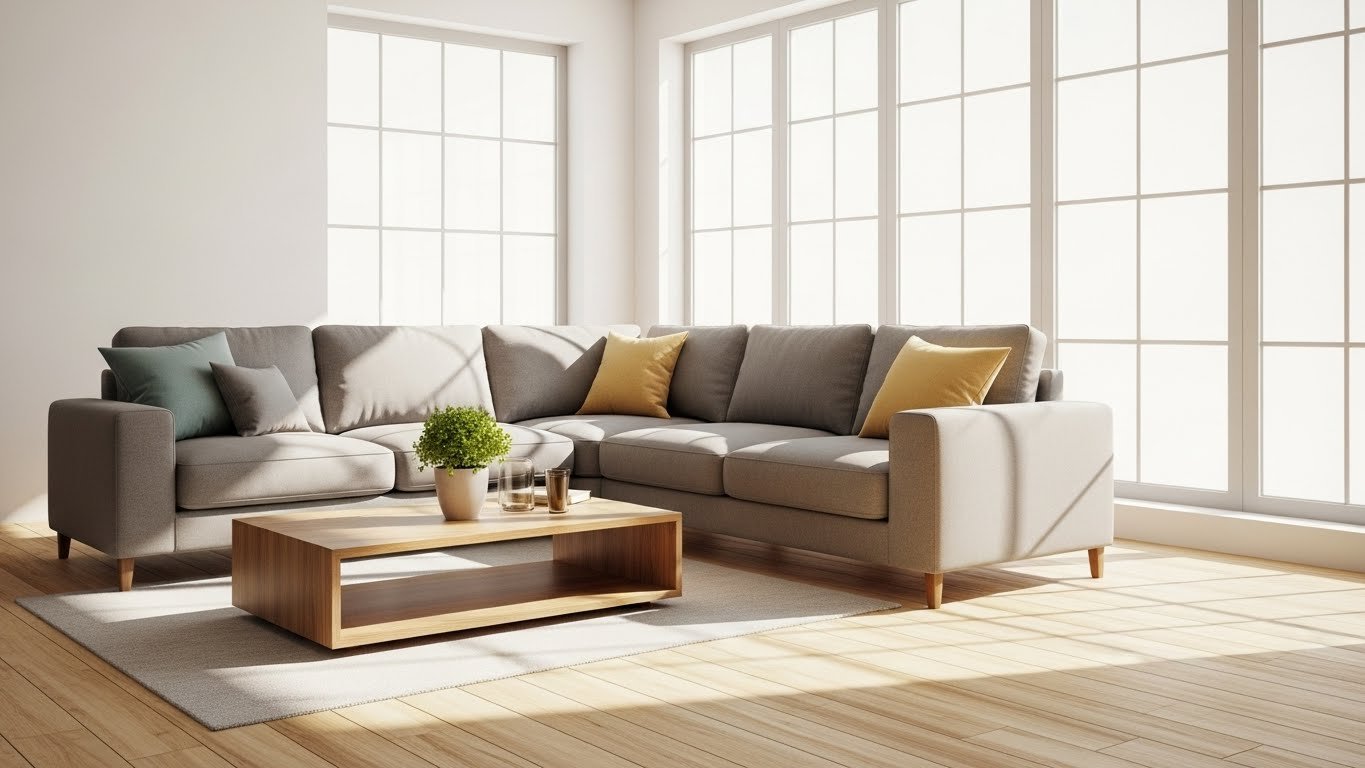
Corner sofas are the ultimate space-savers that don’t feel cramped—they’re actually the secret to making any room feel intentional and put-together. Whether you’re working with a tiny studio apartment or a sprawling family room, a well-chosen corner sofa becomes the anchor that ties everything together. The best part? These 24 ideas show you how to style, arrange, and select corner sofas for any space, budget, and lifestyle. From small-space hacks to luxe statement pieces, you’ll find exactly what works for your home. Let’s dive into creative layouts, color strategies, and smart configurations that’ll make you wonder why you didn’t think of this sooner.
1. Go L-Shaped to Define Open-Plan Zones

An L-shaped corner sofa naturally creates “rooms within rooms” without building walls—perfect for open-plan layouts that feel scattered. This configuration lets you define a living zone while keeping sight lines open to the rest of your space.
Position the L-shape along two walls to maximize floor space and create a natural gathering point. Measure your corner before buying: most L-shapes range from $400–$2,500 depending on fabric and frame quality. Look at West Elm, Article, or Wayfair for modular options. A weekend of arranging furniture is all you need. The key is leaving a walkway behind the sofa so the space doesn’t feel blocked off.
You’ll notice how this setup makes even a small apartment feel intentional and organized.
2. Choose Deep Seats for Maximum Lounging
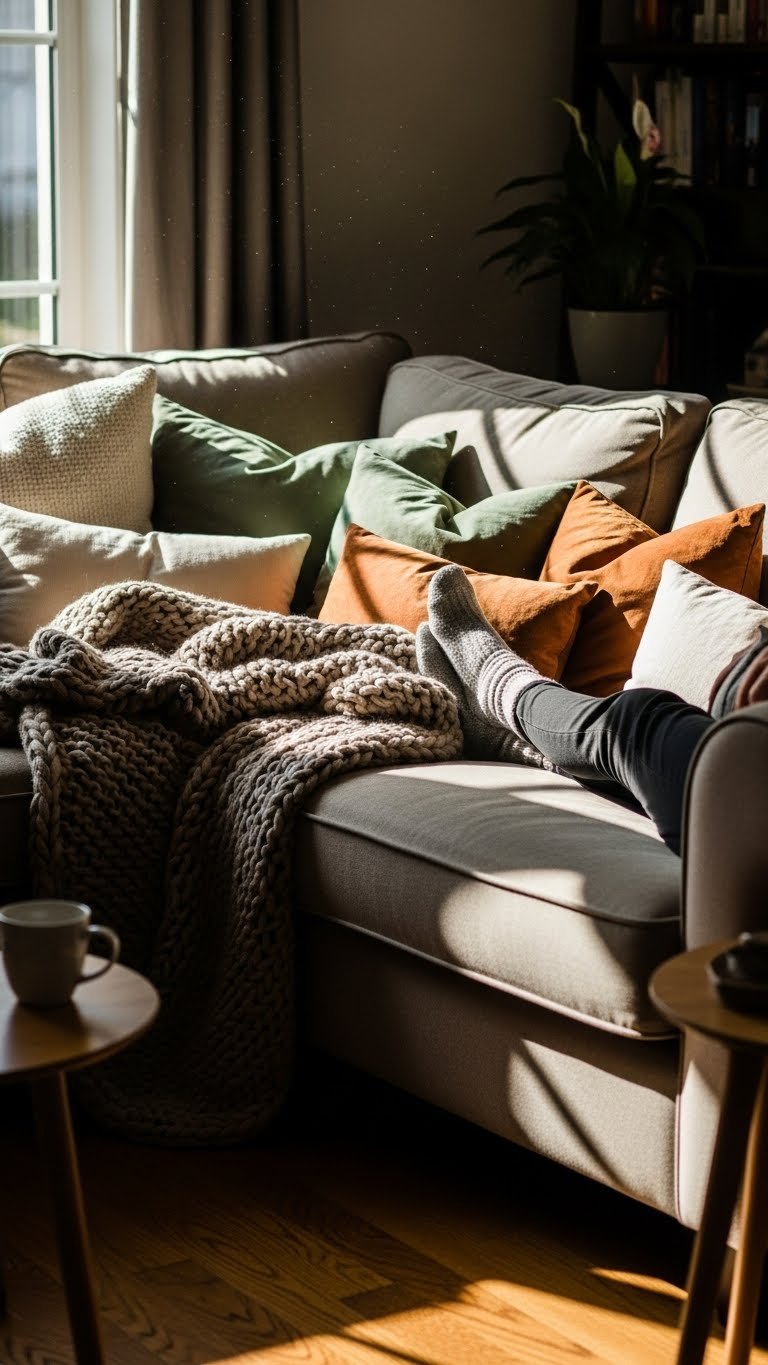
Deep-seated sofas (24 inches or more) invite you to actually curl up, not just perch. They’re the difference between a sofa you sit on and one you want to live in.
Search specifically for “deep-seat” or “oversized” corner sofas—brands like Restoration Hardware and Room & Board specialize in these. Budget $1,200–$3,500 for quality that lasts, or try IKEA’s modular options around $600–$1,000 for a similar feel. Check the depth specs carefully before ordering; many online retailers allow returns within 30 days if it doesn’t fit your lifestyle. Pair deep seats with a low coffee table so you can actually reach your drinks while lounging.
The comfort alone makes this investment worth every penny—you’ll actually use your living room now.
3. Add Curved Edges to Soften Sharp Rooms

Curved corner sofas replace sharp angles with organic flow—they literally soften your entire room’s energy. This works especially well if you have modern, rectangular furniture or minimal decor.
Curved sofas cost more upfront: expect $1,800–$4,000 for quality pieces from designers like Room & Board or custom options via Article. For budget-friendly versions, check Wayfair or West Elm’s curved sectionals ($800–$1,500). The curved silhouette does the heavy lifting design-wise, so keep other pieces simple. Renter tip: some curved modulars come in pieces that attach without permanent damage, so check assembly options first.
Your room gains an almost sculptural quality—it becomes a design statement, not just furniture.
4. Use Modular Pieces for Total Flexibility

Modular sofas let you reconfigure whenever you want—perfect if you move often, have kids, or just like rearranging. Each piece works independently, so you’re never locked into one layout.
Brands like Burrow, Eq3, and Article excel at modular designs priced $600–$2,000 for a basic 3-piece setup. Measure your space and count pieces you actually need—sometimes two sections work better than four. Most deliver within 2–3 weeks and assemble in an afternoon with basic tools. The real win? When life changes, so does your sofa. Reconfigure, sell individual pieces online, or move everything to your next place.
Your sofa grows with your life instead of trapping you in one fixed layout.
5. Pick Performance Fabric for Real Life
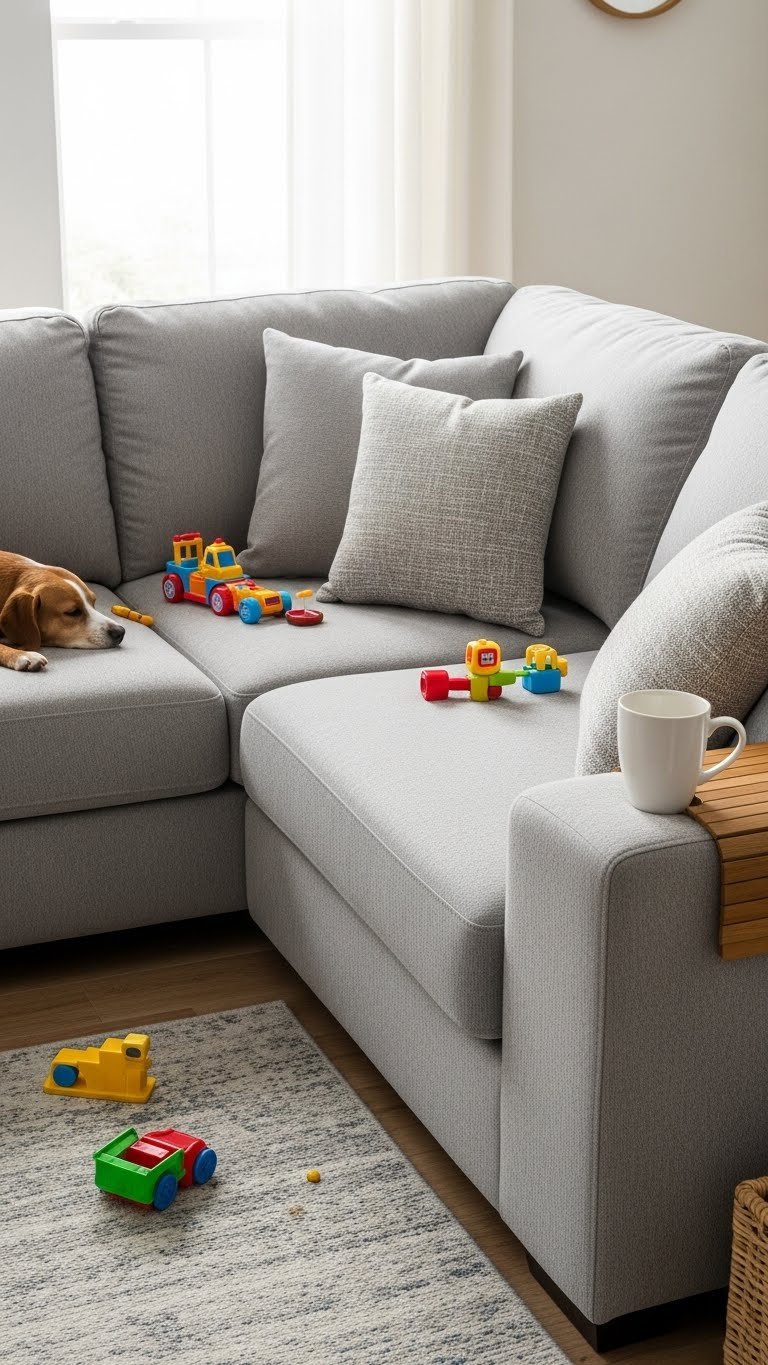
Performance fabrics repel spills, resist staining, and hide daily wear—they look expensive while surviving actual family life. This is non-negotiable if you have pets, kids, or just want furniture that lasts.
Look for polyester blends, solution-dyed olefin, or Crypton-treated fabrics. Brands like Room & Board, Crate and Barrel, and Article feature performance lines at $900–$2,200. Online, search “stain-resistant sectional” or “performance sofa fabric.” Most perform exactly like luxury upholstery but handle accidents gracefully. Pro tip: test the fabric yourself—spill water on samples at showrooms to see how it beads and repels. Your sofa stays looking new even after 10 years of real living.
6. Layer Texture with Bouclé or Boucle-Style Upholstery
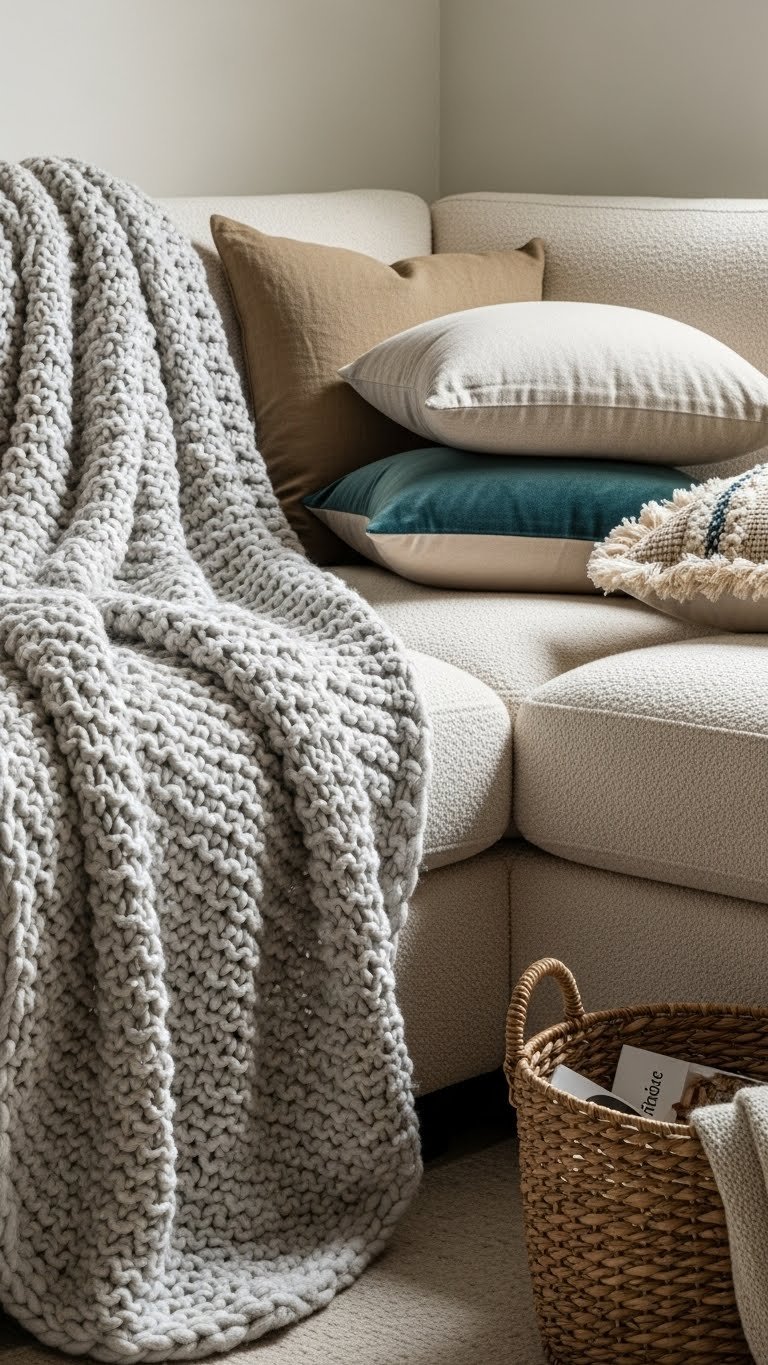
Bouclé’s bumpy, loopy texture makes sofas feel luxe and hide dust or cat hair effortlessly. It photographs beautifully and feels amazing under your hands.
Bouclé corner sofas cost $1,200–$2,800 from designers and $700–$1,400 from mass-market retailers like Wayfair or Article. Cream and natural tones dominate the trend; add jewel-toned pillows on top for personality. Bouclé does require occasional vacuuming to remove debris from the loops, but it’s low-maintenance otherwise. For renters, look for removable bouclé cushion covers that slip over existing sofas.
The texture alone makes your space feel like a design magazine shoot—instantly more intentional and curated.
7. Go Sage Green to Connect with Nature

Muted greens (sage, olive, celadon) create a calming backdrop that feels connected to nature—perfect for bedrooms doubling as lounges or living rooms that need zen vibes.
Corner sofas in sage green run $800–$2,500 at West Elm, Article, and CB2. This color pairs beautifully with warm wood, brass accents, and natural textiles. Order samples before committing if buying online—green can read very different under various lighting. The trend feels timeless too, so you’re not chasing a fleeting fad. This shade creates an instant sense of wellness and calm in your space.
8. Embrace Camel or Clay for Warm Neutrals

Camel and clay tones are having a major moment—they’re warmer than gray, easier to style than beige, and photograph beautifully in natural light. They read as intentional, not default.
Hunt for corner sofas in these shades at Restoration Hardware ($2,000–$4,500), Room & Board ($1,200–$2,800), or Article ($900–$1,800). Layer with deeper terracotta pillows, chocolate wood, and brass fixtures to build a cohesive scheme. These colors hide minor dust better than pure whites but still feel bright and airy. They work equally well in modern apartments or traditional homes.
Your room instantly feels warm and collected—like you actually have a design perspective.
9. Try a Sectional Chaise for Extra Lounging
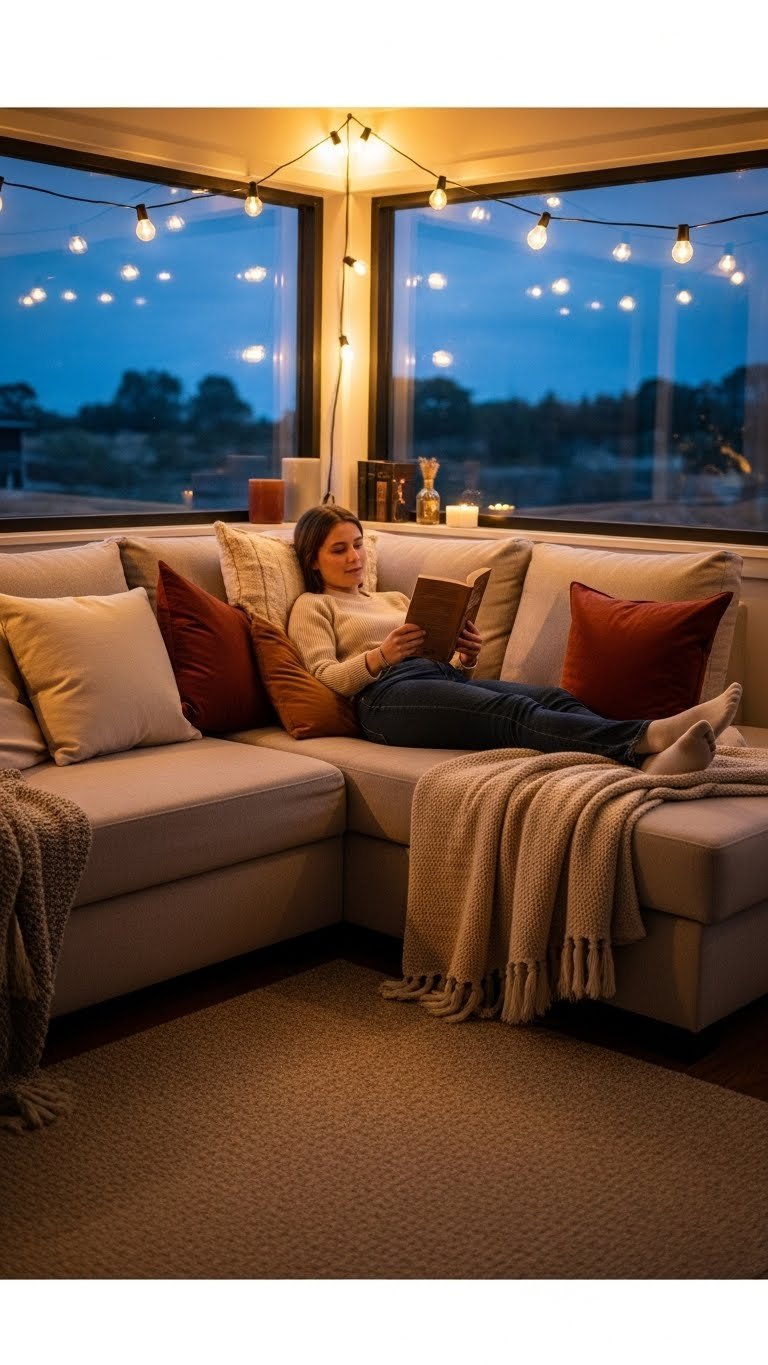
A corner sofa with a chaise extension gives you that “feet-up” option without needing a separate ottoman or recliner. It’s the ultimate comfort upgrade for serious nappers.
Look for modular sections with chaise options: Article, Wayfair, and West Elm all offer these starting at $1,000–$2,500. The chaise takes up more square footage, so measure carefully—you need at least 12 feet of wall space to make it work comfortably. Most come in reversible versions, so you can flip the chaise to the other side if your layout changes. Pro tip: add wheels under the chaise leg for easy rearranging without calling in reinforcements.
Now your sofa doubles as a guest bed, nap spot, and Netflix throne all at once.
10. Choose Low-Profile Designs for Open-Plan Homes
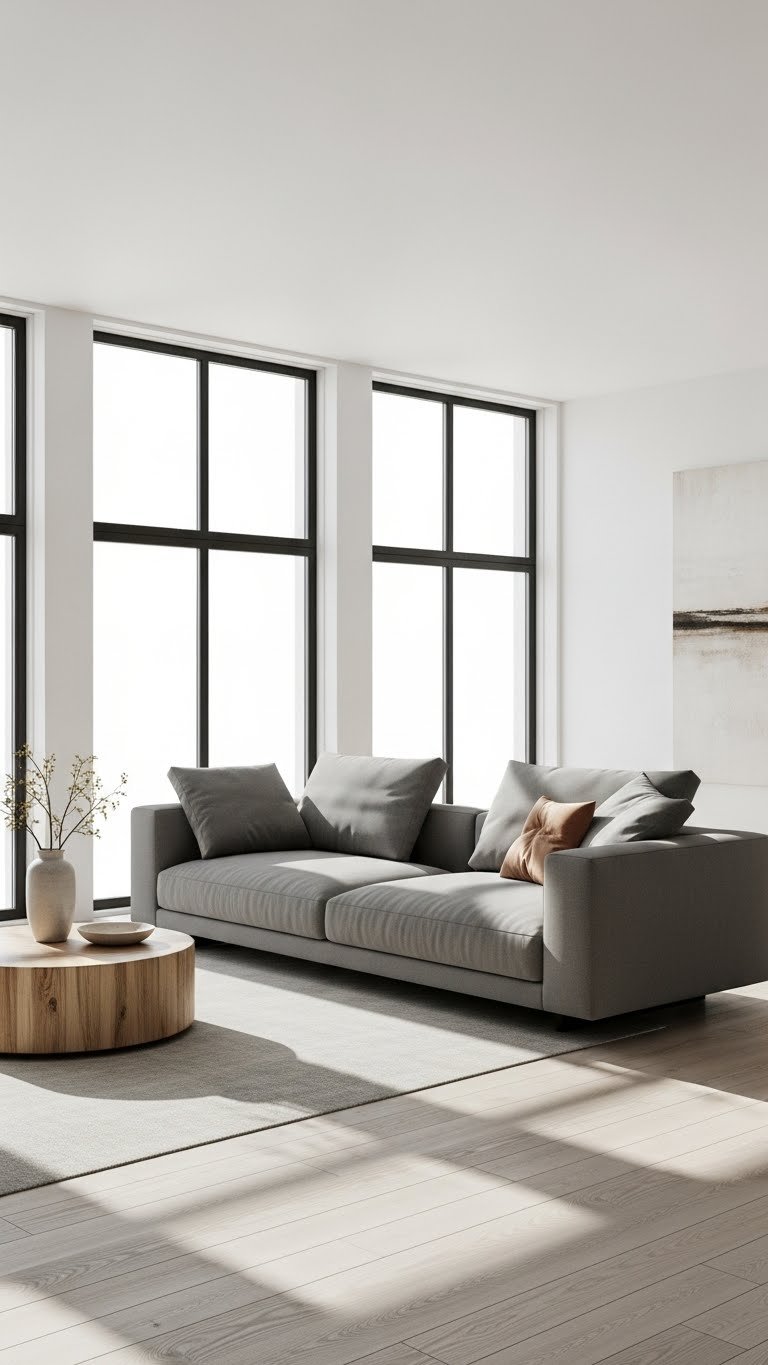
Low-profile corner sofas (sometimes called “floor sofas” or designs with minimal legs) create the illusion of more floor space and keep sightlines open in small apartments.
Search specifically for “low-profile sectional” or “leg-free sofa” at Article ($900–$1,800), Room & Board ($1,100–$2,400), or IKEA ($400–$900). The lower height makes rooms feel bigger instantly. Downside: getting up requires more effort, and cleaning underneath is trickier. Pair with a low coffee table and keep wall decor minimal so the room doesn’t feel cluttered. Renter note: low-profile sofas are often easier to move since they’re lighter overall.
Your small space suddenly feels airy and intentional instead of crowded and packed.
11. Mix Neutral Base with Bold Throw Pillows
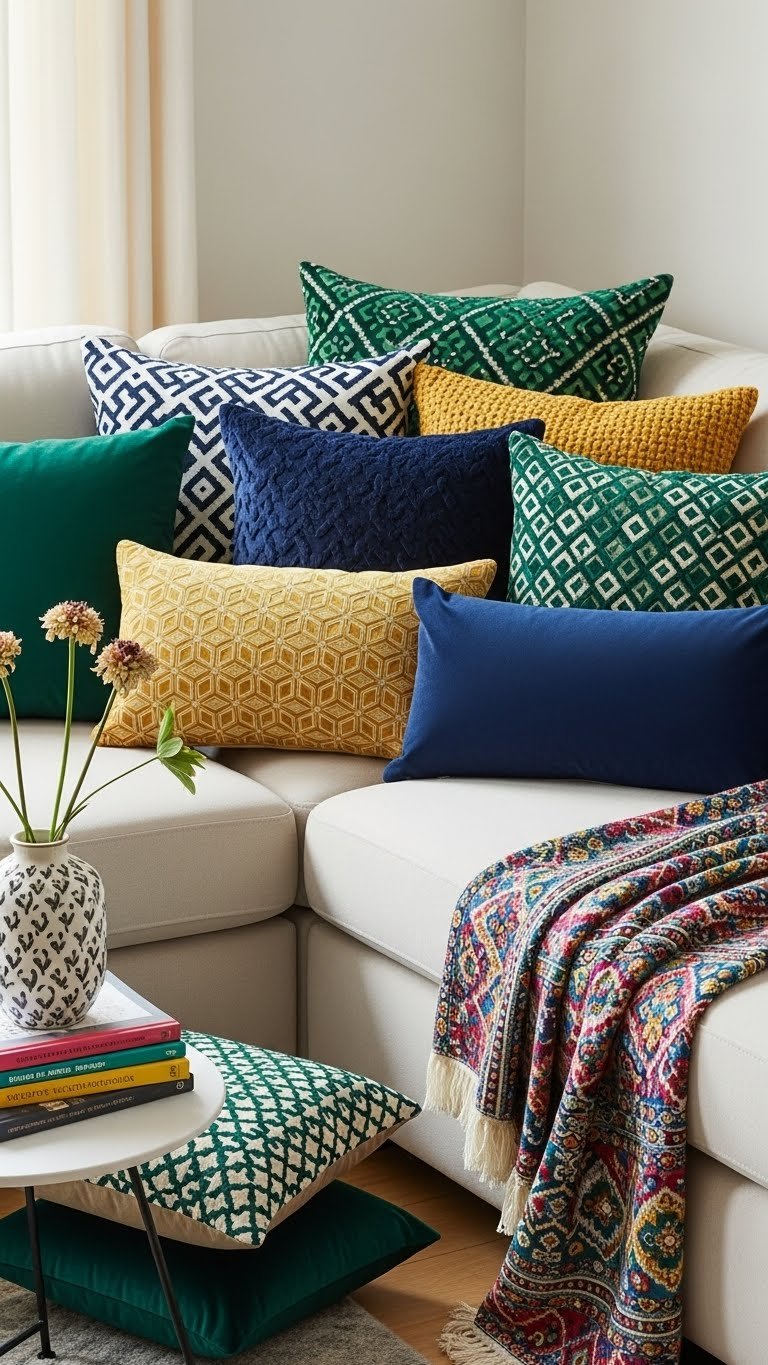
A neutral sofa becomes a canvas for personality when you layer bold pillows. This strategy lets you change your look seasonally without replacing the entire sofa.
Start with a solid gray or cream corner sofa ($800–$2,000), then shop Target, West Elm, Etsy, or HomeGoods for statement pillows ($15–$60 each). Buy 4–6 pillows to create impact without looking overdone. Swap them seasonally: jewel tones in fall, pastels in spring, warm earth tones in winter. Total investment stays under $500 if you’re strategic. Your style can completely change four times a year without a major furniture purchase.
12. Select Cream or Off-White for Sophisticated Simplicity

Cream and off-white corner sofas feel inherently high-end and work with literally any decor style. They’re having a major moment with designers because they’re both timeless and trendy.
Quality cream sofas run $1,200–$3,000 from Restoration Hardware, Room & Board, and West Elm. Budget versions sit around $600–$1,200 at Article and Wayfair. Cream shows dirt faster than gray or brown, so performance fabric is essential here. Pair with a washable slipcover if you have pets—most custom cover companies charge $200–$400 for corner sectionals. The simplicity means your room stays the focal point, not the sofa.
This neutral choice never goes out of style and pairs beautifully with any accent colors you choose later.
13. Go Bold with Deep Red or Jewel Tones

Deep red, teal, and jewel-toned sofas make a design statement—they’re not background furniture, they’re the main event. This works if you’re ready to commit to a bold personality.
Expect to pay $1,400–$3,500 for quality corner sofas in jewel tones from designers like Article, Room & Board, or Anthropologie. Deep colors hide wear beautifully but require lighting to avoid feeling cave-like—pair with brass or chrome fixtures and good task lighting. These colors won’t suit everyone, so shop in-store first or check return policies carefully. The payoff? Your room feels designer-curated and full of confidence.
A bold sofa tells visitors you have serious style and aren’t afraid to take risks.
14. Add a Daybed-Style Corner Sofa for Multitasking Spaces

Daybed-style corner sofas let you sit or recline, making them perfect for studios where your sofa does triple duty as seating, bed, and lounge spot.
Look at Anthropologie, Article, and CB2 for daybed-inspired sections at $1,000–$2,500. The asymmetrical design (one high back, one low back) works especially well in corners. These sofas look sculptural and interesting even when not in use. Pro tip: pair with a firm mattress topper underneath if guests sleep here regularly, and keep throw pillows removable for easy cleaning. Renter-friendly design that maximizes functionality without dominating the space.
Your one piece of furniture becomes a sofa by day, a guest bed by night, and a reading nook on Sunday mornings.
15. Pair with a Console Table Behind for Extra Storage
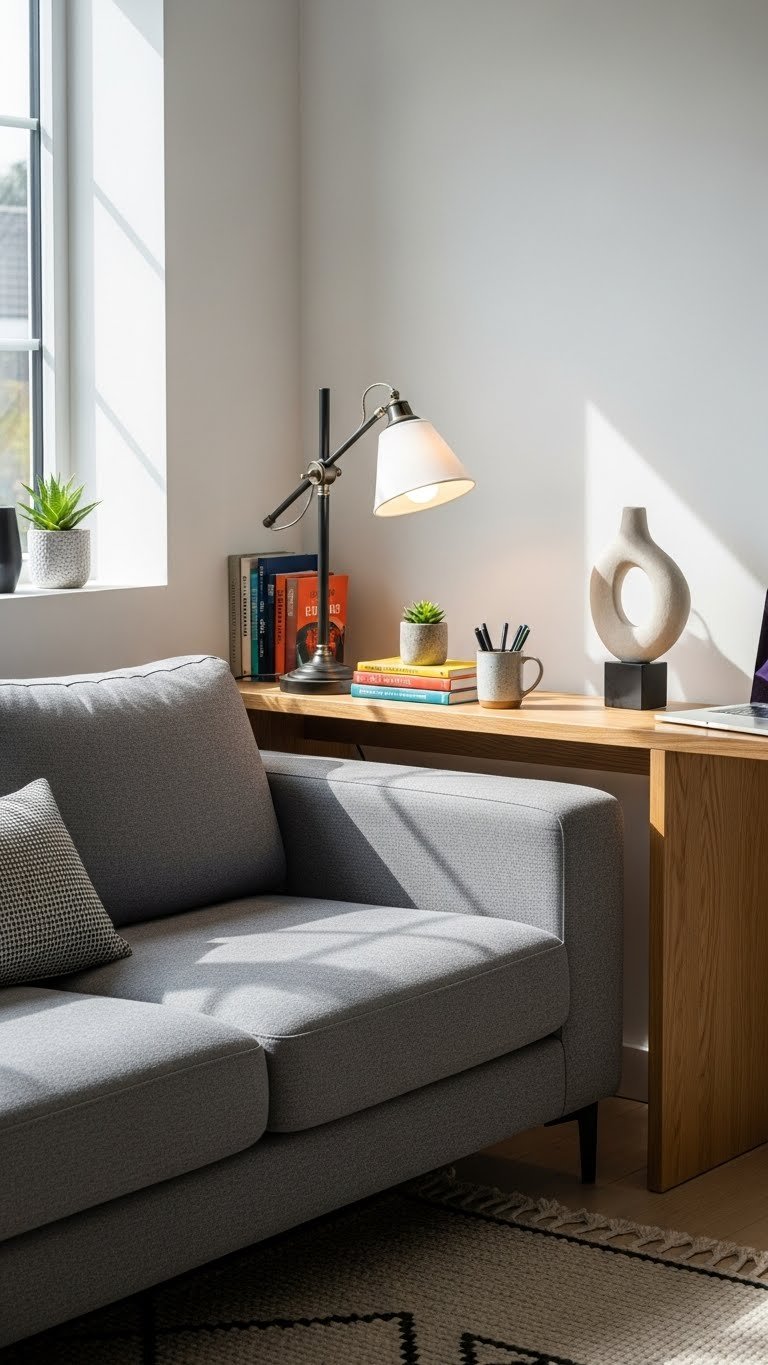
A console table behind your corner sofa adds storage and surface space without eating floor area—clever furniture stacking for small apartments.
Find slim console tables at IKEA ($80–$150), Target ($120–$250), or West Elm ($200–$500). The table should be 8–10 inches deep so it doesn’t stick into your walkway. This setup works best if your sofa has a lower back (18–24 inches). Add a table lamp and a few books to create an instant styling moment. You can swap out decorative items seasonally. Most tables assemble in 20 minutes with basic tools.
Now you have a tiny home office, styling shelf, and reading lamp all behind your sofa—zero wasted space.
16. Use Modular Pieces to Create an Apartment-Sized Lounge
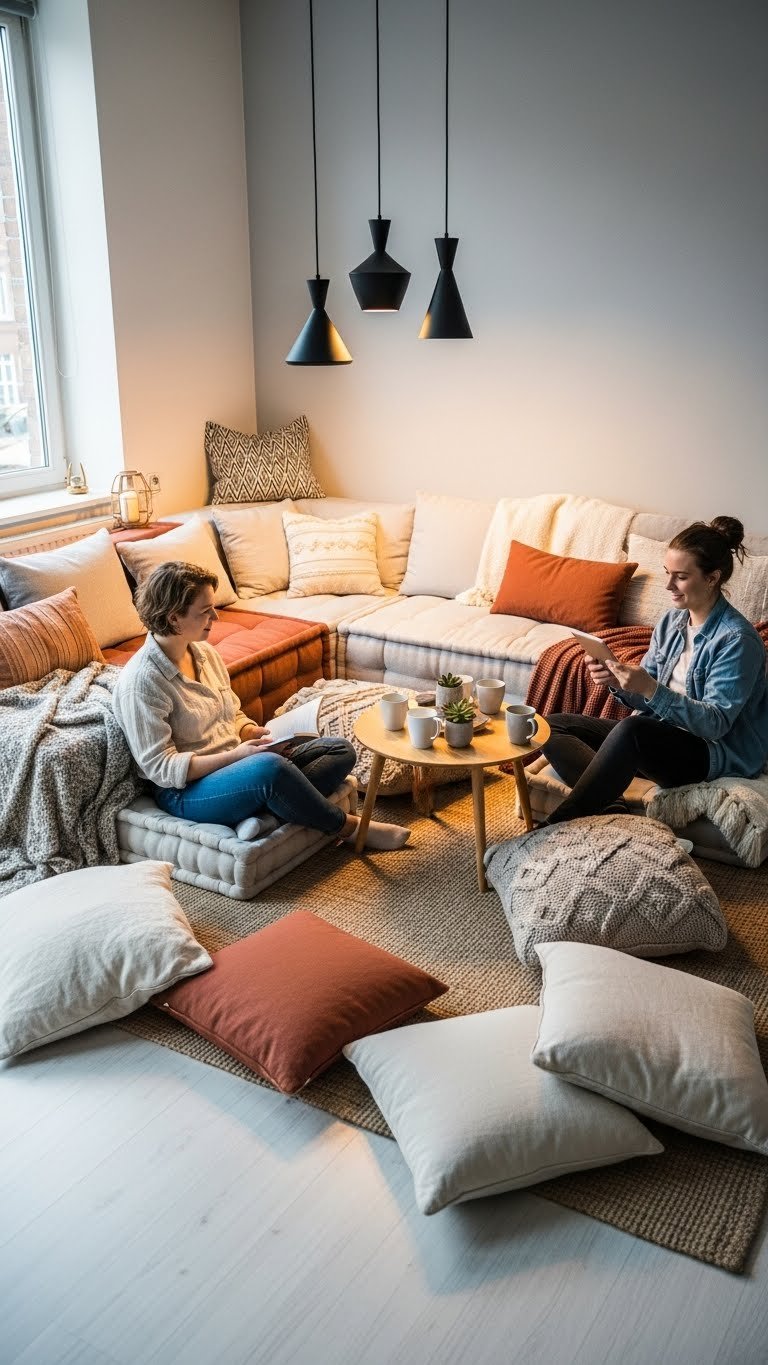
Skip traditional sofas entirely and arrange multiple modular pieces into a couch-fort-like setup for maximum flexibility and social gathering vibes.
Modular collections from Burrow, Article, and Wayfair let you buy just 2–3 pieces and add more over time. Cost: $400–$800 per piece, so a starter setup runs $800–$2,400. This approach works beautifully in apartments where you want more seating than a traditional sofa offers. Rearrange however you want—tight conversation clusters, sprawled-out lounging, even room dividers. Your setup evolves as your space and lifestyle change.
This arrangement feels young, flexible, and perfect for apartments or anyone who likes switching things up frequently.
17. Go Sectional L-Shape Against One Wall for Maximum Openness
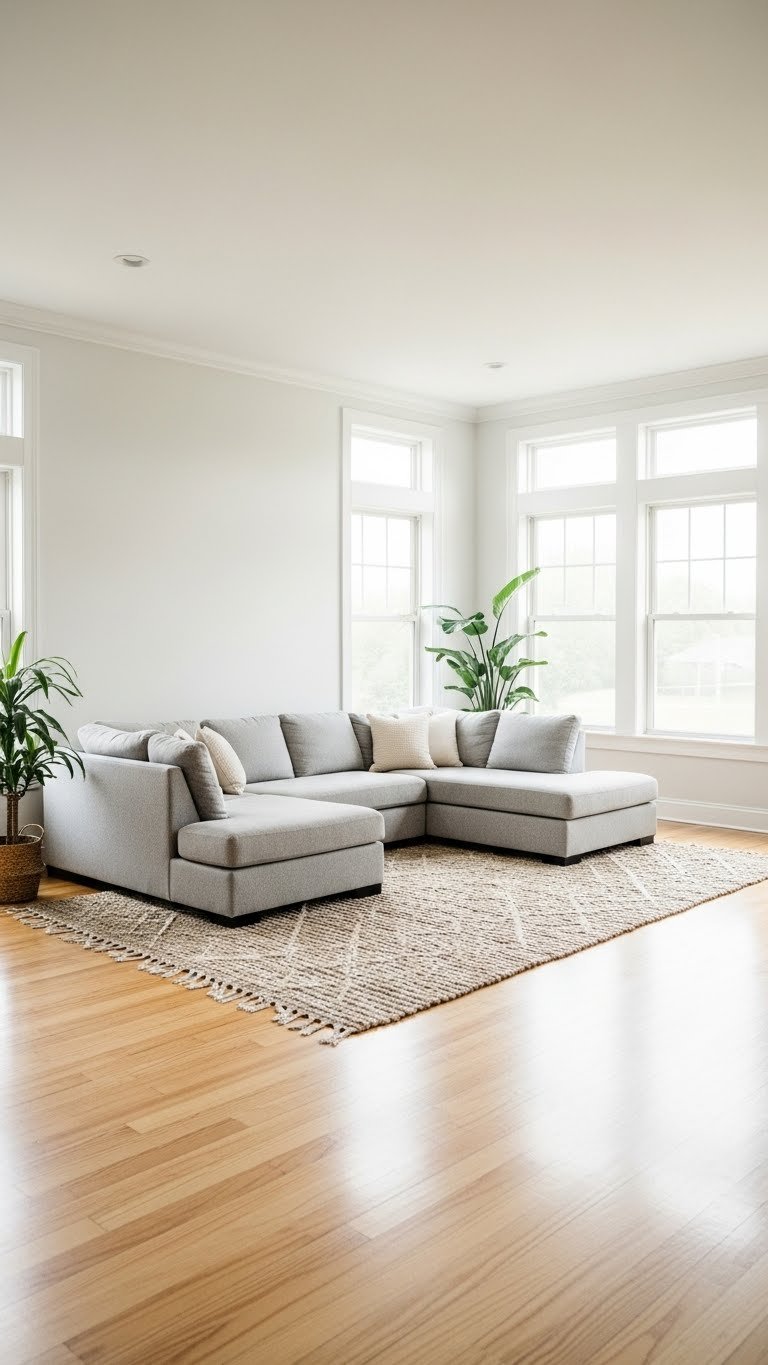
An L-shaped corner sofa pushed fully into the corner (rather than floating in the room) opens up maximum floor space—perfect for small studios or living rooms where every inch counts.
L-shaped sectionals range from $500–$3,000 depending on quality. IKEA, Wayfair, and Article have countless options. This placement automatically makes the room feel bigger because you’re not breaking up the open floor. Leave at least 18 inches of walking space on each side of the sofa for comfort. A large area rug (8×10 minimum) anchors everything and makes the space feel intentional.
Suddenly your small room feels spacious and thoughtfully arranged, not cramped or arbitrary.
18. Layer Textures with Velvet + Linen Combination Fabrics
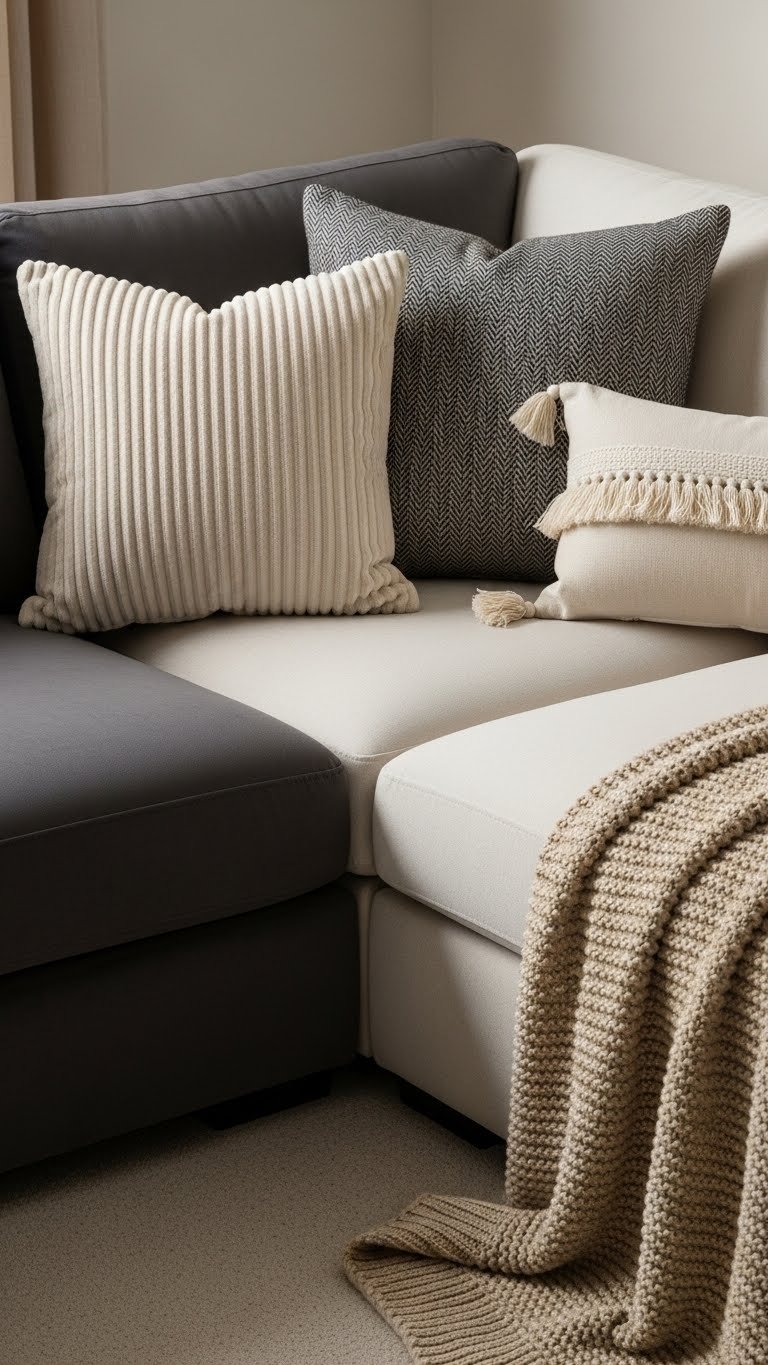
Corner sofas mixing two fabrics (like velvet and linen) create visual interest and feel haute couture without the price tag.
Hunt for “mixed media” or “combination fabric” sectionals at Anthropologie, West Elm, and Article ($1,200–$2,800). The velvet portion feels indulgent while linen keeps it grounded and livable. Check care instructions carefully since different fabrics have different cleaning needs. Most cleaners handle combo pieces fine; just ask before booking. The result feels like you hired a designer.
This detail-oriented approach makes your sofa feel custom and thoughtful—like you actually considered every decision.
19. Add Wheels to Corner Sections for Easy Rearranging
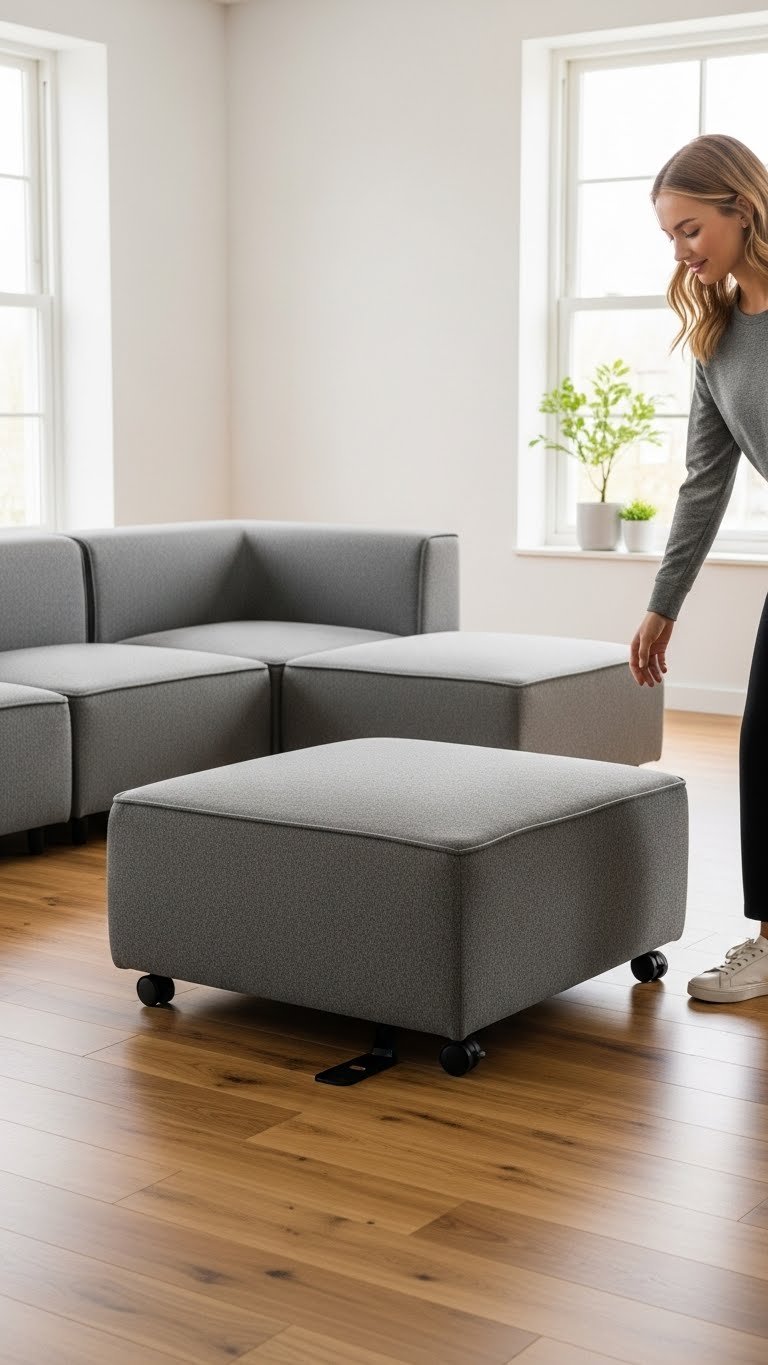
Swappable wheel legs (or adding adhesive-backed casters) let you move your sofa without help—game-changing for apartment dwellers or anyone who rearranges frequently.
Buy furniture sliders and wheel legs at IKEA ($5–$15 each) or Amazon ($20–$50 per set of four). Most modern sofas have mounting points on the bottom; if yours doesn’t, adhesive-backed sliders work on wood legs. Takes 10 minutes to attach. Suddenly you can rotate sections, pull the sofa away for cleaning, or reconfigure whenever you want. Hardwood and tile floors work best; carpet requires more effort to move. Your flexibility just doubled without spending much money.
20. Position as a Room Divider in Large Open Spaces
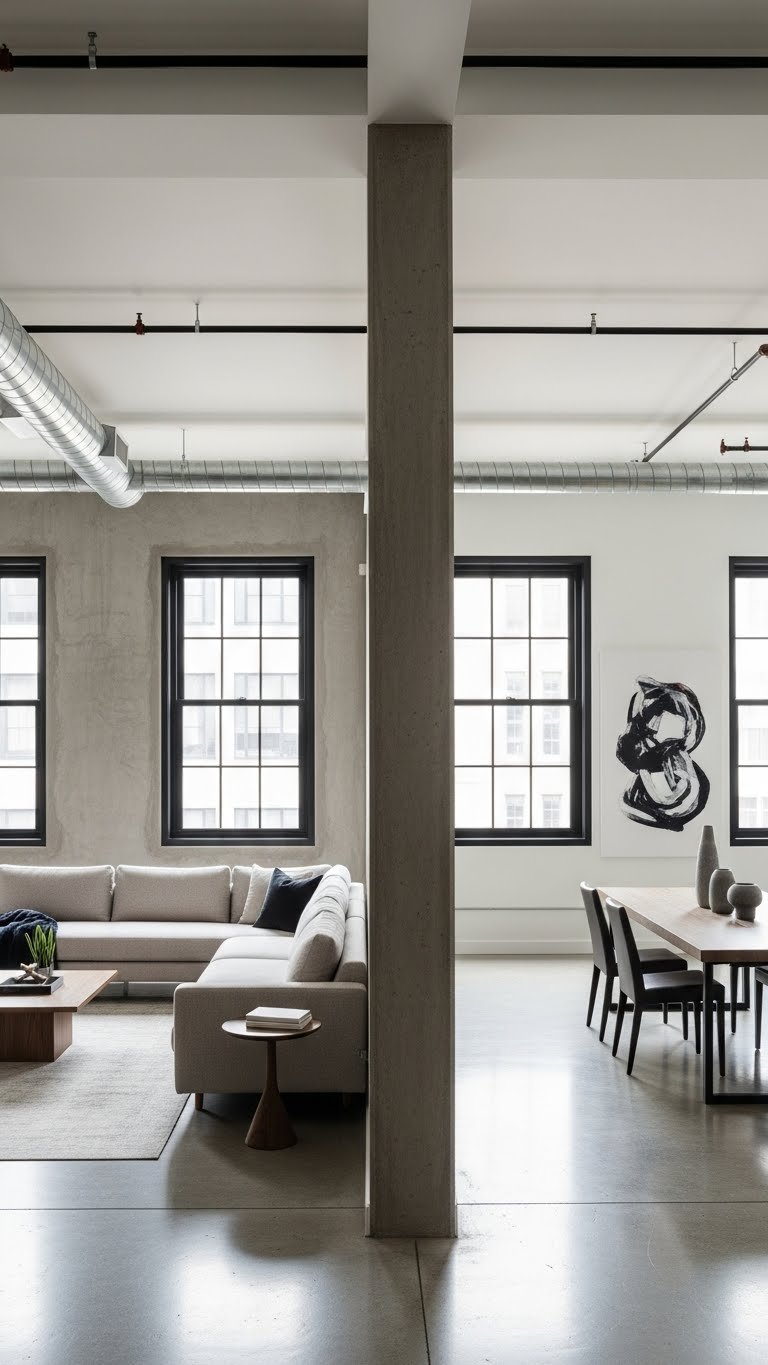
A corner sofa doesn’t have to go in a corner—place it strategically to divide a massive open space into distinct living zones.
This works best with sectionals that have a finished back (both sides look equally good). Budget $1,200–$3,000 for quality that looks good from both sides. Pull the sofa 2–3 feet away from any wall so you can walk behind it. Use a large area rug on each side to anchor the zones further. Pro tip: back-facing shelving or a low bookcase behind the sofa adds function and completes the room division.
Suddenly your sprawling loft feels organized and purposeful instead of one giant undefined space.
21. Opt for Charcoal Gray Paired with Warm Lighting
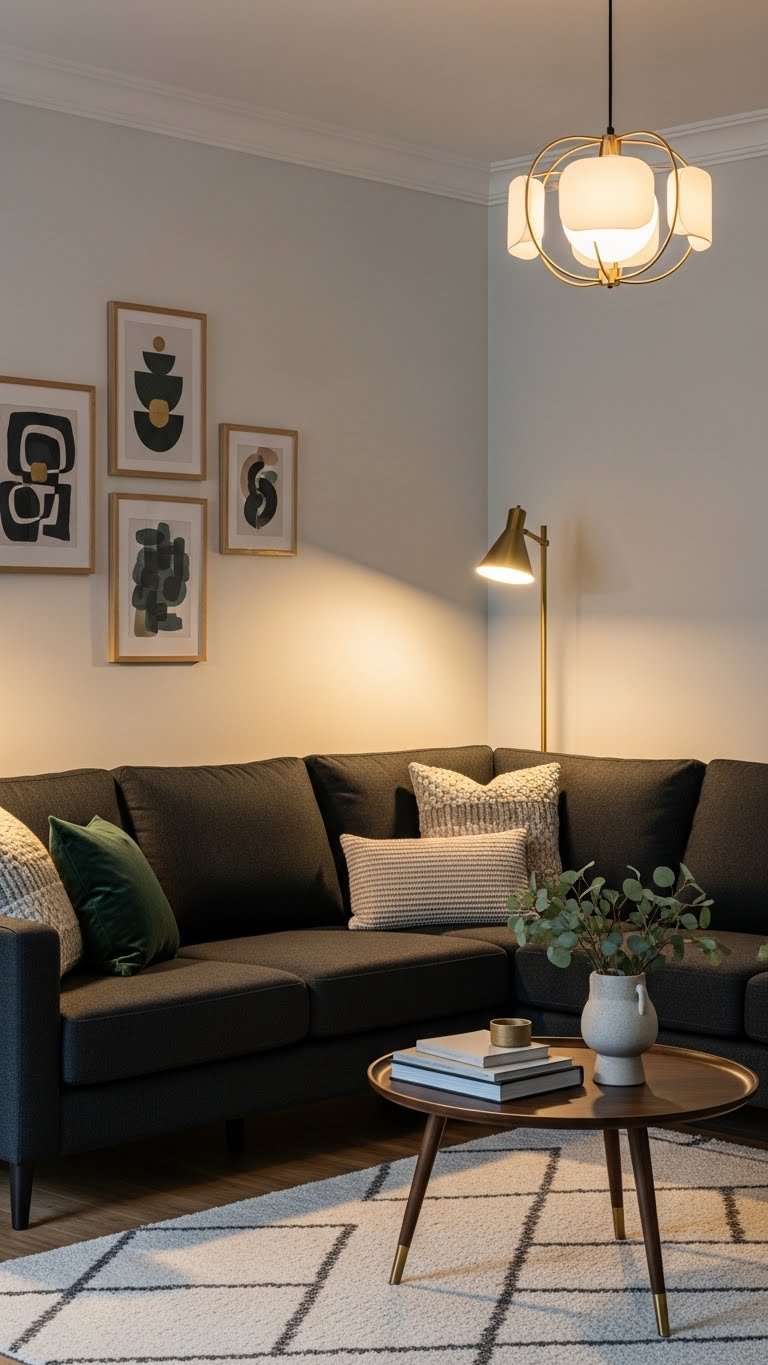
Dark charcoal corner sofas feel bold and modern, but they need strategic lighting to avoid feeling cave-like—pair with warm brass or gold fixtures.
Charcoal sectionals cost $900–$2,500 and hide stains beautifully. The secret to making dark sofas feel inviting is layering light: add floor lamps at $60–$300 each, a pendant light overhead, and table lamps for reading zones. Total lighting investment might be $300–$600. Pale walls and light flooring keep the space from feeling dark. Pair with cream accents and light wood to balance the drama.
Once properly lit, a charcoal sofa looks sophisticated and designed—like you know exactly what you’re doing.
22. Choose Removable, Washable Slipcover Sections
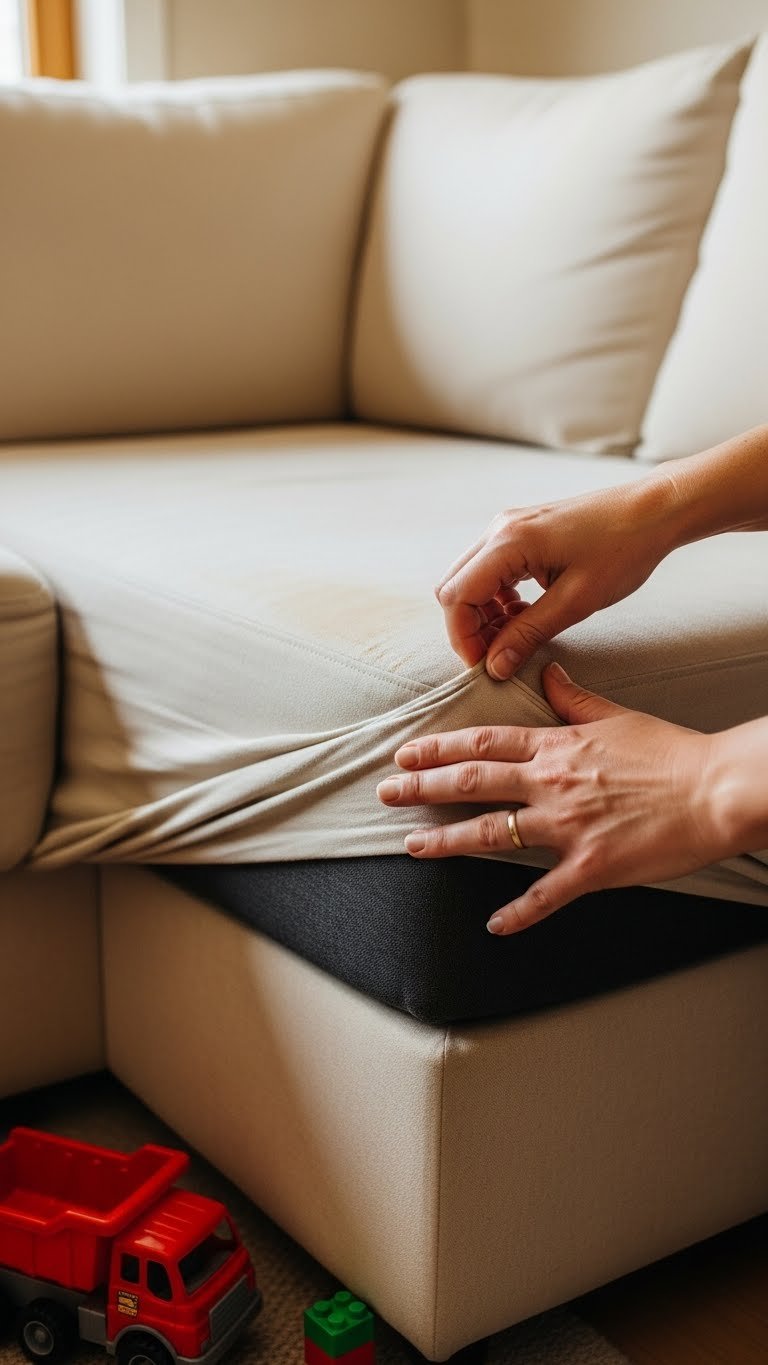
Removable slipcovers mean your corner sofa can actually survive real life—throw the covers in the wash whenever you need to.
Brands like Ikea (Ektorp), Pottery Barn, and custom cover companies make slipcover sectionals starting at $600–$1,200. Replacement covers cost $200–$400 per section. This setup is perfect for families with kids or anyone who hosts messy gatherings. Slipcovers feel slightly less tailored than fixed upholstery, but the trade-off (actual cleanability) is worth it. Wash covers in cold water and air dry to keep them looking new.
You can stop stressing about spills because you can actually fix them—that’s the real luxury.
23. Add a Nesting Armchair Beside Your Curved Corner Sofa
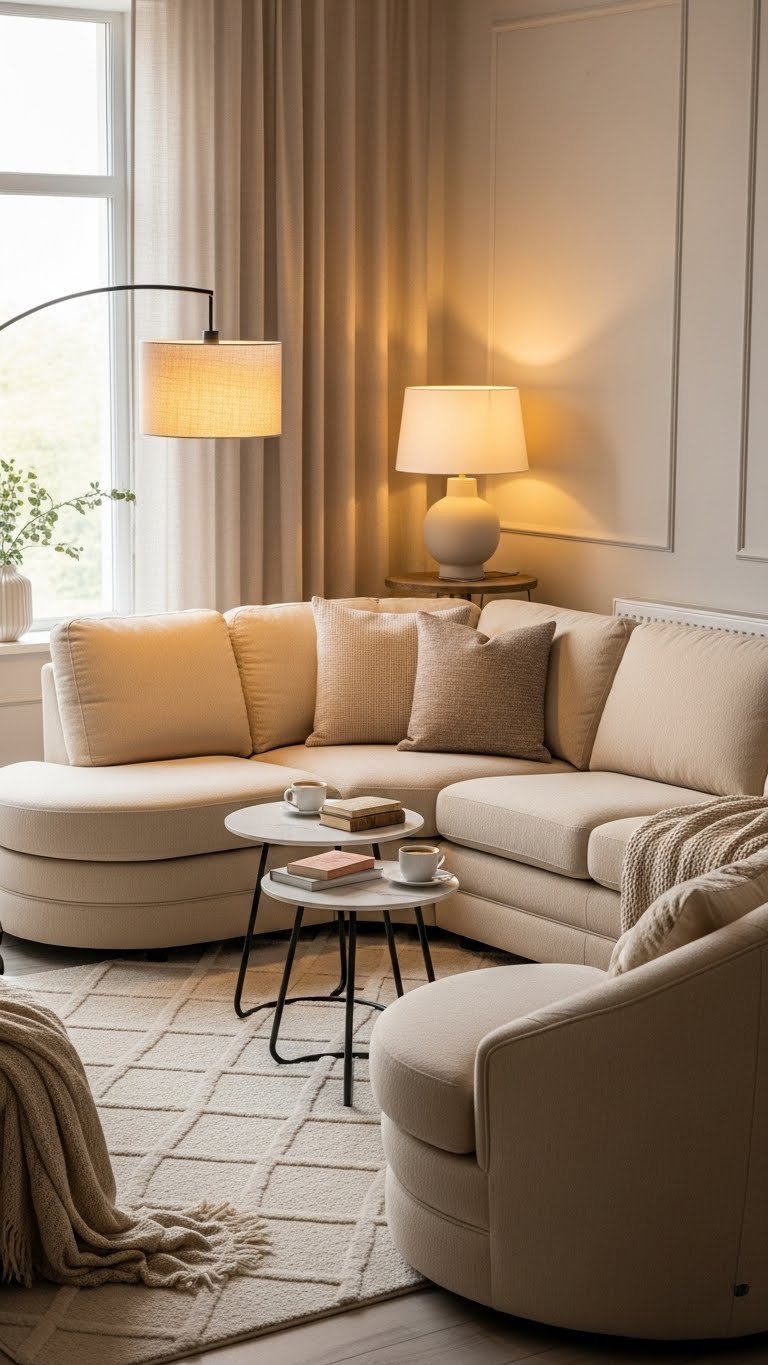
A single statement armchair beside your corner sofa creates an intimate conversation nook perfect for reading or talking with one guest.
Pair your sofa with a matching or complementary armchair at $300–$800 from the same brand (Article, West Elm, Room & Board). Look for curved or rounded designs that echo your sofa’s shape. Position a small side table between them ($80–$200) for drinks and books. This creates an intentional vignette within your larger room. Renter-friendly because you’re just adding one piece you can move anytime.
Now you have a built-in conversation spot that feels designed and thoughtful.
24. Create a Nested Lounging Setup with Floor Cushions
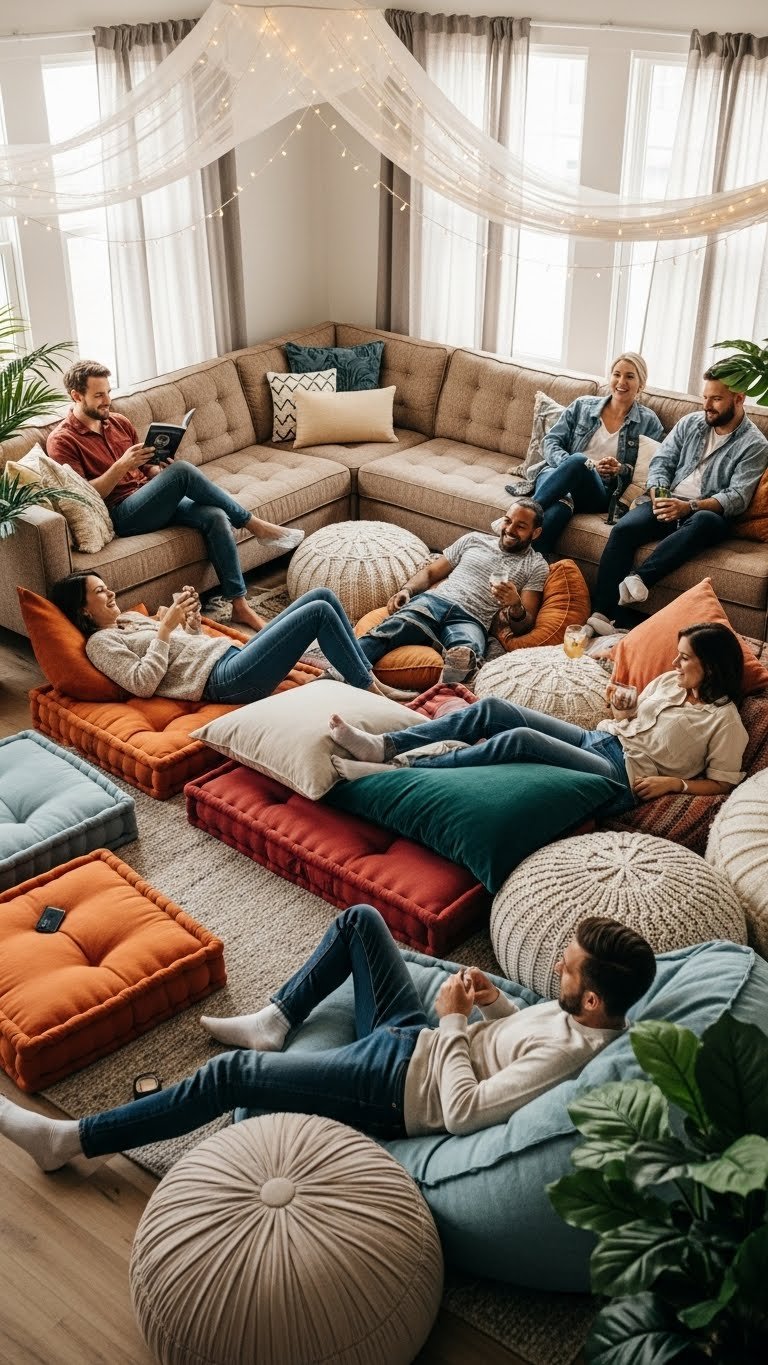
Layer your corner sofa with floor cushions and oversized pillows to create a luxe “conversation pit” vibe—casual but intentional.
Start with a corner sofa ($800–$2,000), add a large area rug ($150–$400), then scatter 4–6 floor cushions ($30–$80 each) and throw pillows ($20–$60 each) in front. Total investment under $1,500 gets you a completely styled lounge area. This works beautifully in living rooms or bedrooms. String lights overhead ($15–$40) complete the cozy aesthetic. Rearrange the floor cushions constantly to keep the look fresh and casual.
Your living room feels like a cool loft or boutique hotel lounge—casual but carefully curated.
25. Mix Modern and Traditional with Rolled Arms

Rolled arms and nailhead trim add vintage character to modern corner sofas—the perfect bridge between “too contemporary” and “too fussy.”
Look for rolled-arm sectionals at Restoration Hardware ($2,500–$4,500), Room & Board ($1,500–$2,800), or Pottery Barn ($1,200–$2,200). These details instantly feel collected and intentional. They work in modern apartments, farmhouse homes, or anyone mixing styles. Pair with mid-century accessories and industrial lighting to keep it from feeling too traditional. The vintage touches feel fresh in contemporary spaces.
You get sophistication and character without looking like you raided your grandma’s house.
26. Go Maximalist with a Patterned Upholstery
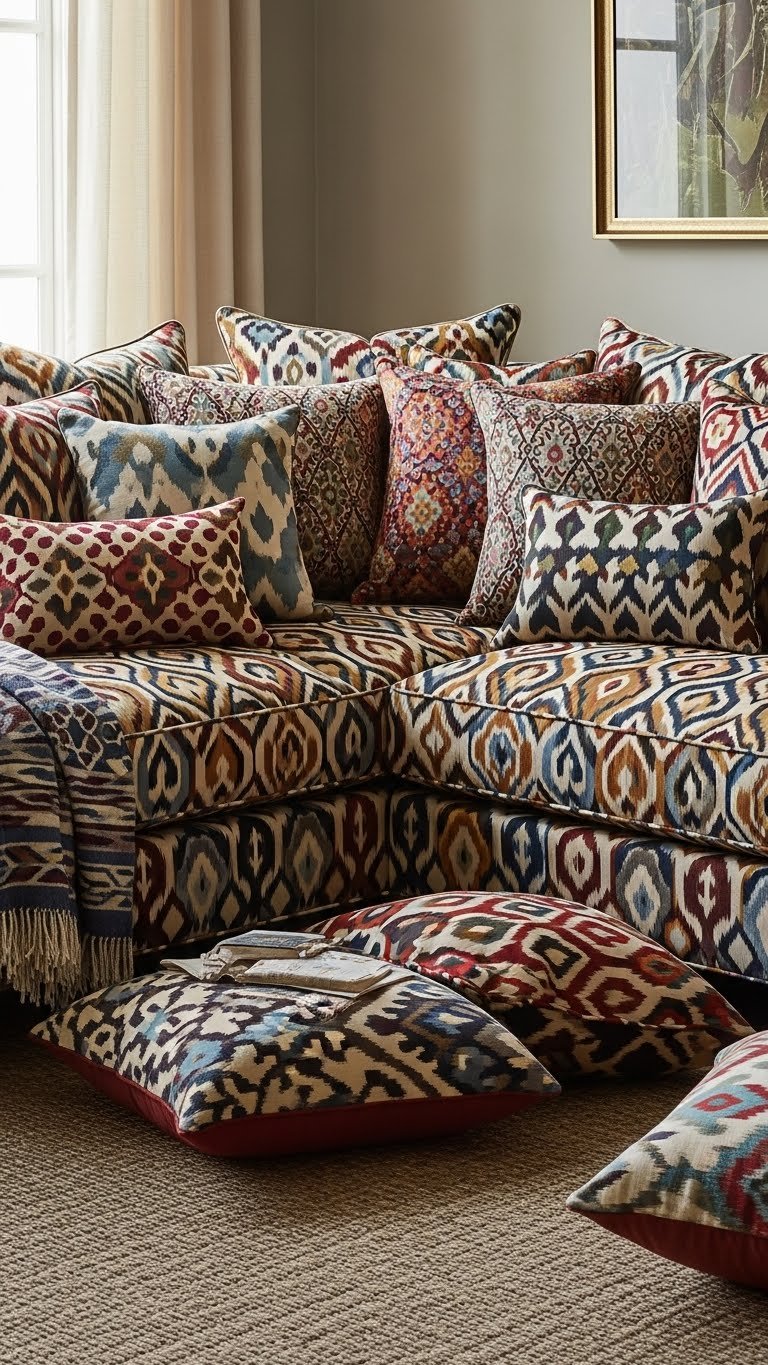
A patterned corner sofa becomes your room’s star—pair it with solid accents and let the sofa do all the heavy lifting design-wise.
Patterned sectionals are harder to find but exist at Anthropologie ($1,400–$2,800), CB2 ($900–$1,800), and some custom upholsterers ($2,000–$4,000). The payoff is instant personality. Keep walls, flooring, and large accessories neutral so the sofa shines. Layer with solid throw pillows in one or two accent colors pulled from the pattern. This approach works beautifully for anyone who loves color and isn’t afraid of commitment.
Your sofa becomes an actual art piece—the design anchor of your entire room.
Save this guide and try one idea this weekend. Pick the approach that matches your space (small studio? go modular; family chaos? grab performance fabric) and start shopping. Which style is calling your name?
Leave a Reply