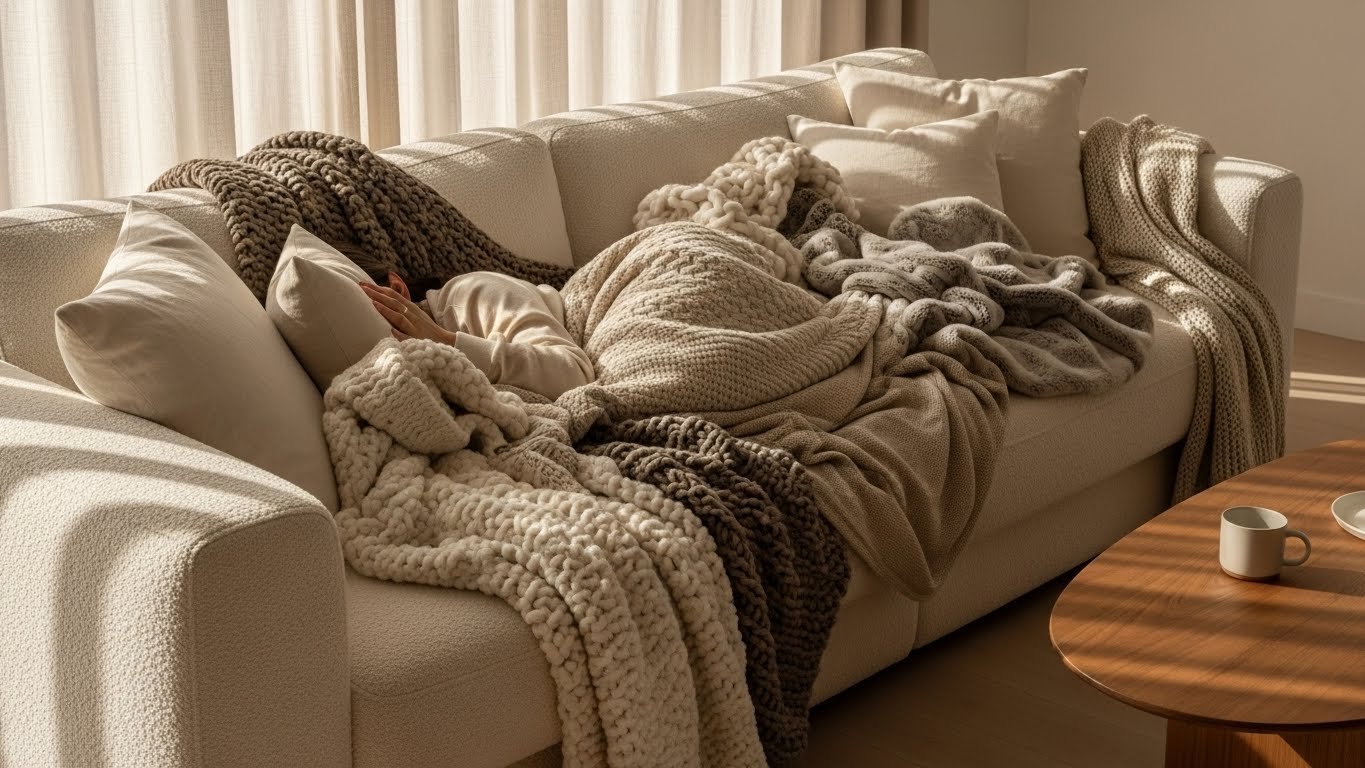
If you’re tired of perching on the edge of your couch instead of actually relaxing on it, you’re not alone. Most sofas today prioritize looks over comfort—but they don’t have to. A deep-seat sofa changes everything. It invites you to kick off your shoes, sprawl out, and genuinely unwind. Whether you’re shopping for your first quality investment piece or refreshing an old sofa situation, this guide walks you through 25 concrete ways to find, style, and maximize cloud-level comfort. You’ll discover specific sofas that deliver, styling tricks that boost coziness, and budget hacks that work for renters and homeowners alike. Let’s build you a living room that actually feels like a retreat.
1. Choose a Deep Seat Depth Between 38–42 Inches
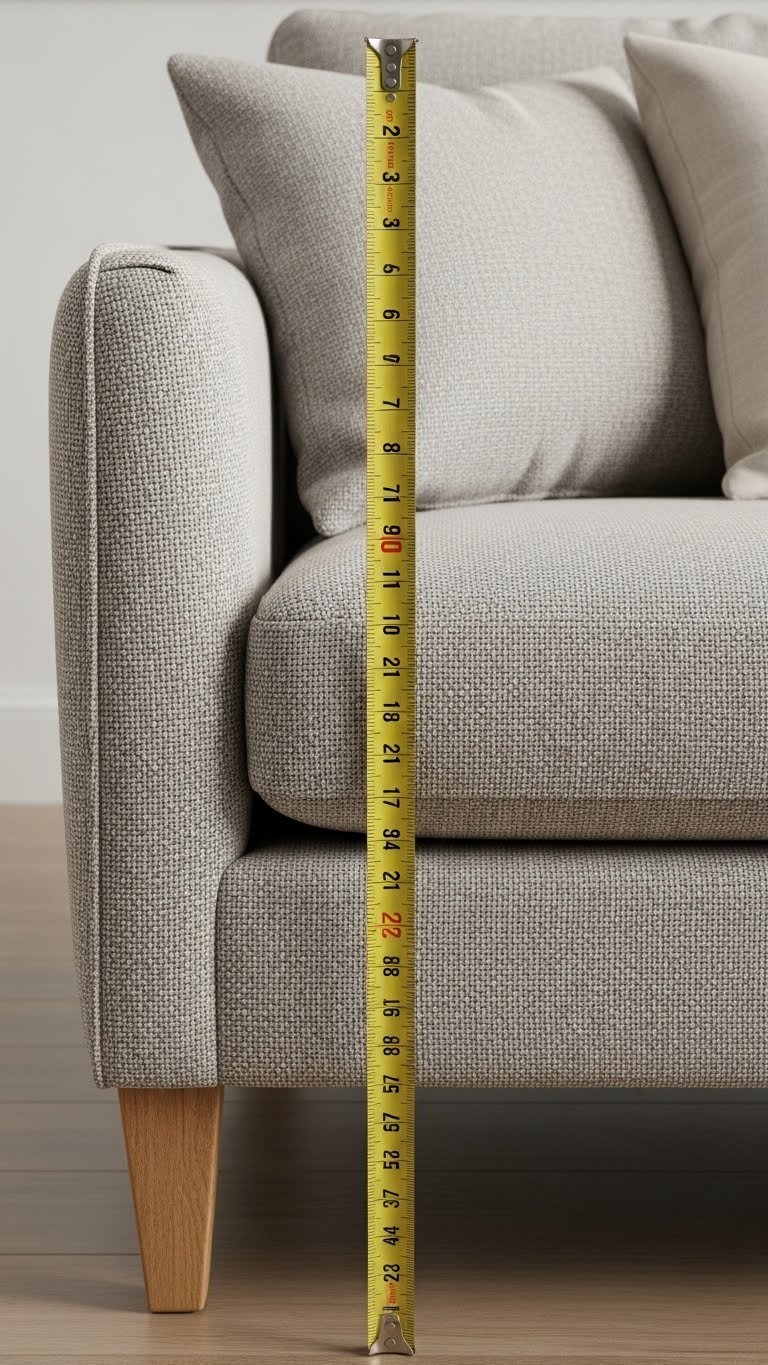
A standard sofa sits around 30–32 inches deep, which feels more like sitting upright than relaxing. The magic number for true comfort is 38–42 inches—deep enough to recline fully or curl up with your legs tucked underneath.
When shopping online or in-store, always ask the retailer for exact seat depth measurements before buying. Many brands like Article ($600–$1,200), Room & Board ($1,200–$2,000), and Wayfair ($400–$900) list these specs clearly. If you’re buying secondhand, bring a tape measure. Deep-seat sofas cost slightly more upfront—usually $100–$300 extra—but last longer because you’re not replacing them every few years when you realize they’re uncomfortable.
Pro tip: If a sofa fits your space but sits a bit shallow, layer a quality floor cushion or bolster pillow ($40–$80) at the back to gain extra depth without losing functionality.
Once you add a deep seat to your living room, you’ll actually use your sofa instead of migrating to the bed. Comfort changes behavior.
2. Prioritize High-Density Foam in the Seat Cushions
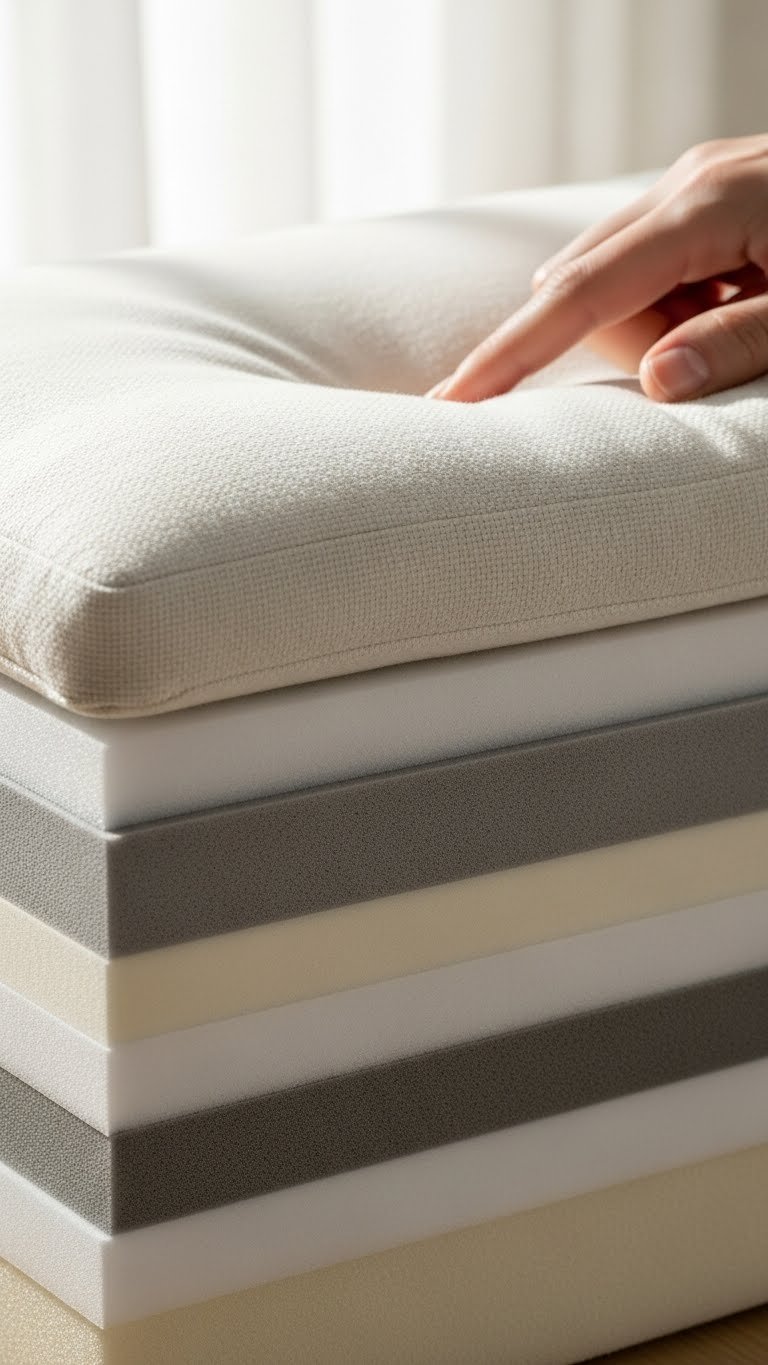
Budget foam ($30–$50 per cushion) compresses after six months, leaving you sinking to the frame. High-density foam holds its shape for years, which is why it matters more than thread count or fabric type.
Look for sofas that specify HD foam with a density of 2.5–3.0 lbs per cubic foot. This is the sweet spot between firmness and sink-in comfort. Brands like Restoration Hardware ($3,000–$5,000), West Elm ($800–$2,200), and Article list foam quality in product descriptions. If a brand won’t disclose foam specs, that’s a red flag—move on.
If you already own a sofa with tired cushions, you can replace just the foam ($200–$400 for a full set) instead of replacing the whole sofa. Many local upholsterers offer this service within one to two weeks.
You’ll notice the difference immediately when you sit down. A firm, supportive cushion means you’re truly cradled, not bottoming out after a few months.
3. Add a Layered Throw Blanket Bar to Your Sofa Arm
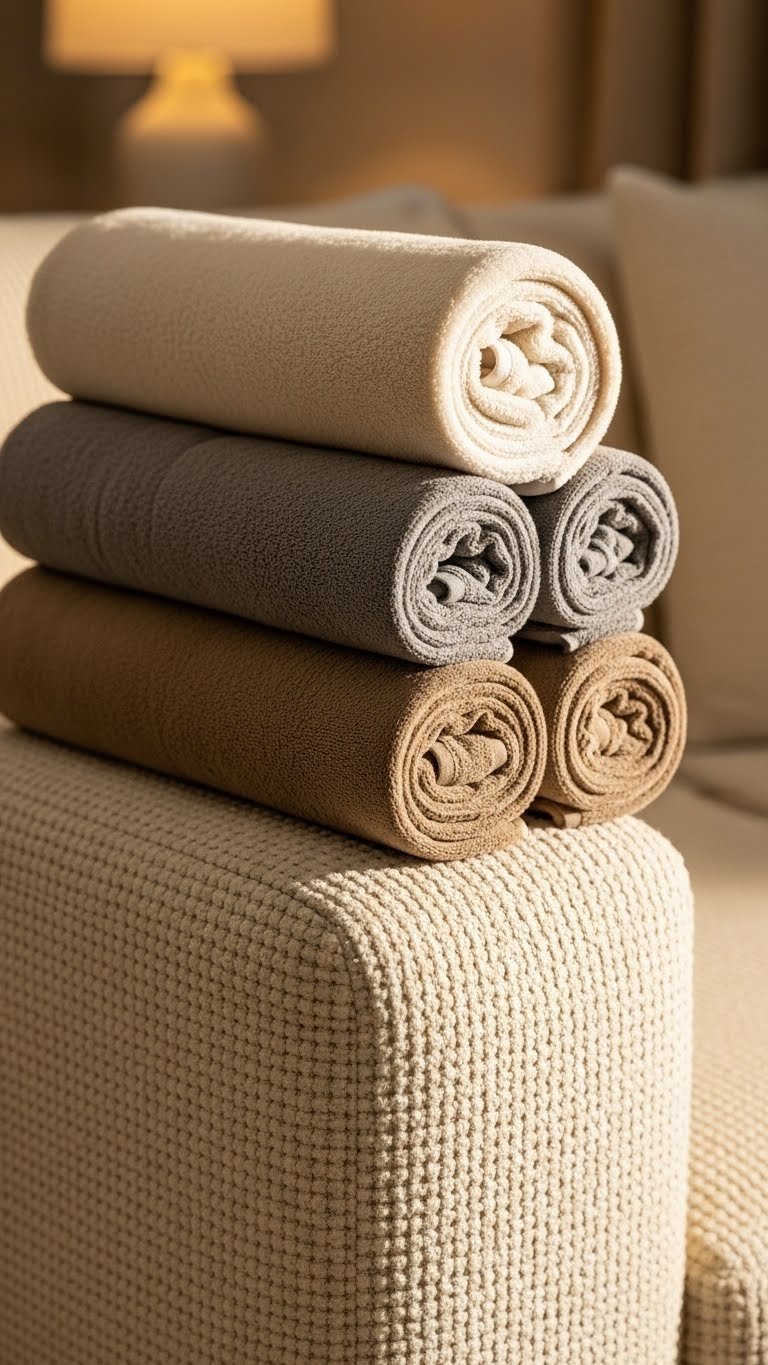
When blankets are folded in a basket across the room, you never actually use them. Store them directly on your sofa arm where they’re one reach away from cozy.
Grab a wooden blanket ladder or bar ($30–$80 on Amazon or Target) and place it against the sofa arm or back. Layer three to four throws in coordinating neutrals (cream, gray, camel) or add one bold pop. Quality throws run $20–$60 each. The visual layers also photograph beautifully, which is why this styling trick gets saved constantly on Pinterest.
If you don’t have wall space for a ladder, simply drape throws over the sofa arm in a casual, accessible way. It looks intentional and keeps comfort within arm’s reach.
This one change makes your sofa feel infinitely more inviting. People actually sit longer when layers are nearby and ready to grab.
4. Invest in a Curved Sofa Shape for Organic Flow
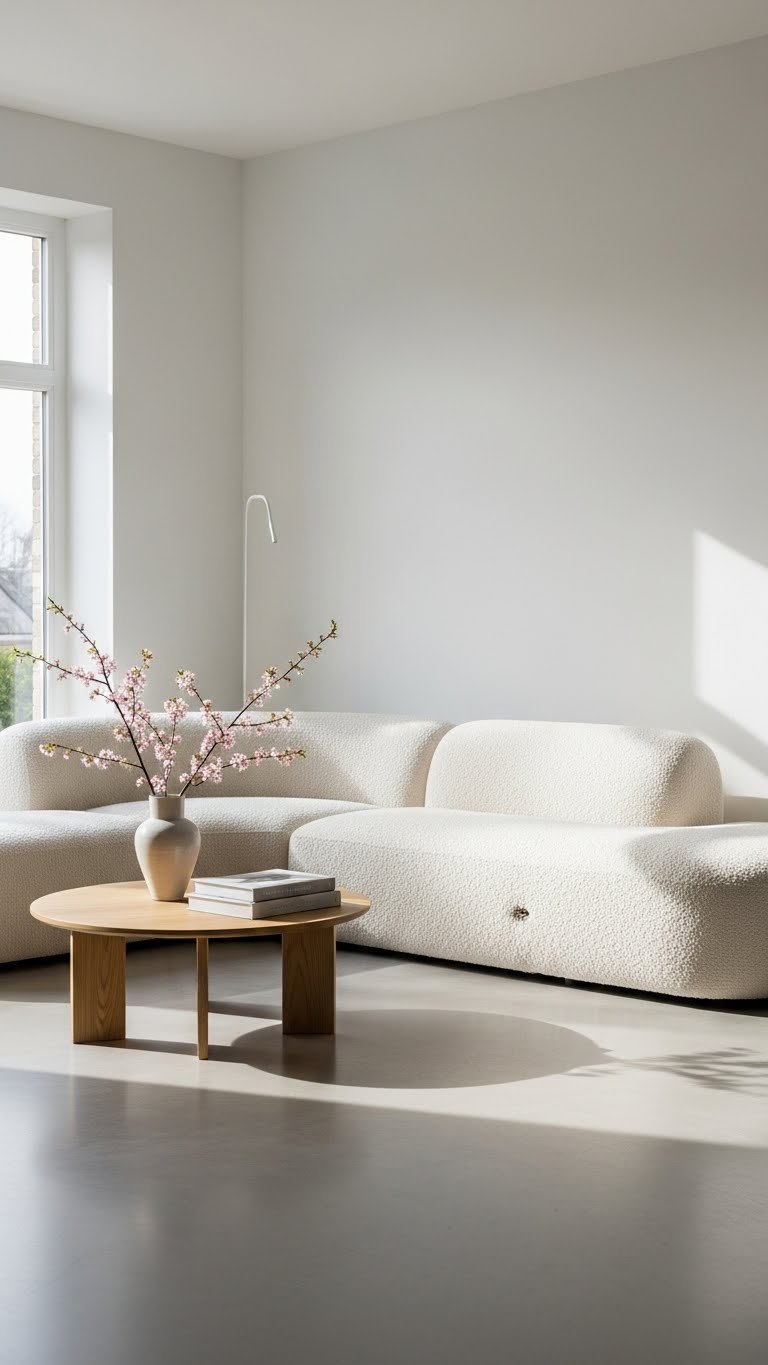
Straight-line sofas can feel sterile and formal. A curved sofa—whether it’s a subtle arc or dramatic serpentine shape—softens your entire room and invites conversation.
Curved sofas are trending hard in 2025 for good reason. Options like Blu Dot’s Standard ($1,500–$2,200), Article’s Sven with its rounded arms ($700–$1,400), and Wayfair’s Room by Iko curved sectional ($900–$1,600) range from gentle bends to dramatic curves. These aren’t just beautiful; they arrange people naturally around a center point instead of facing a wall.
If a full curved sofa doesn’t fit your budget or space, start with a curved corner piece or chaise ($400–$800) to introduce the shape. Pair it with a rounded coffee table ($300–$600) to amplify the organic feel.
You’ll be amazed how a curved line changes the energy. People gravitate toward the sofa more often, and your space feels less boxy and more designed.
5. Select Performance Fabric for Durability Without Sacrifice
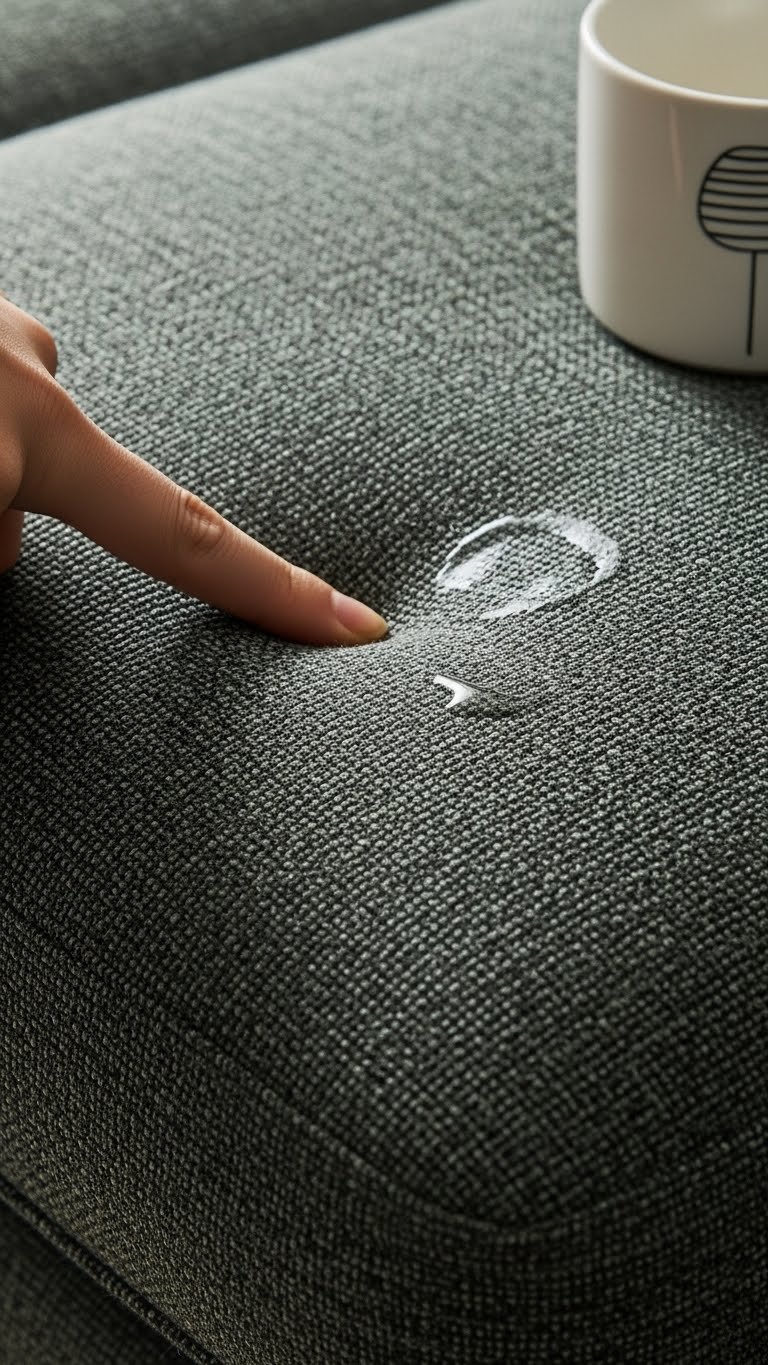
Performance fabrics sound technical, but they’re basically fancy durability. They resist stains, pet claws, and spills while still looking and feeling high-end.
Brands like Crypton, Sunbrella, and Dyenamide are woven to repel liquids and resist fading. Sofas upholstered in these fabrics cost about $200–$400 more than standard fabric versions, but they last twice as long if you have kids or pets. Look for sofas at Article, Wayfair, and Living Spaces that specifically mention performance fabric in the product details.
A performance fabric sofa ($700–$1,500) with kid-proof credibility actually saves money long-term because you’re not replacing it when juice spills happen. Simply blot with a damp cloth and move on—no guilt required.
When you can stop stressing about spills, you actually relax. The sofa becomes a place to live in, not just look at.
6. Mix Neutral Base with One Bold Accent Pillow
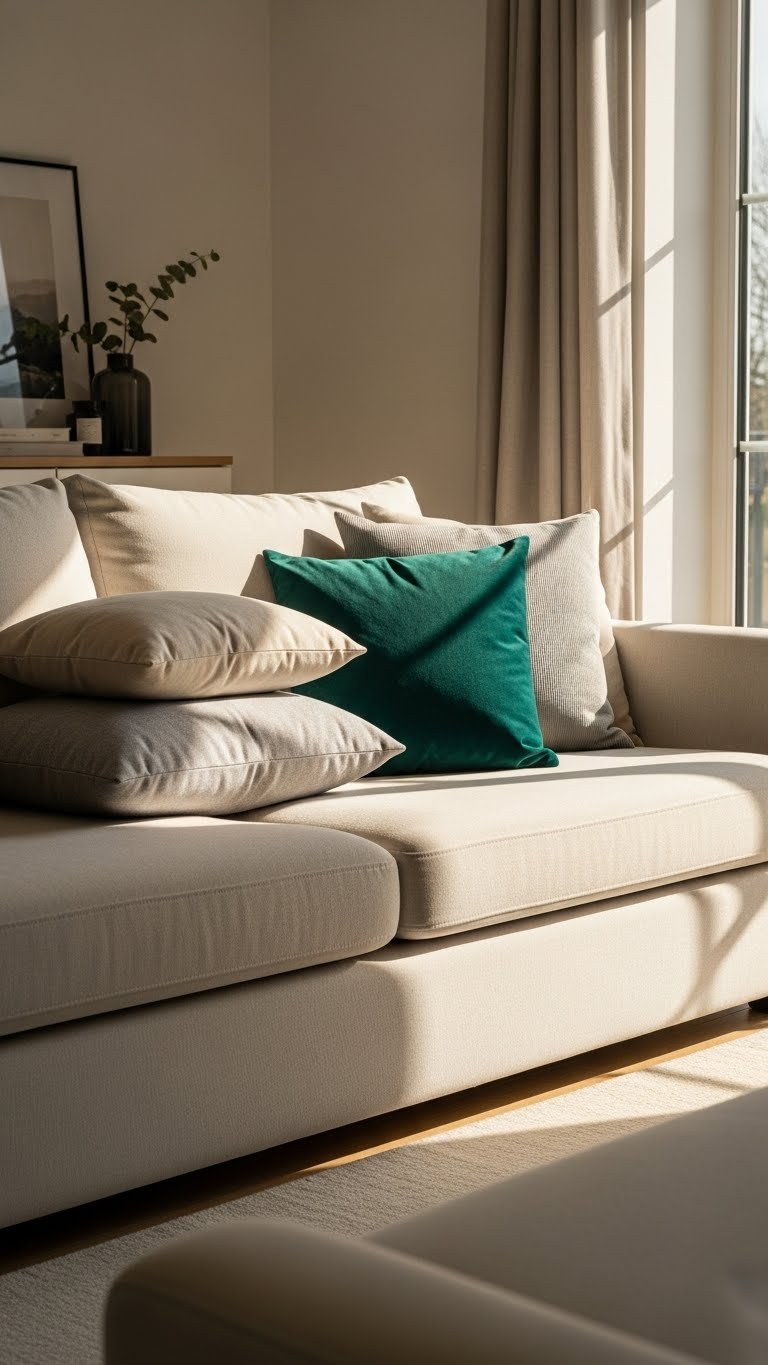
A completely neutral sofa can feel safe but boring. A single bold accent pillow adds personality without committing to a color you might tire of.
Start with a neutral sofa in cream, camel, or soft gray ($600–$1,200). Then add one statement pillow in deep teal, burnt orange, or jewel purple ($25–$60). Keep everything else—remaining pillows, throws, walls—in warm neutrals. This combination feels intentional and high-design without being risky.
Pillows are easy to swap seasonally, so you can change your accent color from winter to spring without guilt. Brands like Etsy, Schoolhouse, and CB2 have incredible statement pillows in the $30–$80 range that justify the splurge.
This simple styling move makes your sofa feel curated and personal. It’s the difference between a furniture showroom look and an actual home.
7. Layer a Low-Profile Metal Frame Under Your Sofa
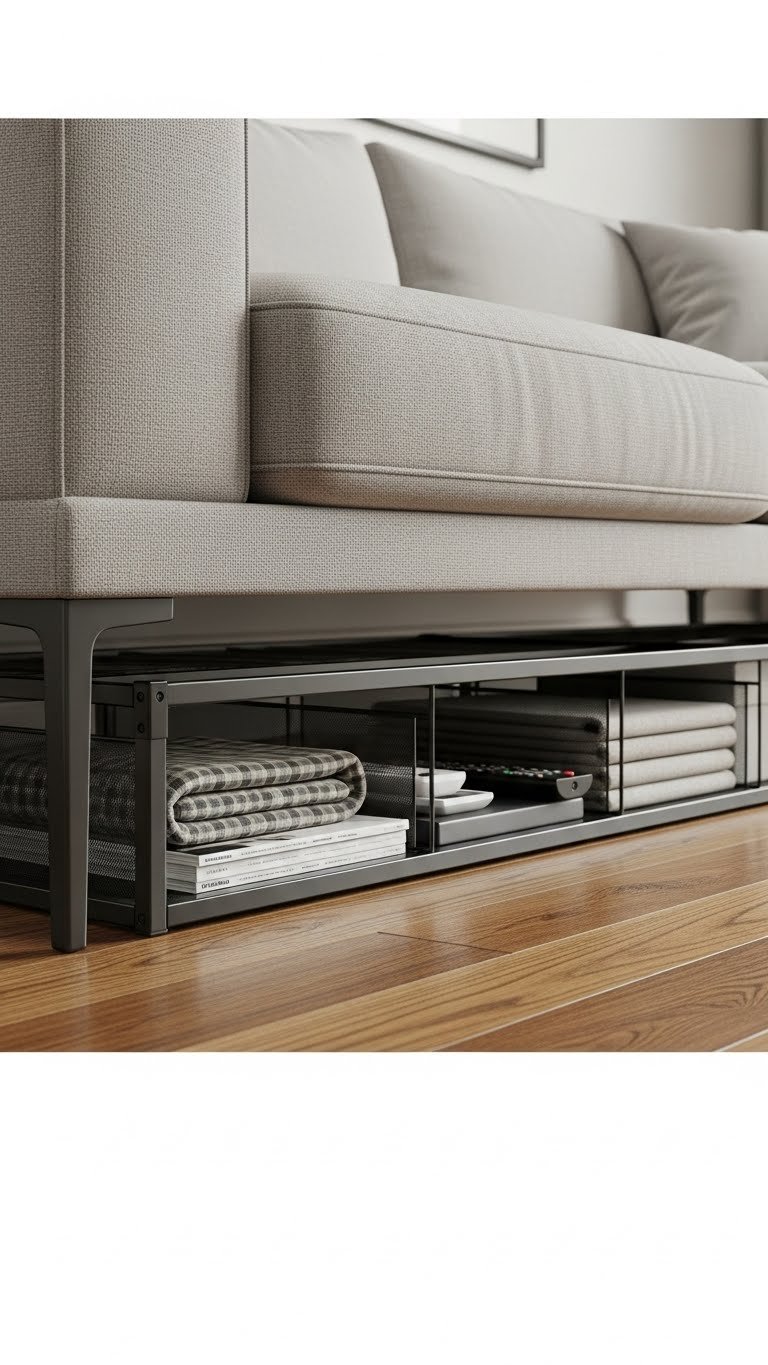
Deep-seat sofas can feel grounded but also heavy. Elevating it slightly on low-profile metal legs makes the room feel airier and makes cleaning underneath actually possible.
If you’re shopping new, choose a sofa with legs (vs. a skirted base) starting around $600 for budget options and up to $2,000+ for high-end pieces. The visual lift is worth it. If you already have a skirted sofa, you can retrofit legs ($80–$150 from hardware stores) or place a thin storage frame under the front ($40–$70) to add height and functionality.
Metal legs also make your sofa feel modern and less “stationary furniture” and more “collected over time.” Pair with a flatweave rug to further define the zone.
This small adjustment completely changes how your sofa sits in the room. It looks intentional, feels lighter, and actually reveals your floor instead of hiding it.
8. Add an Ottoman or Pouf for Extended Lounging
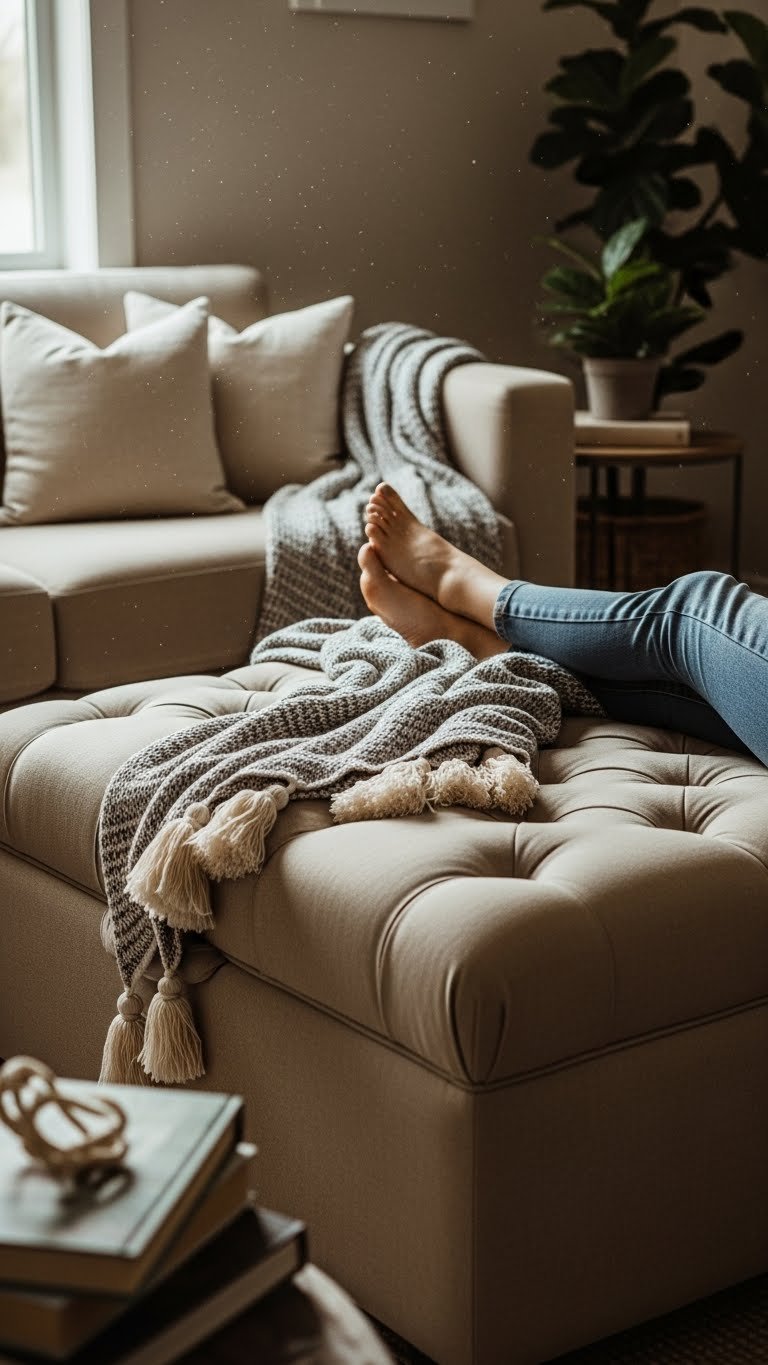
A deep sofa seat is perfect, but without a place to extend your legs, you’re still sitting upright. An ottoman changes that equation completely.
Match your ottoman to your sofa for visual flow (same fabric, similar style) or go contrasting for interest. A quality ottoman runs $200–$500 at brands like Article, West Elm, or Wayfair. Budget options like IKEA or Target offer solid ottomans for $80–$200 that work perfectly fine for lounging. Choose one with storage ($150–$350) if space is tight—you get comfort plus hidden organization.
Pro tip: Look for ottomans on wheels or lightweight designs ($100–$200) so you can move them around based on how you want to lounge. Sometimes it’s feet-forward relaxation; sometimes it’s side-perching.
Once you have somewhere to stretch out, your sofa time extends naturally. You’ll sit longer, relax deeper, and actually use your living room as intended.
9. Upgrade Your Sofa Legs to Mid-Century or Brass
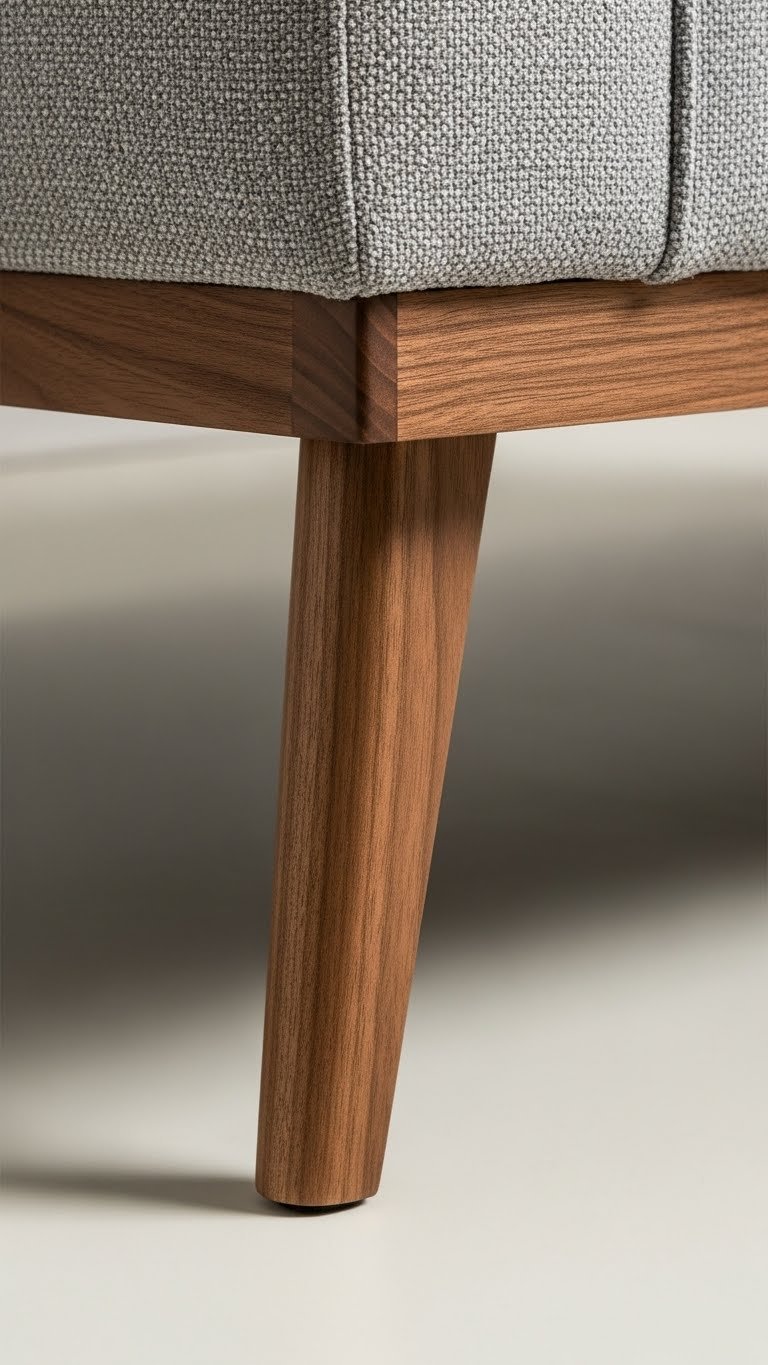
Standard black plastic legs are invisible—and that’s the problem. Good sofa legs anchor the whole piece and say “I invested in quality.”
If you’re buying new, specify legs you love when ordering. Many brands like Room & Board, Article, and Blu Dot offer walnut, brass, or tapered wooden legs at no extra cost. If you already own a sofa with sad legs, replaceable leg kits ($40–$100) are available online; installation takes 15 minutes with a hex wrench.
Brass legs ($60–$150 to retrofit) feel expensive even when they’re not. Mid-century wooden legs ($50–$120 to replace) ground the sofa and tie it to other furniture effortlessly.
Visible, quality legs make your sofa look designed, not generic. It’s a detail no one consciously notices, but everyone feels.
10. Use Bouclé or Boucled Texture for Lived-In Luxury
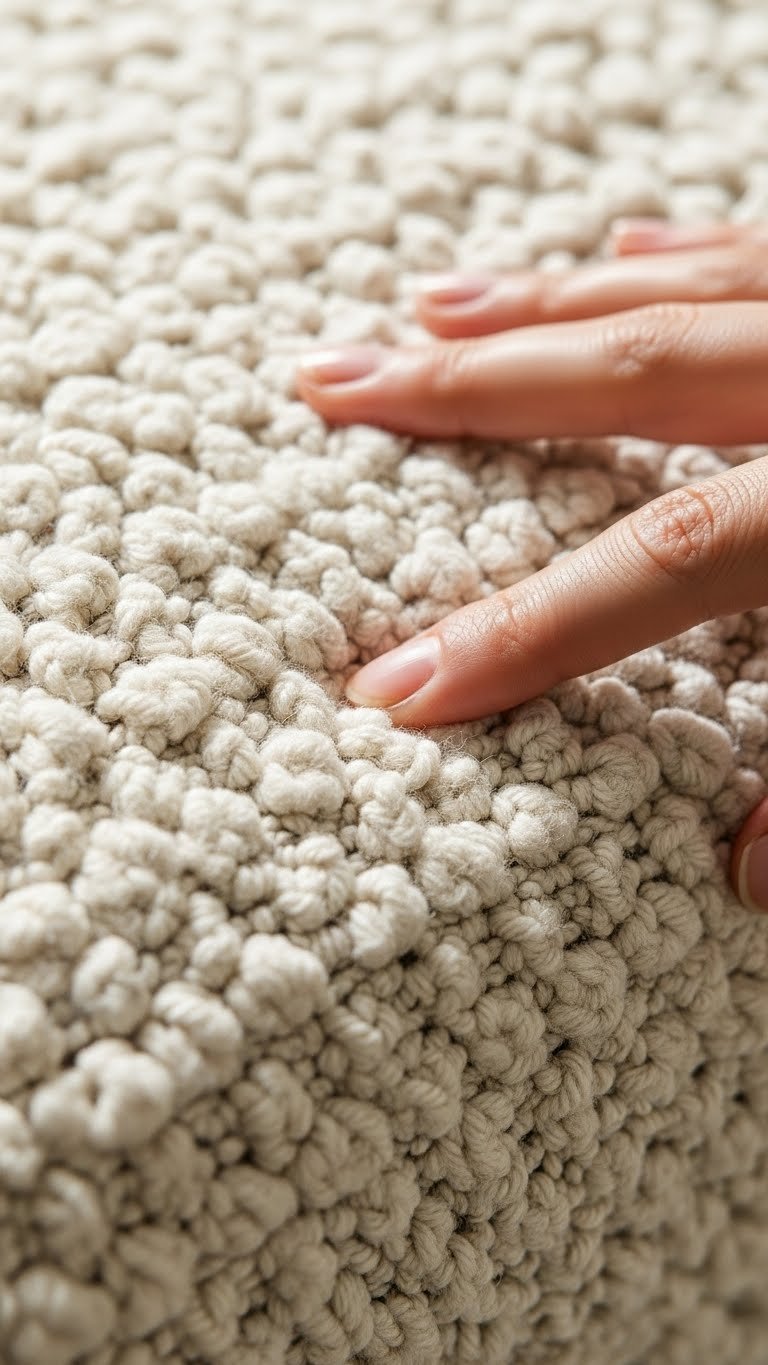
Bouclé feels expensive because it is expensive, but it also looks like you live in a relaxed, beautiful home—not a decorated show house.
Bouclé sofas in cream, sand, or warm gray are trending because the texture hides dirt (kids, pets, living) while the neutral tone stays timeless. A bouclé sofa typically costs $800–$2,000 depending on depth and customization. If that’s outside your budget, bouclé throw covers ($80–$150) over a plain sofa fake the look convincingly. Brands like Etsy sellers and Schoolhouse sell stunning bouclé covers that transform anything underneath.
Pair bouclé with natural wood accents and brass hardware for a coordinated, intentional look. The texture does the heavy lifting stylistically, so everything else can stay simple.
People will comment on how luxe and comfortable your sofa looks. Bouclé is the shortcut to that “I have excellent taste” vibe.
11. Customize Your Sofa Fill Weight to Your Preference
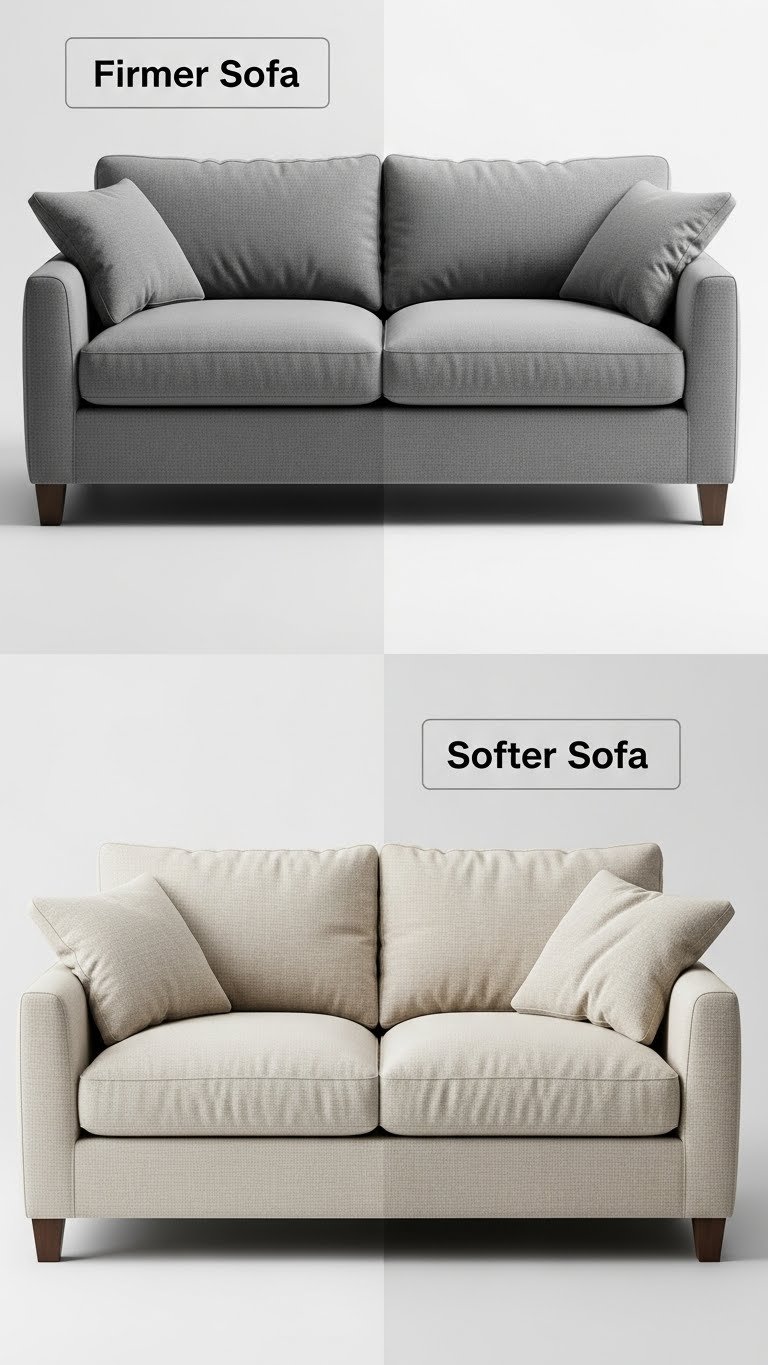
Some people want firm support; others want to sink in like a cloud. Custom sofas let you choose the fill weight to match how you actually relax.
Brands specializing in custom sofas—like What A Room, Joybird, and Maiden Home—let you select firmness levels (usually “down,” “down-blend,” or “high-density foam”) during ordering. This typically adds $200–$400 to the price but ensures the sofa feels exactly right for your body. Direct-to-consumer brands like Burrow ($800–$1,200) and Article also offer some customization at mid-range prices.
If custom ordering feels overwhelming, ask retailers for firmness specs before purchasing. Test in-store if possible, or choose brands with hassle-free returns (most online retailers offer 30–60 day returns).
Getting to choose your sofa’s exact feel means you’ll actually love it years later instead of wishing you’d gone firmer or softer. It’s worth the decision-making effort.
12. Add Rolled Pillows to the Sofa Arm for Support
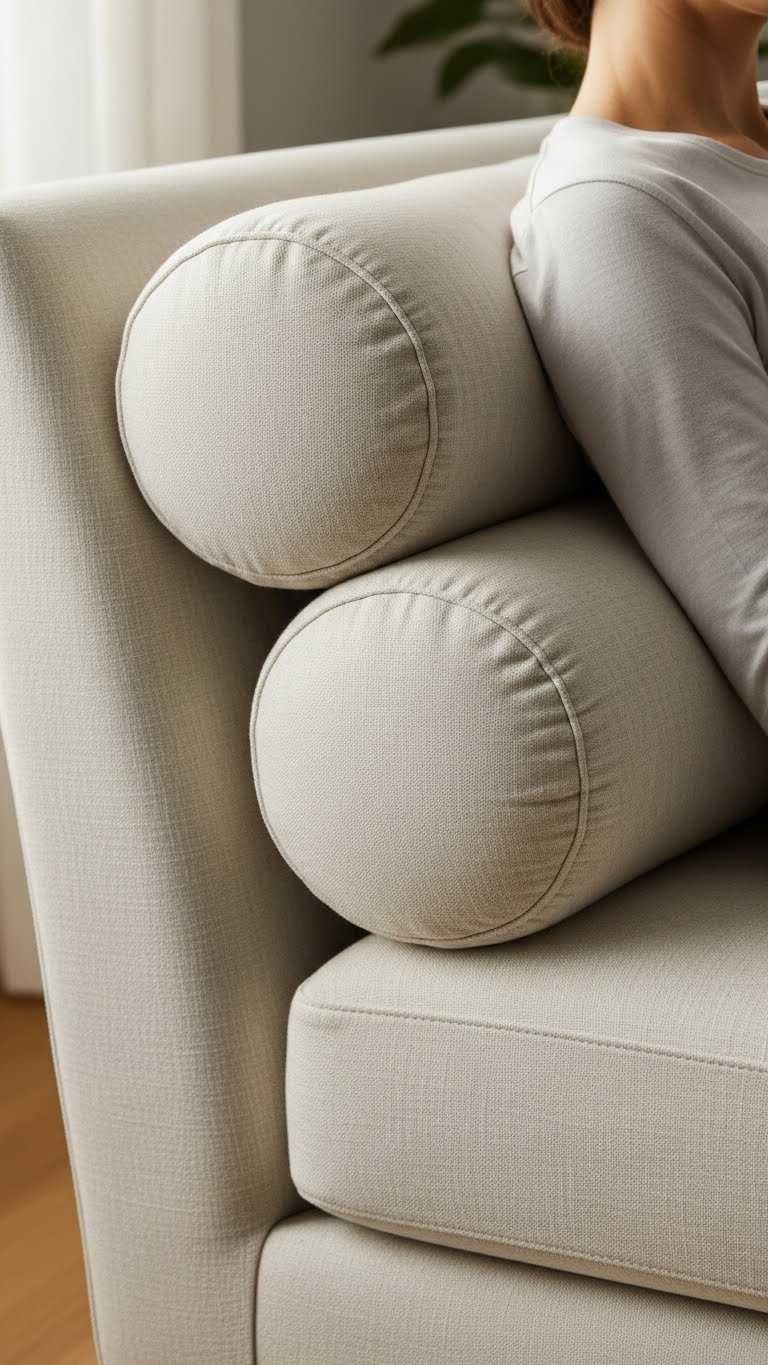
When you’re lounging sideways on the sofa (which everyone does), a rolled pillow gives your back and neck crucial support without requiring a full body pillow.
Place one to two bolster pillows ($30–$70 each) or rolled lumber pillows ($20–$50) along the sofa arm. These cylindrical shapes are specifically designed for this purpose. Natural linen or cotton options ($40–$80) feel crisp and luxe, while polyester ($20–$40) is more casual. Customize by choosing colors that coordinate with your sofa or throws.
Rolled pillows also create visual interest and depth when styled correctly. Lean them at angles for a relaxed, gathered look that photographs beautifully.
You’ll notice the difference the first time you lounge sideways. Proper support means you can actually rest, not just recline uncomfortably until your neck hurts.
13. Choose a Sofa in Sage or Muted Green for Wellness
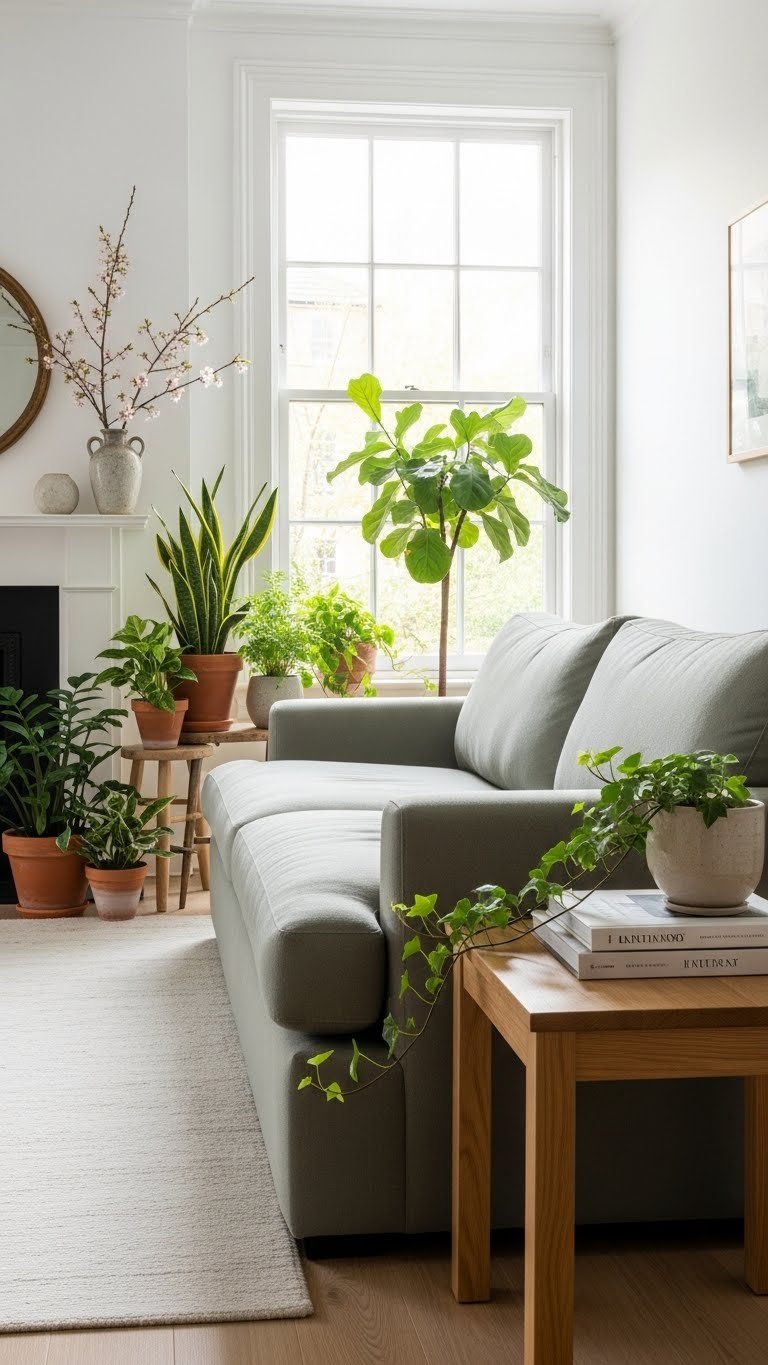
Color psychology is real, and muted greens are proven to calm the nervous system. If you’re ready to move beyond neutral, soft green is the perfect investment.
Muted greens like sage, olive, and celadon are trending precisely because they feel both trendy and timeless. A sage sofa ($800–$1,800) pairs beautifully with warm wood, white walls, and brass accents. Brands like Article, West Elm, Crate and Barrel, and Room & Board all offer green options in various depths.
If committing to green feels too bold, start with a green throw pillow ($30–$50) or green sectional chaise ($400–$800) to test the color in your space first. You can always add more green later.
A calming sofa color actually makes you want to spend time in your living room. You’ll sit more, relax more, and notice the subtle stress-relief that comes with the right color surrounding you.
14. Incorporate Modular Pieces for Open-Plan Homes
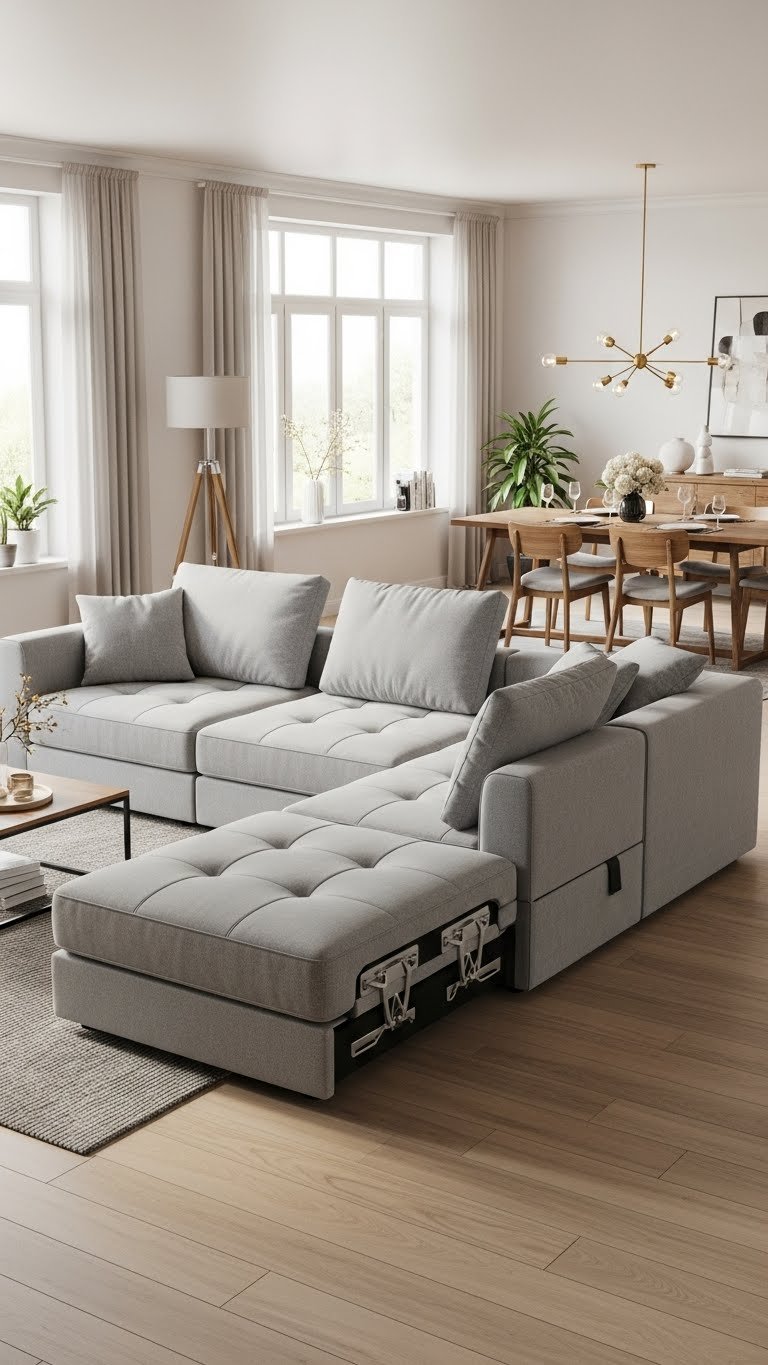
Open-plan homes need furniture that zones spaces without walls. Modular sofas do exactly that by creating visual and functional separation.
A modular sectional like IKEA’s Kivik ($400–$600), Article’s Oskar ($900–$1,400), or Living Spaces’ sectionals ($800–$1,600) lets you arrange pieces to fit your exact layout. You can build an L, a U, or a straight line depending on your needs. Most modular pieces are delivered within two weeks and arrive in manageable-size boxes (usually weighable by one person).
If you rent, modular sofas are lifesavers because you can rearrange or downsize easily. Move to a smaller apartment? Sell a few modules and keep the essentials.
With modular, you’re not locked into one configuration. Change your layout seasonally or whenever the mood strikes—flexibility that standard sofas simply don’t offer.
15. Layer a Textured Throw Blanket in Linen for Relaxed Style
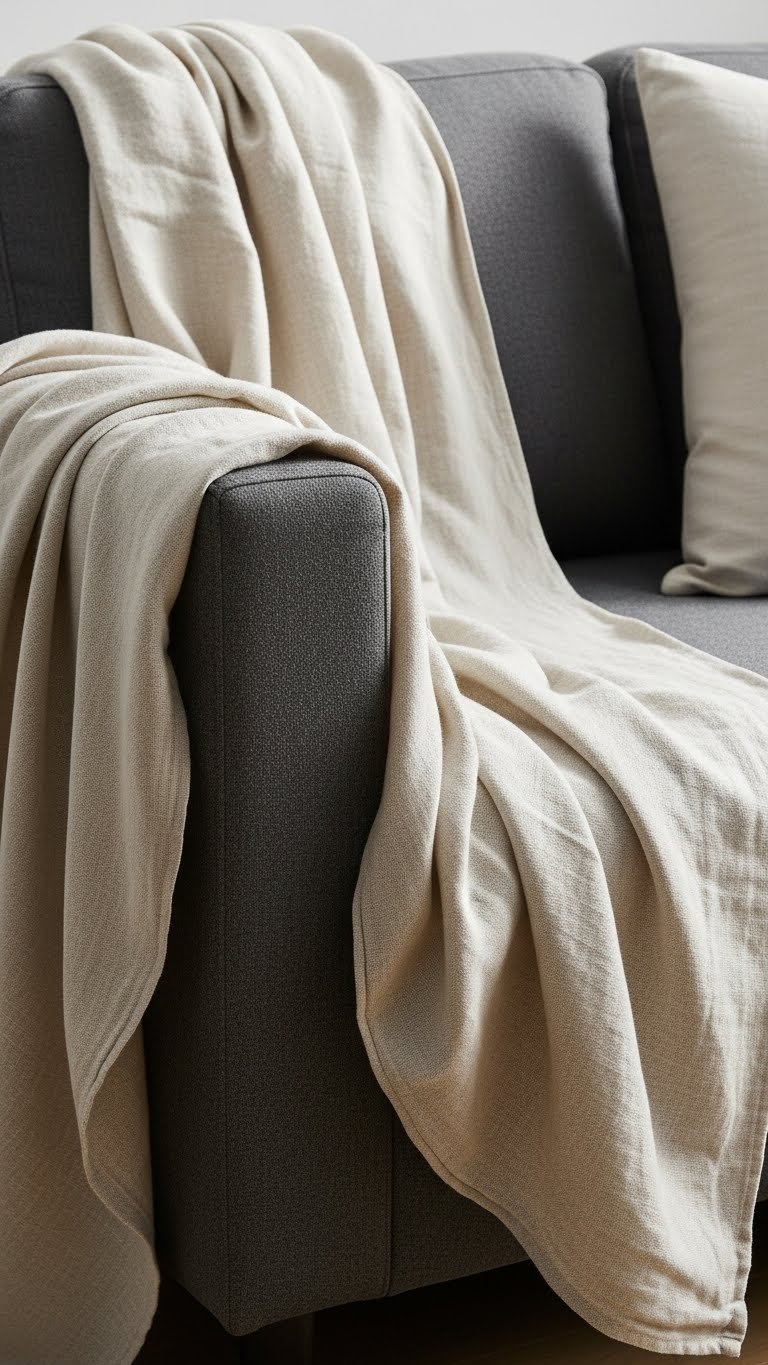
Linen throws look expensive and intentional while actually being simple and low-maintenance. Unlike velvet throws ($40–$100) that show wrinkles, linen wrinkles beautifully—they’re part of the charm.
A quality linen throw runs $50–$120 from brands like Etsy, Minted, Schoolhouse, or Restoration Hardware. Natural linen ($60–$100) breathes and ages gorgeously. Linen-blend ($30–$60) offers affordability. Wash on gentle and hang dry to keep the texture crisp.
Drape your linen throw casually—never too-neat, never too-messy. The goal is “I grabbed this for a nap” not “this was photostyled by a designer.”
A linen throw transforms a basic sofa into one that says “I care about comfort and aesthetics.” It’s the finishing touch that makes the whole room feel considered.
16. Pair Your Sofa with a Rounded Coffee Table
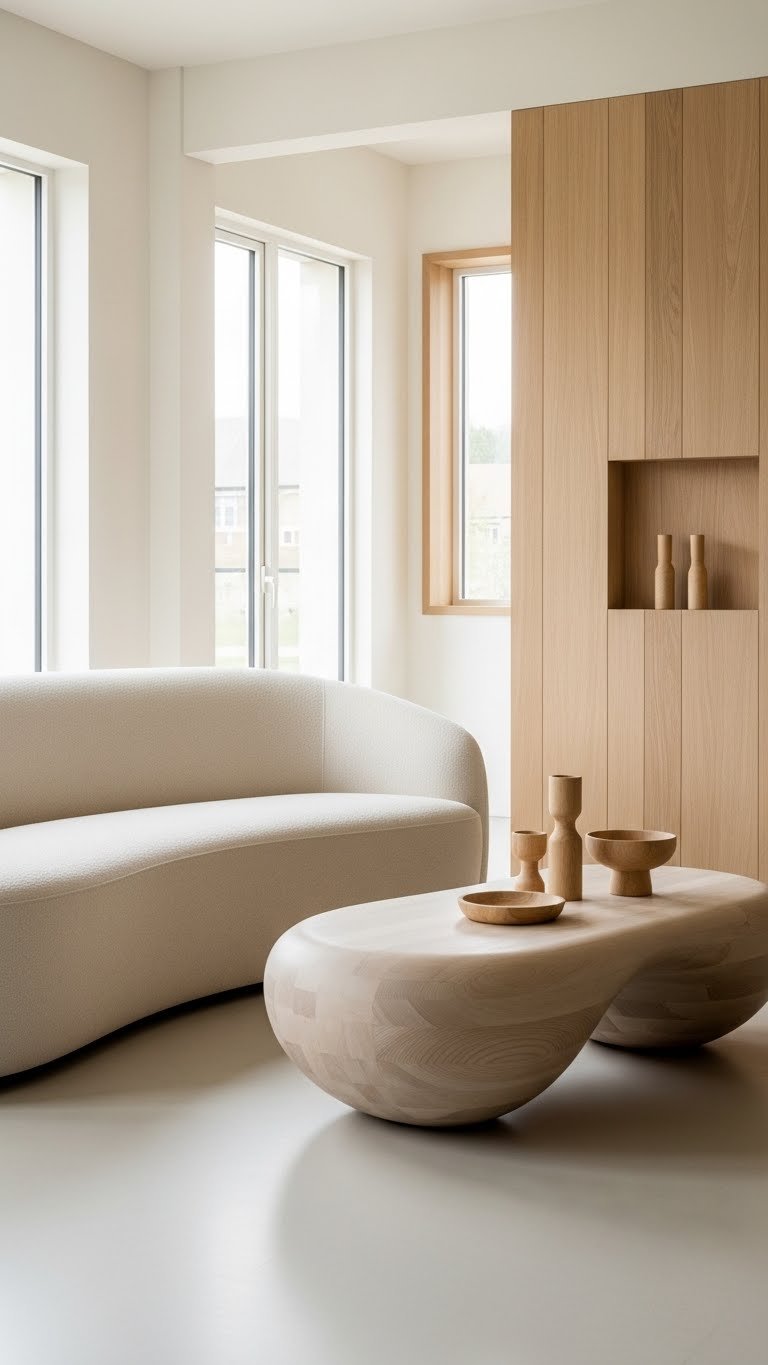
If your sofa is curved or soft-edged, a boxy coffee table breaks the design momentum. Round and curved tables complete the look.
Shop for rounded coffee tables ($150–$600) at Article, Wayfair, CB2, or Target. Look for shapes that aren’t completely circular—slightly oblong or free-form ($200–$400) feel more interesting than perfect rounds. Materials like marble ($400–$800), wood ($150–$400), or travertine ($500–$1,200) age beautifully and tie to other room elements.
If you rent or want to swap easily, peel-and-stick rounded table wraps ($30–$60) transform boxy tables temporarily. Budget-conscious? IKEA’s Gladom table ($30–$50) looks surprisingly intentional with the right styling.
Rounded shapes reflect and absorb light differently than hard corners, making your entire sitting zone feel softer and more inviting. One table change influences how the whole room feels.
17. Select a Deep-Seat Sectional for Conversation
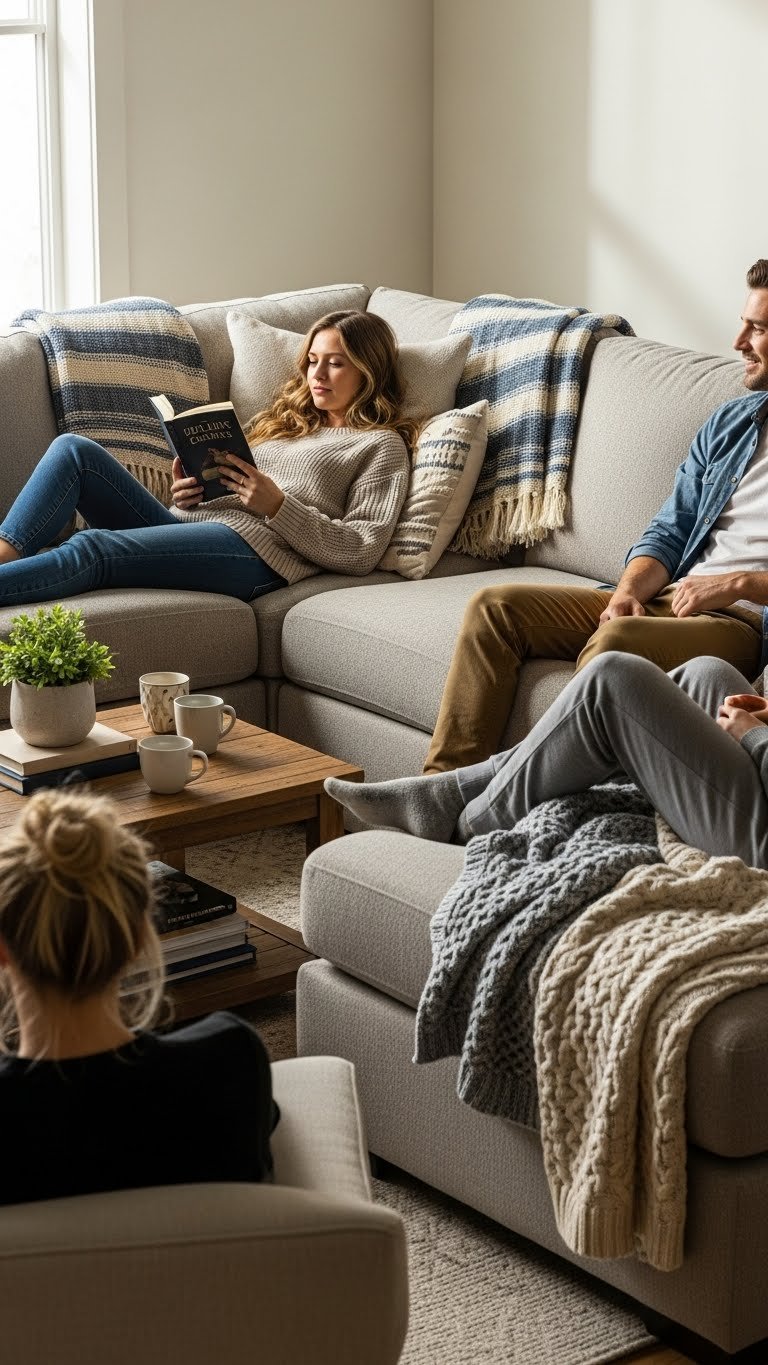
A sectional—especially a deep-seat version—naturally encourages people to stay longer and spread out. It’s not formal; it’s functional and cozy.
A deep-seat sectional like Article’s Sven ($1,100–$1,800), Wayfair’s Sectionals ($600–$1,500), or Living Spaces’ custom sectionals ($900–$2,000) seat more people comfortably than a standard sofa and chaise combo. Choose one with at least 38-inch seat depth and a chaise component for leg-stretching.
Sectionals do require more space, so measure your room before buying. Some brands offer free returns within 60 days if it doesn’t work, which takes pressure off the decision.
Pro tip: Many sectionals come with removable cushions ($50–$100 each as add-ons) so you can customize comfort over time.
A sectional transforms your living room from “place people visit” to “place where gatherings naturally happen.” People stay, linger, and actually relax together.
18. Invest in a Quality Mattress Topper for Guest Comfort
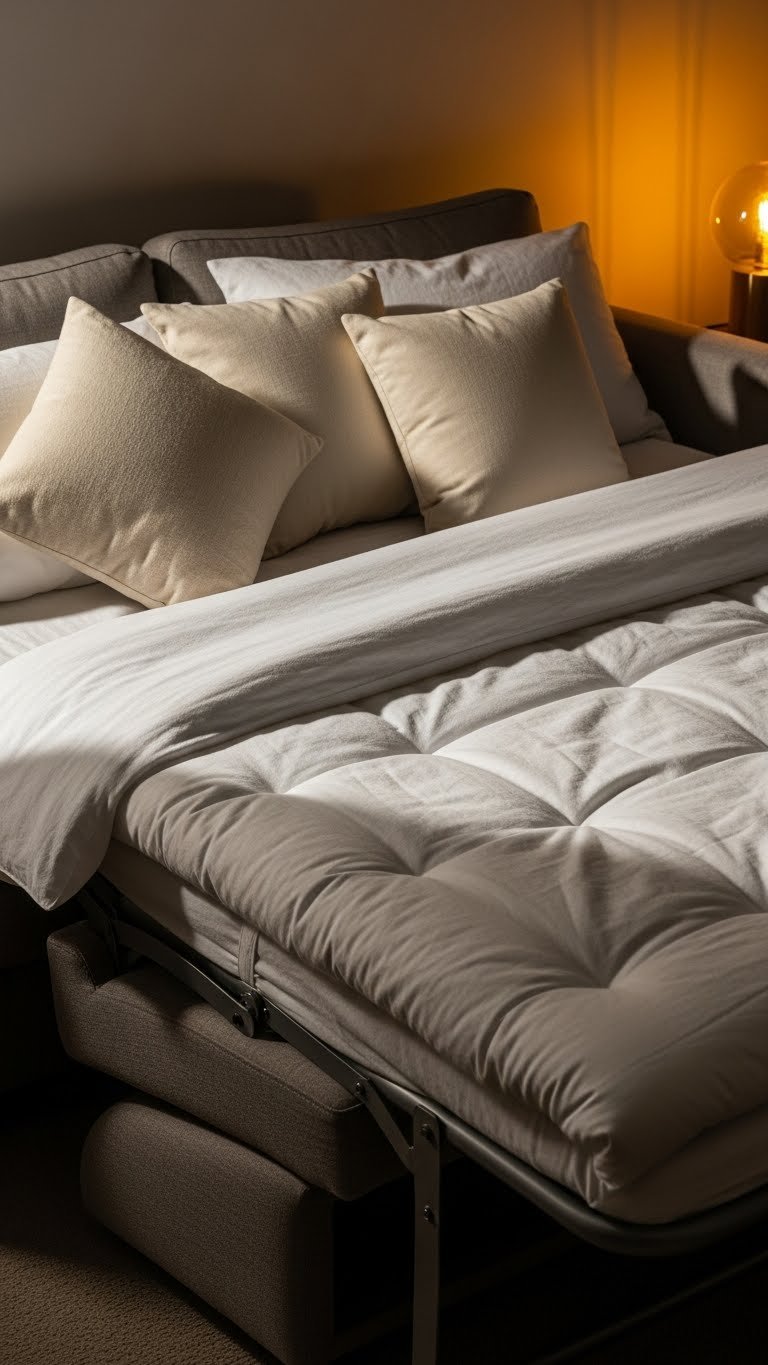
If your sofa doubles as a guest bed, a mattress topper transforms it from “uncomfortable air mattress vibe” to “actually restful sleep.” This is a game-changer investment.
A 4–6 inch memory foam or latex mattress topper ($150–$350) turns even a mediocre sofa bed into something guests won’t dread. Top with quality bedding ($80–$200 for sheets and pillows) and suddenly you have a legitimate guest bed. Brands like Helix, Purple, and Amazon Basics ($100–$250) offer solid toppers.
If your sofa bed is old and lumpy, a topper ($200–$300 with quality bedding) is way cheaper than replacing the whole sofa ($800–$2,000).
Guests actually sleep well instead of waking stiff and resentful. When your sofa bed is genuinely comfortable, people are more likely to visit—and you’ll feel generous hosting them.
19. Use Coordinated Throw Pillow Covers for Easy Refreshes
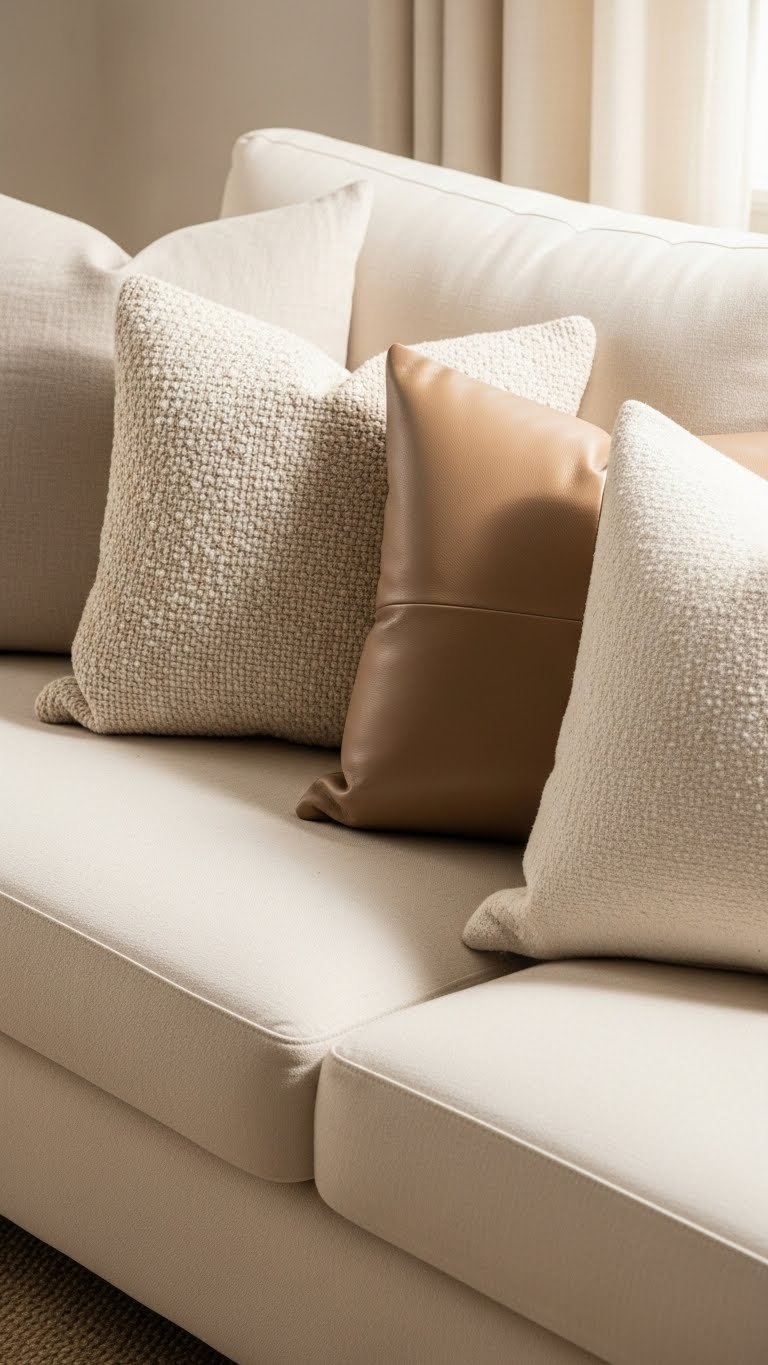
Throw pillow covers ($15–$40 each) let you refresh your sofa’s look without buying new pillows every season. This is the budget hack that actually works.
Buy solid-colored pillow covers in bulk from Etsy ($12–$30 each), Target ($15–$25), or Wayfair ($20–$40), then coordinate them with throws and art. Swap covers seasonally or whenever you want a change—wash on gentle cycle and rehang. Keep 4–6 covers on rotation so you always have something clean.
Pro tip: Buy pillow inserts separately ($5–$15 each) so you’re only replacing covers, not entire pillows. This approach costs $40–$100 for four quality covers instead of $150–$200 for complete new pillows.
You’ll feel less committed to one sofa look when you know covers are easily swappable. This freedom means you’ll actually experiment with styling instead of settling.
20. Add a Sofa Console Table Behind for Beverage Storage

If your sofa doesn’t sit against a wall, a console table behind it ($100–$300) creates a functional bar zone and defines the seating space. This works particularly well with curved or sectional sofas positioned in open rooms.
Choose a narrow console ($80–$200 at IKEA, Target, or Wayfair) that’s roughly the sofa’s width. Natural wood, metal, or a hybrid finish ($120–$250) keeps it feeling light and intentional. This surface holds drinks, a lamp, decorative objects, and remote controls—everything you’d actually use while lounging.
Renter-friendly tip: A console positioned behind a sofa (not attached) works with rental agreements and moves when you do.
This simple addition makes your sofa feel more finished and functional. You’ll use the space more intentionally when there’s actual surface area for living.
21. Choose a Sofa with Removable, Washable Cushion Covers
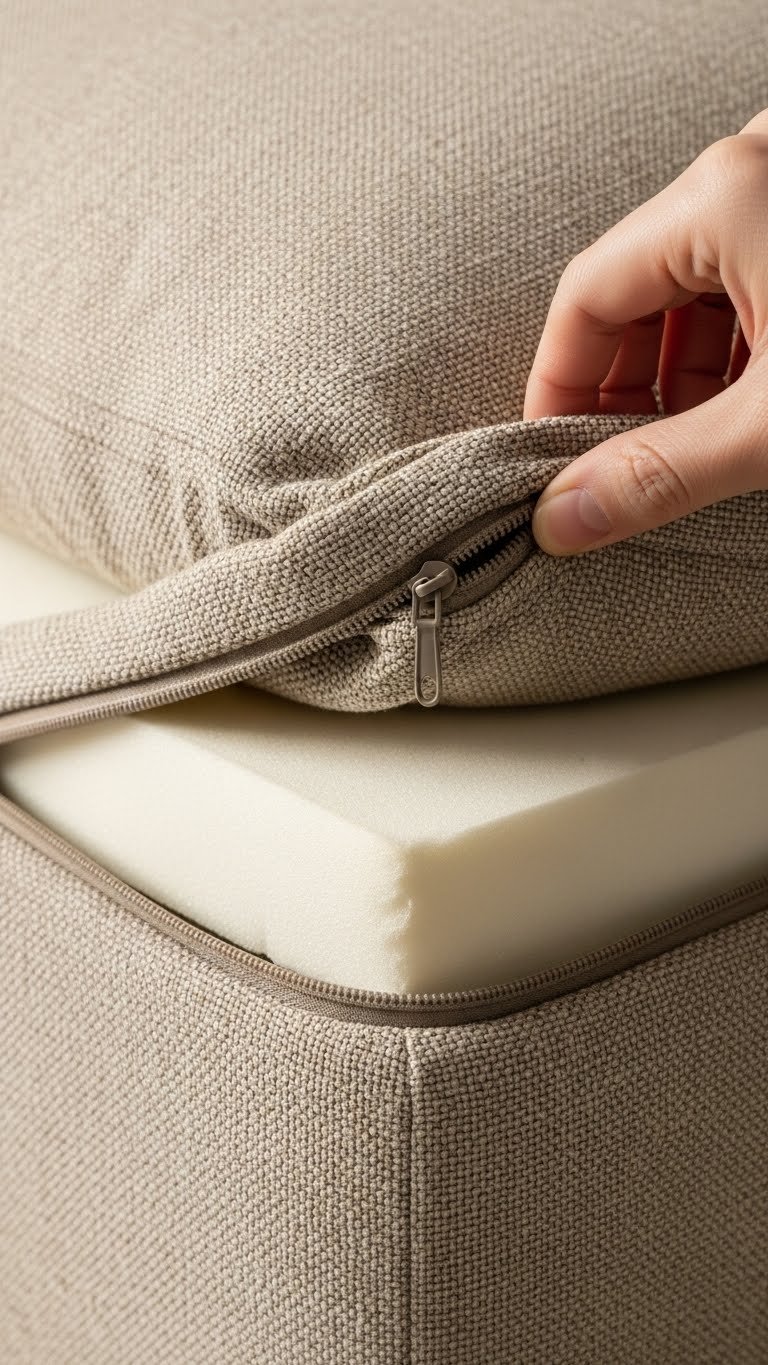
If you have kids, pets, or just don’t love stressing about spills, removable cushion covers ($20–$50 extra per cover when ordering) are non-negotiable.
Brands like Article, Joybird, Maiden Home, and Burrow all offer removable, washable covers as standard or a low-cost upgrade. When something spills, simply unzip, remove, and wash on gentle—usually ready to rehang within 24 hours. This feature alone justifies choosing one brand over another.
If you already have a sofa without removable covers, universal cushion covers ($30–$70) are available on Amazon and Etsy that fit most standard cushion sizes. They won’t be perfect, but they’re better than nothing.
Living with young kids or pets becomes infinitely less stressful when you know spills aren’t permanent. Your sofa stays looking decent instead of developing mysterious stains over time.
22. Layer a Vintage or Heirloom Rug Under Your Sofa
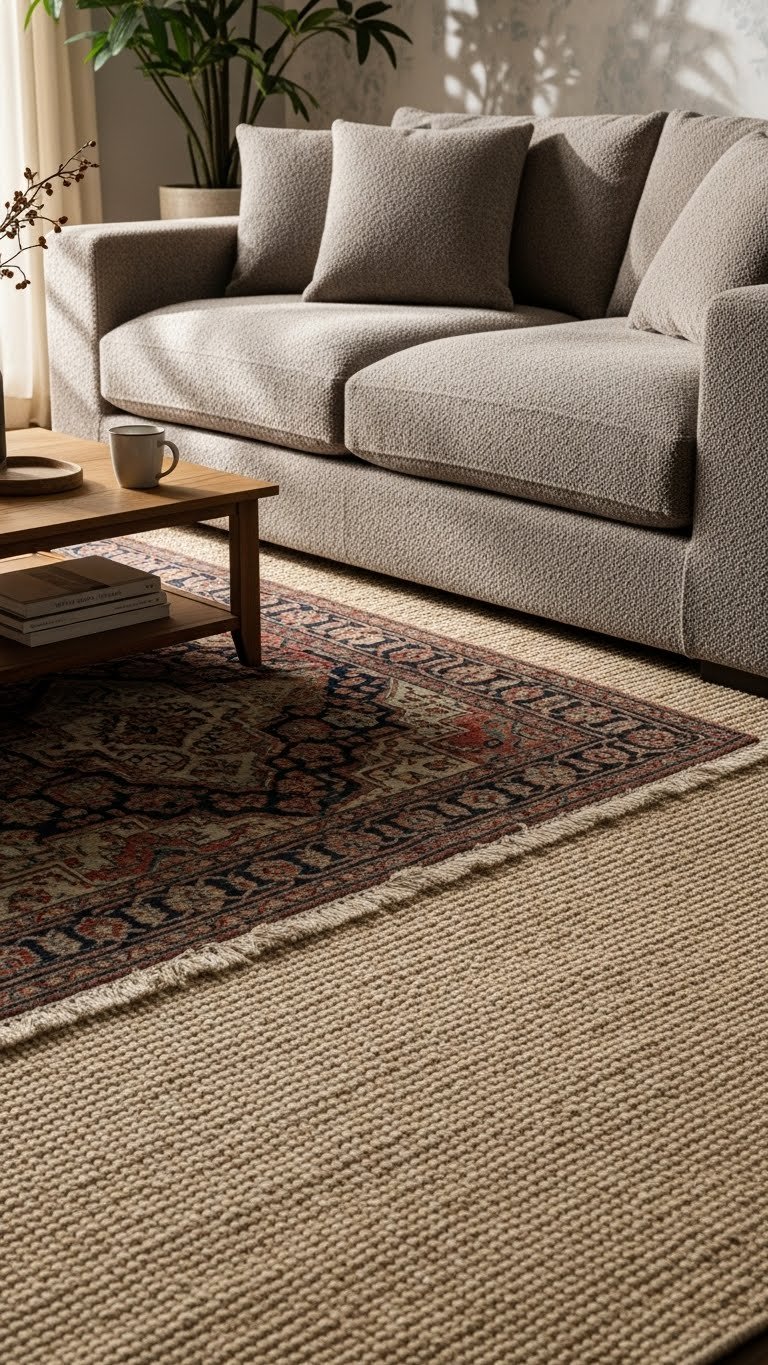
A rug grounds your sofa and defines the seating zone, especially in open-concept spaces. Vintage or heirloom-style rugs add character that feels collected over time.
Layer a larger neutral base rug ($150–$400 in natural jute or cotton) with a smaller patterned or vintage rug ($200–$800) layered on top. This approach creates visual depth and feels more intentional than a single rug. Budget options at IKEA ($40–$120), Wayfair ($80–$300), and Rugs USA ($100–$400) offer solid starting points. Investment pieces from Etsy vintage sellers ($300–$1,000) age beautifully and feel unique.
The layered approach also hides stains—pattern and multiple rugs mean accidents disappear into the design.
Your sofa instantly feels anchored and designed once it has a rug underneath. The furniture looks intentional rather than randomly placed.
23. Add a Sofa Arm Tray for Drinks and Small Objects
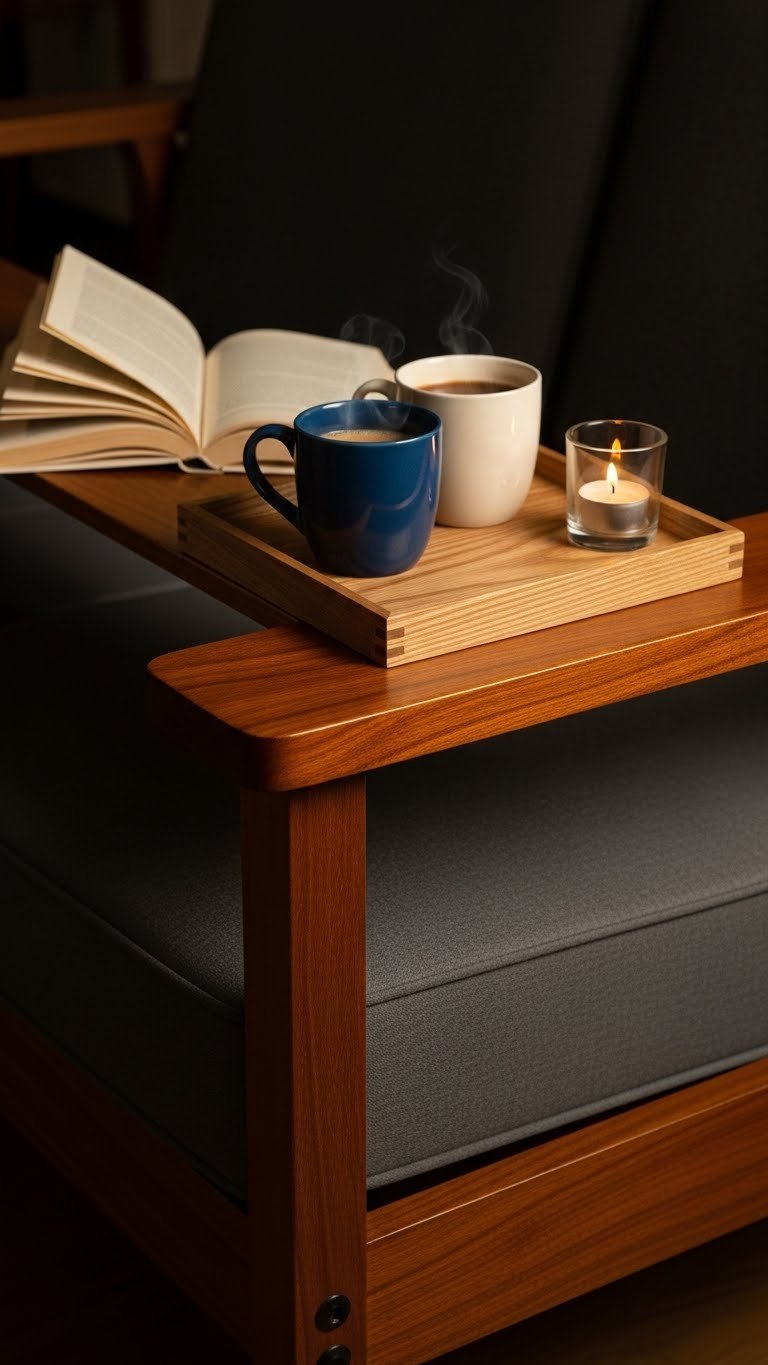
A sofa arm tray ($25–$60) solves the “where do I put my drink?” problem elegantly. These slim trays sit flush on the sofa arm and hold a mug, small plate, phone, or remote without looking cluttered.
Shop for wooden or woven arm trays at Target ($20–$40), IKEA ($15–$30), Wayfair ($30–$50), or Etsy ($30–$70). Choose sizes that match your sofa arm width. Natural wood ($30–$50) or woven rattan ($25–$45) coordinates with most aesthetics.
If you’re renting or prefer not to commit, woven placemats ($8–$15) can temporarily sit on the arm for the same effect—just less structured.
You’ll suddenly notice how much easier it is to enjoy your sofa when there’s a designated spot for your beverage. Small conveniences change how much time you actually spend there.
24. Mix Velvet Accent Pieces with Your Neutral Deep-Seat Sofa
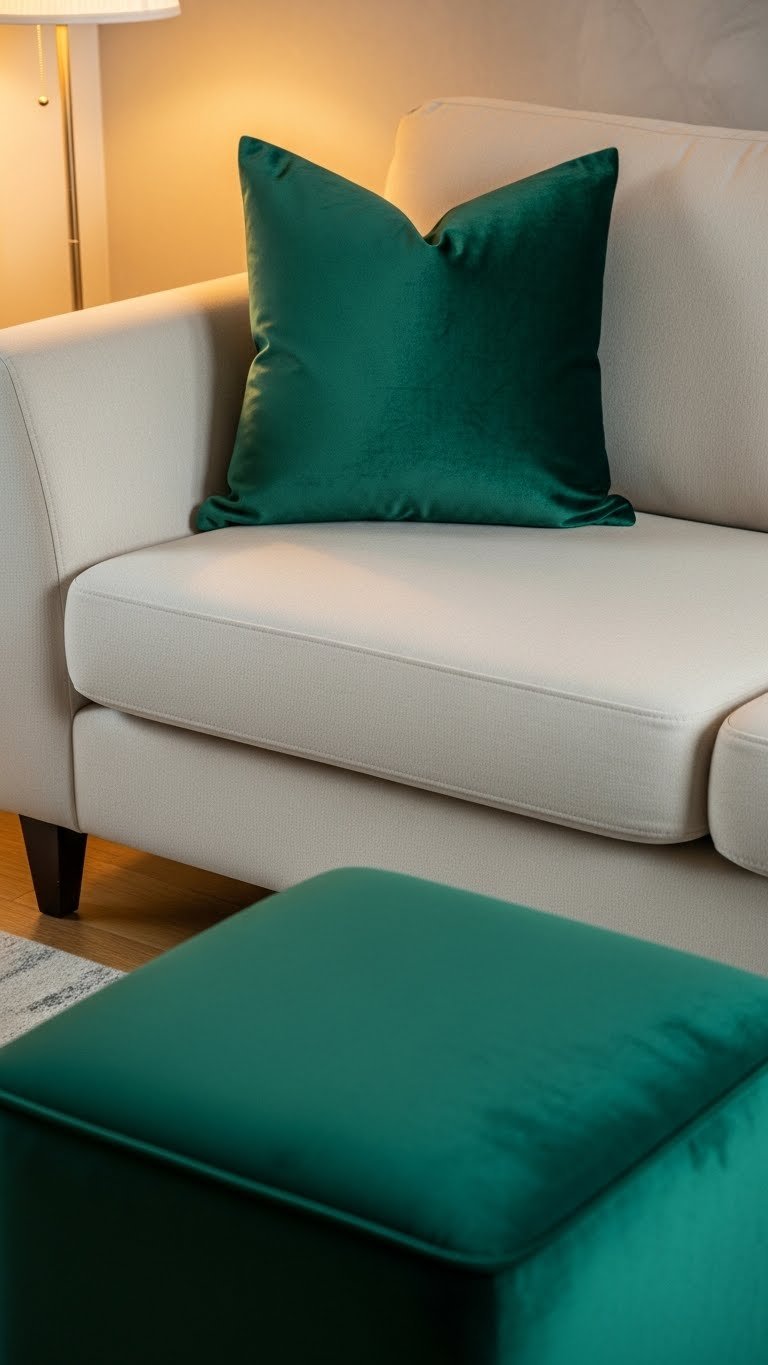
Velvet feels luxe but can overwhelm a whole sofa. As accents on a neutral base, velvet adds richness without taking over.
Add one velvet pillow ($30–$70) or velvet ottoman ($150–$350) in a jewel tone (emerald, sapphire, deep burgundy) to your neutral sofa. Velvet catches light differently than other fabrics, so it reads as intentional and high-design even in small quantities. Brands like Article, CB2, Schoolhouse, and West Elm offer stunning velvet accents ($40–$150).
Pro tip: Choose performance velvet ($50–$100 for accents) over standard velvet if you’re worried about durability. It resists wear and pilling.
This combination reads as “curated and intentional” while staying practical and comfortable. You get the luxe factor without any of the fussiness.
25. Arrange a Reading Nook Within Your Sofa Space
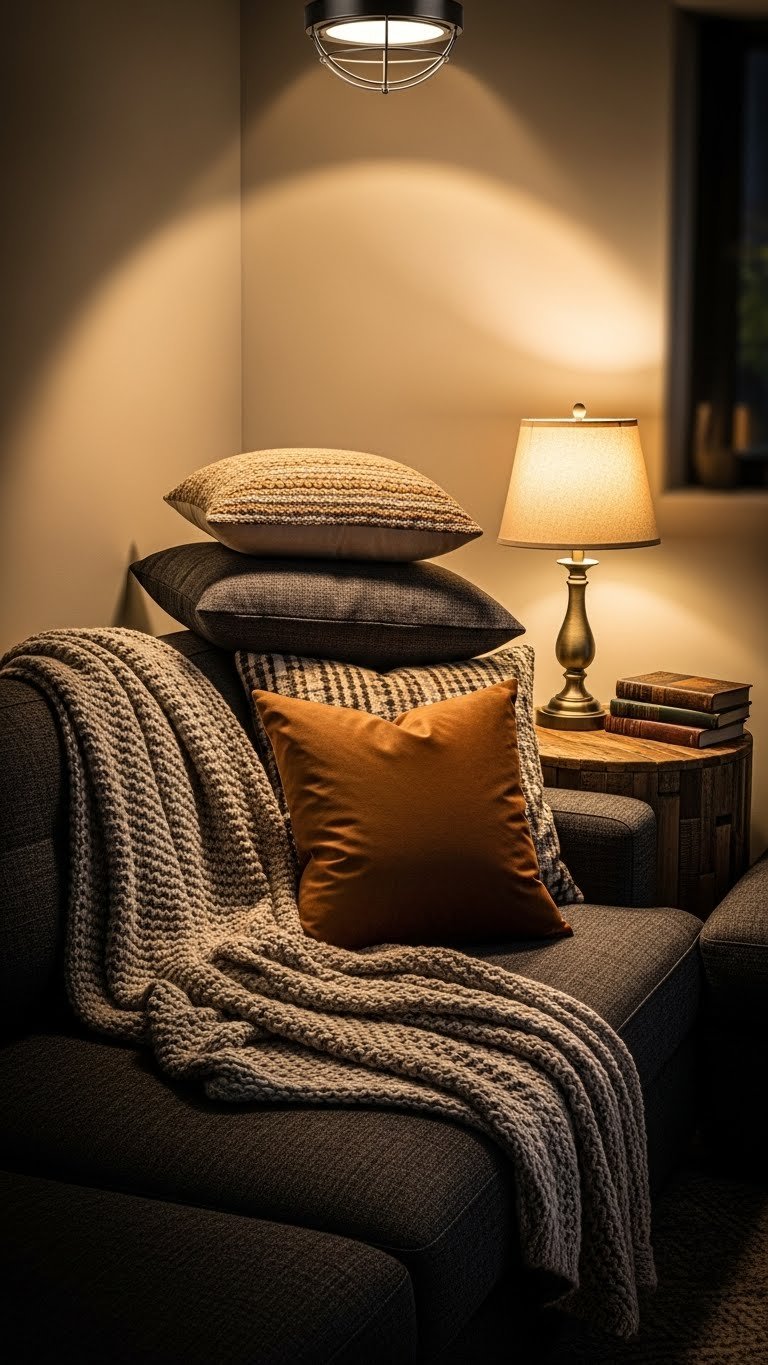
Instead of spreading across the entire sofa, designate one corner or end as your personal reading sanctuary. This gives you permission to claim the space and actually use it intentionally.
Gather 3–5 throw pillows ($15–$40 each) in complementary textures and colors, stack them in one corner, and drape a throw blanket ($30–$70) nearby. Position a small side table ($50–$150) with a lamp ($40–$100) and a stack of books. Use a corner shelf ($30–$80) if wall space allows, or simply keep books on the table surface.
The goal is: everything you need for a reading session is within arm’s reach. No getting up, no searching for your bookmark, no distractions.
This tiny interior design decision completely changes your relationship with the sofa. Suddenly it’s not just a place to collapse—it’s a destination where you intentionally go to rest.
26. Invest in Professional Sofa Cleaning Annually

A deep-seat sofa that you actually live on will eventually look lived-in. Professional cleaning ($150–$300 annually) keeps it looking fresh without replacing it.
Many dry cleaners and upholstery specialists offer annual or bi-annual deep cleaning ($150–$400 depending on sofa size and fabric). They use specialized equipment that doesn’t leave it soaking wet—usually dry within 24 hours. Some premium services ($200–$400) include fabric conditioning, stain treatment, or odor removal.
If professional cleaning feels expensive, at-home upholstery cleaning rentals ($25–$50 for a day) from grocery stores or hardware shops are solid budget alternatives. You’ll be surprised how much cleaner it looks with proper equipment versus your vacuum.
Your sofa will look intentionally lived-in rather than neglected. Regular care extends its life by years and keeps it feeling fresh without requiring replacement.
Save this post for your next sofa shopping trip or refresh project. Pick one idea to try this week—whether it’s measuring for seat depth, adding a throw pillow, or testing a rounded coffee table shape. Small comfort upgrades add up fast, and your living room deserves to feel like the sanctuary you actually want to use.
Leave a Reply