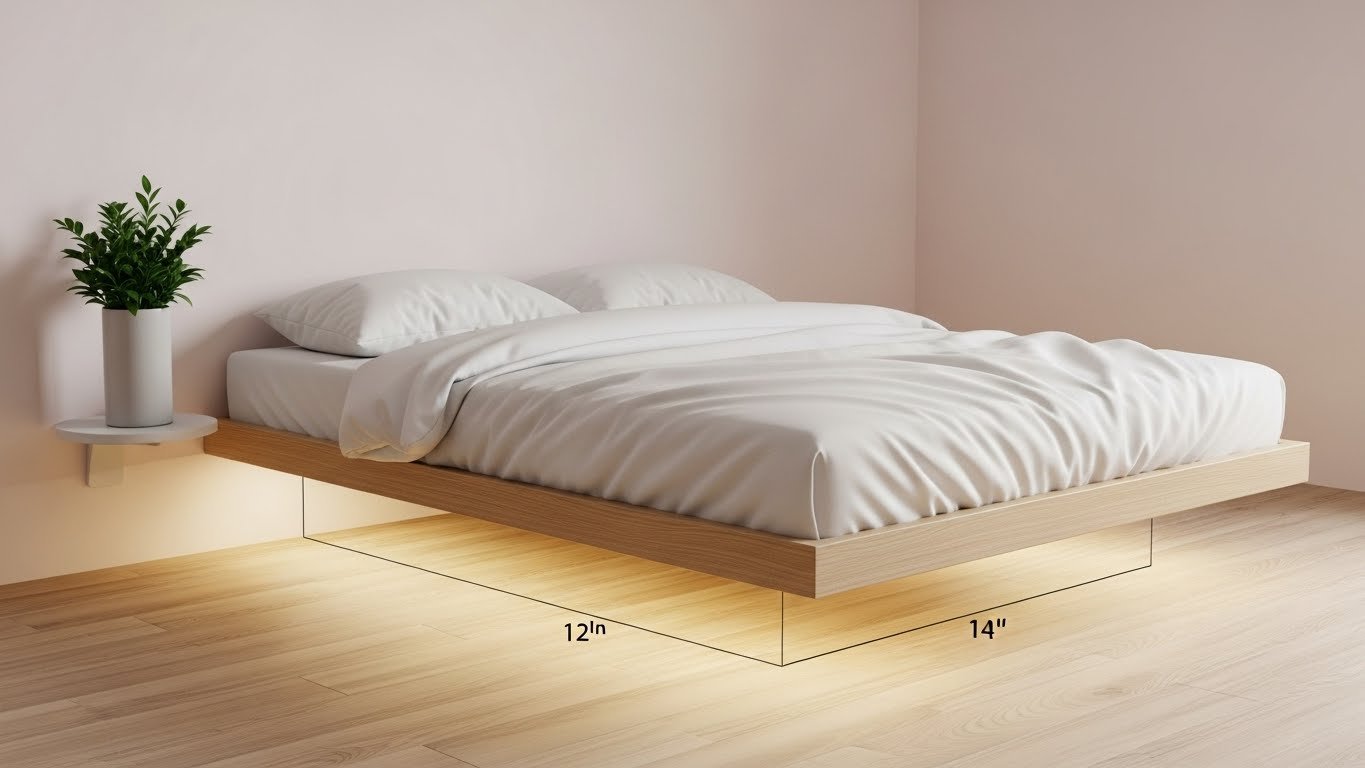
Floating bed frames are having a moment—and for good reason. They create the illusion of more space, add a futuristic vibe to any bedroom, and honestly? They just look cool. Whether you’re working with a tiny apartment, a guest room, or you just want to elevate your bedroom design, floating beds offer that sleek, modern aesthetic without sacrificing comfort or functionality.
The best part? You don’t need a massive budget or a degree in carpentry to make it happen. From simple wall-mounted designs you can install yourself to statement-making sculptural frames, there are options for every skill level, space size, and price point. We’ve rounded up 27 floating bed frame ideas that range from minimalist ($0 hacks to renter-friendly solutions) to investment pieces that’ll make your bedroom feel like a luxury boutique hotel.
Ready to lift your bedroom off the ground? Let’s dive in.
1. Install a Simple Wall-Mounted Platform
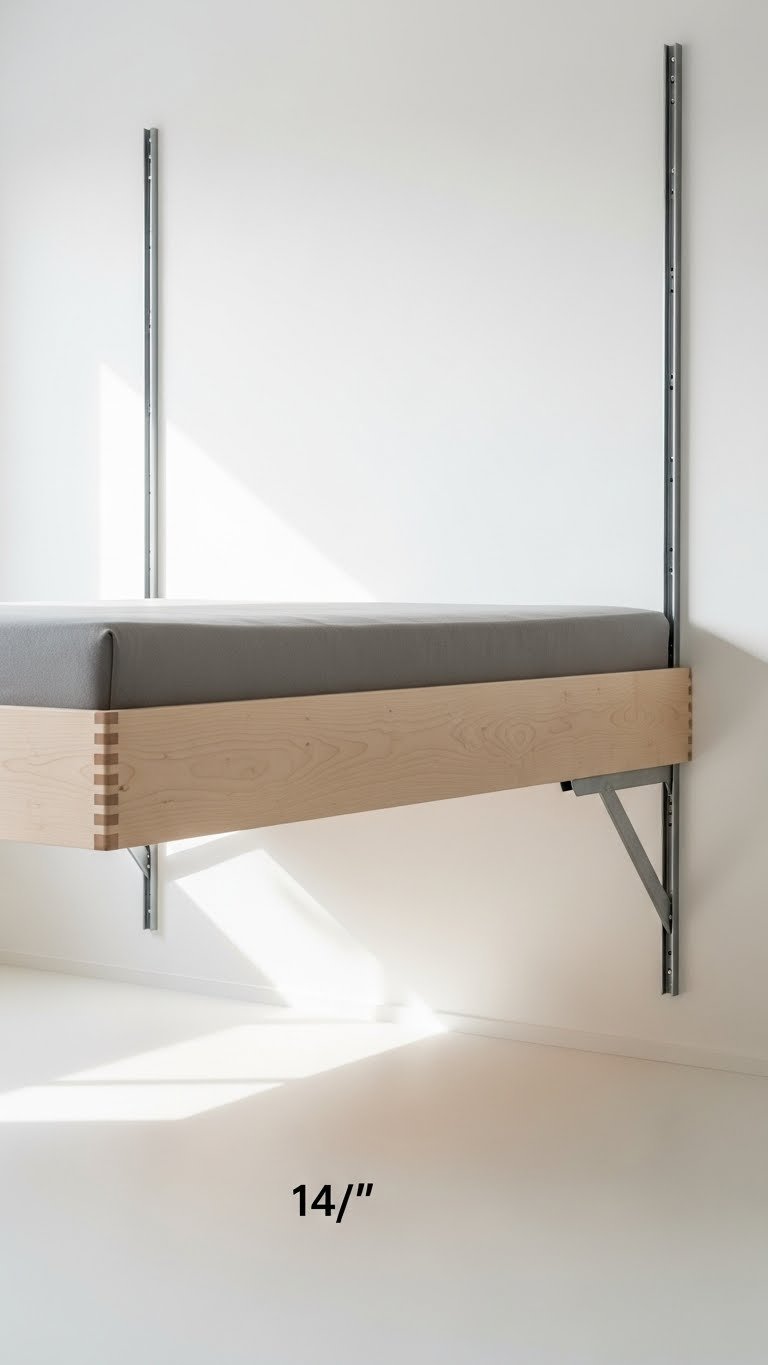
A wall-mounted platform is the most straightforward floating bed option and requires zero furniture legs. You’ll need to locate and anchor into your home’s wall studs using heavy-duty metal brackets (typically $40–$80 per pair from Home Depot or Lowe’s) and a solid piece of plywood or a pre-made platform base.
Mount the brackets 16 inches apart horizontally and secure them into studs with lag bolts rated for at least 200 pounds each. The entire installation takes one weekend for most people, though you might want to hire a handyperson if you’re uncomfortable with power tools (roughly $150–$300 in labor). Test the stability before placing your mattress to make sure everything feels solid.
The result is a bed that appears to hover with zero visual bulk underneath. You’ll gain storage space and that coveted floating aesthetic without breaking the bank. This is ideal for renters with a security deposit they want back—you can patch the holes when you move.
2. Create a Renter-Friendly Faux Float with Bed Risers
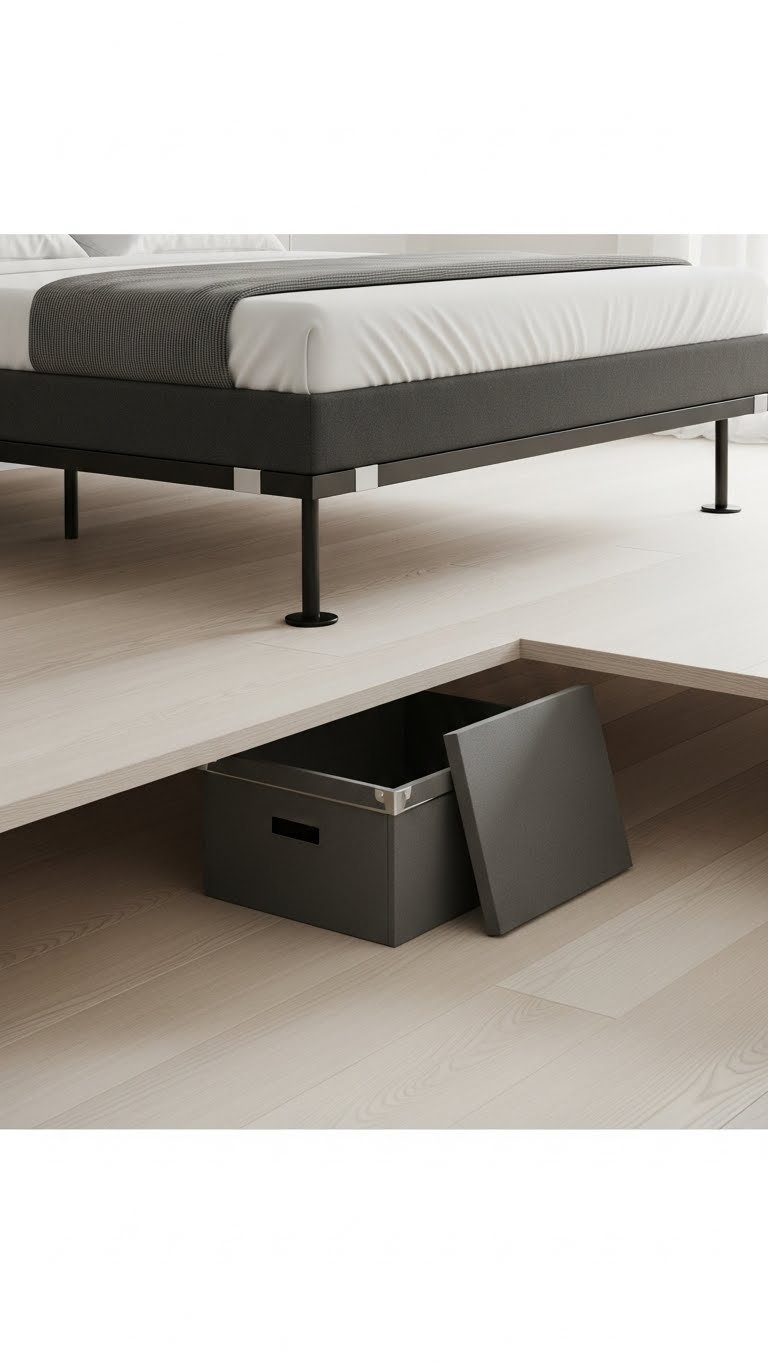
Don’t want to drill into walls? Bed risers work brilliantly for creating the floating illusion without any permanent modifications. Choose metal bed risers in matte black or brushed silver ($30–$60 from Amazon or Wayfair) and position them under each corner of your bed frame.
Pair risers with a low-profile platform base ($80–$150) to create continuous visual lines that make the bed appear supported by nothing but air. The combined height usually sits between 12–18 inches, giving you perfect clearance for under-bed storage boxes or a low bench.
Setup takes about 20 minutes, and you can take everything with you when you move. The open space underneath makes your room feel exponentially larger, especially in smaller bedrooms where every inch counts. Storage containers and light-colored boxes underneath reinforce the minimalist, modern vibe.
3. Use a Cantilever Platform for Maximum Impact
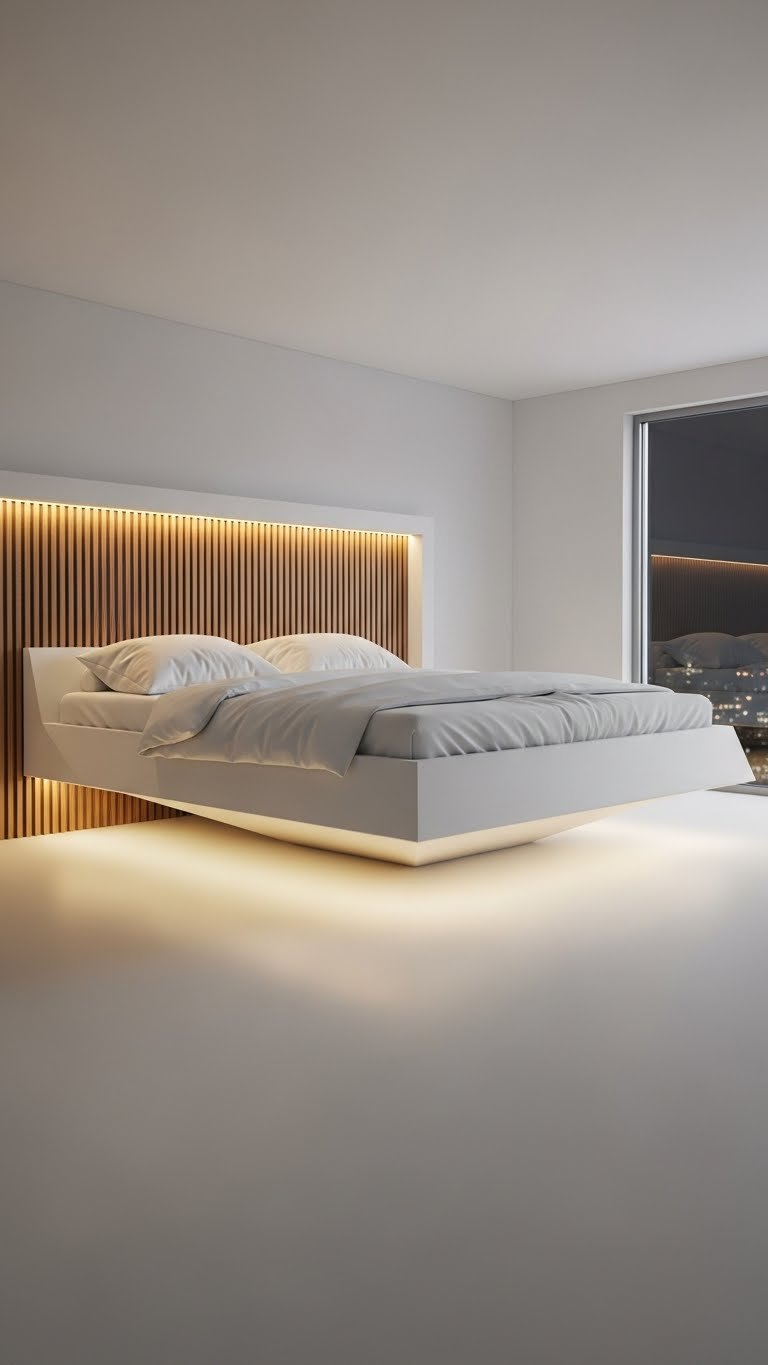
A cantilever design takes the floating concept to the next level—the bed extends from the wall with one end anchored and the other end floating freely into the room. This creates serious architectural drama and maximizes under-bed space.
You’ll need professional installation ($400–$800) unless you’re experienced with structural work. The hidden support system typically uses steel I-beams anchored deep into wall studs. Pre-made cantilever bed frames from brands like Article or Blu Dot ($1,200–$2,500) come with installation guides, though hiring a carpenter is recommended.
The payoff is unmissable: a bed that looks like it’s defying gravity from the moment someone walks in. The open space underneath feels sculptural and gallery-like, making even a small bedroom feel design-forward and intentional.
4. Layer Textured Fabrics on a Floating Frame

Pair your floating frame with textured fabrics like bouclé, linen, and chunky knit throws to add visual depth and luxury without cluttering the space. Layer a cream bouclé duvet cover ($60–$120 from Target or Parachute), a natural linen throw ($50–$100), and pillows in varying textures to create a magazine-worthy look.
Bouclé has surged 35% in searches over the past year—people are craving that tactile, cozy element in modern spaces. The textures catch light beautifully and make a minimalist floating bed feel high-end and thoughtfully styled.
This approach takes 30 minutes to style and costs $150–$250 total for quality pieces. Your floating bed becomes a focal point that invites people to want to sink into it. The textured layers make the space feel warm and lived-in rather than cold and clinical.
5. Add Biophilic Elements Around the Base
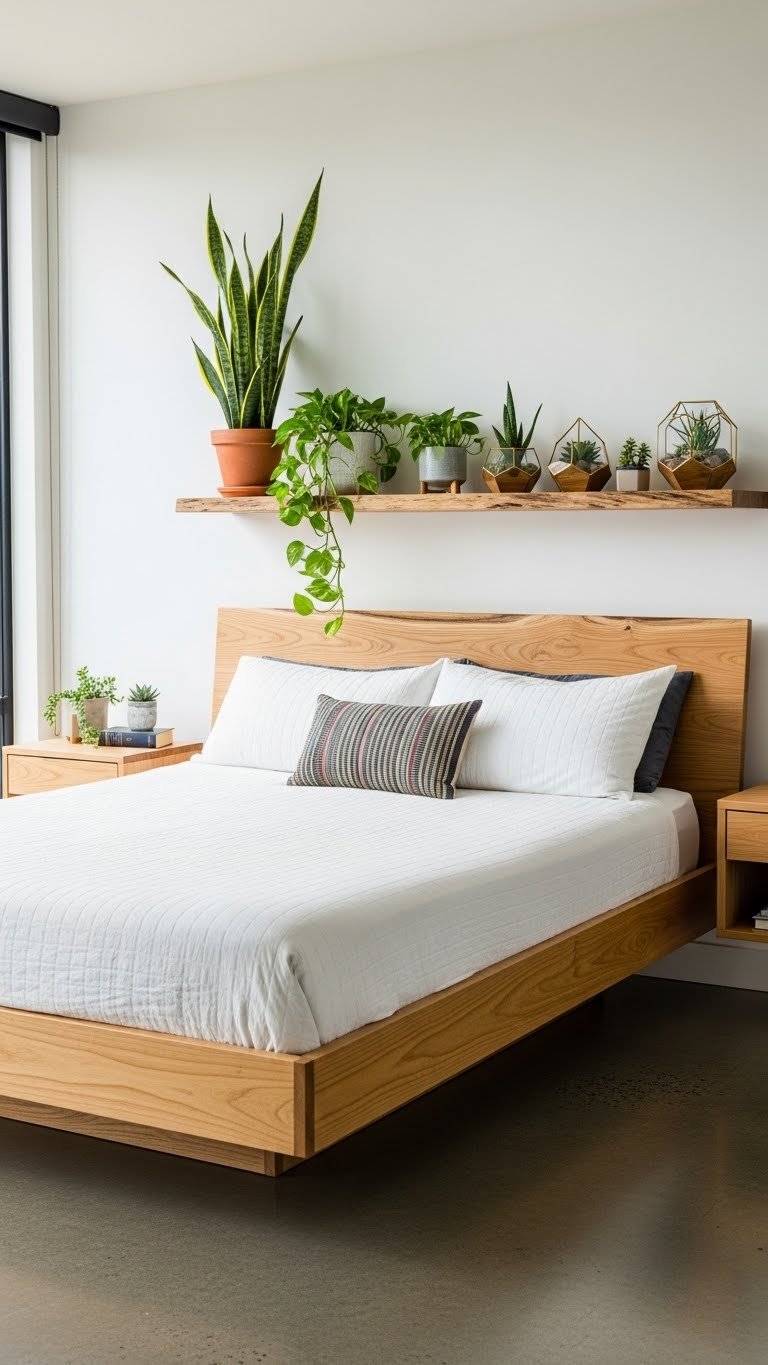
Bring nature into your floating bed setup by adding plants and natural materials around the base area. Install a live-edge wooden shelf ($40–$100 from Etsy) behind your headrest and populate it with low-maintenance plants like snake plants and pothos ($10–$25 each).
Place additional potted plants on either side of the floating frame to create a biophilic buffer that grounds the airy design. The combination of wood, plants, and open space creates a serene, resort-like atmosphere while improving air quality and reducing stress.
This entire setup costs $100–$200 and takes one afternoon to arrange. The greenery softens the minimalist lines of a floating bed and makes your bedroom feel like a personal sanctuary. Studies show biophilic design boosts mood and sleep quality—so you’re not just decorating, you’re optimizing your space for wellness.
6. Install Smart Lighting Under the Frame
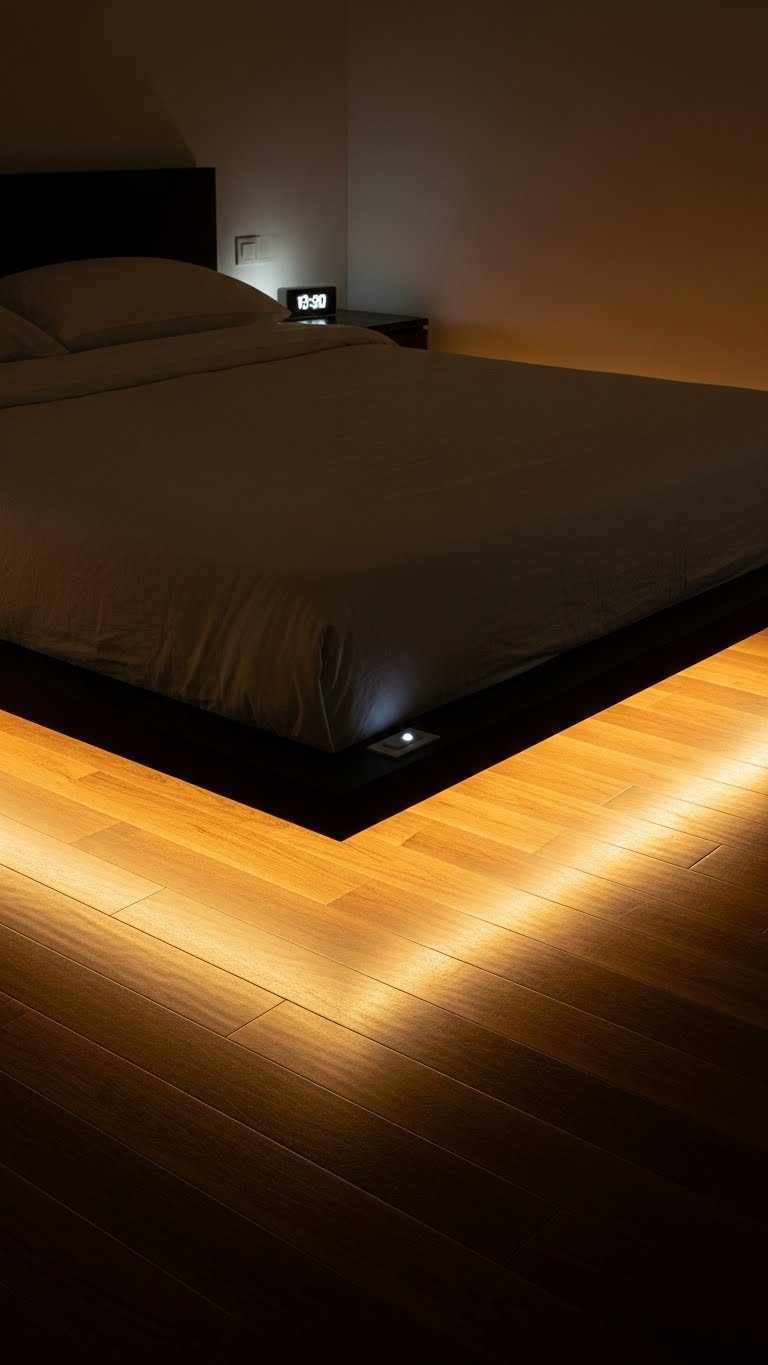
Floating beds are the perfect canvas for ambient lighting. Install LED strip lights ($20–$50 from Amazon) along the underside of your floating frame using the adhesive backing. Connect them to a smart bulb dimmer system ($30–$80 from Philips Hue or LIFX) so you can control brightness and color temperature from your phone.
Set the lights to warm white for evening relaxation and gradually dim them as bedtime approaches—research shows this supports your natural sleep cycle. The lighting takes 15–20 minutes to install and creates an instantly luxurious ambiance.
You’ll wake to soft light and fall asleep without harsh overhead fixtures disrupting your rest. Seventy percent of homeowners appreciate smart lighting for mood control, and this setup delivers exactly that while amplifying the floating aesthetic.
7. Create a Murphy Bed Floating Design for Small Spaces

If you’re maximizing a truly small space, a floating Murphy bed (also called a wall bed) offers the best of both worlds. These beds fold up into the wall, creating a floating panel appearance when closed and revealing storage, a desk, or open floor space below.
Quality Murphy bed systems from brands like Expand Furniture or Murphy Bed Co. range from $1,500–$4,000 installed, but they increase usable space by over 50%. Some DIY kits ($400–$800) exist, but professional installation is strongly recommended for safety and longevity.
A floating Murphy bed takes your bedroom from a sleeping box to a multi-functional space—suddenly you have room for a workout area, home office, or seating nook. It’s the ultimate space-saving solution for city apartments or studio setups where every square foot matters.
8. Paint an Accent Wall Behind Your Floating Frame
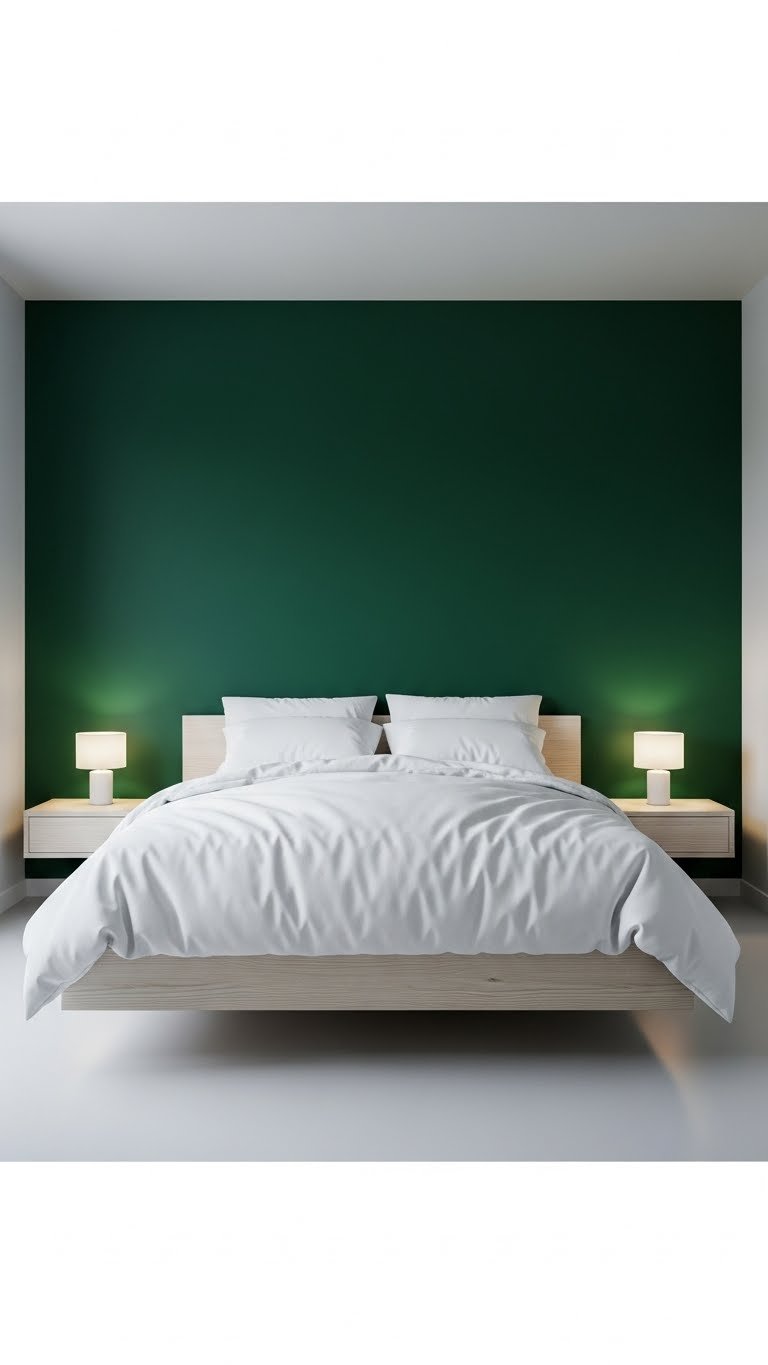
A bold accent wall behind your floating bed draws the eye upward and makes the frame appear to hover more dramatically. Choose a deep jewel tone (emerald, navy, or charcoal) or a warm terracotta or sage for subtle richness.
Paint the wall yourself in 4–6 hours ($30–$50 for quality paint from Sherwin-Williams or Benjamin Moore) or hire a painter ($200–$400). A single accent wall costs a fraction of full-room painting but delivers maximum visual impact.
The color creates depth and makes your bed the room’s focal point without adding furniture or clutter. Lighter bedding will contrast beautifully against darker walls, while neutral bedding pairs equally well with warm accent tones. The result feels curated and design-forward instantly.
9. Combine Floating Frame with Floor-to-Ceiling Curtains
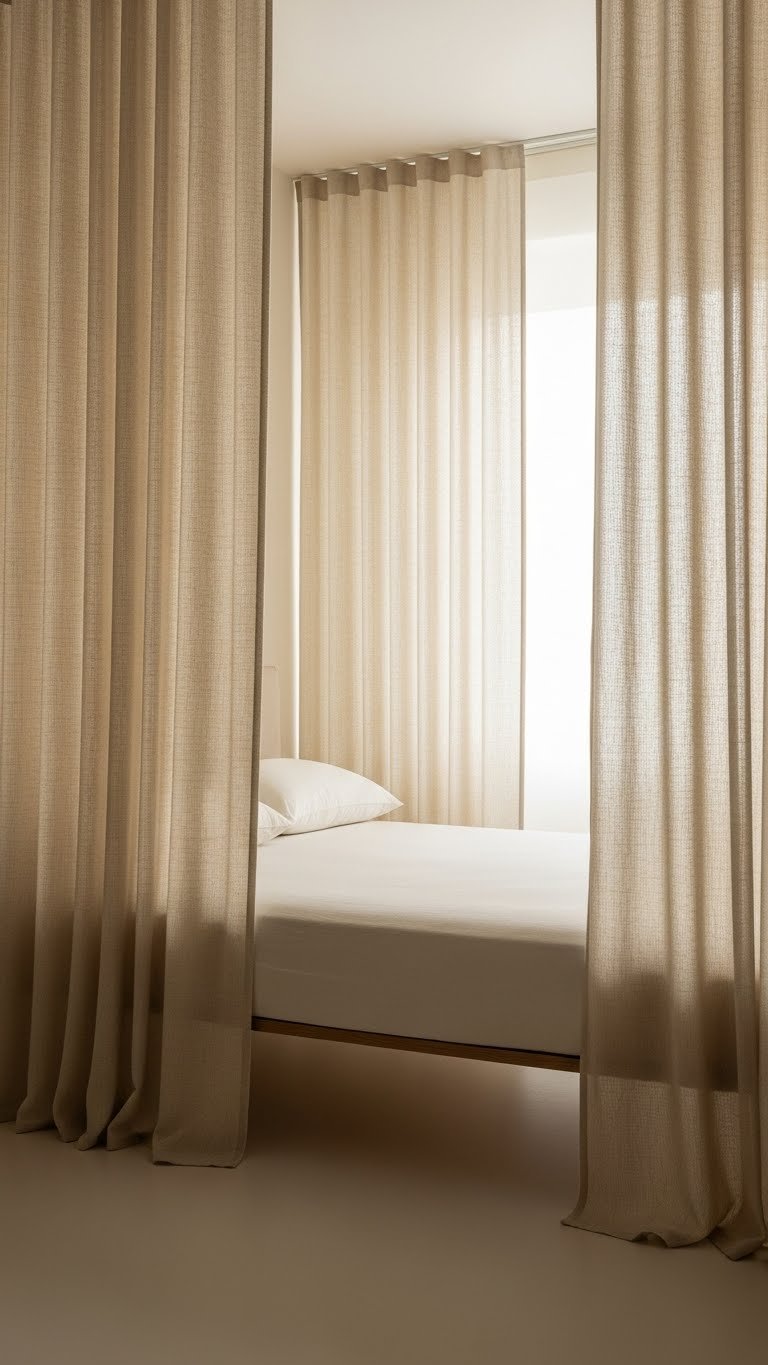
Pair your floating frame with floor-to-ceiling curtains in a textured fabric like linen or velvet to add personality and softness without bulk. Hang a curved curtain rod ($50–$120 from Article or CB2) high and wide to frame the floating bed on either side.
Choose natural linen curtains ($80–$150 per panel from Parachute or Etsy) or velvet drapes ($100–$200) for a luxe feel. This setup takes one afternoon to install and costs $200–$350 total.
The curtains create a cocoon-like effect around your floating bed, adding texture and visual interest while maintaining the minimalist structure. You can open them during the day for an airy feel or close them at night for coziness. It’s the best of both floating minimalism and layered, textured design.
10. Add a Low-Profile Wooden Base for Warmth
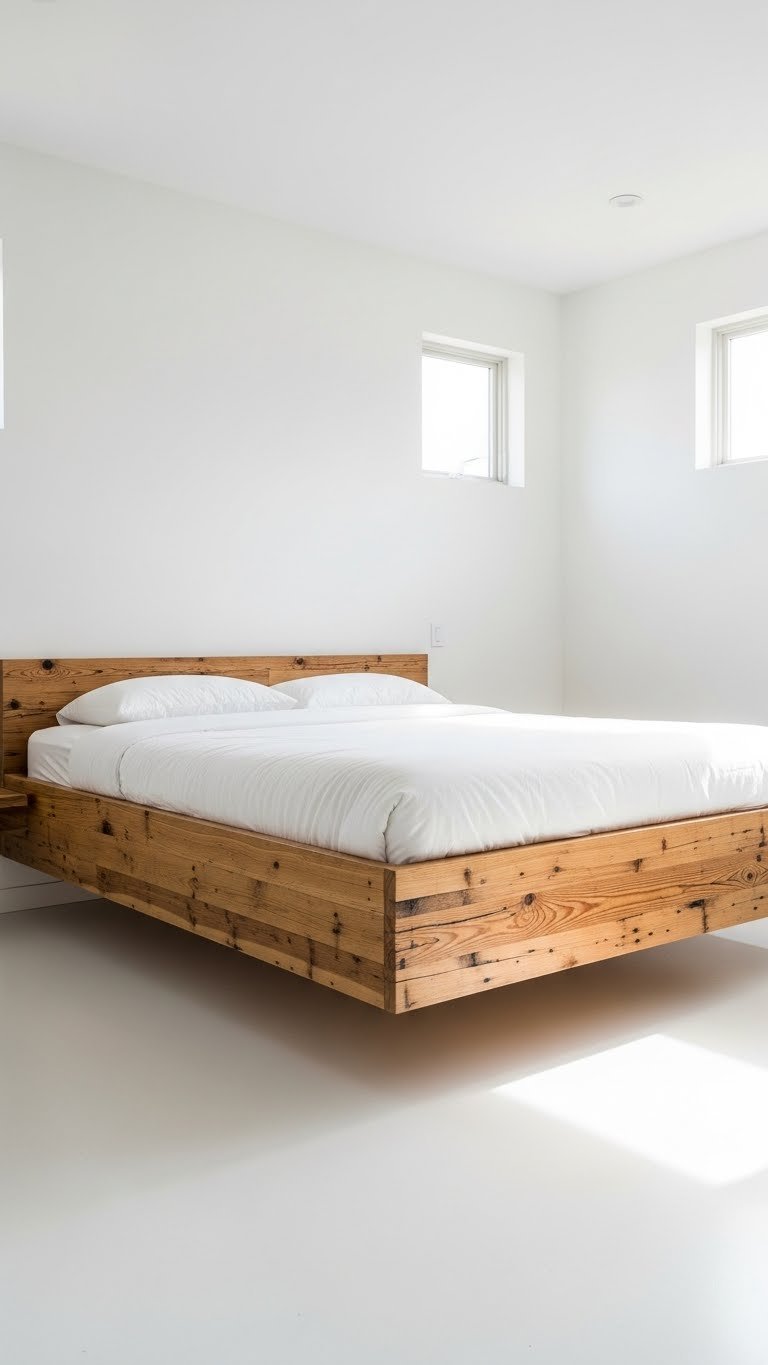
Offset the coolness of a modern floating frame with a warm wooden base platform. Use reclaimed or live-edge wood ($150–$300 from Etsy or local salvage yards) to create a base that feels both contemporary and organic.
Mount the wooden platform using hidden brackets ($50–$80) so the wood appears to float away from the wall. Finish it with a natural stain or matte sealant to emphasize grain and character. Installation takes 4–8 hours depending on the platform complexity.
The wood brings earthiness and craft to a minimalist design, making your bedroom feel warm and intentional rather than sterile. Pair it with neutral linens and natural materials (wool, linen, cotton) to complete the grounded aesthetic.
11. Style a Floating Frame in a Small Guest Room
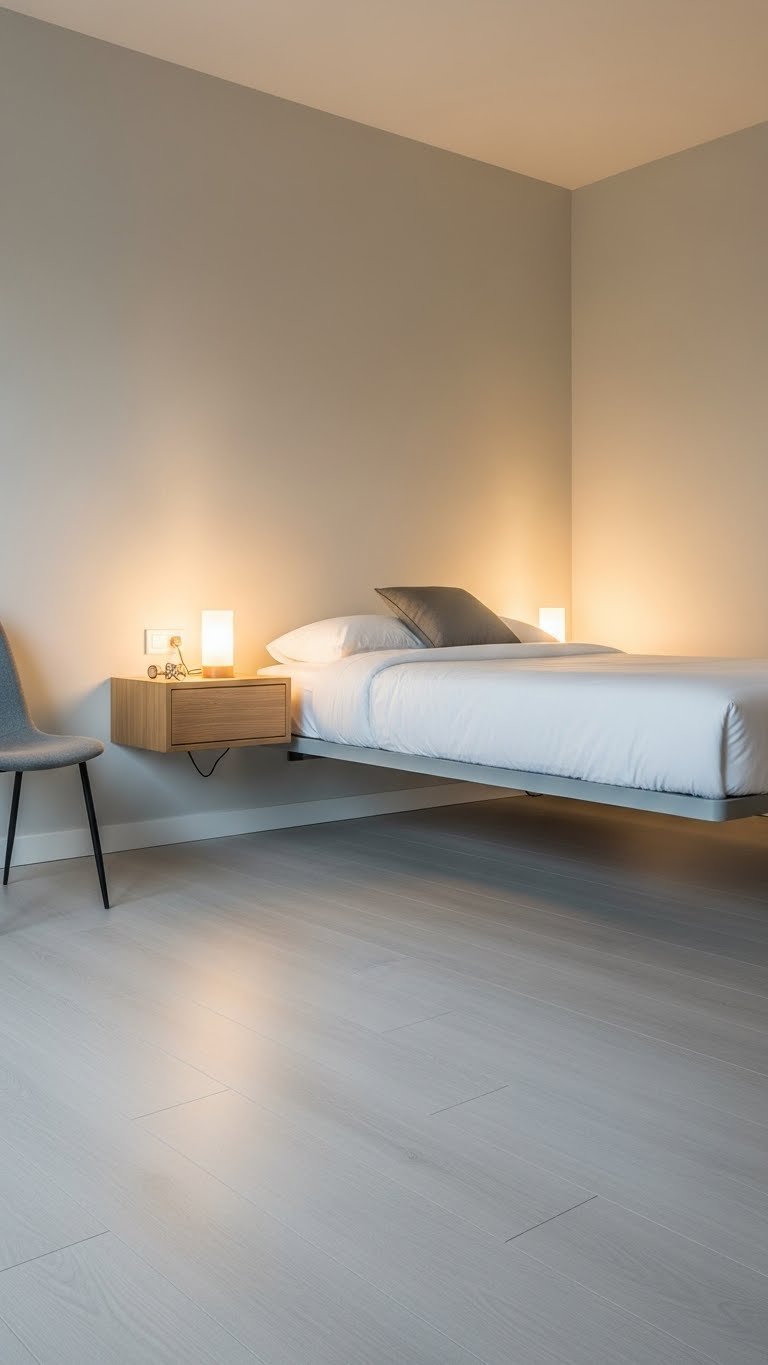
A floating bed is perfect for guest rooms where you want to maximize space and create a clean, uncluttered look. Mount a simple wall platform ($40–$100) with a matching floating nightstand ($30–$80 from IKEA or Article) on the adjacent wall.
This setup works beautifully for rooms where you want guests to feel welcomed but not claustrophobic. The open space underneath makes the room feel larger than it is—critical when you’re working with a smaller guest bedroom. Paint walls a soft neutral like warm white or soft gray ($30–$50) to amplify the sense of space.
Total investment: $100–$230. The result is a sophisticated, hotel-like guest room that says “we care about your comfort” without requiring extensive square footage or complicated design.
12. Incorporate a Floating Canopy for Drama
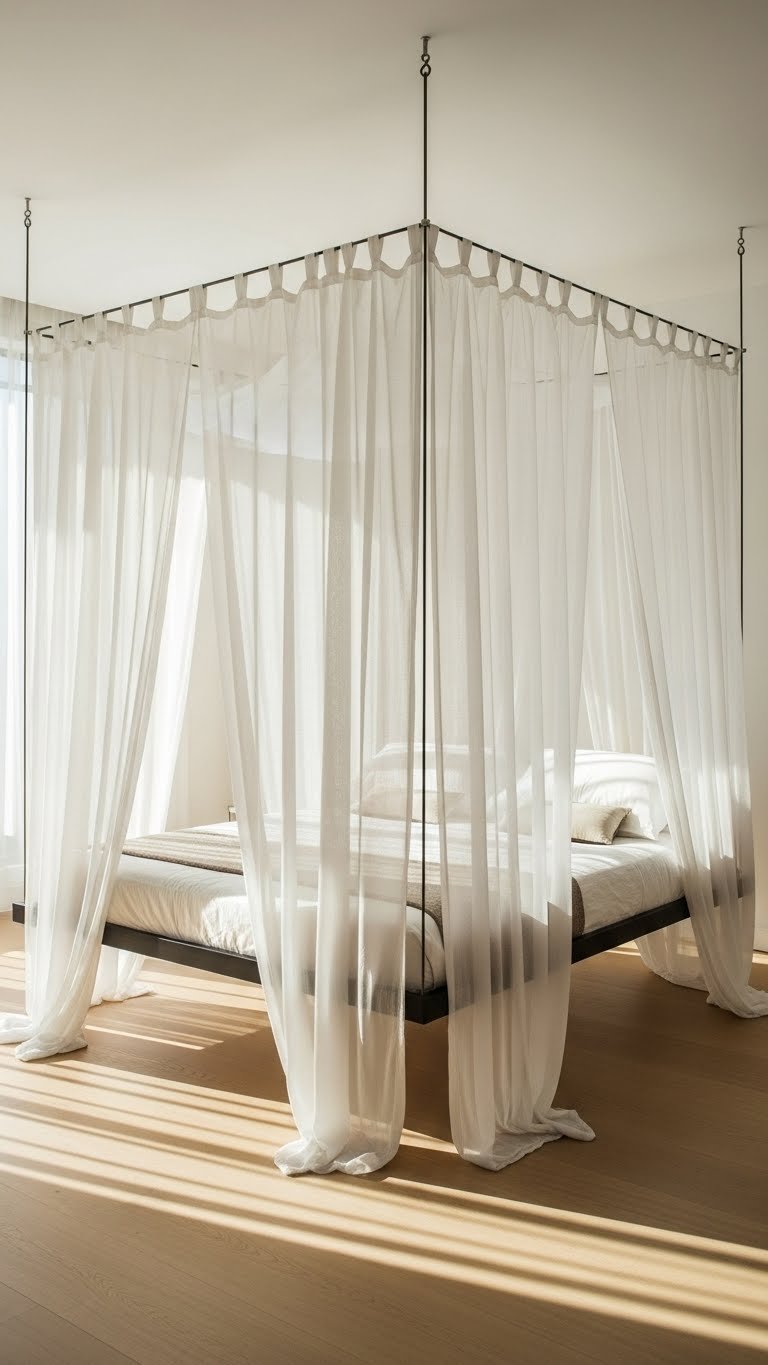
A floating canopy frame creates architectural interest while maintaining that weightless aesthetic. Install a ceiling-mounted canopy kit ($150–$300 from Etsy or specialty retailers) using steel cables and a minimalist frame, then drape it with sheer linen or gauze ($40–$80).
The floating canopy appears to hover from the ceiling rather than rise from the bed, creating a dreamlike, otherworldly effect. Installation requires finding ceiling joists and using proper anchors ($80–$150 if hiring help), but the payoff is showstopping.
Your bedroom becomes a personal sanctuary with a cozy, intimate quality. The sheer fabric diffuses light beautifully and adds texture without visual weight, making even a small bedroom feel both spacious and embracing.
13. Use Black Metal Brackets for Industrial Edge
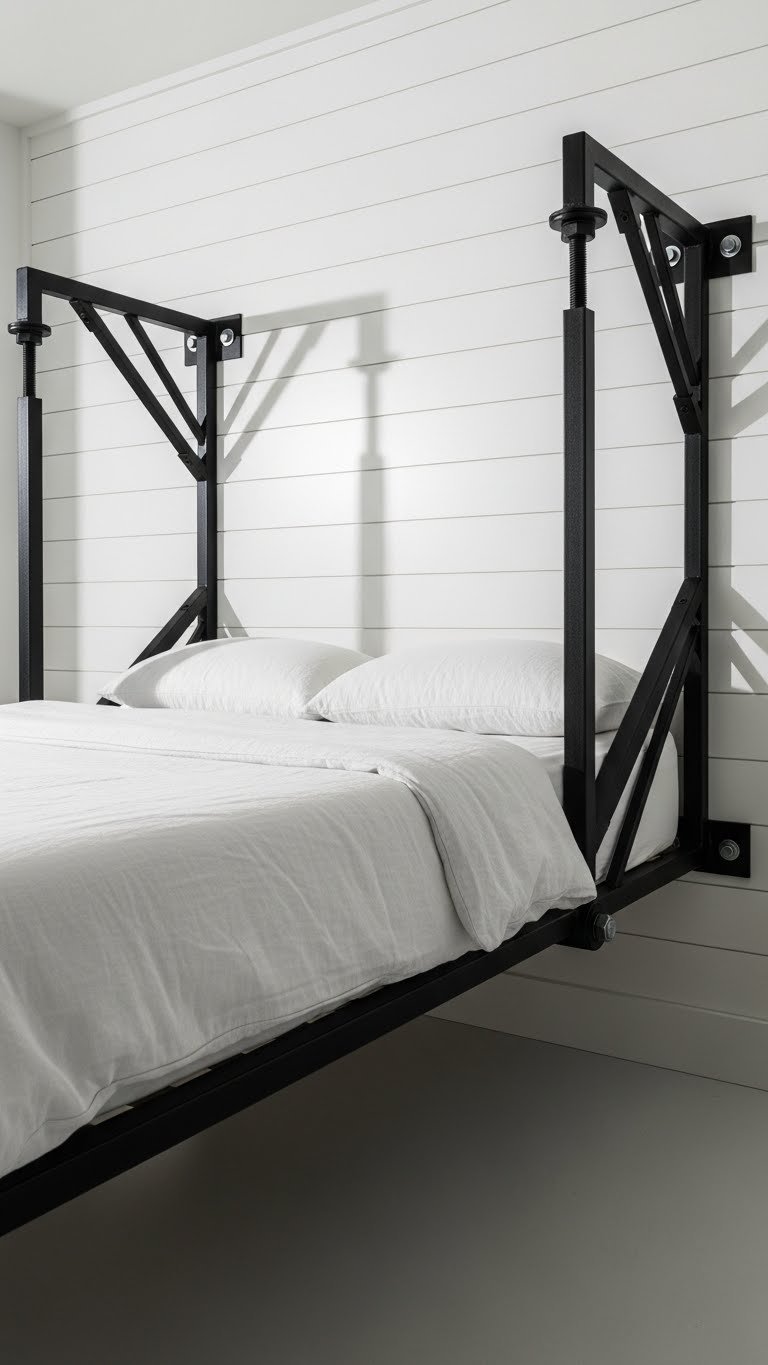
If you love industrial design, lean into it by choosing matte black metal brackets ($50–$100 per pair) and keeping the rest of the design minimal. Mount them onto white shiplap or plaster walls for maximum contrast and visual drama.
This approach celebrates the structural elements rather than hiding them, turning function into design. Install takes one afternoon with basic tools and a drill. The bold contrast between black metal and neutral walls creates a graphic, almost gallery-like effect.
This style works perfectly in bedrooms with concrete floors, exposed brick, or minimalist decor. It feels intentional and design-forward rather than like something that’s “supposed” to be hidden. The visual drama makes an ordinary bedroom feel like a thoughtfully curated space.
14. Create Floating Storage Shelves Alongside the Frame
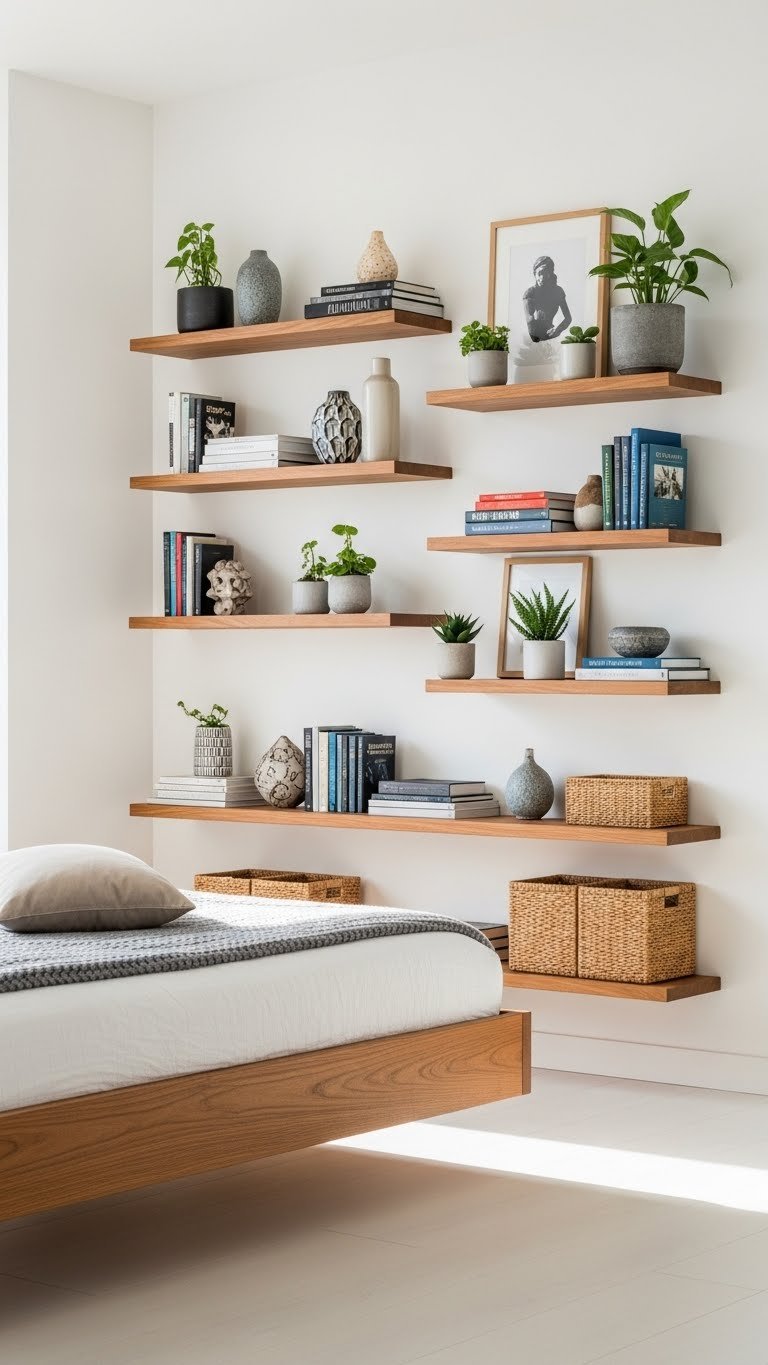
Mirror your floating bed’s design by installing matching floating shelves on adjacent walls. Use the same wall-mounting system and finish ($80–$150 total for 2–3 shelves from IKEA, Etsy, or Article) to create cohesive lines.
Populate shelves with books, plants, candles, and decorative objects in a curated arrangement. This approach eliminates the need for nightstands and dressers, keeping the room visually open and organized. Styling takes 30–45 minutes after installation.
Your bedroom becomes a gallery-like space where every object visible is something you love. The floating shelves reinforce the weightless, modern aesthetic of the floating bed while providing essential storage and display space.
15. Add Cooling Bedding for Temperature Regulation

Floating beds look even better when they’re styled with quality bedding, and if you’re someone who runs warm, cooling sheets are life-changing. Search interest in cooling bedding has skyrocketed 8,300% in the past year—people are craving better sleep.
Pair your floating frame with cooling sheets ($70–$150 from Brooklinen, Saatva, or Cozy Earth) in light colors that photograph beautifully. Add a cooling pillow ($100–$200) filled with gel memory foam or breathable materials to complete the setup.
Thirty-six percent of people have incorporated temperature regulation into their bedding choices. Your floating bed stays cooler throughout the night, you sleep better, and the light, breathable fabrics create an elegant, spa-like aesthetic.
16. Style Around a Statement Headboard
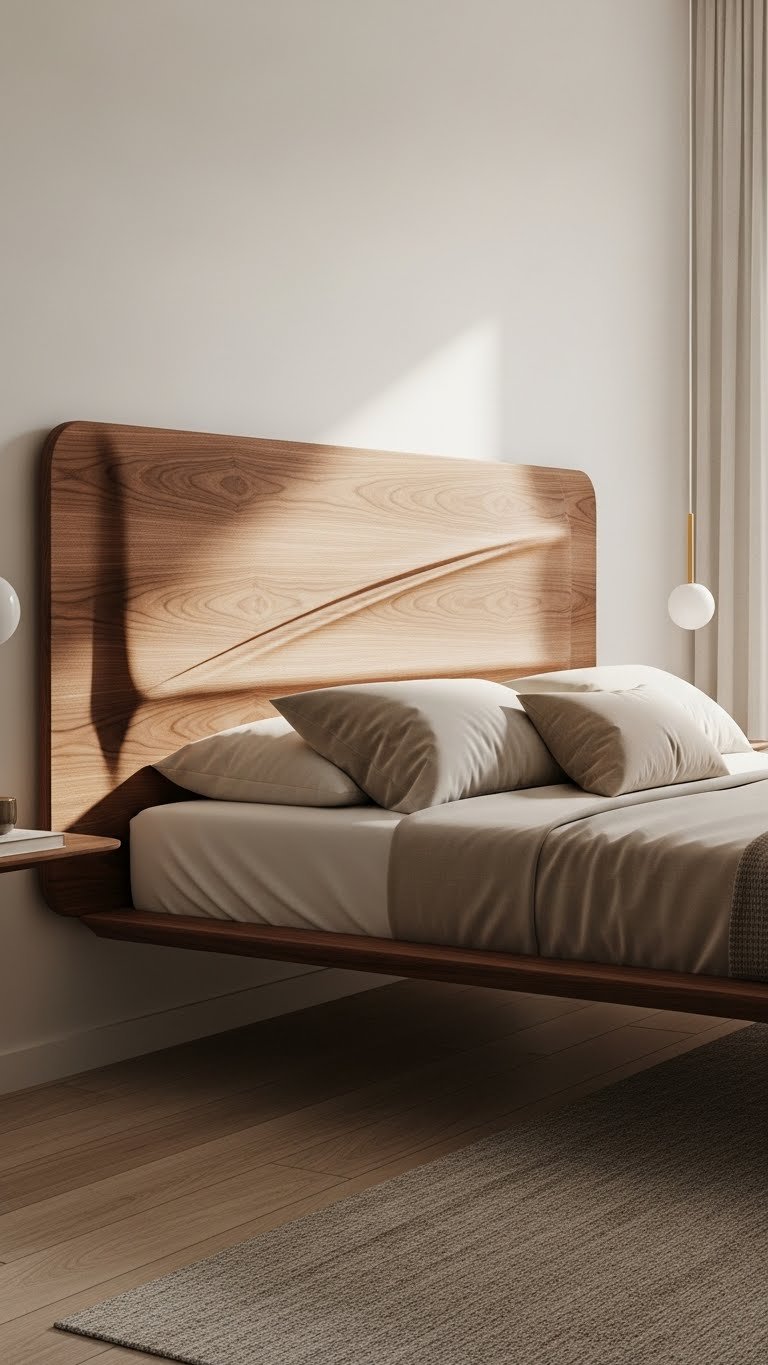
A floating bed gains visual anchor from a statement headboard in curved or sculptural form. Choose a curved wooden headboard ($200–$600 from Article, Wayfair, or local makers) that echoes organic shapes trending in 2025.
Forty-seven percent of people prefer curved furniture shapes—they feel softer and less aggressive than sharp angles. Mount the headboard directly to the wall above your floating platform so they read as one cohesive design. Installation takes 2–3 hours with basic tools.
The headboard provides a focal point and visual grounding while the platform maintains that floating sensation. Your bed becomes a sculptural centerpiece that makes your entire room feel more intentional and design-forward.
17. Go Minimal with a Simple Steel Frame
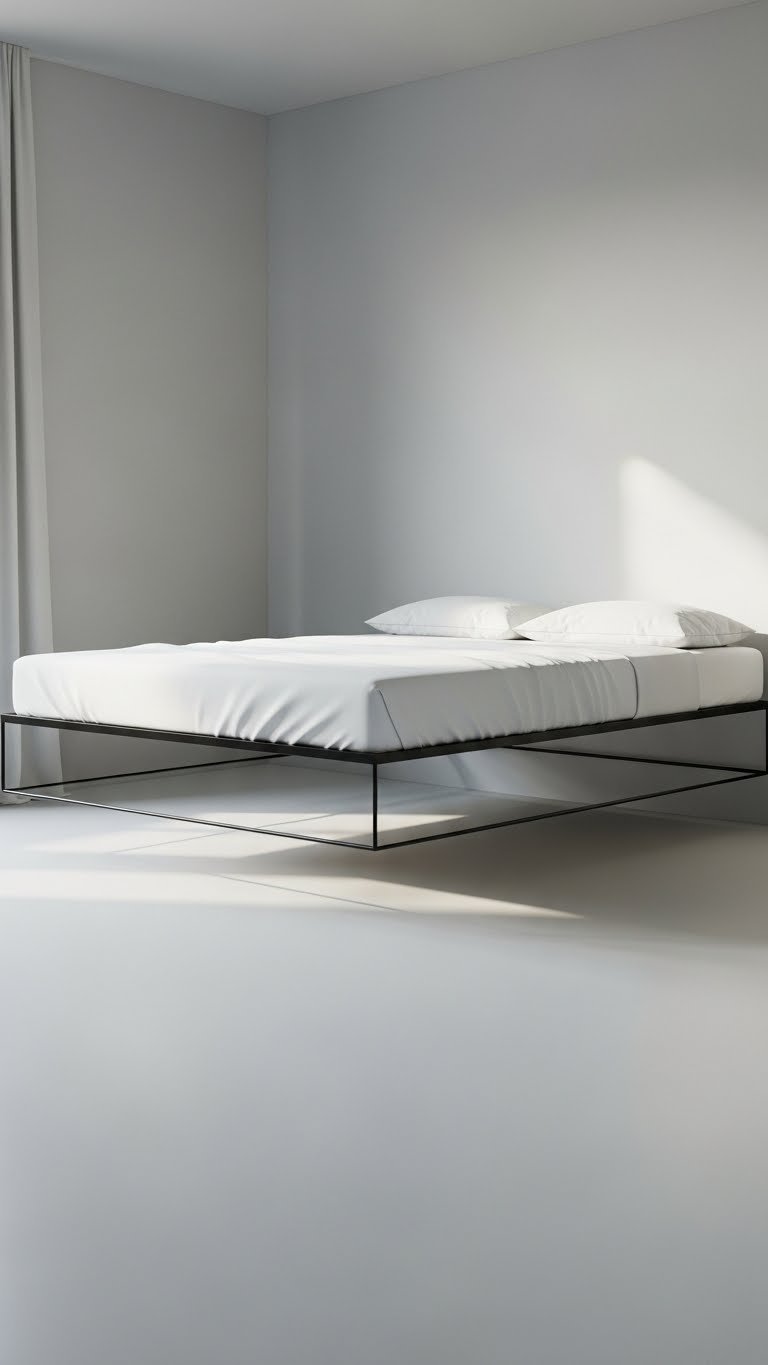
Sometimes the most impactful floating bed is the simplest one. Choose a thin steel platform frame ($200–$400 from Article, Blu Dot, or Herman Miller) in matte black or silver that nearly disappears beneath your mattress.
Pair it with neutral white or light gray bedding and one quality pillow to emphasize minimalism. The goal is to make the frame as visually light as possible, so the bed appears to truly hover with nothing supporting it.
This ultra-minimal approach is perfect for small spaces and minimalist aesthetics. Installation takes 30 minutes, and the clean lines make even a small bedroom feel large, calm, and uncluttered. It’s design through subtraction rather than addition.
18. Pair with an Eames Lounge Chair in the Corner
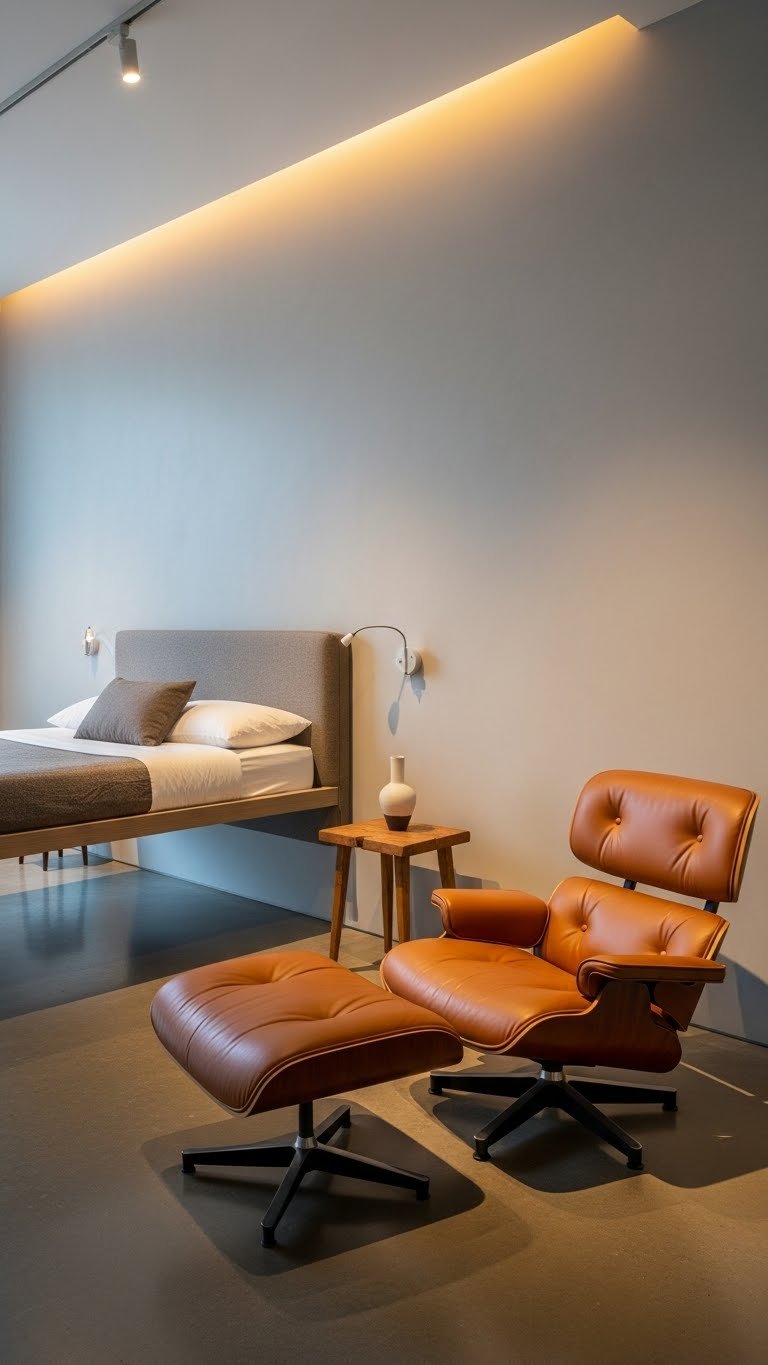
An Eames lounge chair (23% of designers’ top seating choice) adds sophistication and coziness next to a minimal floating bed. Position a leather or wool Eames chair ($500–$1,200 original or vintage, $150–$400 for quality reproductions) in a corner nearby.
The curved, organic form of the chair complements the floating bed’s modern lines while adding warmth and luxury. Pair both pieces with natural wood tones and neutral textiles for a cohesive, high-end aesthetic. The chair becomes a secondary focal point and functional seating for reading or relaxing.
Your bedroom transforms from a simple sleeping space into a curated retreat with multiple zones. The combination of floating minimalism and classic mid-century seating feels both contemporary and timeless.
19. Mount Floating Nightstands at Perfect Height
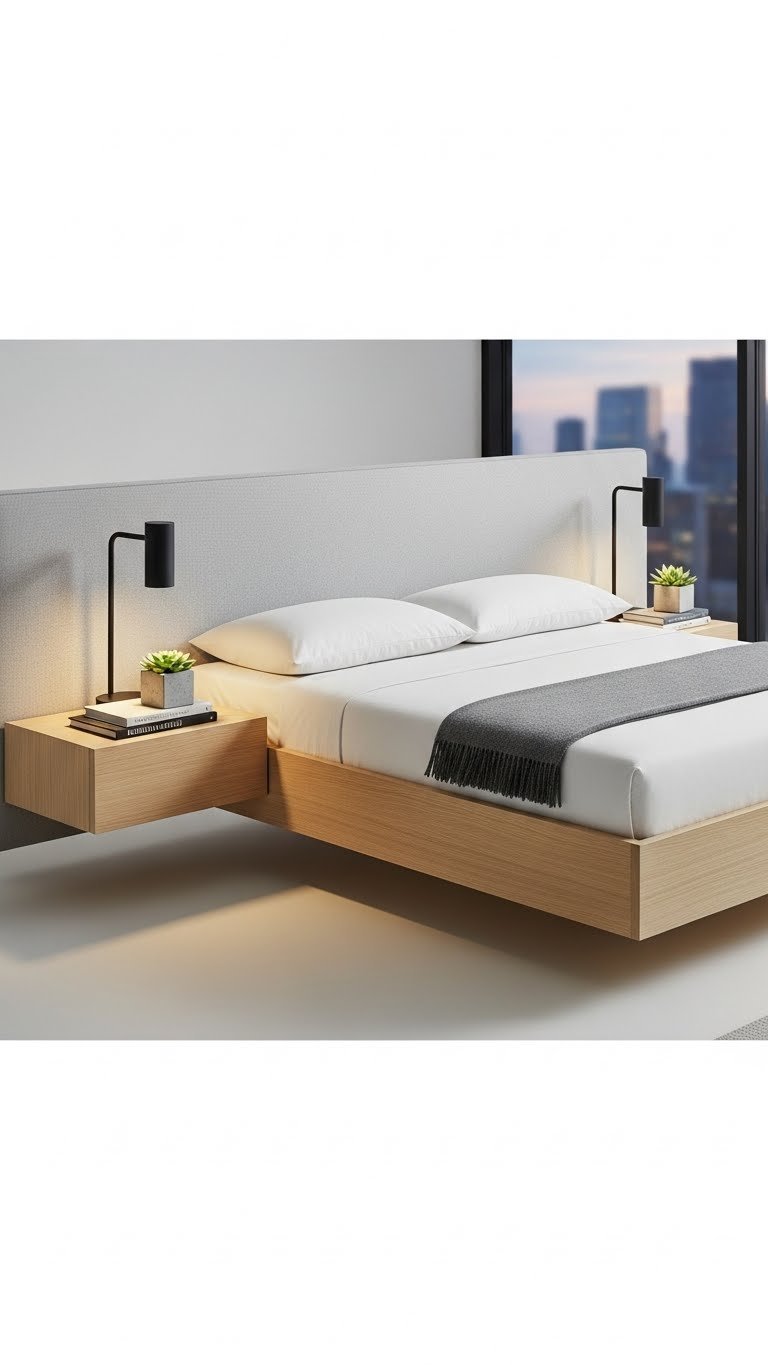
Floating nightstands ($50–$150 each from IKEA, Article, or Etsy) positioned at the exact height of your bed’s headrest create perfect visual balance and practical bedside storage. Mount them using the same heavy-duty bracket system ($30–$50 per pair) as your main frame.
This setup eliminates legs and clutter while keeping everything you need within arm’s reach. Install both nightstands in about one hour using a level and drill. The symmetrical arrangement looks intentional and gallery-like.
You’ll appreciate the sleek, uncluttered look and the practical organization of your bedside essentials. Everything has a home, but nothing adds visual bulk to the room.
20. Layer in Live-Edge Wood Elements

Combine your floating frame with live-edge wood elements throughout the room to create warmth and organic flow. Install a live-edge shelf ($40–$100 from Etsy) above your headrest, place a wooden bench ($150–$300 from local craftspeople or Etsy) at the foot of the bed, and add a live-edge nightstand ($80–$200).
The organic shapes and natural wood grain softness the minimalist floating design while maintaining the airy, open feel. Everything in your bedroom works together rather than fighting for attention.
This mixed approach balances industrial floating design with natural, biophilic elements. Your room feels both contemporary and grounded, sophisticated yet warm and lived-in.
21. Add Aromatherapy Elements Beneath the Frame
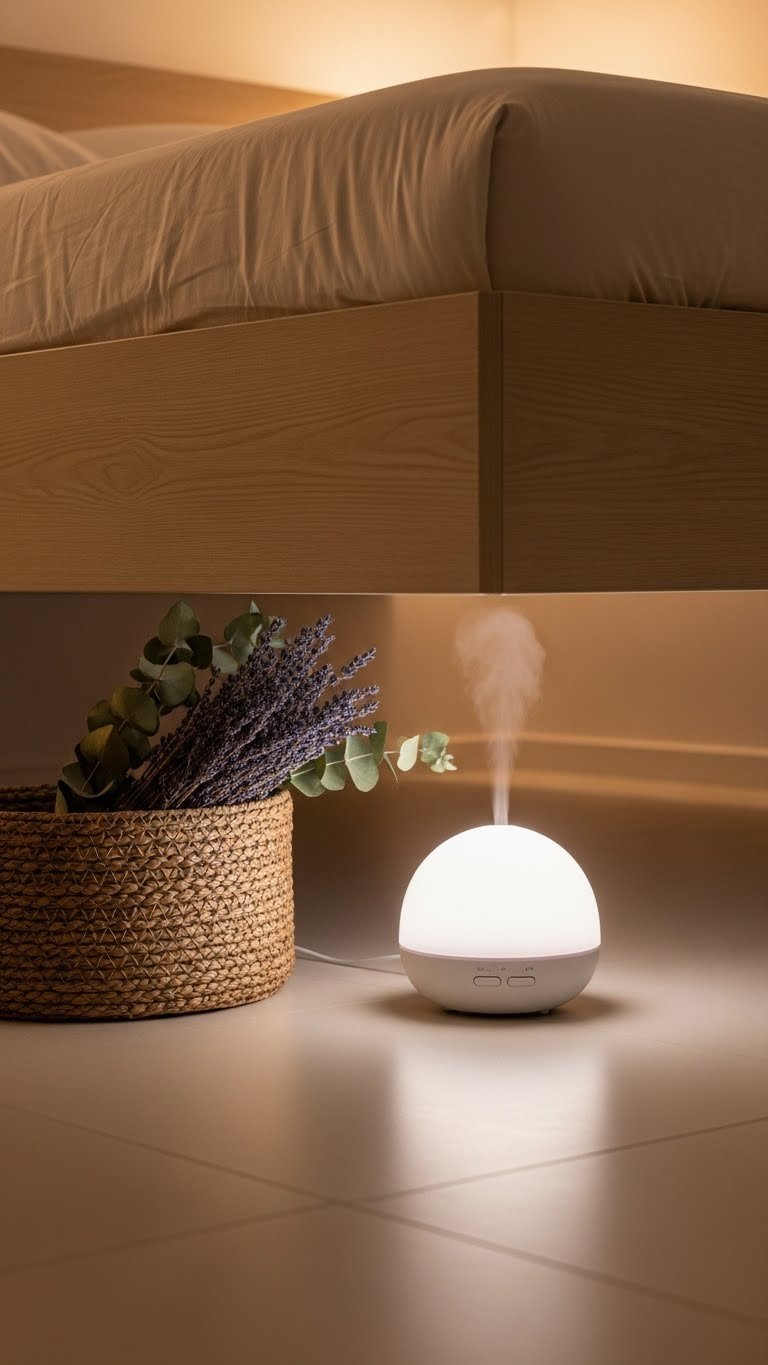
Since a floating bed leaves open space underneath, use that real estate for wellness features like a essential oil diffuser ($20–$60 from Urban Outfitters, Target, or Amazon) or a woven basket of dried botanicals ($15–$30 from Etsy).
Run your diffuser nightly with lavender or eucalyptus oil ($8–$15) to support relaxation and better sleep. The scent wafts up through your open sleeping area, creating a spa-like environment without visual clutter.
This simple addition costs $40–$100 total and takes zero installation. You’re creating a multi-sensory sleep sanctuary where your floating bed becomes not just a place to sleep but a wellness experience.
22. Combine with Blackout Curtains for Better Sleep
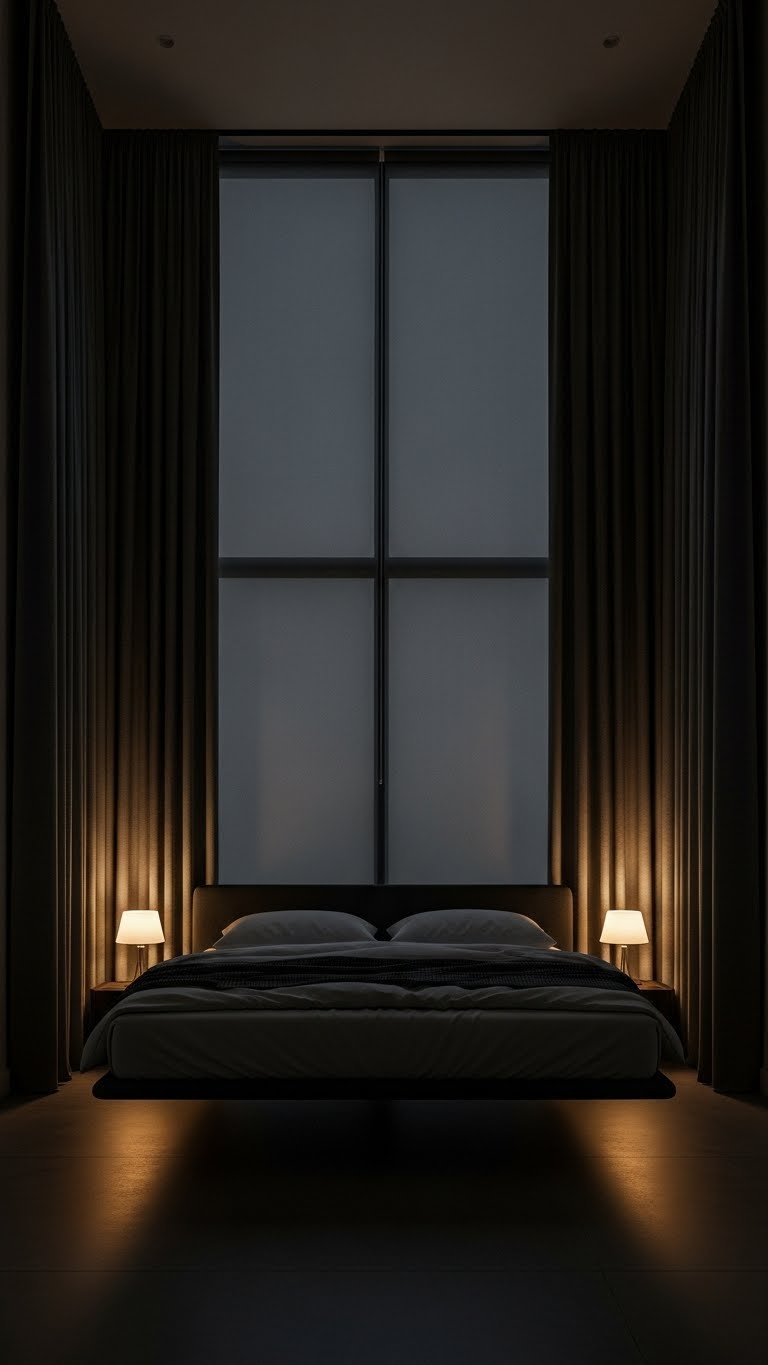
A floating bed paired with blackout curtains creates the optimal sleep environment. Install motorized or manual blackout curtains ($100–$300 from Lutron, IKEA, or Wayfair) on any windows in your bedroom.
The curtains eliminate outside light pollution and create a dark cave ideal for deep sleep. Pair them with your floating bed for a sophisticated, sleep-optimized bedroom that doubles as a cozy retreat during the day. Installation takes 2–4 hours if you’re hanging rods yourself; hire help for motorized systems ($200–$400).
Blackout curtains are scientifically proven to improve sleep quality by supporting your natural circadian rhythm. Combined with a floating bed and quality cooling bedding, you’ve built the ultimate sleep sanctuary.
23. Create a Scandinavian Floating Bedroom
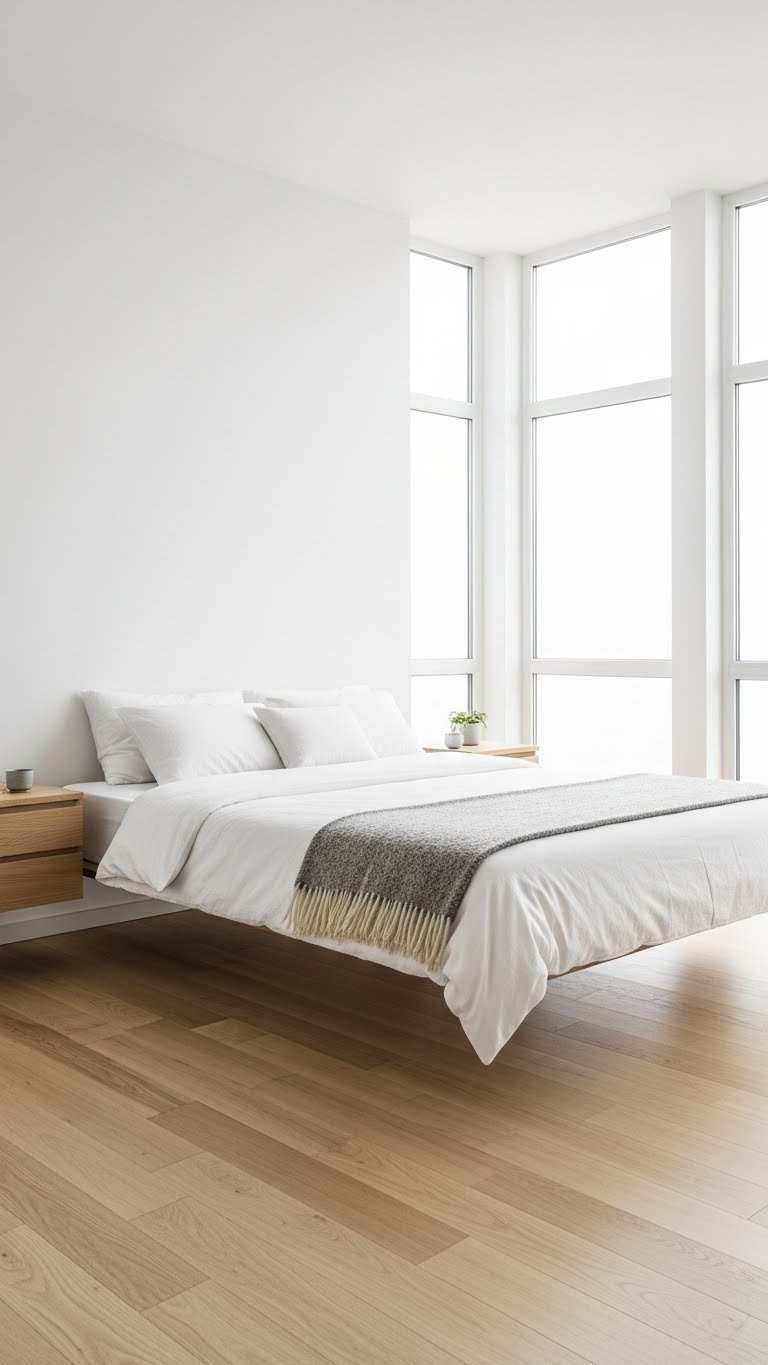
Scandinavian design and floating beds are a match made in heaven. Choose a simple, minimalist floating frame in natural or white wood ($300–$600 from Swedish brand String or Article), pair it with high-quality white linens ($60–$120 from Parachute), and add one chunky wool throw ($80–$150 from Woolroom or Etsy).
Keep everything else minimal: white or soft gray walls ($30–$50 paint), natural wood accents, and absolutely no clutter. This approach takes your bedroom from “nice” to “magazine-worthy” through restraint rather than decoration.
The Scandinavian aesthetic celebrates simplicity, functionality, and natural materials—all of which align perfectly with floating bed design. Your bedroom becomes a calm, purposeful space that supports rest and wellbeing.
24. Install Under-Bed Lighting for Ambient Glow
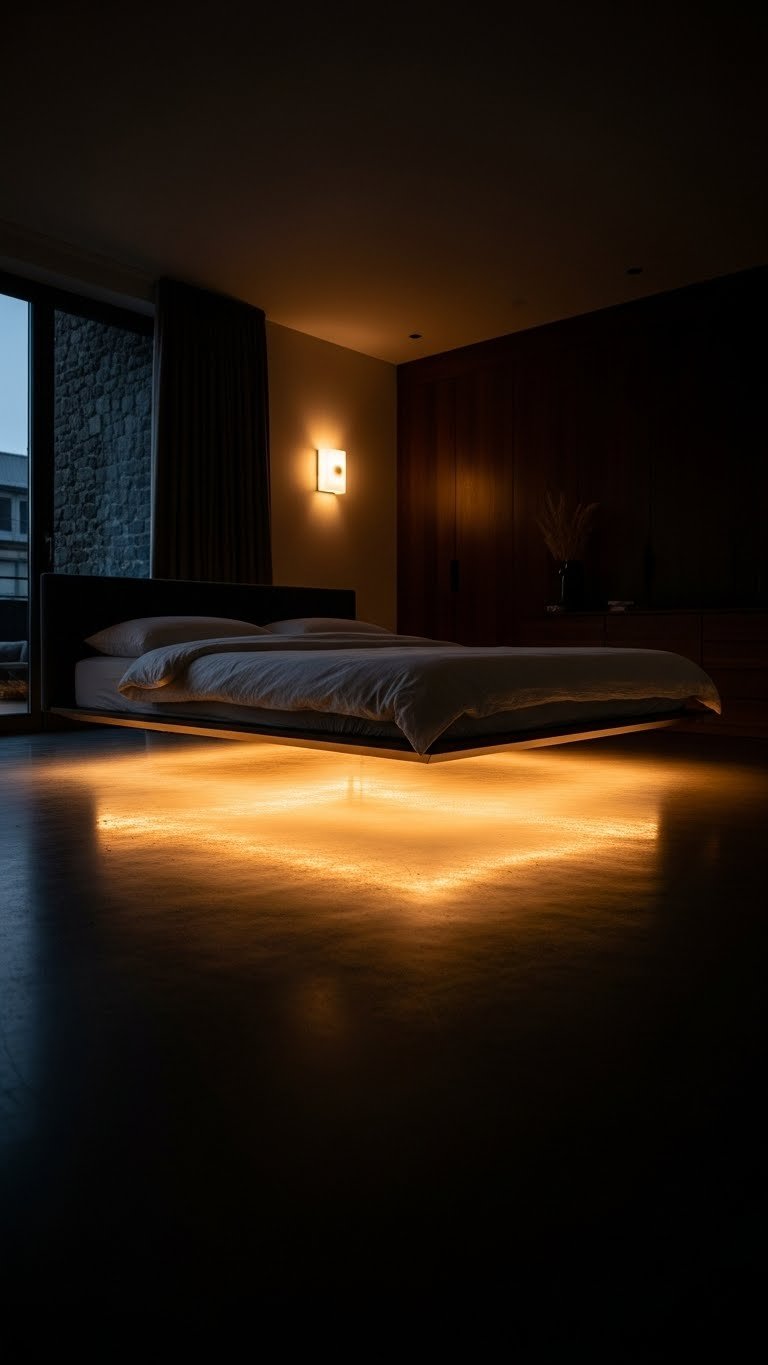
Take your floating bed’s lighting game up a notch with perimeter LED strips ($30–$60 from Amazon or Philips Hue) that run along the entire underside edge. This creates an ambient halo effect that makes your bed appear to truly float.
Connect the lights to a dimmer switch or smart home system ($40–$80) so you can adjust brightness from bed or phone. Installation takes 30–45 minutes and requires no wiring—just adhesive backing and plug-in power.
The under-bed glow creates an instantly luxurious spa-like atmosphere. Turn it on low for evenings or brighten it during the day for visual drama. It’s the kind of detail that makes people stop and notice your bedroom design.
25. Mix Vintage Quilts with Modern Floating Frames
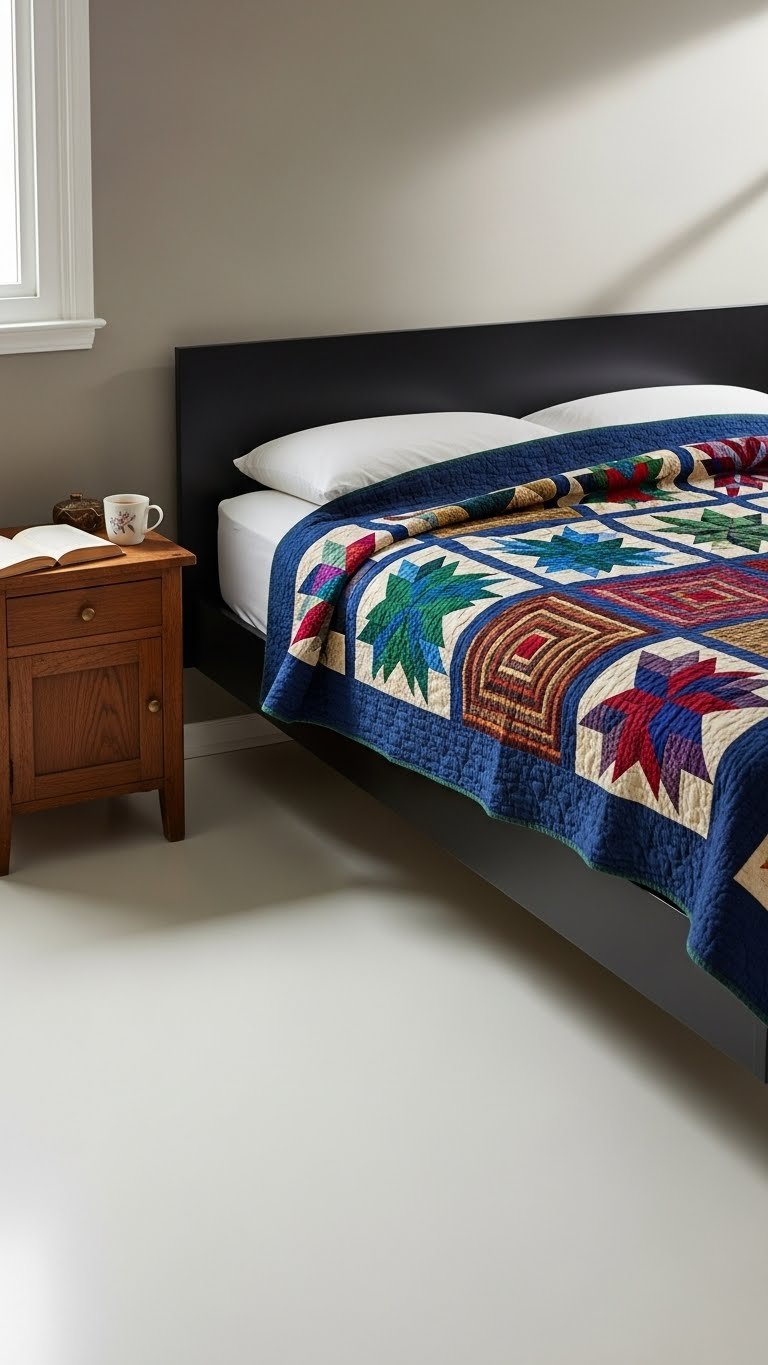
Pair a sleek, modern floating frame with a vintage quilt ($50–$300 from estate sales, Etsy, or vintage shops) to add personality and history. The contrast between minimalist floating design and heirloom textiles creates a beautifully intentional, eclectic look.
Layer the quilt with modern linen sheets ($40–$80) for a curated feel that celebrates both heritage and contemporary style. This approach costs $150–$400 total and tells a visual story about who you are.
Your bedroom becomes a personal gallery where the floating frame provides clean lines while the vintage quilt adds warmth, color, and soul. You’re respecting craft and history while living with modern comfort and design.
26. Create a Floating Bed in an Art Deco Style

Art Deco design is having a revival—24% of people plan to incorporate more Art Deco pieces into their homes. Create a floating bed with Art Deco vibes by choosing a frame with geometric details or metallic finishes ($400–$1,000 from Wayfair, Article, or specialty retailers).
Pair it with champagne or cream bedding ($80–$150) and add brass or gold metallic accents ($30–$80 for pillows, mirrors, or sculptures). The combination feels luxe, intentional, and timeless.
Your floating bed becomes a statement piece that celebrates vintage glamour without feeling dated. The geometric lines and metallic touches create visual interest while the floating design keeps the space modern and uncluttered.
27. Go Platform-to-Floor with Minimal Height for Simplicity

Not every floating bed needs dramatic height. A super-low-profile floating platform (just 4–6 inches off the ground) offers floating aesthetics with a more grounded, approachable feel. Choose a simple wall-mounted platform ($40–$100 from IKEA or Wayfair) that prioritizes clean lines over height drama.
This approach works beautifully in bedrooms where you want to avoid a “suspended” feeling and prefer something more subtle. Installation takes one afternoon, and the minimal height is safer for kids or anyone uncomfortable with high beds.
The result feels intentional and minimalist rather than futuristic. You get the visual benefit of floating design without the architectural statement. It’s perfect for those who love modern aesthetics but appreciate understated, grounded spaces.
Save this guide for your next bedroom refresh and try one floating bed idea this week—start with something simple like wall-mounted brackets or a basic platform, and you’ll be amazed how quickly your room transforms. Share this with anyone craving more space and better sleep.
Leave a Reply