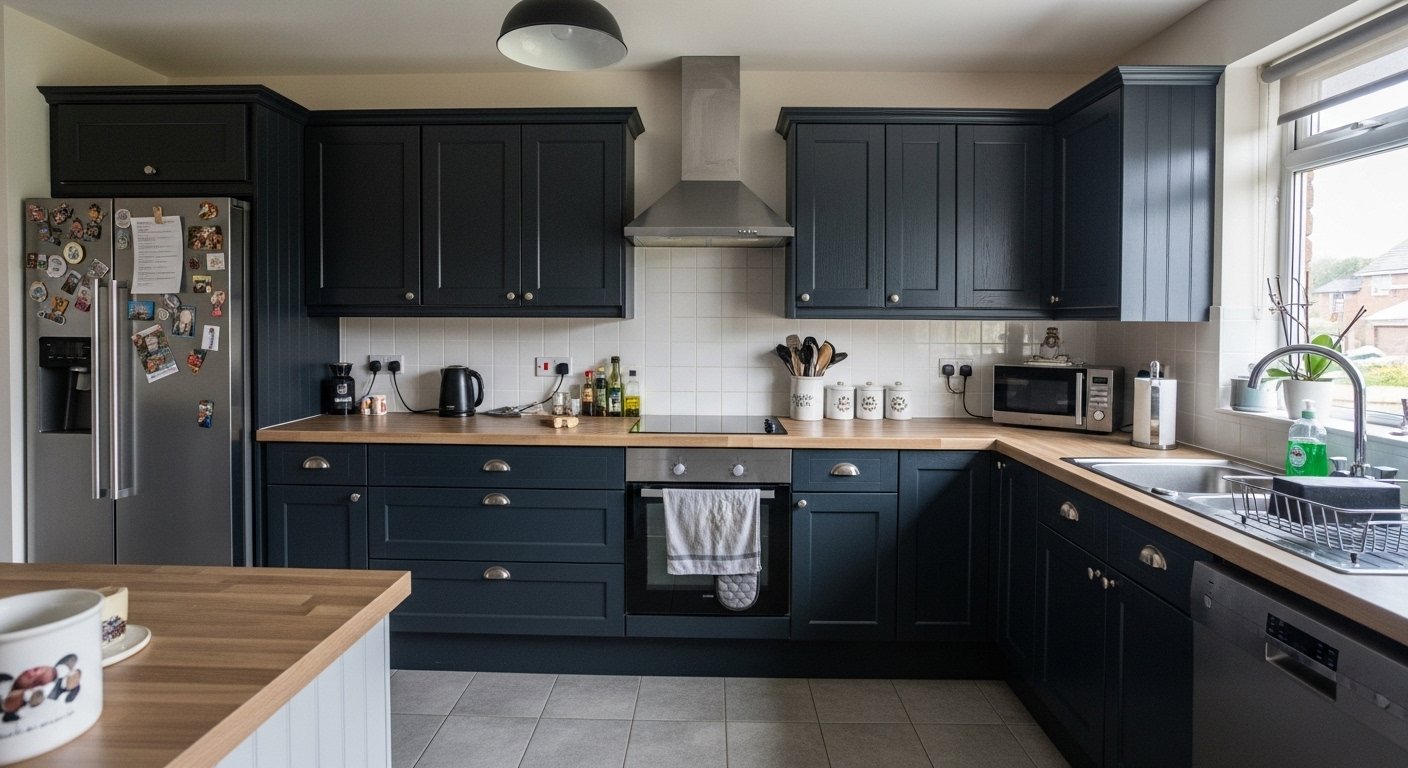
I stood in my kitchen staring at the dark cabinets and felt stuck. They read heavy, but the room had good bones.
I wanted a lighter, balanced feel without losing the richness. I learned to nudge color, hardware, and styling so dark cabinets read intentional, not overpowering.
I can show you how.
How To Paint Dark Kitchen Cabinets Like A Pro
I’ll show you how to paint dark kitchen cabinets so they feel balanced with the rest of the room. It’s about color direction, hardware choices, and small styling edits for a lived-in result.
What This Solves
This helps when dark cabinets make the kitchen feel heavy, boxed-in, or unfinished. You’ll get a comfortable, intentional balance without a full remodel.
What You’ll Need
- Matte brass cabinet knobs (solid brass, 1.25″ diameter, set of 10)
- Matte black cup pulls (8-pack, 3.75″ center-to-center)
- Natural jute runner rug (2′ x 8′)
- White stoneware canister set (3-piece)
- Ceramic planter with saucer (6″ glaze, neutral)
- Warm LED under-cabinet light strip (dimmable)
- Soft linen kitchen towels (set of 4, natural)
Step 1: Read the light and the room
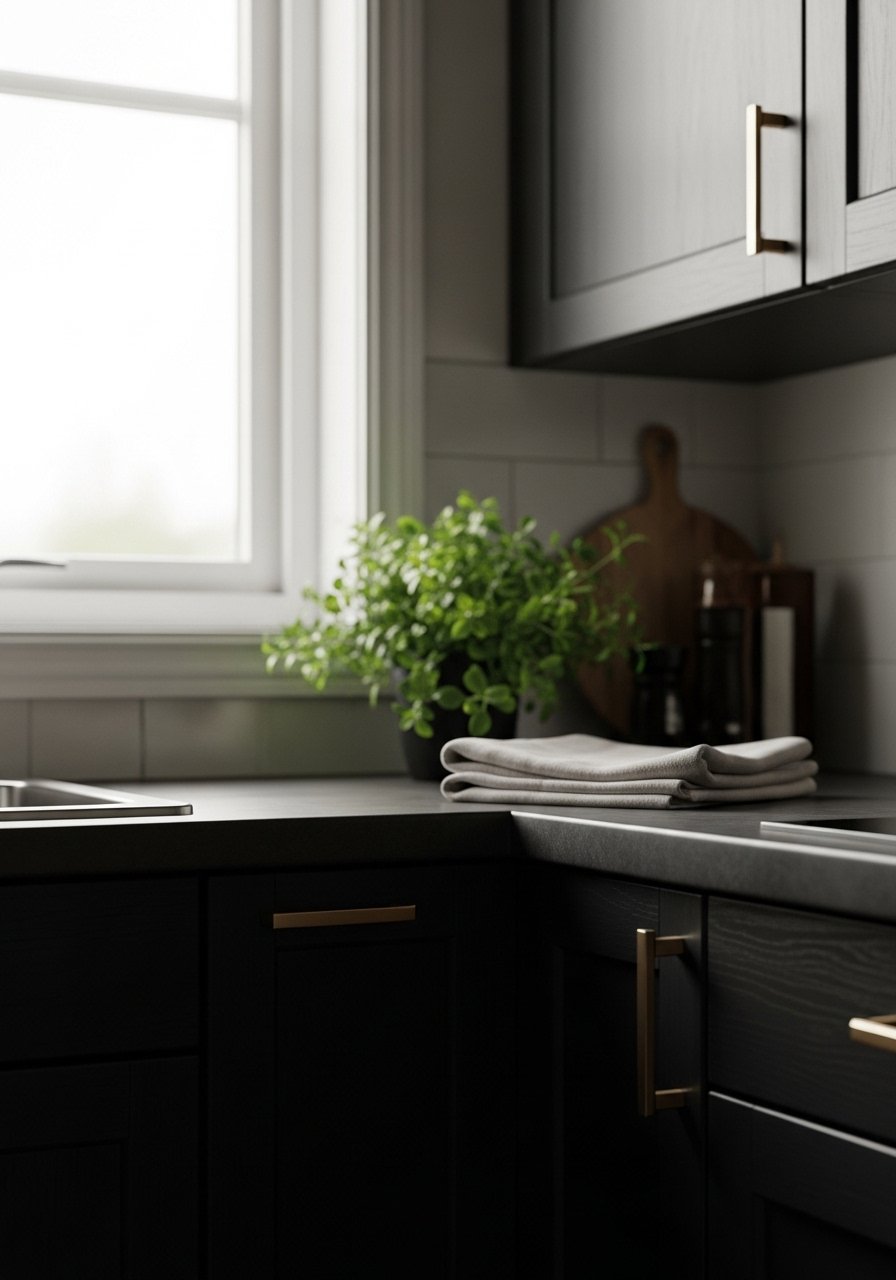
I start by standing where I cook. I look at the cabinets from different angles and at different times of day. Light makes dark paint feel warm or flat; noticing that first shapes every other choice.
Visually, you’ll see whether a cabinet looks like a mass or like part of a layered room. The trick most people miss is checking the ceiling and trim color — they change how dark paint reads.
A small mistake to avoid: deciding color or hardware before you understand the light. That’s when dark cabinets end up feeling heavy instead of comfortable.
Step 2: Set the color direction
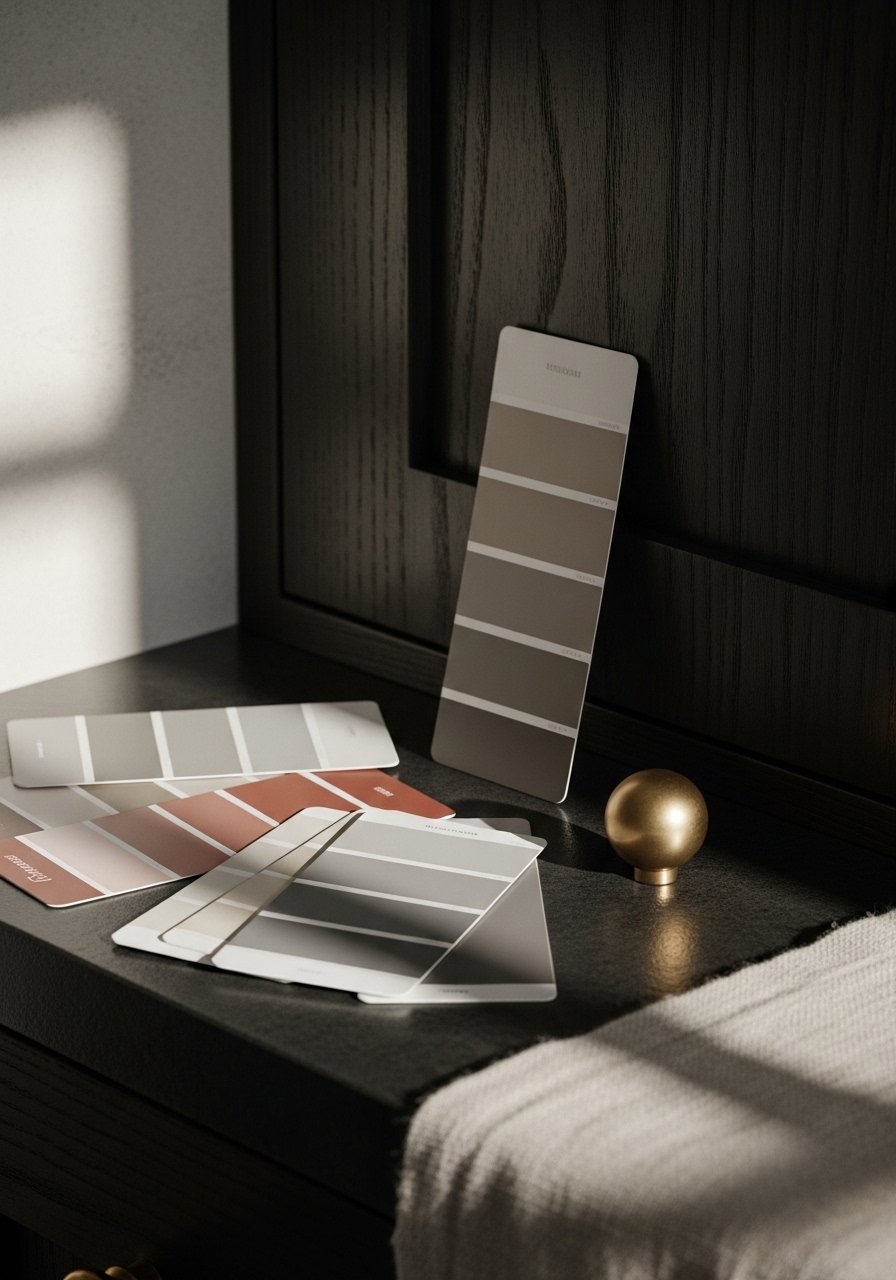
I pick a direction instead of a single swatch: warmer or cooler, deeper or muted. That guides sheen and accents so the cabinets sit with counters and backsplash, not fight them.
What visually changes is depth — a warmer undertone will make the cabinet feel cozy; a cooler undertone will read modern. One insight I learned: sheen changes perception more than you think. A soft satin keeps depth without glare.
Don’t pick a color purely from a chip at the store. The common mistake is ignoring how the cabinet finish will interact with surrounding materials in your actual light.
Step 3: Edit hardware and small finishes
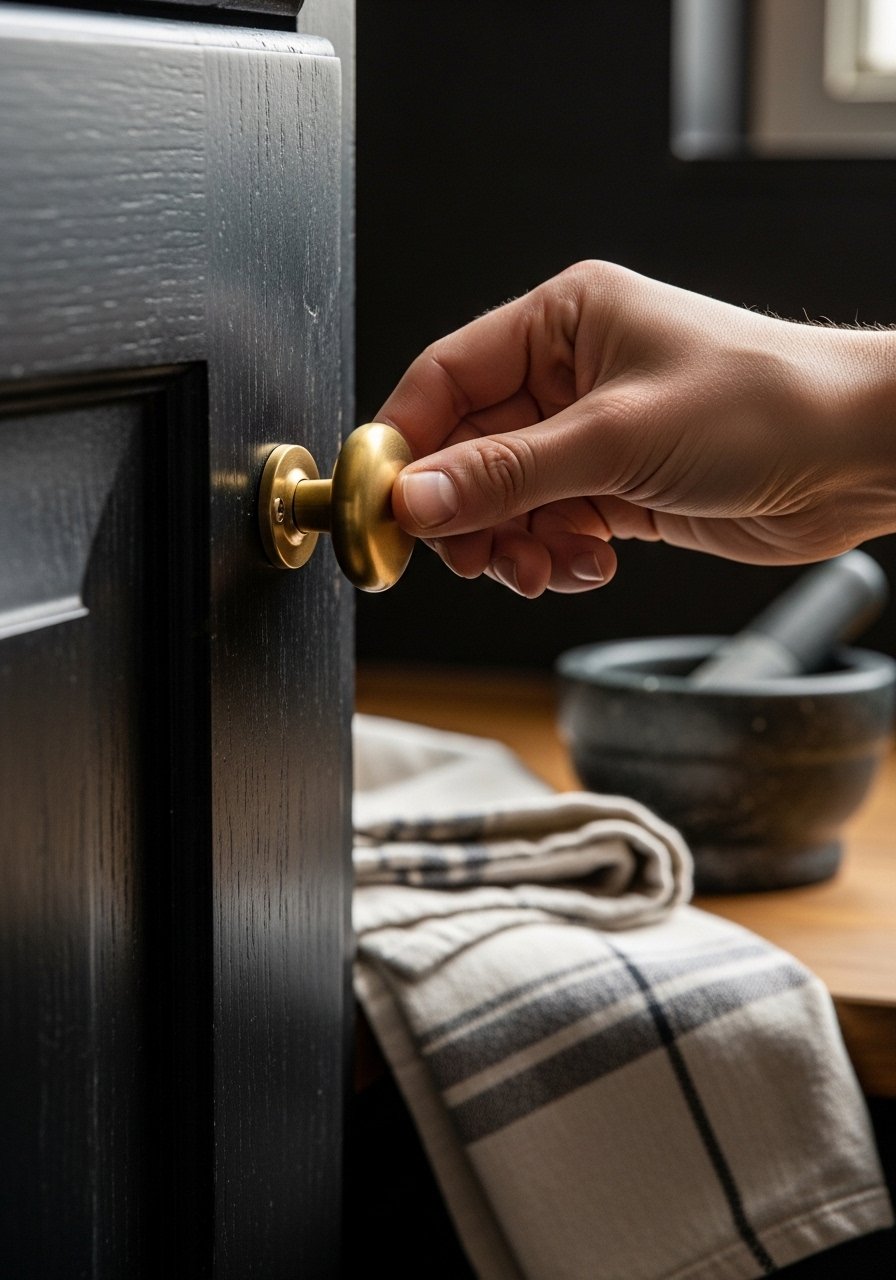
I change the hardware and live with it. Swapping to brass or matte black can shift the whole mood. Hardware acts like punctuation; it tells your eye if the space is warm, matte, or sleek.
Visually, the room feels rearranged when the hardware aligns with light and countertop tones. Most people miss the power of consistent scale — keep knob sizes and pull lengths balanced across drawers and doors.
A mistake to avoid is mixing too many styles. A deliberate mix of two metal tones is fine. Random mismatched pieces will read unfinished.
Step 4: Layer lighting and textiles
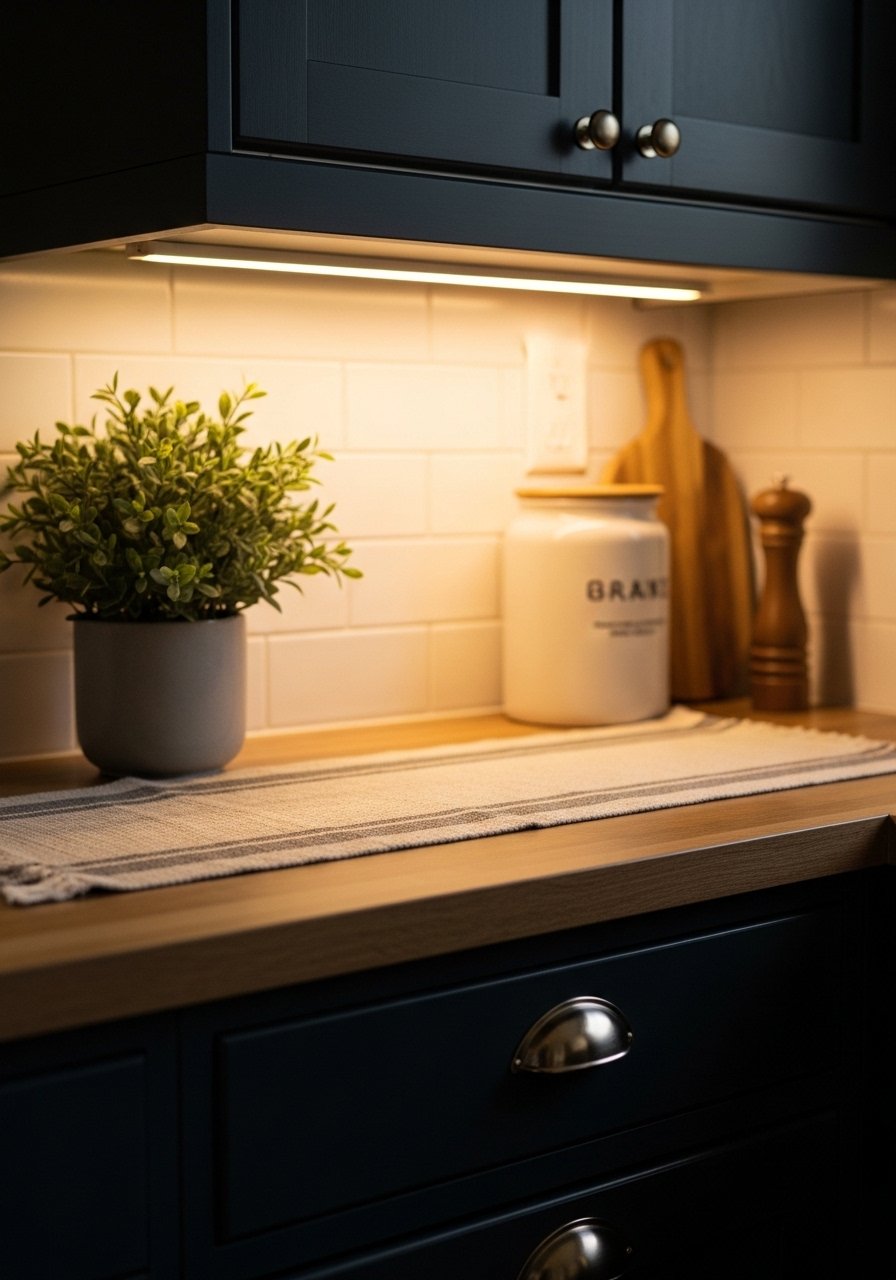
I add warm under-cabinet light and a natural runner. Light brings out the cabinet’s depth. Textiles — a jute runner or linen towels — soften the heaviness and add texture underfoot and on counters.
Visually the space becomes layered and approachable. The insight people often miss is that textiles change perceived scale; a runner can make a long run of dark cabinets feel grounded and cozy.
Don’t use a rug with a busy pattern that competes with cabinet color. A simple, natural rug keeps the eye calm and balances the dark plane.
Step 5: Style simply and live with it
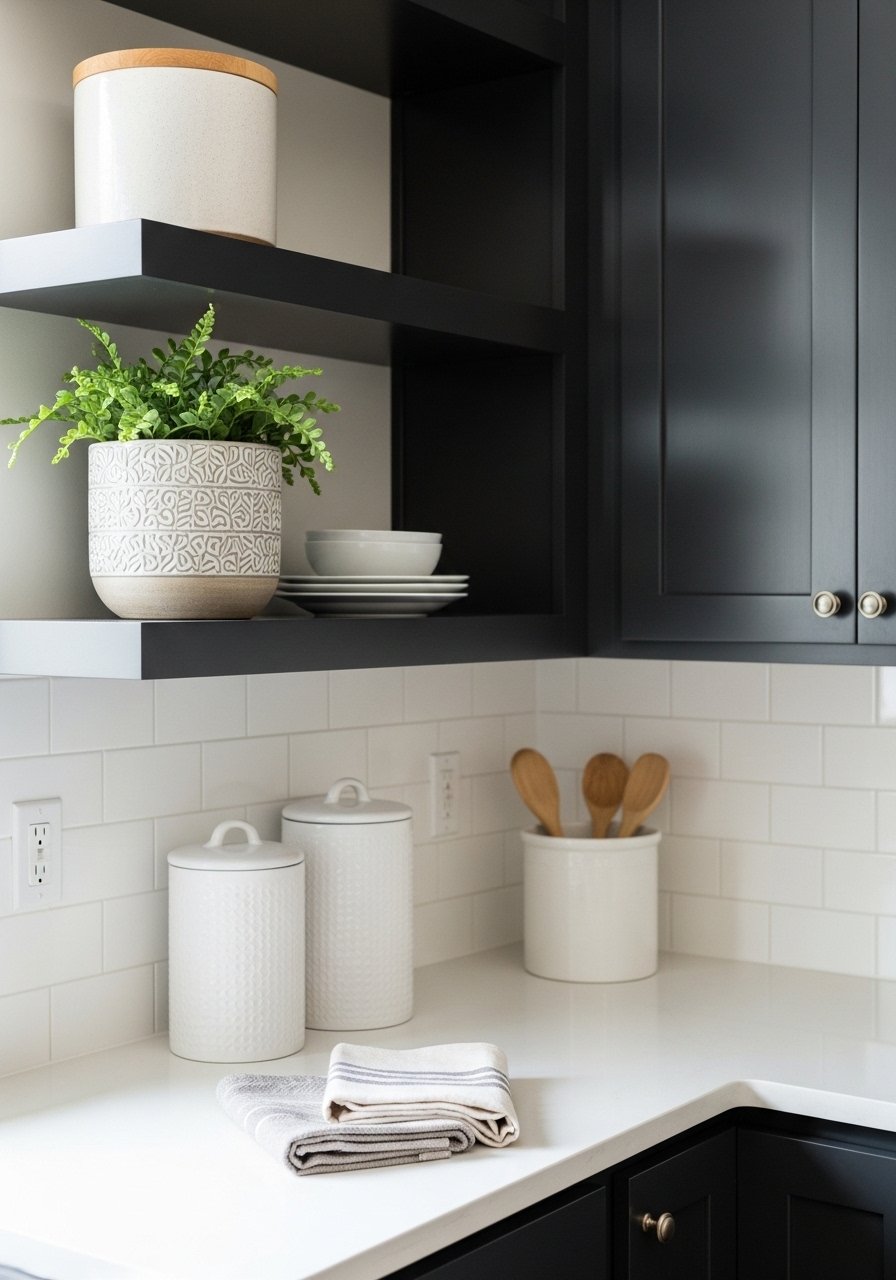
I style countertops and open shelves with a few repeat elements: white canisters, a plant in a ceramic pot, and folded linens. Repetition creates rhythm against a dark backdrop and makes the cabinets read intentional.
Visually, the kitchen goes from “painted and forgotten” to “lived-in and chosen.” One insight: live with the edits for a week. Small additions or removals after daily use fine-tune the balance.
Avoid over-decorating every shelf at once. Too many objets will fight the calm that dark cabinetry can provide.
Choosing the Right Color
When deciding how dark to go, consider the surrounding materials. Warm wood floors, marble counters, or white backsplash all pull a dark cabinet toward a different feel.
Make sample boards and observe them in the room. A single sample can look convincing in one corner and different across the room. Trust the whole-room view.
Hardware & Finishes
Hardware anchors the cabinet visually. Brass warms, matte black modernizes, and a weathered finish can read casual. Match scale and keep styles consistent to avoid a cluttered look.
Think beyond knobs: hinge finishes, light fixtures, and visible screws all contribute. A small, consistent edit goes further than many big changes.
Styling & Everyday Living
Dark cabinets feel best when paired with light, tactile objects. White canisters, a plant in a simple ceramic pot, and neutral linens keep the look layered but livable.
Keep a short list of go-to items — the ones in your “What You’ll Need” list — and rotate them. Small swaps help the room breathe without constant overhaul.
Final Thoughts
Start with one run of cabinets or just the island. It’s less risky and gives a quick sense of how the room shifts.
Work with light, hardware, and a few edited accessories. Live with the changes for a week before adjusting.
Small, intentional edits make dark cabinets feel calm and comfortable, not heavy. You’ve got this.
Leave a Reply