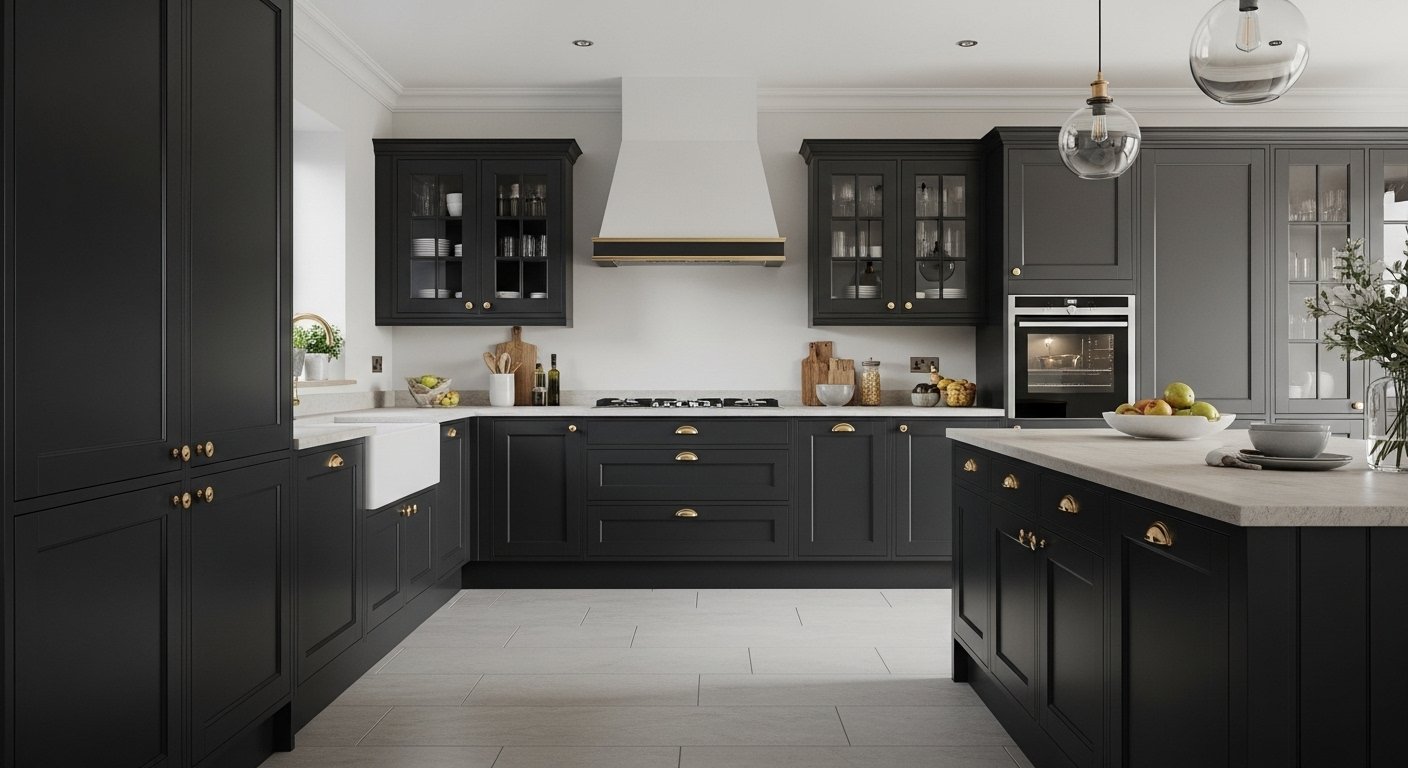
I used to love dark cabinets until my kitchen felt heavy and gloomy. I’d stare at the room and not know where to start.
Small choices made it look unfinished, like a missing design layer.
This guide shows how to style dark kitchen cabinets so they read designed, not cavernous.
How To Style Dark Kitchen Cabinets For A Designer Look
This is the method I use every time a dark cabinet scheme feels flat. You’ll learn simple layering—contrast, metal, wood, and open space—so cabinets read intentional and designer-made, not heavy or unfinished.
What You’ll Need
- Brushed brass cabinet pulls (5-6 inch, warm finish)
- White marble-look countertop tray (round, 10-12″)
- Warm walnut cutting board (large, paddle style)
- Textured linen tea towels (neutral set of 2)
- Woven seagrass basket (small, open weave)
- Small indoor potted plant (easy-care, real or faux)
- Glass canisters with bamboo lids (set of 2)
- Small black matte sconce (accent lighting)
Step 1: Add a light anchor to break up the darkness
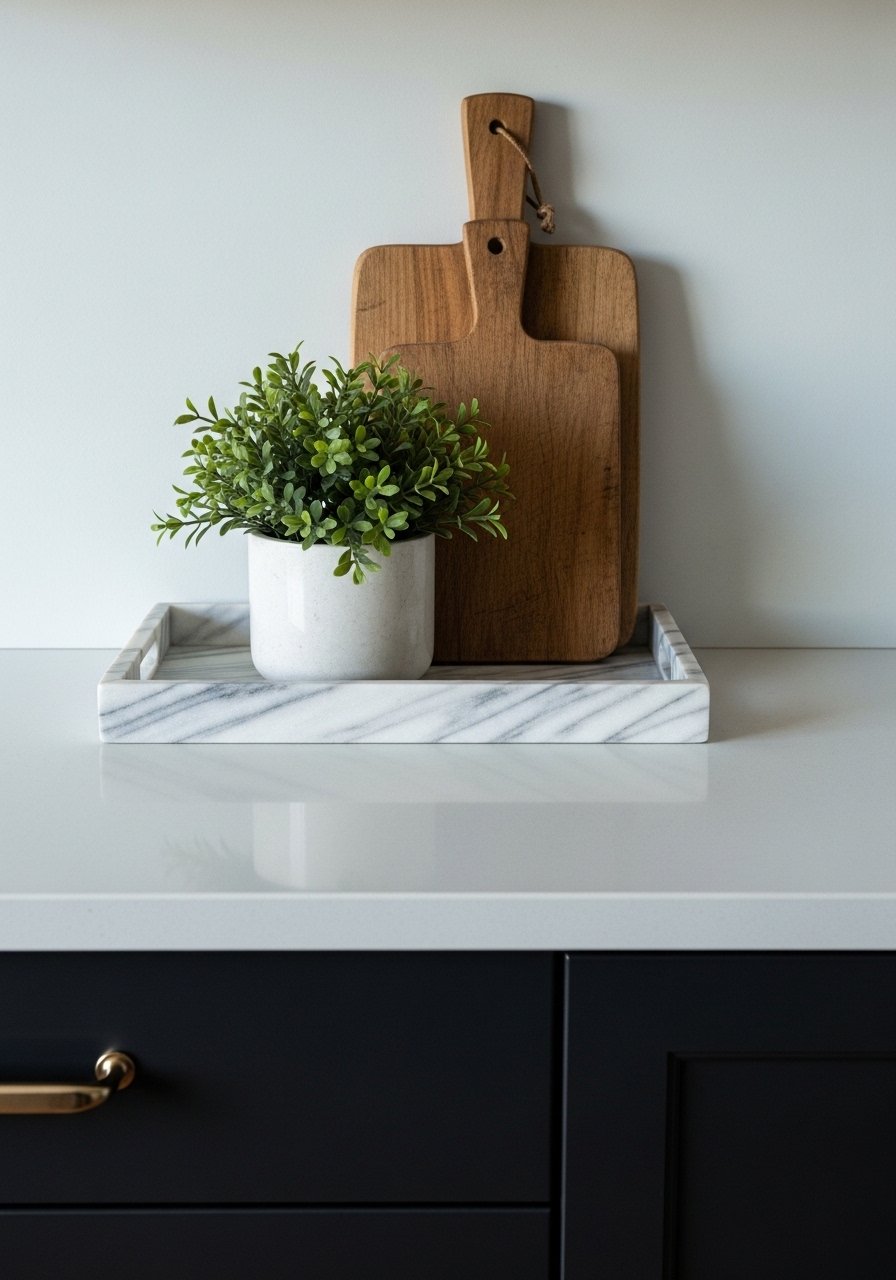
I start by introducing a light anchor—usually a white or marble-look tray—on the countertop. I place it where the eye rests, near the sink or stove, so the dark plane has a bright moment.
Visually, the kitchen stops reading as one heavy block and gains a focal point. The cabinets instantly feel intentional because the eye has contrast to land on.
People often miss scale: the tray should be proportionate to the counter run. Avoid overcrowding the tray; a plant, a small bowl, and one board is enough.
Step 2: Choose warm metals and repeat them
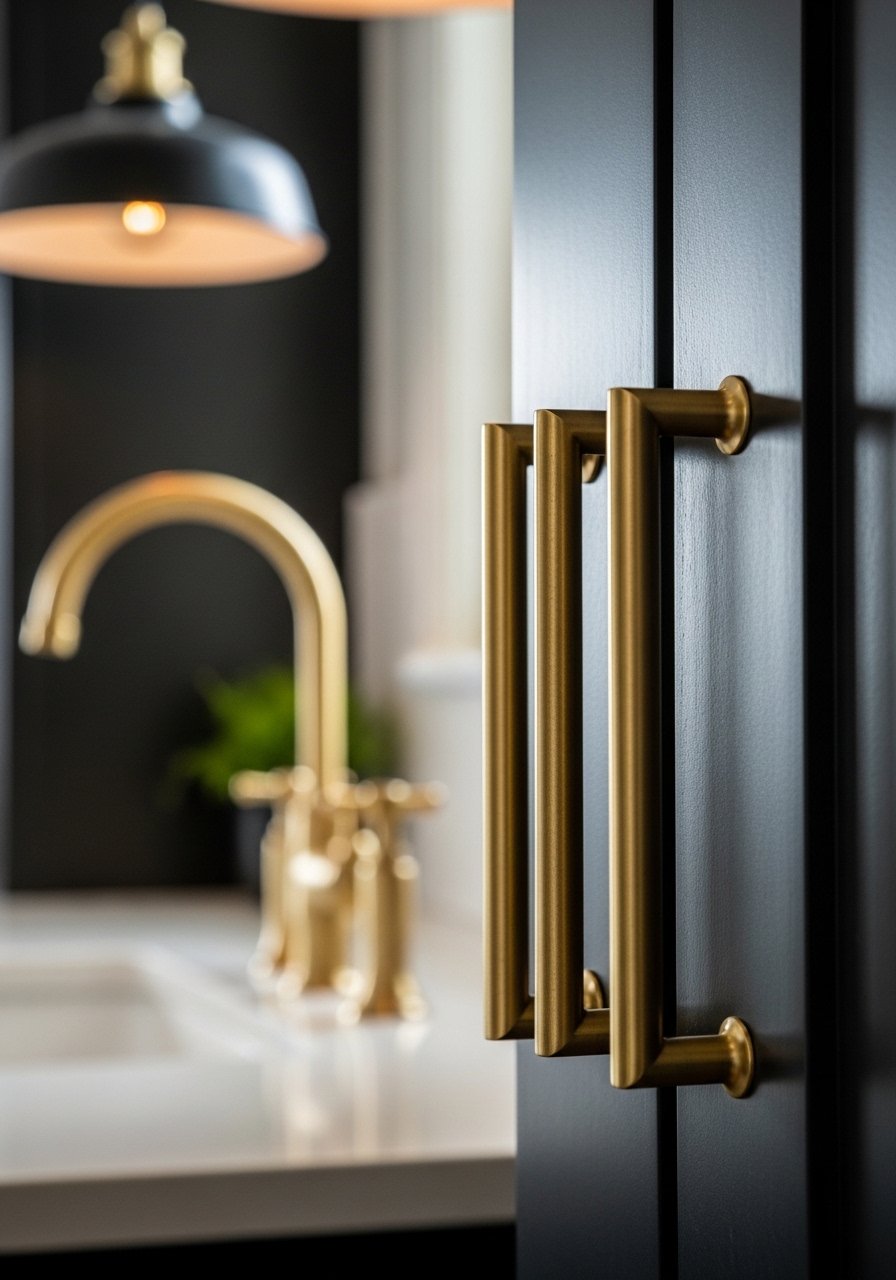
I swap or add hardware in a warm metal—brass or aged gold—so the dark surface reads warm instead of flat. I repeat that metal across pulls, faucets, and a light fixture when I can.
What changes visually is rhythm: the metal ties disparate surfaces together and feels purposeful. It makes the cabinets look specified, not random.
One insight I rely on is restraint: using the same metal in two or three spots is enough. Don’t mix four finishes; that’s the common mistake. Keep it simple and repeated.
Step 3: Soften with wood and woven textures
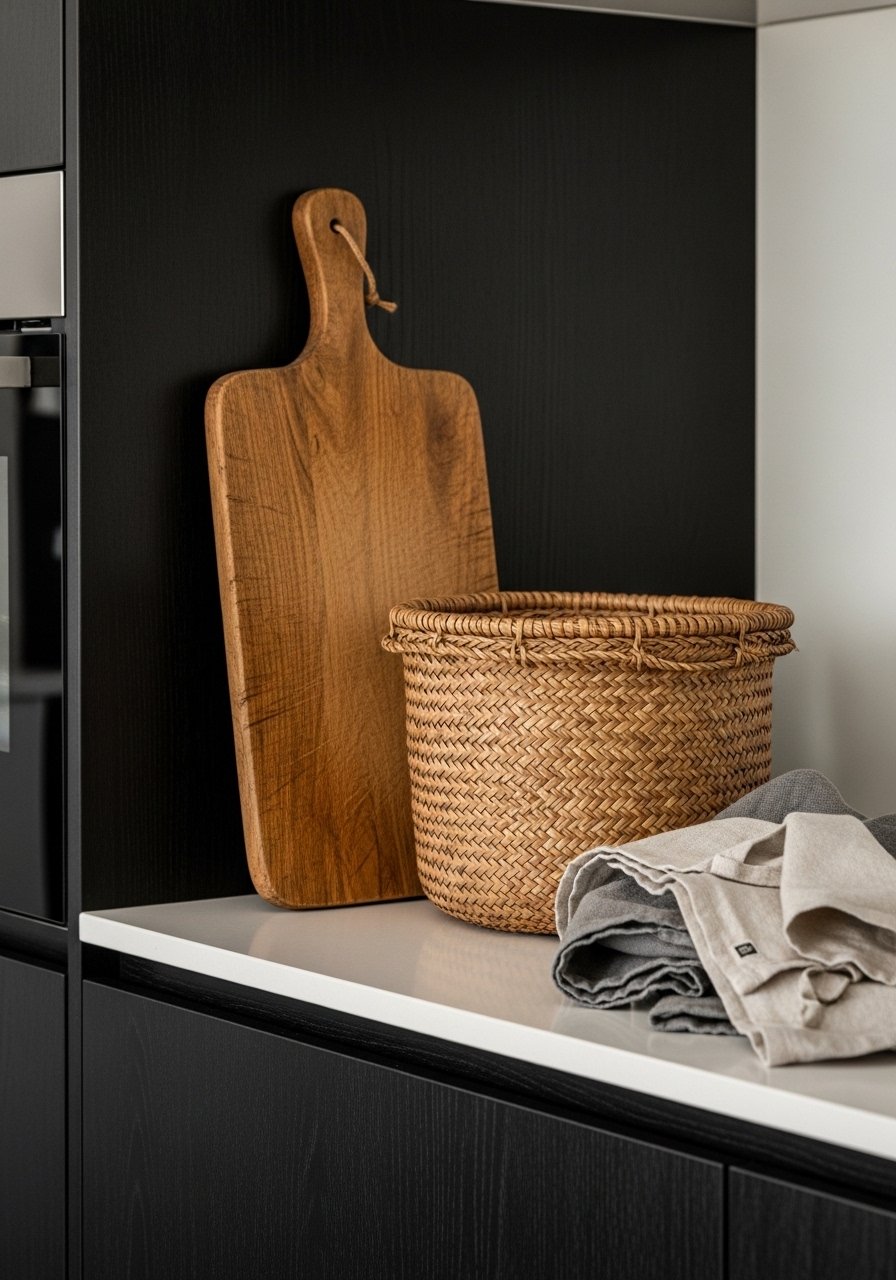
I layer in warm wood and a woven basket to soften the cabinets. I lean a cutting board against the backsplash, add a seagrass basket under an open shelf, and drape a linen towel over a rail.
Visually, wood warms the composition and woven textures add a lived-in softness. The cabinets no longer dominate; they sit within a tactile story.
People often forget scale: pick boards and baskets that echo the cabinet proportions. A mistake I see is adding too many small items—one large board reads better than three tiny ones.
Step 4: Create breathing room with curated counters and open space
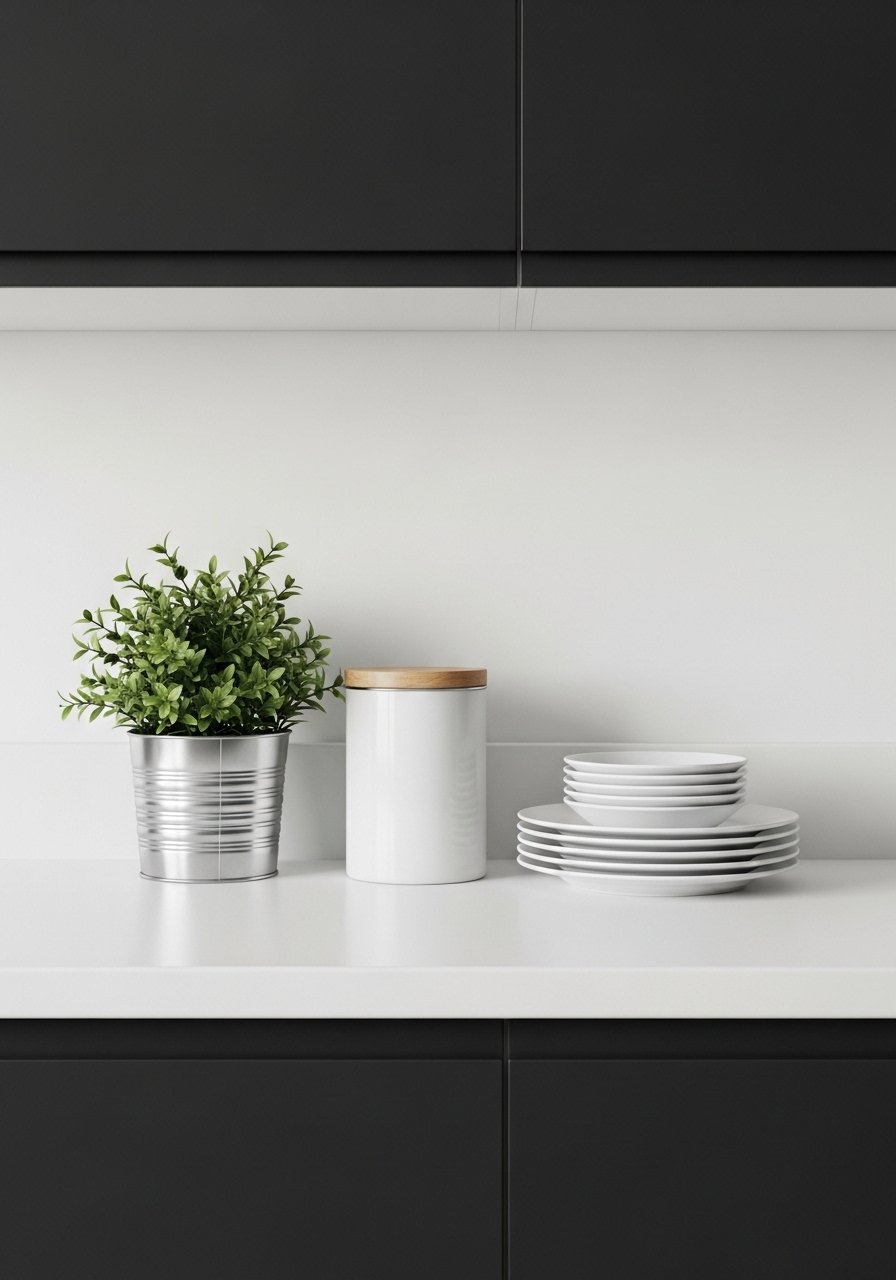
I clear most countertops and curate small groups instead. I leave stretches of counter empty so the eye can rest. The curated group sits on the tray or a corner so it reads intentional.
This stage visually introduces rhythm and balance. The dark cabinetry benefits from these pockets of negative space—they make the color feel deliberate instead of overwhelming.
One insight: less is more. People often style every inch and end up cluttered. Avoid filling horizontal space just because it’s available.
Step 5: Add layered light and a living touch
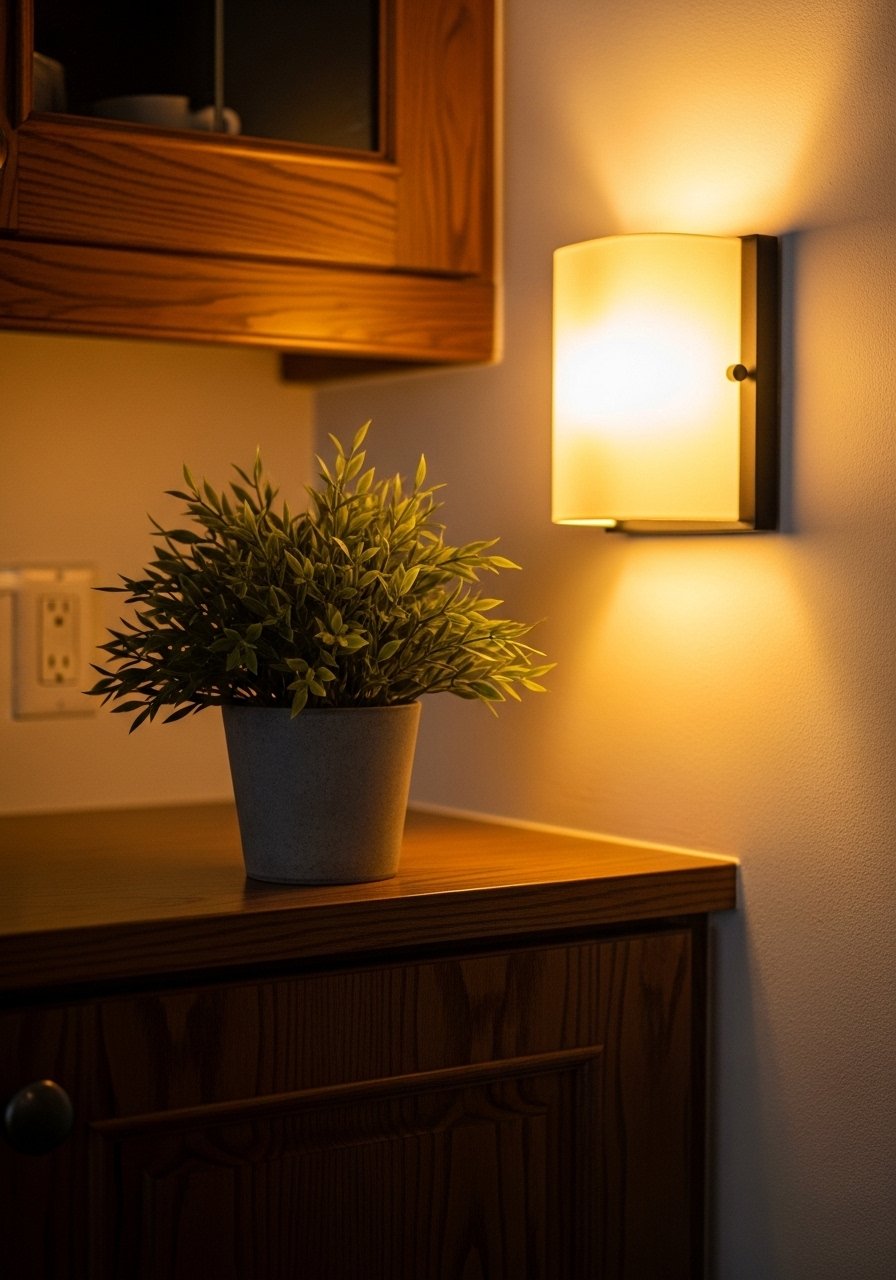
I finish with layered light and greenery. I add a black matte or brass sconce for warmth and place a small potted plant where it catches morning light.
Visually, the lighting brings depth and shows off the cabinet finish. The plant adds life and softens edges. Together they make the space feel comfortable and deliberate.
Most people underestimate how lighting changes perception. The small mistake to avoid is relying solely on overhead light—layered sources give dimension.
Mixing Metals Without Chaos
I keep metals in a simple hierarchy: one primary metal, one supporting finish, and occasional black or chrome accents. That keeps the dark cabinets grounded.
- Primary: pulls or faucet (choose warm or cool)
- Supporting: light fixtures or drinkware
- Avoid more than three finishes in sight
Keeping It Lived-In, Not Staged
I leave small signs of daily life: a tea towel, a well-used cutting board, a bowl of lemons. It reads finished without being brittle.
Rotate items seasonally. Swap a plant for a bowl of oranges in winter. These tiny shifts keep the room feeling current and cozy.
Quick Styling Refreshes That Work
When I want a fast update, I change the hardware, swap in a lighter tray, or add one new plant. These moves give immediate impact.
- Hardware swap: biggest visual shift
- One new texture: linen or seagrass
- Adjust lighting: add a small sconce or under-cabinet lamp
Final Thoughts
Start with one change.
Swap the hardware or add a light countertop vignette. I find a small marble tray, a plant, and a wooden board calms the mood and makes the cabinets feel planned.
Take it slow. You’ll end up with a kitchen that feels intentional and comfortable, not heavy or fussy.
Leave a Reply