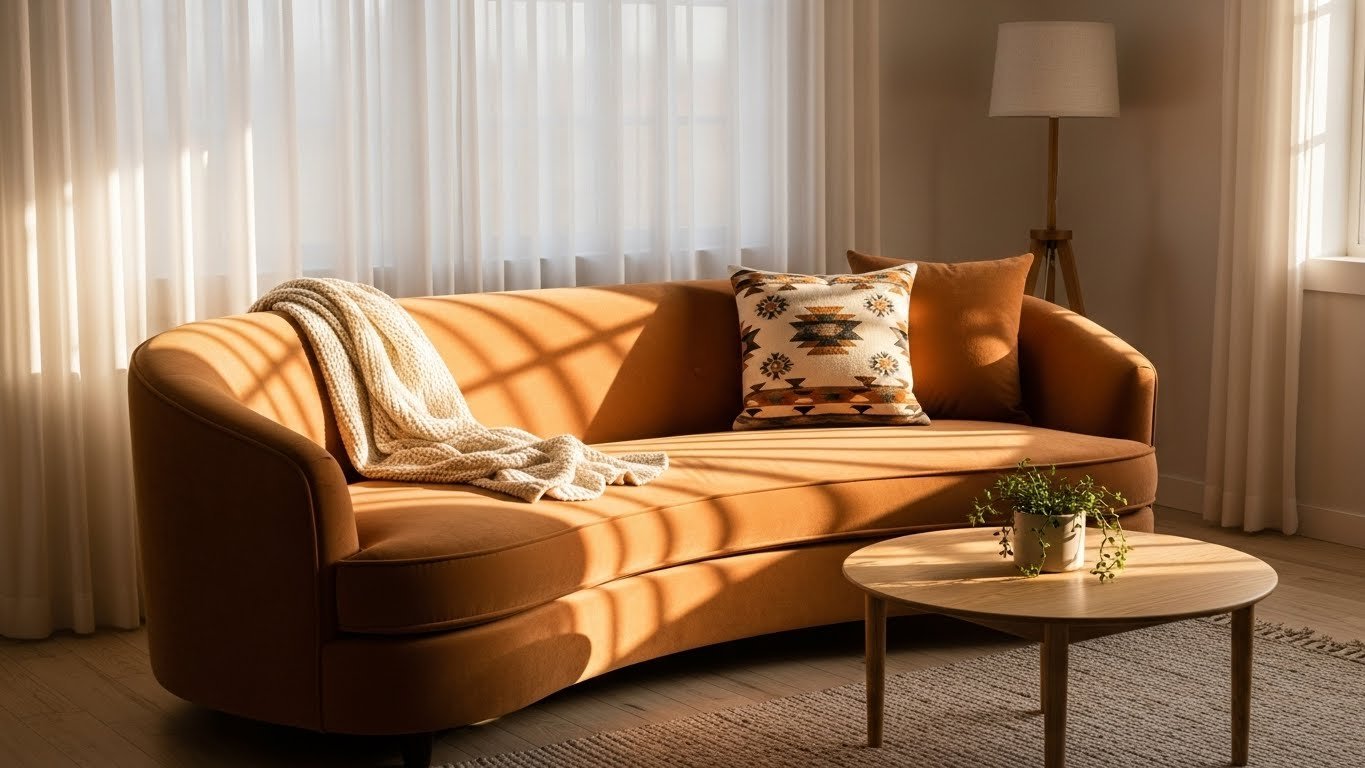
Your living room might feel stuck in yesterday’s design trends. Sofas have evolved far beyond generic rectangles, and the right one can completely reshape how your space looks and feels. Whether you’re working with a small apartment, a sprawling open floor plan, or somewhere in between, there’s a sofa style that matches both your lifestyle and your vision. This guide walks you through 25 of the latest sofa designs that are actually doable—from budget-friendly finds to splurge-worthy investment pieces. You’ll discover curves, colors, configurations, and styling tricks that designers are using right now to create living rooms people actually want to hang out in.
1. Go Curved for a Softer, Modern Aesthetic
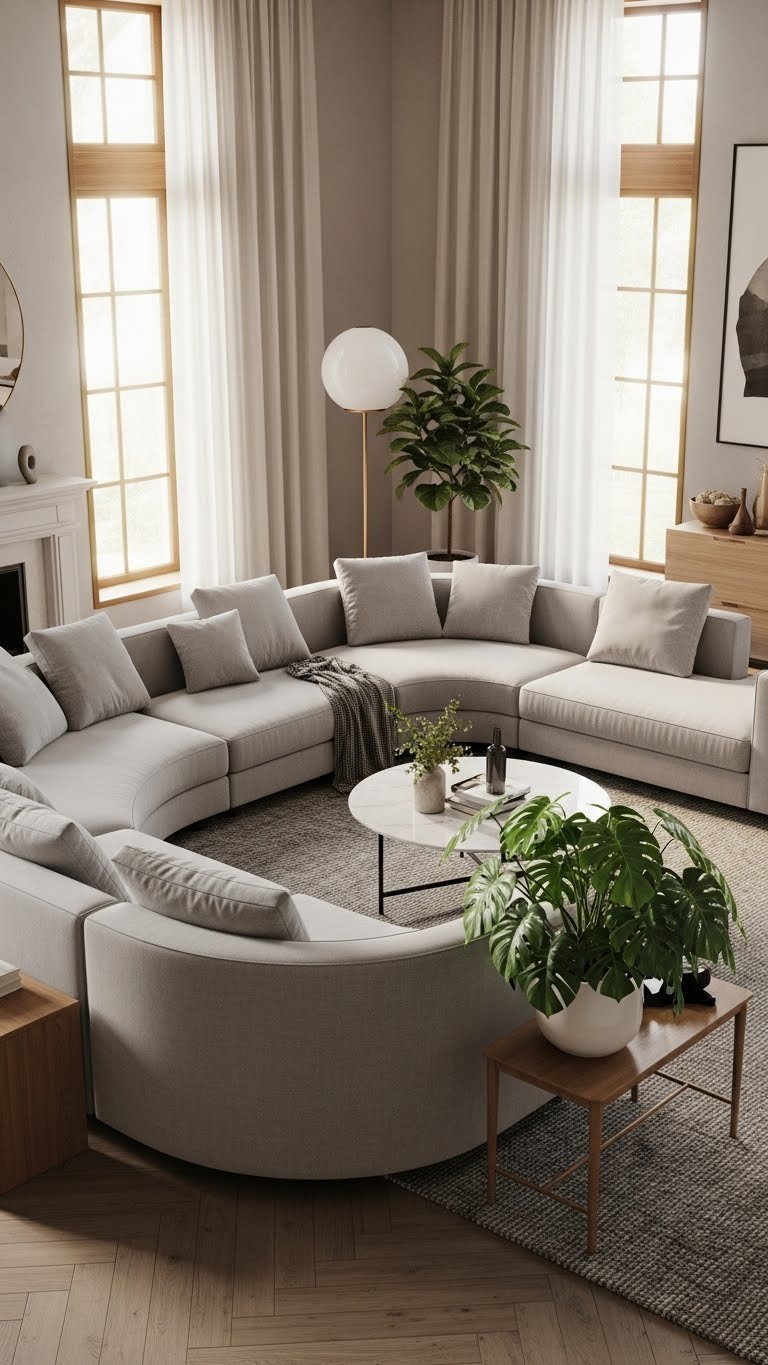
Curved sofas are having a major moment because they soften up any room instantly. Instead of sharp corners that make spaces feel rigid, curves create flow and invite people to actually sit close together.
You can find curved sofas at Living Spaces (starting around $1,200–$3,000), Wayfair ($800–$2,500), and custom options through What A Room (typically $1,500–$4,000+). Look for curved sectionals in L-shaped or U-shaped configurations if you want maximum seating impact. The styling bonus: curved sofas work as a natural focal point, so you don’t need a ton of extra furniture competing for attention.
Pro tip: If you’re renting or unsure about commitment, check out curved loveseats or smaller sectionals first to test the layout before going full-size.
The curved silhouette creates natural conversation zones that make your living room feel more social and intentional. You’ll notice guests naturally gravitate closer together—it changes the whole vibe.
2. Choose Modular Sectionals for Ultimate Flexibility
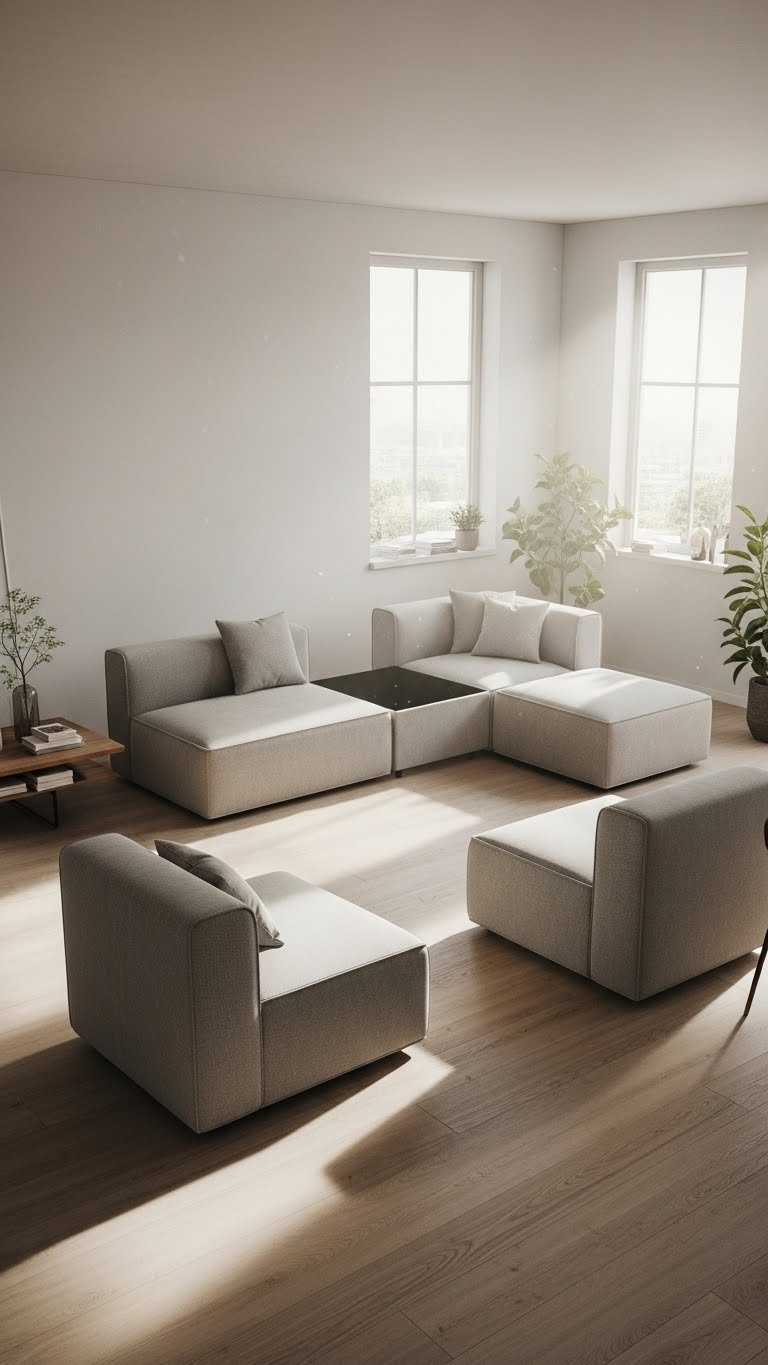
Modular sofas are the smart choice if you move frequently, have pets, or just like rearranging your space. Each piece works independently, so you can add, remove, or reconfigure without replacing the entire sofa.
Brands leading the modular trend: Article ($600–$1,500 per module), Hem ($900–$2,000), and IKEA’s Kivik series ($400–$1,000 per section). Most modular pieces come with connector plates, so reassembly takes about 30 minutes. Pricing is usually per section, so budget accordingly—a three-piece configuration typically costs $1,200–$2,500 total.
Pro tip: Choose a neutral base color (camel, gray, charcoal) and add personality with modular ottomans or accent pieces you can swap out seasonally.
This setup means you’re not locked into one layout—rearrange based on your mood, season, or whenever guests need extra seating. The flexibility alone is worth it for anyone who gets bored easily.
3. Invest in Oversized Deep-Seated Comfort
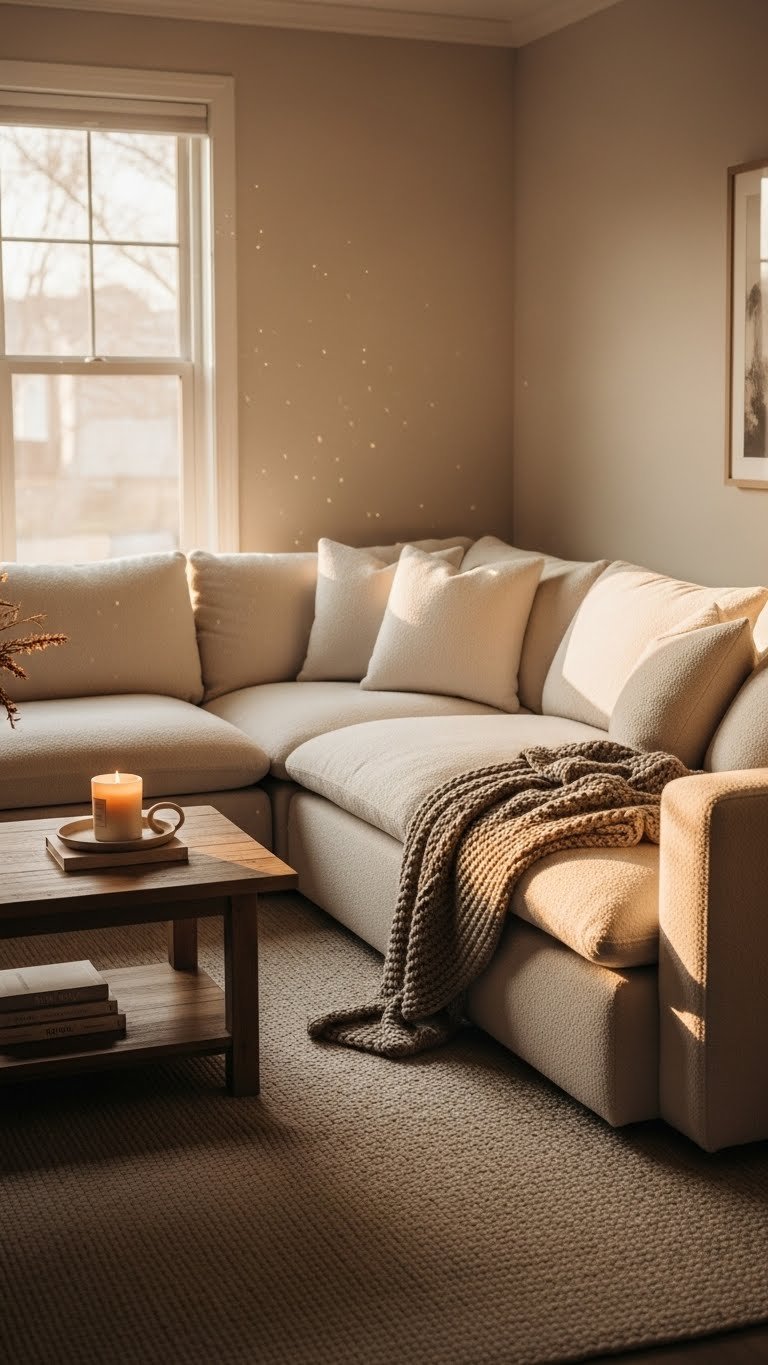
If comfort is non-negotiable, oversized deep-seated sofas are where it’s at. These aren’t your grandmother’s formal couches—they’re basically furniture you can get lost in.
Look for sofas with seat depths of 30–36 inches (standard is 24–26). Brands like Restoration Hardware ($3,000–$8,000), Article ($1,200–$2,800), and budget-friendly Wayfair and Target ($1,000–$2,000) all offer deep-seated options. You’ll pay more for extra depth, but the trade-off is that you’ll actually use your sofa instead of wishing you were in bed.
Pro tip: Test the depth in person if you can—what feels deep to one person might not feel right for another. Video calls with store associates are surprisingly helpful here.
A genuinely comfortable sofa changes your whole relationship with your living room. You’ll find yourself relaxing there instead of retreating to the bedroom, which is the real win.
4. Try Low-Profile Silhouettes for Airy Modern Spaces

Low-profile sofas create the illusion of more floor space because you can see underneath them. They’re perfect for smaller rooms or anyone who wants that sleek, Scandinavian-design vibe.
These work best when paired with modern décor. Try IKEA’s Kivik ($500–$900), Article’s Ceni or Sven lines ($900–$1,600), or splurge on Design Within Reach ($2,000–$5,000). Installation is quick—most arrive flat-pack or assembly-ready within 1–2 hours. The lower profile does mean less under-sofa storage for things like throw blankets, so plan your organization around that.
Pro tip: Renter-friendly tip: low-profile sofas are easier to move through doorways than chunky traditional styles.
Your room looks noticeably larger and more open once you swap out a bulky couch for something lean and grounded. The visual breathing room makes the whole space feel less cramped.
5. Embrace Earthy Neutrals as Your Canvas
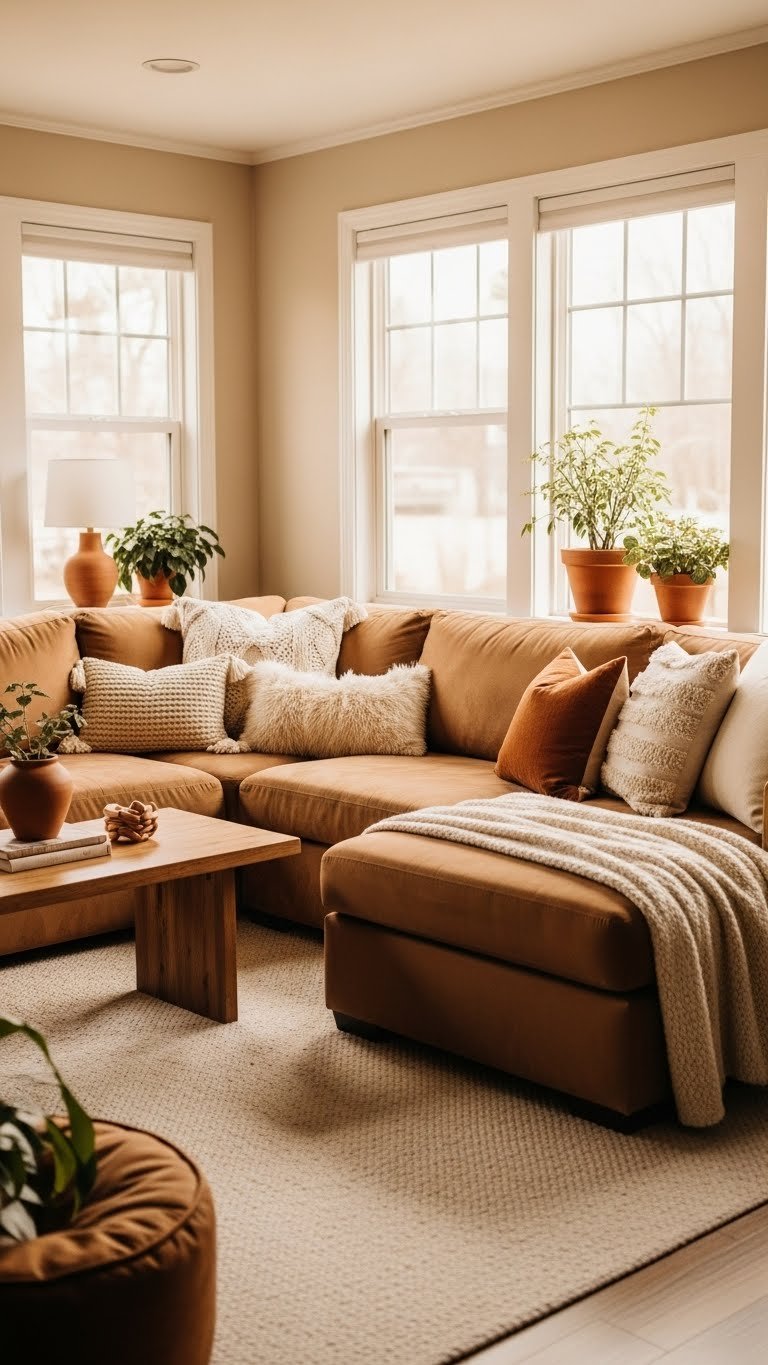
Earthy neutrals—camel, clay, warm beige, oatmeal—are trending because they photograph beautifully and pair with everything. They’re the opposite of boring; they’re actually the most flexible foundation for personal style.
Where to find them: Virtually every major furniture retailer now offers earthy tones. West Elm ($1,200–$3,000), Restoration Hardware ($2,500–$6,000), and budget options like Wayfair ($600–$1,500) have extensive neutral selections. The price point depends way more on fabric quality than color.
Pro tip: Neutral sofas are your investment piece—you can change accent décor without re-buying furniture.
Once you go neutral, you realize how much creative freedom it gives you. Your sofa stops fighting for attention and becomes the perfect backdrop for whatever style direction you want to go next.
6. Select Performance Fabrics for Real-Life Living

Performance fabrics are woven with synthetic fibers that resist stains, fading, and wear—basically, they’re designed for chaos. If you have kids, pets, or just eat on the couch, these are game-changers.
Top picks: Crypton, Sunbrella, and Revolution fabrics from brands like Restoration Hardware ($2,000–$5,000), Article ($1,200–$2,500), or Wayfair’s performance-fabric options ($800–$1,800). Performance fabrics usually cost 15–25% more than standard upholstery, but they’ll last 2–3 times longer. Most are water and stain-resistant and cleanable with just a damp cloth or mild soap.
Pro tip: Ask specifically for performance fabric options when shopping—not all retailers highlight them.
You’ll actually feel relaxed on a performance-fabric sofa instead of anxious about spills. That peace of mind alone is worth the small upcharge.
7. Add a Statement Blue or Green for Wellness Vibes

Moody blues and muted greens are trending hard because they’re calming without being cold. Sage, olive, and soft teal connect us to nature and create spaces that genuinely feel restorative.
Where to find them: Living Spaces has extensive color options ($1,200–$3,500), as does West Elm ($1,200–$3,000), Article ($900–$2,000), and Bellona USA color guides suggest pairing with warm wood tones and soft textures. These colors work best with warm lighting (avoid overly bright white bulbs). Budget for a dimmer switch or warm LED bulbs if your lighting feels harsh.
Pro tip: Look at color samples in your actual space during different times of day before committing.
This color choice makes your living room feel like a personal retreat instead of just a furniture arrangement. You’ll notice the difference the moment you sit down—it’s more restorative than you’d expect.
8. Go Bold with Pattern and Color (Skip Safe Neutrals)
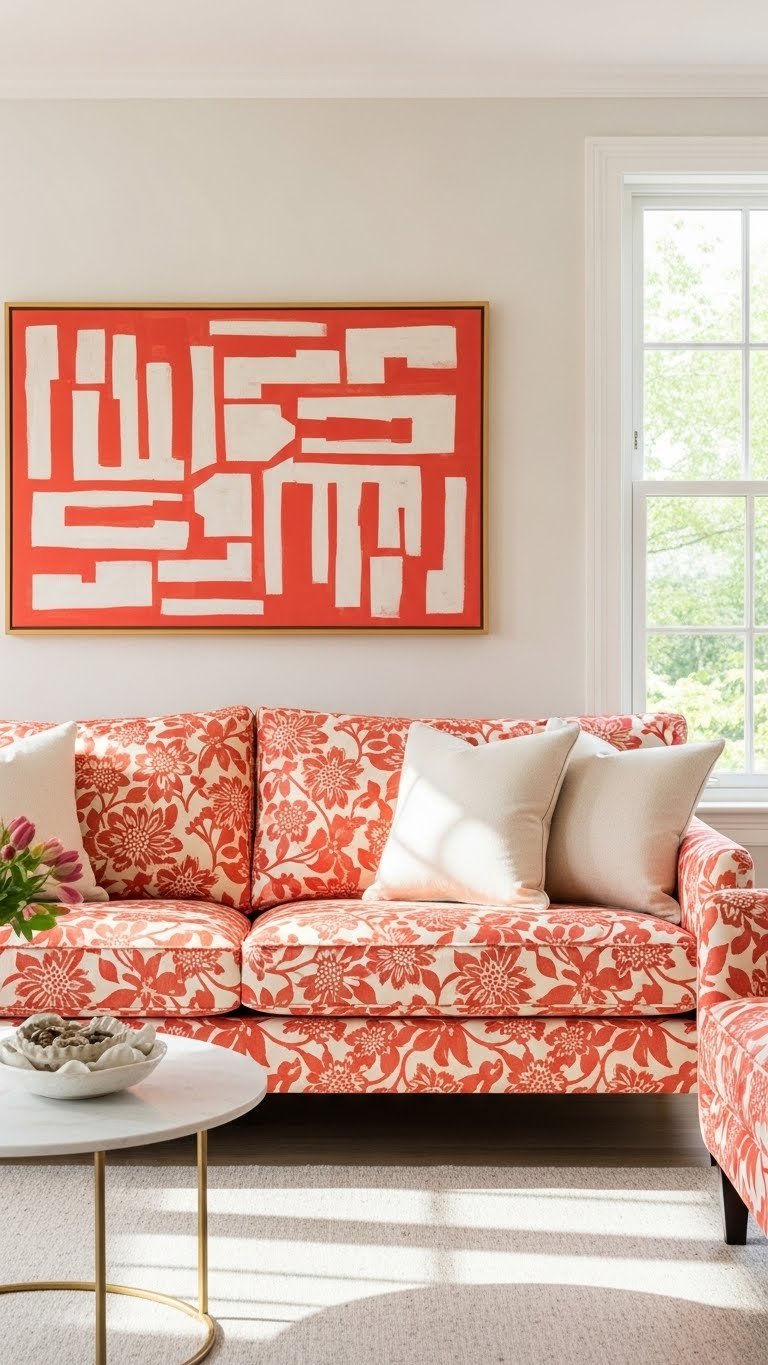
Statement sofas with patterns or bold colors are for people who are done blending in. Florals, stripes, geometric prints, and jewel tones make your sofa the hero instead of background furniture.
Designer picks: What A Room specializes in custom patterned options ($2,000–$5,000), while Wayfair and West Elm carry patterned collections ($1,200–$3,000). Bold choices photograph incredibly well (hello, Pinterest-worthy living rooms) and make small spaces feel intentional rather than cramped. The trade-off: patterns are trickier to style around, so plan your accent colors carefully.
Pro tip: If you’re nervous about commitment, try a bold patterned loveseat or sectional corner piece first to test your comfort level.
A patterned or boldly colored sofa stops being furniture and becomes a conversation starter. Your living room immediately feels like it reflects who you actually are.
9. Layer Textures for Depth and Coziness

Mixing textures—velvet, boucle, linen, leather—makes a living room feel way more curated and inviting. Flat, single-texture sofas can feel one-note, but layering different materials creates visual and tactile interest.
Start with your sofa as the base and add: a linen throw, a velvet pillow, a boucle accent piece, and maybe a leather ottoman. Budget $50–$200 for quality throw blankets and $30–$100 per pillow from places like Target ($20–$80), West Elm ($40–$150), or Wayfair ($25–$120). The texture combinations are endless, and you can swap them seasonally.
Pro tip: Stick to a cohesive color palette when mixing textures—three colors maximum prevents it from looking cluttered.
Layered textures make your sofa look expensive and intentional, even if the base piece is budget-friendly. Your space automatically feels more sophisticated.
10. Use L-Shaped Modularity to Zone Open Homes

In open-plan homes, an L-shaped sectional acts as a built-in room divider without closing off the space. It creates natural zones that define the living area and make the layout feel intentional.
Designer Brynna Evans from Living Spaces recommends positioning the longer side parallel to the wall and the corner piece angling into the room. This strategy works with modular pieces ($1,500–$3,500) or built L-shapes ($1,200–$4,000). The setup usually takes an afternoon to arrange and typically takes up 8–12 linear feet of wall space.
Pro tip: Measure your space first—account for traffic flow so the layout doesn’t feel cramped or awkward.
Once you zone your open plan with the right sofa, both spaces feel more purposeful. Your living area looks designed instead of just filled with furniture.
11. Choose Charcoal or Gray for Modern, Moody Interiors

Dark sofas are having a comeback because they feel modern and create sophisticated, moody spaces. Charcoal and deep gray work especially well in homes with concrete, metal, or industrial-inspired elements.
Options: West Elm ($1,200–$3,000), Article ($900–$2,500), Wayfair ($700–$2,000). Dark colors hide wear better than light neutrals, which is a practical bonus. The main challenge: dark sofas can make small rooms feel smaller, so pair them with light walls and good lighting to balance the space.
Pro tip: Use a combination of table lamps, floor lamps, and warm accent lighting to prevent the room from feeling cave-like.
A well-styled dark sofa creates a sophisticated, retreat-like atmosphere. It’s the opposite of living-room-as-showroom feeling—it’s curated and intentional.
12. Explore Scandinavian-Inspired Low-Maintenance Pieces
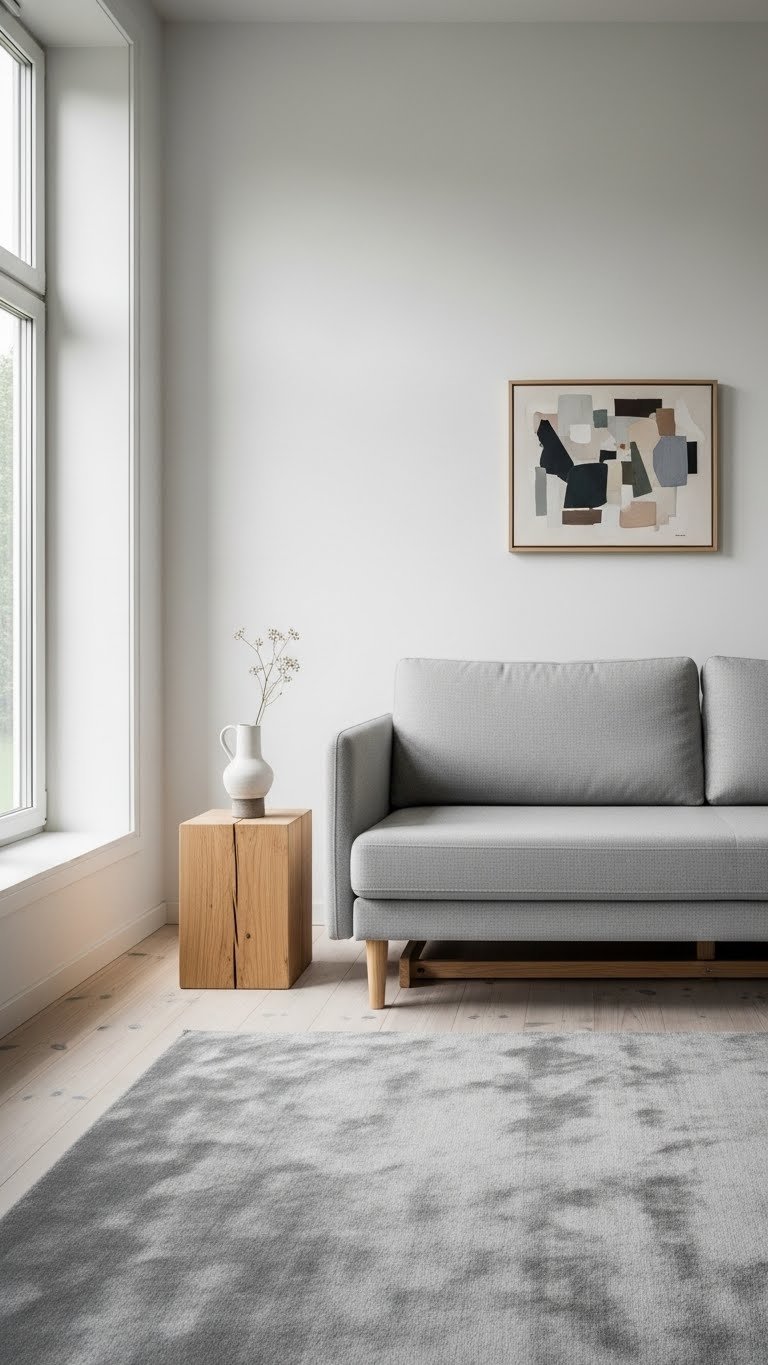
Scandinavian design prioritizes function and simplicity—no unnecessary details, just solid construction and thoughtful details. These sofas often double as sleepers or have hidden storage, making them perfect for small homes.
Brands: IKEA leads here ($400–$1,200), but Article’s Scandinavian collection ($800–$2,000) and Urban Natural ($1,000–$2,500) offer higher-end options. Scandinavian sofas are usually upholstered in durable linen or performance fabric and come with minimal assembly. The wood frames are typically birch or oak, designed to last decades.
Pro tip: These pieces age beautifully—they often look better after a few years of use than brand new.
Scandinavian sofas feel timeless instead of trendy. You’re not constantly wondering if the style is “still in”—good design just works forever.
13. Incorporate Sleeper Sofas for Multipurpose Rooms
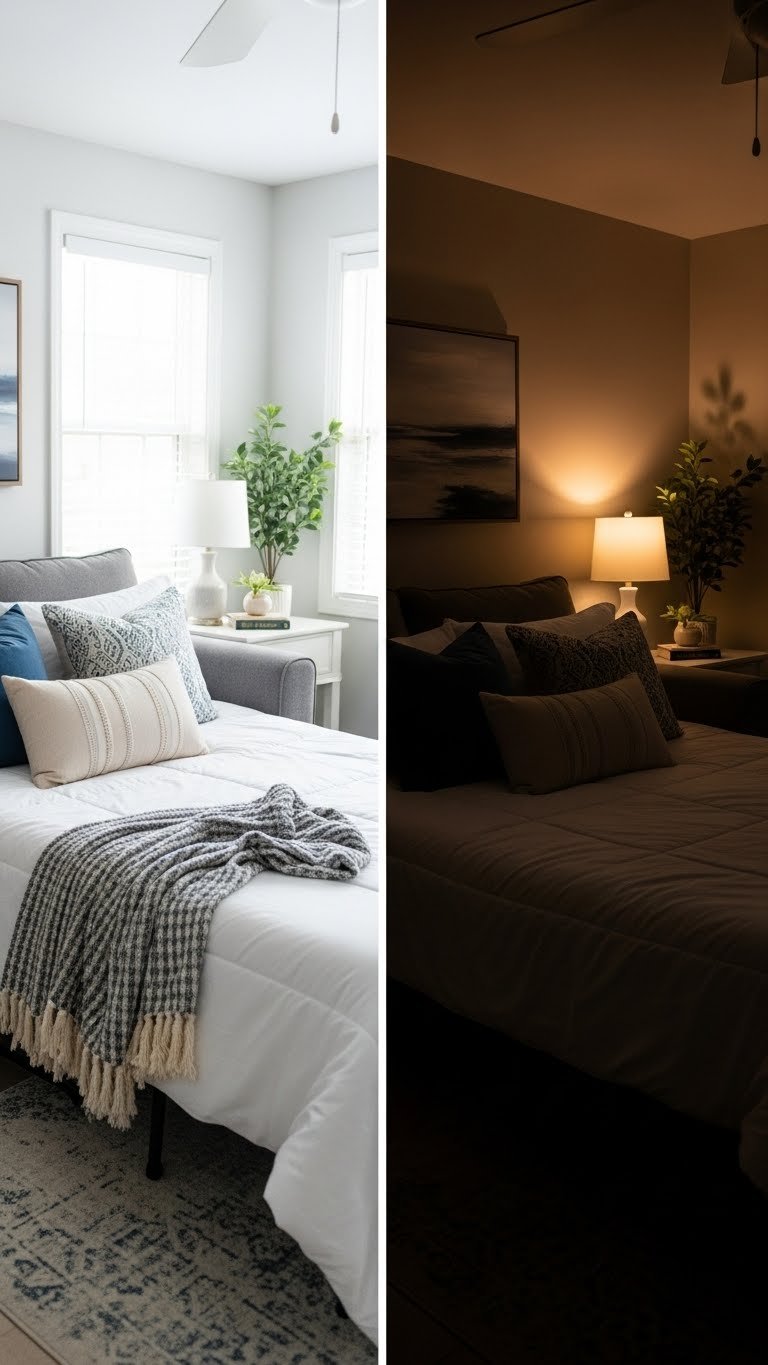
Sleeper sofas have evolved beyond rickety metal frames and uncomfortable plastic mattresses. Modern sleeper mechanisms are actually comfortable and hide completely when the sofa is in seating mode.
Look for sofas with pull-out queen mattresses (easiest to sleep on) from Wayfair ($900–$2,000), Article ($1,200–$2,500), or splurge on Restoration Hardware’s sleeper options ($2,500–$5,000). Quality matters here—test the mattress comfort in person if possible. Check for easy-pull mechanics and memory foam mattresses (way better than basic innerspring). Budget an extra 15 minutes to pull out and put away.
Pro tip: Pair with quality bedding designed for sleeper sofas—it stores neatly in a basket beside the sofa.
You get a full living room sofa plus an actual guest bed when you need it. That dual-purpose flexibility saves space and money compared to buying separate furniture.
14. Select Plush Boucle or Velvet for Textured Luxury
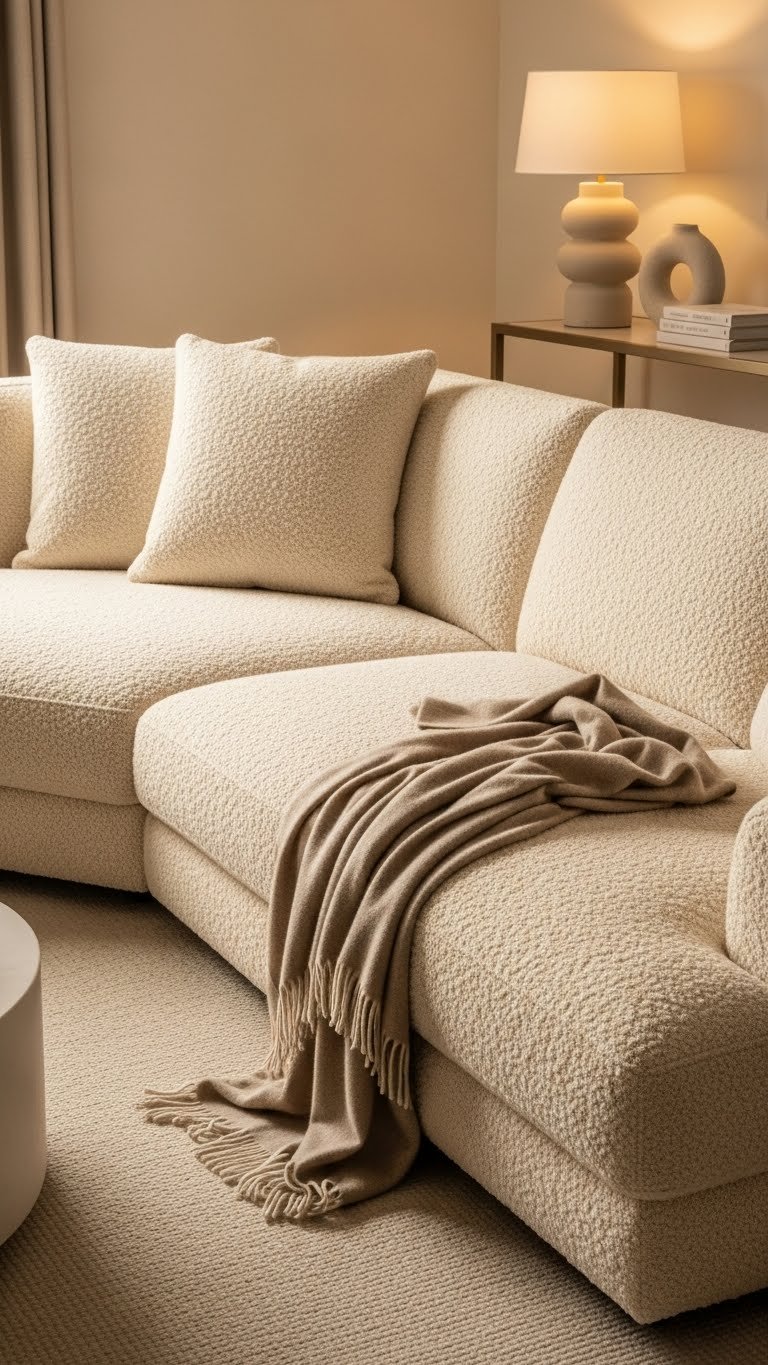
Boucle and velvet fabrics create an immediate sense of richness and comfort—they feel expensive and photograph beautifully. These materials are trending hard because they satisfy both the comfort and style quotas.
Where to find them: West Elm ($1,500–$3,500), Restoration Hardware ($2,500–$6,000), Article ($1,200–$2,800), or Wayfair’s higher-end options ($1,200–$2,500). Boucle is more durable than velvet for high-traffic households, but velvet creates a more luxurious aesthetic. Both require occasional brushing to maintain, and neither is ideal for homes with shedding pets. Budget $200–$400 for professional cleaning if something spills.
Pro tip: Boucle in cream or camel is more forgiving than darker velvet if you’re worried about showing dust.
These textures make your living room look magazine-worthy without trying too hard. Guests notice immediately—it’s the first thing people comment on.
15. Add Custom Sizing for Perfect Fit
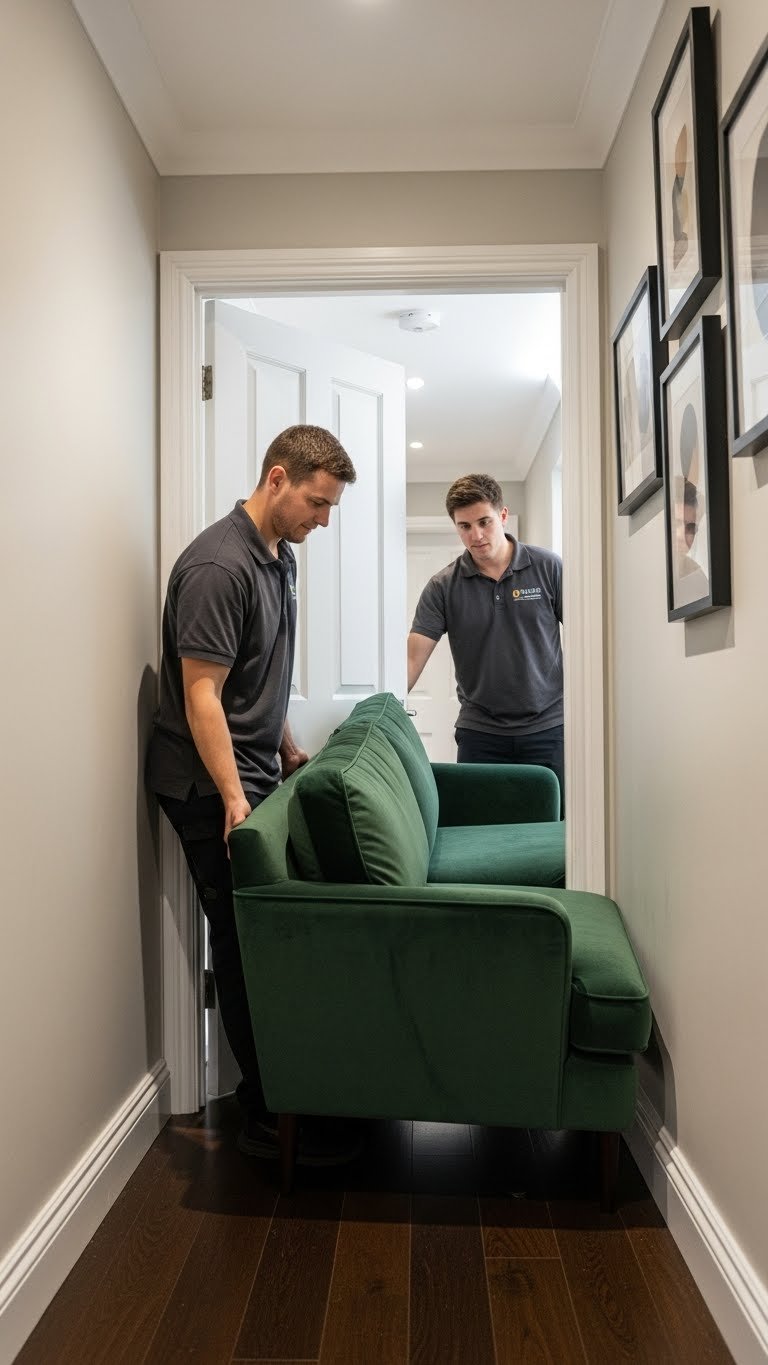
Custom sofas are the solution when standard sizes don’t fit your space. Whether your room has awkward angles, weird doorways, or you need exact dimensions, custom is worth the investment.
Custom specialists: What A Room offers 3D renderings and swatch samples ($2,000–$5,000+), while Design Within Reach ($3,000–$8,000) and select West Elm locations offer limited customization. The process usually takes 12–16 weeks, so plan ahead. You’ll typically pay 20–40% more for custom than off-the-shelf, but you get exactly what you need.
Pro tip: Order samples before committing—see the fabric and color in your actual lighting before finalizing.
A sofa built for your exact space feels like it was always meant to be there. No more compromising with “close enough” sizes that never quite work.
16. Create Conversation with Serpentine Curved Designs
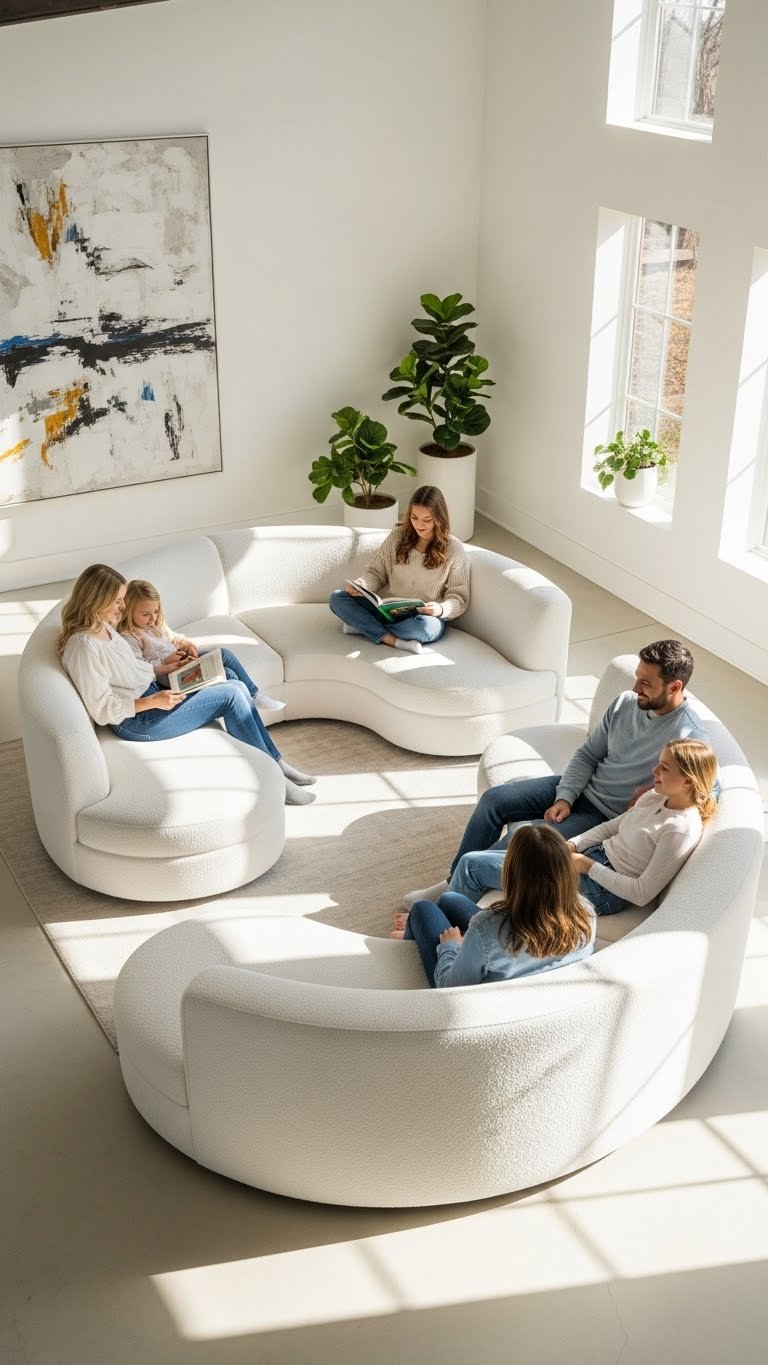
Serpentine sofas take curves further—they flow and wind, creating multiple seating zones in one sculptural piece. They’re less common than standard curves, which means your living room genuinely stands out.
Where to find them: These are specialty pieces through What A Room ($3,000–$6,000), Design Within Reach ($4,000–$8,000), or high-end retailers. They’re more installation-intensive (consider professional delivery), and they require more floor space. But the architectural impact is unmatched—these pieces become the room’s focal point immediately.
Pro tip: Serpentine designs work best in spaces at least 14 feet long with open floor plans.
A serpentine sofa stops being furniture and becomes a design statement. It changes how people move through and interact with your space.
17. Mix Neutral Bases with Bold Accent Pops

The safest way to try bold color without full commitment: neutral sofa base with rotating bold accent pieces. This strategy lets you update your look seasonally without replacing furniture.
Start with a neutral sofa ($800–$2,500), then budget $15–$50 per pillow for accent colors. Target ($20–$60 per piece), Wayfair ($25–$80), and West Elm ($40–$120) cycle through seasonal colors constantly. You can completely change your room’s vibe by swapping four pillows—takes 10 minutes and costs under $100.
Pro tip: Stick to a color story (jewel tones, pastels, warm spices) so accent pieces feel coordinated instead of random.
This approach gives you creative freedom while keeping your biggest furniture investment neutral and timeless. You get variety without the risk.
18. Opt for Nesting Armchairs with Curved Sofas
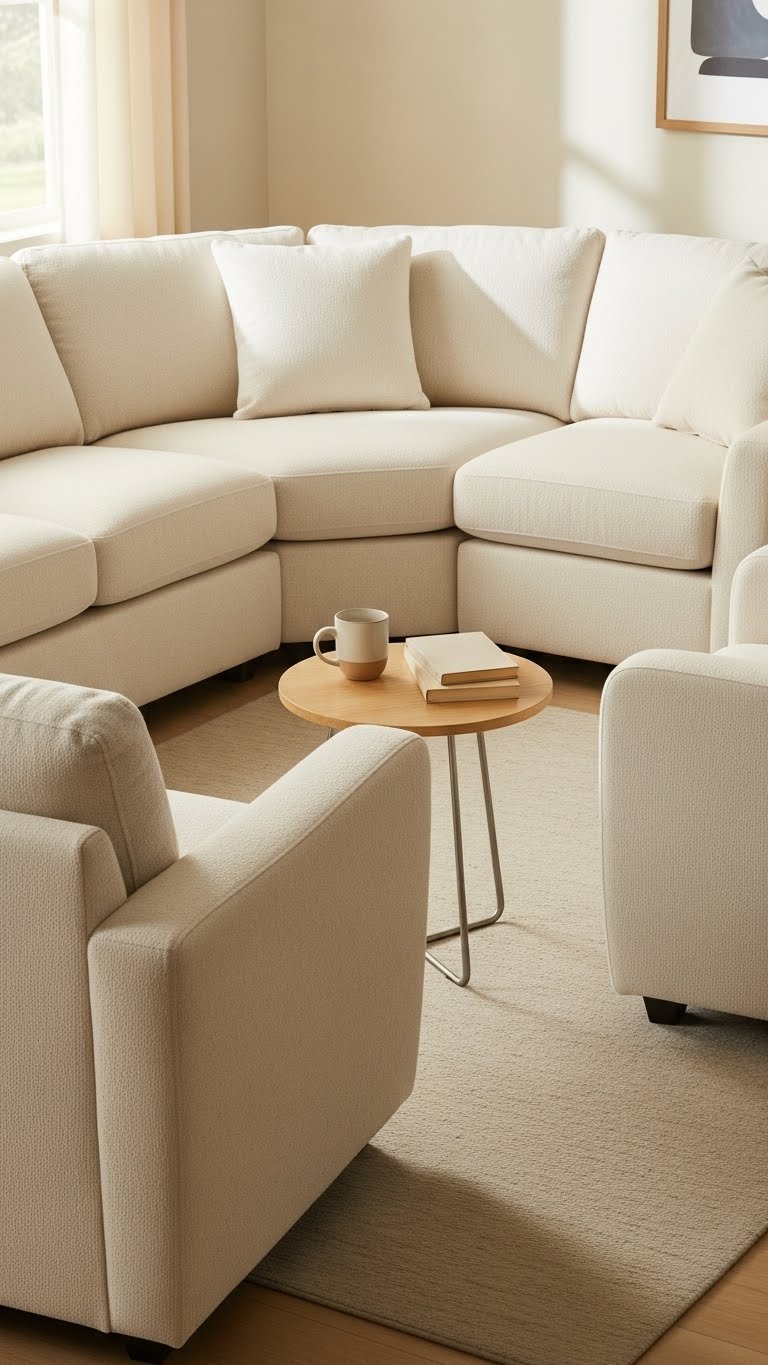
Curved sofas pair beautifully with nesting armchairs that echo the silhouette. This creates intentional seating groups and makes your living room feel deliberately curated.
Set options: Article’s curved sectional + matching chairs ($2,000–$4,000 total), West Elm’s curved bundles ($2,500–$5,000), or mix brands if you find pieces that complement each other. The nesting strategy works especially well in open-plan spaces where you want to define a sitting area. Budget about two weeks for delivery if ordering coordinating pieces.
Pro tip: Armchairs don’t have to match exactly—same color and shape matter more than identical upholstery.
Intentional seating groupings make your living room feel like an actual designed space. It’s instantly more inviting and conversational.
19. Use Oversized Floor Cushions as Flexible Seating
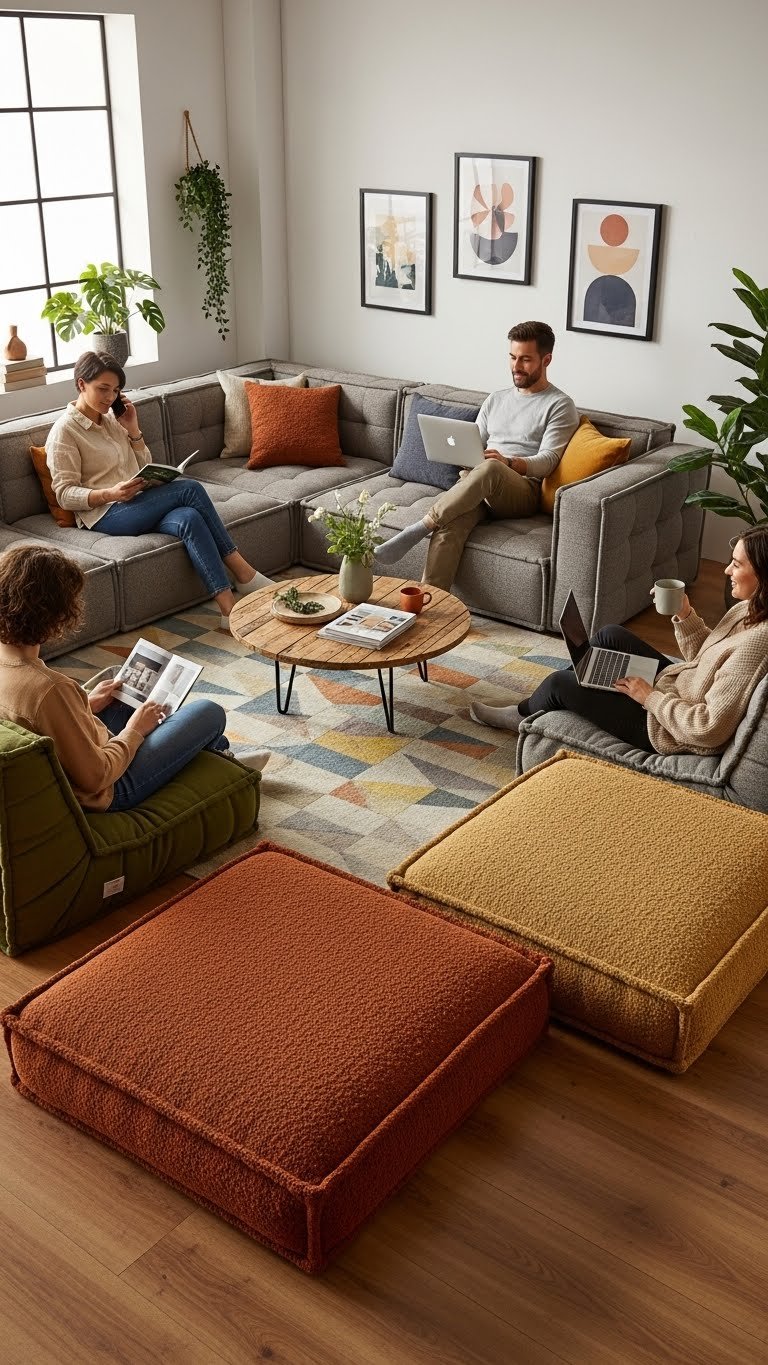
Floor cushions are the flexible seating hack that works with any sofa setup. They add extra seating for gatherings, can be stored easily, and cost way less than adding another piece of furniture.
Options: Target ($30–$80 each), Wayfair ($40–$100), West Elm ($60–$150), or high-end Article ($80–$200). Look for cushions with removable covers so you can wash them. Quality outer covers in performance fabric make them durable enough for regular use. Budget $100–$300 for a set of three cushions that coordinates with your sofa.
Pro tip: Store cushions in a woven basket next to the sofa for instant rustic charm and accessibility.
You get flexible seating that actually stores away, plus your living room feels casual and welcoming. Guests appreciate the relaxed vibe.
20. Try Removable, Washable Slipcovers for Easy Updates

Slipcovers let you change your sofa’s look seasonally and protect the upholstery underneath. They’re renter-friendly, budget-conscious, and surprisingly effective.
Where to find them: Target has basic options ($80–$150), Wayfair ($100–$300), or custom slipcover services like Etsy creators ($200–$600). Most are machine-washable and take 20 minutes to apply. The trade-off: slipcovers wrinkle and shift slightly over time, so they look best on sofas that stay relatively stationary.
Pro tip: Order two sets—one in use while the other is being washed keeps your sofa always looking fresh.
Slipcovers give you the flexibility of a new sofa without the cost or commitment. You can literally change your room’s color scheme on laundry day.
21. Prioritize Wide, Deep Cushions for Ultimate Comfort

The difference between an okay sofa and a genuinely comfortable one comes down to cushion depth and density. Aim for cushions at least 5 inches thick with high-density foam that doesn’t compress flat after a year.
Check before buying: Press on cushions in stores—good quality bounces back immediately. Budget $1,500+ for thick, durable cushioning. Brands known for this: Restoration Hardware ($2,500–$6,000), Article ($1,200–$2,800), West Elm ($1,500–$3,500). Cheaper options ($600–$1,000) often have lower-density foam that feels great for three months, then flattens.
Pro tip: Ask specifically about foam density ratings (35+ pounds per cubic foot is ideal for longevity).
A genuinely comfortable sofa with quality cushioning becomes your favorite place in the house. You’ll use it constantly instead of wishing you were elsewhere.
22. Select Sustainable, Made-to-Order Options
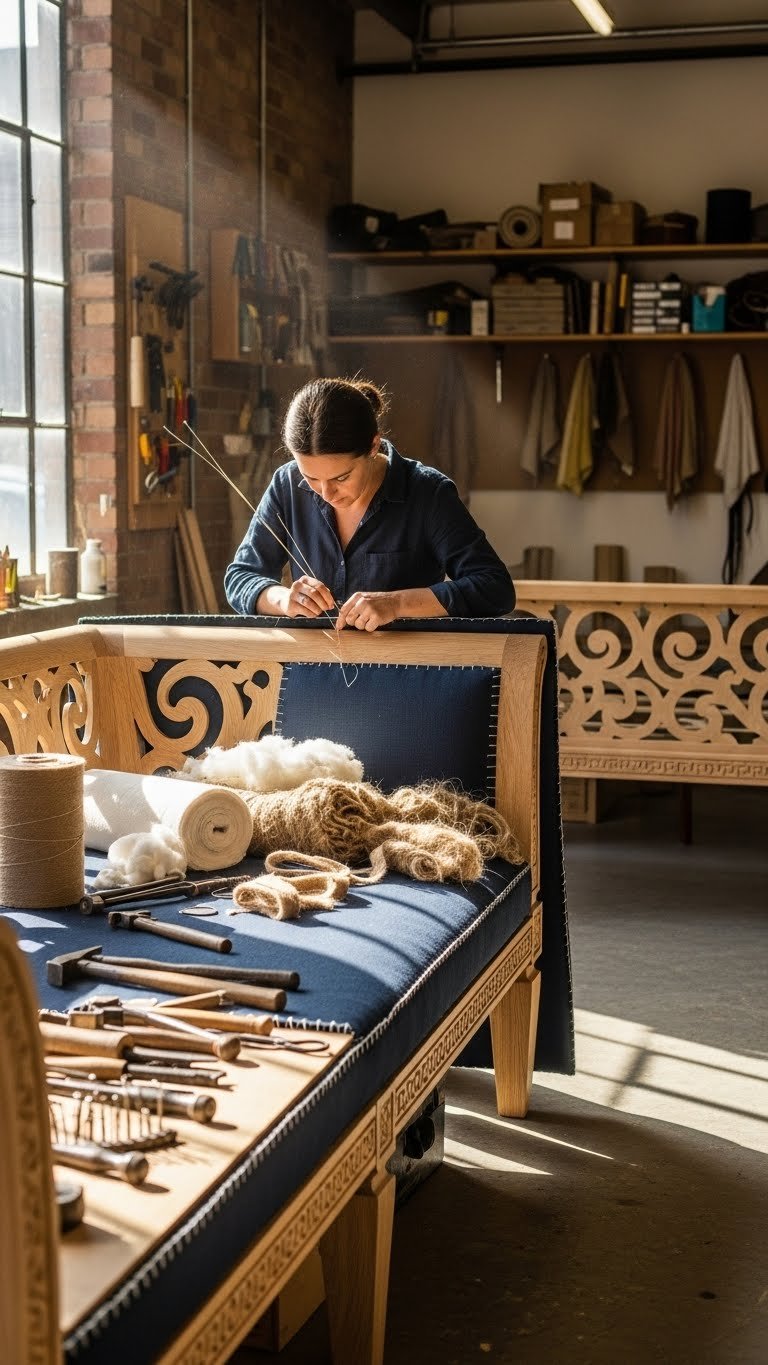
Sustainable, made-to-order sofas support slow manufacturing and reduce waste. You’re getting a piece built specifically for you instead of mass production, plus supporting better labor practices.
Sustainable brands: Article’s sustainably sourced options ($1,000–$2,500), What A Room ($2,000–$5,000), Seven Seating ($2,500–$4,500), or Etsy’s artisan makers ($1,500–$4,000). Production takes longer (12–20 weeks), so plan ahead. These pieces are designed to last 10+ years with minimal replacement needs.
Pro tip: Look for certifications like FSC (Forest Stewardship Council) for wood frames and eco-fabrics like linen or organic cotton.
You get a unique piece that supports responsible manufacturing. That matters more to many people than having the trendy option immediately.
23. Layer Warm Lighting Around Dark Sofas
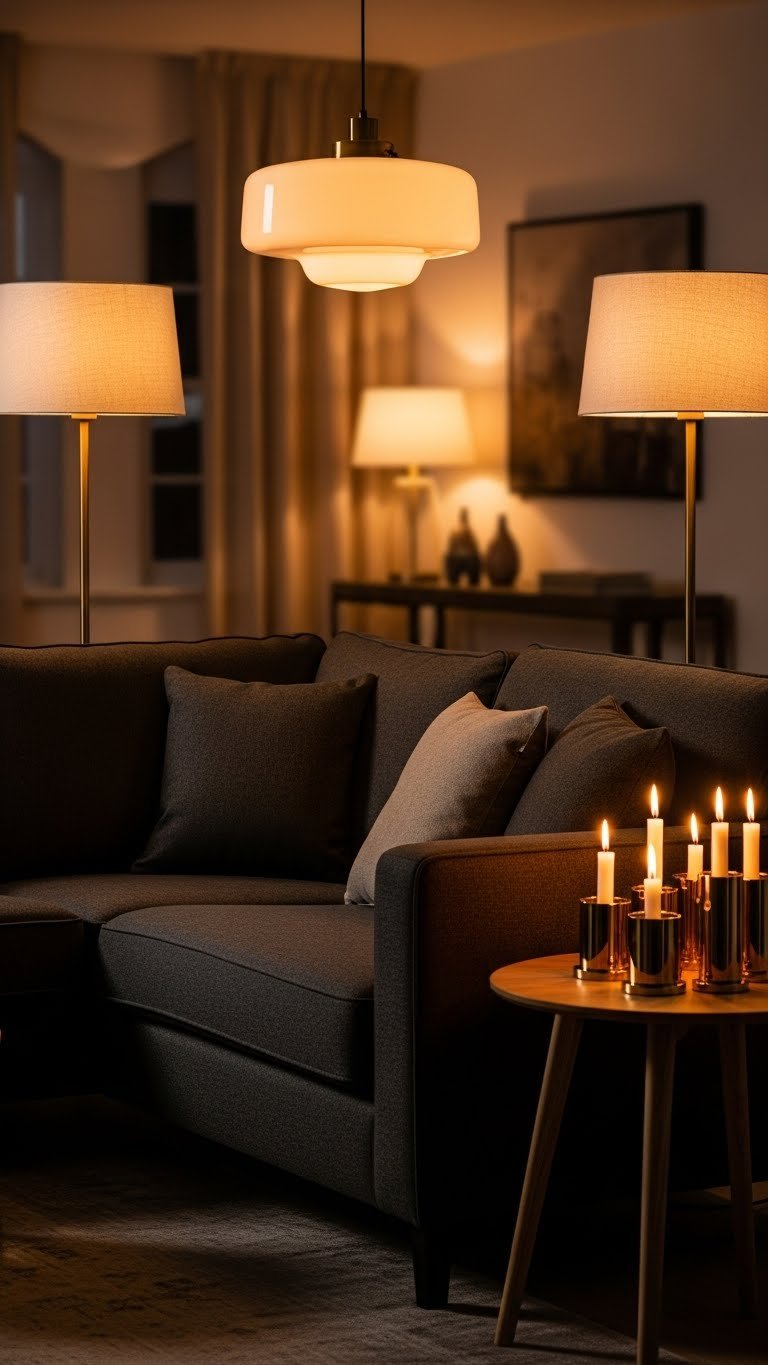
Dark sofas need smart lighting strategy—otherwise, they can make rooms feel gloomy. Layer warm-toned lights (2700K color temperature) around the sofa to keep it feeling open and inviting.
Lighting setup: Add floor lamps flanking the sofa ($60–$200 each from Target, West Elm, IKEA), install a dimmer switch ($30–$100 including installation), and add warm overhead lighting. Total budget typically $200–$500. The warm color temperature prevents that clinical, overly bright feel that makes dark sofas look cave-like.
Pro tip: Brass or gold-toned fixtures warm up the space better than chrome or steel finishes.
Good lighting makes your dark sofa feel cozy and sophisticated instead of heavy. The difference is immediate—people comment on how welcoming the space feels.
24. Mix High and Low Furniture Around Your Sofa

Varying furniture heights around your sofa creates visual interest and prevents the space from feeling flat. Pair a high sectional with a low table, or a low-profile sofa with taller accessories.
Strategy: If you have an oversized deep sofa, use a lower coffee table (12–16 inches high) so sightlines aren’t blocked. With a low-profile sofa, go higher with side tables (20–24 inches). Mix vintage finds (Facebook Marketplace, thrift stores, $50–$200) with new pieces for collected, curated energy. The mixing actually makes everything look more intentional.
Pro tip: Stand back and look at the silhouettes—vary high, medium, and low throughout the arrangement.
Mixed heights create architectural interest that makes your living room feel thoughtfully designed. It’s the difference between “furniture in a room” and “a curated space.”
25. Create a Sofa-Centric Room Layout

Instead of treating your sofa as one piece among many, design your whole room around it. This strategy makes everything feel cohesive and intentional.
Process: Choose your sofa first (not last), then build everything else around its style, color, and scale. If it’s a statement piece, keep other furniture simple. If it’s neutral, bring in bold accessories. This approach works whether you’re building a room from scratch ($3,000–$8,000) or refreshing an existing space ($500–$2,000 for updates). The effort required is mainly just intentionality—actual costs depend on what else you’re buying.
Pro tip: Pinterest boards help visualize how your chosen sofa works with different room styles before buying other pieces.
When your sofa is the intentional centerpiece, the whole room comes together more naturally. Everything has purpose instead of feeling random.
26. Explore Dual-Tone or Color-Block Upholstery

Dual-tone or color-blocked sofas create sophisticated visual interest without being loud. Think cream paired with taupe, or soft gray with charcoal—subtle contrast that reads as intentional.
Finding them: Custom options through What A Room ($2,500–$5,500), Design Within Reach ($3,000–$6,000), or select West Elm pieces ($1,800–$3,500). Some ready-made options exist, but custom usually gives you more color combinations. The construction takes longer (14–18 weeks) since it requires different fabric cuts, but the result is genuinely unique.
Pro tip: Choose colors that are only one or two shades apart so the blocking looks intentional rather than mismatched.
A color-blocked sofa signals that you have a distinct design perspective. It’s subtle sophistication that people notice but can’t quite name.
Save this post for your next sofa shopping mission—whether you’re replacing your old one or refreshing what you’ve got. Even if you try just one idea (like adding a slipcover or rearranging with a modular piece), you’ll see how much a thoughtful sofa choice changes your whole living room.
Leave a Reply