Introduction
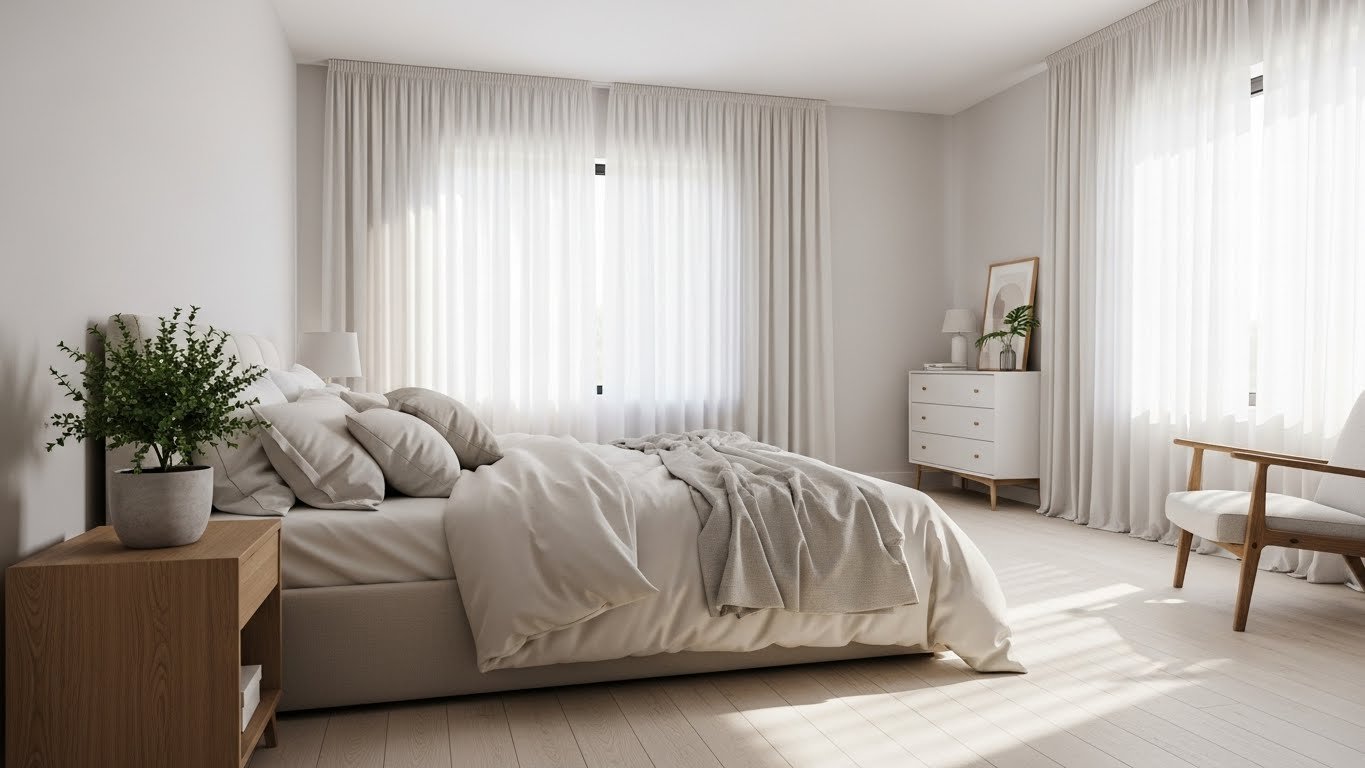
Minimalism gets a bad rap for feeling cold and sterile, but it doesn’t have to be that way. The key to a calming bedroom isn’t about emptiness—it’s about thoughtful choices that let you breathe. You need a space that supports better sleep, reduces decision fatigue, and makes you actually want to be there. This guide walks you through 27 ideas that strip away the noise while keeping the warmth and personality. From free organizing tricks to smart furniture swaps, you’ll discover how to create a bedroom that feels like a real sanctuary, not a showroom. Ready to design a space where you can finally relax?
1. Choose Creamy Neutrals Over Stark White
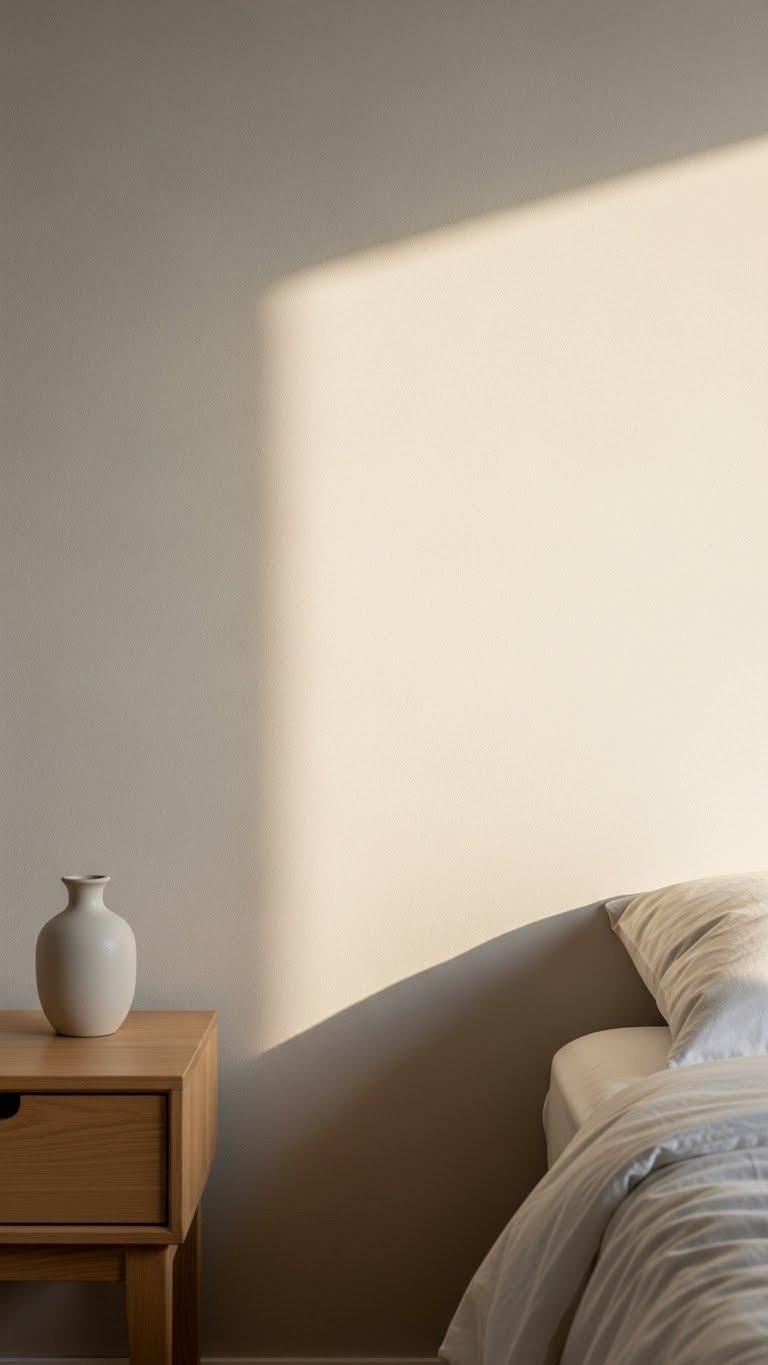
Stark white walls can feel clinical and unwelcoming, even when you’re trying to keep things simple. Creamy beige, warm taupe, and soft greige create the calm you’re after without the bleakness.
Paint your walls one of these warmer neutrals to anchor the room in comfort. Benjamin Moore’s Swiss Coffee or Sherwin-Williams’ Accessible Beige ($30–$50 per gallon) work beautifully and apply in a weekend afternoon. The shift is subtle but noticeable—your space goes from feeling bare to feeling intentional.
Pro tip: Test samples on your walls for 48 hours to see how they shift with natural light at different times of day.
Your bedroom now feels serene instead of sterile, and better sleep usually follows when you’re surrounded by warmth.
2. Invest in Quality Basics Over Quantity
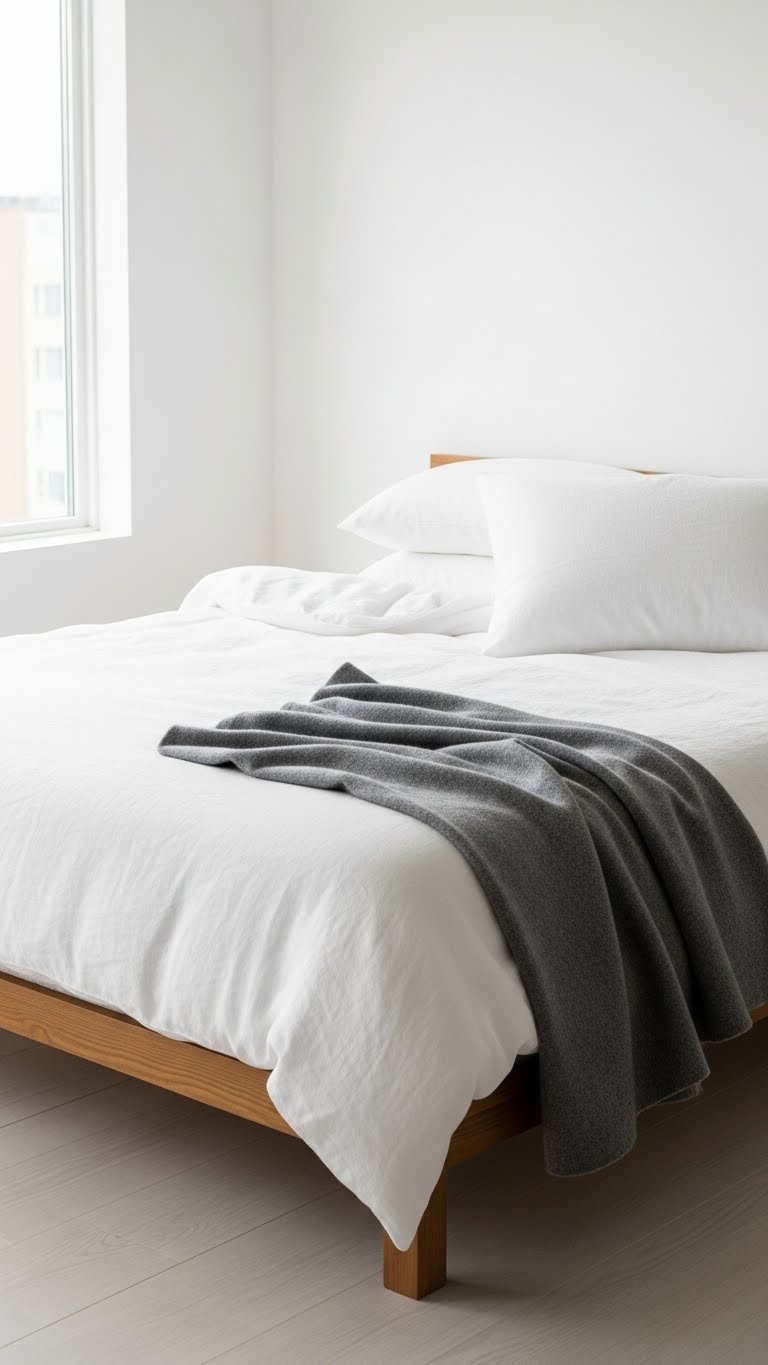
Filling your bedroom with cheap multiples won’t relax you—quality staples will. One beautiful sheet set, two good pillows, and a lightweight throw beat a closet full of mediocre options.
Spend $150–$300 on organic cotton or linen sheets (Parachute, Brooklinen, or Etsy makers offer solid options). Add pillows that actually support your neck ($80–$150 each) and a natural fiber throw. These pieces live on your bed every day, so they’re worth the investment.
The trade-off: You’ll have less to choose from, which actually speeds up bedtime and reduces decision fatigue.
Waking up and touching quality fabric changes how you feel about your space immediately.
3. Embrace Raw Wood Nightstands
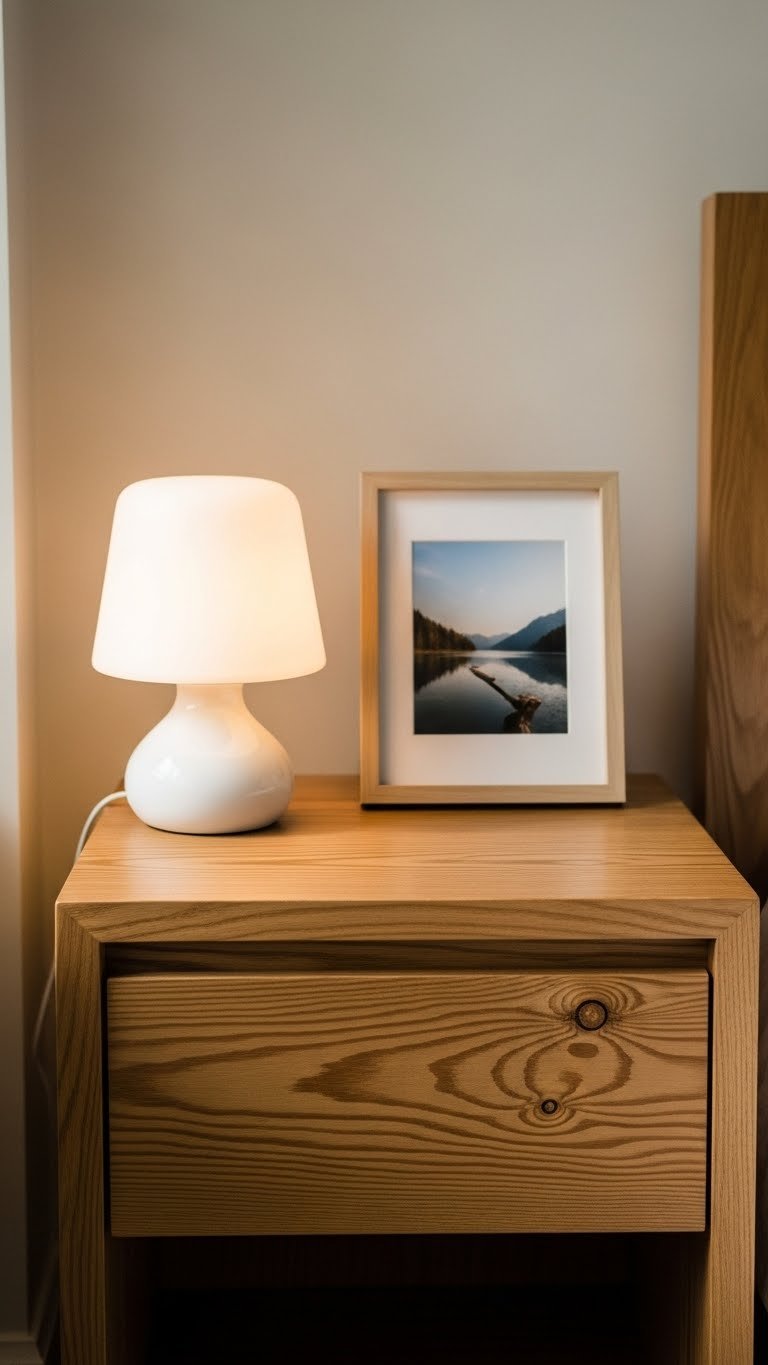
Sleek nightstands are fine, but raw wood brings organic warmth that fits minimalism without coldness. Look for reclaimed or natural wood pieces that show grain and imperfections—that’s the point.
Hunt thrift stores, Facebook Marketplace, or Etsy for used wood nightstands ($40–$150). If budget allows, West Elm or Article sell modern wood options ($200–$400). Refinish if needed, or leave patina as-is for character.
One lamp, one small plant, one photo—that’s all your nightstand needs.
The subtle texture grounds your minimal space in nature while keeping surfaces clear and calm.
4. Install Floating Shelves Above Your Headboard
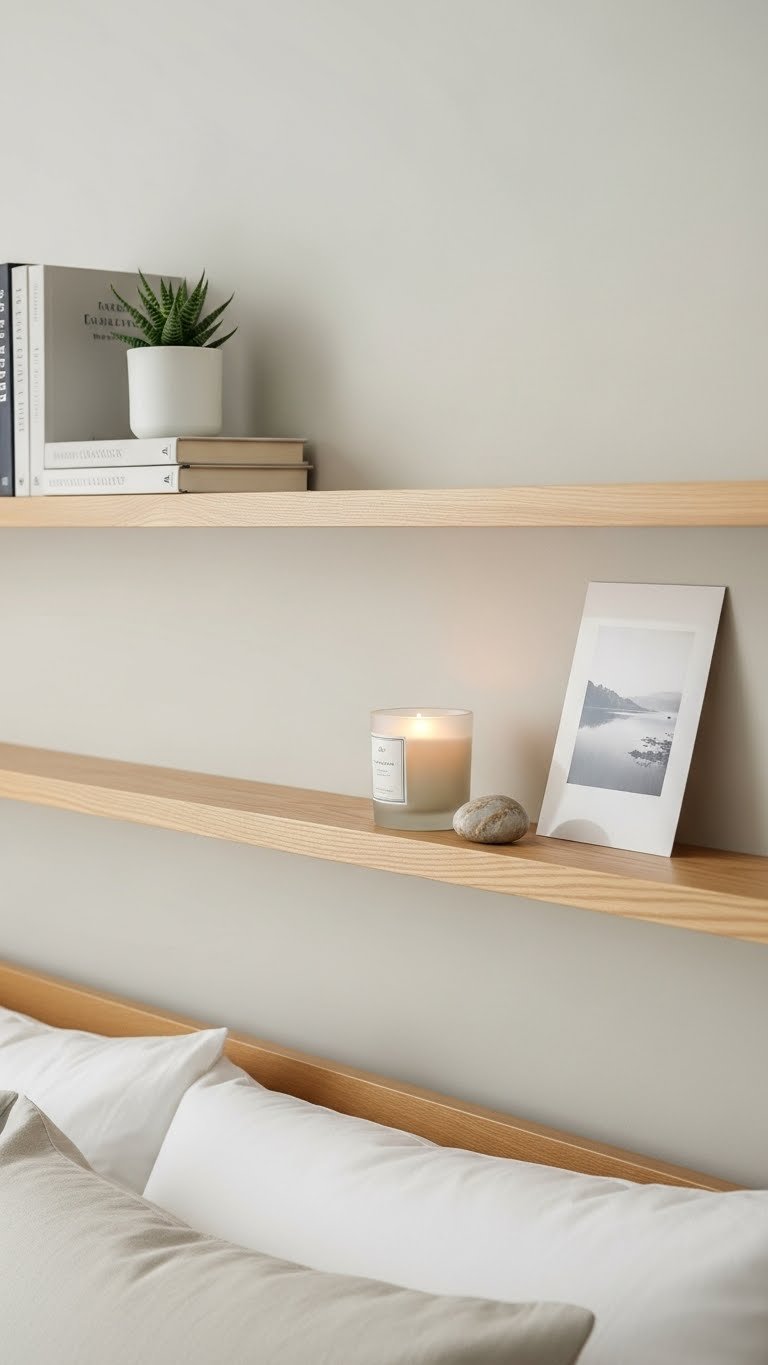
Floating shelves give you storage without bulk and add visual interest to a plain wall. This works even in rentals with removable options.
Mount 1–2 shelves 12–18 inches above your headboard using wall anchors or studs ($20–$40 for hardware). Keep them sparse: a few books you actually read, a small plant, maybe one candle. The rule is “fewer is better” in minimalism.
Renters: Use Command shelves ($15–$25) that stick-and-peel without damage.
Your bedroom gains function and style while walls stay visually calm and uncluttered.
5. Use Under-Bed Storage to Hide Seasonal Items

Minimalism isn’t about having nothing—it’s about storing what you have thoughtfully. Keep bulky seasonal items invisible by using under-bed storage.
Buy flat plastic bins from IKEA or Target ($15–$30 each) that fit your bed height. Label them clearly and rotate contents with seasons. This keeps your bedroom clear of clutter while protecting linens and off-season clothes.
Pro tip: Use a low bed frame (8–12 inches high) designed for storage, or add rolling bed risers ($20–$40) to old frames.
Everything has a home, your floor stays clear, and your space stays visually minimal year-round.
6. Install a Single Statement Light Fixture

One well-chosen light fixture beats a clutter of lamps. A single statement piece becomes focal point and conversation starter without feeling busy.
Skip the typical ceiling light and install a modern pendant or sculptural brass fixture ($80–$300 from IKEA, Article, or West Elm). Position it at the foot of your bed or off-center for visual interest. Add a dimmer switch ($15–$30) for mood control.
Time: Professional installation ($100–$200) or DIY if comfortable with electrical.
Your room gains sophistication and functionality through one intentional choice instead of scattered fixtures.
7. Layer Raw Textures Like Marble and Cork
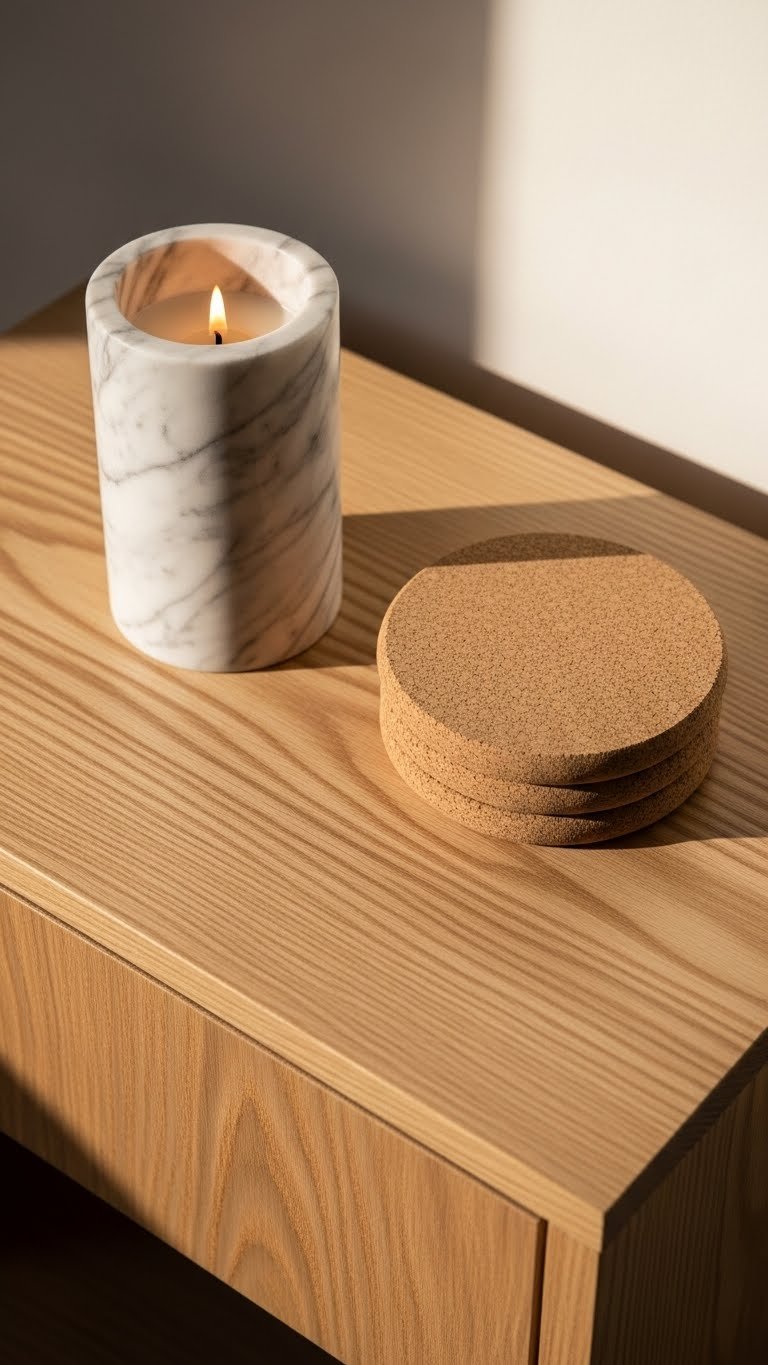
Minimalism doesn’t mean texture-free—quite the opposite. Raw materials like marble, cork, and stone add warmth and interest while keeping the palette clean.
Add a marble tray or small sculpture ($30–$80 from Anthropologie, CB2, or Etsy) and cork coasters ($10–$20). Layer a natural jute rug under your bed ($60–$150 from Rugs USA or West Elm). Each piece brings organic interest without visual chaos.
These materials age beautifully and work with any minimal palette.
Touching and seeing raw textures makes your calm space feel grounded and real, not sterile or cold.
8. Add Soft Curves With Rounded Furniture
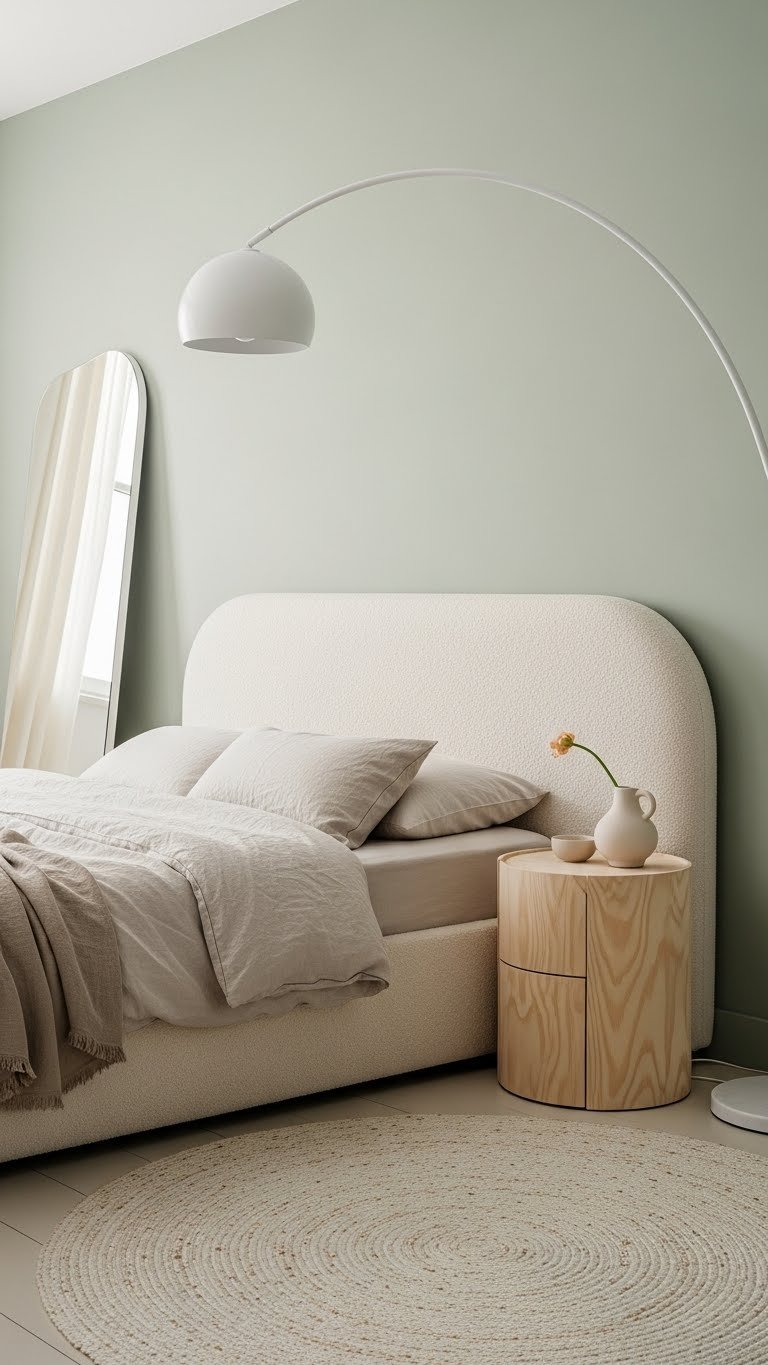
Sharp lines feel tense; curves feel safe. Swap angular furniture for pieces with soft edges—this shift makes a major difference in how relaxed your space feels.
Hunt for curved nightstands, oval mirrors, and round side tables ($100–$400 from IKEA, Article, West Elm, or vintage sources). A curved headboard ($200–$600) can become your room’s anchor. Even arc floor lamps ($80–$200) replace harsh straight lines softly.
Mix curves with straight lines (like shelving) to keep things modern, not overly retro.
Rounded shapes work on your nervous system—your bedroom becomes naturally more calming just through geometry.
9. Choose One Accent Color and Stick With It
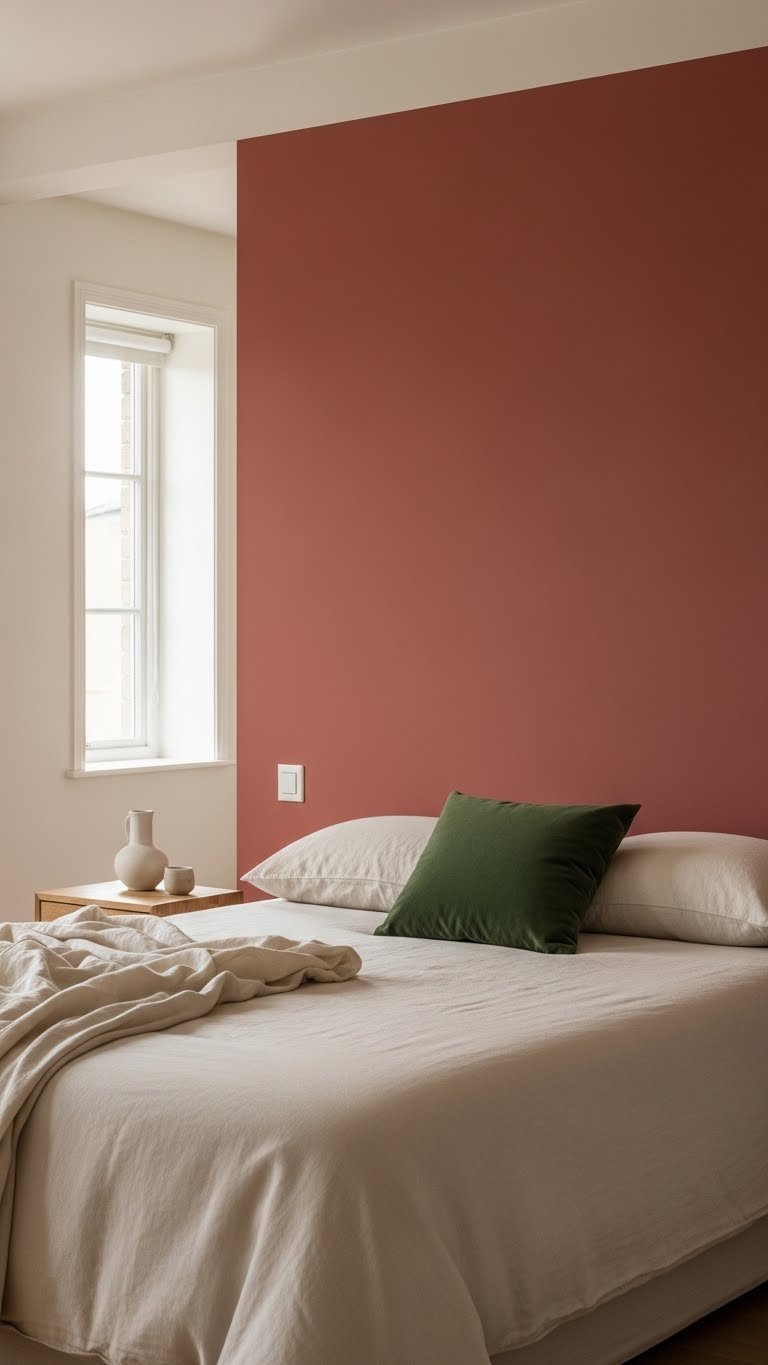
Too many colors overwhelm; one accent color adds personality while keeping calm intact. Think forest green, warm terracotta, or soft aubergine—not neon.
Paint one accent wall or add your color through one throw pillow, a small rug, or artwork ($20–$200 depending on choice). Repeat it nowhere else—let it breathe. This restraint is what makes minimalism feel intentional.
Pro tip: Pair your accent color with creamy neutrals so it pops without competing.
Your bedroom gains character and visual interest while staying serene and uncluttered.
10. Declutter Your Closet as the Foundation

You can’t have a calm bedroom if your closet is chaotic—visual chaos bleeds into mental space. Start here before decorating anything else.
Keep only clothes that fit now and align with your actual life. Use slim velvet hangers ($20–$40 per set) to maximize space and organize by category. Donate or sell items you haven’t worn in a year.
Time: A weekend project, but transformative.
Your closet becomes functional, your bedroom stays uncluttered, and your mornings get simpler.
11. Hang Large Artwork or One Focal Print
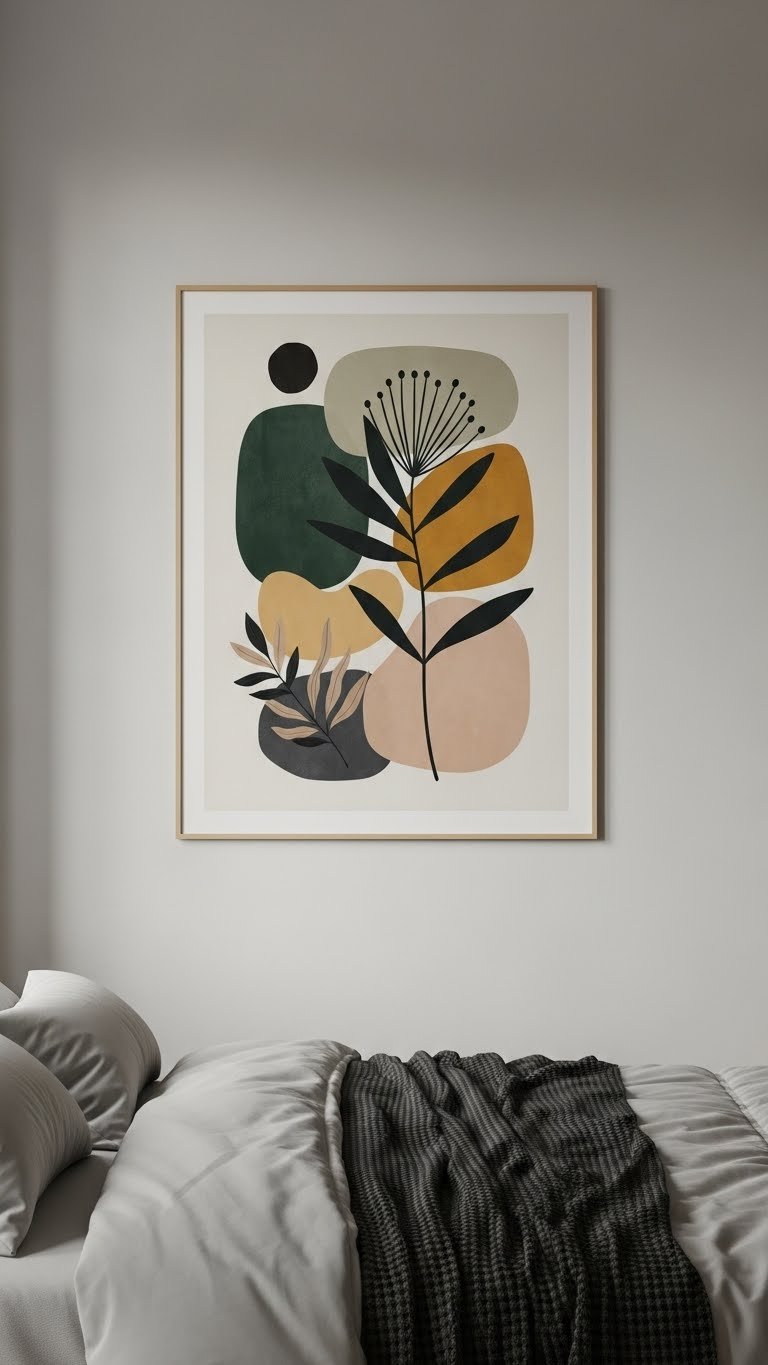
One large, meaningful piece beats a gallery wall cluttered with tiny prints. Minimalism can be artistic—just edit ruthlessly.
Choose one 36″ x 48″ print or canvas from Minted, Etsy, or a local artist ($60–$300). Frame it beautifully and hang it where it anchors the room—usually above a dresser or opposite your bed. Leave plenty of white wall space around it.
Renters can use removable adhesive strips ($5–$10) on lightweight frames.
Your space gains sophistication and creative energy without feeling overstimulated or busy.
12. Minimize Lighting to One or Two Sources
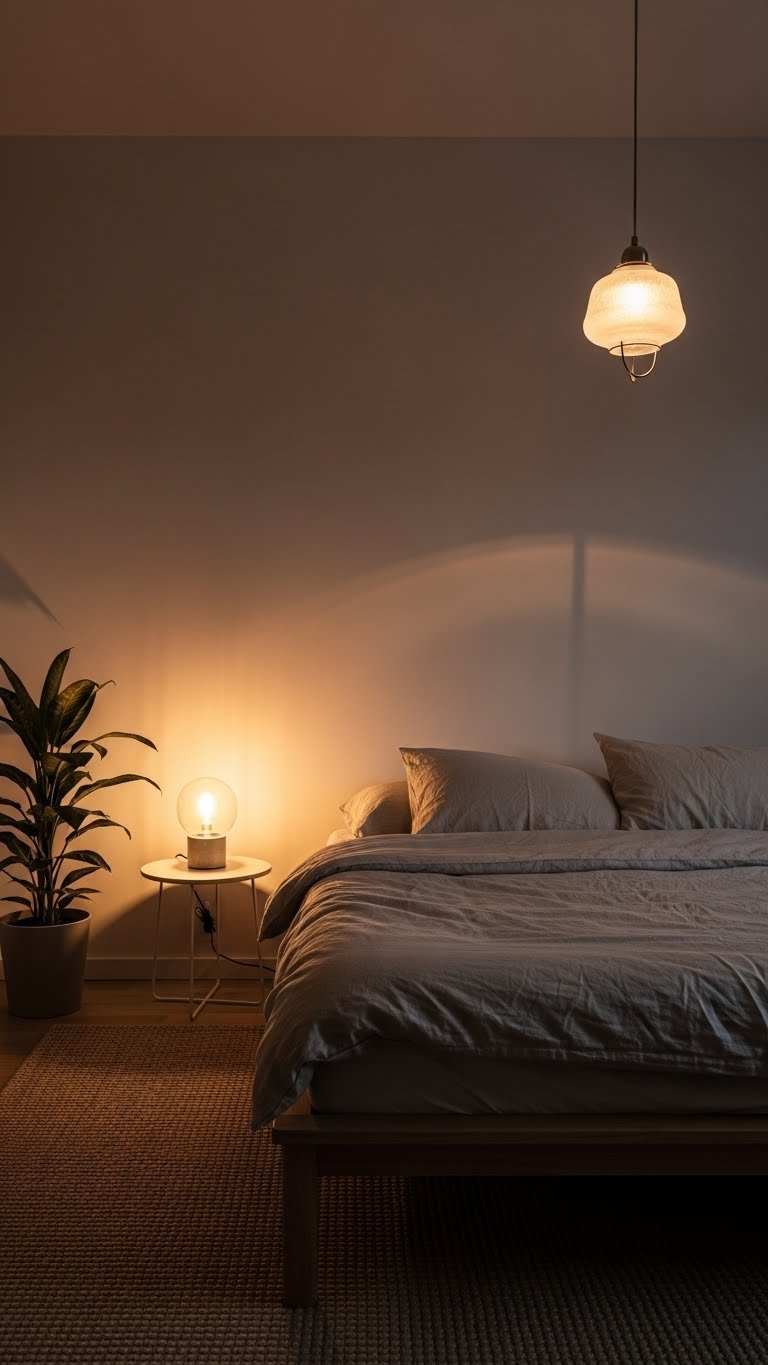
Harsh overhead lights and too many lamps create anxiety. Pare it down to one warm overhead light and one bedside lamp for reading.
Install a warm-bulb dimmer switch ($15–$30) on your main light and choose a soft linen lampshade ($30–$80) for your nightstand lamp. Use warm white bulbs (2700K, $5–$15 each) that support sleep cycles.
Dim lighting signals your body that it’s time to rest.
Your bedroom becomes a retreat instead of a workspace, and your sleep quality often improves within days.
13. Use Linen Curtains for Softness Without Fuss

Heavy, patterned curtains feel fussy; simple linen diffuses light gently and adds texture without clutter. They also look effortlessly chic when slightly rumpled.
Buy floor-to-ceiling linen curtains from IKEA, Target, or Etsy ($40–$120 per panel). Mount them on a simple rod ($20–$50) and let them puddle slightly on the floor. Minimal styling required—that’s the point.
Pro tip: Layered sheer linen with a blackout lining ($80–$150 per panel) gives you light control without extra visual bulk.
Your windows soften light while your room stays calm and clutter-free.
14. Add One Small Plant for Life and Air Quality
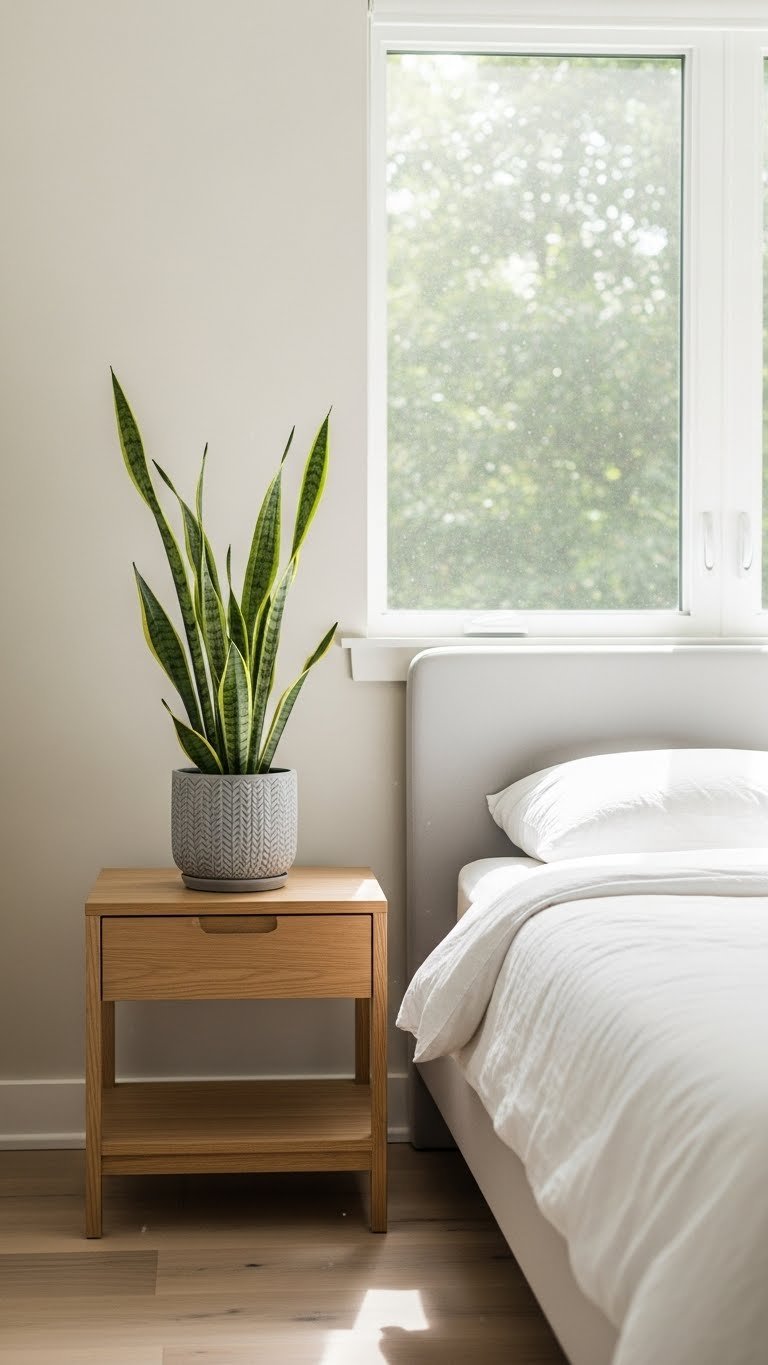
One plant brings life, color, and air-purifying benefits without overwhelming a minimal space. Choose something low-maintenance so it doesn’t create stress.
Pick a snake plant, pothos, or monstera in a simple ceramic or concrete pot ($15–$40 total). Place it on a windowsill or in a corner where it catches indirect light. Water weekly or every two weeks depending on the plant.
Avoid clutter: one plant, not a jungle.
Your room gains a living element that improves air quality while adding subtle visual warmth.
15. Invest in a High-Quality Mattress
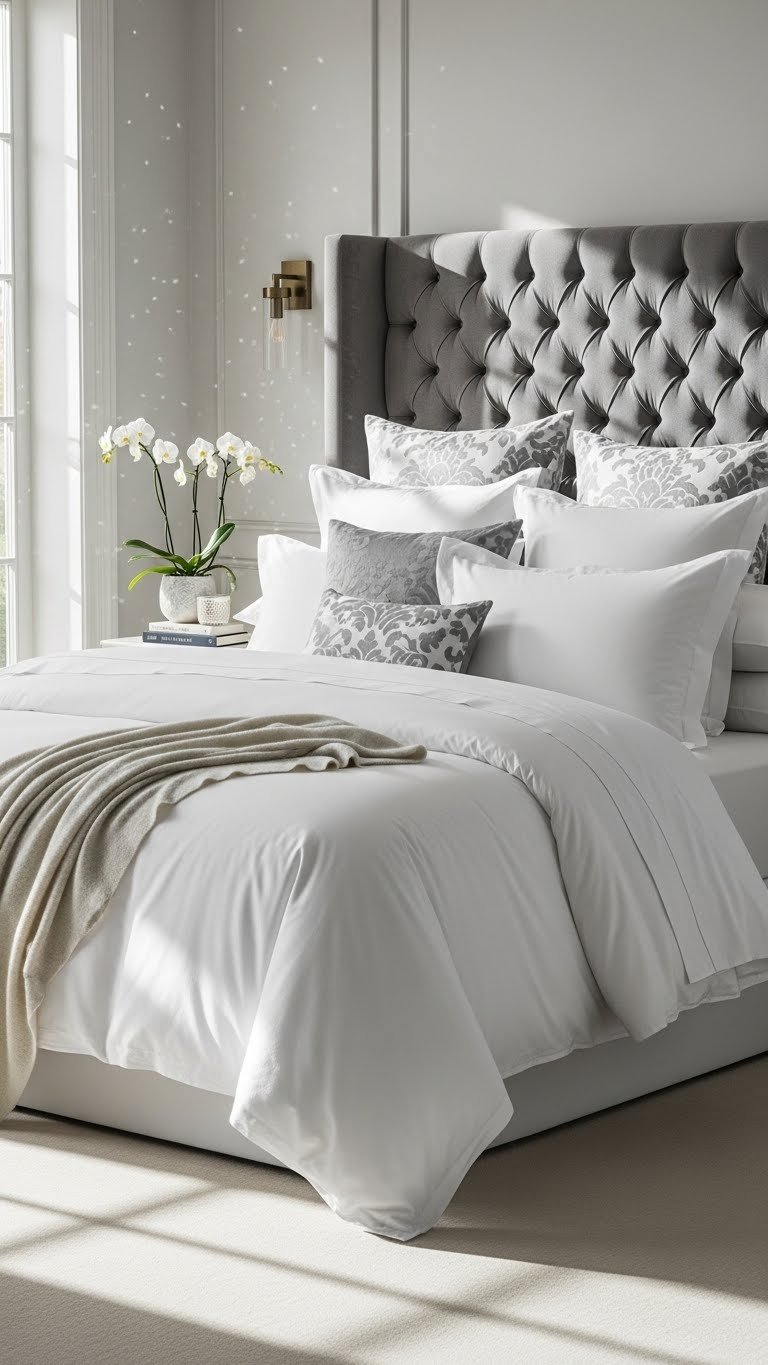
You can’t have a calm bedroom if you’re not sleeping well. Your mattress is the foundation of everything—don’t skimp here.
Spend $800–$2000 on a quality mattress from Helix, Tuft & Needle, or Saatva. Online options often come with trial periods (60–100 nights). This is the one splurge worth making in a minimal bedroom.
A good mattress lasts 7–10 years, so divide the cost across years and the investment shrinks.
Better sleep transforms everything—your mood, energy, and ability to enjoy your calm space.
16. Organize Nightstand Drawers With Dividers
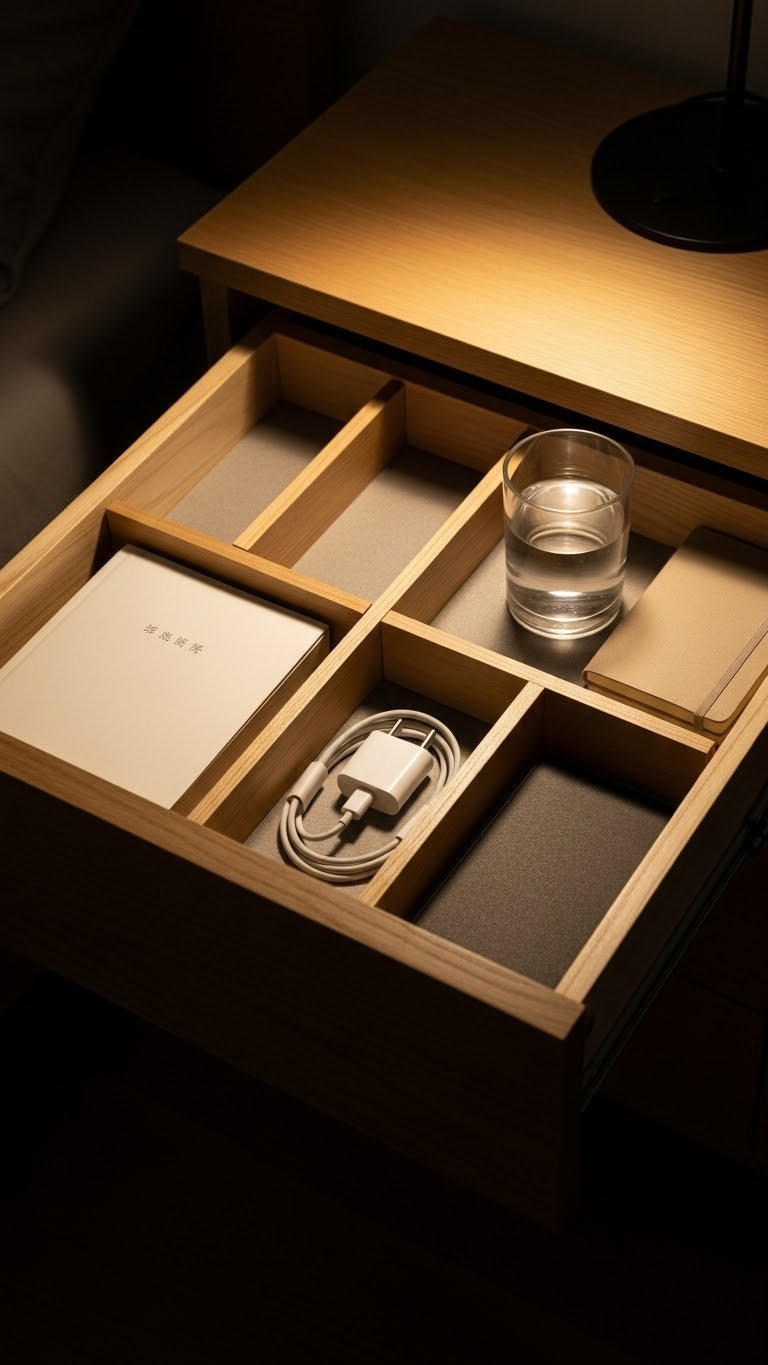
A cluttered nightstand drawer ruins the calm of a minimal bedroom. Use dividers to keep essentials organized and visible.
Buy fabric drawer organizers ($10–$25 per set) from IKEA, Container Store, or Target. Keep only what you use nightly: phone charger, reading glasses, one notebook. Everything else lives elsewhere.
Time: 15 minutes to organize.
Your nightstand drawer stays functional and hidden, keeping your bedroom’s visual calm intact.
17. Choose a Low-Profile Bed Frame

High bed frames with thick frames feel heavy and cluttered; low platforms ground a room visually and make it feel larger.
Buy a low platform bed from IKEA, Article, or West Elm ($300–$800). Look for designs with simple legs that let light pass beneath—this keeps the room airy. Skip ornate headboards unless that’s your focal point.
Pro tip: A low bed also makes organization and under-bed storage easier to access.
Your bedroom instantly appears larger and more restful without feeling like furniture dominates the space.
18. Use Door Hooks to Hide What Doesn’t Belong

Bedroom doors are perfect for one or two items you need quick access to. This keeps surfaces clear and makes your room look uncluttered.
Install 2 simple hooks ($5–$15) on your door or wall for a robe, light jacket, or bag. That’s it—not a coat rack. Limit to one item per hook.
Renters can use adhesive hooks ($3–$10) that peel off cleanly.
What used to clutter your chair or floor now has a functional home, and your room stays peaceful.
19. Create a Reading Nook With One Chair
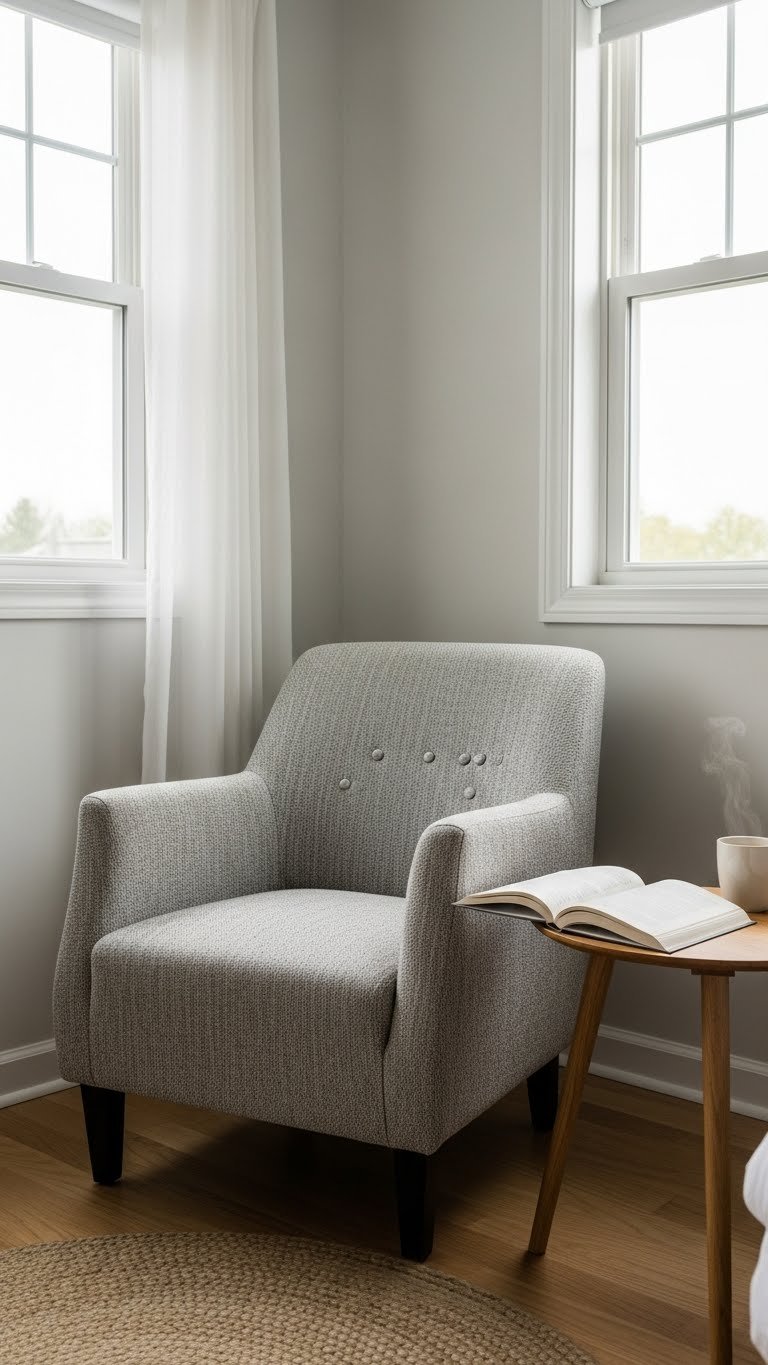
You don’t need much for a calming reading space—just one good chair, a small table, and light. This becomes your retreat within your retreat.
Find a vintage armchair or modern accent chair ($150–$500 from thrift stores, Article, or West Elm). Add a small wooden side table ($50–$150) and a floor or clip lamp ($30–$80). Position near a window for natural light.
Pro tip: Add a single linen throw ($30–$80) draped over the chair for warmth and texture.
You’ve created a functional, intentional space that encourages rest and reading instead of screen time.
20. Store Books Vertically on One Shelf

Books add visual weight if scattered everywhere; shelf them intentionally on one display shelf to keep them calm and accessible.
Keep only books you’ve read or genuinely plan to read on display—store the rest or donate them. Use a floating shelf or low bookcase ($50–$300) and arrange books vertically with spines facing out. Add one small object (plant, sculpture) for visual break.
The rule: If it doesn’t add to your life, it doesn’t deserve shelf space in a minimal room.
Your books become decor instead of clutter, and you’re more likely to actually read when they’re beautifully displayed.
21. Use a Bedroom-Only Scent Strategy

Multiple scents compete and overwhelm; one scent anchors your bedroom’s calm. This is a sensory anchor that costs almost nothing.
Choose one candle scent (lavender, cedarwood, or unscented if you prefer) and burn it only in your bedroom, 1–2 evenings weekly. Or use a simple diffuser ($15–$40 from Target or Amazon) with a single essential oil. Keep scent subtle—you should barely notice it.
Pro tip: Unscented is minimalist too—silence is a valid choice.
A consistent bedroom scent trains your body to relax the moment you enter, improving sleep quality over weeks.
22. Swap Duvets for Quality Quilts
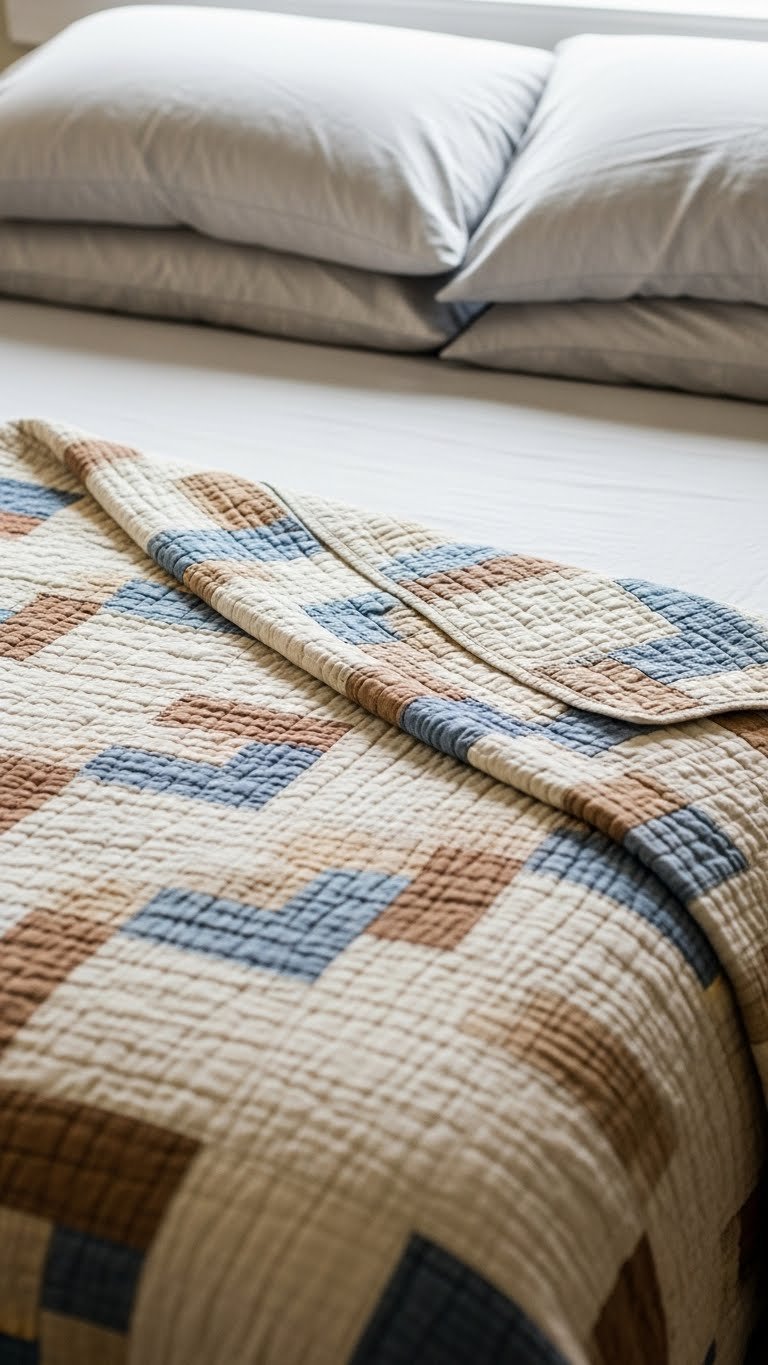
Heavy duvets feel suffocating; a lightweight quilt or two layered lets you adjust temperature and adds texture without bulk. Plus, quilts have stories—they’re inherently more personal.
Hunt thrift stores or Etsy for vintage quilts ($30–$150) or invest in new artisan quilts ($200–$500 from makers on Etsy). Layer 1–2 depending on season instead of fighting with a duvet and cover.
Washing is easier, and maintenance is simpler over time.
Your bed looks softer, more lived-in, and honestly more inviting—while staying minimal and intentional.
23. Paint Inside Closet Doors
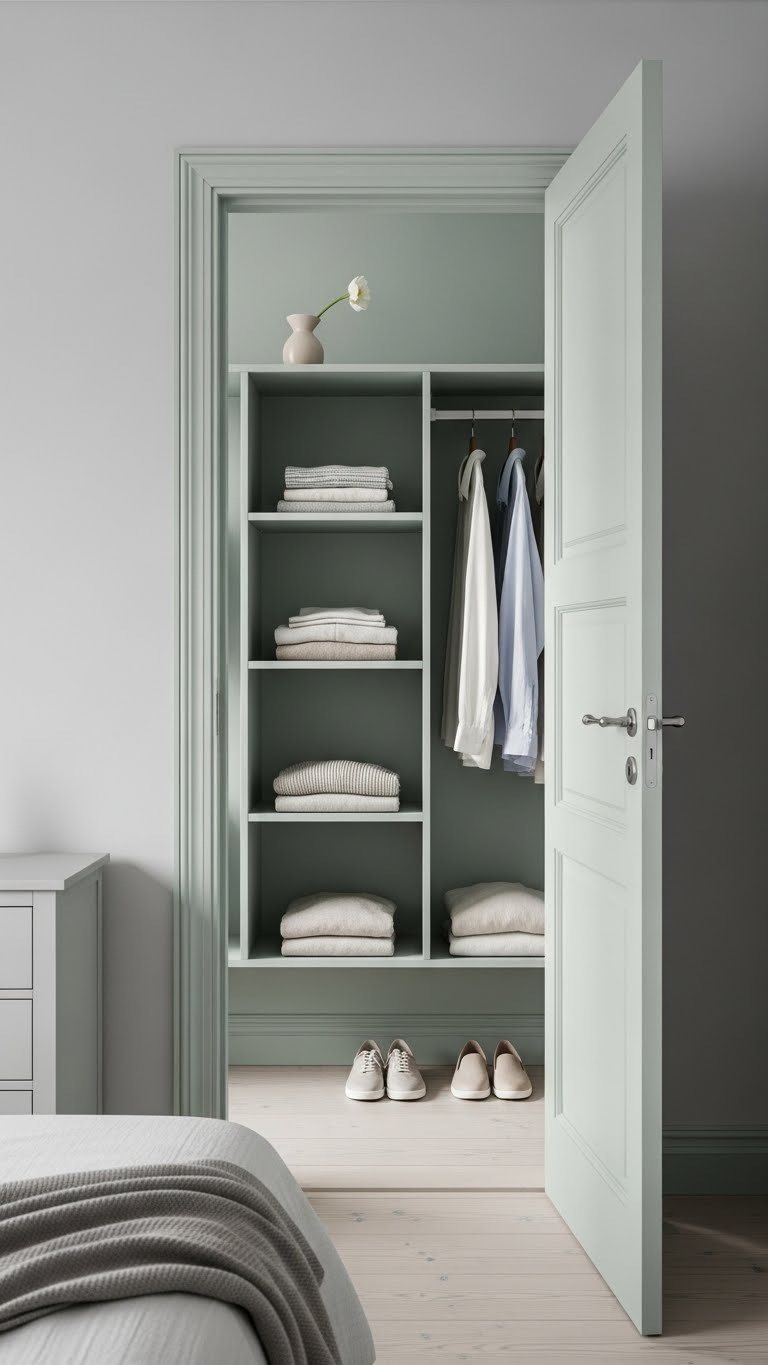
Inside closet doors rarely get noticed, so painting them a subtle contrast color adds personality without breaking minimalism. It’s a tiny detail that makes you smile.
Paint your closet door interior in a color 1–2 shades different from your bedroom walls. Use the same quality paint ($30–$50 per gallon). This takes 2–3 hours and creates a small hidden joy every time you open the closet.
Pro tip: Match it to your accent color for subtle reinforcement.
You’ve added personality and thoughtfulness that only you fully appreciate—which is exactly what minimal design should do.
24. Install Dimmer Switches on All Light Sources
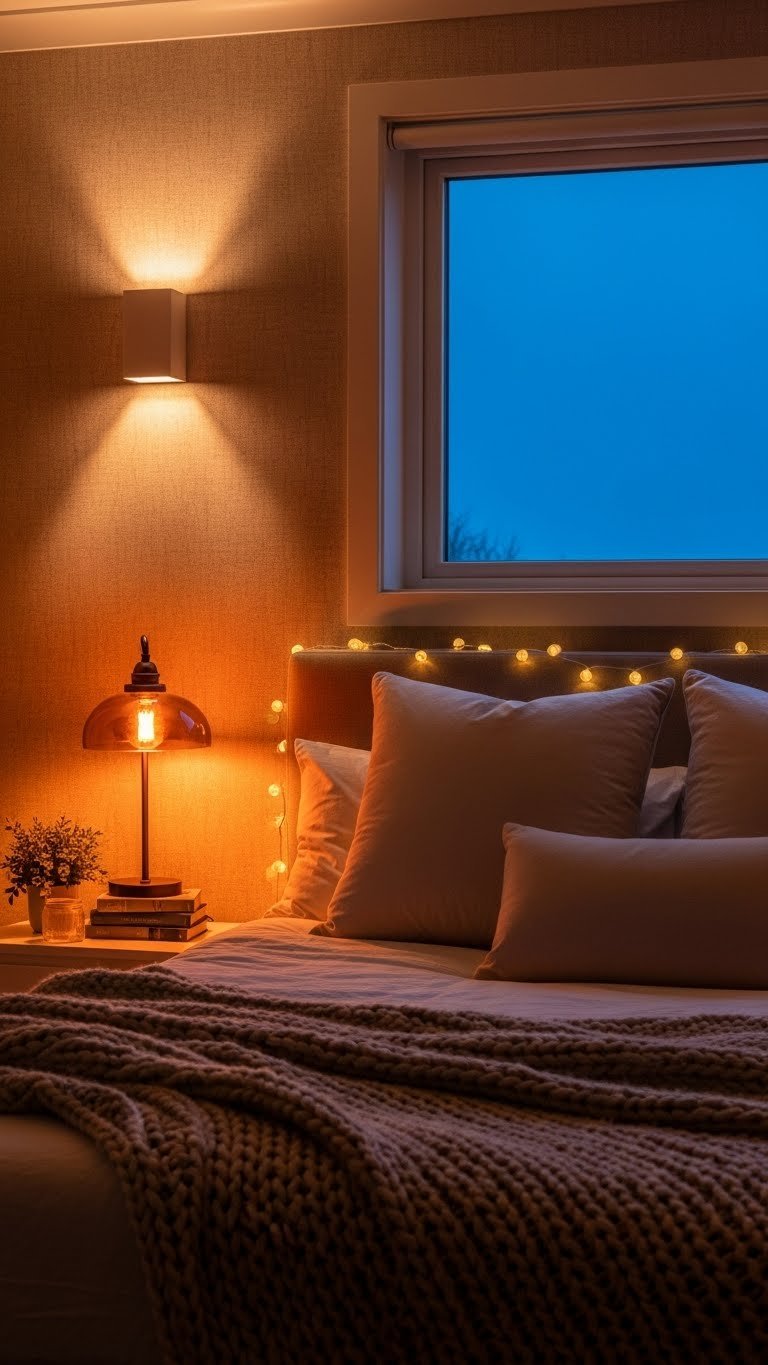
Bright light disrupts sleep cycles; dimmers let you adjust lighting to your circadian rhythm and mood. Install them on every fixture that matters.
Add dimmer switches ($15–$30 each) to your main overhead light and bedside lamp. Pair with warm white bulbs (2700K). Use the lowest setting 1–2 hours before bed to signal your body it’s sleep time.
Pro tip: Some smart bulbs ($15–$20 each) let you adjust light color from your phone—useful for gradual evening dimming.
Your sleep quality improves, and you’ll use your bedroom more intentionally when lighting supports rest.
25. Keep Only One Throw Blanket
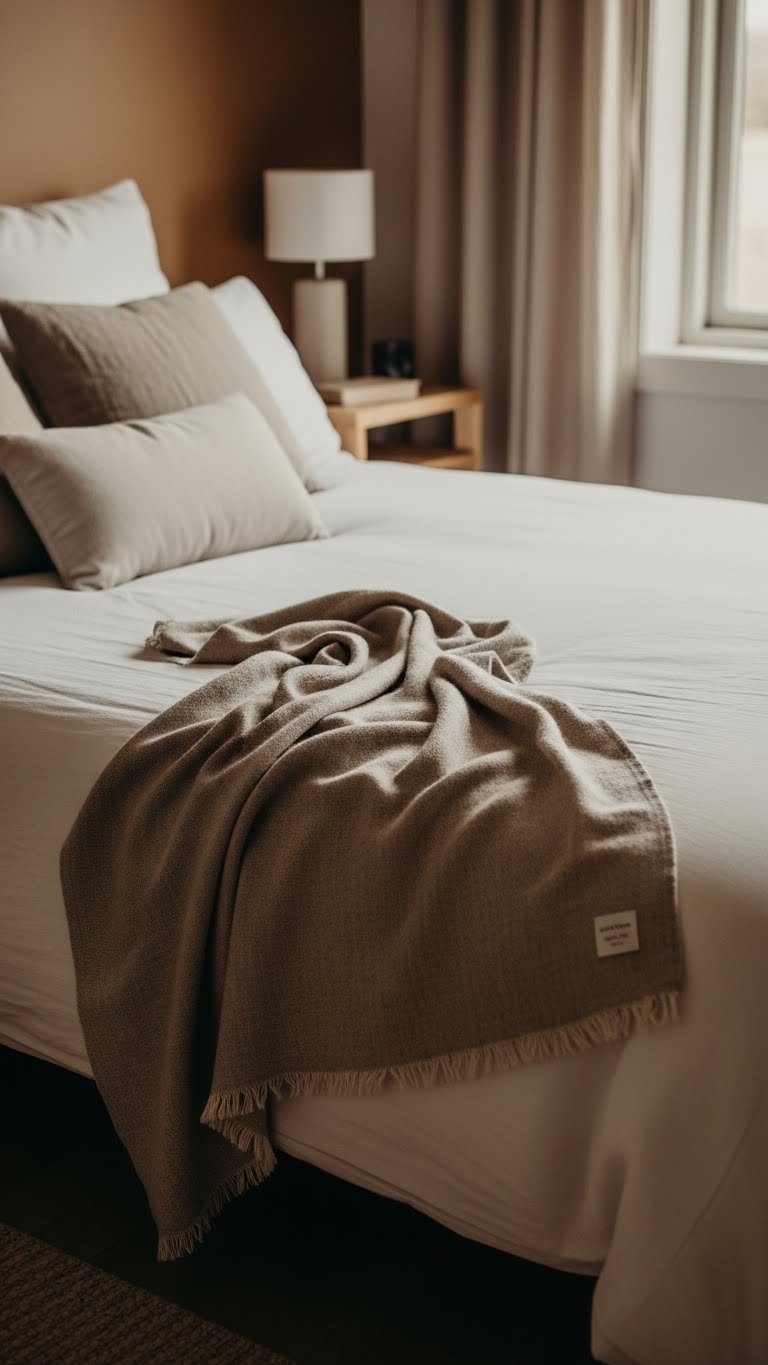
One quality throw beats a pile of mediocre blankets. This is minimalism with warmth and texture.
Choose a merino wool, linen, or organic cotton throw in cream, gray, or your accent color ($60–$150 from **Parachute, Etsy, or *Woolroom*). Drape it at the foot of your bed or over a reading chair. That’s your only throw blanket.
Real minimalism means owning fewer, better things—not refusing comfort.
You have what you actually use, less decision fatigue, and a cozier room than you’d get from five cheap blankets.
26. Create a Minimal Bedside Tray
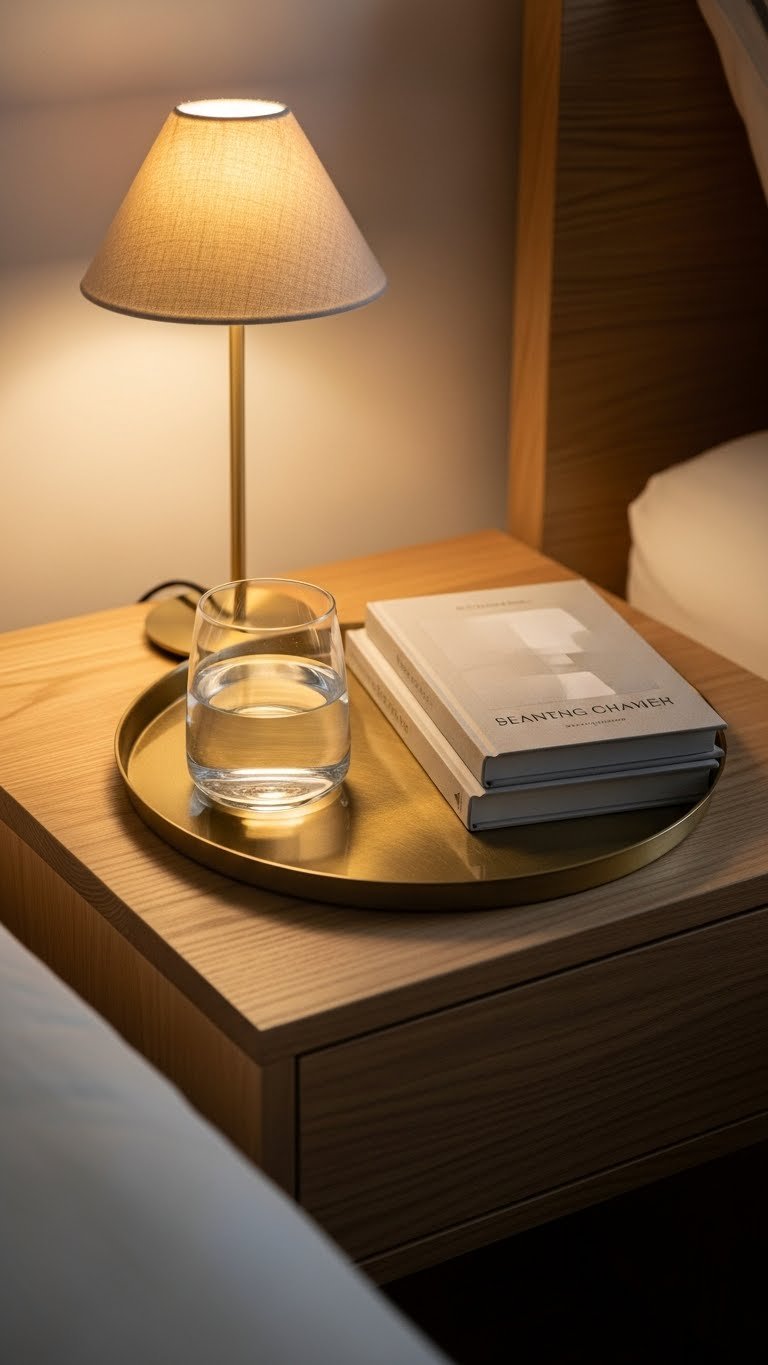
Trays corral nightstand clutter into one intentional arrangement. This keeps your space organized and styled without effort.
Buy a simple brass, wood, or ceramic tray ($20–$60 from Target, IKEA, or CB2). Place it on your nightstand and keep only three items on it: lamp, water glass, and one current book. Everything else lives in the drawer.
Time: 5 minutes to set up, then maintenance is automatic.
Your nightstand looks intentionally styled and calm, and you know exactly where essentials are without hunting.
Save this post and pick one or two ideas to tackle this weekend. Minimalism doesn’t mean cold or empty—it means choosing carefully what stays. Start small, and you’ll notice how even one change creates more room to breathe.
Leave a Reply