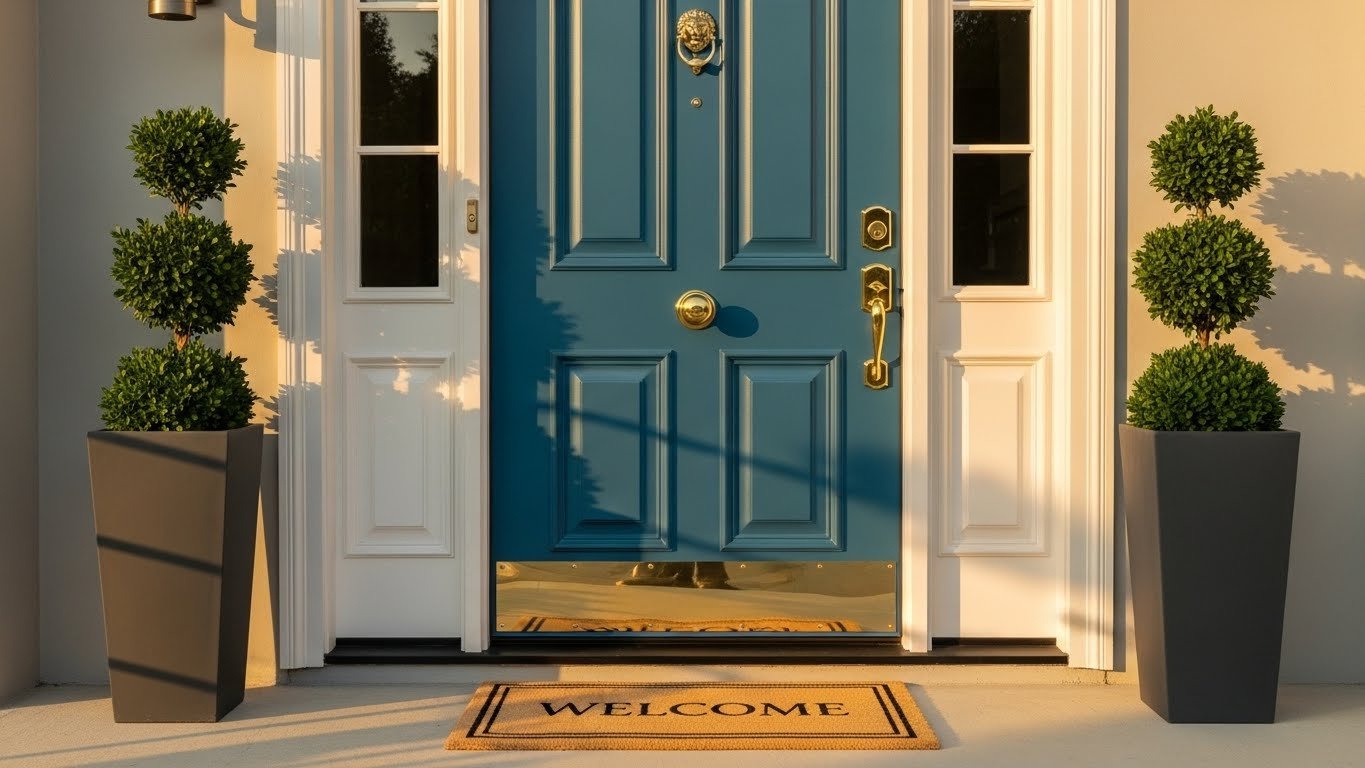
Your front entrance is the first thing people notice about your home—and the good news? You don’t need a major renovation to make it stunning. Whether you’re renting or own, working with a tight budget or ready to invest, these 23 ideas will help you create an entryway that makes guests want to stay and keeps you genuinely excited to come home. We’re mixing quick fixes with statement pieces, all designed to boost curb appeal and set the tone for everything beyond that door. Let’s dive in.
1. Paint Your Front Door a Bold, Unexpected Color

A fresh front door color is the fastest way to completely refresh your entryway’s personality. This single change costs under $100 and takes one afternoon, yet feels like a professional upgrade. Choose from trending 2025 shades like deep olive, charcoal gray, or burgundy—these earth tones and moody hues pair beautifully with brick, wood, or neutral siding.
Pick a quality exterior paint in satin or semi-gloss finish (Benjamin Moore, Sherwin-Williams, or Behr all have excellent options). Prep the door by cleaning and lightly sanding, then apply two coats. Budget: $40–$80 for paint and supplies. Time: 4–6 hours including drying. If you’re renting, check with your landlord first—many allow it if you agree to repaint when you leave.
The result? Your entire home feels more intentional and cohesive. Suddenly, that dated landscaping and weathered stoop don’t matter as much because your eye goes straight to that gorgeous door.
2. Add Symmetrical Matching Planters
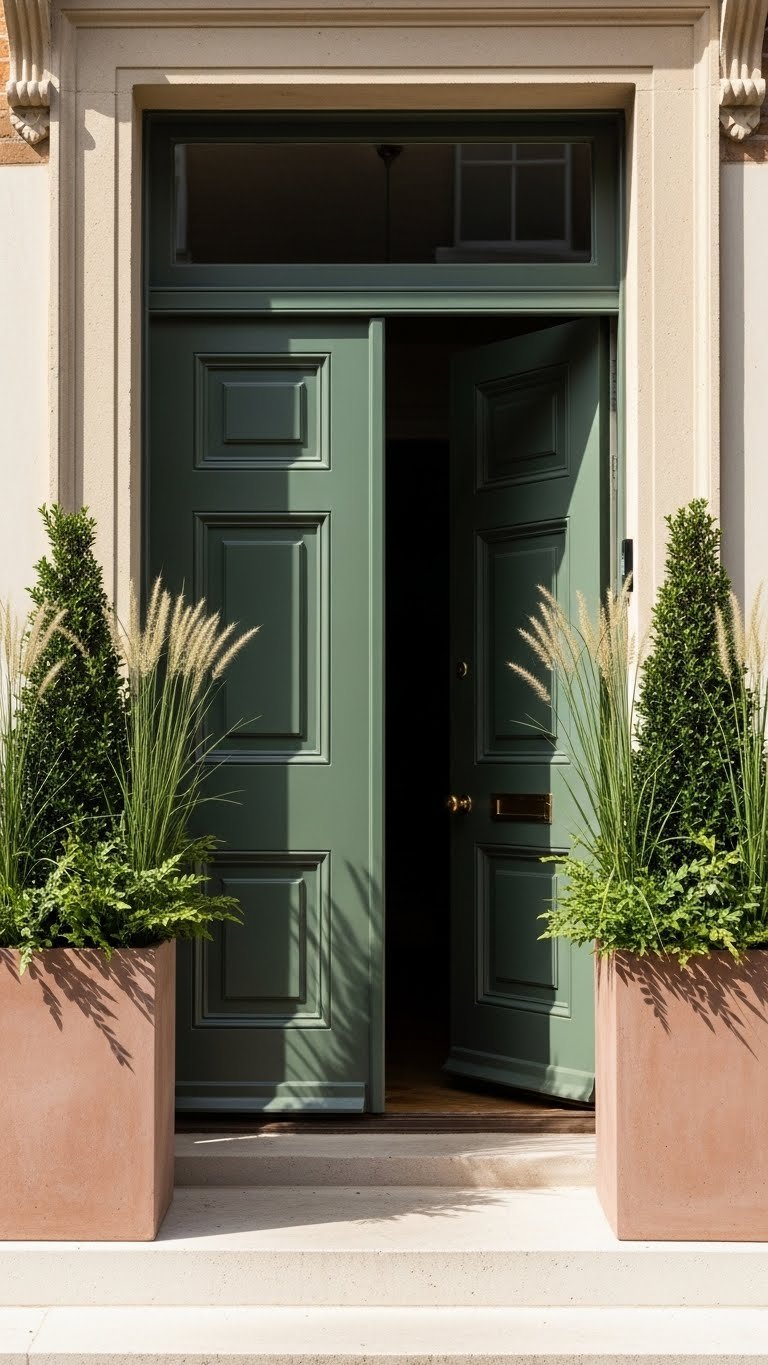
Symmetry signals polish, and two matching planters on either side of your door instantly elevate the entire entrance. This works for renters (planters stay with you) and costs $50–$150 depending on size and material. Choose neutral tones like concrete gray, terracotta, or cream—these complement any door color and 2025’s earthy palette.
Fill with seasonal plants: evergreens for year-round structure, ornamental grasses for movement, or flowering perennials for color. Budget: $80–$150 for two quality planters plus soil and plants. Time: 30 minutes to arrange. Plant nurseries often have sales in spring and fall. This is a renter-friendly hack that makes any temporary space feel intentional and finished.
Your entryway goes from bare to curated in one afternoon. Guests notice the symmetry and care immediately, and you get the daily pleasure of stepping past something beautiful.
3. Refresh House Numbers with Modern Hardware

Old, dusty house numbers are an easy detail to overlook—until you replace them and wonder why you waited so long. Modern house numbers in brushed gold, matte black, or stainless steel cost $30–$80 and take 10 minutes to install. This 2025 trend emphasizes clean lines and mixed metals, so choose a style that echoes your door hardware.
Remove old numbers, fill any holes, lightly sand the area, and mount new ones with the included hardware. Budget: $30–$80 depending on material and size. Time: 15 minutes. Etsy, Wayfair, and Amazon all have excellent options in various styles—from minimalist geometric to vintage-inspired numbers. This is perfect for renters using damage-free adhesive strips.
This small change makes your home look well-maintained and intentional. It’s the kind of detail that separates “nice” from “wow, they really care about this place.”
4. Layer Lighting with Wall Sconces and Uplighting

Lighting transforms your entryway from day to night and signals that someone thoughtful lives here. Add matching sconces on either side of your door ($60–$200 per pair) and consider uplighting for landscaping ($40–$150 per fixture). This creates depth, safety, and genuine ambiance.
Choose fixtures that complement your door hardware—if your numbers are matte black, go with matte black sconces. Install sconces at eye level (roughly 60–66 inches from the ground) on both sides of the door. For landscaping, place small solar uplighters to highlight trees or architectural features. Budget: $100–$300 for all lighting. Time: 2–3 hours if wiring; instant if solar. Many sconces work with existing outlet boxes, so check before buying.
Once the sun sets, your entryway becomes a destination. You’ll love coming home to a lit, welcoming entrance, and visitors will feel the care you’ve invested.
5. Install a Statement Door Knocker or Handle

A great door knocker or handle is functional art that says something about your style. Modern options in brass, matte black, or mixed metals cost $30–$100 and take 10 minutes to install. This works especially well if your door is a solid color without visual interest.
Replace your existing hardware (or add a knocker if you only have a handle) by unscrewing old pieces and installing the new one with provided hardware. Budget: $30–$100 depending on design and material. Time: 10 minutes. Look for vintage-inspired designs on Etsy or modern minimalist styles on Wayfair and West Elm for on-trend options.
Your entryway gains personality and character. Every time you unlock that door, you interact with something genuinely beautiful—and your guests will definitely notice.
6. Create a Welcoming Stoop with a Quality Door Mat
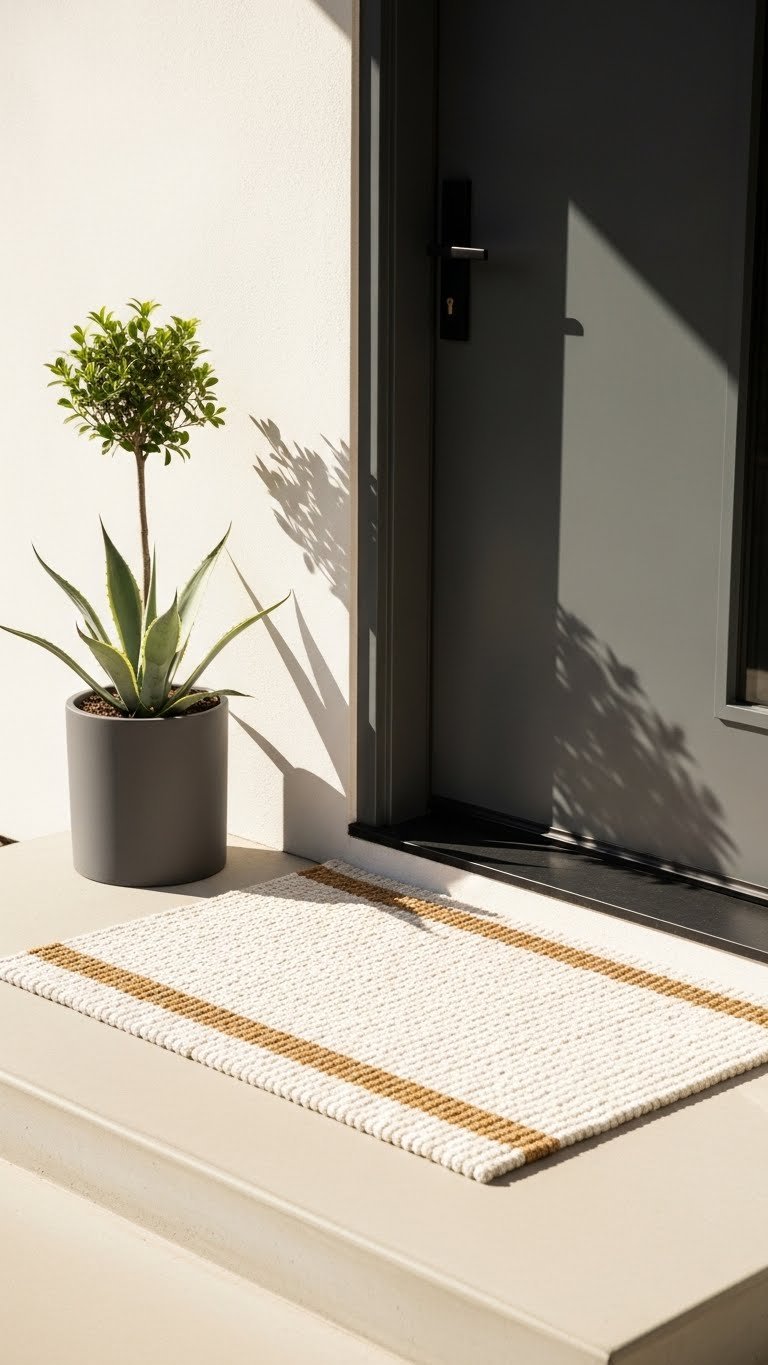
A well-placed door mat grounds your entryway and signals organization. Choose one in natural materials like jute, wool, or cotton in neutral colors ($25–$60) that complements your 2025 earth-tone palette. A 2′ x 3′ size works for most residential doors.
Position the mat directly centered in front of the door on the stoop. If you’re renting, this is completely portable and adds instant polish. Budget: $25–$60 for a quality mat. Time: instant—just unroll and position. Etsy, Target, and Home Depot all carry stylish options. Look for patterns that hint at biophilic design (leaf motifs, natural textures) for added personality.
Your entryway immediately feels more intentional and finished. The mat also has a practical benefit: guests know exactly where to wipe their feet.
7. Mix Materials: Add Wood Accents to Brick or Stone
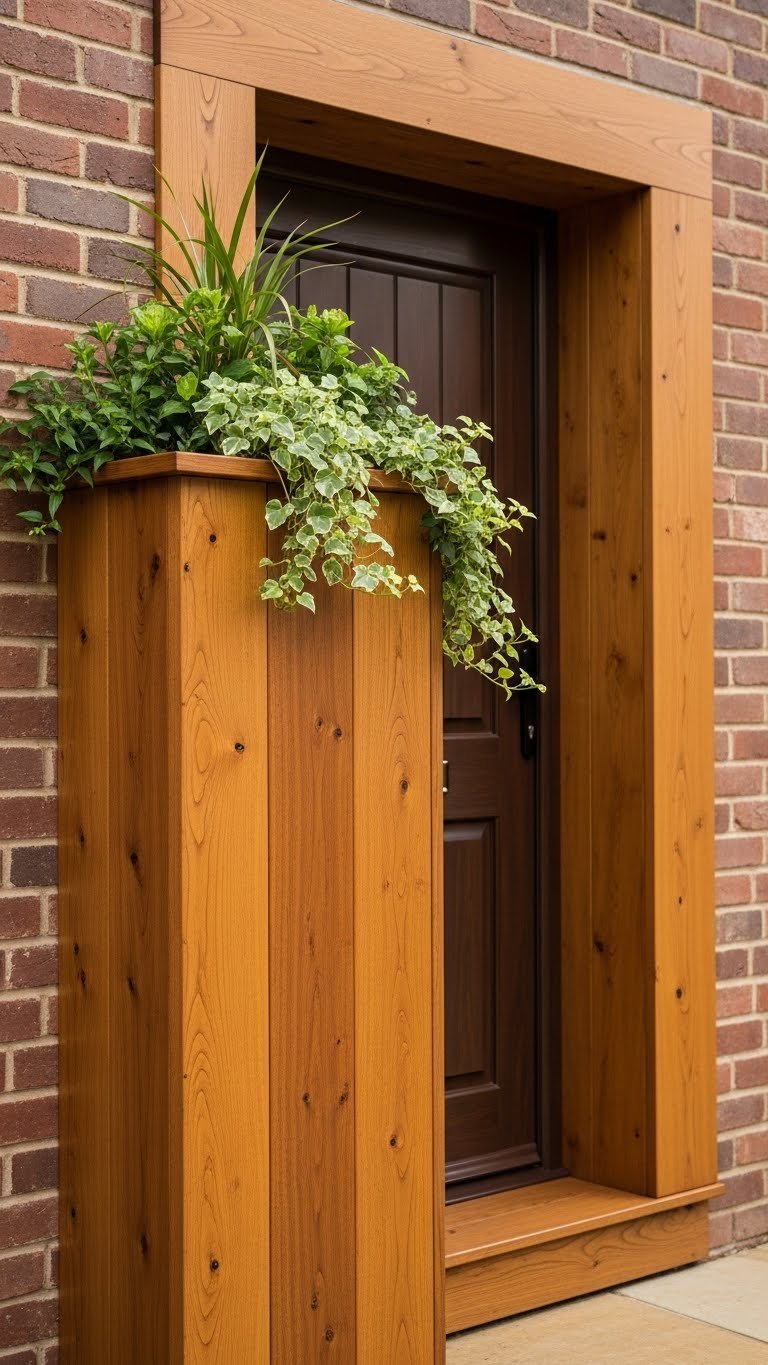
Mixing materials—specifically adding warm wood to brick or stone—is one of 2025’s biggest trends and instantly adds depth and richness. Build or buy a wooden planter box, add wooden trim around the door frame, or install a wooden railing. This costs $50–$300 depending on whether you DIY or buy ready-made.
If building, use cedar or composite wood (weather-resistant) and stain in warm oak or walnut tones. Budget: $50–$150 for materials if DIY; $200–$400 if ordering online. Time: 2–4 hours for installation. If you’re renting, portable wooden planters achieve the same mixed-material effect without permanent changes.
The combination of wood warmth and brick or stone creates visual interest and feels intentionally designed. Your entryway stops looking flat and gains architectural character.
8. Add a Living Wall or Vertical Garden
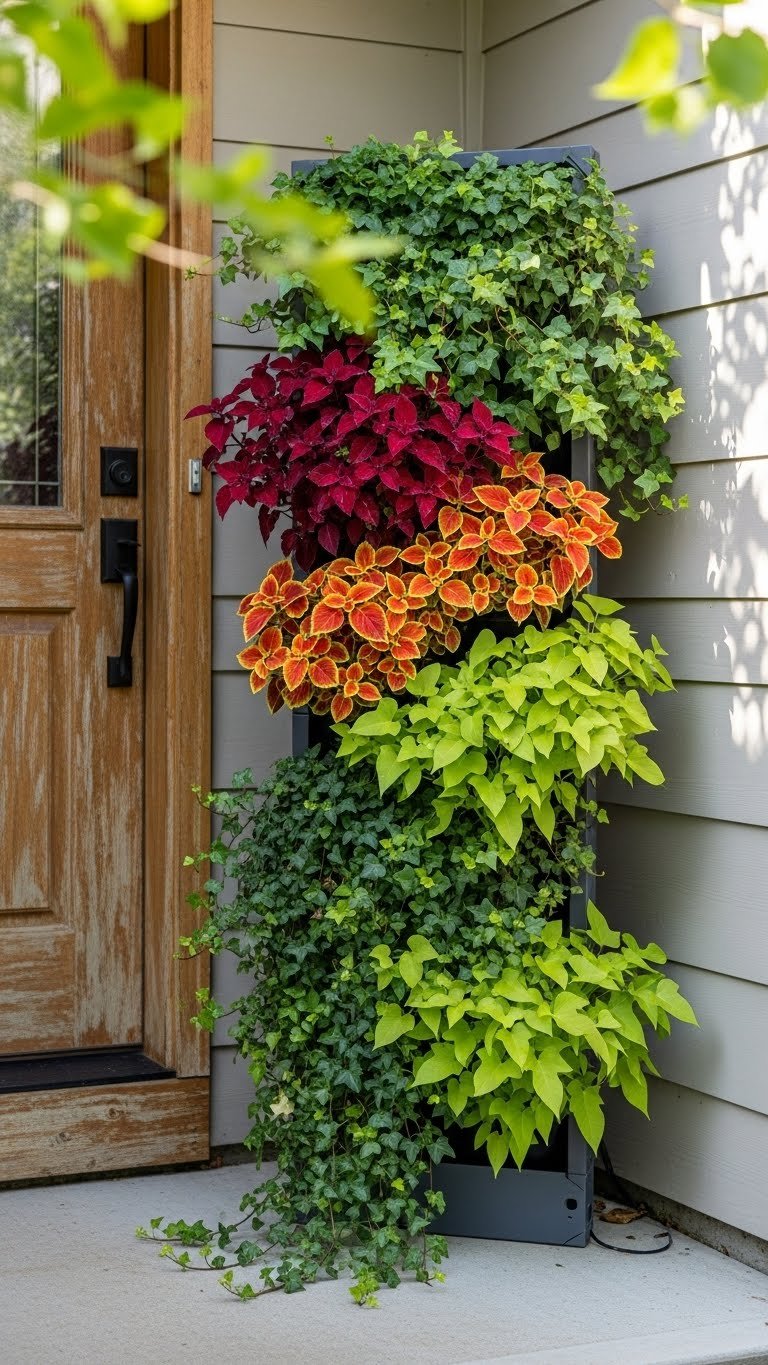
A vertical garden or living wall brings biophilic design (nature’s calming effect) right to your entryway. This 2025 trend costs $80–$250 for a ready-made system and creates instant visual impact. Choose low-maintenance plants like ivy, ferns, or succulents that thrive in your climate.
Install a modular wall system (like Woolly Pocket or similar) directly on your siding or use a freestanding trellis with climbing plants. Budget: $80–$200 for system plus plants; $100–$250 if buying pre-planted options. Time: 1–2 hours for installation. Water as needed (systems vary, so check requirements). Even renters can use a trellis system in a large planter for the same effect.
Your entryway becomes a conversation starter and genuinely improves air quality. You’ll feel the biophilic shift every time you approach your door—suddenly, you’re noticing greenery and growth instead of just concrete.
9. Paint or Stain Your Front Steps
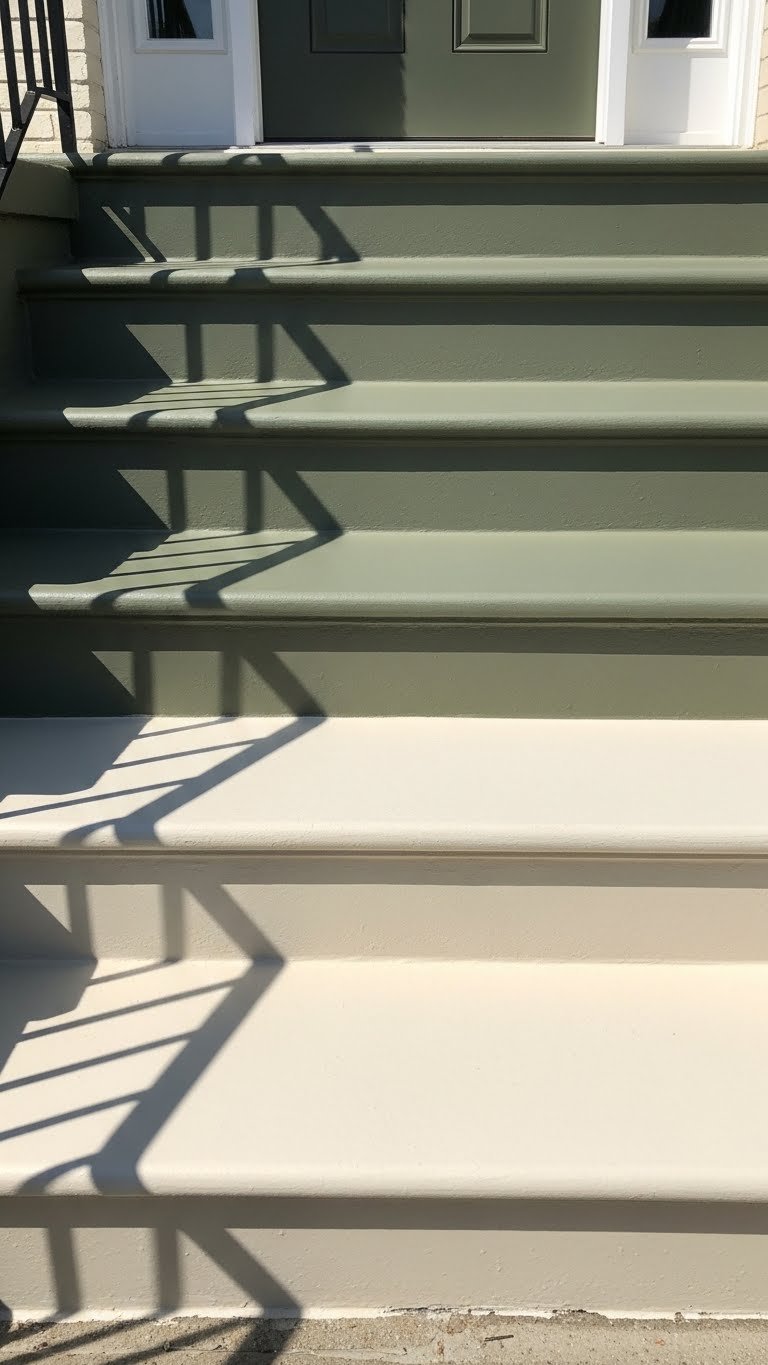
Neglected front steps scream “needs maintenance,” while clean, freshly painted ones signal care and attention. Use concrete paint, deck stain, or exterior paint suitable for high-traffic areas. Budget: $30–$80 for paint and supplies. Time: 4–6 hours including prep and drying. Choose a color that complements your door and siding—trending colors include charcoal, olive, cream, or even a soft gray-green.
Prep by cleaning thoroughly, letting dry completely, then applying two coats with a quality brush or roller. Let cure for 48 hours before heavy foot traffic. If you’re renting, use a removable deck paint or check your lease first.
Your entryway instantly looks maintained and intentional. Clean, freshly painted steps make the entire home feel more valuable—even if nothing else changes.
10. Install Black Matte Accents Around the Door Frame
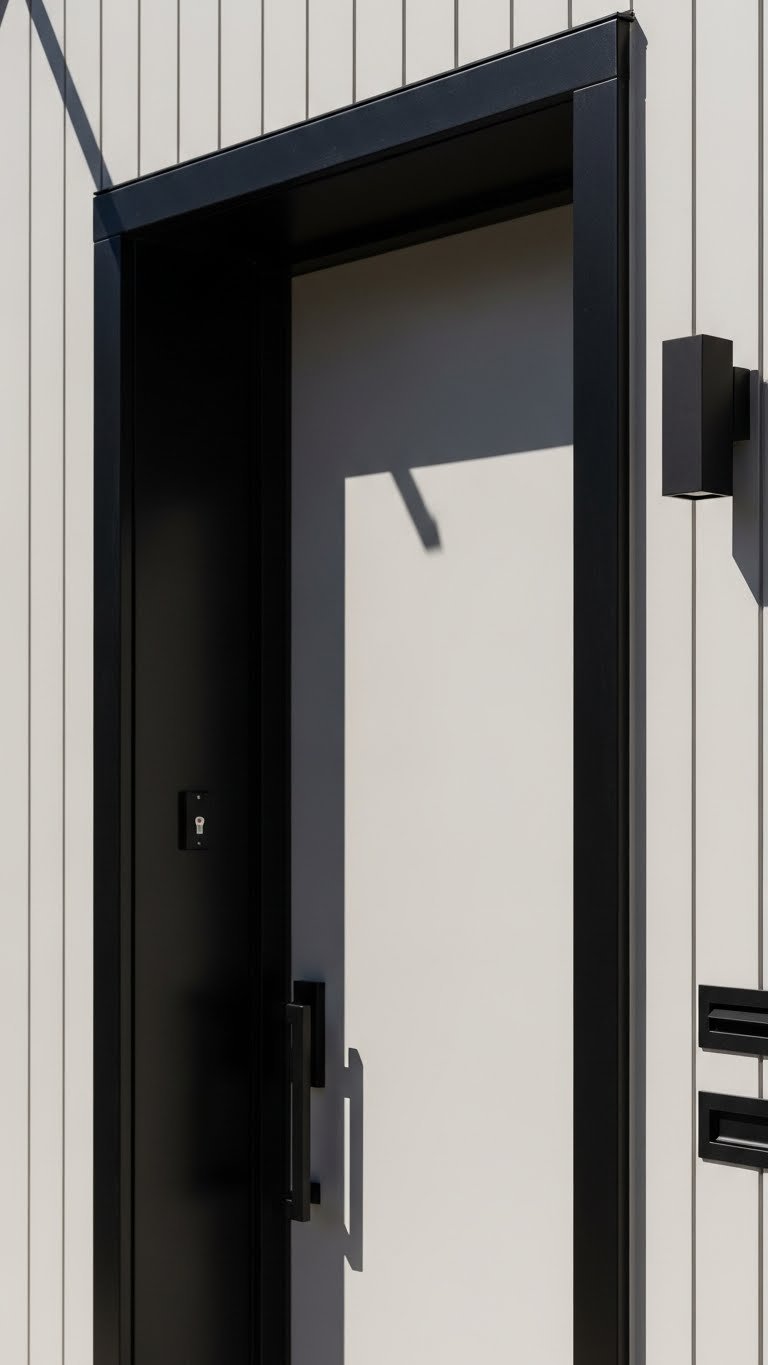
Black matte accents—trim around the door frame, window frames, or even a painted border—create drama and visual interest without being overwhelming. This 2025 trend works especially well with brick, stone, or neutral siding. Paint the trim or use adhesive-backed metal trim ($30–$100).
Use a quality matte black exterior paint or pre-made trim pieces. Budget: $30–$80 for paint or trim materials. Time: 2–3 hours for painting. This pairs beautifully with brass or gold hardware for a mixed-metal, upscale look. If you’re renting, focus on portable elements like a black mat or planters instead of painting.
The matte black draws the eye and creates a curated, intentional entry. Your door becomes a focal point rather than just an opening.
11. Add Uplighting to Highlight Architectural Features
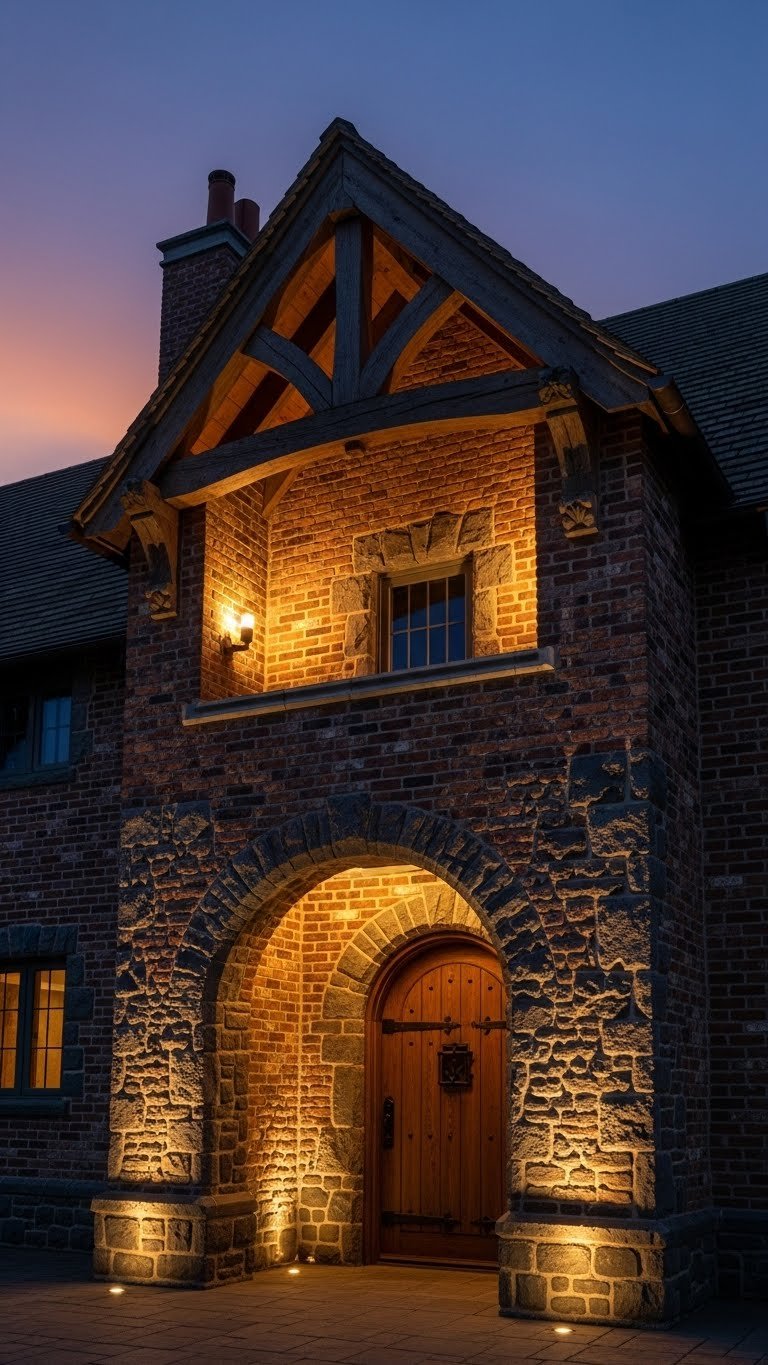
Uplighting—ground-level lights pointing upward—highlights your home’s best architectural features (gabled roofs, columns, stonework) and creates a high-end, magazine-quality feel. Solar uplighters cost $40–$100 per fixture; hardwired options run $150–$300 per fixture.
Position lights 2–3 feet from the base of the feature you want to highlight, angled slightly upward. Budget: $40–$150 for solar; $150–$300 per fixture if hardwired. Time: 30 minutes for solar; 2–3 hours if wiring needed. Solar options are renter-friendly and require no installation beyond positioning.
At night, your entryway becomes architectural and dramatic. The uplighting signals that someone invested in thoughtful design, and you gain genuine ambiance every evening.
12. Refresh Your Landscaping with Native Plants

Native plants align with 2025’s sustainability focus and biophilic design while requiring less water and maintenance than ornamental imports. Replace tired shrubs or add new beds with plants that thrive in your region. Budget ranges from $50–$300 depending on how much you refresh.
Visit your local native plant nursery to identify species suited to your climate, sun exposure, and soil. Budget: $50–$200 for plants; add $50–$100 for soil and mulch. Time: 2–3 hours for planting. This is a perfect weekend project and truly long-lasting. Ask nursery staff for recommendations specific to your hardiness zone.
Your landscaping becomes an asset rather than an afterthought. Native plants bloom at predictable times, attract pollinators, and create genuine seasonal interest—plus they practically care for themselves.
13. Install a Sleek, Modern House Number Planter
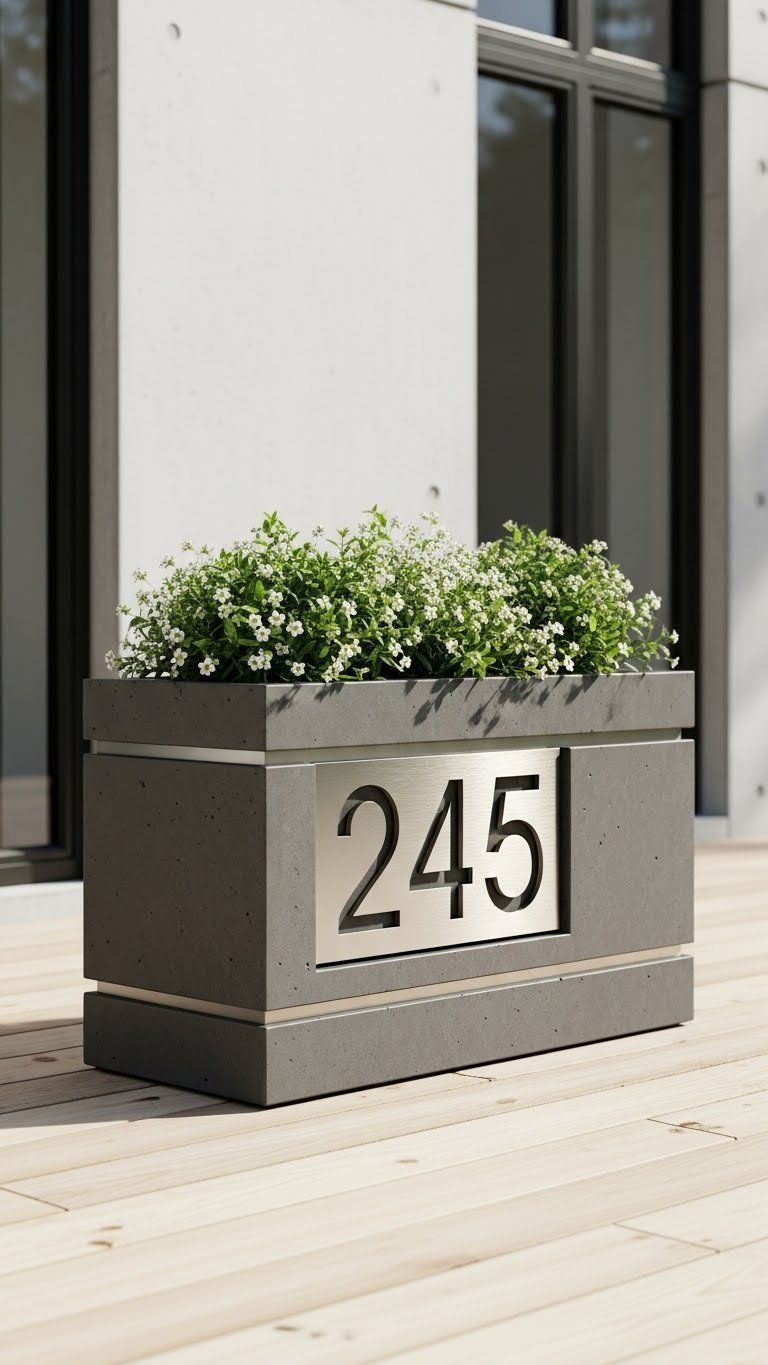
Combine two essential elements—house numbers and planting—into one statement piece. Modern house number planters ($60–$150) serve double duty and look far more intentional than a bare number on the wall. Choose concrete, metal, or composite materials in neutral finishes.
Position near your door or to one side of the entryway, fill with seasonal plants or greenery, and watch it become a conversation starter. Budget: $60–$150 for the planter. Time: 15 minutes to position and plant. Etsy, Wayfair, and specialty home stores carry excellent options. Renters can use this as a portable, non-permanent way to add polish.
This single piece communicates “I care about design details” and adds function plus beauty to your entryway.
14. Create Visual Balance with Dual Accent Chairs or Benches
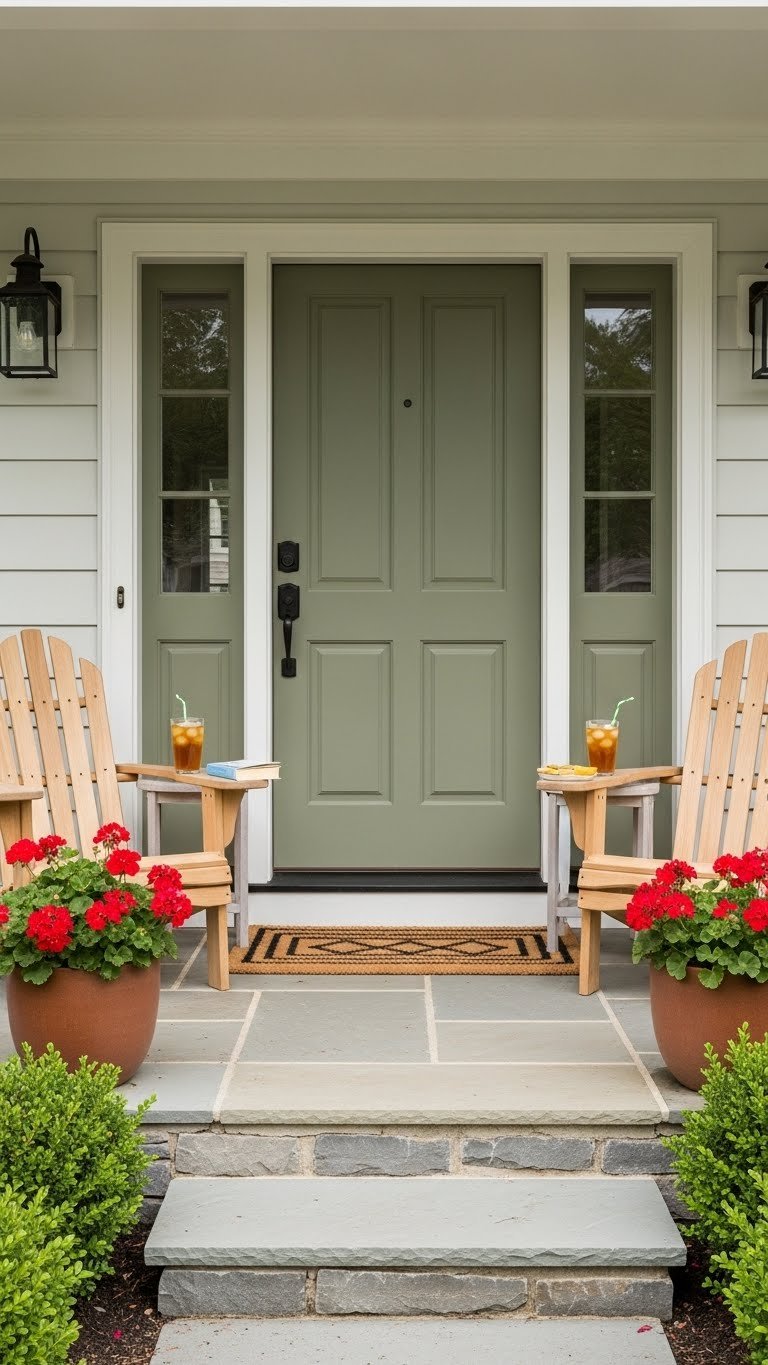
If you have porch or stoop space, add matching seating for visual balance and genuine functionality. Two Adirondack chairs or a single bench ($100–$300 total) create an inviting spot and signal hospitality. Choose finishes that complement your door and landscaping—natural wood, painted charcoal, or cream all work beautifully.
Position symmetrically on either side of the entry or center a bench. Budget: $100–$300 for quality seating. Time: 30 minutes to position and stabilize. Look for weather-resistant options at Target, Wayfair, or West Elm. This is portable and perfect for renters with porch access.
Your entryway becomes a destination people actually want to linger in. Plus, you get a functional spot to sit while greeting neighbors or waiting for guests.
15. Mix Textures: Combine Brick, Wood, and Metal
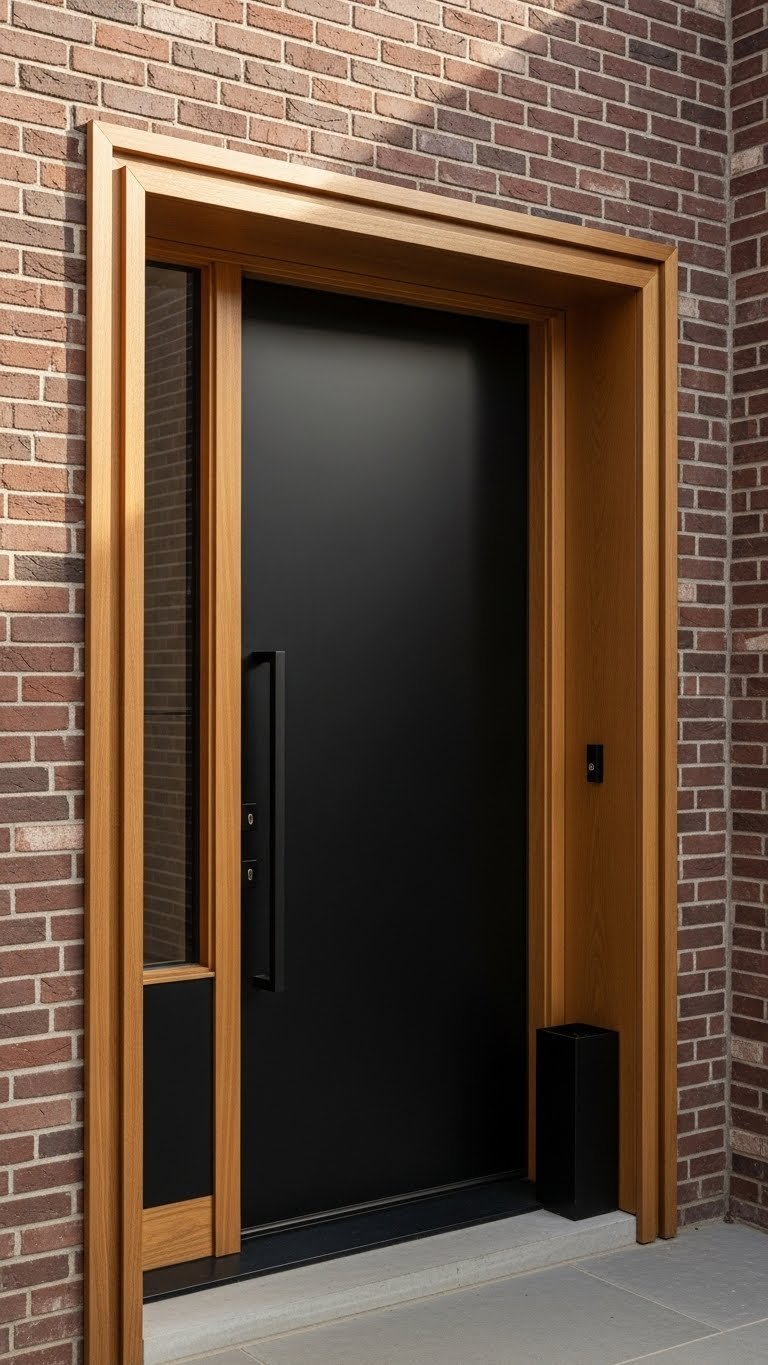
Layering textures—brick, warm wood, and sleek metal—creates visual interest and prevents your entryway from feeling flat or one-note. This trend dominates 2025 design. If you’re starting from scratch, consider thin brick veneer ($3–$8 per sq. ft.), cedar trim, and matte black hardware. For existing spaces, add wood trim, metal railings, or hardware to what you have.
Budget: $100–$300 for accent pieces like trim, railings, or hardware. Time: 4–8 hours for installation depending on complexity. Mixed materials work beautifully with 2025’s earth tones and modern-traditional fusion style. Even renters can layer textures using wood planters, metal plant stands, and natural fiber mats.
The combination of materials prevents visual monotony and creates genuine architectural interest. Your entryway feels curated and intentional rather than default.
16. Install a Canopy or Awning for Practical Elegance

A canopy or awning (metal, fabric, or wood) adds shelter, shade, and architectural interest. Modern options cost $200–$600 installed (or $100–$300 DIY). Choose styles that complement your home’s aesthetic—clean-lined metal for modern homes, fabric for traditional, or wood for rustic-modern blends.
This works especially well if your door faces strong afternoon sun or receives heavy rain. Budget: $100–$300 for DIY installation; $300–$600 for professional install. Time: 2–4 hours for DIY; 1–2 hours for pros. Metal options are low-maintenance; fabric awnings require occasional cleaning. Check if your rental allows this before purchasing.
The awning immediately makes your entryway feel more finished and intentional. You also gain practical shelter, which makes rainy days or sunny afternoons far more pleasant.
17. Paint or Stain Your Front Door Frame Contrasting Trim
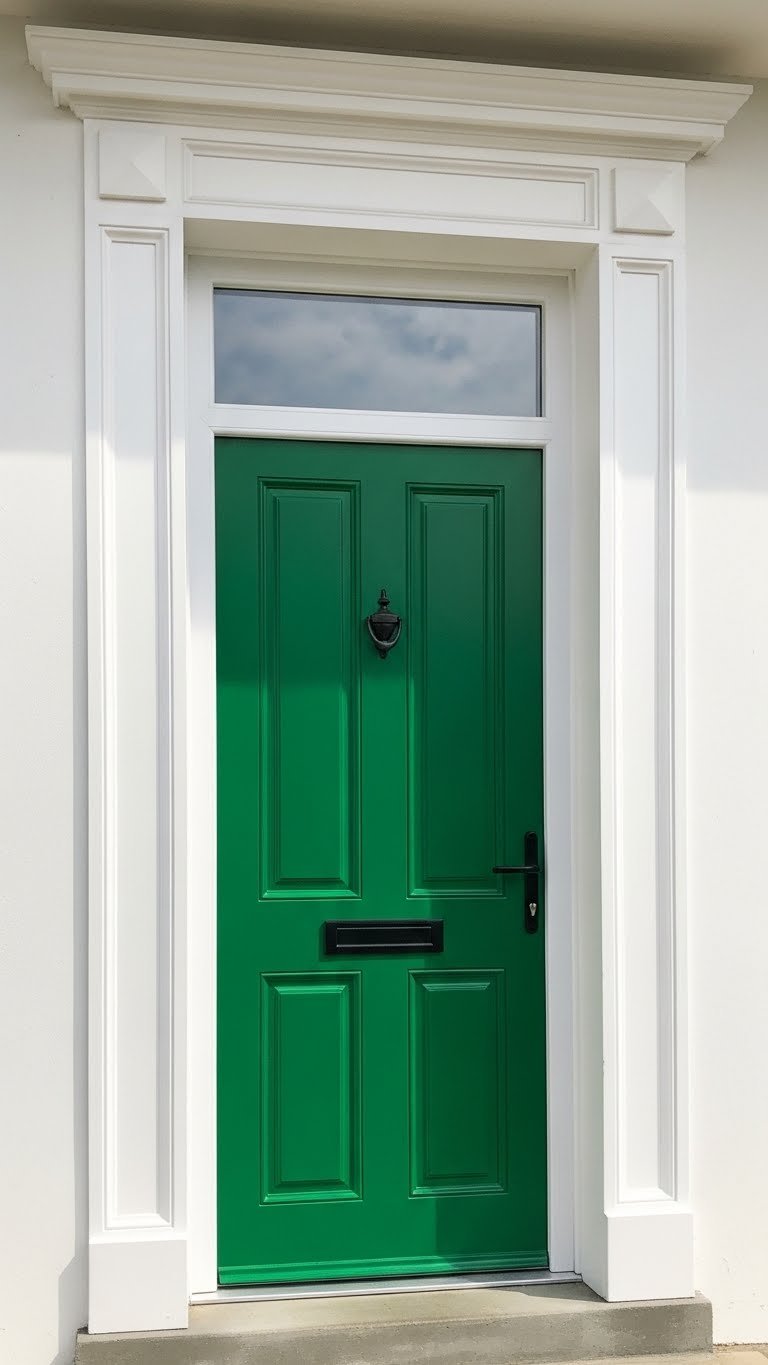
High-contrast trim around your door frame emphasizes the door and adds architectural detail. Paint the frame in white, cream, or a complementary shade—this 2025 trend creates visual interest without clashing. Use quality exterior paint ($20–$40) and spend an afternoon refreshing the trim.
Budget: $20–$50 for paint and supplies. Time: 2–3 hours. This technique works particularly well if you have a bold-colored door. The contrast draws the eye and makes your door appear more intentional and designed. Renters can use painter’s tape to create temporary trim effects if permanent painting isn’t an option.
The contrasting frame instantly elevates your entryway’s architectural interest. That single detail transforms the entire entry from basic to polished.
18. Add a Decorative Door Panel or Millwork Detail
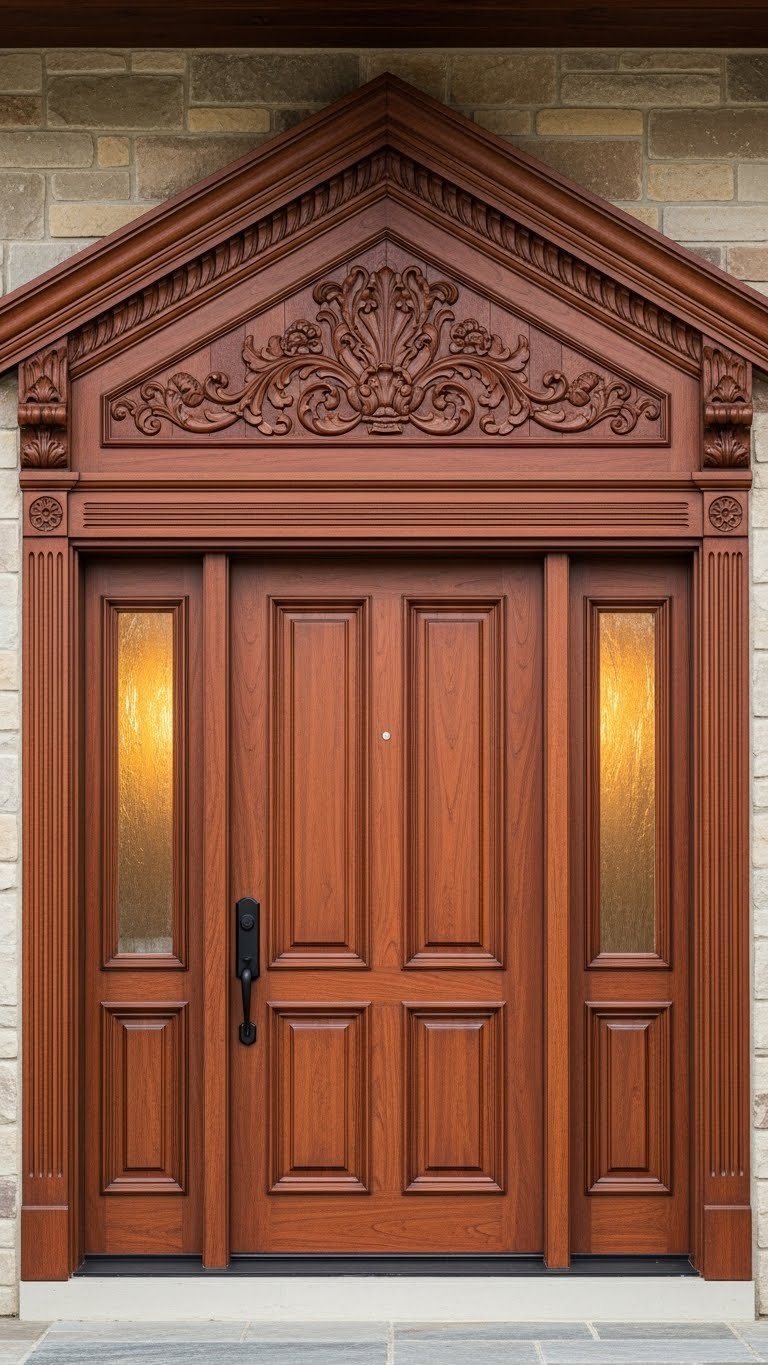
Decorative door panels, arched millwork, or a peaked accent above the door add character and visual depth. This could be an upgrade to your existing door ($300–$800) or a DIY addition using wood trim ($50–$150). Modern-traditional fusion styles blend sleek lines with arched details for a contemporary-classic feel.
Look for wooden doors with raised panels, arched tops, or geometric details. Budget: $50–$150 for trim accents; $300–$800 for a new decorative door. Time: 2–3 hours for trim DIY; professional door replacement takes a few hours. This is a bigger investment but dramatically elevates your entryway’s architectural impact. Renters might prioritize other options unless you own.
The added millwork detail transforms a flat door into an architectural focal point. Your entryway suddenly looks considered and designed rather than default.
19. Frame Your Doorway with Climbing Vines or Trained Plants
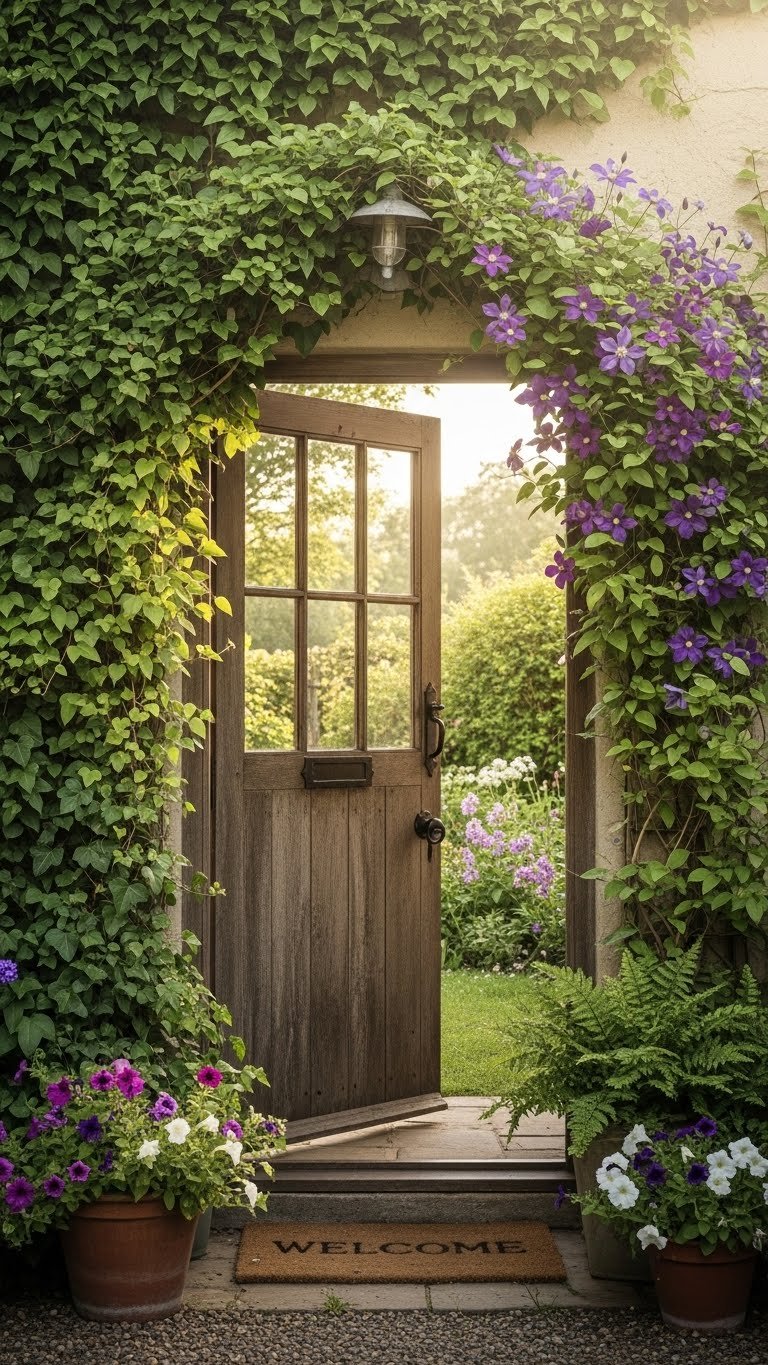
Climbing vines or trained plants frame your doorway naturally and embody 2025’s biophilic design trend. Choose varieties suited to your climate—ivy, clematis, climbing hydrangea, or jasmine. Install trellises ($30–$80 each) and plant ($20–$50 per plant). This takes time to establish (1–2 seasons) but creates stunning visual impact.
Position trellises on either side of the door or above it, plant vines at the base, and train them upward as they grow. Budget: $80–$200 for trellises and plants. Time: 30 minutes to install; ongoing pruning as vines mature. This is long-lasting and genuinely increases your home’s curb appeal. Even renters can use annual vines (sweet peas, morning glories) for seasonal framing.
Once established, your door is framed by living greenery. This creates a garden-like, welcoming effect that signals nature and care.
20. Upgrade Your Door Hardware to Modern Mixed Metals

Door hardware—handles, locks, and hinges—is functional art that signals design sophistication. Replace standard hardware with modern mixed metals ($80–$250 for a complete set). Trending 2025 options include brushed brass, matte black, or combinations of both. This is one of the highest-impact details people notice.
Remove old hardware and install new pieces using provided templates and hardware. Budget: $80–$250 for quality handles, locks, and hinges. Time: 30–45 minutes for installation. Brands like Rejuvenation, Schoolhouse Electric, and Etsy offer excellent design-forward options that punch above their price point.
The moment someone reaches for your door handle, they’re interacting with something genuinely beautiful. High-quality hardware makes your entire entryway feel premium and considered.
21. Install Modern Garage Door Hardware or Accents
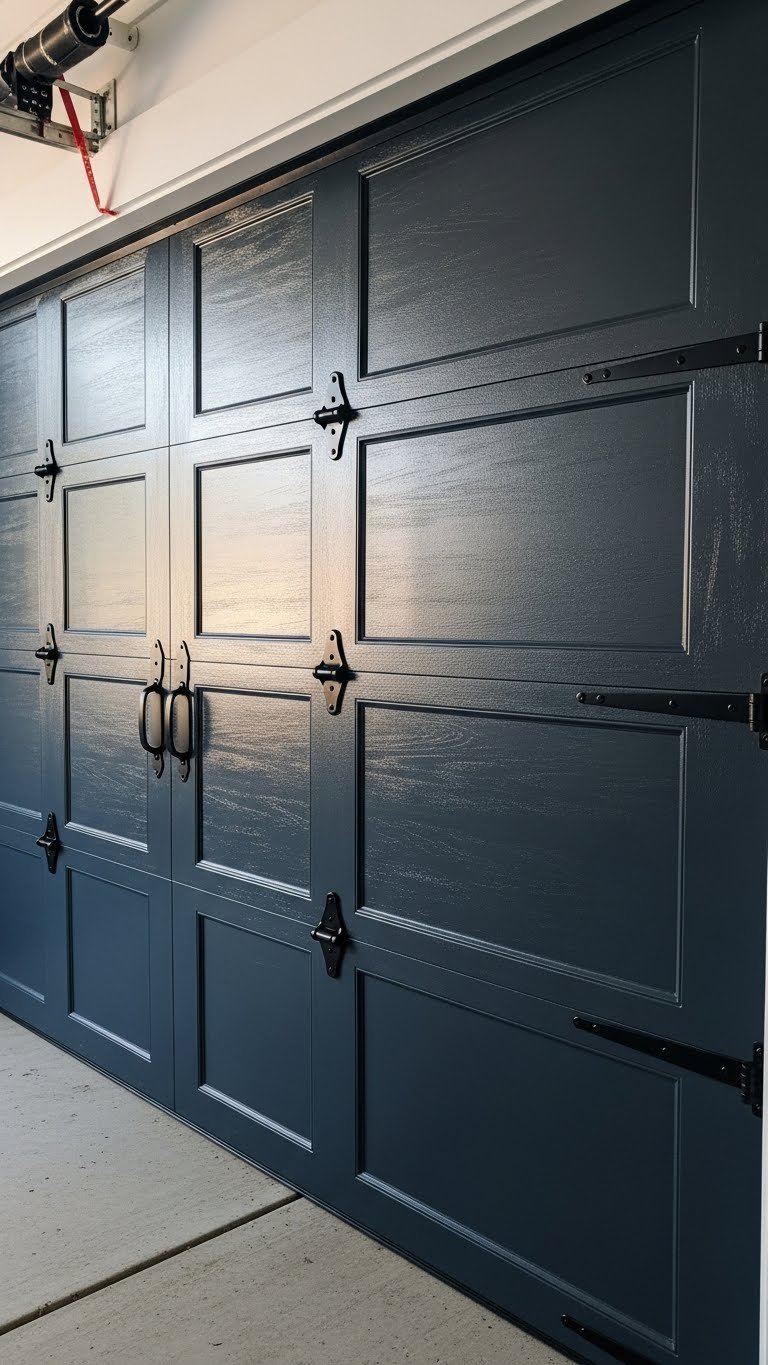
If your garage faces your entryway, updated garage door hardware ($50–$150) instantly elevates the entire front facade. Matte black handles, hinges, or straps signal intentional design and complement 2025’s dark-accent trend. This small upgrade has outsized visual impact.
Install new handles or accent straps using provided hardware—most mounts to existing garage door panels. Budget: $50–$150 for quality hardware. Time: 20–30 minutes for installation. This is perfect if you’re moving away from dated “modern farmhouse” white garage doors toward more nuanced, sophisticated looks.
Your garage door becomes a design feature instead of an afterthought. Even if the door itself is standard, quality hardware instantly upgrades its appearance.
22. Create a Color-Blocked Entryway Facade
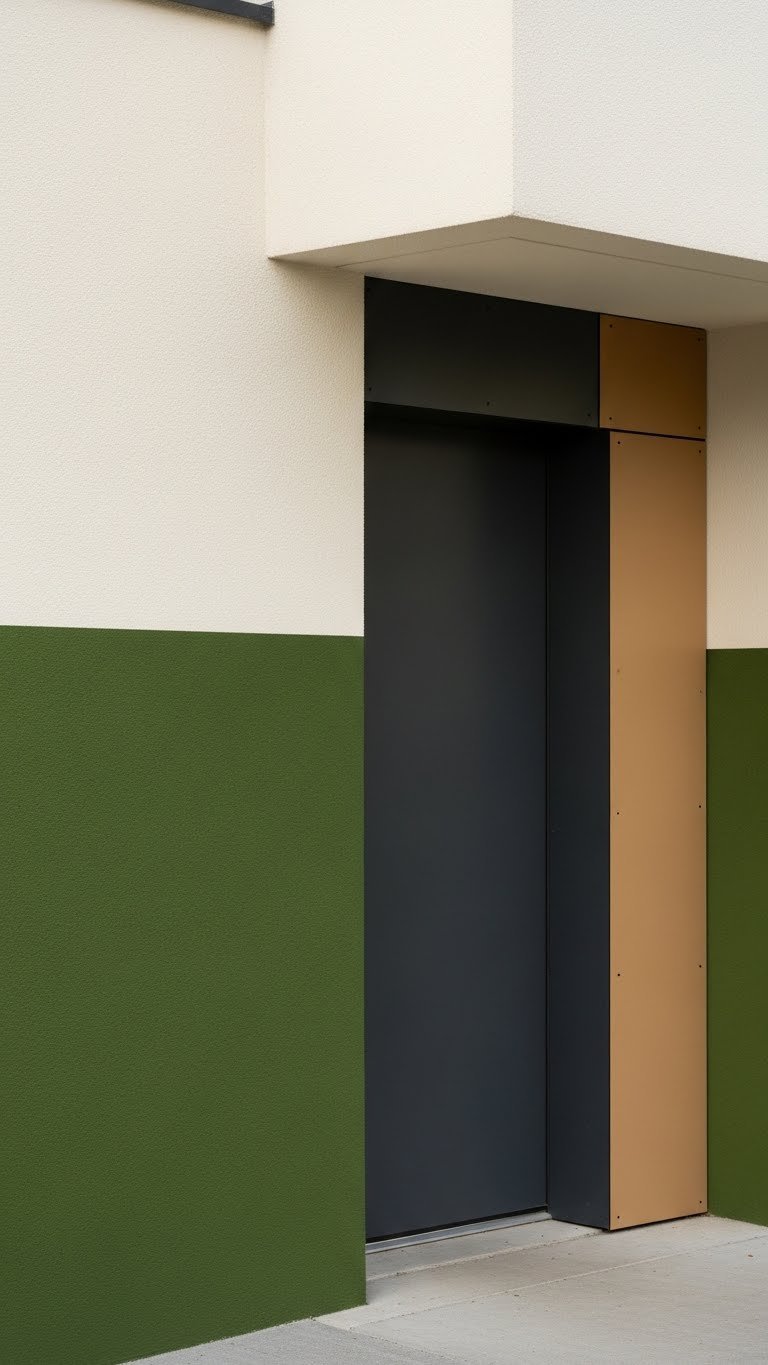
Color blocking—dividing your facade into geometric sections in complementary colors—is a bold 2025 trend that feels modern and intentional. Choose two or three trending colors like olive + cream, charcoal + warm gray, or burgundy + tan. Use quality exterior paint and painter’s tape to create sharp lines.
Decide on your division point (waist-height, one-third/two-thirds split, or architectural features as natural dividers). Budget: $60–$120 for exterior paint. Time: 4–6 hours including taping and painting. This technique works beautifully with 2025’s earth-tone palette and modern-traditional fusion aesthetic. Renters should confirm this is acceptable before committing.
The color blocking immediately modernizes your facade and signals bold design sensibility. Your entryway stops looking like everyone else’s and becomes genuinely distinctive.
23. Add Sustainable Accents: Solar Lights, Reclaimed Materials, or Green Finishes
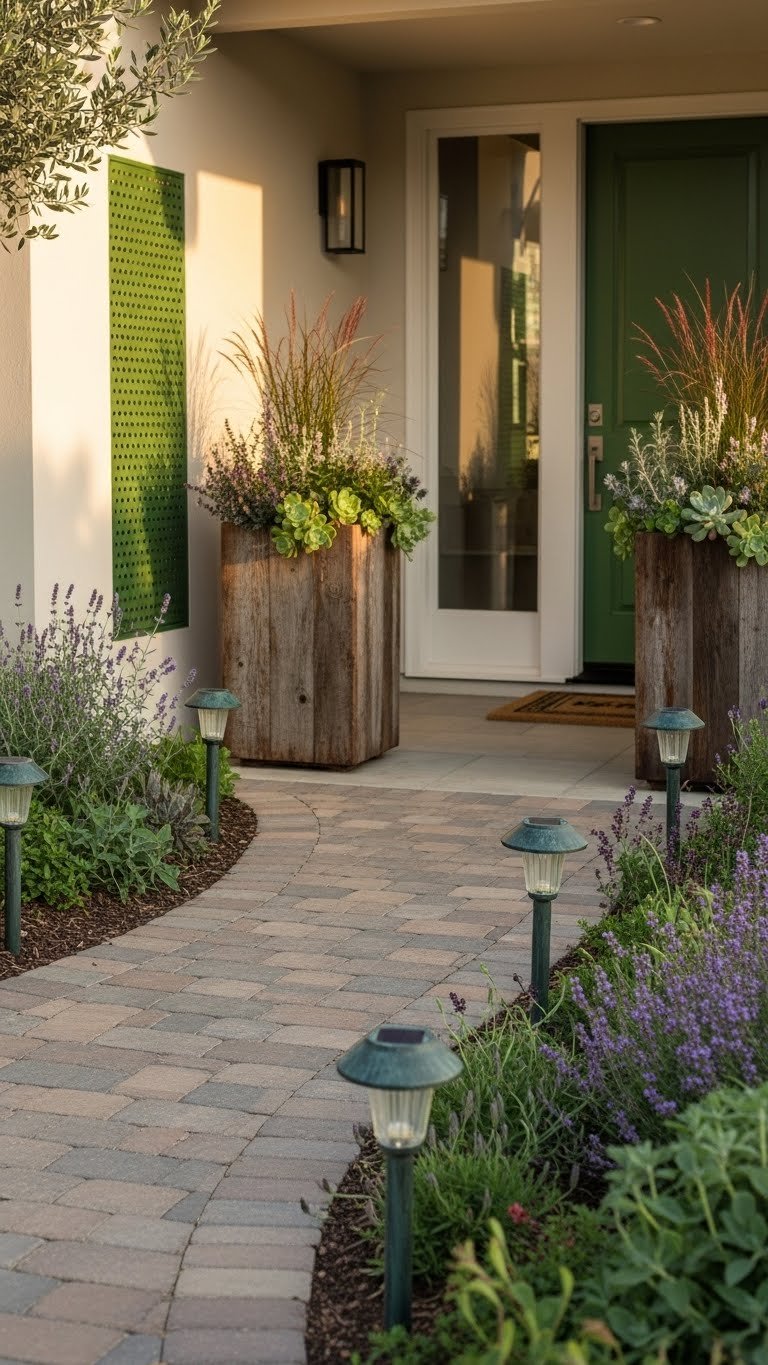
Embracing 2025’s sustainability focus, add eco-friendly details like solar pathway lights ($30–$80), reclaimed wood planters or trim ($50–$200), or water-wise native plants. These choices reduce your environmental footprint while creating genuine visual interest. Green-finished metals, recycled composite materials, and sustainably sourced wood all communicate values while looking beautiful.
Position solar lights along your walkway (they charge during day, illuminate at night), integrate reclaimed wood as planters or trim accents, and prioritize native plants for your landscaping. Budget: $50–$200 depending on elements you choose. Time: 1–2 hours for installation. These materials often age beautifully and develop character over time, which adds to their appeal.
Your entryway communicates both design sophistication and environmental consciousness. You’re not just creating curb appeal—you’re making choices that align with your values.
Pick one idea from this list and tackle it this weekend—you’ll be amazed at how one thoughtful change shifts your entire relationship with your entryway. Save this post for later, and share it with friends who are dreaming of a more welcoming home.
Leave a Reply