Blog

  • 23 Bold Color Pop Living Room Ideas That Instantly Refresh Your Space

    23 Bold Color Pop Living Room Ideas That Instantly Refresh Your Space

    Introduction

    Tired of looking at the same bland walls day after day? Your living room doesn’t have to be boring—and you don’t need to gut the room to change it. The best part? Color is one of the fastest, most affordable ways to refresh any space. Whether you’re renting or own your home, you can experiment with bold hues that instantly energize the room while still keeping things cozy. We’re talking jewel tones that make your sofa look like it belongs in a magazine, unexpected color combos that work brilliantly together, and clever layering techniques that make small rooms feel bigger. Ready to ditch the beige? Let’s explore 23 bold color ideas that’ll make you fall in love with your living room all over again.

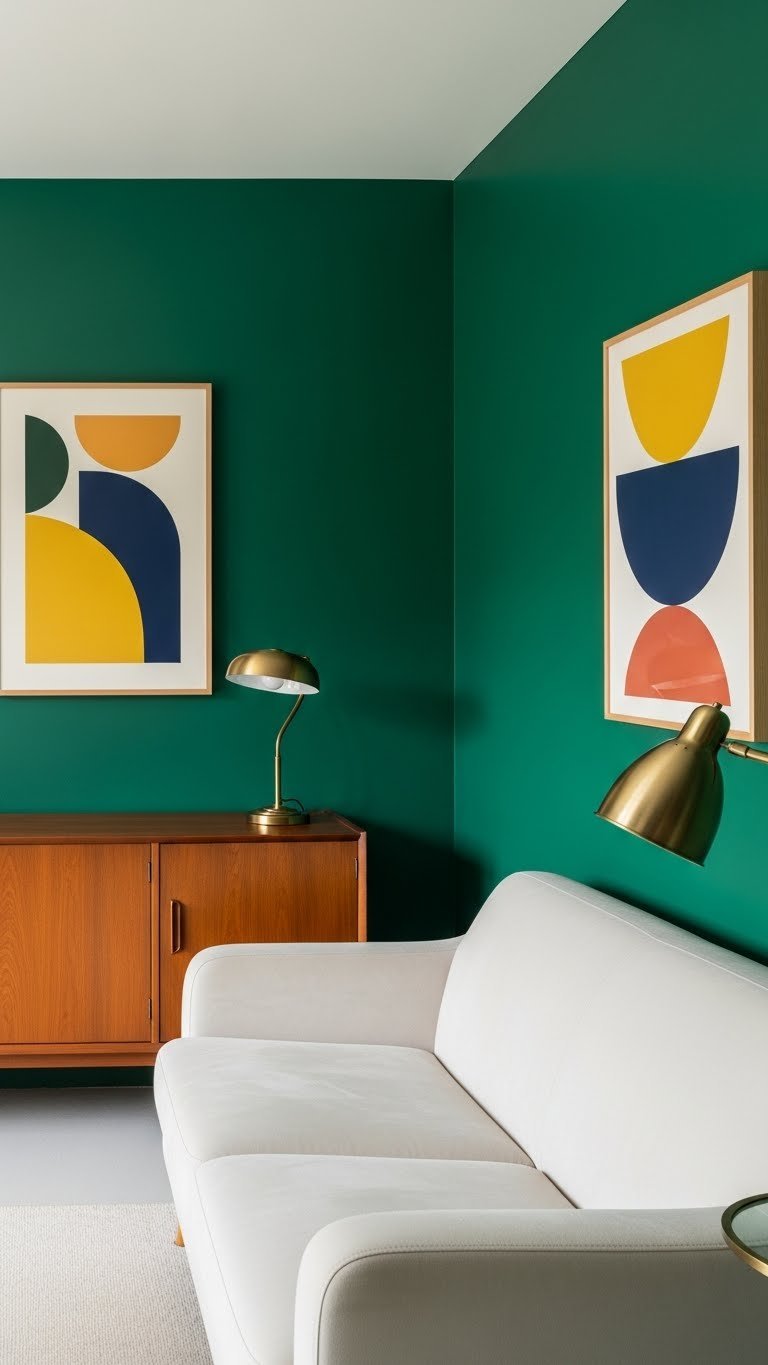
    1. Paint an Accent Wall in Deep Emerald Green

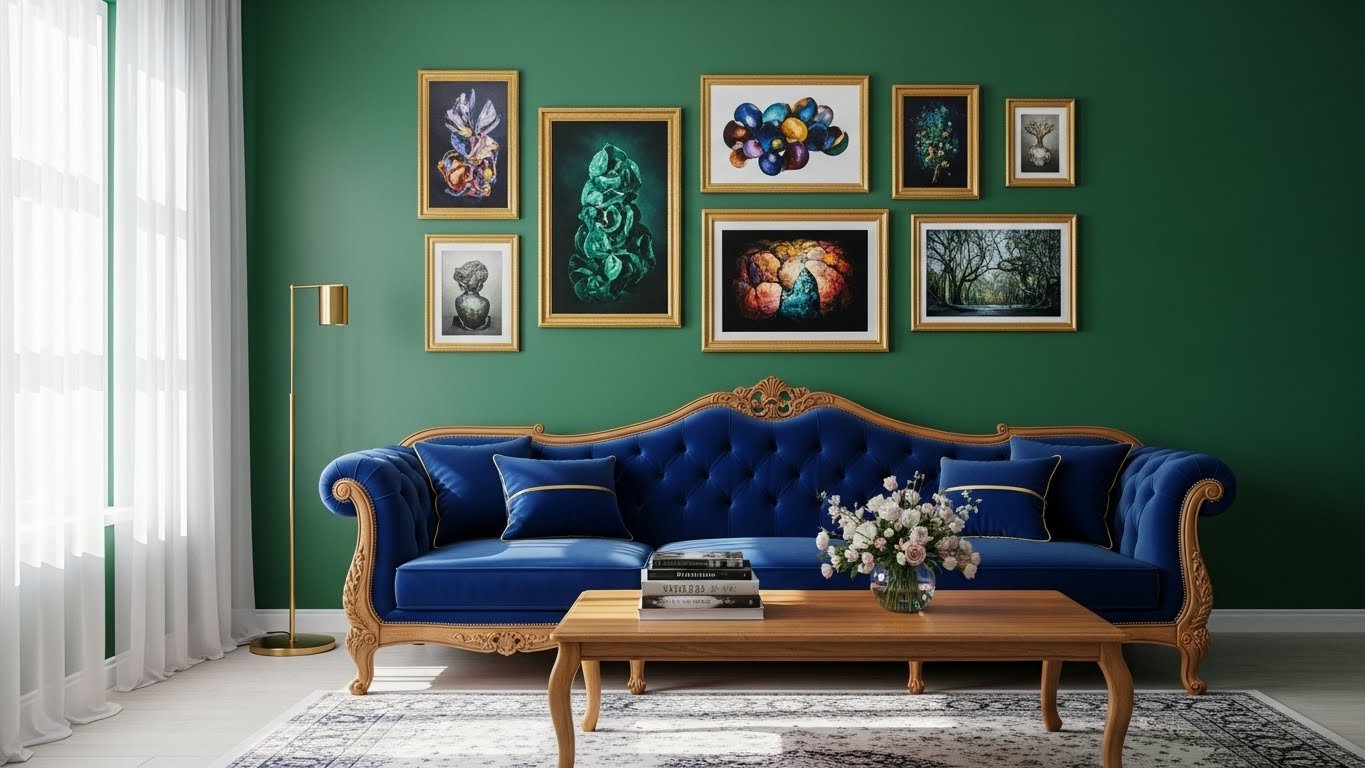
    An emerald accent wall instantly adds sophistication and pairs beautifully with almost any furniture style. This jewel tone works whether your décor is modern, vintage, or somewhere in between.

    Choose a quality paint like Benjamin Moore’s “Calypso Green” or Sherwin-Williams “Greener Pastures” ($30-50 per gallon). One gallon covers most accent walls, so this is genuinely affordable. Grab painter’s tape, prime the wall first, and roll on two coats over a weekend. The key? Use a matte or eggshell finish—it hides imperfections better than glossy paint.

    Pair it with white trim, natural wood furniture, and brass accents for maximum impact. Renters, try peel-and-stick wallpaper in emerald instead.

    Your living room suddenly feels like a designer retreat without breaking the bank.

    2. Mix Jewel Tones With Warm Neutrals

    Pairing bold jewel tones with warm neutrals prevents the room from feeling cold or overwhelming. This combo creates visual balance while keeping the drama.

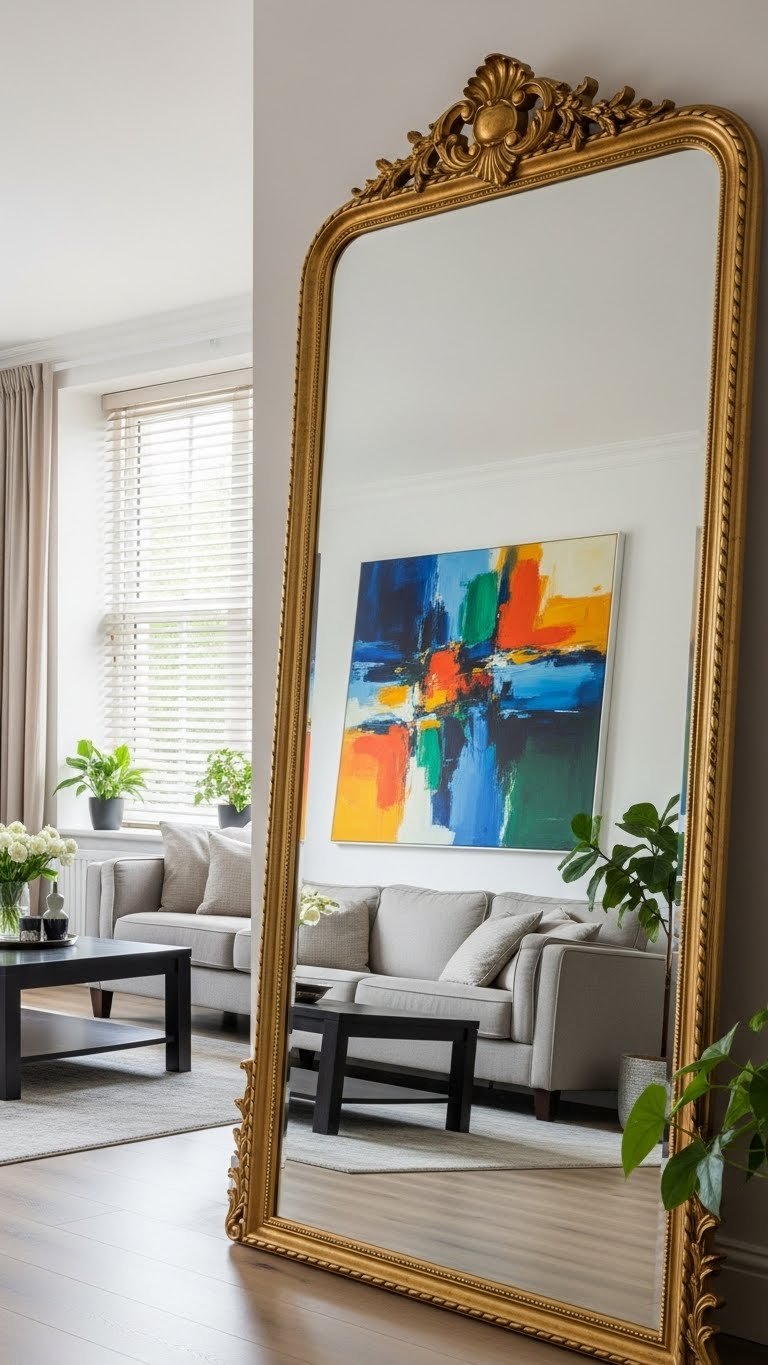
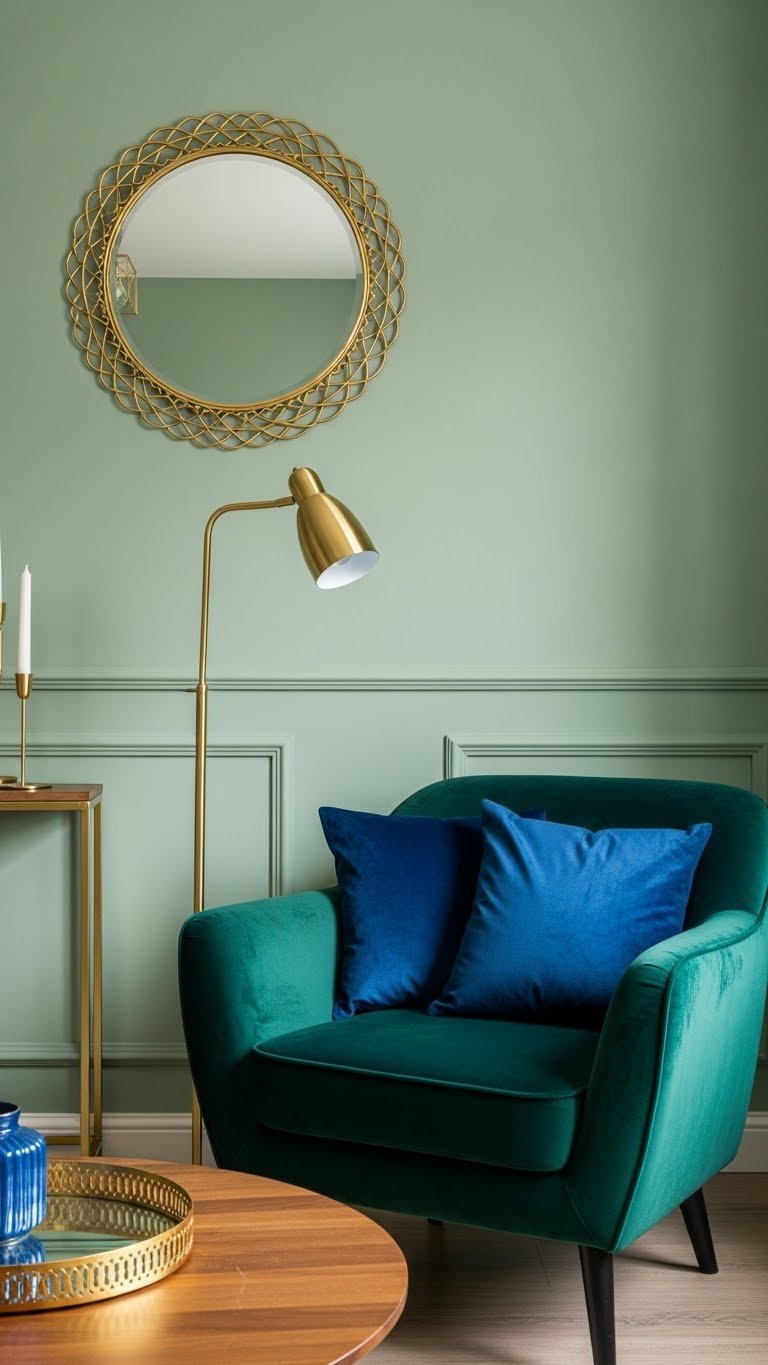
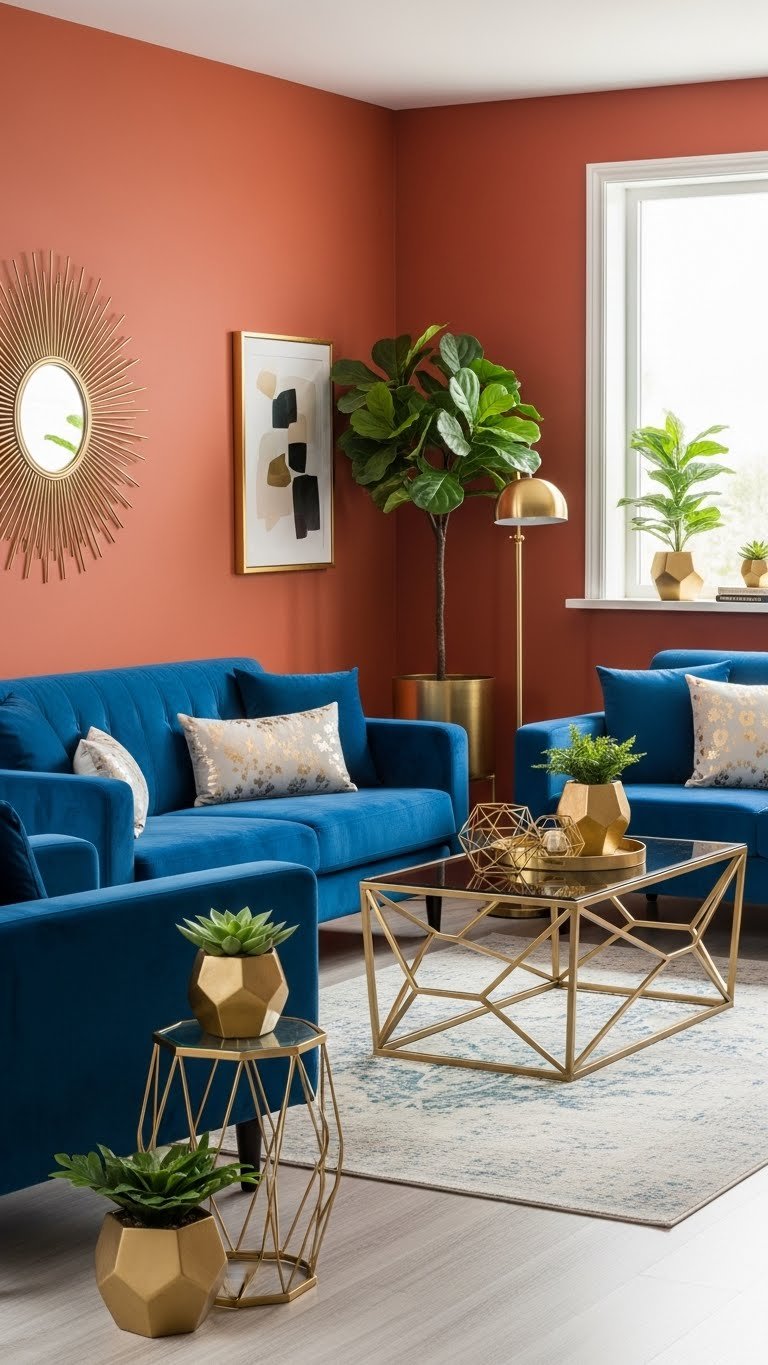
    Start with one jewel tone as your wall color (emerald, sapphire, or oxblood red). Then layer in cream, beige, or warm gray through furniture and textiles. Add metallic accents in gold or copper—brass lamps run $40-100, and gold-framed mirrors cost $50-150 at Target or IKEA. A few plants and natural wood pieces ground the boldness and keep things feeling livable.

    This approach works in apartments and houses alike because you’re anchoring color with neutrality.

    The result? A room that looks intentional and curated, not chaotic.

    3. Create a Color-Drenched Statement Wall With Oxblood Red

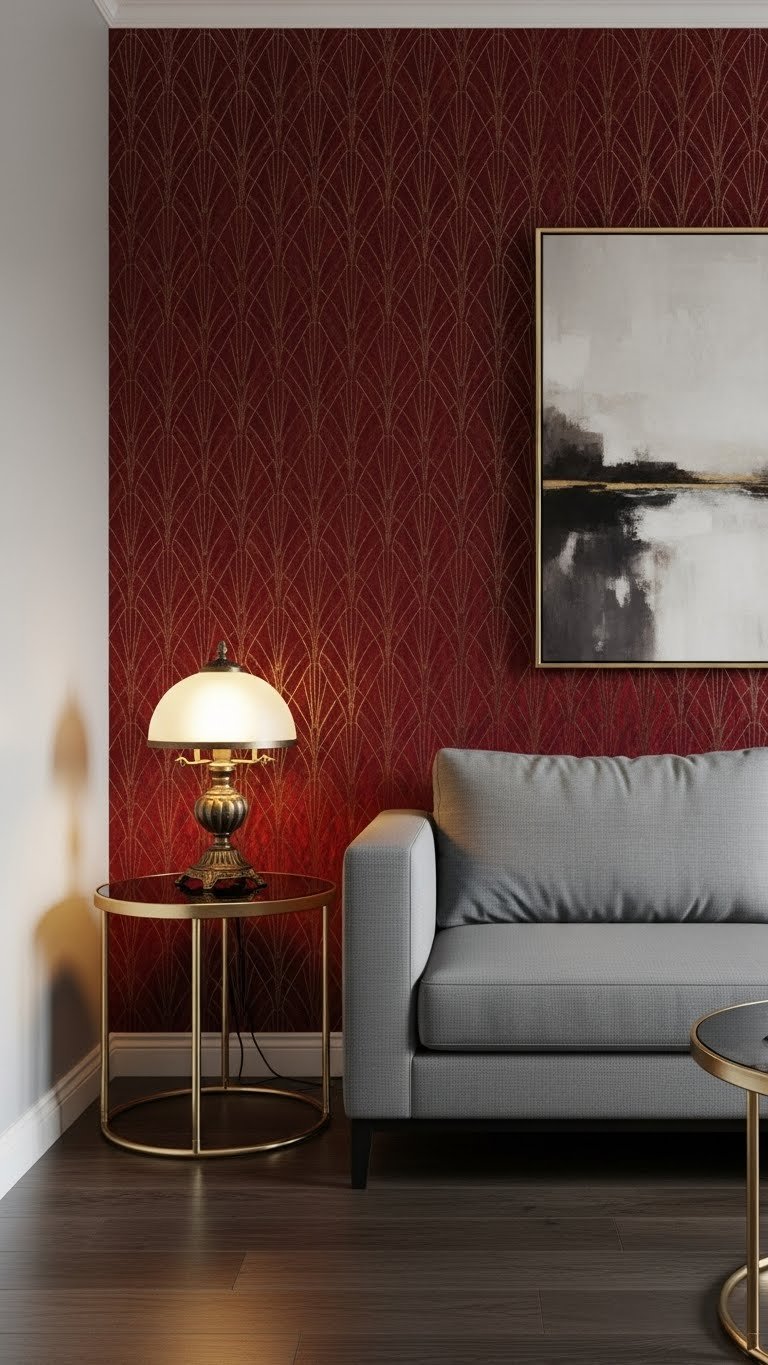
    Oxblood red is the moody, sophisticated cousin of bright red—it adds richness without screaming. Pair it with Art Deco accents and modern furniture for a look that feels both timeless and current.

    Use removable peel-and-stick wallpaper in oxblood red ($40-80 for a standard wall) to keep things renter-friendly. Brands like Spoonflower or Etsy sellers offer geometric patterns perfect for this vibe. If you own your home, Benjamin Moore’s “Caliente” is a stunning paint option. Either way, pair the color with charcoal gray furniture, brass fixtures, and black-and-white geometric accessories for maximum impact.

    Pro tip: Use this color on a shorter wall (like behind a sofa) rather than a large open wall if you’re worried about commitment.

    This bold choice makes your living room feel like a curated, sophisticated space.

    4. Layer Sapphire Blue With Warm Wood Tones

    Sapphire blue sounds fancy, but it’s incredibly welcoming when you pair it with warm wood. The combination feels both energizing and grounded at the same time.

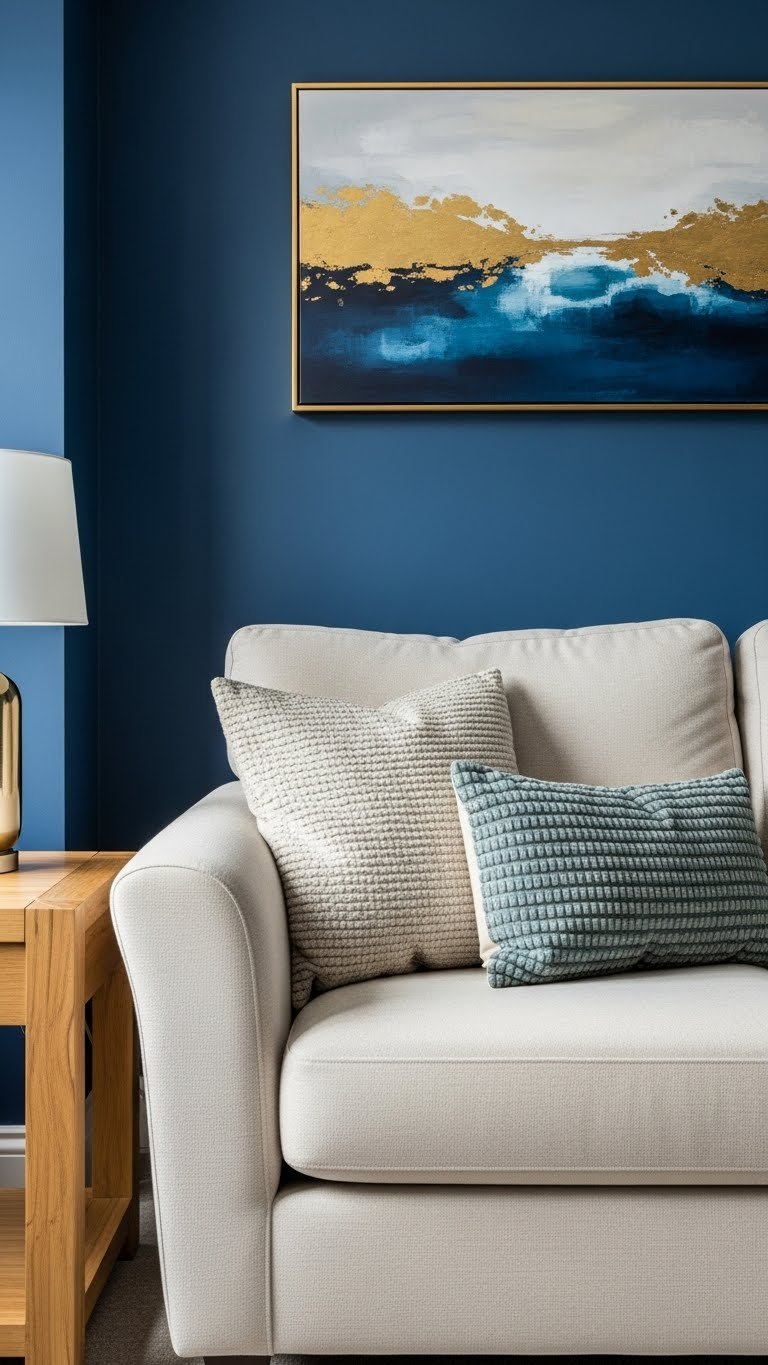
    Paint your walls Sherwin-Williams “Sapphire” or “Naval” ($30-50 per gallon). Add wood elements through furniture, floating shelves, or even a wood ceiling accent—reclaimed wood shelving runs $80-200 from Home Depot or Etsy. Layer in warm-toned textiles: linen sofas, cream throw blankets, and rust-colored pillows balance the cool blue beautifully. Add a few brass fixtures and you’re done.

    This works great in rental apartments because you can use the paint for just one wall.

    Your space suddenly feels like a cabin retreat meets modern apartment.

    5. Go Bold With Full-Room Color Drenching

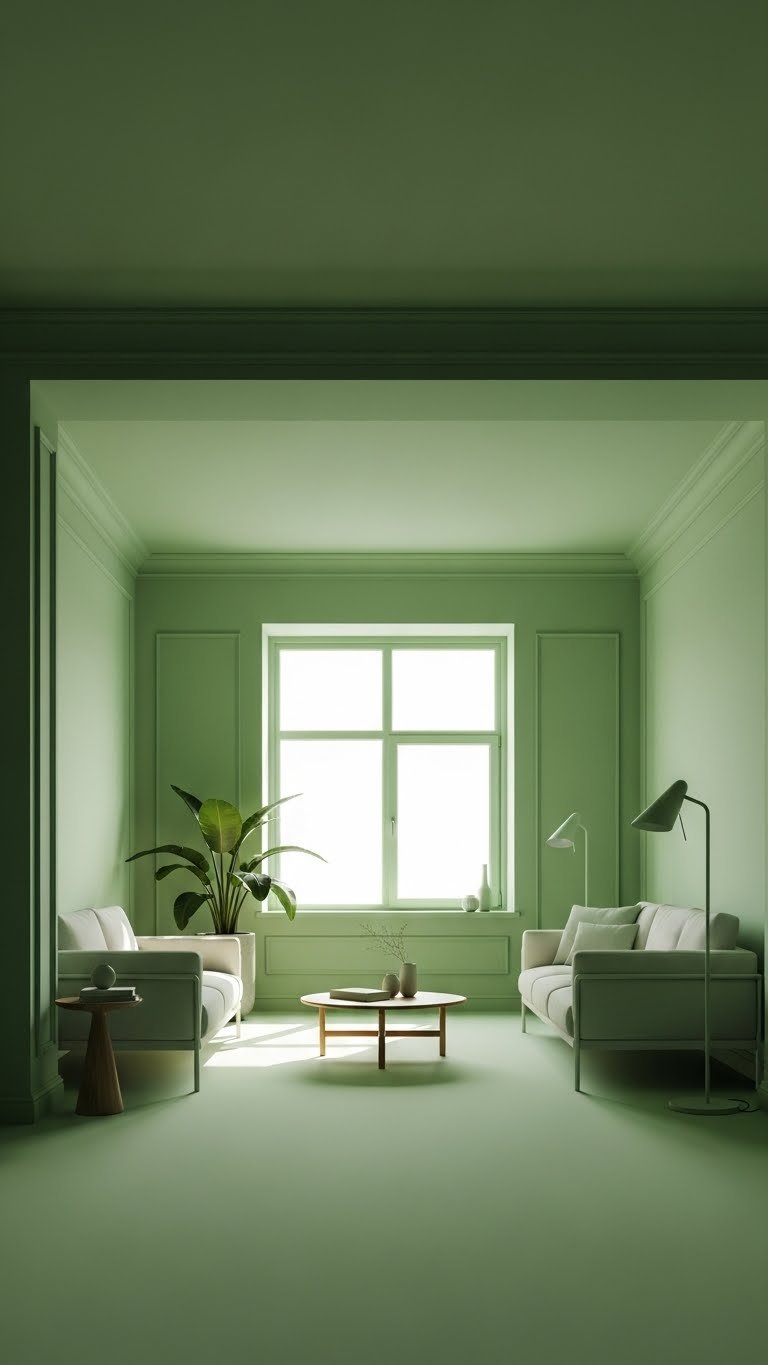
    Color drenching means painting every surface (walls, ceiling, trim) the same bold hue. It sounds extreme but creates an immersive, enveloping feeling that photographs beautifully.

    Start with a softer jewel tone or jewel-adjacent color—sage green, muted teal, or dusty plum work best for full-room drenching. Buy 4-5 gallons of paint ($120-200 total) and commit to a weekend project. Paint walls first, then ceiling, then trim. Use the same paint throughout—no contrast trim needed. Bring in warm lighting (warm-white LED bulbs, around $5-15 each) and light-colored furniture to prevent the room from feeling like a cave.

    Pro tip: Test the color in your actual room under different light conditions first.

    The payoff? A dramatically cohesive, Instagram-worthy room that feels like a sanctuary.

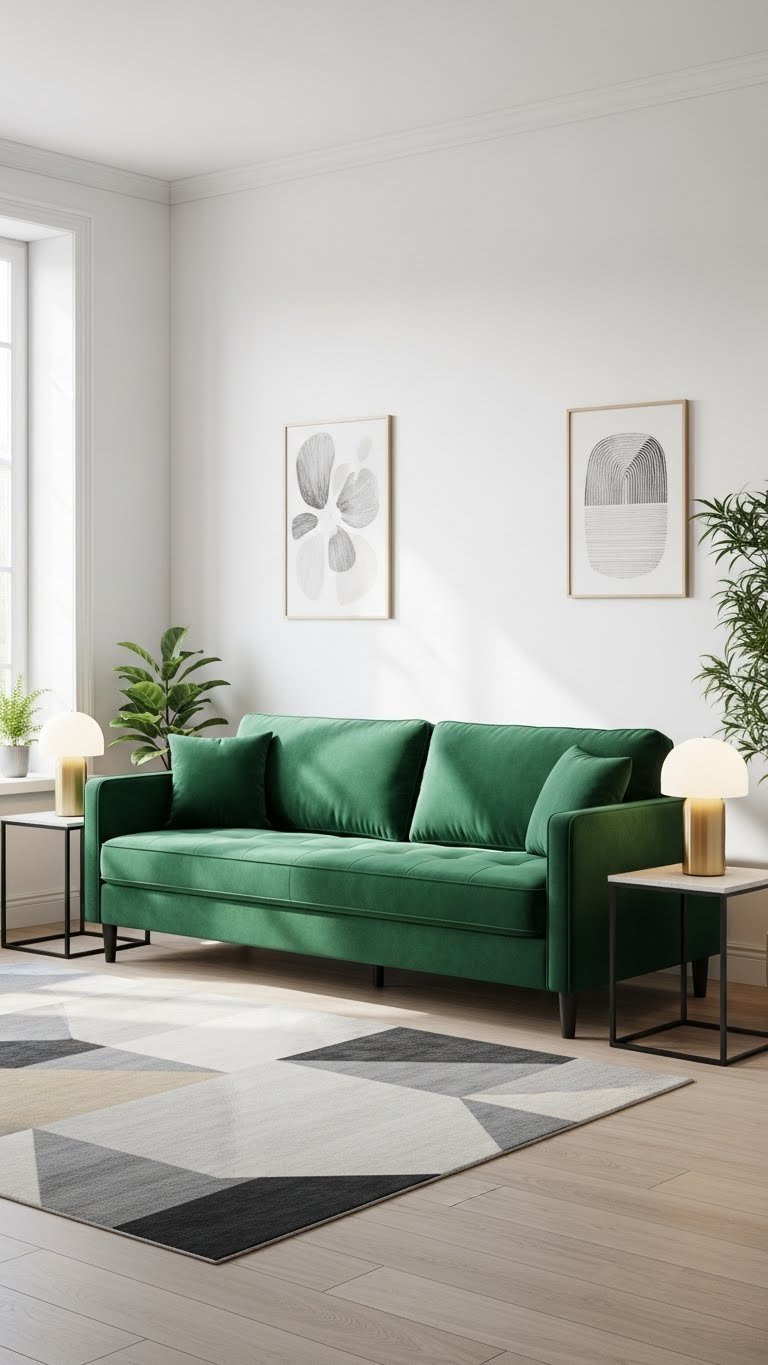
    6. Add a Jewel-Tone Velvet Sofa as Your Statement Piece

    A jewel-tone velvet sofa is an investment, but it’s the easiest way to anchor color in a room without committing to paint. One bold piece does the heavy lifting.

    Look for quality options at Article ($600-1200), West Elm ($800-1500), or Wayfair ($400-900) in emerald, sapphire, or deep plum. Check the fabric durability rating (aim for 100,000+ double rubs) if you have kids or pets. Pair it with neutral walls, natural wood tables, and layered textiles in cream and gold. This approach gives you flexibility—swap walls later without losing your statement piece.

    Renters: Check if your landlord allows paint; if not, this sofa does all the color work.

    Your living room instantly becomes the most inviting spot in your home.

    7. Use Peel-and-Stick Wallpaper in Bold Geometric Prints

    Peel-and-stick wallpaper lets you experiment with bold color and pattern without permanent commitment. Perfect for renters and indecisive decorators alike.

    Pick a pattern from Spoonflower ($25-50), Etsy ($30-60), or Peel & Stick Wallpaper Co. ($35-70) that combines jewel tones with geometric designs. Measure your wall carefully, prep the surface with a clean, dry cloth, and apply slowly, smoothing out air bubbles as you go. The whole project takes 2-3 hours for a standard wall. Layer with solid-colored furniture so the pattern stays the star.

    Pro tip: Apply the wallpaper to just one wall or use it inside a bookshelf for a softer commitment.

    Your living room suddenly has personality and visual interest that makes guests stop and stare.

    8. Paint Trim and Built-Ins in Contrasting Bold Colors

    Instead of painting large walls, use bold color on trim, baseboards, or built-in shelving. This gives you drama without overwhelming the entire room.

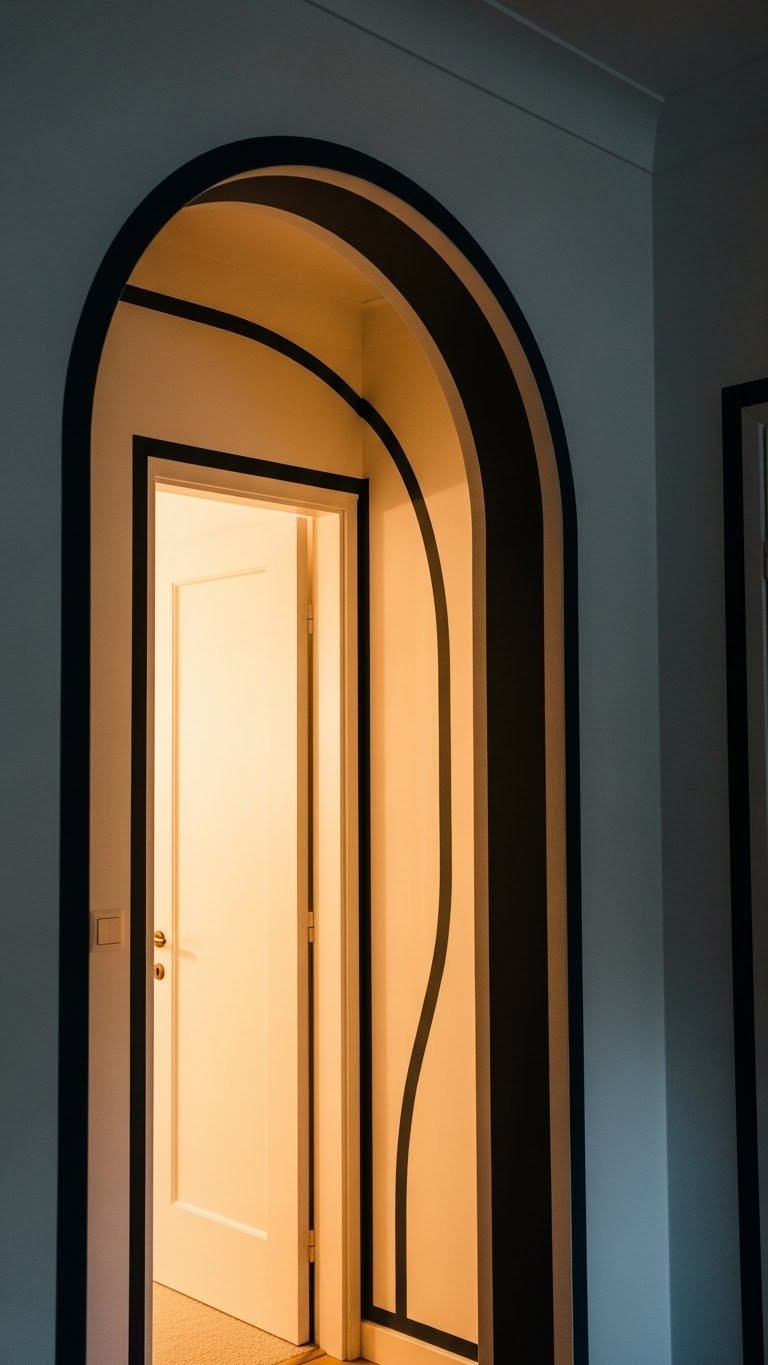
    Choose a jewel tone and paint just your trim, baseboards, or bookcase using semi-gloss or satin finish paint ($25-45 per gallon)—the sheen makes it look more polished. Use painter’s tape for clean edges and apply two coats over 4-6 hours. This works especially well if you have architectural features like built-ins, crown molding, or arched doorways. Pair colored trim with neutral walls for maximum contrast.

    Homeowners especially love this because it adds character; renters should check with landlords first.

    Suddenly your room has depth and sophistication from one well-placed color choice.

    9. Combine Three Complementary Jewel Tones in One Room

    Mixing multiple jewel tones sounds risky, but when you choose complementary shades and balance them with neutrals, the effect is stunning. The key is proportion—one dominant color, one secondary, one accent.

    Pick your three jewel tones first (emerald + sapphire + plum, or emerald + teal + gold-adjacent). Assign each a role: paint walls in your lightest tone ($30-50), choose furniture in your mid-tone ($300-1200 for a sofa), and use accessories in your deepest tone (pillows $20-50, art $30-100). Bring in 60% neutral tones (cream, gray, natural wood) to prevent chaos. Use a color wheel online if you’re worried about clashing—complementary colors sit opposite each other.

    This takes planning but pays off beautifully when executed.

    You’ll have a living room that feels gallery-curated and entirely unique.

    10. Add Jewel Tones Through Layered Throw Pillows

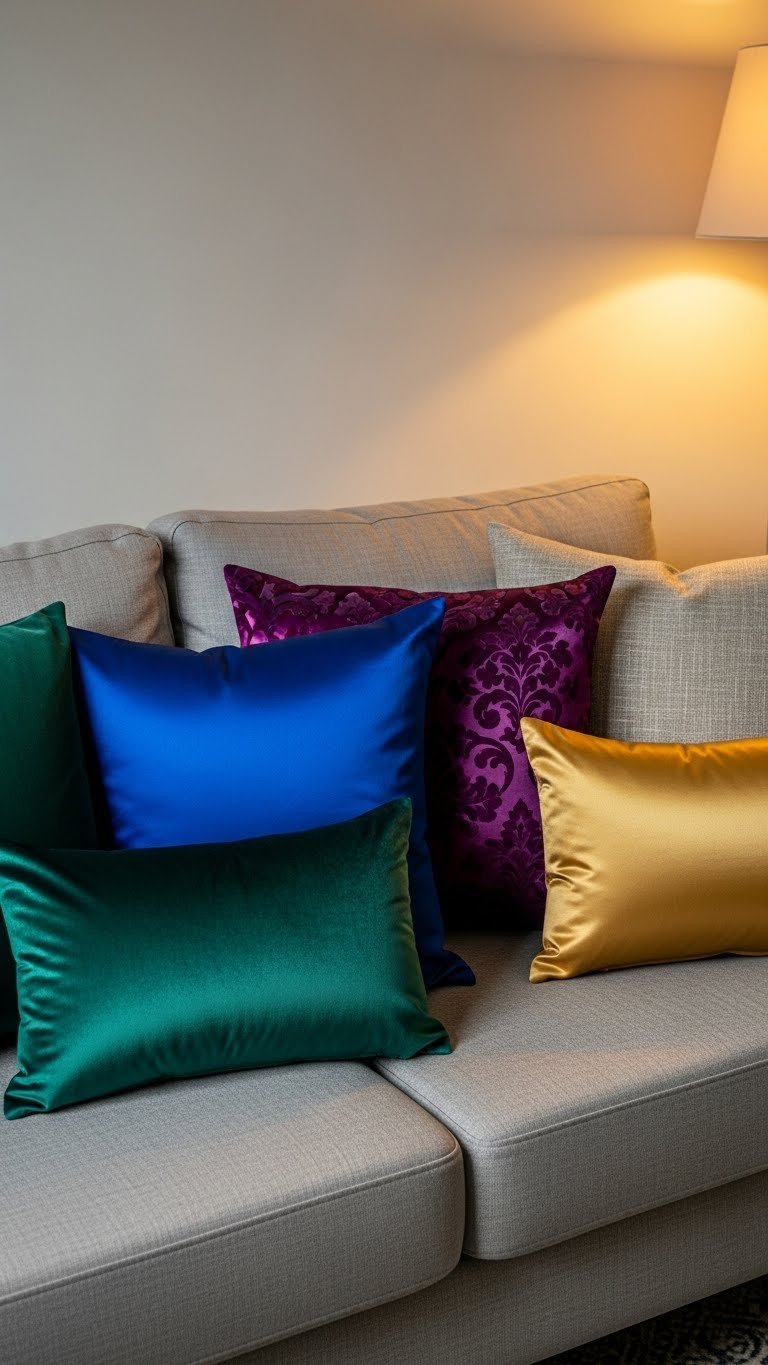
    If painting feels too committed, build color through textiles. Throw pillows are affordable, swappable, and create massive visual impact when layered.

    Buy 4-6 pillow covers in coordinating jewel tones ($15-30 each on Amazon, Target, or West Elm). Mix textures: velvet, linen, wool, even a metallic or patterned option. Vary sizes (18″, 20″, 24″) and arrange them at different angles on your sofa for a curated, not-too-perfect look. Change them seasonally or whenever you want a refresh. Covers are washable, so this is practical and playful.

    Pro tip: Stick to a max of 4 dominant colors to keep it cohesive rather than chaotic.

    Your sofa becomes an ever-changing canvas for color experimentation.

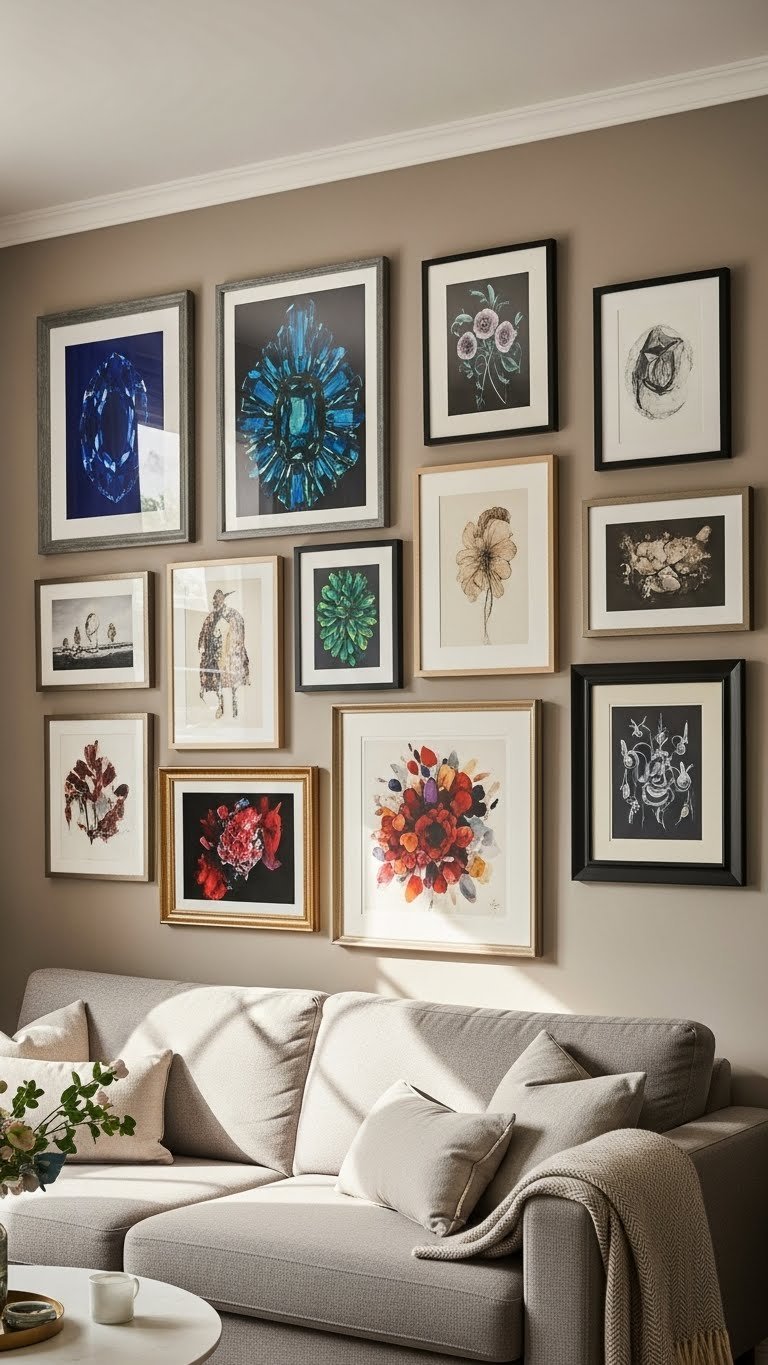
    11. Create a Gallery Wall With Colorful Framed Art

    A gallery wall packed with colorful art lets you layer jewel tones without paint or furniture commitment. Mix abstract prints, photography, and vintage finds for texture.

    Hunt for art on Etsy ($20-80 per print), Minted ($30-100), Uncommon Goods ($40-150), or thrift stores (often $2-15). Mix frames in gold, brass, black, and natural wood ($10-40 each from IKEA, Target, Wayfair). Arrange pieces on the floor first before hanging. Lean into jewel-tone art—emerald botanical prints, sapphire abstract designs, burgundy landscapes. The diversity of frames and styles means no two walls look the same.

    This approach costs time more than money and works in rentals with adhesive strips.

    Suddenly your blank wall tells a story and showcases your taste.

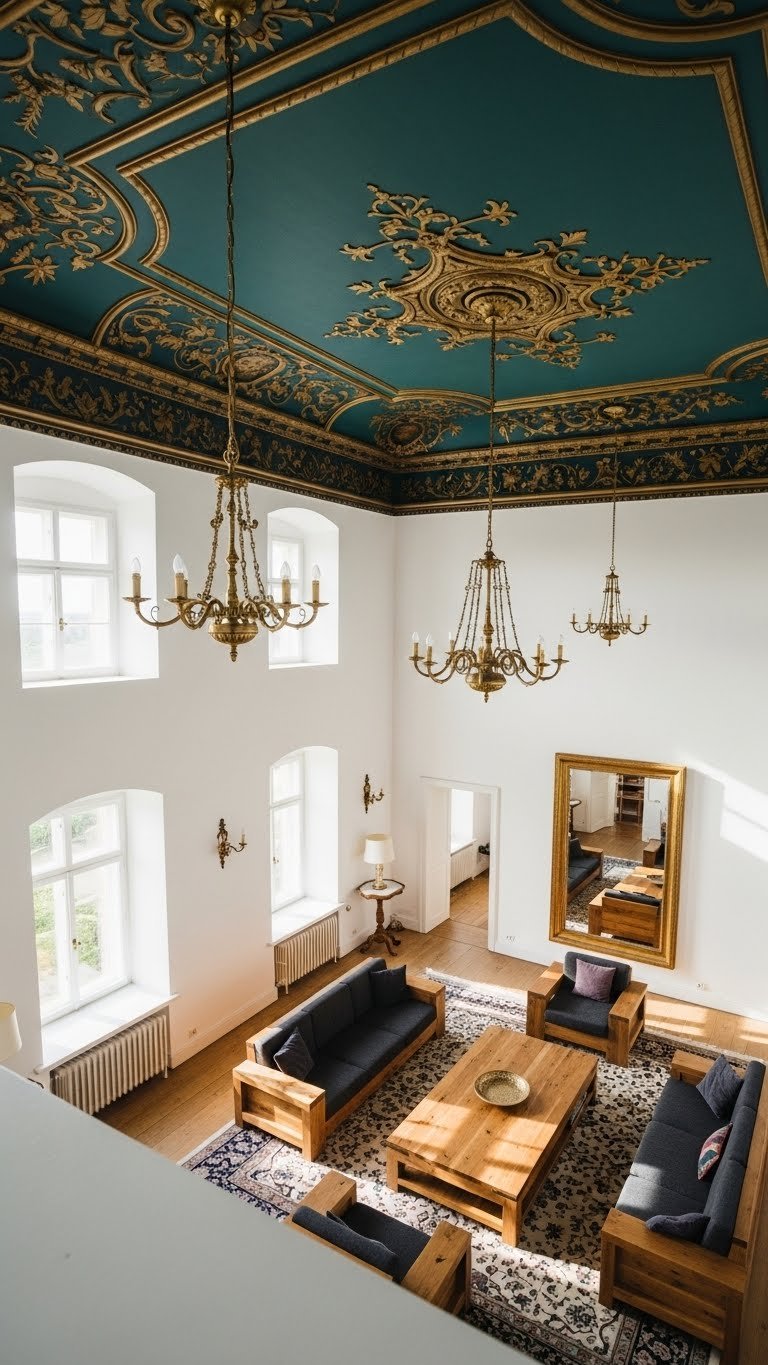
    12. Paint Your Ceiling in a Jewel Tone

    Painting your ceiling a bold jewel tone is an underrated way to add drama. It draws the eye upward, making rooms feel larger and more finished.

    Choose a jewel tone one shade darker than you’d use on walls—deep teal, sapphire, or plum work best. Buy 2-3 gallons of quality paint ($60-100 total) and rent scaffolding or use a sturdy ladder. This is a DIY project if you’re comfortable working overhead, or hire a painter ($300-600 for a standard room). The project takes 4-6 hours. Keep walls neutral (white, cream, or soft gray) to let the ceiling be the star. Pair with brass fixtures and natural wood for warmth.

    Pro tip: Paint the ceiling before walls if doing both, so drips don’t ruin your wall color.

    Your living room now has unexpected architectural interest that makes the space feel curated.

    13. Layer Warm and Cool Jewel Tones for Balance

    Mixing warm jewel tones (oxblood red, burgundy) with cool ones (emerald, sapphire, teal) creates visual tension that feels intentional, not accidental.

    Paint walls in a warm jewel tone like Benjamin Moore’s “Caliente” or Sherwin-Williams “Red Bay” ($30-50). Bring in cool-toned furniture—a sapphire sofa or emerald accent chair ($400-1200). Layer accessories that bridge both temps: brass (warm) mixed with silver (cool) fixtures, cream textiles, and natural wood. The contrast keeps the eye moving and prevents the room from feeling one-dimensional.

    Balance matters here—aim for 60% warm, 40% cool (or vice versa) depending on your preference.

    The result is a living room that feels alive and expertly balanced.

    14. Use Jewel-Tone Wallpaper on a Single Feature Wall

    Wallpaper in a jewel-tone print adds drama faster than paint. Choose a pattern—damask, florals, geometric—that speaks to your style.

    Browse Wayfair ($25-60 per roll), Spoonflower ($40-80), or Traditional Home ($30-50 per roll) for jewel-toned wallpapers. Measure your wall carefully and order enough rolls (ask the retailer how many you need). Either hire a wallpaper installer ($200-400) or tackle it yourself using a smoothing tool and adhesive. The installation takes 3-6 hours DIY. Pair wallpaper with solid-colored furniture and minimal accessories so the pattern shines.

    Renters: Peel-and-stick wallpaper versions exist and work beautifully.

    Your living room transforms into a sophisticated, pattern-forward space.

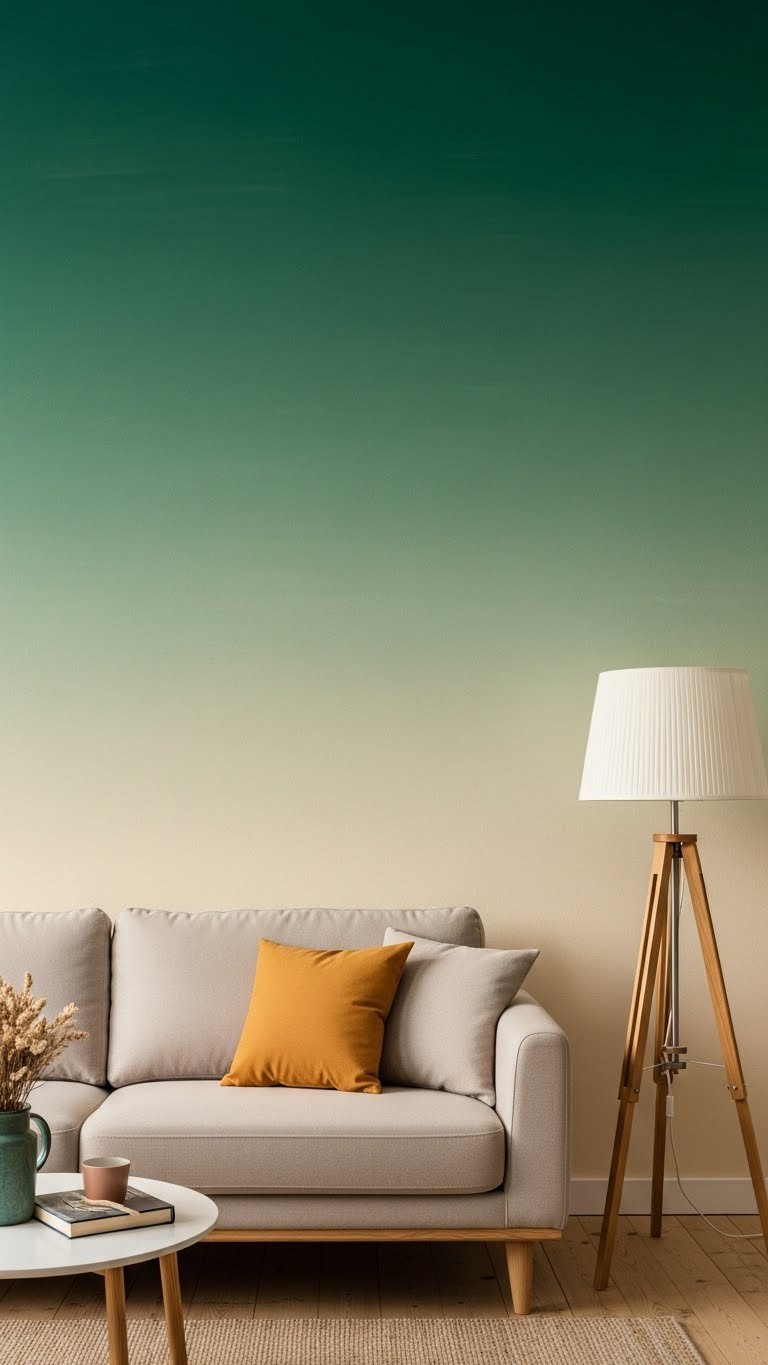
    15. Paint an Ombré or Colorwash Wall Effect

    An ombré or colorwash creates a gradient effect—light at the bottom, darker jewel tone at the top. It’s easier than it sounds and adds artistic flair.

    Buy two paint colors: a light cream or white base and your chosen jewel tone ($30-50 per gallon each). Use a large soft brush or sponge to blend the colors where they meet. Work in small sections, blending as you go. The beauty of this technique is imperfection looks intentional. Takes 2-3 hours per wall. Watch YouTube tutorials for your specific style—ombré, colorwash, and sponge-painting are all variations.

    This DIY project costs under $100 and requires no special skills.

    Your walls look gallery-crafted and add visual height to the room.

    16. Mix Bold Color With Vintage-Modern Furniture

    Pairing bold jewel-tone walls with a mix of vintage and modern furniture creates a curated, collected-over-time feel. Avoid matching sets; embrace eclectic styling.

    Paint your walls a rich jewel tone, then hunt for furniture that spans eras. Find a vintage dresser or credenza on Craigslist ($100-400), add a modern sofa from Article or IKEA ($500-1200), layer in brass or wood vintage lamps ($20-80 each), and mix contemporary art with vintage frames. The contrast between old and new keeps the bold color from feeling heavy. This approach is budget-friendly because vintage pieces cost less than new furniture.

    Your living room tells a story of your taste and personality.

    17. Use Jewel-Tone Throw Blankets and Textiles

    If you can’t commit to wall color, build jewel tones entirely through soft textiles. Throws, blankets, and rugs are easily swappable and affordable.

    Layer a jewel-tone throw blanket ($25-60 from Target, IKEA, or Wayfair) over a neutral sofa. Add coordinating throw pillows ($15-35 each), then an area rug in cream or soft gray with a subtle jewel-tone pattern ($100-300 from Wayfair or Amazon). Switch seasonally or whenever you crave change. This approach costs $200-400 total and takes zero installation time. Textiles are washable and renter-proof.

    Pro tip: Fold the throw attractively over the sofa arm—it looks intentional and Instagram-ready.

    Your living room transforms instantly without any permanent changes.

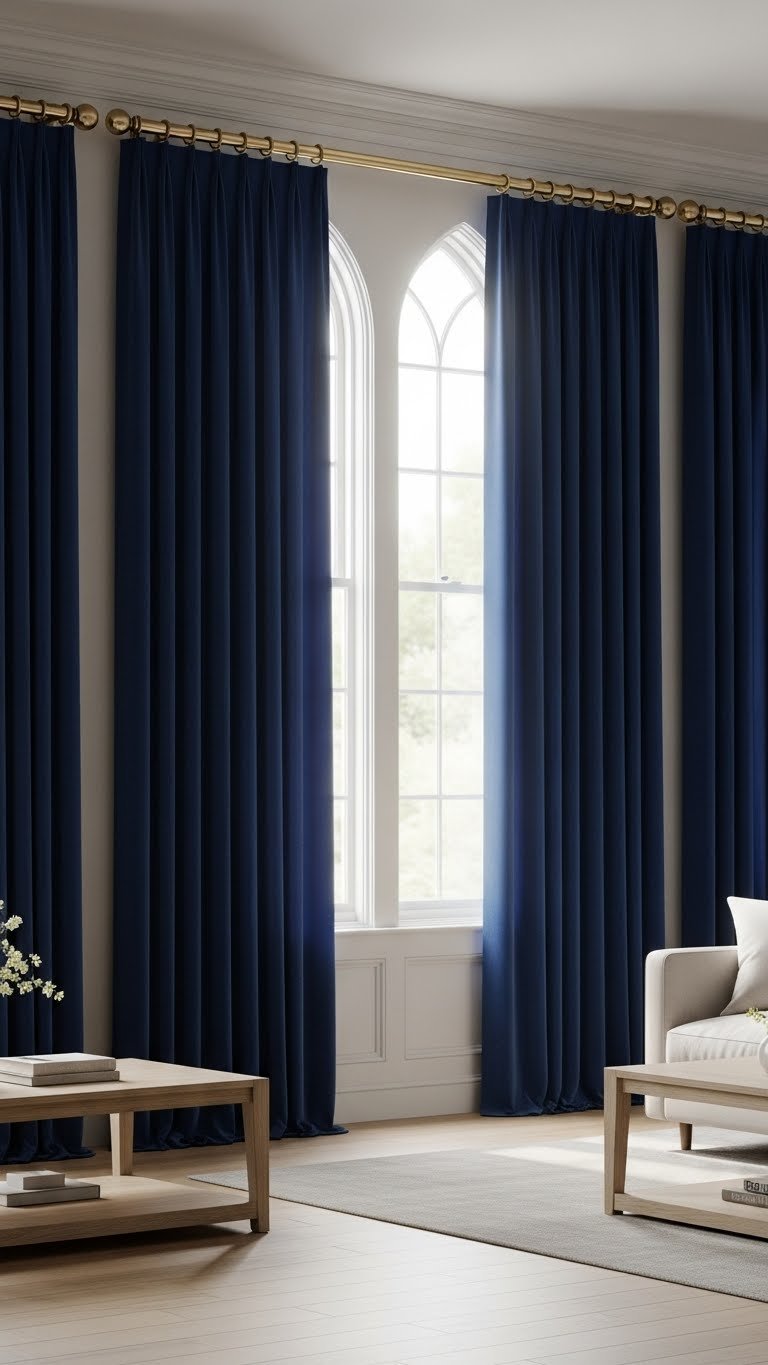
    18. Add Jewel-Tone Curtains or Drapes

    Floor-to-ceiling curtains in a jewel tone instantly add luxury and color to a room. They frame windows beautifully and can make ceilings appear higher.

    Choose velvet or linen curtains in emerald, sapphire, or plum from IKEA ($20-40 per panel), Target ($35-80), or Wayfair ($50-150). Invest in a good rod and finials ($30-80 from hardware stores or online). Hang curtains as high as possible, ideally to the ceiling, for maximum impact. Pair with a neutral sofa and natural wood furniture. The curtains become a statement piece all on their own.

    Renters can use tension rods inside the window frame if wall mounting isn’t allowed.

    Your windows become a design feature, not just functional.

    19. Layer Jewel Tones With Metallics

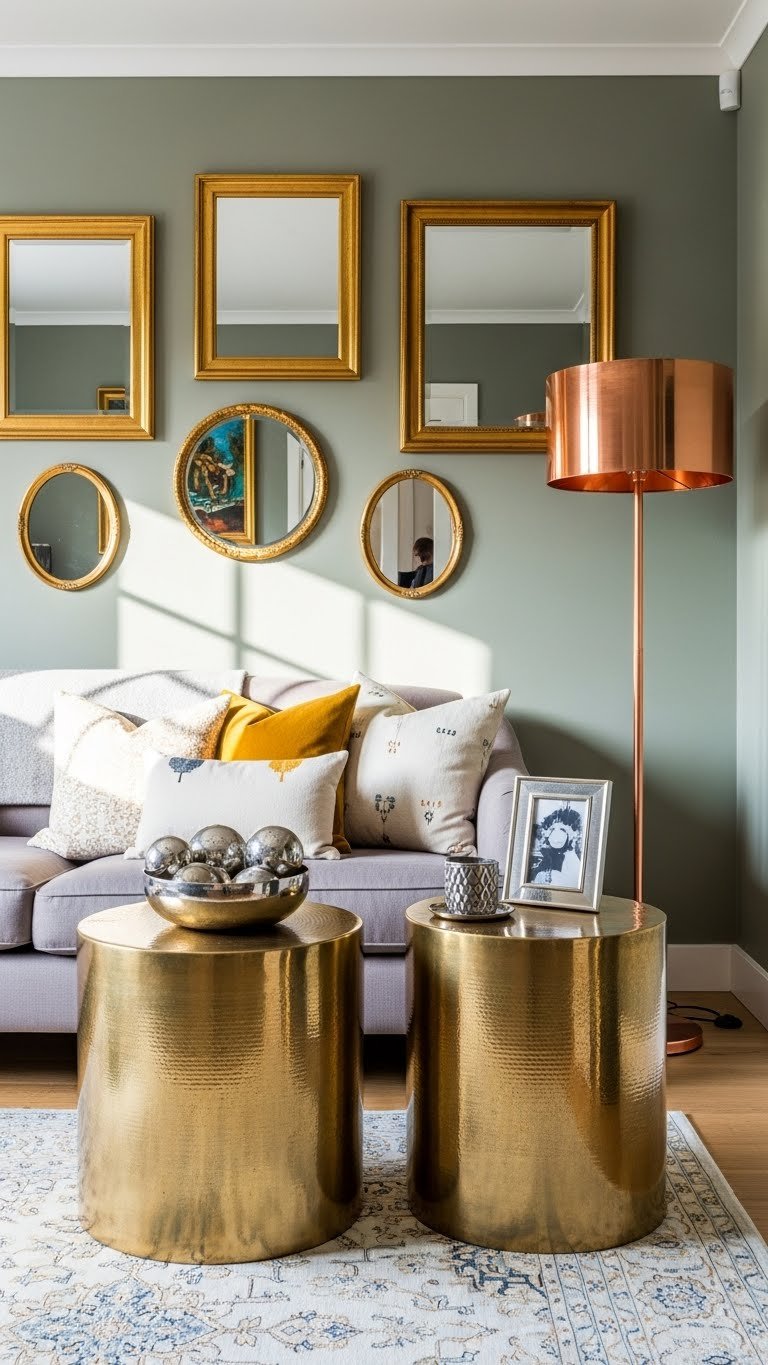
    Metallic accents—gold, brass, copper, silver—elevate jewel-tone walls from bold to sophisticated. The sheen catches light and adds luxury.

    Start with jewel-tone walls, then layer in metallics through fixtures, frames, and accessories. Gold accents ($10-50 for mirrors, $30-100 for lamps) work warmly with emerald and sapphire. Brass and copper ($20-80 for hardware or fixtures) feel similar. Silver ($15-60 for frames or accessories) brings coolness and modernity. Mix metallics rather than sticking to one—it looks more curated. Many pieces are affordable at IKEA, Target, Wayfair, and Etsy.

    Balance metallics with neutrals so the room doesn’t feel overdone.

    The combination feels upscale without requiring an upscale budget.

    20. Paint a Geometric Pattern Directly on Walls

    Hand-painted geometric patterns add artistry and personality without needing wallpaper. Hire an artist or test your own skills with painter’s tape and masking.

    Choose your jewel tones and design a geometric pattern on paper first. Use painter’s tape ($5-15 per roll) to map out shapes on your wall, then fill with paint ($30-50 per gallon). This takes 6-10 hours depending on complexity. If DIY feels risky, hire a local muralist ($300-800) through Instagram or Nextdoor—many offer geometric designs. The result is completely unique and becomes an instant conversation piece.

    This is a homeowner move, but renter-friendly artists sometimes work with removable paint alternatives.

    Your living room wall becomes functional art.

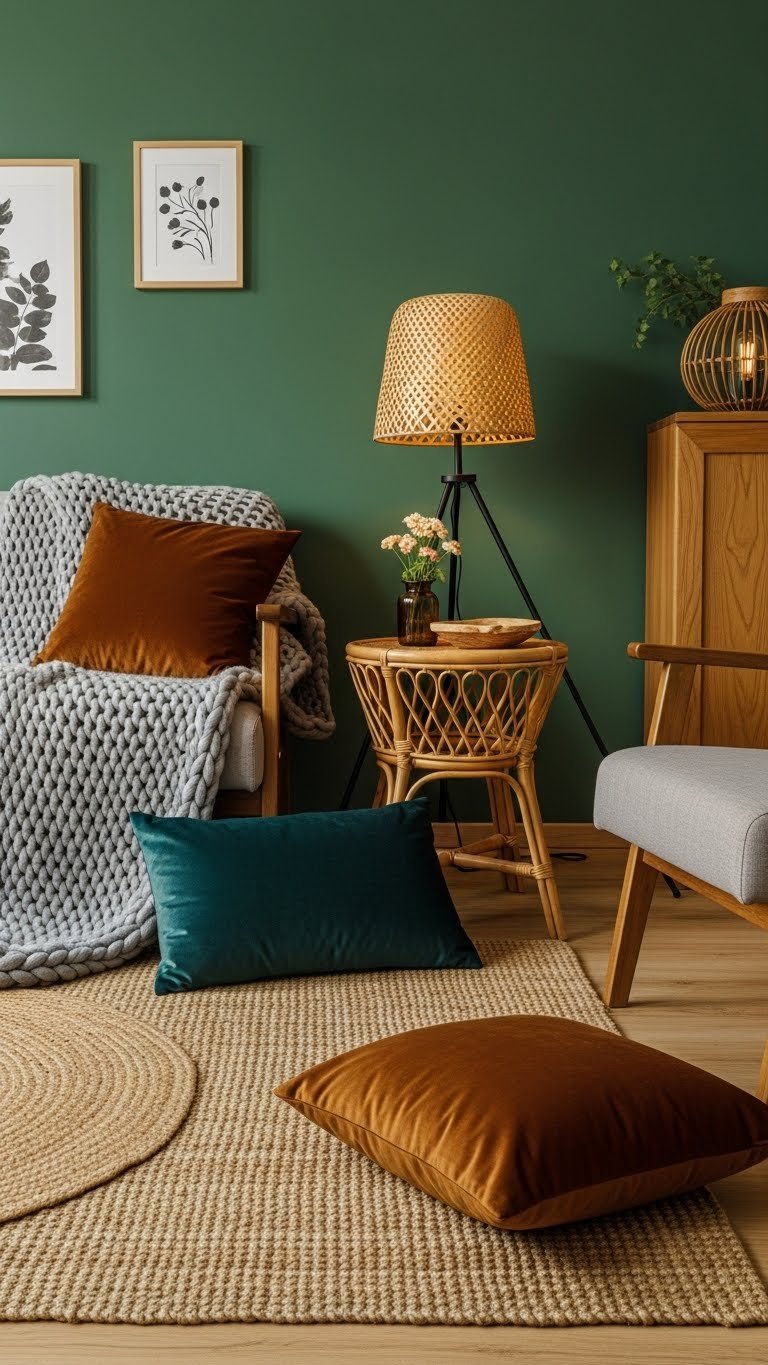
    21. Layer Textural Elements With Your Jewel-Tone Palette

    Texture prevents jewel-tone rooms from feeling flat or cold. Layer different materials—velvet, linen, wood, rattan, wool—for multisensory appeal.

    Pair your jewel-tone walls with varied textures: a velvet sofa ($500-1200), chunky knit throws ($30-80), linen pillows ($20-50), a jute or sisal rug ($100-300), and natural wood or rattan furniture ($100-500). Mix matte and shiny finishes—matte textiles with glossy accents. This layering makes the space feel intentional and lived-in rather than decorator-sterile. Each texture adds depth that reads beautifully in photos and feels great in person.

    Pro tip: Touch everything before buying—comfort matters as much as color.

    Your living room becomes a space you want to sink into.

    22. Use Jewel Tones in Unexpected Furniture Pieces

    Instead of painting or using textiles, apply jewel tones to furniture pieces. An emerald bookcase or sapphire desk adds color without permanent wall commitment.

    Hunt vintage furniture on Craigslist, Facebook Marketplace, or Etsy ($50-300 for a piece worth refinishing). Paint wooden pieces with chalk paint or furniture paint ($20-40 per can) in your chosen jewel tone. Takes 1-2 days with drying time. Alternatively, buy pre-painted jewel-tone furniture from Article, West Elm, or Wayfair ($300-800). Mix one or two statement pieces with neutral walls and furniture. Each bold piece stands out without overwhelming the room.

    Renters love this approach because it’s moveable with you.

    Your living room gains personality through unexpected color placement.

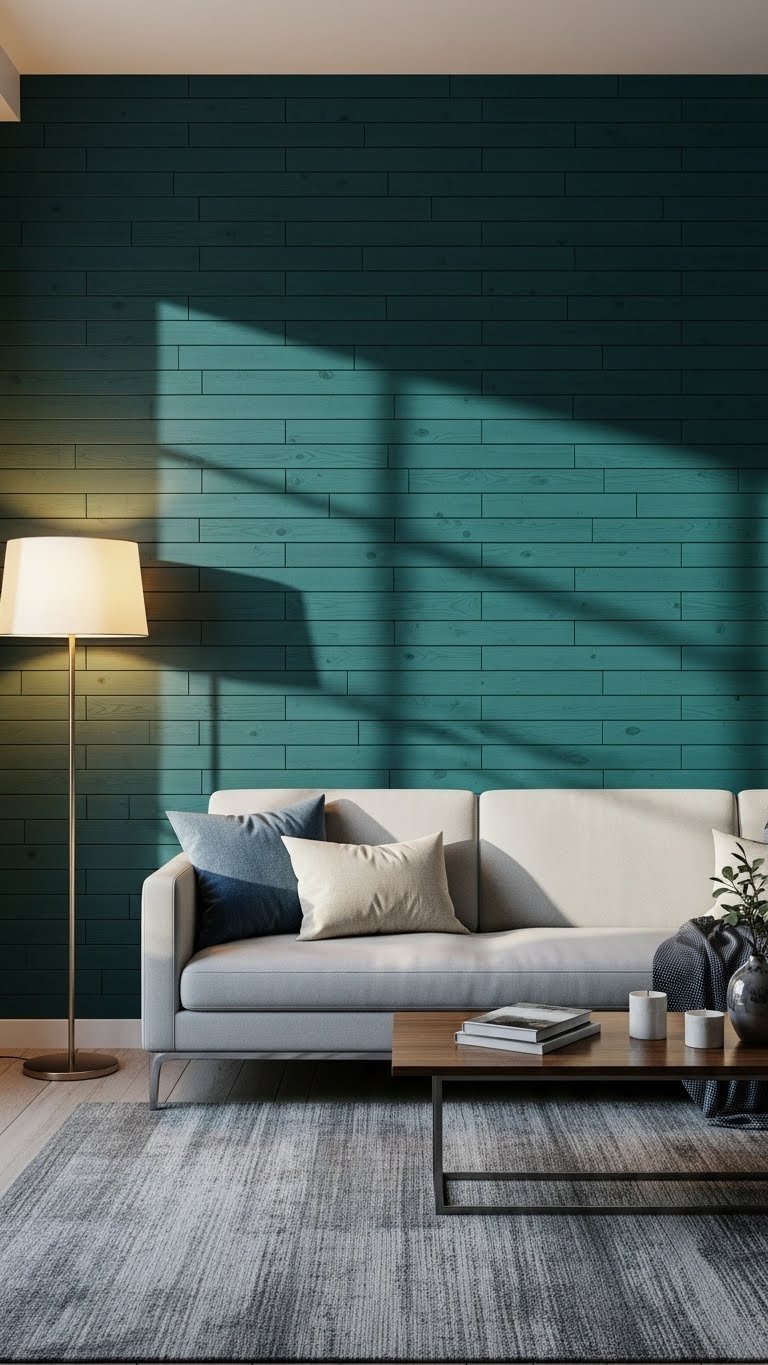
    23. Create a Feature Wall Using Stacked Wood in Jewel Tones

    Shiplap or stacked wood painted a jewel tone combines texture and color for visual depth. It’s a bolder statement than just paint alone.

    Buy tongue-and-groove wood boards or pre-made shiplap kits ($100-300 for a standard wall). Paint them your chosen jewel tone ($30-50 per gallon). Install horizontally or vertically using a stud finder and nails (this is a DIY project or hire someone for $200-400). The wood adds architectural interest while the jewel tone adds boldness. Pair with minimal furniture so the wall shines.

    This is a homeowner project; renters should skip it unless they have landlord approval.

    Your living room gains architectural depth and sophisticated color all at once.


    Save this post and try one idea this weekend. Whether you go bold with paint, test colors through textiles first, or mix and match these approaches, your living room deserves to feel like your favorite space. Which jewel tone is calling to you?

  • 28 Modern Kitchen Design Ideas That Look Sleek & Fresh

    28 Modern Kitchen Design Ideas That Look Sleek & Fresh

    Your kitchen doesn’t need a complete gut renovation to feel fresh and modern. Whether you’re renting, own your home, or have a tight budget, these 28 ideas blend trending 2025 styles with real-world practicality. You’ll discover affordable hacks alongside investment pieces, DIY projects you can tackle this weekend, and shopping recommendations that won’t break the bank. From mixing textures to choosing the right color palette, we’re walking you through every decision that makes a kitchen feel sleek, intentional, and absolutely yours. Ready to refresh your space? Let’s go.

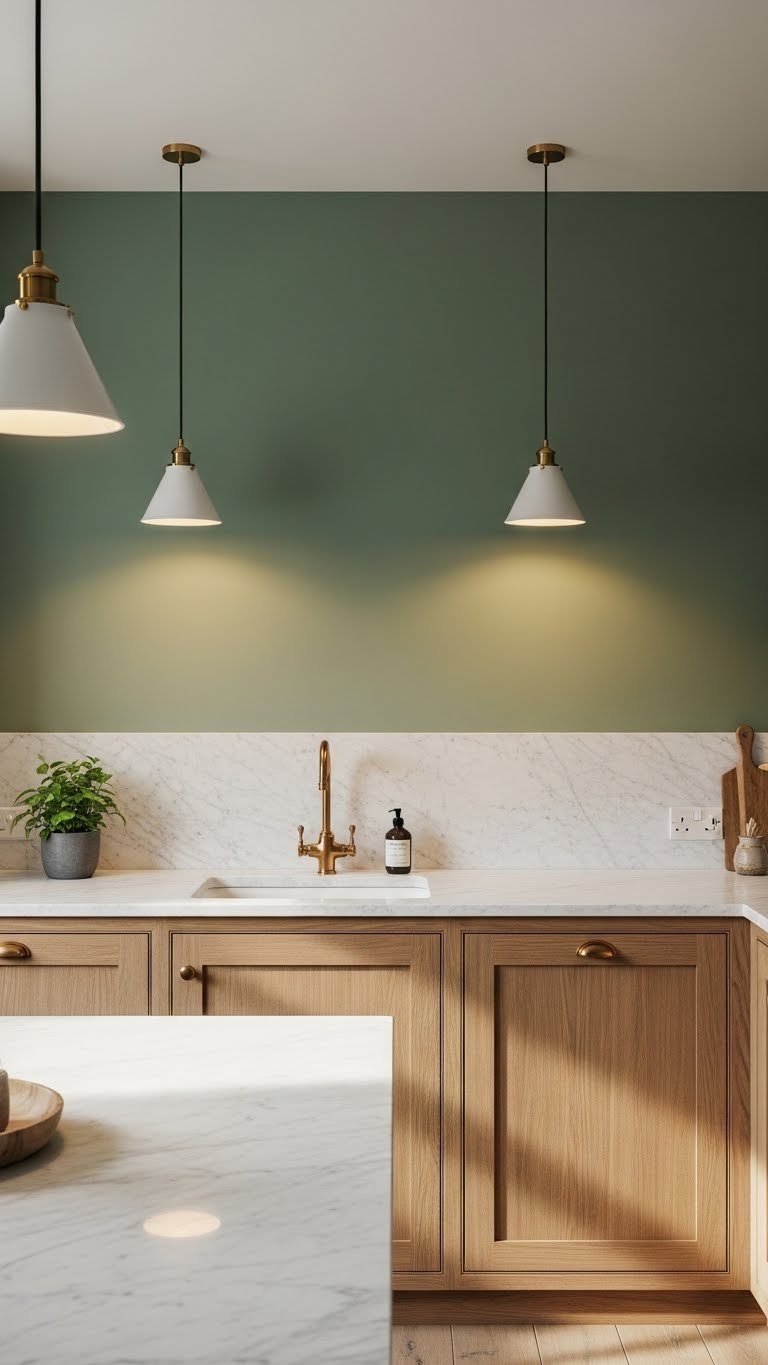
    1. Paint Walls a Soft Sage Green

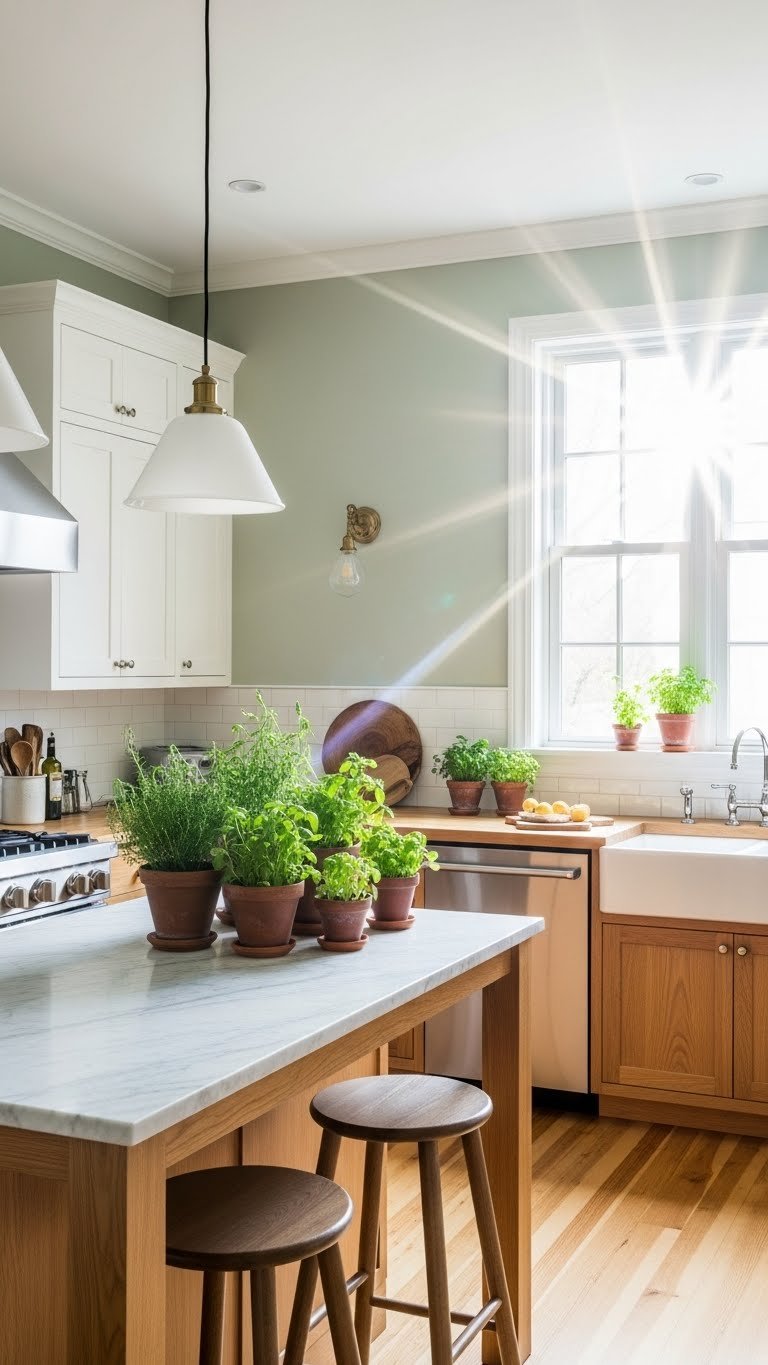
    Sage green is the 2025 color everyone’s choosing—76% of design pros voted it as the top kitchen color. Unlike trendy pastels that feel temporary, sage works as a sophisticated backdrop that makes wood tones and metallics pop.

    Pick a mid-tone sage (not too light, not too dark) like Sherwin-Williams Accessible Beige or Benjamin Moore’s 2050-50. One gallon covers about 400 square feet, so budget $30-$50 for paint and supplies. Grab painter’s tape, a roller, and primer from Home Depot or Lowe’s. Expect 4-6 hours for one room if you prep properly. Roll in thin, even coats and let dry completely between coats.

    Pro tip: Test your color on a large patch of wall first—sage looks different depending on your lighting. If green feels too bold, soft blue or warm taupe offer similar modern vibes with less commitment.

    This single change makes your kitchen feel curated and calm while keeping the space feeling open and airy.

    2. Mix Metallic Finishes for Visual Depth

    Matching all your metal finishes went out years ago. Mixing brass, bronze, stainless steel, and matte black creates depth and keeps the space from feeling one-note or sterile.

    Start by choosing one “anchor” finish—brass is trending for warmth, or stainless steel if you want contemporary cool. Add 1-2 complementary finishes through hardware, fixtures, and appliances. Swap out cabinet knobs for mixed-metal options ($2-$8 per knob from Target, IKEA, or Wayfair)—total project costs $30-$100 depending on how many cabinets you have. Pendant lights are another easy mix point; grab one brass + one matte black for $40-$150 each. Takes 30 minutes if you’re just swapping hardware.

    The trick? Make sure finishes have slightly different undertones—warm brass pairs beautifully with cool stainless steel or matte bronze.

    Your kitchen instantly gains sophistication and personality without major renovation, and the mixed metals photograph beautifully for sharing.

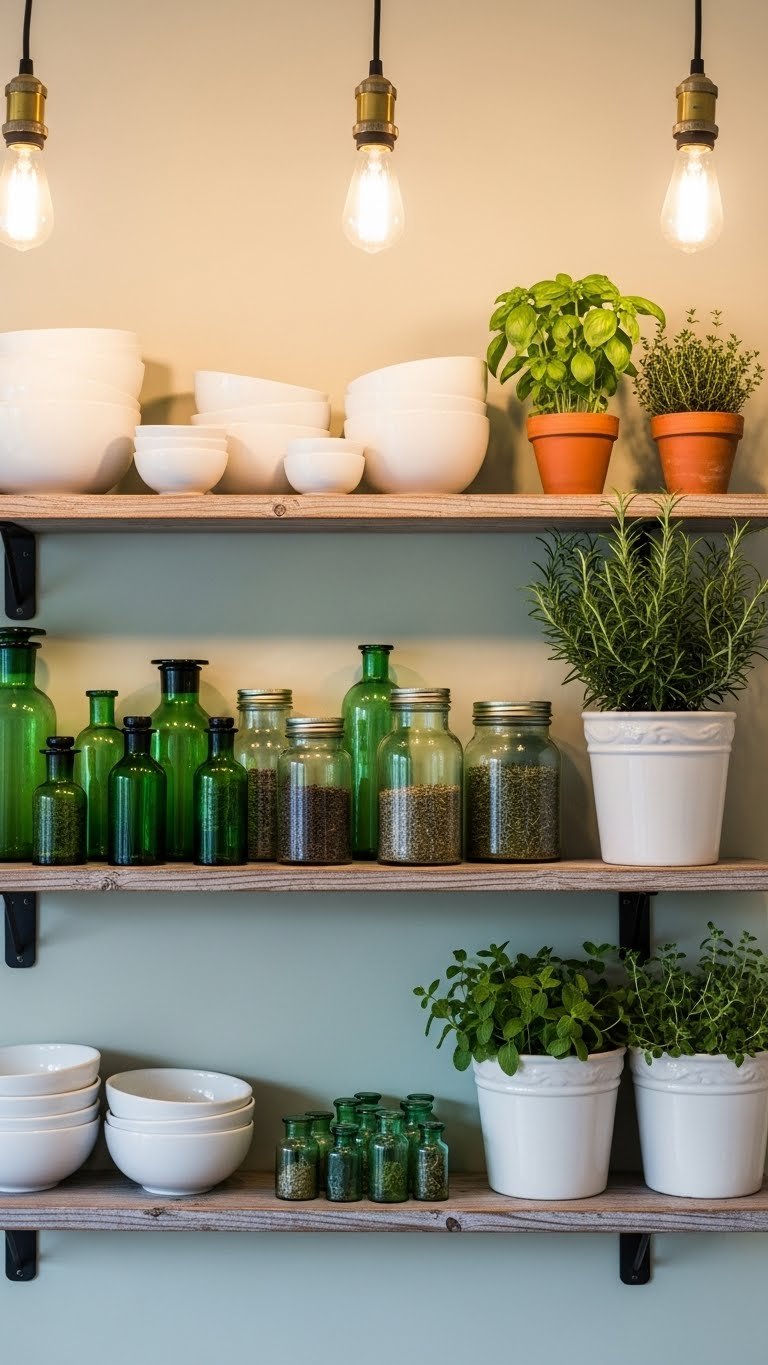
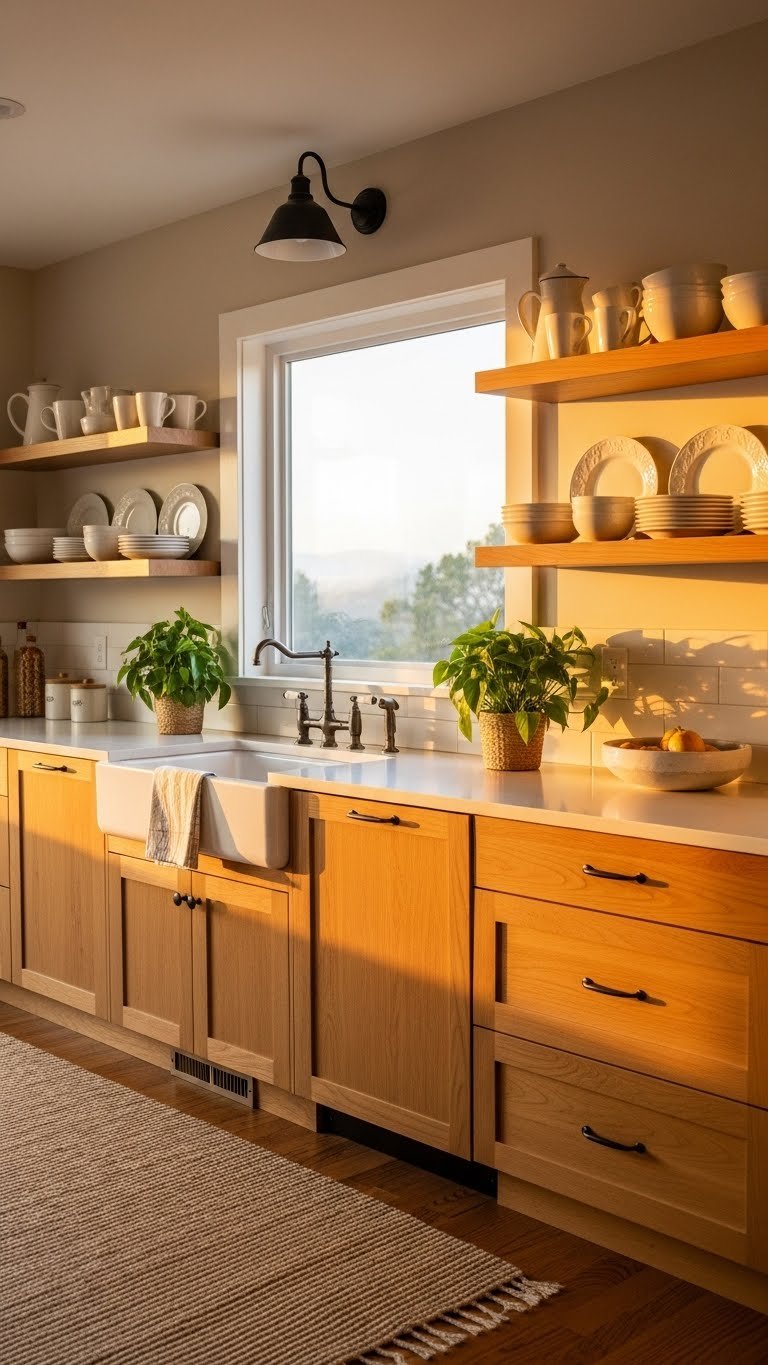
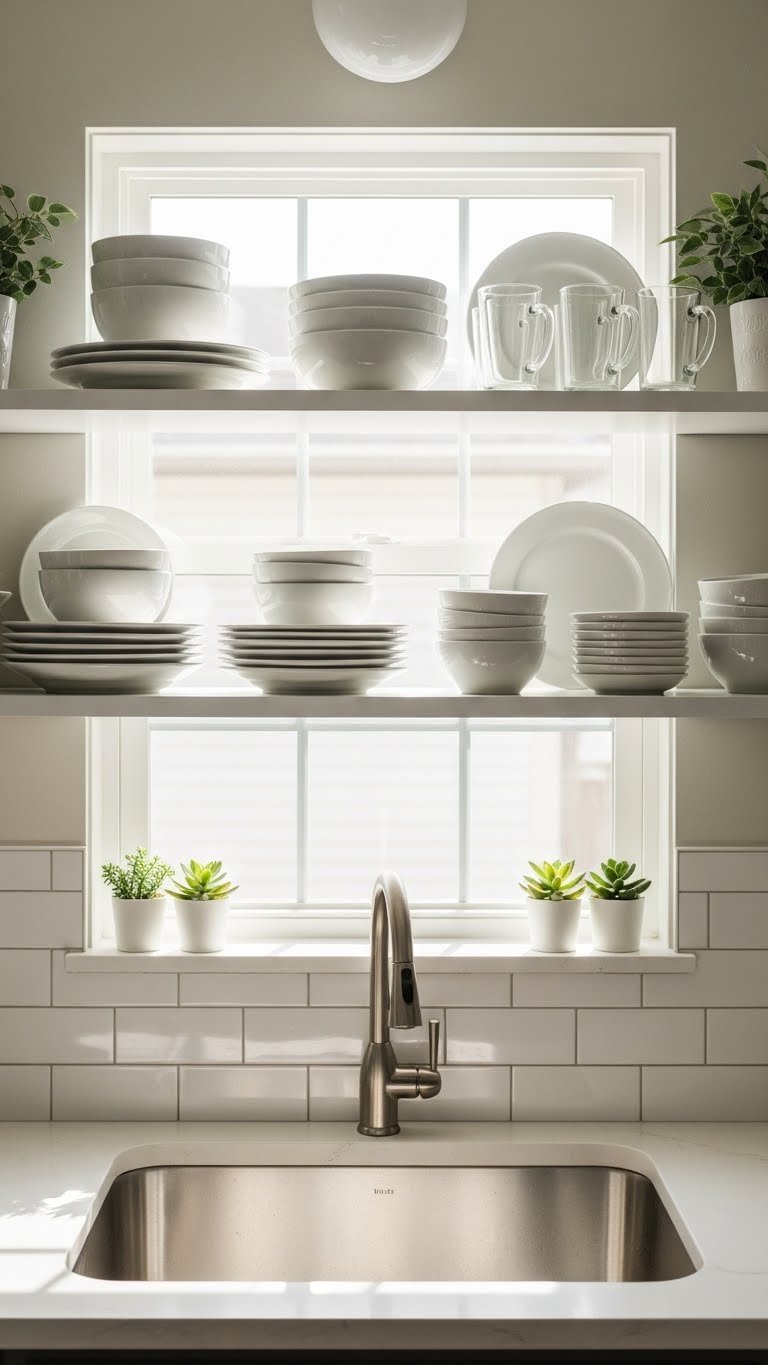
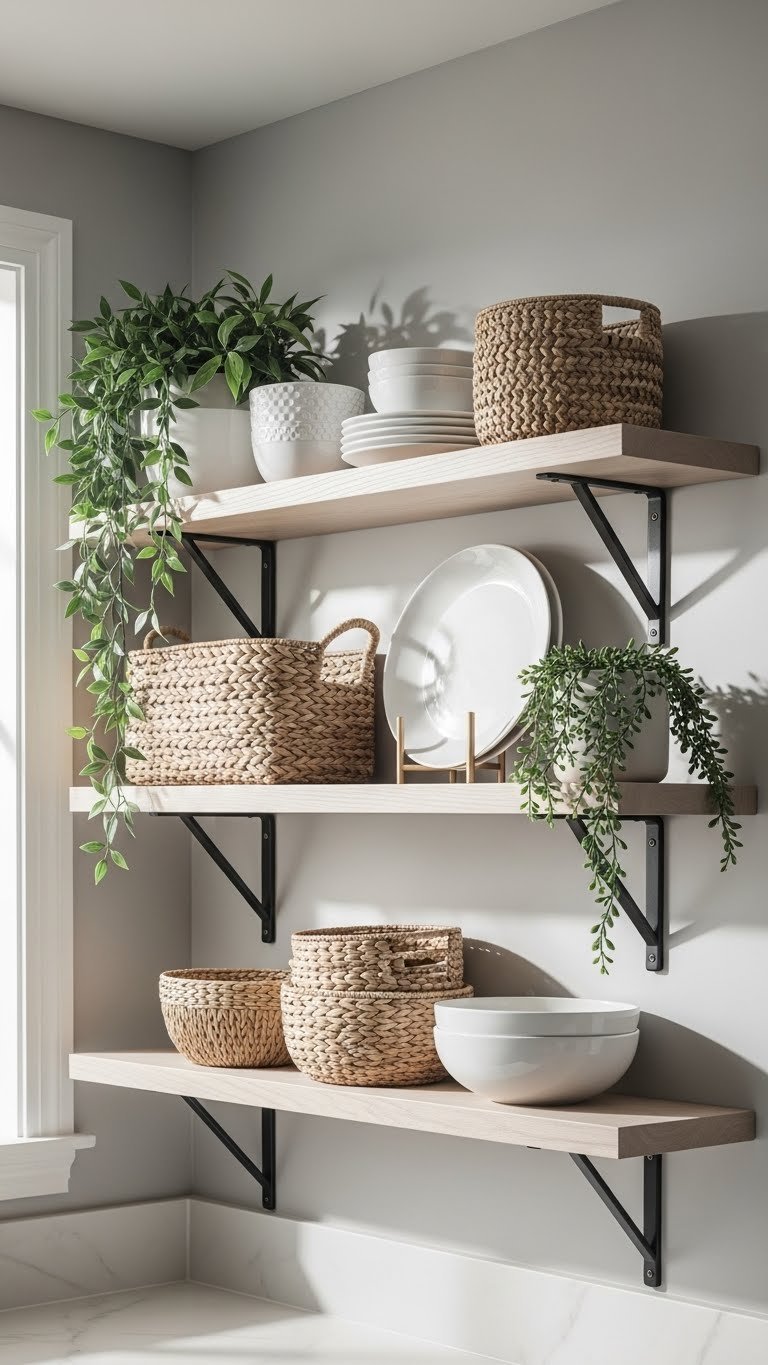
    3. Add Open Shelving Above the Sink

    Open shelving makes kitchens feel larger, more accessible, and modern. Floating shelves above the sink create storage that’s both functional and beautifully styled.

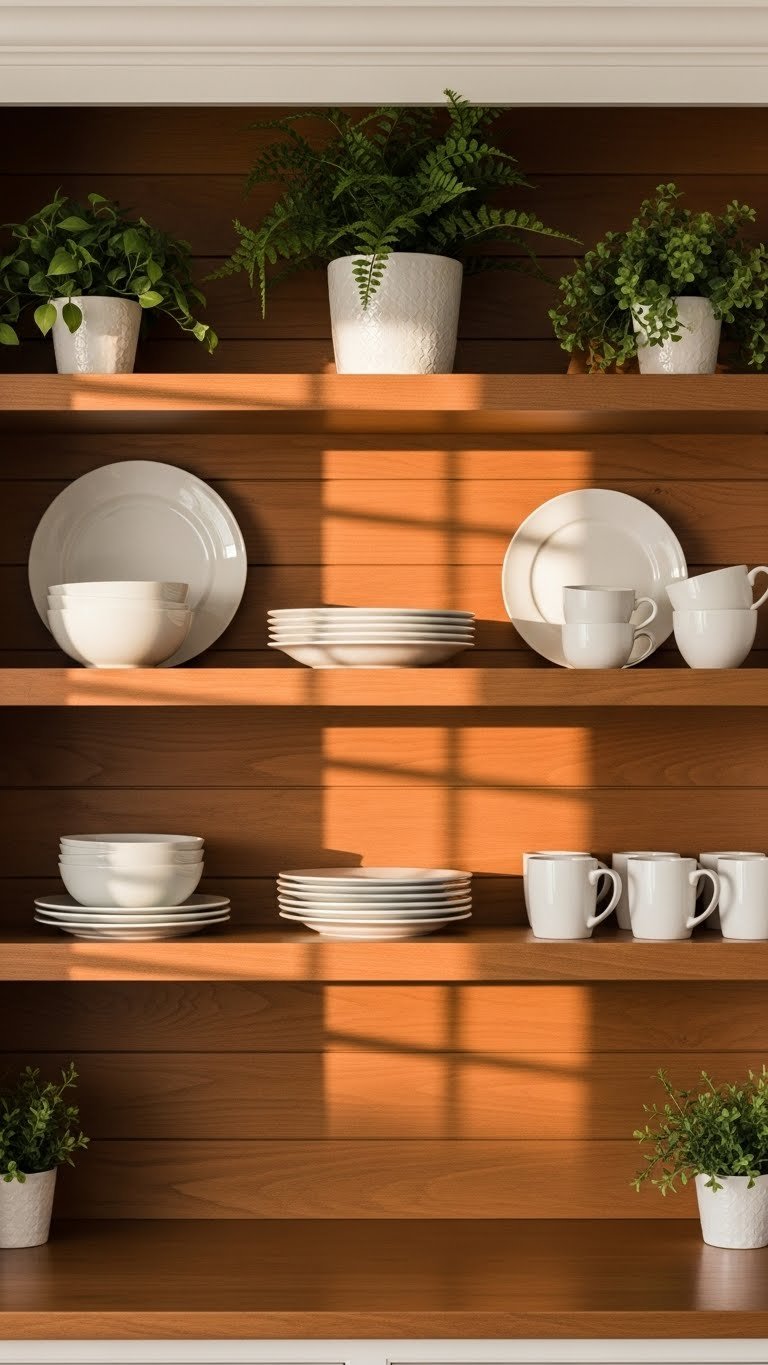
    Install 2-3 floating shelves in stainless steel or wood-look brackets. Floating shelf kits from IKEA run $25-$40 each, or go higher-end with Anthropologie for $80-$150 per shelf. You’ll need a stud finder, level, and drill—budget 1-2 hours total. If drilling into tile feels risky, adhesive shelves like Command offer a renter-friendly $15-$25 alternative (though weight capacity is lower). Style with everyday dishes you actually use plus a few decorative pieces—the key is keeping it uncluttered so it reads as intentional, not chaotic.

    Pro tip: Use clear glass or mismatched vintage mugs to add visual interest without heaviness.

    Now you’ve created a focal point that serves double duty as storage and decor, plus everything you reach for constantly is at eye level.

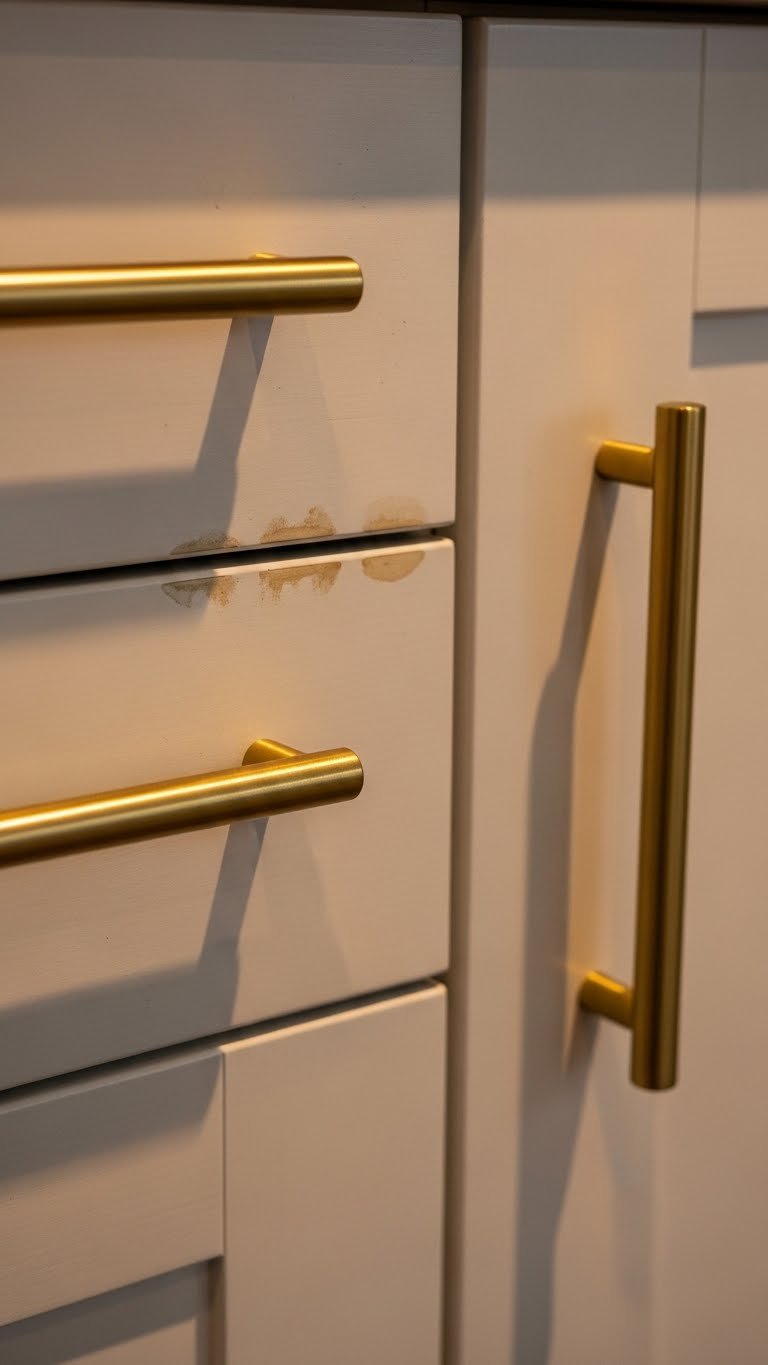
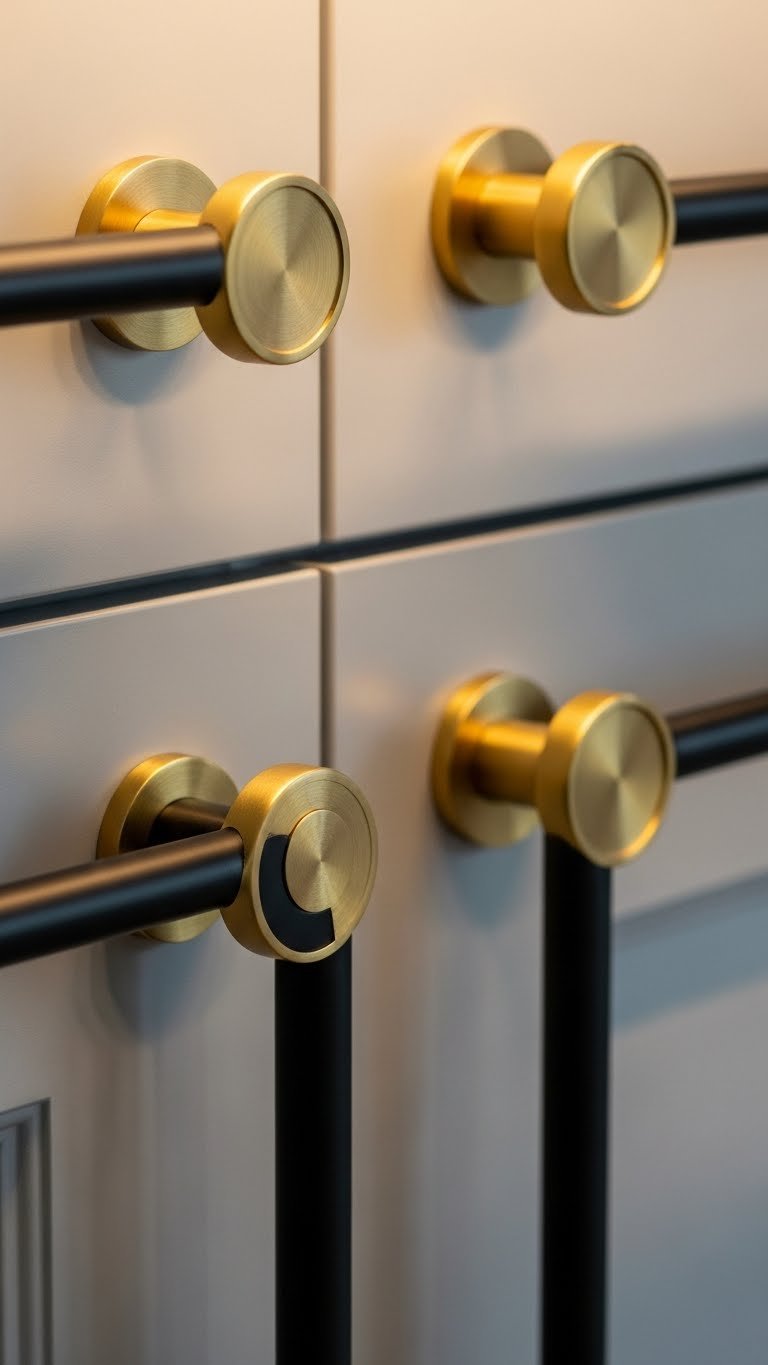
    4. Swap Cabinet Hardware for a Statement Look

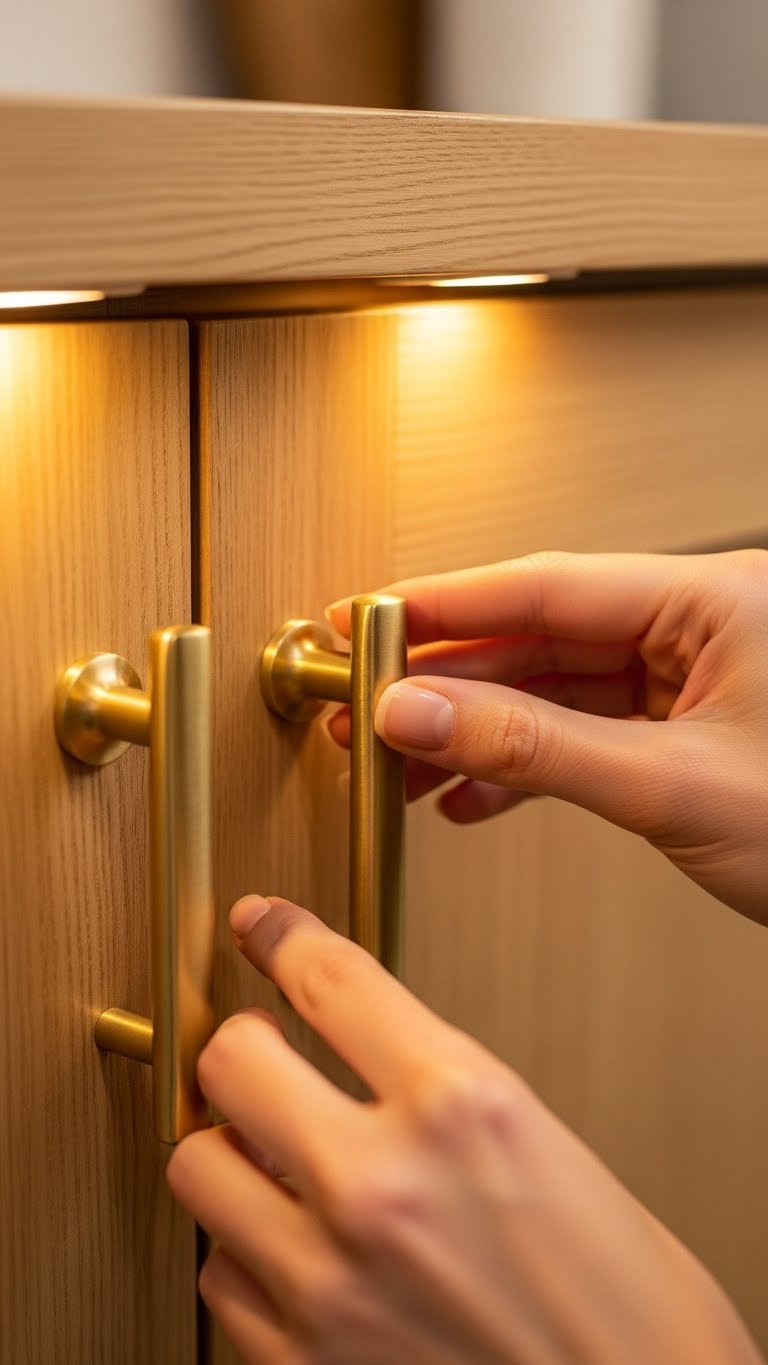
    Hardware is the jewelry of your kitchen, and upgrading it takes literally 15 minutes but changes everything. This is one of the highest-impact, lowest-effort updates you can make.

    Choose between bold geometric shapes, vintage-inspired cup pulls, or minimalist bar handles—whatever speaks to your style. Mix metals here: try brass + matte black or bronze + brushed nickel. Packages of 5-10 knobs run $25-$60 from IKEA, Target, or Wayfair; higher-end hardware from Anthropologie or CB2 is $8-$15 per piece. Grab a drill with a small bit, remove old hardware (usually two screws), and swap in new pieces. Takes 15-30 minutes even if you’re going slow.

    Order extra in case you mess up installation—returns are easy, and you want matching hardware across drawers.

    Your cabinets go from builder-grade to designed overnight, and it costs less than dinner out.

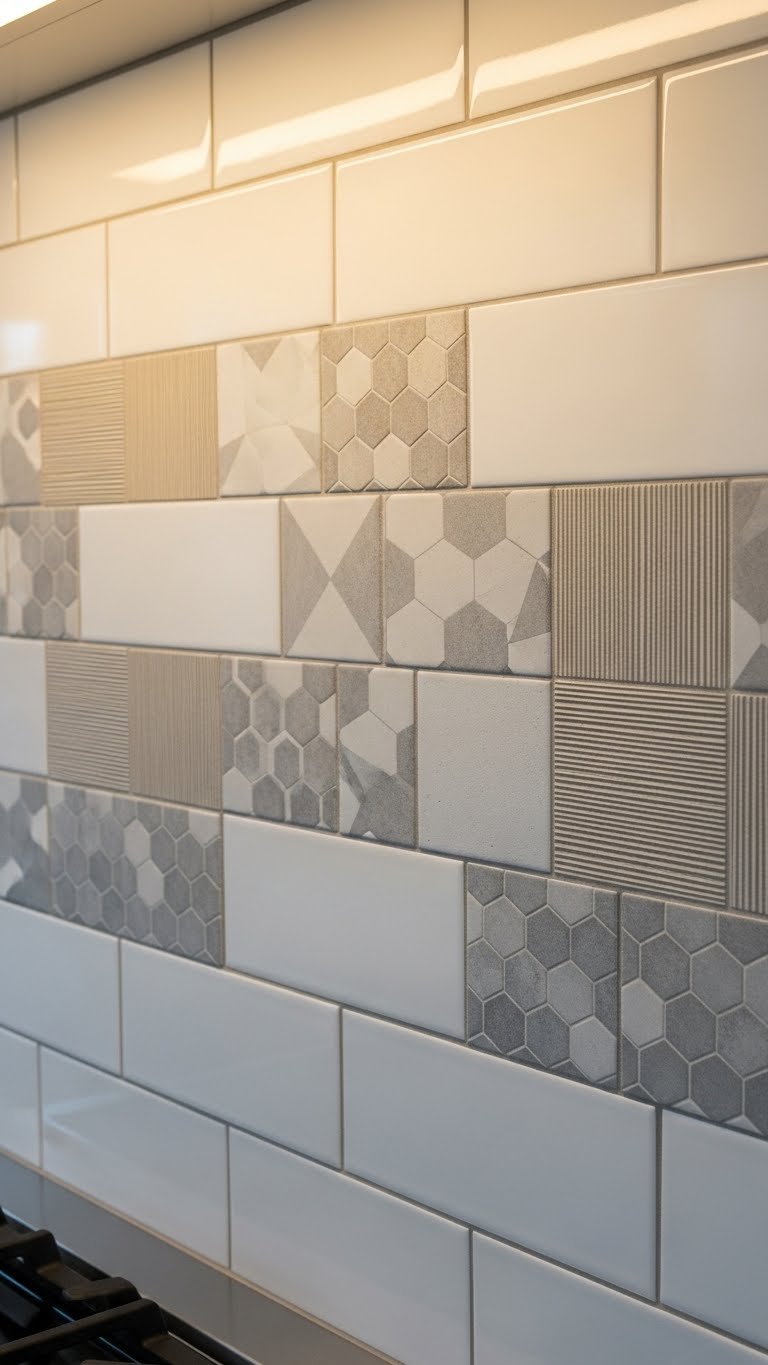
    5. Install a Textured Backsplash for Visual Interest

    67% of designers favor mixed backsplashes because they add personality without going overboard. A textured backsplash pulls your whole look together and becomes a focal point.

    Combine subway tiles with 2-3 other tile shapes—try mixing 3×6 subway with 1-inch hexagon or small square tiles in complementary colors or finishes. Peel-and-stick tiles from brands like Aspect or Smart Tiles are $20-$30 per sheet and renter-approved; traditional tile from Home Depot runs $1-$5 per square foot. DIY installation takes a weekend for most kitchens; hire a pro for $500-$1,500 labor if you want perfection. Pre-plan your layout on graph paper, measure twice, and take your time with spacing.

    Pro tip: Use light grout on light tile to minimize lines, or go dark grout on light tile for dramatic contrast.

    The textured, layered backsplash becomes something people notice and compliment—it’s the detail that makes your kitchen feel thoughtfully designed.

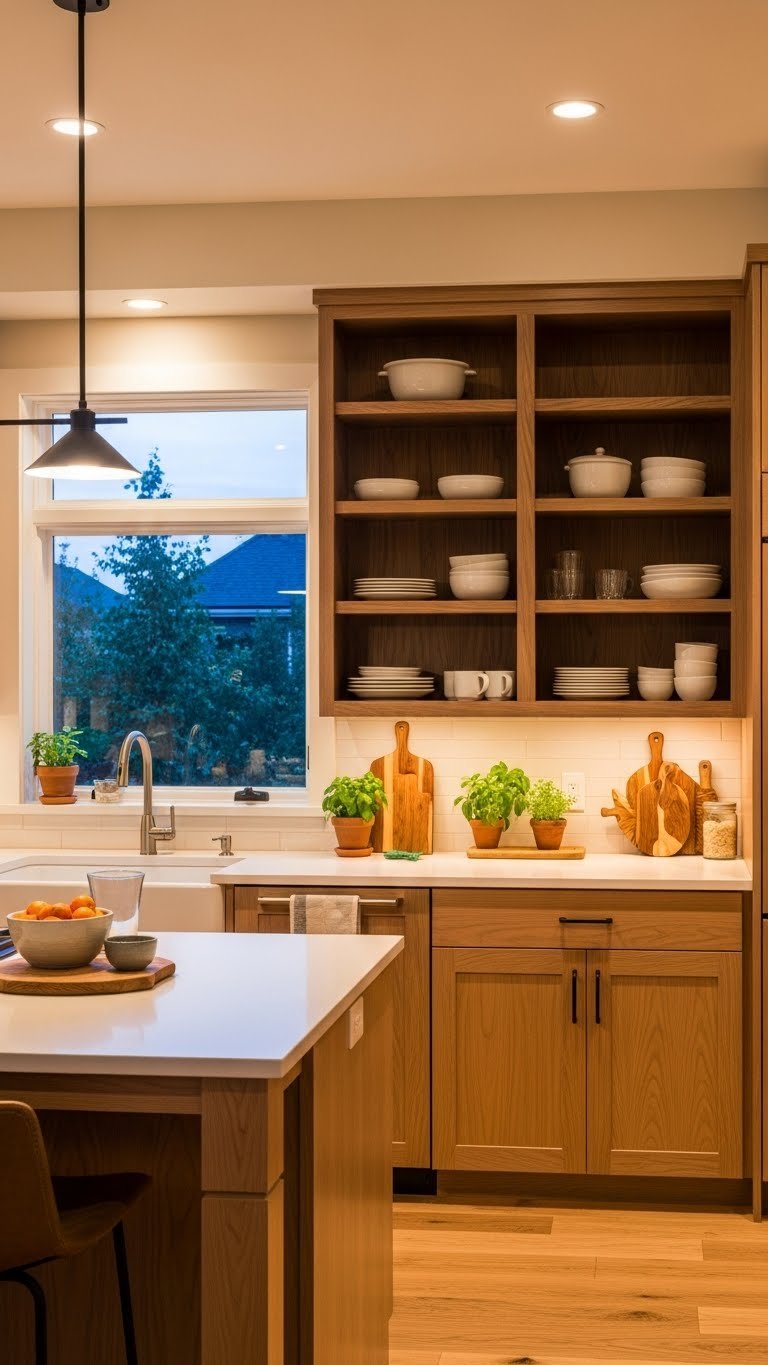
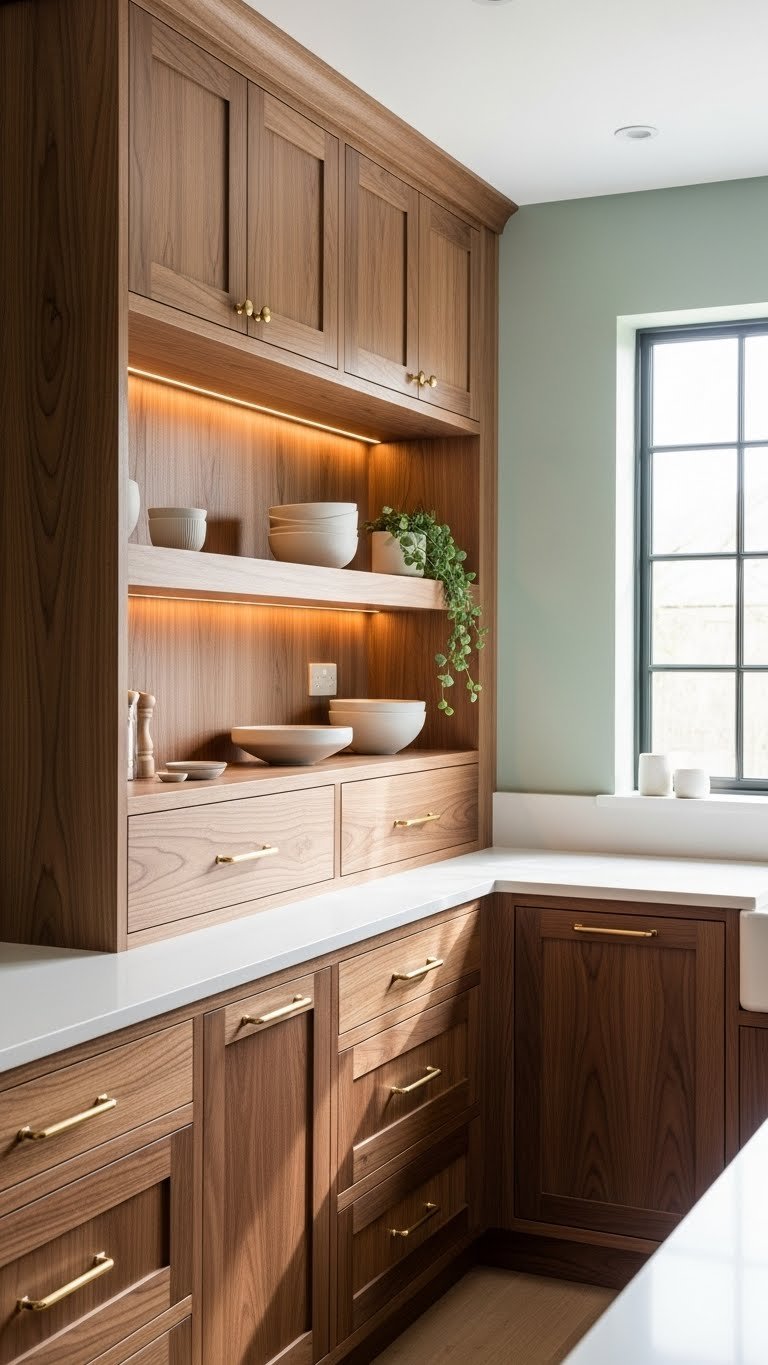
    6. Choose Warm Wood Tones Over Gray Cabinetry

    Gray cabinetry dominated 2020-2023, but it’s fading fast. Warm wood tones—walnut, oak, cherry—are back and feel infinitely warmer and more livable than cool grays.

    If you’re replacing cabinets, walnut or honey oak run $3,000-$8,000 for a full kitchen depending on size; consider brands like IKEA, Lowe’s, or local cabinetmakers. Alternatively, stain or paint existing cabinets: pick a warm-toned stain like Minwax Dark Walnut ($8-$12 per can) or go with a warm wood-look paint. Budget 2-3 days for stripping, sanding, staining, and drying if DIYing; hire a pro for $1,500-$3,000. Pair with brass hardware and warm lighting to maximize the cozy factor.

    If you’re renting, warm wood-look peel-and-stick contact paper ($15-$30 per roll) temporarily upgrades cabinet look for zero commitment.

    Suddenly your kitchen feels warm, inviting, and less sterile—like a space people actually want to spend time in.

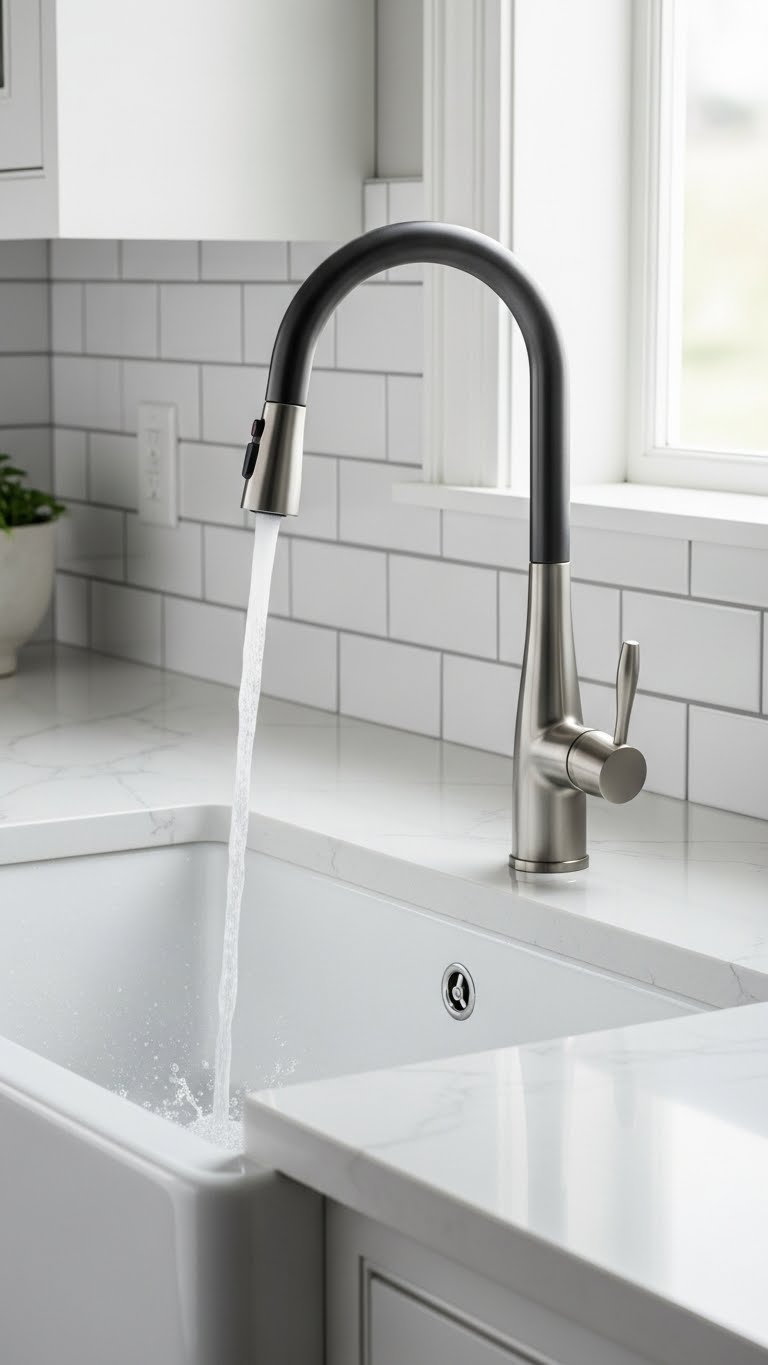
    7. Upgrade to Motion-Sensor Faucets for Smart Living

    Smart kitchen tech isn’t just futuristic—it’s practical. Motion-sensor faucets let you turn water on and off with a wave, keeping your hands clean while prepping food and making cleanup easier.

    Motion-sensor faucets from brands like Moen, Delta, or Kohler run $150-$400; look for models with adjustable sensitivity to avoid false triggers. DIY installation takes 30-45 minutes if you’re mechanically inclined; plumbers typically charge $100-$150 for labor. Some models come with batteries; others need electrical connection. Alternative: touchless faucets ($100-$250) require a single touch anywhere on the spout, which feels almost as futuristic but costs slightly less.

    Pro tip: Skip the cheapest models (under $80)—they have higher failure rates.

    You’ll notice how much easier cooking and cleaning become when you’re not juggling a faucet handle covered in raw chicken or dough.

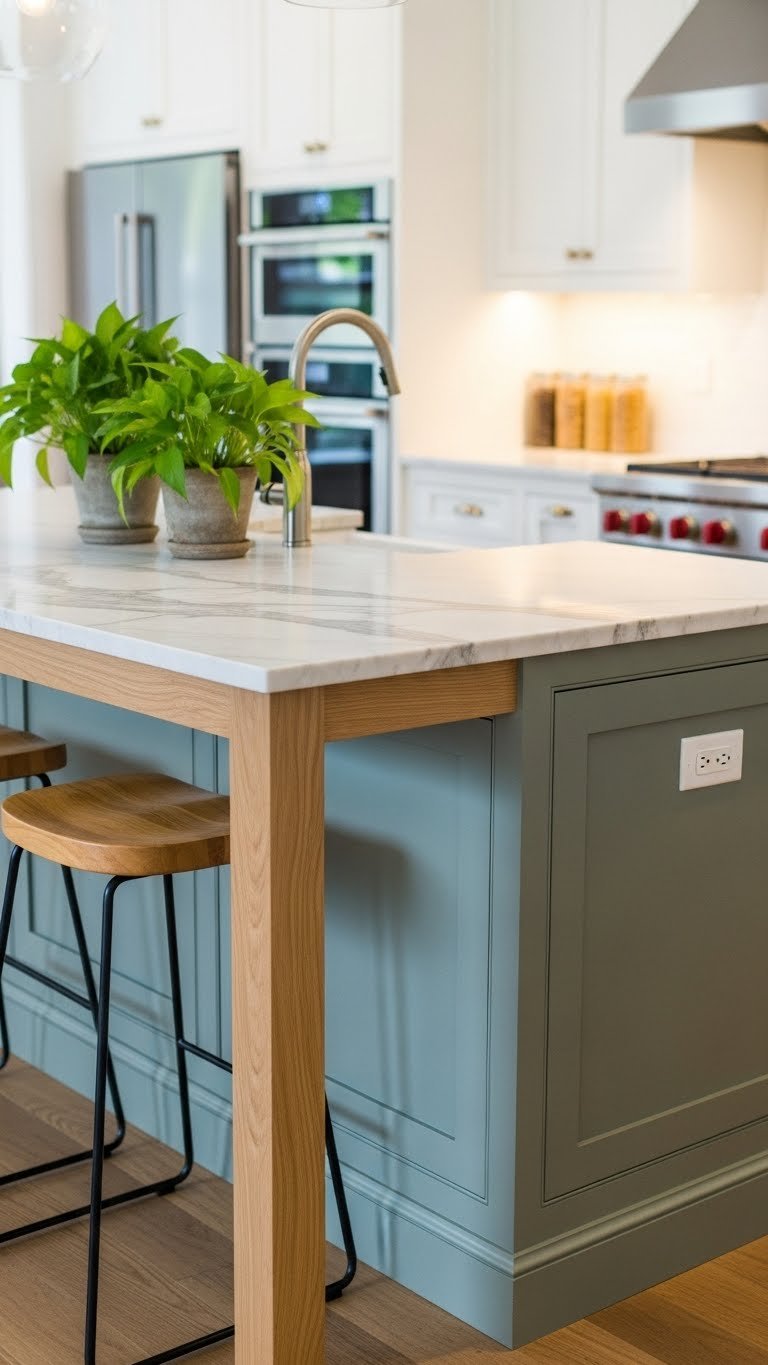
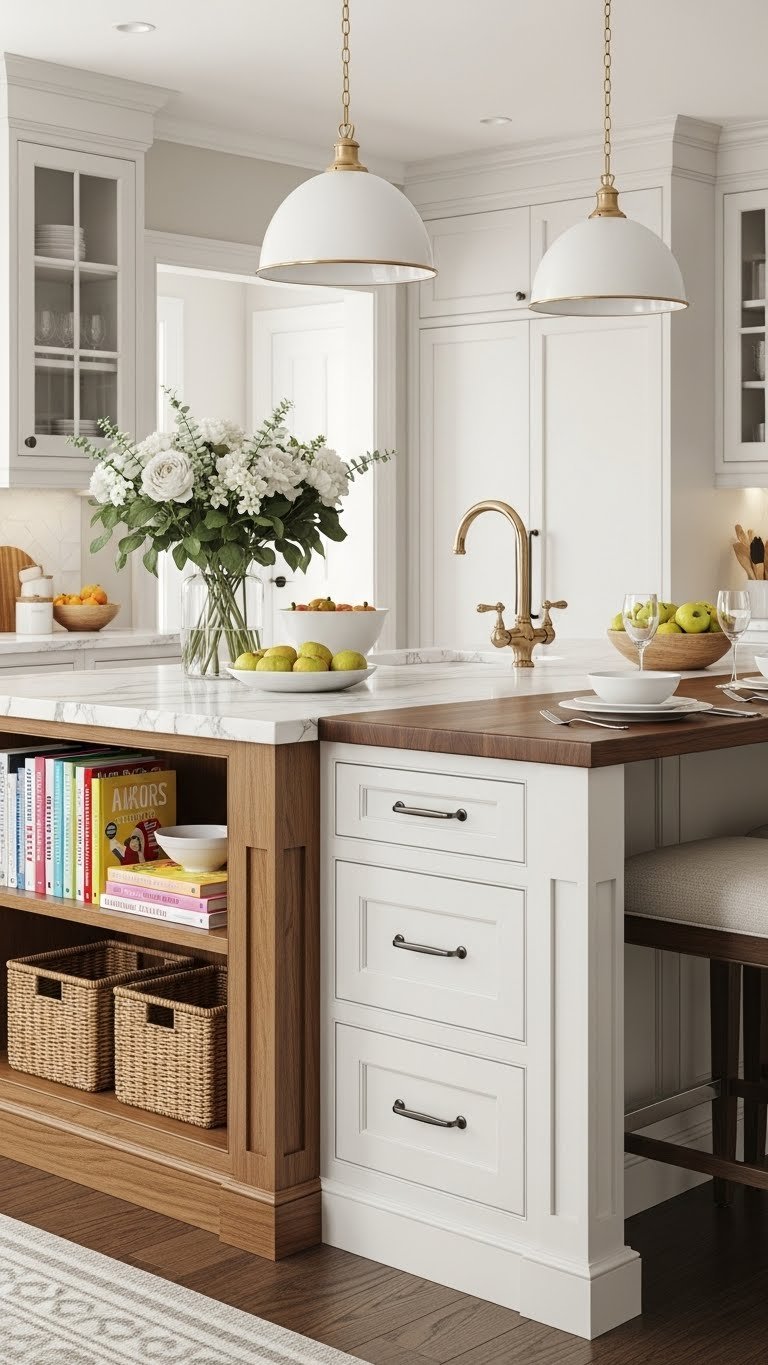
    8. Create a Multi-Functional Island with Hidden Storage

    50% of kitchen designers are building combination islands with both storage and open seating. This hybrid approach maximizes tiny spaces while keeping everything accessible.

    Look for islands with built-in shelving, deep drawers for pots/pans, and enough overhang (at least 12-15 inches) for comfortable seating. IKEA’s STENSTORP island ($150-$200) is a renter-friendly standalone option. Custom islands run $1,000-$5,000 depending on size and materials. Open shelves hold pretty baskets for produce or cookbooks; closed drawers hide the mess. Pair with 2-3 simple stools ($40-$120 each from Target or IKEA). If building custom, allow 2-4 weeks for construction.

    Pro tip: Size your island to leave at least 36 inches of walkway on all sides—too small and it blocks flow.

    Now you have a real gathering spot that’s also hiding all your kitchen chaos, and you’ve reclaimed countertop space for actual food prep.

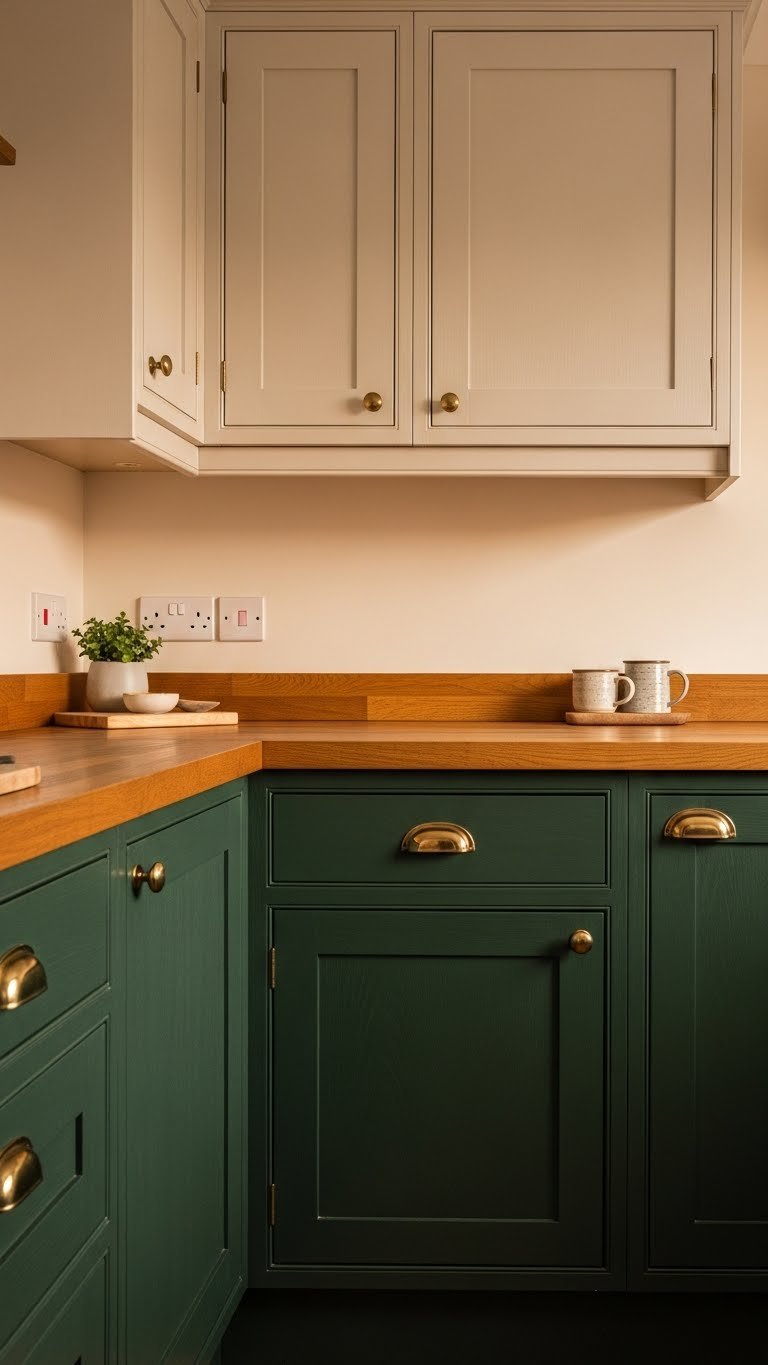
    9. Paint Kitchen Cabinets a Bold, Moody Color

    If full sage green walls feel too subtle, go bold on your cabinets instead. Deep forest green, navy blue, or even warm charcoal create personality while hiding stains better than white.

    Painting cabinets yourself costs $100-$300 in supplies (primer, paint, brushes, sandpaper); hiring a pro runs $1,500-$3,500. DIY takes 3-5 days total (prep, prime, paint, cure time); professionals finish in 1-2 days. Start by removing cabinet doors and hardware, sand lightly for paint adhesion, apply primer, then 2-3 coats of quality cabinet paint (not regular wall paint). Top with polycrylic for durability.

    Popular colors: Sherwin-Williams Naval (dark navy), Benjamin Moore Woodland Green (deep forest), or Farrow & Ball Hague Blue.

    Pro tip: Don’t skimp on primer—it prevents stains from bleeding through and ensures your color actually looks like the sample.

    Your entire kitchen suddenly feels designed and intentional, and you’ve done a massive refresh for a fraction of remodel cost.

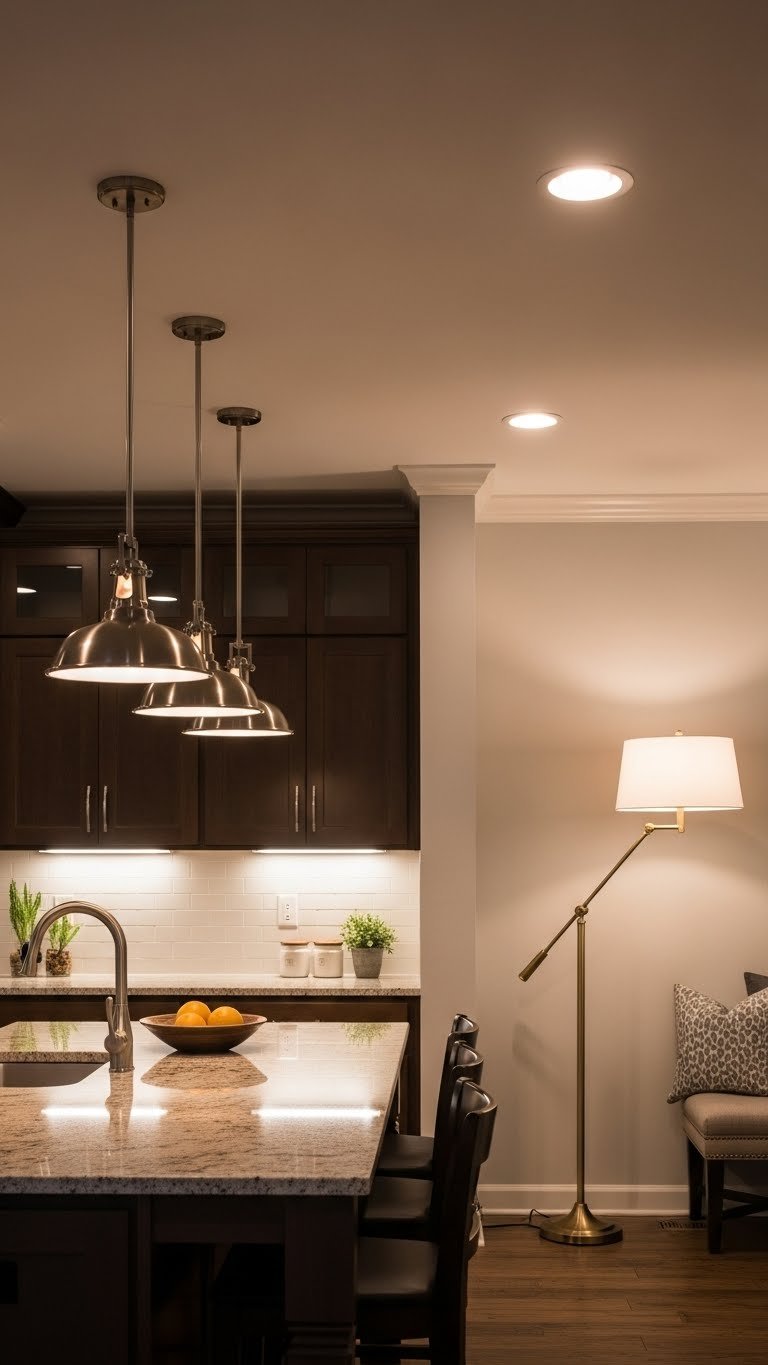
    10. Layer Lighting for Ambiance and Function

    84% of design pros name lighting as a standout feature. Layered lighting—task, ambient, and accent—makes your kitchen feel intentional and photograph beautifully.

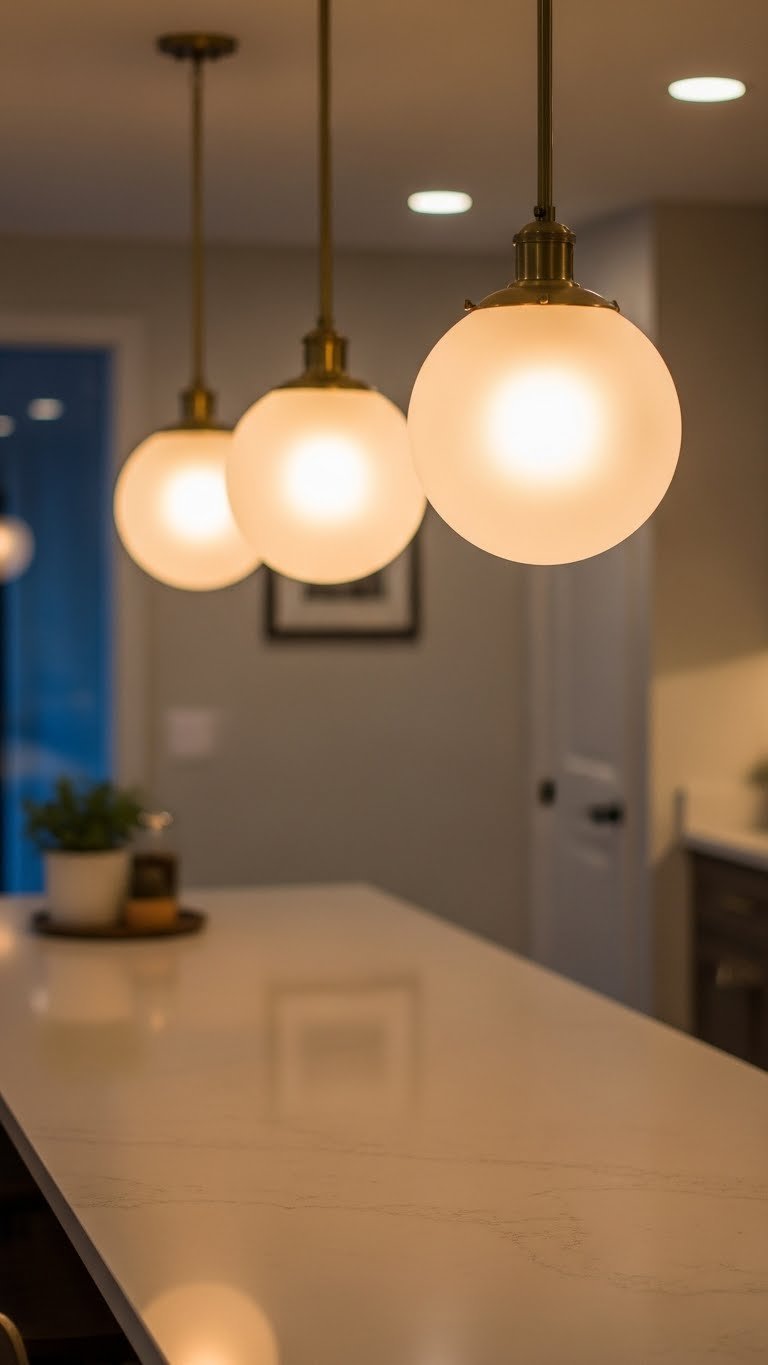
    Install under-cabinet LED strips ($20-$50 per kit from Amazon or Home Depot) for task lighting and ambiance. Add 2-3 pendant lights over the island ($40-$150 each) for focal-point style. Keep overhead recessed lights on a dimmer ($15-$30 per dimmer switch) so you can adjust mood. Total investment: $150-$400 if DIYing; electricians charge $200-$400 labor. LEDs cost less to run than incandescent and last years longer.

    Pro tip: Choose warm-toned bulbs (2700K) for coziness; avoid harsh white (5000K) unless you want a clinical feel.

    When dinner guests arrive, you can dim overhead lights and highlight the island—suddenly your kitchen feels like a restaurant-quality space.

    11. Install Floating Shelves with Decorative Styling

    Floating shelves add modern storage while keeping spaces feeling open. They’re perfect for renters and work in any kitchen style.

    Brackets from IKEA, Wayfair, or Target run $20-$50 per shelf; premium options from Rejuvenation are $80-$150. Floating shelf kits include hardware and clear instructions—installation takes 1-2 hours per shelf if you locate studs. Display items that serve a purpose: everyday bowls, cookbooks, or plants. Keep styling asymmetrical and uncluttered; too many items looks chaotic, not chic.

    Alternative: Self-adhesive shelves ($15-$30) work for lighter items and require zero drilling—perfect for renters who can’t make holes.

    Pro tip: Mix closed and open storage on one wall for balance and function.

    Your kitchen gains visual interest and personality while staying organized and Instagram-worthy.

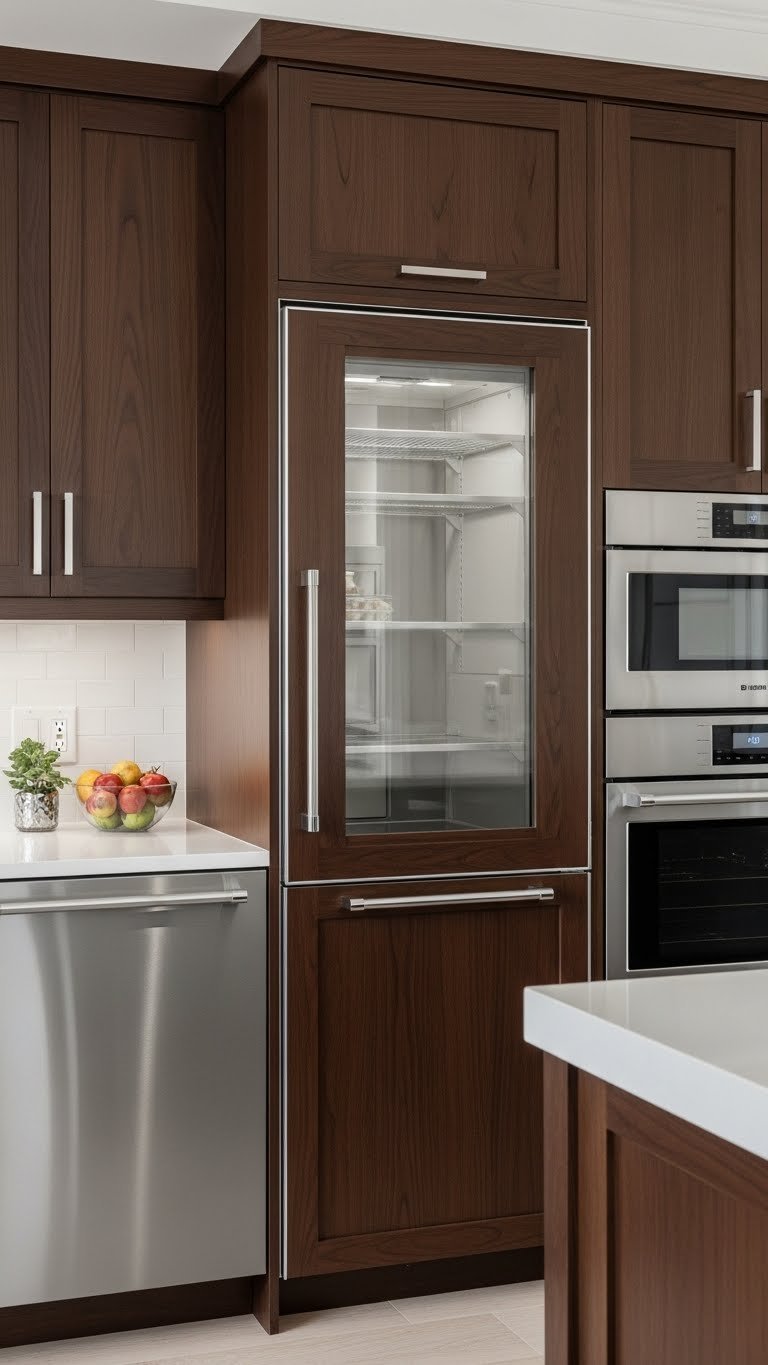
    12. Upgrade to Stainless Steel or Integrated Appliances

    Built-in or “hidden” appliances are trending because they make kitchens feel more intentional and less cluttered. Panel-ready appliances blend seamlessly with cabinetry.

    Panel-ready refrigerators from brands like Miele, Sub-Zero, or Liebherr run $3,000-$8,000 (pricey but seamless). Standard stainless steel upgrades from Lowe’s or Home Depot are $600-$1,500 per appliance and feel premium without the extreme cost. If replacing large appliances, budget $2,000-$5,000 total for fridge, oven, and dishwasher as a package. Installation typically runs $200-$500 depending on your current setup.

    Budget hack: Keep existing appliances but paint the fridge with stainless steel contact paper ($25-$40) for a quick visual upgrade.

    Pro tip: Measure twice—appliance sizes vary and fit matters.

    Your kitchen instantly looks more cohesive, expensive, and designed rather than thrown together.

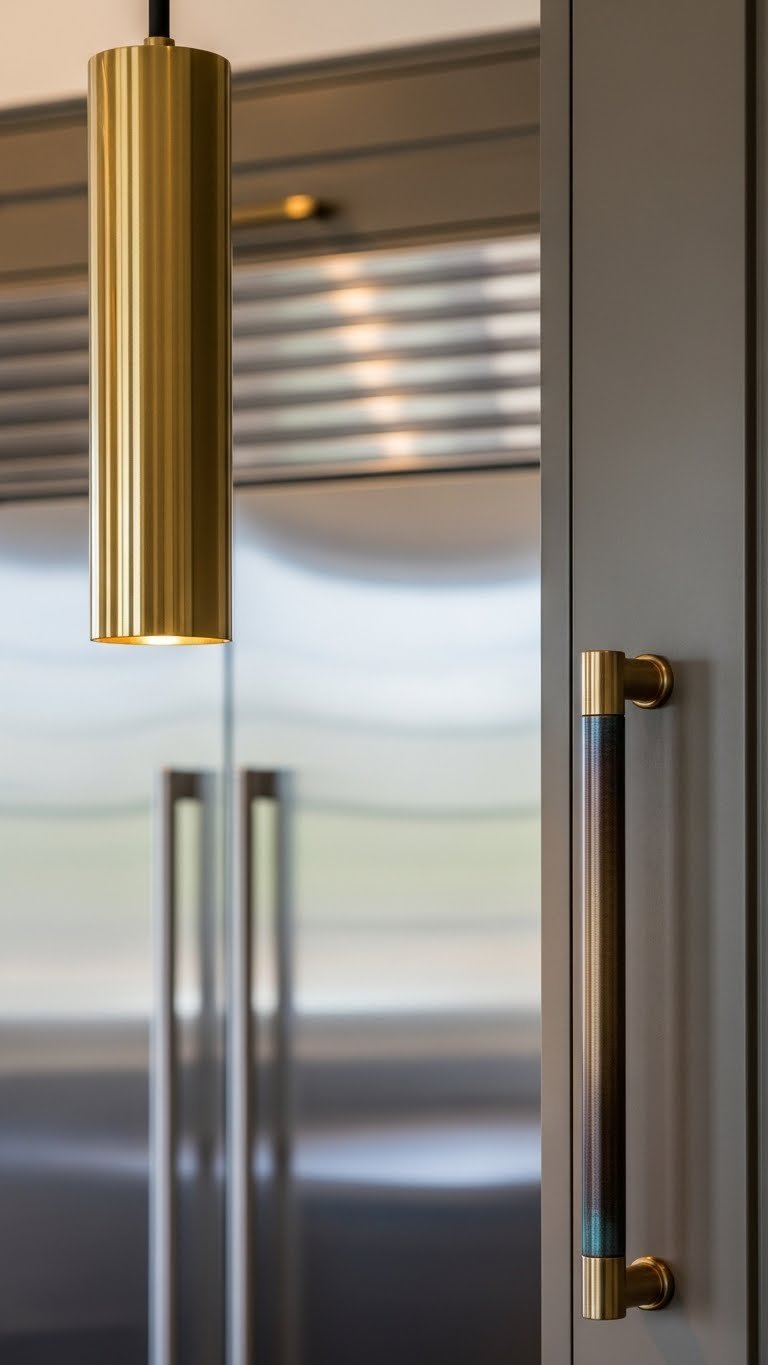
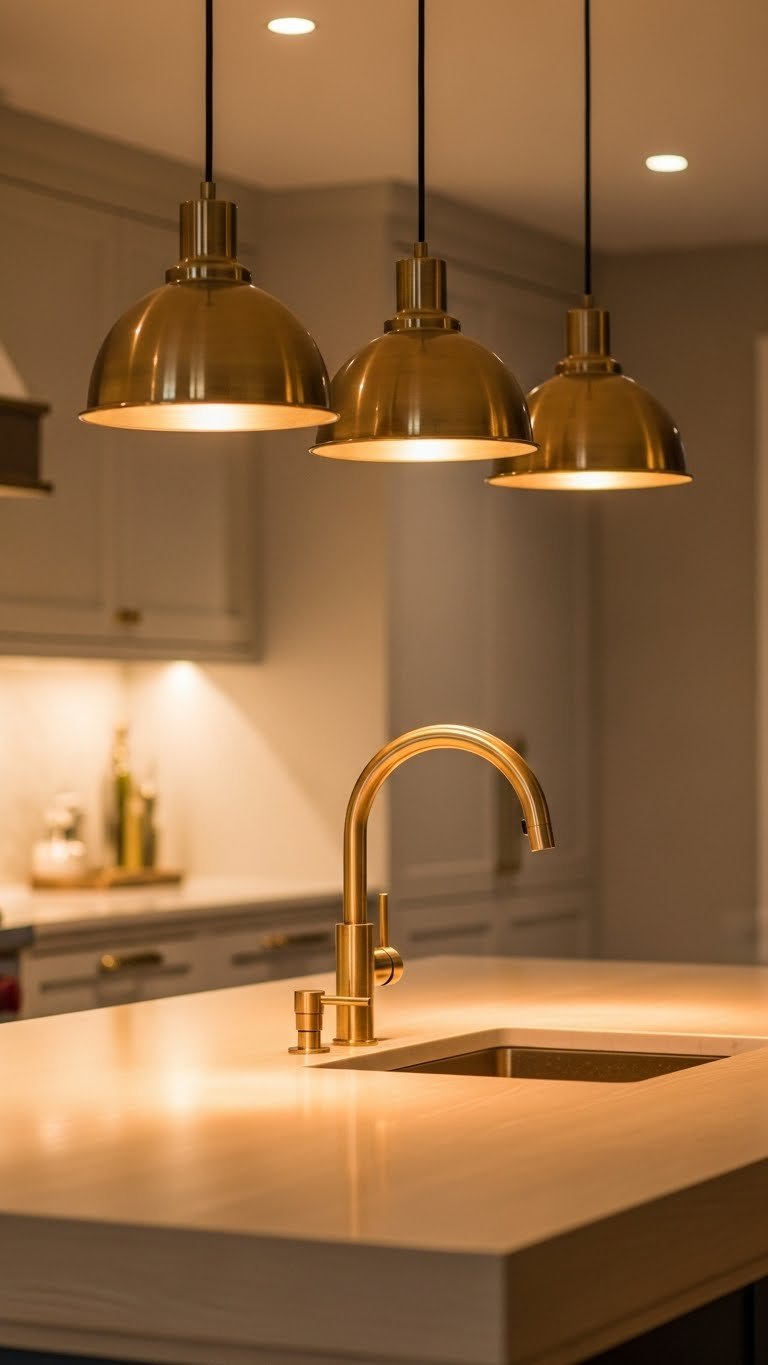
    13. Add Warm Brass Fixtures for Modern Warmth

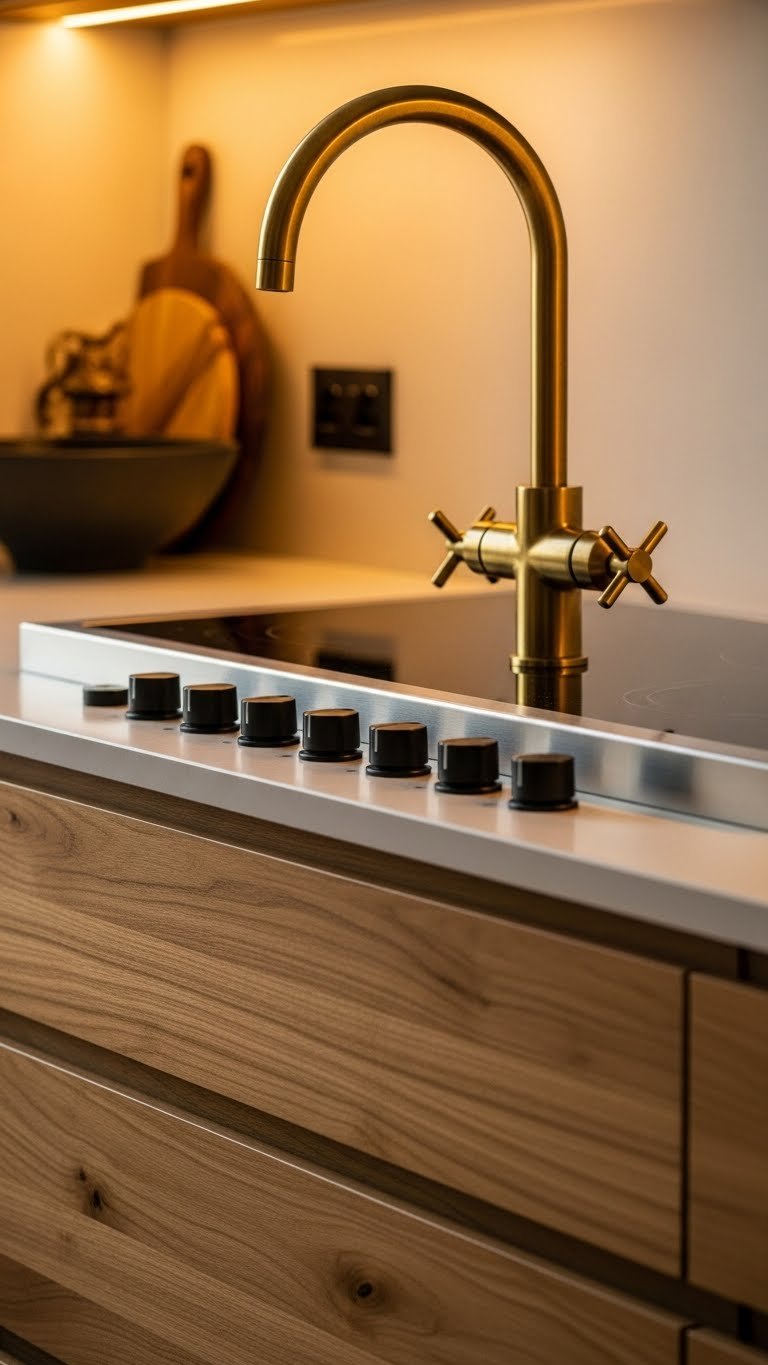
    Brass is the unexpected hero of 2025 kitchen design. Unlike cold stainless steel, warm brass brings richness and feels both modern and timeless.

    Swap out cold silver fixtures for warm brass throughout: pendant lights ($40-$120 each), cabinet hardware ($3-$8 per piece), faucet ($150-$400), and even a decorative towel bar ($20-$50). Total investment: $300-$800 for a few key pieces. Start with lighting since it’s most visible, then add hardware and faucet over time if budget is tight. Brass develops a natural patina over years, which adds character (or clean with lemon juice to keep it shiny).

    Pro tip: Mix warm brass with cool matte black or brushed nickel for balance—all brass can feel heavy.

    The warm glow of brass fixtures makes your entire kitchen feel more intentional, expensive, and photogenic.

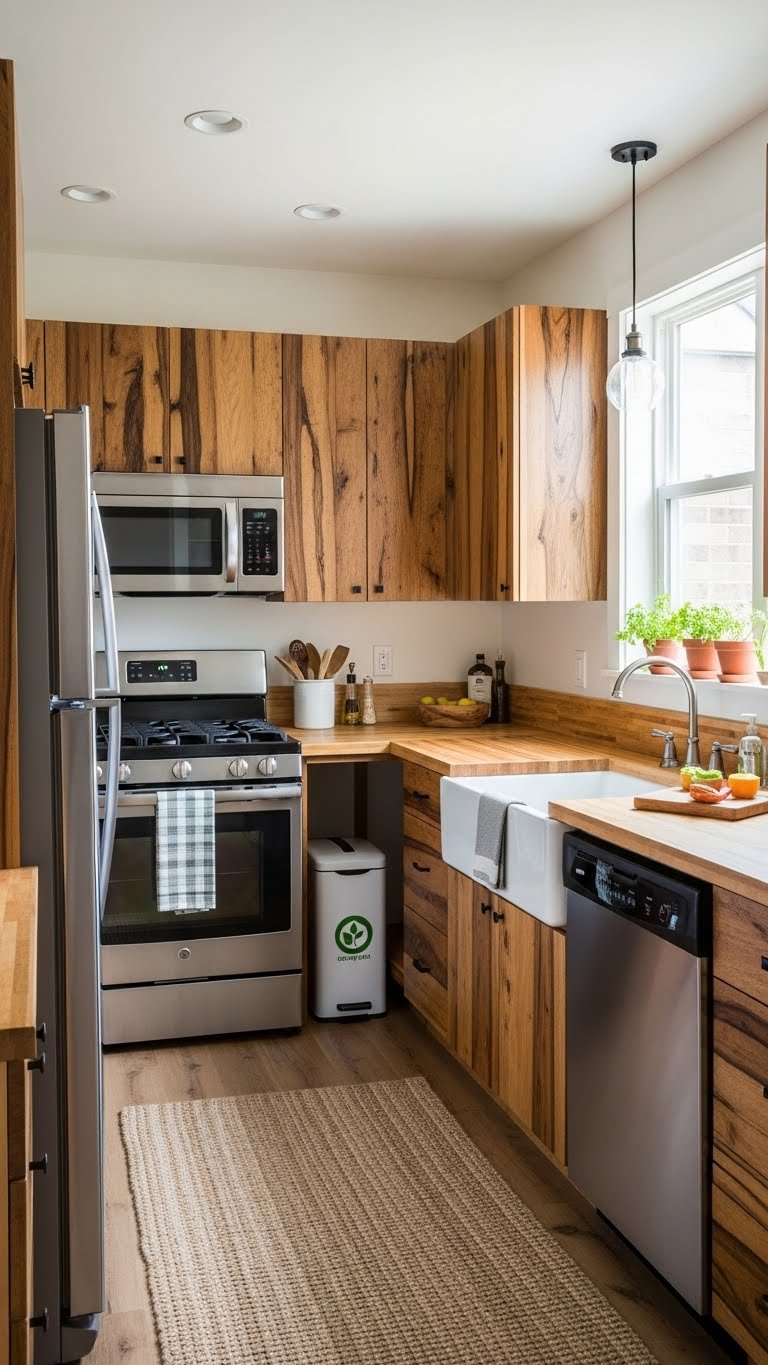
    14. Incorporate a Butcher Block Island or Countertop

    Butcher block counters bring warmth and texture while staying practical for everyday cooking. They feel artisanal without sacrificing function.

    Butcher block countertop material runs $30-$60 per square foot from Home Depot or local mills; installation and finishing adds $500-$1,500 labor. Smaller butcher block islands are $300-$800 and work as instant styling. The wood requires occasional sealing (annually or every 2 years) with food-safe mineral oil ($10-$15). Treat stains immediately with lemon juice and salt. If you’re concerned about durability, modern sealed butcher block is harder than you’d expect.

    Budget hack: Reclaimed wood counters from salvage yards run $20-$40 per square foot and feel unique while being eco-conscious.

    Pro tip: Butcher block pairs beautifully with sage green walls and warm brass—it’s the wood-and-warmth trend everyone’s embracing.

    Your kitchen gains organic warmth and becomes a place where you actually want to cook instead of rushing through meals.

    15. Install a Range Hood with Texture or Plaster Finish

    Plaster or textured range hoods are an emerging trend that breaks from standard stainless steel. They add organic softness while staying deeply functional.

    Custom plaster hoods from specialized makers run $2,000-$5,000; more affordable textured alternatives from mainstream brands are $800-$1,500. Standard stainless hoods remain $400-$1,000 if budget is tight. Installation usually requires professional venting work ($300-$600 labor). The textured finish catches light beautifully and feels intentional in photos without looking trendy or temporary.

    Pro tip: Pair a plaster hood with warm wood cabinetry and brass accents for full organic-modern vibes.

    This architectural element becomes a focal point that makes your kitchen feel designed by someone with actual taste.

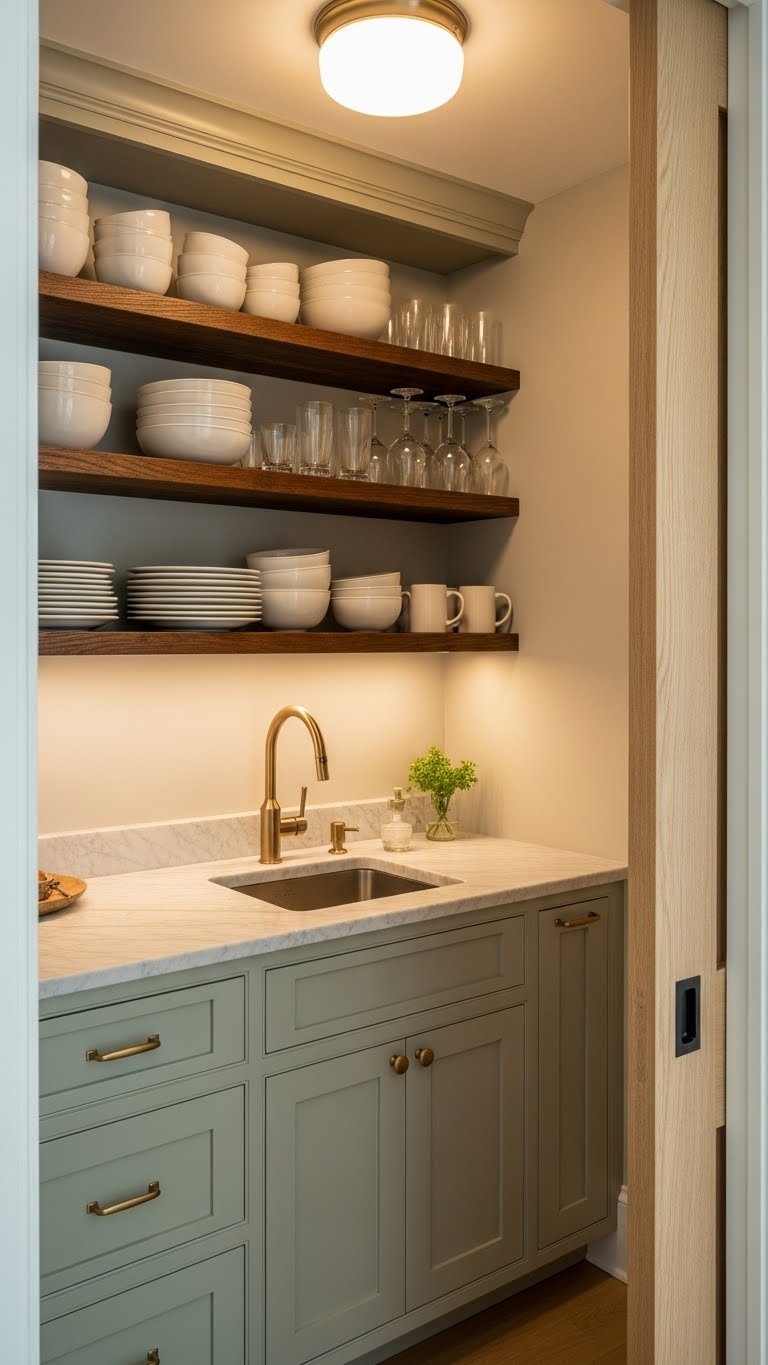
    16. Create a Scullery or Hidden Butler’s Pantry

    Sculleries (hidden prep zones) keep messy cooking out of sight while maintaining elegant main kitchen aesthetics. It’s a luxury touch that actually solves a real problem.

    Repurpose a hallway closet, spare corner, or galley space into a mini prep kitchen with a sink ($300-$800), open or closed storage ($200-$1,000), and counter space ($400-$1,500). Total project runs $1,500-$4,000 depending on complexity. Install a door or pocket door to hide the chaos when entertaining. This works beautifully in open-concept homes where you want the main kitchen polished for guests but need realistic storage elsewhere.

    Pro tip: Add a small dishwasher drawer ($700-$1,200) if space allows.

    Now you have a chic kitchen for entertaining and a private zone where cooking actually happens—best of both worlds.

    17. Mix Patterned and Textured Tile on Backsplash

    Mixing tile patterns and textures prevents backsplashes from feeling boring or dated. This approach feels curated rather than generic.

    Combine 2-4 tile types in a planned pattern: subway base with geometric or patterned accents, or mix matte and glossy finishes for depth. Peel-and-stick mixed tile sheets from Aspect or Smart Tiles are $20-$40 per sheet; traditional mixed tile installation from Home Depot costs $2-$8 per square foot plus labor. Plan your layout first on graph paper to avoid awkward cuts. DIY takes 2-3 days; professionals finish in 1 day for smaller kitchens.

    Pro tip: Use a light grout to unify different tiles, or go dark grout for dramatic separation between patterns.

    Your backsplash becomes a textural focal point that photographs beautifully and makes your kitchen feel intentionally designed.

    18. Add an Open Shelving Pantry for Easy Access

    Open pantry shelving replaces closed cabinets with accessible, beautiful storage that keeps everyday items within reach. It’s practical and Instagram-worthy.

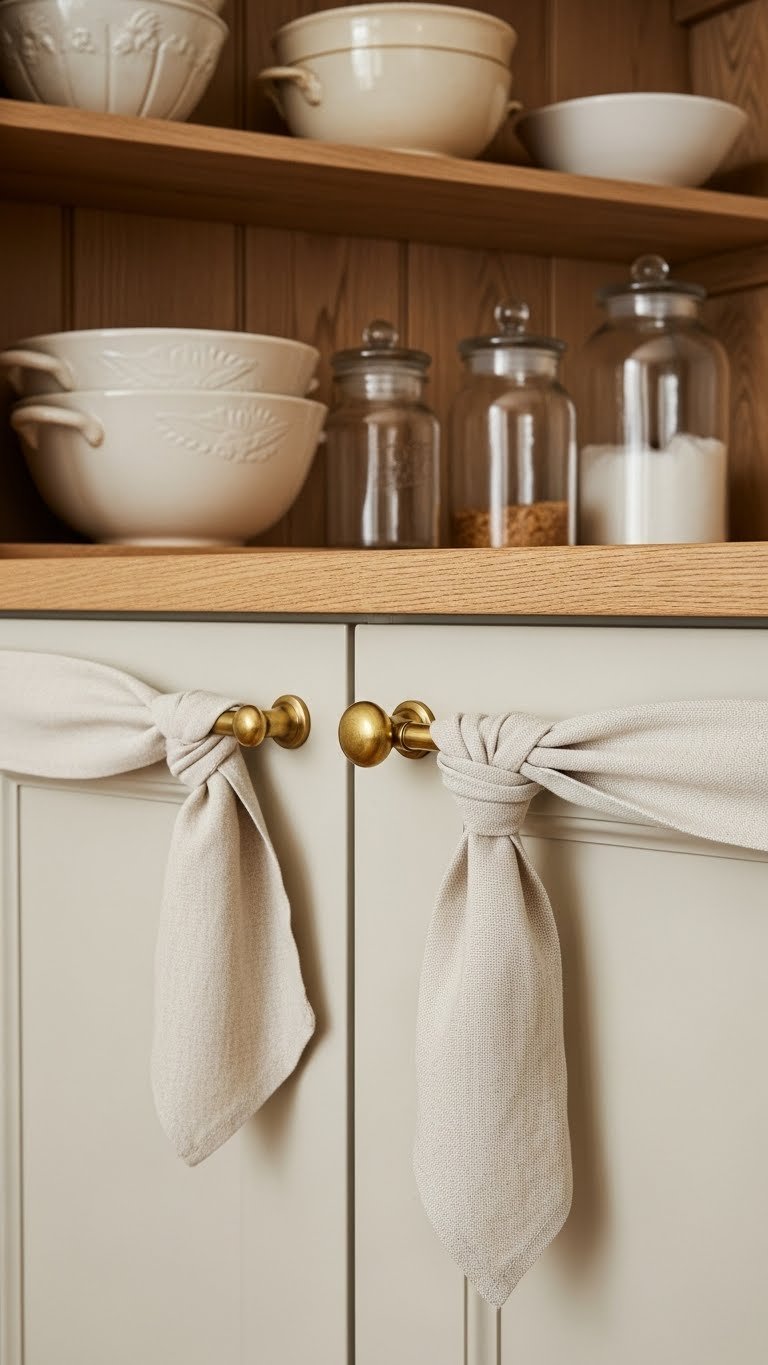
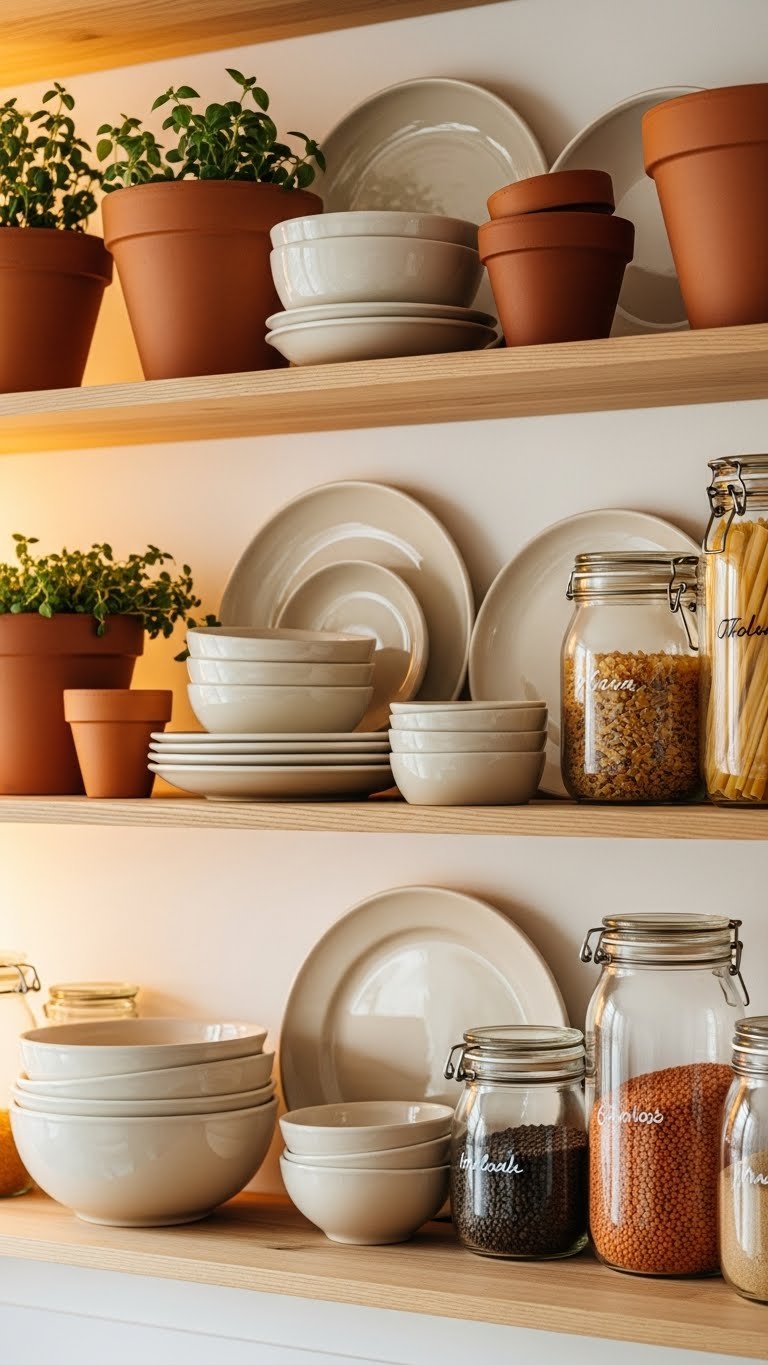
    Install 4-6 floating shelves in a corner or one wall using brackets from IKEA ($20-$50 each). Stock with matching jars ($2-$5 each from Target, IKEA, or HomeGoods), woven baskets ($10-$30 each), and cookbooks. Total investment: $300-$600 for shelves and styling supplies. Take time organizing before installing—label jars with a label maker ($15-$25) and group items by category. The key is keeping it genuinely organized; chaos on open shelves looks sloppy, not chic.

    Pro tip: Style 70% function, 30% decor—keep it real and usable, not overly curated.

    You’ll reach for items more often because they’re visible and accessible, and your pantry becomes a design feature instead of hidden chaos.

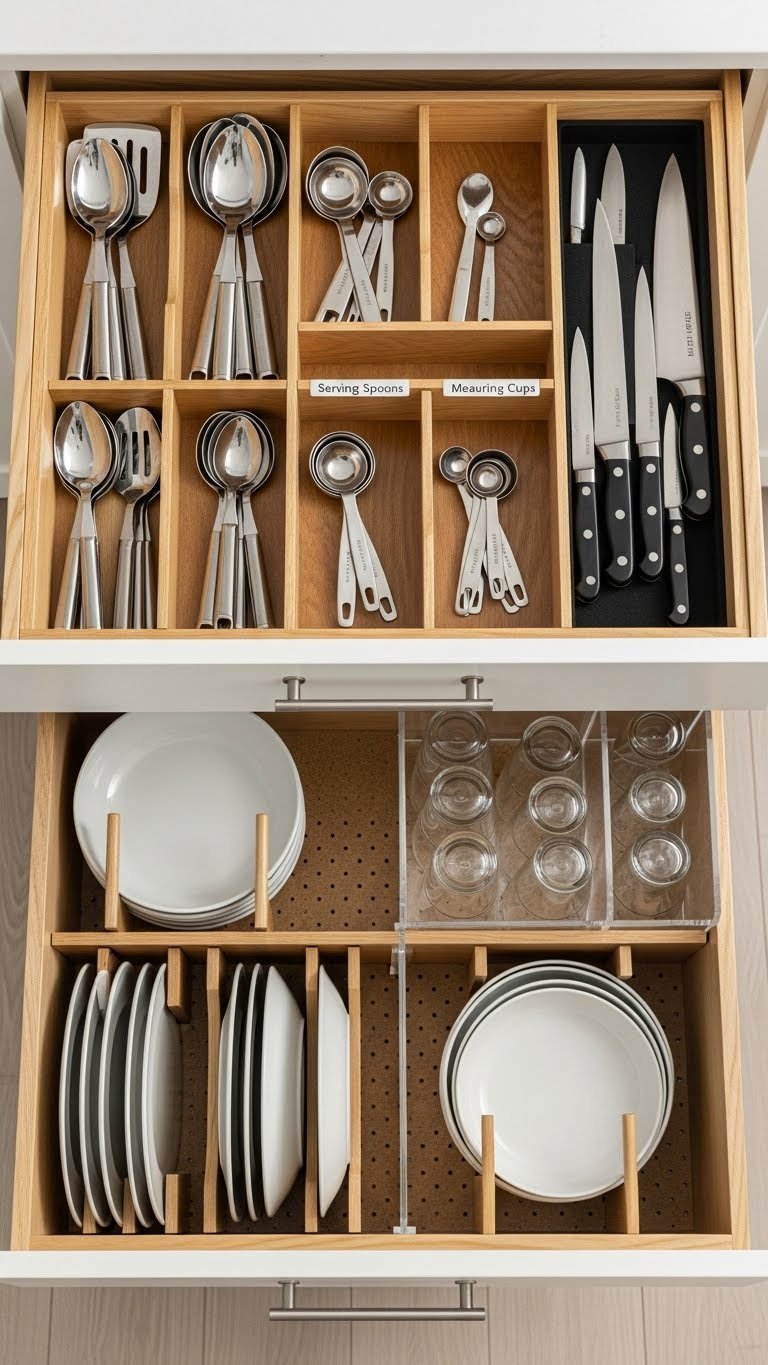
    19. Upgrade Cabinet Interiors with Drawer Dividers and Organization

    Organized interiors matter even if guests never see them—you’ll feel the difference every single day. Drawer dividers and cabinet organizers transform functionality and reduce daily frustration.

    Bamboo or plastic drawer dividers cost $15-$40 per set from Target, IKEA, or Amazon. Pull-out shelf inserts ($25-$80) maximize deep cabinet space. Lazy Susans ($10-$30) let you reach back corners easily. Corner shelf risers ($20-$50) add vertical storage. Total organization overhaul: $200-$400 for a full kitchen. Takes a weekend to install and reorganize. Focus on frequently-used items first; less-used stuff can stay in harder-to-reach spots.

    Pro tip: Use clear containers so you can see what’s inside without opening everything.

    Every time you open a drawer or cabinet, you’ll appreciate the calm organization—it makes cooking faster and reduces stress.

    20. Choose Earth-Tone Colors Beyond Sage Green

    Sage green is trending, but earth tones in general—warm terracotta, soft tan, muted blue, warm brown—are replacing cool grays everywhere. You have options beyond the standard sage.

    Paint walls in warm terracotta ($30-$50), soft clay taupe ($35-$55), or muted dusty blue ($30-$50). These colors feel warmer and more livable than cool grays while staying sophisticated. Benjamin Moore’s HC-172 Borscht, Farrow & Ball’s Tunsgate Blue, or Sherwin-Williams’ Urbane Bronze all work beautifully in kitchens. Expect 4-6 hours for one room with primer and two paint coats.

    Pro tip: Get paint samples and test on your walls at different times of day—lighting changes how colors read dramatically.

    Warm earth tones make your space feel grounded, intentional, and more inviting than cool grays that dominated the last few years.

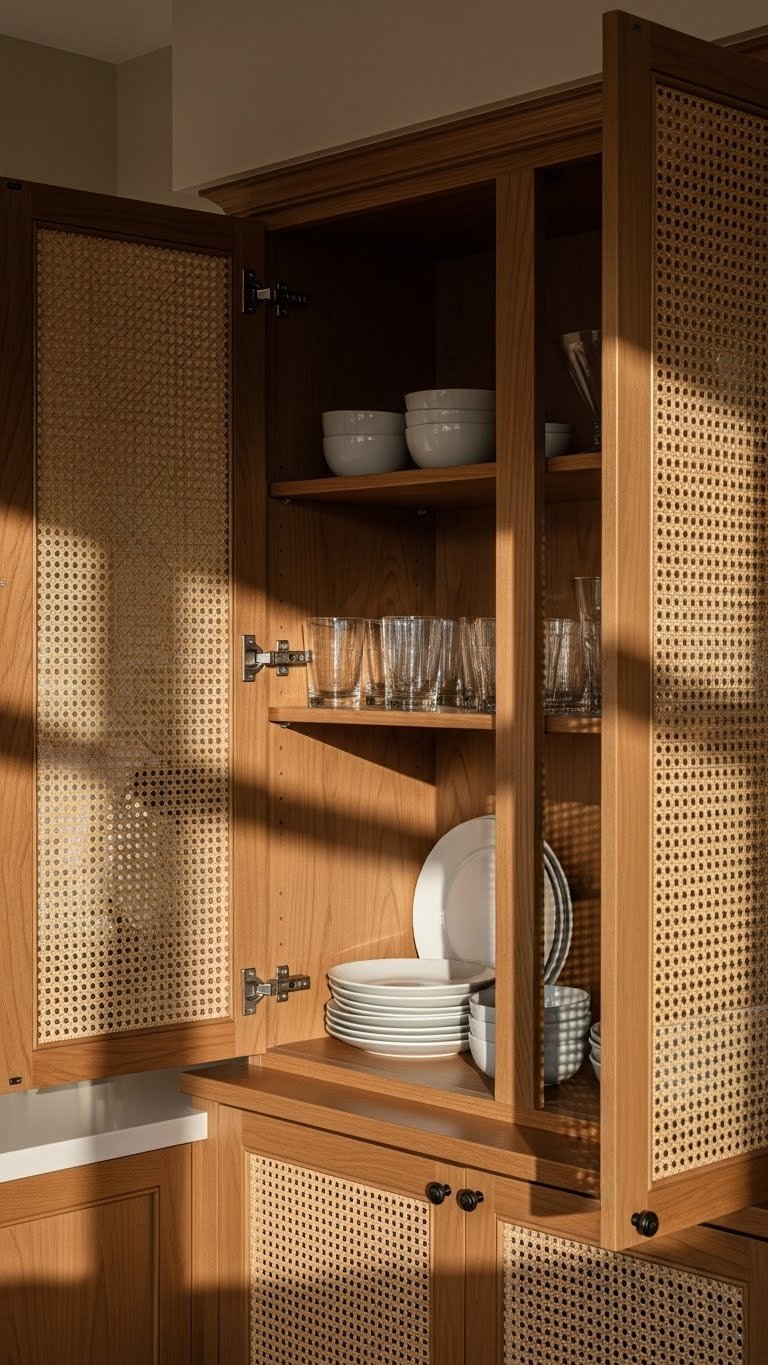
    21. Add Fluted or Ridged Texture to Cabinet Doors

    Fluted cabinet textures add sophistication without going overboard. Subtle ridges catch light and create dimension that flat doors can’t match.

    Factory-made fluted cabinet doors from premium brands are $150-$300+ per door; budget-friendly textured cabinet kits from Wayfair run $100-$200 per door. Alternatively, add texture with peel-and-stick adhesive film ($25-$50 per door) for renters. Installation requires removing doors and swapping hardware—allows 2-3 hours if you’re hands-on. Hire a pro if replacing full cabinet doors; expect $2,000-$4,000 labor.

    Pro tip: Fluted doors pair beautifully with smooth counters and simple hardware—let the texture be the star.

    Your cabinets shift from basic builder-grade to thoughtfully designed with one architectural upgrade.

    22. Blend Indoor and Outdoor Kitchen Spaces

    Outdoor kitchen integration creates flow and makes small spaces feel larger. Matching materials inside and out blur boundaries beautifully.

    Install matching countertops (concrete, stone, or composite) both inside and outside ($5,000-$15,000+ depending on size). Use similar cabinetry or finishes to create visual continuity. Outdoor appliances like grills or pizza ovens ($2,000-$10,000) pair with indoor options. This project typically requires contractors and builders—budget 4-8 weeks for planning and installation.

    Budget hack: Paint an outdoor wall to match interior colors and add matching outdoor rugs and furniture ($200-$500 total) for less expensive visual connection.

    Pro tip: Weatherproof all materials; concrete and wood outdoor surfaces need sealing annually.

    Your kitchen suddenly feels expanded, and entertaining becomes seamless—guests flow naturally from cooking indoors to lounging outside.

    23. Install Smart Appliances with WiFi and Automation

    WiFi-enabled appliances let you preheat ovens from your phone, monitor fridge temperatures, and get alerts if doors are left open. It’s practical tech that actually improves daily life.

    Smart refrigerators from LG or Samsung run $2,500-$4,500; WiFi ovens are $1,200-$2,500; smart dishwashers are $800-$1,500. Mid-range smart appliances from mainstream brands cost $500-$1,200 per item. These typically cost $300-$600 more than non-smart versions. Installation and WiFi setup take 30 minutes to 2 hours. Start with one smart appliance (a WiFi fridge or oven) rather than replacing everything at once.

    Pro tip: Check WiFi compatibility before buying—you need 2.4GHz networks for most appliances.

    The convenience feels subtle until you realize how much easier cooking and maintenance become with real-time alerts and remote control.

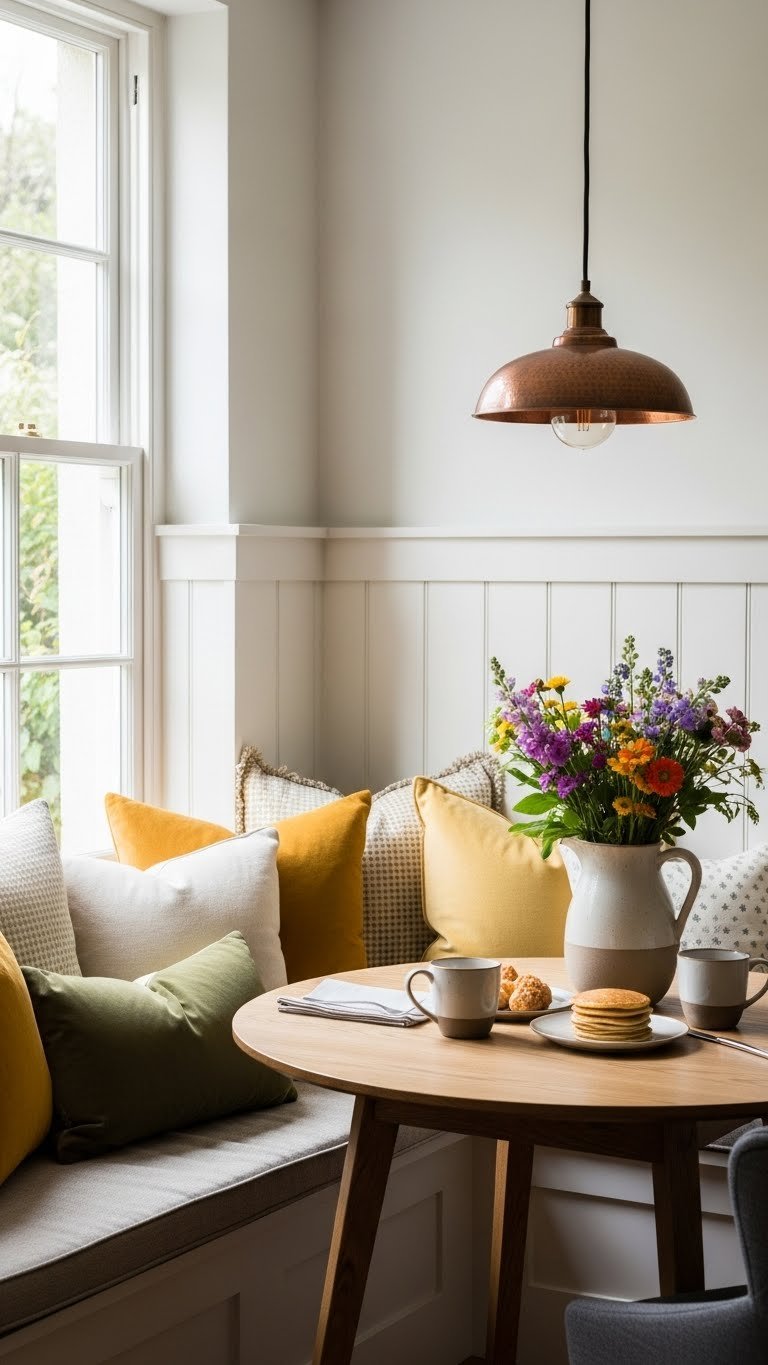
    24. Create a Dining Nook Within the Kitchen

    Breakfast nooks and dining corners maximize small kitchens while creating intimate gathering spaces. They transform kitchens from purely functional to truly livable.

    Install a built-in bench with storage ($800-$2,000) paired with a small table ($200-$800) and 2-3 chairs ($100-$300 each). Total investment: $1,500-$3,500 for a quality setup. Alternatively, a simple round table ($200-$500) and vintage chairs ($50-$150 each) create the same vibe for less. Lighting is key—add a small pendant or wall sconce ($40-$120) to define the zone. Space needs at least 6×6 feet to feel comfortable.

    Budget hack: Use a narrow console table ($150-$300) against a wall plus 2 stools for tight spaces.

    Now your kitchen isn’t just where you cook—it’s where your family eats breakfast and lingers over coffee.

    25. Incorporate Sustainable Materials and Eco-Appliances

    Sustainable kitchen choices reduce environmental impact while creating spaces that feel authentic and grounded. Eco-conscious materials are increasingly affordable and beautiful.

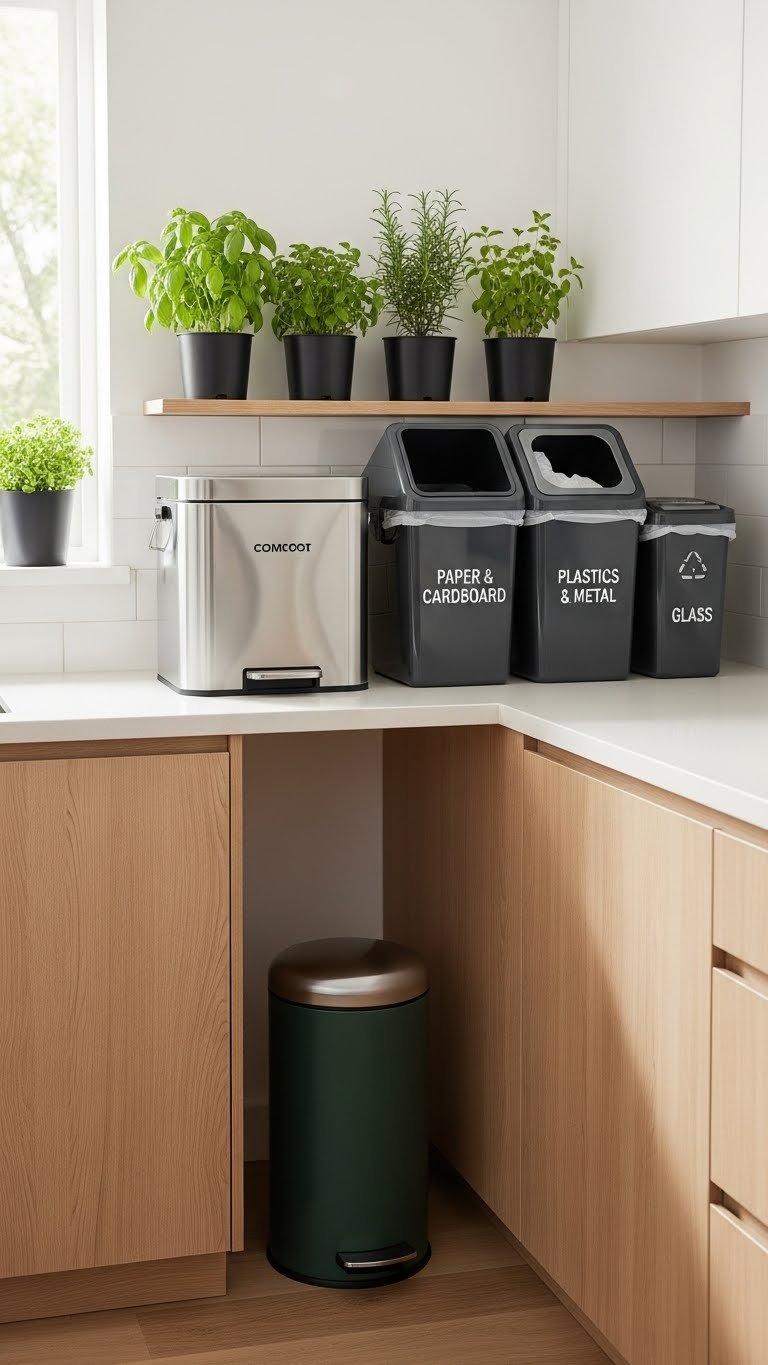
    Recycled wood cabinets from sustainable brands run $2,000-$6,000; bamboo countertops are $40-$60 per square foot. Energy Star appliances cost $200-$500 more than standard but save $100-$200 yearly in utilities. Built-in compost bins ($50-$200) and water-filtering faucets ($100-$300) complete the eco-kitchen. These upgrades cost more upfront but pay dividends in reduced utility bills and fewer trash trips over years.

    Pro tip: Start with one sustainable swap (like recycled glass backsplash) rather than overhauling everything at once.

    Your kitchen aligns with your values, costs less to operate long-term, and feels genuinely thoughtful rather than performative.

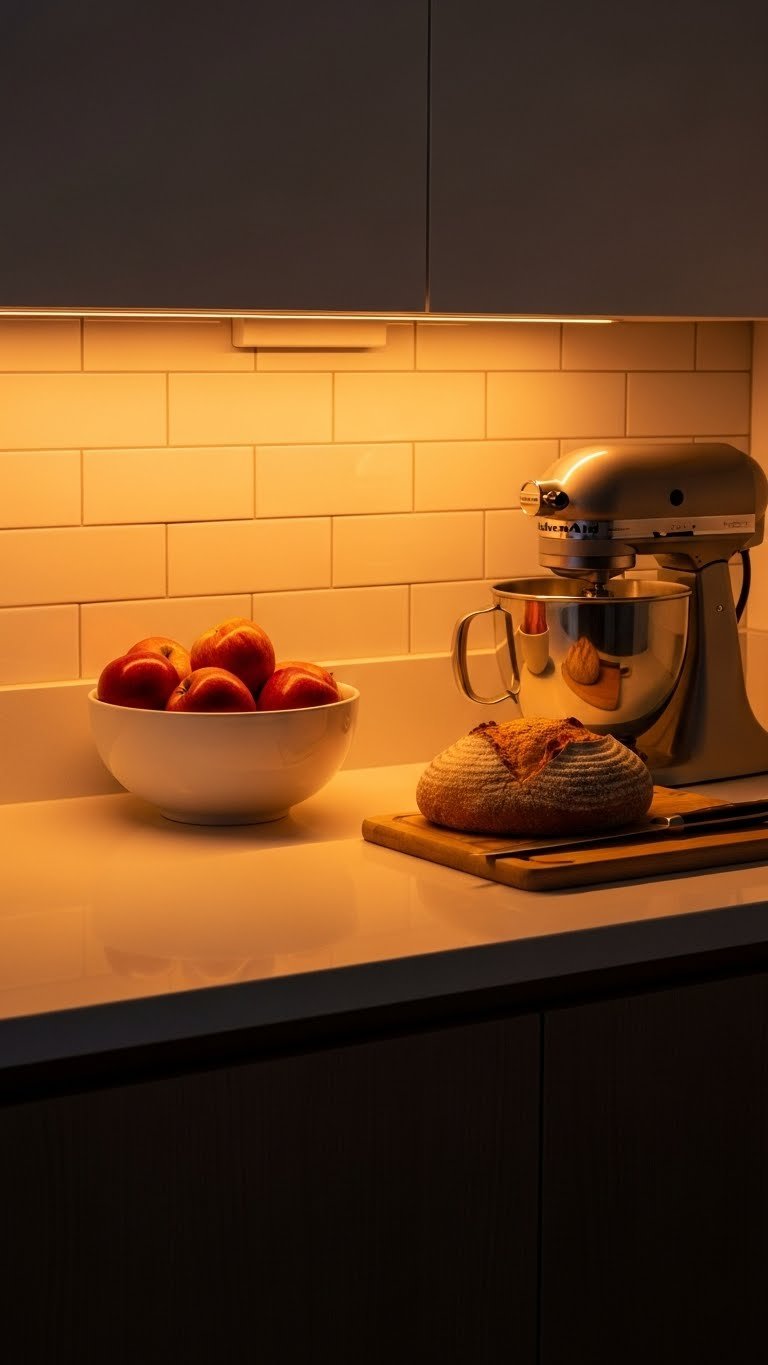
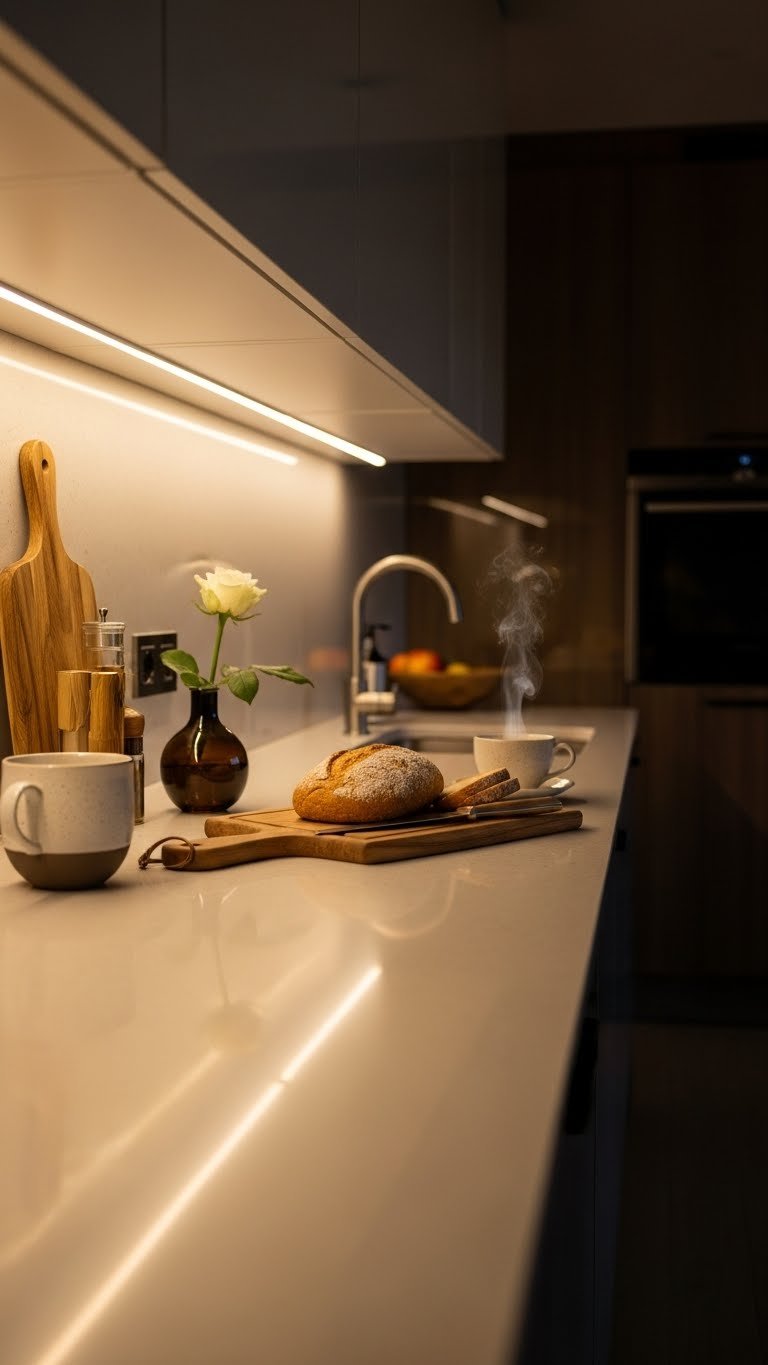
    26. Install Warm Under-Cabinet Lighting

    Under-cabinet LED strips solve the practical problem of dark countertops while adding ambiance and visual interest. They’re affordable and impactful.

    Peel-and-stick LED strip lights from Amazon or Home Depot cost $20-$50 per kit and install in minutes—no electrician needed. Hardwired options from Lowe’s are $100-$200 per kit but feel more permanent. Choose warm-toned bulbs (2700K) for coziness and focus; cool white (5000K) feels clinical and harsh. Install strips underneath cabinets so light hits counters directly, not your face. Total project: 30 minutes DIY.

    Pro tip: Dimmer switches ($15-$30) let you adjust brightness for cooking versus entertaining.

    When dusk falls, your kitchen glows beautifully without overhead lights—suddenly it feels like a restaurant you’d actually want to spend time in.

    SAVE THIS POST FOR YOUR NEXT KITCHEN REFRESH. Pick one idea that excites you—whether it’s a color change, hardware swap, or lighting upgrade—and tackle it this weekend. Small changes add up fast, and you’ll be amazed at how intentional your space feels with just one thoughtful update.

  • 25 Clustered Mirror Arrangement Ideas for a Chic Wall Display

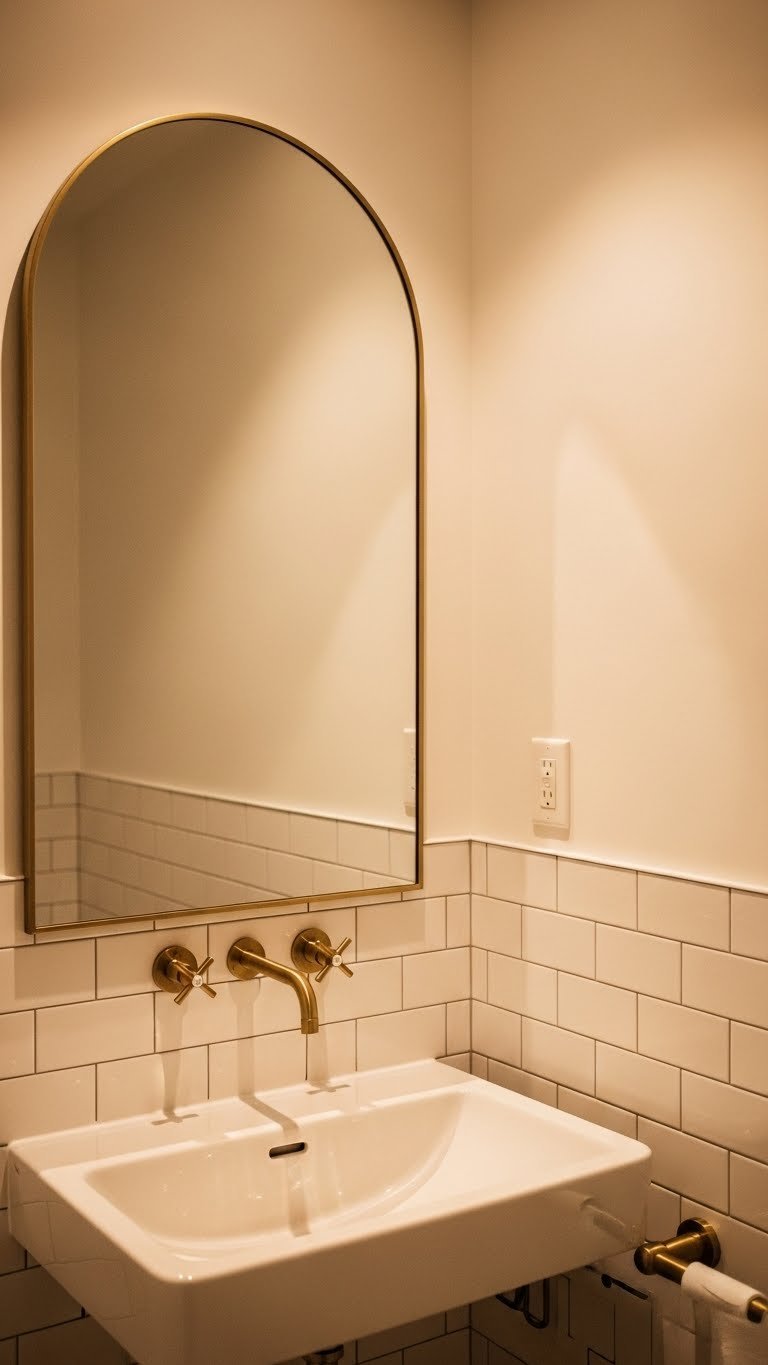
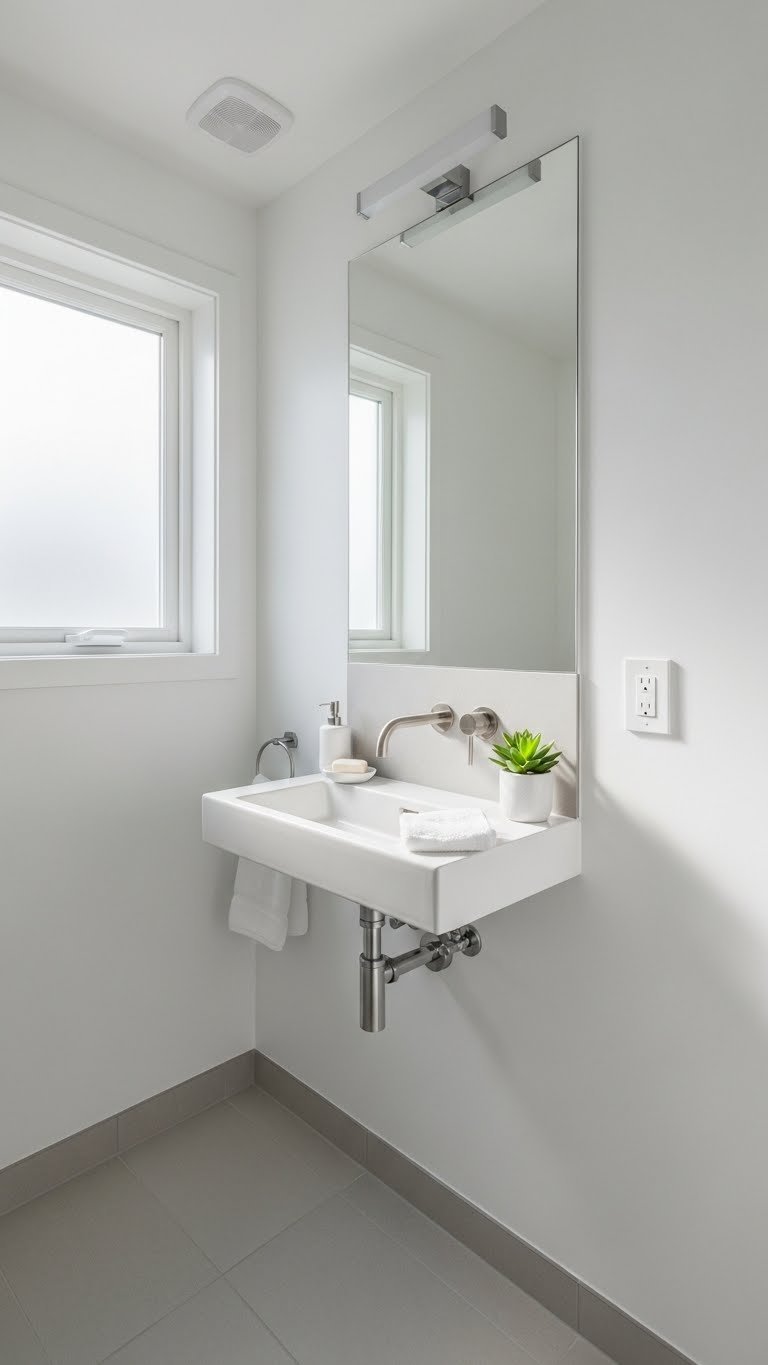
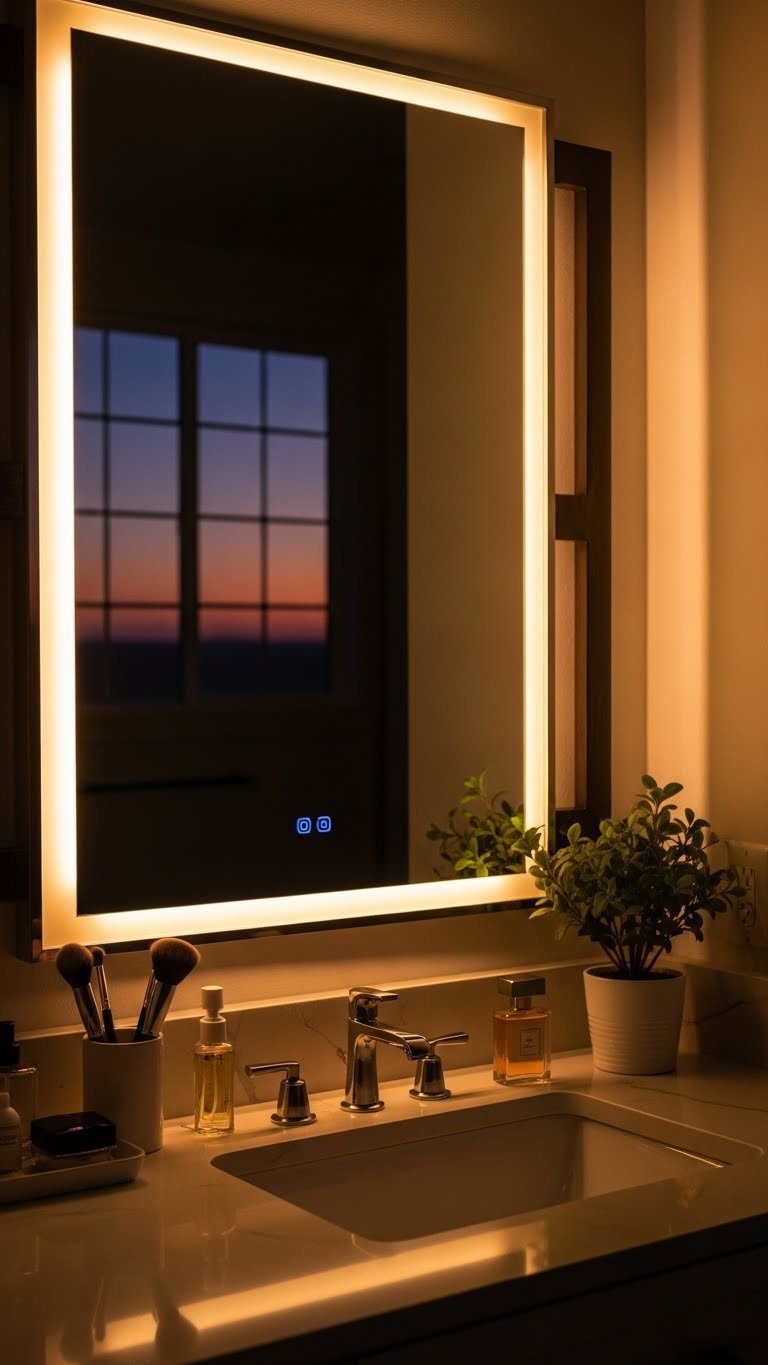
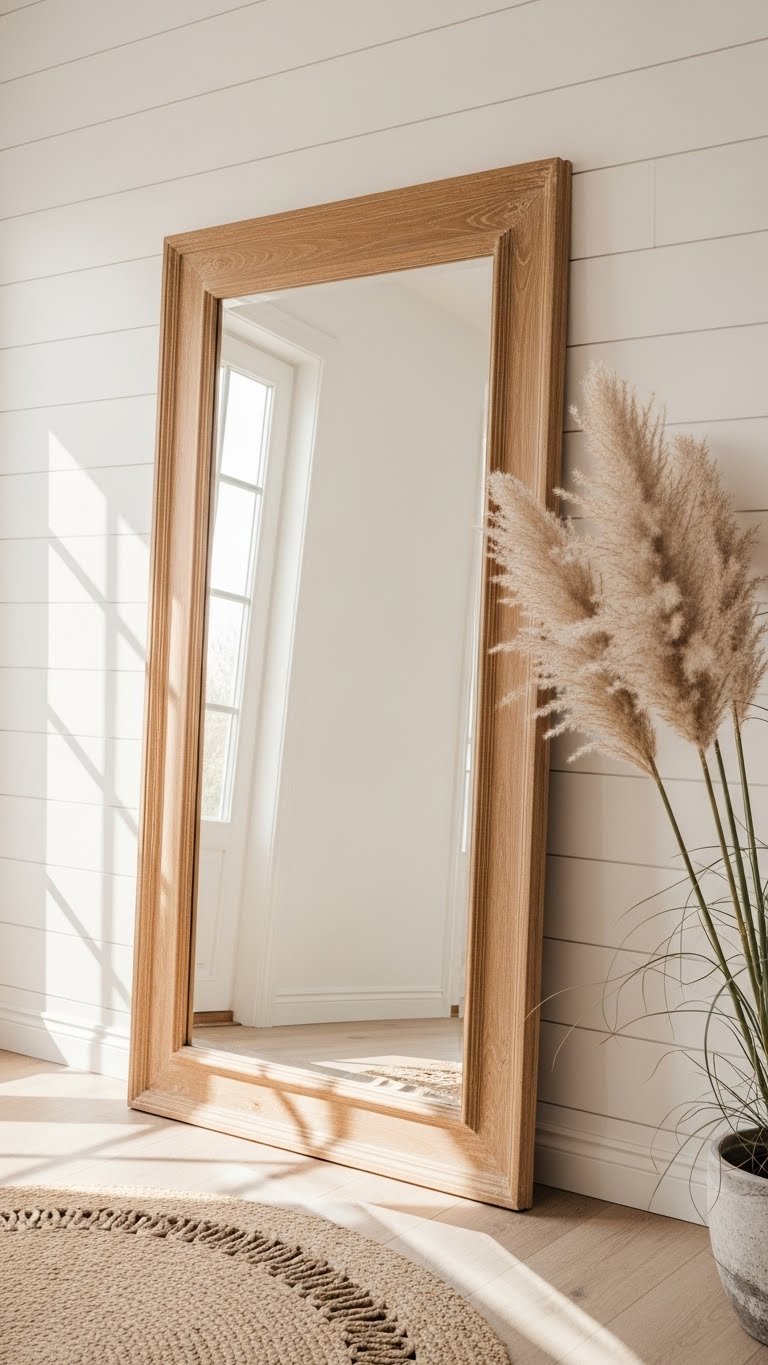
    25 Clustered Mirror Arrangement Ideas for a Chic Wall Display


    Mirror clusters are having a major moment, and for good reason: they amplify light, create visual interest, and make any wall feel curated and intentional without screaming “try-hard.” Whether you’re working with a tiny apartment or a sprawling living room, a clustered mirror arrangement gives you an instant focal point that feels both artistic and functional. The best part? You don’t need to be a designer to pull this off. We’ve gathered 25 specific ideas—from free rearrangement tricks to investment-worthy gallery walls—so you can create a arrangement that matches your style, budget, and space. Each approach works for renters and homeowners alike, and most can be completed in a weekend.

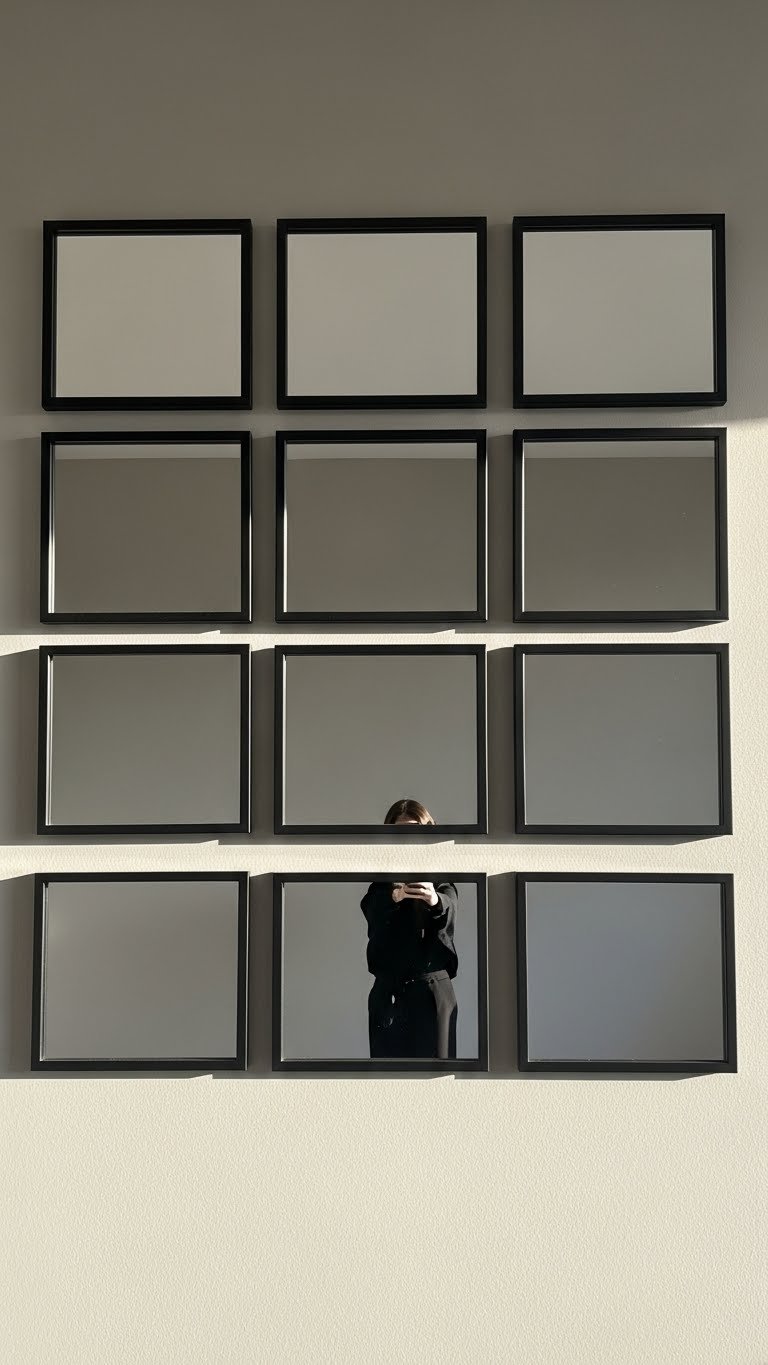
    1. Create a Grid with Matching Frames

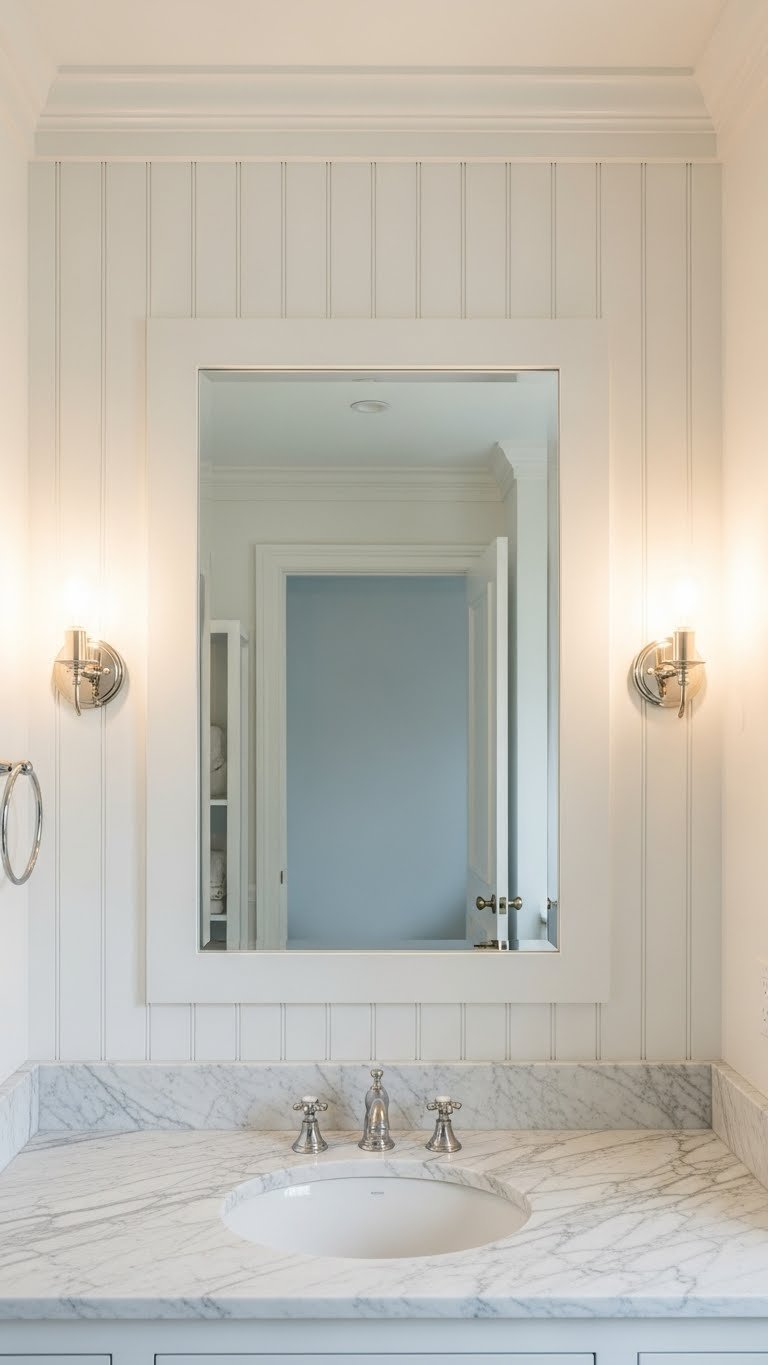
    A perfect grid layout brings order and modern sophistication to any room. This arrangement works particularly well in bathrooms, bedrooms, or above console tables because it’s visually predictable and calming.

    You’ll need four to nine mirrors in identical or similar frames. Measure your wall space first, then space each mirror evenly—aim for 2-3 inches between frames. Use a level and painter’s tape to mark your hanging points before drilling. Budget: $40–$150 depending on frame quality. IKEA, Target, and Amazon all carry affordable matching mirror sets. Time: 45 minutes to 1 hour including measurement and hanging.

    The symmetry creates a polished look that photographs beautifully for social media, and the uniform design grounds a busy room.

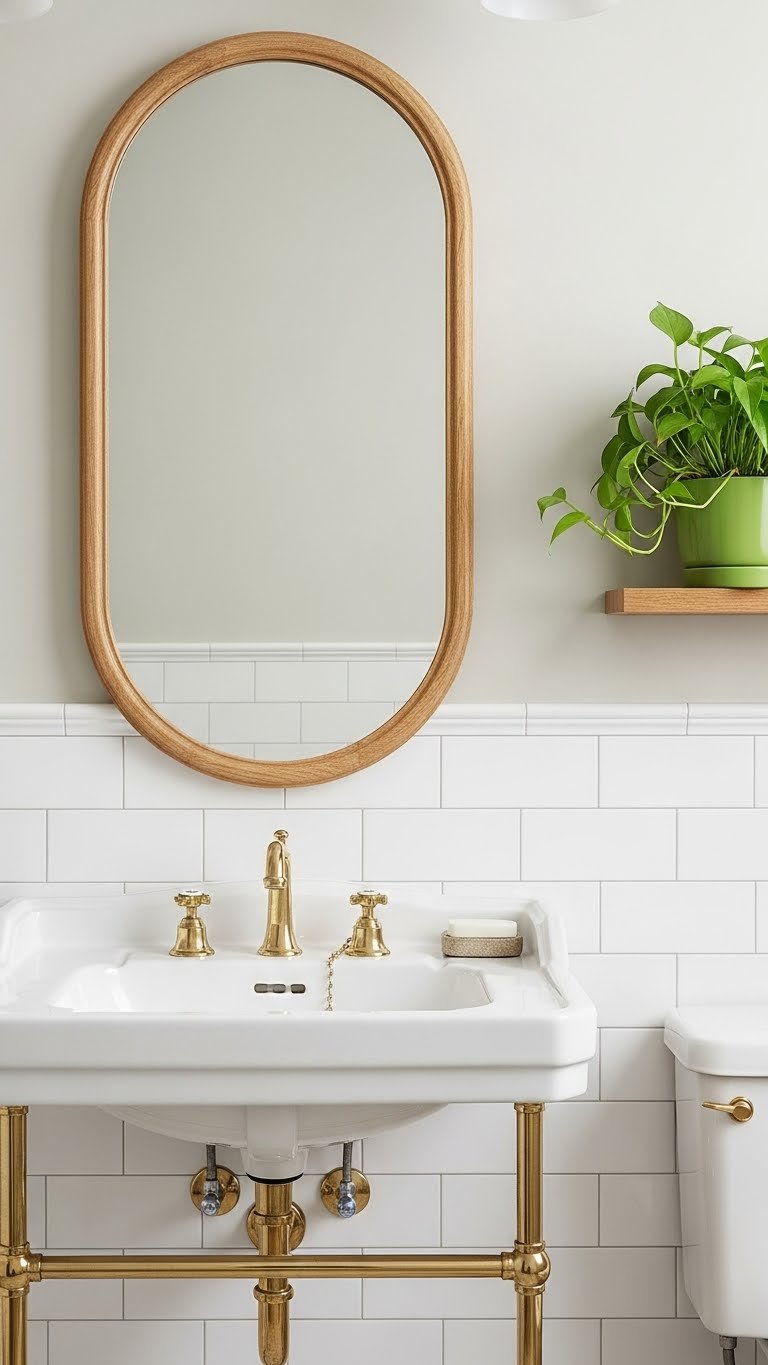
    2. Mix Round and Arched Shapes for Soft Flow

    Combining curved shapes breaks rigidity and adds personality without chaos. The mix of round and arched mirrors mimics natural forms and softens contemporary spaces.

    Start with one large arched mirror as your anchor (30–36 inches tall), then layer smaller rounds (12–20 inches) around it. Odd numbers (3, 5, 7) always look more intentional than even groupings. Vary frame finishes—wood, gold, and black together feel curated rather than random. Budget: $80–$250 for a five-piece cluster. Check Wayfair, West Elm, or local vintage shops for unique finds. Time: 1–2 hours to arrange, mark, and install.

    This approach creates visual movement and draws the eye around the wall in a pleasing flow.

    3. Stagger Heights for Dynamic Energy

    Staggering your mirrors vertically (instead of in a straight line) creates dynamic tension and prevents the “too neat” feeling. This works beautifully in entryways and hallways.

    Pick your tallest mirror and hang it slightly off-center. Then add shorter mirrors below and to the sides, varying the vertical spacing by 4–6 inches. Avoid perfect alignment—let some dip lower and others sit higher. Budget: $60–$200 depending on sizes and finishes. Time: 1.5 hours to plan your layout with painter’s tape first (seriously—map it out before any nails go in). This method works great in rentals because you can experiment with tape before committing.

    The asymmetrical heights keep the eye moving and make the arrangement feel more art installation than basic décor.

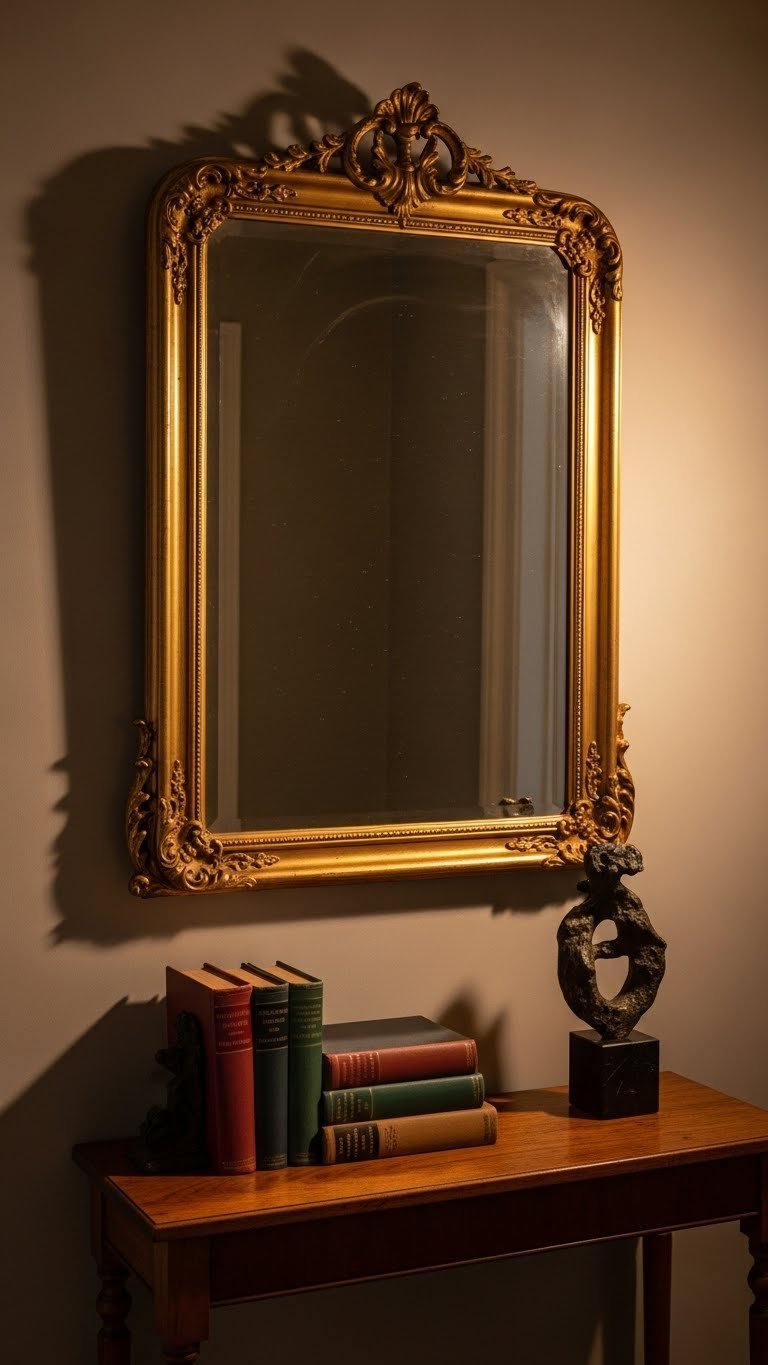
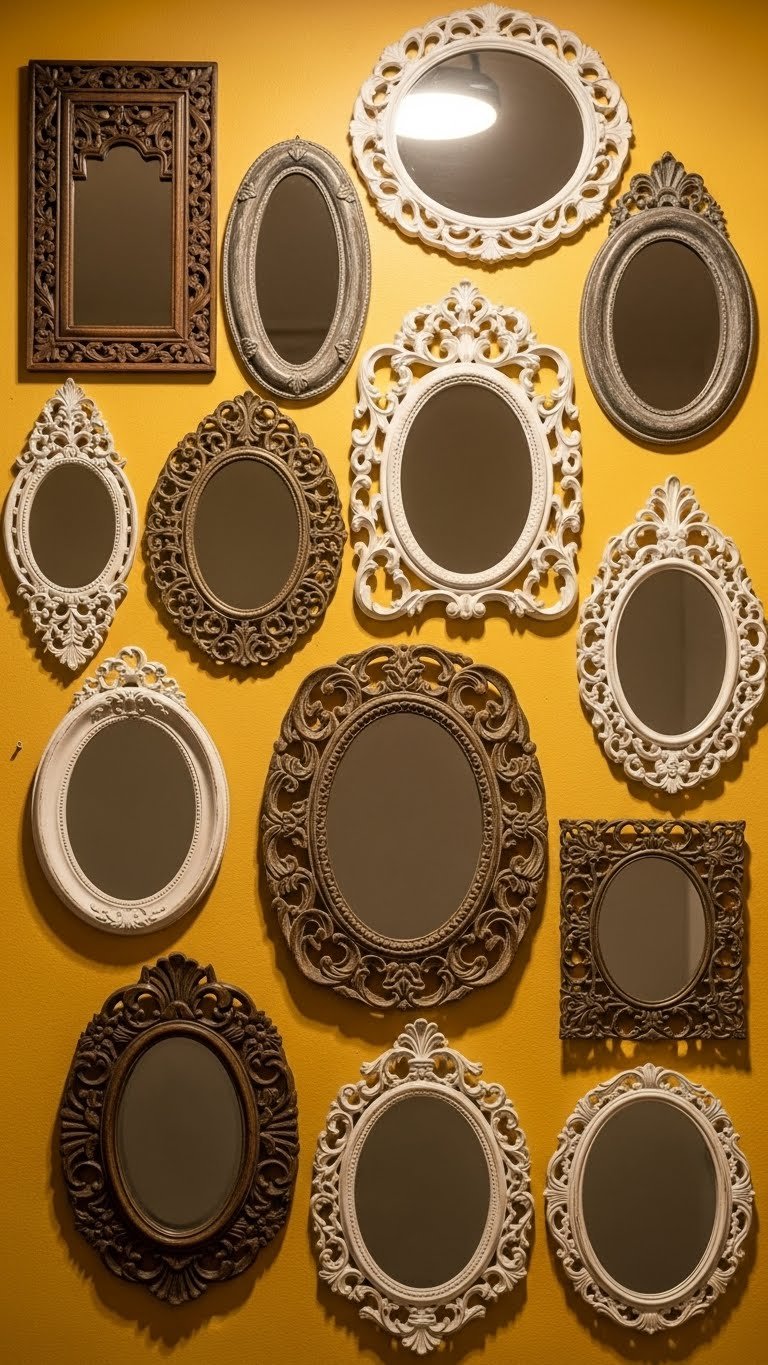
    4. Go Bohemian with Mixed Vintage Frames

    Thrifted and vintage mirrors bring character and history to a wall. This bohemian approach celebrates imperfection and tells a story.

    Hunt at thrift stores, estate sales, and Facebook Marketplace for mirrors in varying ornate frames. Aim for a mix of frame styles—carved wood, ornate metal, painted finishes—in a loose color palette (neutrals with one accent color works well). Hang them close together to create a “wall within a wall” effect. Budget: $20–$100 total if thrifting; higher if buying from online vintage shops. Time: 2–3 hours sourcing, plus 1.5 hours hanging. This is a weekend project that feels like treasure hunting.

    The collected, lived-in look adds soul and sparks conversation. Plus, you’re up-cycling, which feels good.

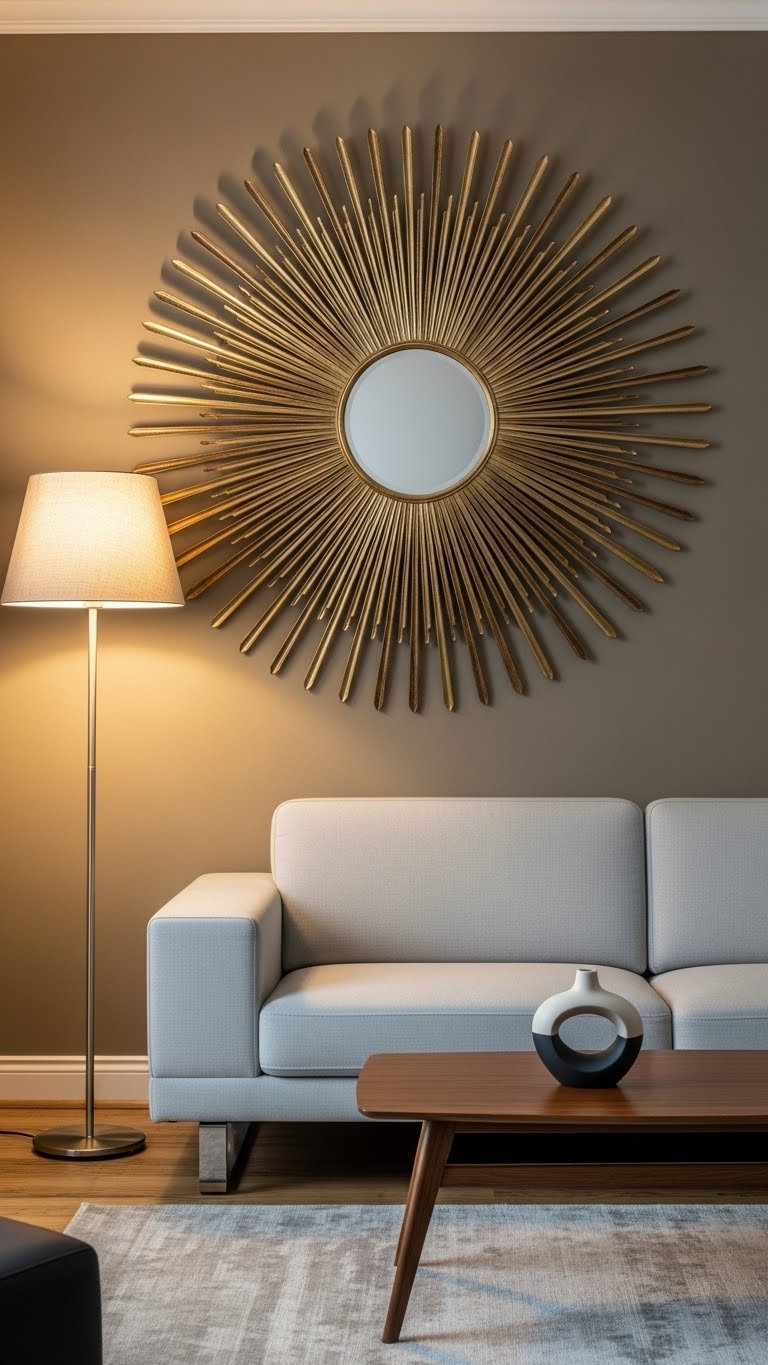
    5. Create a Sunburst Focal Point

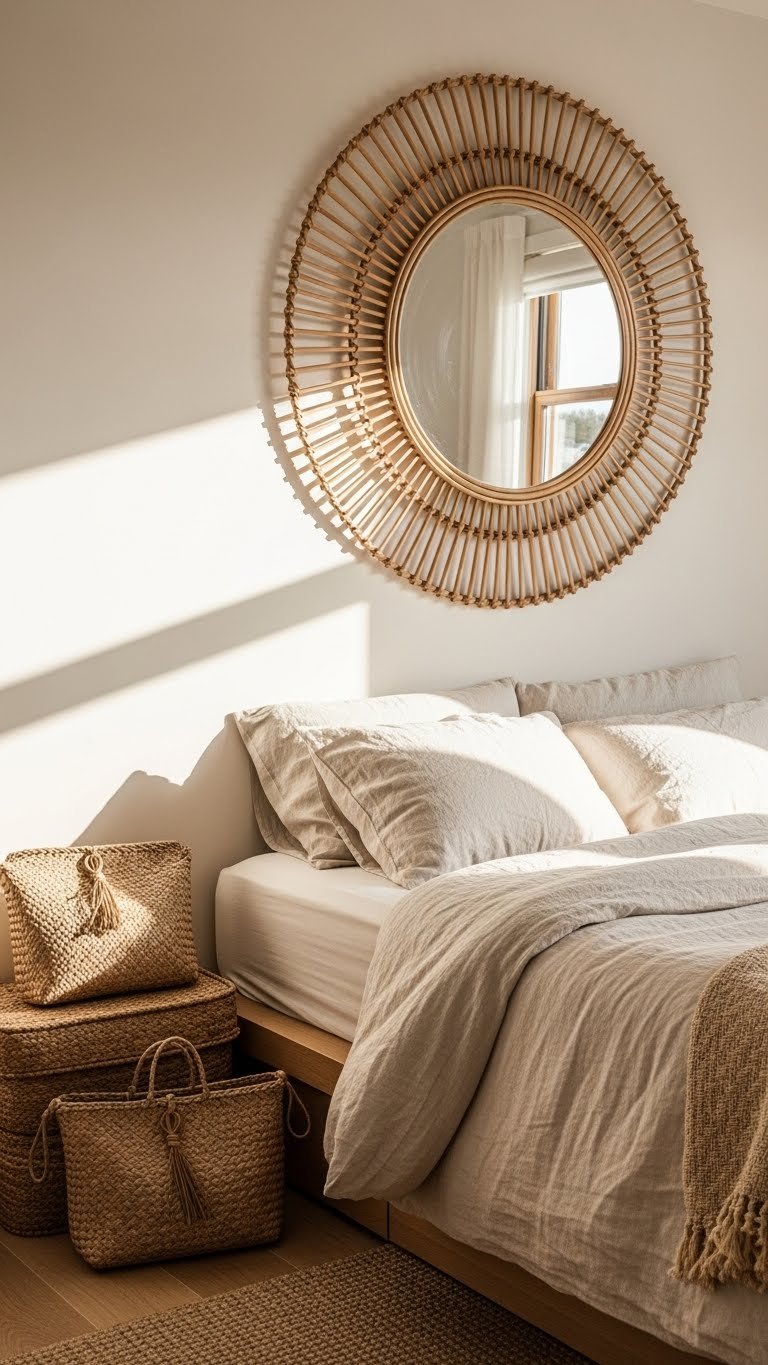
    A sunburst mirror commands attention as a solo statement piece or can anchor a larger cluster. Its radial design draws the eye inward and feels both modern and timeless.

    Position your sunburst mirror at eye level (57–60 inches from floor to center) in a space with good light. If you’re clustering, let it be the dominant piece with only 2–3 smaller supporting mirrors nearby—overcrowding diminishes its impact. Budget: $80–$400+ depending on size and material (some are investment pieces). Wayfair, West Elm, and Urban Outfitters carry options. Time: 30 minutes hanging if you’re working with a sturdy wall anchor. If renting, use heavy-duty adhesive strips (rated for 16+ pounds).

    This single piece can refresh an entire room without any additional styling.

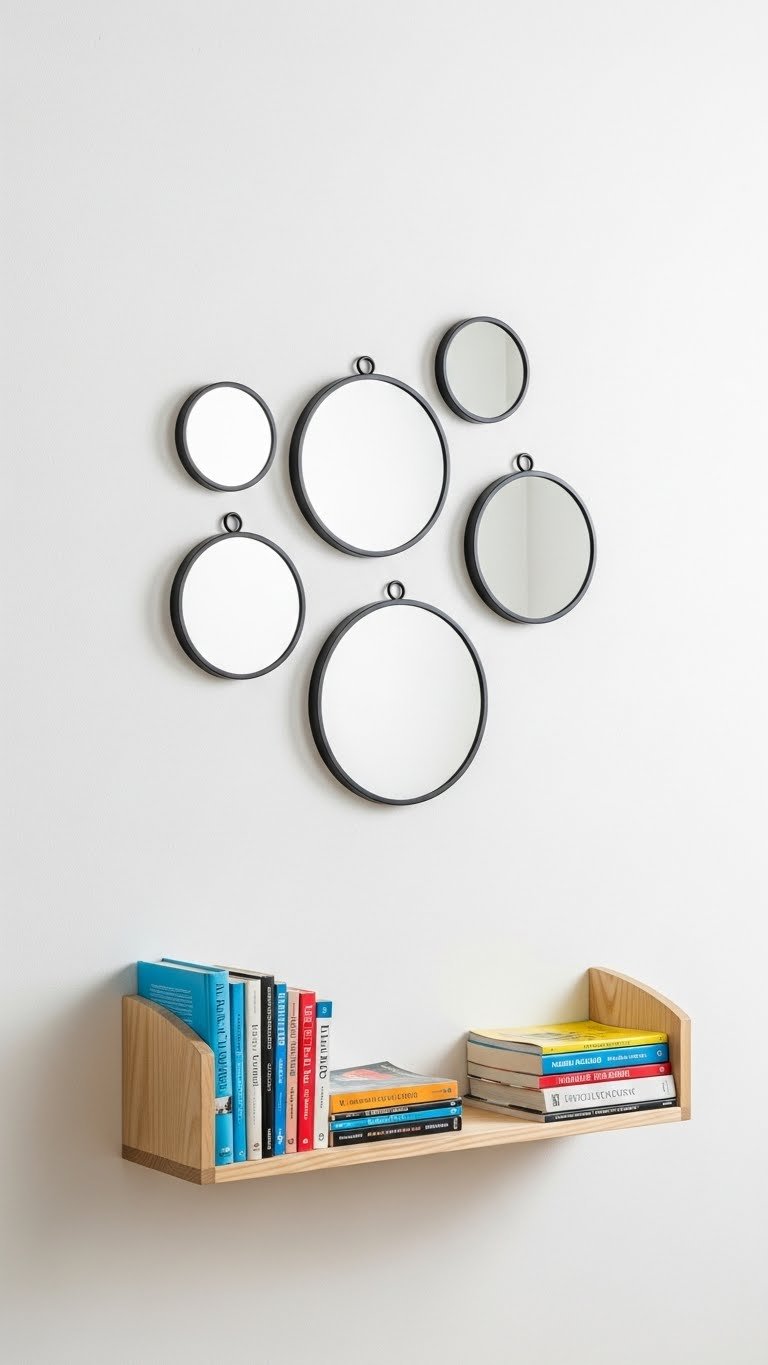
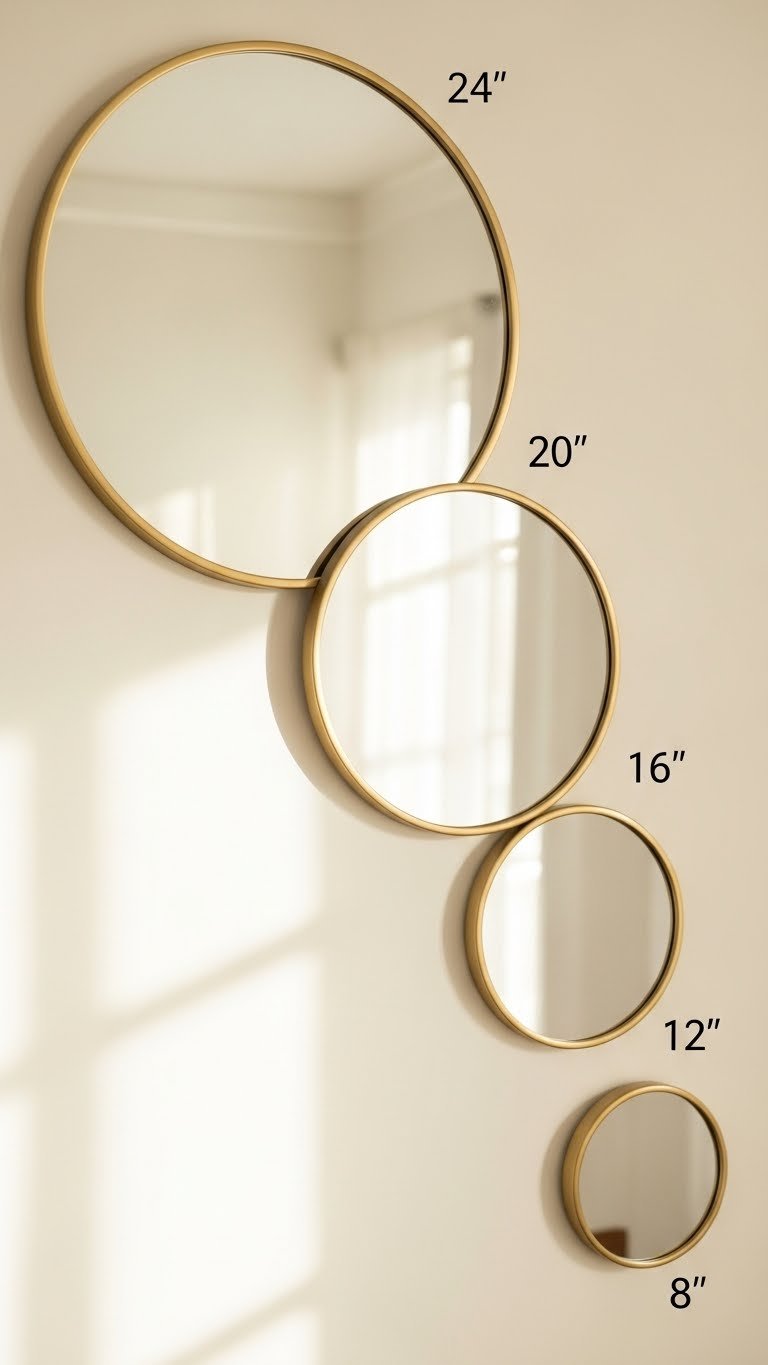
    6. Layer Circles in Graduated Sizes

    Graduating circle sizes from large to small creates visual rhythm and guides the viewer’s eye. This is particularly effective in narrow hallways or above sideboards.

    Hang your largest circle first, then add progressively smaller ones below and slightly offset. Leave 3–4 inches between each mirror. The stair-step effect feels intentional without being rigid. Budget: $70–$180 for five mirrors. IKEA, Target, and Amazon have affordable round mirrors in various sizes. Time: 1 hour for layout and installation.

    The graduated approach feels curated and gallery-like, elevating even affordable mirrors.

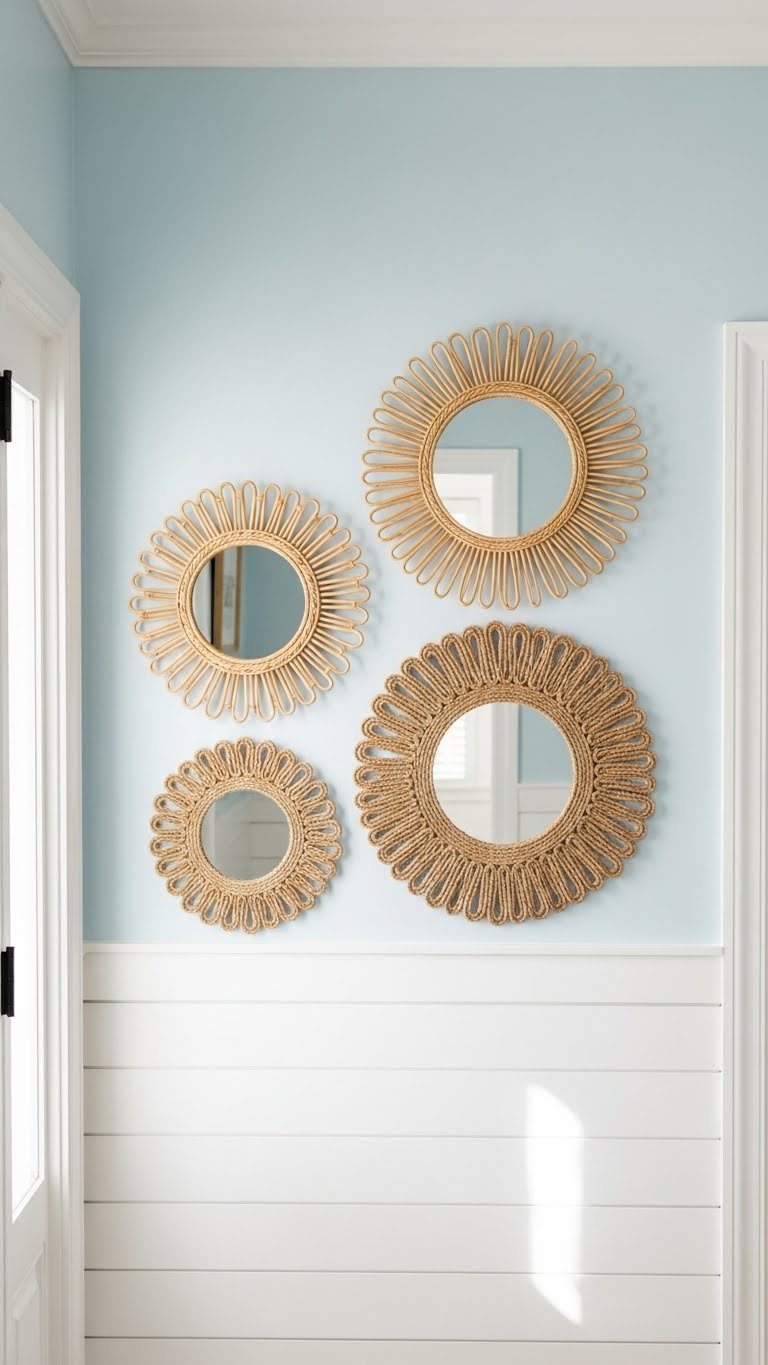
    7. Build a Rattan-Framed Coastal Wall

    Rattan and woven textures bring warmth and a relaxed, coastal vibe. This style works perfectly for beach houses, bohemian interiors, or anyone wanting to soften a modern space.

    Choose mirrors with natural rattan, jute, or seagrass frames in 16–24 inch sizes. Arrange in a loose cluster rather than strict grid. Pair with driftwood, woven baskets, or coastal-themed artwork nearby. Budget: $60–$150 for four mirrors. Check Wayfair, Etsy, or coastal home stores like Pottery Barn. Time: 45 minutes to an hour for hanging. This style is very on-trend for 2025 and photographs beautifully.

    You’ll create an instant vacation-ready retreat that makes your entryway feel like a beach escape.

    8. Hang an Asymmetrical Geometric Cluster

    Geometric shapes bring modern edge to a wall while asymmetrical placement keeps it from feeling cold or corporate. This approach appeals to design-forward folks and works especially well in home offices or hallways.

    Mix shapes (hexagons, triangles, ovals, rectangles) in the same frame color for cohesion while shapes vary for interest. Arrange without symmetry—let some angles point different directions. Budget: $90–$220 depending on size and frame quality. Check Etsy for custom geometric mirrors, or search “hexagon mirror” on Amazon. Time: 1.5–2 hours to arrange and install; take a photo of your layout first to reference.

    The result feels curated and artistic without reading as chaotic.

    9. Install a Mirror Accent Wall with Architectural Molding

    Adding molding around a mirror cluster creates a “built-in” focal wall that feels architectural and high-end. This is a bigger project but absolutely transforms a space.

    Map out your molding design using painter’s tape first. Install basic wooden trim (from Home Depot, $30–$80) around where your mirrors will hang, creating rectangular frames. Then install mirrors inside. Paint the molding to match your wall or go contrasting (black or gold edges create drama). Budget: $150–$400 including materials and molding. Time: 3–4 hours with basic DIY skills; consider hiring help if you’re uncomfortable with trimwork. This is a longer weekend project worth the effort.

    The finished wall reads as a design investment and instantly elevates your entire room.

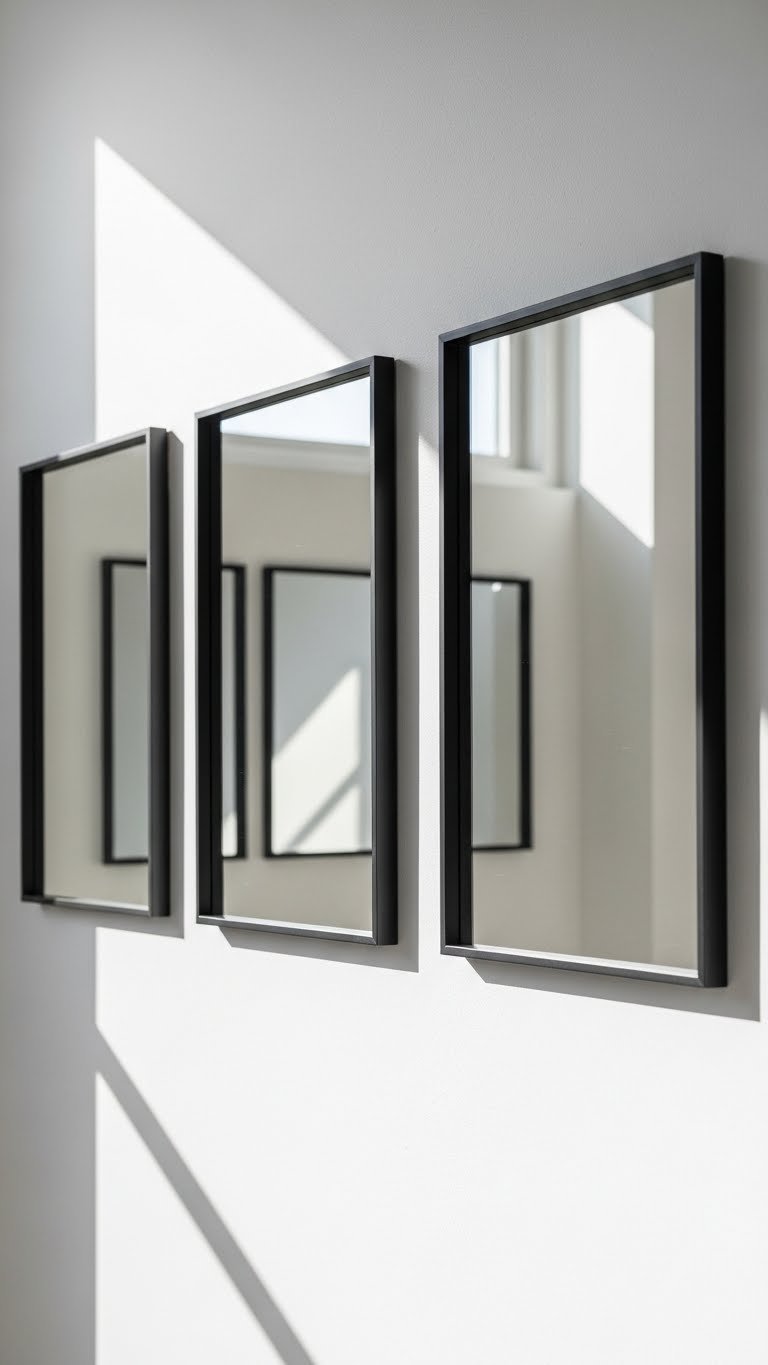
    10. Pair Black Frames with Minimalist Spacing

    Black frames against white walls create stark, modern drama. Generous spacing between pieces keeps the look sophisticated rather than cramped.

    Select 2–4 rectangular mirrors (18–24 inches) in matte black frames. Hang them with 8–12 inches of white wall visible between each one—this negative space is key. Perfect for contemporary, minimalist, or Scandinavian-inspired spaces. Budget: $50–$150 for mirrors. IKEA’s black frames are a budget win. Time: 45 minutes including measurement and installation.

    The clean, high-contrast arrangement feels architectural and intentional.

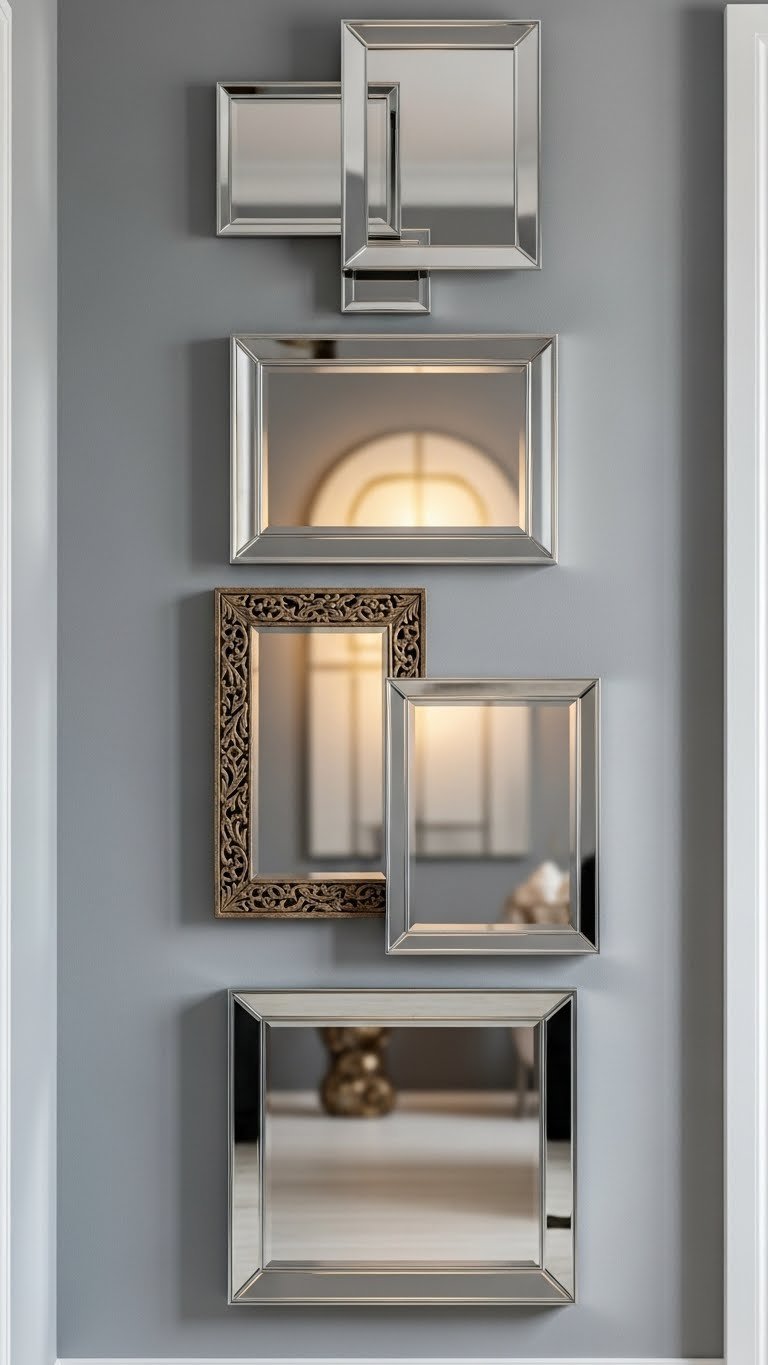
    11. Float Mirrors at Varying Heights in One Column

    Stacking mirrors vertically in a single column creates drama and works beautifully in narrow spaces like hallways or beside stairs. This arrangement feels gallery-like and draws the eye upward.

    Select 4–6 mirrors in varying sizes (from 12 to 30 inches). Hang them along an imaginary vertical line, allowing some to overlap slightly for depth. Vary frame styles and finishes for interest. Budget: $80–$250 depending on sizes. Time: 1.5–2 hours to plan and hang carefully. Overlapping requires precise placement, so use painter’s tape to map it first.

    This approach creates an almost sculptural wall that makes narrow spaces feel intentional rather than cramped.

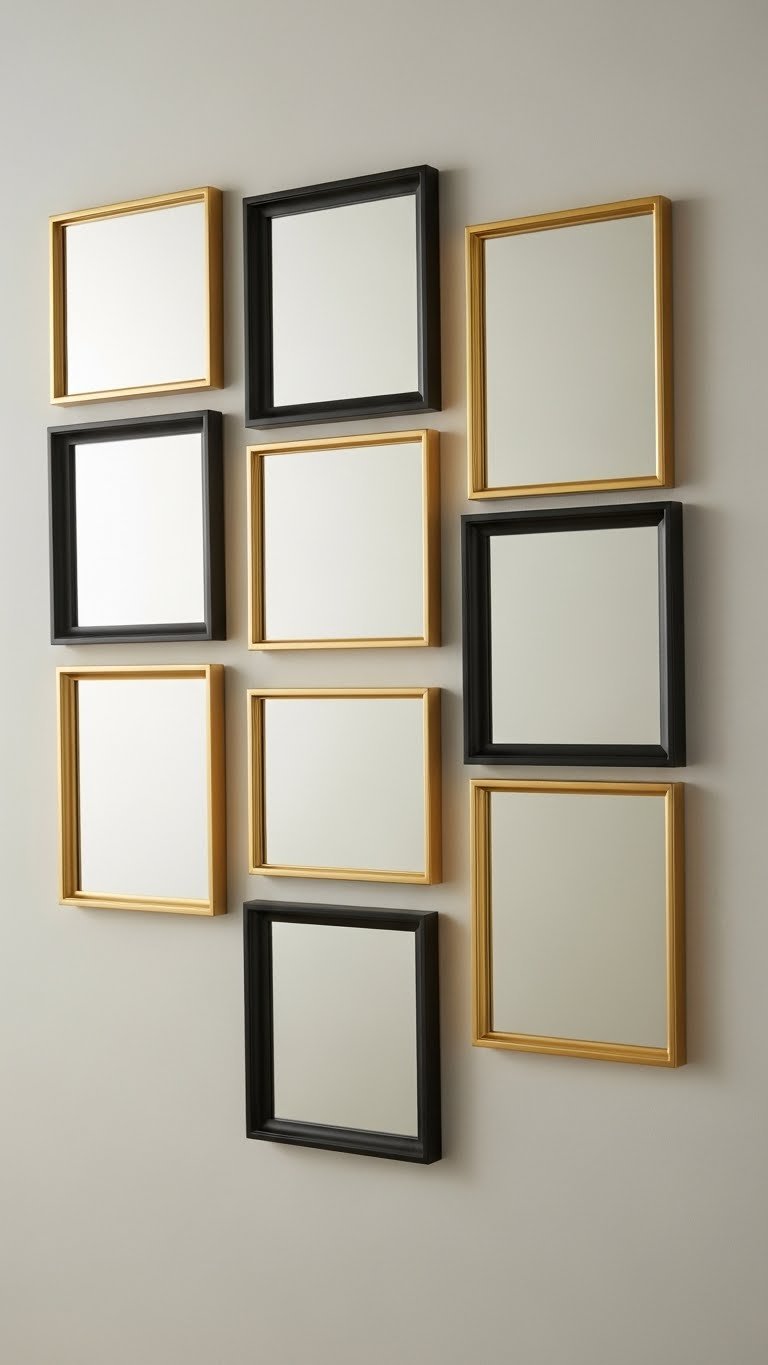
    12. Mix Matte Black and Gold for Two-Tone Drama

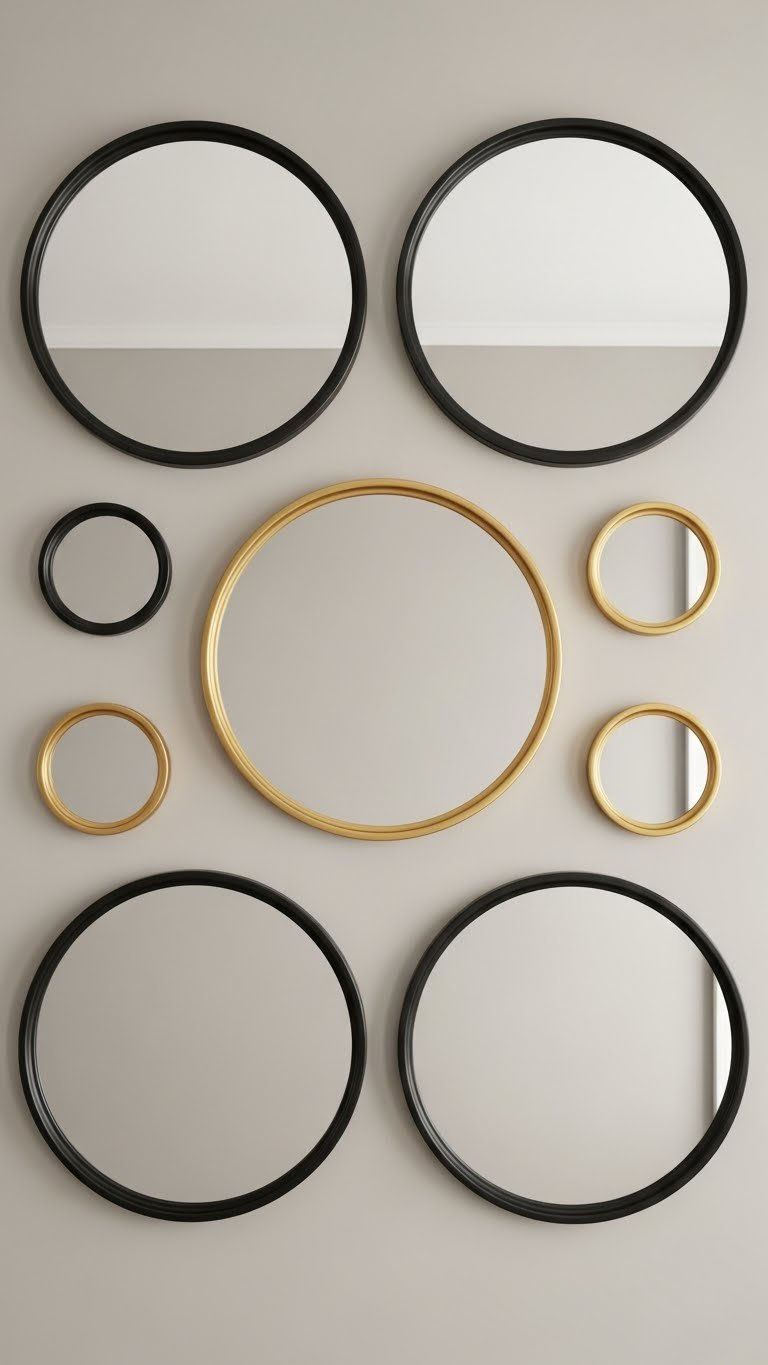
    Alternating black and gold frames creates sophisticated contrast while the two metallic finishes together feel upscale and intentional. This works beautifully in dining rooms, entryways, or bedrooms.

    Choose mirrors in similar sizes but alternate frame colors. Arrange in a checkerboard (black, gold, black, gold) or mix them more organically. Keep colors consistent within the blacks and golds—all matte or all shiny for each, not mixed. Budget: $100–$250 for eight mirrors. Time: 1 hour for layout and installation. This two-tone approach feels designer-curated.

    The color contrast keeps the arrangement from feeling one-note while the metallic finishes add luxury.

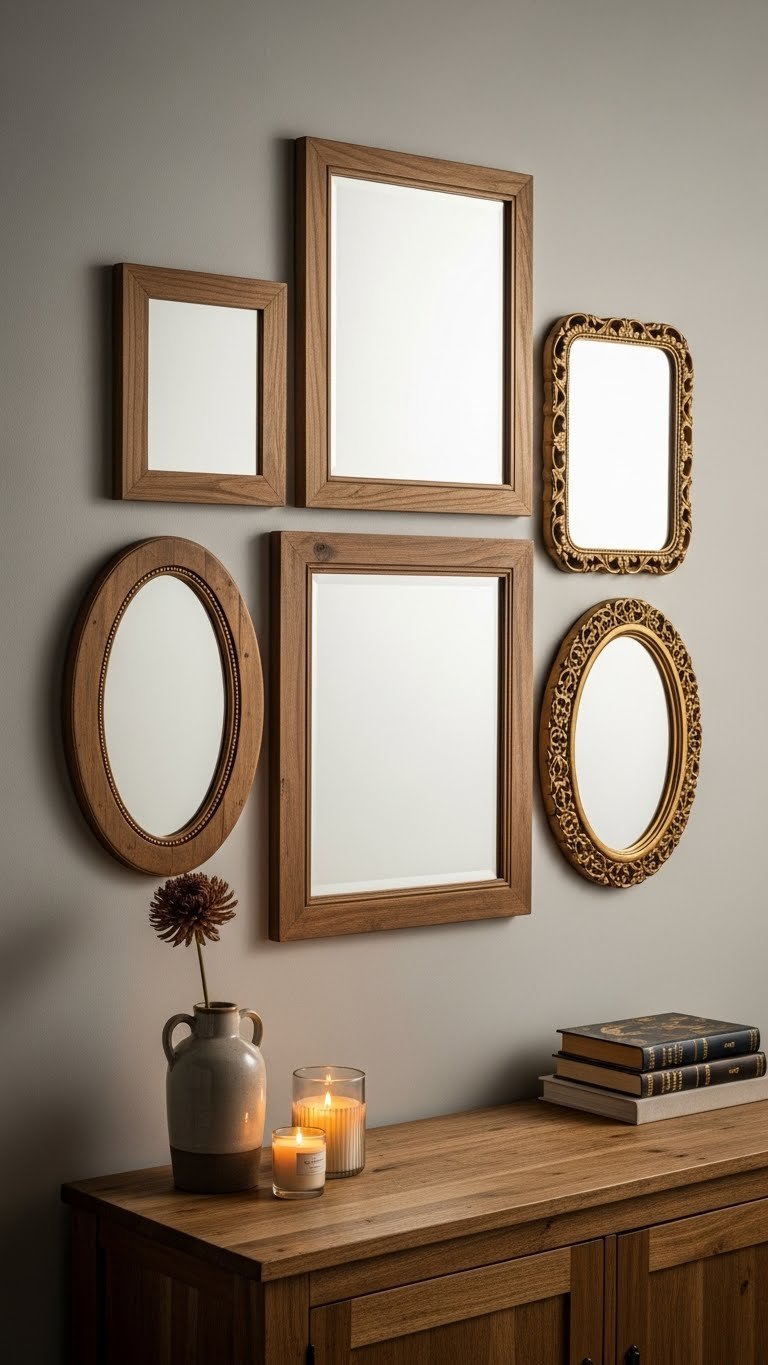
    13. Group Mirrors Above a Console Table

    Positioning mirrors above a console creates a styled vignette and makes the entire arrangement feel more curated than random wall hanging. This works great in entryways or living rooms.

    Select 4–6 mirrors ranging from 12–24 inches. Hang them 12–18 inches above a console table (leaving breathing room). The mirrors should be wider than the table below, creating visual weight. Add small décor pieces (candle, book, plant) on the table to ground the arrangement. Budget: $100–$300 depending on console and mirror quality. Time: 1.5 hours including hanging and styling.

    The complete vignette reads as polished and intentional—like you hired a designer.

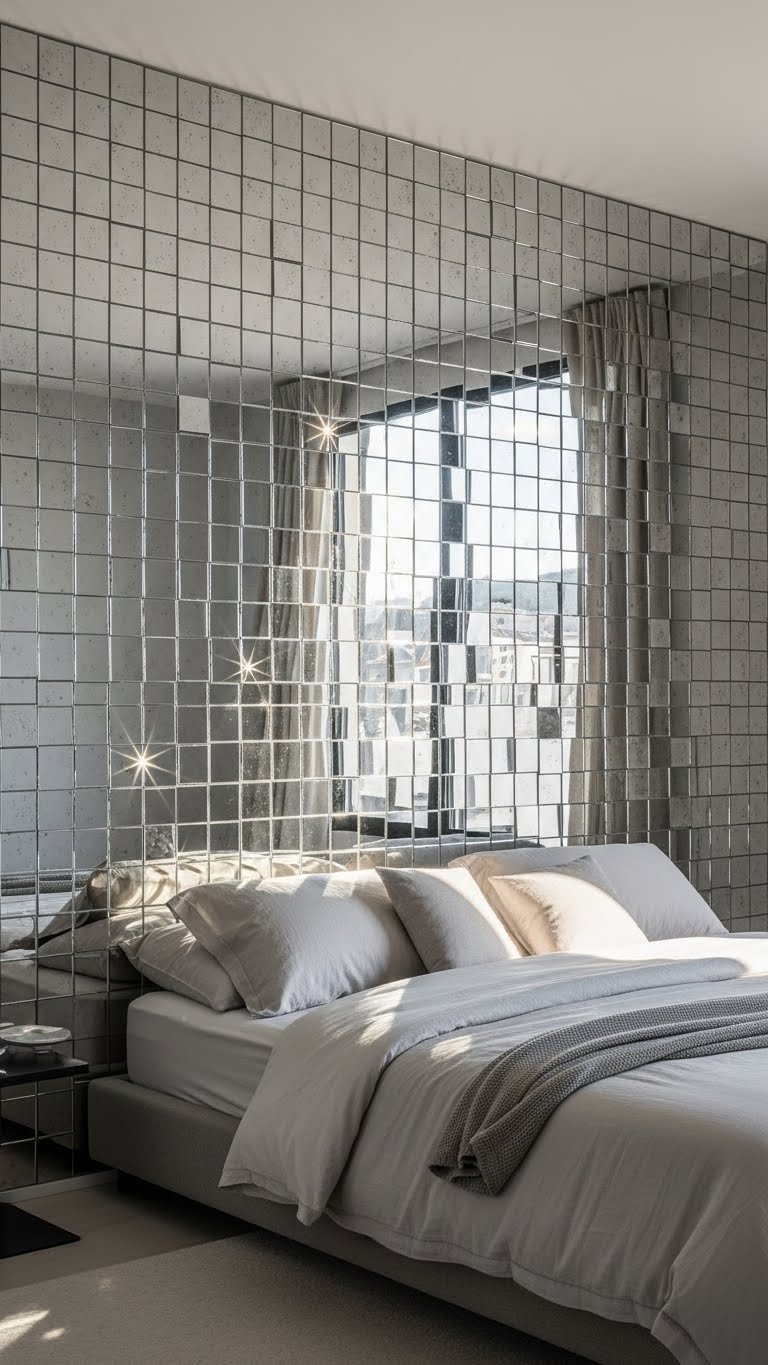
    14. Create a Frameless Minimalist Wall

    Frameless mirrors with beveled edges create a minimalist illusion that dissolves into the wall. This approach maximizes the sense of space and light—perfect for small rooms.

    Choose frameless mirrors in 12–24 inch sizes with polished or beveled edges (the edges reflect light beautifully). Mount directly on the wall with minimal spacing—even let some edges nearly touch for a fluid look. Budget: $50–$150 for several frameless mirrors. IKEA, Wayfair, and Amazon carry affordable options. Time: 45 minutes to an hour, though precise spacing takes care. Use painter’s tape to map your layout first.

    The barely-there aesthetic makes any room feel more spacious and modern.

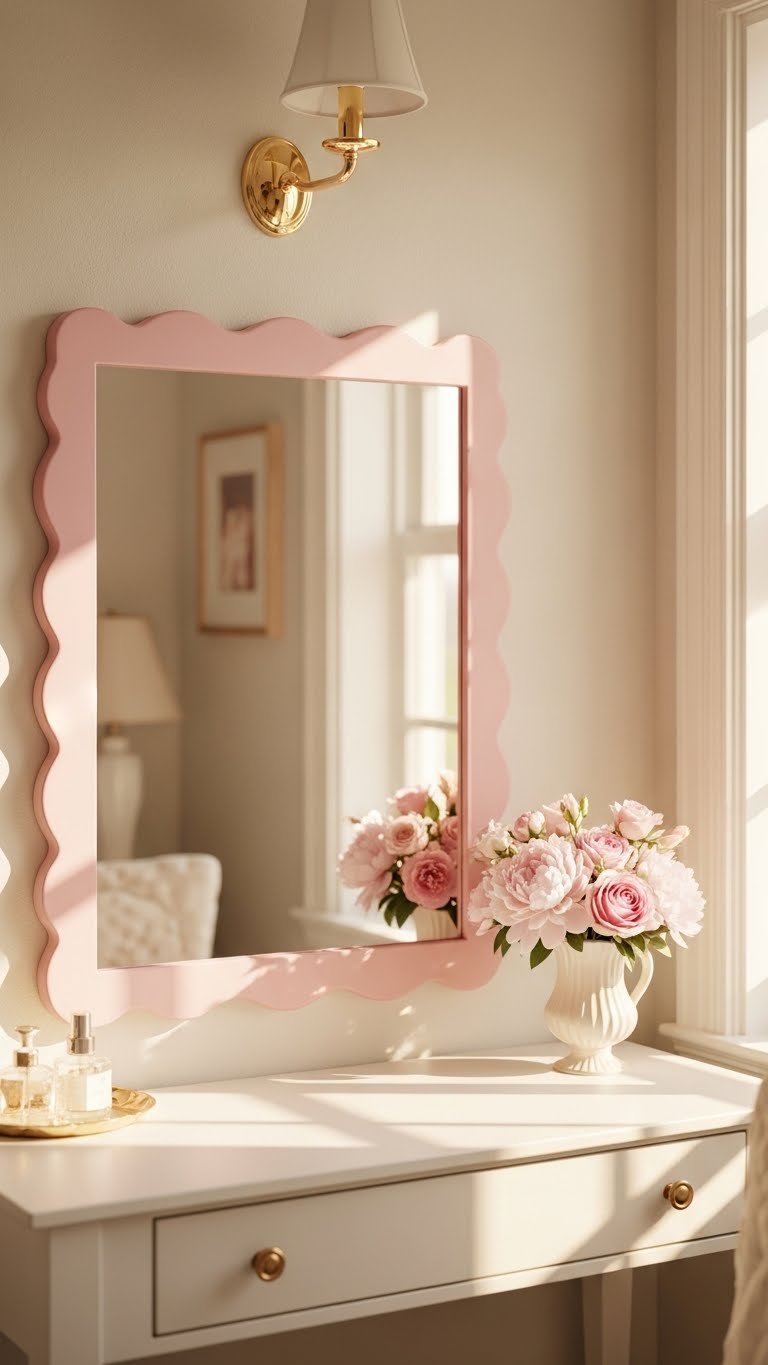
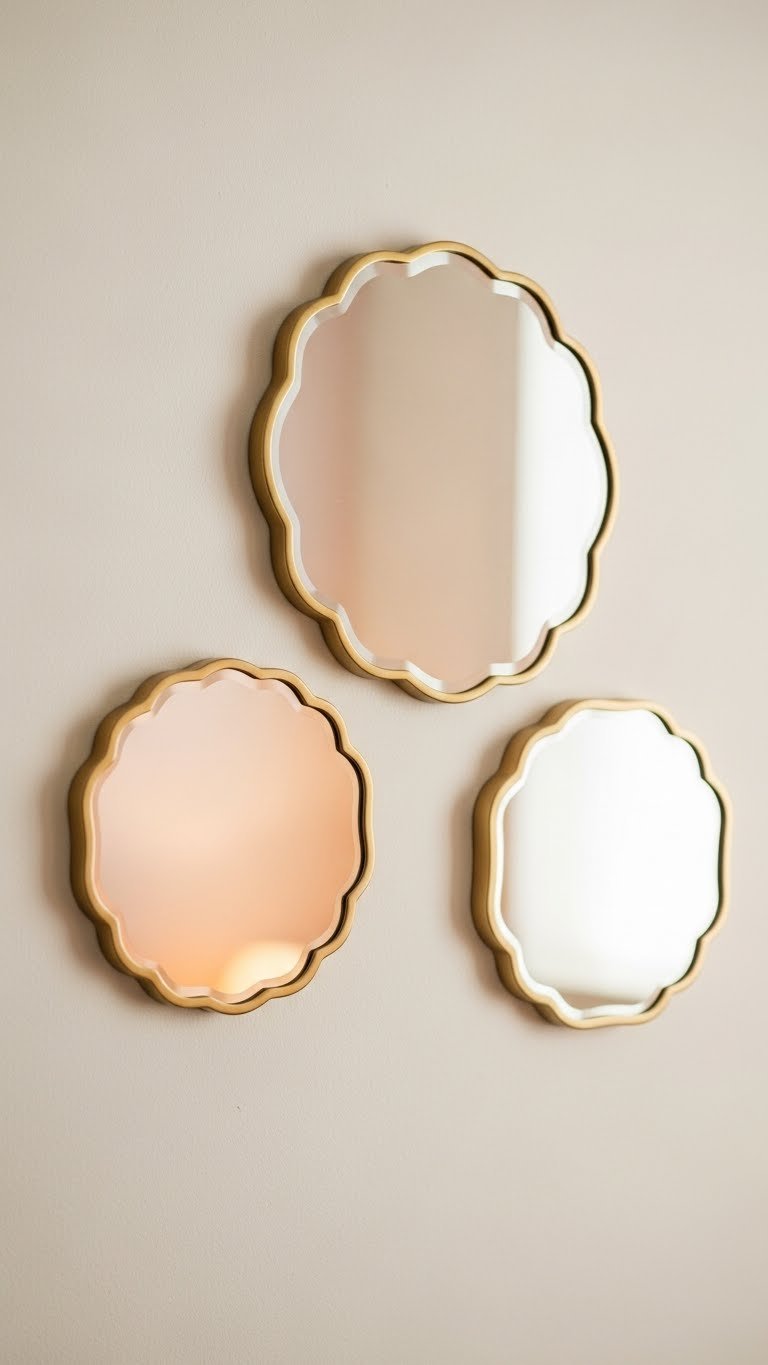
    15. Build a Scalloped-Edge Statement Cluster

    Scalloped edges balance playfulness with elegance—they’re whimsical without being kitschy. This style suits bedrooms, powder rooms, or anyone wanting feminine sophistication.

    Choose 2–4 scalloped mirrors (16–28 inches) in gold, rose gold, or brass frames. Arrange in a loose cluster rather than strict grid—let each mirror breathe. This detail works particularly well in bedrooms and bathrooms. Budget: $80–$200 for quality scalloped mirrors. Check Wayfair, Anthropologie, or specialty home goods stores. Time: 1 hour for installation. The detail alone makes these mirrors special.

    Scalloped edges add personality and a touch of glamour without overdoing it.

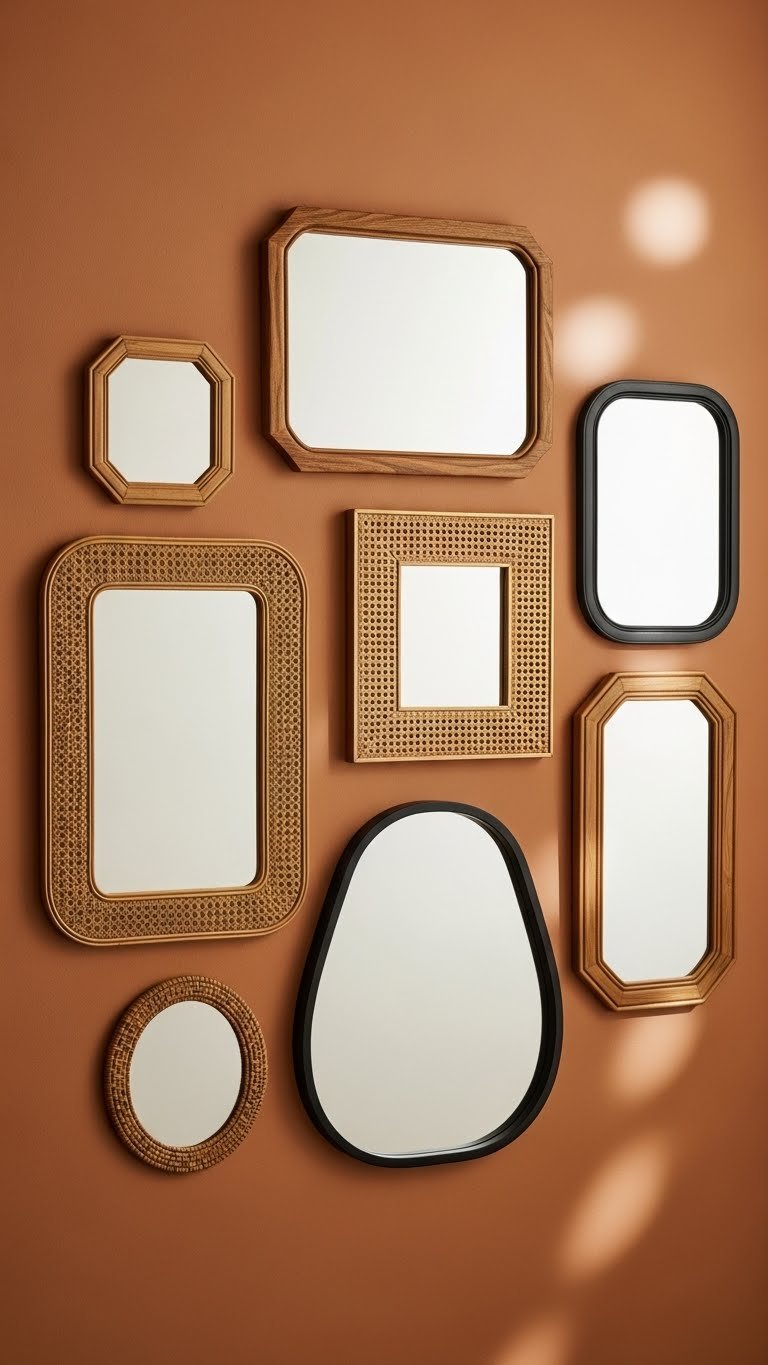
    16. Arrange Mirrors in a Loose Organic Cluster

    An organic cluster mimics how naturally collected items group together. This approach feels personal, artistic, and works in eclectic or bohemian spaces.

    Start with one focal mirror, then add pieces around it without overthinking. Vary sizes, shapes, and finishes. Allow for interesting negative space rather than filling every gap. Budget: $80–$250 depending on sourcing (thrift, new, mix of both). Time: 1.5–2 hours to arrange and rearrange until it feels right. This is one of those projects where you live with painter’s tape for a day or two before committing.

    The collected look feels curated by an artist, not assembled by algorithm.

    17. Install Round Mirrors with Overlapping Layers

    Overlapping round mirrors creates dimensional depth and a more sophisticated arrangement than simply spacing them apart. The layering effect is sculptural and gallery-like.

    Hang your largest round mirror first (28–32 inches). Position two or three slightly smaller rounds (16–20 inches) so they partially overlap the large one, creating visual layers. Use painter’s tape first to map placement, then install. Budget: $100–$200 for three quality round mirrors. Time: 1.5 hours with careful placement. This technique reads as more intentional than it actually is—simple but impactful.

    The overlap creates dimensional interest and makes a three-piece arrangement look carefully composed.

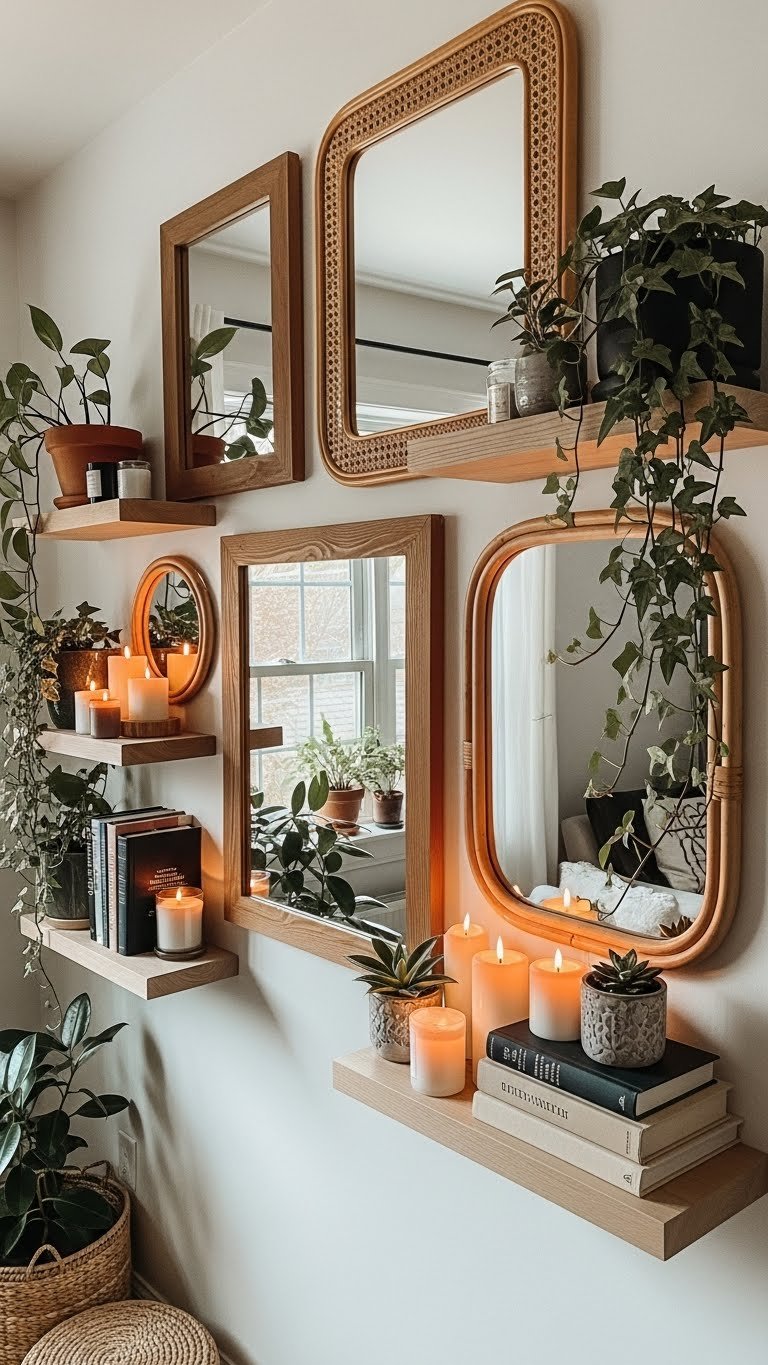
    18. Mix Mirrors with Floating Shelves and Planters

    Mixing mirrors with functional floating shelves and plants creates a living wall that’s both beautiful and practical. This approach works well in living rooms and entryways.

    Install 2–3 mirrors alongside 1–2 small floating shelves (12–18 inches). Style the shelves with small plants, books, candles, or meaningful objects. Vary heights and ensure good spacing. Budget: $100–$250 for mirrors, shelves, plants, and styling objects. Time: 2–3 hours including shelf installation and styling. This requires more planning but feels rewarding.

    You create a curated wall that’s visually interesting and reflects your personality.

    19. Hang Arched Mirrors in a Vertical Line

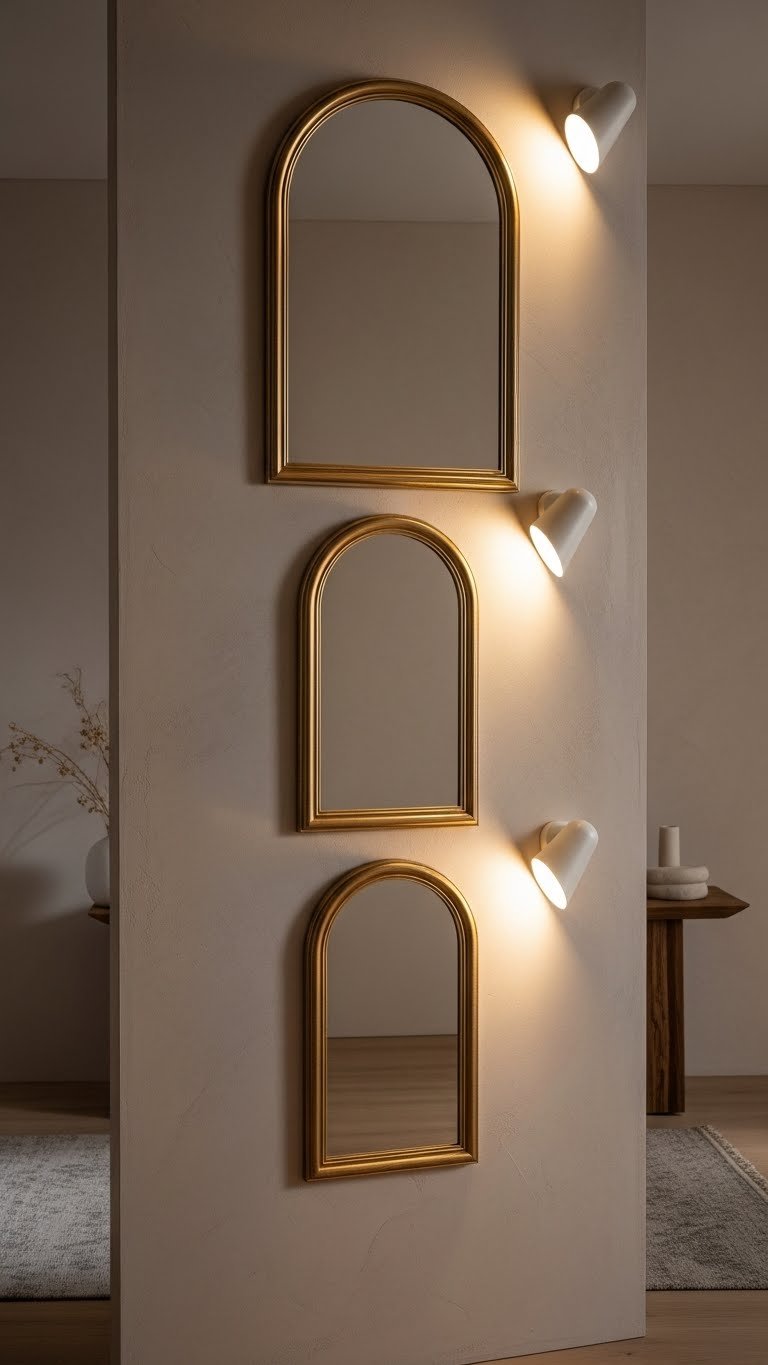
    Stacking arched mirrors vertically emphasizes height and creates an elegant, almost ecclesiastical feel. The arch shape softens a vertical arrangement beautifully.

    Select 3–4 arched mirrors (28, 22, 16 inches) in matching or similar frames. Stack vertically with 4–6 inches between each. The graduated sizes create visual interest without clutter. Budget: $120–$280 for three quality arched mirrors. Wayfair and West Elm have excellent arched options. Time: 1 hour for hanging. The arch detail alone makes this arrangement feel intentional.

    Arched mirrors in a vertical stack read as both modern and timeless.

    20. Create a Checker Pattern with Alternating Sizes

    Alternating mirror sizes in a grid creates visual rhythm and keeps the arrangement from feeling too formal. This pattern works especially well with matching frame colors.

    Arrange nine mirrors in a 3×3 grid, alternating sizes: large, small, large in row one; small, large, small in row two; and so on. Use the same frame color throughout for cohesion. Budget: $80–$160 for nine mirrors. IKEA and Target carry affordable mirror options. Time: 1.5 hours to map and hang precisely.

    The checkerboard rhythm feels playful and modern without sacrificing sophistication.

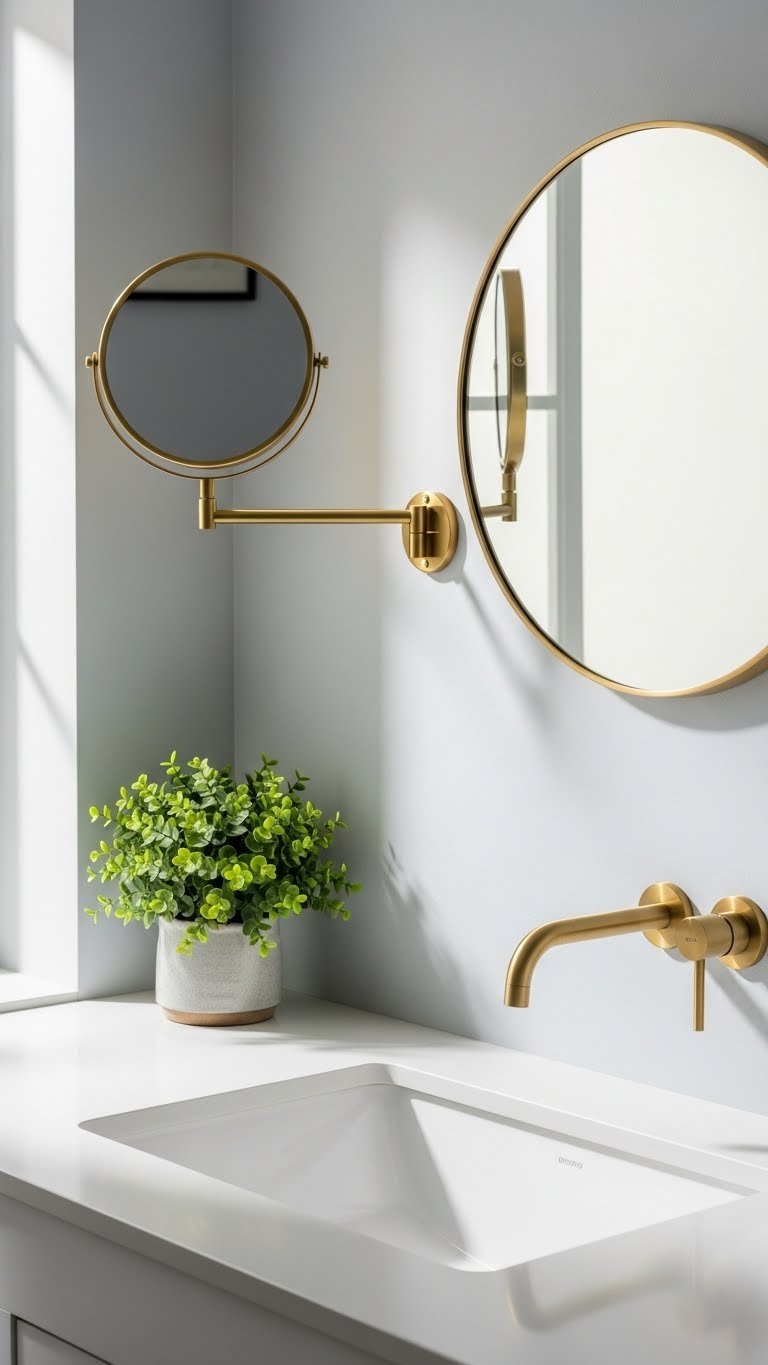
    21. Float Mirrors with Brass Frames and Patterned Wall

    Layering brass-framed mirrors over a patterned wall creates richness and visual depth. The brass catches light and adds warmth to patterned backgrounds.

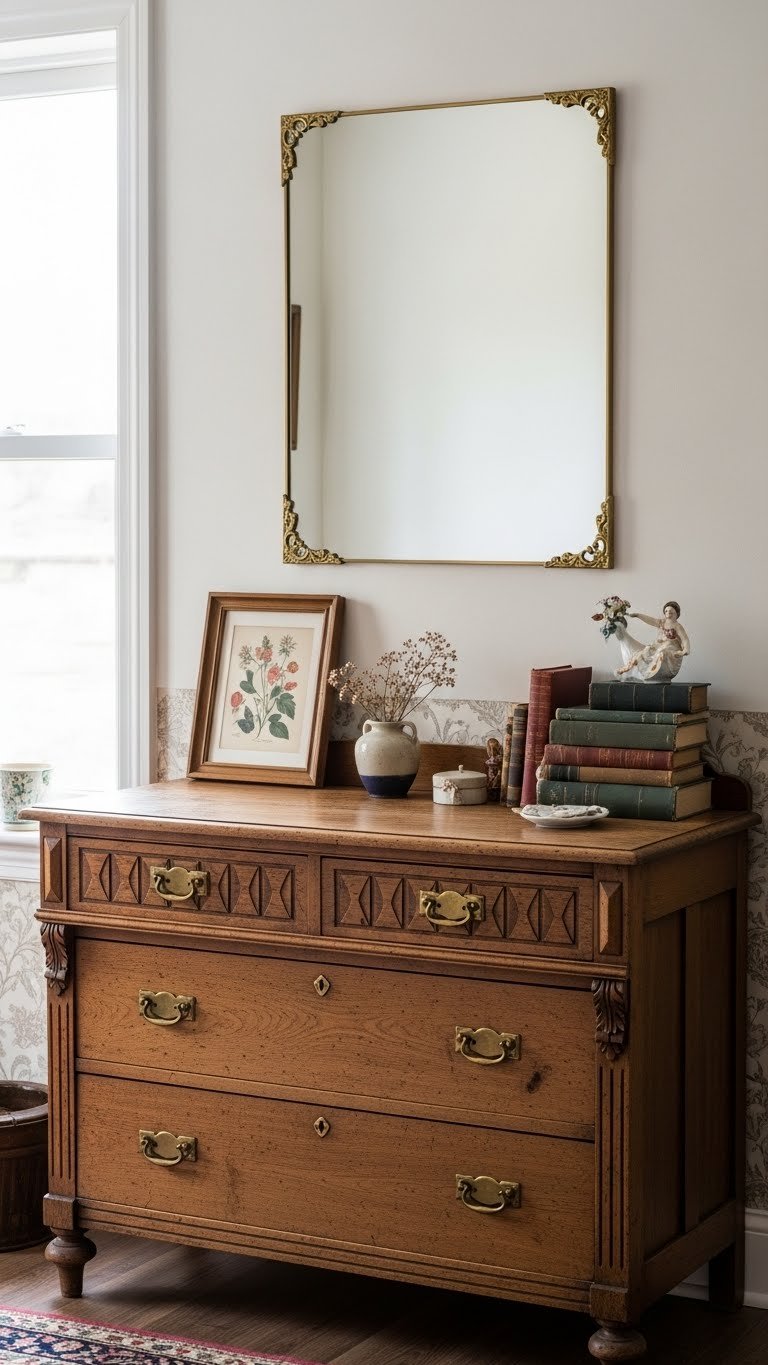
    Choose mirrors with brushed brass or antique brass frames. Hang 3–5 mirrors on a subtly patterned wallpapered wall (geometric, damask, or subtle florals work best—avoid too-busy patterns). Let mirrors vary in size and spacing. Budget: $120–$280 for mirrors plus wallpaper if updating ($30–$80). Time: 2 hours if also installing wallpaper, or 1 hour if just hanging on existing wall.

    The combination of pattern and brass feels collected and intentional—like a vintage collected wall.

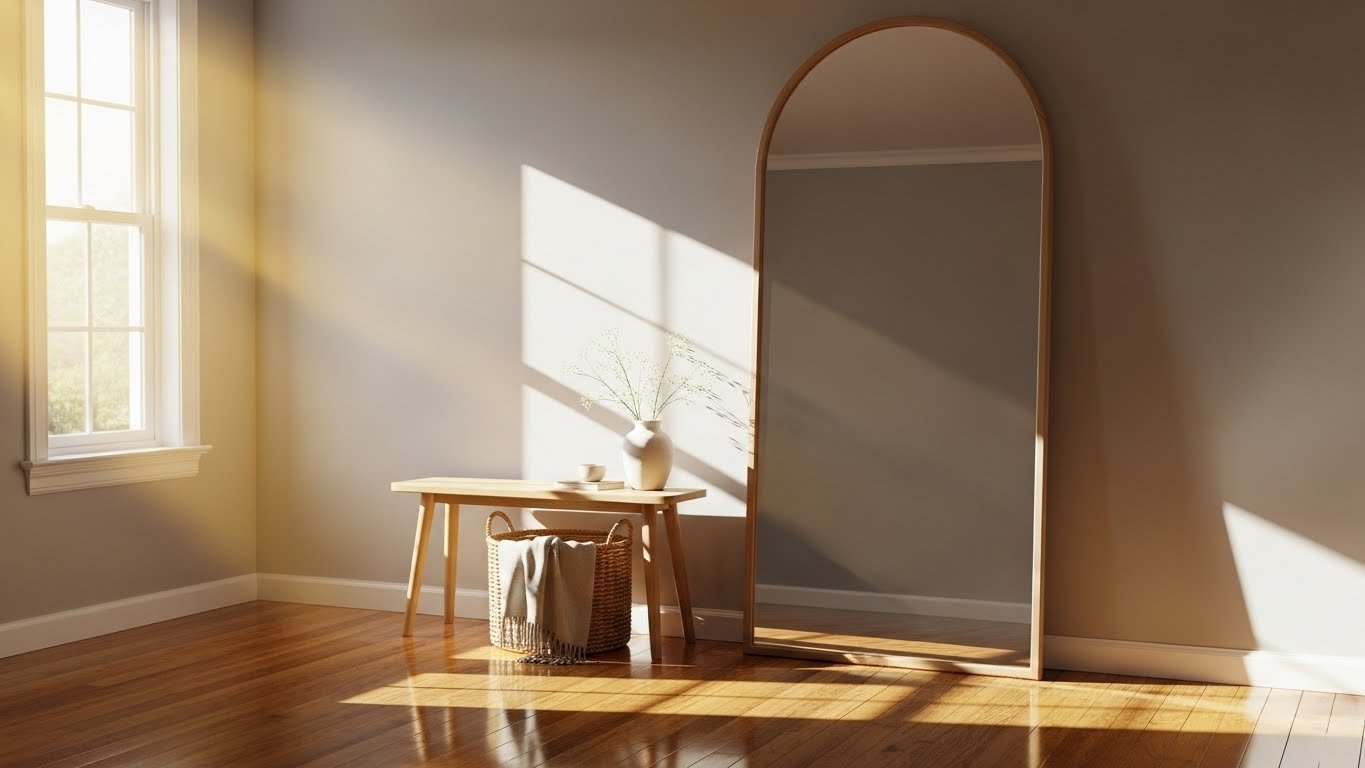
    22. Install a Full-Length Statement Mirror Surrounded by Smaller Pieces

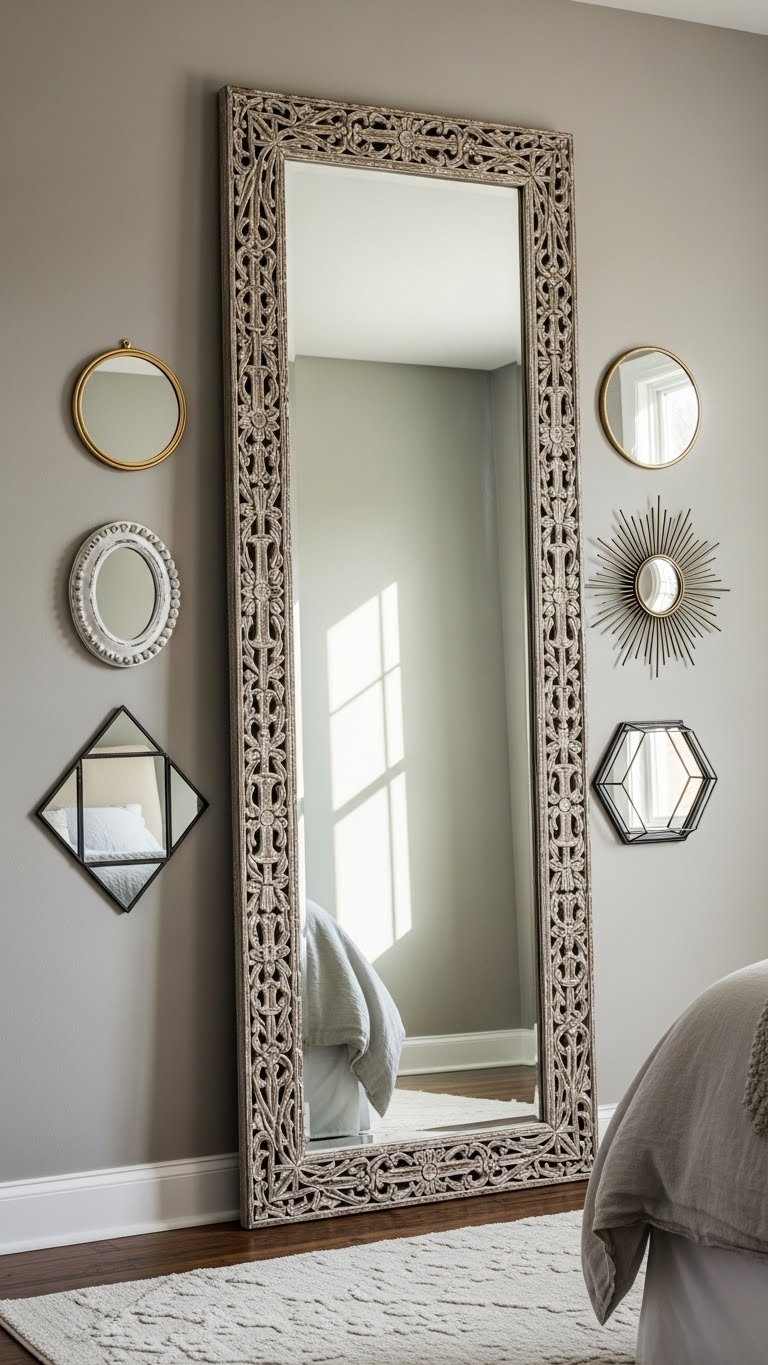
    A full-length mirror as your anchor piece with smaller supporting mirrors creates a dramatic focal wall that’s both functional and artistic. This works beautifully in bedrooms, dressing rooms, or entryways.

    Hang a full-length mirror (36–48 inches tall) in a bold frame (black, gold, or natural wood). Cluster 4–6 smaller decorative mirrors around it asymmetrically, varying sizes. The full-length piece commands attention while smaller mirrors add visual interest. Budget: $150–$350 for the full-length mirror plus several smaller pieces. Time: 2 hours for layout and installation. This arrangement works in rooms with decent wall space.

    The combination of functional and decorative mirrors creates visual impact and serves a purpose.

    23. Group Mirrors Above a Fireplace Mantel

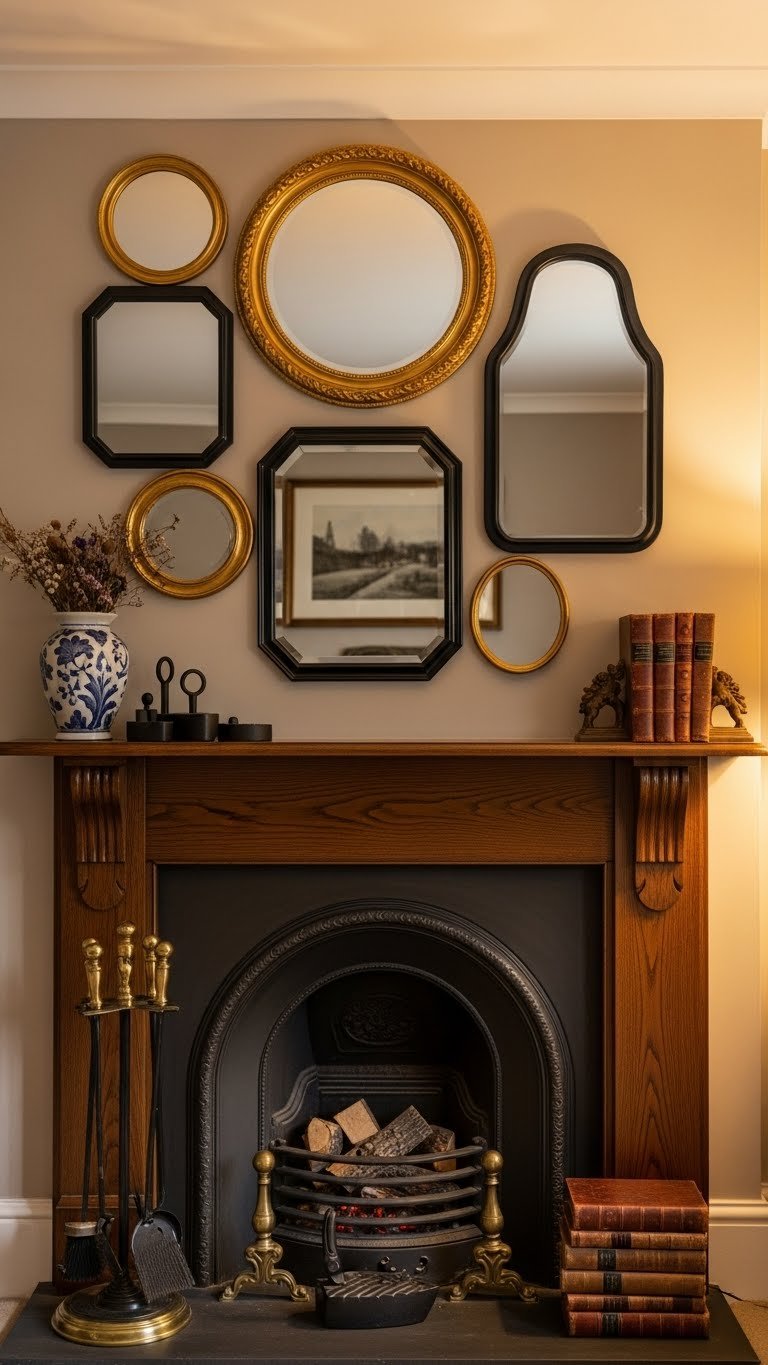
    Mirrors above a fireplace amplify light and create a secondary focal point while making the room feel taller. Fireplaces pair beautifully with mirror clusters.

    Hang mirrors 12–20 inches above your fireplace mantel, centering the arrangement. Mix frame styles and sizes, but aim for visual balance (heavier pieces on sides, lighter in center). Leave space for seasonal mantel décor below. Budget: $100–$250 depending on mirror sizes. Time: 1.5 hours to map, measure, and install. Consider hiring if your fireplace is high or your wall is tricky.

    The arrangement draws attention upward and makes fireplaces feel more intentional and styled.

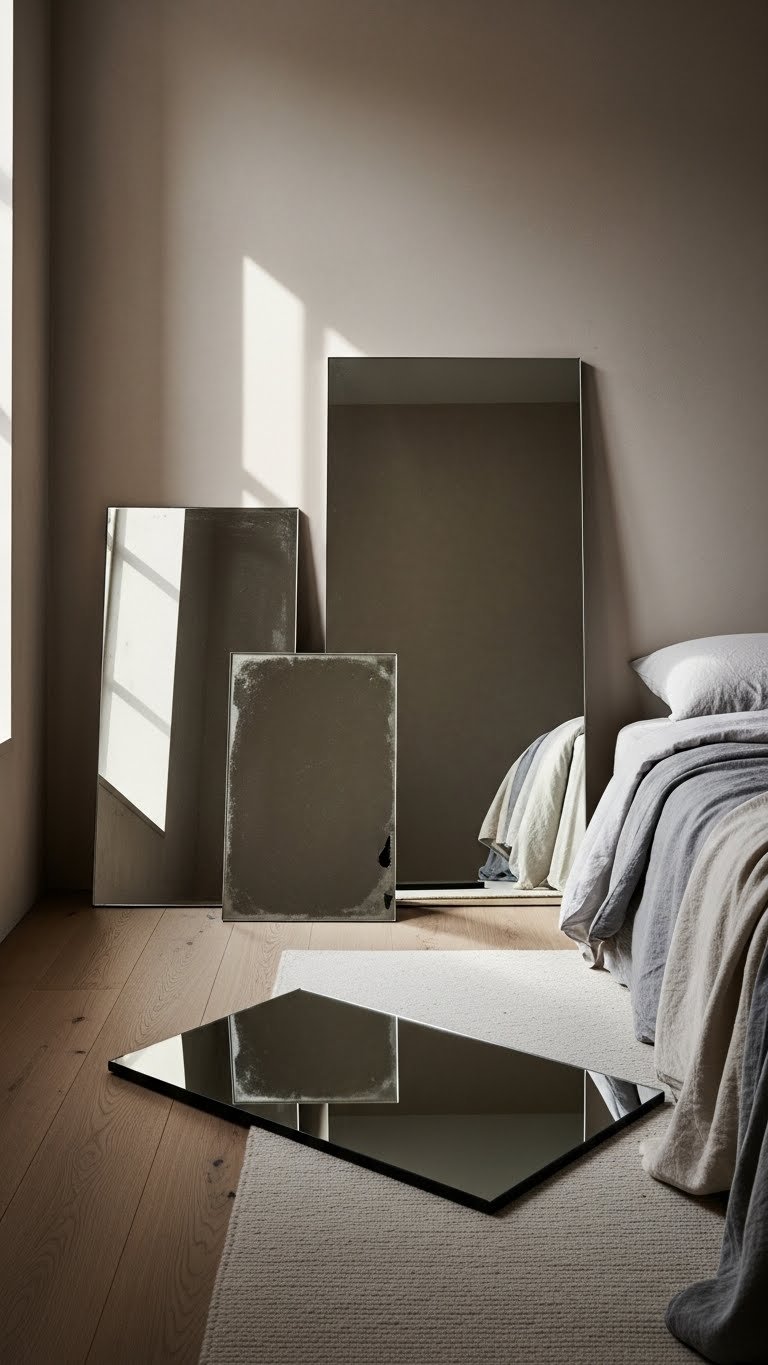
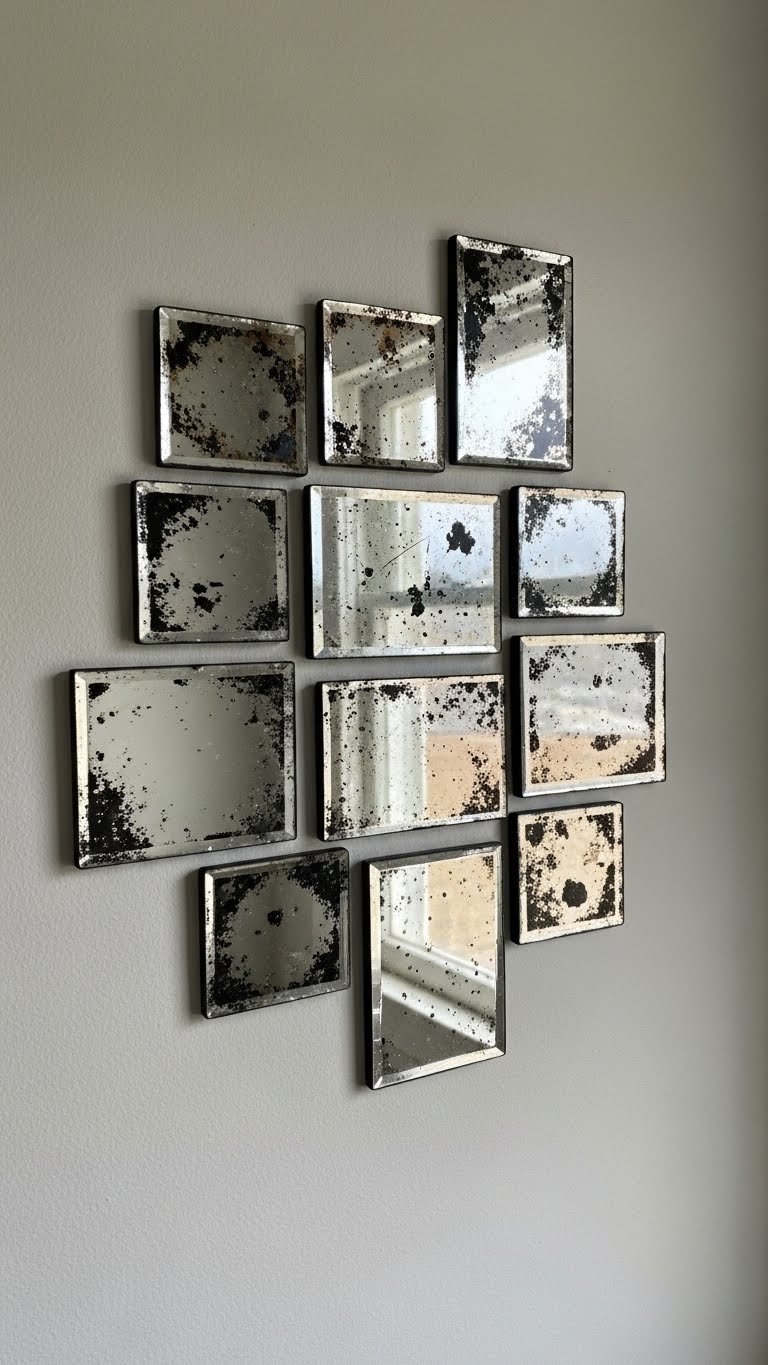
    24. Mix Vintage Mirror Tiles for an Eclectic Wall

    Vintage mirror tiles bring character and a collected, well-traveled feel. Their imperfections are part of the charm and cost less than frameless mirrors.

    Source vintage or distressed mirror tiles from thrift stores, Etsy, or specialty shops ($5–$15 each). Arrange in a loose grid or organic cluster—imperfection is the point. Install with mirror adhesive or small nails. Budget: $40–$100 total if thrifting; $80–$150 if buying online. Time: 1.5 hours sourcing and hanging. This project has a treasure-hunt quality.

    The eclectic vintage vibe creates conversation and reflects personality beautifully.

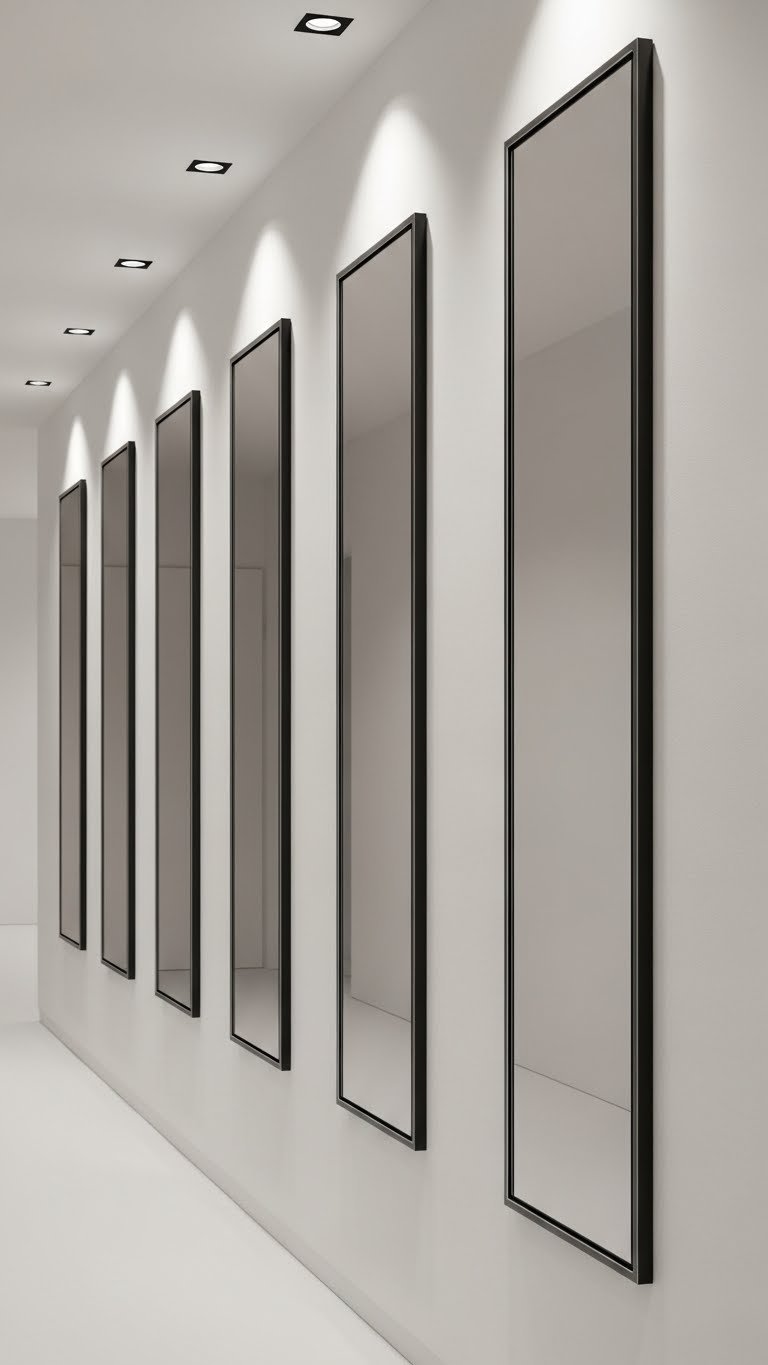
    25. Create a Linear Hallway Mirror Installation

    A linear installation of identical mirrors down a hallway creates rhythm and makes narrow spaces feel intentional and designed. The repetition is calming and sculptural.

    Select 5–8 identical narrow rectangular mirrors (8×24 or 10×26 inches) in the same frame color. Install in a perfectly straight vertical line using a level—precision matters here. Spacing should be even (3–4 inches apart). Budget: $90–$180 for six mirrors. Time: 1.5 hours including careful measurement and installation. This works beautifully for renters using heavy-duty adhesive strips (rated for 16+ pounds per mirror).

    The repetitive line creates visual flow and makes a hallway feel intentional rather than transitional.


    Save this post and pick one arrangement style to start this weekend. Whether you go bold with sunbursts and gold or minimal with frameless pieces, your wall will thank you. Share this with anyone planning a refresh—they’ll be inspired.

  • 27 Small Utility Room Ideas That Boost Function in Tight Spaces

    27 Small Utility Room Ideas That Boost Function in Tight Spaces


    Stuck with a cramped utility room that feels more chaotic than functional? You’re not alone. Small laundry spaces often become dumping grounds for supplies, cleaning tools, and whatever doesn’t fit elsewhere. But here’s the good news: your tight utility room has serious potential. The right mix of smart storage, layout tweaks, and design choices can transform even the tiniest room into a space that actually works for you—not against you.

    We’ve gathered 27 practical ideas that work for renters and homeowners alike, whether you’re working with a closet-sized room or a slightly bigger squeeze. From budget-friendly hacks to investment pieces that last, you’ll find solutions for every budget level. Some ideas take 15 minutes, others are weekend projects. All of them make a real difference in how you move through your space.

    Ready to reclaim your utility room? Let’s dive in.


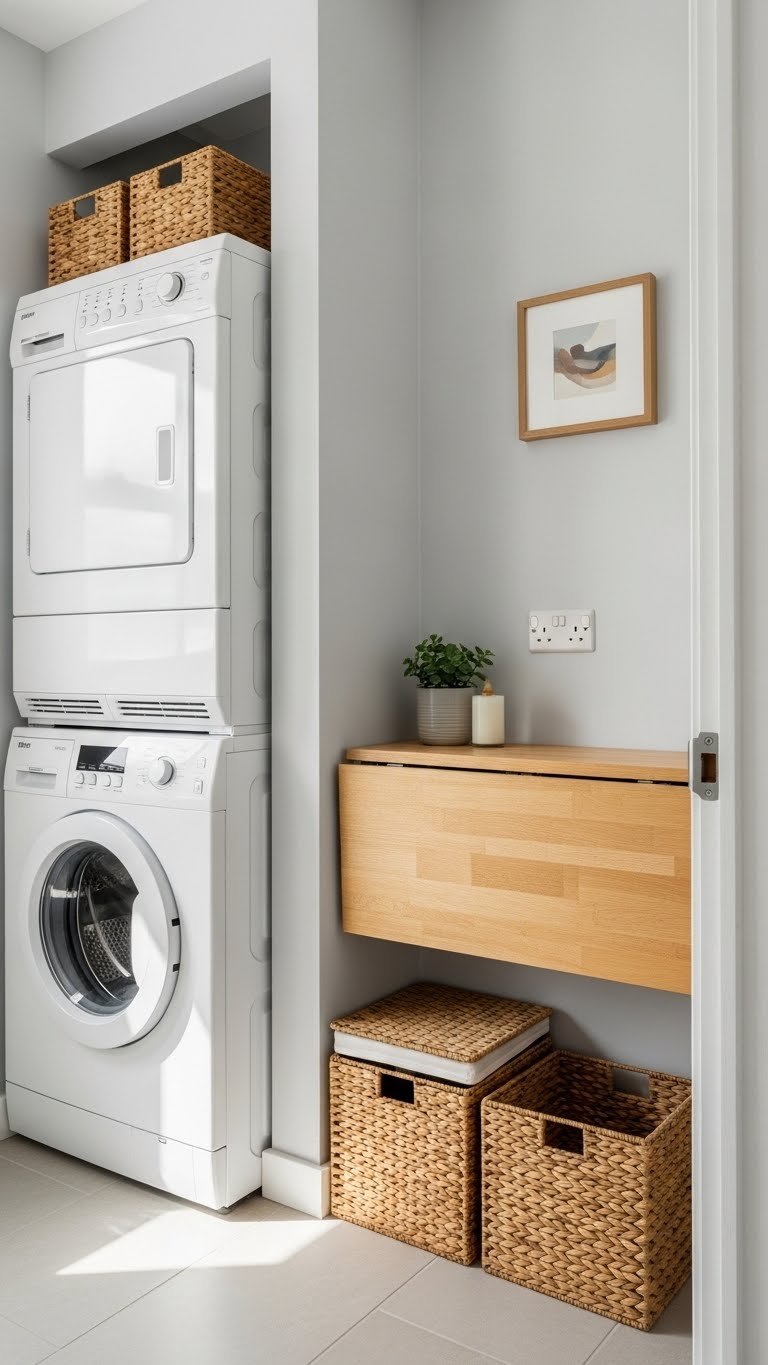
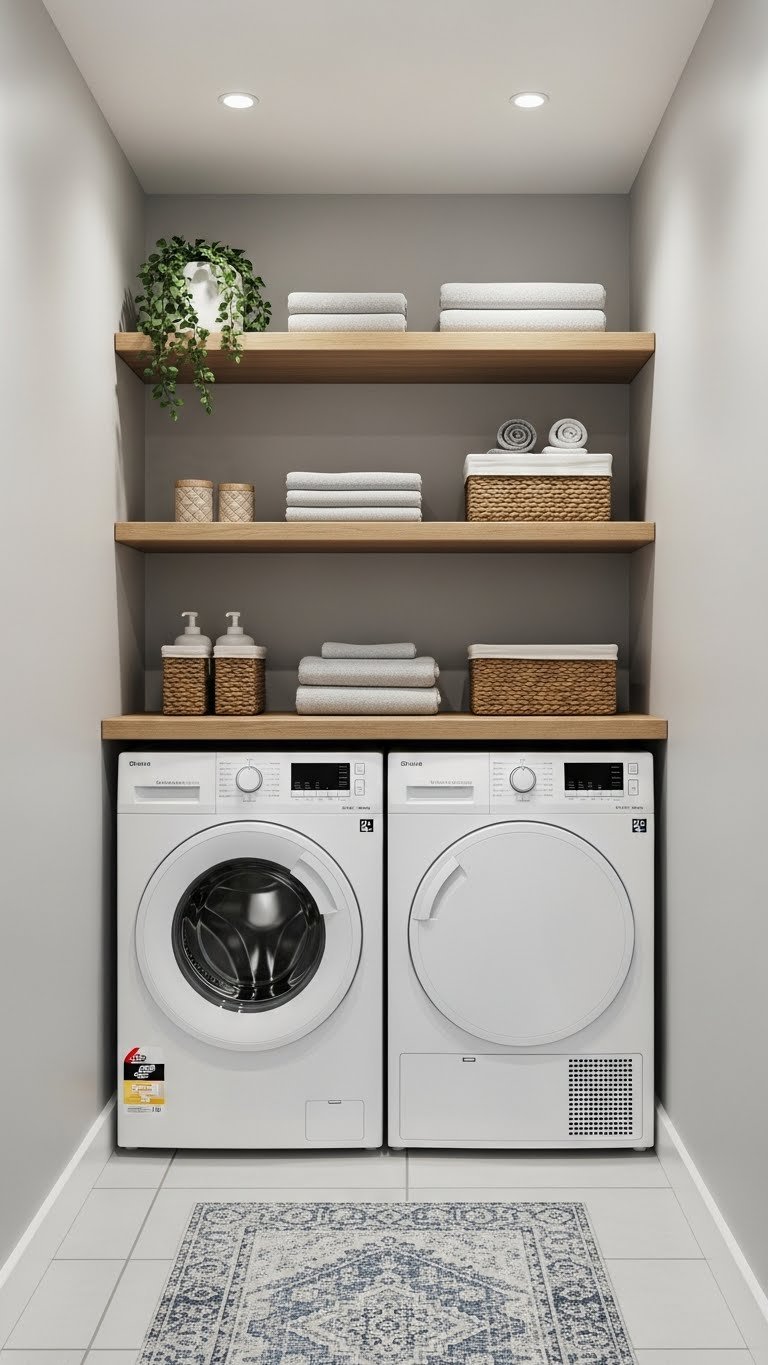
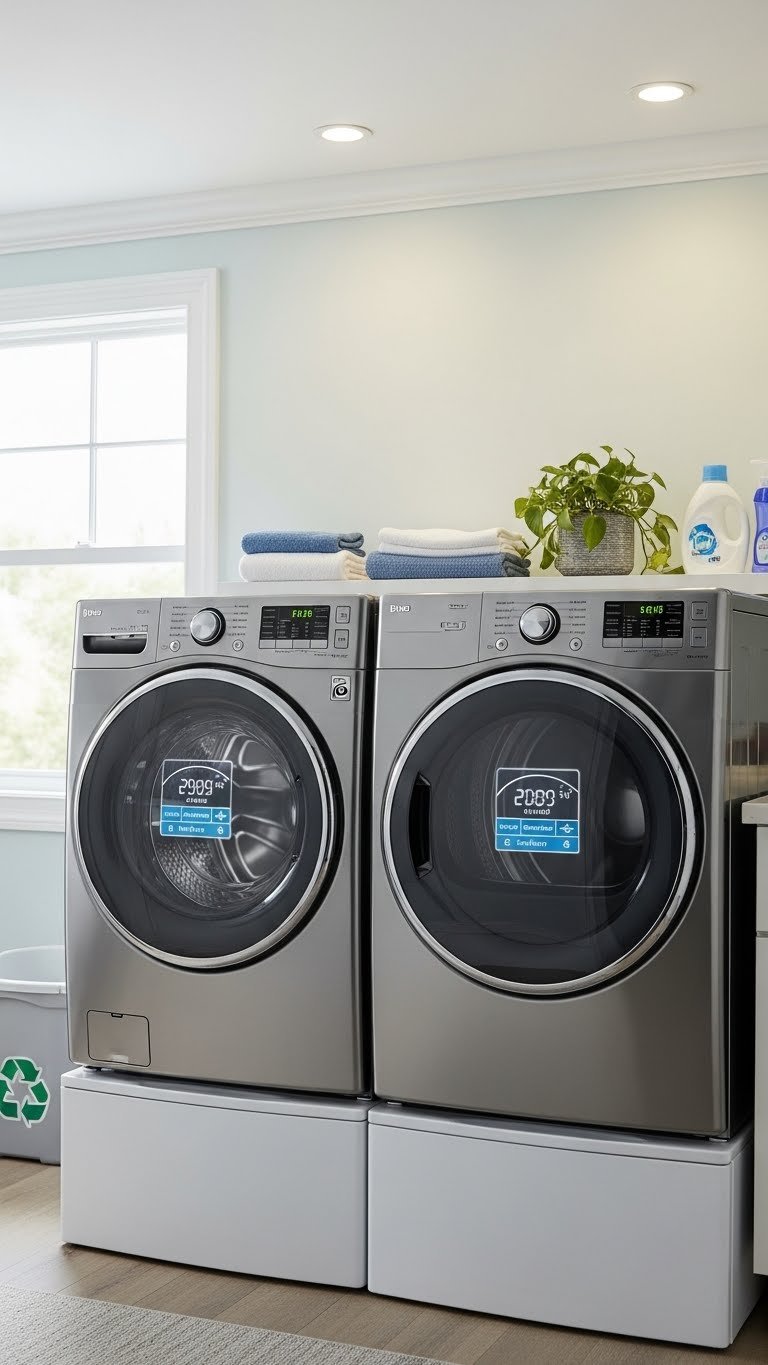
    1. Stack Your Washer and Dryer for Maximum Floor Space

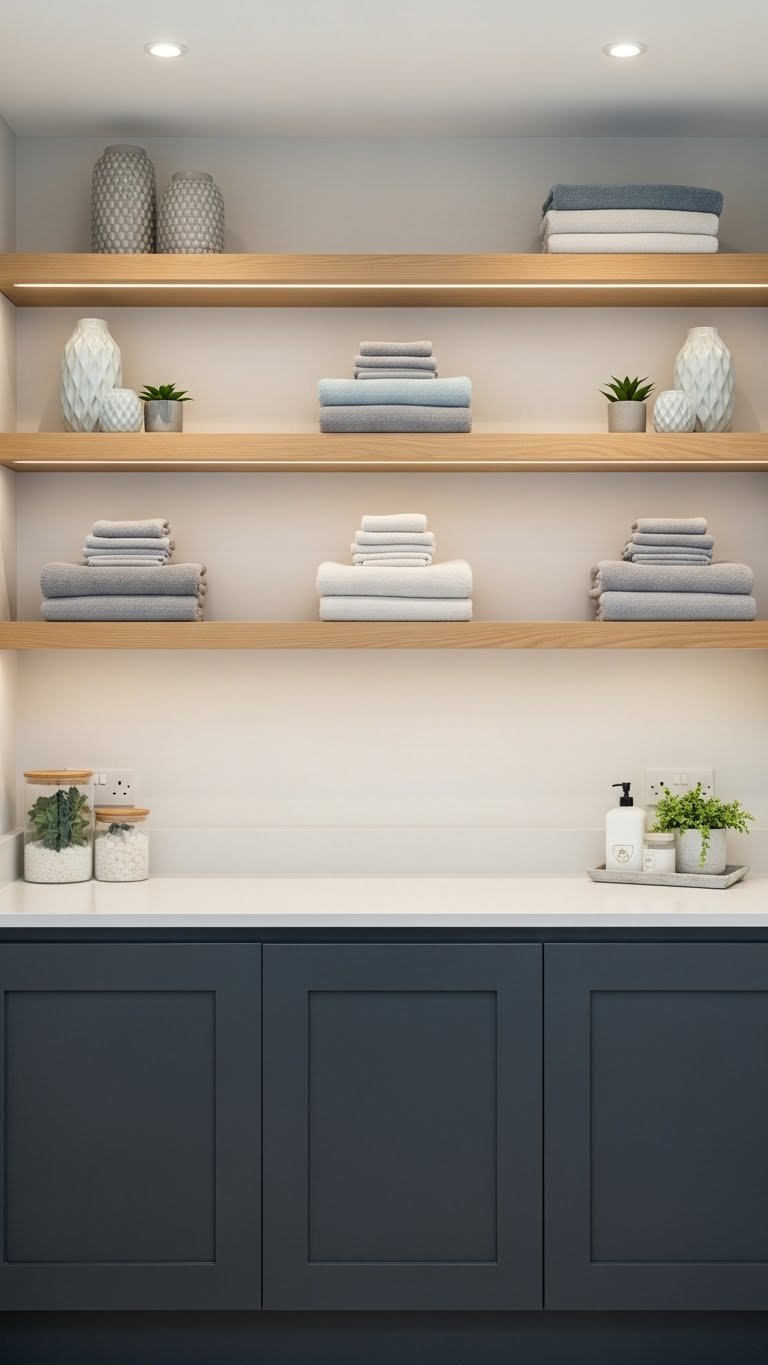
    Stacking saves you nearly half the floor space of traditional side-by-side units. This is a game-changer if your room is narrow or you need space for other functions like a folding station or storage.

    Most stacked units cost $700–$1,500 depending on the brand and features. Look at compact models from brands like LG, Samsung, or GE—many retailers like Best Buy, Home Depot, and Amazon offer installation services (usually $100–$300). Installation takes one afternoon if you’re replacing existing units. Pro tip: measure your doorway and hallways before buying; getting a stacked unit into a tight space sometimes requires professional movers.

    You’ll free up floor space for a small table, shelving, or even a pet washing station. Your utility room suddenly feels less cramped and more purposeful.


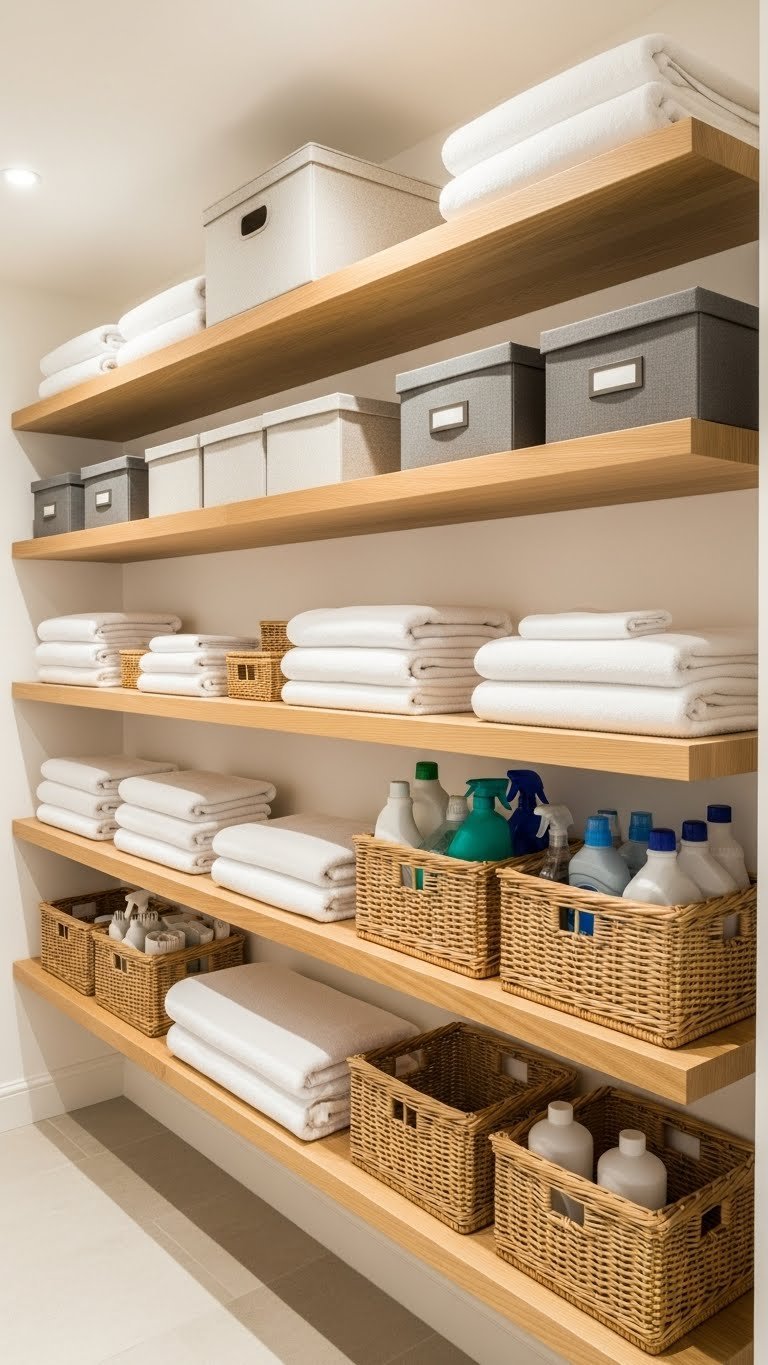
    2. Install Floating Shelves Up to the Ceiling

    Floating shelves pull your storage upward instead of outward, making tiny rooms feel bigger. You’ll use every inch of vertical space without the bulk of traditional cabinets.

    Install shelves $8–$25 each from IKEA, Target, or Wayfair. A basic wall kit with brackets costs $50–$120 for three shelves. If you’re renting, use command strips or magnetic shelves that don’t require drilling. For renters or beginners, expect 2–3 hours of work; if you’re comfortable with a drill, it’s faster. Anchor shelves securely into wall studs for maximum weight capacity.

    Your room looks taller and more intentional. Plus, that blank wall space you’ve been ignoring becomes functional storage you can actually see and reach.


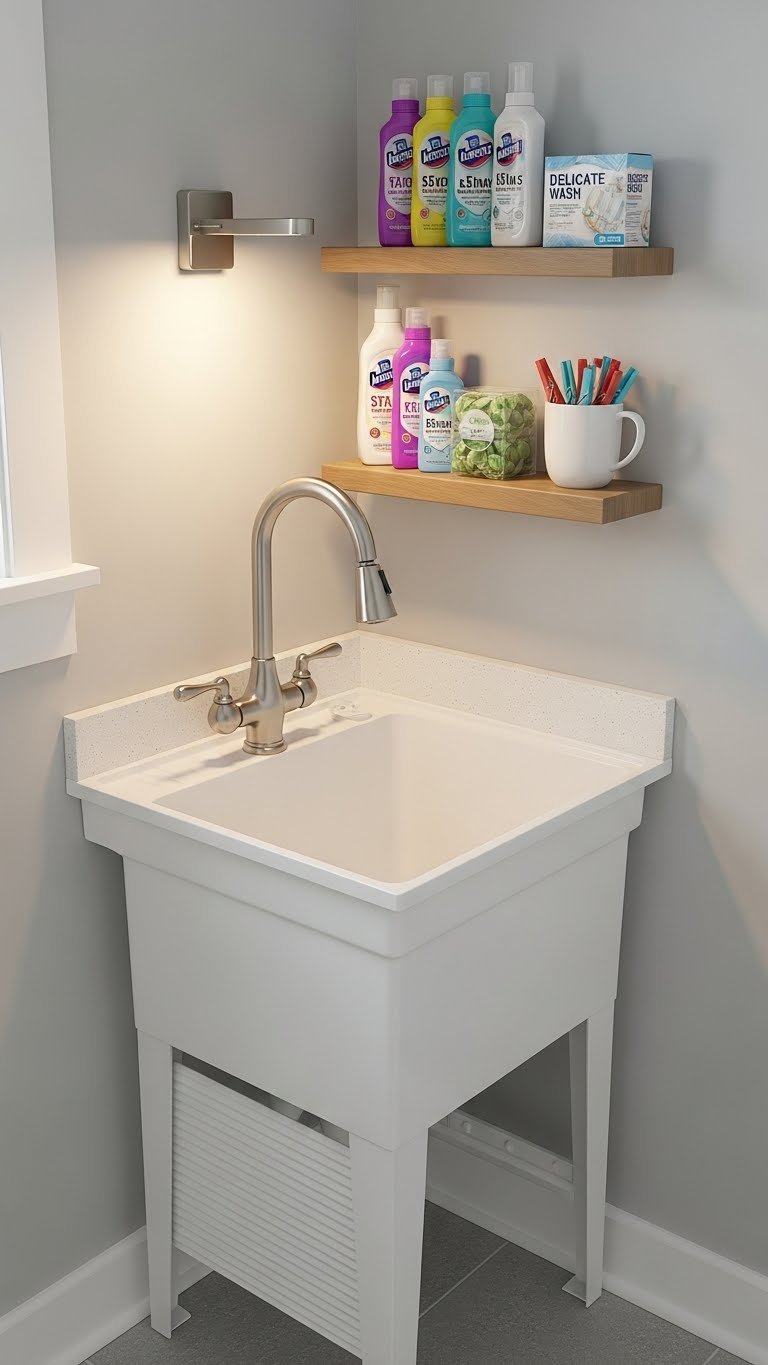
    3. Add a Utility Sink for Pre-Treating Stains

    A utility sink is one of the best upgrades for serious laundry care. You can pre-soak delicates, treat stubborn stains, and hand-wash items right where you need them.

    Budget options start at $150–$300 for a basic sink unit; higher-end models run $400–$600. Installation costs vary—DIY is possible if you’re comfortable with plumbing, but hiring a pro costs $150–$400. Alternatively, get a portable wash station for $80–$150 that doesn’t require permanent installation. If you rent, check your lease; some landlords allow temporary sink additions.

    You’ll treat stains immediately instead of letting them set. Delicate items get the attention they deserve. Your laundry routine becomes more efficient and less stressful.


    4. Use Vertical Pull-Out Hampers for Hidden Organization

    Pull-out hampers hide dirty laundry behind closed doors while keeping items sorted by color or fabric type. They’re perfect for small spaces because they don’t take up floor room.

    Pull-out hamper kits cost $60–$180 from Wayfair, Amazon, or The Container Store. Installation is usually a DIY project that takes 30 minutes to an hour. No special tools needed if you’re mounting to existing cabinetry. Renters can use freestanding versions with collapsible frames ($40–$90) that tuck into corners.

    Your floor stays clearer. Laundry stays sorted and contained. You’re not hunting for clean baskets when you need them.


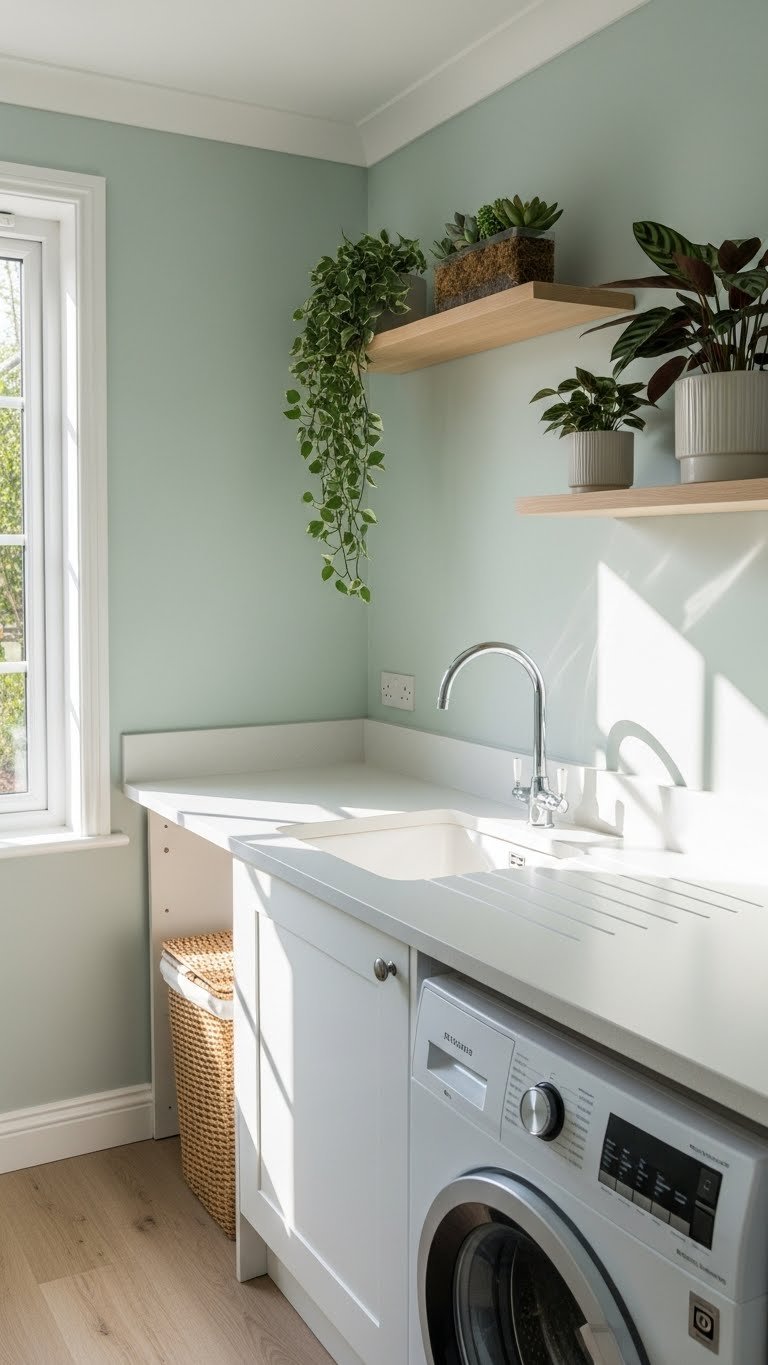
    5. Paint Walls in Soft, Energizing Colors

    Ditching stark white for earthy tones instantly changes the room’s energy. Soft greens, warm grays, and muted blues make chores feel less tedious.

    Quality paint costs $30–$50 per gallon; you’ll need 1–2 gallons for a small room. Total project cost: $50–$100. Painters charge $400–$800 if you hire out; DIY takes a weekend. Renter-friendly option: use removable wallpaper ($25–$60) that peels off without damage.

    Your space stops feeling utilitarian and starts feeling intentional. You actually want to spend time there. A small color shift impacts your mood every time you do laundry.


    6. Install Ceiling-Height Cabinetry for Total Storage Capacity

    Ceiling-height cabinets capture wasted space above eye level while providing deep storage for seasonal items, bulk supplies, and rarely-used equipment.

    Semi-custom cabinetry runs $800–$2,000 depending on size and finish; custom options cost $2,500–$5,000+. Budget-friendly alternative: mix ready-made units (IKEA, Home Depot) to reach ceiling height ($300–$800 total). Installation takes 1–2 days for DIY; professionals charge $400–$1,000. Renters can use tall shelving units instead.

    You reclaim dead space. Your room feels cohesive and purpose-built. Everything has a dedicated spot.


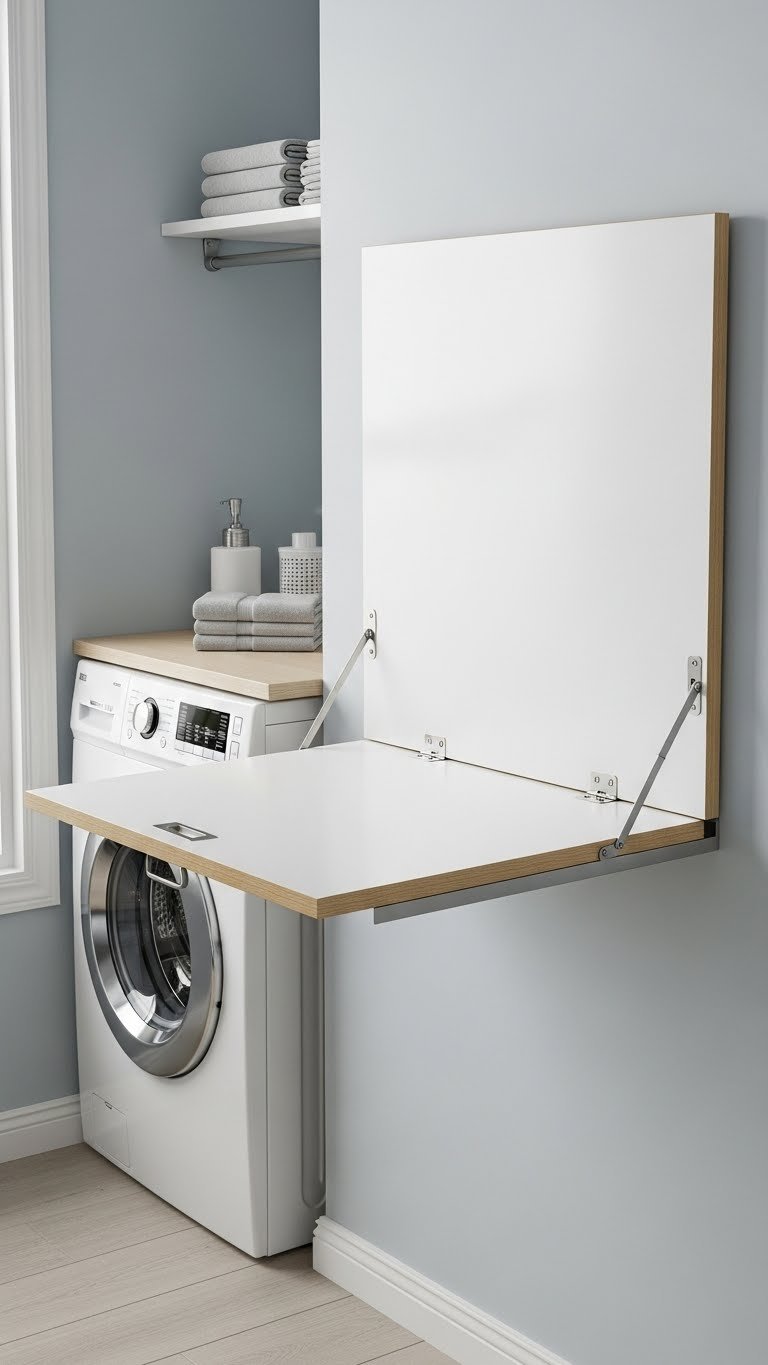
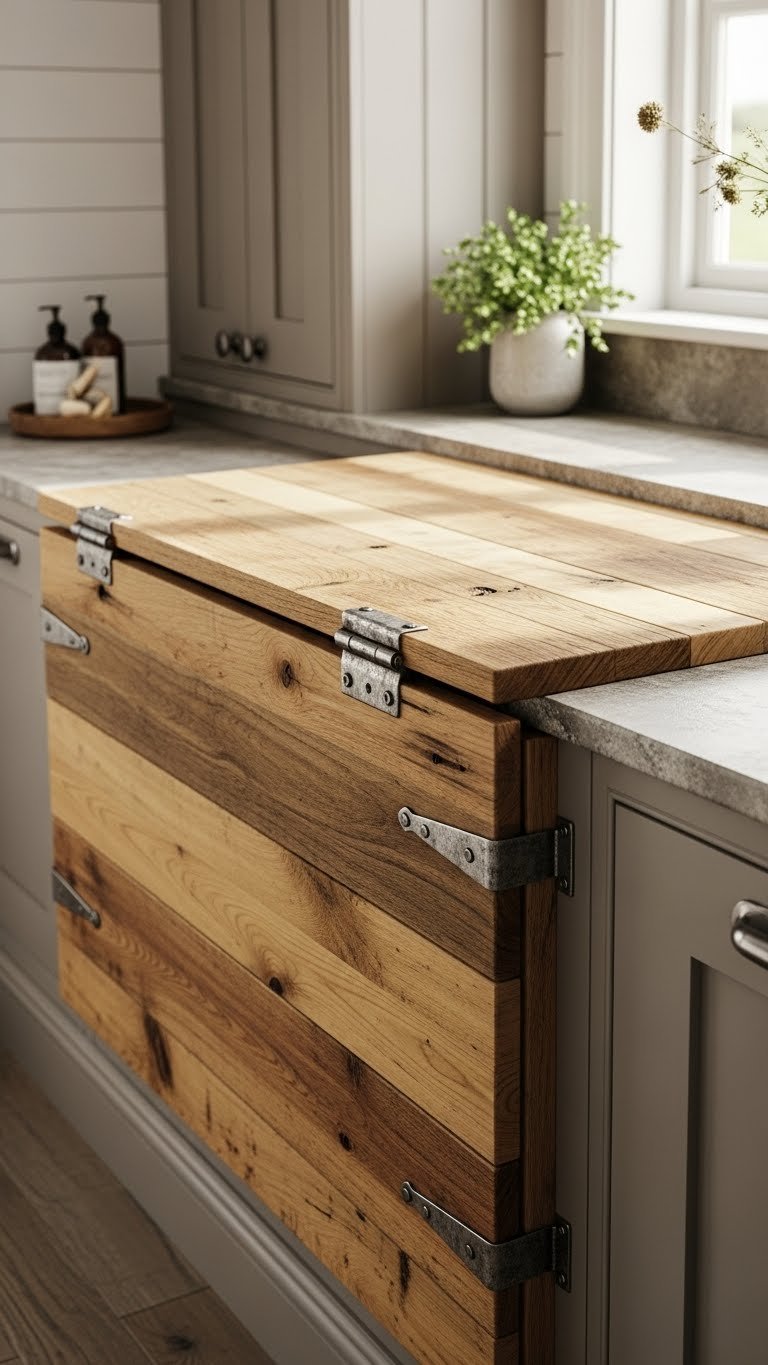
    7. Add a Fold-Down Counter for Minimal Footprint

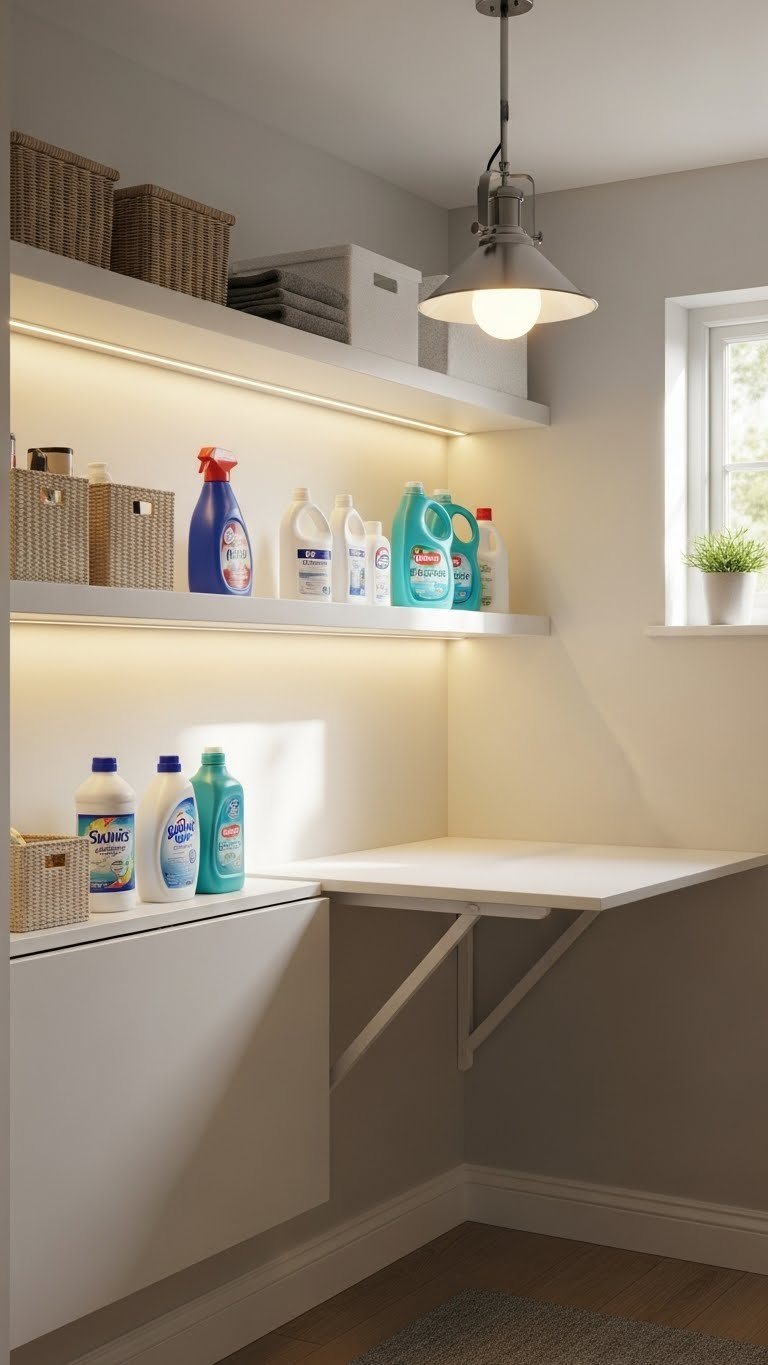
    A fold-down counter gives you a folding surface that disappears when not in use. Perfect for rooms where floor space is at a premium.

    Wall-mounted fold-down counters cost $40–$150 from Amazon, IKEA, or Wayfair. Installation is simple—about 30 minutes with basic tools. Most renters can install these without landlord permission since they’re easily removable. Standard dimensions are 24–30 inches wide.

    When you’re folding, you have the counter space you need. When you’re done, it tucks away. Your room stays spacious and uncluttered.


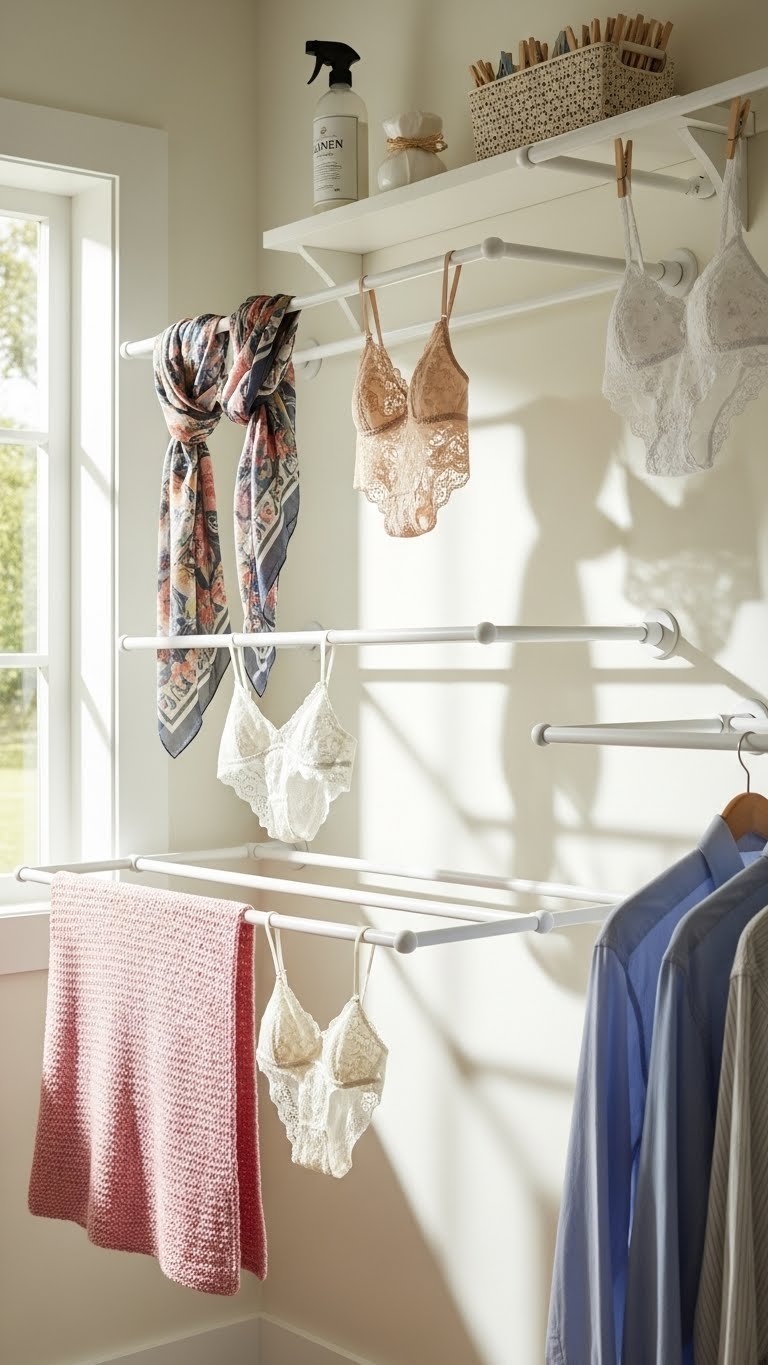
    8. Install Drying Rods and Wall-Mounted Racks

    Wall-mounted drying solutions save energy and protect delicates. You can air-dry everything from sweaters to lingerie without a separate drying rack taking up floor space.

    Rods and racks range from $15–$80 depending on style and load capacity. A basic wooden rod system from IKEA or Target runs $20–$40. Installation takes 20–30 minutes with wall anchors. Renters can use tension rods ($10–$20) that require no installation.

    Your clothes dry gently without heat damage. You save on electricity. Your utility room becomes a quiet, functional drying zone.


    9. Organize with Coordinated Storage Baskets and Labels

    Matching baskets create visual calm while keeping categories separate. Labels ensure everyone finds what they need without creating chaos.

    Coordinated basket sets cost $40–$120 for a collection of 3–5 from Target, Container Store, or Wayfair. Label makers are $15–$30. Total investment: $60–$150. This is a quick weekend project—about 1 hour to fill and label everything.

    Your space looks intentional instead of cluttered. Family members know where supplies belong. Everything stays tidy longer.


    10. Create an Open-Closed Storage Combo

    Mixing open and closed storage lets you display pretty items while hiding the clutter. It’s the sweet spot between function and aesthetics.

    This approach uses existing cabinets plus floating shelves (total: $200–$500). Rearranging existing pieces costs nothing. If you’re building from scratch, budget $600–$1,200 for a combination setup. No additional time beyond installation.

    Your room looks curated, not chaotic. Pretty items catch the eye. Ugly supplies stay hidden. Guests won’t judge your cleaning stockpile.


    11. Switch to Smart, App-Controlled Appliances

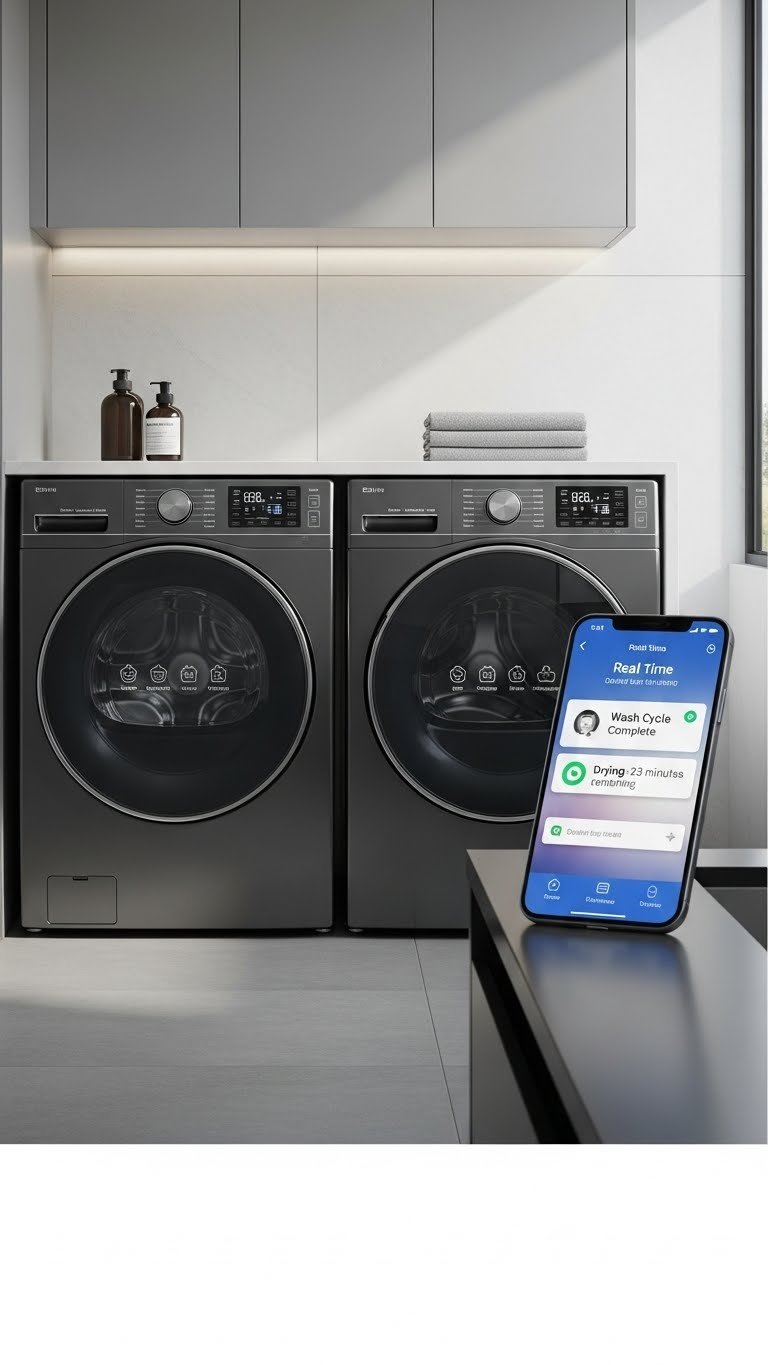
    Smart washers and dryers let you start, stop, and monitor loads from your phone. No more guessing if you left the washer running.

    Smart appliances cost $900–$1,800 per unit depending on capacity and features. Brands like LG, Samsung, and GE all offer app-connected options. The app is usually free; sometimes there’s a subscription for advanced features ($3–$8/month). These machines last 10–15 years, so the per-year cost is reasonable.

    You get alerts when loads are done. You control everything remotely. Laundry day becomes way less manual and stressful.


    12. Install Efficient Task Lighting and LED Strips

    Good lighting makes you want to work in the space and helps you spot stains and dirt. LED strips and overhead fixtures eliminate dark corners.

    Basic LED strips cost $15–$50; pendant fixtures run $30–$150 depending on style. Total lighting upgrade: $80–$250. Installation is usually 1–2 hours if you’re comfortable with basic wiring. Electricians charge $200–$400. Renters can use battery-operated LED strips ($20–$40) and clip-on lights.

    Your space feels brighter and more inviting. You actually see what you’re doing. Task lighting makes folding and stain-treating easier.


    13. Add Matte Black or Brushed Nickel Fixtures for Modern Appeal

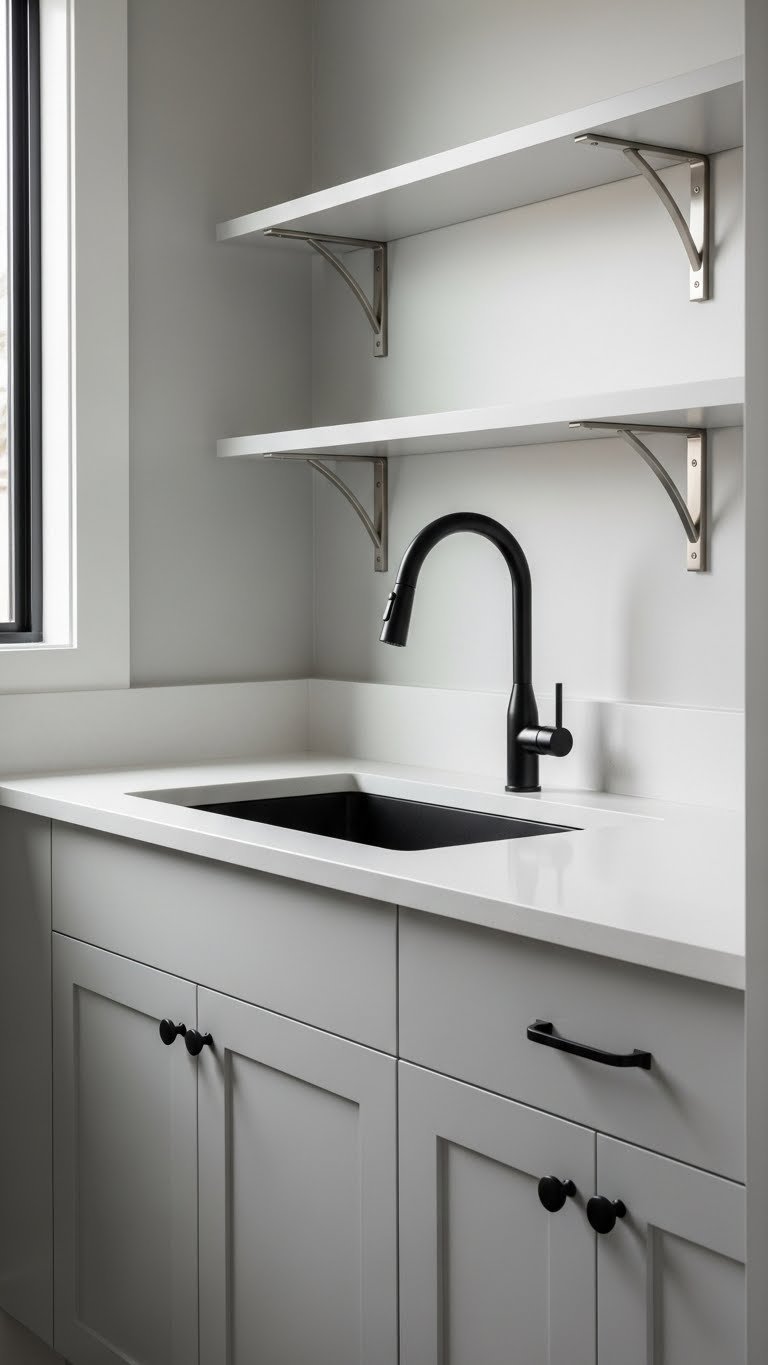
    Updating hardware is a quick way to refresh your space. Modern finishes feel more high-end than basic chrome.

    Faucets and fixtures range from $40–$150 depending on quality. A hardware refresh project (replacing knobs and pulls) costs $30–$80. Installation is a DIY weekend project—about 2–3 hours. Renters should check their lease before making permanent changes.

    Your space instantly looks more put-together. Those small metal details add polish without a full renovation. The room feels newer and more intentional.


    14. Use Compact Appliances for Tight Spaces

    Compact and slimline appliances fit in hallways, closets, and corners. If you live in a city or have a tiny utility room, these are your answer.

    Slimline washers cost $500–$900; compact dryers run $400–$700. These are often more energy-efficient, saving you money over time. Installation is the same as standard units. Many apartment dwellers rely on compact models because they fit where nothing else does.

    You get a complete laundry setup in half the footprint. No sacrificing function for space. Your tiny room becomes fully functional.


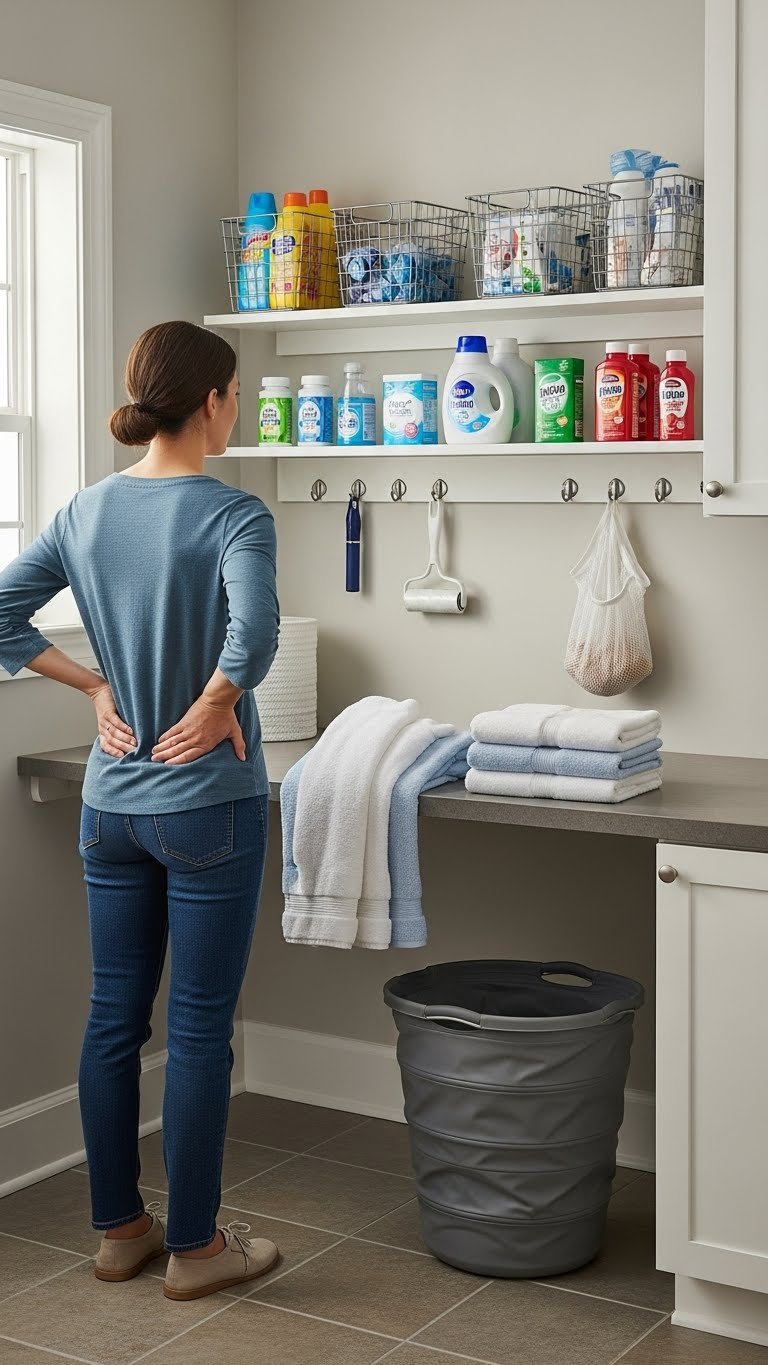
    15. Create an Ergonomic Folding Counter and Height-Appropriate Storage

    Folding at counter height instead of on a bed or table saves your back. Storing supplies at arm’s reach means less reaching and bending.

    An ergonomic counter setup costs $100–$300 depending on whether you DIY or buy prefab. Positioning supplies is free. This reorganization takes about 2–3 hours. The payoff is long-term comfort—your back will thank you during laundry day.

    You finish laundry without neck and back pain. Reaching supplies doesn’t feel like a stretch. Your body stays comfortable while working.


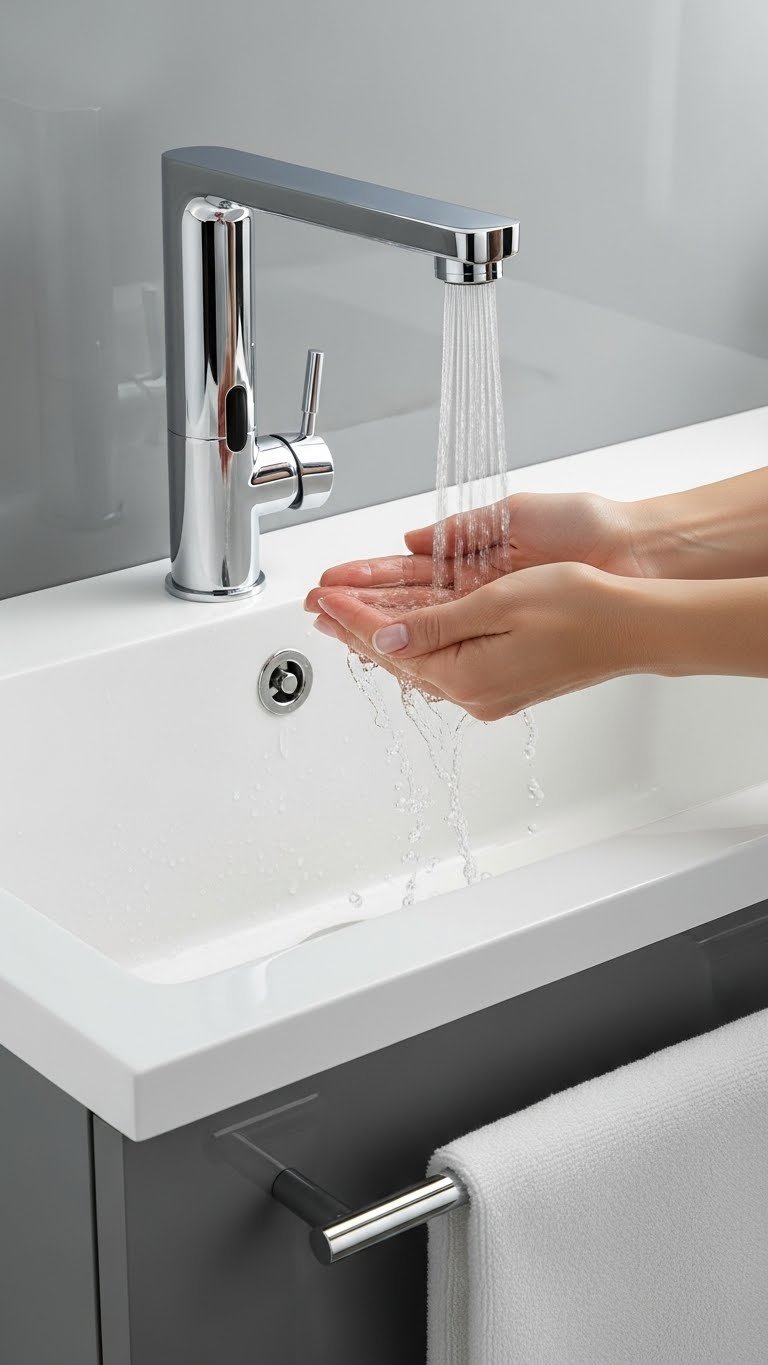
    16. Install Touchless Faucets for Hygiene and Convenience

    Touchless faucets reduce bacteria transfer and work great for rinsing delicates or cleaning supplies without touching handles.

    Touchless faucets cost $80–$200 depending on quality and installation. They run on batteries or plug into outlets (battery options are renter-friendly). Installation is typically DIY or requires a plumber ($150–$300 if you hire out). Battery-operated models last 1–2 years per set.

    You wash your hands without touching anything. Rinsing delicates is cleaner and easier. The space feels more hygienic and modern.


    17. Mix Metal Finishes for Modern, Curated Style

    Mixing metals is a modern design trend that works in small spaces. It adds visual interest without being matchy-matchy.

    Updating hardware to mix finishes costs $50–$150 total. You’re simply swapping out existing pieces with new ones in different finishes. This is a 2–3 hour weekend project. The metals to combine: brushed gold, brushed nickel, matte black, and stainless steel all work together.

    Your space feels intentionally designed, not randomly assembled. The mixed metals add sophistication. Your utility room looks curated.


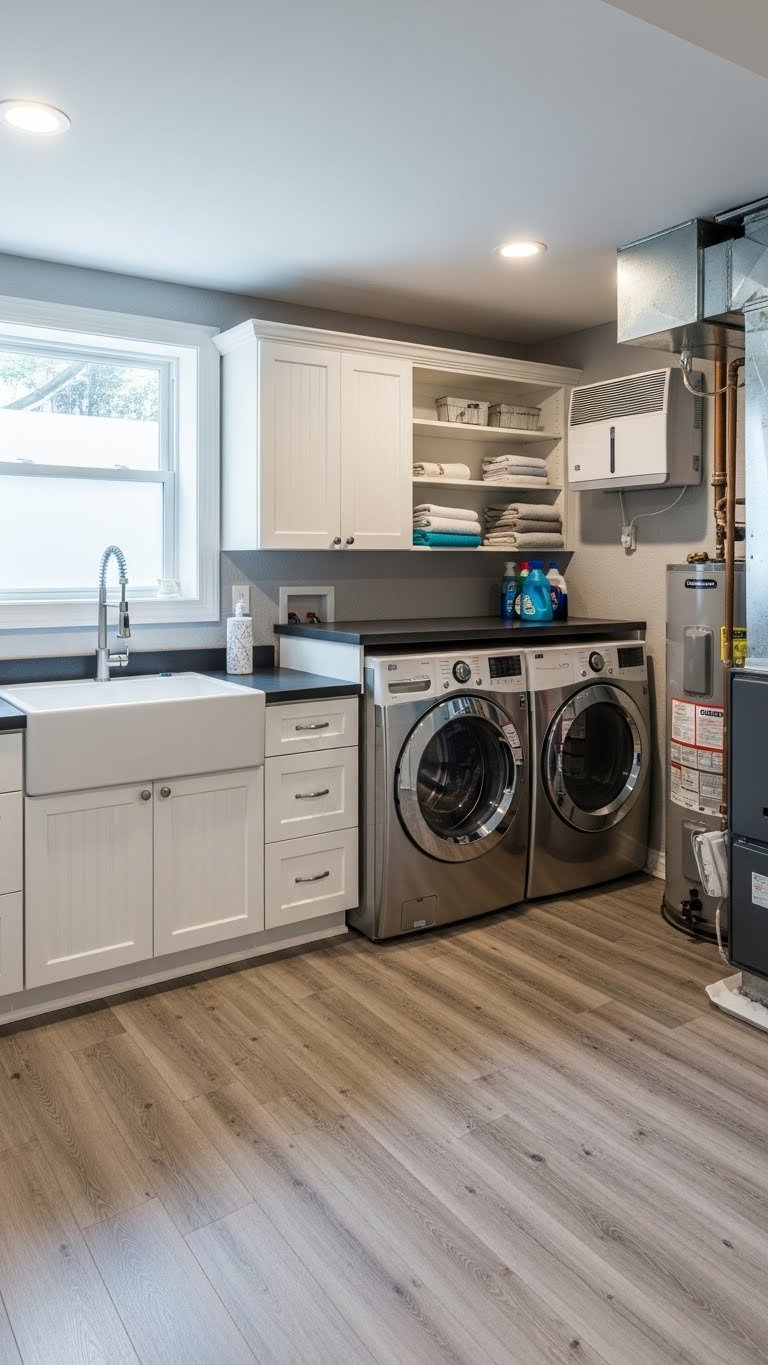
    18. Add Moisture-Resistant Materials if Your Room Is in a Basement

    Basements have moisture issues. Using resistant materials prevents mold, mildew, and material breakdown.

    Vinyl flooring costs $100–$300 for a small room; moisture-resistant paint is $40–$60 per gallon. Total investment: $200–$400. Installation takes 1–2 days for DIY or a weekend for professionals ($400–$800). This is important if you live in a humid climate or below ground.

    Your space stays dry and fresh. Mold and mildew don’t get a foothold. Materials last longer because they’re protected from moisture damage.


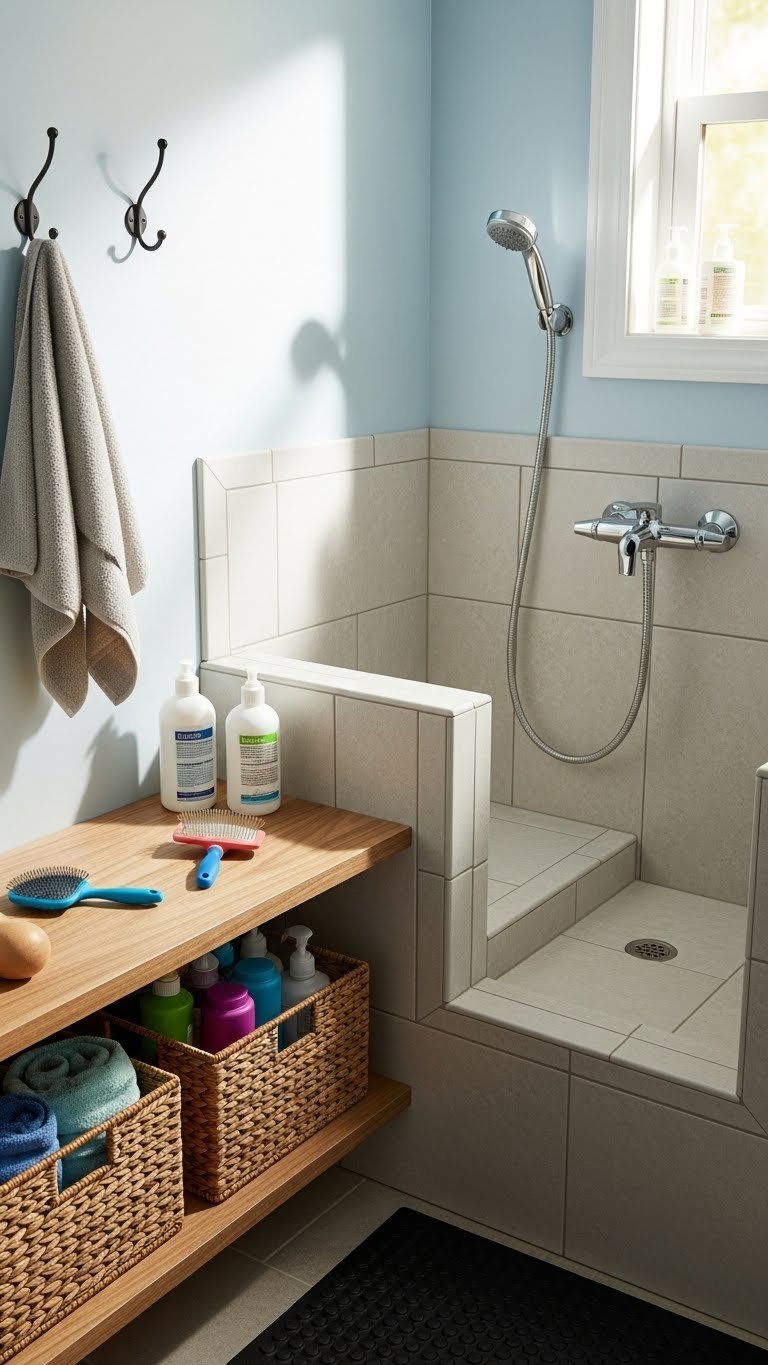
    19. Set Up a Pet Washing Station for Fur Parents

    If you have dogs or cats, a dedicated pet wash station keeps your bathroom clean and makes grooming easier.

    A basic pet wash basin costs $60–$150; elevating it on a platform adds $30–$80. A handheld sprayer attachment runs $25–$50. Total setup: $120–$280. Installation takes 1–2 hours if you’re adding it to existing plumbing. Some people use a large utility sink or even a kiddie pool on a platform.

    Bath day becomes way less messy. Your pets get a dedicated grooming space. Your bathroom stays clean.


    20. Use Clear or Labeled Containers for Visibility

    Clear containers let you see what you need at a glance without hunting. Labels prevent confusion and waste.

    Clear containers range from $20–$60 for a set depending on size and material. Chalkboard or label maker labels cost $10–$30. Total investment: $40–$90. Organization takes 1–2 hours depending on how much you’re storing.

    You know exactly what you have. You reorder supplies before running out. Your space looks neat and intentional.


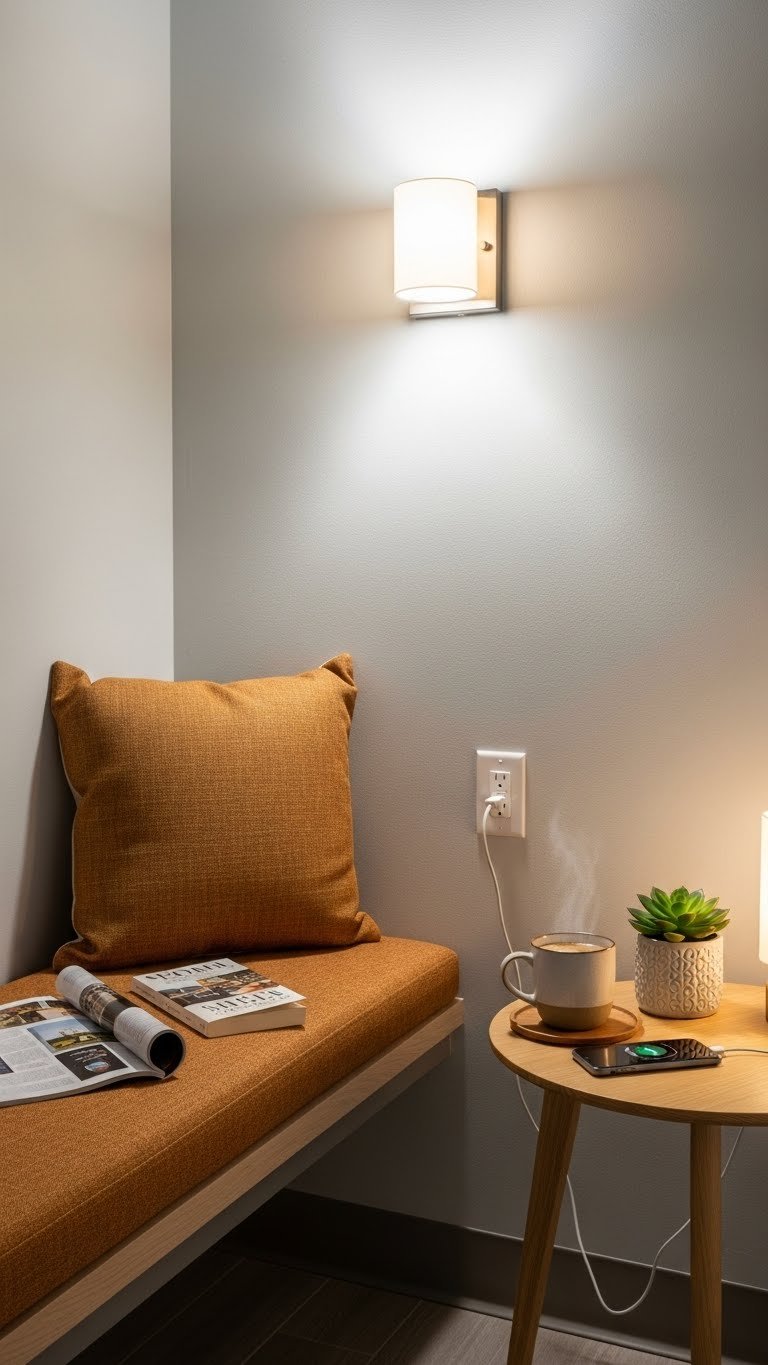
    21. Install a Small WiFi-Enabled Lounge Corner (for Shared Spaces)

    If you live in an apartment with shared laundry, a small seating area makes wait time tolerable instead of annoying.

    A cushioned bench costs $80–$180; a side table is $30–$80; WiFi extender is $40–$80. Total: $150–$340. Check with management before installing anything permanent. This project takes an afternoon if you’re adding seating.

    You’re not stuck standing in a utility room waiting for loads. You have a real place to sit and relax. Your laundry day becomes less tedious.


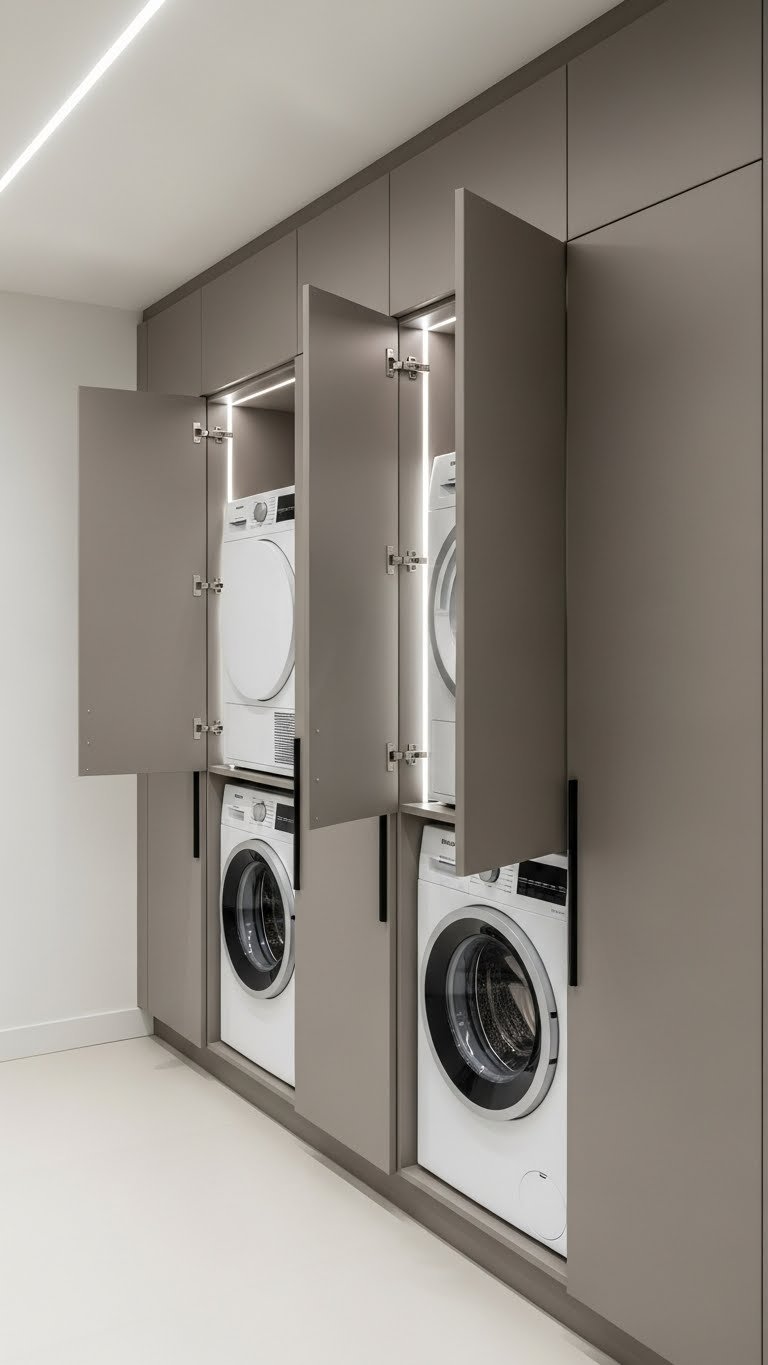
    22. Create Hidden Appliances Behind Cabinetry

    In small spaces, hiding appliances behind matching cabinetry makes the room feel larger and less appliance-heavy.

    Custom cabinetry fronts run $800–$1,500. Prefab options cost $300–$600. Installation is 1–2 days. This is an investment piece, but it completely changes how the room feels. Not recommended for renters.

    Your space looks more like a finished room than a utility closet. Appliances disappear visually. Your room feels bigger and more intentional.


    23. Add Reclaimed Wood or Natural Stone Counters

    Natural materials add character and warmth. Reclaimed wood or stone counters are conversation starters that make the space feel less utilitarian.

    Reclaimed wood countertops cost $300–$600 installed. Stone-look counters run $200–$500. Laminate alternatives (still attractive) cost $100–$250. Installation takes 1–2 days. This is an upgrade that lasts for years.

    Your workspace feels crafted and intentional. The natural materials add warmth. Your utility room becomes a space you actually enjoy being in.


    24. Maximize Vertical Door Space with Over-Door Organizers

    Your door is wasted space. Over-door organizers hold supplies you access frequently without taking up shelf or counter room.

    Over-door organizers cost $15–$50 depending on size and material. They’re super easy to install—just hang on the door without tools. This is a free or cheap fix if you already have the organizer. Takes 10 minutes to install and fill.

    Frequently used supplies are right at hand when you need them. Your shelves and cabinets stay less packed. Your door becomes functional storage.


    25. Switch to Energy-Efficient Appliances and Save Long-Term

    Energy-efficient appliances cost more upfront but pay for themselves through lower utility bills over their 10–15 year lifespan.

    Energy Star washers cost $700–$1,200; dryers run $600–$1,000. They use 25–40% less energy than standard models, saving $50–$100+ annually on utilities. The payback period is typically 5–8 years. Many utility companies offer rebates ($100–$300) for upgrading to efficient models.
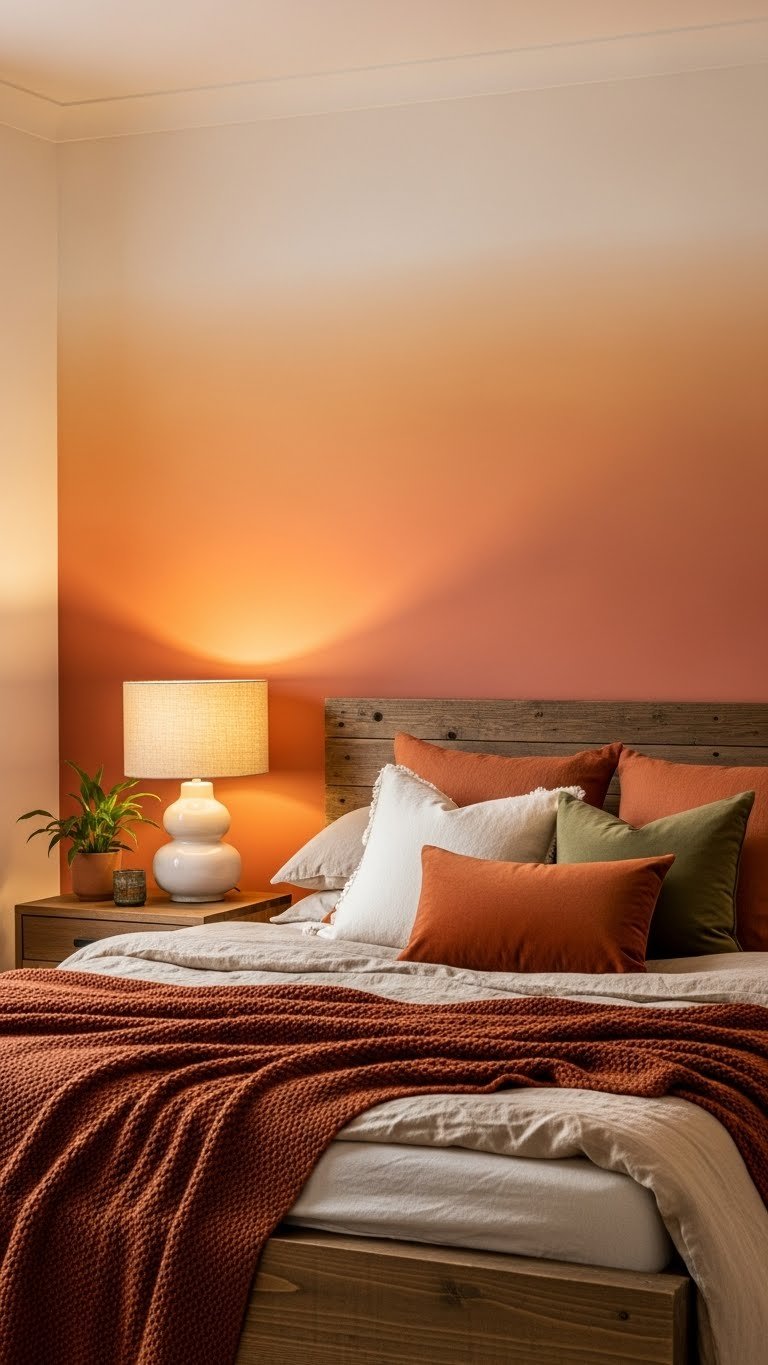
    Your monthly utility bills drop noticeably. You’re supporting the environment. Over time, you’re saving real money while reducing your carbon footprint.


    26. Use Wall-Mounted Ironing Boards and Rod Systems

    A wall-mounted ironing board folds down when needed and disappears when done. Pair it with a rod for organized storage of pressed items.

    Wall-mounted ironing boards cost $40–$100; wall rods are $15–$40. Total: $60–$140. Installation takes 30 minutes and doesn’t require special skills. Renters can use tension rods for hanging and portable ironing boards.

    Ironing becomes more convenient because everything’s in one spot. Pressed items stay wrinkle-free on the rod. Your workflow feels purposeful and efficient.


    27. Install Integrated Appliance and Cabinet Systems for Seamless Style

    Fully integrated systems (appliances + cabinetry designed together) create a built-in, finished look instead of a collection of separate pieces.

    Integrated systems cost $2,500–$6,000+ depending on size and customization. This is an investment, but it’s the most polished approach to a utility room. Installation takes 2–3 days with professionals. Not ideal for renters due to permanent nature.

    Your room looks like a designed space, not a laundry closet. Everything matches and works together seamlessly. The overall effect is high-end and intentional.


    Save this post for your next utility room refresh. Pick one or two ideas that address your biggest pain point—whether it’s clutter, tiny space, or an outdated feel—and start there. Small upgrades add up fast, and your utility room deserves to work as hard as you do.

  • 26 Twin Bed Arrangement Ideas That Look Balanced & Practical

    26 Twin Bed Arrangement Ideas That Look Balanced & Practical


    There’s something tricky about arranging two twin beds—you want them to look intentional and balanced, not cramped or awkward. Whether you’re designing a guest room, kid’s bedroom, or shared dorm space, the layout can make or break how the room feels. The good news? Small spacing choices, styling tricks, and smart furniture placement can turn a basic two-bed setup into a room that looks pulled together and actually functions better for the people using it. Here are 26 practical arrangements and styling ideas that work for real spaces with real constraints.


    1. Mirror Them on Opposite Walls

    Mirroring beds on opposite walls creates instant visual balance and makes the room feel intentional rather than random. This is the safest layout for shared spaces—each person gets equal territory and natural light access.

    Position beds headboard-to-headwall on opposite sides, leaving at least 2–3 feet of walking space down the center. Add matching nightstands (or similar heights) on each side. You can find affordable matching nightstands at IKEA, Target, or Wayfair ($40–$150 per pair). Keep bedding coordinated but slightly different (same color, different textures) so it reads as intentional rather than creepy twin-room hotel vibes. Takes 15 minutes to arrange once beds are in place.

    This layout maximizes floor space and makes furniture shopping way simpler since you just need two of everything. Both sleepers feel equally valued in the space.


    2. Stack Them Headboard-to-Headboard

    Pushing headboards together creates a cozy, unified look while saving lateral wall space—perfect for narrow bedrooms or when you want the beds to feel less separated.

    Position the beds so headboards touch or nearly touch, creating a long rectangle or L-shape depending on your room. Add a long runner rug under both beds ($30–$80 from Amazon or Rugs USA). Lean throw pillows against each headboard so they have visual separation even though they’re touching. This works especially well if you can tuck the footboards toward a window or against the wall.

    The biggest perk? You’ve created one focal point instead of two, so styling is simpler. Add a shared floating shelf above the headboards ($20–$60) for books and decor that serves both beds.


    3. Use a Shared Nightstand Between Them

    A single nightstand between beds saves money and space while creating a natural anchor point for the beds to relate to each other.

    Position beds parallel to each other with just enough space for a nightstand—typically 18–24 inches between mattress edges. Choose a wider piece (IKEA’s BESTÅ, 24–48 inches, $60–$200) so it feels intentional rather than squeezed. Add one good table lamp with enough height to serve both beds. This layout cuts nightstand cost in half and keeps the room less furniture-heavy.

    The downside? Each person has limited personal space on the nightstand. Keep it minimal: one lamp, a small plant, and maybe one decorative item. This arrangement looks hotel-guest-room cool and is perfect for siblings or roommates who don’t mind sharing a bit.


    4. Angle Them in Opposite Corners

    Angling beds into opposite corners opens up the center of the room and works beautifully for awkwardly shaped or smaller bedrooms.

    Place one bed in the top-left corner and one in the bottom-right corner (or vice versa). This breaks up the boxy feel of parallel beds and creates more usable floor space in the middle for a seating area, desk, or walkway. Add nightstands on the inner wall of each bed so they don’t stick out awkwardly. Use a central rug to visually tie the arrangement together.

    This layout feels more dynamic and modern—like someone intentionally designed the space rather than just squeezing in two beds. It’s great for creating a lived-in, personal feel. Takes about 30 minutes to arrange and style.


    5. Create an L-Shape with Desk or Bench

    An L-shaped arrangement with a desk or bench at the corner creates natural zones and maximizes functionality without adding bulky furniture.

    Position one bed along the top wall and one along the side wall, meeting at a corner. Tuck a small desk, vanity, or bench into the corner point (try IKEA’s LISABO desk, $150–$200, or a simple Wayfair bench, $80–$150). Add a task lamp and you’ve created a study zone that doesn’t feel cramped. Use coordinating bedding so the two beds read as one intentional arrangement.

    This setup is ideal for kid’s rooms or shared student spaces where people need both sleep and work areas. The corner piece acts as a visual and functional anchor. You get three zones (bed one, bed two, work area) in roughly the space of two beds.


    6. Float Them on Area Rugs

    Floating beds on individual rugs creates visual separation and defines personal zones, even in an open layout.

    Place each bed on its own 5×7 or 5×8 area rug ($50–$150 each from Target, Wayfair, or Amazon). This works best when beds are on opposite walls. The rugs visually anchor each bed and make the arrangement feel intentional. Choose complementary rug colors or patterns that tie back to your bedding. Leave at least 2–3 feet of clear floor between the rugs so the center of the room stays open.

    The rugs don’t just look good—they reduce noise and make the space feel warmer underfoot. This is a renter-friendly way to define zones without paint or permanent changes. It’s an easy way to add personality too.


    7. Use Twin Bed Frames with Built-In Storage

    Frames with built-in drawers eliminate the need for under-bed storage bins and create a cleaner look while maximizing storage.

    Invest in twin bed frames with storage drawers (IKEA HEMNES, $200–$300 per frame, or Wayfair options at $150–$400). Position them as you normally would on opposite walls or in an L-shape. The drawers become prime real estate for off-season clothes, extra bedding, or shared supplies. This saves money on separate storage furniture and keeps the floor visually clear.

    Built-in storage frames cost more upfront but look significantly more polished and eliminate clutter. You’ll use every inch of that storage, especially in shared rooms. Worth the investment if space is tight.


    8. Add a Canopy or Fabric Drape Above

    Hanging fabric drapes above beds creates separation, adds architectural interest, and makes compact spaces feel intentional and cozy.

    Use a tension rod or simple ceiling mount ($15–$30 from hardware stores) and drape lightweight fabric (sheer curtain panels, $20–$50 from Target or Amazon). Hang one canopy per bed if they’re on opposite walls, or one shared drape if they’re headboard-to-headboard. This adds vertical interest without taking up floor space.

    Canopies work great for creating visual separation in shared rooms. They also absorb some sound and create a cozier sleeping environment. Very Pinterest-worthy and totally renter-friendly if you use adhesive hooks instead of screws.


    9. Position Beds Perpendicular

    A perpendicular arrangement creates an unusual, thoughtful layout that works beautifully in rectangular or awkwardly proportioned rooms.

    Place one bed along the longest wall and one along the wall that meets it at a right angle (think T-shape or cross). Add a small side table or stool in the junction area to anchor the arrangement. This layout uses space efficiently and feels less cookie-cutter than parallel beds.

    The perpendicular setup works especially well if your room has an unusual shape or if one sleeping person needs more privacy. It’s also ideal for rooms where one person might study while another sleeps. Feels thoughtfully designed rather than default.


    10. Use Platform Beds Without Headboards

    Platform beds without headboards maximize visual space and create a sleek, modern look perfect for small or shared rooms.

    Choose simple platform beds in wood or metal (IKEA MALM or SONGESAND, $150–$250 each; Wayfair modern platforms, $200–$400). Position them symmetrically on opposite walls. Without bulky headboards, the room visually opens up and feels less cramped. Keep bedding minimal and tailored—sham, one decorative pillow, folded throw.

    This style reads as intentional and modern rather than “we just crammed beds in.” Works beautifully with neutral palettes or bold color accents. The low profile also makes it easier to clean under and around the beds.


    11. Create Visual Separation with Paint or Wallpaper

    Painting each bed wall a subtly different color creates zones and makes the arrangement feel designed rather than random.

    Paint (or use peel-and-stick wallpaper, $20–$50 per roll from Amazon or Target) one wall a soft neutral and the opposite wall a slightly different tone—think sage and gray, or cream and soft blue. Keep both colors muted so they don’t clash; the goal is subtle separation, not visual chaos. Add bedding that bridges both colors so the beds read as intentional together.

    This strategy makes small rooms feel larger because each zone has its own identity. It’s also totally renter-friendly if you use peel-and-stick wallpaper and remove it when you move. Takes a weekend to wallpaper but creates a custom look for under $100.


    12. Add Individual Reading Lights Above Each Bed

    Wall-mounted reading lights above each bed add functionality and create a boutique hotel feel without consuming valuable nightstand space.

    Install brass or wood reading lights ($30–$80 each from Rejuvenation, West Elm, or Amazon) on the wall above or beside each headboard. Use adhesive strips or renter-safe mounts if you’re not drilling. This provides task lighting for reading while keeping nightstands clear. Position lights so they cast light downward onto the bed, not into the room.

    Reading lights add sophistication and solve the “where do I put a lamp?” problem in tight spaces. They’re also safer than bedside lamps that could get knocked over. Total time: 30 minutes once you’ve chosen your fixtures.


    13. Use Coordinating Bedding in Different Colors

    Matching bedding styles in different colors creates unity while letting each sleeper have their own identity within the shared space.

    Choose the same bedding set in two different colorways—for example, Threshold Performance bedding in blue and gray ($50–$100 per set from Target). Add coordinating throw pillows so each bed has personality. This approach signals intentional design (not a dorm default) while keeping the room from feeling chaotic.

    The beauty of this strategy is that it looks pulled-together without being matchy-matchy. Each person gets choice and ownership over their sleeping space. Swapping colors seasonally keeps the room fresh.


    14. Install Floating Shelves Above Each Bed

    Floating shelves above each bed provide storage and display space while adding visual interest without taking up floor room.

    Install simple wood shelves ($20–$50 each from IKEA, Home Depot, or Wayfair) above each headboard using wall anchors or studs. Style with books, small plants, and personal items—keep it sparse so shelves don’t feel cluttered. This is especially helpful in bedrooms without closets or in dorms where floor and nightstand space is limited.

    Shelves add a polished, curated look while serving a real function. They draw the eye upward, making the room feel taller. Renter-friendly options use removable adhesive strips if drilling isn’t allowed.


    15. Separate Beds with a Tall Bookshelf

    A vertical bookshelf between beds creates a privacy divider and storage in one piece, perfect for shared rooms or open layouts.

    Place a tall, narrow bookshelf ($80–$200 from IKEA BILLY, Wayfair, or Target) between beds positioned headboard-to-headboard or in a line. This creates a visual barrier without blocking light or making the room feel cramped. Style both sides so it looks intentional—books on one side, books and decor on the other. This works especially well in dorm rooms or sibling bedrooms where privacy matters.
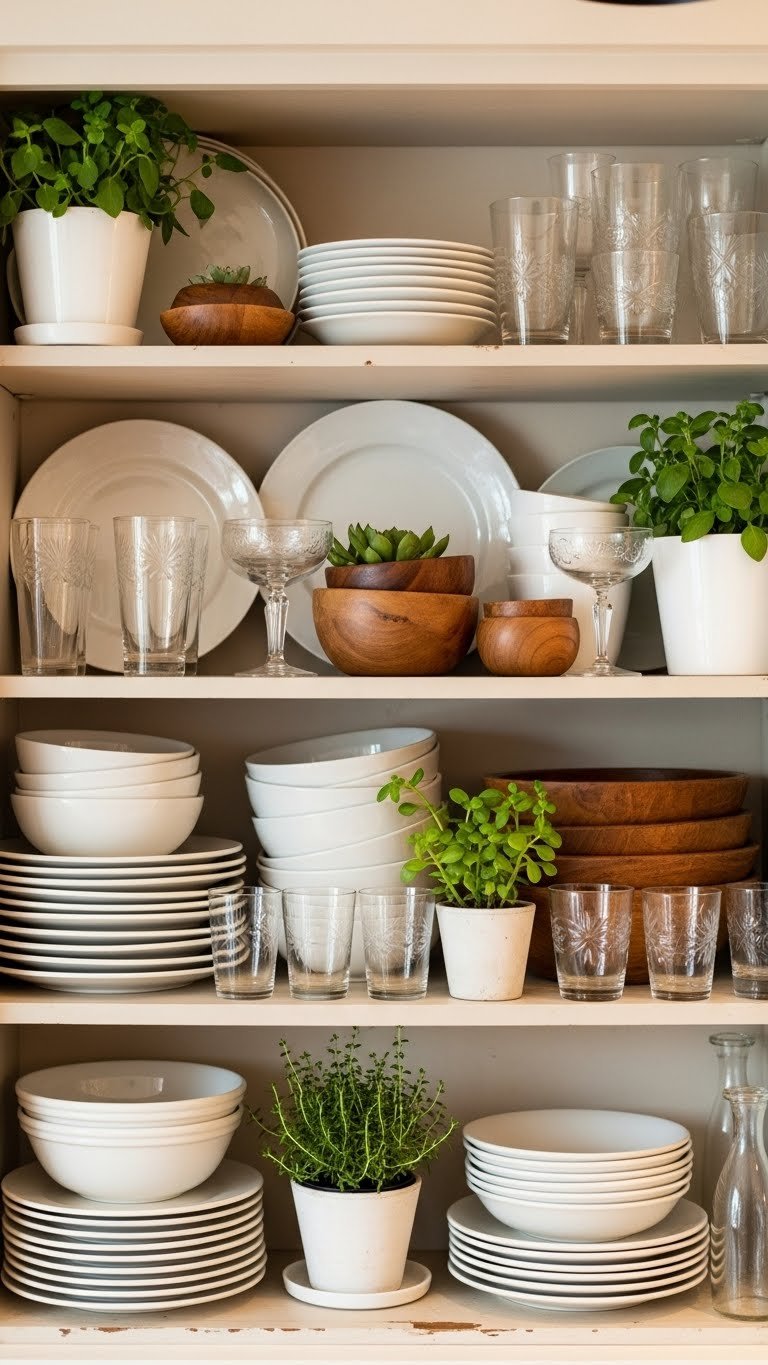
    The bookshelf serves double duty: storage and separation. It’s less formal than a wall but more defined than just floating beds. Takes an hour to assemble and style.
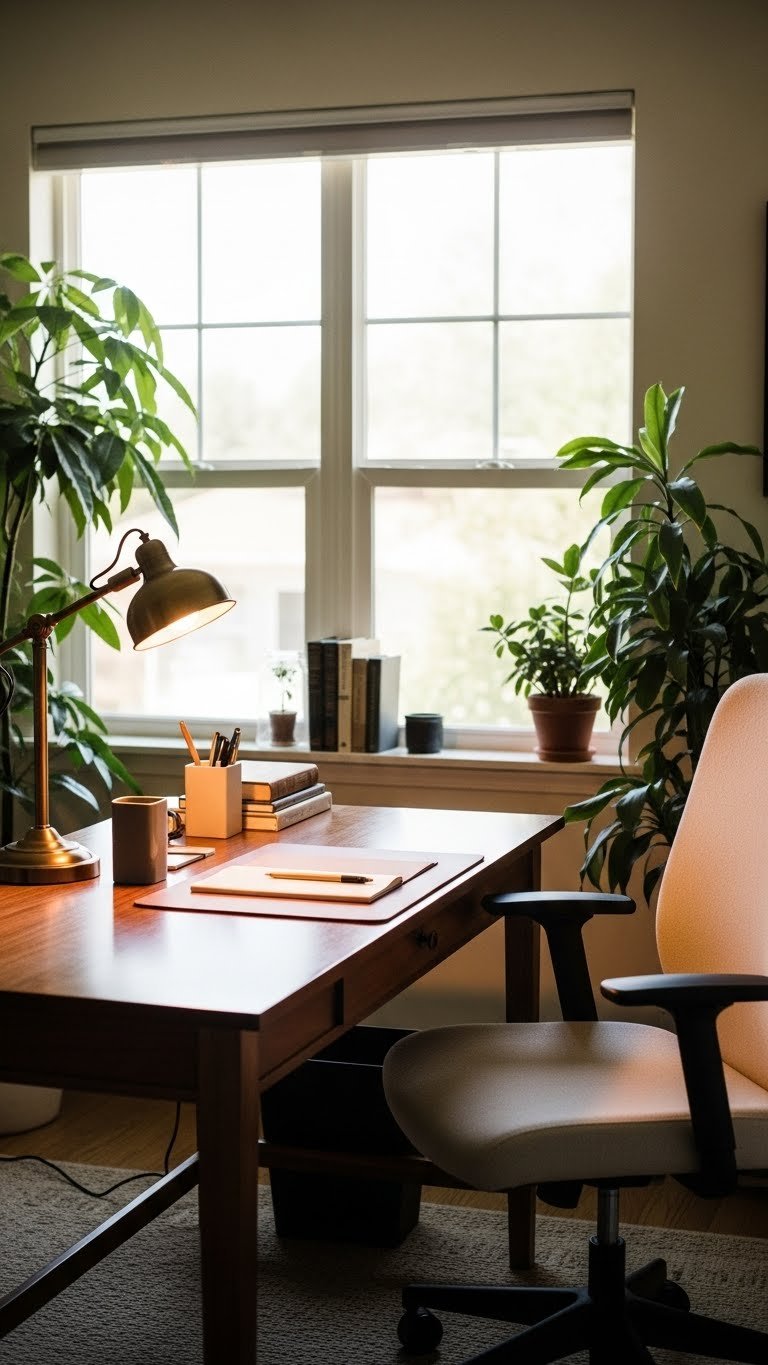

    16. Use Matching Headboards as a Focal Point

    Identical headboards create visual cohesion and make the room feel intentionally designed rather than randomly furnished.

    Invest in matching headboards (IKEA MALM or HEMNES, $100–$300 each; Wayfair upholstered options, $150–$400) for both beds. The repetition creates rhythm and harmony. Position beds symmetrically so the headboards are the focal point as you enter the room. Keep bedding neutral so the headboards stand out.

    Matching headboards elevate the space instantly. They signal intention and investment. Even budget headboards look more curated when they’re identical and symmetrically arranged. Worth the money for the design payoff.


    17. Add Window Treatments Above and Around Beds

    Framing windows with matching curtains ties beds to natural light and creates symmetry that anchors the room visually.

    Install simple curtain rods ($20–$50 each from Target, Amazon, or Wayfair) above windows near each bed. Hang lightweight linen or cotton curtains ($30–$80 per panel from Target, Pottery Barn Teen, or Amazon). This creates a built-in frame for each bed and maximizes natural light. Use the same curtain style on both windows so the room reads as cohesive.

    Window treatments are a renter-friendly upgrade (use tension rods if you can’t drill) that immediately elevate a basic room. The symmetry of matching curtains makes the whole arrangement feel intentional and designed.


    18. Create a Cozy Nook with Pillows and Throws

    Layering pillows and throws creates visual interest and makes even basic beds look styled and intentional.

    Add 3–5 decorative pillows per bed ($10–$30 each from Target, Wayfair, or HomeGoods) in coordinating colors and textures. Drape chunky knit or faux fur throws ($25–$80 from Amazon, Target, or West Elm) across the foot of each bed. Mix textures: velvet, linen, wool. This styling makes small beds look bigger visually and creates an inviting, layered aesthetic.

    The layering trick is simple but transforms basic bedding into something that photographs beautifully and feels luxe. Takes 20 minutes to arrange and costs $50–$200 depending on your choices. Totally worth it for the cozy factor.


    19. Keep the Space Between Beds Clear and Minimal

    Keeping the center floor clear and furniture-minimal makes the room feel larger and less cluttered, even with two beds.

    Position beds on opposite walls with at least 3–4 feet of clear floor between them—no rugs, no furniture, no storage in the middle. Keep nightstands low and recessed. This open sightline makes even small rooms feel spacious and organized. It’s also safer and easier to clean.

    The empty space is your friend in small rooms. Resist the urge to fill every corner with furniture. This strategy works especially well in dorms or guest rooms where simplicity reads as intentional design rather than emptiness.


    20. Use Bed Risers to Create Underbed Storage

    Bed risers lift frames 6–12 inches higher, creating significant underbed storage that stays organized and accessible.

    Install wooden or metal bed risers ($15–$40 per set from Amazon, Target, or Home Depot). This lifts each frame enough to slide storage bins underneath. Use labeled fabric bins ($10–$20 each from The Container Store or Amazon) for seasonal clothes, extra bedding, or shared supplies. This keeps the room floor-clear while maximizing hidden storage.

    Risers are a budget-friendly investment that pays off immediately. The extra height also makes beds easier to get in and out of, which is a nice bonus. Takes 15 minutes to install per bed.


    21. Install Blackout Shades for Different Sleep Schedules

    Individual blackout shades over windows let each sleeper control light independently—essential if bedtimes or wake-up times differ.

    Install blackout roller shades ($30–$80 each from Amazon, Target, or Home Depot) above or inside window frames near each bed. Choose the same style and color for both windows. This lets one person sleep while another enjoys morning light. It’s a game-changer for shared rooms or different schedules.

    Blackout shades are practical and surprisingly affordable. They’re also renter-friendly if you choose tension rods or adhesive models. Bonus: they reduce outside noise slightly. Total cost: under $200 for a pair.


    22. Add Matching Bedside Organizers or Caddies

    Hanging organizers on bed frames keep personal items accessible without needing nightstands or taking up floor space.

    Use fabric bed caddies or hanging organizers ($15–$35 each from Amazon or The Container Store) hung on the side of each bed frame. These hold phones, books, glasses, chargers—everything within arm’s reach while sleeping. This is especially useful in dorms or shared rooms where nightstand space is nonexistent or limited.

    Caddies are genius for tight spaces. They’re removable, affordable, and look intentional rather than thrown-together. Takes 5 minutes to hang and instantly adds functionality.


    23. Use Coordinating Throw Blankets for Easy Refreshes

    Coordinating throws in different colors add visual interest, warmth, and an easy way to refresh the space seasonally.

    Choose two throw blankets in complementary colors—think cream and sage, or gray and blush ($25–$60 each from Target, West Elm, or Amazon). Drape one across each bed’s footboard. This adds texture, color, and coziness without committing to new bedding. Swapping throws seasonally keeps the room fresh.

    Throws are the easiest decor update around. They’re affordable, flexible, and instantly make a room feel more intentional. You can fold them neatly or drape them casually depending on your vibe.


    24. Position Beds to Frame a Window or Architectural Feature

    Flanking a window or alcove with beds creates natural symmetry and makes the window the focal point of the room.

    If your room has a prominent window, built-in shelf, or architectural feature, position one bed on each side of it. This creates instant visual balance and makes the room feel intentionally designed rather than beds just filling available space. Use matching nightstands and bedding to enhance the symmetry.

    This layout works beautifully in rooms with unusual shapes or interesting architectural details. It also draws attention to the room’s best feature. If you don’t have a window, you can create the same effect by centering beds around a floating shelf or wall art.


    25. Add Personal Decor and Photos Above Headboards

    Personal photos and artwork above each headboard make the space feel individual and lived-in while using vertical space.

    Create a small gallery wall above each headboard ($30–$100 per wall for frames and prints from IKEA, Target, or Minted) with a mix of framed photos, inspirational prints, and artwork. Use command strips (renter-safe, $5–$10) so you’re not drilling holes. Mix frame sizes and styles for visual interest. Keep each gallery to 5–7 pieces so it feels curated, not chaotic.

    Gallery walls add so much personality and make rooms feel like actual homes rather than temporary spaces. They’re also affordable and totally customizable. Update them seasonally for a fresh look.


    26. Establish a Shared Styling Agreement

    Agreeing on a basic style framework keeps a shared space cohesive even when two people have different aesthetics.

    Before buying anything, chat with your roommate or co-sleeper about: color palette (three main colors max), style vibe (modern, cozy, minimalist), and budget for shared pieces like rugs or lighting. Agree that nightstands should be similar heights, bedding should coordinate, and major purchases get discussion. You don’t need to be identical, but alignment prevents visual chaos.

    This conversation takes 15 minutes but saves stress and awkward furniture conflicts later. Shared spaces work best when there’s a plan, even a loose one. The result? A room that looks intentionally designed instead of accidentally assembled.


    Save this post for your next bedroom refresh and pick one or two ideas to tackle this weekend. Small arrangement tweaks and styling changes add up faster than you’d think—try just one idea and watch how much more put-together your space immediately feels.

  • 24 Minimal Frame TV Styling Ideas for a Seamless Living Space

    24 Minimal Frame TV Styling Ideas for a Seamless Living Space

    Minimalist TV styling doesn’t mean boring—it means intentional. Your living room is probably the heart of your home, yet visible cables, clunky stands, and mismatched tech can make the space feel chaotic instead of calm. You want your TV setup to disappear into the background while still looking thoughtfully designed.

    Whether you’re renting, decorating on a budget, or ready to invest in a permanent refresh, these 24 ideas show you how to create a seamless media wall that actually enhances your space instead of dominating it. From hidden storage solutions and floating designs to smart frame styling and cable management hacks, you’ll find options for every skill level and budget. By the end, you’ll have a TV area that looks clean, feels intentional, and photographs beautifully—all without the chaos.


    1. Mount Your TV in a Thin Frame Box

    A frame box creates the illusion that your TV is part of the wall itself rather than a protruding object. This approach works especially well with neutral wall colors and keeps the focus on your content, not the hardware.

    Build or buy a shallow wooden box frame (4-6 inches deep) that matches your wall color. Mount your TV inside so only the screen edge shows the frame. This costs $80-$200 for a custom frame or $40-$100 for a pre-made option from IKEA or Amazon. Takes about 2 hours to install if you’re mounting it yourself. The frame disappears visually, making your TV feel like it’s floating within the wall rather than sitting on top of it.

    This approach looks gallery-like and high-end without the luxury price tag. Your guests will notice the thoughtful design before they even realize there’s a TV in the room.


    2. Hide Cables Behind a Cord Management Box

    Visible cables are the enemy of minimalist styling, and one box solves the entire problem. A cord management box catches all your messy cables and hides them completely behind a finished cover.

    Mount a $15-$40 cable management box (available at Target, Best Buy, or Amazon) directly under your TV. Feed all cables through the top, and they’ll exit at the back to your devices. Paint the box to match your wall or leave it black if your wall is dark. Installation takes 15 minutes and requires only a drill and wall anchors.
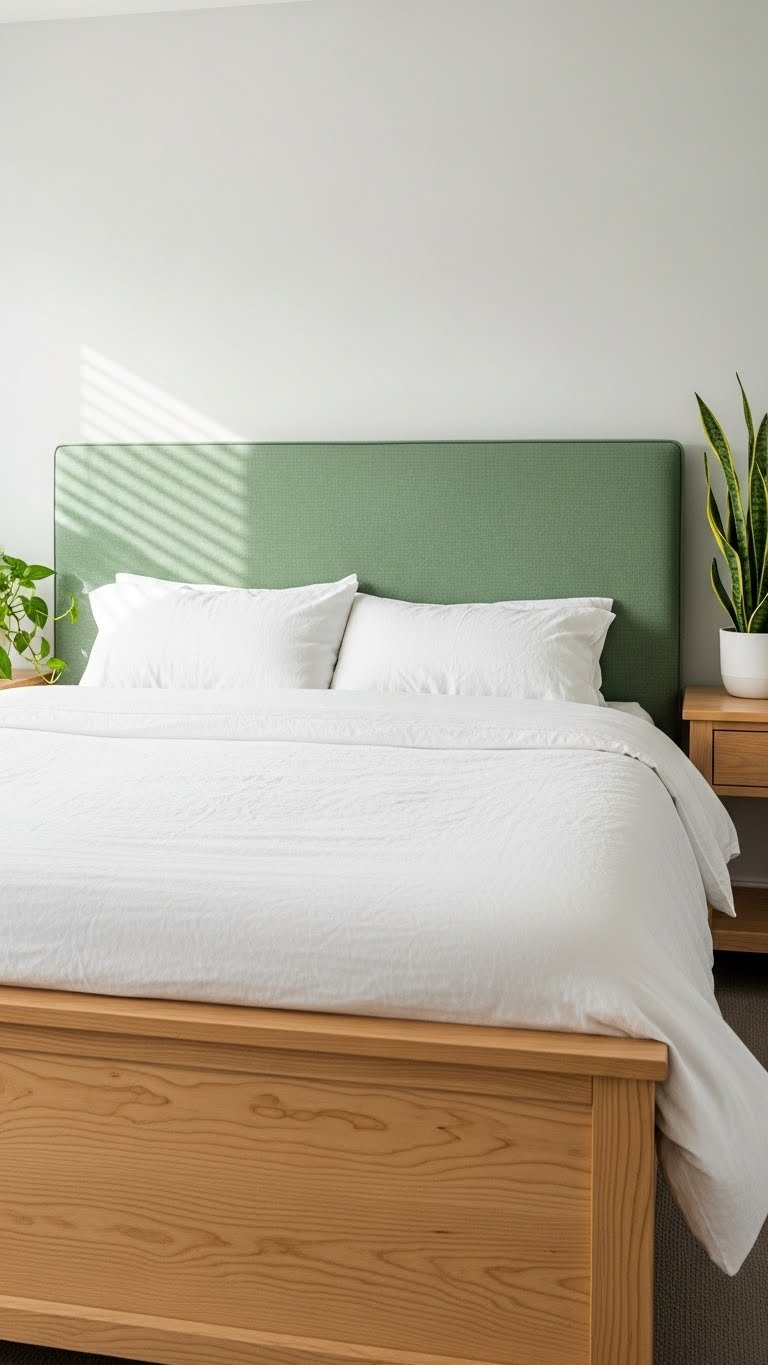
    You’ll immediately see the difference—your TV wall goes from looking tangled to completely intentional. Rearranging cables later becomes easy since they’re all contained in one accessible spot.


    3. Use Slatted Wood Paneling for Acoustic Texture

    Slatted wood does double duty: it looks elegant while actually improving your room’s acoustics. The gaps between slats absorb sound, making your TV experience feel less echoey and more refined.
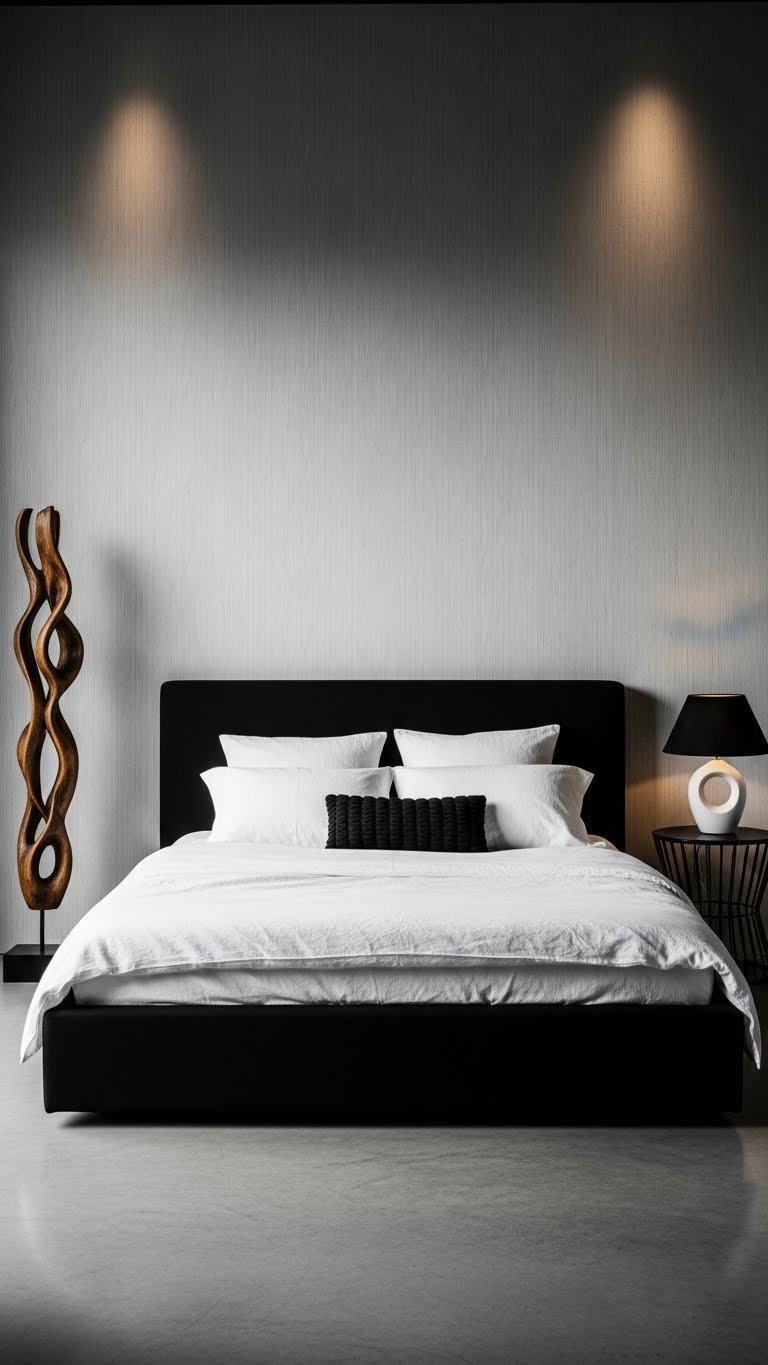
    Install vertical wooden slats (oak, walnut, or pine) with 2-3 inch gaps between each board. Budget $150-$400 for materials and tools, or hire help for $300-$600 in labor. This is a solid weekend project for DIYers, or a half-day job for a professional. The slats hide cables routed behind them and create a warm focal point that feels architectural.

    Your room suddenly feels more intentional and gallery-like. The acoustic benefit means your TV doesn’t feel as loud or jarring, and the wood brings natural warmth that neutral walls alone can’t achieve.


    4. Install a Floating Media Console for Zero Visual Weight

    Floating consoles free up floor space and make rooms feel bigger while keeping everything organized and hidden. No bulky TV stand means no visual clutter at eye level.

    Mount a $60-$150 floating shelf from IKEA, Wayfair, or a local carpenter directly below your TV. Choose one that’s 36-48 inches wide to align with your TV. Hide a cable management box behind it or route cables through drilled holes in the back. Install takes 1-2 hours with a drill, level, and wall anchors.

    Your floor suddenly opens up, making the room feel more spacious. Electronics stay hidden in drawers below, and the shelf surface stays clear except for one or two intentional objects. Small spaces benefit most from this approach.


    5. Paint the TV Wall a Soft Neutral Tone

    Color makes a huge difference in how “designed” your TV wall feels. A soft, cohesive paint color makes the wall recede rather than demand attention.

    Choose greige, warm white, or soft taupe and paint just the TV wall (or the whole room for $0 if you’re doing it yourself with paint you already have, or $150-$300 if hiring a painter). One coat with a primer-paint combo takes 2-3 hours DIY. This is the cheapest way to make the biggest impact.

    The unified color makes your TV disappear into a calm backdrop instead of sitting against a stark white that makes it pop out. Your entire room feels more cohesive and thoughtfully planned.


    6. Add Thin Stacked Stone for Modern Texture

    Stone brings organic texture and visual interest without heaviness. Thin stacked stone veneer is lightweight, rental-friendly (with landlord permission), and surprisingly affordable.

    Install thin stacked stone veneer ($80-$200 for materials to cover a wall) using stone adhesive and grout. This weekend project takes 4-6 hours and requires no special tools. You can also rent this job out to a mason for $300-$600 total. Stone hides cables easily and creates natural shadows that add depth.

    Your TV wall becomes an architectural feature that elevates the entire room. The texture catches light in a way that makes your space feel designed, not just “decorated.”


    7. Create a Gallery Wall Above or Beside the TV

    Framed art around your TV transforms it from an electronic into part of your décor story. This approach acknowledges the TV as a functional element while styling around it.

    Select 4-6 matching or complementary frames ($15-$40 each at Target, IKEA, or thrift stores) and arrange them above your TV in a grid or salon-style layout. Add simple artwork or black-and-white prints ($10-$30 each). Arrange and hang takes 1-2 hours. The frames and art become as much a focal point as the TV itself.

    Suddenly your TV isn’t the only thing pulling your eye. The curated art display makes the space feel intentional and gallery-like, and guests see thoughtful design before they register that there’s a TV.


    8. Install Recessed Shelving Behind Your TV

    Built-in shelving makes a TV wall feel custom and high-end while providing functional storage. Recessing the TV means it doesn’t protrude into your room.

    Cut a recessed opening in your drywall, add a backing board, and install $50-$150 worth of simple shelving materials (wood, brackets, paint). This requires carpentry skills or hiring a pro ($400-$800 in labor). Takes a full weekend DIY or one day with a professional. The shelves hide cables and create a curated display area.

    Your TV becomes part of an intentional design moment rather than a standalone object. The recessed effect makes your room feel more spacious, and the surrounding shelves give you flexible styling options.


    9. Use Micro Cement for a Seamless Luxury Finish

    Micro cement creates a seamless, high-end look similar to polished concrete but way more approachable. It’s an emerging luxury finish that feels intentional.

    Apply micro cement ($200-$500 in materials or $400-$800 with professional installation) following product instructions or hiring a pro. The finish cures for 48 hours before your TV can go back up. This is a one-time investment that lasts forever. Micro cement hides imperfections and creates zero visual breaks—your wall is completely seamless.

    The result feels modern and gallery-like, like you’ve designed a professional art installation. This finish works especially well with minimalist frames and makes any TV look elevated.


    10. Mount Your TV on a Motorized Swing Arm

    A motorized arm lets you hide your TV completely when you’re not using it. This is the ultimate minimalist move for anyone who doesn’t want their TV to be the room’s focal point.

    Install a $150-$400 motorized swing arm (available at Best Buy, Amazon, or Wayfair) and run power and cables through the wall behind it. Installation takes 2-3 hours and may require an electrician ($200-$300). When you’re done watching, press a button and your TV slides flush against the wall, completely disappearing from view.

    Your room transforms depending on how you’re using it. During the day, your wall is a clean, uninterrupted surface. At night, your TV emerges for entertainment. This speaks to the most intentional version of minimalist living.


    11. Paint a Bold Feature Wall Behind Floating Furniture

    A bold, solid color behind your TV doesn’t clutter—it defines. Used strategically with minimal accessories, it feels intentional rather than busy.

    Choose one bold but sophisticated color (charcoal, deep navy, warm black, or rich green) and paint the TV wall. Buy premium paint ($25-$40 per quart) for durability and color depth. Two coats takes 3-4 hours DIY or costs $200-$300 with a pro. Keep everything else on that wall minimal—just the TV and console.

    The bold backdrop makes your TV area feel like a distinct room “zone” without crowding the space. Dark colors recede, so the wall feels like a frame rather than a wall pushing in on you.


    12. Arrange Floating Shelves in a Custom Grid

    Floating shelves in a grid layout create visual structure without solid wall coverage. You get open storage and style flexibility simultaneously.

    Install 6-8 floating shelves ($30-$60 each from IKEA, Wayfair, or Amazon) in a balanced grid. Use a level and stud finder (basic $20-$40 if you don’t have them) to ensure accuracy. Layout takes 2-3 hours, installation takes another 2-3 hours. Leave 60% of each shelf empty and style the rest with books, plants, and a few meaningful objects.

    Your wall feels organized and intentional rather than scattered. The negative space is just as important as what’s displayed, giving the wall breathing room while keeping you organized.


    13. Hide Your Cable Box in a Wooden Console Drawer

    Cable boxes are visual clutter that serve zero aesthetic purpose. A simple drawer hides everything while keeping it accessible.

    Mount a low console with at least one deep drawer ($80-$200 from IKEA, Wayfair, or Target) directly below your TV. Place your cable box, power strips, and surge protectors inside the drawer. Drill small holes in the back of the drawer or console to route cables through. Setup takes 30 minutes once the console is installed.

    Your TV setup suddenly looks clean and professional. The drawer keeps tech hidden but within reach, so you’re not hunting for remotes or fumbling with cables.


    14. Use Fluted Wall Panels for Textured Luxury

    Fluted panels are having a major moment and for good reason—they add luxury texture that feels high-end without being visually busy. The vertical lines are subtle but impactful.

    Install pre-made fluted wall panels ($200-$500 for a TV wall, or hire installation for $300-$600). Options include MDF panels, 3D wall tiles, or custom wood fluting. DIY installation takes 4-6 hours; professional takes 4-8 hours. Fluted panels hide cables routed behind them and create visual depth through light and shadow play.

    Your TV wall transforms into a textured architectural feature that photographs beautifully and feels intentionally designed. The subtle ridges catch light in a way that makes the space feel premium.


    15. Create a Japandi TV Wall with Natural Materials

    Japandi blends Japanese minimalism with Scandinavian warmth—the perfect framework for a serene TV area. It’s about intentional simplicity with natural materials.

    Mix light wood slats or paneling ($150-$300) with a warm neutral paint ($50 in paint or $150-$250 with a pro painter). Add one or two large potted plants ($30-$80 each) nearby. No decorative clutter—just clean lines and natural textures. Setup takes one weekend for the walls, then ongoing styling as you add plants.

    Your TV becomes part of a cohesive, calming environment rather than the focal point. The combination of natural materials and negative space makes the room feel peaceful and intentional.


    16. Install an Electric Fireplace Below Your TV

    An electric fireplace under your TV adds warmth and a second focal point without the mess of a real fireplace. It’s functional heating and aesthetic ambiance combined.

    Install a wall-mounted electric fireplace ($150-$400) directly below your TV using the manufacturer’s mounting hardware. These plug into standard outlets, so no venting required. Installation takes 30 minutes to 1 hour and just needs a drill and level. The fireplace creates ambient warmth and adds visual interest below the TV.

    You’ve created two focal points instead of just one, and the room feels cozier during cooler months. Evening gatherings feel warmer and more inviting with the glow of flames below your TV.


    17. Mount LED Strips Behind Floating Shelves

    LED strips add indirect lighting that creates ambiance while highlighting your styling. They’re affordable, easy to install, and completely transformative.

    Purchase adhesive LED strips ($20-$50 at Home Depot, Amazon, or Target) and attach them to the underside of each floating shelf surrounding your TV. Run the power cord behind shelves and plug into a nearby outlet or use a wireless remote-controlled option ($40-$80). Installation takes 20 minutes. Choose warm white light for a cozy feel or adjustable color if you like flexibility.

    Your TV wall becomes a design feature even when you’re not watching. The soft lighting adds depth and makes the entire wall feel curated and intentional. It’s the difference between a TV wall and a designed media installation.


    18. Use a Decorative Room Divider to Frame Your TV

    A room divider frames your TV and defines the media area as its own zone. This works especially well in open-concept spaces where you want to visually separate the TV area.

    Position a $80-$250 room divider (wood, rattan, or metal options at IKEA, Wayfair, or Amazon) to one side of your TV. Choose one that coordinates with your wall color and style. No installation needed—just position it. This instantly signals “this is the TV zone” without building a wall.

    Your open-concept space suddenly feels more intentional and organized. The TV doesn’t dominate the entire room; instead, it’s a defined area within your larger space. Guests immediately understand the room’s layout.


    19. Style Your Console with Intentional Negative Space

    The styling around your TV matters as much as the wall itself. Intentional negative space makes everything you do display feel purposeful.

    Choose only 3-5 objects maximum for your console: a small plant ($15-$30), stacked books you actually read ($0 if you use ones you own), one meaningful decorative piece ($20-$60). Arrange them on one side or in a small cluster. Dust and refresh monthly as needed.

    Your console becomes a curated moment rather than a catch-all shelf. Guests notice the intentional styling and assume you’re more organized everywhere (which makes you want to be). Negative space is just as powerful as what you display.


    20. Paint Cables to Match Your Wall

    If you can’t hide cables completely, camouflage them. This budget hack makes visible cords disappear visually.

    Use spray paint designed for plastic ($8-$15 per can at Home Depot or Amazon) to paint cables the exact color of your wall. Tape off connectors with painter’s tape, then spray in light coats. This takes 15 minutes plus dry time (check paint instructions). The cables remain visible but become invisible to the eye because they match the wall.

    This approach works when cable routing isn’t possible (renters, specific room layouts). From across the room, your wall looks clean. It’s the most affordable cable management solution available.


    21. Install Modular Floating Shelves You Can Rearrange

    Modular shelf systems let you customize your layout and change it later. They’re perfect if you like flexibility or frequently rearrange.

    Purchase modular floating shelf systems ($150-$400 total from IKEA, Wayfair, or Amazon) with adjustable brackets. You can move shelves up, down, or remove them entirely. Install takes 3-4 hours; reconfiguring later takes 30 minutes. Mix shelf sizes for visual interest—different widths feel more intentional than uniform rows.

    You’re not locked into one design forever. As your styling evolves, your shelves can evolve too. This flexibility is perfect for renters or anyone who likes to refresh their space regularly.


    22. Use Venetian Plaster for Sophisticated Texture

    Venetian plaster creates a luxury finish with subtle shimmer and depth. It’s more sophisticated than flat paint and more affordable than many texture options.

    Apply Venetian plaster finish ($300-$600 in materials or $400-$900 with professional application) following product instructions or hiring a specialist. This multi-step process takes several hours per coat and requires drying time. The result is a seamless, sophisticated surface with subtle movement and light-catching properties.

    Your TV wall becomes an art piece itself. The subtle shimmer and depth make the space feel premium and intentionally designed. This finish works beautifully under accent lighting.


    23. Create a Two-Tone Wall with a Horizontal Dividing Line

    A horizontal color block creates visual interest and breaks up wall space without clutter. It’s a surprisingly elegant design move.

    Paint your TV wall in two complementary colors, divided by a horizontal line at roughly 60% up the wall. Use painter’s tape to mark the line perfectly. Paint takes 3-4 hours DIY or $200-$300 with a pro. Mount your TV at the color dividing line for maximum impact. The proportions feel balanced and intentional.

    The two-tone approach creates visual structure and makes your wall feel designed rather than blank. It works especially well in taller spaces where a single color might feel overwhelming.


    24. Mount Your TV on a Minimalist White or Black Frame

    A slim frame gives your TV a finished, gallery-like appearance. It looks intentionally designed rather than just mounted.

    Order a custom-cut frame ($60-$150 from local framers or online services) in your preferred finish (matte white, black, natural wood, or metallic). Mount your TV so the frame sits just outside the TV bezels. Installation takes 1-2 hours once the frame arrives. The frame transforms your TV from an electronic into a designed element.

    Your TV suddenly looks like intentional décor rather than a functional necessity. Guests notice the thoughtful framing before they even realize it’s a TV. The frame signals that your space is designed, not just furnished.


    Pin this post and try one idea this weekend. Whether you go minimal or textured, hidden cables or gallery-styled, your TV wall can become a designed feature that elevates your entire room. Start with what feels most doable—even one small change makes a surprising difference.

  • 24 Minimal Line Art Wall Paint Ideas for Elegant Interiors

    24 Minimal Line Art Wall Paint Ideas for Elegant Interiors


    If your walls feel like blank canvases waiting for personality, but you’re hesitant about bold colors or busy patterns, minimal line art might be your answer. These elegant, understated designs bring sophistication and artistic flair without overwhelming your space. Whether you’re renting, own your home, or just prefer subtlety over drama, line art offers endless possibilities—from hand-drawn botanicals to geometric abstracts to architectural sketches. In this guide, you’ll discover 24 distinct ideas that blend affordability with impact, proving that “less is more” creates rooms that feel intentional, curated, and undeniably stylish. Ready to elevate your walls?


    1. Paint Single-Line Botanical Sketches on Accent Walls

    Hand-drawn line art feels personal in a way mass-produced prints never will. A single accent wall of botanical sketches brings organic beauty while staying understated and renter-friendly.

    Use a pencil to sketch your design first, then trace over it with a thin paintbrush and matte black or charcoal paint ($8-15 per quart). One-line continuous drawing style (where you don’t lift your brush) creates a flowing, meditative look. This takes 2-4 hours depending on complexity and wall size. If freehand drawing intimidates you, print your design, tape it to the wall, and trace through it with carbon paper ($3-5).

    Pro tip: Practice your design on kraft paper first so you can adjust proportions before committing to the wall.

    The result feels like your home was curated by an artist, and you’ll actually enjoy looking at something you created yourself.


    2. Create Geometric Line Patterns Using Painter’s Tape

    Geometric line art doesn’t require freehand skill when you use painter’s tape as your guide. These patterns feel modern and architectural without being cold.

    Decide on your pattern: triangles, hexagons, or interconnected lines. Use painter’s tape ($5-8 per roll) to map out your design directly on the wall, applying it carefully to ensure straight edges. Paint between the tape lines with two thin coats of your chosen color ($12-20). Remove tape while paint is slightly tacky for crisp edges. Budget 4-6 hours for a 10×12 wall, depending on complexity. This works beautifully in nurseries, home offices, or bedrooms.

    Pro tip: Test your pattern on cardboard first to see how colors interact with your existing décor.

    You’ll love how professional the result looks—this technique rivals expensive wall murals at a fraction of the cost.


    3. Use Removable Peel-and-Stick Line Art Decals

    When you’re renting or want zero commitment, removable decals give you gallery-quality line art in minutes. These stick cleanly and peel off without damage.

    Shop Etsy ($15-50 per sheet), Amazon ($12-40), or Target ($8-25) for peel-and-stick line art collections. Common designs include abstract botanicals, geometric faces, and architectural sketches. Installation takes 20-30 minutes per wall: clean the surface, peel slowly, and smooth out air bubbles with a plastic card. Quality brands like Removable Wall Art Decals hold up well even with cleaning. Mix and match different sheets to create an eclectic gallery wall effect.

    Pro tip: Apply decals to accent walls or create a feature wall by clustering them in one area rather than spreading them thin.

    Your walls stay pristine for when you move, and you can refresh the design whenever you want.


    4. Draw Architectural Line Drawings Inspired by Cities

    If you’re drawn to urban energy, architectural line art brings cosmopolitan style without feeling trendy or dated. These sketches work beautifully in offices, living rooms, or bedrooms.

    Use a fine-tip black marker or paint pen to sketch simple building silhouettes directly on the wall, or project a reference image and trace it lightly first. Focus on clean lines and geometric shapes—think simplified skyscrapers, bridges, or street grids. This costs under $10 for markers and paint pens. Budget 2-3 hours for a feature wall. Alternatively, print large-scale architectural line drawings from sites like Unsplash or Pexels, have them printed at Staples or FedEx Office ($20-40 for poster-size prints), and frame them in simple black frames ($15-30 each).

    Pro tip: Use a light pencil grid to keep your lines straight if you’re worried about wonky proportions.

    Your space immediately reads as sophisticated and design-conscious, perfect for making a home office or entryway feel intentional.


    5. Paint Interconnected Abstract Line Compositions

    Abstract line compositions feel artistic and improvisational while being surprisingly easy to execute. These work in any room and look more expensive than they cost.

    Plan your design using a pencil or light chalk: sketch flowing lines that connect and overlap across your wall without a predetermined pattern. Once you’re happy with the layout, paint one color, let it dry fully, then add a second complementary color ($12-18 per quart). Matte finish works best to avoid glare. Use fine paintbrushes or paint pens ($5-15) for precision. This project takes 4-6 hours plus drying time. No two compositions are identical—yours will be uniquely yours.

    Pro tip: Instagram abstract line art for inspiration, screenshot designs you love, and use them as loose references rather than exact replicas.

    The finished wall becomes a conversation starter—guests will ask if you hired an artist.


    6. Create Minimalist Horizon Lines for Calm Spaces

    Sometimes the simplest ideas hit hardest. Horizon lines are meditative, calming, and perfect for bedrooms, bathrooms, or meditation spaces. The minimalism feels intentional and expensive.

    Using a level and painter’s tape, mark three to five evenly-spaced horizontal lines across your wall ($5-8 for tape, $3-5 for a level if you don’t have one). Paint over the tape with matte charcoal, deep gray, or soft blue ($12-15 per quart) depending on your mood. Remove tape while paint is slightly tacky. The entire project takes 90 minutes to 2 hours. This is incredibly forgiving—imperfect spacing only adds to the hand-drawn appeal.

    Pro tip: The lines don’t have to be perfectly centered; slightly irregular placement feels more authentic.

    Your bedroom becomes a sanctuary rather than just a place to sleep—the understated design creates calm without fuss.


    7. Combine Line Art with Floating Shelves for Display

    Line art becomes a framework for your existing belongings when you pair it with floating shelves. This approach makes your walls feel curated and gallery-like.

    Paint or draw geometric frames, arches, or abstract shapes around where your shelves will be ($8-12 for paint markers, 2-3 hours for design). Install floating shelves ($30-80 per shelf from IKEA, Home Depot, or Target). Arrange items intentionally: books, small plants, ceramics, and sculptural objects. The line art acts as a backdrop that emphasizes what you’re displaying. This takes one full day between drawing, drying, and shelf installation, but the impact is significant.

    Pro tip: Keep shelf décor minimal—too many items compete with your line art rather than complementing it.

    You get gallery-quality presentation for objects you already own, making your space feel like a styled interior magazine shoot.


    8. Draw Celestial Line Patterns for Night-Time Appeal

    Celestial designs bring wonder and calm to bedrooms and kids’ spaces. Line-art constellations feel whimsical without being babyish or saccharine.

    Use a pencil to lightly mark dots where stars should be, then connect them with fine lines using black or deep blue paint markers ($5-10). You can reference actual constellations (Orion, Ursa Major, Pleiades) or create your own designs. Add constellation names in tiny letters if you want. This takes 2-3 hours and costs under $15. For a more polished look, use removable constellation decals ($20-35 from Amazon or Etsy) that achieve the same effect without the permanence.

    Pro tip: Add glow-in-the-dark paint to constellation lines ($12-18 per bottle) for a magical nighttime effect that’s perfect for kids’ rooms.

    Lying in bed, you’ll drift off looking at your personal map of the cosmos—a reminder that you created something beautiful in your own space.


    9. Paint One-Stroke Line Art Portraits or Faces

    One-line portraits feel artistic and modern. They work in entryways, offices, or living rooms where you want an immediate wow factor.

    One-line drawing means you draw a complete face without lifting your brush, creating continuous flowing lines. Sketch your design lightly first using a pencil, then trace with black paint pens or thin paintbrushes ($5-12). Common approaches: profile faces, frontal abstract faces, or mixed angles on the same wall. Each portrait takes 30-45 minutes. This costs under $20 and requires no special artistic training—the imperfection is part of the appeal. Print reference images from Pinterest or artist accounts like @onelinedrawing or @minimalist_art to inspire your work.

    Pro tip: Create an odd number of portraits (three, five, seven) for better visual balance than pairs or evens.

    Your entryway immediately signals that you’re creative, thoughtful, and have an artistic sensibility.


    10. Use Negative Space with Washi Tape Line Art

    Washi tape comes in endless patterns and colors, making it perfect for line art that’s fully removable and endlessly adjustable. This is ideal for renters and commitment-phobes.

    Buy quality washi tape ($2-5 per roll) in coordinating colors from craft stores, Target, or Amazon. Plan your design on paper first, then apply tape directly to walls in geometric patterns, grids, or abstract lines. Leave significant empty wall space—the negative space is crucial to the minimalist aesthetic. This takes 2-3 hours for a substantial wall and costs $15-40 depending on how many rolls you use. The beauty is you can peel it all off in minutes if you want to refresh your design.

    Pro tip: Mix tape widths for visual interest—combine wide and narrow tapes to create varied line weights.

    Your walls are playful and personalized without any permanent commitment, and you can adapt the design seasonally.


    11. Create Grid Line Art for Modern Geometry

    Grid line art feels contemporary and structured, perfect for offices, studies, or anywhere you want a sophisticated, orderly aesthetic. The geometry is calming and intentional.

    Using a level, pencil, and painter’s tape, mark out a grid pattern—squares can be 12 inches, 18 inches, or whatever proportion appeals to you ($5-8 for tape and level). Paint alternating squares in two related colors (cream and taupe, soft blue and white, gray and beige) or leave some unpainted. This creates dimensional depth. Use matte paint in your chosen colors ($12-20 per quart). The entire project takes 5-7 hours including drying between coats. This is absolutely doable as a weekend DIY project.

    Pro tip: Keep color contrast subtle for a sophisticated, restrained look rather than bold contrast that feels playful.

    Your office or workspace reads as intentional and designed, boosting productivity and creative energy.


    12. Draw Simple Line Art Landscapes with Mountains or Hills

    Landscape line art connects you to nature without the commitment of large-scale murals. Mountains, hills, and simple vegetation feel calming and aspirational.

    Sketch your landscape lightly with pencil—think layered mountain ranges, a simple horizon, and minimal vegetation details. Paint over your sketch with black, charcoal, or warm brown ($8-12 per quart). Use fine paintbrushes ($5-10) for detailed linework. Some people create depth by painting mountains in multiple shades of gray from darkest to lightest. This project takes 3-5 hours depending on complexity and costs under $25. No prior art experience required—simplicity is the point.

    Pro tip: Reference actual mountain ranges from places you love to create a personalized landscape tied to your memories.

    You create a personal retreat within your home, and every time you look at your wall, you remember why that landscape matters to you.


    13. Paint Oversized Leaf or Fern Line Drawings

    Sometimes one huge line drawing makes a bigger statement than many small ones. A floor-to-ceiling leaf or fern feels dramatic yet minimalist.

    Choose your leaf inspiration from nature references or botanical illustration accounts on Instagram. Use a pencil to lightly sketch the outline and vein details, then paint with black or deep green ($12-15 per quart). Use thin paintbrushes or paint pens ($5-15) for fine linework, especially for the delicate veins. This takes 4-6 hours including drying, but the payoff is huge. Keep the design single-color for maximum sophistication—multicolor reads as less refined.

    Pro tip: Place the large leaf drawing where it’s the first thing you see entering the room for maximum visual impact.

    Walking in, you’re greeted by nature-inspired art that feels gallery-quality and personally curated.


    14. Create Abstract Continuous Line Wall Mural

    Abstract continuous-line murals feel organic, energetic, and surprisingly meditative to create. They fill wall space without feeling busy.

    Plan your design with a pencil, mapping out a flowing pattern that connects various points across your wall without lifting the “brush.” You’ll trace this pattern with black paint or paint marker ($8-12). The pattern can include loops, curves, geometric intersections, or organic shapes. This project takes 5-8 hours depending on wall size and complexity, but it’s deeply satisfying. The imperfect, hand-drawn quality is essential to its charm—perfect lines would feel sterile.

    Pro tip: Work in sections of about 4 feet at a time to avoid fatigue and maintain consistent line weight.

    The mural becomes a meditation exercise as much as a design element, and your finished wall feels truly one-of-a-kind.


    15. Pair Line Art with Warm Neutral Painted Walls

    Line art shines when paired with warm neutral walls. This combination feels curated, balanced, and never boring—perfect if you’re transitioning away from gray fatigue.

    Paint your walls in warm neutrals like Benjamin Moore’s Wheat Sheath or Sherwin-Williams Stucco ($35-50 per gallon). Let this settle for a few days, then add your line art in black, charcoal, or warm brown ($8-12 per quart). The contrast between warm walls and cool-to-neutral line art creates visual interest without feeling chaotic. This combination works in every room and feels current without being trendy. Budget $60-80 for paint and 2-3 hours for wall preparation and line art execution.

    Pro tip: Stick with matte finishes for both wall paint and line art to avoid glare and maintain sophistication.

    Your space feels intentionally designed and warm, like a home that’s been thoughtfully considered rather than randomly decorated.


    16. Use Metallic Paint Pens for Glamorous Line Details

    Add a touch of glamour to line art with strategically placed metallic accents. Gold, copper, or silver details elevate minimalist designs without overwhelming them.

    Create your line art foundation in black or charcoal ($8-12 per quart). Once fully dry, use metallic paint pens in gold, copper, or silver ($5-12 for a set of three) to add delicate details: leaf veins, geometric highlights, constellation connections, or architectural accents. This takes an additional 1-2 hours and costs $15-25 total. The metallic elements should be subtle—think 10-15% of your overall design—to maintain sophistication rather than veering into “too much.”

    Pro tip: Test your metallic pen on scrap paper first; some brands are thicker and more opaque than others.

    Your walls catch light in unexpected ways, creating dimension that photographs beautifully and feels genuinely elegant.


    17. Paint Interlocking Circle Line Patterns

    Interlocking circles create visual rhythm and feel simultaneously playful and sophisticated. They work in offices, living rooms, or creative spaces.

    Use a compass ($5-8) to draw circles of varying sizes on your wall with light pencil first. Space them so they overlap slightly, creating an interlocking pattern. Paint the circle outlines with black or dark gray paint marker ($5-8). You could also make a circle template from cardboard ($0, using stuff you have) and trace around it repeatedly. This project costs under $20 and takes 3-4 hours. The repetitive nature of the work is meditative, and the result feels graphic and intentional.

    Pro tip: Vary circle sizes throughout the wall rather than making them uniform—this creates visual interest and organic flow.

    Your space reads as designed and thoughtful, with subtle depth that makes guests look twice.


    18. Create Line Art Inspired by Color of the Year Palettes

    Align your line art with current color trends by pairing minimal designs with 2025’s trending warm neutrals. This keeps your walls feeling current without being trendy.

    Paint your wall in Cinnamon Slate (Benjamin Moore’s 2025 Color of the Year) or similar warm, heathered neutrals ($40-50 per gallon). Add line art in complementary charcoal or warm brown ($8-12 per quart). The combination feels sophisticated and intentional because you’re working within a cohesive color story. Paint stores can mix custom shades, so ask for help matching colors if needed. This entire project runs $60-90 and takes 2-3 hours for line art once walls are painted.

    Pro tip: Check Benjamin Moore or Sherwin-Williams websites for their 2025 color capsule collections for instant inspiration.

    Your walls feel elevated and contemporary without screaming “trendy”—they’ll age beautifully because you started with a thoughtful color foundation.


    19. Draw Architectural Line Details Around Doorways and Trim

    Frame architectural elements like doorways, window trims, or built-ins with delicate line art. This draws attention to existing features and creates visual hierarchy.

    Use painter’s tape to mark out geometric patterns, arches, or abstract linework around your doorway or window trim ($5-8 for tape). Paint with black, charcoal, or a coordinating accent color ($8-12 per quart) using thin brushes or paint pens ($5-10). The framing effect makes small spaces feel more designed. This works beautifully in hallways, bedrooms, or home offices. Budget 2-3 hours for a doorway frame and $25-35 total for supplies.

    Pro tip: Photograph your doorway before you start, then sketch your design on a printout to visualize the finished result.

    Suddenly that standard doorway becomes an architectural moment—every time you walk through, your space feels more intentional and curated.


    20. Combine Line Art with Texture Paint for Depth

    Layer line art over textured walls for sophisticated depth that flat painted surfaces can’t achieve. This hybrid approach feels luxury-adjacent but remains budget-friendly.

    First, paint your wall with textured or matte paint in your chosen neutral ($15-25 per quart). Venetian plaster ($20-35 per quart) adds genuine depth, or use regular matte paint—the finish alone creates subtle variation. Once dry, add your line art with black paint marker or thin brush ($8-12). The line art pops against the textured background. This two-step process takes full weekend (accounting for paint drying time) and costs $35-55 total.

    Pro tip: Choose line designs with adequate spacing so the texture shows through and contributes to the overall composition.

    Your wall becomes visually interesting from every angle and lighting condition—texture and line art work together to create genuine dimension.


    21. Paint Minimalist Abstract Faces in Profile

    Abstract profile faces feel modern and human-centered without being representational. These work beautifully in entryways, hallways, or living rooms.

    Sketch profile faces with exaggerated, geometric features using a pencil. Keep details minimal: simple nose lines, eye curves, jawlines. Paint with black or charcoal ($8-12 per quart) using fine paintbrushes ($5-10). Create three to five faces pointing in different directions for visual interest. This takes 2-3 hours and costs under $25. The abstract quality means you don’t need anatomical accuracy—geometric simplification is the entire point.

    Pro tip: Reference fashion illustration or art deco design for inspiration; the intentional distortion is what makes it work.

    Your space reads as thoughtfully artistic and contemporary, signaling that you appreciate abstract beauty.


    22. Create a Gallery Wall Mix of Line Art and Frames

    Combine painted line art directly on walls with framed line art prints for a layered gallery effect. This approach maximizes visual interest without visual chaos.

    Paint one or two line art pieces directly on your wall ($8-12 for paint, 2-3 hours). Around or beside these, hang framed line art prints from Etsy ($20-50 per print), Minted ($25-60), or Amazon ($10-40). Mix frame types and sizes for contemporary gallery wall aesthetic. Include some empty mats or open frames ($5-15 each from IKEA) to maintain airiness. Arrange on the floor first using painter’s tape ($5) to mark positions, then hang. This creates depth and visual richness that feels intentional.

    Pro tip: Keep all artwork in black or grayscale for cohesion; mixing colors and themes reads as chaotic rather than curated.

    Walking past your wall feels like visiting a contemporary art gallery—every time you notice something new about how pieces relate to each other.


    23. Draw Line Art Representing Personal Meaningful Imagery

    The most meaningful line art is personal. Draw designs that reference your own memories, travels, or significant moments.

    Choose imagery that matters to you: a mountain range from a meaningful trip, constellations visible on your birthday, plants from your hometown, or abstract representations of important symbols. Sketch these on your wall lightly, then paint with black or a significant color ($8-12 per quart). Include subtle text if desired—coordinates of a meaningful location, a date, or a single meaningful word. This takes 3-5 hours but the emotional payoff is enormous. The uniqueness means it’s impossible to replicate online.

    Pro tip: Write out the story of why this image matters to you and keep it saved—it becomes part of your home’s narrative.

    Every glance at your wall reminds you of what matters most, turning your bedroom or living space into a personalized sanctuary.


    24. Paint Geometric Line Art Inspired by Sacred Geometry

    Sacred geometry patterns feel meditative, intentional, and deeply calming. These designs work beautifully in bedrooms, meditation spaces, yoga rooms, or wellness-focused areas.

    Research sacred geometry patterns like the flower of life, metatron’s cube, or mandala designs. Start at the center of your wall and work outward, sketching lightly with pencil. Paint with black as your primary color ($8-12 per quart) and add gold or copper metallic accents ($5-10) for delicate highlights. Maintain perfect symmetry or intentional asymmetry—both read beautifully. This is a meditative project taking 6-8 hours but the process itself is calming. Cost runs $25-35 total.

    Pro tip: Use a compass, protractor, or geometric rulers ($8-15 from art supply stores) to ensure accurate angles and proportions.

    Your space becomes a sanctuary for reflection and intention-setting, transforming daily moments into mindful practices.


    Save this post for your next wall project, and start with whichever idea resonates most—even one small piece of line art changes how your space feels. Pick one this weekend and watch how intentional design transforms your home.

  • 27 Floating Bed Frame Ideas That Look Sleek & Futuristic

    27 Floating Bed Frame Ideas That Look Sleek & Futuristic

    Floating bed frames are having a moment—and for good reason. They create the illusion of more space, add a futuristic vibe to any bedroom, and honestly? They just look cool. Whether you’re working with a tiny apartment, a guest room, or you just want to elevate your bedroom design, floating beds offer that sleek, modern aesthetic without sacrificing comfort or functionality.

    The best part? You don’t need a massive budget or a degree in carpentry to make it happen. From simple wall-mounted designs you can install yourself to statement-making sculptural frames, there are options for every skill level, space size, and price point. We’ve rounded up 27 floating bed frame ideas that range from minimalist ($0 hacks to renter-friendly solutions) to investment pieces that’ll make your bedroom feel like a luxury boutique hotel.

    Ready to lift your bedroom off the ground? Let’s dive in.


    1. Install a Simple Wall-Mounted Platform

    A wall-mounted platform is the most straightforward floating bed option and requires zero furniture legs. You’ll need to locate and anchor into your home’s wall studs using heavy-duty metal brackets (typically $40–$80 per pair from Home Depot or Lowe’s) and a solid piece of plywood or a pre-made platform base.

    Mount the brackets 16 inches apart horizontally and secure them into studs with lag bolts rated for at least 200 pounds each. The entire installation takes one weekend for most people, though you might want to hire a handyperson if you’re uncomfortable with power tools (roughly $150–$300 in labor). Test the stability before placing your mattress to make sure everything feels solid.

    The result is a bed that appears to hover with zero visual bulk underneath. You’ll gain storage space and that coveted floating aesthetic without breaking the bank. This is ideal for renters with a security deposit they want back—you can patch the holes when you move.


    2. Create a Renter-Friendly Faux Float with Bed Risers

    Don’t want to drill into walls? Bed risers work brilliantly for creating the floating illusion without any permanent modifications. Choose metal bed risers in matte black or brushed silver ($30–$60 from Amazon or Wayfair) and position them under each corner of your bed frame.

    Pair risers with a low-profile platform base ($80–$150) to create continuous visual lines that make the bed appear supported by nothing but air. The combined height usually sits between 12–18 inches, giving you perfect clearance for under-bed storage boxes or a low bench.

    Setup takes about 20 minutes, and you can take everything with you when you move. The open space underneath makes your room feel exponentially larger, especially in smaller bedrooms where every inch counts. Storage containers and light-colored boxes underneath reinforce the minimalist, modern vibe.


    3. Use a Cantilever Platform for Maximum Impact

    A cantilever design takes the floating concept to the next level—the bed extends from the wall with one end anchored and the other end floating freely into the room. This creates serious architectural drama and maximizes under-bed space.

    You’ll need professional installation ($400–$800) unless you’re experienced with structural work. The hidden support system typically uses steel I-beams anchored deep into wall studs. Pre-made cantilever bed frames from brands like Article or Blu Dot ($1,200–$2,500) come with installation guides, though hiring a carpenter is recommended.

    The payoff is unmissable: a bed that looks like it’s defying gravity from the moment someone walks in. The open space underneath feels sculptural and gallery-like, making even a small bedroom feel design-forward and intentional.


    4. Layer Textured Fabrics on a Floating Frame

    Pair your floating frame with textured fabrics like bouclé, linen, and chunky knit throws to add visual depth and luxury without cluttering the space. Layer a cream bouclé duvet cover ($60–$120 from Target or Parachute), a natural linen throw ($50–$100), and pillows in varying textures to create a magazine-worthy look.

    Bouclé has surged 35% in searches over the past year—people are craving that tactile, cozy element in modern spaces. The textures catch light beautifully and make a minimalist floating bed feel high-end and thoughtfully styled.

    This approach takes 30 minutes to style and costs $150–$250 total for quality pieces. Your floating bed becomes a focal point that invites people to want to sink into it. The textured layers make the space feel warm and lived-in rather than cold and clinical.


    5. Add Biophilic Elements Around the Base

    Bring nature into your floating bed setup by adding plants and natural materials around the base area. Install a live-edge wooden shelf ($40–$100 from Etsy) behind your headrest and populate it with low-maintenance plants like snake plants and pothos ($10–$25 each).

    Place additional potted plants on either side of the floating frame to create a biophilic buffer that grounds the airy design. The combination of wood, plants, and open space creates a serene, resort-like atmosphere while improving air quality and reducing stress.

    This entire setup costs $100–$200 and takes one afternoon to arrange. The greenery softens the minimalist lines of a floating bed and makes your bedroom feel like a personal sanctuary. Studies show biophilic design boosts mood and sleep quality—so you’re not just decorating, you’re optimizing your space for wellness.


    6. Install Smart Lighting Under the Frame

    Floating beds are the perfect canvas for ambient lighting. Install LED strip lights ($20–$50 from Amazon) along the underside of your floating frame using the adhesive backing. Connect them to a smart bulb dimmer system ($30–$80 from Philips Hue or LIFX) so you can control brightness and color temperature from your phone.

    Set the lights to warm white for evening relaxation and gradually dim them as bedtime approaches—research shows this supports your natural sleep cycle. The lighting takes 15–20 minutes to install and creates an instantly luxurious ambiance.

    You’ll wake to soft light and fall asleep without harsh overhead fixtures disrupting your rest. Seventy percent of homeowners appreciate smart lighting for mood control, and this setup delivers exactly that while amplifying the floating aesthetic.


    7. Create a Murphy Bed Floating Design for Small Spaces

    If you’re maximizing a truly small space, a floating Murphy bed (also called a wall bed) offers the best of both worlds. These beds fold up into the wall, creating a floating panel appearance when closed and revealing storage, a desk, or open floor space below.

    Quality Murphy bed systems from brands like Expand Furniture or Murphy Bed Co. range from $1,500–$4,000 installed, but they increase usable space by over 50%. Some DIY kits ($400–$800) exist, but professional installation is strongly recommended for safety and longevity.

    A floating Murphy bed takes your bedroom from a sleeping box to a multi-functional space—suddenly you have room for a workout area, home office, or seating nook. It’s the ultimate space-saving solution for city apartments or studio setups where every square foot matters.


    8. Paint an Accent Wall Behind Your Floating Frame

    A bold accent wall behind your floating bed draws the eye upward and makes the frame appear to hover more dramatically. Choose a deep jewel tone (emerald, navy, or charcoal) or a warm terracotta or sage for subtle richness.

    Paint the wall yourself in 4–6 hours ($30–$50 for quality paint from Sherwin-Williams or Benjamin Moore) or hire a painter ($200–$400). A single accent wall costs a fraction of full-room painting but delivers maximum visual impact.

    The color creates depth and makes your bed the room’s focal point without adding furniture or clutter. Lighter bedding will contrast beautifully against darker walls, while neutral bedding pairs equally well with warm accent tones. The result feels curated and design-forward instantly.


    9. Combine Floating Frame with Floor-to-Ceiling Curtains

    Pair your floating frame with floor-to-ceiling curtains in a textured fabric like linen or velvet to add personality and softness without bulk. Hang a curved curtain rod ($50–$120 from Article or CB2) high and wide to frame the floating bed on either side.

    Choose natural linen curtains ($80–$150 per panel from Parachute or Etsy) or velvet drapes ($100–$200) for a luxe feel. This setup takes one afternoon to install and costs $200–$350 total.

    The curtains create a cocoon-like effect around your floating bed, adding texture and visual interest while maintaining the minimalist structure. You can open them during the day for an airy feel or close them at night for coziness. It’s the best of both floating minimalism and layered, textured design.


    10. Add a Low-Profile Wooden Base for Warmth

    Offset the coolness of a modern floating frame with a warm wooden base platform. Use reclaimed or live-edge wood ($150–$300 from Etsy or local salvage yards) to create a base that feels both contemporary and organic.

    Mount the wooden platform using hidden brackets ($50–$80) so the wood appears to float away from the wall. Finish it with a natural stain or matte sealant to emphasize grain and character. Installation takes 4–8 hours depending on the platform complexity.

    The wood brings earthiness and craft to a minimalist design, making your bedroom feel warm and intentional rather than sterile. Pair it with neutral linens and natural materials (wool, linen, cotton) to complete the grounded aesthetic.


    11. Style a Floating Frame in a Small Guest Room

    A floating bed is perfect for guest rooms where you want to maximize space and create a clean, uncluttered look. Mount a simple wall platform ($40–$100) with a matching floating nightstand ($30–$80 from IKEA or Article) on the adjacent wall.

    This setup works beautifully for rooms where you want guests to feel welcomed but not claustrophobic. The open space underneath makes the room feel larger than it is—critical when you’re working with a smaller guest bedroom. Paint walls a soft neutral like warm white or soft gray ($30–$50) to amplify the sense of space.

    Total investment: $100–$230. The result is a sophisticated, hotel-like guest room that says “we care about your comfort” without requiring extensive square footage or complicated design.


    12. Incorporate a Floating Canopy for Drama

    A floating canopy frame creates architectural interest while maintaining that weightless aesthetic. Install a ceiling-mounted canopy kit ($150–$300 from Etsy or specialty retailers) using steel cables and a minimalist frame, then drape it with sheer linen or gauze ($40–$80).

    The floating canopy appears to hover from the ceiling rather than rise from the bed, creating a dreamlike, otherworldly effect. Installation requires finding ceiling joists and using proper anchors ($80–$150 if hiring help), but the payoff is showstopping.

    Your bedroom becomes a personal sanctuary with a cozy, intimate quality. The sheer fabric diffuses light beautifully and adds texture without visual weight, making even a small bedroom feel both spacious and embracing.


    13. Use Black Metal Brackets for Industrial Edge

    If you love industrial design, lean into it by choosing matte black metal brackets ($50–$100 per pair) and keeping the rest of the design minimal. Mount them onto white shiplap or plaster walls for maximum contrast and visual drama.

    This approach celebrates the structural elements rather than hiding them, turning function into design. Install takes one afternoon with basic tools and a drill. The bold contrast between black metal and neutral walls creates a graphic, almost gallery-like effect.

    This style works perfectly in bedrooms with concrete floors, exposed brick, or minimalist decor. It feels intentional and design-forward rather than like something that’s “supposed” to be hidden. The visual drama makes an ordinary bedroom feel like a thoughtfully curated space.


    14. Create Floating Storage Shelves Alongside the Frame

    Mirror your floating bed’s design by installing matching floating shelves on adjacent walls. Use the same wall-mounting system and finish ($80–$150 total for 2–3 shelves from IKEA, Etsy, or Article) to create cohesive lines.

    Populate shelves with books, plants, candles, and decorative objects in a curated arrangement. This approach eliminates the need for nightstands and dressers, keeping the room visually open and organized. Styling takes 30–45 minutes after installation.

    Your bedroom becomes a gallery-like space where every object visible is something you love. The floating shelves reinforce the weightless, modern aesthetic of the floating bed while providing essential storage and display space.


    15. Add Cooling Bedding for Temperature Regulation

    Floating beds look even better when they’re styled with quality bedding, and if you’re someone who runs warm, cooling sheets are life-changing. Search interest in cooling bedding has skyrocketed 8,300% in the past year—people are craving better sleep.

    Pair your floating frame with cooling sheets ($70–$150 from Brooklinen, Saatva, or Cozy Earth) in light colors that photograph beautifully. Add a cooling pillow ($100–$200) filled with gel memory foam or breathable materials to complete the setup.

    Thirty-six percent of people have incorporated temperature regulation into their bedding choices. Your floating bed stays cooler throughout the night, you sleep better, and the light, breathable fabrics create an elegant, spa-like aesthetic.


    16. Style Around a Statement Headboard

    A floating bed gains visual anchor from a statement headboard in curved or sculptural form. Choose a curved wooden headboard ($200–$600 from Article, Wayfair, or local makers) that echoes organic shapes trending in 2025.

    Forty-seven percent of people prefer curved furniture shapes—they feel softer and less aggressive than sharp angles. Mount the headboard directly to the wall above your floating platform so they read as one cohesive design. Installation takes 2–3 hours with basic tools.

    The headboard provides a focal point and visual grounding while the platform maintains that floating sensation. Your bed becomes a sculptural centerpiece that makes your entire room feel more intentional and design-forward.


    17. Go Minimal with a Simple Steel Frame

    Sometimes the most impactful floating bed is the simplest one. Choose a thin steel platform frame ($200–$400 from Article, Blu Dot, or Herman Miller) in matte black or silver that nearly disappears beneath your mattress.

    Pair it with neutral white or light gray bedding and one quality pillow to emphasize minimalism. The goal is to make the frame as visually light as possible, so the bed appears to truly hover with nothing supporting it.

    This ultra-minimal approach is perfect for small spaces and minimalist aesthetics. Installation takes 30 minutes, and the clean lines make even a small bedroom feel large, calm, and uncluttered. It’s design through subtraction rather than addition.


    18. Pair with an Eames Lounge Chair in the Corner

    An Eames lounge chair (23% of designers’ top seating choice) adds sophistication and coziness next to a minimal floating bed. Position a leather or wool Eames chair ($500–$1,200 original or vintage, $150–$400 for quality reproductions) in a corner nearby.

    The curved, organic form of the chair complements the floating bed’s modern lines while adding warmth and luxury. Pair both pieces with natural wood tones and neutral textiles for a cohesive, high-end aesthetic. The chair becomes a secondary focal point and functional seating for reading or relaxing.

    Your bedroom transforms from a simple sleeping space into a curated retreat with multiple zones. The combination of floating minimalism and classic mid-century seating feels both contemporary and timeless.


    19. Mount Floating Nightstands at Perfect Height

    Floating nightstands ($50–$150 each from IKEA, Article, or Etsy) positioned at the exact height of your bed’s headrest create perfect visual balance and practical bedside storage. Mount them using the same heavy-duty bracket system ($30–$50 per pair) as your main frame.

    This setup eliminates legs and clutter while keeping everything you need within arm’s reach. Install both nightstands in about one hour using a level and drill. The symmetrical arrangement looks intentional and gallery-like.

    You’ll appreciate the sleek, uncluttered look and the practical organization of your bedside essentials. Everything has a home, but nothing adds visual bulk to the room.


    20. Layer in Live-Edge Wood Elements

    Combine your floating frame with live-edge wood elements throughout the room to create warmth and organic flow. Install a live-edge shelf ($40–$100 from Etsy) above your headrest, place a wooden bench ($150–$300 from local craftspeople or Etsy) at the foot of the bed, and add a live-edge nightstand ($80–$200).

    The organic shapes and natural wood grain softness the minimalist floating design while maintaining the airy, open feel. Everything in your bedroom works together rather than fighting for attention.

    This mixed approach balances industrial floating design with natural, biophilic elements. Your room feels both contemporary and grounded, sophisticated yet warm and lived-in.


    21. Add Aromatherapy Elements Beneath the Frame

    Since a floating bed leaves open space underneath, use that real estate for wellness features like a essential oil diffuser ($20–$60 from Urban Outfitters, Target, or Amazon) or a woven basket of dried botanicals ($15–$30 from Etsy).

    Run your diffuser nightly with lavender or eucalyptus oil ($8–$15) to support relaxation and better sleep. The scent wafts up through your open sleeping area, creating a spa-like environment without visual clutter.

    This simple addition costs $40–$100 total and takes zero installation. You’re creating a multi-sensory sleep sanctuary where your floating bed becomes not just a place to sleep but a wellness experience.


    22. Combine with Blackout Curtains for Better Sleep

    A floating bed paired with blackout curtains creates the optimal sleep environment. Install motorized or manual blackout curtains ($100–$300 from Lutron, IKEA, or Wayfair) on any windows in your bedroom.

    The curtains eliminate outside light pollution and create a dark cave ideal for deep sleep. Pair them with your floating bed for a sophisticated, sleep-optimized bedroom that doubles as a cozy retreat during the day. Installation takes 2–4 hours if you’re hanging rods yourself; hire help for motorized systems ($200–$400).

    Blackout curtains are scientifically proven to improve sleep quality by supporting your natural circadian rhythm. Combined with a floating bed and quality cooling bedding, you’ve built the ultimate sleep sanctuary.


    23. Create a Scandinavian Floating Bedroom

    Scandinavian design and floating beds are a match made in heaven. Choose a simple, minimalist floating frame in natural or white wood ($300–$600 from Swedish brand String or Article), pair it with high-quality white linens ($60–$120 from Parachute), and add one chunky wool throw ($80–$150 from Woolroom or Etsy).

    Keep everything else minimal: white or soft gray walls ($30–$50 paint), natural wood accents, and absolutely no clutter. This approach takes your bedroom from “nice” to “magazine-worthy” through restraint rather than decoration.

    The Scandinavian aesthetic celebrates simplicity, functionality, and natural materials—all of which align perfectly with floating bed design. Your bedroom becomes a calm, purposeful space that supports rest and wellbeing.


    24. Install Under-Bed Lighting for Ambient Glow

    Take your floating bed’s lighting game up a notch with perimeter LED strips ($30–$60 from Amazon or Philips Hue) that run along the entire underside edge. This creates an ambient halo effect that makes your bed appear to truly float.

    Connect the lights to a dimmer switch or smart home system ($40–$80) so you can adjust brightness from bed or phone. Installation takes 30–45 minutes and requires no wiring—just adhesive backing and plug-in power.

    The under-bed glow creates an instantly luxurious spa-like atmosphere. Turn it on low for evenings or brighten it during the day for visual drama. It’s the kind of detail that makes people stop and notice your bedroom design.


    25. Mix Vintage Quilts with Modern Floating Frames

    Pair a sleek, modern floating frame with a vintage quilt ($50–$300 from estate sales, Etsy, or vintage shops) to add personality and history. The contrast between minimalist floating design and heirloom textiles creates a beautifully intentional, eclectic look.

    Layer the quilt with modern linen sheets ($40–$80) for a curated feel that celebrates both heritage and contemporary style. This approach costs $150–$400 total and tells a visual story about who you are.

    Your bedroom becomes a personal gallery where the floating frame provides clean lines while the vintage quilt adds warmth, color, and soul. You’re respecting craft and history while living with modern comfort and design.


    26. Create a Floating Bed in an Art Deco Style

    Art Deco design is having a revival—24% of people plan to incorporate more Art Deco pieces into their homes. Create a floating bed with Art Deco vibes by choosing a frame with geometric details or metallic finishes ($400–$1,000 from Wayfair, Article, or specialty retailers).

    Pair it with champagne or cream bedding ($80–$150) and add brass or gold metallic accents ($30–$80 for pillows, mirrors, or sculptures). The combination feels luxe, intentional, and timeless.

    Your floating bed becomes a statement piece that celebrates vintage glamour without feeling dated. The geometric lines and metallic touches create visual interest while the floating design keeps the space modern and uncluttered.


    27. Go Platform-to-Floor with Minimal Height for Simplicity

    Not every floating bed needs dramatic height. A super-low-profile floating platform (just 4–6 inches off the ground) offers floating aesthetics with a more grounded, approachable feel. Choose a simple wall-mounted platform ($40–$100 from IKEA or Wayfair) that prioritizes clean lines over height drama.

    This approach works beautifully in bedrooms where you want to avoid a “suspended” feeling and prefer something more subtle. Installation takes one afternoon, and the minimal height is safer for kids or anyone uncomfortable with high beds.

    The result feels intentional and minimalist rather than futuristic. You get the visual benefit of floating design without the architectural statement. It’s perfect for those who love modern aesthetics but appreciate understated, grounded spaces.


    Save this guide for your next bedroom refresh and try one floating bed idea this week—start with something simple like wall-mounted brackets or a basic platform, and you’ll be amazed how quickly your room transforms. Share this with anyone craving more space and better sleep.

  • 24 Small Full Bathroom Ideas That Maximize Every Inch

    24 Small Full Bathroom Ideas That Maximize Every Inch

    When your bathroom is on the small side, every decision matters. You’re probably wondering how to make the space feel bigger, more functional, and actually enjoyable to spend time in. The good news? You don’t need a full renovation or a massive budget to transform how your bathroom works and feels. Whether you’re renting, own a tiny home, or just have a compact ensuite, these 24 ideas will show you exactly how to maximize every inch without sacrificing style. You’ll discover budget-friendly hacks, DIY projects you can do in an afternoon, and smart design choices that make a real difference. Let’s get started.

    1. Paint Walls Light to Expand Space

    Light wall colors are the quickest way to make a small bathroom feel bigger. Paint tricks your brain into perceiving more space because light reflects around the room instead of absorbing into dark surfaces.

    Choose soft whites, pale grays, barely-there blues, or warm creams. You can paint this yourself in one afternoon with a roller and quality paint from Home Depot or Lowe’s. Budget: $20–$40 for paint and supplies. Time: 2–3 hours including prep. If you’re renting, ask your landlord or use removable wallpaper as an alternative. Pair light walls with white or light-colored trim for maximum impact.

    Your space instantly looks 20% larger, and you’ll notice how much brighter the bathroom feels, especially if it has limited natural light.

    2. Install a Corner Shelf for Storage Without Floor Space

    Corner shelves are invisible real estate in small bathrooms. You have walls going unused in corners—might as well use them for storage and decor.

    Floating corner shelves cost $20–$60 and mount directly to two walls. IKEA, Target, and Amazon all carry affordable options. You’ll need a drill, level, and wall anchors if you’re not hitting studs. Time: 30 minutes to install. Renters can use adhesive-backed corner shelves or ask permission to install with removable anchors. Style your shelf with rolled towels, small baskets, and a single plant to keep it functional but visually calm.

    You’ve just created storage without eating into precious floor or counter space, and your bathroom suddenly looks intentionally designed.

    3. Swap Out Your Mirror for a Larger One

    A larger mirror is one of the smartest small-space investments. It reflects light, makes the room feel bigger, and is instantly noticeable every time you use the sink.

    Measure your wall space above the sink. If you have room, go with a mirror that’s at least 24–30 inches wide (standard is often just 18–20 inches in smaller bathrooms). Budget: $30–$120 depending on frame style. Home Depot, Wayfair, and IKEA have tons of options. If you’re renting, use adhesive-backed mirrors or ask about temporary installation. The upgrade takes 15 minutes and completely changes how the space functions and feels.

    Your reflection now takes up more wall space, and the expanded mirror bounces light around the entire room, making everything look brighter and more spacious.

    4. Use Vertical Shelving Above the Toilet

    Dead space above the toilet is prime real estate in a compact bathroom. Vertical shelving takes advantage of unused wall space without cluttering your floor or counter.

    Install a 2–3 shelf unit directly above your toilet using standard wall anchors or studs. Budget: $25–$80 for a simple shelving unit. Wayfair, IKEA, and Home Depot all have options that fit standard toilet widths. Time: 45 minutes to install. Stack rolled towels, store extra toiletries in small baskets, and add one decorative item per shelf to keep it balanced. Renters can use adhesive shelves as a non-permanent option.

    You’ve doubled your storage without sacrificing an inch of floor space, and your bathroom suddenly feels more organized and put-together.

    5. Install a Wall-Mounted Faucet to Free Up Counter Space

    Wall-mounted faucets are game-changers for tiny bathrooms because they eliminate the bulky base that takes up precious counter real estate.

    This is a plumbing project best left to a pro unless you’re experienced. Expect $200–$400 for the faucet plus installation labor (usually $150–$250). Call a local plumber for quotes. If you’re renting, this probably isn’t an option unless your landlord approves. However, the payoff is huge: your counter goes from cramped to usable, and the bathroom looks more minimalist and spa-like. If you can’t do this, skip to items that don’t require plumbing changes.

    Suddenly you have actual counter space to set down a toothbrush holder or small candle without feeling crowded.

    6. Add Adhesive Backsplash Tiles for a Refresh (Renter-Friendly)

    Peel-and-stick backsplash tiles give you a design upgrade without damaging walls or requiring tools. They’re perfect if you’re renting or want to test a look before committing.

    Measure the wall behind your sink. Adhesive tiles come in sheets and cost $20–$60 for a small bathroom area. Popular patterns include white subway, marble, or hexagon. Apply them directly to clean, dry walls—no grout or tools needed. Time: 1–2 hours depending on wall size and your patience with straight lines. They’re removable but semi-permanent, so choose a design you’ll love for at least a year. Amazon and Wayfair have tons of styles.

    Your backsplash now looks intentional and designed, and the pattern adds visual interest without overwhelming a small space.

    7. Install a Recessed Medicine Cabinet

    Recessed medicine cabinets nestle into the wall cavity rather than jutting out, so they don’t eat into your already-tight floor space.

    Measure your wall to find the studs, then install between them. Budget: $50–$150 for the cabinet itself, plus $100–$200 if you hire someone (this involves cutting into drywall). Time: 2–4 hours DIY, or a few hours if hiring help. If you’re renting, skip this one—it’s too invasive. Renters should opt for surface-mounted medicine cabinets with mirrors instead. Once installed, this stores all your daily medications, hair products, and medications in one organized spot that doesn’t interfere with mirror or counter space.

    Everything you need is hidden behind one clean door, making your counter and walls look streamlined and uncluttered.

    8. Use a Rolling Cart for Under-Sink Storage

    A rolling cart gives you mobile, flexible storage that works in rentals and doesn’t require installation. You can move it wherever you need it most.

    Purchase a slim 2–3 tier rolling cart (10–15 inches wide) from IKEA, Target, or Amazon for $30–$80. Slide it under or beside your sink, or tuck it into any corner. Fill each tier with small baskets to corral cleaning supplies, extra toilet paper, hair tools, and toiletries. Time: 10 minutes to assemble and position. The beauty of a cart is you can rearrange or relocate it anytime without tools. Add removable labels to each basket so your family knows where things go.

    Your storage is now organized, accessible, and easy to rearrange—plus you can pull it out to clean behind it (no permanent installation mess).

    9. Hang Towels Vertically on a Ladder Rack

    A ladder towel rack takes up minimal floor space while displaying rolled towels as decor. It’s functional and adds visual interest to an otherwise bare corner.

    Look for slim ladder racks 18–24 inches wide at Home Depot, IKEA, or Wayfair. Budget: $30–$100 depending on material (wood vs metal) and quality. Lean-to styles don’t require installation, while wall-mounted versions need 30 minutes and basic tools. Roll your towels tightly and layer them across the rungs—it looks spa-like and keeps towels accessible. Time: 5 minutes to set up a lean-to style, 30 minutes for wall-mounted.

    Your towels are now displayed like a boutique, saving drawer space and adding visual warmth to an otherwise utilitarian corner.

    10. Paint the Inside of Shelves a Contrast Color

    Painting shelf interiors a soft, contrasting color adds depth and interest without cluttering a small space visually.

    If you have open shelving or a medicine cabinet with visible shelves, paint the interior in a soft color—sage, pale blue, or warm taupe work well. Use leftover paint from your walls or grab a small sample pot for $5–$15. A foam brush and 1–2 hours is all you need. This works on floating shelves, open cabinets, or even the inside of your shower niche if you have one. The pop of color draws the eye and makes the shelves look intentionally styled rather than just functional.

    Your shelves now have depth and personality, and the subtle color addition makes your bathroom feel more carefully curated.

    11. Install LED Strip Lighting Around the Mirror

    LED strip lighting around your mirror is affordable, renter-friendly, and creates a spa-like ambiance while improving task lighting for grooming.

    Self-adhesive LED strip lights cost $15–$40 and stick directly to your mirror frame or the wall above and below the mirror. Choose warm white (2700K) for a relaxing feel. Plug them into a standard outlet or use battery-operated options if you’re renting. Time: 10 minutes to install and adjust. They’re dimmable and often come with remote controls, so you can adjust brightness for different times of day. Popular brands include Philips Hue, Govee, and basic Amazon options.

    Your bathroom now has layered lighting that makes applying makeup easier and the overall space feel more upscale and intentional.

    12. Use Tension Rods for Hanging Washcloths and Hand Towels

    Tension rods are cheap, renter-approved, and take up almost no space while keeping towels organized and within reach.

    Install two or three tension rods on an empty wall at waist height using the adjustable tension (no drilling needed). Budget: $10–$25 for a set of rods. Drape folded washcloths and hand towels over them—they stay accessible and look intentional. Time: 5 minutes per rod to install. If you’re renting, these are perfect because they don’t leave any damage. Hang them near the shower or above the toilet for convenient towel access.

    Towels are now organized, visible, and within arm’s reach without taking up cabinet or drawer space.

    13. Declutter and Organize Under-Sink Storage with Trays

    Half the problem with small bathroom storage isn’t lack of space—it’s disorganized under-sink areas. Trays and bins instantly create order and maximize what you already have.

    Pull everything out from under your sink and sort it ruthlessly. Keep only what you actually use. Grab clear acrylic trays from IKEA, Target, or Dollar Tree for $5–$25 total. Group similar items (cleaning supplies, medications, hair products) and slide trays under the sink like drawers. Add labels so everyone knows where things belong. Time: 1–2 hours for the first organization, then 10 minutes weekly to maintain. This costs almost nothing but saves hours of searching and prevents duplicate purchases.

    Your under-sink storage is now a model of organization, and you’ll spend less time hunting for things and more time actually enjoying your bathroom.

    14. Hang a Command Hook Towel Rack on the Back of the Door

    The back of your door is premium real estate that most people forget about. Command hooks are renter-approved and perfect for hanging towels or a small organizer.

    Stick a 4–6 hook command rack on the back of your bathroom door using adhesive strips (no nails). Budget: $10–$20 for a quality command rack. Home Depot and Target stock various styles. Hang hand towels, washcloths, or a small mesh organizer for hair tools. Time: 5 minutes to apply and let adhesive set. These hooks are completely removable and leave no damage when you move out. Renters love this solution because it’s instant and reversible.

    You’ve turned dead space into functional storage, and your towels are now at arm’s reach when you get out of the shower.

    15. Install a Wall-Mounted Soap Dish or Shower Caddy to Clear Counter Space

    Wall-mounted caddies and soap dishes eliminate the need for bottles and bars cluttering your counter or shower floor.

    Suction-cup caddies cost $10–$30 and stick directly to tile or shower walls—no drilling. For a permanent option, adhesive-mounted caddies run $15–$40. Both are renter-friendly. Time: 5 minutes to install a suction-cup version, 15 minutes for an adhesive one. Slide all your shower bottles and soap into the caddy so your shower floor stays clear and looks intentional. Popular options include stainless steel caddies from Amazon or simple plastic versions from Target.

    Your shower floor is now uncluttered, and all your daily products are organized in one spot within arm’s reach.

    16. Use a Corner Caddy in the Shower for Corner Optimization

    Corner caddies nestle into those awkward shower corners that would otherwise go unused. It’s a tiny change that feels surprisingly efficient.

    Adhesive or suction-cup corner caddies cost $12–$35 and fit standard corner angles. Choose rust-resistant stainless steel or bamboo if you want something that feels spa-like. Time: 10 minutes to install. Both renter and homeowner options exist. Stack your bottles vertically, add a soap bar, and suddenly you’ve maximized a corner that was totally wasted. This frees up counter and floor space everywhere else in your bathroom.

    You’ve claimed a corner of valuable real estate, and your shower now feels more organized and less cluttered with product bottles floating around.

    17. Add a Mirrorless Medicine Cabinet Above the Toilet Tank

    If you already have a large mirror elsewhere, a non-mirrored cabinet above the toilet adds storage without visual redundancy.

    Install a simple cabinet or shelving unit (no mirror required) directly above the toilet tank. Budget: $30–$100 depending on material and style. Time: 30–45 minutes. Fill it with rolled towels, extra toilet paper, small baskets for hair products, or decorative items. IKEA has budget-friendly options; Wayfair has higher-end versions. Renters can use adhesive shelving or ask permission for temporary installation.

    You’ve added purposeful storage without cramming another mirror into an already-reflective space, and your bathroom feels more organized and less redundant.

    18. Use Floating Shelves to Display Rolled Towels as Decor

    Rolled towels on floating shelves look like high-end hotel decor while serving as actual storage. It’s functional and beautiful at once.

    Install 1–3 floating shelves (12–18 inches wide) on an empty wall at varying heights for visual interest. Budget: $40–$100 for shelves plus installation hardware. Time: 30–45 minutes per shelf. Roll your towels tightly and stack them by color. Add one small plant or decorative item per shelf to keep the vibe curated rather than cluttered. This works best on walls that don’t have doors or fixtures competing for attention.

    Your towel storage now looks intentionally styled like a high-end bathroom, and visitors will actually notice your thoughtful aesthetic.

    19. Install a Glass Shelf Above the Toilet for a Weightless Look

    Glass shelves feel lighter and less bulky than wood or metal, so they’re ideal when you’re trying to keep a small space from feeling cramped.

    Install a slim glass shelf (8–12 inches deep) above your toilet using standard wall brackets. Budget: $25–$60 depending on glass quality and bracket style. Time: 30 minutes for a confident DIY-er, or hire someone for $50–$100. Style with just a few items: a small plant, a jar of bath salts, or a folded hand towel. The transparency means it doesn’t visually “block” the wall like a wooden shelf would, which keeps the space feeling open.

    Your shelf looks elegant and weightless rather than heavy, and the transparency maintains the airy feeling you’ve worked to create.

    20. Use Peel-and-Stick Wallpaper on One Accent Wall

    Peel-and-stick wallpaper adds personality and visual interest without the commitment or mess of traditional wallpaper or paint.

    Choose one wall (usually the one behind your toilet or sink) for impact. Budget: $25–$60 for a small bathroom area. Select from thousands of patterns at Amazon, Wayfair, or specialty sites like Spoonflower. Time: 2–3 hours for careful application. The beauty is it’s removable, so renters can totally do this—just pull it off when you move out. Start with a smaller accent wall if you’re nervous about the application process. Use a squeegee or credit card to smooth out bubbles as you go.

    One patterned wall now gives your bathroom personality and focal point, while keeping the other walls light so the space still feels open.

    21. Install Recessed Shelving in a Shower Niche

    If you have a shower niche, maximize it with proper shelving or organization. A recessed niche doesn’t eat into floor space like a caddy might.

    If you’re renting or can’t modify walls, skip this one. If you own, this is a permanent upgrade: install a shallow shelf inside your existing niche or cut a new niche if plumbing allows. Budget: $50–$200+ depending on whether you DIY or hire someone. Time: 1–3 hours depending on complexity. Stock the niche with rolled washcloths, a soap bar, and a single decorative item. The result is storage that feels intentional and part of your shower’s architecture rather than an add-on.

    Your shower niche is now a functional design feature that stores products without adding bulk to the shower floor.

    22. Add a Mirror and Shelf Combo Unit Above the Sink

    Combination mirror and shelf units maximize vertical space by doing double duty: reflection plus storage in one footprint.

    Look for mirror units with integrated shelves or small cabinets built in. Budget: $40–$120 depending on style and material. Time: 30–45 minutes to install. These are available at IKEA, Wayfair, Home Depot, and Amazon. If you’re renting, verify you can install it or ask for landlord approval. The integrated design means you’re not wasting wall space on separate pieces—one unit handles both tasks efficiently.

    You now have mirror plus shelf storage in one compact footprint, freeing up wall space for other purposes.

    23. Use Vertical Baskets on Shelves to Maximize Depth

    Tall, narrow baskets on shelves help you use the full depth of your shelving without items getting lost in the back.

    Purchase 2–3 slim vertical baskets (8–10 inches wide, 8–12 inches tall) from IKEA, Target, or Amazon for $5–$20 each. Slide them onto your shelves and use each one to corral a category: hair products, cleaning supplies, extra toilet paper, medications. Time: 10 minutes to organize and place. The vertical orientation means things don’t get shoved to the back and forgotten. Clear or semi-transparent baskets let you see what’s inside without opening them.

    Items are now organized by category and fully accessible instead of buried behind other stuff on crowded shelves.

    24. Paint Your Vanity or Reface Cabinet Doors for a Fresh Look

    Painting or refacing your existing vanity costs a fraction of replacement and gives your bathroom a complete visual reset.

    If your vanity is wood (not laminate), it’s paintable. Choose a soft, timeless color like sage, soft blue, greige, or warm white. Budget: $30–$80 for paint and hardware, plus $100–$300 if you hire a pro for finish and hardware installation. Time: 2–3 days for paint-grade work (accounting for drying between coats). Sand lightly, prime, then apply two coats of bathroom-grade paint. Swap out old hardware for brushed brass or matte black handles to complete the refresh. If your vanity is laminate, refinishing is tricky—consider it an investment piece only if you own the home.

    Your bathroom now has a completely refreshed focal point, and the updated color instantly modernizes the entire space.


    Save this post and tackle one idea this weekend—you’ll be amazed at how quickly a small bathroom can feel bigger, brighter, and more like a retreat. Which tip are you trying first?

  • 26 Artistic Living Room Display Ideas That Turn Walls Into Galleries

    26 Artistic Living Room Display Ideas That Turn Walls Into Galleries

    Your living room walls have so much potential. Right now, they’re probably just blank backdrops—but they could be a gallery that tells your story, sparks conversation, and makes your space feel intentional and curated. The best part? You don’t need to hire a designer or spend thousands. These 26 ideas range from free solutions using what you already own to affordable prints and DIY installations that take a weekend. Whether you’re renting, own your home, or just want a refresh, you’ll find ideas that match your budget, skill level, and style. Let’s turn those empty walls into something you actually want to look at every day.

    1. Arrange Prints in a Salon-Style Gallery Wall

    Gallery walls look effortless but feel incredibly curated—and that’s why people save them constantly on Pinterest. The key is mixing frame colors and print styles while keeping some visual logic to the layout.

    Start by gathering prints you love (or print images from Etsy, Unsplash, or your own photos). Mix frame finishes: black metal, natural wood, white, and even mismatched thrifted frames work. Lay everything on the floor first to test arrangements. Measure and mark holes with painter’s tape, then hang using a stud finder for heavier pieces. Budget: $30-$150 depending on frame quality (IKEA, Target, or thrift stores). Time: 1-2 hours plus paint drying. Pro tip: Keep spacing consistent (2-3 inches between frames) even if sizes vary—this makes it look intentional rather than random.

    Your wall becomes a focal point that guests actually notice, and you get to rotate prints seasonally without committing to anything permanent.

    2. Create a Black-and-White Photography Grid

    A perfectly spaced grid of black-and-white photos reads as modern and gallery-like—it’s the adult equivalent of a college dorm photo wall. Black-and-white photography works especially well because it doesn’t compete with your décor colors.

    Print black-and-white versions of your own photos (family, travel, candid moments) or find affordable prints on Etsy. Use matching frames in black metal or black wood—this uniformity is what makes grids feel sophisticated. Budget: $40-$80 for 9 frames and prints. Measure out a 3×3 or 4×4 grid using painter’s tape first. Hang all at eye level (57 inches center to center is standard). Time: 45 minutes to an hour. Difficulty: Beginner. Renter-friendly: Yes—use removable wall anchors.

    The grid creates visual order, and black-and-white photography complements any color scheme in your living room without clashing.

    3. Display Woven Wall Hangings and Tapestries

    Woven textiles add warmth and dimension without needing frames—they’re also easier to hang than you’d think. Macramé, woven wall hangings, and textile art introduce tactile visual interest and tie into the wellness and natural materials trend.

    Source from West Elm, Urban Outfitters, Etsy, or thrift stores. Sizes vary widely (18 inches to 4 feet). Hang at different heights to create flow rather than a rigid line. Use simple hooks or command strips for renters. Budget: $15-$60 per hanging. Time: 15-20 minutes per piece. The layered, organic look gives your room that “collected over time” feeling without trying too hard.

    Woven pieces warm up a cool-toned space and add bohemian flair that photographs beautifully for sharing.

    4. Mix Floating Shelves with Small Art and Objects

    Floating shelves solve two problems at once: you get wall display space without a heavy gallery wall commitment, and you can style them seasonally. Mix framed art with small 3D objects for a curated, magazine-worthy look.

    Install 2-3 floating shelves at different heights (use a level and studs or heavy-duty wall anchors). Style each shelf with: one small framed print, one vessel or book, one small plant or object. Keep negative space—don’t overcrowd. Budget: $30-$80 for shelves; styling pieces vary. Time: 1 hour installation. Renter-friendly: Some removable floating shelf options exist, though traditional floating shelves require wall anchors. The key is asymmetry—don’t center everything. Your living room gains depth and you can swap pieces in and out without rehinging.

    Floating shelves let you display art alongside objects, creating a dynamic gallery rather than a flat wall of frames.

    5. Hang a Large Statement Art Piece as a Focal Point

    One large, bold artwork can anchor an entire room better than a wall full of small frames. This plays into the trend of statement pieces and makes a confident design choice that feels intentional.

    Choose artwork at least 24-36 inches wide for a meaningful impact. Abstract, botanical, or landscape pieces work well depending on your color palette. Source from Minted, Society6, Etsy, or independent artists. For $40-$150, you can get high-quality prints; originals run higher. Time: 20 minutes to hang. Find a stud or use heavy-duty wall anchors. The frame matters—matte black, natural wood, or no frame (canvas wrap) all read as modern. Hang it as the sole focus above furniture, not clustered with other art.

    This single focal point makes your living room feel design-forward and gives guests an immediate talking point.

    6. Build a Leaning Art Display on a Console or Mantel

    Leaning art is a renter’s best friend—zero holes required. This casual approach also reads as gallery-like and gives you flexibility to rotate pieces constantly. It’s also way cheaper than committing to permanent hanging.

    Gather 4-6 frames of varying sizes (mix gold, black, and wood finishes). Lean them against the wall on a console, mantel, or shelf at a slight angle. Mix in books, ceramics, or plants for visual interest. Budget: $0 if using frames you own; $20-$50 for new frames. No installation time. The casual, curated feel works in modern, eclectic, and maximalist spaces. Pro tip: Lean art heavier on one side for asymmetrical balance.

    This approach lets you swap art weekly if you want—no commitment, just visual inspiration that rotates with your mood.

    7. Hang Canvas Prints in a Horizontal Timeline

    Canvas prints feel more substantial than paper prints and work beautifully for personal photos. Arranging them horizontally creates a narrative or timeline feel—perfect for travel, family moments, or a life journey theme.

    Print personal photos or favorite imagery onto canvas (Shutterfly, Artifact Uprising, or local print shops—$15-$40 per print). Mount them flush to the wall using brackets or simply hung with hooks. Keep spacing consistent (4-6 inches between canvases). Budget: $60-$200 for 5 pieces. Time: 45 minutes installation. Renter note: This does require wall anchors, but canvas is lighter than you’d expect. The horizontal line draws the eye across the wall and creates movement in a static room.

    Canvas prints add depth and texture compared to flat framed paper, plus they photograph beautifully in natural light.

    8. Create a Color-Blocked Wall Section Behind a Sofa

    Color blocking amplifies your art display and makes the wall an intentional design feature. This ties directly into the bold color palette and defined spaces trends. A painted accent adds impact without needing more art.

    Paint 1/3 to 1/2 of the wall behind your sofa in a bold jewel tone (emerald, sapphire, or burnt orange). Hang art on both the painted and unpainted sections to tie the color into your gallery. Paint budget: $20-$40 per gallon; frames vary. Time: Paint prep and two coats (3-4 hours total). The painted section grounds your art and makes even small prints pop. Pro tip: Use painter’s tape for clean lines; test paint samples first.

    A color-blocked wall elevates your entire living room’s design and gives your art display context and cohesion.

    9. Arrange a Minimalist Line-Art Collection

    Line art reads as sophisticated and modern—simple enough not to overwhelm a space, bold enough to read from across the room. Pairs beautifully with minimalist or Scandinavian décor.

    Search Etsy for “line art print” or “botanical line drawing.” Look for single continuous-line pieces, abstract heads, or simple botanical outlines. Print onto white or cream cardstock, frame in thin black or natural wood frames. Budget: $20-$60 for 4 prints and frames. Time: 30 minutes. Mount vertically (one above the other) or use a vertical trio layout. The simplicity makes the space feel calmer and more intentional—less is genuinely more here.

    Line art works in small spaces and complements minimalist furniture without visual noise.

    10. Mix Vintage Finds with Modern Prints (Modern Nostalgia)

    This plays directly into the “modern nostalgia” trend—combining thrifted vintage pieces with contemporary art creates depth and storytelling. It feels collected over time rather than designed all at once, which is way more interesting.

    Hit thrift stores and estate sales for vintage prints, old maps, or framed botanical illustrations. Pair these with 2-3 modern prints from Etsy or independent artists. Mix frame styles intentionally: gold, natural wood, black, and even mismatched vintage frames. Budget: $30-$100 (vintage pieces are cheap; modern prints $15-$40 each). Time: 1-2 hours arranging and hanging. The mix of eras and styles tells a richer visual story. Pro tip: Unify the look by using mats or choosing a consistent color palette across old and new.

    This eclectic approach makes your gallery wall feel personal and conversation-starting—people actually engage with art that has varied visual interest.

    11. Install Art Ledges for a Rotating Display

    Art ledges (shallow shelves designed specifically for displaying art) let you rotate prints without rehanging. Perfect if you like updating your display seasonally or love changing things up frequently.

    Install 2-4 art ledges using a stud finder and wall anchors (trust me—don’t skip the stud finder). Lean prints at a slight angle in the ledges; layer them so you can see 2-3 pieces at once for depth. Mix in small objects, plants, or books. Budget: $30-$80 for ledges; art prints vary. Time: 1 hour installation. Renter note: Check with your landlord—permanent installation, but removable if needed. This setup reads as effortlessly curated and gives you flexibility without constant re-hanging.

    Art ledges solve the “I want to change my art constantly” problem while maintaining a gallery aesthetic.

    12. Frame Fabric Swatches or Textile Pieces

    Framing fabric, textile scraps, or even vintage quilts creates unexpected art that ties into the tactile, textured design trend. This is an especially clever hack if you already have interesting fabrics at home.

    Choose fabric with visual interest: vintage prints, interesting weaves, bold patterns, or heritage textiles. Cut to uniform sizes, mount on white or cream backing, and frame in simple frames. Budget: $0 if using fabric you own; $20-$60 for frames. Time: 30 minutes if fabric is ready; longer if you’re sourcing. This idea works beautifully in eclectic or maximalist rooms. Pro tip: Use printable fabric or fabric glue to add typography or images to plain fabric before framing.

    Framed textiles add depth, texture, and unexpected visual interest to your gallery wall—they’re conversation starters.

    13. Hang Large-Scale Geometric Prints

    Large-scale geometric prints make a modern, confident statement. They work especially well for bold color palette goals and tie into the trend of pattern drenching and maximalism.

    Search for “large geometric art print” on Minted, Society6, or Etsy. Look for pieces at least 24×36 inches with colors that complement your room. Print sizes matter—go big or the impact flops. Budget: $30-$80 per print. Time: 20 minutes to hang (stud-mounted). These work best with minimal competing décor—let the print be the star. Mount them at eye level (57 inches to center). Pro tip: Pair two geometric prints for movement, or use one as an absolute statement.

    Geometric prints anchor a modern living room and give you an instant design focal point that photographs beautifully.

    14. Create a Personal Photo Wall Timeline

    A photo timeline tells your personal story and makes a living room feel like a home rather than a showroom. It’s deeply personal and creates an immediate emotional connection for visitors.

    Gather photos spanning years or decades. Convert to black-and-white to unify the look (easier in most photo editing apps). Print at consistent sizes (5×7 or 8×10 inches work well). Frame in matching black or natural wood frames to let the photos speak. Budget: $40-$100 for printing and framing. Time: 1-2 hours arranging and hanging. Mount vertically (up a stairwell is classic) or horizontally across a wall. Space evenly. This becomes a talking point and a grounding element that makes your space unmistakably yours.

    A photo timeline adds emotional depth and turns your living room walls into your personal story—guests notice immediately.

    15. Use Command Hooks to Hang Oversized Woven Baskets as Art

    Woven baskets hung on walls pull double duty—functional storage plus textural art. This plays into the maximalism and tactile layering trends while staying practical.

    Find woven baskets in varying sizes and weave patterns (Anthropologie, World Market, HomeGoods, or thrift stores). Hang at different heights using command hooks (renter-friendly!) or wall brackets. Mix tight weaves, loose weaves, and different natural fiber colors. Budget: $15-$50 per basket. Time: 15 minutes. Pro tip: Leave a few empty—you can still use them for storage or styling. No frame needed; the baskets become the art themselves.

    Hanging woven baskets adds warmth, texture, and a bohemian edge while staying functional—and they’re totally removable for renters.

    16. Frame Pressed Flowers or Dried Botanicals

    Pressed flowers and dried botanicals are delicate, unexpected art that ties into the wellness and natural materials trend. They’re also surprisingly affordable and you can DIY the pressing.

    Press flowers yourself (fast: use a flower press or books for 2 weeks) or buy pre-pressed botanicals from Etsy. Mount on white or cream backing using acid-free glue. Frame in thin frames (wood or black metal). Budget: $0-$10 to press flowers yourself; $20-$60 for ready-made pieces and frames. Time: 20 minutes to frame (or 2 weeks if pressing). Hang in groups of 3-5 for visual interest. They work beautifully in bedrooms or reading nooks too. Pro tip: Botanical prints (not actual pressed flowers) last longer and cost less if longevity matters.

    Pressed flowers add a soft, organic touch and make your gallery feel more natural and curated than typical prints.

    17. Paint a Mural Accent Behind Framed Art

    A painted mural behind your framed art multiplies visual impact and lets you create without being an accomplished painter—soft, abstract styles hide mistakes beautifully.

    Paint a soft background using watercolor technique (watered-down acrylic or actual watercolor), geometric shapes, or abstract florals. Keep colors soft and complementary to your frames and room. Budget: $20-$40 for paints. Time: 2-3 hours plus drying. Difficulty: Intermediate (but abstract = forgiving). Hang 3-5 framed pieces over the mural to ground it. Use painter’s tape for clean lines if you want them. The painted mural adds artistry and depth—visitors think you’re far more artistically talented than you actually are.

    A painted mural backdrop elevates your gallery and makes your entire living room feel more curated and intentional.

    18. Hang a Large Fabric Wall Hanging or Quilt

    Large fabric hangings or quilts become instant focal points and add warmth. This ties into the texture and organic materials trend while being incredibly renter-friendly.

    Find vintage quilts at thrift stores, online vintage shops, or handmade from artists. Mount using a wooden dowel threaded through a pocket sewn to the back (or use clips designed for fabric). Budget: $20-$80 for vintage quilts; handmade $100+. Time: 15 minutes to install. Alternatively, buy modern fabric wall hangings designed for this. The scale matters—go as large as your wall allows. This single piece often gets more compliments than any other wall element.

    A large fabric hanging becomes an instant gallery piece and adds warmth that makes your living room feel lived-in and cozy.

    19. Create a Typography or Quote Wall

    Inspirational quotes or meaningful typography adds personality and becomes part of your décor story. This works especially well in spaces where you want to feel motivated or inspired daily.

    Design your own typography prints using Canva (free) or buy from Etsy. Choose quotes that genuinely resonate—not generic motivational platitudes. Mix font styles for visual interest but keep a color palette (usually 2-3 colors max). Budget: $0 (Canva) + printing cost ($10-$20 for 3 prints) or $20-$50 for Etsy prints. Print on high-quality paper or cardstock, frame simply. Time: 30 minutes. Mount at eye level in a grouped arrangement. This works beautifully in home offices, bedrooms, or living room reading nooks. Pro tip: Use typography related to your values—not generic wellness speak unless it’s truly meaningful to you.

    Typography art makes your space feel intentional and personal—it’s a subtle way to tell visitors who you are without saying a word.

    20. Arrange Plate Wall or Decorative Dish Display

    A plate wall feels vintage-inspired and playful—especially if you’re collecting plates from markets, travels, or thrift stores. It’s an unexpected gallery element that works beautifully in maximalist or eclectic rooms.

    Collect decorative plates with interesting patterns, colors, or provenance (travel finds, vintage shops, HomeGoods). Mount using plate hangers or adhesive discs (stud-mounted if heirloom pieces). Arrange asymmetrically in a cluster, leaving some negative space. Budget: $2-$8 per plate; hangers $0.50-$2 each. Time: 45 minutes arranging and hanging. Difficulty: Beginner. Mix plate sizes, patterns, and colors for maximum visual interest—unity in variety. This works especially well in dining rooms or kitchen-living room combos.

    A plate wall adds personality, color, and an unexpected gallery vibe that photographs wonderfully and sparks conversations.

    21. Mount Art on Floating Board for Dimension

    Floating boards create dimension and shadow—the art becomes more sculptural than flat. This simple trick elevates basic prints into something way more interesting.

    Mount thin wooden boards (1.5-2 inches deep) using wall anchors or studs. Mount framed art onto the boards rather than directly to the wall. Budget: $15-$30 per board plus frames. Time: 45 minutes for two boards. The shadow cast on the wall behind becomes part of the art itself. Use this for 1-3 statement pieces rather than your entire gallery. Pro tip: This works especially well with large botanical prints or geometric art where shadows add interest.

    Floating boards create depth and shadow play that makes ordinary prints feel like installation art—zero additional effort required.

    22. Hang a String Light Feature Behind Art

    String lights add ambiance and draw attention to your gallery wall. This works especially well in moody living rooms or if you want to highlight art in dim evening light.

    Install warm white string lights (Edison bulbs, fairy lights, or cafe lights) above or beside your gallery wall using hooks. Keep the wiring neat by running it along wall edges or the top of the wall. Budget: $15-$30 for quality string lights. Time: 20 minutes installation. This creates a living gallery feel, especially in evenings. Pro tip: Choose dimmable lights so you can adjust ambiance. Use a small power strip hidden behind furniture. The warm glow makes artwork pop and adds unexpected coziness.

    String lights transform your gallery wall from daytime display to evening feature—the glow makes your space feel intimate and inviting.

    23. Create an Asymmetrical Shelf Display with Objects and Art

    Combining framed art with three-dimensional objects on a shelf creates depth and visual interest. This ties into the “curated collected look” trend.

    Mount a large floating shelf (36-48 inches wide works well). Layer framed prints (leaning), books (stacked), ceramic pieces, plants, and candles in an asymmetrical arrangement. Vary heights and objects. Budget: $40-$100 for shelf; styling pieces vary. Time: 1 hour styling. Pro tip: Group objects in threes for visual balance—odd numbers feel more intentional than even numbers. Leave some white space. This one shelf often reads as more interesting than a full gallery wall because it has dimensional variety.

    Shelf styling with mixed objects and art creates a more interesting display than frames alone—it tells a richer visual story.

    24. Frame Your Favorite Fashion or Music Memorabilia

    Displaying personal memorabilia—concert tickets, vintage magazine covers, autographed items, or handwritten notes from loved ones—adds genuine personality to your space. This is art that’s meaningful specifically to you.

    Gather items that matter: concert tickets, magazine covers, band posters, travel tickets, handwritten lyrics, or pressed concert programs. Preserve using acid-free backing or framing sheets. Frame in simple frames to let the memorabilia shine. Budget: $20-$80 depending on frame quality. Time: 30 minutes. Pro tip: Use UV-protective glass if the items are sentimental or valuable. Hang in a small cluster (3-5 pieces) or one statement piece. This immediately makes your space feel like home—not a showroom.

    Framed memorabilia transforms your walls into your personal story and gives visitors genuine insight into who you are.

    25. Install a Gallery Wall with Negative Space (White Space Strategy)

    Strategic negative space (white wall showing between frames) makes your gallery wall feel sophisticated rather than cluttered. This is harder than it seems, but the payoff is huge.

    Choose 6-8 pieces maximum. Space them 6-12 inches apart intentionally—not filling the wall, but rather allowing the wall to breathe. Keep frame colors cohesive (all black, all wood, or monochromatic). Budget: varies by pieces. Time: 1-2 hours planning the layout using painter’s tape first. Map everything before you drill. This is the opposite of the salon wall look—instead of filling every inch, you’re editing ruthlessly. The result feels very intentional and modern.

    Strategic white space makes your gallery feel thoughtfully curated rather than random—restraint reads as sophistication.

    26. Mix 2D Art with 3D Wall Sculptures or Woven Objects

    Adding actual 3D objects and sculptures to your gallery creates dimension and tactile interest. This plays into the texture and maximalism trend beautifully.

    Combine framed prints with small sculptures, 3D paper art, wooden wall hangings, ceramic pieces, or woven objects. Mix materials: wood, metal, ceramic, fiber. Mount everything at varying heights and distances from the wall. Budget: $30-$150 depending on pieces. Time: 1-2 hours. Pro tip: Use various mounting systems (hooks, brackets, adhesive dots) to accommodate different weights. Group 3-4 pieces together rather than spacing them evenly. This creates a curated, collected, art-gallery vibe.

    Mixed 2D and 3D gallery walls feel way more interesting than flat art alone—the layered dimension creates genuine visual depth.


    Pin this post for your next wall refresh—pick just one idea to start. Which style speaks to you: gallery walls, woven textures, or personal memorabilia? Try one this weekend and watch how your space transforms.