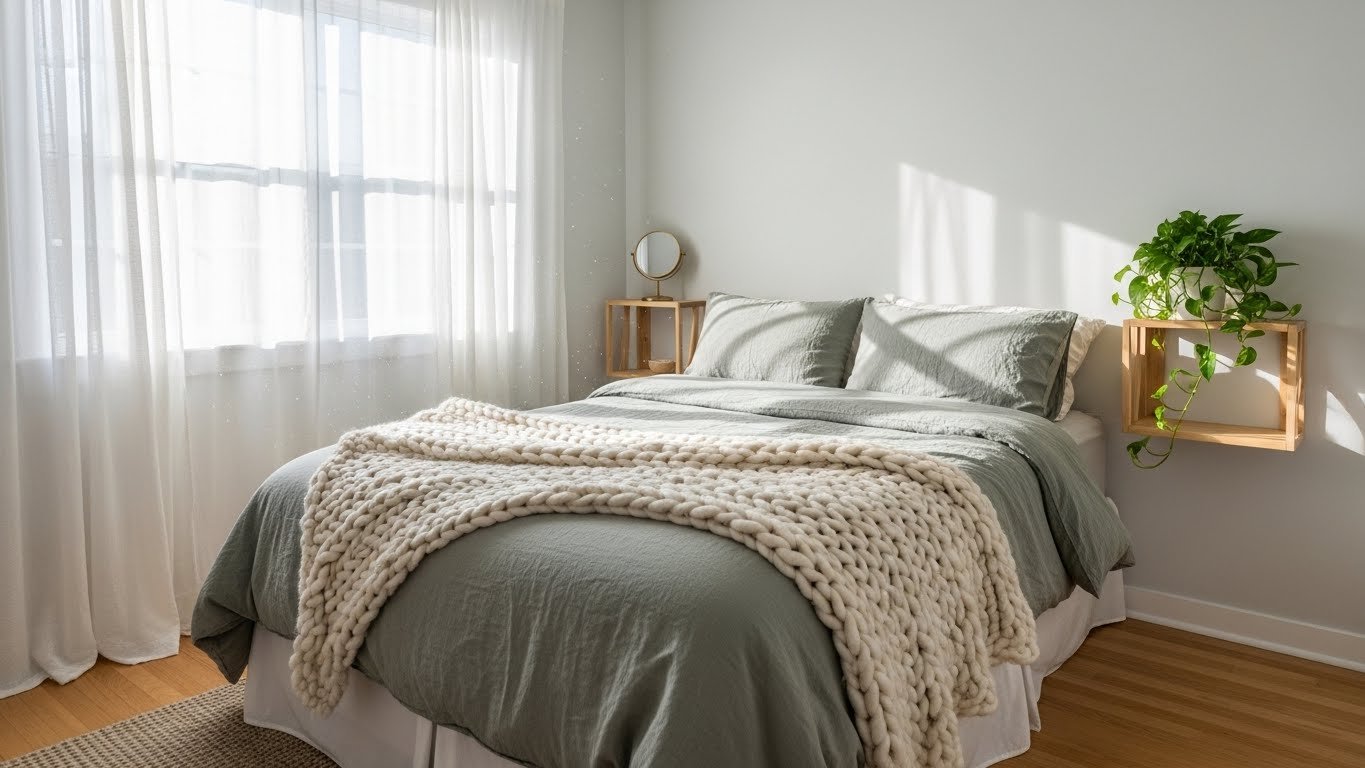
Small bedrooms don’t have to feel cramped or suffocating. The trick isn’t making your space bigger—it’s making it feel bigger. With the right design moves, a modest bedroom can look surprisingly open, peaceful, and even luxe. Whether you’re working with 80 square feet or 120, these 25 ideas use light, color, smart furniture choices, and clever layering to create the illusion of space. You’ll discover budget-friendly hacks, renter-approved solutions, and a few investment pieces that anchor a room beautifully. Ready to make your bedroom feel like a personal sanctuary instead of a shoebox? Let’s go.
1. Paint Walls Light to Expand Space Visually
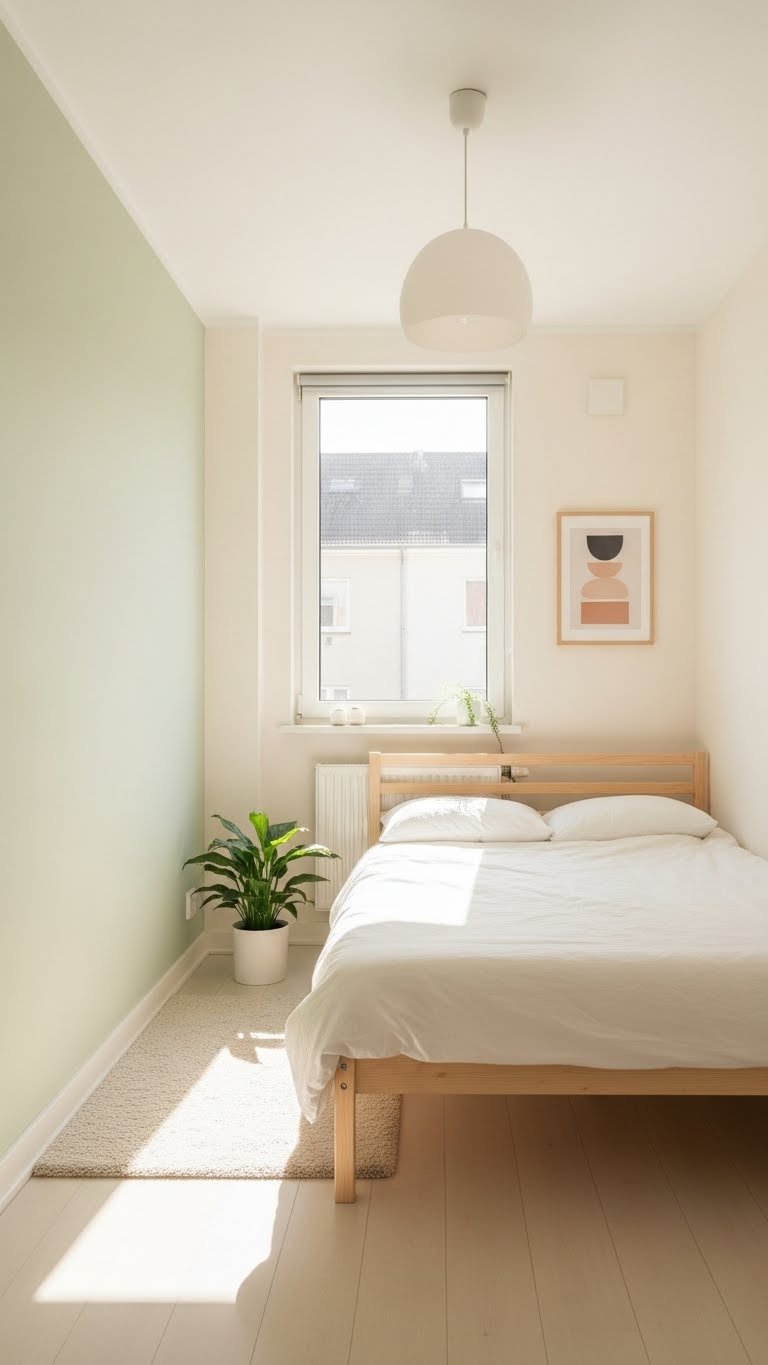
Light walls are your secret weapon for making compact bedrooms feel open and airy. Pale creams, soft whites, barely-there blues, and warm neutrals reflect light and push visual boundaries outward. The trick is consistency—paint at least three walls the same light shade to maximize the effect.
Choose Benjamin Moore Cloud White, Sherwin-Williams Alabaster, or budget-friendly options from IKEA or Home Depot ($25-$40 per gallon). One gallon typically covers a small bedroom. Grab a sample pint first ($5-$8) and test it in your room’s actual lighting—what looks white in the store might read cold or yellowy at home. Paint takes a weekend if you’re a beginner. If you’re renting, ask your landlord or use removable wallpaper as an alternative (peel-and-stick options run $15-$40).
Your space immediately appears deeper and more open. Light walls also make furniture stand out more, which helps you style intentionally.
2. Use Floor-to-Ceiling Curtains for Height Drama
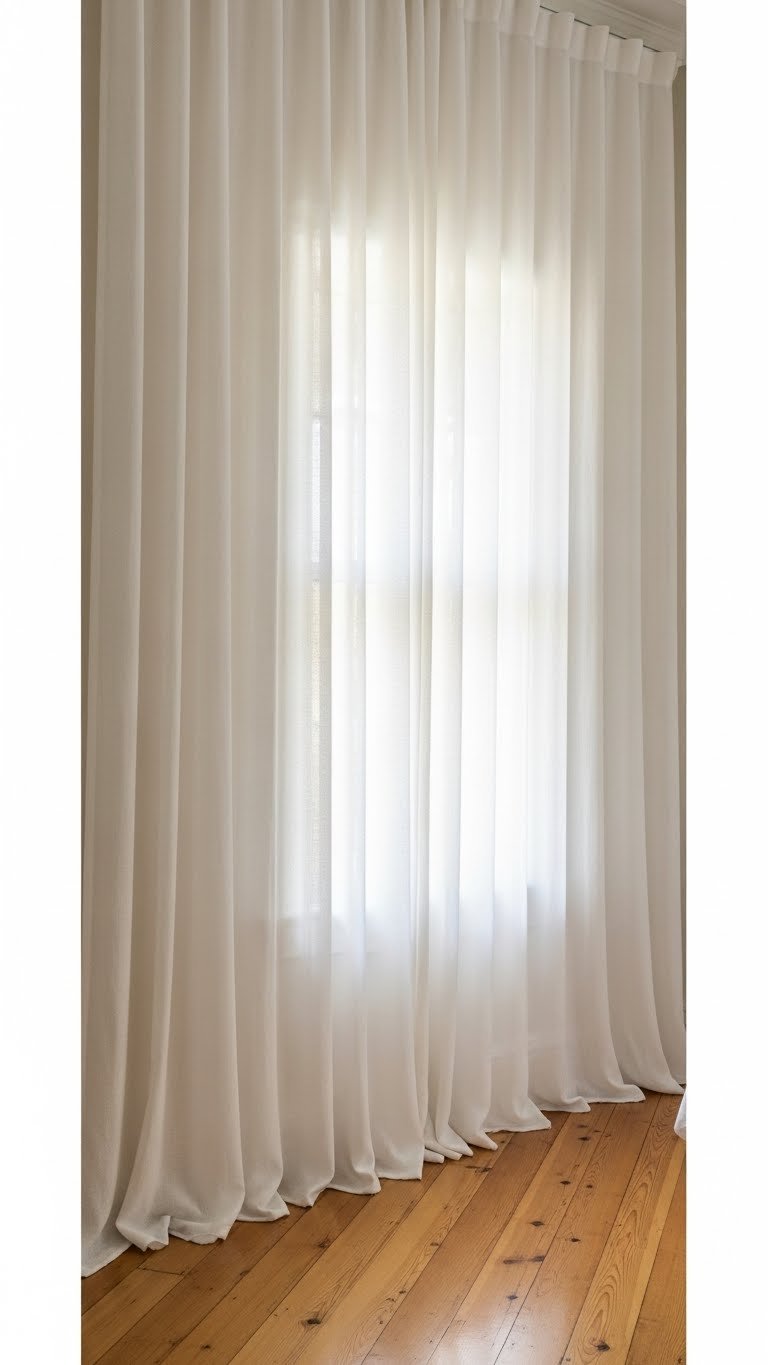
Floor-to-ceiling curtains trick the eye into seeing a taller room, plus they control light beautifully. Skip standard-length options and hang rods near the ceiling, letting panels flow all the way to the floor—or even pool slightly for drama.
Hang curtain rods 6-12 inches above the actual window frame using a drill (15 minutes, $0 if you have one, or hire a handyman for $50-$100). Linen or lightweight cotton curtains run $30-$80 per panel from IKEA, Target, or Amazon. White, cream, or soft greige work best for small spaces. For renters, removable adhesive hooks ($5-$10) and tension rods offer a no-damage alternative, though they’re less stable for heavier fabrics.
Your bedroom looks taller and more polished. The vertical line draws the eye upward, adding perceived height without any actual construction.
3. Float Your Bed to Define Space Zones
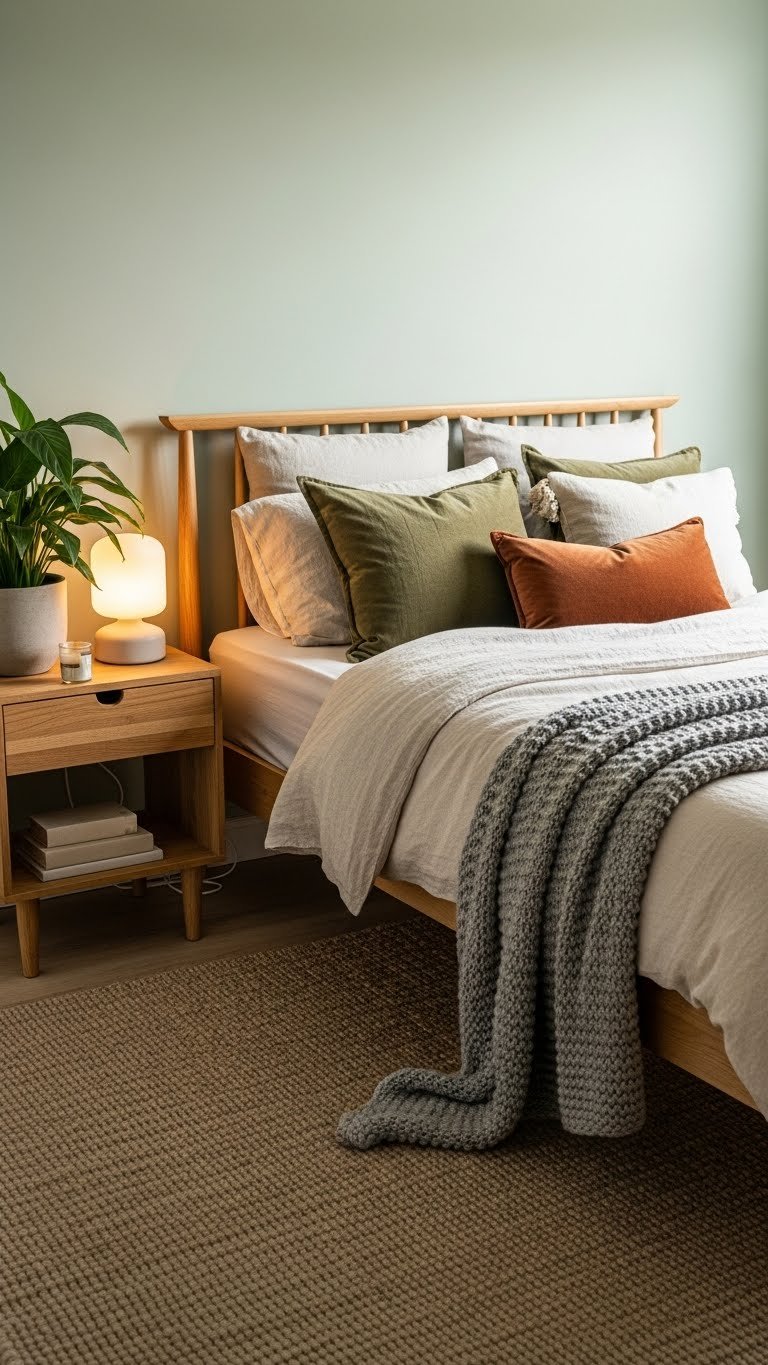
Instead of pushing your bed against the wall, pull it out into the room. This creates visual separation between sleeping and other zones—and paradoxically makes the room feel bigger by showing you have intention and breathing room.
You’ll need just 12-24 inches of space behind the bed. Add a slim console table ($80-$150 from West Elm, Wayfair, or IKEA) behind it for storage and visual interest, or a narrow floating shelf ($40-$80). Layer a small area rug (4×6 feet, $50-$150) under the bed to anchor it. This works in rentals too—no permanent changes needed.
Your bedroom gains architecture and purpose. The floating bed makes even a tiny room feel thoughtfully designed rather than cramped.
4. Install Floating Shelves for Storage Without Bulk
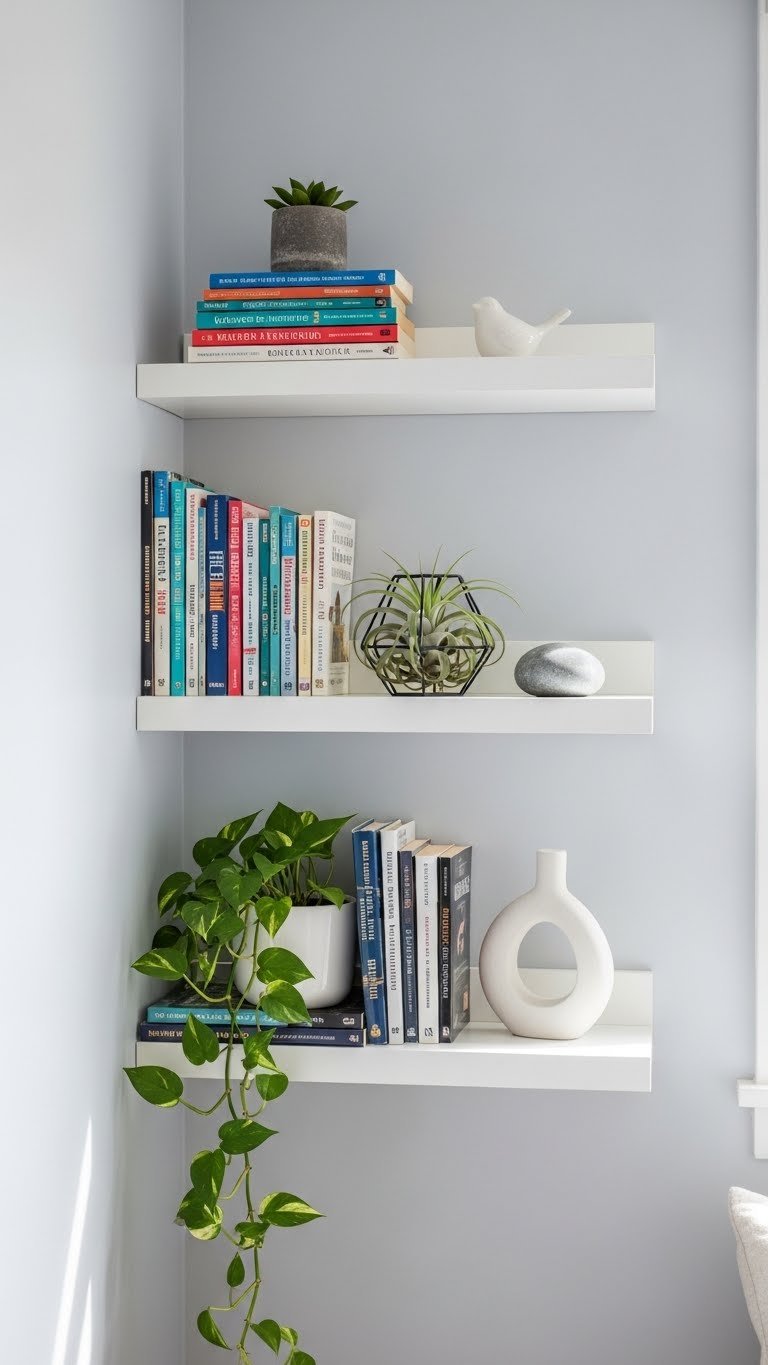
Floating shelves give you storage without eating up precious floor space or adding visual weight. Mount them above your desk, nightstand, or around a feature wall to keep clutter off surfaces.
Install shelves using a stud finder ($15-$30) and wall anchors rated for your items’ weight. Basic white shelves (24 inches) cost $20-$50 from IKEA, Target, or Home Depot. Installation takes 30-45 minutes with a drill. Renters can use removable adhesive strips rated for 15-25 pounds each ($8-$12 per pack), though they work better for lighter displays. Aim for 2-3 shelves maximum so your room doesn’t feel cluttered.
You gain practical storage and vertical visual interest. Styled shelves become part of your room’s personality rather than hiding clutter away.
5. Choose a Round Bed or Curved Headboard
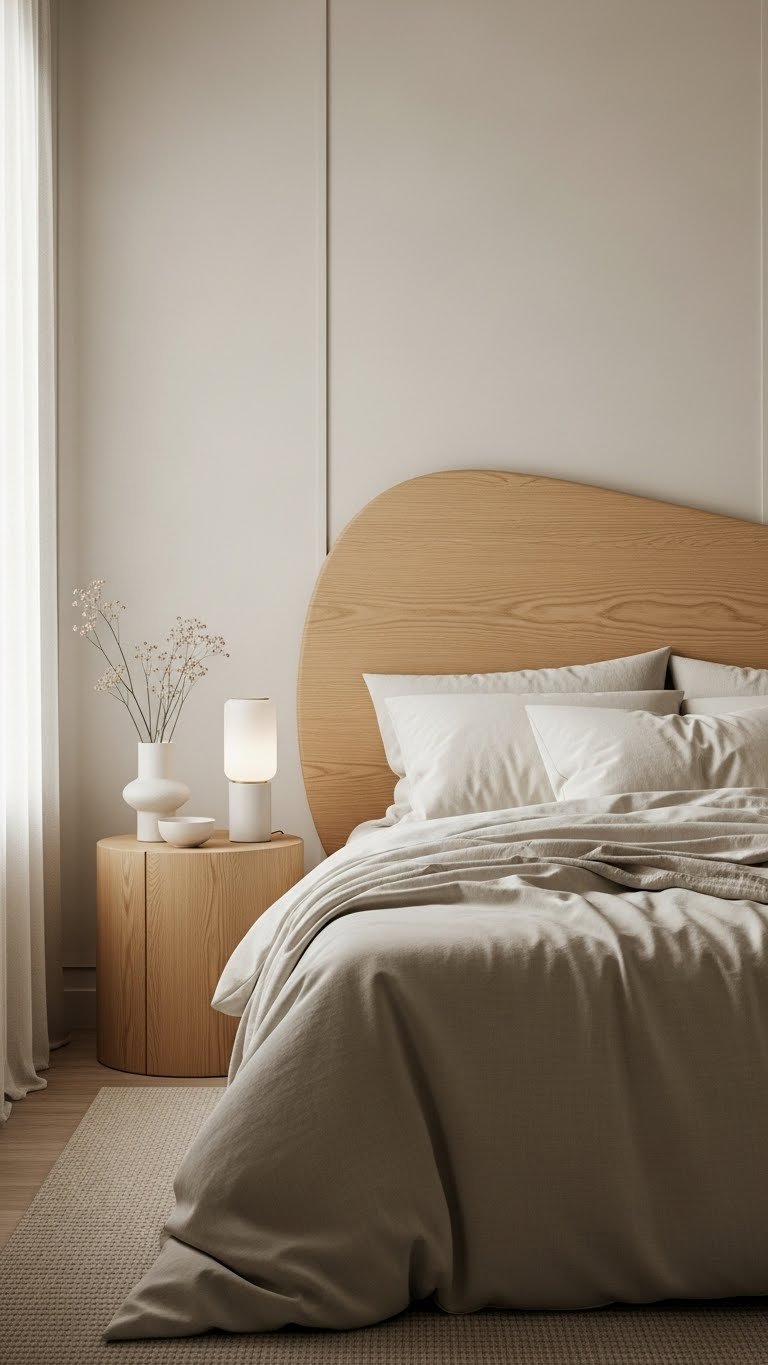
Sharp 90-degree angles make small rooms feel boxy and tense. Curved or round beds soften the space instantly and align with 2025’s organic modernism trend—and they actually take up similar floor space while looking more luxe.
A curved headboard ranges from $300-$800+ depending on materials, or go DIY with a curved upholstered panel ($150-$300 in fabric plus padding). Round beds are pricier ($500-$1,500) but create incredible visual drama. Wayfair, Article, and West Elm carry modern curved options. For renters or budget seekers, add a curved headboard using fabric and a frame ($80-$150 project).
Your bedroom feels calmer and more intentional. The organic shape brings personality without eating more square footage.
6. Layer Textured Walls for Cozy Depth

Textured walls add depth and coziness without overwhelming a small space. Think linen wallpaper, subtle geometric patterns, or textured paint finishes that catch light beautifully.
Apply textured wallpaper ($15-$40 per roll) using paste or peel-and-stick options—both are renter-friendly. Textured paint finishes like “orange peel” or “knockdown” run $30-$50 per gallon and take one weekend to apply with a spray gun or roller. Brands like Sherwin-Williams and Benjamin Moore offer low-VOC options. Focus texture on one accent wall to avoid sensory overload in tight quarters.
Your space gains warmth and dimension. Light plays off textures, making the room feel intentionally designed rather than basic.
7. Add a Statement Plant for Biophilic Calm

A large statement plant brings the outdoors in, improves air quality, and makes even a tiny room feel like a retreat. Plants naturally calm the nervous system—perfect for better sleep.
Choose low-maintenance options: fiddle leaf figs, monsteras, snake plants, or pothos tolerate indoor light and irregular watering. Buy mature plants ($30-$60) from garden centers or plant delivery services. Place in a corner or by a window to maximize light without taking up floor space. Use a woven basket planter ($20-$40) to tie it into your decor. Renter-friendly: move it anytime, and caring for it builds a daily wellness ritual.
You gain natural color and life in your bedroom. The green backdrop creates a calming, nature-connected vibe that helps you sleep better.
8. Use Mirrors Strategically to Bounce Light
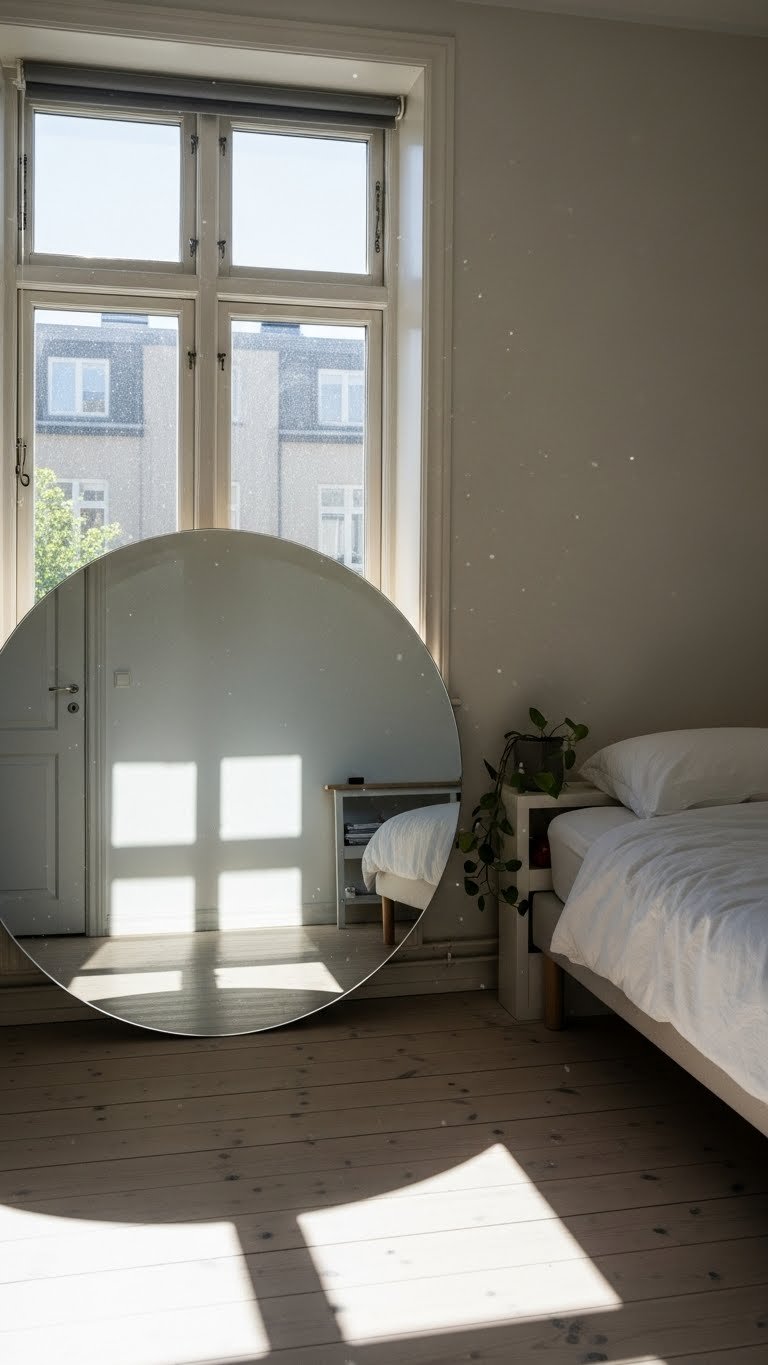
Mirrors reflect light and multiply visual space—place them strategically to bounce natural light around your room. A large mirror opposite a window works magic.
Leaning mirrors ($40-$150 from Target, IKEA, or Wayfair) are renter-friendly and stylish. Mounted mirrors ($50-$200) work too if you’re comfortable drilling. Avoid placing mirrors directly opposite your bed (old feng shui wisdom, but also they can feel unsettling at night). Instead, position them on walls perpendicular to windows. Gold, brass, or wood-framed mirrors add warmth; black or chrome frames feel modern and clean.
Your bedroom brightens noticeably without adding any light source. Morning sun spreads further, making early hours feel more spacious.
9. Invest in a Narrow Nightstand or Shelf
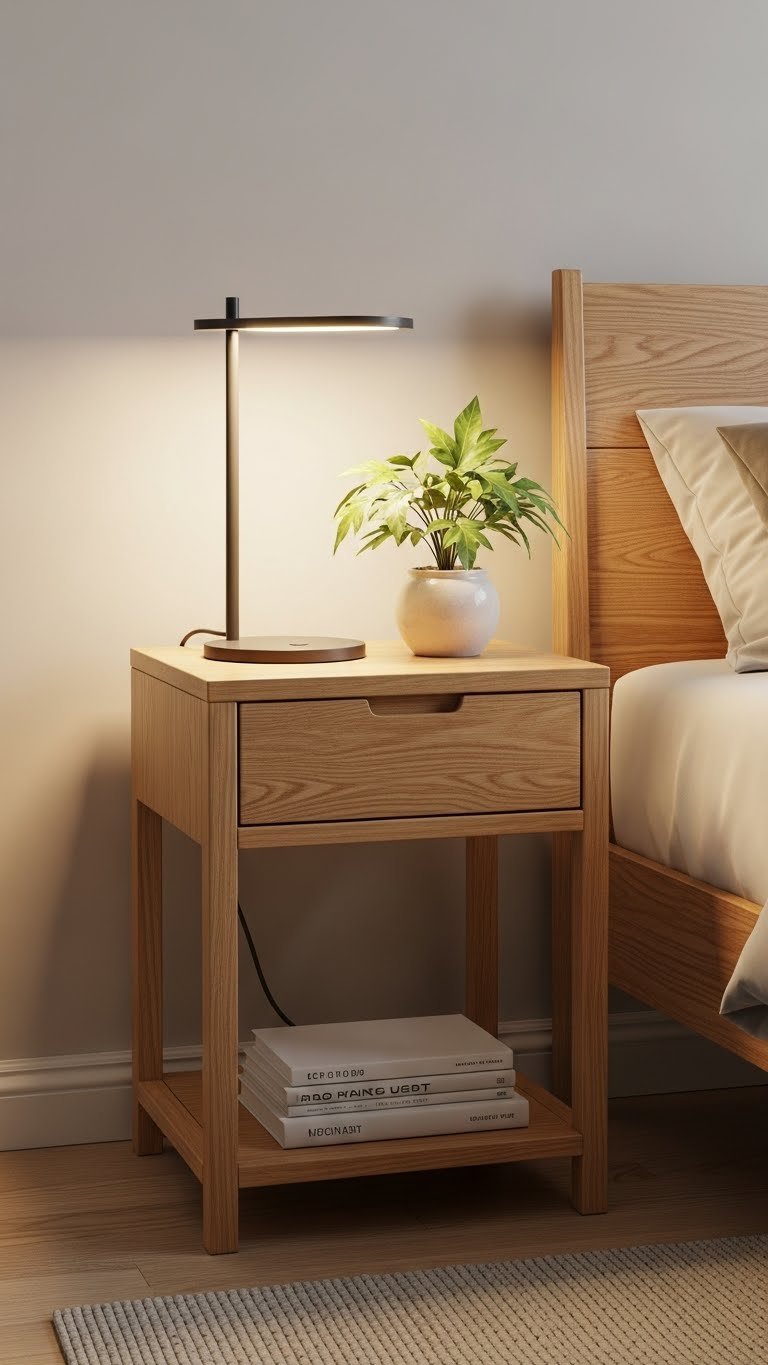
Standard nightstands eat up precious floor space in tight bedrooms. A narrow console or shelf (6-8 inches deep) holds essentials without crowding.
Look for wall-mounted shelves ($30-$80 from IKEA, Target, or Wayfair) or sleek nightstands ($100-$300). Wood, metal, or a mix of materials all work. If wall-mounting isn’t an option, a slim sofa table ($80-$200) works as a bedside alternative. Make sure your chosen height matches your mattress (ideally within 2 inches of the top).
You preserve walking space and sightlines. A narrow nightstand leaves room to move comfortably around your bed—huge in a compact bedroom.
10. Choose a Low-Profile Bed Frame

Low-profile or platform beds sit closer to the floor, visually expanding the room by showing more floor space underneath. They also feel contemporary and less bulky than traditional frames with legs.
Platform beds range from $200-$800+ depending on material and size. IKEA’s MALM or TARVA lines ($300-$500) offer minimalist Scandinavian style. Article, West Elm, and Wayfair carry designer options ($500-$1,500). Assembly takes 1-2 hours. If budget-conscious, a simple wood platform ($100-$300 DIY) works too. For renters, a bed frame on a low foundation gives similar visual effect.
Your room gains floor visibility and open sightlines. The low profile makes even a 10×10 bedroom feel airy rather than stuffed.
11. Style Your Bed with Layered Textures, Not Volume
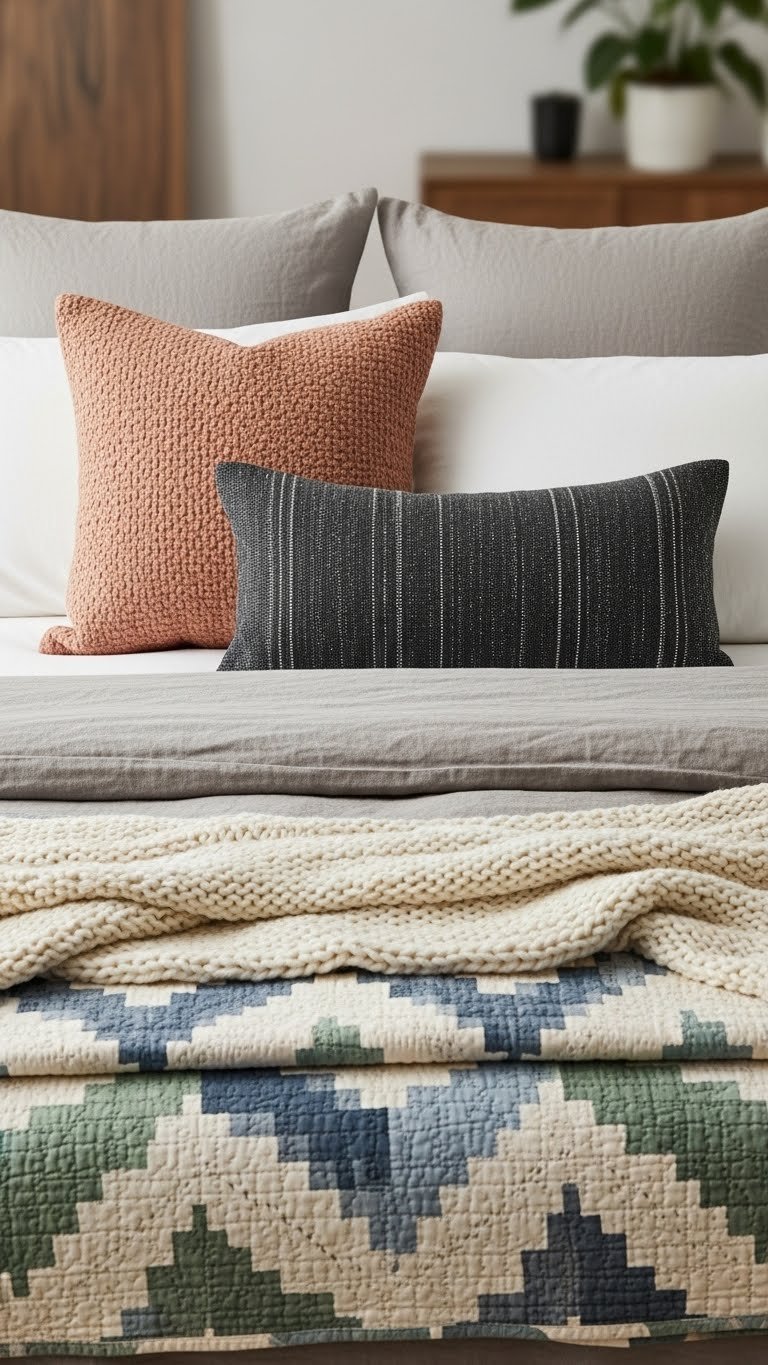
Instead of piling on oversized comforters, layer thinner, varied textures. A quilt, throw, and thoughtfully arranged pillows create visual interest without overwhelming a small bed.
Start with quality sheets ($40-$100 for percale or linen), add a lightweight quilt ($80-$200, or search Etsy for vintage quilts at $50-$150), layer a chunky knit throw ($40-$80), and arrange 3-4 pillows in coordinating textures ($20-$60 each). Mix patterns subtly—stripes with florals, solid with texture. This approach uses fewer overall pieces but looks richer and more intentional than one heavy comforter.
Your bed becomes a styled focal point that photographs beautifully. Layering tricks the eye into seeing abundance without clutter.
12. Paint the Ceiling a Soft Warm Tone
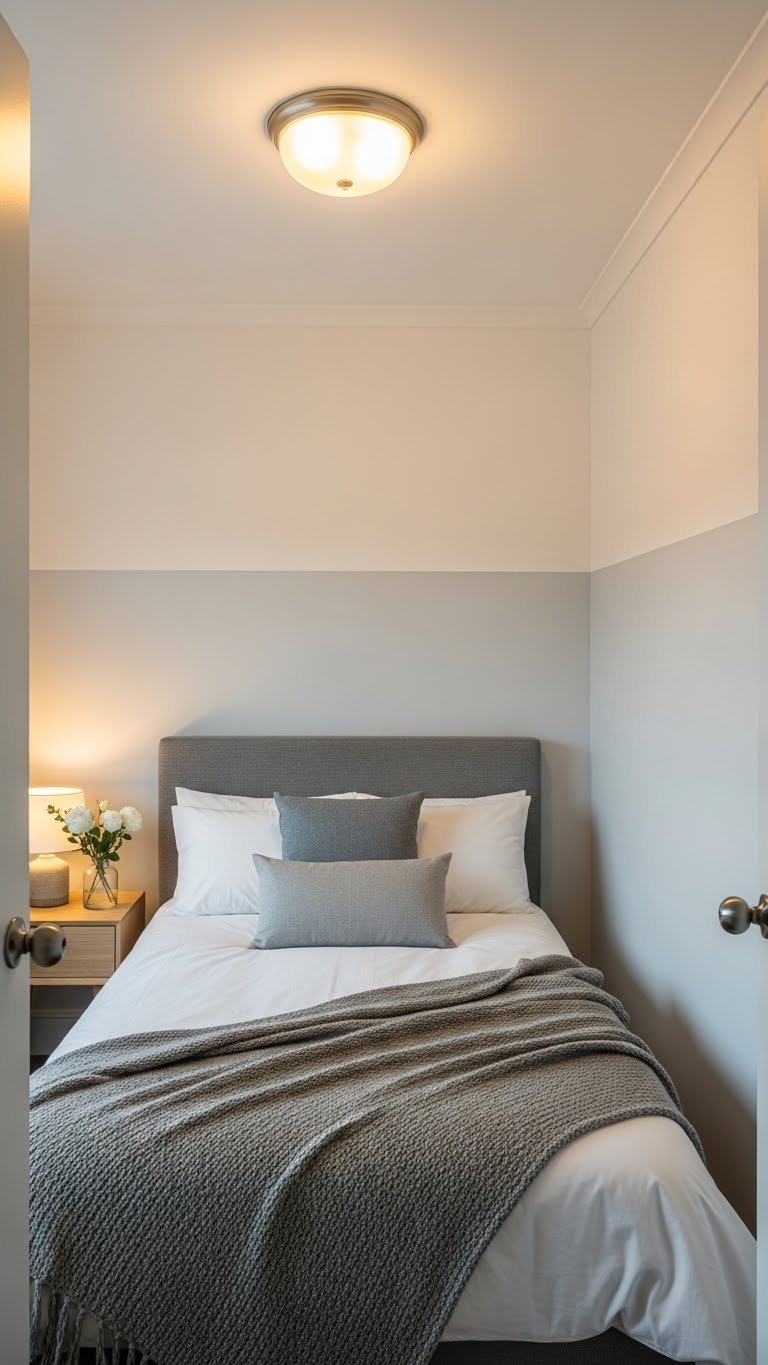
Most people paint ceilings white or skip them entirely. A soft warm white, cream, or pale warm gray makes ceilings feel lower (cozier) while staying light and open.
Paint ceilings the same color as your walls or one shade warmer ($25-$40 per gallon, same brands as walls). Warm undertones (Benjamin Moore’s Cloud White has slight warmth; Sherwin-Williams’ Alabaster is more neutral) feel inviting. You’ll need a painter’s pole and tray—borrow or buy for $15-$25. Budget 4-6 hours for a small room’s ceiling. This detail is often skipped but makes a surprising difference in perceived warmth.
Your room feels intentional and cozy. A warm ceiling anchors the space without closing it in visually.
13. Go Vertical with Tall, Slim Shelving Units

Tall, narrow shelving units draw the eye upward and store a lot in minimal footprint. Choose units 12-18 inches deep and 5-6+ feet tall.
IKEA’s BILLY or KALLAX shelves ($60-$150) are budget-friendly and stackable. Wayfair and Target carry slim mid-century and modern styles ($150-$400). Fill with books, plants, and decorative objects, but follow the “rule of three” for styling—group items in threes to avoid visual chaos. Assembly takes 30-60 minutes; most units don’t require wall mounting (though tall ones benefit from stabilizer brackets for safety).
Your room gains storage and architectural interest without eating floor space. The vertical emphasis makes ceilings feel higher.
14. Use Peel-and-Stick Wallpaper for One Accent Wall

Peel-and-stick wallpaper adds personality without permanent commitment—perfect for renters and small spaces where a bold move can feel risky.
Quality peel-and-stick runs $15-$50 per roll depending on design. Brands like Spoonflower, Tempaper, and Etsy sellers offer custom and pre-designed options. Choose one accent wall (typically behind your bed) to avoid visual overwhelm. Prep the wall with a primer ($8-$12) to help adhesion. Application takes 1-2 hours for a first-timer. Removal is damage-free when done correctly.
Your bedroom gains instant personality without permanent commitment. A single wallpapered wall becomes the room’s focal point and conversation starter.
15. Opt for a Bed Without a Footboard
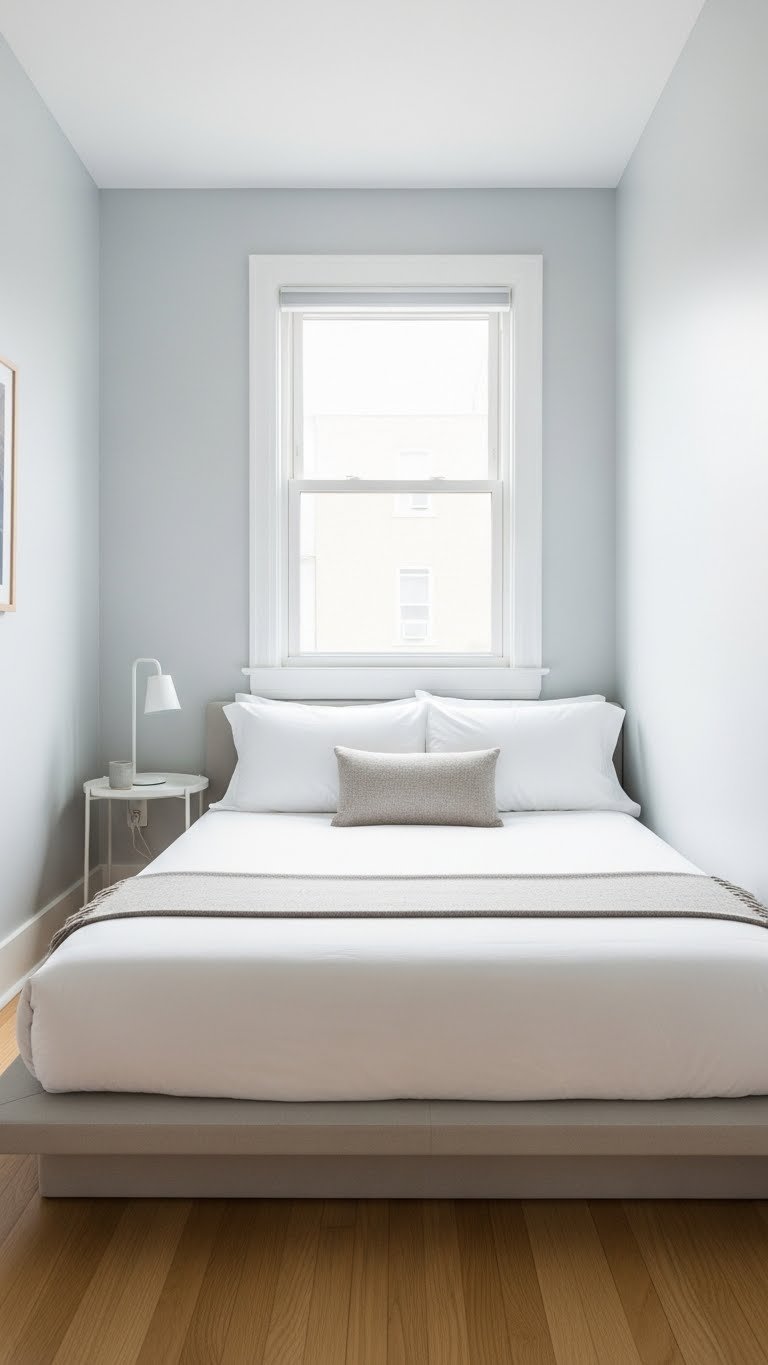
A footboard eats visual and actual floor space. Skip it entirely or choose an open-frame design that lets sightlines flow through.
Most platform and modern beds come without footboards naturally, or you can remove one from an existing frame (might take 30 minutes with basic tools). If you want the footboard look without bulk, add a simple wooden bench at the foot ($80-$200) that’s easy to move. This gives you seating and style without permanent visual clutter.
Your room breathes more freely. Removing the footboard opens up sightlines and leaves floor space for movement or a small chair.
16. Create a Cozy Reading Nook with One Chair
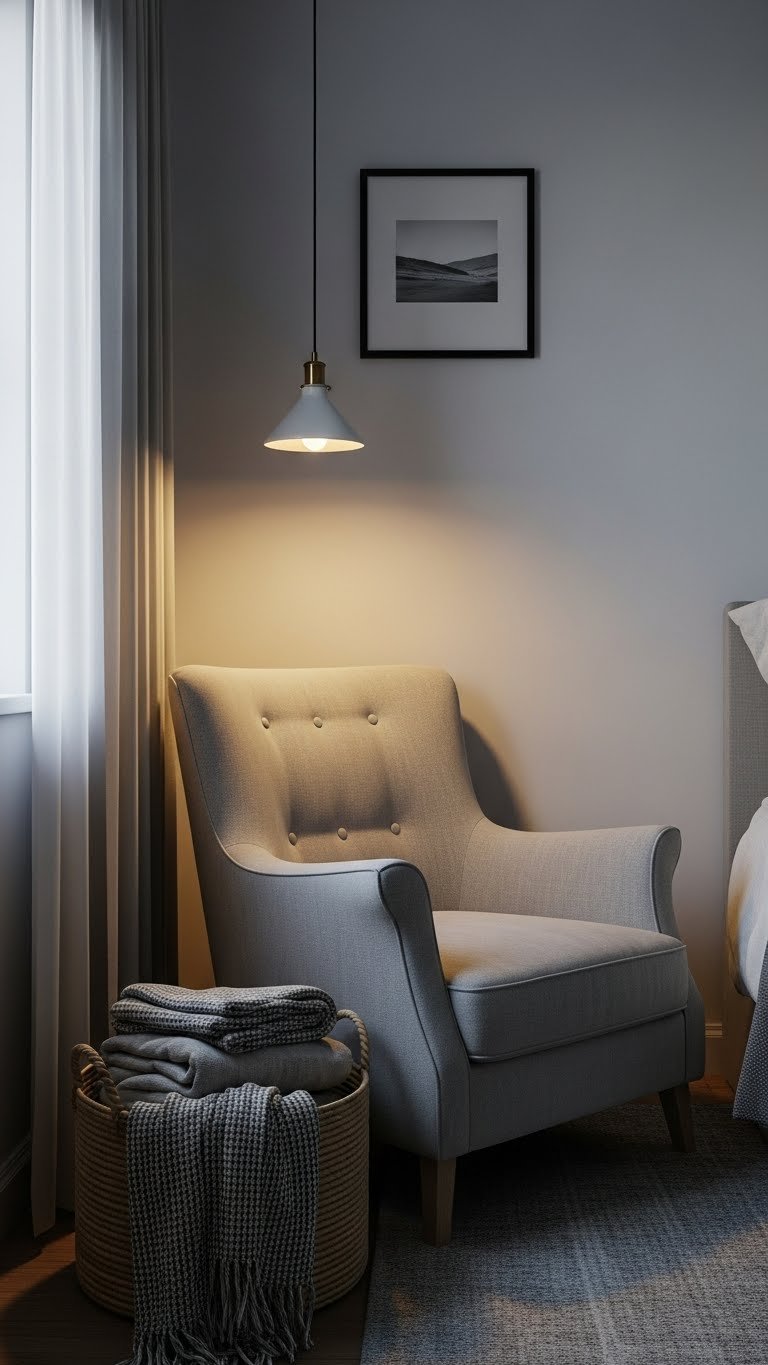
A single comfortable chair turns a small bedroom into a multi-functional sanctuary. You gain a reading spot, extra seating, and visual interest without needing much space.
Choose a compact chair (35-36 inches wide) that fits your corner—look for accent chairs at Target ($150-$250), IKEA ($200-$400), or Wayfair ($200-$600). Add a small side table ($40-$100 from IKEA or thrift stores) for a lamp and book stack. Layer a blanket over the chair back ($30-$80) for texture and coziness. Pair with a wall-mounted reading light ($25-$80) to avoid taking up lamp table space.
Your bedroom becomes a retreat with distinct zones. The reading corner invites relaxation and gives you a reason to linger instead of rushing to sleep.
17. Hang a Linen Canopy (No Frame Required)

A fabric canopy (no frame needed) adds drama and height without structural complexity. Hang lightweight linen from ceiling hooks using fishing line or soft rope.
Buy 3-4 yards of linen ($25-$50 per yard from fabric stores) in white, cream, or soft greige. Use ceiling hooks rated for lightweight loads ($3-$5 each) and fishing line ($5). Installation takes 30 minutes. For renters, adhesive hooks work if your ceiling allows (test on a small area first). This creates a focal point and nesting feeling without bulk.
Your room gains romance and visual interest. The draped canopy draws the eye upward and makes your bed feel like a sanctuary.
18. Skip a Dresser—Use Wall-Mounted Storage Instead
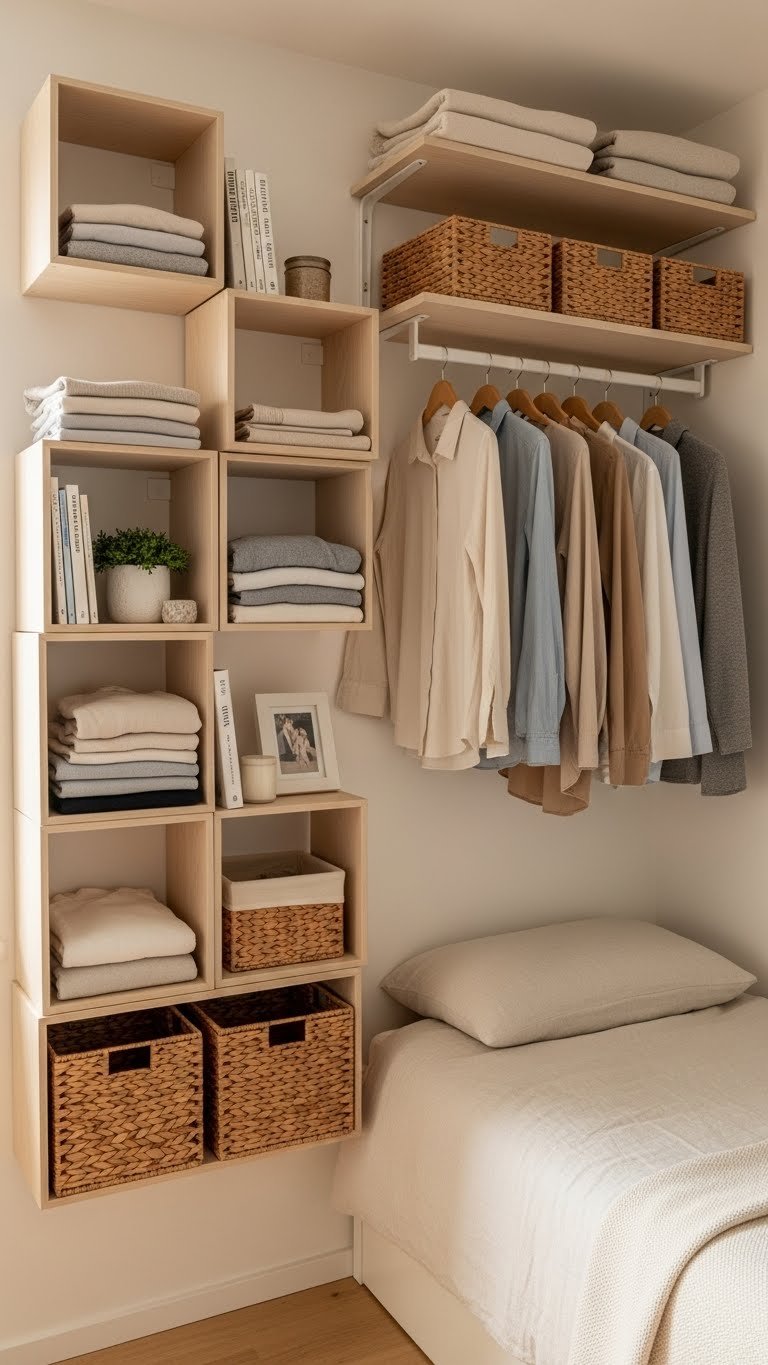
A traditional dresser takes up significant floor space. Wall-mounted shelves, cubbies, or pegboards store clothes and keep them visible and accessible.
Floating shelves ($20-$50 each) work well; add labeled woven baskets ($15-$30 each) for folded items. IKEA’s EKET or KALLAX systems offer modular storage ($40-$150) that mounts to walls. For ultimate customization, install a pegboard ($15-$25) and add baskets and hooks ($5-$15 each). Assembly takes 1-2 hours for a full wall system.
You reclaim floor space dramatically. Wall-mounted storage makes your room feel less crowded and actually showcases your things intentionally.
19. Layer Two Different Paint Colors Horizontally

Dividing a small room horizontally with two soft colors creates visual interest and can make ceilings feel higher when the upper half is lighter.
Paint the lower two-thirds one soft neutral ($25-$40), upper third another pale tone ($25-$40). Tape a clean horizontal line using painter’s tape ($5-$10). Use matte finish for soft appearance. Choose colors close in tone for subtlety—pale cream below, soft greige above, for example. This takes one weekend and costs under $100 total.
Your room gains dimension and modern edge. The horizontal division creates a sense of architecture without structural changes.
20. Use Under-Bed Storage (But Keep it Accessible)
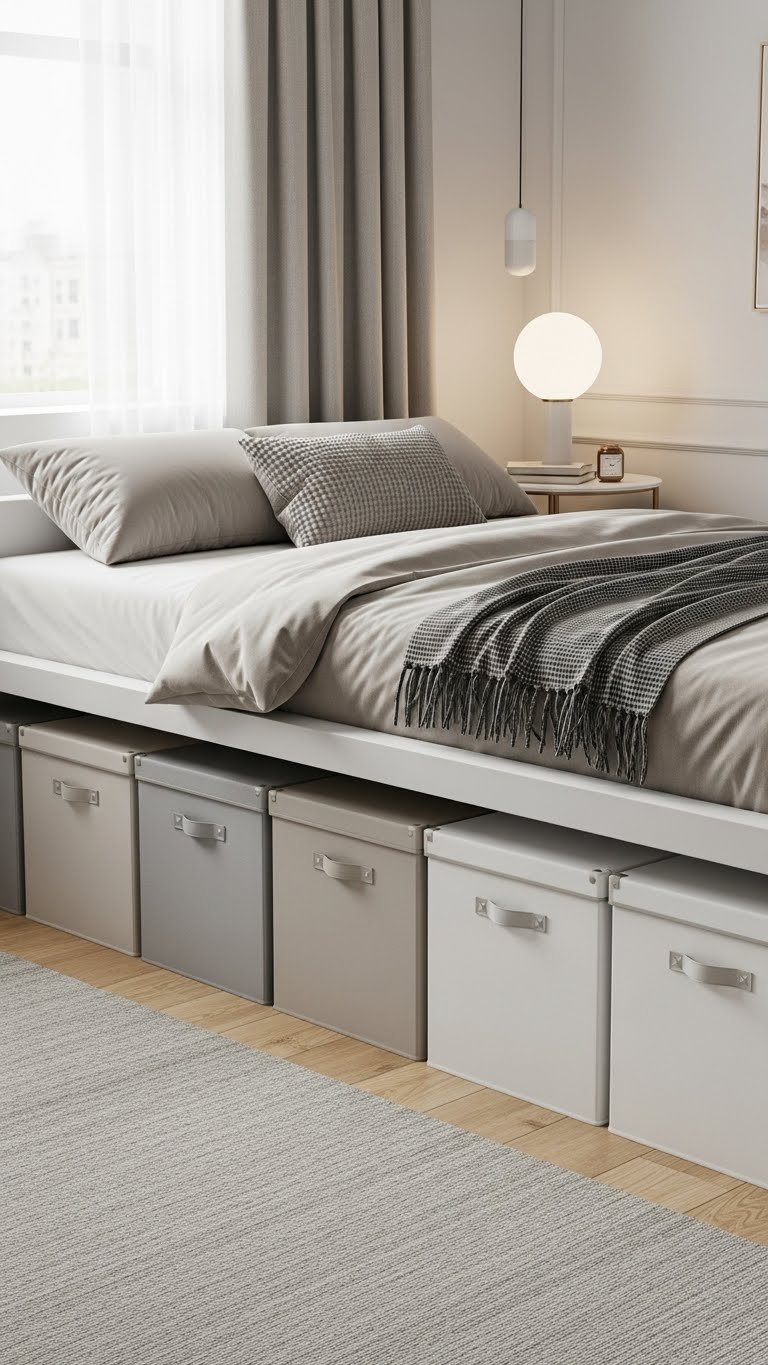
Under-bed storage is practical, but only if you actually use it and it stays organized. Invest in attractive rolling bins or low-profile boxes you’ll actually access regularly.
Flat storage boxes ($15-$40 each) from Target, IKEA, or Wayfair slide under platform beds. Rolling bins ($20-$50) make pulling things out easier. Label everything clearly ($3-$8 for a label maker). Store off-season clothes, extra bedding, or items you don’t use often. Avoid cluttering under the bed with random stuff—it makes the space feel chaotic even if hidden.
You maximize every inch without visual clutter above the bed. Organized under-bed storage keeps your room calm and functional.
21. Swap Heavy Blackout Curtains for Light-Filtering Layers
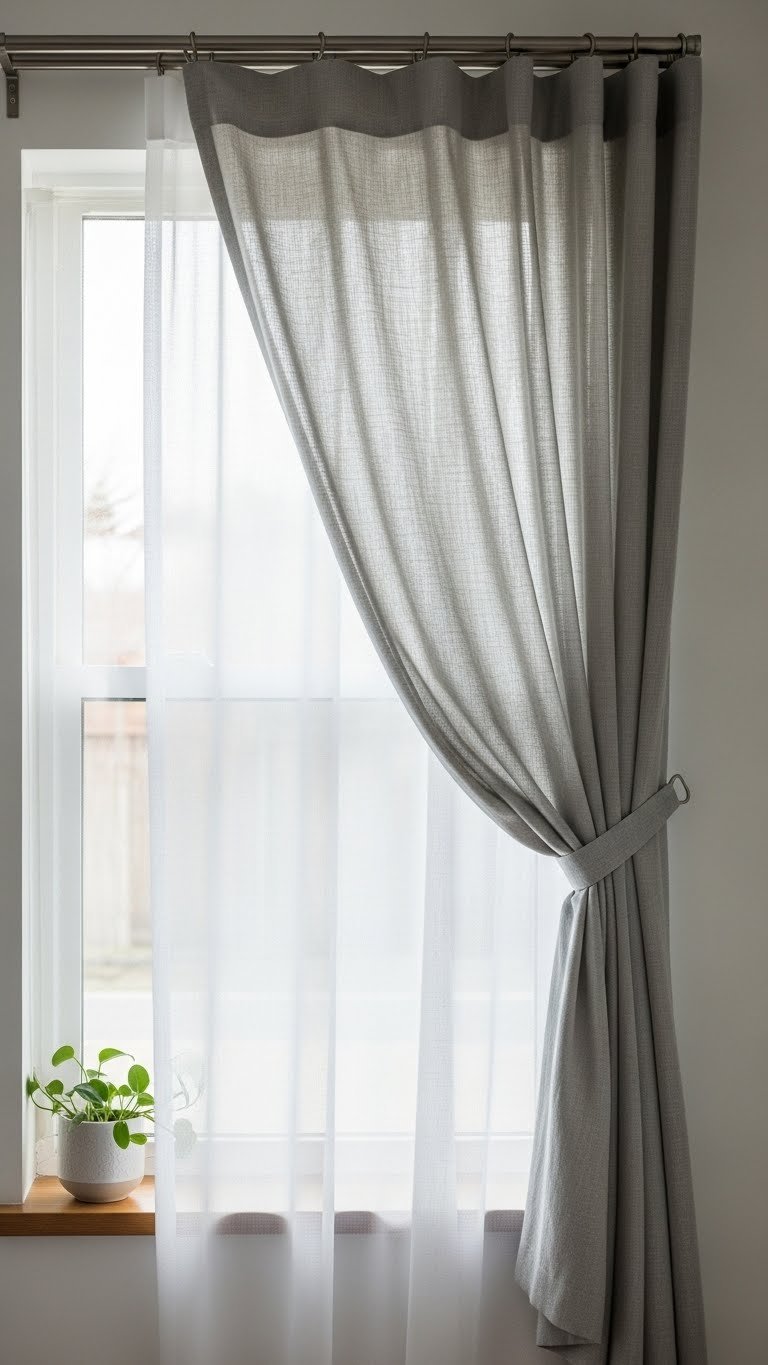
Heavy blackout curtains block space visually. Instead, layer lightweight fabrics that filter light softly and maintain sightlines when open.
Use sheer white linen ($20-$40 per panel) paired with lightweight opaque linen in soft greige or cream ($30-$80 per panel). Hang both on the same rod. Sheer alone filters harsh light; fully closed, the two together darken sufficiently for sleep. This layering approach looks intentional and modern while preserving visual openness.
Your windows stay functional and stylish. The layered approach creates depth and sophistication without visual bulk.
22. Add Warmth with Brass or Warm Wood Accents
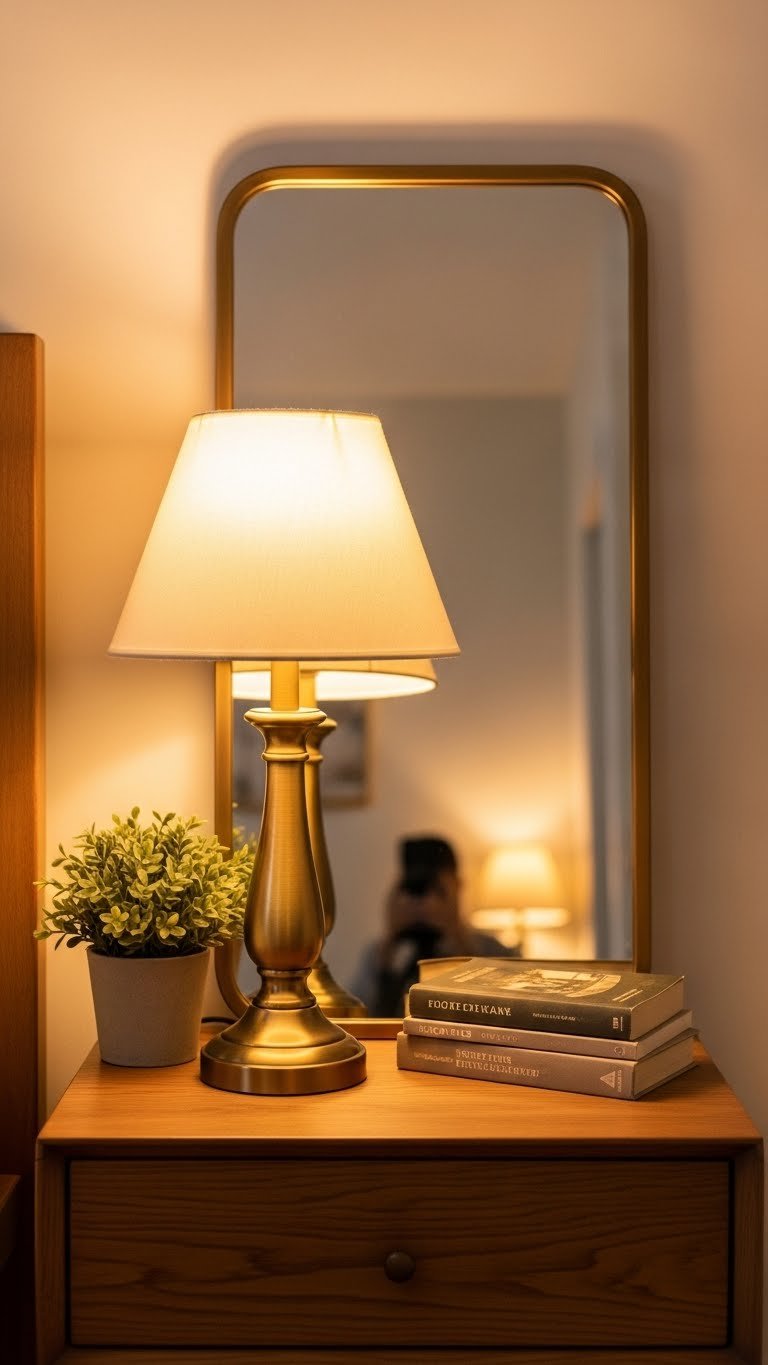
Cool metals and light woods can feel sterile in small spaces. Warm brass, gold, or rose gold metallics paired with warm wood tones create coziness instantly.
Add warm-toned accents through affordable pieces: a brass floor lamp ($40-$100), wooden dresser ($150-$400), or warm gold mirror frame ($50-$200). Even small touches like brass drawer pulls ($2-$5 each) shift the room’s warmth. Mix warm brass with natural wood for organic modern vibes. These accents don’t take up extra space but change the entire feeling.
Your room feels warmer and more inviting. Warm metallics and wood catch light beautifully and create a sophisticated, cohesive palette.
23. Hang Art at Varying Heights for Visual Interest
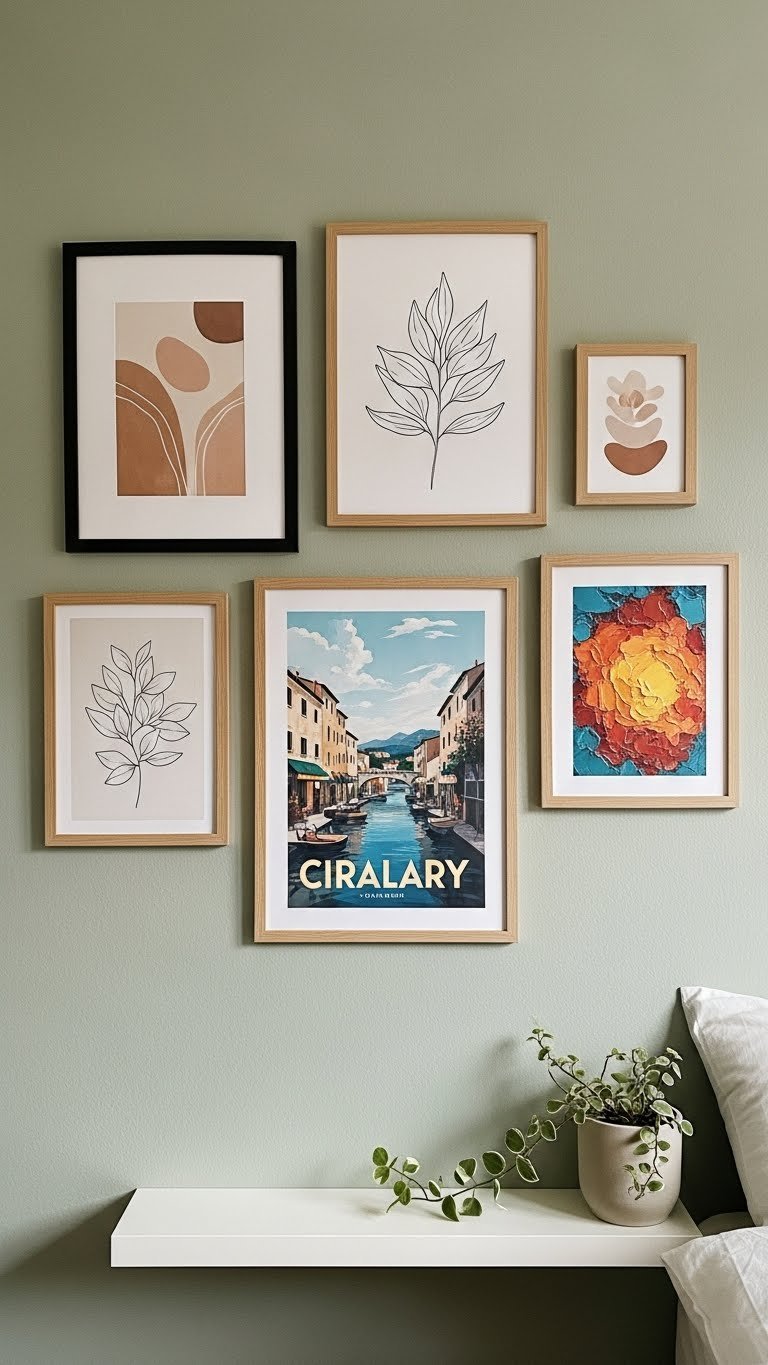
A single art piece feels lonely. Gallery walls with pieces at varying heights create visual richness and draw the eye around the room.
Choose 3-5 prints or paintings ($20-$100 each) in coordinating frames ($10-$30 each). Arrange them on one wall with the center point at eye level; hang pieces at different heights for dynamism. Use a level, painter’s tape, and nails for installation (30 minutes). For renters, adhesive picture hangers ($5-$10) work for lighter pieces. Mix frame styles slightly for modern eclectic feel, or keep them uniform for clean gallery vibes.
Your room becomes a personal gallery that sparks joy every day. Varied heights create visual movement and personality.
24. Incorporate Organic Shapes in Furniture and Decor
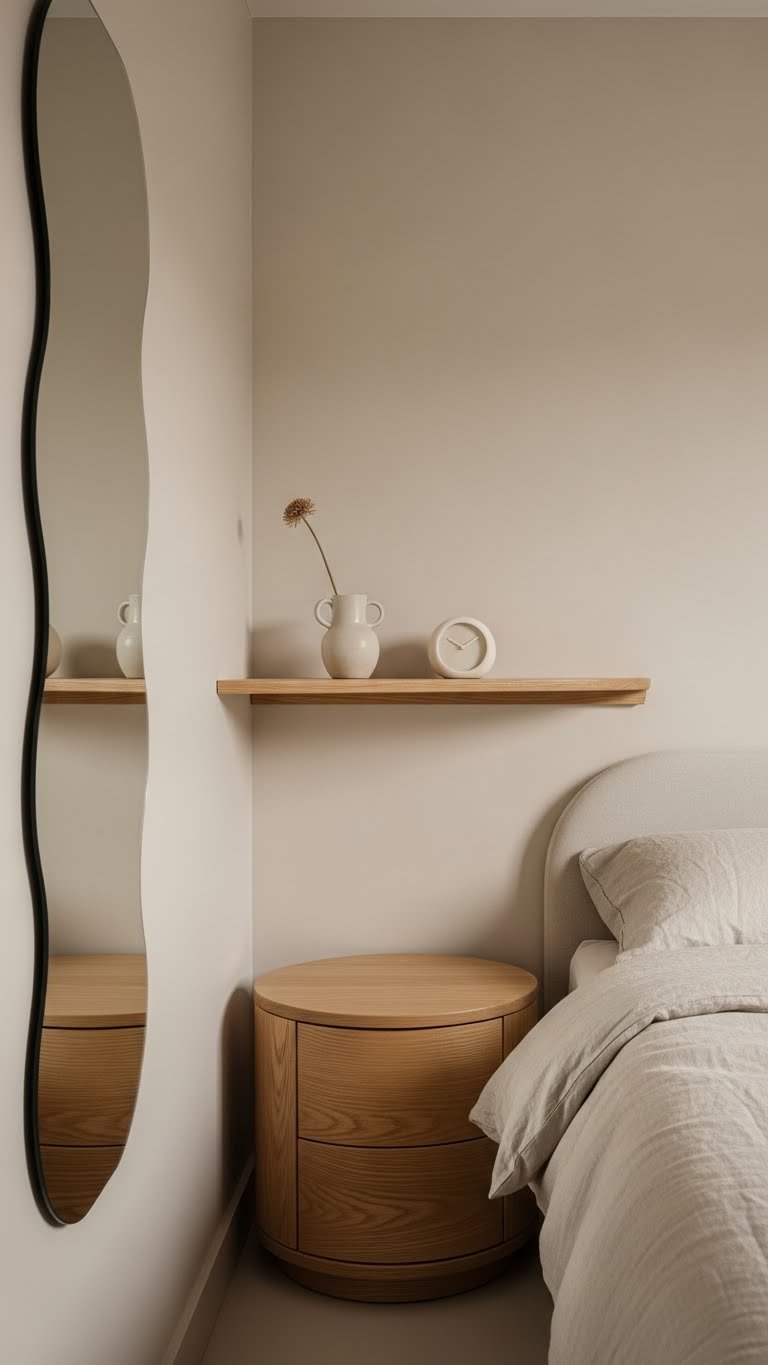
Sharp 90-degree angles feel constraining in small spaces. Furniture and decor with organic, rounded, or wavy edges calm the nervous system and feel more luxe.
Look for curved nightstands ($100-$300), wavy-edge mirrors ($50-$150), and round side tables ($80-$200) from Wayfair, Article, or West Elm. Even small touches count—a curvy picture frame, oval planter, or rounded tray. This 2025 trend aligns with biophilic design and surprisingly costs about the same as angular alternatives.
Your bedroom feels softer and more intentional. Organic shapes create a sophisticated, modern sanctuary that promotes calm and better sleep.
25. Display Your Best Textiles Visually Instead of Storing

If you have beautiful quilts, throws, or blankets, display them instead of storing. Styled textiles become decor and make your room feel warm and collected.
Use a wooden ladder ($40-$80 from Target or Wayfair), a decorative rod ($20-$50), or simple wall-mounted bars ($15-$30) to hang textiles. Style 2-3 pieces maximum to avoid clutter. Mix patterns and textures—solid with striped, linen with knit. This approach celebrates beautiful things while taking up zero floor space.
Your bedroom gains warmth and personality instantly. Displayed textiles add coziness and tell a story without any storage trade-off.
26. Add Ambient Lighting at Multiple Heights
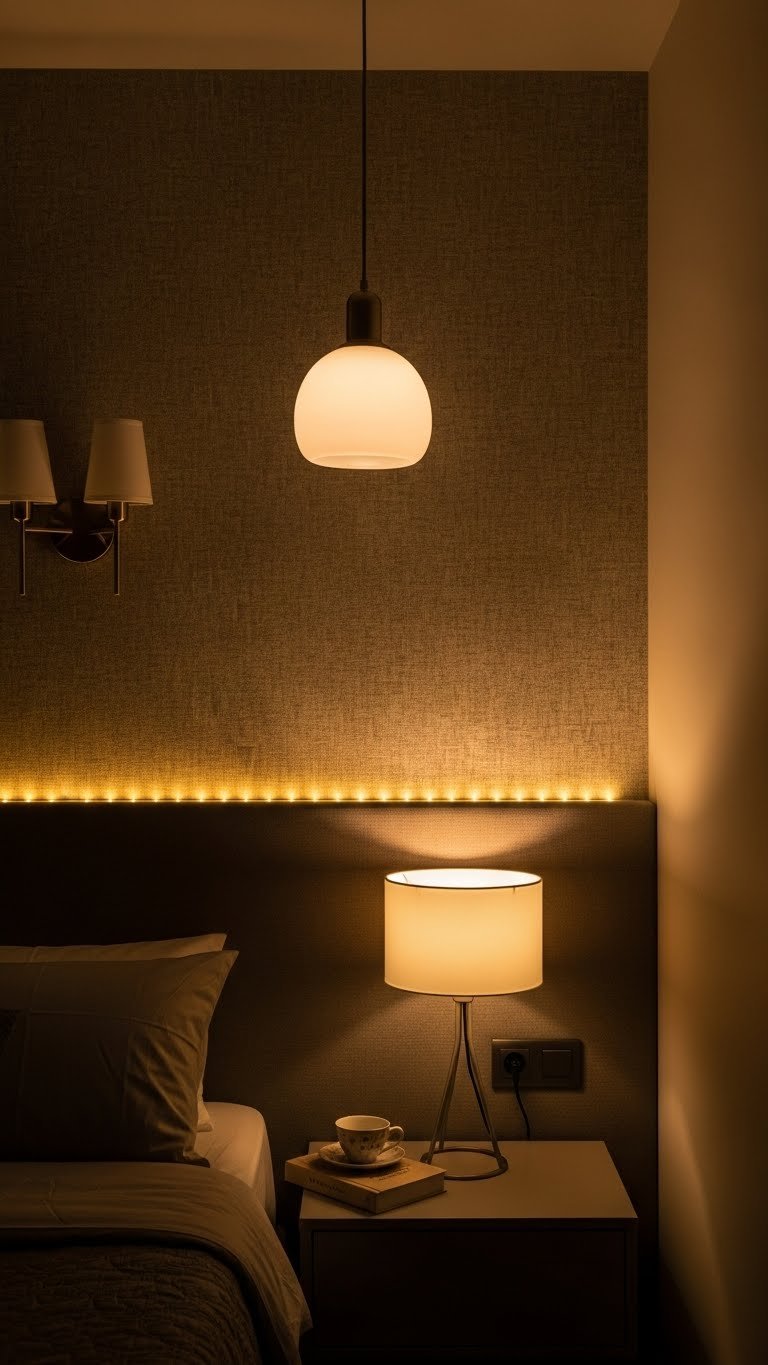
Bright overhead lights flatten small rooms and feel harsh. Layered ambient lighting creates depth, coziness, and makes a compact space feel intentional and spa-like.
Install a dimmer switch on overhead lighting ($15-$30 total with installation), add a soft table lamp on your nightstand ($30-$100), and consider a wall sconce ($40-$120) or string lights ($20-$50) for ambient warmth. Use warm white bulbs (2700K color temperature) throughout. This takes a weekend if you’re adding a sconce; otherwise, mostly just swapping bulbs and adding lamps.
Your room transforms from clinical to cozy with the flip of a switch. Multiple light sources let you adjust mood from energizing to restful.
Save this guide and try one idea this weekend—start with whichever speaks to you most. Small changes stack up fast, and your bedroom truly can feel spacious and peaceful.
Leave a Reply