Introduction
Your bedroom should be a place where stress melts away the moment you step inside—but most bedrooms feel more like storage units than retreats. Between clutter, harsh lighting, and uninspiring décor, it’s hard to feel truly relaxed in your own space. The good news? You don’t need a major renovation or a huge budget to create a corner that actually soothes you. These 23 ideas range from free styling tweaks to strategic purchases that work whether you rent or own, and most take just a weekend to pull together. By the end, you’ll have multiple ways to carve out your own slice of calm, no matter how small your room or tight your timeline.
1. Layer Window Treatments for Soft, Diffused Light
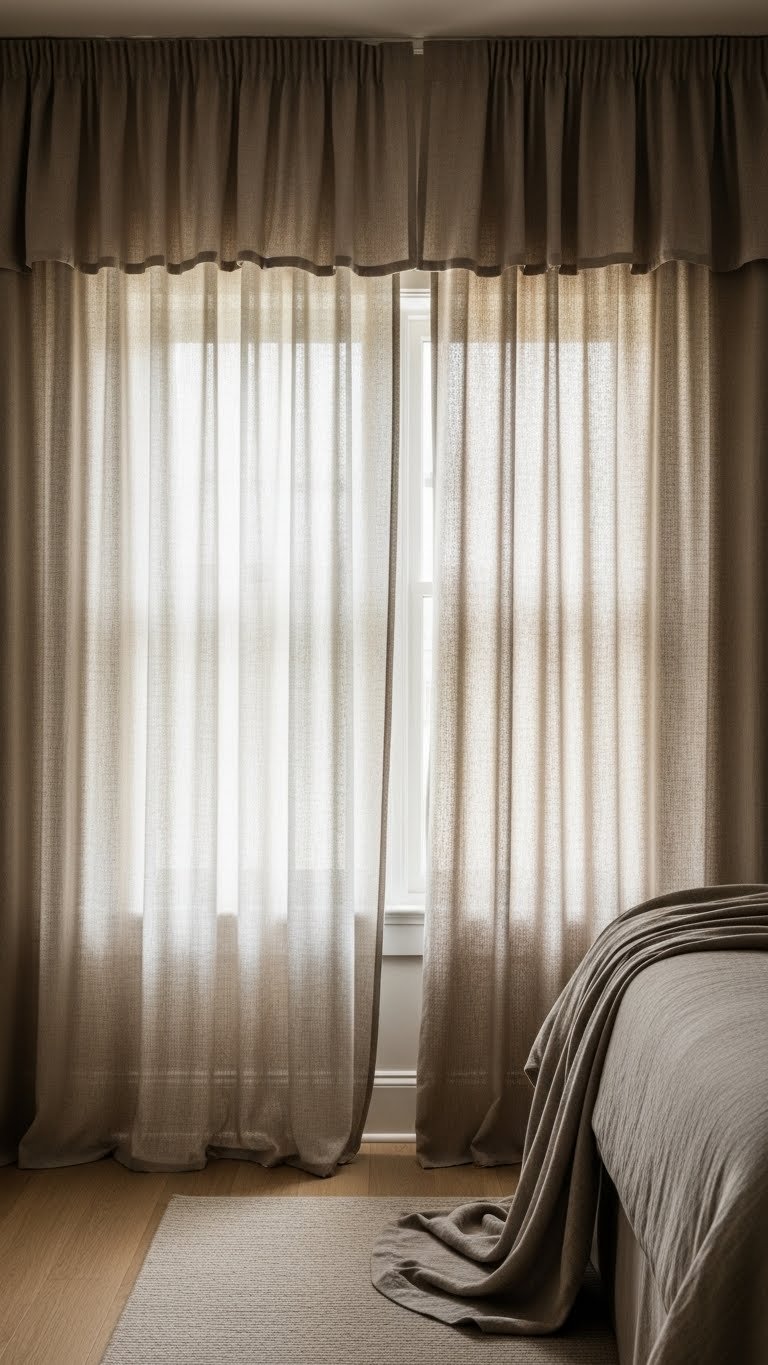
Harsh, unfiltered daylight kills relaxation instantly. Layering a sheer curtain under solid panels gives you control—filter bright sun when you need rest, or pull them fully open for fresh air and natural warmth.
Start with a sheer linen or cotton curtain from IKEA ($20–40) or Target ($30–50), hung on a simple rod at the window frame. Layer a heavier linen or linen-blend curtain on an outer rod. This setup takes about 30 minutes to install if you have basic hardware already. The result is adjustable lighting that feels intentional and spa-like, not like you’re hiding from the world.
Pro tip: If you rent, use tension rods to avoid drilling holes. Most landlords won’t object, and you can take them with you.
Your room now filters light exactly how you want it, turning midday into a calm afternoon any time.
2. Invest in Quality Bedding That Actually Feels Good
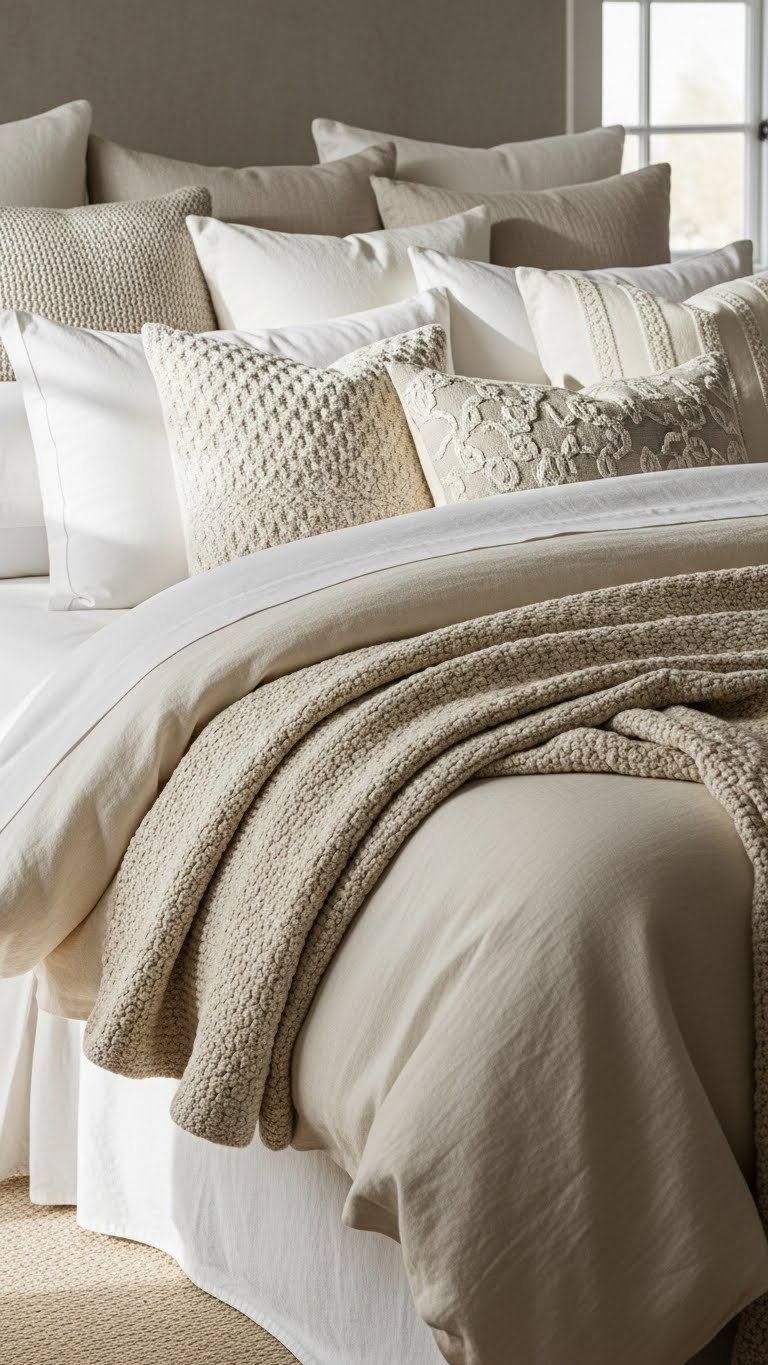
You spend a third of your life in bed, so mediocre sheets are a false economy. Good bedding—crisp cotton, breathable linen—signals your brain that this space is worth caring about and makes you want to get into bed.
Look for 100% cotton sheets (at least 300 thread count) or linen blends from brands like Parachute ($100–150 per set), Target ($40–80), or Amazon Basics ($30–50). A quality duvet cover in neutral tones lets you swap looks seasonally. Budget about one weekend to find your preferences (ordering online, testing in-store if possible). The payoff is immediate: crawling into genuinely soft sheets feels like a small luxury every single night.
Splurge on the sheets, save on pillowcases initially—you can upgrade those later.
This one change makes your bed feel like a hotel upgrade, not just a place to sleep.
3. Create a Reading Nook With Layered Textiles
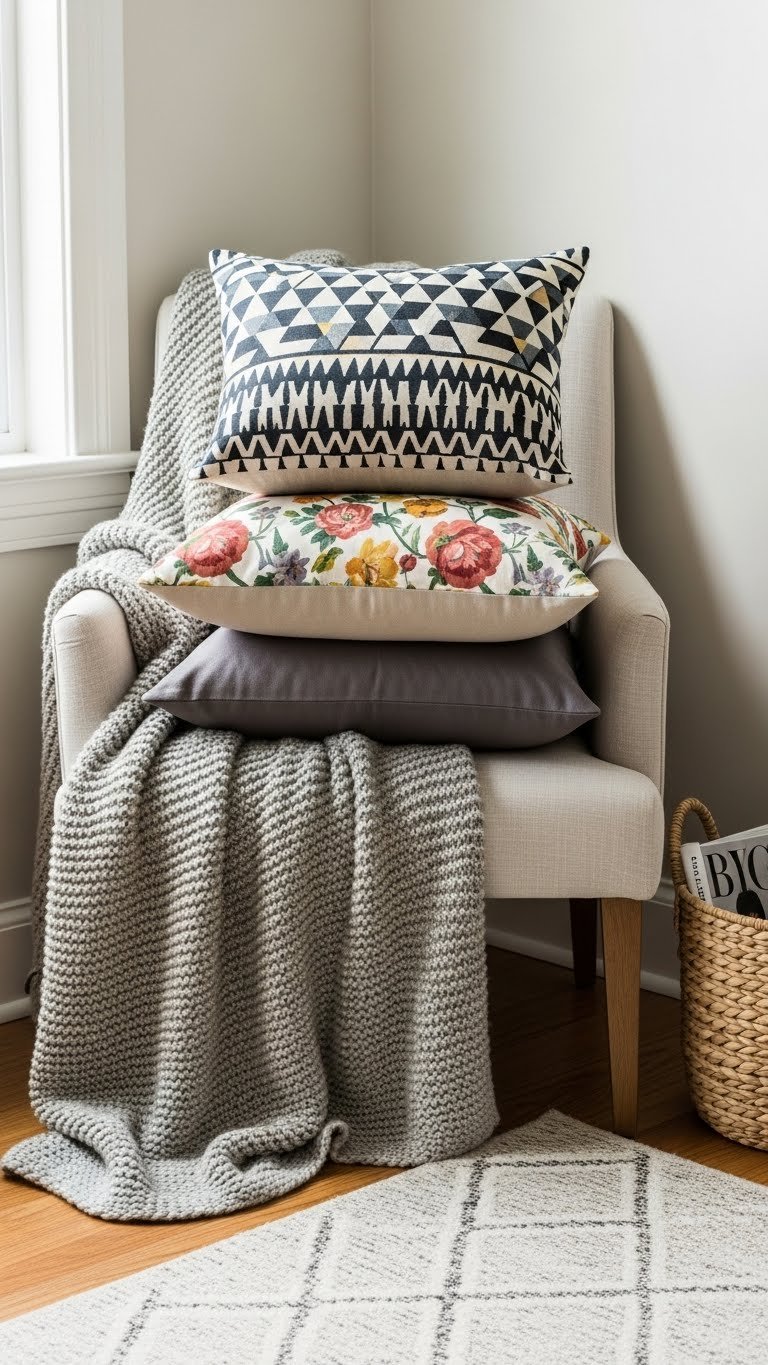
A dedicated spot for reading or quiet reflection doesn’t need much space—just a chair, good light, and textures that make you want to stay there. This becomes your mental escape hatch.
Find an affordable chair (IKEA Strandmon, $120–150; Target accent chairs, $150–250; thrift stores, $20–80) and layer it with throws and pillows. Add a small side table ($30–80 from IKEA or Target) and a floor lamp with a warm bulb ($40–100). Total time: a Saturday afternoon to source and arrange. The key is layering—one pillow looks bare, but three in different textures (velvet, linen, knit) makes it feel intentional and inviting.
Shop estate sales or Facebook Marketplace for vintage chairs—you’ll find unique pieces at half retail price.
You’ve now built a corner that genuinely pulls you away from your phone and into calm, focused time.
4. Hang Tapestries or Textured Wall Art for Depth

Bare walls feel sterile and cold. A large tapestry or woven wall hanging adds visual interest, warmth, and a sense of enveloping comfort without requiring permanent changes—perfect for renters.
Look for vintage tapestries on Etsy ($30–80), Urban Outfitters ($40–70), or thrift stores ($5–20). Hang it behind your bed, or drape it asymmetrically for a modern twist. A tension rod or removable hanging system takes 10 minutes. For a renter-friendly option, use 3M damage-free strips rated for the weight. The trick: let it slightly disappear behind your headboard for an old-world, layered aesthetic rather than obvious wall art.
Mix botanical, geometric, or solid patterns based on your existing palette.
This addition instantly adds personality and makes your bedroom feel collected, not catalog-like.
5. Use a Dimmer Switch for Mood Lighting Control
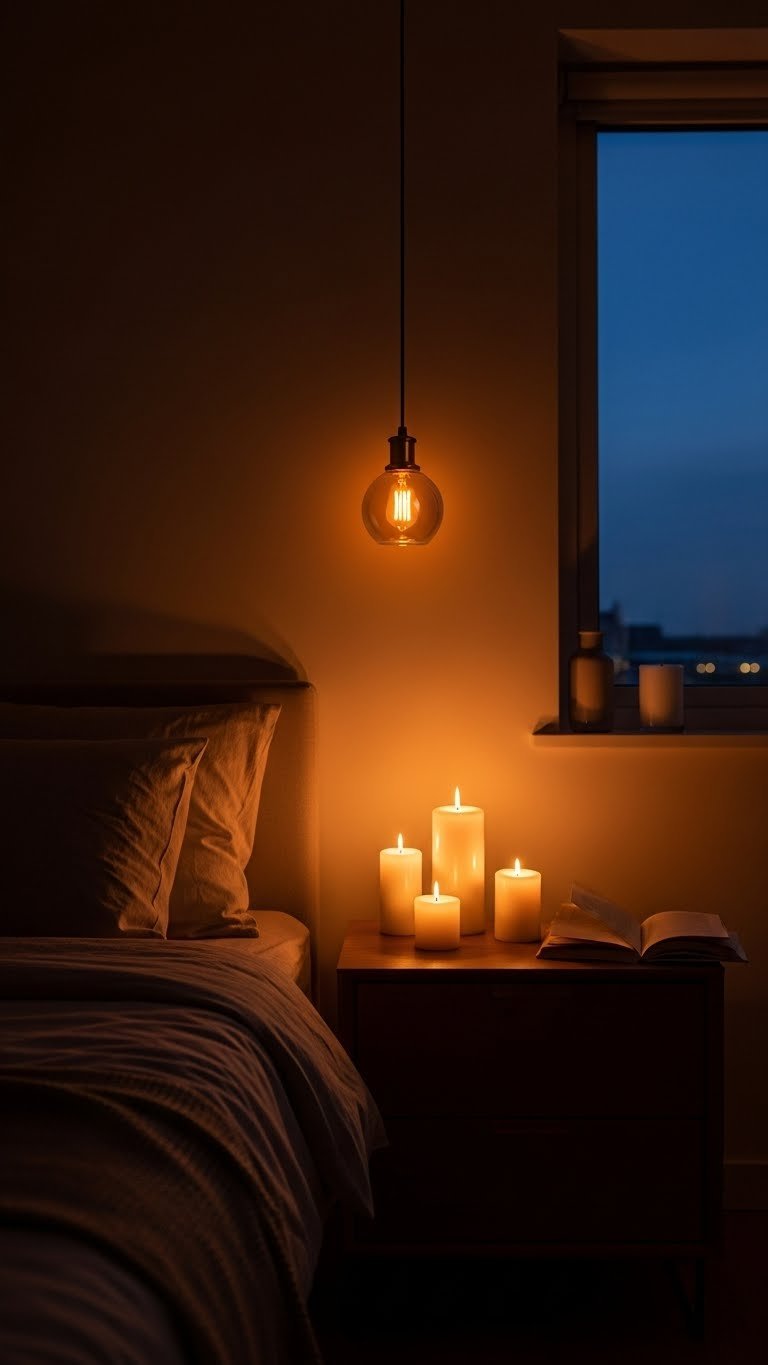
Overhead lights set to full brightness feel utilitarian and tense. A dimmer gives you control over mood—bright for cleaning or getting dressed, soft for winding down and relaxing.
If you’re handy or own your home, install a dimmer switch in place of your standard switch (hardware store, $15–30; takes 20 minutes with basic tools). If you rent, use smart bulbs ($15–30 each from LIFX or Philips Hue) that dim via app or voice command—no wiring needed. Add warm-toned bulbs (2700K color temperature) for a cozy feel. The investment is small but the impact on your nightly routine is substantial.
Pair dimmers with a bedside lamp and you’ll never want harsh ceiling light again.
Now your lighting matches your mood instead of forcing you into alertness when you want to decompress.
6. Add Indoor Plants for Living, Breathing Calm
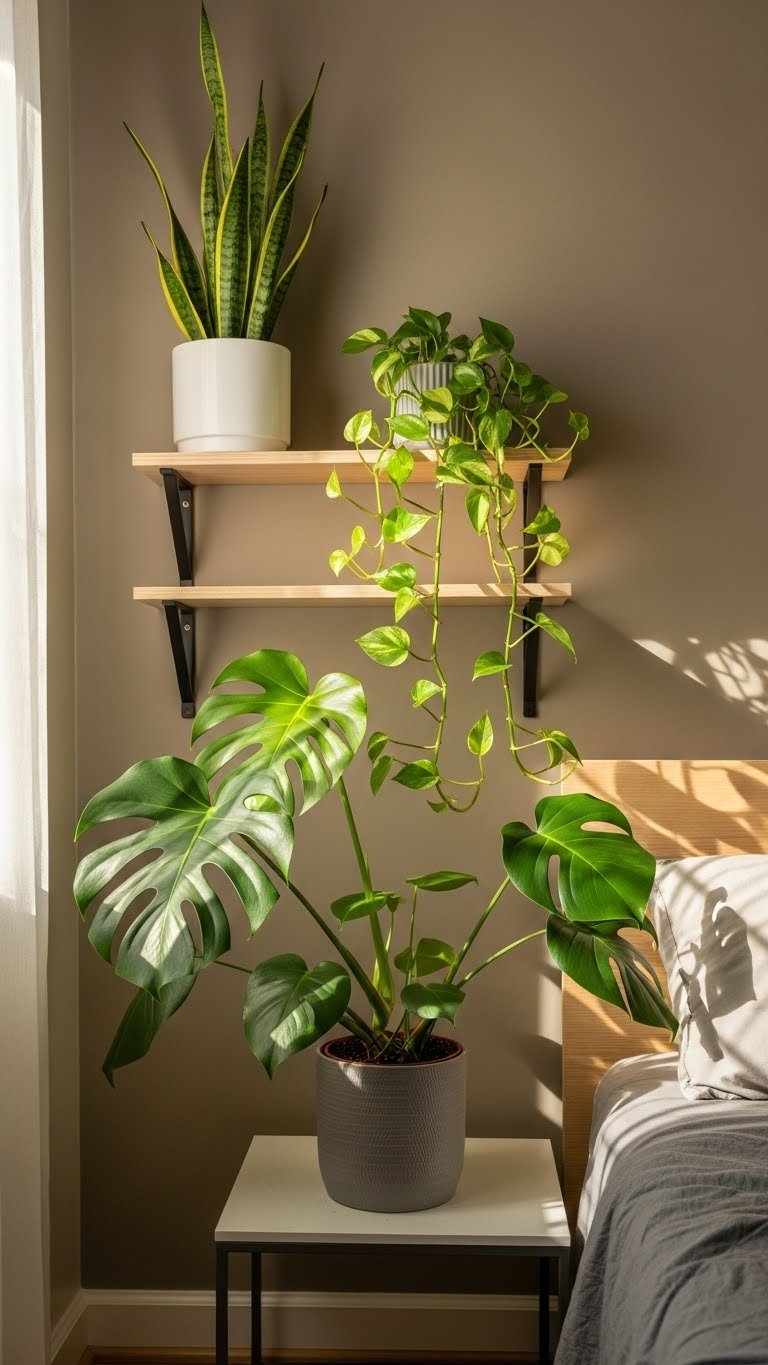
Plants improve air quality, add visual softness, and create a biophilic sense that nature is nearby. They’re especially powerful in bedrooms where calm is the goal.
Start with low-maintenance varieties: pothos, snake plant, or monstera. Buy from Target, Home Depot, or a local nursery ($10–40 per plant). Cluster them at different heights on shelves or floor for visual interest. Water once a week (or less for snake plants), and you’re done. Even if you kill one occasionally, the act of tending plants signals self-care. Total setup: 30 minutes to arrange and water.
If you have limited light, try pothos or snake plants—they thrive in indirect, even low light.
Your room now feels alive and breathing, not static—a subtle shift that deeply affects how rested you feel.
7. Swap Pillowcases for Seasonal Pattern Rotation
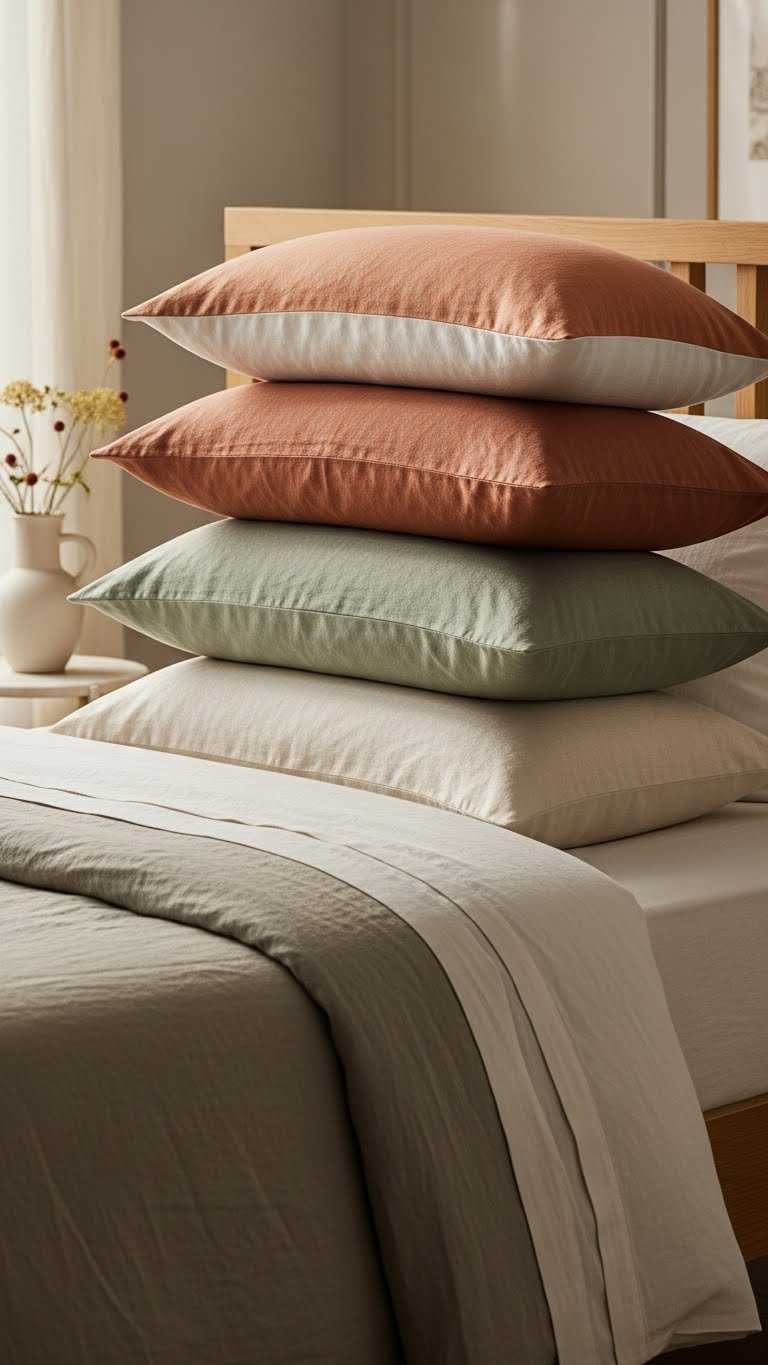
Pillows are an easy, affordable way to refresh your bedroom without replacing anything. Rotating seasonal pillowcases keeps the space feeling intentional and prevents monotony.
Buy sets of pillowcases ($12–25 per pair from Target, West Elm, IKEA) in 2–3 neutral tones and textures (linen, cotton, linen-blend). Mix and match as seasons change: warm terracottas and rust tones in fall, cool creams and sage in spring. Swap them in 5 minutes whenever you want a refresh. Over a year, you’ll have invested $50–100 for an ever-changing look that keeps your space from feeling stale.
Thrift or buy sample pillowcases from HomeGoods or TJ Maxx ($5–15) for affordable variety.
This simple trick makes your bedroom feel curated and fresh without requiring you to buy a new bed or furniture.
8. Install Floating Shelves for Display and Storage
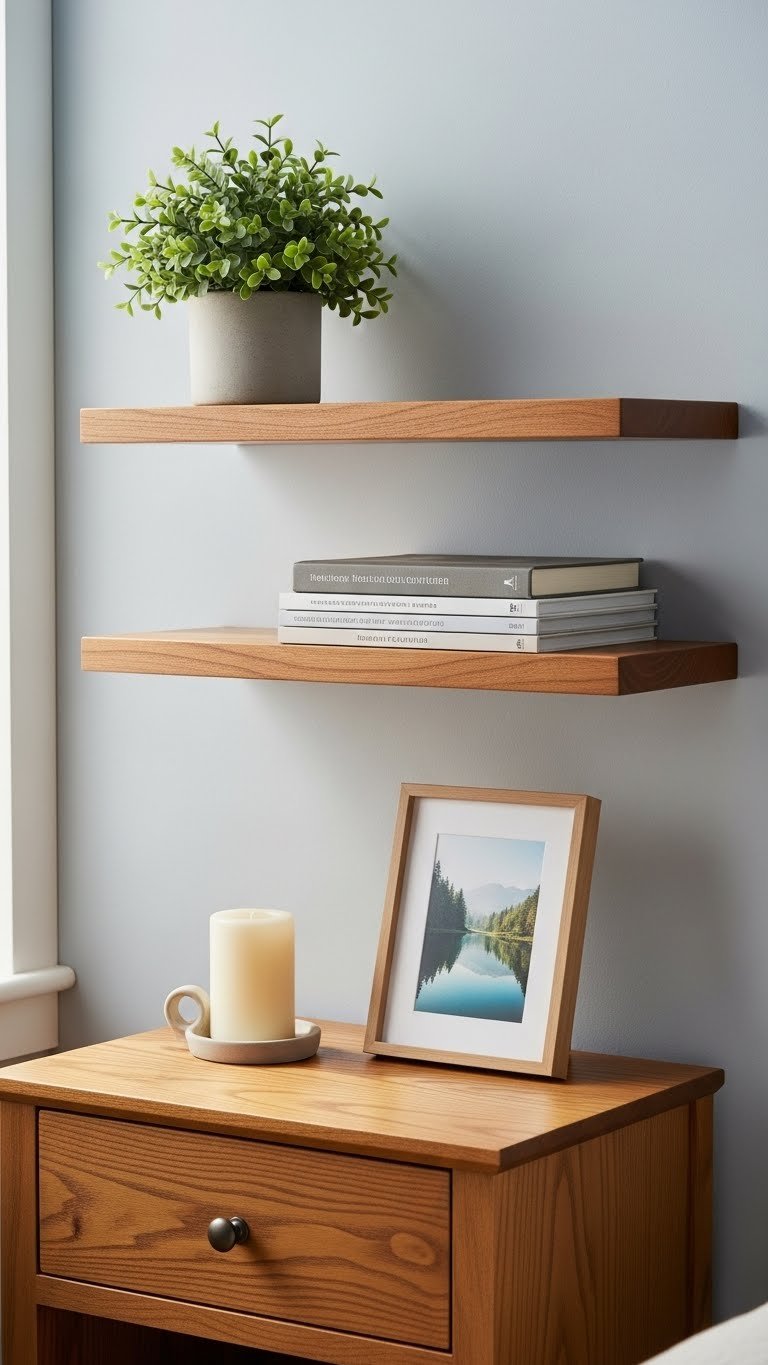
Floating shelves add storage without visual heaviness and give you space to style small objects that bring you joy. They’re the midpoint between bare walls and cluttered surfaces.
Install shelves using a stud finder and bracket kit ($30–80 from Home Depot or IKEA). If you rent, removable adhesive shelves ($20–50) work for lightweight items. Style them with books, plants, a small lamp, or candles—aim for 40% empty space so it doesn’t feel cluttered. Installation takes 1–2 hours for a beginner. The payoff is a personalized display that gives your room character.
Start with one shelf if you’re unsure; you can always add more.
These shelves turn blank wall space into a curated corner that reflects your taste and keeps nightstands clear.
9. Use Blackout Curtains for Restorative Sleep

Even small amounts of light—streetlamps, early sunrise—interrupt deep sleep. Blackout curtains block 99% of light and offer a psychological shift toward serious rest, not just napping.
Look for room-darkening or blackout curtains ($40–100 per panel from Target, IKEA, Amazon). Thermal-lined versions also insulate and reduce noise. Hang them on a simple rod, or layer them under sheer curtains for daytime style. Installation takes 30 minutes. If you rent, check with your landlord about the rod—most allow non-permanent window hardware.
Blackout curtains also create the illusion of a smaller, cozier nest.
You’ll sleep deeper and wake less frequently, noticing the difference within the first week.
10. Arrange a Low-Profile Console or Writing Desk

A desk or console gives you a productive corner without taking over the room. Even renters can use slim, freestanding options that move easily between homes.
Find a narrow desk or console table ($50–150 from IKEA, Target, or thrift stores). Position it under a window or along a wall where you can see the room, not into a corner. Add a chair, a small warm lamp, and a plant. This becomes your spot for journaling, paying bills, or creative work—separate from your bed, which stays sacred for sleep and relaxation. Setup takes an afternoon.
A simple folding desk ($30–60) works if space is extremely tight.
Now you have a distinct zone for productivity, keeping your bed and relaxation corner feeling purely restful.
11. Layer a Large Area Rug for Warmth and Texture

A bare floor feels cold and disconnected. A large rug grounds the room, adds texture underfoot, and defines your sleep space as separate and special.
Invest in a 8×10 or 9×12 rug in natural fibers (jute, wool, or jute-blend) from Wayfair, IKEA, or Ruggable ($100–300). Layer a smaller throw rug on top for extra texture and contrast ($50–150). Jute has an earthy feel; wool adds softness. Position the bed so it sits partially or fully on the rug for a cohesive, grounded look. Budget a weekend to shop and arrange. Rugs anchor a room psychologically—they say “this space is intentional.”
Budget option: Use a smaller rug ($50–100) if full-size is out of reach; layering still works.
Your feet now sink into softness instead of cold floor, signaling relaxation the moment you step into your room.
12. Install a Swing Arm Sconce for Flexible Bedside Light

Overhead lights and bright lamps create glare on your pillow. A swing arm sconce pivots to direct light exactly where you need it—perfect for reading, journaling, or winding down without waking a partner.
Install a swing arm sconce ($40–100 from Schoolhouse Electric, Rejuvenation, or Amazon) at the bedside using a standard wall bracket. If you rent, use a plug-in swing arm ($50–80) that requires no wiring. Pair it with a warm-toned bulb (2700K). Installation takes 30 minutes for a permanent mount. The benefit: targeted light that won’t shine in your face or across the room, making bedtime routines feel more spa-like than utilitarian.
A swing arm sconce replaces multiple bedside lamps, actually saving space.
You’ll read or journal comfortably without harsh light, and the ability to angle the light makes it feel personalized to your needs.
13. Create a Scent Ritual With Candles or Diffusers
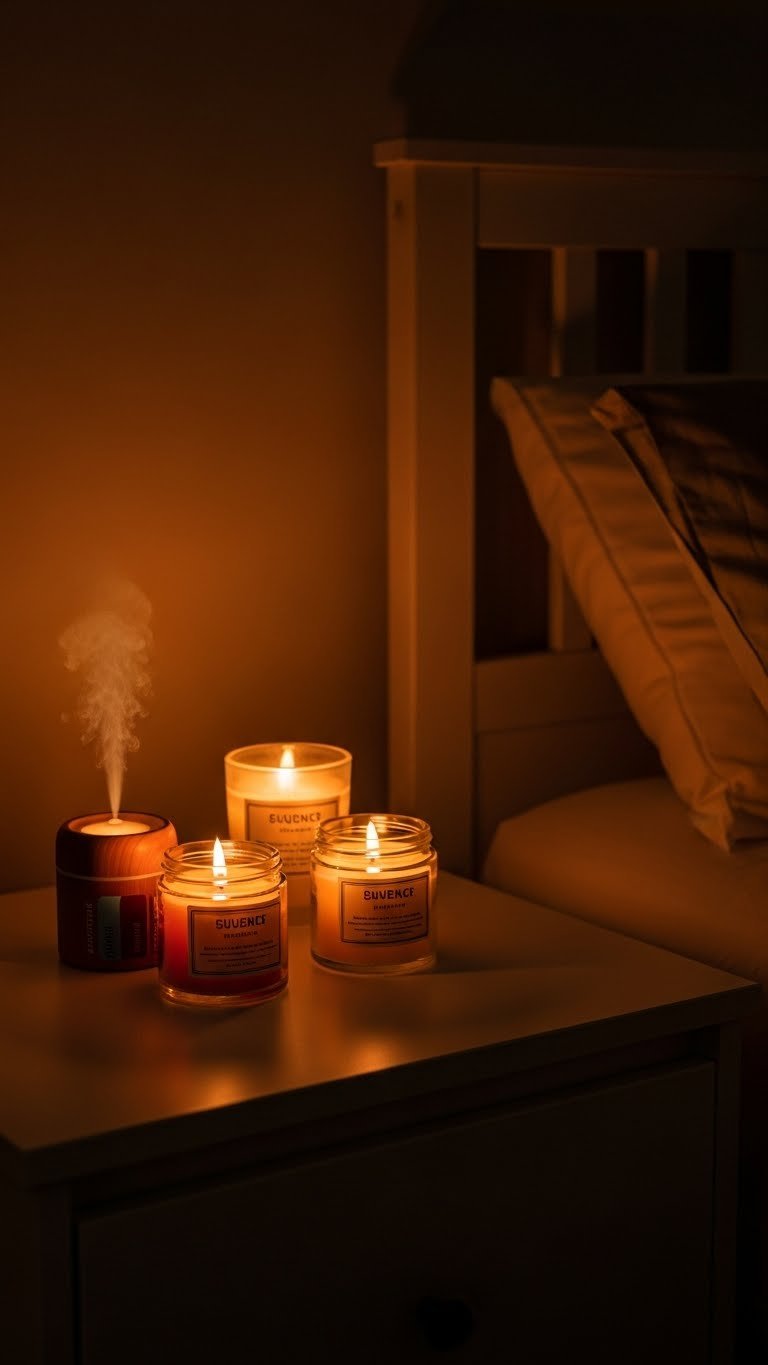
Scent is powerfully connected to relaxation and memory. A consistent bedtime scent ritual tells your brain it’s time to unwind, even on stressful days.
Choose a signature scent: candles ($10–30 from P.F. Candle Co., Jo Malone, or Target), an essential oil diffuser ($20–50 from Vitruvi or Amazon), or a room spray ($10–20). Light or diffuse it the same time each evening. After two weeks, your brain will anticipate calm when you catch that scent. The investment is minimal but the psychological payoff is real. Scents like lavender, cedarwood, or chamomile are especially soothing.
For renters: candles or diffusers require zero installation and move with you.
Your bedroom now has a sensory anchor that signals rest—even on chaotic days.
14. Hang String Lights or Fairy Lights for Soft Ambiance
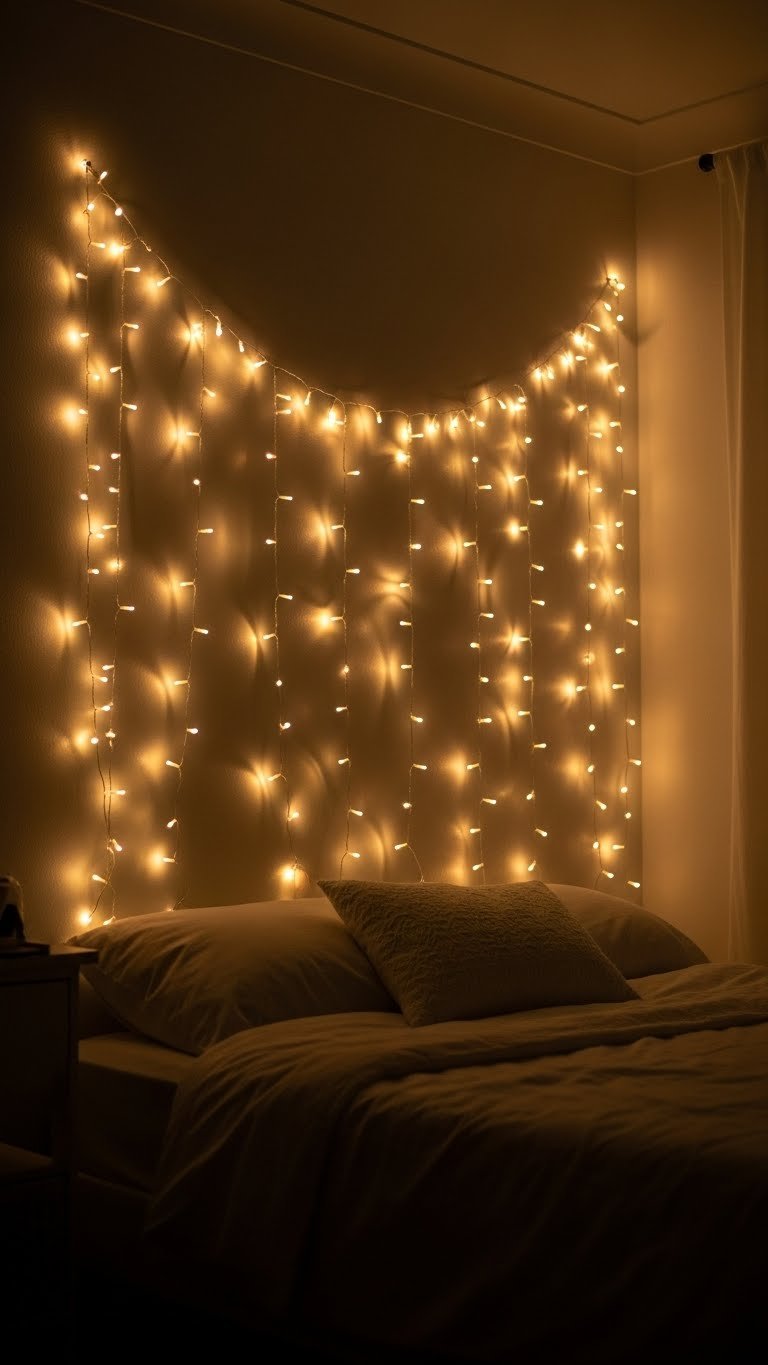
String lights feel whimsical but also deeply calming. They provide functional light without the harshness of ceiling fixtures, and they’re renter-friendly and removable.
Buy warm LED string lights ($15–40 from Target, Amazon, or Urban Outfitters). Drape them around your headboard, along a shelf, or across a corner using removable clips or hooks. Plug into an outlet or use battery-operated versions ($20–35) for absolute flexibility. Setup takes 15 minutes. The warm glow creates an intimate, almost campfire-like feeling—psychologically very different from overhead light, which keeps your mind alert.
Avoid bright white lights; choose 2700K warm white or amber for best results.
Your room now has a soft, dreamlike quality that makes you want to stay in it longer.
15. Layer Window Seat Cushions for Luxury Perching
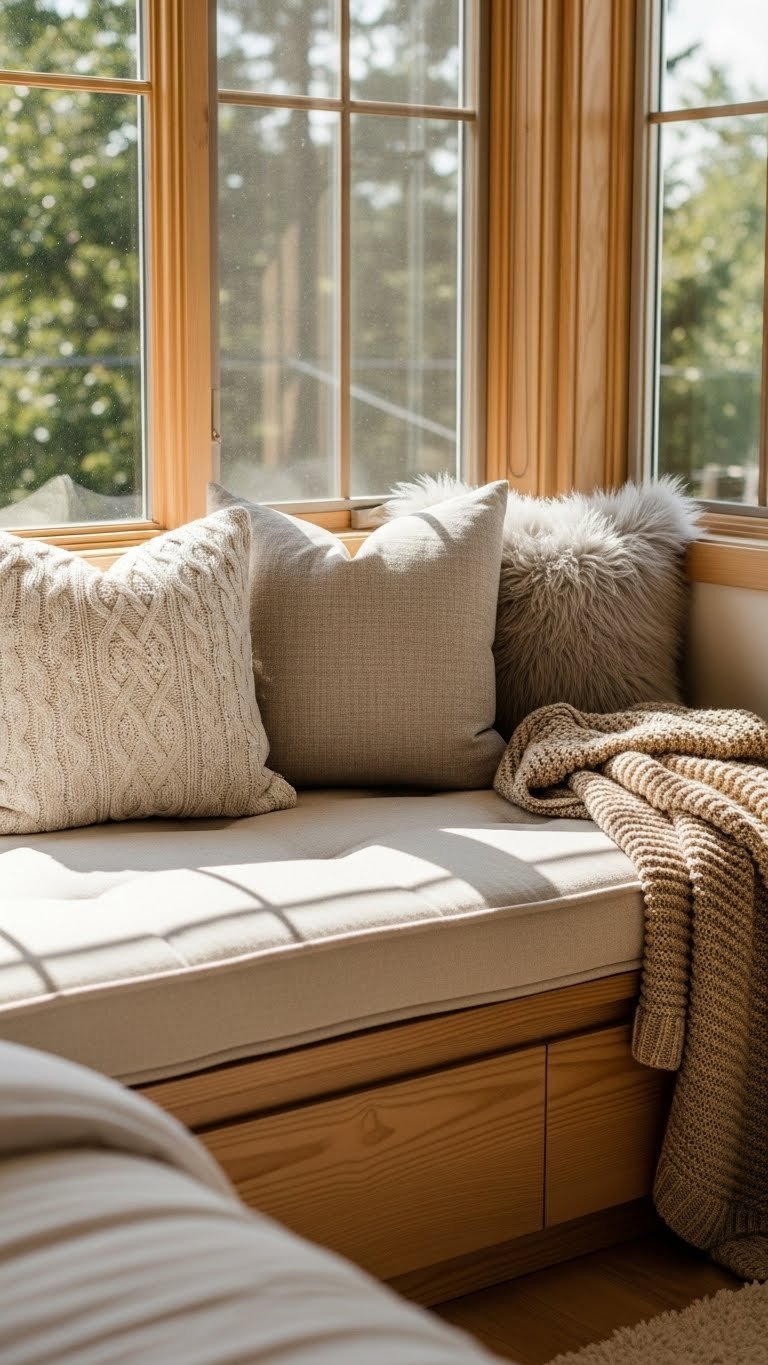
If you have a windowsill or bench, turning it into a cushioned retreat spot requires minimal investment and creates major coziness. This becomes your daytime reading or meditation corner.
Get a custom cushion cut at a fabric store ($40–80) or buy a pre-made one ($30–60 from Target or IKEA). Layer it with 2–3 throw pillows ($15–40 each) and a lightweight throw ($25–50). Arrange it so you can curl up and gaze out the window without being visible from the street. Install takes 20 minutes. This corner becomes intensely personal—a spot you retreat to without leaving your room.
DIY option: Use a yoga mat or pool float covered with a pretty sheet for a zero-cost cushion.
You’ve created an intimate viewing platform that makes even quiet moments feel like a mini-vacation.
16. Paint Walls in Warm Neutrals for a Calming Backdrop
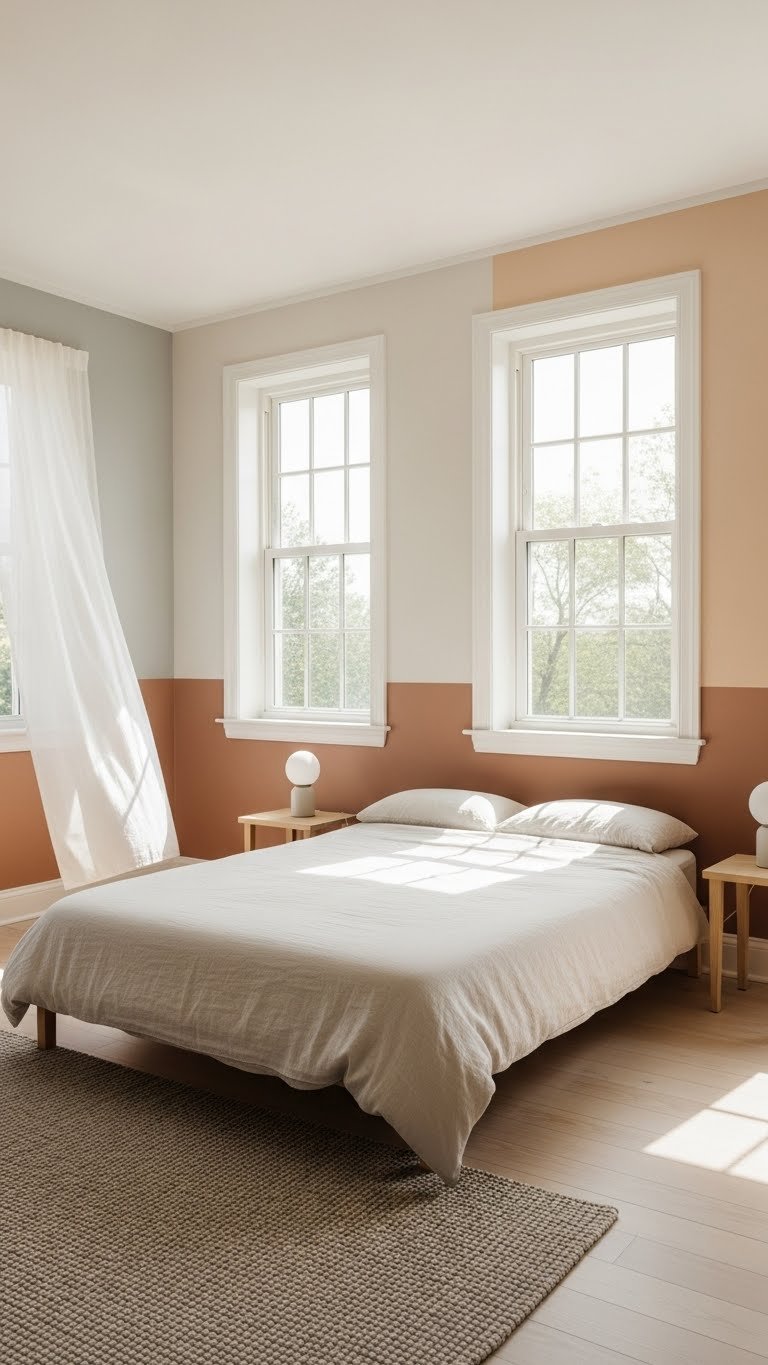
Wall color sets the emotional tone for your entire room. Cool whites feel clinical; warm neutrals feel safe and enveloping. A fresh coat of paint is one of the highest-impact changes you can make.
Choose warm neutrals like cream, warm greige, soft terracotta, or pale sage (brands like Benjamin Moore, Sherwin-Williams, Behr). A quart of high-quality paint runs $15–25; a gallon $30–50. Primer is included in premium paints. One coat typically covers well; two coats ensure depth. Painting takes a weekend—one evening to prep, one evening to paint. If you rent, check your lease; most landlords allow neutral wall colors. Renting? Use peel-and-stick wallpaper ($30–60 per roll) for a similar effect without paint.
Test samples on your wall and observe in morning, afternoon, and evening light before committing.
Your room now has a sophisticated, soothing foundation that makes everything else—furniture, textiles, accessories—look intentional.
17. Arrange Books by Color for Visual Calm and Display
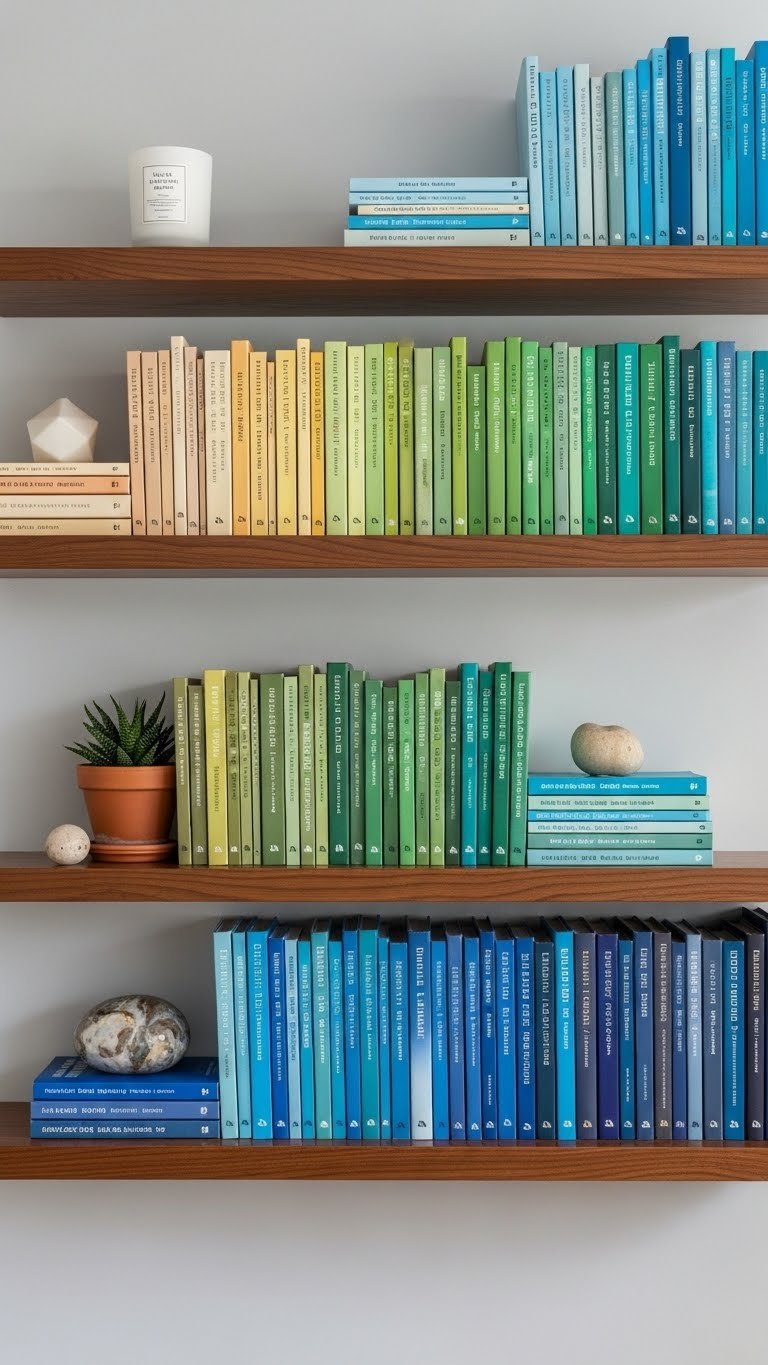
Books are natural décor, but chaotic stacks feel stressful. Arranging by color (a trend called “rainbow shelving”) creates visual order that calms the eye and makes your room feel designed, not haphazard.
Pull your books and sort by color: warm neutrals, blues, greens, jewel tones. Stand them vertically or lay stacks horizontally. Add small objects (candles, plants, framed photos) to break up visual heaviness. This takes an hour or two but the payoff is a shelf that looks like intentional design. You’ll also discover books you forgot you had, which feels like free novelty in your space.
No books? Use decorative boxes ($10–30 each) stacked by color for the same effect.
Your shelves now feel curated and restful instead of chaotic, making your whole room appear more organized.
18. Use Vintage or Thrifted Furniture for Unique Character
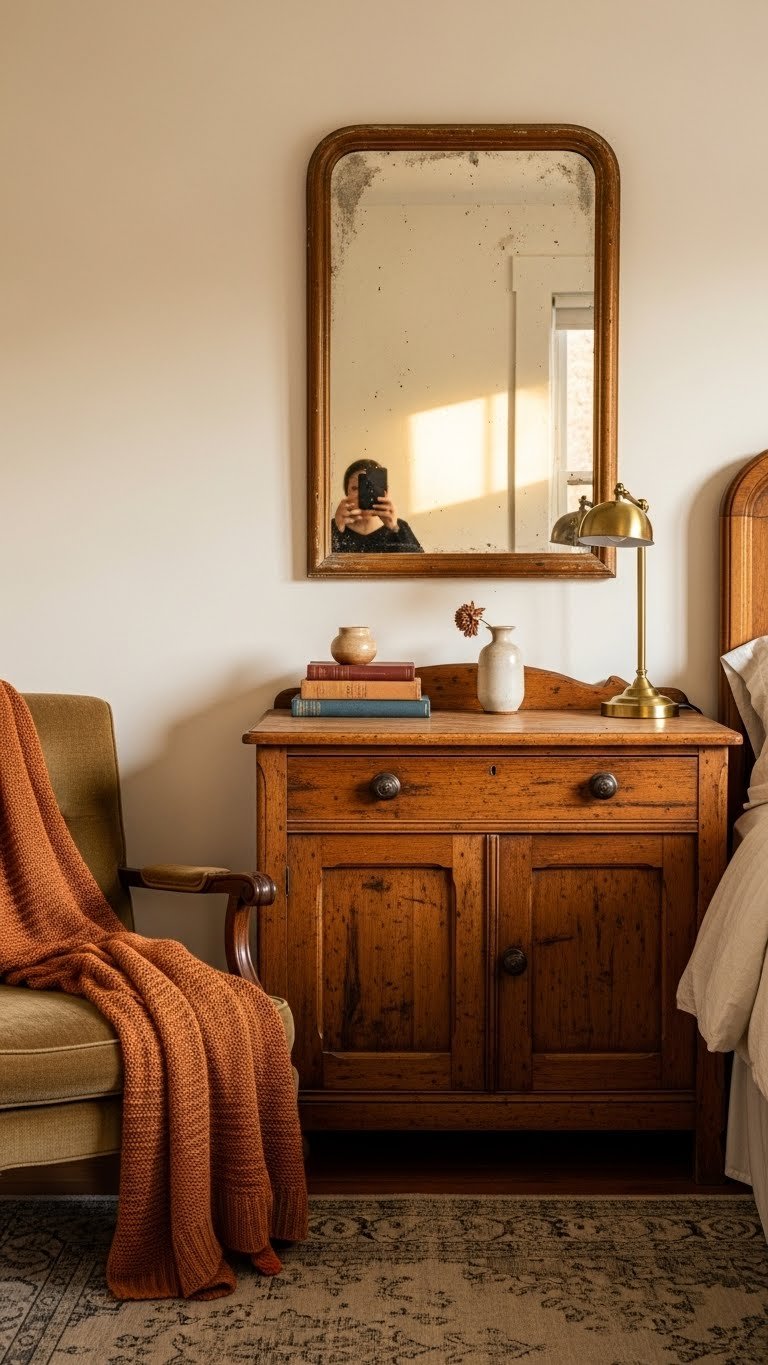
Mass-produced furniture feels soulless. Vintage and thrifted pieces add character, story, and uniqueness that no new piece can replicate—plus they’re usually cheaper and more sustainable.
Shop Facebook Marketplace, local thrift stores, estate sales, and Craigslist for furniture with bones—don’t worry about upholstery or finish. A mid-century dresser ($50–200) or vintage chair ($30–100) can be refreshed with paint, new fabric, or simply by pairing with fresh accessories. Hunting takes time but is genuinely fun, and you’ll end up with one-of-a-kind pieces. Budget a few weekends to source strategically.
One statement vintage piece instantly makes a room feel like someone thoughtful lives there.
Your bedroom now tells a story—not just visually, but emotionally. It feels collected and lived-in, not decorated.
19. Install a Headboard or Fabric Wall Hanging for Focal Point

A headboard anchors your bed as the room’s focal point and creates an enveloping sense of rest. It doesn’t need to be expensive or permanent.
Buy a fabric headboard panel ($100–300 from West Elm, Wayfair) or DIY one using reclaimed wood ($50–150) and basic tools. For renters, use peel-and-stick wallpaper ($40–80) or a fabric hanging ($50–100) behind the bed—removable and zero commitment. This setup takes an afternoon to install and instantly elevates the room’s entire aesthetic. The bed becomes a sanctuary, not just furniture.
Alternatively: Hang a large tapestry or old quilt behind the bed for instant headboard effect.
Your bedroom focal point now communicates comfort and intention, making the space feel designed rather than default.
20. Create Layered Nightstands With Small Plants and Lighting

Nightstands set the tone for sleep and morning routine. Styling them thoughtfully signals that this bedroom is a priority space, not an afterthought.
Place a small table ($30–80 from IKEA, Target, thrift stores) on each side of your bed. Layer each with: a warm lamp ($25–60), a small plant ($10–20), a candle ($10–20), and your current book or journal. Keep drawers clear of clutter (use drawer organizers, $5–15). This takes 30 minutes to set up and instantly makes your bedroom feel like a hotel suite. The repetition on both sides creates visual balance and calm.
Use matching or complementary lamps for a cohesive look; plants can differ slightly for personality.
Your nightstands now function as both practical and beautiful, supporting your nightly wind-down ritual.
21. Add a Full-Length Mirror for Space and Light Reflection

Mirrors expand space and bounce light around, making even small bedrooms feel larger and brighter. They’re practical for getting ready and psychologically calming in how they open up a room.
Install a full-length mirror ($40–120 from IKEA, Target, West Elm) leaning against a wall or hung beside your bed. Position it to reflect a window or light source for maximum brightening. Mounting takes 15 minutes if wall-hung; leaning takes zero setup. The trick is angle—tilt it slightly so light bounces across the room rather than straight back at you. Even a $40 IKEA mirror creates a surprising shift.
Hang a frame around a simple mirror ($30 DIY frame kit) for a finished look.
Your room now feels airier and brighter, with doubled natural light making it appear larger and more open.
22. Use Soft Area Lighting to Eliminate Dark Corners
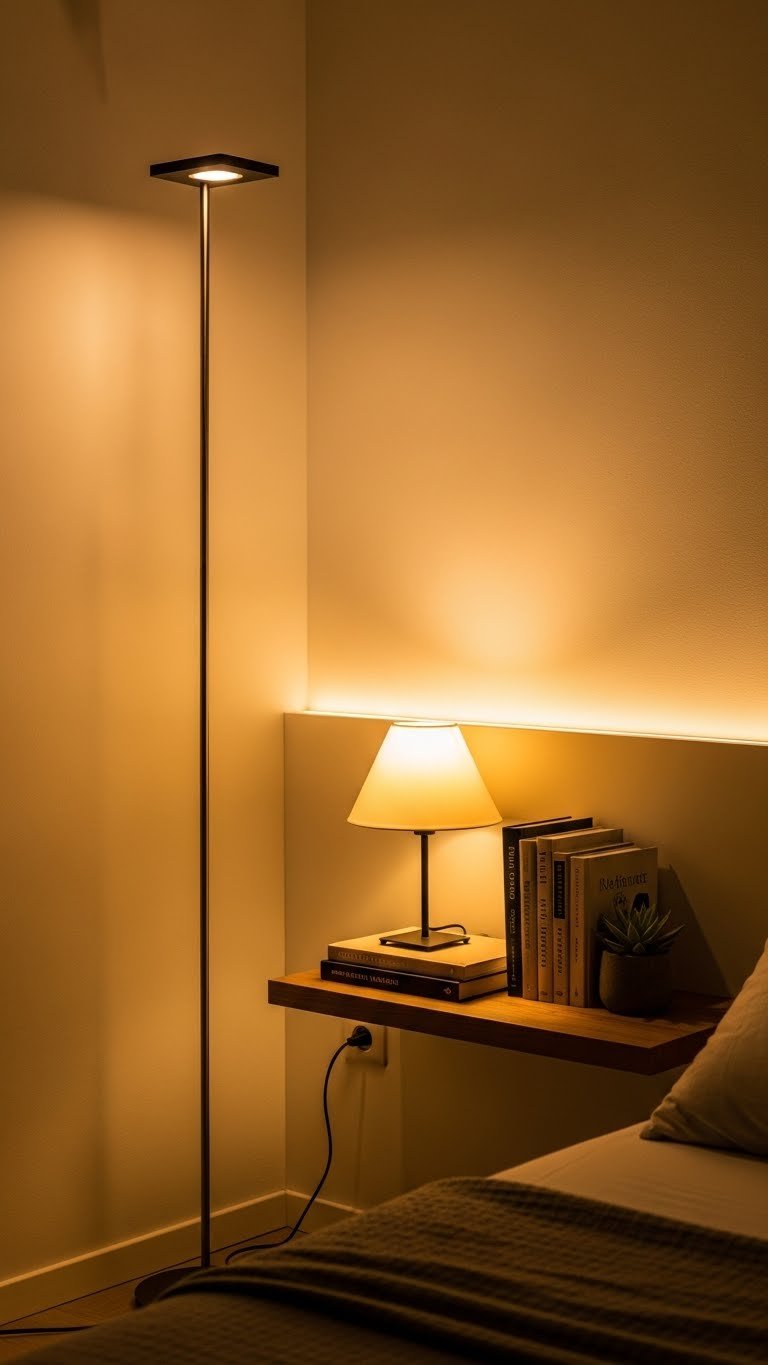
Dark corners feel claustrophobic and uninviting. Strategic lighting eliminates shadows and creates cozy, safe-feeling zones throughout your room.
Add floor lamps ($40–100 from Target, IKEA, West Elm), table lamps ($25–80), and string lights ($15–40) in corners that feel dark or empty. Aim for warm-toned bulbs (2700K). Arrange so light pools rather than glares—indirect lighting feels calmer than direct. This setup takes an evening to arrange and costs $50–200 total, but transforms the entire room’s atmosphere. You’ve essentially added multiple “rest zones” rather than one harsh center light.
Use LED bulbs (last longer, run cooler, save money) across all new lighting.
Every corner of your room now feels safe and intentional, with no harsh shadows to create psychological unease.
23. Style Your Bed With Layered Textiles and Mixed Textures

Your bed is the focal point, so styling it with intention makes your room feel magazine-worthy and deeply inviting. Layering textures creates visual and tactile richness that reads as luxury.
Start with quality sheets ($40–80 per set), add a duvet or comforter ($80–200), layer a throw blanket ($30–100), and finish with 4–5 pillows in different sizes and textures ($15–40 each). Mix velvet, linen, knit, and cotton for tactile variety. Vary pillow sizes (euro, standard, lumbar) and styles (patterned, solid, textured). The bed should look plush and inviting, not sparse. Styling takes an afternoon and costs $200–400 total, but your bed becomes a genuine sanctuary you’ll want to climb into every night.
Start small: one good pillow per style category, then add over time.
Your bed now looks hotel-level inviting and genuinely feels as good as it appears—a place you can’t wait to crawl into.
Save this post and pick one idea to tackle this weekend. Whether it’s new lighting, a single shelf, or fresh pillowcases, small changes compound fast—and your bedroom deserves to feel like the retreat you actually want to be in.
Leave a Reply