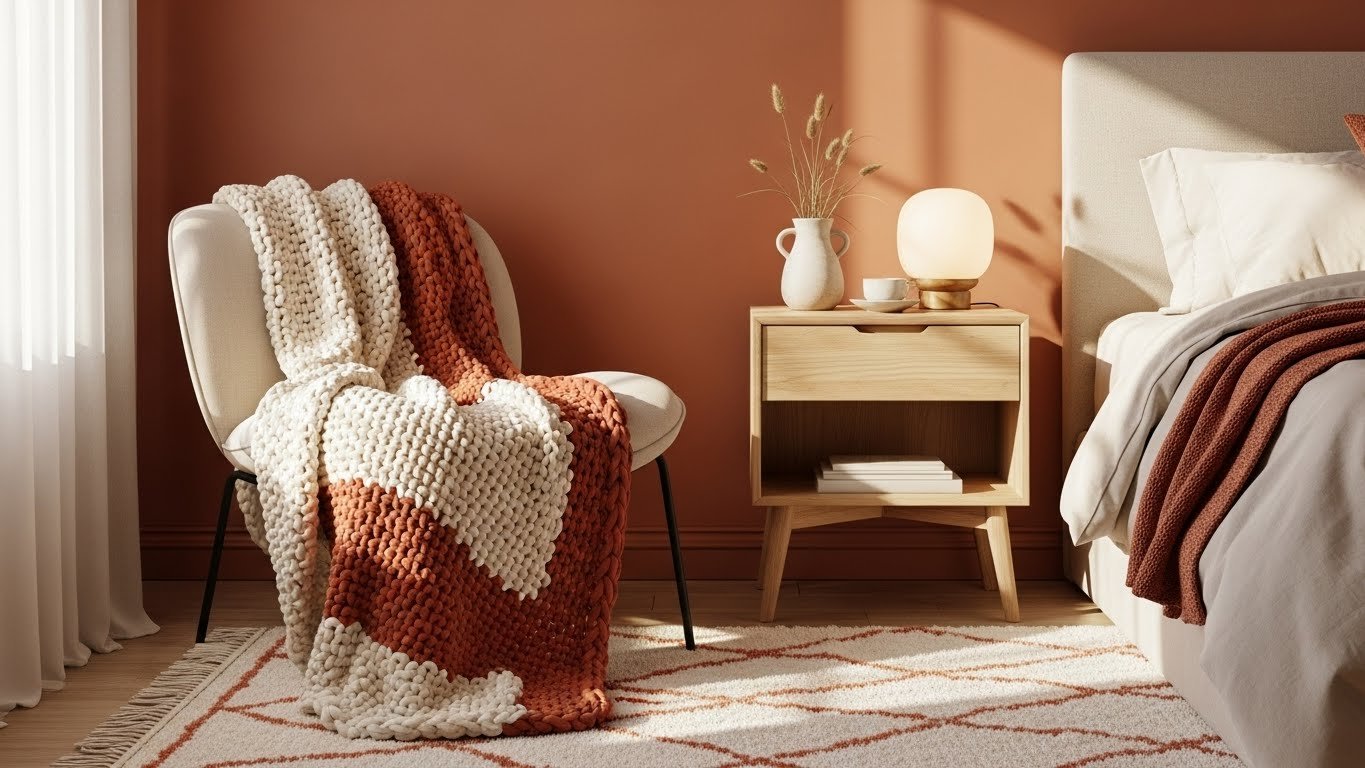
Your bedroom should be the first place you want to retreat to—not just somewhere you sleep. Right now, it might feel bland, chaotic, or maybe too sparse to actually relax in. The good news? You don’t need a total redesign or a huge budget to make it feel like a sanctuary. We’ve pulled together 25 room inspiration ideas that actually work, whether you’re renting, on a tight budget, or ready to invest in pieces that’ll stick around for years. From simple styling tricks to DIY upgrades, you’ll find ideas you can start this weekend—seriously. Let’s dive into the specific changes that’ll make people ask, “Wait, this is the same room?”
1. Layer Textures on Your Walls (No Paint Required)
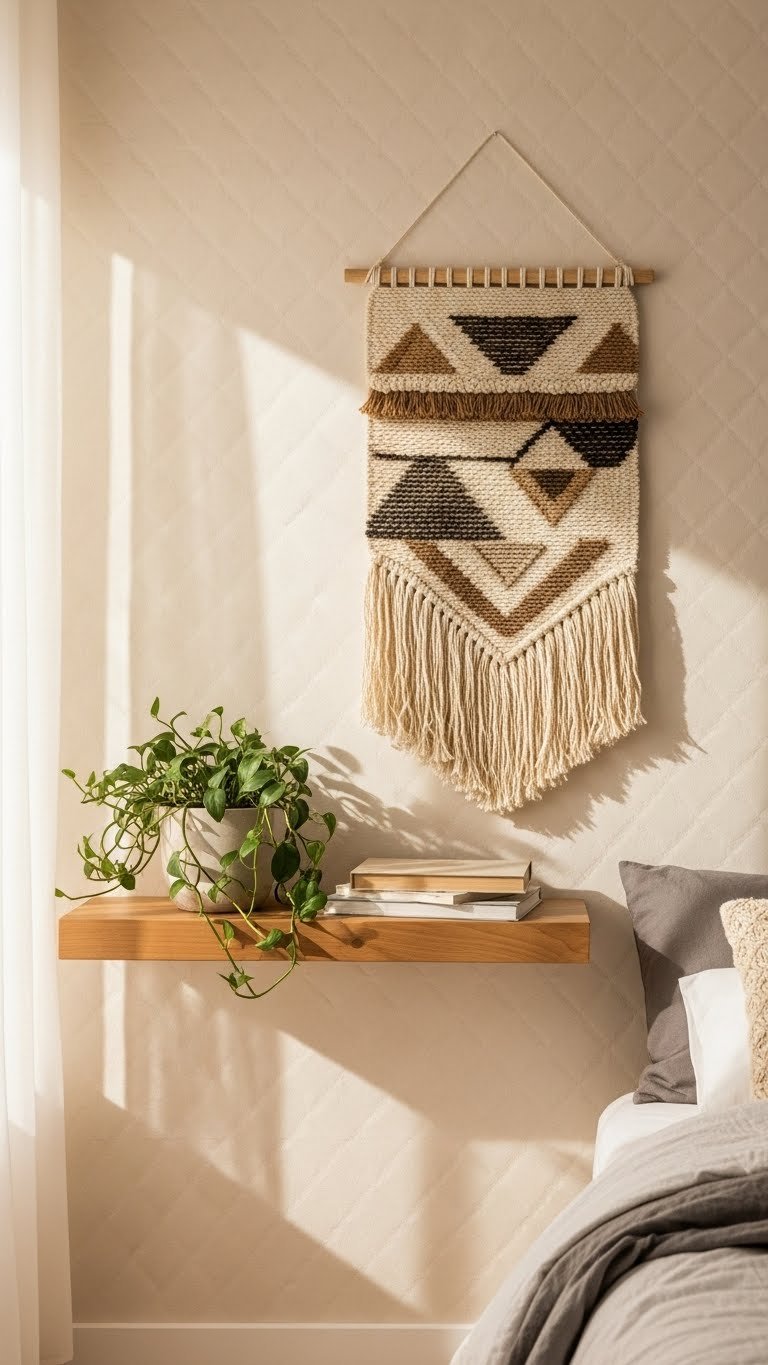
Textured walls add warmth and visual interest without permanent commitment. If painting feels like too much, peel-and-stick textured wallpaper gives you that dimensional effect in minutes. Look for quilted, cork, or linen-look options that catch light beautifully and make your space feel curated.
Try Spoonflower or Etsy for custom textured wallpaper ($20–$60 per roll). Installation takes 2–3 hours per wall and requires just a smoothing tool. No paste mess, and renters love this option. For non-renters, consider adding actual shiplap or 3D wall panels to one accent wall (DIY-friendly projects under $100). You can also layer woven wall hangings over plain walls for a fraction of the cost.
The result? Your bedroom stops feeling flat and gains architectural character that makes everything else look better.
2. Swap Cool Grays for Warm Neutrals
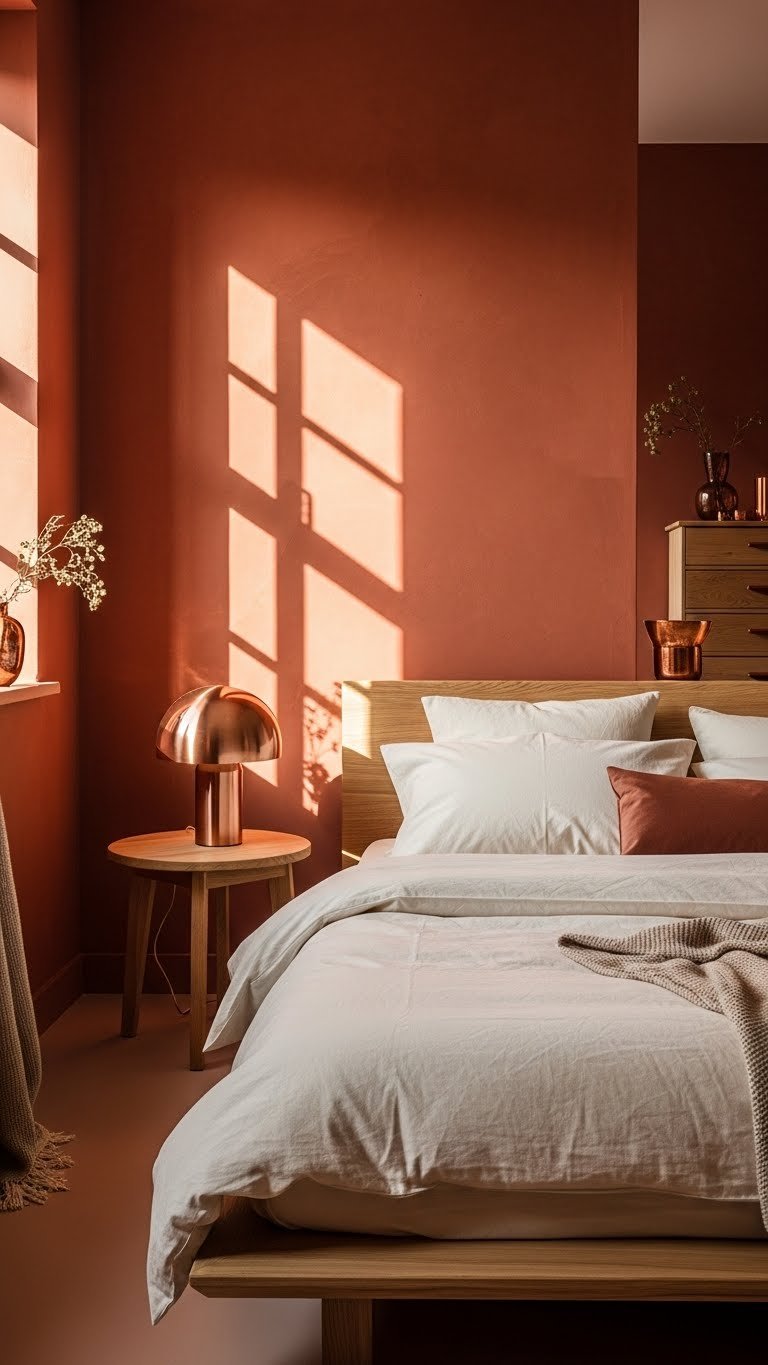
Cool gray walls are out—they read as sterile when you want calming. Warm neutrals like terracotta, warm beige, creamy off-white, or soft taupe create the opposite effect: they actually make you feel more grounded. This single change shifts your entire room’s vibe from cold to cozy.
Pick up a Sherwin-Williams, Benjamin Moore, or Behr sample pot (around $5) and test it on your wall for a few days. Colors shift with natural light throughout the day, so you need to see it in your actual space. If you’re renting, peel-and-stick wallpaper in warm tones works just as well. One bedroom wall takes 4–6 hours to paint with a second coat; calling in help makes it a weekend project. The warmth will make your whole room feel like it’s giving you a hug.
3. Add Floor-to-Ceiling Curtains for Drama
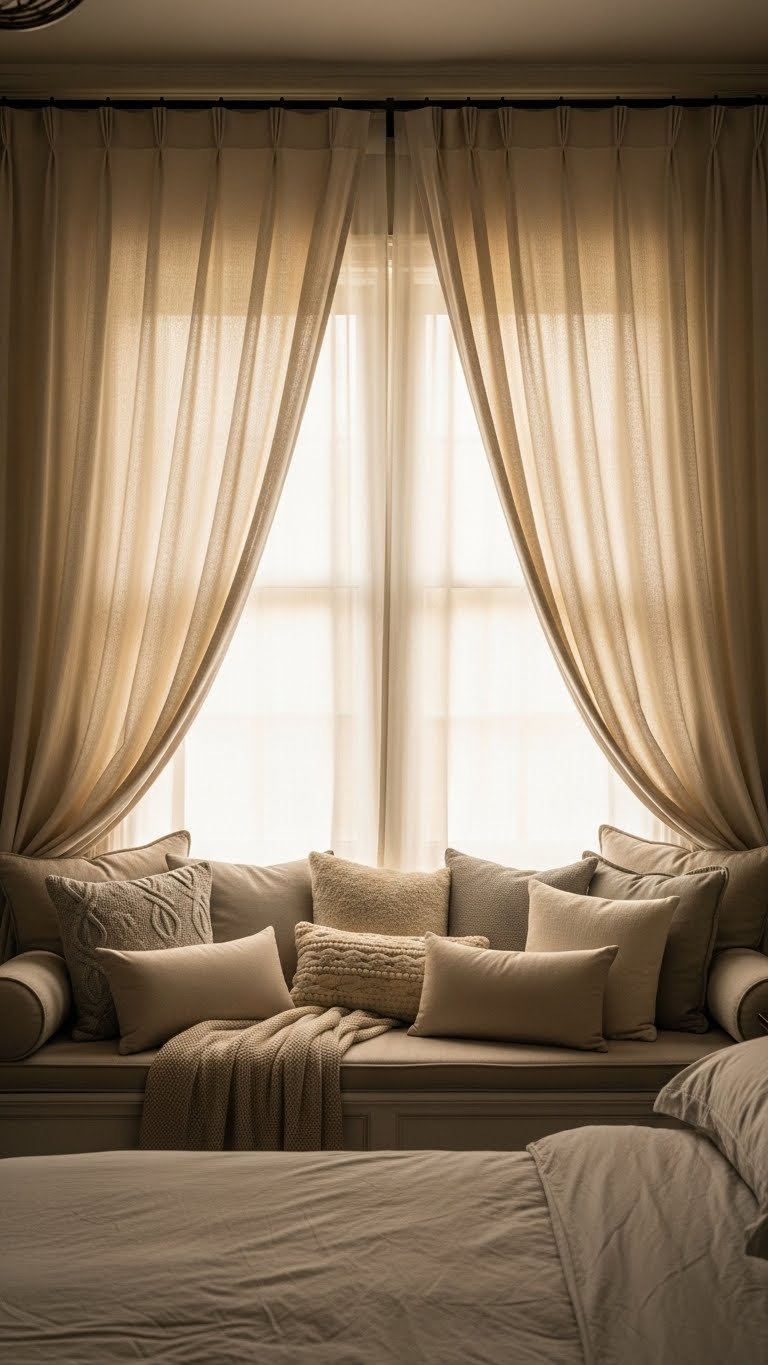
Floor-to-ceiling curtains create height, luxury, and instant coziness—even in tiny bedrooms. Short curtains make rooms feel cramped; long ones draw your eye up and make the space seem more generous. The visual drama alone worth the investment.
Hang your curtain rod as close to the ceiling as possible (even 6 inches higher than the window frame changes everything). Use linen or cotton blends from IKEA, Target, or Wayfair ($30–$80 per pair). For a DIY budget hack, buy lightweight fabric from a discount store and hang it from command hooks if you’re renting. Installation takes 30 minutes with a basic drill. Pro tip: sheer curtains under heavier drapes let light filter through during the day while maintaining privacy at night. You’ll notice the room feels more intentional and calming immediately.
4. Invest in Organic, Curved Furniture
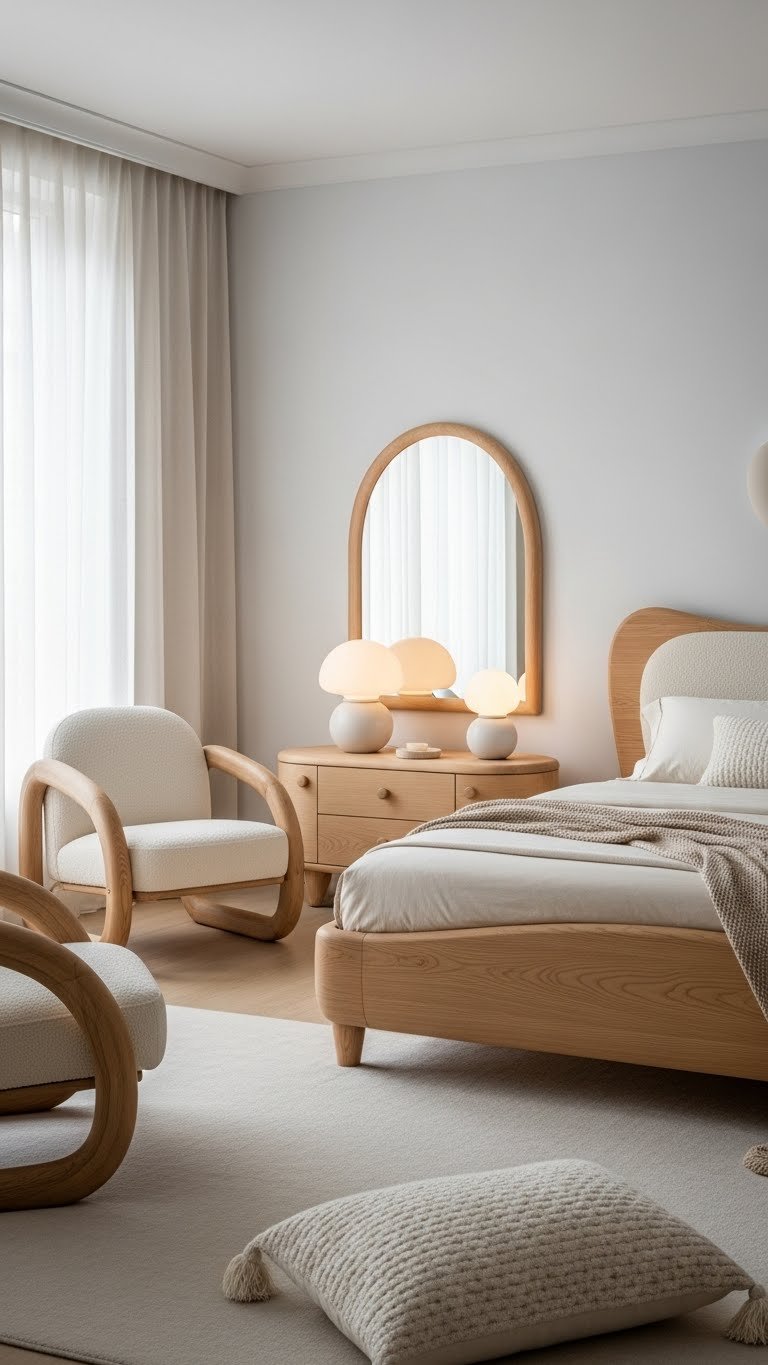
Sharp angles feel unsettling; curved furniture feels calming. Swapping even one or two angular pieces for rounded alternatives changes how your body responds to the space. Your nervous system actually relaxes more around organic shapes.
Look for curved bed frames, rounded nightstands, and arched mirrors at 1stDibs, Article, or Wayfair ($200–$1,200 per piece depending on quality). Budget option: thrift vintage curved furniture and refinish it yourself, or add curved throw pillows and an arched floor mirror to ease sharp edges. Mid-range: try IKEA’s curved cabinet collection or CB2’s sculptural pieces. Installation depends on what you buy, but most items arrive ready to place. Your sleep quality actually improves when your bedroom doesn’t feel like a box of straight lines.
5. Create a Vintage Nightstand Moment
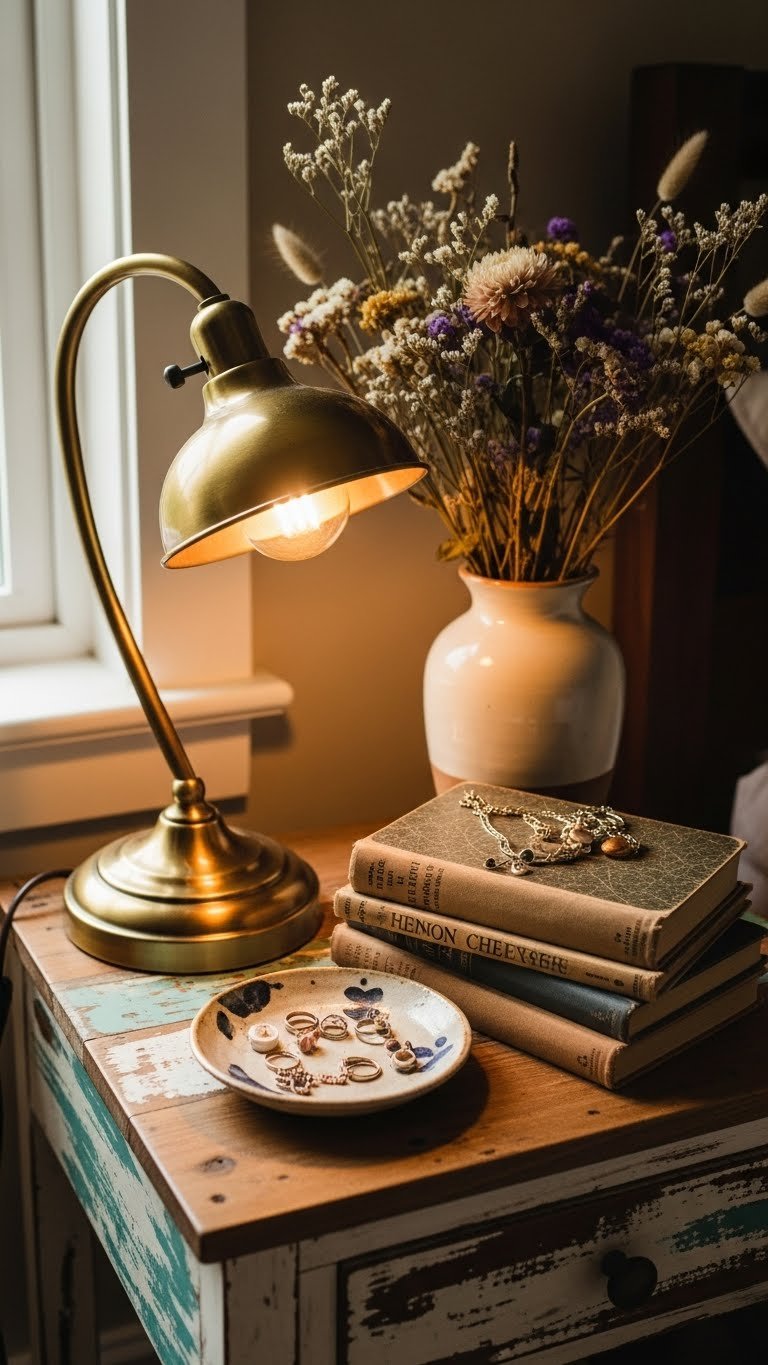
Mass-produced matching sets feel generic. One thoughtfully styled vintage nightstand adds personality and tells a story about who you are. It becomes a little display moment people actually notice.
Hit up local thrift stores, Facebook Marketplace, or Etsy and look for wood nightstands from the ’60s–’80s ($20–$80). Clean it with wood oil, add a warm brass or ceramic lamp ($30–$60), and style the top with 3–4 meaningful items: a small plant, a ceramic bowl, a stack of design books, or a vintage clock. The whole project takes one afternoon and costs under $150. Renters: this works beautifully since it’s not built-in. You’ll open your eyes each morning to something that feels intentional instead of cookie-cutter.
6. Layer Patterned Textiles (Florals + Stripes)
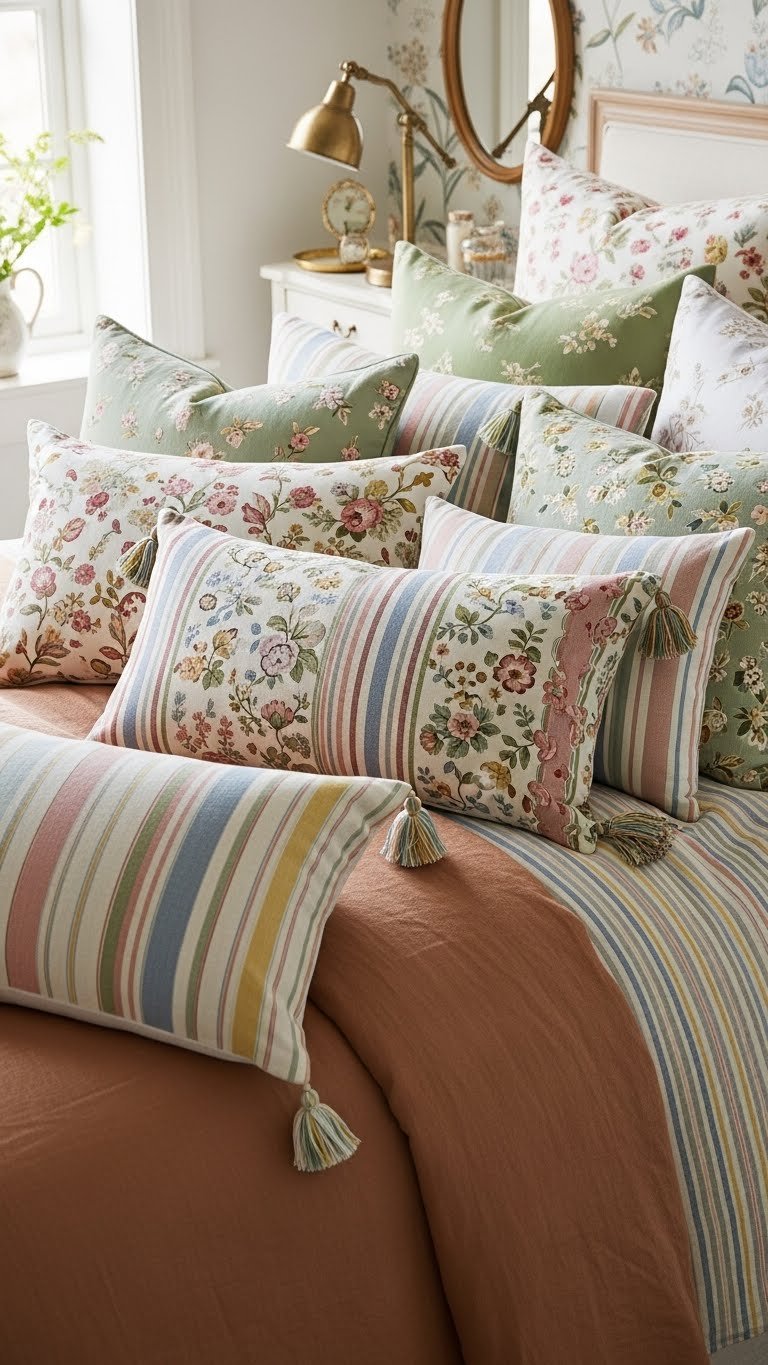
Pattern mixing sounds risky but it’s the secret to a room that feels collected and personal. Pairing florals with stripes, adding a geometric throw—these aren’t mistakes, they’re intentional coziness. The key is sticking to a color family.
Start with one patterned duvet or quilt ($60–$150 from Anthropologie, Schoolhouse, or Target). Add 3–5 throw pillows in coordinating patterns and solids ($15–$40 each). The trick: make sure all your patterns share 2–3 colors. A blush floral looks amazing next to cream stripes if you repeat that blush and cream across your pieces. This costs nothing if you rearrange what you already have. The result feels like you’ve traveled and collected things you love—even if you found it all online.
7. Hang Statement Art That Anchors the Room
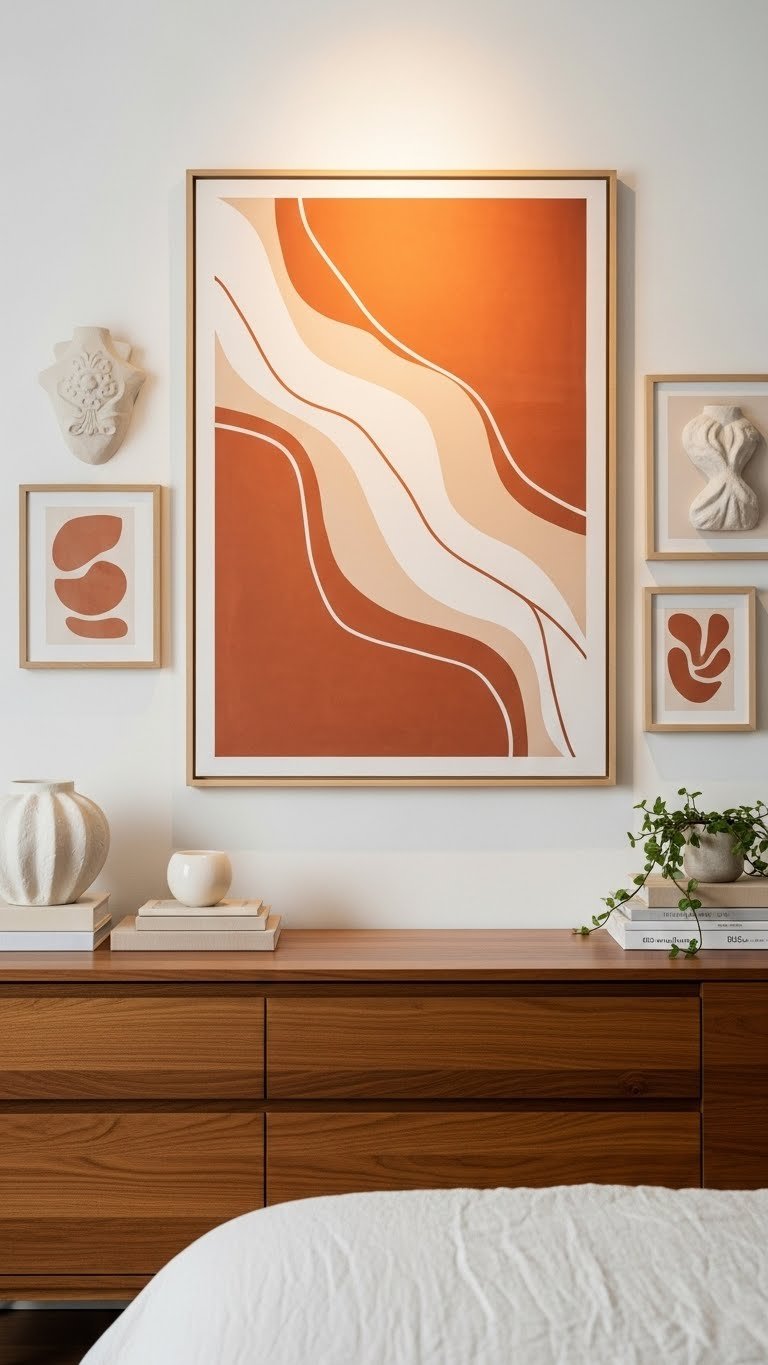
One well-chosen piece of art changes everything. Forget small prints scattered around—one large statement piece commands the room and gives your eye somewhere to rest. It’s an instant upgrade that signals intentionality.
Choose art that resonates with you emotionally, not just aesthetically. Look at Etsy artists, local galleries, or even museums’ print collections. Sizes matter: go larger than you think ($50–$300 for prints; $200–$1,000+ for originals). Hang it at eye level, 57–60 inches from the floor to the center of the piece. Frame it in warm wood or metal that matches your room’s palette. You can source, frame, and hang a statement piece in one weekend. Your bedroom becomes a gallery instead of just a place to sleep.
8. Add a Biophilic Water Feature
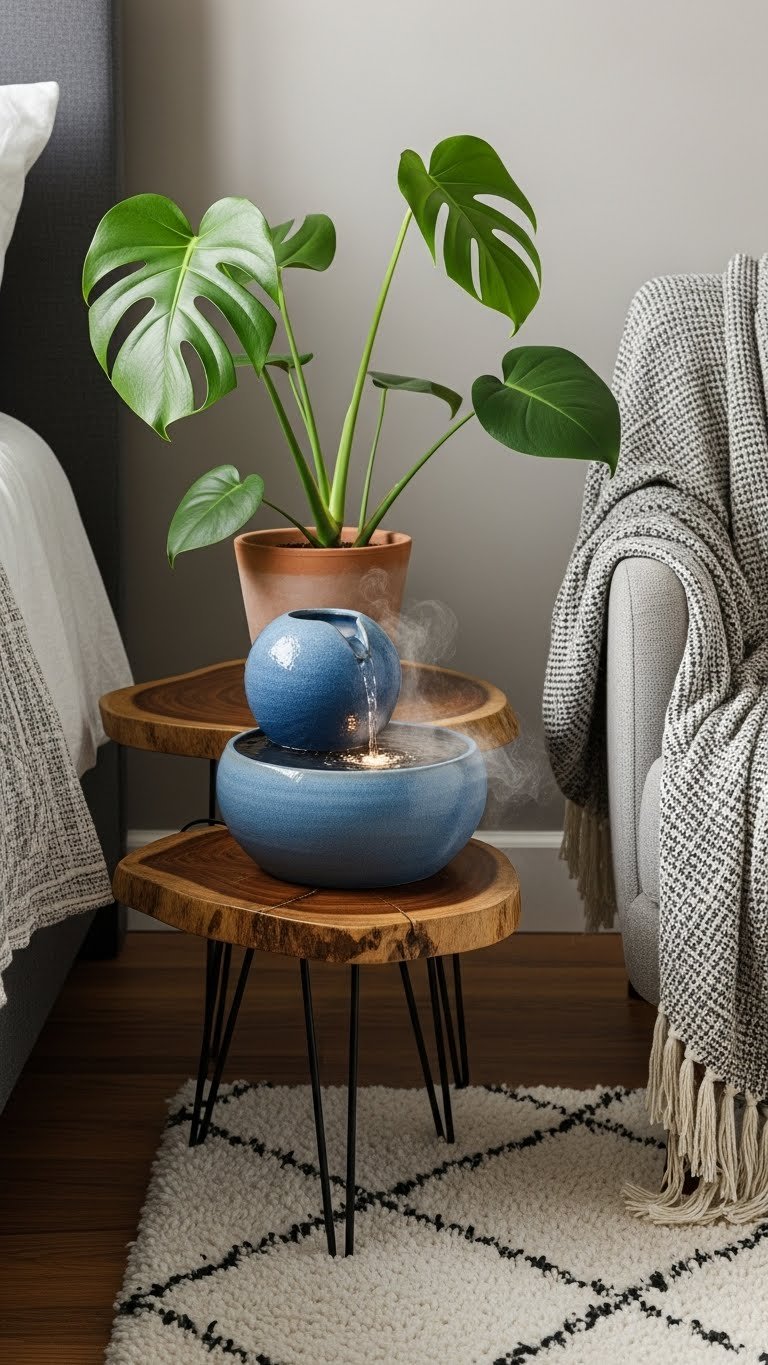
Plants are great, but adding the sound of moving water (without a full pond) brings nature even closer. A small tabletop fountain combines visual calm with auditory soothing—your nervous system responds to both.
Get a ceramic or stone tabletop fountain from Target, Amazon, or West Elm ($40–$120). Pair it with a large leafy plant and keep it on a side table or dresser. Plug it in, fill it weekly, and listen to that gentle sound while you work or wind down. Takes 10 minutes to set up and runs 24/7 if you want. Pro tip: place it on a waterproof mat to protect wood surfaces. You’ll fall asleep to soft background water sounds instead of street noise.
9. Refresh Your Bedding with Organic Wool or Linen
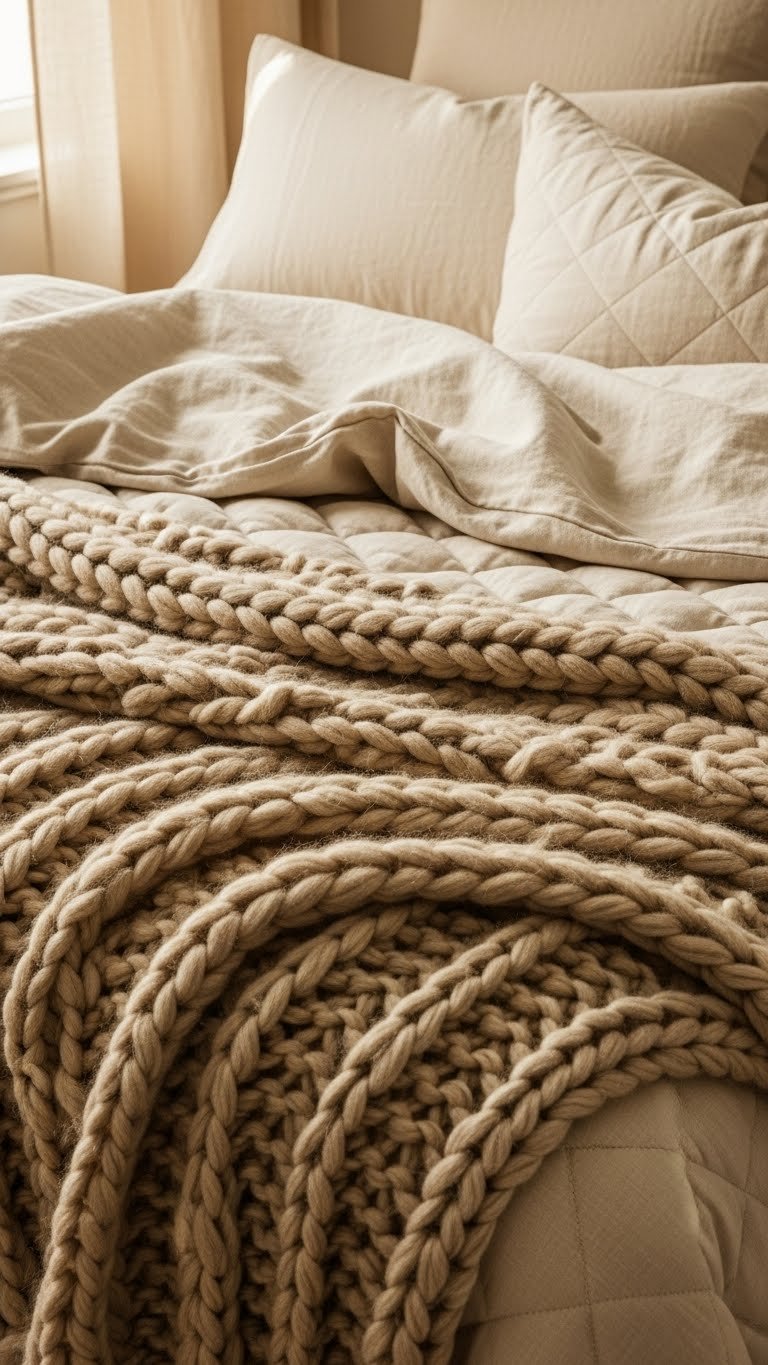
Cheap polyester sheets trap heat and feel plasticky against your skin. Organic wool, linen, or cotton sheet sets actually regulate temperature and feel luxe—they’re worth the investment because you spend 8 hours a night on them. Your skin will thank you.
Invest in one quality sheet set ($80–$200 from Brooklinen, Parachute, or Woolroom). Linen gets softer with every wash and lasts years. Wool regulates temperature better than anything else. Add a natural fiber throw ($60–$150) in wool or cotton for layering. Wash in cold water and hang dry to extend life. You’ll notice you sleep better and wake up less hot or cold. Your bedding becomes something you actually want to get into every night.
10. Paint an Accent Wall in Statement Color
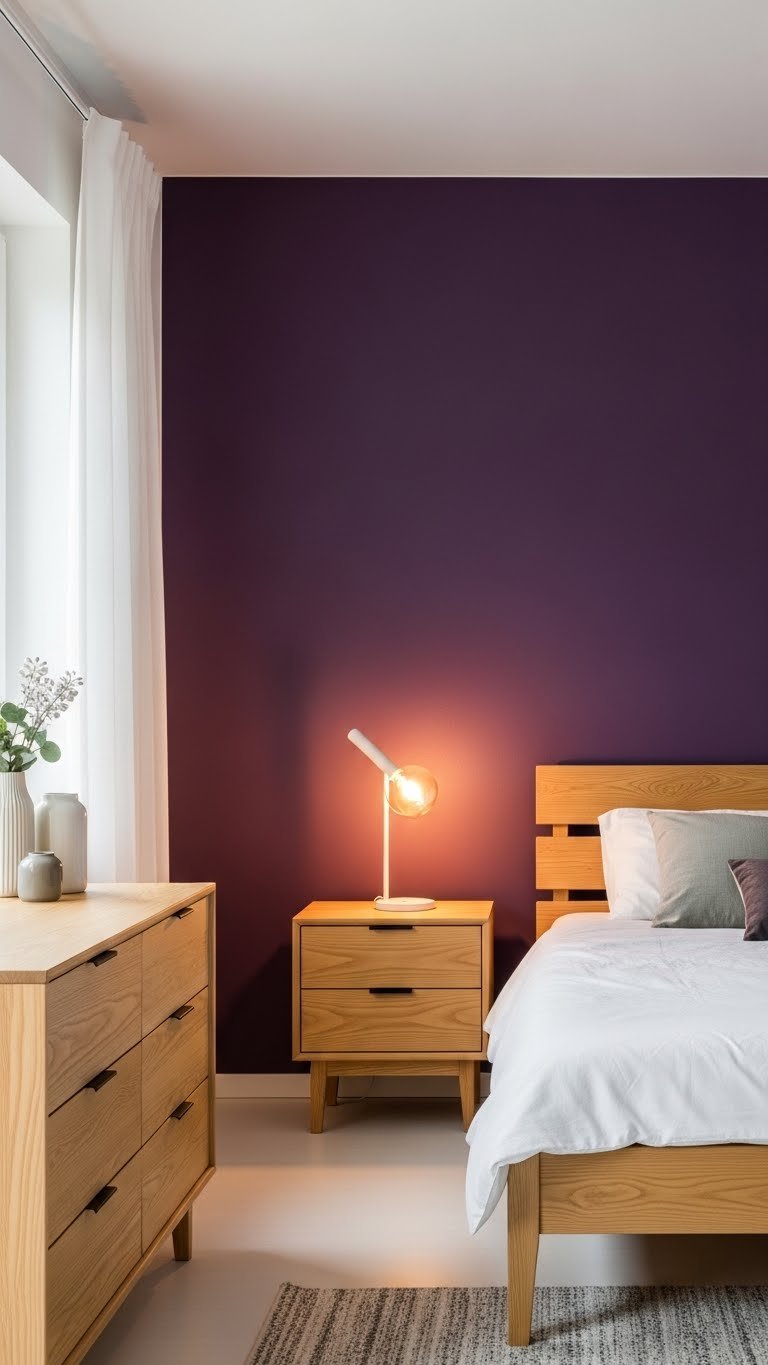
One bold wall (aubergine, forest green, deep terracotta, or even charcoal) creates a focal point without overwhelming the space. It’s bold but contained—perfect for people who want drama without full commitment.
Choose your color based on lighting: cool-toned rooms handle jewel tones; warm-lit rooms suit terracotta or rust. Get a sample pot from Sherwin-Williams or Benjamin Moore ($5) and test it for 3 days. Paint the wall behind your bed or facing the door for maximum impact. One wall takes 3–4 hours with primer and two coats. This costs $30–$60 in materials. The result is a bedroom that photographs beautifully and feels intentional, not generic.
11. Style a Thrifted Dresser as Your Focal Point
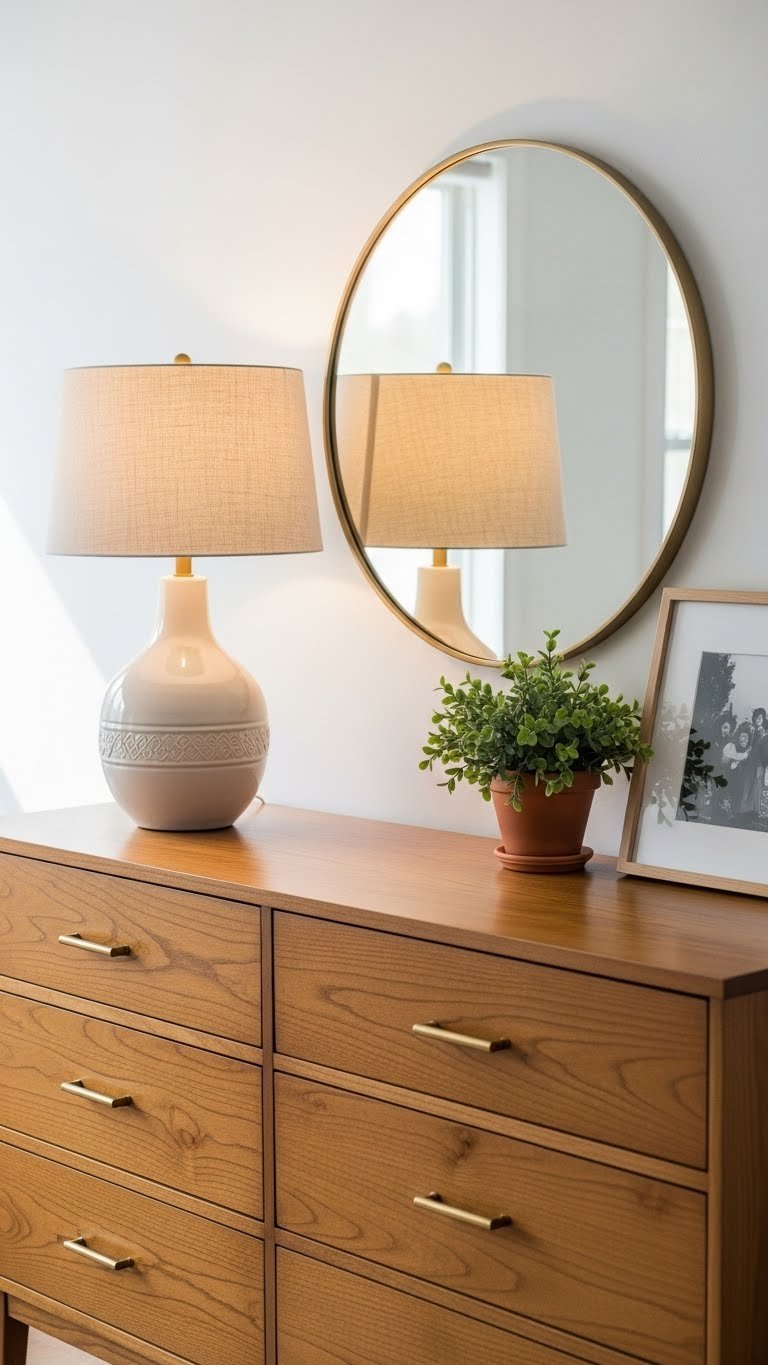
Your dresser doesn’t have to be invisible—it can be a design moment. A thrifted vintage dresser styled thoughtfully becomes the centerpiece of your room instead of just storage.
Hunt Facebook Marketplace, Craigslist, or local antique shops for a solid wood dresser ($50–$200). Refinish with wood oil or a fresh coat of paint if needed. Style the top with 5–7 items max: a mirror, a warm lamp, one plant, a candle, and 1–2 decorative objects. Keep some surface clear to avoid clutter. The key is intentional spacing. Renters love this because nothing is permanent. You’ll love opening your drawers and setting the top becomes part of your daily ritual.
12. Layer a Natural Fiber Rug Under Your Bed
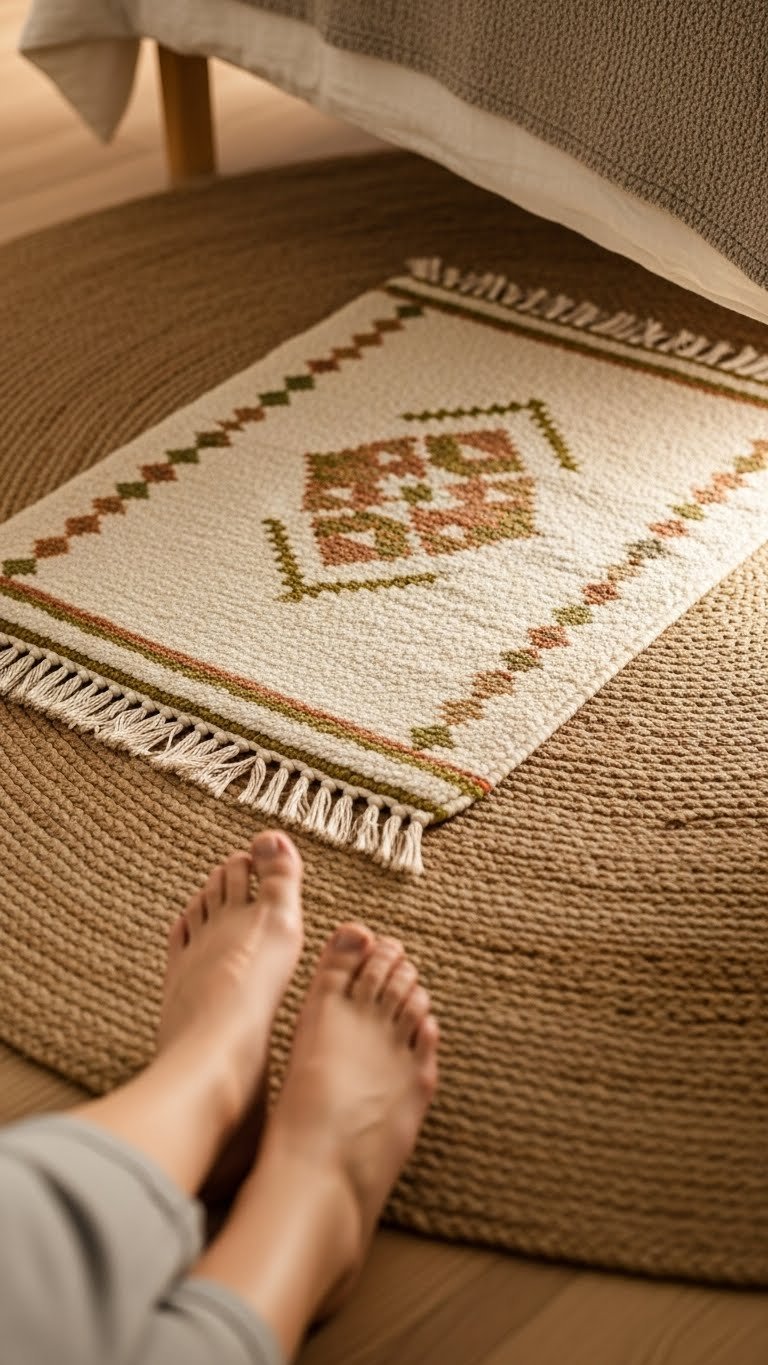
One large, flat rug feels boring. Layering textures—jute under a patterned wool, or sisal under a kilim—adds depth and warmth while defining your sleep space. Your feet wake up to texture instead of cold floor.
Start with a large jute or sisal rug ($80–$200 from Ruggable, IKEA, or Wayfair) as your base layer. Top it with a smaller patterned or textured rug ($60–$150) for visual interest. The layering trick makes the space feel designed, not accidental. This costs under $300 for both and takes 30 minutes to arrange. Your bedroom instantly feels more grounded and intentional.
13. Create a Reading Nook with Curved Chair and Throw
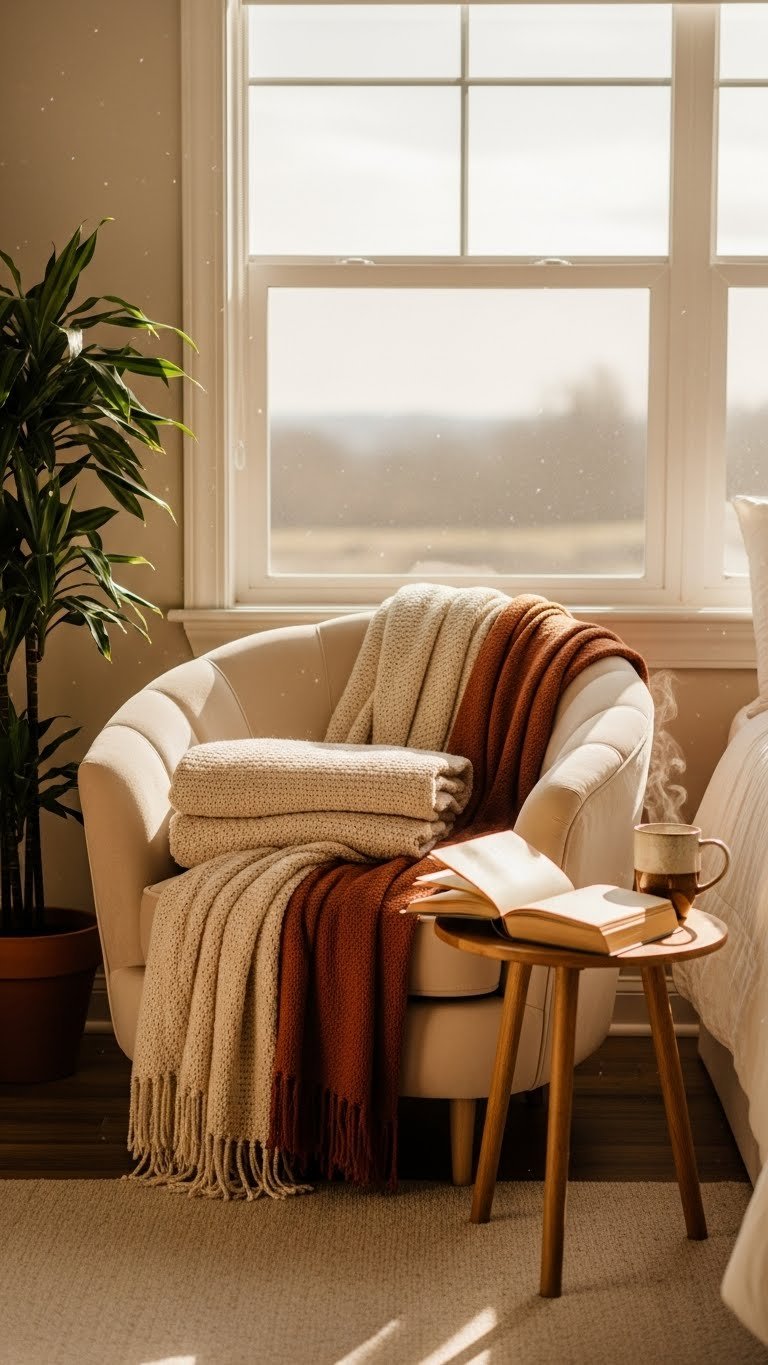
Not everyone has a separate sitting area, but even a small corner with a chair and good light becomes your escape spot. It signals that your bedroom is for multiple purposes—rest, reading, thinking—not just sleep.
Get a curved accent chair ($200–$600 from Article, Wayfair, or CB2) and position it by a window if possible. Layer 2–3 throw blankets in complementary textures ($40–$100 total). Add a small side table ($30–$80) for your book or tea. If space is tight, even a floor cushion and a good lamp create a reading moment. The whole setup takes an afternoon to arrange. You’ll find yourself sitting there every evening instead of staying in bed.
14. Mix Raw Wood and Marble Surfaces
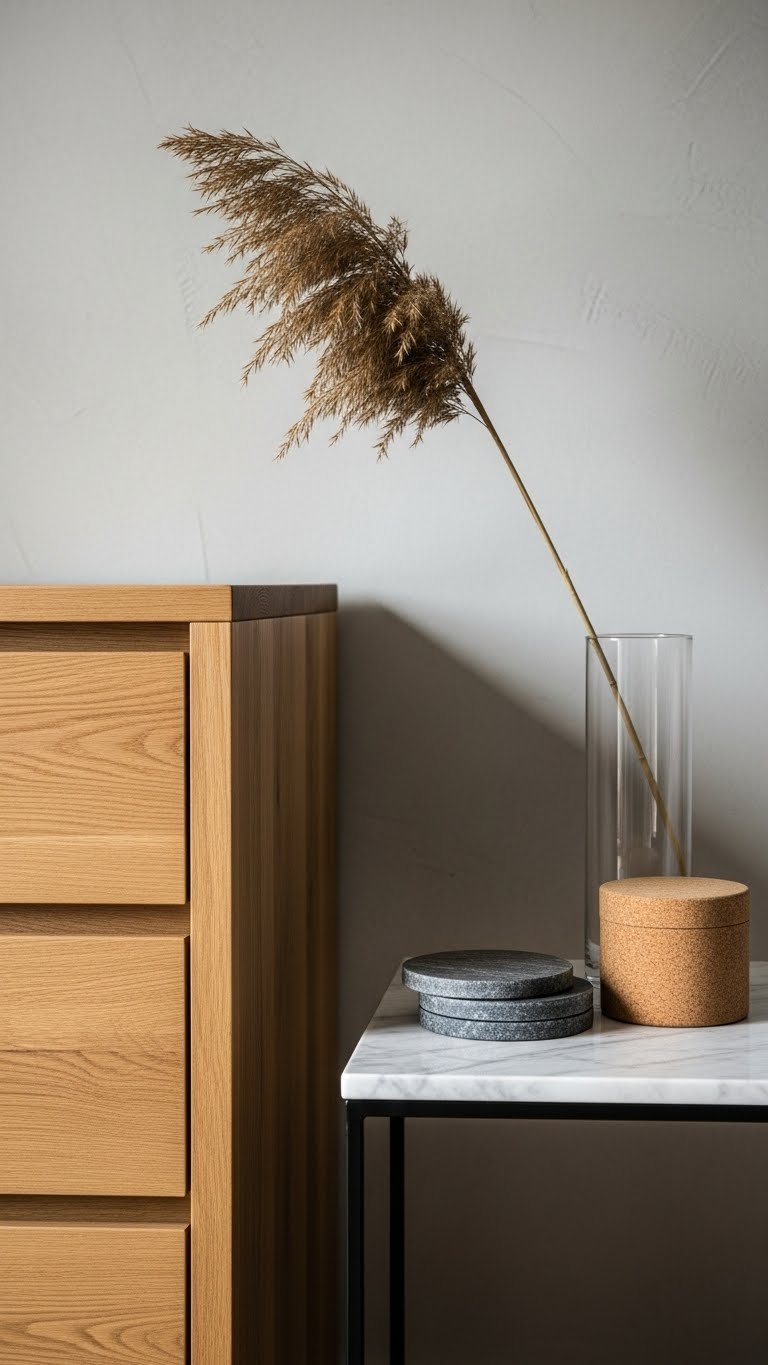
Mixing raw materials—warm wood with cool marble or stone—feels modern and organic without looking sterile. It’s sophisticated because nothing matches perfectly, yet everything feels intentional.
Look for wood nightstands ($80–$200), marble accent tables ($100–$300), and cork accessories ($10–$50 each) at 1stDibs, Article, or vintage shops. Pair a natural wood dresser with a marble top side table. Add cork coasters and wooden picture frames. The mix of textures feels collected and curated. This works best when you’re not trying to match; the contrast is the point. Your bedroom becomes a showcase of natural materials instead of looking mass-produced.
15. Hang a Sculptural Pendant Light Over Your Nightstand
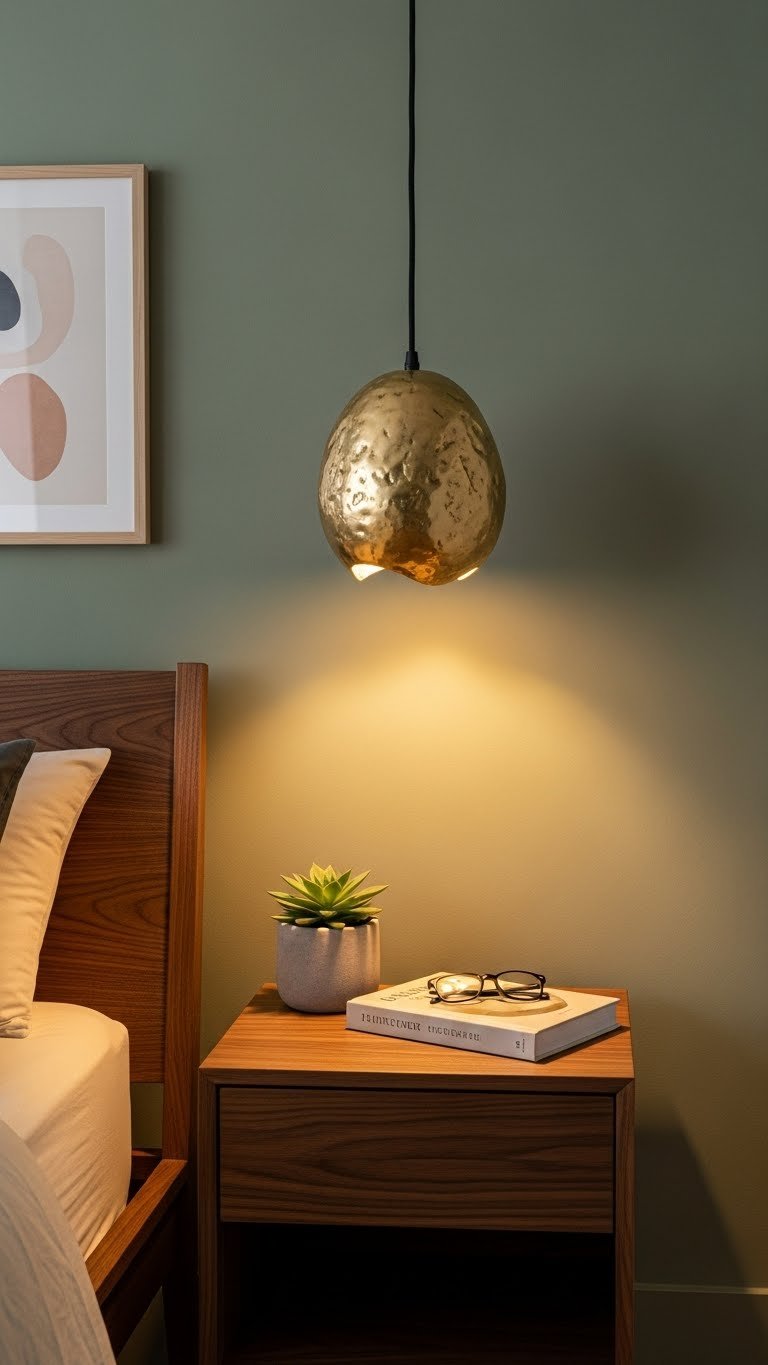
Overhead lighting is harsh; bedside lamps work but they’re predictable. A sculptural pendant light over each nightstand becomes a design feature and solves your lighting problem in one move. It’s functional art.
Find pendant lights with interesting shapes ($50–$200 each from Etsy, CB2, or West Elm). Brass, ceramic, or woven materials fit the 2025 aesthetic. These typically need to be hardwired, so if you’re renting, this is one to skip. For homeowners, hire an electrician for installation ($100–$300 total labor). The payoff is massive: you get mood lighting that looks intentional every single day. Your bedroom becomes less “bedroom” and more “private retreat.”
16. Bring in Cherry Red as a Bold Accent
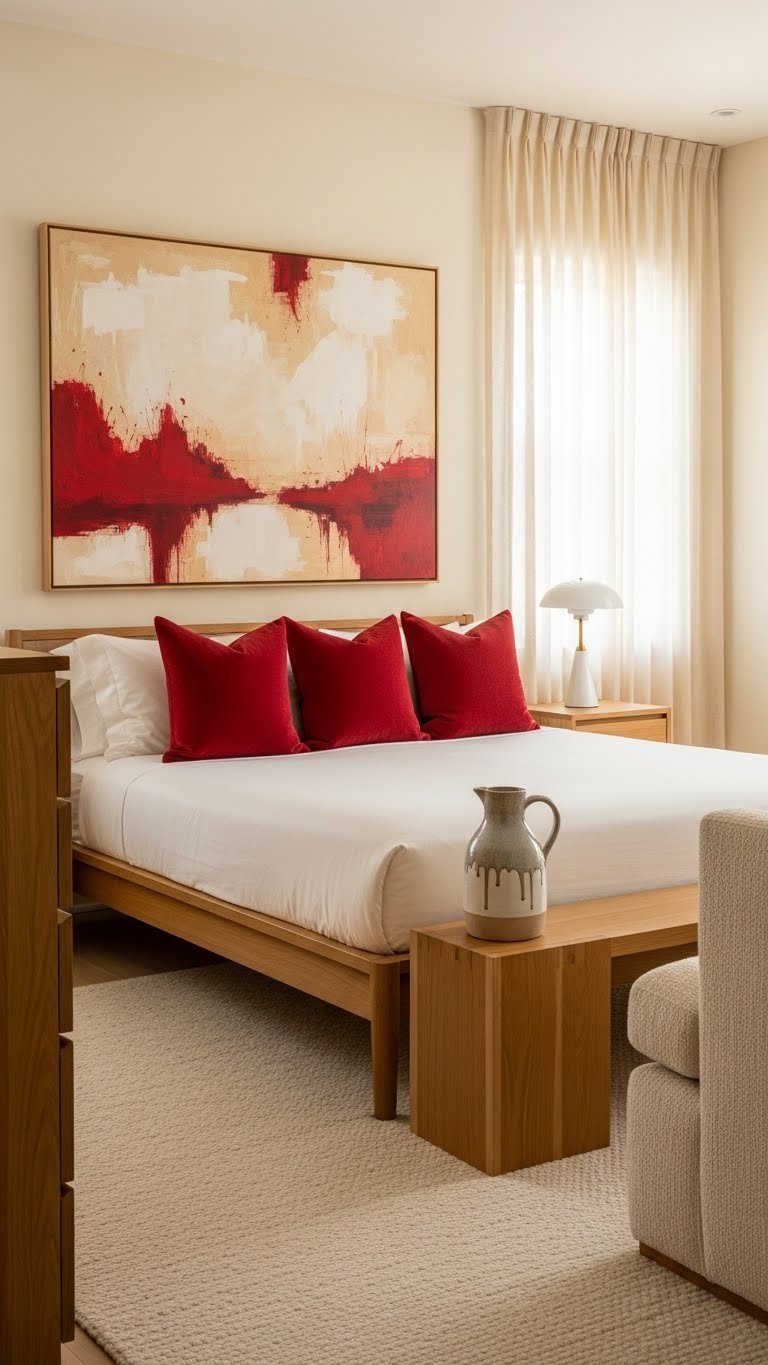
Cherry red is having a cultural moment (Pinterest searches are up 100% year-over-year), and for good reason—it adds warmth and sophistication without feeling childish when paired with cream, natural wood, and cool tones. One or two cherry red accents change the whole energy.
Introduce cherry red through throw pillows ($20–$50 each), artwork ($40–$200), or a small sculptural object ($30–$100). Keep everything else neutral so the red pops. You can swap pillow covers seasonally to test the vibe before committing. This costs under $100 to experiment. The result feels unexpectedly curated—like you have real taste.
17. Add Quilts and Vintage Textiles as Wall Art

Vintage quilts and textiles are too beautiful to hide in closets. Hanging them as art honors handmade quality and fills wall space with warmth and pattern. It’s the perfect grandmillennial move.
Hunt estate sales, thrift stores, or Etsy for vintage quilts and textiles ($20–$100 each). Hang them using a wooden dowel and hooks (hardware store finds for $10), or frame them like art. One textile takes 15 minutes to hang and instantly adds personality. You get to appreciate the craftsmanship daily. Your bedroom becomes a museum of things you actually love instead of something generic.
18. Invest in Statement Bedding (Not Fast Fashion)
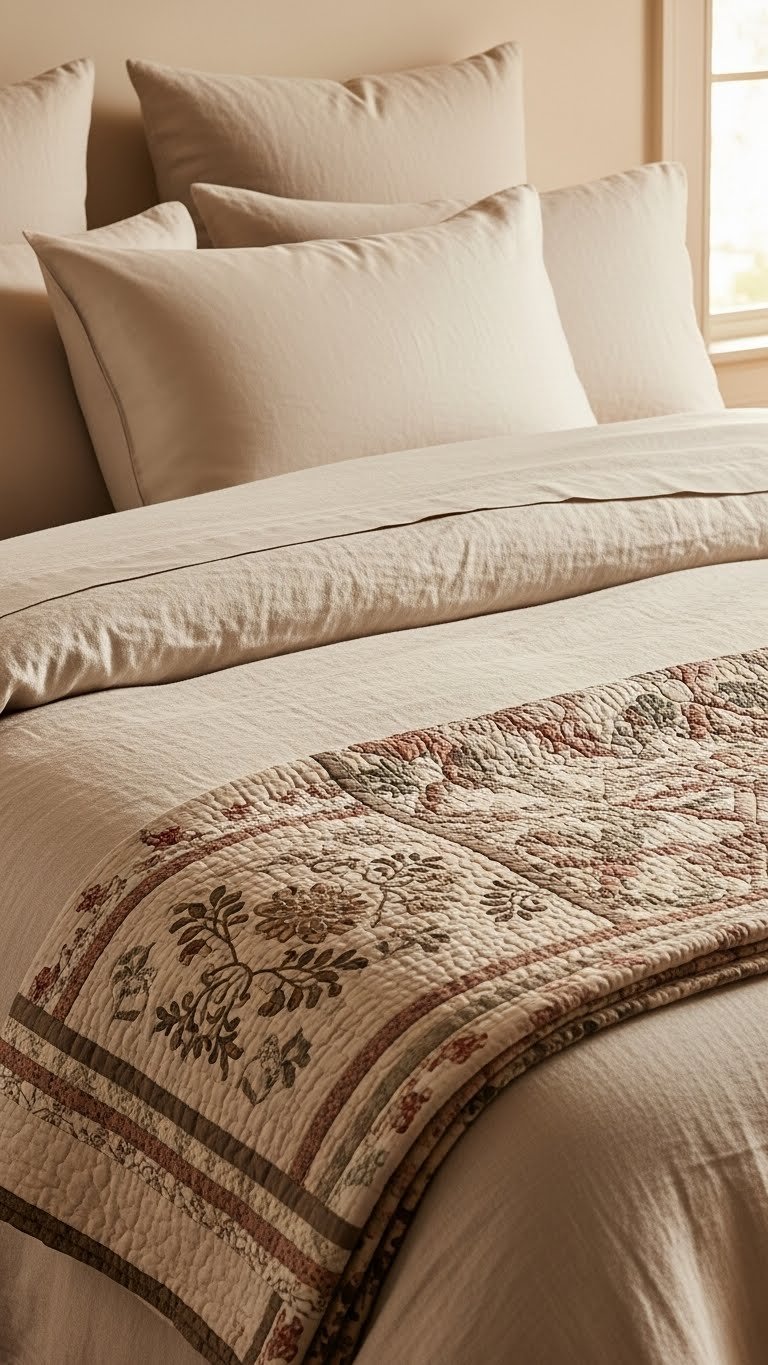
Your duvet and pillows are worth investing in because you touch them daily. Quality bedding lasts years, feels better against your skin, and actually improves your sleep. This is the opposite of fast fashion.
Splurge on one really good duvet set ($150–$400 from Parachute, Schoolhouse, or Leesa). Linen or organic cotton feels better and gets softer over time. Add silk pillowcases ($30–$80 per pair) for your skin and hair. These aren’t just nice to have—they actually change how you feel waking up. You’ll notice the quality difference within a week. Your bed becomes something you want to make every morning.
19. Create a Gallery Wall Above Your Dresser
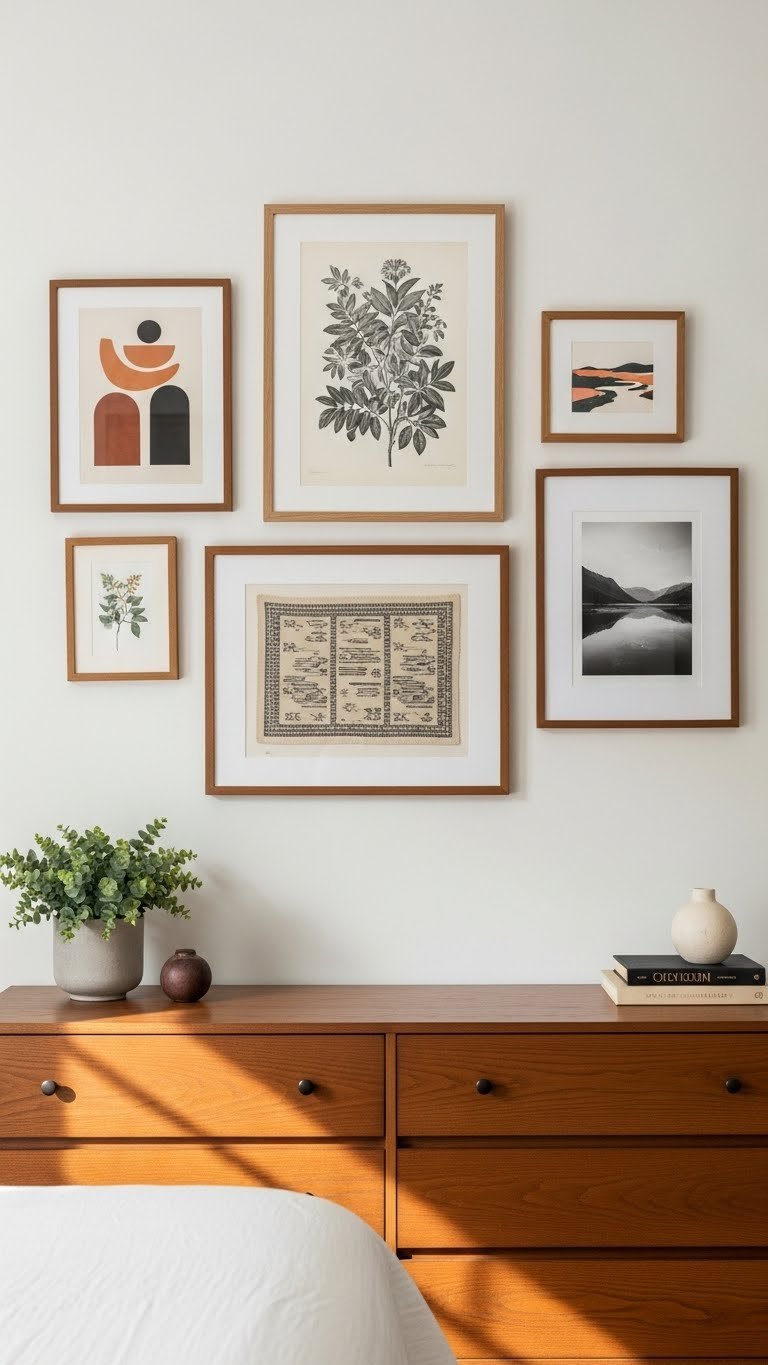
A gallery wall gives you flexibility to mix sizes, frames, and media while feeling intentional. It’s less intimidating than one large piece and more interesting than scattered small frames. You’re creating a personal collection display.
Start by laying out frames on the floor to map your arrangement. Mix sizes, keep frames in similar finishes (warm wood, brass, or white), and use a template or level to hang accurately. Include a mix: original art, prints, textiles, even a small mirror. Total cost: $80–$300 depending on frame quality and art. Installation takes 2–3 hours your first time. The result is a wall that tells your story instead of looking like a hotel room.
20. Use Wallpaper on Your Closet Door (Renter Hack)
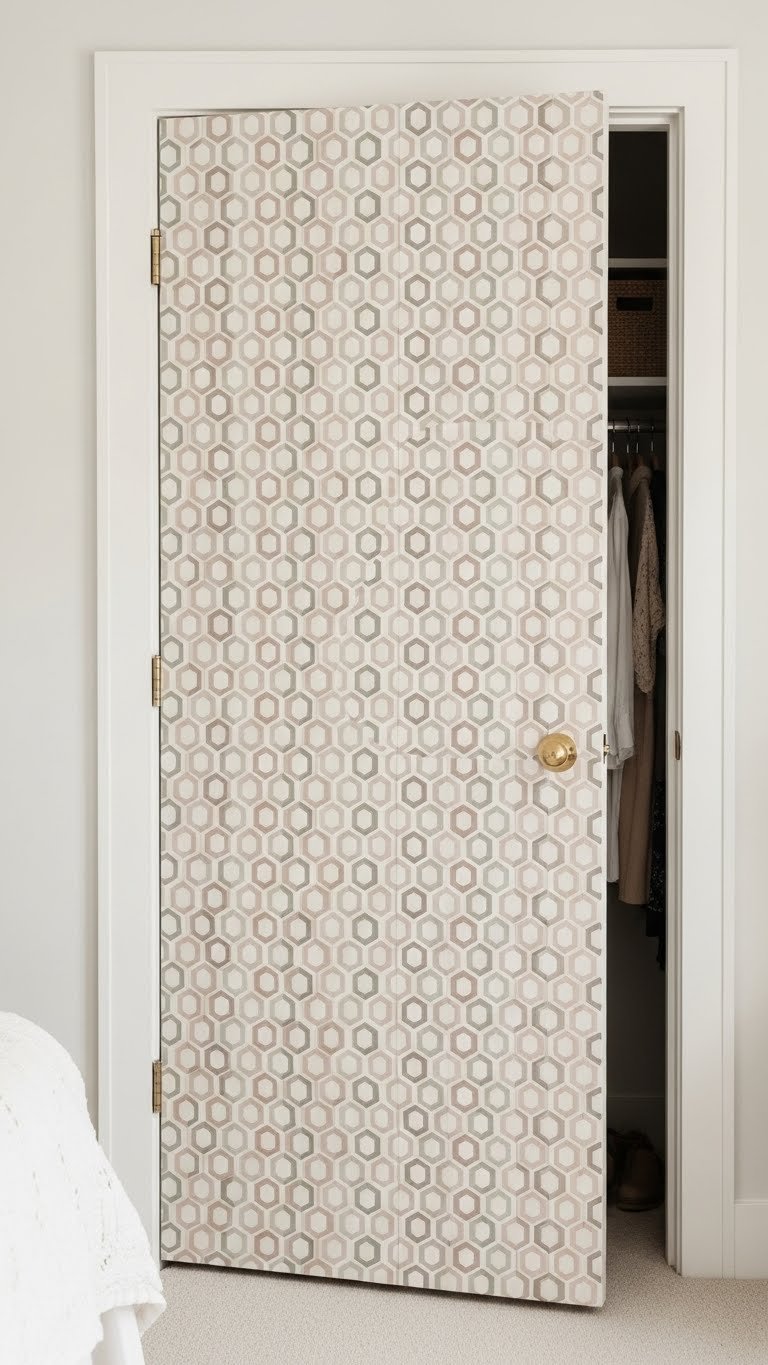
Your closet door doesn’t have to be boring beige. Peel-and-stick wallpaper lets renters completely change this overlooked surface in 30 minutes. It becomes part of your design instead of an afterthought.
Apply textured or patterned peel-and-stick wallpaper ($15–$40 per roll) to your closet door. Pick a pattern that complements your room: subtle geometric, small floral, or faux linen texture all work beautifully. Takes 30 minutes and requires just a smoothing tool. When you move, it peels off cleanly with no damage. Your bedroom suddenly looks more designed. Small details like this signal intentionality to anyone who enters.
21. Style an Open Shelving Unit with Books and Objects
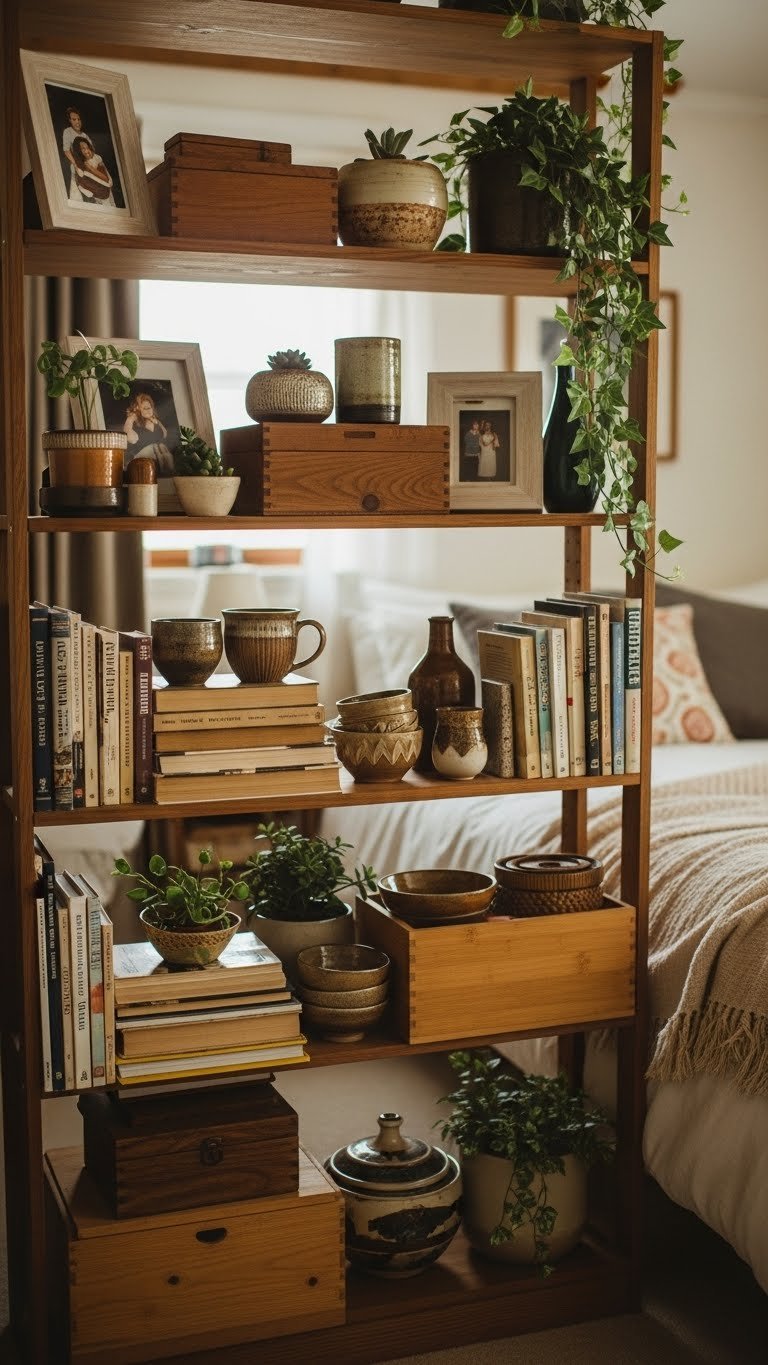
Open shelves show your personality. When styled thoughtfully—not crammed, not bare—they become part of your room’s character. It’s like displaying the things you actually love.
Arrange shelves using the “one-third books, two-thirds objects” rule: books on the bottom shelf or stacked horizontally, objects and plants on upper shelves. Keep at least 20% of each shelf empty for breathing room. Mix heights with stacked books, ceramic vessels, and small plants ($20–$100 total for styling items). This costs nothing if you rearrange what you own. The result looks curated and tells visitors what matters to you. Your bedroom becomes a reflection of your taste instead of just a sleeping space.
22. Swap Metal Hardware for Warm Brass or Wood

Small details compound. If your dresser or nightstand has cold silver or chrome hardware, swapping it for warm brass or wood makes everything feel more curated. These tiny changes signal thoughtfulness.
Pick up brass or wooden drawer pulls from hardware stores or Etsy ($3–$10 each). You’ll need one per drawer or door. Unscrewing the old hardware and installing new takes 30 minutes total; it’s a beginner DIY. This costs $20–$60 per piece of furniture. The transformation feels way bigger than the effort. Your furniture goes from utilitarian to intentional immediately.
23. Bring in Large-Leaf Plants for Biophilic Vibes
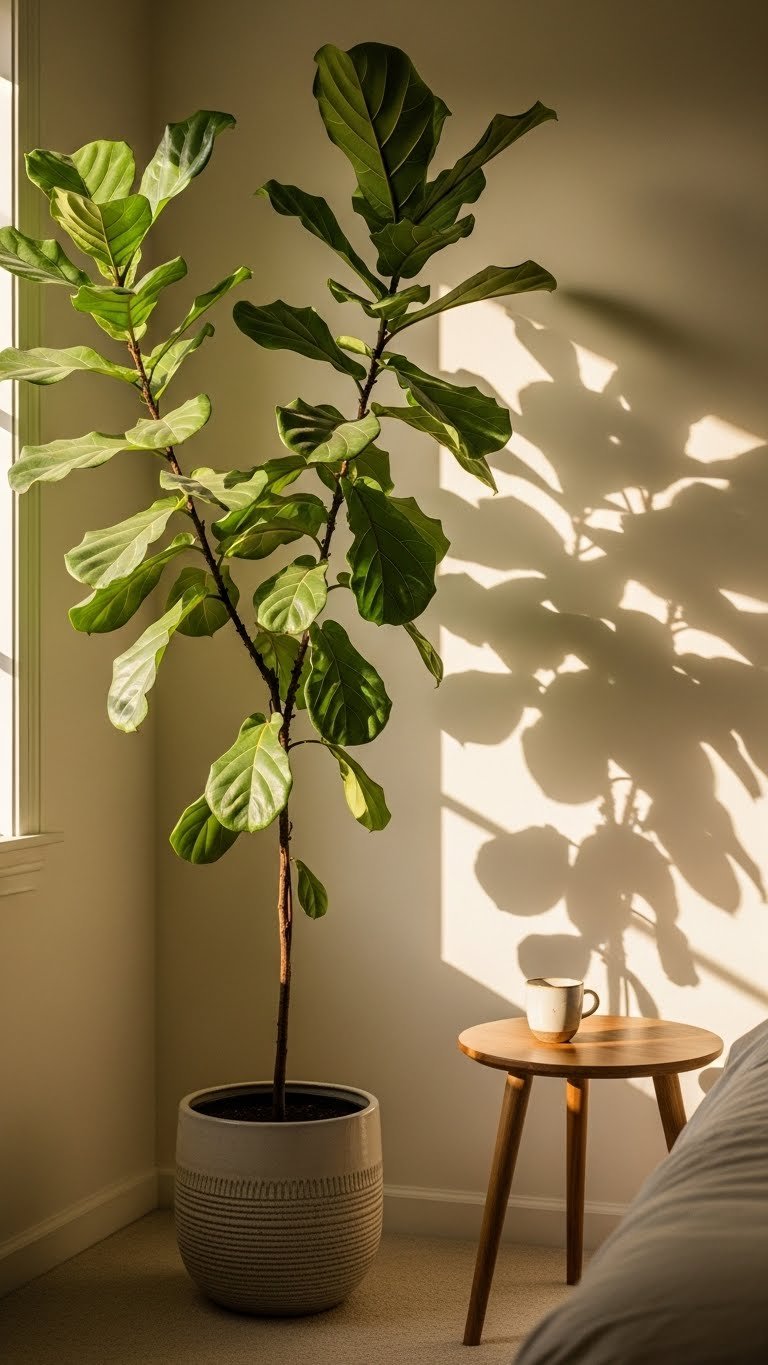
Large-leaf plants aren’t just pretty—they improve air quality and your mental health. A fiddle leaf fig or monstera becomes a living design element that makes the space feel alive. You’re not just decorating; you’re creating an environment.
Get a fiddle leaf fig, monstera, or pothos ($20–$80 depending on size) from a local nursery or online plant shop. Choose a ceramic pot ($20–$50) that matches your aesthetic. Place near a bright window—these plants love indirect light. Water weekly or when soil is dry, and rotate monthly for even growth. The whole setup costs under $150 and takes 15 minutes to arrange. Your room gains a living presence that no pillow or poster can match.
24. Layer Lighting with Lamps and Dimmers
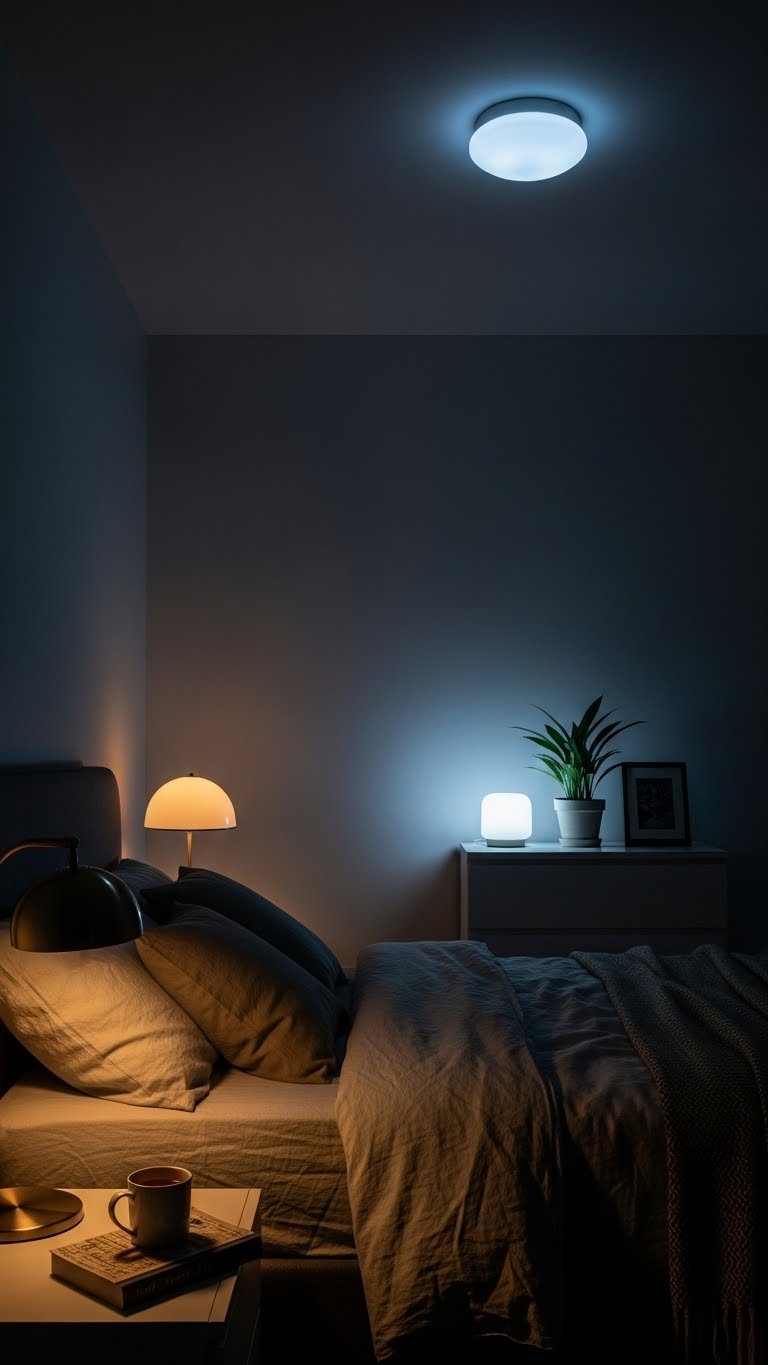
Overhead lights are harsh; one lamp creates shadows. Layering multiple light sources with dimmer switches gives you control over the room’s mood. Your bedroom should feel different at 6 p.m. versus 11 p.m.
Install a dimmer switch ($20–$40, hire an electrician for $100–$200) on your main light. Add bedside lamps ($40–$100 each) and a small accent lamp on your dresser ($30–$80). Choose warm bulbs (2700K color temperature) for coziness. All these sources together mean you can dial in exactly the right brightness and warmth. Your bedroom becomes a space you control instead of just a lit room. The cost is worth it because lighting affects your sleep and mood daily.
25. Curate a Small Collection of Vintage or Handmade Objects
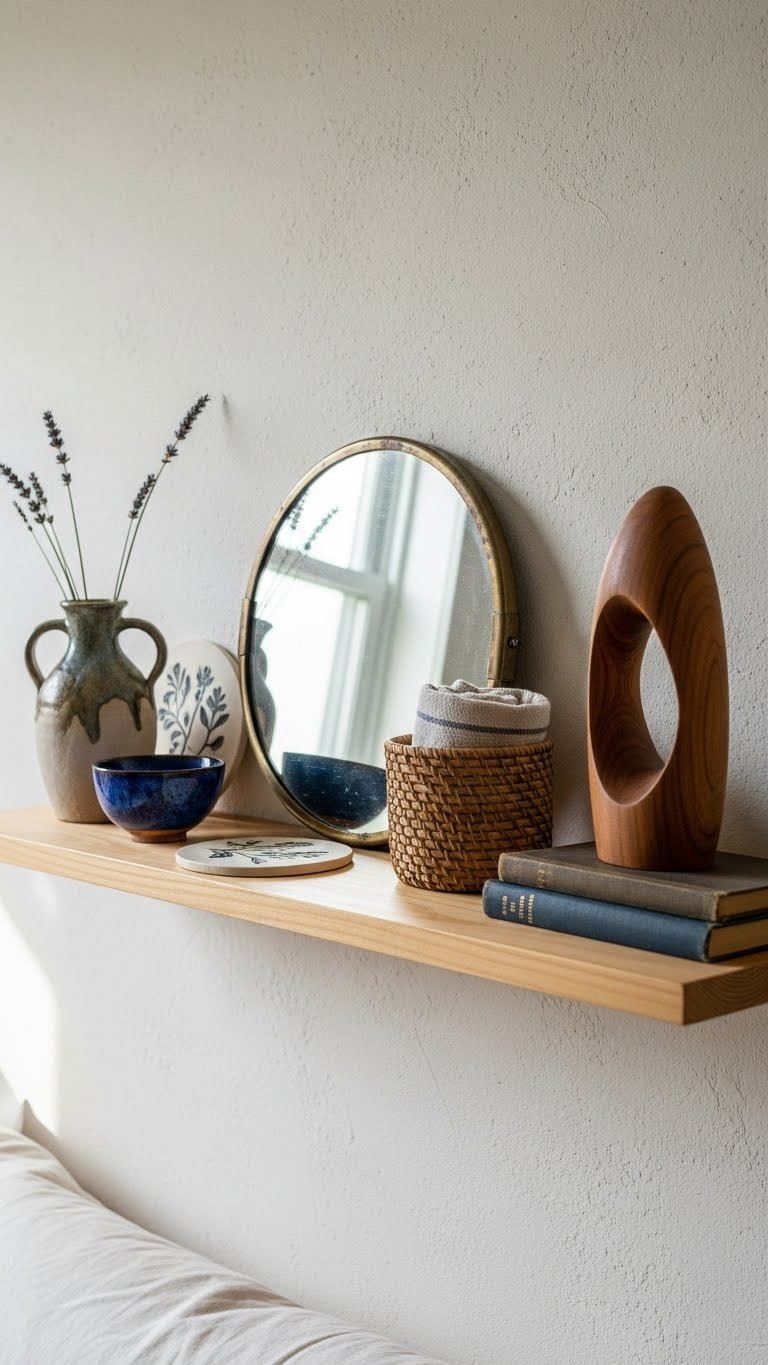
Mass-produced decor is forgettable. One or two handmade or vintage pieces—a ceramic bowl, a woven basket, a found sculpture—become conversation starters and make your room feel like you actually have taste. Each object should have a story or reason you chose it.
Hunt local makers at craft fairs, Etsy artists, or vintage shops for pieces that resonate ($15–$100 each). Limit yourself to 3–5 objects max so they don’t overwhelm. Arrange them on a shelf, dresser, or nightstand where they catch light and draw your eye. This costs $50–$200 for a small collection. The payoff is huge: your bedroom becomes a gallery of things you genuinely love instead of stuff you picked randomly. People notice this intentionality immediately.
Save this list and pick one or two ideas to tackle this weekend. Whether it’s swapping your pillows, adding a plant, or hanging new curtains, small changes compound fast—and your bedroom will thank you for it.
Leave a Reply