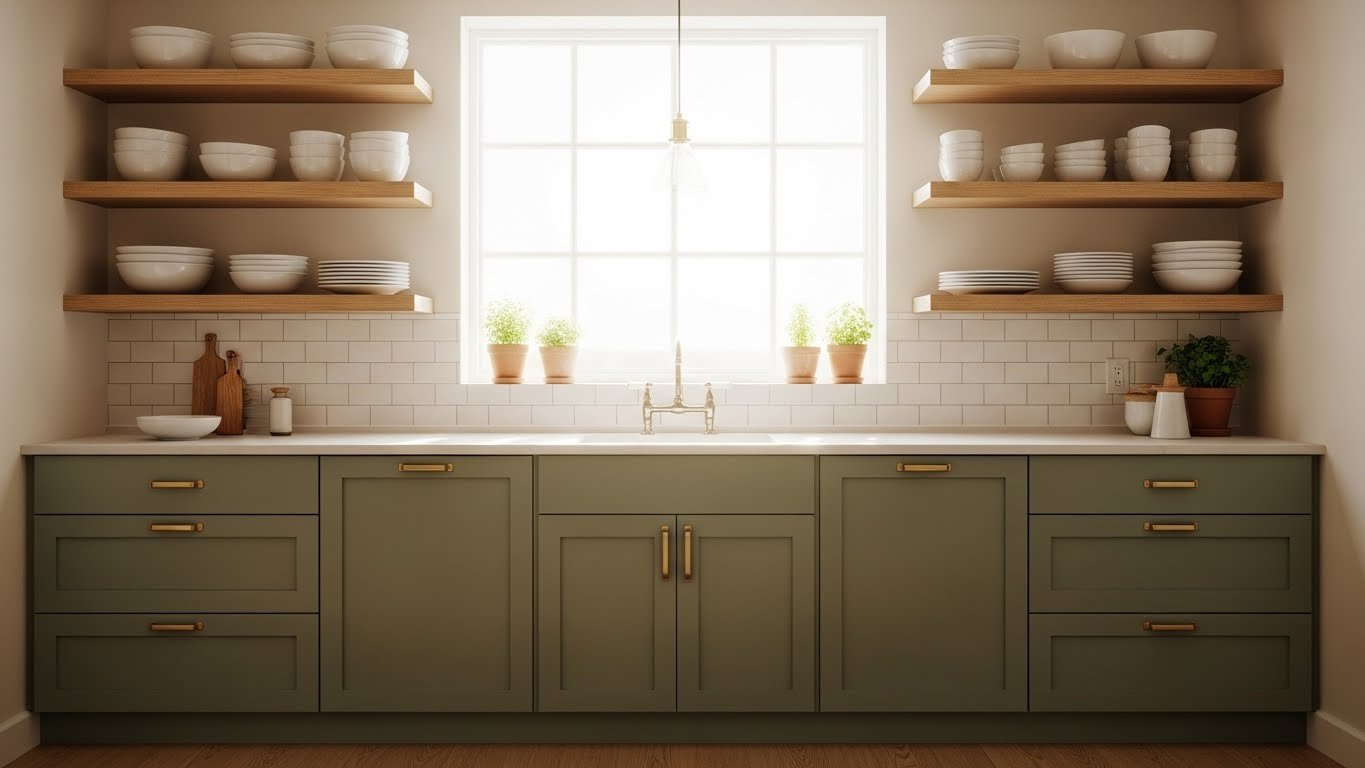
Small kitchens don’t have to feel cramped or outdated. Whether you’re working with a galley layout, an apartment galley, or a cozy cottage kitchen, smart design choices can make your space feel larger, more functional, and genuinely beautiful. The 2025 kitchen trends show us that small spaces are perfect for bold moves—mixing materials, adding color, maximizing storage, and layering textures create personality without clutter. In this guide, you’ll find 26 actionable ideas that work with your existing layout, fit most budgets, and deliver real-world results. Let’s start making your small kitchen work as hard as you do.
1. Paint Cabinets a Bold Sage Green
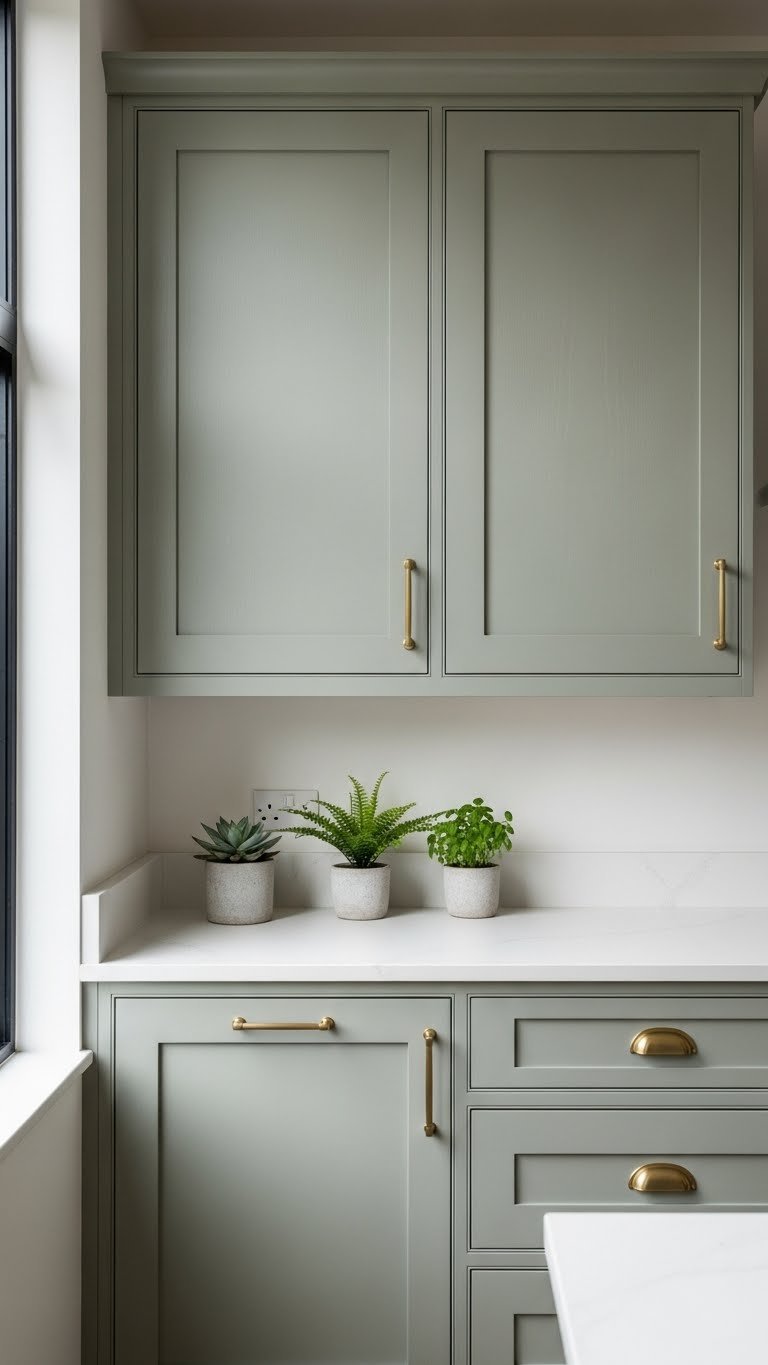
Cabinet color is your biggest visual game-changer in a small space. Sage green has topped 2025 trend lists with 76% of designers choosing it over traditional white, and for good reason—it creates warmth and sophistication without feeling dark or cramped.
If you own your home, a cabinet paint job costs $100–$400 in supplies (primer, quality paint, hardware) and takes a weekend. Use semi-gloss or satin finish paint (easier to wipe down), prime first, and apply two coats. For renters, peel-and-stick cabinet film offers the same impact without commitment. Pair with warm brass or matte black hardware for an instant refresh.
Pro tip: Test a small cabinet door first—sage green reads differently depending on your kitchen’s natural light.
You’ll be amazed how a single color choice anchors the entire room and makes even a tiny galley feel intentional and curated.
2. Install Open Shelving Above the Sink
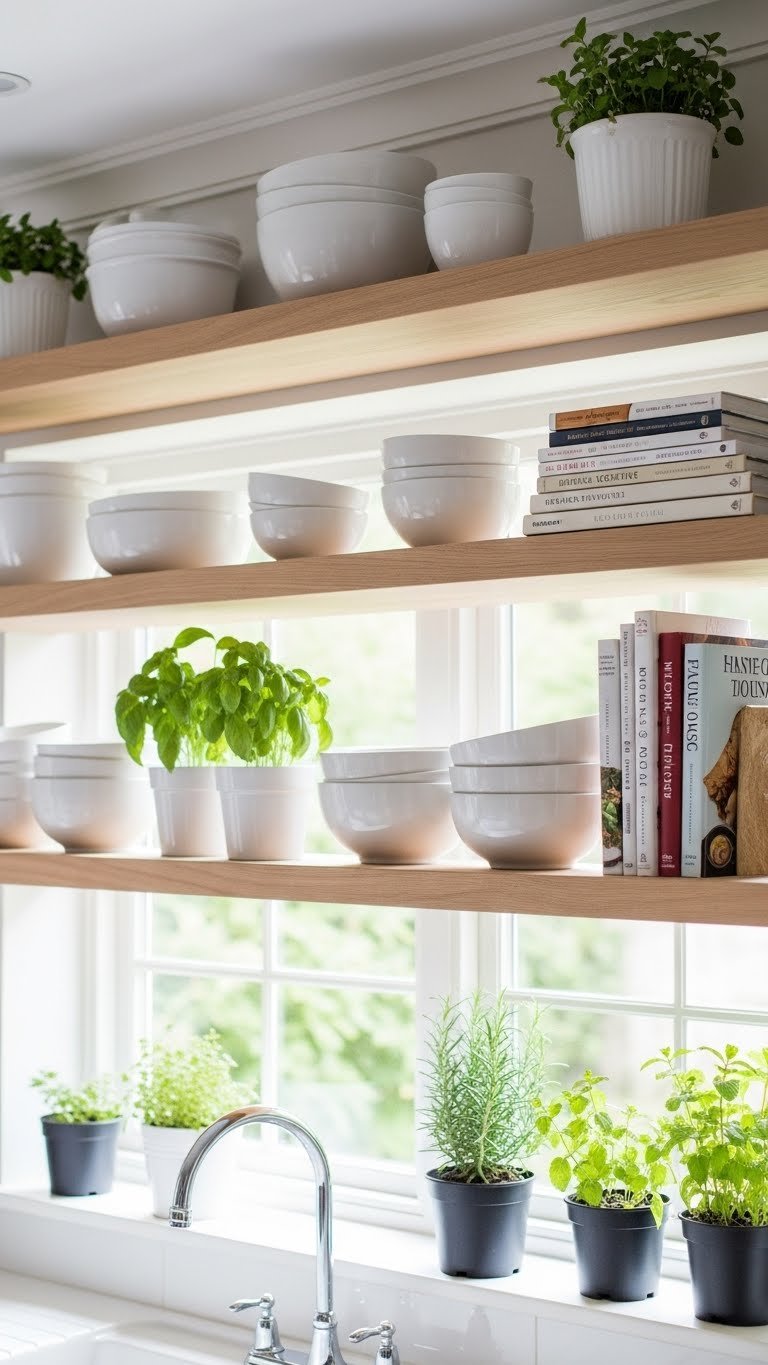
Open shelving reduces visual clutter in small kitchens while displaying items you actually use and love. This is one of the smartest small-space moves because it eliminates the heaviness of upper cabinets and makes the room feel taller.
Install two or three floating shelves (around $50–$150 for brackets and shelves) using wall studs for stability. Limit your display to 5–7 items per shelf: a stack of plates, a small plant, a few cookbooks. The key is restraint—open shelving only works when you edit ruthlessly. Renter alternative: use adhesive shelf brackets (about $30) that come off cleanly.
Add subtle LED strip lighting under shelves ($20–$40) to highlight what you display and make the space feel bigger at night.
Your kitchen instantly gains vertical interest and breathing room that makes even a compact layout feel airy and intentional.
3. Create a Compact Beverage Station

A dedicated beverage station frees up counter and cabinet space while creating a morning ritual zone. Small kitchens benefit massively from zones—it’s like creating invisible organization.
Mount a narrow open shelf (12–18 inches wide, $30–$60) about 18 inches above your counter. Add 3–4 hooks underneath ($15 total) for mugs. Store coffee, tea, and sweeteners in clear containers ($20 for a set). Your coffee maker stays plugged in but tucked into one corner of this station. This setup works especially well above a narrow counter strip or in a corner that’s currently wasted space.
Real space-saver: group everything you use daily in this one zone so you’re not hunting through multiple cabinets before 9 a.m.
Now your counter space opens up and your morning runs smoother—plus guests see a stylish, organized detail instead of appliance clutter.
4. Add a Narrow Rolling Cart for Hidden Storage

A slim rolling cart slides into tight spaces and stores what doesn’t fit in cabinets. They’re affordable, mobile, and don’t require installation—perfect for renters and small kitchens with odd gaps.
Look for narrow carts at IKEA, Target, or Amazon ($40–$100) that fit beside the fridge, in a corner, or under a window. Use the top shelf for your blender or air fryer, middle for linens and grocery bags, bottom for pantry overflow or cookbooks. Choose stainless steel, wood, or painted finishes depending on your style. Bonus: you can roll it out when you need counter prep space.
Pro tip: If your cart has open sides, use fabric bins ($2–$5 each) to hide what’s inside and maintain a clean look.
You gain functional storage without a permanent footprint, and you can move it whenever you need the space.
5. Swap Out Hardware for Brass or Gold Accents
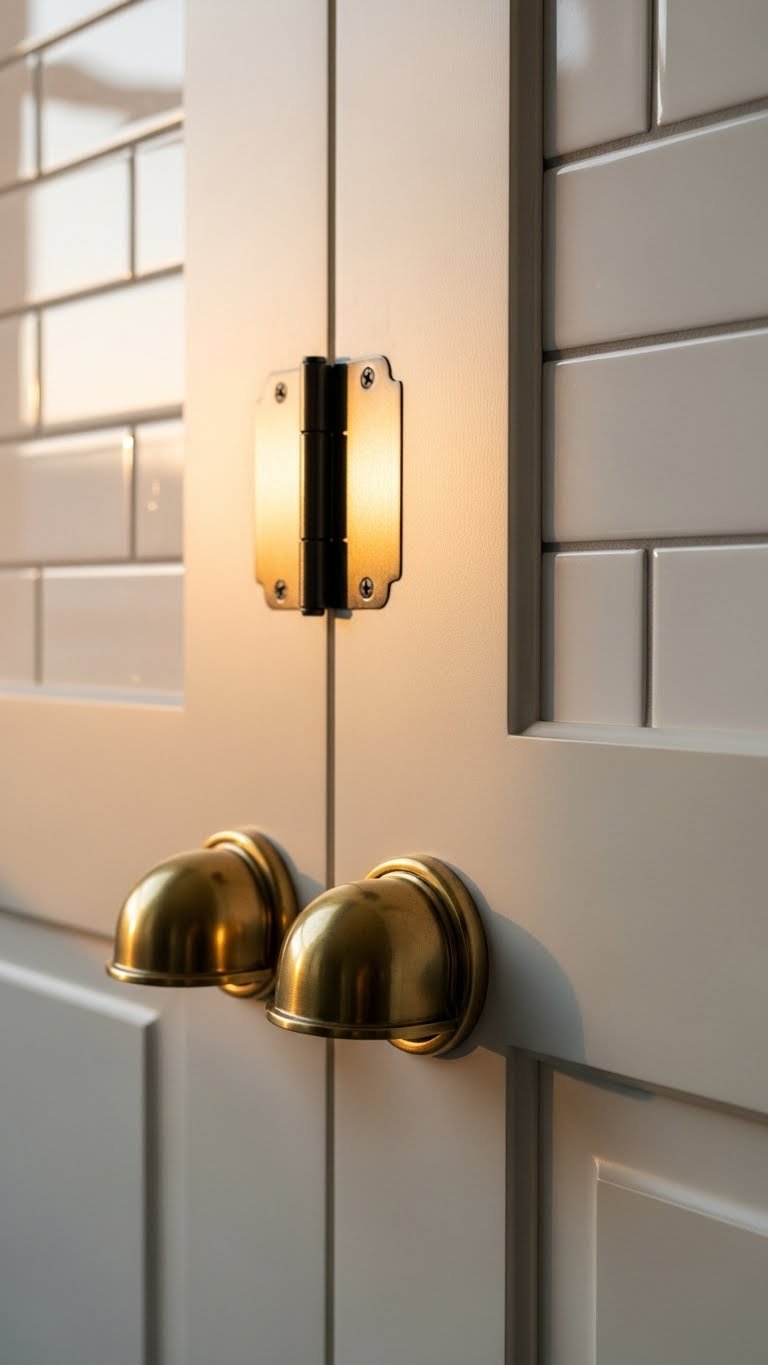
Hardware is like jewelry for your kitchen—it costs almost nothing but completely changes the vibe. Swapping from builder-grade silver to warm brass or gold is one of 2025’s defining moves and works beautifully in small spaces where every detail shows.
Replace cabinet handles and knobs with brass or gold options ($50–$150 for a full kitchen) from Amazon, Wayfair, or local hardware stores. It takes 30 minutes to an hour with a screwdriver. Mix metals if you’re feeling it—brass on lower cabinets and matte black on uppers creates visual interest without chaos. Renter option: magnetic covers hide existing hardware without damage.
Before investing, test one handle on your most visible cabinet to make sure the finish works with your light.
This small detail immediately elevates your kitchen from cookie-cutter to considered, and it costs way less than new cabinets.
6. Use Vertical Space with Pegboard
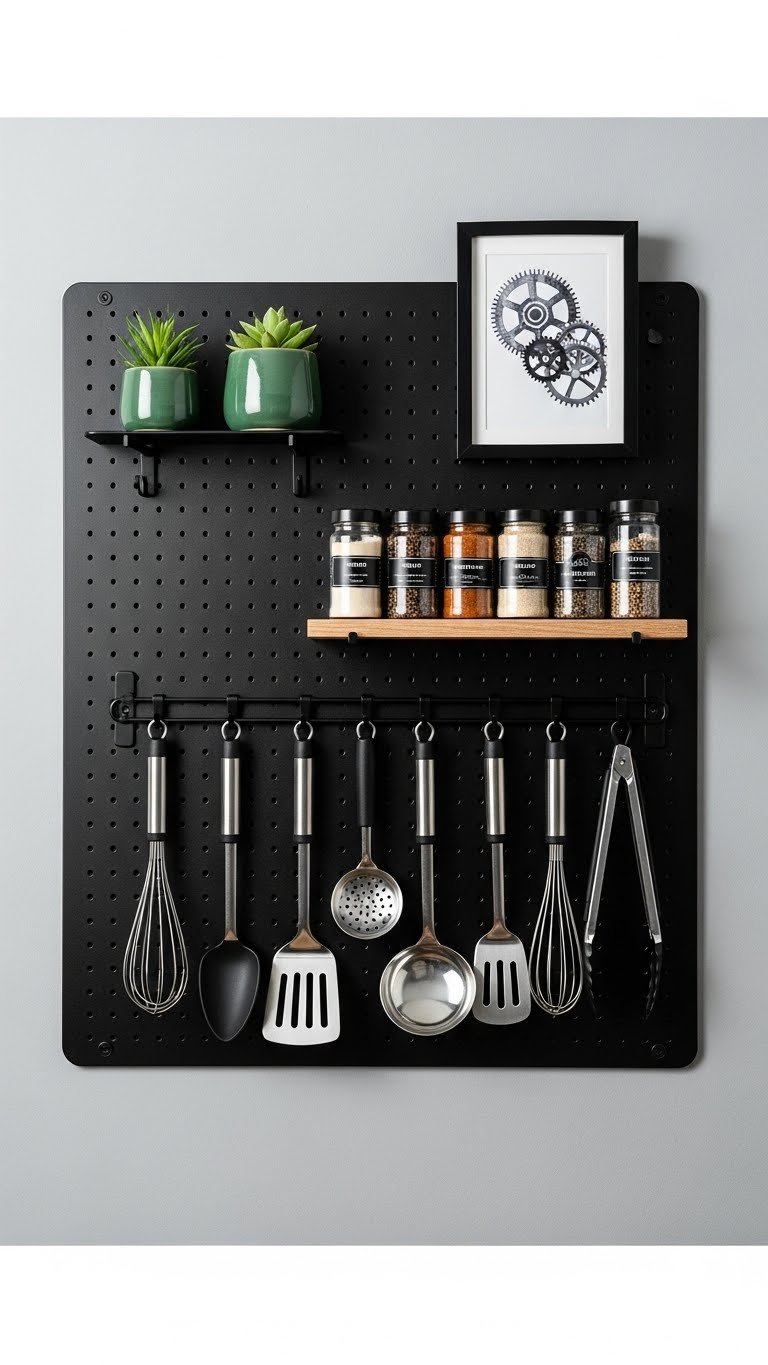
Pegboard transforms blank wall space into functional storage that’s genuinely practical and looks intentional. In small kitchens, walls are real estate—you need to use them.
Install a 3-foot pegboard section ($30–$60 at hardware stores) on an empty wall with hooks, small shelves, and clips ($20–$40 for accessories). Hang your most-used utensils, cooking tools, even small containers. Paint the pegboard to match your kitchen style—black, white, or sage to echo your cabinets. Takes about an hour to install if you’re confident with a drill; call a handyperson for $50–$100 if not.
The beauty: you see every tool at a glance, and you’re using otherwise wasted wall space.
Your kitchen becomes more functional while developing a collected, design-forward look that feels bigger than it is.
7. Install Floating Corner Shelves
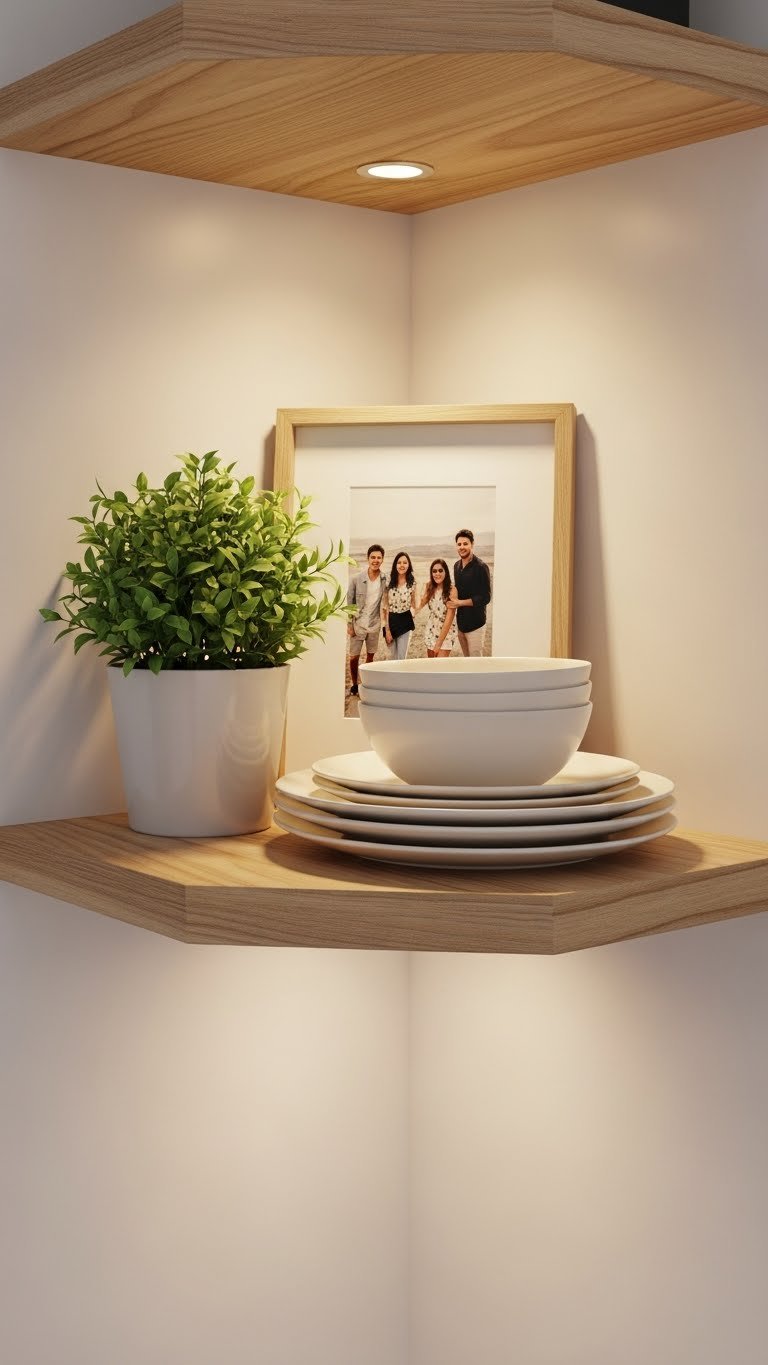
Dead corner space in small kitchens is a crime. Floating corner shelves maximize unused real estate without taking up floor or counter space, making your layout feel strategically designed.
Add a corner shelf or two ($30–$80 each) using wall studs for mounting. These work beautifully above a corner counter or sink, or tucked high for visual interest. Load them with cookbooks standing upright, a small plant, or your favorite dishes for daily use. Wood shelves feel warmer; white or black creates a modern edge depending on your vibe.
Pro tip: Mount shelves at different heights for a more collected, less “matchy” look.
You’ve just reclaimed real estate and created a focal point that makes the whole kitchen feel bigger and more intentional.
8. Maximize Under-Sink Storage with Sliding Organizers
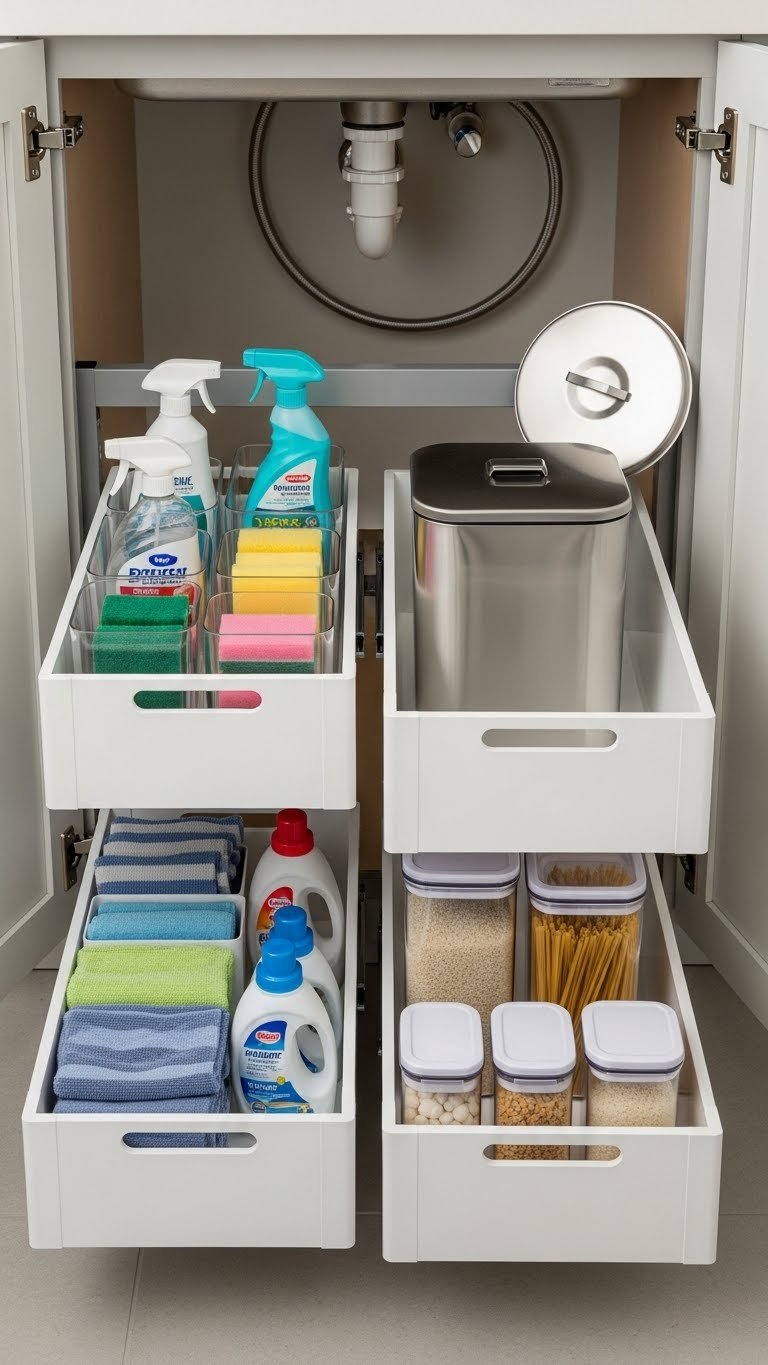
The space under your sink is chaos waiting to happen—pipes, cleaning supplies, and forgotten items pile up fast. Sliding organizers make everything accessible and visible, and they work even in the most awkward cabinets.
Install sliding drawers or tiered organizers ($30–$80) that pull out like your cabinet is a filing cabinet. Use them for cleaning supplies, compost, bulk items, and trash bags. Everything has a spot, nothing gets buried. You’ll actually know what you have, and you’ll use your space three times more efficiently. Renter-friendly option: tiered shelf risers ($15–$30) work without installation.
Measure your cabinet first—odd shapes are fine; there’s an organizer for everything.
When your under-sink area is organized, the whole kitchen feels more controlled and functional—plus you’ll stop buying duplicate supplies.
9. Paint Your Backsplash Bold (or Keep It Minimal)
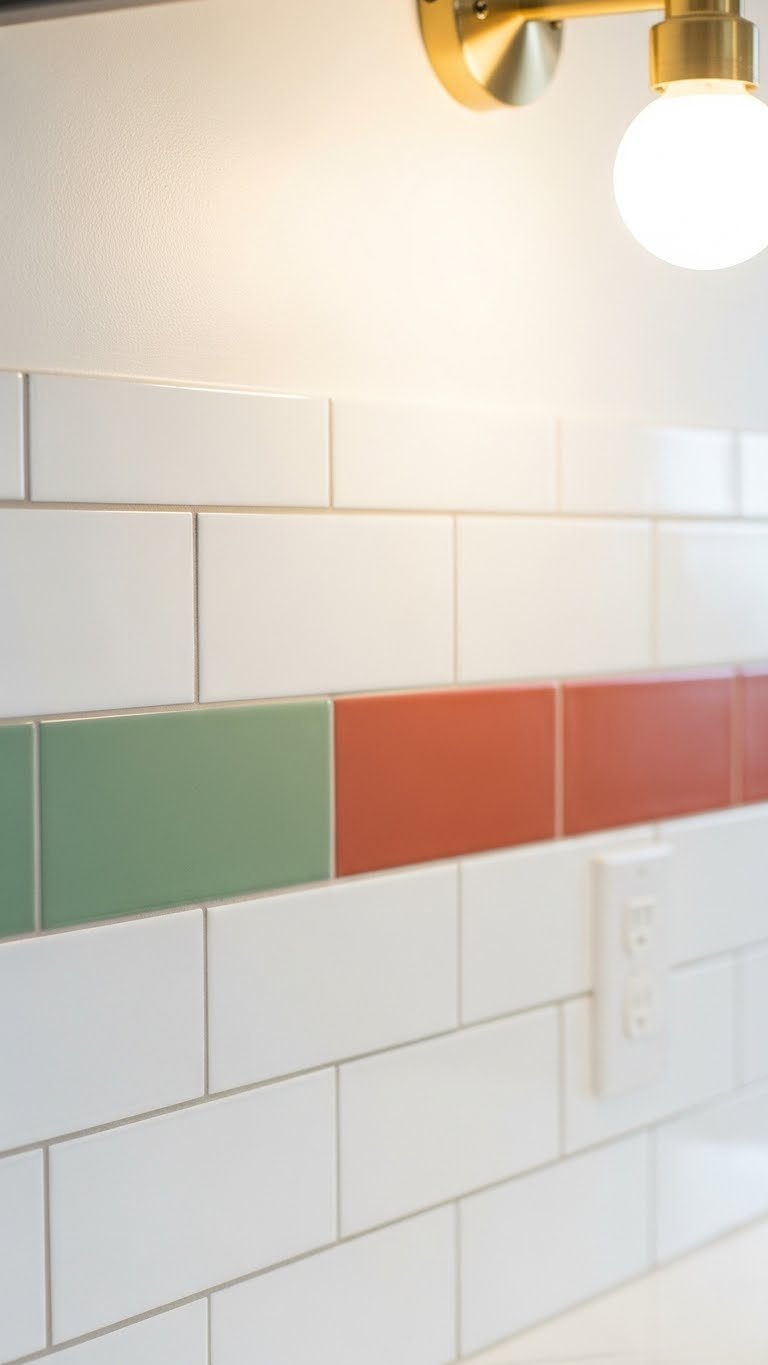
A painted backsplash costs nothing but makes a huge statement. This is renter-friendly, temporary, and gives you the high-impact trend of mixed materials without ripping out tile.
Use high-quality tile paint ($20–$40 per can) or peel-and-stick tile alternatives ($50–$150). Either way, it takes an afternoon. Paint an accent row in sage green, soft blue, or warm terracotta while keeping the rest white or neutral. This honors the 2025 trend of bold, mixed backsplashes without overwhelming a small space. Alternative: swap tile with peel-and-stick geometric or marble patterns for zero commitment.
Prep is everything—clean thoroughly, prime, then paint with a semi-gloss finish for durability.
Your backsplash shifts from invisible to intentional, and suddenly your whole kitchen has personality and design vision.
10. Add Pendant Lights Above Counter or Island
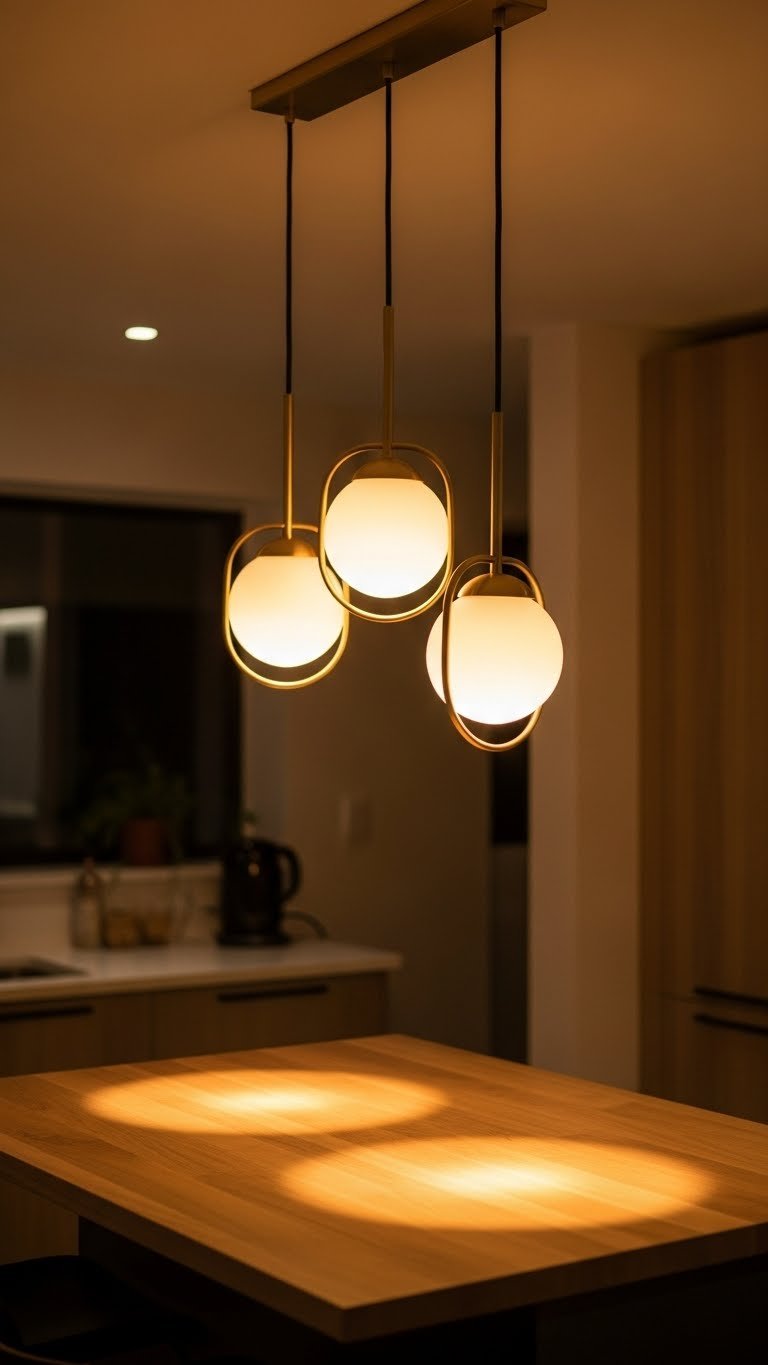
Lighting is how small kitchens feel big—84% of designers cite fixtures as key to modern style. Pendant lights over a counter or even above a small island create focal points and functional task lighting while looking effortlessly design-forward.
Install one to three pendants ($80–$300 total) depending on your counter width. Look for globe or geometric shapes in brass, matte black, or sculptural ceramic. They work at IKEA ($25–$60 each), Schoolhouse Electric, or Wayfair. Pair with a dimmer switch ($15–$30) so you control mood and function. Hire an electrician ($100–$150) if you’re not comfortable with wiring, or use plug-in hanging lights ($50–$100) if you rent.
Pro tip: Group three small pendants rather than one large one—it feels more collected and modern.
These lights become jewelry for your kitchen while solving the lighting problem that makes small spaces feel cave-like.
11. Use Glass Cabinet Doors to Open Up Visual Space
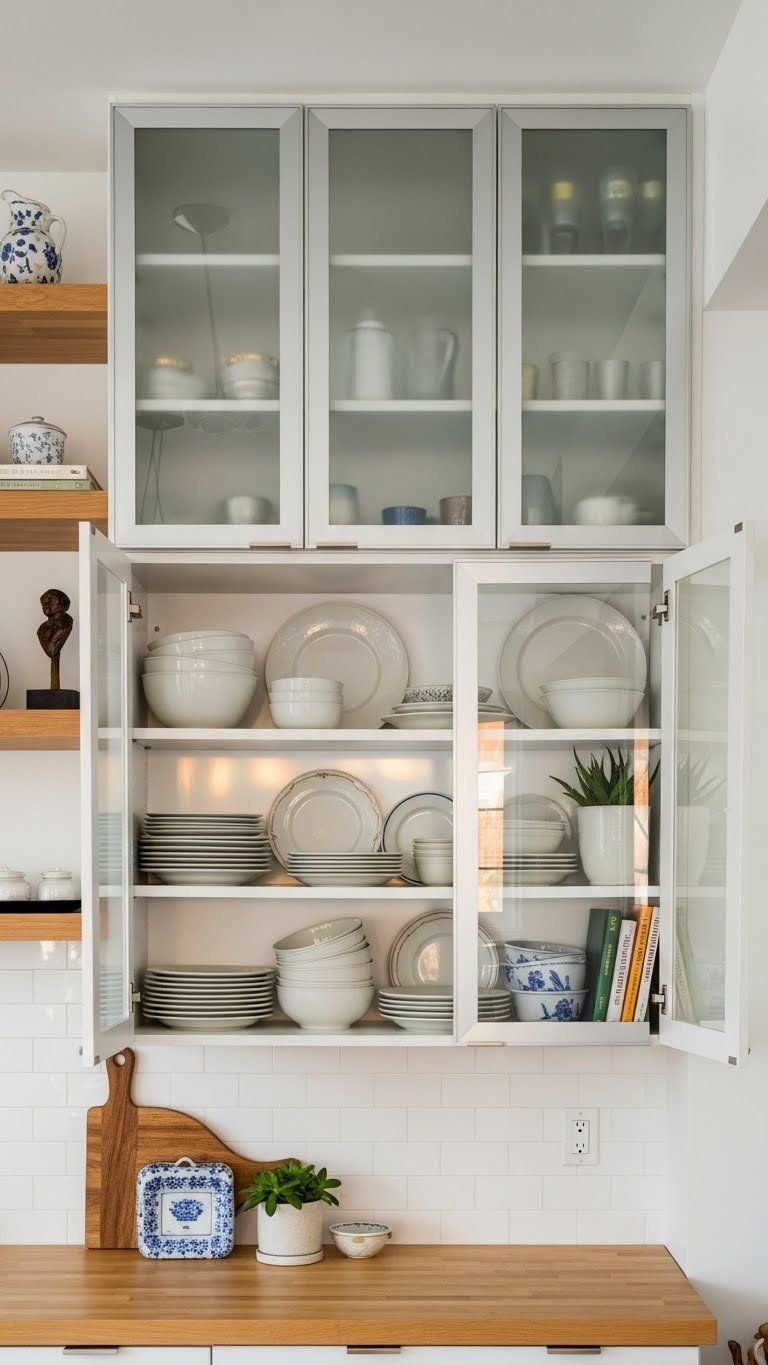
Replacing solid cabinet doors with glass front ones (or just uppers) opens up your sight line and makes the kitchen feel bigger and brighter. It’s especially effective in small kitchens where every visual trick matters.
Replace just your upper cabinet doors with glass alternatives ($150–$300 total). Keep uppers glass and lowers solid for a balanced, uncluttered look. Style the visible dishes intentionally—use matching plates, bowls, and glasses. Look for options at IKEA, Wayfair, or Etsy with frosted, textured, or clear glass depending on whether you want a little visual privacy. For renters: peel-and-stick frosted film ($20–$40) creates the same effect temporarily.
Rearrange your dishes monthly so they feel fresh and intentional, not like you’re keeping house for Instagram.
You lose nothing functionally but gain the feeling of space and openness—it’s an optical illusion that genuinely works.
12. Create a Scullery or Hidden Prep Zone
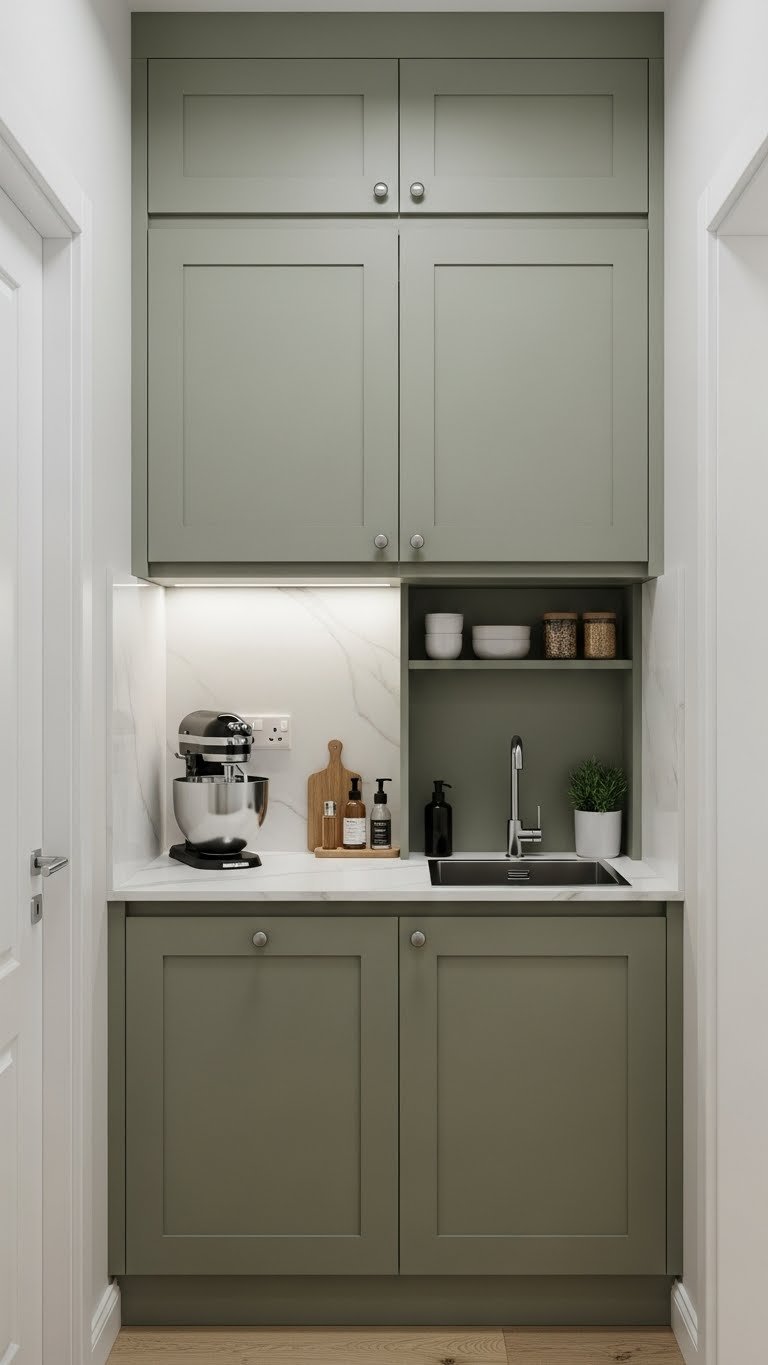
A scullery or hidden prep zone keeps cooking mess out of sight while doubling your functional space. This 2025 trend works beautifully for small kitchens because it separates display from work.
If you have a closet, hallway corner, or galley alcove, convert it into a prep zone with closed shelving or cabinets ($200–$500). Add a small sink if possible ($100–$300 install) or just counter space for prepping, storing bulk items, and hiding kitchen chaos. Use closed doors or a curtain rod with linen curtain ($30–$80) to hide the work-in-progress from your main living space. This creates the feeling of a bigger, cleaner kitchen instantly.
For renters: a tall rolling cart with a linen curtain in front creates the same hidden-prep effect.
Now your main kitchen stays beautiful and minimal while you have a functional chaos zone hidden away—the best of both worlds.
13. Go Low-Profile with Streamlined Appliances
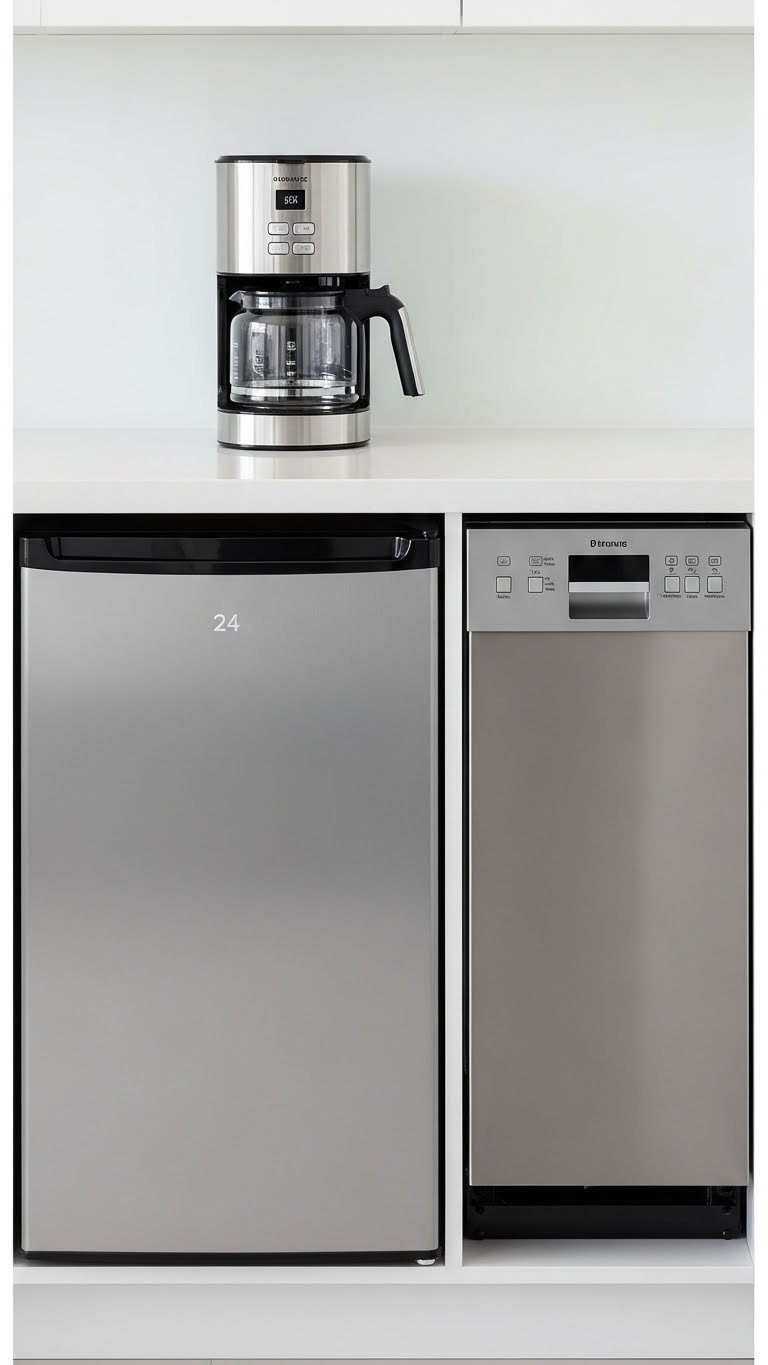
Oversized appliances are the enemy of small kitchens. Downsizing to compact, counter-depth, or 24-inch appliances creates the illusion of space while actually adding function.
Look for 24-inch refrigerators ($800–$1,500), compact dishwashers ($500–$800), or slimline ovens ($1,200–$2,000). They cost more per cubic foot than standard sizes but save visual weight massively. If you can’t replace everything, start with your fridge—it’s the largest visual anchor. Stainless steel tends to recede; black or wood paneling blends with cabinets for a built-in look. Home Depot, Lowe’s, and specialty appliance retailers carry compact options.
Pro tip: Choose white or black over stainless in small kitchens—it feels less heavy.
This single choice makes your kitchen breathe and look intentionally designed rather than squeezed into a tiny space.
14. Layer Warm Wood Tones with Painted Cabinets
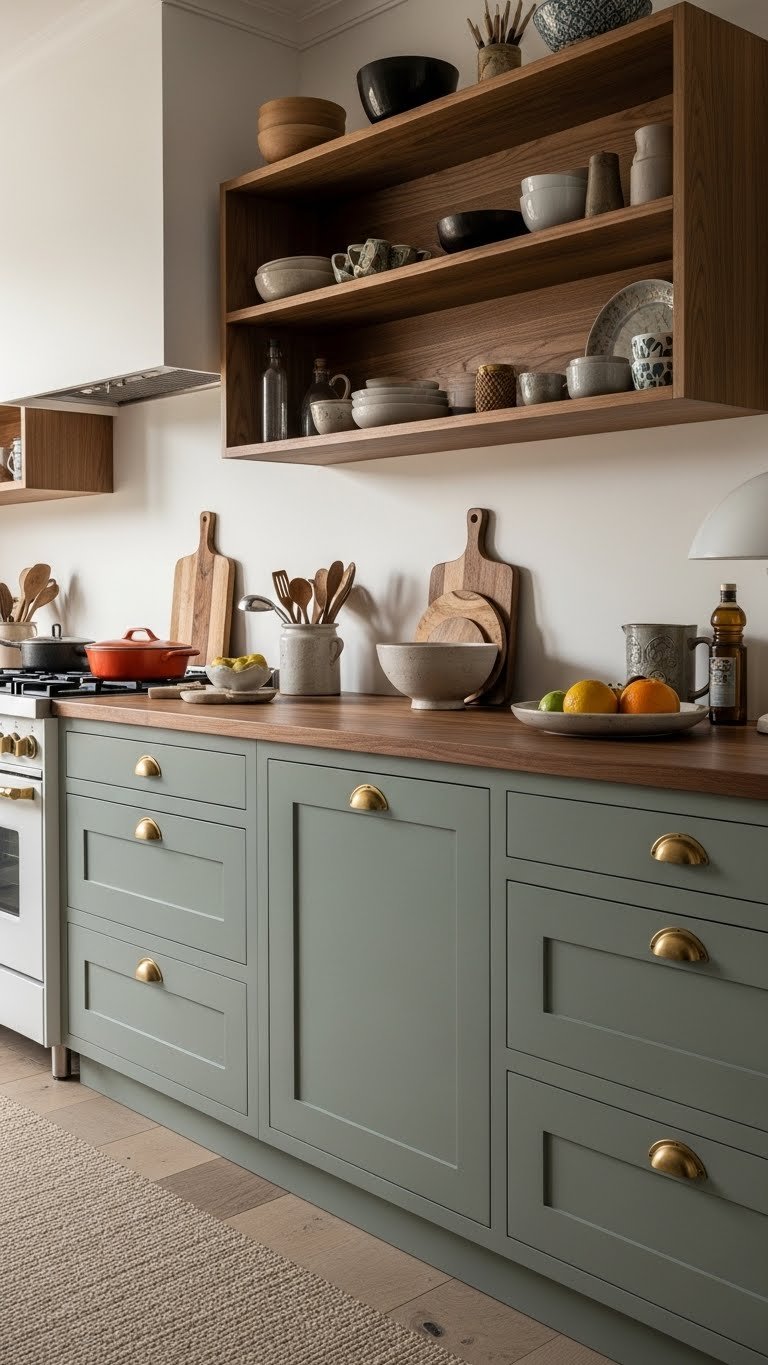
Mixing painted cabinets with warm wood creates depth and personality without overwhelming a small space. The 2025 comeback of walnut and oak pairs perfectly with soft greens and blues.
Paint your lower cabinets ($100–$400 in paint and labor) in sage green or soft blue, then pair with a warm wood countertop in walnut, oak, or butcher block ($800–$2,500 installed). Keep open shelves in natural wood or light cream. Add brass hardware to tie it together. This layering feels curated and warm rather than matchy-matchy or sterile.
Renter hack: use a wood-look contact paper on counters ($20–$40) to test the combo before committing.
You create a space that feels both modern and grounded—sophisticated without being cold.
15. Install Slim Spice Racks on Cabinet Sides
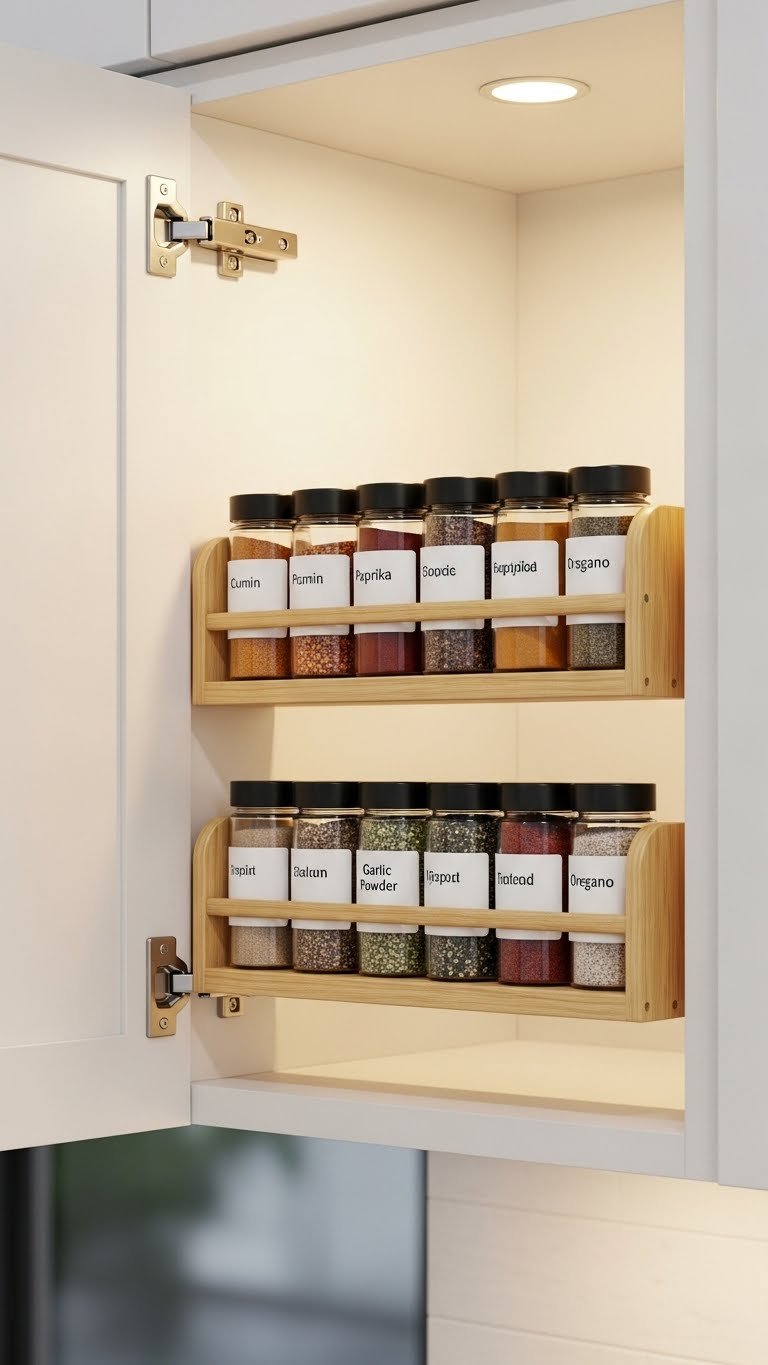
Spices hide in cabinets and get forgotten; wall-mounted spice racks keep them visible and free up precious cabinet real estate. This is especially smart in small kitchens where every inch matters.
Mount a slim spice rack ($30–$80) on a cabinet side or thin wall section to hold 10–15 spice jars. Use matching clear containers with printed labels ($15 for a set) so everything looks intentional. Some racks come with hooks for hanging measuring spoons too. Takes 20 minutes to install. If you rent, use adhesive-backed racks ($15–$30) that come off cleanly.
Pro tip: Alphabetize or group by category—it’s weirdly satisfying and functional.
Now you see what you have, you use seasonings before they expire, and your cabinets open up for things that actually need hiding.
16. Create a Dining Nook with a Corner Bench
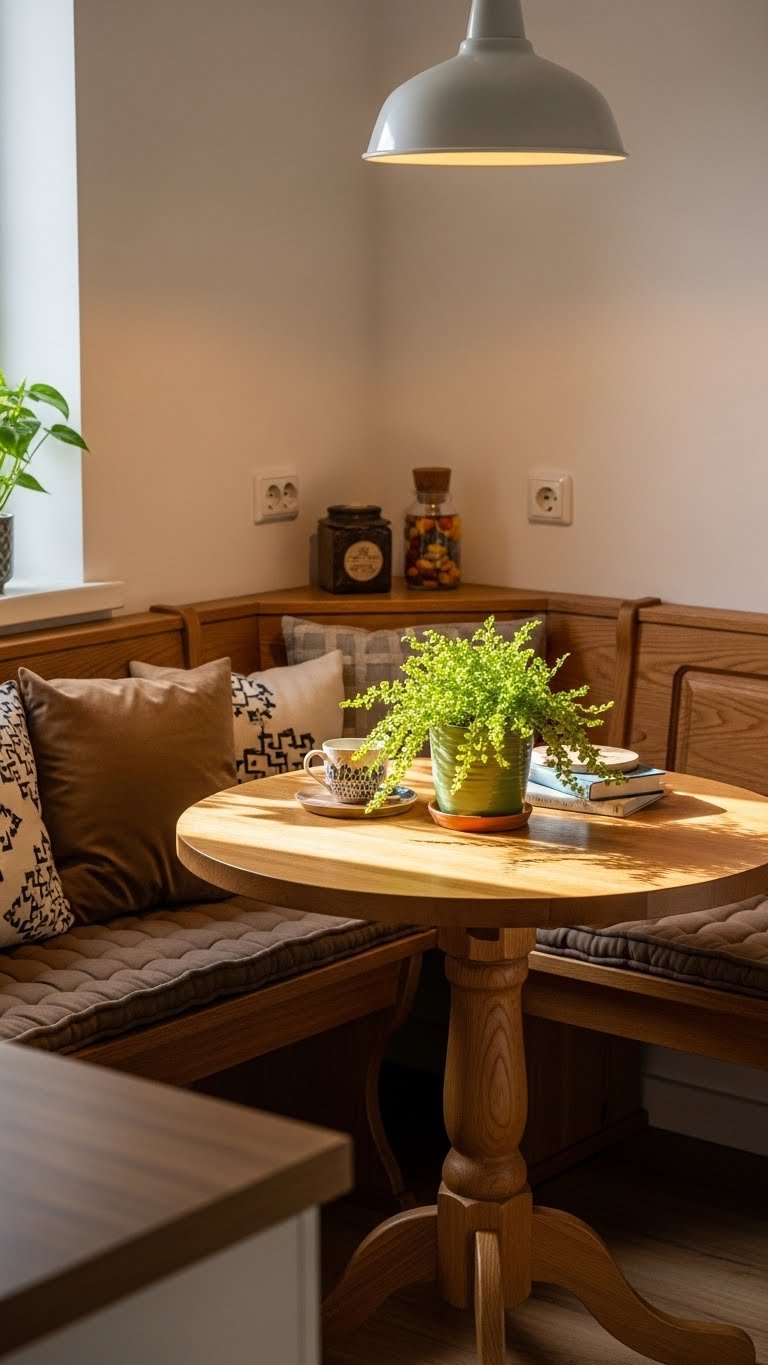
A corner dining nook reclaims awkward space and creates the feeling of a separate dining room without taking up floor space. Small kitchens feel bigger when they have zones.
A freestanding corner bench with table ($300–$800) works for renters and doesn’t require installation. Or go built-in with a carpenter ($1,000–$2,500) for a custom, high-end look. Add cushions and throw pillows ($50–$150) in colors that echo your kitchen palette. This becomes a gathering spot, a workspace for kids, or a peaceful breakfast spot—it’s not just eating, it’s a vibe.
Budget option: use an old wooden pallet or thrift a bench, add cushions, and position it in a corner.
You’ve stolen square footage from nowhere and created a cozy, functional, Instagrammable detail that makes guests think your kitchen is bigger than it is.
17. Install Compact Combo Appliances (Microwave-Oven)

Combo appliances save serious counter real estate. A microwave-convection combo ($200–$400) does the work of two machines while taking up a fraction of the space.
Mount it under upper cabinets using a bracket ($15–$30) or on a small rolling stand ($50–$100). It microwaves, toasts, and convection-cooks—perfect for small kitchens where you can’t afford dead space. Look at Breville, Cuisinart, or Panasonic models. Installation takes 30 minutes if you’re hanging it; hire help for $50–$100 if you’re unsure.
Real talk: it’s not a substitute for a full oven, but it handles 80% of small-kitchen cooking needs.
You open up counter space and still have a fully functional cooking setup—it’s the small-kitchen equivalent of a studio apartment with a murphy bed.
18. Use Contrasting Cabinet Colors for Visual Interest
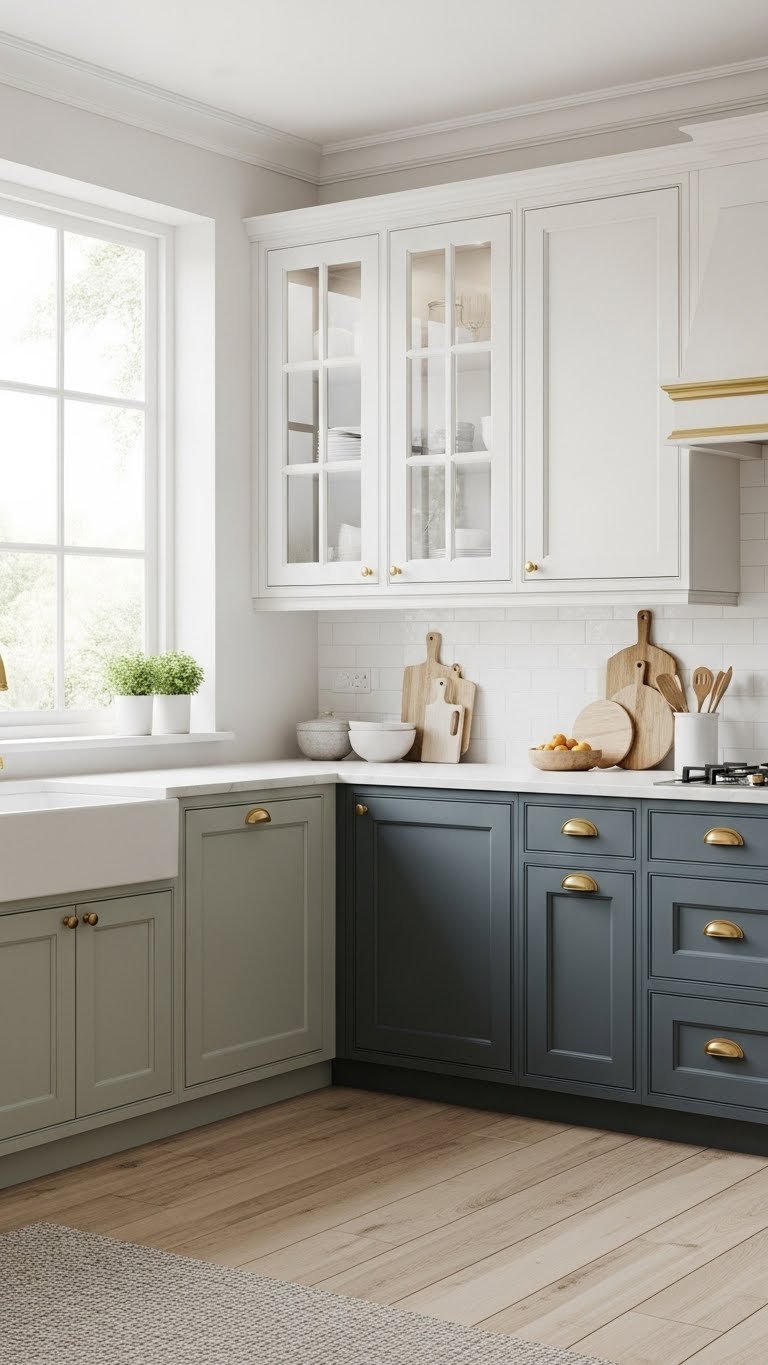
Two-tone cabinets create visual interest and make small kitchens feel more designed and bigger than monotone color. This is the 2025 move that replaces “all-white kitchens.”
Paint uppers one color (white, cream, or soft gray, $50–$150) and lowers a bold accent (sage green, blue, terracotta, $50–$150). Use matching hardware to tie them together. This breaks up visual weight and creates the feeling of height and intentionality. Test colors on poster board under your kitchen’s actual lighting before committing—colors read completely different by natural versus artificial light.
Pro tip: pair warm uppers with cool lowers (cream + sage green) or cool uppers with warm lowers (white + terracotta) for a sophisticated feel.
Suddenly your kitchen has architecture and personality instead of feeling like a blank box.
19. Add a Small Wine Fridge or Beverage Cooler
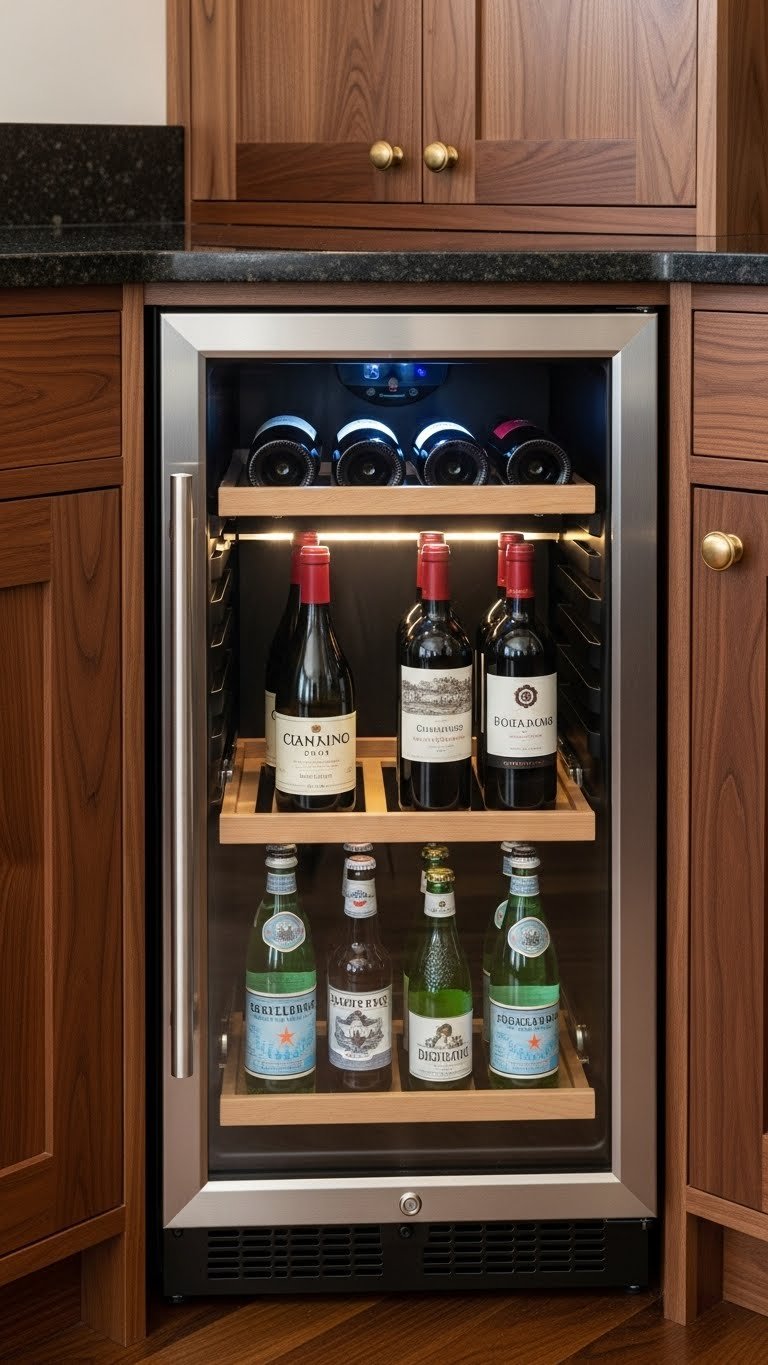
A compact wine fridge or beverage cooler ($200–$500) adds luxury and functionality to small kitchens without bulk. It works under bar seating, in a corner, or tucked beside your main fridge.
Look for 15–20 inch models at appliance stores or Amazon that fit wine bottles or cans depending on your vibe. Some have glass doors so they become a design feature; others are stainless steel for a built-in feel. Plug it in, let it stabilize for a few hours, and you’re done—no installation needed. Perfect for entertaining or creating a beverage station.
Budget alternative: a small ice bucket ($20–$50) with wine or drinks staged in a corner creates a similar effect visually.
This detail immediately makes your kitchen feel more intentional, hospitable, and elevated—and honestly, a cold drink on hand changes the vibe.
20. Hide Clutter with Floating Kitchen Island with Enclosed Storage
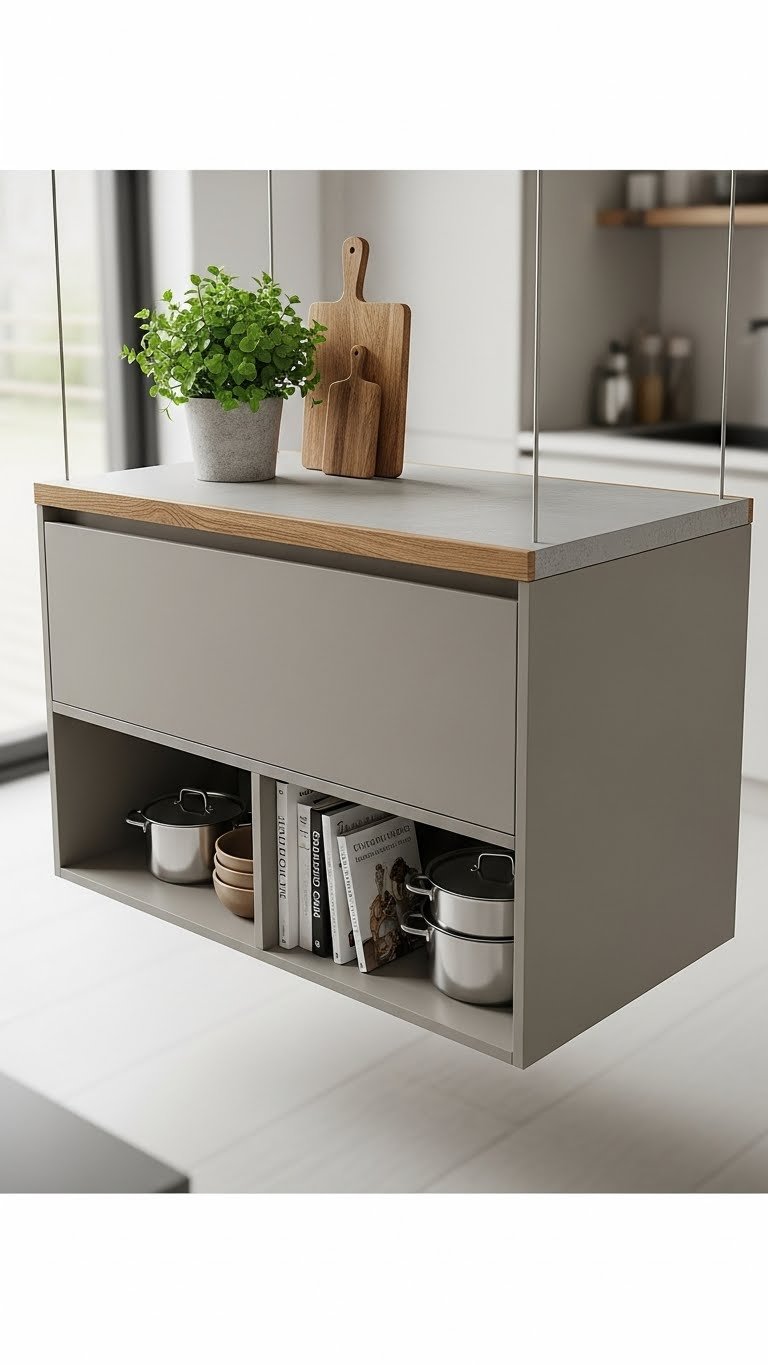
A compact floating island creates counter space and storage without feeling like an obstacle. The key is mixing open and enclosed storage—50% hidden, 50% open.
Build or buy a small floating island ($300–$800 ready-made, $500–$1,500 custom built) that’s 24–30 inches wide and 18–24 inches deep. Add enclosed cabinets on sides and open shelving below to keep the look light. Top it with butcher block or engineered quartz. Anchor it to the floor for safety and stability. For renters: a slim mobile cart with baskets underneath ($100–$200) works as a temporary island.
Pro tip: keep the top surface minimal—one plant, a cutting board, maybe a soap dispenser—so it feels like active counter space, not storage.
You gain prep space, hide kitchen chaos, create a gathering point, and make the kitchen feel both bigger and more functional.
21. Mix Metals for a Collected, Intentional Look

Mixing metals went from a design taboo to a 2025 signature move. It feels intentional, collected, and way more interesting than monotone hardware.
Combine warm brass, matte black, and stainless steel across your kitchen—brass on lower cabinets, black on uppers, steel on the island. Or mix them shelf by shelf. The trick: limit yourself to three metals max and let one dominate (usually 50%, then 30% and 20%). Shop Amazon, Wayfair, or local hardware stores ($50–$200 total for a full kitchen). Swap your existing hardware in 30 minutes with a drill.
Real-world bonus: when you notice a fingerprint on brass, it feels vintage and collected; on stainless, it feels messy.
This intentional mix signals that your kitchen is designed with thought, not by accident—and it feels so much more modern than any monotone option.
22. Use Decorative Baskets to Corral Pantry Overflow
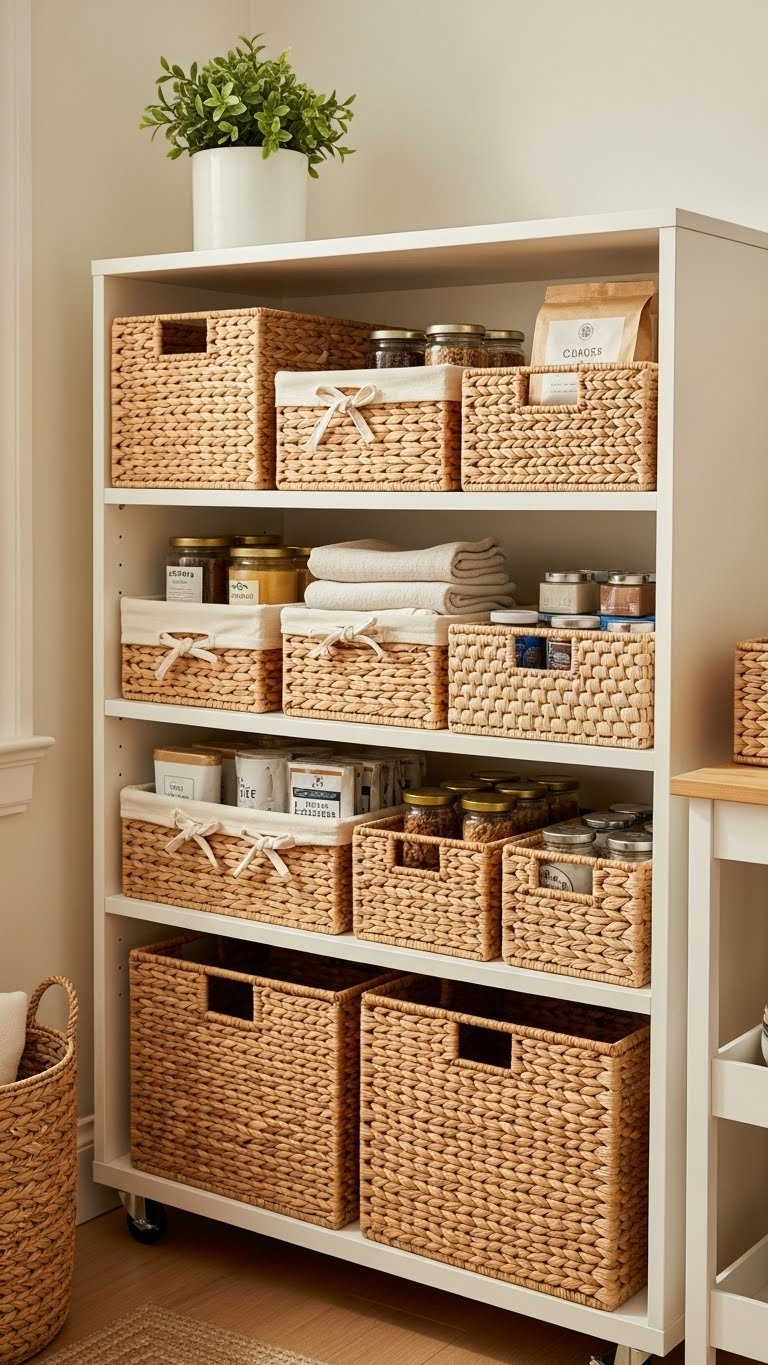
Baskets visually contain clutter while adding warmth and texture. They’re renter-friendly, mobile, and create the feeling of organization even when you’re stuffing them full.
Buy 3–5 matching woven baskets ($20–$80 total) in natural fibers or painted finishes from IKEA, Target, or Wayfair. Label them with tags or paint ($5) so everyone knows what’s inside. Stack on open shelves, a cart, or under a console table. Use them for dry goods, snacks, linens, or kitchen gadgets. The beauty is nothing is actually more organized—it’s just hidden, and hidden = feels clean.
Pro tip: line baskets with kraft paper for a finished look and to keep small items from falling through.
Your kitchen looks intentionally styled instead of like you’re perpetually prepping to move.
23. Install Task Lighting Under Cabinets

Under-cabinet lighting solves a huge problem in small kitchens—dim counters make you feel like you’re working in a cave. LED strips are affordable, easy, and totally transformative.
Add adhesive LED strip lights ($20–$60) under upper cabinets to illuminate your counter. Look for warm white (3000K) or cool white (4000K) depending on your style. Takes 15 minutes, no wiring required if you use battery-operated or plug-in versions. For a more permanent solution, hire an electrician ($150–$300) to hardwire strips that connect to a dimmer switch.
Real benefit: you can see what you’re actually cutting and cooking instead of working in shadow.
Now your counter becomes functional AND the lighting creates ambiance when guests are over—it’s a practical detail that feels effortlessly designed.
24. Paint Upper Cabinets a Soft Neutral, Keep Lowers Bold

This twist on two-tone cabinets uses the psychology that light colors rise and dark colors ground, making small kitchens feel taller.
Paint uppers in soft cream, white, or pale gray ($50–$150) to lift the eye upward, and lowers in your bold color—sage green, terracotta, or navy ($50–$150). Use the same hardware finish to unify. This creates the feeling of higher ceilings and makes even a galley kitchen feel less boxed-in. Test samples first; colors change drastically throughout the day.
Pro tip: matte or eggshell finishes feel more sophisticated than gloss, and they hide fingerprints better.
The spatial illusion is real—your kitchen suddenly feels airier and more intentionally designed.
25. Create a Minimalist Spice Display on Open Shelves

Organized spice displays become part of your decor in small kitchens. When visible, they need to look intentional, not like storage overflow.
Invest in matching clear glass spice jars with cork lids ($30–$60 for 12) and printed labels ($10). Arrange them by color or alphabetically on open shelves, mixing in a small plant or ceramic bowl. This is the opposite of hiding spices—you’re celebrating them as part of your design. Update labels with a label maker ($25–$50 as a one-time investment) whenever you refill. This works on floating shelves, pegboard, or a dedicated wall-mounted spice rack.
Time investment: 30 minutes to set up, then 2 minutes to refill as needed.
You’ve turned a functional necessity into a stylish focal point that signals your kitchen is designed with intention and personality.
26. Layer Textures with Concrete, Wood, and Brass
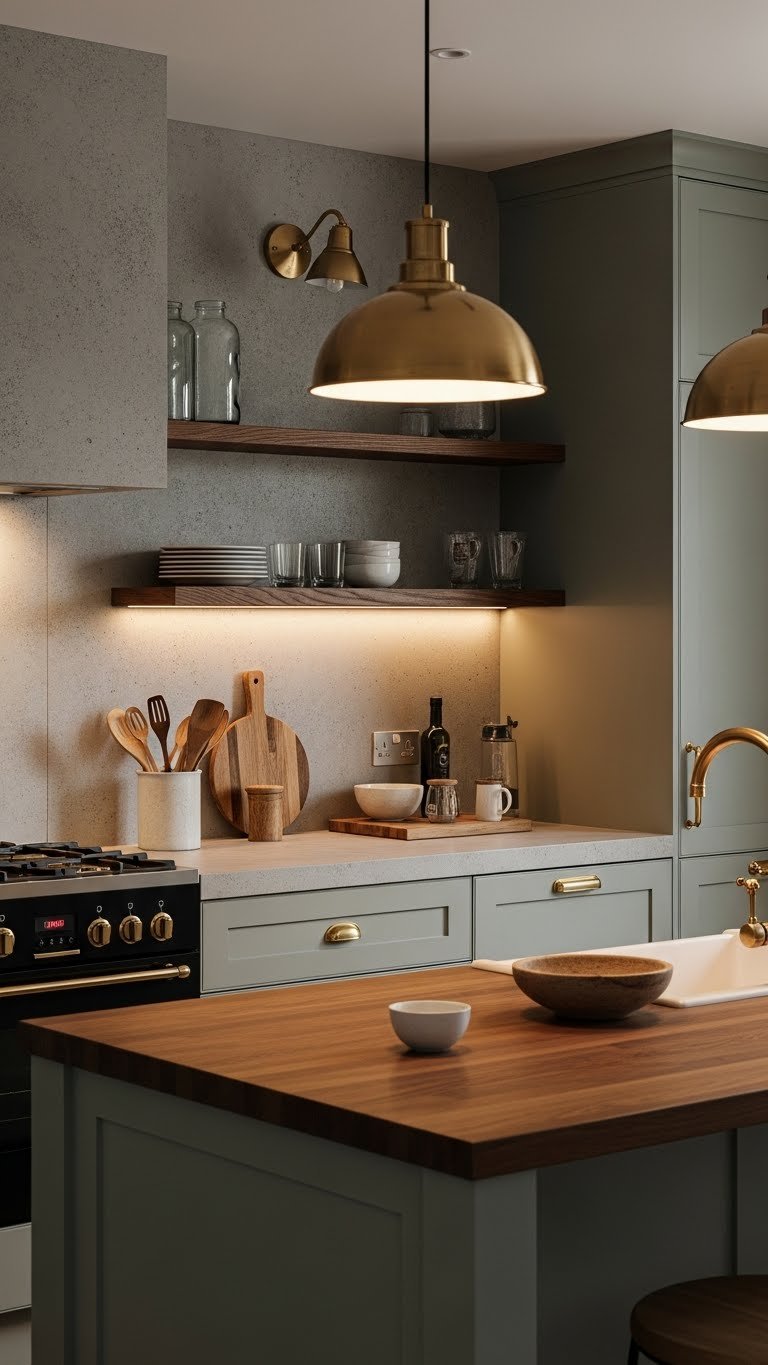
The #1 2025 kitchen trend is mixing materials and finishes—it’s the antidote to sterile, all-matching kitchens. Small spaces benefit because layering creates depth and personality in tight square footage.
Combine at least three different finishes: painted cabinets (matte), wood countertop (warm tone), brass or gold hardware (metallic), and a textured backsplash (concrete, fluted, or patterned tile). Add stainless steel or matte black appliances to break up warmth. Mix matte and glossy finishes on cabinets—lower gloss, upper matte, for example. The key is intentionality: pick a palette (warm woods + sage + brass, for example) and stick to it rather than random mixing.
Pro tip: use two neutrals as your anchor (wood and white) and let one bold color and one metal shine.
This approach transforms a small kitchen from “cramped and basic” into “carefully curated and sophisticated”—and it costs the same as sticking with boring, matchy finishes.
Save this post for your kitchen planning—pick one or two ideas and start this weekend. You’d be surprised how even small updates shift your whole kitchen vibe and make cooking feel like less of a chore.
Leave a Reply