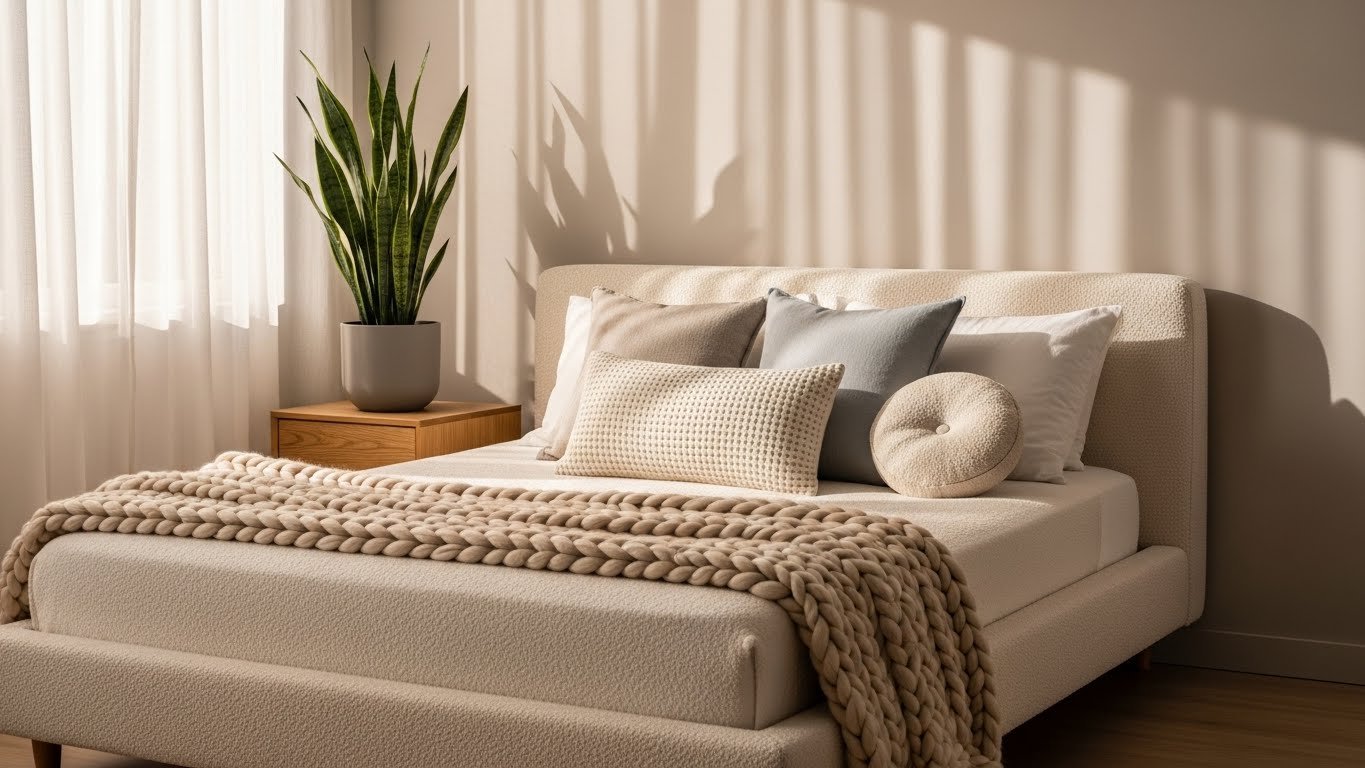
Your bedroom should feel like a retreat, but most of us sleep in spaces that feel more like an afterthought. Whether you’re working with a tiny studio, a shared room, or just outdated furniture, the right bed design can completely change how you feel when you walk through that door. The good news? You don’t need a total overhaul or a huge budget to make a real difference. These 27 ideas mix affordable hacks, DIY projects, and investment pieces that actually deliver results. You’ll find solutions for hot sleepers, back pain sufferers, couples who need space, small-room warriors, and anyone who just wants their bedroom to look like the spaces they pin on their phone. Let’s dig into ideas that work with your life, your space, and your wallet.
1. Choose Bouclé Fabrics for Subtle Textured Depth
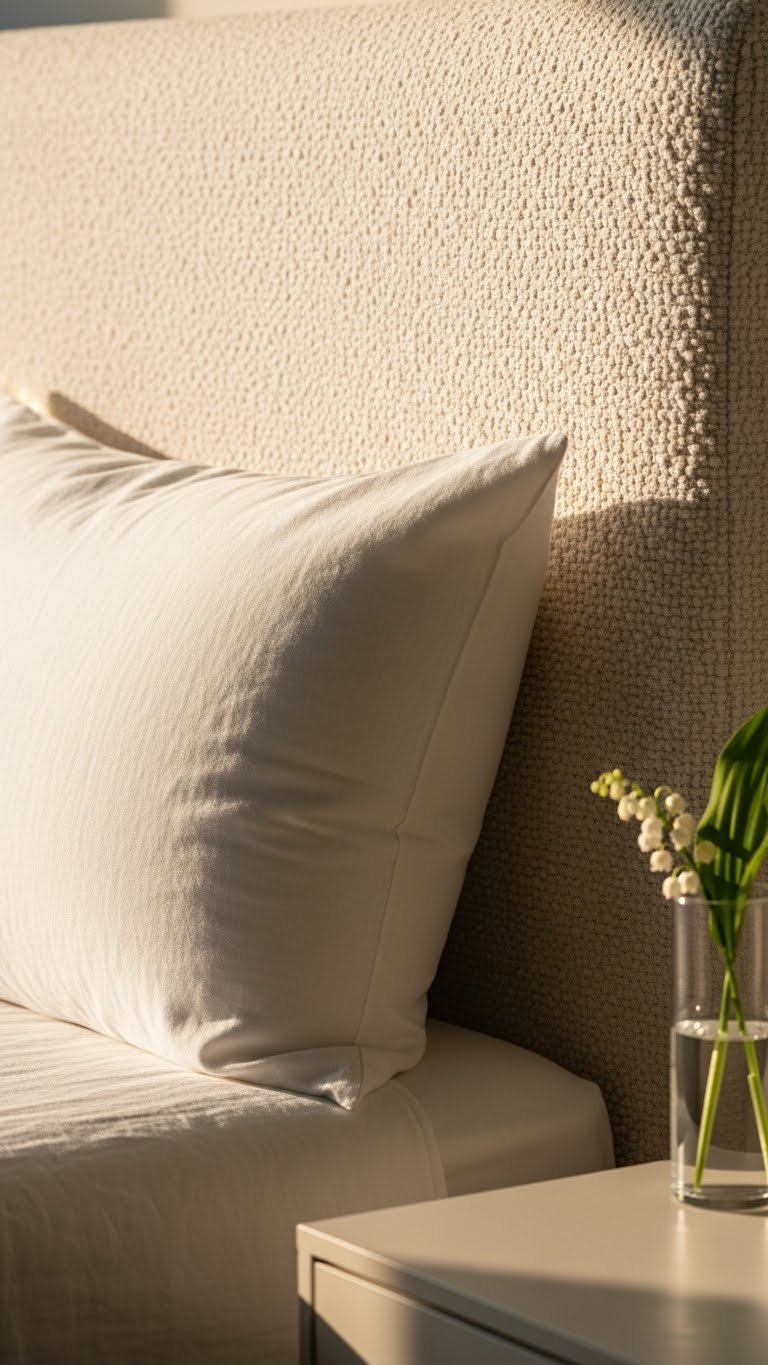
Bouclé has exploded in searches this year—up 35% overall and white bouclé up an absolutely wild 7,800%. This textured fabric adds serious visual interest to neutral bedrooms without feeling busy or dark.
You can find bouclé headboards, bed frames, or even just swap your regular headboard cover with bouclé upholstery. Retailers like Saatva, Wayfair, and Article offer bouclé beds ranging from $400–$1,200. If you’re renting or on a budget, grab a bouclé throw blanket ($30–$80) from Target or Amazon to layer on top. The fabric feels luxurious and photographs beautifully for social media, which means you’ll actually want to spend time in your bedroom.
This one change makes your bedroom feel intentional and high-end without overdoing it.
2. Install a Murphy Bed to Reclaim 50% More Floor Space
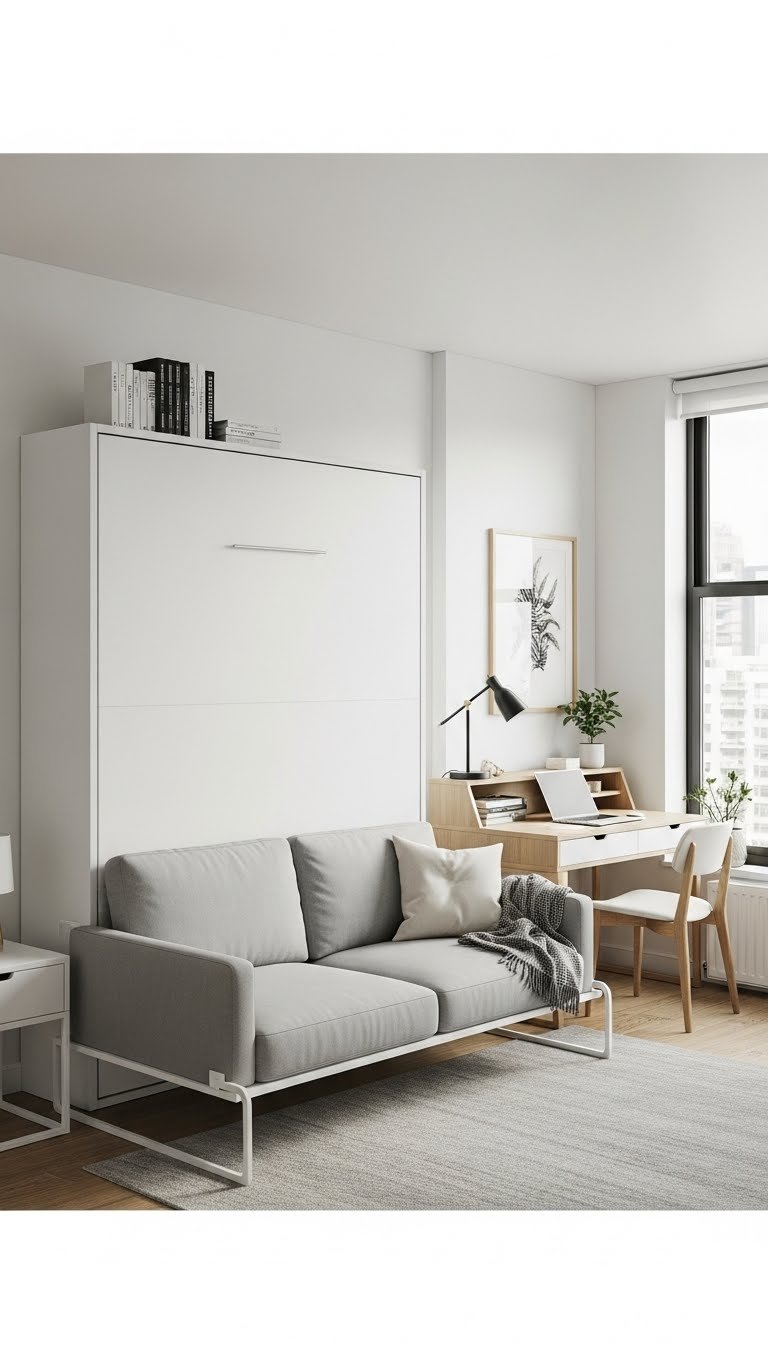
If you’re in a small space, a Murphy bed is a game-changer—it literally doubles your usable square footage. When closed, it looks like a regular wall unit or cabinet. When open, you get a full sleeping surface without a bed frame eating up your whole room.
Installation costs range from $400–$2,000 depending on size and quality. Companies like Wayfair, Amazon, and IKEA sell DIY-friendly kits if you’re handy. Hire a professional installer (check Thumbtack or TaskRabbit) if the wall-mounting part stresses you out—they charge $200–$500 for labor. Setup takes a weekend if you’re doing it yourself, or a few hours professionally. The payoff? You go from a cramped bedroom to a room where you can actually move around.
Your small space suddenly functions like it’s twice as big.
3. Layer Cooling Sheets with Moisture-Wicking Properties
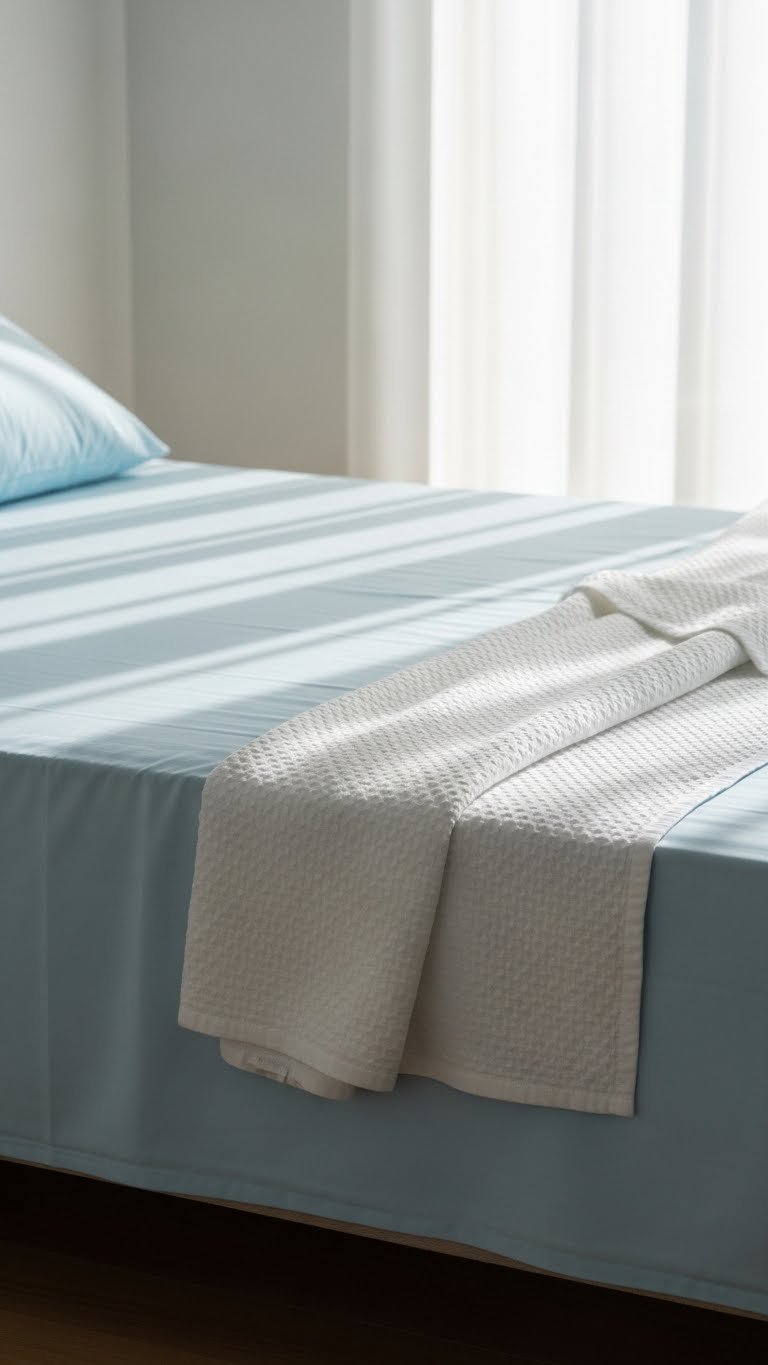
Cooling sheets are having a moment—searches jumped 8,300% because people are finally admitting they get hot at night. If you’re sleeping under regular cotton sheets and waking up damp, this is your fix.
Look for sheets made from bamboo viscose, linen blends, or performance fabrics that wick moisture away. Brooklinen, Saatva, and BEDGEAR make excellent options ranging from $80–$200 per set. Budget-friendly alternatives from Target or Amazon ($30–$60) also work surprisingly well. The fabric feels cool to the touch and actually regulates temperature instead of trapping heat. If you’re a hot sleeper, pair these with a cooling blanket ($40–$120) for an extra layer of relief.
You’ll wake up refreshed instead of sticky and exhausted.
4. Add an Adjustable Base for Reading, Posture, and Muscle Relief
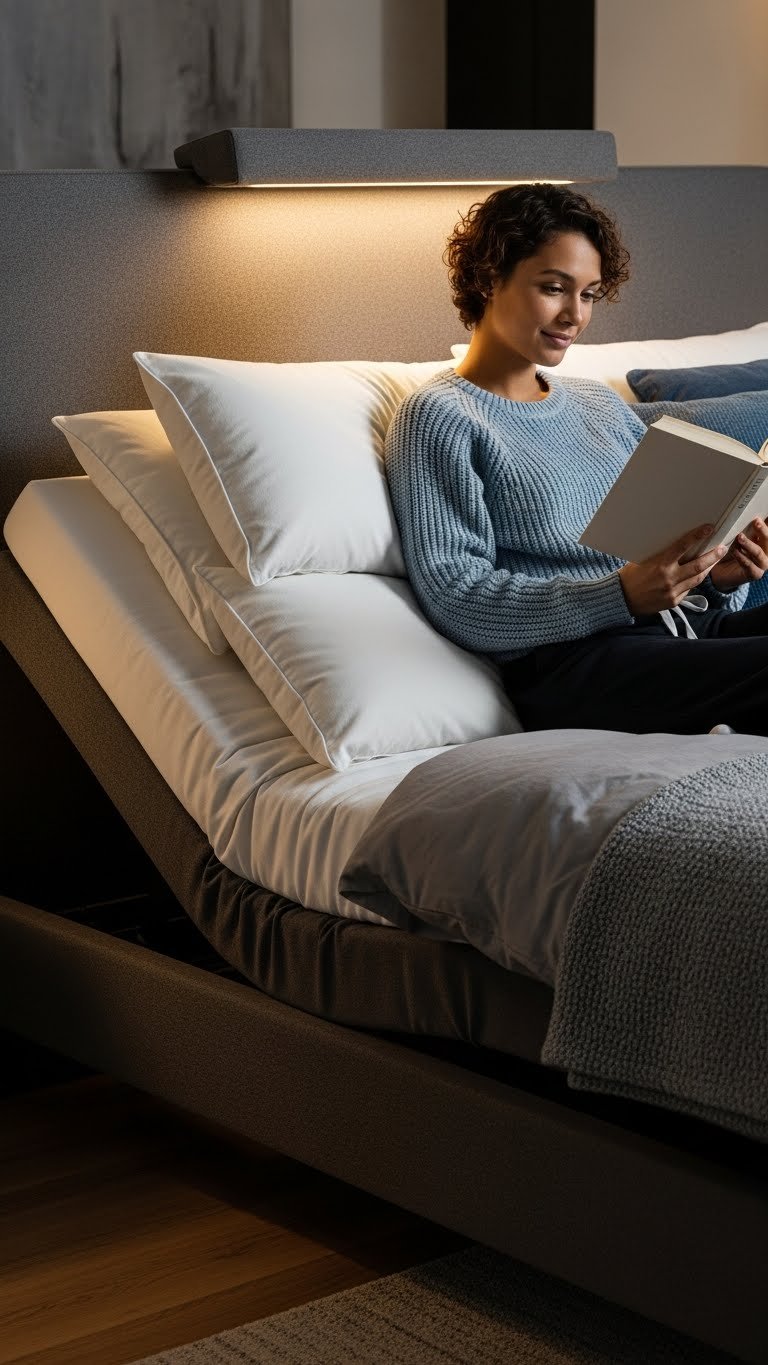
Adjustable bases aren’t just for aging—31% of people deal with chronic back pain, and a good base actually helps. You can prop yourself up for reading, lower your legs to reduce pressure, or find the exact angle that stops your snoring (hello, sleep divorce prevention).
Prices start around $300 and go up to $1,500+ depending on features. Look for ones with USB ports, under-lighting, and reading angle presets. Saatva, BEDGEAR, and King Koil offer quality options. Many come with remote controls so you can adjust without getting up. Installation is straightforward—they usually arrive semi-assembled and take 20–30 minutes to finalize. Pro tip: Pair with a mattress designed for adjustable bases (many brands offer this now).
Your back will thank you every single morning.
5. Go Canopy for a Focal Point That Feels Luxe
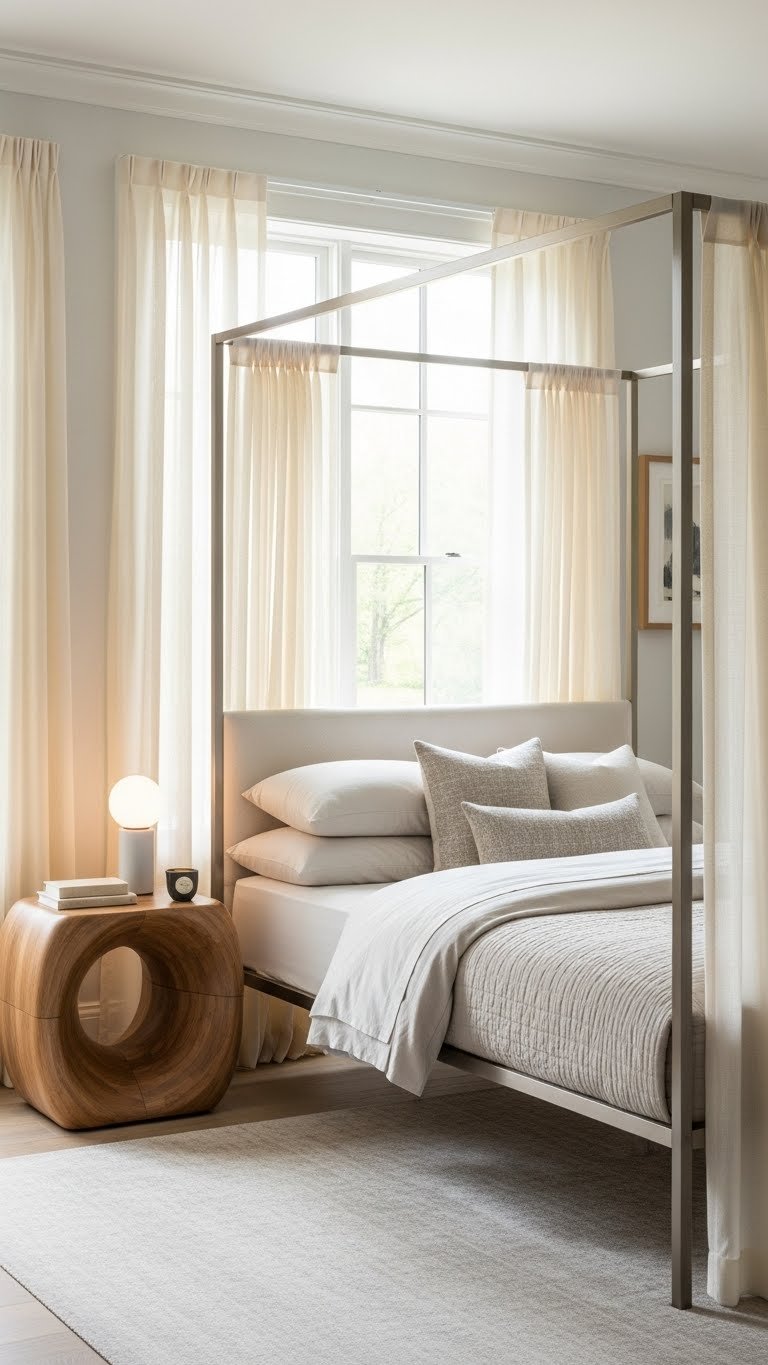
Canopy beds create that “wow” moment the second you walk in—they work in modern, traditional, and eclectic rooms depending on the style. You don’t need heavy velvet drapes; simple sheer panels feel just as sophisticated.
Look for metal canopy frames (way easier to install than wooden ones) at Wayfair, Article, or Crate & Barrel starting around $300–$800 for basic styles, $1,200+ for statement pieces. IKEA has a basic option under $100 if you want to test the vibe first. Hang lightweight linen or cotton curtains ($40–$100 per panel) to soften the look. If you rent, look for freestanding canopies that don’t require wall mounting. The whole project takes an afternoon.
Your bedroom goes from forgettable to somewhere you actually want to spend time.
6. Mix Vintage Pieces with New Furniture for Authentic Character

Rooms feel more personal when they tell a story instead of looking like they came from a single catalog. Mixing one or two vintage or secondhand pieces with new furniture gives you authenticity without the “staged” feeling.
Hunt for vintage nightstands, dressers, or bed frames at local thrift stores, Facebook Marketplace, or Craigslist ($20–$150 each). Pair with modern bedding from Target or IKEA to keep it current. Layer in a handmade quilt or vintage throw blanket ($30–$200) as a focal point. If you find a frame you love but it needs refinishing, factor in $100–$300 for professional restoration, or DIY it with paint and new hardware (weekend project, $20–$50 in supplies).
You’ll have a bedroom that feels collected and intentional, not mass-produced.
7. Use Live-Edge Wood Frames to Connect with Nature
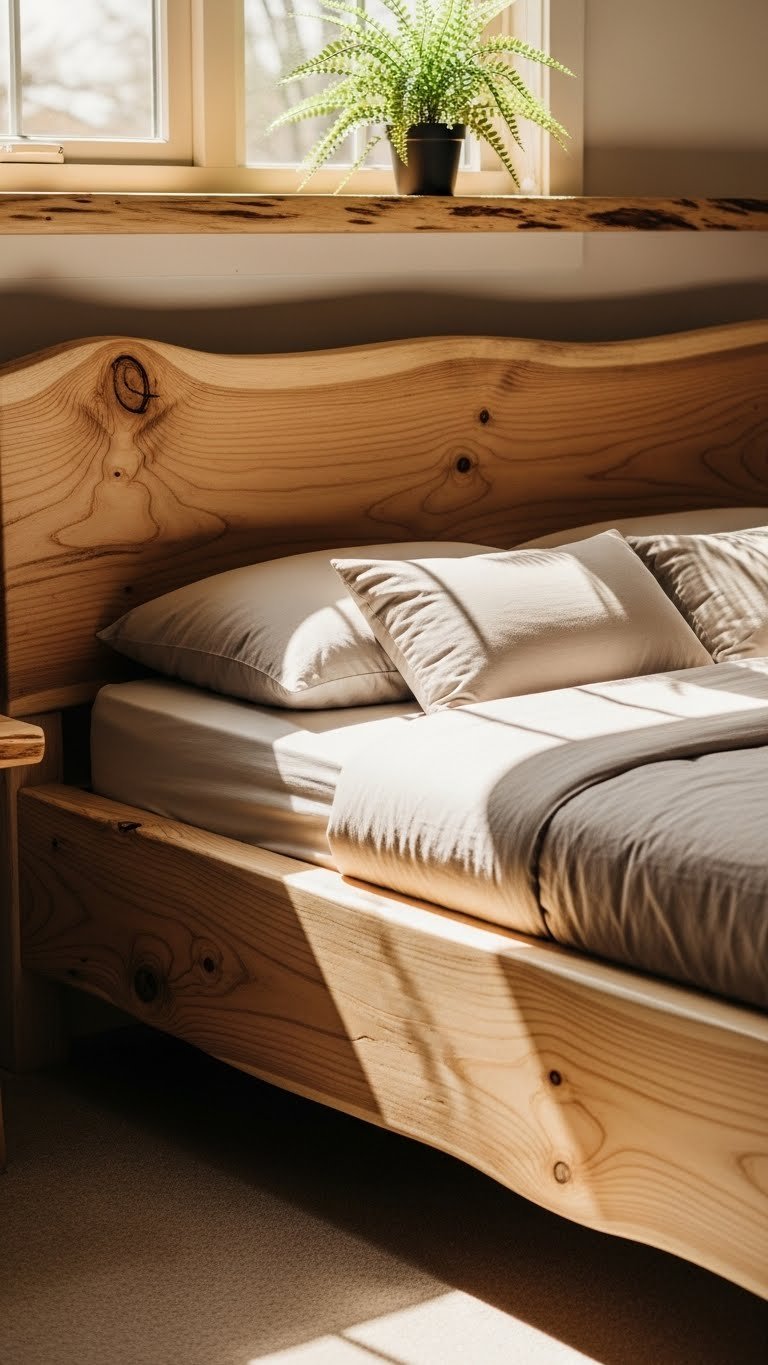
Live-edge wood brings nature into your bedroom in a way that feels warm and grounding. The organic curves and visible grain create focal points that polished furniture just can’t match.
These frames come from specialty furniture makers on Etsy, Wayfair, and West Elm ranging from $600–$2,000 depending on size and wood type. Walnut, oak, and reclaimed wood are common choices. If you’re on a budget, look for live-edge shelves or a headboard instead ($200–$500) and pair with a standard bed frame. Some sellers ship unfinished versions ($300–$800) so you can customize the stain—DIY finishing takes a weekend and costs $30–$60 in materials. The wood requires minimal maintenance beyond occasional dusting.
Your bedroom feels like a serene escape rather than a standard bedroom setup.
8. Install Blackout Curtains for Better Sleep Quality
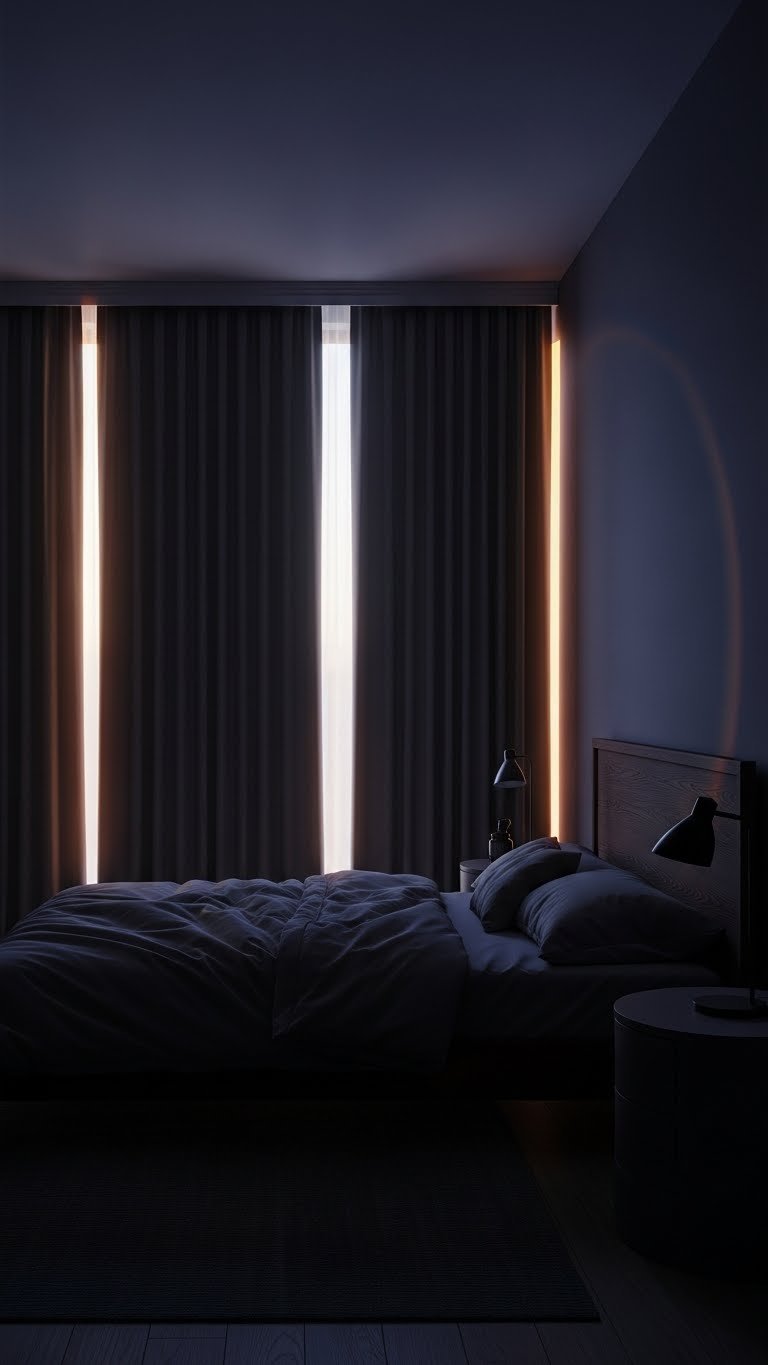
Your brain needs darkness to produce melatonin and sleep properly. If you’re waking up at dawn or dealing with street lights, blackout curtains are a science-backed fix that actually works.
Thermal blackout curtains from Target, IKEA, or Amazon cost $30–$80 per panel. They’re heavier than regular curtains and block 95–99% of light. Measure your window height (include wall space above for maximum coverage) and install a sturdy rod ($15–$40). Most people hang them themselves in 30 minutes using basic tools. For renters, there are adhesive options that won’t damage walls. Bonus: they also insulate, so your room stays cooler in summer and warmer in winter.
You’ll sleep deeper and wake up more refreshed.
9. Add Curved Headboards to Soften Your Space
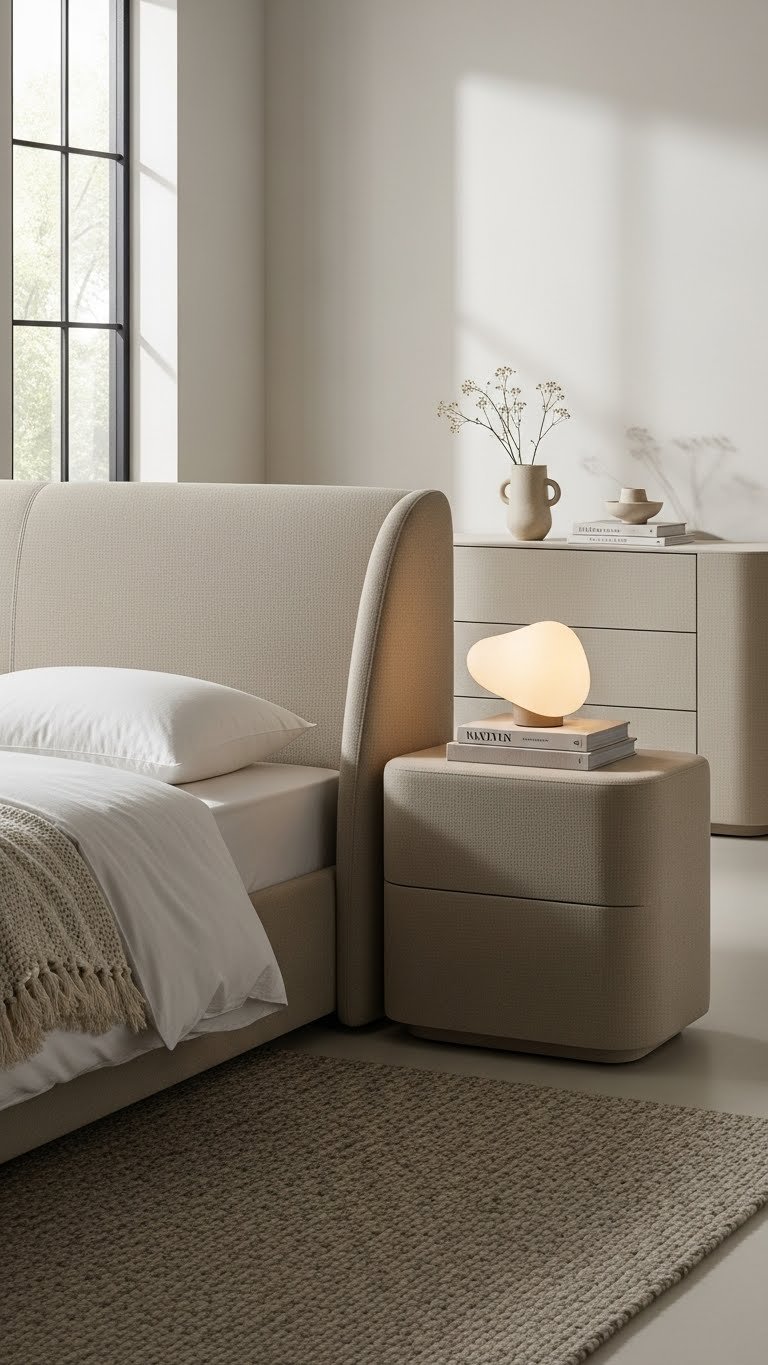
Sharp corners feel jarring; curved furniture makes a room feel calmer and more intentional. Curved headboards are trending right now because they’re visually softer while still being statement pieces.
Look for arched or rounded headboards at Article, Wayfair, or West Elm starting around $300–$800 for mid-range options. IKEA and Target have budget versions ($150–$300). You can also DIY this by adding padding and fabric to a curved wooden frame ($100–$200 in materials, afternoon project). Pair your headboard with a matching curved dresser or nightstand to amplify the effect—furniture companies are making these sets together now. The soft geometry makes your whole room feel more sophisticated.
Your bedroom instantly feels more designed and put-together.
10. Layer Natural Wool, Linen, and Cotton Bedding for Breathability
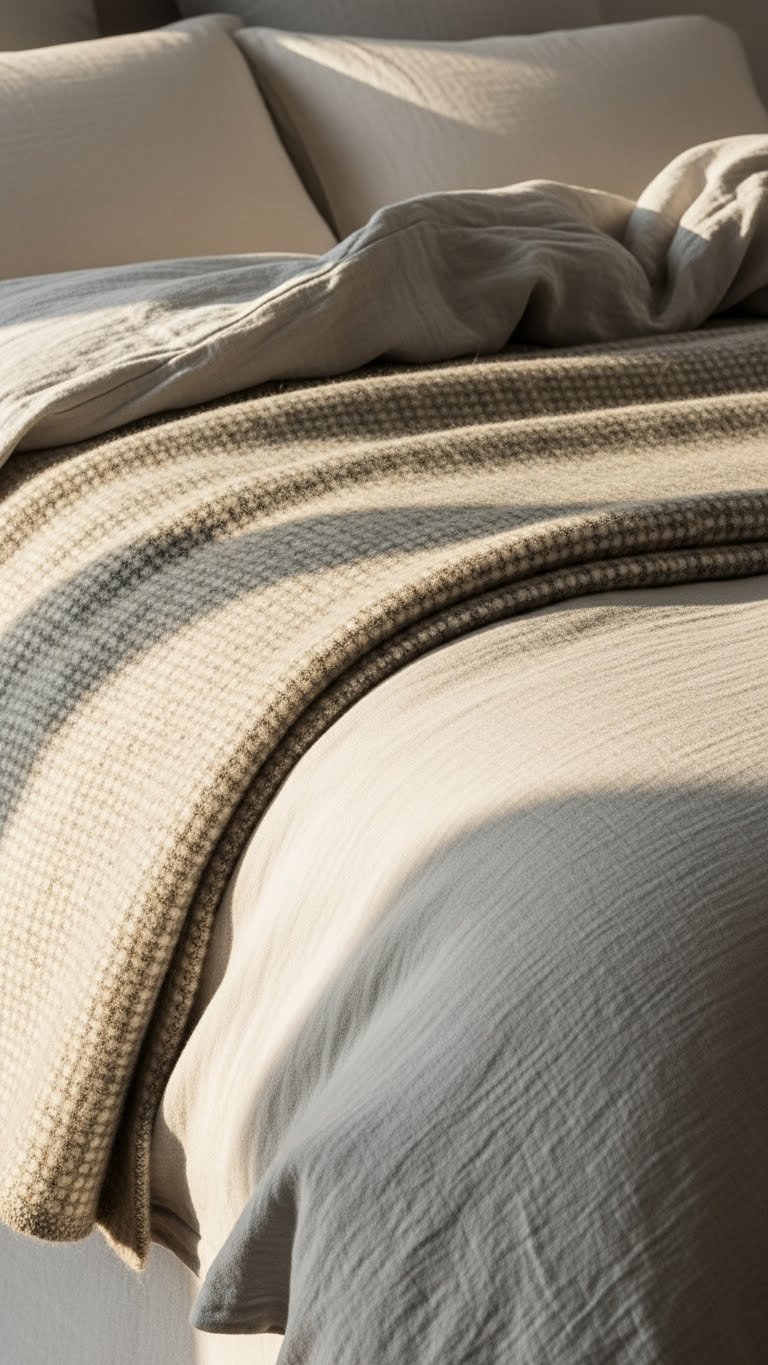
Natural materials regulate temperature better than synthetics, which means you stay comfortable year-round. Plus, they’re sustainable and actually get softer with every wash.
Wool blankets ($80–$200) from Woolroom or Parachute are worth the investment—they last forever. Linen sheets ($100–$180) from Brooklinen or Parachute wrinkle charmingly and breathe beautifully. Organic cotton pillowcases ($30–$60) bridge budget and quality. Mix and match depending on your budget—you don’t need to buy everything at once. Wash in cool water and air dry to extend the life of natural fibers. If you’re on a tighter budget, start with one quality piece (like wool or linen) and build from there.
You’ll notice the difference in sleep quality and comfort within a week.
11. Create a Digital-Free Sleep Zone with Aromatherapy
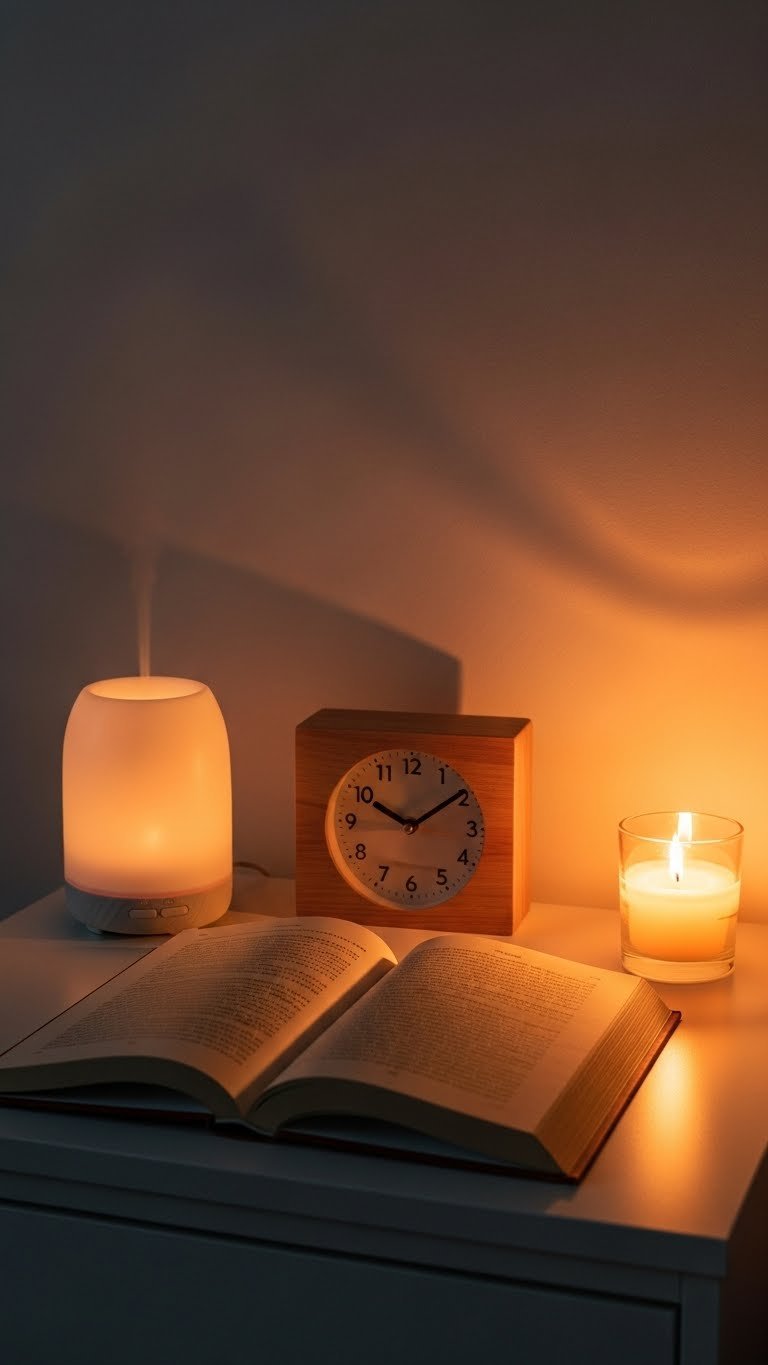
Blue light from phones disrupts melatonin production and keeps your brain alert. Creating a charging station outside your bedroom sounds simple, but it genuinely improves sleep quality and presence.
Move your phone charger to another room or a hallway outlet. Replace your alarm clock with a basic mechanical or wooden one ($15–$40). Add a essential oil diffuser ($20–$60) and use lavender or chamomile oils for sleep support. A bedside carafe of water ($10–$25) means you stay hydrated without reaching for your phone. Keep a journal or book ($5–$20) instead of doom-scrolling before bed. This takes zero money if you already have the basics, or $60–$100 to fully outfit your zone.
You’ll fall asleep faster and sleep more soundly.
12. Switch to Performance Fabrics That Resist Stains and Odors
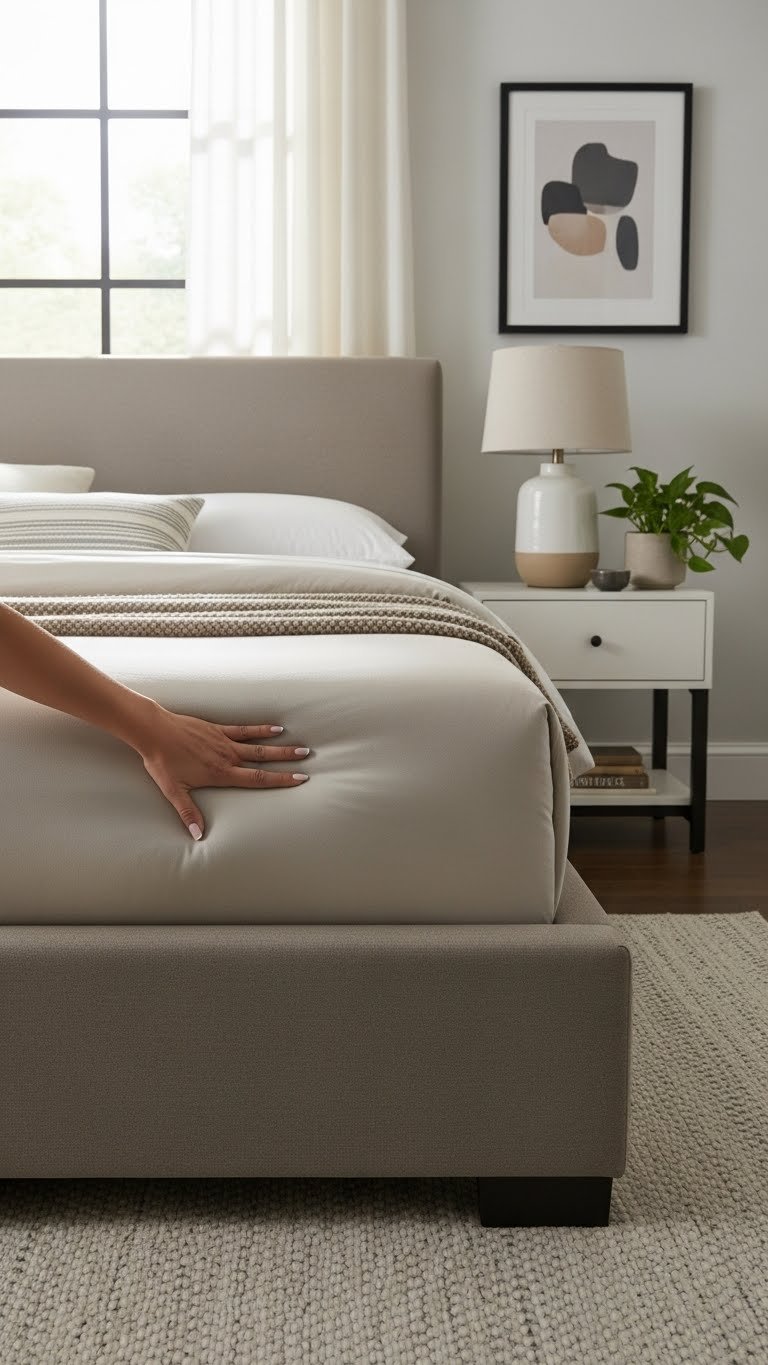
Performance fabrics were designed for high-traffic furniture, but they’re perfect for beds too—they resist stains, don’t retain odors, and actually feel nice (not plastic-y like older versions).
Brands like BEDGEAR, Saatva, and Crate & Barrel use performance fabrics on their beds and headboards. Prices range from $500–$1,500 depending on the piece. If you’re buying a headboard separately, expect $200–$600. The fabric typically costs a bit more upfront but saves you money on cleaning—just spot-clean with soap and water. Perfect if you have kids, pets, or just prefer low-maintenance furniture. Most performance fabrics still feel soft and come in neutral colors.
Your bed stays looking fresh and pristine even with daily use.
13. Install Smart Lighting for Mood and Sleep Cycle Support
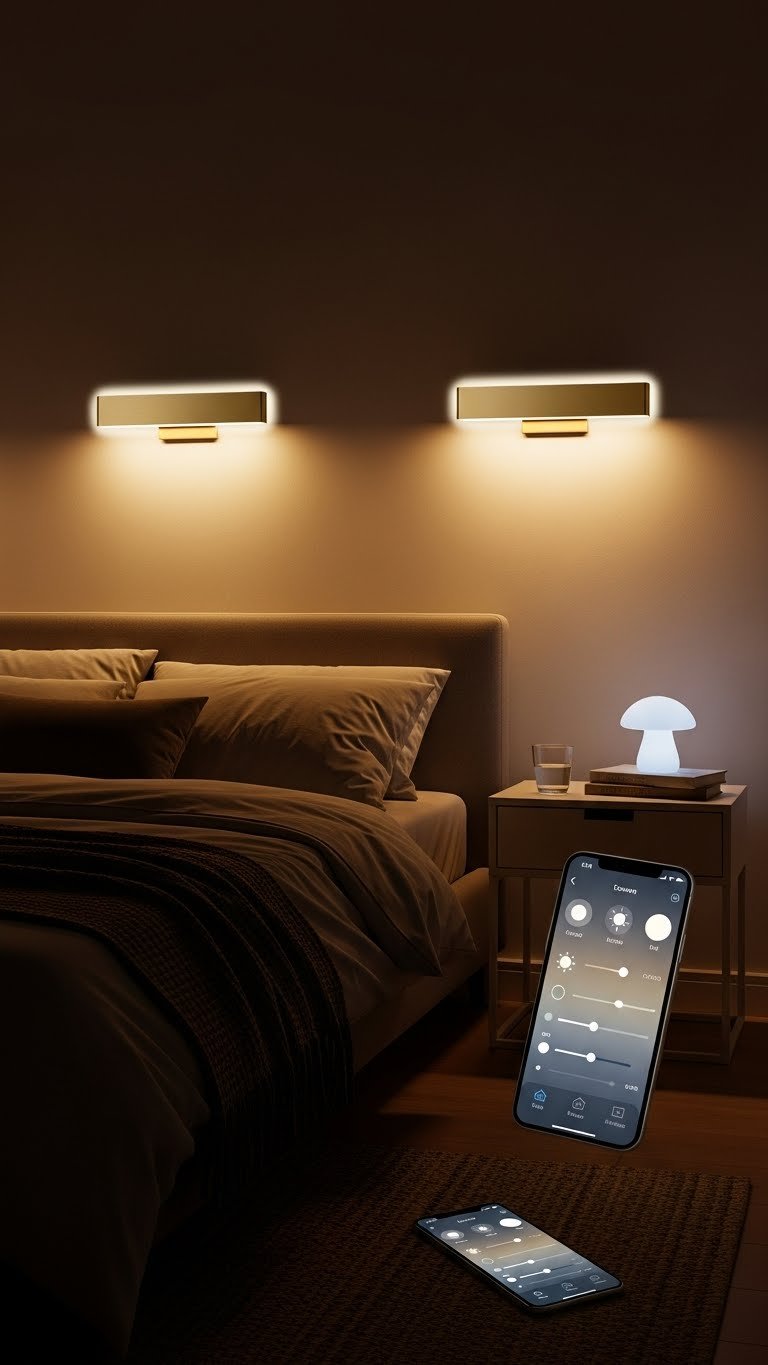
70% of homeowners want better lighting control, and smart bulbs let you adjust brightness and color temperature to match your sleep schedule. Warm light at night supports melatonin; you can gradually brighten in the morning to wake naturally.
Smart bulbs ($10–$25 per bulb) from Philips Hue, LIFX, or Wyze work with your phone or voice assistant. You’ll need compatible fixtures or to replace existing bulbs. Total setup cost: $50–$150 for 2–3 key fixtures. Install them in bedside lamps or overhead fixtures where you spend your pre-sleep time. Many apps let you set schedules—so lights automatically warm up at 8 PM and brighten at 7 AM. The learning curve is shallow (most are plug-and-play), and the sleep benefits are real.
Your bedroom adapts to your natural sleep rhythm instead of fighting it.
14. Use Modular/Adjustable Mattresses for Couple Compatibility
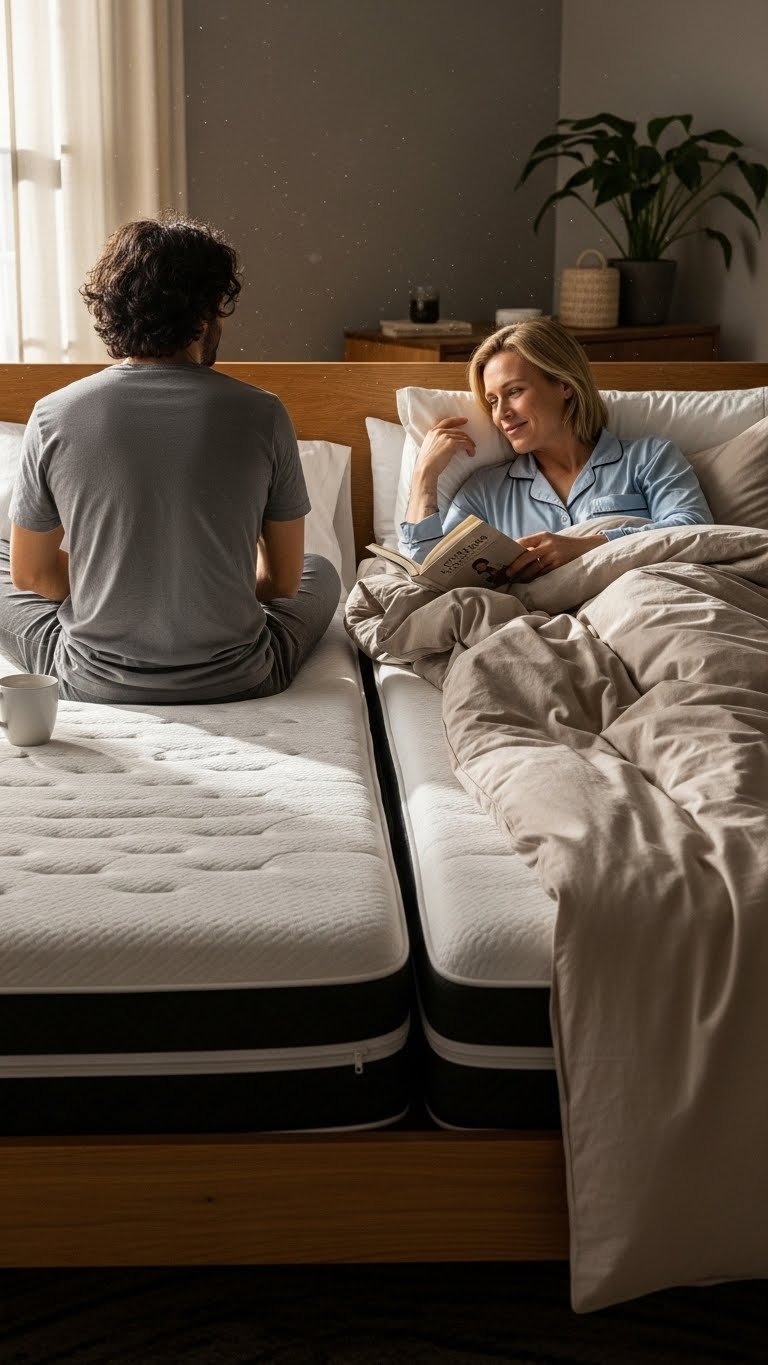
Sleep divorce is real—one person wants a firm mattress while the other prefers soft, and one’s a hot sleeper while the other freezes. Modular mattresses let both of you win.
Companies like BEDGEAR make split-comfort designs where each half has different firmness levels ($1,200–$2,000 for a queen). Some mattresses let you adjust firmness with air chambers ($1,500–$2,500). You’re paying a premium for this flexibility, but it’s worth it if you’ve been compromising on sleep quality. They work in standard frames and come with full trial periods, so you can test if it’s right for you. Perfect if you and your partner have completely different sleep needs.
Both of you actually sleep well for the first time in years.
15. Layer Statement Pillows in Bold Colors (Neutrals Don’t Have to Be Boring)
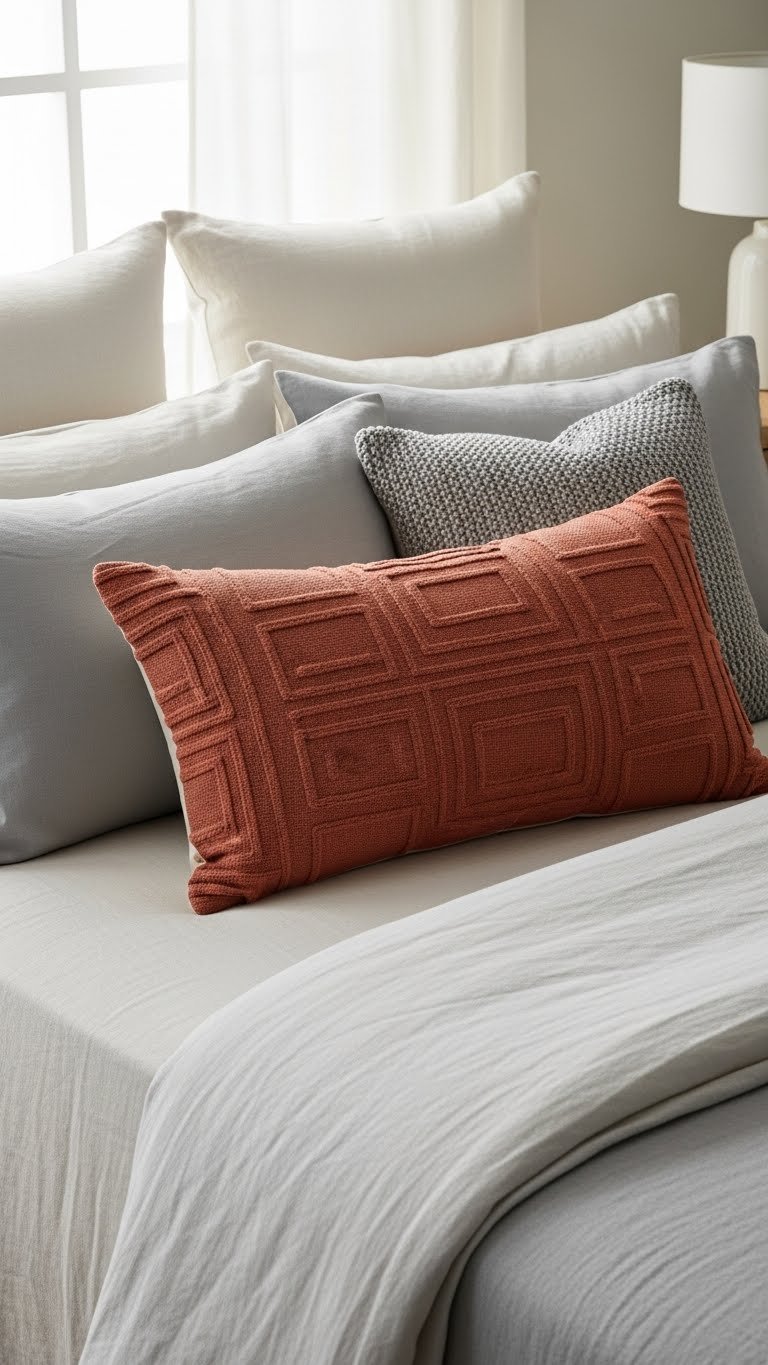
Neutrals are still ruling 2025, but boring gray doesn’t have to be your reality. One or two statement pillows in unexpected colors add personality and visual interest without overwhelming your space.
Pick a pillow cover in a color that feels a bit brave—terracotta, sage, deep teal, or warm ochre—from Target, H&M Home, or Etsy ($20–$60 each). Pair with 2–3 neutral pillows so the color feels intentional rather than random. Budget option: Find colorful vintage or handmade pillows ($15–$40) at thrift stores. Swap out your pillows seasonally to refresh the space for zero extra cost. The key is restraint—one bold color usually hits harder than three.
Your neutral bedroom suddenly feels curated and personal.
16. Invest in a Quality Mattress Protector That Actually Works
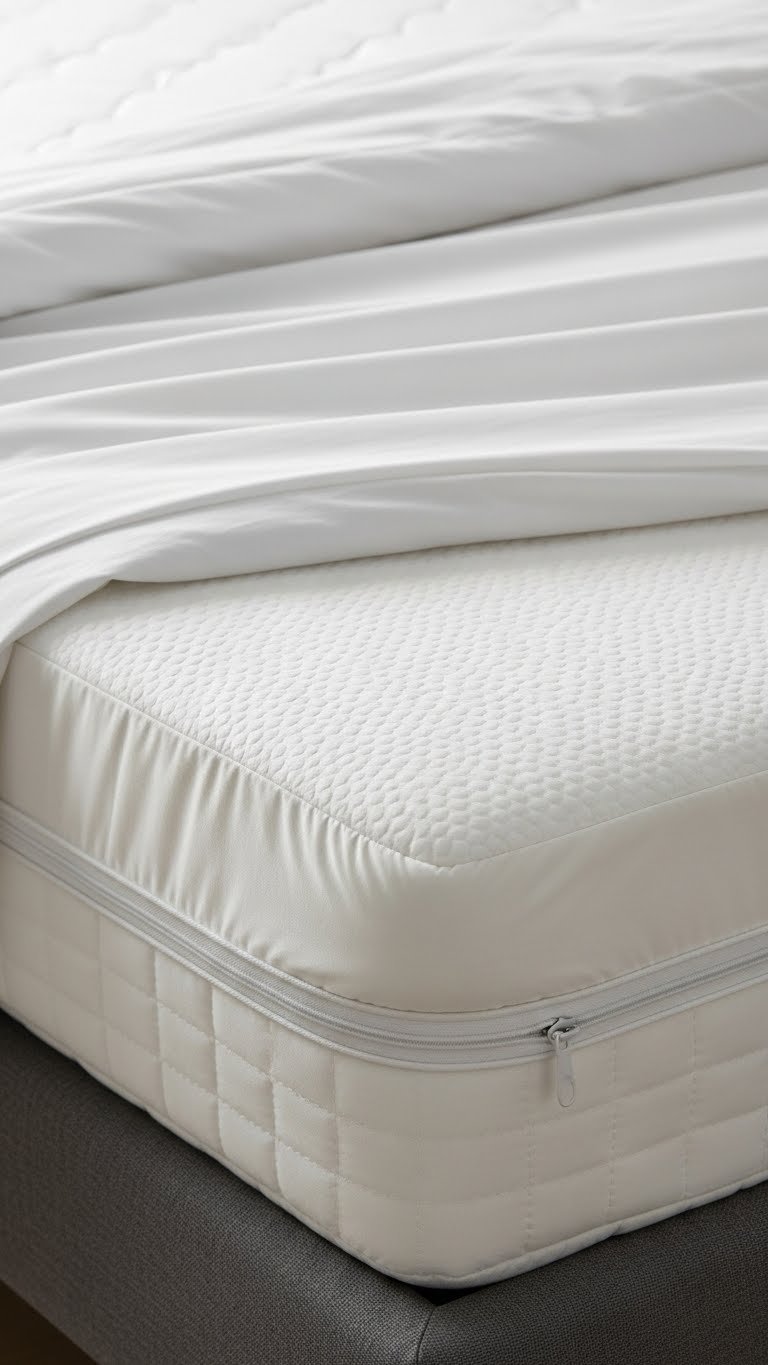
A mattress protector isn’t glamorous, but it’s the difference between a mattress that lasts 10 years and one that needs replacing in 5. It protects against spills, dust mites, allergens, and general wear.
Look for encasement-style protectors (full zippers all the way around) rather than basic covers—they’re better at actually sealing out stuff. Saatva, Purple, and Helix offer waterproof versions ($60–$150). Budget-friendly options from Amazon or Target ($30–$60) also work well. Install it under your fitted sheet so it’s invisible. Most are machine washable—toss in the wash every 1–2 months. This one investment extends your mattress lifespan significantly and protects your sleep surface.
Your mattress stays fresh and protected for years to come.
17. Create a Platform Bed with Under-Bed Storage for Small Spaces
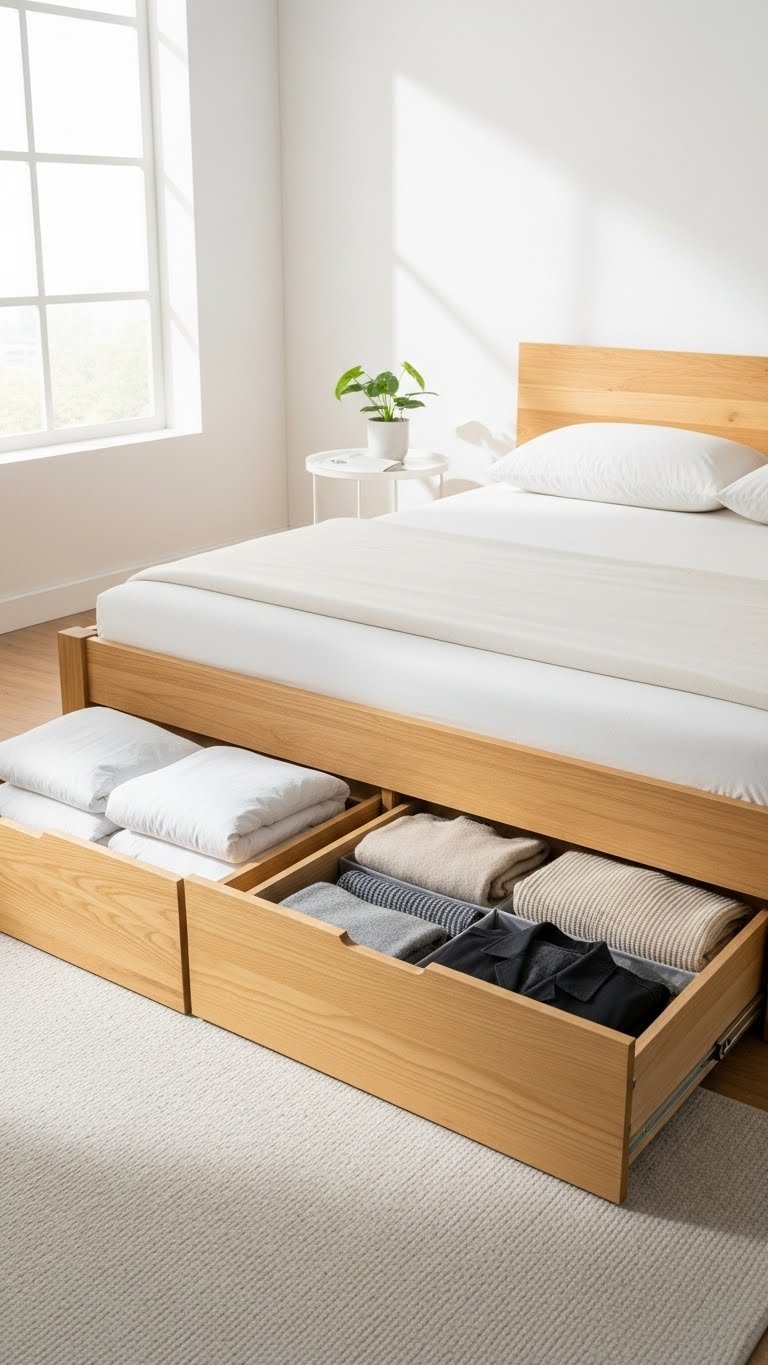
Platform beds eliminate the need for a box spring and create built-in storage opportunities underneath. Perfect for studios and small bedrooms where every inch counts.
Look for platform beds with drawers on Wayfair, IKEA, or West Elm starting around $300–$600 for basic styles, $700–$1,200 for nicer finishes. IKEA’s solid options cost $150–$300. The storage underneath holds 2–3 plastic containers of seasonal clothes, extra bedding, or shoes—reclaim your closet space. Low-profile designs make rooms feel bigger, and you don’t lose any surface area. Installation is straightforward for most models (2–3 hours DIY, or hire help for $100–$150).
Your bedroom gains storage without sacrificing an inch of floor space.
18. Add a Low-Pile Area Rug for Warmth and Visual Grounding
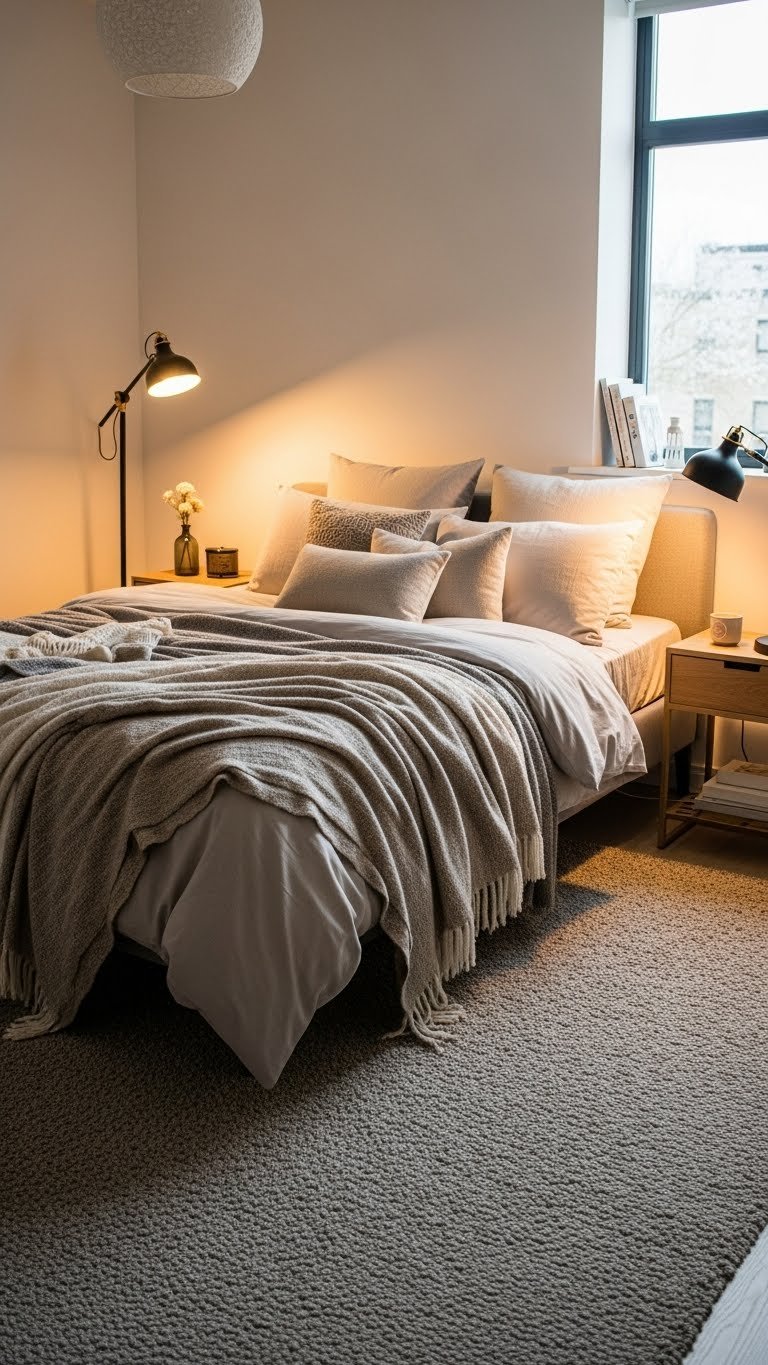
An area rug defines your sleeping space, adds warmth underfoot, and makes your bedroom feel complete instead of floating in an empty room. Low-pile is practical—easier to clean and won’t slip.
Pick a neutral or soft-colored rug from Target, IKEA, Wayfair, or a local rug store in sizes 5’x7′ or 6’x9′ ($50–$300 depending on quality). Jute and sisal blends are budget-friendly and durable ($50–$150). A rug pad underneath prevents slipping and protects your floor ($15–$30). Vacuum weekly and spot-clean spills immediately. If you rent, rugs add personality and hide floor imperfections—they’re totally movable.
Your bedroom feels anchored and intentional instead of unfinished.
19. Install Floating Shelves Above Your Bed for Storage + Style

Floating shelves give you storage without bulky nightstands, and they photograph beautifully. The key is styling them so they look collected, not cluttered.
Floating shelves ($30–$80 each) and brackets ($15–$40 per pair) come from Target, IKEA, Home Depot, or Amazon. Installation takes an hour if you locate studs and use proper anchors (or hire a handyman for $50–$100). Style with 3–4 items max per shelf: a small plant, a decorative book, a candle, a framed photo. The negative space is part of the design. This works great for renters too if you fill the holes before moving. Budget option: Use removable adhesive shelves ($15–$25) that don’t damage walls.
Your bedroom gets functional storage that looks like intentional decor.
20. Use Bunk Beds with Trundles for Multi-Gen and Guest Spaces
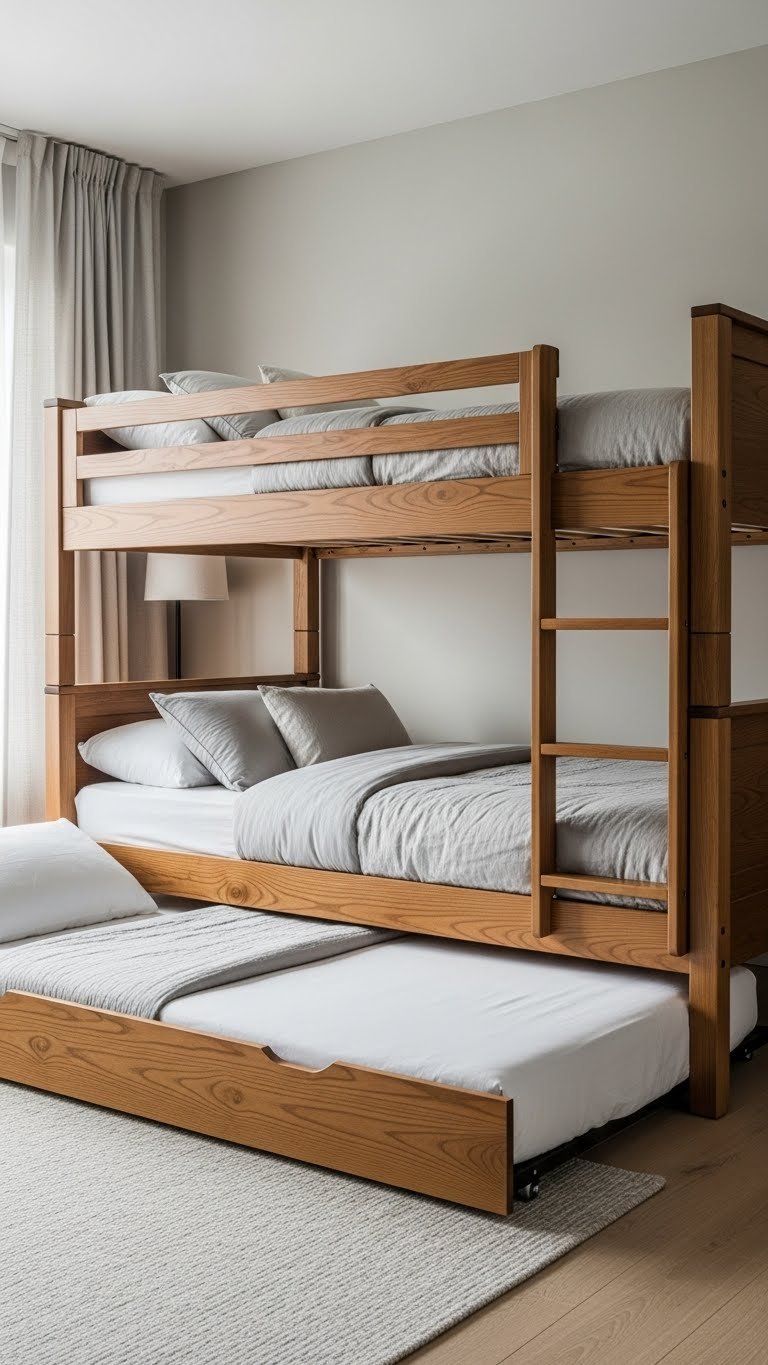
If you have kids, guests, or a multi-generational home, bunk beds with trundles let you maximize sleeping capacity in minimal space. A trundle slides under the top bunk when not in use—game-changer for small homes.
Wooden bunk beds with trundles start around $300–$600 from IKEA, Wayfair, or Amazon, and go up to $1,000–$1,500 for solid wood versions. Metal frames are lighter and easier to move ($250–$500). Make sure ceilings are high enough for the top bunk (typically need 6.5 feet). Trundles themselves sleep surprisingly comfortably with a good mattress ($100–$300). Safety rails, ladder style, and mattress quality matter more than you’d think.
You solve the “where does everyone sleep?” problem without needing a bigger house.
21. Layer Textured Throw Blankets for Visual and Physical Comfort
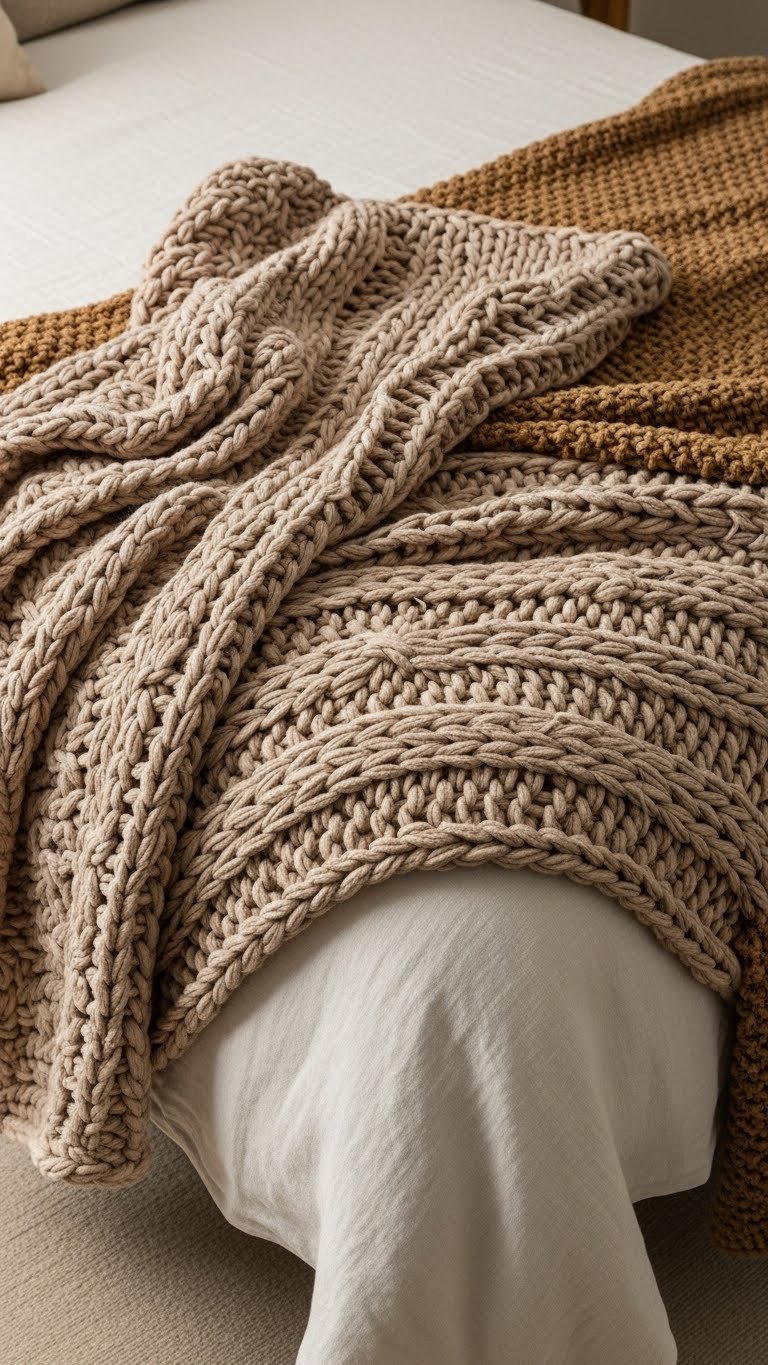
Throw blankets add texture, warmth, and that “styled” feeling without committing to expensive furniture. Layering different textures creates visual depth and invites you to actually use them.
Start with 2–3 throws in varying textures: chunky knit ($30–$80), bouclé ($40–$100), linen ($25–$60), and faux fur ($20–$50) from Target, H&M Home, or Etsy. Mix neutral tones—cream, gray, taupe, oatmeal—for cohesion. Drape them casually over the foot of the bed or a bedroom chair. Budget hack: Thrift quality blankets for $5–$15 each at secondhand stores, or buy on-sale throws during seasonal sales (up to 40% off). These are the first things people reach for—make them count.
Your bed becomes a cozy anchor that makes your whole room feel more intentional.
22. Paint an Accent Wall Behind Your Bed for Impact
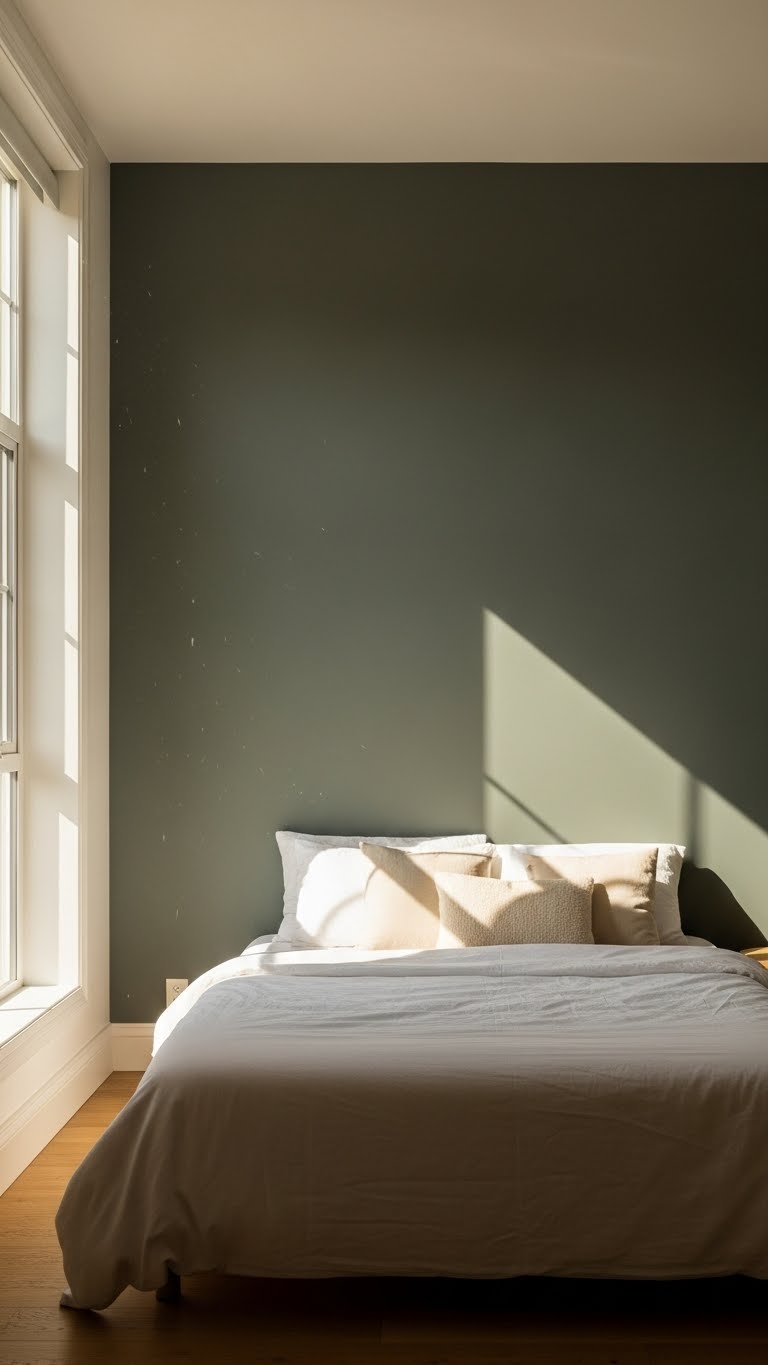
An accent wall behind your bed is the easiest architectural-style change you can make. It draws the eye, defines your sleeping space, and costs way less than replacing furniture.
Choose a muted or warm neutral—soft sage, warm gray, muted terracotta, or deep navy—that feels calming rather than energizing. Matte or eggshell finish paint ($20–$40 per gallon) from any hardware store works perfectly. The project takes a weekend and costs $30–$80 in supplies (tape, primer, brush, roller). Prep is key: tape edges carefully and use primer for better coverage. If you rent, discuss with your landlord—many landlords are fine with it if you agree to paint it back when you leave.
Your bedroom transforms with one wall of color and barely any money spent.
23. Upgrade Your Pillow Game with Supportive, Quality Pillows

Your pillow makes or breaks your sleep quality, yet people often sleep on worn-out, unsupportive pillows for years. The right pillow supports your neck and lasts through hundreds of washes.
Invest in quality pillows ($80–$150 each) from Helix, Saatva, Parachute, or Brooklinen. Get 2–3 different firmness levels so you can adjust based on your sleep position. Memory foam pillows ($50–$100) are popular for support; down-alternative ($40–$80) feels softer; buckwheat hulls ($60–$120) run cooler. Replace pillows every 2 years for hygiene and support. Budget option: Start with one quality pillow and add more gradually. This is the most underrated upgrade people can make—better pillow + better sheets = dramatically better sleep.
You’ll sleep better and wake without neck pain.
24. Install a Bed Canopy Curtain Rod for Romance Without Commitment
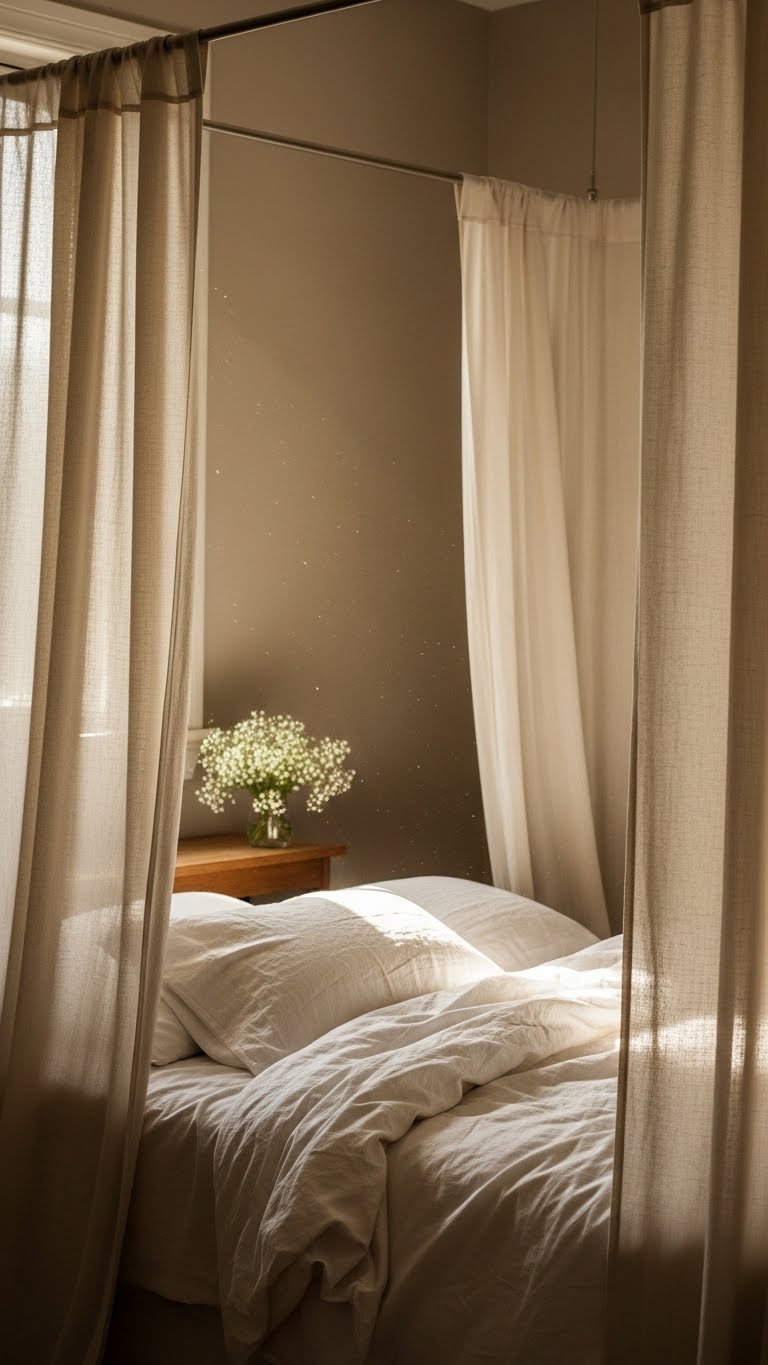
If you want the canopy vibe but don’t want to commit to a full bed frame, a ceiling-mounted curtain rod gives you 80% of the aesthetic at 20% of the cost.
Mount a sturdy curtain rod ($30–$60) and brackets ($15–$30) to your ceiling or wall above the bed. Hang lightweight linen or cotton curtains ($40–$80 per panel). This takes 1–2 hours with basic tools and yields huge visual impact. For renters, adhesive-mount rod systems exist, though they’re less stable for heavy fabric. The rod needs secure mounting (not just drywall anchors) so check ceilings carefully. Your DIY cost is $100–$200 total vs. $500–$2,000 for a full canopy bed.
You get a romantic focal point that feels boutique and intentional.
25. Choose a Platform Bed Base to Eliminate Box Spring Clutter
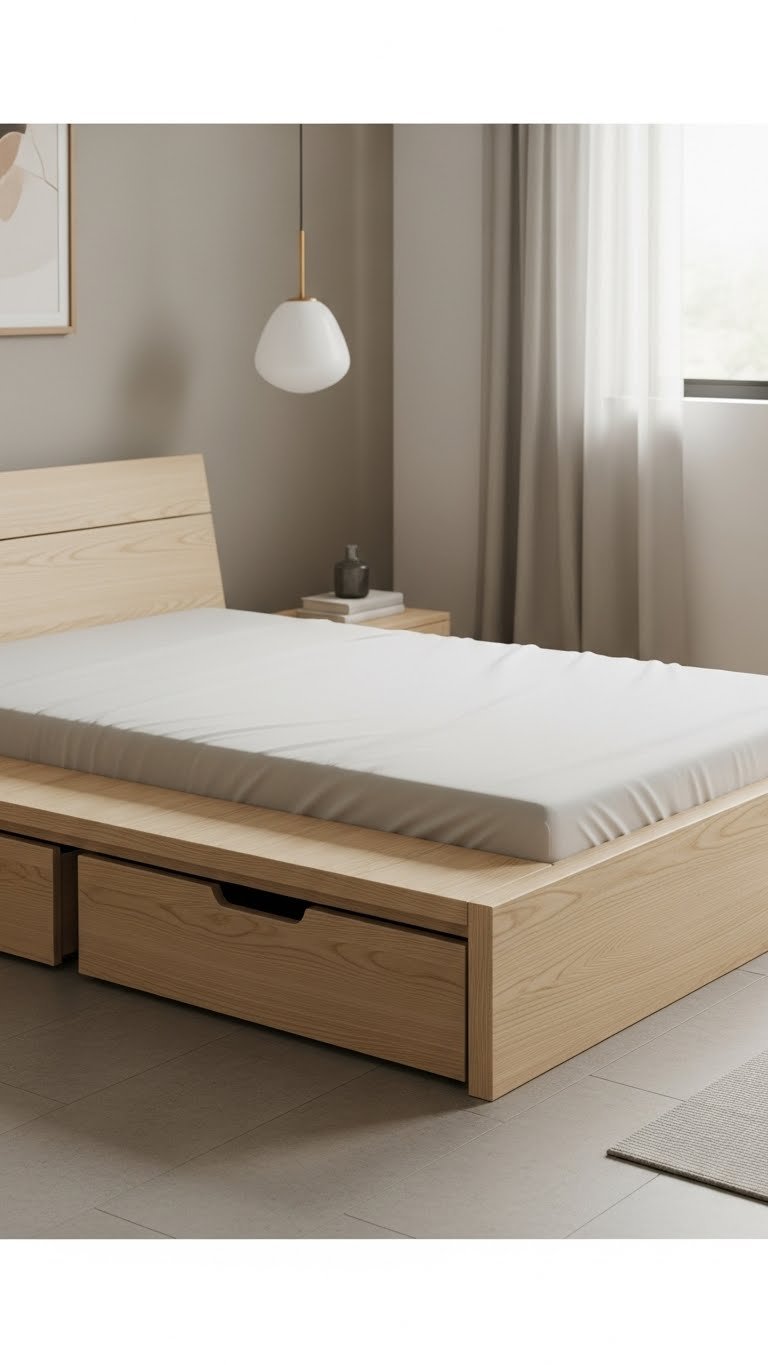
Platform beds eliminate the need for a box spring, which means less bulk under your bed and a cleaner look. Most people don’t realize this until they switch and suddenly their bedroom feels more open.
Look for platform beds at IKEA, Article, Wayfair, or West Elm starting around $200–$400 for basic designs, $600–$1,500 for nicer versions. Solid wood looks better than particleboard if you’re keeping it long-term. The low profile makes rooms feel bigger. Make sure your mattress is compatible—platform beds work with any standard mattress. Assembly time is 2–4 hours depending on complexity; hire help if needed ($100–$150). This is one of the easiest ways to modernize your space.
Your bedroom instantly looks more intentional and less cluttered.
26. Add a Bedroom Scent Ritual with Luxury Candles or Diffusers
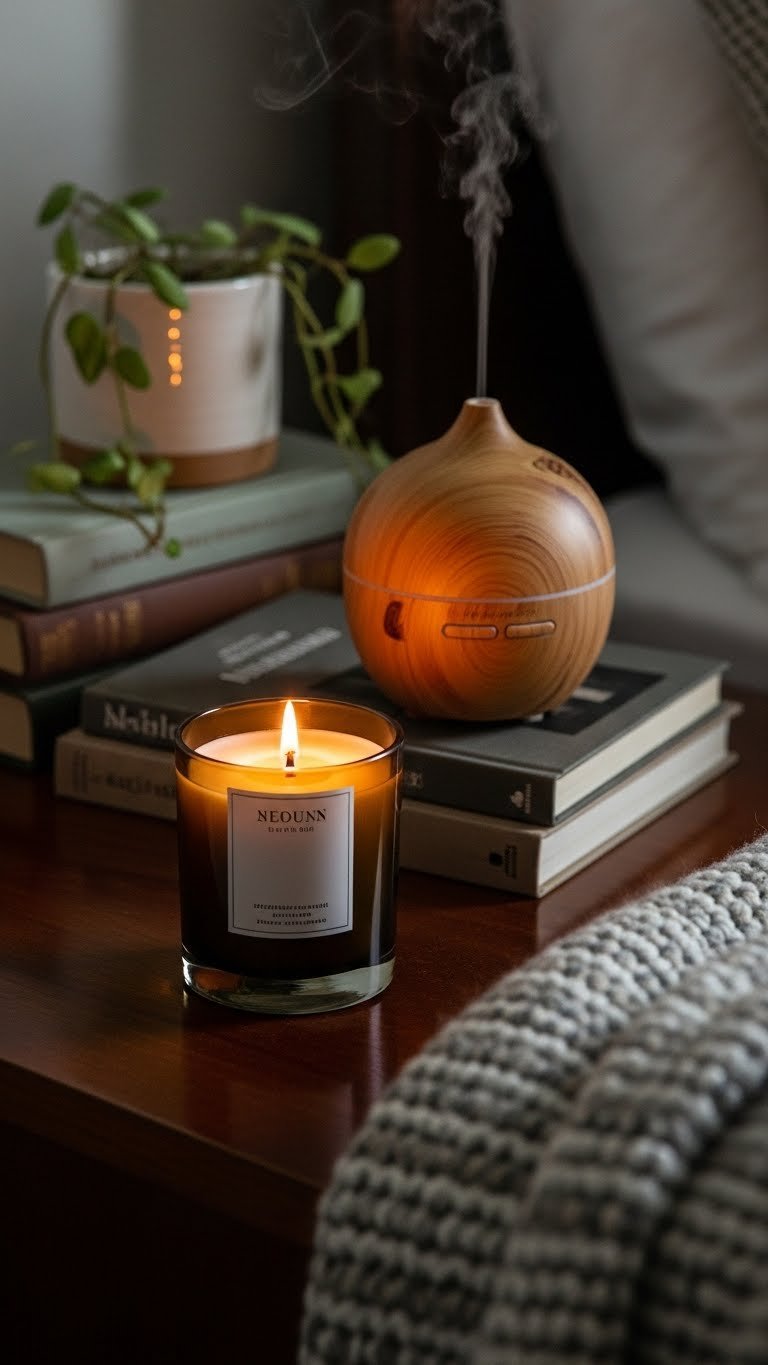
Scent is the most underrated tool for making your bedroom feel like a retreat. The right fragrance triggers relaxation and becomes part of your wind-down routine.
Quality candles ($25–$60) from Jo Malone, Diptyque, or Byredo are an investment, but budget candles ($8–$15) from Target or Amazon still do the job. Essential oil diffusers ($20–$60) with lavender, chamomile, or sandalwood support sleep. Light your candle or turn on your diffuser 30 minutes before bed as a ritual signal to your brain. Unscented options work too—the ritual itself matters more than the specific scent. Rotate scents seasonally to keep things fresh. This costs $20–$80 to fully set up depending on how fancy you go.
Your bedroom becomes a multisensory retreat that signals rest to your whole nervous system.
27. Organize Your Nightstand with Purpose-Driven Containers
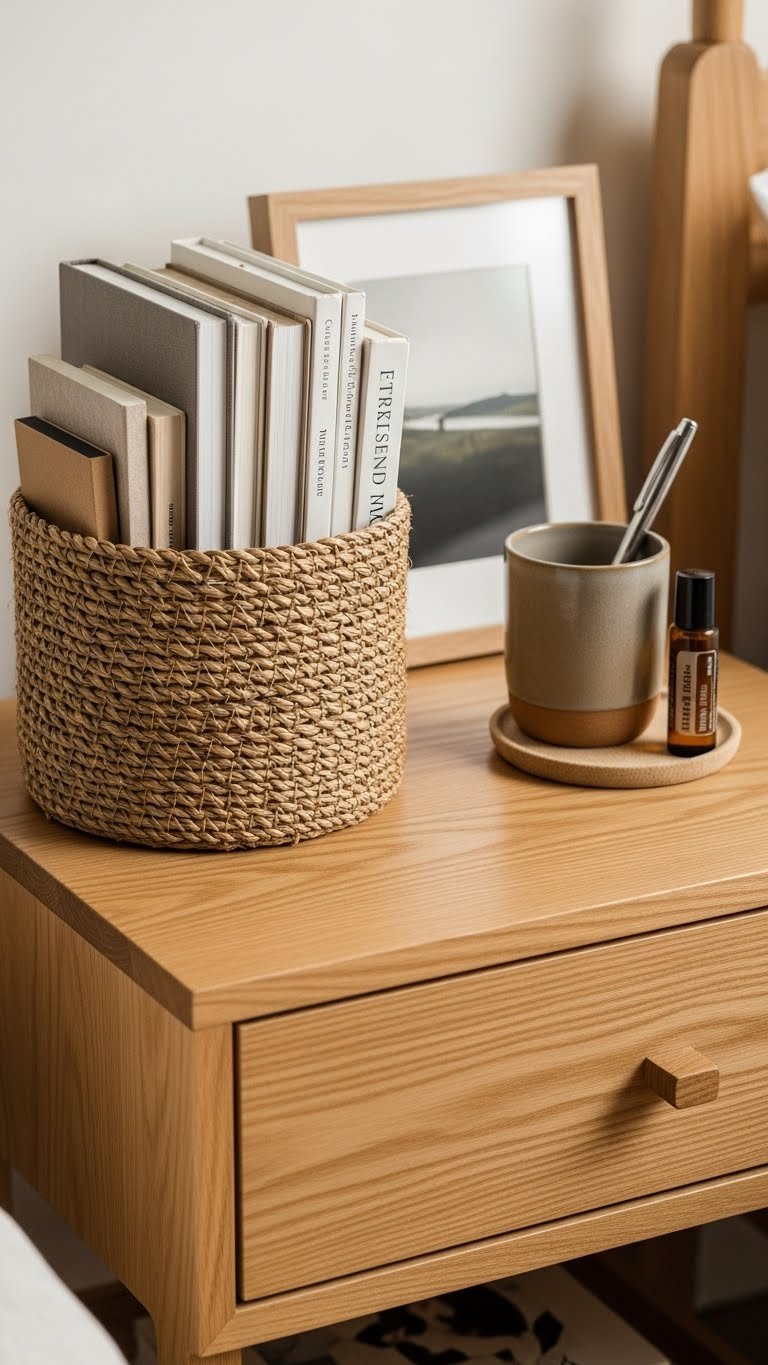
A cluttered nightstand stresses you out every time you look at it. A few simple containers instantly make this high-stress zone feel calm and intentional.
Use 2–3 containers on your nightstand: a small woven basket ($10–$25) for books, a ceramic or glass cup ($5–$15) for pens and remedies, and one small decorative tray ($10–$20) for essentials like your phone (if you keep it there), keys, or a water glass. The goal is “every item has a place.” Everything fits, nothing looks scattered. This costs $30–$60 total and takes 20 minutes to set up. Bonus: it’s easier to clean around your nightstand when everything’s contained. Use items you already have if possible.
Your nightstand becomes a calm, organized extension of your bedroom instead of a stress trigger.
Save this post and start with one idea this weekend. Whether you pick texture, smart lighting, or better sleep support, even one upgrade shifts how you feel in your bedroom. Your sleep sanctuary is worth the effort—small changes add up fast.
Leave a Reply