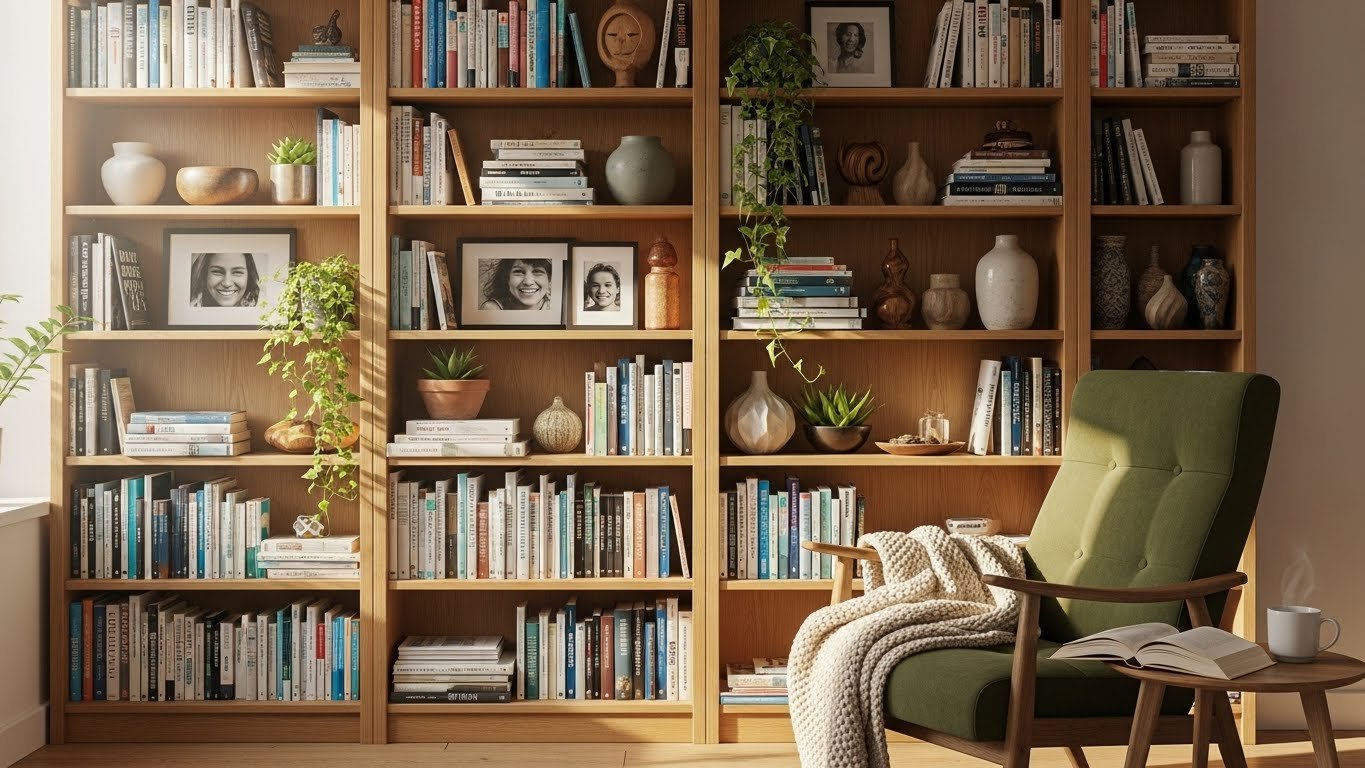
Your bookshelf doesn’t have to be just about storing books. It’s one of the most visible pieces in your home, so why not make it work as hard as your decor does? Whether you’re renting, decorating a small apartment, or refreshing a full library, these 25 ideas will show you how to turn basic shelving into a display that actually reflects who you are. From budget-friendly styling tricks to investment-worthy upgrades, you’ll find solutions for every space and skill level. Let’s make your shelves worth showing off.
1. Layer Books Horizontally and Vertically for Visual Balance
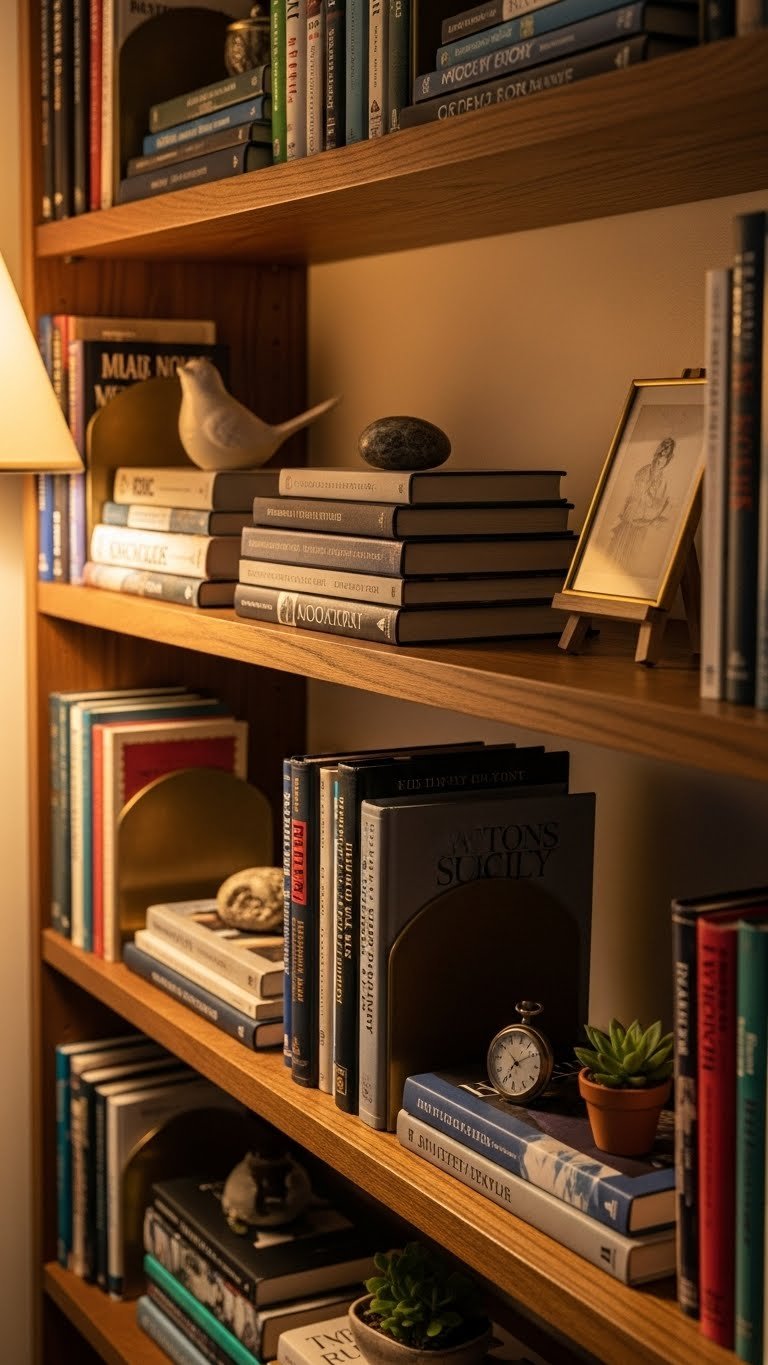
Mixing book orientations breaks up the visual monotony of a straight row. This simple styling technique makes shelves look intentional and curated without spending a dime.
Stack three to four books flat, then stand five to six upright. This creates natural visual breaks and lets your eye move across the shelf. You can group books by color for extra impact or mix them by size for organic flow. No special tools needed—just spend 30 minutes reorganizing what you already own.
The result? Your shelves instantly look more styled and designed, even if nothing changed except the book arrangement.
2. Install Floating Shelves for a Modern, Minimalist Look
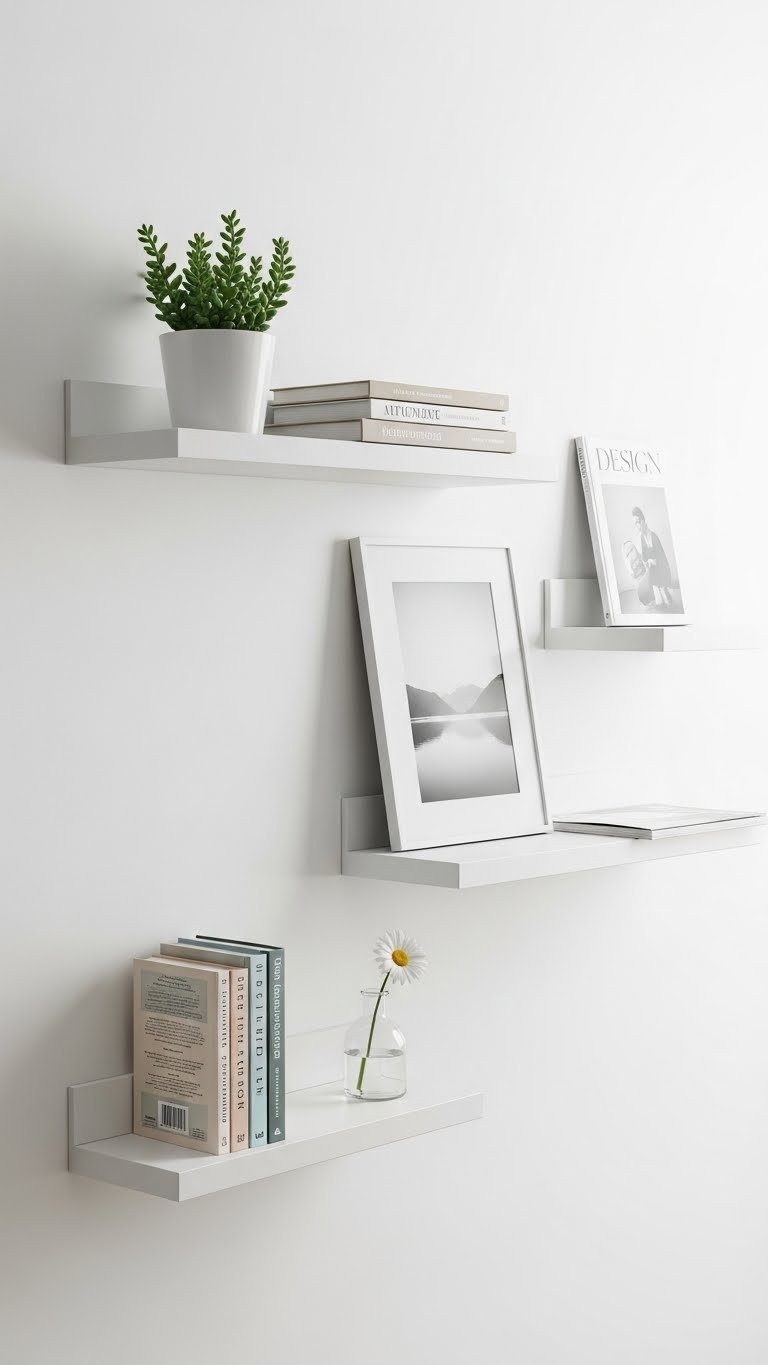
Floating shelves create the illusion of extra space while giving your room a contemporary edge. They’re renter-friendly if you use damage-free mounting strips or are easily installed by a handyperson for about $75–$150 total per shelf (including hardware and labor).
Choose shelves in materials like wood, metal, or composite depending on your aesthetic. Mount them at varying heights rather than straight lines for visual interest. Installation takes one to two hours with basic tools. Target, IKEA, and Wayfair all carry affordable options ($20–$60 per shelf before installation).
You’ll notice how much lighter your space feels. High shelves draw the eye upward, making even small rooms seem taller and more open.
3. Use Bookends as Decorative Statement Pieces

Instead of generic metal bookends, choose ones that match your style. This $15–$40 investment adds personality while keeping books upright and organized.
Look for ceramic bookends with patterns, brass sculptural pieces, or marble blocks. You can find unique options on Amazon, Etsy, or at Home Goods. Space books 6–8 inches apart and position your bookends to create visual “zones” on each shelf. Pair books with plants or photos for extra dimension.
Your shelves instantly look more curated. Bookends become part of your design story, not just functional hardware.
4. Add Small Plants to Break Up Book Density
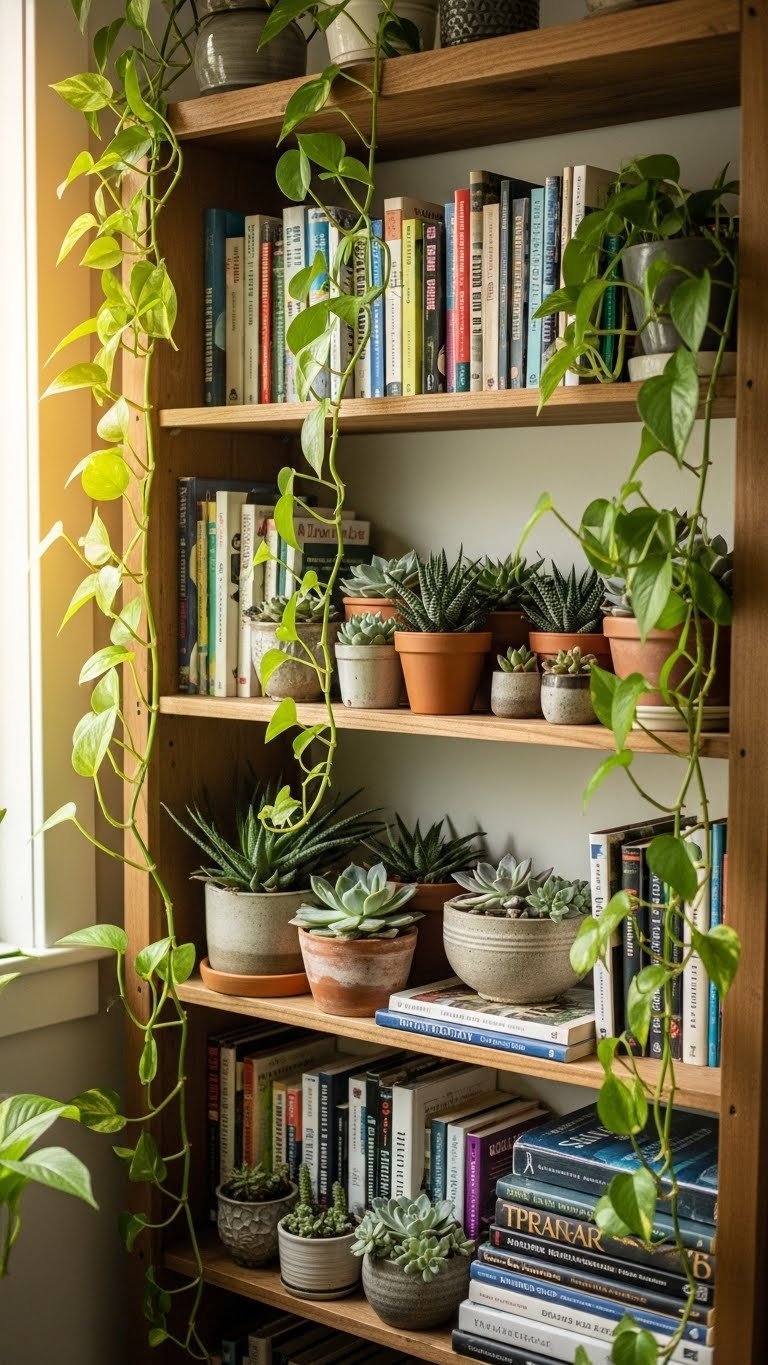
Greenery humanizes shelves and introduces organic shapes that books alone can’t provide. A few small plants ($5–$15 each) transform static shelving into something alive and breathing.
Choose low-maintenance varieties like pothos, snake plants, or succulents that tolerate lower light if your shelf isn’t near a window. Arrange them at varying heights rather than a straight line. Water sparingly—once every two weeks for most shelf-plants. Rotate them outside monthly for better health.
This change makes your space feel calmer. Visitors notice the greenery before the books, which says “I live here” instead of “I’m just storing things.”
5. Create a Colorful Book Rainbow for Instagram-Worthy Appeal

Rainbow shelves are a huge social media trend that actually works in real life. It takes two to three hours but costs nothing—you’re just rearranging what you own.
Sort books by spine color and arrange them left to right following the spectrum. Start with warm tones on one end and cool tones on the other. You don’t need perfect color matching; approximate groupings look intentional. This works especially well for one accent shelf rather than your entire bookcase.
Your bookshelf becomes the focal point of the room. It’s the first thing people photograph, and it’s proof that organization can be beautiful.
6. Mix in Empty Negative Space for Breathing Room
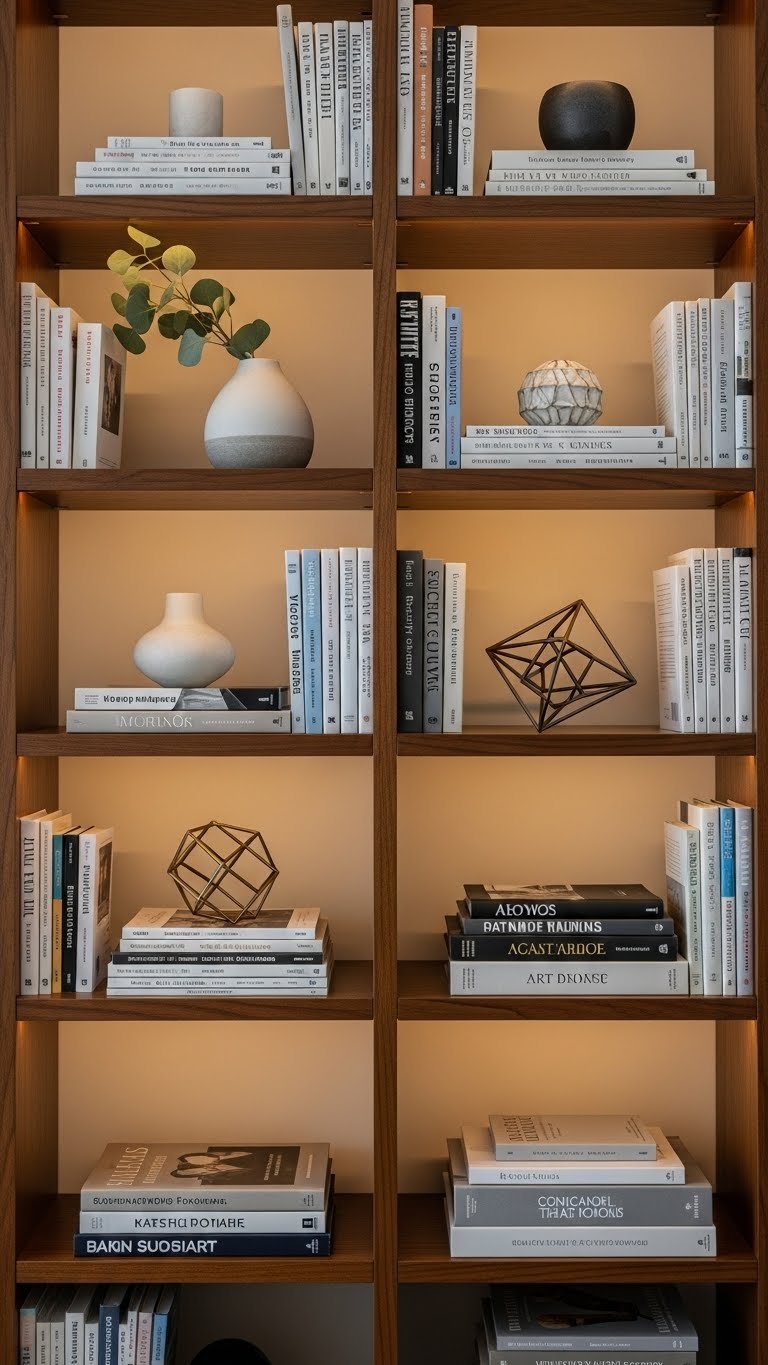
An overcrowded shelf feels chaotic, but empty space feels intentional and restful. The trick is balance: fill about 60–70% of each shelf, leaving 30–40% open.
This works best when you combine books with decorative objects, plants, or framed photos in the empty zones. Vary shelf fullness—make some busier and others more sparse for visual interest. You won’t need to buy anything new; just remove a few books and relocate them to another shelf.
Your room instantly looks larger and less cluttered. The eye rests on empty space, which makes the entire room feel calmer and more organized.
7. Display Coffee Table Books Horizontally for Designer Appeal
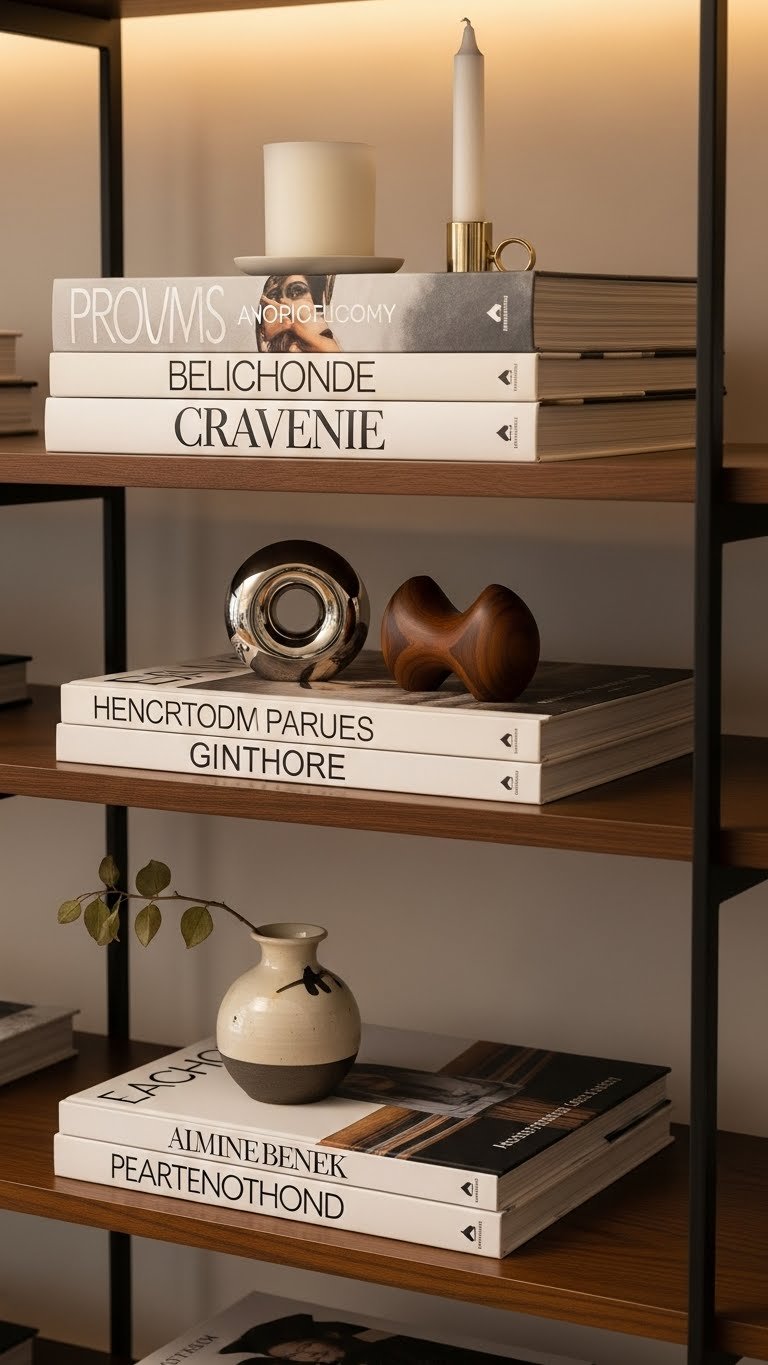
Coffee table books have gorgeous spines and covers worth showing off. Stacking them horizontally uses their visual appeal while filling shelf space efficiently.
Choose three to five art, design, or photography books with covers that match your aesthetic. Stack them at the front edge of a shelf, leaving room behind for other items. Layer smaller decor on top—candles, sculptures, or small plants. These books cost $15–$50 each but last years and spark conversation.
This approach makes your shelves look magazine-worthy. Guests see thoughtful curation instead of random storage.
8. Paint Your Bookshelf a Bold Accent Color

A fresh coat of paint ($20–$50 for quality interior paint) completely changes your shelf’s personality. This works especially well for built-ins or wood bookcases you own.
Choose colors that complement your walls but feel distinct—think deep teal, forest green, warm charcoal, or even cream against darker walls. Use primer first, then two coats of interior paint. Allow 24 hours to dry. The project takes three to four hours spread across a weekend.
Your bookshelf becomes an architectural feature. Books and decor now pop against the backdrop instead of blending into the wall.
9. Install Adjustable Shelving for Flexibility

Adjustable shelving lets you customize shelf heights based on your collection. This $80–$200 investment pays off if you rent or plan to use the unit long-term.
Look for modular systems like IKEA’s Kallax, Ivar, or Elvarli lines, which offer flexibility without permanent installation. Adjust shelves every six months as your collection changes. Renter-friendly options use tension rods or damage-free brackets rather than permanent mounting.
You’ll stop struggling with awkward spacing. Tall books, magazines, and decorative objects finally fit where you need them instead of forcing everything to standard heights.
10. Combine Books with Framed Artwork for Gallery Wall Vibes
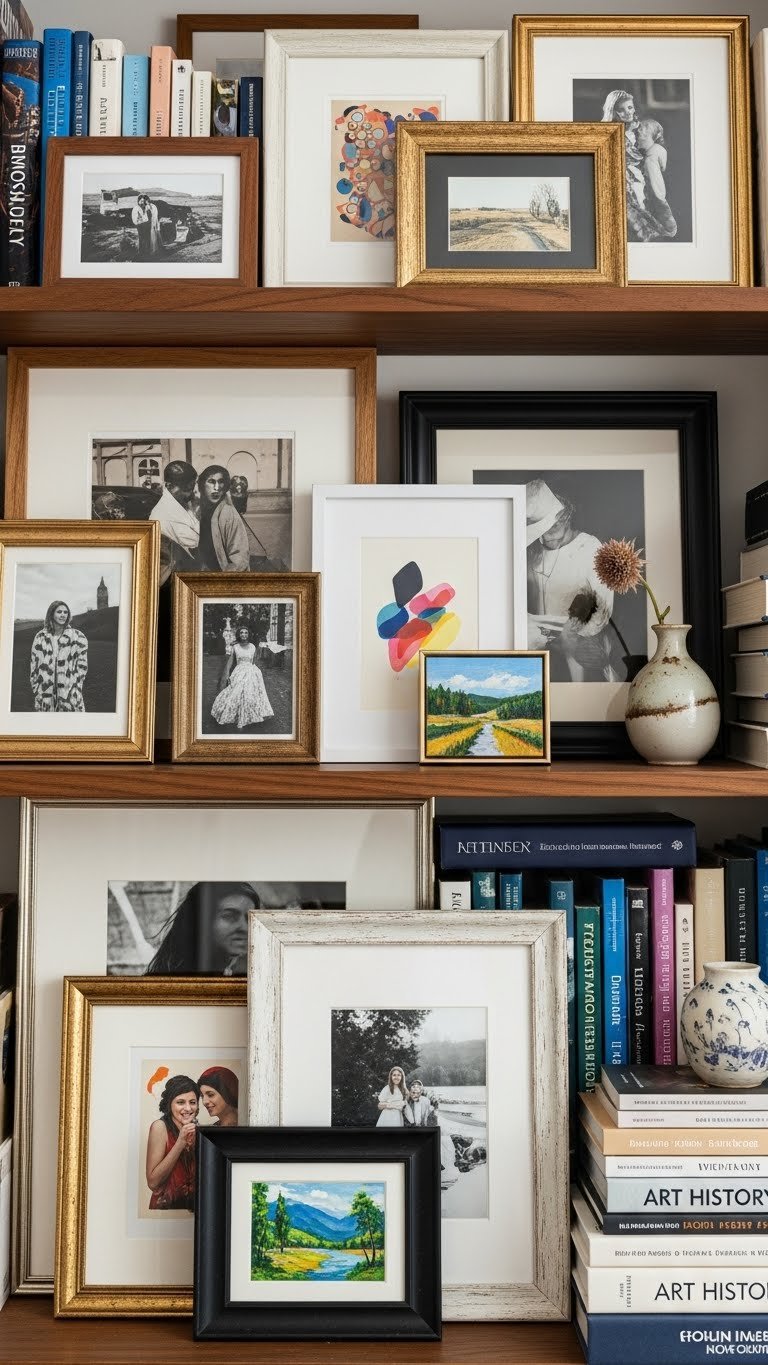
Mixing framed art into shelving creates a gallery feel without committing to wall space. Lean smaller frames against the back of the shelf or stand them upright between book clusters.
Use frames of varying sizes and finishes—wood, metal, acrylic—for visual interest. Rotate artwork seasonally or based on mood. Affordable frames start at $5–$15 from IKEA, Target, or thrift stores. This costs almost nothing if you use existing photos and prints.
Your shelf transforms into a personal gallery. Instead of just storing books, you’re displaying memories and art that matter to you.
11. Use Baskets to Corral Clutter and Add Texture
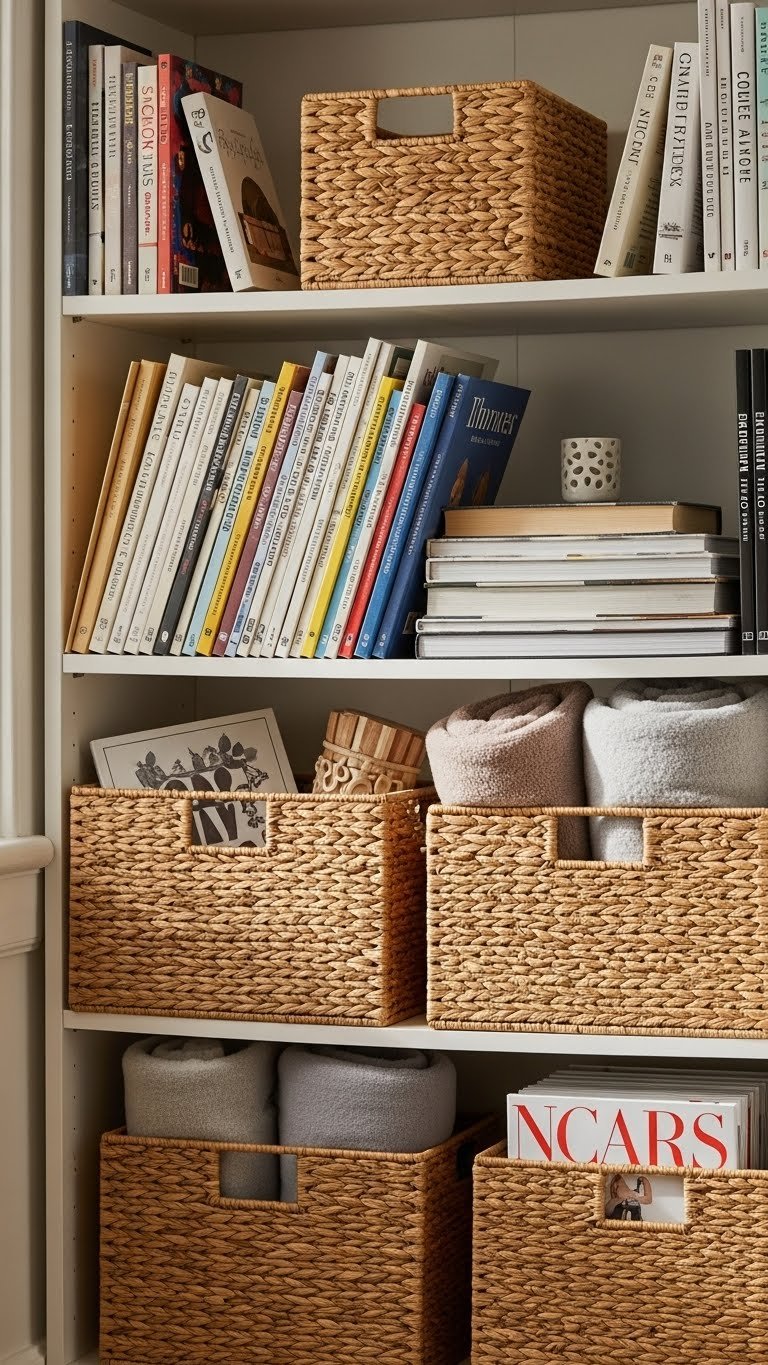
Open baskets hide clutter while adding warmth and texture. This $15–$50 upgrade instantly organizes anything you’re embarrassed to display.
Choose baskets that fit your shelf depth and complement your style—seagrass, woven rattan, or fabric bins work equally well. Use them to store extra books, blankets, office supplies, or anything you want hidden but accessible. Label them lightly for easy finding.
Your shelves become more functional and visually soft. The eye sees intentional organization instead of scattered items.
12. Lean Books at an Angle for Relaxed, Curated Appeal

Leaning books creates movement and visual interest that rigid rows can’t achieve. This free styling trick makes shelves look less formal and more approachable.
Select a few books with covers you love and lean them against the shelf wall or other books at slight angles. Don’t overthink it—the imperfection is the point. Mix leaned books with upright stacks for balance. This takes 10 minutes to rearrange.
Your shelves look more relaxed. This subtle change suggests someone actually lives here and uses these books, not just displays them perfectly.
13. Incorporate Vintage or Thrifted Finds for One-of-a-Kind Character
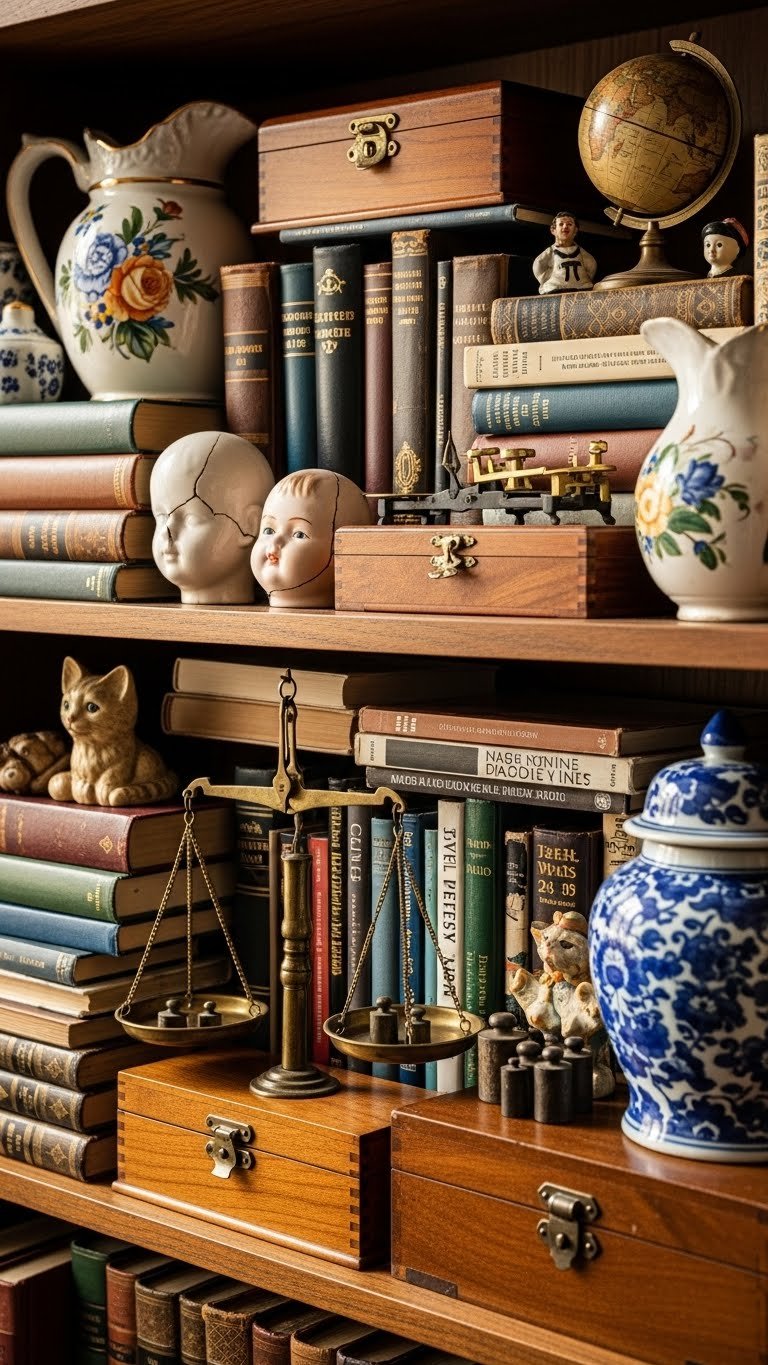
Vintage and thrifted pieces add personality books alone can’t provide. Thrift stores and antique markets offer one-of-a-kind items for $2–$20 each, making this affordable character-building.
Scout estate sales, Goodwill, and local antique shops for items that speak to you—vintage cameras, brass sculptures, old books with beautiful spines, decorative boxes. Mix these treasures among your books for a collected aesthetic. The randomness and history are what make this work.
This approach transforms your shelves into a conversation starter. Every item has a story, and visitors notice the personal touches more than the books themselves.
14. Create a Mini Library for Children’s Books with Lower Shelf Access
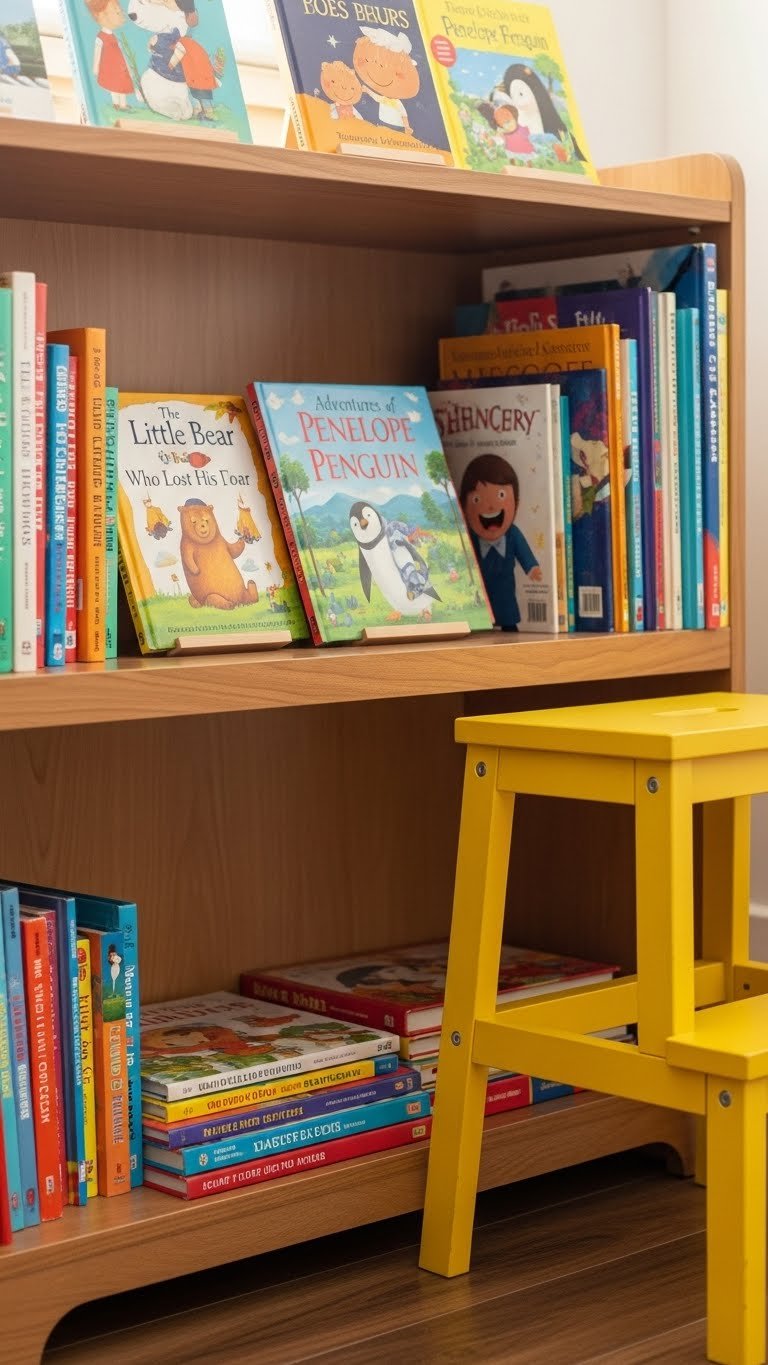
Lower shelves at kid-height with forward-facing display make reading accessible and inviting. This costs nothing if you already have books; it’s just strategic placement and perhaps a small step stool ($15–$30).
Arrange picture books with covers showing forward on lower shelves so kids can see and grab them easily. Stand chapter books spine-out above. Add a small bench or cushion nearby for reading. This encourages independent book selection.
Kids see this as their shelf, which means they’re more likely to read and care for books. You’re building a reading habit while keeping children’s books organized and visible.
15. Install LED Strip Lighting for Subtle Ambient Glow
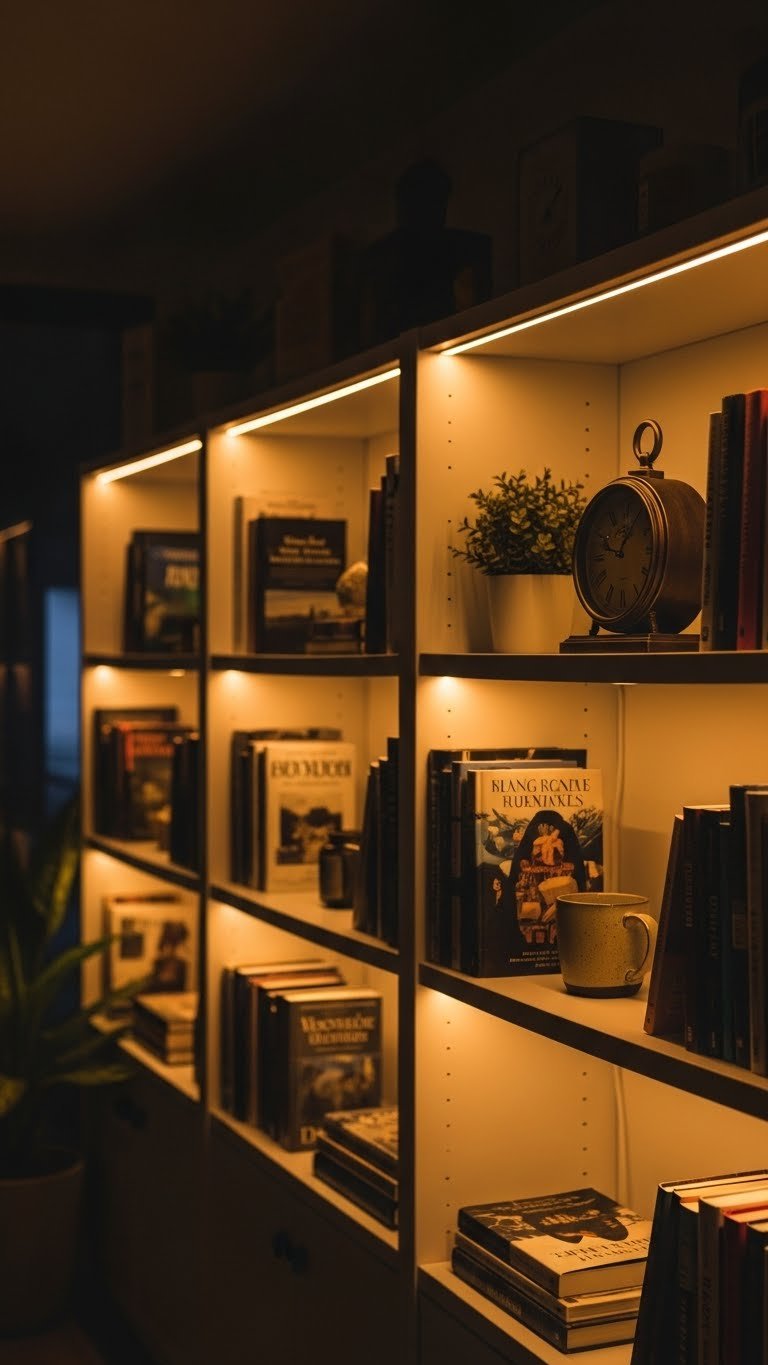
Shelf lighting adds ambiance and highlights your display. This $20–$50 upgrade makes shelves look professionally styled, especially in evening hours.
Choose warm white LED strips (avoid cool blue unless matching a modern aesthetic) and install them under shelf edges or along the top back. Most are adhesive-backed and battery or USB-powered. Installation takes 15 minutes. Brands like Nanoleaf and simple Amazon strips work well.
Your shelves become a design feature, not just storage. The soft lighting makes reading easier and adds sophistication to your entire room.
16. Group Similar Items Together in Visual Clusters
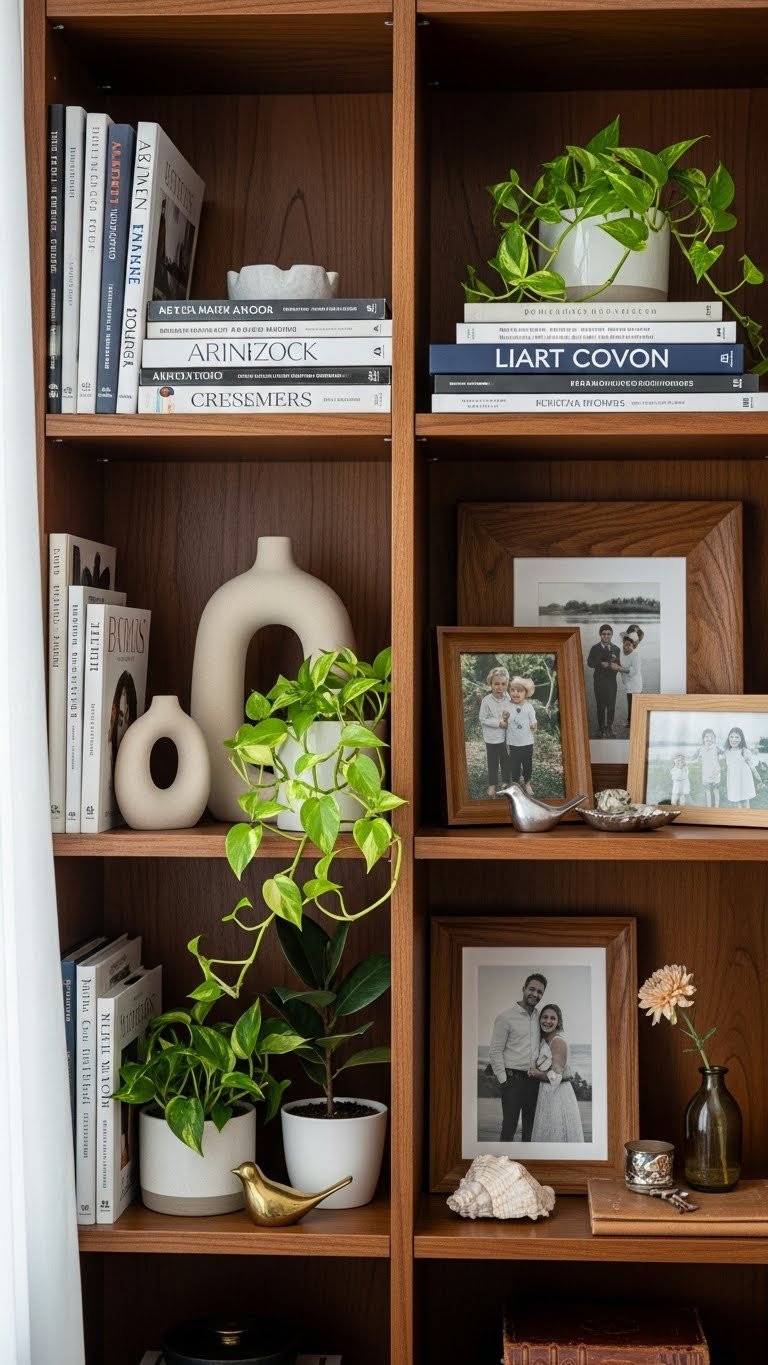
Grouping similar items creates visual order and makes spaces feel more intentional. This free organizing principle takes 30 minutes to implement.
Dedicate shelf sections to themes: one for cookbooks, one for fiction, one for art and plants, one for family photos. Keep each cluster contained within a zone rather than spreading items randomly. Leave breathing room between zones.
Your shelves tell a story. Instead of appearing randomly filled, they reflect how you actually live and what you care about.
17. Display Decorative Books with Coordinated Spines
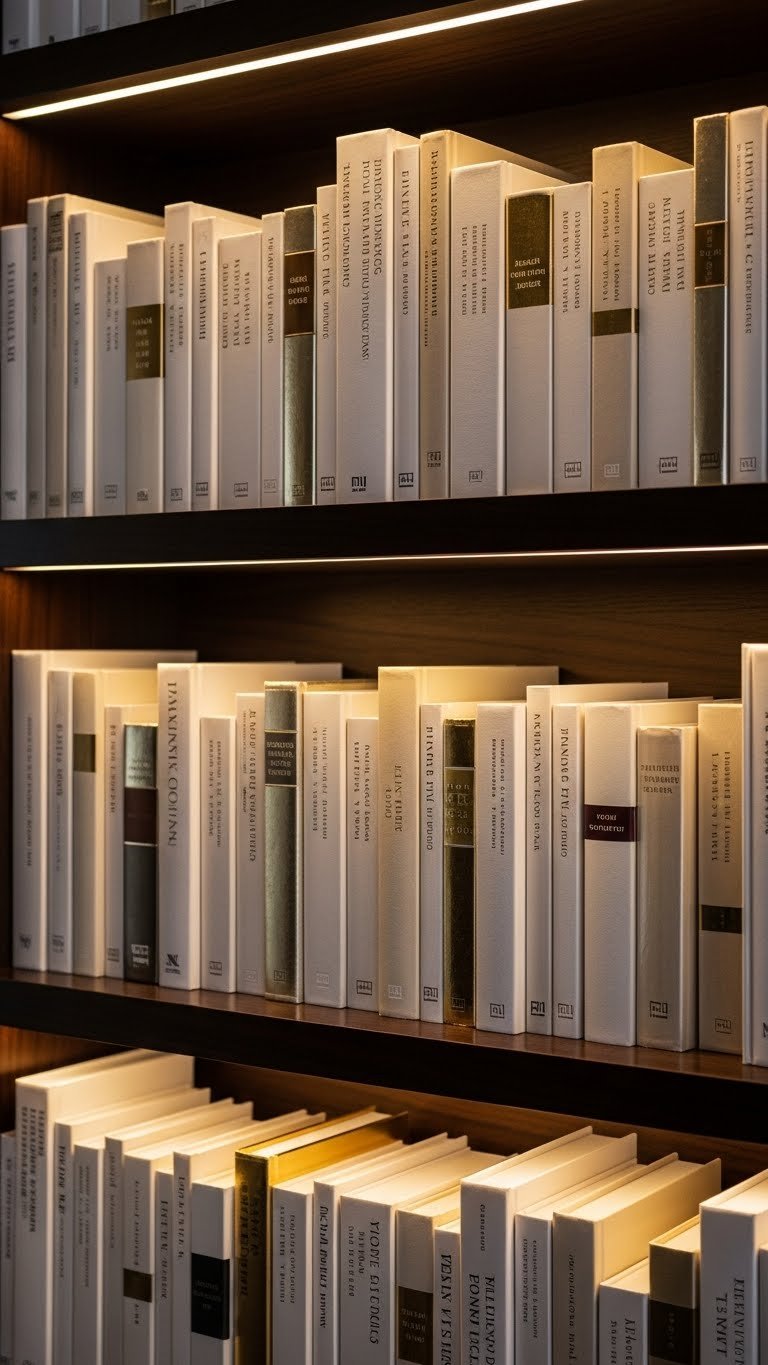
Decorative books (whether you read them or not) add visual weight and color coordination. Quality options cost $10–$30 each from bookstores or online retailers.
Look for books with beautiful typography, photography, or coordinating colors—coffee table books, art books, or design books work perfectly. Arrange them by color or size to create cohesion. Stack them at varying heights with a few standing upright.
This approach takes your shelves from “storage” to “designed space.” Visitors see intention and style, not just random books.
18. Use Shelf Dividers or Metal Rods to Prevent Books from Slumping
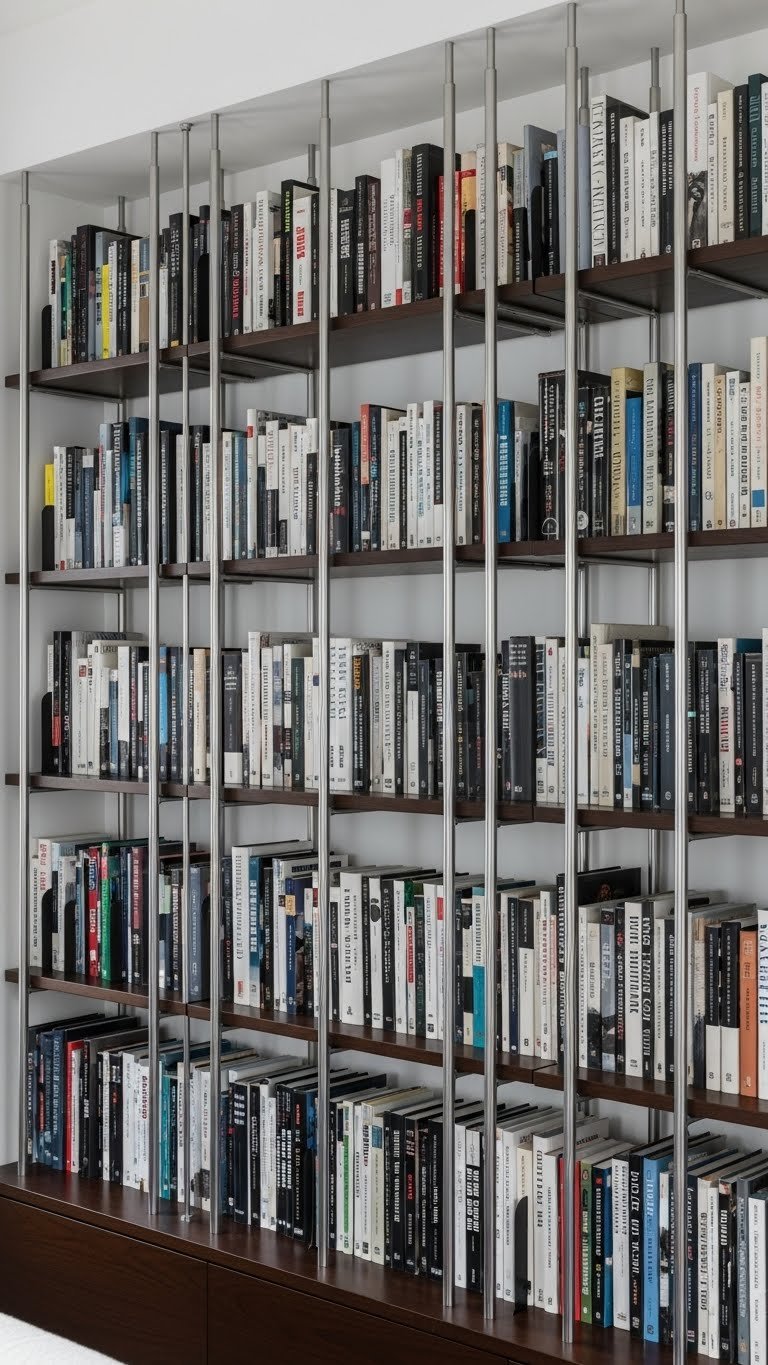
Shelf dividers prevent books from tipping and sliding while adding visual structure. Options range from $5–$25 each depending on style.
Choose dividers that complement your aesthetic—simple metal, decorative brass, or natural wood work best. Space them about 10–12 inches apart to create sections. Arrange books vertically between dividers. This also creates visual stopping points across the shelf.
Your shelves maintain organization without constant adjustment. Books stay upright, and the dividers add another layer of intentional design.
19. Rotate Your Display Seasonally for Constant Freshness
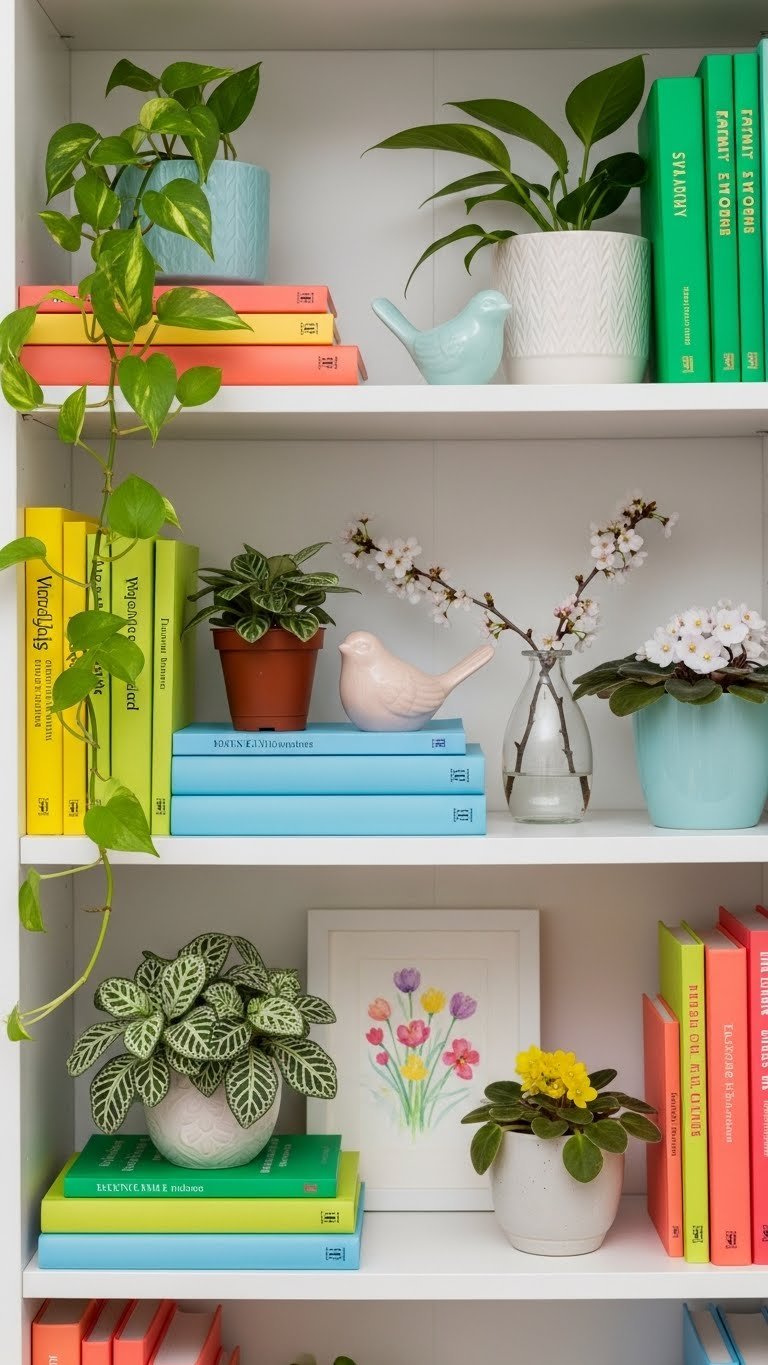
Seasonal rotation keeps your shelves from feeling stale and lets you use display space efficiently. This costs nothing but takes two to three hours per refresh.
Every three months, swap out 20–30% of your displayed books and decor. In spring, bring forward bright colors and fresh plants. Summer calls for travel books and lighter reads. Fall welcomes jewel tones. Winter feels good with cozy books and warm lighting. Rotate items between shelves and storage.
Your space feels intentionally refreshed without redecoration. This practice keeps shelves interesting and prevents the “same old shelf” feeling.
20. Pair Tall Vertical Shelves with Low Horizontal Stacks for Depth

Layering tall and short stacks creates three-dimensional depth that flat rows can’t achieve. This costs nothing—pure strategic arrangement of existing books.
Place a tall stack of books in the back or middle of a shelf, then layer a horizontal stack in front. This creates depth and visual interest while maximizing space. Vary the pattern across different shelves to avoid repetition.
Your shelves look more sophisticated and magazine-worthy. The layering draws the eye through the display instead of stopping at the surface.
21. Create a Reading Nook with Matching Pillows and Throws
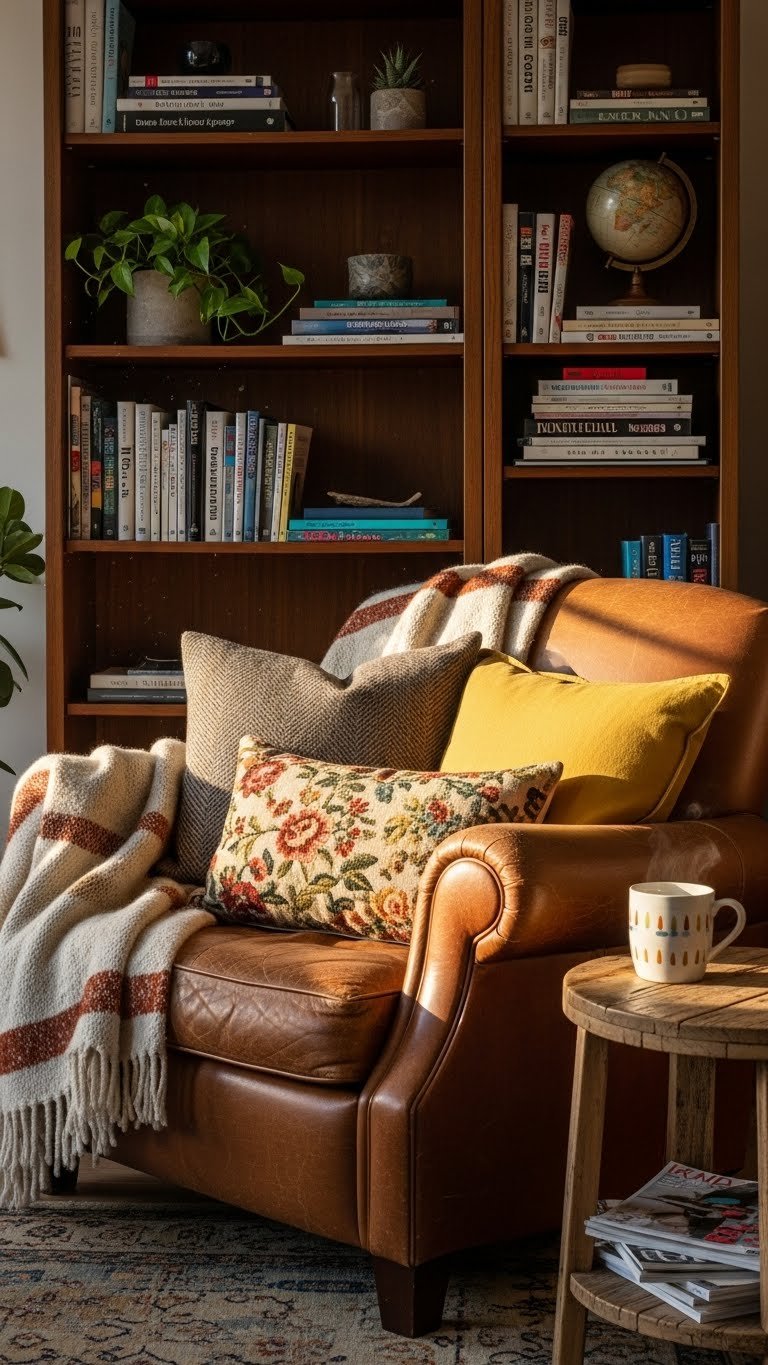
Pairing your shelf with a reading zone makes the display functional and inviting. A comfortable chair and soft textiles cost $100–$300 but create an entire lifestyle moment.
Choose a chair that fits your space—a full armchair, accent chair, or even a large cushion works. Layer it with pillows and a throw blanket in colors that complement your shelf. Add a small table for beverages and books in progress. Position it where natural light reaches the shelf.
Your bookshelf becomes more than decoration—it becomes the centerpiece of a personal retreat. This is where people actually spend time instead of just looking.
22. Mix Upright and Tilted Frames for Dynamic Art Display
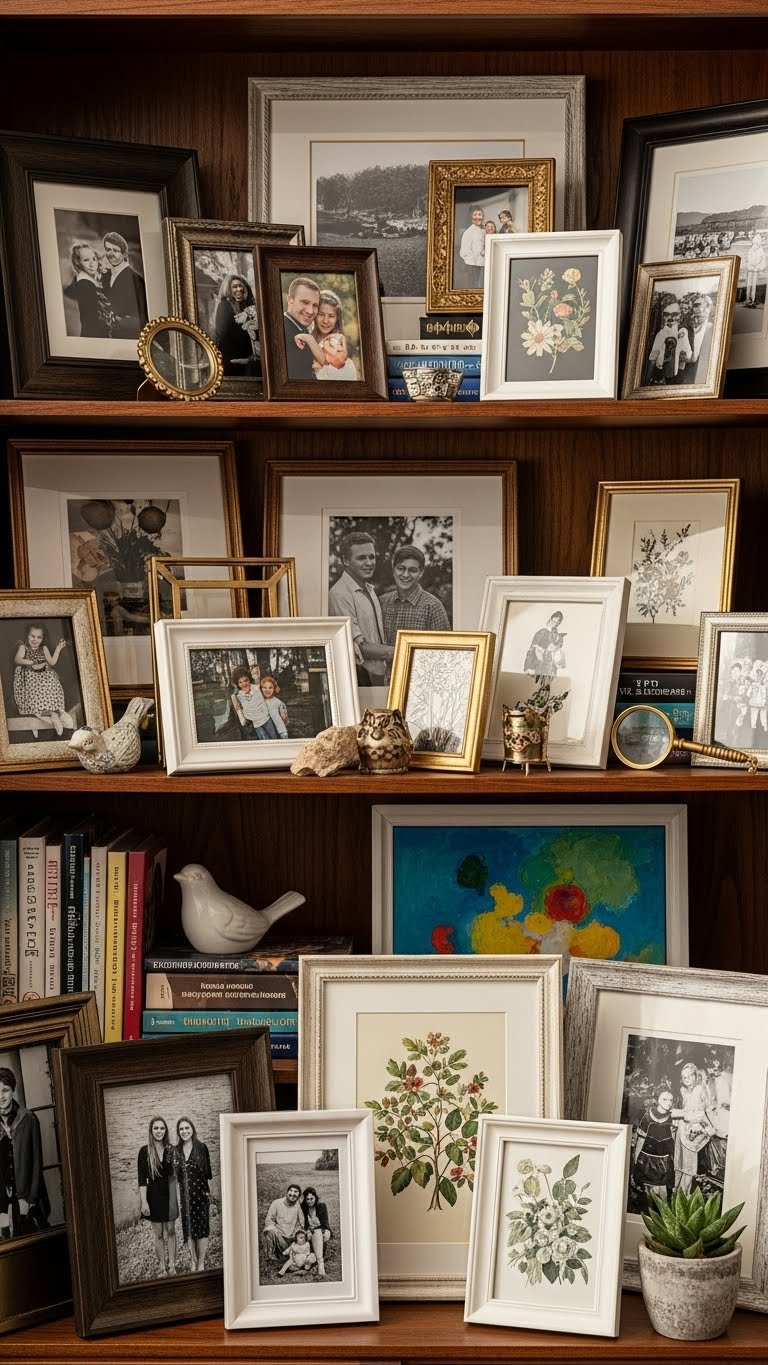
Mixing frame orientations creates movement on shelves. Use existing frames or invest $5–$15 per frame from budget-friendly retailers.
Stand some frames upright between books, lean others at angles against the shelf back, and prop a few in front of stacks. Vary frame sizes and materials for visual interest. This arrangement feels collected and intentional rather than perfectly styled.
Your display becomes more dynamic. The varied heights and angles draw the eye across the entire shelf instead of landing on one spot.
23. Install a Bookshelf on a Rental Apartment Wall with Damage-Free Methods
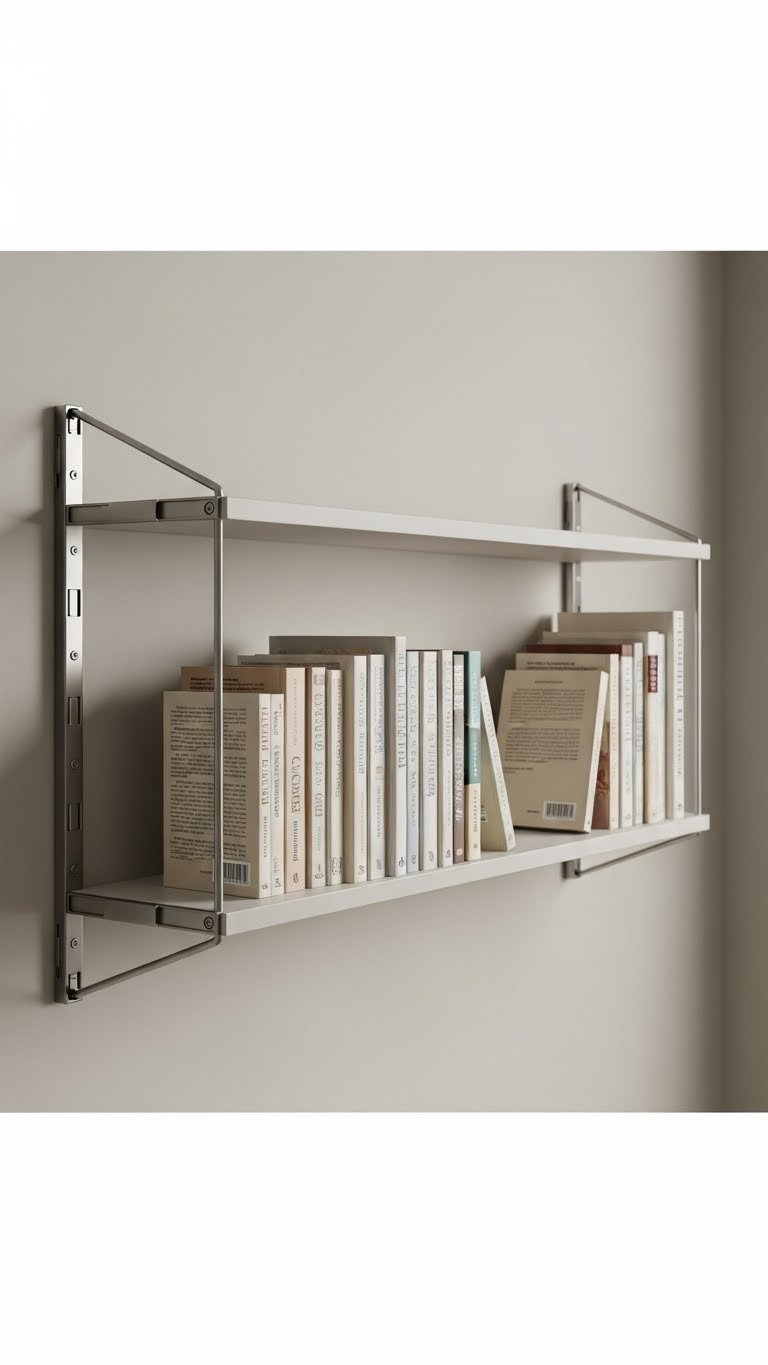
Renters deserve stylish storage too. Damage-free mounting systems cost $30–$80 and allow you to decorate without losing your security deposit.
Use adhesive command strips for lightweight shelving, or look into tension rods and bracketing systems designed for rental walls. Weight limits vary, so stick with books and light decor rather than heavy items. Installation takes 30 minutes.
You get shelving that moves with you. When you leave, peel off strips and fill any small holes. This frees you to style confidently.
24. Curate Books by Spine Color to Match Your Interior Palette

Coordinating book spines by color creates a cohesive, designed look. This takes two hours to arrange but costs nothing.
Review your collection and display books whose spines match or complement your interior palette. Group warm tones together, cool tones together, or create a gradient. Store books with clashing spines in boxes or different shelves. This selective display approach works especially well for visible shelves.
Your space feels intentionally designed rather than randomly filled. Visitors notice the thought behind every choice.
25. Add a Small Workspace Shelf for Books and Office Supplies
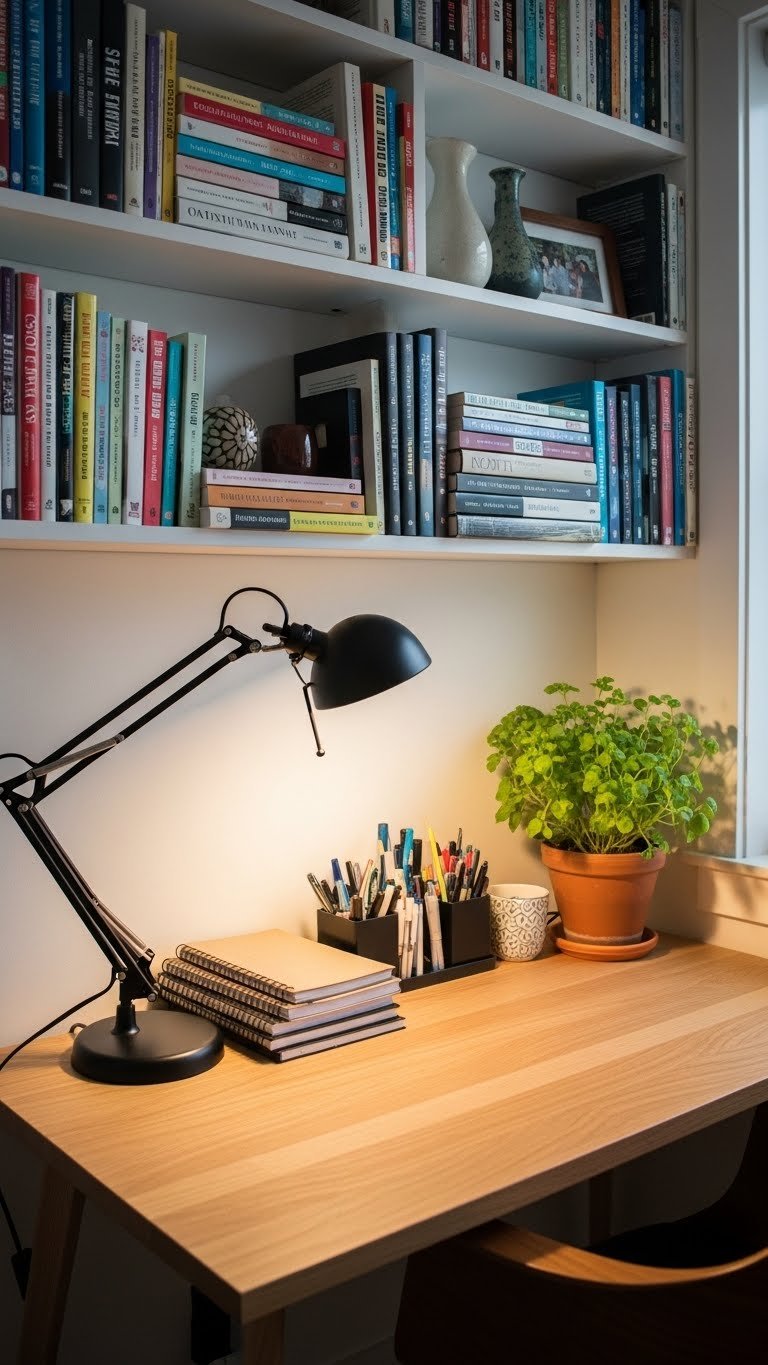
Combining shelving with workspace maximizes functionality in small spaces. A desktop unit with shelves above costs $100–$250 and serves double duty.
Look for ladder-style shelves or desktop organizers that provide storage and workspace simultaneously. Position books you reference frequently at arm’s reach. Keep supplies in labeled containers below the work surface. This setup is perfect for remote work or creative hobbies.
You’ve created a focused work zone that feels organized and inspired. Books are literally within reach, and your space serves multiple purposes without feeling cramped.
26. Make Your Bookshelf a Reflection of Your Personality Through Styling Choices

Your shelf should tell your story. There’s no “right” way to style it; what matters is that it feels authentically you. Every item costs nothing if you’re using things you already own.
Choose books you’ve actually read and loved. Display objects that bring you joy or hold meaning. Include photos of people and places that matter. Don’t worry about perfect symmetry or matching aesthetics. The imperfection and personality are what make it beautiful.
This creates a space that feels genuinely lived-in. When people visit, they see you in your shelf—your interests, your memories, your taste. That’s so much more powerful than a perfectly styled but generic display.
Save this post for your next weekend refresh, and pick just one idea to try first. You’ll be amazed how one small change transforms your entire space from storage-focused to style-forward.
Leave a Reply