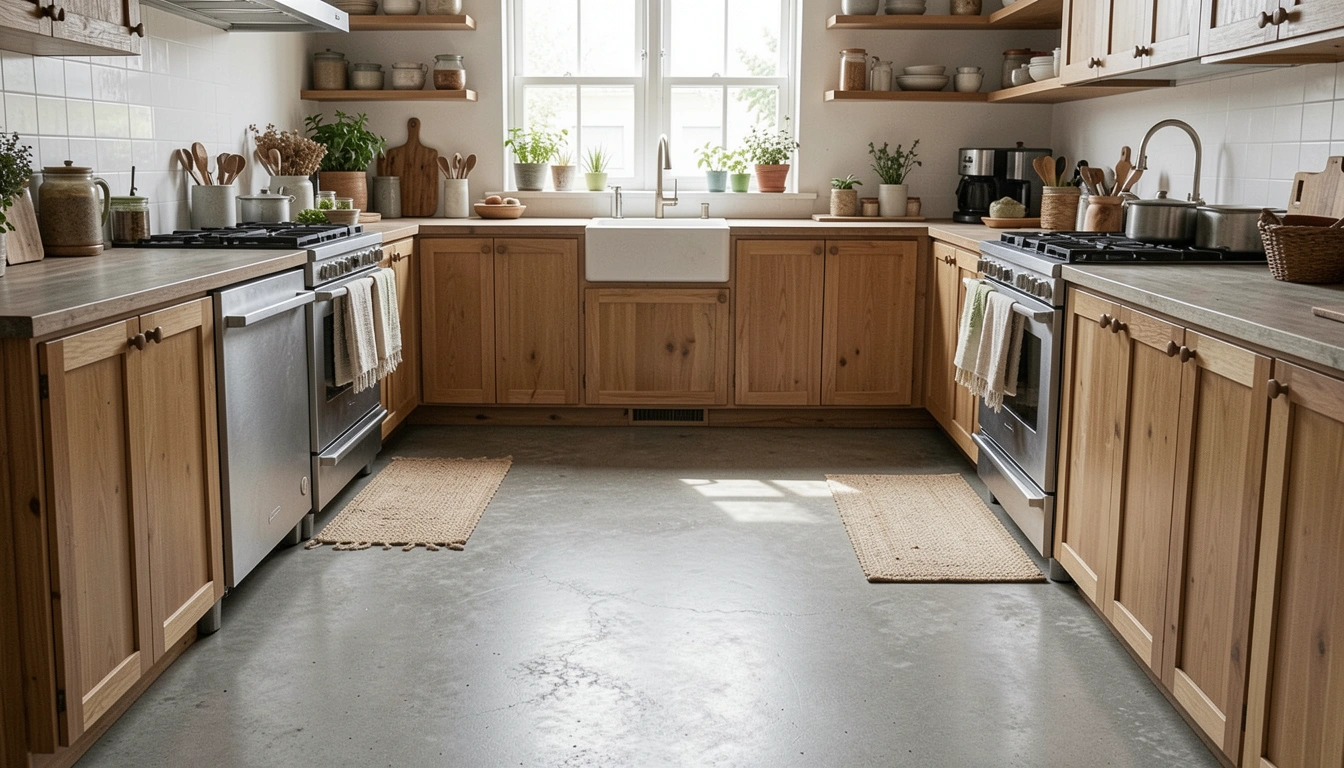
My kitchen floor was raw concrete. It echoed every step and made the room feel like a garage. I wanted it warmer for mornings with coffee.
I'd tried paint, but it peeled. Rugs slipped. The space stayed off-balance.
One day, I stepped back. The floor could anchor everything if styled right.
How to Style Concrete Kitchen Floor
This method makes concrete floors feel grounded and comfortable. You'll learn to layer and place pieces so the kitchen flows. In the end, it looks intentional, lived-in, without hiding the concrete.
What You’ll Need
- Neutral jute area rug, 8×10 feet
- Woven cotton kitchen mats, set of 2, beige
- Vintage-style runner rug, 2.5×8 feet, natural fibers
- Seagrass baskets, medium size, set of 3
- Wooden stools with cane seats, counter height
- Potted fiddle leaf fig, 4-foot height
- Ceramic planters, white, 12-inch diameter
- Wool throw blanket, neutral tones, 50×60 inches
Step 1: Zone the Floor for Flow
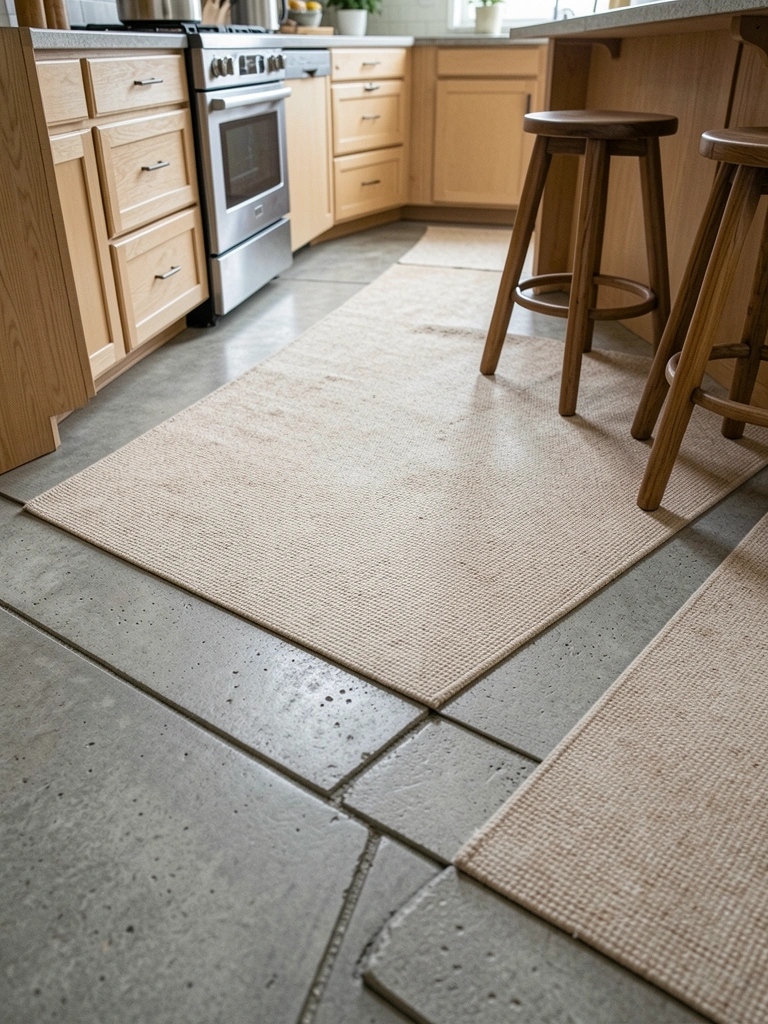
I start by dividing the floor into zones. The sink area gets a large neutral jute rug. It grounds the space without covering everything.
Visually, the room settles. Concrete peeks out, tying zones together. People miss how zones stop the floor from feeling endless.
Don't center the rug perfectly. Off-set it toward walls. That pulls eyes to cabinets, balances the whole kitchen.
This feels right immediately. Feet land softer, steps quieter.
Step 2: Layer Mats Under Work Areas
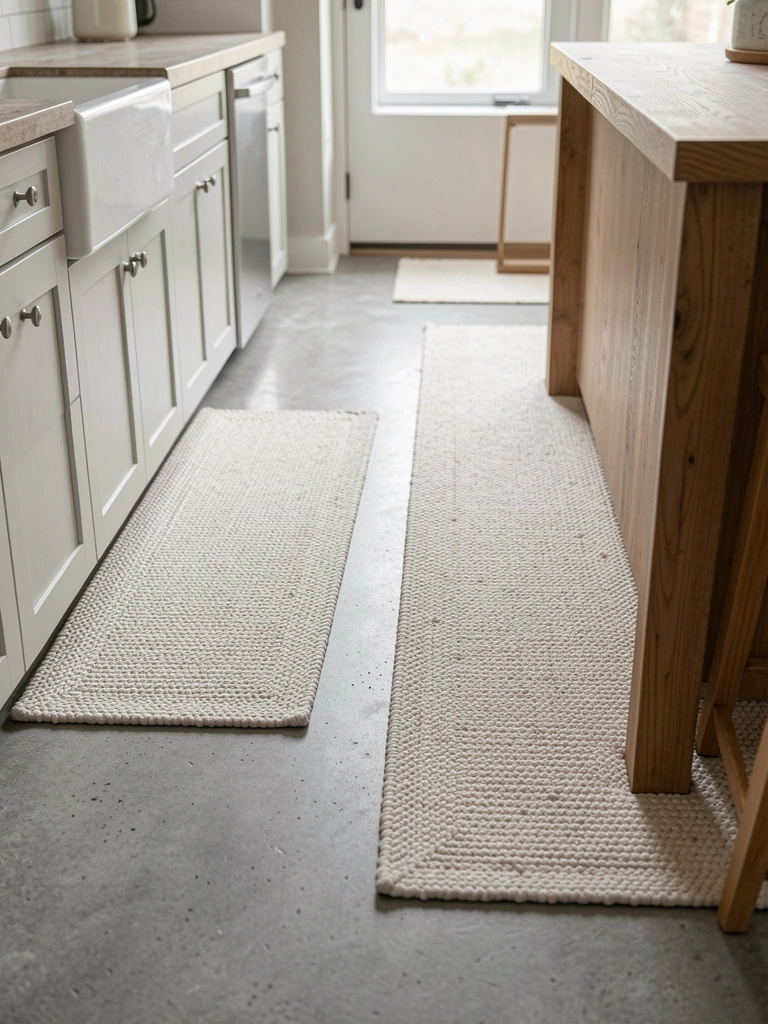
Next, I add woven cotton mats under the sink and stove. A runner goes along the island. Layers soften echoes, add warmth.
The floor shifts from stark to textured. Light bounces differently, shadows soften. Most overlook mat edges—they should overlap rugs slightly.
Avoid thin mats. They slide and bunch. Thicker ones stay put, feel secure.
Now, the kitchen invites lingering. Concrete grounds it all.
Step 3: Anchor with Low Furniture
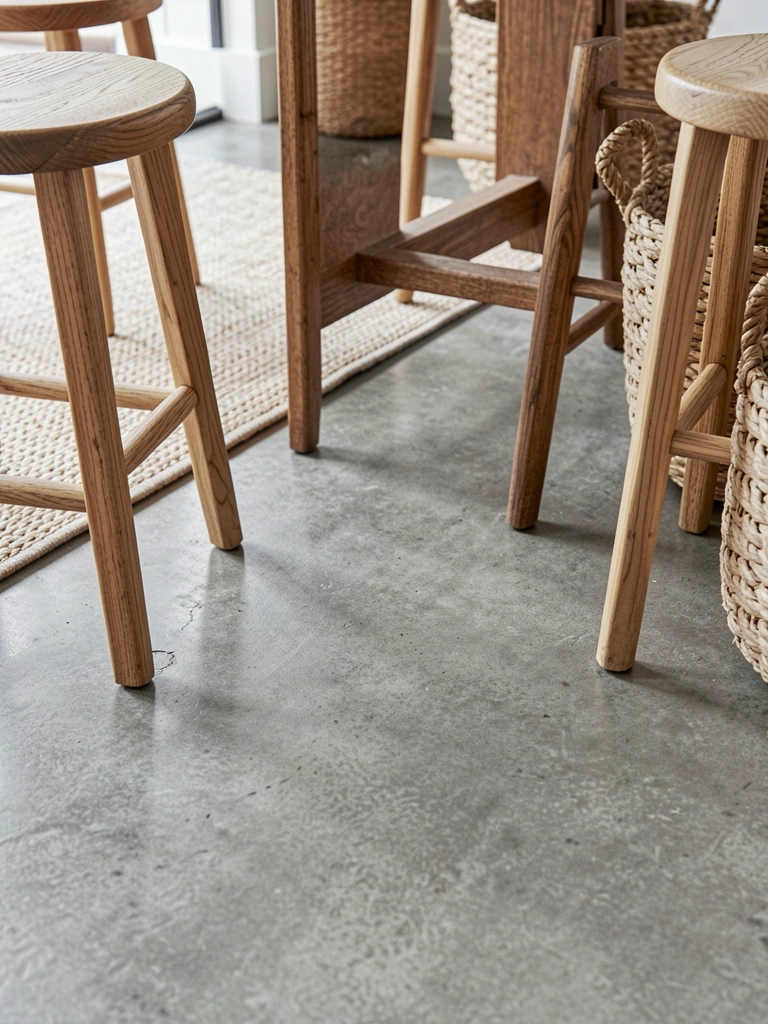
I place wooden stools at counter edges, legs on rug borders. Seagrass baskets tuck under open shelves. This anchors everything down.
Visually, pieces hug the floor. No floating feel. The insight? Low profiles repeat concrete's weight.
Skip tall stools here. They overwhelm. Keep seats low—they blend, make space cozy.
The room breathes easier. Balance shows in every glance.
Step 4: Soften Edges with Plants
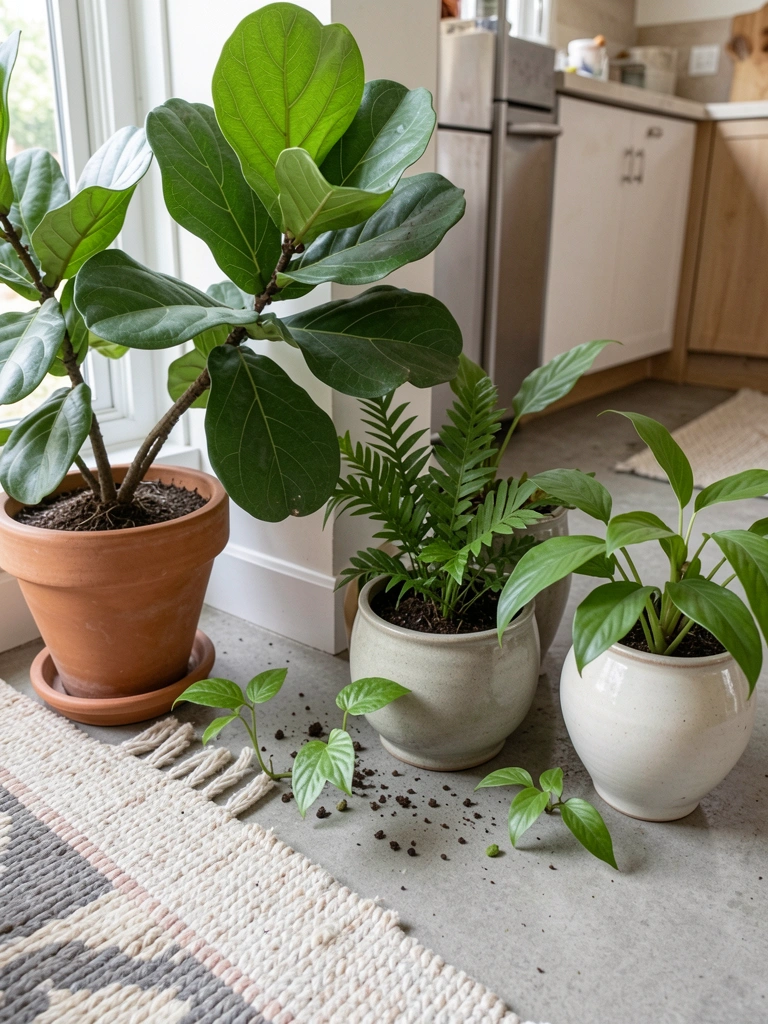
Plants go last. A fiddle leaf fig sits rug-corner, ceramic planters group near the door. Greens echo cabinets softly.
The floor recedes, eyes lift gently. People forget plants cast shadows— they mimic concrete's depth.
Don't line plants in rows. Cluster oddly. That feels natural, lived-in.
Now, mornings feel calm. The concrete works with it all.
Step 5: Drape for Final Warmth
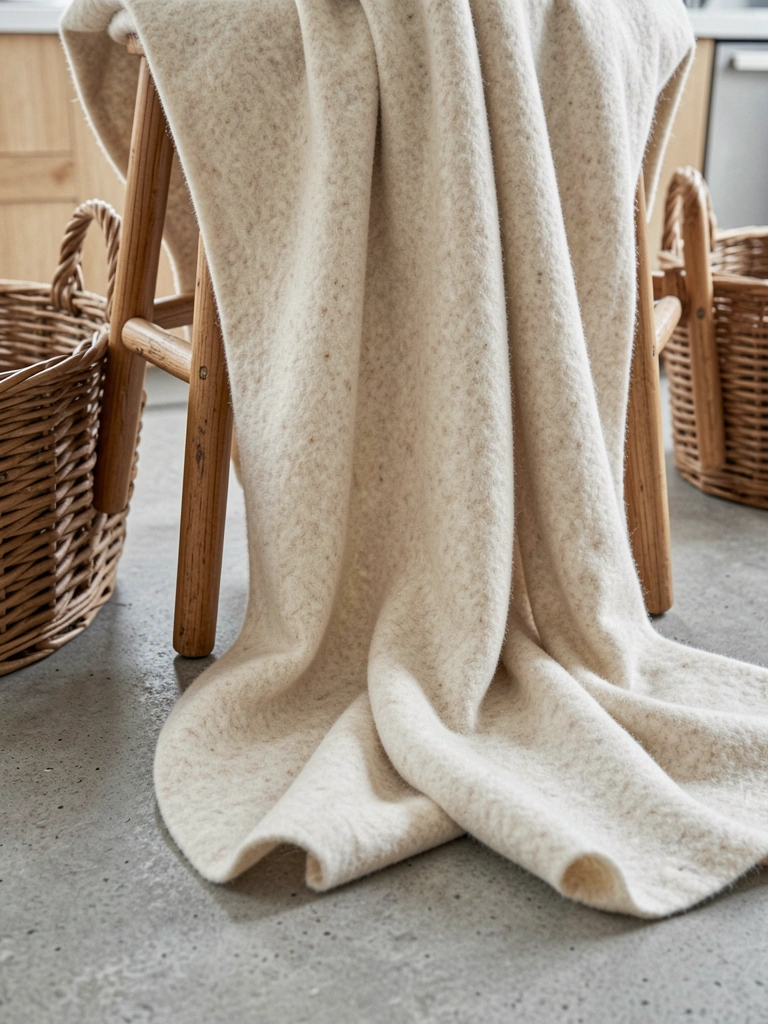
I drape a wool throw over stool backs, let ends brush the floor. It softens hard lines without clutter.
Light warms up, textures layer deeper. Missed tip: Drapes hide uneven concrete spots subtly.
Avoid stiff fabrics. Wool folds naturally, settles.
Kitchen feels complete. Balanced, comfortable.
Common Mistakes to Avoid
I see these often in my own trials.
- Rugs too big: They swamp the concrete. Stick to zones.
- No overlap: Layers separate, floor feels chopped.
- Bright colors: They fight the gray. Neutrals blend.
Fix these, and flow improves fast.
Best Rug Materials for Concrete
Jute and cotton breathe. They let concrete show.
Wool adds weight, stays put. Seagrass hides dirt well.
Test small first. Feet tell the truth.
Maintenance Tips
Vacuum rugs weekly. Spot-clean concrete with mild soap.
Rotate plants quarterly. Keeps balance fresh.
Simple habits keep it looking good.
Final Thoughts
Start with one zone. See how it settles.
You'll trust your eye more. Concrete becomes a strength.
Your kitchen will feel like home. Just right.
Leave a Reply