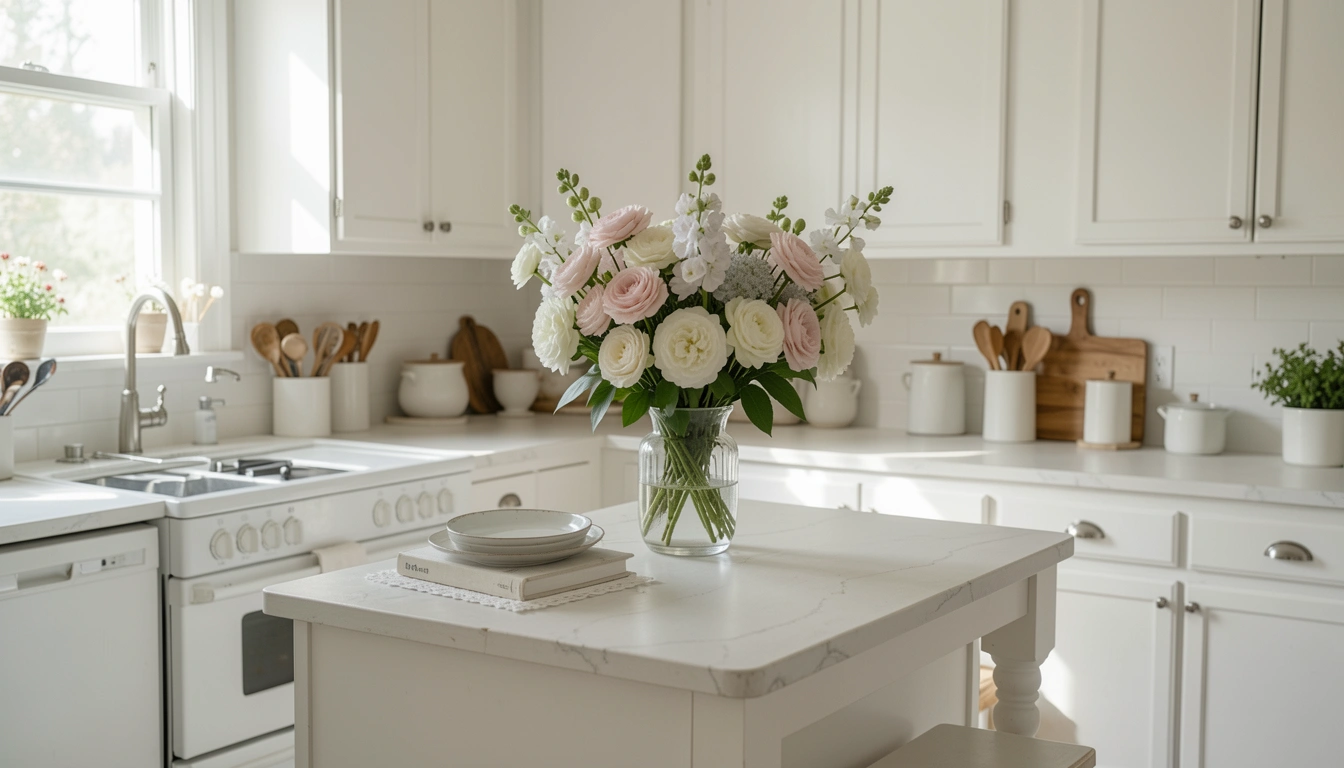
My white kitchen felt flat. All those clean cabinets and counters left it cold, like a showroom nobody used. I wanted softness, but color felt wrong here.
One afternoon, staring at the empty island, I tried flowers. All white, simple shapes. It shifted everything.
Now it welcomes me home. Balanced, not busy.
How to Make White Kitchen Flower
This shows you how to arrange white flowers into a kitchen flower that softens stark whites. It sits on your counter or table, drawing the eye gently. You'll end up with a lived-in focal point that feels right every day.
What You’ll Need
- White faux peonies, 5 stems, silk
- Clear glass vase, 10-inch tall, cylinder shape
- White baby’s breath filler, bunch
- Faux white hydrangeas, 3 stems, soft texture
- White ceramic pitcher, 8-inch, matte finish
- Greenery stems, eucalyptus, 4 pieces
- Floral foam block, white, water-absorbent
Step 1: Pick Your Kitchen Spot
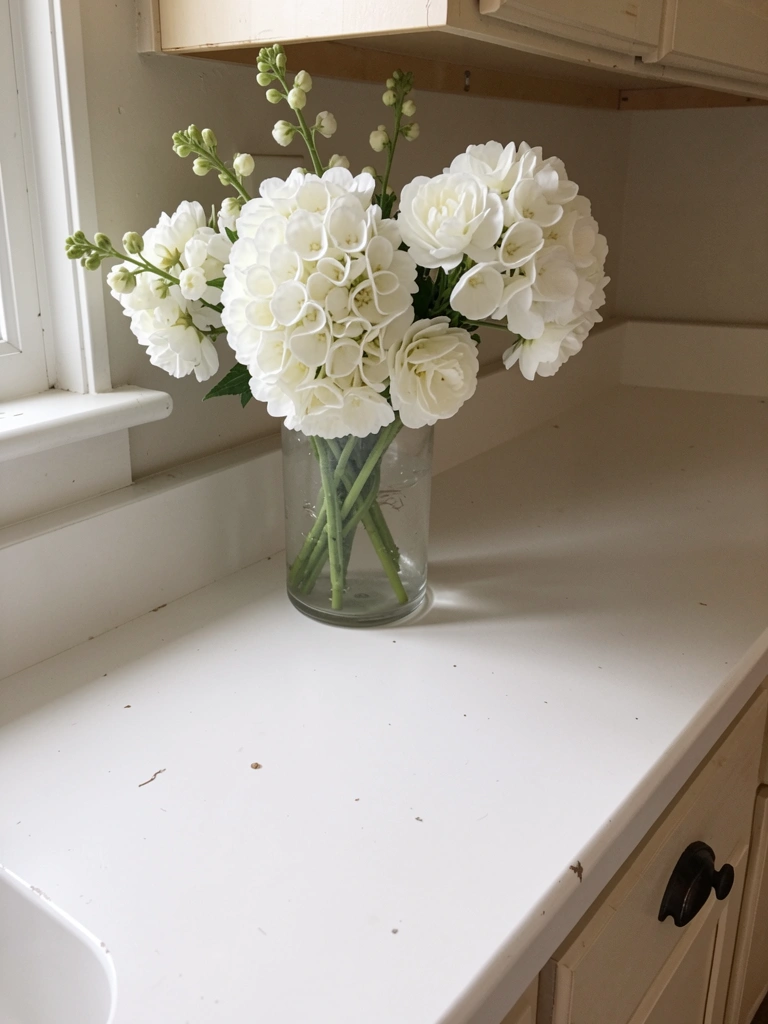
I scan my kitchen for the spot that pulls the room together. Usually the island center or near the sink. It needs open space around it—no crowding.
Here, the white flowers echo the cabinets without fighting them. The visual changes: emptiness turns to invitation. People miss how height matters—too low feels squat.
Avoid shoving it against a wall. Let it breathe, centered. I step back, eye the flow. It settles the whole space.
Now it anchors without dominating. Calm.
Step 2: Layer the Base Shapes
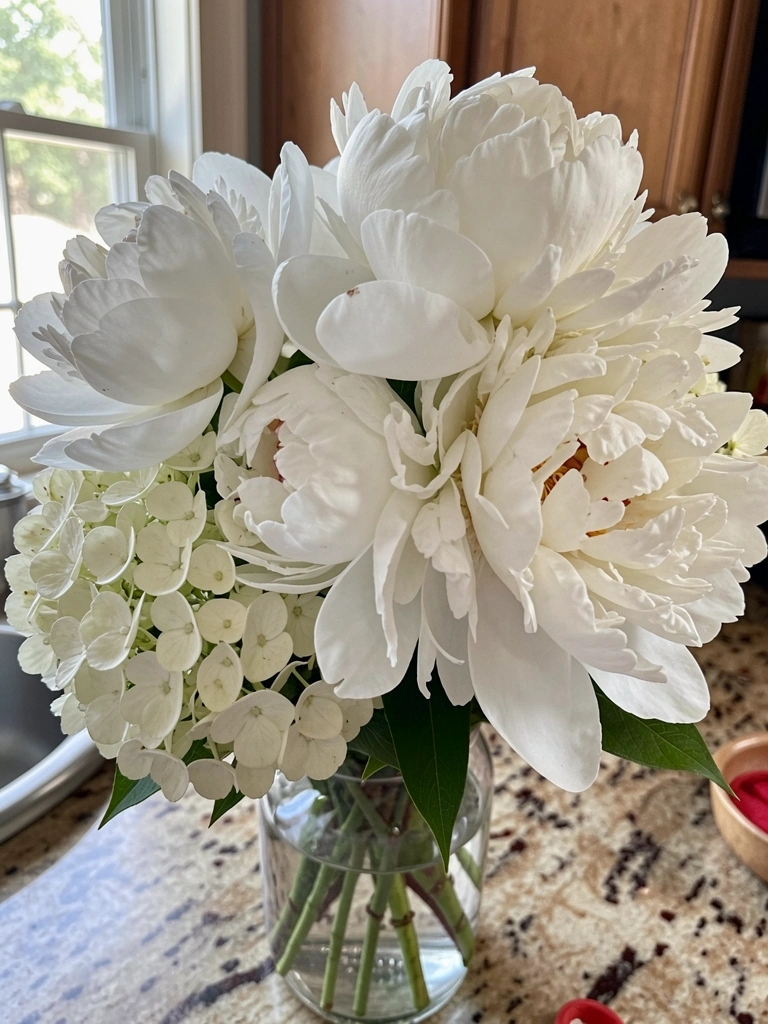
I start with big blooms like peonies and hydrangeas in the vase. Odd numbers, three or five. They form a loose triangle—tall in back, shorter front.
This builds balance early. The counter softens; whites blend seamlessly. Most overlook stem angles—they lean out for movement.
Don't pack tight. Gaps let light play. I twist each stem, watch shadows fall. It feels full yet airy.
The kitchen warms right away.
Step 3: Add Fillers for Softness

Next, baby’s breath slips in around the edges. Tiny puffs fill without bulk. I pull some stems apart, drape lightly.
Now texture layers—smooth petals meet fluff. It changes the feel from stiff to touched. Folks forget scale; too much filler buries the stars.
Steer clear of symmetry. Let it spill uneven. I nudge, stand back. Light catches the wisps.
Deeper balance emerges.
Step 4: Weave in Green Accents
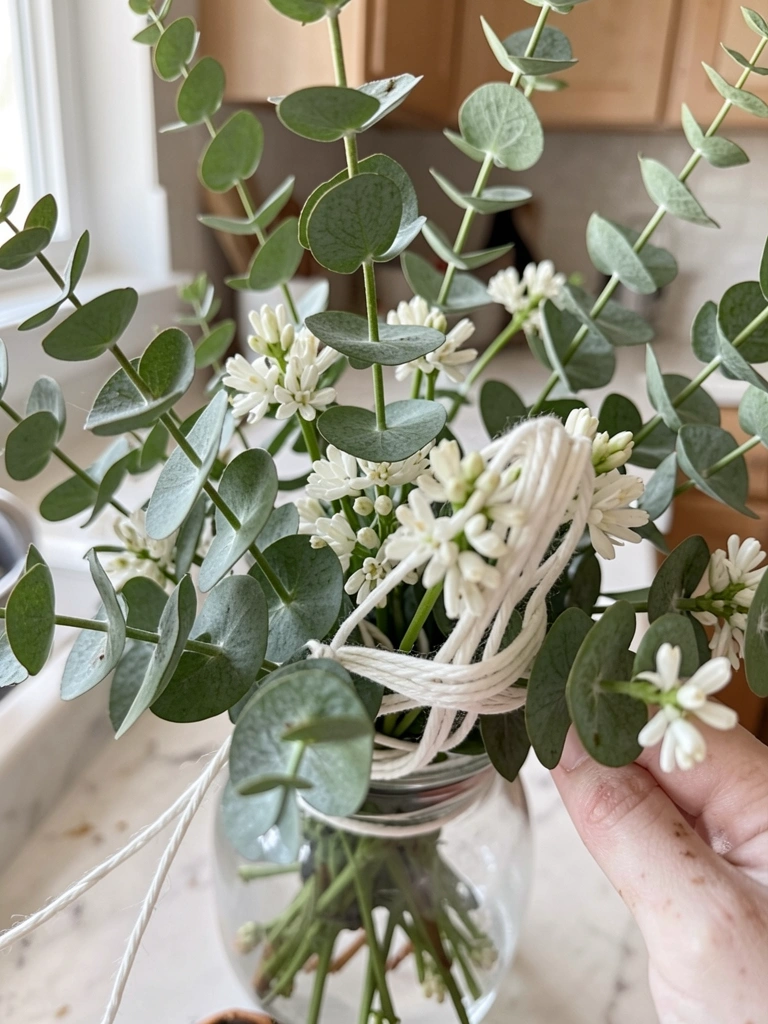
A few eucalyptus stems go last. They trail low, add subtle contrast. Not too much green—whites stay king.
The arrangement gains depth; kitchen flow improves. People miss how greens ground it, prevent floating.
Avoid straight-up stems. Curve them for life. I adjust from afar. It nestles perfectly.
Feels complete, lived-in.
Step 5: Set and Adjust from Afar
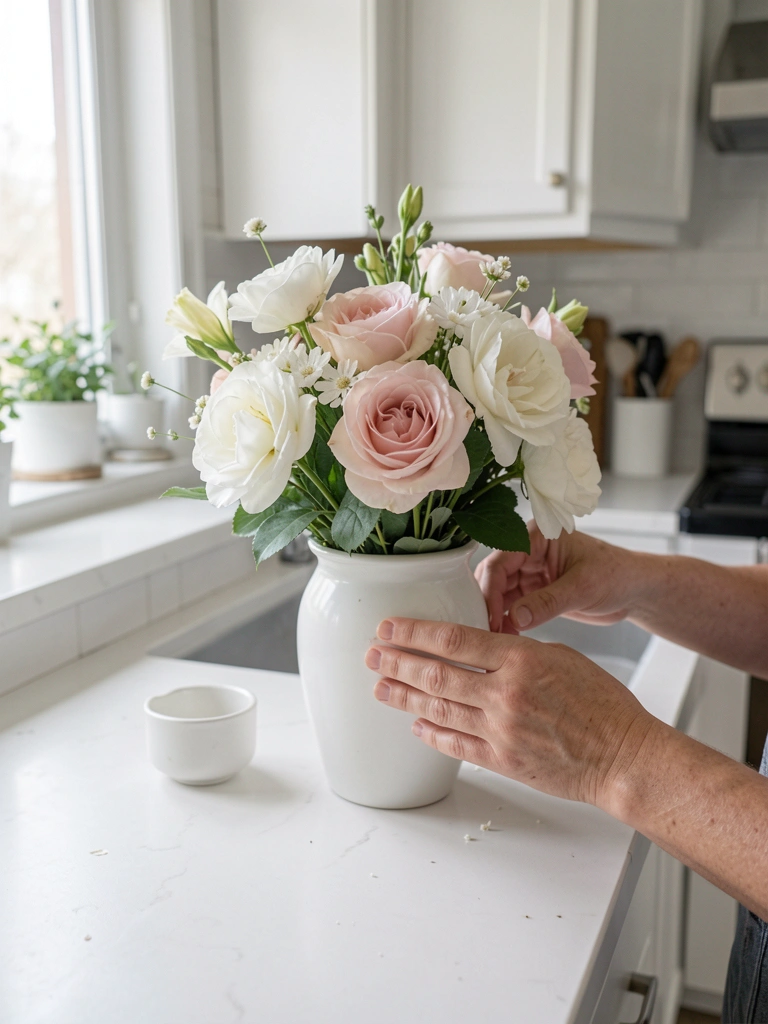
I place it down, walk back ten feet. Tweak heights, fill gaps. Eye level matters most.
Visual shift: room connects. Common miss—over-fussing up close ruins flow.
Don't chase perfection. Slight asymmetry works. Now my kitchen breathes easy.
Why White Flowers Fit White Kitchens
White on white sounds bland, but it works. Layers of texture keep it from going flat.
- Peonies add roundness to sharp edges.
- Hydrangeas soften hard lines.
I tried colors once. They clashed. Whites repeat the palette, pull everything calm.
How to Match Your Kitchen's Vibe
Think about your counters. Marble? Go fuller blooms.
Wood tones? Lean on greenery hints.
- Island kitchens: Taller arrangements.
- Small spaces: Compact, low.
Mine's all white quartz. This setup mirrors without copying.
Quick Ways to Keep It Fresh
Faux lasts longest. Dust weekly with a soft brush.
Real flowers? Trim stems, fresh water daily.
- Rotate spots monthly for new feel.
- Swap fillers seasonally.
It stays intentional, not stale.
Final Thoughts
Start with one spot in your kitchen. Grab a few white stems, play.
You'll see the shift—sterile to settled.
It's simple balance. Your space will feel like yours.
Leave a Reply