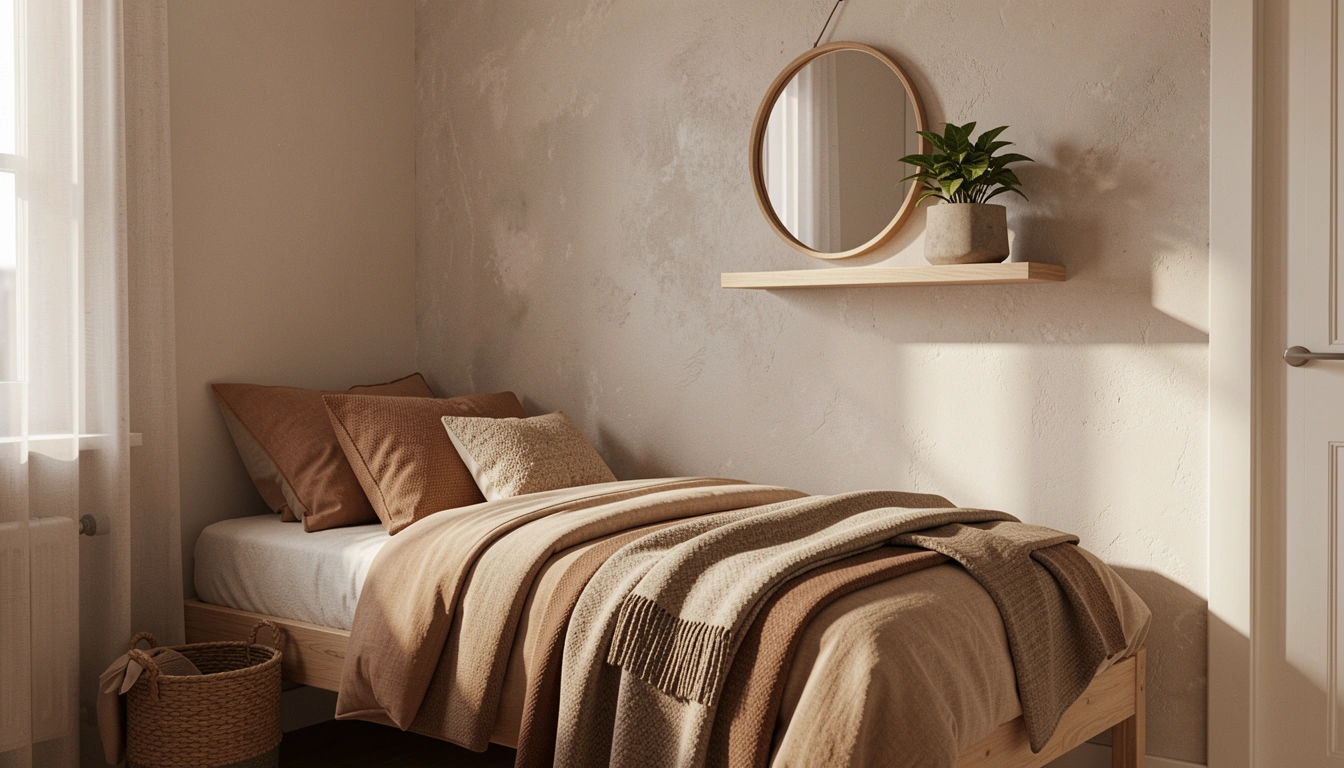
Small bedrooms don’t need to feel cramped or uncomfortable—they just need the right strategy. Whether you’re working with a tiny apartment, a guest room, or a child’s space, smart layouts can make every inch count. You’ll learn 24 actionable ideas that blend practical furniture placement, visual tricks, and storage hacks to create a bedroom that feels larger, more relaxing, and genuinely yours. From renter-friendly solutions to investment upgrades, these tips work whether you’re starting from scratch or refreshing what you already have. Let’s turn that small space into your favorite retreat.
1. Float Your Bed Away from Walls
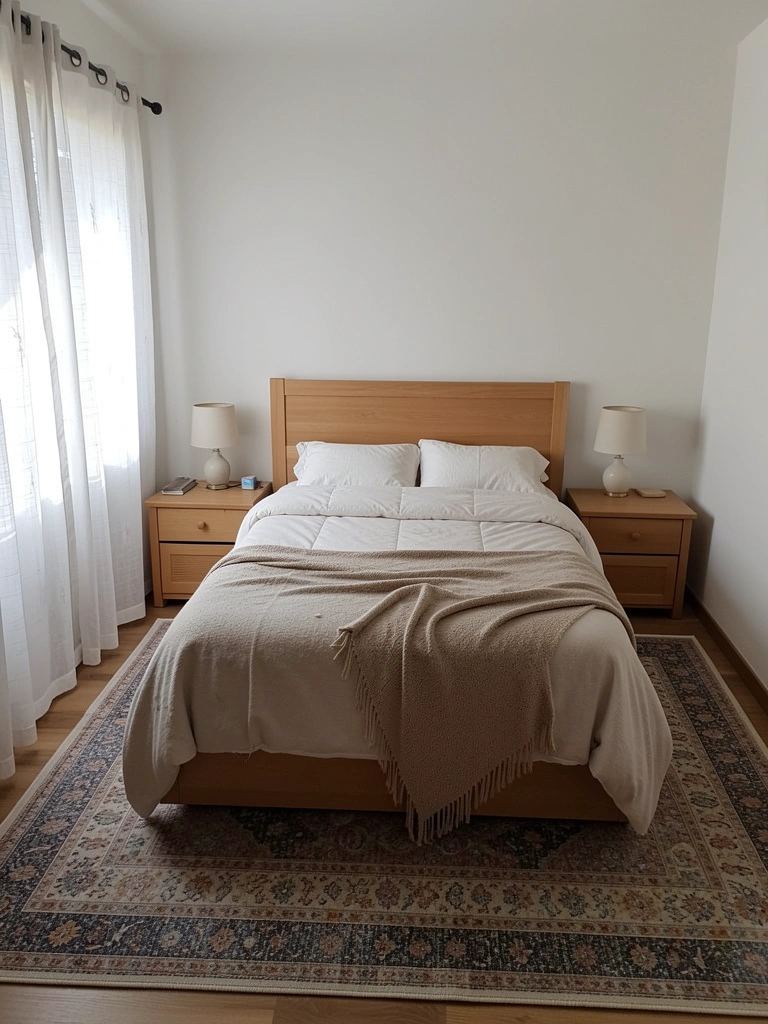
Pushing your bed against the wall might seem logical, but floating it actually makes rooms feel bigger and more intentional. This layout creates visual flow and gives you functional space on multiple sides—perfect for rearranging without major upheaval.
Measure your room first. You’ll typically need at least 2-3 feet of clearance on at least two sides to make this work. If you have one side against a wall, that’s fine; just float the foot end into the room. Add a layered area rug beneath to anchor the bed (looks polished, costs $60–$200). Position compact nightstands or floating shelves ($30–$150 each) to keep the footprint minimal.
This setup works beautifully with curved headboards, which fit 2025’s organic furniture trend perfectly and soften the room’s overall look.
The best part? You’ll feel less boxed in, and guests have easier access to help make beds or tidy up.
2. Install Floating Shelves Above the Nightstand
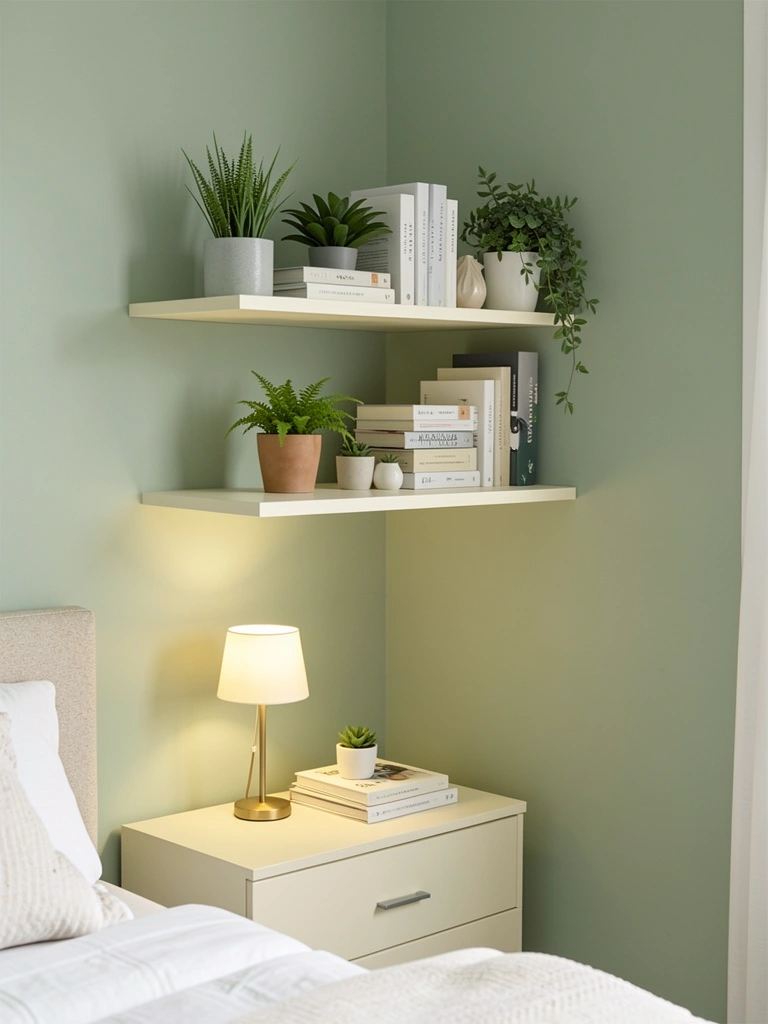
Nightstands take up floor space you probably don’t have. Floating shelves give you storage and styling without the bulk, and they’re a renter-friendly alternative to traditional furniture.
Install two shelves at different heights above your bed’s headboard area or alongside it ($20–$80 for shelves plus installation hardware). Use the lower shelf for a reading lamp and the upper one for books, small plants, or a framed photo. This vertical approach pulls the eye upward, making ceilings feel higher.
Look for shallow shelves (8–10 inches deep) at IKEA, Target, or Wayfair. If you’re renting, use damage-free adhesive shelves ($15–$30) instead of drilling.
Add decorative items mindfully—too much clutter defeats the purpose. Stick to five or fewer objects per shelf.
Your bedroom gains storage and visual interest without consuming precious floor real estate.
3. Choose a Low-Profile Platform Bed
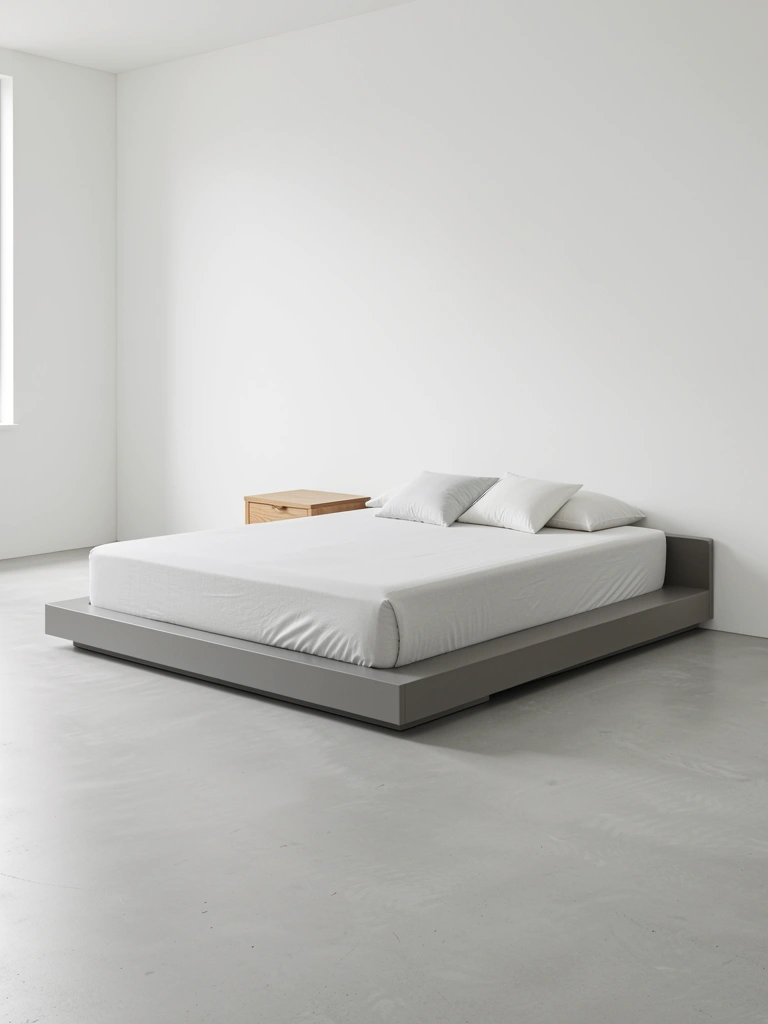
Platform beds with minimal legs or no legs at all create a sense of spaciousness because you can see the floor underneath. They’re also perfect anchors for 2025’s organic modernism trend with their clean, grounded aesthetic.
Invest in a quality platform bed ($300–$800) from brands like Article, West Elm, or Wayfair. Solid wood or curved headboards align with trending natural materials and organic shapes. The lower visual mass makes even a 10×12 room feel less cramped.
Skip the box spring entirely—platform beds don’t need one. This saves money and floor space.
Pair it with low nightstands (under 24 inches tall) to maintain the airy feel throughout the space.
The open floor plane around your bed makes the room feel significantly more open and easier to clean.
4. Use Corner Shelving Units for Dead Space
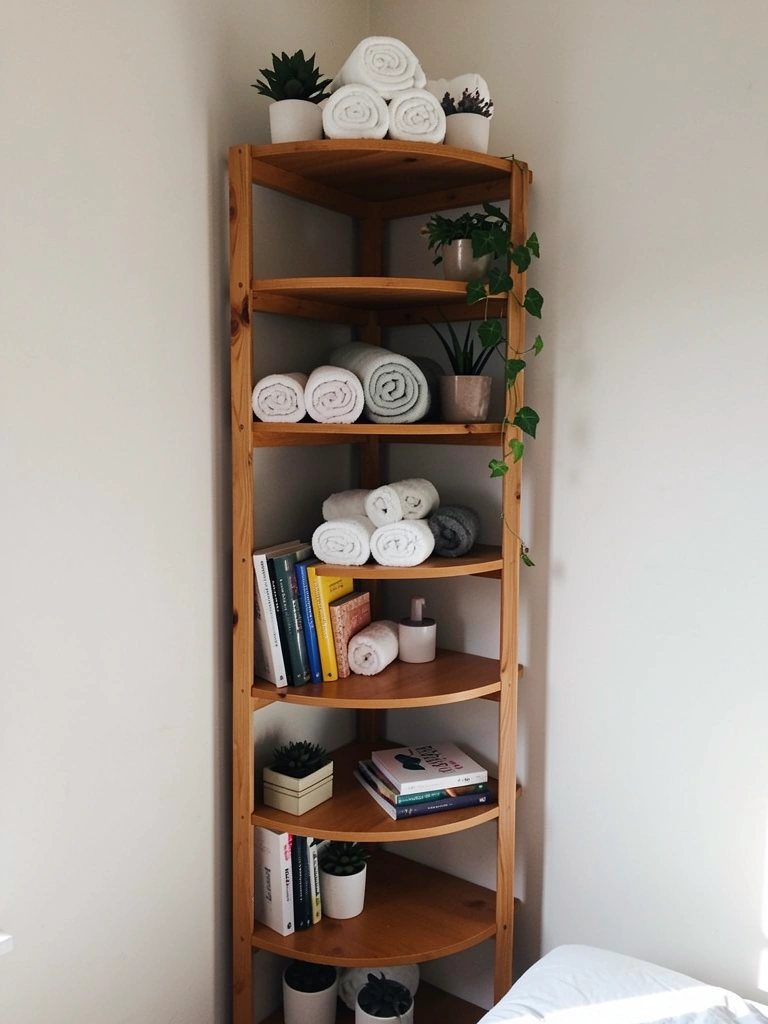
Bedroom corners are easy to ignore, but they’re valuable real estate. Corner shelving units ($50–$200) utilize that awkward angle without taking up floor square footage anywhere else.
Choose a narrow unit (12–18 inches wide) to maintain walkways. Stack rolled towels, display books, or position a small plant on each shelf to add height and life to the corner. Open shelving looks less heavy than closed storage in small spaces.
Wood or metal options work well. Consider a DIY approach with floating corner shelves ($25–$60) if you’re handy and comfortable drilling into wall studs.
Style with items you use regularly so it doesn’t become a forgotten dust collector.
This smart use of dead space gives you storage without eating into your already-limited floor plan.
5. Mount a Slim Desk Against One Wall
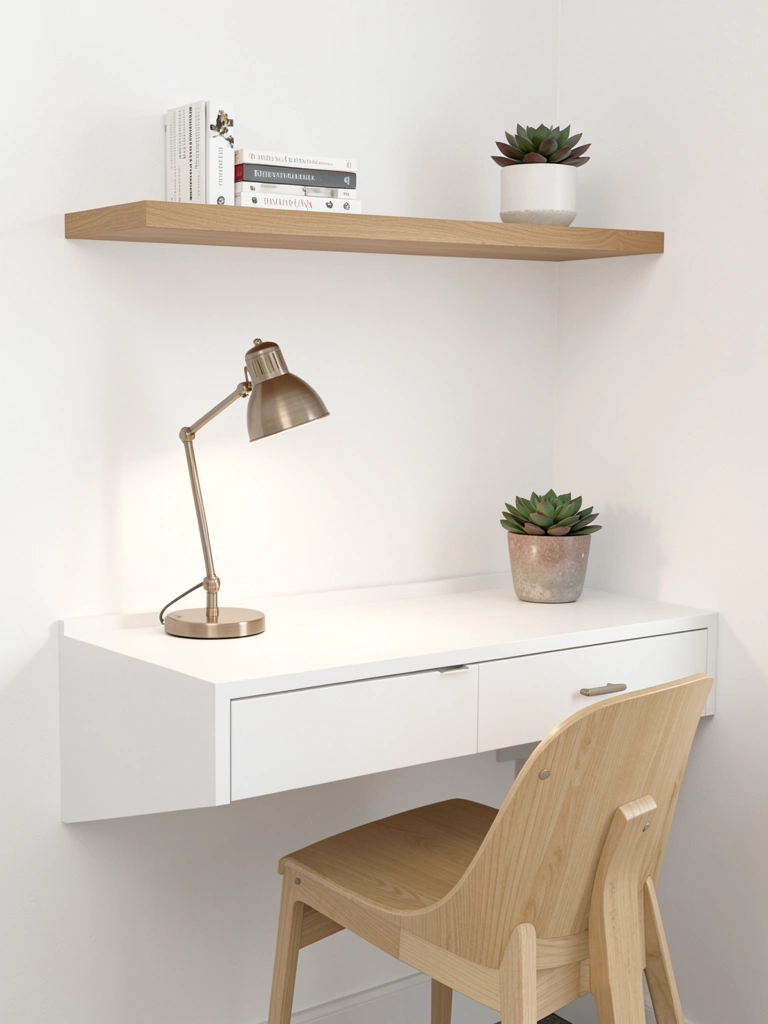
If you work or study from home, a floating desk ($100–$300) against a wall gives you function without dominating the room. Mount it at standard desk height (28–30 inches) and tuck a slim chair underneath when you’re not using it.
Look for desks 36–48 inches wide and 18–20 inches deep on Wayfair, IKEA, or Amazon. Pair with floating shelves above for supplies and décor. This setup keeps visual clutter contained to one wall.
Cable management matters in small spaces. Use adhesive clips ($8–$15) or a wall-mounted cable box ($15–$30) to keep cords invisible.
When paired with a chair that slides under the desk, you reclaim square footage instantly during off-hours.
You get a dedicated workspace without sacrificing bedroom breathing room.
6. Layer Textured Rugs for Warmth and Dimension
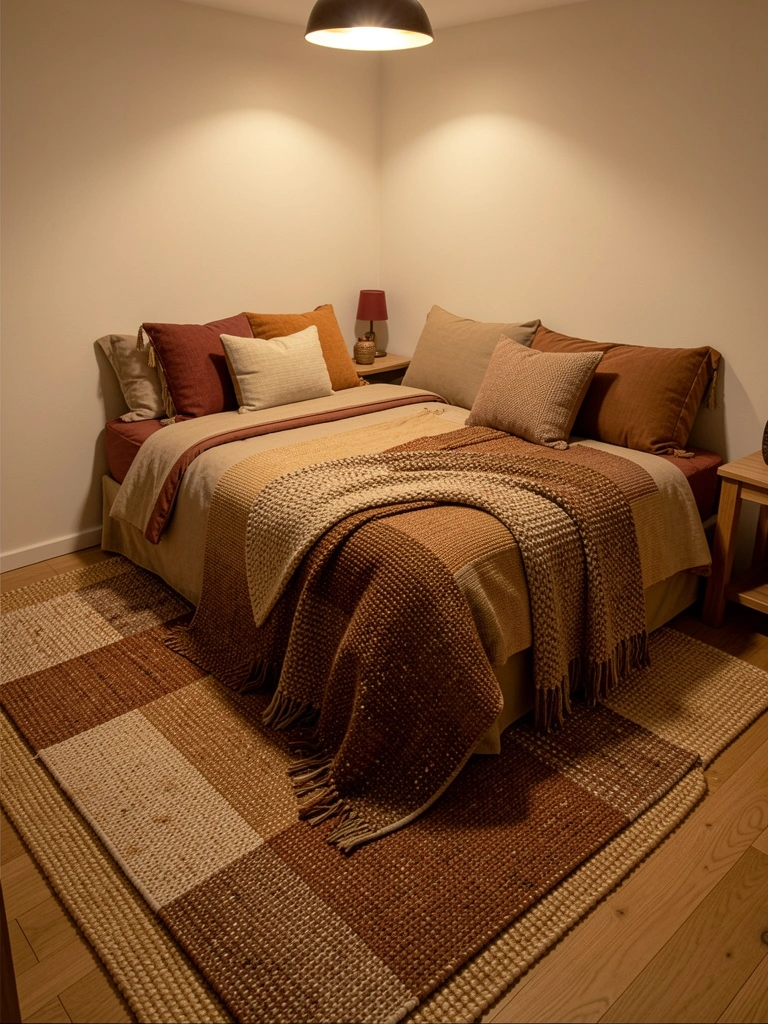
Textured rugs bring 2025’s tactile warmth trend into play while defining zones in a compact layout. Layering rugs adds visual interest and makes the space feel more intentional and cozy.
Start with a jute or natural fiber base rug ($100–$250 for a 5×8) in a neutral tone. Layer a smaller wool or flatweave rug on top ($80–$200) in a complementary shade or subtle pattern. This combination creates depth and softness underfoot.
Shopping tip: anchor the bed’s foot end with the layered rugs. It visually grounds the bed and creates a small sitting area if space allows.
Real talk—layered rugs do require more vacuuming, but the warmth and design payoff is worth it.
Your bedroom feels more curated and inviting, and the textures make it read as a refined retreat rather than just a sleeping space.
7. Install a Ceiling-Mounted Curtain Rod
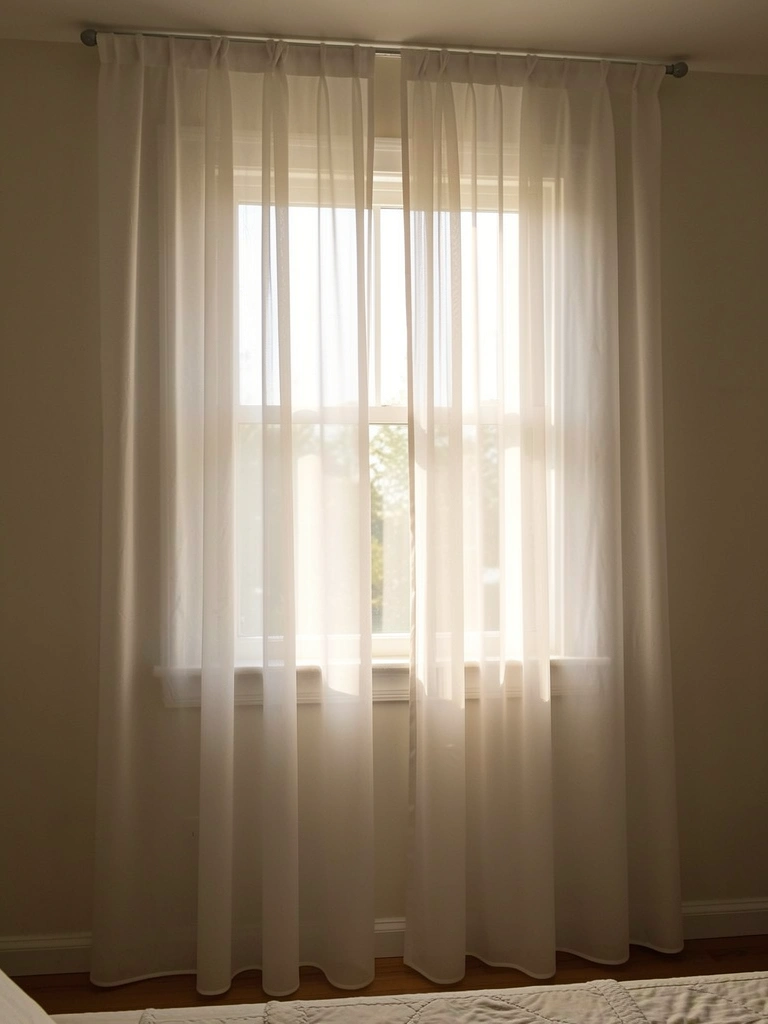
Hanging curtains all the way from ceiling to floor creates instant luxury and makes ceilings look higher—a visual hack every small room needs. This aligns perfectly with 2025’s floor-to-ceiling curtain trend.
Mount your curtain rod as close to the ceiling as possible ($15–$40 for rod and brackets). Hang lightweight fabric—sheers, linen blends, or cotton—that filters light softly without adding visual weight ($40–$120 per panel). Let the curtains just kiss the floor for drama.
Measure twice before drilling. If you’re renting, ask your landlord or use adhesive-backed temporary rods ($30–$60).
Avoid heavy velvet or blackout curtains in small rooms unless paired with sheer layers.
The vertical line draws the eye upward and makes your entire room feel more expansive and serene.
8. Use Under-Bed Storage Containers
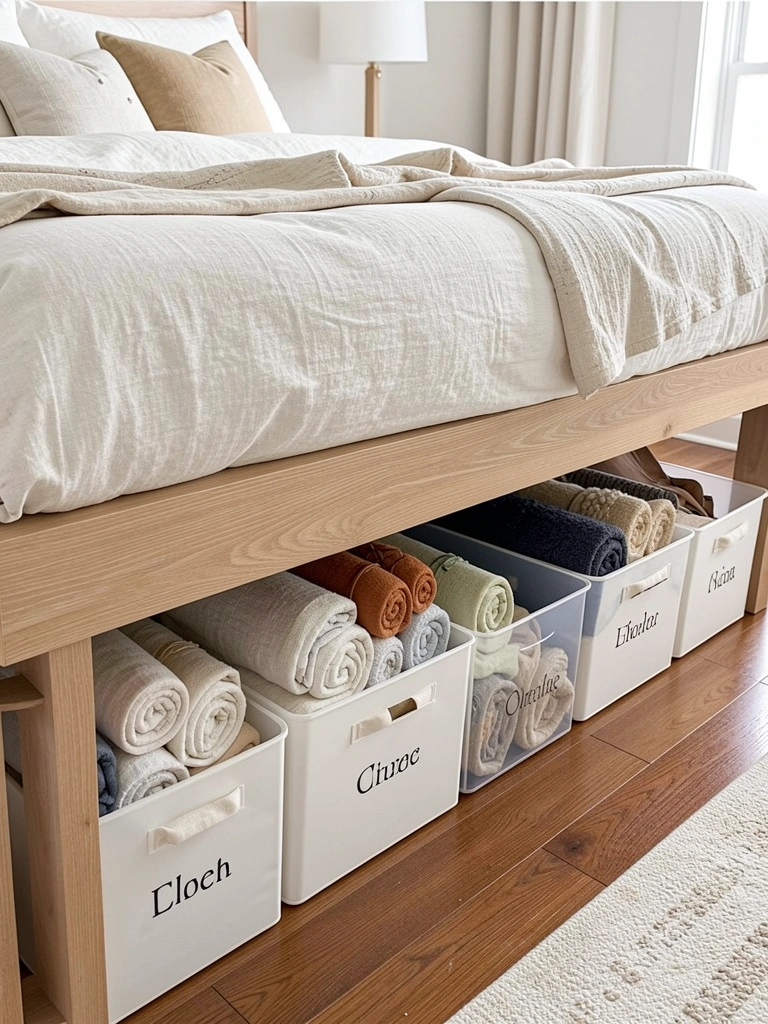
Under-bed storage is a small room’s best friend. Clear or soft-colored containers ($15–$50 each) let you see contents without opening them, which speeds up finding what you need and maintains the room’s calm aesthetic.
Measure the clearance under your bed (platform beds work best for this). Flat storage containers (4–6 inches tall) fit neatly and hold off-season clothing, extra bedding, or sentimental items. Rolling containers ($20–$40) make access even easier.
Label them for quick identification. Choose neutral colors (cream, gray, natural wood tones) to keep visual noise down.
Pro tip: rotate seasonal items quarterly so you’re not storing summer clothes during winter.
You’ve essentially doubled your storage capacity without adding visible furniture to the room.
9. Paint Walls a Soft, Light Color
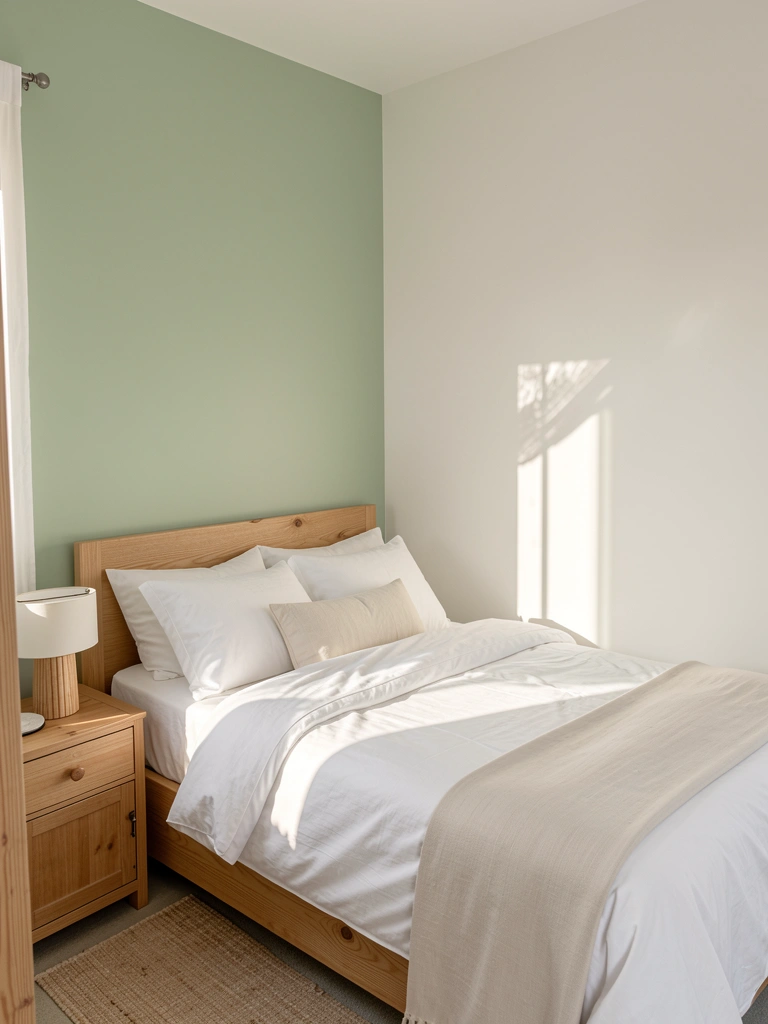
Color psychology matters in small spaces. Soft, light colors reflect light and expand the perceived room size, while dark walls can make compact bedrooms feel even smaller and heavier.
Paint walls in soft neutrals (warm white, pale gray, soft sage) or muted pastels ($30–$60 per gallon; professional painting runs $300–$800 for a small room). Flat or matte finishes hide imperfections better than glossy, and they photograph beautifully on Pinterest.
If you rent, ask your landlord for permission or use removable wallpaper ($20–$60 per roll) in light tones instead.
Pair light walls with warm-toned wood furniture and layered textures (following trend toward earth tones and natural materials) so the space doesn’t feel sterile.
The result? More light bounces around, your room feels 10–20% larger, and you’ve created a calm foundation for any décor style.
10. Add a Statement Headboard Without Floor Space
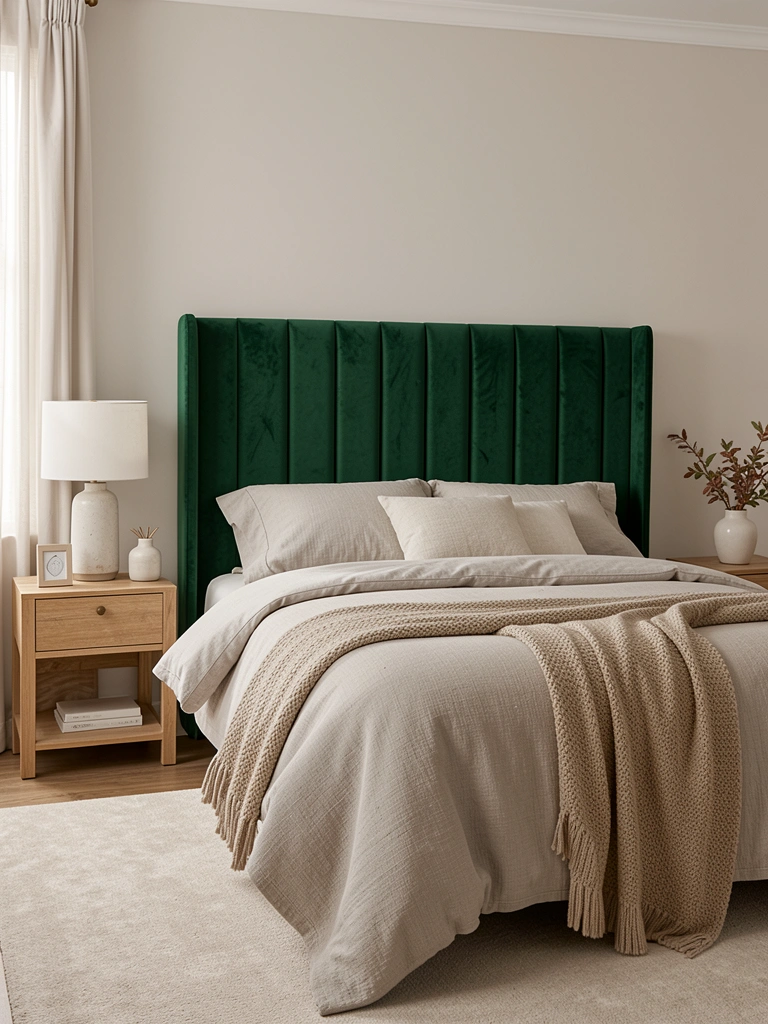
A wall-mounted headboard adds personality and luxury without consuming floor square footage. This trend is huge for 2025, and it’s the perfect focal point for small rooms.
Mount a headboard directly to the wall ($150–$600) in upholstered, wood, or metal finishes. Choose bold colors (cherry red, aubergine, forest green) or natural textures (rattan, raw wood) to align with current trends. Upholstered headboards add softness and sound absorption too.
DIY option: create a fabric headboard using tapestry and temporary adhesive ($30–$80 total, renter-friendly).
Pair the statement headboard with simple bedding so it remains the star.
Your bed becomes a bedroom anchor that looks intentional and high-end, while the rest of the room stays minimal and open.
11. Swap Straight Furniture for Curved Pieces
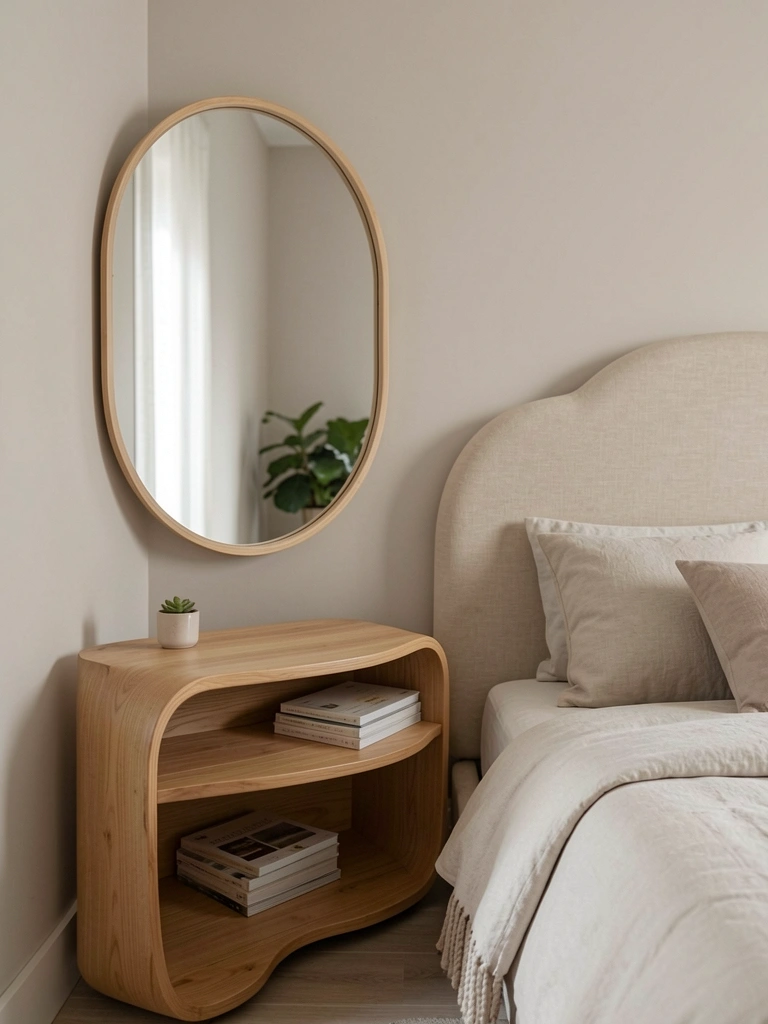
Straight, angular furniture can make small rooms feel harsh and cramped. Curved and organic shapes—a major 2025 trend—soften the environment and make spaces feel more relaxed and spacious.
Gradually swap angular pieces for curved versions. Look for curved nightstands ($100–$300), rounded mirrors ($50–$200), and soft headboards ($200–$500) from brands like Article, West Elm, or local vintage shops. These pieces cost similar prices to their angular counterparts.
Curved furniture reflects light differently and creates visual softness that reduces the “boxed in” feeling.
Start with one curved element—maybe a rounded mirror—and build from there if budget is tight.
The organic shapes make your room feel calmer and more intentional, and visitors always notice the sophisticated difference.
12. Maximize Vertical Wall Space with Art
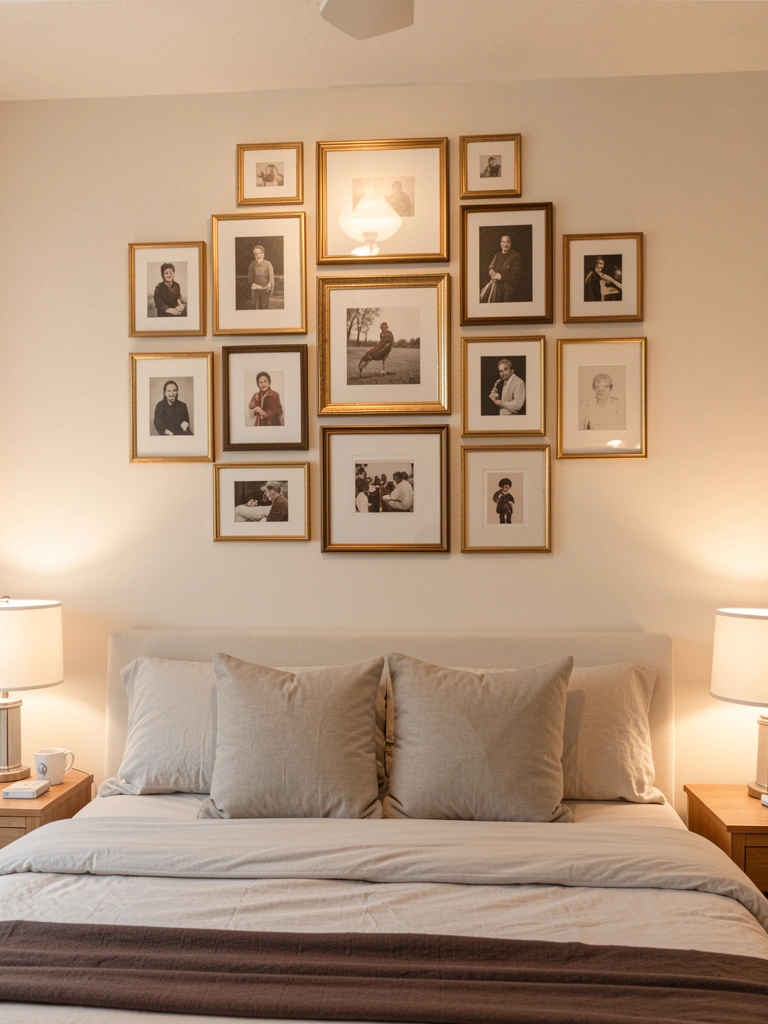
Instead of relying on furniture to fill visual space, use wall-mounted art. This maximizes impact while keeping the floor open. Large-scale prints and gallery walls are huge for 2025 personalization.
Create a gallery wall above your bed or on an empty wall using 5–9 frames ($30–$150 depending on frame quality and art). Mix frame styles and sizes for visual interest. Art can be affordable prints from Etsy or Minted ($15–$50 each) or thrifted frames ($5–$15) paired with printables you love.
Vary heights and spacing for a curated look—use painter’s tape to map it out before hanging anything.
Budget hack: Print personal photos or download affordable digital art from Etsy ($5–$20) and frame them yourself.
Your walls become a reflection of your personality, and the art draws the eye upward, making ceilings feel higher.
13. Install a Corner Reading Nook
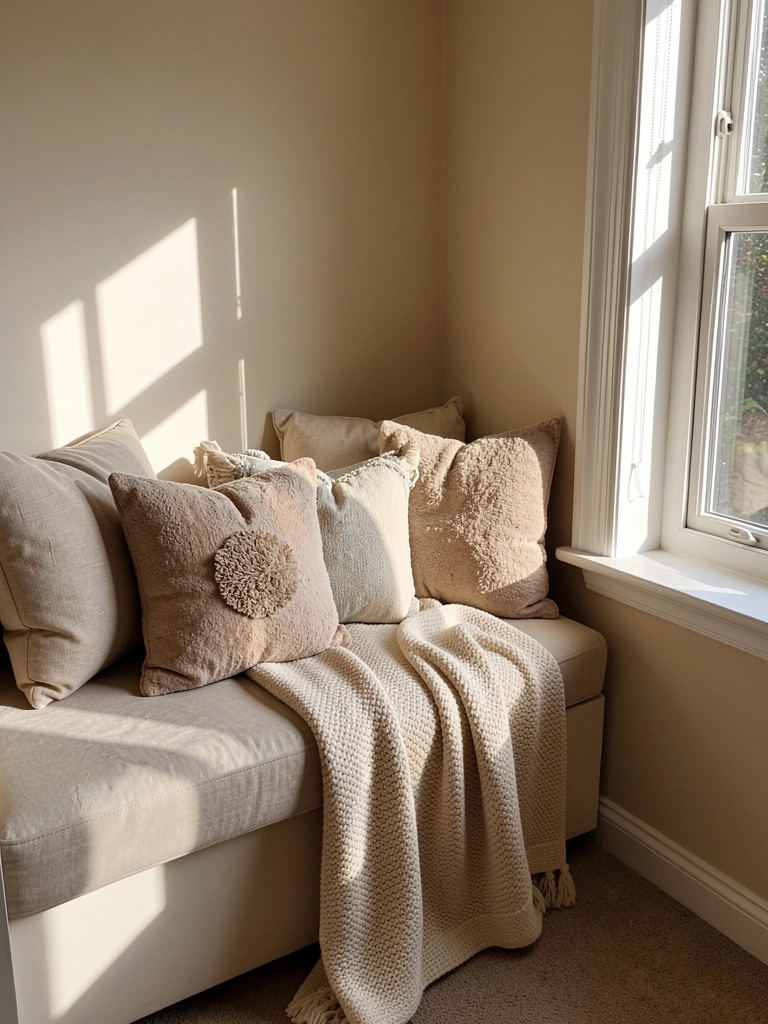
A reading nook transforms a neglected corner into a functional retreat. This uses dead space while creating a secondary focal point that makes the room feel intentional.
Position a compact armchair ($200–$600) or window seat ($300–$1000) in your room’s quietest corner, ideally by a window. Layer it with cushions ($20–$80), a throw blanket ($30–$100), and a small side table ($50–$150). Add a clip-on reading lamp ($25–$50) for ambiance.
Budget option: use a floor cushion ($30–$60) with pillows propped against the wall instead of a chair.
Include a small bookshelf or floating shelf nearby to keep reading material within arm’s reach.
You’ve created a dedicated retreat space within your bedroom where you can read, journal, or simply escape without leaving the room.
14. Use Mirrors to Reflect Light and Space
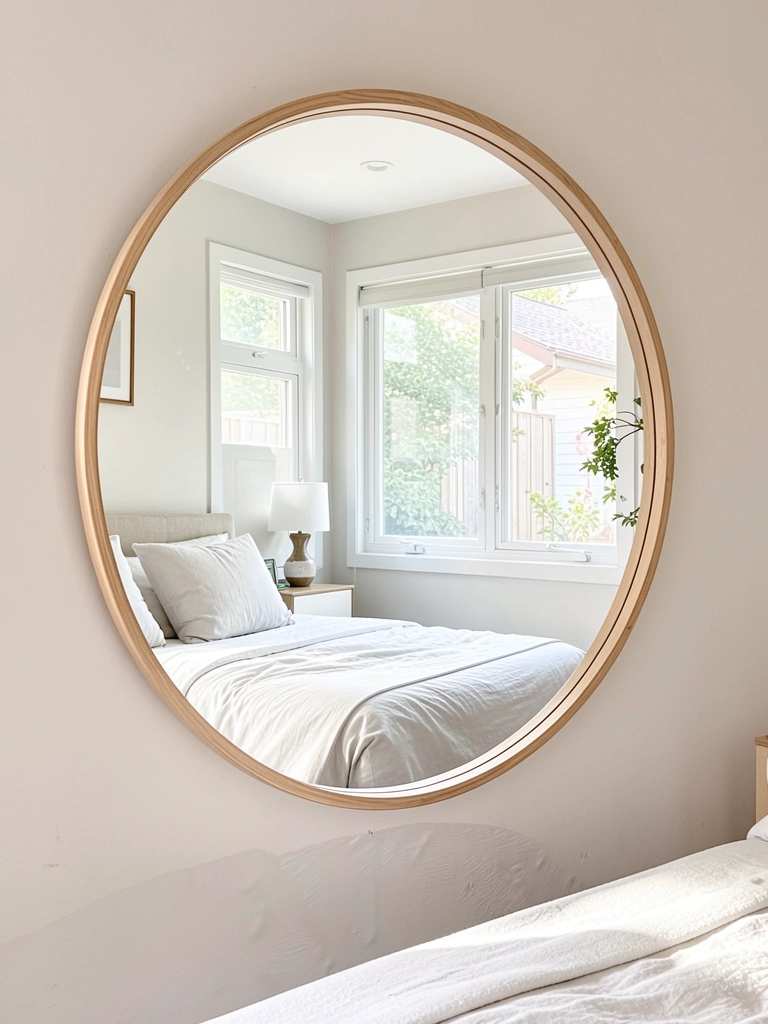
Mirrors are psychology tricks that make small rooms feel twice as big. They bounce light around and create the illusion of depth—absolutely essential for compact spaces.
Hang a large mirror (at least 24×36 inches, $50–$250) opposite your window to reflect natural light back into the room. Leaning mirrors work for renters. Rounded or arched frames align with 2025’s organic shapes trend beautifully.
Position it to reflect your best views—not the clutter. Avoid hanging mirrors opposite the bed if it makes you uncomfortable; instead, place them on adjacent walls.
Budget option: thrift large mirrors ($10–$30) and refresh the frame with spray paint ($8–$12).
Your room feels significantly larger, naturally brighter, and more open—one of the highest-ROI small-space hacks available.
15. Incorporate Natural Materials and Raw Textures
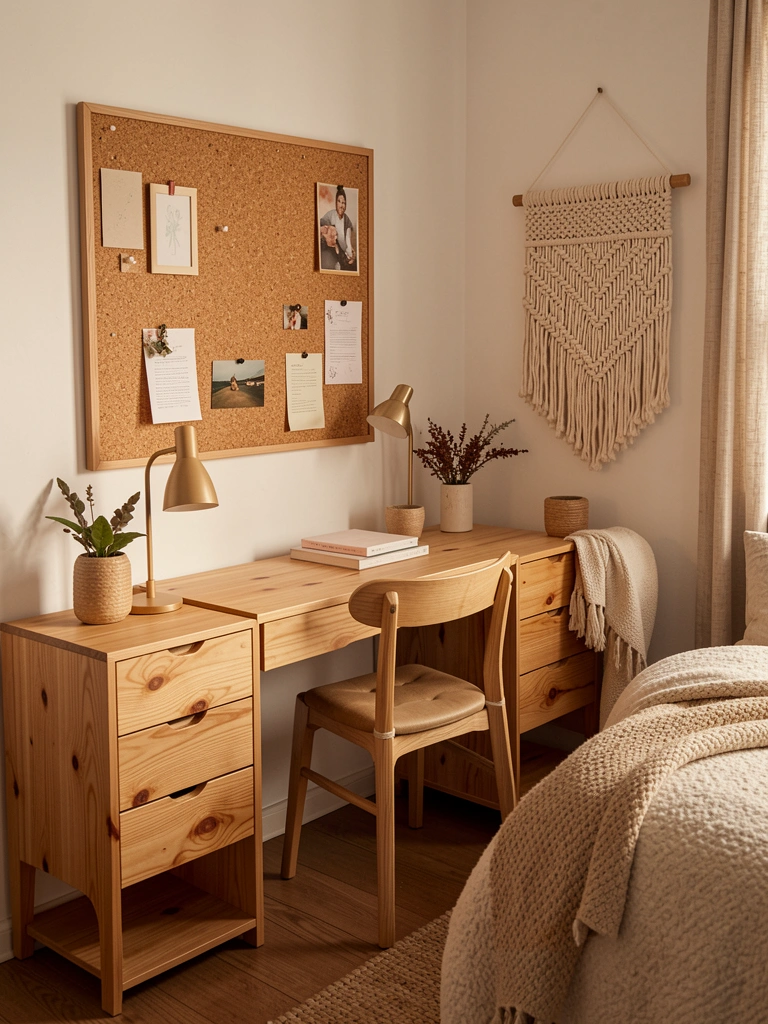
Natural materials like cork, jute, raw wood, and stone align with 2025’s biophilic and sustainability trends while adding warmth to compact spaces. They ground the room and make it feel lived-in and intentional.
Swap one nightstand for solid wood ($100–$250), add a cork bulletin board ($20–$50), or layer a jute rug ($80–$200). Incorporate woven wall hangings ($30–$120) or a rattan headboard ($200–$500). These materials photograph beautifully and feel tactile.
Real talk: natural materials show dust and wear, but that’s part of their charm—they age gracefully.
Mix raw textures with softer fabrics (linen, cotton, wool) so the room feels balanced rather than rustic.
The resulting bedroom feels grounded, warm, and connected to nature—creating a sanctuary vibe even in a tiny space.
16. Create a Capsule Wardrobe Closet System
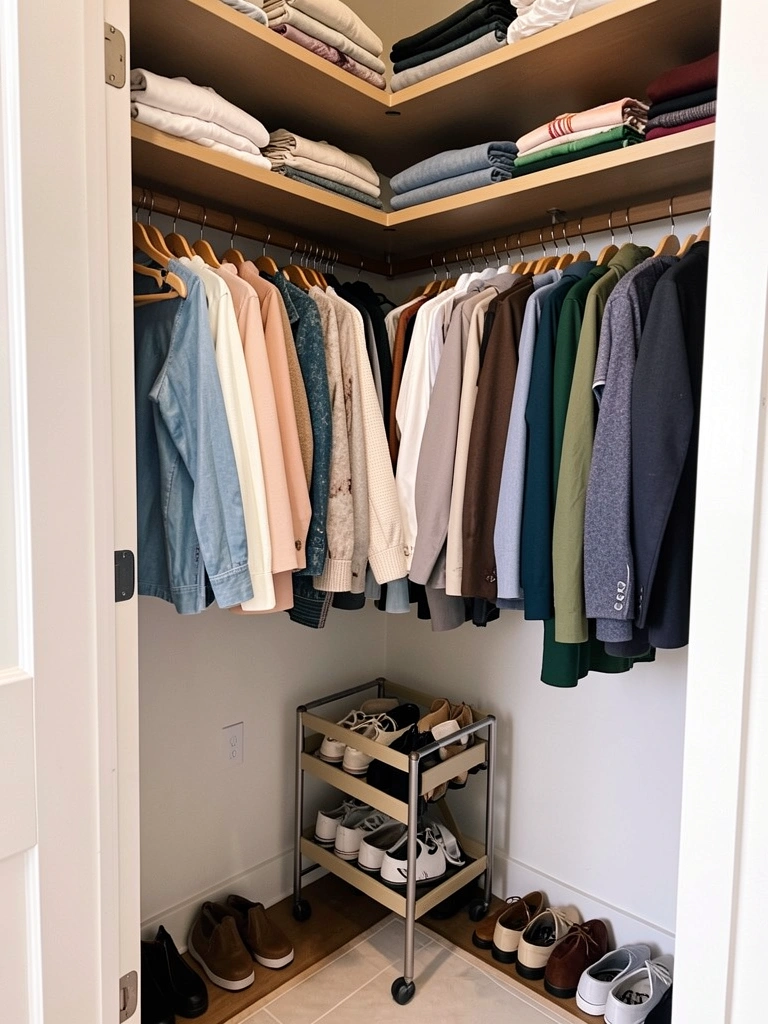
Small bedroom = small closet. A capsule wardrobe system lets you own fewer clothes that work harder, reducing visual clutter and mental stress.
Build a capsule of 30–40 items in a cohesive color palette (neutrals with 2–3 accent colors). Use matching wooden hangers ($20–$50 for a set of 10) and fold vertically so you see every piece. Add floating shelves ($30–$80) above for folded items. Use a slim rolling cart ($40–$100) for shoes.
Shopping: Invest in quality basics from Uniqlo, Gap, or Everlane rather than many cheap pieces.
Fewer items mean less visual noise, easier mornings, and a bedroom that stays tidier with minimal effort.
You’ll discover that you wear the same 20 pieces anyway—why not embrace it and create more space?
17. Mount a Narrow Wardrobe or Clothing Rack
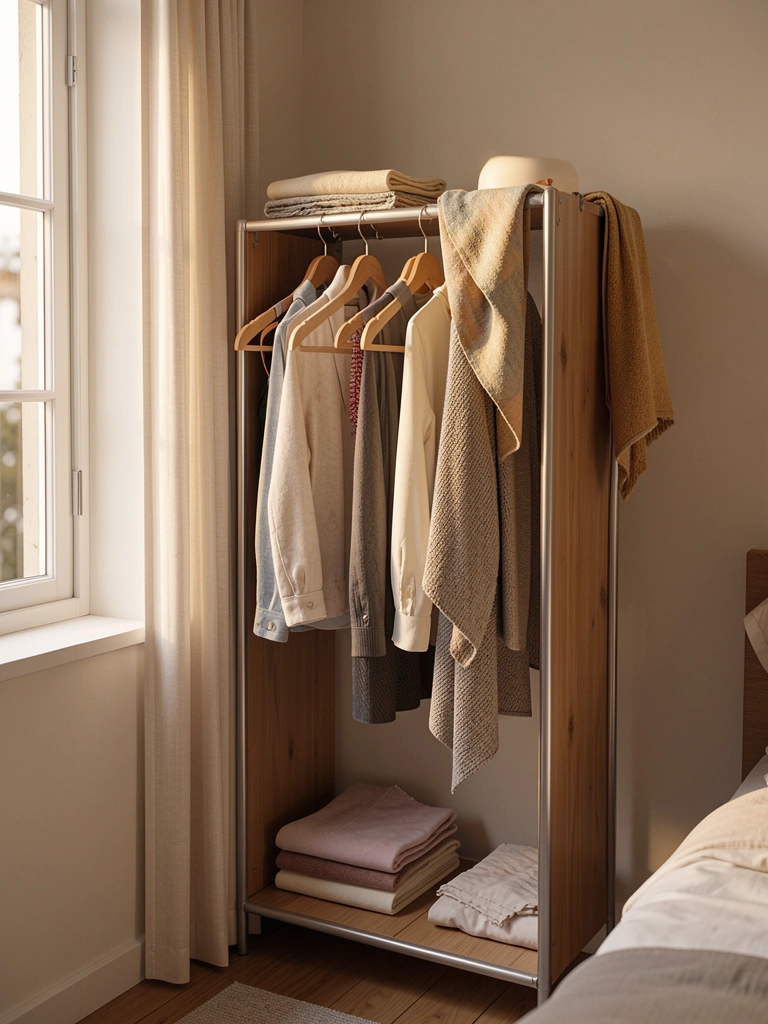
If your closet doesn’t exist or is absurdly small, a standalone wardrobe or open clothing rack becomes functional art while saving the limited closet space for off-season storage.
A narrow wardrobe (18–24 inches wide) costs $150–$400 from IKEA, Wayfair, or vintage sellers. An open clothing rack ($80–$300) works if you’re stylish with your selections (showing too many chaotic clothes defeats the purpose).
Style it intentionally with current outfits and a few special pieces. Add a basket beneath for accessories or off-season items ($30–$80).
Position it where it’s visually anchored—a corner, beside a window, or as a room divider—not floating randomly.
The arrangement becomes a styling focal point and solves storage without requiring major furniture moves or renovations.
18. Add Biophilic Elements with Low-Maintenance Plants
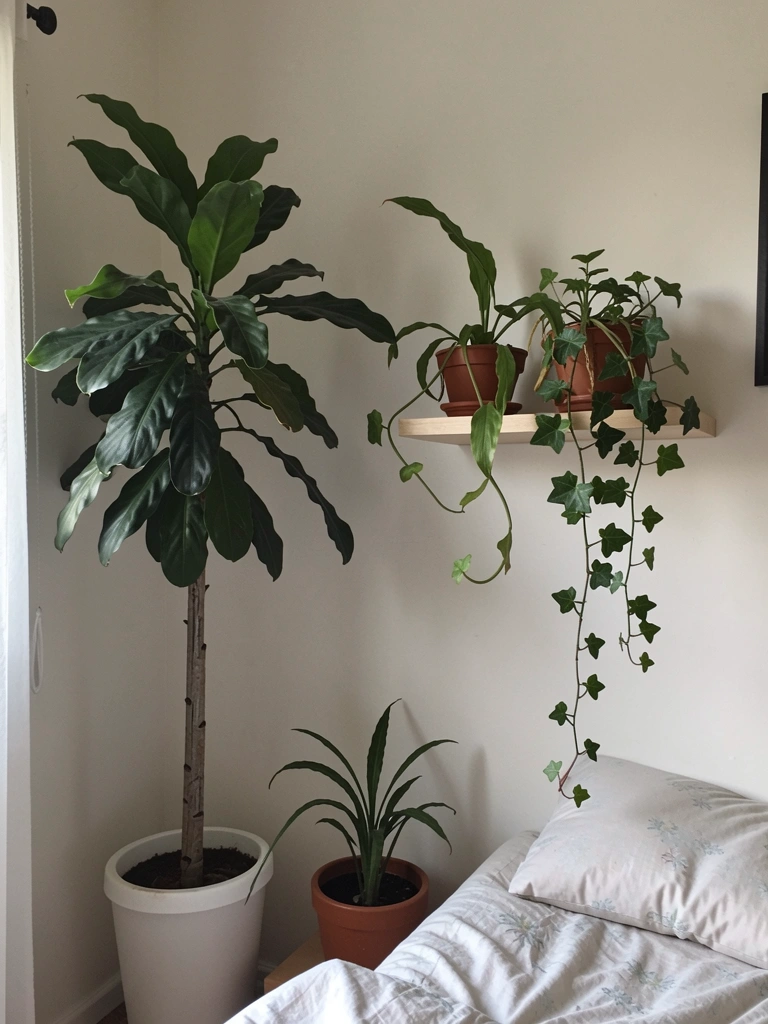
Plants bring calm, improve air quality, and align with 2025’s biophilic trend perfectly. They make small spaces feel alive and connected to nature without consuming much physical space.
Choose low-maintenance plants (pothos, snake plant, ZZ plant, calathea) that tolerate lower light ($10–$30 each). Position them at different heights using shelves and plant stands ($20–$80) to draw the eye upward. Use ceramic or terracotta pots ($8–$25 each) that photograph beautifully.
Cluster plants in one corner rather than scattering them to keep the room feeling organized.
Watering schedule: most tropical houseplants need water every 7–10 days depending on light and season. Set a phone reminder if you forget easily.
Your bedroom becomes a living, breathing retreat that purifies air and boosts mood without requiring floor space.
19. Use Layered Lighting Instead of One Overhead Light
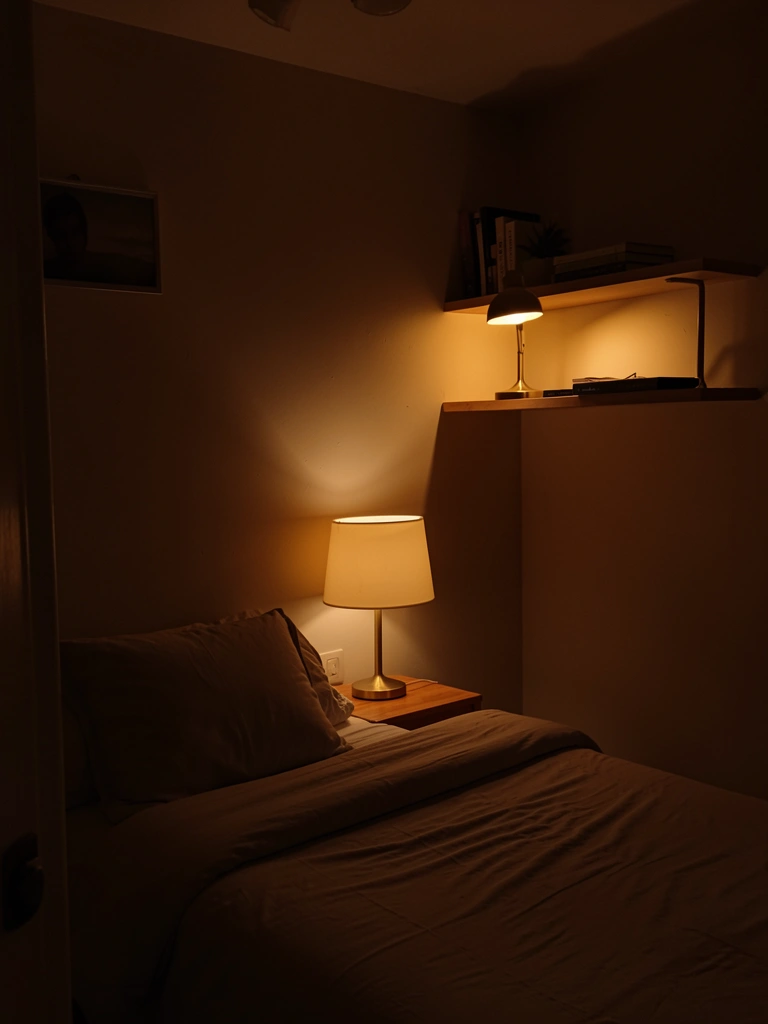
Overhead lights alone make small rooms feel harsh and institutional. Layered lighting (overhead, task, ambient) creates depth and allows you to control mood throughout the day.
Install a dimmer switch on overhead lights ($15–$30 installation). Add a reading lamp on your nightstand ($30–$80), a clip-on lamp for your desk ($25–$50), and string lights or a small floor lamp in a corner ($20–$60). Use warm-toned bulbs (2700K) to avoid cold, sterile vibes.
Budget hack: battery-operated LED fairy lights ($10–$20) create ambiance without needing outlets.
Layers let you adjust for morning energy, midday focus, and evening wind-down—all within the same small footprint.
The result is a bedroom that feels warmer, more intentional, and adaptable to your needs rather than one-note and harsh.
20. Install Floating Bedside Tables Instead of Nightstands

Nightstands with legs take up floor space. Floating bedside tables ($60–$150 per side) create the same function with zero visual weight, making the room feel more open.
Mount shallow floating shelves (10–12 inches deep) at the height of your mattress top ($40–$100 per shelf plus installation). Use one on each side if your layout allows, or just one on your preferred side. They hold lamps, water, books, and skincare without dominating the space.
DIY: build simple floating shelves using reclaimed wood and heavy-duty brackets ($50–$100 total, if you’re handy).
Style each shelf minimally—a lamp, one book, and maybe a small plant. Restraint keeps them from looking cluttered.
You maintain all the nightstand functionality while gaining that crucial floor space that makes small rooms breathable.
21. Opt for a Bench at the Foot of the Bed
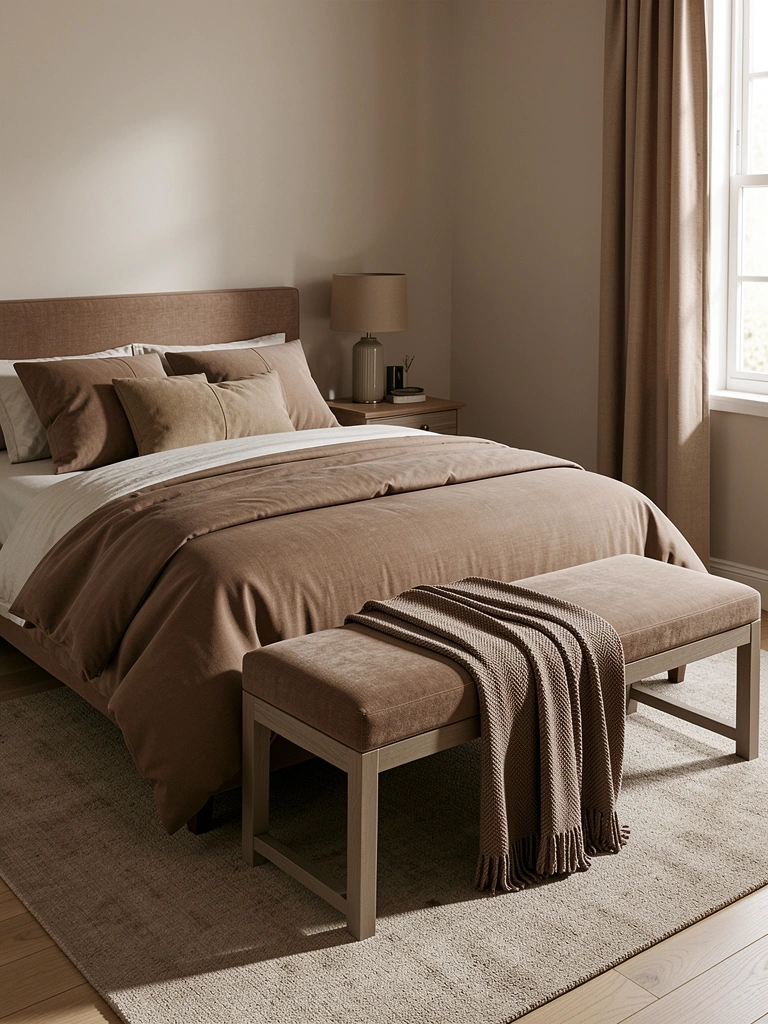
A bench at the bed’s foot adds style and function without the bulk of a dresser or storage unit. It’s practical for folding clothes and visually anchors the bed while maintaining flow.
Choose a narrow bench ($150–$400) in upholstered or wood finishes that matches your aesthetic. Look for low-profile options (under 18 inches tall) so they don’t block views or feel heavy. Rounded designs align with 2025’s organic furniture trend.
Position it only if you have the floor space—if it blocks walkways, skip it and use wall-mounted storage instead.
Style with a folded throw blanket ($30–$100) for texture and to keep it looking intentional, not like laundry storage.
This simple addition creates a finished, designed look and gives you a landing spot for daily outfit decisions.
22. Create Zones with Rugs and Lighting
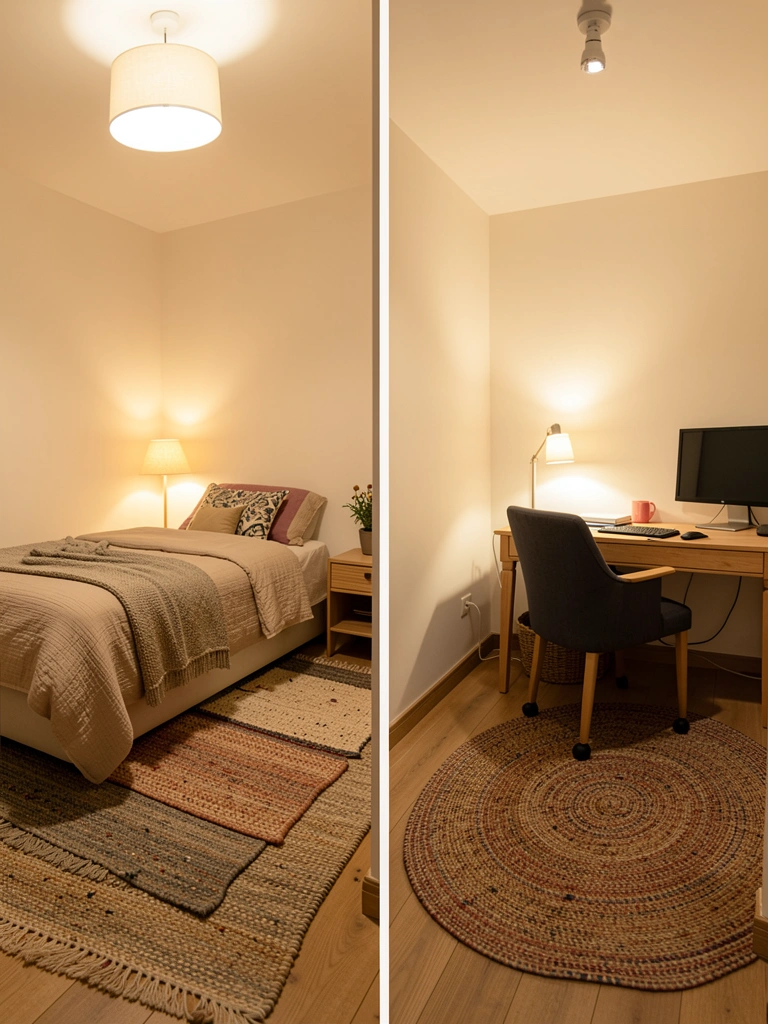
Zone-ing makes small rooms feel intentional and larger by creating distinct purposes within one space. Rugs and lighting define these zones without walls or furniture barriers.
Use different rugs to anchor sleeping, working, and lounging areas ($150–$400 total). Layer lighting—ambient overhead, task lighting at a desk, warm light in a reading corner—to reinforce each zone’s purpose. This costs less than adding furniture.
Even in a 100-square-foot bedroom, you can suggest separate zones through design choices rather than physical barriers.
Paint accent walls to subtly define zones, or use curtains if you share a space with a partner who has different schedules.
Your tiny bedroom suddenly feels more sophisticated and multifunction, expanding its practical capacity.
23. Go Vertical with a Tall Narrow Bookcase
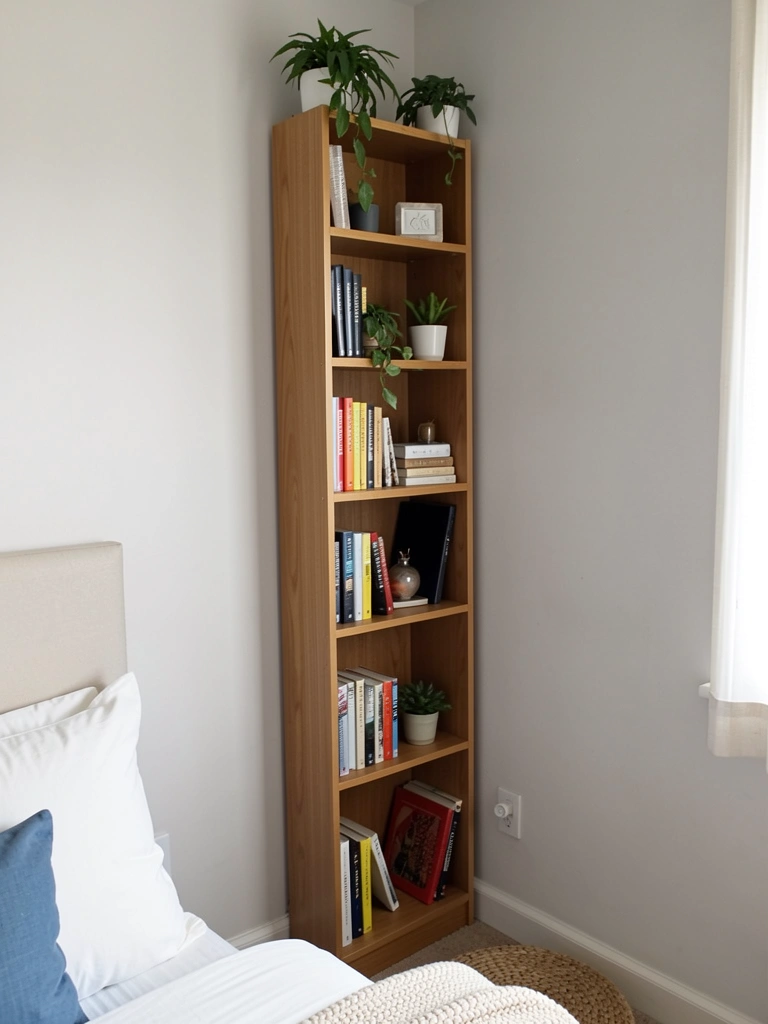
Tall, narrow bookshelves ($100–$300) draw the eye upward and make ceilings feel higher—perfect for small rooms. They store significant items (books, décor, plants) in a compact footprint.
Look for bookshelves 18–24 inches wide and 72+ inches tall from IKEA, Target, or vintage shops. Position in a corner or along a single wall to anchor the room without cutting through traffic patterns.
Styling: alternate books horizontally and vertically, add small plants and art objects, and leave some shelves partially empty so it doesn’t feel cluttered.
Tall shelves work beautifully with rounded corners or open shelving designs to feel less institutional.
You’ve created significant visual interest and storage in under two square feet of floor space.
24. Use a Sliding Barn Door for Closet Access
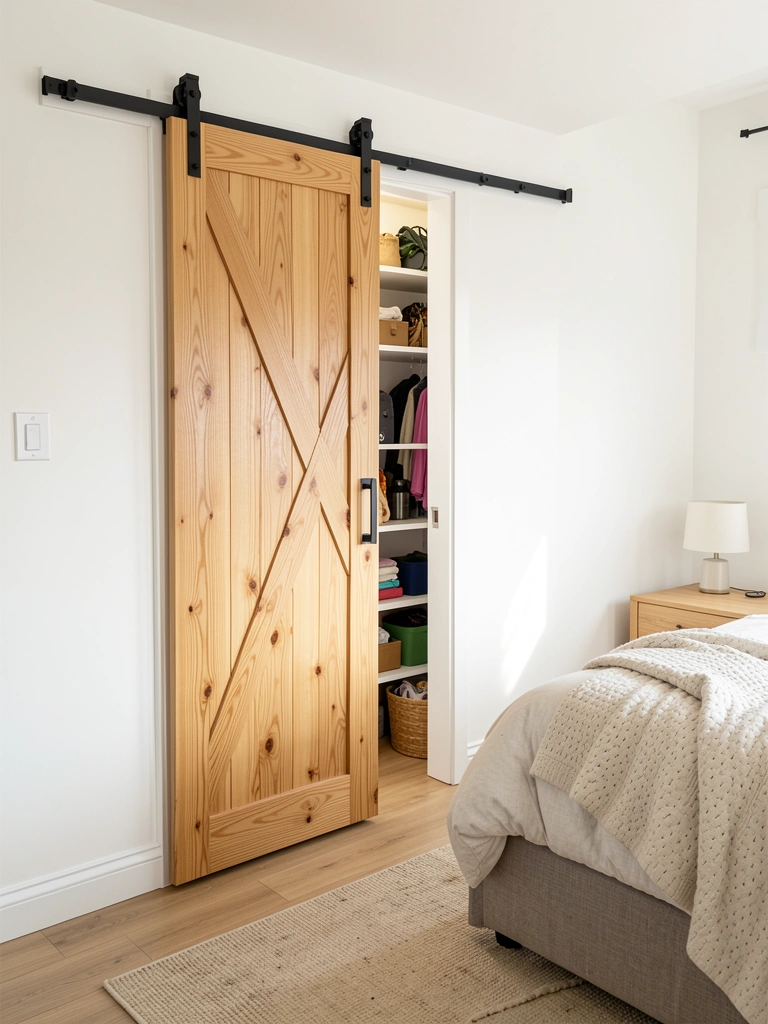
Swing-out closet doors eat into floor space. A sliding barn door ($300–$800 installed) saves room while adding farmhouse or modern charm depending on your style.
Install a barn door track system ($150–$400 in materials; DIY installation saves $200–$300 labor). Paint or stain it to match your room’s aesthetic. The door slides flat against the wall, never blocking pathways.
Renter option: Adhesive-backed or command-mounted temporary sliding door systems exist but are less stable; check with your landlord first.
Organize the closet interior with vertical hanging, floating shelves, and labeled bins to maximize every inch.
This upgrade makes your bedroom feel more designed and intentional while solving a real spatial problem.
Save this post and try just one idea this weekend—you might be surprised how even the smallest change creates a noticeably calmer, more spacious bedroom. Share this with anyone drowning in a tiny room who needs a win.
Leave a Reply