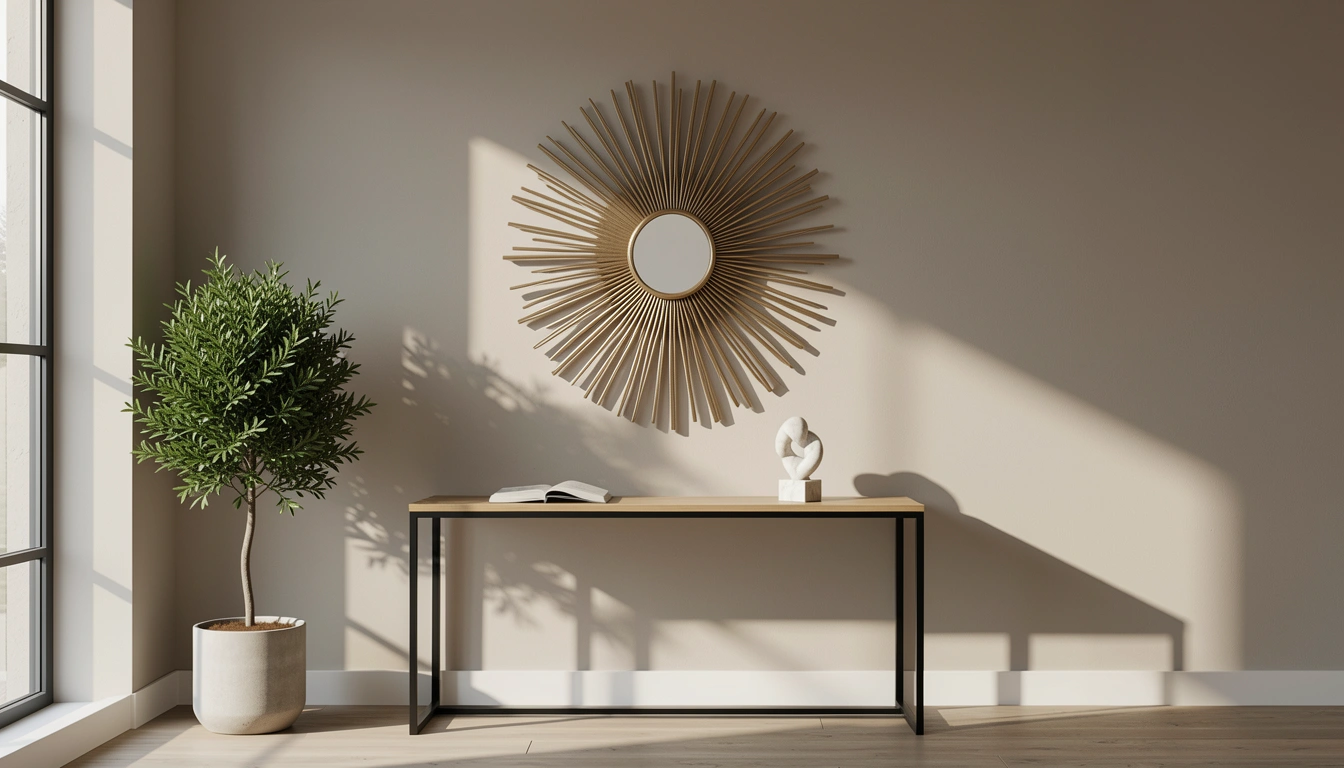
Geometric mirrors aren’t just reflective surfaces—they’re bold art pieces that command attention and reshape how light moves through your space. Whether you’re drawn to sharp angles, perfect circles with layered details, or dramatic sunburst patterns, geometric designs work harder than traditional round or rectangular mirrors. They anchor a room’s style, amplify natural light in unexpected ways, and make small spaces feel bigger without screaming “I need help.” If you’ve felt stuck staring at the same boring mirror, these 27 ideas will show you exactly how to swap it out for something that actually reflects your personality. From budget-friendly DIY projects to investment-worthy statement pieces, you’ll find ideas you can start this weekend—no design degree required.
1. Layer Geometric Mirrors in an Entryway Cluster
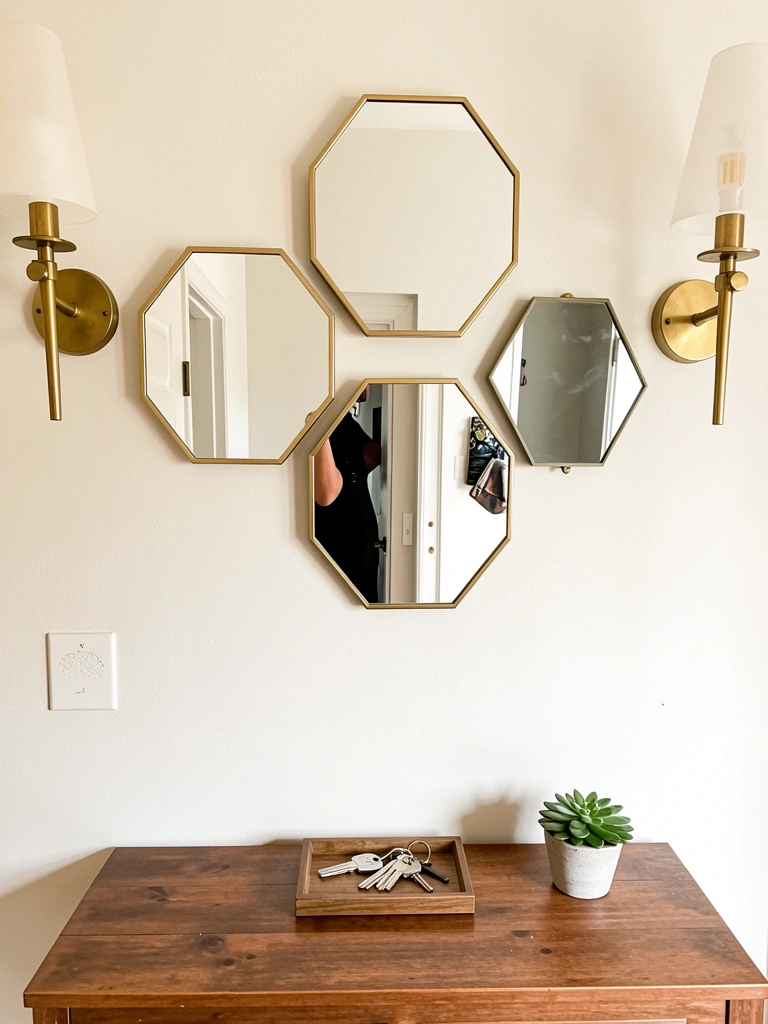
Creating a mirror cluster in your entryway makes an immediate style statement and bounces light deeper into your home. Mix mirror shapes—hexagons, octagons, diamonds—at varied heights to create visual rhythm without feeling chaotic.
Start by measuring your wall space and sketching positions in light pencil. Buy frameless geometric mirrors in brass or matte black ($30–$120 each from IKEA, Target, or Wayfair). Arrange them in an asymmetrical triangle pattern, leaving 3–4 inches between pieces. Use picture hanging strips or wall anchors rated for glass weight. Install hardware within 30 minutes.
Pro tip: Use mirrors with slightly different depths to add dimension—shallower frameless mirrors mixed with beveled-edge options create a gallery feel. The best part? You get an entryway that actually serves double duty: functional (checking your appearance) and artistic (a real focal point).
2. Create a Sunburst Accent Wall Above a Console
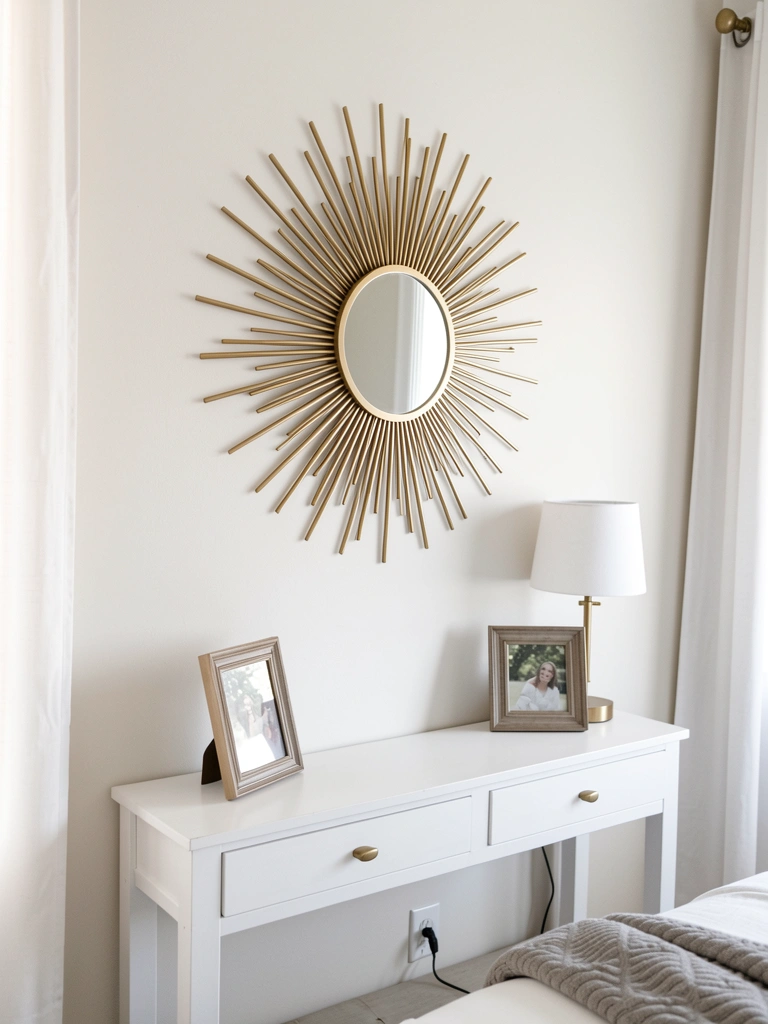
A sunburst mirror becomes your room’s centerpiece—think of it as wall art that also reflects light. It draws the eye upward and makes ceilings feel higher.
Purchase a sunburst mirror with trapezoid or rounded rays ($80–$300 depending on size and material; Large Sun Mirror brand offers quality options, or search Wayfair and Amazon). Position it 12–18 inches above a console, dresser, or floating shelf for proportional balance. Mount using heavy-duty picture hooks or a French cleat system. Installation takes 20–30 minutes if you’re using a stud finder first.
The catch: these mirrors are heavy, so verify wall anchors are rated for the weight. Your space now has a focal point that photographs beautifully and catches morning or evening light, casting geometric shadows across your wall throughout the day.
3. Use a Geometric Grid Mirror Pattern for Small Spaces
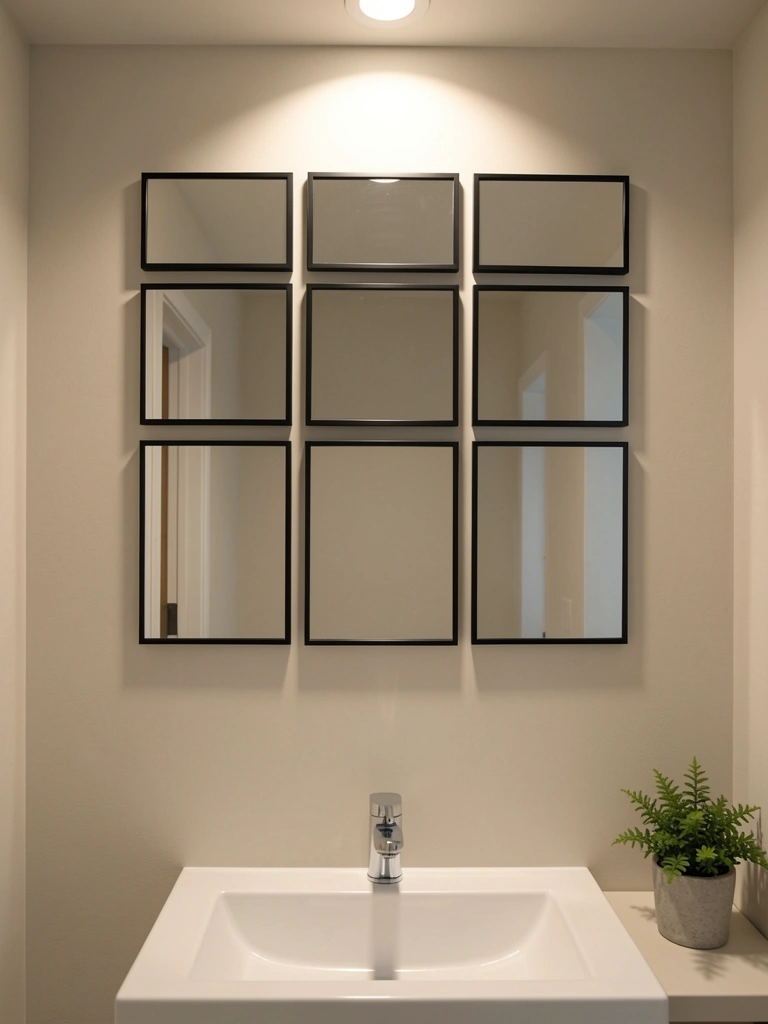
A grid of smaller geometric mirrors creates the illusion of more space while keeping costs manageable. It’s a smart move for renters or anyone hesitant about committing to one massive piece.
Buy 6–9 small framed geometric mirrors (squares, diamonds, or hexagons) at $15–$40 each from IKEA, Target, or affordable brands like Wayfair. Arrange them in a grid (2×3 or 3×3) with equal spacing—use painter’s tape to map positions before drilling. Install each within an hour using basic picture hangers. Leave 2–3 inches between frames for visual breathing room.
Here’s the flexibility: you can add mirrors gradually over time or rearrange them if you redecorate. The collective reflection amplifies light and opens up tight bathrooms or narrow hallways without needing one statement piece. Small changes add up when they’re part of a unified design.
4. Install a Trapezoidal Asymmetrical Mirror Over a Vanity
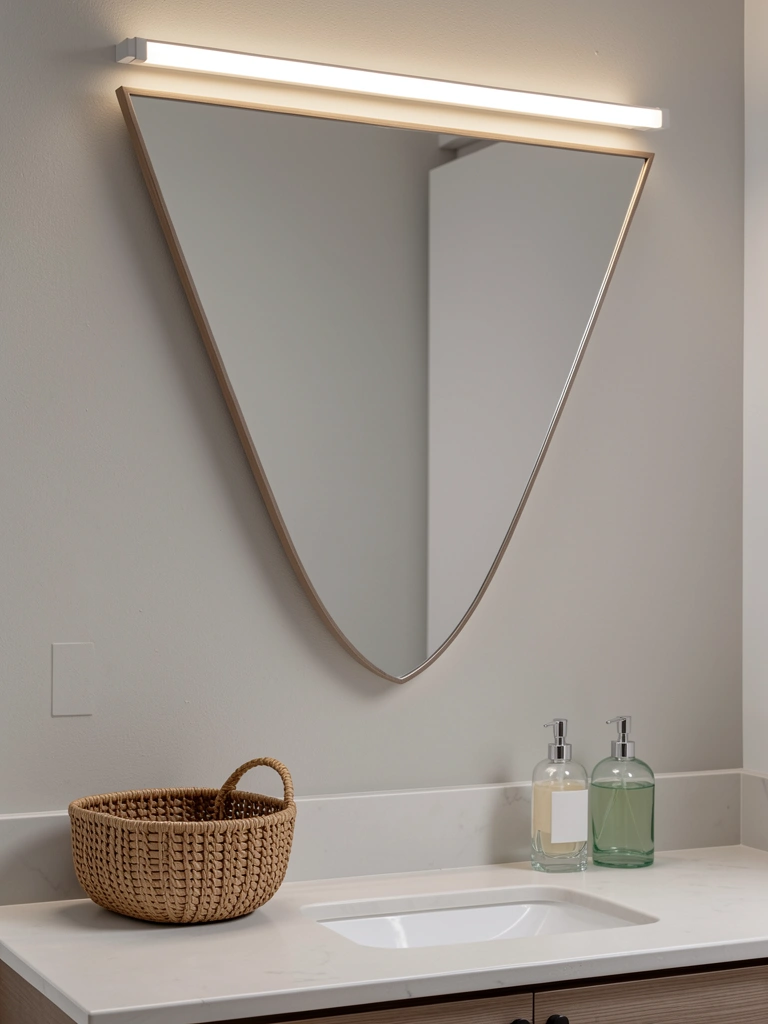
An asymmetrical trapezoidal mirror brings modern edge to traditional vanity setups—it’s unexpected without being chaotic. The angled shape draws your eye and suits eclectic or contemporary bathrooms perfectly.
Search for asymmetrical geometric mirrors on Wayfair, Article, or Design Within Reach ($100–$400 for quality frames). Choose matte black, brass, or natural wood finishes to match your style. Mount it 5–6 feet from the floor using a French cleat for easy adjustments. Pair it with LED strip lighting above or beside the frame for even facial illumination.
Installation takes 30–45 minutes if you use a level and stud finder. The wider-top design reflects more of your upper face and surroundings, making the vanity area feel intentional and designer-curated. Plus, the unusual shape photographs better for your social media than predictable rectangles.
5. Layer Hexagonal Mirrors in a Honeycomb Pattern
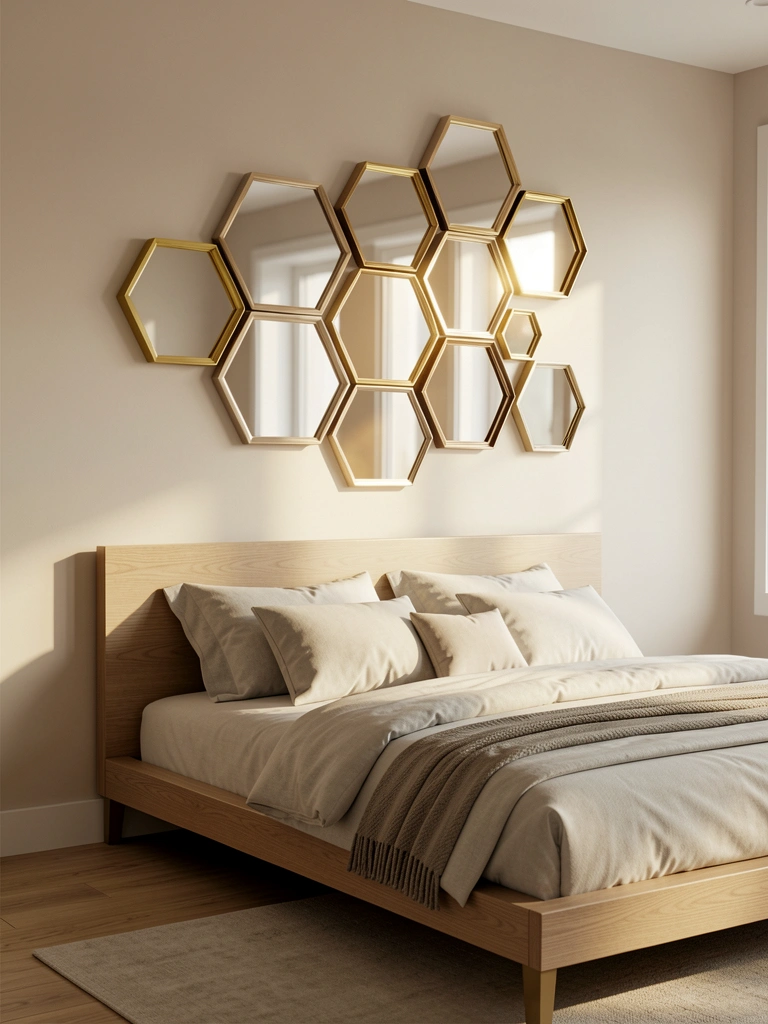
Hexagons are trending hard in 2025, and for good reason—they’re geometric but feel organic. A honeycomb cluster works beautifully above beds, sofas, or living room walls.
Purchase hexagonal mirrors in brushed gold or brass ($20–$60 each from target or Amazon). Arrange them in staggered rows, leaving minimal gaps to create the honeycomb effect—use painter’s tape to plan before mounting. Install 15–20 pieces within 1–2 hours using lightweight wall anchors (these mirrors are usually shallow and not heavy). Space them so they almost touch but allow a tiny shadow line between.
Pro tip: buy 2–3 extra hexagons as backups in case of breakage. The result is a textured, dimensional accent wall that bounces light beautifully and creates visual rhythm. Your bedroom instantly gains architectural interest without needing a full wall renovation.
6. Mount Concentric Circle Geometric Mirrors for Depth
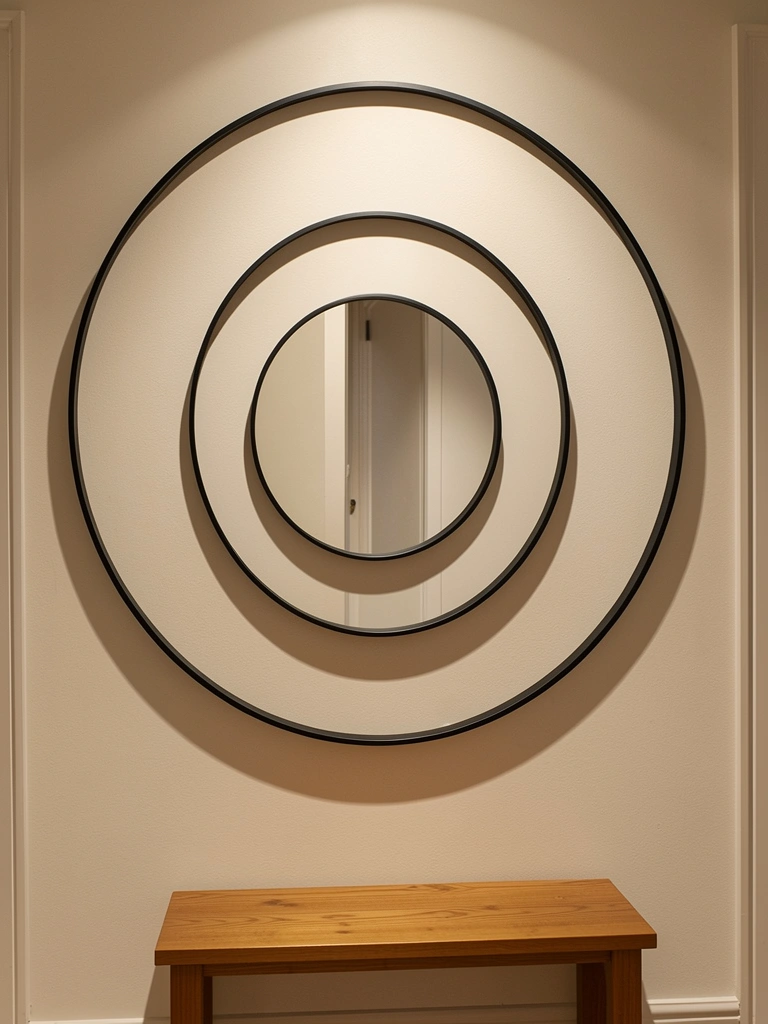
Concentric circles create hypnotic depth—perfect for hallways, home offices, or above accent furniture. The nested effect draws viewers in and makes a statement without looking cluttered.
Source three round geometric mirrors in graduating sizes ($40–$150 total from IKEA, Wayfair, or Article). Keep frames consistent in color and material (all matte black, all brass, or all natural wood). Mount them centered on top of each other, using painter’s tape to align first. Installation takes 30 minutes if using a level.
The geometric repetition calms the eye while amplifying reflection. Your hallway or small bedroom wall becomes a focal point that serves dual purpose: functional reflection plus sculptural interest. The concentric pattern also photographs exceptionally well for anyone documenting their home refresh.
7. Combine Diamond and Square Mirrors for Contrast
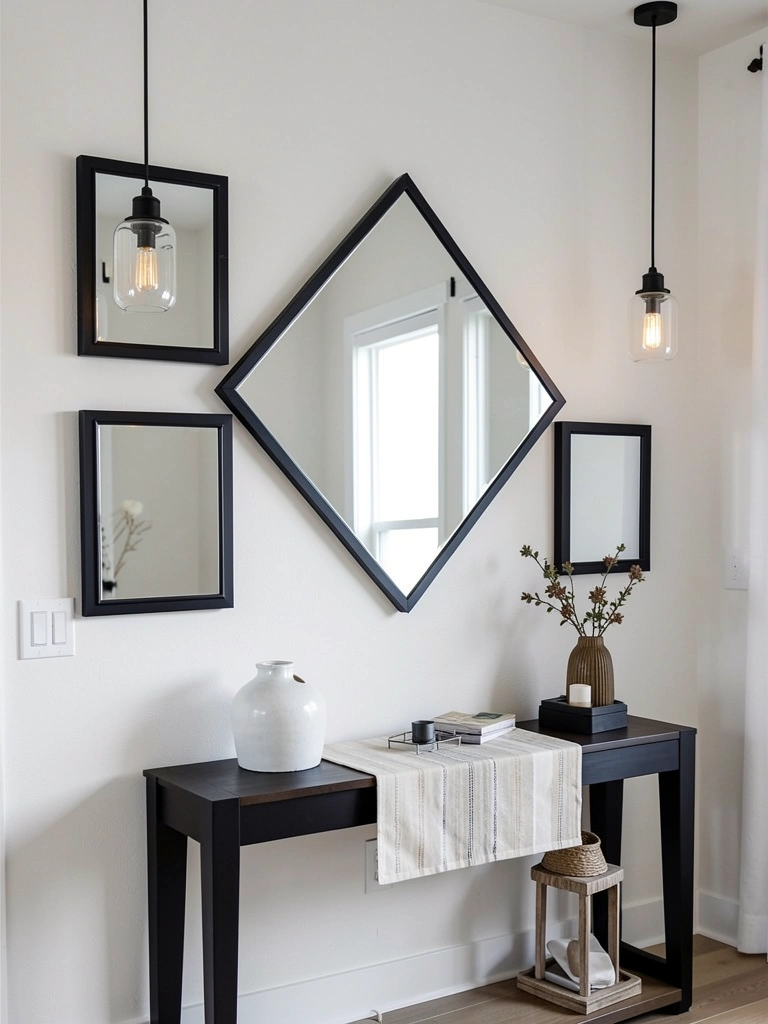
Mixing diamond and square shapes creates dynamic tension—geometric without feeling sterile. This combo works especially well in contemporary, maximalist, or eclectic interiors.
Buy one large diamond mirror ($60–$200) and two matching smaller squares ($30–$60 each) from Wayfair, Article, or Design Within Reach. Keep frames uniform (all matte black or all brass work best). Arrange with the diamond centered and squares flanking it at equal heights. Mount using a French cleat system for easy removal if you’re renting.
Installation is straightforward—30 minutes max. The contrast between the rotated diamond and grounded squares creates visual movement and balance. Your entryway now feels intentional and styled, like you actually spent time thinking about proportions and composition—which you did.
8. Create a Diagonal Mirror Line Up a Staircase
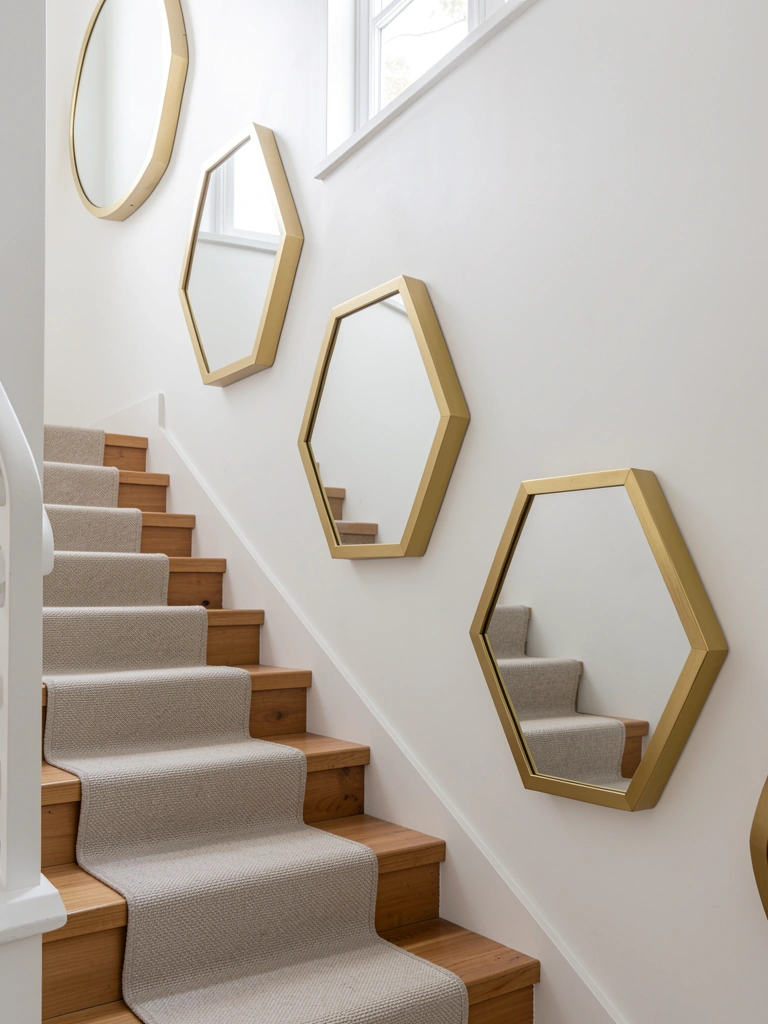
A diagonal mirror line guides the eye upward and makes staircases feel more intentional. It’s a design move that actually improves flow through your home.
Select 5–7 geometric mirrors in mixed shapes (circles, hexagons, octagons) with matching frames ($30–$60 each, roughly $200–$400 total). Map out the diagonal line on your staircase wall using painter’s tape before drilling. Space them 18–24 inches apart along the ascending diagonal. Use wall anchors appropriate to your wall type (drywall, plaster, brick). Mount over 1–2 hours, taking care to use a level for each placement.
Pro tip: keep all frame colors identical even if mirror shapes vary—this creates cohesion. Your staircase transforms from a purely functional passage into a designed feature. Natural light bounces down the stairs, and the diagonal arrangement creates optical movement that mirrors actual traffic flow.
9. Use Octagonal Mirrors for Soft Geometry in Bathrooms

Octagons are geometric but feel less harsh than squares or diamonds—perfect for bathrooms where you want modern style without cold vibes. They’re also easier on the eyes than sharp angles.
Purchase two octagonal mirrors with brass or warm metallic frames ($80–$200 each from Wayfair, Rejuvenation, or Article). Mount them side-by-side above a double vanity or back-to-back on adjacent walls. Space them 3–6 inches apart depending on your visual preference. Use heavy-duty picture hooks or French cleats since bathroom mirrors can be substantial. Installation takes 30–45 minutes.
The octagonal shape softens geometry while maintaining sophistication. Your bathroom feels spa-like and intentional without needing a total renovation. The warm metal frames add a subtle luxury touch that photographs beautifully in natural light.
10. Frame a Round Mirror with a Geometric Surrounding Border
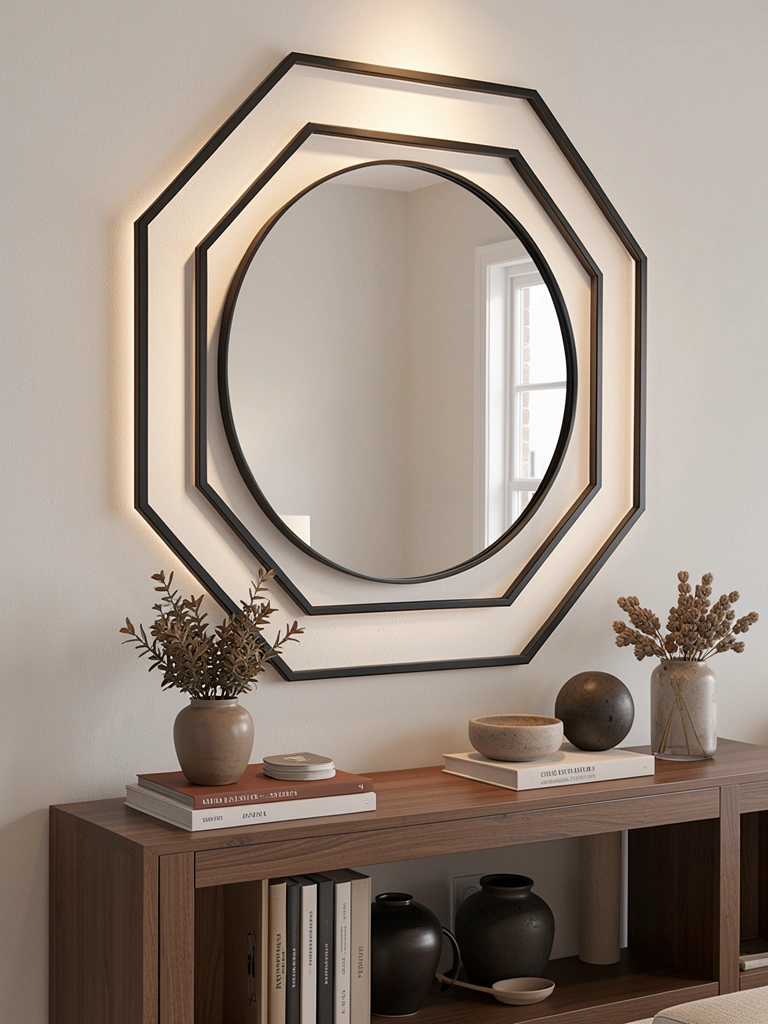
Double-framing a round mirror with a geometric border creates dimension and architectural interest. It’s the design equivalent of matting a piece of art.
Start with a quality round mirror ($40–$100) and commission or purchase a geometric border frame ($50–$150 extra) from custom makers on Etsy or platforms like Made to Order Mirrors. Alternatively, buy a simple round mirror and create a DIY border using metal stripping or wood frame stock. Mount the round mirror first, then attach the geometric border around it using small metal brackets or adhesive-backed spacers. Project takes 45 minutes to an hour.
The layered effect makes your mirror look more intentional and high-end than a single-framed piece. Light reflects off both frame surfaces, adding subtlety and depth. Your wall gains architectural character that suggests you actually planned your decor—and you did.
11. Mount Overlapping Geometric Mirrors for a Mosaic Effect
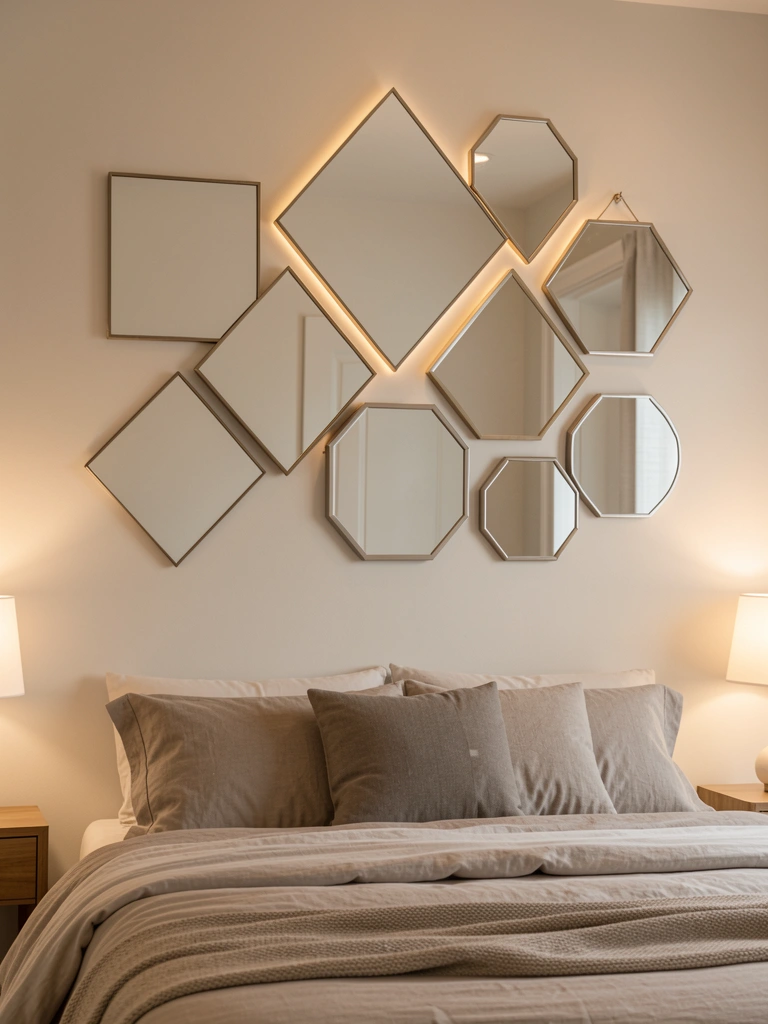
Overlapping geometric mirrors create dynamic visual texture—like a curated gallery but more sculptural. This approach works for maximalists who want playful geometry.
Buy 6–10 geometric mirrors in mixed shapes and sizes, keeping frames in one or two colors ($30–$100 total depending on sizes and materials). Arrange them on your wall with partial overlaps—use painter’s tape to plan the layout first. Some mirrors should sit atop others by 2–4 inches for depth. Mount using picture hangers and wall anchors appropriate to your wall type. Installation takes 1–2 hours depending on quantity.
Pro tip: keep background wall neutral (white, soft gray, or warm beige) so mirrors stand out. The overlapping arrangement creates visual rhythm and makes a bold statement. Your space feels collected and intentional rather than randomly decorated—eclectic in the best way.
12. Use a Large Geometric Mirror as a Console Table Backsplash
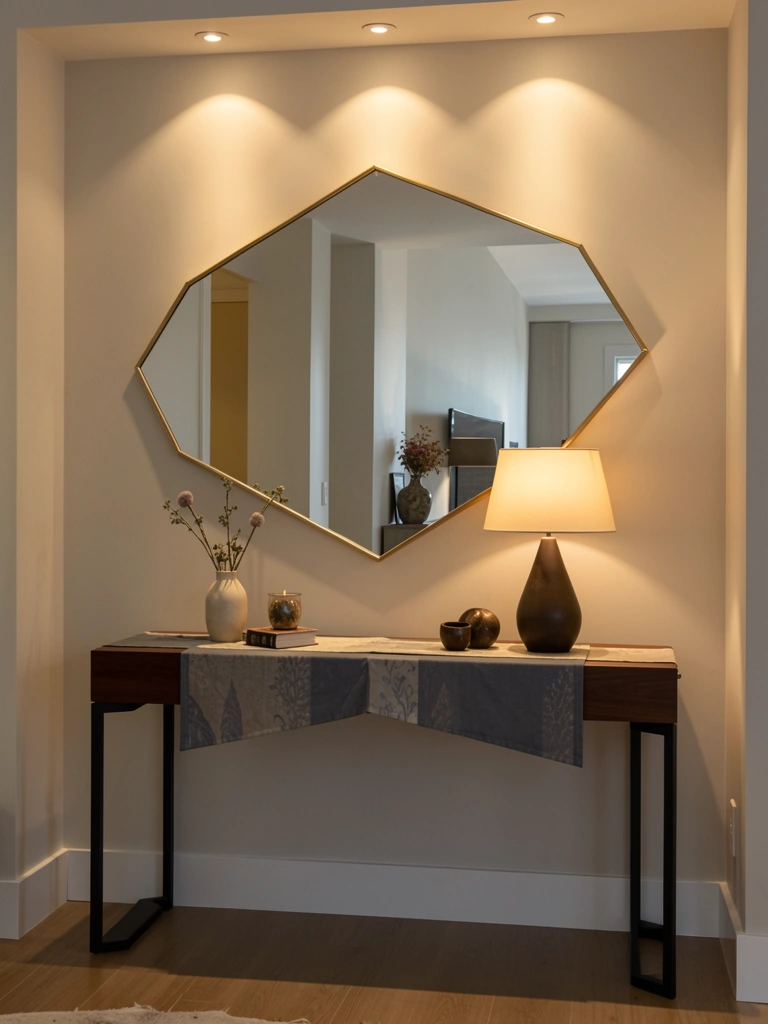
Mounting a large geometric mirror horizontally above a console creates the illusion of extra depth and makes your entryway feel curated and intentional—like a high-end hotel lobby in miniature.
Purchase a substantial geometric mirror ($150–$400, size 24×36 inches or larger) from Wayfair, Article, or West Elm. Mount it 12–18 inches above your console table using a French cleat system or heavy-duty wall anchors. The horizontal orientation feels grounded and contemporary.
Installation takes 30–45 minutes with proper tools and wall preparation. Keep the console styling minimal—one table lamp, small tray, and maybe a decorative object—to let the mirror shine. This setup photographs beautifully and creates a focal point that makes your entryway feel like a designed space rather than just a walkthrough. Guests notice the intention immediately.
13. Create a Geometric Mirror Focal Wall in Place of Paint
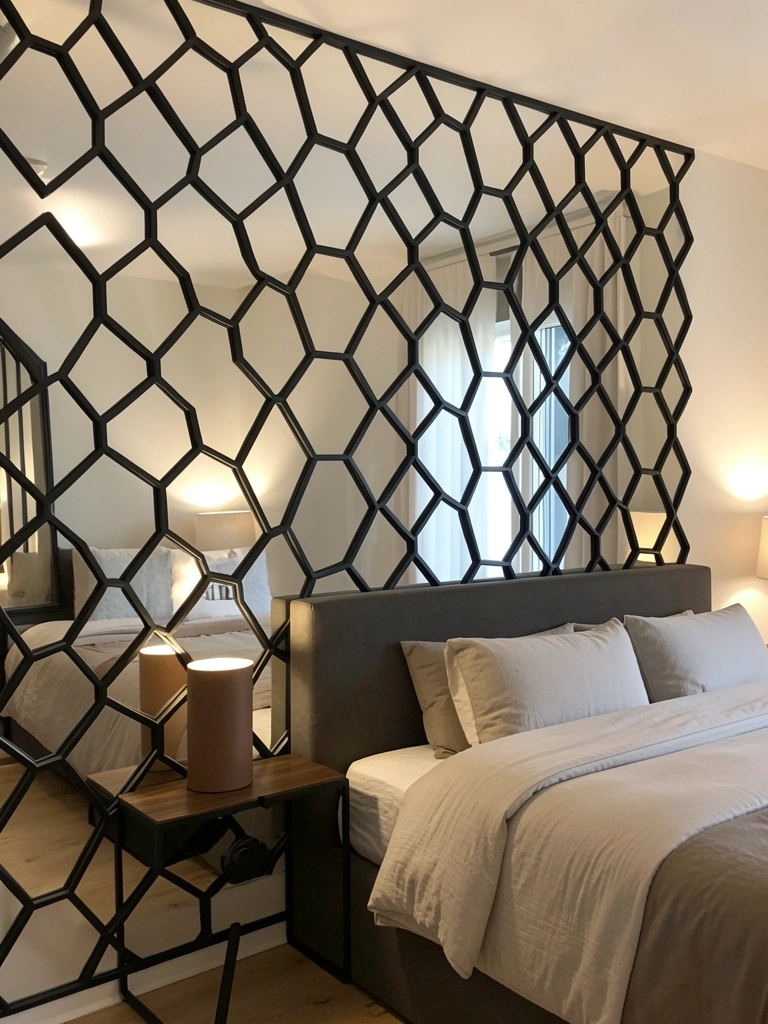
Forget accent paint—a wall of geometric mirrors is bold, reflective, and genuinely transformative. It’s an investment piece but creates impact that paint can’t match.
Plan to cover 50–100 square feet depending on wall size. Order interlocking geometric mirrors designed for wall installation ($200–$600 total for a full accent wall, or $30–$50 per square foot). These typically connect with hidden brackets or adhesive backing. Prepare your wall surface thoroughly—clean and prime if needed. Install over 2–4 hours, working methodically from bottom to top or one corner outward. Use a level frequently to keep alignment perfect.
This is a longer project, but the result is architectural and stunning. Your room feels larger, brighter, and unexpectedly sophisticated. The mirrored wall catches every light source, making the room glow. It’s a statement move that design bloggers will ask to photograph.
14. Install a Geometric Star or Starburst Pattern Over Fireplace
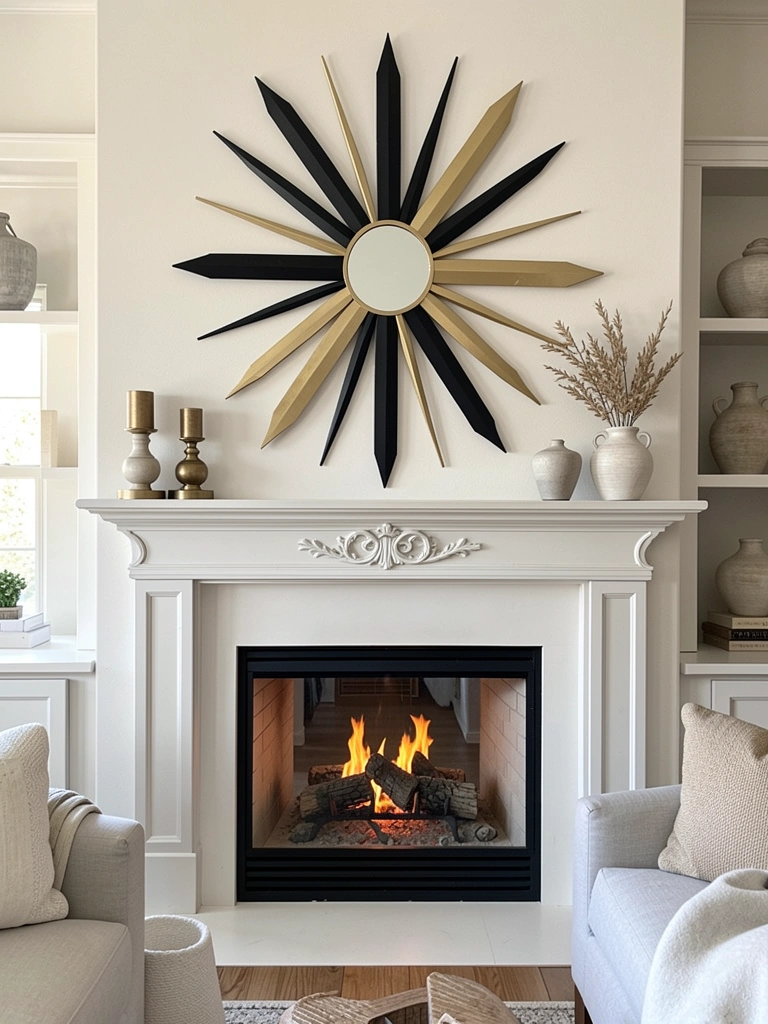
A geometric starburst above your fireplace creates drama and becomes the natural focal point—especially when firelight or interior lighting catches the rays.
Source a large starburst mirror ($120–$400 depending on size and material quality; Large Sun Mirror brand or custom options from Etsy makers). Mount it 18–24 inches above your fireplace mantel using a French cleat system for security and adjustability. Ensure mounting goes into studs since these pieces are often weighty.
Installation takes 30 minutes with proper planning. The starburst radiates outward and draws eyes upward, making your fireplace wall architecturally interesting. Light from the fireplace bounces off the mirror, multiplying ambient warmth and creating movement. Your living room becomes the kind of space where people instinctively gravitate to gather.
15. Layer Thin Geometric Frames Over Large Mirror (Budget Hack)
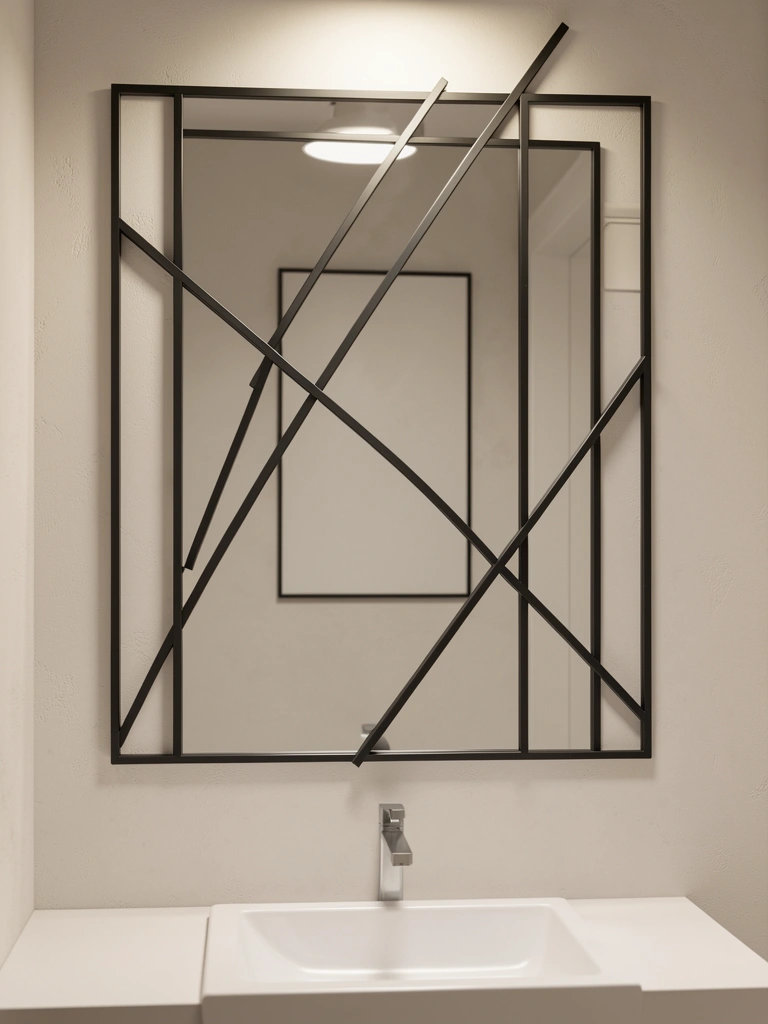
If you already have a large plain mirror but want geometric interest, overlay it with thin geometric frames—instant redesign for under $50.
Buy 2–4 geometric frame outlines (just the frame, no glass backing) from craft stores like Michaels or online ($10–$20 each, or DIY using metal stripping). Position these frames across your existing mirror at angles, securing with mirror-safe adhesive or small suction cups designed for mirrors. Installation takes 15–20 minutes and is completely removable—perfect for renters.
The layered effect tricks the eye into seeing geometry without replacing the whole mirror. This hack costs $30–$60 and takes minimal effort. Your boring mirror suddenly looks intentional and designed. Best part? If you change your mind, everything peels off cleanly.
16. Mount Geometric Mirrors Around a Central Focal Point
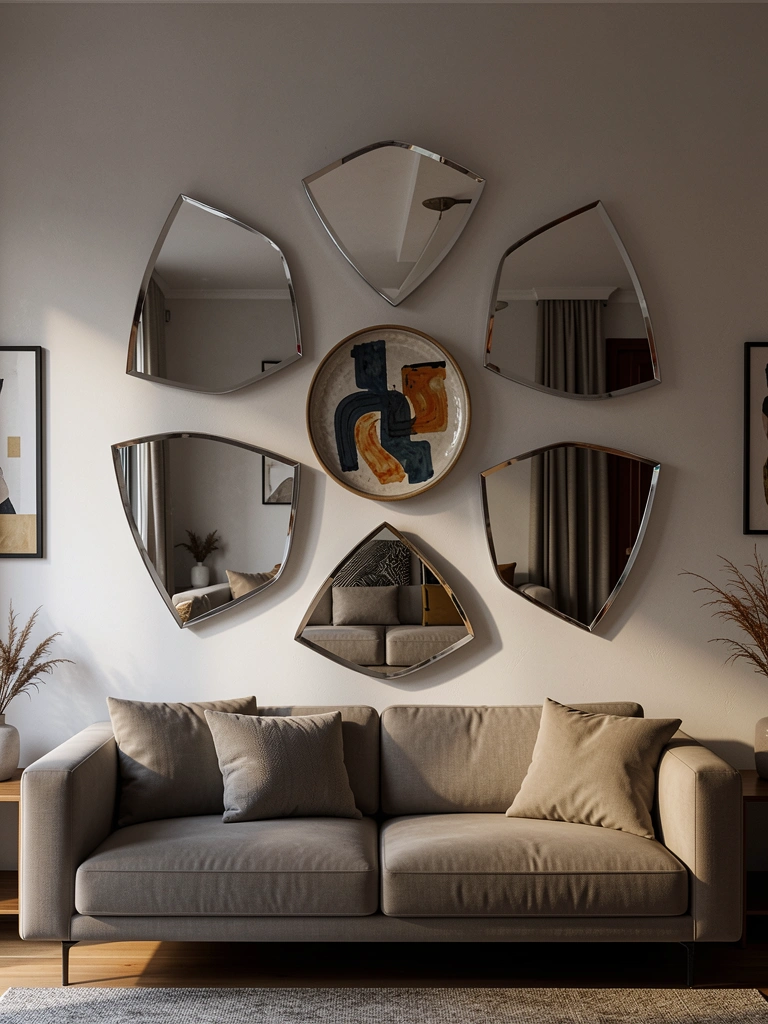
Geometric mirrors arranged in a circular pinwheel pattern around a central focal point create movement and visual harmony—like orbiting planets around a sun.
Choose 5 geometric mirrors in identical frames ($50–$150 each) and one central piece (art, plate, or mirror) for the middle ($40–$100). Arrange mirrors in a radial pattern around the center, each angled slightly outward. Use painter’s tape to map positions before drilling. Mount using appropriate wall anchors and hardware. Installation takes 45 minutes to an hour for precise alignment.
Pro tip: all mirrors and the central piece should have the same frame color or material finish for cohesion. Your wall becomes a designed installation rather than random décor. The pinwheel arrangement creates optical movement—even stationary mirrors feel dynamic when positioned this way.
17. Use Geometric Mirrors to Highlight Architectural Details
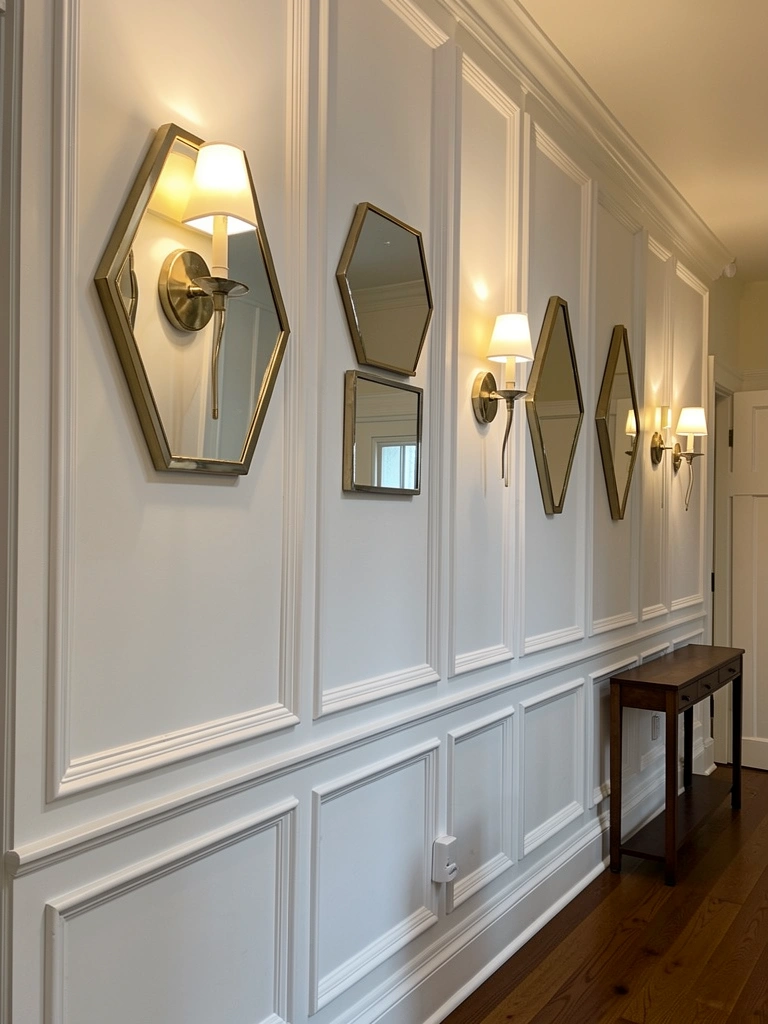
If your home already has architectural details like wainscoting or alcoves, geometric mirrors fit into those spaces beautifully—they emphasize structure instead of fighting it.
Measure your architectural details carefully. Order geometric mirrors in sizes and shapes that fit your specific spacing ($25–$80 each depending on size). Mount mirrors between wainscot panels or in alcove spaces using mounting hardware appropriate to your wall type. If installing between panels, use adhesive-backed hanging strips to minimize holes. Placement typically takes 30–45 minutes.
This approach feels intentional and high-end because mirrors serve the existing architecture rather than feeling randomly placed. Your hallway or feature wall becomes more dimensional and professionally styled. Lighting, particularly sconces flanking mirrors, amplifies this elegant effect.
18. Create a Gradient Effect with Geometric Mirrors in Varying Tints
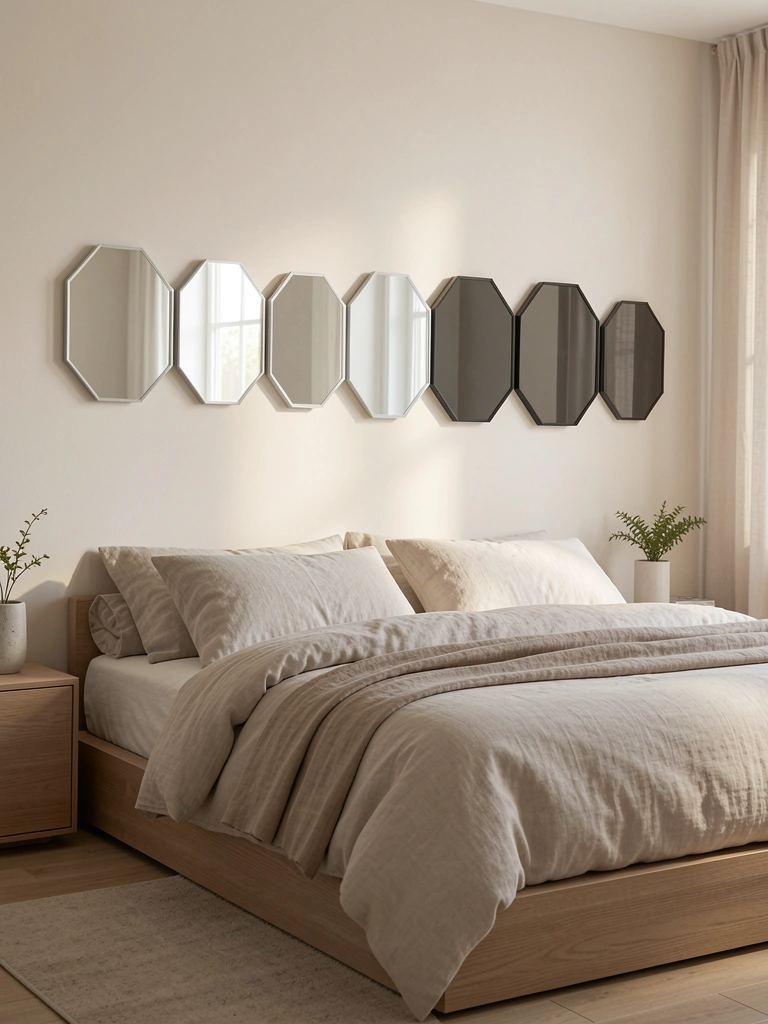
Geometric mirrors come in various tints (clear, gray, rose, bronze). Arranging them in gradient order creates subtle visual interest—an understated design move that feels collected.
Purchase 5–7 geometric mirrors in the same shape but graduated tints ($30–$80 each depending on size and tint darkness). Arrange from lightest to darkest or vice versa in a horizontal or vertical line. Mount at consistent heights to maintain alignment. Installation takes 30–40 minutes using standard picture hangers or wall anchors.
The gradient creates visual rhythm without screaming for attention—it’s a quiet, sophisticated design choice. Your wall feels thoughtfully curated. Different tints also create varied light reflection depending on time of day and room lighting, adding dynamic interest to a simple arrangement. This approach particularly suits minimalist or scandinavian-inspired interiors.
19. Install a Geometric Mirror Pendant Installation in Bedroom
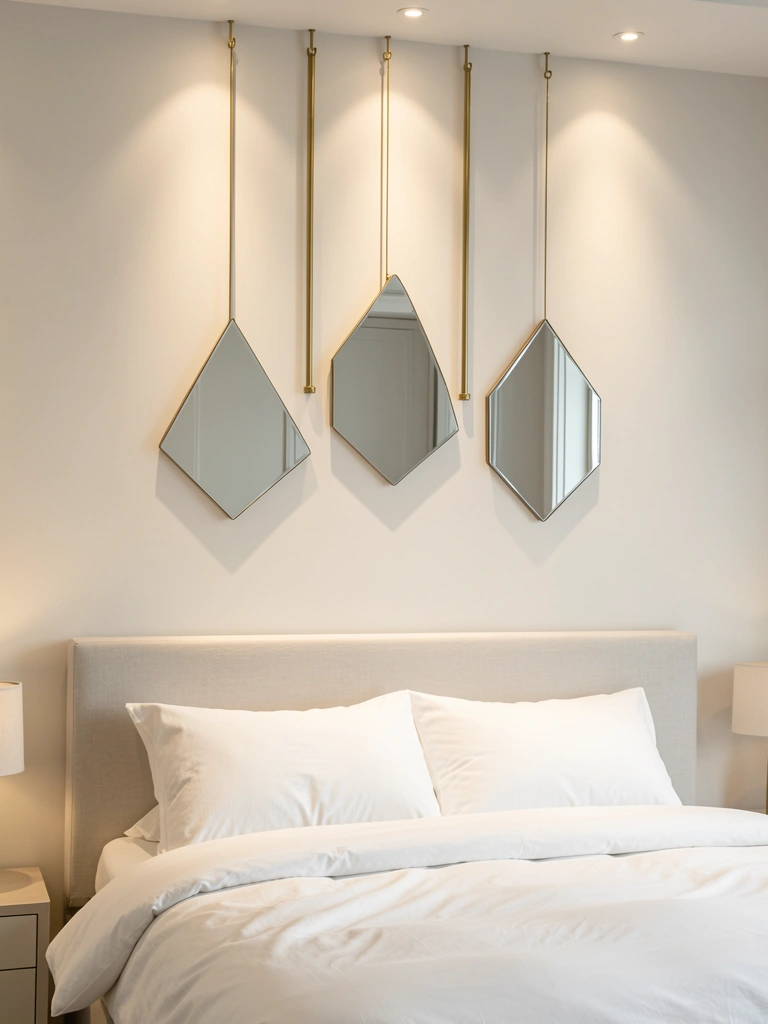
Hanging geometric mirrors from chains or rods as “pendant installations” makes them feel like sculpture—this works especially well above beds where height matters.
Source 3–5 small geometric mirrors with pre-drilled hanging holes ($30–$80 each). Purchase thin brass chains or slim metal rods from hardware stores ($15–$30 total). Install a ceiling-mounted rod or multiple hooks at varied heights above your bed headboard. Attach mirrors using chains or rods at staggered drops—some 12 inches below the rod, others 24 inches, creating a cascading effect. Installation takes 45 minutes to an hour.
This approach is surprisingly removable—perfect for renters who want high-impact design. The suspended mirrors catch light beautifully and create the illusion of movement even when stationary. Your bedroom headboard becomes sculptural and gallery-like. Everyone notices this unusual installation immediately.
20. Use Geometric Mirrors to Frame a Bedroom Headboard

Framing your bed with a geometric mirror arrangement makes the bed feel like the room’s focal point—a subtle but effective design move.
Choose one larger geometric mirror for above the bed ($80–$200) and four smaller matching mirrors for the sides ($30–$60 each). Mount the large mirror at least 18 inches above the bed headboard, centered. Position smaller mirrors flanking the headboard at bed-rail height, creating a frame effect. Use painter’s tape to plan placement before drilling. Installation takes 45 minutes.
Pro tip: all mirrors should have matching frames for cohesion. The arrangement directs attention to the bed and makes your sleeping area feel intentional and designed. Natural light bounces around this arrangement, making bedrooms feel brighter and more spacious. Guests instantly notice the thoughtful layout.
21. Mount Geometric Mirrors in Bathroom Corners for Light Multiplication

Placing geometric mirrors on adjacent walls in corners multiplies reflection—smart for bathrooms where natural light is limited or corners feel dead.
Buy two matching geometric mirrors ($40–$100 each) with the same frame finish. Mount one on each wall, positioned so corners nearly meet (about 3 inches apart). Use level to ensure both are perfectly straight. Installation takes 20–30 minutes.
This corner placement sounds simple but creates surprising light amplification. Your bathroom feels brighter and more spacious—especially if you use light-tinted or clear mirrors. The corner arrangement also makes use of wall space that’s typically hard to style. Your bathroom layout becomes more balanced and intentional.
22. Create a Mixed-Media Wall with Geometric Mirrors and Shelving
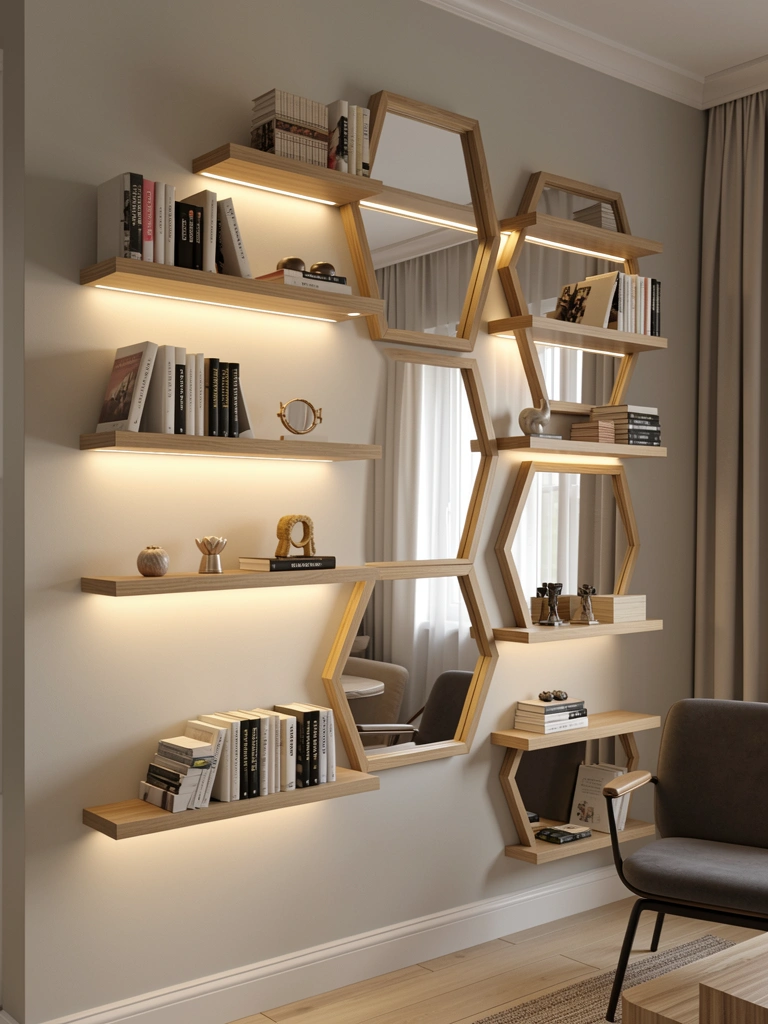
Mixing geometric mirrors with floating shelves creates a functional art installation—practical storage meets sculptural design.
Install 4–6 floating shelves ($25–$80 each from IKEA, Target, or specialty furniture stores) and purchase 4–6 geometric mirrors in wood or metal frames ($40–$100 each). Alternate shelves and mirrors in a vertical arrangement on your wall. Mount shelves at stud locations first, then position mirrors between and around shelves. Installation takes 2–3 hours depending on wall preparation and quantity.
This mixed approach creates visual interest and utility. Shelves hold books, plants, and objects; mirrors bounce light and reflect room content. Your wall becomes a designed feature rather than just storage. The alternating rhythm feels intentional and contemporary—like a designed art wall that also functions practically.
23. Use Geometric Mirrors to Create an Illusion of Window

Mounting a large geometric mirror where light naturally pools tricks the eye—it reads as an additional window, brightening dark hallways or corners.
Find a geometric mirror in window-like proportions—a large rectangle, trapezoid, or arched shape ($100–$300 depending on size). Position it on a wall where it catches and reflects maximum light from other rooms or windows. Mount at eye level or slightly higher, 18–24 inches above the floor. Use a French cleat for secure installation. Takes 20–30 minutes to hang.
The best part? Dark hallways instantly feel brighter and less claustrophobic. Your brain registers the light reflection as an additional light source, making small spaces feel larger. If your hallway has sconces, position the mirror between them for even more light-catching power.
24. Mount Geometric Mirrors as a Rug Replacement (Bold Alternative)
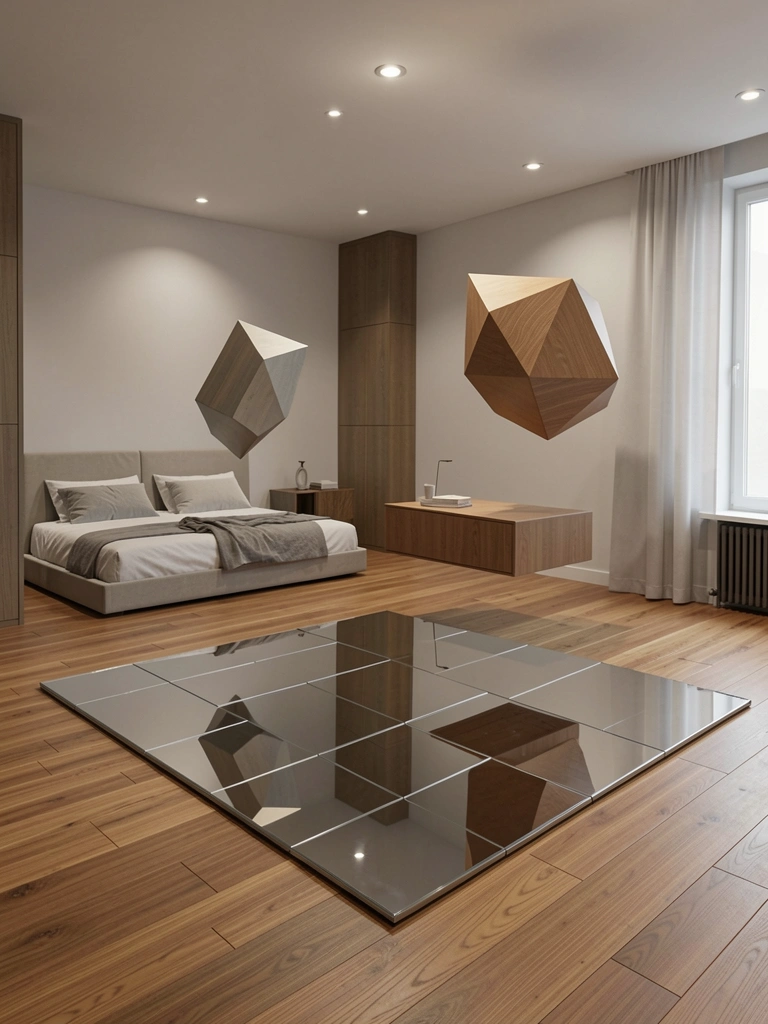
For maximalists willing to be bold, a large geometric mirror installation on the floor creates sculptural, reflective interest—kind of a “rug” you can see through.
This is an advanced, investment move. Work with a mirror installation specialist or use interlocking geometric mirror tiles ($40–$100 per square foot, so $500–$2,000+ for a 6×8 space). Ensure your floor can handle weight distribution and is properly leveled first. Professional installation takes 4–8 hours. Must be done by someone experienced with floor installations.
The result is stunning and unusual—your floor becomes part of the design rather than a backdrop. This works best in minimalist, contemporary, or daring maximalist spaces. It photographs extraordinarily well and makes a memorable statement. This is definitely an investment piece, but it’s genuinely unique.
25. Combine Geometric Mirrors with String Lights or LED Strips
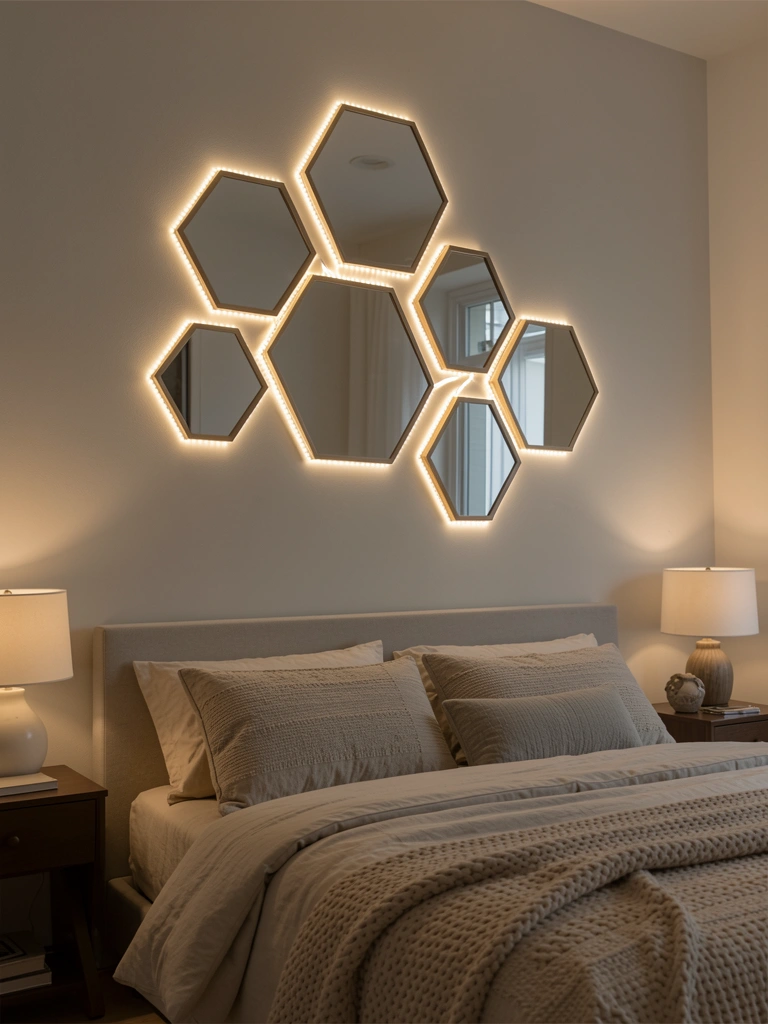
Integrating LED strips or warm string lights with geometric mirrors creates ambiance—mirrors reflect the light, multiplying the glow throughout your room.
Install your geometric mirror cluster first ($100–$300 for 6–10 mirrors), then weave battery-operated LED strips ($20–$50) or warm string lights around and between frames. Ensure lights are warm-toned (2700K color temperature) for cozy ambiance. Installation takes 45 minutes to an hour including light placement and battery insertion.
This hybrid approach adds functionality—your mirrors become ambient lighting sources. The reflected light bounces around the room, creating sophisticated, spa-like ambiance. Your bedroom (or living room) instantly feels more intentional and designed. Best part? Battery-operated lights mean no additional wiring or electrician needed.
26. Use Geometric Mirrors to Reflect Artwork or Room Features
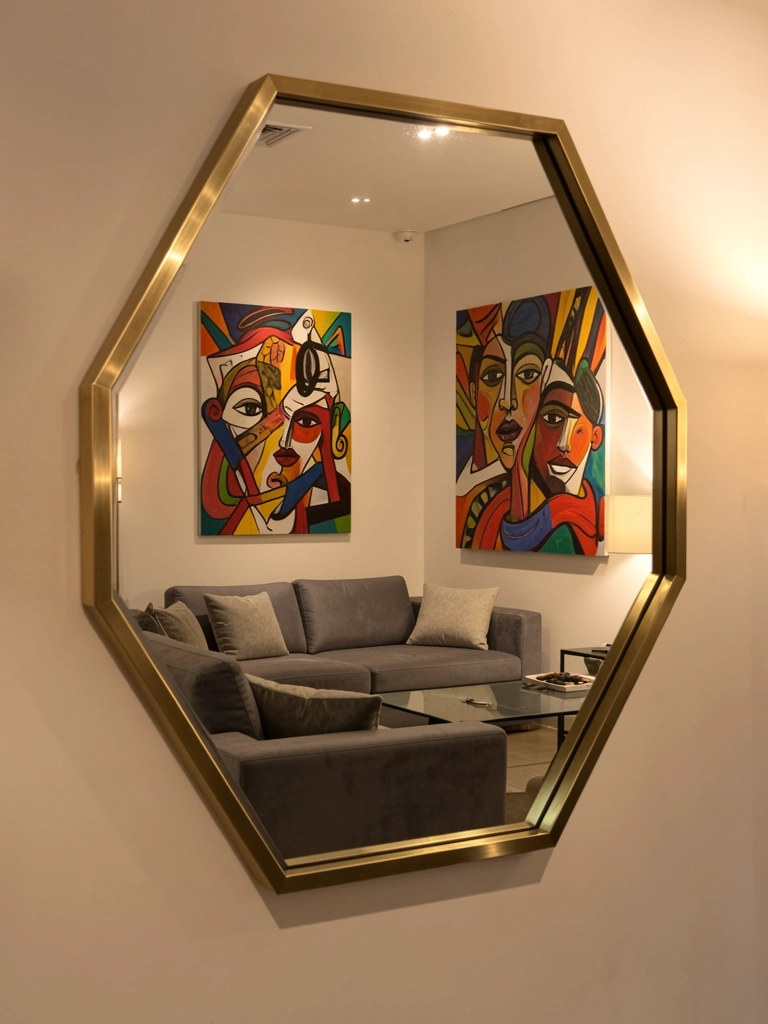
Positioning geometric mirrors to intentionally reflect artwork, plants, or architectural features multiplies visual interest—mirrors become active design tools, not just reflective surfaces.
Measure your room and identify key features worth reflecting—a favorite artwork, plant, sculptural object, or architectural detail. Purchase a geometric mirror sized to reflect that feature well ($50–$200). Mount it opposite or adjacent to the feature, angled if needed to optimize reflection. Use painter’s tape to experiment with positioning before drilling. Installation takes 20–30 minutes.
This intentional placement shows sophistication—you’re using mirrors strategically, not randomly. The reflected view creates visual layering and depth. Visitors’ eyes follow the reflection, creating movement through your space. Your room feels thoughtfully composed, like you actually planned the sightlines and reflections.
27. Create a Modular Geometric Mirror System for Future Changes

Design a modular mirror system using universal mounting rails—you can rearrange, add, or remove geometric mirrors without re-drilling. Perfect for anyone who likes to redecorate frequently.
Install a rail system ($60–$150 from specialized mirror companies or custom installations) that spans your desired wall space. Purchase multiple geometric mirrors with standardized mounting plates ($40–$100 each). Slide mirrors onto the rail at any position, rearranging whenever you like. Initial installation takes 1–2 hours; future rearrangement takes minutes.
This future-proofs your design. You can change your mirror arrangement with the seasons, add mirrors as your collection grows, or reconfigure for a new style without wall damage. It’s especially smart for renters or anyone living in their space temporarily. The modular system looks intentional and contemporary—like a designed installation rather than random placement. You gain flexibility and sophistication simultaneously.
Ready to refresh your space with geometric design? Save this post and try just one idea this weekend—start with something simple like a mirror cluster or budget overlay, and build from there. Which geometric arrangement speaks to you?
Leave a Reply