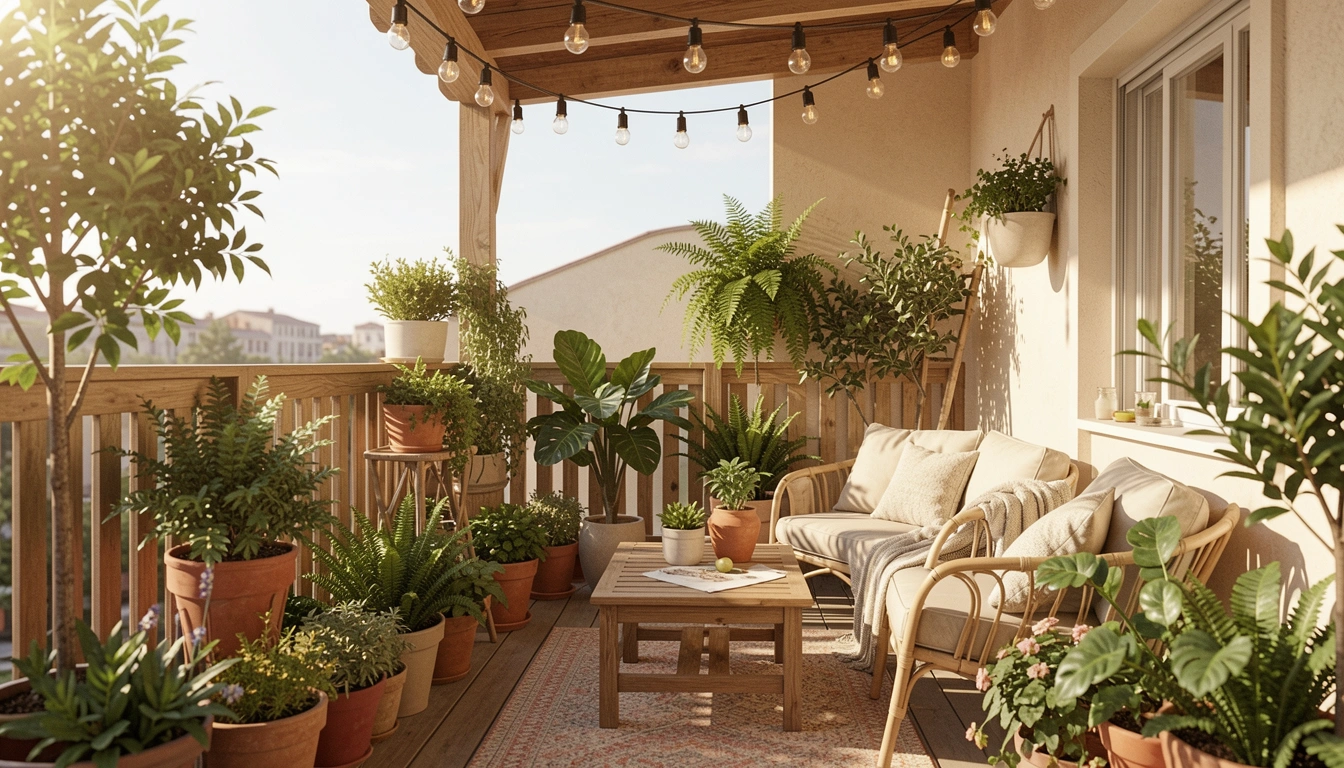
Your terrace doesn’t need to be huge to feel like a personal oasis. Whether you’re working with a postage-stamp balcony or sprawling rooftop space, the right decor choices can transform it into somewhere you actually want to spend time. We’re talking cozy seating nooks, smart storage solutions, and styling tricks that make your outdoor space feel intentional and lived-in. The best part? Most of these ideas work whether you rent or own, and plenty fit any budget. Let’s explore 25 real, actionable ways to make your terrace a place you’ll love.
1. Layer Your Lighting for Evening Ambience
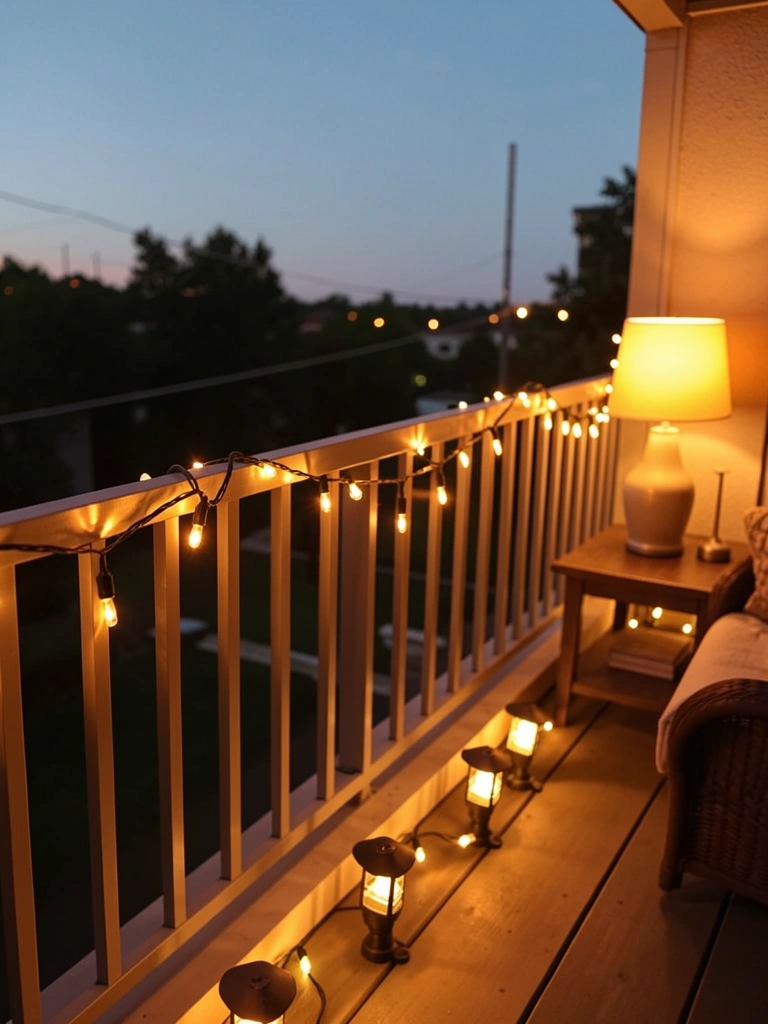
Good lighting makes or breaks an outdoor space, especially once the sun sets. String lights are the obvious choice, but they work best when paired with task lighting like a small table lamp or sconces for reading.
Combine warm white string lights ($15–40 from Amazon or Target) with solar pathway lights along edges ($20–50 for a set). If you want permanent fixtures, adhesive solar sconces ($30–80) work without drilling. Install string lights by using renter-friendly adhesive hooks or, if you own, small screws into trim. Time it right: about 30 minutes to hang, and zero maintenance after.
Solar lights charge during the day and power themselves at night—meaning free electricity and no cords to trip over. Your terrace goes from unusable at sunset to somewhere you’ll want to linger.
2. Install Vertical Planters for Maximum Greenery
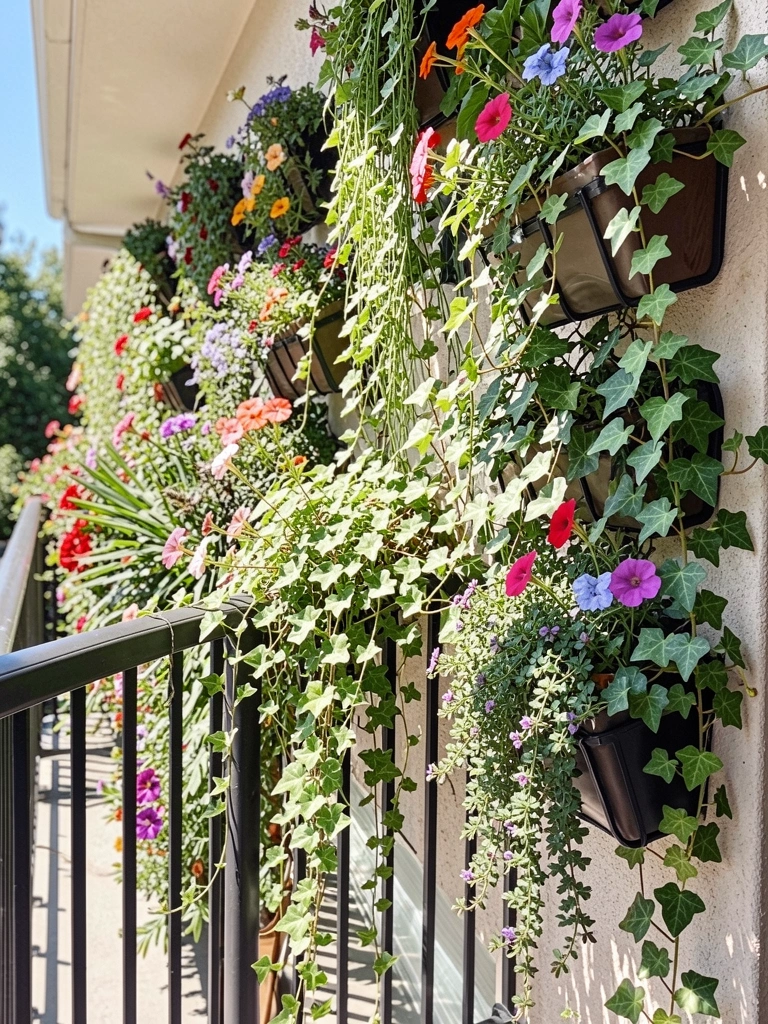
If you love plants but hate the clutter of pots everywhere, vertical planters solve it. They maximize greenery without eating into your floor space—critical when every square inch counts.
Choose between adhesive wall pockets ($20–40), railing planters ($15–35), or tiered ladder shelves ($40–80). Wall-mounted pockets work for renters (adhesive strips hold firm), while railing planters clip directly to your existing railings with zero tools. Fill with low-maintenance trailing plants like pothos, ivy, or creeping fig. Plant and water once a week; give them a few weeks to cascade and fill in.
You get a living backdrop that screens neighbors’ views, requires minimal maintenance, and looks infinitely more interesting than bare walls or railings.
3. Add a Foldable Dining Table for Flexible Space
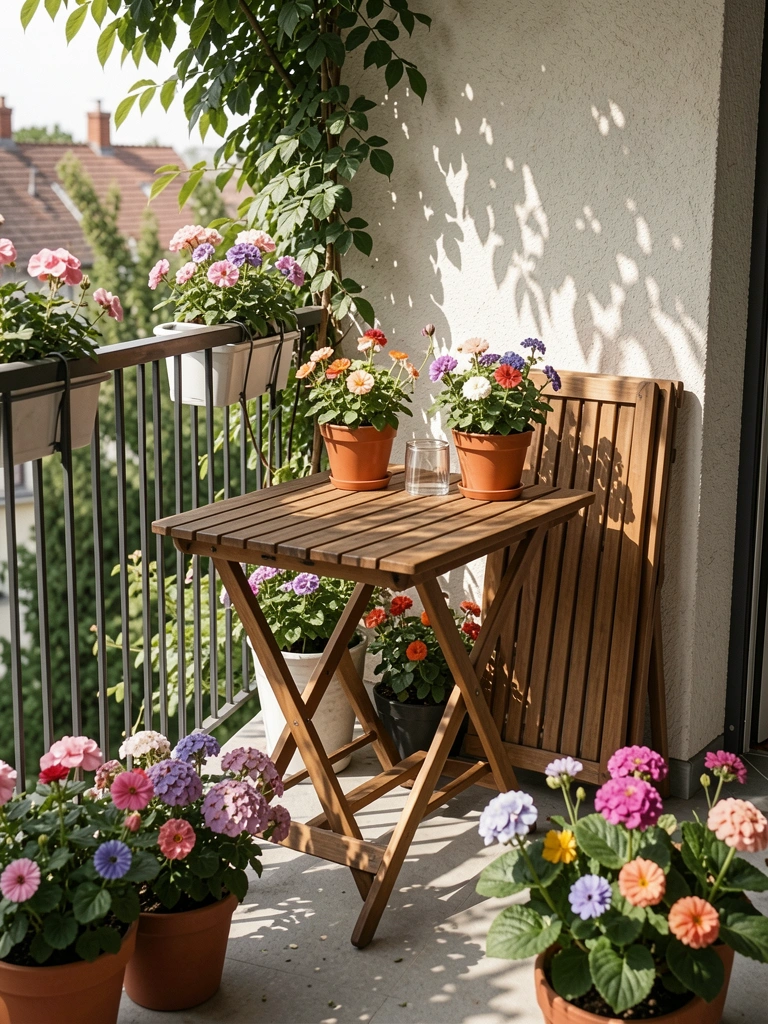
A foldable table gives you the option to dine outside without sacrificing walking space the rest of the time. This is a game-changer for small terraces where every inch matters.
Look for compact bistro tables ($30–60 at IKEA or Wayfair) or wall-mounted drop-leaf styles ($50–150). Wood or aluminum both work; aluminum is lighter and more weather-resistant. Fold it flat against the wall when you’re not eating, creating an open terrace. Set it up in about one minute—literally just unfold and clip legs in place.
You suddenly have the option to host breakfast or a small dinner party without feeling like your whole terrace is locked into dining mode. That flexibility changes how often you actually use the space.
4. Use Outdoor Rugs to Define Seating Areas
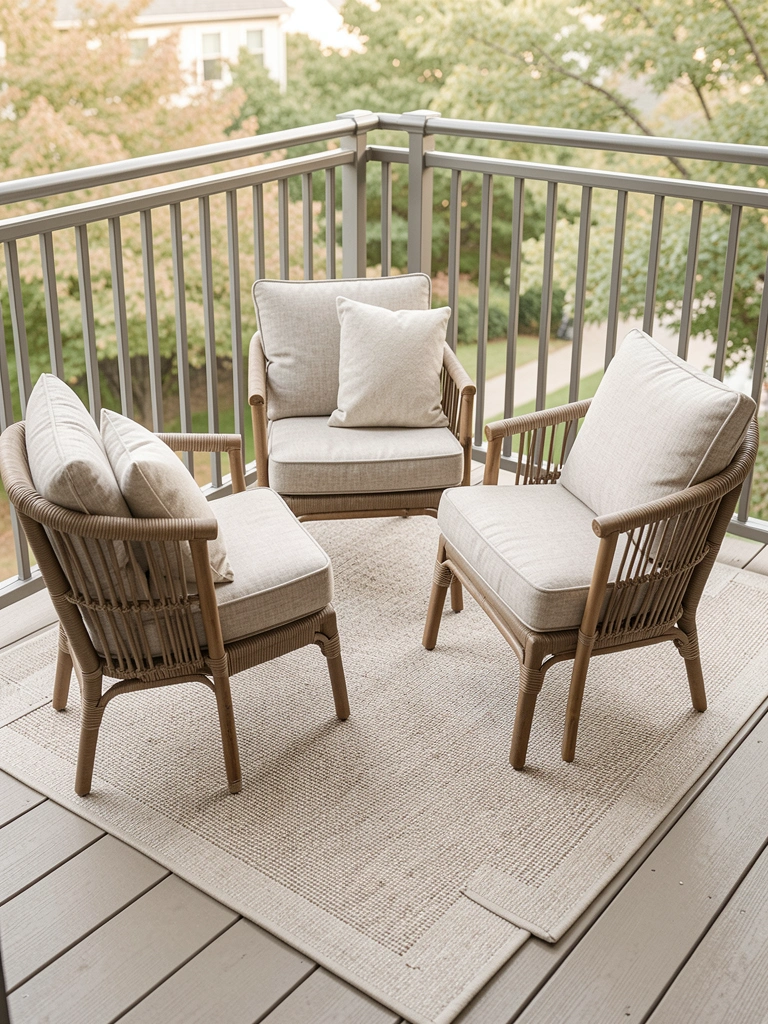
An outdoor rug instantly makes a space feel designed rather than haphazard. It’s also one of the cheapest ways to add color and define where you actually sit.
Indoor/outdoor rugs in neutral tones ($30–80 at Target, Home Depot, or Amazon) are durable enough for weather and easy to hose off. Place one under your main seating area to anchor furniture and create a visual “room.” Smaller accent rugs ($20–40) work too if you want layering. Installation takes zero time—just unroll and place.
The right rug makes a balcony feel intentional. Suddenly it’s not random furniture scattered around; it’s an actual outdoor living room. Plus, muted palettes mean you can change other decor seasonally without replacing the rug.
5. Swap to Rattan or Synthetic Wicker Furniture
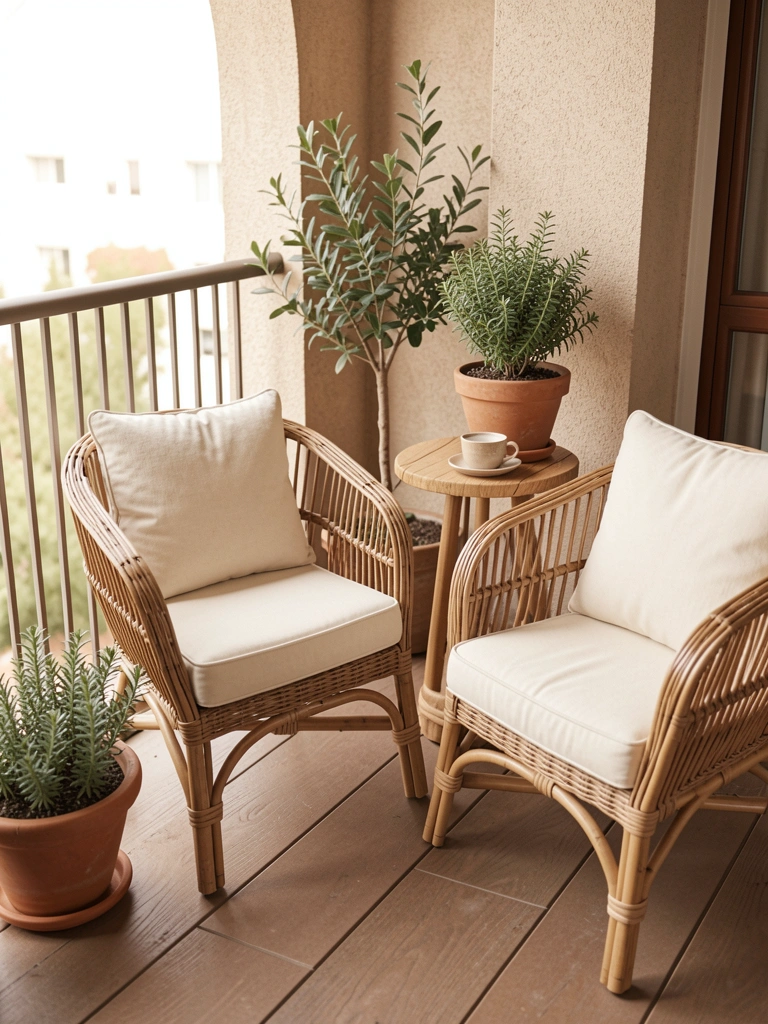
Rattan and synthetic wicker are everywhere right now because they actually work. They’re lightweight, weather-resistant, and feel way more stylish than plastic furniture.
Synthetic wicker chairs run $60–200 depending on quality; check Wayfair, World Market, or IKEA. Real rattan is slightly cheaper ($40–150) but requires more weather protection in harsh climates. Pair with weather-resistant cushions ($15–40 each) in neutral or jewel tones. Set up takes minutes—just position and add cushions.
Wicker furniture creates that relaxed, resort-like vibe instantly. Unlike metal furniture, it doesn’t get scorching hot in direct sun, and it won’t rust. It’s also easy to move around if you want to rearrange seasonally.
6. Create a Privacy Screen with Plants or Bamboo
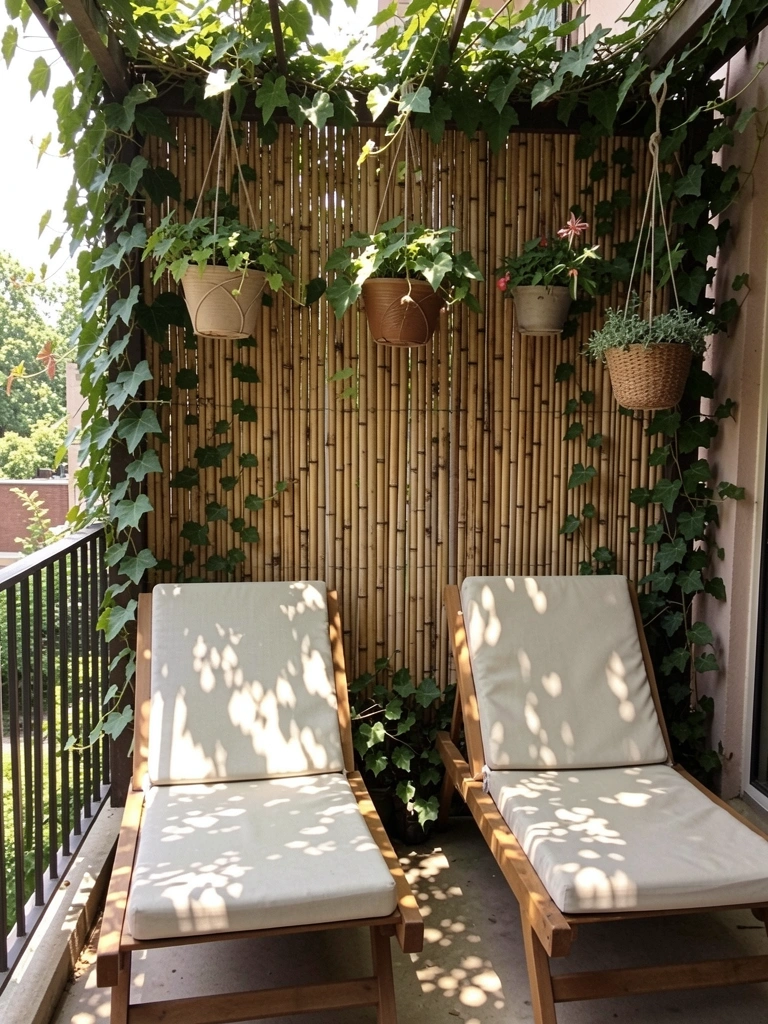
Neighbors are the reality of apartment living, but you don’t need to see into their space or vice versa. A privacy screen—whether plants, bamboo, or fabric—reclaims your sense of retreat.
Bamboo screens ($40–100) are lightweight and easy to position. Living green screens using tall potted plants like bamboo palm or ornamental grasses ($20–60 per plant) look better and improve air quality. Fabric privacy screens ($50–150) are renter-friendly if mounted on removable stands. Installation is instant—just position against the railing.
Your terrace becomes an actual private retreat instead of feeling exposed. You can relax without feeling watched, which changes how often you use the space.
7. Paint or Stain Balcony Flooring for a Refresh
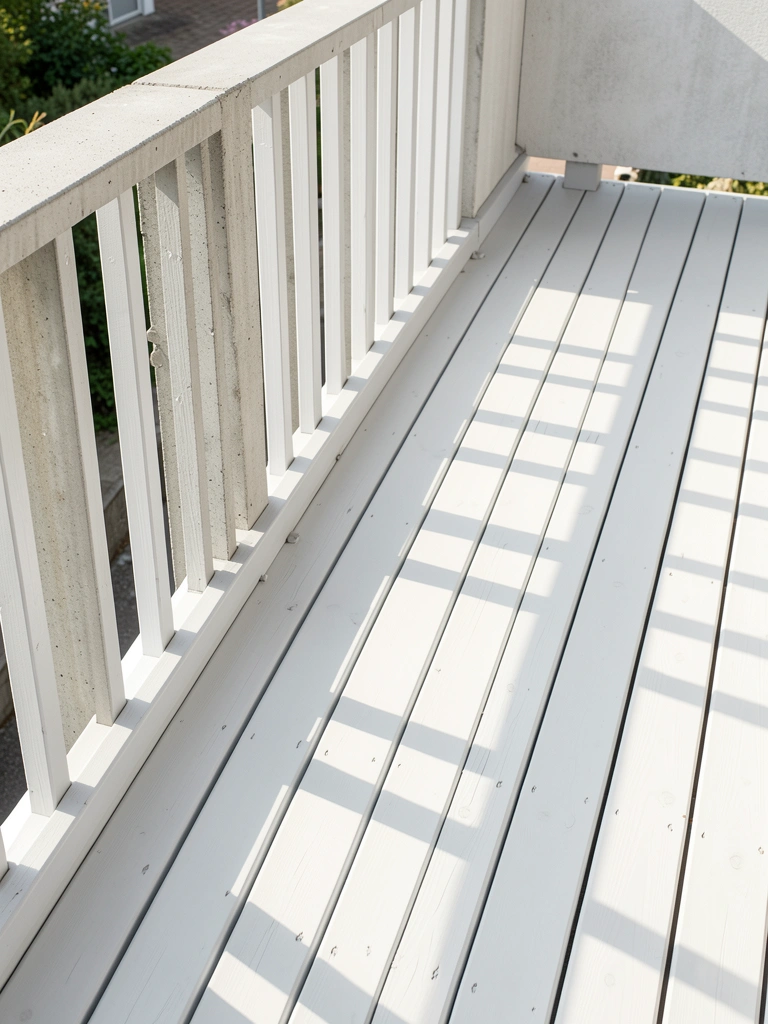
If your terrace has wood flooring, a paint or stain refresh is one of the biggest impacts for $20–60 and a weekend of work. Yes, it’s labor-intensive, but the payoff is massive.
Use outdoor deck paint ($30–50 per gallon at Home Depot) in light colors to make the space feel bigger. Prepare by cleaning, sanding any rough spots, and applying primer. Two coats of paint take a full day (six hours active time), but it lasts 3–5 years. Hire help ($150–300) if DIY feels daunting. Stain is similar but skips the primer step if you prefer a natural wood look.
A refreshed floor instantly makes your terrace look maintained and intentional. It also protects the wood underneath, extending its life.
8. Mix Textures with Outdoor Cushions and Throws
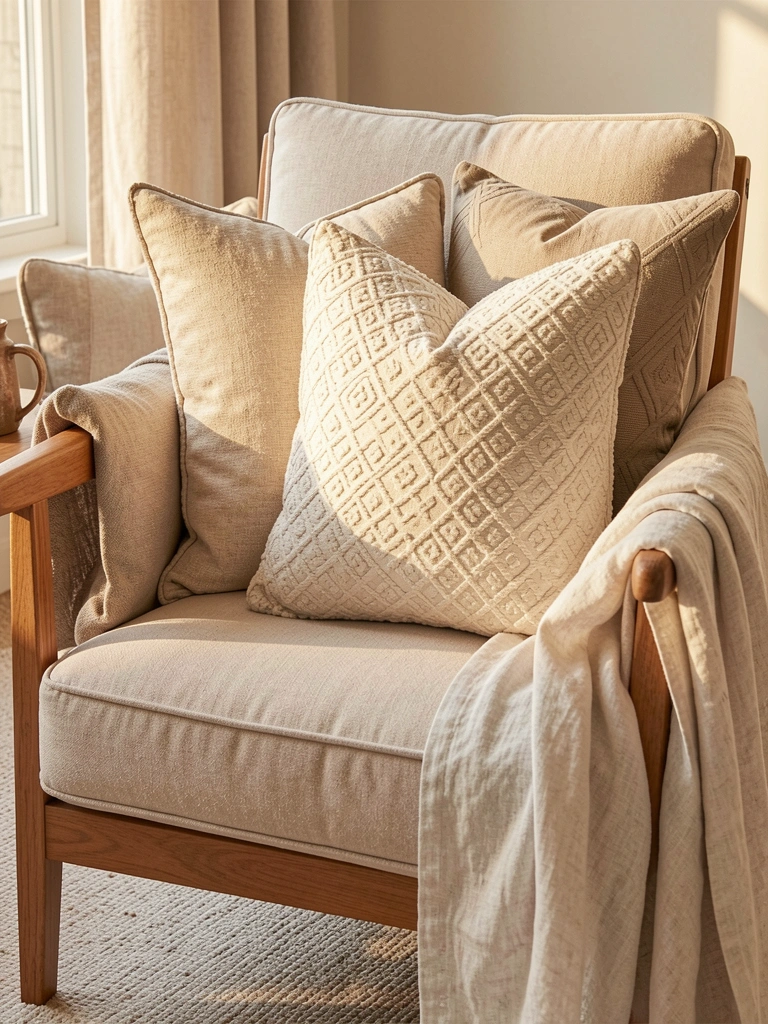
Cushions and throws do the heavy lifting when it comes to making a terrace feel cozy and lived-in. Layering different textures creates visual interest and physical comfort.
Start with a seat cushion ($20–50), add a back pillow ($15–30), and drape a lightweight throw ($25–60) over the armrest or chair back. Mix materials—combine a chunky knit with a smooth linen or add a patterned accent pillow next to solids. Rotate seasonally: heavier throws in fall/winter, lighter linens in summer. Budget $100–150 to fully dress one chair.
Cushions make sitting outside feel less like roughing it and more like treating yourself. Your terrace goes from bare and uncomfortable to a place where you actually want to lounge for hours.
9. Install a Railing Planter Box for Herbs or Flowers
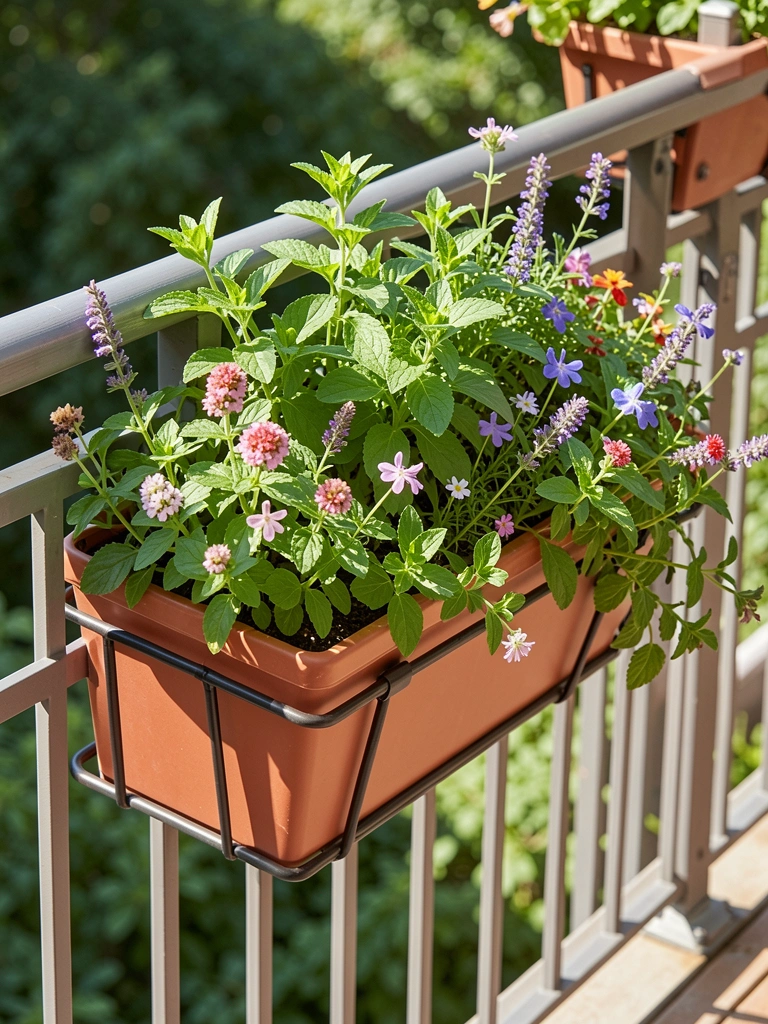
A railing planter serves double duty—it’s decorative and functional. If you choose herbs, you get a kitchen garden steps from your door. If you choose flowers, you soften the view of the railing while staying out of your walking space.
Railing planters ($20–50) come in wood, plastic, or metal and clip directly to your railing. Fill with potting soil and your choice of herbs (basil, mint, rosemary thrive in sun) or flowers (petunias and geraniums are tough). Plant and water regularly; herbs especially appreciate consistent moisture. Setup is five minutes, and it changes your view instantly.
You get fresh herbs for cooking, curb appeal, and greenery without any floor space used. Plus, a functioning herb garden makes your terrace feel genuinely practical, not just decorative.
10. Swap Out Your Current Seating with Lightweight Poufs
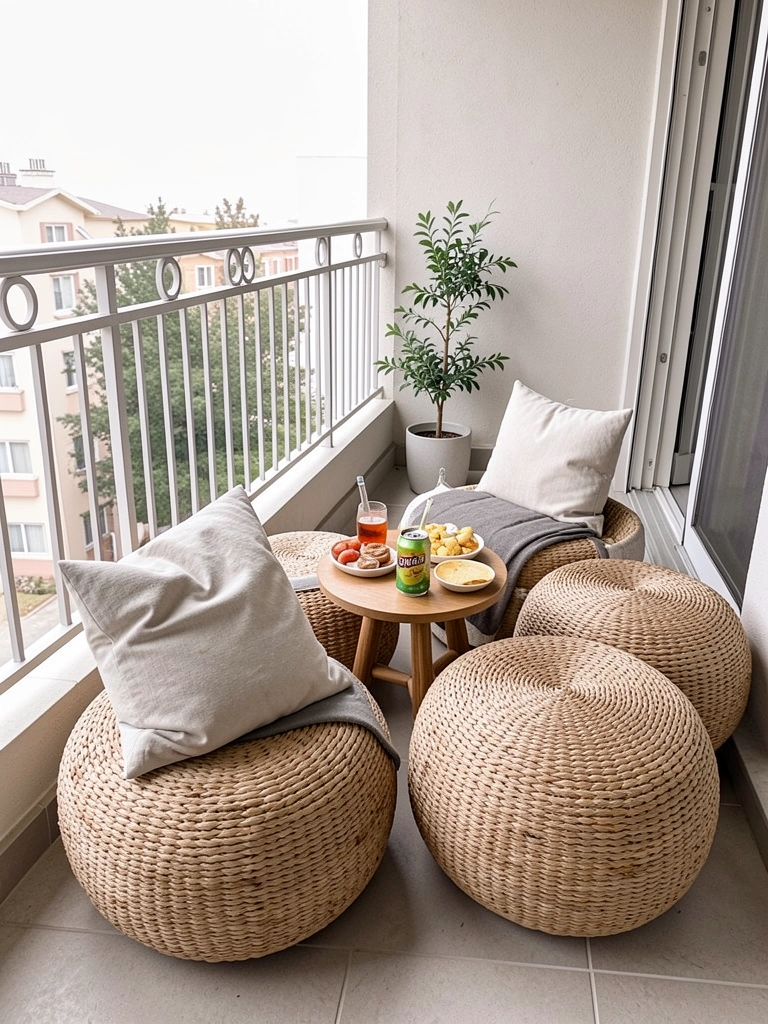
Poufs are the unsung MVP of small-space seating. They’re lightweight, multipurpose (seat, footrest, side table), and take up way less visual weight than traditional chairs.
Look for weather-resistant poufs at Target, World Market, or Amazon ($30–80 each). Natural fiber poufs are most durable; plastic or synthetic ones are cheaper and work too. Buy two or three and arrange in a loose circle—they’re easy to move around for rearranging. Keep a few cushions nearby for back support since poufs lack that built-in.
Poufs give you seating flexibility without making the terrace feel packed with furniture. You can easily move them around for different configurations, and they’re genuinely comfortable for sitting outside.
11. Add String Lights with Battery Backup for Flexibility
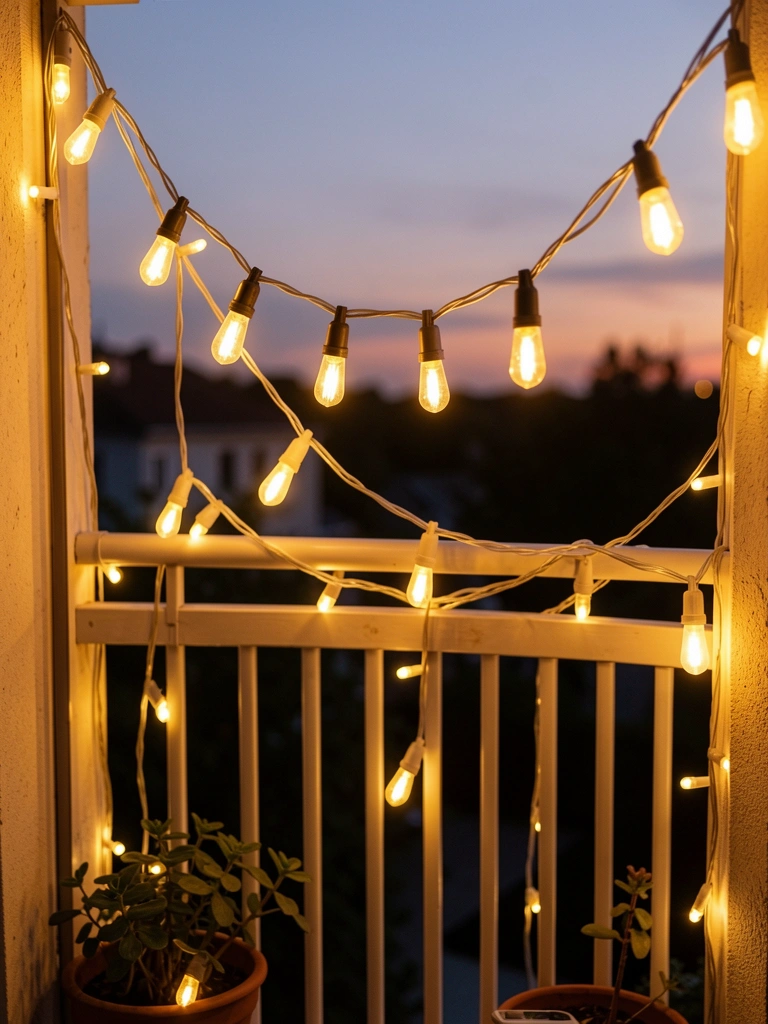
Battery-powered string lights are underrated because they give you the ambience of traditional string lights without running extension cords or needing an outdoor outlet nearby.
Battery-operated string lights ($25–60 on Amazon or at Target) come in 20–50 light sets and run for 6–12 hours on fresh batteries. Warm white looks most intentional; color-changing options exist but feel gimmicky for most terrace styles. Drape them in swags across your railing or overhead, securing with adhesive hooks. Battery replacement every 2–4 months is the only maintenance.
You get professional ambience anywhere on your terrace without infrastructure or technical installation. They’re especially useful for renters who can’t install permanent fixtures.
12. Create an Outdoor Bar Cart for Small Entertaining
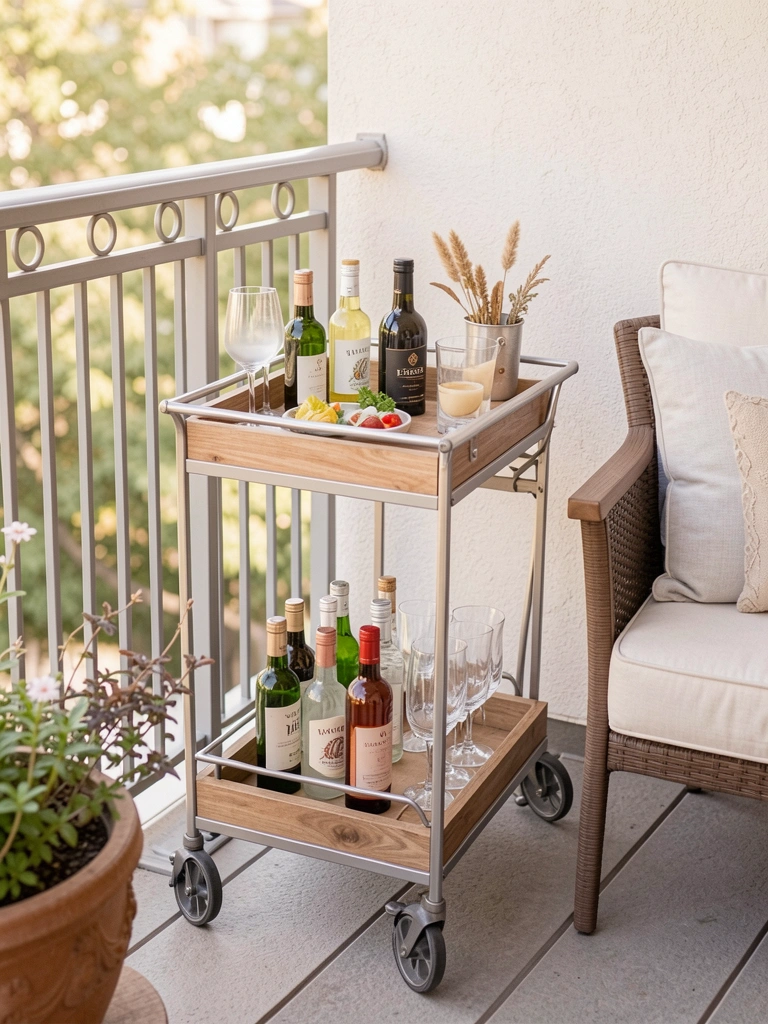
A bar cart sounds fancy but it’s just a rolling cart with bottles and glassware—and it makes hosting feel elevated without being complicated.
Find a compact cart ($40–100 at IKEA, Target, or Wayfair) with two or three tiers. Stock the top with glasses and a pitcher, the middle with bottles (wine, spirits, mixers), and the bottom with bar tools and napkins. Position in a corner or against the railing so it’s not in the middle of your walking path. Setup takes 10 minutes, and it rolls away easily when you want the space back.
A bar cart signals to guests that you’re ready to entertain, even if it’s just two people with drinks. It’s also genuinely practical—everything you need in one spot.
13. Use Tiered Shelving to Display Plants and Decor
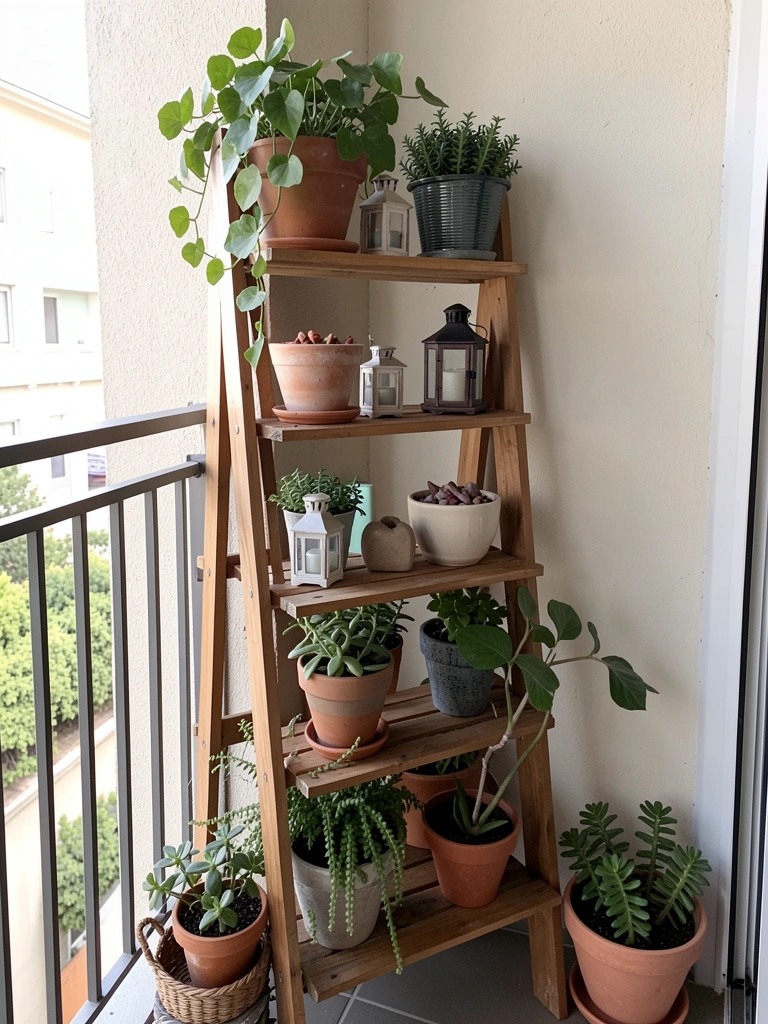
Tiered shelving is brilliant for small terraces because it goes vertical—maximizing storage and display without eating floor space. It also breaks up the monotony of bare railings or walls.
Ladder shelves ($40–100 at IKEA, Target, or Amazon) have three to five tiers and are easy to position against a wall or corner. Fill with a mix of potted plants, lanterns, small decor, and books. Keep the arrangement airy rather than packed; it reads better and doesn’t create a cluttered feel. Setup takes 15 minutes, and you can move it anytime.
Shelving creates visual interest and gives you space to display things that matter. It transforms a plain corner into a designed vignette that makes your whole terrace feel more intentional.
14. Install Wall-Mounted Seating to Save Floor Space

Wall-mounted benches or seats are next-level space-saving—they’re comfortable seating that doesn’t require any floor space.
Metal wall-mounted benches ($60–150 at Wayfair or Amazon) can handle your weight and install with basic hardware. Add a couple of cushions ($20–40 each) for comfort. Installation requires either drilling (if you own) or, for renters, a sturdy free-standing frame alternative ($80–200). You get real seating in a footprint that’s barely visible.
Wall-mounted seating opens up your entire terrace floor. What felt cramped with traditional chairs now feels spacious and intentional.
15. Layer Different Sized Planters for Visual Depth
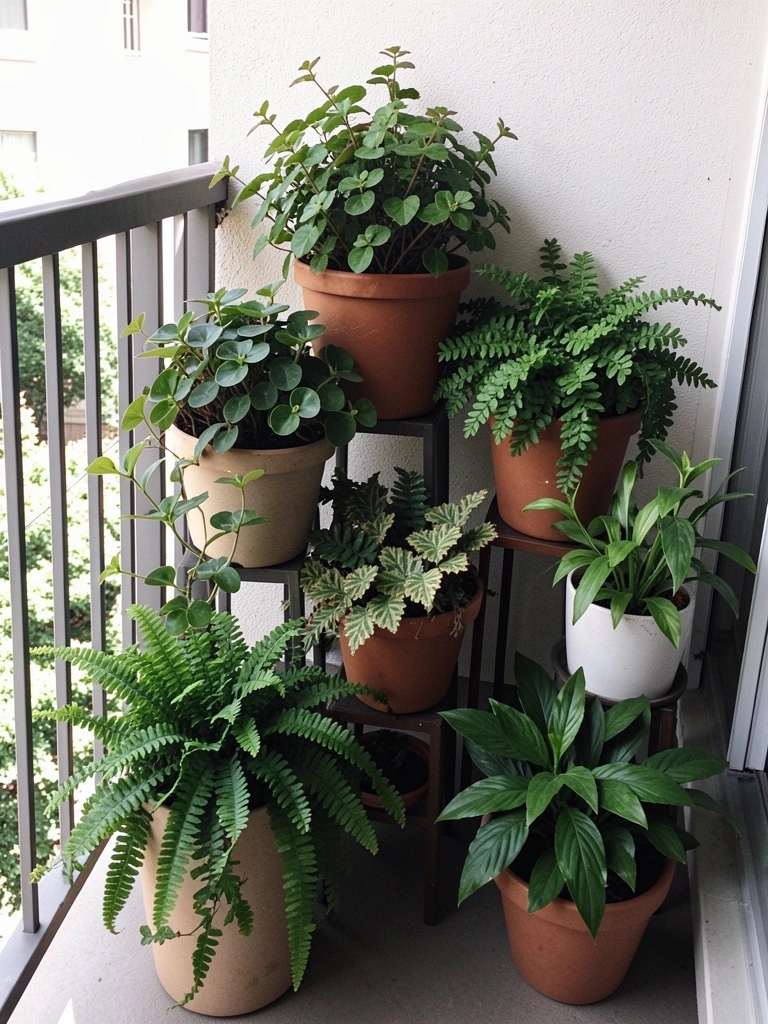
Instead of uniform planters scattered around, grouping different sizes together creates a garden-like display that looks curated and takes up less visual space.
Mix pot sizes from 6-inch to 18-inch ($5–20 per pot depending on material) and arrange in clusters of three to five. Vary heights by using pot stands or stacked books underneath shorter plants. Choose plants with different foliage—some trailing, some upright, some textured. Repotting takes about 30 minutes, and watering stays consistent afterward.
A grouped planter display feels way more designed than pots scattered around. It also makes small spaces feel intentional rather than chaotic.
16. Paint or Stain Your Railing for a Quick Refresh
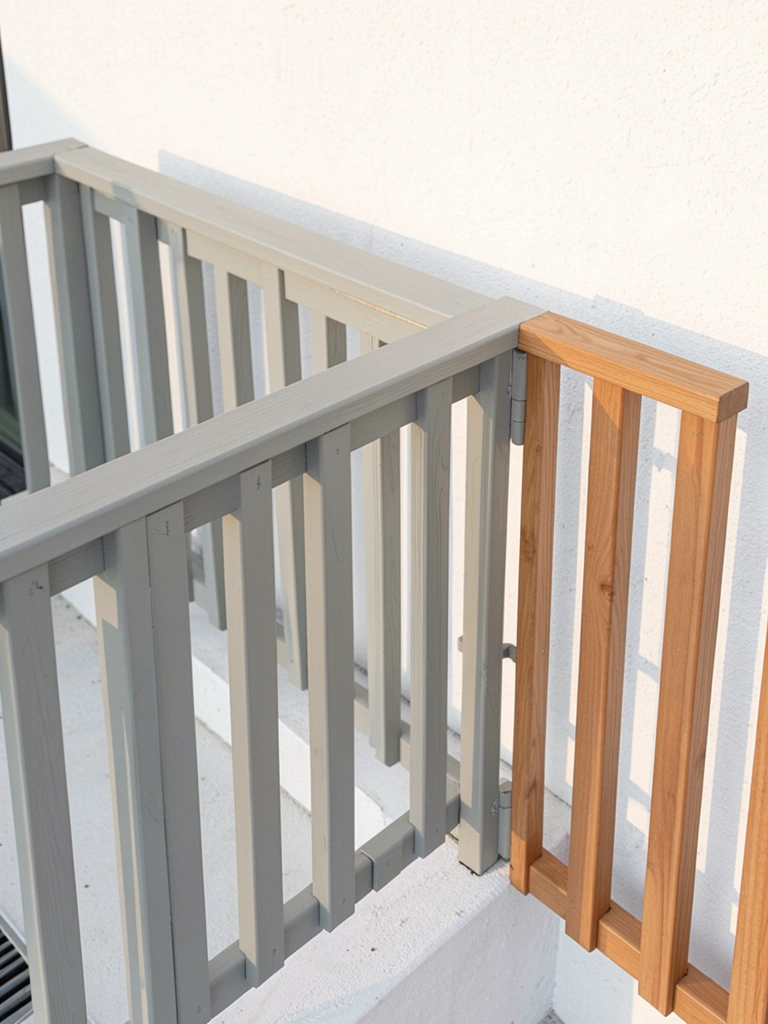
If your railing is looking tired or mismatched, a fresh coat of paint or stain is one of the quickest upgrades. It changes the entire vibe of your terrace.
Exterior paint or stain ($20–40 per quart at Home Depot) in soft neutrals like warm gray or weathered wood looks intentional. Prep by cleaning, light sanding, and primer application. One or two coats take a full day (four to six hours active time). Renter alternative: freestanding privacy panels ($50–150) in matching colors.
A refreshed railing instantly looks maintained and intentional. It also makes the entire terrace feel cared-for, which influences how often you use it.
17. Add a Small Water Feature for Soothing Ambience
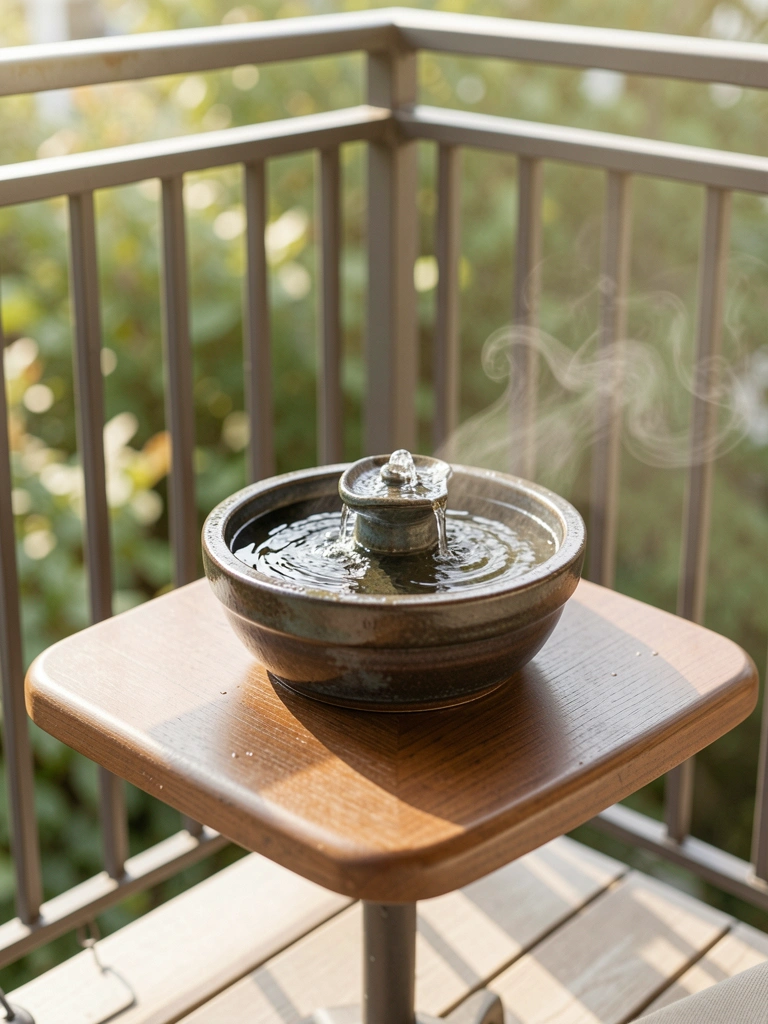
A small tabletop fountain adds moving water and gentle sound, creating a spa-like atmosphere that costs surprisingly little.
Compact tabletop fountains ($25–80 at Target, Wayfair, or Home Depot) plug into a standard outlet or run on batteries. They’re self-contained and need refilling every few days; minimal maintenance. Position on a corner table where you can hear the gentle water sounds while sitting. Setup is literally plugging it in.
Water features create a sensory upgrade that makes your terrace feel more retreat-like. The gentle sound is especially lovely in quieter evenings.
18. Use Outdoor Rugs to Define Multiple Zones
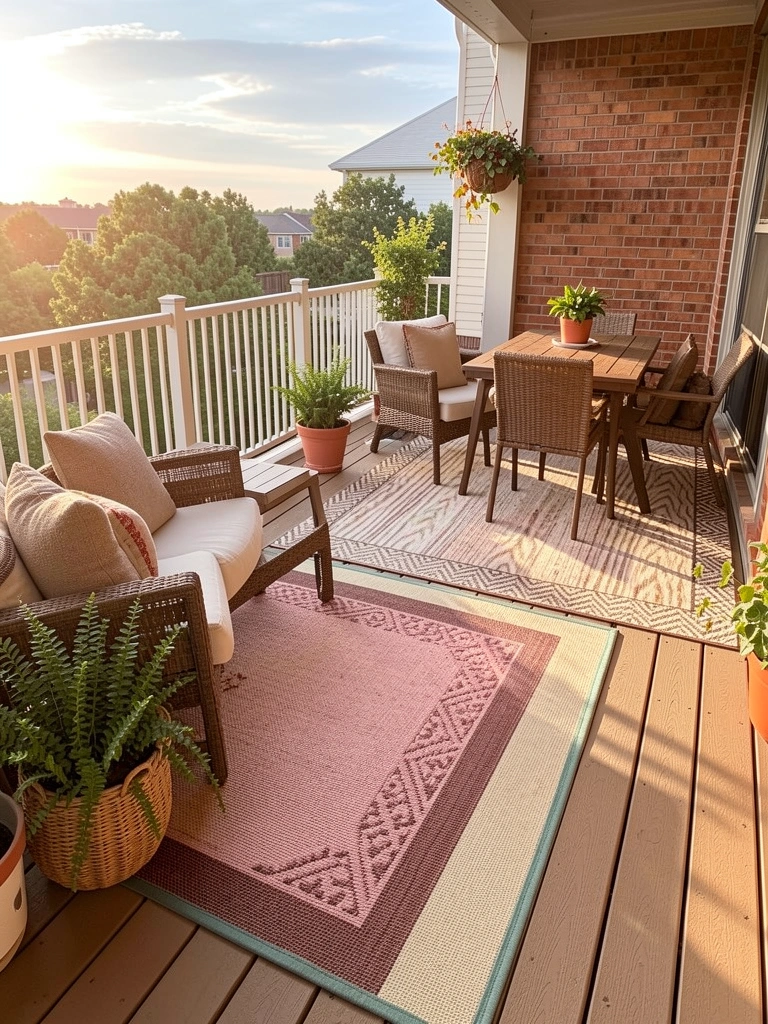
If you have a bigger terrace, layering multiple rugs is a sneaky way to create distinct zones without walls—like a dining area and a lounge area—that feel separate.
Use two complementary outdoor rugs ($30–80 each) in coordinating colors or patterns. Place one under your seating group and another under a dining table or bar cart. They should overlap slightly or sit next to each other, not on top. Arrange furniture accordingly so each zone feels intentional. Setup takes 15 minutes.
Multiple zones make your terrace feel larger and more thoughtfully organized. You’re not just sitting in one corner; you have distinct areas for different activities.
19. Hang Weatherproof Artwork or Mirrors
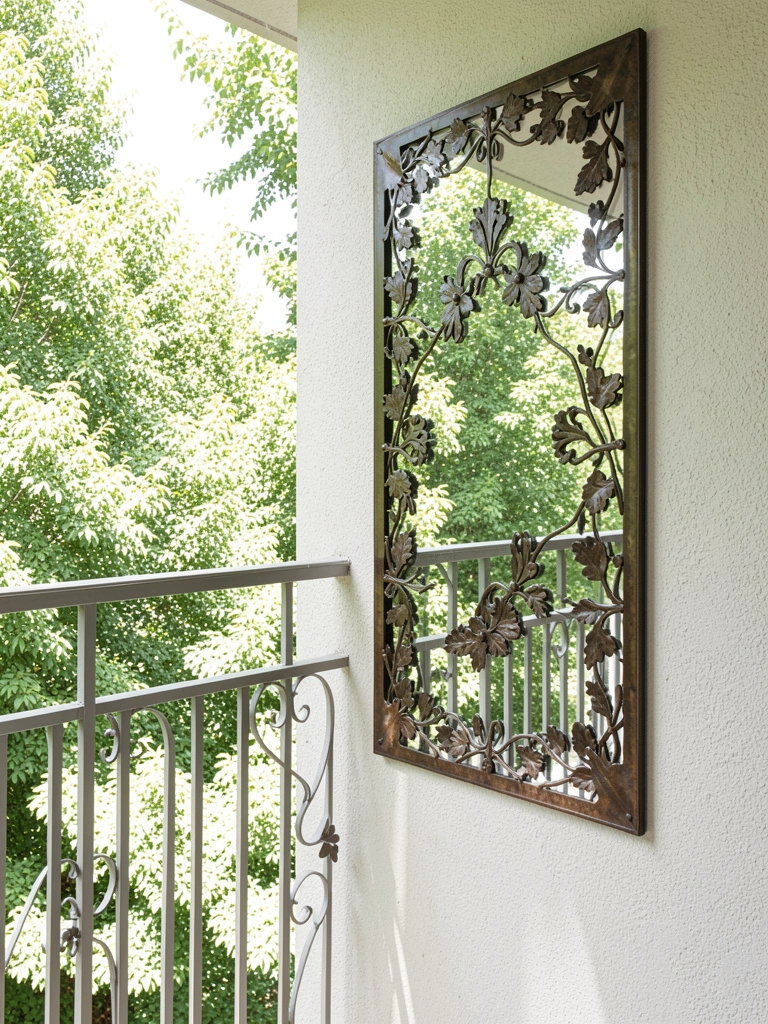
Outdoor artwork and mirrors do what they do inside—add personality and make spaces feel bigger. The key is choosing pieces rated for exterior weather.
Weatherproof metal art ($30–150 at Wayfair, Target, or specialty outdoor stores) or outdoor mirrors ($40–120) are worth the splurge. Hang with weather-resistant hardware; adhesive is often easier for renters than drilling. A mirror especially makes a small terrace feel bigger by reflecting light and greenery. Installation takes 20 minutes.
Artwork makes your terrace feel like a real outdoor room rather than just a balcony extension of your apartment. It’s a personal touch that changes the vibe completely.
20. Choose Low-Maintenance Plants for Busy People
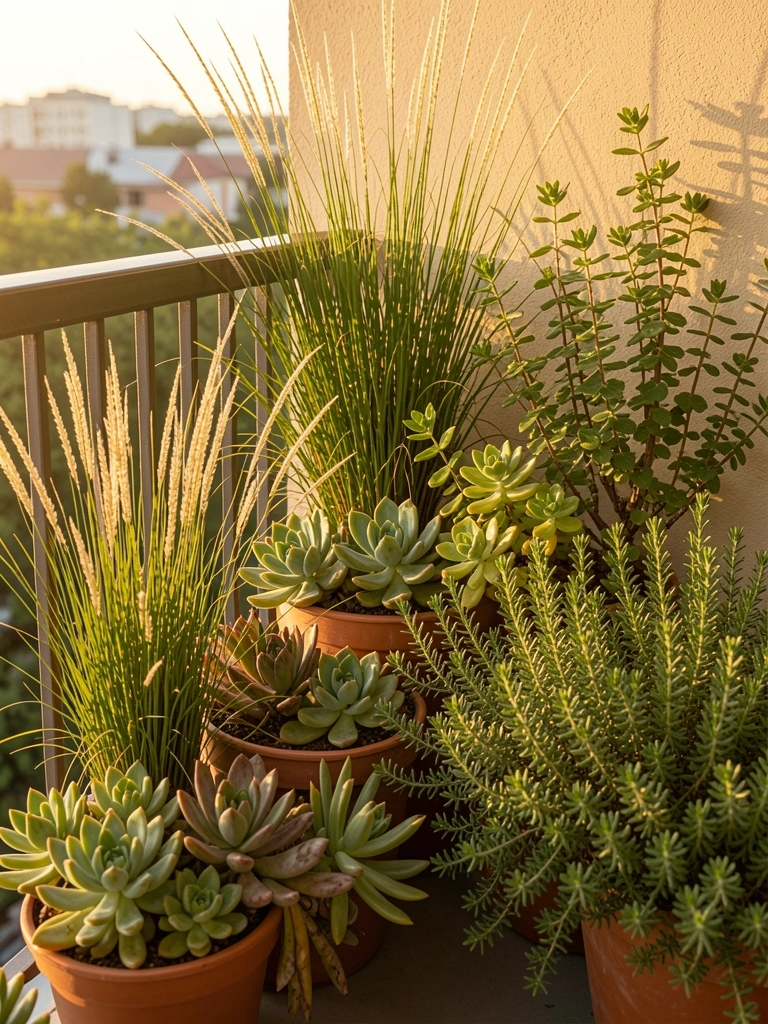
If you love greenery but kill plants regularly, low-maintenance varieties are your answer. They thrive on neglect and still look beautiful.
Ornamental grasses, succulents, ivy, and herbs like rosemary or lavender ($10–25 per plant) need water only once a week or less. Plant in quality potting soil ($10–20 per bag) and position in whatever light you have. Watering once weekly takes 10 minutes; that’s your only real maintenance.
Low-maintenance plants let you enjoy greenery without guilt. You actually use your terrace because you’re not stressed about keeping plants alive.
21. Install a Compact Bistro Set for Two
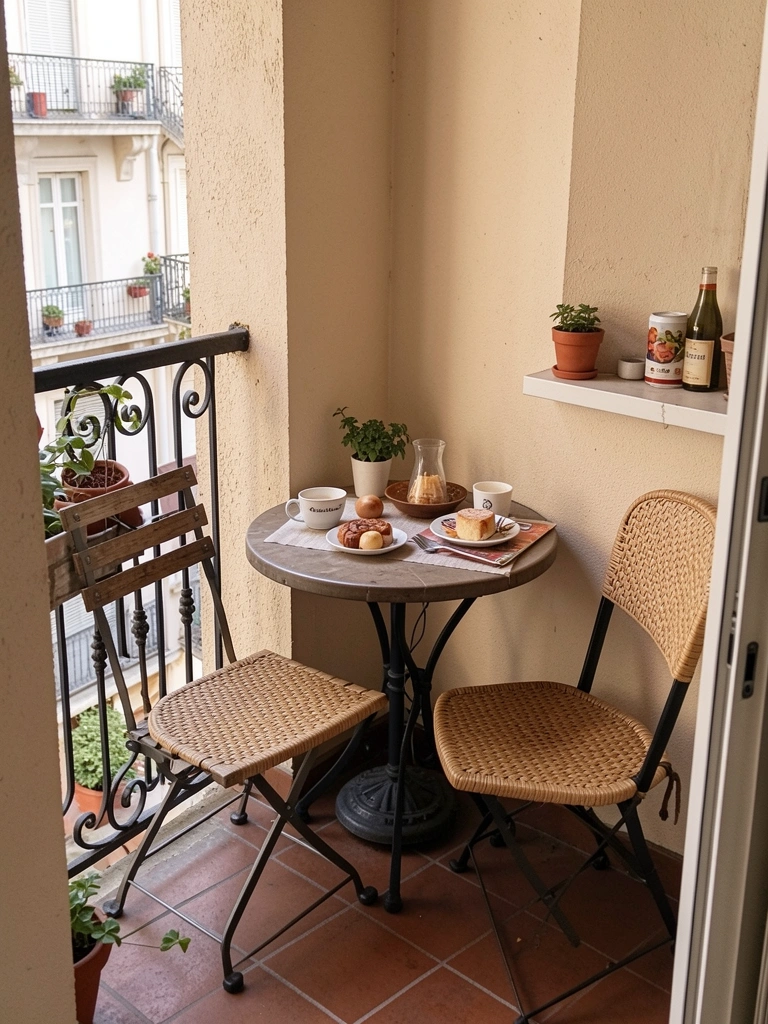
If you don’t want a full dining setup, a bistro set for two is perfect for mornings with coffee or casual dinners. It’s space-efficient and surprisingly comfortable.
Metal bistro sets ($60–150 at IKEA, Target, or Wayfair) fold completely or have minimal footprint. Choose between round (which feels less formal) or square options. Two-person sets fit even tiny balconies because they’re genuinely small. Setup is assembly only—usually 30 minutes with a screwdriver.
A bistro set gives you an actual dining surface without making the terrace feel packed with furniture. You use it regularly for breakfast or casual meals.
22. Layer Lighting Heights for Functional Ambience
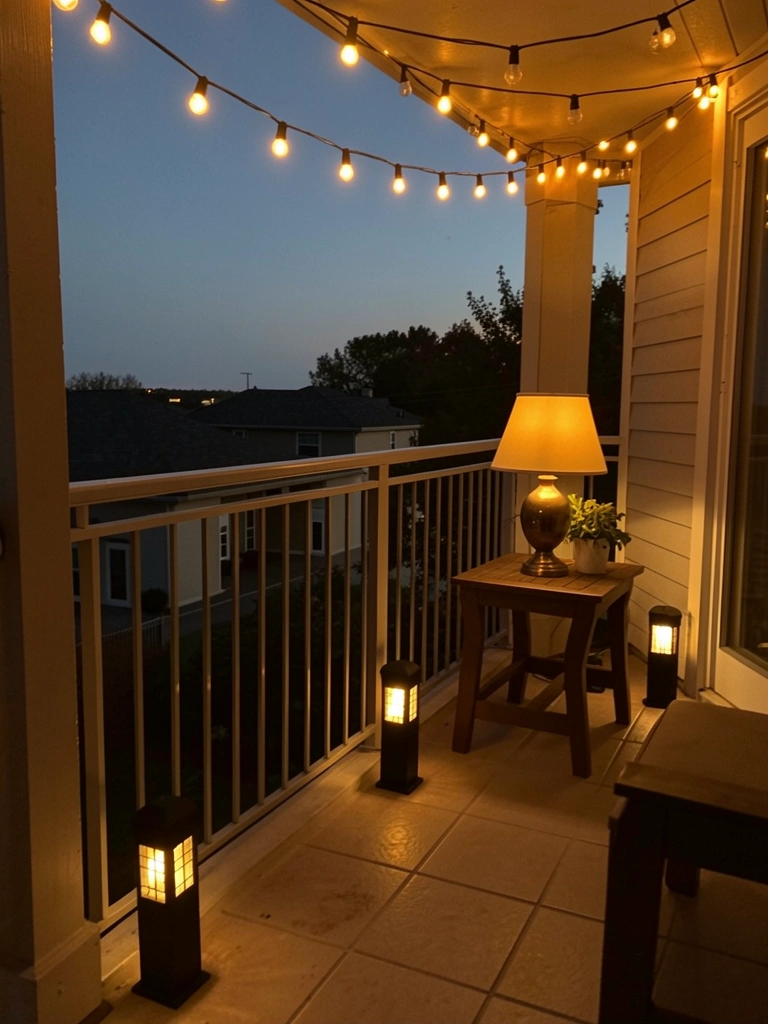
Professional designers layer lighting at different heights, and you can too. It’s the difference between harsh single lighting and a space that feels genuinely inviting.
Combine overhead string lights ($25–50), a task lamp on a side table ($30–80), and ground-level solar lights ($20–50). Turn on all three for entertaining, just overhead lights for ambience, or just task lighting for reading. Wiring takes 45 minutes; battery and solar options mean zero complexity.
Multi-level lighting lets you set the mood. Your terrace transforms from bright and functional to intimate and retreat-like depending on which lights you use.
23. Add Moveable Screens for Flexible Privacy and Wind Control

Freestanding screens are clever because they control privacy and wind without permanent installation—and you can move or remove them anytime.
Decorative outdoor screens ($50–200 at Wayfair, Target, or specialty stores) come in wood lattice, metal, or fabric. Position them to block a neighbor’s direct line of sight or shield against wind that makes your terrace unusable. Installation is literally standing them up; no tools needed. Move them around seasonally based on where the sun is strongest.
Screens solve actual problems—wind that prevents sitting outside, or feeling exposed to neighbors—without renovation. They’re also easy to store in off-season.
24. Combine Seating and Storage with Benches
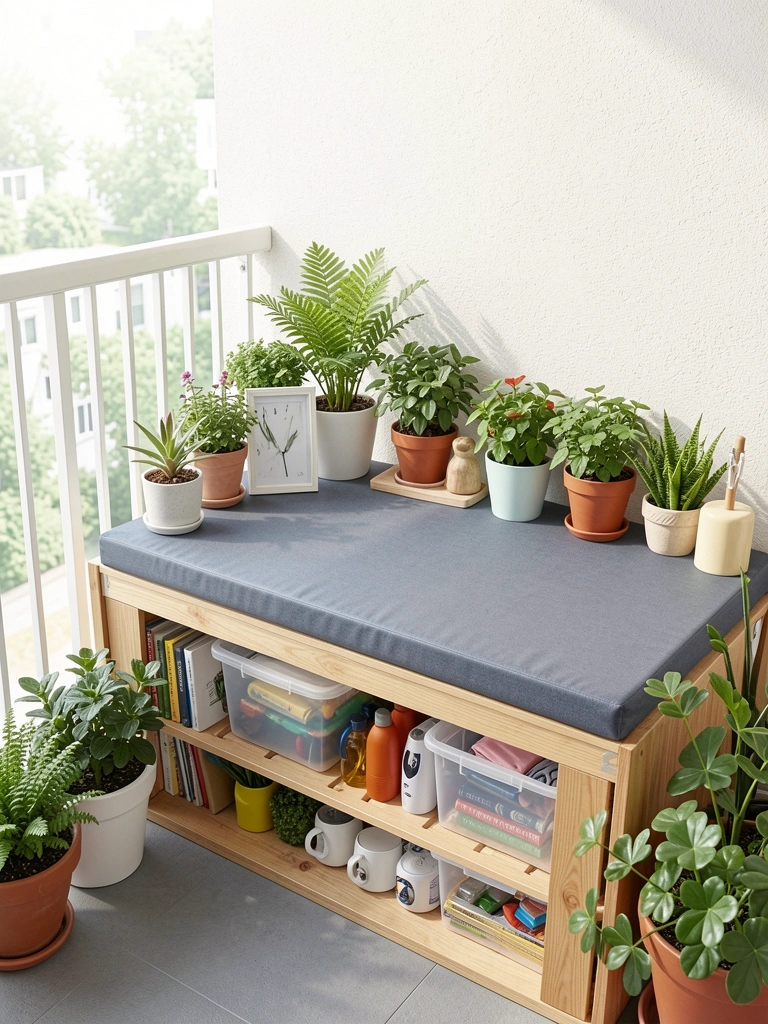
A storage bench solves two problems at once: it gives you seating and somewhere to stash outdoor cushions, tools, or seasonal items.
Waterproof outdoor storage benches ($80–250 at Wayfair, IKEA, or Target) come in wood or resin. Add a weather-resistant cushion ($25–50) for seating comfort. Fill the interior with off-season cushions, planters you’re not using, or cleaning supplies. Position against a wall to save walking space. Assembly takes 30–45 minutes.
You get seating that pulls its weight functionally. Storage becomes invisible, and your terrace looks organized rather than cluttered with gear.
25. Use Textured Wall Coverings for Softness and Interest
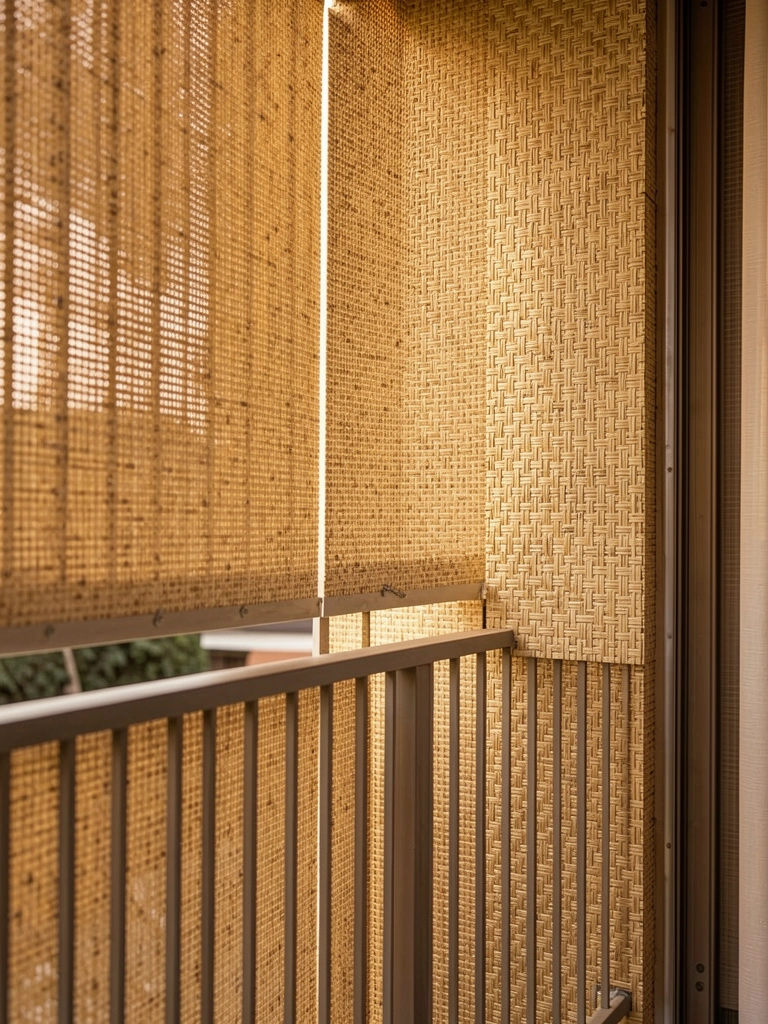
If you want to add warmth and texture without commitment, outdoor woven wall coverings or light panel treatments are a stylish middle ground between bare walls and heavy renovation.
Outdoor-rated woven panels ($40–100 at Wayfair or specialty stores) create visual interest and soften hard surfaces. Adhesive-backed options work for renters; screwed-down versions are permanent. Installation takes 30–60 minutes depending on coverage. They also help sound dampening slightly, which is a bonus benefit.
Textured walls make a terrace feel finished and thoughtfully designed. You suddenly have visual interest where there was just blank concrete or siding.
Pin this post for your next terrace refresh—there’s something here for every budget and skill level. Pick one or two ideas and start this weekend. Small changes add up faster than you’d think.
Leave a Reply