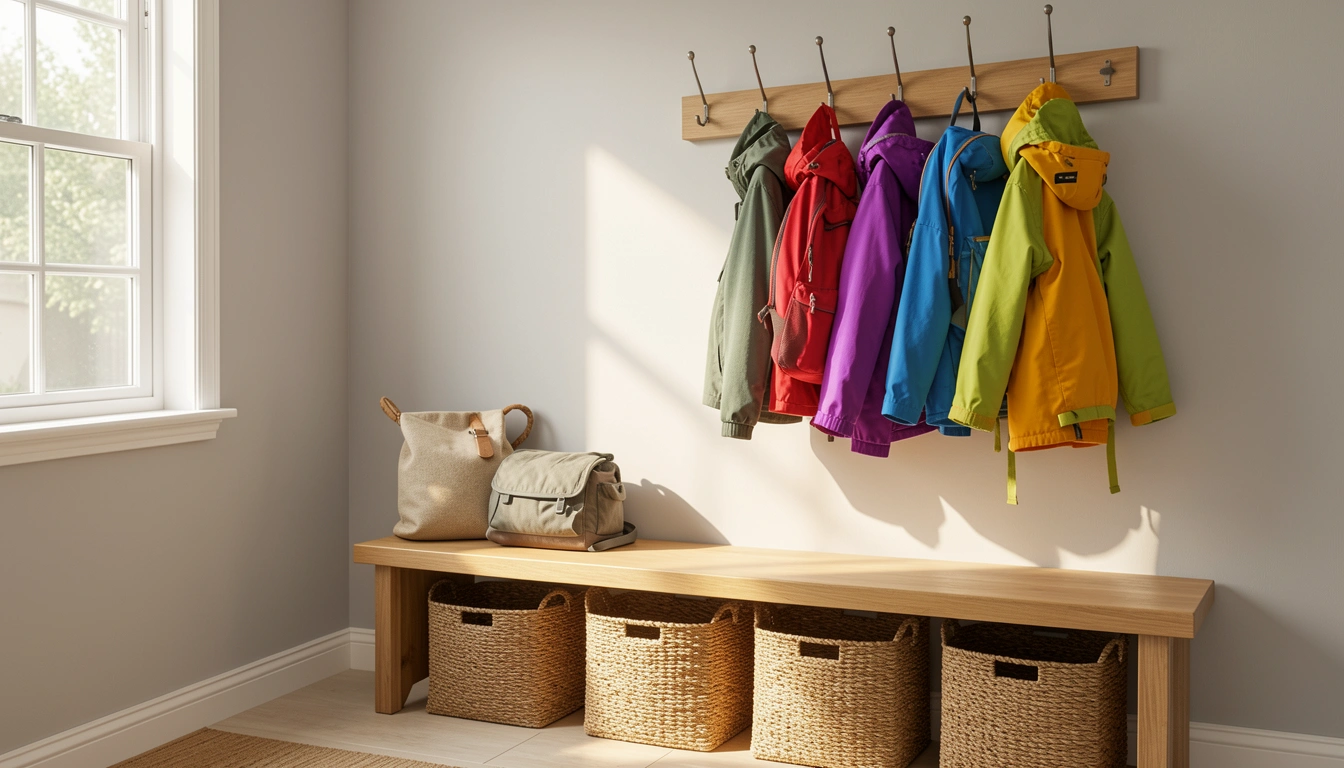
26 Mudroom Ideas That Keep Your Home Organized & Welcoming
Introduction
Your mudroom is the first impression guests get when they enter your home—and it’s usually the most chaotic. Shoes piled by the door, jackets draped over chairs, bags tossed on the floor. But here’s the truth: a well-organized mudroom doesn’t require a complete renovation. Whether you’re working with a dedicated room, a corner of your entryway, or a tight hallway space, small changes make a huge difference in how your home functions and feels.
In this guide, you’ll discover 26 practical ideas that work for renters and homeowners, on tight budgets and larger investments. You’ll find DIY projects you can finish in an afternoon, budget-friendly shopping solutions, and smart design choices that keep clutter hidden but everything accessible. By the end, you’ll have a mudroom that actually works for your family—not against you.
1. Install Floating Shelves Above the Bench
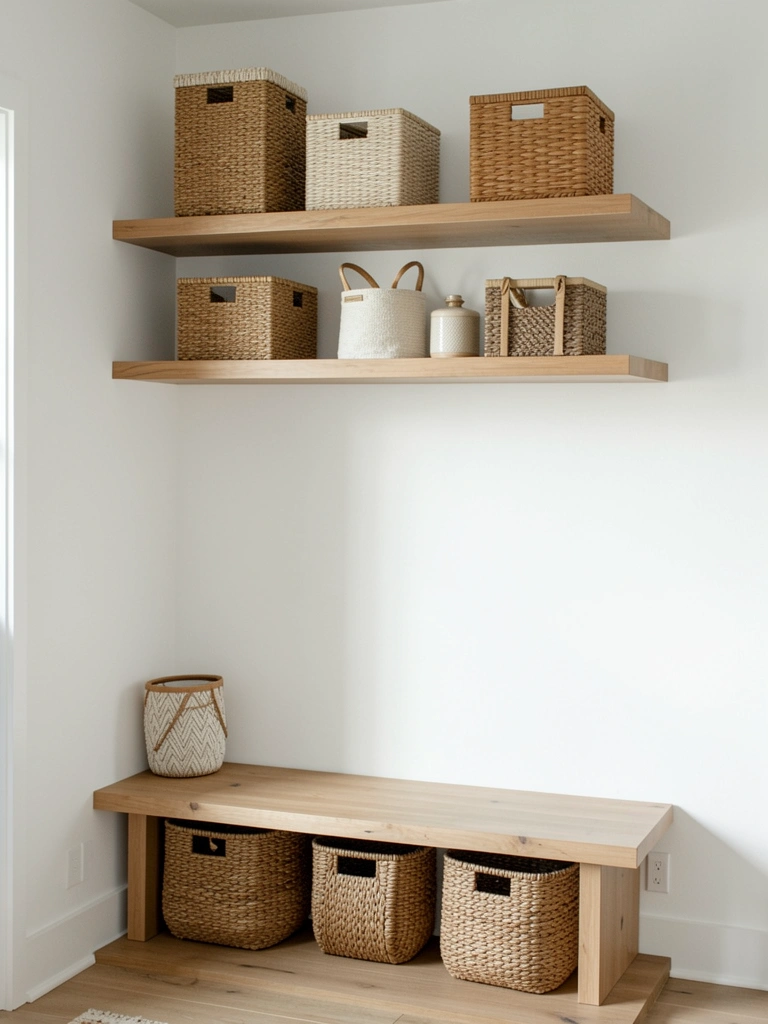
Floating shelves add storage without eating floor space and create a visual anchor for your mudroom. They’re perfect for displaying baskets, storing seasonal items, or keeping everyday necessities at eye level where you’ll actually use them.
Install shelves 12-18 inches above your bench or seating area using wall studs and a basic drill. Shelves run $15-$40 each at IKEA, Home Depot, or Amazon, plus hardware. This takes one afternoon and requires minimal tools. Fill them with matching storage baskets ($5-$20 each) to hide clutter while keeping things organized. Pro tip: arrange heavier bins on lower shelves and lighter decorative items on top for a balanced look.
Your entryway instantly gains storage without looking cramped. Plus, you can see everything at a glance, making it easier to grab what you need on your way out.
2. Create a Coat Rack Wall with Mixed Hooks
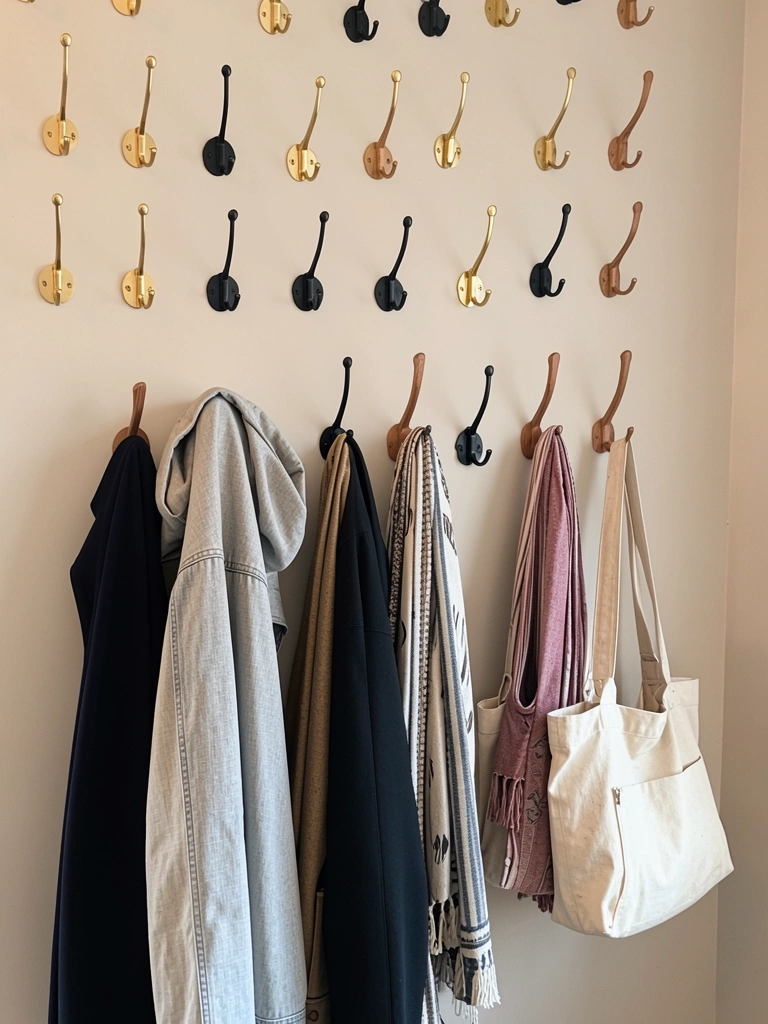
Instead of a single row of identical hooks, install a gallery-style hook wall at different heights and finishes. This approach looks intentional (like you planned it) while being flexible enough to adjust as your needs change.
Buy hooks in sets or individually from Target, Home Depot, or West Elm. Mix metals like brass, black metal, and natural wood—they’ll look curated rather than random. Plan for $20-$60 total depending on quantity. Install at varying heights so kids can reach some, adults use others. This DIY project takes 30 minutes once you’ve marked your studs. Alternative: use adhesive hooks ($1-$3 each) if you rent and want to avoid holes.
You get functional storage that’s also a style statement. Kids can independently hang their own jackets, and visitors immediately know this is a place where things belong.
3. Add a Cushioned Bench Seat with Hidden Storage
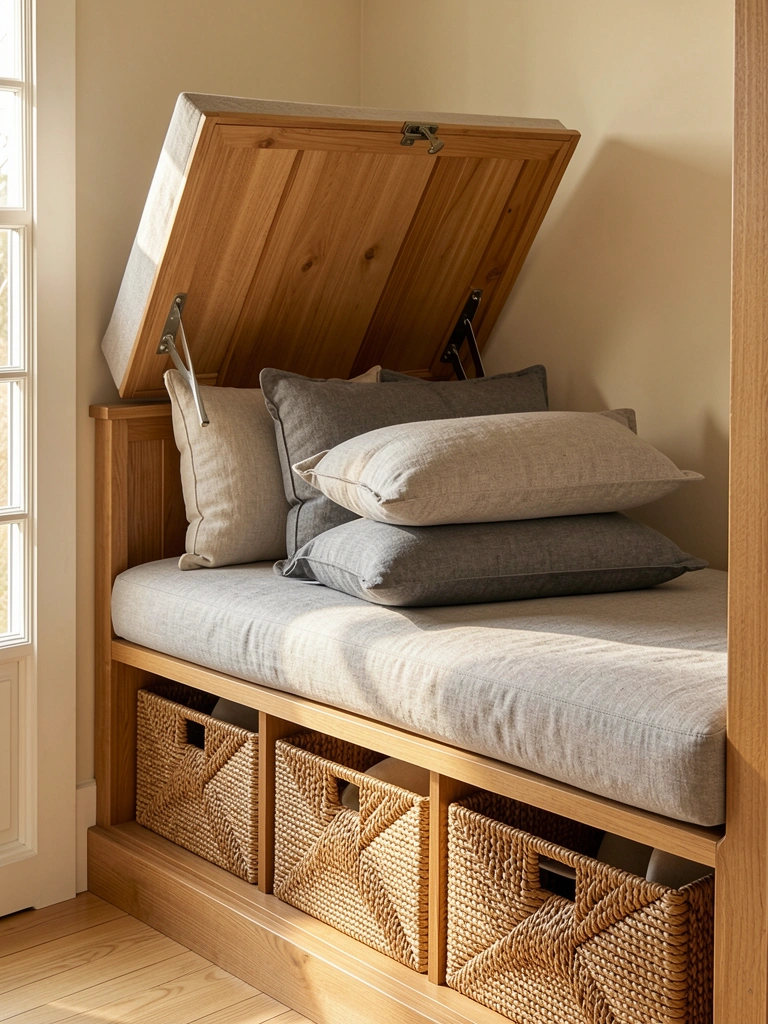
A bench does triple duty: seating to tie shoes, a landing spot for bags, and hidden storage underneath. This is one of the most practical mudroom additions, especially for families.
You have two options: buy a ready-made storage bench ($80-$300 from IKEA, Wayfair, or Target) or build one from scratch ($100-$200 in materials). If building, use a simple frame from plywood, add hinges to the top, and cushion with foam and fabric. Line the inside with bins that slide in and out. Takes one weekend if you’re handy; hire help if plumbing or electrical work is involved. Budget-friendly renters: look for ottomans with hidden compartments ($40-$100).
Suddenly you have a place to sit while putting on boots, and all those random items have a designated home. Your entryway feels more intentional and less like a drop zone.
4. Organize with Clear Labeled Storage Bins
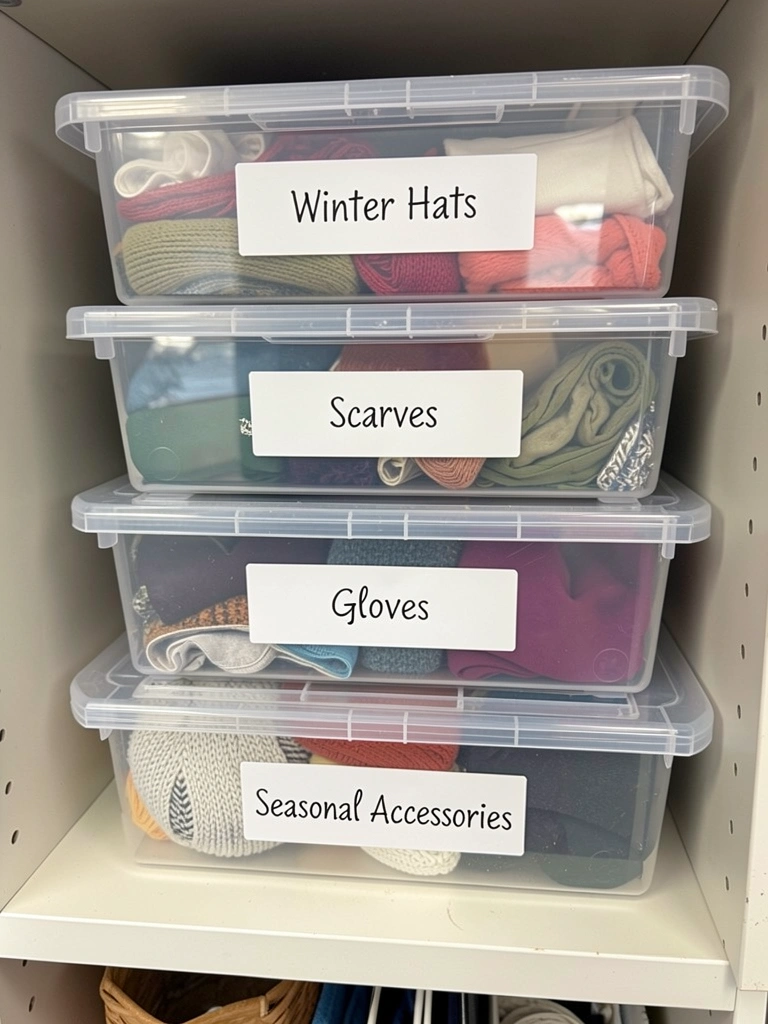
Clear bins let you see what’s inside without opening every container, making it faster to find what you need and easier for kids to put things back. Labels ensure everything stays where it belongs.
Buy clear plastic bins in sets at Target, Costco, or Amazon—expect $20-$40 for a pack of 4. Get a label maker ($15-$25) or use waterproof stickers ($3-$8). Spend an hour sorting current mudroom clutter: winter gear, sports equipment, bags, shoes. Label each bin clearly. This costs almost nothing and takes minimal time. Pro tip: take a photo of bin contents and tape it inside the label for visual reference—especially helpful for kids and partners.
Your mudroom becomes instantly more functional and looks calmer. Everything has a category, so there’s no question about where things go.
5. Hang a Pegboard for Customizable Storage
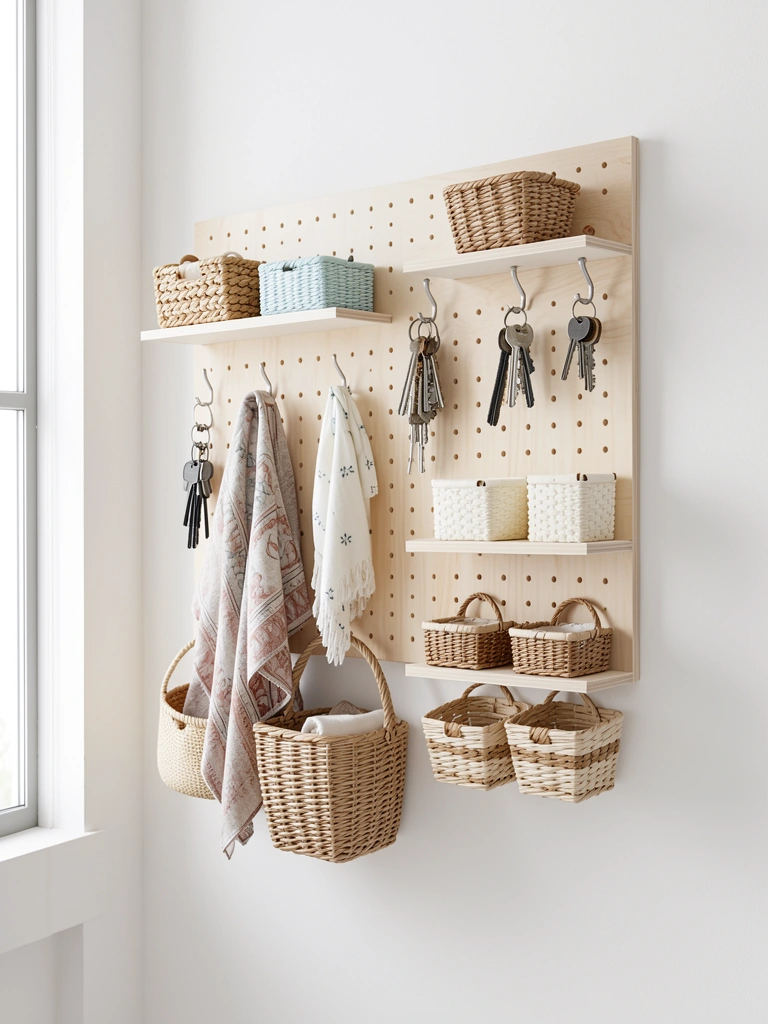
Pegboards are endlessly adjustable—rearrange hooks and baskets as your needs change. They’re perfect for the indecisive mudroom owner who might want to switch things up seasonally.
Pegboards cost $20-$50 depending on size, with hooks and baskets running $1-$5 each. Paint the pegboard to match your décor before hanging (takes 30 minutes, adds visual polish). Install into studs with screws for security. You can reorganize in seconds—move a hook, swap a basket, try new configurations. Renters can use adhesive-backed pegboards ($30-$40) that won’t damage walls.
You get a mudroom that adapts to your life instead of the other way around. Seasonal storage becomes easy, and you’ll actually use the space more effectively.
6. Install Hooks Inside Closet Doors
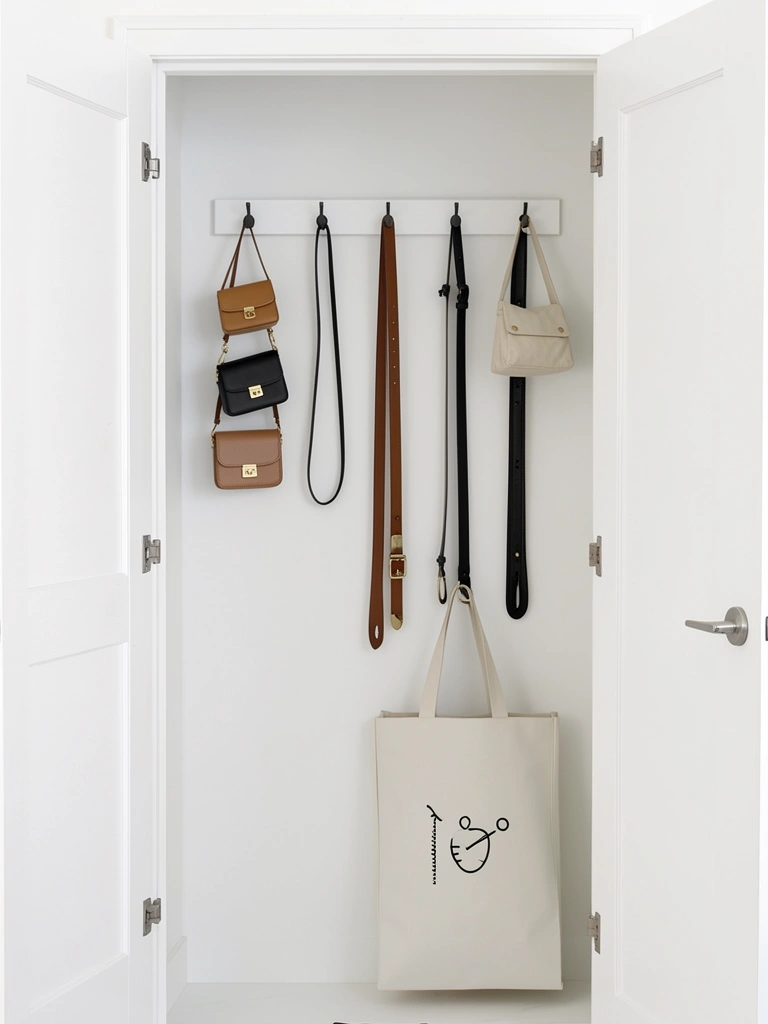
Don’t overlook the inside of your mudroom closet doors—that’s prime real estate for small items, bags, and accessories that clutter shelves.
Install 4-6 hooks on the inside of each closet door using basic screws or removable adhesive hooks ($0.50-$2 per hook). This is genuinely a 10-minute project. Use this space for reusable shopping bags, light jackets, kids’ backpacks, or items you grab frequently. The door hides everything when closed, but you’ve doubled your usable storage.
Suddenly your mudroom feels less cluttered without losing any function. This is the kind of small change that catches people off guard—they don’t even notice how organized you are until they open that door.
7. Use Woven Baskets for Textured Storage
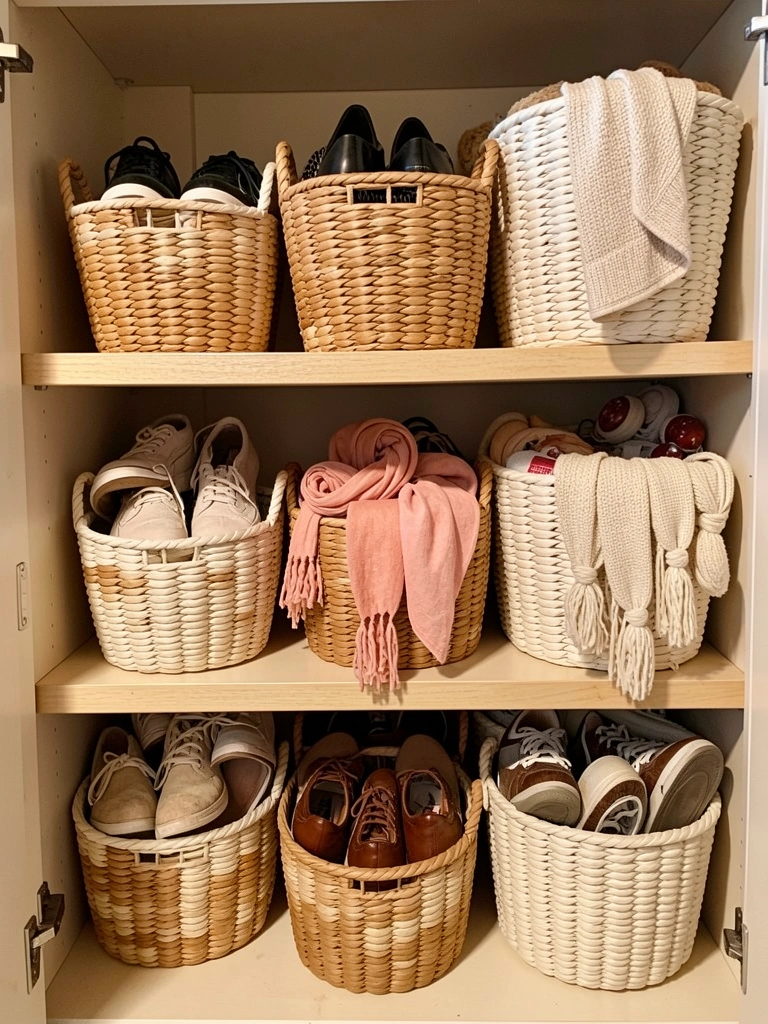
Woven baskets add texture and warmth while hiding clutter. They photograph well on Instagram and feel more intentional than plastic bins, even though they’re just as functional.
Look for seagrass, rattan, or woven baskets at Target, Wayfair, IKEA, or thrift stores. Sizes and prices vary—$15-$50 per basket depending on size. Group them by size or color for visual harmony. Label each basket if you want (or leave labels off if you prefer a cleaner look). Refresh the look seasonally by swapping which basket holds what. This costs nothing extra and takes 15 minutes to set up.
Your mudroom shifts from “functional clutter zone” to “designed space.” Plus, baskets hide the mess while keeping things easy to access—nobody has to be perfect inside a closed basket.
8. Create a Shoe Rack System
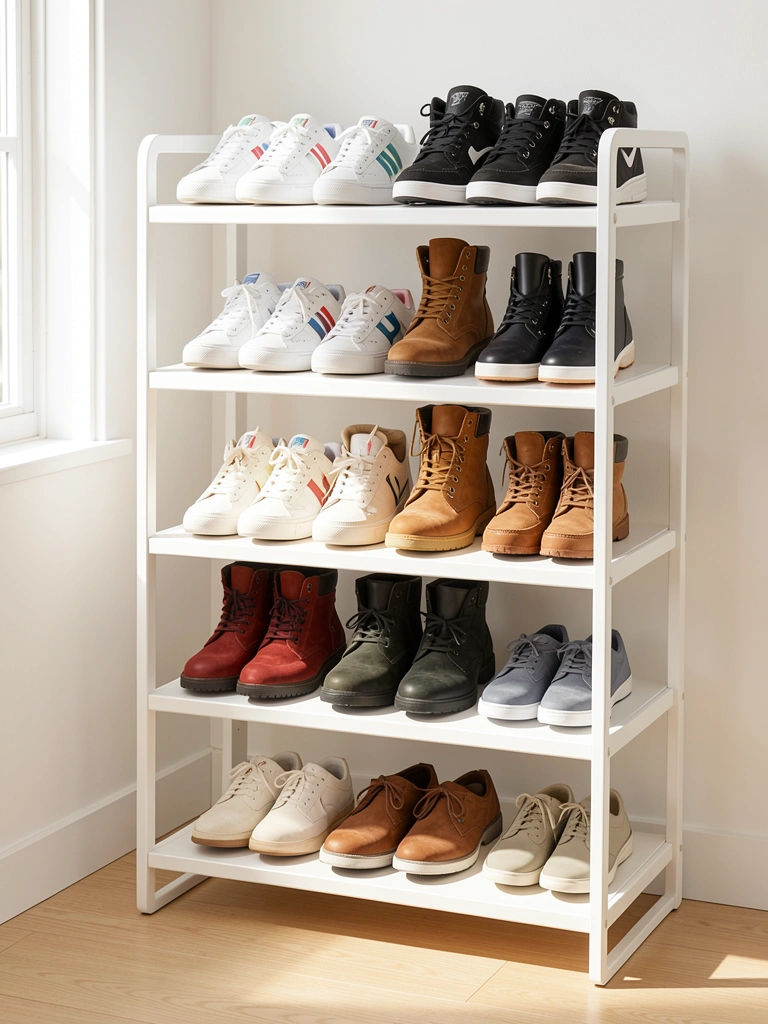
Shoes are usually the biggest mudroom clutter culprit. A dedicated shoe rack keeps them off the floor and makes it obvious when someone’s left a pair out.
Buy a ready-made shoe rack ($30-$100 at Target, IKEA, Amazon, or Wayfair) or build one from wood pallets and shelves ($40-$80 in materials). Store only shoes currently in rotation—move seasonal boots and winter gear to higher shelves or the garage. If you have kids, assign each child their own shelf section. This project takes 30 minutes to assemble or build. Pro tip: place a small tray under each shelf to catch dirt that falls from shoes.
Your floor becomes instantly clearer and your morning routine faster—you can see which shoes you need without searching through a pile.
9. Mount a Narrow Console Table for Keys and Mail
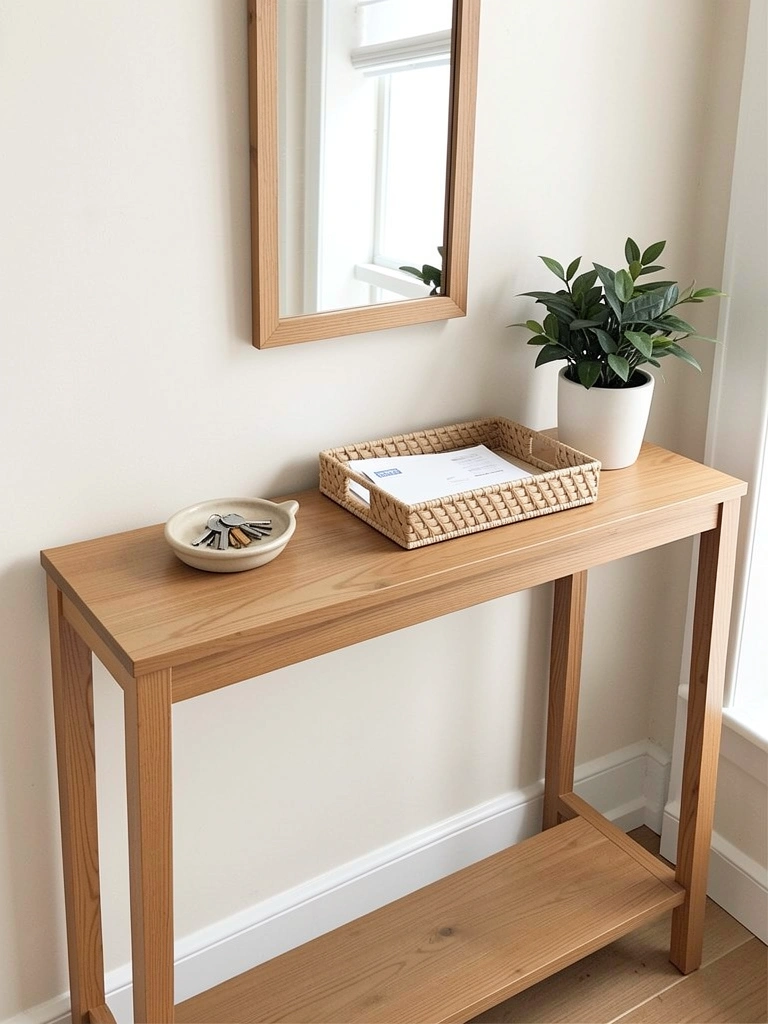
A narrow console table (12-15 inches deep) doesn’t take up much space but gives you a designated landing spot for keys, mail, wallets, and other pocket items that usually get lost.
Find a console table at IKEA, Target, Facebook Marketplace, or Wayfair in $60-$200 range. Pair it with a small tray for keys, a letter holder for mail, and a dish for loose items. Mount a mirror above it (bonus: makes the space feel larger). This setup costs $80-$250 total and takes 30 minutes to arrange. Renters can use a thin table without mounting anything—just push it against the wall.
Now you have a place where everyone knows to check for keys and mail instead of searching through drawers and pockets. Your morning routine becomes smoother and less stressful.
10. Install a Coat Closet Organizer System
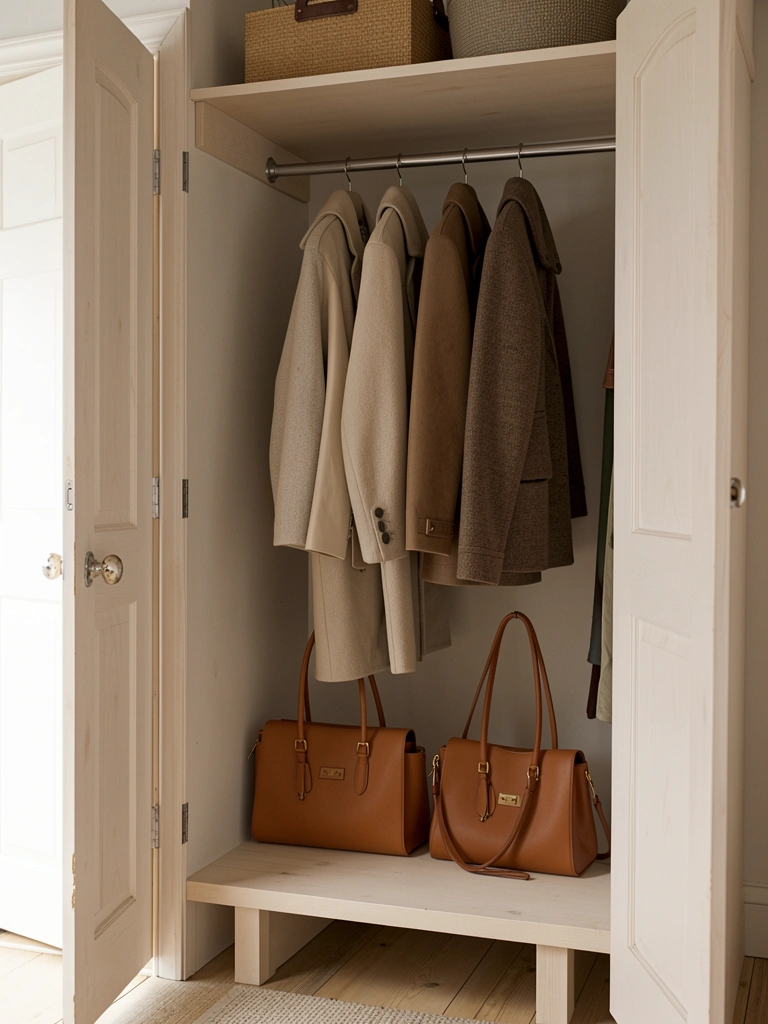
If you have a dedicated mudroom closet, maximize it with a double rod system that lets you hang more coats and bags without overcrowding a single rod.
Install a closet rod divider or double rod system ($30-$70 from Home Depot or IKEA). Place heavier coats on the top rod and lighter jackets or bags on the bottom. This is a 20-minute installation if you’re comfortable with basic tools. Alternative for renters: use a tension rod hung at half-height to create two levels without permanent installation.
Your closet can now hold double the outerwear without looking cramped or damaged. Plus, heavier coats don’t crush lighter layers.
11. Add an Umbrella Stand for Rainy Days
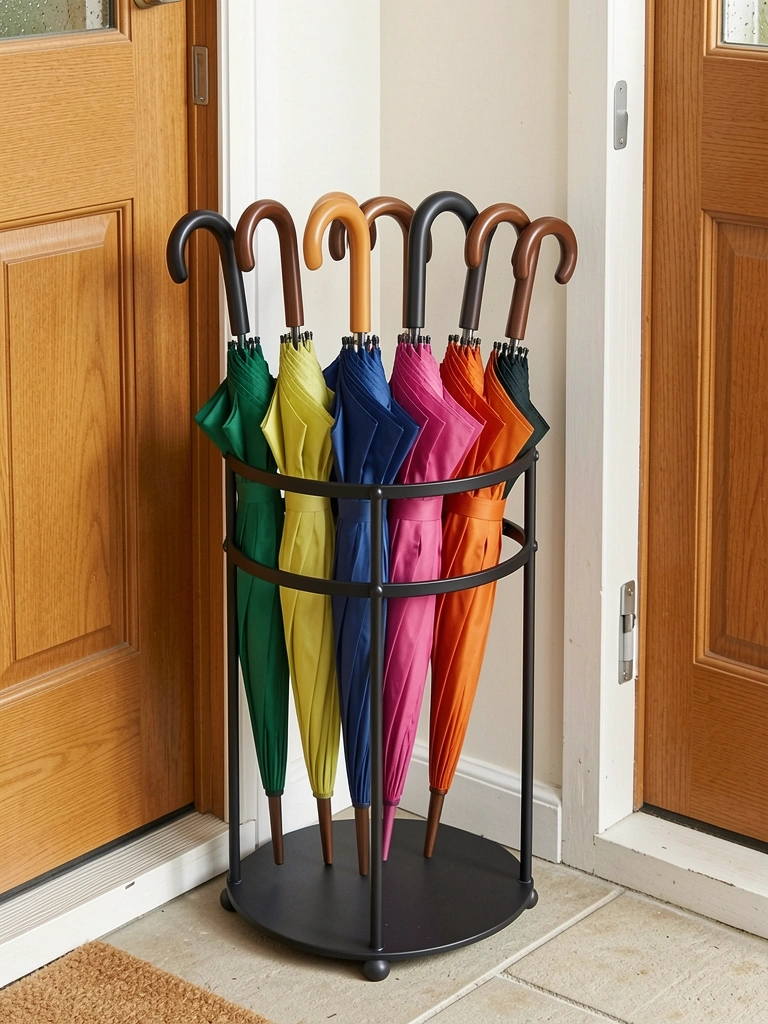
Umbrellas usually end up wet and dripping on the floor or folded awkwardly in the corner. An umbrella stand keeps them accessible and contained so water doesn’t damage your floors.
Buy an umbrella stand ($15-$40 at Target, Amazon, or Home Depot) in a style that matches your entryway aesthetic. Metal, ceramic, or wood options exist at every price point. Place it by the door so it’s the first thing people see when they need an umbrella. This takes five minutes to set up and costs almost nothing. Pro tip: use a removable mat underneath to catch drips on tile or hardwood.
Rainy days become less messy and more organized. Your guests will actually use the stand instead of creating a wet pile by the door.
12. Use a Rolling Cart for Sports Equipment
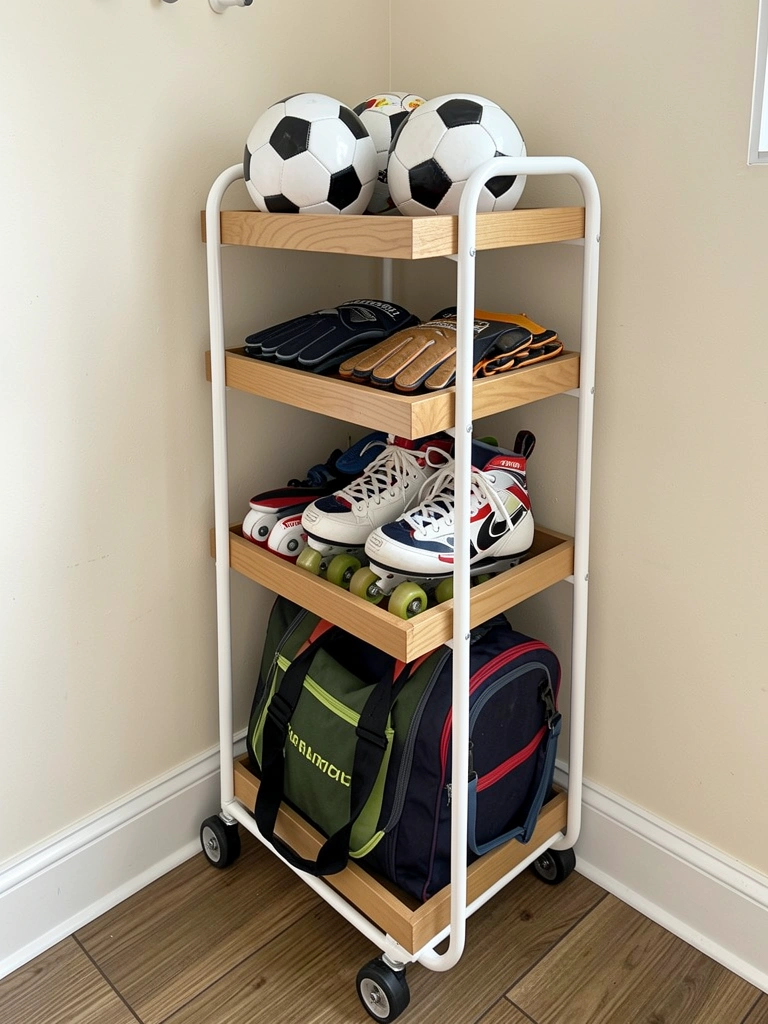
Sports gear multiplies fast, especially in families with kids. A rolling cart keeps equipment corralled, easy to grab, and simple to move out of the way when needed.
Get a 3-tier rolling cart ($30-$70 from Target, Amazon, or IKEA) in a size that fits your space. Label each tier: “Soccer,” “Baseball,” “Skates,” etc. Kids can easily grab what they need without digging through bins. Roll it to the garage when you want the mudroom clear. This project takes 10 minutes to assemble and organize. Budget alternative: use a sturdy storage bin ($20-$40) and label the outside—less flexible but significantly cheaper.
Everything has a home, and kids know exactly where their gear lives. Your mudroom doesn’t become a sports equipment explosion zone.
13. Paint an Accent Wall in Soft Neutral Tones
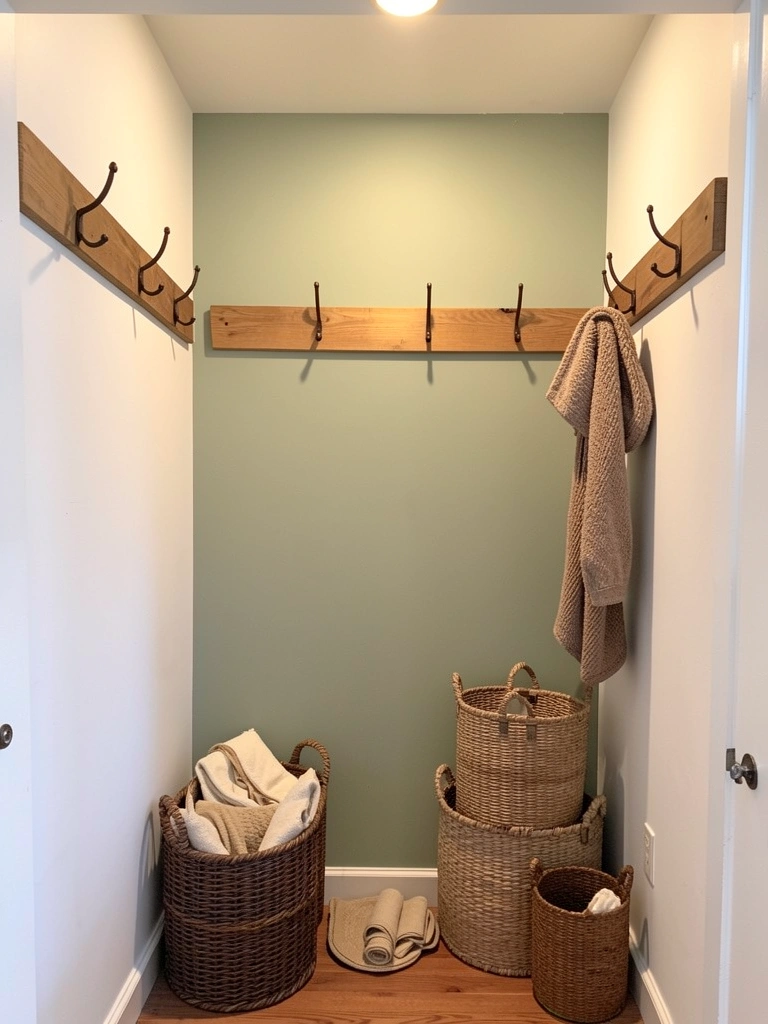
A single accent wall draws the eye and makes your mudroom feel designed, not just functional. Soft neutrals like sage, soft gray, or warm taupe create a welcoming vibe without overwhelming the space.
Choose a high-quality paint in your preferred shade ($25-$40 per gallon). One wall typically requires 1-2 gallons. This is a weekend DIY project if you’re painting yourself, or hire a pro ($150-$300 for a mudroom). The difference this makes is surprising—suddenly your entryway feels intentional and inviting. Pro tip: test paint samples on your wall first and observe how light changes throughout the day.
You get a completely refreshed space without a full renovation budget. Plus, a painted wall makes everything else you’ve organized look even more polished.
14. Install a Slim Bench with Shoe Storage Below
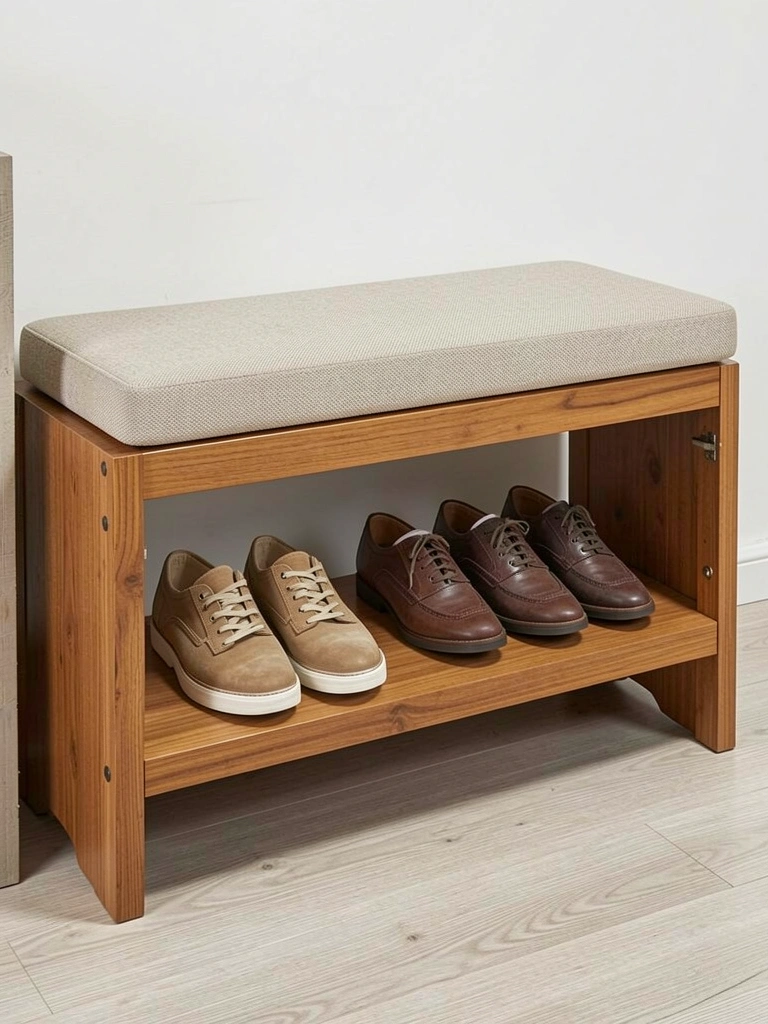
Similar to a full storage bench, but simpler: a bench with an open shelf underneath keeps shoes visible and easily accessible while creating a place to sit and lace up.
Look for this specific style at IKEA ($70-$150), Wayfair ($100-$200), or Target ($60-$120). Or DIY one from a simple wood frame and shelf. This takes one afternoon to build or 20 minutes to assemble if you buy ready-made. The beauty is that shoes are visible and easy to grab. Pro tip: place a basket under the shelf for shoes you’re less likely to wear regularly.
Getting ready becomes faster—you can see your options and sit while putting on shoes. The bench becomes a visual anchor for your entire mudroom.
15. Use Ladder Hooks for Blankets and Scarves
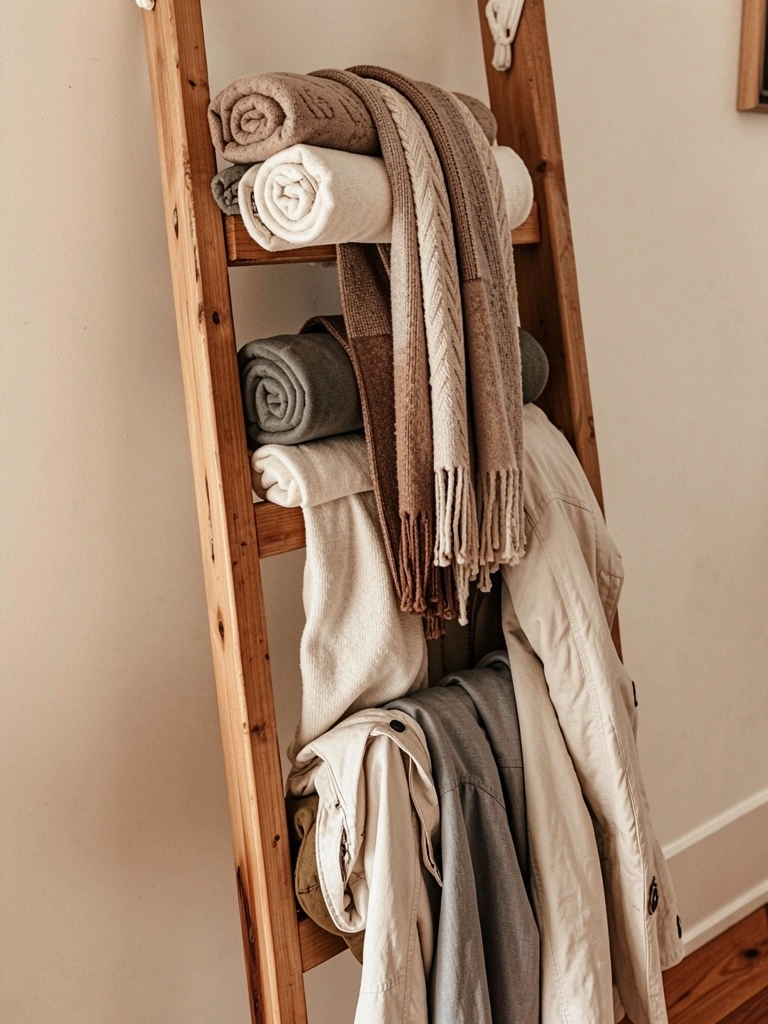
A decorative ladder is a creative, space-saving way to store scarves, blankets, throws, and light layers without needing shelf or closet space.
Find a wooden ladder at Target, Wayfair, or thrift stores for $30-$80. Lean it against a wall (no installation needed). Drape scarves, blankets, and lightweight jackets over the rungs—they stay visible and are easy to grab. This works especially well in smaller mudrooms where shelf space is limited. Rearrange seasonally by rotating what’s on display.
Your mudroom gets bonus storage while looking more like a boutique than a dumping ground. Plus, blankets and scarves are softer décor than typical storage bins.
16. Create a Mudroom Command Center with a Bulletin Board
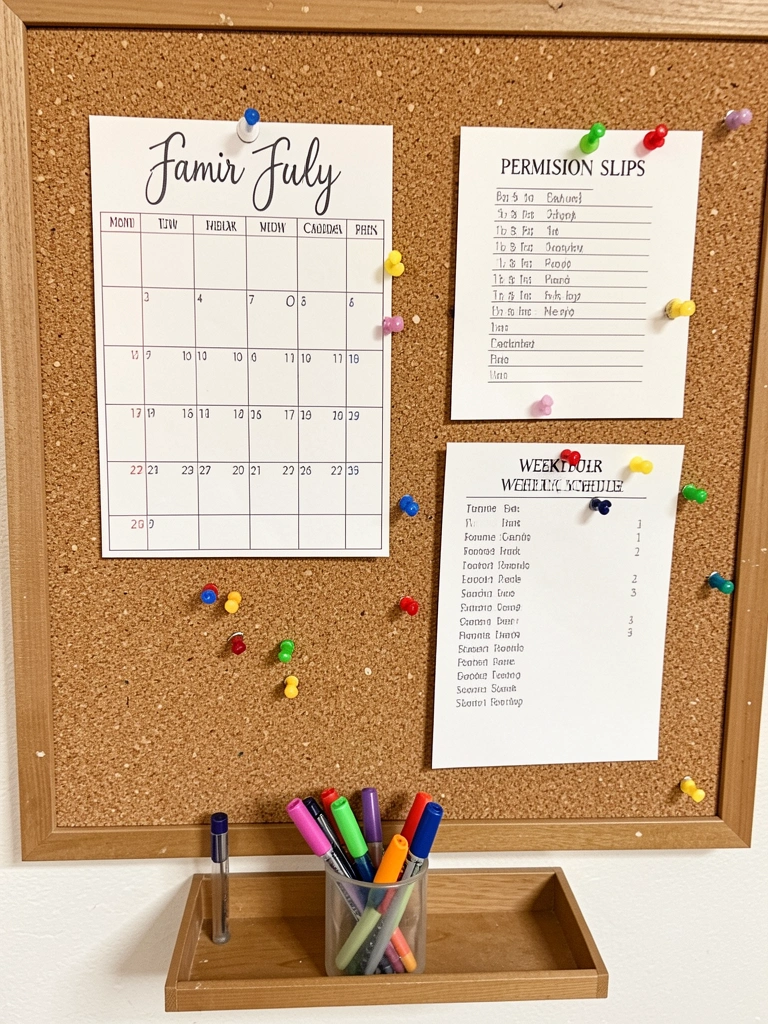
A command center keeps the family schedule, school papers, and reminders visible so nothing gets lost in coat pockets or forgotten on desks.
Mount a cork board or fabric pinboard ($15-$40 from Target or Amazon) in a central spot in your mudroom. Add a small shelf below for pens, markers, and adhesive notes. This takes 15 minutes to hang and organize. Alternatively, use a large whiteboard ($20-$40) if you prefer easy erasing and rewriting. Set a family rule: all permission slips and schedules go here before anything else.
Nobody misses school events or forgets permission slips. Your stress level drops because you have one central place to check instead of asking everyone repeatedly.
17. Install Wall-Mounted Cubbies for Each Family Member
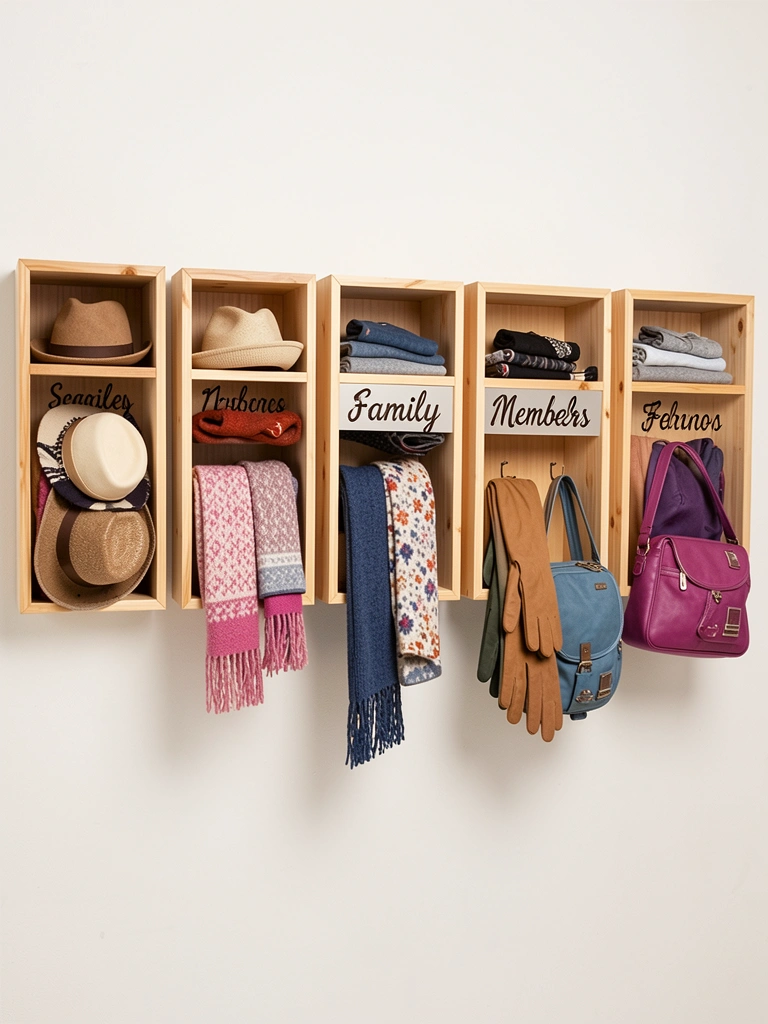
Cubbies assigned to each person create accountability—everyone knows where their stuff goes and can take ownership of their space.
Buy a wall-mounted cubby unit ($80-$200 at Target, IKEA, or Wayfair) or DIY from wooden boxes and shelves ($60-$120 in materials). Label each cubby with a family member’s name. Smaller items like hats and gloves go in small baskets within each cubby. This project takes one afternoon to build or 20 minutes to assemble. Pro tip: include a hook inside each cubby for bags or jackets.
Everyone knows exactly where their own items belong, and you spend less time managing other people’s clutter. Plus, it’s easier to delegate cleanup when each person has their own defined space.
18. Use Adhesive Hooks for Renter-Friendly Storage
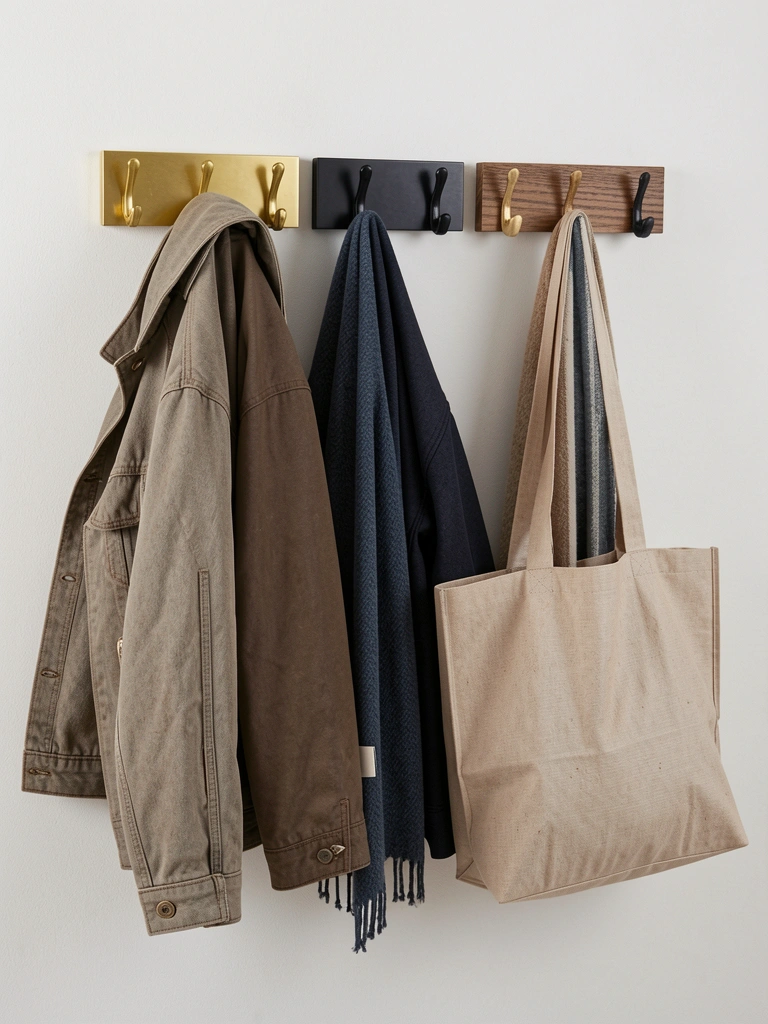
Renters often avoid installing permanent fixtures, but adhesive hooks are damage-free and can hold surprising amounts of weight when used correctly.
Buy heavy-duty adhesive hooks ($1-$5 each) from Target, Amazon, or Home Depot. Follow installation instructions carefully: clean the wall, let adhesive cure fully, and respect weight limits. These work great for jackets, scarves, light bags, and everyday items. Start with fewer hooks and add more as you test the weight capacity. If you move, simply remove the hooks—they leave no marks if applied correctly.
You get a fully functional mudroom without damaging your rental. When you move, you take your organization system with you.
19. Hang a Coat Tree for Corner Spaces
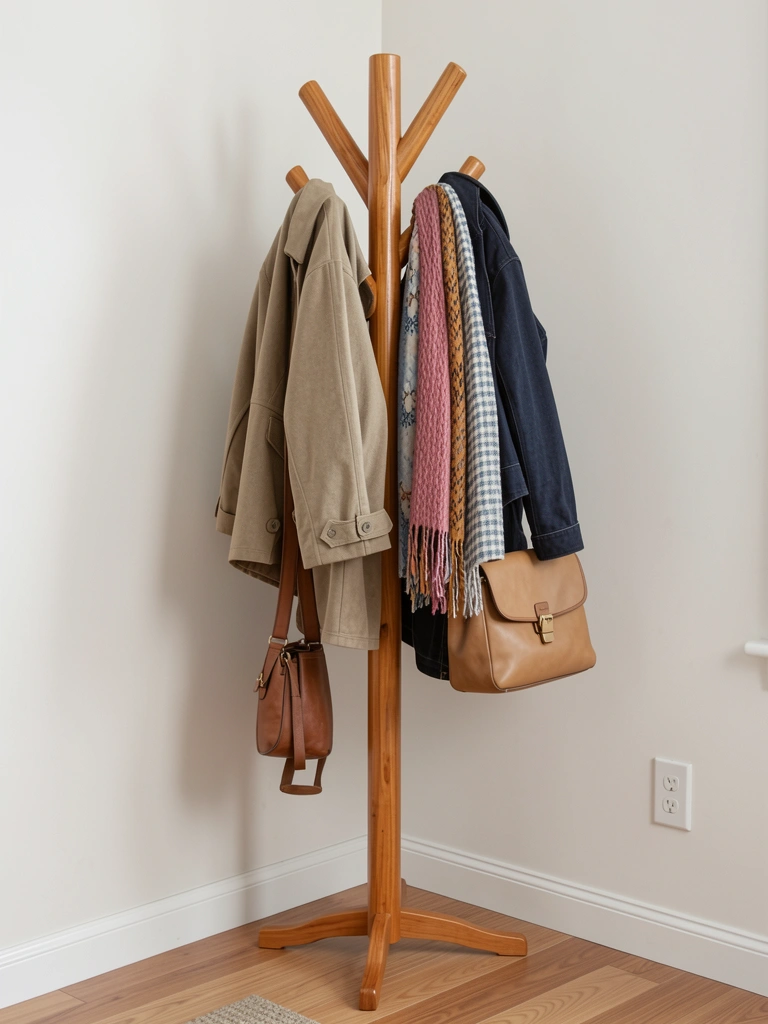
Coat trees are perfect for tight spaces where wall mounting isn’t ideal. They’re freestanding, moveable, and surprisingly spacious.
Find a coat tree at Target ($40-$100), IKEA ($30-$70), or Wayfair ($50-$150). Look for styles with multiple branches and a sturdy base. Position in a corner or unused space. You can hold 6-10 jackets and light bags on a single tree. This costs nothing to install—just unbox and place it. Alternative: use a tall narrow shelf unit ($60-$120) if you prefer storage to hanging.
You’ve created storage without eating into your actual floor plan. It’s also easy to move if you need to rearrange your mudroom layout.
20. Install LED Strip Lighting Under Shelves
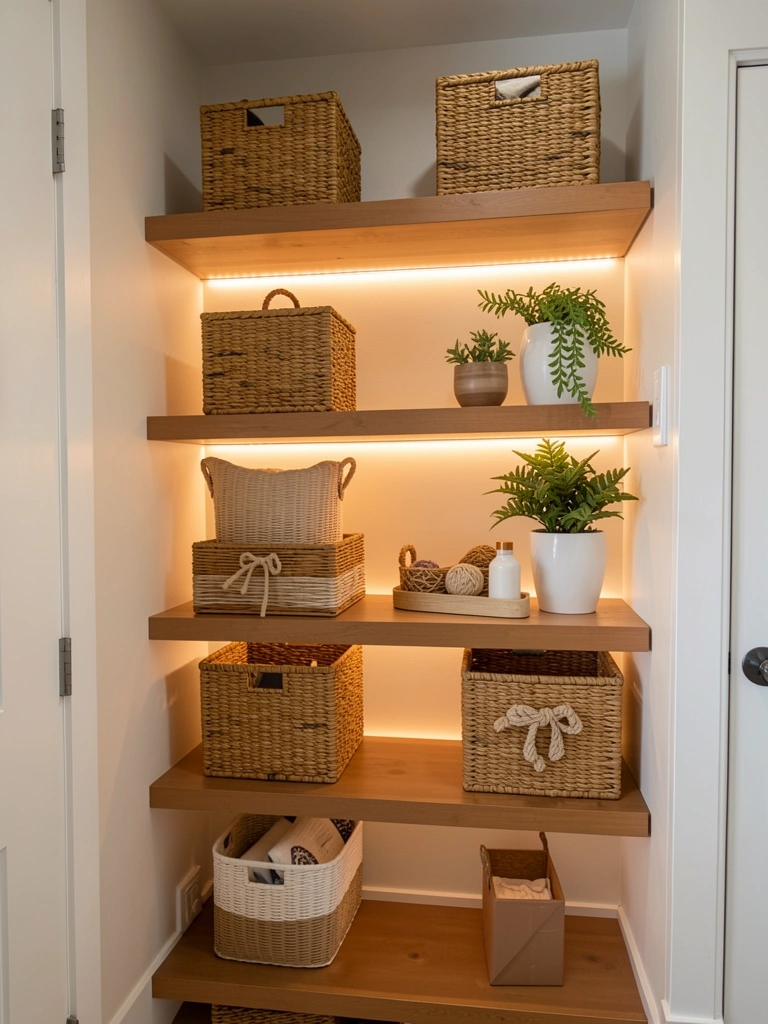
Under-shelf lighting makes your mudroom feel brighter, more sophisticated, and easier to navigate during early mornings and evenings.
Buy adhesive LED strip lighting ($15-$35 per set) from Amazon, Target, or Home Depot. Installation takes 30 minutes: clean the shelf bottom, peel and stick the strip, plug into an outlet or battery pack. Most strip lights are dimmable and warm-toned, which feels more welcoming than harsh white light. This project is renter-friendly and requires no permanent installation.
Your mudroom feels less like a utility space and more like an intentional entry point. Plus, finding things in shadows becomes easier.
21. Use Door-Mounted Organizers for Small Items
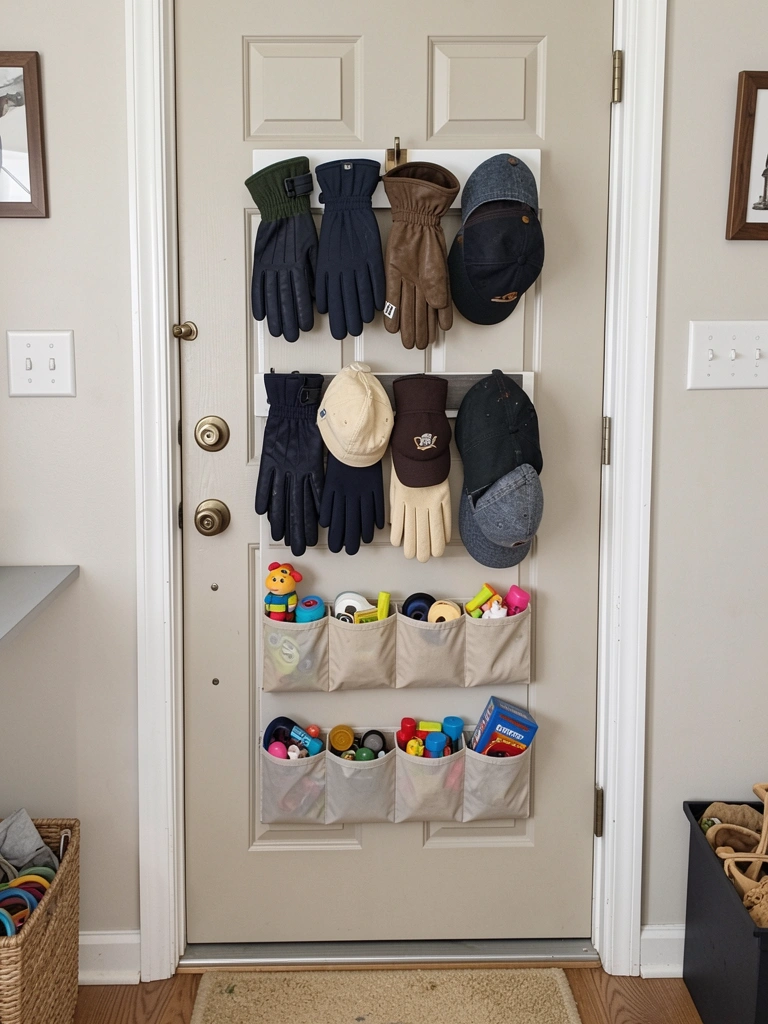
Over-the-door organizers with multiple pockets maximize vertical space for small items that usually end up scattered: gloves, hats, mittens, sunglasses, and keys.
Get an over-the-door organizer ($15-$40 at Target, Amazon, or Container Store) with compartments sized for your needs. Hang on the inside of your mudroom closet door or main entry door using the included hooks. Assign each pocket a category so everyone knows where to find things. This takes five minutes to install and organize. Budget option: hang a shoe organizer ($10-$20) instead—it works just as well.
Small items finally have a home instead of rolling around loose in drawers or pockets. Plus, the organizer stays hidden when the door closes.
22. Create a Family Donation Box

Keep a dedicated donation box in your mudroom so outgrown clothes and unused items don’t accumulate—they go straight into the box and out of your space.
Find a sturdy box or bin ($10-$25) and label it clearly. When someone outgrows a jacket, shoes don’t fit, or you’re tired of an item, it goes in the box immediately. Once full, drop it off at a donation center. This takes seconds to set up and eliminates decision paralysis. Pro tip: take photos of donations for tax records if you itemize charitable deductions.
Your mudroom stays right-sized because things leave as naturally as they arrive. Plus, knowing outgrown items will find a good home makes decluttering feel purposeful.
23. Paint Hooks to Match Your Décor
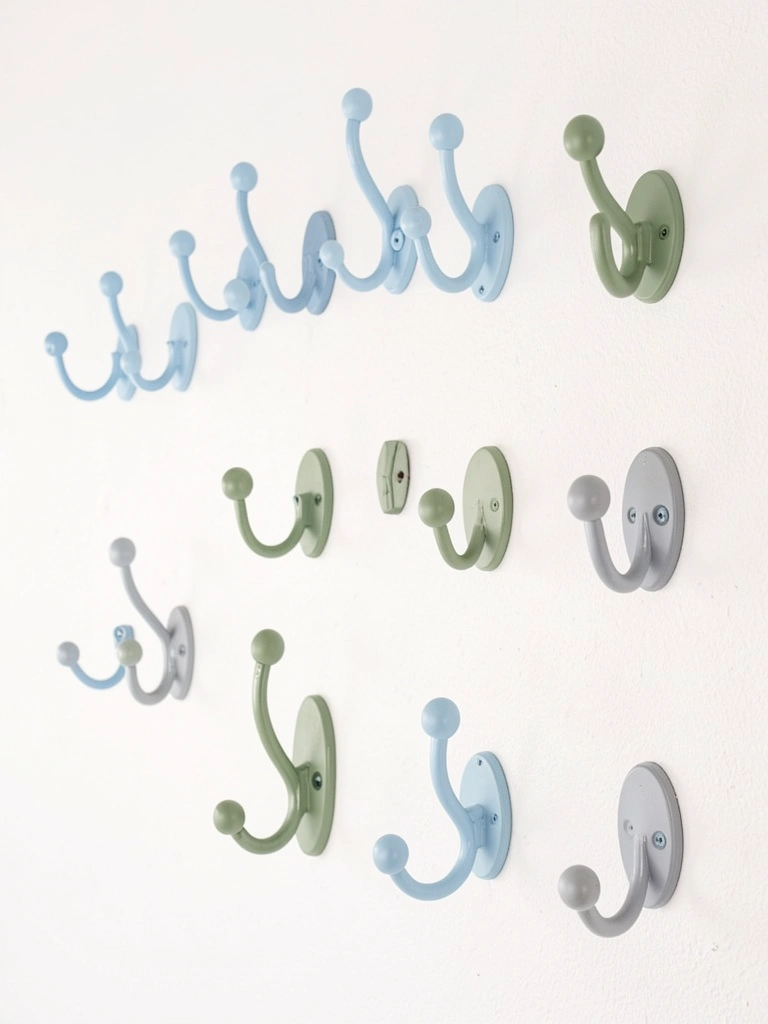
Mismatched hooks can feel chaotic, but painting them all the same color creates cohesion and makes the space feel designed rather than thrown together.
Buy basic metal hooks ($0.50-$1.50 each) and spray paint them with color-matched paint ($5-$10 per can). This takes 30 minutes of prep and drying time. Choose a color that complements your mudroom walls—soft blue, sage, warm white, or soft gray all work beautifully. Hang at varying heights for visual interest while maintaining color harmony.
Your mudroom instantly feels more intentional and pulled-together. The hooks become a design detail instead of just functional hardware.
24. Add a Bench Cushion and Throw Pillows
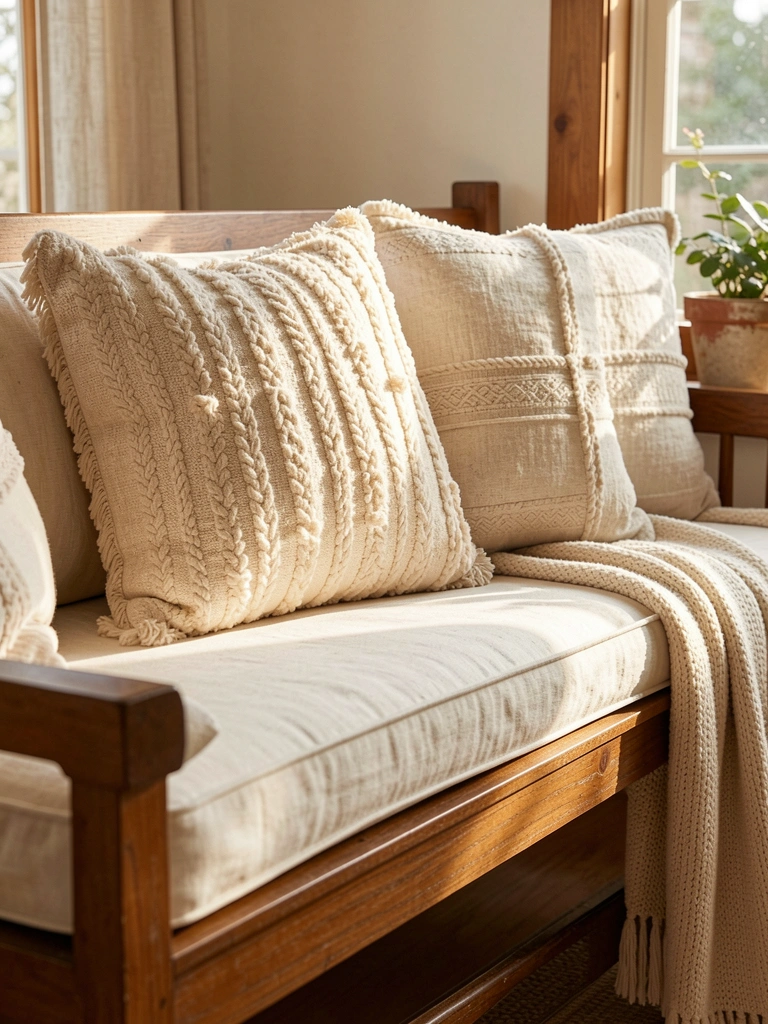
Seating is essential, but comfort is a luxury detail that makes your mudroom feel special rather than utilitarian. A cushion and a couple of pillows make sitting to tie shoes actually pleasant.
Get a cushion ($30-$100 depending on size and quality) and throw pillows ($15-$40 each) from Target, Wayfair, West Elm, or Amazon. Choose colors and textures that complement your overall aesthetic. This costs nothing to install—just place them on your bench. Swap seasonally to keep things fresh and interesting. Pro tip: choose machine-washable covers for easy care.
Your mudroom becomes a space you actually enjoy spending time in. Plus, it photographs better and feels more like an extension of your home’s style.
25. Install Shelves Above Coat Hooks for Extra Storage
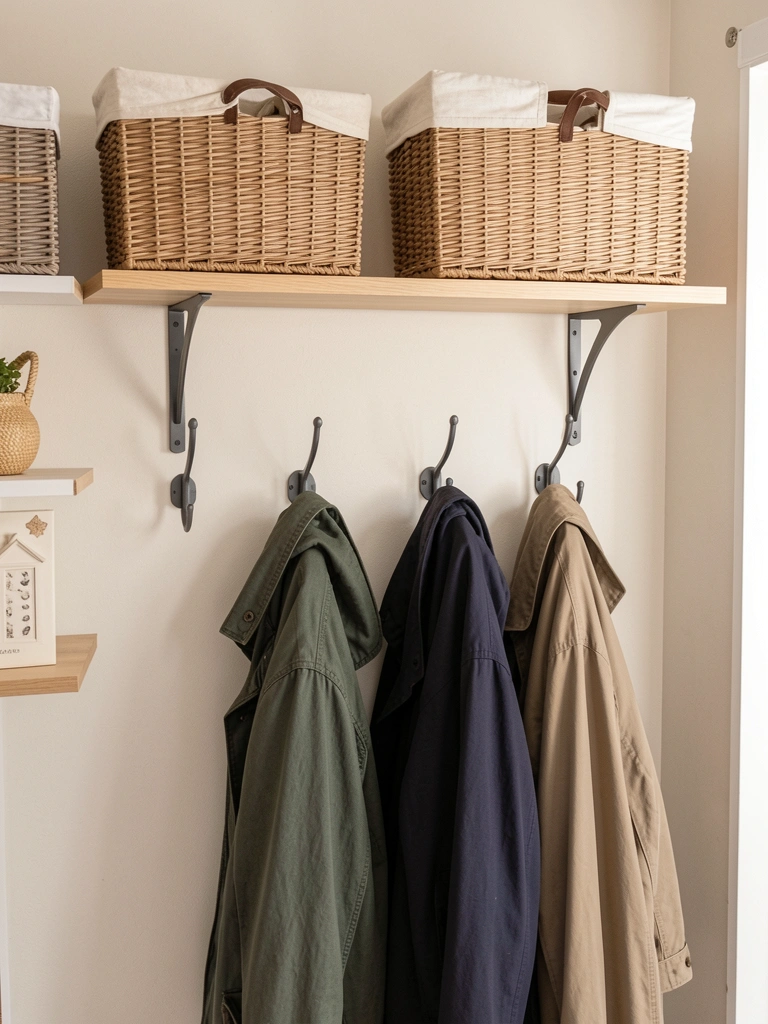
Stacking hooks and shelves vertically means you use your full wall height instead of just eye level. This is ideal for smaller mudrooms where floor space is precious.
Install floating shelves 12-18 inches above your coat hooks using basic hardware ($50-$100 total for shelves, hooks, and installation supplies). Use the shelves for seasonal items, baskets of gloves and hats, or display pieces. This project takes an afternoon if you’re comfortable with a drill. Renters can use removable adhesive shelves ($40-$80) to avoid holes.
Your vertical wall space becomes fully functional storage. It’s surprising how much you can fit when you think in layers instead of just horizontally.
26. Label Everything with a Consistent System
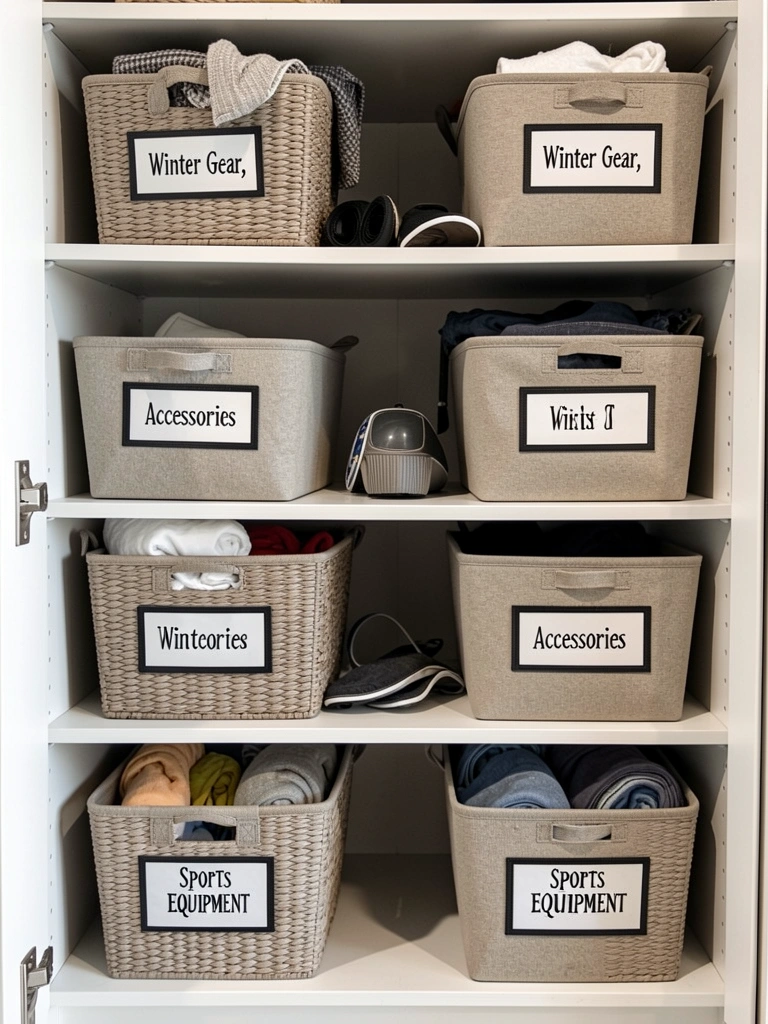
The final piece of any organized space is clear labeling. When everyone knows exactly where things belong, your system actually works long-term.
Get a label maker ($15-$25) and label every basket, cubby, shelf section, and storage bin. Use the same font and size throughout for visual consistency. Spend an afternoon labeling everything in your mudroom. This costs almost nothing and takes minimal time, but it’s the difference between organization that lasts and organization that falls apart within weeks. Pro tip: include a simple icon or color alongside text labels—helpful for kids still learning to read or anyone in a morning rush.
Your entire system becomes self-explanatory. Nobody has to ask where things go, and kids can independently put items away. Your organized mudroom actually stays organized.
Ready to Organize?
Pin this post and pick one or two ideas to start with this weekend—don’t try to tackle everything at once. Even a simple bench, a set of hooks, or labeled baskets will make a visible difference in how your mudroom functions. Share this with anyone who’s drowning in entryway chaos. Which idea are you trying first?
Leave a Reply