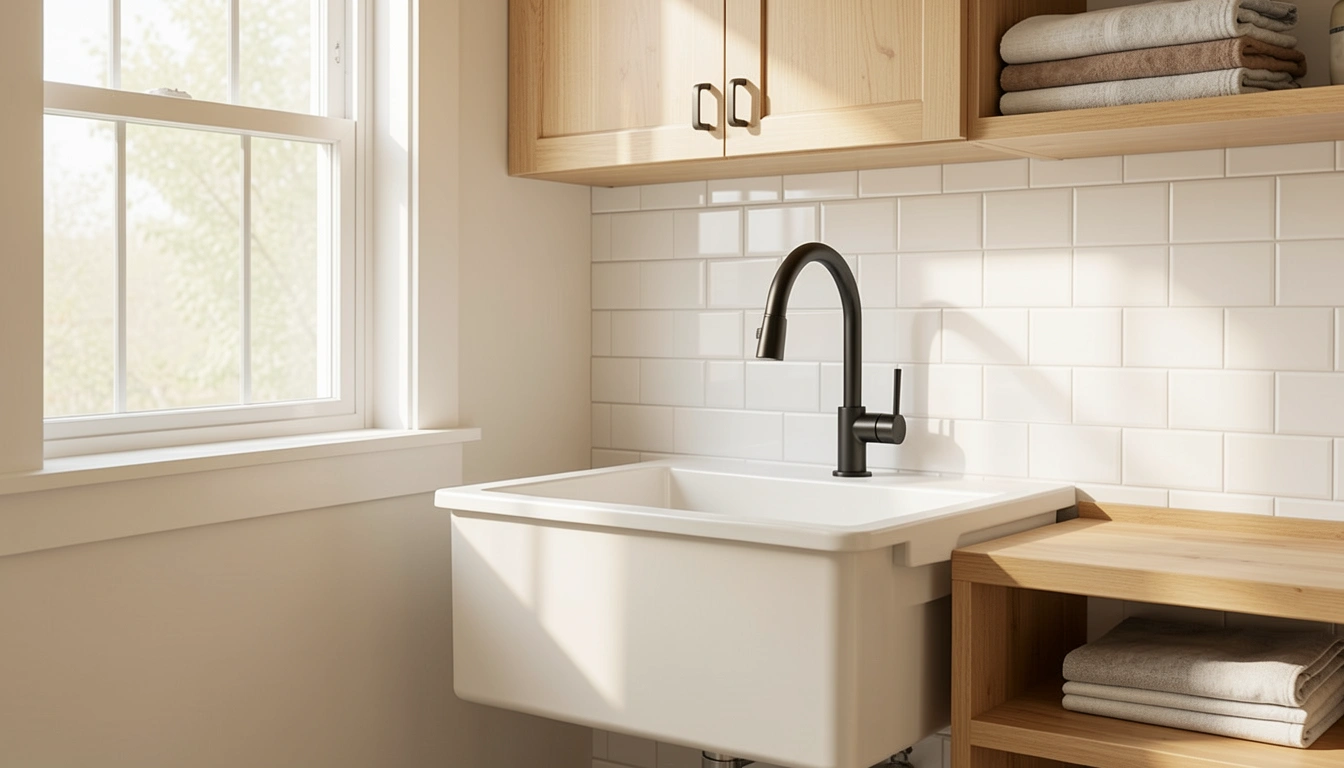
Your laundry sink does way more than you probably realize. It’s the unsung hero of stain removal, delicate washing, and those moments when you need to rinse something quickly without dragging it to the kitchen. But here’s the thing—most laundry sinks are buried in dark corners looking purely utilitarian. What if your sink could actually be a design feature that makes your whole laundry space feel more intentional and organized? In this guide, I’m sharing 24 laundry sink ideas that go beyond basic functionality. You’ll find budget-friendly hacks, smart layouts, upgraded fixtures, and styling tricks that turn your sink into a real focal point. Whether you’re renting, dealing with a tiny closet laundry, or planning a full remodel, there’s something here to elevate your space.
1. Pair Your Sink with Open Shelving Above
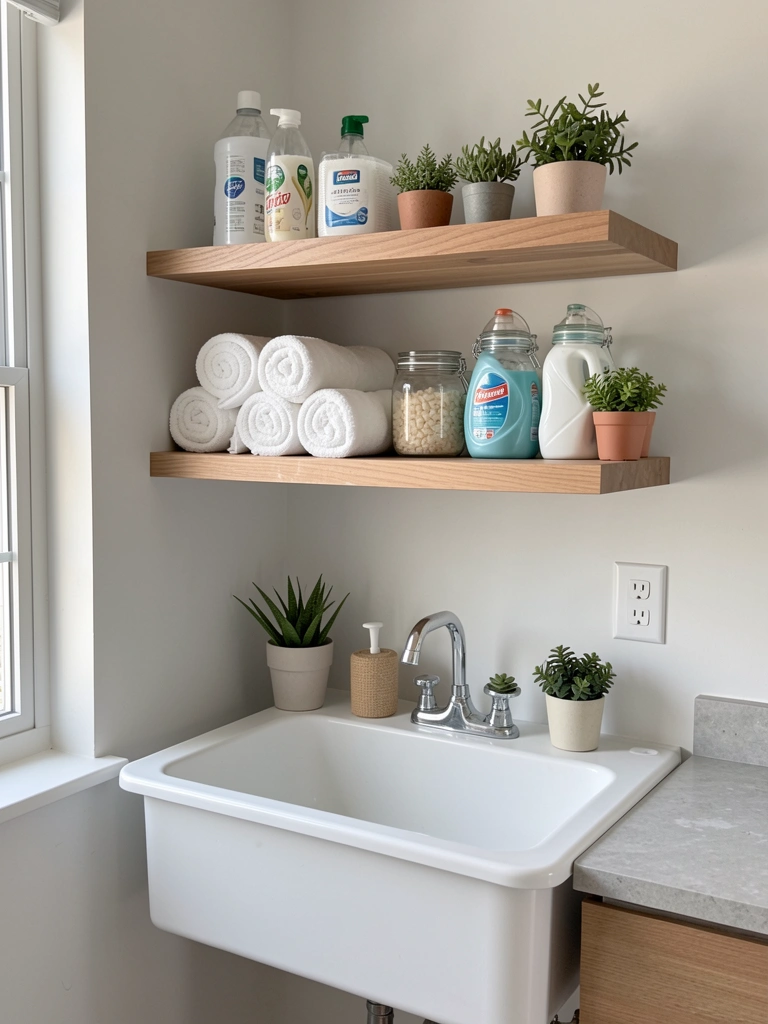
Open shelving above your sink creates visual breathing room and makes supplies easy to grab mid-wash. This layout works especially well for small spaces because it avoids the clunky feel of upper cabinets.
Mount floating shelves 12-18 inches above your sink using heavy-duty brackets ($30-$60 for a set at Home Depot). Style them with rolled towels, storage jars, and one or two plants for personality. The key is keeping items functional but pretty—think clear containers for detergents instead of cluttered boxes.
This setup takes about one afternoon to install and looks way more expensive than it is. The added visual interest makes your laundry space feel like an actual room, not just a chore zone.
2. Install a Deep Utility Sink for Serious Stain Work
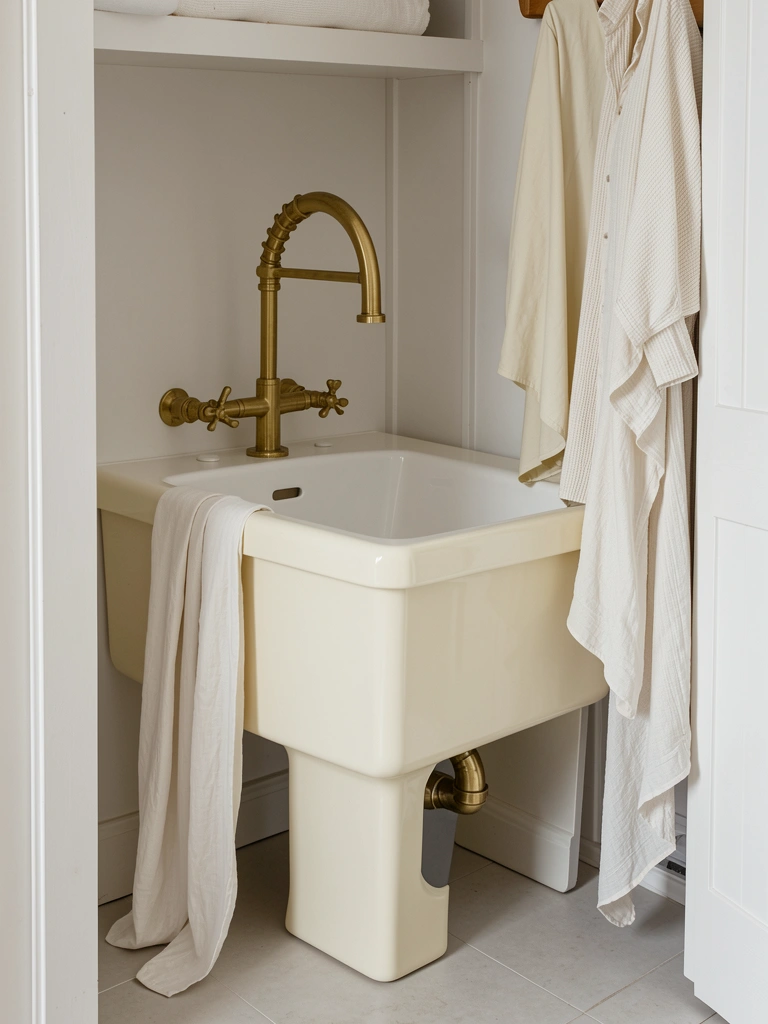
A deep utility sink gives you actual room to soak, scrub, and rinse without everything splashing onto the floor. Standard shallow sinks force you to hunch over and limit what you can wash.
Swap your existing sink for a deeper model (20-25 inches deep instead of 10-12 inches). Brands like Kohler and Moen have quality options at $150-$400 depending on material. Installation takes about 2-3 hours if you’re handy, or hire a plumber for $100-$200 labor. The extra depth makes hand-washing delicates, treating tough stains, and pre-soaking linens infinitely easier.
You’ll wonder why you didn’t upgrade sooner—especially when you’re tackling things like muddy baseball uniforms or wine-stained tablecloths.
3. Choose a Utility Sink That Doubles as a Pet Wash Station
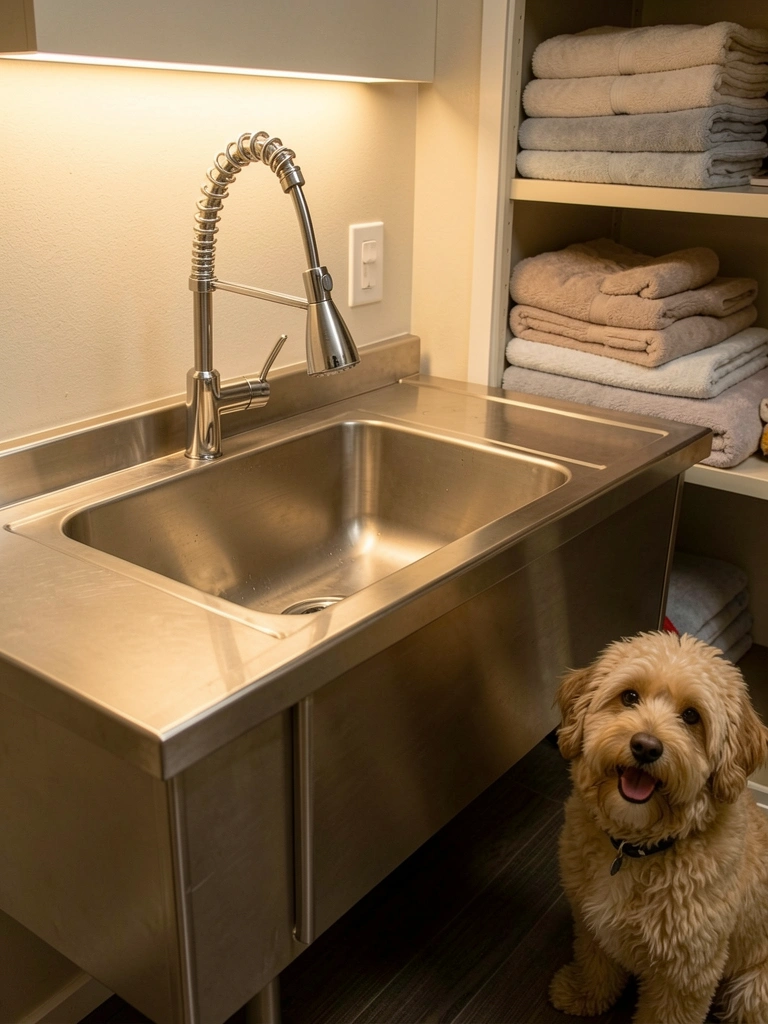
Why have a separate pet bath when your laundry sink can handle both jobs? With the right sink and spray head, you get a real multi-purpose station.
Look for sinks with adjustable spray heads (like a kitchen faucet upgrade) that let you rinse your dog, delicate items, or muddy shoes without fighting water pressure. Kohler’s Pet Spa line ($250-$350) even has specific features for this. If you’re renting, a clip-on spray attachment ($20-$40 on Amazon) works on most faucets.
Set up a washable mat underneath ($15-$30) to catch splashes. This one upgrade serves so many purposes—muddy paws, garden tools, messy projects—that you’ll use it constantly beyond laundry duties.
4. Add a Faucet with a High Arc and Spray Function
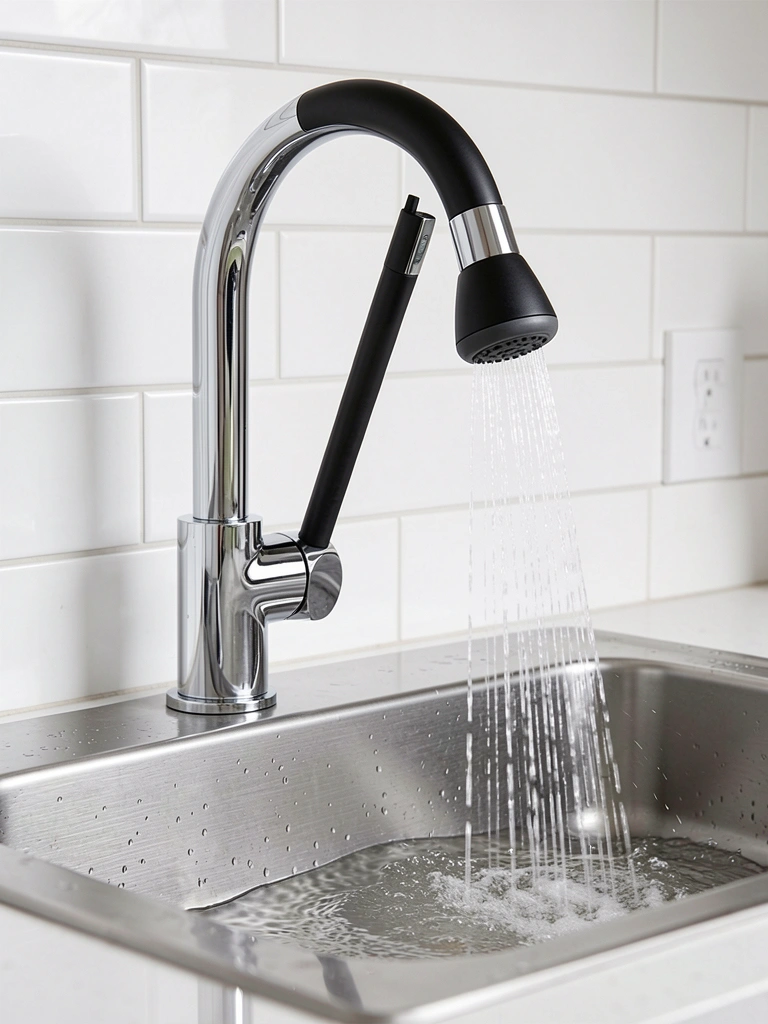
Your faucet matters more than you think. A standard low-arc faucet limits what you can fit underneath, while a high arc with spray function handles literally everything from large comforters to muddy sneakers.
Upgrade to a commercial-grade or residential high-arc faucet with a detachable spray head ($80-$250 depending on finish). Options like Moen Spot Resist or Delta Foundations offer durability at mid-range prices. Installation is straightforward if you’re replacing an existing faucet—about 30-45 minutes with basic tools, or hire a plumber for $50-$100.
The spray function becomes indispensable once you have it. You’ll suddenly tackle more laundry tasks at the sink rather than moving things around your home.
5. Create a Stain-Treatment Station Right Next to the Sink
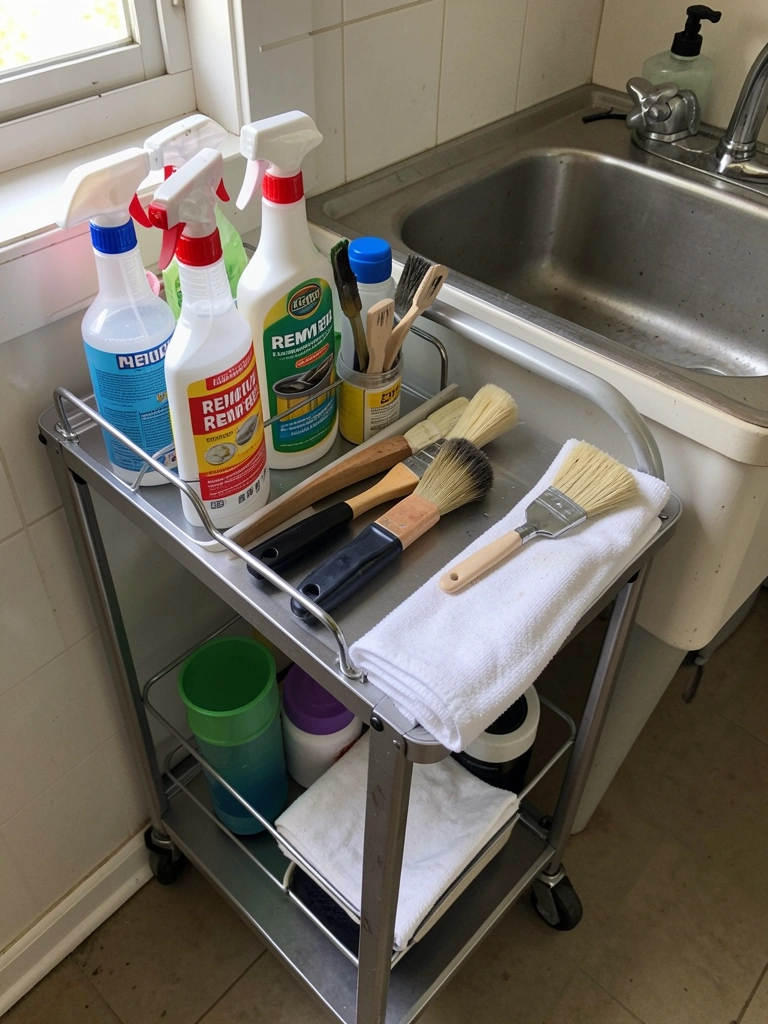
Centralizing your stain supplies where you actually use them saves time and prevents random bottles scattered around your laundry room.
Grab a rolling cart ($40-$80) or narrow table and dedicate it to stain treatment. Stock it with: hydrogen peroxide, oxygen bleach, a stain brush, white cloths, and spray bottles. Label everything clearly using a label maker ($15) or vinyl labels ($5).
Position it right beside your sink so you can rinse and treat in one spot. This takes about one hour to set up and immediately makes you feel more organized. You’ll actually use that stain remover you bought because it’s not buried in a cabinet.
6. Mount a Pegboard Above Your Sink for Hanging Tools

A pegboard keeps your most-used tools visible and within arm’s reach while staying off your sink counter.
Install a 4×8 foot pegboard ($20-$40 at Home Depot) above your sink using wall anchors. Paint it a warm color like sage green or taupe ($10-$15 for paint) to match your space. Add hooks and baskets ($1-$3 each) to hold brushes, lint rollers, and cleaning supplies.
This setup takes one weekend and requires only basic tools. The visual impact is huge—suddenly your laundry room looks organized rather than cluttered. Everything you reach for frequently is right there instead of buried in drawers.
7. Use a Sink Skirt to Hide Plumbing and Storage
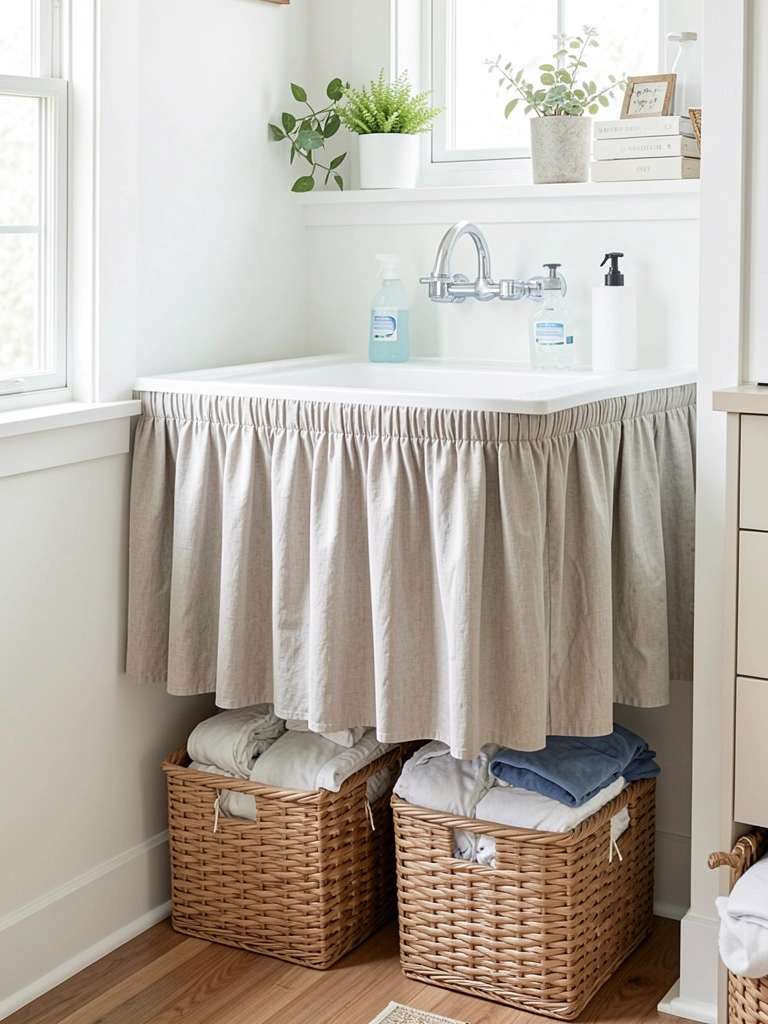
If your sink stands alone and exposes pipes, a simple skirt hides plumbing while creating storage space for baskets or supplies underneath.
Make or buy a sink skirt in cotton, linen, or even a plastic curtain liner ($25-$60). Mount it using tension rods, adhesive strips, or clips. Choose a neutral or warm tone that matches your room’s color scheme. This takes about 30 minutes to install and instantly makes your space look more polished.
The bonus? That awkward under-sink area becomes functional storage for cleaning supplies, hampers, or extra linens. It’s a renter-friendly way to hide what you don’t want to see.
8. Install Overhead Lighting Directly Above Your Sink
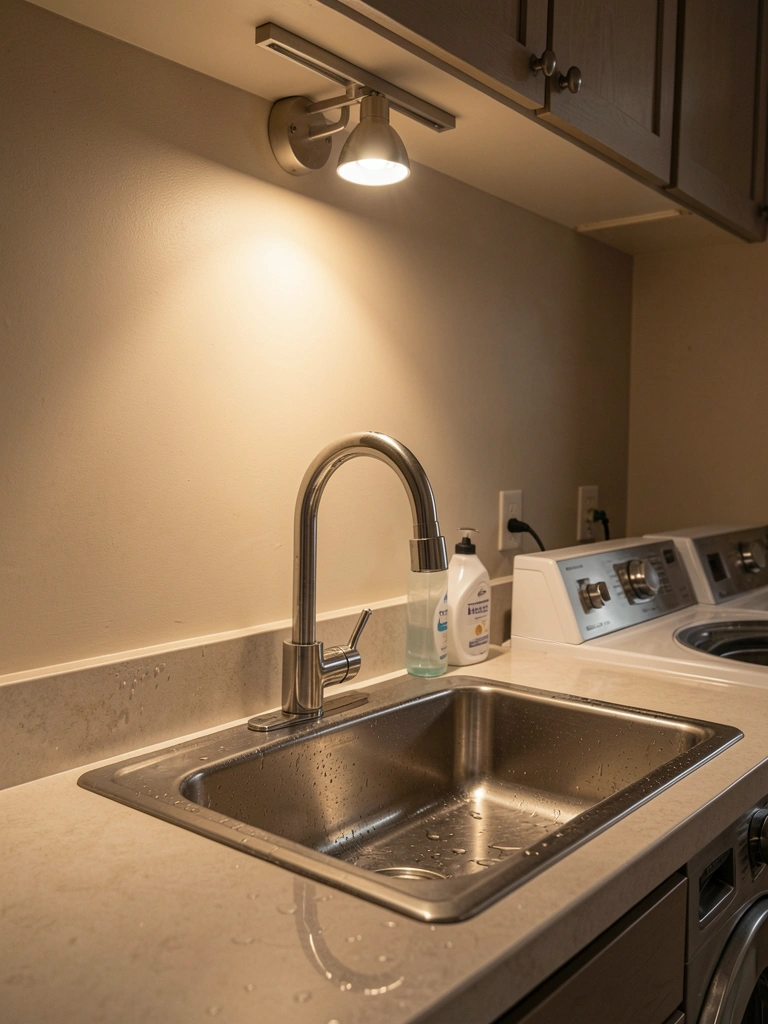
Proper lighting above your sink makes stain spotting, delicate hand-washing, and detailed work easier and actually enjoyable.
Add a single pendant light ($40-$150) or small track light ($50-$120) positioned 24-30 inches above your sink. Look for options in brushed brass, matte black, or ceramic for a design-forward look. Installation varies—if you’re replacing an existing fixture, it’s a 30-minute DIY job; if you’re adding new wiring, hire an electrician for $150-$300.
Warm-toned bulbs ($10-$20) are key for a flattering space. Suddenly your sink feels like a real workstation instead of an afterthought corner.
9. Choose a Sink Material That Hides Water Marks
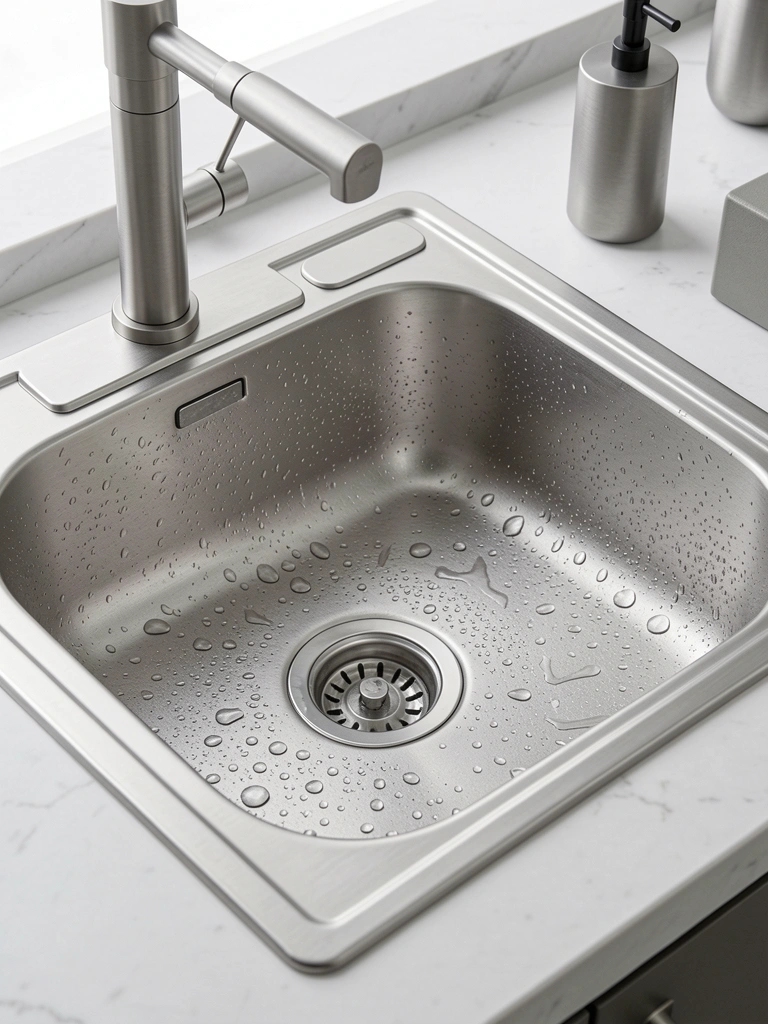
Water spots on shiny surfaces are annoying and make your sink look dirty faster. A textured or matte finish hides this issue.
Swap a polished stainless steel sink for a satin-finish or brushed stainless option ($150-$350). Alternatively, ceramic or cast iron sinks ($100-$250) develop a beautiful patina over time and hide spotting naturally. If you’re renting, you’re stuck with what’s there, but you can try matte finish spray paint designed for sinks ($20-$40) as a temporary upgrade.
The practical benefit is less constant cleaning to keep it looking nice. Your sink stays photo-worthy without extra maintenance.
10. Add a Secondary Small Sink Just for Delicates
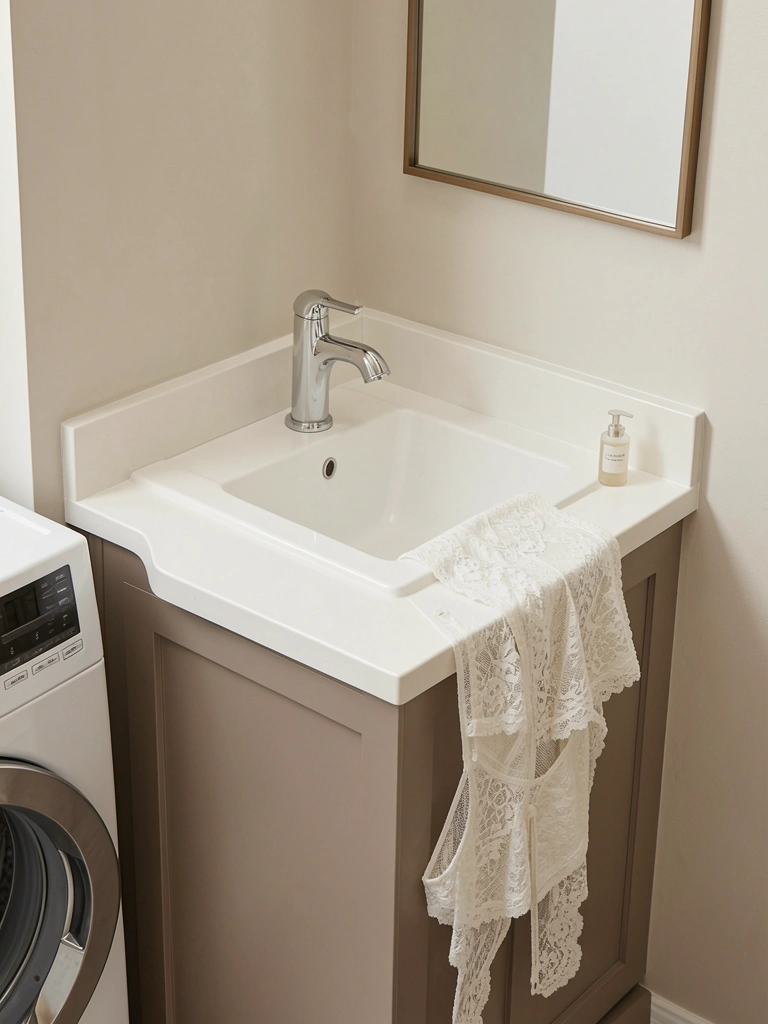
If you regularly hand-wash delicates, a smaller secondary sink means you’re not using up your entire main sink for a single item.
Install a compact bar sink ($100-$200) if you have the wall space, or go ultra-minimal with a wall-mounted fold-down sink ($80-$150). These take up barely any room but provide dedicated space for careful washing. Installation is about one afternoon if there’s existing plumbing nearby, or a full day if you need new hookups.
This indulgence might seem over-the-top until you own delicate items you’re nervous about washing. Suddenly you have a safe, dedicated spot without guilt.
11. Install a Faucet with Touchless Technology
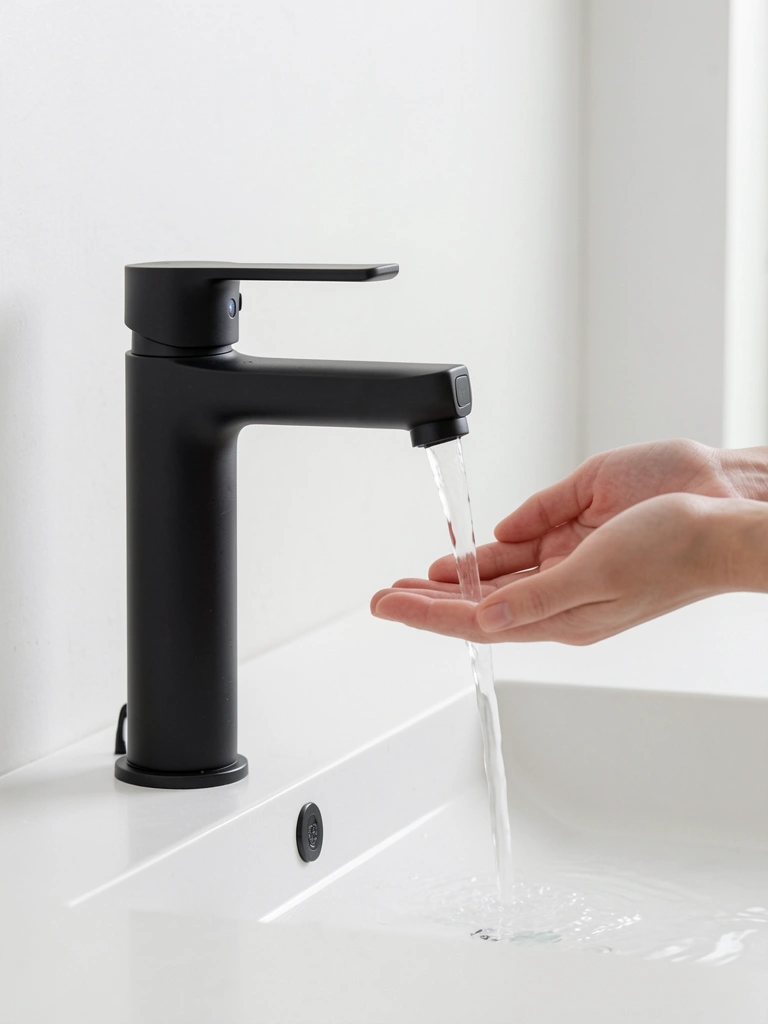
Touchless faucets are practical beyond hygiene—they’re great when your hands are full of wet fabric or dirty with stain treatments.
Upgrade to a motion-sensor faucet ($150-$300) designed for kitchen or utility sinks. Brands like Moen MotionSense or Delta Touch2O are reliable options. Installation is similar to a standard faucet swap—30-45 minutes DIY or hire help. Battery replacements run about $10-$20 every 2-3 years.
The convenience factor is real. You’ll love not having to fiddle with handles when your hands are covered in detergent or holding a soaking garment.
12. Create a Folding Counter Next to Your Sink
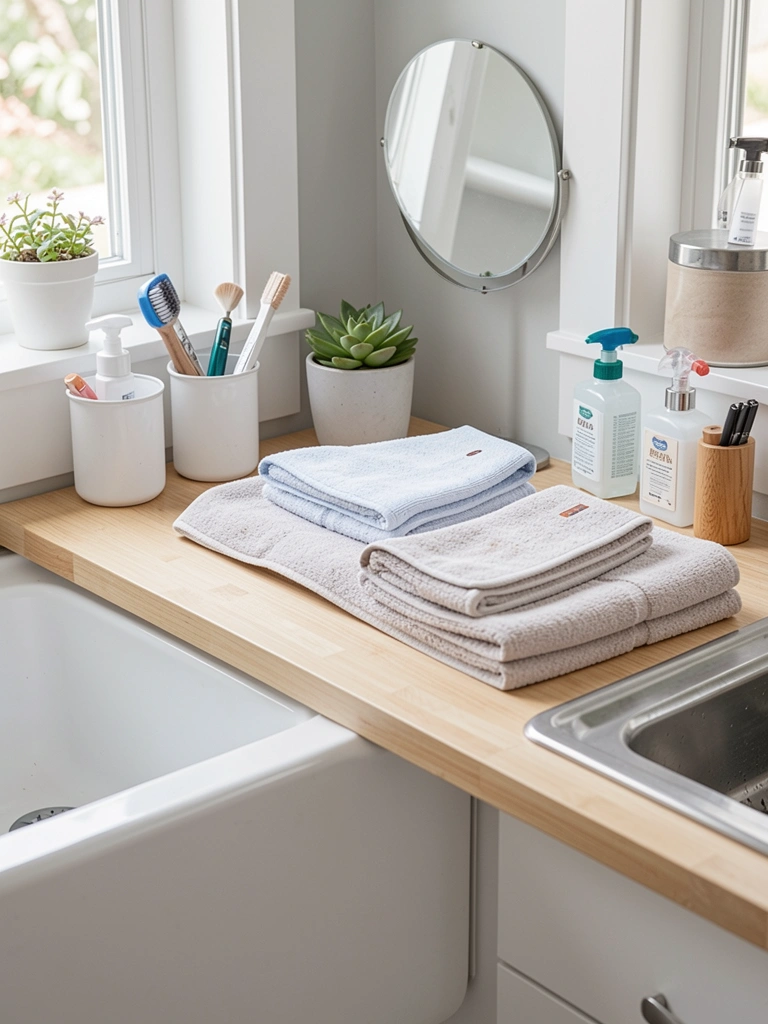
Positioning a folding surface right next to your sink keeps your workflow compact and prevents you from ferrying damp items around.
Build or install a simple counter extension ($100-$300 for materials or $200-$500 installed). Standard depth is 24-30 inches. Use plywood or butcher block for a budget option, or choose a finished laminate surface. This takes one weekend as a DIY build or hire a handyman for $150-$300 labor.
Once you have this, you’ll realize how many extra steps you were taking before. Wash, wring, fold—all in one compact area.
13. Pair Your Sink with a Drying Rack on the Wall
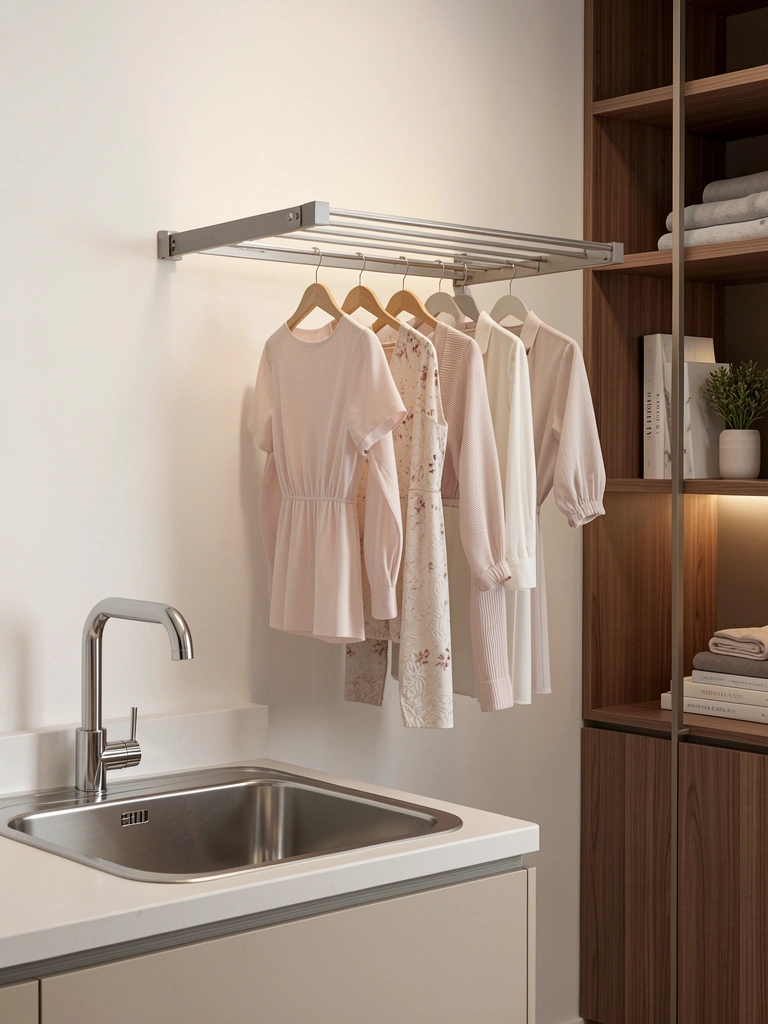
A drying rack right next to your sink means delicates go straight from wash to dry in one motion.
Install a wall-mounted wooden drying rack ($60-$150) or a pull-out accordion-style option ($80-$180 from brands like Yamazaki). Mount it 12-18 inches from your sink if possible. Installation takes 30 minutes with basic tools. For renters, look for over-the-door options ($30-$60) as an alternative.
This small addition saves so much time and gives your delicate items a proper place rather than draped over cabinets or radiators.
14. Use Baskets Under the Sink to Organize Supplies
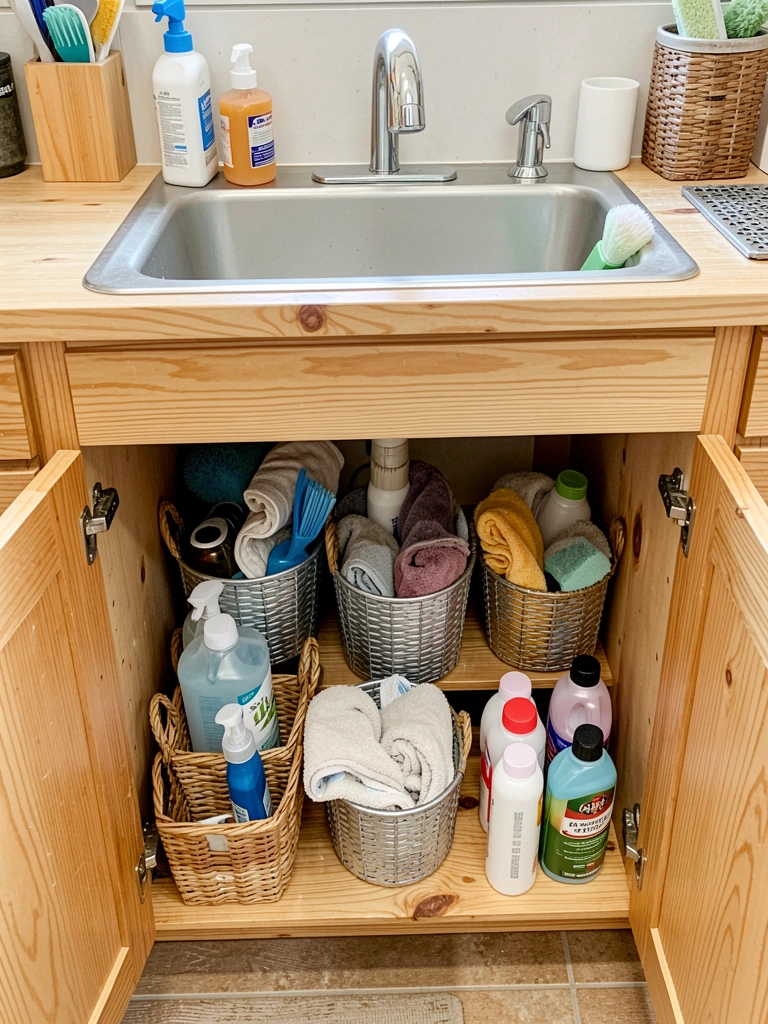
That open space under your sink is prime real estate for hidden storage that keeps everything functional and out of sight.
Grab 2-3 baskets ($20-$60 total from Target, IKEA, or Amazon) that fit your undersink space. Label them clearly: “Stain Treatments,” “Rags,” “Overflow Supplies.” Use baskets in natural materials or matte colors for a cohesive look.
Spending 30 minutes organizing here pays dividends every time you use your sink. Everything has a home, and you’re not digging through piles of random items.
15. Paint Your Sink Surround a Bold Accent Color
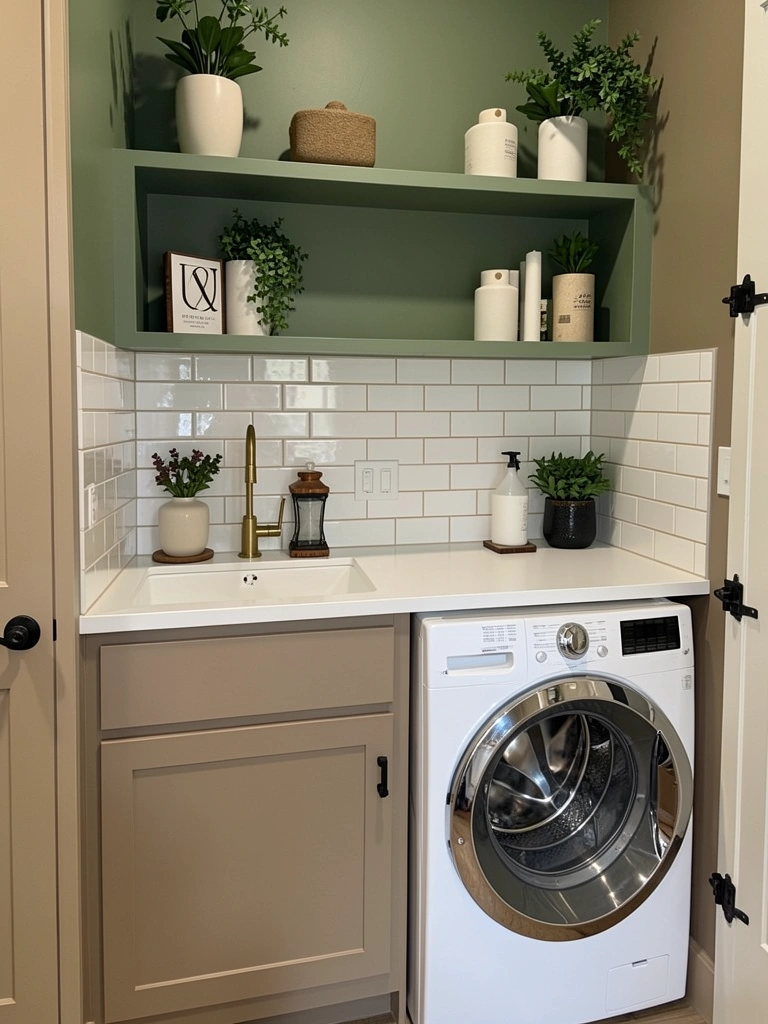
Most laundry sinks have boring white or neutral walls. An accent color makes your sink area a focal point instead of an afterthought.
Paint the wall directly above and around your sink in a bold but restful color—sage green, warm taupe, soft blue, or even navy ($15-$30 for paint). Use a semi-gloss or satin finish for moisture resistance. Two coats takes about 3-4 hours, and the impact is immediate.
If you’re renting, use peel-and-stick wallpaper ($30-$50) in a pattern or solid color as a temporary solution. Your sink suddenly becomes an intentional design feature instead of just functional.
16. Mount Hooks on Either Side of Your Sink for Towels
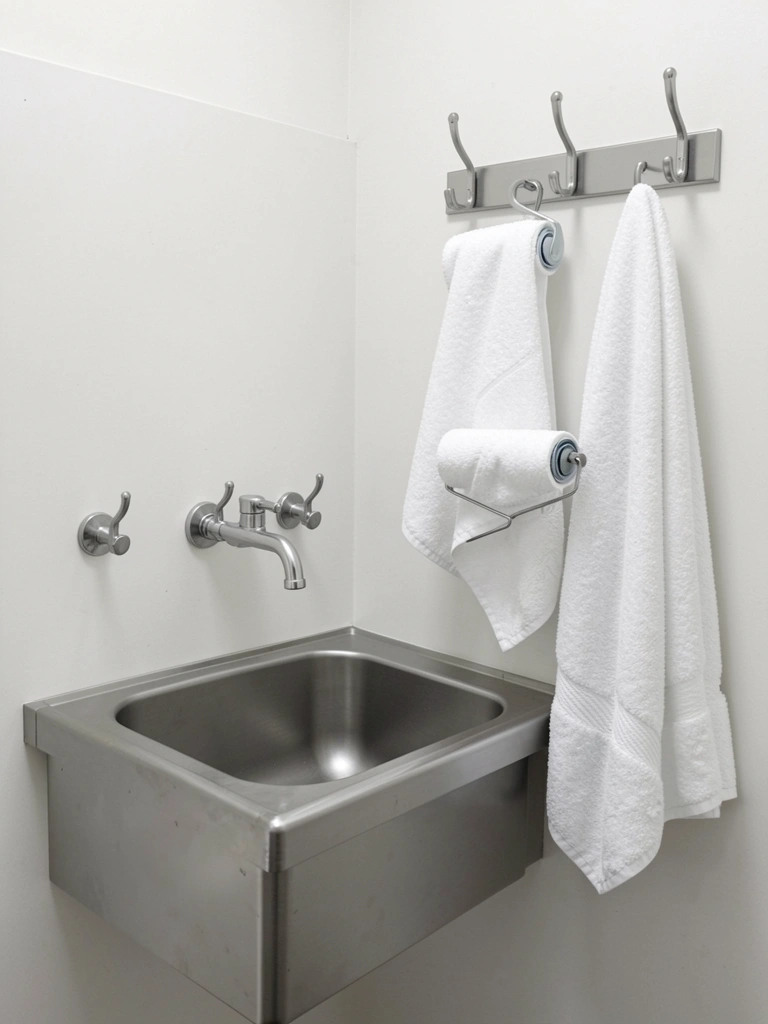
Dedicated hooks keep hand towels and frequently-used tools within arm’s reach without taking up counter space.
Install 2-4 sturdy hooks ($5-$15 each at Home Depot) on the wall beside your sink at comfortable arm height. Choose finishes that match your faucet—matte black, brushed nickel, or brass. Use wall anchors if you’re into studs, and installation takes 15 minutes.
Hang your best hand towels here (preferably ones you like looking at) along with a lint roller, small spray bottle, or microfiber cloth. You’ll reach for them constantly, and they’re always clean and accessible.
17. Add a Backsplash Behind Your Sink for Easy Cleanup
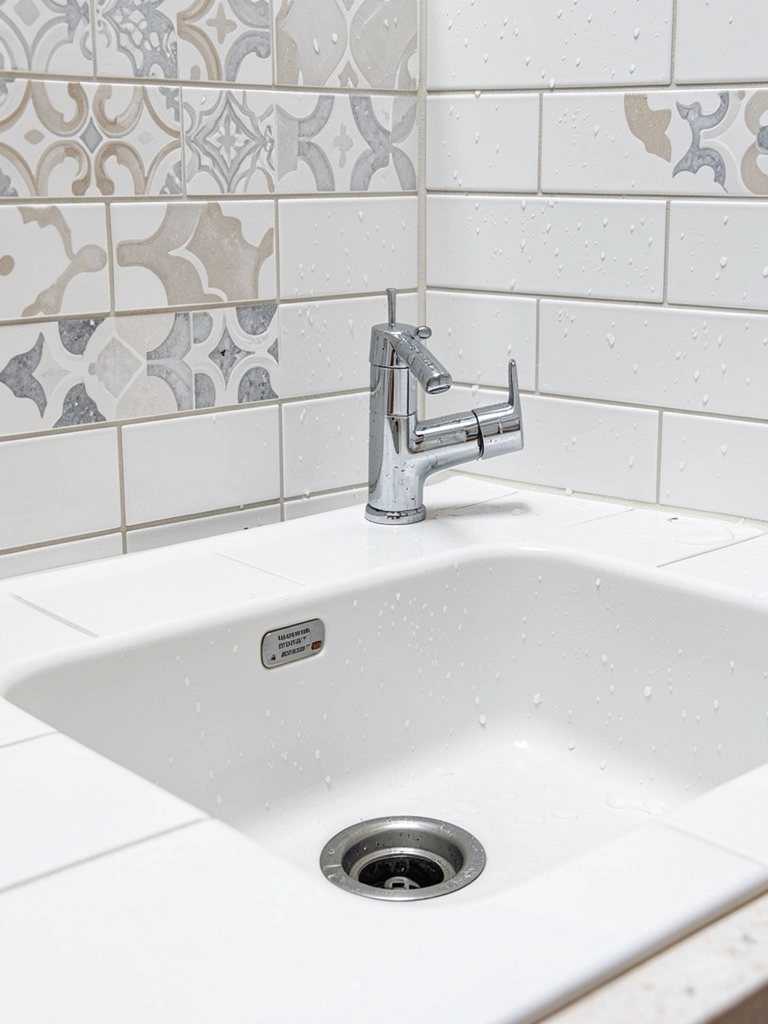
A backsplash protects your wall from water splashes and makes cleanup infinitely easier. Plus, it looks intentional and finished.
Install subway tile ($1-$3 per tile plus grout, roughly $100-$250 total) or go quicker with peel-and-stick backsplash tiles ($30-$80 for a small area). Peel-and-stick takes one hour and requires zero grout; traditional tile takes one weekend and might require a professional ($150-$300 installation).
The wall behind your sink stays clean and splashless. Even with frequent use, you’re just wiping down tile instead of worrying about water damage.
18. Choose a Sink Height That Matches Your Frame
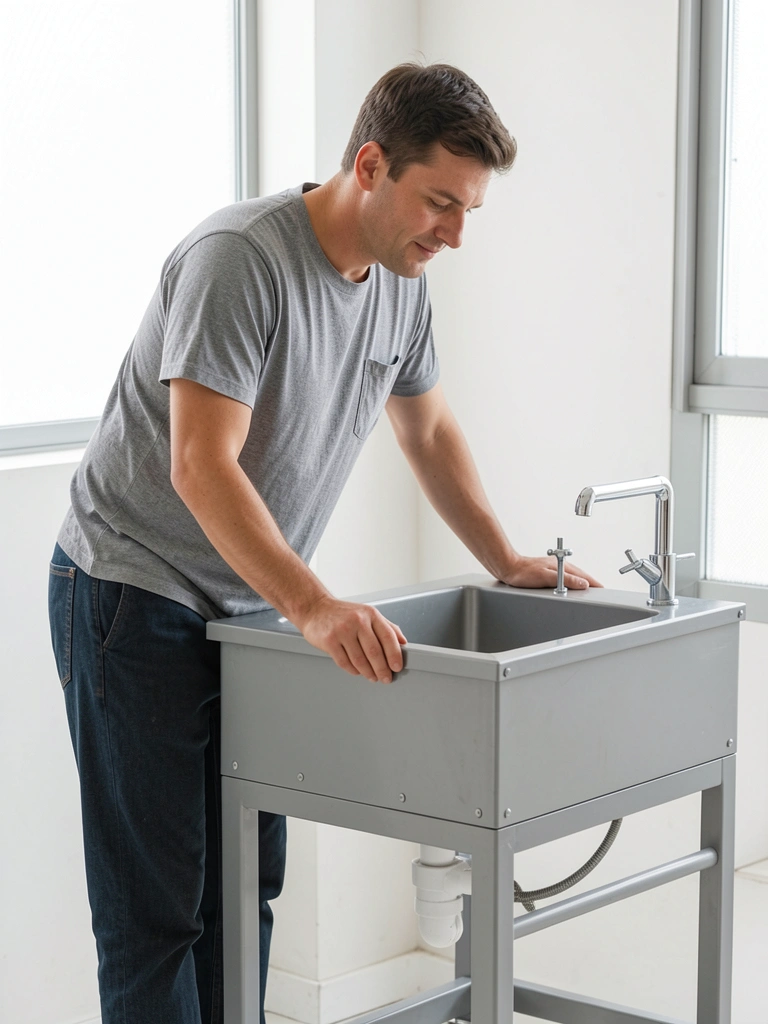
A sink that’s too low or too high turns hand-washing into a frustrating slouch or painful reach.
Standard sink heights are 30-36 inches from floor to rim. If you’re on the taller or shorter side, adjust slightly when installing. A new sink installed at the right height costs the same as one installed incorrectly, so ask your plumber about this.
Spend five minutes thinking about your actual posture before installation. The comfort difference over months of use is huge, and you’ll reduce strain on your back.
19. Install a Utility Sink with a Sloped Bottom for Drainage
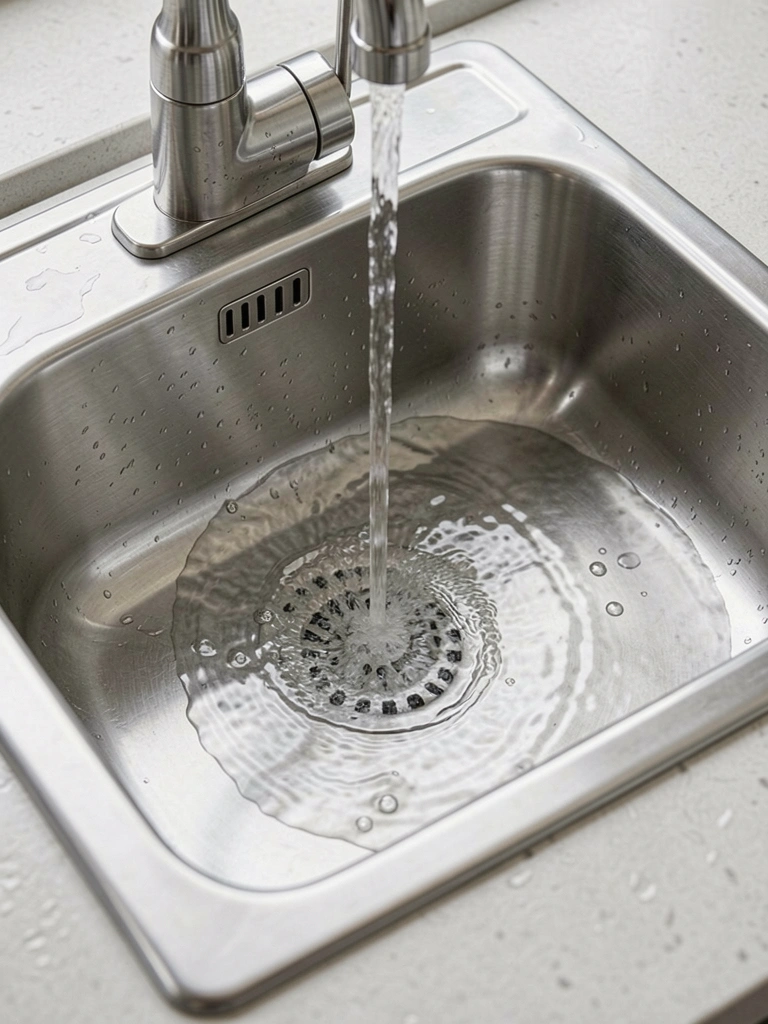
A sink with a gentle slope to the drain prevents standing water and keeps things looking fresh, not stagnant.
Most modern sinks have this feature built in, but if you’re replacing an older model, confirm the drain slope when ordering. It’s a small detail that prevents stagnant water issues and makes the sink easier to dry completely.
This is something to verify rather than an action item, but it’s a often-overlooked feature that makes daily use more pleasant.
20. Create a Wet Bag Station Beside Your Sink
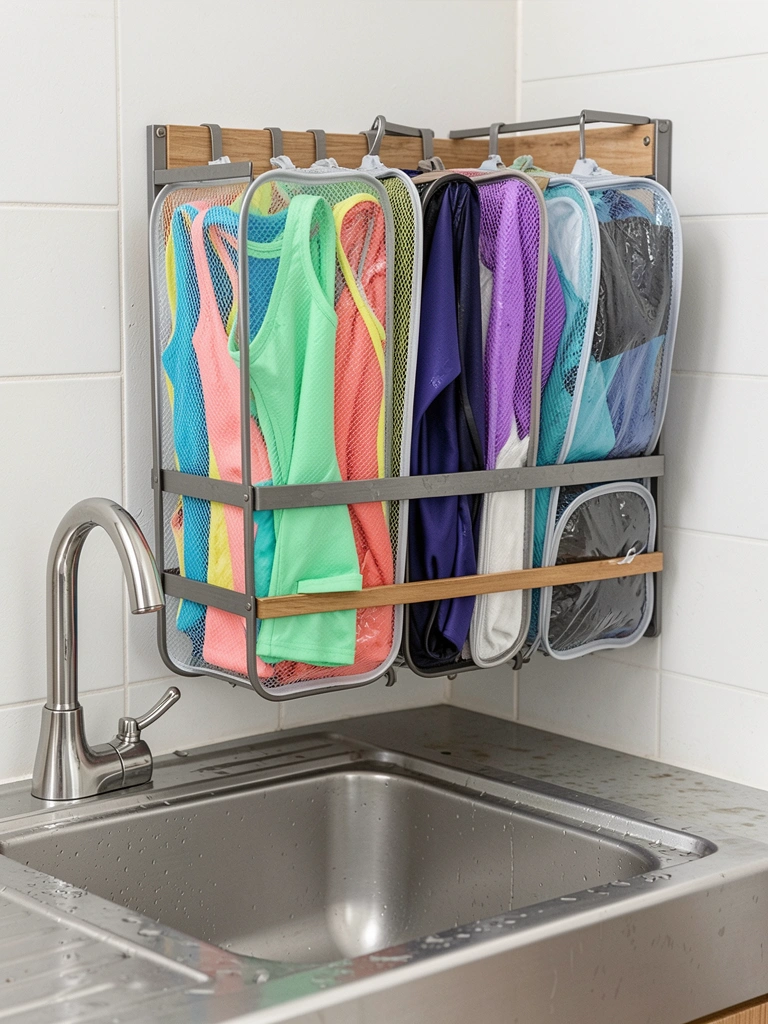
Wet items need a designated holding spot separate from your regular laundry to prevent spreading moisture around. A compact wet bag station next to your sink keeps things contained.
Install a shallow wall organizer ($30-$60) or mount 2-3 hooks ($5-$15) beside your sink for hanging mesh wet bags ($10-$25 each). Label bags by category: “Delicates,” “Activewear,” “Swimsuits.”
This takes about one hour to set up and is especially useful if you have kids with sports gear or if you frequently hand-wash items. Everything has a containment zone instead of dripping on your floor.
21. Add a Mirror Above Your Sink for Styling Purposes

A mirror makes your laundry space feel bigger, brighter, and more finished—plus, it’s practical for seeing stains or checking yourself after handling dirt.
Mount a simple framed mirror ($20-$80 depending on size and frame) above your sink. Styles like brass-framed, black metal, or simple wood all work beautifully in laundry spaces. Installation takes 15-30 minutes with wall anchors.
The psychological boost of a mirror makes the space feel intentional, not just utilitarian. It reflects light around the room and adds visual interest at zero ongoing cost.
22. Use a Pull-Out Faucet Sprayer with Flexible Hose
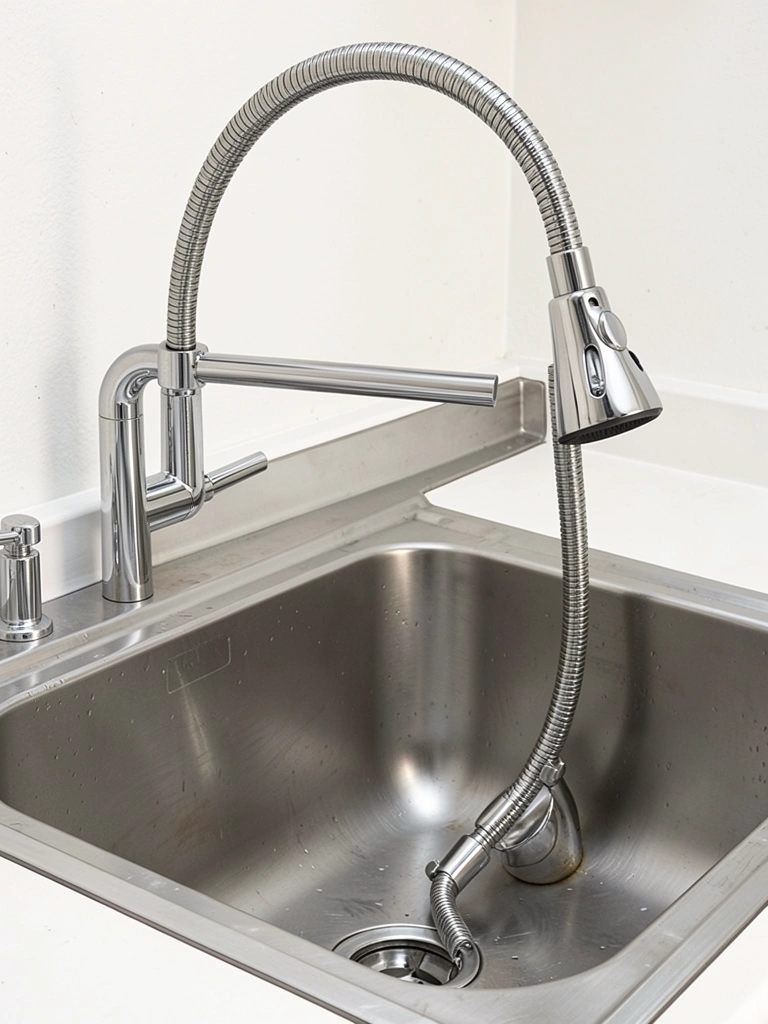
A flexible hose extends your reach, letting you fill large buckets, clean awkward corners, or rinse large items without maneuvering them around.
Upgrade to a pull-out or pull-down faucet ($100-$200) with a flexible hose. Brands like Kohler Simplice or Moen Align offer smooth, reliable operation. Installation is straightforward if you’re replacing a sink faucet—30-45 minutes or hire help for $50-$100.
You’ll wonder how you managed without this tiny convenience. The extra reach handles probably 20% more of your laundry tasks without extra frustration.
23. Frame Your Sink Area with Open Shelving for Display
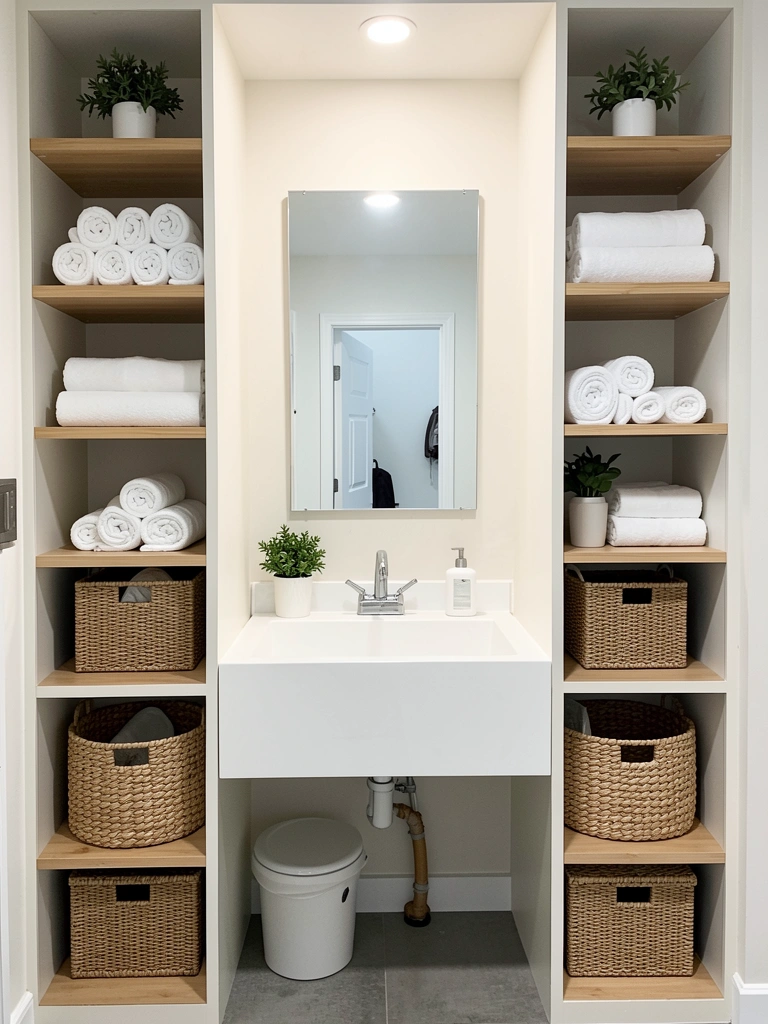
Flanking your sink with shelving creates a designed look rather than a random corner, and it provides practical storage while looking beautiful.
Install two matching shelving units ($100-$300 total) on either side of your sink using brackets and boards or pre-made units from IKEA or Home Depot. Keep styling minimal: rolled linens, woven baskets, and one or two small plants.
This setup takes one weekend and makes your laundry room look like you actually designed it rather than just functional. The balance is visually calming and keeps supplies organized.
24. Finish with a Moisture-Resistant Paint or Sealant
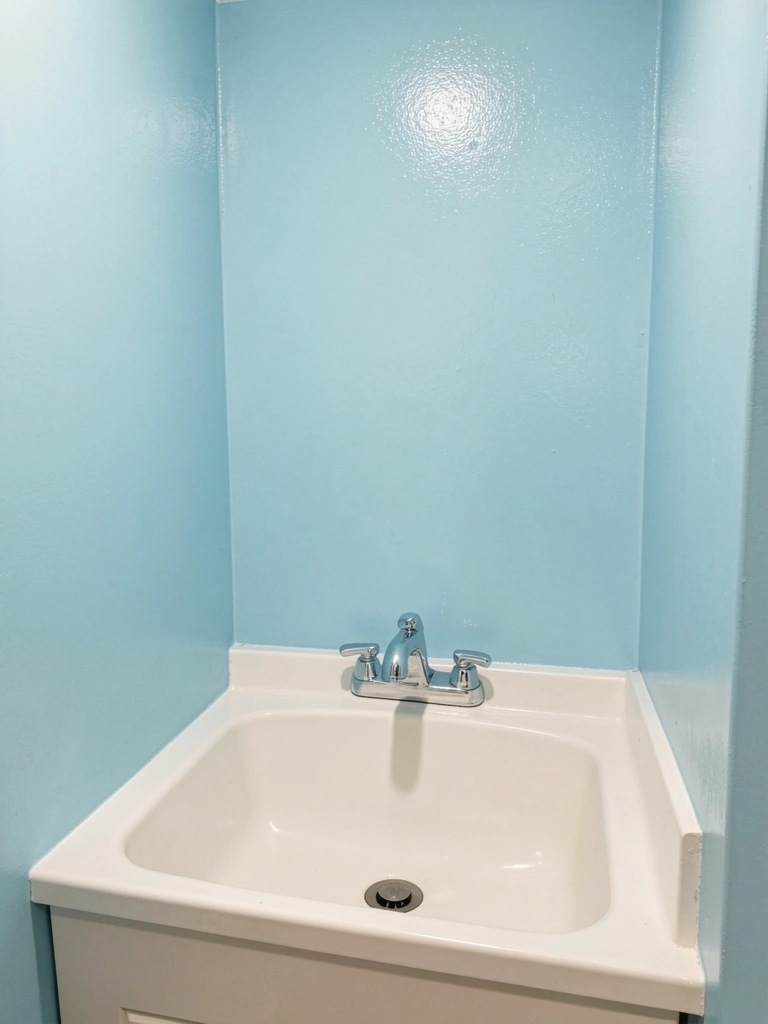
The walls around your sink take moisture and splashing constantly. Regular paint deteriorates quickly; moisture-resistant paint lasts years longer.
Use a semi-gloss or satin mildew-resistant paint ($20-$40 per gallon) instead of flat paint. Brands like Benjamin Moore Aura Bath & Spa or Sherwin-Williams ProClassic are specifically formulated for wet areas. Two coats takes 4-6 hours, and the difference in longevity is substantial.
Your walls stay fresh and paint-perfect for years instead of developing water stains or peeling. It’s a small upfront investment that saves headaches.
Save this post for your next laundry room refresh. Pick one idea this weekend—whether it’s adding hooks, installing a backsplash, or just upgrading your faucet—and watch how one small change makes the space feel completely different.
Leave a Reply