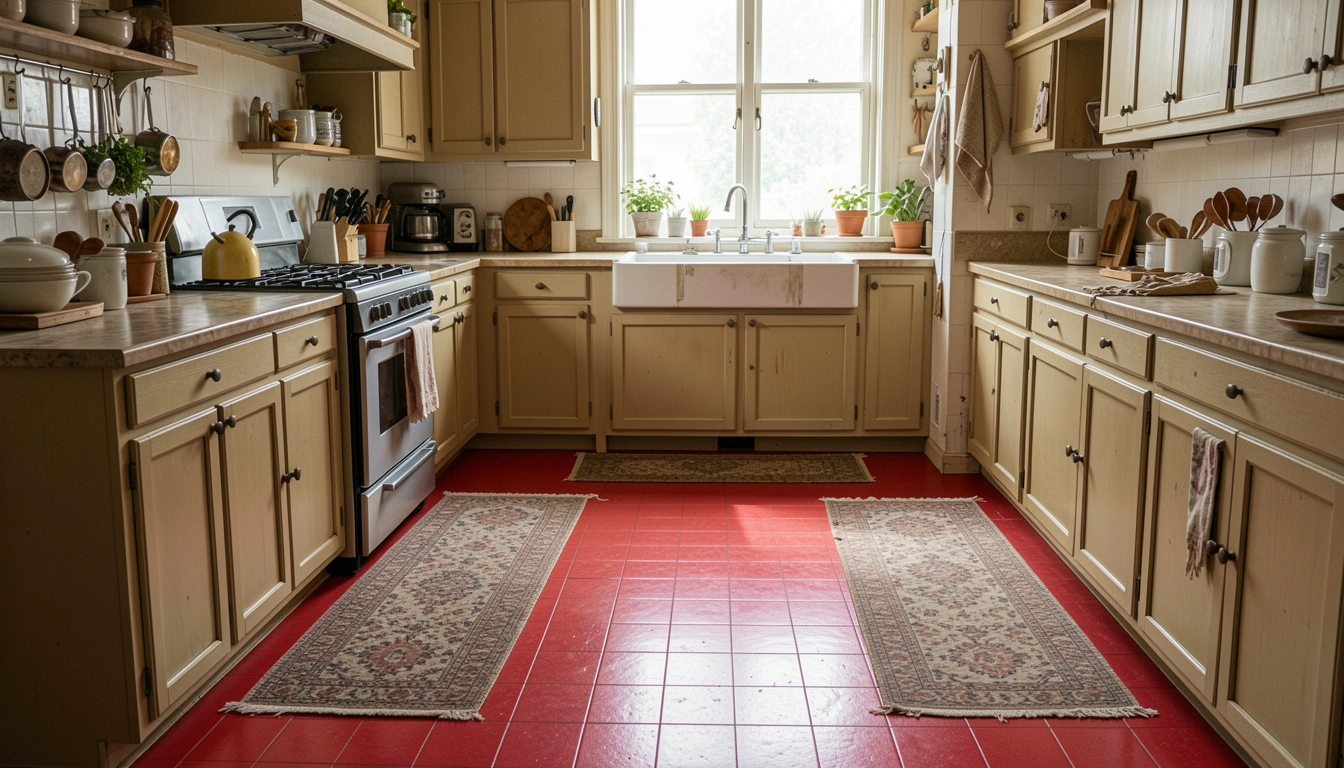
I stared at my red kitchen floor one morning. The bold color clashed with the cabinets. It felt heavy, not welcoming. Meals there lost their ease.
I'd tried ignoring it. Then small changes. The floor stayed, but the room shifted.
You can do this too. It starts with balance.
How to Decor Red Kitchen Floor
This shows you how to balance a red kitchen floor so the space feels grounded and comfortable. You'll end up with a kitchen that pulls you in for coffee or dinner. It's simple changes I made in mine.
What You’ll Need
- 8×10 neutral jute area rug
- Black and white woven kitchen mat 3×5
- Set of 4 wooden counter stools with black seats
- White ceramic plant pots set of 3
- Beige linen curtains 84-inch panels
- Brass floor lamp with linen shade
- Woven wall baskets set of 3
- Neutral throw pillows 18-inch set
Step 1: Layer a Neutral Rug Over the Red

I unrolled the jute rug first. It covers most of the red floor. The neutral tone pulls the eye up, away from the bold base.
Visually, the room calms. Red peeks out at edges, adding warmth without dominating. It grounds the space.
People miss how rug edges frame the floor. Let some red show—full coverage feels flat. Avoid centering it perfectly; slight off-set looks lived-in.
I step back often. Feet sink in comfortably now.
Step 2: Anchor with Contrasting Mats
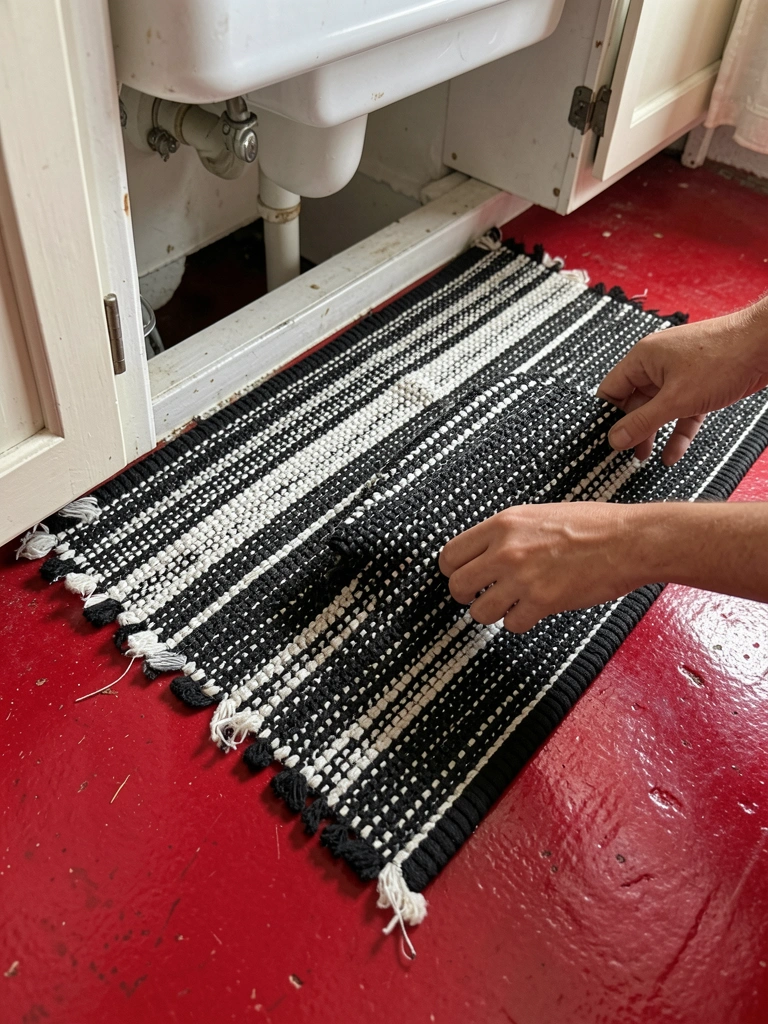
Next, I added woven mats near the sink and stove. Black and white patterns echo the rug but add crisp lines against the red.
The floor gains definition. Paths feel clear, easier to move. Red softens under the pattern play.
Insight: Mats break up red's intensity where you stand most. Skip matching colors—contrast settles it. Don't overlap rugs; it muddies flow.
My mornings feel steadier here.
Step 3: Position Furniture for Balance
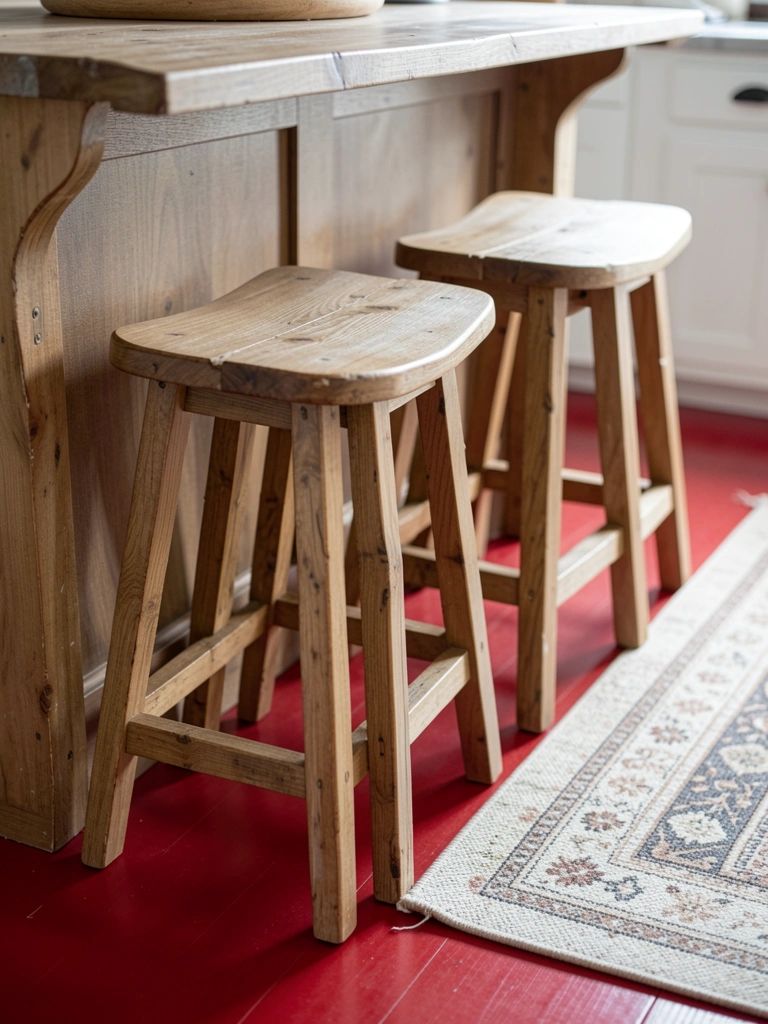
I pulled in wooden stools to the island. Their warm legs echo the rug, legs straddle red edges.
Balance hits: furniture weighs down the bold floor. Space flows better for cooking.
Missed often: stools lift the floor visually. Space them unevenly for comfort. Avoid pushing tight to walls— it cramps.
Now, pulling up a stool feels right.
Step 4: Add Grounded Accessories
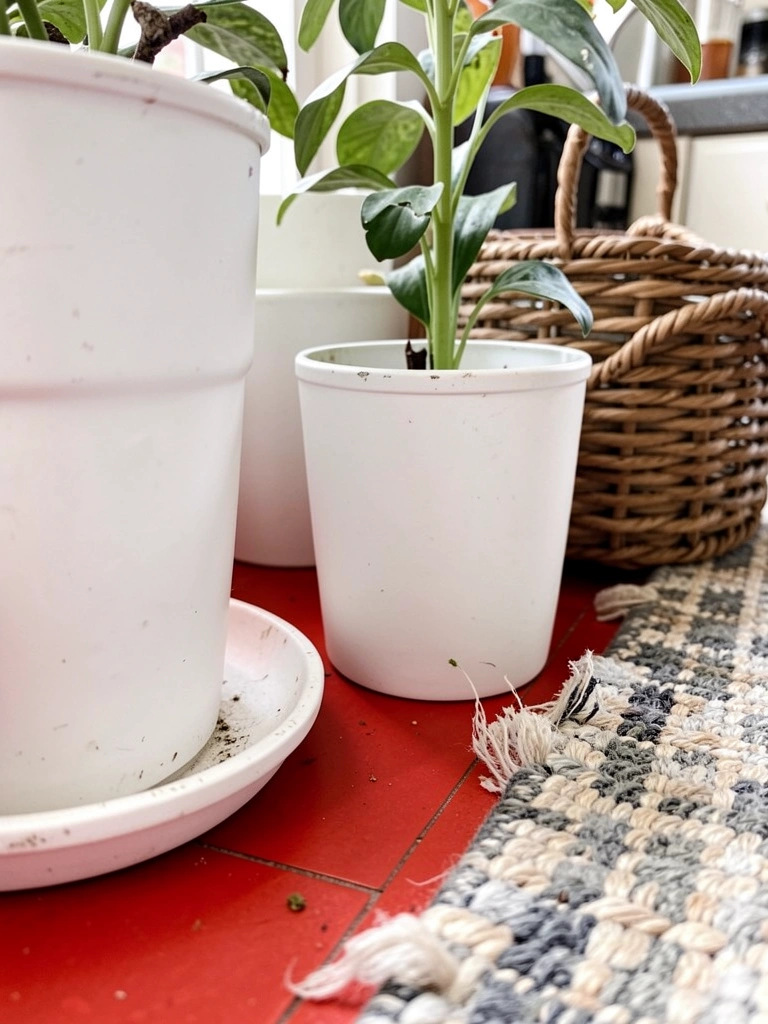
Potted plants and baskets go floor-level next. White pots hold herbs; baskets store odds.
Textures layer: soft greens mute red's punch. Room breathes easier.
Key insight: Low accessories tie floor to counters. Cluster loosely. Don't line up—scattered feels homey.
Red floor supports it all now.
Step 5: Soften with Overhead Layers

Curtains and lamp finish it. Beige linen drapes windows; brass lamp corners the space.
Light warms red without glare. Shadows add depth.
People overlook overhead pull. Drape curtains low. Avoid bright bulbs—warm glow balances.
Kitchen invites lingering.
Balancing Red with Walls
Walls can fight a red floor. I painted mine soft beige. It lifts without clashing.
- Add woven baskets high up. They echo floor textures.
- Hang neutral art. Keeps eyes moving.
Now, walls frame the floor comfortably.
Everyday Flow in a Red Kitchen
Red holds heat visually. Rugs and mats make standing easy.
I wipe them weekly. Stools scoot smoothly.
- Test paths daily. Adjust rugs if needed.
- Plants thrive here—red reflects light.
Use feels natural.
Quick Updates for Seasons
Red stays bold year-round. Swap pillows or plants.
Fall: Add earth tones. Winter: Cozy neutrals.
One tweak refreshes. Floor anchors it all.
Final Thoughts
Start with the rug. See how it quiets the red. Build from there.
Your kitchen will settle into place. It's yours, comfortable.
One room at a time works.
Leave a Reply