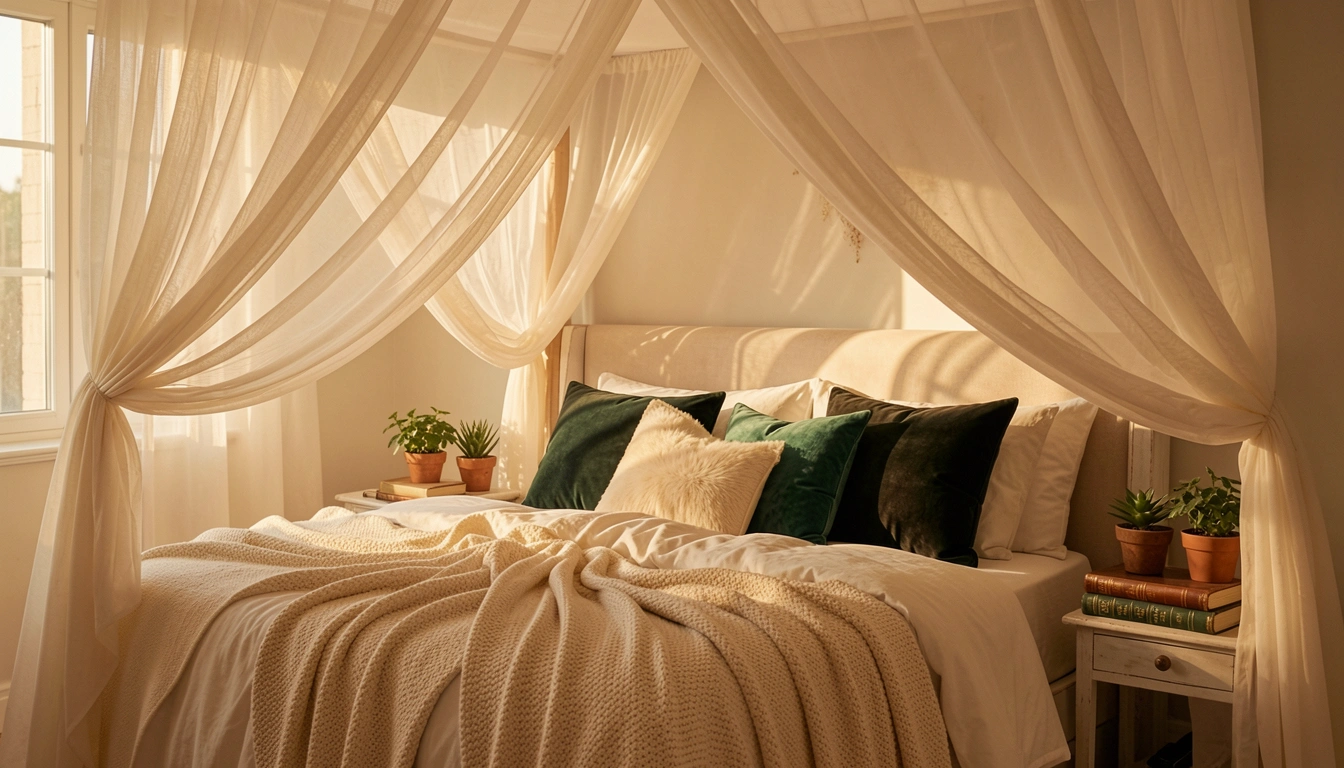
There’s something undeniably magical about a canopy bed—it instantly transforms a bedroom into a personal retreat that feels both elegant and cozy. Whether you’re working with a dramatic four-poster frame or a minimalist modern design, a canopy can anchor your entire room’s aesthetic and create the sanctuary you’ve always wanted. The beauty is that you don’t need a huge budget or design experience to make it work. From flowing fabrics and mood lighting to unexpected color choices and layered textures, there are countless ways to style a canopy that feels uniquely yours. In this guide, you’ll discover 26 distinct ideas to elevate your canopy bed—including free styling hacks, budget-friendly upgrades, and investment pieces that’ll last for years. Whether you’re a renter or homeowner, beginner or seasoned decorator, you’ll find options that fit your space, style, and wallet.
1. Layer Sheer Curtains for Dreamy Softness
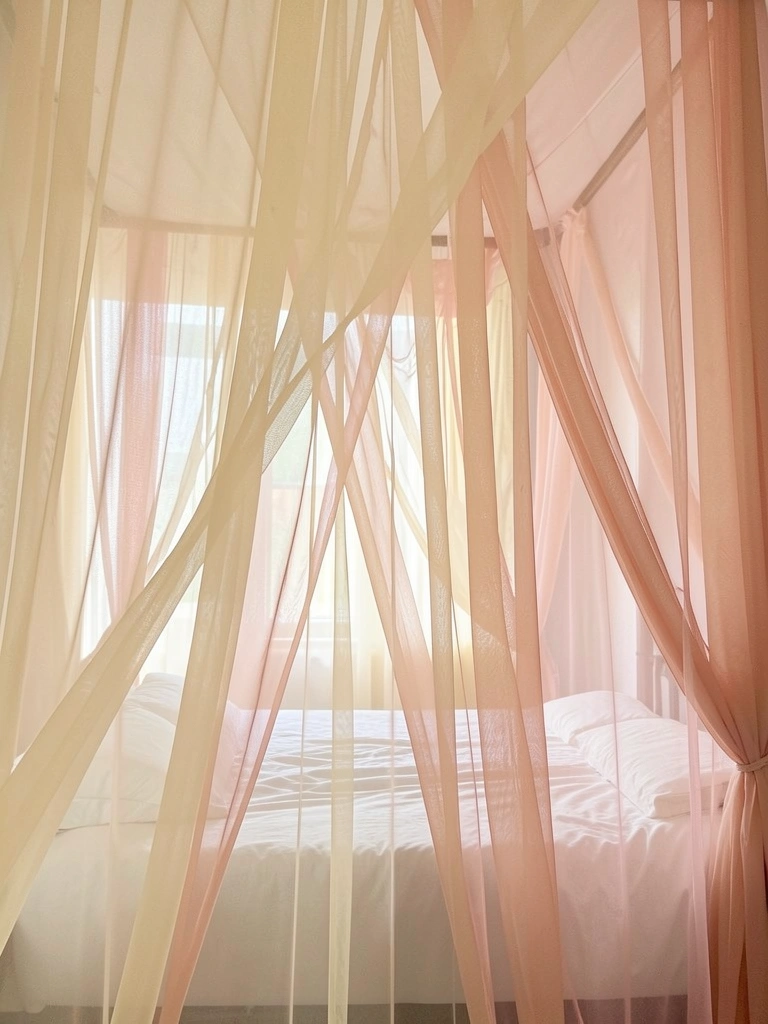
Layering sheer curtains creates depth and an ethereal quality that makes your canopy feel like it belongs in a luxury hotel. This approach uses volume and translucence instead of heavy fabric, which keeps the space feeling open and airy while still delivering that wrapped-in-luxury sensation.
Start by hanging a base layer of lightweight curtains from your canopy frame using tension rods or curtain rings (avoid attaching directly to wood if you’re renting). Add a second layer in a complementary neutral shade, slightly offset for visual interest. The total cost runs $40–$150 depending on fabric quality, and you can find affordable sheer panels at Target, IKEA, or Amazon. Installation takes about 30 minutes with basic supplies. The layered effect softens hard lines and bounces light beautifully, especially if your bedroom gets morning sun.
Pro tip: Use different fabric weights—a crisp linen layer paired with a gauzy voile creates unexpected textural contrast that photographs beautifully.
This layering approach gives you flexibility to adjust privacy while maintaining that dreamy, open-concept feel that makes your bedroom feel bigger than it is.
2. Paint Walls a Rich Earth Tone Behind the Frame

Choosing a statement wall color directly behind your canopy creates instant architectural impact without overwhelming the entire room. Rich earth tones—terracotta, warm taupe, muted olive, or deep clay—ground a canopy and make it feel intentional rather than just furniture.
Pick one wall directly behind your bed and commit. Paint costs $20–$60 depending on whether you DIY (rent a paint sprayer for $30 from Home Depot) or hire help. If you’re renting, peel-and-stick wallpaper in earth tones works equally well for $25–$80. Application takes 2–4 hours for a single wall. The color acts as a backdrop that makes your bed a focal point while complementing natural textiles and wood tones.
Budget hack: Test the color first with large paint chips taped to the wall for 3 days; lighting changes how it’ll look before you commit.
A rich backdrop transforms your canopy from bedroom furniture into a design anchor, making the entire room feel more curated and intentional.
3. Add Floating Shelves Inside the Canopy Frame
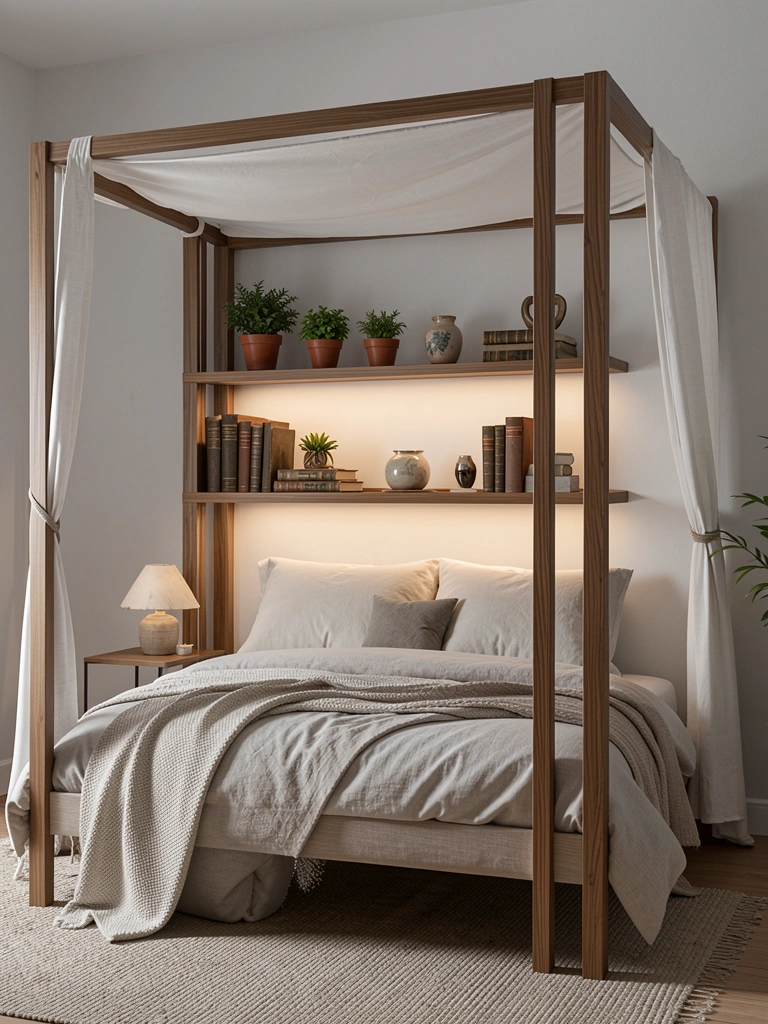
Converting your canopy’s interior space into functional floating shelves combines storage with style and creates a bookshelf-meets-bed vibe that’s both practical and Instagram-worthy. This works best with modern or minimalist canopy frames where you can mount shelves to existing posts or frame supports.
Measure the interior dimensions of your canopy, then purchase slim floating shelves (6–12 inches deep) from IKEA, Wayfair, or Home Depot. Cost: $60–$200 for a set of 3–4 shelves plus mounting hardware. Installation requires a drill and level, taking about 1.5 hours; hire a handyperson for $50–$100 if you prefer. Fill shelves with small plants, meaningful books, vintage finds, and mood lighting to create a personal gallery above your bed.
Pro tip: Alternate the height of items (tall plant, flat book, small object, candle) to avoid a cluttered look.
You’ll gain storage space while creating a cocoon effect that makes bedtime feel like entering a cozy library.
4. String Café Lights Along the Canopy Frame

Café lights (bistro string lights) instantly add warmth and a romantic ambiance without requiring a redesign. They’re one of the quickest, cheapest ways to make a canopy feel magical and work with nearly any bedroom style.
Drape warm white café lights (avoid cool white) along your canopy’s top frame and down the interior edges. String lights cost $20–$60 from Target, Amazon, or Home Depot. They’re renter-friendly if you use adhesive hooks or sticky clips instead of drilling. Hanging takes 15–20 minutes. Make sure you have a nearby outlet or use battery-operated lights ($30–$40) to avoid running extension cords. Adjust brightness settings to shift the mood from energizing to cozy.
Safety note: Check light specifications to ensure they don’t overheat fabric, and never leave them on unattended overnight.
The warm glow instantly transforms your bedroom into a cozy retreat that feels both intimate and sophisticated.
5. Mix Textured Throws and Layered Blankets
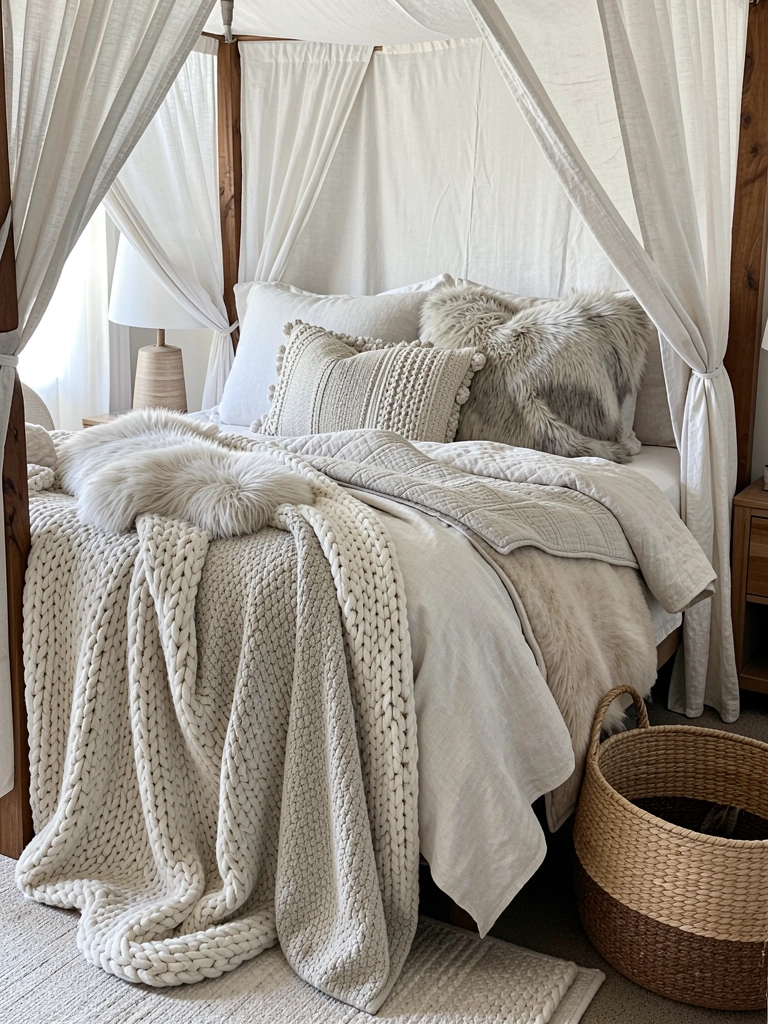
Layering throws with different textures creates visual interest while making your bed irresistibly touchable and cozy. This approach embraces the “grandmillennial” aesthetic of mixing handmade and vintage pieces with modern comfort.
Start with a neutral base layer (cotton or linen), then add 2–3 accent throws in contrasting textures: chunky knit, faux fur, quilted linen, or woven wool. Cost: $30–$150 depending on material quality; thrifted options at Goodwill, Facebook Marketplace, or estate sales cost $5–$30 each. Drape throws casually across the foot of the bed and one side, then tuck a pillow here and there for an effortlessly styled look. This takes 10 minutes to arrange and rearrange as you like.
Budget hack: Mix one luxury piece (like a wool throw from Woolroom, $80–$120) with affordable knits from Target to balance cost and quality.
The result is a bed that looks magazine-worthy while feeling deeply personal and inviting to curl up in.
6. Hang Macramé or Woven Tapestry from the Top
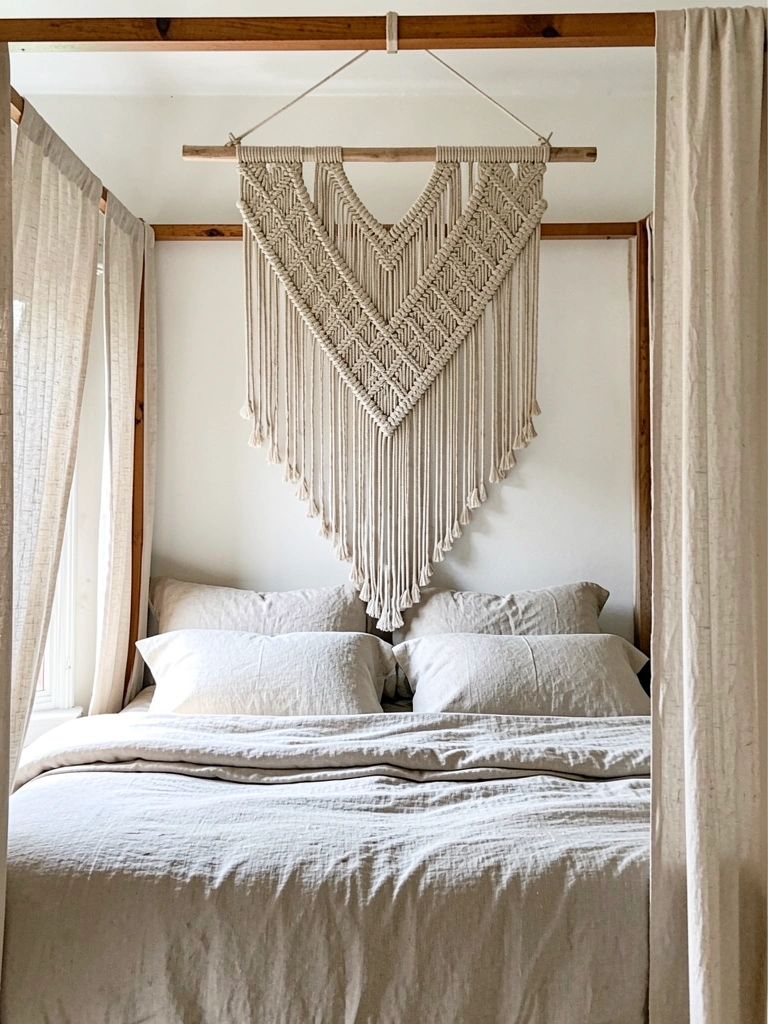
A macramé or woven tapestry hung from the center of your canopy frame adds bohemian elegance without requiring fabric draping. This approach works especially well if you prefer a cleaner, less-draped aesthetic while still maximizing visual impact.
Source a large macramé hanging or woven textile ($25–$100 from Urban Outfitters, Etsy, or World Market). Measure the center point of your canopy’s top frame and use a simple hook or loop attachment to suspend the piece. Installation takes 10 minutes. Ensure the hanging doesn’t block airflow or feel cramped; it should float about 12–18 inches below the frame. Layer minimal bedding beneath it to let the tapestry be the star.
Thrifty alternative: Vintage woven wall hangings from Facebook Marketplace or thrift stores often cost $10–$30 and carry more character than new pieces.
This single element transforms your canopy into a design-forward anchor that says you have a cohesive vision for your space.
7. Create a Tufted Canopy Headboard
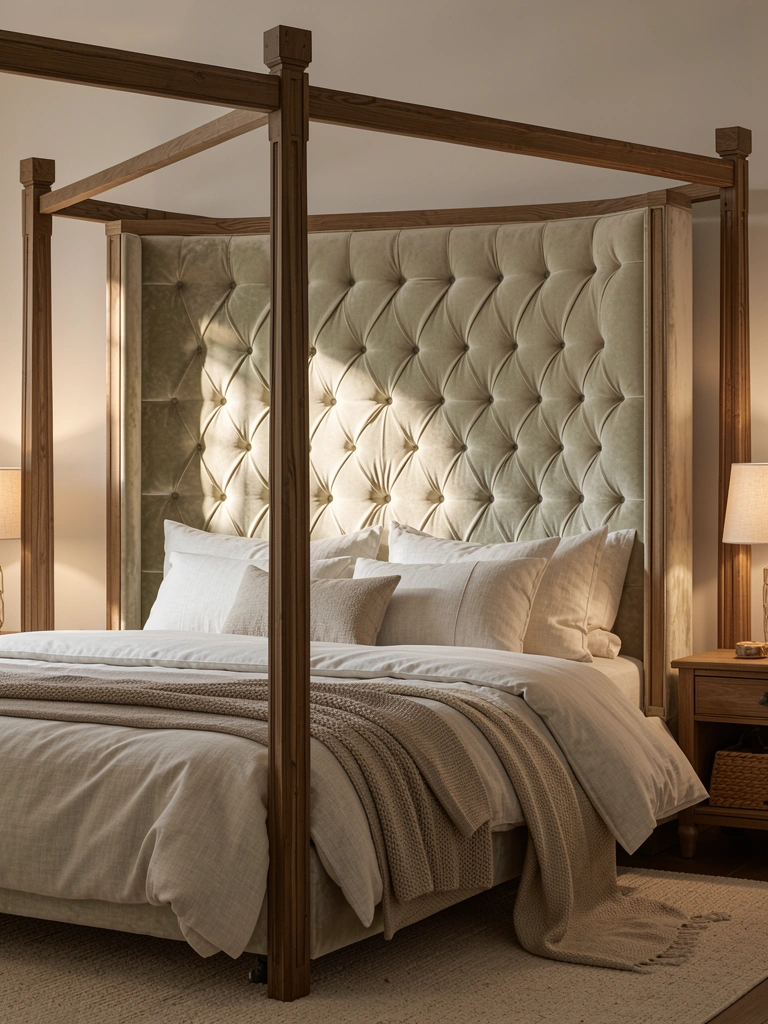
A tufted upholstered headboard built into or attached to your canopy frame elevates the entire structure from simple bed frame to statement furniture piece. The deep button detailing creates texture and luxury that instantly upgrades your bedroom’s aesthetic.
You can either commission a custom piece ($400–$1,200 from local upholsterers or Etsy makers) or purchase a pre-made tufted headboard from Wayfair, Article, or CB2 ($300–$600) and mount it to existing canopy posts. DIY option: cover plywood with upholstered fabric using a staple gun and add buttons yourself for $150–$300 in materials and 6–8 hours of work. Alternatively, hire an upholsterer to customize your existing headboard for $200–$500.
Budget-friendly: Use peel-and-stick wallpaper with a tufted pattern for $40–$80 on the back of an existing headboard for a tufted effect without the real craftsmanship cost.
A tufted backdrop instantly communicates that your bedroom is a priority and a place meant for rest and comfort.
8. Install Dimmer Switches for Mood Control
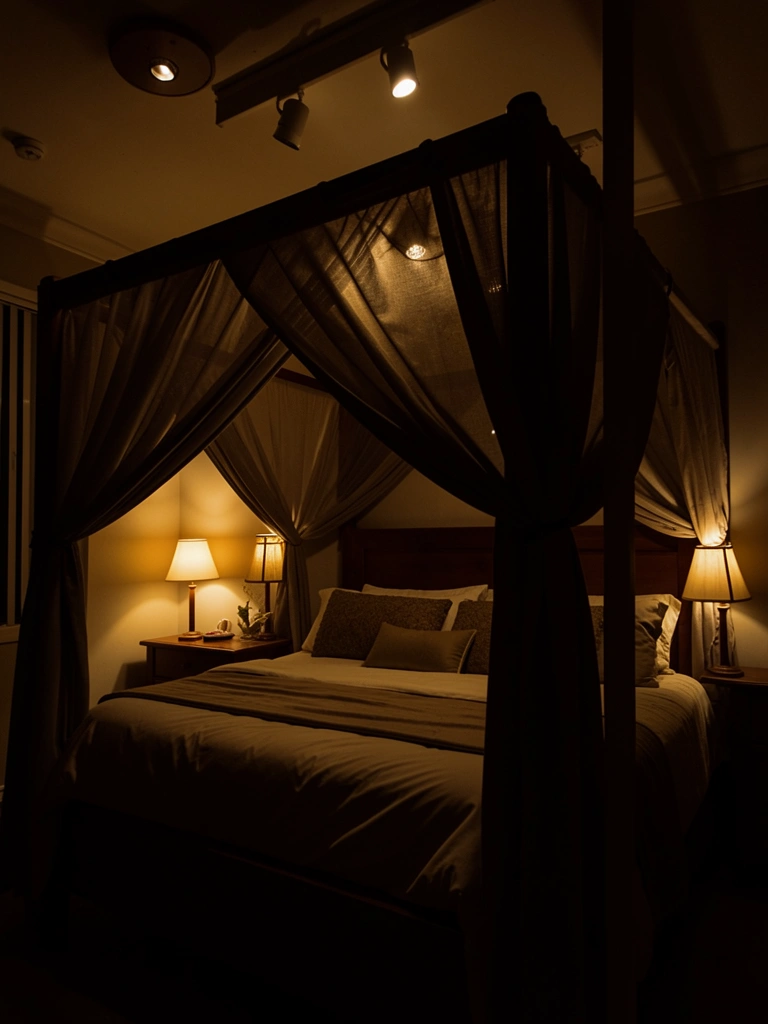
Dimmer switches are often overlooked but game-changing for creating a magical bedroom atmosphere. They let you adjust lighting from energizing morning brightness to intimate evening glow without changing bulbs or fixtures.
If your bedroom has a ceiling light controlled by a standard switch, install a dimmer switch for $15–$40 and about 30 minutes of work (or hire an electrician for $75–$150 if wiring intimidates you). Pair this with LED bulbs that are dimmable-compatible ($5–$15 each from Home Depot) for smooth adjustments. Renters can use plug-in dimmer adapters ($20–$30) for table lamps instead. Program dimmers to your preferred levels: 100% for cleaning/getting ready, 50% for working from bed, and 20% for winding down.
Tip: Amber or warm-white bulbs (2700K color temperature) feel more soothing than cool white when dimmed.
The ability to adjust light shifts your entire bedroom’s energy and makes it instantly feel more like a designed space rather than just a room.
9. Layer Organic Bedding Materials for Better Sleep
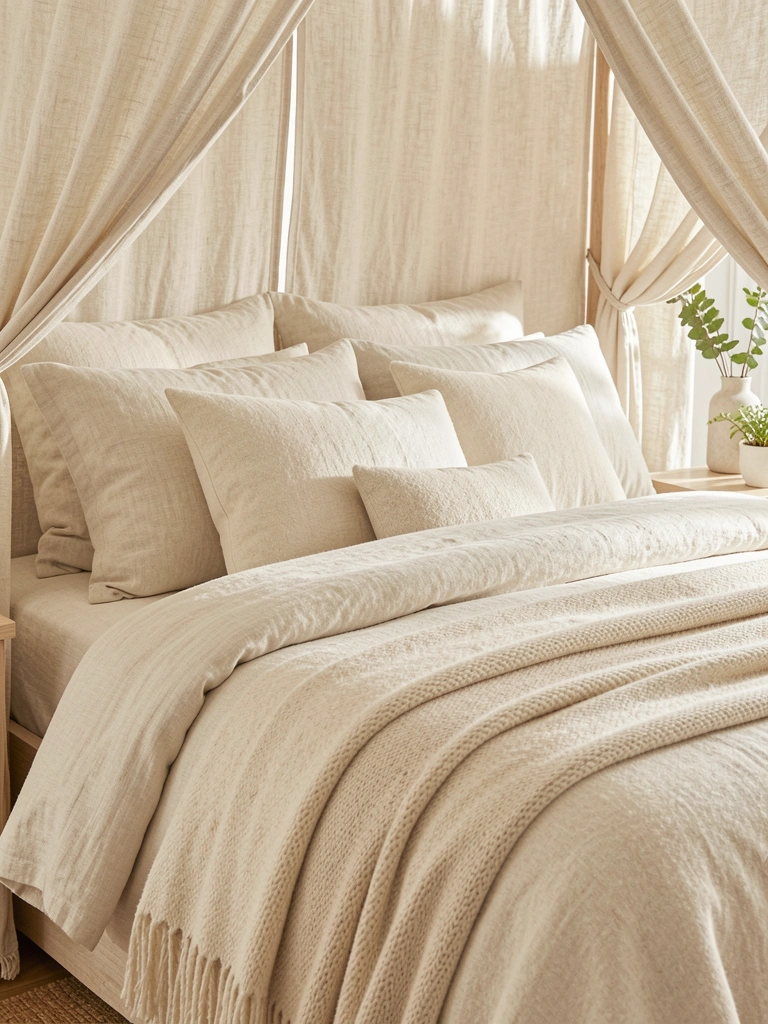
High-quality organic bedding isn’t just luxurious—it actually impacts sleep quality by regulating temperature and reducing skin irritation. Natural materials like linen, wool, and organic cotton breathe better than synthetic blends and develop a soft patina over time.
Invest in organic bedding gradually: start with sheets ($80–$150 for quality linen from Parachute, Brooklinen, or Woolroom), then add an organic cotton duvet cover ($100–$180), then upgrade to a wool blanket for layering ($120–$200). Thrifted vintage quilts and linen sheets ($10–$40 from estate sales) offer character while being budget-friendly. Wash bedding weekly to maintain softness; this entire setup takes time to acquire but lasts 5–10+ years.
Budget option: Start with one quality set of organic cotton sheets ($50–$80) and layer with affordable throws until you can add premium pieces.
Your bed becomes a wellness sanctuary that you’ll actually want to spend time in, and better sleep follows naturally.
10. Use a Canopy as a Statement Headboard Alternative
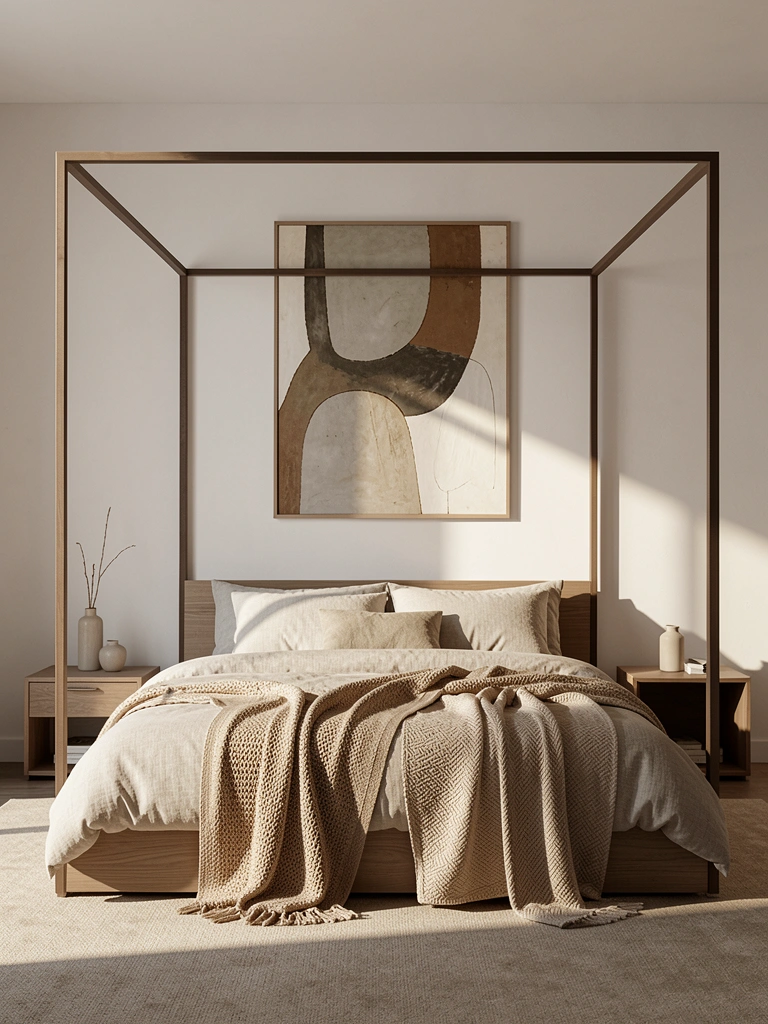
Sometimes the frame itself is the statement. A modern, unfitted canopy creates architectural interest and draws the eye without requiring heavy textile work. This approach suits minimalist, mid-century modern, or industrial aesthetics.
Choose a canopy frame in natural wood, black metal, or mixed materials from Article, CB2, IKEA, or West Elm ($400–$1,200). Leave it bare or add minimal accessories like small pendant lights at the corners. The frame acts as sculptural headboard alternative, perfect if you have high ceilings or want to showcase wall color or art. Setup takes a full day if assembling from scratch; professional assembly costs $100–$200.
Renter hack: Look for adjustable canopy frames that don’t require wall anchoring, using floor-to-frame tension instead.
A bare or minimally dressed canopy frame brings architectural sophistication without feeling overdone.
11. Add Pendant Lights at Canopy Corners

Hanging small pendant lights at each corner of your canopy creates functional ambient lighting while adding sculptural interest. This approach is both practical for reading and atmospheric for winding down.
Install small pendant lights or globe lights ($15–$40 each from IKEA, West Elm, or Etsy) at each canopy corner using simple hooks and chain. Wire them to a central dimmer or separate switch if possible, or use plug-in pendant lights ($25–$50 each) with cord covers for a cleaner look. Professional electrical installation runs $150–$300; DIY takes 2–4 hours if you’re comfortable with basic wiring. Total investment: $100–$300 for fixtures plus installation.
Budget option: Use clip-on reading lights ($10–$20 each) on canopy posts for a renter-friendly solution.
Corner lighting eliminates harsh overhead fixtures while making your canopy feel like a personal retreat with its own ambient atmosphere.
12. Drape Vintage Quilts as a Fabric Canopy
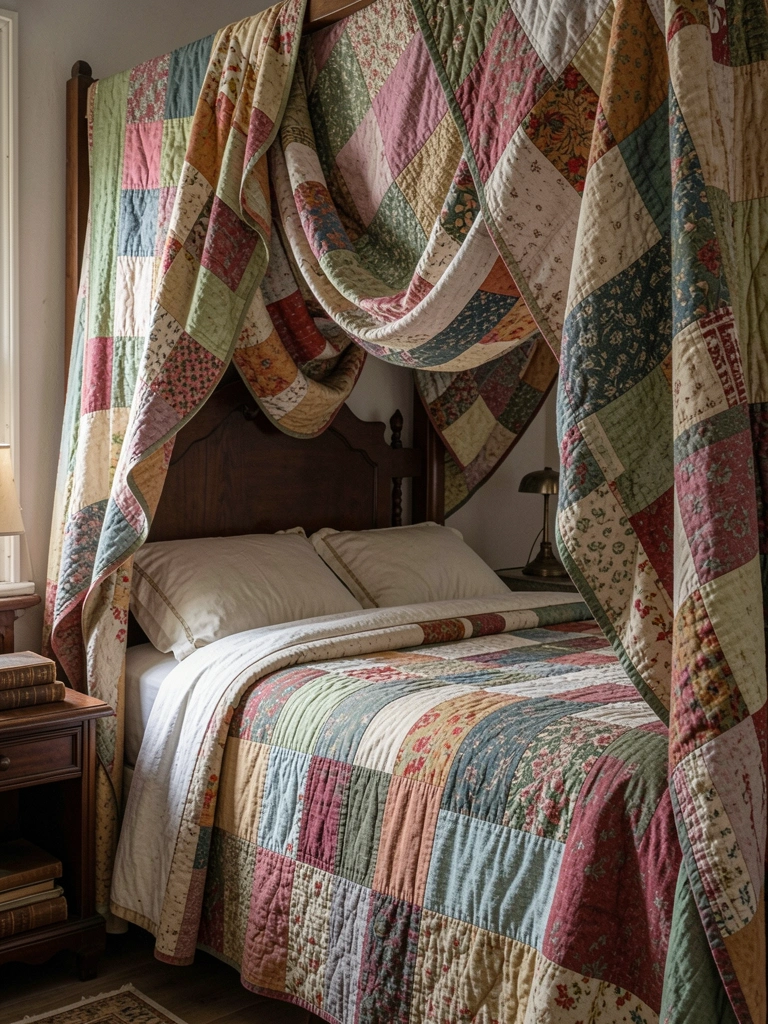
Vintage quilts bring handmade authenticity and storytelling to your canopy while offering an affordable alternative to buying new fabric. Each quilt carries history and character that new textiles simply can’t replicate.
Hunt for vintage quilts at estate sales, Facebook Marketplace, Etsy, or thrift stores for $15–$80 each depending on condition and size. You’ll typically need 2–4 quilts to adequately drape a full canopy frame. Drape them loosely rather than securing tightly; the casual arrangement feels intentional and allows for easy repositioning. This approach takes 20–30 minutes to style and restyle. Vintage quilts add instant warmth and make your bed feel like a family heirloom rather than store-bought furniture.
Quality check: Look for quilts with sturdy stitching and minimal stains; small imperfections add character, but structural damage affects durability.
Your canopy becomes a showcase for textiles with actual history, creating a bedroom that tells your personal story.
13. Paint or Stain the Canopy Frame a Bold Color
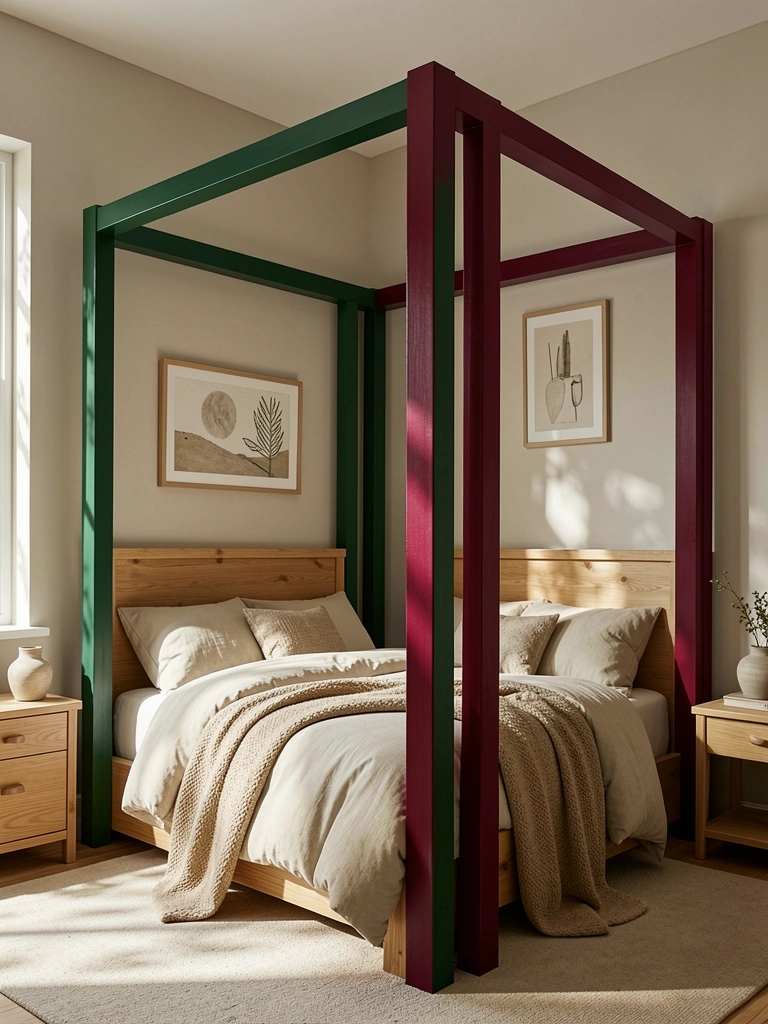
Painting your canopy frame a bold, saturated color makes it an undeniable design focal point without requiring any fabric work. This approach embraces the 2025 trend of intentional statement colors in unexpected places.
Choose a deep, rich tone—forest green, warm charcoal, deep aubergine, or terracotta—that complements your overall palette. Use quality wood paint or stain ($15–$40) applied with a brush or roller; preparation (sanding, priming) takes 4–6 hours, and drying requires 24 hours between coats. Rent the canopy bed slightly so you can work, or remove it if possible. If you’re renting, skip this; it’s a commitment. The payoff is a completely transformed bed that costs just paint and time.
Pro tip: Test the color on a small section first; lighting changes how dark tones read in your specific room.
A bold frame color elevates your canopy from standard bedroom furniture to an intentional design statement that commands the room.
14. Create a Reading Nook Inside with Cushions
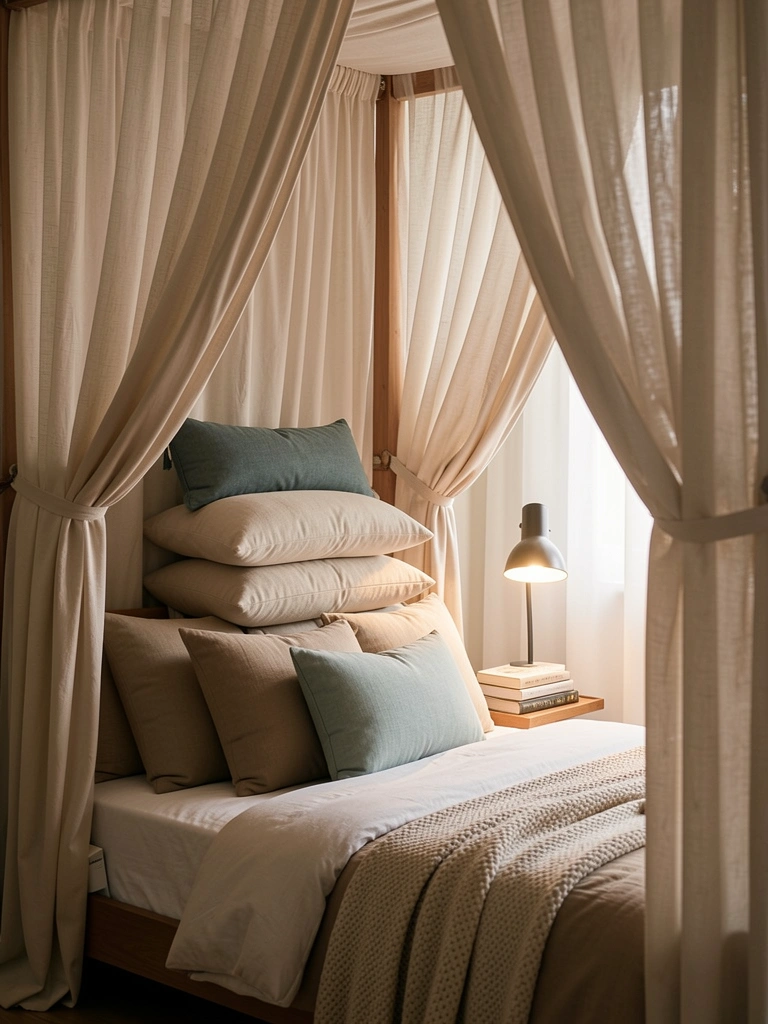
Transform your canopy’s interior space into a reading sanctuary by filling it with plush cushions, a small lamp, and minimal furniture. This approach maximizes comfort while creating a defined escape within your bedroom.
Gather cushions in coordinating neutral tones and varied sizes ($5–$25 each from Target, IKEA, or thrift stores) and layer them inside your canopy to create a nest-like seating area. Add a small plug-in reading lamp ($25–$60) clipped or mounted to the frame. Keep books, tea, and a small side table just outside the canopy to maintain the intimate feel. This setup costs $80–$150 and takes 1 hour to arrange. It works especially well if your canopy has a high frame that allows room to sit upright comfortably.
Tip: Use washable cushion covers so you can freshen them without replacing the pillows themselves.
You’ll create a bedroom within your bedroom—a personal retreat perfect for reading, journaling, or simply decompressing from the day.
15. Mix Metallic Accents with Organic Textures
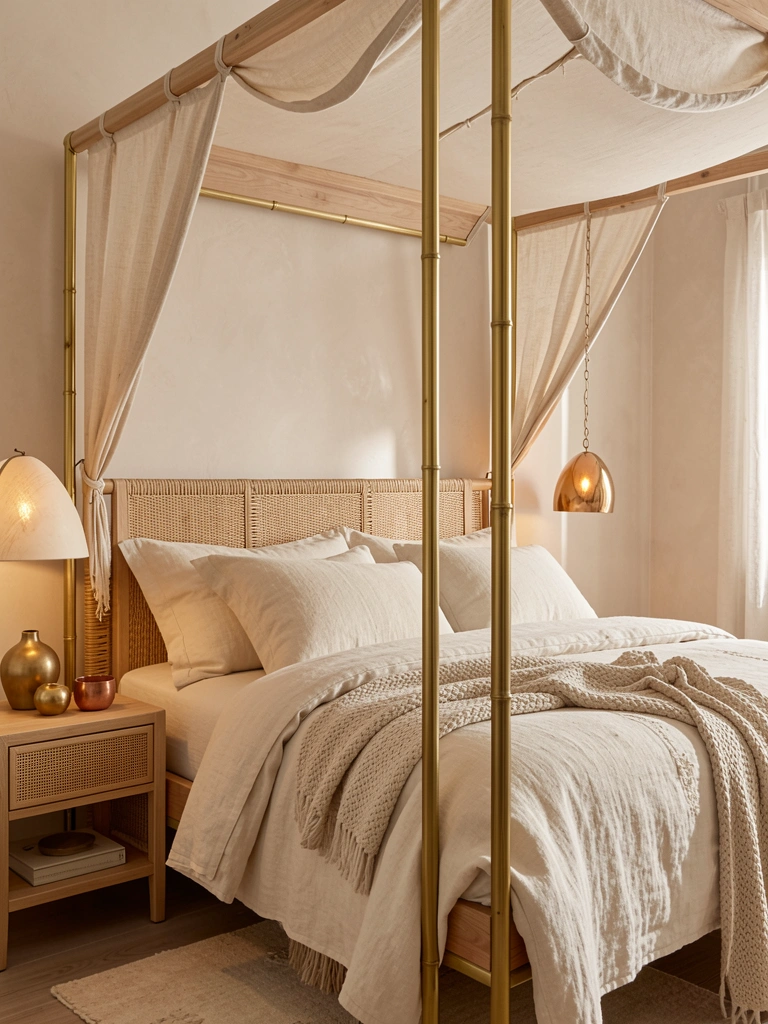
Pairing metallic accents (brass, copper, gold) with raw, organic textures creates a balanced aesthetic that feels both modern and grounded. This contrast is at the heart of the 2025 “organic modernism” trend.
If your canopy frame is wood, add metallic elements through hanging fixtures (brass pendant lights, $30–$80), frame hardware upgrades (brass corner brackets, $20–$50), or styling accessories (brass bookends, candlestick holders, $15–$40 each from West Elm, CB2, or Etsy). Pair these with natural textiles (linen, wool, cotton) and raw wood tones. This approach costs as much or as little as you want to spend and works with any budget since you’re layering accents over existing pieces.
Budget option: Thrift brass and copper decor ($2–$10 each) and place strategically on nightstands and shelves.
The interplay between cool metallics and warm organics makes your canopy feel sophisticated and intentionally curated.
16. Install a Canopy Tent for Renters
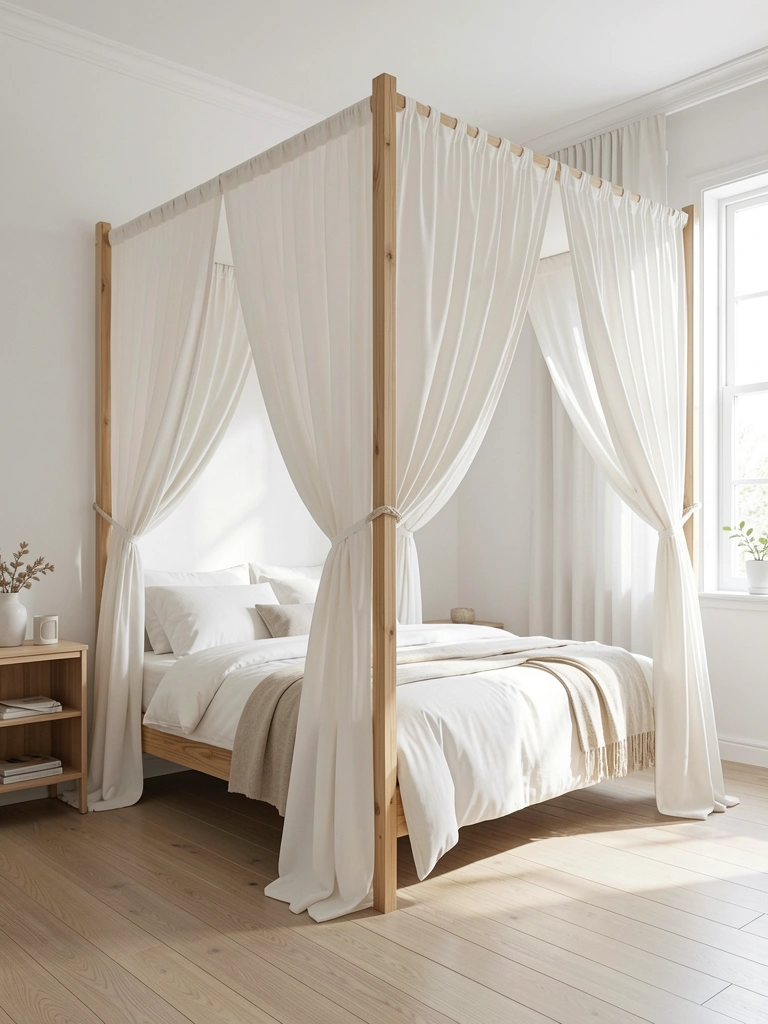
If you’re renting and can’t commit to a permanent canopy frame, a freestanding canopy tent creates the aesthetic without landlord drama. These collapse easily when you move and work in any bedroom size.
Purchase a freestanding canopy tent bed ($200–$500 from Amazon, Wayfair, or Overstock) in styles ranging from minimalist metal frames to complete fabric tents. Assembly takes 2–4 hours with minimal tools; no drilling required. They’re fully portable and pack into a large storage bag for moves. Quality varies, so read reviews carefully. Once set up, drape with your own fabrics, add string lights, and style exactly as you would a permanent frame.
Pro tip: Measure your bedroom doorway before ordering to ensure the packaged tent fits through.
You get all the magic and personality of a canopy bed with the flexibility that rental life requires.
17. Layer Textured Wallpaper Inside the Canopy
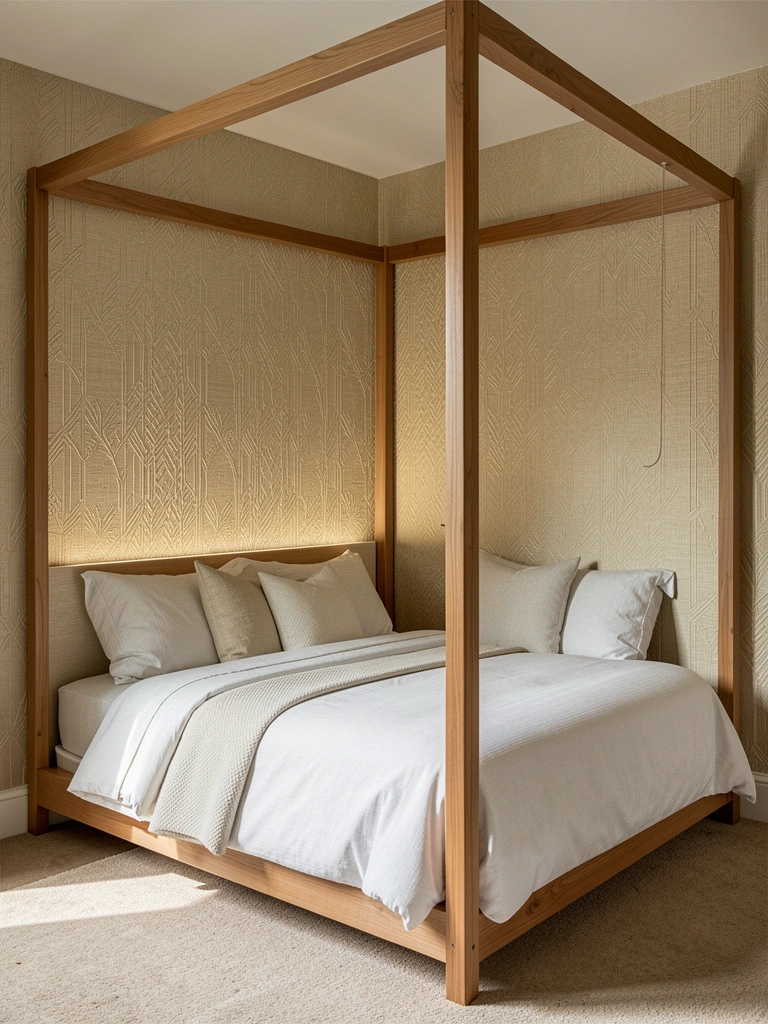
Wallpapering just the visible interior of your canopy creates a surprise design detail that you see every morning and evening. This approach adds personality without overwhelming your entire room.
Choose a textured wallpaper—grasscloth, embossed geometric, or subtle patterned—in a neutral or coordinating color. Peel-and-stick wallpaper ($25–$60 per roll from Spoonflower, Etsy, or Amazon) works best for renters and easy removal. You’ll need 2–3 rolls depending on your canopy size. Application takes 3–4 hours and requires a clean, smooth surface. If you own your home, traditional wallpaper ($20–$50 per roll) offers more options and durability, with professional installation costing $100–$200.
Budget hack: Paint the interior with a coordinating color using peel-and-stick primer ($15–$30) to avoid permanent marks.
Every time you look up in bed, you see intentional design detail that makes your canopy feel custom-built for you.
18. Add a Under-Bed Storage System for Organization
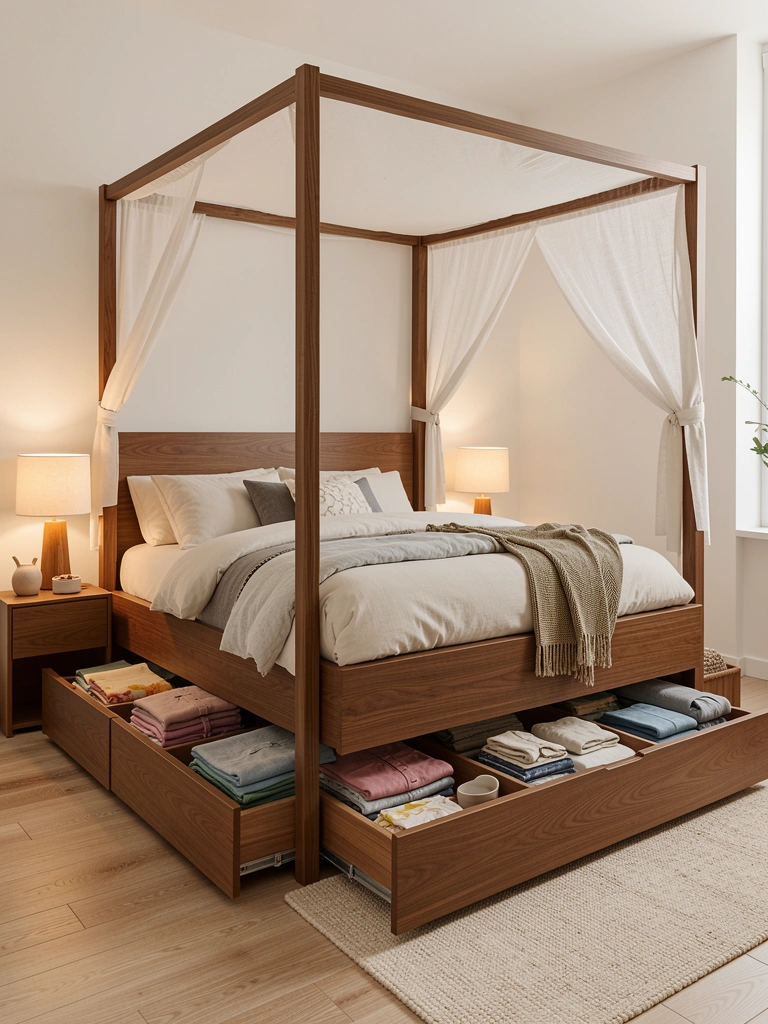
A well-organized under-bed storage system keeps your bedroom clutter-free while maximizing every inch of your canopy space. This practical approach is especially valuable in smaller bedrooms.
Install low-profile storage drawers, bins, or a platform bed with built-in drawers ($200–$600 from IKEA, Wayfair, or Amazon) or add rolling under-bed storage containers ($20–$60 each). Label everything clearly and store off-season bedding, extra pillows, or rarely-used items. This keeps your bedroom looking serene and calming—a key element of sanctuary design. Setup takes 1–2 hours depending on your system; some options require no assembly at all.
Renter-friendly: Use fabric under-bed storage containers ($15–$30 each) with no installation required.
Organized storage means a clutter-free floor and visual calm, making your canopy feel like a true retreat rather than a storage closet.
19. Incorporate Biophilic Elements: Plants and Natural Light
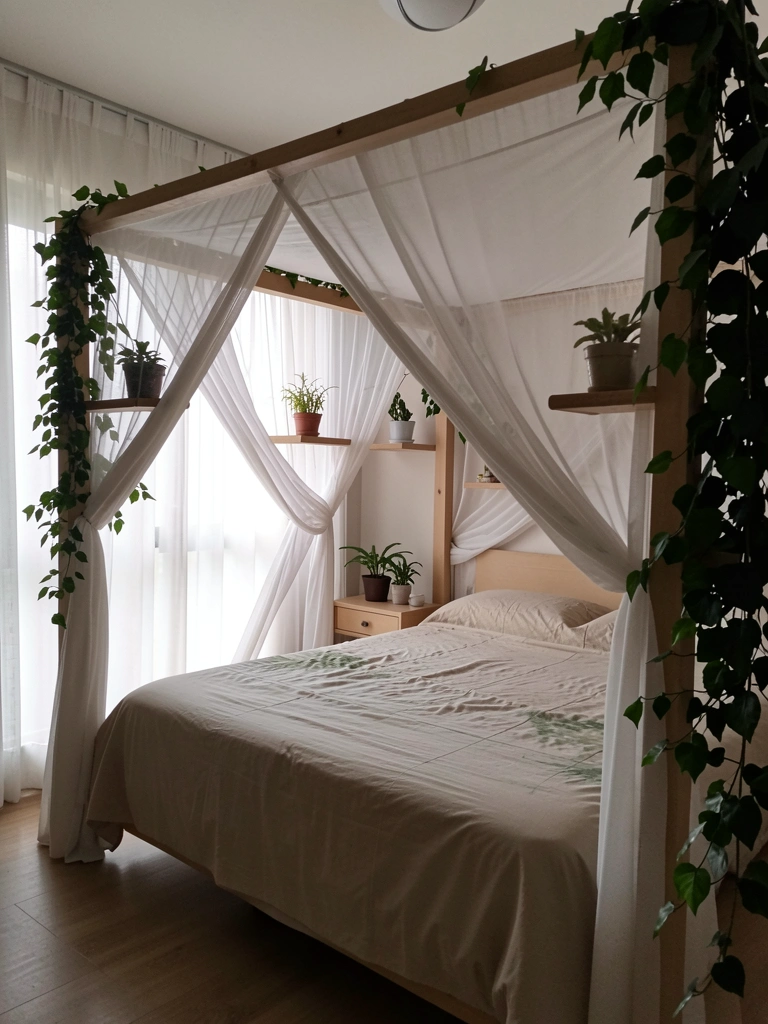
Bringing plants and natural light into your canopy’s vicinity creates a biophilic design that connects you to nature and improves wellbeing. Plants and sunlight reduce stress and make bedtime feel more restorative.
Position your canopy near a window if possible to maximize natural light. Add small potted plants—pothos, snake plants, or peperomia—on floating shelves, nightstands, or hanging planters ($5–$25 each from IKEA, Home Depot, or local garden centers). Total plant investment: $30–$100 for 4–6 small plants. Ensure plants get appropriate light for their species and water them weekly. If your room lacks natural light, add a full-spectrum grow light ($30–$60) near plants to support both plant health and your circadian rhythm.
Low-maintenance option: Invest in high-quality faux plants ($10–$30 each) if you travel frequently or forget to water.
The presence of greenery creates a calm, grounded atmosphere that makes your canopy feel like a sanctuary rather than just furniture.
20. Use Statement Art Above or Inside the Frame
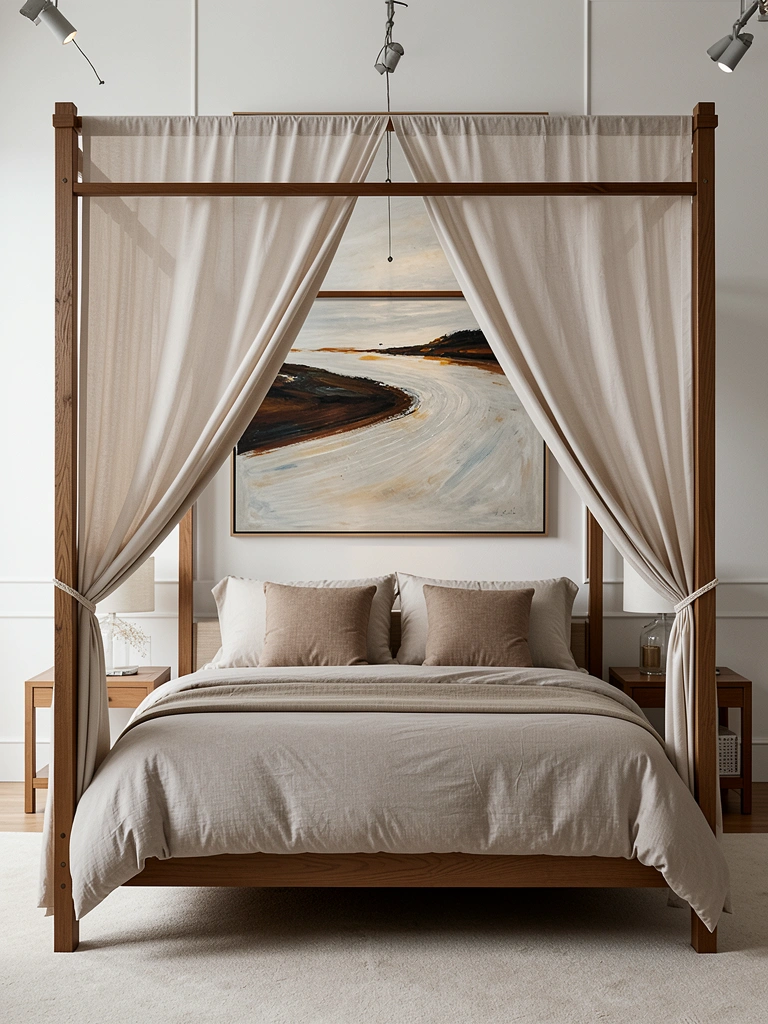
A significant piece of art hung above or behind your canopy becomes the visual anchor for your entire bedroom. This approach lets you express personal style while grounding the design.
Commission or purchase a large art print, original painting, or textile artwork ($50–$500+ depending on artist and medium) from Etsy, local galleries, or online platforms like Minted. Hang it centered on the wall directly behind your canopy’s frame so it’s visible when you’re in bed or entering the room. The art should measure at least 24×36 inches to have impact in a bedroom. Frame it ($40–$150 for framing) or leave it unframed for a modern look. This becomes the conversation starter and personality injection your space needs.
Budget option: Print an oversized digital art piece ($10–$30) at a local print shop and frame it yourself using Ikea frame sets ($20–$50).
Art-led design instantly communicates that your bedroom is curated and reflects your taste, making the entire space feel more intentional.
21. Create Contrast with a Dark Canopy and Light Bedding
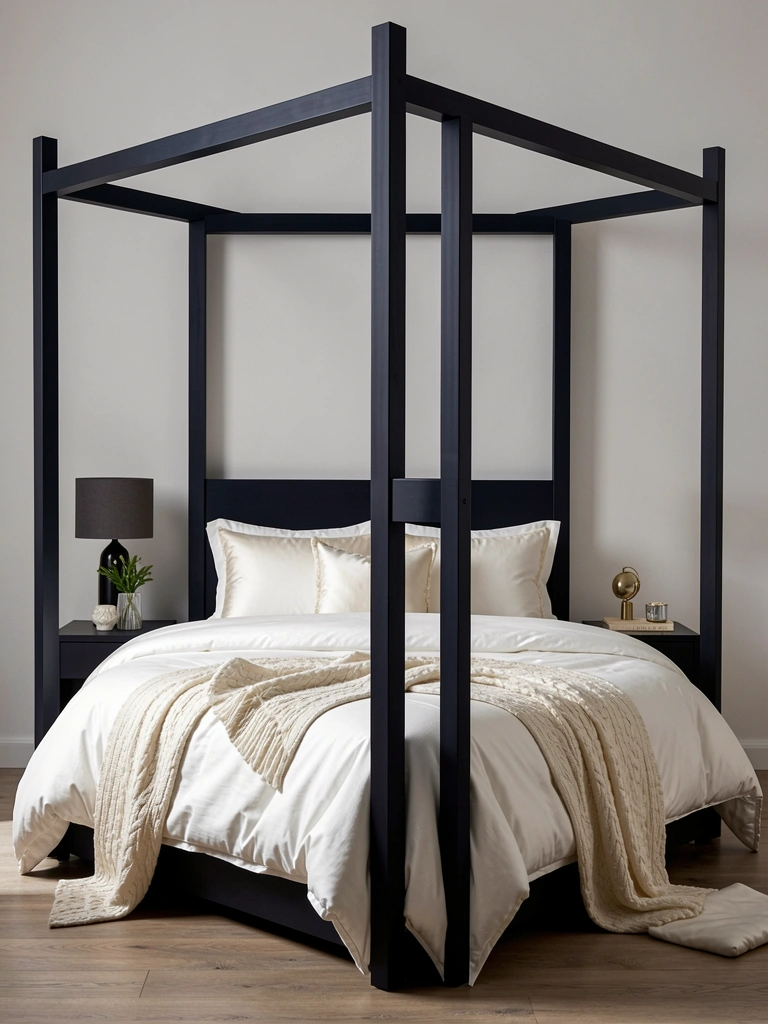
Playing with contrast—a dark canopy frame against pale, luminous bedding—creates visual sophistication and makes your bed pop as the room’s focal point. This approach feels modern and intentional.
Choose bedding in white, cream, or pale gray (organic cotton, linen, or cotton blend; $80–$200 from Parachute, Brooklinen, or Target) and pair it with a dark-toned canopy frame in black, deep charcoal, navy, or forest green. The contrast creates definition and makes both elements feel more impactful. If your frame is already dark, introduce pale bedding; if your frame is light wood, add dark bedding. This costs just the investment in quality bedding since you’re working with what you have.
Pro tip: Add one accent pillow in a third color (rust, sage, or warm gray) to bridge the contrast without muddying it.
The high contrast between frame and bedding creates a design moment that feels gallery-quality and deeply intentional.
22. Accessorize with Vintage Nightstands and Styling
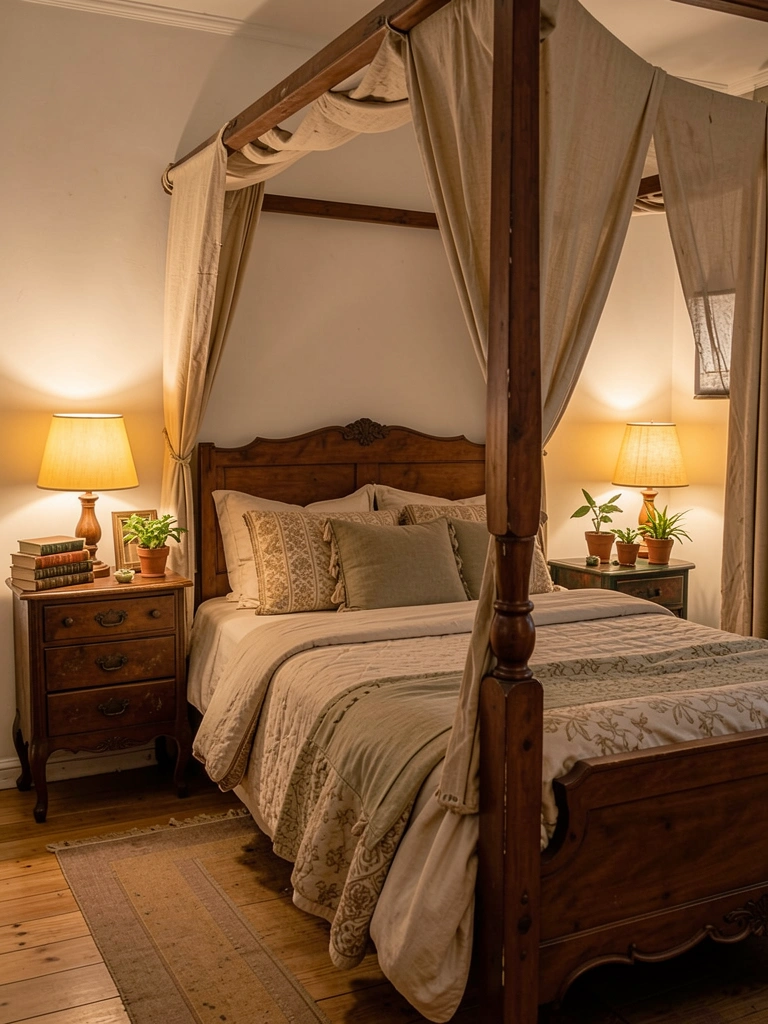
Flanking your canopy with vintage or secondhand nightstands adds character while supporting the nostalgic elements that make a canopy feel magical. Mismatched vintage pieces tell a story better than matching sets.
Hunt for vintage nightstands at estate sales, Facebook Marketplace, thrift stores, or Craigslist for $30–$150 each depending on condition and style. Look for wood pieces with interesting hardware or unique shapes rather than generic modern designs. You don’t need them to match—eclectic variety is more interesting. Style the tops with vintage books ($2–$10 each), small plants ($5–$20), brass or ceramic objects ($5–$30), and a reading lamp ($25–$80). Total setup cost: $100–$300 for two tables plus styling, taking 1–2 hours to arrange and decorate.
Pro tip: Source pieces that complement your canopy frame material and color for visual cohesion.
Vintage nightstands give your bedroom an intentionally collected feel, as if you’ve curated pieces over time rather than buying everything new.
23. Layer Sensory Textures with Rugs and Runners
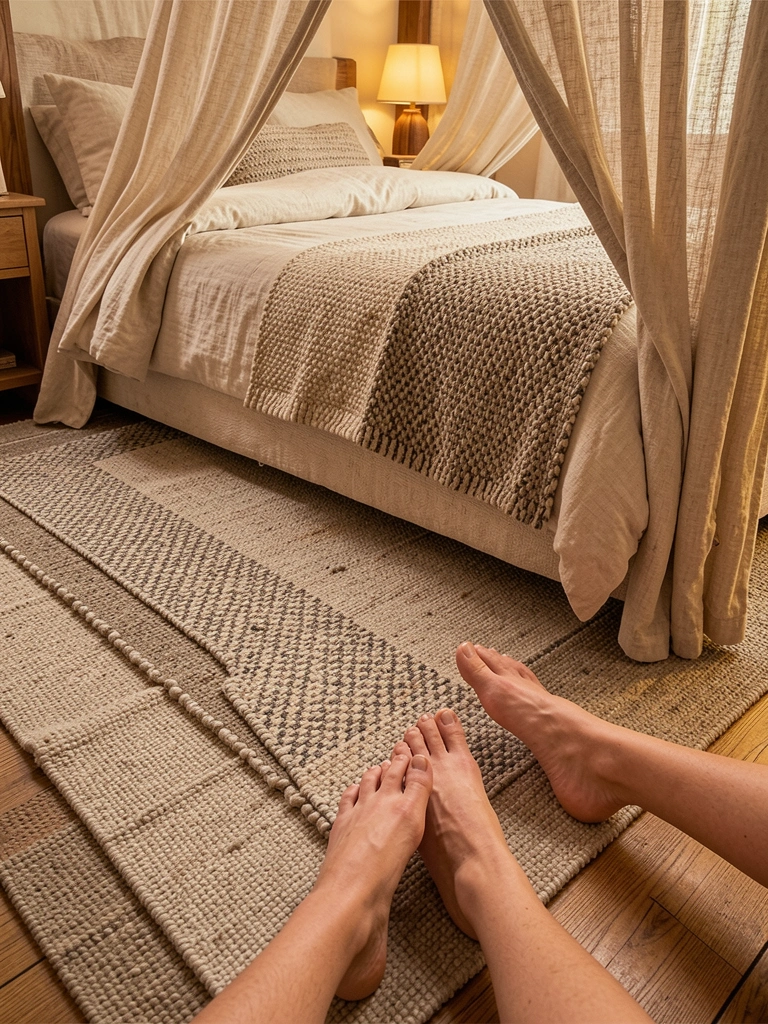
Layering rugs beneath your canopy adds underfoot comfort and visual interest while defining the bed as a separate zone within your bedroom. Different rug textures create sensory richness.
Start with a larger base rug (8×10 or 9×12 feet) in a neutral tone—natural jute, wool, or cotton blend—for $100–$300 from IKEA, Wayfair, or West Elm. Layer a smaller runner or patterned rug on top (4×6 or 5×8 feet) in a complementary texture or pattern for $50–$150. This creates visual interest and defines your sleeping zone without feeling cramped. If you’re renting, use non-slip rug pads ($10–$20) to secure layers safely. Total cost: $150–$450 with immediate visual impact.
Budget hack: Thrifted vintage rugs ($15–$40 each) layered together often feel more interesting than new pieces.
Layered rugs make your bedroom feel intentionally designed while adding comfort and acoustic warmth to an otherwise hard floor.
24. Use Flowing Linen Curtains as Side Drapes
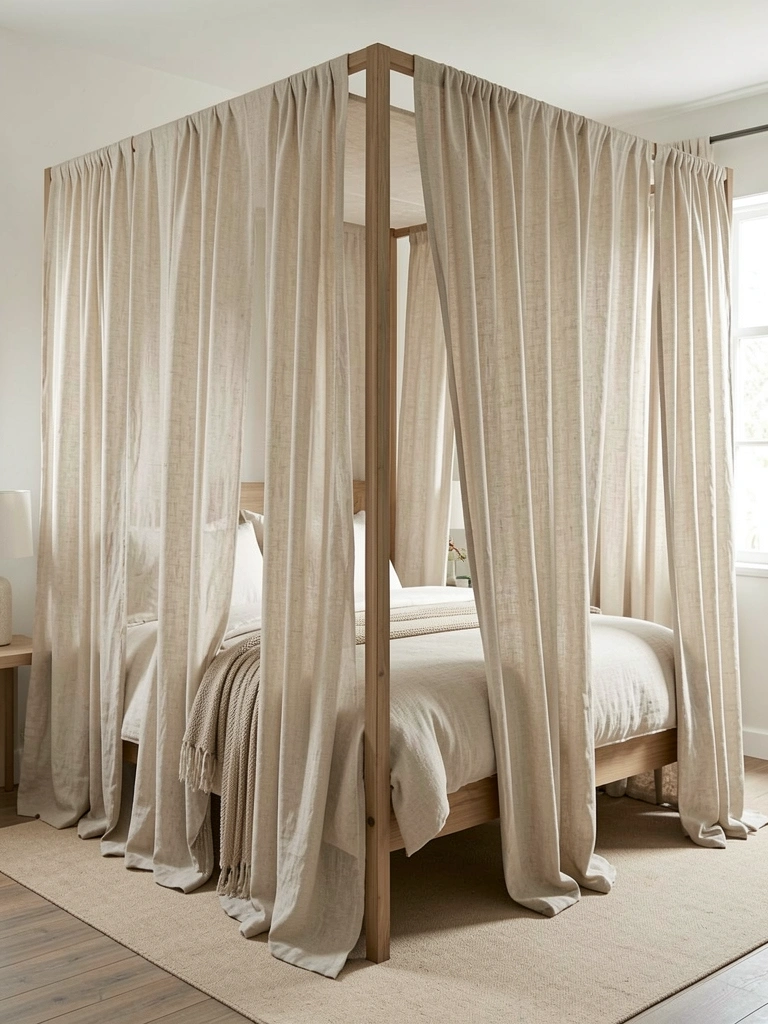
Floor-length linen curtains hung from your canopy’s side posts create elegant vertical lines and add romance without overwhelming the space. This approach is simpler than full-fabric canopies but equally impactful.
Purchase linen curtain panels ($30–$80 per panel from IKEA, Target, or Etsy) in cream, natural, or a soft neutral. You’ll need 2–4 panels depending on your canopy width. Hang them from ceiling-mounted rods or tension rods attached to your frame’s top corners. Let them pool slightly on the floor for added drama; this takes 30 minutes to hang and style. The flowing movement catches light beautifully and creates an ethereal effect, especially in rooms with good natural light.
Renter option: Use removable adhesive hooks and tension rods (no drilling) for $20–$40.
Flowing linen side curtains create romance and architectural interest while maintaining a clean, unfussy aesthetic.
25. Add Ambient Sound or White Noise for Sanctuary Effect
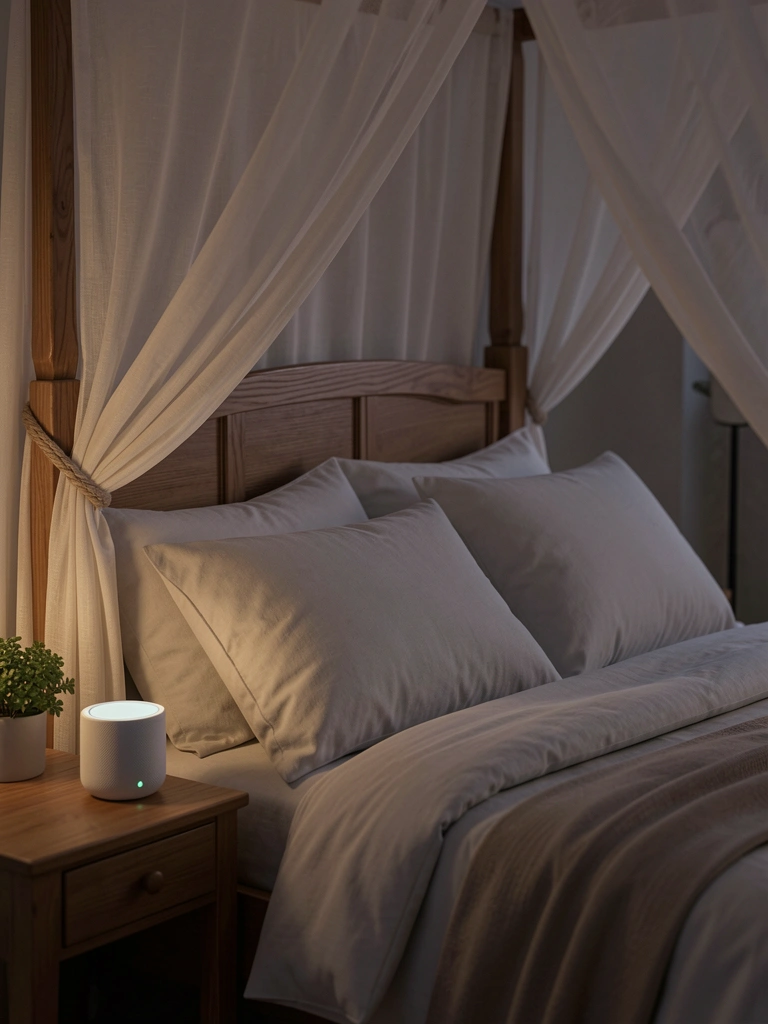
While not strictly visual, adding ambient sound or white noise completes your canopy sanctuary by engaging another sense. This transforms your bed into a true retreat where sleep and relaxation are prioritized.
Invest in a small white noise machine ($20–$60 from Target or Amazon) or use a smart speaker ($25–$100 from Amazon, Google, or Apple) to stream ambient sounds, sleep meditations, or gentle music. Many apps like Calm, Headspace, or Spotify offer sleep soundscapes for free or as part of subscriptions. Position the device on a nightstand or shelf inside or near your canopy, keeping it visually subtle. This creates a multisensory experience that makes your canopy feel like a wellness sanctuary rather than just a bed.
Pro tip: Use noise-masking sounds (white noise, ocean waves, rainfall) rather than music to avoid sleep disruption.
The addition of thoughtfully chosen soundscapes makes your canopy a true retreat where your mind and body feel safe to rest.
26. Combine All Elements with Cohesive Color Grounding
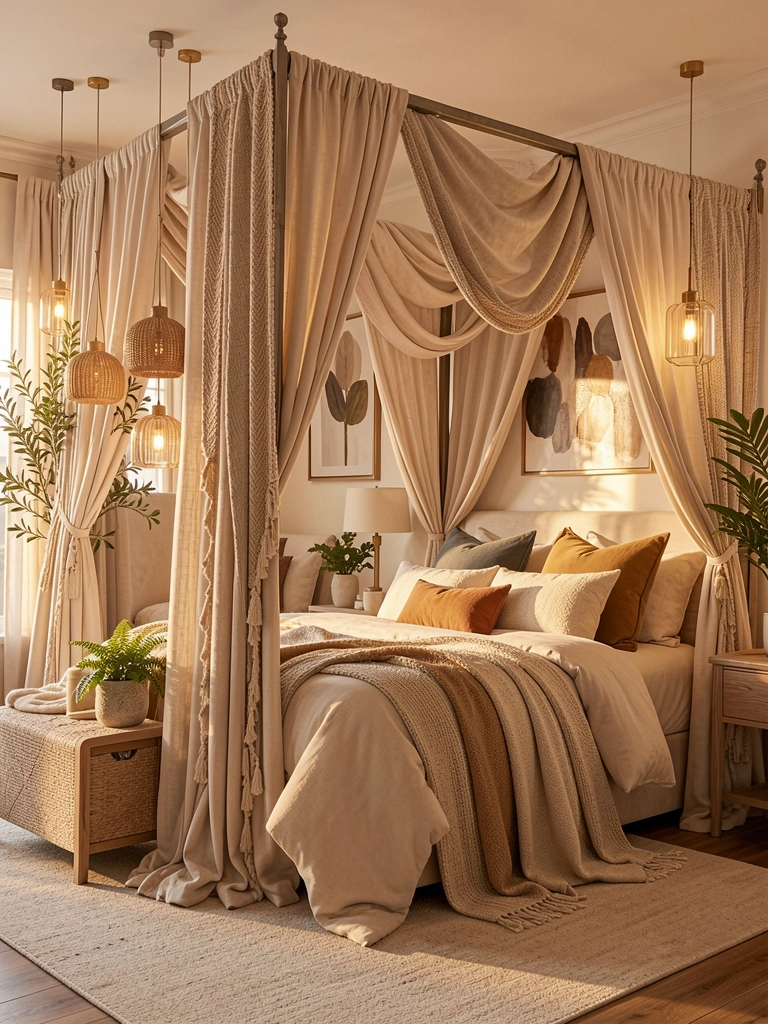
The final piece to canopy magic is ensuring all your design elements work together through cohesive color grounding. When every piece relates to a unifying palette, your canopy feels designed rather than random.
Start by choosing 2–3 neutral base tones (cream, warm taupe, soft gray) that appear across bedding, curtains, and larger elements. Add one accent color—terracotta, forest green, sage, or warm charcoal—that appears in artwork, accents, or the frame itself. Ensure all metals match (all brass, all black, all silver) and all wood tones coordinate (warm or cool). Review your canopy as a whole: does it feel cohesive, or are there jarring color clashes? Small adjustments—swapping one pillow, repositioning art, changing a throw color—can instantly make everything feel intentional. This costs nothing and takes 30 minutes to assess and adjust.
Design shortcut: Pick a canopy frame color or your bedding first, then build your entire palette around that anchor.
When all elements work together harmoniously, your canopy transcends being a furniture piece and becomes a holistic sanctuary that looks and feels magazine-quality.
Save this guide and tackle one idea this weekend—you’ll be amazed how quickly your bedroom transforms. Which element speaks to you most? Share this with anyone dreaming of their perfect canopy sanctuary.
Leave a Reply