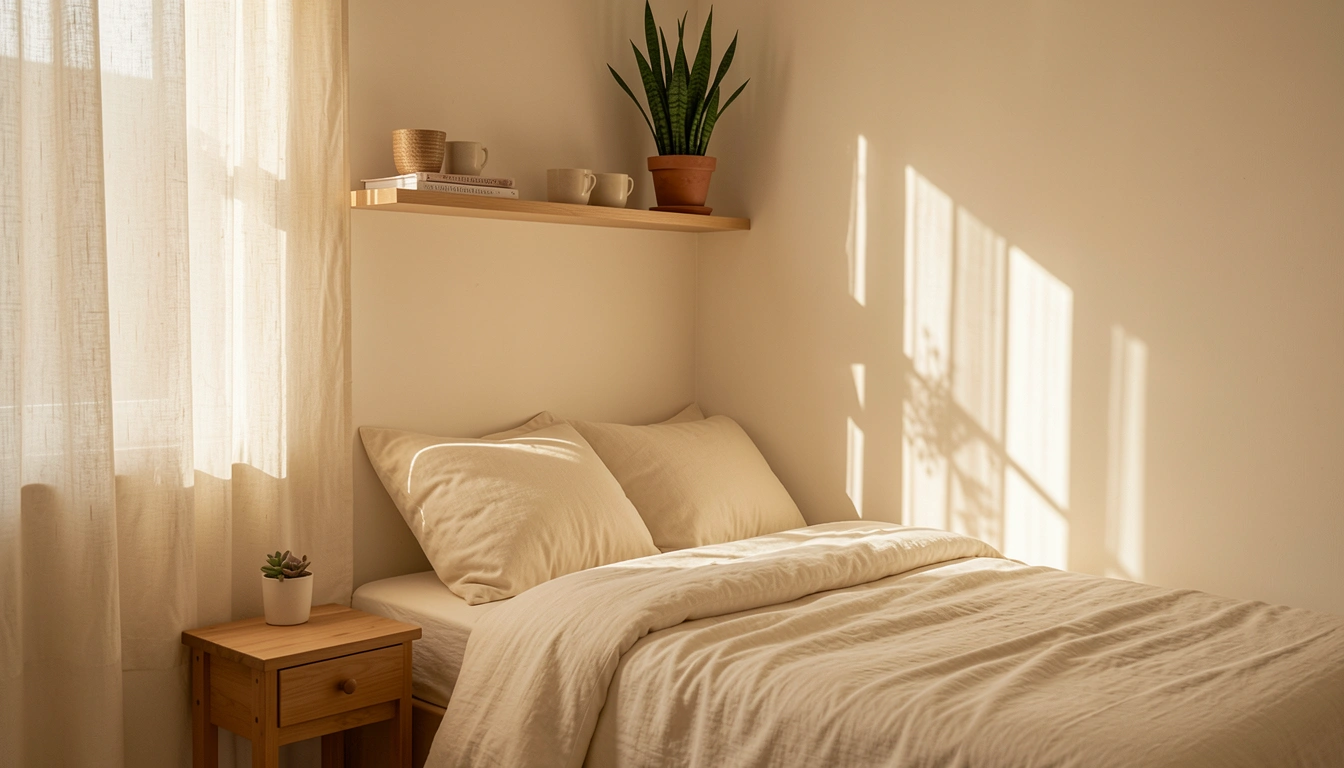
Small spaces don’t mean you have to sacrifice comfort or style—especially when it comes to your bed. A corner bed setup is one of the smartest layout tricks for maximizing square footage while creating a cozy, nest-like retreat. Whether you’re working with a tiny studio, a kid’s room, or a guest bedroom in a compact home, these 23 ideas show you how to make your corner bed work harder. You’ll discover budget-friendly styling tricks, space-saving furniture pairings, and design solutions that make even the tightest corners feel intentional and beautiful. Let’s explore ways to turn that awkward corner into your bedroom’s most appealing feature.
1. Anchor with a Curved Headboard for Soft Visual Impact
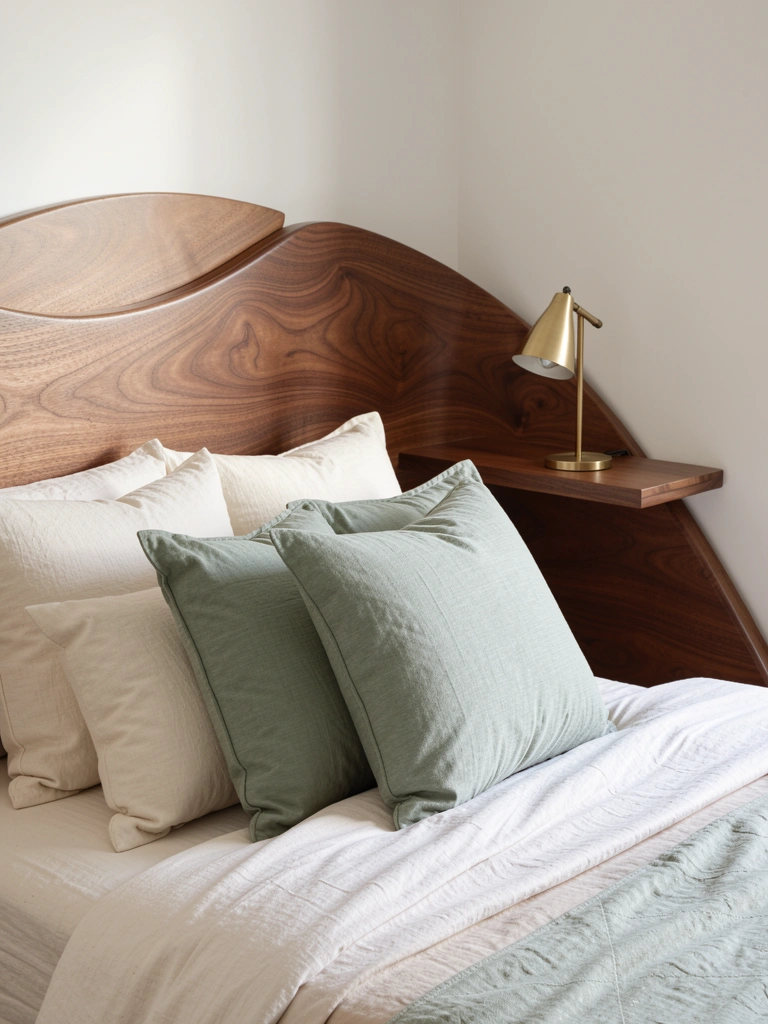
A curved headboard softens the hard angles of a corner while adding instant personality without taking up extra floor space. Unlike straight headboards, curves draw the eye inward and create a focal point that makes the area feel designed, not just squeezed in.
Look for curved headboard options at IKEA (around $150–$300), Wayfair, or local wood craftspeople on Etsy. A DIY option: use plywood, cut a gentle curve with a jigsaw, and upholster with fabric—supplies run $40–$80 and take a weekend. Mount it directly to the wall studs at your bed’s head so it doesn’t eat into floor space.
Pro tip: Paint the curved headboard a statement color (like clay or eucalyptus green) against white walls for impact without overwhelming the corner.
This choice makes your corner feel like an intentional design moment instead of a space-filling necessity.
2. Install Floating Shelves Above for Hidden Storage
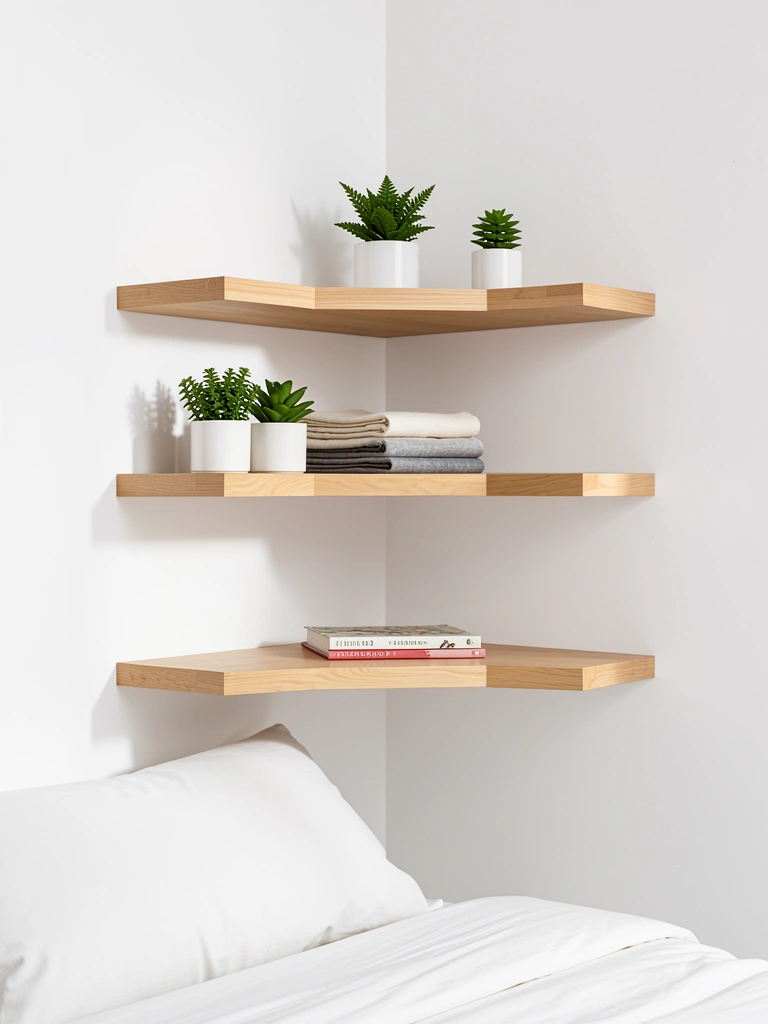
Floating shelves above a corner bed add storage without requiring floor space or bulky nightstands. This vertical solution works beautifully in tight quarters and gives you spots for plants, books, and personal items you actually use.
Install shelves 18–24 inches above your headboard at studs using a level and bracket kit (Home Depot or Amazon, $25–$60 for a set of three). Keep the look light by storing only beautiful items: rolled linens, potted plants, and a few favorite books. Avoid cluttering the shelves, which defeats the purpose of creating calm in a small space.
Time estimate: 1–2 hours with basic tools. Renter-friendly alternative: use command strips and lightweight shelves (though weight capacity is lower).
You’ll gain practical storage and make your corner feel curated without losing any walking space.
3. Layer Textured Throw Pillows for Depth Without Width
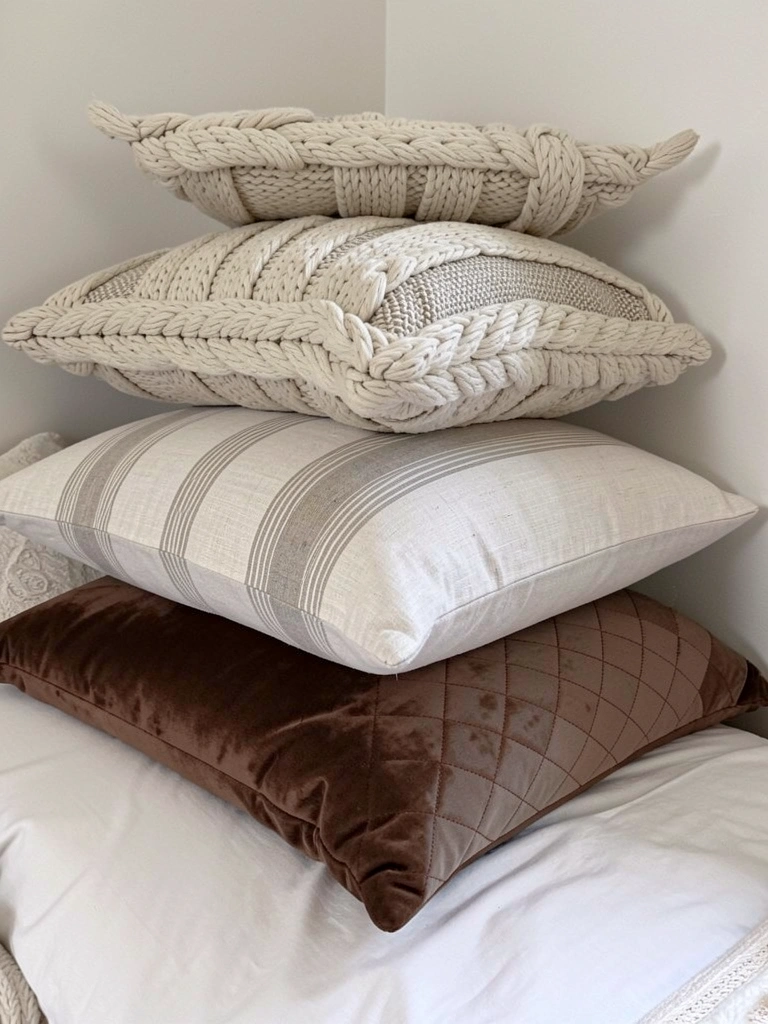
Throw pillows add visual interest and comfort without consuming extra square footage. By mixing textures—linen, velvet, knits, and quilts—you create depth and make a small corner bed look designed and collected.
Buy pillows in varying sizes (16×16″, 20×20″, decorative square shapes) from Target, IKEA, or thrift stores. Aim for a neutral palette (creams, grays, sage) with 2–3 textural contrasts. Expect to spend $15–$40 per pillow if buying new, or $3–$8 at secondhand shops. The trick: fewer, better pillows beat a cluttered stack. Start with four quality pillows and add one more if space allows.
Swap pillows seasonally to keep the corner feeling fresh without replacing furniture.
4. Add a Reading Nook with a Small Pendant Light
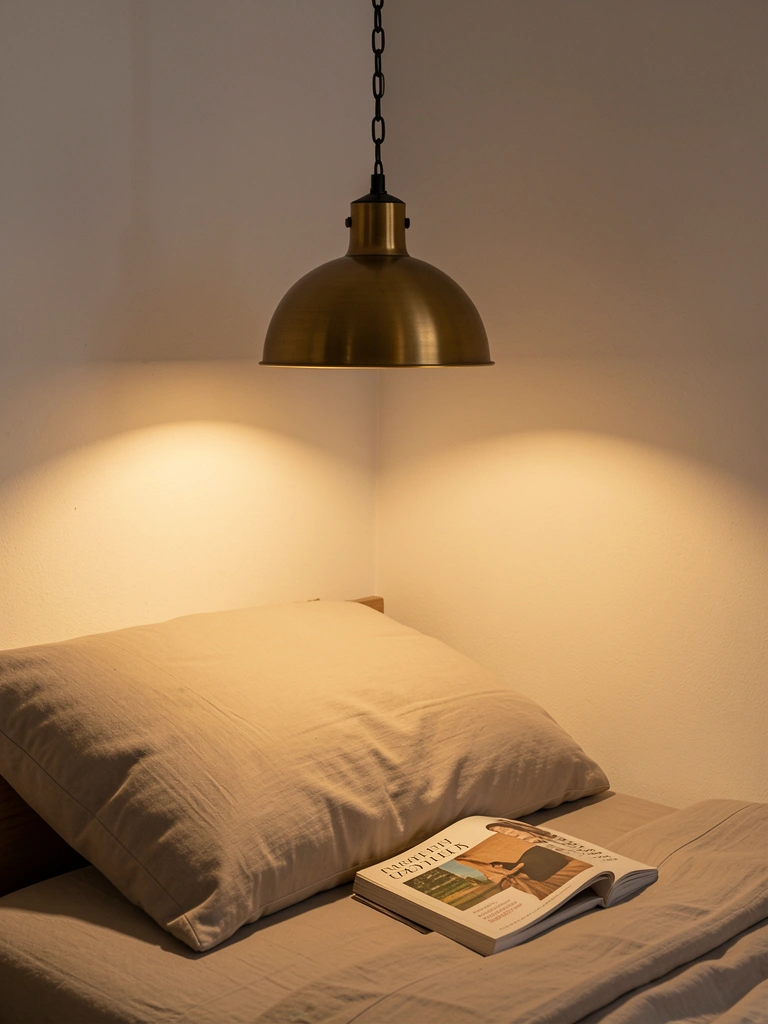
A single pendant light hanging above your corner bed creates a dedicated reading nook and provides softer, more flattering light than overhead fixtures. It’s also the quickest way to make a corner feel special.
Install a pendant 24–30 inches above your headboard using a ceiling-mounted hook kit ($20–$40 from hardware stores). Choose a 40–60 watt bulb in warm white (2700K) to encourage relaxation. Pendant options range from $30 (IKEA) to $150+ (design brands). A budget hack: hang a simple drum shade pendant over your existing ceiling fixture using a swag hook kit.
Fifteen-minute installation if you’re just using a swag setup (renter-friendly).
You’ll notice the difference immediately—reading becomes more inviting, and the corner transforms into a retreat space rather than just a bed.
5. Use Corner Space for Slim Nightstands
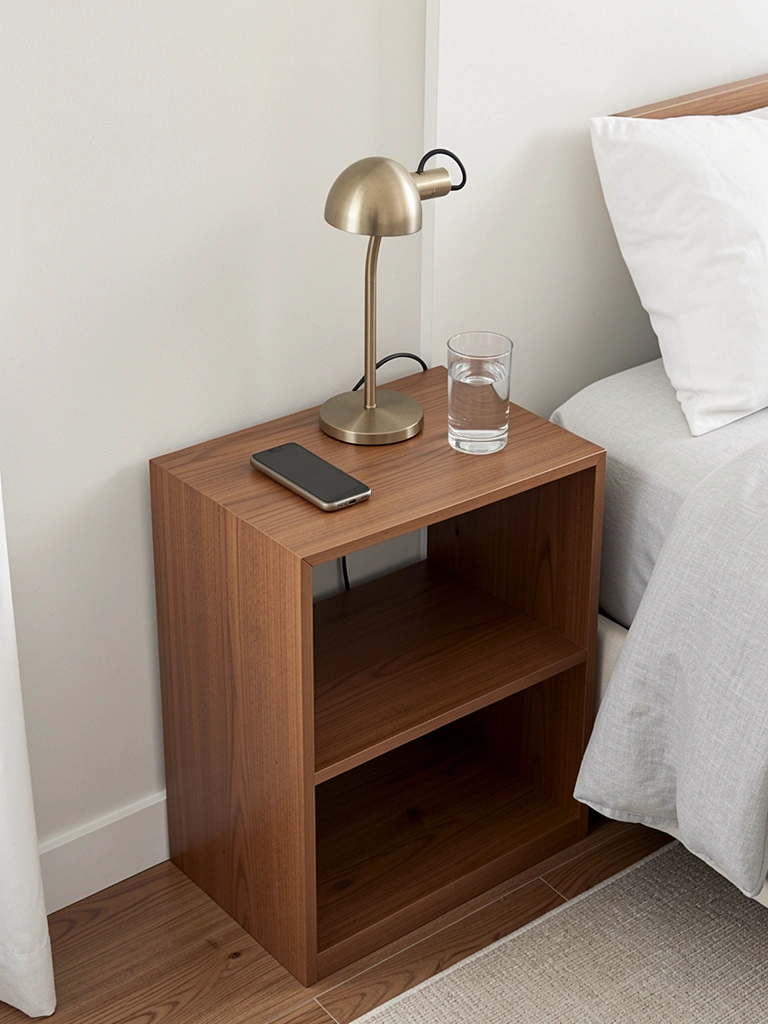
Corner bedrooms are perfect for slim, angled nightstands that fit exactly where a traditional nightstand would waste space. These narrow tables give you a surface for essentials without eating floor space.
Hunt for slim nightstands (8–14 inches wide) at IKEA ($50–$100), Article, or West Elm. Alternatively, use a floating shelf mounted on both walls in the corner angle, creating a natural shelf-table hybrid ($30–$60 in hardware). Look for open shelves on models so you gain storage below the tabletop too.
Pro tip: A corner nightstand becomes a design feature if you choose wood grain or a soft color that complements your headboard.
You’ll have everything within arm’s reach while keeping your floor open and walkable.
6. Layer Rugs to Define the Corner as a Room Zone
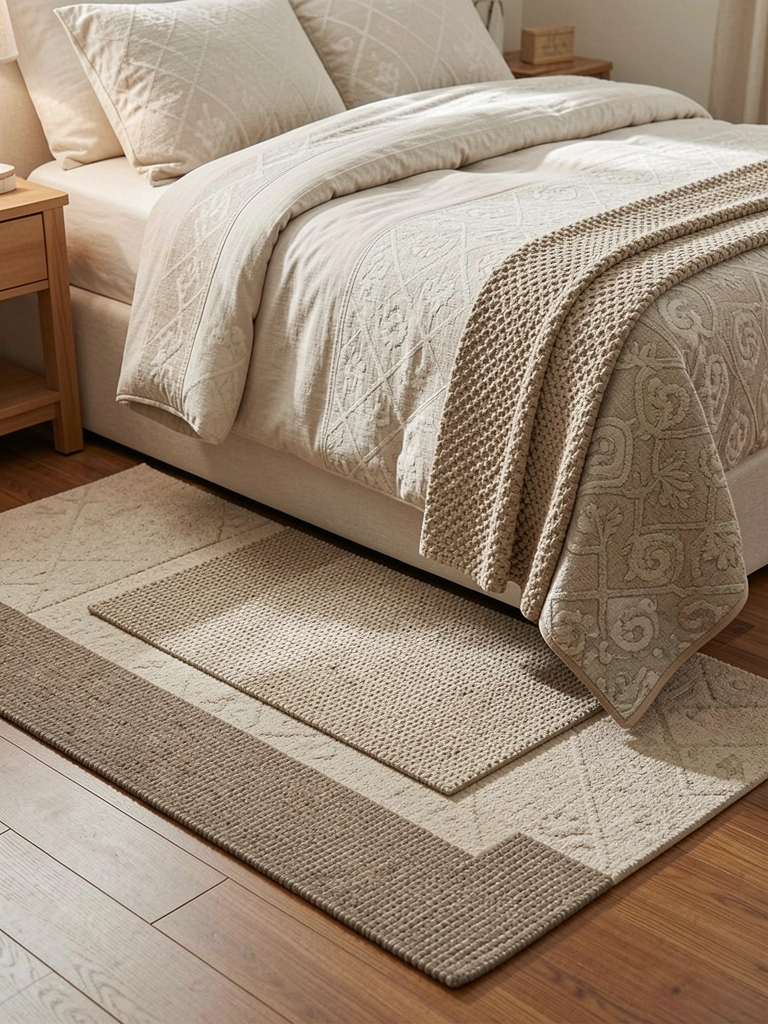
Layering two rugs under a corner bed creates a visual “room within a room” that makes the space feel grounded and intentional. This works especially well in studios or open-plan bedrooms where you need to signal where the bed zone ends.
Buy a base rug (5×7 or 6×8 feet) in a neutral tone ($40–$120 from Target, Wayfair, or Amazon), then layer a smaller textured rug on top ($25–$60). Look for natural materials like jute or wool for a biophilic feel. The layered approach hides imperfections and feels more curated than a single rug.
This visual separation signals to your brain: “This corner is for rest,” which supports better sleep psychology.
7. Paint an Accent Wall Behind the Bed
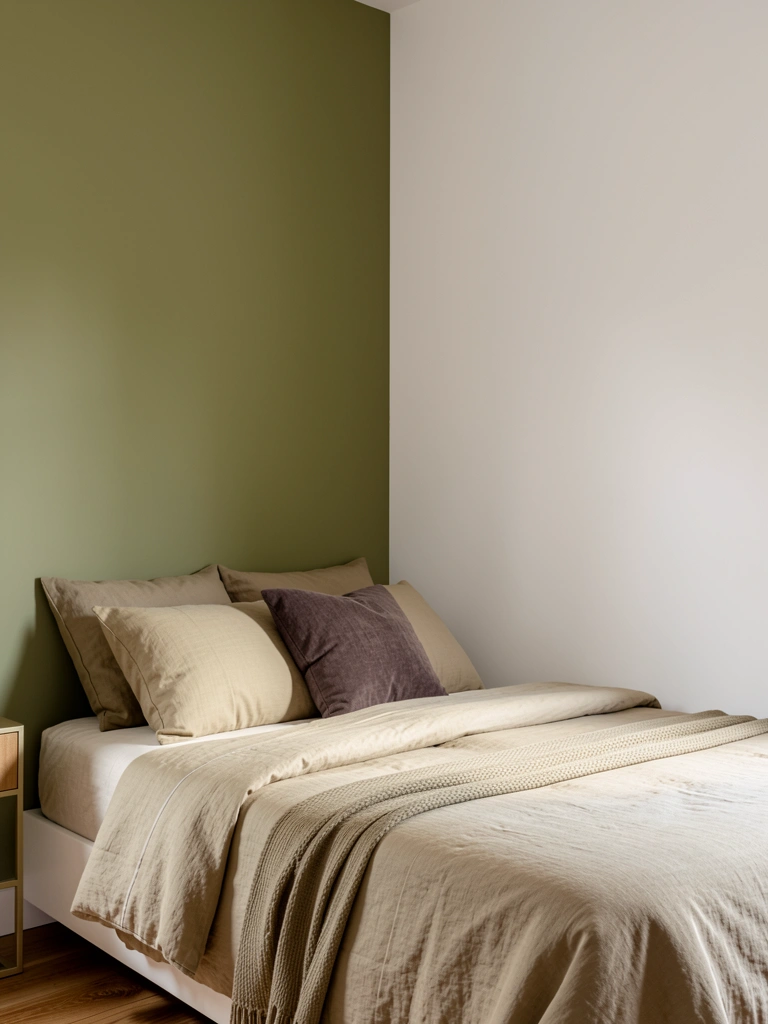
An accent wall behind your corner bed creates a backdrop that makes the area feel designed rather than crammed. Color draws the eye and can make even a small corner feel intentional.
Choose an earthy tone—clay, sage green, warm gray, or soft terracotta—that complements your bedding. Paint only the wall behind the bed (and possibly the two adjacent corner walls) to avoid overwhelming the space. DIY with quality paint like Sherwin-Williams or Benjamin Moore ($30–$60 per gallon). A gallon covers about 350 square feet; most corner walls need less than half a gallon. Hire a painter if ladders intimidate you ($150–$400 for a small wall).
Two-day project if DIY (including drying time between coats).
The right color makes your corner feel like a sanctuary, not a storage area.
8. Install a Wall-Mounted Reading Shelf System
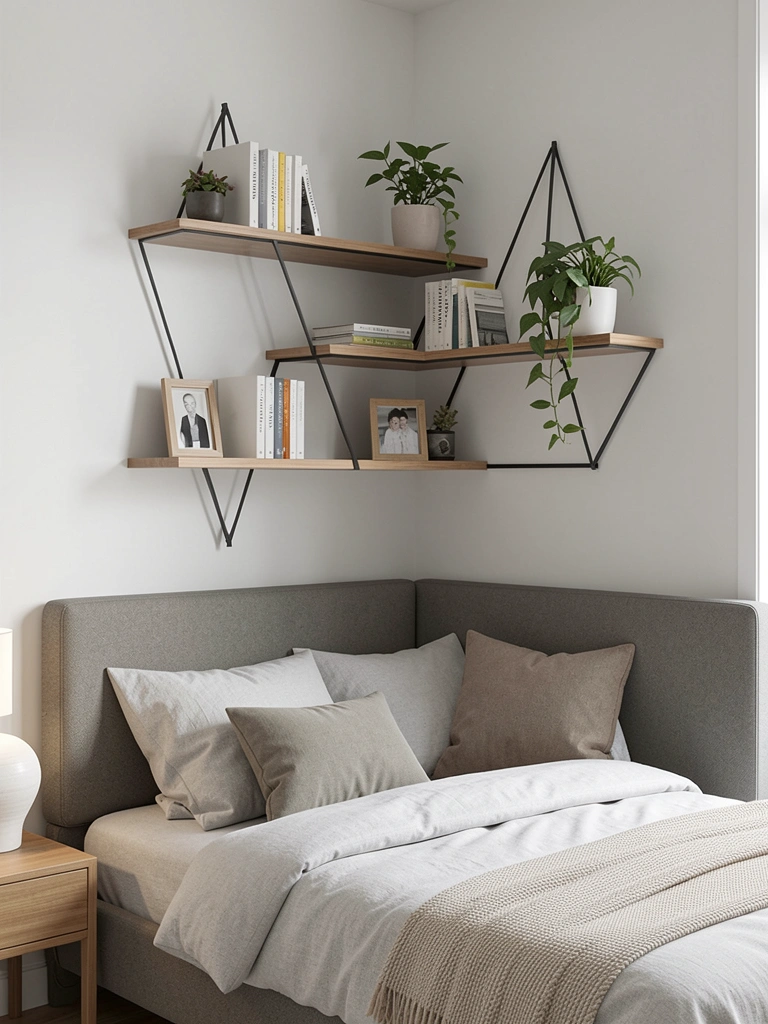
A creative shelf arrangement above your corner bed transforms blank wall space into display area. Asymmetrical wall-mounted shelves feel more modern and less corporate than standard bookcases.
Install shelves in staggered heights (24″, 30″, 36″ from the floor) using floating shelf kits. Popular options: Pottery Barn’s modular shelf system ($60–$150 per shelf), IKEA’s Lack shelves ($20–$40 each), or custom metal-frame shelves from Etsy makers ($50–$200). Keep display items intentional: books you love, a few plants, one or two personal objects. Avoid the Pinterest trap of overcrowding; less is more in small spaces.
Two to three hours to install multiple shelves; renter-friendly alternatives exist but have weight limits.
You’ll create a gallery-like vibe that makes your corner bedroom feel curated and personal.
9. Choose Bed Linens in Temperature-Regulating Wool
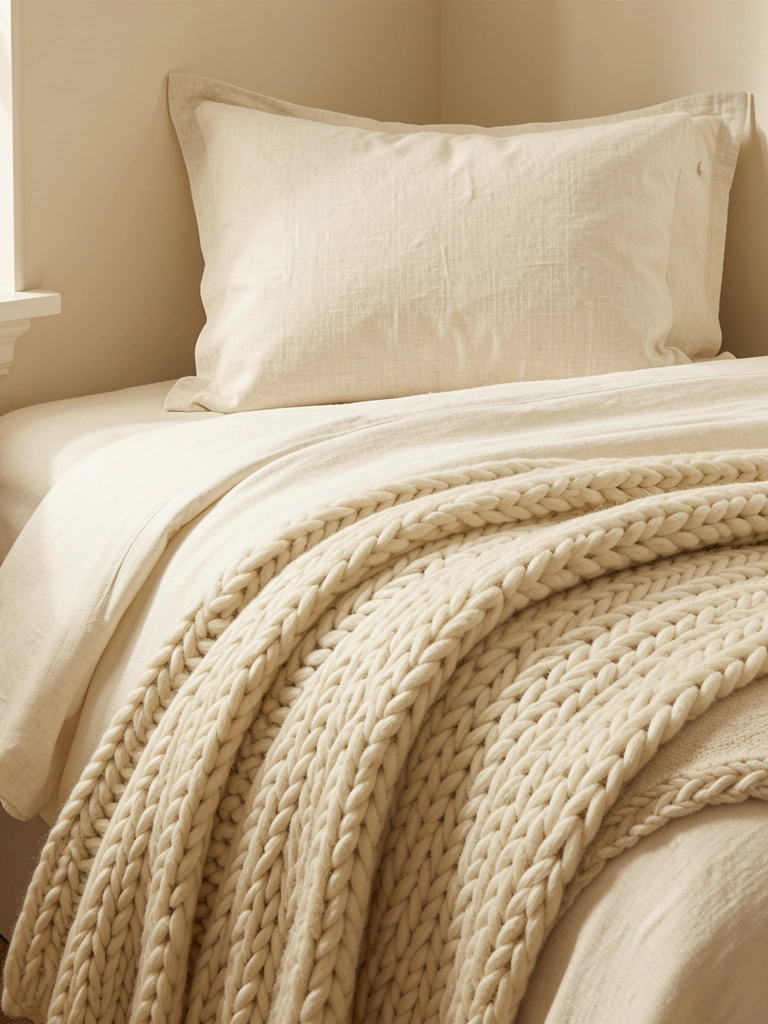
Quality wool bedding isn’t just luxurious—it’s functional in small bedrooms where air circulation is already tight. Wool regulates temperature naturally, keeping you cool in summer and warm in winter without overheating a cramped space.
Invest in wool sheets from Woolroom, Parachute, or affordable options like Brooklinen’s performance line ($100–$250 for a set). Alternatively, layer a wool duvet ($150–$300) with cotton sheets underneath. Wool is naturally hypoallergenic and moisture-wicking, which matters when your bed’s proximity to walls can trap humidity.
Pro tip: A wool throw ($60–$120) works as both a design element and a functional temperature tool.
You’ll sleep better in a small corner bed because the bedding actively manages your comfort instead of adding bulk.
10. Use a Slim Dresser as a Nightstand Alternative
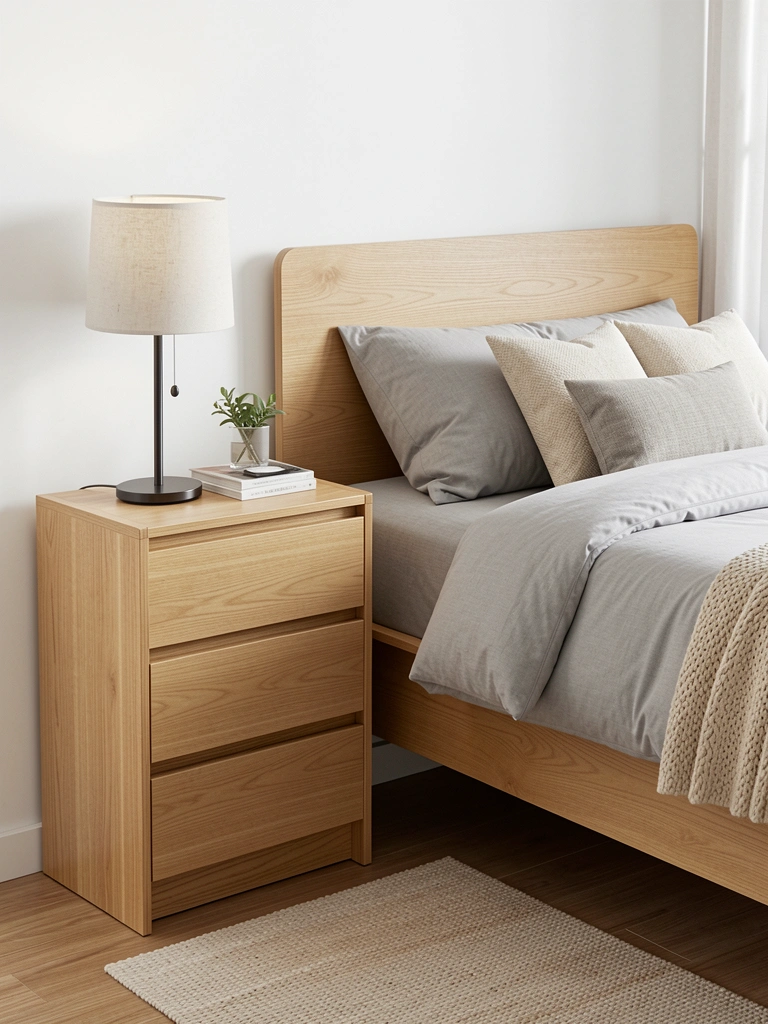
A slim dresser fills double duty in a corner bedroom: it provides both storage and a surface for a lamp or alarm clock. This approach eliminates the need for a separate nightstand, freeing up precious floor space.
Look for narrow dressers (20–28 inches wide) at IKEA ($80–$200), Article, or thrift stores. Solid wood dressers feel less flimsy than particleboard and last longer in tight spaces where everything shows wear. You can also use a vintage dresser (Craigslist, Facebook Marketplace, estate sales) for $30–$150 and refinish it to match your color scheme.
Pro tip: Position the dresser perpendicular to the bed to create a subtle room divider visually.
You’ll gain organized storage and a functional surface without sacrificing the openness your corner bedroom desperately needs.
11. Hang Sheer Curtains from the Ceiling to the Floor
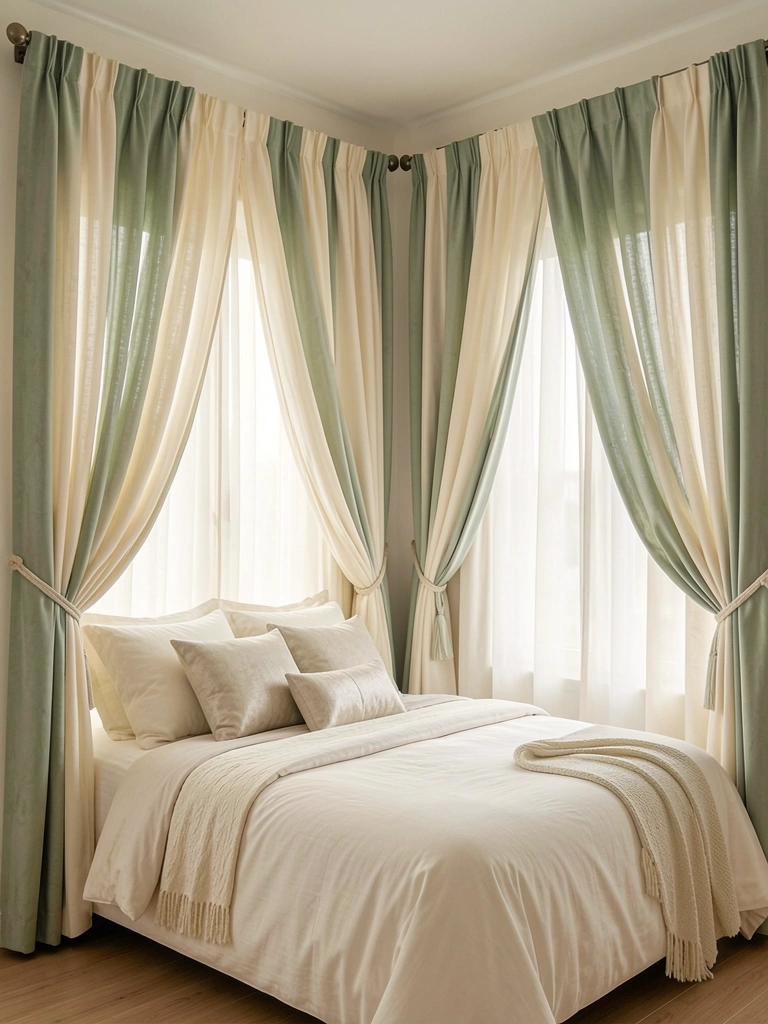
Floor-to-ceiling curtains turn your corner bed into a sanctuary without requiring expensive built-ins. Sheer fabrics filter light beautifully and create a cocoon feeling in even the tiniest bedroom.
Hang a ceiling-mounted curtain rod system ($30–$80 from IKEA or Target) and choose linen or cotton blend curtains in cream or soft green ($40–$100 per panel from West Elm, Pottery Barn, or Amazon). Hang the rods on both walls of the corner for a nested effect. Sheer fabrics won’t block light completely—perfect for bedrooms where blackout isn’t necessary but a soft visual frame is.
Weekend installation; renter-friendly with command hooks if you’re cautious about drilling.
The curtains soften your corner and create a visual separation from the rest of the room without clunky room dividers.
12. Install a Floating Headboard to Maximize Wall Space
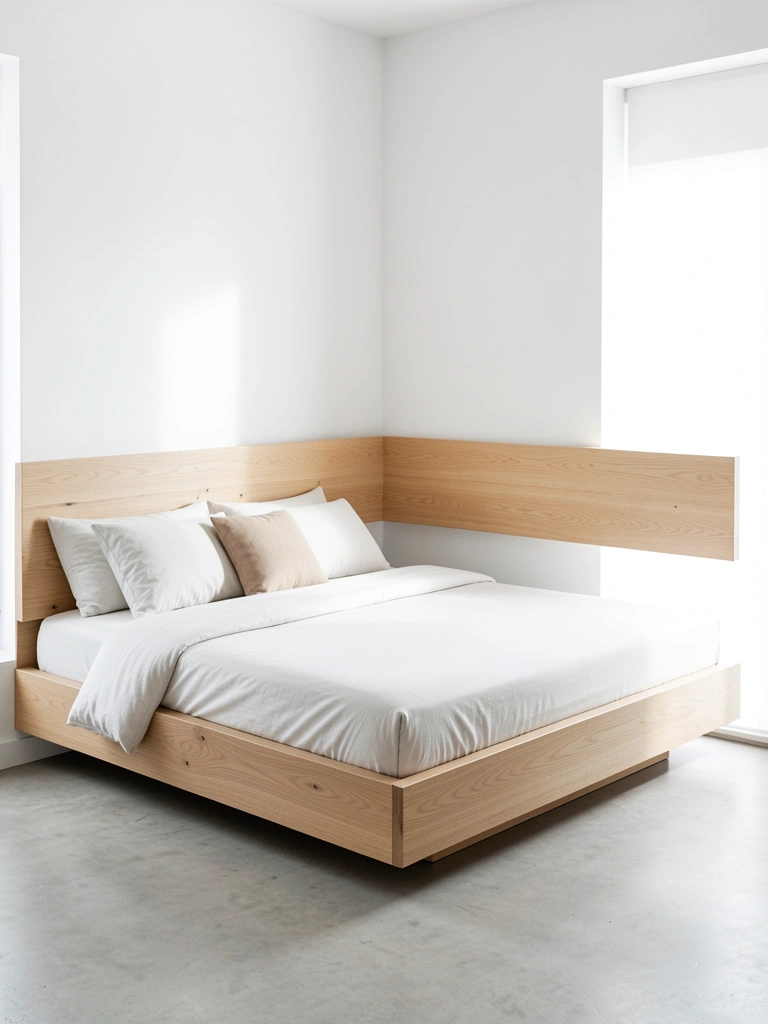
A floating headboard creates the illusion of more floor space because nothing touches the wall directly. This simple visual trick makes corner bedrooms feel roomier than they are.
Mount a custom headboard on wall-mounted brackets ($40–$100) that are hidden behind the headboard itself. IKEA’s Malm headboard system ($70–$150) works similarly. Keep the wall beneath the floating headboard clear or add a narrow console for plants—this exposed space tricks the eye into seeing more room.
DIY option: Build a simple plywood headboard, paint it, and mount on invisible shelf brackets ($50 total materials).
Three-hour installation if you’re comfortable with wall anchors and a level.
The floating effect makes your corner bed look intentional and modern instead of space-filling.
13. Create a Cozy Corner with a Reading Chair
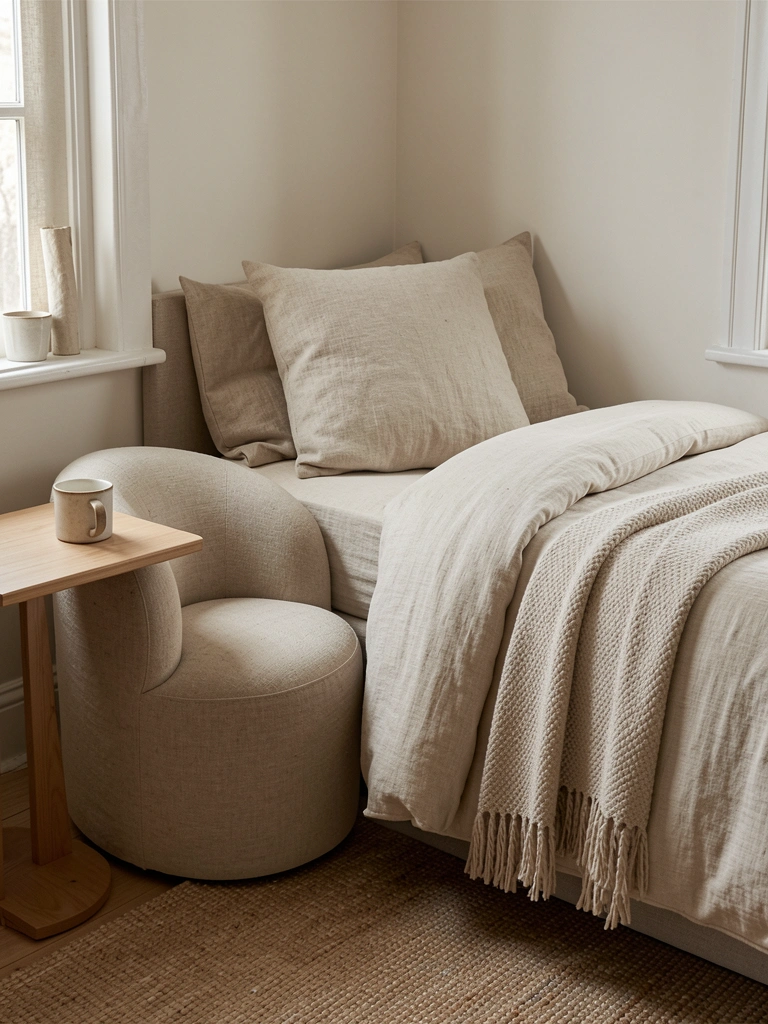
If your corner bedroom has any extra square footage, a small reading chair transforms the space into a dual-purpose retreat. The chair doesn’t have to be large—even 24 inches wide works.
Search for compact chairs at Article ($400–$800), IKEA’s STRANDMON chair ($150–$200), or thrift stores ($20–$100). Look for curved, organic shapes that fit snugly without feeling cramped. Pair the chair with a small side table (12–18 inches) for a cup of tea or book. Position the chair across from the bed to create visual balance in the room.
Budget hack: A cushioned ottoman can double as a chair alternative for $50–$150.
You’ll transform your bedroom from a sleeping space into a place where you actually want to spend time.
14. Use Multifunctional Furniture Like a Bed with Built-in Storage
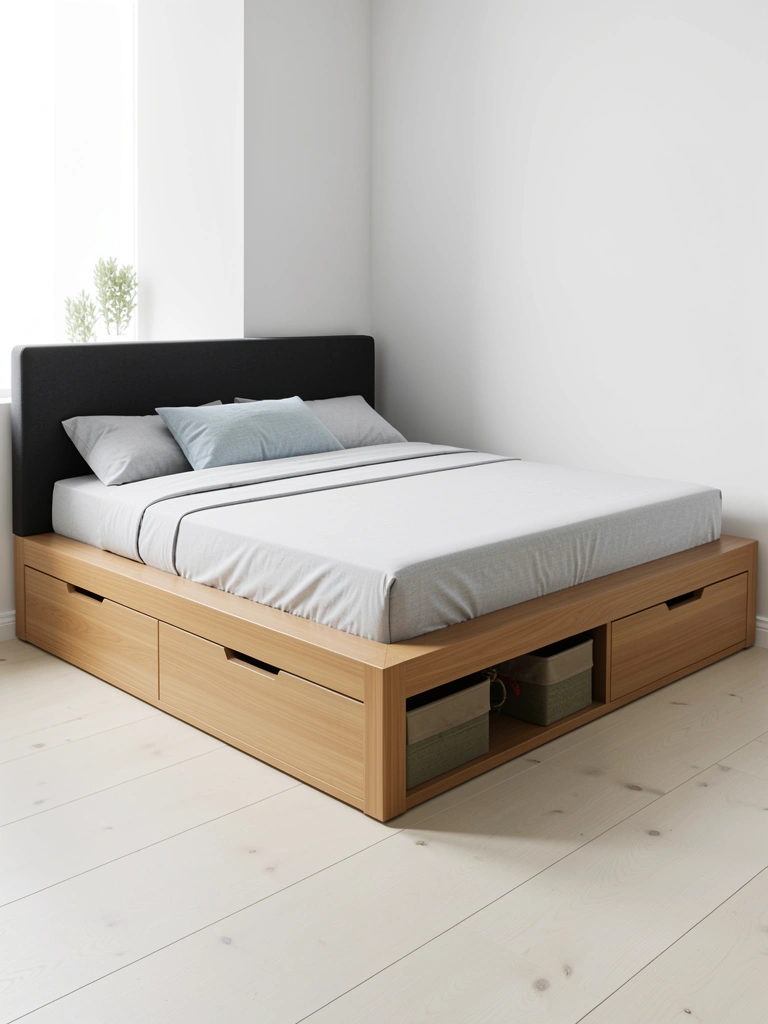
A bed frame with built-in drawers or storage compartments saves you from needing a separate dresser entirely. In small corners, this consolidation is a game-changer for keeping clutter hidden and organized.
Invest in a platform bed with under-bed storage from Article ($700–$1,500), West Elm ($500–$1,200), or IKEA’s MALM bed ($300–$600). These beds typically hide two to four full-size drawers that hold off-season clothing, extra linens, or bedding. The bed sits lower to the ground, making the room feel airier.
Pro tip: Measure your ceiling height before buying—lower platform beds suit rooms with 8-foot ceilings better than tall slatted frames.
This one furniture piece replaces both your bed and dresser, freeing up floor space for movement and air.
15. Paint the Ceiling a Soft Warm Tone
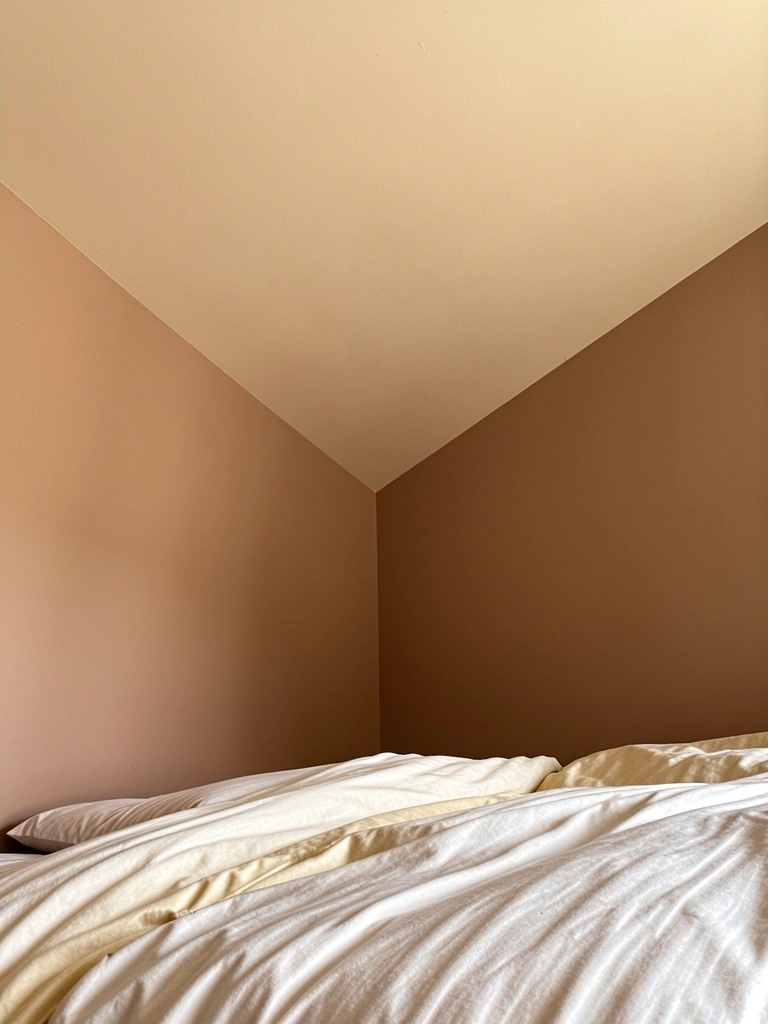
Painting your bedroom ceiling a soft warm tone instead of stark white makes the space feel enveloping rather than clinical. Warm ceilings visually lower high ceilings (making rooms feel cozier) and create a spa-like atmosphere in compact spaces.
Use a warm off-white, pale cream, or soft greige paint (Sherwin-Williams “Accessible Beige” or Benjamin Moore “Swiss Coffee,” around $30–$50 per gallon). Apply with an extension roller to avoid neck strain. One gallon covers most bedroom ceilings. Hire a painter if ceiling work intimidates you ($200–$400 for a small room).
Two to three hours DIY; three to five hours with a professional.
The psychological shift is noticeable—a warm ceiling makes your corner bedroom feel like an embrace instead of a small box.
16. Add a Murphy Bed for Maximum Space Savings
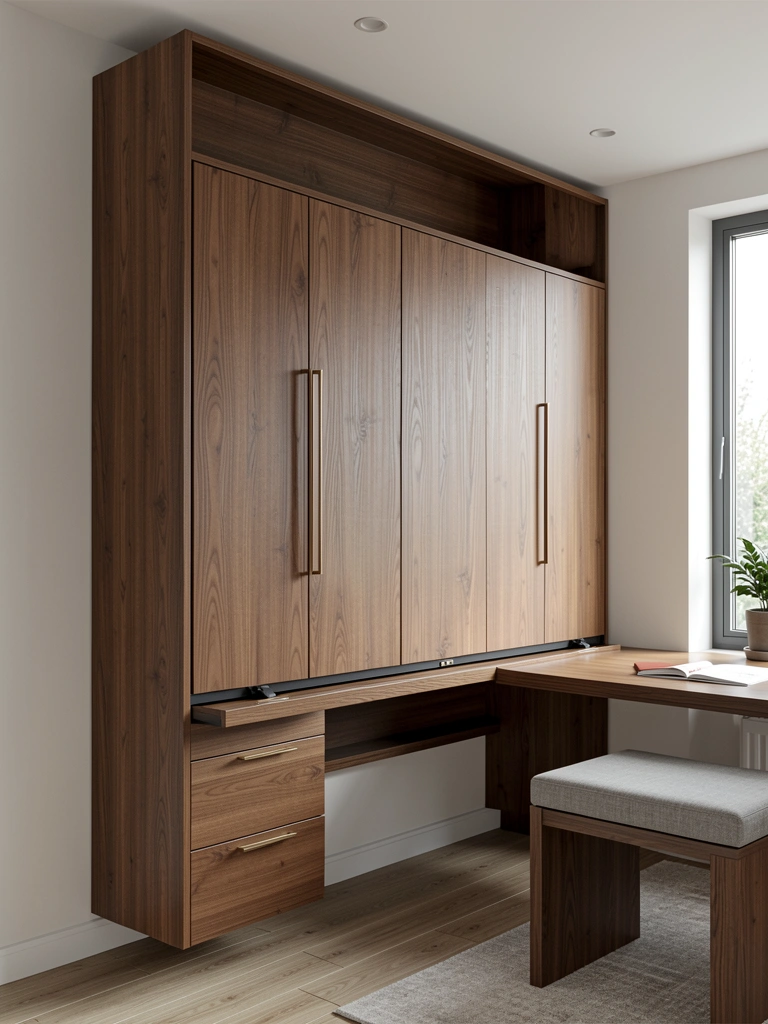
If your corner bedroom doubles as a workspace or guest room, a Murphy bed (wall bed) saves 50%+ of your floor space during the day while providing a full-size sleeping surface at night.
Murphy bed kits range from $300 (DIY IKEA-style) to $3,000+ (custom installations). Companies like Expand Furniture, Deskbeds, or local carpenters can build one into your corner. Install in a weekend with a kit or hire a professional ($500–$1,500 labor).
Pro tip: Mount a desk or small console beneath the folded bed to use the space productively during the day.
You’re not just gaining a corner bed—you’re gaining an entire second function for your room.
17. Layer Soft Textures with Wool and Linen Mix
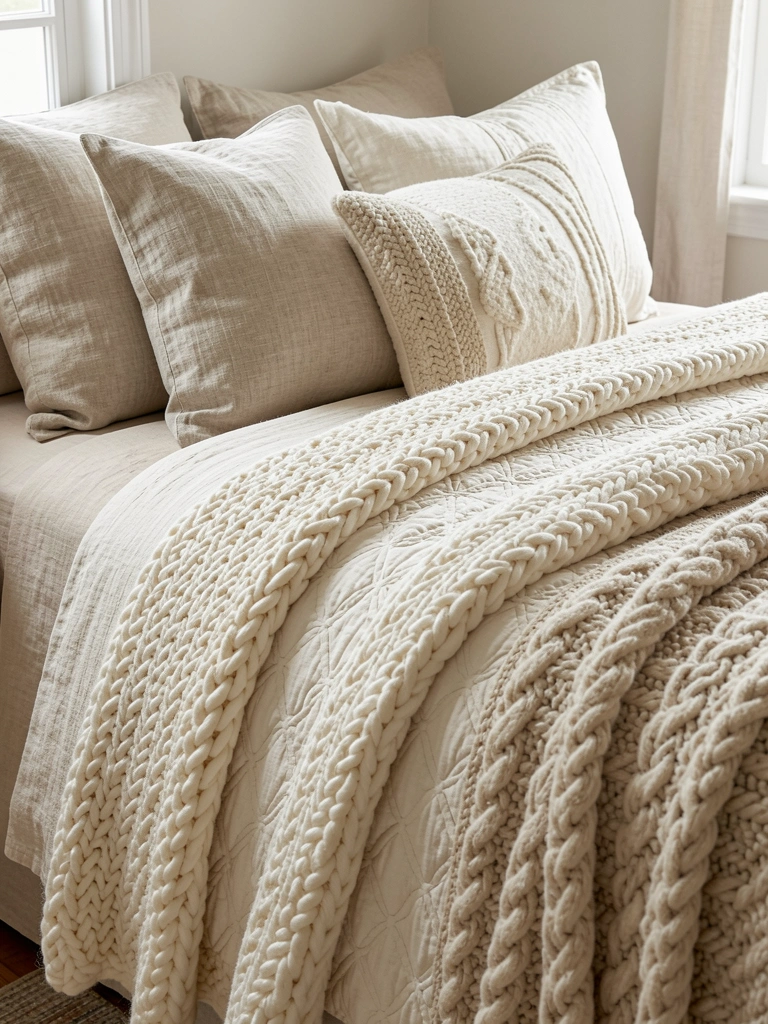
Mixing natural fiber textures—linen, wool, cotton—creates visual interest without adding bulk to a small corner bed. Natural materials also support biophilic design, which research shows improves sleep quality.
Buy linen sheets ($60–$150 from Parachute, Brooklinen, or Target), a wool throw ($50–$120), and quilted pillowcases ($20–$40 per pillow). Mix cream, oatmeal, and warm white tones so everything coordinates. Expect to spend $150–$300 total for quality pieces, or $50–$100 if buying budget-friendly versions.
Wash linen with cool water to maintain softness; wool requires gentler care.
The mix of textures makes your bed feel intentionally styled and gives you tactile comfort that encourages rest.
18. Install Blackout Shades Behind Sheer Curtains
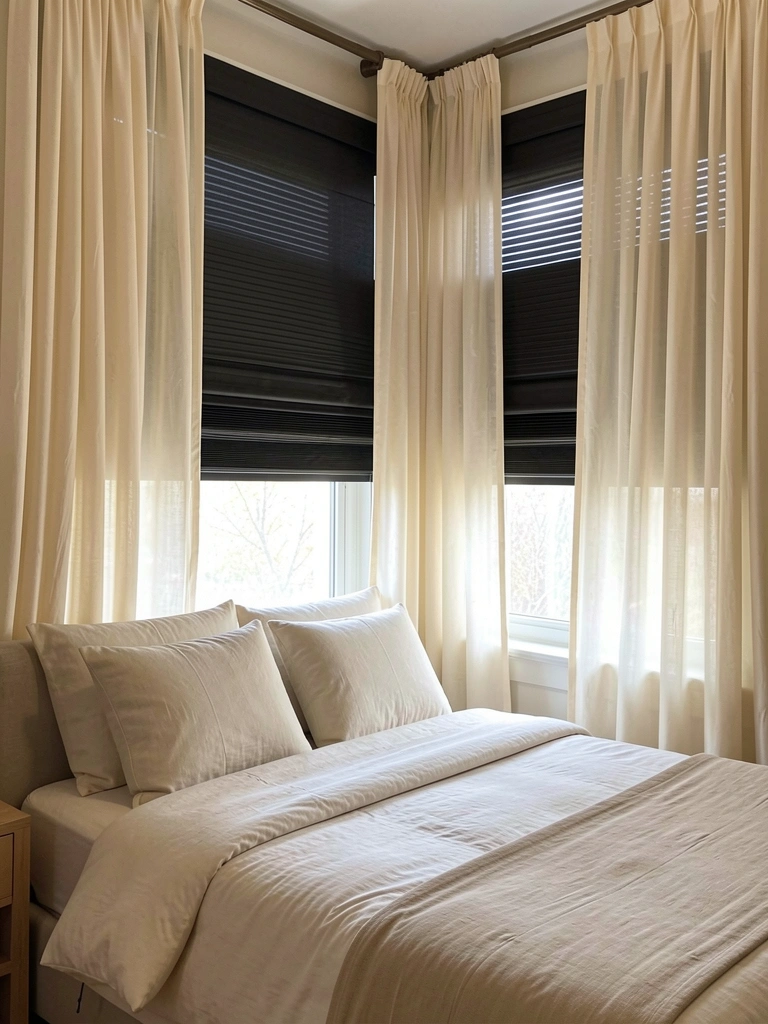
Layering blackout shades behind decorative sheer curtains gives you both style and sleep-optimized darkness. This combo works beautifully in corners where windows are unavoidable.
Install cellular shades or roller blackout shades ($30–$80 from Home Depot, Lowes, or Amazon) as your base layer, then hang sheer curtains in front ($40–$100 per panel). Choose white, cream, or soft gray for both layers so they coordinate. The system takes 30 minutes to install and is renter-friendly if you use tension rods for curtains.
Pro tip: Look for blackout shades with noise-dampening properties if your corner bedroom is in a noisy neighborhood.
You’ll sleep deeper because your corner bed finally has the darkness your brain needs, while maintaining visual softness during waking hours.
19. Add Live-Edge Wood Shelving for Biophilic Design
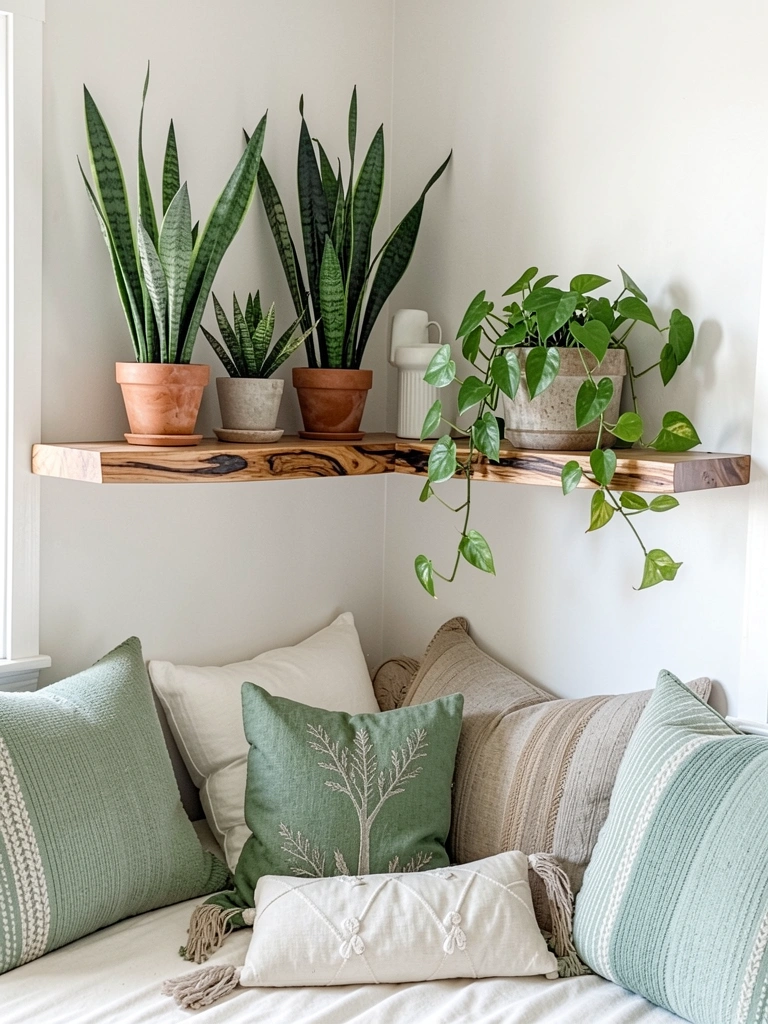
Live-edge wood shelving brings natural elements into your corner bedroom, supporting biophilic design principles that research links to better sleep and reduced stress. The organic shape of live-edge wood feels curated and intentional.
Purchase live-edge shelves from local woodworkers ($50–$200 per shelf depending on size), Etsy sellers ($40–$150), or IKEA’s nature-inspired options ($30–$80). Mount with invisible brackets ($20–$40). Top the shelves with air-purifying plants: snake plants, pothos, or peace lilies ($15–$40 each from local nurseries or big-box stores).
Weekend installation; budget $100–$300 total for shelves and starter plants.
You’ll create a corner that feels like a retreat—not just a bedroom packed into a small space.
20. Use a Curved Bench at the Foot of the Bed
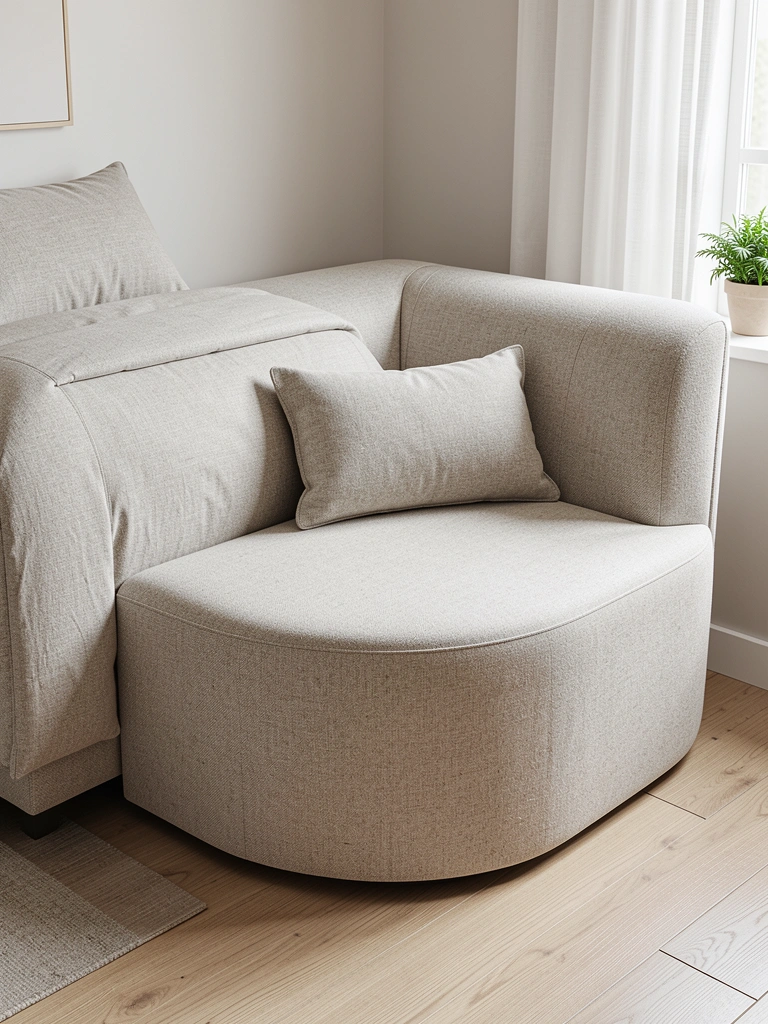
A curved bench at the foot of your corner bed adds seating, storage opportunity, and follows 2025’s trend toward organic, soft furniture shapes. Benches tuck neatly into corners without eating much floor space.
Look for upholstered benches at Article ($300–$600), West Elm ($200–$500), or IKEA ($80–$200). Choose curved designs in natural fabrics like linen or wool. Some benches open to reveal storage inside—perfect for extra bedding or off-season clothing. Sizes typically range from 36–48 inches long.
Budget alternative: Buy a vintage wooden bench at a thrift store ($30–$80) and add an upholstered cushion ($40–$100).
You’ll gain a multifunctional piece that looks intentional while serving practical storage and seating needs.
21. Mount a Fold-Down Desk for a Multipurpose Corner
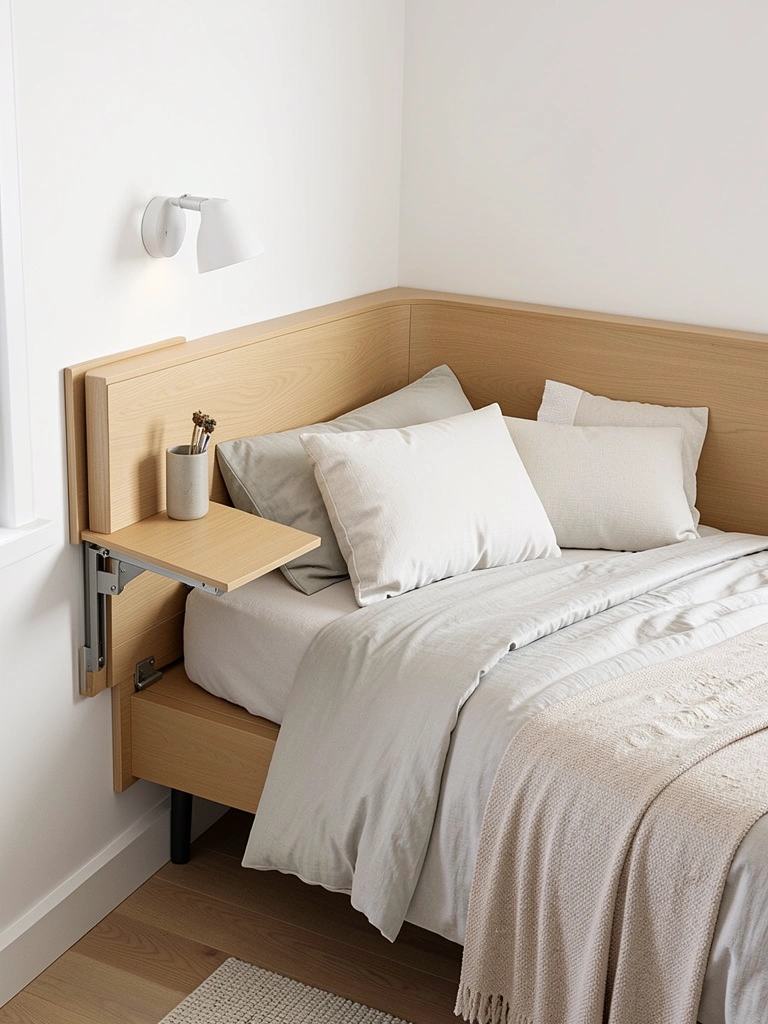
If your corner bedroom needs to work as both bedroom and home office, a fold-down desk maximizes function without consuming floor space. When folded up, it’s barely visible.
Install a wall-mounted drop-leaf table ($40–$120 from IKEA, Amazon, or hardware stores) 30 inches high beside your bed. The surface area (usually 24–36 inches wide) is enough for a laptop, but folds up flush with the wall when not in use. Some models include hidden storage shelves above for supplies.
Installation takes 20–30 minutes with basic tools; renter-friendly if using heavy-duty command strips (though weight capacity is lower).
Your corner bedroom becomes a flexible space where you can work during the day and rest at night.
22. Create a Canopy Effect with Fabric Drapes (No Frame Needed)
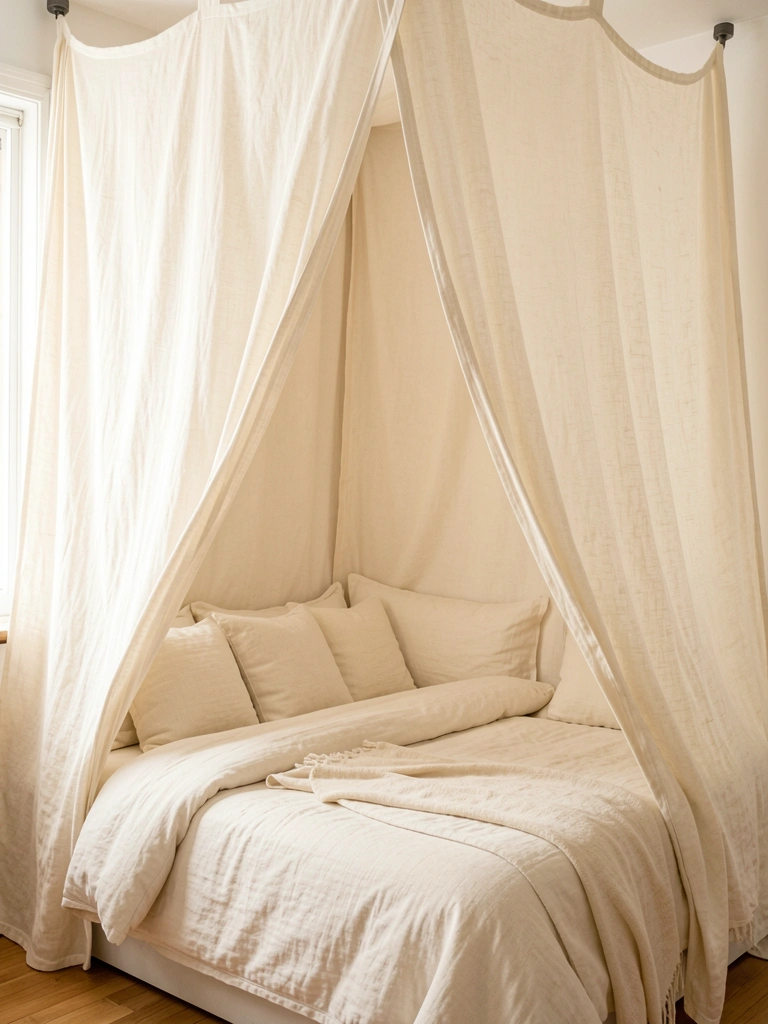
A fabric canopy without a frame gives you the cozy, enclosed feeling of a canopy bed while taking up minimal space and zero floor footprint. This works beautifully in corners where a traditional canopy frame would feel cramped.
Screw two sturdy ceiling hooks into studs above your bed ($20–$30 for a pair). Drape lightweight linen or cotton fabric (4–6 yards at $8–$15 per yard from fabric stores) between the hooks. Let the fabric pool slightly on the bed for a romantic, layered look. Alternatively, use sheer curtain panels ($20–$40 per panel) for a quicker setup.
Two hours including shopping and installation; fully renter-friendly if using damage-free hook alternatives (though they hold less weight).
The fabric creates a visual sanctuary and makes your corner bed feel intentional and designed rather than squeezed into leftover space.
23. Add Motion-Sensor Smart Lighting for Convenience
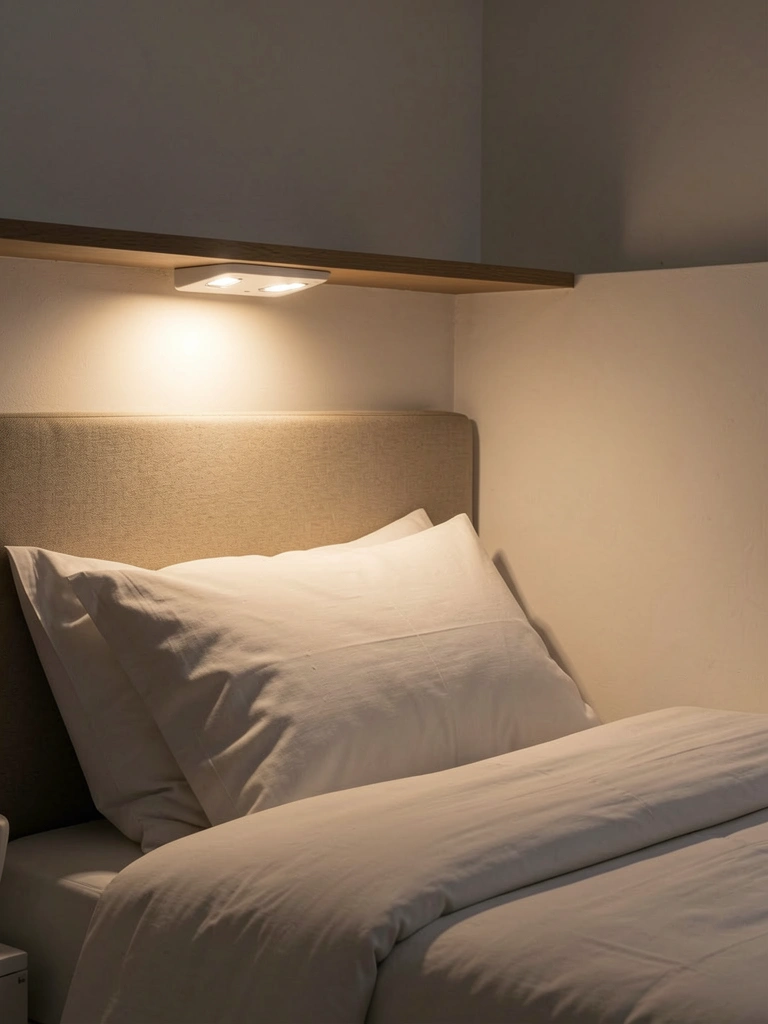
Motion-sensor lights turn on automatically when you move, perfect for corner bedrooms where reaching a wall switch is awkward. Smart lighting is preferred by 70% of homeowners for convenience and mood control—especially useful in tight layouts.
Install a motion-sensor puck light ($15–$40 from Amazon or Target) on a floating shelf or mount it directly to the wall. Choose warm white bulbs (2700K) to avoid jarring awakening at night. Program the light to dim automatically after 30 seconds so it doesn’t keep you awake.
Fifteen-minute installation; battery-powered options are renter-friendly and require zero tools.
You’ll never fumble in the dark again, and your corner bed becomes genuinely functional for nighttime movement without harsh overhead lights.
Ready to transform your corner into a bedroom you actually love? Pick one idea that speaks to your space and budget, then try it this weekend. Whether you start with paint, lighting, or a cozy rug, small changes add up fast—and your corner bed deserves to feel like a retreat, not an afterthought. Save this post for later, and don’t hesitate to share it with friends navigating small-space bedrooms too.
Leave a Reply