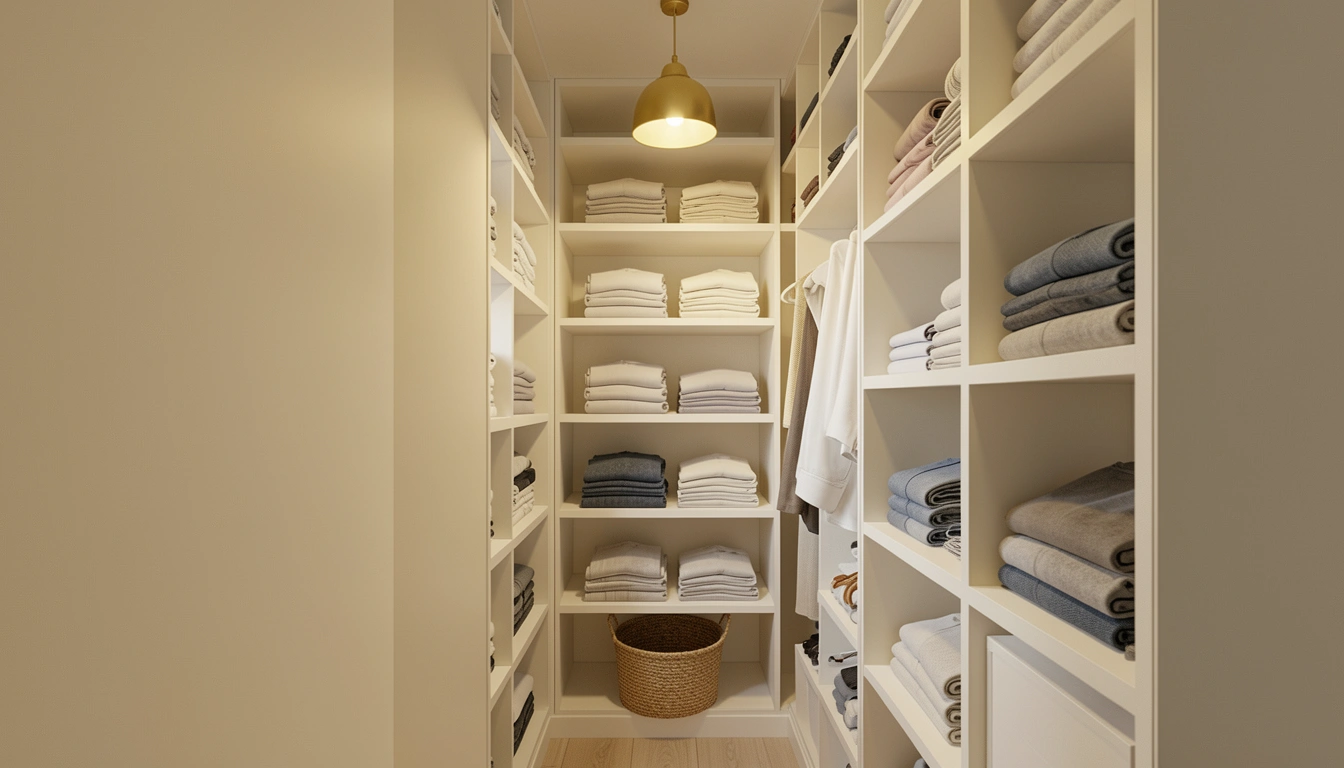
If you’re staring at a closet the size of a shoebox and wondering how you’ll ever fit your life into it, you’re not alone. Micro-closets are a real challenge—but they’re also a golden opportunity to get creative. The secret isn’t more space; it’s smarter storage, strategic styling, and a few tricks that professional organizers swear by. Whether you’re renting a studio, living in a dorm, or just stuck with an awkwardly small bedroom closet, these 24 ideas will help you maximize every inch. You’ll learn how to use vertical space like a pro, choose furniture that actually fits, and organize in a way that makes getting dressed easier, not harder. Ready to make your micro-closet feel twice as big? Let’s go.
1. Install Floating Shelves Up to the Ceiling
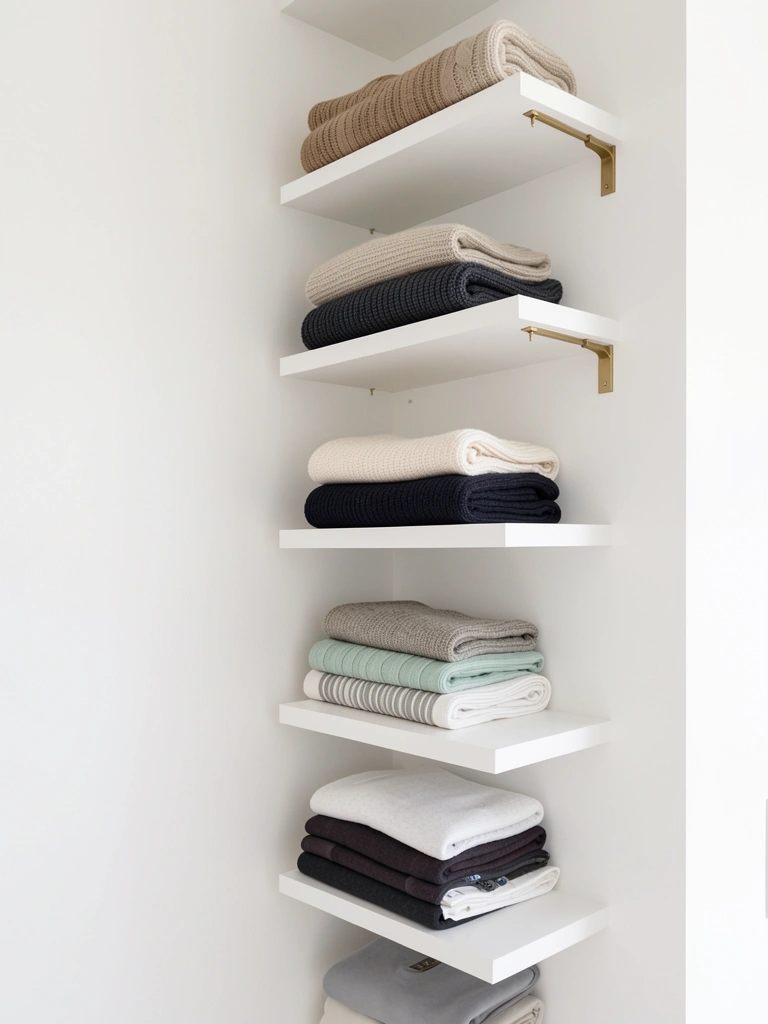
Floating shelves are the secret weapon of small-space organizing because they don’t eat floor space and draw your eye upward, making ceilings feel higher. Install shelves every 12-15 inches apart, starting about 6 inches from the floor and going as high as you comfortably reach. Floating shelves typically cost $15-$50 each at Target, IKEA, or Home Depot, and installation takes about an hour per shelf with basic tools.
The key is securing them properly to wall studs using wall anchors rated for your closet’s weight capacity. Start with 2-3 shelves and add more as you see what works. For renters, removable adhesive shelves exist, though they hold lighter loads.
You’ll gain usable storage that doesn’t require floor footprint. Suddenly, that wasted vertical space becomes prime real estate for off-season items, shoes, or folded essentials.
2. Use Over-the-Door Hooks for Bags and Accessories
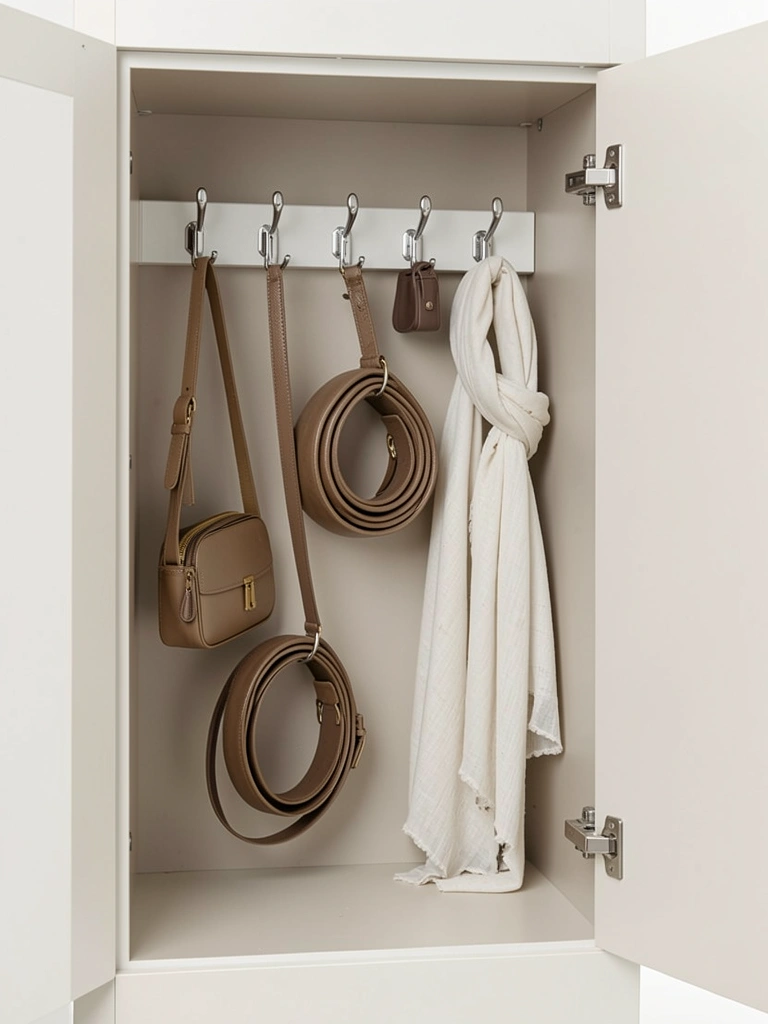
An over-the-door hook organizer is the easiest no-commitment solution for cluttered surfaces. These adhesive or screw-in racks mount on the inside of your closet door (or the back of a bedroom door if your closet is doorless) and instantly corral bags, belts, scarves, and hats.
A basic over-the-door hook rack costs $8-$20 at Target or Amazon, takes 5 minutes to install, and holds surprisingly much. Adhesive versions work for renters and require zero tools. Check weight limits if you’re storing heavy bags.
You’ll reclaim shelf or rod space that was buried under clutter. Plus, you see all your accessories at a glance, so getting ready moves faster and you actually use what you own.
3. Add a Slim Rolling Cart Between the Rod and Wall
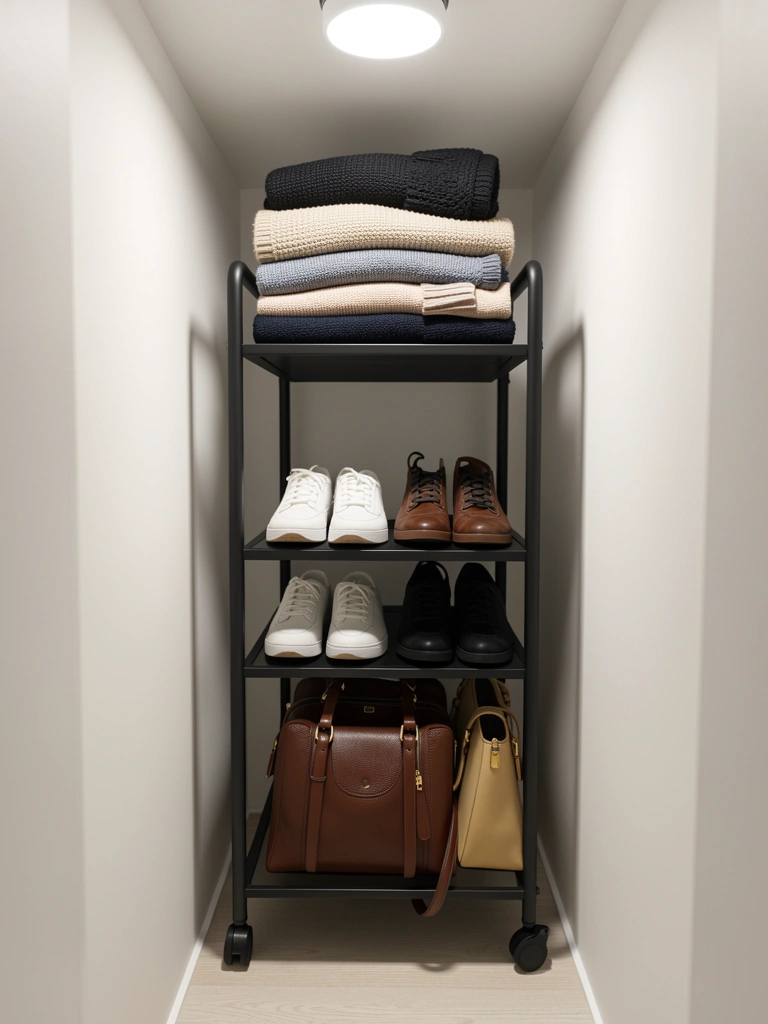
If your micro-closet has any gap between the hanging rod and the side wall, a slim rolling cart slides into that wasted space and becomes instant storage for folded items, shoes, or accessories. Look for carts designed specifically for narrow spaces—typically 12-18 inches wide, costing $40-$80 at IKEA, Target, or Wayfair.
The beauty of a rolling cart is flexibility: you can slide it out when you need to access hanging clothes or reorganize. Three tiers give you multiple zones for different clothing categories. Measure your space first to ensure it fits.
Your hanging rod suddenly feels less crowded, and you’ve added three whole shelves of storage without any installation. The cart also makes it easier to grab what you need without disrupting everything else.
4. Swap Out a Standard Rod for an Adjustable Double Rod
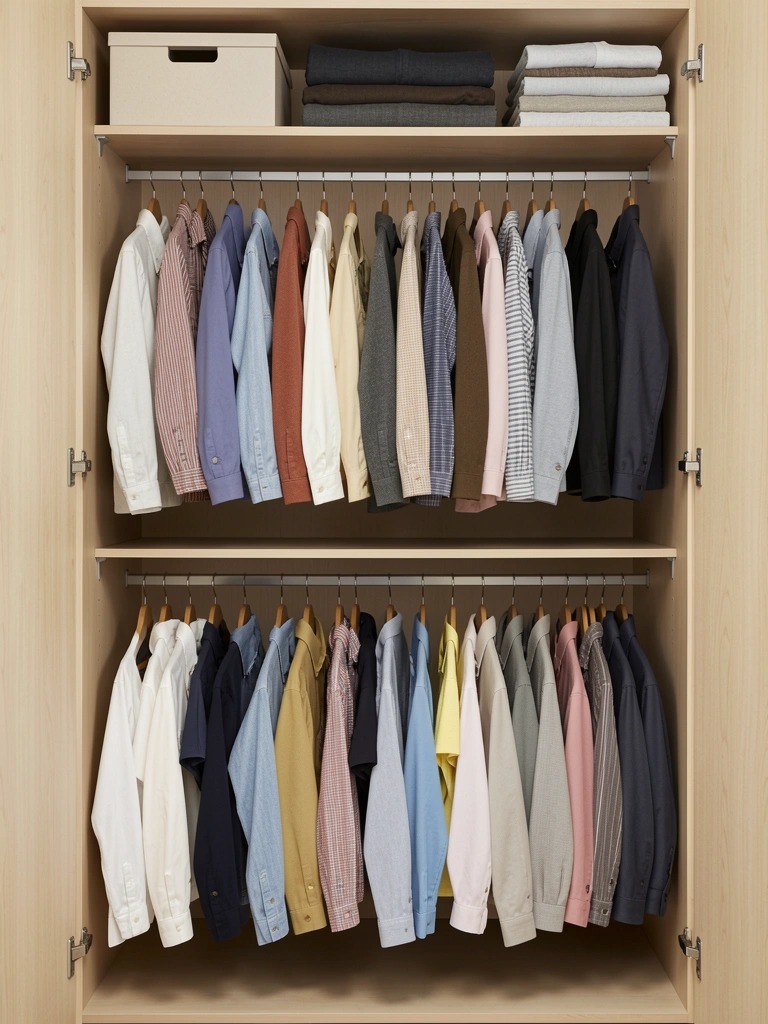
A standard single rod wastes half your vertical hanging space. Replace it with an adjustable double rod system, which lets you hang short items (like tops and blazers) on top and longer pieces (like dresses and coats) below. Double rod kits cost $30-$70 at Home Depot, IKEA, or Amazon, and installation takes 30-45 minutes.
Measure your closet depth and width before buying. Most systems adjust to fit spaces from 24-48 inches wide. If you rent, some tension-rod versions don’t require wall holes and work surprisingly well.
You’ll roughly double your hanging capacity without expanding the closet footprint. This alone can be the difference between an overstuffed nightmare and an organized, breathable wardrobe.
5. Go Vertical with Shoe Cubbies or Wall-Mounted Organizers
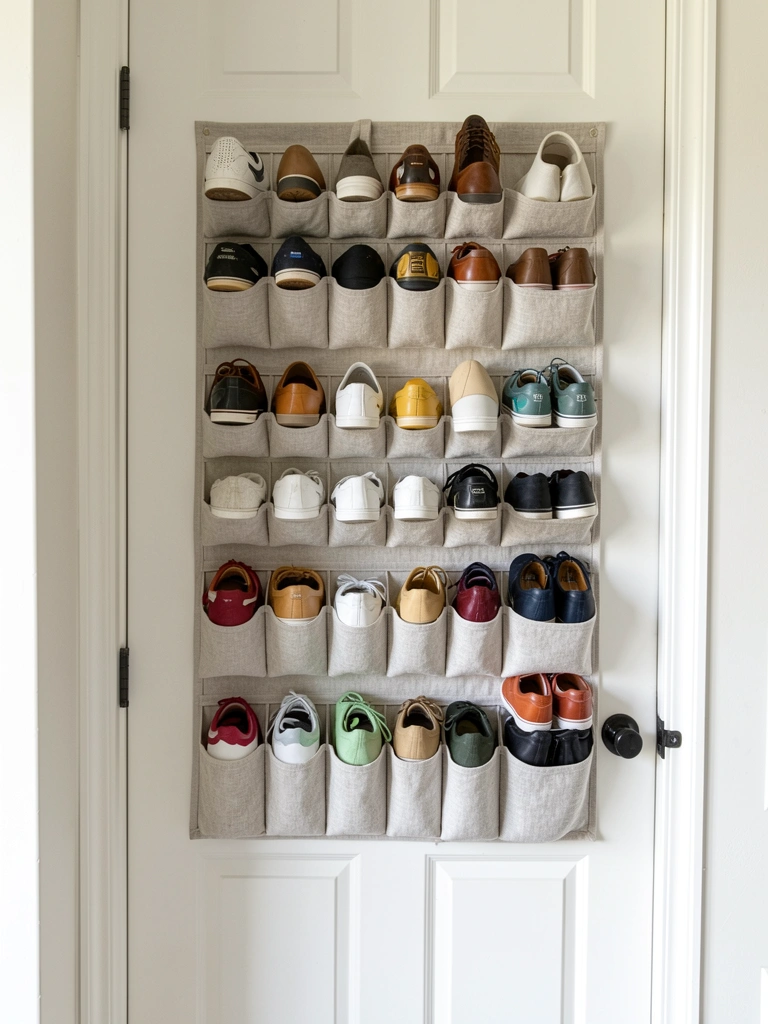
Shoes are closet space killers because they sit on the floor taking up real estate. Mount a fabric or wire shoe organizer on the inside of your closet door, wall, or even over a rod to store 12-24 pairs vertically instead of piling them on the floor. These organizers run $15-$40 at Target, Bed Bath & Beyond, or Amazon and attach with adhesive or screws.
Over-the-door options work best for renters. Wire versions hold more weight and last longer than fabric, though fabric looks sleeker. Sort by season or style to make finding the right shoe quick.
Your closet floor suddenly opens up, making the space feel bigger. You’ll also see every shoe you own without digging, so you actually wear what you’ve bought.
6. Declutter Ruthlessly Before Adding Anything
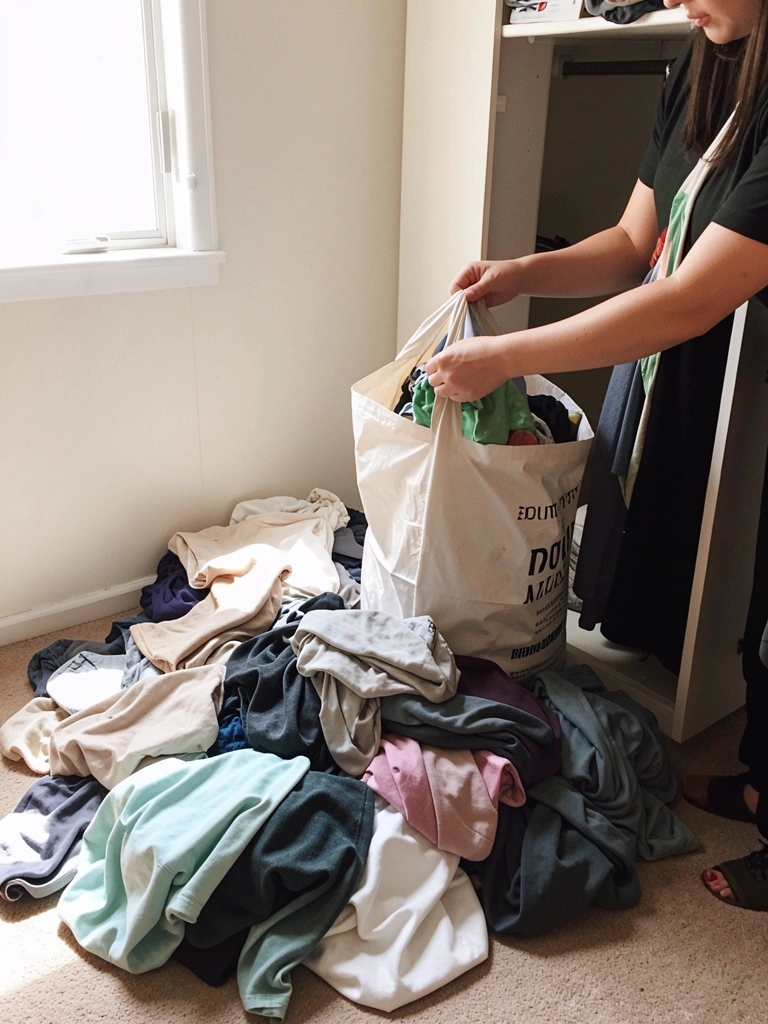
Before you buy a single organizational tool, be honest about what stays and what goes. Pull everything out, try things on if unsure, and create three piles: keep, donate, sell. Aim to remove at least 20-30% of what you own. This one step makes every other hack actually work.
Set a timer for 2-3 hours to avoid decision fatigue. Use the “one year” rule: if you haven’t worn it in a year and it doesn’t make you happy, it goes. Keep quality basics, one version of similar items, and pieces that fit your current life.
You’ll be amazed how much space you suddenly have. A decluttered micro-closet often feels spacious enough without any storage hacks—though combined with other tricks, you get even more breathing room.
7. Choose Slim Velvet or Felt Hangers to Slim Down the Rod
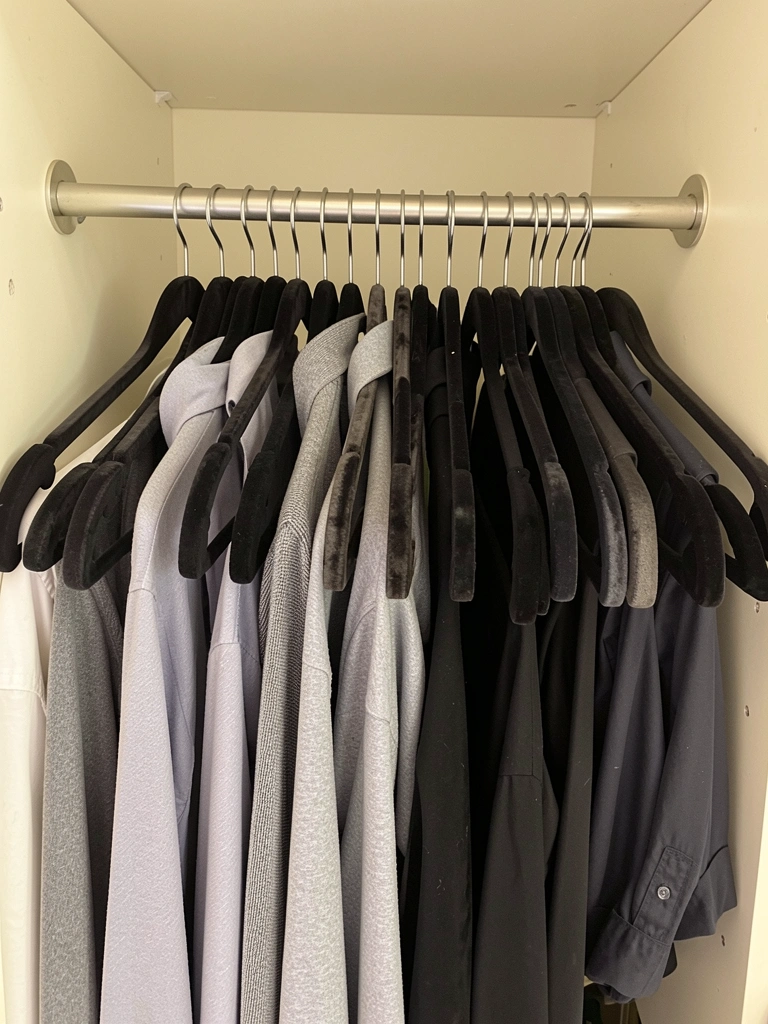
Switching from chunky plastic hangers to slim velvet or felt hangers saves roughly 1-2 inches of rod space per garment—and when you have 30+ items hanging, that adds up fast. Plus, velvet prevents slipping, so you can pack the rod more densely without clothes sliding off.
A set of 50 slim velvet hangers costs $20-$30 at Target, Amazon, or Container Store. One weekend project to swap them all out. Keep 3-4 wooden hangers for heavy coats; swap everything else to velvet.
Your closet rod now holds significantly more without looking chaotic. Getting dressed becomes easier because clothes don’t shift every time you grab something, and the slim profile makes the space feel less cluttered visually.
8. Paint Walls a Light Neutral or Soft Moody Tone
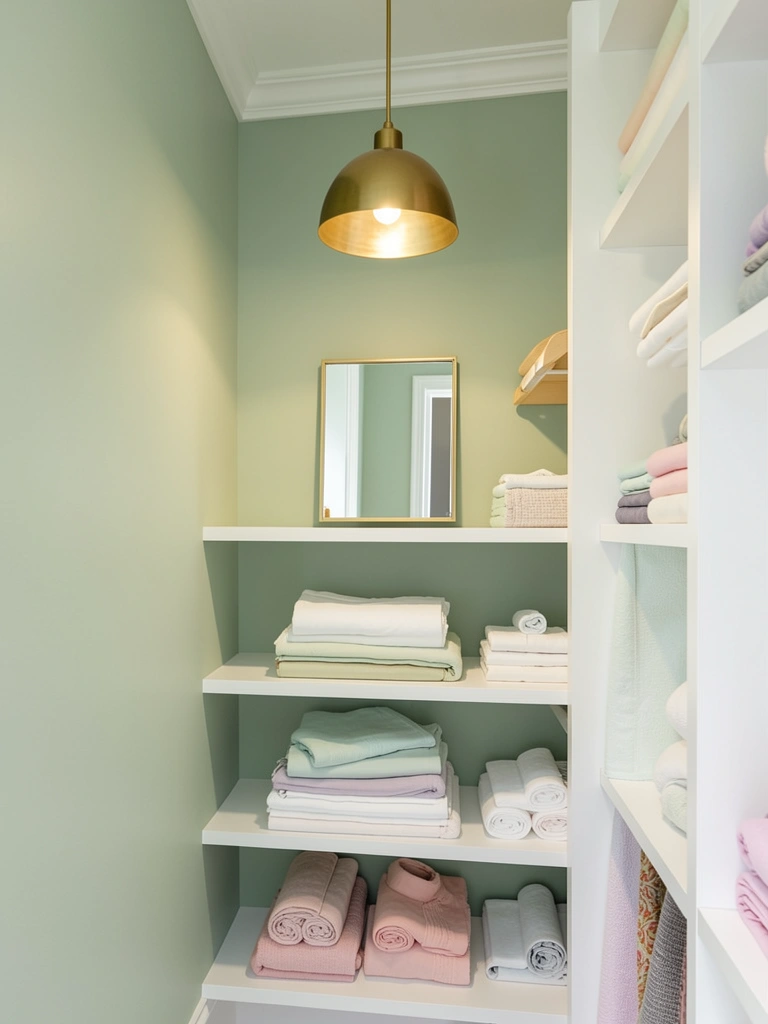
Color dramatically affects how big or small a space feels. Light neutrals (cream, soft gray, pale taupe) reflect light and expand the perceived space. If you want something moodier, soft sage, dusty blue, or warm greige still feel intimate without shrinking the closet further. Avoid dark colors in micro-closets unless you’re adding significant lighting.
Closet paint costs $20-$40 per gallon at any hardware store, and you need just 1-2 gallons for a small space. Painting takes 2-3 hours once prep is done. Renters: use removable peel-and-stick wallpaper in light tones instead ($15-$25).
A fresh coat of paint costs almost nothing compared to buying new storage and makes the space feel refreshed. You’ll notice the change every time you open the door—suddenly it feels intentional, not like a cramped afterthought.
9. Add a Small Mirror to Reflect Light and Check Outfits
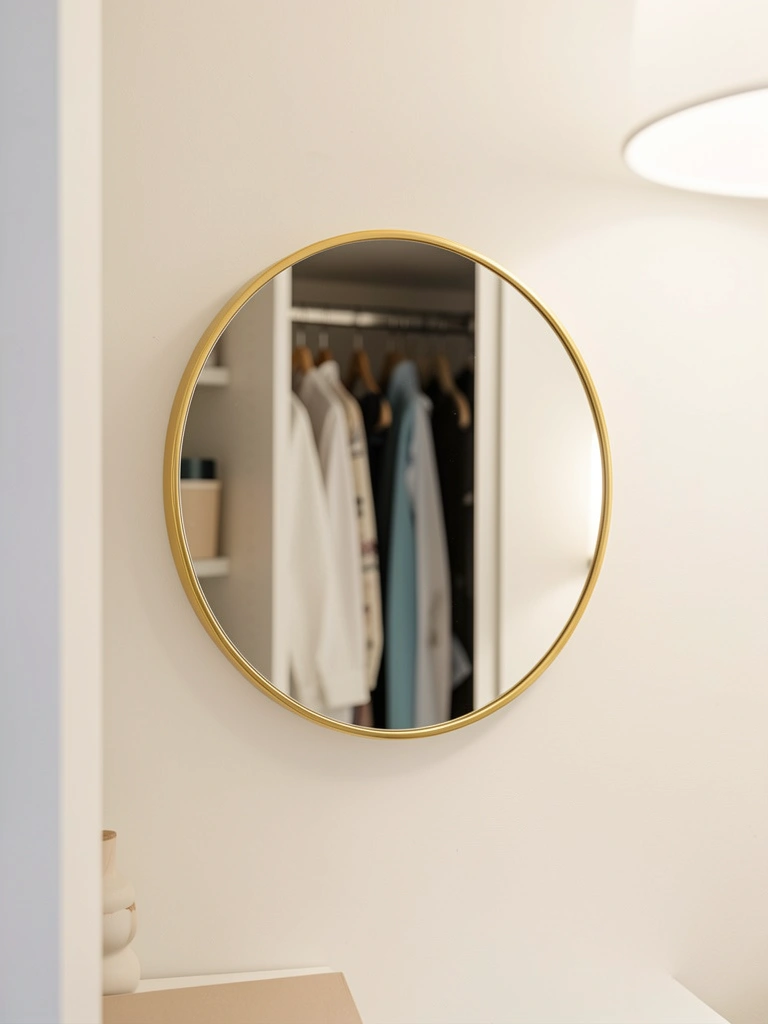
A mirror serves double duty: it bounces light around, making the closet feel bigger and brighter, and it lets you check your full outfit without leaving the space. Mount a 20-24 inch round or rectangular mirror at eye level on the wall or door.
A basic mirror costs $15-$40 at IKEA, Target, or Wayfair. Use adhesive strips (renter-friendly) or small nails. Position it opposite or near your light source to maximize reflection.
The psychological effect is real—suddenly the space feels open and functional. You can try on outfits without stepping outside, which saves time and lets you make sure colors and fit actually work before committing.
10. Install Peel-and-Stick Wallpaper for Renter-Friendly Style
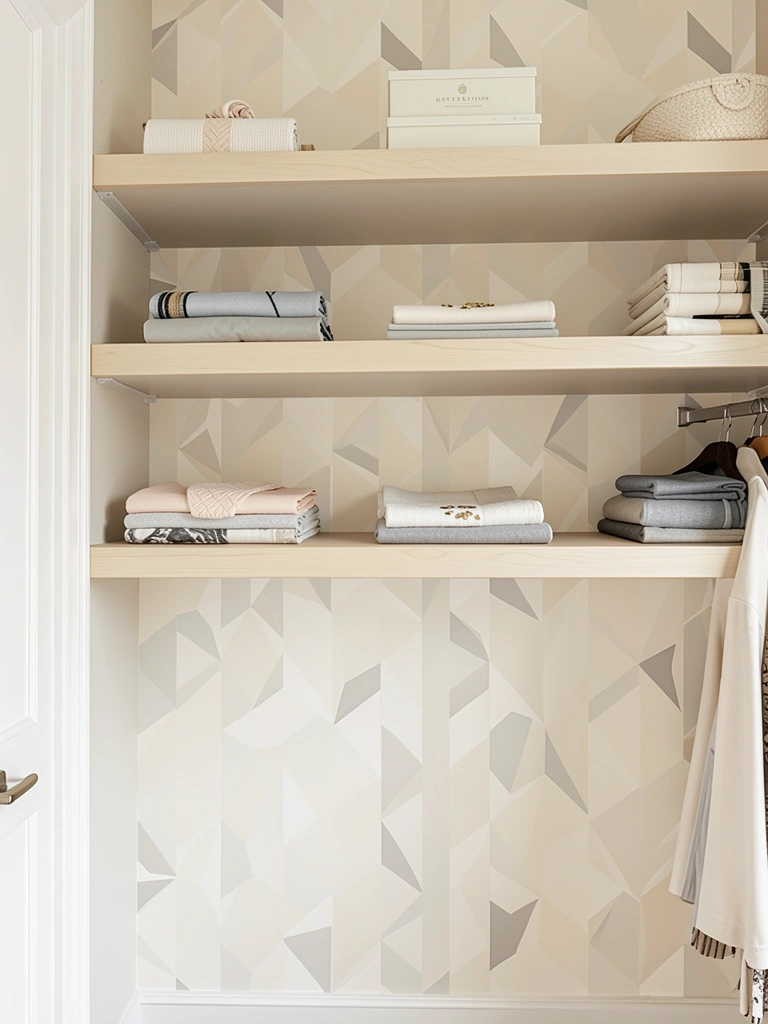
If you can’t paint or want to switch styles seasonally, peel-and-stick wallpaper gives you design flexibility without landlord drama. Choose light patterns (vertical stripes, subtle geometrics, or small-scale prints) to keep the space from feeling cramped. Avoid busy patterns in micro-closets.
Quality peel-and-stick wallpaper runs $15-$35 per roll at Target, Wayfair, or Amazon. One roll typically covers about 28 square feet. Installation takes 1-2 hours and requires just a squeegee and a patient hand.
Your closet instantly looks designed instead of utilitarian. Plus, you can peel it off cleanly when you move without damage—game-changer for renters who want their spaces to feel personal.
11. Use Vacuum Storage Bags for Seasonal Bulky Items

Bulky off-season items (winter coats, summer dresses, holiday decorations) take up prime closet real estate. Vacuum storage bags compress these items to about 1/3 their original size, freeing up shelf or floor space for daily-wear pieces.
A set of 5-10 vacuum bags costs $10-$20 at Target, Walmart, or Amazon. Store them on high shelves where you access them seasonally, not frequently. Label clearly with permanent marker or printed labels.
You’ll reclaim significant shelf space while keeping everything accessible. Come December, your winter coats don’t crowd out current outfits; they’re compressed and stored neatly above.
12. Install a Narrow Cubby Shelving Unit Against the Wall
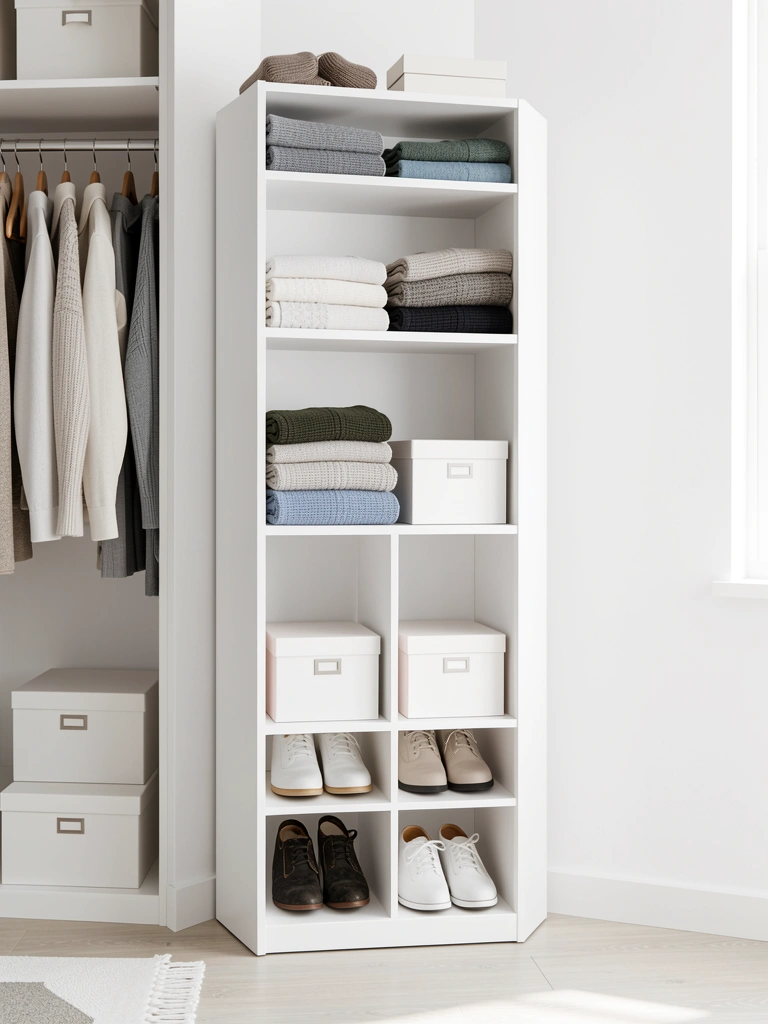
If your closet has wall space but limited floor room, a narrow cubby unit (typically 12-18 inches deep and 30-36 inches wide) provides tons of vertical storage without protruding far. These units are shallower than standard shelves, so they don’t block the door or require much depth.
A basic cube shelf unit costs $40-$100 at IKEA, Target, or Wayfair. Assembly takes 1-2 hours and requires just a screwdriver. Anchor it to the wall for safety, especially if you stack items.
Your micro-closet suddenly has organized zones: tops on one tier, bottoms on another, accessories on a third. Everything’s visible and within reach, so getting dressed becomes a simple grab-and-go process.
13. Add a Pull-Out Hamper to Hide Laundry
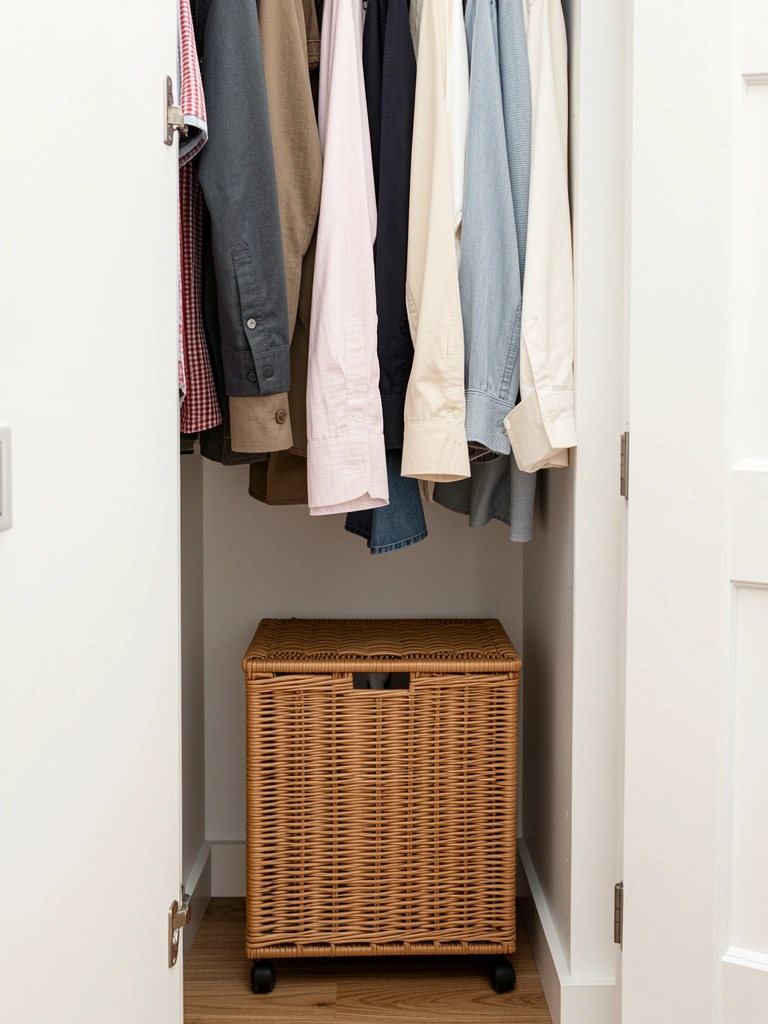
A small pull-out hamper (or even a slim fabric laundry bag on a frame) hides dirty clothes without requiring a separate corner of your room. Look for narrow designs, around 12-18 inches wide, costing $25-$60 at Target, Bed Bath & Beyond, or Amazon. Wheeled bases make it easy to drag to the washer.
Position it under your hanging rod or on the closet floor. If your closet is doorless, a hamper with a lid keeps odors contained and looks neater.
Your bedroom looks instantly tidier because dirty clothes vanish into the closet instead of piling on the floor. Laundry day is also easier since you can just roll the hamper to the washing machine.
14. Use Tension Rods to Create Dividers for Folded Items
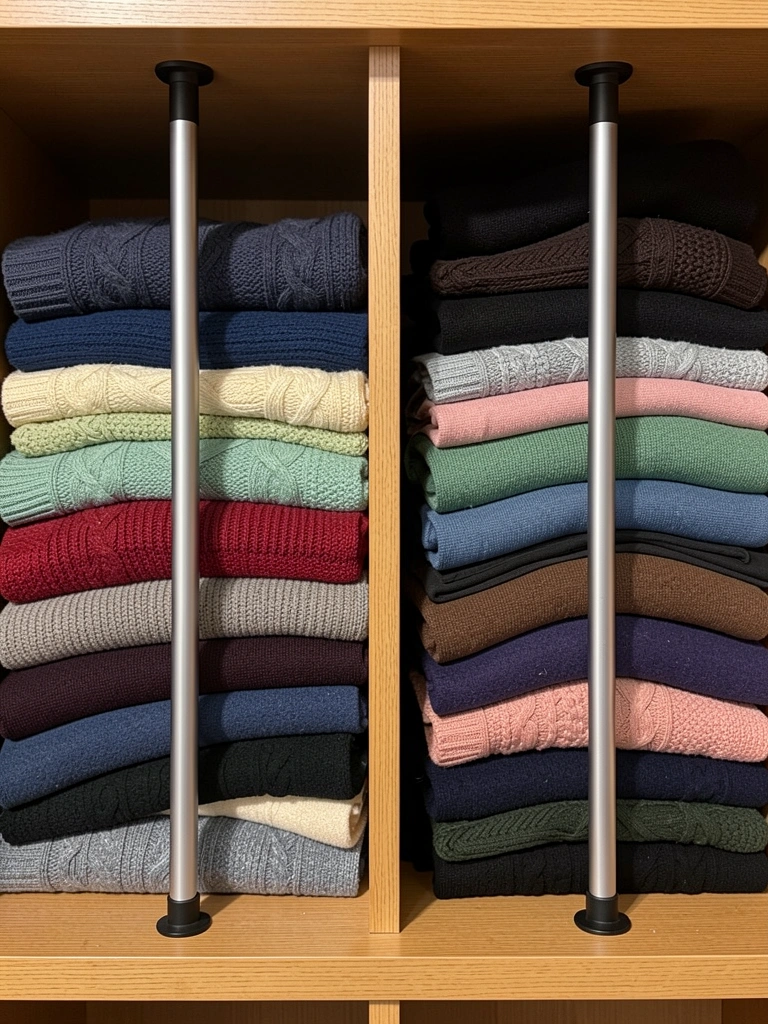
Tension rods aren’t just for hanging clothes—use them vertically on shelves to create dividers that keep folded stacks separated and upright. This prevents toppling stacks from collapsing into each other and makes individual items easy to grab without dismantling the whole pile.
Tension rods cost $8-$15 each at IKEA, Target, or hardware stores. Buy 2-4 per shelf depending on your shelf width. Installation is instant; just twist and place. No tools needed.
Your shelves look intentional and stay organized longer. Grabbing a shirt doesn’t require rebuilding an entire stack, which saves time and frustration on busy mornings.
15. Maximize the Door with Behind-the-Door Shelving
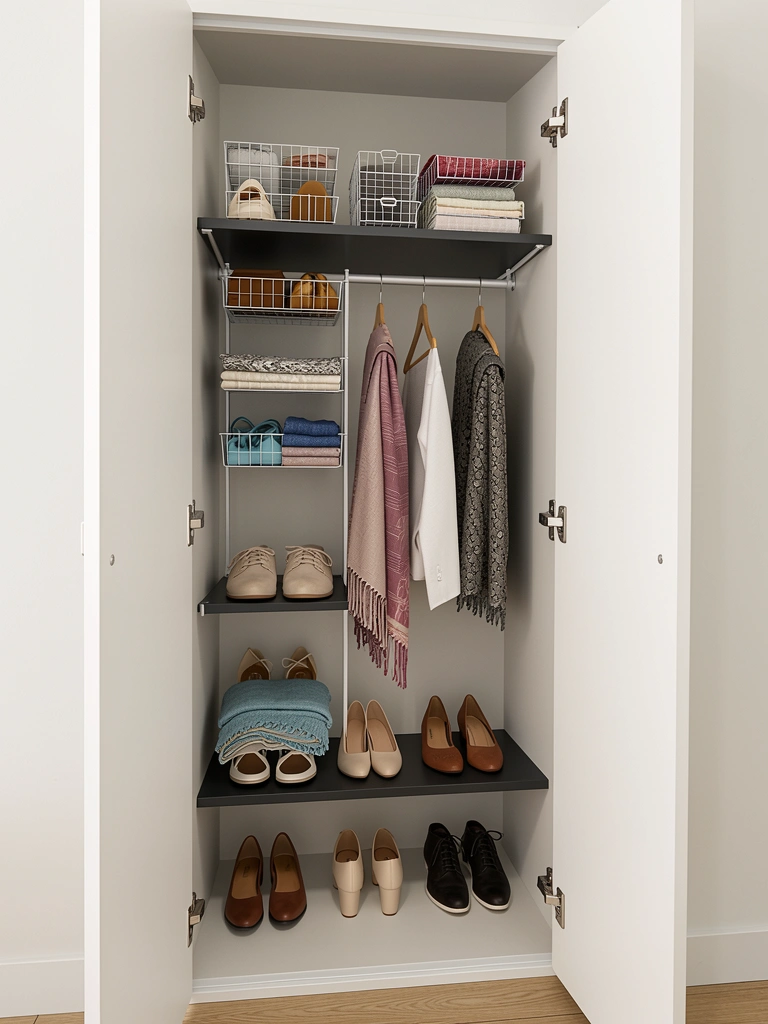
If your closet door swings inward, mount a thin over-the-door shelf unit on the back to store lightweight items like scarves, belts, socks, or shoes. These are lower-profile than hook organizers and act like small shelves.
Over-the-door shelf units cost $20-$40 at Target, Amazon, or The Container Store. Weight limits are usually 5-15 pounds, so stick to lightweight items. Installation takes 10 minutes.
You’ve essentially gained a second closet wall without any floor space. This is perfect for small accessories that would otherwise get lost in drawers or piles.
16. Install Task Lighting with a Small LED Clip Lamp
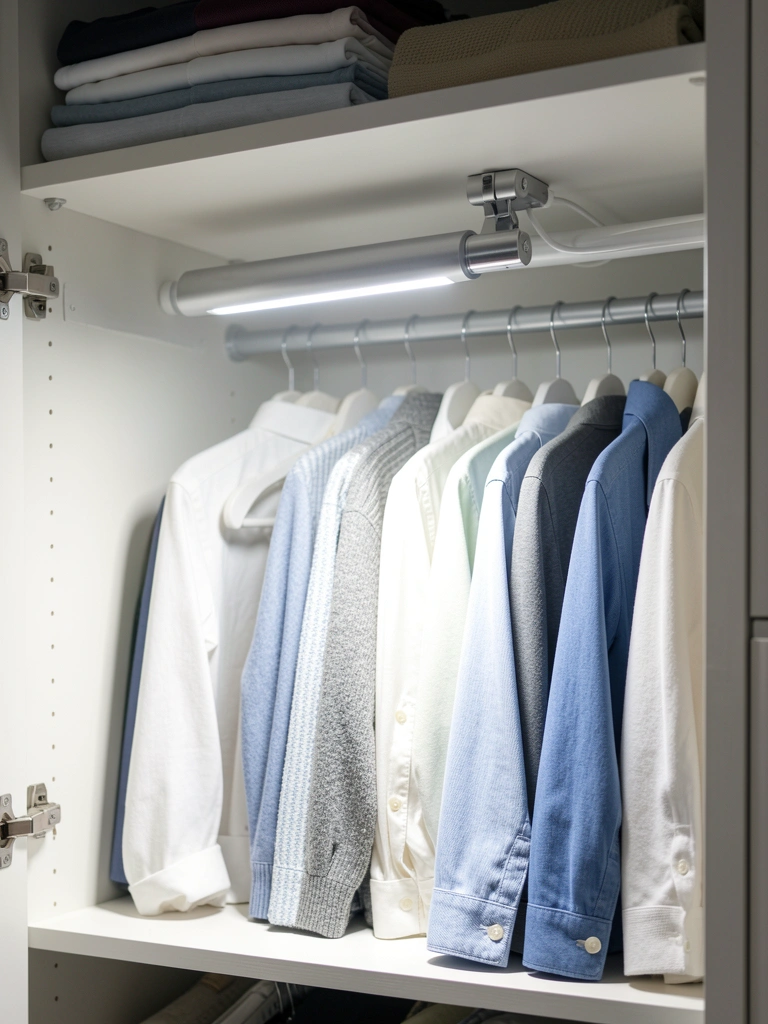
Poor lighting makes a small closet feel cramped and shadowy. A simple LED clip lamp ($15-$25 at IKEA, Target, or Amazon) clamps onto a shelf or rod and brightens the whole space. Battery-powered options work for renters and require zero wiring.
Install it at eye level or slightly above to avoid glare. One lamp often suffices for a micro-closet, though two can work if you have deep shelving. Warm white bulbs (2700K) feel cozier; cool white (4000K) shows true colors for outfit matching.
Suddenly you can see what you’re grabbing, and the space doesn’t feel like a dungeon. Getting dressed becomes actually enjoyable, and you’ll notice you wear more of your wardrobe because you can see everything clearly.
17. Fold Using the KonMari or File Fold Method
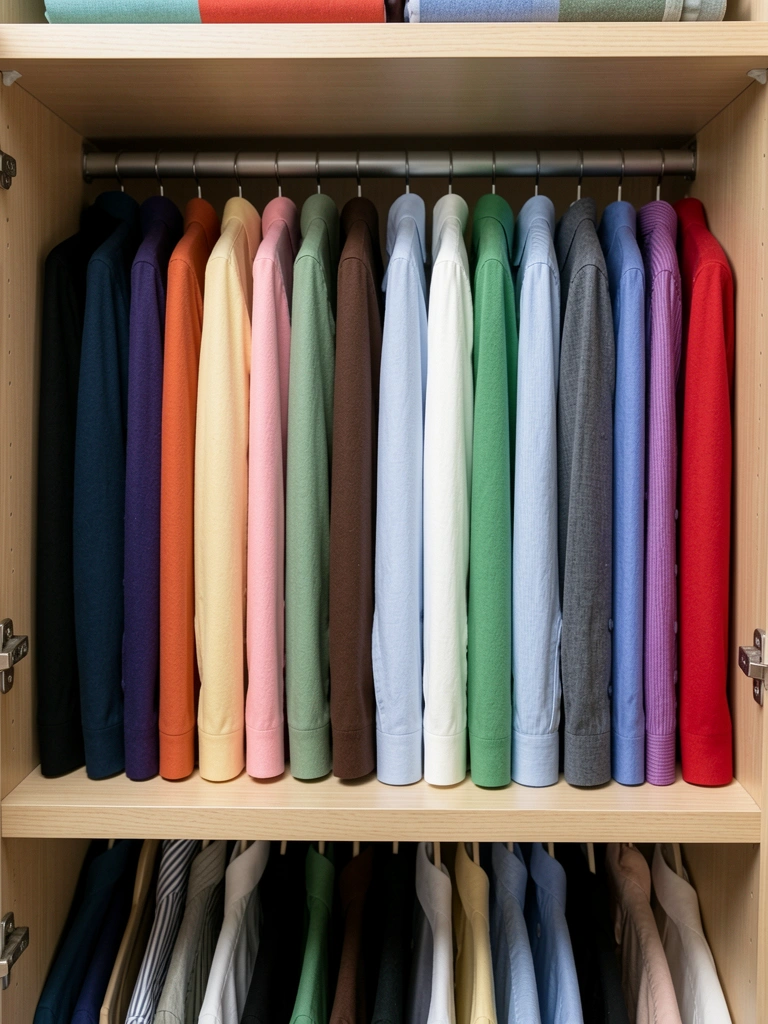
How you fold matters in micro-closets. The KonMari or “file fold” method stands items vertically so you can see each piece without unstacking. This maximizes shelf depth and makes inventory easier. Once you see what you have, you stop buying duplicates.
Spend 1-2 hours refolding your entire closet using online tutorials (search “KonMari fold” or “file fold method”). No tools or purchases needed. This is pure organizational technique.
Your shelf capacity doesn’t increase, but your usable capacity does because you can actually access items without destroying the pile. Plus, the visual improvement is remarkable—shelves look intentional and controlled.
18. Add Adhesive Shelf Liners for Easy Cleaning
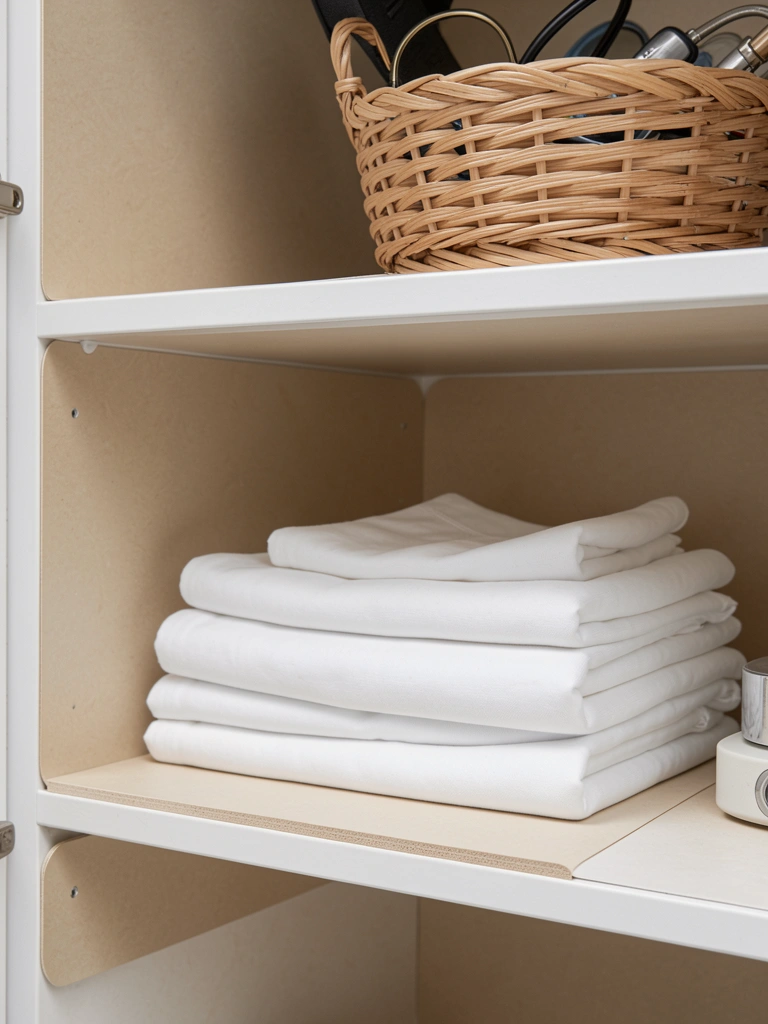
Adhesive shelf liners protect closet shelves from dust, stains, and damage—especially important in small spaces where clutter lingers. They also make shelves quieter when sliding baskets or stacks around.
Adhesive shelf liner costs $8-$15 per roll at Target, Bed Bath & Beyond, or Amazon. Measure your shelves, cut the liner to size, and stick it down. Takes 30 minutes for a whole closet. Peel and replace every 1-2 years.
Your shelves stay cleaner longer, and baskets slide smoothly without catching on rough wood. It’s a small upgrade that extends the life of your storage furniture and keeps everything looking neat.
19. Use Small Wire Baskets to Corral Socks, Underwear, and Accessories
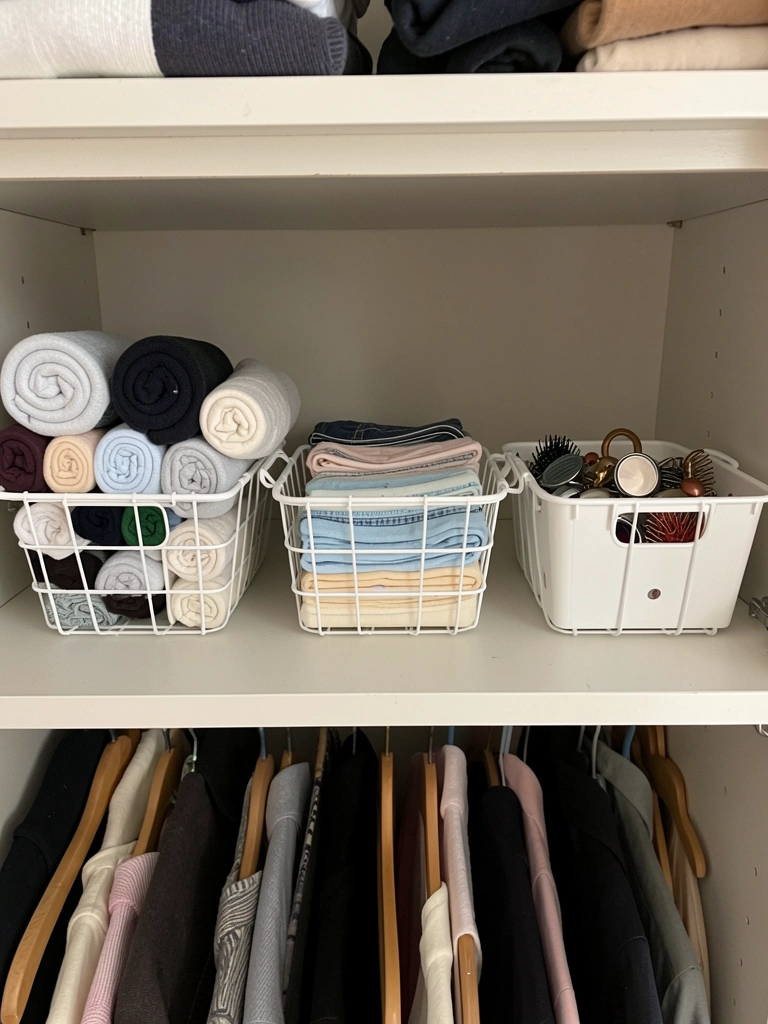
Tiny items get lost in micro-closets unless corralled. Small wire baskets (typically 6-10 inches wide) group socks, underwear, tights, belts, and accessories so you can grab a whole category at once. Wire lets you see what’s inside without opening.
A set of 3-5 small wire baskets costs $15-$30 at Target, IKEA, or Amazon. Stack them on shelves or under hanging rods. Label the front of each basket with a printed or handwritten label for quick recognition.
Mornings are faster when you know exactly which basket holds what. You also rediscover items you forgot you owned, so you stop buying duplicates.
20. Install a Slim Rolling Rack for Extra Hanging Space
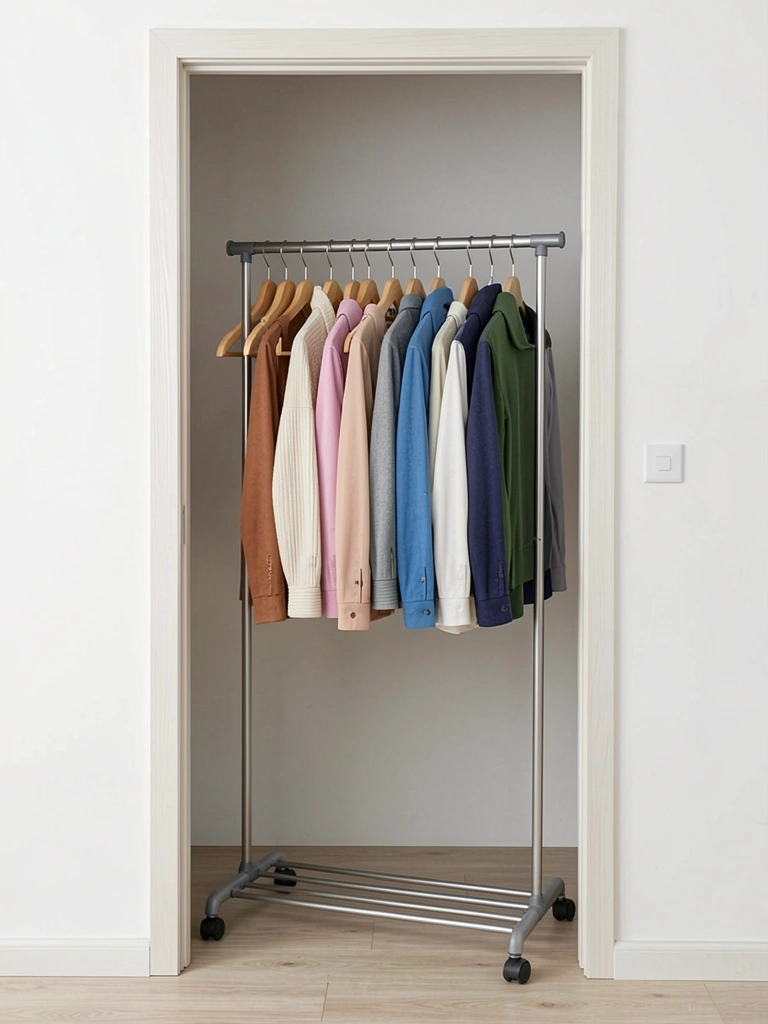
If your closet genuinely can’t fit everything, a slim rolling rack (typically 24-36 inches wide) extends your hanging capacity without requiring wall installation. Position it just outside your closet or at the end of your bed. Perfect for seasonal overflow or current-rotation pieces.
A basic rolling rack costs $30-$70 at Target, Wayfair, or Amazon. Look for designs with wheels that lock to prevent shifting. Compact models fit in tight spaces.
You’ve doubled your hanging capacity without construction. The rack also makes it easy to rotate seasonal clothes—just move the rack in and out as seasons change.
21. Mount a Narrow Hanging Organizer for Daily Outfit Planning
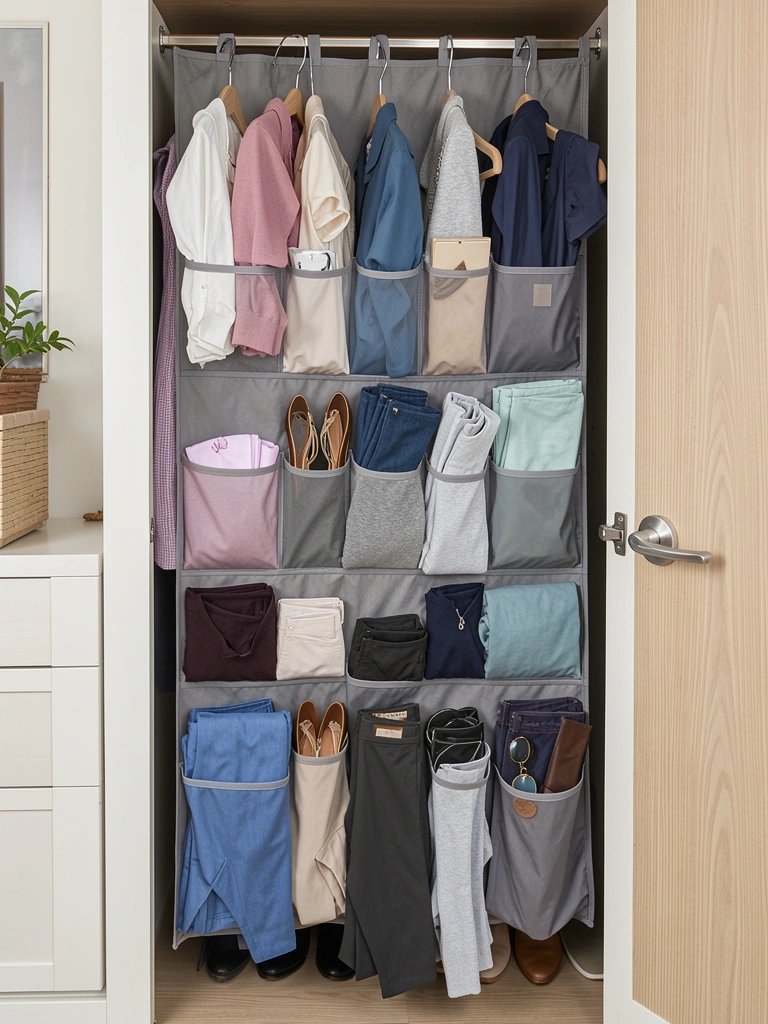
A hanging organizer with multiple pockets (usually 5-7 slots) lets you pre-plan daily outfits, which cuts morning decision-making time in half. Some people use each pocket for Monday through Friday; others use pockets for outfit types (casual, work, weekend).
A slim hanging organizer costs $15-$35 at Target, Container Store, or Amazon. Choose designs with clear pockets so you can see contents. Hang on the back of your closet door.
You’ll get ready faster because decisions are made during calm moments, not rushed mornings. Plus, you’re more likely to actually wear outfit combinations because they’re visible and pre-planned.
22. Use a Slim Dresser or Chest in Your Closet
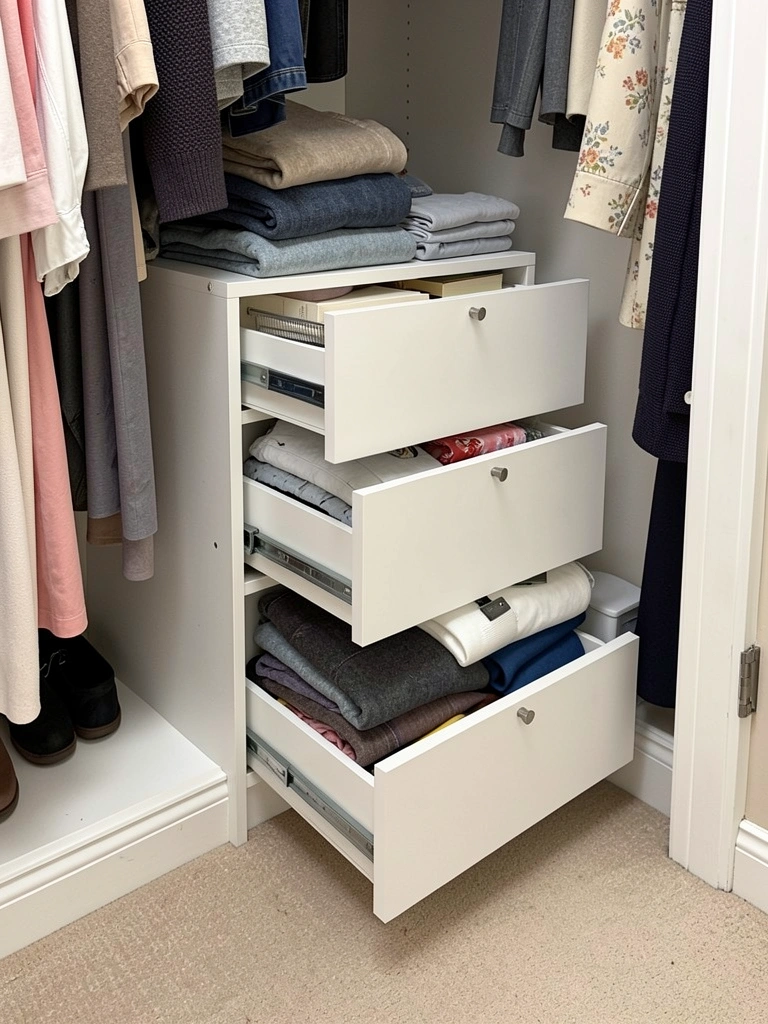
If you have any floor space (even 2-3 feet), a slim 2-4 drawer dresser fits into the corner and provides drawer storage for socks, underwear, and folded layers. Look for depths of 12-15 inches so it doesn’t protrude into walkways.
A narrow dresser costs $50-$150 depending on quality and style at IKEA, Target, or Wayfair. This is an investment piece but lasts years and frees up bedroom drawers for other purposes. Assembly takes 1-2 hours.
Suddenly your micro-closet becomes a complete dressing room with hanging and drawer storage. You’re not storing clothes throughout your bedroom; they’re all contained in one place.
23. Use Clear Plastic Boxes for Off-Season Visibility
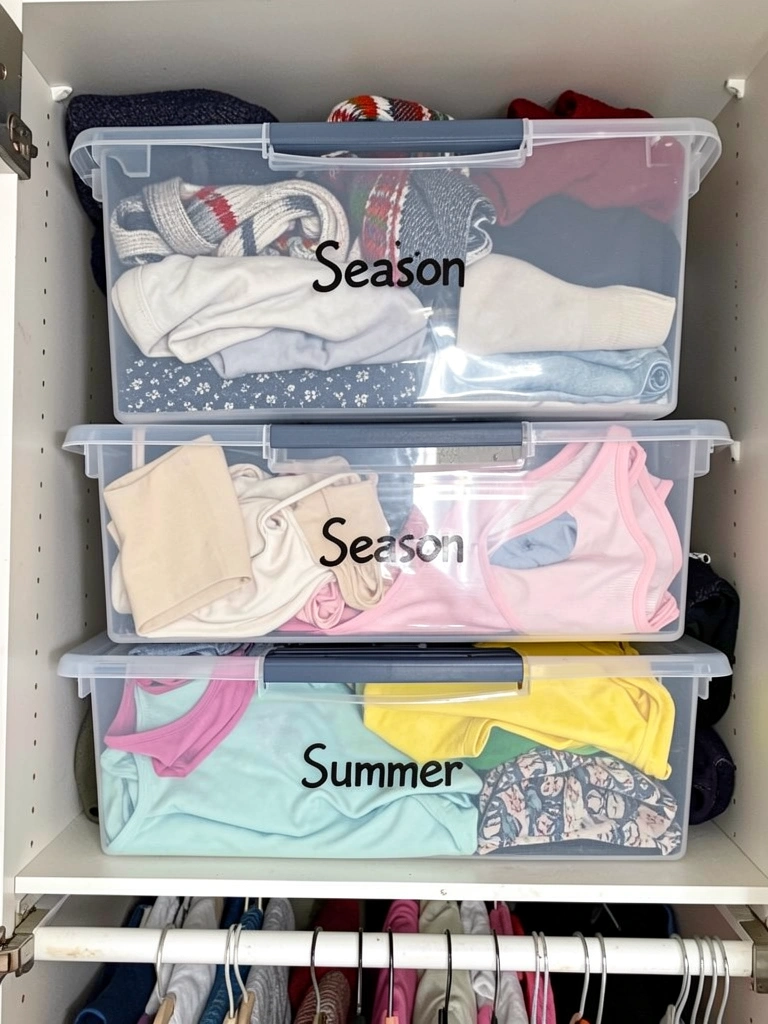
Clear plastic boxes (instead of opaque cardboard) let you see what’s inside without opening them, which is crucial in tight spaces where you need to maximize high shelves. Label each box with a printed label or masking tape.
A set of 3-4 clear storage boxes (medium size) costs $20-$40 at Target, Walmart, or Container Store. Measure your shelf depth and width before buying. Stack them wisely to avoid top-heavy situations.
You’ll remember what’s stored where and can grab seasonal items without unpacking multiple boxes. Plus, clear boxes look neater than miscellaneous bags or unlabeled boxes.
24. Install a Slim Jewel Rack or Jewelry Organizer
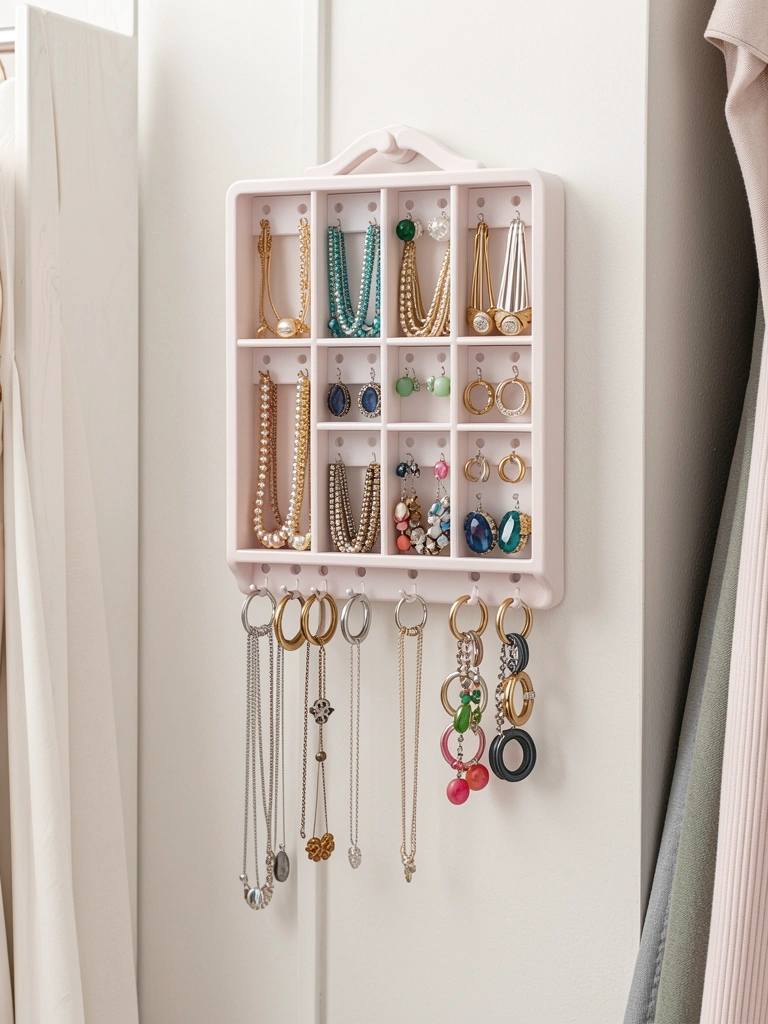
Jewelry easily tangles or gets lost in micro-closets. A slim wall-mounted organizer (often mirrored, typically 12-18 inches wide) keeps necklaces, earrings, and rings visible and accessible. Some designs double as mirrors.
A wall-mounted jewelry organizer costs $20-$50 at Target, Wayfair, or Amazon. Use adhesive strips or small nails to mount. Takes 10 minutes. If you prefer non-wall options, over-the-door jewelry organizers also work ($15-$30).
You’ll stop layering necklaces in a tangled mess on a shelf. Everything’s visible, so you actually wear your jewelry, and getting ready feels organized instead of chaotic.
Ready to tackle your micro-closet? Pick one or two ideas that address your biggest pain point—whether that’s vertical space, lighting, or visibility—and start this weekend. You’ll be amazed how one small change opens up your whole closet. Bookmark this post and share it with anyone else drowning in a tiny closet space; they’ll thank you.
Leave a Reply