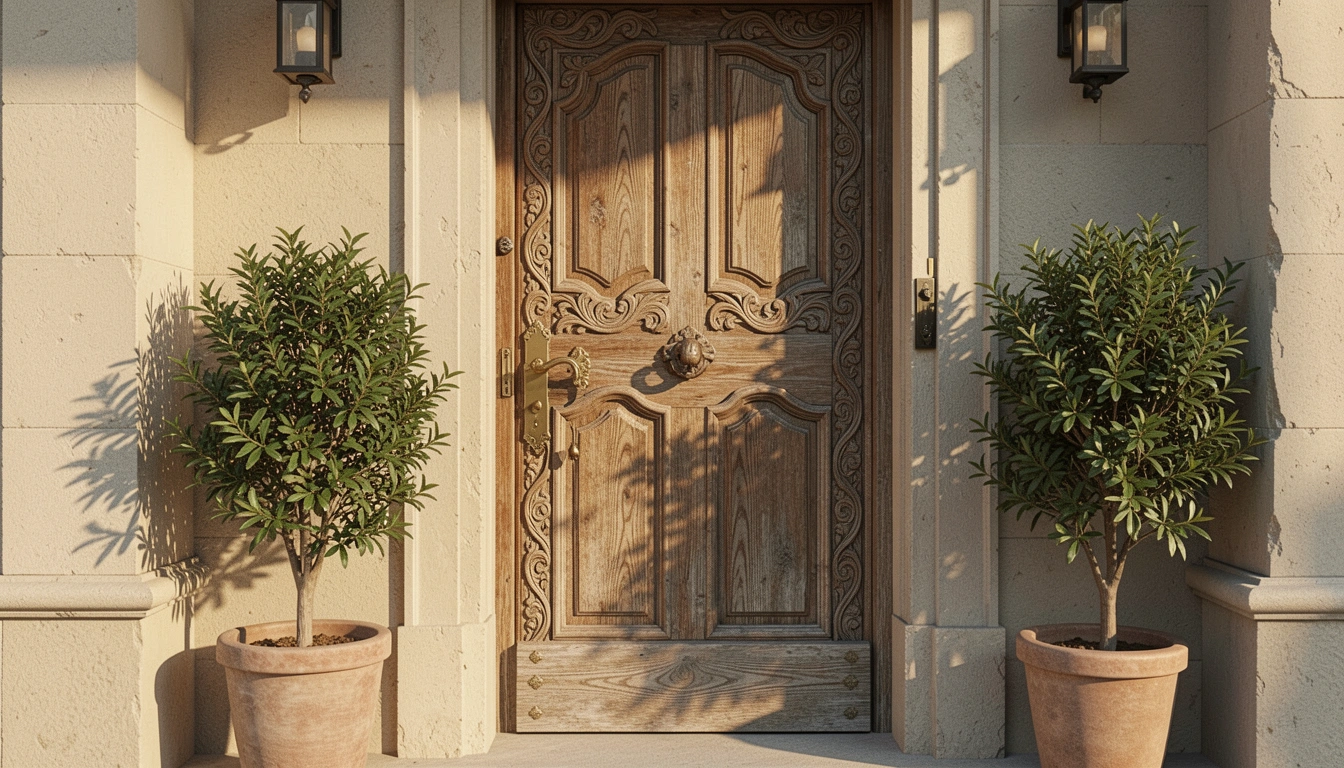
27 Carved Wooden Entry Door Ideas That Bring Artistic Detail to Your Home
Introduction
Your front door is the first thing visitors see, and it’s also the first thing you see when you come home. If yours feels plain or outdated, you’re not alone—most standard doors lack personality. Carved wooden doors bring warmth, artistry, and an instant sense of craftsmanship that modern construction just can’t match. They catch light beautifully, create shadow play throughout the day, and signal that someone with taste lives behind them.
The good news? You don’t need to blow your budget to add carved detail to your entry. From DIY relief-carving techniques to affordable pre-carved door panels, to splurging on a bespoke custom piece, there’s an approach for every budget and skill level. This guide walks you through 27 specific ideas—from renter-friendly panel upgrades to investment-level doors that genuinely increase curb appeal and home value.
Let’s explore how carved wood can completely change the way your home feels.
1. Add Carved Overlays to a Plain Door
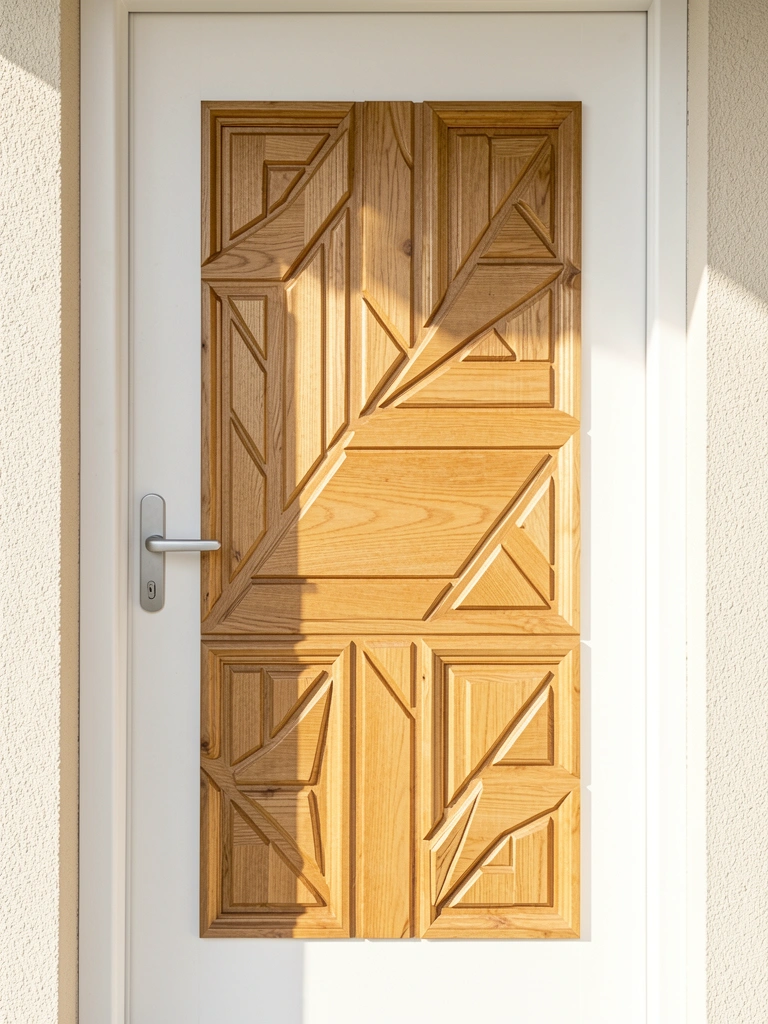
A carved overlay is exactly what it sounds like: a pre-made carved wooden piece attached to your existing door. This is the renter-friendly hack because you can remove it when you move. Home Depot and Wayfair sell ready-made wood appliqués in styles ranging from Victorian medallions to modern geometric patterns.
You’ll need construction adhesive, a level, and about 30 minutes. Measure your door, choose an overlay that fits proportionally (usually $40–$120), center it, and glue it down. If you rent, use removable adhesive strips instead of permanent glue. The result? Your boring door looks custom-carved without any actual carving. You can paint the overlay to match your door or contrast it—both look stunning.
This upgrade works especially well on solid-core doors that are already slightly textured. The overlay adds depth and shadow without requiring any carpentry skills.
2. Commission a Custom Full-Door Carving
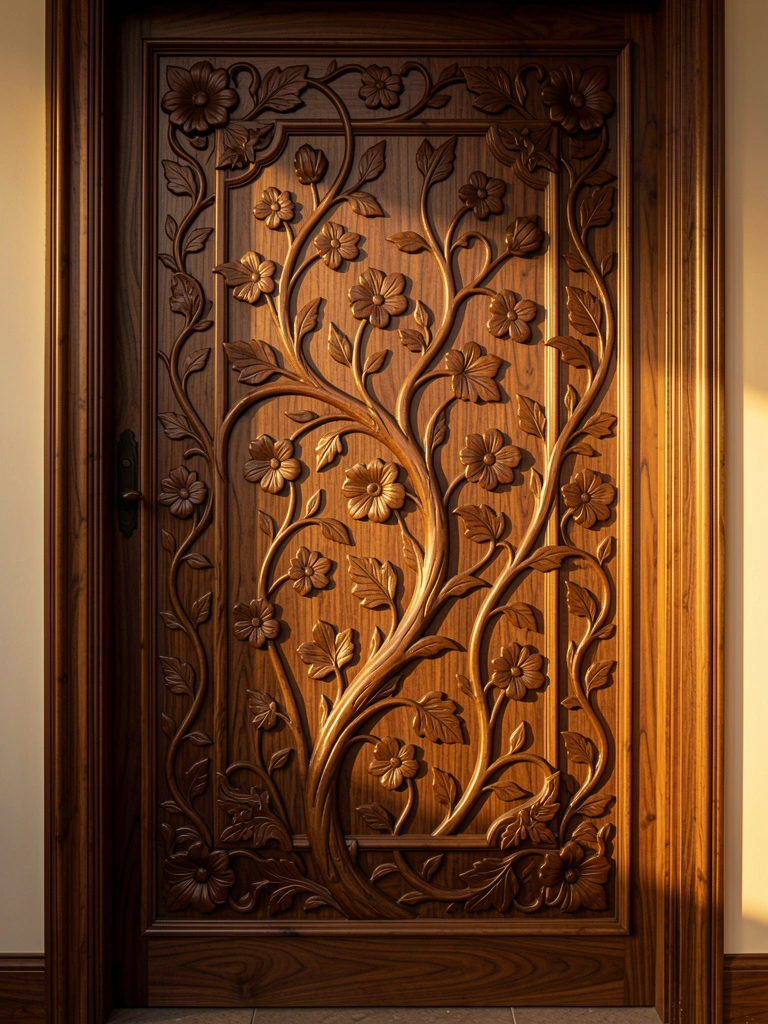
If you want something truly unique, hire a local woodcarver to design and execute a one-off carved door. This is an investment ($800–$2,500+), but you’re getting an heirloom piece. Look for woodcarvers through local art councils, etsy (search “custom carved wooden door”), or architecture firms who work with artisans.
The process typically takes 4–8 weeks. You’ll discuss design themes with the carver—maybe your family crest, a landscape that means something to you, or abstract patterns that match your home’s style. They’ll work in hardwoods like walnut, oak, or cherry that age beautifully over decades.
Custom carvings boost curb appeal dramatically and often become neighborhood conversation starters. Friends and family will notice immediately. This is the kind of detail that says “I care about quality” before anyone even steps inside.
3. DIY Hand-Carved Relief Designs on Wood Panels
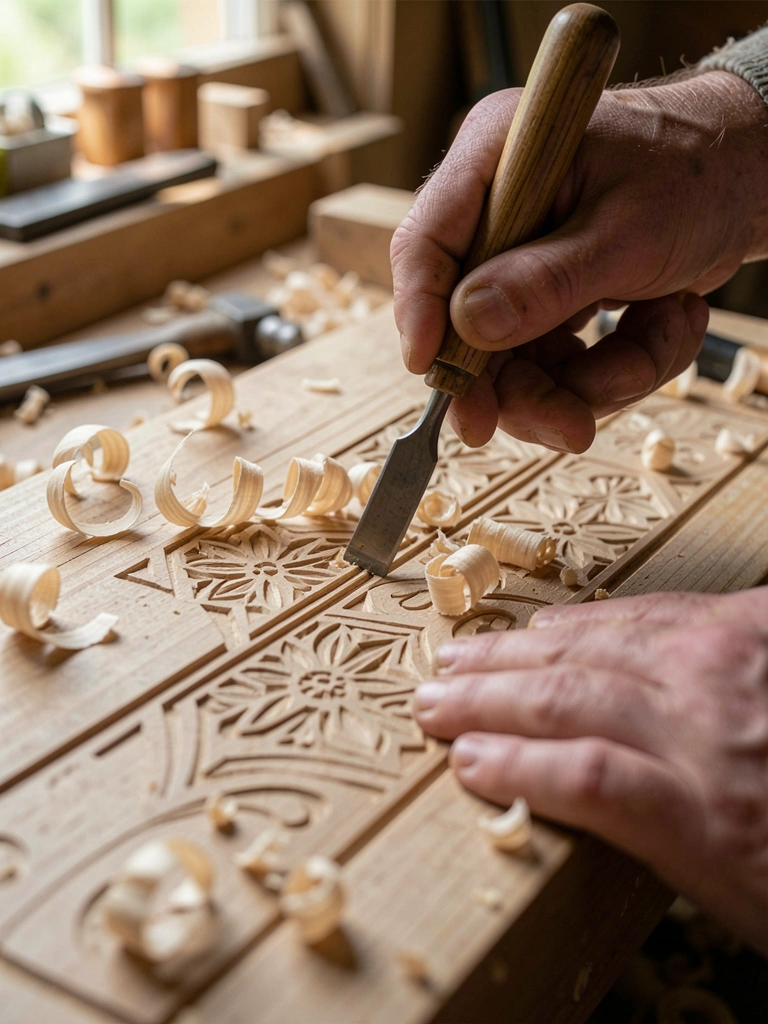
Want to carve yourself? Start small with a wooden door panel or even a plywood insert you can attach to your current door. Basswood and butternut are beginner-friendly because they carve cleanly without splintering. Buy a basic carving chisel set ($20–$50 from Amazon or Rockler) and a pattern.
Choose simple designs your first time: geometric borders, floral sprigs, or abstract lines. Sketch your pattern lightly with pencil, then work with the grain using shallow cuts (about 1/4-inch deep). This takes patience—expect 8–15 hours for a small panel—but the satisfaction is real. You’re literally creating art with your hands.
Once carved, finish it with stain or paint, then mount it on your door frame or replace an existing panel. Many DIYers find this meditative, and the results look intentional rather than mass-produced. Your door becomes a conversation about your creative side.
4. Install Pre-Carved Door Panels from Heritage Brands
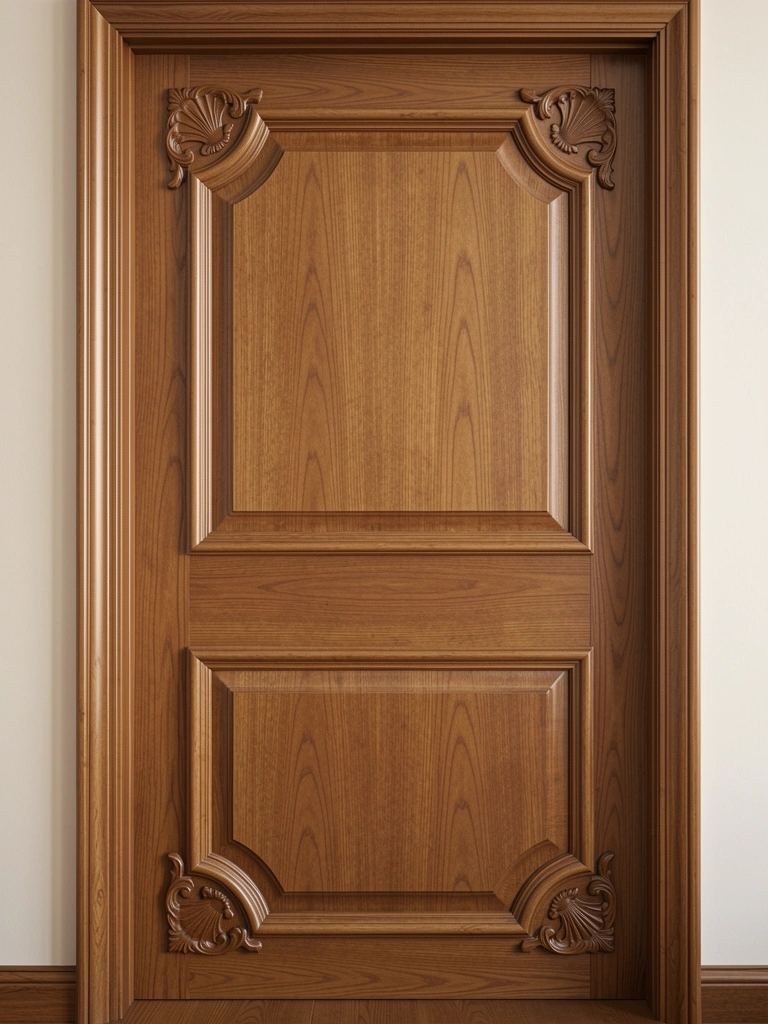
Companies like ProVia, Therma-Tru, and Jeld-Wen offer pre-carved panel doors in dozens of styles. These aren’t cheap ($300–$800), but they’re factory-consistent, durable, and come with modern weatherproofing and energy ratings. You get carved artistry without the custom wait time.
Popular carved styles include shell patterns (coastal feel), egg-and-dart molding (traditional), and geometric reliefs (contemporary). Browse their online galleries to see how different carvings photograph in different light conditions. Many showrooms let you touch samples—important because carving depth varies widely.
Installation usually requires a professional unless you’re experienced with door frames. Budget $150–$300 for installation. The payoff? A door that looks like it cost thousands but functions perfectly and fits your home’s proportions exactly. These doors last 20+ years.
5. Layer Carved Wooden Trim Around a Simple Door
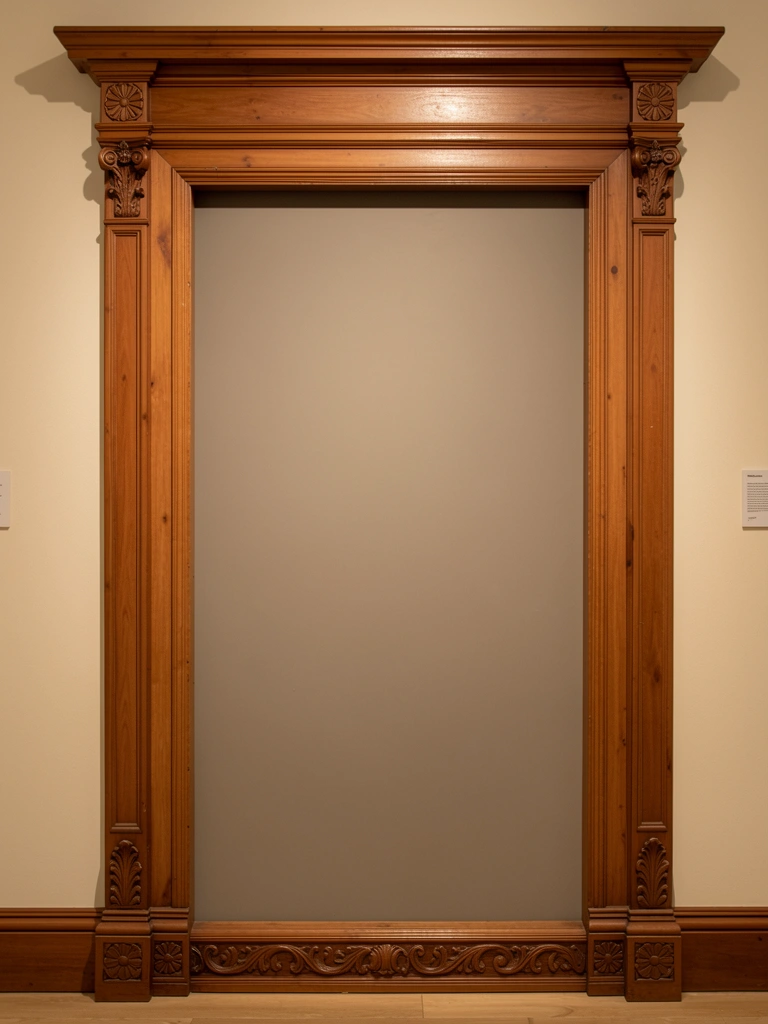
You don’t have to carve the door itself—frame it with carved trim instead. Ornamental wood trim (also called “trim blocks” or “pediments”) comes pre-carved from specialty suppliers like Architectural Depot or Home Depot’s premium sections ($60–$300 depending on complexity).
Mix and match pieces: a carved pediment above the door, carved corner blocks where trim meets the frame, carved baseboard pieces at the bottom. Install with construction adhesive and finish nails. This approach lets you customize the “intensity” of carving—use minimal pieces for subtle detail or go full Baroque if that’s your style.
The best part? You’re adding architectural impact to your entire entryway, not just the door. The carving frames and showcases your door rather than competing with it. Light plays beautifully across layered trim, creating shadow and depth.
6. Use Stain and Wood-Burning to Simulate Carved Detail
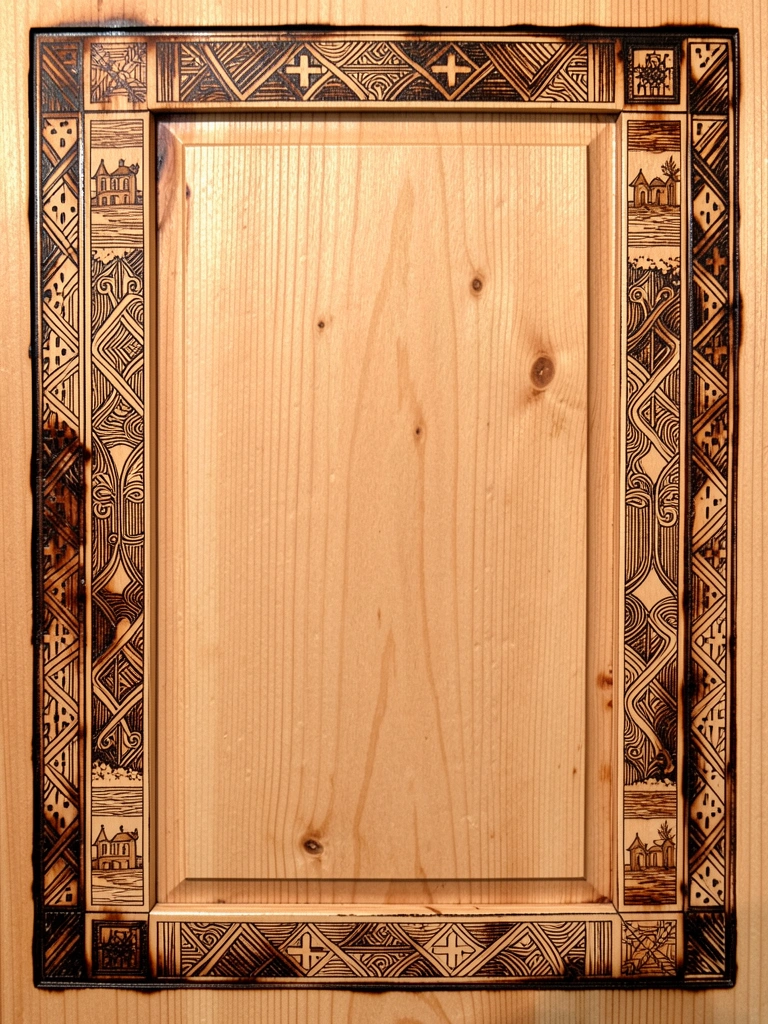
If actual carving feels too ambitious, wood-burning (pyrography) creates the illusion of carved depth with far less physical labor. A wood-burning tool costs $15–$40. You sketch your design, then carefully burn it into the wood surface with a heated tip.
The burned lines create shading and contrast that reads as carved from a distance. Use designs with fine lines: Celtic knots, botanical details, geometric patterns. You control the depth by burn time—lighter burns read as sketch-like, darker burns look more carved.
This takes steady hands and patience (a small panel takes 3–6 hours), but the results look professionally detailed. Finish with stain to enhance the contrast between burned and unburned wood. It’s an affordable ($50–$150 in materials) way to get custom carved-looking detail without actual woodcarving skills.
7. Apply High-Relief Molding for Dramatic Shadow Play
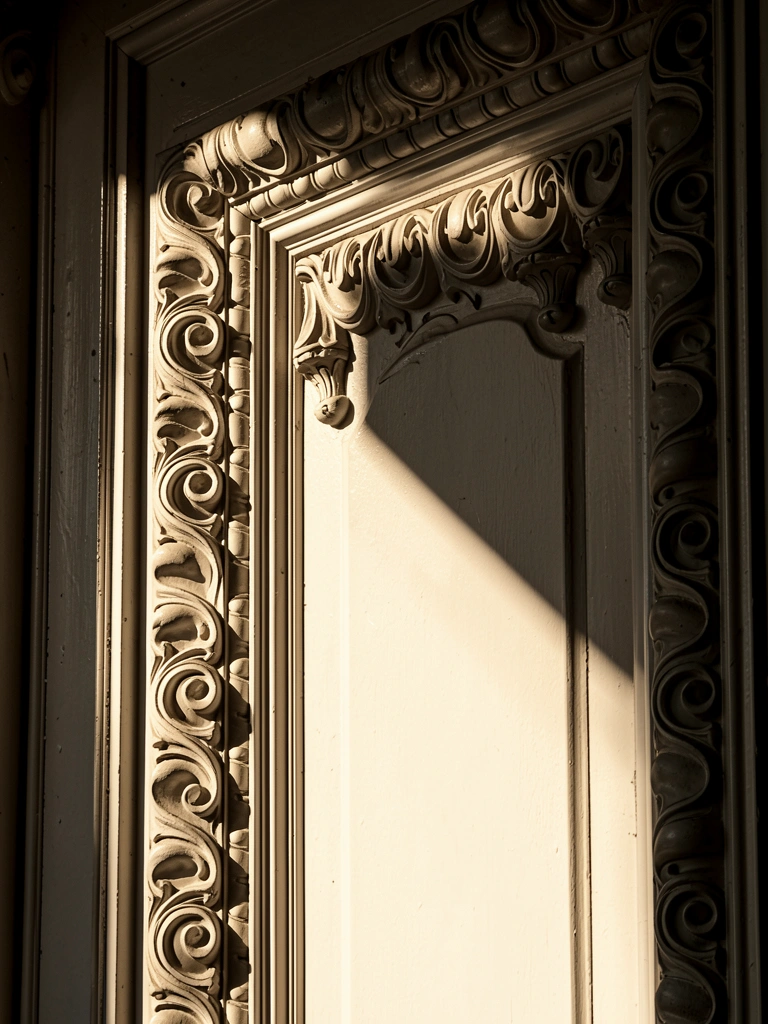
High-relief molding sits 1+ inches proud of the door surface, creating dramatic shadows that change throughout the day. This style works especially well on doors that get good natural light.
Buy pre-made high-relief molding pieces ($40–$150 each) from specialty millwork suppliers or heritage hardware companies. Popular profiles include dentil molding (small rectangular blocks), egg-and-dart (repeating oval and dart pattern), or ogee (S-curve profile). Install with polyurethane adhesive and brad nails, then paint or stain.
The shadow play is the real payoff here—your door looks different at sunrise than at sunset, which sounds small but genuinely adds interest to your entryway. Visitors comment on the detail more with high-relief than with subtle carving because the depth is so visible.
8. Create a Faux-Carved Look with Paint Techniques
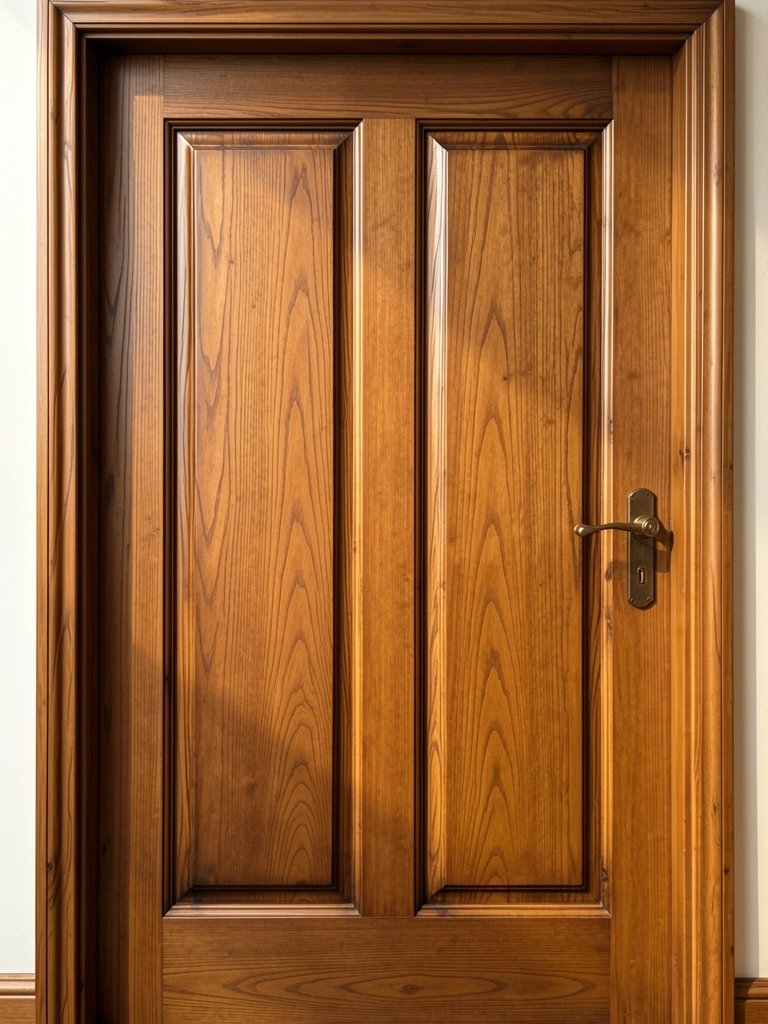
An artist’s hack: use paint and shading to fake carved detail. You’ll need acrylic paints in your base color plus darker and lighter shades, plus fine brushes.
Study carved doors online and notice how light and shadow fall. Paint deeper shadows in areas that would be recessed, lighter highlights on areas that would be raised. Use a dry-brush technique and subtle color gradations. Done well, it reads as carved from several feet away. From close range, eagle-eyed visitors might notice, but the impact is still there.
This costs under $30 in supplies and takes a weekend of work if you have any painting background. It’s perfect for renters or anyone hesitant to commit to permanent changes. The faux technique works best on relatively simple designs (geometric patterns, single motifs) rather than complex botanical scenes.
9. Mix Carved Wood with Modern Minimalist Frames
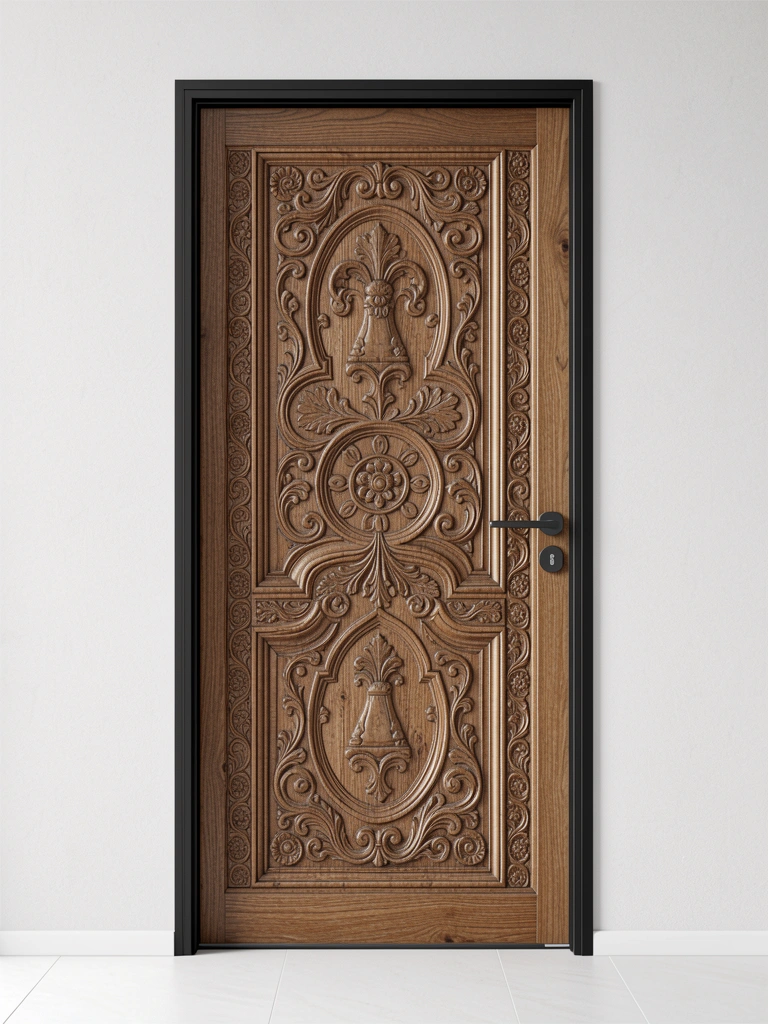
Pairing carved wood with contemporary framing creates visual tension that feels current, not dated. Install your carved panel (custom, pre-made, or DIY) within minimalist aluminum frames like those used in Crittall-style glass doors.
The carved relief reads as heirloom or artisanal, while the slim aluminum frame signals modern sensibility. Add brushed gold or matte black hardware for additional contemporary contrast. This approach appeals to people who love traditional craftsmanship but live in modern homes.
Order aluminum frames from specialty suppliers ($100–$300) and have them cut to your panel size. Installation takes a weekend if you’re comfortable with basic tools. The result looks designed-on-purpose rather than accidental, because the contrast is so intentional. Your door becomes a statement about honoring traditional skills in a contemporary context.
10. Combine Carved Panels with Energy-Efficient Glass Insets
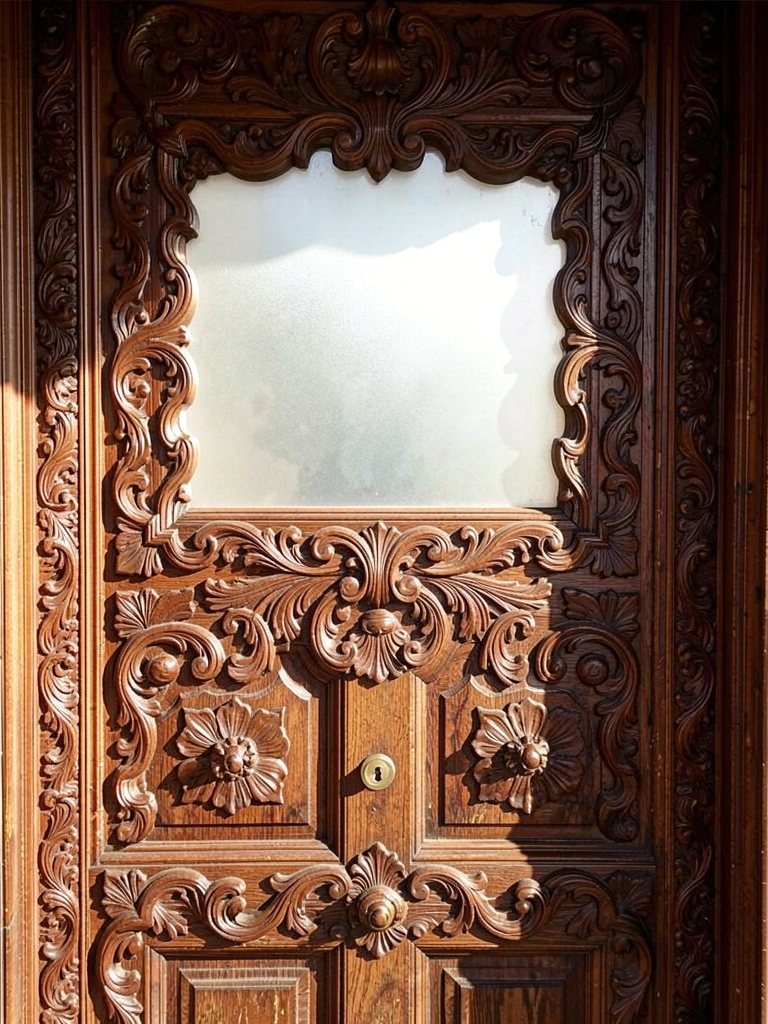
You can have light flow and carved artistry. Order a pre-carved door with glass inset options (or have a custom carver incorporate a glass panel into the design). Frosted, obscured, or textured glass maintains privacy while letting light pour through.
The carved wood frames the glass and draws attention upward. Light hits the carving and glass differently throughout the day, creating ever-changing visual interest. ProVia and similar brands offer this option ($400–$1,000). Custom carvers can design glass insets into one-off pieces too.
This works beautifully in homes with dark entryways or limited natural light. The glass solves the practical problem while the carving satisfies the aesthetic desire for detail and interest. It’s the best of both worlds.
11. Source Reclaimed Carved Doors from Salvage Yards
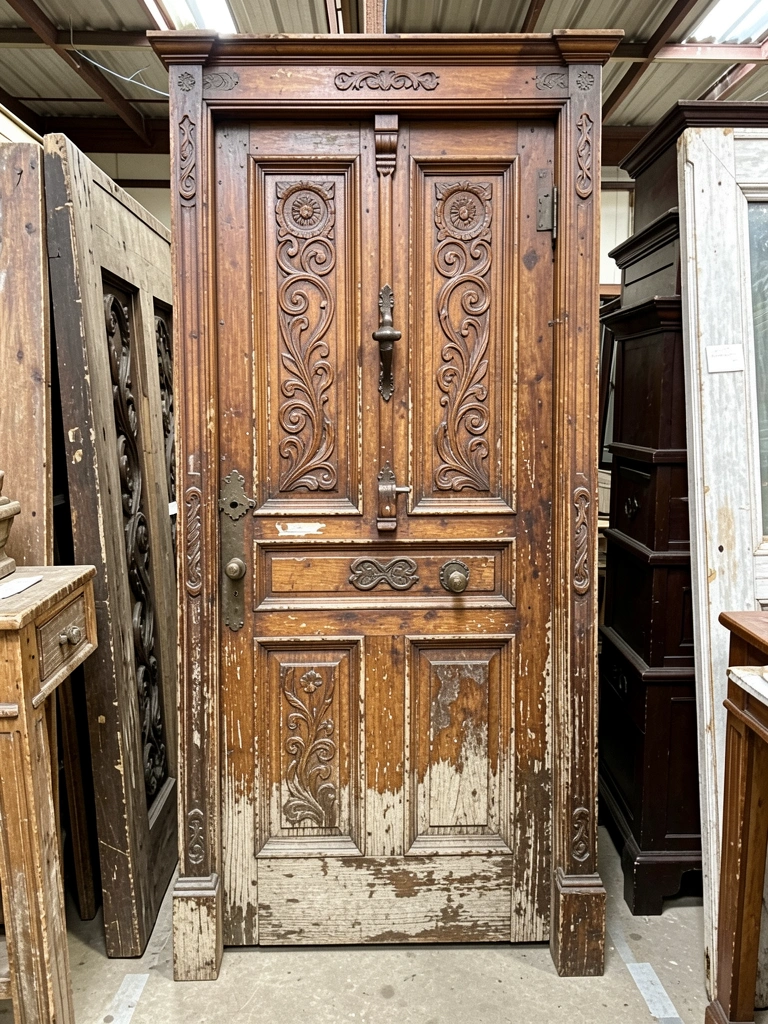
Architectural salvage yards, estate sales, and online marketplaces (Etsy, Craigslist, Facebook Marketplace) frequently stock authentic carved doors from historic homes. These are genuinely one-of-a-kind, often 75+ years old, and packed with character that new doors can’t replicate.
Prices vary wildly ($150–$1,500) depending on condition, wood type, and intricacy. Inspect carefully for dry rot, deep cracks, or damaged hinges. Many salvaged doors need rehinging or hardware replacement ($50–$150). You might need professional restoration if the carving is delicate ($200–$500).
The payoff? An authentically beautiful door with actual history, genuine craftsmanship visible in every detail, and a story to tell. Salvaged doors age gracefully and often appreciate in value. This option especially appeals to people restoring historic homes or seeking genuine vintage character.
12. Carve a Personal Monogram or Family Crest
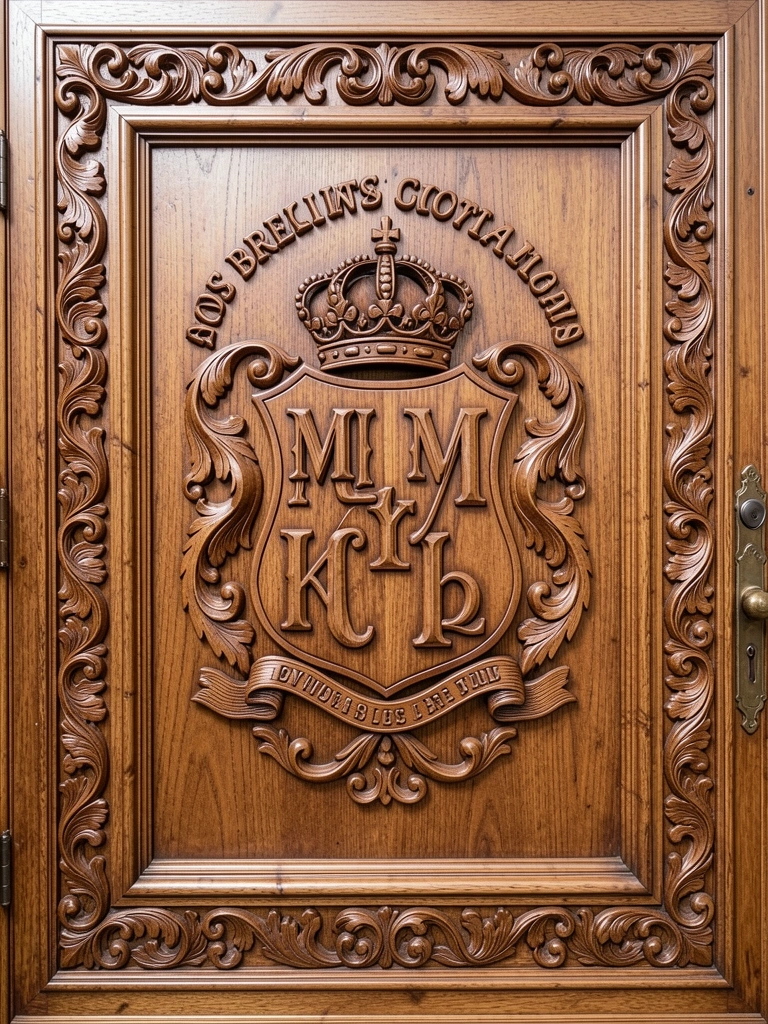
Commission a carver to create a personalized monogram, family crest, or heirloom symbol on your door. This transforms your entry into a personal statement and often feels surprisingly timeless despite being completely custom.
Work with a carver ($400–$1,200) to design something that reflects your family’s heritage, profession, or personal values. Heraldic designs, initials in Gothic script, family names with ornamental flourishes—all work beautifully in carved relief. Some carvers can incorporate meaningful dates or symbolic elements.
The resulting door is unmistakably yours in a way nothing off-the-shelf could be. It signals that this home belongs to people who value heritage, identity, and permanence. Guests notice immediately and often ask about the story behind the carving.
13. Install Carved Corbels and Brackets Above the Door
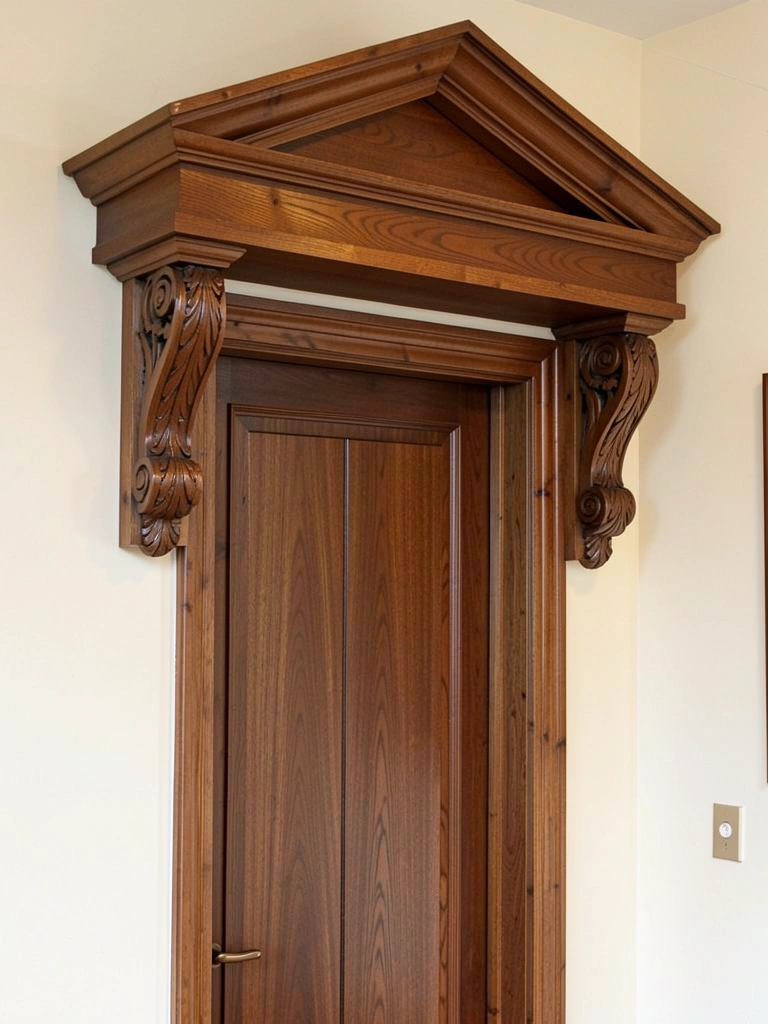
Corbels and brackets are structural supports that also serve as decoration. Pre-carved versions add massive visual impact without touching the door itself. Think of them as the architectural “jewelry” for your entry.
Hunt for salvaged corbels at architectural salvage yards ($50–$300 each depending on size and intricacy) or buy reproduction carved corbels ($40–$150) from millwork suppliers. Install them on either side of your door frame or under a pediment. Pair them with carved trim above the door for a layered, gallery-like effect.
The visual weight these pieces add is remarkable—suddenly your entry feels substantial and intentional, like it belongs in a well-designed home. They photograph beautifully and catch light in ways that create shadow and depth.
14. Use Painted Carved Panels in Unexpected Colors
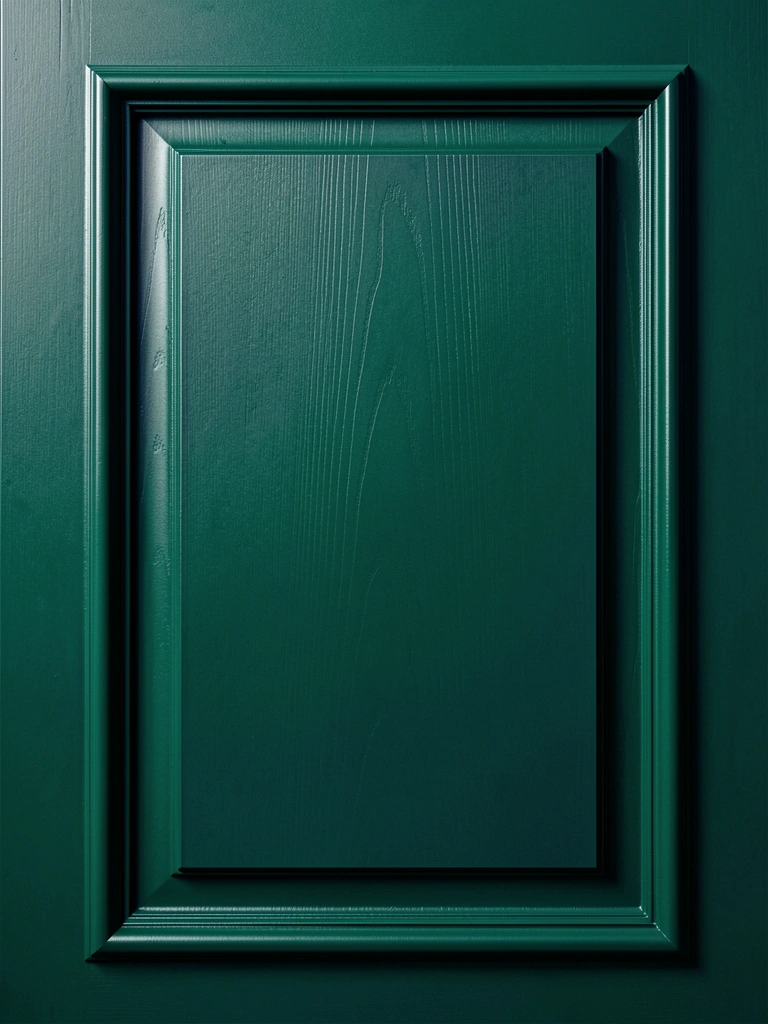
Carved detail doesn’t require natural wood finish. Paint carved panels in rich, saturated colors like forest green, navy, charcoal, or even deep burgundy. The carving reads more dramatically against solid color because shadow and highlight pop.
This approach modernizes traditional carved detail and pairs perfectly with 2025 color trends (dark green and navy dominate entry design right now). Paint with quality exterior paint ($30–$60 per gallon, 1 gallon covers most doors), preferably matte finish which showcases carving detail better than gloss.
The psychological effect is interesting: colored carving feels more intentional and designed than natural wood carving. It signals “I chose this specific color to complement my home’s aesthetic” rather than “I installed a carved door because that’s what carved doors are.”
15. Install Floor-to-Ceiling Carved Panels for Grand Entries
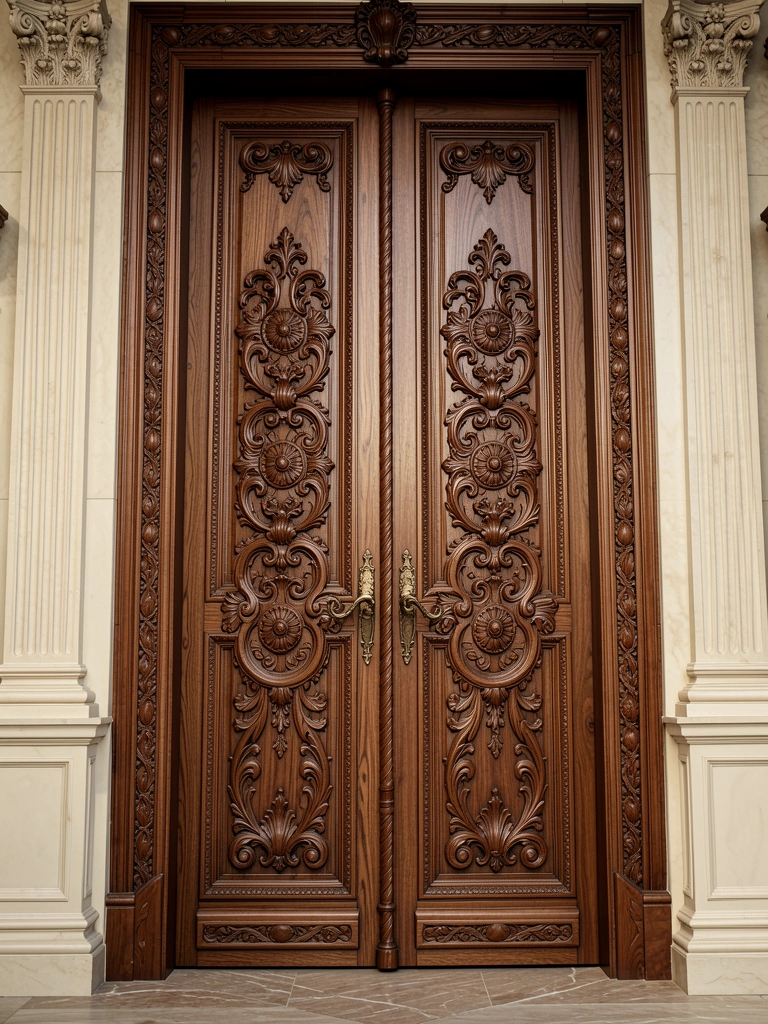
If you have a tall entryway (9+ feet), go full grandeur with floor-to-ceiling carved panels. This is an investment ($1,500–$5,000+), but the impact is unmatched. Your entry becomes the home’s defining architectural feature.
Custom carvers can design panels that extend the full height, or you can combine multiple standard carved panels. The scale alone commands attention—friends and family will be genuinely impressed by the ambition and beauty. Natural light plays across the entire surface, creating shadows that shift throughout the day.
This works especially well in homes with double-height entryways or grand foyers. It’s the kind of detail that increases perceived home value, makes you feel proud every time you come home, and gives guests an immediate sense that they’re entering somewhere special.
16. Carve Botanical Motifs for a Garden-Inspired Entry
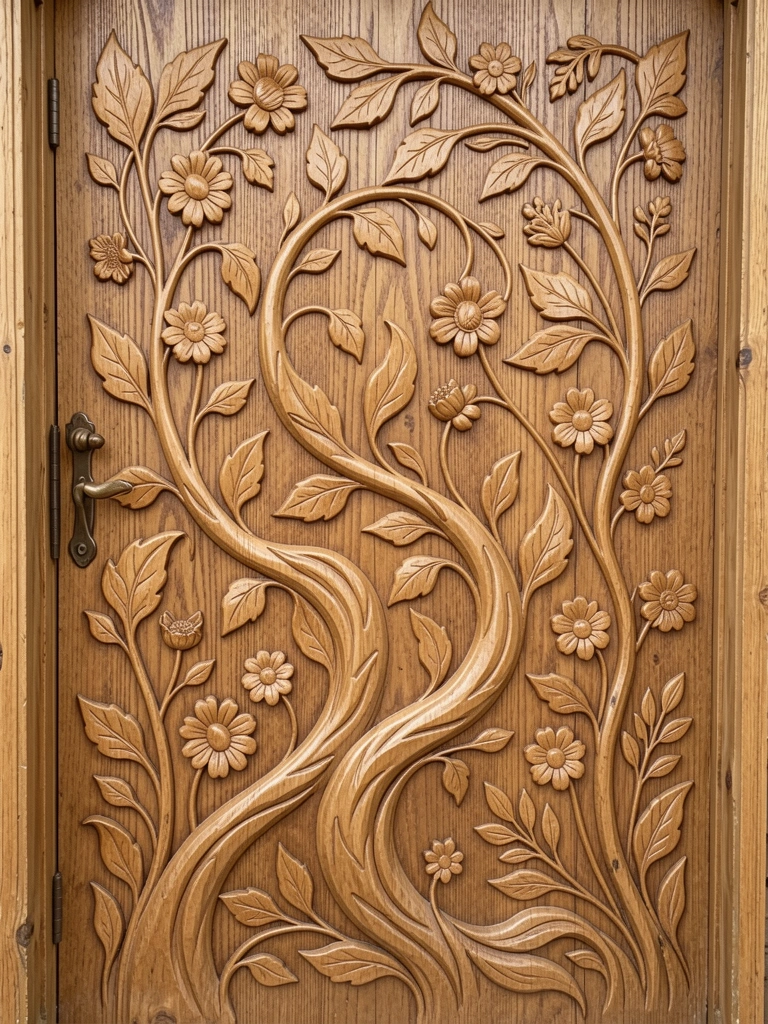
Botanical carved doors feel warm and inviting—perfect for homes surrounded by gardens or for nature lovers. Carving techniques vary from realistic (photographic leaf detail) to stylized (flowing abstract plant forms).
Commission a carver to design botanical-specific patterns ($600–$2,000) or search for pre-made botanical door panels on Etsy or specialty millwork sites. Ivy, acanthus leaves, ferns, flowers, vines—all read beautifully in carved relief. The natural subject matter feels timeless rather than trendy.
This carving style pairs beautifully with natural materials elsewhere on your home (stone, brick, natural light) and creates a cohesive sense that your home honors the natural world. Visitors often comment that botanical doors feel more welcoming than purely geometric designs.
17. Create a Geometric Art Deco Carved Pattern
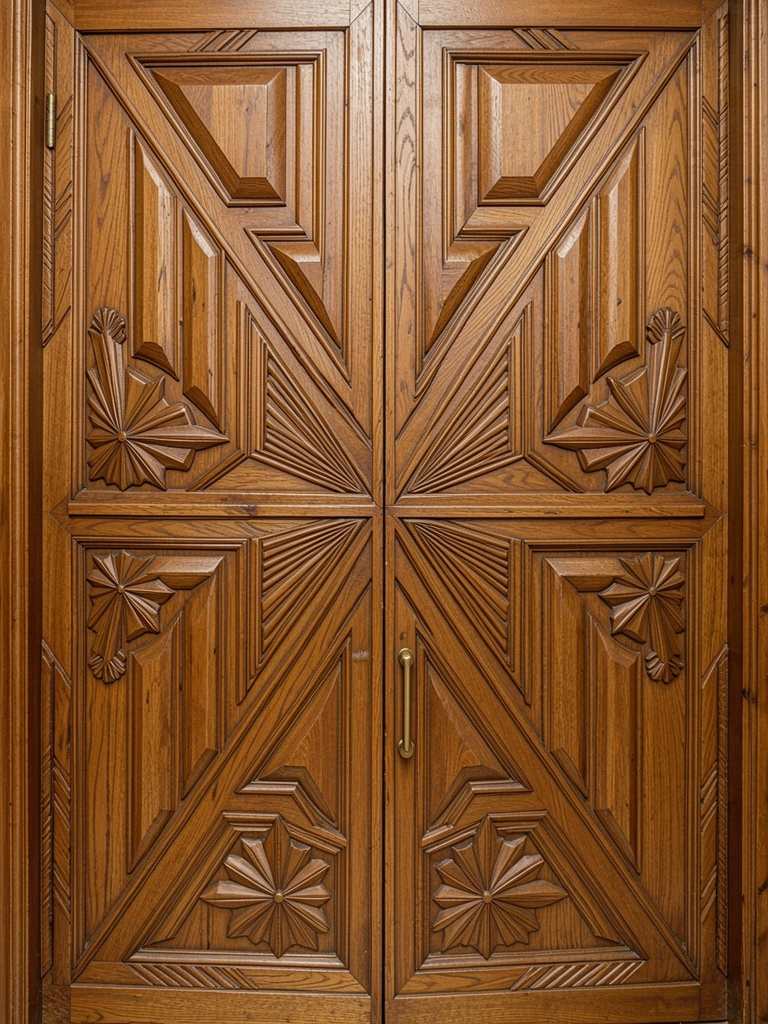
Art Deco carved doors blend artistry with graphic design sensibility. If you love 1920s-30s aesthetics, this direction offers bold personality. Patterns include stepped triangles, starburst rays, chevrons, and geometric medallions.
Work with a carver who understands Art Deco vocabulary ($700–$1,500) or search for Art Deco reproduction doors online. The geometric nature means the carving reads cleanly even from a distance—bold shapes are readable in ways that delicate filigree sometimes aren’t.
Paint in high-contrast colors (black and white, dark green and gold) to amplify the graphic quality. This approach especially appeals to people who appreciate design history and want their home to reflect a specific era they love. It reads as intentional curation rather than generic decoration.
18. Combine Shallow Hand-Carved Details with Modern Materials
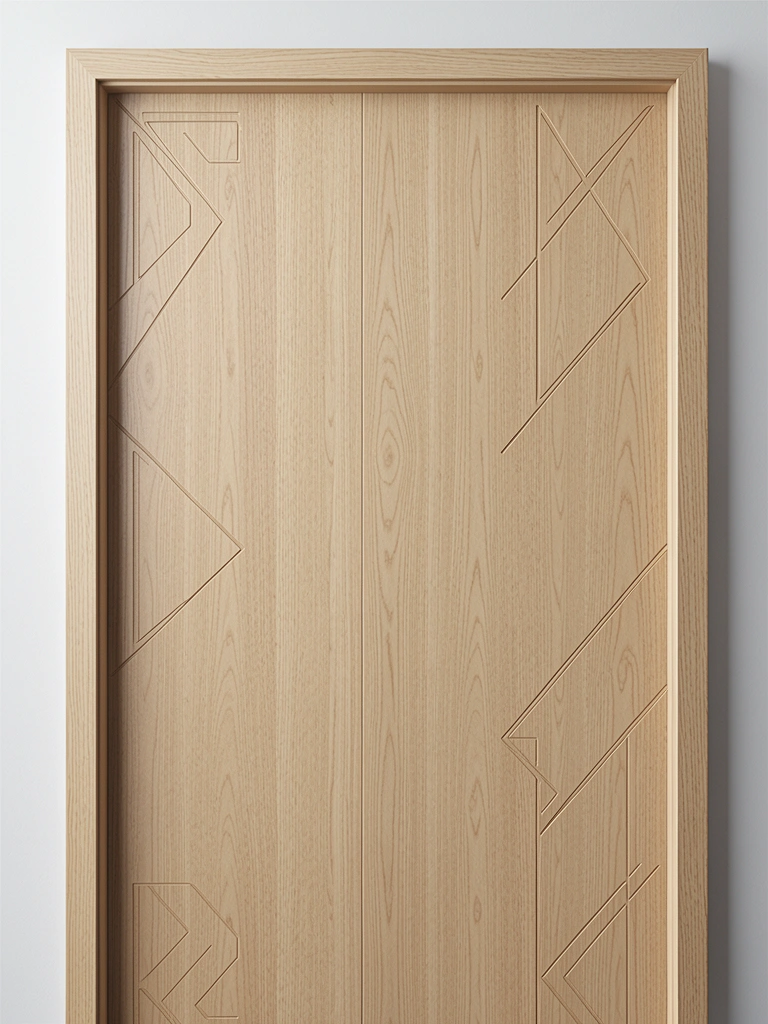
Not all carved doors need to be ornate. Shallow hand-carving creates subtle detail that feels contemporary rather than traditional. Think delicate line work, abstract patterns, or minimal botanical elements rather than elaborate relief.
Source or commission a simple carved panel ($200–$600 depending on complexity) with shallow carving (1/8-inch depth or less). This style pairs beautifully with contemporary hardware, minimalist frames, and modern colors. The carving reads more as “artistic detail” than “ornament,” which appeals to people who love design but reject ornamentation.
Install within a slim aluminum frame for maximum contemporary impact. This approach offers carved beauty without the visual weight of traditional heavy carving. It’s for people who want craftsmanship and artistry without looking like they’re living in a museum.
19. Install Interchangeable Carved Door Panels (Seasonal Updates)
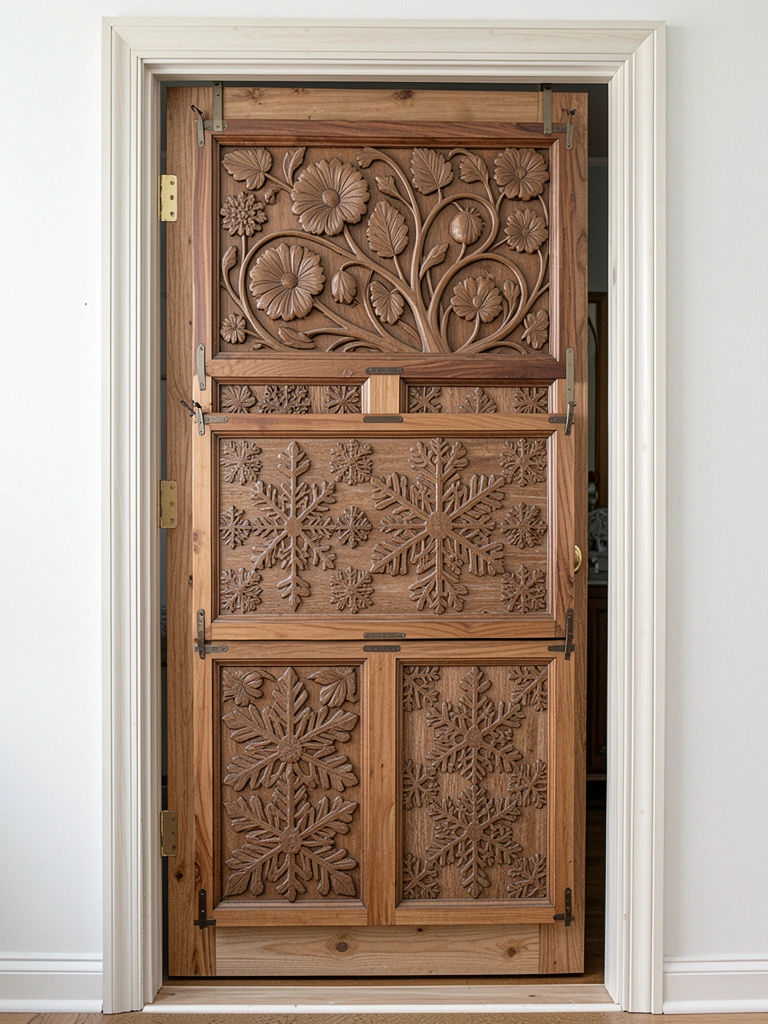
Some custom doormakers design frames that accept interchangeable carved panels, letting you swap designs seasonally or based on mood. This is the artsy answer to redecorating without reinstalling a door.
Commission a framemaker to create a panel-swap system ($800–$2,000 initial setup) then order 2–4 different carved panels ($200–$500 each) in styles matching different seasons or aesthetics. Spring panels might feature flowering botanicals, autumn panels feature harvest imagery, winter panels might be geometric or snowflake-inspired.
The payoff is creative satisfaction and the ability to refresh your entry’s look without major work. It’s like having a rotating art gallery on your front door. Friends notice when you change it, which becomes a fun conversation starter.
20. Source Victorian-Era Carved Doors from Estate Sales
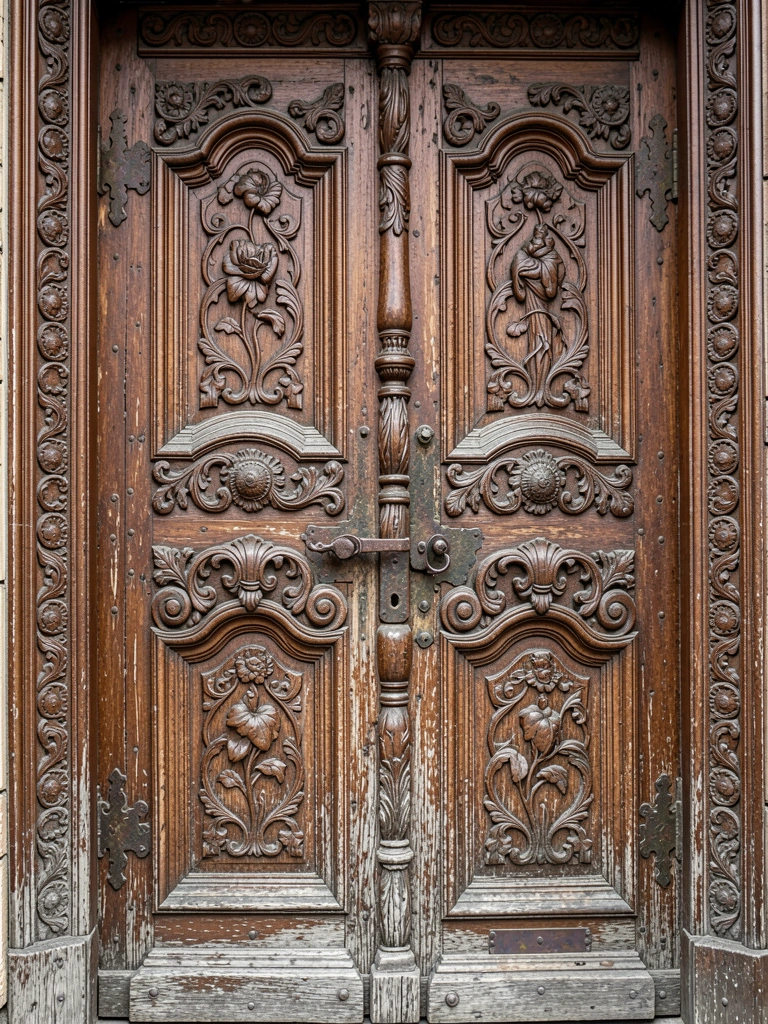
Victorian doors are architectural jewelry—ornate, detailed, and crafted to last centuries. Estate sales and salvage yards frequently have authentic Victorian doors available for a fraction of their replacement cost.
Expect to spend $300–$1,500 depending on condition and intricacy. Many need restoration (hinge repair, weatherproofing, refinishing) which adds $300–$800. But the craftsmanship you get is genuine—hand-carved details, real quarter-sawn oak or walnut, period-correct joinery.
This option appeals to people restoring historic homes or those who love Victorian aesthetics. The authenticity can’t be replicated by new production doors. These doors develop character over time, showing wear in ways that feel noble rather than decrepit. They genuinely improve with age.
21. Carve Narrative Scenes or Storytelling Elements
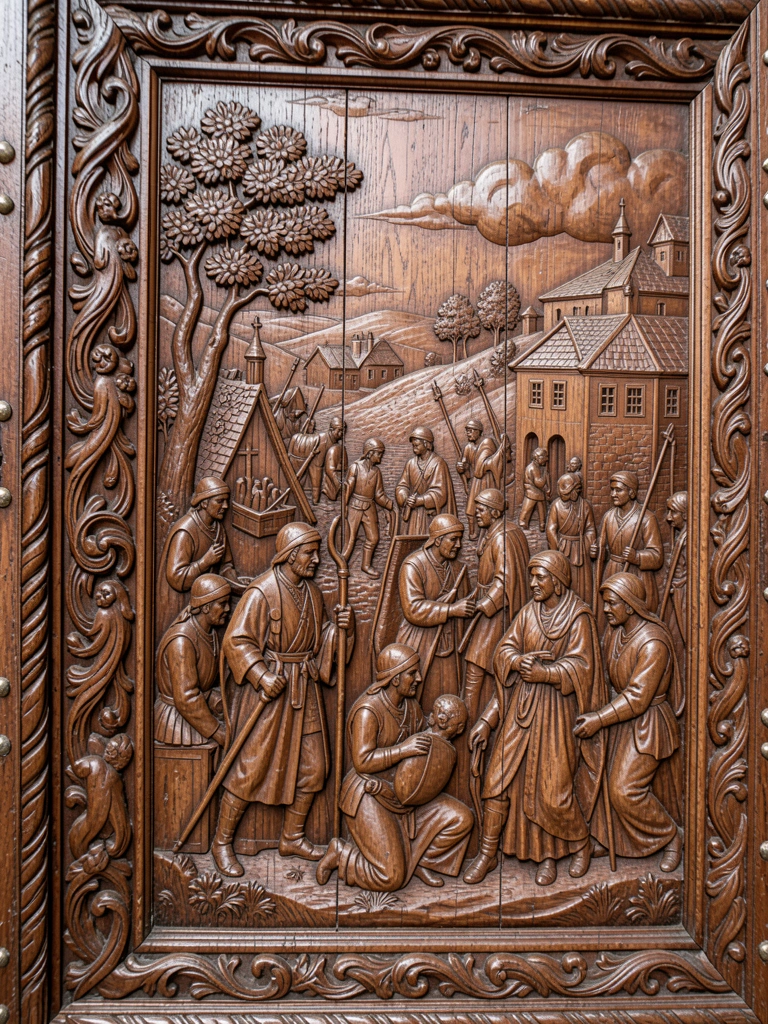
Want your door to tell a story? Commission a carver to create a narrative scene. This might be a landscape meaningful to your family, a historical moment, a literary reference, or a personal story rendered in carved relief.
This level of customization ($1,500–$3,500+) requires finding a skilled carver who can handle complex composition. Search for “narrative woodcarving” or ask local art councils for carver referrals. The process is collaborative—you describe the story, the carver creates sketches, you refine, then they carve.
The result is genuinely one-of-a-kind—a door that expresses your family’s values, history, or imagination. It becomes a conversation piece that reveals something about who you are and what matters to you. Visitors spend time reading the carved narrative rather than just noticing “nice detail.”
22. Install Carved Door Panels with Integrated Smart Lock Housing

Modern security doesn’t need to clash with carved beauty. Work with a carver and smart lock installer to integrate biometric or keypad locks into carved door designs. The lock housing becomes part of the overall composition rather than a visible intrusion.
Some custom door makers ($1,200–$2,500) can route smart lock housing into pre-carved panels so the tech feels integrated rather than bolted-on. Matte black or brushed gold smart locks complement carved wood when positioned thoughtfully. Install by professionals who understand both carpentry and tech.
The result balances old-world craftsmanship with contemporary security. You get traditional beauty plus modern convenience, without either feeling compromised. This appeals to people who want heritage aesthetic with zero sacrifice in functionality.
23. Use Carved Door Surrounds to Frame Glass Entry Doors
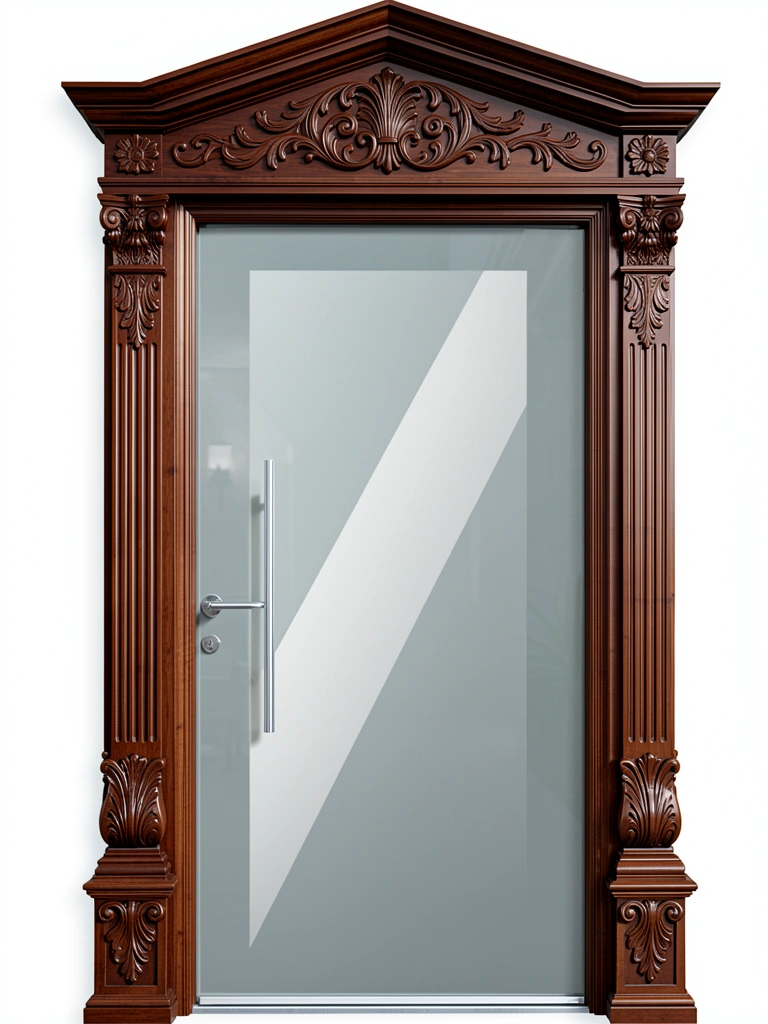
Glass doors look modern and minimalist but can feel cold. Frame them with carved wood surrounds that add warmth and traditional architectural detail. The contrast between minimal glass and ornate carved surround creates visual interest.
Source pre-made carved surrounds ($300–$800) from millwork suppliers or have a carver design custom framing. Install as an architectural frame around your glass door entrance. The carved wood draws the eye and softens what might otherwise feel severe.
This approach works beautifully in contemporary homes that could use more warmth, or traditional homes adding modern glass doors. The carved surround is visually dominant, so the glass reads as a contemporary insert within a traditionally framed entry rather than vice versa.
24. Combine Carved Wood with Visible Brick or Stone
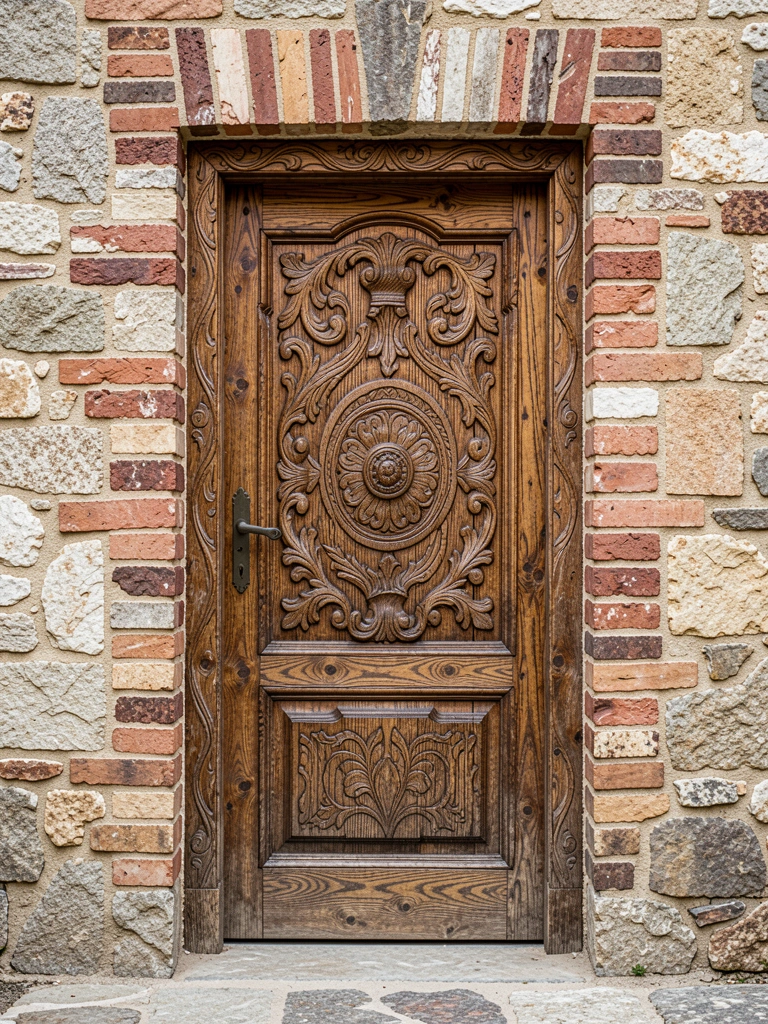
The combination of carved wood door + exposed brick or stone entry creates textural richness that feels intentional and designer-driven. The different materials each get more visually interesting because they’re in contrast.
Install a carved wood door (custom, salvaged, or pre-made) within a brick or stone surround. Paint or stain the carving to either complement or contrast with the masonry color. Traditionally carved doors pair beautifully with rustic surroundings; modern carved doors look chic against clean brick.
This material mix appeals to people who value texture and authenticity in their homes. The natural materials—real carved wood, real brick—make the entry feel grounded and substantial. It reads as carefully considered rather than decorator-picked.
25. Hand-Carve a Minimalist Abstract Pattern in Shallow Relief
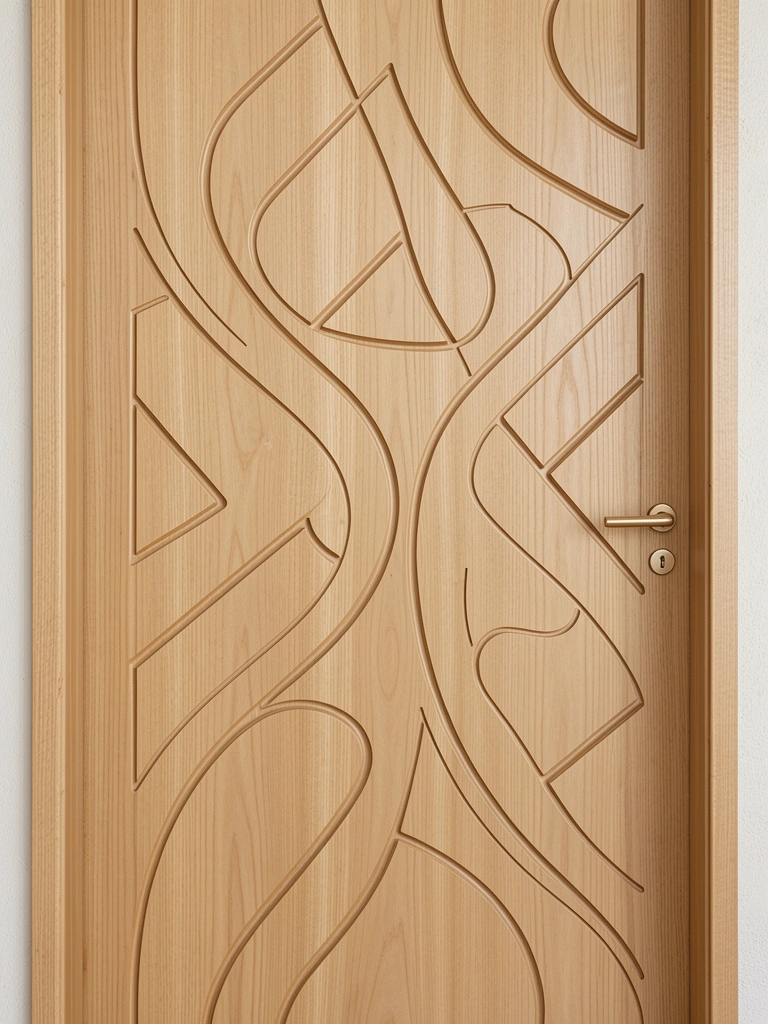
Contemporary design often skips ornament in favor of abstraction. Hand-carve abstract patterns—flowing lines, geometric shapes, negative space—in shallow relief. This creates visual interest and artistic merit without traditional ornamentation.
DIY this with basic carving tools ($50) or commission a carver who works in contemporary styles ($400–$1,000). The shallow depth keeps costs and time manageable while creating genuine artistic presence. Finish with stain or paint that highlights the carved shadows without adding visual noise.
This approach appeals to minimalist aesthetics—you get artistic detail without decoration, craftsmanship without ornamentation. The carving feels intentional and contemporary rather than traditional or nostalgic.
26. Create a Relief-Carved Landscape or Seascape
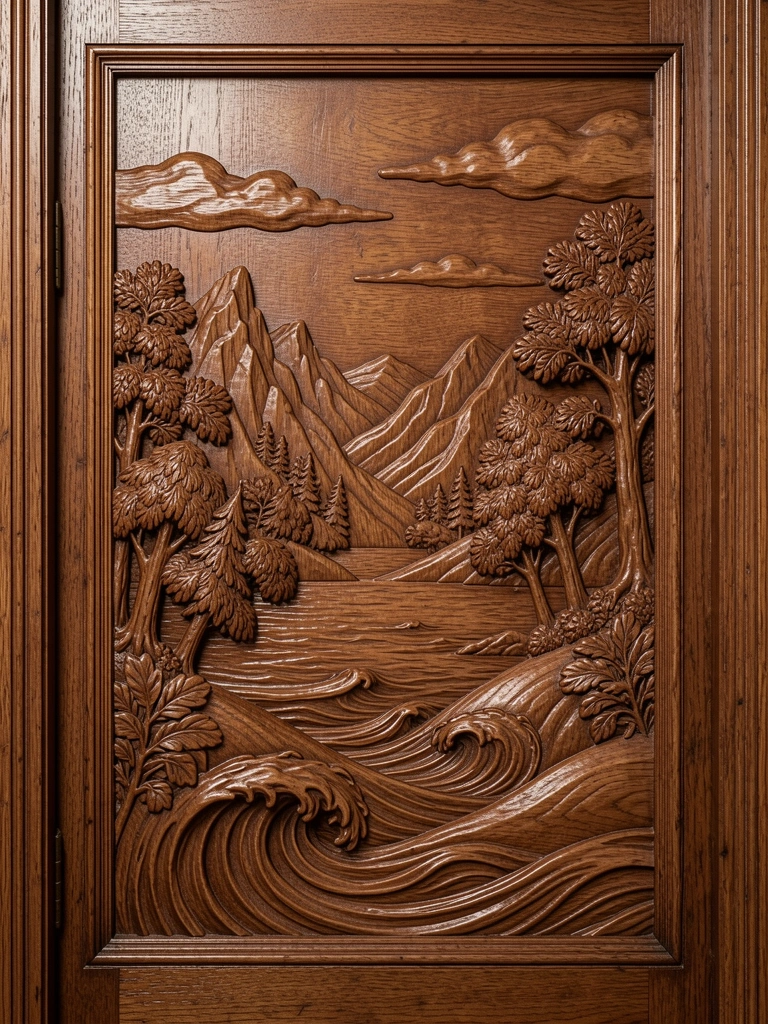
Landscape carving lets you bring meaningful scenery to your entry. Commission a carver to render a view you love—mountain range, ocean scene, forest, desert—in relief. This creates a window-like quality even though it’s carved wood.
Work with a carver to combine photo reference with artistic interpretation ($800–$2,000). The carving should have dimensional depth—foreground elements carved deeper, background elements shallower—to create visual recession. Light plays dramatically across landscapes, creating different moods at different times of day.
This appeals to nature lovers and people who want their home to reflect what they value. A seascape carved door feels like you’re bringing the ocean home; a mountain landscape door signals your connection to wilderness. It’s personal without being literal.
27. Install Multiple Carved Panels for an Accent Wall Effect
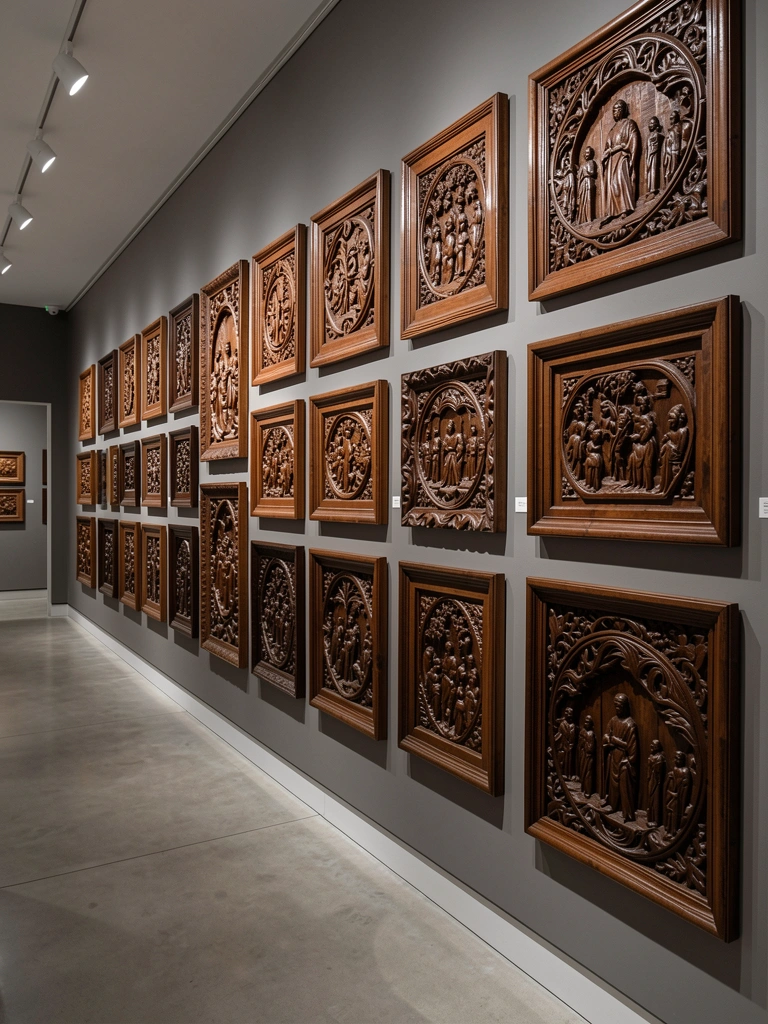
Why stop at the door? Extend carved detail across your entire entryway by installing multiple carved panels (on walls, not just the door) in a coordinated design. This creates an accent wall effect that announces “you’re entering somewhere special.”
Source matching or complementary carved panels ($60–$200 each) and arrange them in an intentional composition—grid pattern, asymmetrical gallery layout, or architectural arrangement. Install with adhesive and brad nails. This works beautifully with carved panels in similar styles but different sizes, creating visual rhythm.
The effect is undeniably impressive. Your entryway becomes a gallery showcasing carved artistry. It reads as intentional curation rather than decoration. Guests immediately sense they’ve entered a home where beauty and craftsmanship matter.
Closing
Your entry door deserves to be more than functional—it should reflect the thoughtfulness and artistry inside your home. Whether you invest in a custom-carved masterpiece, source a salvaged treasure, DIY a personal design, or layer affordable carved trim around a simple door, you have options at every budget level. Pin this guide and pick one idea that speaks to you. Your home’s first impression will thank you.
Leave a Reply