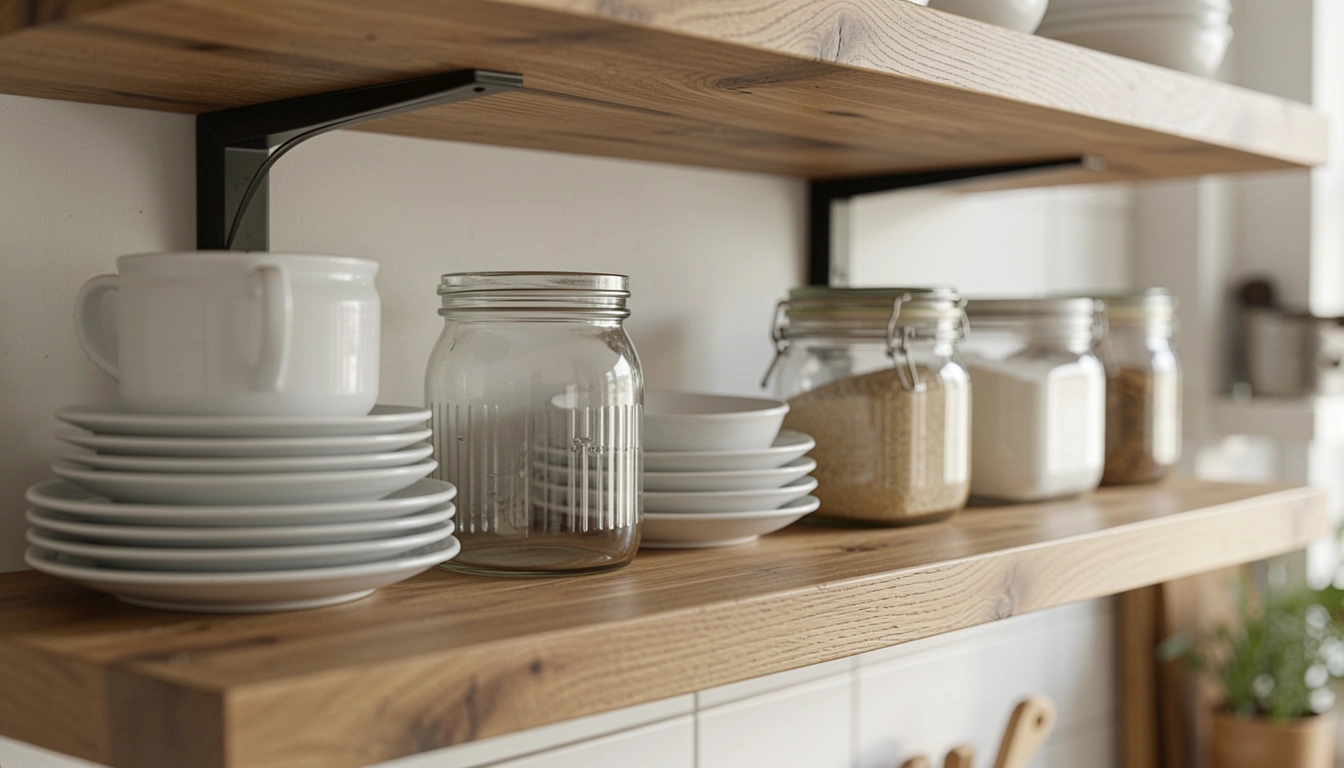
Category: Kitchen Decor

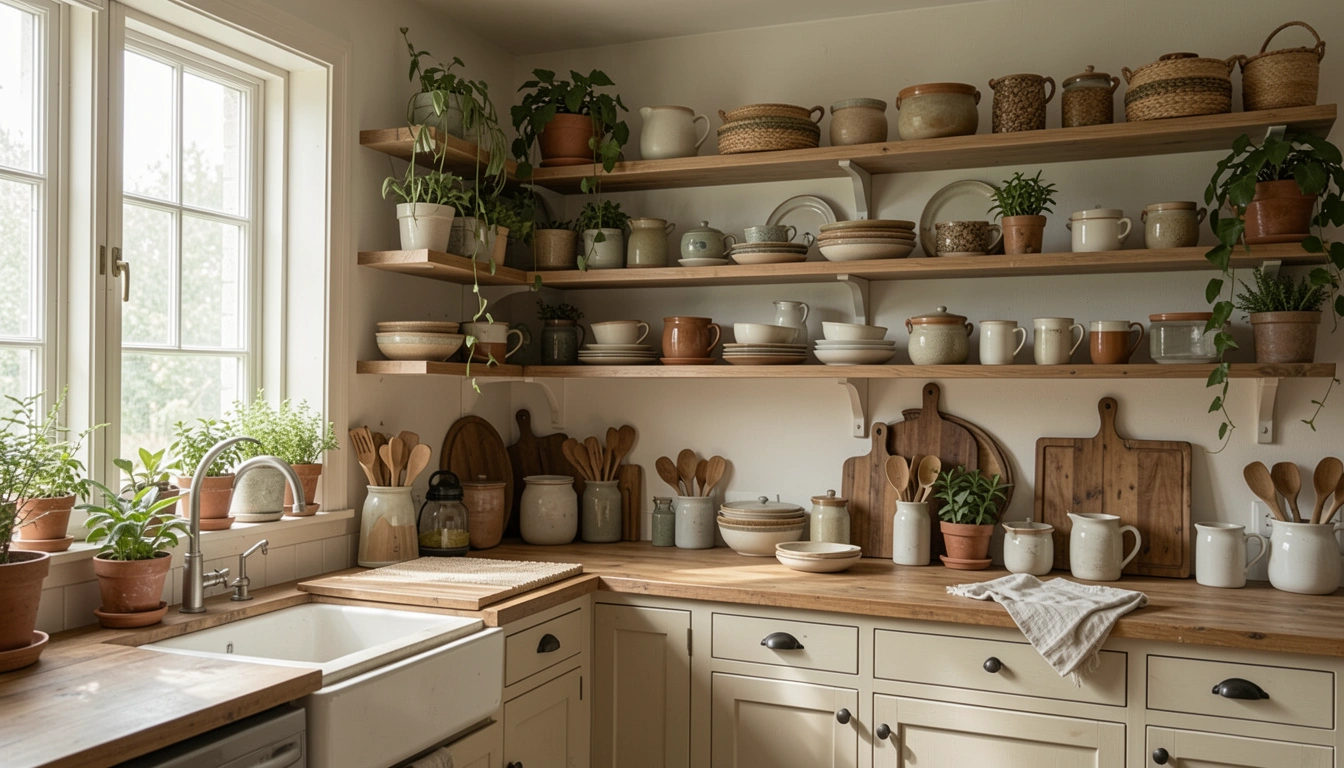
  • 17 Budget Kitchen Shelving Ideas That Save Money

    17 Budget Kitchen Shelving Ideas That Save Money

    My kitchen used to feel cramped, counters piled with pots and random jars. No room to chop onions.

    I started small – nailed up a cheap shelf. Watched the space breathe.

    Now it's calm, everything in reach. You don't need fancy installs. These ideas come from my fixes in real homes.

    17 Budget Kitchen Shelving Ideas That Save Money

    These 17 budget kitchen shelving ideas clear counters without breaking the bank. I've tested them in everyday kitchens. Simple setups, real results.

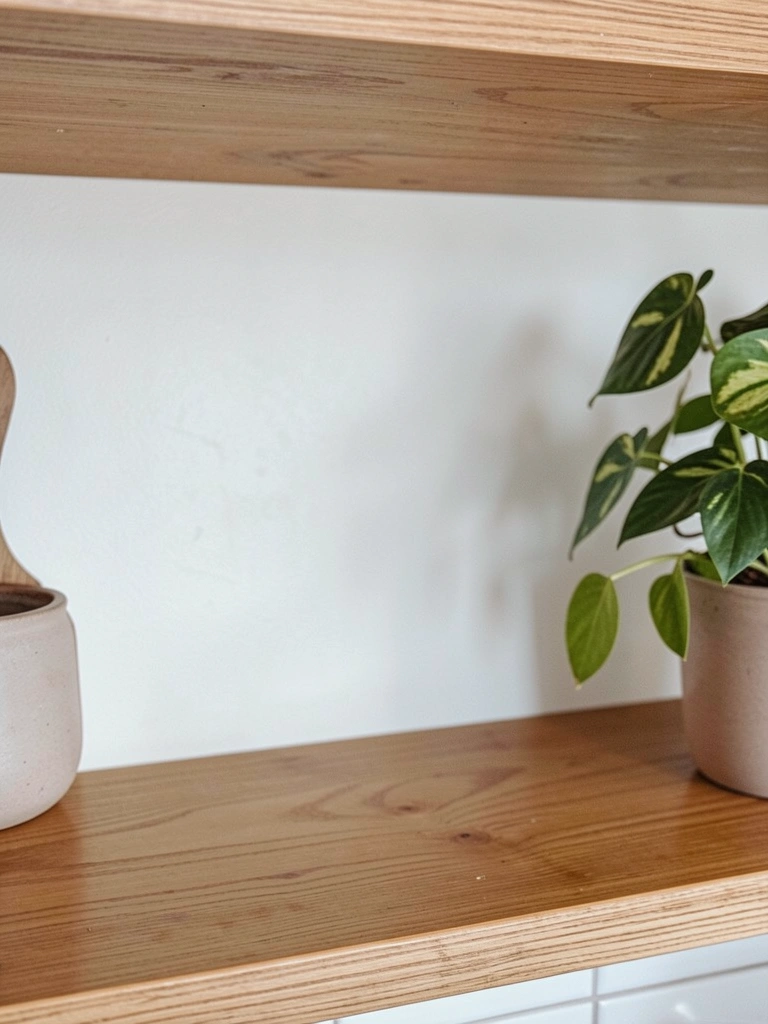
    1. DIY Floating Shelves from 1×2 Pine Boards
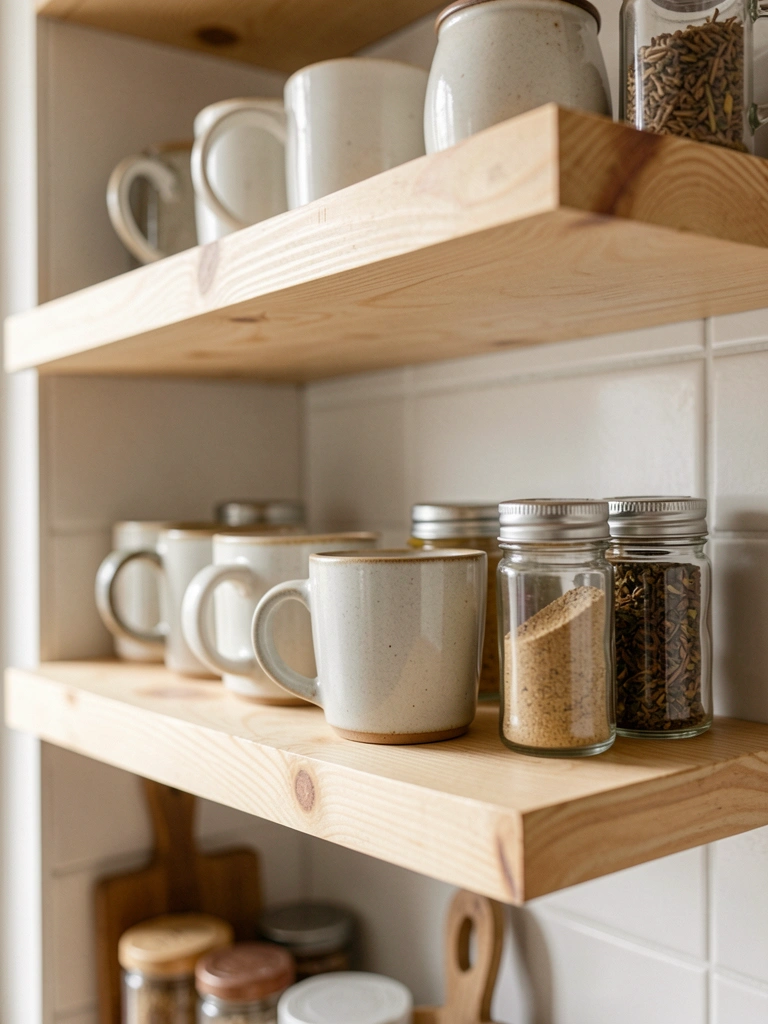
    I grabbed 1×2 pine boards from the hardware store – under $5 each. Cut to fit above my sink, sanded lightly for a soft edge. Screwed into studs.

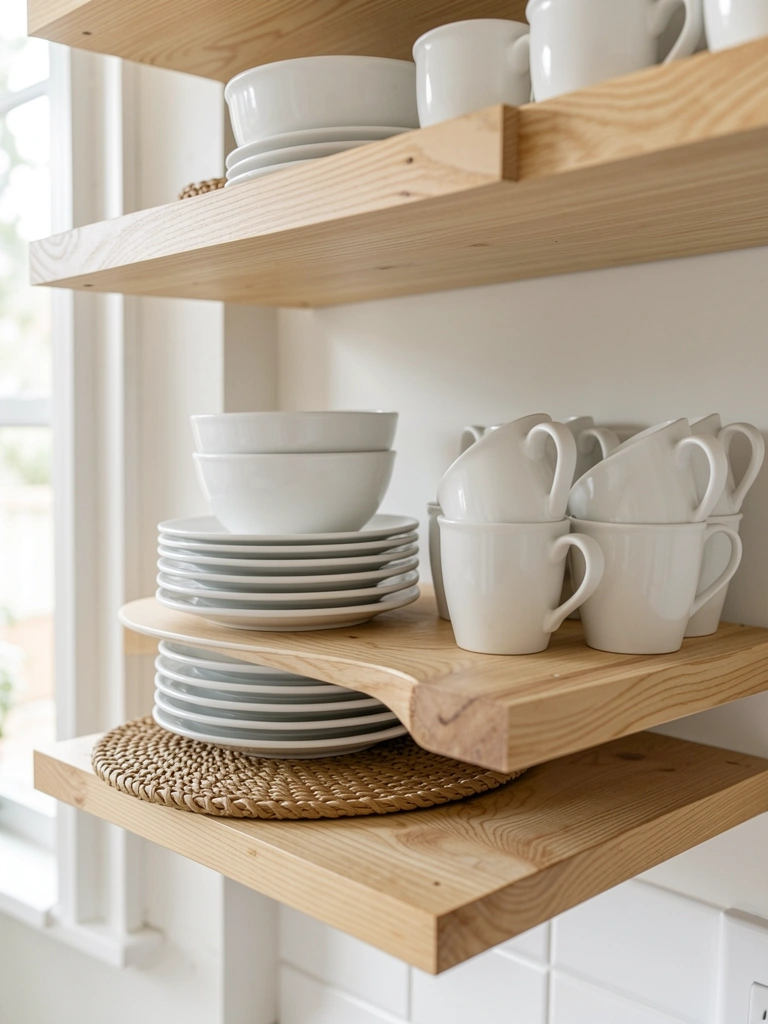
    Mugs and dry goods went up. Counter space doubled. Light streams in now, makes mornings easier.

    Watch the weight – heavy pots bow them. I learned after one sagged. Use brackets if needed.

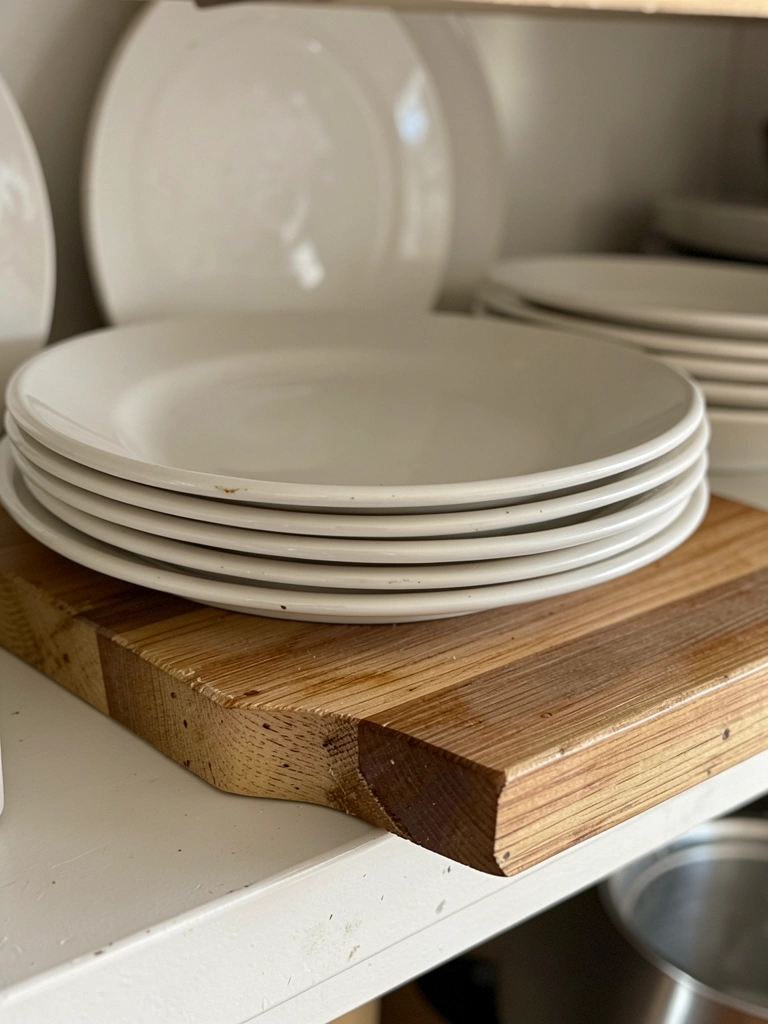
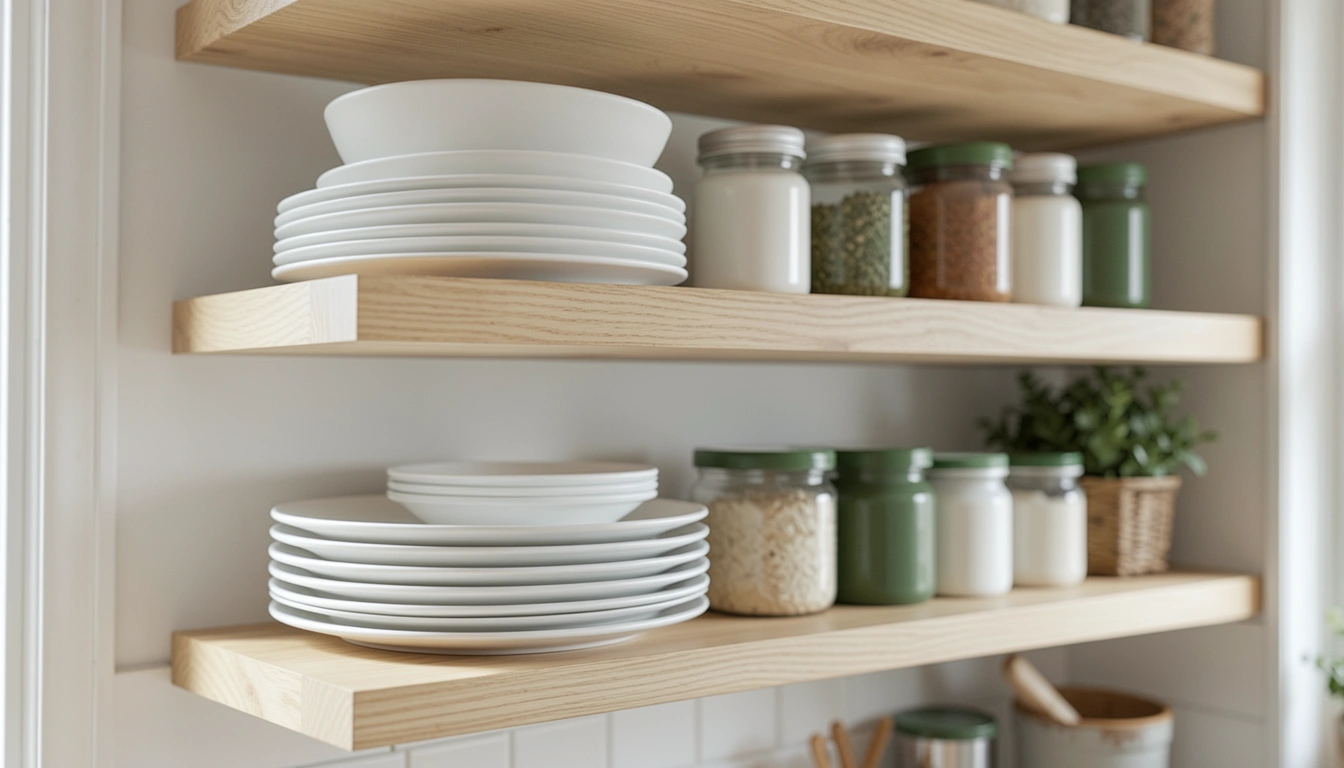
    Space feels open, not cluttered. Stack plates vertically for easy grab.

    What You’ll Need for This Look

    2. Wire Basket Wall Mounts for Veggies
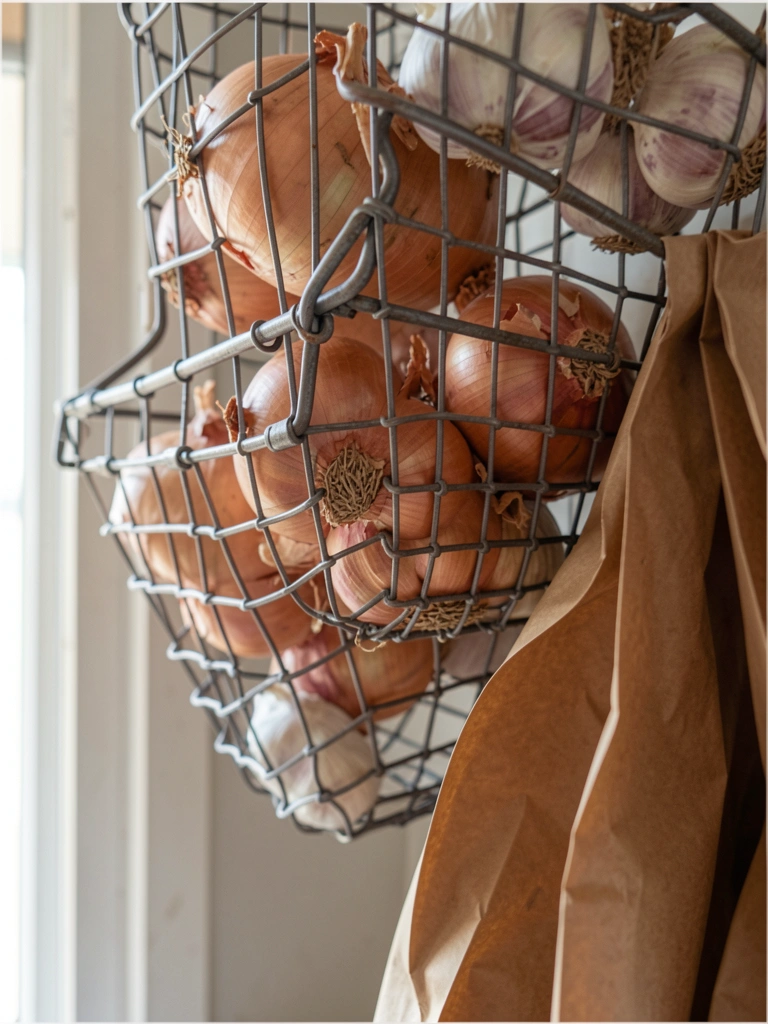
    Wire baskets hooked right into the wall above my stove. Picked ones with handles for $10 a pair. Kept potatoes and onions off counters.

    Air circulates, nothing spoils fast. Kitchen smells fresher.

    Hang at eye level – too high strains your back. I moved mine down after reaching too much.

    Visual break from solid shelves. Herbs peek through the mesh.

    What You’ll Need for This Look

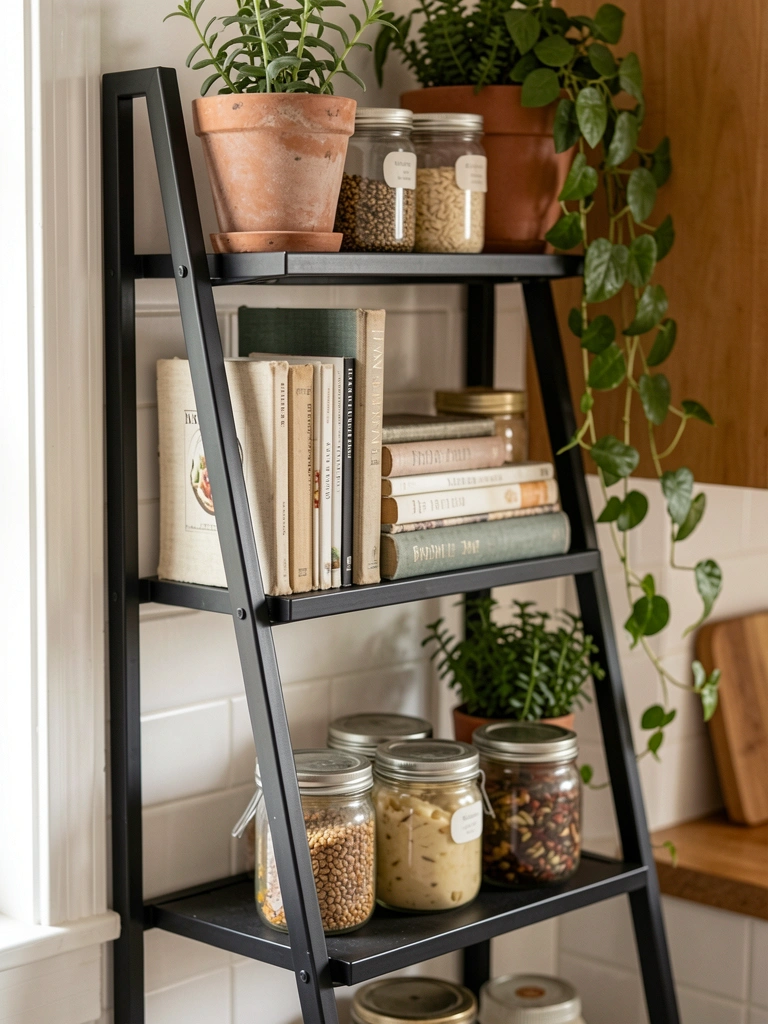
    3. Repurposed Ladder as Leaning Shelf
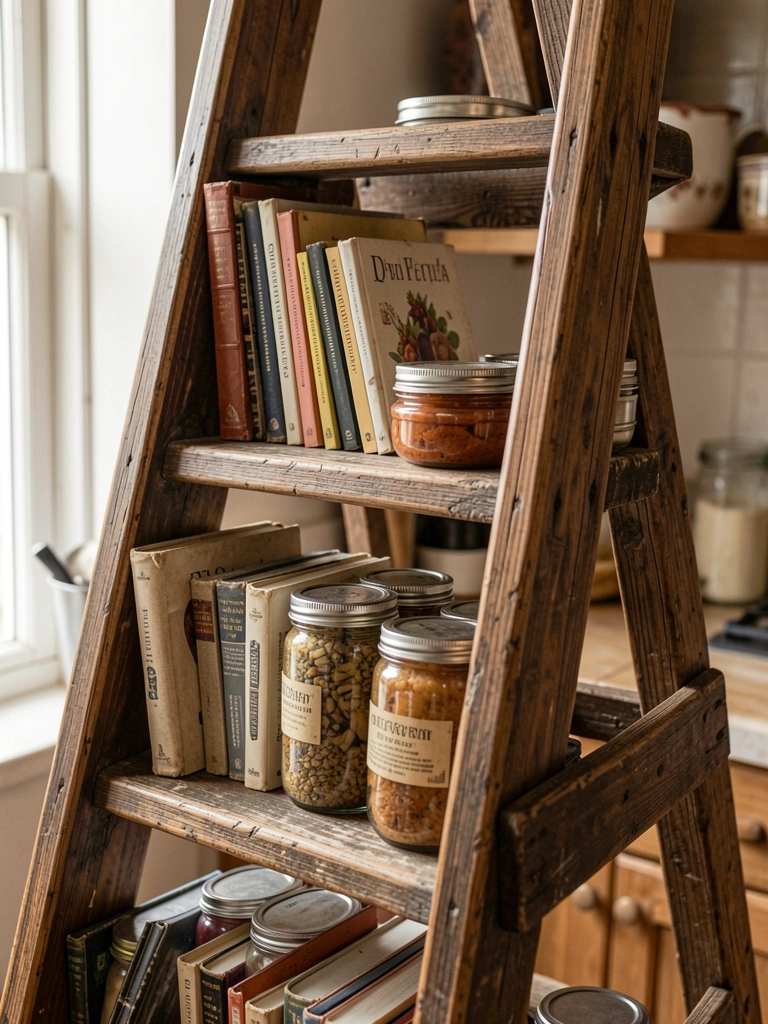
    Found an old ladder at a yard sale for $20. Propped it in the corner, secured top to wall.

    Books, cutting boards layered on rungs. Corner dead space gone. Feels rustic, steady.

    Don't overload bottom – it tips if heavy. Added rubber feet for grip.

    Warm wood tones warm up white cabinets.

    What You’ll Need for This Look

    4. Pegboard Panels for Pots and Pans
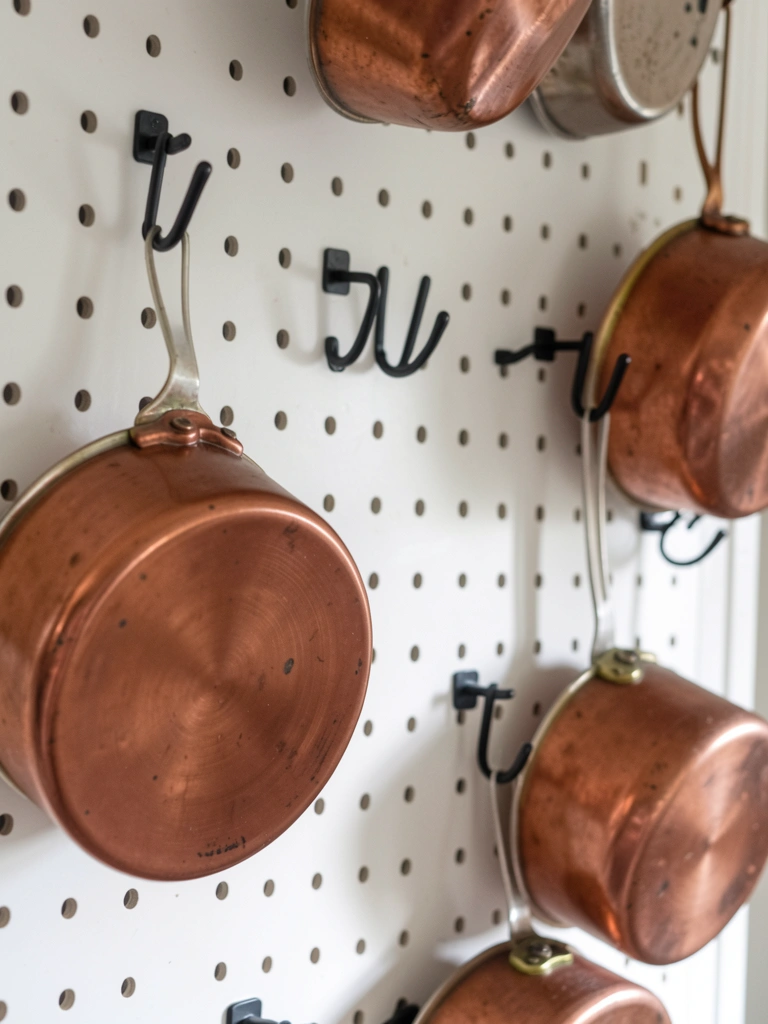
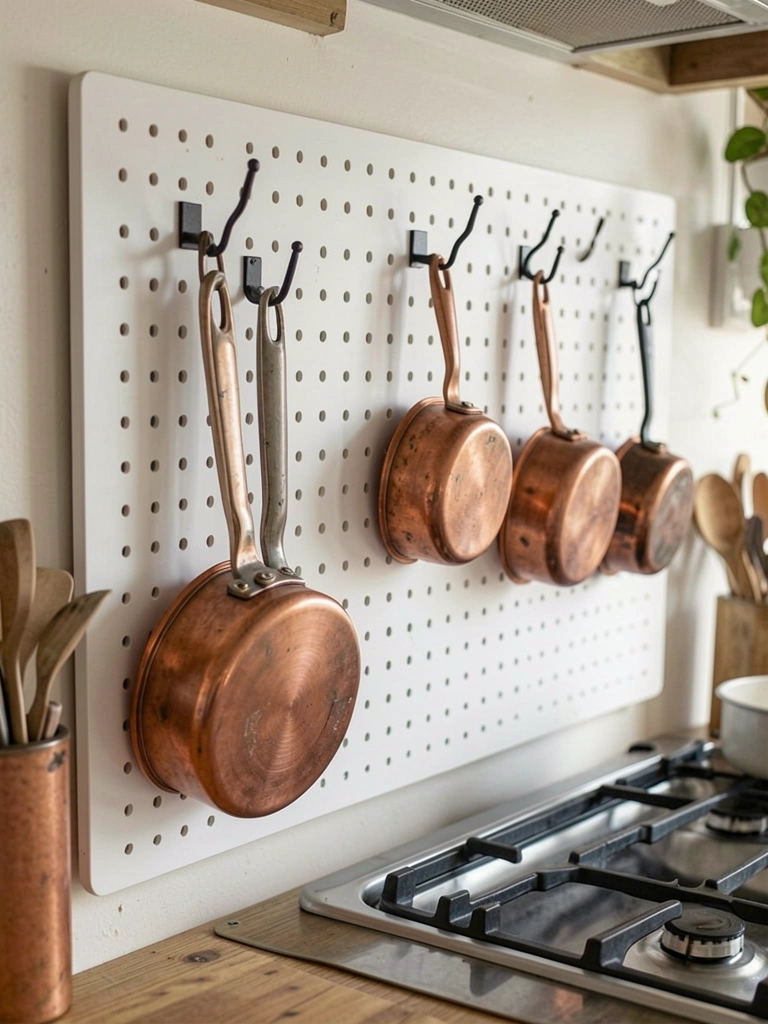
    Screwed up a pegboard sheet behind the door. $15 total. Hooks hold pans, utensils.

    Pots dangle easy access. No digging in drawers. Space feels organized, not junky.

    Test hook spots first – mine slipped once. Use locking hooks now.

    Flexible for changes. Modern edge without cost.

    What You’ll Need for This Look

    5. Black Pipe Shelves Over the Sink

    Plumbing pipes and wood planks made industrial shelves. $30 for parts. Mounted over sink.

    Sponges, recipe books stay dry. Splashes wipe off easy.

    Pipe fittings can loosen – tighten yearly. Tightened mine after a wobble.

    Edgy look, holds up to steam.

    What You’ll Need for This Look

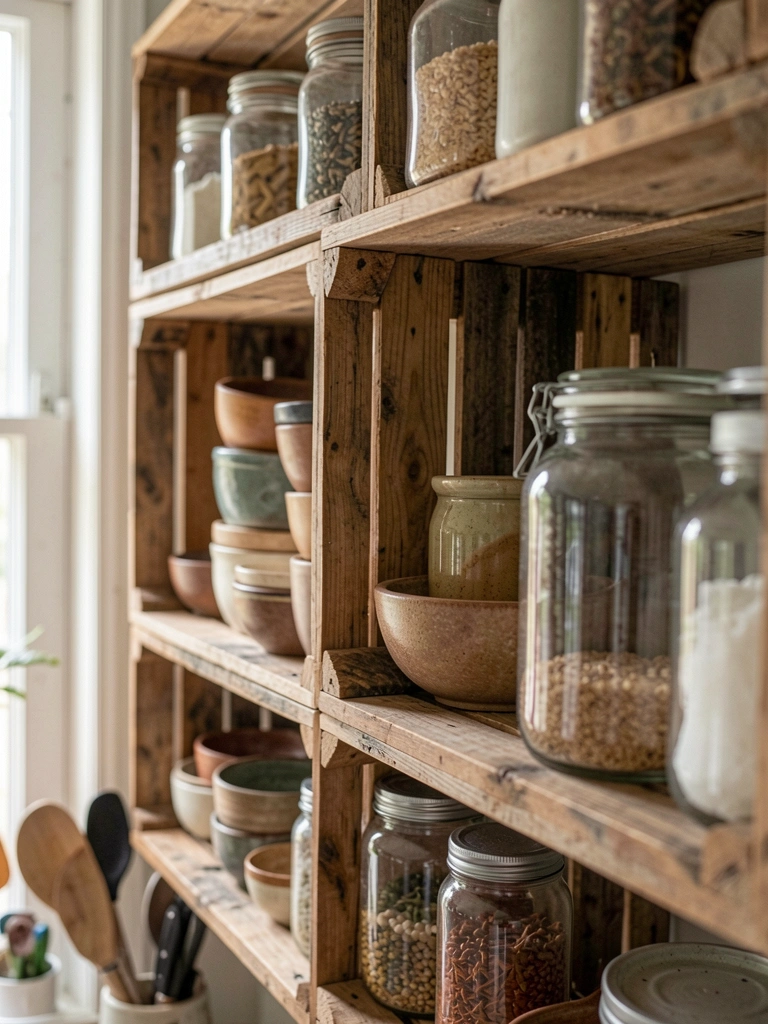
    6. Stacked Wooden Crates for Dry Goods
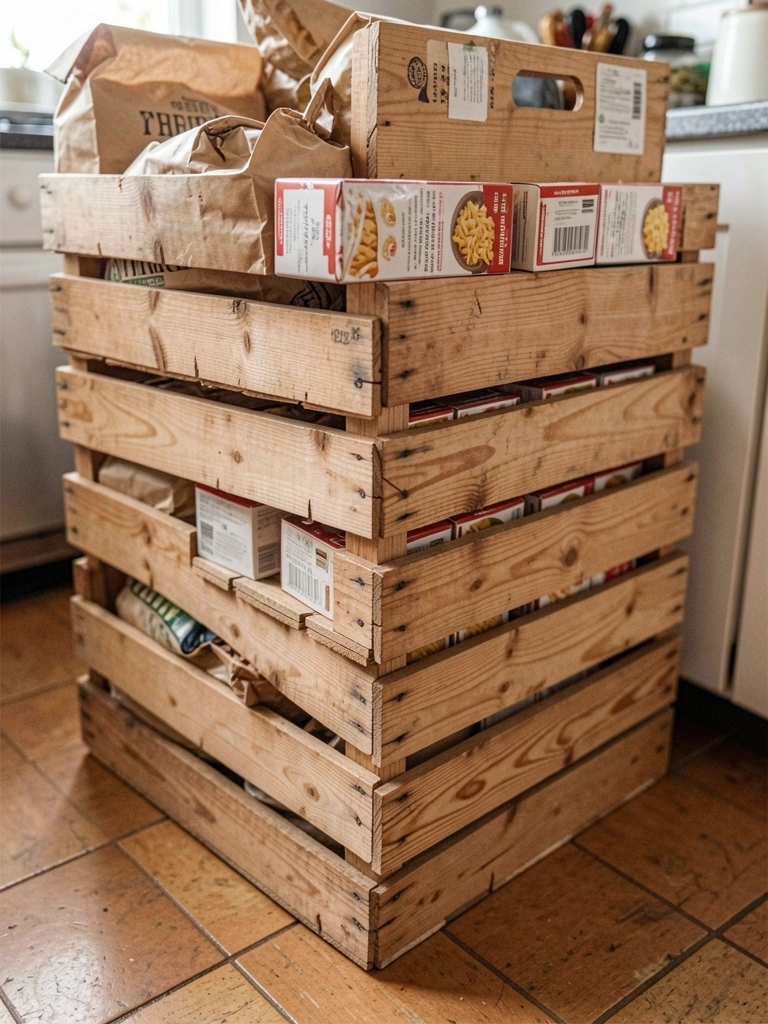
    Bought crates for $8 each, stacked against wall. Pasta, rice inside.

    Floor to waist height, no climb needed. Cozy pantry vibe.

    Line with paper if spills worry you. Flour dusted mine once.

    Cheap, movable storage.

    What You’ll Need for This Look

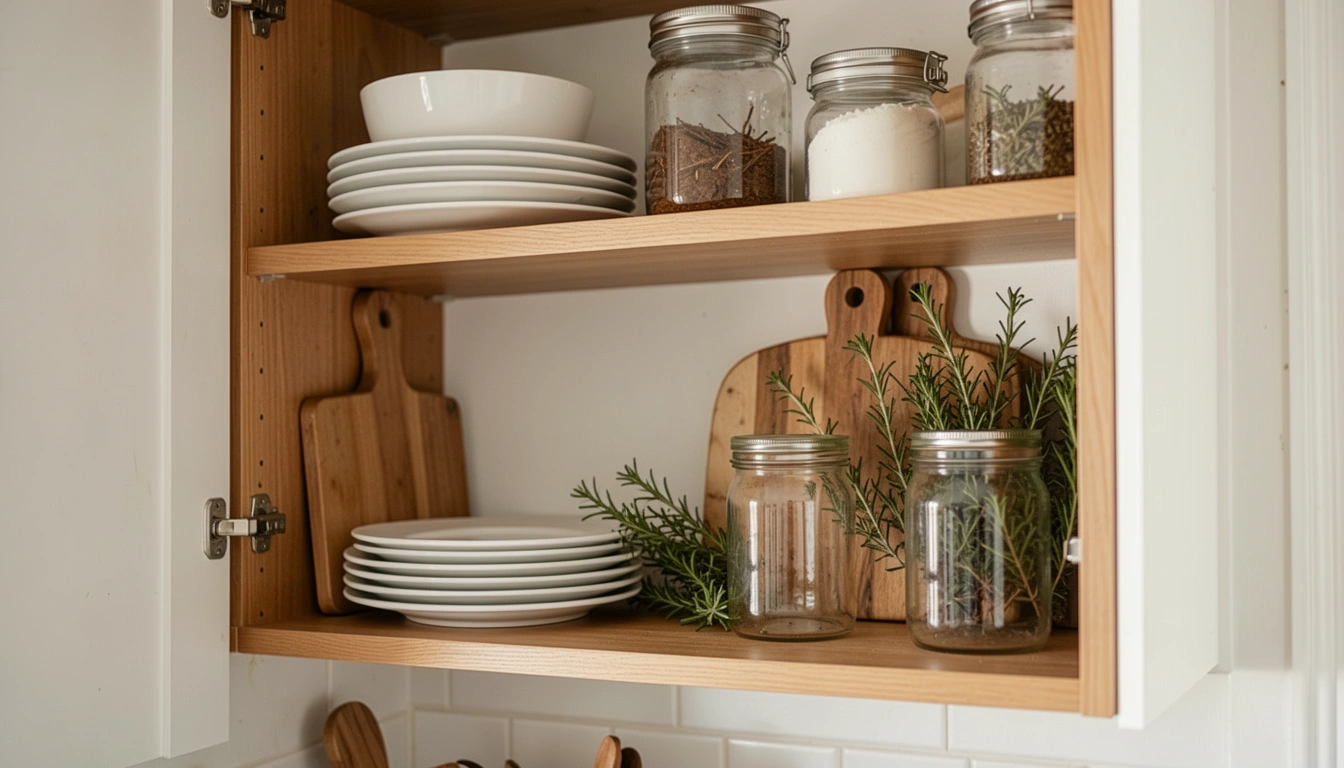
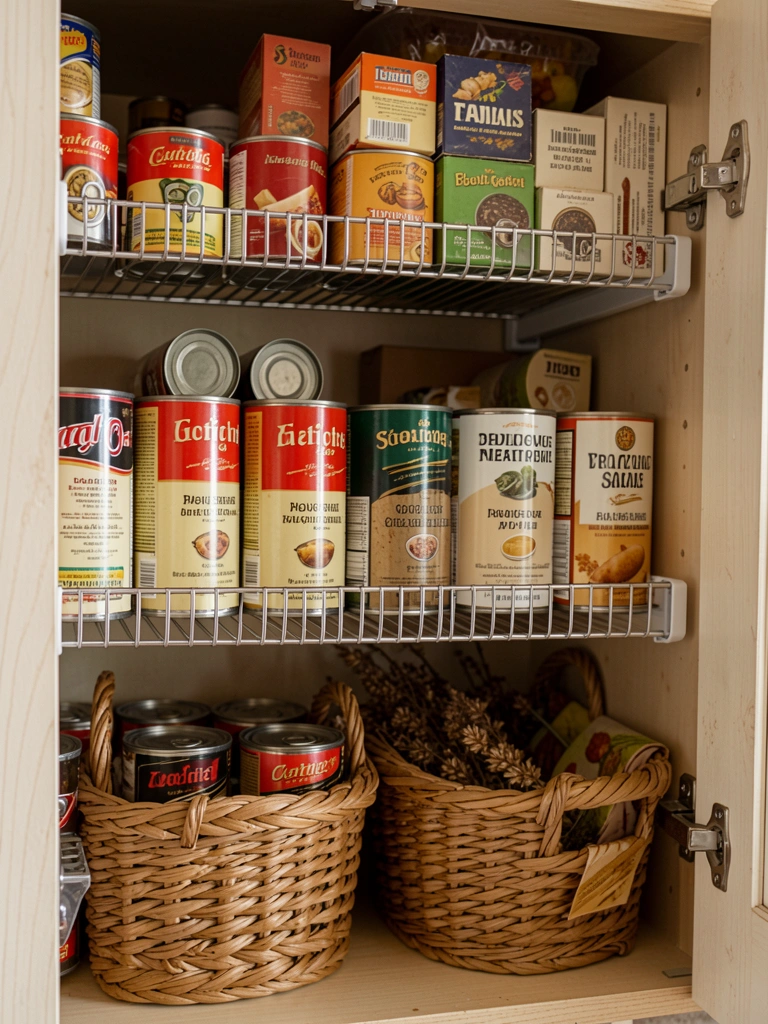
    7. Tension Rods Inside Cabinets for Jars

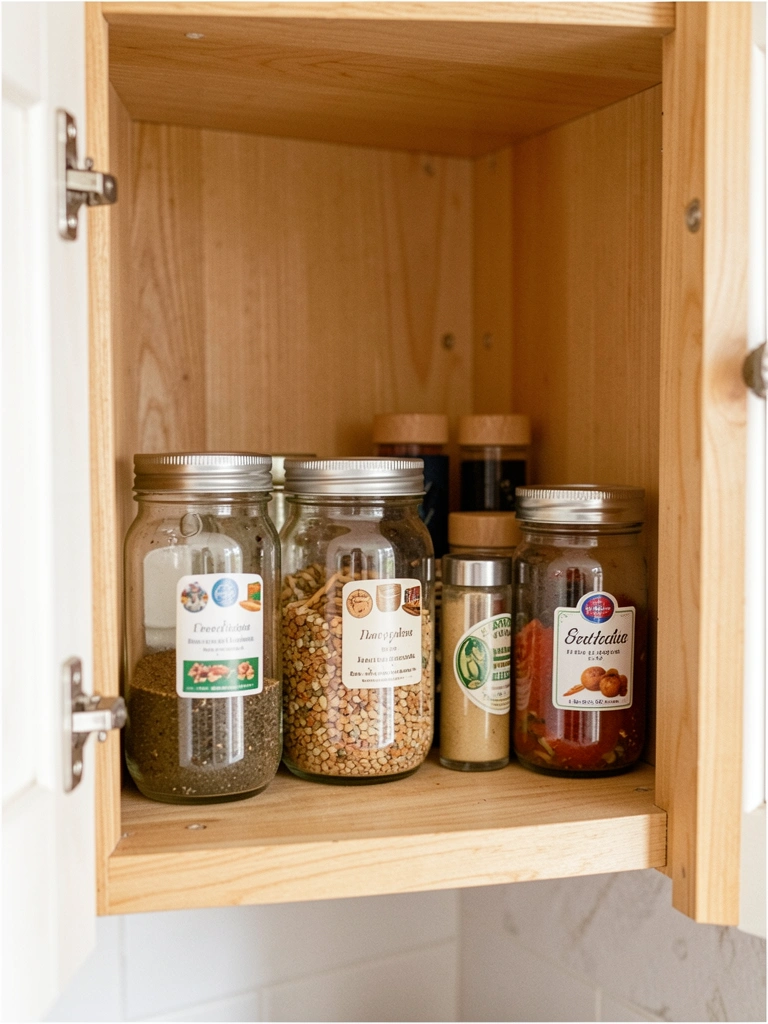
    Tension rods across cabinet depths. $5 pack. Jars slide on, tiered.

    Double shelf space inside doors. Spices alphabetized now.

    Size rods right – too short slips. Swapped mine for thicker.

    Hidden, maxes cabinets.

    What You’ll Need for This Look

    8. Magnetic Strips for Knives and Utensils

    Stuck magnetic strips under cabinets. $12 for two. Knives, metal jars attach.

    Drawer clutter gone. Grab tools fast.

    Clean often – grease builds. Wiped mine weekly now.

    Sleek, safe from kids.

    What You’ll Need for This Look

    9. Bamboo Rack Over the Window
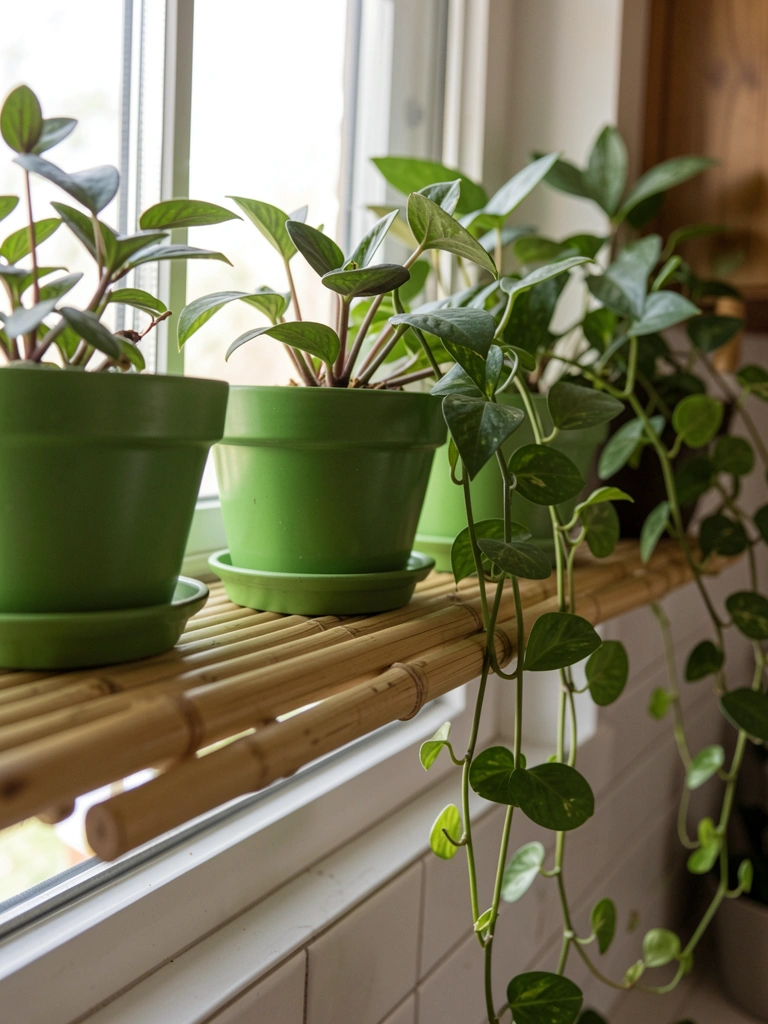
    Bamboo rack bridged window frame. $15. Herbs and teas up top.

    Light filters through leaves. Cooks brighter.

    Secure brackets – wind rattled mine loose once. Added washers.

    Natural, light weight.

    What You’ll Need for This Look

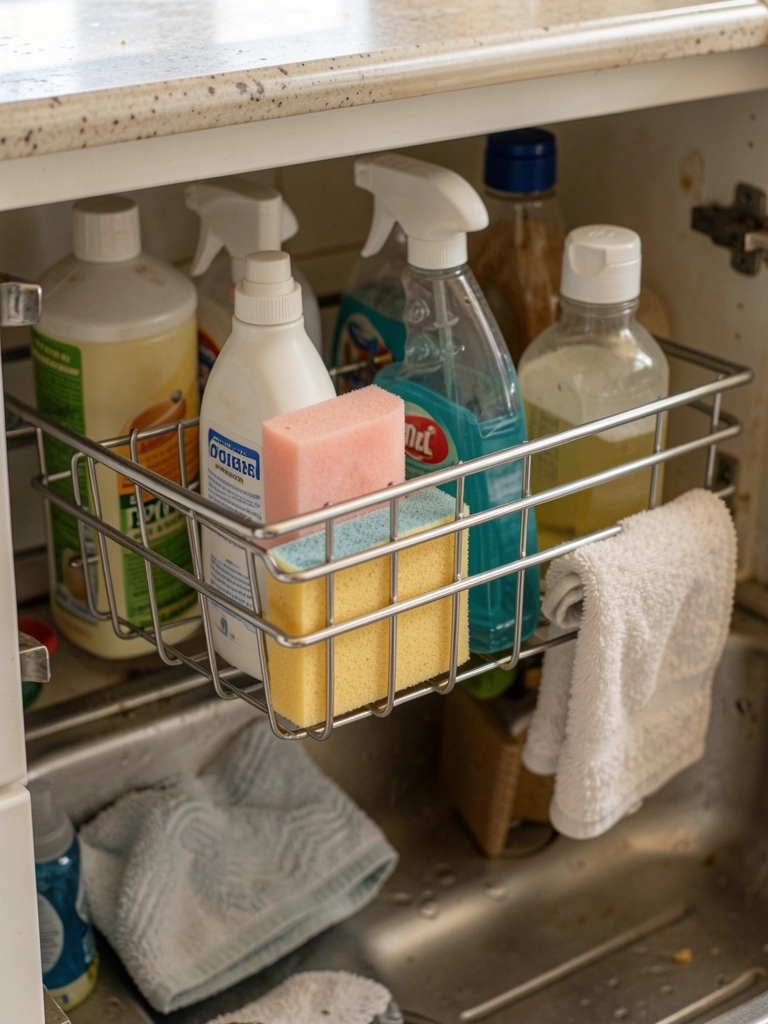
    10. Pull-Out Under Sink Organizer

    Sliding wire basket under sink. $20. Cleaners stack neat.

    Pipes fit around. No more lost sponges.

    Measure depth first – too wide jams. Trimmed mine slightly.

    Practical, damp-proof.

    What You’ll Need for This Look

    11. Vintage-Style Ledge for Plates
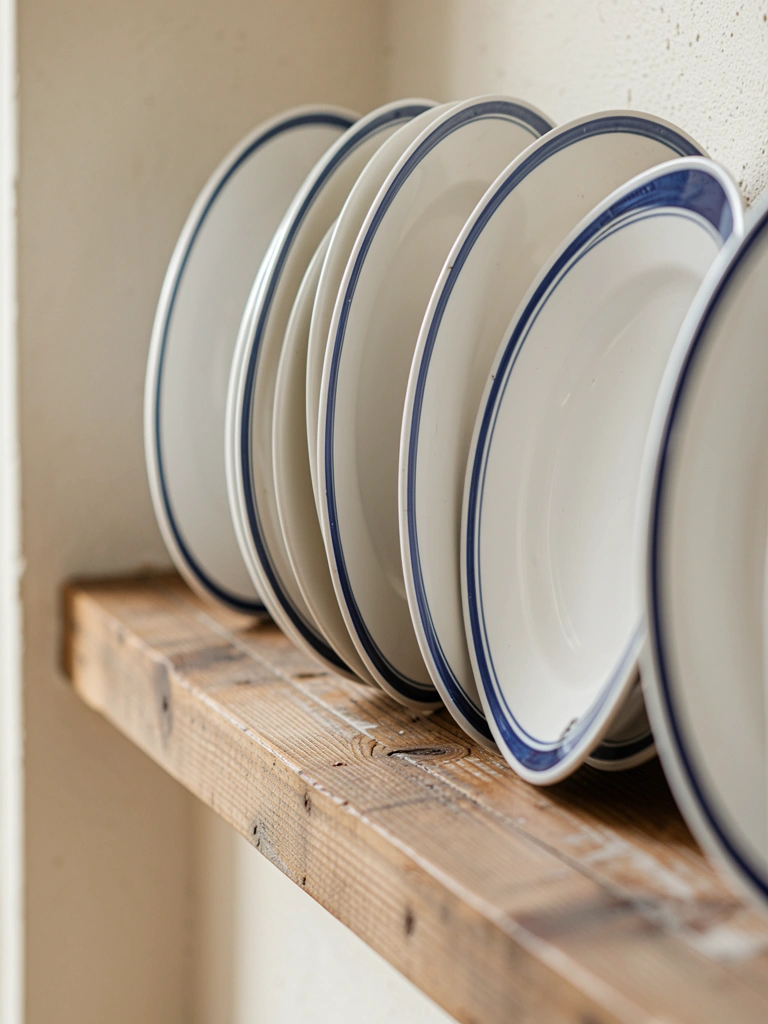
    Narrow ledges from scrap wood. Leaning plates display. $10 materials.

    Artful, saves stacking. Dust easy.

    Angle right – plates slip if flat. Added rubber stops.

    Personal touch.

    What You’ll Need for This Look

    12. Mesh Metal Panels for Baking Sheets
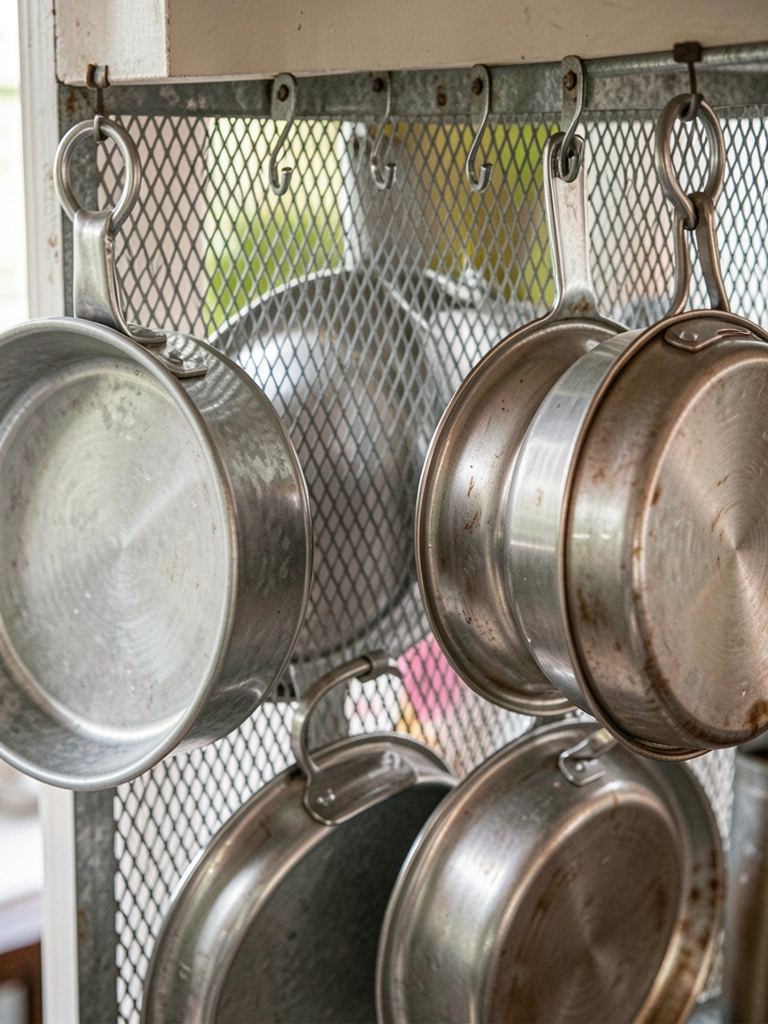
    Mesh panels screwed inside cabinet door. Sheets slot in. $18.

    Baking gear flat, no bends.

    Ventilated – no musty smells. Perfect for humidity.

    Industrial simple.

    What You’ll Need for This Look

    13. Ceiling-Hung Pot Rack with Hooks
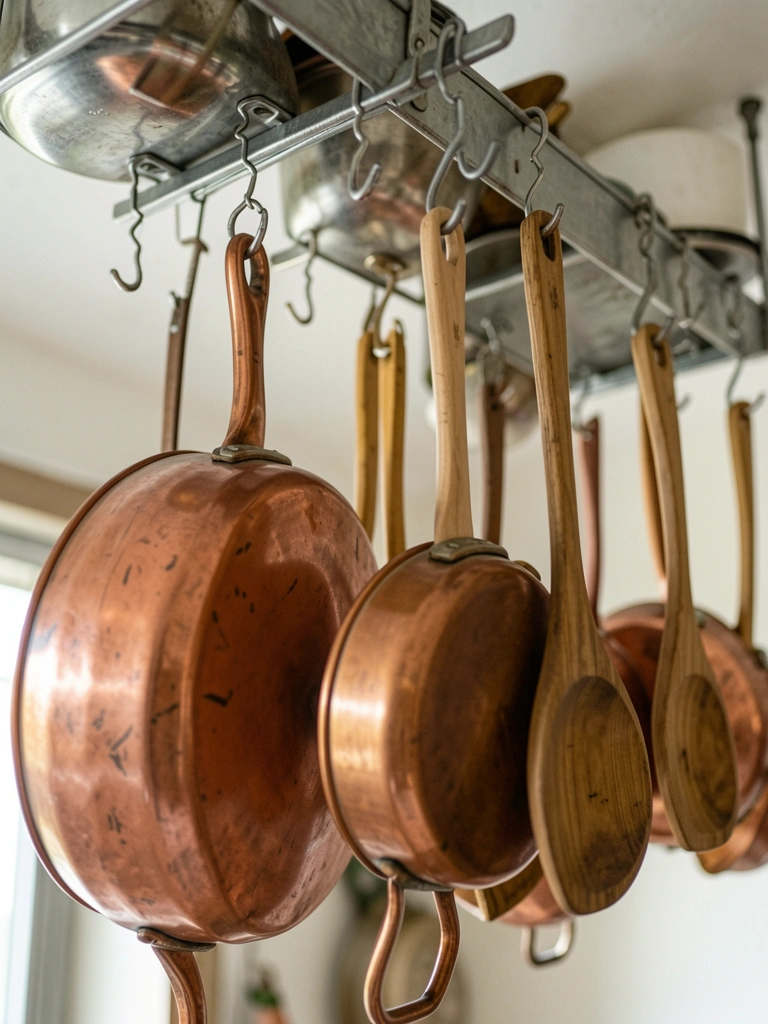
    Chains and hooks from ceiling joist. $25 setup. Pots dangle.

    Over island, easy reach. Visual interest up high.

    Balance weight even – one side swung once. Redistributed.

    Frees cabinets fully.

    What You’ll Need for This Look

    14. Corner Carousel Shelf Insert
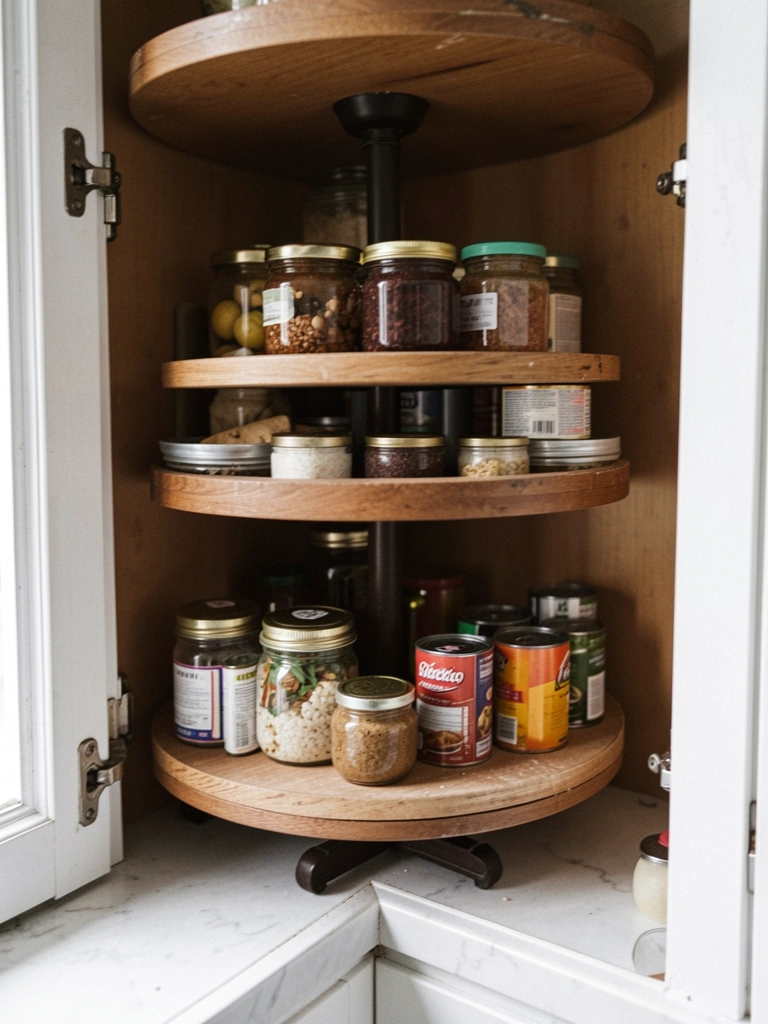
    Turntable shelves in corner cabinet. $22. Spins sauces forward.

    Blind spot conquered. No expired cans.

    Lubricate bearings – stuck after spills.

    Efficient corner use.

    What You’ll Need for This Look

    15. Adhesive Mini Floating Shelves
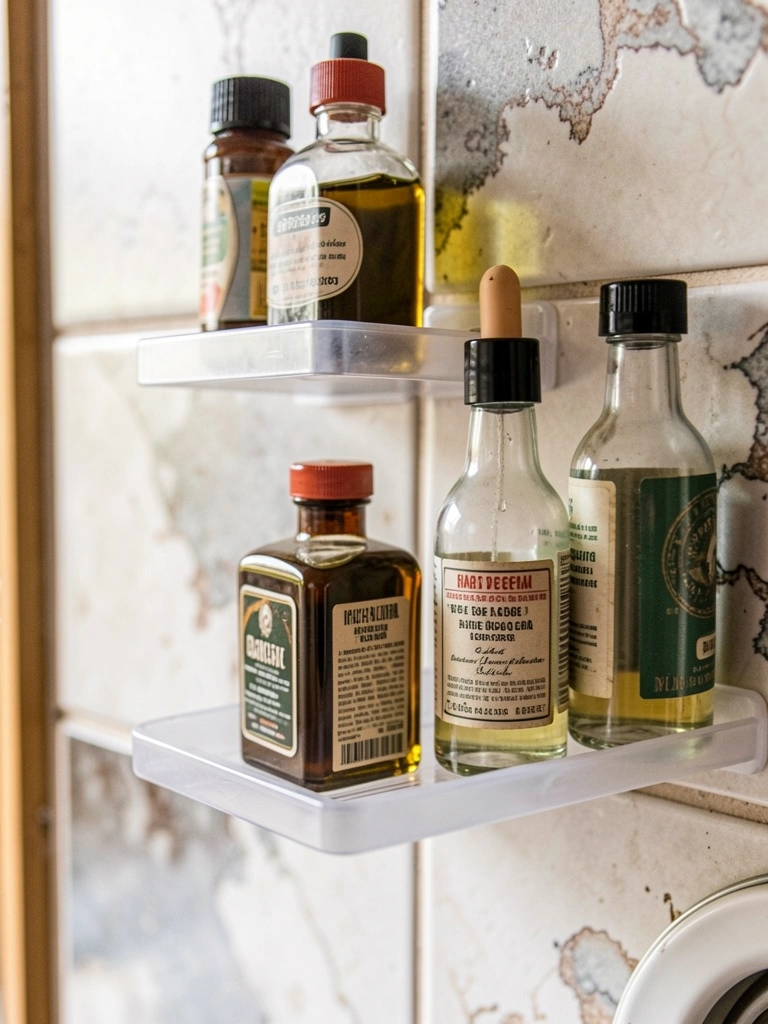
    No-drill adhesive shelves on tile. $15 for four. Oils perch.

    Renter friendly. Peel off clean.

    Light loads only – oils okay, cans not.

    Quick backsplash boost.

    What You’ll Need for This Look

    16. Pallet Wood Vertical Units
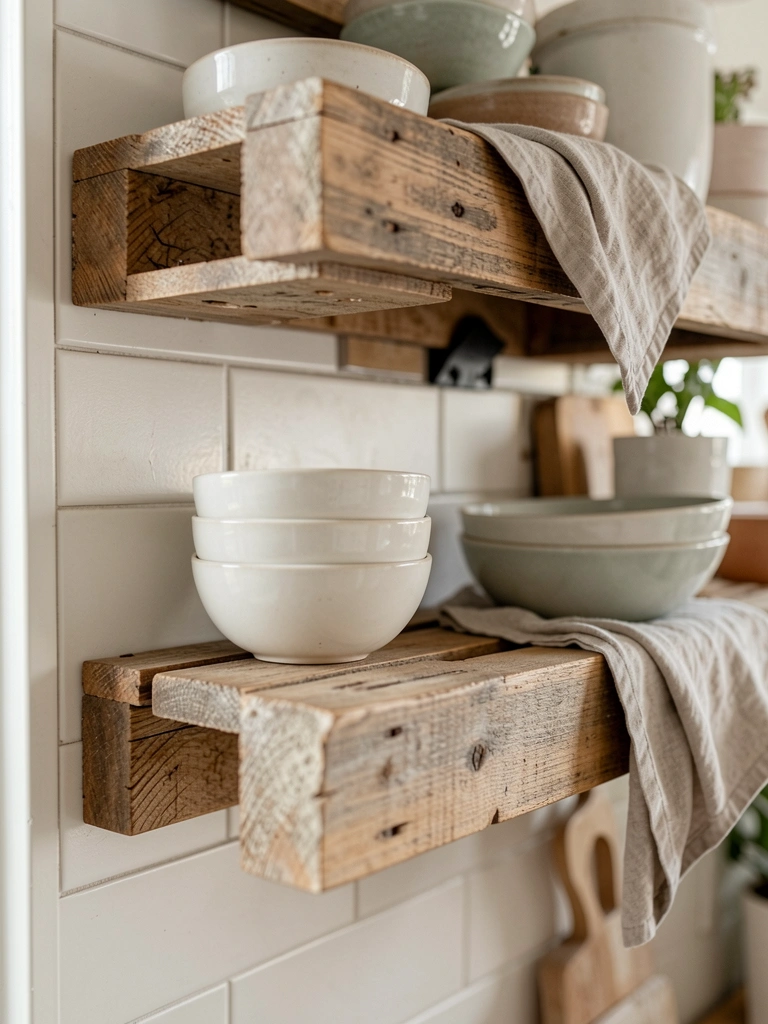
    Disassembled pallets, nailed vertical. $0 if scavenged. Bowls stack.

    Rustic texture warms laminate counters.

    Sand splinters – cut my hand once. Gloves now.

    Free vibe, sturdy.

    What You’ll Need for This Look

    17. Tiered Wire Racks on Counters
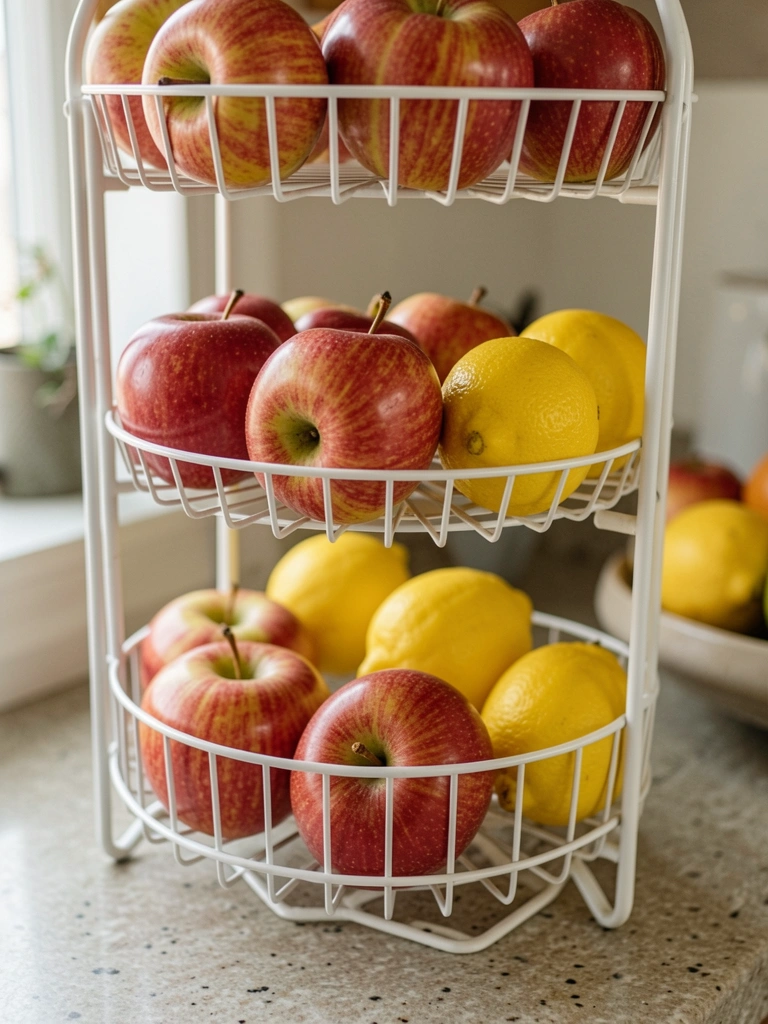
    Wire tiers on counter edge. $16. Fruits elevate.

    Counter real estate saved. Fresh produce front.

    Wipe daily – sticky spots attract ants.

    Compact, airy finish.

    What You’ll Need for This Look

    Final Thoughts

    Pick one or two ideas that fit your kitchen's quirks. Start small – my first shelf changed everything.

    No need for all 17. They'll work in your space.

    You've got this. Clear counters ahead.
  • 13 Modern Kitchen Shelving Ideas for Sleek Homes

    13 Modern Kitchen Shelving Ideas for Sleek Homes

    I remember walking into my kitchen after a long day, everything stuffed in dark cabinets. It felt closed off, stressful. Then I added open shelves. The space breathed. My coffee mugs and spices sat out, ready.

    No more rummaging. Just calm, easy mornings. If your kitchen walls feel wasted, these modern kitchen shelving ideas make it simple to open up.

    13 Modern Kitchen Shelving Ideas for Sleek Homes

    These 13 modern kitchen shelving ideas come straight from kitchens I've lived in and fixed. They're practical for real homes, not perfection. Pick one, and your space feels sleek right away.

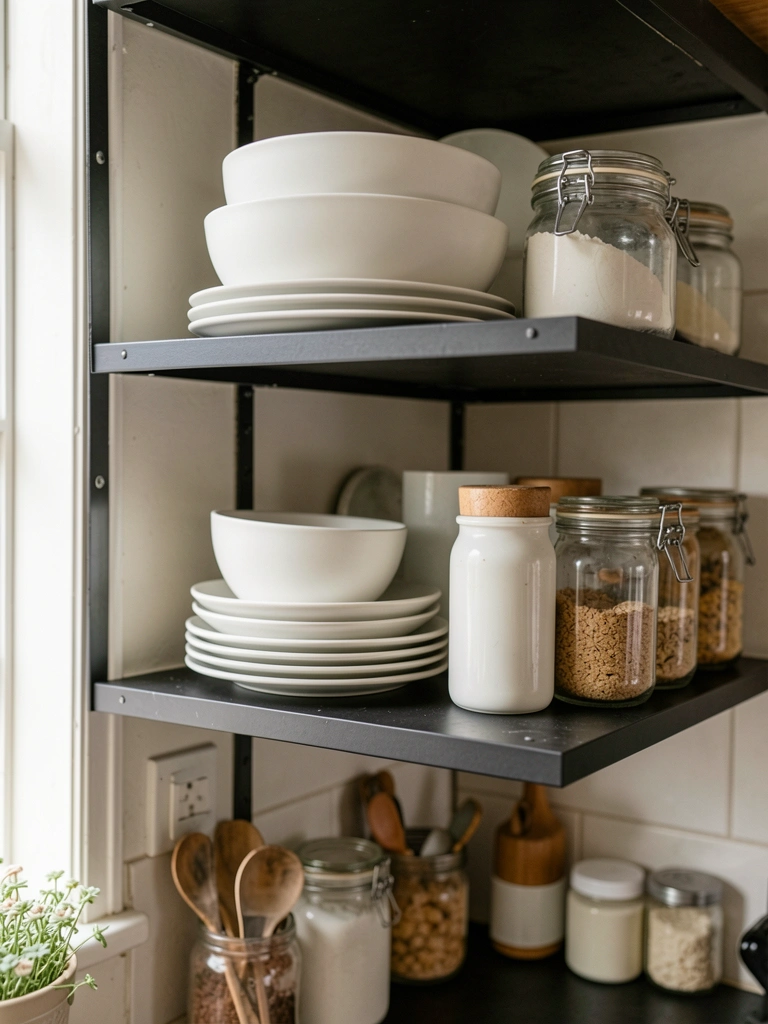
    1. Slim Black Floating Shelves Highlighting Matte White Dishes

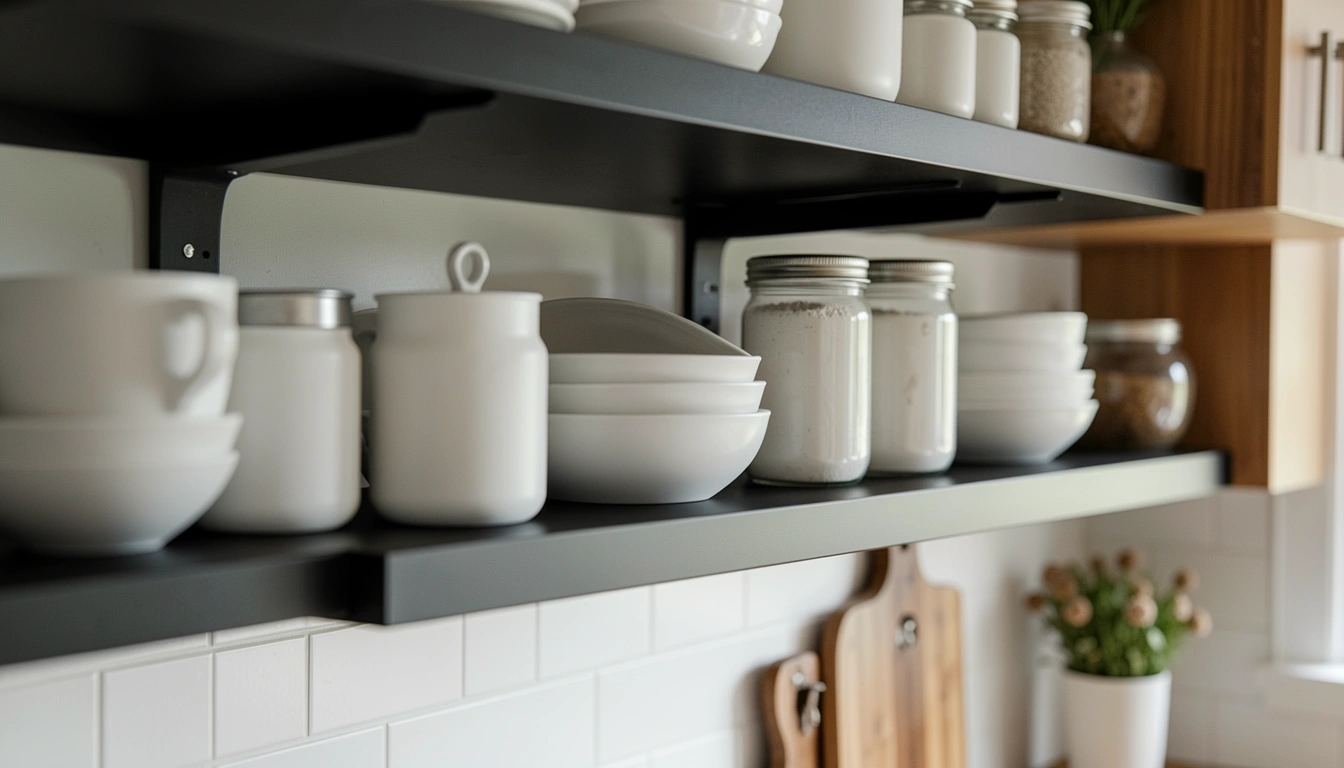
    I put these up in my tiny city apartment kitchen. The black metal pops against white walls, but doesn't overwhelm. My everyday plates and bowls stack neatly, drawing the eye without clutter.

    The room went from flat to layered. Light bounces off the ceramics, making mornings brighter. Spices in clear jars add height without dust traps.

    Measure your wall first—mine wobbled until I spaced brackets every 16 inches. Now it holds 20 pounds easy. Keeps the sleek look I wanted.

    What You’ll Need for This Look

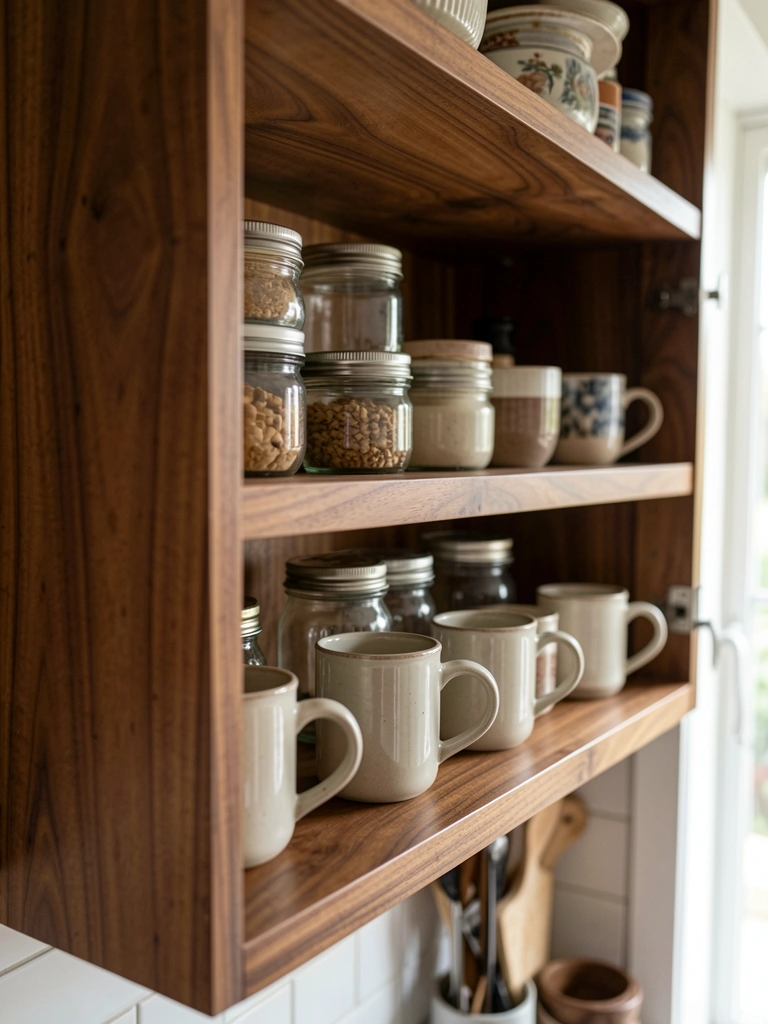
    2. Warm Walnut Open Shelves for Stacked Jars and Mugs

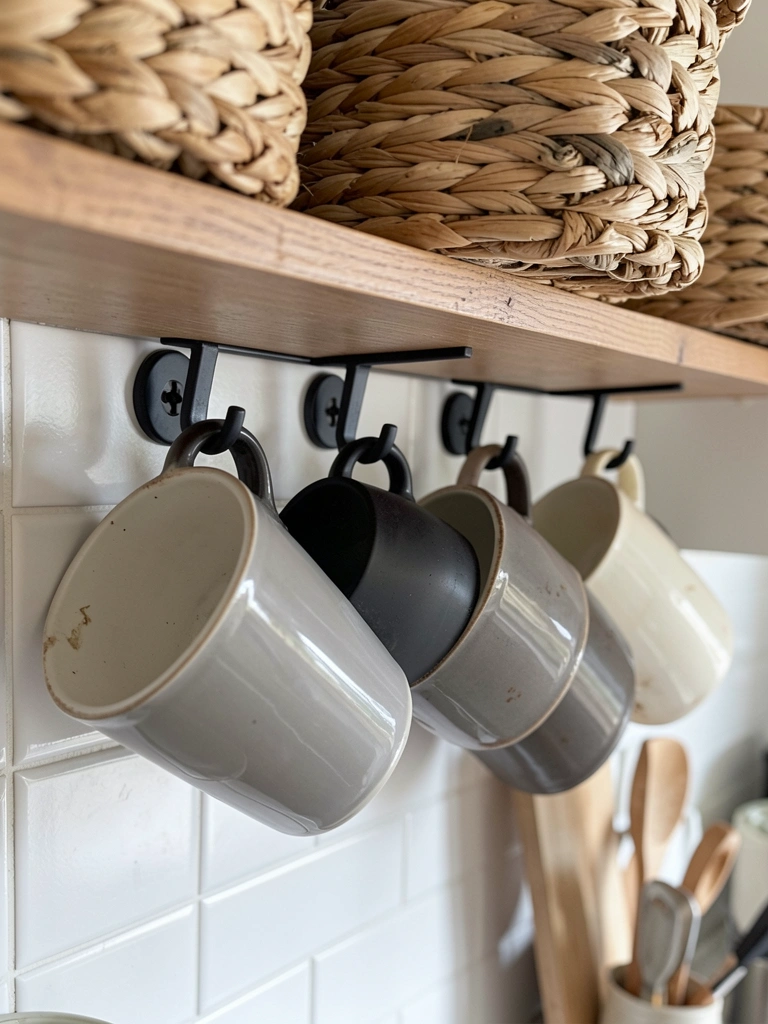
    Walnut shelves warmed my all-white kitchen last year. I lined them with matching jars for dry goods—flour, rice. Mugs hang from below on hooks, right at hand level.

    It turned cooking into a ritual. No cabinet slams. The wood's grain softens the modern edge, feels lived-in.

    Group jars by use, tallest in back. Mine stay dust-free because I wipe weekly. Simple change, big ease.

    What You’ll Need for This Look

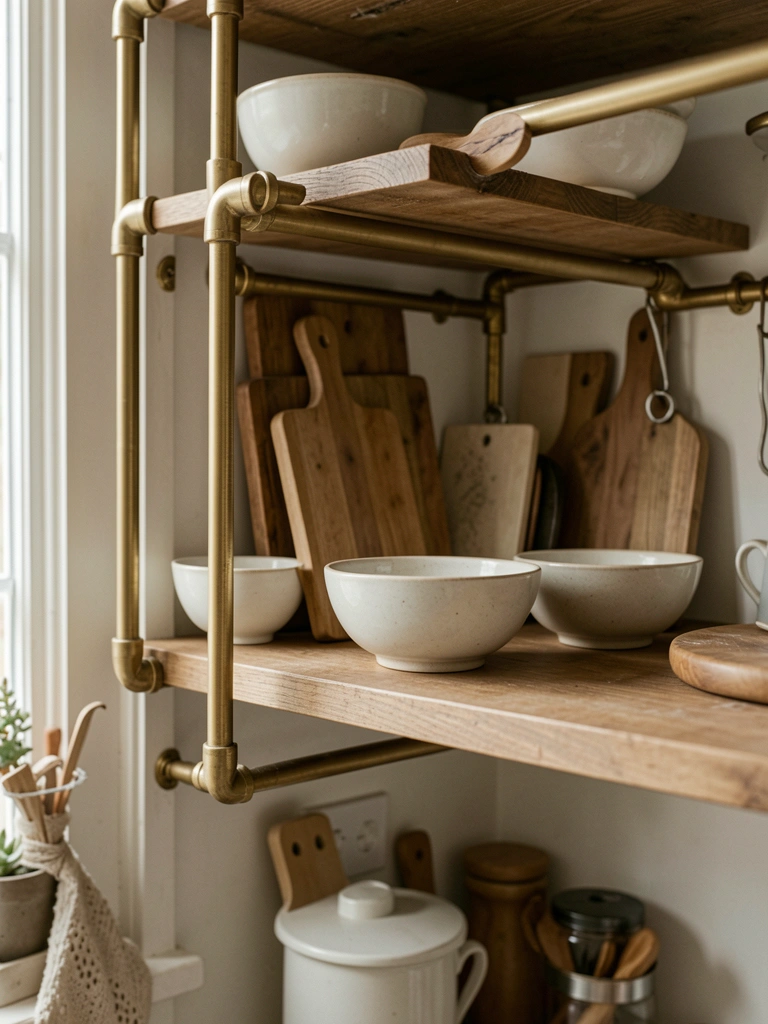
    3. Brass Pipe Shelves Adding Subtle Shine to Basics

    Brass pipes gave my rental kitchen edge. I mounted two shelves for bowls and boards. The gold tone gleams softly, pairs with black hardware.

    First try, I cheaped out on fittings—they leaked oil stains. Switched to solid brass fittings, good as new. Now it feels intentional.

    Light hits the pipes at dusk, warms the whole wall. Keeps daily tools visible, not hidden.

    What You’ll Need for This Look

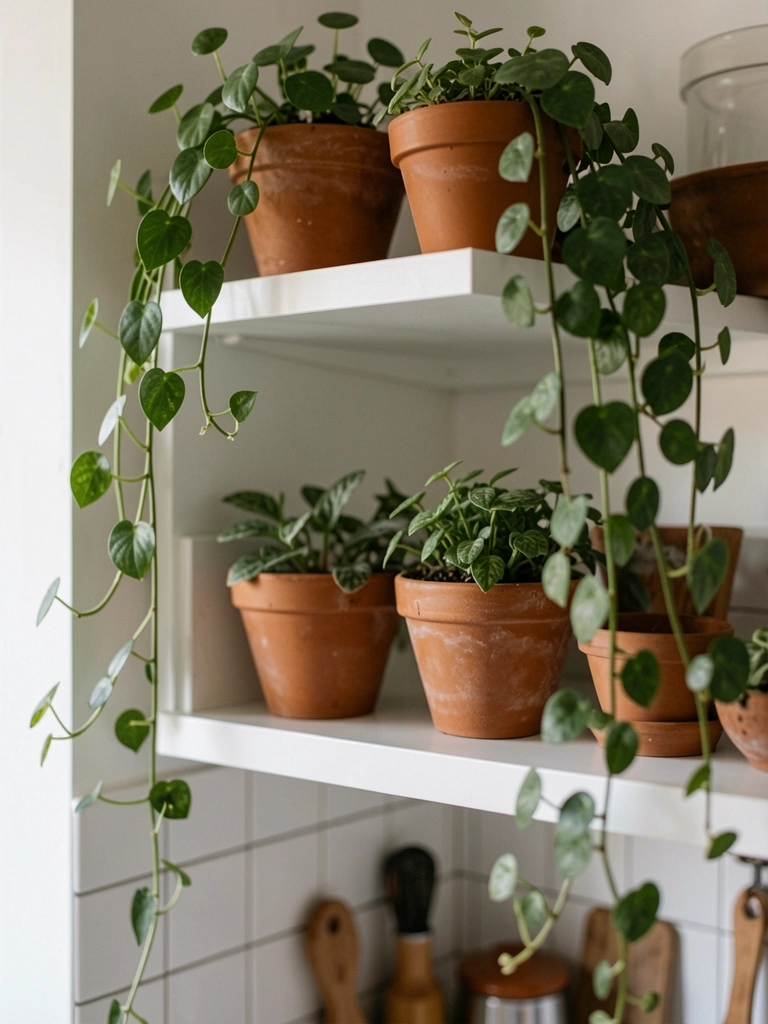
    4. Matte White Shelves Layered with Trailing Plants

    Matte white shelves brought life to my bland kitchen wall. Potted ivy trails down, pots tucked between dishes. Greenery softens the clean lines.

    The air feels fresher now. Plants filter light, make the space cozy without busyness. Herbs like basil add scent too.

    Water plants weekly—mine droop if I forget. Low shelves for heavier pots prevent pulls.

    What You’ll Need for This Look

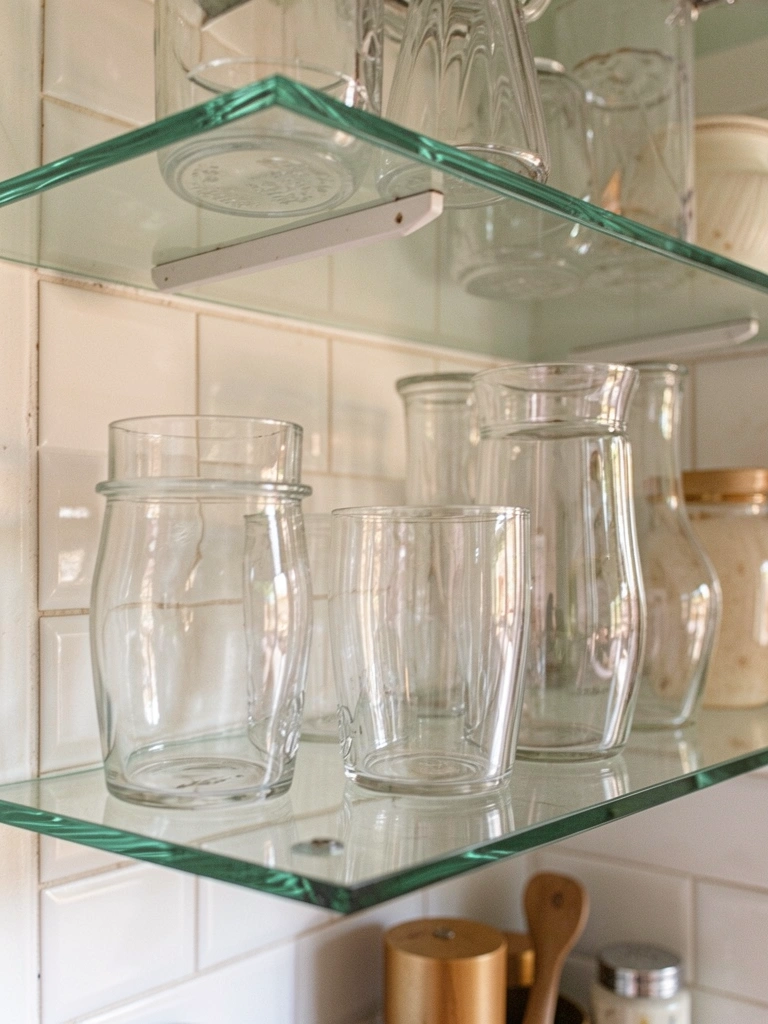
    5. Clear Glass Shelves Backed by Subway Tile

    Glass shelves over subway tile opened my backsplash. Wine glasses and pitchers shine through, tile reflects light.

    Kitchen feels bigger, airier. No heavy shadows. Glasses stay clean, easy grab.

    Use tempered glass—mine shattered once from heat. Secure with clips for safety.

    What You’ll Need for This Look

    6. Asymmetrical Wood Shelves for Everyday Casual

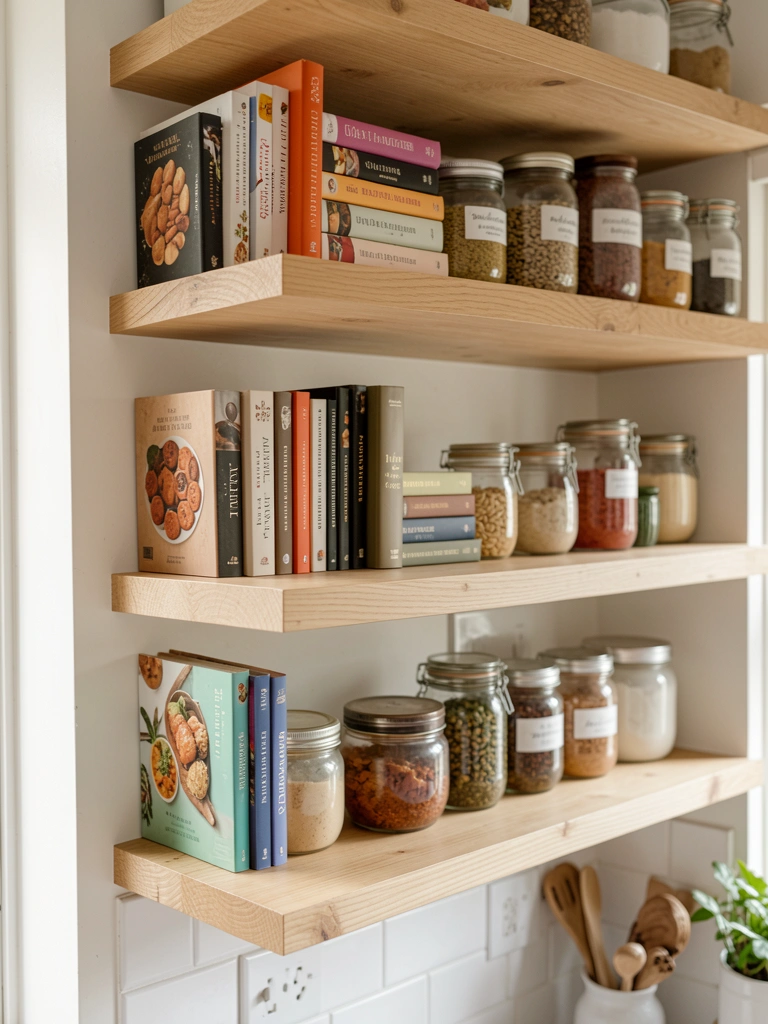
    Asymmetrical oak shelves broke up my straight-line kitchen. One long, two short—holds books, jars off-center.

    Feels organic, not stiff. Cooking flows better with books at eye level.

    I hung them crooked first—use a level app. Adjusted, now perfect balance.

    What You’ll Need for This Look

    7. Pegboard Panels with Hanging Copper Pans

    White pegboard turned my wall functional. Hooks hold copper pans, baskets for onions below.

    Pans gleam, add warmth. Easy rearrange—no tools.

    Space feels pro, but homey. Pans stay oiled, no rust.

    What You’ll Need for This Look

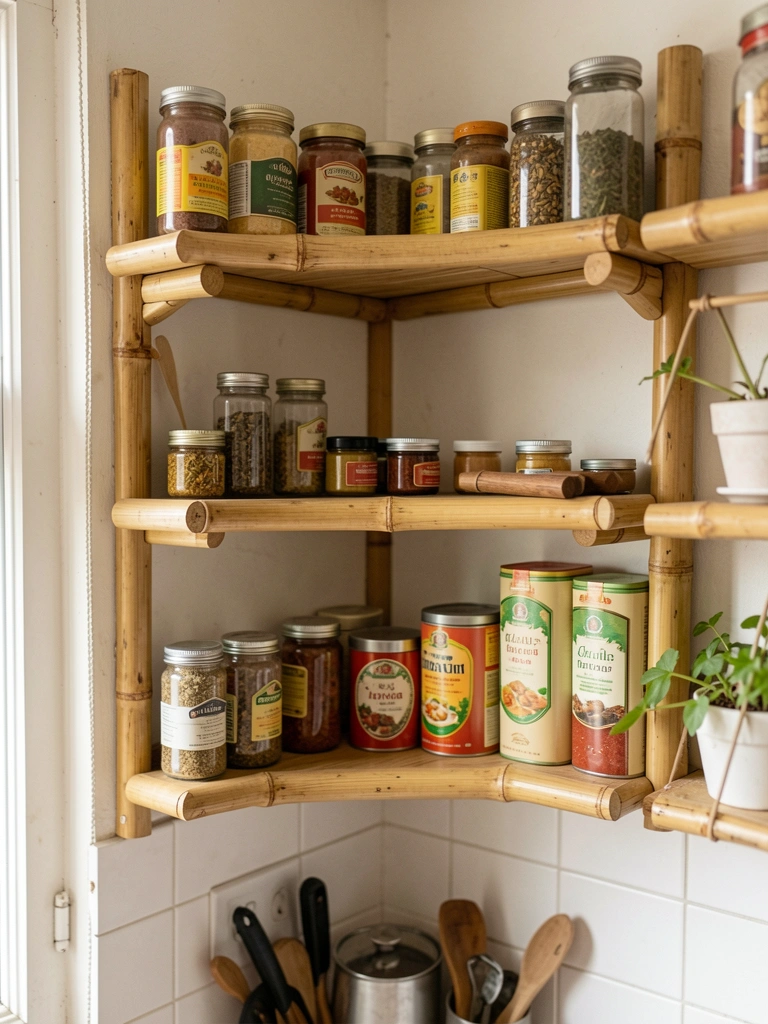
    8. Bamboo Corner Shelves Maximizing Tight Spaces

    Bamboo corner shelves fit my L-shaped counter spot. Three tiers for teas, spices—no wasted inch.

    Corner feels used, not awkward. Light wood keeps it modern.

    Rotate stock—mine spoiled once hidden. Now fresh always.

    What You’ll Need for This Look

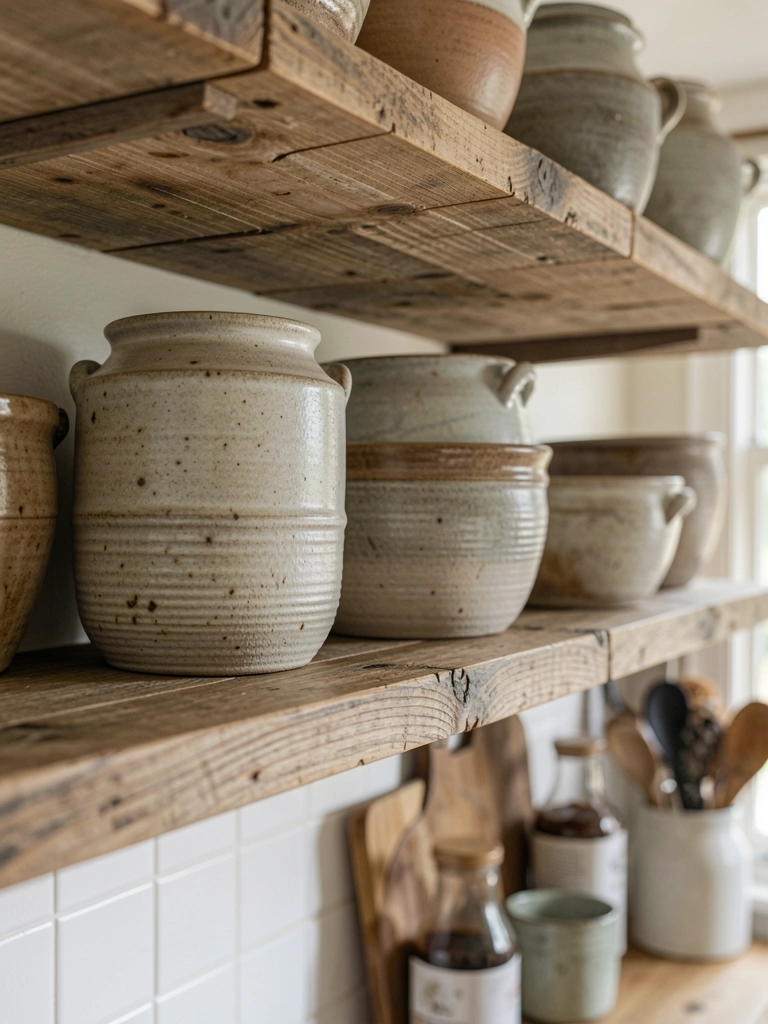
    9. Reclaimed Wood Shelves for Textured Depth

    Reclaimed wood added grit to my sleek kitchen. Rough edges hold stoneware, feels real.

    Texture grounds the modern vibe. Dust settles less on uneven surfaces.

    Sealed wrong first—warped. Use polyurethane topcoat now.

    What You’ll Need for This Look

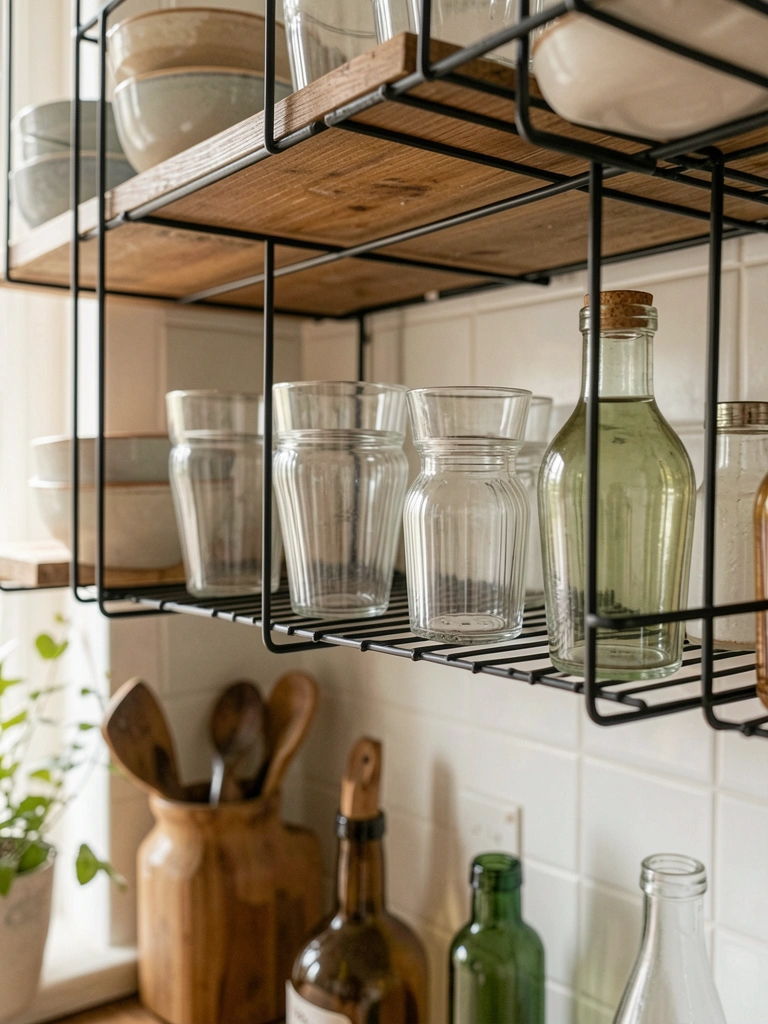
    10. Minimal Wire Shelves for Lightweight Glassware

    Black wire shelves keep my glassware airy. Tumblers, bottles—no weight.

    Kitchen stays open. Wire lets air circulate, dries fast post-wash.

    Space evenly—avoids tilt.

    What You’ll Need for This Look

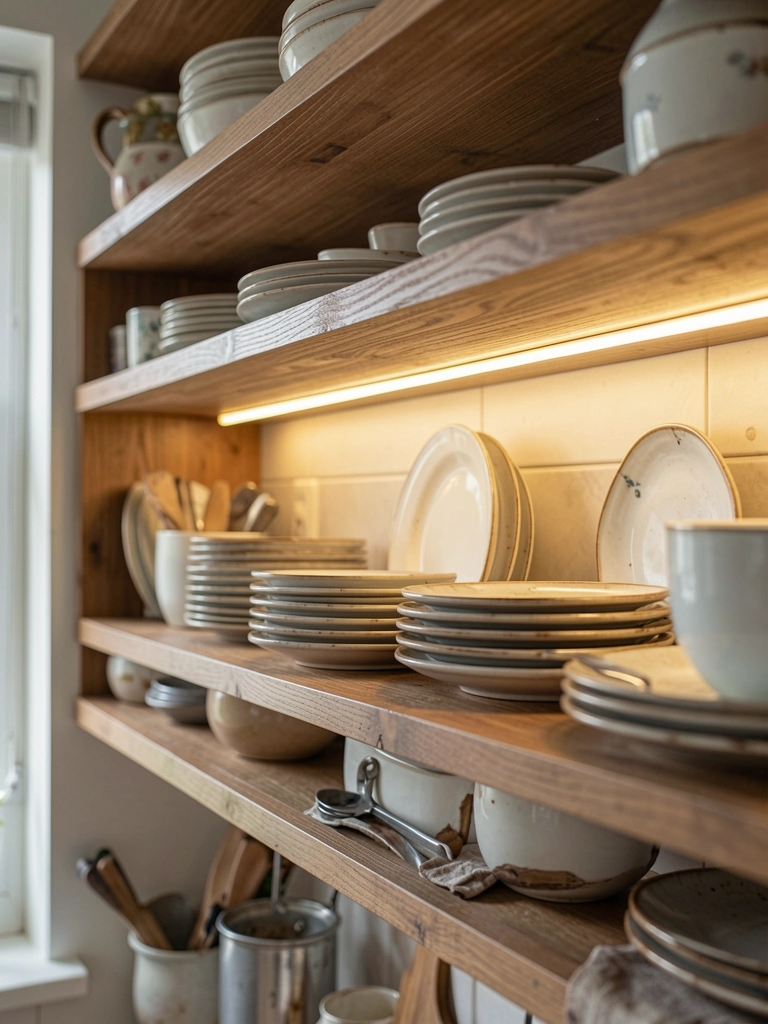
    11. Shelves with Under-Ledge LED for Nighttime Glow

    Wood shelves with LED strips under edges light my late snacks. Glow highlights dishes softly.

    Nights feel inviting. No harsh overheads.

    Battery LEDs first—faded quick. Plug-in lasts.

    What You’ll Need for This Look

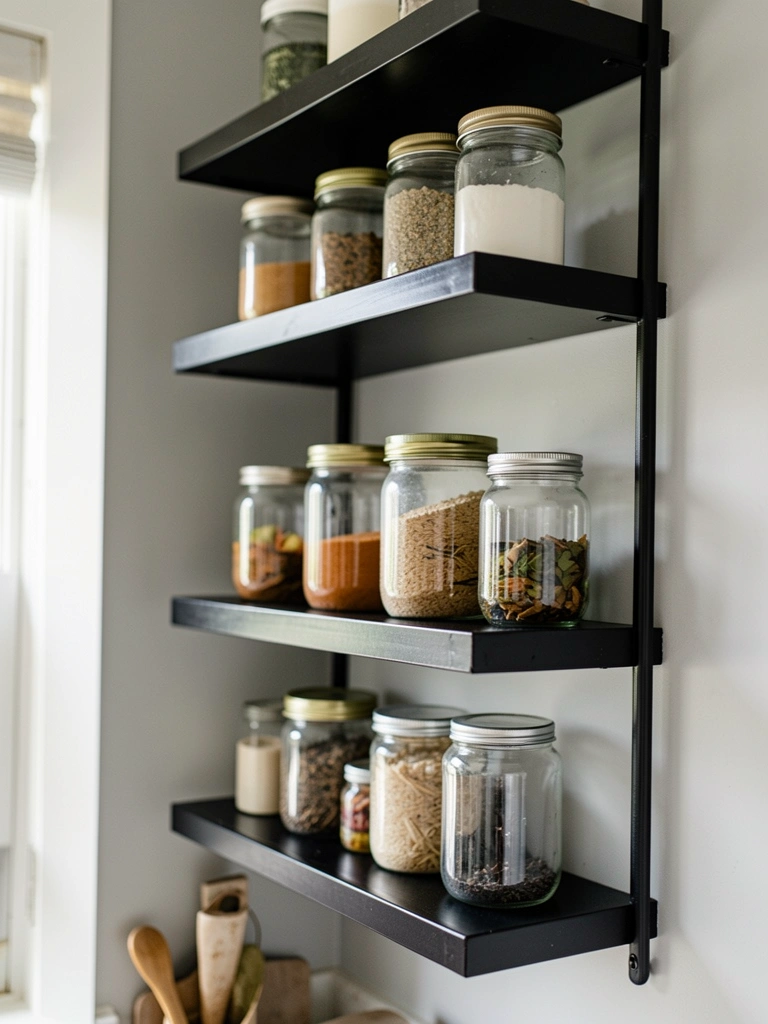
    12. Staggered Black Shelves Against Pale Gray Walls

    Staggered black shelves on gray walls add rhythm. Jars stagger too, playful yet clean.

    Wall pulls together. Feels deeper.

    Overhung first—blocked counter. Higher now, better.

    What You’ll Need for This Look

    13. Sliding Rail System with Magnetic Jars

    Steel rail shelves slide for my spices in magnetic jars. Pull what you need.

    Counter clears. Modern function.

    Magnets slipped early—stronger ones fixed.

    What You’ll Need for This Look

    Final Thoughts

    Start with one idea that fits your wall. No need for all 13. I've seen small changes make kitchens feel right.

    Yours will too. Measure, hang, enjoy the ease. You've got this.

  • How to Organize Kitchen Shelves

    How to Organize Kitchen Shelves

    I stared at my kitchen shelves one morning. Jumbled mugs, spilling spices, random cans. Reaching for tea meant dodging plates. It felt heavy, not helpful.

    Cooking got slower. The clutter drained my energy before I even started.

    I wanted shelves that worked with me. Calm, easy to grab from.

    How to Organize Kitchen Shelves

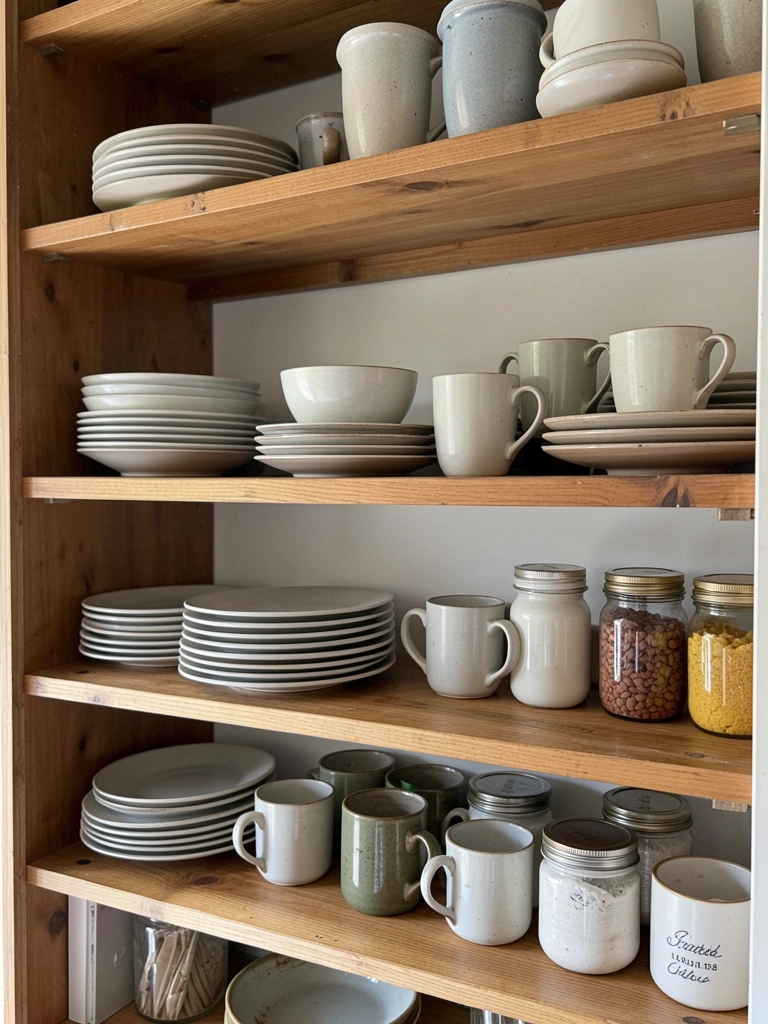
    This approach clears the visual noise on your kitchen shelves. You'll learn to group items so they feel balanced and pull your eye gently. The result is a kitchen that supports your routine without effort.

    What You’ll Need

    Step 1: Empty and Sort into Groups

    I pull everything off the shelves first. Mugs in one pile, spices in another, daily oils nearby. This shows me what I really use.

    Visually, the shelves breathe right away. Bare wood or paint feels lighter already.

    People miss how grouping by use—like baking next to oils—makes grabbing intuitive. Don't cram extras back; store them elsewhere. That keeps the calm.

    I skip wiping every shelf mid-sort. It slows you down.

    Step 2: Place Tall Items in Back for Balance

    Tall cereal boxes or vases go dead center back. They anchor without blocking.

    The shelf shifts—depth appears, eyes flow left to right easily.

    The insight? Varying heights creates rhythm, like a gentle wave. Avoid pushing everything forward; it flattens the view.

    I once lined all tall stuff upfront. Felt top-heavy, unsteady.

    Step 3: Front Everyday Reach with Open Storage

    Mugs, olive oil, salt sit forward now. Clear Acrylic Shelf Risers (10-inch, set of 4) lift them to eye level.

    It changes everything—counter stays clear, mornings smoother.

    Folks overlook thumb space between items; it prevents crowding. Don't overlap edges; gaps let light in.

    I tried stacking mugs tight. They toppled during coffee rush.

    Step 4: Tuck Spices and Less-Used in Bins

    Spices go into Woven Seagrass Storage Bins (medium, natural), slid to sides. A Bamboo Lazy Susan (12-inch diameter) spins the rest.

    Shelves look unified, less speckled.

    Hidden insight: Bins hide chaos but let you spin to find. Avoid overfilling; half-empty swings free.

    Full bins stuck once—frustrating mid-meal.

    Step 5: Add One Layer of Air and Color

    Leave 20% empty. One Wooden Recipe Stand (foldable, 10-inch) leans casual.

    Now it feels open, inviting. Colors from jars balance naturally.

    Missed often: Empty spots draw the eye, make full parts pop. Don't fill voids with decor; air is the balance.

    I stuffed extras in gaps. Felt packed again quick.

    Step 6: Step Back and Adjust for Flow

    Stand across the room. Nudge jars even, Matte Black Shelf Dividers (adjustable, set of 6) for plates.

    Flow settles—left heavy? Swap right.

    People forget distance view; close-up tricks you. Avoid perfect symmetry; slight off feels lived-in.

    Symmetrical shelves looked stiff. Now mine welcome me home.

    Keeping the Balance Long-Term

    I check shelves weekly. A quick scan spots drifts.

    • Pull forward anything buried.
    • Rotate seasonal items out.
    • Dust bins lightly.

    This prevents slow clutter. It stays comfortable, not rigid.

    One tweak keeps it yours.

    Handling Small or Deep Shelves

    Deep shelves swallow things. I use risers upfront.

    For tiny ones:

    • Stack vertically with dividers.
    • One row only, front-focused.

    It maximizes without overwhelm. Feels spacious still.

    What Feels Off and How to Fix It

    Clutter returns if groups mix. Like teas with tools.

    Signs it's off:

    • Hunt time doubles.
    • Visually dense.
    • Grabs feel risky.

    Regroup by habit. It clicks back.

    Final Thoughts

    Start with one shelf. See how it lightens the room.

    You've got this—it's just about what you touch daily.

    Now your kitchen works quietly for you.

  • How to Style Kitchen Shelves

    How to Style Kitchen Shelves

    I stared at my kitchen shelves one morning. Empty except for a few mismatched mugs. They made the whole wall feel flat and cold. I wanted them to look like they belonged, not like a storage dump.

    I'd tried piling everything on before. It just looked cluttered. Then I stepped back and thought about what makes a shelf feel right—balanced, not crowded.

    This is how I fixed mine. Now they pull the room together.

    How to Style Kitchen Shelves

    This method shows you how to fill shelves so they look balanced and lived-in. You'll end up with shelves that feel comfortable, like they've always been there. It's simple, and it works every time.

    What You’ll Need

    Step 1: Empty and Measure Your Shelves

    I start by taking everything off. Wipe them down. Then I stand back and look. This clears my head and shows the real space.

    Visually, the shelves go from chaos to calm. Empty ones reveal odd heights or gaps I miss when full.

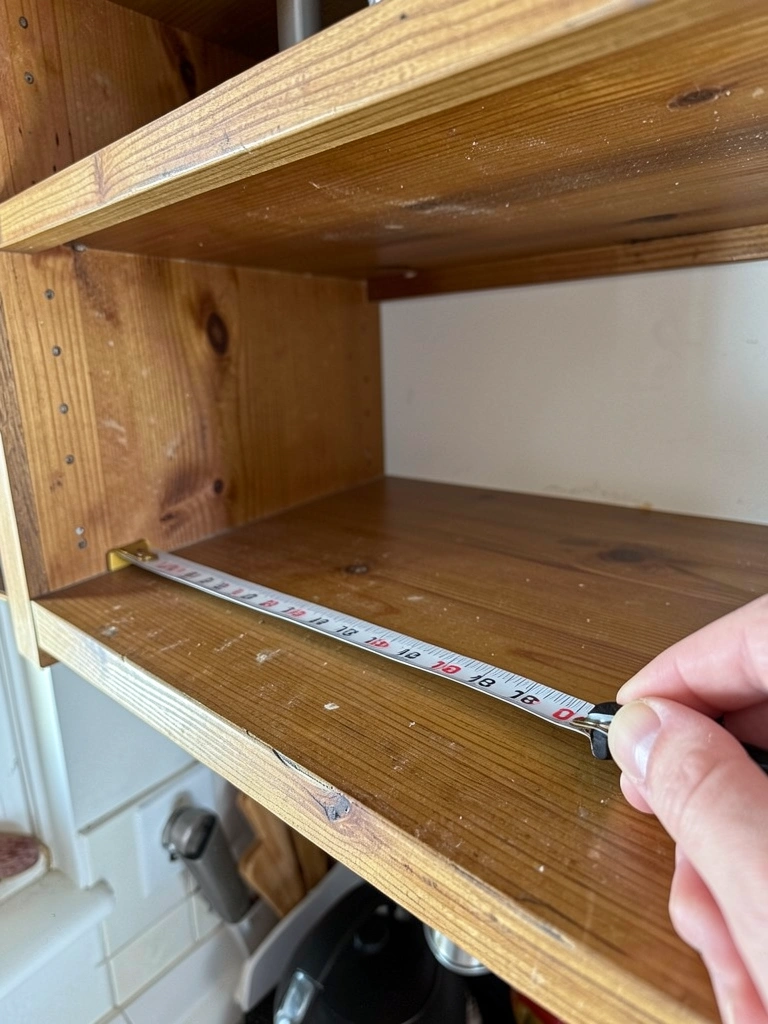
    People forget to note shelf depth. Mine were shallower than I thought—forced smaller items later. Measure yours now. Avoid cramming big pieces that stick out.

    It takes five minutes. But it sets everything right.

    Step 2: Anchor with Everyday Plates and Boards

    Next, I place plates and a board on the bottom shelf. Stack plates loosely, lean the board at an angle. These ground the whole setup.

    The wall shifts—it feels sturdy now, not floating. Weight at the bottom draws your eye steady.

    Most miss leaning one item. Flat stacks look stiff. Lean for depth.

    Don't center everything perfectly. Off-center feels more natural, lived-in.

    Step 3: Hang Mugs and Add Baskets for Height

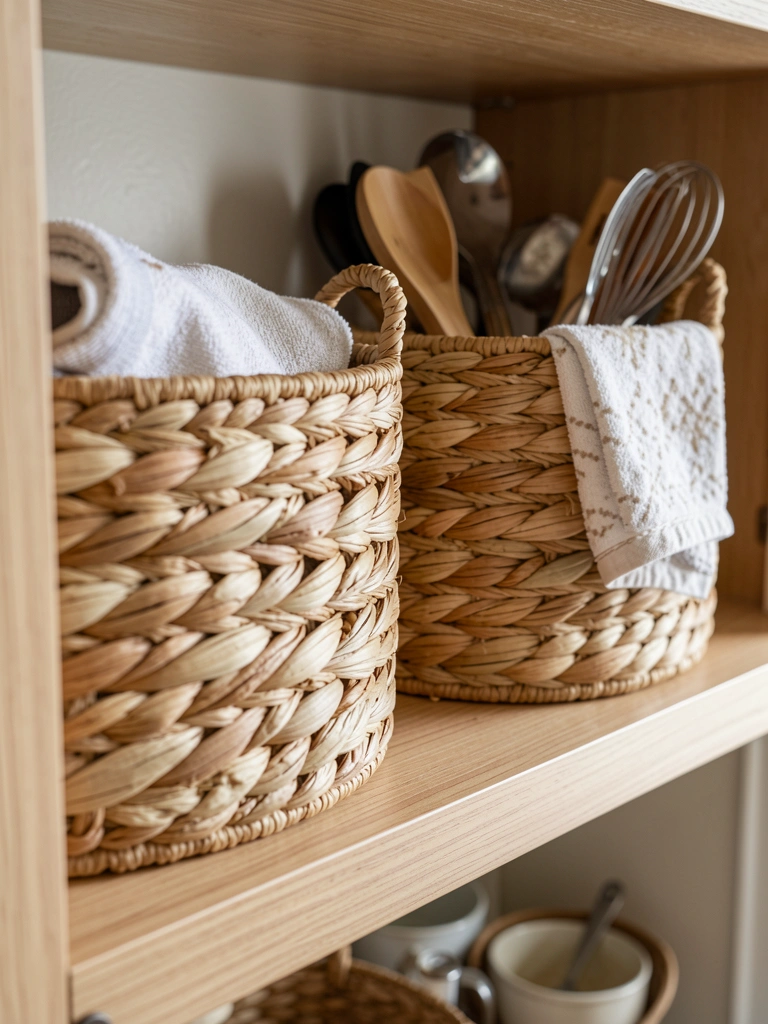
    I screw in mug hooks on the middle shelf. Hang three or four mugs. Tuck a basket beside, half-filled with towels.

    Now there's rhythm—low anchors, mid-height swing. It pulls the eye up without crowding.

    The insight? Hooks add swingy movement others overlook. Static shelves stay dull.

    Skip matching mug colors exactly. Mix neutrals. Uniform looks forced.

    Step 4: Layer Jars and Greenery Up High

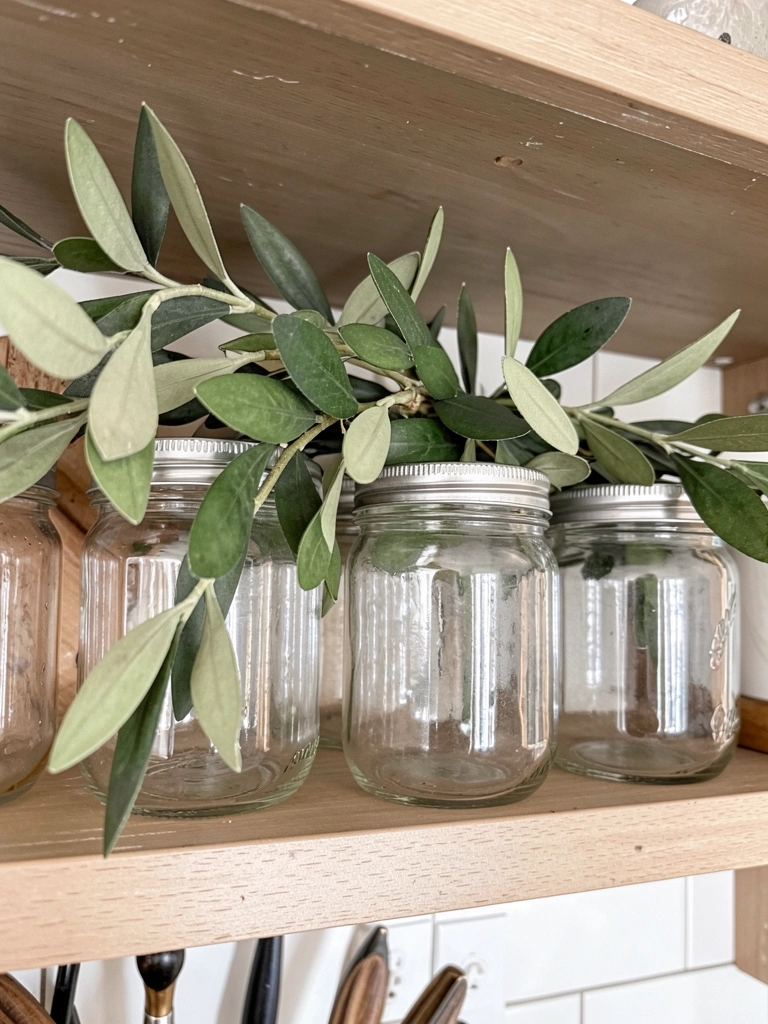
    Up top, I group jars with dry pasta or spices. Slip in olive branches in a pot. Keep it light.

    The top lightens the stack—balance from heavy base to airy finish. Room breathes.

    Folks cram tops too. It weighs down the view. Go sparse.

    One mistake: tiny jars alone. Cluster three for presence, not scatter.

    Step 5: Step Back and Nudge for Flow

    I walk back ten feet. Turn on lights. Nudge items left or right until it flows.

    Everything settles—shelves link the kitchen, not fight it. Feels comfortable.

    Missed insight: daylight changes feel. Check morning and night.

    Avoid over-touching. First nudge often wins. Fussing makes it stiff.

    Grouping Items the Right Way

    I group by threes or fives. Odd numbers look natural.

    Plates stack in threes. Jars too. Baskets pair with one tall item.

    • Pull colors together loosely—whites, woods, greens.
    • Face labels out on jars. Easy grab.
    • Mix heights in each group. No flat lines.

    This keeps shelves from spotting.

    Why Balance Matters More Than Fullness

    Balance stops overload. Heavy bottom, light top.

    In my kitchen, it makes counters feel bigger.

    • Test by squinting. Shapes should stack even.
    • Empty spots are good. Let wall show.
    • Everyday use first. Style around it.

    Full shelves tire eyes fast.

    Keeping It Fresh Without Starting Over

    I swap one item monthly. Keeps it alive.

    Tea towels change with seasons. Branches dust off easy.

    • Wipe shelves weekly. No buildup.
    • Rotate heavy items. Prevents sags.
    • Live plants if light allows. Real greens warm it.

    Small tweaks last years.

    Final Thoughts

    Start with one shelf. See how it sits.

    You'll feel the shift—kitchen warmer, more yours.

    These shelves stay put through meals and mess. Mine have for two years. Yours will too.

  • 15 Rustic Rustic Kitchen Shelf Decor Ideas You’ll Love

    15 Rustic Rustic Kitchen Shelf Decor Ideas You’ll Love

    I stared at my kitchen shelves one morning. Empty wood planks gathered dust. Felt hollow, like a showroom nobody used.

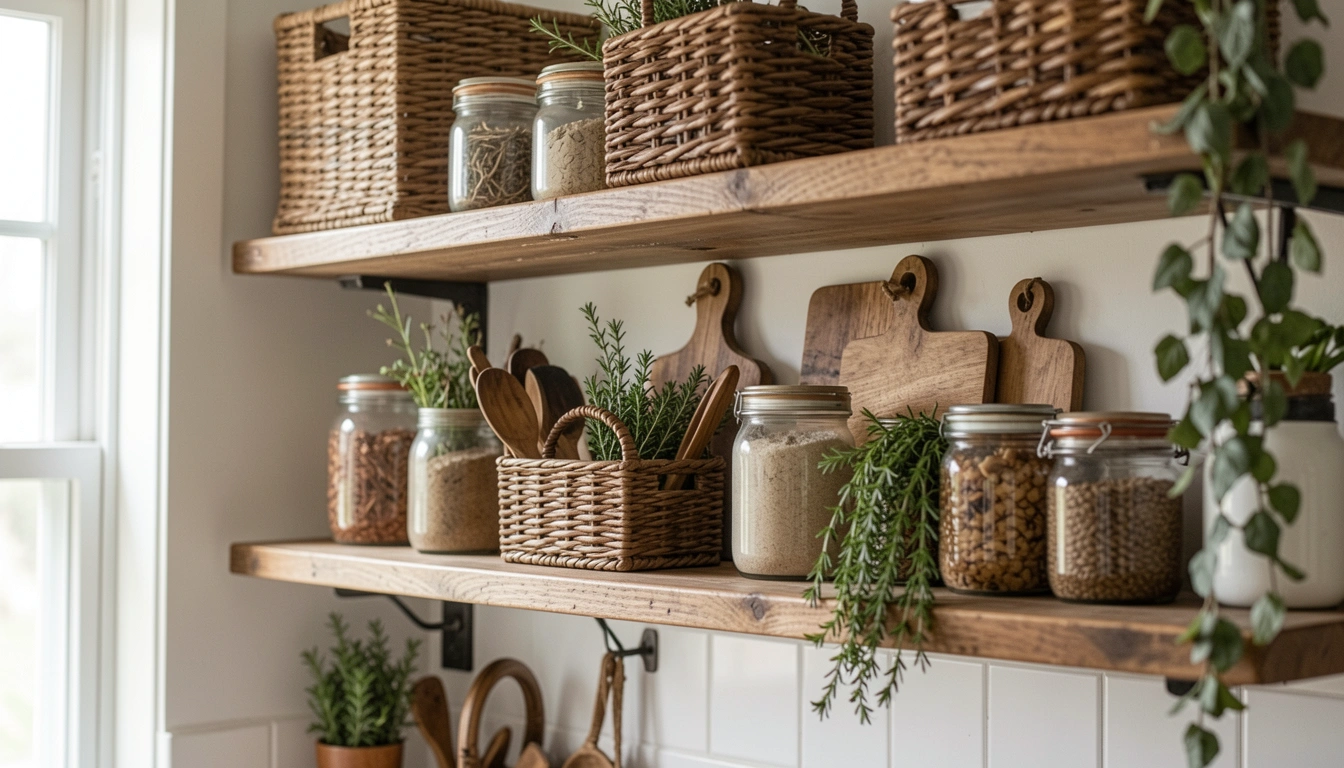
    Then I grabbed jars from the pantry. Added grains inside. Suddenly, the space breathed—warm, like a farmhouse I'd visited.

    Now, cooking there feels right. You can do this too. Start small. It'll pull you in.

    15 Rustic Rustic Kitchen Shelf Decor Ideas You'll Love

    These 15 rustic kitchen shelf decor ideas come straight from my kitchens over the years. Easy to source, forgiving if you tweak them. Your shelves will feel lived-in and welcoming.

    1. Vintage Mason Jars Stuffed with Dry Grains and Beans

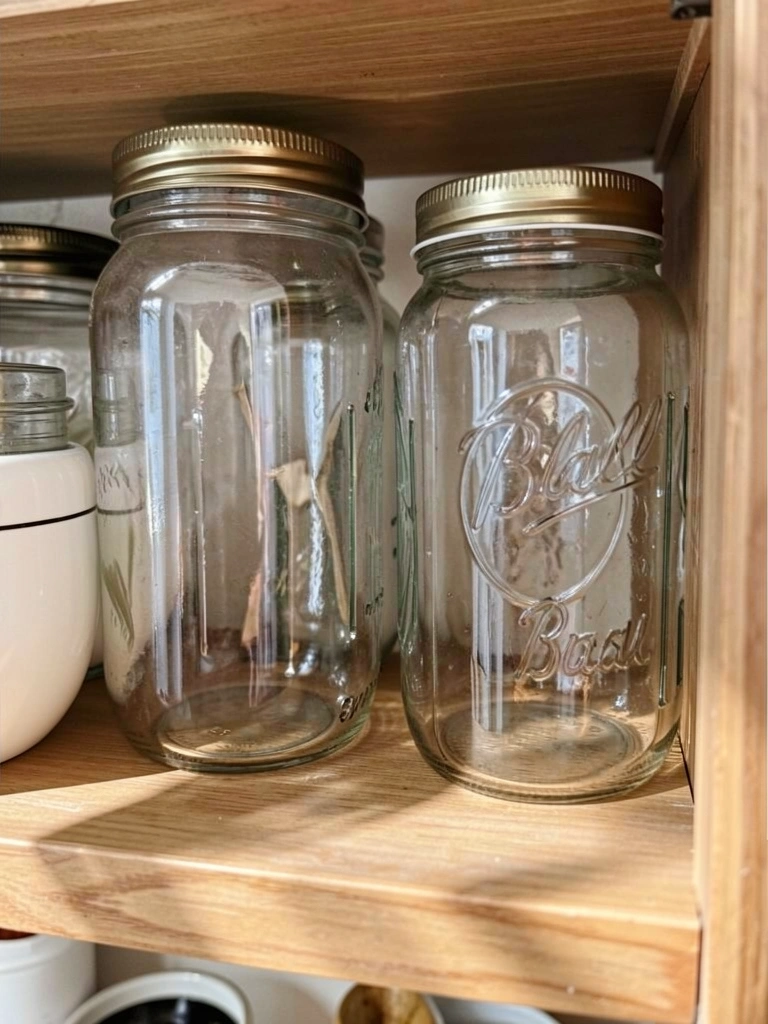
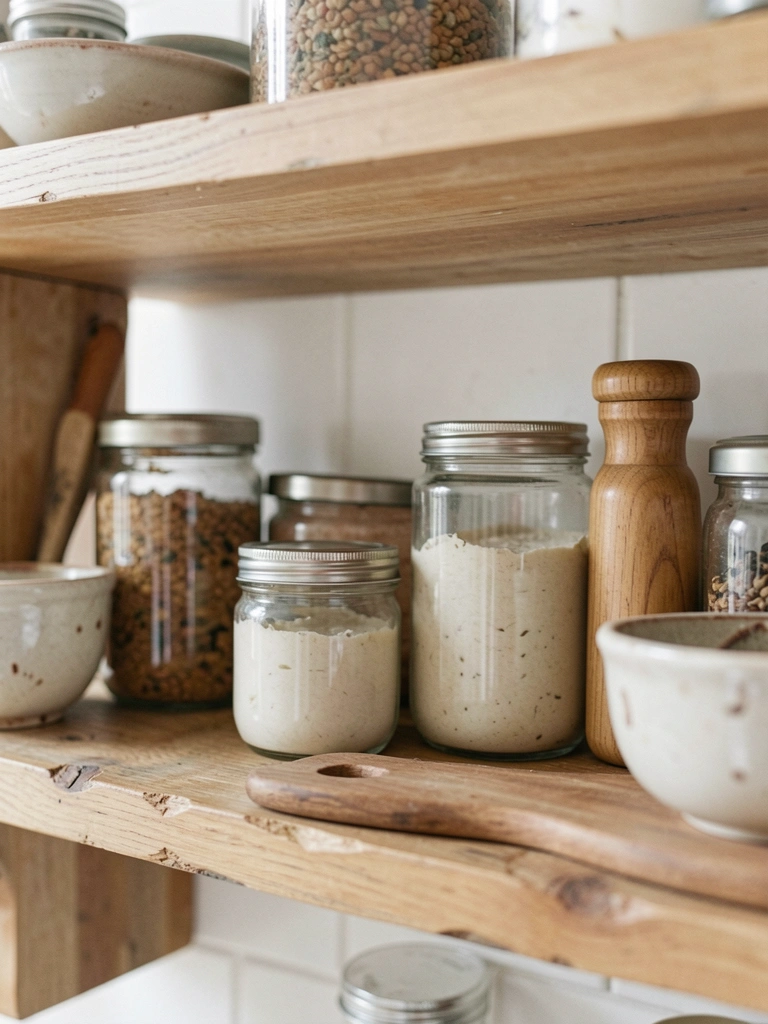
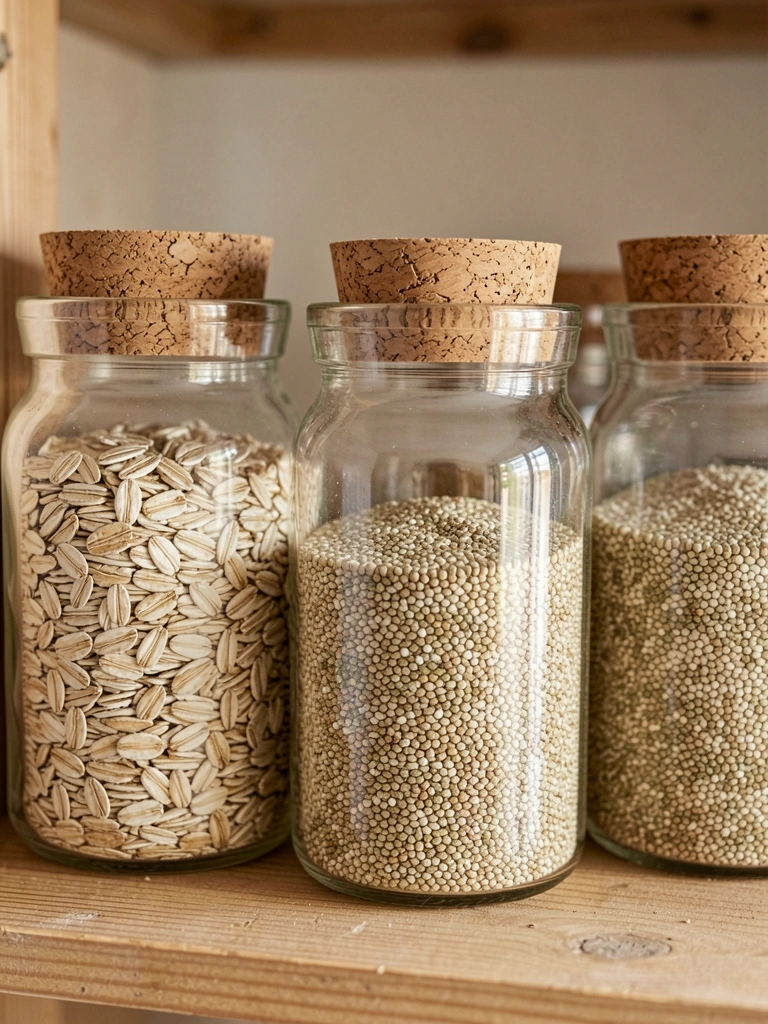
    I lined up old mason jars on my lower shelf first. Filled them with oats, lentils, rice from the pantry. No labels—just the natural colors peeking through glass.

    The shelves went from blank to stocked in ten minutes. Felt abundant, like a country store. Light hit the grains soft, adding glow without trying.

    Watch the heights—mix pints and quarts for rhythm. I overfilled one once; spilled everywhere. Lesson learned: fill halfway for easy grabs.

    Group in threes. Step back. Adjust till it settles.

    What You’ll Need for This Look

    2. Stacked Wooden Cutting Boards for Easy Height

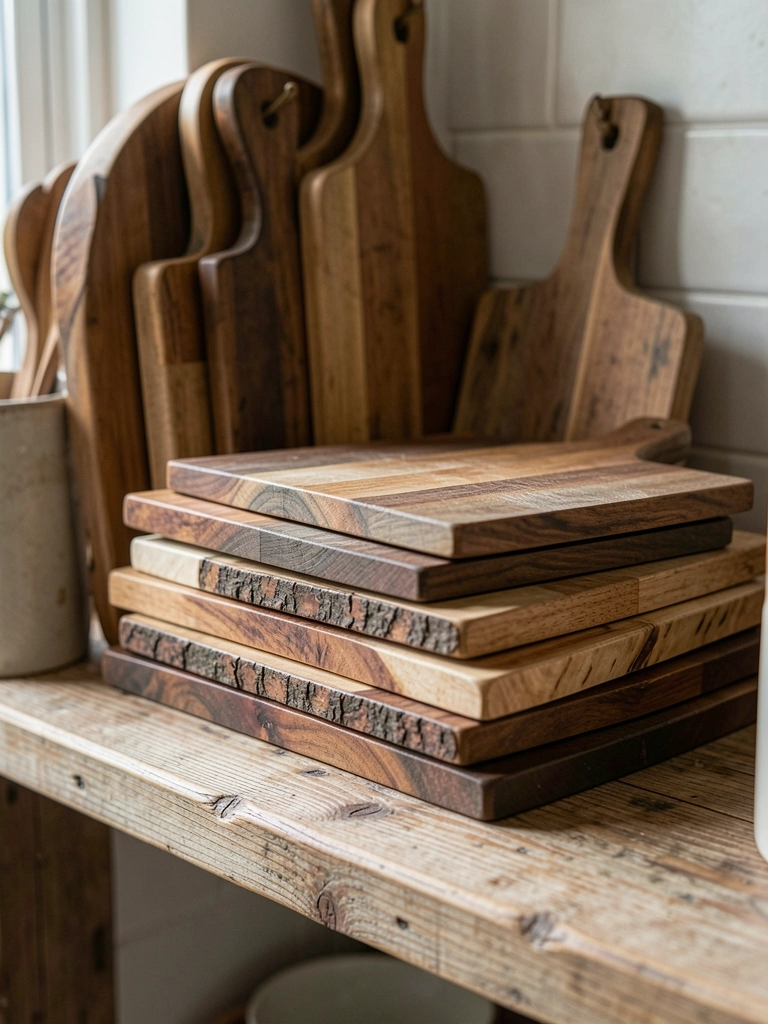
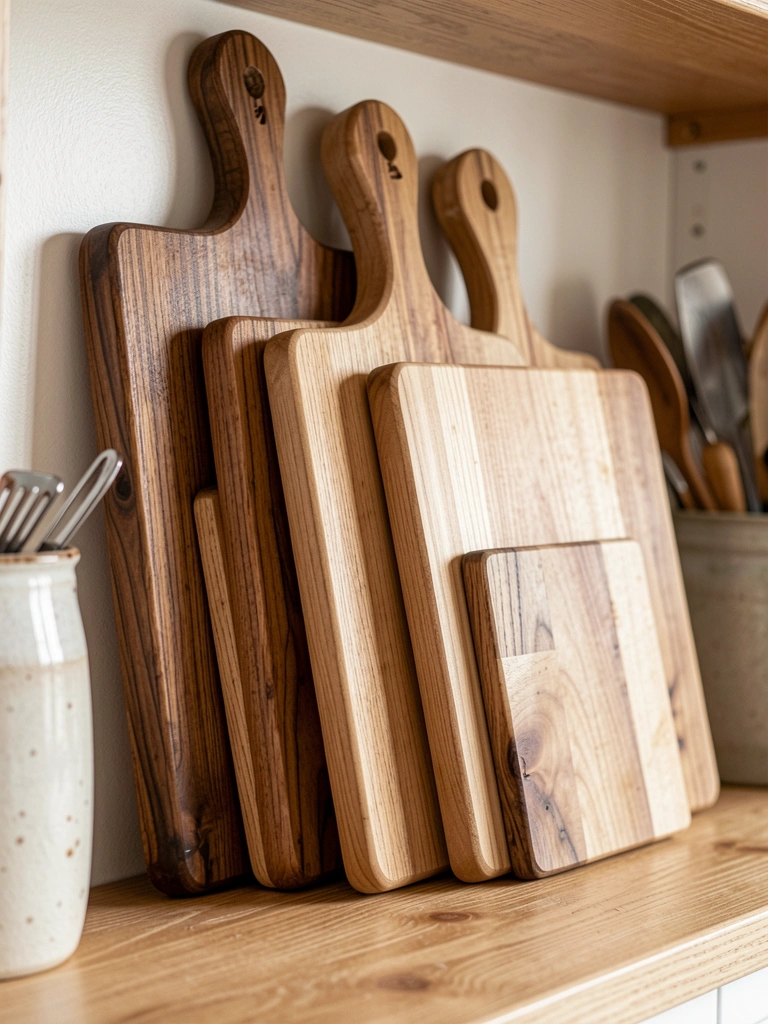
    Wooden boards were piling in my drawer. Pulled a few out, stacked them upright on the shelf. Different sizes, rough edges facing out.

    Instant texture. Shelves gained depth without clutter. Mornings, I grab one for toast—functional, not fake.

    Sizes matter: biggest at back. I mismatched grains once; looked off. Now I stick to similar tones, oak and walnut.

    Lean them loose. Air between keeps dust low.

    What You’ll Need for This Look

    3. Woven Baskets Overflowing with Fresh Produce

    Baskets from the entryway closet worked perfect. Tucked in onions, potatoes, a few apples. Let them spill a bit over edges.

    Kitchen smelled earthy right away. Shelves felt alive, hungry-making. No stiff arranging—just dump and go.

    Rinse produce first; dirt shows on light weaves. I skipped once—had to redo. Now it's weekly swap.

    Hang one low if space allows. Reaches easy.

    What You’ll Need for This Look

    4. Galvanized Metal Trays Holding Spice Jars

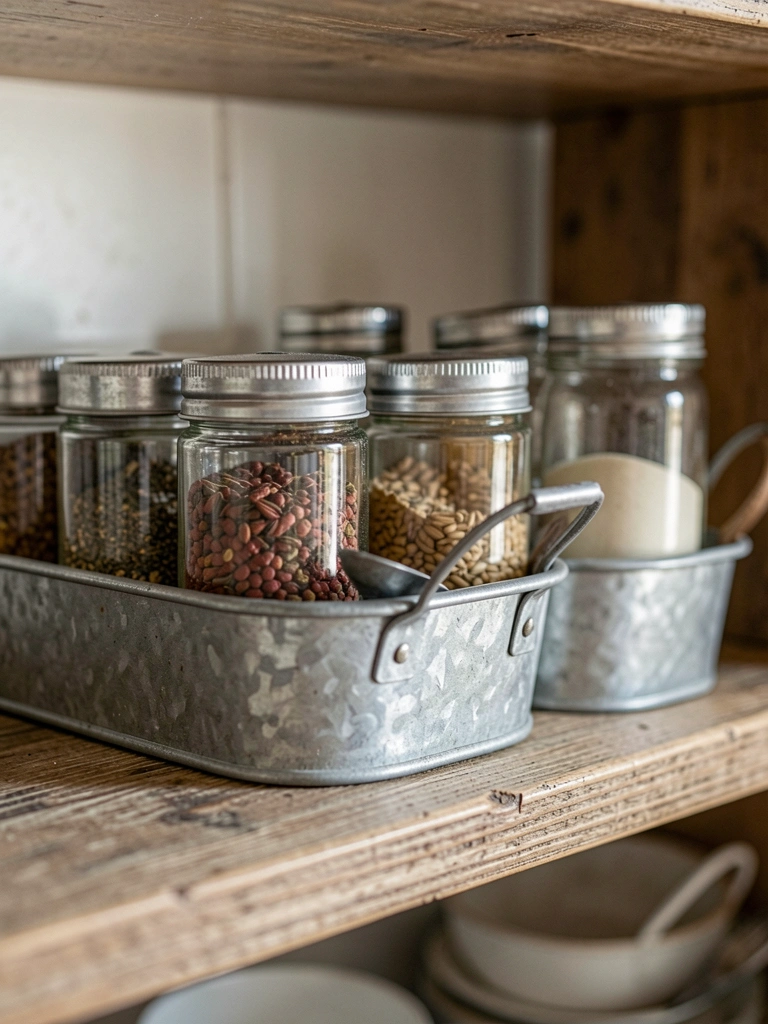
    Found trays at a flea market. Loaded them with spice jars—cinnamon, paprika, cumin. Scattered loose, not lined up.

    Metal caught light subtle, grounded the wood shelf. Cooking felt organized yet casual. Grabbed paprika mid-stir last night.

    Trays hide drips from oils. I used shiny ones first; fingerprints everywhere. Matte galvanized wins.

    One tray per shelf. Off-center for interest.

    What You’ll Need for This Look

    5. Copper Mugs Hung from Simple Hooks

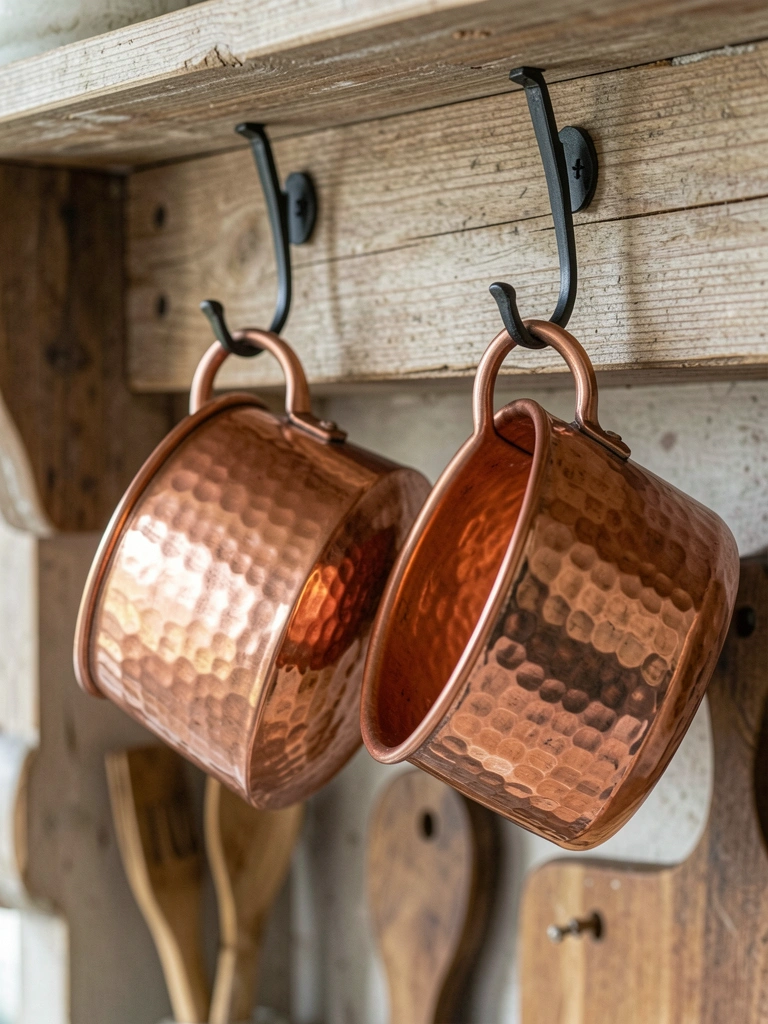
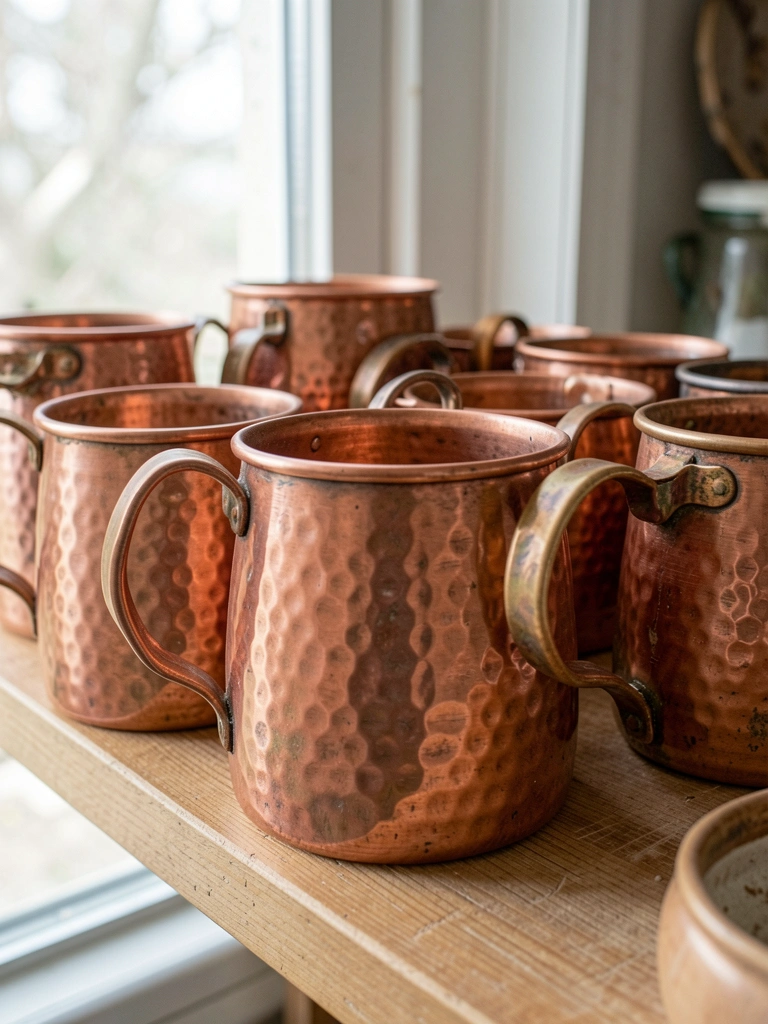
    Screwed hooks into shelf undersides. Hung copper mugs I'd collected. Three in a row, handles out.

    Warm patina pulled eyes up. Mugs ready for coffee—practical warmth. Shelf felt taller, airier.

    Polish lightly; too much shine fights rustic. I overdid it once—looked new, not right. Now they age together.

    Space hooks 4 inches apart. Test swing.

    What You’ll Need for This Look

    6. Terracotta Pots Bursting with Fresh Herbs

    Grabbed terracotta pots from the porch. Planted basil, thyme right in. Clustered on middle shelf.

    Green popped against wood. Snipped herbs daily—kitchen alive with scent. Felt like my own farm.

    Drainage holes matter; water pooled once, warped shelf. Line with pebbles now.

    Water weekly. Trim to keep bushy.

    What You’ll Need for This Look

    7. Leaning Vintage Enamelware Plates

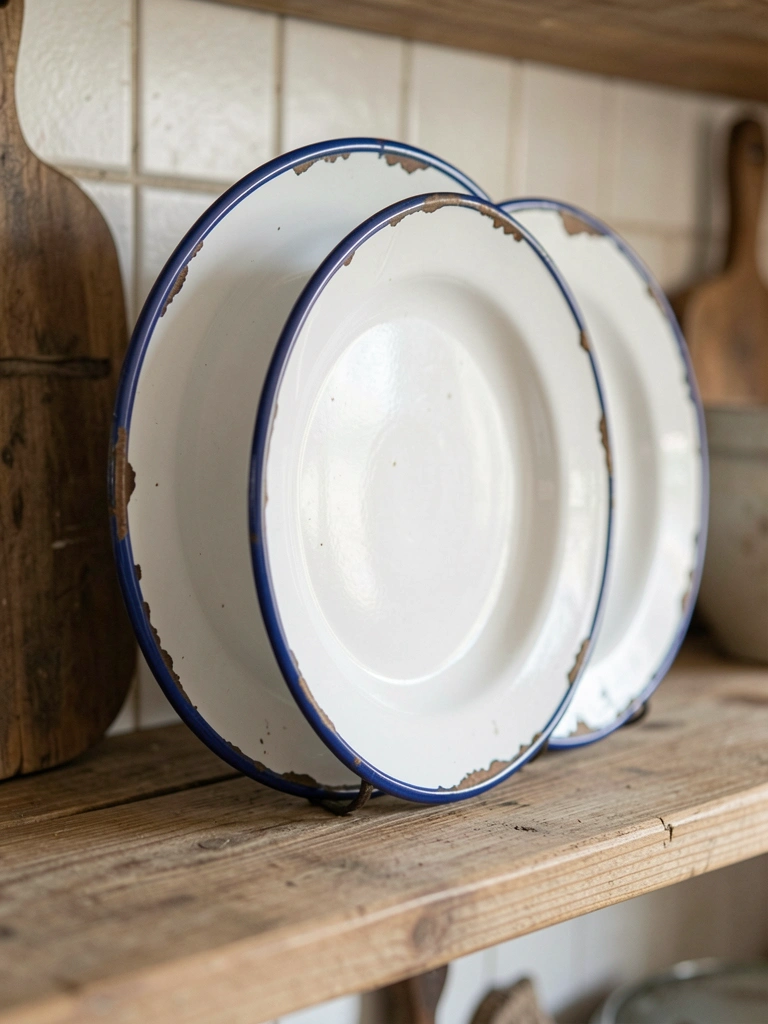
    Old enamel plates from grandma. Leaned three against shelf back. Chipped edges out front.

    Texture everywhere. Plates caught memories—dinner stories. Shelves gained history fast.

    Mix sizes; smalls slip easy. I propped too many; tumbled. Now two big, one small.

    Dust cloth monthly. Wipes clean.

    What You’ll Need for This Look

    8. Rolled Linen Tea Towels in Open Weave Baskets

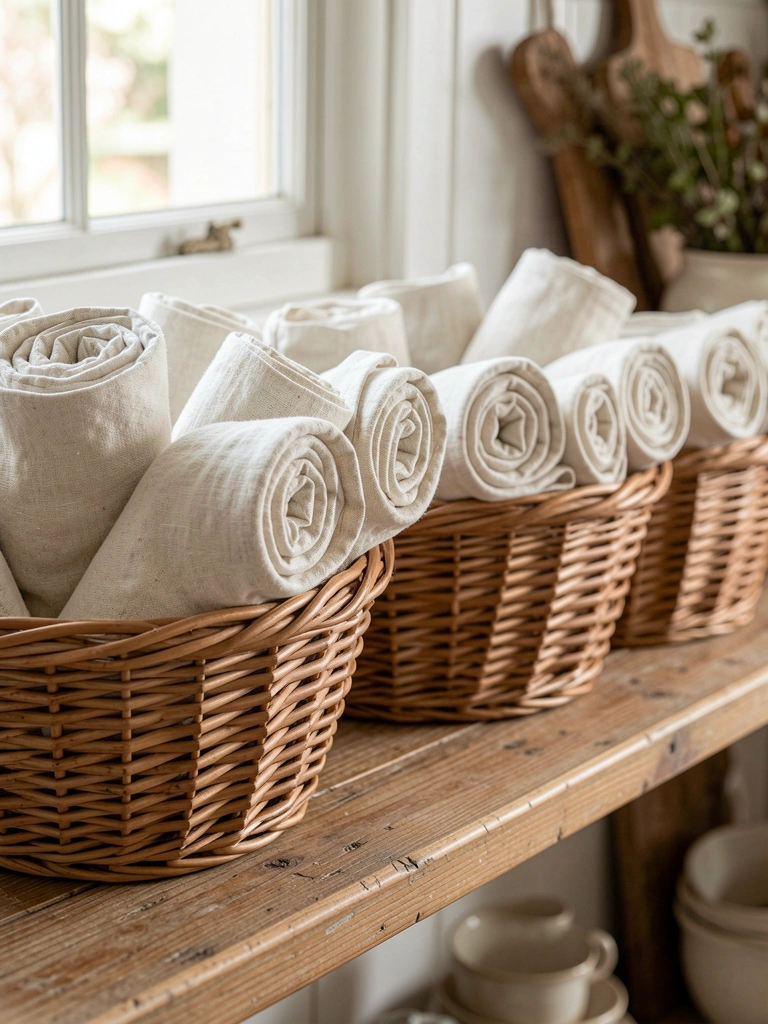
    Rolled my favorite tea towels. Tucked into rattan baskets on shelf end. Neutrals mostly, one stripe.

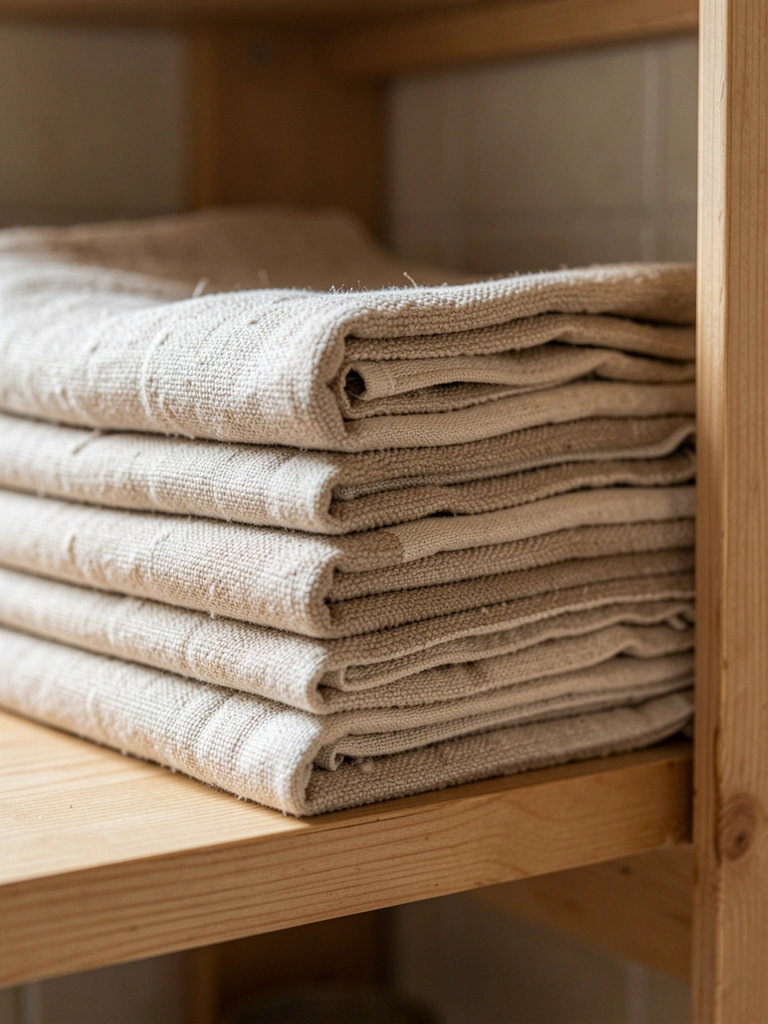
    Soft folds softened hard lines. Grabbed one for dishes—cozy utility. Shelf balanced now.

    Linen wrinkles fine; adds character. I ironed first batch—too stiff. Now roll damp.

    Refresh rolls monthly.

    What You’ll Need for This Look

    9. Wooden Dough Bowls Heaped with Seasonal Fruit

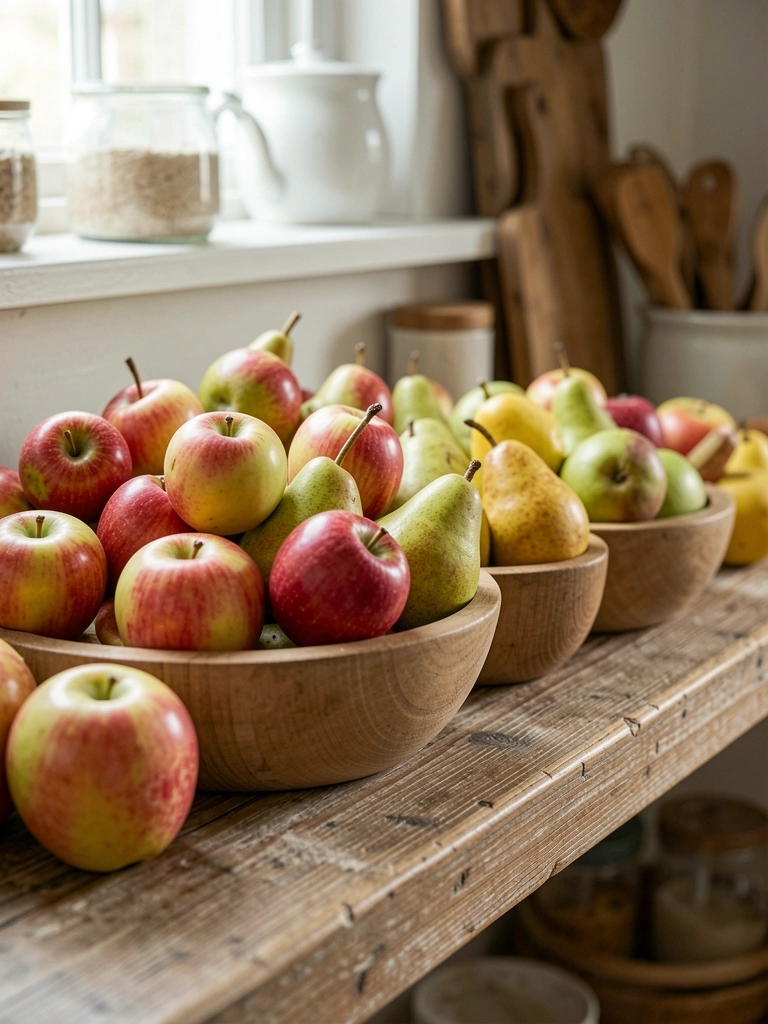
    Dough bowls from cabinet. Heaped apples, pears inside. One per shelf corner.

    Fruit colors warmed tones. Kitchen begged for breakfast. Easy abundance.

    Rotate weekly; softens fast. I left pears too long—messy juice. Now pears out first.

    Wipe bowls dry after.

    What You’ll Need for This Look

    10. Faux Greenery Trailing from Milk Jugs

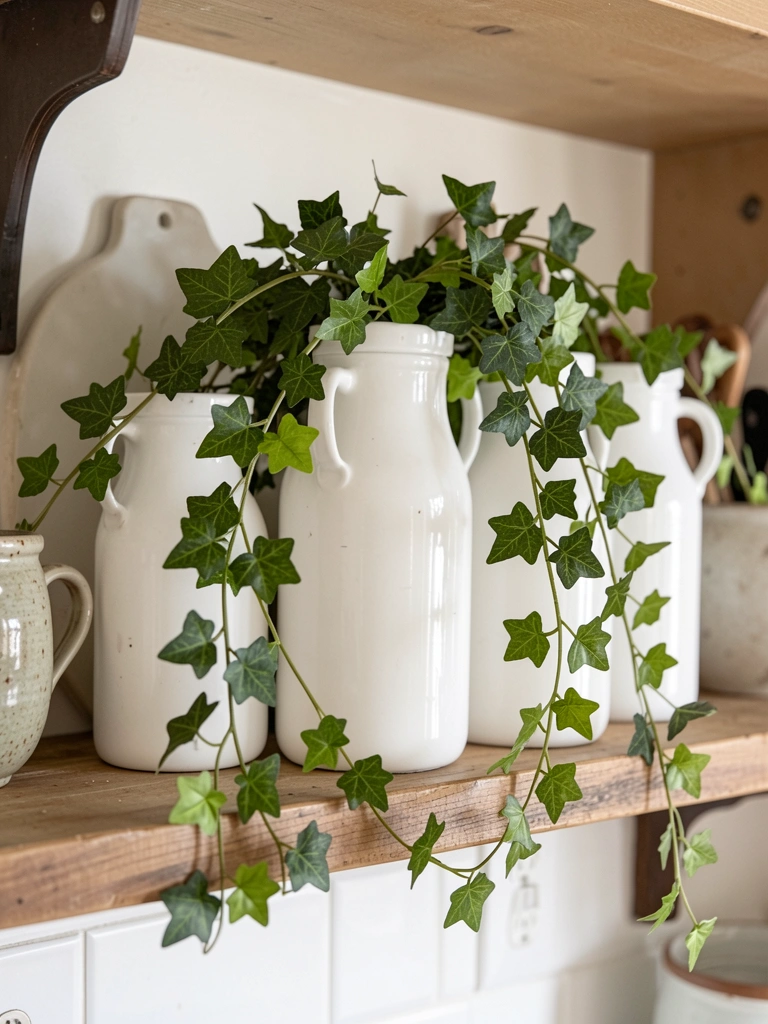
    Old milk jugs held faux ivy. Let trails drape shelf edge. Subtle green lift.

    Softened straight lines. No wilting worries—always fresh. Felt outdoor-indoor.

    Dust leaves gently; real dust sticks. I vacuumed hard once—bent stems. Finger fluff now.

    One jug per shelf. Vary trail lengths.

    What You’ll Need for This Look

    11. Antique Cookbooks Propped with Bookends

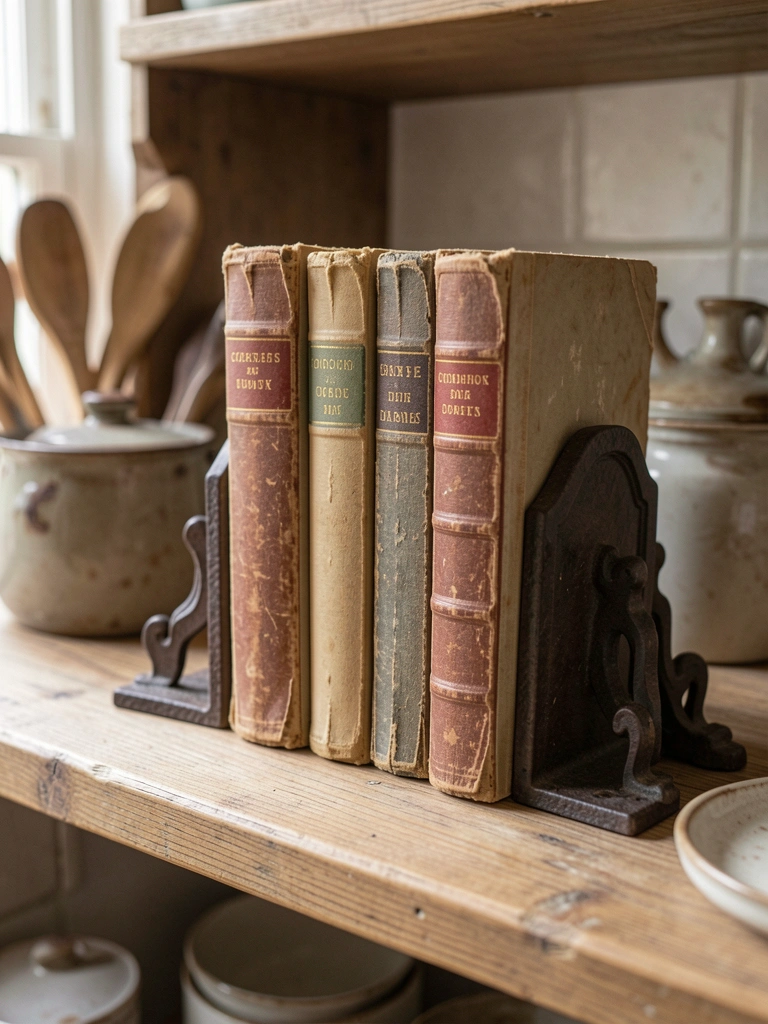
    My worn cookbooks stood proud. Iron pig bookends held them. Spines out, colors mixed.

    Stories stacked up. Pulled one for recipe mid-meal. Shelves personal now.

    Heaviest back; lights tip. I overloaded once—toppled. Four books max.

    Wipe spines yearly.

    What You’ll Need for This Look

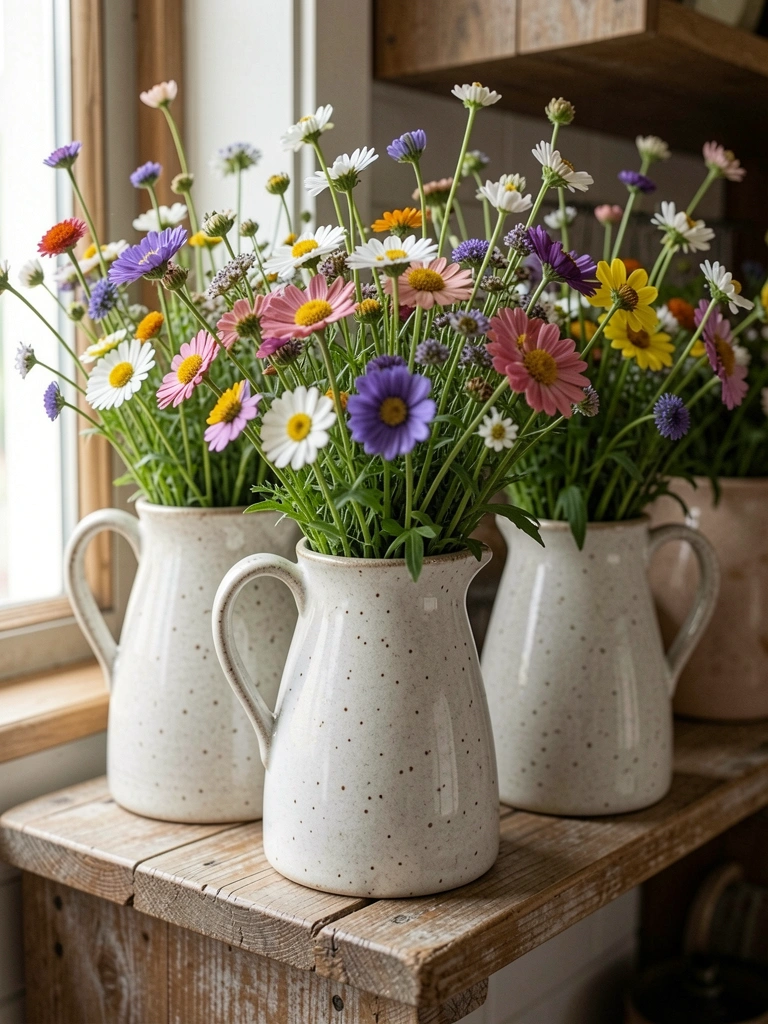
    12. Ceramic Pitchers Filled with Wildflowers

    Pitchers caught yard wildflowers. Daisies, Queen Anne's lace. Loose bunches.

    Pop of life. Scent filled air. Changed weekly for rhythm.

    Trim stems short; lasts longer. I drowned one—overflow. Shallow water now.

    Two pitchers, offset.

    What You’ll Need for This Look

    13. Ironstone Dishes Grouped Loosely

    Ironstone pieces grouped odd numbers. Plates nested, bowls beside.

    Clean white grounded chaos. Used daily—no precious feel.

    Chips add charm; don't hide. Mine match patina.

    Stack max three high.

    What You’ll Need for This Look

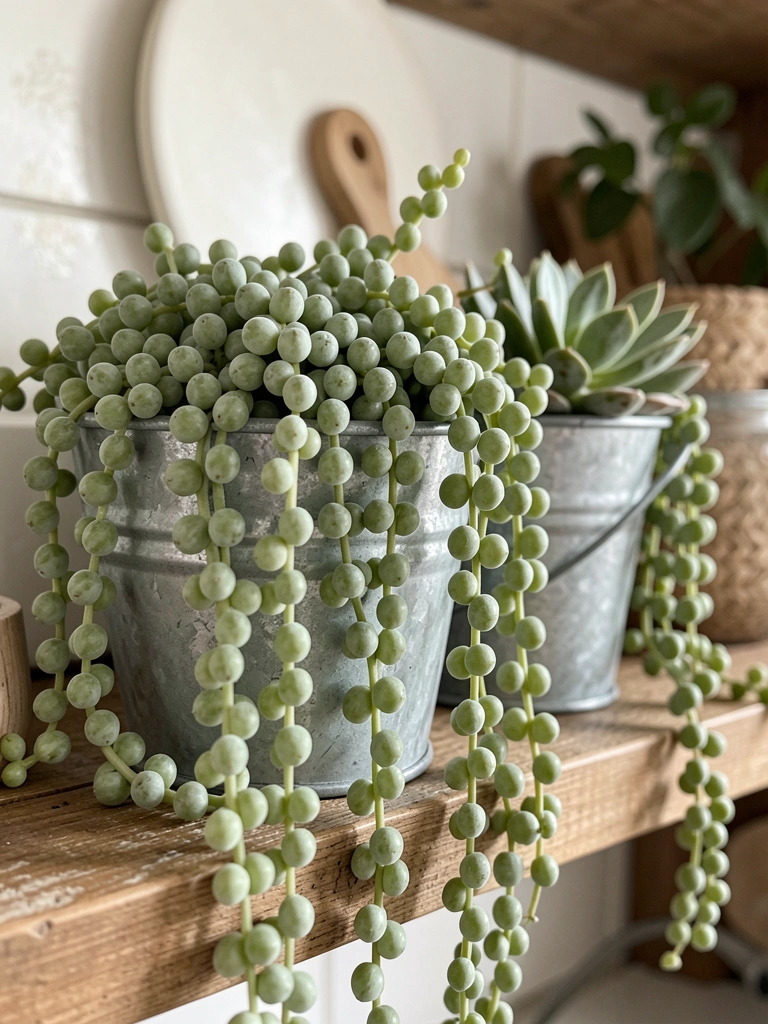
    14. Zinc Planters with Trailing Succulents

    Zinc planters held faux trailing succulents. Draped front.

    Cool metal warmed by green. Low care, high calm.

    Faux dusts less than real. Real dried once—tossed. Faux forever.

    One large, two small.

    What You’ll Need for This Look

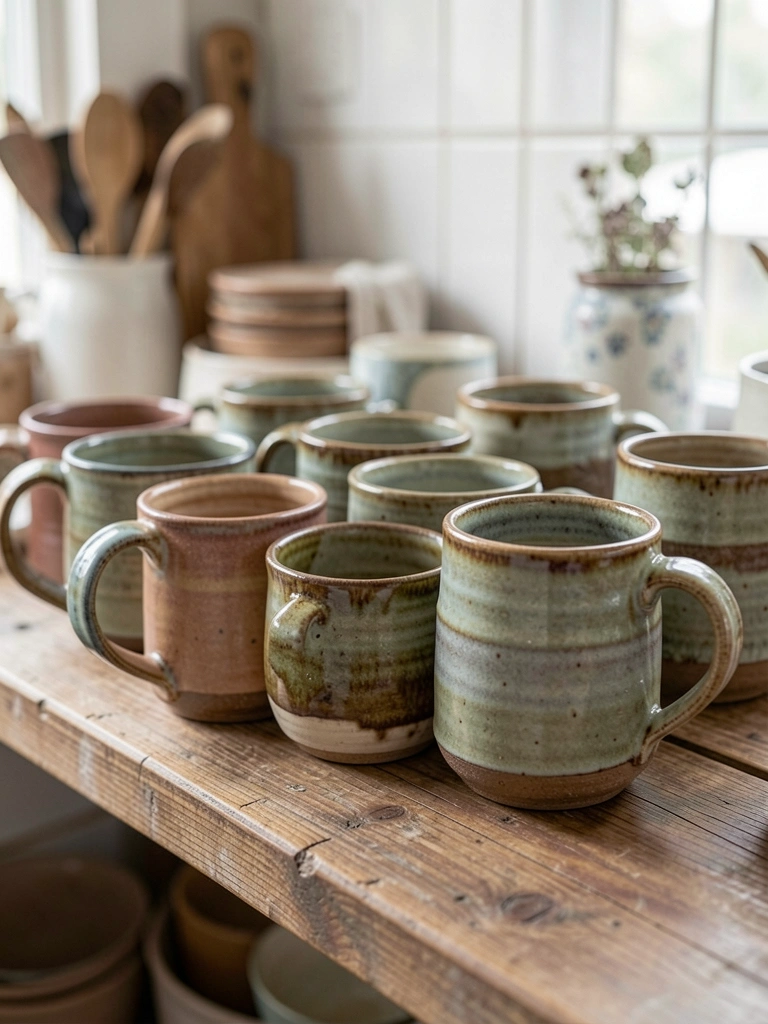
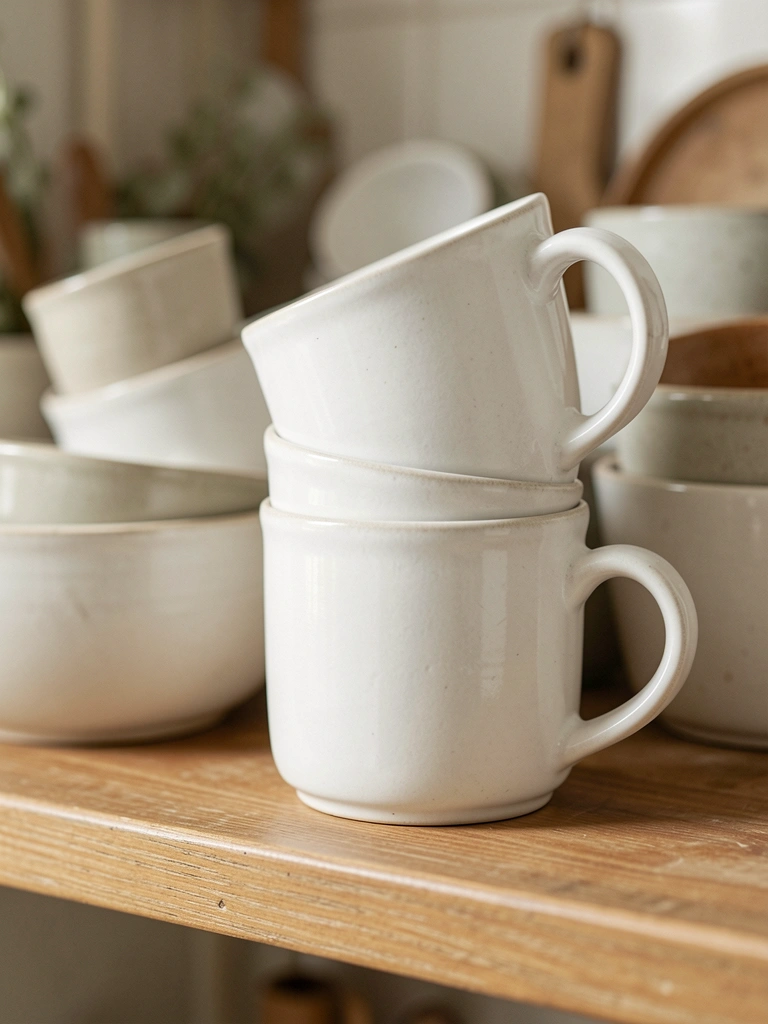
    15. Clustered Handmade Pottery Mugs

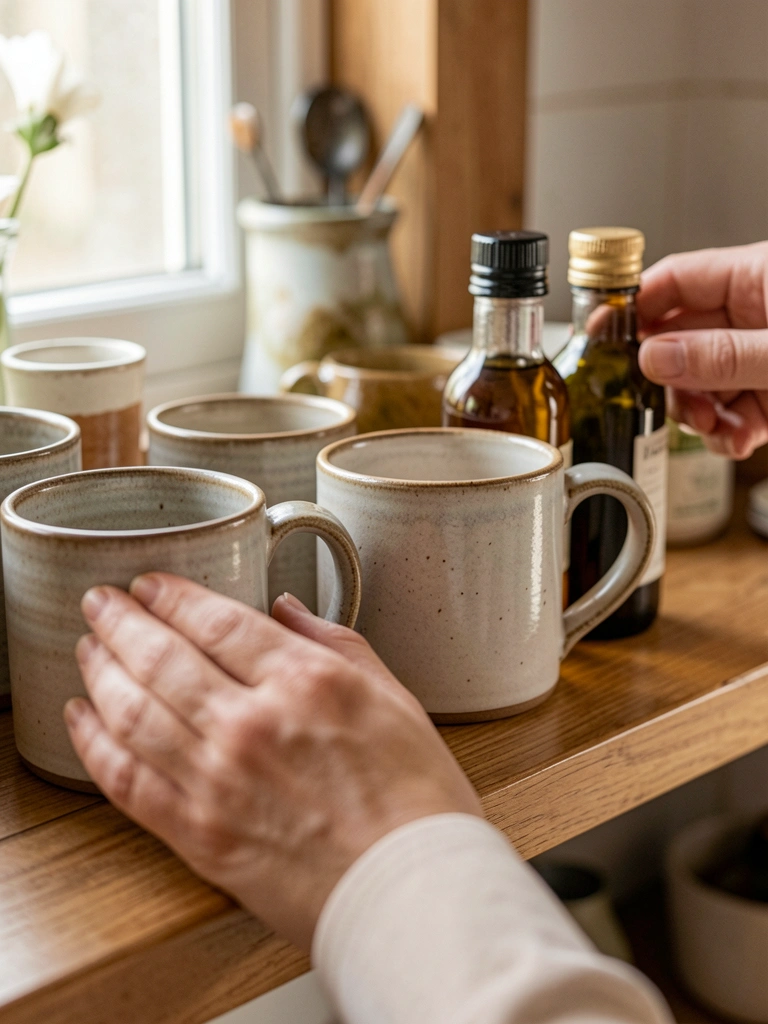
    Pottery mugs from market clustered tight. Earth tones, handmade dips.

    Invited tea time. Mugs nested cozy. Shelf ended strong.

    Heaviest front; balance. I clustered light first—wobbly.

    Rotate for even wear.

    What You’ll Need for This Look

    Final Thoughts

    Pick three ideas that fit your routine. Mine evolved slow—shelves better over months.

    Yours will too. No rush. They'll feel like home soon. You've got this.

  • 7 Stylish Open Kitchen Shelving Ideas to Copy

    7 Stylish Open Kitchen Shelving Ideas to Copy

    I ripped out my upper cabinets two summers ago. The wall felt bare, exposed. My dishes sat in boxes for weeks while I figured it out.

    Open shelves changed the kitchen's feel—light bounced in, mornings felt calmer. No more slamming doors for a mug.

    I've returned ugly racks, dusted too many mismatched pieces. These ideas came from living with them. You can pull this off without perfection.

    7 Stylish Open Kitchen Shelving Ideas to Copy

    I've got seven ideas here that worked in my everyday kitchen. No big budgets or pro stylists. Just simple swaps that made shelves feel intentional and easy to live with.

    1. All-White Dinnerware Stacks That Stay Put

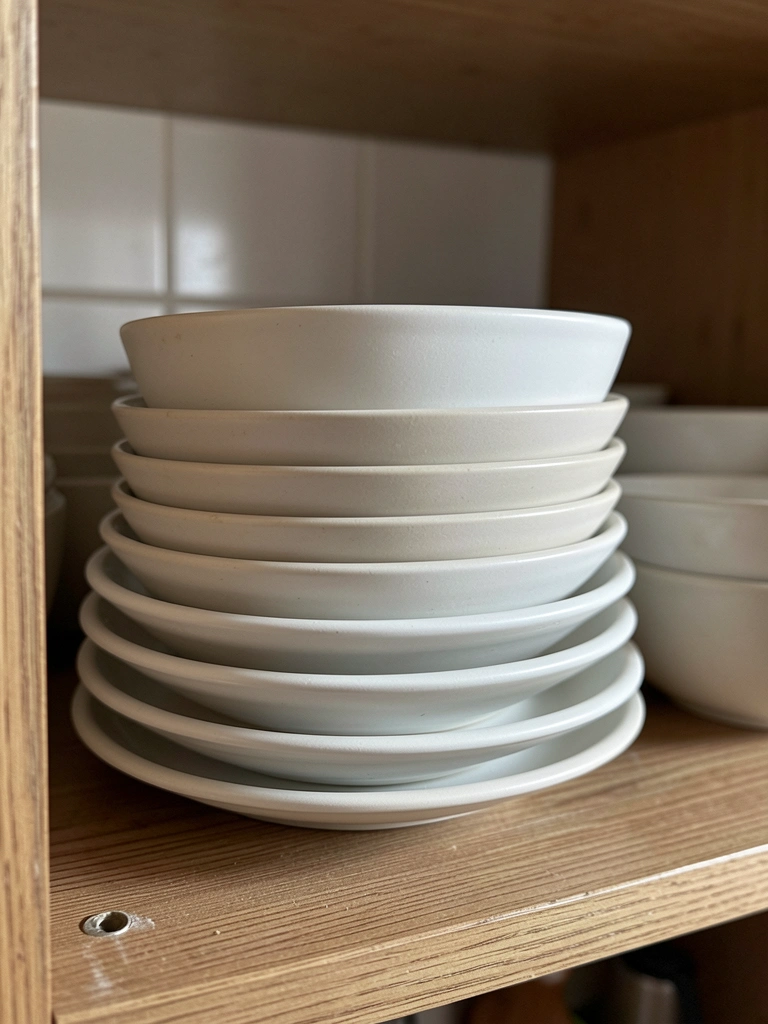
    I started with a full set of white plates on the main shelf. No patterns, just clean whites in different sizes—dinner, salad, bowls. Stacked them tight but with rubber bumpers underneath so they don't slide.

    The kitchen brightened right away. Mornings, coffee mugs next to them felt homey, not fussy. Dust shows less on matte finishes too.

    I learned the hard way: cheap glossy ones chip easy. Go for stoneware. Group by type—plates left, bowls right. Leaves room for a wooden board in front.

    Pulls the eye up without overwhelming the counter below. Feels collected over time.

    What You’ll Need for This Look

    2. Trailing Ivy and Herbs That Hide the Gaps

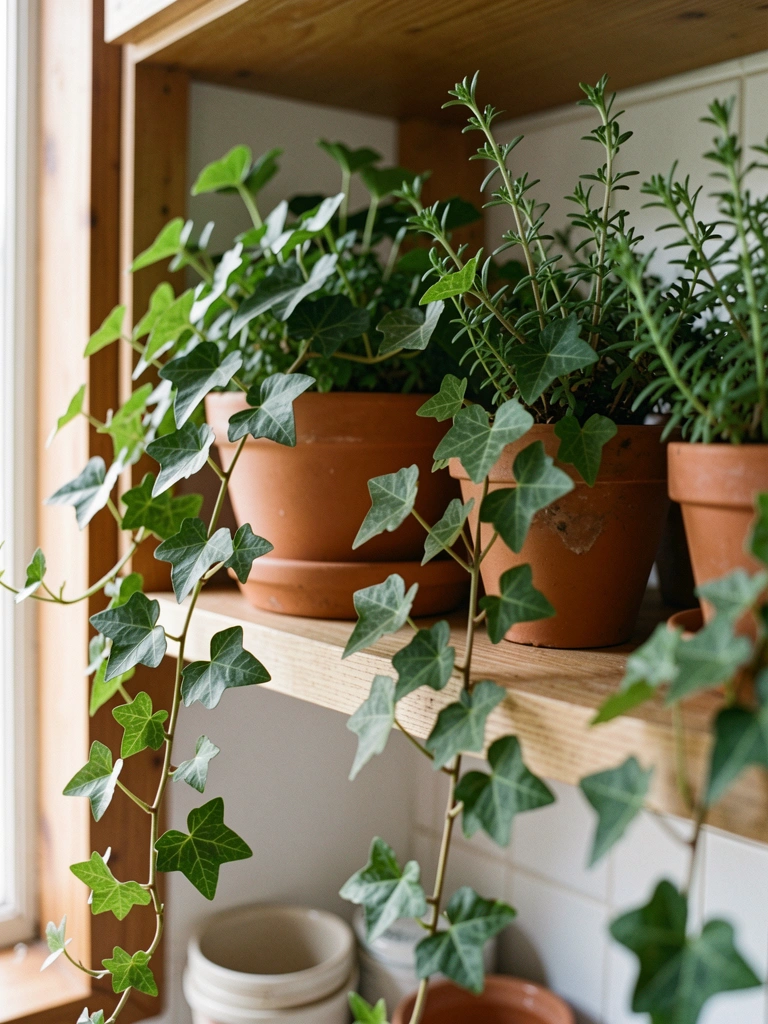
    Top shelf got empty fast. I hung trailing ivy from hooks, added small herb pots—basil, mint—in mismatched terracotta. They drape soft, fill negative space.

    Changed the whole vibe. Kitchen smells fresh, feels alive. Less sterile, more like a spot I'd cook in daily.

    Mistake I made: too many pots crowded it. Limit to three, water weekly. Trim leaves that yellow. They soften hard shelf edges.

    In my space, it draws eyes up, away from cluttered counters. Low light? Fake ivy works till real ones root.

    What You’ll Need for This Look

    3. Glass Jars Lined by Color for Pantry Staples

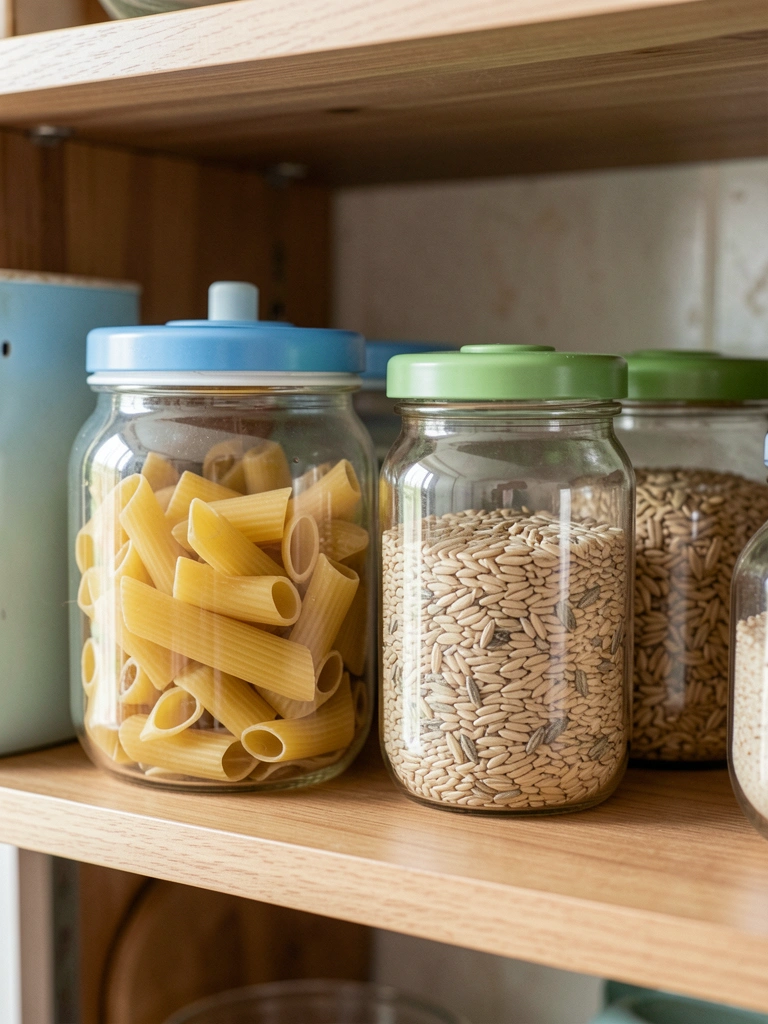
    I filled the middle shelf with glass jars—flour, rice, nuts. Sorted by lid color: blues left, greens right. Lids face out for easy grab.

    Looks tidy without labels everywhere. Pulls in morning light, makes the space feel deeper. Kids spot snacks quick.

    Bought clear ones first, but colored glass fogs up. Stick to clear with solid lids. Fill halfway max—full jars tip.

    In my kitchen, it replaced messy bags. Feels like a quiet pantry wall.

    What You’ll Need for This Look

    4. Wooden Cutting Boards Leaning for Rustic Layers

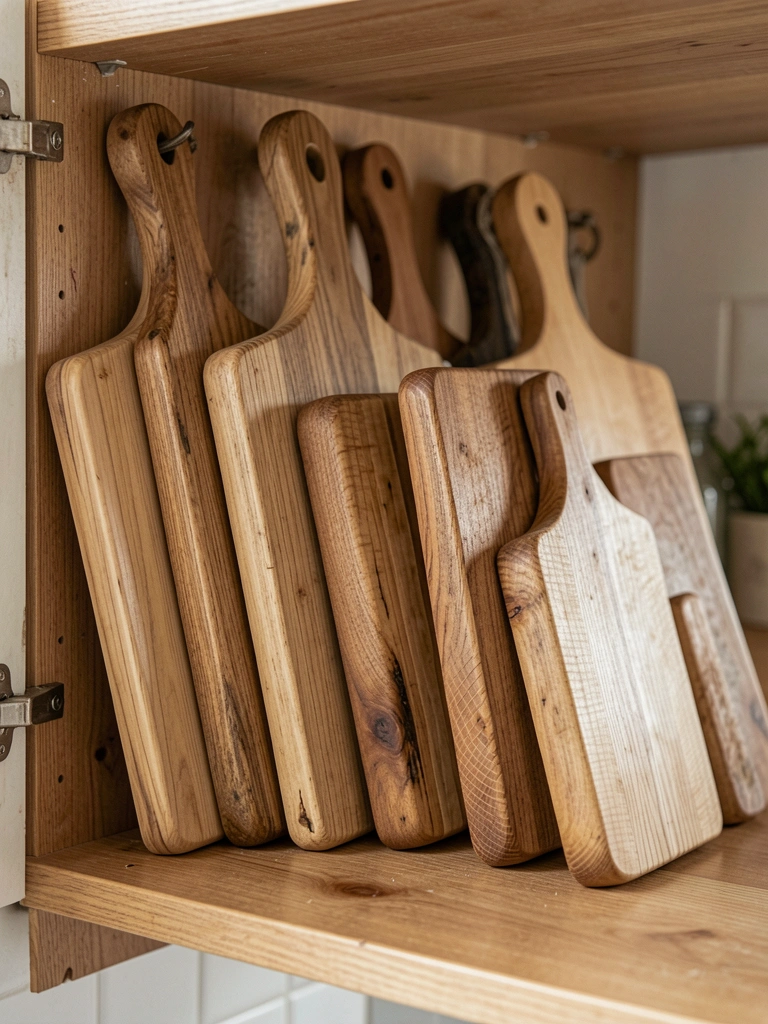
    Bottom shelf holds my cutting boards—three sizes, leaned against the wall. Maple and walnut, edges worn from use.

    Adds warmth instantly. Kitchen feels worked-in, not posed. Textures pull you in close.

    I stacked them flat once—dust city. Leaning lets air flow. Wipe monthly with oil.

    Ties into the wood island below. Practical too—grab and go.

    What You’ll Need for This Look

    5. Mismatched Mugs Clustered for Daily Charm

    I gathered favorite mugs—thrifted ones, gifts—in a loose cluster. Earthy browns, one blue. Handles out.

    Feels personal, like company’s coming. Mornings, reach feels friendly.

    Overdid it with ten once—chaos. Five max, rotate seasonally. Sturdy ceramics don't chip easy.

    In my setup, they sit low for easy access. Balances the white plates above.

    What You’ll Need for This Look

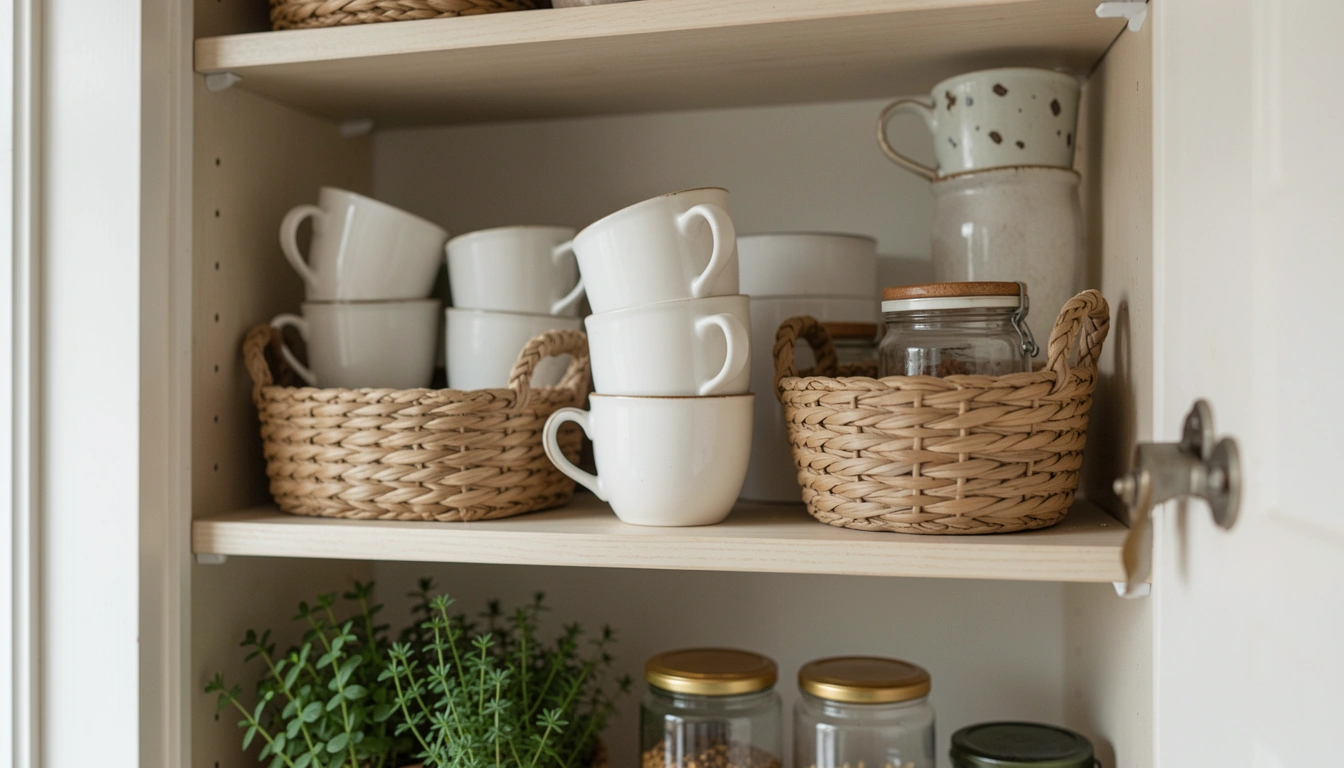
    6. Woven Baskets Taming the Loose Bits

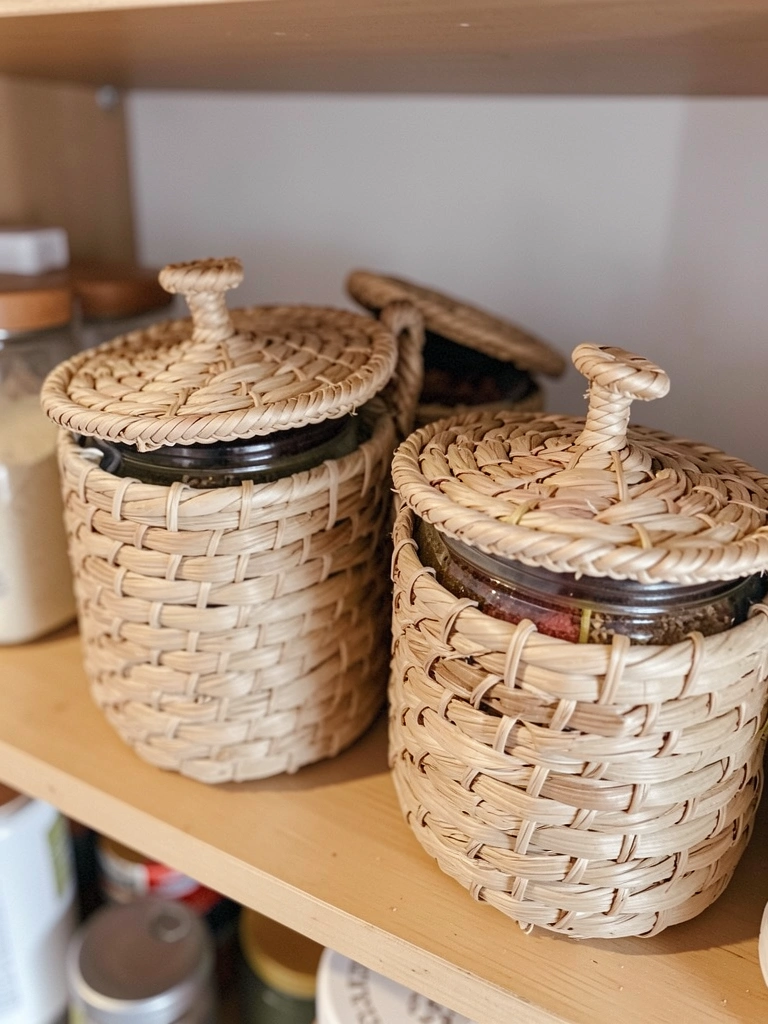
    Side shelf hides towels and linens in seagrass baskets. Two small, one larger. Labels on front in chalk.

    Keeps clutter invisible. Kitchen stays calm even after meals.

    Cheap plastic ones sagged—I returned them. Woven holds shape. Line with cloth.

    Tucks odd shapes away. Peeks of linen add texture.

    What You’ll Need for This Look

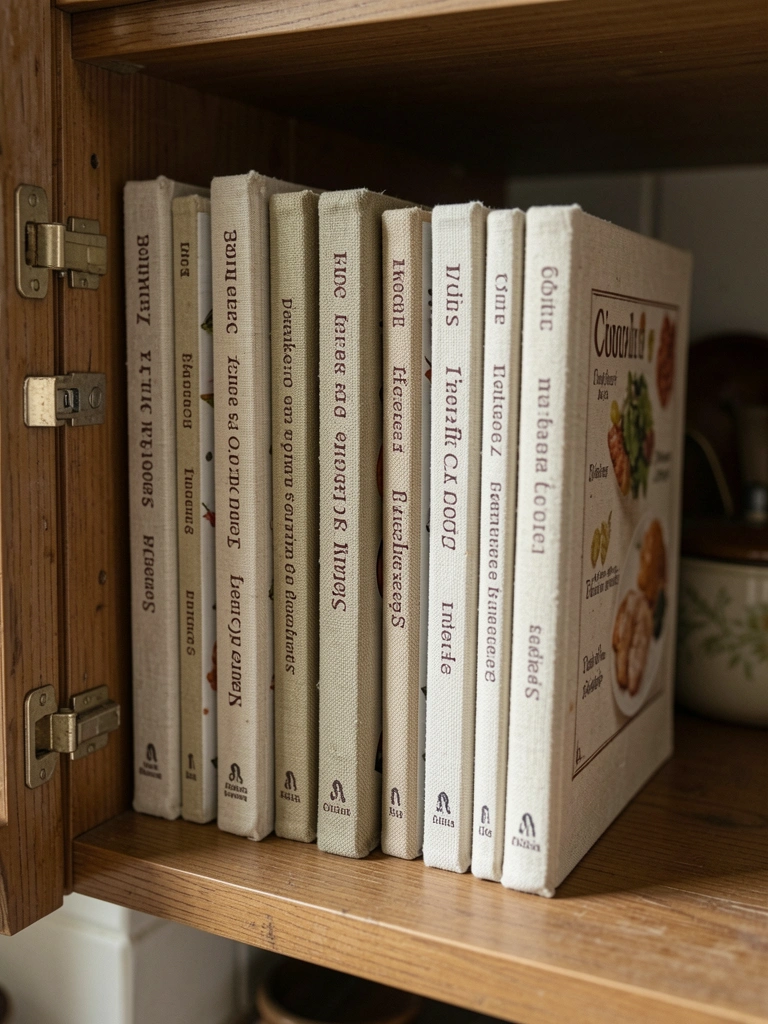
    7. Upright Cookbooks with Sleeve Covers

    End shelf has my go-to cookbooks, upright in bookends. Slipped linen covers over spines—soft beige.

    Adds height without bulk. Flipping pages feels inspiring mid-cook.

    No covers first—grease stains. Fabric wipes clean. Three to five books max.

    In my kitchen, it grounds the shelves. Pull one down, ideas flow.

    What You’ll Need for This Look

    Final Thoughts

    Start with one shelf. Live with it a month, tweak what bugs you.

    These built my kitchen over time—no rush. Yours will feel right too.

    Grab what fits your hands, your light. It'll click.

  • 21 Clever Small Kitchen Shelf Ideas That Work

    21 Clever Small Kitchen Shelf Ideas That Work

    I squeezed open shelves into my last apartment kitchen. It was chaos at first—stuff tumbling everywhere. Then I figured out simple ways to make them pull the room together. No more bare counters, just calm.

    Those shelves changed how I cooked. Felt less cramped, more like home.

    You can do this too. Start small.

    21 Clever Small Kitchen Shelf Ideas That Work

    Here are 21 small kitchen shelf ideas I've used in tight spaces. They work because they're real—tested over spills and daily use. Each one fits 21 ideas exactly.

    1. Stacked Mugs in Descending Sizes for Easy Grab

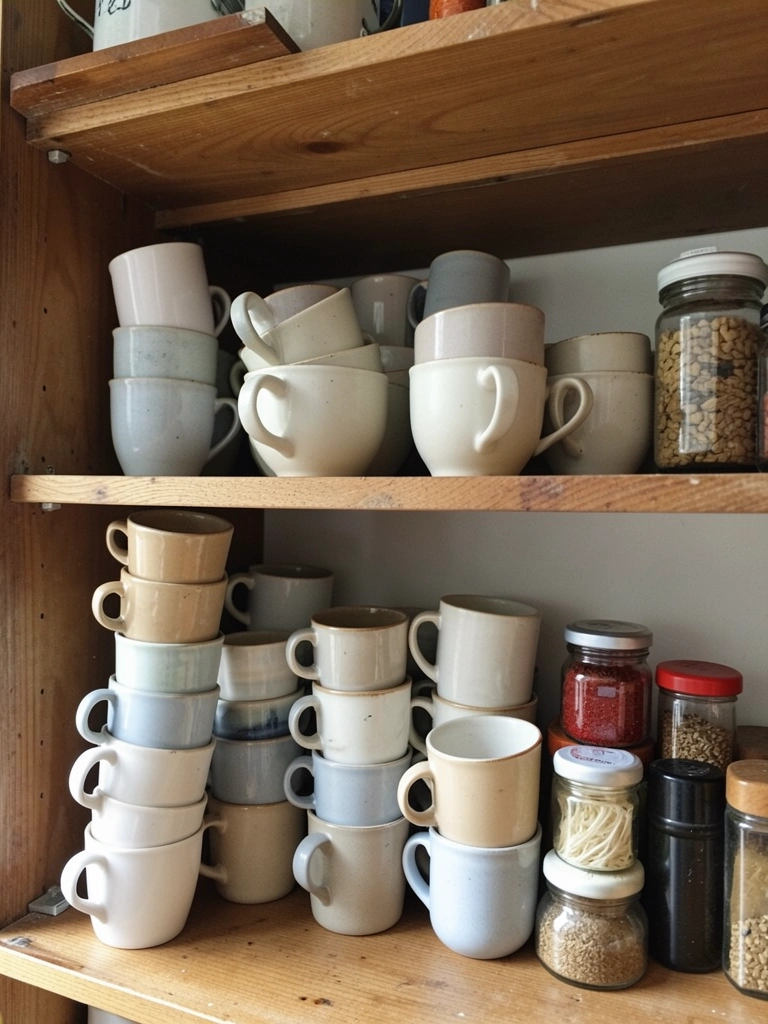
    I grabbed thrift store mugs in whites and creams, stacking them largest at the bottom. In my old rental, this freed up cabinets fast. The shelves looked taller, airier. No more digging for that favorite one.

    Visually, it draws your eye up, makes the kitchen breathe. Emotionally? Cooking felt smoother, less frantic.

    Pay attention to even spacing—half-inch gaps prevent wobbles. I once crammed too tight; they toppled during a party.

    What You’ll Need for This Look

    2. Hanging Herb Jars with Fresh Cuttings Weekly

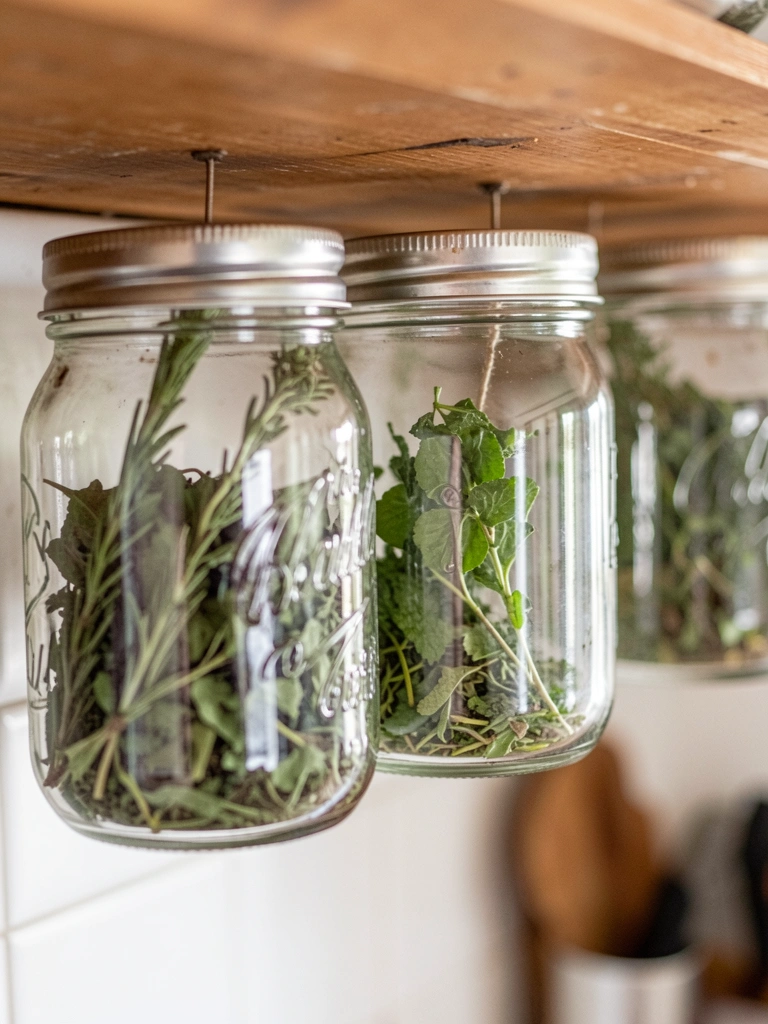
    Screw-top jars with wire hooks under my shelves hold basil and mint. I snip from my windowsill pot weekly. This setup in my sister's tiny kitchen cut counter clutter by half.

    It adds life—green peeks out, smells fresh when you brush by. The space feels alive, not sterile.

    Match jar sizes to shelf depth; mine were too deep once, swung into my head.
    What You’ll Need for This Look

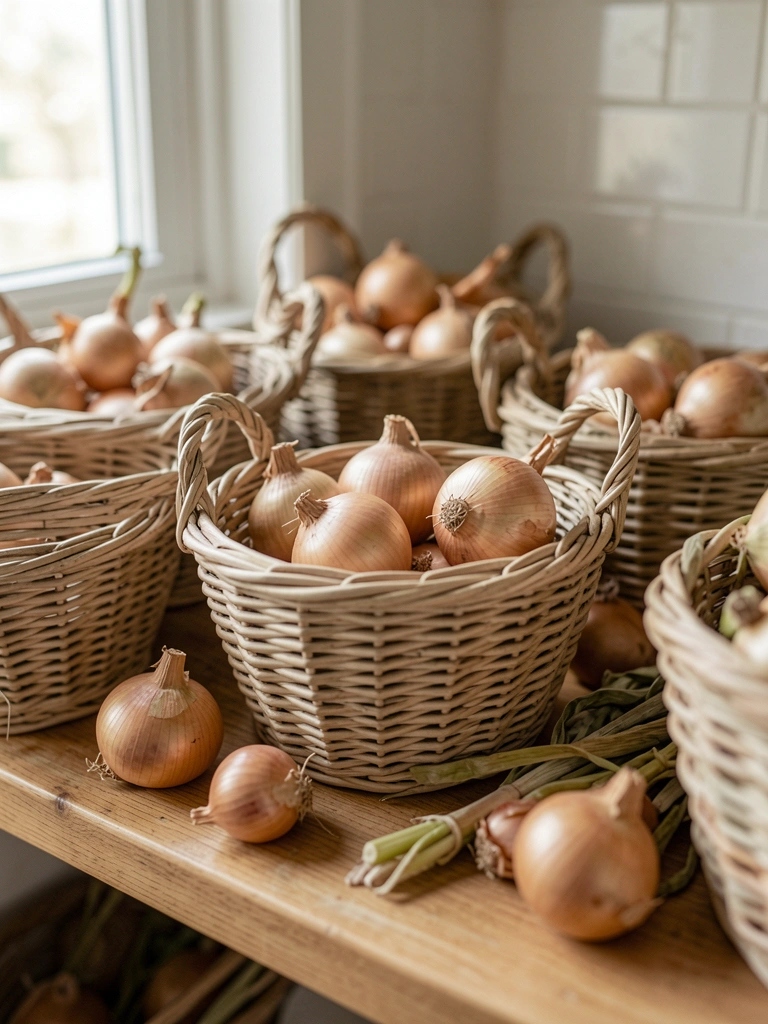
    3. Woven Seagrass Baskets for Loose Veggies

    Woven baskets catch onions and garlic off the counter. In my first home, they hid the mess without hiding it completely. Breathable weave keeps things fresh longer.

    Shelves gained texture—cozy, not flat. I reach in without dumping everything out.

    Size them right; oversized ones overpowered my narrow shelf once.

    What You’ll Need for This Look

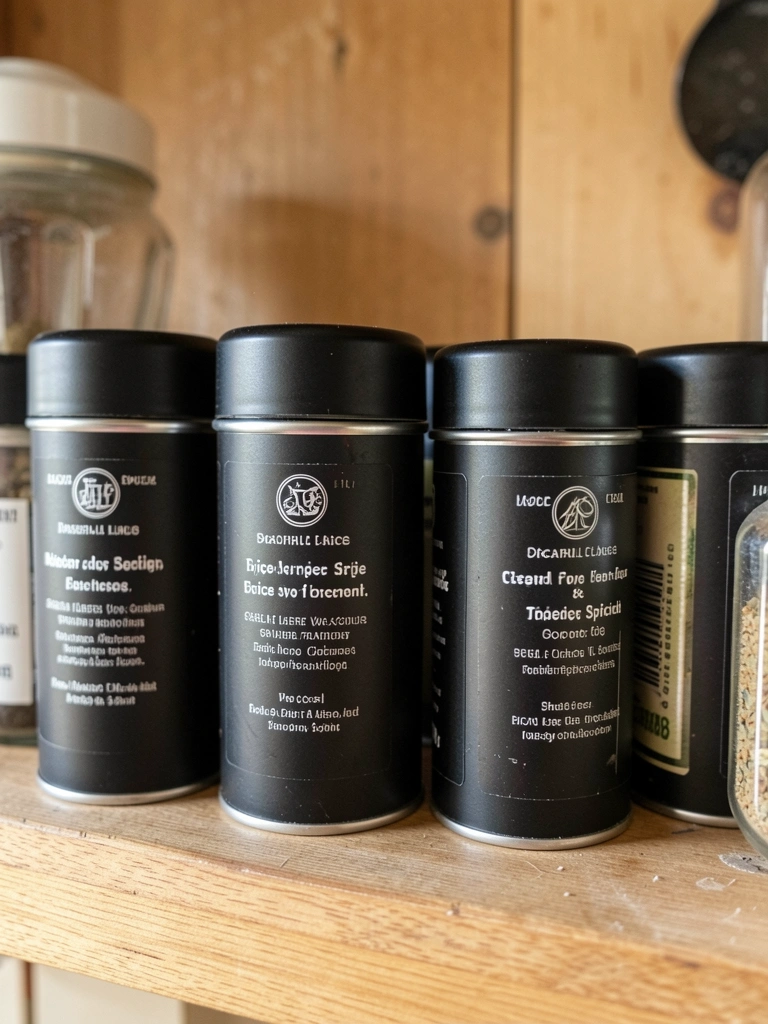
    4. Vintage-Style Spice Tins Lined Up Tight

    Tin spice containers in a row—cinnamon, paprika—look sharp on my shelf. Labeled simply. My mistake? Glass jars collected dust; tins wipe clean.

    Uniform height makes shelves feel modern, intentional. Cooking spices at eye level sped up meals.

    Touch them to test stability before full load.

    What You’ll Need for This Look

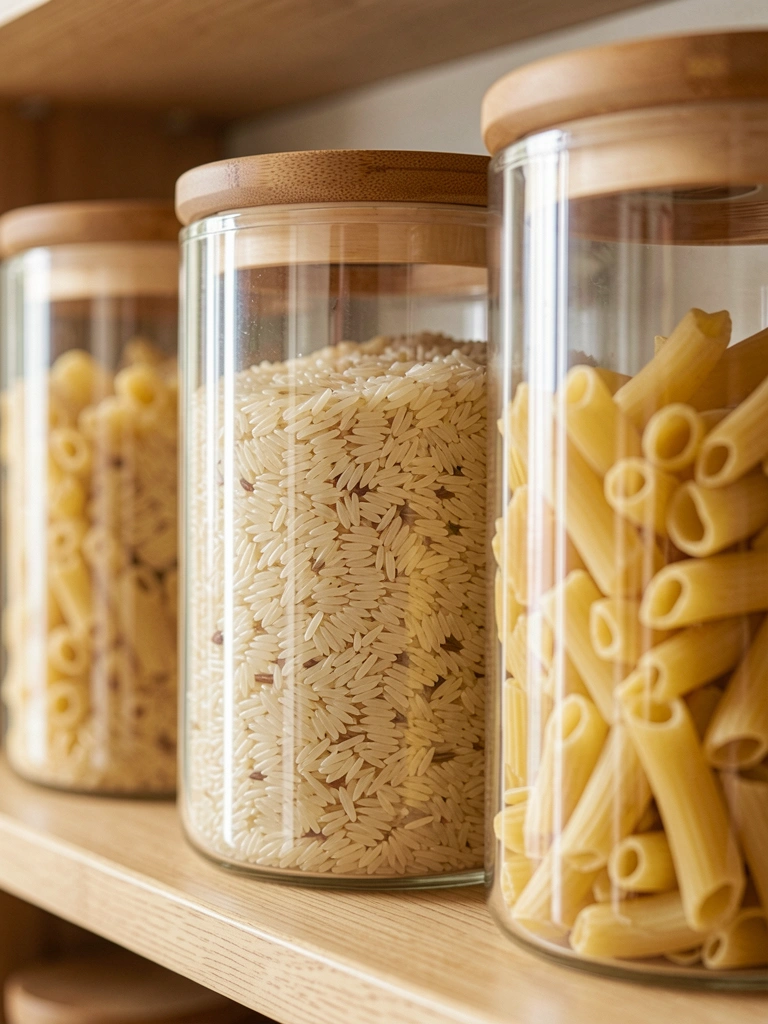
    5. Clear Glass Canisters for Pasta and Rice

    Bamboo-lid canisters hold pasta shapes I use most. In a friend's small kitchen, this swapped bulky bags for see-through calm.

    Graduated sizes fill shelf ends perfectly. You see abundance without mess.

    I overfilled once; lids popped off. Fill three-quarters max.

    What You’ll Need for This Look

    6. S-Hooks Dangling Lightweight Pots

    S-hooks under shelves hold two small saucepans. Saved drawer space in my cramped setup. Pots swing gentle, grab easy.

    Adds height without bulk. Kitchen felt pro, not packed.

    Light pots only—heavy ones bent my shelf edge first try.

    What You’ll Need for This Look

    7. Folded Linen Towels in Warm Neutrals

    Linen towels rolled loose fill shelf middles. In my space, they softened wood edges, felt homey.

    Easy swap for seasons. Grab one, done.

    Cotton frayed fast; linen holds up.

    What You’ll Need for This Look

    8. Leaning Wood Cutting Boards for Texture

    Three boards lean at back—walnut, maple. My kitchen gained depth; flat shelves looked dull before.

    Wipe after use, they age nice. Reach without stacking hassle.

    I skipped variety once; all same size bored the eye.

    What You’ll Need for This Look

    9. Trailing Ivy Pots Tucked in Corners

    Tiny ivy pots sit shelf ends, trail soft. Brings outdoors in; my space softened up.

    Water weekly, trim strays. Low light works fine.

    Plastic fakes gathered dust—real ones thrive.

    What You’ll Need for This Look

    10. Black Trivets as Low-Profile Dividers

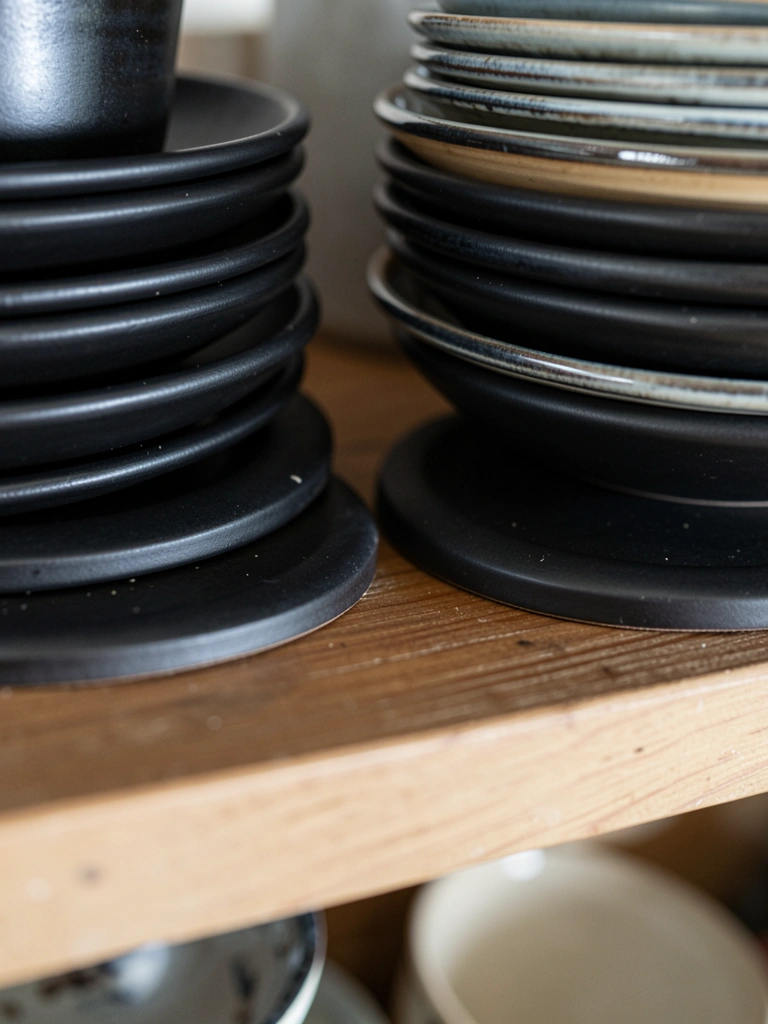
    Matte trivets separate bowls from plates. In a client's kitchen, grouped chaos into calm zones.

    Stable base, heat-safe bonus. Shelves looked curated.

    Wood ones stained; black hides wear.

    What You’ll Need for This Look

    11. Rolled Bamboo Mats for Soft Landings

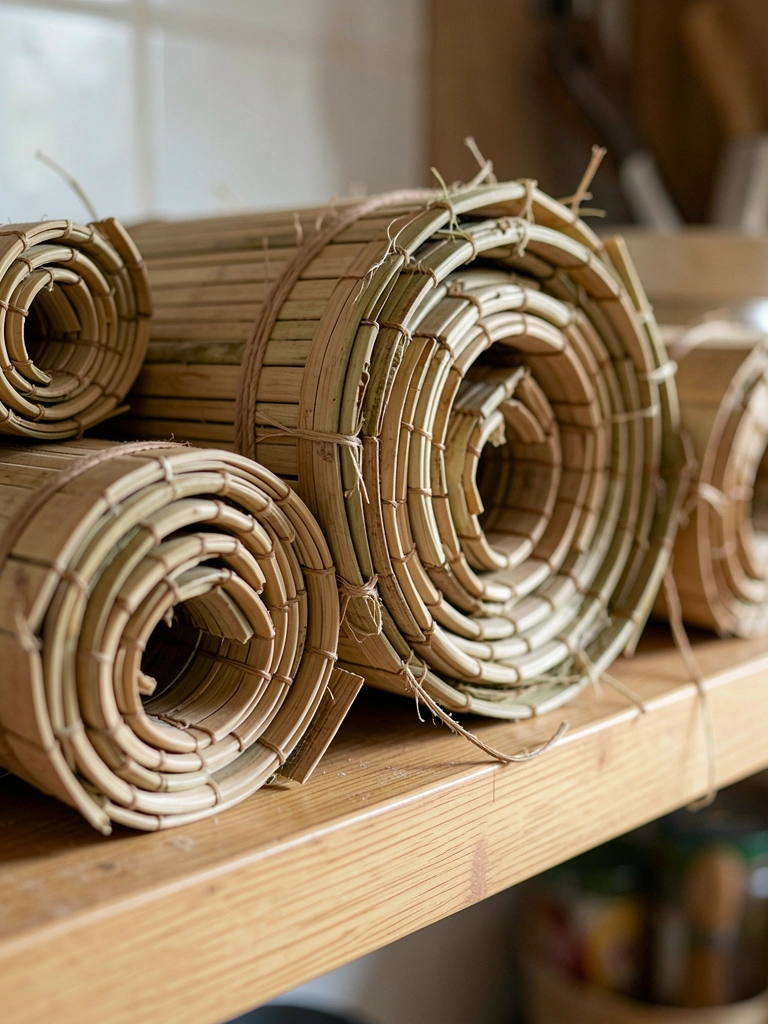
    Mats rolled stand upright, catch keys or spoons. Added quiet texture to my plain shelves.

    Unroll for placemats. Versatile.

    Over-rolled bulged shelf—loose is best.

    What You’ll Need for This Look

    12. Matching Jars of Grains in a Cluster

    Clip-top jars cluster oats, quinoa. My pantry shelf freed up; visual pantry now.

    See levels, restock easy. Warm tones unite.

    Clear over frosted—froted hid spoilage once.

    What You’ll Need for This Look

    13. Grouped Copper Mugs by Handle Shape

    Copper mugs Moscow Mule-style group tight. Pops against white shelves in my kitchen.

    Patina builds charm. Chills drinks fast.

    Polish rarely; they age pretty.

    What You’ll Need for This Look

    14. Nested Plates in Soft White Stacks

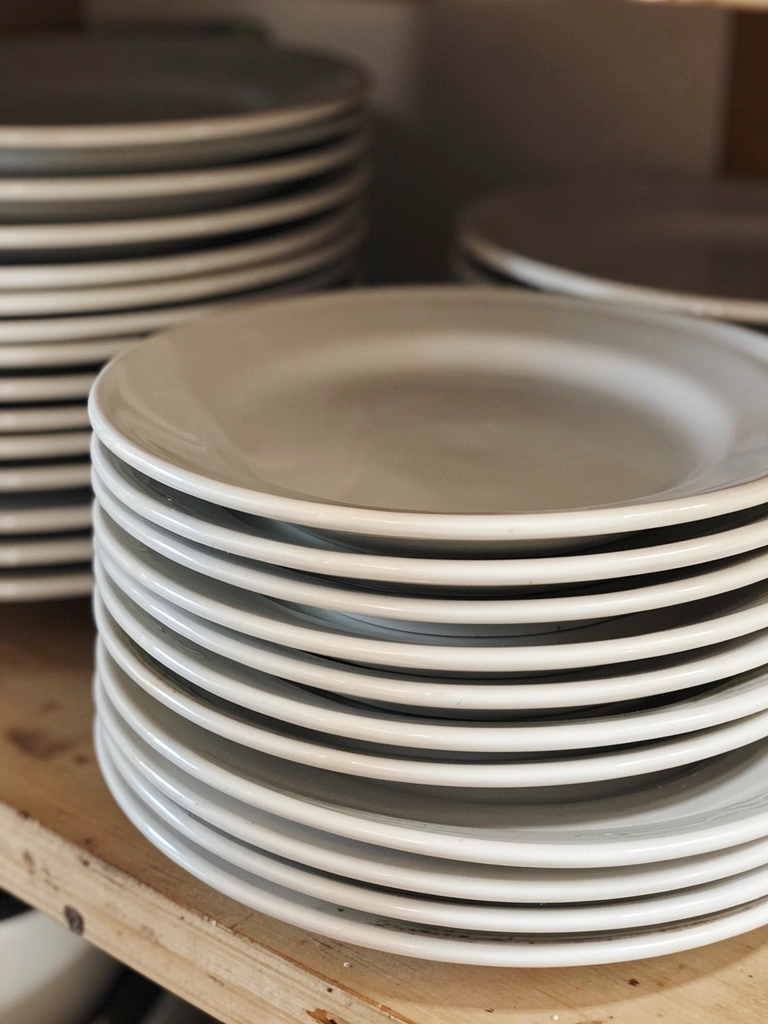
    Porcelain plates nest three high. Clean look in small space; dinners set quick.

    Quiet white calms busy kitchens.

    Chipped edges show—pick thick ones.

    What You’ll Need for This Look

    15. Enamel Mugs for Color Without Clutter

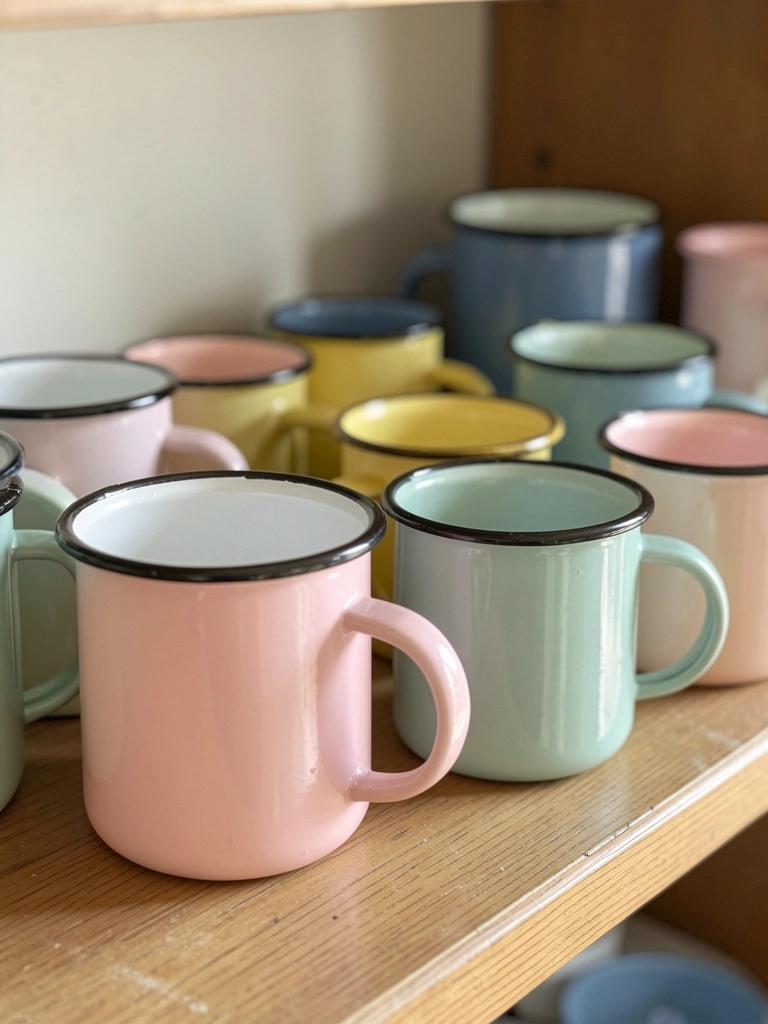
    Pastel enamel mugs add joy sparingly. Two or three max; my shelf stayed balanced.

    Chip-resistant, kid-friendly.

    Too many fought—edit hard.

    What You’ll Need for This Look

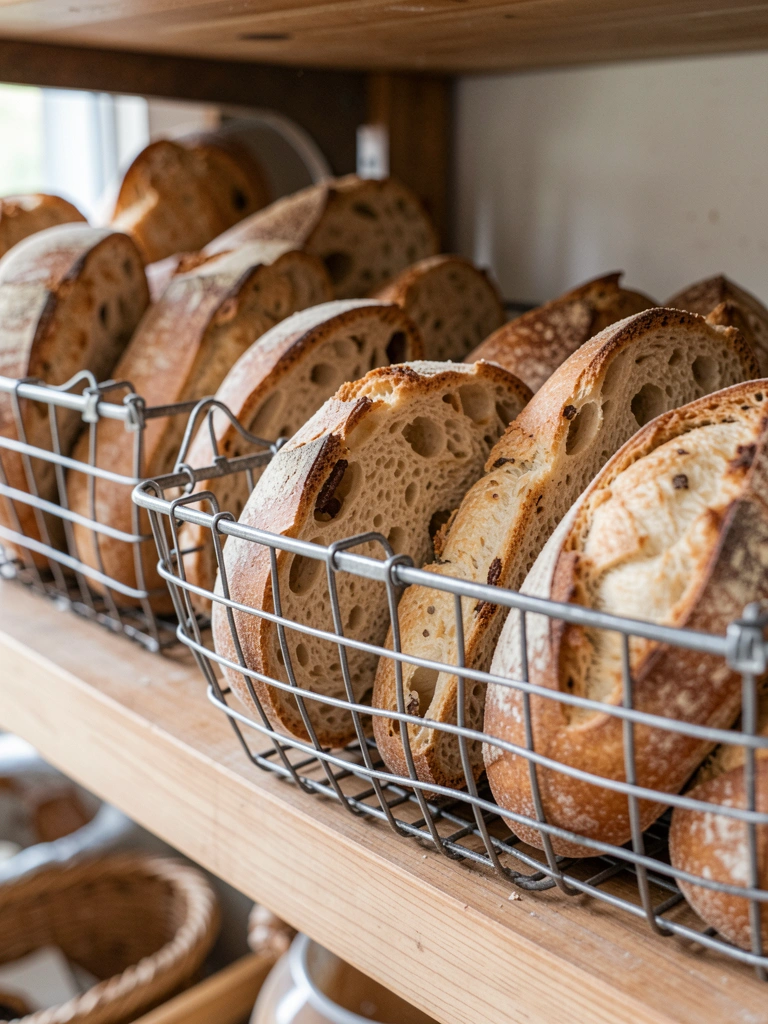
    16. Wire Baskets for Bread Loaves

    Open wire baskets cradle baguettes. Airflow keeps crust crisp; counter cleared.

    Rustic without trying.

    Plastic trapped moisture—wire wins.

    What You’ll Need for This Look

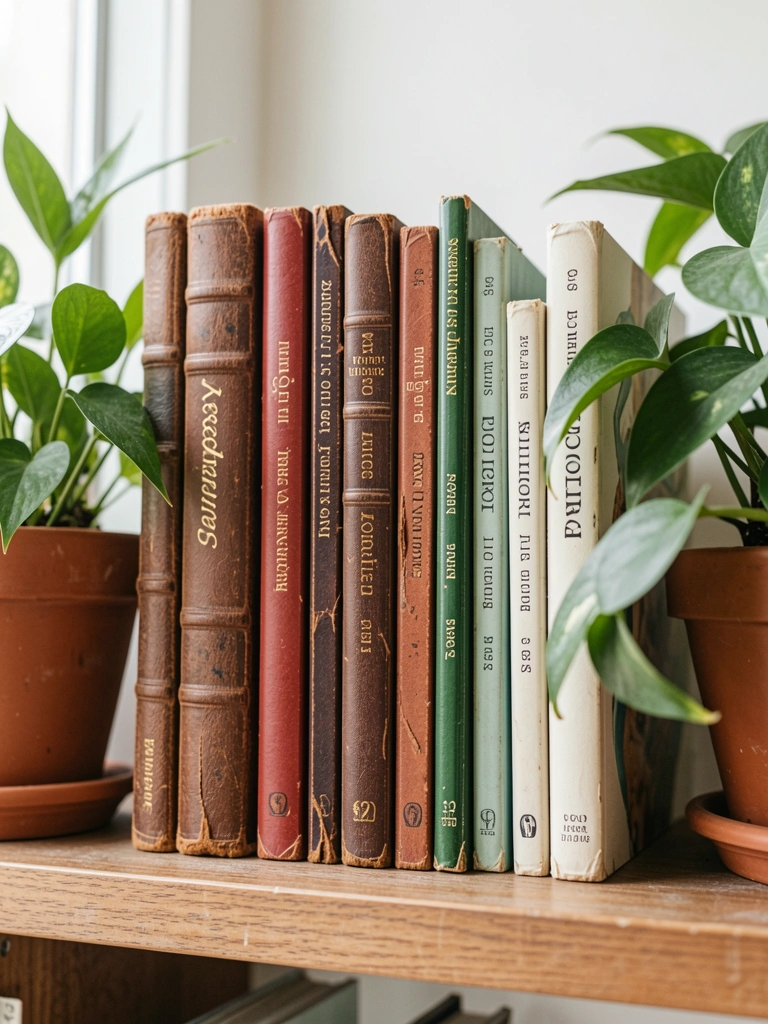
    17. Cookbook Ends Bookended by Plants

    Favorite cookbooks stack, plants anchor ends. Recipes handy, green frames it.

    Slim spines only—fat ones toppled mine once.

    What You’ll Need for This Look

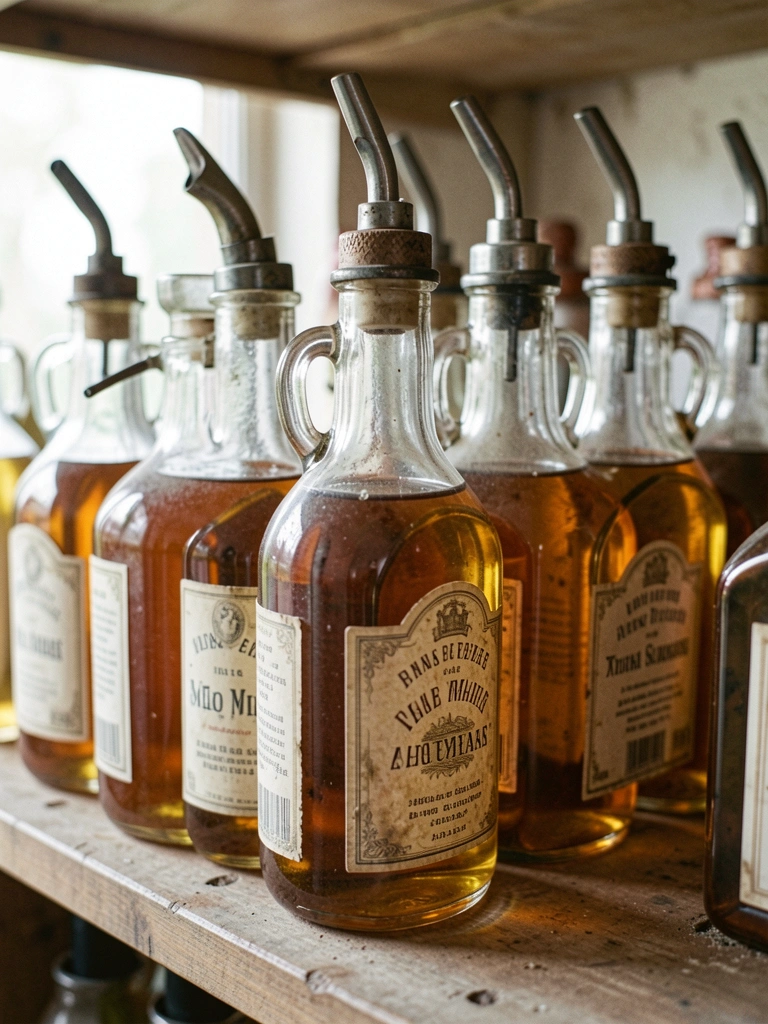
    18. Oil Bottles in a Row with Pour Spouts

    Drip-free oil bottles line up. Olive, sesame—cooking streamlined.

    Dark glass protects flavor.

    Leaky ones stained; spouts fix.

    What You’ll Need for This Look

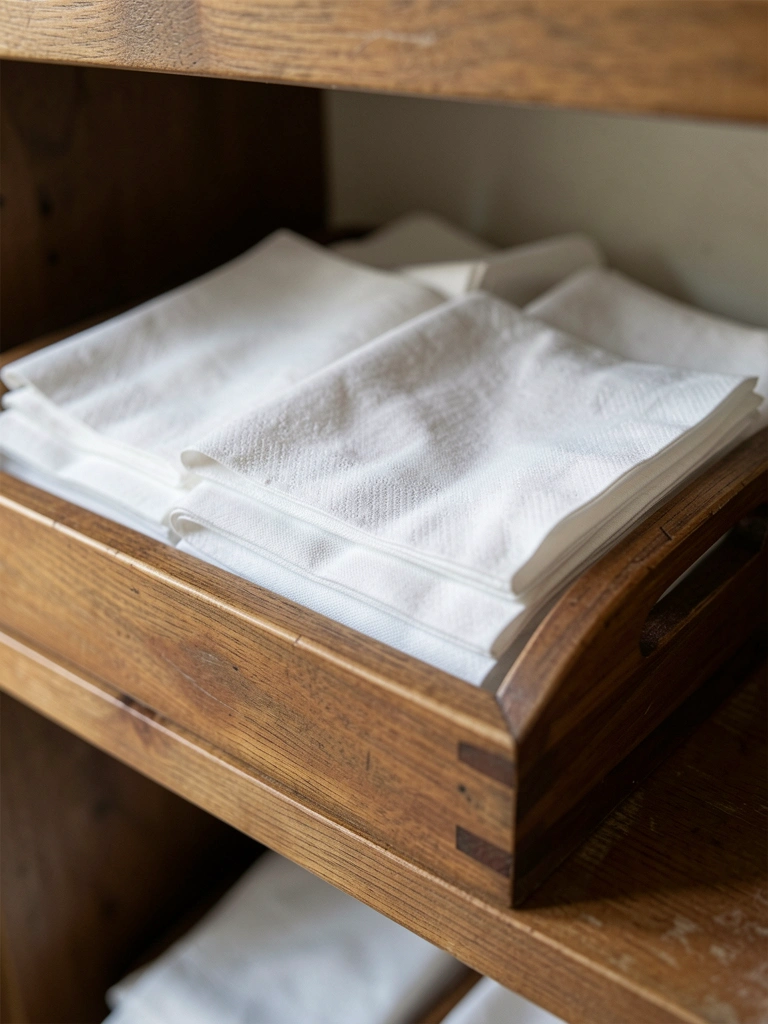
    19. Napkin Stacks in a Shallow Tray

    Napkins fold into a tray. Table ready, shelf tidy.

    Shallow trays prevent spill.

    Deep one hid them away.

    What You’ll Need for This Look

    20. Fruit on Upside-Down Glasses

    Lemons stack on sturdy glasses flipped. Elevates without bulk; fresh vibe.

    Wash glasses first—no residue.

    Slippery ones slid; textured grips.

    What You’ll Need for This Look

    21. Subtle LED Strips Behind Key Jars

    Battery LEDs tuck behind jars. Nighttime glow finds salt easy.

    Warm light, not harsh. Remote dims it.

    Battery died mid-dinner—keep spares.

    What You’ll Need for This Look

    Final Thoughts

    Pick two or three ideas that fit your routine. They'll shift your kitchen without overhaul.

    I've lived these—small changes stick.

    Your space will feel right. Go slow, enjoy it.

  • 11 Smart Kitchen Shelving Ideas to Maximize Space

    11 Smart Kitchen Shelving Ideas to Maximize Space

    I stared at my cramped kitchen counters last year, buried under mugs and spices. No room to chop onions. Then I added simple shelves. Space opened up. Cooking felt easier.

    In my sister's rental, we did the same. Her face lit up when she saw counter space again.

    These ideas come from homes I've fixed—mine included. Real fixes for tight spots.

    11 Smart Kitchen Shelving Ideas to Maximize Space

    Here are 11 kitchen shelving ideas I've tested in actual homes. They fit small spaces, cut clutter, and make daily life smoother. No big budgets needed.

    1. Floating Wood Shelves for Plates and Mugs

    I put these up in my kitchen three years ago. Plates right there, no digging in cabinets. The room felt airier, counters clear for meal prep.

    Light wood warms the space without crowding. Stack everyday dishes loosely—don't overfill, or it tips.

    I learned the hard way: mount them 18 inches apart. Reach everything without stretching.

    In a friend's galley kitchen, it doubled storage. She grabs mugs mid-morning rush now.

    What You’ll Need for This Look

    2. Hanging Wire Baskets for Fruits and Veggies

    My old apartment had zero counter room for bowls. I hung these baskets. Fruits stayed fresh, visible. Kitchen felt alive, not stuffed.

    Wire lets air through—no moldy bottoms. Hang at eye level for easy grab.

    Space them 12 inches apart. Over the sink works best.

    One basket sagged once—heavier than I thought. Swapped for sturdier ones.

    What You’ll Need for This Look

    3. Pegboard Panels Behind the Stove

    I installed this in my last house. Utensils off drawers, right where I cook. Flow improved—no more pauses hunting spoons.

    Paint it to match walls for clean look. Hooks adjust easy.

    Behind stove saves prime wall space. Pots hang flat.

    I overloaded hooks first time—crashed down. Now I limit to 5 pounds each.

    What You’ll Need for This Look

    4. Corner Carousel Shelves in Cabinets

    Corners wasted in my pantry. Added this spinner. Spices spin out—no blind reaches. Kitchen felt organized, calm.

    Wood matches cabinets. Lazy Susan style turns smooth.

    Measure cabinet first—mine was 12-inch deep.

    Fits cans, jars perfectly. Doubled my spice spot.

    What You’ll Need for This Look

    5. Under-Sink Pull-Out Wire Racks

    Under my sink was chaos—bottles falling. Pull-outs fixed it. Slides out full, easy access. No knee bumps.

    Wire drains water—no rust. Fits pipes around.

    I bought wrong depth once—too shallow. Measure twice.

    Now cleaners stack neat. Saves 20 minutes weekly.

    What You’ll Need for This Look

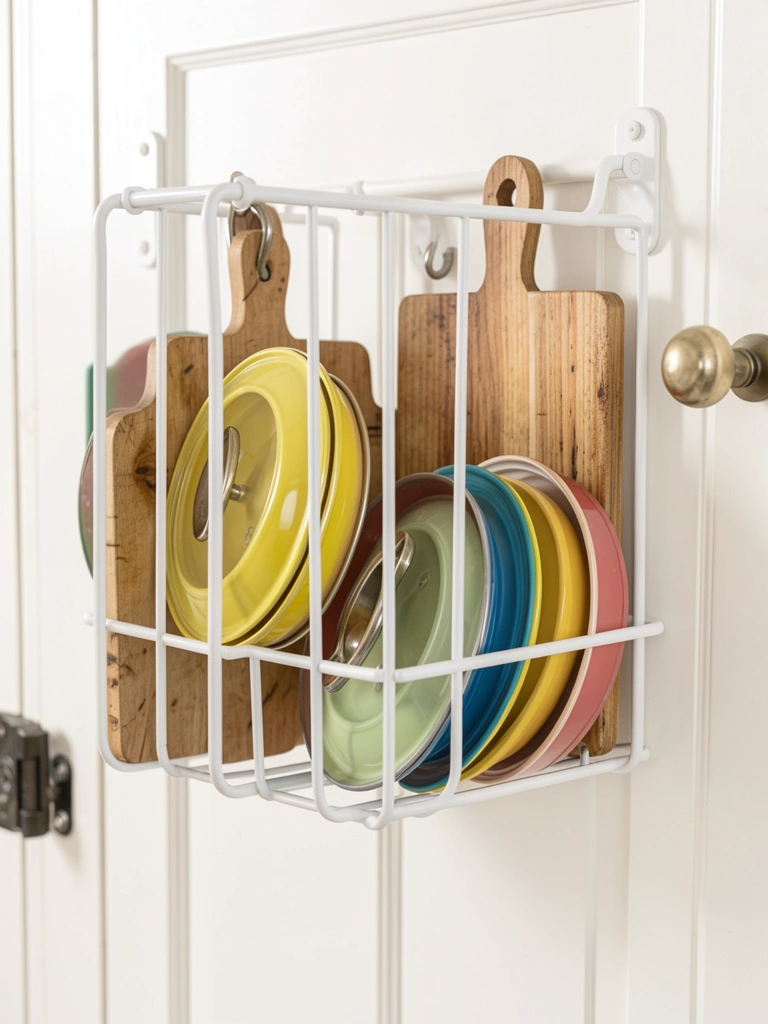
    6. Over-Door Pan Rack for Lids and Boards

    Pans stacked crooked in my drawer. Over-door rack freed it. Lids vertical, boards flat. Drawer space tripled.

    White blends with doors. No drilling.

    Adjust prongs for sizes. Mine holds 10 lids.

    Quiet when grabbing—no clatter.

    What You’ll Need for This Look

    7. Magnetic Strips for Knives and Spice Jars

    Knives loose in drawers dulled fast. Magnetic strip changed that. Grabs instant, counter clear.

    Stainless looks modern, clean. Mount at back splash height.

    Holds small jars too—spices handy.

    One knife slipped early—stronger magnets fixed it.

    What You’ll Need for This Look

    8. Reclaimed Wood Crate Wall Shelves

    I stacked crates from a yard sale. Dry goods inside, rustic vibe. Kitchen went cozy, not sterile.

    Nail brackets secure them. Varnish lightly—no splinters.

    Irregular sizes add character. Weight limit 15 pounds.

    My first stack wobbled—brackets solved it.

    What You’ll Need for This Look

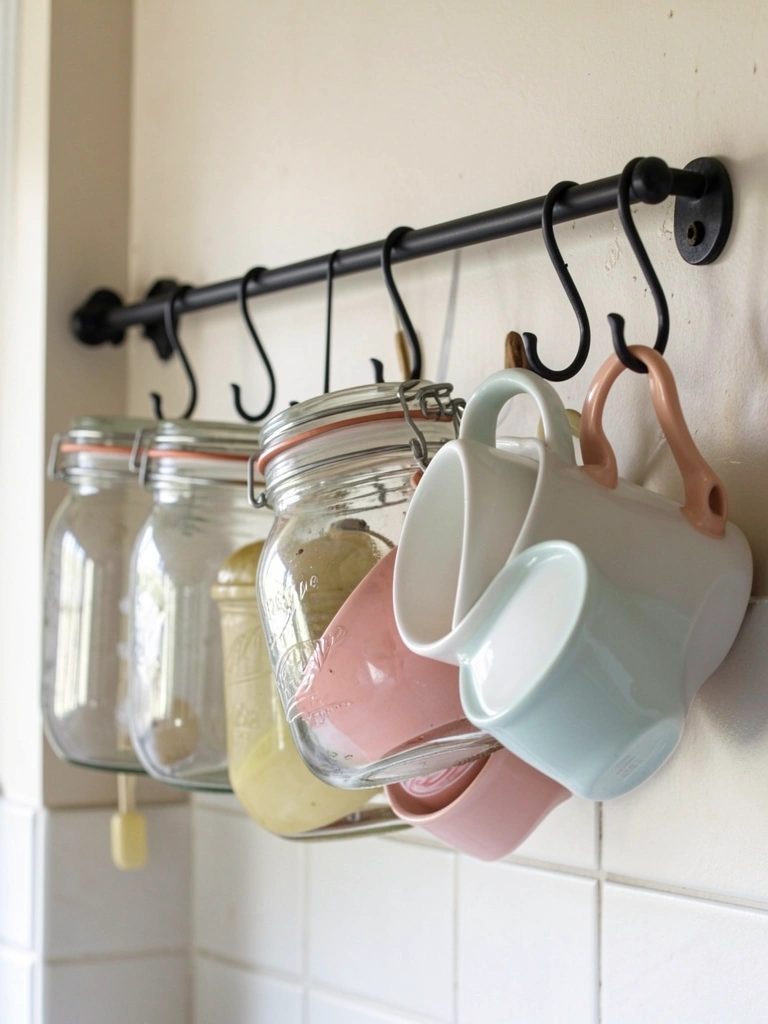
    9. Open Rail System for Jars and Cups

    Rails in my butler's pantry hold jars loose. Cups dangle easy. No cabinet doors slamming.

    Black paint hides smudges. Hooks swap out.

    Install low for kids' reach.

    Hooks tangled first—spacers fixed.

    What You’ll Need for This Look

    10. Adjustable Wire Racks Inside Deep Cabinets

    Deep cabinets hid half my pots. Wire racks layered them. Everything visible, no ladder.

    Chrome lasts, easy clean. Snap-in poles adjust.

    My pots fit two tiers now.

    Bought fixed height once—waste. Adjustable wins.

    What You’ll Need for This Look

    11. Freestanding Ladder Shelf for Cookbooks

    No wall space left? Ladder shelf in corner holds books, jars. My recipes handy, space feels taller.

    Black metal stable. Lean, don't push back.

    Top for plants—light filter.

    Wobbled on rug—level feet helped.

    What You’ll Need for This Look

    Final Thoughts

    Pick one or two ideas that fit your kitchen's quirks. Start small—you'll see changes fast.

    I've lived with these setups. They hold up to real life, kids, spills.

    Your space can breathe easier. You've got this.

  • How to Make Kitchen Island Beautiful

    How to Make Kitchen Island Beautiful

    My kitchen island sat there like a blank countertop. Functional, sure. But it made the whole room feel flat. I'd wipe it down, stack a few things, and it still looked off—too empty in the middle, crowded at the edges.

    I stared at it one afternoon, coffee in hand. Why did it pull the eye wrong? It wasn't about more stuff. It was about how things sat together.

    Then I shifted a few pieces. The island settled into the room. Balanced. Comfortable.

    How to Make Kitchen Island Beautiful

    This shows you how I settle an island so it fits the kitchen's flow. No big changes. Just placement that quiets the awkward spots. You'll end up with a spot that draws you in, warm and lived-in.

    What You’ll Need

    Step 1: Clear and Center It

    I start by wiping the island empty. Everything off—no rush, just clear space. Stand back. Notice how the bare surface sits in the room. Too stark? That's fine. It shows the shape.

    Now place one large wooden tray dead center. Why? It anchors the eye. Pulls focus without crowding. Visually, the island shrinks to that tray first—less overwhelming.

    People miss how emptiness breathes around it. Skip filling every inch. Mistake: shoving the tray off-center. It tilts the whole feel.

    The change? Your island grounds itself. Steady.

    Step 2: Build Height in Corners

    Next, I add height. Tuck the faux fiddle leaf fig in one corner. Opposite, the metal lantern. Not touching the tray. Why? Height lifts the flatness, frames the center.

    Watch the shift: light catches the leaves, shadows play soft. It draws your gaze up, makes the island feel taller, more present.

    Insight folks overlook: odd numbers work best here—group if needed, but one strong piece per spot. Avoid matching pairs; they stiffen it.

    Don't cram tight to edges. Leave air. Mistake fixed, balance holds.

    Step 3: Layer Low in the Middle

    On the tray, I layer low. Center the wooden cutting board. Flank with ceramic vases—one taller. Small brass tray nearby holds spices. Why? Low layers hug the base, fill without bulk.

    Visually, it warms the core. Textures mix—wood, ceramic, brass—pulling the kitchen's light in.

    Most miss varying heights within the tray. Flat feels dead. Avoid overstacking; pick three items max.
    Now it invites touch. Comfortable pull.

    Step 4: Soften with Textiles

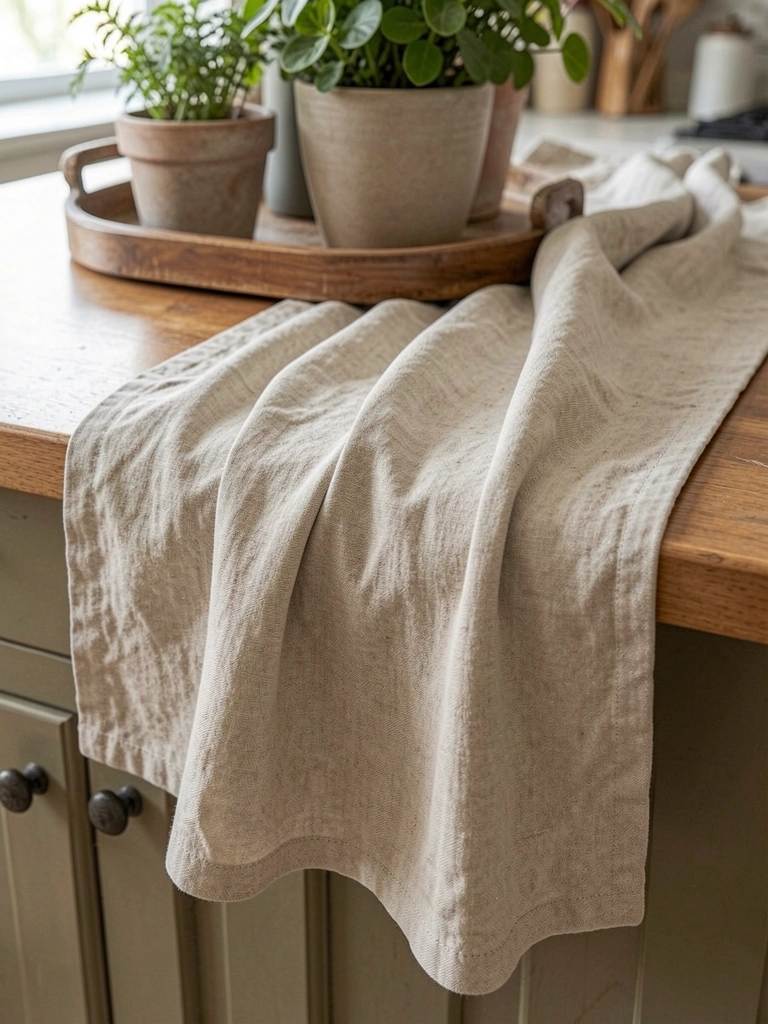
    I drape the linen runner under the tray, ends hanging loose. Not straight—let it fold natural. Why? Fabric softens hard edges, ties to the room's warmth.

    The change hits gentle: light diffuses through linen, shadows ease. Island blends, not fights the space.

    Overlooked: texture breaks gleam. Glossy counters need this. Mistake: ironed flat. Wrinkles add life.

    Feels settled now. Lived-in.

    Step 5: Tuck Storage Baskets

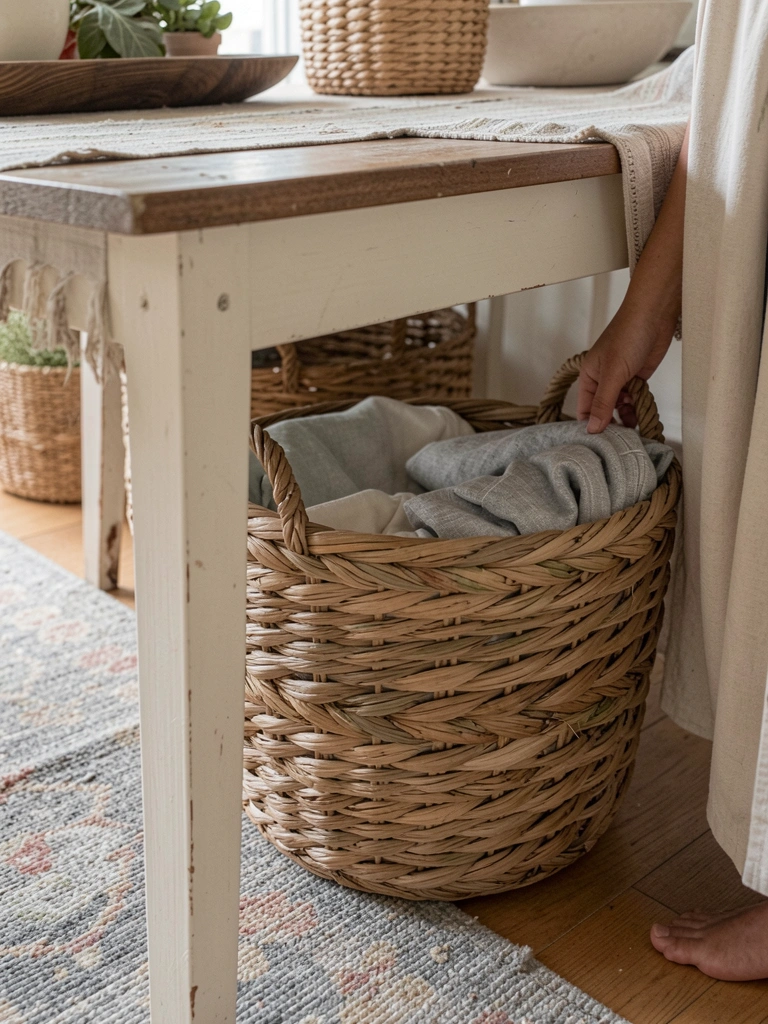
    Last, slide the seagrass basket under an overhang. Stuff with towels or produce. Why? It grounds the base, hides utility, adds organic repeat.

    Visual shift: basket echoes plant textures, balances height above. Room flows continuous.

    People forget under-space. It's free real estate. Avoid visible clutter inside—peek only.

    Step back. Island holds its own.

    Balancing Proportions

    I always check height first. Tall island? Lean low layers. Short one? Stack gently.

    • Eye level matters: nothing blocks conversation.
    • Width rule: one-third full max.
    • Test by walking around.

    It keeps the kitchen open. No fighting shapes.

    Lighting That Works

    Overhead's harsh alone. I add lantern glow.

    Layers shift at night—warm pockets form. Day holds clean lines.

    Skip bright spots. Soft diffusion wins.

    Refreshing for Seasons

    Twice a year, I swap.

    • Summer: lighter greens.
    • Fall: wood tones.

    Same spots. Just rotate. Keeps it fresh, not bored.

    Final Thoughts

    Start with one tray. See how it sits. Build from there.

    You've fixed worse spots. This one's simple.

    Your kitchen island will feel right. Part of the room, not apart. Just live with it.

  • How to Decor Kitchen Island for Girl Birthday

    How to Decor Kitchen Island for Girl Birthday

    My kitchen island sat bare during my niece's birthday prep. Balloons floated alone, but the surface felt flat. Guests would arrive soon, and it just didn't pull the room together.

    I'd tried piling plates before. It looked crowded. This time, I wanted balance—girly without chaos.

    One focused setup later, the island anchored the party. Warm, inviting, right at home.

    How to Decor Kitchen Island for Girl Birthday

    This guide shows my go-to way to dress a kitchen island for a girl's birthday. You'll end up with a balanced spot that draws eyes and feels festive. It's simple, uses what you have, and settles into the kitchen naturally.

    What You’ll Need

    Step 1: Clear and Layer the Base

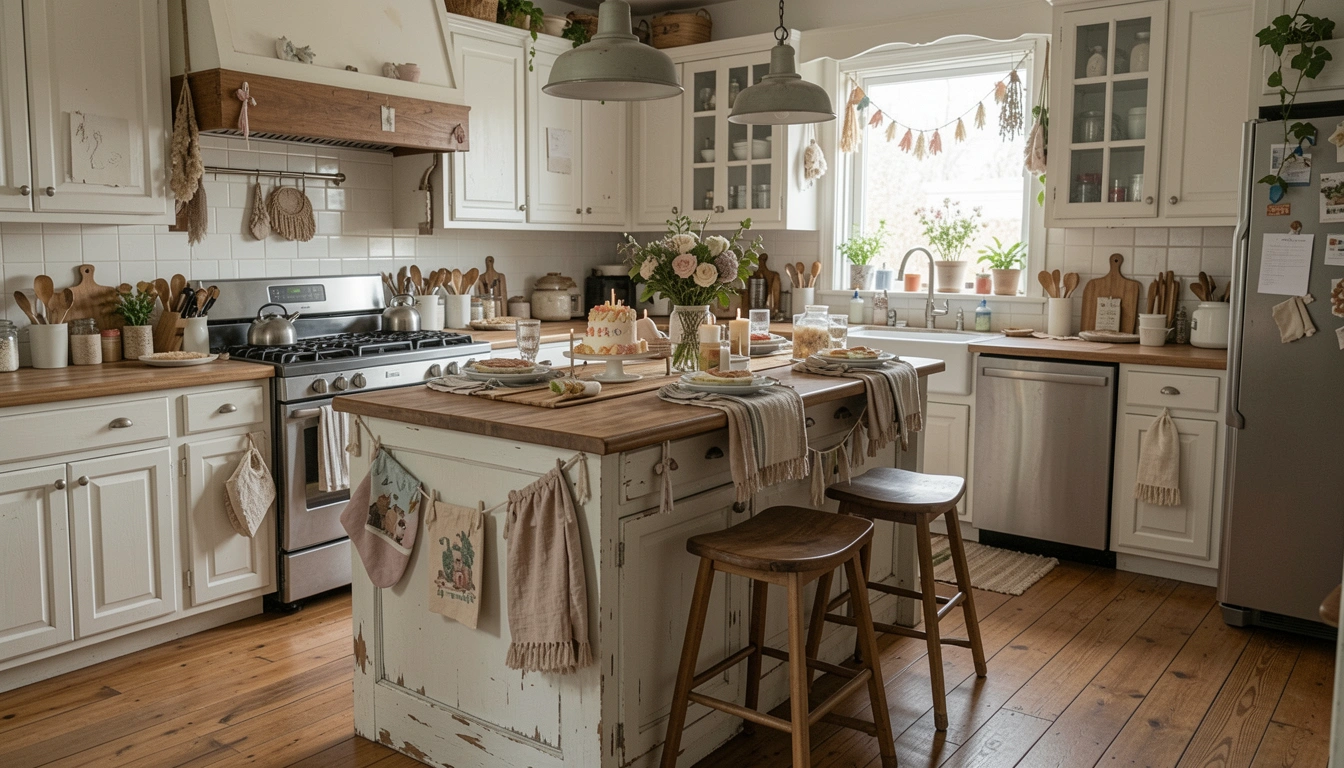
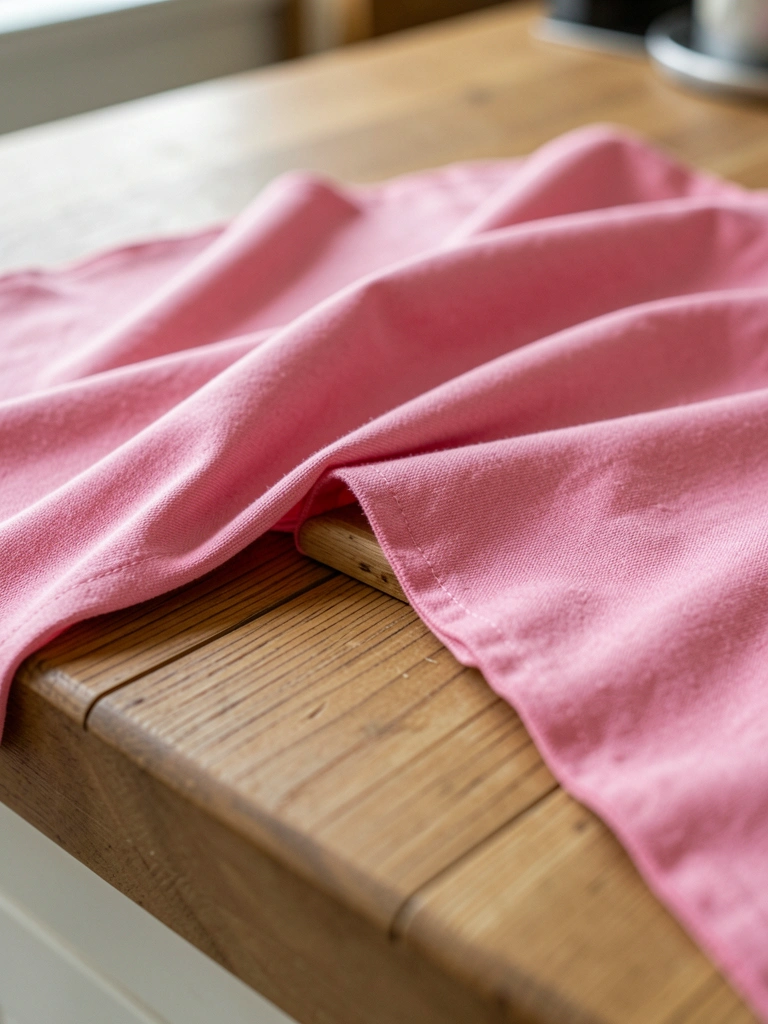
    I start by wiping the island clean. Then I drape the pink runner off-center. It grounds everything, adds softness against the hard counter.

    Visually, the island wakes up—color peeks without overwhelming. People miss how this layer sets the scale; too centered feels stiff.

    Skip stacking here. One runner lets breath in. I learned that after my first try looked top-heavy.

    The feel shifts to calm invitation. Guests linger now.

    Step 2: Build Gentle Height in the Center

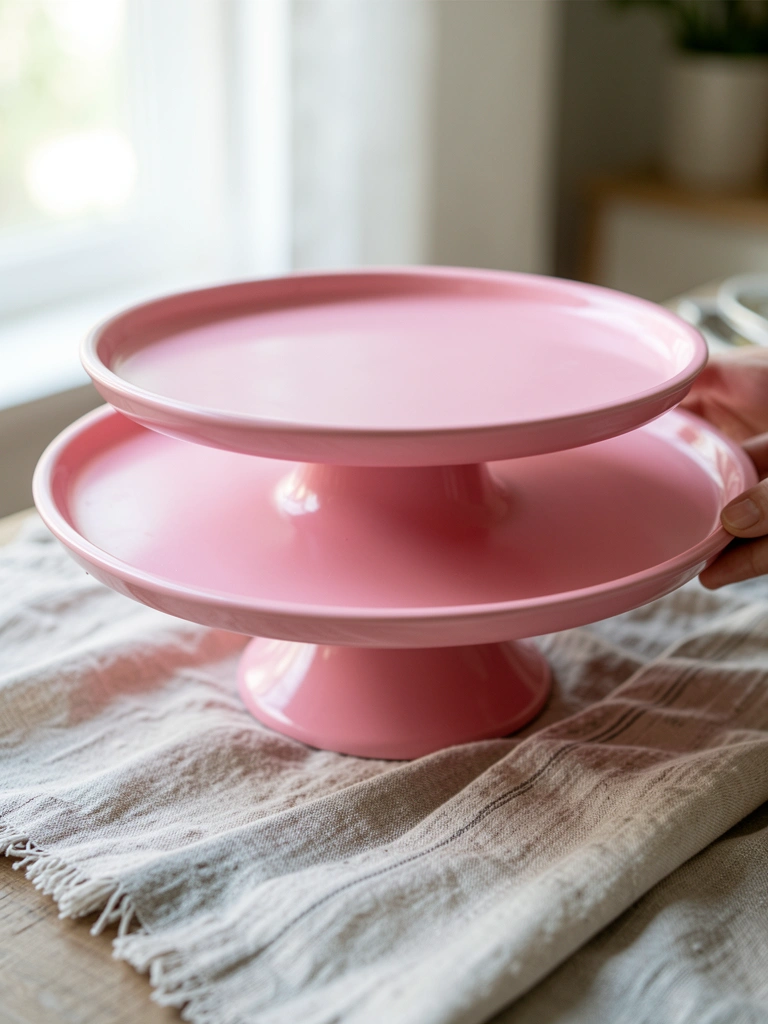
    Next, I set the gold cake stand in the runner's middle. It rises without crowding edges. This draws eyes up, creates flow.

    The island gains depth—height balances the flat top. Most overlook riser placement; too far forward blocks walk space.

    Don't overload tiers yet. Empty pulls focus to the cake later.

    It feels balanced, like the party heart settled in.

    Step 3: Tuck in Soft Blooms

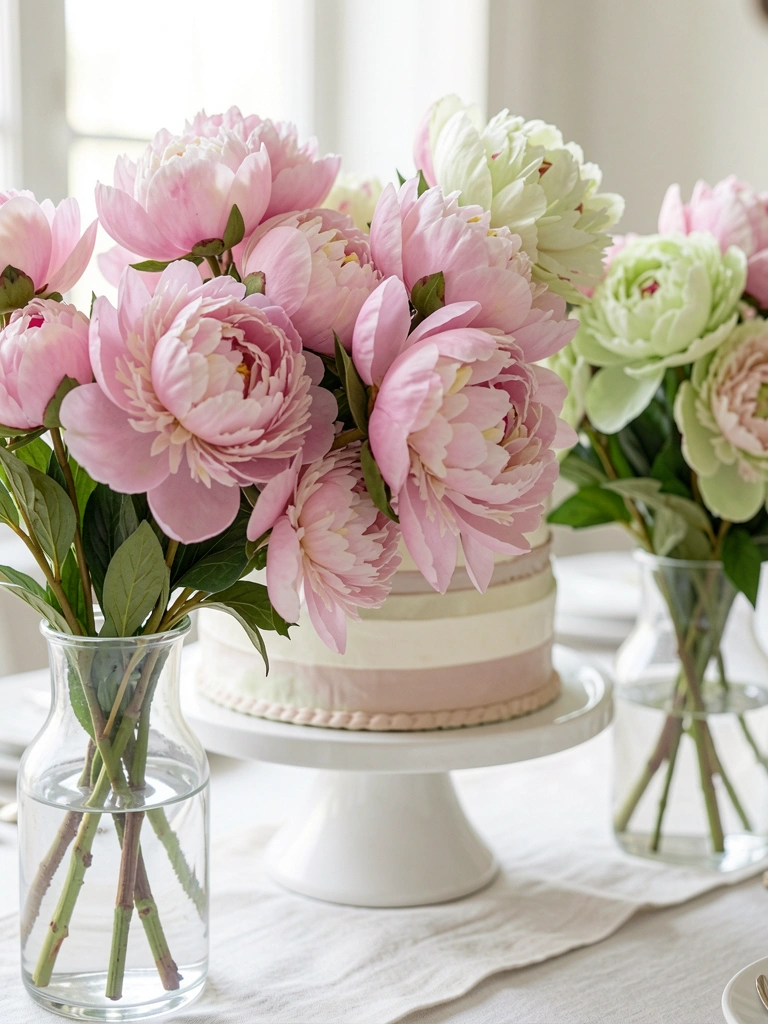
    I fill two glass vases with peonies, nestling them beside the stand. Stems lean out, not ramrod straight. Blush tones warm the pinks.

    Now layers emerge—flowers soften metal and fabric. Folks forget vases ground height; loose without them.

    Avoid matching heights exactly. Variety adds life.

    The spot breathes girly ease, comfortable for little hands.

    Step 4: Scatter Playful Accents

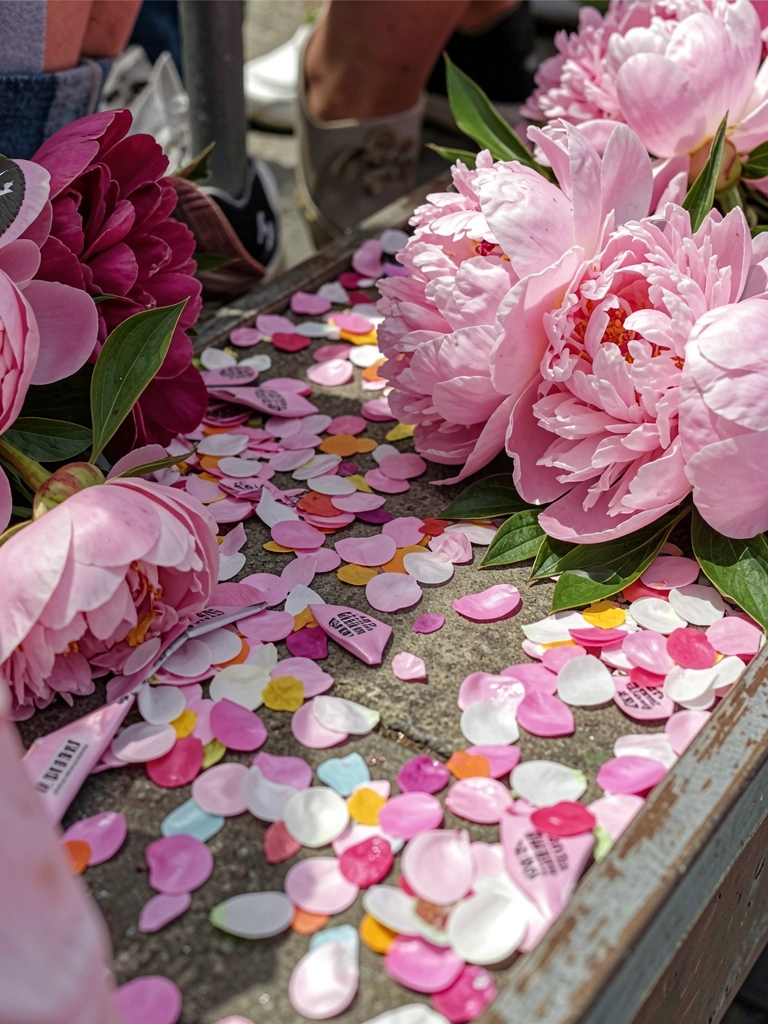
    I sprinkle confetti lightly around edges, fold fans half-open nearby. Balloons tie loosely to one side. Play keeps it light.

    Visual pop happens—accents echo without clutter. Insight: sparse scatter invites touch; piles repel.

    Don't center everything. Asymmetry feels lived-in.

    It pulls the kitchen into party mode gently.

    Step 5: Add Warm Glow

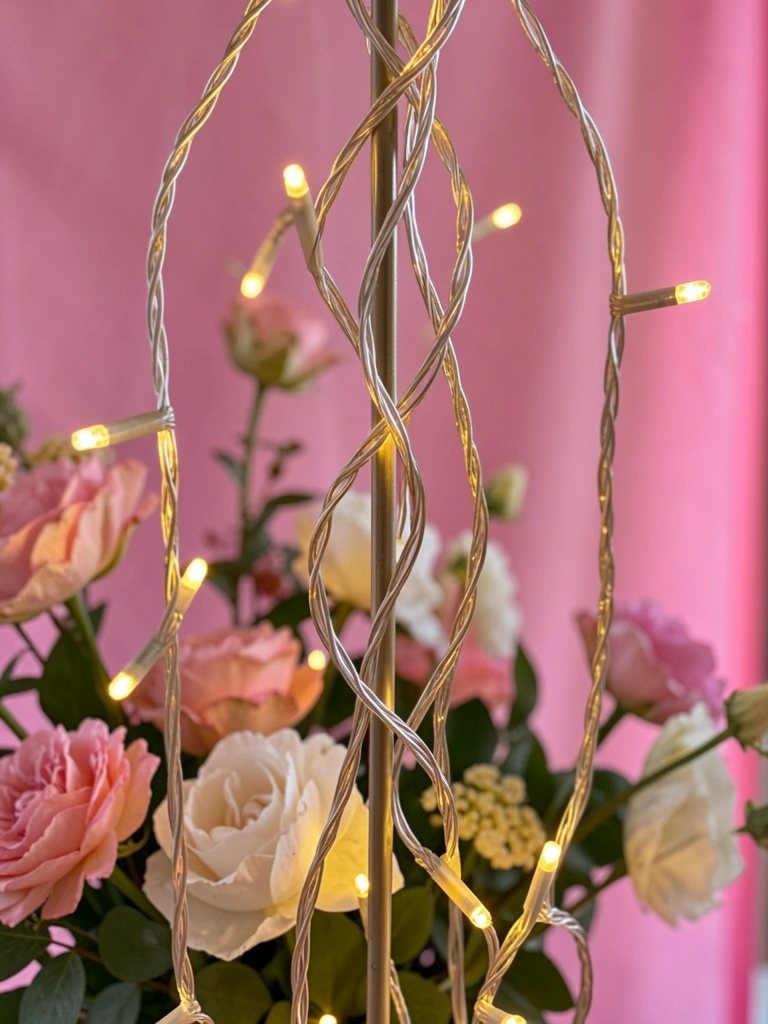
    Last, I weave fairy lights through stems and stand base. Battery pack hides under runner. Glow unites at dusk.

    The island feels complete—light balances bold pinks. People miss low placement; overhead harshens.

    Steer clear of plugs trailing. Wireless keeps clean.

    Now it's cozy, ready for cake and laughter.

    Step 6: Step Back and Nudge

    I walk back five steps, eye the whole island. Nudge a stem, fluff a balloon. Flow matters over perfection.

    Everything settles—balance shows in empty space. Overlooked: distance view catches edge overload.
    No adding more. Restraint makes it shine.

    The kitchen hums, party-ready without strain.

    Age-Appropriate Tweaks

    Younger girls love softer pinks. I swap bold confetti for glitter dots.

    For tweens, add metallic touches. Gold edges nod grown-up.

    • Under 5: More plush, fewer small bits.
    • 6-8: Unicorn nods via horn balloons.
    • 9+: Subtle patterns in runners.

    It fits her world, stays kitchen-friendly.

    Switching Back to Everyday

    Post-party, I roll the runner, store lights. Island clears in minutes.

    Wipe confetti into trash. Vases rinse easy.

    • Fold fans flat.
    • Deflate balloons slow.
    • Cake stand stacks away.

    Kitchen returns normal, no regret.

    Pairing with Your Kitchen Style

    In my white kitchen, pinks pop clean. Wood tones? Add greenery stems.

    Dark cabinets balance with lighter runner.

    • Farmhouse: Woven baskets under.
    • Modern: Slimmer stand.
    • Eclectic: Mix patterns sparingly.
    It blends, doesn't fight the space.

    Final Thoughts

    Start with just the runner and stand. Build from there—see how it feels.

    You'll notice the island anchors gatherings better. No more flat spots.

    It's your kitchen, made festive on your terms. Try it next time.