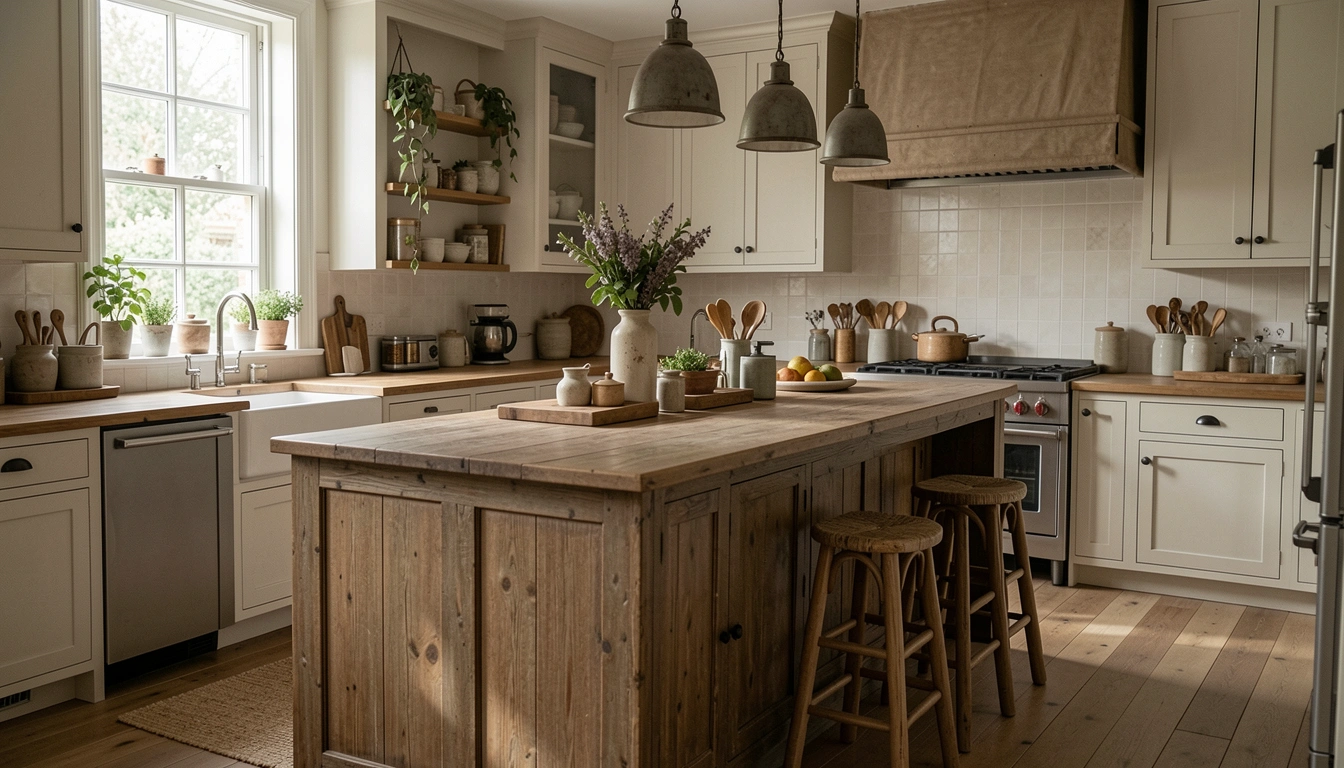
My kitchen island sat there like a blank countertop. Functional, sure. But it made the whole room feel flat. I'd wipe it down, stack a few things, and it still looked off—too empty in the middle, crowded at the edges.
I stared at it one afternoon, coffee in hand. Why did it pull the eye wrong? It wasn't about more stuff. It was about how things sat together.
Then I shifted a few pieces. The island settled into the room. Balanced. Comfortable.
How to Make Kitchen Island Beautiful
This shows you how I settle an island so it fits the kitchen's flow. No big changes. Just placement that quiets the awkward spots. You'll end up with a spot that draws you in, warm and lived-in.
What You’ll Need
- Large wooden tray (18×24 inches, natural finish)
- Faux fiddle leaf fig plant (4 feet tall)
- Woven seagrass basket (medium size)
- Matte black metal lantern (12 inches)
- Ceramic vase set (two, white, 8 and 10 inches)
- Linen runner (neutral beige, 12×72 inches)
- Wooden cutting board (large, olive wood)
- Small brass tray (10 inches)
Step 1: Clear and Center It
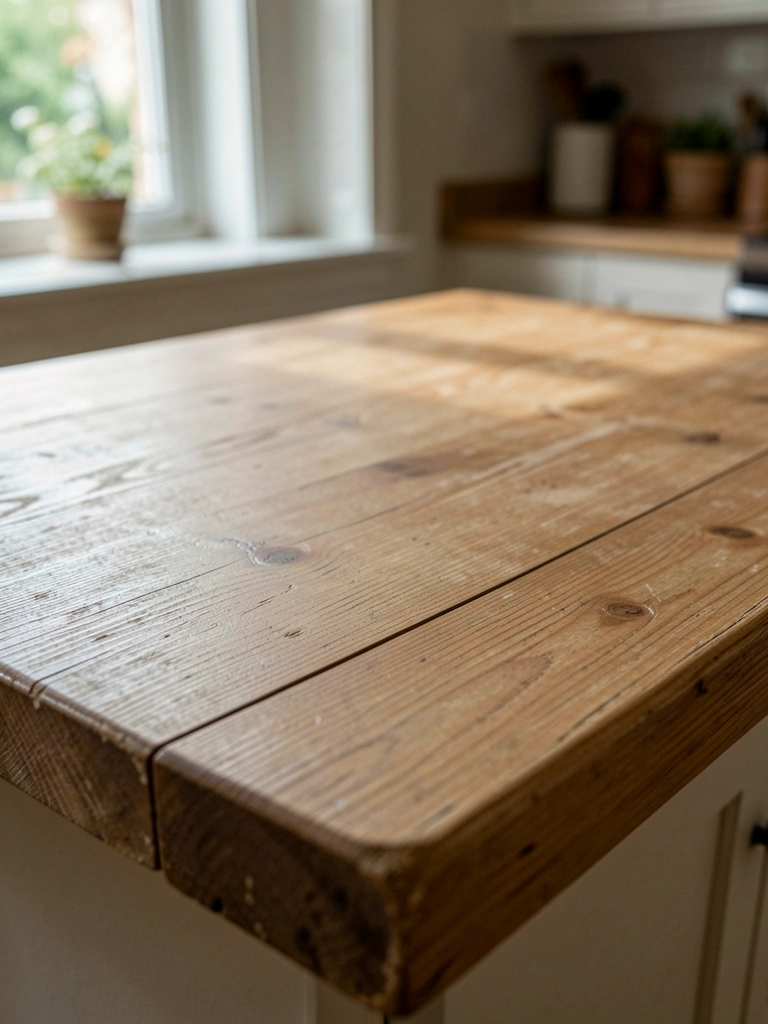
I start by wiping the island empty. Everything off—no rush, just clear space. Stand back. Notice how the bare surface sits in the room. Too stark? That's fine. It shows the shape.
Now place one large wooden tray dead center. Why? It anchors the eye. Pulls focus without crowding. Visually, the island shrinks to that tray first—less overwhelming.
People miss how emptiness breathes around it. Skip filling every inch. Mistake: shoving the tray off-center. It tilts the whole feel.
The change? Your island grounds itself. Steady.
Step 2: Build Height in Corners

Next, I add height. Tuck the faux fiddle leaf fig in one corner. Opposite, the metal lantern. Not touching the tray. Why? Height lifts the flatness, frames the center.
Watch the shift: light catches the leaves, shadows play soft. It draws your gaze up, makes the island feel taller, more present.
Insight folks overlook: odd numbers work best here—group if needed, but one strong piece per spot. Avoid matching pairs; they stiffen it.
Don't cram tight to edges. Leave air. Mistake fixed, balance holds.
Step 3: Layer Low in the Middle

On the tray, I layer low. Center the wooden cutting board. Flank with ceramic vases—one taller. Small brass tray nearby holds spices. Why? Low layers hug the base, fill without bulk.
Visually, it warms the core. Textures mix—wood, ceramic, brass—pulling the kitchen's light in.
Most miss varying heights within the tray. Flat feels dead. Avoid overstacking; pick three items max.
Now it invites touch. Comfortable pull.
Step 4: Soften with Textiles
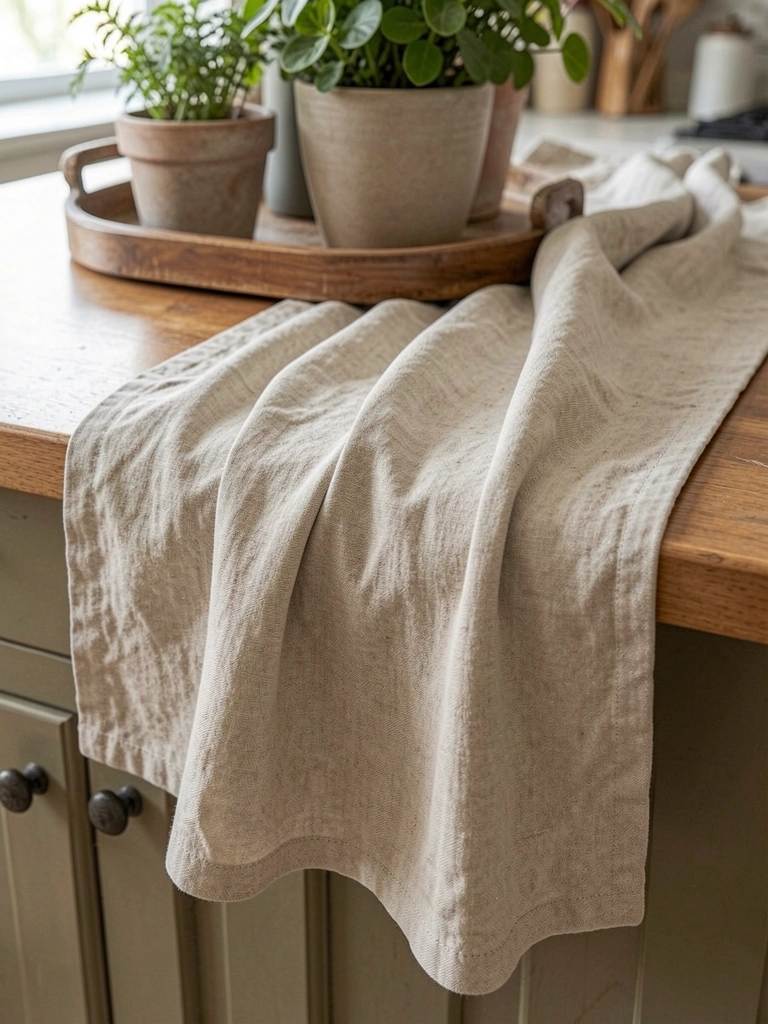
I drape the linen runner under the tray, ends hanging loose. Not straight—let it fold natural. Why? Fabric softens hard edges, ties to the room's warmth.
The change hits gentle: light diffuses through linen, shadows ease. Island blends, not fights the space.
Overlooked: texture breaks gleam. Glossy counters need this. Mistake: ironed flat. Wrinkles add life.
Feels settled now. Lived-in.
Step 5: Tuck Storage Baskets
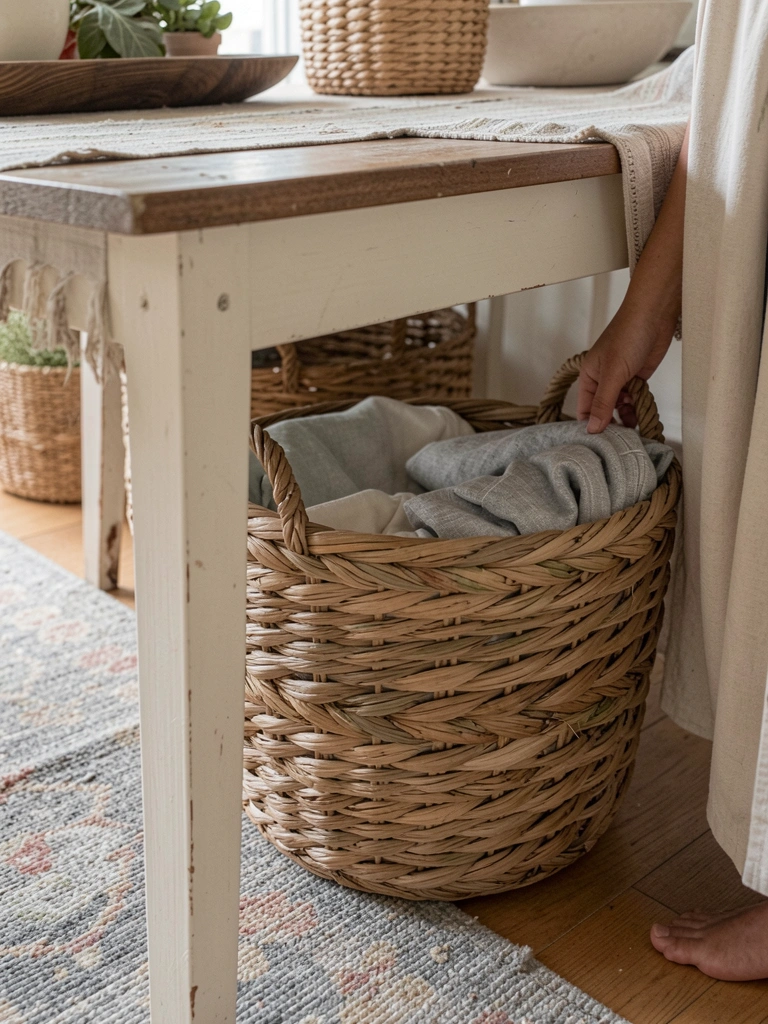
Last, slide the seagrass basket under an overhang. Stuff with towels or produce. Why? It grounds the base, hides utility, adds organic repeat.
Visual shift: basket echoes plant textures, balances height above. Room flows continuous.
People forget under-space. It's free real estate. Avoid visible clutter inside—peek only.
Step back. Island holds its own.
Balancing Proportions
I always check height first. Tall island? Lean low layers. Short one? Stack gently.
- Eye level matters: nothing blocks conversation.
- Width rule: one-third full max.
- Test by walking around.
It keeps the kitchen open. No fighting shapes.
Lighting That Works
Overhead's harsh alone. I add lantern glow.
Layers shift at night—warm pockets form. Day holds clean lines.
Skip bright spots. Soft diffusion wins.
Refreshing for Seasons
Twice a year, I swap.
- Summer: lighter greens.
- Fall: wood tones.
Same spots. Just rotate. Keeps it fresh, not bored.
Final Thoughts
Start with one tray. See how it sits. Build from there.
You've fixed worse spots. This one's simple.
Your kitchen island will feel right. Part of the room, not apart. Just live with it.
Leave a Reply