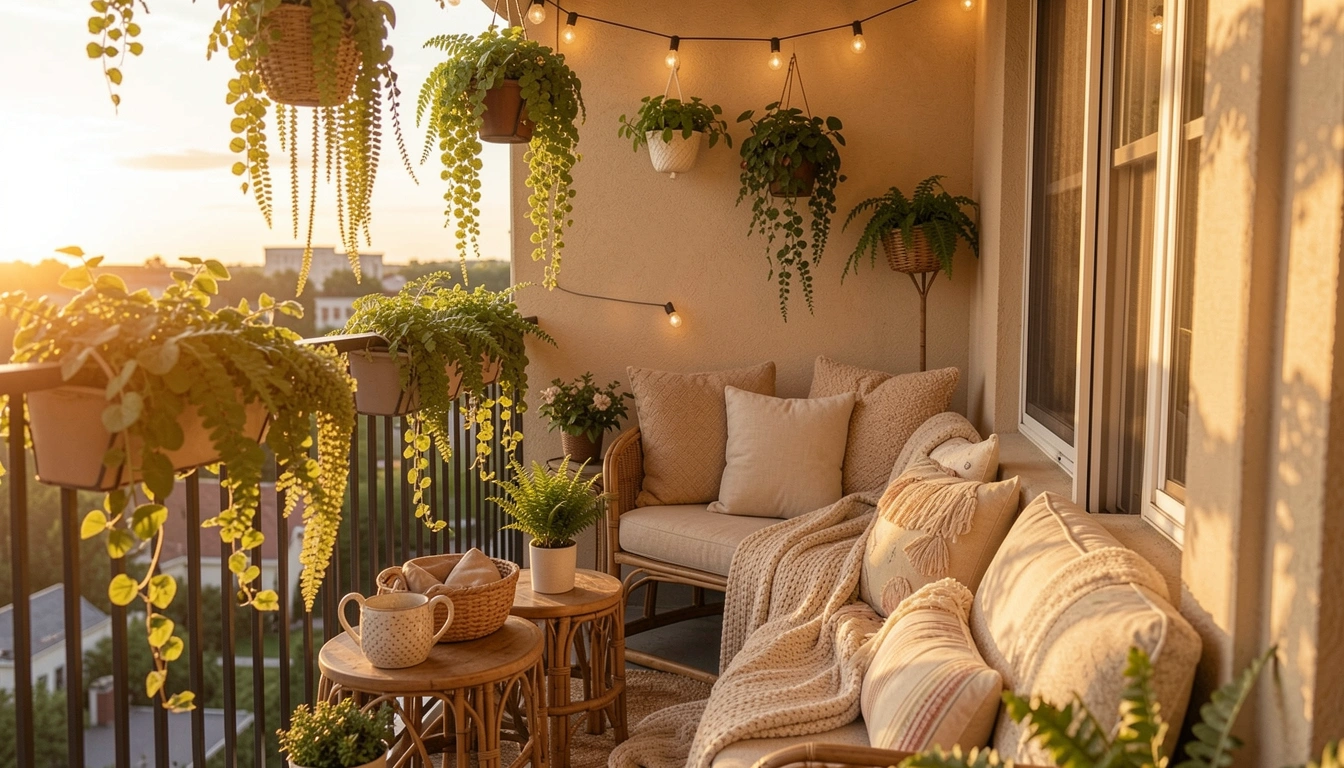
Your balcony doesn’t need to be huge to feel like your favorite escape. Whether you’re working with a tiny fire escape or a modest 4×6 space, these 27 ideas prove that cozy always beats spacious. You’ll discover budget-friendly hacks that cost under $50, smart layouts that maximize every inch, and styling tricks that turn cramped corners into relaxation zones. Some ideas take 15 minutes; others are weekend projects. All of them are renter-approved and beginner-friendly. By the end, you’ll have a personal outdoor retreat that actually gets used—the kind of space where you want to spend your mornings with coffee and your evenings with friends.
1. Hang a Vertical Garden on Your Railing
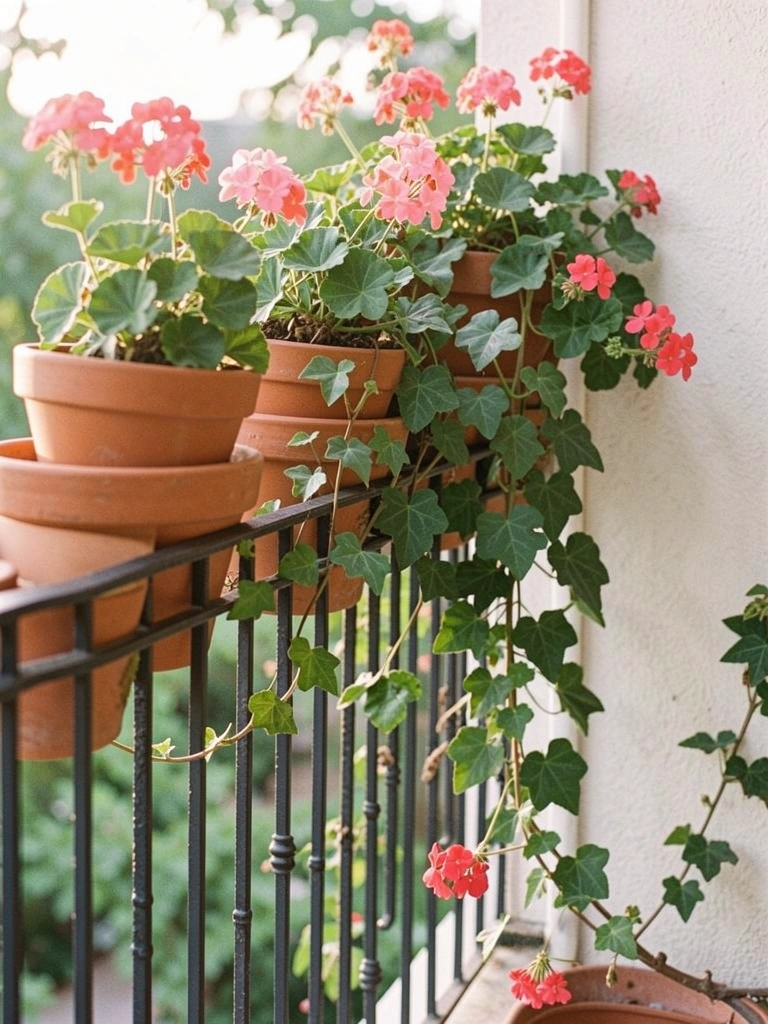
Vertical gardening solves the “I want plants but have no floor space” problem instantly. Instead of taking up precious square footage, your garden climbs up the railing or a wall-mounted frame, giving you triple the greenery in half the space.
Pick a foldable metal plant stand ($25–$45 on Amazon) or a railing planter system ($30–$60 on Wayfair). Fill with low-maintenance plants like trailing petunias, ivy, or creeping jenny. Water twice weekly in summer, and you’re done. Renters: use tension rods between railings to hang small baskets instead of drilling.
Your balcony becomes an actual garden without eating into your seating area. The trailing plants create a green wall that’s Instagram-worthy and genuinely relaxing to sit beside.
2. Layer Your Lighting for Evening Magic
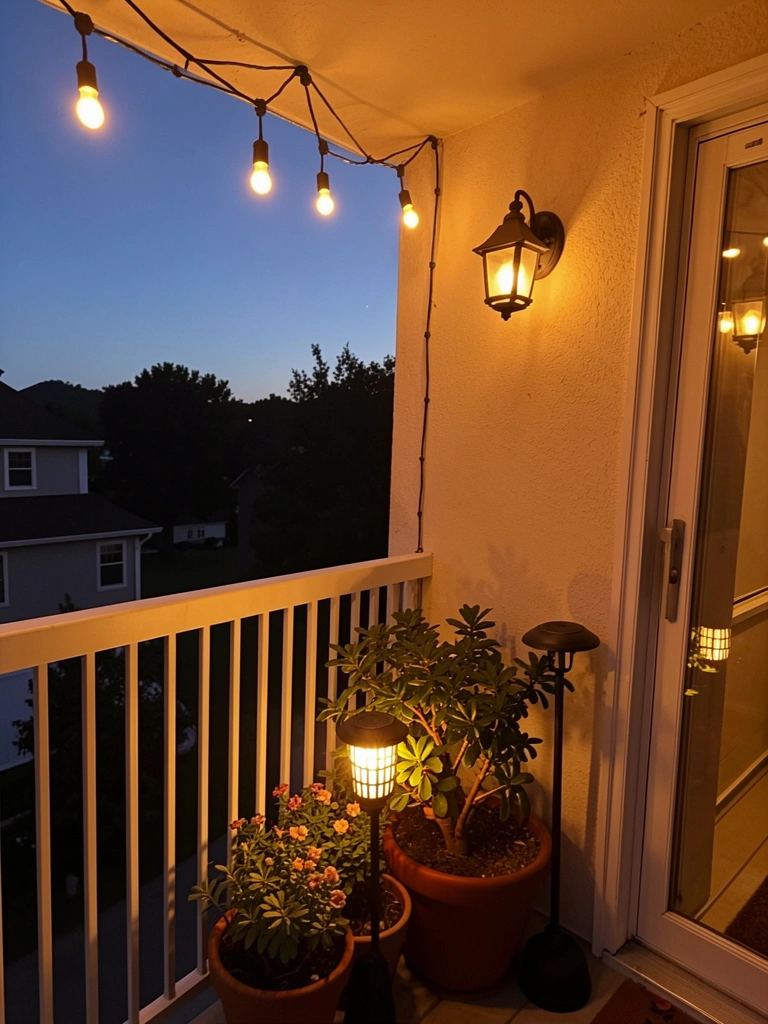
Single overhead light? Boring. Layered lighting transforms your balcony from daytime-only to a place you’ll actually use at sunset. Multiple light sources at different heights create ambiance and make the space feel intentional.
Install warm-white string lights ($15–$40, Amazon) in a zigzag overhead. Add a solar stake light ($10–$25 per piece, Target) near plants for accent lighting. Finish with a clip-on wall sconce ($20–$35, IKEA) for task lighting. All solar options are renter-friendly—no wiring required. Avoid cool-white LEDs; warm tones feel more inviting.
Evening entertaining becomes effortless. People naturally linger longer in well-lit, cozy spaces. You’ll find yourself out here after dark instead of retreating inside.
3. Swap Heavy Furniture for Foldable Pieces
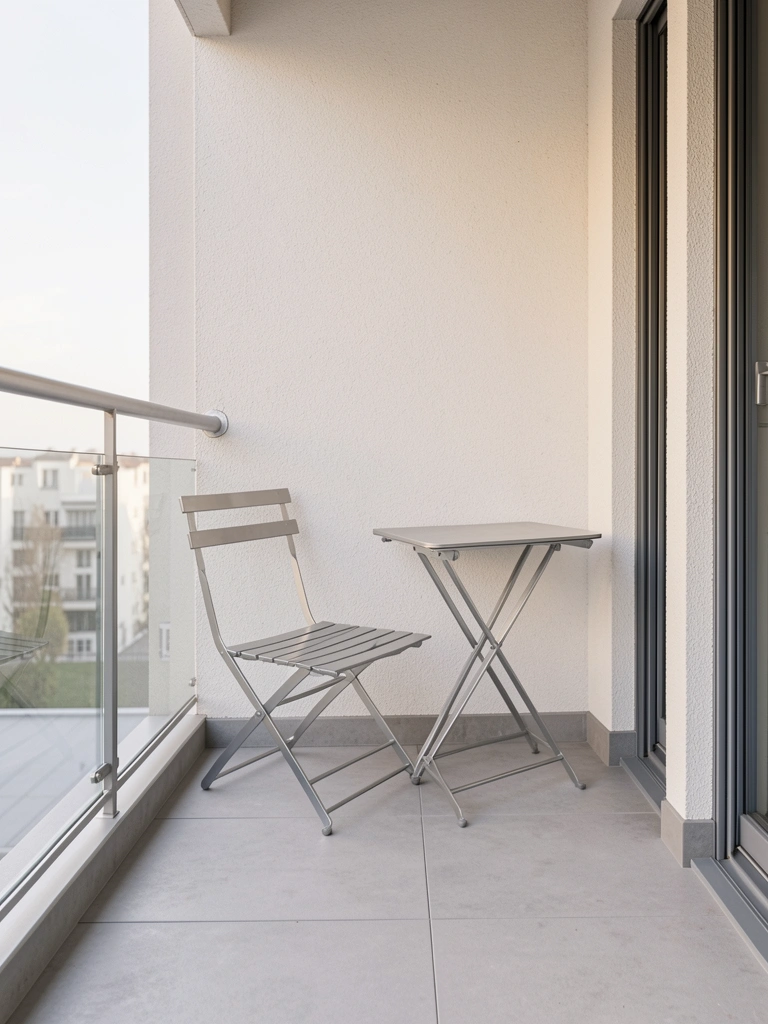
Small spaces demand furniture that adapts to your needs—not the other way around. Foldable furniture shrinks your footprint when you need to move around, then unfolds when you want to sit.
Choose a metal folding chair ($25–$50, IKEA or Home Depot) and a narrow folding table ($30–$70, Target or Amazon). Store behind the door or flat against the wall when not in use. Pair with cushions for comfort without bulk. If you’re renting, these are perfect—no permanent fixtures required.
You get a functional seating area without constantly tripping over furniture. The flexibility means you can host two friends or practice yoga alone—same space, different purpose.
4. Create a Railing Bar for Entertaining
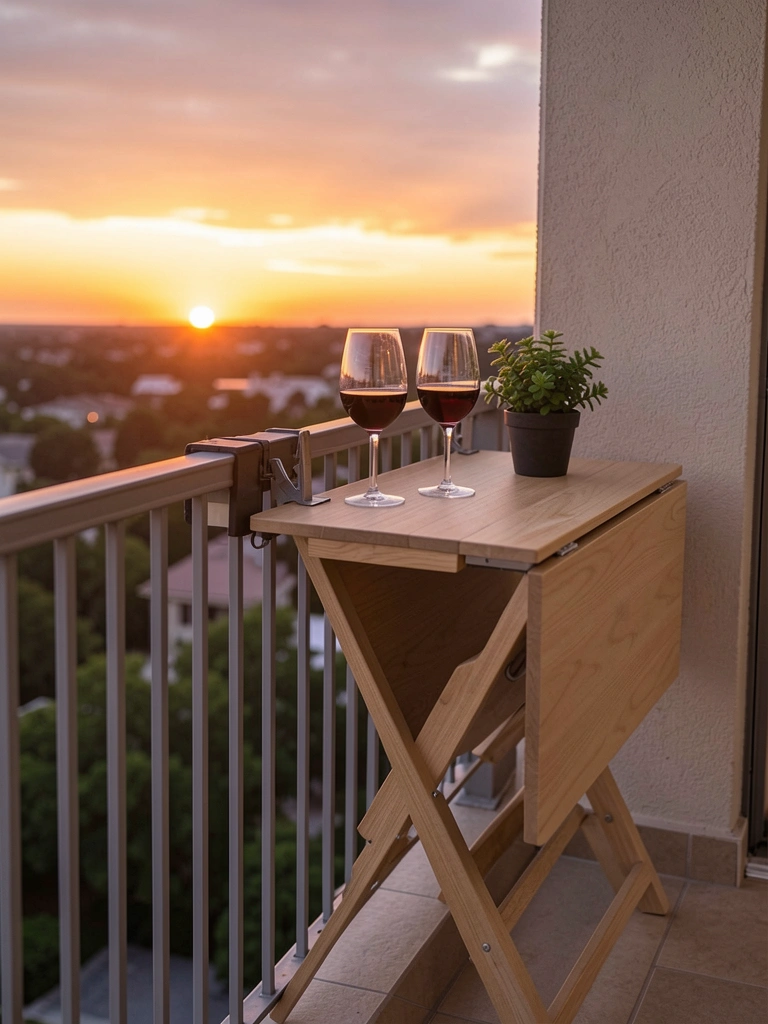
A railing bar table sounds fancy but it’s just a small folding surface that clips to your railing—perfect for drinks, snacks, or morning coffee without stealing floor space.
Buy a railing-mounted drop-leaf table ($40–$80, Wayfair or Amazon) or a clamp-on bistro-style shelf ($35–$60, Home Depot). Installation takes 10 minutes with basic tools. It works on wooden or metal railings. Even renters can use ones with suction cups instead of bolts.
Entertaining becomes possible on a 3×4 balcony. Guests have a surface for drinks while standing, and you maintain walking room. It’s the difference between “come see my place” and “let’s actually hang out.”
5. Add a Hanging Chair for One-Person Bliss
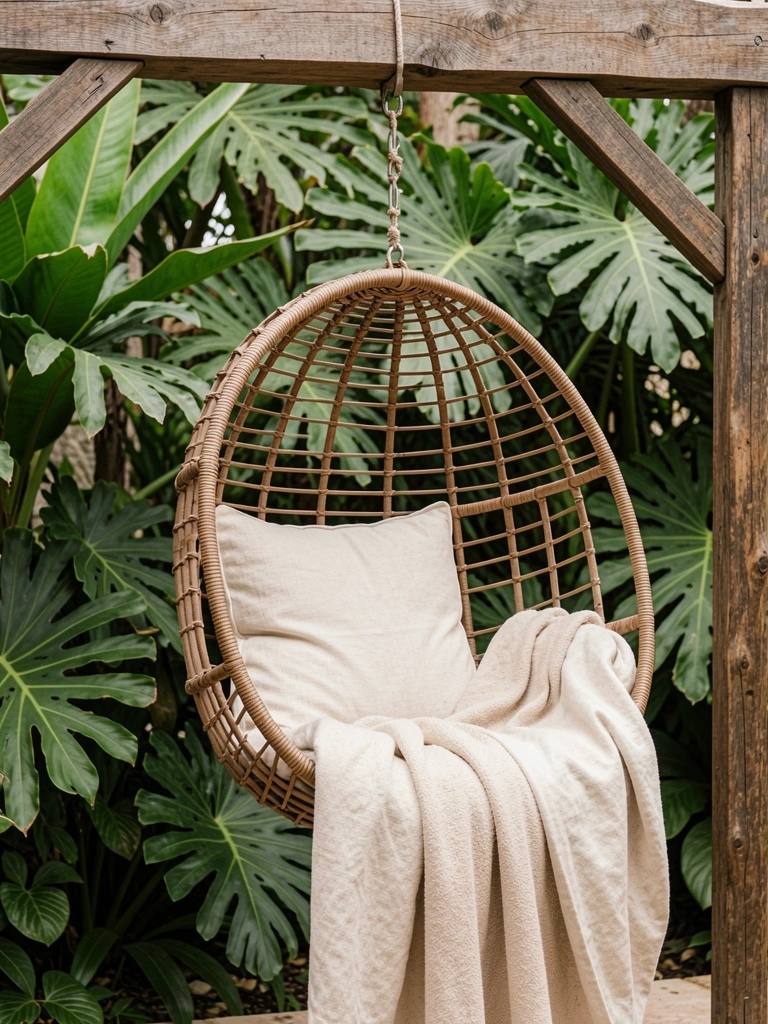
If you want to actually use your balcony, a hanging chair transforms it from decoration to your favorite sitting spot. It’s cozy, space-efficient, and surprisingly affordable.
Install a hanging wicker chair ($80–$180, Wayfair) or a rope swing chair ($50–$120, Amazon) using a wall-mounted bracket and carabiners. You’ll need a stud finder and 20 minutes to install. Weight limit is usually 250+ pounds—check specs. Not renting permanently? Many models can be stored flat.
You now have a dedicated reading nook or meditation spot. It’s the kind of detail that makes people jealous of your balcony. Your mornings (or evenings) become noticeably calmer.
6. Use Terracotta Pots as Your Design Anchor

Terracotta isn’t just practical—it’s a design statement. These classic pots tie your space together while actually working hard for plant growth and drainage.
Grab assorted terracotta pots ($5–$20 each, Home Depot or local garden centers) in three to five sizes. Arrange by height in a corner or along the railing edge. Fill with geraniums ($3–$8 each, local nursery), which tolerate sun and neglect beautifully. Water when soil is dry to the touch.
Your balcony immediately looks curated, not random. Visitors notice the intentional grouping. Terracotta also photographs exceptionally well—perfect if you want Instagram-worthy spaces without trying too hard.
7. Paint the Wall Behind Your Balcony Light
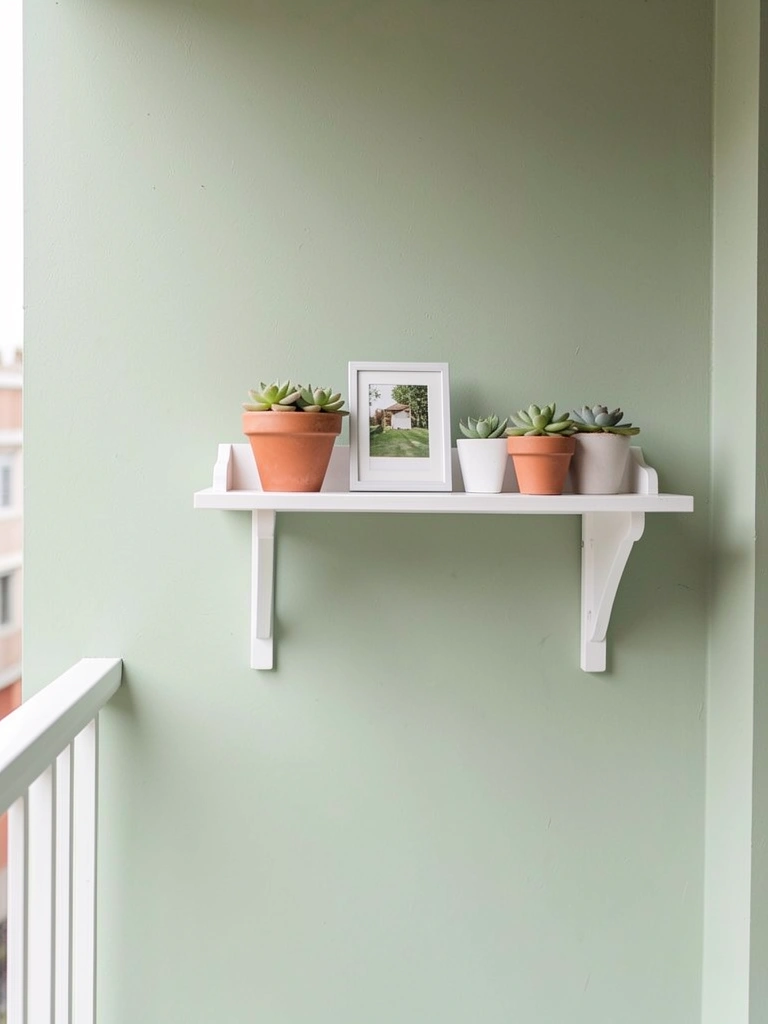
A boring concrete or dingy wall shrinks your perception of the whole space. Paint changes everything—and on a rental, removable wallpaper works too.
If you own, paint the back wall with exterior-grade paint in a light color: soft sage, pale blue, or warm white ($20–$35 per gallon, Home Depot). Two coats take a weekend. Renters: try peel-and-stick wallpaper ($15–$30, Amazon) or fabric wall hangings ($20–$50, Etsy) to add color without commitment. Light colors make spaces feel bigger; dark colors make them cozy.
The entire balcony suddenly feels more polished. You’ve essentially added a backdrop that makes every photo better and makes the space feel intentional instead of neglected.
8. Bring in Textured Outdoor Rugs
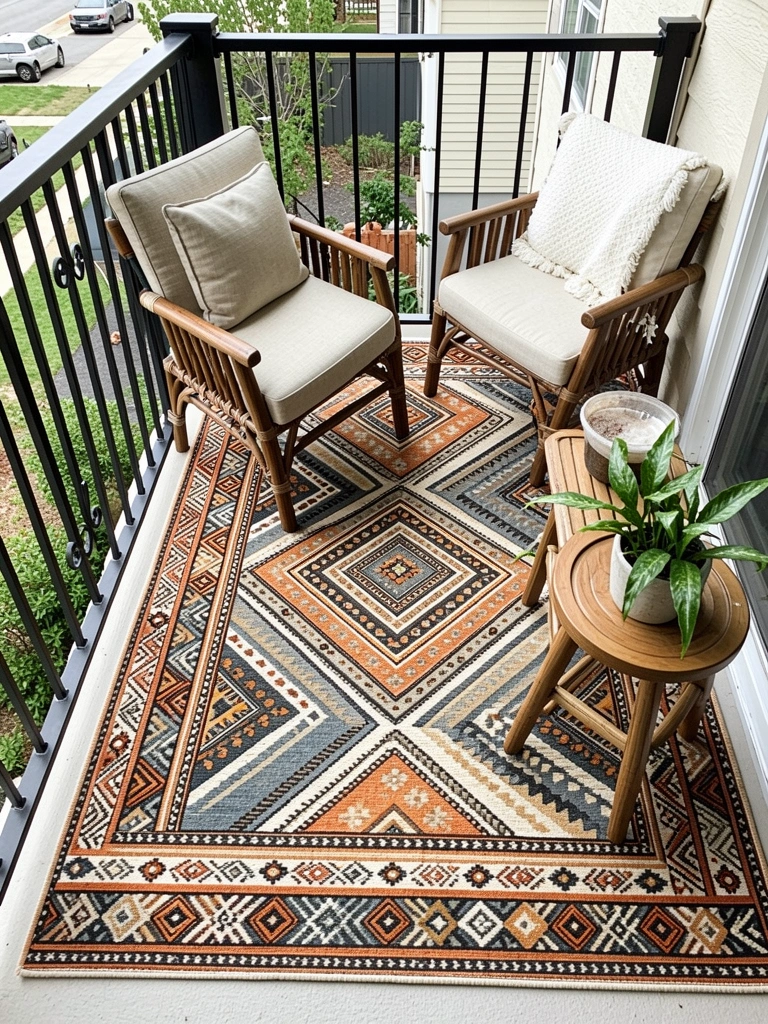
An outdoor rug defines your space, adds warmth underfoot, and pulls your whole design together—even if you’re renting.
Choose a weather-resistant outdoor rug in a pattern you love ($30–$80, Target, Wayfair, or Amazon). Size it so the front legs of your seating sit on it—this anchors the space visually. Polypropylene rugs are durable, affordable, and machine-washable. Avoid rugs that feel plasticky; go for ones with texture instead.
The seating area suddenly feels like an actual room instead of random furniture on a balcony. Comfort underfoot matters more than you’d expect. Plus, the right pattern adds personality without taking up any space.
9. Install Railing Planters for Instant Green
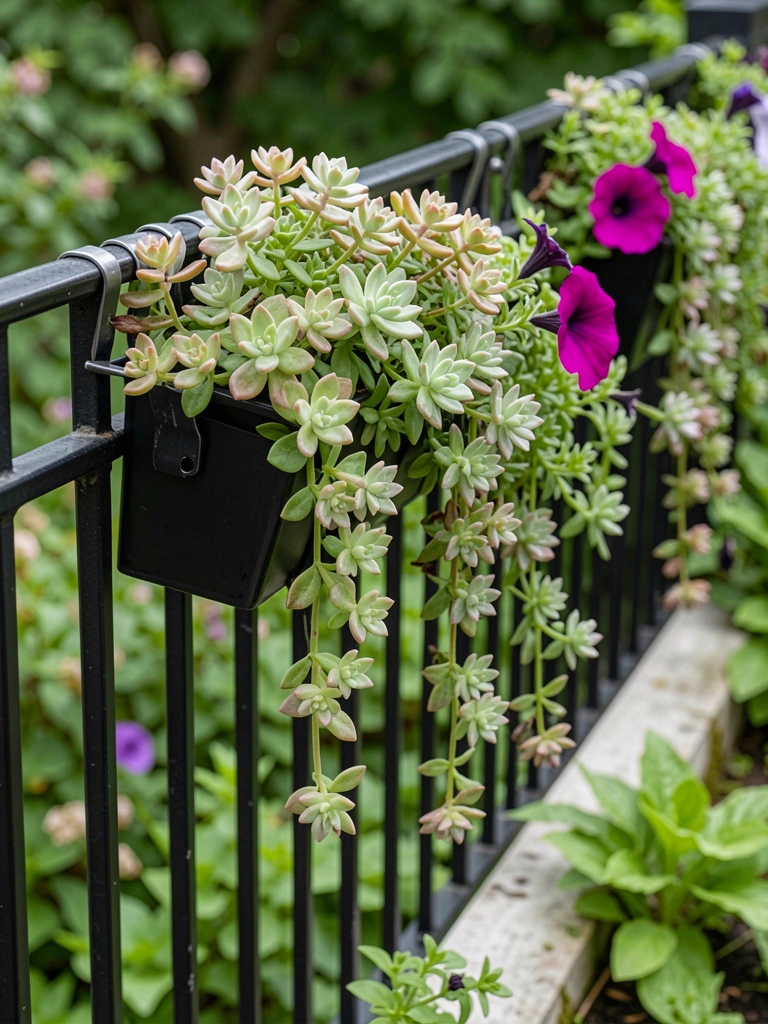
Railing planters are the secret weapon for small balconies—they add greenery without using a single floor square inch.
Buy railing planter boxes ($12–$30 each, Amazon or Home Depot) designed to clamp or hook over your specific railing type. Install them in a staggered pattern for visual interest. Fill with succulents ($2–$5 each), trailing ivy, or low-maintenance petunias. Water weekly in summer.
Your balcony edge becomes a living wall of color and texture. Guests immediately notice the vertical gardening. It’s also the easiest way to make a tiny space feel lush without crowding the floor.
10. Create Zones with Lightweight Furniture Groupings
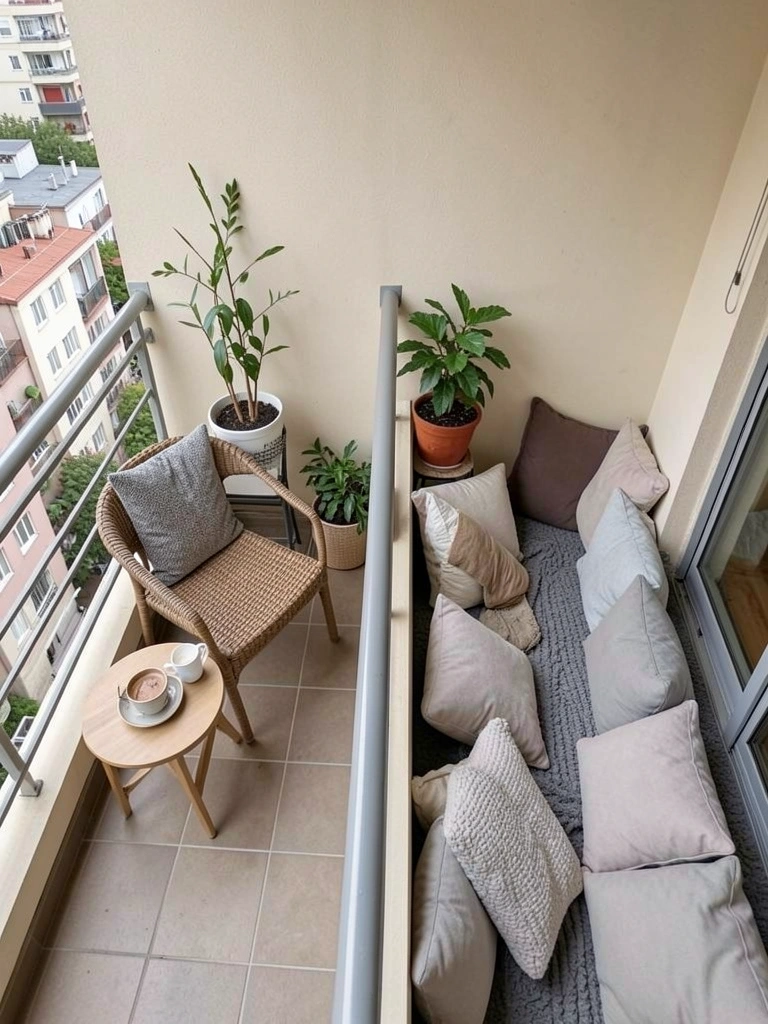
Cramped spaces actually feel bigger when you define zones—a corner for reading, a spot for plants, an area for entertaining. It’s all psychology, but it works.
Arrange your furniture in intentional clusters rather than spreading it out. Use a small side table ($25–$50, IKEA) to mark one zone and a low floor cushion ($15–$35, Target) for another. Keep walkways open. Even a 4×6 space can feel like two distinct mini-rooms.
Your balcony transforms from “cluttered corner” to “thoughtfully arranged retreat.” Visitors notice the intentional layout. You also actually use different spots instead of everything feeling cramped into one area.
11. Add Privacy with a Budget Bamboo Screen
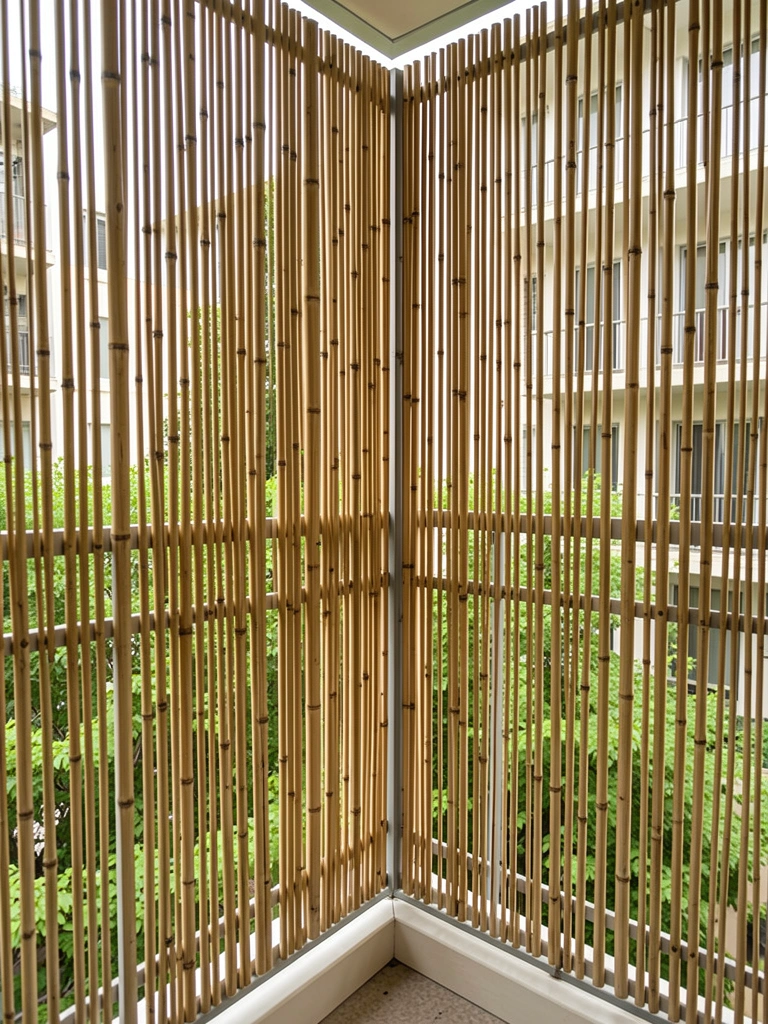
Nosy neighbors or a street view? A privacy screen blocks the eyesores while adding visual interest to your space.
Get a bamboo privacy screen ($40–$80, Amazon or Home Depot) or a foldable outdoor screen ($30–$70, Wayfair). Lean it against a corner or secure it with basic L-brackets. Renters can use free-standing screens that need no drilling. Bonus: drape climbing ivy or clematis vines alongside it for natural greenery.
You instantly feel more secluded without soundproofing equipment. The screen also becomes a design feature—it’s not just functional, it looks intentional. Your balcony finally feels like a private retreat instead of a shared alley.
12. Choose Low-Maintenance Plants by Light Exposure

Dead plants feel like failure. The secret? Match plants to your actual light conditions instead of guessing.
Full sun (6+ hours): geraniums, petunias, lavender, sedums ($3–$8 each). Partial sun (3–5 hours): impatiens, begonias, ivy ($3–$8 each). Shade (less than 3 hours): hostas, ferns, creeping jenny ($3–$8 each). Check your balcony’s light patterns for a full day before buying. Most garden centers have staff who can advise based on photos.
You finally have plants that actually thrive instead of slowly withering. Your balcony looks cared-for and intentional. Watering becomes a pleasant routine instead of a guilt trigger.
13. Repurpose Old Wooden Pallets as Seating
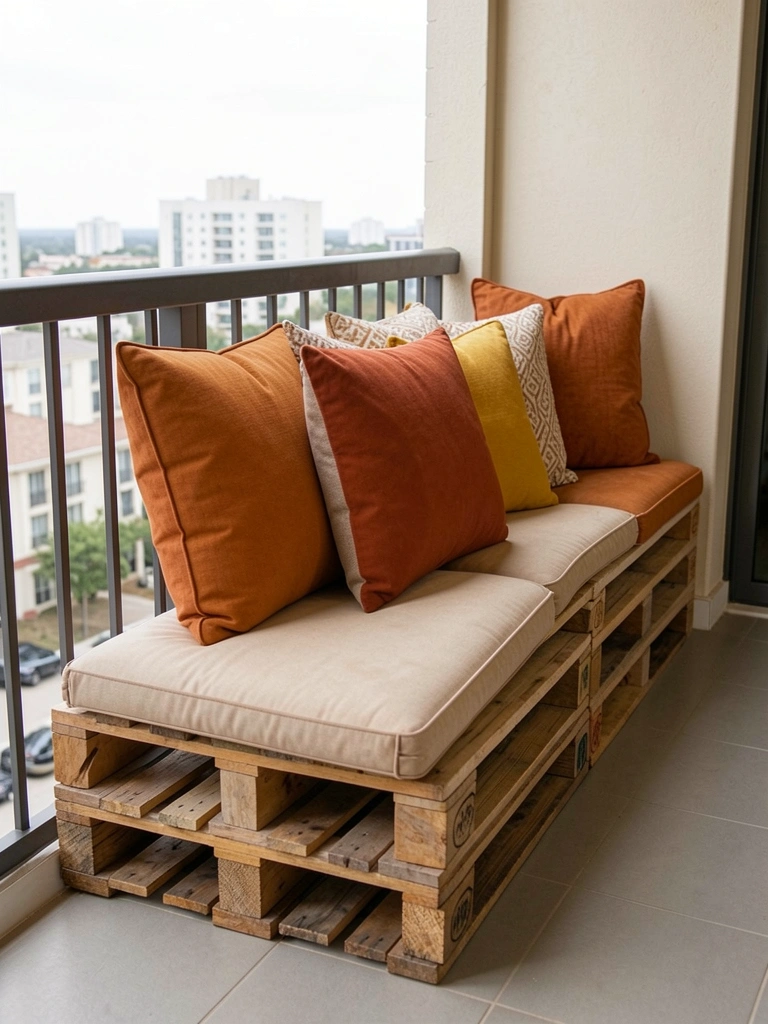
Wooden pallets are free or $5–$15 at garden centers, and they’re incredibly versatile for small-space seating.
Grab 2–3 clean pallets and stack them with wooden pallets perpendicular as a base. Top with outdoor cushions ($20–$50 total). Sand and seal the wood for longevity. Takes about 2–3 hours. Check Craigslist or Facebook Marketplace for free pallets. Make sure they’re marked “HT” (heat-treated), not “MB” (methyl bromide).
You have low seating that costs under $50 total. It’s more conversation-starting than store-bought furniture. Renters: just stack the pallets without sealing, then unstake when you move.
14. Use String Lights in a Geometric Pattern
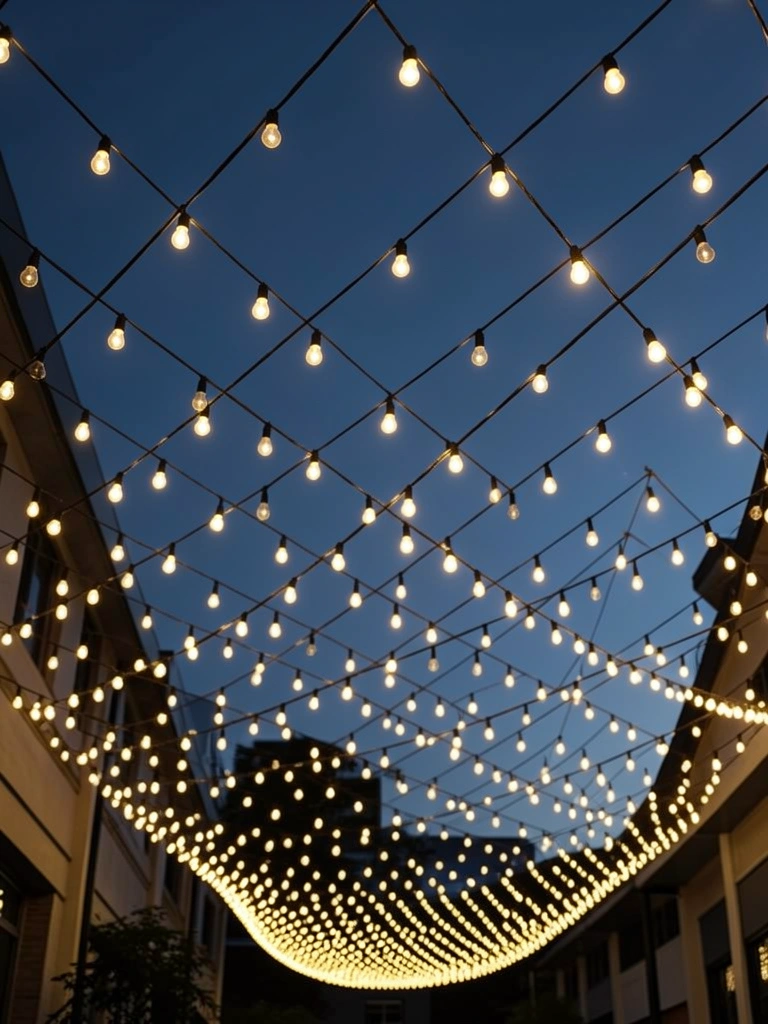
Random string lights are cute, but a deliberate pattern elevates your whole setup and creates visual interest overhead.
Buy 20–30 feet of warm-white string lights ($20–$40, Amazon). Plan a geometric pattern—diamonds, a grid, or triangles—before installing. Use adhesive hooks (renters rejoice!) or sturdy nails. Step back and adjust before powering on. Battery-operated versions are simpler than wiring ($25–$45).
Your ceiling becomes a design feature instead of blank space. The pattern creates rhythm and makes the space feel curated. Overhead lighting also makes evening use feel like an occasion instead of “just hanging outside.”
15. Mix Budget and Investment Pieces for Balance
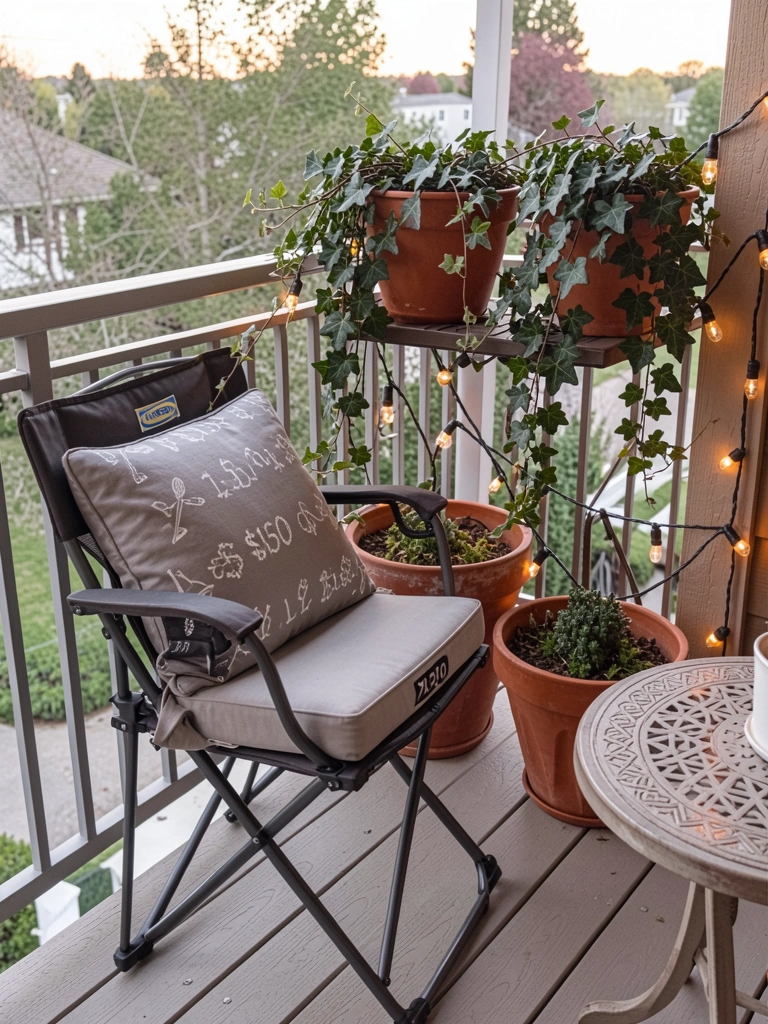
You don’t need to spend big money everywhere. Smart mixing means you can afford the pieces that matter while staying budget-conscious overall.
Invest in durable items you’ll use daily: a good cushion ($50–$100), quality outdoor furniture ($100–$300), or a solid planter set ($60–$120). Go cheap on accessories: throw pillows ($10–$25), string lights ($15–$30), decor items ($5–$20). The ratio should be roughly 60% budget items, 40% quality pieces.
Your space looks intentional and well-designed, not like you overspent or undershopped. The mix actually feels more sophisticated than all-cheap or all-expensive. You’re strategic, not wasteful.
16. Paint Pots in Summer Colors for Visual Pop
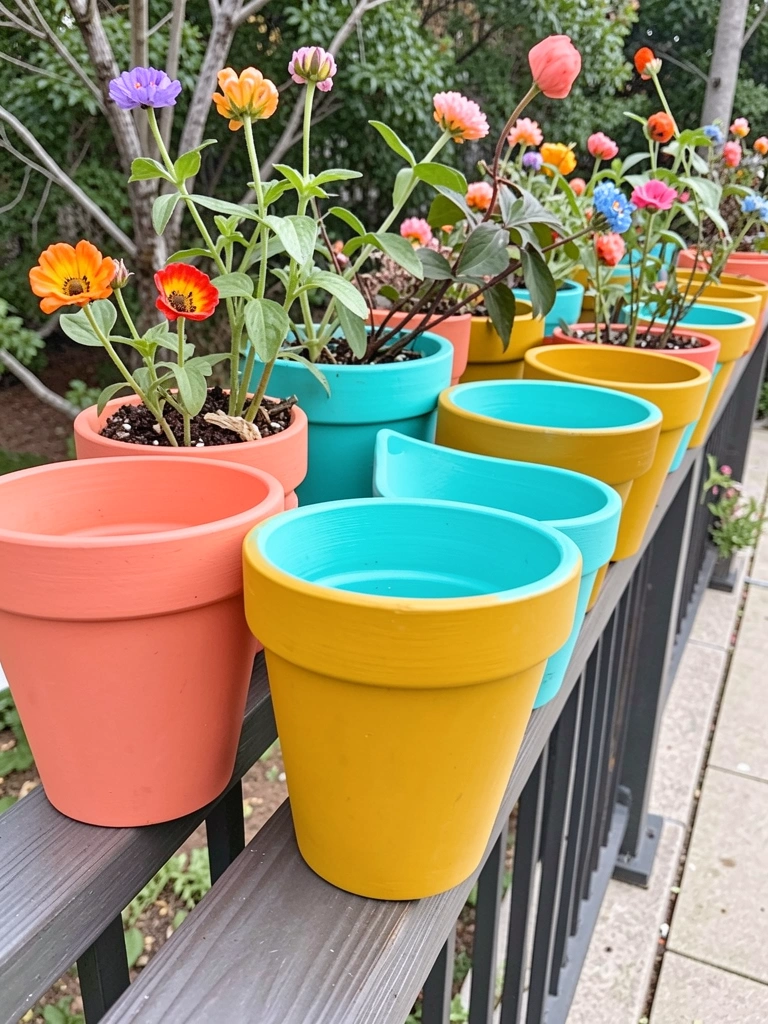
Plain terracotta is beautiful, but painted pots in vibrant colors instantly energize your space and cost almost nothing.
Grab terra cotta pots ($5–$15 per pot) and exterior acrylic paint ($3–$8 per color, Home Depot). Paint in solid colors or simple patterns—stripes, polka dots, geometric shapes. Two coats, dried between. Seal with exterior clear coat ($8–$12) for longevity. Takes 1–2 hours active work plus drying time.
Your balcony becomes noticeably more vibrant and personal. Painted pots photograph beautifully. It’s a craft project that serves a purpose, not just decoration. Visitors remember your space specifically because of the colorful pots.
17. Create a Coffee Corner with a Small Table
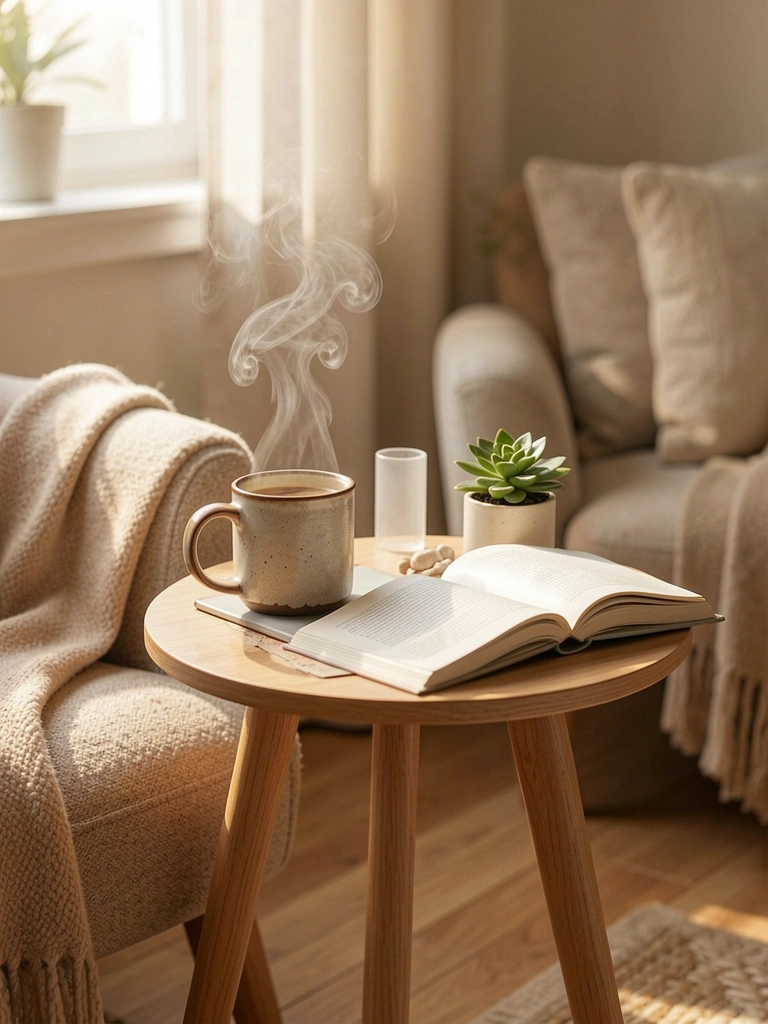
A dedicated coffee spot makes your morning routine feel like a mini retreat instead of something you rush through.
Grab a narrow side table ($25–$50, IKEA or Target) just large enough for a mug and a book. Position it next to your seating with a comfortable chair or cushion. Add a small plant ($5–$15) to one corner. Keep it minimal—this space is for sitting quietly, not storage.
Your mornings change. You actually use your balcony instead of just looking at it. There’s something powerful about claiming a specific corner as your morning ritual spot. Visitors see that you’ve thoughtfully designed your space.
18. Use Weatherproof Fabrics That Actually Last
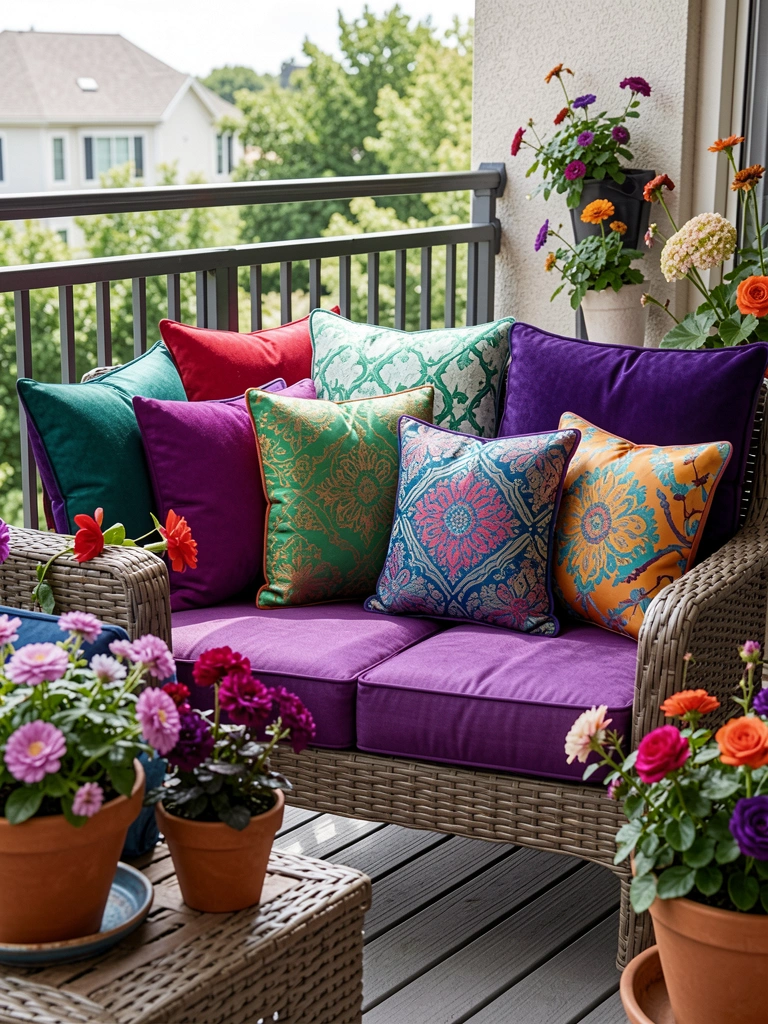
Cheap outdoor fabric fades, cracks, and mildews within one season. Investing in true outdoor-grade textiles means your cushions survive multiple years.
Choose solution-dyed polypropylene fabrics or Sunbrella-brand textiles ($40–$80 for cushions, $15–$30 for pillows, Wayfair or Amazon). These resist fading, mold, and moisture. Machine wash when needed. Avoid “indoor fabric rated for outdoor use”—it won’t survive. Check product reviews for mildew resistance if you’re in a humid climate.
Your cushions look fresh year after year. The cost per use becomes reasonable when fabrics last 3–5 years instead of one season. Your balcony maintains its appeal instead of looking worn and sad by August.
19. Hang a Trellis for Climbing Vines
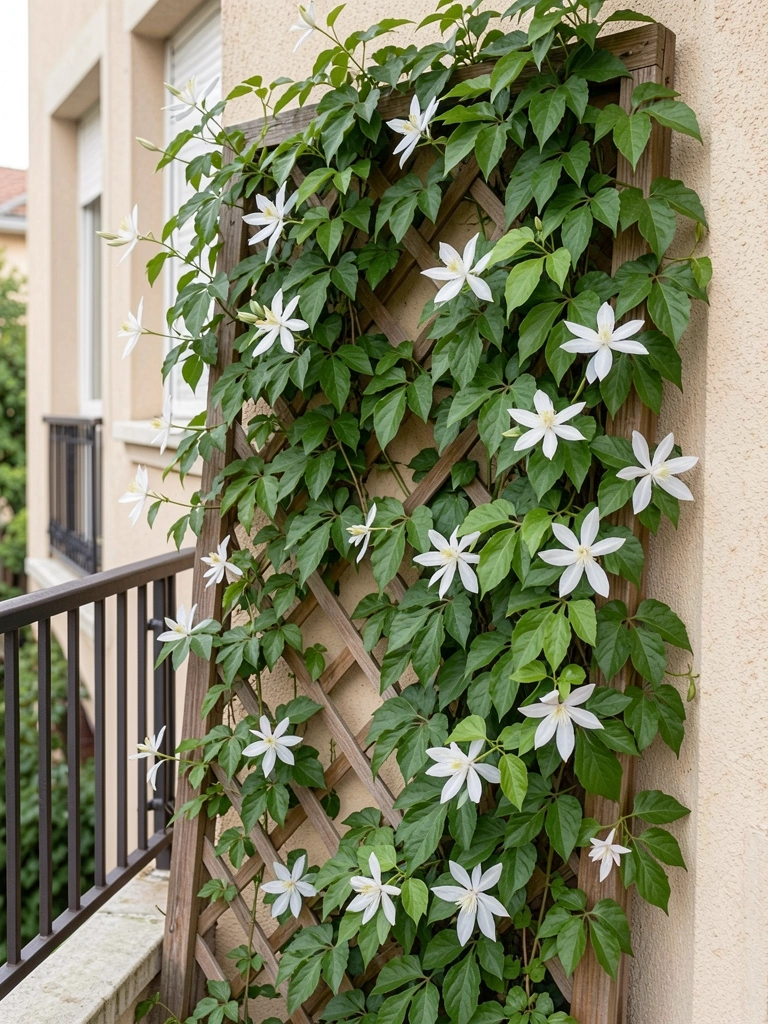
A trellis with climbing vines creates height, privacy, and a garden-like atmosphere without taking up much floor space.
Install a expandable wooden trellis ($15–$40, Home Depot) with brackets against your wall or railing. Plant a climbing vine—ivy ($8–$12), clematis ($12–$20), or morning glories ($5–$10)—at the base. Water consistently; most vines establish within a season. Renters can use leaning trellises instead of wall-mounted ones.
Within weeks, your balcony gains height and greenery. It creates natural privacy and a romantic, garden-like feel. Vines also provide afternoon shade on sunny balconies. Your space becomes noticeably lush.
20. Accessorize with Ikat Pillows and Textured Ceramics
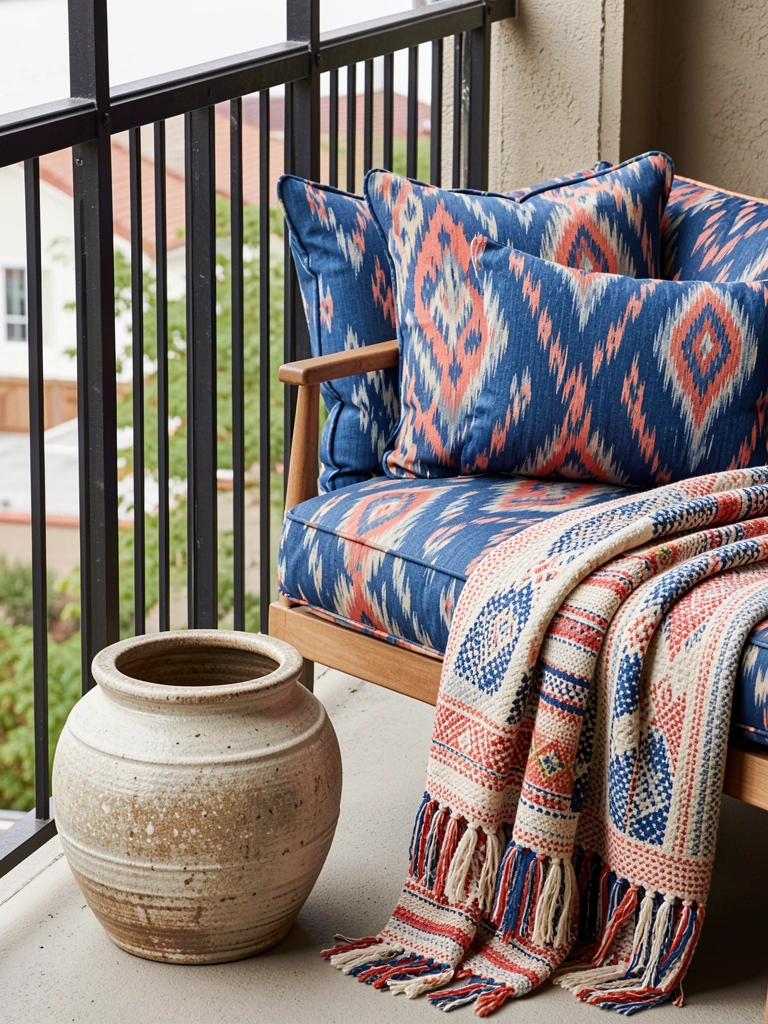
High-impact accessories don’t require structural changes—just textiles and small decor pieces that cost $10–$50 each.
Layer ikat-patterned pillows ($20–$40, Target or Wayfair), add a textured ceramic planter ($15–$35, local shop or Etsy), drape a chunky knit throw ($25–$50, IKEA). Mix patterns and colors—jewel tones with warm earth tones work beautifully. Avoid matching; curated mismatches look intentional.
Your balcony immediately looks like you hired a designer. Small accessories create the biggest visual impact. The layering of textures and patterns makes the space feel rich and inviting instead of sparse. Accessories are also easy to swap seasonally.
21. Install Decking Tiles for an Instant Floor Upgrade
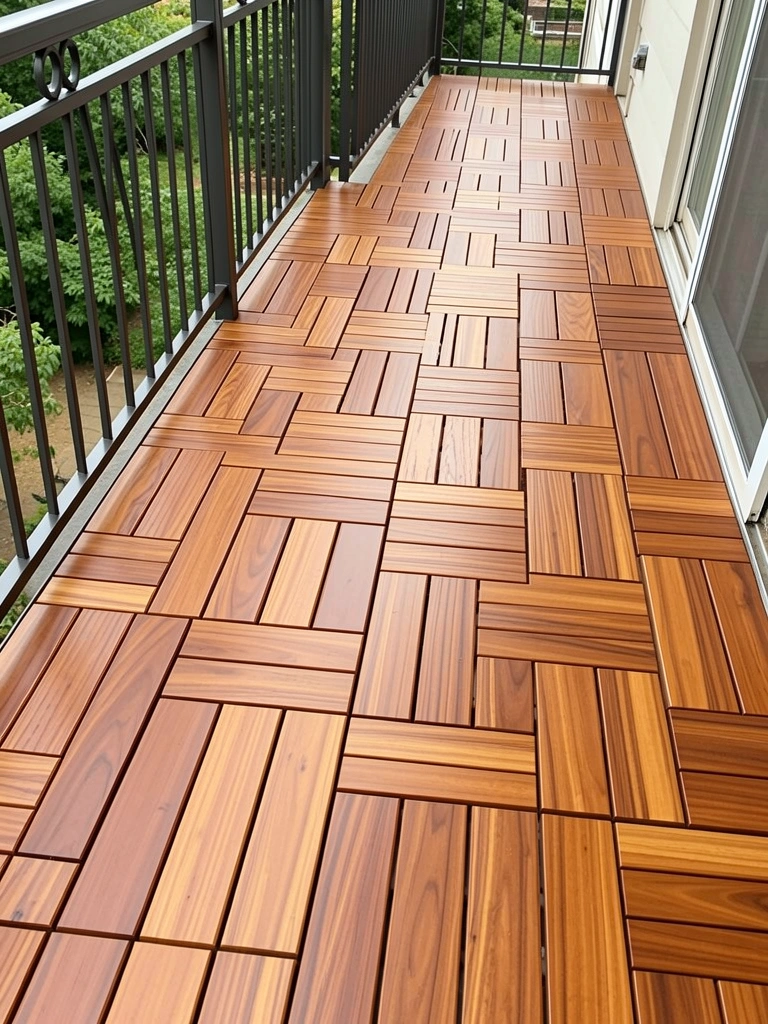
Concrete balcony floors are depressing. Interlocking deck tiles transform them instantly—and renters can take them when you move.
Buy interlocking deck tiles ($15–$30 per tile, Home Depot or Amazon). You’ll need roughly 15–25 tiles depending on your square footage. Just lay them down—no tools, no installation required. They click together like puzzle pieces. Choose wood-look finishes for warmth or modern composite for contemporary feel.
Your balcony instantly looks finished and polished instead of like bare concrete. The upgrade takes 30 minutes. Renters remove them when moving and take them to the next place. The difference in “feel” is dramatic—your feet appreciate the change immediately.
22. Create a Seasonal Plant Rotation System
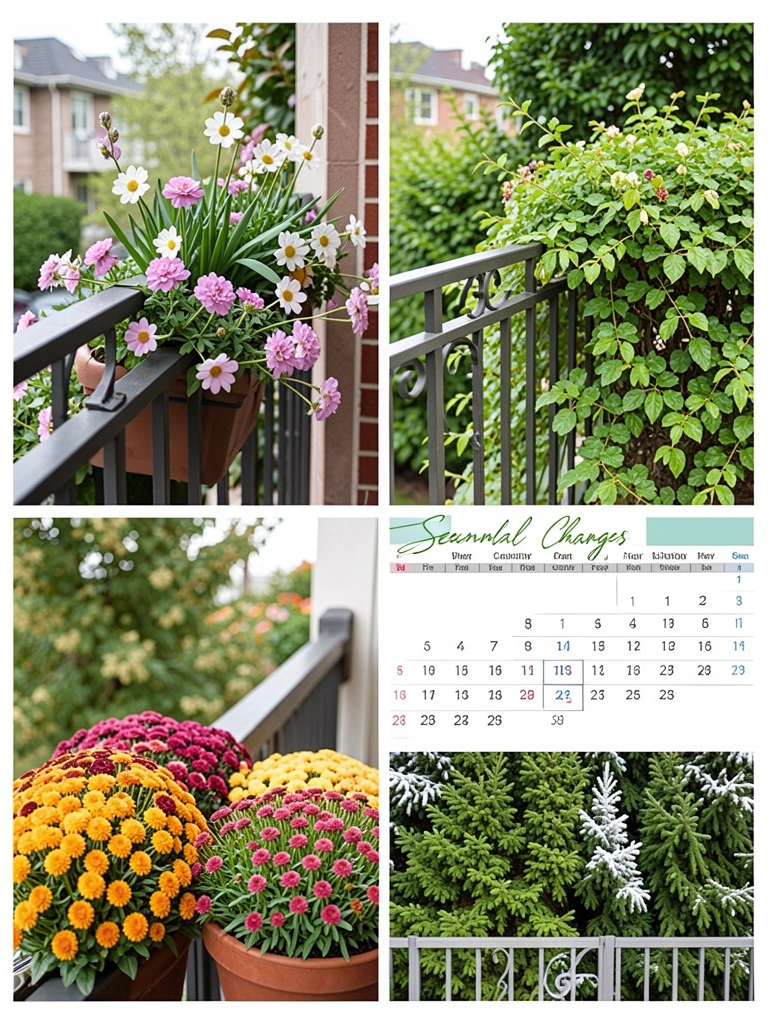
Instead of the same plants year-round, rotate seasonal flowers and greenery to keep your balcony fresh and interesting.
Spring: pansies, snapdragons ($5–$10 each). Summer: petunias, marigolds, geraniums ($3–$8 each). Fall: mums, ornamental kale ($5–$10 each). Winter: evergreens, decorative cabbage ($8–$15 each). Compost old plants and replant seasonally. Costs $15–$40 per swap but your space never feels stale.
Your balcony evolves with the seasons instead of looking the same all year. It gives you a reason to refresh and reimagine your space quarterly. Visitors notice your balcony always looks intentional and seasonal.
23. Add a Small Side Table for Function and Style
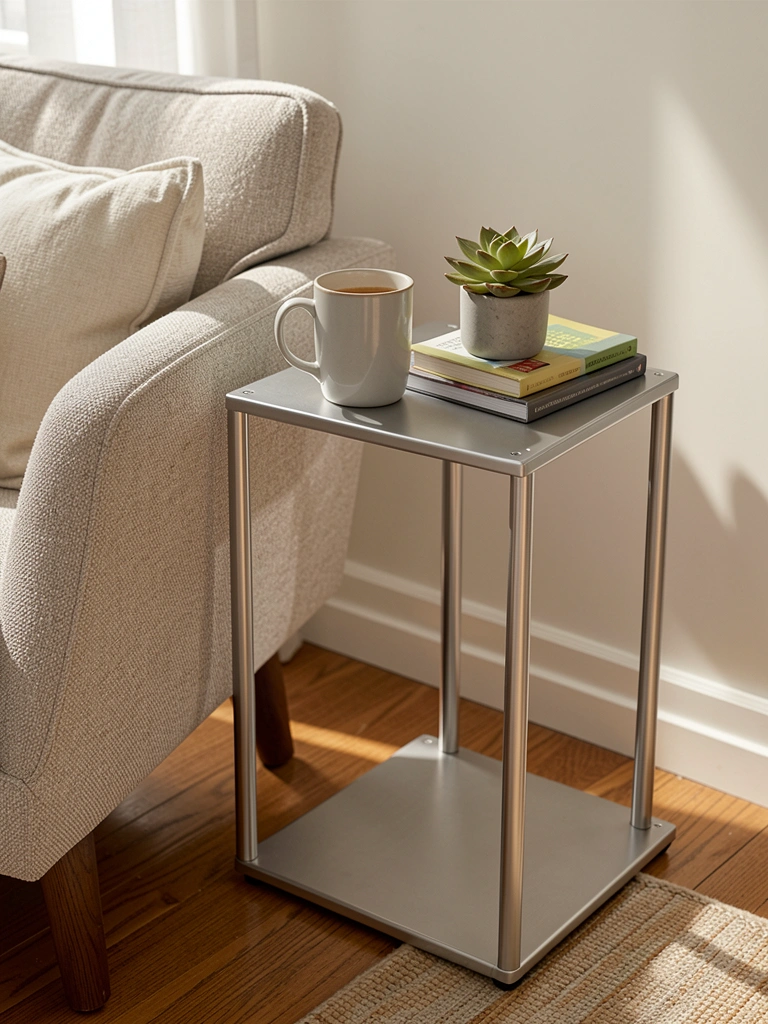
Even tiny balconies need a surface for a drink, a phone, or a book. A small side table solves this without blocking walkways.
Choose a slim metal side table ($25–$50, IKEA) or a nesting table set ($35–$70, Target) so you can adjust based on need. Position it right next to seating. If space is extremely tight, try a folding wall-mounted table ($30–$60, Amazon) that drops down when needed and folds flat when not.
You have a spot for your morning coffee. Guests have somewhere to set a drink. It’s the tiny infrastructure that makes a space actually functional. Without it, balconies feel like display spaces you can’t actually use.
24. Use Mirrors to Visually Expand Your Space
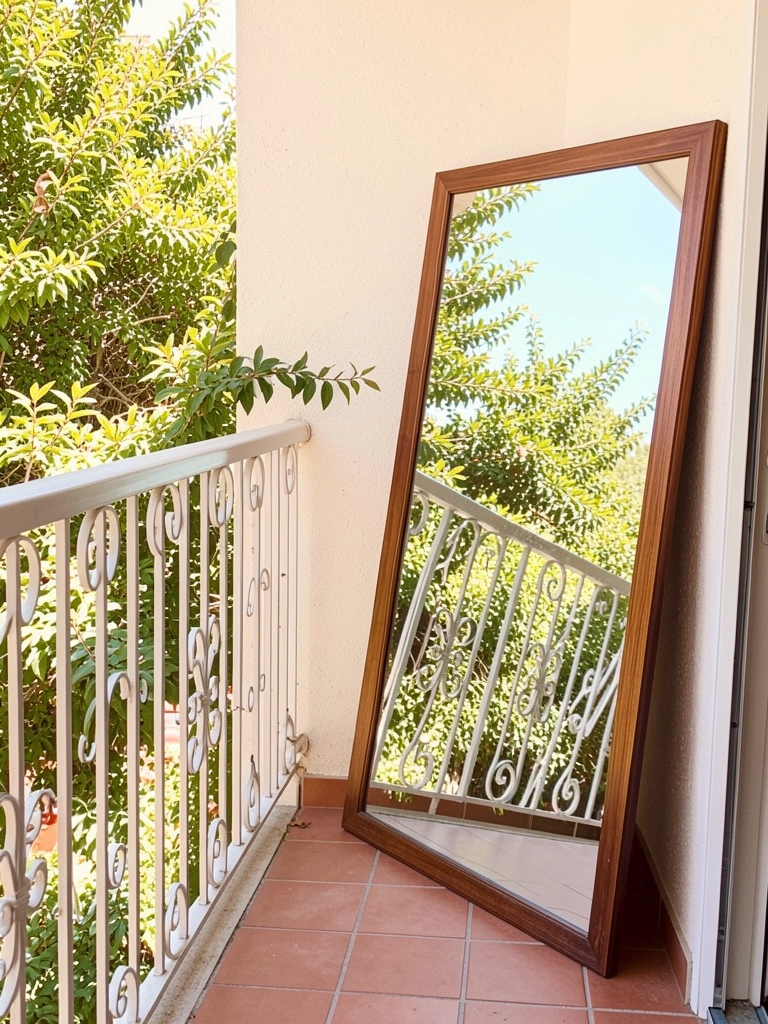
A mirror creates the optical illusion of depth and bounces light around, making cramped spaces feel bigger.
Install an outdoor-rated mirror ($30–$80, Wayfair or Amazon) against the back wall or leaned in a corner. Weatherproof mirrors resist rust and moisture. Position it to reflect greenery or light, not the neighbor’s laundry. Renters can lean lightweight mirrors instead of mounting.
Your balcony visually expands. The reflected light makes it brighter and more inviting. Guests often comment on how “bigger” the space feels. It’s architectural magic that costs less than moving to a larger place.
25. Build a DIY Vertical Herb Garden
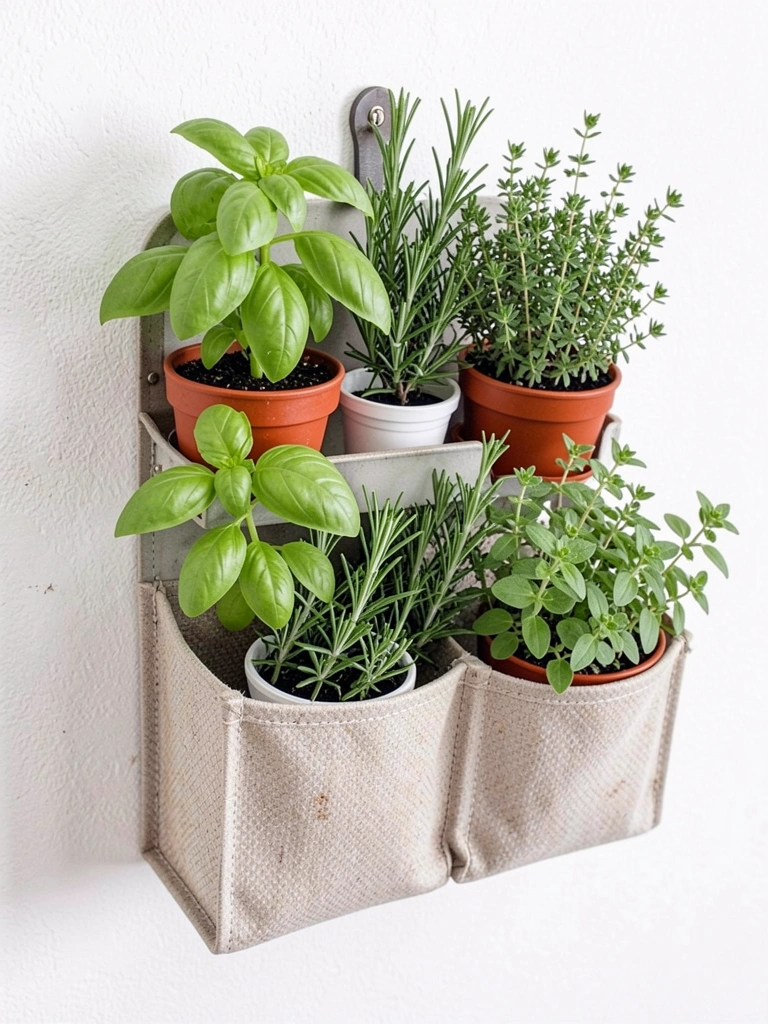
Fresh herbs on your balcony mean you can grab basil or thyme while cooking—no store runs. It’s practical and looks intentional.
Use a hanging shoe organizer with pockets ($10–$15, Target) or a vertical wall planter ($20–$35, Amazon). Fill each pocket with potting soil ($5 per bag) and plant herb seedlings: basil, rosemary, thyme, oregano ($2–$4 each, local nursery). Water when soil is dry. Most herbs thrive with 6+ hours of sun.
You have fresh herbs steps away. It’s a tiny garden that’s actually useful. Visitors find it charming and practical. Harvesting herbs becomes a pleasant routine instead of something you buy pre-packaged.
26. Incorporate Wind Chimes or Water Features for Ambiance
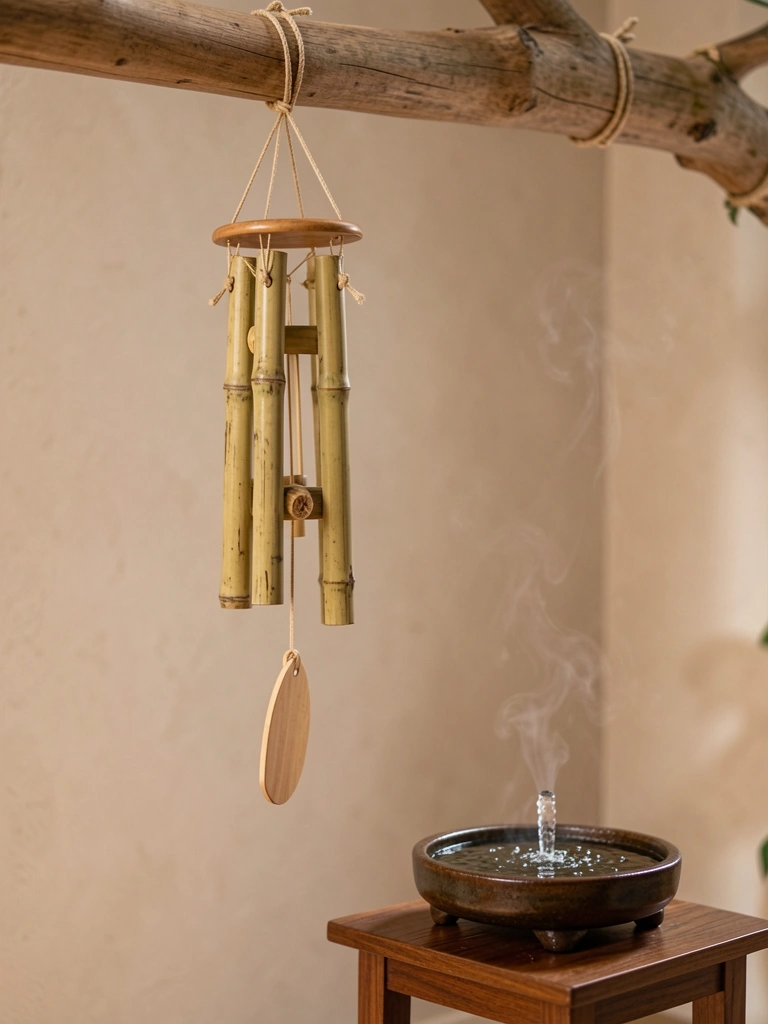
Sound adds another dimension to your balcony—gentle background music that makes you want to linger.
Hang a wind chime ($15–$40, Amazon) from the ceiling or railing for calming background sound. Add a tabletop water fountain ($25–$60, Target) for a moving water element. Both are renter-friendly (no permanent installation). Choose sounds that appeal to you—some people prefer chimes, others want water sounds.
Your balcony becomes multisensory. You’re engaging sight, sound, and touch instead of just looking at a pretty corner. The ambient sound naturally relaxes you. It’s why sitting outside suddenly feels less like “sitting on my balcony” and more like “I’m in a little retreat.”
27. Designate One Corner as Your Relaxation Zone
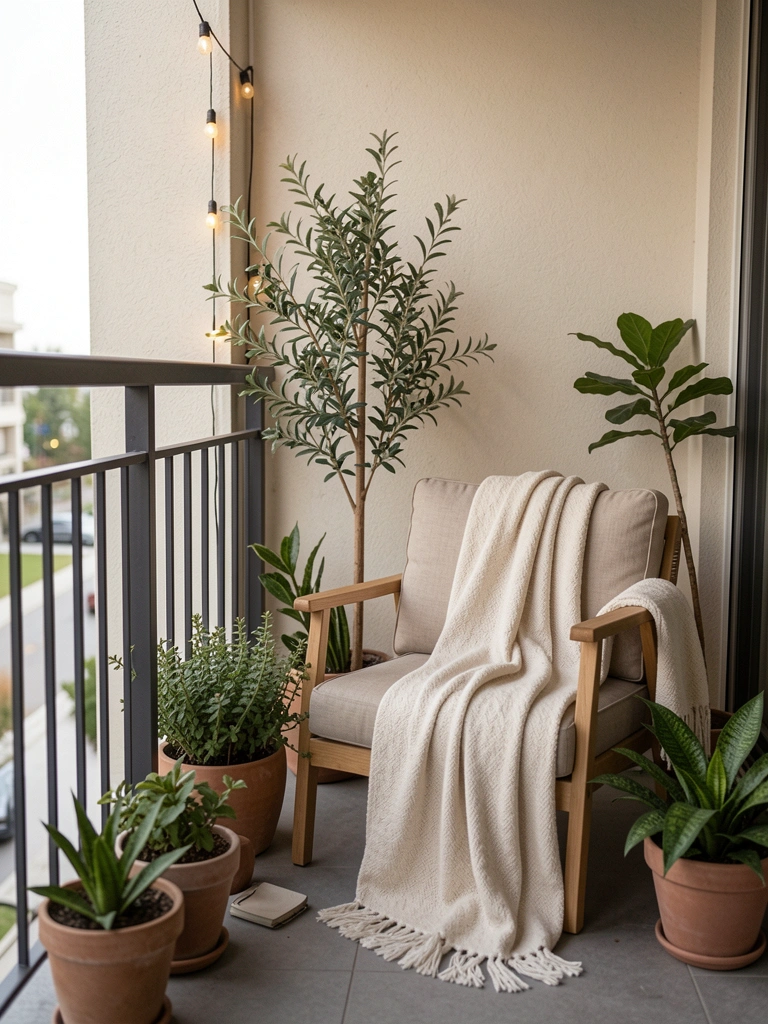
Finally, the simplest idea: claim one corner as your dedicated relaxation zone where you retreat when you need to decompress.
Arrange your best chair or cushion in a corner. Surround it with your favorite plants ($5–$20 total). Add soft lighting ($15–$40). Keep a throw blanket ($25–$50) nearby. Protect this corner from becoming storage—resist the urge to pile things there. This is sacred space.
You finally have a legitimate retreat within your home. Instead of stress, that corner triggers calm. It becomes the place you naturally migrate to when you need to think, read, or simply breathe. Your balcony transforms from unused space to essential space.
Save this post for your next balcony refresh and try one idea this weekend. Small changes compound fast—pick your favorite corner and start there. Your future self will thank you for carving out this little escape.
Leave a Reply