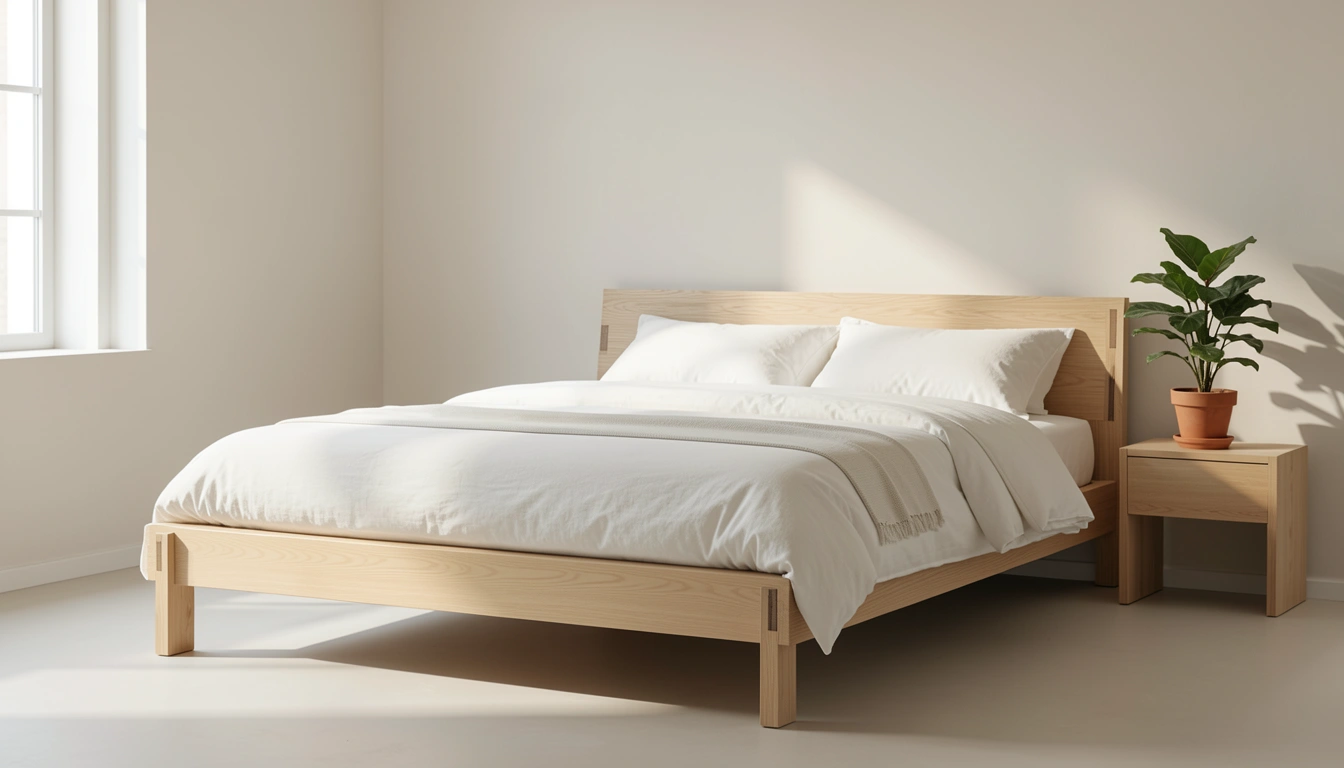
If you’re drawn to Scandinavian calm and architectural design, minimal joinery beds might be exactly what your bedroom needs. These pieces celebrate honest construction—visible joints, natural wood grain, and structural beauty instead of fussy details. The result? A bedroom that feels intentionally curated, timeless, and genuinely relaxing. Whether you’re a maximalist looking to scale back or someone who loves clean aesthetics, these 23 ideas show you how to choose, style, and live with a minimal joinery bed that becomes the focal point your space deserves. Let’s explore options for every budget and space.
1. Choose Exposed Mortise-and-Tenon Joinery Frame
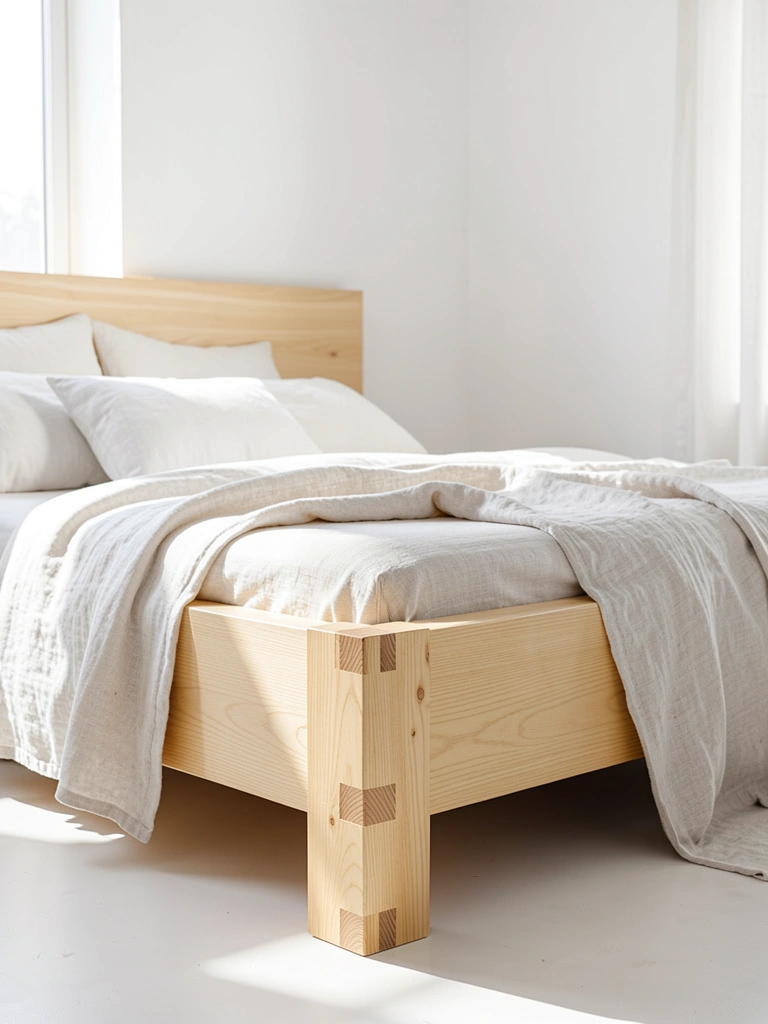
A mortise-and-tenon joint is the gold standard of visible woodworking—where one piece slots perfectly into another. You see the craftsmanship, not hidden hardware. This traditional technique creates a bed that looks architectural and honest, reminding you daily that quality construction matters.
Look for beds labeled “mortise-and-tenon joinery” from makers like Muuto, Blu Dot, or West Elm’s mid-century line. Expect to invest $800–$2,500 depending on wood type and size. If budget’s tight, scan Facebook Marketplace or estate sales for solid wood vintage frames you can refinish yourself. The beauty of this style is it never feels trendy—it’s timeless. Assembly takes about 2–3 hours with a partner and basic tools.
You’ll notice how the visible joints make the bed feel substantial and real. No mystery, no wobble, just honest joinery you can trust.
2. Opt for a Low-Profile Platform Bed
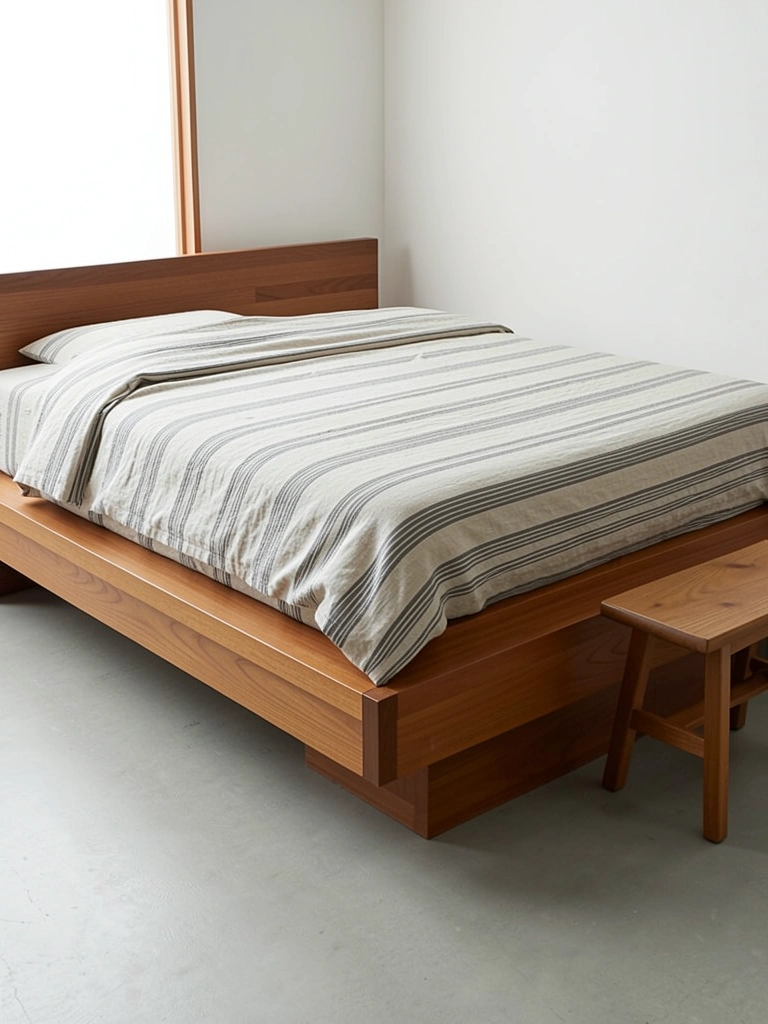
Platform beds sit close to the ground, eliminating the frame-and-box-spring combo. This minimal approach saves visual clutter and makes small rooms feel bigger. The joinery work is highlighted because there’s nowhere to hide—every detail matters.
Hunt for platform beds at Article, CB2, or IKEA’s better ranges ($300–$1,200). Japanese-inspired designs often nail this aesthetic with simple slat construction visible underneath. If you’re handy, plans for DIY platform beds with visible joinery are free on Etsy and Instructables—budget $200–$400 in materials and a weekend. The lower profile creates an immediate sense of calm and makes bedmaking easier since you’re not reaching over a high frame.
Your bedroom feels more spacious and serene. Plus, platform beds are renter-friendly if your frame breaks down into modular pieces.
3. Combine Walnut and White Oak for Contrast
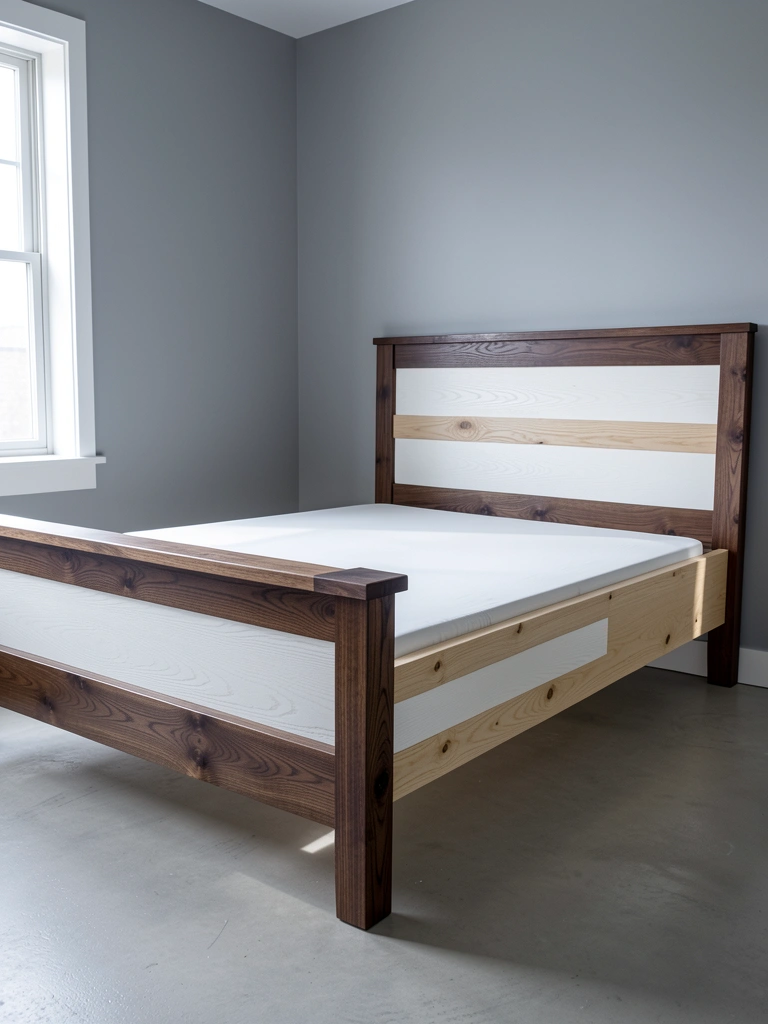
Using two complementary wood tones in one bed frame creates subtle visual interest without clashing. Dark walnut legs with lighter oak rails, for example, showcase the joinery differences and draw the eye to the construction details.
Custom makers on Etsy create this combo starting around $1,200–$2,500, or order from studios like Artifact Home or Norm Architects-inspired retailers ($1,800–$3,200). If you’re commissioning a custom piece, this is where you control every detail. Ready-made options with mixed wood tones pop up at Article and Design Within Reach ($1,500–$2,800). The mixed tones highlight the different wood properties and make the joinery feel like intentional design, not accident.
This approach brings warmth and sophistication without requiring a decorator’s touch.
4. Install a Floating Headboard Separately
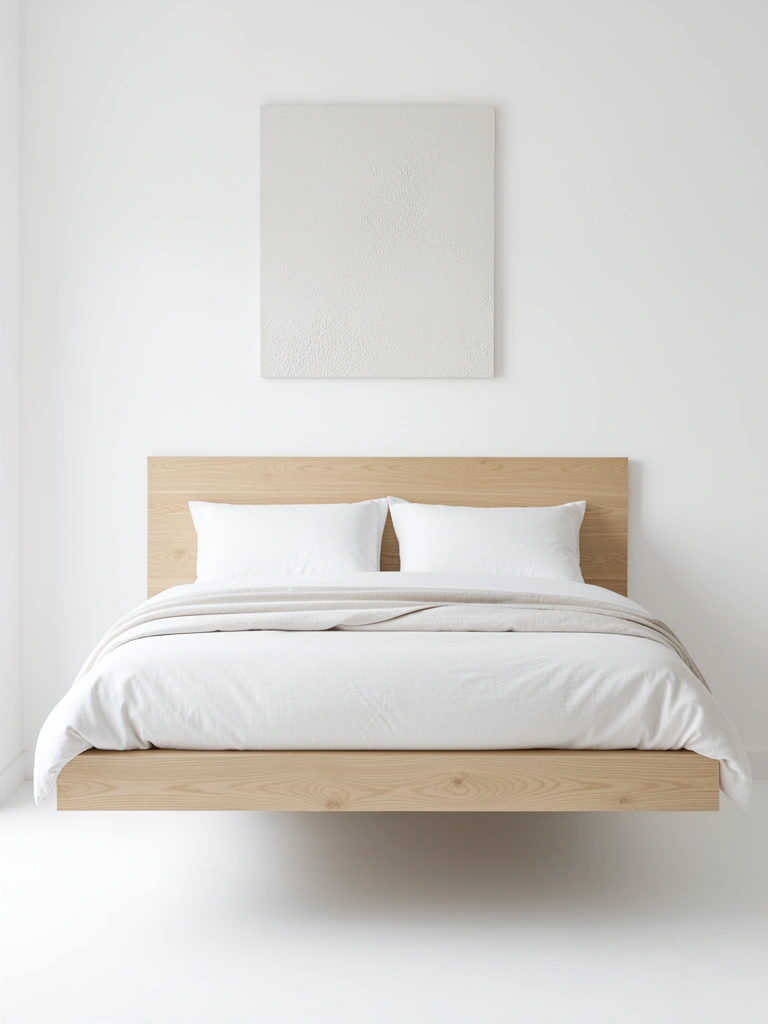
Floating headboards mounted to wall studs rather than attached to the bed frame create an illusion of weightlessness. This works especially well with minimal joinery since the joints become a focal point against the wall.
Purchase a floating headboard panel from Etsy ($200–$600 depending on size and wood), IKEA’s Malm headboards ($80–$150), or commission a custom piece from a local woodworker. Installation takes a handyperson 1–2 hours and costs nothing if you DIY. The visual effect makes your bed feel sculptural and intentional. Bonus: floating headboards are renter-friendly if you use toggle bolts and patch afterward.
Your room gains architectural interest without the bed feeling heavy or bulky.
5. Select a Slatted Headboard with Visible Joins
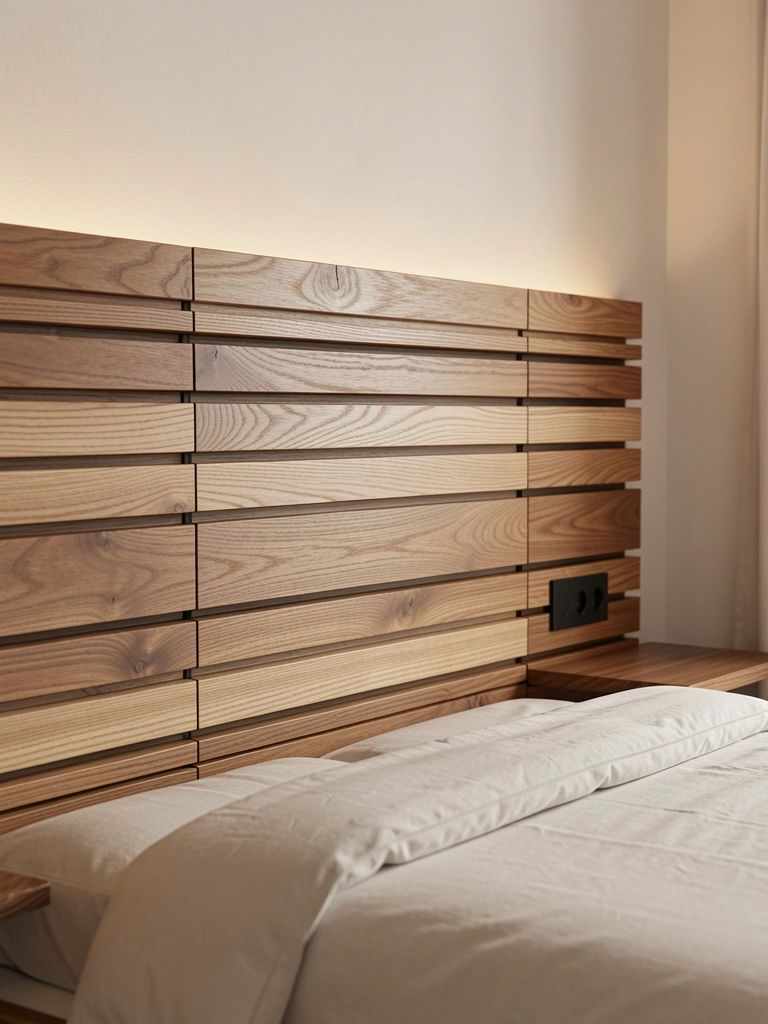
Slatted headboards—horizontal or vertical wood strips joined together—celebrate construction. Every visible join tells a story of the craftsmanship. This style pairs beautifully with minimal joinery beds since it extends the architectural language.
Find slatted options at West Elm ($400–$900), Muuto ($600–$1,200), or DIY with 1×4 pine boards, wood glue, and dowels (materials: $100–$200, time: one weekend). The slats can be mounted directly to wall studs or attached to your bed frame. Pro tip: Sand and stain the slats yourself to save $300–$500 on custom finishing. The DIY route teaches you exactly how the joinery works and lets you customize spacing and width.
You end up with a genuinely unique headboard that becomes a conversation piece.
6. Go Minimalist with a Bed Rail Only (No Headboard)
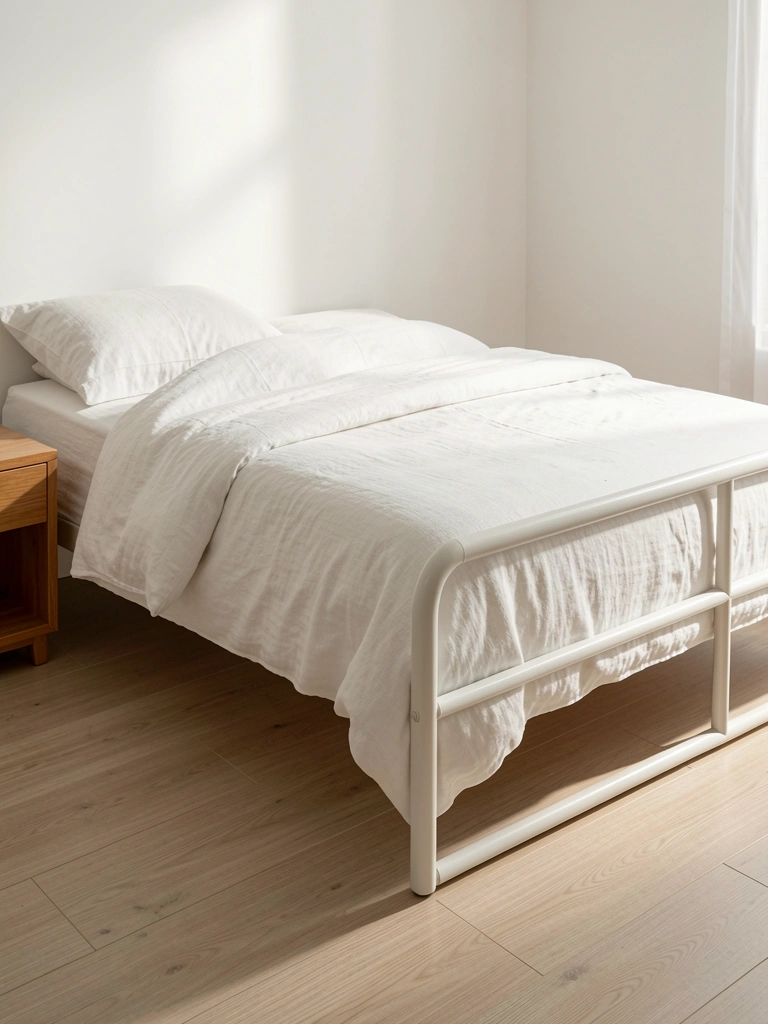
The ultimate minimal approach: a bed that’s just a frame with visible joinery and no headboard at all. This works if your bedroom has strong wall color or art that becomes the visual anchor instead.
Japanese platform bed frames or Scandinavian designs from Muuto and String often offer headboard-free options ($600–$1,500). IKEA’s Fjellse beds are budget-friendly alternatives ($150–$300). This approach requires your bedroom wall styling to pull weight—consider one piece of large art or a textured paint finish. Renter note: This is incredibly easy to move when you relocate. The frame alone tells the design story through joinery, not decoration.
Your bed becomes pure function and form. Everything else in the room matters more visually.
7. Add Tapered Legs for Visual Lightness
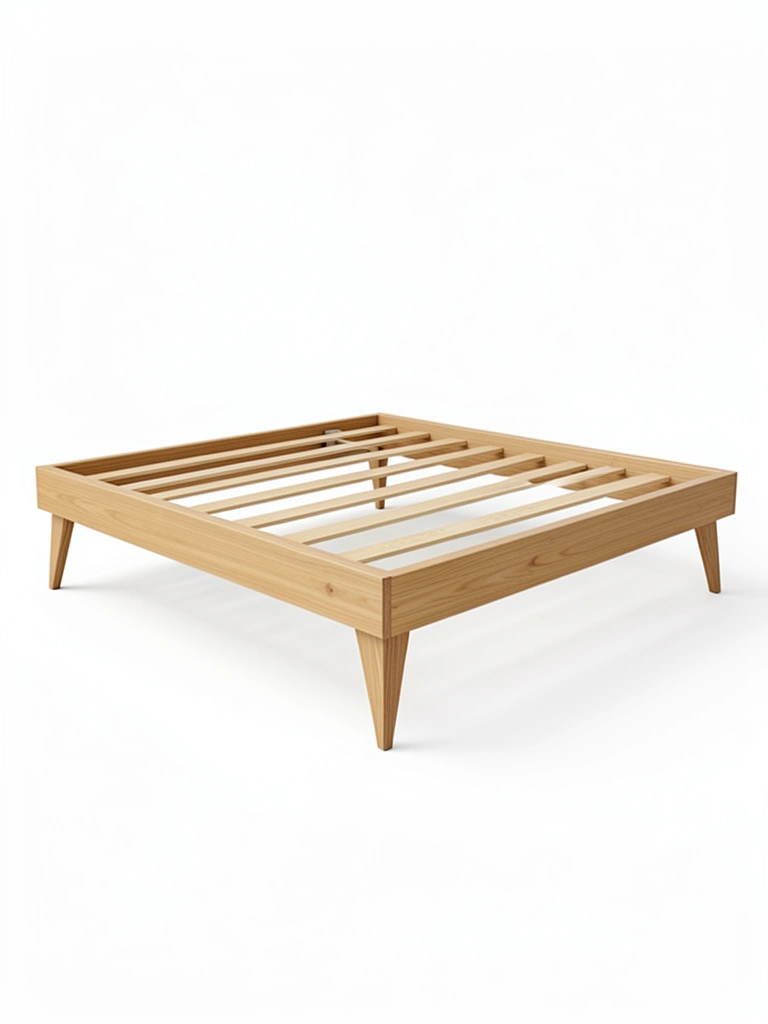
Tapered legs (narrower at the bottom, wider at the top) create an optical illusion that the bed weighs less than it does. Paired with visible joinery at the frame, tapered legs become an elegant design detail that anchors the whole aesthetic.
Most mid-century modern style beds feature tapered legs—look at West Elm’s Mid-Century collection ($800–$1,600), Article ($700–$1,400), or Blu Dot ($900–$1,800). If your current bed has bulky legs, a woodworker can reshape them (cost: $300–$600, time: 2–3 weeks). The angle of the taper matters: even subtle angles (3–5 degrees) change how the bed reads visually. No taper requirement means your space feels lighter and more refined.
The room gains breathing room and sophistication from this single detail.
8. Incorporate Visible Wood Pegs or Dowels
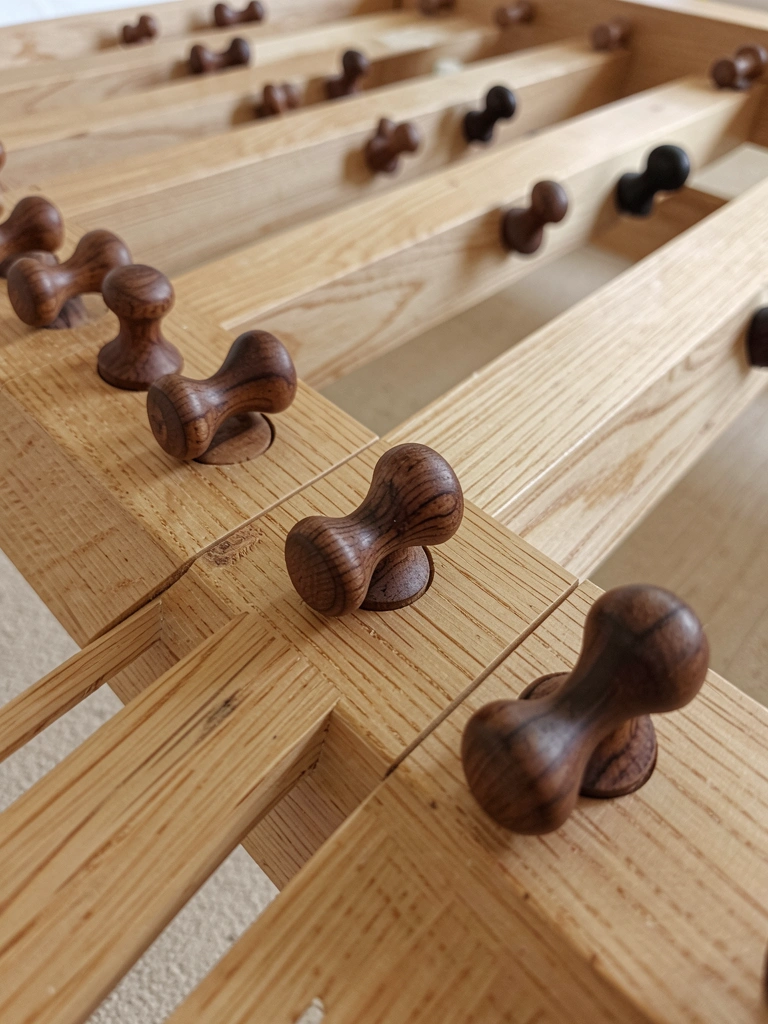
Traditional joinery often uses wooden pegs or dowels through joints for both function and beauty. Leaving these pegs visible turns technical construction into intentional design. This detail says “handmade” and “built to last.”
Most custom makers include visible pegs in their designs ($1,200–$2,800). Ready-made options at Etsy sellers specializing in Arts and Crafts or Mission-style beds ($900–$2,200) showcase this feature. If you’re commissioning work, specifically request visible pegs in contrasting wood (walnut pegs in oak, for example). The pegs are functional—they lock the joints—and aesthetic simultaneously. Pro tip: Measure peg diameter and spacing before ordering to ensure they photograph well and feel intentional, not random.
Those pegs become focal points that celebrate the construction process.
9. Use Natural Wood Finish (No Stain or Paint)
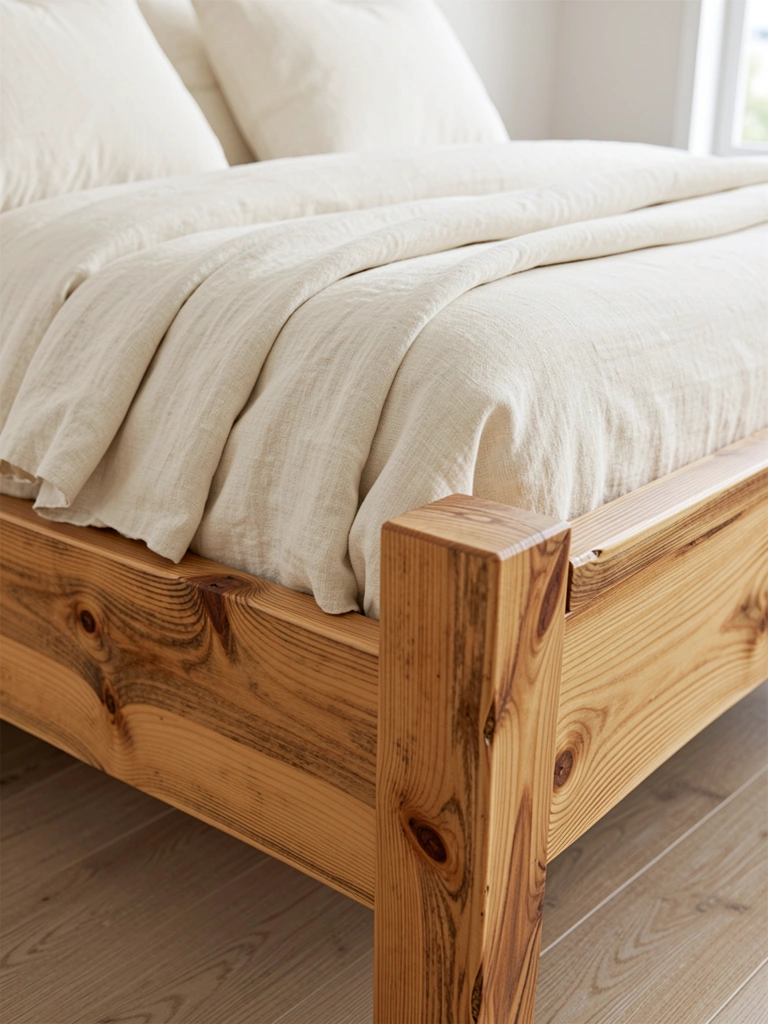
Skipping stain or paint lets the wood’s true character shine. Minimal joinery looks best in natural finish where grain patterns and color variations become the visual interest. You see exactly what you’re getting—honest materials, honest design.
Natural finish beds are increasingly common at sustainable brands like Bloom & Blossom ($1,200–$2,400), Pottery Barn’s better lines ($800–$1,600), or custom makers (since natural finish reduces production time, often $100–$300 less than stained versions). Maintenance is simple: dust regularly, use touch-up oil annually. A natural finish shows wear beautifully—scratches and patina become character. Renter note: Natural wood is your friend since it hides marks better than light stain.
Your bedroom feels grounded and organic. The wood’s natural evolution becomes part of the bed’s story.
10. Layer Minimal Joinery with Curved Headboard
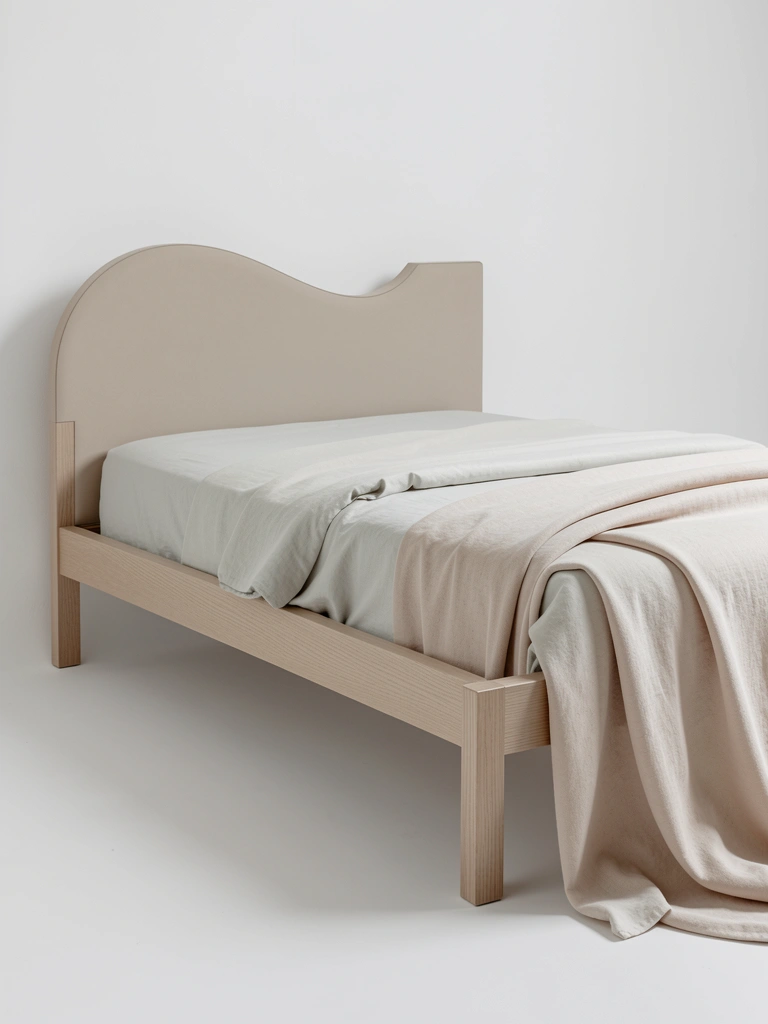
Mixing minimal joinery’s angular geometry with a curved headboard element creates sophisticated tension. The frame stays pure and structural while the headboard adds one organic, softer note.
Designers like HAY and String excel at this combination ($1,400–$2,600). Another option: commission a curved headboard from a woodworker to pair with your existing minimal frame ($400–$1,000 for custom piece). The curves should be gradual, not dramatic—this isn’t about drama, it’s about nuance. Assembly is straightforward since the frame and headboard are separate. Time: 2–3 hours with help. The contrast between linear and curved elements feels intentional and modern while honoring craftsmanship.
You get visual interest without compromising the minimal aesthetic you love.
11. Choose a Bed with Angled Joinery Details
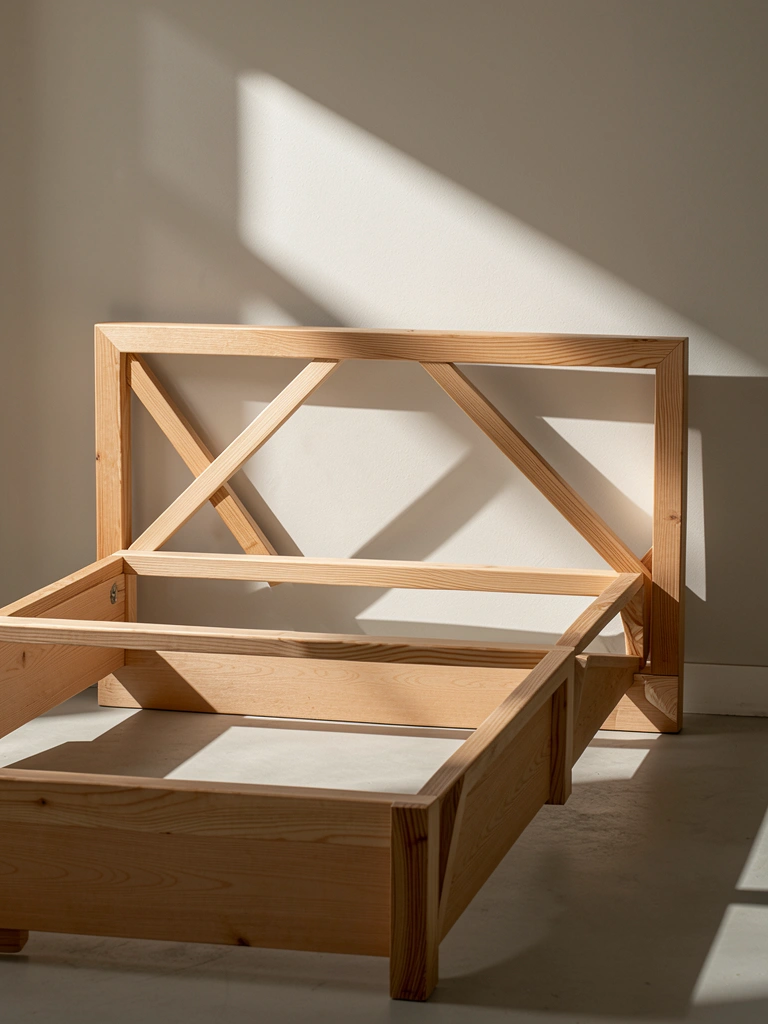
Some contemporary minimal beds use slight angles in their joinery—not traditional right angles. Think subtle bracing or angled leg-to-frame connections. This keeps the minimal vibe while adding unexpected architectural character.
Sculptural bed designers like Jonas Wagell for String or contemporary makers on Etsy ($1,300–$2,500) play with these angles. Look for beds described as having “angled frame construction” or “diagonal bracing.” These beds cost slightly more because the angles require precision joinery. The payoff: your bed becomes a mini-sculpture that engages from different viewing angles. Pro tip: Angle placement affects how the bed photographs on social media—subtle angles create interesting shadow play.
People notice the thoughtful engineering even if they can’t quite name what makes it distinctive.
12. Match Bed Joinery Style to Your Flooring Material
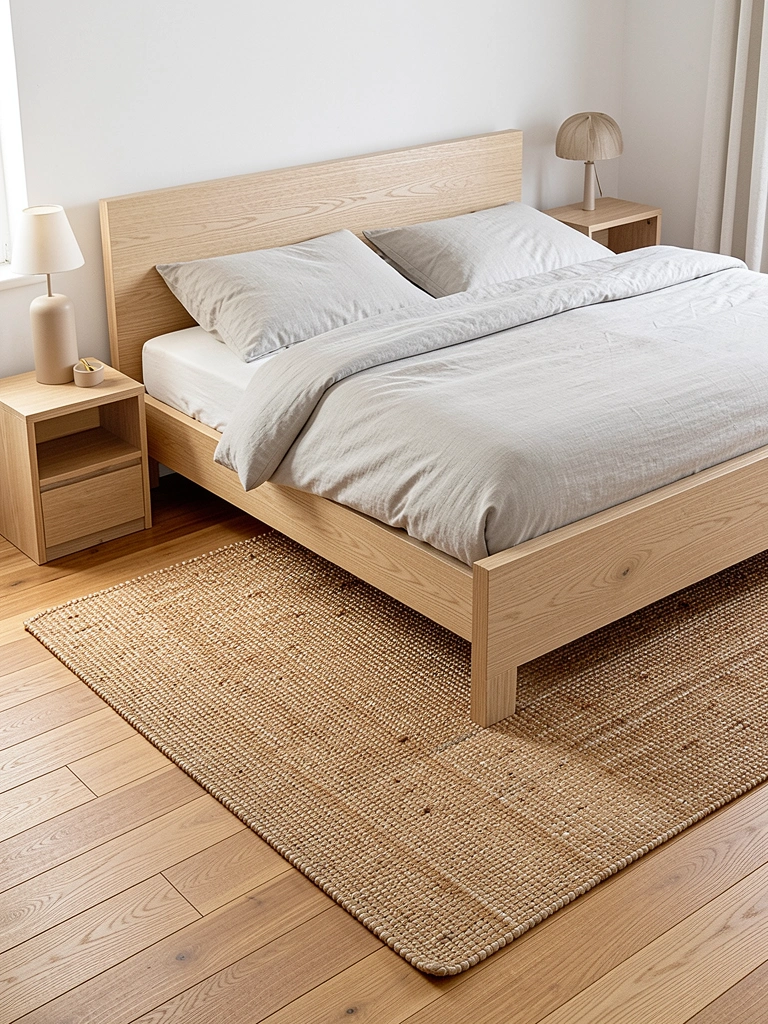
If your flooring is wood, selecting a bed in a complementary (not identical) tone creates harmony. Minimal joinery emphasizes the wood itself, so coherence between bed and floor matters visually.
If you have walnut floors, choose a walnut bed or light oak for contrast. Pine or light oak floors pair beautifully with white oak or ash beds. Test samples at home before committing. Most makers will send wood samples (usually free). The alignment between flooring and bed joinery creates a sense of intentional design and makes rooms feel larger. No need to match perfectly—thoughtful coordination is enough. Time to plan: 30 minutes studying samples. Cost of samples: $0–$25.
The room reads as purposefully designed rather than randomly assembled.
13. Add a Minimal Wood Bench at the Foot
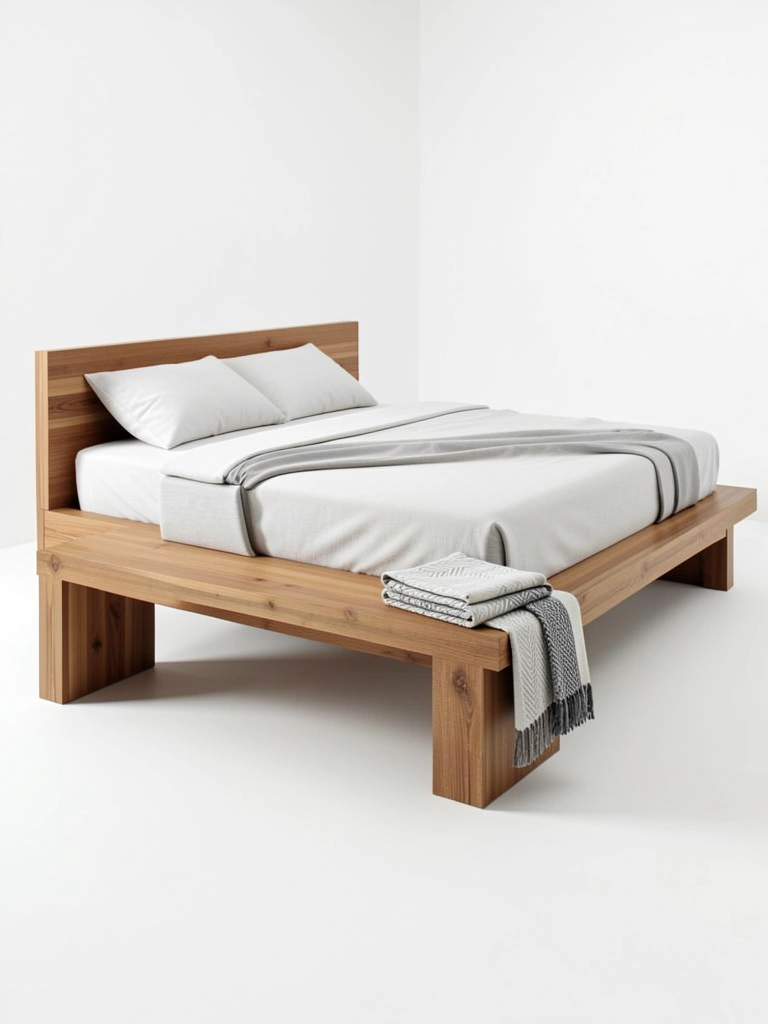
A bench at the bed’s foot extends the joinery language and adds functional storage for extra blankets or morning clothes. Keep the bench as minimal as the bed—same wood tone, visible joinery, clean lines.
Find benches from the same makers as your bed—Article, West Elm, Muuto often sell coordinating pieces ($300–$700). DIY option: have a woodworker create a matching bench from leftover materials of your bed frame (cost: $200–$500, timeline: 2–3 weeks). The bench should be approximately 15–18 inches tall and the bed’s width minus a few inches. Pro tip: Choose a bench with visible joinery matching your bed’s style—if your bed has mortise-and-tenon joints, the bench should too.
Functionality and aesthetics merge. Your bedroom gains storage and visual continuity.
14. Incorporate a Wooden Slat Support System Visibly
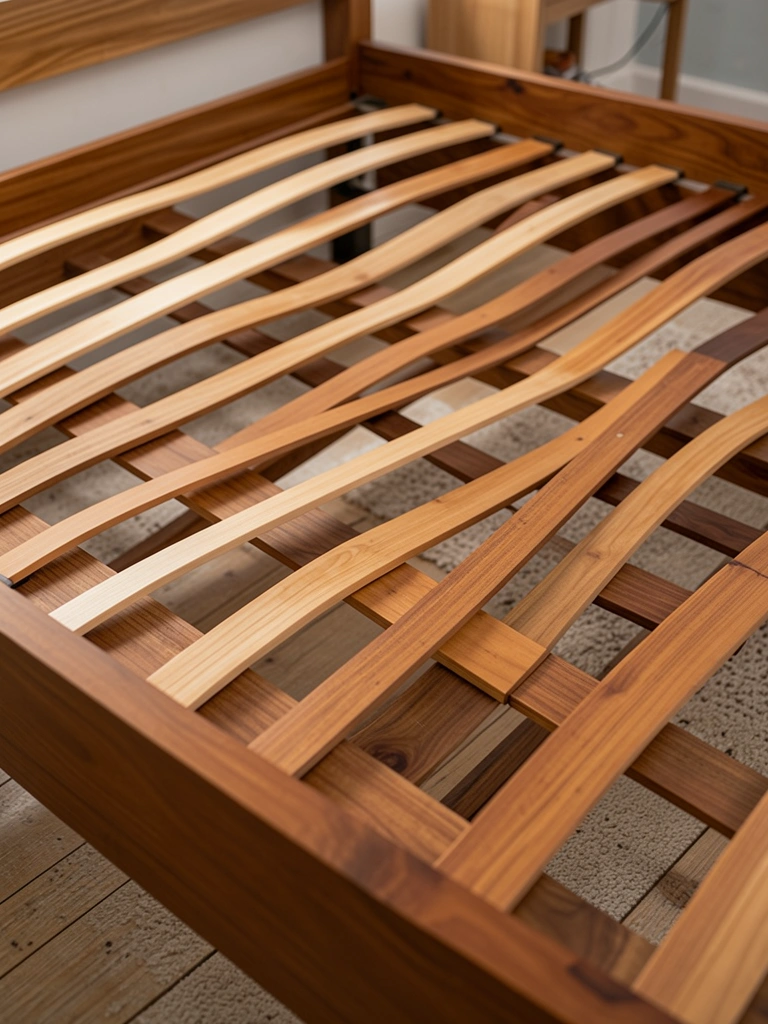
Most beds hide their support structure with a dust skirt or platform. Minimal joinery celebrates honesty, so leaving slats visible makes engineering a feature. This works best with platform beds or ones with low frames.
Slat-visible designs appear at Blu Dot ($1,200–$1,800), Artifact Home ($1,400–$2,200), and custom makers (proportionally less expensive since they’re skipping the skirt: $800–$1,500). The slats should be finished as carefully as the frame—sanded smooth, stained or natural, no rough edges. Space them evenly (typically 2–4 inches apart depending on mattress). The slat system becomes part of the design vocabulary, not a hidden shame. Renter note: Visible slats let air circulate better, reducing moisture under the mattress.
The bed reads as completely transparent in its construction—no mysteries, no hiding.
15. Select a Bed Frame That’s Renter-Friendly and Modular
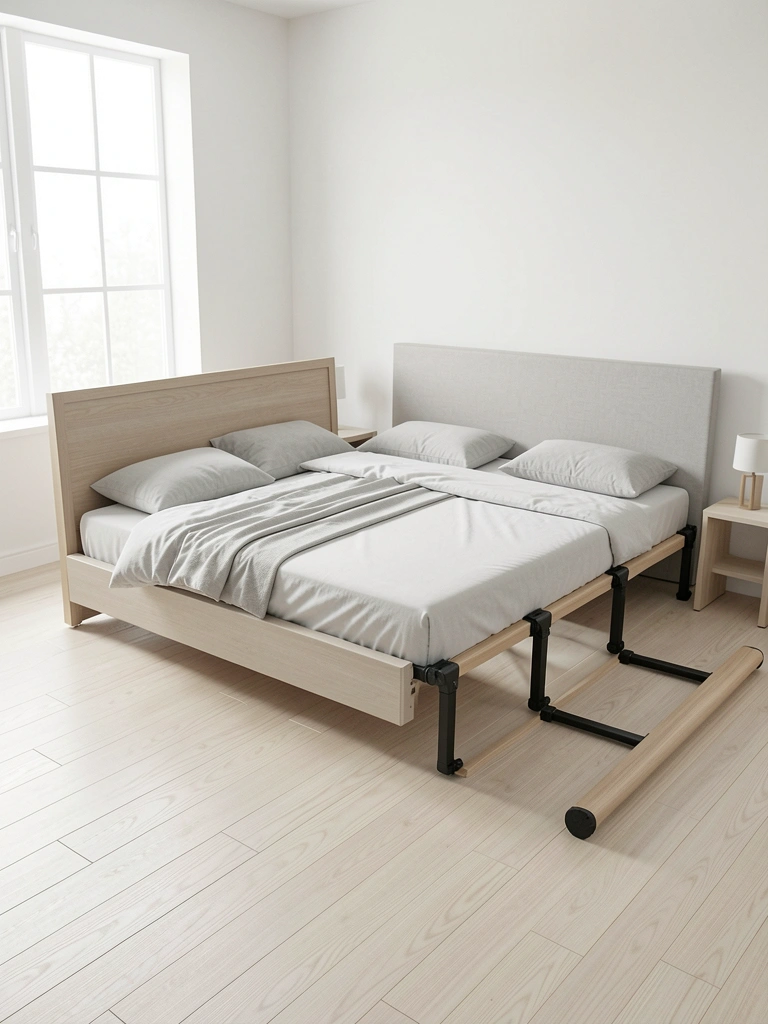
Minimal joinery often means simpler construction, which makes modular beds more feasible. If you rent or anticipate moving, a bed that breaks into pieces is a game-changer. The joinery should allow for easy disassembly and reassembly without tools beyond an Allen wrench.
IKEA’s higher-end frames ($400–$800) break down relatively easily. Blu Dot’s modular options ($1,200–$1,600) are engineered for moves. Check reviews specifically for “disassembly ease.” Better yet, watch assembly videos before buying to confirm. Time to disassemble and reassemble: typically 1–2 hours with a friend. The advantage: you can take this bed through multiple moves or apartments without guilt or damage concerns.
Moving day becomes less stressful. Your bed adapts to your life, not the other way around.
16. Paint the Bed Frame a Soft, Neutral Tone
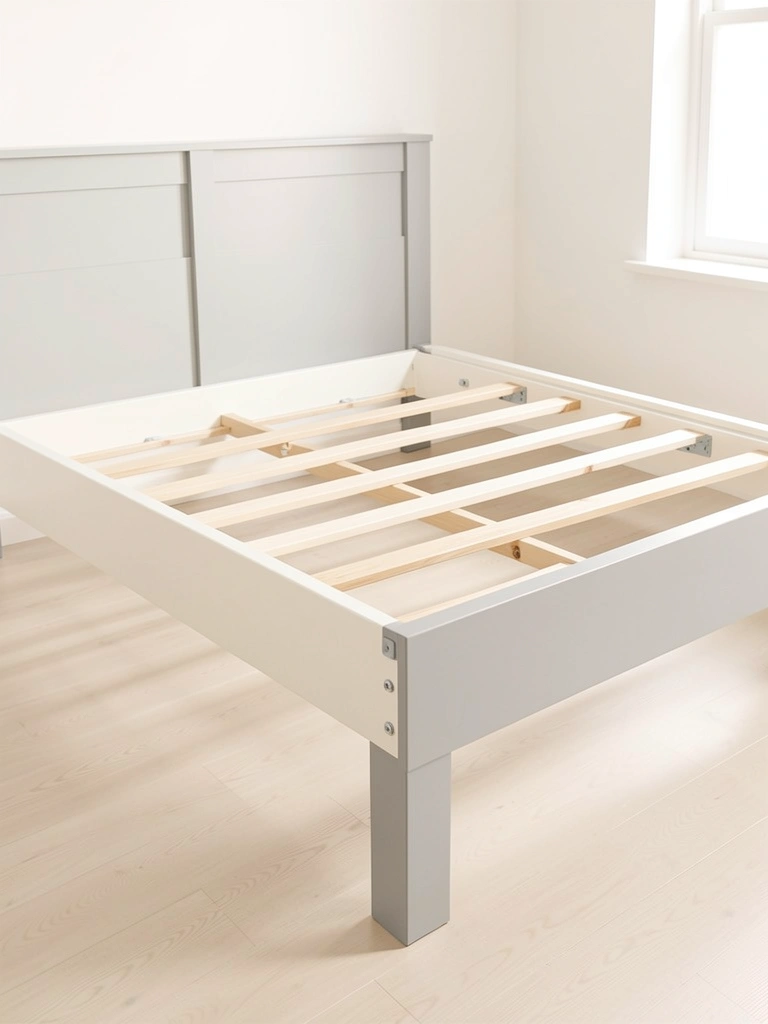
While natural wood is classic, painting a minimal joinery bed in soft white, warm gray, or barely-there cream keeps the joinery visible while creating a softer aesthetic. The joints read clearly against the paint.
Start with an unfinished bed frame ($600–$1,400 for quality unfinished pieces) or refinish an existing bed yourself. Use sanded wood primer and two coats of water-based paint like Benjamin Moore’s Chantilly Lace or Farrow & Ball’s Off-White ($40–$80 total paint cost). Time: 8–10 hours spread over 2–3 days for drying. The joinery remains visible and gains a sculptural quality against the neutral backdrop. Pro tip: Slightly uneven paint application makes the piece feel less factory-perfect, more handmade.
The painted frame feels both minimalist and approachable—less austere than natural wood.
17. Create a Platform Bed with Internal Storage Joinery
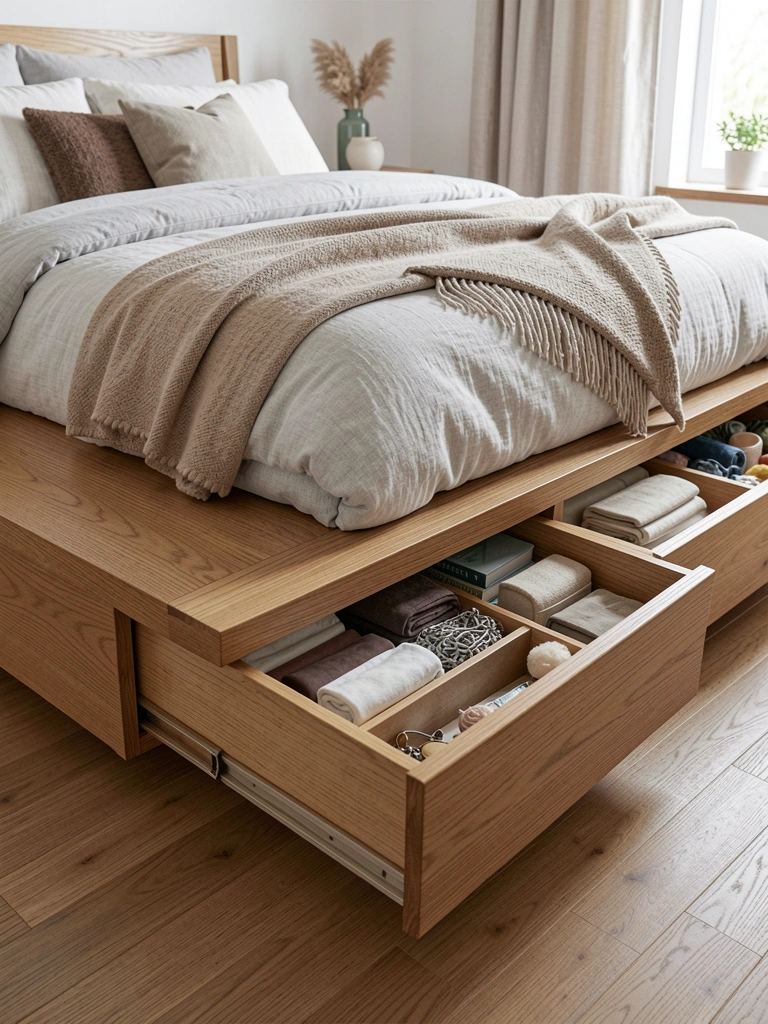
Internal storage drawers within the bed frame maximize function while keeping joinery honest. Drawers become part of the construction story rather than hidden afterthoughts.
Custom makers excel at this ($1,500–$2,800). Etsy sellers specializing in Japanese-inspired storage beds ($1,200–$2,000) often include this feature. Ready-made options at West Elm’s storage platform beds ($1,100–$1,600) provide budget-friendly alternatives. The drawers should glide smoothly and be finished identically to the frame. Measure your under-bed storage needs first—decide if you want one large drawer or several small ones. Time to spec custom: 1–2 hours of planning. The payoff: bedroom clutter disappears and your frame’s joinery tells a functional story.
Hidden storage stops being hidden—it becomes part of the design’s integrity.
18. Combine Minimal Joinery Bed with Live-Edge Nightstands
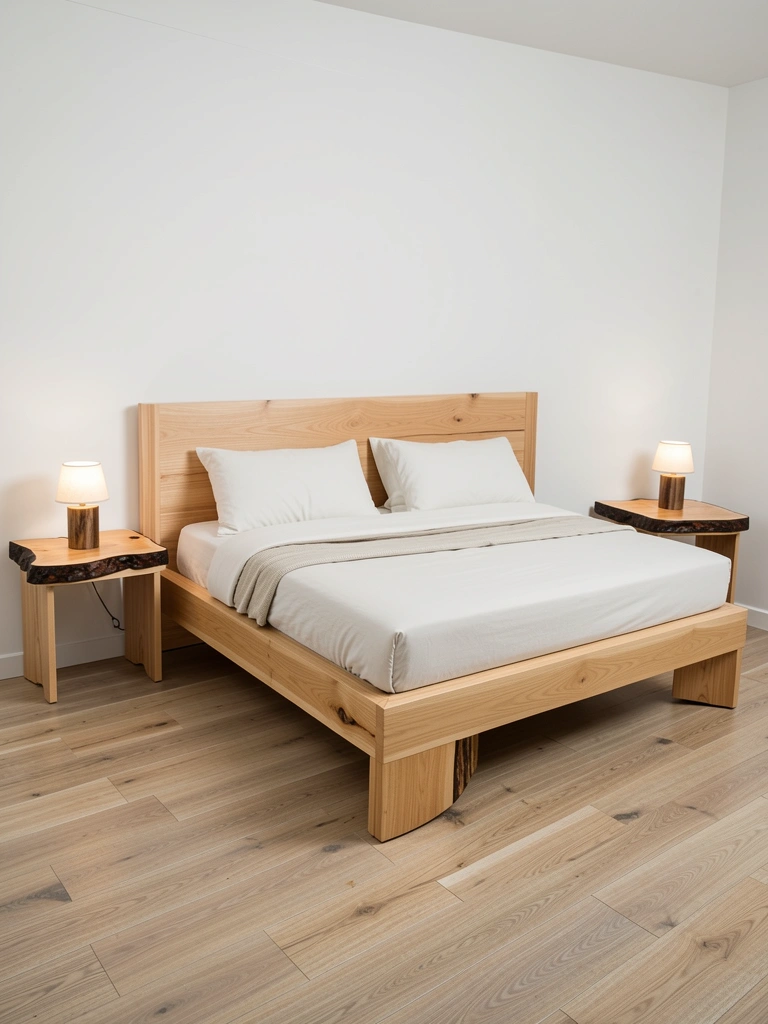
Minimal joinery beds pair gorgeously with live-edge wood nightstands—where the tree’s natural irregular edge is preserved. The contrast between your bed’s structured joinery and the nightstand’s organic edge creates sophisticated visual balance.
Find live-edge nightstands from Etsy woodworkers ($200–$400 each), West Elm ($300–$600), or Article ($250–$500). Make sure the wood tone complements your bed frame. DIY option: source a live-edge slab from a local sawmill ($80–$150), mount it on simple wooden legs ($40–$80, time: 3–4 hours). The pairing says your bedroom aesthetic is thoughtful, not accidental. One live-edge piece balances multiple pairs perfectly.
The juxtaposition between structured and organic becomes the room’s design story.
19. Use Minimal Joinery Bed as Anchor, Everything Else Flexible
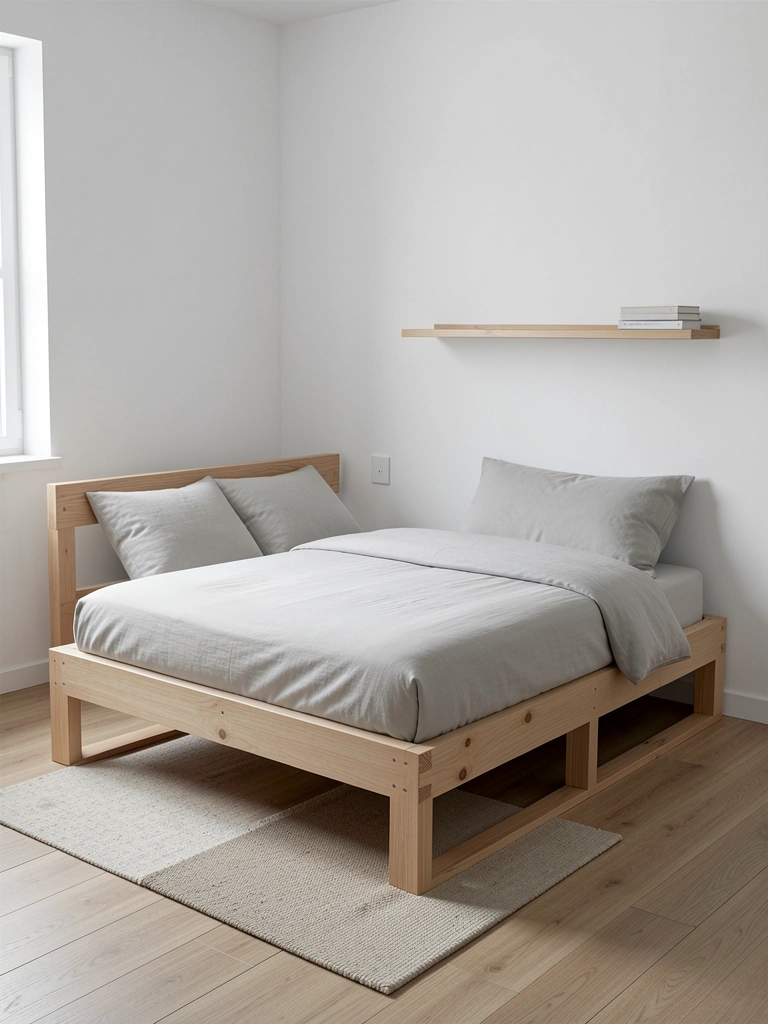
Here’s a strategy: invest in a beautiful minimal joinery bed and then keep everything else simple. Let the bed be the statement while nightstands, decor, and bedding stay neutral and understated.
Choose your bed investment ($1,000–$2,500), then budget $500–$1,000 for everything else. This approach works because the joinery bed doesn’t compete with other visual noise. Your eye goes straight to the craftsmanship. Bedding: cream linen, one throw. Nightstands: simple, minimal. Wall art: one piece or none. The restraint amplifies the bed’s impact. Time to plan: 1–2 hours styling. Renter note: This strategy is affordable since you’re not buying expensive matching sets.
The bedroom becomes calming because it’s focused. Your bed leads the design conversation.
20. Layer Minimal Joinery with Soft Textiles Strategically
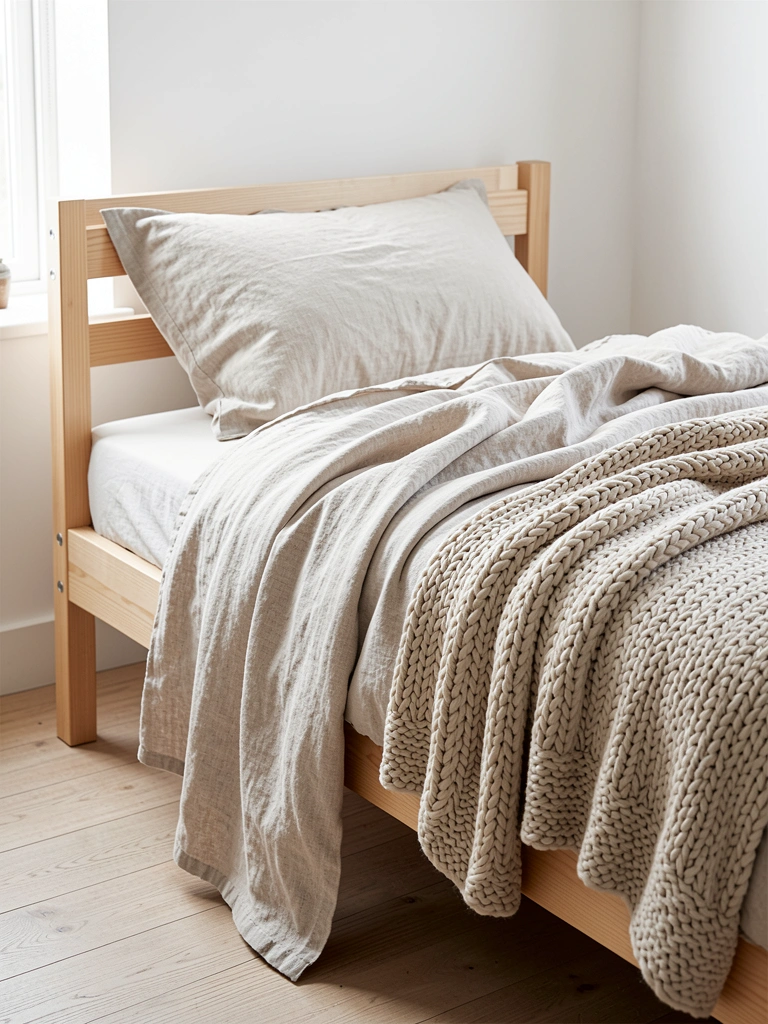
Minimal joinery reads cold without softness. Layer one or two quality textiles—a chunky knit throw, linen bedding, a sheepskin accent—to warm the aesthetic without compromising the clean lines.
Invest in one quality linen duvet ($150–$300) and one throw blanket ($80–$150). Brands like Parachute, Brooklinen, and Etsy sellers create beautiful pieces with visible texture. Drape the throw intentionally—across one corner or folded at the foot—not everywhere. The idea is strategic warmth, not coverage. Styling time: 10 minutes. Pro tip: Natural fiber textiles (linen, cotton, wool) photograph beautifully and improve with age.
Texture softens the bed’s architectural lines while maintaining integrity and intentionality.
21. Install a Minimal Joinery Bed in a Small Space Strategically
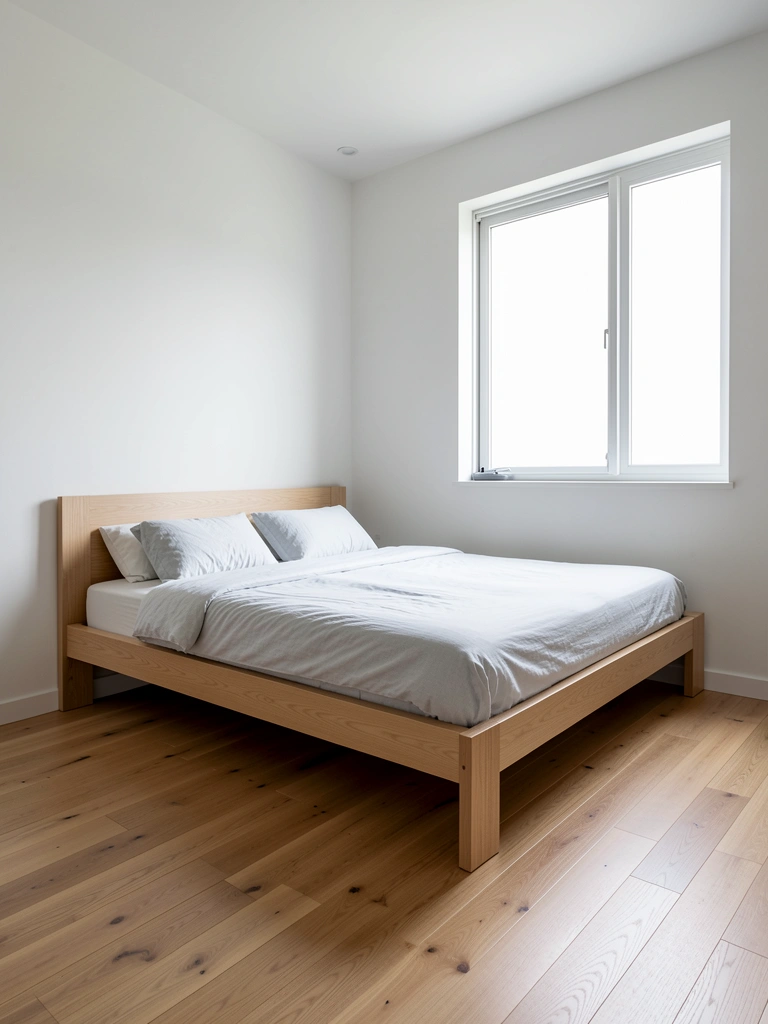
Minimal joinery beds work brilliantly in small spaces because they don’t visually bulk up the room. Clean lines and visible structure create an illusion of spaciousness rather than crowding.
Choose platform or low-profile designs ($600–$1,200) for small rooms—they float rather than anchor. Position the bed where it opens up the rest of the space (usually against the longest wall). Measure your room before committing—this bed only works if there’s walking room. Time to position: 30 minutes of planning. Pro tip: Paint walls light neutral colors to amplify the spacious feeling. Renter note: This bed style works in dorms, small apartments, and tiny homes equally well.
Small spaces gain breathing room. The bed disappears slightly, making the room feel larger.
22. Commission a Custom Minimal Joinery Bed from a Local Maker
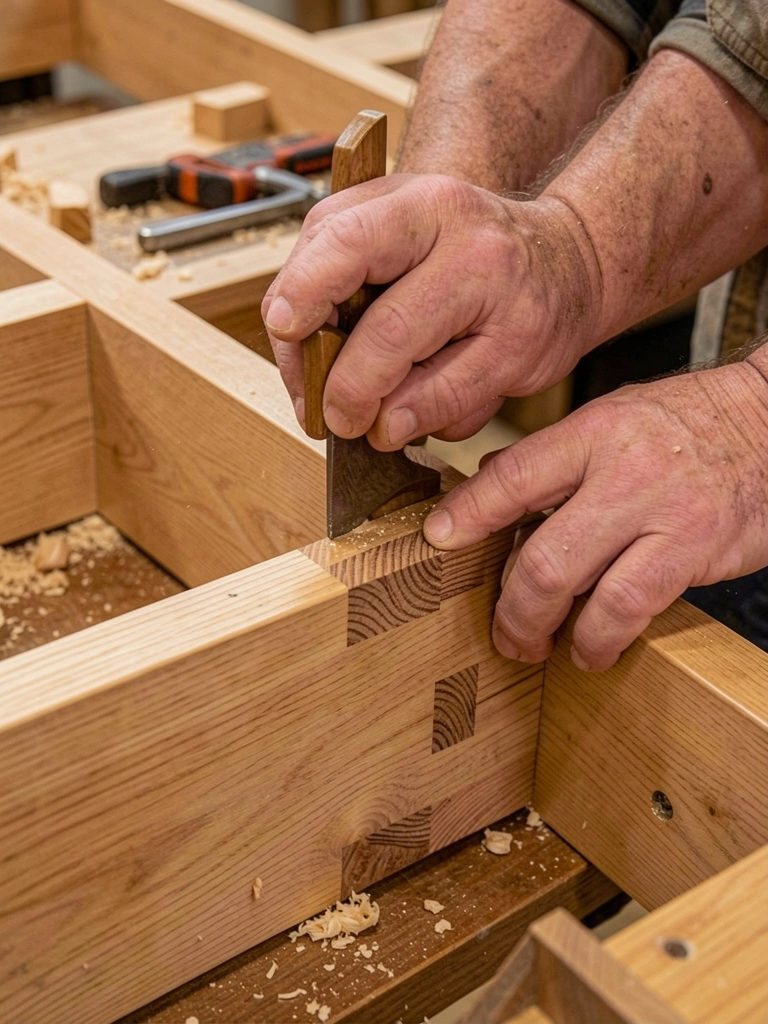
Working with a local woodworker lets you specify every detail—wood species, joinery style, dimensions, finish. This is the ultimate way to own a bed that’s truly yours.
Find woodworkers through local maker communities, Etsy, or Instagram. Budget $1,500–$3,500 depending on complexity and materials. Timeline: typically 6–12 weeks. Set clear expectations: provide photos of styles you love, discuss wood samples, and be specific about dimensions and joinery preferences. Pro tip: Start the conversation with a clear budget—a good maker will work within it. The emotional payoff of a custom bed is enormous. You know exactly how it was made and who made it.
You’ll sleep better knowing the story behind your bed. Commissioning becomes an investment in craft and relationship.
23. Pair Minimal Joinery Bed with Architectural Lighting
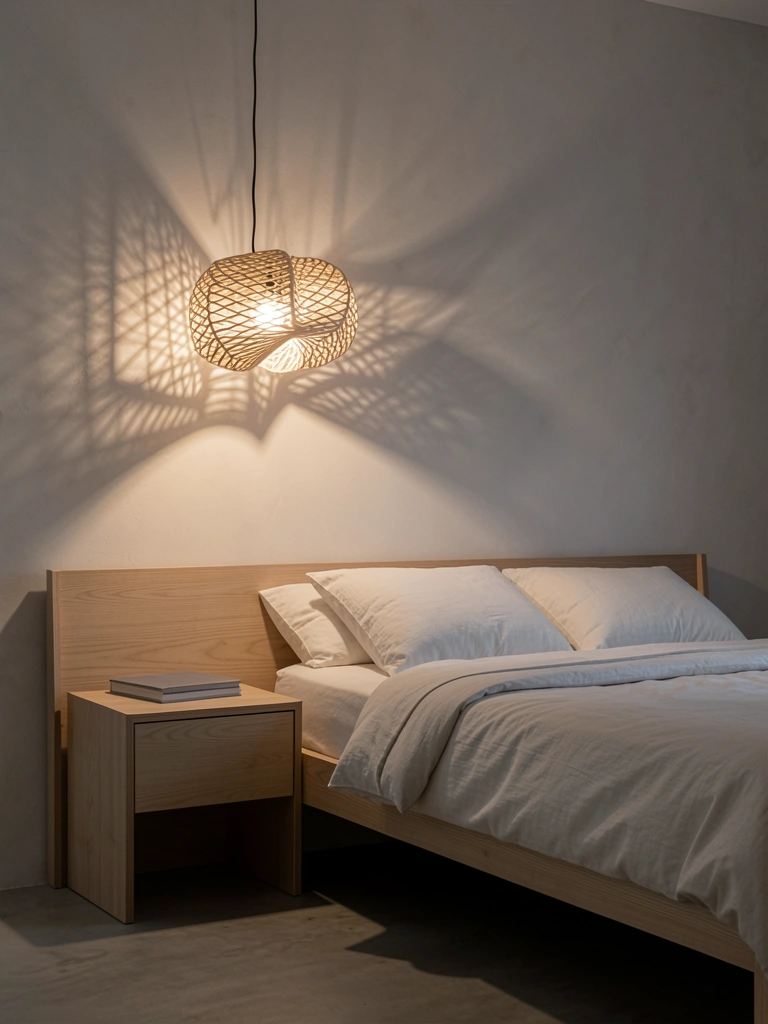
Minimal joinery pairs beautifully with sculptural lighting that echoes the bed’s clean lines and construction honesty. Choose fixtures with visible components and interesting geometry.
Pendant lights with exposed elements from brands like Muuto ($200–$400), Apparatus Studio ($300–$600), or Etsy ($100–$250) work perfectly. Wall sconces with visible brass or metal details also enhance the aesthetic. Installation time: 1–2 hours if electrical runs exist, more if rewiring is needed. Budget for professional installation if you’re uncertain: $150–$300. The lighting becomes another design layer that speaks to craftsmanship and intentionality. Pro tip: Choose warm bulbs (2700K) to soften the geometric lines slightly.
The lighting transforms your bed into a genuine focal point. Shadows and geometry create depth and interest nightly.
Save this post and pick one or two ideas to start with—whether it’s researching makers, visiting a showroom, or measuring your space. One thoughtful bed choice changes how you feel every single morning.
Leave a Reply